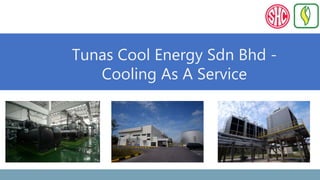
Tunas Cool Energy Sdn Bhd -
Cooling As A Service
Introduction
1. For countries with equatorial climate like Malaysia, approximately 70% of electricity
consumption is attributed to comfort cooling.*1
2. Out of the 70%, about 45% of the electricity is used to power the chiller plant.*1
3. With this, it underscores the importance of optimizing the energy usage for air
conditioning system.
4. Optimizing the air-conditioning system can be done with the following :
a) Adopting Cooling Technology with higher efficiency e.g water cooled chiller, magnetic bearing
chiller and etc.
b) Adopting District Cooling System
c) Adopting Thermal Energy Storage System
Note
1. District Cooling as an Energy and Economically Efficient Urban Utility–Its Implementation at Marina Bay Business District in Singapore
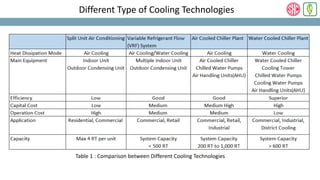
Different Type of Cooling Technologies
Table 1 : Comparison between Different Cooling Technologies
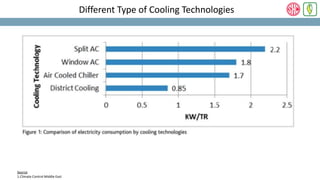
Different Type of Cooling Technologies
Source
1.Climate Control Middle East
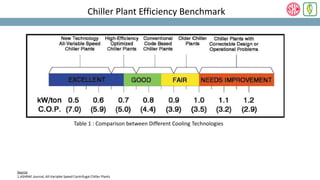
Chiller Plant Efficiency Benchmark
Table 1 : Comparison between Different Cooling Technologies
Source
1.ASHRAE Journal, All-Variable Speed Centrifugal Chiller Plants
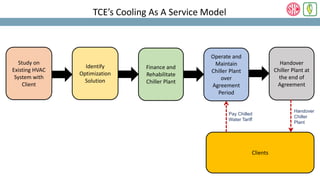
TCE’s Cooling As A Service Model
Identify
Optimization
Solution
Study on
Existing HVAC
System with
Client
Finance and
Rehabilitate
Chiller Plant
Operate and
Maintain
Chiller Plant
over
Agreement
Period
Handover
Chiller Plant at
the end of
Agreement
Clients
Pay Chilled
Water Tariff
Handover
Chiller
Plant
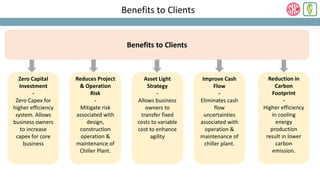
Benefits to Clients
Benefits to Clients
Zero Capital
Investment
-
Zero Capex for
higher efficiency
system. Allows
business owners
to increase
capex for core
business
Reduces Project
& Operation
Risk
-
Mitigate risk
associated with
design,
construction
operation &
maintenance of
Chiller Plant.
Asset Light
Strategy
-
Allows business
owners to
transfer fixed
costs to variable
cost to enhance
agility
Improve Cash
Flow
-
Eliminates cash
flow
uncertainties
associated with
operation &
maintenance of
chiller plant.
Reduction in
Carbon
Footprint
-
Higher efficiency
in cooling
energy
production
result in lower
carbon
emission.
Q & A

Chiller Refurbishment Project - Reference.pptx

  • 1.
    Tunas Cool EnergySdn Bhd - Cooling As A Service
  • 2.
    Introduction 1. For countrieswith equatorial climate like Malaysia, approximately 70% of electricity consumption is attributed to comfort cooling.*1 2. Out of the 70%, about 45% of the electricity is used to power the chiller plant.*1 3. With this, it underscores the importance of optimizing the energy usage for air conditioning system. 4. Optimizing the air-conditioning system can be done with the following : a) Adopting Cooling Technology with higher efficiency e.g water cooled chiller, magnetic bearing chiller and etc. b) Adopting District Cooling System c) Adopting Thermal Energy Storage System Note 1. District Cooling as an Energy and Economically Efficient Urban Utility–Its Implementation at Marina Bay Business District in Singapore
  • 3.
    Different Type ofCooling Technologies Table 1 : Comparison between Different Cooling Technologies
  • 4.
    Different Type ofCooling Technologies Source 1.Climate Control Middle East
  • 5.
    Chiller Plant EfficiencyBenchmark Table 1 : Comparison between Different Cooling Technologies Source 1.ASHRAE Journal, All-Variable Speed Centrifugal Chiller Plants
  • 6.
    TCE’s Cooling AsA Service Model Identify Optimization Solution Study on Existing HVAC System with Client Finance and Rehabilitate Chiller Plant Operate and Maintain Chiller Plant over Agreement Period Handover Chiller Plant at the end of Agreement Clients Pay Chilled Water Tariff Handover Chiller Plant
  • 7.
    Benefits to Clients Benefitsto Clients Zero Capital Investment - Zero Capex for higher efficiency system. Allows business owners to increase capex for core business Reduces Project & Operation Risk - Mitigate risk associated with design, construction operation & maintenance of Chiller Plant. Asset Light Strategy - Allows business owners to transfer fixed costs to variable cost to enhance agility Improve Cash Flow - Eliminates cash flow uncertainties associated with operation & maintenance of chiller plant. Reduction in Carbon Footprint - Higher efficiency in cooling energy production result in lower carbon emission.
  • 8.

Editor's Notes

  • #3 In District cooling system, the cooling energy in the form of chilled water is generated at as central chiller plant. The chilled water shall then be supplied to the end user via a piping network. The chilled water can be used for space cooling or process cooling. District cooling system are usually structured as infrastructure utility service but there are cases where End-User owned the plant The main benefits of DCS is its economies of scale which enable district cooling system to adopt technology such as Thermal energy storage tank Large capacity high efficiency chillers Series connected chiller modules
  • #6 In a District Cooling system, it consist of 3 main components 1. The heart of the system is the District Cooling Plant where main equipment chillers, cooling tower and pumps are installed. 2. Second is the piping network where the piping network are utilized to transport the chilled water some DCP to end user. The insulated chilled water piping can be installed either aboveground or underground. For underground installation, pipe can be installed either via direct buried of within a utilities trench. 3. Lastly is the Energy Transfer Station (ETS) where it is located at end user building. It act as a demarcation between DCP operator and end user, The ETS is used for metering as well. 4. ETS is around 30% of the conventional in-building chiller plant. Building owner can utilize the saved space to generate income.
  • #8 We will zoom in to the benefits of Cooling Energy Services Contract to the Business Owner Lower Capital Investment – with the omission of chiller plant capital investment, Owner can reduce their initial investment which translate to higher return and it improves the Return of Investment (ROI) Reduces Project & Operation Risk – The responsibility and risk of designing, constructing, operating and maintenance of the chiller plant are shifted to the DCS developer. Asset Light strategy – allow business owner to transfer fixed cost to variable cost to enhance agility. Improve Cash Flow – Eliminates cash flow uncertainties associated with O&M of chiller plant. With the BOT model, Business Owner has more predicted cash flow as the procurement of chilled water is similar with other utilities such as power procurement from TNB Reduction in Carbon Footprint – Business owner are able to achieve ESG target due to lower carbon emission. This can be achieved as chilled water generation is more efficient compared to conventional system.