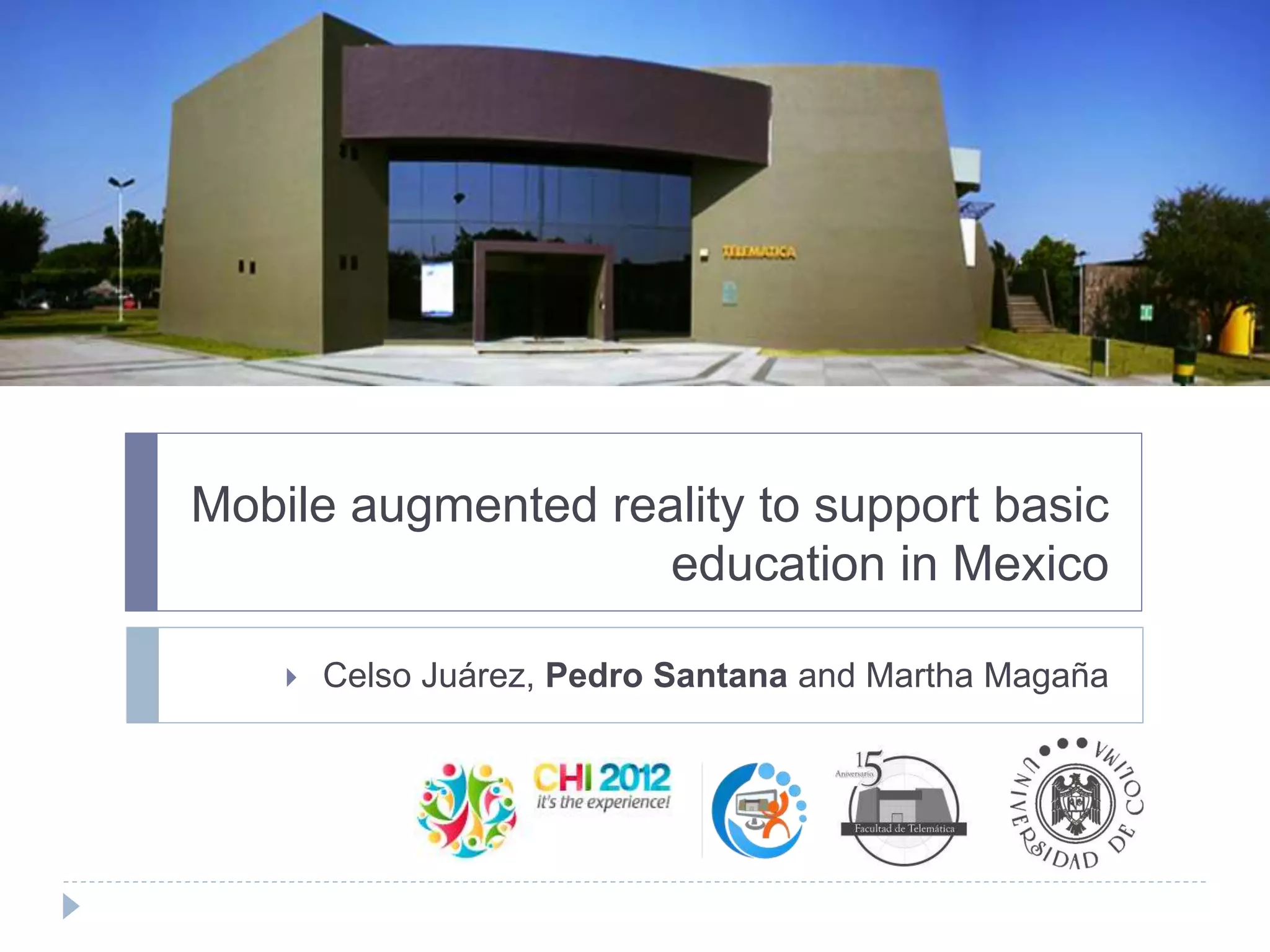
Mobile augmented reality to support basic
                    education in Mexico

       Celso Juárez, Pedro Santana and Martha Magaña
Introduction
   Support Mexican secondary education
    to improve the students textbooks
       Better understanding
       Bring technology to the ordinary classroom
        (beyond the computing laboratory)
 So,
    we went into a
 secondary school for a
 case study
Gathering preliminary context
 Interviews   in a public secondary
 school
  Knowledge about mobile phones and how
   they use them
  Subjects: 30, ten for every
   grade, randomly selected.
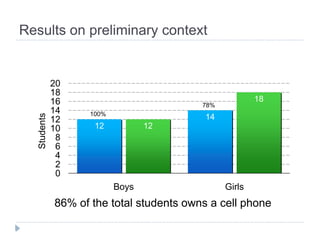
Results on preliminary context


              20
              18
              16                                         18
                                           78%
              14     100%
   Students


              12                           14
              10      12           12
               8
               6
               4
               2
               0
                            Boys                 Girls
              86% of the total students owns a cell phone
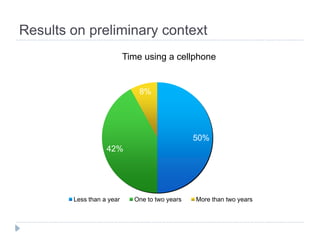
Results on preliminary context
                           Time using a cellphone


                               8%


                                                50%
                   42%


        Less than a year     One to two years   More than two years
Envisioned system
   Support different devices
       Android
   Easy of use
       Usability tests
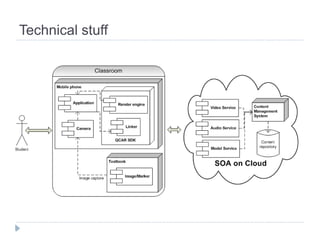
Technical stuff
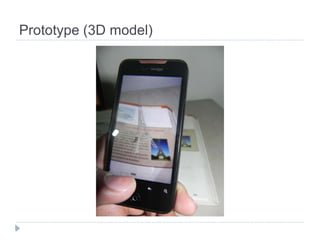
Prototype (3D model)
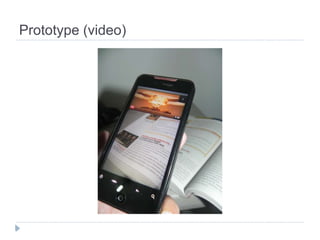
Prototype (video)
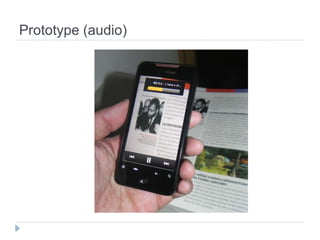
Prototype (audio)
Usability testing (post workshop submission)
   5 participants (pilot test)
       2 females
       3 males
   Average of 12 years old
   They previously had studied the textbook
   All participants had previous experience with
    smartphones
   1 hour session


Santana-Mancilla, P. C., García-Ruiz, M. A., Acosta-Diaz, R., & Juarez, C. U. (2012). Service oriented architecture to support Mexican secondary education through
mobile augmented reality. The 9th International Conference on Mobile Web information Systems (MobiWIS). Niagara Falls.
The session
1.      Pre-questionnaire to meassure previous
        knowledge
2.      Show and explain the system
3.      Hands on the prototype
4.      Post-questionnaire
5.      Usability score ranking from 1(very poor) to
        10 (excelent)


 Santana-Mancilla, P. C., García-Ruiz, M. A., Acosta-Diaz, R., & Juarez, C. U. (2012). Service oriented architecture to support Mexican secondary education through
 mobile augmented reality. The 9th International Conference on Mobile Web information Systems (MobiWIS). Niagara Falls.
Results
1.      7.9/10
2.      --
3.      Students were very surprised and
        remained focused until all the content was
        played
4.      9.4/10
5.      97%


 Santana-Mancilla, P. C., García-Ruiz, M. A., Acosta-Diaz, R., & Juarez, C. U. (2012). Service oriented architecture to support Mexican secondary education through
 mobile augmented reality. The 9th International Conference on Mobile Web information Systems (MobiWIS). Niagara Falls.
Thank you :)
Mobile augmented reality to support basic education in Mexico

CHI 2012 - EIST workshop

  • 1.
    Mobile augmented realityto support basic education in Mexico  Celso Juárez, Pedro Santana and Martha Magaña
  • 2.
    Introduction  Support Mexican secondary education to improve the students textbooks  Better understanding  Bring technology to the ordinary classroom (beyond the computing laboratory)
  • 3.
     So, we went into a secondary school for a case study
  • 4.
    Gathering preliminary context Interviews in a public secondary school  Knowledge about mobile phones and how they use them  Subjects: 30, ten for every grade, randomly selected.
  • 5.
    Results on preliminarycontext 20 18 16 18 78% 14 100% Students 12 14 10 12 12 8 6 4 2 0 Boys Girls 86% of the total students owns a cell phone
  • 6.
    Results on preliminarycontext Time using a cellphone 8% 50% 42% Less than a year One to two years More than two years
  • 7.
    Envisioned system  Support different devices  Android  Easy of use  Usability tests
  • 8.
  • 9.
  • 10.
  • 11.
  • 12.
    Usability testing (postworkshop submission)  5 participants (pilot test)  2 females  3 males  Average of 12 years old  They previously had studied the textbook  All participants had previous experience with smartphones  1 hour session Santana-Mancilla, P. C., García-Ruiz, M. A., Acosta-Diaz, R., & Juarez, C. U. (2012). Service oriented architecture to support Mexican secondary education through mobile augmented reality. The 9th International Conference on Mobile Web information Systems (MobiWIS). Niagara Falls.
  • 13.
    The session 1. Pre-questionnaire to meassure previous knowledge 2. Show and explain the system 3. Hands on the prototype 4. Post-questionnaire 5. Usability score ranking from 1(very poor) to 10 (excelent) Santana-Mancilla, P. C., García-Ruiz, M. A., Acosta-Diaz, R., & Juarez, C. U. (2012). Service oriented architecture to support Mexican secondary education through mobile augmented reality. The 9th International Conference on Mobile Web information Systems (MobiWIS). Niagara Falls.
  • 14.
    Results 1. 7.9/10 2. -- 3. Students were very surprised and remained focused until all the content was played 4. 9.4/10 5. 97% Santana-Mancilla, P. C., García-Ruiz, M. A., Acosta-Diaz, R., & Juarez, C. U. (2012). Service oriented architecture to support Mexican secondary education through mobile augmented reality. The 9th International Conference on Mobile Web information Systems (MobiWIS). Niagara Falls.
  • 15.
    Thank you :) Mobileaugmented reality to support basic education in Mexico