NAME:L.GIRIJA
ROLL NO: 22IT010
TITLE: CHEMICAL REACTIONS
AND EQUATIONS
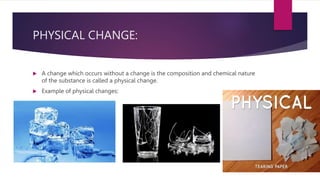
PHYSICAL CHANGE:
 A change which occurs without a change is the composition and chemical nature
of the substance is called a physical change.
 Example of physical changes:
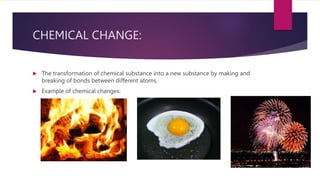
CHEMICAL CHANGE:
 The transformation of chemical substance into a new substance by making and
breaking of bonds between different atoms.
 Example of chemical changes:
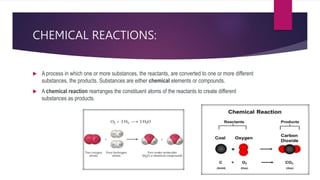
CHEMICAL REACTIONS:
 A process in which one or more substances, the reactants, are converted to one or more different
substances, the products. Substances are either chemical elements or compounds.
 A chemical reaction rearranges the constituent atoms of the reactants to create different
substances as products.
CHEMICAL EQUATIONS:
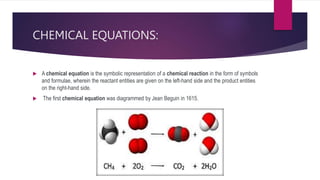
 A chemical equation is the symbolic representation of a chemical reaction in the form of symbols
and formulae, wherein the reactant entities are given on the left-hand side and the product entities
on the right-hand side.
 The first chemical equation was diagrammed by Jean Beguin in 1615.
SKELETAL CHEMICAL EQUATIONS:
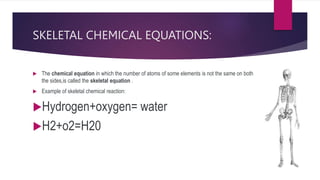
 The chemical equation in which the number of atoms of some elements is not the same on both
the sides,is called the skeletal equation .
 Example of skeletal chemical reaction:
Hydrogen+oxygen= water
H2+o2=H20
BALANCED CHEMICAL EQUATION:
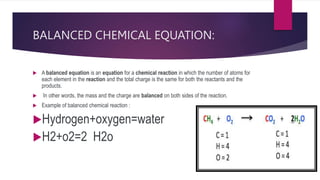
 A balanced equation is an equation for a chemical reaction in which the number of atoms for
each element in the reaction and the total charge is the same for both the reactants and the
products.
 In other words, the mass and the charge are balanced on both sides of the reaction.
 Example of balanced chemical reaction :
Hydrogen+oxygen=water
H2+o2=2 H2o
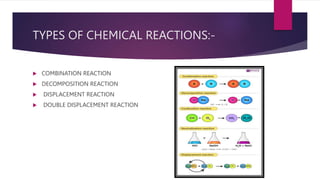
TYPES OF CHEMICAL REACTIONS:-
 COMBINATION REACTION
 DECOMPOSITION REACTION
 DISPLACEMENT REACTION
 DOUBLE DISPLACEMENT REACTION
COMBINATION REACTION:-
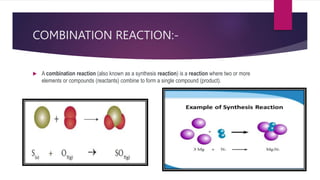
 A combination reaction (also known as a synthesis reaction) is a reaction where two or more
elements or compounds (reactants) combine to form a single compound (product).
DECOMPOSITION REACTION:-
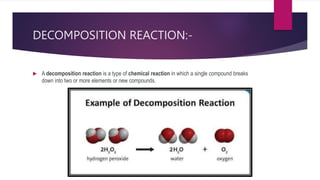
 A decomposition reaction is a type of chemical reaction in which a single compound breaks
down into two or more elements or new compounds.
THERMAL DECOMPOSITION REACTION:-
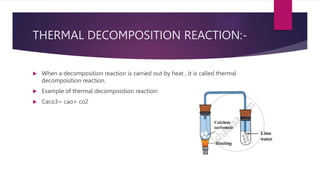
 When a decomposition reaction is carried out by heat , it is called thermal
decomposition reaction.
 Example of thermal decomposition reaction:
 Caco3= cao+ co2
PHOTOLYTIC DECOMPOSITION
REACTION:-
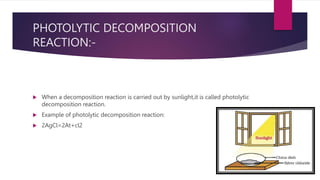
 When a decomposition reaction is carried out by sunlight,it is called photolytic
decomposition reaction.
 Example of photolytic decomposition reaction:
 2AgCl=2At+cl2
ELECTROLYTIC DECOMPOSITION
REACTION:-
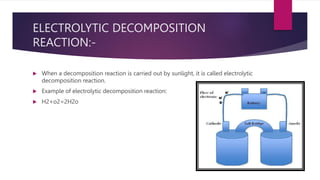
 When a decomposition reaction is carried out by sunlight, it is called electrolytic
decomposition reaction.
 Example of electrolytic decomposition reaction:
 H2+o2=2H2o
DISPLACEMENT REACTION:-
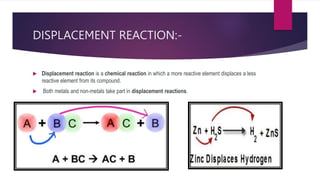
 Displacement reaction is a chemical reaction in which a more reactive element displaces a less
reactive element from its compound.
 Both metals and non-metals take part in displacement reactions.
DOUBLE DISPLACEMENT REACTION:-
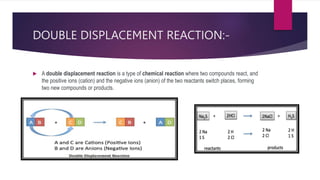
 A double displacement reaction is a type of chemical reaction where two compounds react, and
the positive ions (cation) and the negative ions (anion) of the two reactants switch places, forming
two new compounds or products.
ENDOTHERMIC REACTION:-
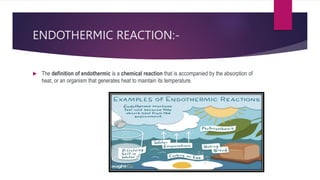
 The definition of endothermic is a chemical reaction that is accompanied by the absorption of
heat, or an organism that generates heat to maintain its temperature.
EXOTHERMIC REACTION:-
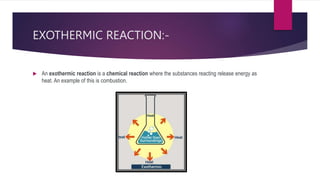
 An exothermic reaction is a chemical reaction where the substances reacting release energy as
heat. An example of this is combustion.
OXIDATION AND REDUCTION:-
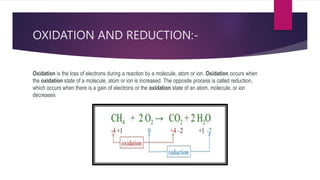
Oxidation is the loss of electrons during a reaction by a molecule, atom or ion. Oxidation occurs when
the oxidation state of a molecule, atom or ion is increased. The opposite process is called reduction,
which occurs when there is a gain of electrons or the oxidation state of an atom, molecule, or ion
decreases
REDOX REACTION:-
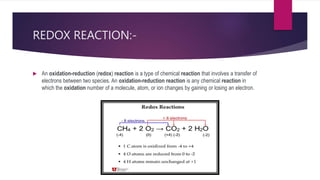
 An oxidation-reduction (redox) reaction is a type of chemical reaction that involves a transfer of
electrons between two species. An oxidation-reduction reaction is any chemical reaction in
which the oxidation number of a molecule, atom, or ion changes by gaining or losing an electron.
OXIDISING AGENT:-
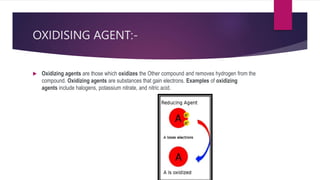
 Oxidizing agents are those which oxidizes the Other compound and removes hydrogen from the
compound. Oxidizing agents are substances that gain electrons. Examples of oxidizing
agents include halogens, potassium nitrate, and nitric acid.
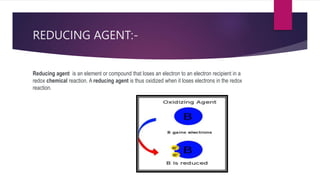
REDUCING AGENT:-
Reducing agent is an element or compound that loses an electron to an electron recipient in a
redox chemical reaction. A reducing agent is thus oxidized when it loses electrons in the redox
reaction.
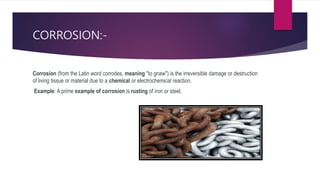
CORROSION:-
Corrosion (from the Latin word corrodes, meaning "to gnaw") is the irreversible damage or destruction
of living tissue or material due to a chemical or electrochemical reaction.
Example: A prime example of corrosion is rusting of iron or steel.
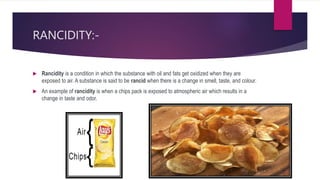
RANCIDITY:-
 Rancidity is a condition in which the substance with oil and fats get oxidized when they are
exposed to air. A substance is said to be rancid when there is a change in smell, taste, and colour.
 An example of rancidity is when a chips pack is exposed to atmospheric air which results in a
change in taste and odor.
THANK YOU

chem seminar.pptx

  • 1.
    NAME:L.GIRIJA ROLL NO: 22IT010 TITLE:CHEMICAL REACTIONS AND EQUATIONS
  • 2.
    PHYSICAL CHANGE:  Achange which occurs without a change is the composition and chemical nature of the substance is called a physical change.  Example of physical changes:
  • 3.
    CHEMICAL CHANGE:  Thetransformation of chemical substance into a new substance by making and breaking of bonds between different atoms.  Example of chemical changes:
  • 4.
    CHEMICAL REACTIONS:  Aprocess in which one or more substances, the reactants, are converted to one or more different substances, the products. Substances are either chemical elements or compounds.  A chemical reaction rearranges the constituent atoms of the reactants to create different substances as products.
  • 5.
    CHEMICAL EQUATIONS:  Achemical equation is the symbolic representation of a chemical reaction in the form of symbols and formulae, wherein the reactant entities are given on the left-hand side and the product entities on the right-hand side.  The first chemical equation was diagrammed by Jean Beguin in 1615.
  • 6.
    SKELETAL CHEMICAL EQUATIONS: The chemical equation in which the number of atoms of some elements is not the same on both the sides,is called the skeletal equation .  Example of skeletal chemical reaction: Hydrogen+oxygen= water H2+o2=H20
  • 7.
    BALANCED CHEMICAL EQUATION: A balanced equation is an equation for a chemical reaction in which the number of atoms for each element in the reaction and the total charge is the same for both the reactants and the products.  In other words, the mass and the charge are balanced on both sides of the reaction.  Example of balanced chemical reaction : Hydrogen+oxygen=water H2+o2=2 H2o
  • 8.
    TYPES OF CHEMICALREACTIONS:-  COMBINATION REACTION  DECOMPOSITION REACTION  DISPLACEMENT REACTION  DOUBLE DISPLACEMENT REACTION
  • 9.
    COMBINATION REACTION:-  Acombination reaction (also known as a synthesis reaction) is a reaction where two or more elements or compounds (reactants) combine to form a single compound (product).
  • 10.
    DECOMPOSITION REACTION:-  Adecomposition reaction is a type of chemical reaction in which a single compound breaks down into two or more elements or new compounds.
  • 11.
    THERMAL DECOMPOSITION REACTION:- When a decomposition reaction is carried out by heat , it is called thermal decomposition reaction.  Example of thermal decomposition reaction:  Caco3= cao+ co2
  • 12.
    PHOTOLYTIC DECOMPOSITION REACTION:-  Whena decomposition reaction is carried out by sunlight,it is called photolytic decomposition reaction.  Example of photolytic decomposition reaction:  2AgCl=2At+cl2
  • 13.
    ELECTROLYTIC DECOMPOSITION REACTION:-  Whena decomposition reaction is carried out by sunlight, it is called electrolytic decomposition reaction.  Example of electrolytic decomposition reaction:  H2+o2=2H2o
  • 14.
    DISPLACEMENT REACTION:-  Displacementreaction is a chemical reaction in which a more reactive element displaces a less reactive element from its compound.  Both metals and non-metals take part in displacement reactions.
  • 15.
    DOUBLE DISPLACEMENT REACTION:- A double displacement reaction is a type of chemical reaction where two compounds react, and the positive ions (cation) and the negative ions (anion) of the two reactants switch places, forming two new compounds or products.
  • 16.
    ENDOTHERMIC REACTION:-  Thedefinition of endothermic is a chemical reaction that is accompanied by the absorption of heat, or an organism that generates heat to maintain its temperature.
  • 17.
    EXOTHERMIC REACTION:-  Anexothermic reaction is a chemical reaction where the substances reacting release energy as heat. An example of this is combustion.
  • 18.
    OXIDATION AND REDUCTION:- Oxidationis the loss of electrons during a reaction by a molecule, atom or ion. Oxidation occurs when the oxidation state of a molecule, atom or ion is increased. The opposite process is called reduction, which occurs when there is a gain of electrons or the oxidation state of an atom, molecule, or ion decreases
  • 19.
    REDOX REACTION:-  Anoxidation-reduction (redox) reaction is a type of chemical reaction that involves a transfer of electrons between two species. An oxidation-reduction reaction is any chemical reaction in which the oxidation number of a molecule, atom, or ion changes by gaining or losing an electron.
  • 20.
    OXIDISING AGENT:-  Oxidizingagents are those which oxidizes the Other compound and removes hydrogen from the compound. Oxidizing agents are substances that gain electrons. Examples of oxidizing agents include halogens, potassium nitrate, and nitric acid.
  • 21.
    REDUCING AGENT:- Reducing agentis an element or compound that loses an electron to an electron recipient in a redox chemical reaction. A reducing agent is thus oxidized when it loses electrons in the redox reaction.
  • 22.
    CORROSION:- Corrosion (from theLatin word corrodes, meaning "to gnaw") is the irreversible damage or destruction of living tissue or material due to a chemical or electrochemical reaction. Example: A prime example of corrosion is rusting of iron or steel.
  • 23.
    RANCIDITY:-  Rancidity isa condition in which the substance with oil and fats get oxidized when they are exposed to air. A substance is said to be rancid when there is a change in smell, taste, and colour.  An example of rancidity is when a chips pack is exposed to atmospheric air which results in a change in taste and odor.
  • 24.