CHDODEV CASE STUDY 
“ J M ” 
Sofia Molato 
Paula Siggaoat 
Matthew Te 
Kyle Riconalla
ABSTRACT 
This case study is about a young boy named Jamuel 
Joseph or JM. The group observed him in a classroom at 
John Dewey School for Children. He is 10 years old, has a 
younger sister and lives with his mother while his father is 
working abroad. The paper is focused primarily on 
physical, cognitive, emotional, and social development of 
JM. It intends to study how JM is developing normally for 
his age.
PART I. BACKGROUND OF THE CHILD 
This case study is about a young boy named JM, who was 
observed at John Dewey School for Children, an indoor 
environment. The 10 year old JM lives in a house with his 
mother and his younger sister. He is the elder of the two 
siblings. His Fil-Am father works in the U.S. while his Filipino 
mother is a plain housewife. Their house is located inside a 
village near the school. He likes browsing the internet during his 
spare time. He engages in sports like basketball and martial 
arts. He likes the subjects Math, Arts & Music. He is fond of 
horror and mystery movies. One of his favorites is the Piranha. 
He is amused by wrestling and adores wrestlers, Rey Mysterio 
(a.ka. 619) and The Big Show. He enjoys eating sushi and 
ramen and hates bitter gourd or commonly known as 
“ampalaya”. Colors red, green, and blue are his favorites. He 
dislikes chaotic classmates but he is close to all the boys from 
his class. JM is currently in Grade IV from the class Grade IV– 
Panday.
PART II. PHYSICAL DEVELOPMENT 
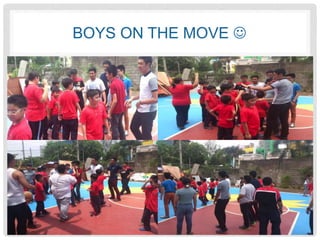
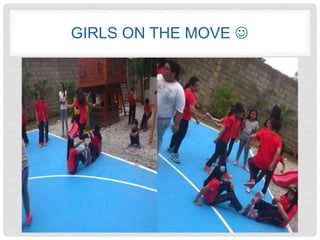
JM likes outdoor activities and playing sports. He is a 
normal growing boy, already experiencing some changes 
in his body – he already lost deciduous teeth or baby 
teeth. Middle childhood is the stage where the boys should 
be experiencing the growth in height. “Girls and boys grow 
about 2 to 3 inches and gain about 7 pounds per year until 
puberty” (2013, Cliff Notes). Middle childhood is also the 
stage where minor illnesses lessen in frequency. 
According to Cliff Notes (2013) “…improved resistance to 
common illnesses is probably due to a combination of 
increased immunity from previous exposures and 
improved hygiene and nutritional practices.”
PART III. COGNITIVE DEVELOPMENT 
During this period, JM’s thought is more logical, flexible, and 
organized than it was during his early childhood. According to 
Piaget’s Theory, JM is in the concrete operational stage 
cognitively. Concrete operational stage is from ages 7 to 11 
where JM falls in this category. Similarly, JM has a normal 
cognitive development as evidenced by the parameters of 
normal cognitive signs for a ten year old child. 
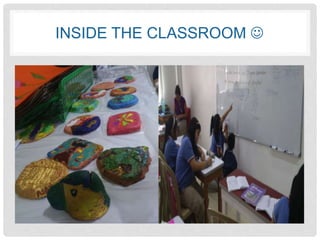
An example scenario is when JM attentively listens to 
Teacher Monette discussing a certain number on their past 
quiz. When Teacher Monette states the problem, JM 
immediately raises his hand to volunteer and to answer on the 
board. Afterwards, Teacher Monette evaluates the outcome and 
restates the result in terms of the original problem statement in 
the end. JM is able to solve the problem on the board.
CONT. 
In addition, when they have seat works to do, JM works diligently 
and asks for assistance when needed and completes it without getting 
distracted. JM pays attention when the teacher explains something in 
the class and follows what the teacher tells them to do so. JM is 
capable of paying attention to more than one thing at a time and 
thinking becomes much more quickly. JM likes making decisions on 
his own. He quite enjoys learning and loves joining school activities. 
JM doesn’t get frustrated easily when things don’t go well and he 
doesn’t really like things to be perfect at all times. 
Yet, JM’s language development learning is very good. He speaks 
fluent English and he knows how to speak the Filipino language 
including the Kapampangan dialect. 
Thus, JM has cognitive development, which is in parallel with his 
level; hence I can see him as a good student with normal development 
as expected of his age.
PART IV. EMOTIONAL DEVELOPMENT 
As an energetic and playful 10-year old boy, JM is able to 
exercise his self-determination and develop his emotional 
maturity. But for some reasons, he still needs to have an 
assurance from his parents depending on his attitude. He 
gradually develops social skills and increasing ability to relate to 
the outside world at school and with his friends. In that, he 
shows interest in playing and spend hours with his chosen 
activities. For example, he excels in basketball and also being 
part of the student council. JM also has a desire to fit in and be 
accepted by his peer groups. Prior to that, this factor is 
essential to enhance self-esteem. He always wanted to be part 
in the student government and engage in leading the group. He 
interacts with people and is able to relate to both same-gender 
and opposite-gender peers. He is quick to show observers his 
happiness, sadness, confusions or frightfulness.
CONT. 
Although he can handle conflicts and problems, he lacks the 
sense of sensitivity of other people. He is not sensitive to situations. 
For instance, he bullies his classmates and crack jokes that may hurt 
the person. He also lacks the sense of respect when it comes to 
orders and instructions. Teachers and staff were able to observe JM’s 
insensitivity and lack of respect. Another noticeable observation of JM 
is his urge to do something. In that, they are trying to help understand 
JM by following what he wants. For example, the teacher gives JM the 
opportunity to become the president of their class. The teacher’s 
strategy is making JM the president so that he can be the role model 
of the class. By that, the teacher must still help and guide JM. In terms 
of his academics, teachers are concern about his grades. JM is getting 
a hard time to understand the lessons especially in Mathematics. He is 
also impatient in reading too many pages of books.
CONT. 
And also, he always forgets to make homeworks and 
requirements. This is because of his laziness and lack of 
motivation to focus in his studies. However, it is likely to 
improve his skills by giving him the right motivation to 
focus on his academics. Other noticeable development of 
JM is the ability to influence the people around him. For 
example, his classmate will always follow him whenever 
what he does or what he commands. This concept may 
either give a positive or negative result depending on this 
situation.
PART V. SOCIAL DEVELOPMENT 
According to Kendra Cherry (2014) “…the child has become quite 
adept at doing things independently and is probably quite proud of 
such accomplishments.” It is the stage wherein the child becomes 
more competent and confident. JM, from what we have observed is a 
friendly boy. He talks to everyone and he does not choose the person 
he wants to mingle with. He talks to whoever is beside him. He also 
mentioned that he likes sports- martial arts and basketball and 
because of these he is close to all boys. In these kinds of activities, 
the child will develop discipline and will also be able to interact with 
other children. In the article Social and Emotional Development in 
Middle Childhood, it states that the child gains mastery of many basic 
skills. It is a means in developing a sense of self-esteem. Friendship is 
important in this stage because it’s where the children become more 
interested in building relationships and maintaining them.
PART VI. CONCLUSION 
To sum it up, JM’s development is on the right track. He shows the 
characteristics in physical development of a middle school child. As 
observed by the group, JM’s has the right height for his age. Though 
his physique is slim, he is active and energetic showing a healthy built. 
The diligence and attention span of JM on academic matters 
exhibits concrete operational stage cognitively. It is evident on his 
active participation in class and the results he gets from quizzes. 
At the age of 10, JM has showed both strong and weak emotional 
development. His emotional development is strong at some points 
when he does the things he loves the most, however, he is also 
emotionally weak at points when he is not motivated. Thus, with the 
right motivation and guidance, JM will be able to surpass his emotional 
difficulties. 
As a friendly boy, JM strongly shows his social development. He 
has high self-esteem that builds good relationships with others.
PART VII. RECOMMENDATIONS 
In accordance to Piaget’s theory where JM falls under the 
concrete operational stage, we recommend that children under 
this stage be properly guided and motivated to further develop 
their cognitive development. Children under this stage can 
easily be influenced by society and environment. The school 
and home play an important role in a child’s development. Thus, 
a healthy environment will develop a healthy mind and emotion 
of a child. On the contrary, a negative environment can greatly 
affect the child’s upbringing and decisions. In addition, the 
exposure of children to extra-curricular activities other than 
academics like sports enhances their social maturity and critical 
thinking of children under this stage. With the right exposure, 
the child will be ready to face the other challenges of life, will 
develop the sense of making the right decisions and be ready in 
solving problems that may arise in the future.
JDSC LOGO 
P.E. CLASS 
BOYS ON THE MOVE 
GIRLS ON THE MOVE 
INSIDE THE CLASSROOM 
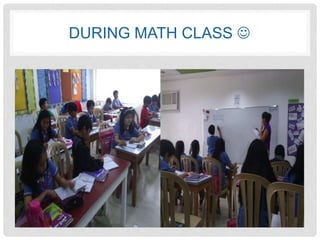
DURING MATH CLASS 
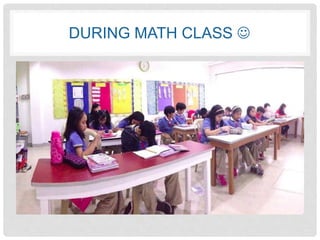
DURING MATH CLASS 
WITH JM 
MATH CLASS WITH TEACHER MONETTE
SEATWORK DURING MATH CLASS

A Case Study about Child Development - JM

  • 1.
    CHDODEV CASE STUDY “ J M ” Sofia Molato Paula Siggaoat Matthew Te Kyle Riconalla
  • 2.
    ABSTRACT This casestudy is about a young boy named Jamuel Joseph or JM. The group observed him in a classroom at John Dewey School for Children. He is 10 years old, has a younger sister and lives with his mother while his father is working abroad. The paper is focused primarily on physical, cognitive, emotional, and social development of JM. It intends to study how JM is developing normally for his age.
  • 3.
    PART I. BACKGROUNDOF THE CHILD This case study is about a young boy named JM, who was observed at John Dewey School for Children, an indoor environment. The 10 year old JM lives in a house with his mother and his younger sister. He is the elder of the two siblings. His Fil-Am father works in the U.S. while his Filipino mother is a plain housewife. Their house is located inside a village near the school. He likes browsing the internet during his spare time. He engages in sports like basketball and martial arts. He likes the subjects Math, Arts & Music. He is fond of horror and mystery movies. One of his favorites is the Piranha. He is amused by wrestling and adores wrestlers, Rey Mysterio (a.ka. 619) and The Big Show. He enjoys eating sushi and ramen and hates bitter gourd or commonly known as “ampalaya”. Colors red, green, and blue are his favorites. He dislikes chaotic classmates but he is close to all the boys from his class. JM is currently in Grade IV from the class Grade IV– Panday.
  • 4.
    PART II. PHYSICALDEVELOPMENT JM likes outdoor activities and playing sports. He is a normal growing boy, already experiencing some changes in his body – he already lost deciduous teeth or baby teeth. Middle childhood is the stage where the boys should be experiencing the growth in height. “Girls and boys grow about 2 to 3 inches and gain about 7 pounds per year until puberty” (2013, Cliff Notes). Middle childhood is also the stage where minor illnesses lessen in frequency. According to Cliff Notes (2013) “…improved resistance to common illnesses is probably due to a combination of increased immunity from previous exposures and improved hygiene and nutritional practices.”
  • 5.
    PART III. COGNITIVEDEVELOPMENT During this period, JM’s thought is more logical, flexible, and organized than it was during his early childhood. According to Piaget’s Theory, JM is in the concrete operational stage cognitively. Concrete operational stage is from ages 7 to 11 where JM falls in this category. Similarly, JM has a normal cognitive development as evidenced by the parameters of normal cognitive signs for a ten year old child. An example scenario is when JM attentively listens to Teacher Monette discussing a certain number on their past quiz. When Teacher Monette states the problem, JM immediately raises his hand to volunteer and to answer on the board. Afterwards, Teacher Monette evaluates the outcome and restates the result in terms of the original problem statement in the end. JM is able to solve the problem on the board.
  • 6.
    CONT. In addition,when they have seat works to do, JM works diligently and asks for assistance when needed and completes it without getting distracted. JM pays attention when the teacher explains something in the class and follows what the teacher tells them to do so. JM is capable of paying attention to more than one thing at a time and thinking becomes much more quickly. JM likes making decisions on his own. He quite enjoys learning and loves joining school activities. JM doesn’t get frustrated easily when things don’t go well and he doesn’t really like things to be perfect at all times. Yet, JM’s language development learning is very good. He speaks fluent English and he knows how to speak the Filipino language including the Kapampangan dialect. Thus, JM has cognitive development, which is in parallel with his level; hence I can see him as a good student with normal development as expected of his age.
  • 7.
    PART IV. EMOTIONALDEVELOPMENT As an energetic and playful 10-year old boy, JM is able to exercise his self-determination and develop his emotional maturity. But for some reasons, he still needs to have an assurance from his parents depending on his attitude. He gradually develops social skills and increasing ability to relate to the outside world at school and with his friends. In that, he shows interest in playing and spend hours with his chosen activities. For example, he excels in basketball and also being part of the student council. JM also has a desire to fit in and be accepted by his peer groups. Prior to that, this factor is essential to enhance self-esteem. He always wanted to be part in the student government and engage in leading the group. He interacts with people and is able to relate to both same-gender and opposite-gender peers. He is quick to show observers his happiness, sadness, confusions or frightfulness.
  • 8.
    CONT. Although hecan handle conflicts and problems, he lacks the sense of sensitivity of other people. He is not sensitive to situations. For instance, he bullies his classmates and crack jokes that may hurt the person. He also lacks the sense of respect when it comes to orders and instructions. Teachers and staff were able to observe JM’s insensitivity and lack of respect. Another noticeable observation of JM is his urge to do something. In that, they are trying to help understand JM by following what he wants. For example, the teacher gives JM the opportunity to become the president of their class. The teacher’s strategy is making JM the president so that he can be the role model of the class. By that, the teacher must still help and guide JM. In terms of his academics, teachers are concern about his grades. JM is getting a hard time to understand the lessons especially in Mathematics. He is also impatient in reading too many pages of books.
  • 9.
    CONT. And also,he always forgets to make homeworks and requirements. This is because of his laziness and lack of motivation to focus in his studies. However, it is likely to improve his skills by giving him the right motivation to focus on his academics. Other noticeable development of JM is the ability to influence the people around him. For example, his classmate will always follow him whenever what he does or what he commands. This concept may either give a positive or negative result depending on this situation.
  • 10.
    PART V. SOCIALDEVELOPMENT According to Kendra Cherry (2014) “…the child has become quite adept at doing things independently and is probably quite proud of such accomplishments.” It is the stage wherein the child becomes more competent and confident. JM, from what we have observed is a friendly boy. He talks to everyone and he does not choose the person he wants to mingle with. He talks to whoever is beside him. He also mentioned that he likes sports- martial arts and basketball and because of these he is close to all boys. In these kinds of activities, the child will develop discipline and will also be able to interact with other children. In the article Social and Emotional Development in Middle Childhood, it states that the child gains mastery of many basic skills. It is a means in developing a sense of self-esteem. Friendship is important in this stage because it’s where the children become more interested in building relationships and maintaining them.
  • 11.
    PART VI. CONCLUSION To sum it up, JM’s development is on the right track. He shows the characteristics in physical development of a middle school child. As observed by the group, JM’s has the right height for his age. Though his physique is slim, he is active and energetic showing a healthy built. The diligence and attention span of JM on academic matters exhibits concrete operational stage cognitively. It is evident on his active participation in class and the results he gets from quizzes. At the age of 10, JM has showed both strong and weak emotional development. His emotional development is strong at some points when he does the things he loves the most, however, he is also emotionally weak at points when he is not motivated. Thus, with the right motivation and guidance, JM will be able to surpass his emotional difficulties. As a friendly boy, JM strongly shows his social development. He has high self-esteem that builds good relationships with others.
  • 12.
    PART VII. RECOMMENDATIONS In accordance to Piaget’s theory where JM falls under the concrete operational stage, we recommend that children under this stage be properly guided and motivated to further develop their cognitive development. Children under this stage can easily be influenced by society and environment. The school and home play an important role in a child’s development. Thus, a healthy environment will develop a healthy mind and emotion of a child. On the contrary, a negative environment can greatly affect the child’s upbringing and decisions. In addition, the exposure of children to extra-curricular activities other than academics like sports enhances their social maturity and critical thinking of children under this stage. With the right exposure, the child will be ready to face the other challenges of life, will develop the sense of making the right decisions and be ready in solving problems that may arise in the future.
  • 13.
  • 14.
  • 15.
    BOYS ON THEMOVE 
  • 16.
    GIRLS ON THEMOVE 
  • 17.
  • 18.
  • 19.
  • 20.
  • 21.
    MATH CLASS WITHTEACHER MONETTE
  • 22.