Is healthcare getting safer? 
Charles Vincent 
Department of Psychology & 
Oxford Academic Health Science Network
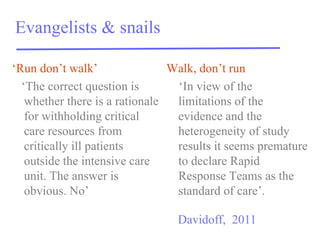
Evangelists & snails 
‘Run don’t walk’ 
‘The correct question is whether there is a rationale for withholding critical care resources from critically ill patients outside the intensive care unit. The answer is obvious. No’ 
Walk, don’t run 
‘In view of the limitations of the evidence and the heterogeneity of study results it seems premature to declare Rapid Response Teams as the standard of care’. 
Davidoff, 2011
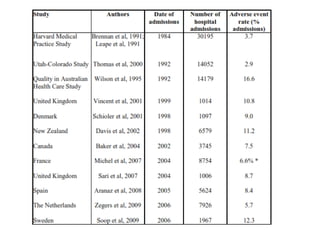
Table 4.3 Adverse events in acute hospitals in ten countries
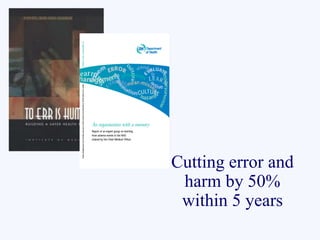
Cutting error and 
harm by 50% 
within 5 years
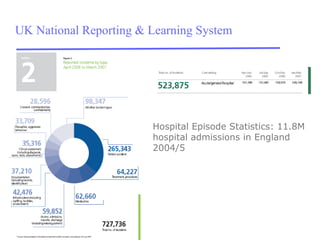
UK National Reporting & Learning System 
Hospital Episode Statistics: 11.8M 
hospital admissions in England 
2004/5
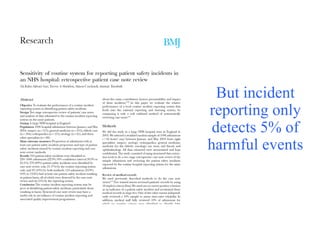
But incident 
reporting only 
detects 5% of 
harmful events
Safety interventions The challenge of scaling up
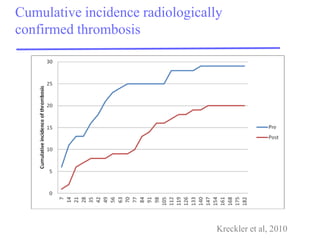
Cumulative incidence radiologically confirmed thrombosis 
Kreckler et al, 2010
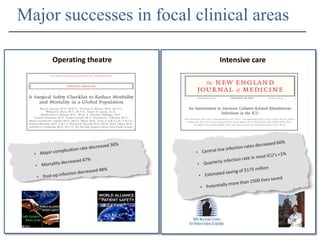
Intensive care 
Operating theatre 
Major successes in focal clinical areas
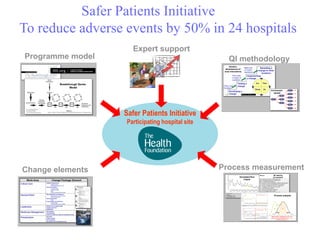
Safer Patients Initiative 
To reduce adverse events by 50% in 24 hospitals 
11 
 SPI programme elements 4 
Improvement = shifting the level of the 
process in the desirable direction (A) or 
reducing variation (B) 
A 
A B 
A B 
Point of initial intervention B 
Improvement = shifting the level of the 
process in the desirable direction (A) or 
reducing variation (B) 
A 
A B 
A B 
Point of initial intervention B 
Annotated Run 
Charts 
80 metrics 
(34 standard) 
Process analysis 
10 
 SPI programme elements 3 
Incremental 
spread 
Iterative 
development of 
local innovations 
9 
 SPI programme elements 2 
8 
 SPII programme ellementts 1 
Breakthrough Series 
Model 
Programme model 
Change elements Process measurement 
QI methodology 
Safer Patients Initiative 
Participating hospital site 
Collaborative learning 
Expert support
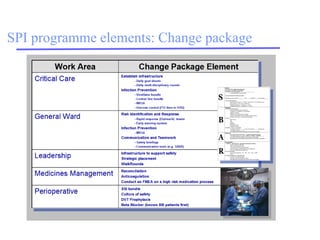
SPI programme elements: Change package
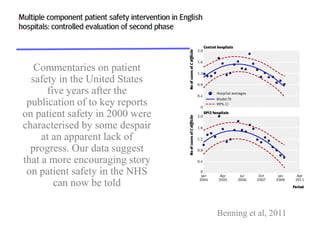
Commentaries on patient safety in the United States five years after the publication of to key reports on patient safety in 2000 were characterised by some despair at an apparent lack of progress. Our data suggest that a more encouraging story on patient safety in the NHS can now be told 
Benning et al, 2011
The Achievements of SPI 
Inspirational and important legacy 
Objectives over ambitious 
Organisations in different states of readiness 
First major UK safety initiative that took evaluation seriously 
Simply getting basic clinical data and measures was a major challenge
Assessing safety interventions at population level
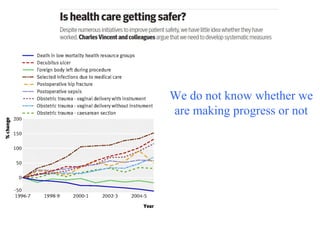
We do not know whether we are making progress or not
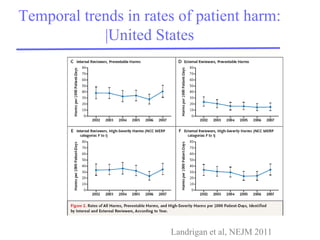
Temporal trends in rates of patient harm: |United States 
Landrigan et al, NEJM 2011
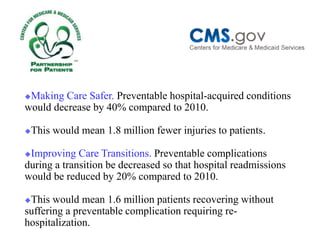
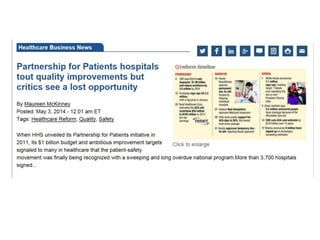
Making Care Safer. Preventable hospital-acquired conditions would decrease by 40% compared to 2010. 
This would mean 1.8 million fewer injuries to patients. 
Improving Care Transitions. Preventable complications during a transition be decreased so that hospital readmissions would be reduced by 20% compared to 2010. 
This would mean 1.6 million patients recovering without suffering a preventable complication requiring re- hospitalization.
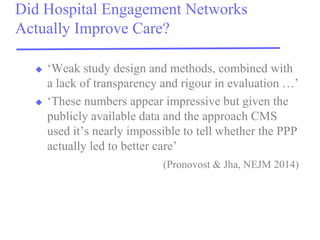
Did Hospital Engagement Networks Actually Improve Care? 
‘Weak study design and methods, combined with a lack of transparency and rigour in evaluation …’ 
‘These numbers appear impressive but given the publicly available data and the approach CMS used it’s nearly impossible to tell whether the PPP actually led to better care’ 
(Pronovost & Jha, NEJM 2014)
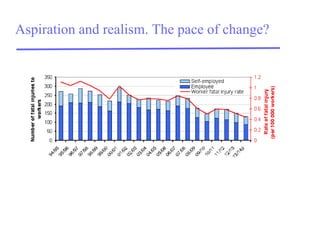
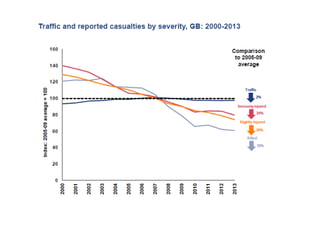
Aspiration and realism. The pace of change?
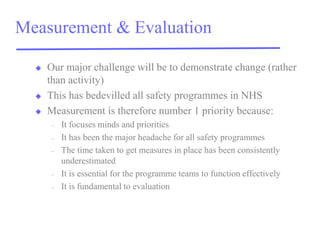
Measurement & Evaluation 
Our major challenge will be to demonstrate change (rather than activity) 
This has bedevilled all safety programmes in NHS 
Measurement is therefore number 1 priority because: 
–It focuses minds and priorities 
–It has been the major headache for all safety programmes 
–The time taken to get measures in place has been consistently underestimated 
–It is essential for the programme teams to function effectively 
–It is fundamental to evaluation

charles vincent collaborative launch

  • 1.
    Is healthcare gettingsafer? Charles Vincent Department of Psychology & Oxford Academic Health Science Network
  • 2.
    Evangelists & snails ‘Run don’t walk’ ‘The correct question is whether there is a rationale for withholding critical care resources from critically ill patients outside the intensive care unit. The answer is obvious. No’ Walk, don’t run ‘In view of the limitations of the evidence and the heterogeneity of study results it seems premature to declare Rapid Response Teams as the standard of care’. Davidoff, 2011
  • 4.
    Table 4.3 Adverseevents in acute hospitals in ten countries
  • 5.
    Cutting error and harm by 50% within 5 years
  • 6.
    UK National Reporting& Learning System Hospital Episode Statistics: 11.8M hospital admissions in England 2004/5
  • 7.
    But incident reportingonly detects 5% of harmful events
  • 9.
    Safety interventions Thechallenge of scaling up
  • 10.
    Cumulative incidence radiologicallyconfirmed thrombosis Kreckler et al, 2010
  • 11.
    Intensive care Operatingtheatre Major successes in focal clinical areas
  • 12.
    Safer Patients Initiative To reduce adverse events by 50% in 24 hospitals 11  SPI programme elements 4 Improvement = shifting the level of the process in the desirable direction (A) or reducing variation (B) A A B A B Point of initial intervention B Improvement = shifting the level of the process in the desirable direction (A) or reducing variation (B) A A B A B Point of initial intervention B Annotated Run Charts 80 metrics (34 standard) Process analysis 10  SPI programme elements 3 Incremental spread Iterative development of local innovations 9  SPI programme elements 2 8  SPII programme ellementts 1 Breakthrough Series Model Programme model Change elements Process measurement QI methodology Safer Patients Initiative Participating hospital site Collaborative learning Expert support
  • 13.
  • 14.
    Commentaries on patientsafety in the United States five years after the publication of to key reports on patient safety in 2000 were characterised by some despair at an apparent lack of progress. Our data suggest that a more encouraging story on patient safety in the NHS can now be told Benning et al, 2011
  • 15.
    The Achievements ofSPI Inspirational and important legacy Objectives over ambitious Organisations in different states of readiness First major UK safety initiative that took evaluation seriously Simply getting basic clinical data and measures was a major challenge
  • 16.
    Assessing safety interventionsat population level
  • 17.
    We do notknow whether we are making progress or not
  • 18.
    Temporal trends inrates of patient harm: |United States Landrigan et al, NEJM 2011
  • 19.
    Making Care Safer.Preventable hospital-acquired conditions would decrease by 40% compared to 2010. This would mean 1.8 million fewer injuries to patients. Improving Care Transitions. Preventable complications during a transition be decreased so that hospital readmissions would be reduced by 20% compared to 2010. This would mean 1.6 million patients recovering without suffering a preventable complication requiring re- hospitalization.
  • 21.
    Did Hospital EngagementNetworks Actually Improve Care? ‘Weak study design and methods, combined with a lack of transparency and rigour in evaluation …’ ‘These numbers appear impressive but given the publicly available data and the approach CMS used it’s nearly impossible to tell whether the PPP actually led to better care’ (Pronovost & Jha, NEJM 2014)
  • 22.
    Aspiration and realism.The pace of change?
  • 24.
    Measurement & Evaluation Our major challenge will be to demonstrate change (rather than activity) This has bedevilled all safety programmes in NHS Measurement is therefore number 1 priority because: –It focuses minds and priorities –It has been the major headache for all safety programmes –The time taken to get measures in place has been consistently underestimated –It is essential for the programme teams to function effectively –It is fundamental to evaluation