Patient Safety Awareness Week
Patient Safety Is a Public Health Issue
Jeff Brady, MD, MPH, Director, Center for Quality Improvement and Patient Safety
Agency for Healthcare Research and Quality (AHRQ), Rear Admiral, U.S. Public Health Service
Patrick Conway, MD, Deputy Administrator for Innovation & Quality, Chief Medical Officer,
Centers for Medicare and Medicaid Services
CAPT Arjun Srinivasan, MD, Associate Director for Healthcare Associated Infection Prevention
Programs, Division of Healthcare Quality Promotion, Centers for Disease Control and Prevention
Tejal K. Gandhi, MD, MPH, CPPS, President and CEO, National Patient Safety Foundation
President and CEO, NPSF Lucian Leape Institute
Thursday, March 17, 2017
2
3
Patient Safety Awareness Week Is Here
Thank you for the work that
you do!
Everyone in the health care
process plays a role in
delivering safe care
We are all united in the goal of
keeping patients and those
who care for them free from
harm
4
Patient Safety Is a Public Health Issue
Learn more.
Download the
full PDF report
for free at:
www.npsf.org/
free-from-harm
5
Patient Safety Is a Public Health Issue
 Harms caused during care involve
– Significant mortality and morbidity
– Quality of life implications
– Adversely affect patients in every care setting
 Not unlike obesity, airplane motor vehicle
crashes, breast cancer and other public health
imperatives
6
Magnitude of Harm is Significant
 As many as 440,000 patient deaths annually
(James 2013).
 ~1 in 10 patients develops an adverse event
during hospitalization (AHRQ).
 ~1 in 2 surgeries had a medication error and/or
an adverse drug event (Nanji et al. 2015).
 >12 million patients each year experience a
diagnostic error in outpatient care (Singh et al.
2014).
7
Solution Requires United Effort
 Work underway at the federal, state and local
levels
 Some important progress has been made
– Partnership for Patients initiative resulted in
~1.3 million reduction in hospital-acquired
conditions from 2011-2013
 More work to be done
– Everyone has a role to play in keeping patients safe
and free from harm
8
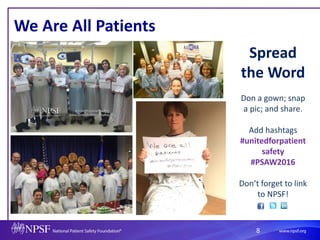
We Are All Patients
Spread
the Word
Don a gown; snap
a pic; and share.
Add hashtags
#unitedforpatient
safety
#PSAW2016
Don’t forget to link
to NPSF!
9
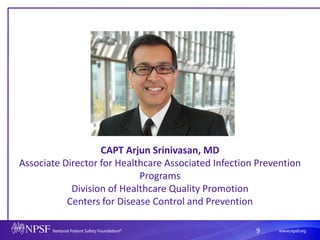
CAPT Arjun Srinivasan, MD
Associate Director for Healthcare Associated Infection Prevention
Programs
Division of Healthcare Quality Promotion
Centers for Disease Control and Prevention
What Is“Public Health?”
• Public health promotes and protects the health of
people and the communities where they live,
learn, work and play.
– While a doctor treats people who are sick,those of us
working in public health try to prevent people from
getting sick or injured in the first place.
• We work in close partnership with all stakeholders
to get this done.
• We work at the federal,state and local levels.
Source:Trust for America’s Health
10
Approaching Healthcare-associated
Infections from the Public Health
Perspective
• We do NOT view healthcare-associated
infections as“someone’s fault”
• Nor do we view them as“an inevitable price of
medical care”
• We view healthcare-associated infections as
failures of a system.
– By making strategic improvements to healthcare
delivery processes,we can prevent infections
11
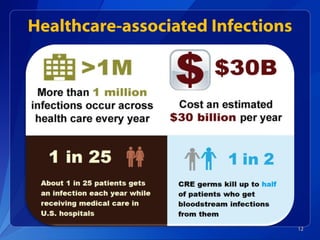
Healthcare-associated Infections
12
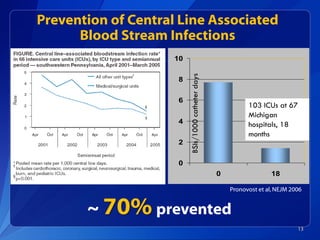
Michigan (103 ICUs)
Prevention of Central Line Associated
Blood Stream Infections
0
2
4
6
8
10
0 18
103 ICUs at 67
Michigan
hospitals, 18
months
BSIs/1000catheterdays
Pronovost et al,NEJM 2006
~ 70% prevented
13
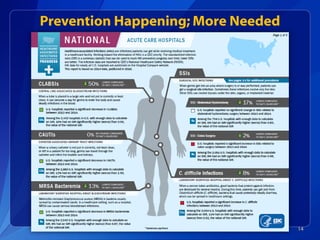
Prevention Happening; More Needed
14
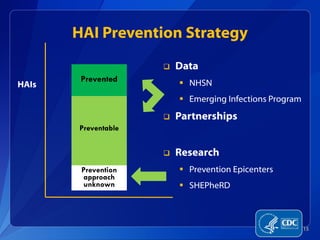
HAI Prevention Strategy
 Data
 NHSN
 Emerging Infections Program
 Partnerships
 Research
 Prevention Epicenters
 SHEPheRD
Prevented
Preventable
Prevention
approach
unknown
HAIs
15
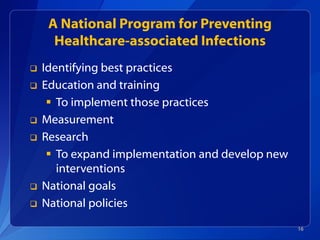
A National Program for Preventing
Healthcare-associated Infections
 Identifying best practices
 Education and training
 To implement those practices
 Measurement
 Research
 To expand implementation and develop new
interventions
 National goals
 National policies
16
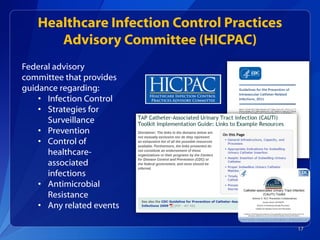
Healthcare Infection Control Practices
Advisory Committee (HICPAC)
Federal advisory
committee that provides
guidance regarding:
• Infection Control
• Strategies for
Surveillance
• Prevention
• Control of
healthcare-
associated
infections
• Antimicrobial
Resistance
• Any related events
17
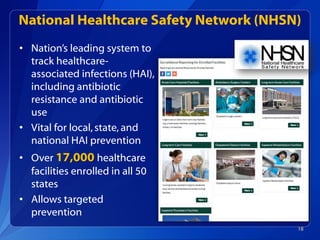
• Nation’s leading system to
track healthcare-
associated infections (HAI),
including antibiotic
resistance and antibiotic
use
• Vital for local,state, and
national HAI prevention
• Over 17,000 healthcare
facilities enrolled in all 50
states
• Allows targeted
prevention
National Healthcare Safety Network (NHSN)
18
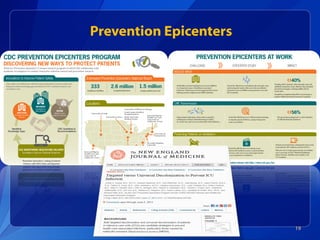
Prevention Epicenters
19
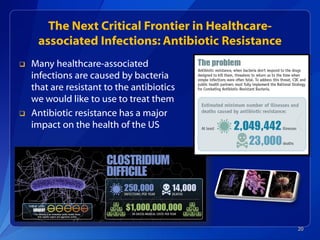
The Next Critical Frontier in Healthcare-
associated Infections: Antibiotic Resistance
 Many healthcare-associated
infections are caused by bacteria
that are resistant to the antibiotics
we would like to use to treat them
 Antibiotic resistance has a major
impact on the health of the US
20
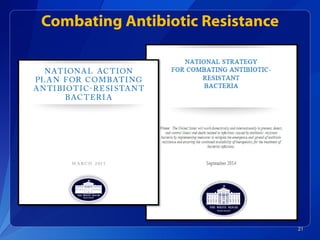
Combating Antibiotic Resistance
21
What Will it Take to Combat Antibiotic
Resistance?
 Ongoing efforts to prevent
infections and the spread of
resistant bacteria
 Better use of antibiotics
 Better tracking of resistance and
antibiotic use
 Better coordination and
collaboration
22
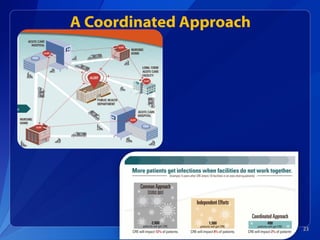
A Coordinated Approach
23
28
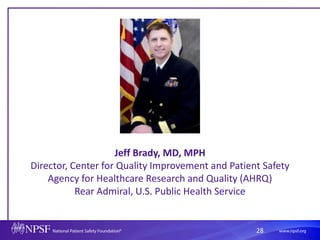
Jeff Brady, MD, MPH
Director, Center for Quality Improvement and Patient Safety
Agency for Healthcare Research and Quality (AHRQ)
Rear Admiral, U.S. Public Health Service
Unprecedented Reductions in Harm
and the Impact of this Improvement
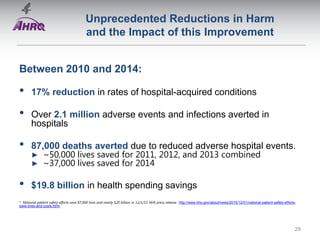
Between 2010 and 2014:
• 17% reduction in rates of hospital-acquired conditions
• Over 2.1 million adverse events and infections averted in
hospitals
• 87,000 deaths averted due to reduced adverse hospital events.
► ~50,000 lives saved for 2011, 2012, and 2013 combined
► ~37,000 lives saved for 2014
• $19.8 billion in health spending savings
* National patient safety efforts save 87,000 lives and nearly $20 billion in 12/1/15 HHS press release: http://www.hhs.gov/about/news/2015/12/01/national-patient-safety-efforts-
save-lives-and-costs.html.
29
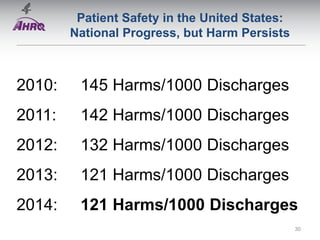
Patient Safety in the United States:
National Progress, but Harm Persists
2010: 145 Harms/1000 Discharges
2011: 142 Harms/1000 Discharges
2012: 132 Harms/1000 Discharges
2013: 121 Harms/1000 Discharges
2014: 121 Harms/1000 Discharges
30
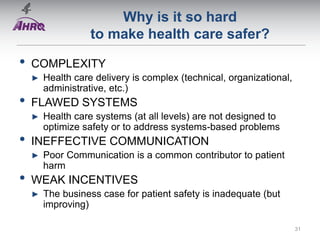
Why is it so hard
to make health care safer?
• COMPLEXITY
► Health care delivery is complex (technical, organizational,
administrative, etc.)
• FLAWED SYSTEMS
► Health care systems (at all levels) are not designed to
optimize safety or to address systems-based problems
• INEFFECTIVE COMMUNICATION
► Poor Communication is a common contributor to patient
harm
• WEAK INCENTIVES
► The business case for patient safety is inadequate (but
improving)
31
How AHRQ Makes a Difference
• AHRQ invests in research and evidence to
understand how to make health care safer and
improve quality
• AHRQ creates materials to teach and train
health care systems and professionals to
catalyze improvements in care
• AHRQ generates measures and data used to
track and improve performance and evaluate
progress of the U.S. health system
32
AHRQ’s Patient Safety Priorities
• Causes of harm associated with health care
and understanding why it occurs and how to
prevent it
• Apply knowledge to accelerate patient safety
improvement in all health care settings
• Prevent HAIs, reduce antibiotic resistance
• Improve communication and engagement
among providers and between clinicians and
patients
• Build capacity in the health care system to
address safety issues 33
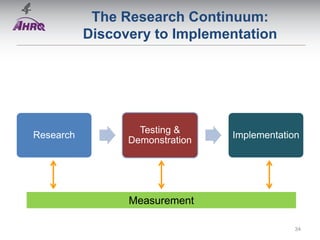
The Research Continuum:
Discovery to Implementation
Research
Testing &
Demonstration
Implementation
Measurement
34
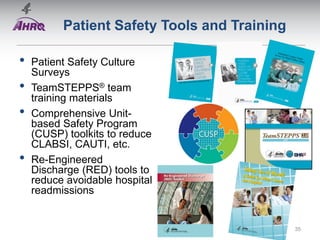
Patient Safety Tools and Training
• Patient Safety Culture
Surveys
• TeamSTEPPS® team
training materials
• Comprehensive Unit-
based Safety Program
(CUSP) toolkits to reduce
CLABSI, CAUTI, etc.
• Re-Engineered
Discharge (RED) tools to
reduce avoidable hospital
readmissions
35
Three Domains of AHRQ’s
CARB*- Related Efforts
• AHRQ maintains a robust program of
research and implementation projects
aimed to:
o Improve the use of antibiotics through
antibiotic stewardship
o Interrupt the transmission of antibiotic-
resistant bacteria
o Prevent healthcare-associated infections
(HAIs) in the first place
* Combating Antibiotic-Resistant Bacteria
36
What’s on the Horizon
• Diagnostic error
o IOM report, September 2015
o Area of growing concern in patient safety field
• Increased funding for ambulatory care patient
safety projects
• Continued focus on HAIs, including antibiotic
resistance through support of CARB effort
• Patient/provider communication and
engagement
37
Funding Opportunities
• AHRQ supports investigator-initiated research
that addresses patient safety issues.
• Two recent opportunities focus on diagnostic
safety in all settings:
► Incidence and factors that contribute to diagnostic
failure
► Strategies and interventions to improve diagnostic
safety
• Other opportunities include: safe medication
use, health care simulation, and HAI
prevention.
www.ahrq.gov/funding
38
AHRQ Patient Safety Network
(AHRQ PSNet)
• PSNet is a national “one-stop” portal of resources
for improving patient safety and preventing medical
errors
• Offers wide variety of information on patient safety
resources, tools, conferences, and more
http://psnet.ahrq.gov
http://webmm.ahrq.gov
39
Looking Ahead: 2015 NPSF Report
• Free from Harm: Accelerating Patient Safety
Improvement Fifteen Years after To Err Is
Human
• Calls for total systems approach and
establishment of a culture of safety
• Recommendations build on current state of
health care, moving the field forward
• Aligns with AHRQ’s approach, understanding
how to make the system a safer place for
clinicians to practice and patients to seek
care
40
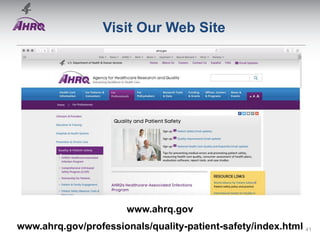
Visit Our Web Site
www.ahrq.gov
www.ahrq.gov/professionals/quality-patient-safety/index.html 41
42
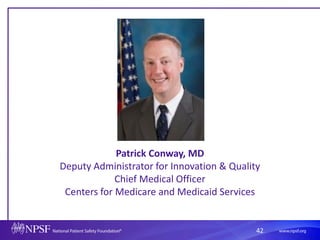
Patrick Conway, MD
Deputy Administrator for Innovation & Quality
Chief Medical Officer
Centers for Medicare and Medicaid Services
43
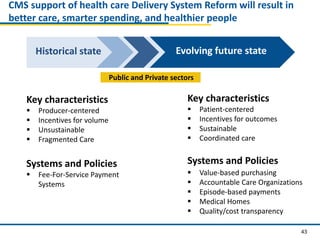
CMS support of health care Delivery System Reform will result in
better care, smarter spending, and healthier people
Key characteristics
 Producer-centered
 Incentives for volume
 Unsustainable
 Fragmented Care
Systems and Policies
 Fee-For-Service Payment
Systems
Key characteristics
 Patient-centered
 Incentives for outcomes
 Sustainable
 Coordinated care
Systems and Policies
 Value-based purchasing
 Accountable Care Organizations
 Episode-based payments
 Medical Homes
 Quality/cost transparency
Public and Private sectors
Evolving future stateHistorical state
44
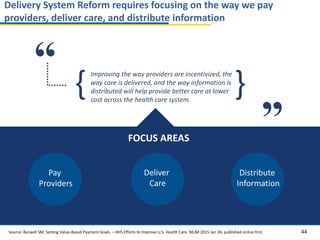
Improving the way providers are incentivized, the
way care is delivered, and the way information is
distributed will help provide better care at lower
cost across the health care system.
Delivery System Reform requires focusing on the way we pay
providers, deliver care, and distribute information
Source: Burwell SM. Setting Value-Based Payment Goals ─ HHS Efforts to Improve U.S. Health Care. NEJM 2015 Jan 26; published online first.
}
“ {
Pay
Providers
Deliver
Care
Distribute
Information
FOCUS AREAS
“
45
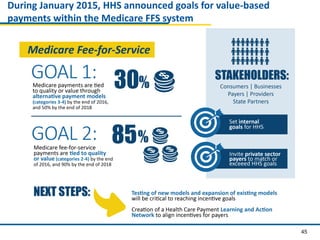
During January 2015, HHS announced goals for value-based
payments within the Medicare FFS system
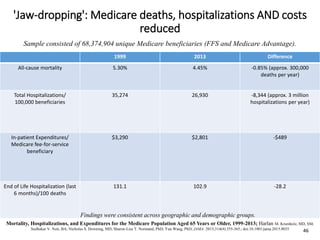
'Jaw-dropping': Medicare deaths, hospitalizations AND costs
reduced
1999 2013 Difference
All-cause mortality 5.30% 4.45% -0.85% (approx. 300,000
deaths per year)
Total Hospitalizations/
100,000 beneficiaries
35,274 26,930 -8,344 (approx. 3 million
hospitalizations per year)
In-patient Expenditures/
Medicare fee-for-service
beneficiary
$3,290 $2,801 -$489
End of Life Hospitalization (last
6 months)/100 deaths
131.1 102.9 -28.2
Sample consisted of 68,374,904 unique Medicare beneficiaries (FFS and Medicare Advantage).
Findings were consistent across geographic and demographic groups.
Mortality, Hospitalizations, and Expenditures for the Medicare Population Aged 65 Years or Older, 1999-2013; Harlan M. Krumholz, MD, SM;
Sudhakar V. Nuti, BA; Nicholas S. Downing, MD; Sharon-Lise T. Normand, PhD; Yun Wang, PhD; JAMA. 2015;314(4):355-365.; doi:10.1001/jama.2015.8035
46
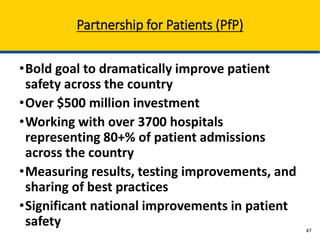
•Bold goal to dramatically improve patient
safety across the country
•Over $500 million investment
•Working with over 3700 hospitals
representing 80+% of patient admissions
across the country
•Measuring results, testing improvements, and
sharing of best practices
•Significant national improvements in patient
safety
Partnership for Patients (PfP)
47
48
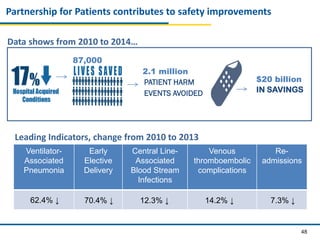
Partnership for Patients contributes to safety improvements
Ventilator-
Associated
Pneumonia
Early
Elective
Delivery
Central Line-
Associated
Blood Stream
Infections
Venous
thromboembolic
complications
Re-
admissions
Leading Indicators, change from 2010 to 2013
62.4% ↓ 70.4% ↓ 12.3% ↓ 14.2% ↓ 7.3% ↓
Data shows from 2010 to 2014…
87,000
2.1 million
PATIENT HARM
EVENTS AVOIDED
$20 billion
IN SAVINGS
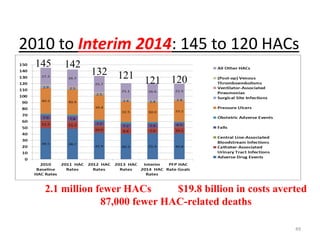
2010 to Interim 2014: 145 to 120 HACs
49
145 142
132 121 121 120
2.1 million fewer HACs $19.8 billion in costs averted
87,000 fewer HAC-related deaths
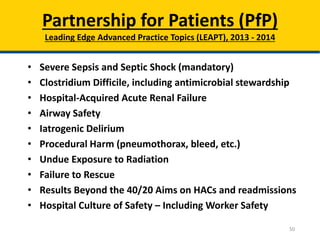
• Severe Sepsis and Septic Shock (mandatory)
• Clostridium Difficile, including antimicrobial stewardship
• Hospital-Acquired Acute Renal Failure
• Airway Safety
• Iatrogenic Delirium
• Procedural Harm (pneumothorax, bleed, etc.)
• Undue Exposure to Radiation
• Failure to Rescue
• Results Beyond the 40/20 Aims on HACs and readmissions
• Hospital Culture of Safety – Including Worker Safety
Partnership for Patients (PfP)
Leading Edge Advanced Practice Topics (LEAPT), 2013 - 2014
50
51
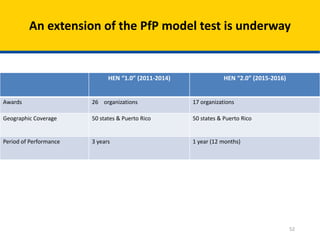
HEN “1.0” (2011-2014) HEN “2.0” (2015-2016)
Awards 26 organizations 17 organizations
Geographic Coverage 50 states & Puerto Rico 50 states & Puerto Rico
Period of Performance 3 years 1 year (12 months)
An extension of the PfP model test is underway
52
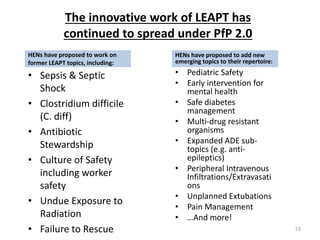
The innovative work of LEAPT has
continued to spread under PfP 2.0
HENs have proposed to work on
former LEAPT topics, including:
• Sepsis & Septic
Shock
• Clostridium difficile
(C. diff)
• Antibiotic
Stewardship
• Culture of Safety
including worker
safety
• Undue Exposure to
Radiation
• Failure to Rescue
HENs have proposed to add new
emerging topics to their repertoire:
• Pediatric Safety
• Early intervention for
mental health
• Safe diabetes
management
• Multi-drug resistant
organisms
• Expanded ADE sub-
topics (e.g. anti-
epileptics)
• Peripheral Intravenous
Infiltrations/Extravasati
ons
• Unplanned Extubations
• Pain Management
• …And more!
53
54
55
56
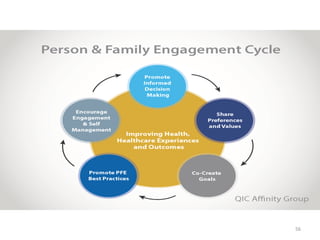
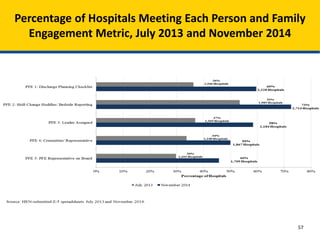
Percentage of Hospitals Meeting Each Person and Family
Engagement Metric, July 2013 and November 2014
57
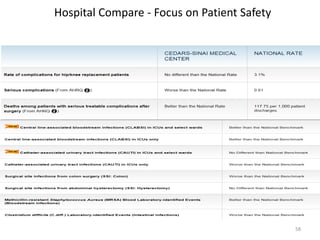
Hospital Compare - Focus on Patient Safety
58
• Patient safety is an essential component of CMS’s work. We
must prevent harm. We need your help.
• CMS is encouraging networks and their participants to seek
out opportunities for synergy, alignment, and collaboration
across the health care system in order to achieve impact for
patients and their families.
• Alignment of powerful forces is central to our proven ability
to generate breakthrough results.
• CMS is committed to collaboration and sustaining the work
on patient safety.
Moving Forward in Active Partnership
59
60
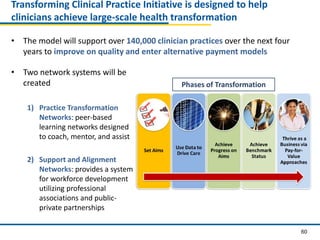
Transforming Clinical Practice Initiative is designed to help
clinicians achieve large-scale health transformation
• The model will support over 140,000 clinician practices over the next four
years to improve on quality and enter alternative payment models
Phases of Transformation
• Two network systems will be
created
1) Practice Transformation
Networks: peer-based
learning networks designed
to coach, mentor, and assist
2) Support and Alignment
Networks: provides a system
for workforce development
utilizing professional
associations and public-
private partnerships
61
 Eliminate patient harm
 Focus on better care, smarter spending, and healthier
people within the population you serve
 Engage in accountable care and other alternative payment
contracts that move away from fee-for-service to model
based on achieving better outcomes at lower cost
 Invest in the quality infrastructure necessary to improve
 Focus on data and performance transparency
 Test new innovations and scale successes rapidly
 Relentlessly pursue improved health outcomes
What can you do to help our system achieve the goals of Better
Care, Smarter Spending, and Healthier People?
62
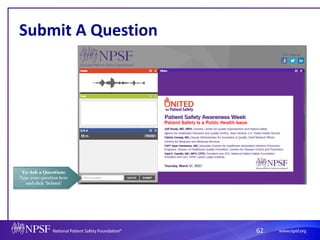
Submit A Question
63
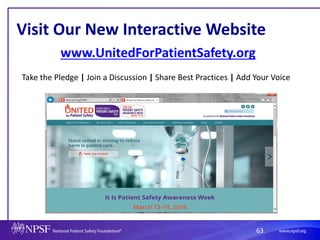
Visit Our New Interactive Website
www.UnitedForPatientSafety.org
Take the Pledge | Join a Discussion | Share Best Practices | Add Your Voice
64
65

Npsf webcast psaw_live_slides_v1

  • 1.
    Patient Safety AwarenessWeek Patient Safety Is a Public Health Issue Jeff Brady, MD, MPH, Director, Center for Quality Improvement and Patient Safety Agency for Healthcare Research and Quality (AHRQ), Rear Admiral, U.S. Public Health Service Patrick Conway, MD, Deputy Administrator for Innovation & Quality, Chief Medical Officer, Centers for Medicare and Medicaid Services CAPT Arjun Srinivasan, MD, Associate Director for Healthcare Associated Infection Prevention Programs, Division of Healthcare Quality Promotion, Centers for Disease Control and Prevention Tejal K. Gandhi, MD, MPH, CPPS, President and CEO, National Patient Safety Foundation President and CEO, NPSF Lucian Leape Institute Thursday, March 17, 2017
  • 2.
  • 3.
    3 Patient Safety AwarenessWeek Is Here Thank you for the work that you do! Everyone in the health care process plays a role in delivering safe care We are all united in the goal of keeping patients and those who care for them free from harm
  • 4.
    4 Patient Safety Isa Public Health Issue Learn more. Download the full PDF report for free at: www.npsf.org/ free-from-harm
  • 5.
    5 Patient Safety Isa Public Health Issue  Harms caused during care involve – Significant mortality and morbidity – Quality of life implications – Adversely affect patients in every care setting  Not unlike obesity, airplane motor vehicle crashes, breast cancer and other public health imperatives
  • 6.
    6 Magnitude of Harmis Significant  As many as 440,000 patient deaths annually (James 2013).  ~1 in 10 patients develops an adverse event during hospitalization (AHRQ).  ~1 in 2 surgeries had a medication error and/or an adverse drug event (Nanji et al. 2015).  >12 million patients each year experience a diagnostic error in outpatient care (Singh et al. 2014).
  • 7.
    7 Solution Requires UnitedEffort  Work underway at the federal, state and local levels  Some important progress has been made – Partnership for Patients initiative resulted in ~1.3 million reduction in hospital-acquired conditions from 2011-2013  More work to be done – Everyone has a role to play in keeping patients safe and free from harm
  • 8.
    8 We Are AllPatients Spread the Word Don a gown; snap a pic; and share. Add hashtags #unitedforpatient safety #PSAW2016 Don’t forget to link to NPSF!
  • 9.
    9 CAPT Arjun Srinivasan,MD Associate Director for Healthcare Associated Infection Prevention Programs Division of Healthcare Quality Promotion Centers for Disease Control and Prevention
  • 10.
    What Is“Public Health?” •Public health promotes and protects the health of people and the communities where they live, learn, work and play. – While a doctor treats people who are sick,those of us working in public health try to prevent people from getting sick or injured in the first place. • We work in close partnership with all stakeholders to get this done. • We work at the federal,state and local levels. Source:Trust for America’s Health 10
  • 11.
    Approaching Healthcare-associated Infections fromthe Public Health Perspective • We do NOT view healthcare-associated infections as“someone’s fault” • Nor do we view them as“an inevitable price of medical care” • We view healthcare-associated infections as failures of a system. – By making strategic improvements to healthcare delivery processes,we can prevent infections 11
  • 12.
  • 13.
    Michigan (103 ICUs) Preventionof Central Line Associated Blood Stream Infections 0 2 4 6 8 10 0 18 103 ICUs at 67 Michigan hospitals, 18 months BSIs/1000catheterdays Pronovost et al,NEJM 2006 ~ 70% prevented 13
  • 14.
  • 15.
    HAI Prevention Strategy Data  NHSN  Emerging Infections Program  Partnerships  Research  Prevention Epicenters  SHEPheRD Prevented Preventable Prevention approach unknown HAIs 15
  • 16.
    A National Programfor Preventing Healthcare-associated Infections  Identifying best practices  Education and training  To implement those practices  Measurement  Research  To expand implementation and develop new interventions  National goals  National policies 16
  • 17.
    Healthcare Infection ControlPractices Advisory Committee (HICPAC) Federal advisory committee that provides guidance regarding: • Infection Control • Strategies for Surveillance • Prevention • Control of healthcare- associated infections • Antimicrobial Resistance • Any related events 17
  • 18.
    • Nation’s leadingsystem to track healthcare- associated infections (HAI), including antibiotic resistance and antibiotic use • Vital for local,state, and national HAI prevention • Over 17,000 healthcare facilities enrolled in all 50 states • Allows targeted prevention National Healthcare Safety Network (NHSN) 18
  • 19.
  • 20.
    The Next CriticalFrontier in Healthcare- associated Infections: Antibiotic Resistance  Many healthcare-associated infections are caused by bacteria that are resistant to the antibiotics we would like to use to treat them  Antibiotic resistance has a major impact on the health of the US 20
  • 21.
  • 22.
    What Will itTake to Combat Antibiotic Resistance?  Ongoing efforts to prevent infections and the spread of resistant bacteria  Better use of antibiotics  Better tracking of resistance and antibiotic use  Better coordination and collaboration 22
  • 23.
  • 24.
    28 Jeff Brady, MD,MPH Director, Center for Quality Improvement and Patient Safety Agency for Healthcare Research and Quality (AHRQ) Rear Admiral, U.S. Public Health Service
  • 25.
    Unprecedented Reductions inHarm and the Impact of this Improvement Between 2010 and 2014: • 17% reduction in rates of hospital-acquired conditions • Over 2.1 million adverse events and infections averted in hospitals • 87,000 deaths averted due to reduced adverse hospital events. ► ~50,000 lives saved for 2011, 2012, and 2013 combined ► ~37,000 lives saved for 2014 • $19.8 billion in health spending savings * National patient safety efforts save 87,000 lives and nearly $20 billion in 12/1/15 HHS press release: http://www.hhs.gov/about/news/2015/12/01/national-patient-safety-efforts- save-lives-and-costs.html. 29
  • 26.
    Patient Safety inthe United States: National Progress, but Harm Persists 2010: 145 Harms/1000 Discharges 2011: 142 Harms/1000 Discharges 2012: 132 Harms/1000 Discharges 2013: 121 Harms/1000 Discharges 2014: 121 Harms/1000 Discharges 30
  • 27.
    Why is itso hard to make health care safer? • COMPLEXITY ► Health care delivery is complex (technical, organizational, administrative, etc.) • FLAWED SYSTEMS ► Health care systems (at all levels) are not designed to optimize safety or to address systems-based problems • INEFFECTIVE COMMUNICATION ► Poor Communication is a common contributor to patient harm • WEAK INCENTIVES ► The business case for patient safety is inadequate (but improving) 31
  • 28.
    How AHRQ Makesa Difference • AHRQ invests in research and evidence to understand how to make health care safer and improve quality • AHRQ creates materials to teach and train health care systems and professionals to catalyze improvements in care • AHRQ generates measures and data used to track and improve performance and evaluate progress of the U.S. health system 32
  • 29.
    AHRQ’s Patient SafetyPriorities • Causes of harm associated with health care and understanding why it occurs and how to prevent it • Apply knowledge to accelerate patient safety improvement in all health care settings • Prevent HAIs, reduce antibiotic resistance • Improve communication and engagement among providers and between clinicians and patients • Build capacity in the health care system to address safety issues 33
  • 30.
    The Research Continuum: Discoveryto Implementation Research Testing & Demonstration Implementation Measurement 34
  • 31.
    Patient Safety Toolsand Training • Patient Safety Culture Surveys • TeamSTEPPS® team training materials • Comprehensive Unit- based Safety Program (CUSP) toolkits to reduce CLABSI, CAUTI, etc. • Re-Engineered Discharge (RED) tools to reduce avoidable hospital readmissions 35
  • 32.
    Three Domains ofAHRQ’s CARB*- Related Efforts • AHRQ maintains a robust program of research and implementation projects aimed to: o Improve the use of antibiotics through antibiotic stewardship o Interrupt the transmission of antibiotic- resistant bacteria o Prevent healthcare-associated infections (HAIs) in the first place * Combating Antibiotic-Resistant Bacteria 36
  • 33.
    What’s on theHorizon • Diagnostic error o IOM report, September 2015 o Area of growing concern in patient safety field • Increased funding for ambulatory care patient safety projects • Continued focus on HAIs, including antibiotic resistance through support of CARB effort • Patient/provider communication and engagement 37
  • 34.
    Funding Opportunities • AHRQsupports investigator-initiated research that addresses patient safety issues. • Two recent opportunities focus on diagnostic safety in all settings: ► Incidence and factors that contribute to diagnostic failure ► Strategies and interventions to improve diagnostic safety • Other opportunities include: safe medication use, health care simulation, and HAI prevention. www.ahrq.gov/funding 38
  • 35.
    AHRQ Patient SafetyNetwork (AHRQ PSNet) • PSNet is a national “one-stop” portal of resources for improving patient safety and preventing medical errors • Offers wide variety of information on patient safety resources, tools, conferences, and more http://psnet.ahrq.gov http://webmm.ahrq.gov 39
  • 36.
    Looking Ahead: 2015NPSF Report • Free from Harm: Accelerating Patient Safety Improvement Fifteen Years after To Err Is Human • Calls for total systems approach and establishment of a culture of safety • Recommendations build on current state of health care, moving the field forward • Aligns with AHRQ’s approach, understanding how to make the system a safer place for clinicians to practice and patients to seek care 40
  • 37.
    Visit Our WebSite www.ahrq.gov www.ahrq.gov/professionals/quality-patient-safety/index.html 41
  • 38.
    42 Patrick Conway, MD DeputyAdministrator for Innovation & Quality Chief Medical Officer Centers for Medicare and Medicaid Services
  • 39.
    43 CMS support ofhealth care Delivery System Reform will result in better care, smarter spending, and healthier people Key characteristics  Producer-centered  Incentives for volume  Unsustainable  Fragmented Care Systems and Policies  Fee-For-Service Payment Systems Key characteristics  Patient-centered  Incentives for outcomes  Sustainable  Coordinated care Systems and Policies  Value-based purchasing  Accountable Care Organizations  Episode-based payments  Medical Homes  Quality/cost transparency Public and Private sectors Evolving future stateHistorical state
  • 40.
    44 Improving the wayproviders are incentivized, the way care is delivered, and the way information is distributed will help provide better care at lower cost across the health care system. Delivery System Reform requires focusing on the way we pay providers, deliver care, and distribute information Source: Burwell SM. Setting Value-Based Payment Goals ─ HHS Efforts to Improve U.S. Health Care. NEJM 2015 Jan 26; published online first. } “ { Pay Providers Deliver Care Distribute Information FOCUS AREAS “
  • 41.
    45 During January 2015,HHS announced goals for value-based payments within the Medicare FFS system
  • 42.
    'Jaw-dropping': Medicare deaths,hospitalizations AND costs reduced 1999 2013 Difference All-cause mortality 5.30% 4.45% -0.85% (approx. 300,000 deaths per year) Total Hospitalizations/ 100,000 beneficiaries 35,274 26,930 -8,344 (approx. 3 million hospitalizations per year) In-patient Expenditures/ Medicare fee-for-service beneficiary $3,290 $2,801 -$489 End of Life Hospitalization (last 6 months)/100 deaths 131.1 102.9 -28.2 Sample consisted of 68,374,904 unique Medicare beneficiaries (FFS and Medicare Advantage). Findings were consistent across geographic and demographic groups. Mortality, Hospitalizations, and Expenditures for the Medicare Population Aged 65 Years or Older, 1999-2013; Harlan M. Krumholz, MD, SM; Sudhakar V. Nuti, BA; Nicholas S. Downing, MD; Sharon-Lise T. Normand, PhD; Yun Wang, PhD; JAMA. 2015;314(4):355-365.; doi:10.1001/jama.2015.8035 46
  • 43.
    •Bold goal todramatically improve patient safety across the country •Over $500 million investment •Working with over 3700 hospitals representing 80+% of patient admissions across the country •Measuring results, testing improvements, and sharing of best practices •Significant national improvements in patient safety Partnership for Patients (PfP) 47
  • 44.
    48 Partnership for Patientscontributes to safety improvements Ventilator- Associated Pneumonia Early Elective Delivery Central Line- Associated Blood Stream Infections Venous thromboembolic complications Re- admissions Leading Indicators, change from 2010 to 2013 62.4% ↓ 70.4% ↓ 12.3% ↓ 14.2% ↓ 7.3% ↓ Data shows from 2010 to 2014… 87,000 2.1 million PATIENT HARM EVENTS AVOIDED $20 billion IN SAVINGS
  • 45.
    2010 to Interim2014: 145 to 120 HACs 49 145 142 132 121 121 120 2.1 million fewer HACs $19.8 billion in costs averted 87,000 fewer HAC-related deaths
  • 46.
    • Severe Sepsisand Septic Shock (mandatory) • Clostridium Difficile, including antimicrobial stewardship • Hospital-Acquired Acute Renal Failure • Airway Safety • Iatrogenic Delirium • Procedural Harm (pneumothorax, bleed, etc.) • Undue Exposure to Radiation • Failure to Rescue • Results Beyond the 40/20 Aims on HACs and readmissions • Hospital Culture of Safety – Including Worker Safety Partnership for Patients (PfP) Leading Edge Advanced Practice Topics (LEAPT), 2013 - 2014 50
  • 47.
  • 48.
    HEN “1.0” (2011-2014)HEN “2.0” (2015-2016) Awards 26 organizations 17 organizations Geographic Coverage 50 states & Puerto Rico 50 states & Puerto Rico Period of Performance 3 years 1 year (12 months) An extension of the PfP model test is underway 52
  • 49.
    The innovative workof LEAPT has continued to spread under PfP 2.0 HENs have proposed to work on former LEAPT topics, including: • Sepsis & Septic Shock • Clostridium difficile (C. diff) • Antibiotic Stewardship • Culture of Safety including worker safety • Undue Exposure to Radiation • Failure to Rescue HENs have proposed to add new emerging topics to their repertoire: • Pediatric Safety • Early intervention for mental health • Safe diabetes management • Multi-drug resistant organisms • Expanded ADE sub- topics (e.g. anti- epileptics) • Peripheral Intravenous Infiltrations/Extravasati ons • Unplanned Extubations • Pain Management • …And more! 53
  • 50.
  • 51.
  • 52.
  • 53.
    Percentage of HospitalsMeeting Each Person and Family Engagement Metric, July 2013 and November 2014 57
  • 54.
    Hospital Compare -Focus on Patient Safety 58
  • 55.
    • Patient safetyis an essential component of CMS’s work. We must prevent harm. We need your help. • CMS is encouraging networks and their participants to seek out opportunities for synergy, alignment, and collaboration across the health care system in order to achieve impact for patients and their families. • Alignment of powerful forces is central to our proven ability to generate breakthrough results. • CMS is committed to collaboration and sustaining the work on patient safety. Moving Forward in Active Partnership 59
  • 56.
    60 Transforming Clinical PracticeInitiative is designed to help clinicians achieve large-scale health transformation • The model will support over 140,000 clinician practices over the next four years to improve on quality and enter alternative payment models Phases of Transformation • Two network systems will be created 1) Practice Transformation Networks: peer-based learning networks designed to coach, mentor, and assist 2) Support and Alignment Networks: provides a system for workforce development utilizing professional associations and public- private partnerships
  • 57.
    61  Eliminate patientharm  Focus on better care, smarter spending, and healthier people within the population you serve  Engage in accountable care and other alternative payment contracts that move away from fee-for-service to model based on achieving better outcomes at lower cost  Invest in the quality infrastructure necessary to improve  Focus on data and performance transparency  Test new innovations and scale successes rapidly  Relentlessly pursue improved health outcomes What can you do to help our system achieve the goals of Better Care, Smarter Spending, and Healthier People?
  • 58.
  • 59.
    63 Visit Our NewInteractive Website www.UnitedForPatientSafety.org Take the Pledge | Join a Discussion | Share Best Practices | Add Your Voice
  • 60.
  • 61.