CHARACTERISTICS OF BLOGS,
BLOGGERS AND SELF-CITATION IN
  THE SCIENCE BLOGOSPHERE

  Hadas Shema, Judit Bar-Ilan and Mike
  Thelwall

  CoScI 2012 : Conference on Science and the
  Internet 2012
Post-Publication Peer Review
• Wolfe-Simon et al. (2011). A Bacterium That Can Grow by
 Using Arsenic Instead of Phosphorus. Science (published
 online in December 2, 2010)

• Extensively criticized in Blogs and Twitter (See “Arsenic
 Bacteria link-dump,” Blog Around the Clock). #arseniclife

• 8 comments eventually published by Science on May 27,
 2011

• Article mentioned in about 1,330 blog posts (Google Blog
 Search, July 2012, for exact title)
Detective Work
• A “Citation Cartel” discovered by blogger Phil Davis from
  the Scholarly Kitchen (“The emergence of a Citation Cartel,”
  Davis, P. 2012, Apr 10).


• Review articles written to increase journals’ impact factors
 and published in other journals.

• Three out of the four offenders were suspended from the
  JCR (“Citation cartel journals denied 2011 Impact Factor,” Davis, P.
  2012, June 29).
• Two articles retracted due to citation manipulation (“A first?
  Papers retracted for citation manipulation,” Oransky, I. ,2012 July 5)
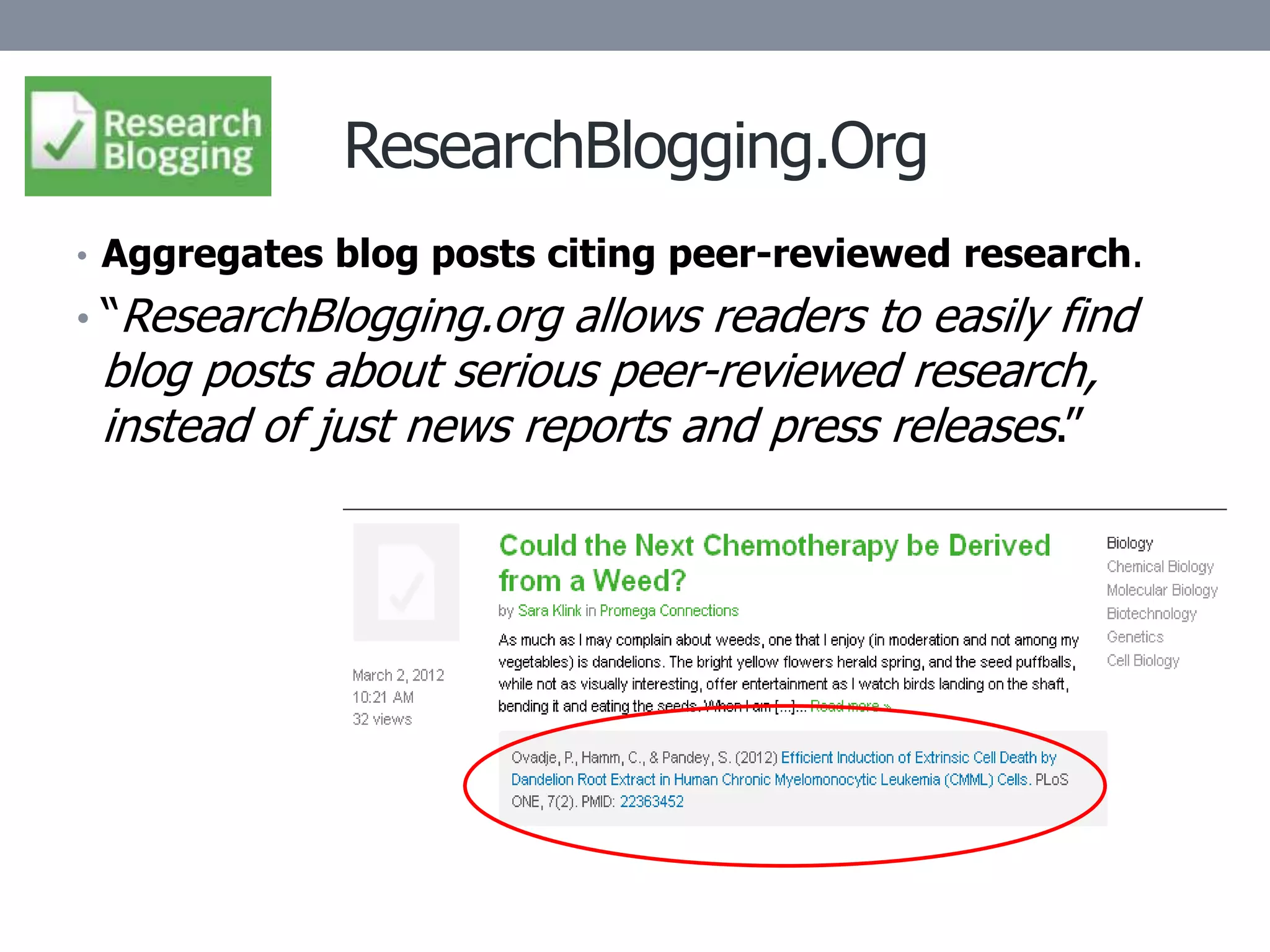
ResearchBlogging.Org
• Aggregates blog posts citing peer-reviewed research.
• “ResearchBlogging.org allows readers to easily find
 blog posts about serious peer-reviewed research,
 instead of just news reports and press releases.”
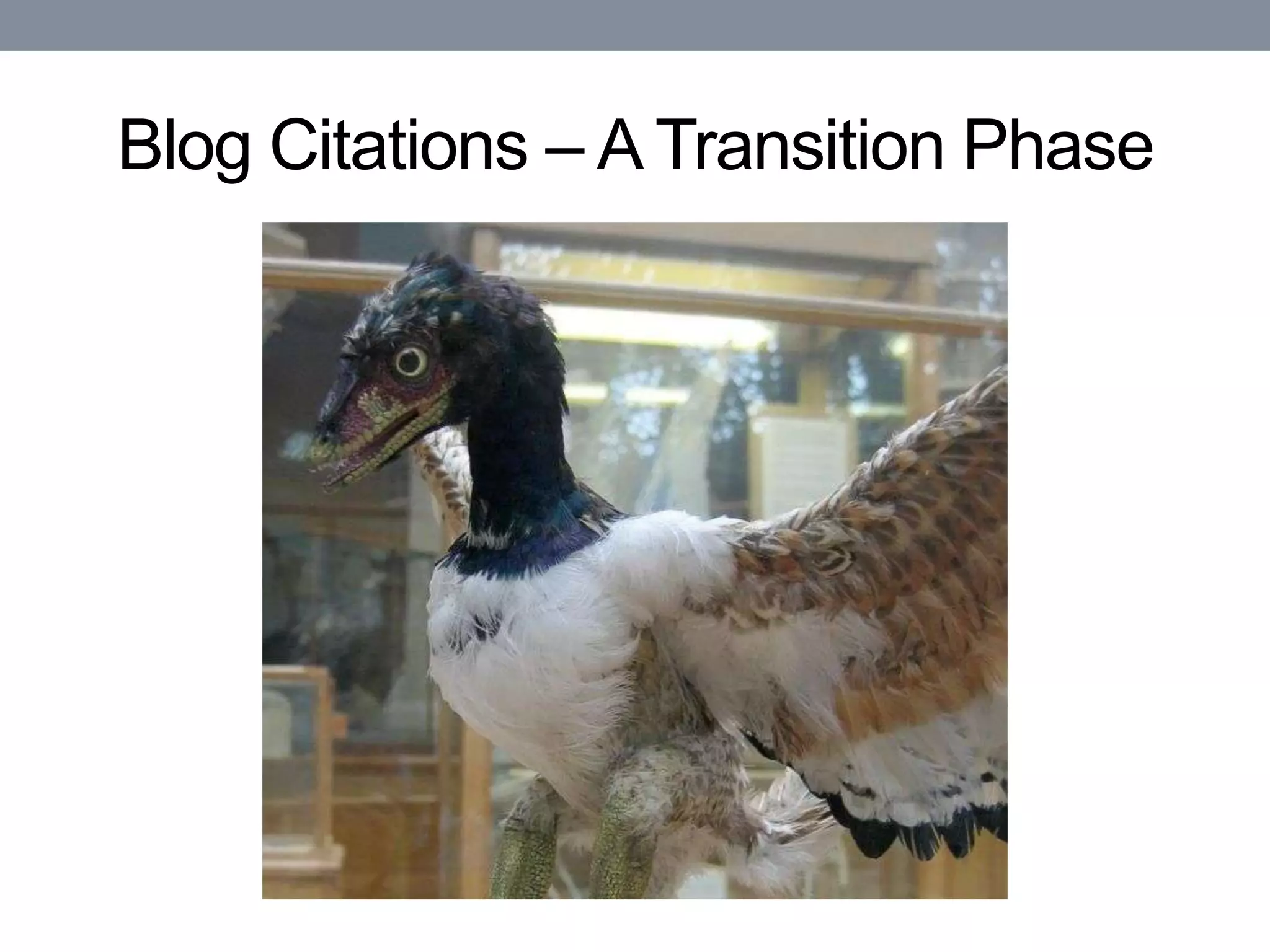
Blog Citations – A Transition Phase
First Sample
• 126 non-commercial blogs, by one or two
  authors, with more than 20 entries posted at RB
  during 2010
• Reviewed journals based on last five posts in
  each blog
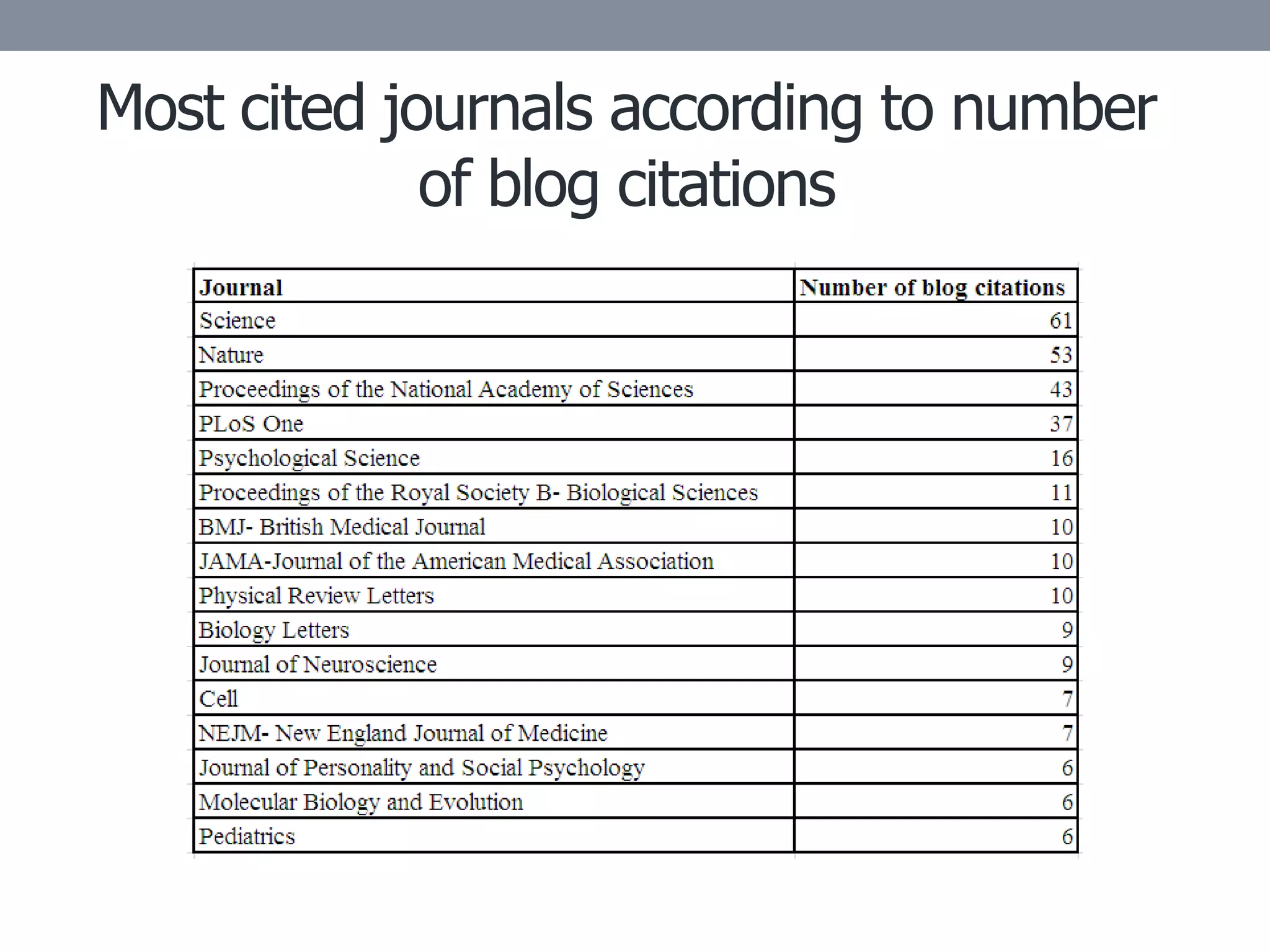
Most cited journals according to number
             of blog citations
@DrVes: Research Bloggers show a
preference for papers from high-
impact journals - just like everyone
else on earth
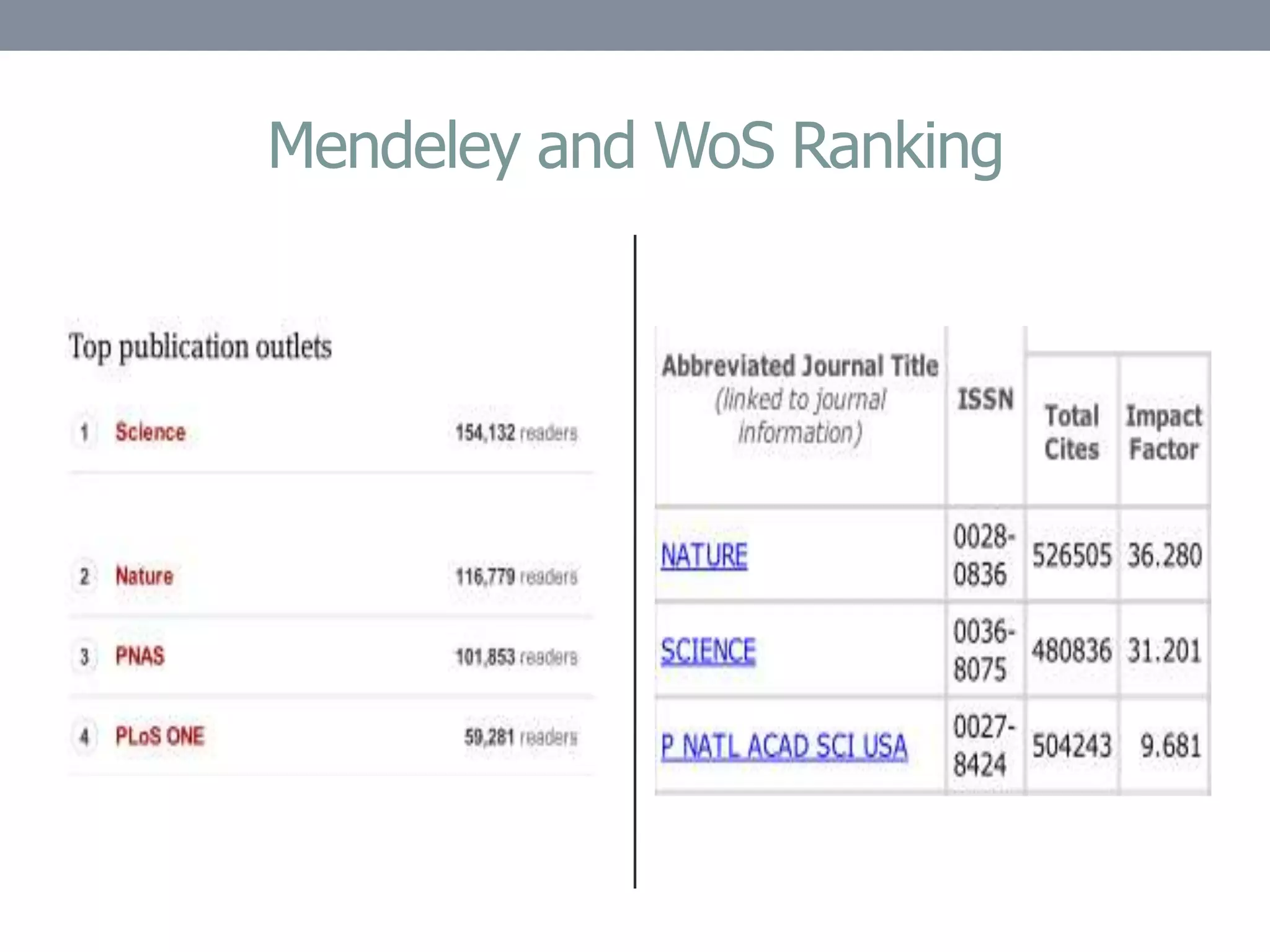
Mendeley and WoS Ranking
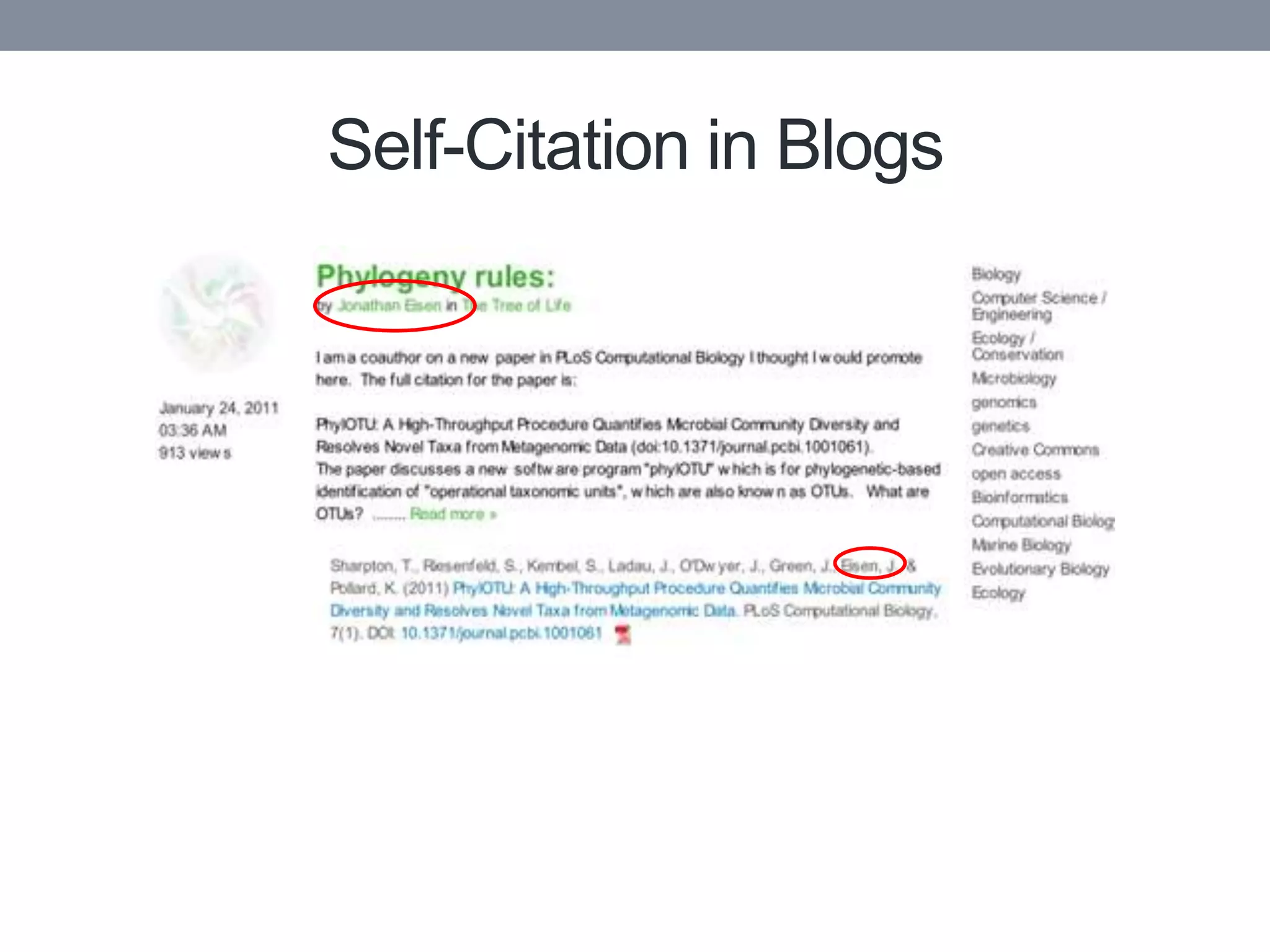
Self-Citation in Blogs
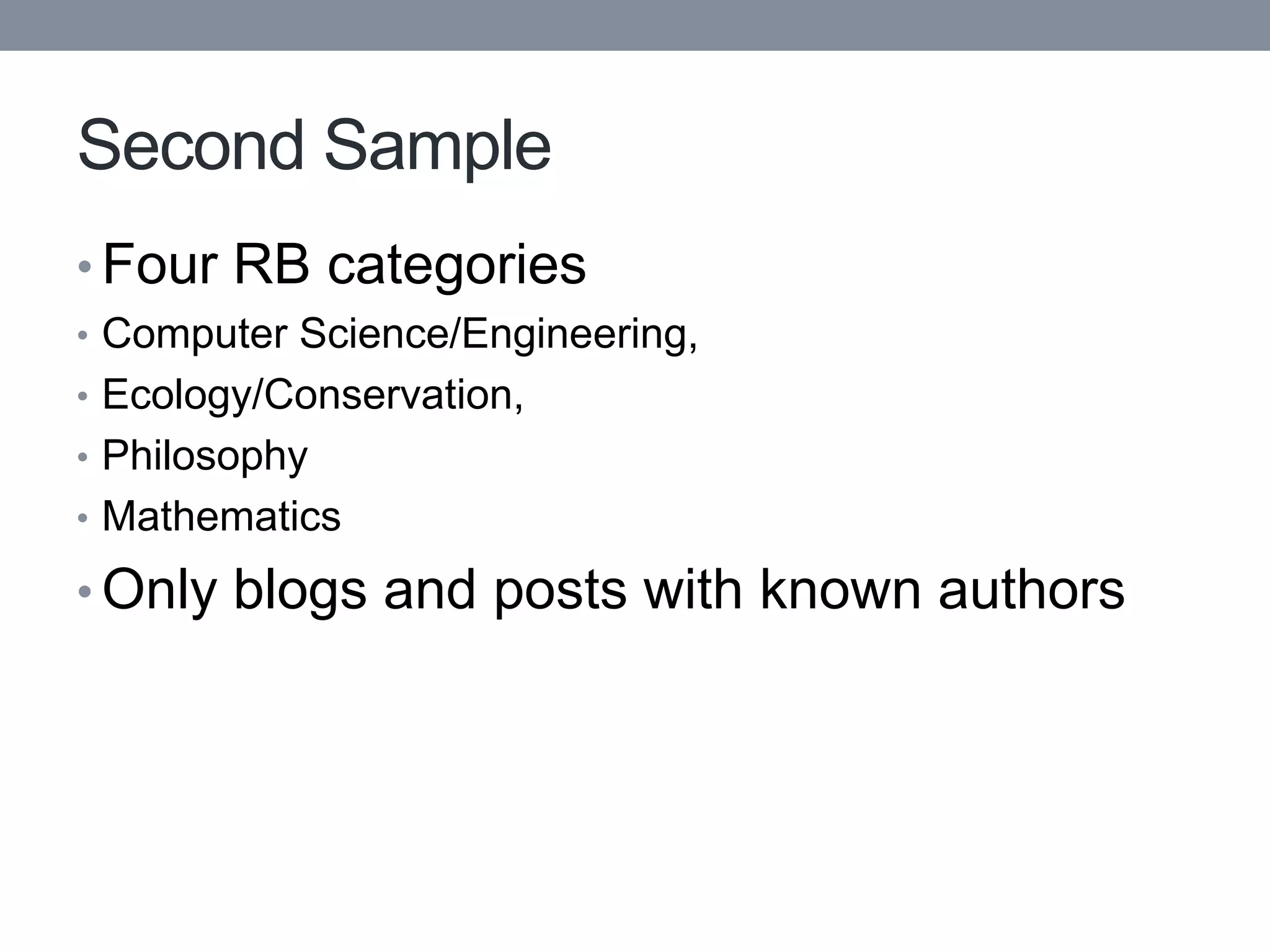
Second Sample
• Four RB categories
• Computer Science/Engineering,
• Ecology/Conservation,
• Philosophy
• Mathematics

• Only blogs and posts with known authors
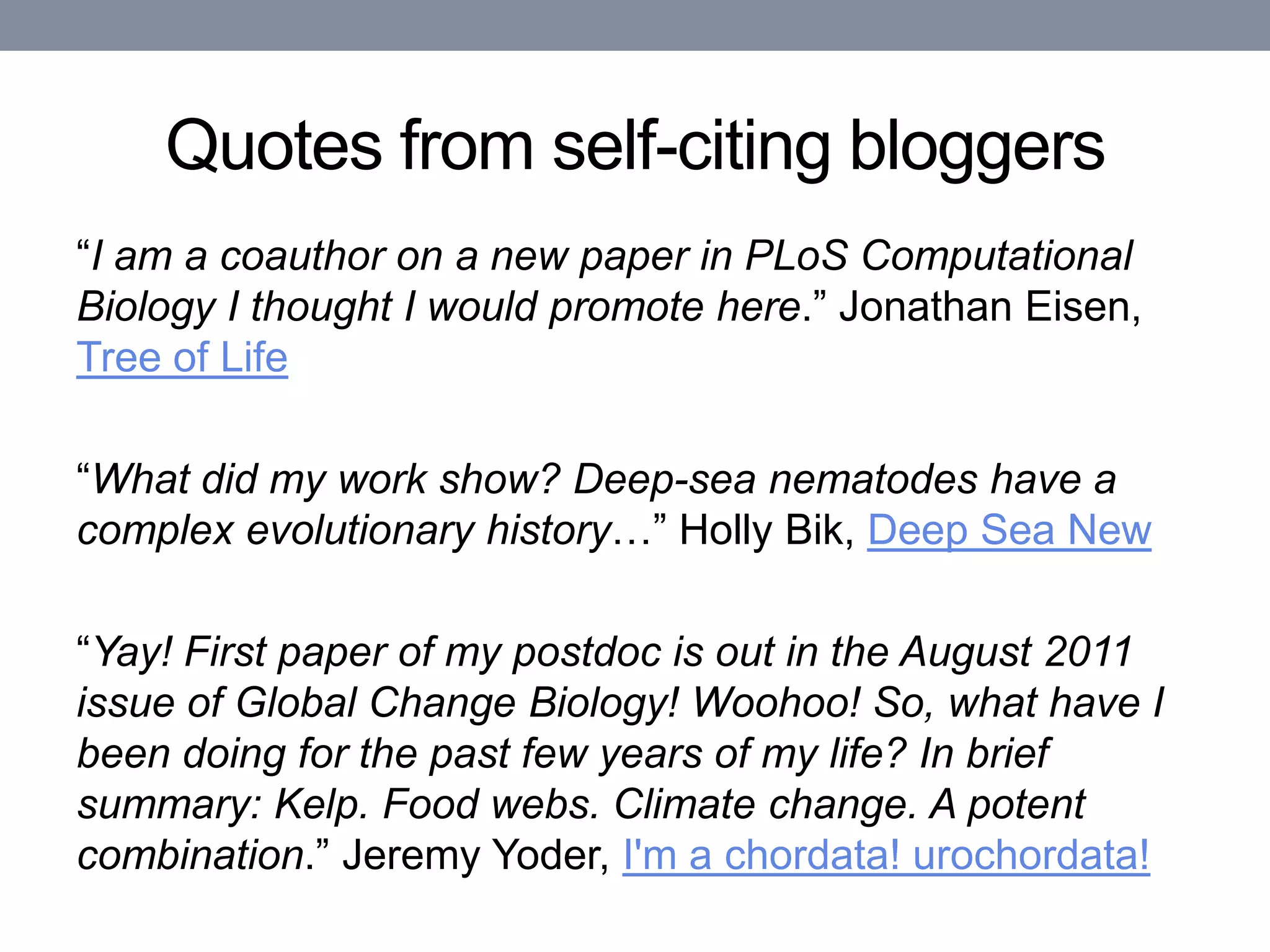
Quotes from self-citing bloggers
“I am a coauthor on a new paper in PLoS Computational
Biology I thought I would promote here.” Jonathan Eisen,
Tree of Life

“What did my work show? Deep-sea nematodes have a
complex evolutionary history…” Holly Bik, Deep Sea New

“Yay! First paper of my postdoc is out in the August 2011
issue of Global Change Biology! Woohoo! So, what have I
been doing for the past few years of my life? In brief
summary: Kelp. Food webs. Climate change. A potent
combination.” Jeremy Yoder, I'm a chordata! urochordata!
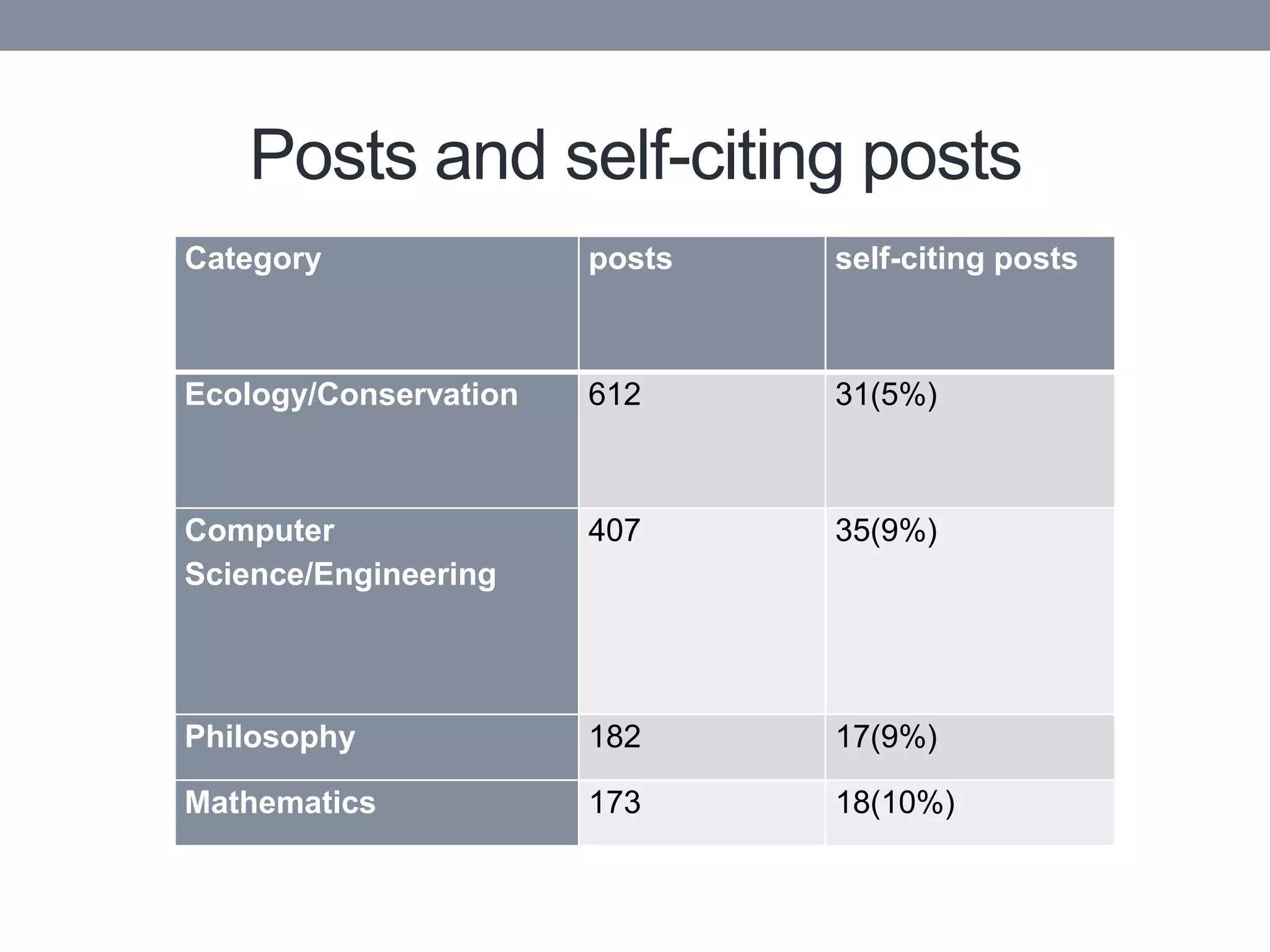
Posts and self-citing posts
Category               posts   self-citing posts


Ecology/Conservation   612     31(5%)


Computer               407     35(9%)
Science/Engineering


Philosophy             182     17(9%)

Mathematics            173     18(10%)
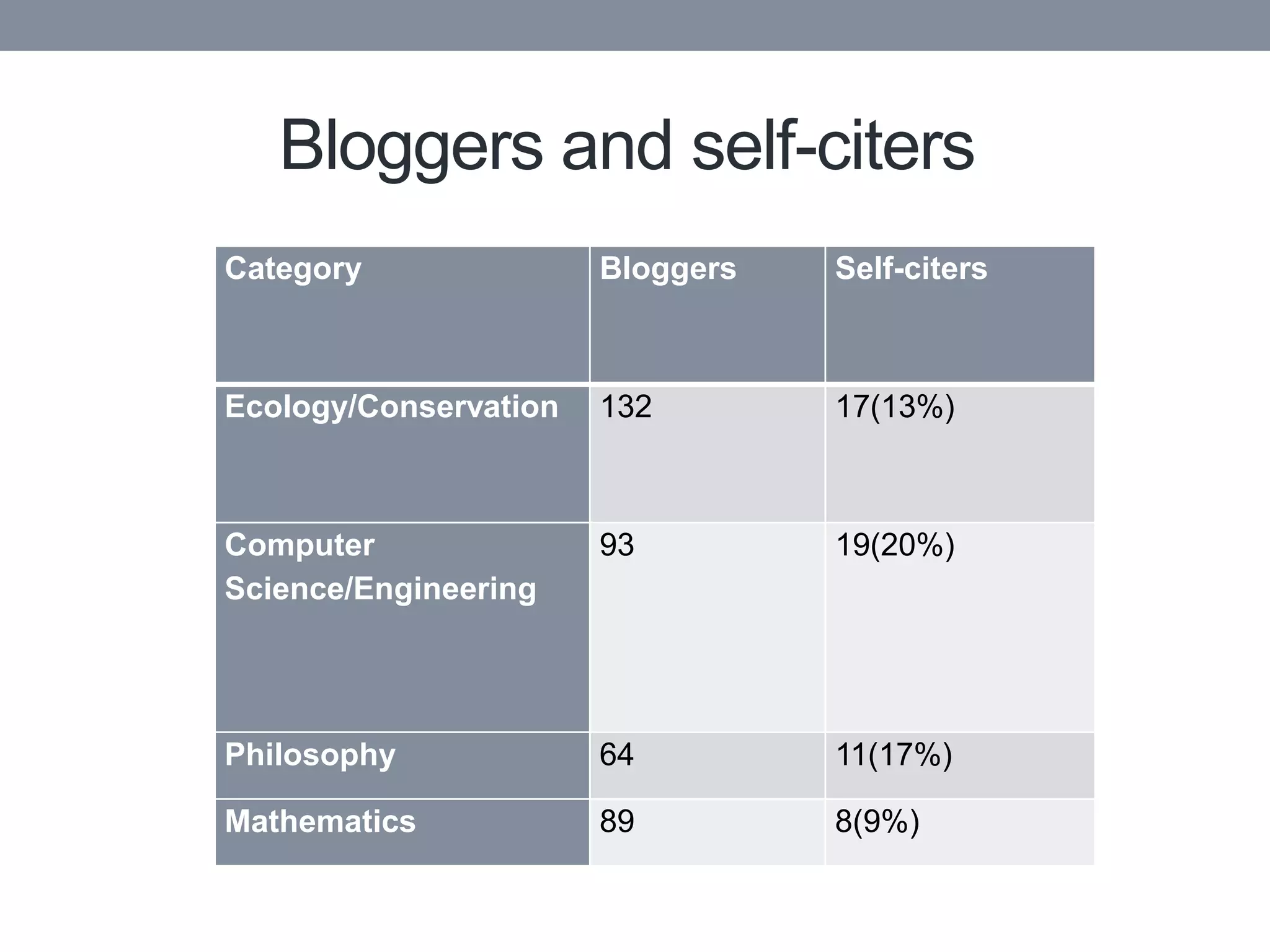
Bloggers and self-citers
Category               Bloggers   Self-citers


Ecology/Conservation   132        17(13%)


Computer               93         19(20%)
Science/Engineering


Philosophy             64         11(17%)

Mathematics            89         8(9%)
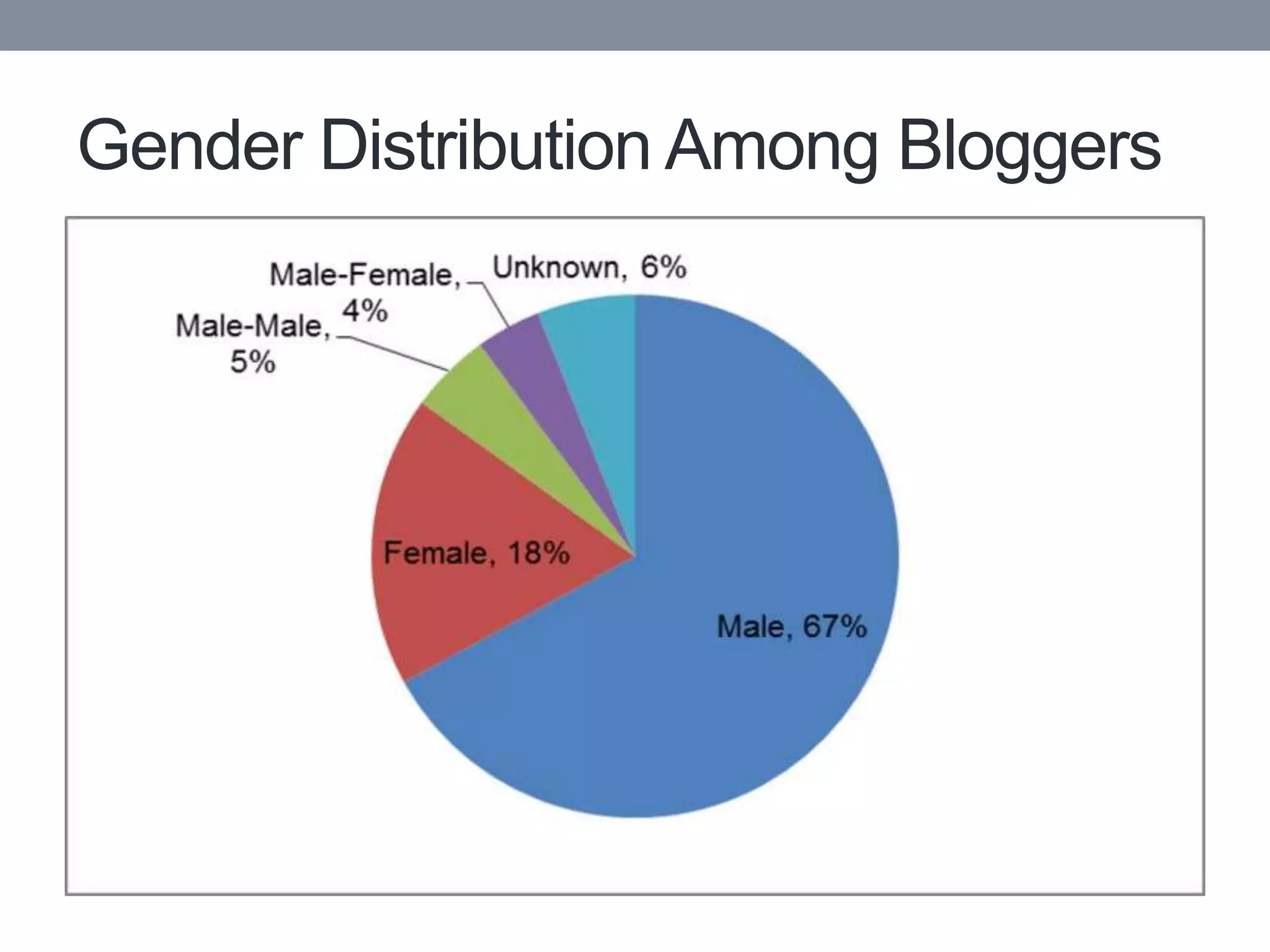
Gender Distribution Among Bloggers
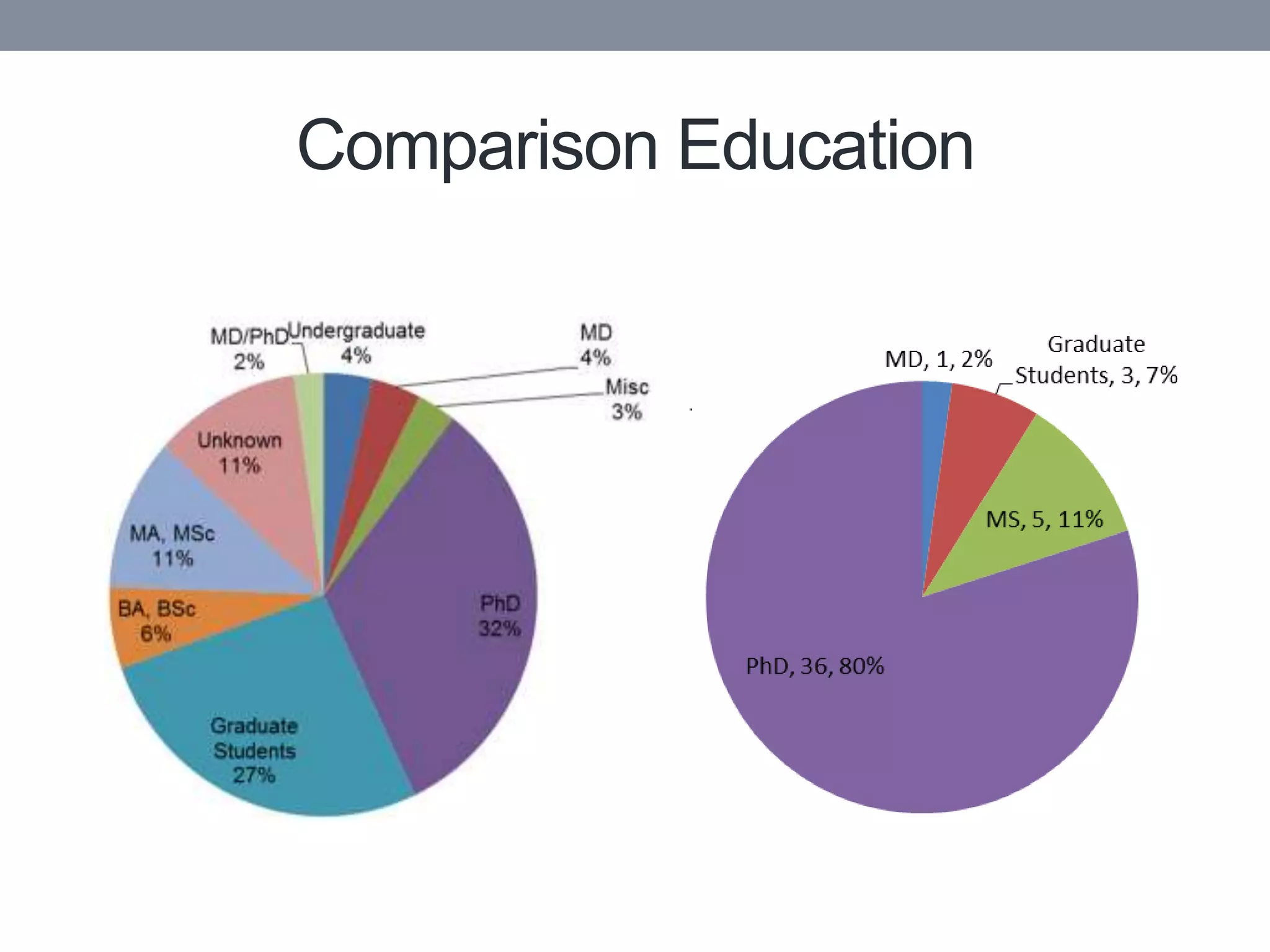
Comparison Education
Limitations
• RB blogs only
• Anonymous bloggers
• Relatively small number of self-citers
• Blogger does not always equals peer-
  reviewed author
• Four disciplines
• Based on Web profiles
Overall Findings
• The self-citation rate was low and
  varied by category.
• Self-citers were a more homogenous
  group than the rest of the RB
  population
THANK YOU

Characteristics of blogs and bloggers in the science

  • 1.
    CHARACTERISTICS OF BLOGS, BLOGGERSAND SELF-CITATION IN THE SCIENCE BLOGOSPHERE Hadas Shema, Judit Bar-Ilan and Mike Thelwall CoScI 2012 : Conference on Science and the Internet 2012
  • 2.
    Post-Publication Peer Review •Wolfe-Simon et al. (2011). A Bacterium That Can Grow by Using Arsenic Instead of Phosphorus. Science (published online in December 2, 2010) • Extensively criticized in Blogs and Twitter (See “Arsenic Bacteria link-dump,” Blog Around the Clock). #arseniclife • 8 comments eventually published by Science on May 27, 2011 • Article mentioned in about 1,330 blog posts (Google Blog Search, July 2012, for exact title)
  • 3.
    Detective Work • A“Citation Cartel” discovered by blogger Phil Davis from the Scholarly Kitchen (“The emergence of a Citation Cartel,” Davis, P. 2012, Apr 10). • Review articles written to increase journals’ impact factors and published in other journals. • Three out of the four offenders were suspended from the JCR (“Citation cartel journals denied 2011 Impact Factor,” Davis, P. 2012, June 29). • Two articles retracted due to citation manipulation (“A first? Papers retracted for citation manipulation,” Oransky, I. ,2012 July 5)
  • 4.
    ResearchBlogging.Org • Aggregates blogposts citing peer-reviewed research. • “ResearchBlogging.org allows readers to easily find blog posts about serious peer-reviewed research, instead of just news reports and press releases.”
  • 5.
    Blog Citations –A Transition Phase
  • 6.
    First Sample • 126non-commercial blogs, by one or two authors, with more than 20 entries posted at RB during 2010 • Reviewed journals based on last five posts in each blog
  • 7.
    Most cited journalsaccording to number of blog citations
  • 8.
    @DrVes: Research Bloggersshow a preference for papers from high- impact journals - just like everyone else on earth
  • 9.
  • 10.
  • 11.
    Second Sample • FourRB categories • Computer Science/Engineering, • Ecology/Conservation, • Philosophy • Mathematics • Only blogs and posts with known authors
  • 12.
    Quotes from self-citingbloggers “I am a coauthor on a new paper in PLoS Computational Biology I thought I would promote here.” Jonathan Eisen, Tree of Life “What did my work show? Deep-sea nematodes have a complex evolutionary history…” Holly Bik, Deep Sea New “Yay! First paper of my postdoc is out in the August 2011 issue of Global Change Biology! Woohoo! So, what have I been doing for the past few years of my life? In brief summary: Kelp. Food webs. Climate change. A potent combination.” Jeremy Yoder, I'm a chordata! urochordata!
  • 13.
    Posts and self-citingposts Category posts self-citing posts Ecology/Conservation 612 31(5%) Computer 407 35(9%) Science/Engineering Philosophy 182 17(9%) Mathematics 173 18(10%)
  • 14.
    Bloggers and self-citers Category Bloggers Self-citers Ecology/Conservation 132 17(13%) Computer 93 19(20%) Science/Engineering Philosophy 64 11(17%) Mathematics 89 8(9%)
  • 15.
  • 16.
  • 17.
    Limitations • RB blogsonly • Anonymous bloggers • Relatively small number of self-citers • Blogger does not always equals peer- reviewed author • Four disciplines • Based on Web profiles
  • 18.
    Overall Findings • Theself-citation rate was low and varied by category. • Self-citers were a more homogenous group than the rest of the RB population
  • 19.

Editor's Notes

  • #6 RB posts are the “transition phase” between the citation in formal communication and the free-form writing of blogs“Blog citation” – journal referenced in a blog post in our sample
  • #9 My favorite tweet about our research. Summarizes most of our first research in less than 140 characters
  • #11 As you can see, this post belongs to several disciplines in our study, and therefore was considered both in the computer science/engineering category and in the ecology/conservation category
  • #13 While there’s definitely an element of promotion in self-citing, it’s also has to do a lot with “My research is awesome, let me tell you all about it!”
  • #16 Women are underrepresented in science blogging. Only 22% of the blogs are written or co-written by women. These are results from our first sample. Women are even less represented in the self-citers population. We had 45 self citers overall (after we removed duplicates), 39 men and 6 women.