Goals of CharacterDesign
• Enhance story
• Emotional response
• Characters to identify with and care about
• Credible within the game style
• Create characters that people can:
– Find intriguing (even if a villain)
– Can believe in
– Can identify with
• Distinctive enough to be memorable
3.
Avatars
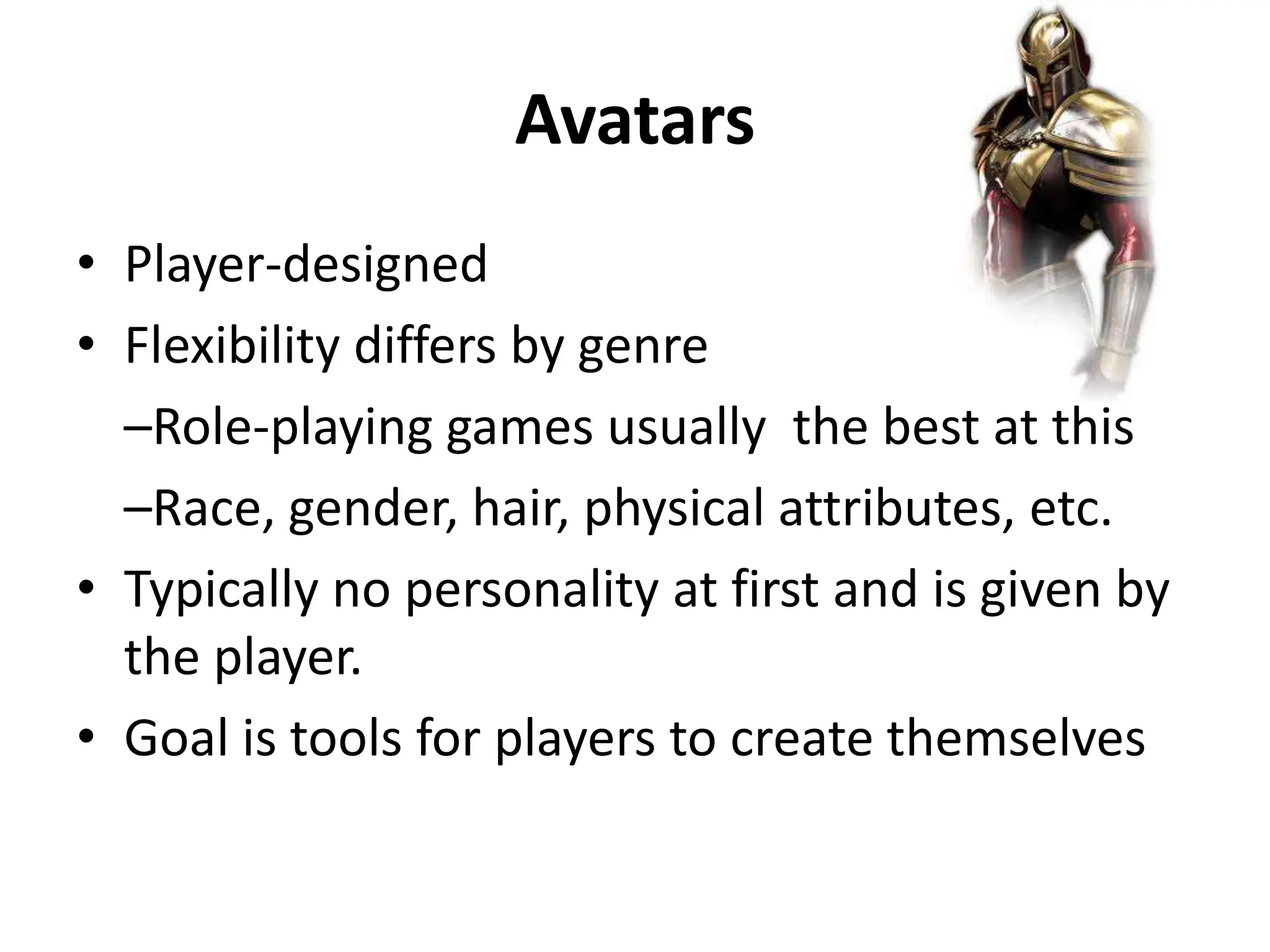
• Player-designed
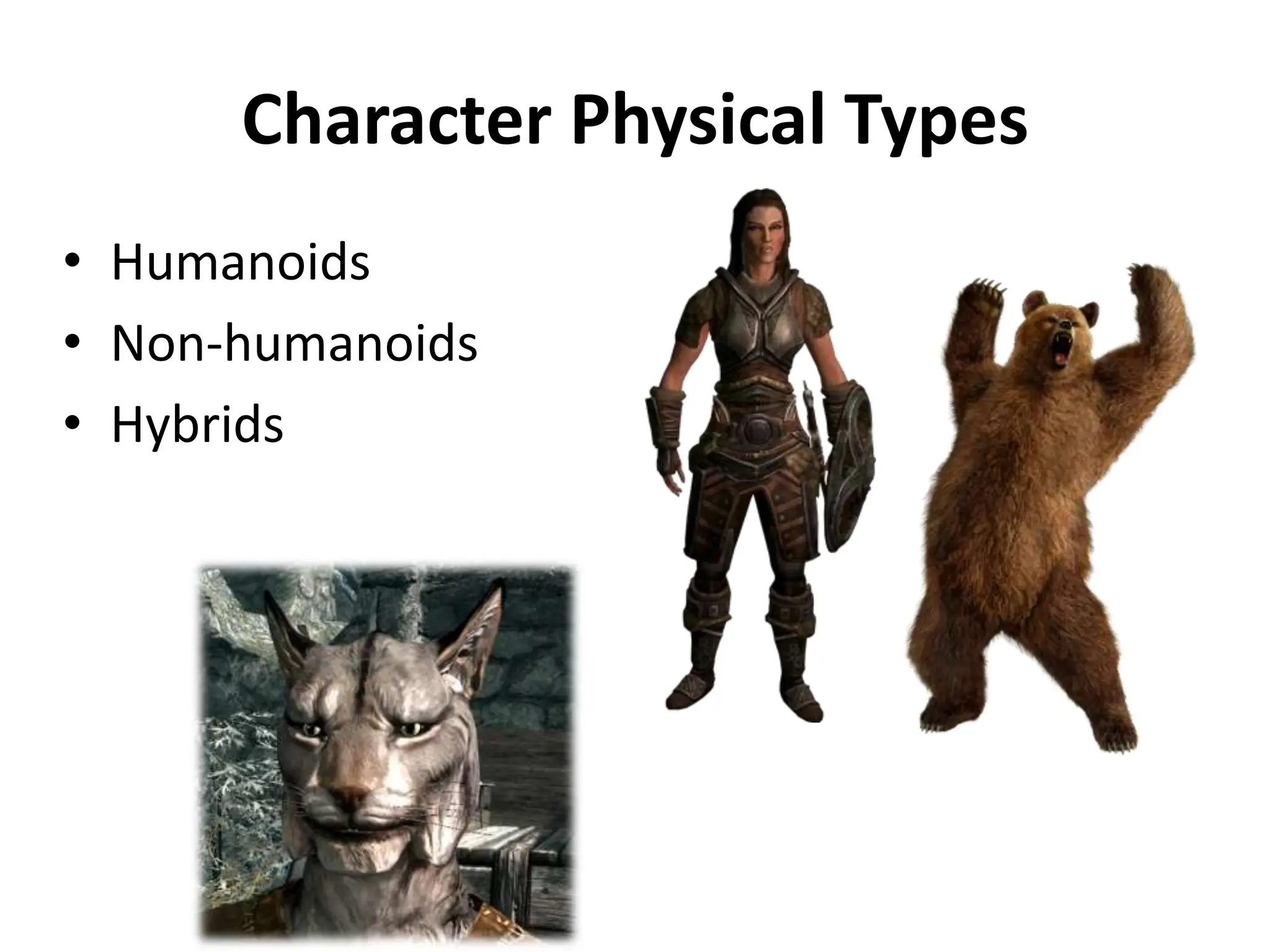
• Flexibilitydiffers by genre
–Role-playing games usually the best at this
–Race, gender, hair, physical attributes, etc.
• Typically no personality at first and is given by
the player.
• Goal is tools for players to create themselves
4.
Non Specific Avatar
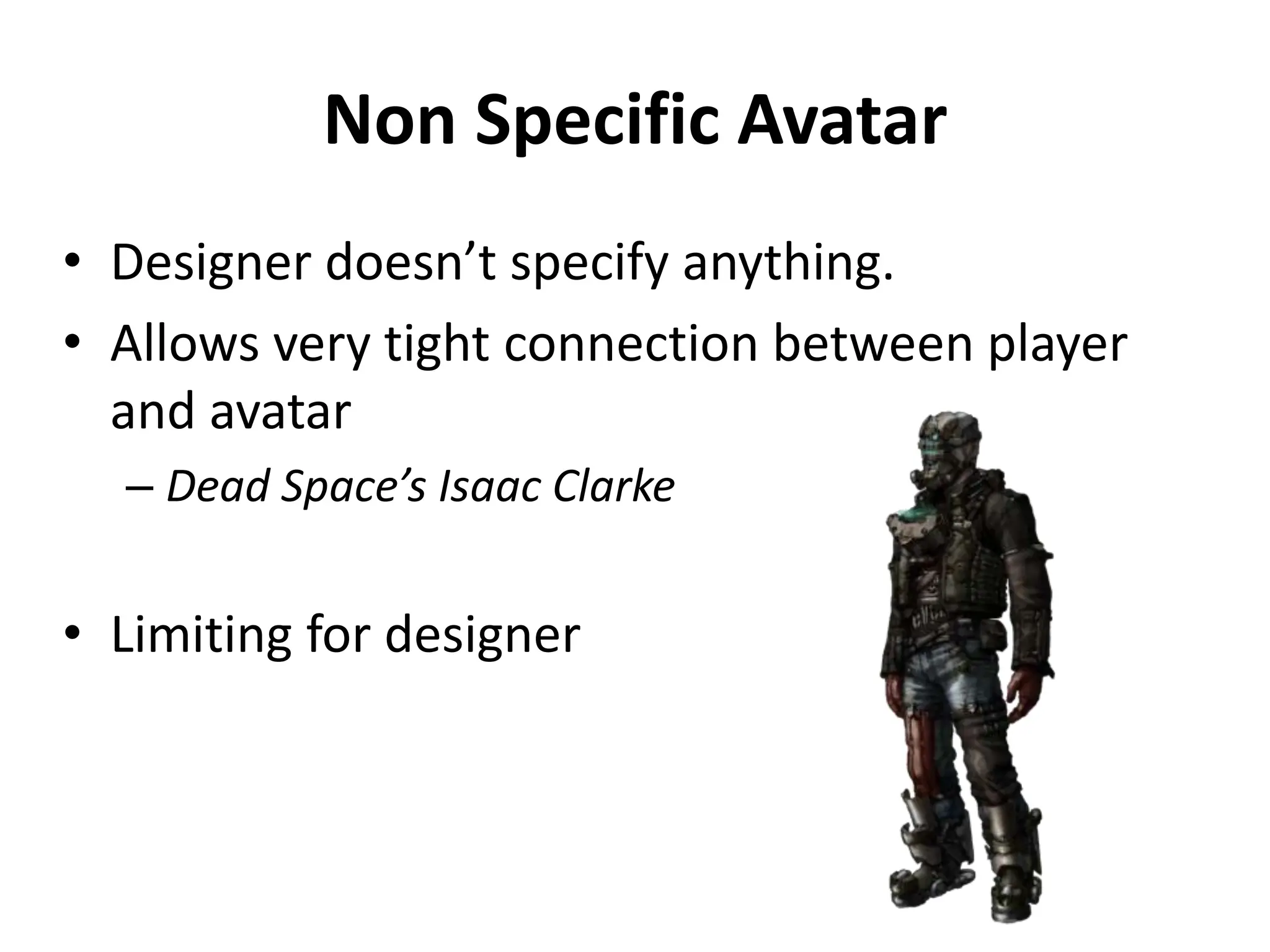
•Designer doesn’t specify anything.
• Allows very tight connection between player
and avatar
– Dead Space’s Isaac Clarke
• Limiting for designer
5.
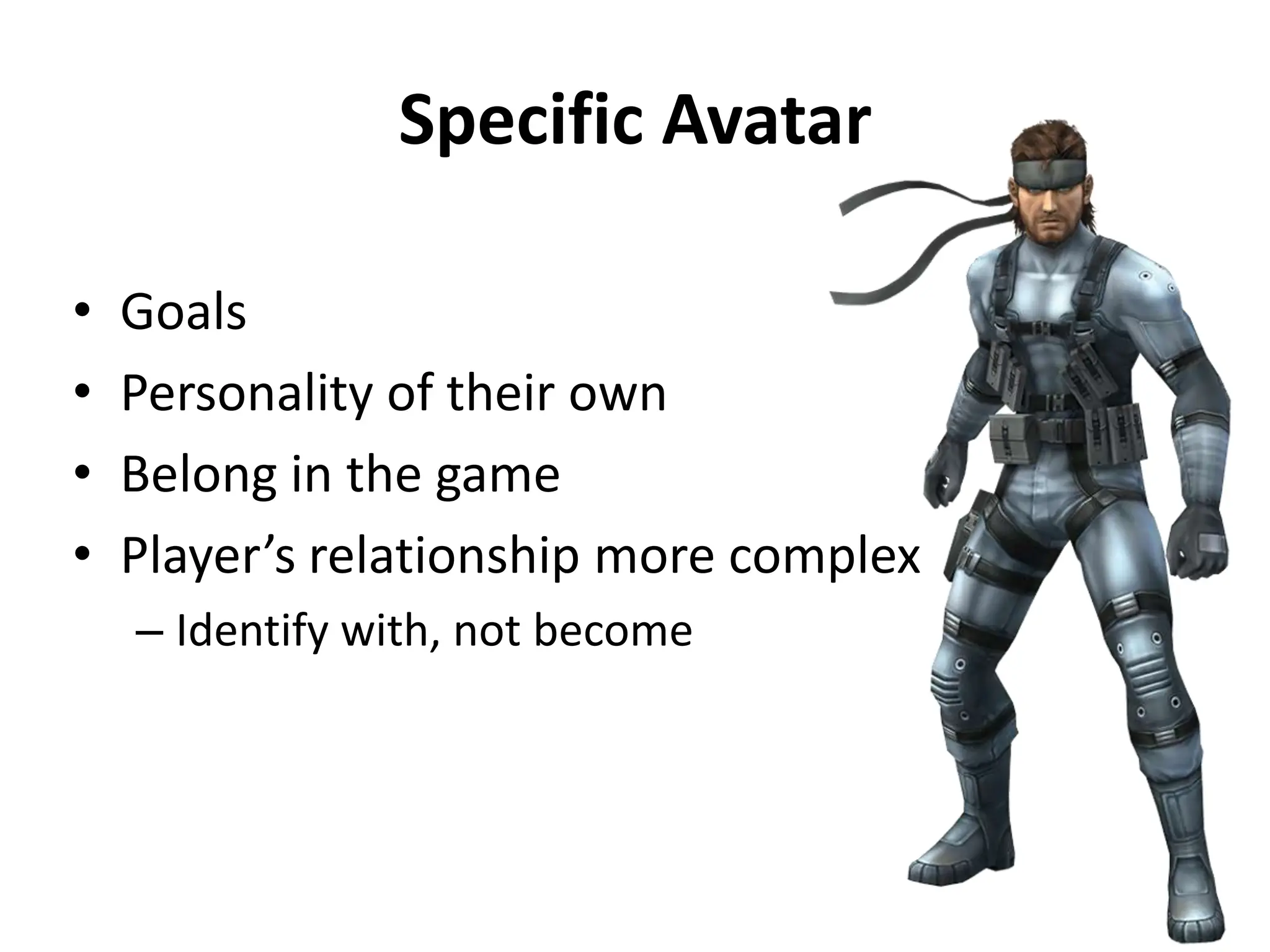
Specific Avatar
• Goals
•Personality of their own
• Belong in the game
• Player’s relationship more complex
– Identify with, not become
6.
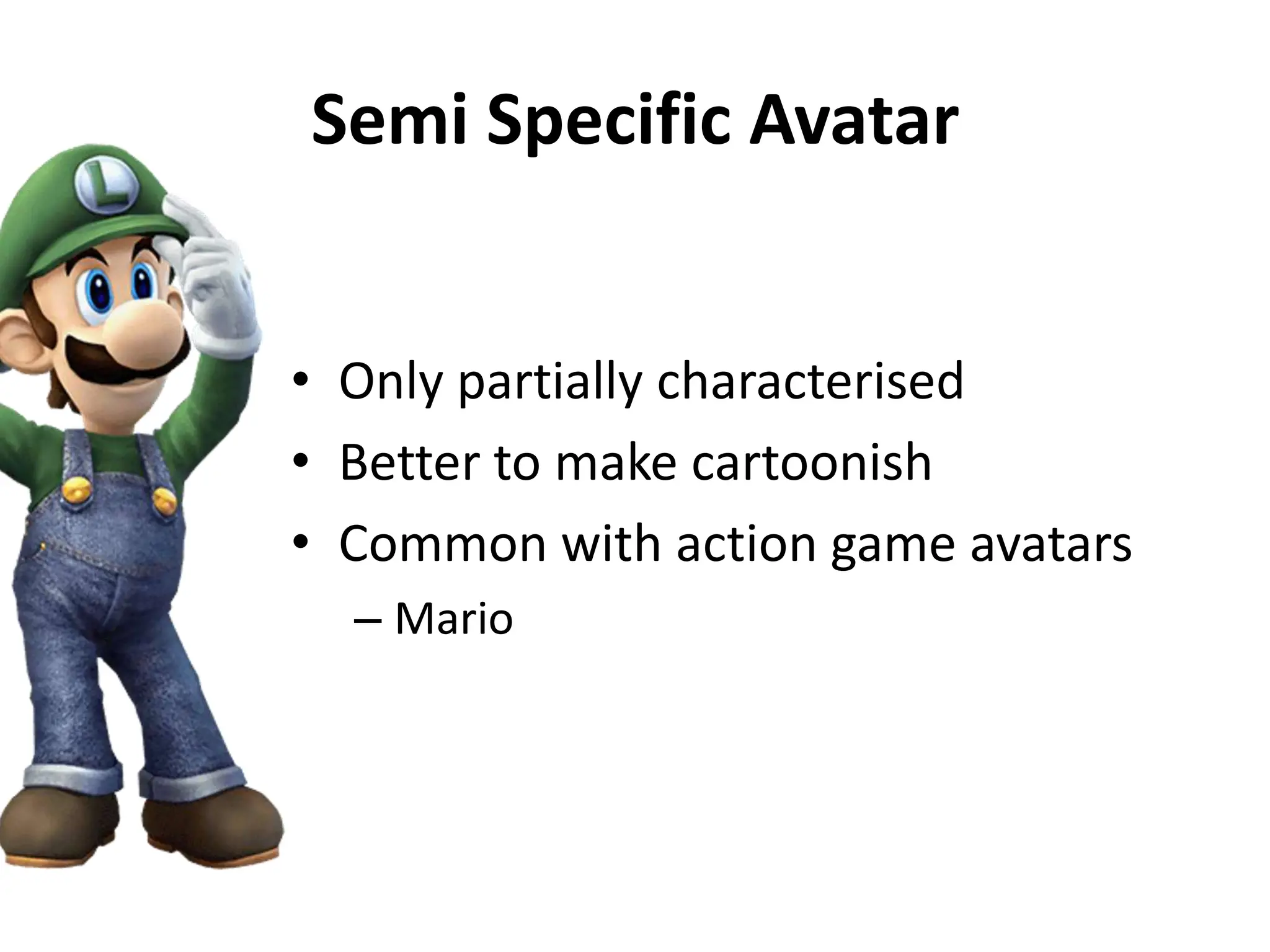
Semi Specific Avatar
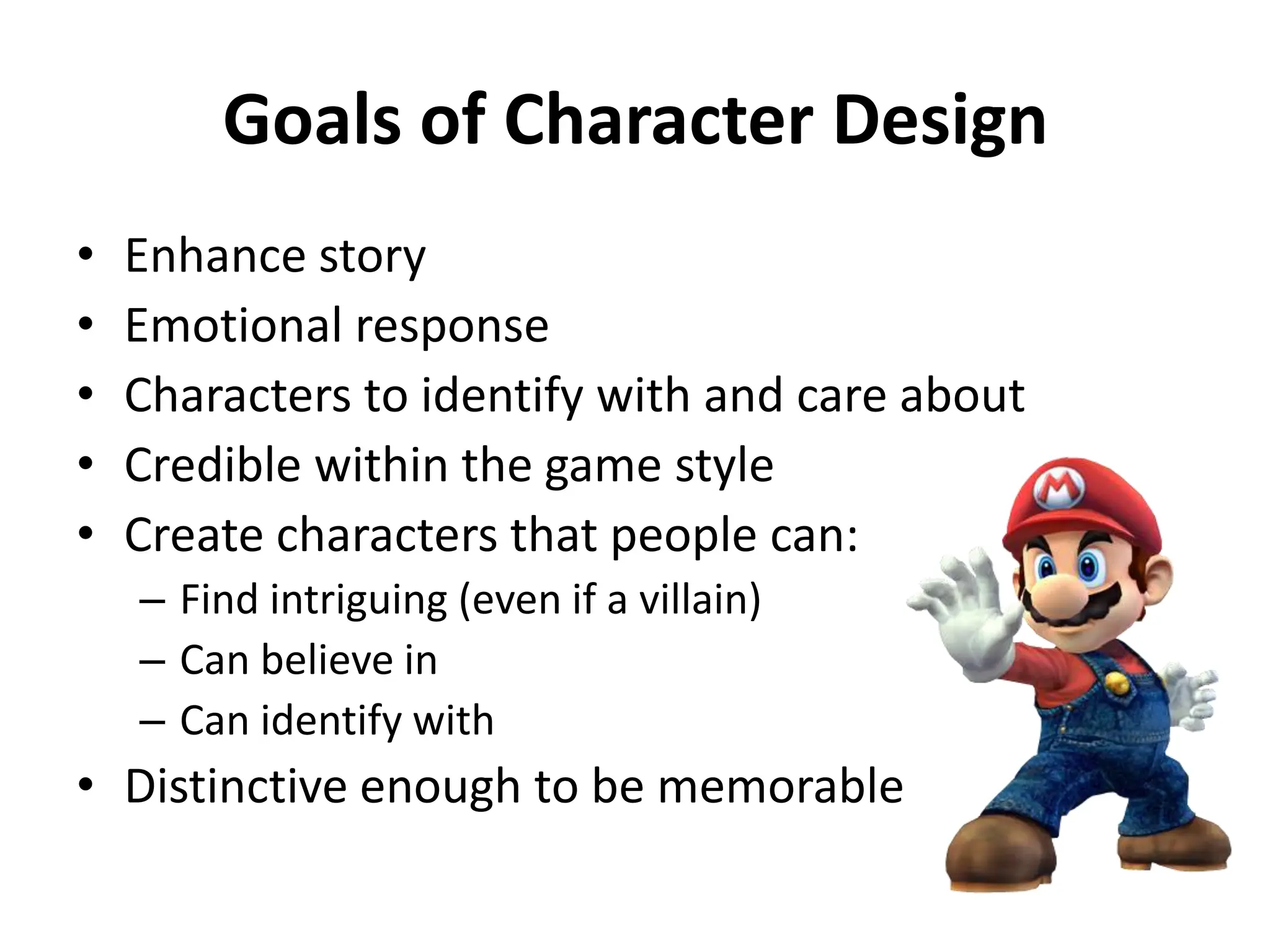
•Only partially characterised
• Better to make cartoonish
• Common with action game avatars
– Mario
7.
Control Mechanisms
• Indirect(“point and click”)
– Doesn’t steer avatar, points to where to go. Player
as disembodied guide friend
– More likely specific avatar
• Direct
– Player steers avatar through game world, doing a
variety of actions as necessary
– More likely nonspecific or semi-specific
8.
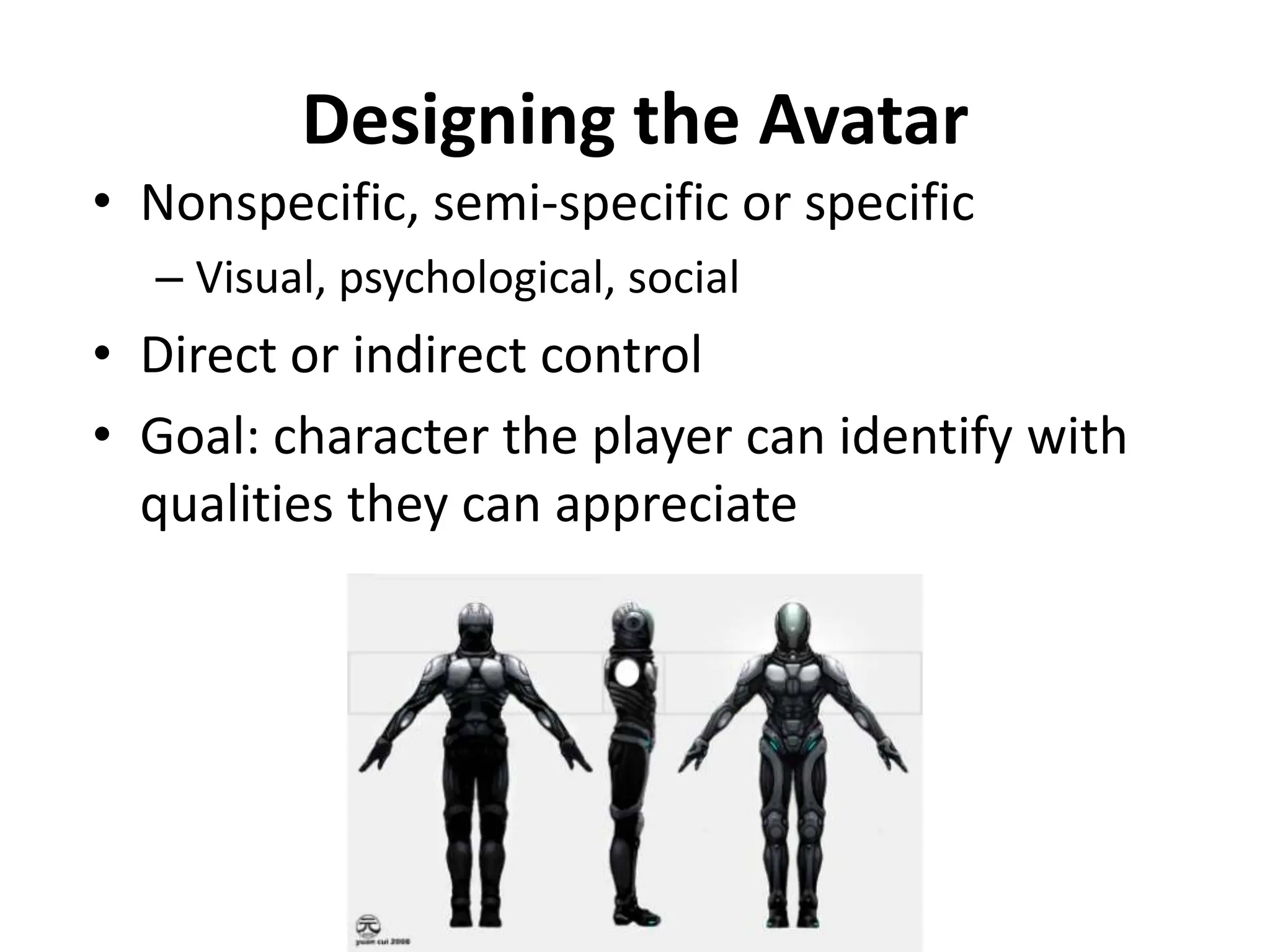
Designing the Avatar
•Nonspecific, semi-specific or specific
– Visual, psychological, social
• Direct or indirect control
• Goal: character the player can identify with
qualities they can appreciate
Defining Attributes
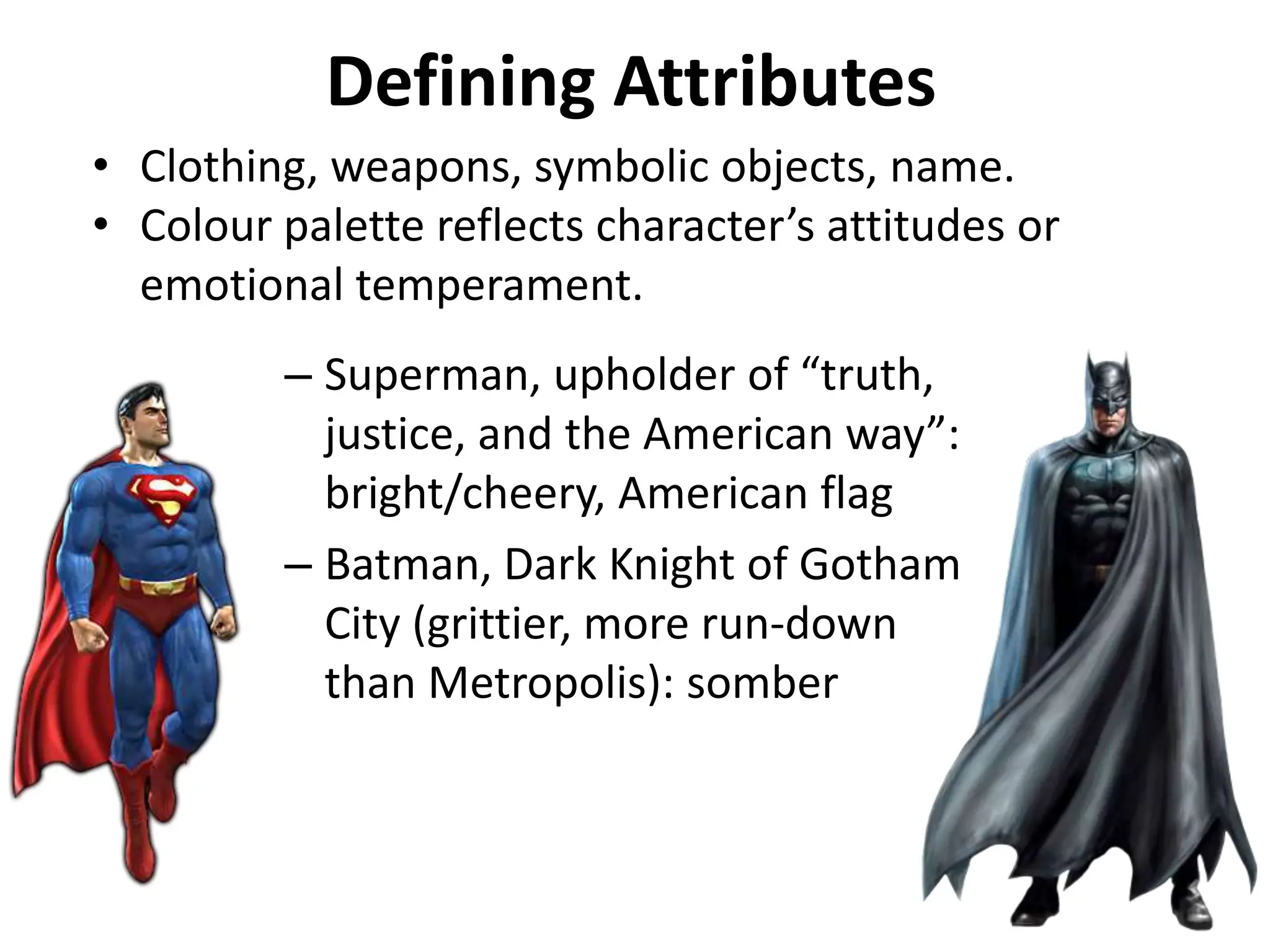
– Superman,upholder of “truth,
justice, and the American way”:
bright/cheery, American flag
– Batman, Dark Knight of Gotham
City (grittier, more run-down
than Metropolis): somber
• Clothing, weapons, symbolic objects, name.
• Colour palette reflects character’s attitudes or
emotional temperament.
11.
Side Kicks
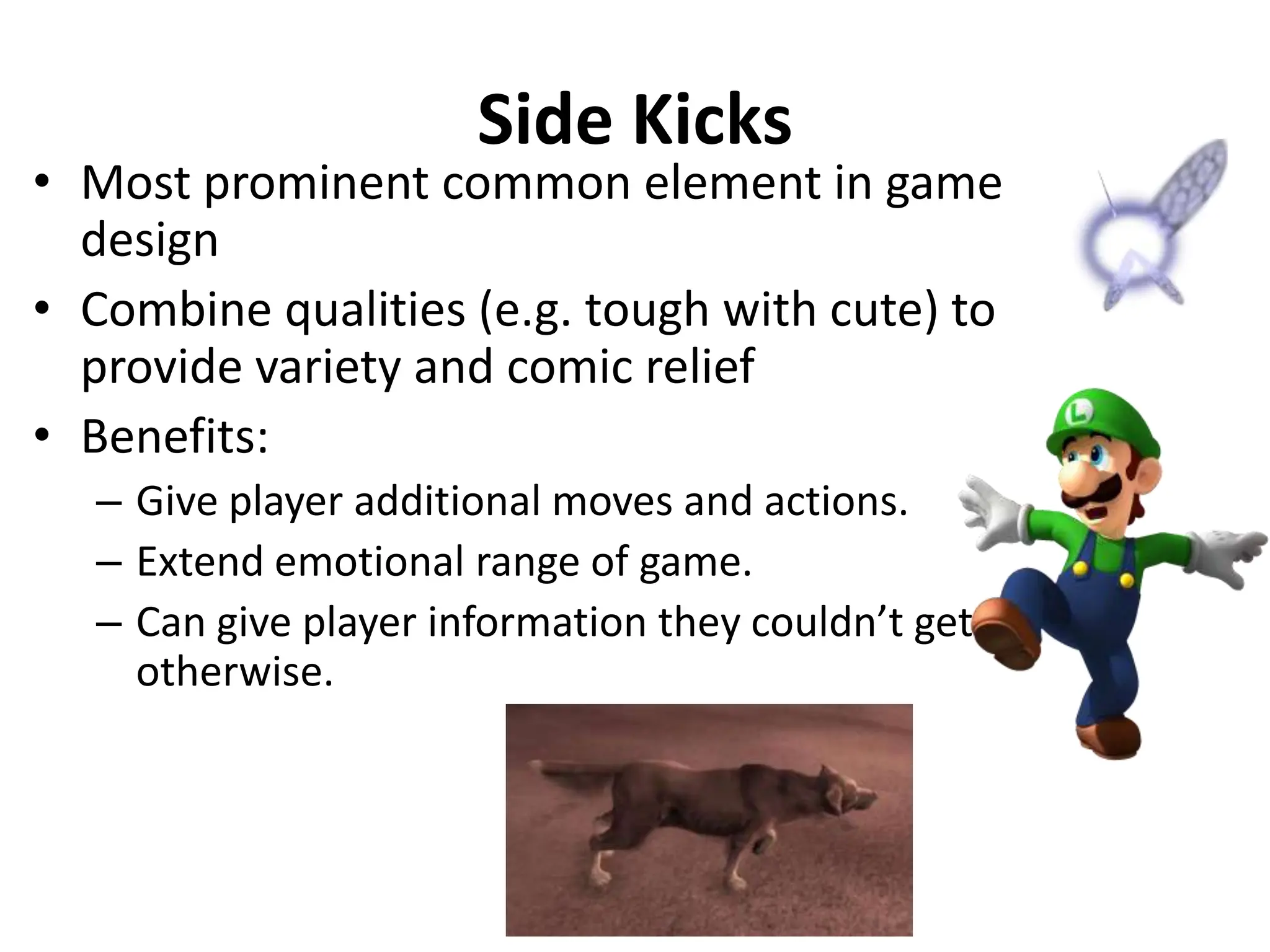
• Mostprominent common element in game
design
• Combine qualities (e.g. tough with cute) to
provide variety and comic relief
• Benefits:
– Give player additional moves and actions.
– Extend emotional range of game.
– Can give player information they couldn’t get
otherwise.
12.
Believable Characters
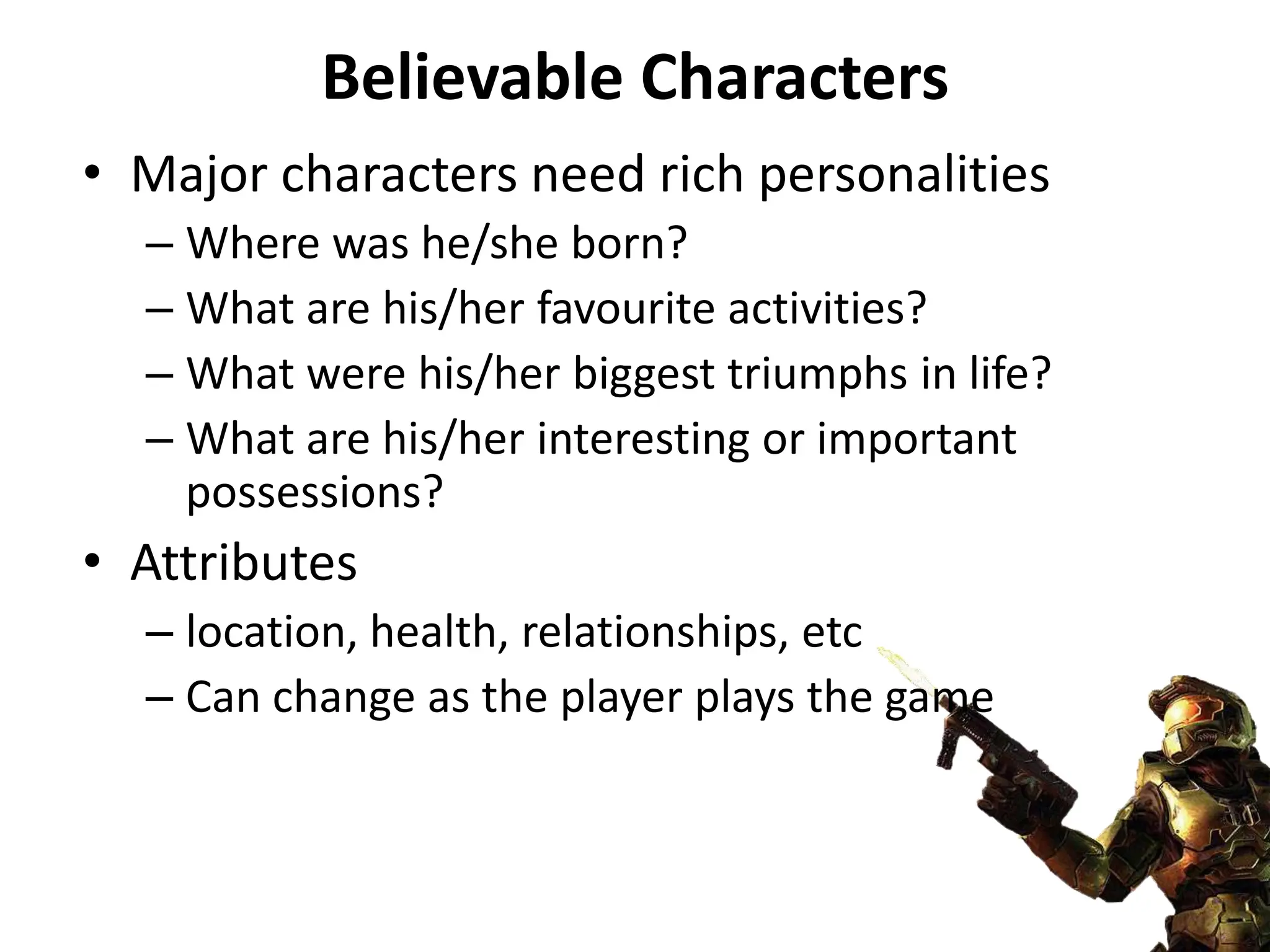
• Majorcharacters need rich personalities
– Where was he/she born?
– What are his/her favourite activities?
– What were his/her biggest triumphs in life?
– What are his/her interesting or important
possessions?
• Attributes
– location, health, relationships, etc
– Can change as the player plays the game
13.
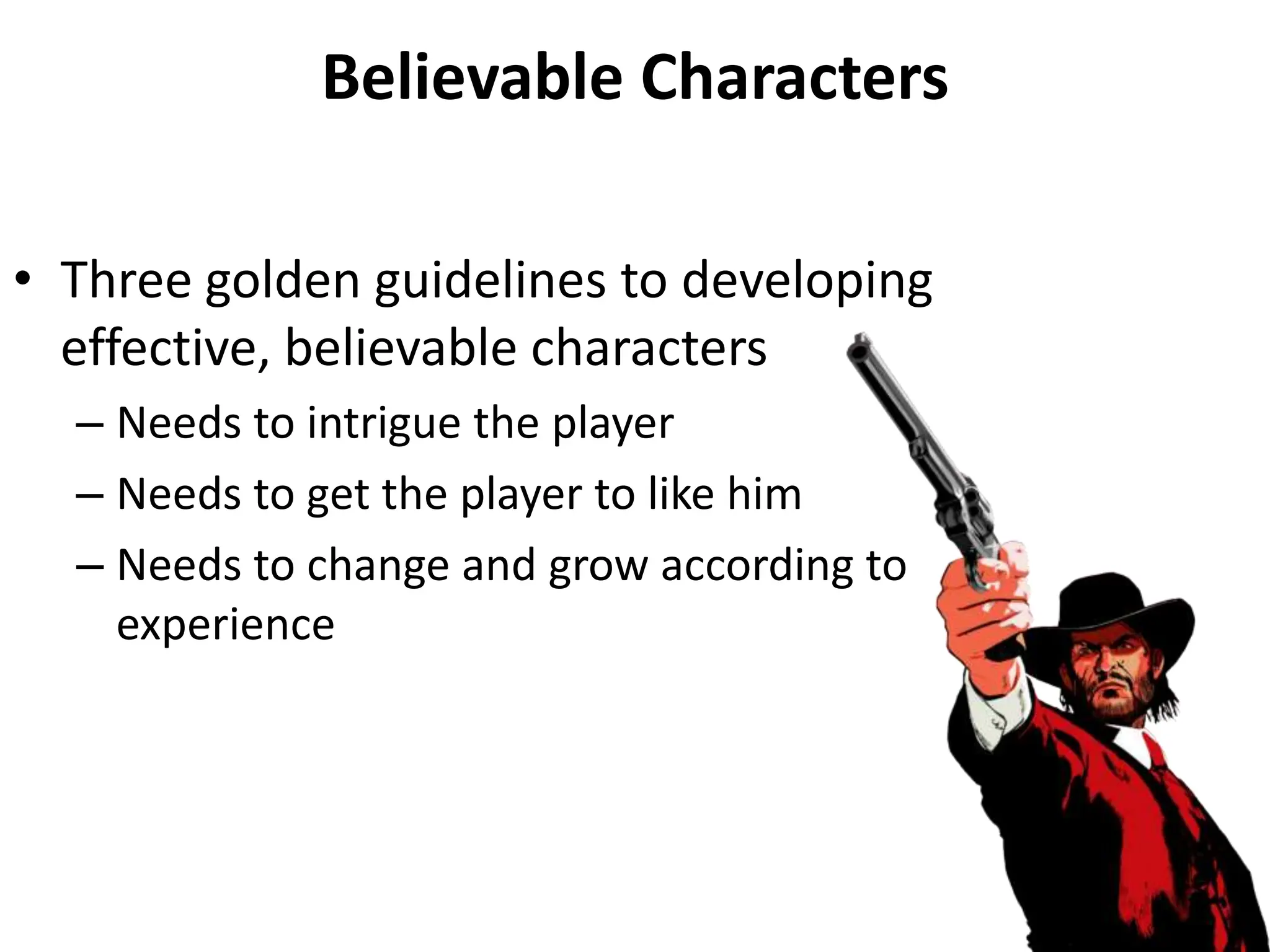
Believable Characters
• Threegolden guidelines to developing
effective, believable characters
– Needs to intrigue the player
– Needs to get the player to like him
– Needs to change and grow according to
experience
14.
Character Archetypes
• Hero
–Outer problem is aim of game
– Inner problem is flaw or dark
secret
• Mentor
– Guide character
• Higher self
– Hero as he aspires to be
• Ally
– Meant to aid the hero
• Shape shifter
• Form changer
•Threshold guardian
• Progress delayer
•Trickster
• Mischief maker
•Shadow
• Ultimate evil
•Herald
• Used to facilitate change in
the story



![2. research [comp] copy](https://cdn.slidesharecdn.com/ss_thumbnails/2-180618132840-thumbnail.jpg?width=640&height=640&fit=bounds)


