Marijuana
Facts and
Effects And
Common
Misconceptions
About CBD
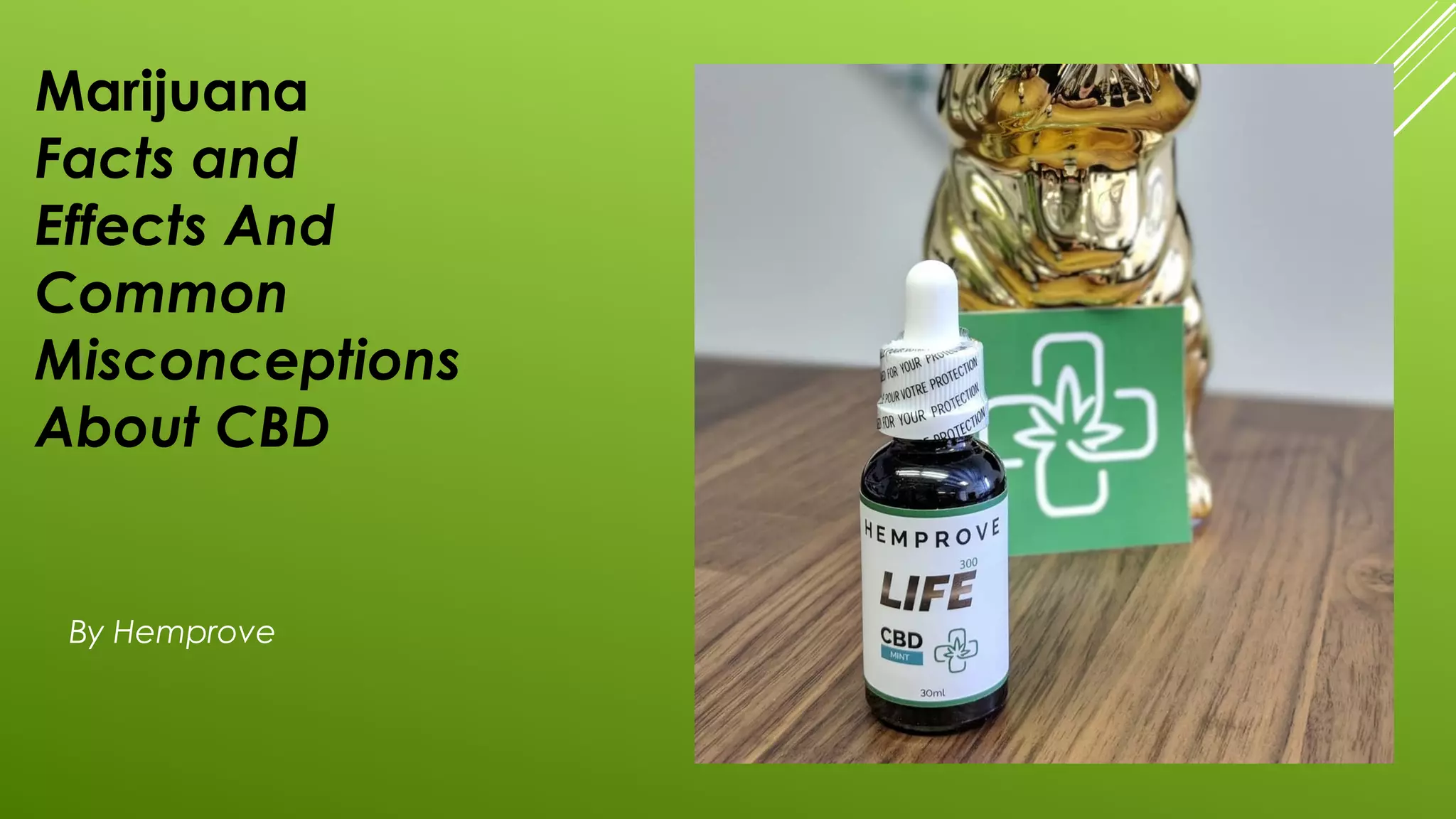
By Hemprove
What are the Names of The Drug?
 Commonly called Marijuana
 is the word used to describe the dried flowers,
seeds and leaves of the Indian hemp plant.
 The Latin term for the plant and another
common name is Cannabis
 There are different types of Cannabis plants
you’ll be introduced to later
What are the Names of The Drug?
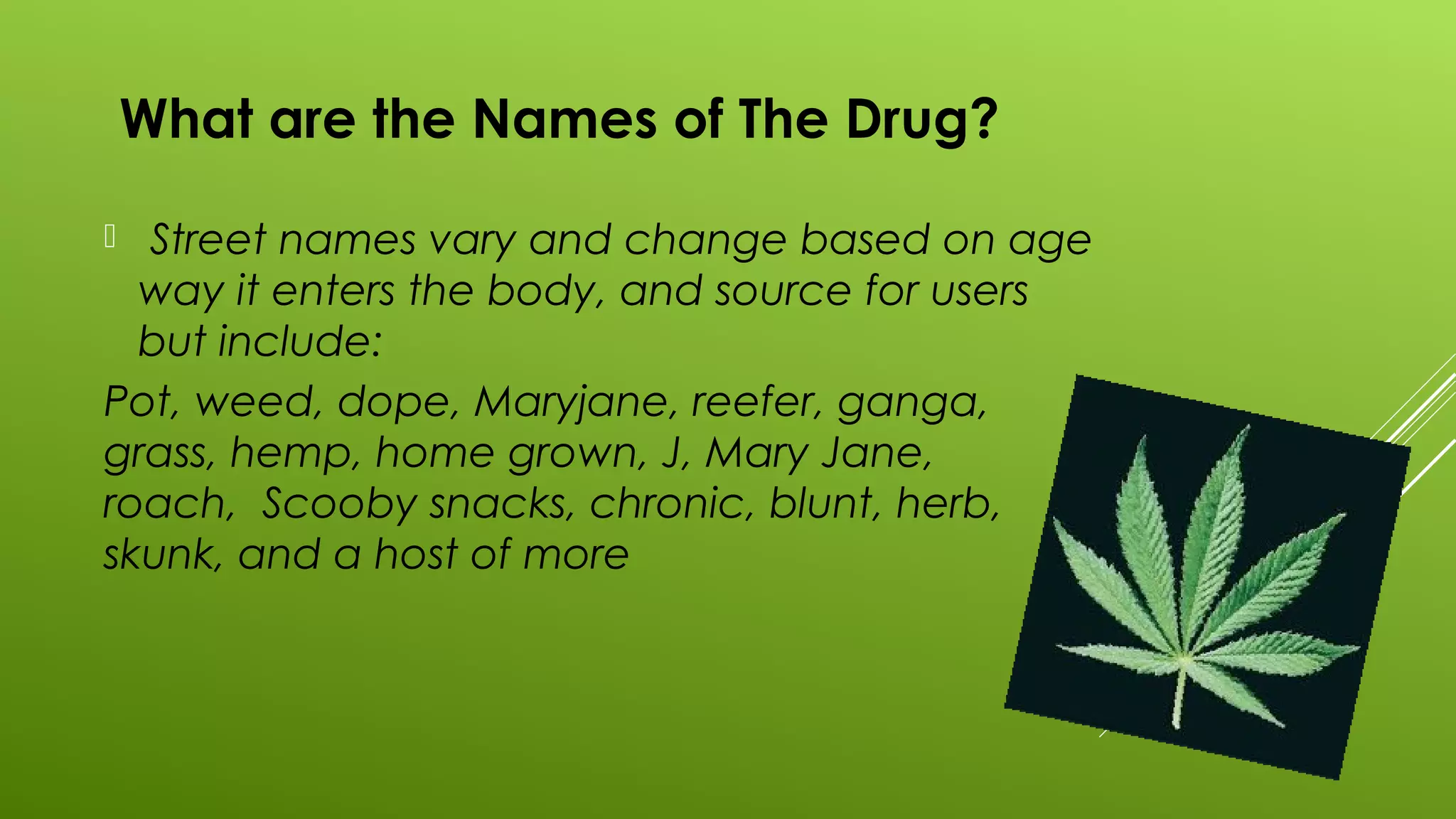
 Street names vary and change based on age
way it enters the body, and source for users
but include:
Pot, weed, dope, Maryjane, reefer, ganga,
grass, hemp, home grown, J, Mary Jane,
roach, Scooby snacks, chronic, blunt, herb,
skunk, and a host of more
Current Stats…..
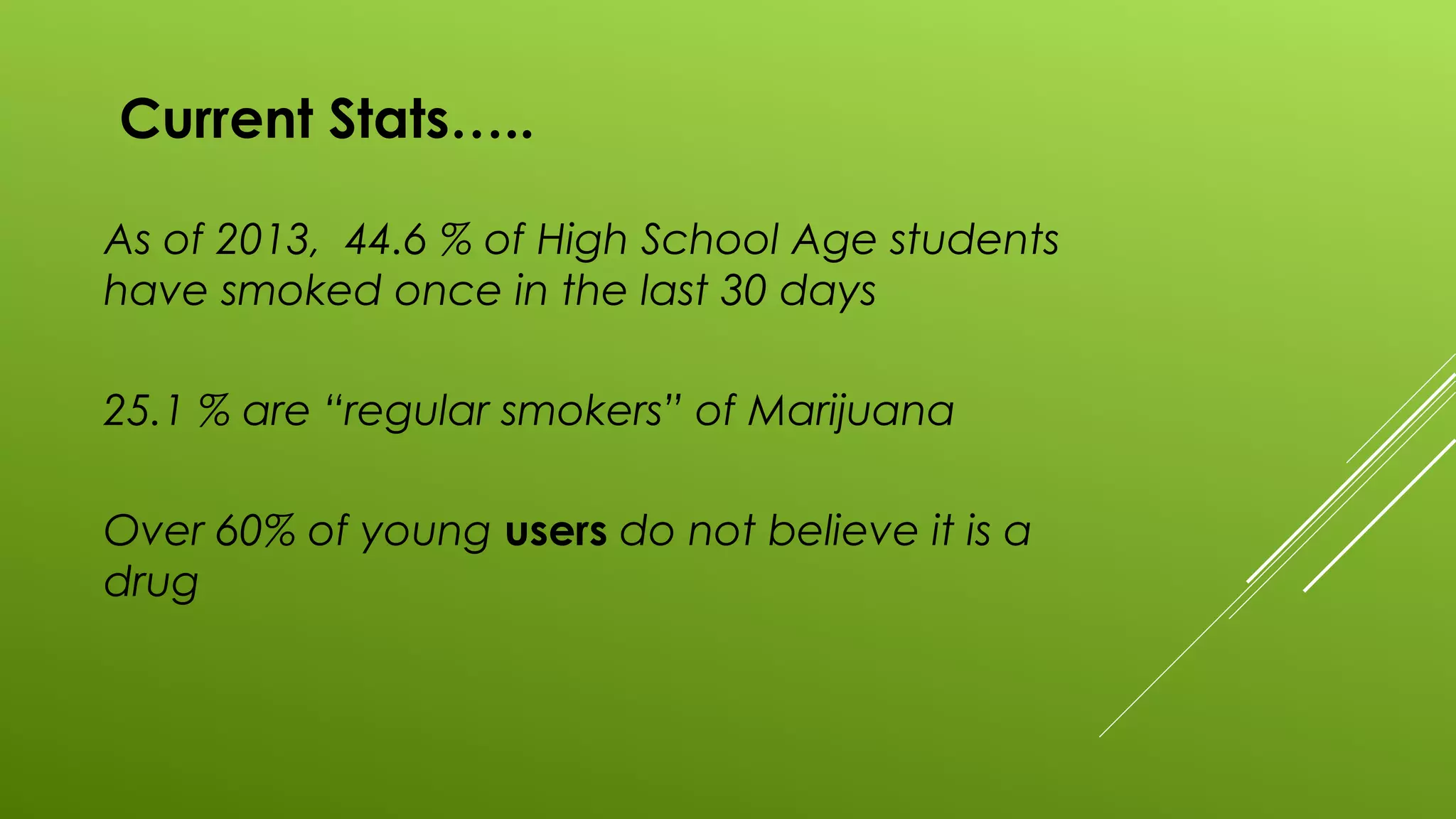
As of 2013, 44.6 % of High School Age students
have smoked once in the last 30 days
25.1 % are “regular smokers” of Marijuana
Over 60% of young users do not believe it is a
drug
Current Stats…..
The % of high school age students who smoke Marijuana is
steadily increasing
In 2009, over 14 million Americans admitted to using
Marijuana at least once in last 30 days
If you include Alcohol and Tobacco and do not include
caffiene, it is currently 3rd most used drug among high school
students.
What Type of Drug is it?
Considered a Psychoactive drug specifically due to THC
(more about that later).
 The drug is difficult to fully categorize. Most people state
it is a Psychoactive Depressant. However……
What Type of Drug is it?
….although it is certainly a depressant, it also acts like a
 Pain Killer
 Hallucinogen
 when smoked, a partial stimulant
 Mood enhancer
And has a wide variety of possible medical benefits
Most common form
 The most common form of Marijuana use
is recreationally. It is the most used recreational drug in the
world after Alcohol.
This type of Marijuana use
Commonly comes (over 80% of it) from the specific Hemp
Plant CANNIBIS SATIVA
Most common form
Review: DRUG =
Any Substance that enters the body that is not a nutrient or
Oxygen and causes an effect.
Marijuana is an illegal drug primarily because of the
mind-altering chemical delta-9-tetrahydrocannabinol (THC)
Why is it a drug
Delta-9-tetrahydrocannabinol (THC) is the chemical that
causes the effects we commonly associate with Marijuana
and is a class of drugs known as Cannabinoids (CBD)
Some literature will classify THC in a different category then
the multiple other Cannabinoids commonly in the variations
of the Hemp Plant
Why is it a drug
Despite these facts, most people in America that are
“pot” smokers or advocates of legalizing marijuana not for
financial gain but for personal use, state “it’s a not a drug”
or it’s “all natural”
A reminder that all natural does not necessarily mean
healthy
Why is it a drug?
THC levels averaged 1% in 1974 and 4% in 1994. In 2008, levels
reached 9.6%, highest ever since analysis of the drug in the
1970’s
THC levels change based on how it’s grown and if it’s hybrid
Why is it a drug?
Hydroponic growing (using Oxygen rich water rather than soil)
tends to increase potency
One form of cannabis, called sinsemilla (Spanish for “without
seeds”), may have THC levels from 7.5% to as much as 24%.
How does it enter the body
Most commonly Smoked in cigarettes (joints), cigars
(blunts), pipes (bowls/bongs)
Of course, smoke can also be inhaled
(second hand smoke)
Can also be inhaled via vaporizers / vaping with no
negative effects from smoke
How does it enter the body
In addition, it can be ingested via a variety of
Pastries, brownies, cookies candy, soups, teas or
specialty drinks
And
Ingested as a pill OR sprayed into mouth as a spray
IS it addictive…..
It is commonly believed that there is no physical addiction.
In reality, it has few severe withdrawal symptoms and the
majority of people who use it recreationally are able to quit
without going through painful withdrawal symptoms.
IS it addictive…..
This lack of major physical symptoms of withdrawal can
confuse some people into saying it is not addictive.
Common possible physical withdrawal symptoms might include
mild anxiety, depression, nausea, insomnia and some
gastrointestinal problems.
IS it addictive…..
however…
There is STRONG Psychological addiction in many people
Regular daily “pot” smokers tend to choose to continue because
they enjoy the sensations and effects or feel they need it
AND
A VERY LARGE percentage of individuals who get addicted to
other, more harmful drugs started off smoking Marijuana.
Despite this fact, advocates of legalization argue that it is not a
“gateway” drug
Short Term Effects:
When a person smokes marijuana, THC quickly
passes from the lungs into the bloodstream. The
blood carries the chemical to the brain and other
organs throughout the body.
The body absorbs THC more slowly when the person
eats or drinks it. In that case, the user generally feels
the effects after 30 minutes to 1 hour.
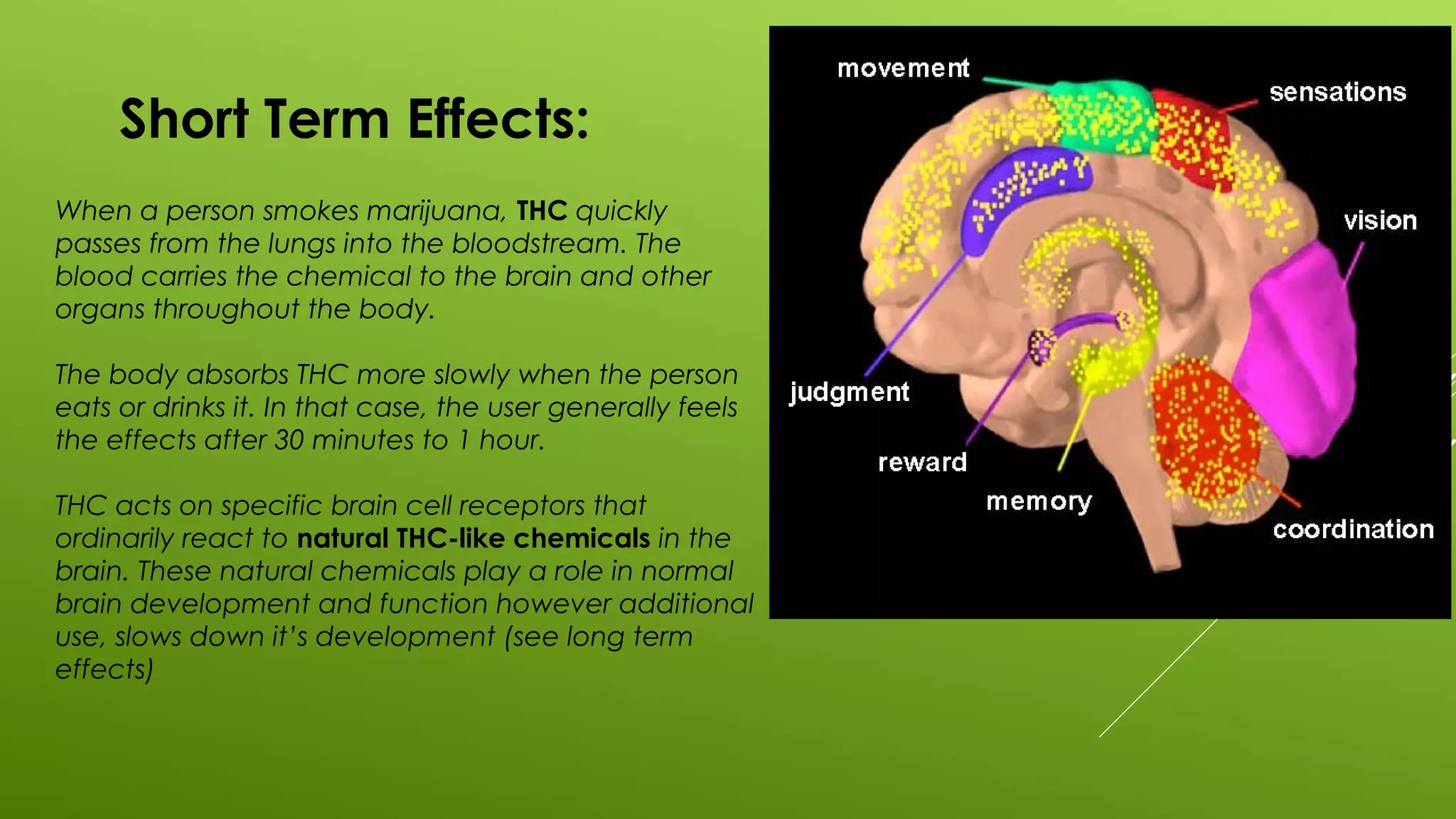
THC acts on specific brain cell receptors that
ordinarily react to natural THC-like chemicals in the
brain. These natural chemicals play a role in normal
brain development and function however additional
use, slows down it’s development (see long term
effects)
Short Term Effects:
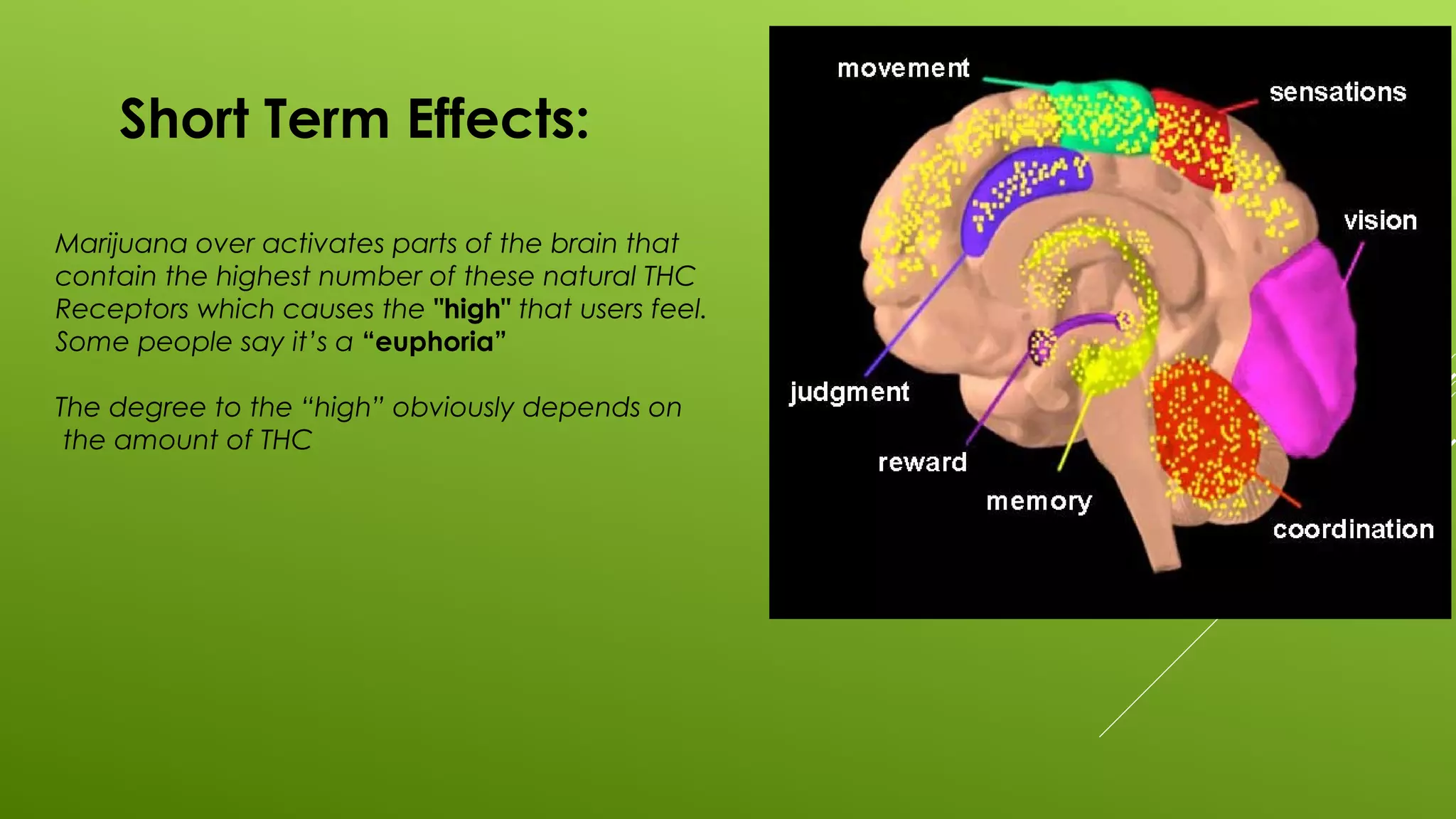
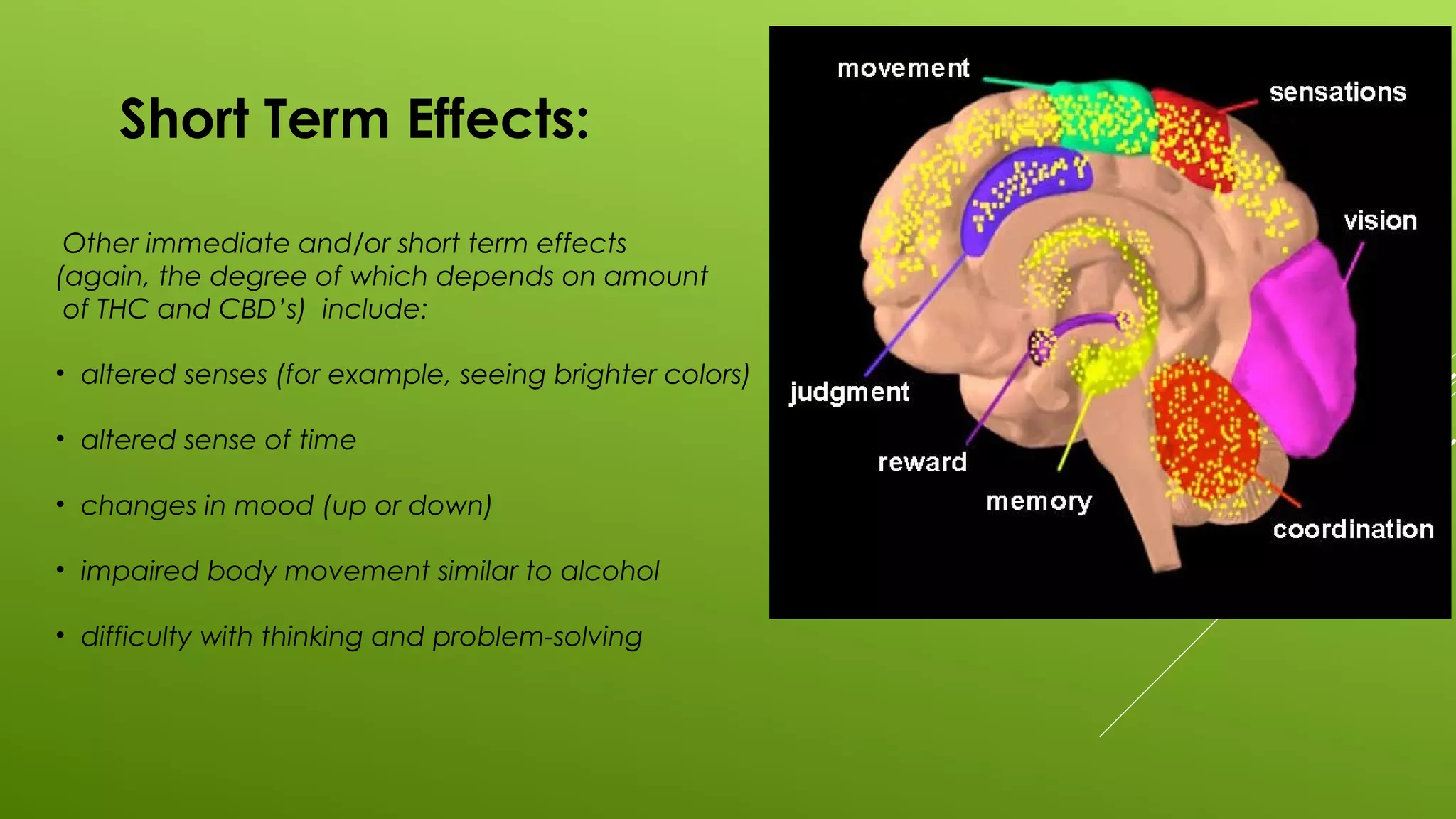
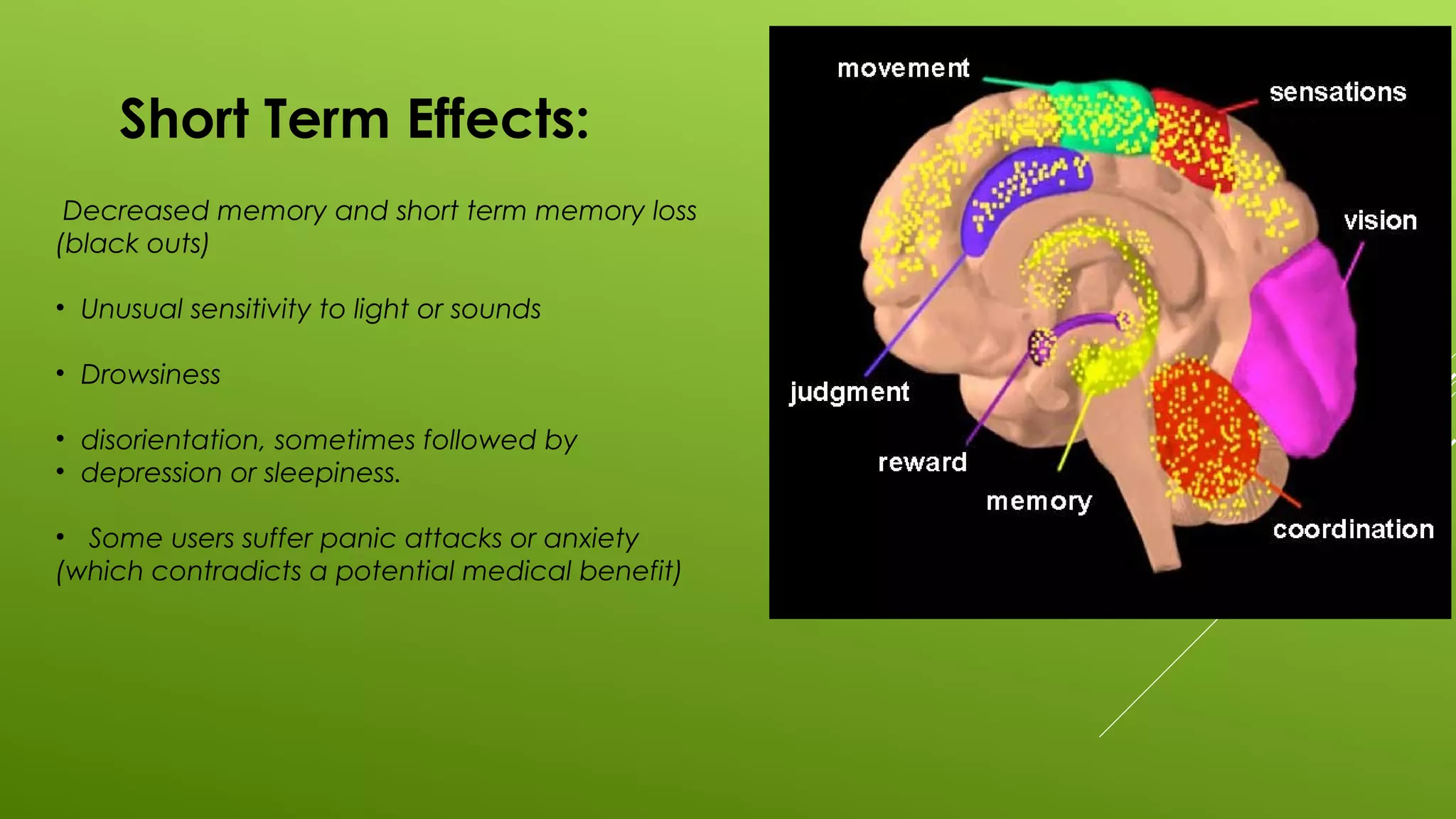
Marijuana over activates parts of the brain that
contain the highest number of these natural THC
Receptors which causes the "high" that users feel.
Some people say it’s a “euphoria”
The degree to the “high” obviously depends on
the amount of THC
Short Term Effects:
Other immediate and/or short term effects
(again, the degree of which depends on amount
of THC and CBD’s) include:
• altered senses (for example, seeing brighter colors)
• altered sense of time
• changes in mood (up or down)
• impaired body movement similar to alcohol
• difficulty with thinking and problem-solving
Short Term Effects:
Decreased memory and short term memory loss
(black outs)
• Unusual sensitivity to light or sounds
• Drowsiness
• disorientation, sometimes followed by
• depression or sleepiness.
• Some users suffer panic attacks or anxiety
(which contradicts a potential medical benefit)
Short Term Effects:
rapid heart beat,
• Rapid breathing rate at first
(NOTE: current research does not seem to be associated with permanent
decreased lung function in people who are not asthmatic)
• reddening of the eyes,
• dryness of the mouth
• Decreased Sex Drive in some people
Short Term Effects:
• temporary hallucinations—sensations and images that seem real
though they are not
• temporary paranoia—extreme and unreasonable distrust of others
• enhanced emotional distress to people suffering from depression and
anxiety (which contradicts a possible benefit)
• worsening symptoms in patients with schizophrenia
(a severe mental disorder with symptoms such as hallucinations, paranoia,
and disorganized thinking)
Short Term Effects:
SOME Positive short term effects include:
• Anti-inflammatory effect (similar to aspirin)
• Pain killer
• decrease in intra-ocular pressure, which is why it is sometimes
prescribed for people with glaucoma (a condition that involves
pressure on the eye).
• Increased Appetite specifically for salty foods (munchies)
• Decreased Nausea (which is also contradictory to a possible effect)
Short Term Effects:
• 24 listed short term effects yet people argue
“it’s not a drug” or “it doesn’t do anything”
Cross Fading?
The common street term for using 2 different drugs recreationally to get a
desired effect
“weed” is at times cross faded with PCP or embalming fluid to further intensify
the user’s high.
THE MOST COMMON FORM OF CROSS FADING of MARIJUANA IS WITH
ALCOHOL
Cross Fading Marijuana and Alcohol can create un-predictable results
Short Term Effects:
• What about Violence?
• Many people indicate that Marijuana use is a calming sensation and some articles state
that people do not get violent via Marijuana use?
A 2004 report by the Substance Abuse and Mental Health Services Administration
(SAMHSA), studied delinquent behavior among youth of marijuana use."
and found that "the percentages of youths engaging in specific delinquent behaviors in
the past year rose with increasing frequency of Marijuana use
• Cut classes or full days at school
• engaged in serious fighting including group-against-group fighting
• attacked someone with the intent to seriously hurt them during the past year
• stole or tried to steal something worth more than $50
• sold illegal drugs
• carried a handgun during the past year
Chicken and the egg syndrome?
LONG TERM EFFECTS…….
To be honest, there are 2 facts that must be stated prior to going into the long
term effects
1) A lot of research is on-going about potential long term negative side effects
about Marijuana use because up until around 2005, most regular “pot”
smokers also had regular contact with Smoke from Tobacco made Cigarettes
(either first hand or second hand) so some research is still “up in the air” about
harmful effects of pure marijuana smoke only on lungs
2) Most of the harmful long term effects come from Smoking rather than the
other methods of use
LONG TERM EFFECTS…….
One research study suggests that Marijuana smoke contains 50% to 70% more cancer-
causing substances than tobacco smoke.
Current research contradicts itself whereas some studies state
that Lungs do not have permanent damage due to Smoking Marijuana
While other studies state that a
single cannabis “joint” could cause as much damage to the lungs as up to
five regular cigarettes smoked one after another.
Unfortunately, repeated studies of Marijuana sometimes have conflicting results
Fall 2015
LONG TERM EFFECTS…….
IT is deeply debated and still unknown if increased marijuana smoking increases the rate of cancer
In fact, some medical benefits of Marijuana (when not smoked) may in fact attack and kill certain
cancer cells.
It is probable that the smoke does contribute to increased cancer risk of lungs and throat due to the
other compounds commonly found in joints and blunts. Residual tar in bongs, pipes and bowls can
also when tested, contain cancer causing agents
It is also probable that smoking marijuana increases chances of long term heart disease
It is unknown if long term vaporation contributes to heart disease
It is believed unlikely that Marijuana ingested as baked goods, candy or teas contribute to
heart disease or cancer
LONG TERM EFFECTS…….
HOWEVER, some research has been done that has concluded
FACTUAL long term effects of Marijuana use…both for the
occasional user and the heavy user
LONG TERM EFFECTS…….
BRAIN DAMAGE and LONG TERM MEMORY LOSS:
Heavy use of weed has been linked to permanent problems with memory, learning,
perception, impulse control, and more.
Studies in Australia in 2008 linked years of heavy marijuana use to brain abnormalities.
This is backed up by earlier research on the long-term effects of marijuana, which indicate
changes in the brain similar to those caused by long-term abuse of other major drugs.
LONG TERM EFFECTS…….
BRAIN DAMAGE and LONG TERM MEMORY LOSS:
Researchers at Duke University: a study of more than 1,000 people from the time they were
born until they reached the age of 38.
Studies were performed periodically throughout their lives, and were carefully controlled to
ensure test subjects did not have any other drug or alcohol addictions or psychological
disorders, and were not high at the time of the test.
They found that those who used pot more than once weekly before age 18
displayed more severely impaired intelligence, slower reaction times, shorter
attention spans, and poorer listening skills than those who began using marijuana
after age 18 AND many of the candidates studied denied or did not recognize
their decreases among common life
LONG TERM EFFECTS…….
Other groups of scientists have studied the brains of teenagers, too.
Compared to those who never used pot, the tissue in the brains of young pot users has
been shown to exhibit structural changes.
Specifically, the white matter (the cells in our brains that connect different areas) is more
porous in subjects that began regularly using pot at a young age, a physical state
associated with slower mental processing.
Gray matter (the cells in the brain responsible for processing information) showed changes
in shape and size, alterations that are associated with executive dysfunction, mood issues,
and poor memory.
LONG TERM EFFECTS…….
In addition, the brains of teenagers who are heavy pot users have lower blood flow,
develop abnormal neuron connections, and show inefficient brain activation patterns.
All of these physical features are associated with poor memory, attention, impulse control,
organization, and time management.
FURTHERMORE: Teenagers who use weed daily have increased rates of depression, anxiety,
and psychosis later in life.
(Scientists cannot conclude whether heavy weed use helps cause depression and
psychosis among people who otherwise wouldn't develop symptoms, or whether people
who suffered from depression and psychotic symptoms tend to seek out weed to help
them deal with the world, by coping through self medication
LONG TERM EFFECTS…….
Furthermore:
• Marijuana changes the structure of sperm cells, deforming them.
• Marijuana use can upset a woman’s menstrual cycle.
• Cannabis is one of the few drugs which causes abnormal cell division which leads to severe
hereditary defects.
• A pregnant woman who regularly smokes marijuana may give birth prematurely to an undersized,
underweight baby. Studies also suggest that prenatal (before birth) use of the drug may result in
birth defects, mental abnormalities and increased risk of leukemia in children.
• Over the last ten years, many children of marijuana users have been born with reduced initiative
and lessened abilities to concentrate and pursue life goals.
So what is the confusion…..?
Types of Cannabis…..
Most Marijuana that is used as a drug comes from the PLANT Species Cannabis Sativa L.
But Cannabis Sativa L has two sub-strains
"Despite the huge variety of marijuana available these days, almost all of them (over 99%)
are ultimately derived from only two cannabis family species. These two essential species
are known as Cannabis sativa and Cannabis indica and they differ fundamentally in their
chemical composition, physiological aesthetic, and medical application... “
The Golden State Collective (GSC) Cannabis Laboratories wrote in a blog entry titled
"Cannabis Sativa and Indica Compared," posted online Dec. 6, 2011:
Types of Cannabis…..
Cannabis Sativa - Most common recreational form up until mid 90’s
usually much higher in Delta-9-tetrahydrocannabinol (THC)
are tall, loosely branched and have long, narrow leaves.
Generally act like a stimulant to body
users for medical use tend to use this during the day
Cannabis Indica –
usually Much higher in Cannabidiol (CBD) but contain some THC
are short, densely branched and have wider leaves.
Generally act like a Depressant on body
users for medical use tend to use this in evening
These two forms of Cannabis are the basis for over 90% of all recreational types and
strands that are created via cross pollination (hybrids) in labs, farms and greenhouses
The Effects vary based on the amount of THC and other CBD’s
Types of Cannabis…..
In addition, Cannabis Ruderalis is another extremely common form of Cannabis
Like it’s Indica “sister”, it is often high in cannabidiols (CBD)…substances that DO NOT
solicit a psychoactive drug effect in spite of showing tendancies on being a depressant
on the body but it tends to even have less THC than other Cannabis species.
Medical users of this type of Cannabis, when controlled in smaller amounts,
tend to rarely exhibit short term “negative” reactions to the drug
Confirmed, Probable and possible
medical benefits of using marijuana
CONFIRMED:
THC increases appetite and reduces nausea. The FDA-approved THC-based medications
are used for these purposes.
THC may also decrease pain, inflammation (swelling and redness), and muscle control
problems.
CBD’s may be useful in reducing pain and inflammation without a psychoactive effect
Lowers Intraocular pressures in eyes (Glaucoma)
Confirmed, Probable and possible
medical benefits of using marijuana
PROBABLE
Reduces chemotherapy-induced nausea and vomiting
Improving sleep in people with sleep disorders
controlling epileptic seizures
Substance abuse disorders
Mental Disorders due to anxiety, depression (note these can also be effects of use)
Confirmed, Probable and possible
medical benefits of using marijuana
POSSIBLE
appears to be somewhat effective for the treatment of chronic pain associated with
fibromyalgia and rheumatoid arthritis but the most recent research states risks outweigh
benefits
marijuana extracts may help kill certain cancer cells and reduce the size of others.
“Evidence from one cell culture study suggests that purified extracts from whole-plant
marijuana can slow the growth of cancer cells from one of the most serious types of brain
tumors. Research in mice showed that treatment with purified extracts of THC and CBD,
when used with radiation, increased the cancer-killing effects of the radiation (Scott,
2014)”.
Confirmed, Probable and possible
medical benefits of using marijuana
POSSIBLE
autoimmune diseases (diseases that weaken the immune system):
aid in side effects of HIV/AIDS such as appetite
multiple sclerosis (MS), which causes gradual loss of muscle control
Alzheimer’s disease, which causes loss of brain function, affecting memory, thinking,
and behavior
furthermore, Not all Hemp is a drug….
Without using it as a drug, Hemp is a great source of food and it’s fibers are good raw material
• hemp seed foods = REALLY great source of Protein
• hemp oil and Hemp based lotions = Really good for the skin
• Hemp based soap
• wax,
• rope, (commonly used for large ocean liners and Navy Ship Anchors)
• Textiles (cloth and fabric)
• paper = 1 acre of hemp plants can make as much paper as 5 acres of North American Pine
Trees
• Plastic
• Building materials (hempcrete and insulation)
And the Debate goes on……
There are two ongoing debates about Marijuana in this country:
1) Marijuana should be legal for legitimate medical use as it shows benefits in treating some
illnesses and may show benefits in treating others
2) Marijuana should be legal for full recreational use with a set age for legal use just like
Tobacco and Alcohol
Our next class will take the time to examine these two debates and try to separate true fact from
false propaganda and you will be asked to create a fact based position NOT an opinion.
As for now, take the opportunity between now and then to truly research from reliable sources the
two debates to get a head start on the assignment

Hemprove - Marijuana Facts and Effects And Common Misconceptions About CBD

  • 1.
  • 2.
    What are theNames of The Drug?  Commonly called Marijuana  is the word used to describe the dried flowers, seeds and leaves of the Indian hemp plant.  The Latin term for the plant and another common name is Cannabis  There are different types of Cannabis plants you’ll be introduced to later
  • 3.
    What are theNames of The Drug?  Street names vary and change based on age way it enters the body, and source for users but include: Pot, weed, dope, Maryjane, reefer, ganga, grass, hemp, home grown, J, Mary Jane, roach, Scooby snacks, chronic, blunt, herb, skunk, and a host of more
  • 4.
    Current Stats….. As of2013, 44.6 % of High School Age students have smoked once in the last 30 days 25.1 % are “regular smokers” of Marijuana Over 60% of young users do not believe it is a drug
  • 5.
    Current Stats….. The %of high school age students who smoke Marijuana is steadily increasing In 2009, over 14 million Americans admitted to using Marijuana at least once in last 30 days If you include Alcohol and Tobacco and do not include caffiene, it is currently 3rd most used drug among high school students.
  • 6.
    What Type ofDrug is it? Considered a Psychoactive drug specifically due to THC (more about that later).  The drug is difficult to fully categorize. Most people state it is a Psychoactive Depressant. However……
  • 7.
    What Type ofDrug is it? ….although it is certainly a depressant, it also acts like a  Pain Killer  Hallucinogen  when smoked, a partial stimulant  Mood enhancer And has a wide variety of possible medical benefits
  • 8.
    Most common form The most common form of Marijuana use is recreationally. It is the most used recreational drug in the world after Alcohol. This type of Marijuana use Commonly comes (over 80% of it) from the specific Hemp Plant CANNIBIS SATIVA
  • 9.
    Most common form Review:DRUG = Any Substance that enters the body that is not a nutrient or Oxygen and causes an effect. Marijuana is an illegal drug primarily because of the mind-altering chemical delta-9-tetrahydrocannabinol (THC)
  • 10.
    Why is ita drug Delta-9-tetrahydrocannabinol (THC) is the chemical that causes the effects we commonly associate with Marijuana and is a class of drugs known as Cannabinoids (CBD) Some literature will classify THC in a different category then the multiple other Cannabinoids commonly in the variations of the Hemp Plant
  • 11.
    Why is ita drug Despite these facts, most people in America that are “pot” smokers or advocates of legalizing marijuana not for financial gain but for personal use, state “it’s a not a drug” or it’s “all natural” A reminder that all natural does not necessarily mean healthy
  • 12.
    Why is ita drug? THC levels averaged 1% in 1974 and 4% in 1994. In 2008, levels reached 9.6%, highest ever since analysis of the drug in the 1970’s THC levels change based on how it’s grown and if it’s hybrid
  • 13.
    Why is ita drug? Hydroponic growing (using Oxygen rich water rather than soil) tends to increase potency One form of cannabis, called sinsemilla (Spanish for “without seeds”), may have THC levels from 7.5% to as much as 24%.
  • 14.
    How does itenter the body Most commonly Smoked in cigarettes (joints), cigars (blunts), pipes (bowls/bongs) Of course, smoke can also be inhaled (second hand smoke) Can also be inhaled via vaporizers / vaping with no negative effects from smoke
  • 15.
    How does itenter the body In addition, it can be ingested via a variety of Pastries, brownies, cookies candy, soups, teas or specialty drinks And Ingested as a pill OR sprayed into mouth as a spray
  • 16.
    IS it addictive….. Itis commonly believed that there is no physical addiction. In reality, it has few severe withdrawal symptoms and the majority of people who use it recreationally are able to quit without going through painful withdrawal symptoms.
  • 17.
    IS it addictive….. Thislack of major physical symptoms of withdrawal can confuse some people into saying it is not addictive. Common possible physical withdrawal symptoms might include mild anxiety, depression, nausea, insomnia and some gastrointestinal problems.
  • 18.
    IS it addictive….. however… Thereis STRONG Psychological addiction in many people Regular daily “pot” smokers tend to choose to continue because they enjoy the sensations and effects or feel they need it AND A VERY LARGE percentage of individuals who get addicted to other, more harmful drugs started off smoking Marijuana. Despite this fact, advocates of legalization argue that it is not a “gateway” drug
  • 19.
    Short Term Effects: Whena person smokes marijuana, THC quickly passes from the lungs into the bloodstream. The blood carries the chemical to the brain and other organs throughout the body. The body absorbs THC more slowly when the person eats or drinks it. In that case, the user generally feels the effects after 30 minutes to 1 hour. THC acts on specific brain cell receptors that ordinarily react to natural THC-like chemicals in the brain. These natural chemicals play a role in normal brain development and function however additional use, slows down it’s development (see long term effects)
  • 20.
    Short Term Effects: Marijuanaover activates parts of the brain that contain the highest number of these natural THC Receptors which causes the "high" that users feel. Some people say it’s a “euphoria” The degree to the “high” obviously depends on the amount of THC
  • 21.
    Short Term Effects: Otherimmediate and/or short term effects (again, the degree of which depends on amount of THC and CBD’s) include: • altered senses (for example, seeing brighter colors) • altered sense of time • changes in mood (up or down) • impaired body movement similar to alcohol • difficulty with thinking and problem-solving
  • 22.
    Short Term Effects: Decreasedmemory and short term memory loss (black outs) • Unusual sensitivity to light or sounds • Drowsiness • disorientation, sometimes followed by • depression or sleepiness. • Some users suffer panic attacks or anxiety (which contradicts a potential medical benefit)
  • 23.
    Short Term Effects: rapidheart beat, • Rapid breathing rate at first (NOTE: current research does not seem to be associated with permanent decreased lung function in people who are not asthmatic) • reddening of the eyes, • dryness of the mouth • Decreased Sex Drive in some people
  • 24.
    Short Term Effects: •temporary hallucinations—sensations and images that seem real though they are not • temporary paranoia—extreme and unreasonable distrust of others • enhanced emotional distress to people suffering from depression and anxiety (which contradicts a possible benefit) • worsening symptoms in patients with schizophrenia (a severe mental disorder with symptoms such as hallucinations, paranoia, and disorganized thinking)
  • 25.
    Short Term Effects: SOMEPositive short term effects include: • Anti-inflammatory effect (similar to aspirin) • Pain killer • decrease in intra-ocular pressure, which is why it is sometimes prescribed for people with glaucoma (a condition that involves pressure on the eye). • Increased Appetite specifically for salty foods (munchies) • Decreased Nausea (which is also contradictory to a possible effect)
  • 26.
    Short Term Effects: •24 listed short term effects yet people argue “it’s not a drug” or “it doesn’t do anything”
  • 27.
    Cross Fading? The commonstreet term for using 2 different drugs recreationally to get a desired effect “weed” is at times cross faded with PCP or embalming fluid to further intensify the user’s high. THE MOST COMMON FORM OF CROSS FADING of MARIJUANA IS WITH ALCOHOL Cross Fading Marijuana and Alcohol can create un-predictable results
  • 28.
    Short Term Effects: •What about Violence? • Many people indicate that Marijuana use is a calming sensation and some articles state that people do not get violent via Marijuana use? A 2004 report by the Substance Abuse and Mental Health Services Administration (SAMHSA), studied delinquent behavior among youth of marijuana use." and found that "the percentages of youths engaging in specific delinquent behaviors in the past year rose with increasing frequency of Marijuana use • Cut classes or full days at school • engaged in serious fighting including group-against-group fighting • attacked someone with the intent to seriously hurt them during the past year • stole or tried to steal something worth more than $50 • sold illegal drugs • carried a handgun during the past year Chicken and the egg syndrome?
  • 29.
    LONG TERM EFFECTS……. Tobe honest, there are 2 facts that must be stated prior to going into the long term effects 1) A lot of research is on-going about potential long term negative side effects about Marijuana use because up until around 2005, most regular “pot” smokers also had regular contact with Smoke from Tobacco made Cigarettes (either first hand or second hand) so some research is still “up in the air” about harmful effects of pure marijuana smoke only on lungs 2) Most of the harmful long term effects come from Smoking rather than the other methods of use
  • 30.
    LONG TERM EFFECTS……. Oneresearch study suggests that Marijuana smoke contains 50% to 70% more cancer- causing substances than tobacco smoke. Current research contradicts itself whereas some studies state that Lungs do not have permanent damage due to Smoking Marijuana While other studies state that a single cannabis “joint” could cause as much damage to the lungs as up to five regular cigarettes smoked one after another. Unfortunately, repeated studies of Marijuana sometimes have conflicting results Fall 2015
  • 31.
    LONG TERM EFFECTS……. ITis deeply debated and still unknown if increased marijuana smoking increases the rate of cancer In fact, some medical benefits of Marijuana (when not smoked) may in fact attack and kill certain cancer cells. It is probable that the smoke does contribute to increased cancer risk of lungs and throat due to the other compounds commonly found in joints and blunts. Residual tar in bongs, pipes and bowls can also when tested, contain cancer causing agents It is also probable that smoking marijuana increases chances of long term heart disease It is unknown if long term vaporation contributes to heart disease It is believed unlikely that Marijuana ingested as baked goods, candy or teas contribute to heart disease or cancer
  • 32.
    LONG TERM EFFECTS……. HOWEVER,some research has been done that has concluded FACTUAL long term effects of Marijuana use…both for the occasional user and the heavy user
  • 33.
    LONG TERM EFFECTS……. BRAINDAMAGE and LONG TERM MEMORY LOSS: Heavy use of weed has been linked to permanent problems with memory, learning, perception, impulse control, and more. Studies in Australia in 2008 linked years of heavy marijuana use to brain abnormalities. This is backed up by earlier research on the long-term effects of marijuana, which indicate changes in the brain similar to those caused by long-term abuse of other major drugs.
  • 34.
    LONG TERM EFFECTS……. BRAINDAMAGE and LONG TERM MEMORY LOSS: Researchers at Duke University: a study of more than 1,000 people from the time they were born until they reached the age of 38. Studies were performed periodically throughout their lives, and were carefully controlled to ensure test subjects did not have any other drug or alcohol addictions or psychological disorders, and were not high at the time of the test. They found that those who used pot more than once weekly before age 18 displayed more severely impaired intelligence, slower reaction times, shorter attention spans, and poorer listening skills than those who began using marijuana after age 18 AND many of the candidates studied denied or did not recognize their decreases among common life
  • 35.
    LONG TERM EFFECTS……. Othergroups of scientists have studied the brains of teenagers, too. Compared to those who never used pot, the tissue in the brains of young pot users has been shown to exhibit structural changes. Specifically, the white matter (the cells in our brains that connect different areas) is more porous in subjects that began regularly using pot at a young age, a physical state associated with slower mental processing. Gray matter (the cells in the brain responsible for processing information) showed changes in shape and size, alterations that are associated with executive dysfunction, mood issues, and poor memory.
  • 36.
    LONG TERM EFFECTS……. Inaddition, the brains of teenagers who are heavy pot users have lower blood flow, develop abnormal neuron connections, and show inefficient brain activation patterns. All of these physical features are associated with poor memory, attention, impulse control, organization, and time management. FURTHERMORE: Teenagers who use weed daily have increased rates of depression, anxiety, and psychosis later in life. (Scientists cannot conclude whether heavy weed use helps cause depression and psychosis among people who otherwise wouldn't develop symptoms, or whether people who suffered from depression and psychotic symptoms tend to seek out weed to help them deal with the world, by coping through self medication
  • 37.
    LONG TERM EFFECTS……. Furthermore: •Marijuana changes the structure of sperm cells, deforming them. • Marijuana use can upset a woman’s menstrual cycle. • Cannabis is one of the few drugs which causes abnormal cell division which leads to severe hereditary defects. • A pregnant woman who regularly smokes marijuana may give birth prematurely to an undersized, underweight baby. Studies also suggest that prenatal (before birth) use of the drug may result in birth defects, mental abnormalities and increased risk of leukemia in children. • Over the last ten years, many children of marijuana users have been born with reduced initiative and lessened abilities to concentrate and pursue life goals.
  • 38.
    So what isthe confusion…..?
  • 39.
    Types of Cannabis….. MostMarijuana that is used as a drug comes from the PLANT Species Cannabis Sativa L. But Cannabis Sativa L has two sub-strains "Despite the huge variety of marijuana available these days, almost all of them (over 99%) are ultimately derived from only two cannabis family species. These two essential species are known as Cannabis sativa and Cannabis indica and they differ fundamentally in their chemical composition, physiological aesthetic, and medical application... “ The Golden State Collective (GSC) Cannabis Laboratories wrote in a blog entry titled "Cannabis Sativa and Indica Compared," posted online Dec. 6, 2011:
  • 40.
    Types of Cannabis….. CannabisSativa - Most common recreational form up until mid 90’s usually much higher in Delta-9-tetrahydrocannabinol (THC) are tall, loosely branched and have long, narrow leaves. Generally act like a stimulant to body users for medical use tend to use this during the day Cannabis Indica – usually Much higher in Cannabidiol (CBD) but contain some THC are short, densely branched and have wider leaves. Generally act like a Depressant on body users for medical use tend to use this in evening These two forms of Cannabis are the basis for over 90% of all recreational types and strands that are created via cross pollination (hybrids) in labs, farms and greenhouses The Effects vary based on the amount of THC and other CBD’s
  • 41.
    Types of Cannabis….. Inaddition, Cannabis Ruderalis is another extremely common form of Cannabis Like it’s Indica “sister”, it is often high in cannabidiols (CBD)…substances that DO NOT solicit a psychoactive drug effect in spite of showing tendancies on being a depressant on the body but it tends to even have less THC than other Cannabis species. Medical users of this type of Cannabis, when controlled in smaller amounts, tend to rarely exhibit short term “negative” reactions to the drug
  • 42.
    Confirmed, Probable andpossible medical benefits of using marijuana CONFIRMED: THC increases appetite and reduces nausea. The FDA-approved THC-based medications are used for these purposes. THC may also decrease pain, inflammation (swelling and redness), and muscle control problems. CBD’s may be useful in reducing pain and inflammation without a psychoactive effect Lowers Intraocular pressures in eyes (Glaucoma)
  • 43.
    Confirmed, Probable andpossible medical benefits of using marijuana PROBABLE Reduces chemotherapy-induced nausea and vomiting Improving sleep in people with sleep disorders controlling epileptic seizures Substance abuse disorders Mental Disorders due to anxiety, depression (note these can also be effects of use)
  • 44.
    Confirmed, Probable andpossible medical benefits of using marijuana POSSIBLE appears to be somewhat effective for the treatment of chronic pain associated with fibromyalgia and rheumatoid arthritis but the most recent research states risks outweigh benefits marijuana extracts may help kill certain cancer cells and reduce the size of others. “Evidence from one cell culture study suggests that purified extracts from whole-plant marijuana can slow the growth of cancer cells from one of the most serious types of brain tumors. Research in mice showed that treatment with purified extracts of THC and CBD, when used with radiation, increased the cancer-killing effects of the radiation (Scott, 2014)”.
  • 45.
    Confirmed, Probable andpossible medical benefits of using marijuana POSSIBLE autoimmune diseases (diseases that weaken the immune system): aid in side effects of HIV/AIDS such as appetite multiple sclerosis (MS), which causes gradual loss of muscle control Alzheimer’s disease, which causes loss of brain function, affecting memory, thinking, and behavior
  • 46.
    furthermore, Not allHemp is a drug…. Without using it as a drug, Hemp is a great source of food and it’s fibers are good raw material • hemp seed foods = REALLY great source of Protein • hemp oil and Hemp based lotions = Really good for the skin • Hemp based soap • wax, • rope, (commonly used for large ocean liners and Navy Ship Anchors) • Textiles (cloth and fabric) • paper = 1 acre of hemp plants can make as much paper as 5 acres of North American Pine Trees • Plastic • Building materials (hempcrete and insulation)
  • 47.
    And the Debategoes on…… There are two ongoing debates about Marijuana in this country: 1) Marijuana should be legal for legitimate medical use as it shows benefits in treating some illnesses and may show benefits in treating others 2) Marijuana should be legal for full recreational use with a set age for legal use just like Tobacco and Alcohol Our next class will take the time to examine these two debates and try to separate true fact from false propaganda and you will be asked to create a fact based position NOT an opinion. As for now, take the opportunity between now and then to truly research from reliable sources the two debates to get a head start on the assignment