

Chapter OneMeghan PreissingSped 413/513MSUMJanuary 14, 2011
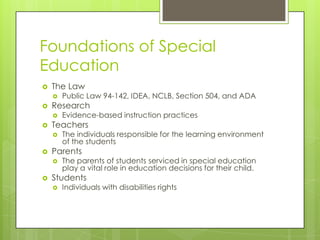
Foundations of Special EducationThe LawPublic Law 94-142, IDEA, NCLB, Section 504, and ADAResearchEvidence-based instruction practicesTeachersThe individuals responsible for the learning environment of the studentsParentsThe parents of students serviced in special education play a vital role in education decisions for their child.StudentsIndividuals with disabilities rights
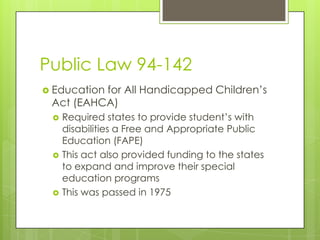
Public Law 94-142Education for All Handicapped Children’s Act (EAHCA)Required states to provide student’s with disabilities a Free and Appropriate Public Education (FAPE)This act also provided funding to the states to expand and improve their special education programsThis was passed in 1975
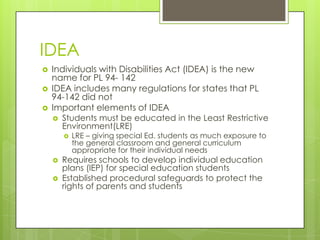
IDEAIndividuals with Disabilities Act (IDEA) is the new name for PL 94- 142IDEA includes many regulations for states that PL 94-142 did notImportant elements of IDEAStudents must be educated in the Least Restrictive Environment(LRE)LRE – giving special Ed. students as much exposure to the general classroom and general curriculum appropriate for their individual needs Requires schools to develop individual education plans (IEP) for special education studentsEstablished procedural safeguards to protect the rights of parents and students
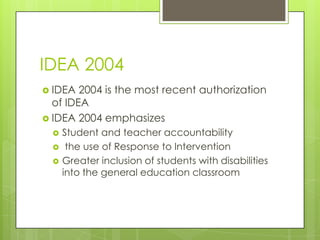
IDEA 2004IDEA 2004 is the most recent authorization of IDEAIDEA 2004 emphasizesStudent and teacher accountability the use of Response to Intervention Greater inclusion of students with disabilities into the general education classroom
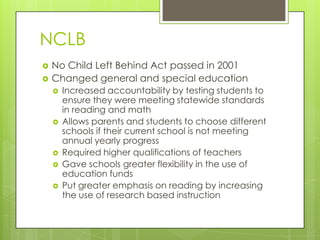
NCLBNo Child Left Behind Act passed in 2001Changed general and special educationIncreased accountability by testing students to ensure they were meeting statewide standards in reading and mathAllows parents and students to choose different schools if their current school is not meeting annual yearly progress Required higher qualifications of teachersGave schools greater flexibility in the use of education fundsPut greater emphasis on reading by increasing the use of research based instruction
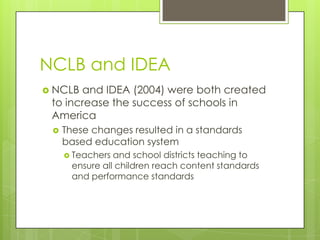
NCLB and IDEANCLB and IDEA (2004) were both created to increase the success of schools in AmericaThese changes resulted in a standards based education system Teachers and school districts teaching to ensure all children reach content standards and performance standards
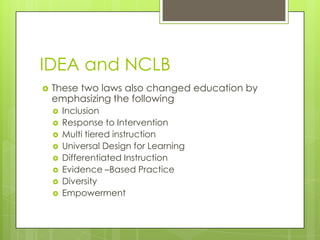
IDEA and NCLBThese two laws also changed education by emphasizing the followingInclusionResponse to InterventionMulti tiered instructionUniversal Design for LearningDifferentiated InstructionEvidence –Based PracticeDiversity Empowerment
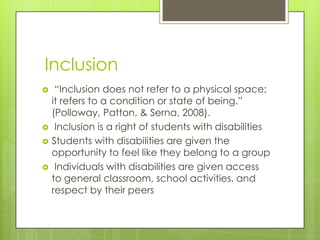
 Inclusion“Inclusion does not refer to a physical space; it refers to a condition or state of being.” (Polloway, Patton, & Serna, 2008). Inclusion is a right of students with disabilitiesStudents with disabilities are given the opportunity to feel like they belong to a groupIndividuals with disabilities are given access to general classroom, school activities, and respect by their peers
Response to Intervention (RTI)and Multi tiered instructionStudents are taught using research based instructionThis instruction is set up into three tiers Tier one - High quality core instructionTier two – High quality targeted supplemental instructionTier three – High quality intensive instructionLearners are identified as learning disabled after they have responded unsuccessfully to multiple instruction interventions (RTI)
 Universal Design for Learning (UDL)  UDL is used so students with different needs can all learn, be challenged, and feel success while being taught togetherActivities and assessments are flexible to meet the needs of the students and their individual goalsAccommodations and modifications are established prior to lesson implementation so many students can learn simultaneously
Differentiated Instruction UDL and differentiated instruction when used together have the potential to make learning a positive experience for a variety of studentsDifferentiated instruction involves making the challenge appropriate for students of different abilitiesDifferentiated instruction also involves teaching using different types of instruction designed for different types of intelligences
Evidence – based practiceResearchers and teachers coming together to create repeatable educational methodsResearch and education have not always aligned because of different perspectives but, now there is more emphasis on the importance of them intertwiningTeachers who use proven instructional methods increase the success of their studentsResearchers who design tests to meet the needs of teachers and students increase the success of students
Diversity and EmpowermentEducators must be aware of the diverse needs of their studentsStudents are diverse in many waysBehaviorCultureRaceSettingEconomic statusSexual orientationIntellectDevelopmentPhysical abilityTeachers must empower their students by raising their confidence and determinationTeachers can empower  students  by teaching them these skillsDecision makingProblem solvingIndependent livingGoal settingSelf-understandingLeadershipSelf-advocacyLocus of control
ADA and Section 504Americans with Disabilities Act (ADA) and Section 504 are two civil rights acts that protect students with disabilities as well These acts ensure that those with disabilities have access to public buildings and programs that receive federal fundingStudents who do not qualify for special education services under IDEA may receive assistance through Section 504
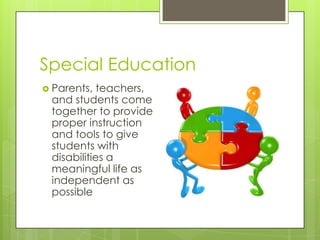
Special EducationParents, teachers, and students come together to provide proper instruction and tools to give students with disabilities a meaningful life as independent as possible

Chapter one

  • 1.
    Chapter OneMeghan PreissingSped413/513MSUMJanuary 14, 2011
  • 2.
    Foundations of SpecialEducationThe LawPublic Law 94-142, IDEA, NCLB, Section 504, and ADAResearchEvidence-based instruction practicesTeachersThe individuals responsible for the learning environment of the studentsParentsThe parents of students serviced in special education play a vital role in education decisions for their child.StudentsIndividuals with disabilities rights
  • 3.
    Public Law 94-142Educationfor All Handicapped Children’s Act (EAHCA)Required states to provide student’s with disabilities a Free and Appropriate Public Education (FAPE)This act also provided funding to the states to expand and improve their special education programsThis was passed in 1975
  • 4.
    IDEAIndividuals with DisabilitiesAct (IDEA) is the new name for PL 94- 142IDEA includes many regulations for states that PL 94-142 did notImportant elements of IDEAStudents must be educated in the Least Restrictive Environment(LRE)LRE – giving special Ed. students as much exposure to the general classroom and general curriculum appropriate for their individual needs Requires schools to develop individual education plans (IEP) for special education studentsEstablished procedural safeguards to protect the rights of parents and students
  • 5.
    IDEA 2004IDEA 2004is the most recent authorization of IDEAIDEA 2004 emphasizesStudent and teacher accountability the use of Response to Intervention Greater inclusion of students with disabilities into the general education classroom
  • 6.
    NCLBNo Child LeftBehind Act passed in 2001Changed general and special educationIncreased accountability by testing students to ensure they were meeting statewide standards in reading and mathAllows parents and students to choose different schools if their current school is not meeting annual yearly progress Required higher qualifications of teachersGave schools greater flexibility in the use of education fundsPut greater emphasis on reading by increasing the use of research based instruction
  • 7.
    NCLB and IDEANCLBand IDEA (2004) were both created to increase the success of schools in AmericaThese changes resulted in a standards based education system Teachers and school districts teaching to ensure all children reach content standards and performance standards
  • 8.
    IDEA and NCLBThesetwo laws also changed education by emphasizing the followingInclusionResponse to InterventionMulti tiered instructionUniversal Design for LearningDifferentiated InstructionEvidence –Based PracticeDiversity Empowerment
  • 9.
    Inclusion“Inclusion doesnot refer to a physical space; it refers to a condition or state of being.” (Polloway, Patton, & Serna, 2008). Inclusion is a right of students with disabilitiesStudents with disabilities are given the opportunity to feel like they belong to a groupIndividuals with disabilities are given access to general classroom, school activities, and respect by their peers
  • 10.
    Response to Intervention(RTI)and Multi tiered instructionStudents are taught using research based instructionThis instruction is set up into three tiers Tier one - High quality core instructionTier two – High quality targeted supplemental instructionTier three – High quality intensive instructionLearners are identified as learning disabled after they have responded unsuccessfully to multiple instruction interventions (RTI)
  • 11.
    Universal Designfor Learning (UDL) UDL is used so students with different needs can all learn, be challenged, and feel success while being taught togetherActivities and assessments are flexible to meet the needs of the students and their individual goalsAccommodations and modifications are established prior to lesson implementation so many students can learn simultaneously
  • 12.
    Differentiated Instruction UDLand differentiated instruction when used together have the potential to make learning a positive experience for a variety of studentsDifferentiated instruction involves making the challenge appropriate for students of different abilitiesDifferentiated instruction also involves teaching using different types of instruction designed for different types of intelligences
  • 13.
    Evidence – basedpracticeResearchers and teachers coming together to create repeatable educational methodsResearch and education have not always aligned because of different perspectives but, now there is more emphasis on the importance of them intertwiningTeachers who use proven instructional methods increase the success of their studentsResearchers who design tests to meet the needs of teachers and students increase the success of students
  • 14.
    Diversity and EmpowermentEducatorsmust be aware of the diverse needs of their studentsStudents are diverse in many waysBehaviorCultureRaceSettingEconomic statusSexual orientationIntellectDevelopmentPhysical abilityTeachers must empower their students by raising their confidence and determinationTeachers can empower students by teaching them these skillsDecision makingProblem solvingIndependent livingGoal settingSelf-understandingLeadershipSelf-advocacyLocus of control
  • 15.
    ADA and Section504Americans with Disabilities Act (ADA) and Section 504 are two civil rights acts that protect students with disabilities as well These acts ensure that those with disabilities have access to public buildings and programs that receive federal fundingStudents who do not qualify for special education services under IDEA may receive assistance through Section 504
  • 16.
    Special EducationParents, teachers,and students come together to provide proper instruction and tools to give students with disabilities a meaningful life as independent as possible