Download as PDF, PPTX
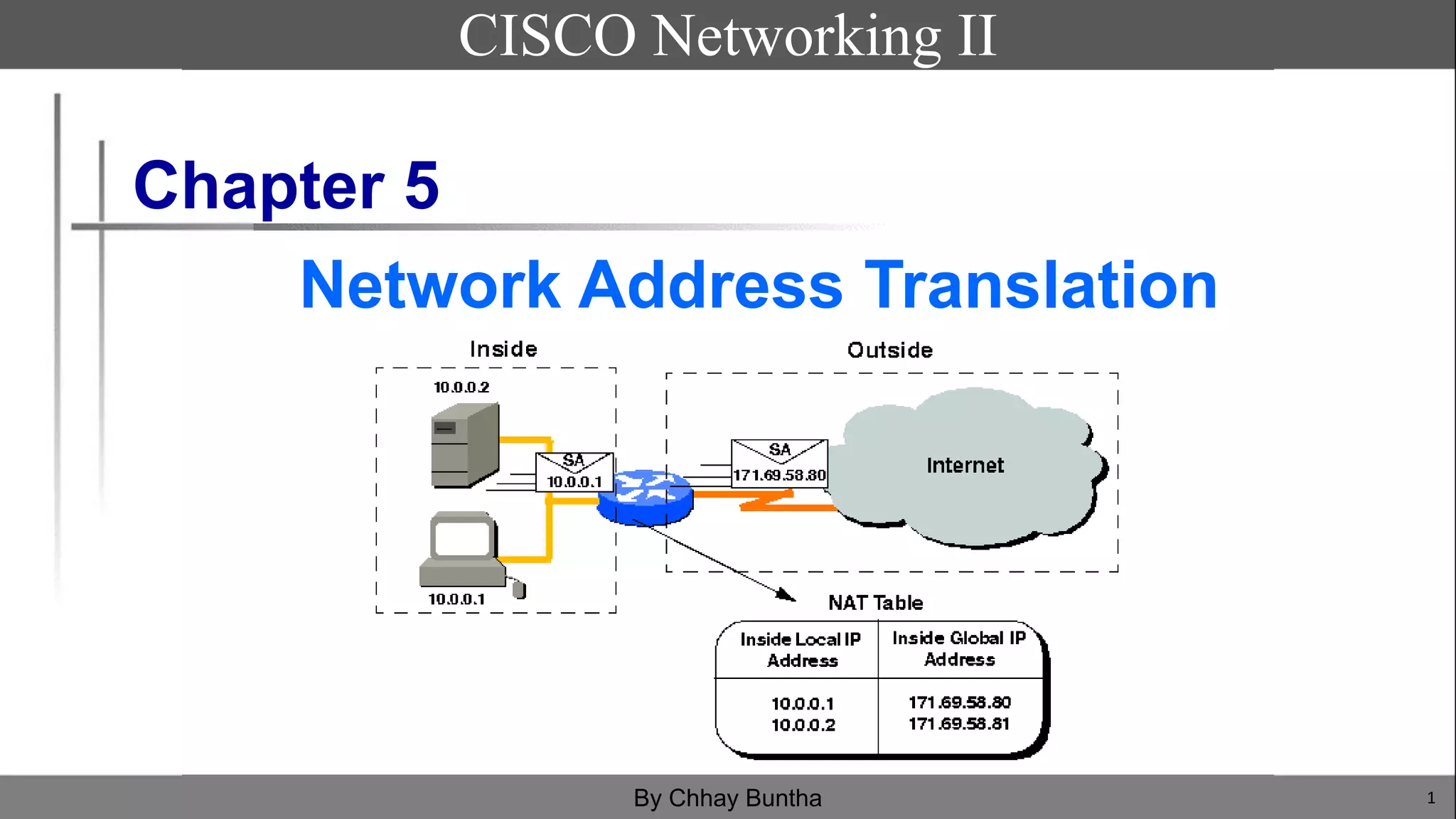
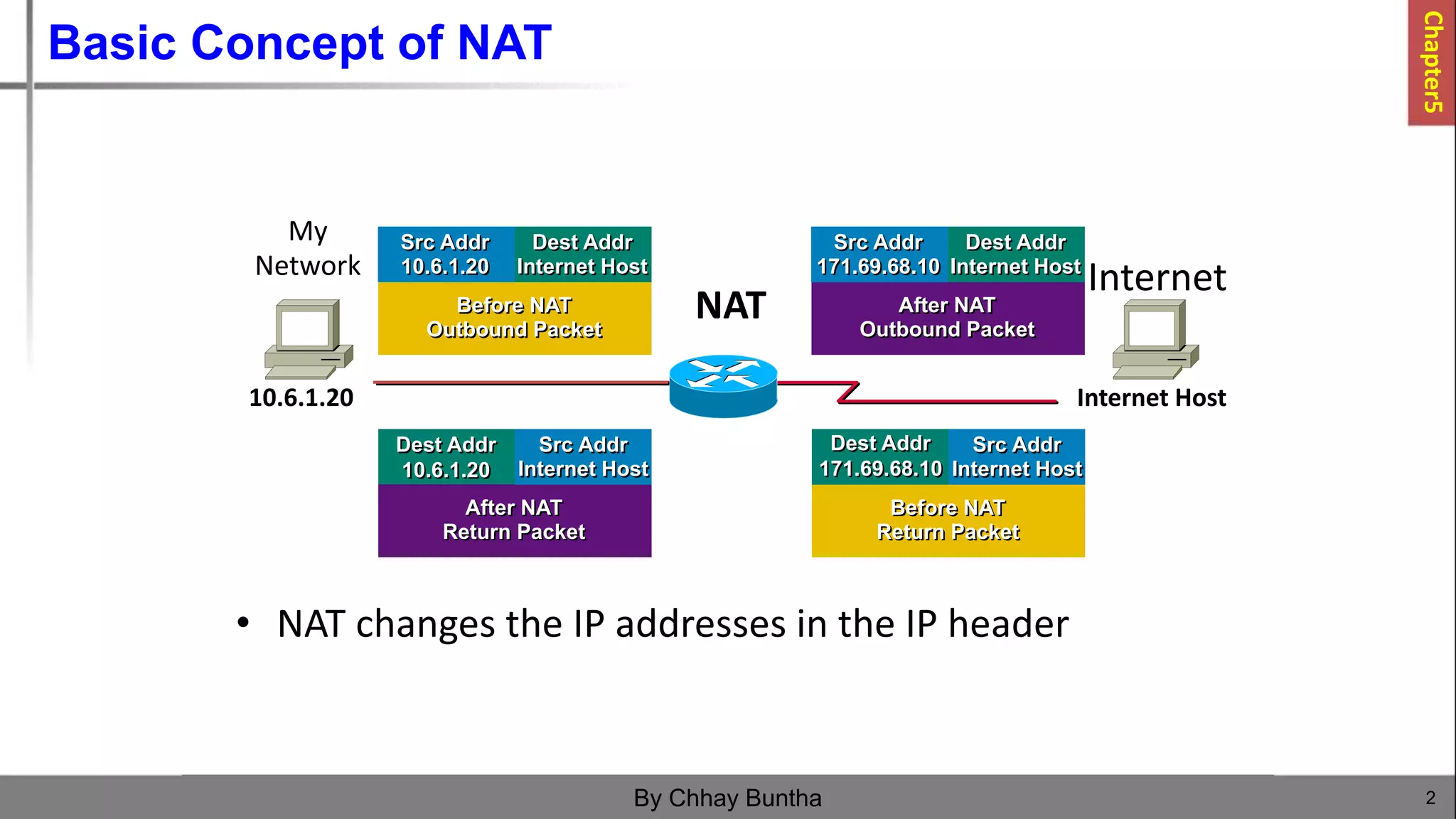
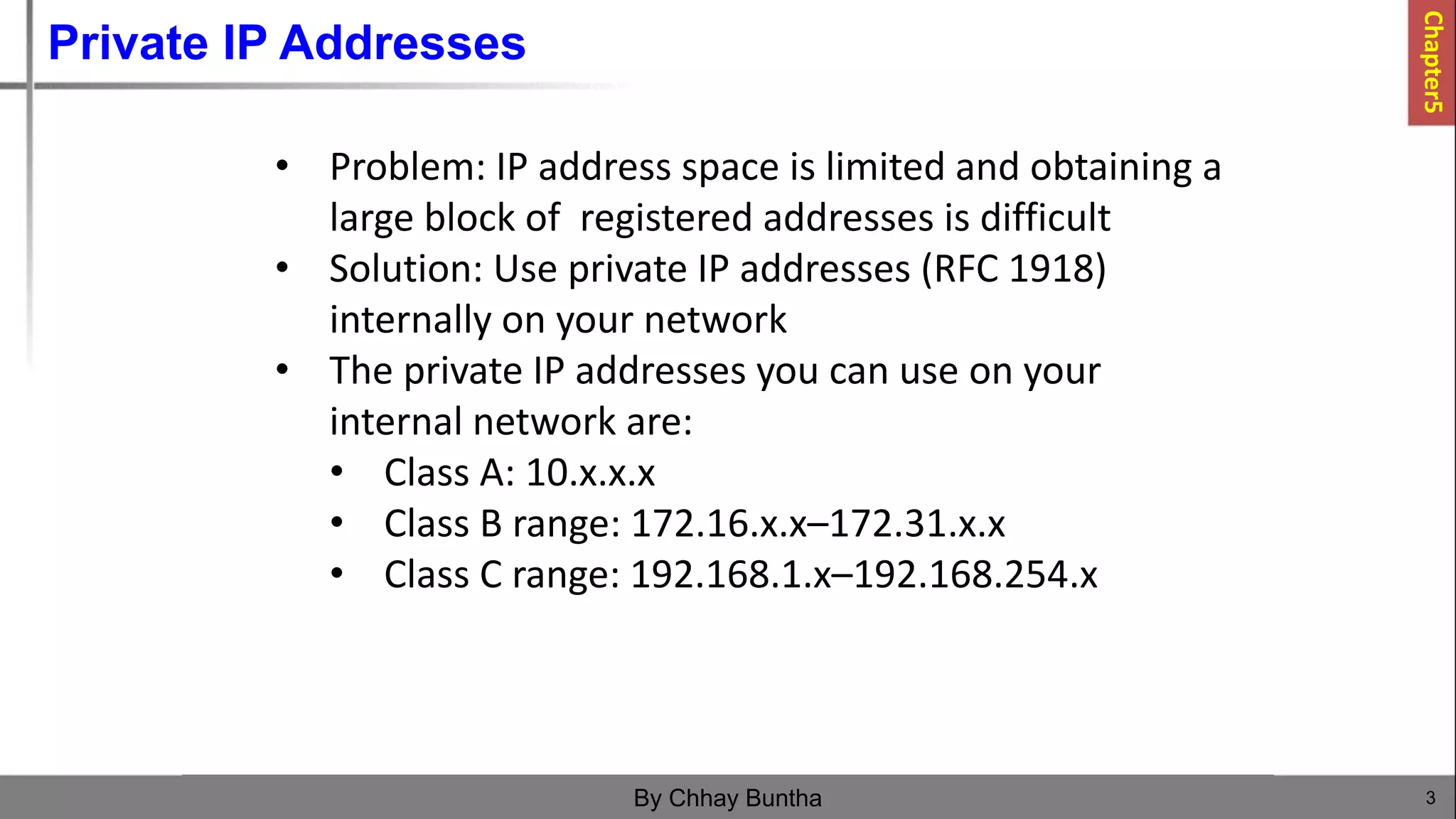
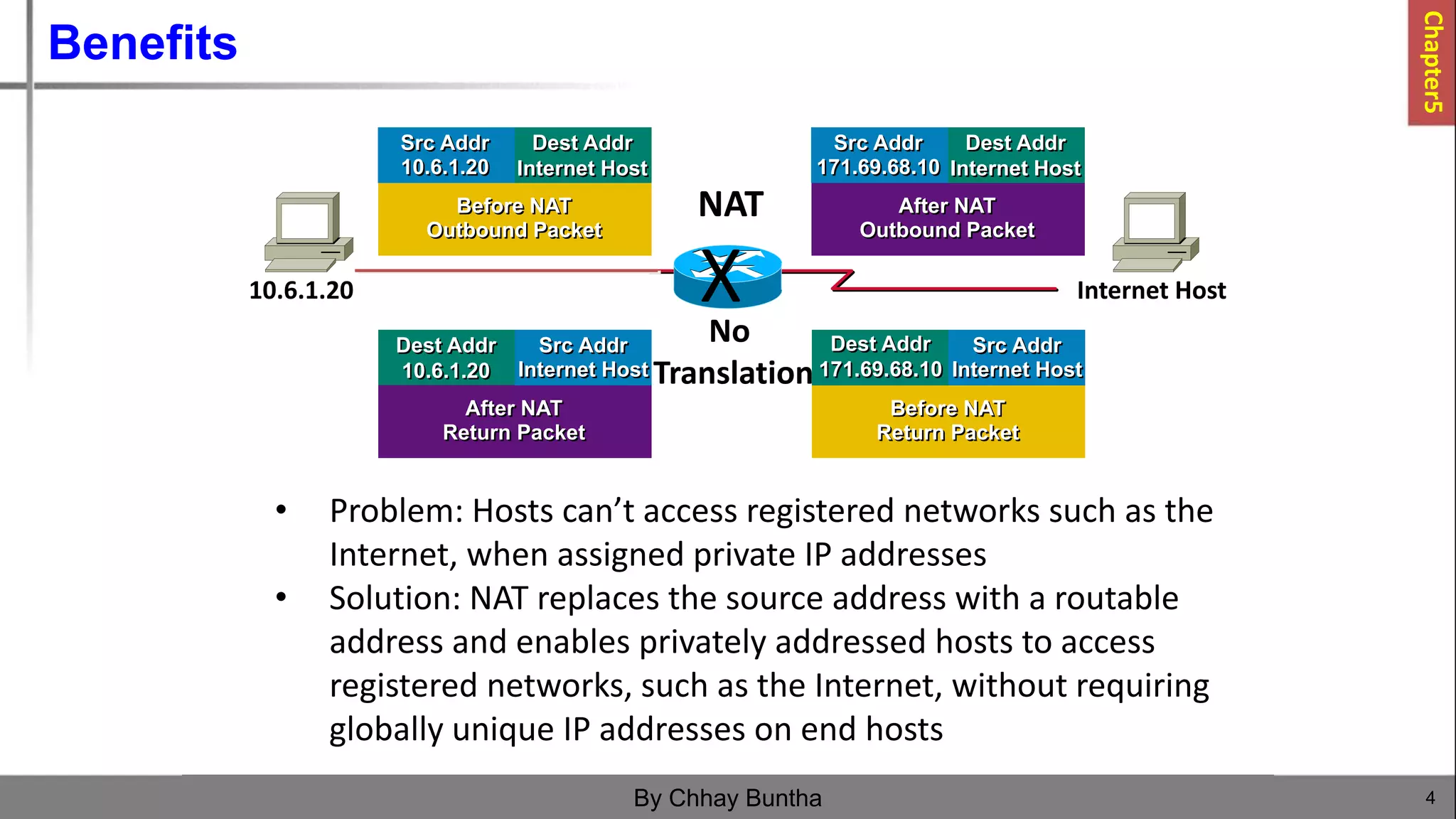
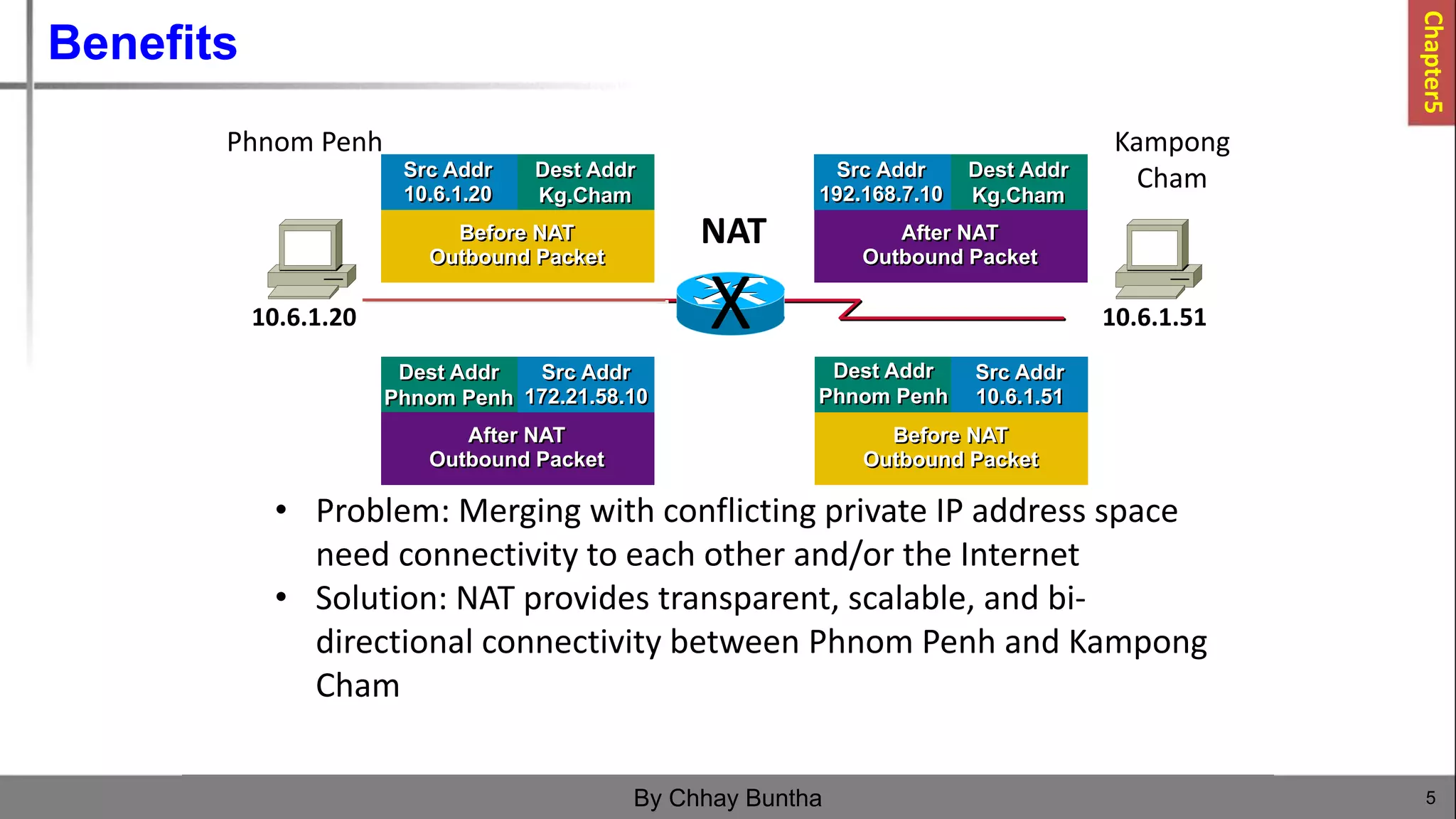
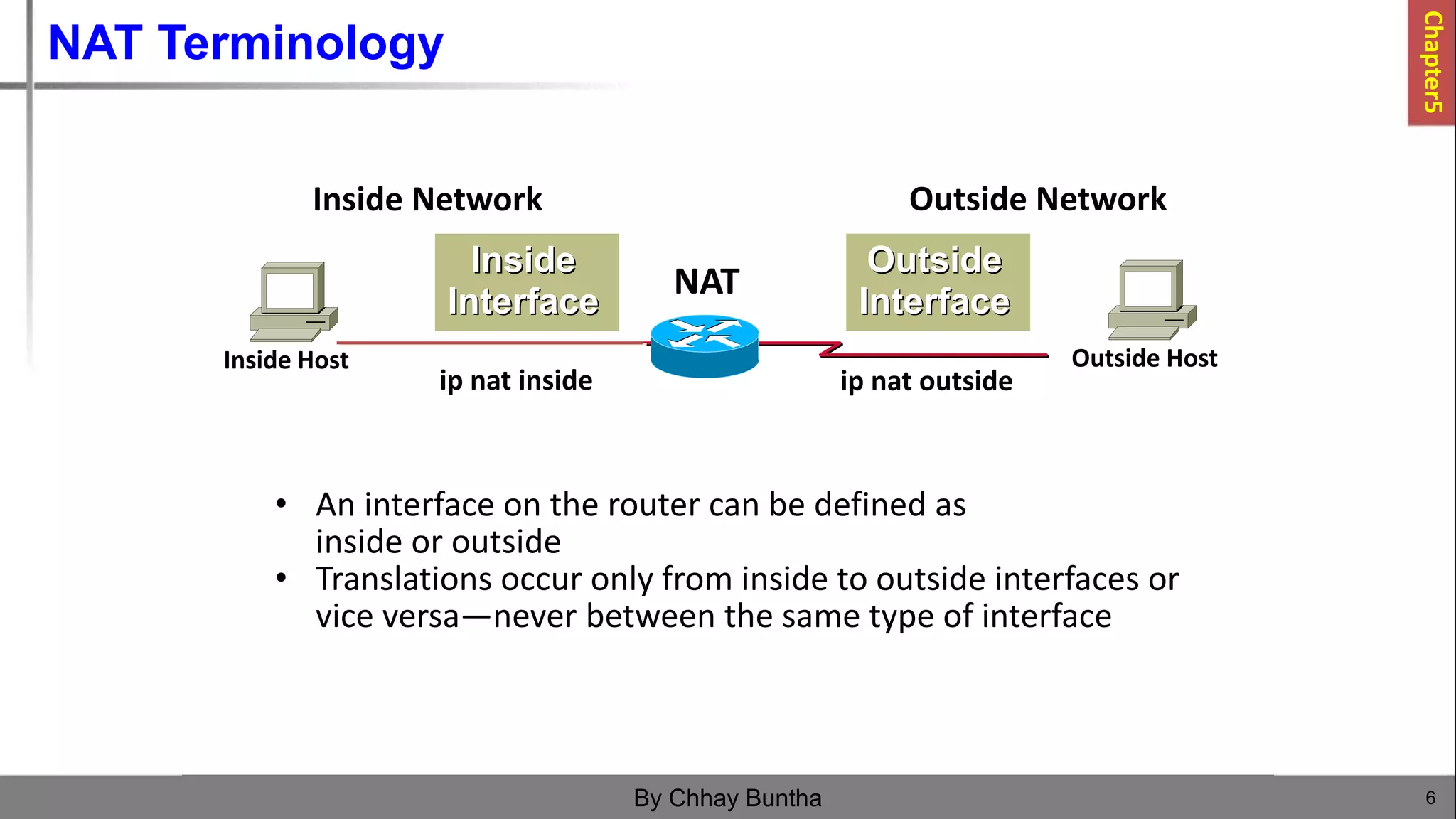
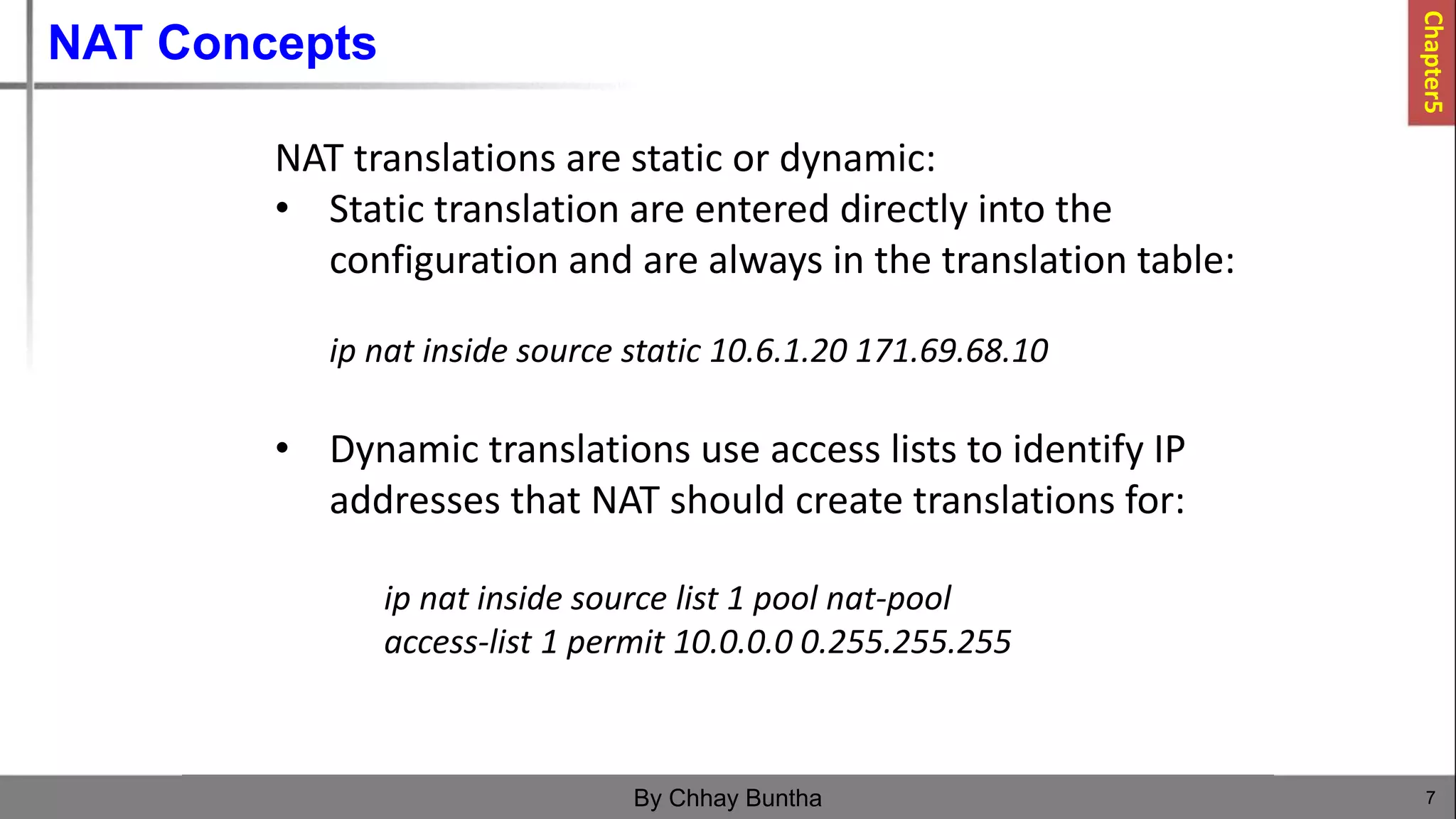
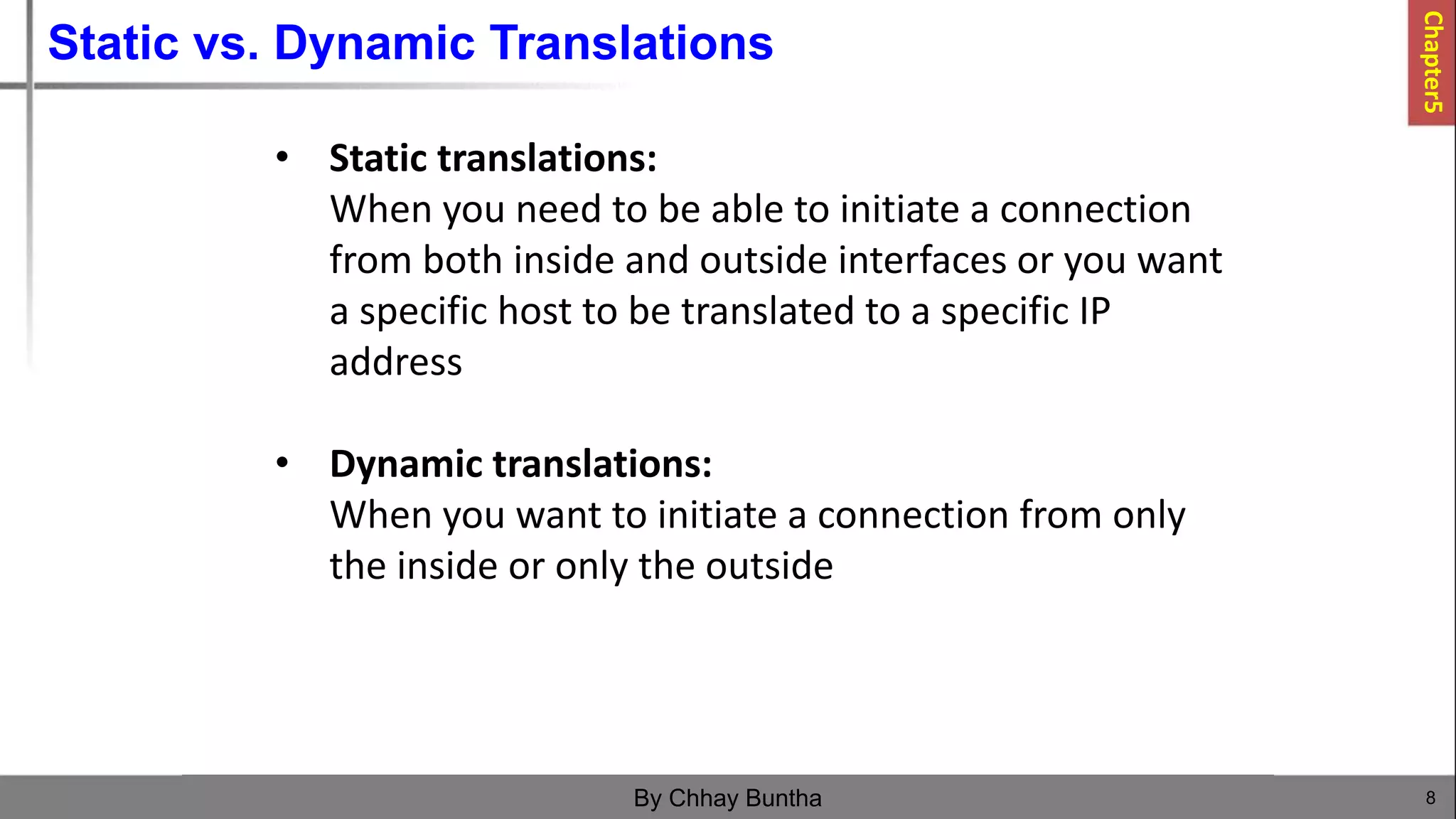
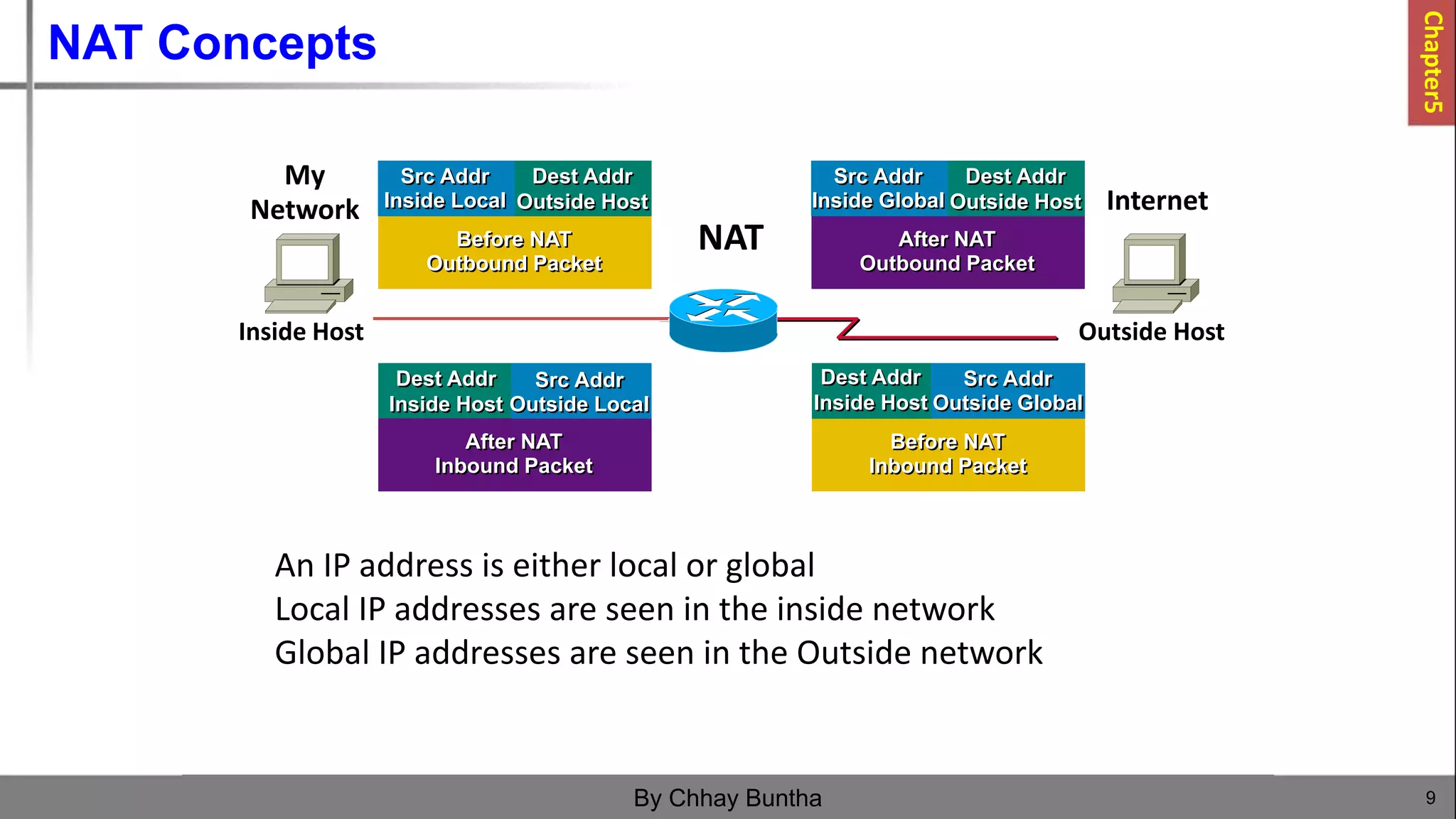
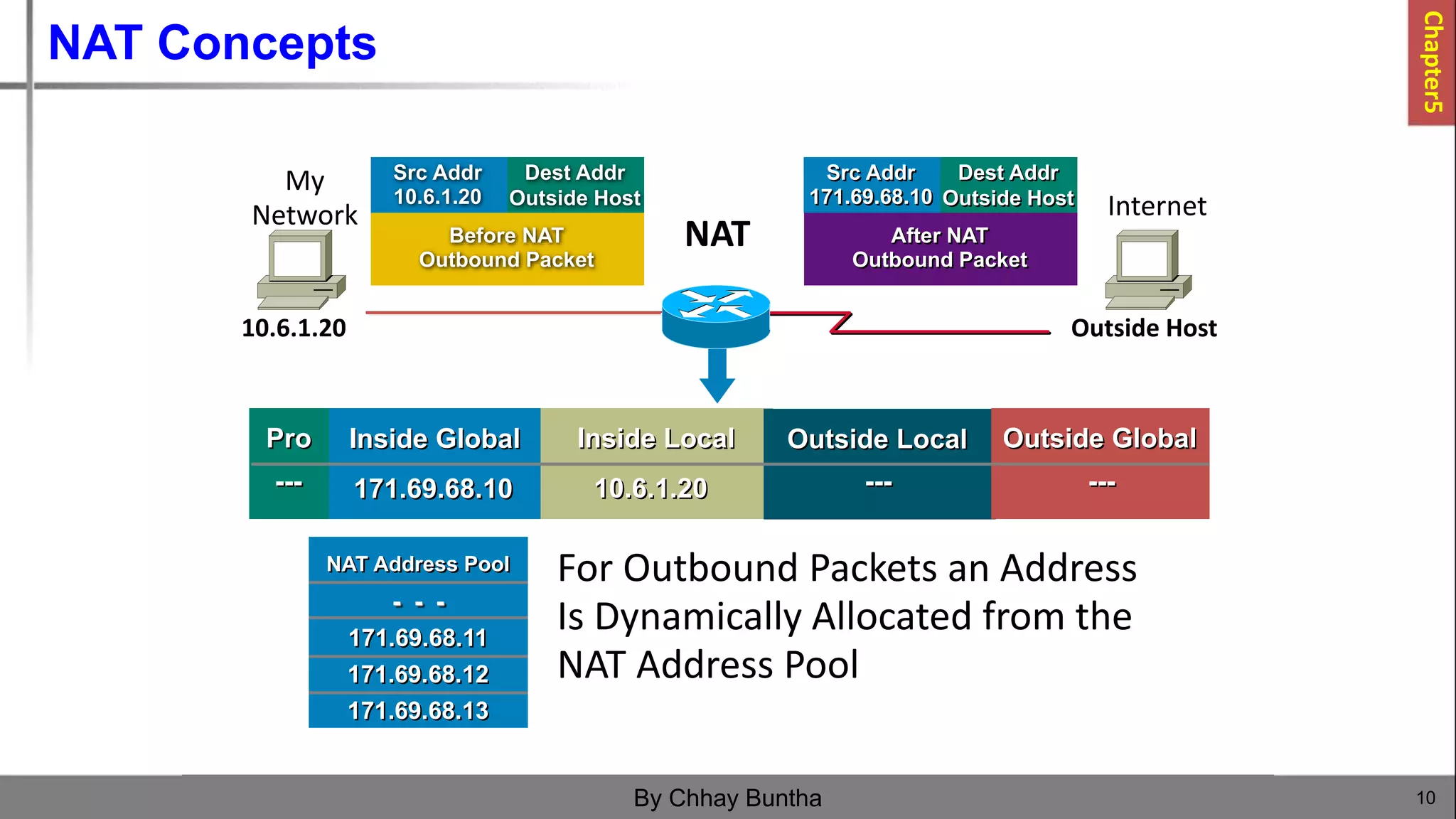
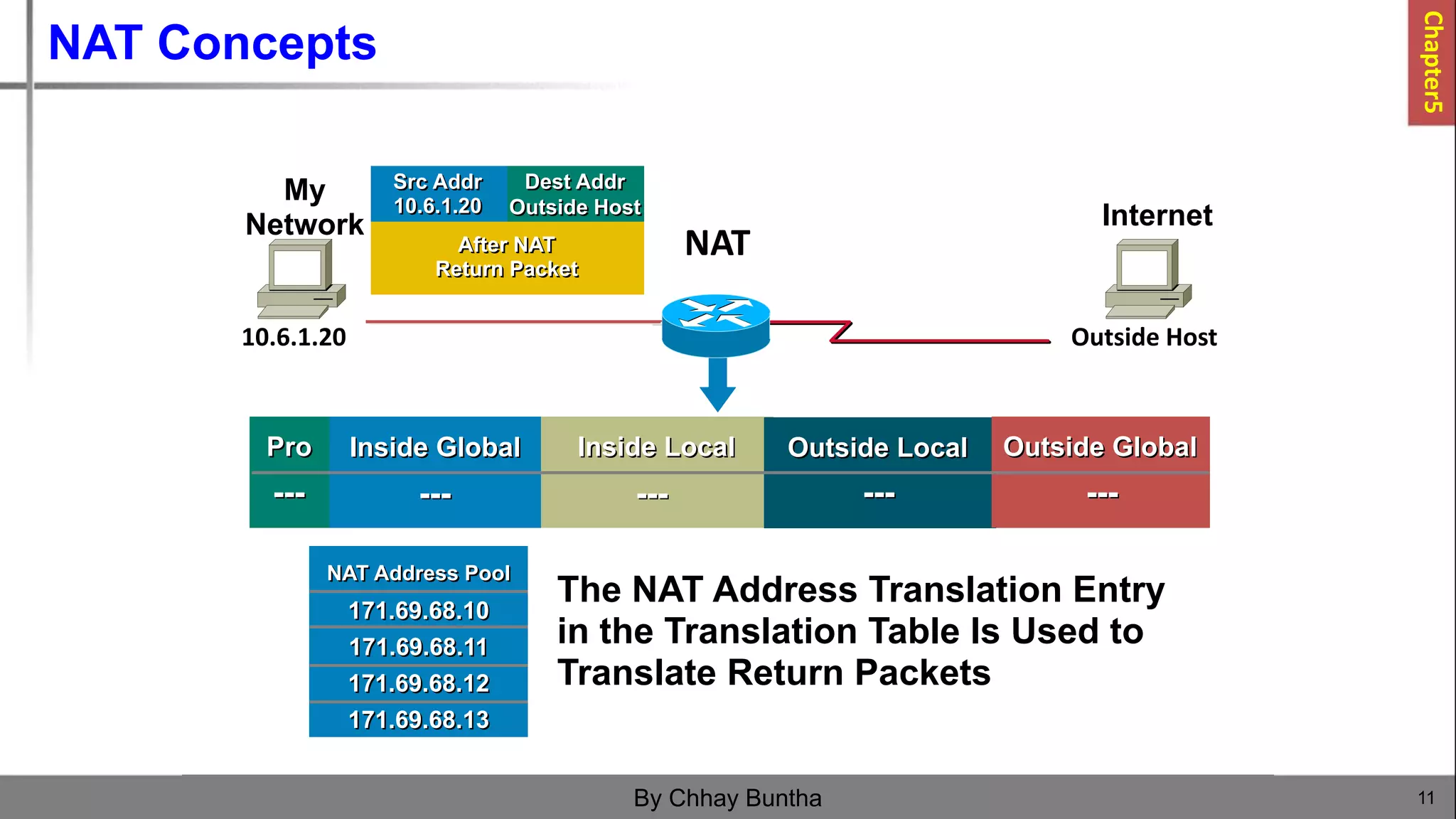
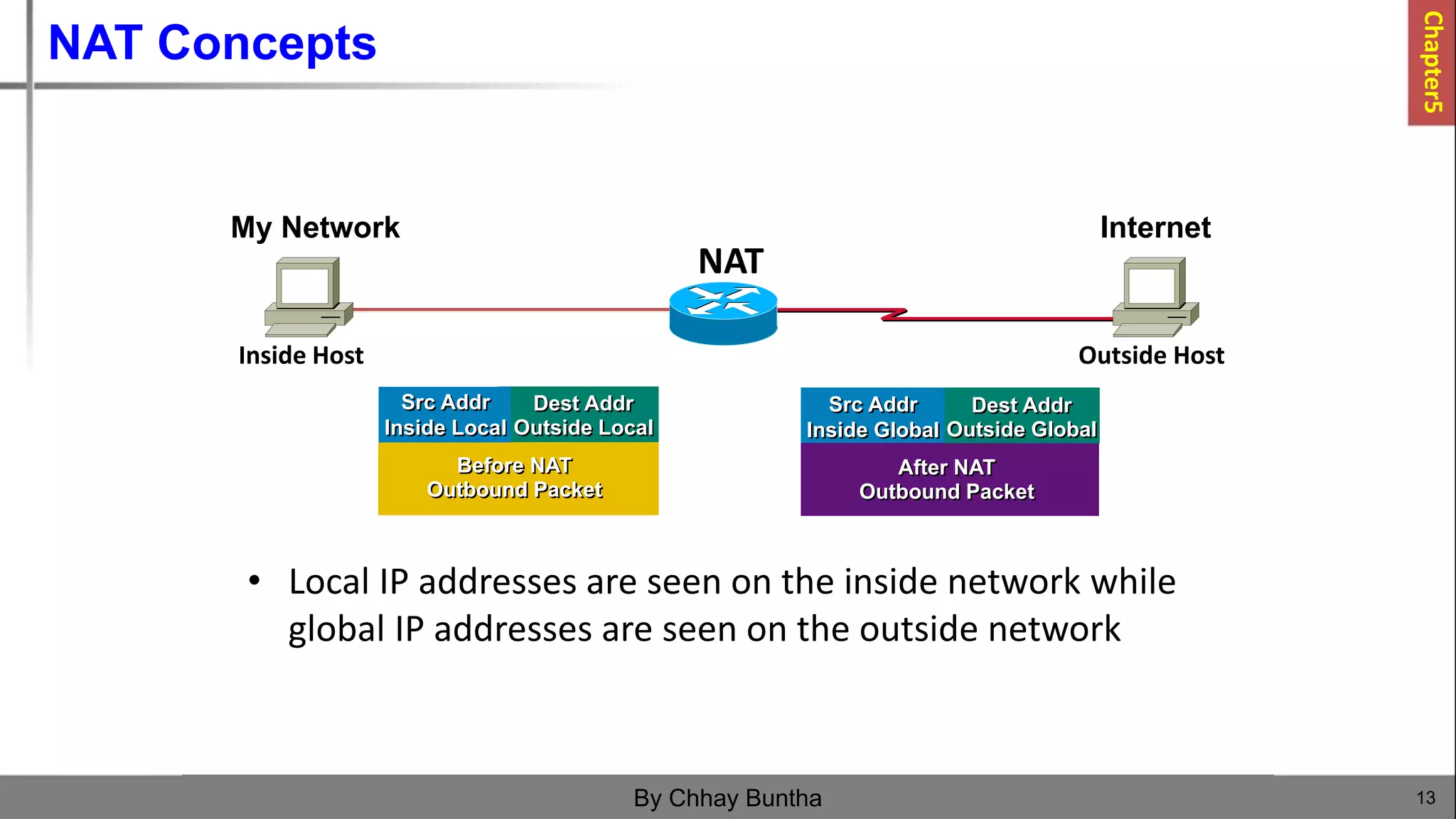
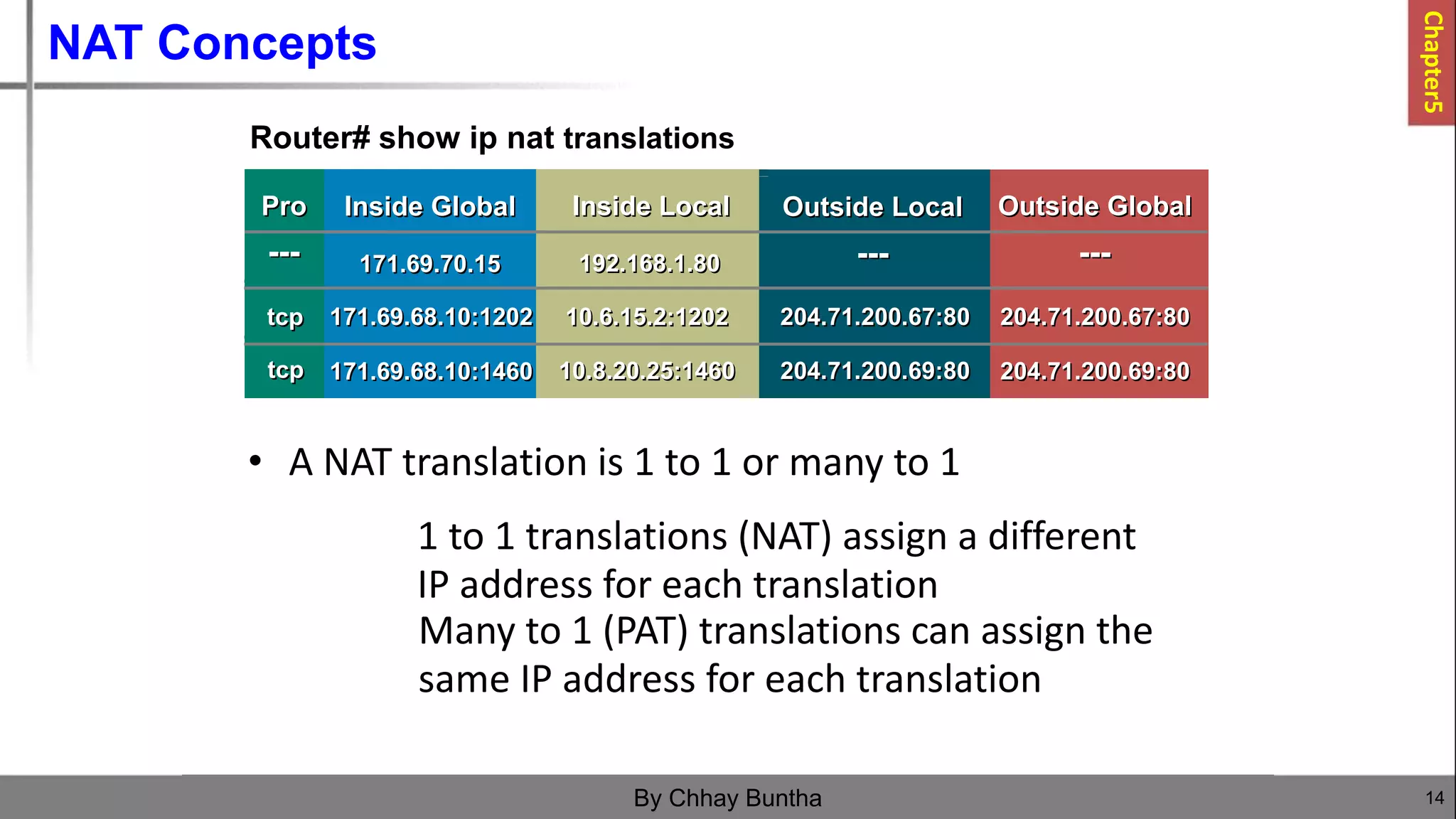
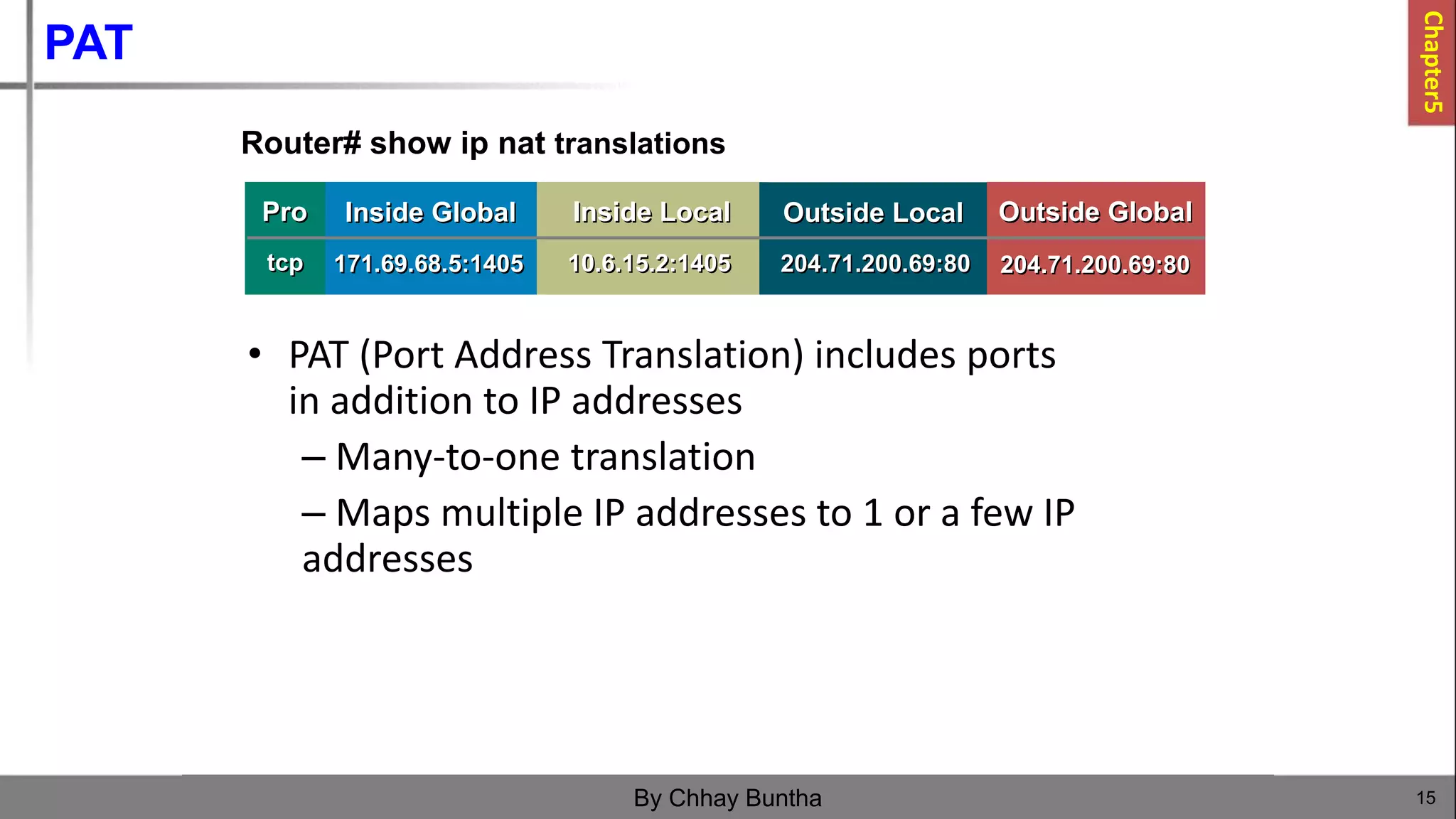
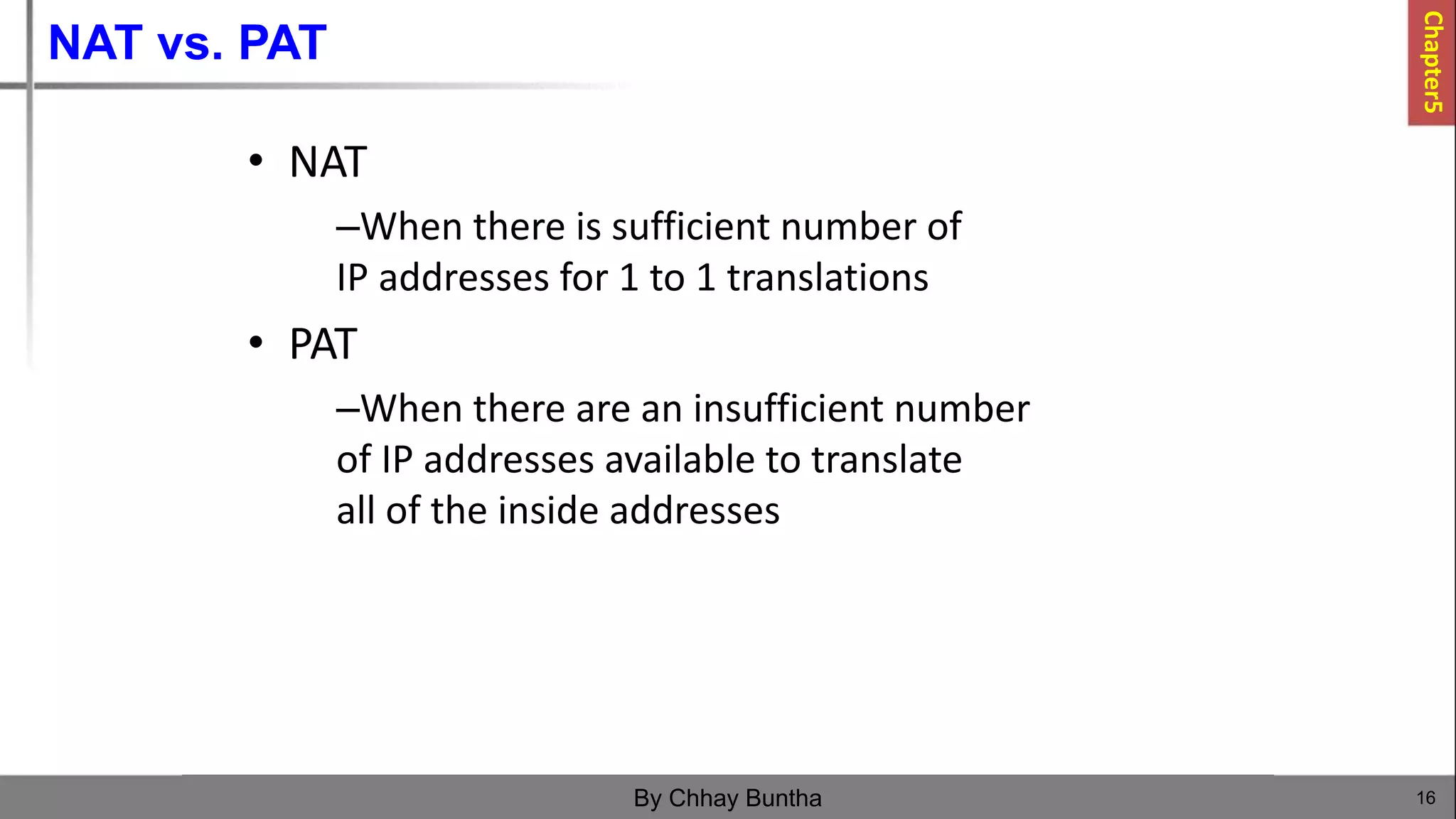
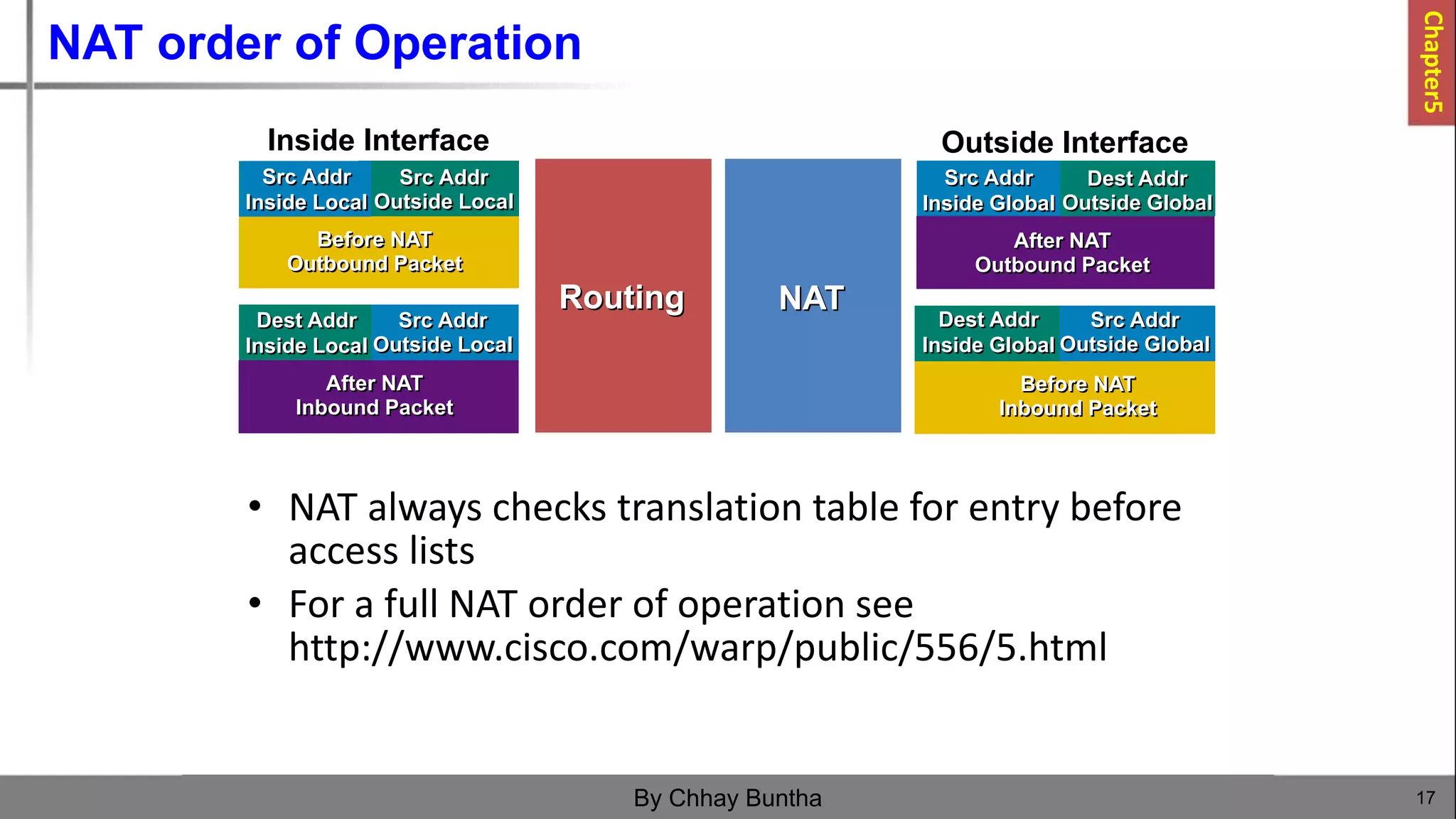
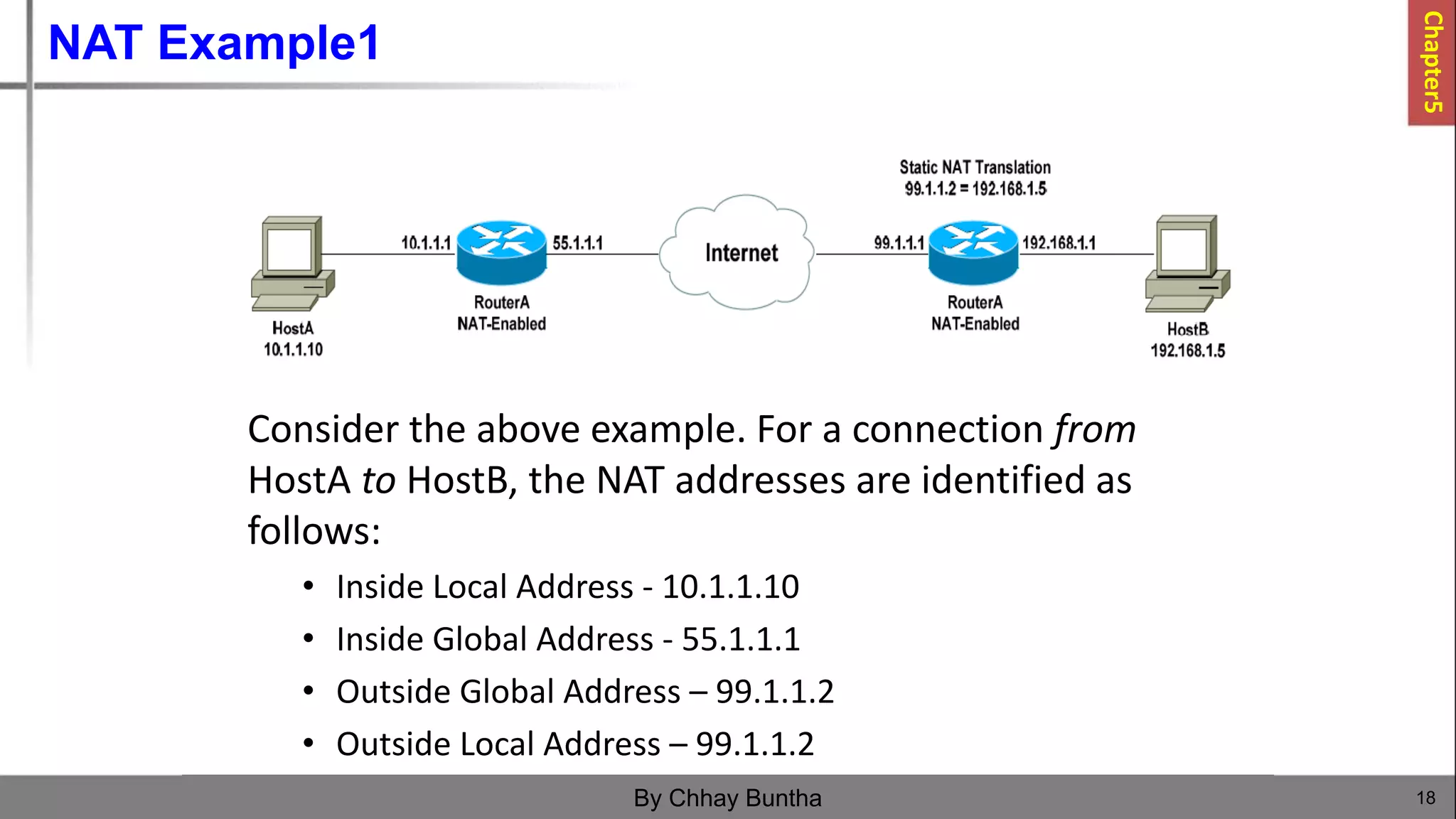
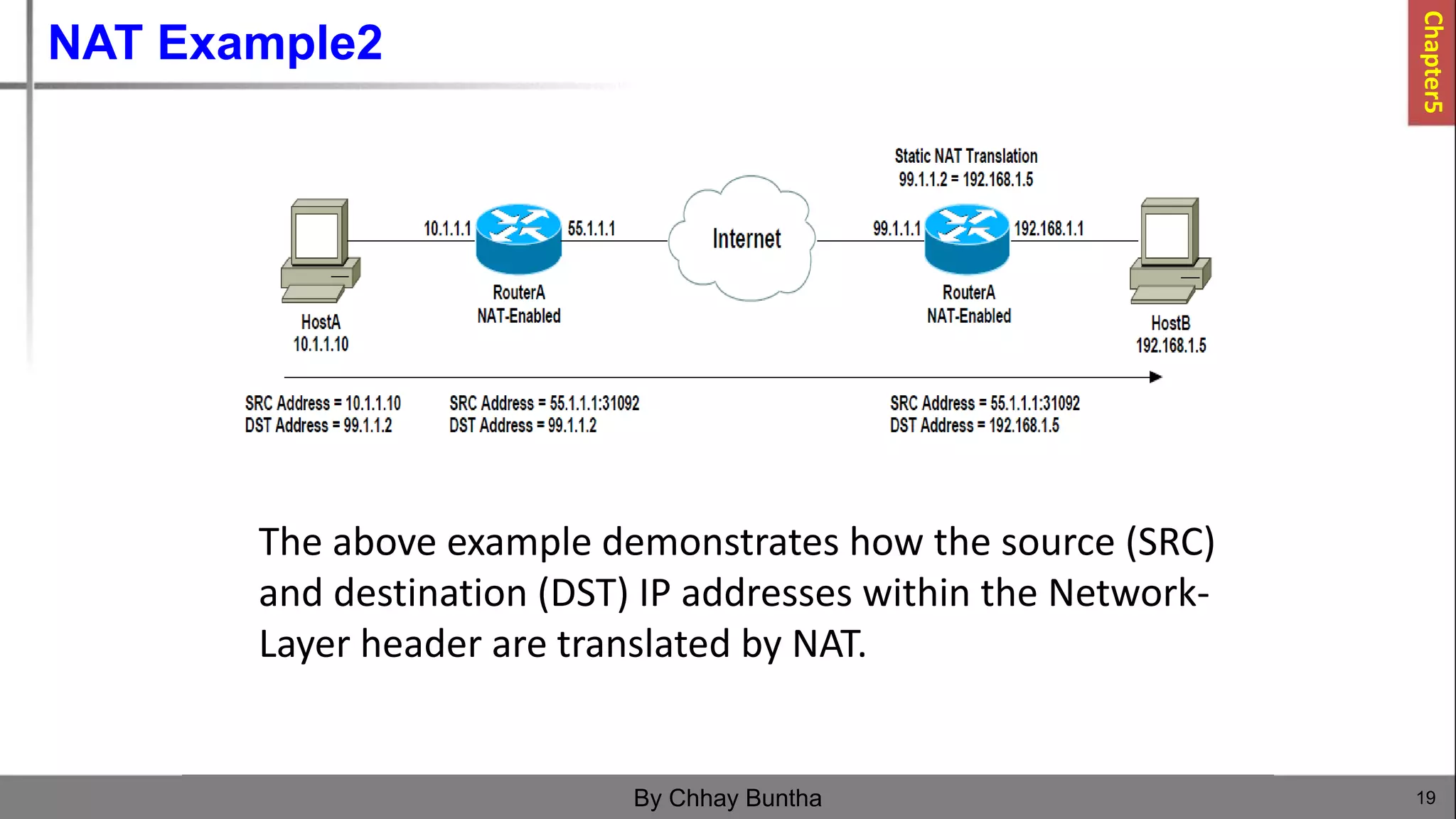


The document discusses network address translation (NAT) and its key concepts. It explains that NAT allows private IP addresses to access the public internet by mapping them to public IP addresses. There are two types of NAT translations - static, where mappings are manually configured, and dynamic, where they are created automatically based on access lists. NAT can perform one-to-one or many-to-one address translations using port address translation (PAT) when there is a shortage of public IP addresses. The document provides examples of how NAT modifies source and destination addresses in packet headers during the translation process.


