Chapter 5
Inclusion for Peace, Democracy and Development
5.1. Definition of peace, democracy and development from the perspective of
Inclusiveness
Peace is defined as creating mutual understanding, positive relationship between individuals and
groups.
Peace makes the mind quiet and calm prevents anxieties, worries, stress and fears, and awakens inner
strength and confidence, develop freedom, happiness, love, joy, justice and gratitude.
Peace can be achieved through formal and informal inclusive education.
Inclusive education is a foundation for inclusiveness in all aspects of life. It is important to realize the role
of inclusive education in creating a society which is peaceful, democratic and prosperous
Hence inclusive education is crucial for:
-Exclusion through horizontal inequalities undermines social cohesion
-Build shared values;
-Reduce disparities in wealth and income
-Educational inequalities reflect social inequalities more broadly
Sources of Conflict
There are a number of sources of conflict attributed to economic, social and political reasons.
As a result, the following characteristics, behaviors and attitude of individuals may cause conflict at all
levels of social strata in the absence of inclusiveness:
 Selfishness (living only for oneself);
 Lust;
 Envy;
 Exploitation (taking advantage over others);
 Prejudice (partiality);
 Self-indulgence;
 Vengeance (retaliation);
 Arrogance (self-importance).
The exclusionary practices may be manifested through discrimination, marginalization and social stigma.
Sustainable peace is vitally important to establish prosperous and stable society.
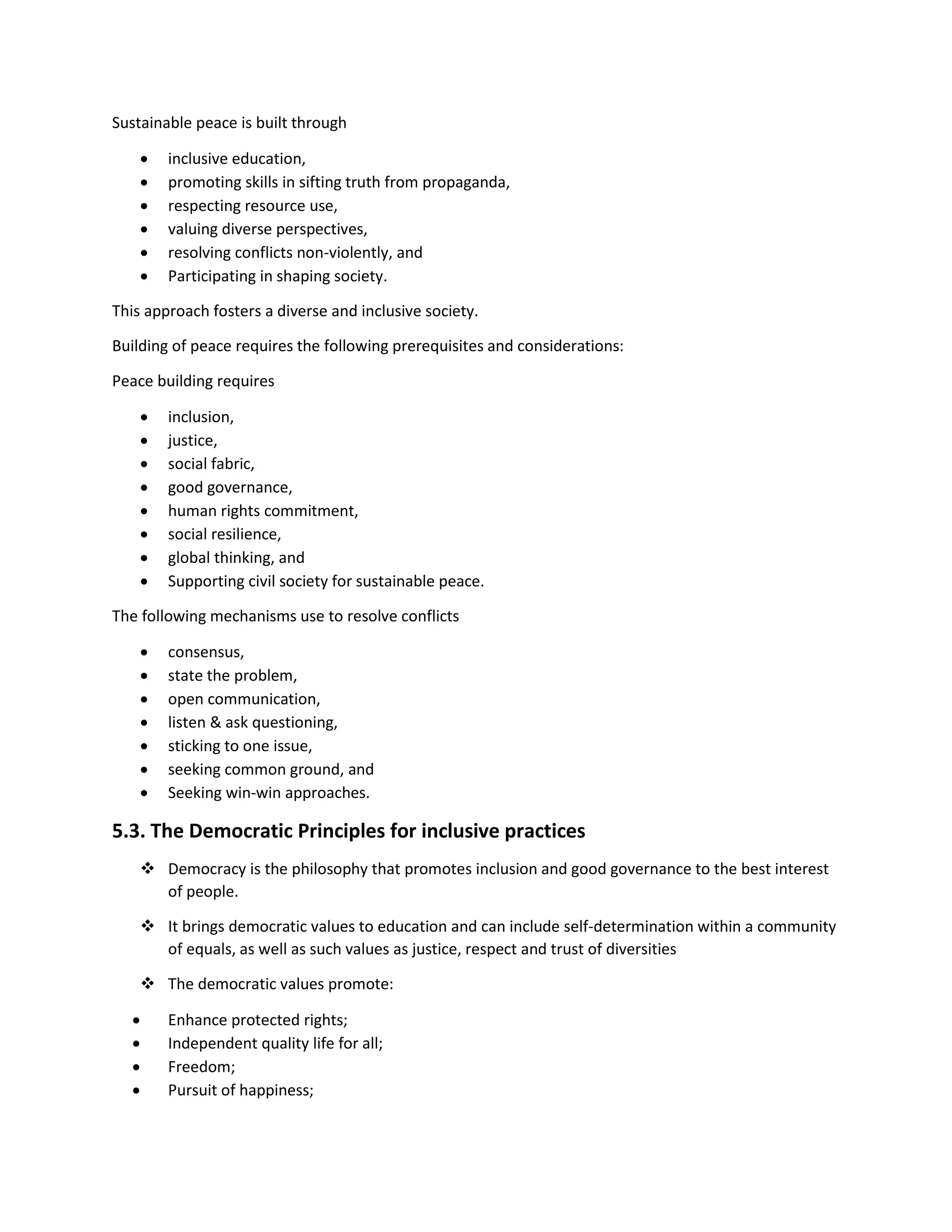
Sustainable peace is built through
 inclusive education,
 promoting skills in sifting truth from propaganda,
 respecting resource use,
 valuing diverse perspectives,
 resolving conflicts non-violently, and
 Participating in shaping society.
This approach fosters a diverse and inclusive society.
Building of peace requires the following prerequisites and considerations:
Peace building requires
 inclusion,
 justice,
 social fabric,
 good governance,
 human rights commitment,
 social resilience,
 global thinking, and
 Supporting civil society for sustainable peace.
The following mechanisms use to resolve conflicts
 consensus,
 state the problem,
 open communication,
 listen & ask questioning,
 sticking to one issue,
 seeking common ground, and
 Seeking win-win approaches.
5.3. The Democratic Principles for inclusive practices
 Democracy is the philosophy that promotes inclusion and good governance to the best interest
of people.
 It brings democratic values to education and can include self-determination within a community
of equals, as well as such values as justice, respect and trust of diversities
 The democratic values promote:
 Enhance protected rights;
 Independent quality life for all;
 Freedom;
 Pursuit of happiness;
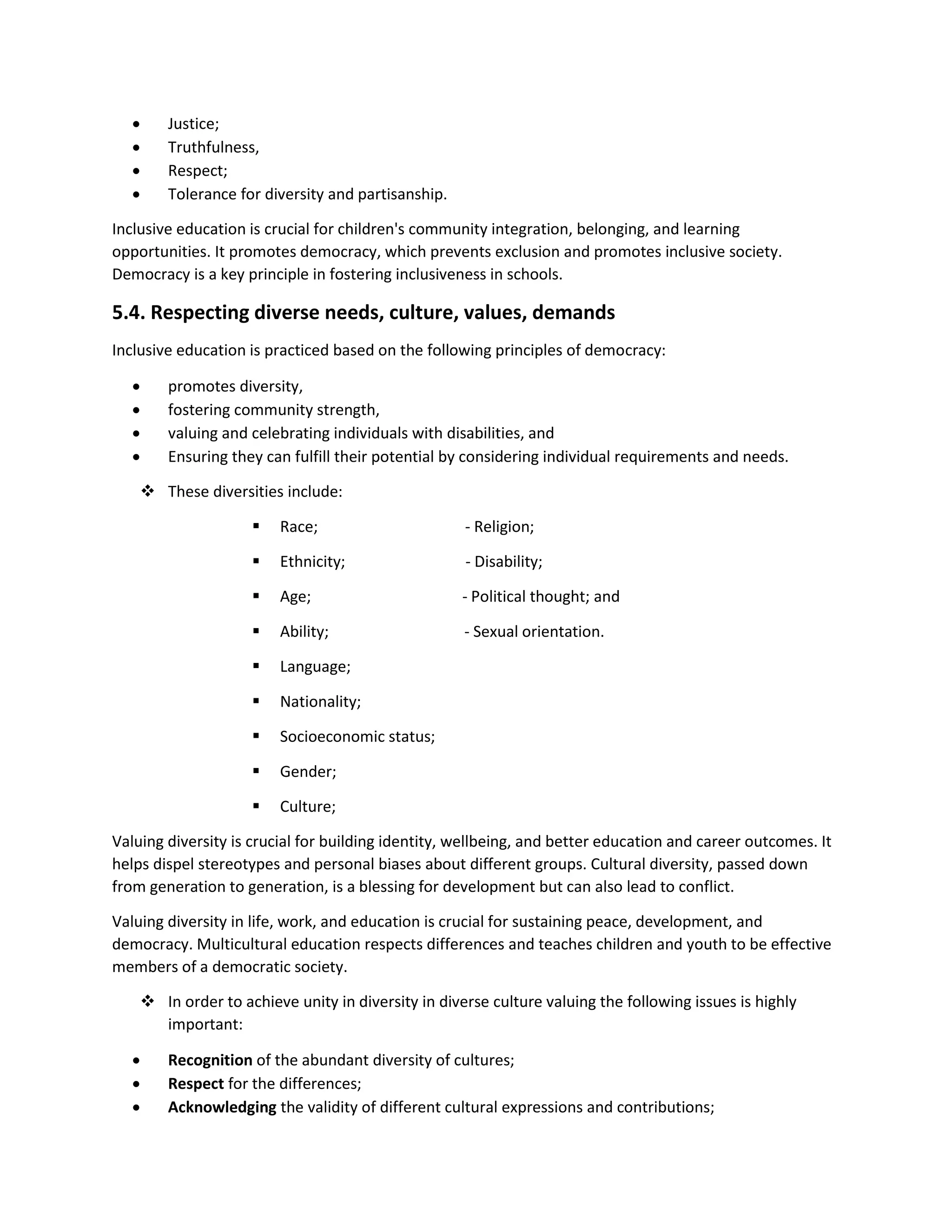
 Justice;
 Truthfulness,
 Respect;
 Tolerance for diversity and partisanship.
Inclusive education is crucial for children's community integration, belonging, and learning
opportunities. It promotes democracy, which prevents exclusion and promotes inclusive society.
Democracy is a key principle in fostering inclusiveness in schools.
5.4. Respecting diverse needs, culture, values, demands
Inclusive education is practiced based on the following principles of democracy:
 promotes diversity,
 fostering community strength,
 valuing and celebrating individuals with disabilities, and
 Ensuring they can fulfill their potential by considering individual requirements and needs.
 These diversities include:
 Race; - Religion;
 Ethnicity; - Disability;
 Age; - Political thought; and
 Ability; - Sexual orientation.
 Language;
 Nationality;
 Socioeconomic status;
 Gender;
 Culture;
Valuing diversity is crucial for building identity, wellbeing, and better education and career outcomes. It
helps dispel stereotypes and personal biases about different groups. Cultural diversity, passed down
from generation to generation, is a blessing for development but can also lead to conflict.
Valuing diversity in life, work, and education is crucial for sustaining peace, development, and
democracy. Multicultural education respects differences and teaches children and youth to be effective
members of a democratic society.
 In order to achieve unity in diversity in diverse culture valuing the following issues is highly
important:
 Recognition of the abundant diversity of cultures;
 Respect for the differences;
 Acknowledging the validity of different cultural expressions and contributions;
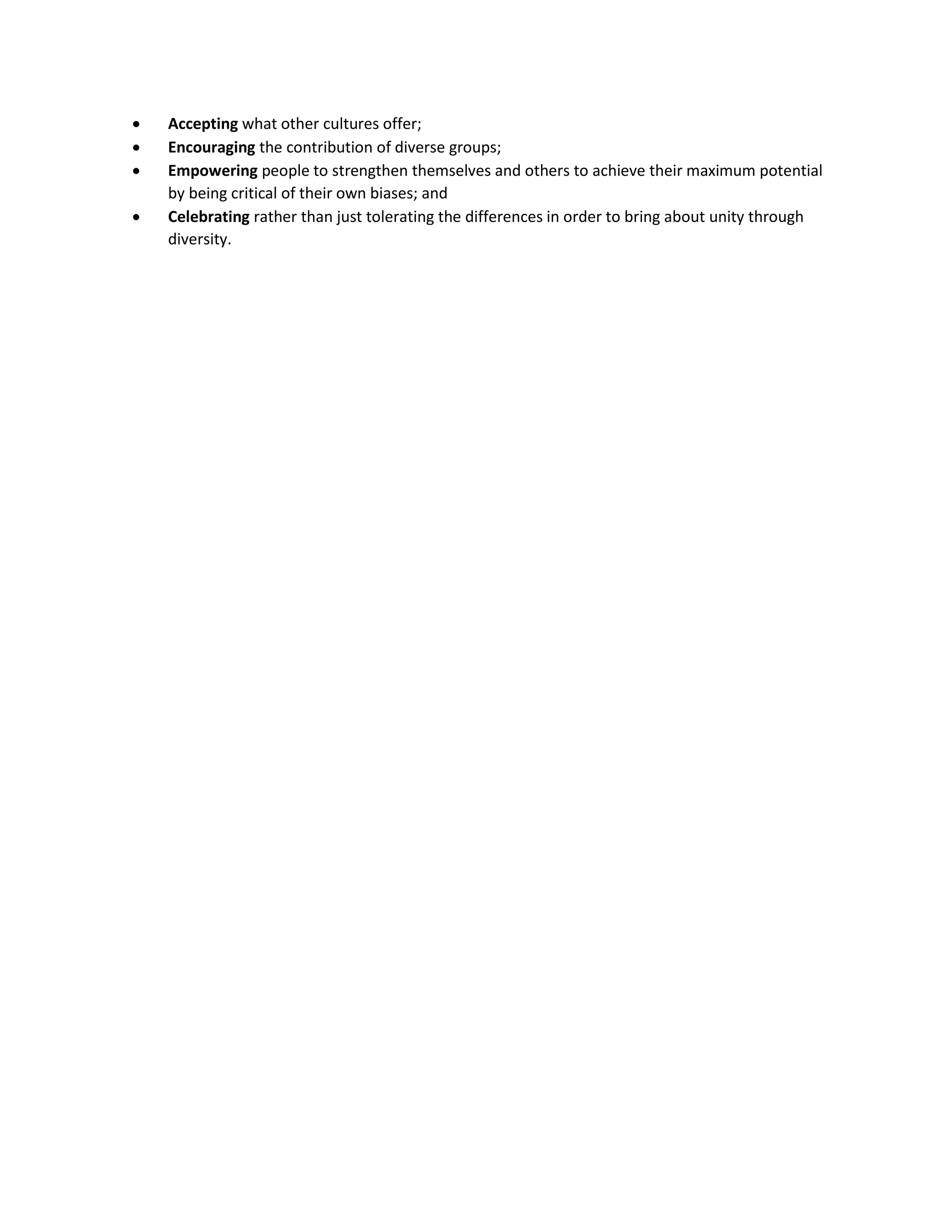
 Accepting what other cultures offer;
 Encouraging the contribution of diverse groups;
 Empowering people to strengthen themselves and others to achieve their maximum potential
by being critical of their own biases; and
 Celebrating rather than just tolerating the differences in order to bring about unity through
diversity.

Chapter 5 inclusiveness assignment.pdf

  • 1.
    Chapter 5 Inclusion forPeace, Democracy and Development 5.1. Definition of peace, democracy and development from the perspective of Inclusiveness Peace is defined as creating mutual understanding, positive relationship between individuals and groups. Peace makes the mind quiet and calm prevents anxieties, worries, stress and fears, and awakens inner strength and confidence, develop freedom, happiness, love, joy, justice and gratitude. Peace can be achieved through formal and informal inclusive education. Inclusive education is a foundation for inclusiveness in all aspects of life. It is important to realize the role of inclusive education in creating a society which is peaceful, democratic and prosperous Hence inclusive education is crucial for: -Exclusion through horizontal inequalities undermines social cohesion -Build shared values; -Reduce disparities in wealth and income -Educational inequalities reflect social inequalities more broadly Sources of Conflict There are a number of sources of conflict attributed to economic, social and political reasons. As a result, the following characteristics, behaviors and attitude of individuals may cause conflict at all levels of social strata in the absence of inclusiveness:  Selfishness (living only for oneself);  Lust;  Envy;  Exploitation (taking advantage over others);  Prejudice (partiality);  Self-indulgence;  Vengeance (retaliation);  Arrogance (self-importance). The exclusionary practices may be manifested through discrimination, marginalization and social stigma. Sustainable peace is vitally important to establish prosperous and stable society.
  • 2.
    Sustainable peace isbuilt through  inclusive education,  promoting skills in sifting truth from propaganda,  respecting resource use,  valuing diverse perspectives,  resolving conflicts non-violently, and  Participating in shaping society. This approach fosters a diverse and inclusive society. Building of peace requires the following prerequisites and considerations: Peace building requires  inclusion,  justice,  social fabric,  good governance,  human rights commitment,  social resilience,  global thinking, and  Supporting civil society for sustainable peace. The following mechanisms use to resolve conflicts  consensus,  state the problem,  open communication,  listen & ask questioning,  sticking to one issue,  seeking common ground, and  Seeking win-win approaches. 5.3. The Democratic Principles for inclusive practices  Democracy is the philosophy that promotes inclusion and good governance to the best interest of people.  It brings democratic values to education and can include self-determination within a community of equals, as well as such values as justice, respect and trust of diversities  The democratic values promote:  Enhance protected rights;  Independent quality life for all;  Freedom;  Pursuit of happiness;
  • 3.
     Justice;  Truthfulness, Respect;  Tolerance for diversity and partisanship. Inclusive education is crucial for children's community integration, belonging, and learning opportunities. It promotes democracy, which prevents exclusion and promotes inclusive society. Democracy is a key principle in fostering inclusiveness in schools. 5.4. Respecting diverse needs, culture, values, demands Inclusive education is practiced based on the following principles of democracy:  promotes diversity,  fostering community strength,  valuing and celebrating individuals with disabilities, and  Ensuring they can fulfill their potential by considering individual requirements and needs.  These diversities include:  Race; - Religion;  Ethnicity; - Disability;  Age; - Political thought; and  Ability; - Sexual orientation.  Language;  Nationality;  Socioeconomic status;  Gender;  Culture; Valuing diversity is crucial for building identity, wellbeing, and better education and career outcomes. It helps dispel stereotypes and personal biases about different groups. Cultural diversity, passed down from generation to generation, is a blessing for development but can also lead to conflict. Valuing diversity in life, work, and education is crucial for sustaining peace, development, and democracy. Multicultural education respects differences and teaches children and youth to be effective members of a democratic society.  In order to achieve unity in diversity in diverse culture valuing the following issues is highly important:  Recognition of the abundant diversity of cultures;  Respect for the differences;  Acknowledging the validity of different cultural expressions and contributions;
  • 4.
     Accepting whatother cultures offer;  Encouraging the contribution of diverse groups;  Empowering people to strengthen themselves and others to achieve their maximum potential by being critical of their own biases; and  Celebrating rather than just tolerating the differences in order to bring about unity through diversity.