17-1
CHAPTER
RETAILING AND
OMNICHANNEL
MARKETING
17
17-2
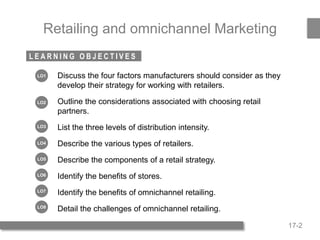
L E A R N I N G O B J E C T I V E S
Discuss the four factors manufacturers should consider as they
develop their strategy for working with retailers.
Outline the considerations associated with choosing retail
partners.
List the three levels of distribution intensity.
Describe the various types of retailers.
Describe the components of a retail strategy.
Identify the benefits of stores.
Identify the benefits of omnichannel retailing.
Detail the challenges of omnichannel retailing.
Retailing and omnichannel Marketing
LO1
LO2
LO3
LO4
LO5
LO6
LO7
LO8
17-3
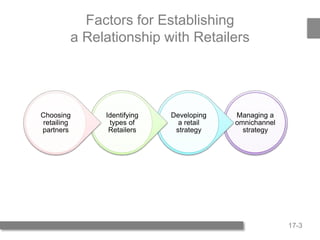
Factors for Establishing
a Relationship with Retailers
Managing a
omnichannel
strategy
Developing
a retail
strategy
Identifying
types of
Retailers
Choosing
retailing
partners
17-4
Choosing Retail Partners
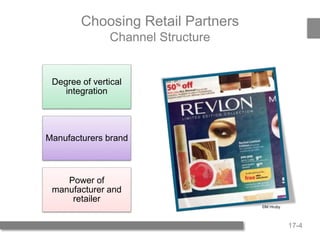
Channel Structure
Degree of vertical
integration
Manufacturers brand
Power of
manufacturer and
retailer
©M Hruby
17-5
Choosing Retail Partners
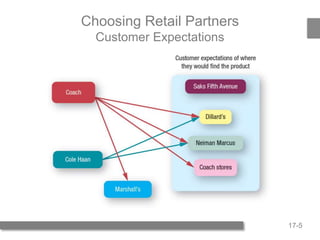
Customer Expectations
17-6
Choosing Retail Partners
Channel Member Characteristics
Larger firms
Less likely to use
supply chain
intermediaries
Can gain more
control, be more
efficient, and
save money.
17-7
Choosing Retail Partners
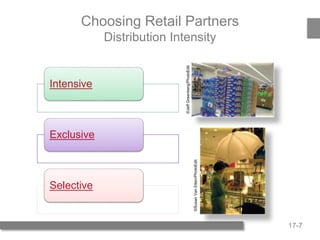
Distribution Intensity
Intensive
Exclusive
Selective ©JeffGreenberg/PhotoEdit
©SusanVanEtten/PhotoEdit
17-8
CHECK YOURSELF
1. What issues should manufacturers consider
when choosing retail partners?
2. What is the difference between intensive,
exclusive, and selective levels of distribution
intensity?
17-9
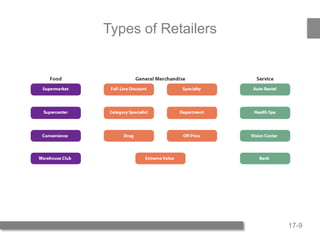
Types of Retailers
17-10
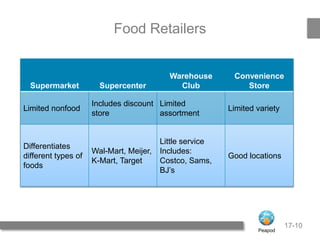
Food Retailers
Supermarket Supercenter
Warehouse
Club
Convenience
Store
Limited nonfood
Includes discount
store
Limited
assortment
Limited variety
Differentiates
different types of
foods
Wal-Mart, Meijer,
K-Mart, Target
Little service
Includes:
Costco, Sams,
BJ’s
Good locations
Peapod
17-11
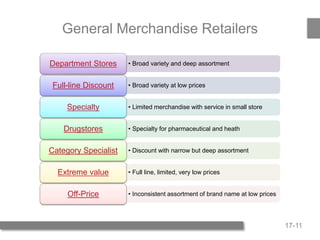
General Merchandise Retailers
• Broad variety and deep assortmentDepartment Stores
• Broad variety at low pricesFull-line Discount
• Limited merchandise with service in small storeSpecialty
• Specialty for pharmaceutical and heathDrugstores
• Discount with narrow but deep assortmentCategory Specialist
• Full line, limited, very low pricesExtreme value
• Inconsistent assortment of brand name at low pricesOff-Price
17-12
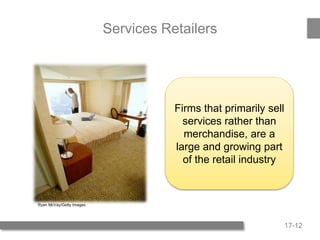
Services Retailers
Firms that primarily sell
services rather than
merchandise, are a
large and growing part
of the retail industry
Ryan McVay/Getty Images
17-13
CHECK YOURSELF
1. What strategies distinguish the different types
of food retailers?
2. What strategies distinguish the different types
of general merchandise retailers?
3. Are organizations that provide services to
consumers considered to be retailers?
17-14
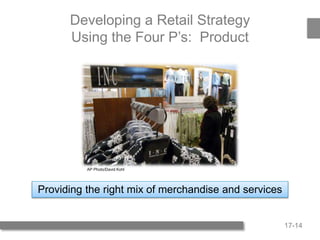
Developing a Retail Strategy
Using the Four P’s: Product
Providing the right mix of merchandise and services
AP Photo/David Kohl
17-15
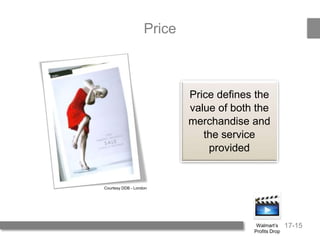
Price
Price defines the
value of both the
merchandise and
the service
provided
Courtesy DDB - London
Walmart’s
Profits Drop
17-16
Promotion
Retailers use a wide variety
of promotions, both within
their retail environment and
through mass media
CourtesyBassProShops
APPhoto/MarkHumphrey
17-17
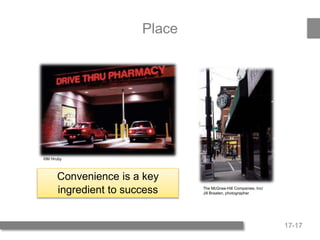
Place
Convenience is a key
ingredient to success
©M Hruby
The McGraw-Hill Companies, Inc/
Jill Braaten, photographer
17-18
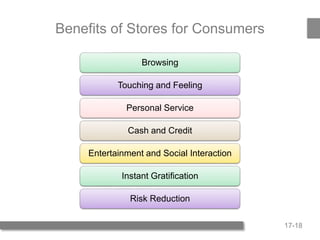
Benefits of Stores for Consumers
Browsing
Touching and Feeling
Personal Service
Cash and Credit
Entertainment and Social Interaction
Instant Gratification
Risk Reduction
17-19
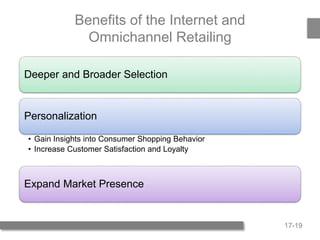
Benefits of the Internet and
Omnichannel Retailing
Deeper and Broader Selection
Personalization
• Gain Insights into Consumer Shopping Behavior
• Increase Customer Satisfaction and Loyalty
Expand Market Presence
17-20
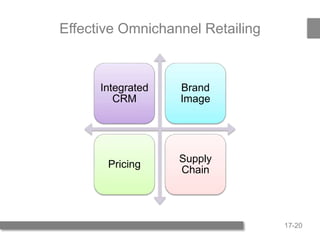
Effective Omnichannel Retailing
Integrated
CRM
Brand
Image
Pricing
Supply
Chain
17-21
CHECK YOURSELF
1. What are the components of a retail strategy?
2. What are the advantages of traditional stores
versus Internet-only stores?
3. What challenges do retailers face when
marketing their products through multiple
channels?

Chapter 17 - Retailing and Omnichannel Marketing

  • 1.
  • 2.
    17-2 L E AR N I N G O B J E C T I V E S Discuss the four factors manufacturers should consider as they develop their strategy for working with retailers. Outline the considerations associated with choosing retail partners. List the three levels of distribution intensity. Describe the various types of retailers. Describe the components of a retail strategy. Identify the benefits of stores. Identify the benefits of omnichannel retailing. Detail the challenges of omnichannel retailing. Retailing and omnichannel Marketing LO1 LO2 LO3 LO4 LO5 LO6 LO7 LO8
  • 3.
    17-3 Factors for Establishing aRelationship with Retailers Managing a omnichannel strategy Developing a retail strategy Identifying types of Retailers Choosing retailing partners
  • 4.
    17-4 Choosing Retail Partners ChannelStructure Degree of vertical integration Manufacturers brand Power of manufacturer and retailer ©M Hruby
  • 5.
  • 6.
    17-6 Choosing Retail Partners ChannelMember Characteristics Larger firms Less likely to use supply chain intermediaries Can gain more control, be more efficient, and save money.
  • 7.
    17-7 Choosing Retail Partners DistributionIntensity Intensive Exclusive Selective ©JeffGreenberg/PhotoEdit ©SusanVanEtten/PhotoEdit
  • 8.
    17-8 CHECK YOURSELF 1. Whatissues should manufacturers consider when choosing retail partners? 2. What is the difference between intensive, exclusive, and selective levels of distribution intensity?
  • 9.
  • 10.
    17-10 Food Retailers Supermarket Supercenter Warehouse Club Convenience Store Limitednonfood Includes discount store Limited assortment Limited variety Differentiates different types of foods Wal-Mart, Meijer, K-Mart, Target Little service Includes: Costco, Sams, BJ’s Good locations Peapod
  • 11.
    17-11 General Merchandise Retailers •Broad variety and deep assortmentDepartment Stores • Broad variety at low pricesFull-line Discount • Limited merchandise with service in small storeSpecialty • Specialty for pharmaceutical and heathDrugstores • Discount with narrow but deep assortmentCategory Specialist • Full line, limited, very low pricesExtreme value • Inconsistent assortment of brand name at low pricesOff-Price
  • 12.
    17-12 Services Retailers Firms thatprimarily sell services rather than merchandise, are a large and growing part of the retail industry Ryan McVay/Getty Images
  • 13.
    17-13 CHECK YOURSELF 1. Whatstrategies distinguish the different types of food retailers? 2. What strategies distinguish the different types of general merchandise retailers? 3. Are organizations that provide services to consumers considered to be retailers?
  • 14.
    17-14 Developing a RetailStrategy Using the Four P’s: Product Providing the right mix of merchandise and services AP Photo/David Kohl
  • 15.
    17-15 Price Price defines the valueof both the merchandise and the service provided Courtesy DDB - London Walmart’s Profits Drop
  • 16.
    17-16 Promotion Retailers use awide variety of promotions, both within their retail environment and through mass media CourtesyBassProShops APPhoto/MarkHumphrey
  • 17.
    17-17 Place Convenience is akey ingredient to success ©M Hruby The McGraw-Hill Companies, Inc/ Jill Braaten, photographer
  • 18.
    17-18 Benefits of Storesfor Consumers Browsing Touching and Feeling Personal Service Cash and Credit Entertainment and Social Interaction Instant Gratification Risk Reduction
  • 19.
    17-19 Benefits of theInternet and Omnichannel Retailing Deeper and Broader Selection Personalization • Gain Insights into Consumer Shopping Behavior • Increase Customer Satisfaction and Loyalty Expand Market Presence
  • 20.
  • 21.
    17-21 CHECK YOURSELF 1. Whatare the components of a retail strategy? 2. What are the advantages of traditional stores versus Internet-only stores? 3. What challenges do retailers face when marketing their products through multiple channels?