11-1
CHAPTER
PRODUCT,
BRANDING,
AND PACKAGING
DECISIONS
11
11-2
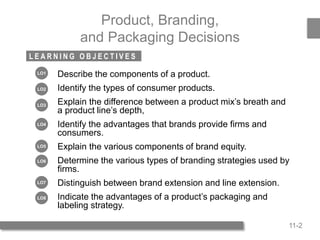
L E A R N I N G O B J E C T I V E S
Describe the components of a product.
Identify the types of consumer products.
Explain the difference between a product mix’s breath and
a product line’s depth,
Identify the advantages that brands provide firms and
consumers.
Explain the various components of brand equity.
Determine the various types of branding strategies used by
firms.
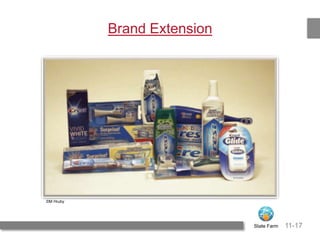
Distinguish between brand extension and line extension.
Indicate the advantages of a product’s packaging and
labeling strategy.
Product, Branding,
and Packaging Decisions
LO1
LO2
LO3
LO4
LO5
LO6
LO7
LO8
11-3
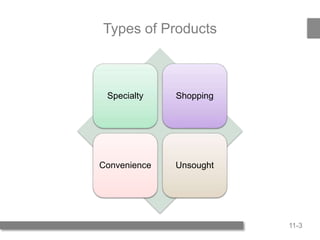
Types of Products
Specialty Shopping
Convenience Unsought
11-4
CHECK YOURSELF
1. Explain the three components of a product.
2. What are the four types of consumer products?
11-5
Product Mix and
Product Line Decisions
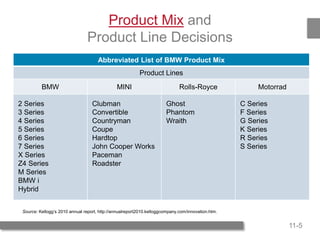
Source: Kellogg’s 2010 annual report, http://annualreport2010.kelloggcompany.com/innovation.htm.
Abbreviated List of BMW Product Mix
Product Lines
BMW MINI Rolls-Royce Motorrad
2 Series
3 Series
4 Series
5 Series
6 Series
7 Series
X Series
Z4 Series
M Series
BMW i
Hybrid
Clubman
Convertible
Countryman
Coupe
Hardtop
John Cooper Works
Paceman
Roadster
Ghost
Phantom
Wraith
C Series
F Series
G Series
K Series
R Series
S Series
11-6
Product Mix and
Product Line Decisions
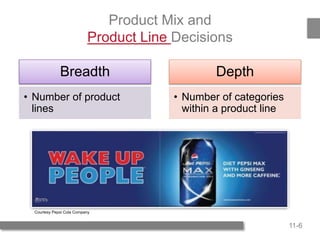
Breadth
• Number of product
lines
Depth
• Number of categories
within a product line
Courtesy Pepsi Cola Company
11-7
CHECK YOURSELF
1. What is the difference between product line
breadth versus depth?
2. Why change product line breadth?
3. Why change product line depth?
11-8
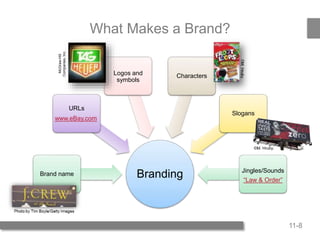
What Makes a Brand?
BrandingBrand name
URLs
www.eBay.com
Logos and
symbols
Characters
Slogans
Jingles/Sounds
“Law & Order”
McGraw-Hill
Companies,Inc.
©M. Hruby.
11-9
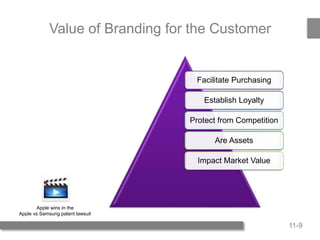
Value of Branding for the Customer
Facilitate Purchasing
Establish Loyalty
Protect from Competition
Are Assets
Impact Market Value
Apple wins in the
Apple vs Samsung patent lawsuit
11-10
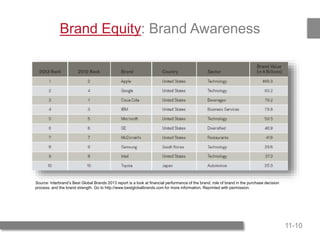
Brand Equity: Brand Awareness
Source: Interbrand’s Best Global Brands 2013 report is a look at financial performance of the brand, role of brand in the purchase decision
process, and the brand strength. Go to http://www.bestglobalbrands.com for more information. Reprinted with permission.
11-11
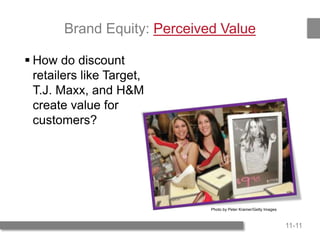
Brand Equity: Perceived Value
 How do discount
retailers like Target,
T.J. Maxx, and H&M
create value for
customers?
Photo by Peter Kramer/Getty Images
11-12
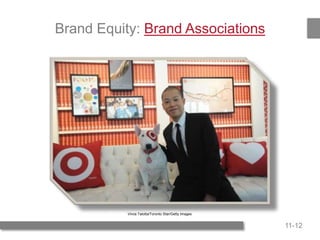
Brand Equity: Brand Associations
Vince Talotta/Toronto Star/Getty Images
11-13
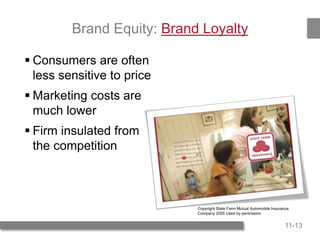
Brand Equity: Brand Loyalty
 Consumers are often
less sensitive to price
 Marketing costs are
much lower
 Firm insulated from
the competition
Copyright State Farm Mutual Automobile Insurance
Company 2005 Used by permission
11-14
CHECK YOURSELF
1. How do brands create value for the customer
and the firm?
2. What are the components of brand equity?
11-15
Brand Ownership
Manufacturer brands or
national brands
Private-label brands or
Store Brands
• Premium
• Generic
• Copycat
• Exclusive co-branded
11-16
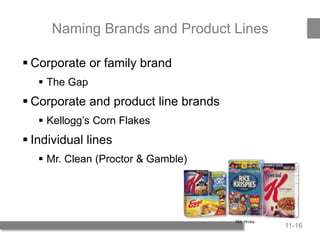
Naming Brands and Product Lines
 Corporate or family brand
 The Gap
 Corporate and product line brands
 Kellogg’s Corn Flakes
 Individual lines
 Mr. Clean (Proctor & Gamble)
©M. Hruby.
11-17
Brand Extension
State Farm
©M Hruby
11-18
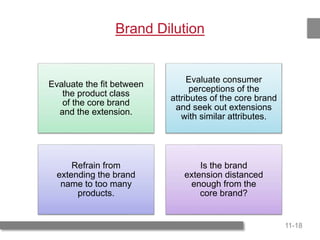
Brand Dilution
Evaluate the fit between
the product class
of the core brand
and the extension.
Evaluate consumer
perceptions of the
attributes of the core brand
and seek out extensions
with similar attributes.
Refrain from
extending the brand
name to too many
products.
Is the brand
extension distanced
enough from the
core brand?
11-19Zite
Personalized
Magazine
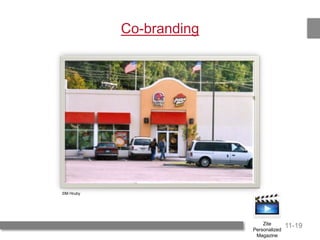
Co-branding
©M Hruby
11-20
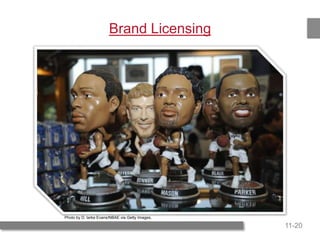
Brand Licensing
Photo by D. larke Evans/NBAE via Getty Images.
11-21
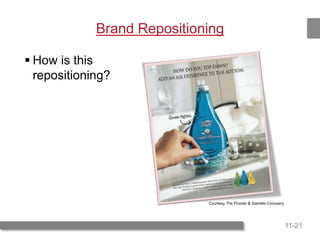
Brand Repositioning
 How is this
repositioning?
Courtesy The Procter & Gamble Company
11-22
CHECK YOURSELF
1. What are the differences among manufacturer
and private-label brands?
2. What is co-branding?
3. What is the difference between brand
extension and line extension?
4. What is brand repositioning?
11-23
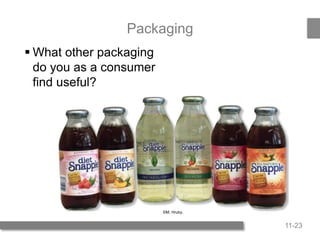
Packaging
 What other packaging
do you as a consumer
find useful?
©M. Hruby.
11-24
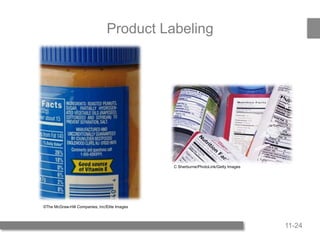
Product Labeling
©The McGraw-Hill Companies, Inc/Elite Images
C Sherburne/PhotoLink/Getty Images

Chapter 11 - Product, Branding, and Packaging Decisions

  • 1.
  • 2.
    11-2 L E AR N I N G O B J E C T I V E S Describe the components of a product. Identify the types of consumer products. Explain the difference between a product mix’s breath and a product line’s depth, Identify the advantages that brands provide firms and consumers. Explain the various components of brand equity. Determine the various types of branding strategies used by firms. Distinguish between brand extension and line extension. Indicate the advantages of a product’s packaging and labeling strategy. Product, Branding, and Packaging Decisions LO1 LO2 LO3 LO4 LO5 LO6 LO7 LO8
  • 3.
    11-3 Types of Products SpecialtyShopping Convenience Unsought
  • 4.
    11-4 CHECK YOURSELF 1. Explainthe three components of a product. 2. What are the four types of consumer products?
  • 5.
    11-5 Product Mix and ProductLine Decisions Source: Kellogg’s 2010 annual report, http://annualreport2010.kelloggcompany.com/innovation.htm. Abbreviated List of BMW Product Mix Product Lines BMW MINI Rolls-Royce Motorrad 2 Series 3 Series 4 Series 5 Series 6 Series 7 Series X Series Z4 Series M Series BMW i Hybrid Clubman Convertible Countryman Coupe Hardtop John Cooper Works Paceman Roadster Ghost Phantom Wraith C Series F Series G Series K Series R Series S Series
  • 6.
    11-6 Product Mix and ProductLine Decisions Breadth • Number of product lines Depth • Number of categories within a product line Courtesy Pepsi Cola Company
  • 7.
    11-7 CHECK YOURSELF 1. Whatis the difference between product line breadth versus depth? 2. Why change product line breadth? 3. Why change product line depth?
  • 8.
    11-8 What Makes aBrand? BrandingBrand name URLs www.eBay.com Logos and symbols Characters Slogans Jingles/Sounds “Law & Order” McGraw-Hill Companies,Inc. ©M. Hruby.
  • 9.
    11-9 Value of Brandingfor the Customer Facilitate Purchasing Establish Loyalty Protect from Competition Are Assets Impact Market Value Apple wins in the Apple vs Samsung patent lawsuit
  • 10.
    11-10 Brand Equity: BrandAwareness Source: Interbrand’s Best Global Brands 2013 report is a look at financial performance of the brand, role of brand in the purchase decision process, and the brand strength. Go to http://www.bestglobalbrands.com for more information. Reprinted with permission.
  • 11.
    11-11 Brand Equity: PerceivedValue  How do discount retailers like Target, T.J. Maxx, and H&M create value for customers? Photo by Peter Kramer/Getty Images
  • 12.
    11-12 Brand Equity: BrandAssociations Vince Talotta/Toronto Star/Getty Images
  • 13.
    11-13 Brand Equity: BrandLoyalty  Consumers are often less sensitive to price  Marketing costs are much lower  Firm insulated from the competition Copyright State Farm Mutual Automobile Insurance Company 2005 Used by permission
  • 14.
    11-14 CHECK YOURSELF 1. Howdo brands create value for the customer and the firm? 2. What are the components of brand equity?
  • 15.
    11-15 Brand Ownership Manufacturer brandsor national brands Private-label brands or Store Brands • Premium • Generic • Copycat • Exclusive co-branded
  • 16.
    11-16 Naming Brands andProduct Lines  Corporate or family brand  The Gap  Corporate and product line brands  Kellogg’s Corn Flakes  Individual lines  Mr. Clean (Proctor & Gamble) ©M. Hruby.
  • 17.
  • 18.
    11-18 Brand Dilution Evaluate thefit between the product class of the core brand and the extension. Evaluate consumer perceptions of the attributes of the core brand and seek out extensions with similar attributes. Refrain from extending the brand name to too many products. Is the brand extension distanced enough from the core brand?
  • 19.
  • 20.
    11-20 Brand Licensing Photo byD. larke Evans/NBAE via Getty Images.
  • 21.
    11-21 Brand Repositioning  Howis this repositioning? Courtesy The Procter & Gamble Company
  • 22.
    11-22 CHECK YOURSELF 1. Whatare the differences among manufacturer and private-label brands? 2. What is co-branding? 3. What is the difference between brand extension and line extension? 4. What is brand repositioning?
  • 23.
    11-23 Packaging  What otherpackaging do you as a consumer find useful? ©M. Hruby.
  • 24.
    11-24 Product Labeling ©The McGraw-HillCompanies, Inc/Elite Images C Sherburne/PhotoLink/Getty Images