Music in
   Antiquity
Music 314 - Music History
   Lourdes College
Historical Traces of
         Music
 Physical Objects (Instruments)
 Visual Images
 Writings about Music and
  Musicians
 Notated Music
Prehistoric Music

 Before 36,000 BCE - Whistles and
  flutes from stone age in europe
 6,000 BCE - Turkish cave paintings
  show drummers and dancers
 4,000 BCE - Bronze age instruments
  (bells, cymbals, horns
 4,000 BCE - Stone carvings show
  string instruments
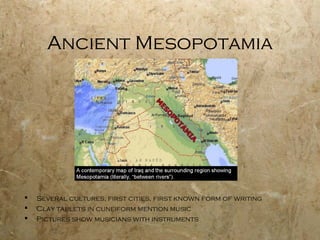
Ancient Mesopotamia


   Several cultures, first cities, first known form of writing
   Clay tablets in cuneiform mention music
   Pictures show musicians with instruments
Ancient Mesopotamian
         instruments
 Surviving instruments include:
 Lyres and harps
 Lutes and pipes
 Drums, bells, other percussion
  instruments
 Evidence of music survives from
  the ruling class
Uses of music in
       mesopotamia
 Ritual - weddings, funerals
 Daily life - nursery songs, work
  songs, dance music
 Festival entertainment
 Religious ceremonies
 Story-telling songs
Written records from
     mesopotamia
 Written records of instruments,
  tuning procedures, performers,
  techniques, and genres (types of
  musical compositions)
 Earliest known composer:
  Enheduanna (high priestess of ur)
 She composed hymns to various gods
  and goddesses
 Only the text of her hymns survive
Babylonia 1800 BCE
 Instructions for tuning a string
  instrument using a seven note diatonic
  scale
 Development of interval theory, used to
  create the earliest known notation (1300
  BCE)
 Not enough known about the system to put
  it into modern notation
 Most music, however, performed from
  memory or improvised
 Bablyonian musical theory seems to have
  influenced the later greeks
Other ancient
         civilizatons
 Instruments, writings and images of
  musical culture have survived from
  India and china, but did not influence
  greek or european music
 Egyptian sources includes artifacts,
  paintings, and writings, but no
  notated music
 Bible describes religious musical
  practices in ancient Israel

Chapter 1 - Ancient Music

  • 1.
    Music in Antiquity Music 314 - Music History Lourdes College
  • 2.
    Historical Traces of Music  Physical Objects (Instruments)  Visual Images  Writings about Music and Musicians  Notated Music
  • 3.
    Prehistoric Music  Before36,000 BCE - Whistles and flutes from stone age in europe  6,000 BCE - Turkish cave paintings show drummers and dancers  4,000 BCE - Bronze age instruments (bells, cymbals, horns  4,000 BCE - Stone carvings show string instruments
  • 4.
    Ancient Mesopotamia  Several cultures, first cities, first known form of writing  Clay tablets in cuneiform mention music  Pictures show musicians with instruments
  • 5.
    Ancient Mesopotamian instruments  Surviving instruments include:  Lyres and harps  Lutes and pipes  Drums, bells, other percussion instruments  Evidence of music survives from the ruling class
  • 6.
    Uses of musicin mesopotamia  Ritual - weddings, funerals  Daily life - nursery songs, work songs, dance music  Festival entertainment  Religious ceremonies  Story-telling songs
  • 7.
    Written records from mesopotamia  Written records of instruments, tuning procedures, performers, techniques, and genres (types of musical compositions)  Earliest known composer: Enheduanna (high priestess of ur)  She composed hymns to various gods and goddesses  Only the text of her hymns survive
  • 8.
    Babylonia 1800 BCE Instructions for tuning a string instrument using a seven note diatonic scale  Development of interval theory, used to create the earliest known notation (1300 BCE)  Not enough known about the system to put it into modern notation  Most music, however, performed from memory or improvised  Bablyonian musical theory seems to have influenced the later greeks
  • 9.
    Other ancient civilizatons  Instruments, writings and images of musical culture have survived from India and china, but did not influence greek or european music  Egyptian sources includes artifacts, paintings, and writings, but no notated music  Bible describes religious musical practices in ancient Israel