Changing importance of
business classification
 Countries are often described as developing or
developed.
 Developing country-has a small industrial sector and
lower standard of living compared to other countries.
 Industrialization-The growing importance of
secondary sector business activity and the reduced
importance of primary sector business activity.
 De-industrialiasation- The growing importance of the
tertiary sector and the reduced importance of the
secondary sector.
 Industrialisation: China, India
 De-industrialisation: UK, USA
 Higher income, demand better quality and a wider
choice of products.
 Better education- expect better products
 More leisure time- consumers work fewer hours
A change in consumer behaviour
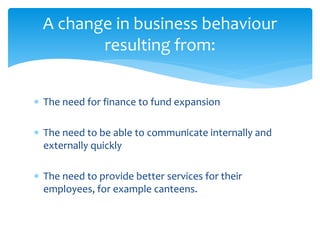
 The need for finance to fund expansion
 The need to be able to communicate internally and
externally quickly
 The need to provide better services for their
employees, for example canteens.
A change in business behaviour
resulting from:
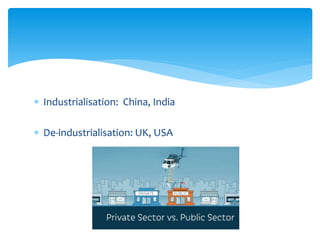
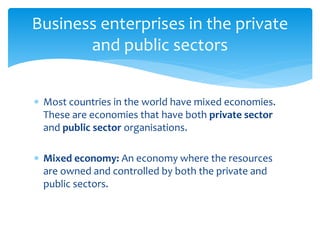
 Most countries in the world have mixed economies.
These are economies that have both private sector
and public sector organisations.
 Mixed economy: An economy where the resources
are owned and controlled by both the private and
public sectors.
Business enterprises in the private
and public sectors
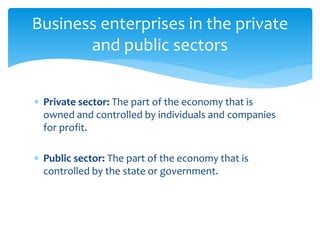
 Private sector: The part of the economy that is
owned and controlled by individuals and companies
for profit.
 Public sector: The part of the economy that is
controlled by the state or government.
Business enterprises in the private
and public sectors
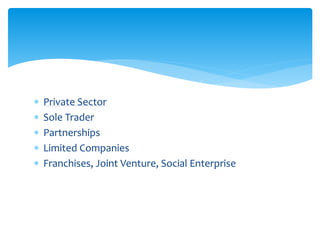
 Private Sector
 Sole Trader
 Partnerships
 Limited Companies
 Franchises, Joint Venture, Social Enterprise
 Public Sector
 Government Departments
 Public Corporations
 Nationalised Industries
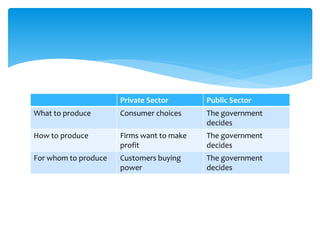
Private Sector Public Sector
What to produce Consumer choices The government
decides
How to produce Firms want to make
profit
The government
decides
For whom to produce Customers buying
power
The government
decides
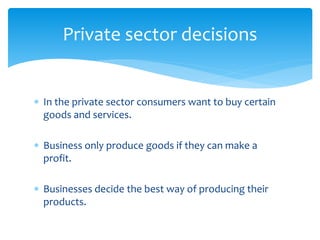
 In the private sector consumers want to buy certain
goods and services.
 Business only produce goods if they can make a
profit.
 Businesses decide the best way of producing their
products.
Private sector decisions
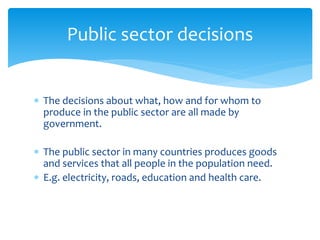
 The decisions about what, how and for whom to
produce in the public sector are all made by
government.
 The public sector in many countries produces goods
and services that all people in the population need.
 E.g. electricity, roads, education and health care.
Public sector decisions

Changing importance of business classification

  • 1.
  • 2.
     Countries areoften described as developing or developed.  Developing country-has a small industrial sector and lower standard of living compared to other countries.
  • 3.
     Industrialization-The growingimportance of secondary sector business activity and the reduced importance of primary sector business activity.  De-industrialiasation- The growing importance of the tertiary sector and the reduced importance of the secondary sector.
  • 4.
     Industrialisation: China,India  De-industrialisation: UK, USA
  • 5.
     Higher income,demand better quality and a wider choice of products.  Better education- expect better products  More leisure time- consumers work fewer hours A change in consumer behaviour
  • 6.
     The needfor finance to fund expansion  The need to be able to communicate internally and externally quickly  The need to provide better services for their employees, for example canteens. A change in business behaviour resulting from:
  • 7.
     Most countriesin the world have mixed economies. These are economies that have both private sector and public sector organisations.  Mixed economy: An economy where the resources are owned and controlled by both the private and public sectors. Business enterprises in the private and public sectors
  • 8.
     Private sector:The part of the economy that is owned and controlled by individuals and companies for profit.  Public sector: The part of the economy that is controlled by the state or government. Business enterprises in the private and public sectors
  • 9.
     Private Sector Sole Trader  Partnerships  Limited Companies  Franchises, Joint Venture, Social Enterprise
  • 10.
     Public Sector Government Departments  Public Corporations  Nationalised Industries
  • 11.
    Private Sector PublicSector What to produce Consumer choices The government decides How to produce Firms want to make profit The government decides For whom to produce Customers buying power The government decides
  • 12.
     In theprivate sector consumers want to buy certain goods and services.  Business only produce goods if they can make a profit.  Businesses decide the best way of producing their products. Private sector decisions
  • 13.
     The decisionsabout what, how and for whom to produce in the public sector are all made by government.  The public sector in many countries produces goods and services that all people in the population need.  E.g. electricity, roads, education and health care. Public sector decisions