Chapter 2- Physical Layer
• Data and Transmission techniques
• Multiplexing
• Transmission Media (Guided / Unguided)
• Asynchronous Communication
• Wireless transmission (electromagnetic spectrum)
• ISDN, ATM
• Cellular Radio
• Switching Techniques issues
Computer Networks
WCB/McGraw-Hill  The McGraw-Hill Companies, Inc., 1998
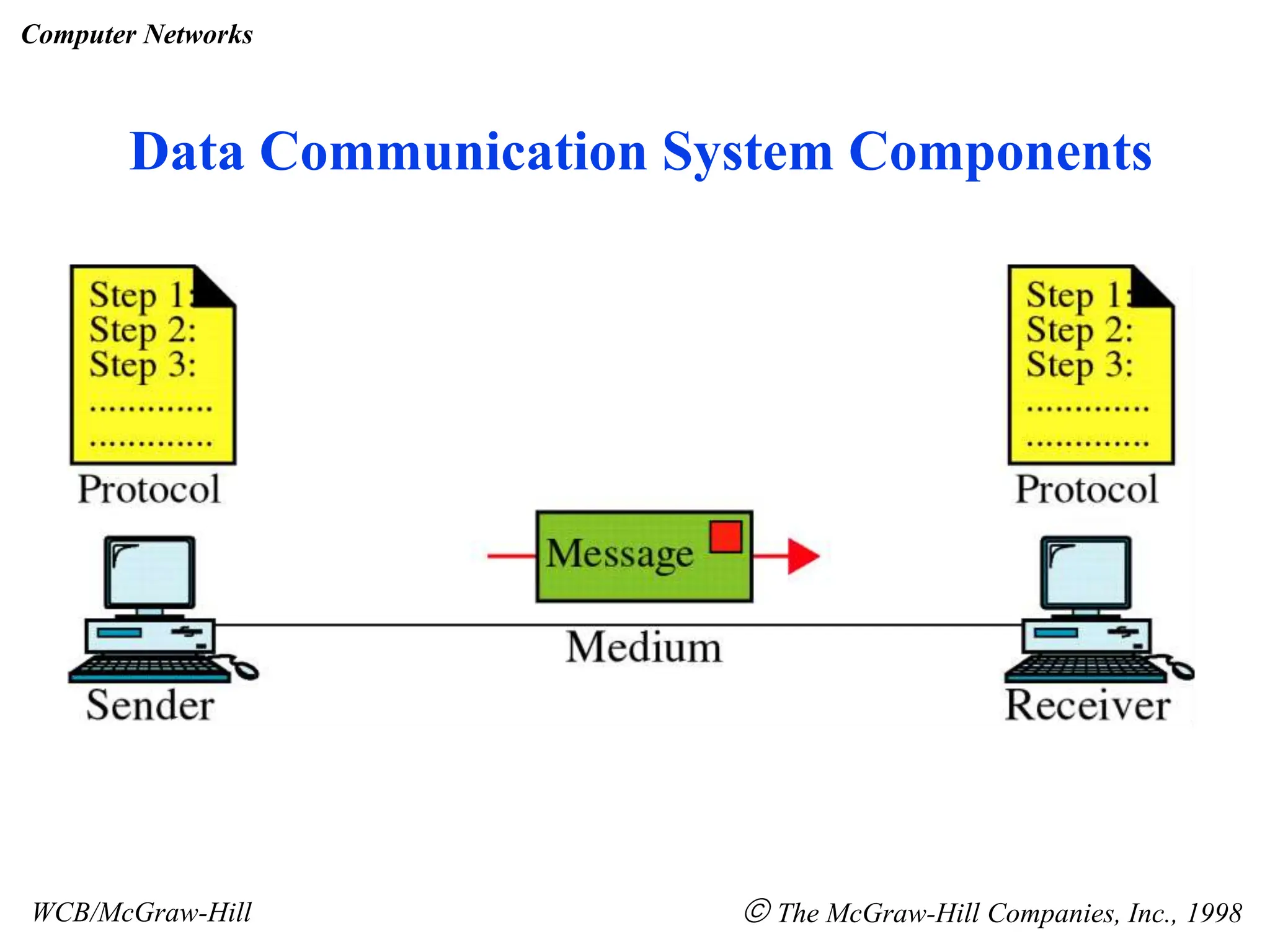
Data Communication System Components
Computer Networks
Data Communication
• Exchange of data (transfer) between two
devices via transmission medium with some
protocol.
• Text
• Image
• Multimedia (audio/video)
• Analog/Digital signal
• Bit rate / Baud rate
Computer Networks
• Both Bit rate and Baud rate are generally used
in data communication to measure the speed of
data.
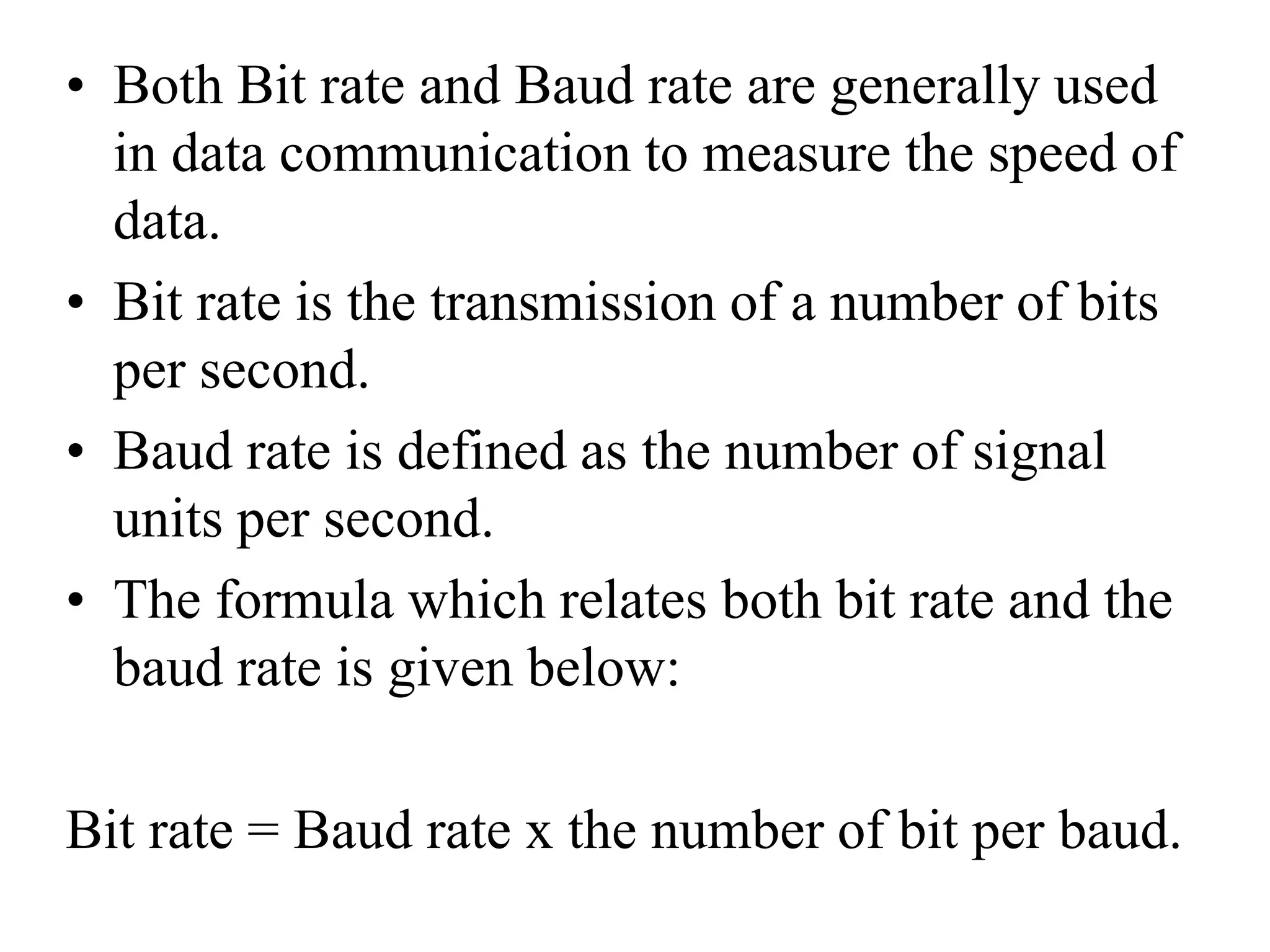
• Bit rate is the transmission of a number of bits
per second.
• Baud rate is defined as the number of signal
units per second.
• The formula which relates both bit rate and the
baud rate is given below:
Bit rate = Baud rate x the number of bit per baud.
3.5
Note
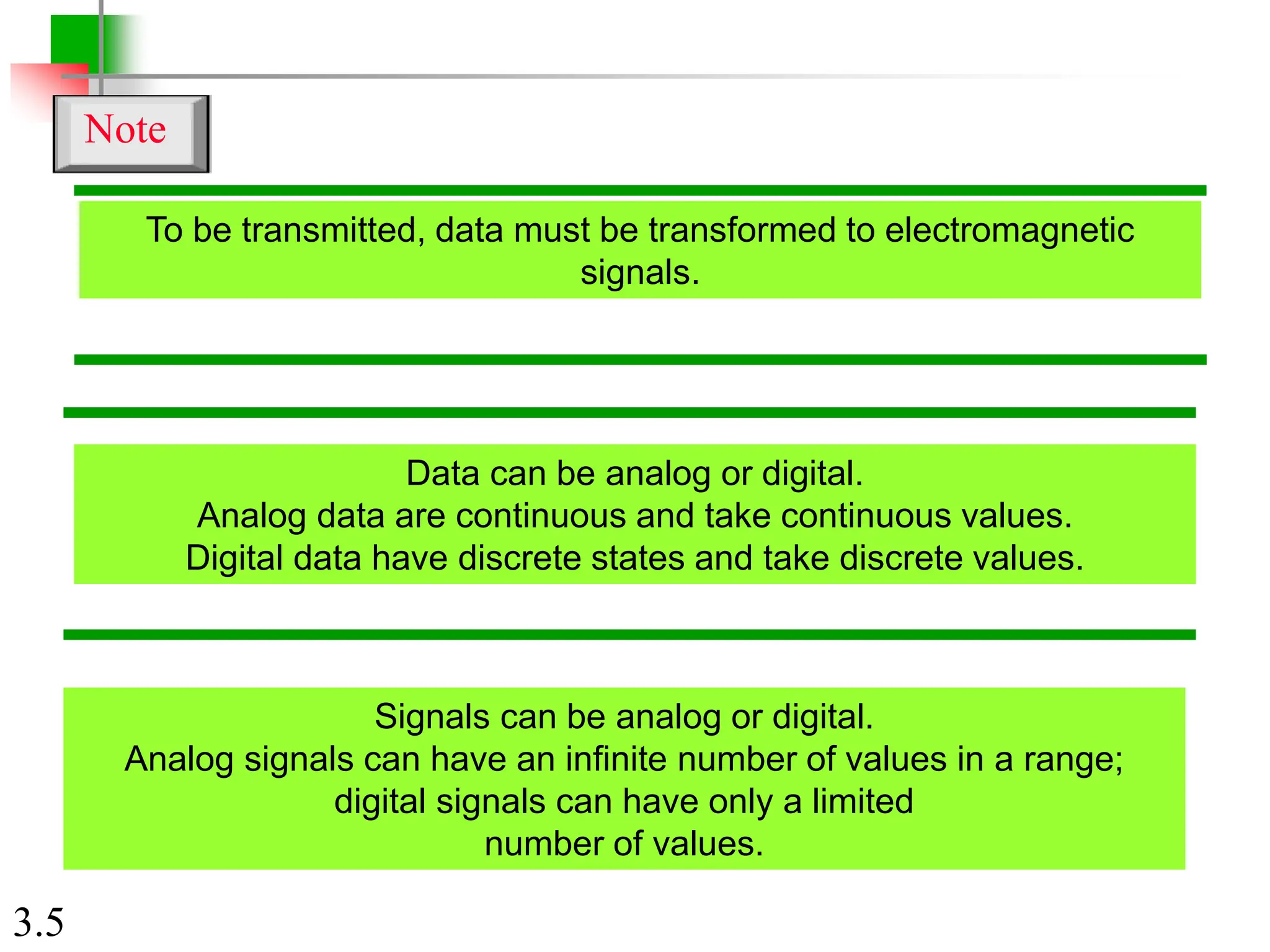
Data can be analog or digital.
Analog data are continuous and take continuous values.
Digital data have discrete states and take discrete values.
Signals can be analog or digital.
Analog signals can have an infinite number of values in a range;
digital signals can have only a limited
number of values.
To be transmitted, data must be transformed to electromagnetic
signals.
3.6
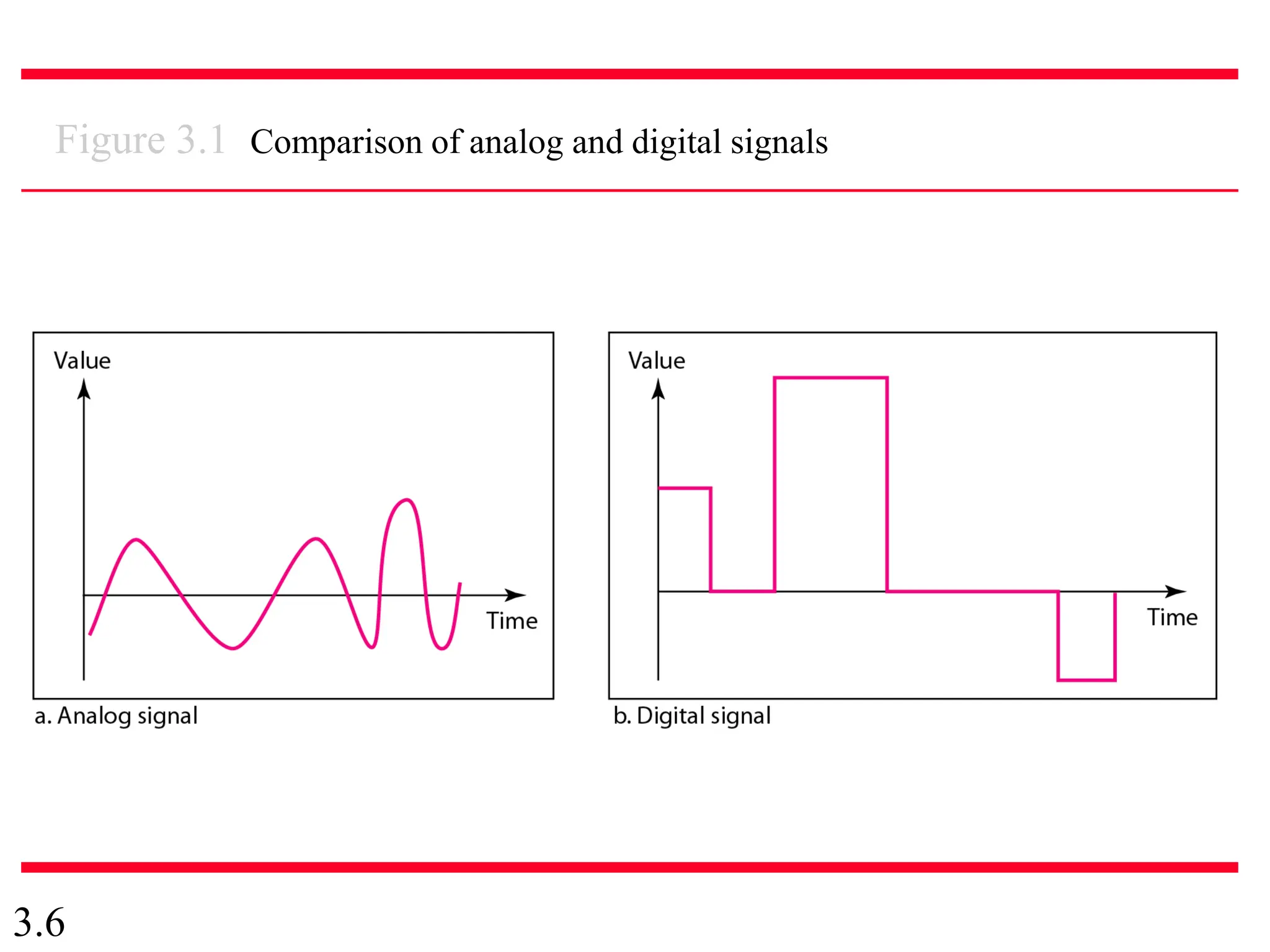
Figure 3.1 Comparison of analog and digital signals
3.7
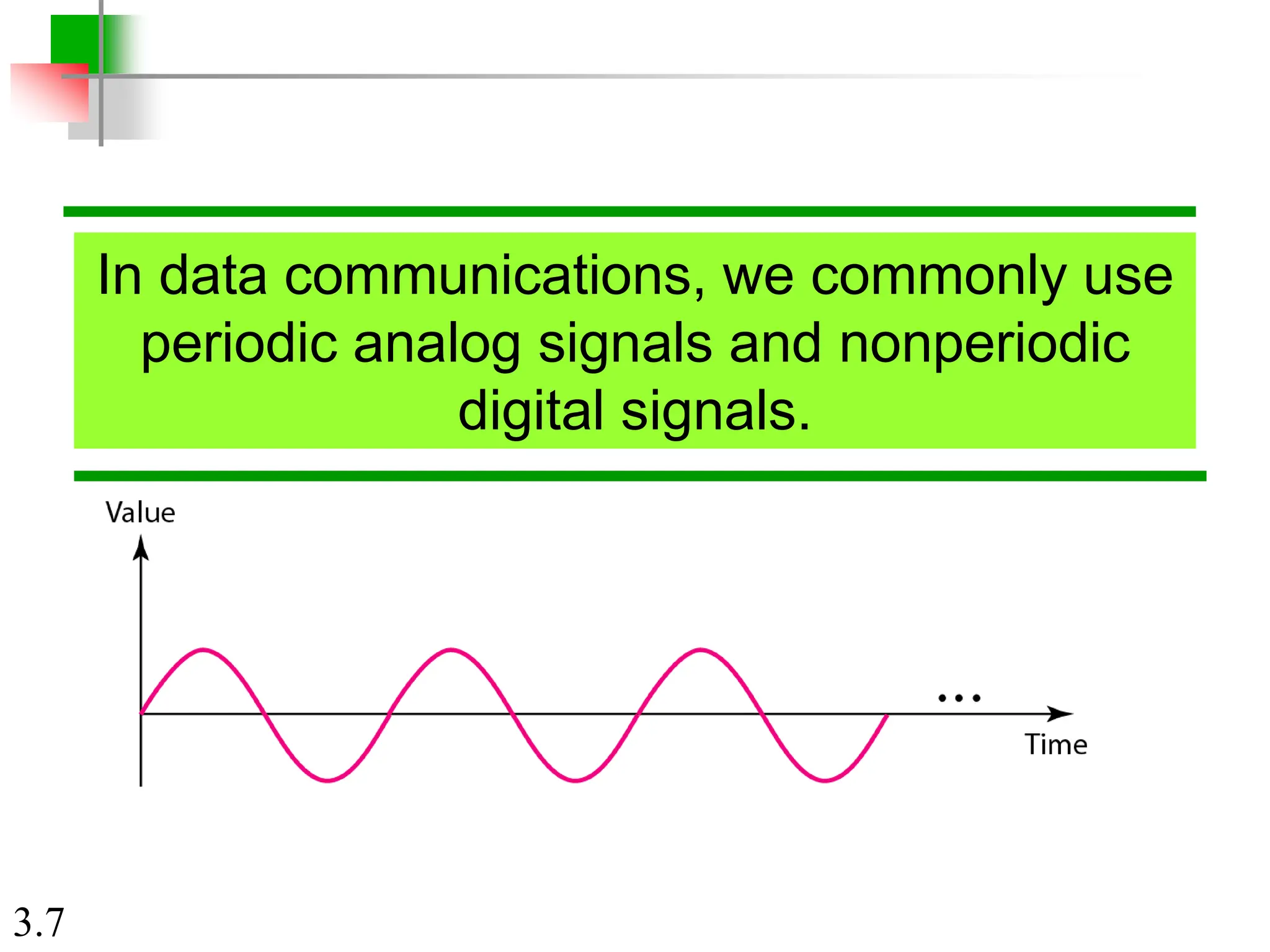
In data communications, we commonly use
periodic analog signals and nonperiodic
digital signals.
3.8
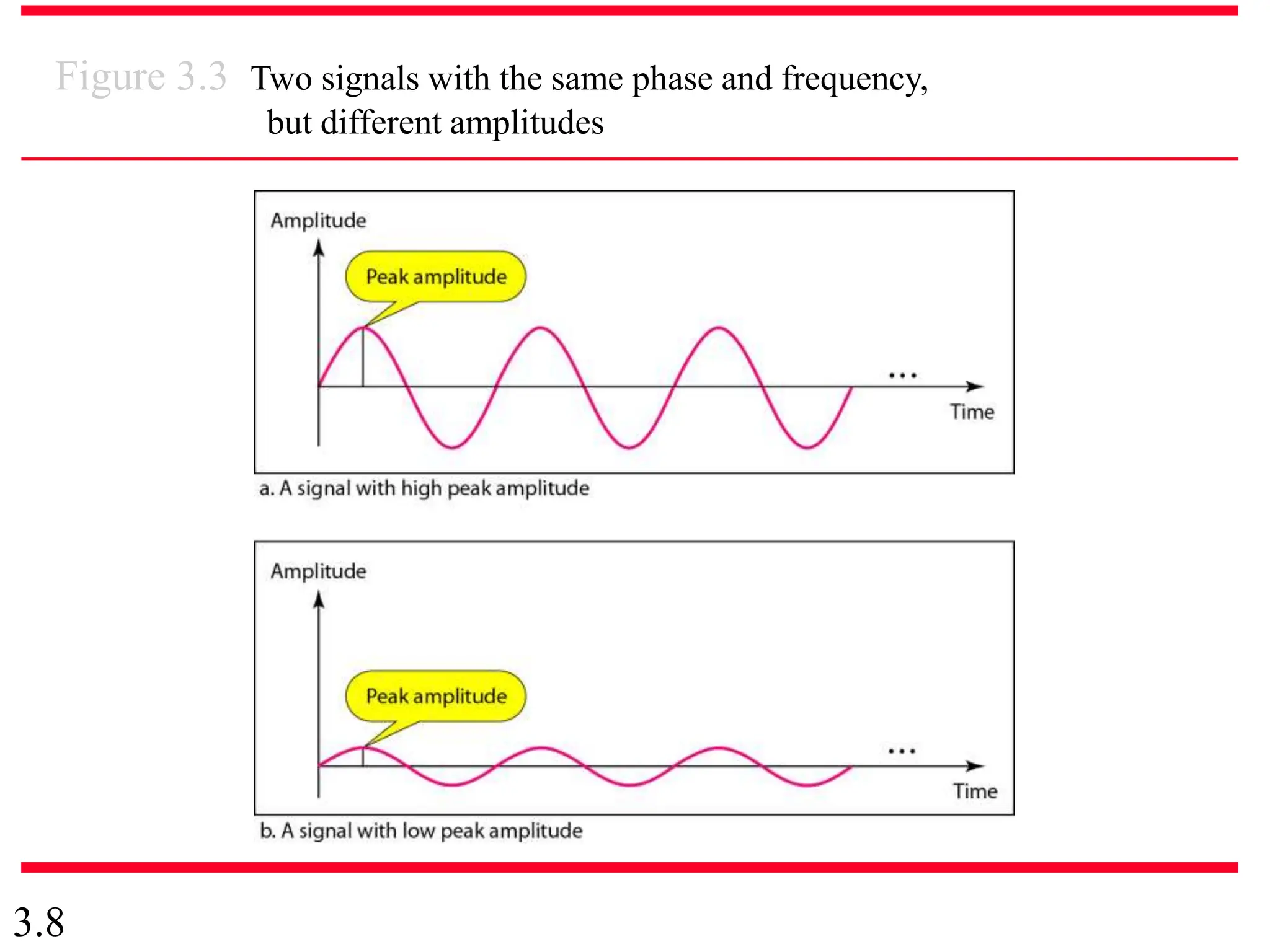
Figure 3.3 Two signals with the same phase and frequency,
but different amplitudes
3.9
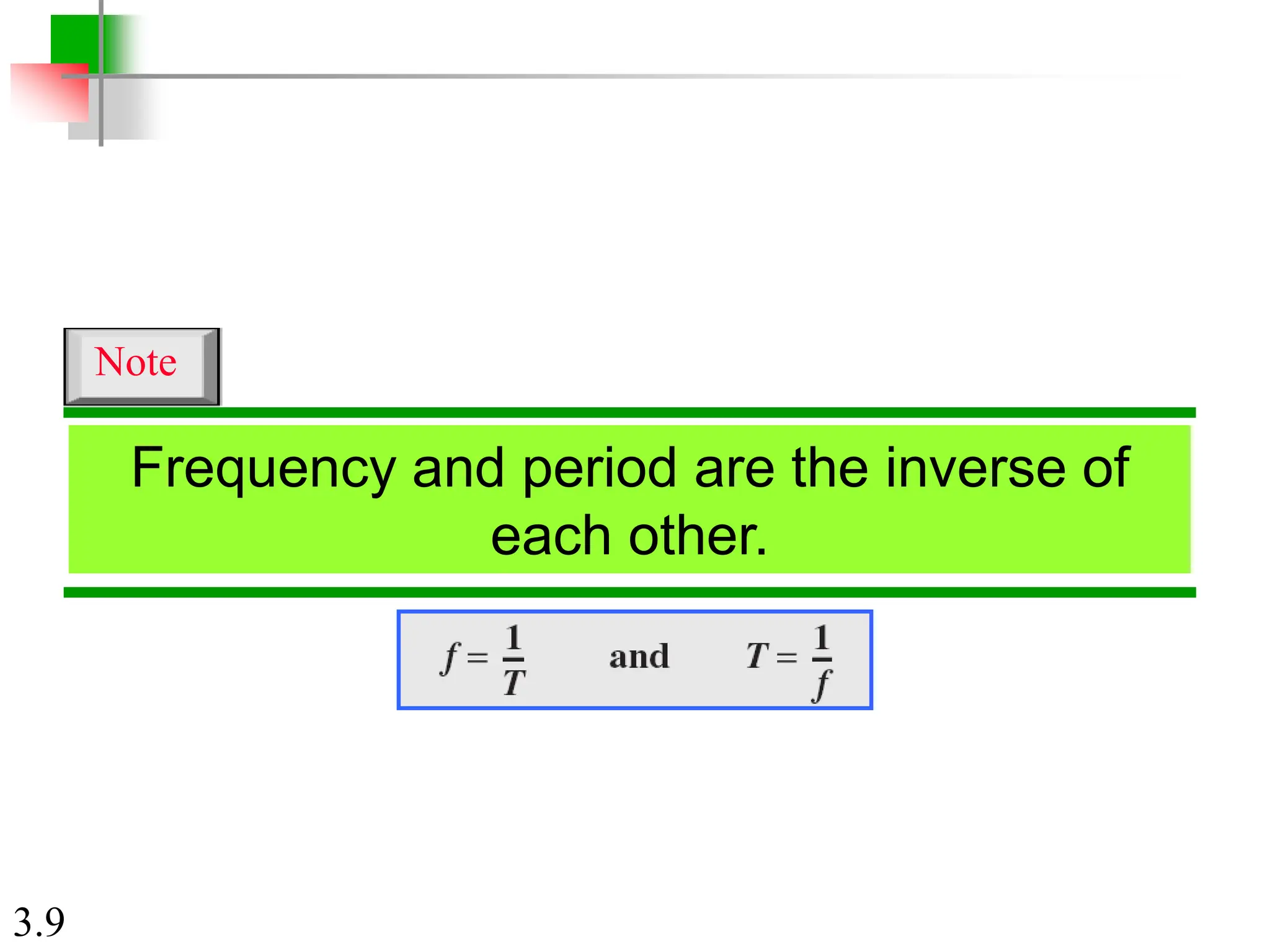
Frequency and period are the inverse of
each other.
Note
3.10
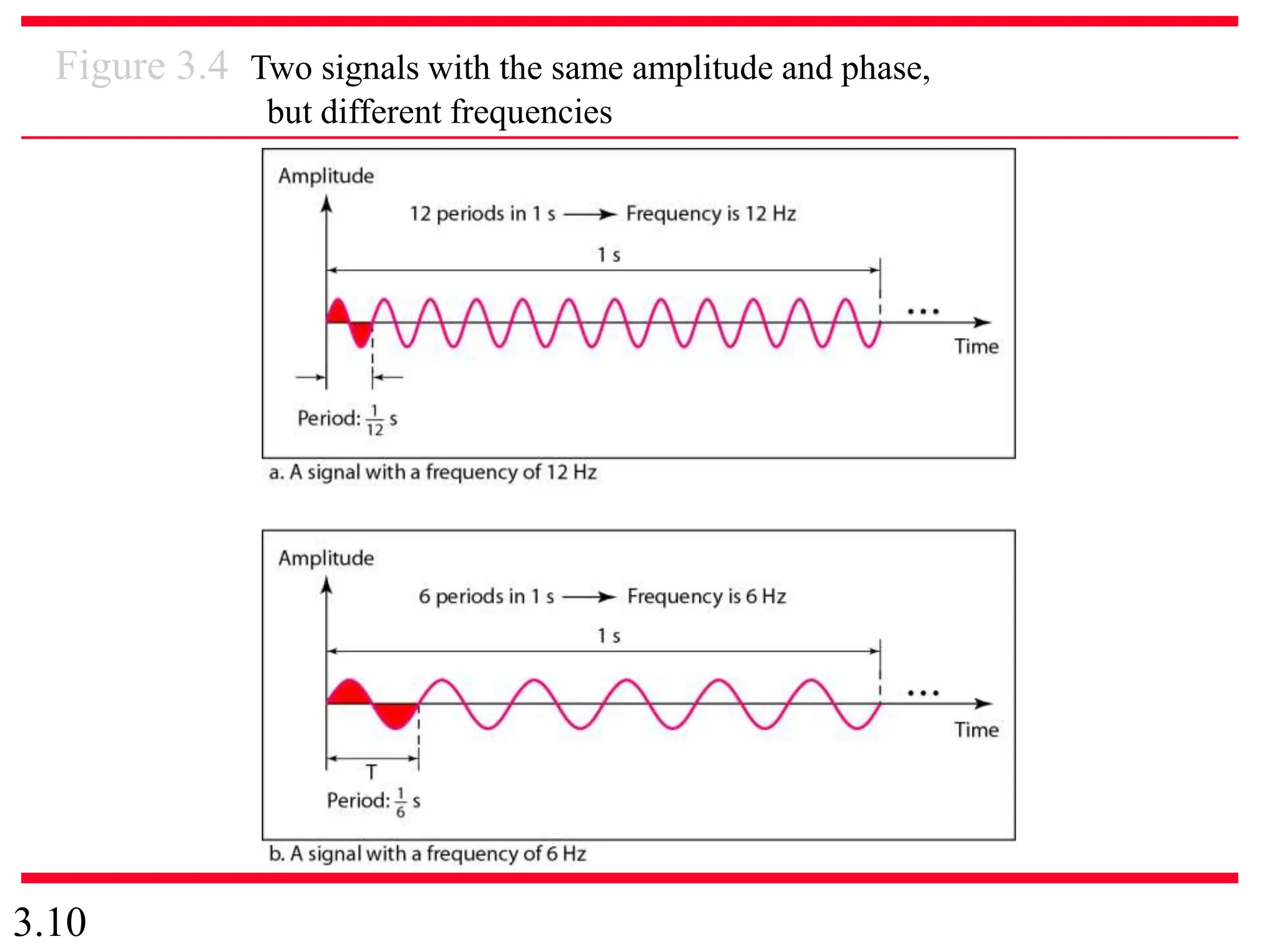
Figure 3.4 Two signals with the same amplitude and phase,
but different frequencies
3.11
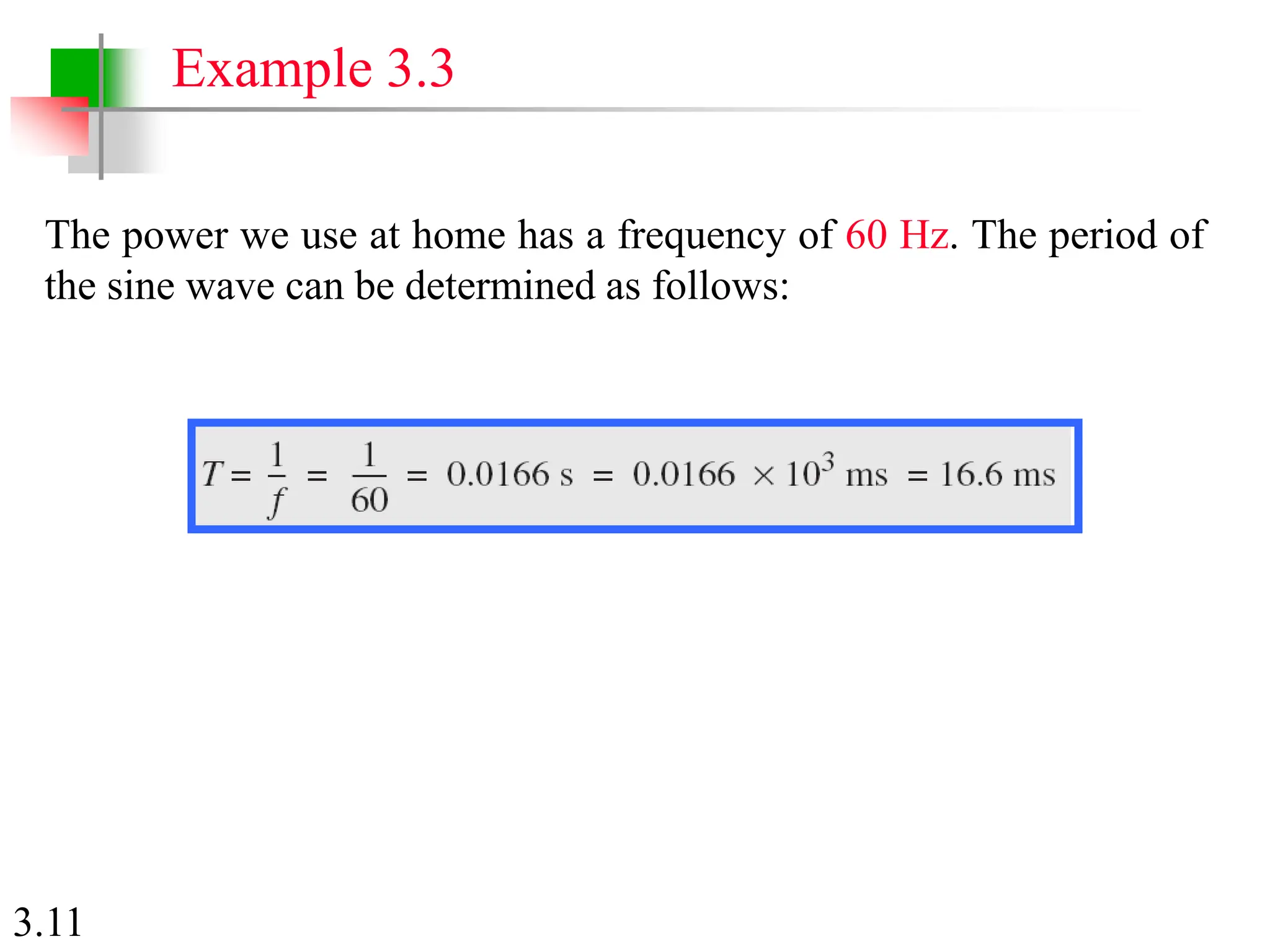
The power we use at home has a frequency of 60 Hz. The period of
the sine wave can be determined as follows:
Example 3.3
3.12
Figure 3.7 The time-domain and frequency-domain plots of a sine wave
3.13
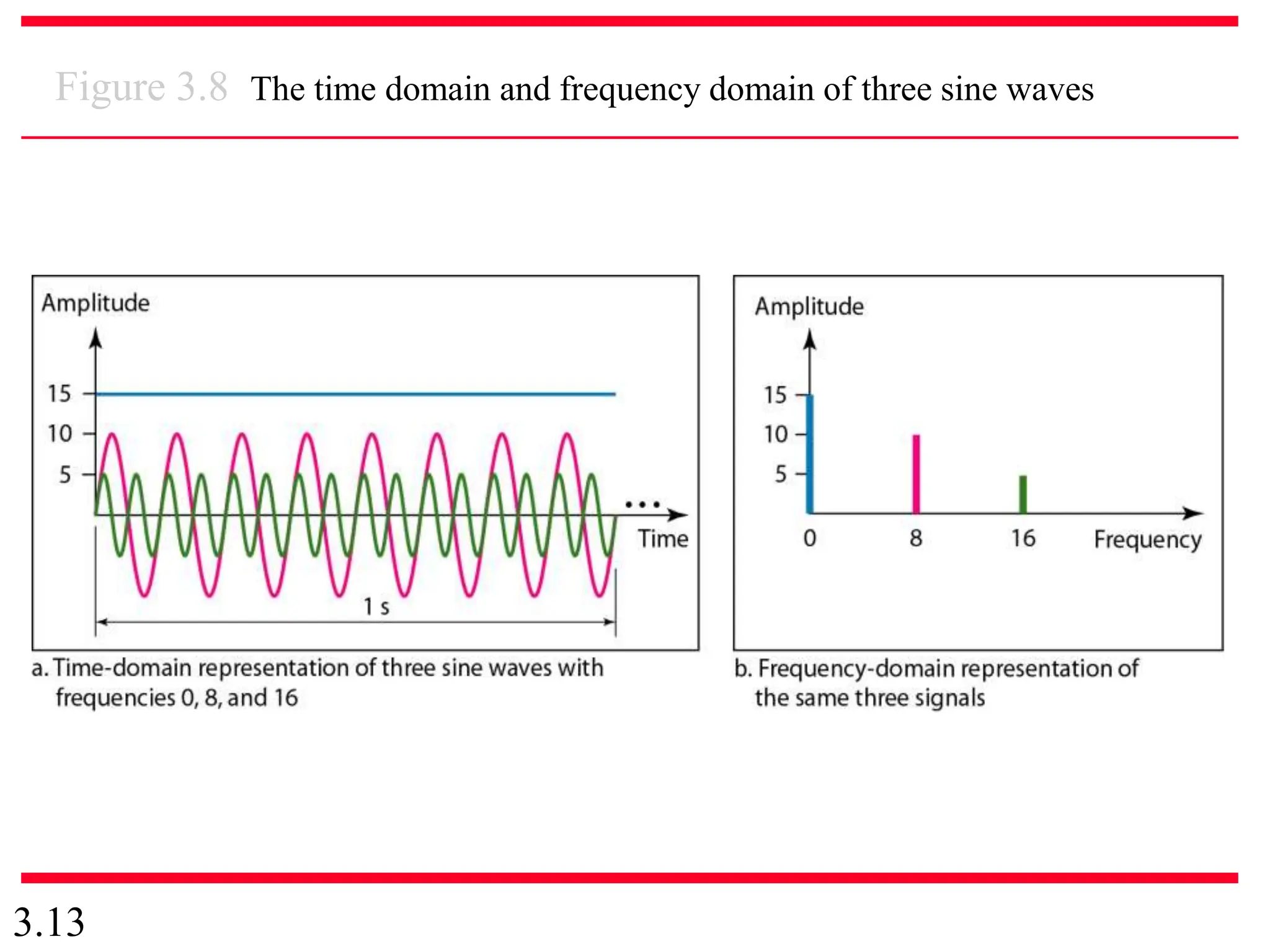
Figure 3.8 The time domain and frequency domain of three sine waves
3.14
A single-frequency sine wave is not useful
in data communications;
we need to send a composite signal, a
signal made of many simple sine waves.
According to Fourier analysis, any
composite signal is a combination of
simple sine waves with different
frequencies, amplitudes, and phases.
3.15
Figure 3.9 A composite periodic signal
3.16
Figure 3.10 Decomposition of a composite periodic signal in the time and
frequency domains
3.17
Figure 3.11 The time and frequency domains of a nonperiodic signal
3.18
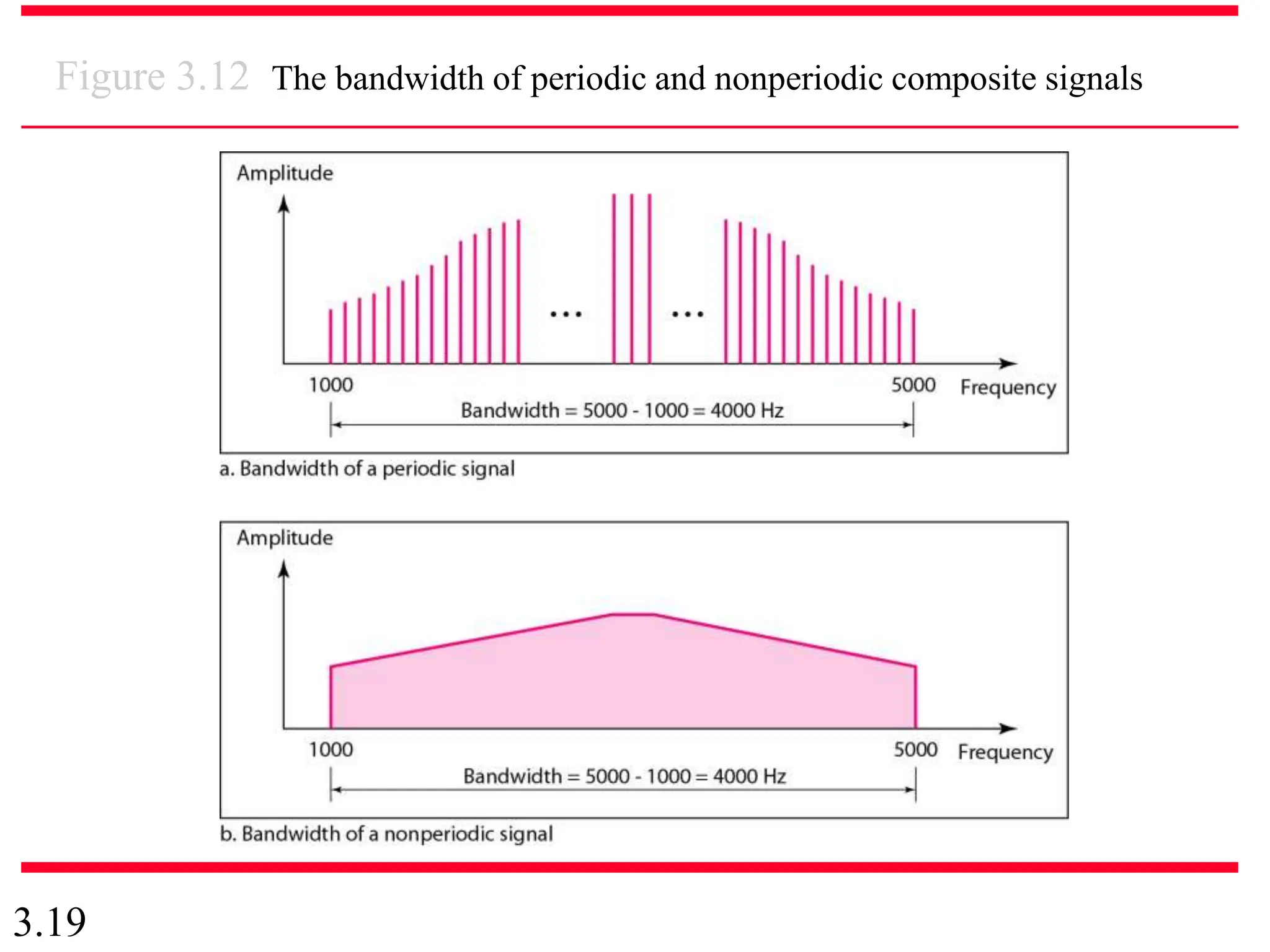
The bandwidth of a composite signal is the
difference between the
highest and the lowest frequencies
contained in that signal.
Note
3.19
Figure 3.12 The bandwidth of periodic and nonperiodic composite signals
3.20
If a periodic signal is decomposed into five sine waves with
frequencies of 100, 300, 500, 700, and 900 Hz, what is its
bandwidth? Draw the spectrum, assuming all components have a
maximum amplitude of 10 V.
Solution
Let fh be the highest frequency, fl the lowest frequency, and B the
bandwidth. Then
Example 3.10
The spectrum has only five spikes, at 100, 300, 500, 700, and 900
Hz .
3.21
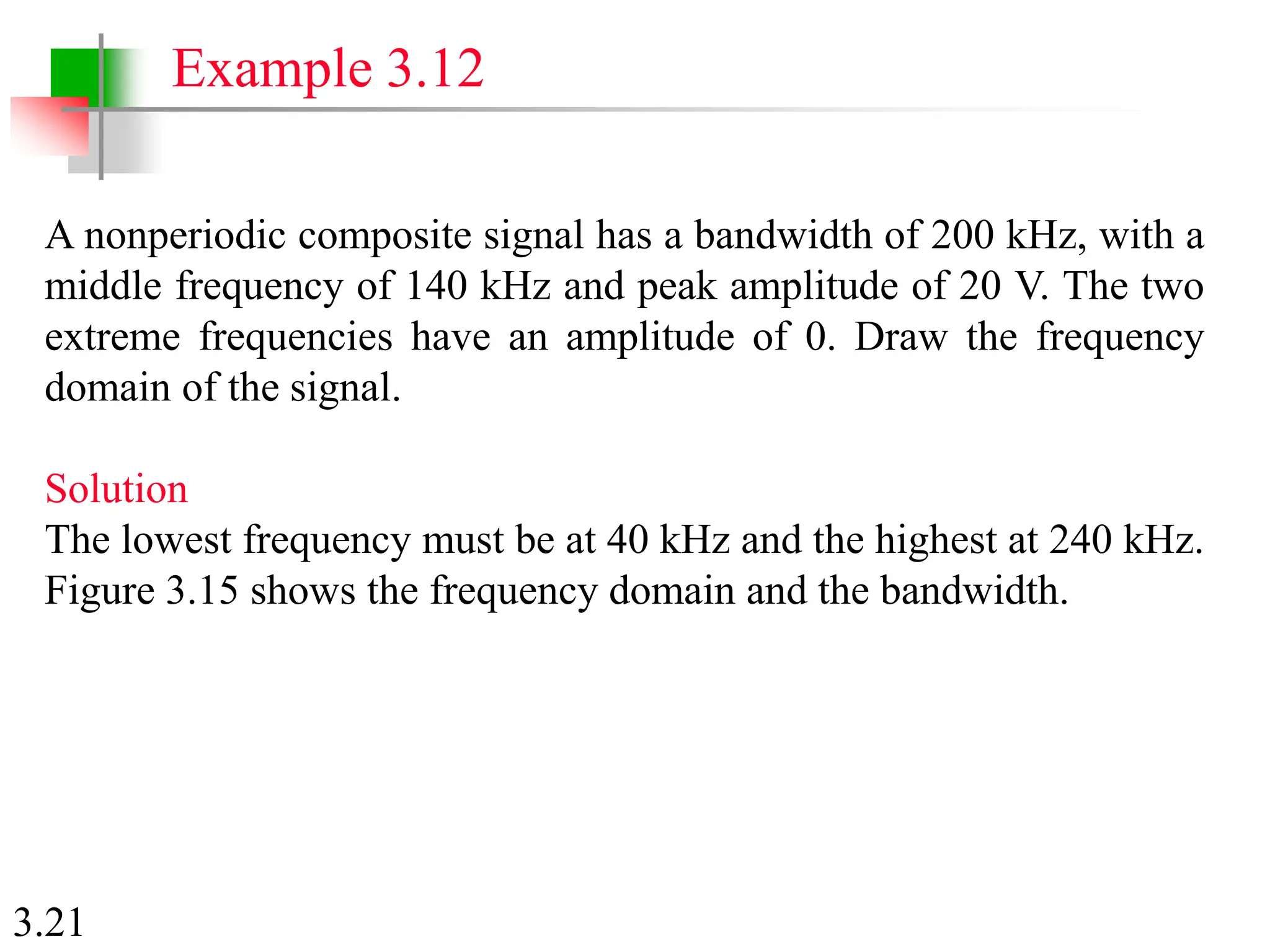
A nonperiodic composite signal has a bandwidth of 200 kHz, with a
middle frequency of 140 kHz and peak amplitude of 20 V. The two
extreme frequencies have an amplitude of 0. Draw the frequency
domain of the signal.
Solution
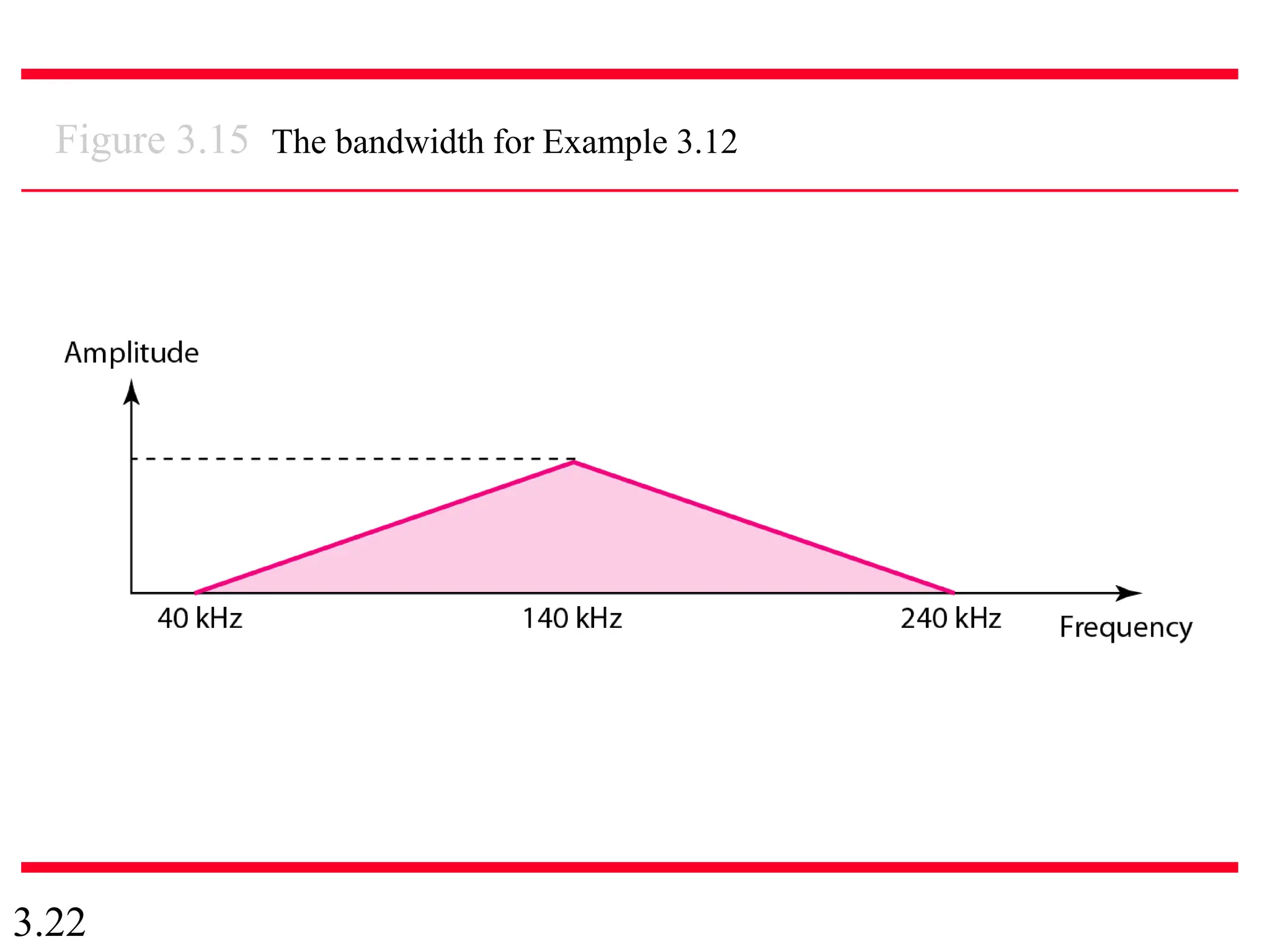
The lowest frequency must be at 40 kHz and the highest at 240 kHz.
Figure 3.15 shows the frequency domain and the bandwidth.
Example 3.12
3.22
Figure 3.15 The bandwidth for Example 3.12
3.23
Figure 3.16 Two digital signals: one with two signal levels and the other
with four signal levels
Figure 5-1
Different Conversion Schemes
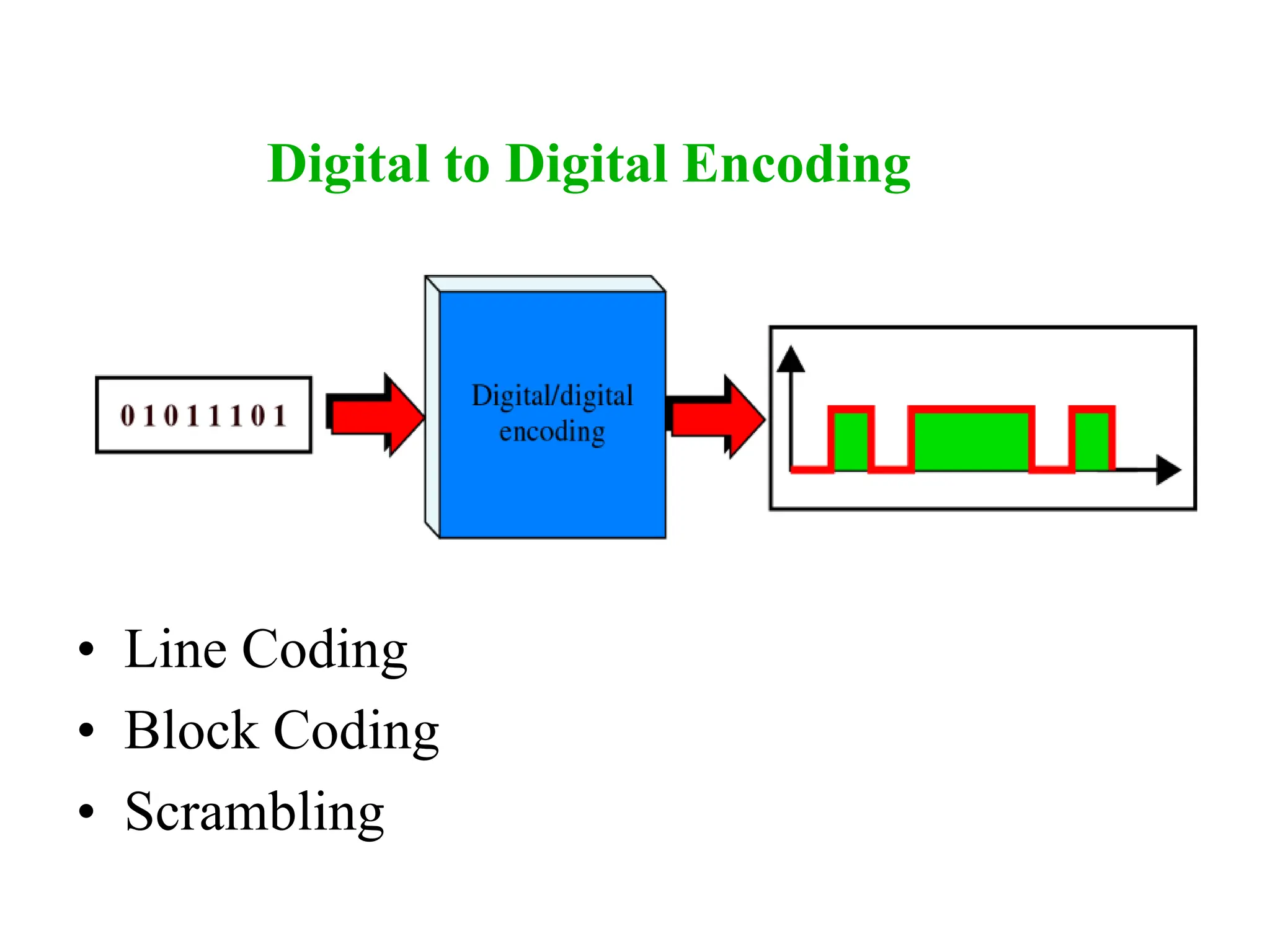
Digital to Digital Encoding
• Line Coding
• Block Coding
• Scrambling
WCB/McGraw-Hill  The McGraw-Hill Companies, Inc., 1998
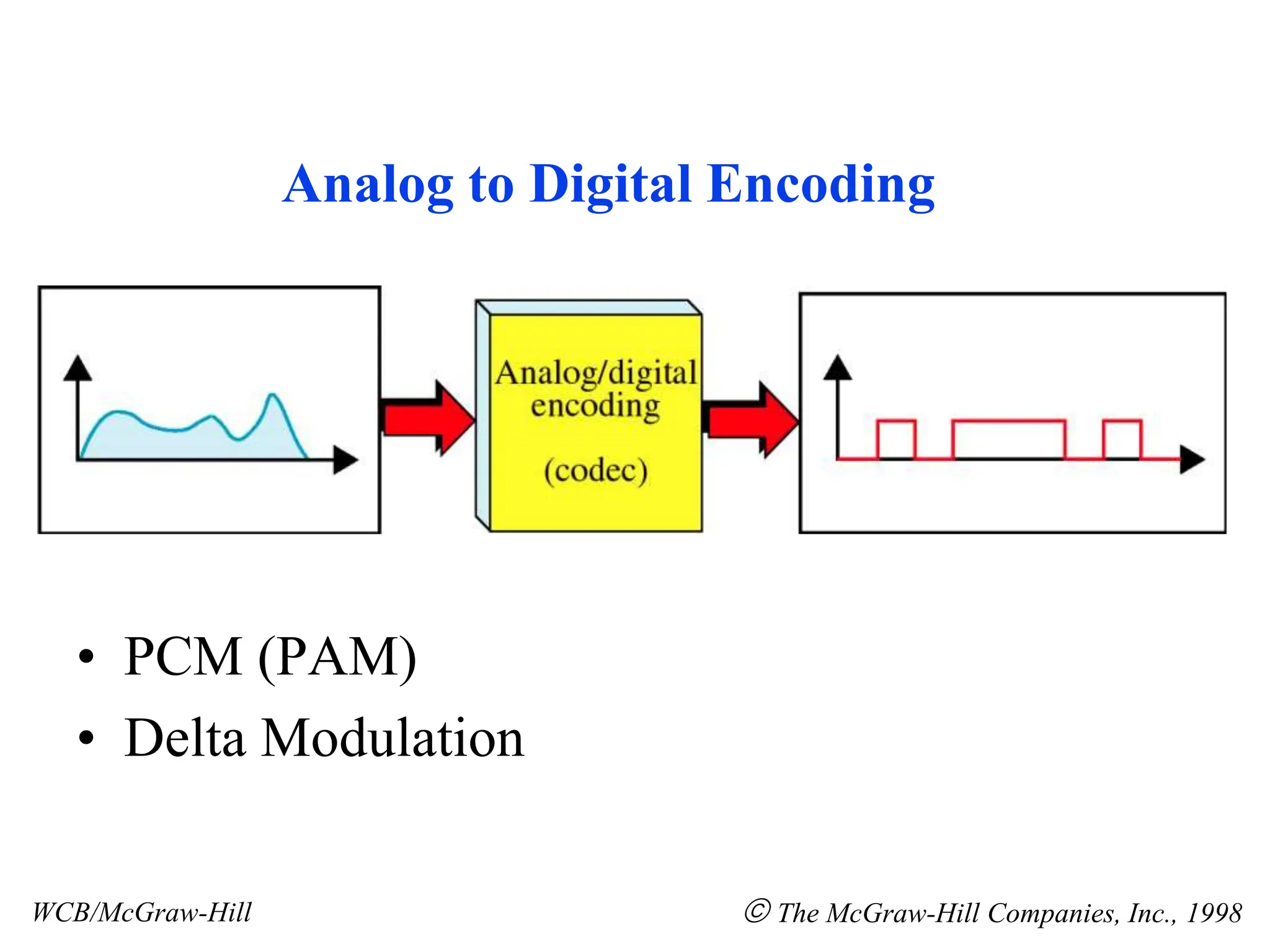
Analog to Digital Encoding
• PCM (PAM)
• Delta Modulation
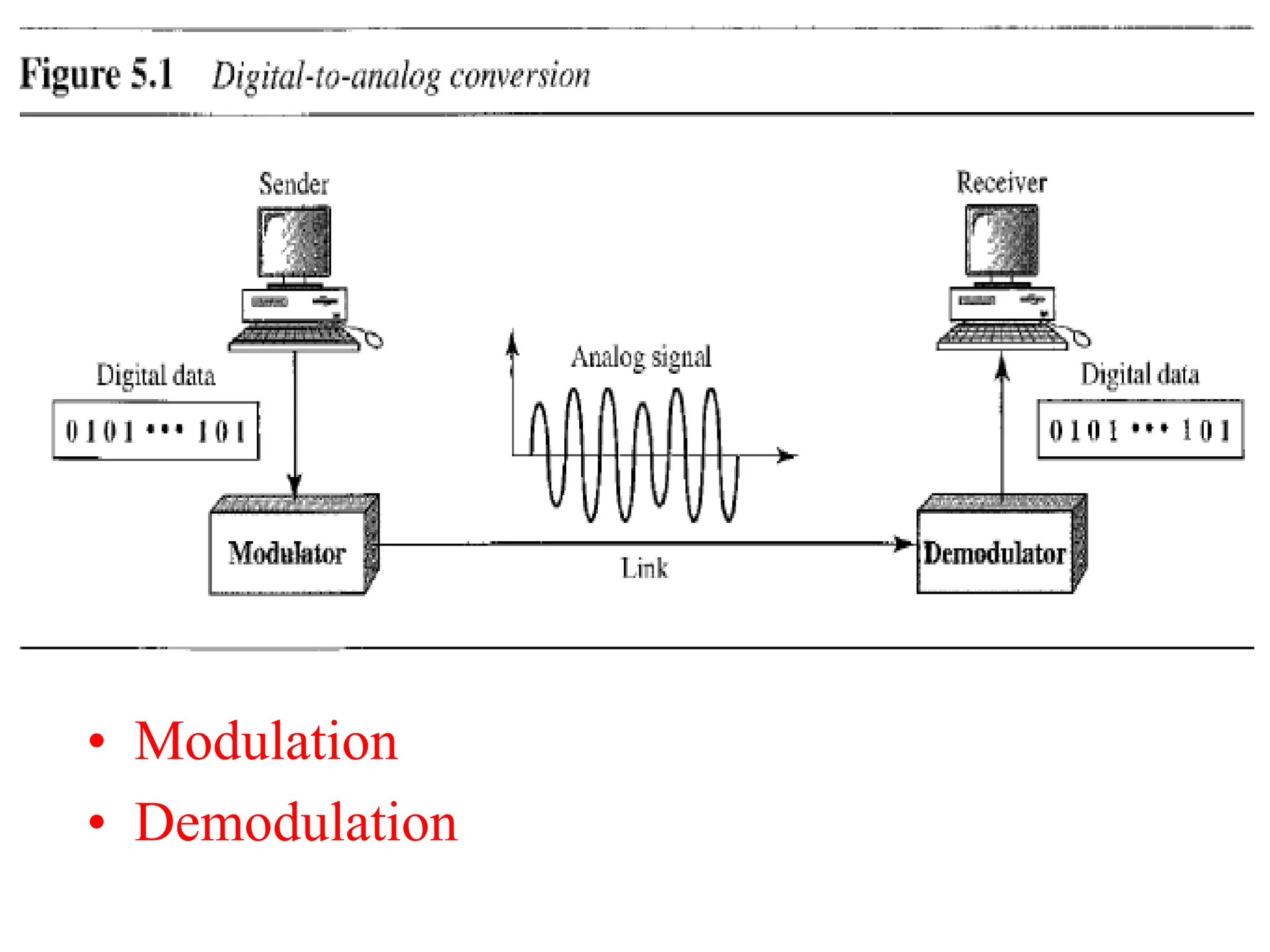
• Modulation
• Demodulation
Digital to Analog Encoding
WCB/McGraw-Hill  The McGraw-Hill Companies, Inc., 1998
Analog to Analog Modulation
Multiplexing
• Simultaneous transmission (on single link)
• Bandwidth utilization
• Efficiency can be achieve by multiplexing
• Higher Bandwidth media –Optical fiber &
satellite microwave
• B(Link)>B(device)  bandwidth wasted
• Efficient system- utilization of resources.
WCB/McGraw-Hill  The McGraw-Hill Companies, Inc., 1998
Figure 8-1
WCB/McGraw-Hill  The McGraw-Hill Companies, Inc., 1998
Multiplexing vs. No Multiplexing
Categories of Multiplexing
• FDM –Analog
• WDM – Analog
• TDM - Digital
FDM – Analog ( Bandwidth in Hz )
-Modulated signals combined into
single composite signal
WCB/McGraw-Hill  The McGraw-Hill Companies, Inc., 1998
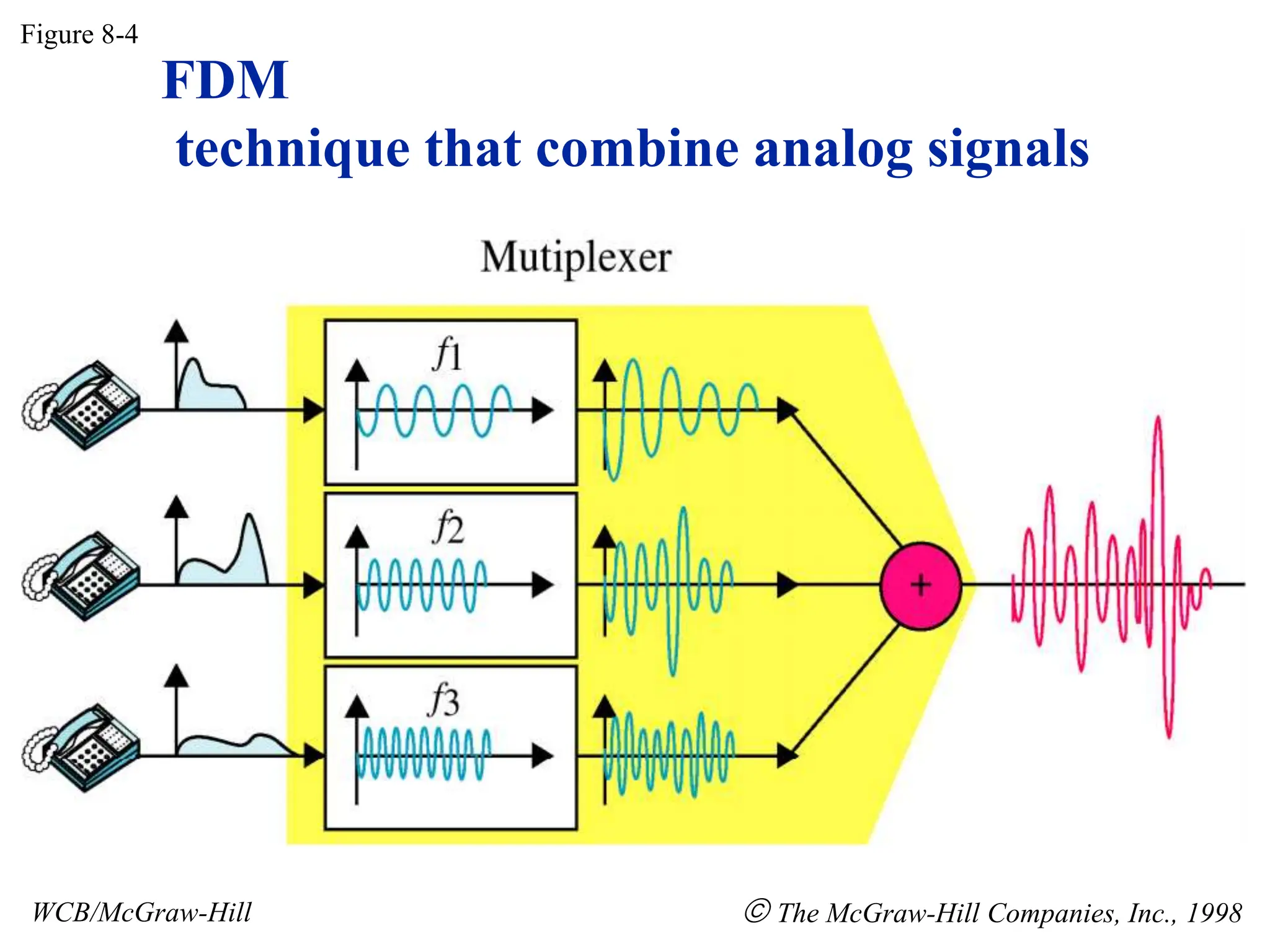
Figure 8-4
WCB/McGraw-Hill  The McGraw-Hill Companies, Inc., 1998
FDM
technique that combine analog signals
Figure 8-6
WCB/McGraw-Hill  The McGraw-Hill Companies, Inc., 1998
Demultiplexing
FDM
• Implemented very easily.
• e.g. Radio & Television broadcasting
• Cellular telephone system
where base station has to assign carrier freq.
to telephone user.
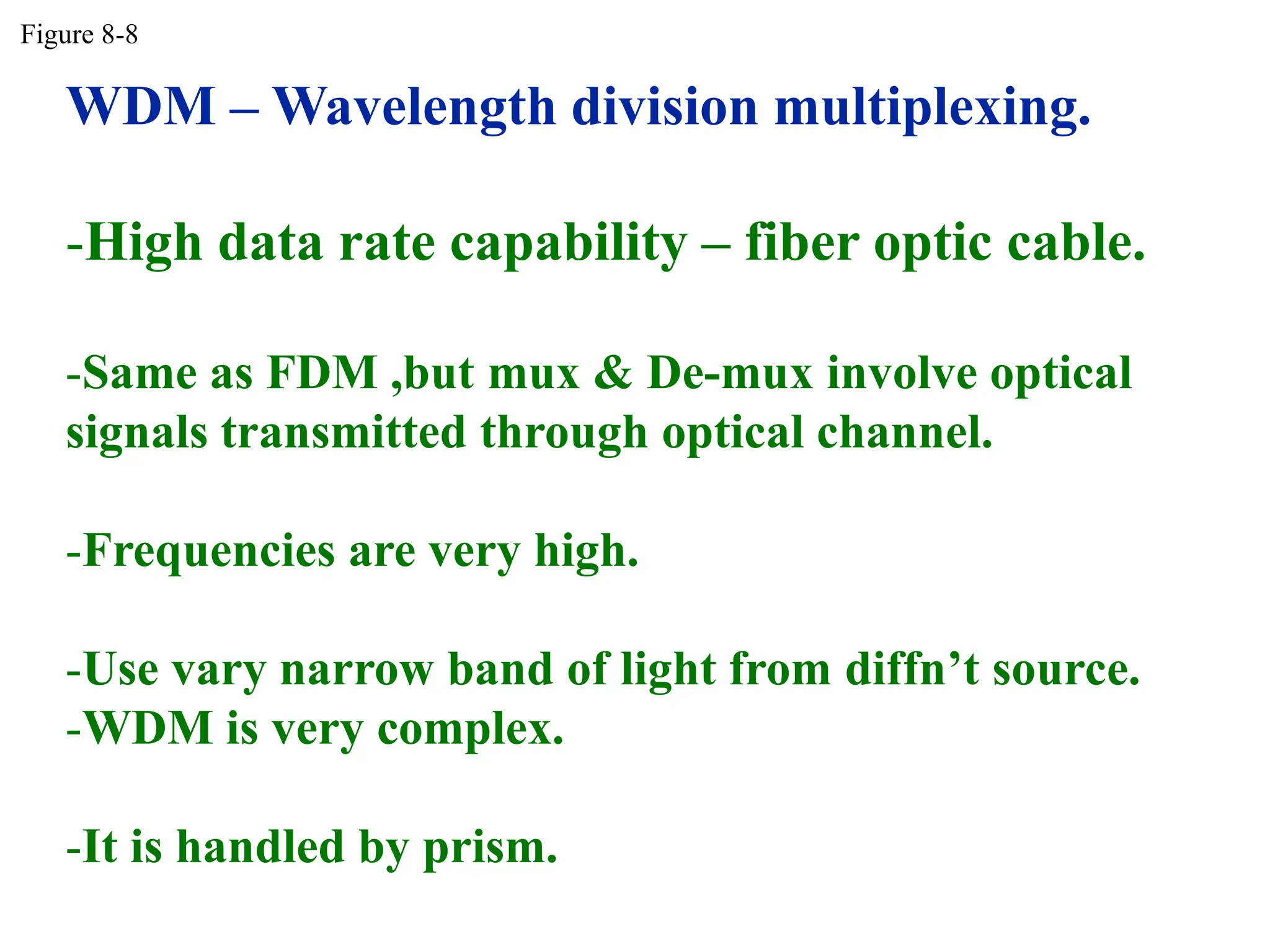
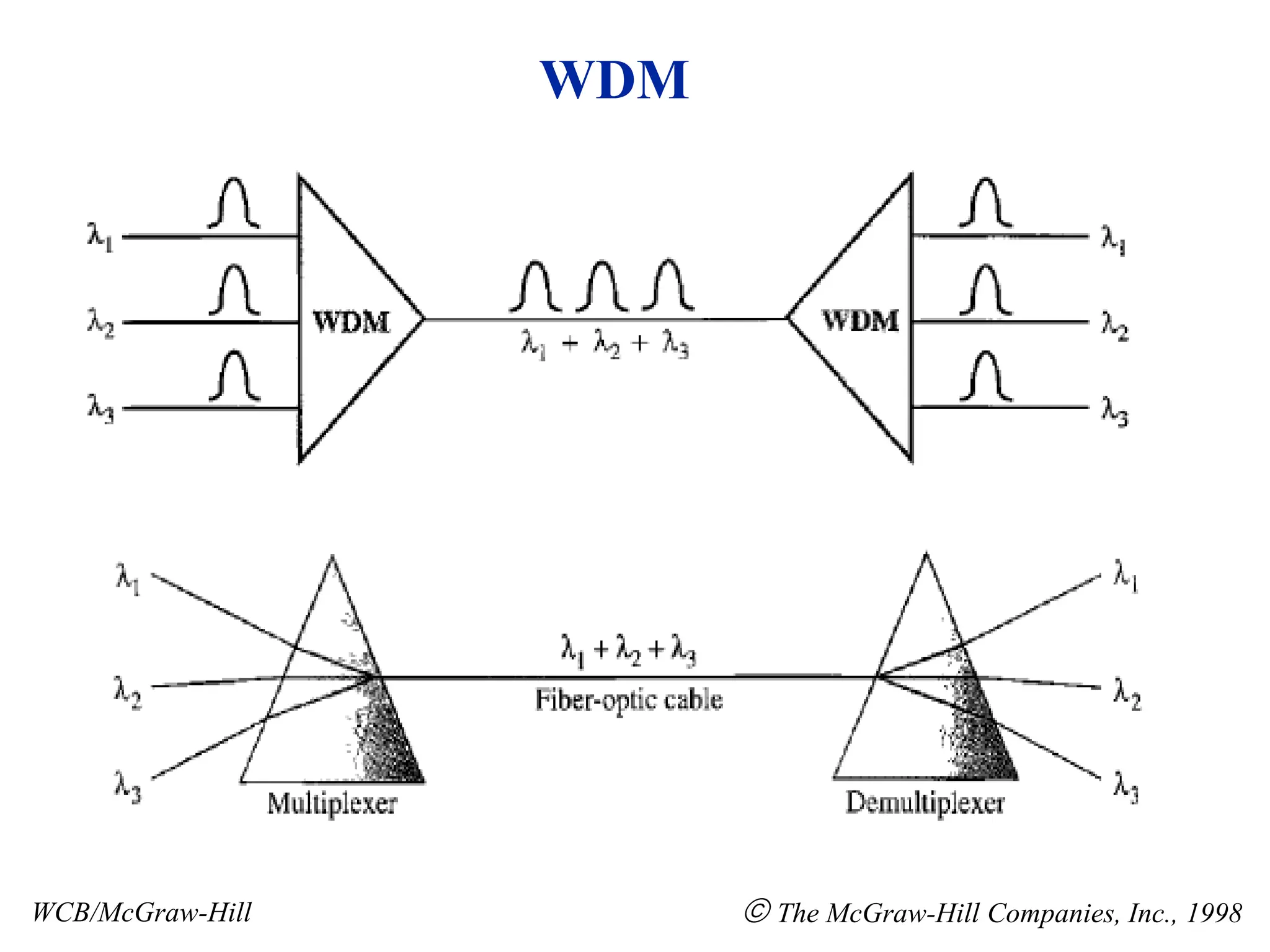
WDM – Wavelength division multiplexing.
-High data rate capability – fiber optic cable.
-Same as FDM ,but mux & De-mux involve optical
signals transmitted through optical channel.
-Frequencies are very high.
-Use vary narrow band of light from diffn’t source.
-WDM is very complex.
-It is handled by prism.
Figure 8-8
WDM
WCB/McGraw-Hill  The McGraw-Hill Companies, Inc., 1998
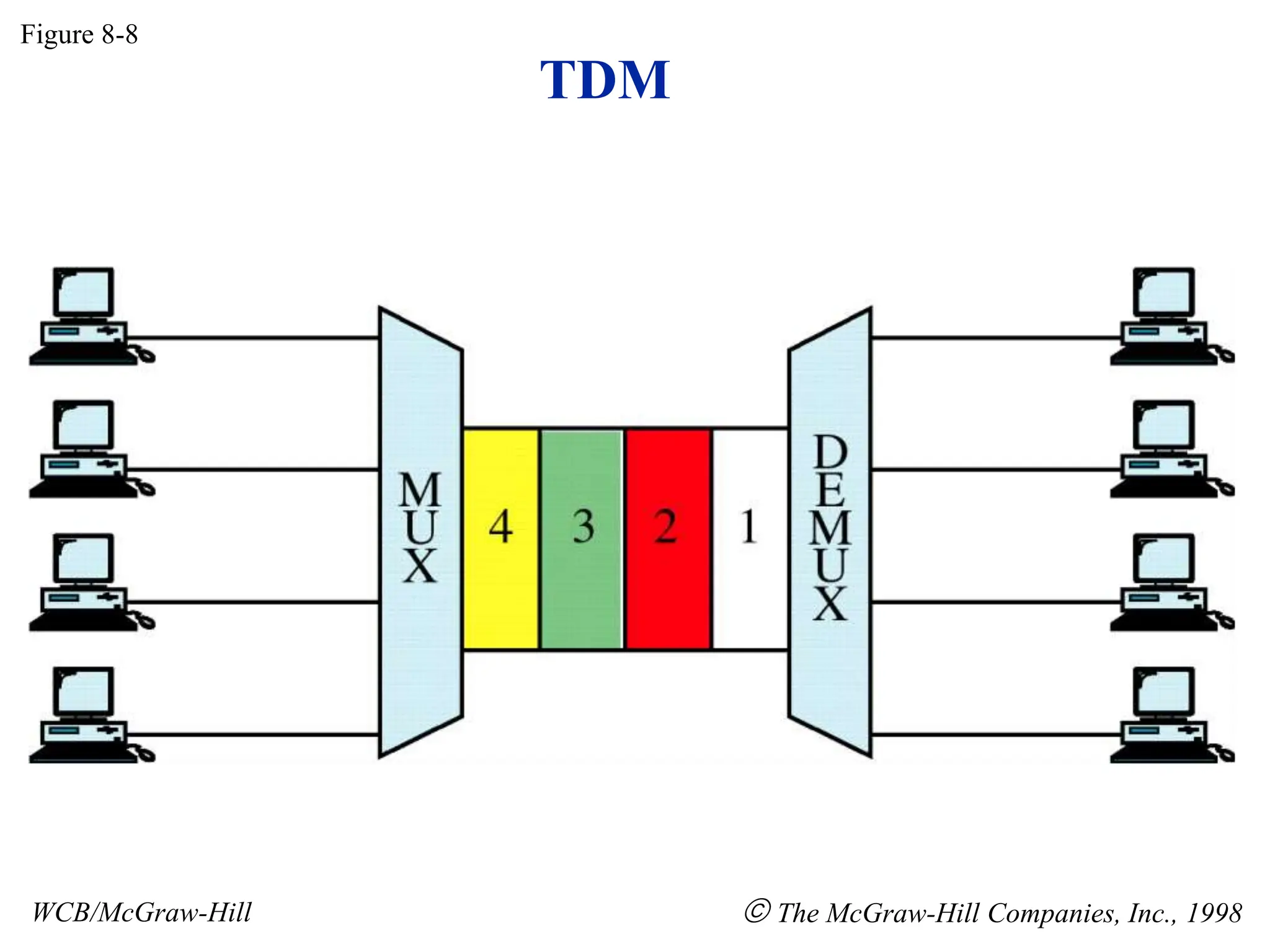
TDM
Figure 8-8
WCB/McGraw-Hill  The McGraw-Hill Companies, Inc., 1998
Synchronous TDM
Figure 8-9
WCB/McGraw-Hill  The McGraw-Hill Companies, Inc., 1998
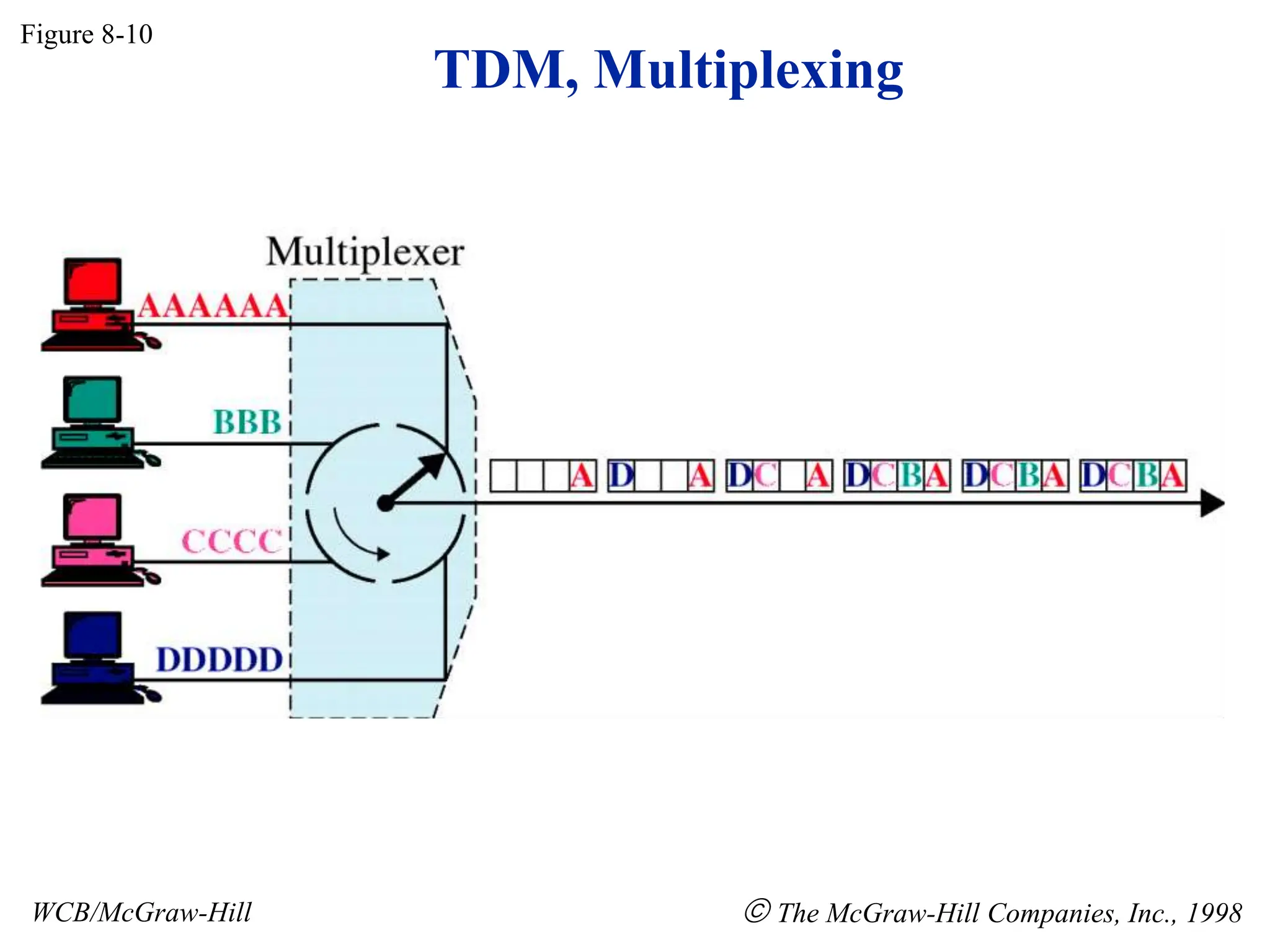
Figure 8-10
WCB/McGraw-Hill  The McGraw-Hill Companies, Inc., 1998
TDM, Multiplexing
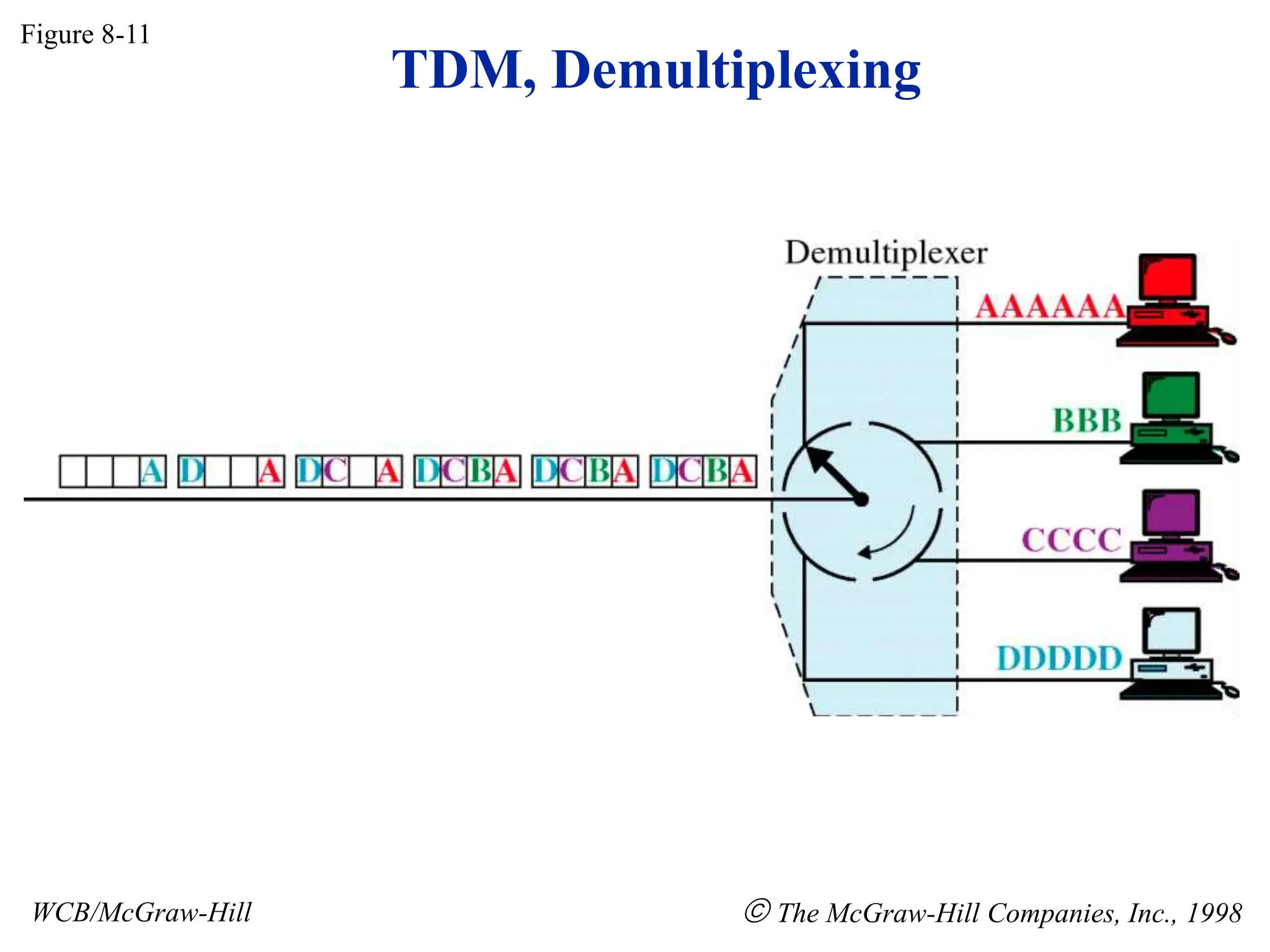
Figure 8-11
WCB/McGraw-Hill  The McGraw-Hill Companies, Inc., 1998
TDM, Demultiplexing
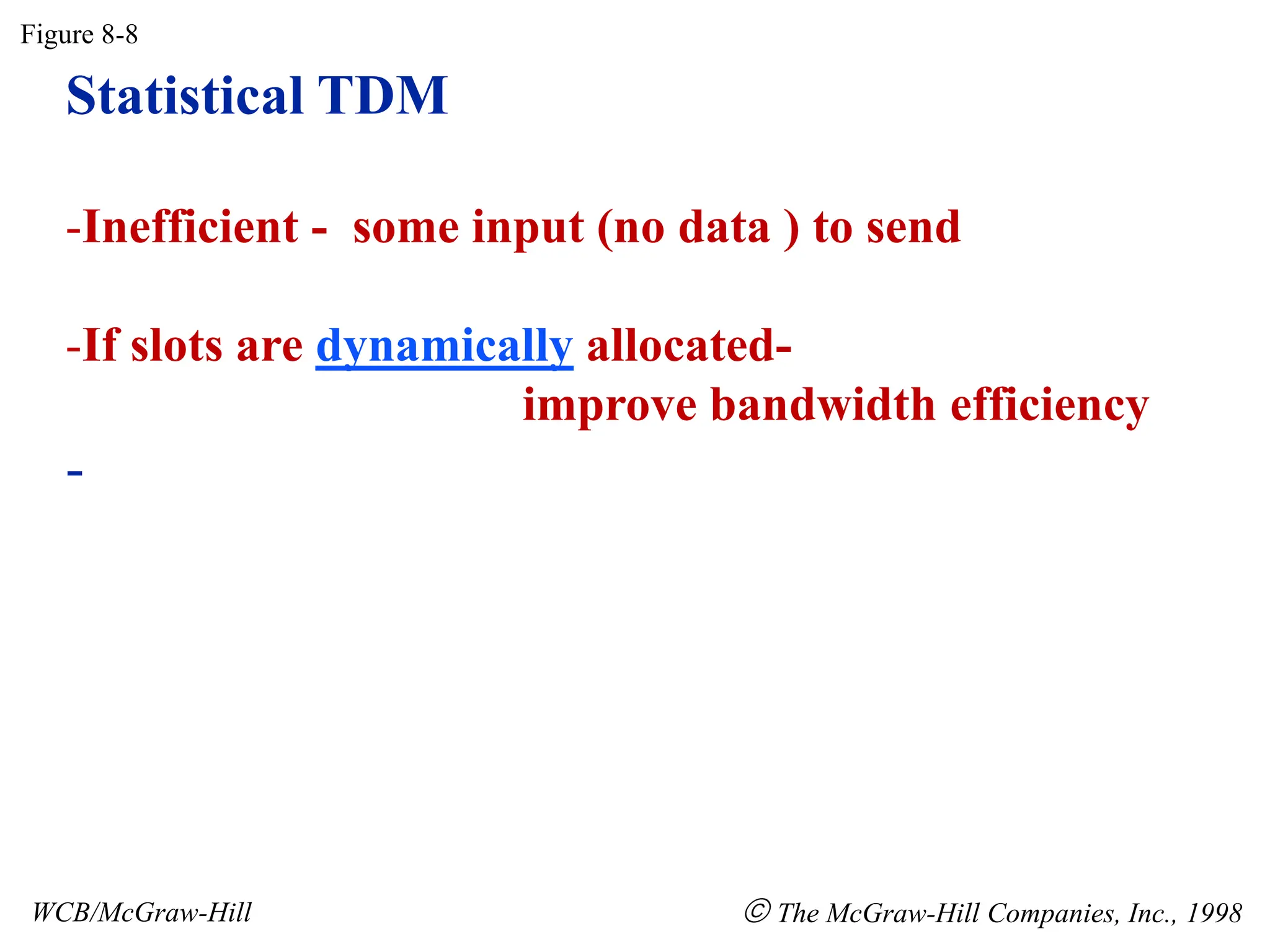
Statistical TDM
-Inefficient - some input (no data ) to send
-If slots are dynamically allocated-
improve bandwidth efficiency
-
Figure 8-8
WCB/McGraw-Hill  The McGraw-Hill Companies, Inc., 1998
End of session
?
Thanks.

CH_02_1 Physical Layer.ppt

  • 1.
    Chapter 2- PhysicalLayer • Data and Transmission techniques • Multiplexing • Transmission Media (Guided / Unguided) • Asynchronous Communication • Wireless transmission (electromagnetic spectrum) • ISDN, ATM • Cellular Radio • Switching Techniques issues Computer Networks
  • 2.
    WCB/McGraw-Hill  TheMcGraw-Hill Companies, Inc., 1998 Data Communication System Components Computer Networks
  • 3.
    Data Communication • Exchangeof data (transfer) between two devices via transmission medium with some protocol. • Text • Image • Multimedia (audio/video) • Analog/Digital signal • Bit rate / Baud rate Computer Networks
  • 4.
    • Both Bitrate and Baud rate are generally used in data communication to measure the speed of data. • Bit rate is the transmission of a number of bits per second. • Baud rate is defined as the number of signal units per second. • The formula which relates both bit rate and the baud rate is given below: Bit rate = Baud rate x the number of bit per baud.
  • 5.
    3.5 Note Data can beanalog or digital. Analog data are continuous and take continuous values. Digital data have discrete states and take discrete values. Signals can be analog or digital. Analog signals can have an infinite number of values in a range; digital signals can have only a limited number of values. To be transmitted, data must be transformed to electromagnetic signals.
  • 6.
    3.6 Figure 3.1 Comparisonof analog and digital signals
  • 7.
    3.7 In data communications,we commonly use periodic analog signals and nonperiodic digital signals.
  • 8.
    3.8 Figure 3.3 Twosignals with the same phase and frequency, but different amplitudes
  • 9.
    3.9 Frequency and periodare the inverse of each other. Note
  • 10.
    3.10 Figure 3.4 Twosignals with the same amplitude and phase, but different frequencies
  • 11.
    3.11 The power weuse at home has a frequency of 60 Hz. The period of the sine wave can be determined as follows: Example 3.3
  • 12.
    3.12 Figure 3.7 Thetime-domain and frequency-domain plots of a sine wave
  • 13.
    3.13 Figure 3.8 Thetime domain and frequency domain of three sine waves
  • 14.
    3.14 A single-frequency sinewave is not useful in data communications; we need to send a composite signal, a signal made of many simple sine waves. According to Fourier analysis, any composite signal is a combination of simple sine waves with different frequencies, amplitudes, and phases.
  • 15.
    3.15 Figure 3.9 Acomposite periodic signal
  • 16.
    3.16 Figure 3.10 Decompositionof a composite periodic signal in the time and frequency domains
  • 17.
    3.17 Figure 3.11 Thetime and frequency domains of a nonperiodic signal
  • 18.
    3.18 The bandwidth ofa composite signal is the difference between the highest and the lowest frequencies contained in that signal. Note
  • 19.
    3.19 Figure 3.12 Thebandwidth of periodic and nonperiodic composite signals
  • 20.
    3.20 If a periodicsignal is decomposed into five sine waves with frequencies of 100, 300, 500, 700, and 900 Hz, what is its bandwidth? Draw the spectrum, assuming all components have a maximum amplitude of 10 V. Solution Let fh be the highest frequency, fl the lowest frequency, and B the bandwidth. Then Example 3.10 The spectrum has only five spikes, at 100, 300, 500, 700, and 900 Hz .
  • 21.
    3.21 A nonperiodic compositesignal has a bandwidth of 200 kHz, with a middle frequency of 140 kHz and peak amplitude of 20 V. The two extreme frequencies have an amplitude of 0. Draw the frequency domain of the signal. Solution The lowest frequency must be at 40 kHz and the highest at 240 kHz. Figure 3.15 shows the frequency domain and the bandwidth. Example 3.12
  • 22.
    3.22 Figure 3.15 Thebandwidth for Example 3.12
  • 23.
    3.23 Figure 3.16 Twodigital signals: one with two signal levels and the other with four signal levels
  • 24.
  • 25.
    Digital to DigitalEncoding • Line Coding • Block Coding • Scrambling
  • 26.
    WCB/McGraw-Hill  TheMcGraw-Hill Companies, Inc., 1998 Analog to Digital Encoding • PCM (PAM) • Delta Modulation
  • 27.
  • 28.
  • 29.
    WCB/McGraw-Hill  TheMcGraw-Hill Companies, Inc., 1998 Analog to Analog Modulation
  • 30.
    Multiplexing • Simultaneous transmission(on single link) • Bandwidth utilization • Efficiency can be achieve by multiplexing • Higher Bandwidth media –Optical fiber & satellite microwave • B(Link)>B(device)  bandwidth wasted • Efficient system- utilization of resources. WCB/McGraw-Hill  The McGraw-Hill Companies, Inc., 1998
  • 31.
    Figure 8-1 WCB/McGraw-Hill The McGraw-Hill Companies, Inc., 1998 Multiplexing vs. No Multiplexing
  • 32.
    Categories of Multiplexing •FDM –Analog • WDM – Analog • TDM - Digital
  • 33.
    FDM – Analog( Bandwidth in Hz ) -Modulated signals combined into single composite signal WCB/McGraw-Hill  The McGraw-Hill Companies, Inc., 1998
  • 34.
    Figure 8-4 WCB/McGraw-Hill The McGraw-Hill Companies, Inc., 1998 FDM technique that combine analog signals
  • 35.
    Figure 8-6 WCB/McGraw-Hill The McGraw-Hill Companies, Inc., 1998 Demultiplexing
  • 36.
    FDM • Implemented veryeasily. • e.g. Radio & Television broadcasting • Cellular telephone system where base station has to assign carrier freq. to telephone user.
  • 37.
    WDM – Wavelengthdivision multiplexing. -High data rate capability – fiber optic cable. -Same as FDM ,but mux & De-mux involve optical signals transmitted through optical channel. -Frequencies are very high. -Use vary narrow band of light from diffn’t source. -WDM is very complex. -It is handled by prism. Figure 8-8
  • 38.
    WDM WCB/McGraw-Hill  TheMcGraw-Hill Companies, Inc., 1998
  • 39.
    TDM Figure 8-8 WCB/McGraw-Hill The McGraw-Hill Companies, Inc., 1998
  • 40.
    Synchronous TDM Figure 8-9 WCB/McGraw-Hill The McGraw-Hill Companies, Inc., 1998
  • 41.
    Figure 8-10 WCB/McGraw-Hill The McGraw-Hill Companies, Inc., 1998 TDM, Multiplexing
  • 42.
    Figure 8-11 WCB/McGraw-Hill The McGraw-Hill Companies, Inc., 1998 TDM, Demultiplexing
  • 43.
    Statistical TDM -Inefficient -some input (no data ) to send -If slots are dynamically allocated- improve bandwidth efficiency - Figure 8-8 WCB/McGraw-Hill  The McGraw-Hill Companies, Inc., 1998
  • 44.