Class-VII
Social Science
Our Pasts-II
Chapter – 7
Tribes, Nomads and
settled communities
 Various social changes took place in the Indian subcontinent over different time periods.
 Varna-based societies interacted with different tribal societies.
 As a result of it, many tribes merged with the caste based societies and adopted Hinduism. But some
tribal societies still rejected the caste-based society of inequality.
 Their major occupation was agriculture.
 They did not have or preserve any written records, but passed on the culture through the means of
oral tradition.
 Some of the tribal societies were nomadic in nature while others were settlers.
 New sub-castes or jatis emerged within the the earlier castes.
 Due to the social changes that occurred in the different tribes, new states developed.
Introduction
 Over different periods of time, various politcal, economic, and social changes
occurred in different parts of the Indian subcontinent as the societies evolved
differently in different places.
 Firstly the society was divided into four varnas (term for four ranks of
Brahmins, Kshatriyas, Vaishyas and Shudras into which the traditional Hindu
society was divided from the time of the Rigveda). But due to this system, the
difference between the classes and castes incresed in the society.
Tribes, Clans and Societies
 The rules of the Varna System were divised by the Brahmanas and mostly they
were accepted and followed by all classes of the societies. But there were
many societies of the subcontinent that did not follow these rules and were
not divided in unequal classes. These societies came to be known as Tribes (a
social division in a traditional society consisting of families or communities
linked by social, economic, religious or blood ties, with a common culture,
they also have a recognized leader).
Major Occupations and Lifestyles
 The tribes were mostly indulged in agriculture and hunter-gathering for meeting their economic
and food or health needs.
 Different tribes had different lifestyles. Like some tribes were nomadic in nature which moved
over long distances with their animals survived on pastoral products and bought and sold
different goods on their way. For example, the Banjaras (a nomadic tribe originally from
Rajasthan) were the most important trade nomads as the Mughals used them to transport grains.
 There also were castes of entertainers who performed in different towns and villages for their
livelihood.
 The others were settled communities. Tribes retained their freedom and preserved their
separate culture, different than that of the caste based societies, by living in forests, hills,
deserts and places that are difficult to reach.
Culture and Habitat
of Different Tribes
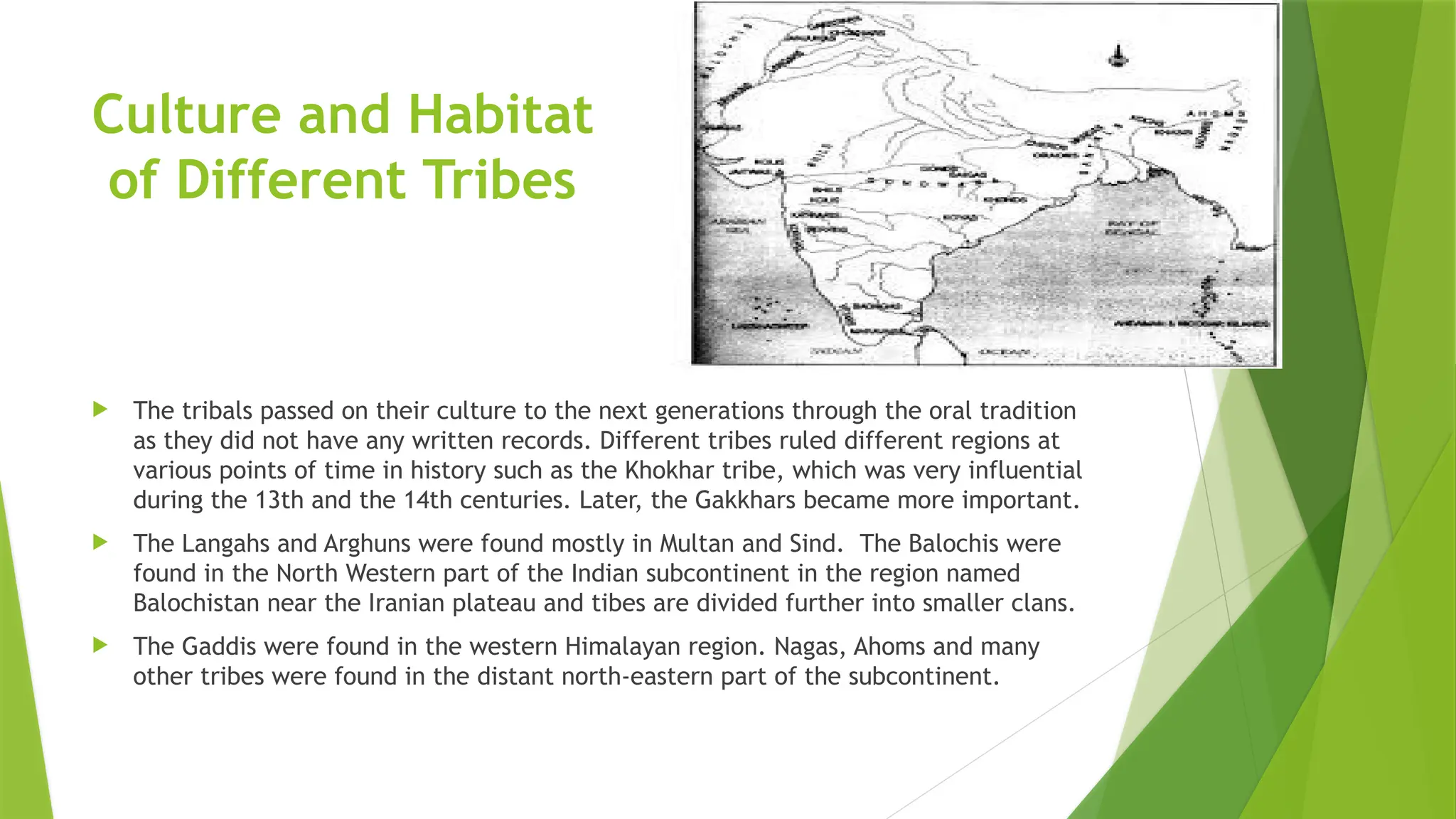
 The tribals passed on their culture to the next generations through the oral tradition
as they did not have any written records. Different tribes ruled different regions at
various points of time in history such as the Khokhar tribe, which was very influential
during the 13th and the 14th centuries. Later, the Gakkhars became more important.
 The Langahs and Arghuns were found mostly in Multan and Sind. The Balochis were
found in the North Western part of the Indian subcontinent in the region named
Balochistan near the Iranian plateau and tibes are divided further into smaller clans.
 The Gaddis were found in the western Himalayan region. Nagas, Ahoms and many
other tribes were found in the distant north-eastern part of the subcontinent.
New Castes and Hierarchies
 Due to various economic and social developments, The demand for people
with new skills increased.
 Smaller castes or jatis, emerged within varnas. Jatis consisted of the tribes
and social groups that were included in the caste-based society, specialised
artisans like smiths, carpenters and masons.
 Jatis became the basis for organisation of the societies.
Emergence of New States:
The Gonds
 The Gonds lived in the forested areas of Gondvana (region in present-day Odisha, India). they
practised 'shifting cultivation
 The large Gond tribe was divided into smaller clans which had their own 'rajas' or 'rais'.
 Large Gond kingdoms began to dominate the smaller Gond chiefs.
 The administrative system then became centralised as the kingdom was divided into 'grahs'
which were ruled by the different Gond tribes. The garhs were further divided into 'chaurasis'
(units of 84 villages) which were further divided into 'barhots' (units of 12 villages).
 Garha Katanga was a rich state and it was large as it had 70,000 villages. Thus it faced many
invasions, and was finally defeated by the Mughals. Still some of the Gond kingdoms survived
for some time but later became weaker and stuggled unsuccessfully against the stronger
Bundelas and Marathas.
The Ahoms
 In the 13th century, the Ahoms migrated from regions of present day Myanmar to the
Brahmaputra valley.
 They established new states by suppressing the older political system of the bhuiyans
(landlords), by conquering powerful kingdoms of the Chhutiyas (1523) and of Koch-Hajo
(1581) in the 16th century and by subjugating many tribes.
 They used new and advanced ammunitions like the firarms even in the 1530s and began to
make gunpowder and cannons by 1660s.
 The Ahom kingdoms faced many invasions from the south-western areas of the Indian
subcontinent and were finally defeated by the Mughals in 1662 but could not be controlled
for a long time.
Ahom administration
 The system of forced labour was prevalent in the Ahom kingdoms and these labourers were
called the 'paiks'.
 A census was taken and the people from the more populated areas were transferred to the less
populated areas. Thus the Ahom clans or 'khels', that controlled many villages, were broken up
and by the beginning of the 17th century, the administration became almost centralised.
 The major occupations of the males of the kingdom was agriculture, construction of dams and
other public works. Many new methods of rice cultivation were developed by the Ahoms.
 During the times of wars the males served in the armies.
 The Ahoms worshipped their tribal gods originally, but during the mid-eighteenth century,
Hinduism became a predominant religion due to the rule of hindu kings. Yet the Ahoms did not
adopt Hinduism completely.
 In the Ahom kingdoms, various arts and literature flourished. Various translation works were
carried out from Sanskrit into the local languages.
 Their literary works are known as BURANJI .
Thank you

Ch 7 Tribes, Nomads and Settled Communities 1.pptx

  • 1.
    Class-VII Social Science Our Pasts-II Chapter– 7 Tribes, Nomads and settled communities
  • 2.
     Various socialchanges took place in the Indian subcontinent over different time periods.  Varna-based societies interacted with different tribal societies.  As a result of it, many tribes merged with the caste based societies and adopted Hinduism. But some tribal societies still rejected the caste-based society of inequality.  Their major occupation was agriculture.  They did not have or preserve any written records, but passed on the culture through the means of oral tradition.  Some of the tribal societies were nomadic in nature while others were settlers.  New sub-castes or jatis emerged within the the earlier castes.  Due to the social changes that occurred in the different tribes, new states developed.
  • 3.
    Introduction  Over differentperiods of time, various politcal, economic, and social changes occurred in different parts of the Indian subcontinent as the societies evolved differently in different places.  Firstly the society was divided into four varnas (term for four ranks of Brahmins, Kshatriyas, Vaishyas and Shudras into which the traditional Hindu society was divided from the time of the Rigveda). But due to this system, the difference between the classes and castes incresed in the society.
  • 4.
    Tribes, Clans andSocieties  The rules of the Varna System were divised by the Brahmanas and mostly they were accepted and followed by all classes of the societies. But there were many societies of the subcontinent that did not follow these rules and were not divided in unequal classes. These societies came to be known as Tribes (a social division in a traditional society consisting of families or communities linked by social, economic, religious or blood ties, with a common culture, they also have a recognized leader).
  • 5.
    Major Occupations andLifestyles  The tribes were mostly indulged in agriculture and hunter-gathering for meeting their economic and food or health needs.  Different tribes had different lifestyles. Like some tribes were nomadic in nature which moved over long distances with their animals survived on pastoral products and bought and sold different goods on their way. For example, the Banjaras (a nomadic tribe originally from Rajasthan) were the most important trade nomads as the Mughals used them to transport grains.  There also were castes of entertainers who performed in different towns and villages for their livelihood.  The others were settled communities. Tribes retained their freedom and preserved their separate culture, different than that of the caste based societies, by living in forests, hills, deserts and places that are difficult to reach.
  • 6.
    Culture and Habitat ofDifferent Tribes  The tribals passed on their culture to the next generations through the oral tradition as they did not have any written records. Different tribes ruled different regions at various points of time in history such as the Khokhar tribe, which was very influential during the 13th and the 14th centuries. Later, the Gakkhars became more important.  The Langahs and Arghuns were found mostly in Multan and Sind. The Balochis were found in the North Western part of the Indian subcontinent in the region named Balochistan near the Iranian plateau and tibes are divided further into smaller clans.  The Gaddis were found in the western Himalayan region. Nagas, Ahoms and many other tribes were found in the distant north-eastern part of the subcontinent.
  • 7.
    New Castes andHierarchies  Due to various economic and social developments, The demand for people with new skills increased.  Smaller castes or jatis, emerged within varnas. Jatis consisted of the tribes and social groups that were included in the caste-based society, specialised artisans like smiths, carpenters and masons.  Jatis became the basis for organisation of the societies.
  • 8.
    Emergence of NewStates: The Gonds  The Gonds lived in the forested areas of Gondvana (region in present-day Odisha, India). they practised 'shifting cultivation  The large Gond tribe was divided into smaller clans which had their own 'rajas' or 'rais'.  Large Gond kingdoms began to dominate the smaller Gond chiefs.  The administrative system then became centralised as the kingdom was divided into 'grahs' which were ruled by the different Gond tribes. The garhs were further divided into 'chaurasis' (units of 84 villages) which were further divided into 'barhots' (units of 12 villages).  Garha Katanga was a rich state and it was large as it had 70,000 villages. Thus it faced many invasions, and was finally defeated by the Mughals. Still some of the Gond kingdoms survived for some time but later became weaker and stuggled unsuccessfully against the stronger Bundelas and Marathas.
  • 9.
    The Ahoms  Inthe 13th century, the Ahoms migrated from regions of present day Myanmar to the Brahmaputra valley.  They established new states by suppressing the older political system of the bhuiyans (landlords), by conquering powerful kingdoms of the Chhutiyas (1523) and of Koch-Hajo (1581) in the 16th century and by subjugating many tribes.  They used new and advanced ammunitions like the firarms even in the 1530s and began to make gunpowder and cannons by 1660s.  The Ahom kingdoms faced many invasions from the south-western areas of the Indian subcontinent and were finally defeated by the Mughals in 1662 but could not be controlled for a long time.
  • 10.
    Ahom administration  Thesystem of forced labour was prevalent in the Ahom kingdoms and these labourers were called the 'paiks'.  A census was taken and the people from the more populated areas were transferred to the less populated areas. Thus the Ahom clans or 'khels', that controlled many villages, were broken up and by the beginning of the 17th century, the administration became almost centralised.  The major occupations of the males of the kingdom was agriculture, construction of dams and other public works. Many new methods of rice cultivation were developed by the Ahoms.  During the times of wars the males served in the armies.  The Ahoms worshipped their tribal gods originally, but during the mid-eighteenth century, Hinduism became a predominant religion due to the rule of hindu kings. Yet the Ahoms did not adopt Hinduism completely.  In the Ahom kingdoms, various arts and literature flourished. Various translation works were carried out from Sanskrit into the local languages.  Their literary works are known as BURANJI .
  • 11.