Downloaded 36 times
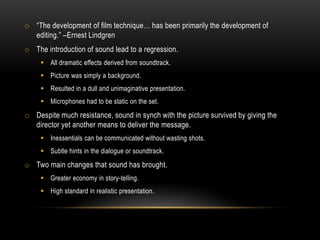
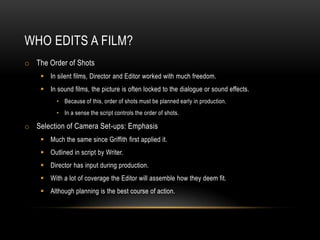

1. The introduction of sound films initially led to a regression in film technique, with the picture becoming merely a background to the soundtrack. However, sound ultimately provided directors with new means of storytelling through subtle hints in dialogue. 2. In sound films, the order of shots must be planned early due to locking picture to dialogue, whereas silent films afforded more freedom. Editing involves assembling shots according to timing and smoothness of continuity. 3. Who has primary responsibility for editing varies, but the director typically controls the visual continuity and implied vision, while collaborating with writers and editors. When authenticity is the goal, allowing the director main control tends to yield better results.


