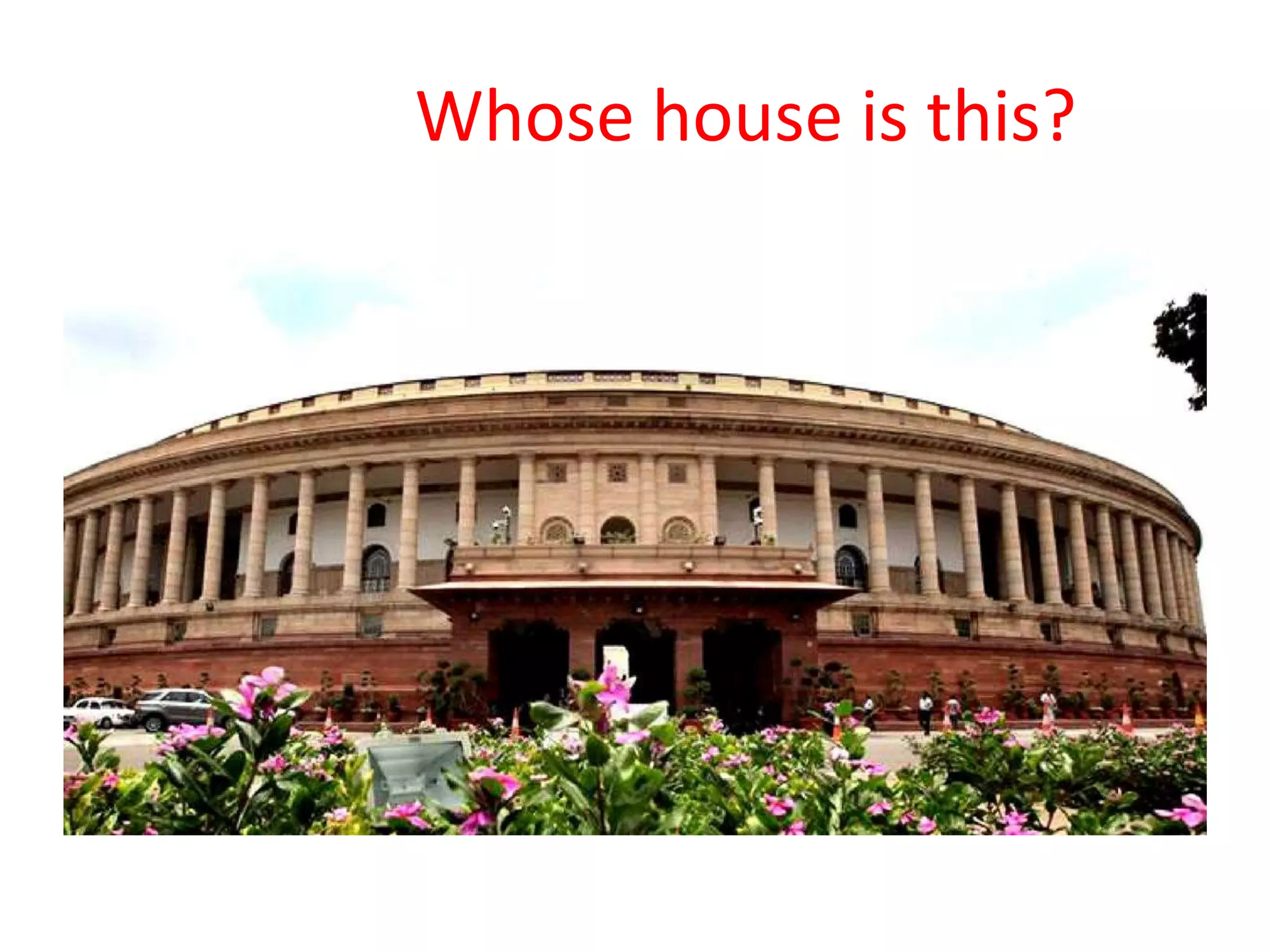
Whose house is this?
Social and Political Life-III
CLASS: 8
CHAPTER - 3
WHY DO WE NEED A PARLIAMENT
NAME OF TEACHER - AJITHA P TGT SS
JNV PALAKKAD
Introduction
• Our country India is the largest democracy of world .
As a free nation we came to exist on 1947 August 15,
after the long and difficult struggle fought by many
against the colonial rule of British . The Nationalists
demanded participation in decision making as far
back as 1885,but British were not ready to give either
Right to vote or participation in decision making.
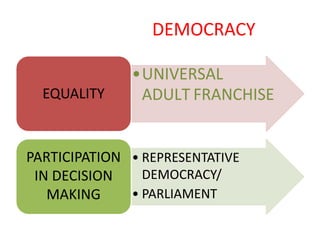
DEMOCRACY
•UNIVERSAL
ADULT FRANCHISE
• REPRESENTATIVE
DEMOCRACY/
• PARLIAMENT
EQUALITY
PARTICIPATION
IN DECISION
MAKING
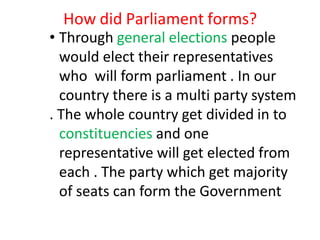
How did Parliament forms?
• Through general elections people
would elect their representatives
who will form parliament . In our
country there is a multi party system
. The whole country get divided in to
constituencies and one
representative will get elected from
each . The party which get majority
of seats can form the Government
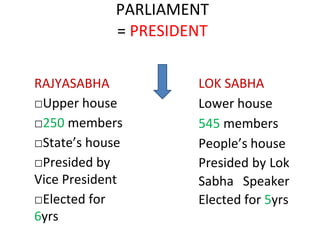
PARLIAMENT
= PRESIDENT
RAJYASABHA
□Upper house
□250 members
□State’s house
□Presided by
Vice President
□Elected for
6yrs
LOK SABHA
Lower house
545 members
People’s house
Presided by Lok
Sabha Speaker
Elected for 5yrs
The Role of The Parliament
1.To select the National
Government
2.To Control, Guide and Inform the
Government and
3.Law Making
1.To Select the National Government
• Party which gains majority in lok sabha election will
form the government and all others are the
opposition and the largest is called as opposition
party.
• If no party gains majority then two or more parties
together will form a government called as Coalition.
• Prime minister will be the leader who selects other
ministers whom belong to his / her political party.
• Total 543elected plus two nominated members are
there in Lok sabha.
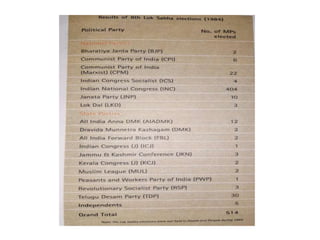
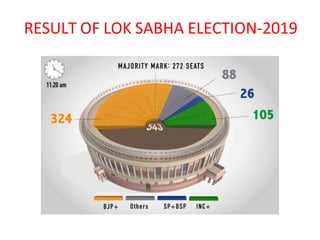
RESULT OF LOK SABHA ELECTION-2019
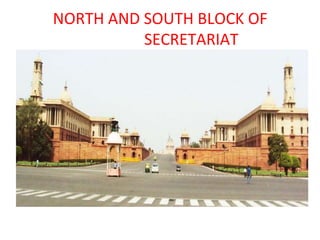
NORTH AND SOUTH BLOCK OF
SECRETARIAT
RAJYA SABHA
• States house
• Total 250 members ,238 elected by members
of the legislative assemblies of states and 12
nominated by the President.
• It is the upper house of parliament presided
by Vice President of India.
2. To control ,Guide and
Inform the government
By asking questions through
which the parliament controls
the government.The short
comings of the government is
alerted and the opinion of
people also came to be known
through their representatives.
Example for a session in lok sabha
3.Law Making
Who are the people in parliament?
• Elected members but all are not represented
.Still we have to improve representation of
minorities , Marginalised and Women.
• Asking questions and working towards it
shows our faith in Democracy.
LOK SABHA ELECTION YEAR VOTER TURNOUT [%]
1st
1951-52 44.87
4th
1967 61.04
5th
1971 55.27
6th
1977 60.49
8th
1984 63.56
10th
1991 56.73
14th
2004 58.07
16th
2014 66.44
17th
2019 67.40
VOTERS TURNOUT
QUESTIONS
VERY SHORT ANSWERS:
1.Name the area meant for election purpose.
a) State b)District c)Panchayat d) Constituency
2. How many members are there in lok sabha?
a) 250 b) 140 c) 360 d) 545
3. How many members are there in Rajya sabha?
a) 250 b) 140 c) 360 d) 545
4. Right to vote for all adults is called
a) Universal adult franchise b) secularism c) socialism d) federalism
5. Give expansion of MP
a) Member of Parliament b) Member of Panchayat c)Member of party
6. Name the present lok sabha member of your constituency
SHORT ANSWER QUESTIONS
1. Define a lok sabha constituency?
2.Explain the upper house of parliament or rajya sabha.
3.State the important roles of parliament
4.How did union government forms?
5.What is a coalition government?
6.What is the role of opposition?
Long answer questions
1.Why do you think the nationalist movement supported the
idea that all adults have a right to vote?
2.How did parliamentary form ensures participation of people in
decision making?
3.Explain the formation of Rajya Sabha and Lok Sabha.
4.How the parliament can control , guide and inform the
government?
5.What is the importance of question hour?
COMPETENCY LEVEL QUESTIONS:
1.In text book page number 39 there is a statement
that “It has been observed that representative
democracy cannot produce a perfect reflection of
society .” Will you agree ? If not why? Explain.
2.Present lok sabha have 14% women's
participation with 78 members out of 545. Express
your view regarding enhancement of women's
participation.
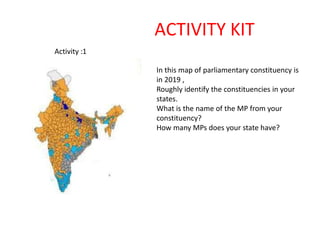
ACTIVITY KIT
In this map of parliamentary constituency is
in 2019 ,
Roughly identify the constituencies in your
states.
What is the name of the MP from your
constituency?
How many MPs does your state have?
Activity :1
Activity :2
1.Find out names of national parties , state parties and
other local parties .
2.Which is the present ruling party at national level , in
your state and in your locality?
3.Name the opposition party of national government,
of your state and of your locality.

Ch 3 Why do we need a Parliament 1.pptx.ppt

  • 1.
  • 2.
    Social and PoliticalLife-III CLASS: 8 CHAPTER - 3 WHY DO WE NEED A PARLIAMENT NAME OF TEACHER - AJITHA P TGT SS JNV PALAKKAD
  • 3.
    Introduction • Our countryIndia is the largest democracy of world . As a free nation we came to exist on 1947 August 15, after the long and difficult struggle fought by many against the colonial rule of British . The Nationalists demanded participation in decision making as far back as 1885,but British were not ready to give either Right to vote or participation in decision making.
  • 4.
    DEMOCRACY •UNIVERSAL ADULT FRANCHISE • REPRESENTATIVE DEMOCRACY/ •PARLIAMENT EQUALITY PARTICIPATION IN DECISION MAKING
  • 5.
    How did Parliamentforms? • Through general elections people would elect their representatives who will form parliament . In our country there is a multi party system . The whole country get divided in to constituencies and one representative will get elected from each . The party which get majority of seats can form the Government
  • 8.
    PARLIAMENT = PRESIDENT RAJYASABHA □Upper house □250members □State’s house □Presided by Vice President □Elected for 6yrs LOK SABHA Lower house 545 members People’s house Presided by Lok Sabha Speaker Elected for 5yrs
  • 9.
    The Role ofThe Parliament 1.To select the National Government 2.To Control, Guide and Inform the Government and 3.Law Making
  • 10.
    1.To Select theNational Government • Party which gains majority in lok sabha election will form the government and all others are the opposition and the largest is called as opposition party. • If no party gains majority then two or more parties together will form a government called as Coalition. • Prime minister will be the leader who selects other ministers whom belong to his / her political party. • Total 543elected plus two nominated members are there in Lok sabha.
  • 12.
    RESULT OF LOKSABHA ELECTION-2019
  • 13.
    NORTH AND SOUTHBLOCK OF SECRETARIAT
  • 14.
    RAJYA SABHA • Stateshouse • Total 250 members ,238 elected by members of the legislative assemblies of states and 12 nominated by the President. • It is the upper house of parliament presided by Vice President of India.
  • 15.
    2. To control,Guide and Inform the government By asking questions through which the parliament controls the government.The short comings of the government is alerted and the opinion of people also came to be known through their representatives.
  • 16.
    Example for asession in lok sabha
  • 17.
  • 18.
    Who are thepeople in parliament? • Elected members but all are not represented .Still we have to improve representation of minorities , Marginalised and Women. • Asking questions and working towards it shows our faith in Democracy.
  • 19.
    LOK SABHA ELECTIONYEAR VOTER TURNOUT [%] 1st 1951-52 44.87 4th 1967 61.04 5th 1971 55.27 6th 1977 60.49 8th 1984 63.56 10th 1991 56.73 14th 2004 58.07 16th 2014 66.44 17th 2019 67.40 VOTERS TURNOUT
  • 20.
    QUESTIONS VERY SHORT ANSWERS: 1.Namethe area meant for election purpose. a) State b)District c)Panchayat d) Constituency 2. How many members are there in lok sabha? a) 250 b) 140 c) 360 d) 545 3. How many members are there in Rajya sabha? a) 250 b) 140 c) 360 d) 545 4. Right to vote for all adults is called a) Universal adult franchise b) secularism c) socialism d) federalism 5. Give expansion of MP a) Member of Parliament b) Member of Panchayat c)Member of party 6. Name the present lok sabha member of your constituency
  • 21.
    SHORT ANSWER QUESTIONS 1.Define a lok sabha constituency? 2.Explain the upper house of parliament or rajya sabha. 3.State the important roles of parliament 4.How did union government forms? 5.What is a coalition government? 6.What is the role of opposition?
  • 22.
    Long answer questions 1.Whydo you think the nationalist movement supported the idea that all adults have a right to vote? 2.How did parliamentary form ensures participation of people in decision making? 3.Explain the formation of Rajya Sabha and Lok Sabha. 4.How the parliament can control , guide and inform the government? 5.What is the importance of question hour?
  • 23.
    COMPETENCY LEVEL QUESTIONS: 1.Intext book page number 39 there is a statement that “It has been observed that representative democracy cannot produce a perfect reflection of society .” Will you agree ? If not why? Explain. 2.Present lok sabha have 14% women's participation with 78 members out of 545. Express your view regarding enhancement of women's participation.
  • 24.
    ACTIVITY KIT In thismap of parliamentary constituency is in 2019 , Roughly identify the constituencies in your states. What is the name of the MP from your constituency? How many MPs does your state have? Activity :1
  • 25.
    Activity :2 1.Find outnames of national parties , state parties and other local parties . 2.Which is the present ruling party at national level , in your state and in your locality? 3.Name the opposition party of national government, of your state and of your locality.