Ch. 11.3
How did Canadians
promote world peace?
Text p. 282-286
Nuclear Proliferation, The Race to Space, The Suez
Crisis
Canada & Peace
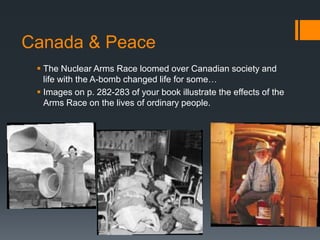
 The Nuclear Arms Race loomed over Canadian society and
life with the A-bomb changed life for some…
 Images on p. 282-283 of your book illustrate the effects of the
Arms Race on the lives of ordinary people.
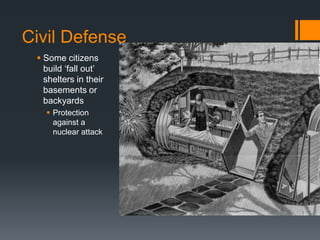
Civil Defense
 Some citizens
build „fall out‟
shelters in their
basements or
backyards
 Protection
against a
nuclear attack
Peaceful Nuclear Power
Nuclear power stations were created
e.g. in Chalk River
e.g. at Darlington
 Canada produced the CANDU Reactor
nuclear reactor research – based on
heavy-water reactor to produce plutonium
from uranium
„clean‟ energy
There were many pros and cons of nuclear
power
An agency was set up by the federal government
to monitor the research
AECL - Atomic Energy of Canada Ltd.
The selling of this technology globally began
e.g. to India an China
Nuclear medicine and cancer treatments are a
benefit
The Race for Space
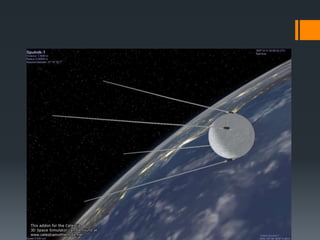
 The Soviets successfully launched Sputnik
I, the world‟s first satellite into space
 The U.S. started to feel that they were falling
behind the Soviets in technological
development
 the big agency in the U.S. was NASA

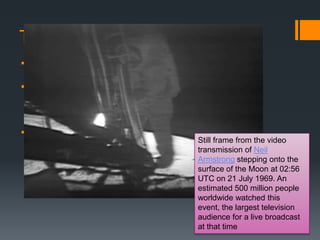
 President Kennedy put forward the challenge
in the early 60s that the U.S. must beat the Still frame from the video
Soviets in sending a man to the moon (this transmission of Neil
Armstrong stepping onto the
happened in 1969)
surface of the Moon at 02:56
UTC on 21 July 1969. An
estimated 500 million people
worldwide watched this
event, the largest television
audience for a live broadcast
at that time
Sputnik-1 (USSR)
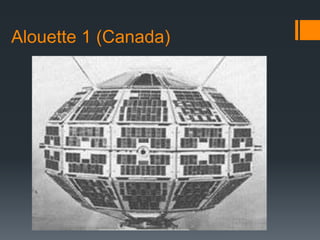
Canadian satellites, used for
telecommunications, began to be
developed: e.g. Alouette I
Canada‟s success in
telecommunications would lead to
commercial success by companies
such as Bell Canada and Nortel
Alouette 1 (Canada)
Nuclear Proliferation
 A big issue in the Cold War era, and even bigger after, is
that of nuclear proliferation
 that is, the development of more and more weapons by
more and more countries
 Many countries have signed treaties agreeing not to build
these weapons of mass destruction
 e.g. Nuclear Non-Proliferation Treaty, the Nuclear Test
Ban Treaty of 1963 which banned above ground testing
of nuclear weapons
 Canadian physicist, Ursula Franklin, contributed to this
treaty
The Suez Crisis
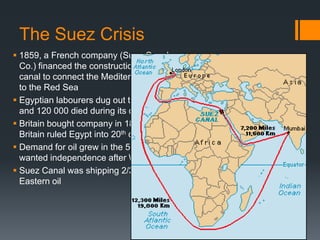
 1859, a French company (Suez Canal
Co.) financed the construction of a large
canal to connect the Mediterranean Sea
to the Red Sea
 Egyptian labourers dug out the waterway
and 120 000 died during its construction
 Britain bought company in 1875 and
Britain ruled Egypt into 20th century
 Demand for oil grew in the 50s, Egyptians
wanted independence after WWII
 Suez Canal was shipping 2/3rds of Middle
Eastern oil
The Suez Crisis
 Britain leaves the canal zone in 1955
 New Egyptian president seizes the canal and charge
fees, keep profits
 Response: Britain with the help of Israel, France invaded the
canal
 Soviet Union, US and UN said this was bullying and Britain
went bankrupt over this Suez canal war- but did not quit
 Canada‟s role- persuasive diplomacy through minister of
external affairs, Lester B Pearson
 Pearson brought in a peacekeeping force and received UN
support
 He was awarded Nobel Peace Prize in 1957 for showing that
peace and soft power can prevent aggressive fighting
Review Questions:
1. Summarize Canada‟s role in promoting peace during the Cold
War
2. What other UN agencies did Canada participate in?
3. Read section “The Universal Declaration of Human Rights”
and describe its connection to Canada. Why is this declaration
significant to all human beings?
4. Provide the 6 key rights of the declaration.

CHC2D Ch. 11.3 Canadian Peacekeeping

  • 1.
    Ch. 11.3 How didCanadians promote world peace? Text p. 282-286 Nuclear Proliferation, The Race to Space, The Suez Crisis
  • 2.
    Canada & Peace The Nuclear Arms Race loomed over Canadian society and life with the A-bomb changed life for some…  Images on p. 282-283 of your book illustrate the effects of the Arms Race on the lives of ordinary people.
  • 3.
    Civil Defense  Somecitizens build „fall out‟ shelters in their basements or backyards  Protection against a nuclear attack
  • 4.
    Peaceful Nuclear Power Nuclearpower stations were created e.g. in Chalk River e.g. at Darlington  Canada produced the CANDU Reactor nuclear reactor research – based on heavy-water reactor to produce plutonium from uranium „clean‟ energy
  • 5.
    There were manypros and cons of nuclear power An agency was set up by the federal government to monitor the research AECL - Atomic Energy of Canada Ltd. The selling of this technology globally began e.g. to India an China Nuclear medicine and cancer treatments are a benefit
  • 6.
    The Race forSpace  The Soviets successfully launched Sputnik I, the world‟s first satellite into space  The U.S. started to feel that they were falling behind the Soviets in technological development  the big agency in the U.S. was NASA  President Kennedy put forward the challenge in the early 60s that the U.S. must beat the Still frame from the video Soviets in sending a man to the moon (this transmission of Neil Armstrong stepping onto the happened in 1969) surface of the Moon at 02:56 UTC on 21 July 1969. An estimated 500 million people worldwide watched this event, the largest television audience for a live broadcast at that time
  • 7.
  • 8.
    Canadian satellites, usedfor telecommunications, began to be developed: e.g. Alouette I Canada‟s success in telecommunications would lead to commercial success by companies such as Bell Canada and Nortel
  • 9.
  • 10.
    Nuclear Proliferation  Abig issue in the Cold War era, and even bigger after, is that of nuclear proliferation  that is, the development of more and more weapons by more and more countries  Many countries have signed treaties agreeing not to build these weapons of mass destruction  e.g. Nuclear Non-Proliferation Treaty, the Nuclear Test Ban Treaty of 1963 which banned above ground testing of nuclear weapons  Canadian physicist, Ursula Franklin, contributed to this treaty
  • 11.
    The Suez Crisis 1859, a French company (Suez Canal Co.) financed the construction of a large canal to connect the Mediterranean Sea to the Red Sea  Egyptian labourers dug out the waterway and 120 000 died during its construction  Britain bought company in 1875 and Britain ruled Egypt into 20th century  Demand for oil grew in the 50s, Egyptians wanted independence after WWII  Suez Canal was shipping 2/3rds of Middle Eastern oil
  • 12.
    The Suez Crisis Britain leaves the canal zone in 1955  New Egyptian president seizes the canal and charge fees, keep profits  Response: Britain with the help of Israel, France invaded the canal  Soviet Union, US and UN said this was bullying and Britain went bankrupt over this Suez canal war- but did not quit  Canada‟s role- persuasive diplomacy through minister of external affairs, Lester B Pearson  Pearson brought in a peacekeeping force and received UN support  He was awarded Nobel Peace Prize in 1957 for showing that peace and soft power can prevent aggressive fighting
  • 13.
    Review Questions: 1. SummarizeCanada‟s role in promoting peace during the Cold War 2. What other UN agencies did Canada participate in? 3. Read section “The Universal Declaration of Human Rights” and describe its connection to Canada. Why is this declaration significant to all human beings? 4. Provide the 6 key rights of the declaration.