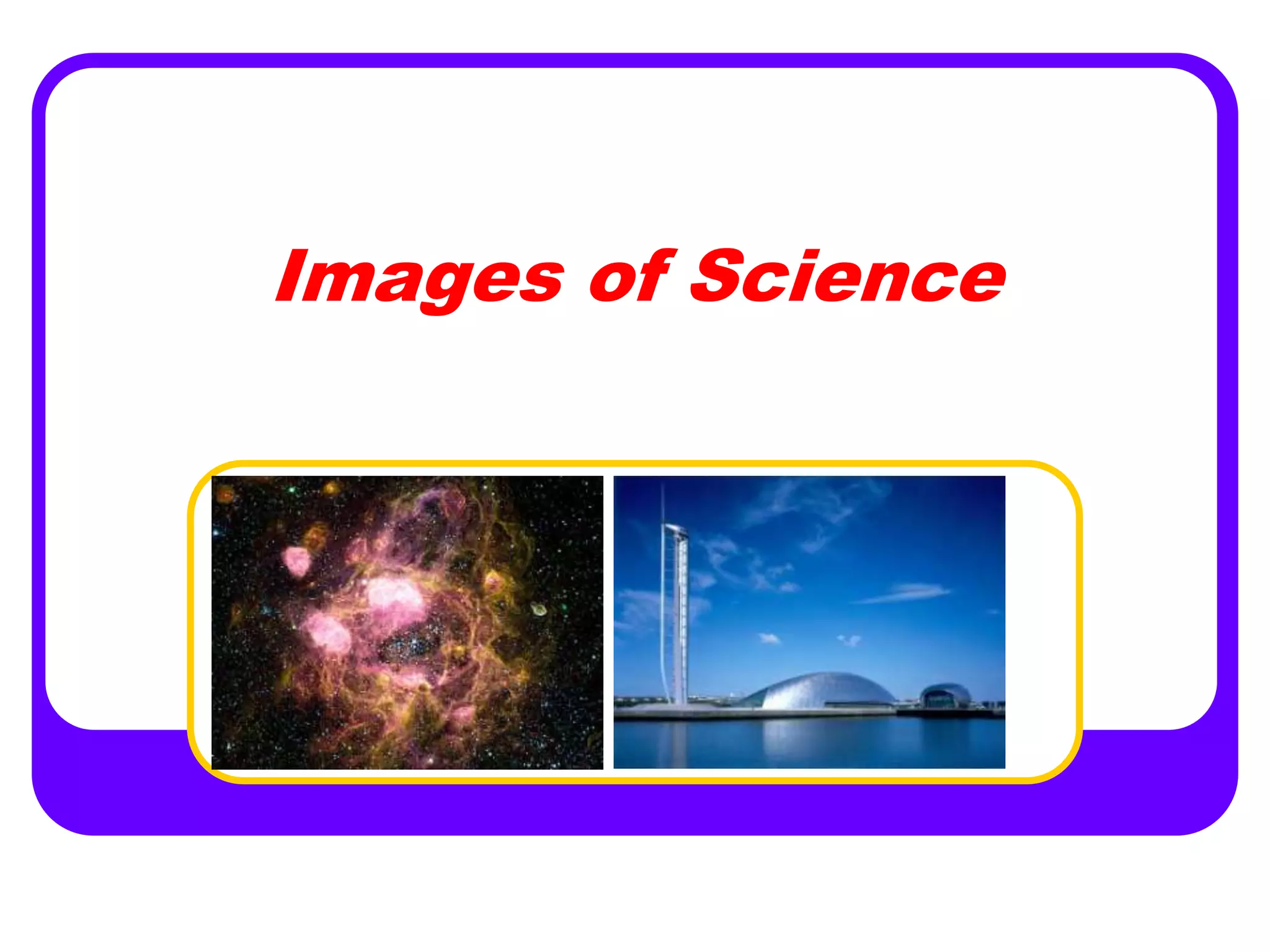
Images of Science
4.1.1
Observe and describe that scientific
investigations generally work the same
way in different places.


http://www.sciencenetlinks.com/lessons.
php?BenchmarkID=1&DocID=118
Definition
Collage: a creative work, made of
various materials, and glued onto a
surface
BACKGROUND INFORMATION
 The image of science that most students think of
 when asked to describe a scientist portrays a
 bearded man, wearing a white lab coat, working
 alone in a laboratory. Although, this image is far from
 the truth!! Science involves many different types of
 men AND women, pursuing different sciences, and
 working in different places. Some scientists use
 huge instruments, while others use only notebooks
 and pencils. Most importantly, performing science
 involves more than “scientists,” and there are many
 different occupations that are part of the scientific
 enterprise.
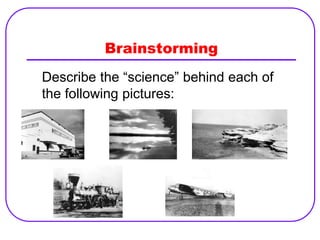
Brainstorming
Describe the “science” behind each of
the following pictures:
Development
   Look at the magazines provided for
    pictures that are related to science
   Cut out the pictures and paste them onto
    a blank piece of paper
   Create a title for your collage
Questions:
   Why did you select the pictures you
    used?
   Look at the other collages. Compare
    your selections with those of the other
    students.
   What does your selection say about how
    you think of science?
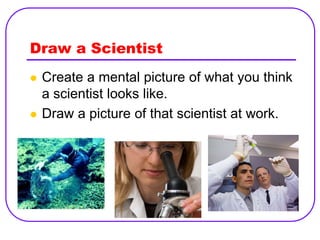
Draw a Scientist
   Create a mental picture of what you think
    a scientist looks like.
   Draw a picture of that scientist at work.
Questions:
   Did you draw a male or female scientist?
   Describe the setting in which your
    scientist is working.
   What kind of work is he or she doing?
   Compare your pictures with those of the
    other students. Were the pictures similar
    or different?
Reading
   Read a few of the print-outs about
    diverse scientists around the world.
   After reading, decide whether what you
    have read has changed your thinking
    about what a scientist looks like.
SCIENCE in the News!!
   Examine the newspapers provided and
    look for stories that are related to
    science.
   These stories could be about health,
    medicine, new technology, weather, or
    space exploration, to name a few.
   Select 3 different stories to share.
Questions:
   Why did you select the articles you
    used?
   How easy was it to find stories about
    science?
   Which science or health topics were
    easiest to find? Which were hardest?
   Are any science experts quoted in the
    story? If so, what did they say?
Assessment
   Write a paragraph supporting the
    following statement:

    “Doing science involves many different
    kinds of work and engages men and
    women of all ages and backgrounds.”

C:\Fakepath\Images Of Science

  • 1.
  • 2.
    4.1.1 Observe and describethat scientific investigations generally work the same way in different places. http://www.sciencenetlinks.com/lessons. php?BenchmarkID=1&DocID=118
  • 3.
    Definition Collage: a creativework, made of various materials, and glued onto a surface
  • 4.
    BACKGROUND INFORMATION Theimage of science that most students think of when asked to describe a scientist portrays a bearded man, wearing a white lab coat, working alone in a laboratory. Although, this image is far from the truth!! Science involves many different types of men AND women, pursuing different sciences, and working in different places. Some scientists use huge instruments, while others use only notebooks and pencils. Most importantly, performing science involves more than “scientists,” and there are many different occupations that are part of the scientific enterprise.
  • 5.
    Brainstorming Describe the “science”behind each of the following pictures:
  • 6.
    Development  Look at the magazines provided for pictures that are related to science  Cut out the pictures and paste them onto a blank piece of paper  Create a title for your collage
  • 7.
    Questions:  Why did you select the pictures you used?  Look at the other collages. Compare your selections with those of the other students.  What does your selection say about how you think of science?
  • 8.
    Draw a Scientist  Create a mental picture of what you think a scientist looks like.  Draw a picture of that scientist at work.
  • 9.
    Questions:  Did you draw a male or female scientist?  Describe the setting in which your scientist is working.  What kind of work is he or she doing?  Compare your pictures with those of the other students. Were the pictures similar or different?
  • 10.
    Reading  Read a few of the print-outs about diverse scientists around the world.  After reading, decide whether what you have read has changed your thinking about what a scientist looks like.
  • 11.
    SCIENCE in theNews!!  Examine the newspapers provided and look for stories that are related to science.  These stories could be about health, medicine, new technology, weather, or space exploration, to name a few.  Select 3 different stories to share.
  • 12.
    Questions:  Why did you select the articles you used?  How easy was it to find stories about science?  Which science or health topics were easiest to find? Which were hardest?  Are any science experts quoted in the story? If so, what did they say?
  • 13.
    Assessment  Write a paragraph supporting the following statement: “Doing science involves many different kinds of work and engages men and women of all ages and backgrounds.”