Cerebrospinal Fluid
Dr Faiza
Assistant Professor of Physiology
MBBS (Best Graduate, AIMC Lahore)
FCPS Physiology,
ICMT, CHPE, DHPE (STMU)
MPH (GC University, Faisalabad)
MBA (Virtual University of Pakistan)
Learning Objectives:
By the end of this session, you should be able to;
• Describe the secretion, flow, absorption and functions of
Cerebrospinal fluid
• Correlate the abnormal CSF pressure signs and symptoms with its
pathophysiology.
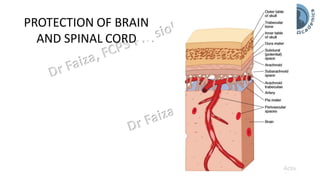
PROTECTION OF BRAIN
AND SPINAL CORD
Cerebrospinal Fluid (CSF)
a) Definition, normal volume & pressure
b) Production (site and mechanism)
c) Composition of CSF
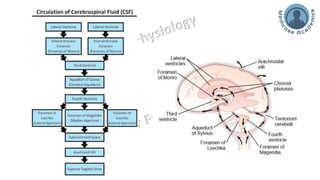
d) Flow of CSF
e) Absorption of CSF
f) Regulation of CSF Pressure
g) Functions of CSF
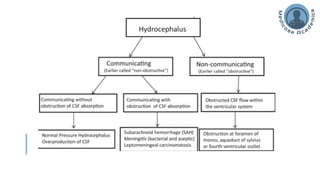
h) Abnormalities of CSF Pressure (Hydrocephalus)
Cerebrospinal Fluid
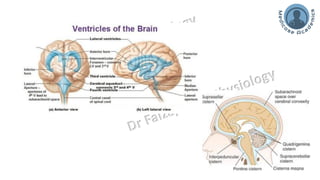
• About 150 milliliters of CSF present in:
a) Ventricles of the brain
b) Subarachnoid space around both the brain and the spinal cord
c) In the cisterns around the outside of the brain
d) Central canal of spinal cord
FORMATION OF CSF
• Cerebrospinal fluid is formed at a rate of about 500 milliliters/day
by;
1. Choroid plexuses in the four ventricles (2/3rd of CSF, mainly in two
lateral ventricles)
2. Ependymal surfaces of all the ventricles
3. Arachnoidal membranes
4. Brain itself through the perivascular spaces that surround the blood
vessels
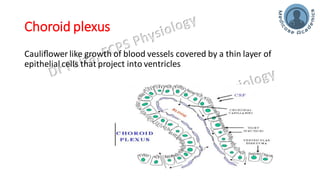
Choroid plexus
Cauliflower like growth of blood vessels covered by a thin layer of
epithelial cells that project into ventricles
SECRETION OF CSF:
• First plasma is passively filtered across the choroidal capillary
endothelium
• Next, active control of CSF composition and quantity by
a) Active transport of sodium ions through the epithelial cells
(Which pulls Chloride and water along with it)
a) Small amounts of glucose moves into the cerebrospinal fluid
b) Both potassium and bicarbonate ions move out of the cerebrospinal fluid into
the capillaries
c) Aquaporins provide for water movement to balance osmotic gradients.
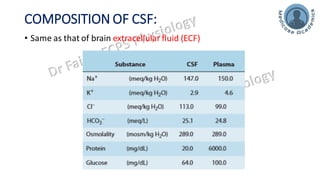
COMPOSITION OF CSF:
• Same as that of brain extracellular fluid (ECF)
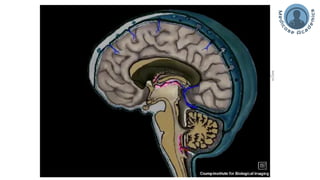
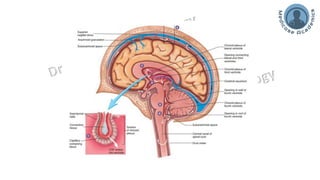
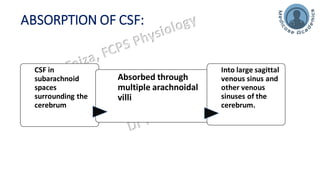
ABSORPTION OF CSF:
CSF in
subarachnoid
spaces
surrounding the
cerebrum
2
Absorbed through
multiple arachnoidal
villi
Into large sagittal
venous sinus and
other venous
sinuses of the
cerebrum.
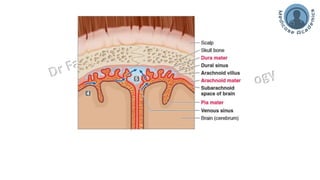
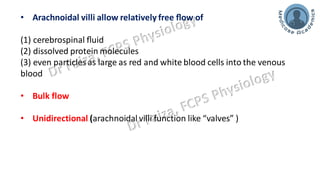
• Arachnoidal villi allow relatively free flow of
(1) cerebrospinal fluid
(2) dissolved protein molecules
(3) even particles as large as red and white blood cells into the venous
blood
• Bulk flow
• Unidirectional (arachnoidal villi function like “valves” )
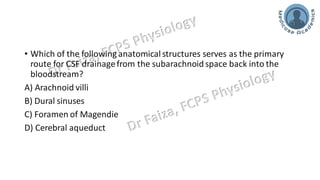
• Which of the followinganatomical structures serves as the primary
route for CSF drainagefrom the subarachnoid space back into the
bloodstream?
A) Arachnoid villi
B) Dural sinuses
C) Foramen of Magendie
D) Cerebral aqueduct
Cerebrospinal Fluid Pressure
• 130 millimeters of water (10 mm Hg)
• Normal range: 65 millimeters of water -195 millimeters of water
Regulation of Cerebrospinal Fluid Pressure
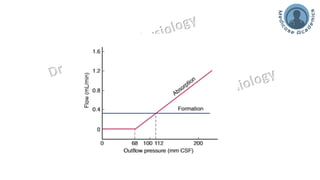
• Valve action of the villi allows CSF to begin to flow into the blood
when CSF pressure is about 1.5 mm Hg greater than the pressure of
the blood in the venous sinuses
• While rate of cerebrospinal fluid formation remains nearly constant
FUNCTIONS OF CSF
• cushion the brain within cranial vault
• Acts as shock absorber
• Acts as mechanical buffer
• Acts as reservoir and regulates the contents of cranium
• Serves as medium for nutritional exchange in CNS
• Removes metabolic waste products through absorption
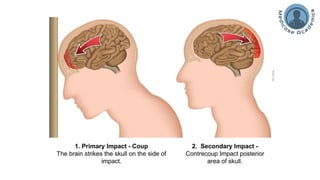
• Brain simply floats in CSF
• When a blow to the head is extremely severe, it may not damage the
brain on the side of the head where the blow is struck but on the
opposite side. This phenomenon is known as “contrecoup”
• Poles and the inferior surfaces of the frontal and temporal lobes, are
more at risk of contusions
• If the contusion occurs on the same side as the impact injury, it is a
coup injury
Cerebrospinal Fluid (CSF)
a) Definition, normal volume & pressure
b) Production (site and mechanism)
c) Composition of CSF
d) Flow of CSF
e) Absorption of CSF
f) Regulation of CSF Pressure
g) Functions of CSF
h) Abnormalities of CSF Pressure (Hydrocephalus)
HIGH CSF PRESSURE
• Blockage of the absorption through the Arachnoidal villi
1. Brain tumor
2. Hemorrhage
3. Infection
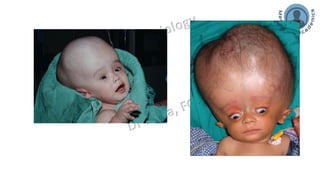
4. Congenital hydrocephalus (Some babies are born with high CSF pressure, due
high resistance to fluid reabsorption through the arachnoidal villi)
• Increased production of CSF
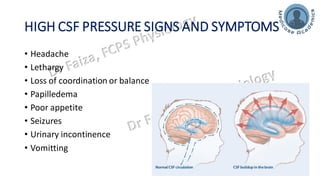
HIGH CSF PRESSURE SIGNS AND SYMPTOMS
• Headache
• Lethargy
• Loss of coordination or balance
• Papilledema
• Poor appetite
• Seizures
• Urinary incontinence
• Vomitting
Thank You

Cerebrospinal Fluid & Hydrocephalus.pdf

  • 1.
    Cerebrospinal Fluid Dr Faiza AssistantProfessor of Physiology MBBS (Best Graduate, AIMC Lahore) FCPS Physiology, ICMT, CHPE, DHPE (STMU) MPH (GC University, Faisalabad) MBA (Virtual University of Pakistan)
  • 2.
    Learning Objectives: By theend of this session, you should be able to; • Describe the secretion, flow, absorption and functions of Cerebrospinal fluid • Correlate the abnormal CSF pressure signs and symptoms with its pathophysiology.
  • 3.
  • 4.
    Cerebrospinal Fluid (CSF) a)Definition, normal volume & pressure b) Production (site and mechanism) c) Composition of CSF d) Flow of CSF e) Absorption of CSF f) Regulation of CSF Pressure g) Functions of CSF h) Abnormalities of CSF Pressure (Hydrocephalus)
  • 5.
    Cerebrospinal Fluid • About150 milliliters of CSF present in: a) Ventricles of the brain b) Subarachnoid space around both the brain and the spinal cord c) In the cisterns around the outside of the brain d) Central canal of spinal cord
  • 7.
    FORMATION OF CSF •Cerebrospinal fluid is formed at a rate of about 500 milliliters/day by; 1. Choroid plexuses in the four ventricles (2/3rd of CSF, mainly in two lateral ventricles) 2. Ependymal surfaces of all the ventricles 3. Arachnoidal membranes 4. Brain itself through the perivascular spaces that surround the blood vessels
  • 8.
    Choroid plexus Cauliflower likegrowth of blood vessels covered by a thin layer of epithelial cells that project into ventricles
  • 9.
    SECRETION OF CSF: •First plasma is passively filtered across the choroidal capillary endothelium • Next, active control of CSF composition and quantity by a) Active transport of sodium ions through the epithelial cells (Which pulls Chloride and water along with it) a) Small amounts of glucose moves into the cerebrospinal fluid b) Both potassium and bicarbonate ions move out of the cerebrospinal fluid into the capillaries c) Aquaporins provide for water movement to balance osmotic gradients.
  • 10.
    COMPOSITION OF CSF: •Same as that of brain extracellular fluid (ECF)
  • 14.
    ABSORPTION OF CSF: CSFin subarachnoid spaces surrounding the cerebrum 2 Absorbed through multiple arachnoidal villi Into large sagittal venous sinus and other venous sinuses of the cerebrum.
  • 16.
    • Arachnoidal villiallow relatively free flow of (1) cerebrospinal fluid (2) dissolved protein molecules (3) even particles as large as red and white blood cells into the venous blood • Bulk flow • Unidirectional (arachnoidal villi function like “valves” )
  • 17.
    • Which ofthe followinganatomical structures serves as the primary route for CSF drainagefrom the subarachnoid space back into the bloodstream? A) Arachnoid villi B) Dural sinuses C) Foramen of Magendie D) Cerebral aqueduct
  • 18.
    Cerebrospinal Fluid Pressure •130 millimeters of water (10 mm Hg) • Normal range: 65 millimeters of water -195 millimeters of water
  • 20.
    Regulation of CerebrospinalFluid Pressure • Valve action of the villi allows CSF to begin to flow into the blood when CSF pressure is about 1.5 mm Hg greater than the pressure of the blood in the venous sinuses • While rate of cerebrospinal fluid formation remains nearly constant
  • 21.
    FUNCTIONS OF CSF •cushion the brain within cranial vault • Acts as shock absorber • Acts as mechanical buffer • Acts as reservoir and regulates the contents of cranium • Serves as medium for nutritional exchange in CNS • Removes metabolic waste products through absorption
  • 23.
    • Brain simplyfloats in CSF • When a blow to the head is extremely severe, it may not damage the brain on the side of the head where the blow is struck but on the opposite side. This phenomenon is known as “contrecoup” • Poles and the inferior surfaces of the frontal and temporal lobes, are more at risk of contusions • If the contusion occurs on the same side as the impact injury, it is a coup injury
  • 24.
    Cerebrospinal Fluid (CSF) a)Definition, normal volume & pressure b) Production (site and mechanism) c) Composition of CSF d) Flow of CSF e) Absorption of CSF f) Regulation of CSF Pressure g) Functions of CSF h) Abnormalities of CSF Pressure (Hydrocephalus)
  • 26.
    HIGH CSF PRESSURE •Blockage of the absorption through the Arachnoidal villi 1. Brain tumor 2. Hemorrhage 3. Infection 4. Congenital hydrocephalus (Some babies are born with high CSF pressure, due high resistance to fluid reabsorption through the arachnoidal villi) • Increased production of CSF
  • 27.
    HIGH CSF PRESSURESIGNS AND SYMPTOMS • Headache • Lethargy • Loss of coordination or balance • Papilledema • Poor appetite • Seizures • Urinary incontinence • Vomitting
  • 29.