Cell Life Cycle
Figure 3–3
How do cells reproduce?
• Most of a cell’s life is spent in a nondividing
state (interphase)
• Body (somatic) cells divide in 3 stages:
– DNA replication duplicates genetic material exactly
– Mitosis divides genetic material equally
– Cytokinesis divides cytoplasm and organelles into 2
daughter cells
Interphase
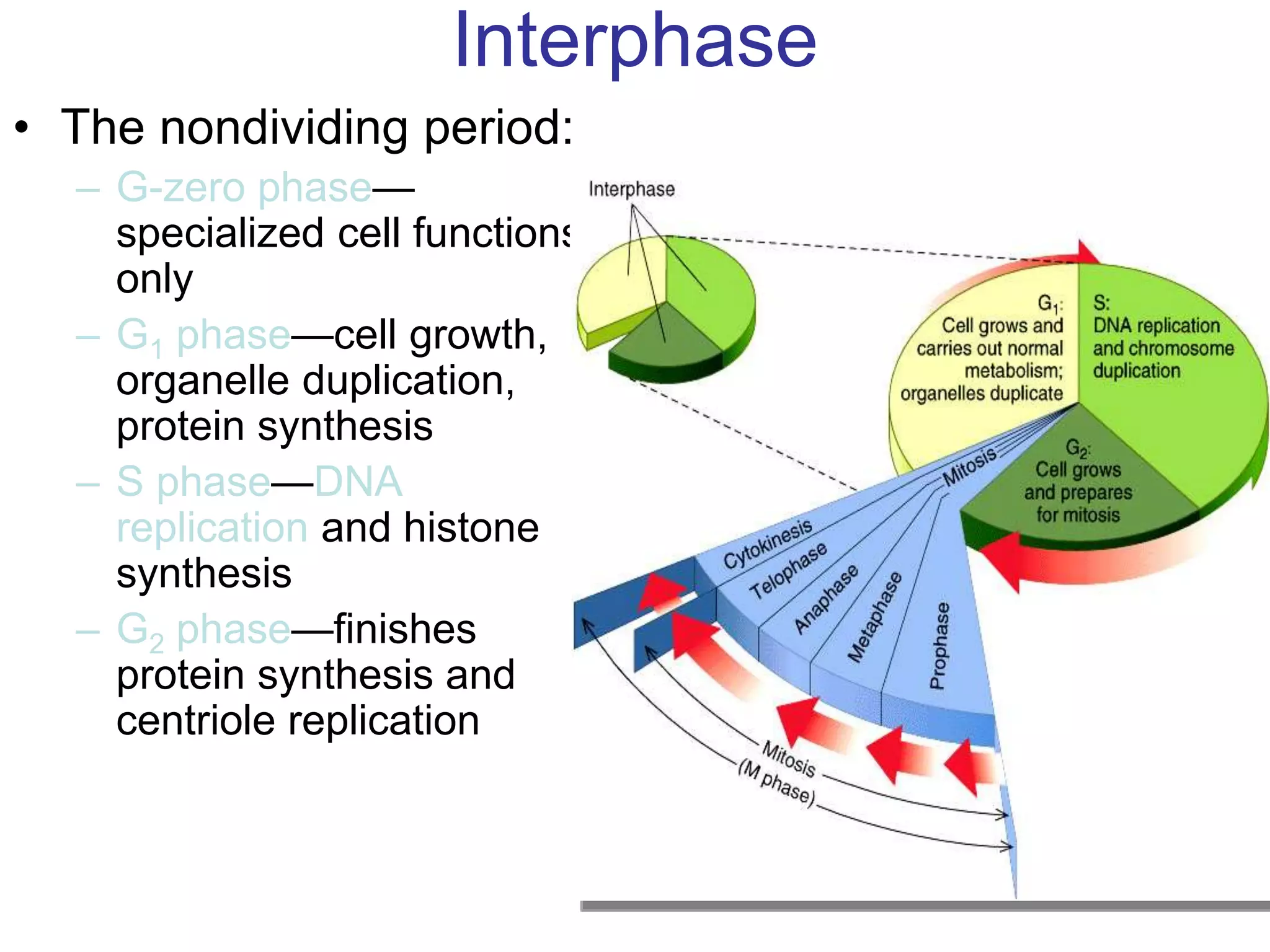
• The nondividing period:
– G-zero phase—
specialized cell functions
only
– G1 phase—cell growth,
organelle duplication,
protein synthesis
– S phase—DNA
replication and histone
synthesis
– G2 phase—finishes
protein synthesis and
centriole replication
DNA Replication
Figure 3–24
• DNA strands unwind
• DNA polymerase attaches complementary
nucleotides
Somatic Cell Nuclear Division
Two important processes to
maintain constant number of
chromosomes.
• Duplication of chromosomes
• Distribution of duplicated
chromosomes into two daughter cells
1
2 3
4
5
6 7 8
9
1
0
1
1
1
2
1
3
1
4
1
5 1
6
1
7
1
8
1
9 2
0 2
1 2
2
Y
X
X Y
The Human
Karyotype
46
46
46
2N or Diploid Number
in Humans
Mother Cell
Daughter Cells
Importance of Mitosis
Importance of Mitosis (cont.)
• a. Cellular replacement
• b. Tissue Repair
• c. Development
• d. Tumor growth
Cell cycle prior to mitosis:
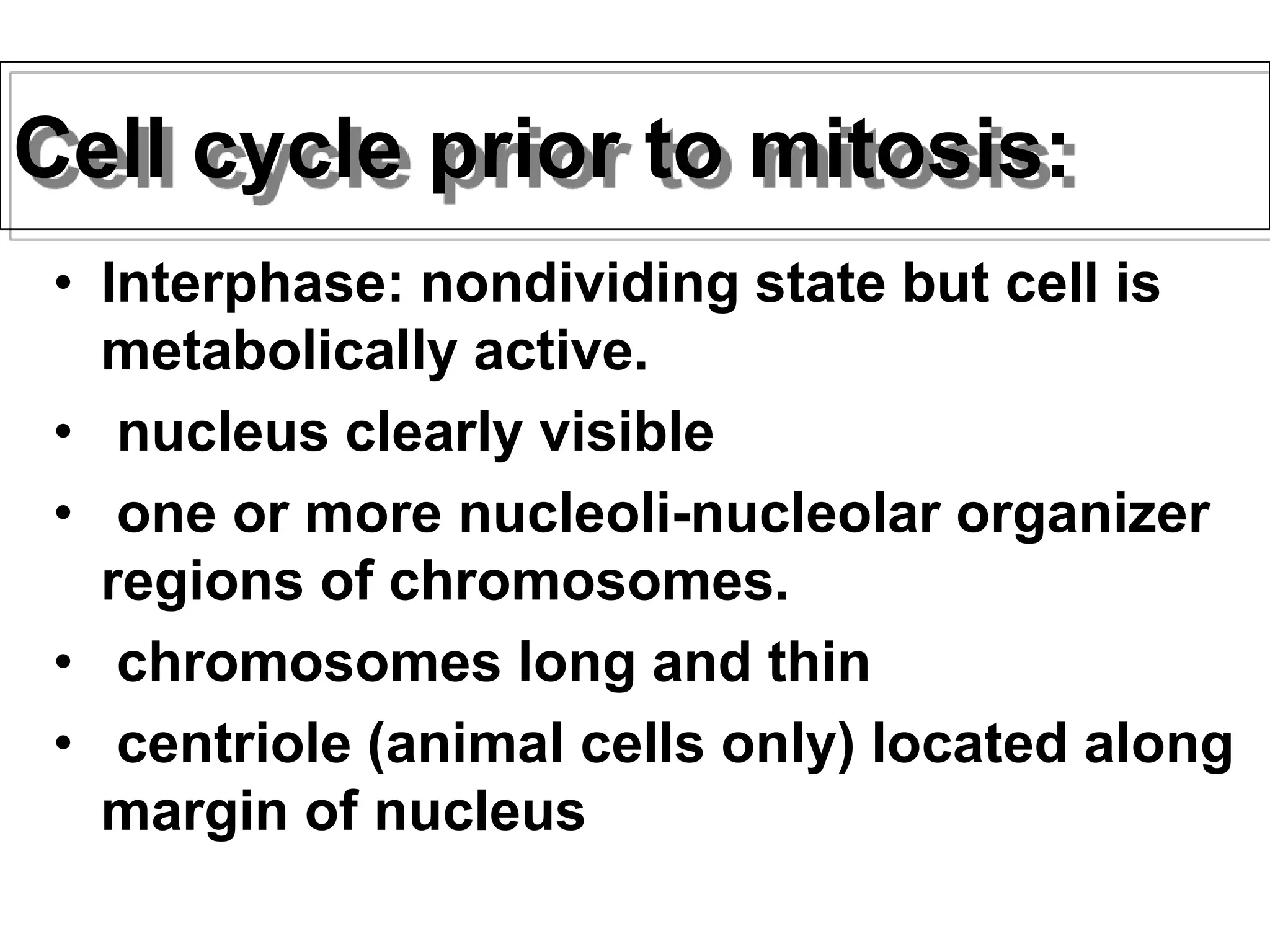
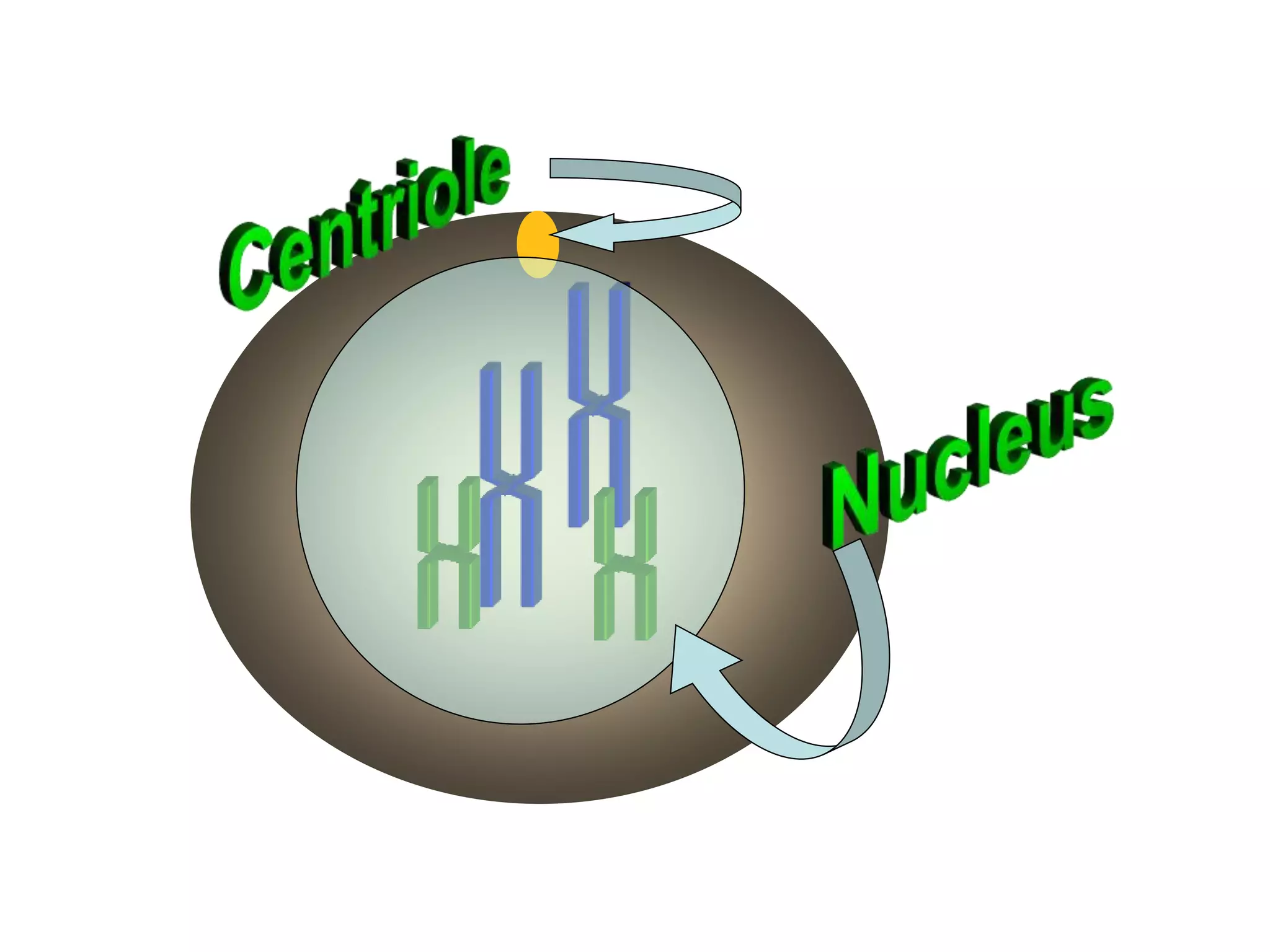
• Interphase: nondividing state but cell is
metabolically active.
• nucleus clearly visible
• one or more nucleoli-nucleolar organizer
regions of chromosomes.
• chromosomes long and thin
• centriole (animal cells only) located along
margin of nucleus
Replication of DNA and duplication
of chromosomes occurs in the cell
cycle.
Centromere
Chromatids
Prophase:
• prepares the cell for division
• chromosomes shorten and thicken
• centriole divides into two entities
which migrate down sides of
nuclear envelope, spindle fibers
stretch between centrioles
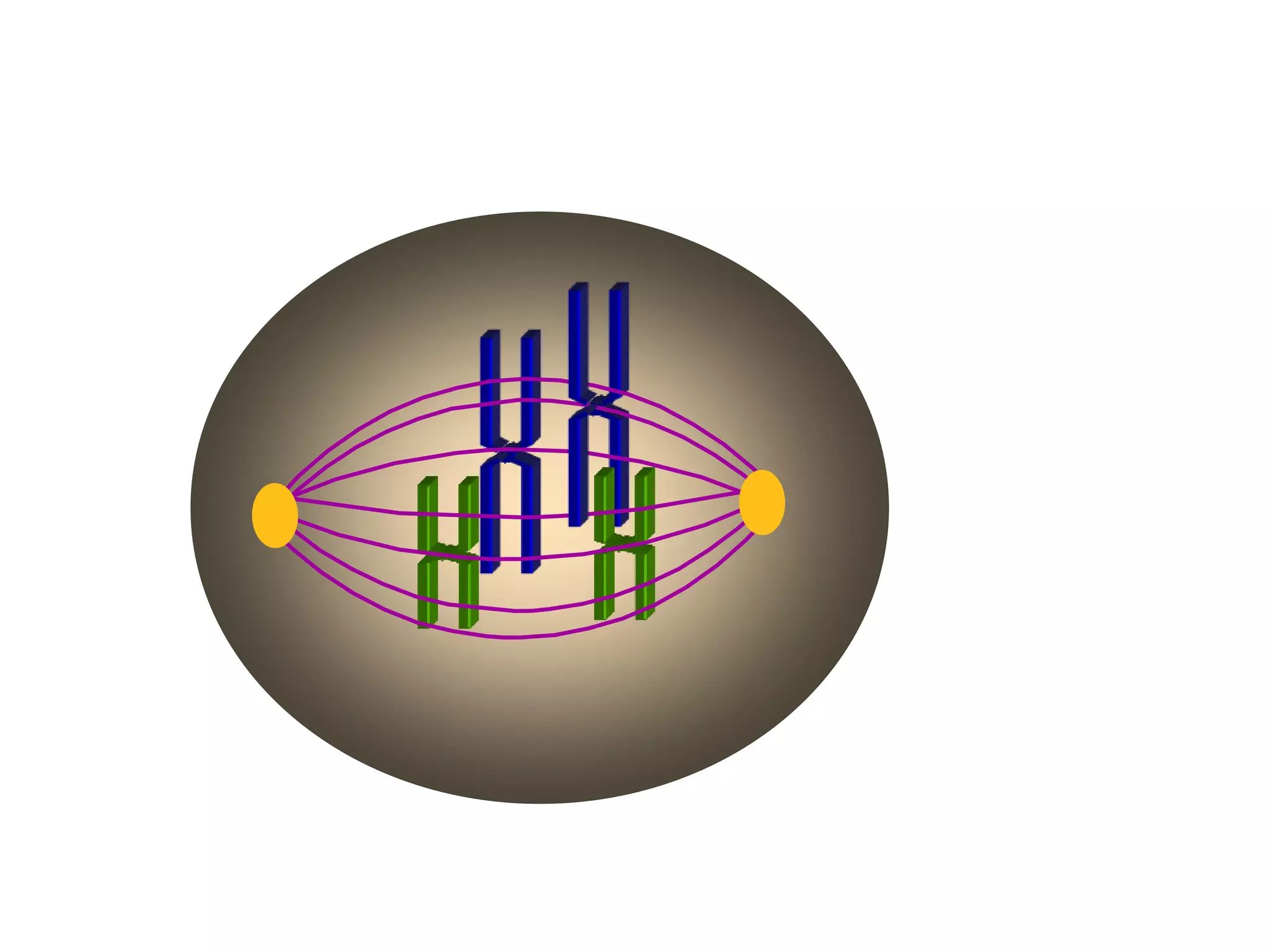
Prophase: The cell is prepared for
nuclear division
Nuclear envelope has disappeared
Spindle has formed
Chromosomes short and thick
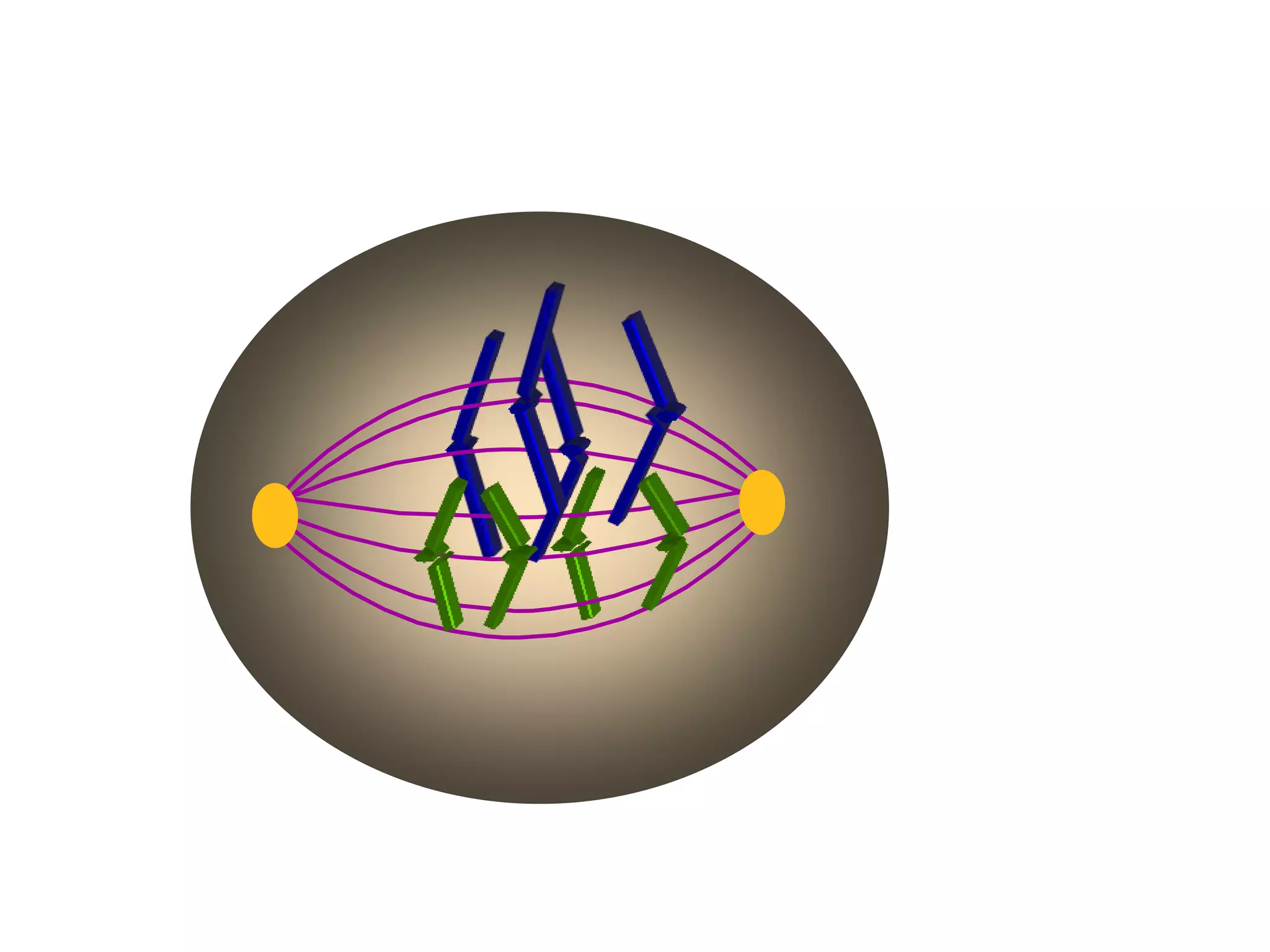
Metaphase: final preparation for
nuclear division
• chromosomes line up on equatorial plate
of division
• centromeres of chromosomes attached
by kinetocores (protein) to spindle fibers,
microtubules made up of tubulin
A single chromosome
attached to spindle fibers
Anaphase: chromosome
halves migrate to poles
• centromeres divide
• chromosome halves migrate to opposite
poles of cell
• chromosomes migrate by sliding of
microtubules
Telophase:
• reverse of activities of prophase
• chromosomes reach poles of
cell
• spindle fibers degraded
• nuclear membrane reassembled
• chromosomes elongate
• nucleoli reassembled
Cytokinesis - division of the cell
• Cytokinesis occurs by constriction of actin
fibers forming a belt around cell in animal
cells
• Plant cells form a cell plate from nuclear
membrane and then cellulose is added to
the plate.
Animal cell - cytokinesis occurs by
constriction of actin fibers
Plant cell - cytokinesis
occurs by synthesis of
cell plate.
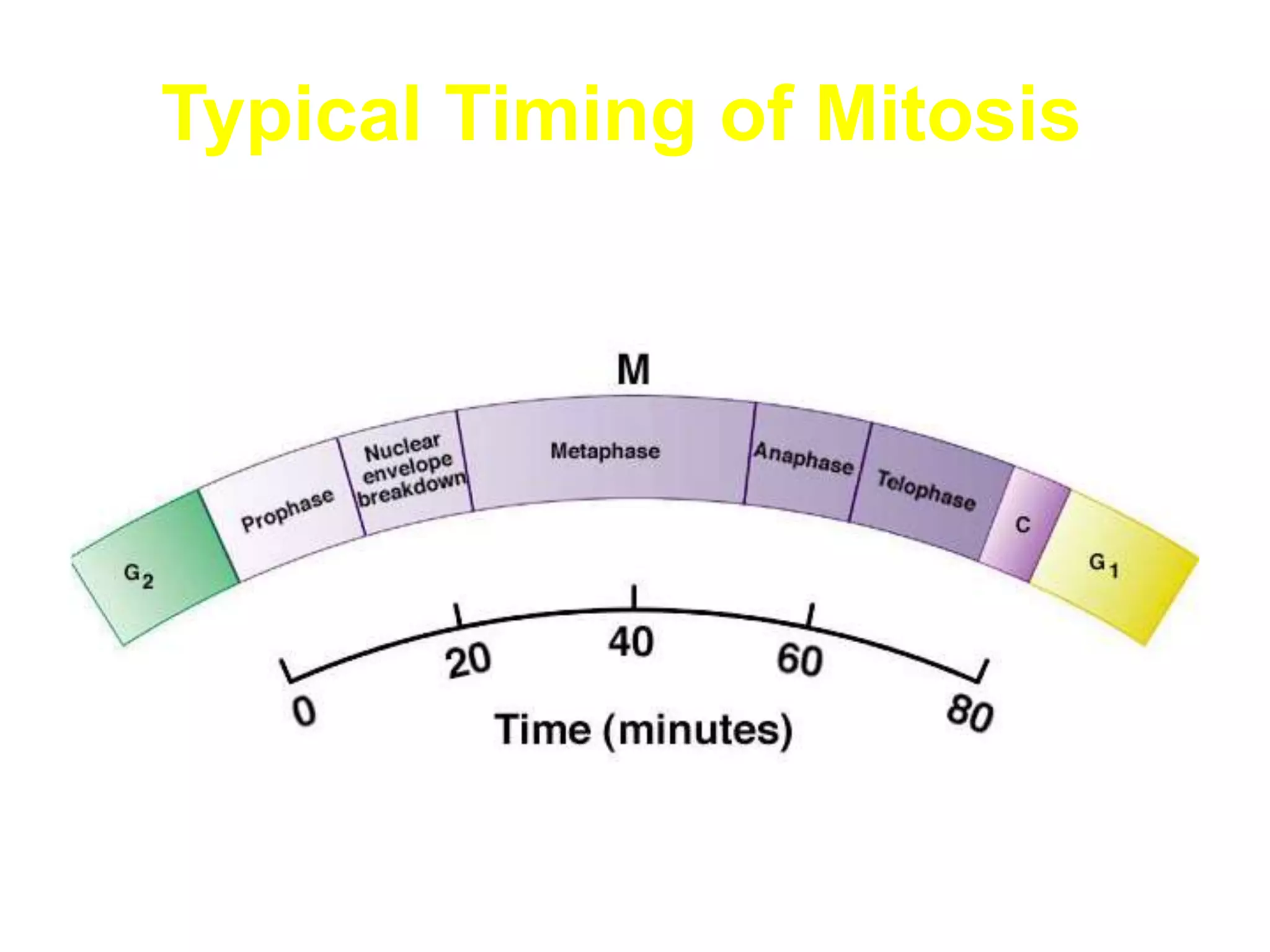
Typical Timing of Mitosis
What regulates cell division?
Mitotic Rate and Energy
• Rate of cell division:
– slower mitotic rate means longer cell life
– cell division requires energy (ATP)
Long Life, Short Life
• Muscle cells, neurons rarely divide
• Exposed cells (skin and digestive tract)
live only days or hours
Chemicals Controlling Cell Division
Table 3–4
Regulating Cell Life
• Normally, cell division balances cell loss
Factors Increase Cell Division
• Increases cell division:
– internal factors (Maturation Promoting Factor)
– extracellular chemical factors (growth factors)
Factors Decrease Cell Division
• Decreases cell division:
– repressor genes (faulty repressors cause cancers)
– worn out telomeres (terminal DNA segments)
Cancer
Figure 3–26
• Cancer illness that disrupts cellular controls and
• Oncogenes: mutated genes that cause cancer
produces malignant cells
• Cancer Stages - develops in steps:
– abnormal cell
– primary tumor
– metastasis
– secondary tumor
Cell Division and Tumors
• Tumor (neoplasm):
– enlarged mass of cells
– abnormal cell growth and division
Benign Tumors
• Benign tumor:
– contained
– not life threatening
Malignant Tumors
• Malignant tumor:
– spread into surrounding tissues (invasion)
– start new tumors (metastasis)
KEY CONCEPT
• Mutations disrupt normal controls over cell
growth and division
• Cancers often begin where stem cells are
dividing rapidly
• More chromosome copies mean greater
chance of error
Cell Diversity
• All cells carry complete DNA instructions for all
body functions
What makes cells different?
• Cells specialize or differentiate:
– to form tissues (liver cells, fat cells, and neurons)
– by turning off all genes not needed by that cell
• All body cells, except sex cells, contain the
same 46 chromosomes
• Differentiation depends on which genes are
active and which are inactive
Cell Life Cycle.ppt

Cell Life Cycle.ppt

  • 1.
    Cell Life Cycle Figure3–3 How do cells reproduce? • Most of a cell’s life is spent in a nondividing state (interphase) • Body (somatic) cells divide in 3 stages: – DNA replication duplicates genetic material exactly – Mitosis divides genetic material equally – Cytokinesis divides cytoplasm and organelles into 2 daughter cells
  • 2.
    Interphase • The nondividingperiod: – G-zero phase— specialized cell functions only – G1 phase—cell growth, organelle duplication, protein synthesis – S phase—DNA replication and histone synthesis – G2 phase—finishes protein synthesis and centriole replication
  • 3.
    DNA Replication Figure 3–24 •DNA strands unwind • DNA polymerase attaches complementary nucleotides
  • 4.
    Somatic Cell NuclearDivision Two important processes to maintain constant number of chromosomes. • Duplication of chromosomes • Distribution of duplicated chromosomes into two daughter cells
  • 5.
    1 2 3 4 5 6 78 9 1 0 1 1 1 2 1 3 1 4 1 5 1 6 1 7 1 8 1 9 2 0 2 1 2 2 Y X X Y The Human Karyotype
  • 6.
    46 46 46 2N or DiploidNumber in Humans Mother Cell Daughter Cells Importance of Mitosis
  • 7.
    Importance of Mitosis(cont.) • a. Cellular replacement • b. Tissue Repair • c. Development • d. Tumor growth
  • 8.
    Cell cycle priorto mitosis: • Interphase: nondividing state but cell is metabolically active. • nucleus clearly visible • one or more nucleoli-nucleolar organizer regions of chromosomes. • chromosomes long and thin • centriole (animal cells only) located along margin of nucleus
  • 9.
    Replication of DNAand duplication of chromosomes occurs in the cell cycle. Centromere Chromatids
  • 10.
    Prophase: • prepares thecell for division • chromosomes shorten and thicken • centriole divides into two entities which migrate down sides of nuclear envelope, spindle fibers stretch between centrioles
  • 11.
    Prophase: The cellis prepared for nuclear division Nuclear envelope has disappeared Spindle has formed Chromosomes short and thick
  • 12.
    Metaphase: final preparationfor nuclear division • chromosomes line up on equatorial plate of division • centromeres of chromosomes attached by kinetocores (protein) to spindle fibers, microtubules made up of tubulin
  • 13.
  • 14.
    Anaphase: chromosome halves migrateto poles • centromeres divide • chromosome halves migrate to opposite poles of cell • chromosomes migrate by sliding of microtubules
  • 15.
    Telophase: • reverse ofactivities of prophase • chromosomes reach poles of cell • spindle fibers degraded • nuclear membrane reassembled • chromosomes elongate • nucleoli reassembled
  • 16.
    Cytokinesis - divisionof the cell • Cytokinesis occurs by constriction of actin fibers forming a belt around cell in animal cells • Plant cells form a cell plate from nuclear membrane and then cellulose is added to the plate.
  • 17.
    Animal cell -cytokinesis occurs by constriction of actin fibers Plant cell - cytokinesis occurs by synthesis of cell plate.
  • 18.
  • 34.
    What regulates celldivision? Mitotic Rate and Energy • Rate of cell division: – slower mitotic rate means longer cell life – cell division requires energy (ATP) Long Life, Short Life • Muscle cells, neurons rarely divide • Exposed cells (skin and digestive tract) live only days or hours
  • 35.
    Chemicals Controlling CellDivision Table 3–4
  • 36.
    Regulating Cell Life •Normally, cell division balances cell loss Factors Increase Cell Division • Increases cell division: – internal factors (Maturation Promoting Factor) – extracellular chemical factors (growth factors) Factors Decrease Cell Division • Decreases cell division: – repressor genes (faulty repressors cause cancers) – worn out telomeres (terminal DNA segments)
  • 37.
    Cancer Figure 3–26 • Cancerillness that disrupts cellular controls and • Oncogenes: mutated genes that cause cancer produces malignant cells • Cancer Stages - develops in steps: – abnormal cell – primary tumor – metastasis – secondary tumor
  • 38.
    Cell Division andTumors • Tumor (neoplasm): – enlarged mass of cells – abnormal cell growth and division Benign Tumors • Benign tumor: – contained – not life threatening Malignant Tumors • Malignant tumor: – spread into surrounding tissues (invasion) – start new tumors (metastasis)
  • 39.
    KEY CONCEPT • Mutationsdisrupt normal controls over cell growth and division • Cancers often begin where stem cells are dividing rapidly • More chromosome copies mean greater chance of error
  • 40.
    Cell Diversity • Allcells carry complete DNA instructions for all body functions What makes cells different? • Cells specialize or differentiate: – to form tissues (liver cells, fat cells, and neurons) – by turning off all genes not needed by that cell • All body cells, except sex cells, contain the same 46 chromosomes • Differentiation depends on which genes are active and which are inactive