
Grade:

7A

Subject:

Date:

Religious Education

March 21, 2013
What

do you
think the topic
is?
 Children

are a precious gift from God, and
the blessing of a child is a special time in a
person's life. All cultures and religious
traditions have certain ways of welcoming
a newborn child into the community. Let us
look at the rituals or practices of the four
main religions.
 Two

main rituals accompany the birth of a
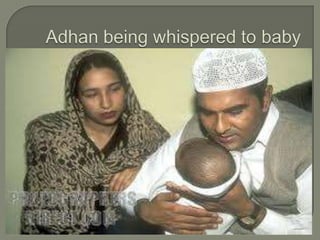
child. First, the Call to Prayer or the Adhan
is whispered into the newborn's right ear
as the first sound it hears. This act
symbolically brings the baby into an
awareness of Allah from the first moment
of life. This is accompanied by reading
from the Quran and other small rites.
Muslim

women tend to prefer allfemale attendants at the
birth, whether they be
doctors, nurses, midwives or
female relatives. However, it is
permissible in Islam for male
doctors to attend to a pregnant
woman.
There

is no Islamic teaching
that prohibits fathers from
attending the birth of their
child; this is left up to personal
choice.
 Islam

practices male circumcision with for
sole purpose of cleanliness. The male
child may be circumcised at any time
which is convenient without ceremony;
however parents usually have their son
circumcised before his trip home from the
hospital.
 Muslim

women are encouraged to give
their children the nourishment of breast
milk. The Quran instructs that if a woman
breastfeeds her children, their period of
weaning is two years.
 To

celebrate a child's birth, it is
recommended that a father slaughter one
or two animals (sheep or goats). One third
of the meat is given away to the poor, and
the rest shared in a community meal.
Relatives, friends, and neighbours are thus
invited to share in celebrating the happy
event.
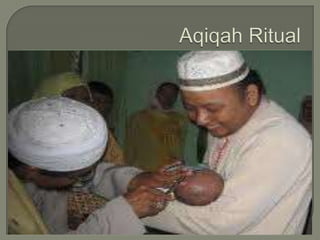
 This

is traditionally done the seventh day
after the child's birth, but may be
postponed to later. The name for this event
comes from the Arabic word 'aq, which
means "cut." This is also traditionally the
time when the child's hair is cut or shaved
 It

is traditional, but not required, for parents
to shave the hair of their newborn child on
the seventh day after birth. The hair is
weighed, and an equivalent amount in
silver or gold is donated to the poor.
 One

of the very first duties that parents have
toward a new child, besides physical care and
love, is to give the child a meaningful Muslim
name. It is reported that the Prophet (peace
be upon him) said: "On the Day of
Resurrection, you will be called by your
names and by your fathers' names, so give
yourselves good names" Muslim children are
usually named within seven days of their
birth.
 What

are some things that Muslims do in
your own words based on what you have
just read?

 Are

they similar in any way to what you
know about the celebration of birth in
Christianity or any other religion or in
society in general today?
 Hindus

believe that it is the responsibility
of each individual to continue the Hindu
race and therefore soon after a couple are
married, a prayer called Garbhadana
(conception) is recited for fulfillment of
one's parental obligations.
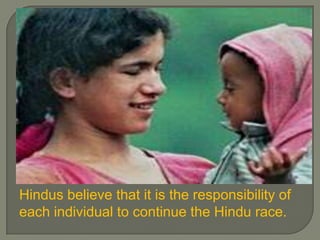
Hindus believe that it is the responsibility of
each individual to continue the Hindu race.
 During

the third and seventh month of
pregnancy the ceremonies of Punsavana
(foetus protection) and Simantonnyana are
performed. These are done for the strong
physical growth of the foetus and healthy
mental development of the unborn child.
Hindus believe that mental state of a
pregnant woman affects the unborn child.
 Once

the child enters the world, Jatakarma
is performed to welcome the child into the
family, by putting some honey in the child's
mouth and whispering the name of God in
the child's ear.
 The

ear-piercing ceremony (Karnavedha)
and first haircut (Mundan) ceremonies are
also considered highly significant. These
sacraments are performed on both the
sexes. Hindus believe that the piercing of a
hole in the lower lobes of the ear have
health benefits such as those of
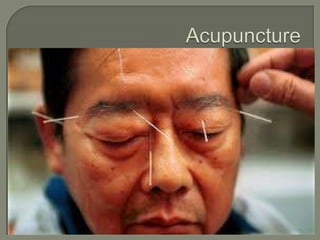
acupuncture.
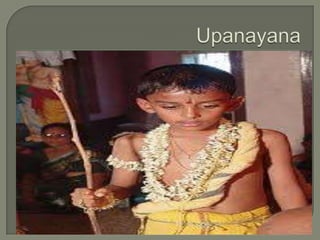
When

the child reaches school-going
age, the Upanayana (sacred thread)
ceremony is performed. The three
strands of the sacred thread represent
the three vows (to respect the
knowledge, the parents and the
society) taken before the start of
formal education.
Although

Hindu scriptures
explain the rituals, it is
possible that Hindu rituals
and rites will differ according
to particular castes and
regions.
What

are the similarities
between birth rituals in
Hinduism and Islam so far?

What

do you think head
shaving symbolizes?
Like

some other religions, Jewish
baby rites differ for male and
female babies.
Circumcision

is a religious obligation
on Jews recalling the covenant that
God made with Abraham. Ordinarily
circumcision ceremonies take place
when the child is eight days old but it
can be delayed for medical reasons.
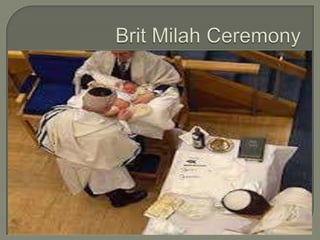
 The

Brit Milah is usually attended by men.
The child is placed on the lap of a his
grandfather, if not, a male friend or relative
who has the honour of being the Sandek.
He has the responsibility of holding the
child still whilst the circumcision is
performed by a Mohel.
 Baby

boys are also given their names at
their circumcisions; it is customary to keep
the name a secret before the ceremony. It
is traditional for the child to receive his or
her name at the first public gathering, so if
the child is a girl, then she will be named at
the first public reading of the Torah at the
Synagogue.
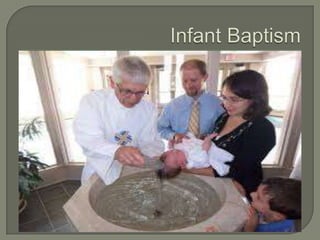
 Infant

Baptism is a ritual that is carried out
on babies in the Roman Catholic, Anglican
and Orthodox churches. During this
service the baby is sprinkled three times
as a symbol of forgiveness in the name of
God the Father, the Son and the Holy
Spirit. Other churches only baptise adults.
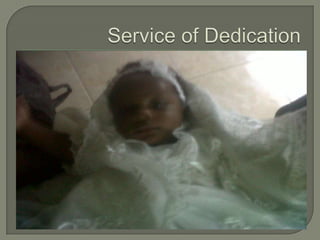
 Some

believe that a child should decide to
become a Christian or not by themselves.
A service of dedication for babies is carried
out in unorthodox churches. This involves
giving thanks to God for the child’s safe
birth, a promise to bring up the child in a
Christian way and dedicate the baby to the
service of Christ.
 What

is another name for the service of
dedication that is done in Unorthodox
churches?
What

have
you learnt?

Celebrating birth

  • 1.
  • 3.
  • 4.
     Children are aprecious gift from God, and the blessing of a child is a special time in a person's life. All cultures and religious traditions have certain ways of welcoming a newborn child into the community. Let us look at the rituals or practices of the four main religions.
  • 5.
     Two main ritualsaccompany the birth of a child. First, the Call to Prayer or the Adhan is whispered into the newborn's right ear as the first sound it hears. This act symbolically brings the baby into an awareness of Allah from the first moment of life. This is accompanied by reading from the Quran and other small rites.
  • 7.
    Muslim women tend toprefer allfemale attendants at the birth, whether they be doctors, nurses, midwives or female relatives. However, it is permissible in Islam for male doctors to attend to a pregnant woman.
  • 8.
    There is no Islamicteaching that prohibits fathers from attending the birth of their child; this is left up to personal choice.
  • 9.
     Islam practices malecircumcision with for sole purpose of cleanliness. The male child may be circumcised at any time which is convenient without ceremony; however parents usually have their son circumcised before his trip home from the hospital.
  • 10.
     Muslim women areencouraged to give their children the nourishment of breast milk. The Quran instructs that if a woman breastfeeds her children, their period of weaning is two years.
  • 11.
     To celebrate achild's birth, it is recommended that a father slaughter one or two animals (sheep or goats). One third of the meat is given away to the poor, and the rest shared in a community meal. Relatives, friends, and neighbours are thus invited to share in celebrating the happy event.
  • 12.
     This is traditionallydone the seventh day after the child's birth, but may be postponed to later. The name for this event comes from the Arabic word 'aq, which means "cut." This is also traditionally the time when the child's hair is cut or shaved
  • 13.
     It is traditional,but not required, for parents to shave the hair of their newborn child on the seventh day after birth. The hair is weighed, and an equivalent amount in silver or gold is donated to the poor.
  • 15.
     One of thevery first duties that parents have toward a new child, besides physical care and love, is to give the child a meaningful Muslim name. It is reported that the Prophet (peace be upon him) said: "On the Day of Resurrection, you will be called by your names and by your fathers' names, so give yourselves good names" Muslim children are usually named within seven days of their birth.
  • 16.
     What are somethings that Muslims do in your own words based on what you have just read?  Are they similar in any way to what you know about the celebration of birth in Christianity or any other religion or in society in general today?
  • 17.
     Hindus believe thatit is the responsibility of each individual to continue the Hindu race and therefore soon after a couple are married, a prayer called Garbhadana (conception) is recited for fulfillment of one's parental obligations.
  • 18.
    Hindus believe thatit is the responsibility of each individual to continue the Hindu race.
  • 19.
     During the thirdand seventh month of pregnancy the ceremonies of Punsavana (foetus protection) and Simantonnyana are performed. These are done for the strong physical growth of the foetus and healthy mental development of the unborn child. Hindus believe that mental state of a pregnant woman affects the unborn child.
  • 20.
     Once the childenters the world, Jatakarma is performed to welcome the child into the family, by putting some honey in the child's mouth and whispering the name of God in the child's ear.
  • 21.
     The ear-piercing ceremony(Karnavedha) and first haircut (Mundan) ceremonies are also considered highly significant. These sacraments are performed on both the sexes. Hindus believe that the piercing of a hole in the lower lobes of the ear have health benefits such as those of acupuncture.
  • 23.
    When the child reachesschool-going age, the Upanayana (sacred thread) ceremony is performed. The three strands of the sacred thread represent the three vows (to respect the knowledge, the parents and the society) taken before the start of formal education.
  • 25.
    Although Hindu scriptures explain therituals, it is possible that Hindu rituals and rites will differ according to particular castes and regions.
  • 26.
    What are the similarities betweenbirth rituals in Hinduism and Islam so far? What do you think head shaving symbolizes?
  • 27.
    Like some other religions,Jewish baby rites differ for male and female babies.
  • 28.
    Circumcision is a religiousobligation on Jews recalling the covenant that God made with Abraham. Ordinarily circumcision ceremonies take place when the child is eight days old but it can be delayed for medical reasons.
  • 29.
     The Brit Milahis usually attended by men. The child is placed on the lap of a his grandfather, if not, a male friend or relative who has the honour of being the Sandek. He has the responsibility of holding the child still whilst the circumcision is performed by a Mohel.
  • 31.
     Baby boys arealso given their names at their circumcisions; it is customary to keep the name a secret before the ceremony. It is traditional for the child to receive his or her name at the first public gathering, so if the child is a girl, then she will be named at the first public reading of the Torah at the Synagogue.
  • 32.
     Infant Baptism isa ritual that is carried out on babies in the Roman Catholic, Anglican and Orthodox churches. During this service the baby is sprinkled three times as a symbol of forgiveness in the name of God the Father, the Son and the Holy Spirit. Other churches only baptise adults.
  • 34.
     Some believe thata child should decide to become a Christian or not by themselves. A service of dedication for babies is carried out in unorthodox churches. This involves giving thanks to God for the child’s safe birth, a promise to bring up the child in a Christian way and dedicate the baby to the service of Christ.
  • 36.
     What is anothername for the service of dedication that is done in Unorthodox churches?
  • 37.