
Background
 Chest Pain due to ACS is one of the
  most common presentations to ER
 Current strategies to R/O ACS are
  inefficient – Unnecessary admissions
  and ER overcrowded
 Despite low threshold to admit patients
  up to 2% of patients Discharged with
  missed ACS
Cardiac CT Angiography
      Previous studies Showed that CCTA has
       Accurate Noninvasive Detection of
       significant CAD with High NPV during
       the index hospitalization and the
       occurrence of major adverse
       cardiovascular events over the next 2
       years


 Hollander JE, Chang AM, Shofer FS, et al. One-year outcomes following coronary computerized tomographic angiography for evaluation of
                  emergency department patients with potential acute coronary syndrome. Acad Emerg Med 2009;16:693-8
                                                             Schlett CL,, et al.
Prognostic value of CT angiography for major adverse cardiac events in patients with acute chest pain from the emergency department: 2-year
                                outcomes of the ROMICAT trial. JACC Cardiovasc Imaging 2011;4:481-91
The hypothesis
 An evaluation strategy incorporating
  early CCTA will improve the
  effectiveness of clinical decision making
  as compared to a Standard ED
  Evaluation in Patients with acute chest
  pain suggestive of ACS
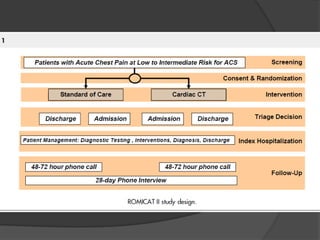
 Study Type : Diagnostic cohort
 Study Design : RCT
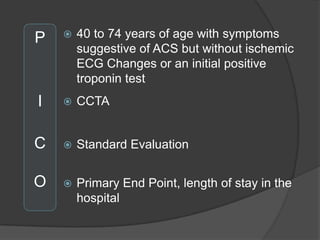
P      40 to 74 years of age with symptoms
        suggestive of ACS but without ischemic
        ECG Changes or an initial positive
        troponin test
I      CCTA


C      Standard Evaluation


O      Primary End Point, length of stay in the
        hospital
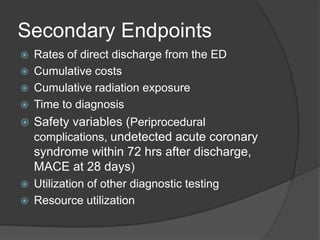
Secondary Endpoints
   Rates of direct discharge from the ED
   Cumulative costs
   Cumulative radiation exposure
   Time to diagnosis
   Safety variables (Periprocedural
    complications, undetected acute coronary
    syndrome within 72 hrs after discharge,
    MACE at 28 days)
   Utilization of other diagnostic testing
   Resource utilization
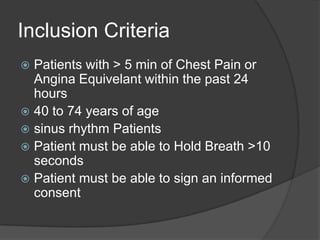
Inclusion Criteria
 Patients with > 5 min of Chest Pain or
  Angina Equivelant within the past 24
  hours
 40 to 74 years of age
 sinus rhythm Patients
 Patient must be able to Hold Breath >10
  seconds
 Patient must be able to sign an informed
  consent
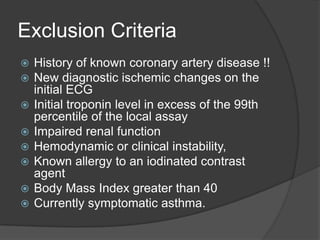
Exclusion Criteria
   History of known coronary artery disease !!
   New diagnostic ischemic changes on the
    initial ECG
   Initial troponin level in excess of the 99th
    percentile of the local assay
   Impaired renal function
   Hemodynamic or clinical instability,
   Known allergy to an iodinated contrast
    agent
   Body Mass Index greater than 40
   Currently symptomatic asthma.
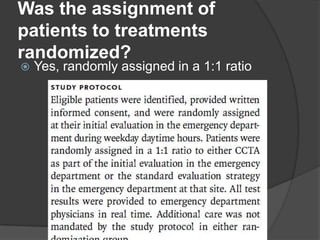
Was the assignment of
patients to treatments
randomized?
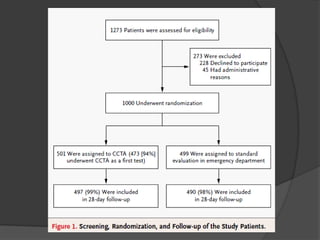
   Yes, randomly assigned in a 1:1 ratio
Was the randomization
Concealed ?
   No
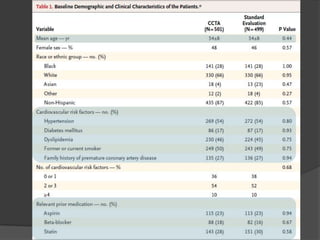
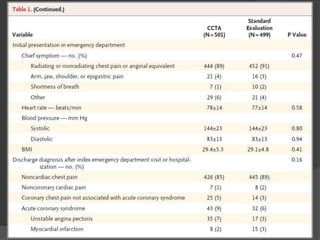
Were the groups similar at
the start of the trial?
   Yes
Aside from the allocated
treatment were groups treated
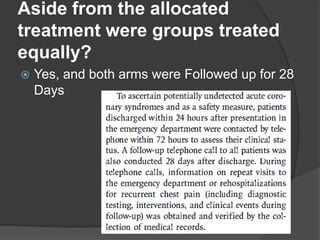
equally?
   Yes, and both arms were Followed up for 28
    Days
Were all patients who entered
the trial accounted for?
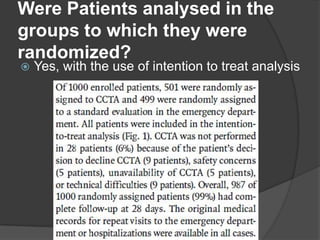
   No, Almost 1% lost the Follow up
Were Patients analysed in the
groups to which they were
randomized?
   Yes, with the use of intention to treat analysis
Were measures objective
?
   Yes, they were objectives (Length of
    stay and cost and Radiation Exposure)
Were the patients and
clinicians kept “blind” to
which treatment was being
received?
   No, it wasn’t Blind
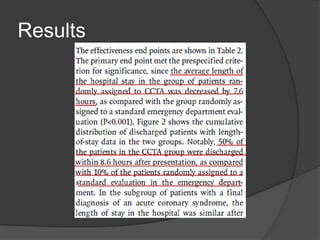
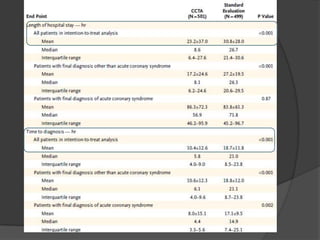
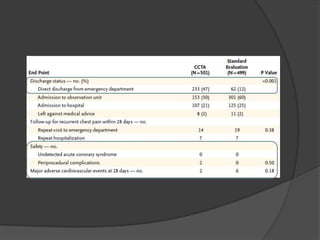
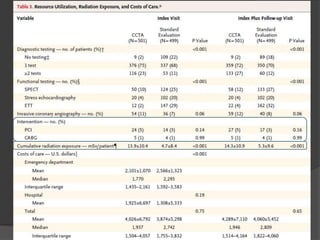
Results
Summary
 CCTA has:
 High Diagnostic Accuracy
 Less Time to Dx
 More Direct Discharge From ER
 Reduce Length of stay
 More cost !!
 More Radiation
Will the results help me in
caring for my patient?
   Yes, But to a limited group of patients
Applicability of the study
 Patients were recruited at weekday
  daytime hours
 Patients with History of
   Known coronary artery disease
   Hemodynamic or clinical instability
   Impaired renal function
   Limited age group
  were excluded
 We can Apply CCTA in our institution
Ccta journal club

Ccta journal club

  • 2.
    Background  Chest Paindue to ACS is one of the most common presentations to ER  Current strategies to R/O ACS are inefficient – Unnecessary admissions and ER overcrowded  Despite low threshold to admit patients up to 2% of patients Discharged with missed ACS
  • 3.
    Cardiac CT Angiography  Previous studies Showed that CCTA has Accurate Noninvasive Detection of significant CAD with High NPV during the index hospitalization and the occurrence of major adverse cardiovascular events over the next 2 years Hollander JE, Chang AM, Shofer FS, et al. One-year outcomes following coronary computerized tomographic angiography for evaluation of emergency department patients with potential acute coronary syndrome. Acad Emerg Med 2009;16:693-8 Schlett CL,, et al. Prognostic value of CT angiography for major adverse cardiac events in patients with acute chest pain from the emergency department: 2-year outcomes of the ROMICAT trial. JACC Cardiovasc Imaging 2011;4:481-91
  • 4.
    The hypothesis  Anevaluation strategy incorporating early CCTA will improve the effectiveness of clinical decision making as compared to a Standard ED Evaluation in Patients with acute chest pain suggestive of ACS  Study Type : Diagnostic cohort  Study Design : RCT
  • 5.
    P  40 to 74 years of age with symptoms suggestive of ACS but without ischemic ECG Changes or an initial positive troponin test I  CCTA C  Standard Evaluation O  Primary End Point, length of stay in the hospital
  • 6.
    Secondary Endpoints  Rates of direct discharge from the ED  Cumulative costs  Cumulative radiation exposure  Time to diagnosis  Safety variables (Periprocedural complications, undetected acute coronary syndrome within 72 hrs after discharge, MACE at 28 days)  Utilization of other diagnostic testing  Resource utilization
  • 7.
    Inclusion Criteria  Patientswith > 5 min of Chest Pain or Angina Equivelant within the past 24 hours  40 to 74 years of age  sinus rhythm Patients  Patient must be able to Hold Breath >10 seconds  Patient must be able to sign an informed consent
  • 8.
    Exclusion Criteria  History of known coronary artery disease !!  New diagnostic ischemic changes on the initial ECG  Initial troponin level in excess of the 99th percentile of the local assay  Impaired renal function  Hemodynamic or clinical instability,  Known allergy to an iodinated contrast agent  Body Mass Index greater than 40  Currently symptomatic asthma.
  • 10.
    Was the assignmentof patients to treatments randomized?  Yes, randomly assigned in a 1:1 ratio
  • 11.
  • 12.
    Were the groupssimilar at the start of the trial?  Yes
  • 15.
    Aside from theallocated treatment were groups treated equally?  Yes, and both arms were Followed up for 28 Days
  • 16.
    Were all patientswho entered the trial accounted for?  No, Almost 1% lost the Follow up
  • 18.
    Were Patients analysedin the groups to which they were randomized?  Yes, with the use of intention to treat analysis
  • 19.
    Were measures objective ?  Yes, they were objectives (Length of stay and cost and Radiation Exposure)
  • 20.
    Were the patientsand clinicians kept “blind” to which treatment was being received?  No, it wasn’t Blind
  • 21.
  • 25.
    Summary  CCTA has: High Diagnostic Accuracy  Less Time to Dx  More Direct Discharge From ER  Reduce Length of stay  More cost !!  More Radiation
  • 26.
    Will the resultshelp me in caring for my patient?  Yes, But to a limited group of patients
  • 27.
    Applicability of thestudy  Patients were recruited at weekday daytime hours  Patients with History of  Known coronary artery disease  Hemodynamic or clinical instability  Impaired renal function  Limited age group were excluded  We can Apply CCTA in our institution

Editor's Notes

  • #4 major adverse cardiovascular events (defined as death, myocardial infarction, unstable angina, or urgent coronary revascularization within 28 days),undetected acute coronary syndrome (defined as an unexpected cardiovascular event within 72 hours after hospital discharge in patients with a hospital stay of <24 hours)Periprocedural complications (stroke, bleeding, anaphylaxis, or renal failure)
  • #5 What did they do for