Presentation to the
National Conference of State Legislatures Base Camp
August 5, 2021
Christina Hawley Anthony
Budget Analysis Division
CBO’s Updated
Budget Projections
For information about the conference, see https://tinyurl.com/3dykc6nt.
1
GDP = gross domestic product.
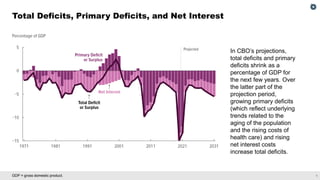
Total Deficits, Primary Deficits, and Net Interest
In CBO’s projections,
total deficits and primary
deficits shrink as a
percentage of GDP for
the next few years. Over
the latter part of the
projection period,
growing primary deficits
(which reflect underlying
trends related to the
aging of the population
and the rising costs of
health care) and rising
net interest costs
increase total deficits.
2
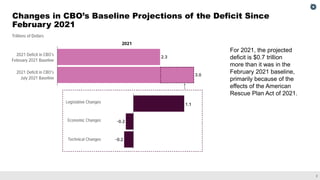
Changes in CBO’s Baseline Projections of the Deficit Since
February 2021
For 2021, the projected
deficit is $0.7 trillion
more than it was in the
February 2021 baseline,
primarily because of the
effects of the American
Rescue Plan Act of 2021.
3
Changes in CBO’s Baseline Projections of the Deficit Since
February 2021, Continued
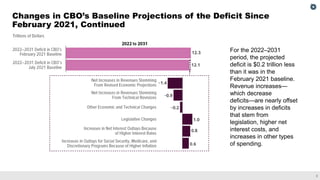
For the 2022–2031
period, the projected
deficit is $0.2 trillion less
than it was in the
February 2021 baseline.
Revenue increases—
which decrease
deficits—are nearly offset
by increases in deficits
that stem from
legislation, higher net
interest costs, and
increases in other types
of spending.
4
Total Outlays and Revenues
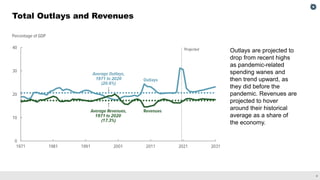
Outlays are projected to
drop from recent highs
as pandemic-related
spending wanes and
then trend upward, as
they did before the
pandemic. Revenues are
projected to hover
around their historical
average as a share of
the economy.
5
Outlays, by Category
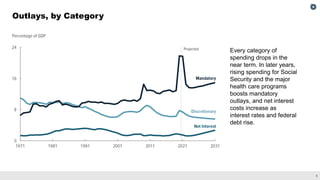
Every category of
spending drops in the
near term. In later years,
rising spending for Social
Security and the major
health care programs
boosts mandatory
outlays, and net interest
costs increase as
interest rates and federal
debt rise.
6
Revenues, by Category
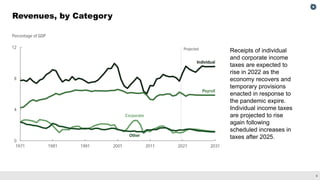
Receipts of individual
and corporate income
taxes are expected to
rise in 2022 as the
economy recovers and
temporary provisions
enacted in response to
the pandemic expire.
Individual income taxes
are projected to rise
again following
scheduled increases in
taxes after 2025.
7
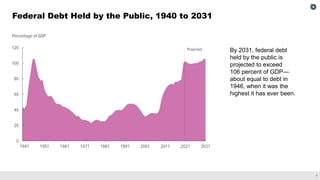
Federal Debt Held by the Public, 1940 to 2031
By 2031, federal debt
held by the public is
projected to exceed
106 percent of GDP—
about equal to debt in
1946, when it was the
highest it has ever been.

CBO’s Updated Budget Projections

  • 1.
    Presentation to the NationalConference of State Legislatures Base Camp August 5, 2021 Christina Hawley Anthony Budget Analysis Division CBO’s Updated Budget Projections For information about the conference, see https://tinyurl.com/3dykc6nt.
  • 2.
    1 GDP = grossdomestic product. Total Deficits, Primary Deficits, and Net Interest In CBO’s projections, total deficits and primary deficits shrink as a percentage of GDP for the next few years. Over the latter part of the projection period, growing primary deficits (which reflect underlying trends related to the aging of the population and the rising costs of health care) and rising net interest costs increase total deficits.
  • 3.
    2 Changes in CBO’sBaseline Projections of the Deficit Since February 2021 For 2021, the projected deficit is $0.7 trillion more than it was in the February 2021 baseline, primarily because of the effects of the American Rescue Plan Act of 2021.
  • 4.
    3 Changes in CBO’sBaseline Projections of the Deficit Since February 2021, Continued For the 2022–2031 period, the projected deficit is $0.2 trillion less than it was in the February 2021 baseline. Revenue increases— which decrease deficits—are nearly offset by increases in deficits that stem from legislation, higher net interest costs, and increases in other types of spending.
  • 5.
    4 Total Outlays andRevenues Outlays are projected to drop from recent highs as pandemic-related spending wanes and then trend upward, as they did before the pandemic. Revenues are projected to hover around their historical average as a share of the economy.
  • 6.
    5 Outlays, by Category Everycategory of spending drops in the near term. In later years, rising spending for Social Security and the major health care programs boosts mandatory outlays, and net interest costs increase as interest rates and federal debt rise.
  • 7.
    6 Revenues, by Category Receiptsof individual and corporate income taxes are expected to rise in 2022 as the economy recovers and temporary provisions enacted in response to the pandemic expire. Individual income taxes are projected to rise again following scheduled increases in taxes after 2025.
  • 8.
    7 Federal Debt Heldby the Public, 1940 to 2031 By 2031, federal debt held by the public is projected to exceed 106 percent of GDP— about equal to debt in 1946, when it was the highest it has ever been.