CONGRESSIONAL BUDGET OFFICE
The Economic Outlook
for 2019 to 2029
in 21 Slides
February 2019
For more details, see Congressional Budget Office, The Budget and Economic Outlook: 2018 to 2029 (January 2019), www.cbo.gov/publication/54918.
Output
Shaded vertical bars indicate periods of recession.
After growing by an
estimated 3.1 percent in
2018, real (inflation-
adjusted) gross domestic
product (GDP) is projected
to grow by 2.3 percent this
year and more slowly
thereafter.
The largest contributors to
the growth of real GDP in
2019 are consumer
spending, business
investment, and residential
investment.
Shaded vertical bars indicate periods of recession.
In CBO’s baseline
projections, real GDP
grows at an average
annual rate of 1.9 percent
over the 2019–2023
period; there is a roughly
two-thirds chance that the
growth will be between
0.6 percent and
3.2 percent.
Shaded vertical bars indicate periods of recession.
The growth of real GDP
exceeds the growth of
potential GDP this year,
but then it slows and
eventually stabilizes at the
growth rate of potential
(that is, maximum
sustainable) GDP near the
end of the projection
period.
This year's growth builds
on last year's strong
demand for goods and
services, pushing GDP
0.8 percent above potential
GDP this year. The
difference between actual
and potential GDP, known
as the output gap, is
projected to return to its
historical average of
roughly −0.5 percent in
later years.
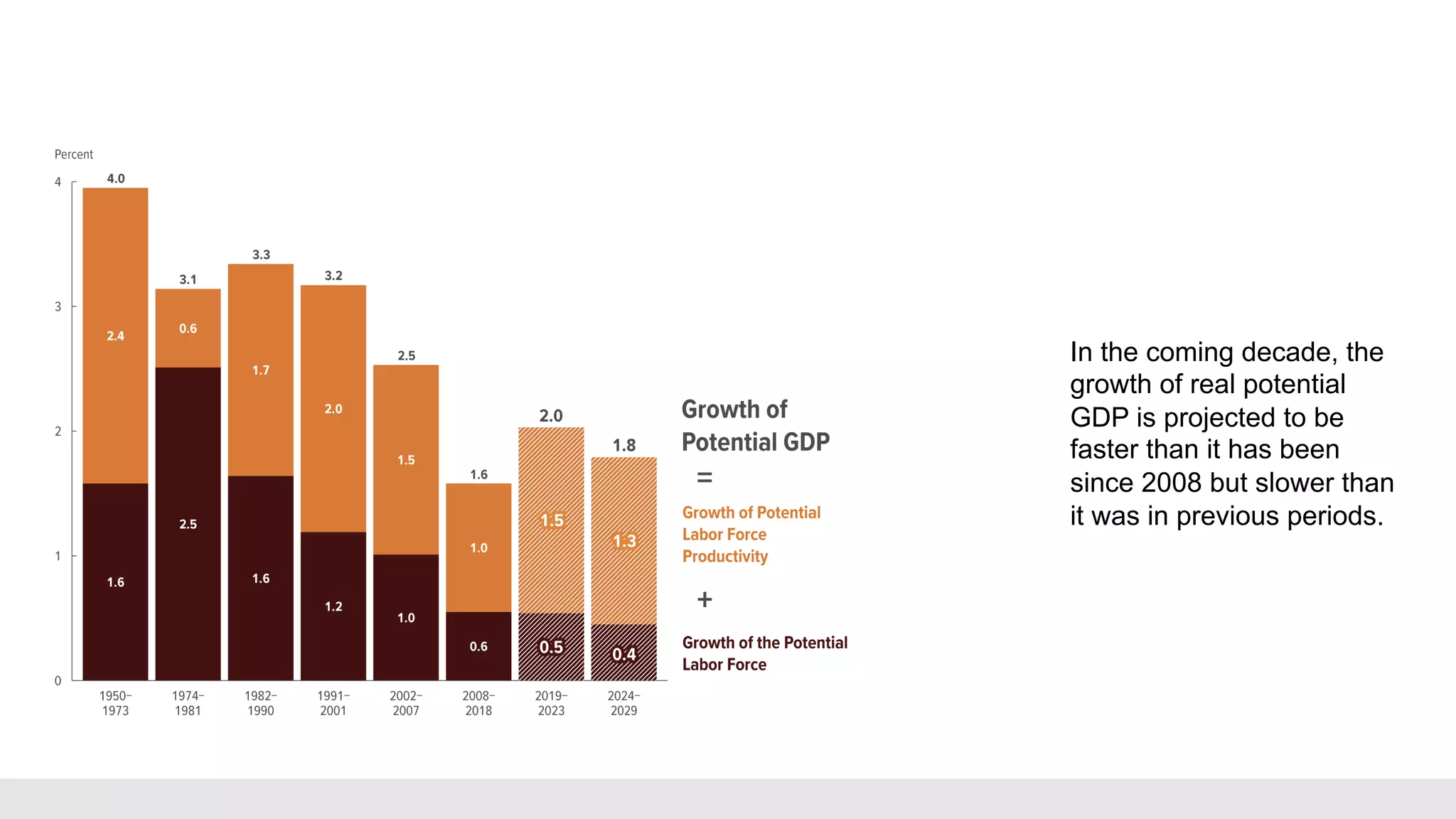
In the coming decade, the
growth of real potential
GDP is projected to be
faster than it has been
since 2008 but slower than
it was in previous periods.
The Labor Market
The heightened demand
for goods and services this
year increases the demand
for labor, pushing
employment further above
its maximum sustainable
amount, thereby increasing
the employment gap. After
this year, the gap shrinks
and eventually reaches its
long-term value.
Shaded vertical bars indicate periods of recession.
The unemployment rate
falls further below CBO’s
estimate of the natural rate
this year, but then it rises
as growth in the demand
for labor slows. The
unemployment rate
reaches its historical
relationship with the
natural rate by the end of
the projection period.
Shaded vertical bars indicate periods of recession.
CBO expects the demand
for labor to keep the labor
force participation rate
above the agency’s
estimate of the potential
rate for the next few
years.
Shaded vertical bars indicate periods of recession.
In CBO's projections, the
growth in wages increases
over the next two years.
Growth is slower in later
years, reflecting slower
growth in the demand for
labor.
Shaded vertical bars indicate periods of recession.
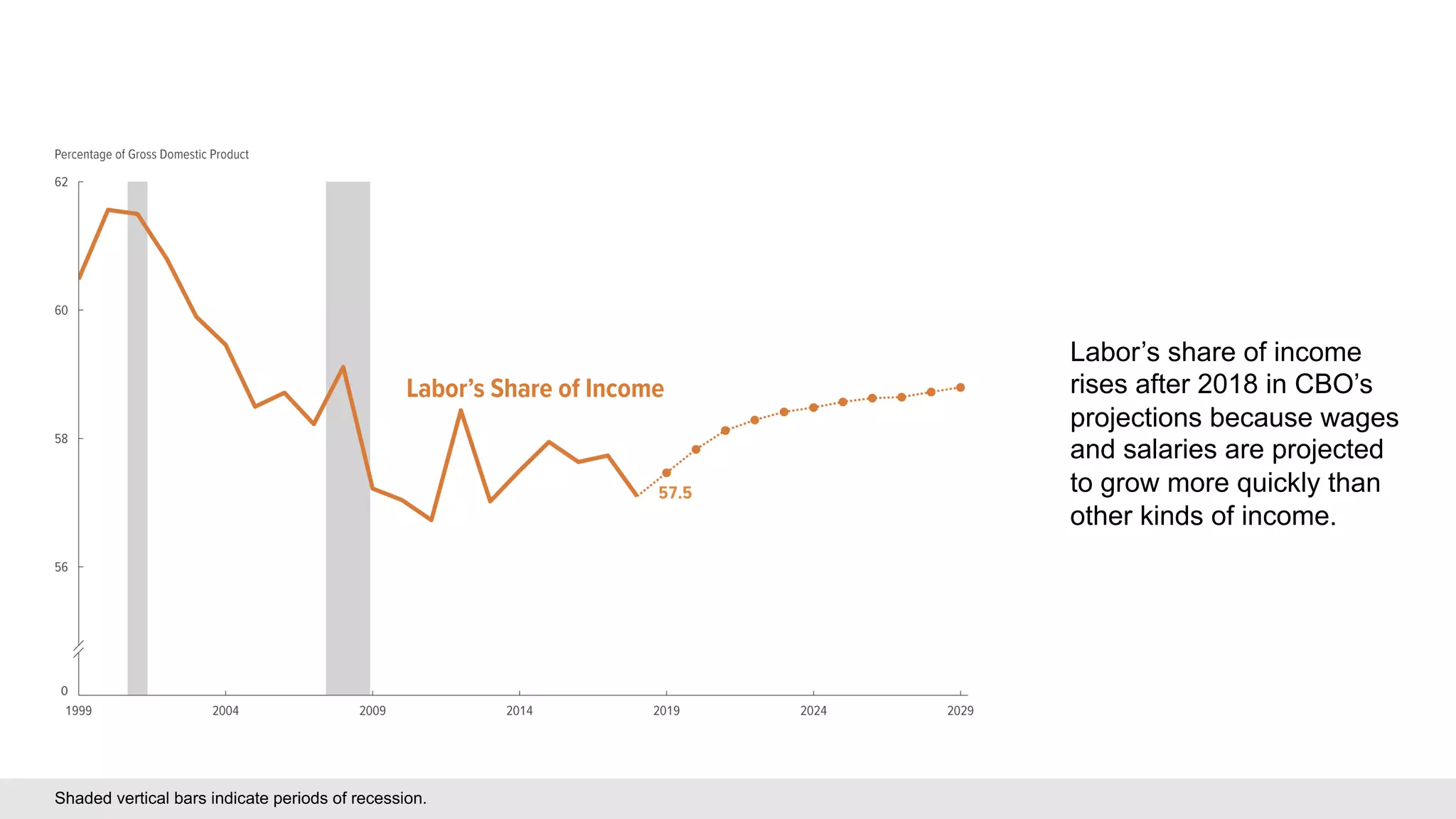
Labor’s share of income
rises after 2018 in CBO’s
projections because wages
and salaries are projected
to grow more quickly than
other kinds of income.
Inflation and Interest Rates
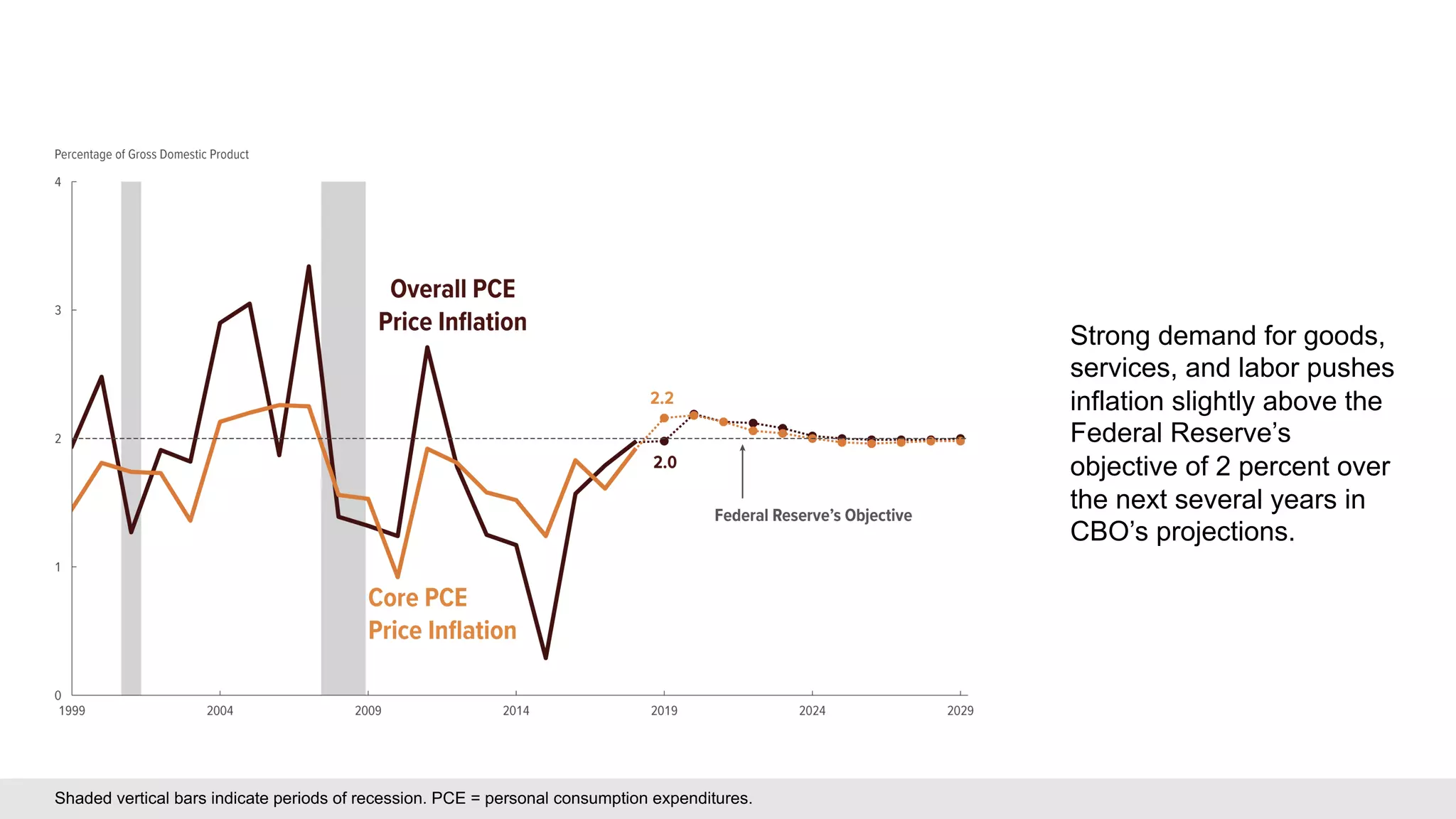
Shaded vertical bars indicate periods of recession. PCE = personal consumption expenditures.
Strong demand for goods,
services, and labor pushes
inflation slightly above the
Federal Reserve’s
objective of 2 percent over
the next several years in
CBO’s projections.
Shaded vertical bars indicate periods of recession.
CBO expects the Federal
Reserve to continue to
increase the federal funds
rate through the end of
2019 in response to the
widening output gap and
mounting inflationary
pressures.
Shaded vertical bars indicate periods of recession.
The increase in the federal
funds rate and a rising
term premium contribute to
higher interest rates on
Treasury securities.
Comparisons With
Other Forecasts
CBO’s forecasts for the
next two years are broadly
similar to those in the
Blue Chip survey.
CBO’s projections
generally reflect slightly
slower GDP growth and
higher unemployment rates
and federal funds interest
rates than many of the
projections made by
Federal Reserve officials.
About This Document
These slides were prepared by Nabeel Alsalam, Kim Kowalewski,
Casey Labrack, and Jeffrey Schafer.
For more details about CBO’s economic projections as well as the
agency’s most recent budget projections, see The Budget and
Economic Outlook: 2019 to 2029 (January 2019),
www.cbo.gov/publication/54918. That report was the result of work
by many analysts at CBO.

The Economic Outlook for 2019 to 2029 in 21 Slides

  • 1.
    CONGRESSIONAL BUDGET OFFICE TheEconomic Outlook for 2019 to 2029 in 21 Slides February 2019 For more details, see Congressional Budget Office, The Budget and Economic Outlook: 2018 to 2029 (January 2019), www.cbo.gov/publication/54918.
  • 2.
  • 3.
    Shaded vertical barsindicate periods of recession. After growing by an estimated 3.1 percent in 2018, real (inflation- adjusted) gross domestic product (GDP) is projected to grow by 2.3 percent this year and more slowly thereafter.
  • 4.
    The largest contributorsto the growth of real GDP in 2019 are consumer spending, business investment, and residential investment.
  • 5.
    Shaded vertical barsindicate periods of recession. In CBO’s baseline projections, real GDP grows at an average annual rate of 1.9 percent over the 2019–2023 period; there is a roughly two-thirds chance that the growth will be between 0.6 percent and 3.2 percent.
  • 6.
    Shaded vertical barsindicate periods of recession. The growth of real GDP exceeds the growth of potential GDP this year, but then it slows and eventually stabilizes at the growth rate of potential (that is, maximum sustainable) GDP near the end of the projection period.
  • 7.
    This year's growthbuilds on last year's strong demand for goods and services, pushing GDP 0.8 percent above potential GDP this year. The difference between actual and potential GDP, known as the output gap, is projected to return to its historical average of roughly −0.5 percent in later years.
  • 8.
    In the comingdecade, the growth of real potential GDP is projected to be faster than it has been since 2008 but slower than it was in previous periods.
  • 9.
  • 10.
    The heightened demand forgoods and services this year increases the demand for labor, pushing employment further above its maximum sustainable amount, thereby increasing the employment gap. After this year, the gap shrinks and eventually reaches its long-term value.
  • 11.
    Shaded vertical barsindicate periods of recession. The unemployment rate falls further below CBO’s estimate of the natural rate this year, but then it rises as growth in the demand for labor slows. The unemployment rate reaches its historical relationship with the natural rate by the end of the projection period.
  • 12.
    Shaded vertical barsindicate periods of recession. CBO expects the demand for labor to keep the labor force participation rate above the agency’s estimate of the potential rate for the next few years.
  • 13.
    Shaded vertical barsindicate periods of recession. In CBO's projections, the growth in wages increases over the next two years. Growth is slower in later years, reflecting slower growth in the demand for labor.
  • 14.
    Shaded vertical barsindicate periods of recession. Labor’s share of income rises after 2018 in CBO’s projections because wages and salaries are projected to grow more quickly than other kinds of income.
  • 15.
  • 16.
    Shaded vertical barsindicate periods of recession. PCE = personal consumption expenditures. Strong demand for goods, services, and labor pushes inflation slightly above the Federal Reserve’s objective of 2 percent over the next several years in CBO’s projections.
  • 17.
    Shaded vertical barsindicate periods of recession. CBO expects the Federal Reserve to continue to increase the federal funds rate through the end of 2019 in response to the widening output gap and mounting inflationary pressures.
  • 18.
    Shaded vertical barsindicate periods of recession. The increase in the federal funds rate and a rising term premium contribute to higher interest rates on Treasury securities.
  • 19.
  • 20.
    CBO’s forecasts forthe next two years are broadly similar to those in the Blue Chip survey.
  • 21.
    CBO’s projections generally reflectslightly slower GDP growth and higher unemployment rates and federal funds interest rates than many of the projections made by Federal Reserve officials.
  • 22.
    About This Document Theseslides were prepared by Nabeel Alsalam, Kim Kowalewski, Casey Labrack, and Jeffrey Schafer. For more details about CBO’s economic projections as well as the agency’s most recent budget projections, see The Budget and Economic Outlook: 2019 to 2029 (January 2019), www.cbo.gov/publication/54918. That report was the result of work by many analysts at CBO.