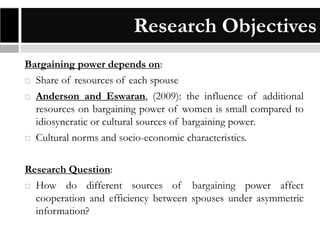
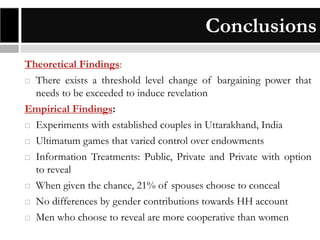
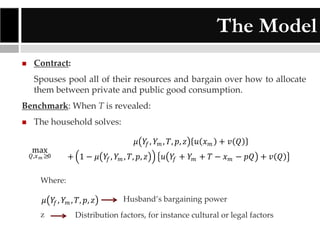
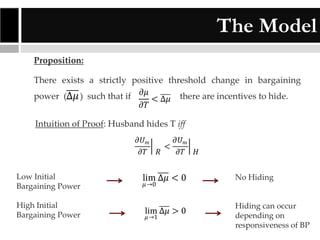
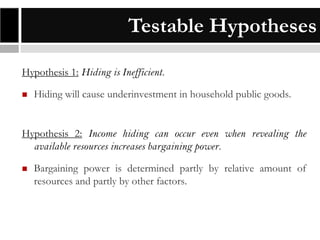
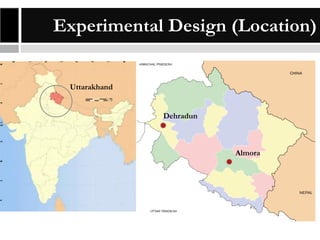
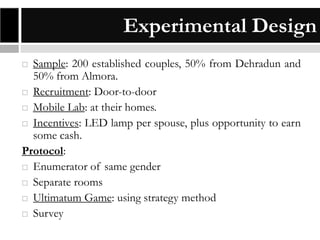
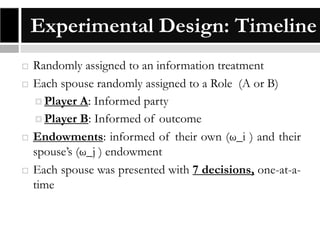
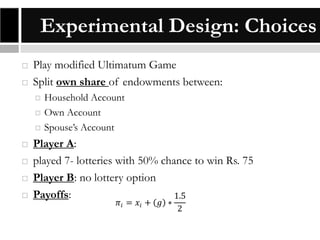
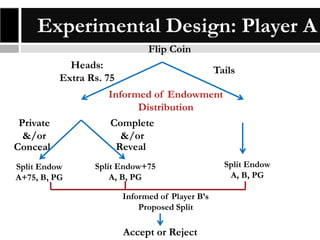
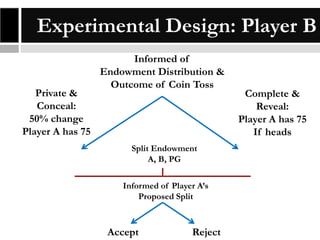
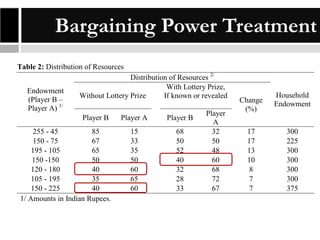
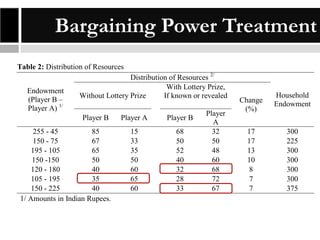
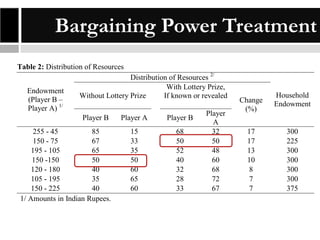
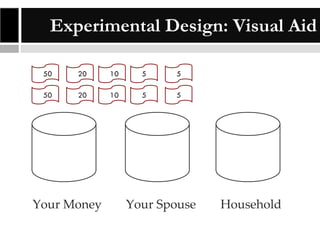
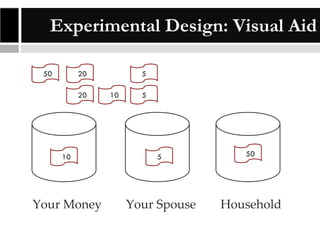
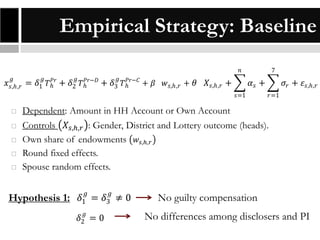
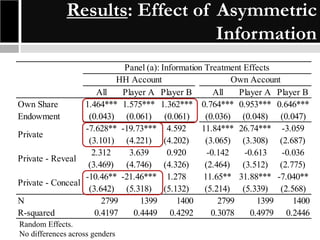
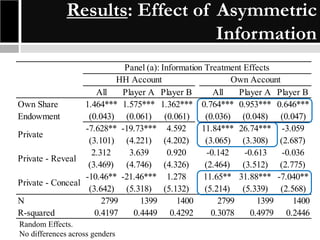
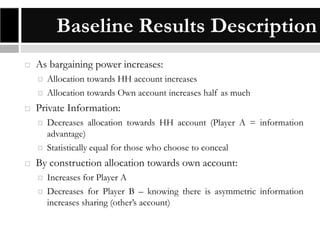
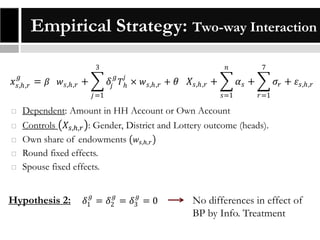
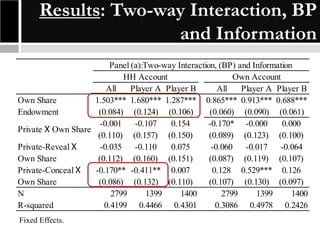
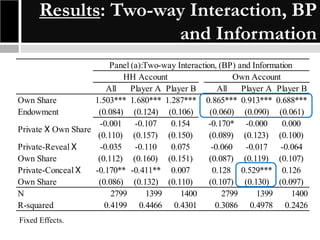
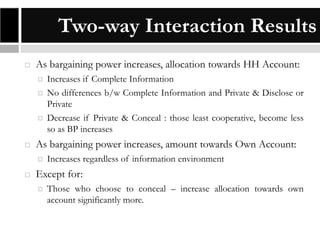
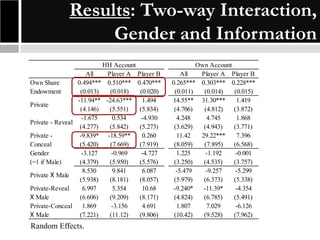
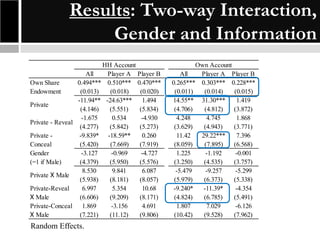
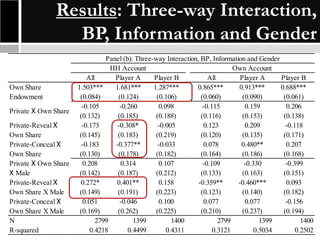
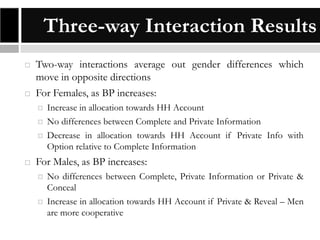
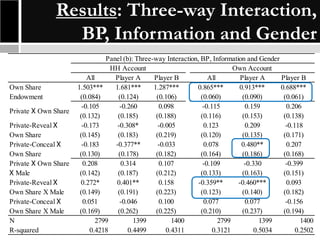
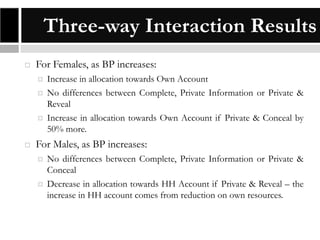
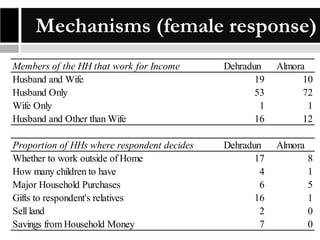
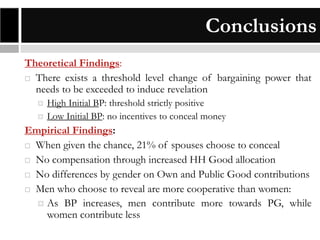
The document examines bargaining power and income concealing between spouses in India, highlighting how different sources of bargaining power affect cooperation and efficiency under asymmetric information. Empirical findings from experiments with established couples in Uttarakhand suggest that a significant percentage of spouses choose to conceal income, which can lead to underinvestment in household public goods. The study concludes that bargaining power is influenced both by the relative amounts of resources and by cultural factors, with a notable impact on spousal cooperation.