Our Square
Alex Benedí
Àlex Bruna
Àlex Roig
Martí Caballé
Miguel Binuè
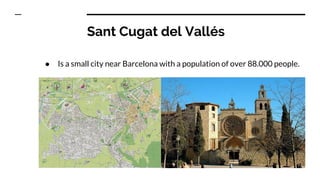
Sant Cugat del Vallés
● Is a small city near Barcelona with a population of over 88.000 people.
Our Square
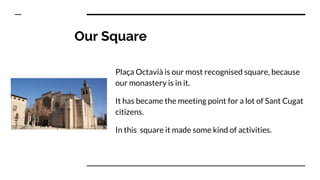
Plaça Octavià is our most recognised square, because
our monastery is in it.
It has became the meeting point for a lot of Sant Cugat
citizens.
In this square it made some kind of activities.
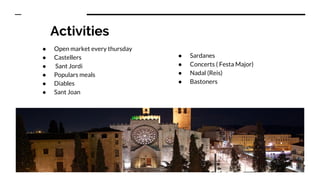
Activities
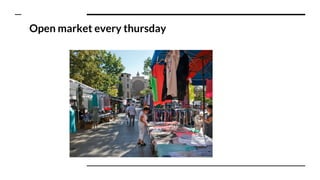
● Open market every thursday
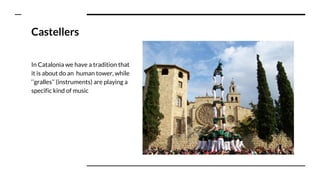
● Castellers
● Sant Jordi
● Populars meals
● Diables
● Sant Joan
● Sardanes
● Concerts ( Festa Major)
● Nadal (Reis)
● Bastoners
Open market every thursday
Castellers
In Catalonia we have a tradition that
it is about do an human tower, while
‘’gralles’’ (instruments) are playing a
specific kind of music
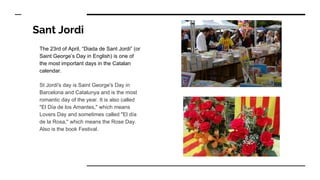
Sant Jordi
The 23rd of April, “Diada de Sant Jordi” (or
Saint George’s Day in English) is one of
the most important days in the Catalan
calendar.
St Jordi's day is Saint George's Day in
Barcelona and Catalunya and is the most
romantic day of the year. It is also called
"El Día de los Amantes," which means
Lovers Day and sometimes called "El día
de la Rosa," which means the Rose Day.
Also is the book Festival.
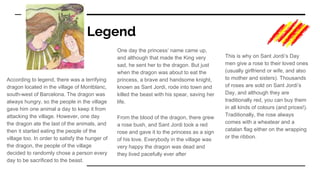
Legend
According to legend, there was a terrifying
dragon located in the village of Montblanc,
south-west of Barcelona. The dragon was
always hungry, so the people in the village
gave him one animal a day to keep it from
attacking the village. However, one day
the dragon ate the last of the animals, and
then it started eating the people of the
village too. In order to satisfy the hunger of
the dragon, the people of the village
decided to randomly chose a person every
day to be sacrificed to the beast.
One day the princess’ name came up,
and although that made the King very
sad, he sent her to the dragon. But just
when the dragon was about to eat the
princess, a brave and handsome knight,
known as Sant Jordi, rode into town and
killed the beast with his spear, saving her
life.
From the blood of the dragon, there grew
a rose bush, and Sant Jordi took a red
rose and gave it to the princess as a sign
of his love. Everybody in the village was
very happy the dragon was dead and
they lived pacefully ever after
This is why on Sant Jordi’s Day
men give a rose to their loved ones
(usually girlfriend or wife, and also
to mother and sisters). Thousands
of roses are sold on Sant Jordi’s
Day, and although they are
traditionally red, you can buy them
in all kinds of colours (and prices!).
Traditionally, the rose always
comes with a wheatear and a
catalan flag either on the wrapping
or the ribbon.
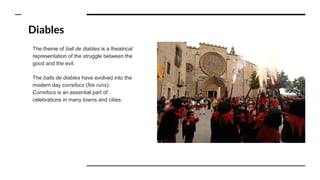
Diables
The theme of ball de diables is a theatrical
representation of the struggle between the
good and the evil.
The balls de diables have evolved into the
modern day correfocs (fire runs).
Correfocs is an essential part of
celebrations in many towns and cities.
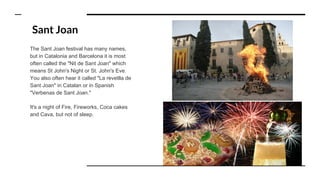
Sant Joan
The Sant Joan festival has many names,
but in Catalonia and Barcelona it is most
often called the "Nit de Sant Joan" which
means St John's Night or St. John's Eve.
You also often hear it called "La revetlla de
Sant Joan" in Catalan or in Spanish
"Verbenas de Sant Joan."
It's a night of Fire, Fireworks, Coca cakes
and Cava, but not of sleep.
Gegants (Paga li Joan)
The Paga li Joan, is the most popular dance
of Sant Cugat and danced on St. Peter (June
29) to coincide with the festival. It is a very
old dance dating from the eighteenth
century, also known as dance and Vano
Ram
This type of dance is danced by the giants of
our city. Leading to the city many years and
which mainly take the Festival of Sant
Cugat
Sardanes
Is a type of circle dance typical of Catalan
culture. The dance was originally from the
Empordà region, but started gaining
popularity throughout Catalonia during the
20th century.
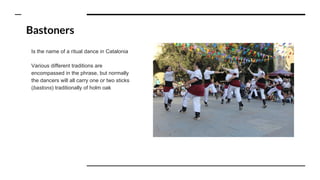
Bastoners
Is the name of a ritual dance in Catalonia
Various different traditions are
encompassed in the phrase, but normally
the dancers will all carry one or two sticks
(bastons) traditionally of holm oak
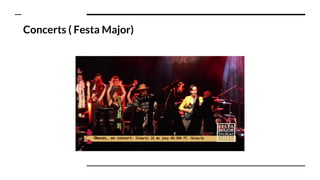
Concerts ( Festa Major)
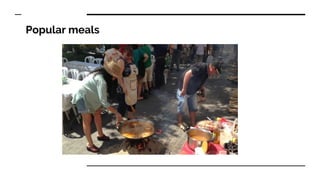
Popular meals
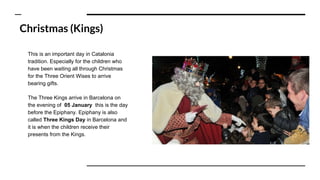
Christmas (Kings)
This is an important day in Catalonia
tradition. Especially for the children who
have been waiting all through Christmas
for the Three Orient Wises to arrive
bearing gifts.
The Three Kings arrive in Barcelona on
the evening of 05 January this is the day
before the Epiphany. Epiphany is also
called Three Kings Day in Barcelona and
it is when the children receive their
presents from the Kings.

Castellers a la plaça

  • 1.
    Our Square Alex Benedí ÀlexBruna Àlex Roig Martí Caballé Miguel Binuè
  • 2.
    Sant Cugat delVallés ● Is a small city near Barcelona with a population of over 88.000 people.
  • 3.
    Our Square Plaça Octaviàis our most recognised square, because our monastery is in it. It has became the meeting point for a lot of Sant Cugat citizens. In this square it made some kind of activities.
  • 4.
    Activities ● Open marketevery thursday ● Castellers ● Sant Jordi ● Populars meals ● Diables ● Sant Joan ● Sardanes ● Concerts ( Festa Major) ● Nadal (Reis) ● Bastoners
  • 5.
  • 6.
    Castellers In Catalonia wehave a tradition that it is about do an human tower, while ‘’gralles’’ (instruments) are playing a specific kind of music
  • 7.
    Sant Jordi The 23rdof April, “Diada de Sant Jordi” (or Saint George’s Day in English) is one of the most important days in the Catalan calendar. St Jordi's day is Saint George's Day in Barcelona and Catalunya and is the most romantic day of the year. It is also called "El Día de los Amantes," which means Lovers Day and sometimes called "El día de la Rosa," which means the Rose Day. Also is the book Festival.
  • 8.
    Legend According to legend,there was a terrifying dragon located in the village of Montblanc, south-west of Barcelona. The dragon was always hungry, so the people in the village gave him one animal a day to keep it from attacking the village. However, one day the dragon ate the last of the animals, and then it started eating the people of the village too. In order to satisfy the hunger of the dragon, the people of the village decided to randomly chose a person every day to be sacrificed to the beast. One day the princess’ name came up, and although that made the King very sad, he sent her to the dragon. But just when the dragon was about to eat the princess, a brave and handsome knight, known as Sant Jordi, rode into town and killed the beast with his spear, saving her life. From the blood of the dragon, there grew a rose bush, and Sant Jordi took a red rose and gave it to the princess as a sign of his love. Everybody in the village was very happy the dragon was dead and they lived pacefully ever after This is why on Sant Jordi’s Day men give a rose to their loved ones (usually girlfriend or wife, and also to mother and sisters). Thousands of roses are sold on Sant Jordi’s Day, and although they are traditionally red, you can buy them in all kinds of colours (and prices!). Traditionally, the rose always comes with a wheatear and a catalan flag either on the wrapping or the ribbon.
  • 9.
    Diables The theme ofball de diables is a theatrical representation of the struggle between the good and the evil. The balls de diables have evolved into the modern day correfocs (fire runs). Correfocs is an essential part of celebrations in many towns and cities.
  • 10.
    Sant Joan The SantJoan festival has many names, but in Catalonia and Barcelona it is most often called the "Nit de Sant Joan" which means St John's Night or St. John's Eve. You also often hear it called "La revetlla de Sant Joan" in Catalan or in Spanish "Verbenas de Sant Joan." It's a night of Fire, Fireworks, Coca cakes and Cava, but not of sleep.
  • 11.
    Gegants (Paga liJoan) The Paga li Joan, is the most popular dance of Sant Cugat and danced on St. Peter (June 29) to coincide with the festival. It is a very old dance dating from the eighteenth century, also known as dance and Vano Ram This type of dance is danced by the giants of our city. Leading to the city many years and which mainly take the Festival of Sant Cugat
  • 12.
    Sardanes Is a typeof circle dance typical of Catalan culture. The dance was originally from the Empordà region, but started gaining popularity throughout Catalonia during the 20th century.
  • 13.
    Bastoners Is the nameof a ritual dance in Catalonia Various different traditions are encompassed in the phrase, but normally the dancers will all carry one or two sticks (bastons) traditionally of holm oak
  • 14.
  • 15.
  • 16.
    Christmas (Kings) This isan important day in Catalonia tradition. Especially for the children who have been waiting all through Christmas for the Three Orient Wises to arrive bearing gifts. The Three Kings arrive in Barcelona on the evening of 05 January this is the day before the Epiphany. Epiphany is also called Three Kings Day in Barcelona and it is when the children receive their presents from the Kings.