Case study
Student:Sodikjonova S.
There are a few different types of case studies that
psychologists and other researchers might utilize:
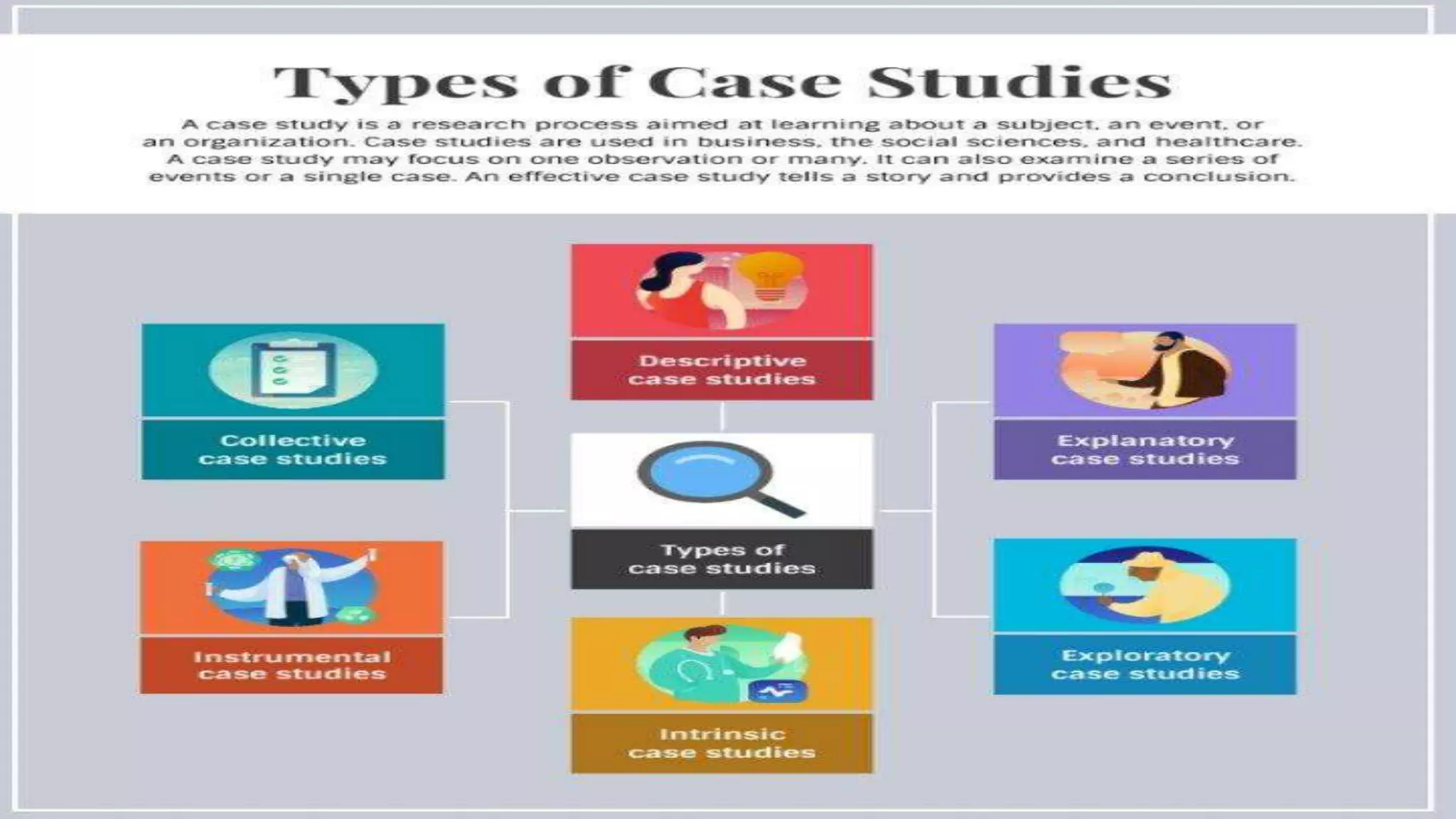
 Collective case studies: These involve studying a group of individuals. Researchers
might study a group of people in a certain setting or look at an entire community. For
example, psychologists might explore how access to resources in a community has
affected the collective mental well-being of those living there.
 Descriptive case studies: These involve starting with a descriptive theory. The subjects
are then observed, and the information gathered is compared to the pre-existing
theory.
 Explanatory case studies: These are often used to do causal investigations. In other
words, researchers are interested in looking at factors that may have caused certain
things to occur.
 Exploratory case studies: These are sometimes used as a prelude to further, more in-depth
research. This allows researchers to gather more information before developing their research
questions and hypotheses.
 Instrumental case studies: These occur when the individual or group allows researchers to
understand more than what is initially obvious to observers.
 Intrinsic case studies: This type of case study is when the researcher has a personal interest in the
case. Jean Piaget's observations of his own children are good examples of how an intrinsic cast
study can contribute to the development of a psychological theory.
The three main case study types often used are intrinsic, instrumental, and collective. Intrinsic case
case studies are useful for learning about unique cases. Instrumental case studies help look at an
individual to learn more about a broader issue. A collective case study can be useful for looking at
several cases simultaneously.
Case study.pptx
Case study.pptx

Case study.pptx

  • 1.
  • 3.
    There are afew different types of case studies that psychologists and other researchers might utilize:  Collective case studies: These involve studying a group of individuals. Researchers might study a group of people in a certain setting or look at an entire community. For example, psychologists might explore how access to resources in a community has affected the collective mental well-being of those living there.  Descriptive case studies: These involve starting with a descriptive theory. The subjects are then observed, and the information gathered is compared to the pre-existing theory.  Explanatory case studies: These are often used to do causal investigations. In other words, researchers are interested in looking at factors that may have caused certain things to occur.
  • 4.
     Exploratory casestudies: These are sometimes used as a prelude to further, more in-depth research. This allows researchers to gather more information before developing their research questions and hypotheses.  Instrumental case studies: These occur when the individual or group allows researchers to understand more than what is initially obvious to observers.  Intrinsic case studies: This type of case study is when the researcher has a personal interest in the case. Jean Piaget's observations of his own children are good examples of how an intrinsic cast study can contribute to the development of a psychological theory. The three main case study types often used are intrinsic, instrumental, and collective. Intrinsic case case studies are useful for learning about unique cases. Instrumental case studies help look at an individual to learn more about a broader issue. A collective case study can be useful for looking at several cases simultaneously.