The history begins with automotive vehicles propelled by steam 18th 
century. 
Trying to obtain a driving force to replace the horses back to the 
seventeenth century. The car goes through the three eras of 
the prevalent means of propulsion. : steam, electricity and gasoline. 
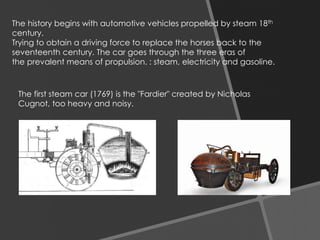
The first steam car (1769) is the "Fardier" created by Nicholas 
Cugnot, too heavy and noisy.
In 1770 he built a second model, larger than the first, and which could 
handle 4.5 tons at a speed of 4 km. / h. This version was produced which 
could be considered 'first car accident' of history, 
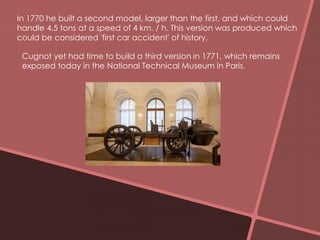
Cugnot yet had time to build a third version in 1771, which remains 
exposed today in the National Technical Museum in Paris.
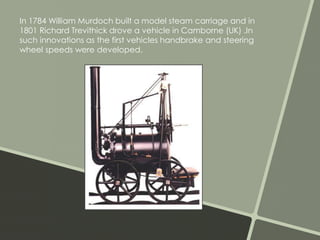
In 1784 William Murdoch built a model steam carriage and in 
1801 Richard Trevithick drove a vehicle in Camborne (UK) .In 
such innovations as the first vehicles handbrake and steering 
wheel speeds were developed.
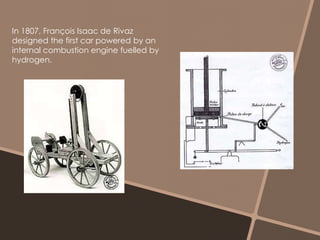
In 1807, François Isaac de Rivaz 
designed the first car powered by an 
internal combustion engine fuelled by 
hydrogen.
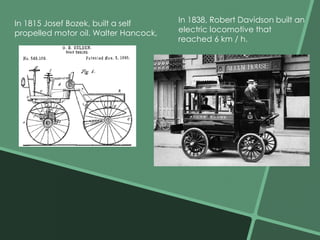
In 1815 Josef Bozek, built a self 
propelled motor oil. Walter Hancock, 
In 1838, Robert Davidson built an 
electric locomotive that 
reached 6 km / h.
Between 1832 and 1839 Robert Anderson invented the first car 
powered by non-rechargeable electric cells. 
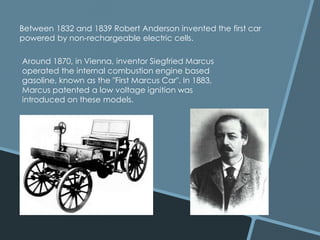
Around 1870, in Vienna, inventor Siegfried Marcus 
operated the internal combustion engine based 
gasoline, known as the "First Marcus Car". In 1883, 
Marcus patented a low voltage ignition was 
introduced on these models.
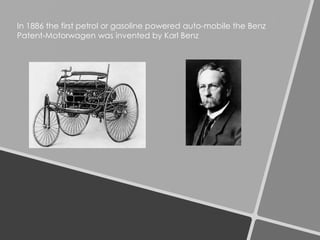
In 1886 the first petrol or gasoline powered auto-mobile the Benz 
Patent-Motorwagen was invented by Karl Benz
1889 German engineer Emil Capitaine 
combustion engine develops a two-stroke 
high compression. This creates 
an ancestor to the diesel engine. 
Tunbridge Wells in 1895 held the first exhibition of cars in Britain, 
even if it is rather a display of privately owned vehicles. 
1895.Los brothers Charles and Frank Duryea founded in Lansing 
(Michigan) the Duryea Motor Wagon Company. It is the first 
company established in the United States to engage in the 
commercial manufacture of automobiles. 
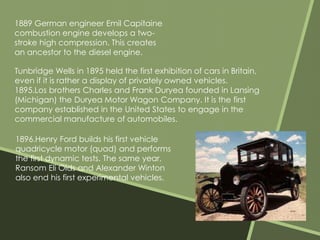
1896.Henry Ford builds his first vehicle 
quadricycle motor (quad) and performs 
the first dynamic tests. The same year, 
Ransom Eli Olds and Alexander Winton 
also end his first experimental vehicles.
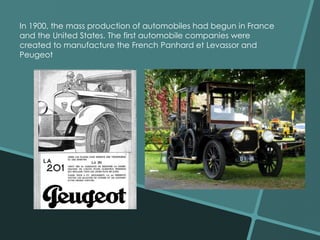
In 1900, the mass production of automobiles had begun in France 
and the United States. The first automobile companies were 
created to manufacture the French Panhard et Levassor and 
Peugeot
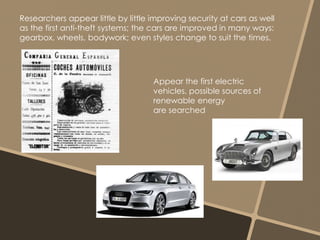
Researchers appear little by little improving security at cars as well 
as the first anti-theft systems; the cars are improved in many ways: 
gearbox, wheels, bodywork; even styles change to suit the times. 
Appear the first electric 
vehicles, possible sources of 
renewable energy 
are searched
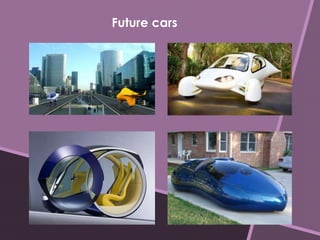
Future cars
Cars

Cars

  • 2.
    The history beginswith automotive vehicles propelled by steam 18th century. Trying to obtain a driving force to replace the horses back to the seventeenth century. The car goes through the three eras of the prevalent means of propulsion. : steam, electricity and gasoline. The first steam car (1769) is the "Fardier" created by Nicholas Cugnot, too heavy and noisy.
  • 3.
    In 1770 hebuilt a second model, larger than the first, and which could handle 4.5 tons at a speed of 4 km. / h. This version was produced which could be considered 'first car accident' of history, Cugnot yet had time to build a third version in 1771, which remains exposed today in the National Technical Museum in Paris.
  • 4.
    In 1784 WilliamMurdoch built a model steam carriage and in 1801 Richard Trevithick drove a vehicle in Camborne (UK) .In such innovations as the first vehicles handbrake and steering wheel speeds were developed.
  • 5.
    In 1807, FrançoisIsaac de Rivaz designed the first car powered by an internal combustion engine fuelled by hydrogen.
  • 6.
    In 1815 JosefBozek, built a self propelled motor oil. Walter Hancock, In 1838, Robert Davidson built an electric locomotive that reached 6 km / h.
  • 7.
    Between 1832 and1839 Robert Anderson invented the first car powered by non-rechargeable electric cells. Around 1870, in Vienna, inventor Siegfried Marcus operated the internal combustion engine based gasoline, known as the "First Marcus Car". In 1883, Marcus patented a low voltage ignition was introduced on these models.
  • 8.
    In 1886 thefirst petrol or gasoline powered auto-mobile the Benz Patent-Motorwagen was invented by Karl Benz
  • 9.
    1889 German engineerEmil Capitaine combustion engine develops a two-stroke high compression. This creates an ancestor to the diesel engine. Tunbridge Wells in 1895 held the first exhibition of cars in Britain, even if it is rather a display of privately owned vehicles. 1895.Los brothers Charles and Frank Duryea founded in Lansing (Michigan) the Duryea Motor Wagon Company. It is the first company established in the United States to engage in the commercial manufacture of automobiles. 1896.Henry Ford builds his first vehicle quadricycle motor (quad) and performs the first dynamic tests. The same year, Ransom Eli Olds and Alexander Winton also end his first experimental vehicles.
  • 10.
    In 1900, themass production of automobiles had begun in France and the United States. The first automobile companies were created to manufacture the French Panhard et Levassor and Peugeot
  • 11.
    Researchers appear littleby little improving security at cars as well as the first anti-theft systems; the cars are improved in many ways: gearbox, wheels, bodywork; even styles change to suit the times. Appear the first electric vehicles, possible sources of renewable energy are searched
  • 13.