PharmacyRanaMoustafa
What Do Pharmacists Do?Specialize in dispensing drugs prescribed by physicians.Provide information to patients about their side effects and use.Pharmacists must understand the composition of medicines, as well as the laws that regulate their manufacture and sale.Order and store medicines, keeping them safe, pure, and effective.Required by law to maintain records of the drugs they handle.
Types of PharmacistsAmbulatory-visit inpatients in hospitalsClinical-work in clinics of private practices or hospitalsRetail-community chain pharmacyGovernment-U.S food and/or drug public health servicesHome Care-work with ill people in homes
ContinuedAcademic-teachers Hospital-main hospital pharmacyResearch-researchersIndustrial-drug companiesNuclear-work with nuclear medicineIndependent-own a pharmacy
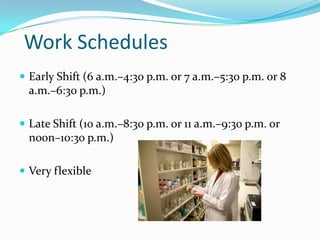
Work SchedulesEarly Shift (6 a.m.–4:30 p.m. or 7 a.m.–5:30 p.m. or 8 a.m.–6:30 p.m.)Late Shift (10 a.m.–8:30 p.m. or 11 a.m.–9:30 p.m. or noon–10:30 p.m.)Very flexible
How Will I Get There?Pharmacy schools throughout the U.S have highly competitive admissions. Pharmacy evaluate student applications based on:Overall GPA, science and math GPA
PCAT (Pharmacy College Admissions Test) scores
Community service, pharmacy work experience
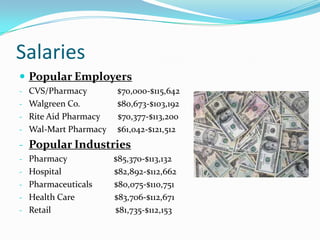
InterviewLicenses/CertificationsAll 50 states require a state’s license exam to practice. Pharmacists must pass exam after completing pharmacy school in order to be able to start working.SalariesPopular EmployersCVS/Pharmacy	 $70,000-$115,642

Career pharmacy

  • 1.
  • 2.
    What Do PharmacistsDo?Specialize in dispensing drugs prescribed by physicians.Provide information to patients about their side effects and use.Pharmacists must understand the composition of medicines, as well as the laws that regulate their manufacture and sale.Order and store medicines, keeping them safe, pure, and effective.Required by law to maintain records of the drugs they handle.
  • 3.
    Types of PharmacistsAmbulatory-visitinpatients in hospitalsClinical-work in clinics of private practices or hospitalsRetail-community chain pharmacyGovernment-U.S food and/or drug public health servicesHome Care-work with ill people in homes
  • 4.
    ContinuedAcademic-teachers Hospital-main hospitalpharmacyResearch-researchersIndustrial-drug companiesNuclear-work with nuclear medicineIndependent-own a pharmacy
  • 5.
    Work SchedulesEarly Shift(6 a.m.–4:30 p.m. or 7 a.m.–5:30 p.m. or 8 a.m.–6:30 p.m.)Late Shift (10 a.m.–8:30 p.m. or 11 a.m.–9:30 p.m. or noon–10:30 p.m.)Very flexible
  • 6.
    How Will IGet There?Pharmacy schools throughout the U.S have highly competitive admissions. Pharmacy evaluate student applications based on:Overall GPA, science and math GPA
  • 7.
    PCAT (Pharmacy CollegeAdmissions Test) scores
  • 8.
  • 9.
    InterviewLicenses/CertificationsAll 50 statesrequire a state’s license exam to practice. Pharmacists must pass exam after completing pharmacy school in order to be able to start working.SalariesPopular EmployersCVS/Pharmacy $70,000-$115,642