CARDIOVASCUALAR
SYSTEM
Presented by- Dr Anchal Tyagi
Introduction to the Human Heart
• The human heart is one of the most important organs
responsible for sustaining life. It is a muscular organ
with four chambers. The size of the heart is the size of
about a clenched fist.
• The human heart functions throughout a person’s
lifespan and is one of the most robust and hardest
working muscles in the human body.
• Besides humans, most of the other animals also
possess a heart that pumps blood throughout their
body. Even invertebrates such as grasshoppers possess
a heart like pumping organ, though they do not
function the same way a human heart does.
Position of Heart in Human Body
• The human heart is located between the lungs
in the thoracic cavity, slightly towards the left
of the sternum (breastbone).
Function of Heart
The function of the heart in any organism is to maintain a constant
flow of blood throughout the body. This replenishes oxygen and
circulates nutrients among the cells and tissues.
Main functions of the heart:
primary functions of the human heart is to Pump blood throughout
the body.
Blood delivers oxygen, hormones, glucose and other components to
various parts of the body, including the human heart.
• Ensures that adequate blood pressure is maintained in the body
There are two types of circulation within the
body:
1. pulmonary circulation
2. systemic circulation
Types of Circulation
• Pulmonary circulation is a portion of circulation responsible
for carrying deoxygenated blood away from the heart, to the lungs
and then brings oxygenated blood back to the heart.
• Systemic circulation is another portion of circulation where
the oxygenated blood is pumped from the heart to every
organ and tissue in the body, and deoxygenated blood comes back
again to the heart.
Now, the heart itself is a muscle and therefore, it needs a constant
supply of oxygenated blood. This is where another type of
circulation comes into play, the coronary circulation.
• Coronary circulation is an essential portion of the
circulation, where oxygenated blood is supplied
to the heart. This is important as the heart is
responsible for supplying blood throughout the
body.
• Moreover, organs like the brain need a steady
flow of fresh, oxygenated blood to ensure
functionality.
• In a nutshell, the circulatory system plays a vital
role in supplying oxygen, nutrients and removing
carbon dioxide and other wastes from the body.
Let us gain a deeper insight into the various
anatomical structures of the heart:
Structure of the Human Heart
The human heart is about the size of a human
fist and is divided into four chambers,
namely two ventricles and two atria.
1. Ventricles are the chambers that pump blood
2. Atrium are the chambers that receive blood
Among which both right atrium and
ventricle make up the “right heart,” and
the left atrium and ventricle make up the
“left heart.”
• The structure of the heart also houses the
biggest artery in the body – the aorta.
External Structure of Heart
Pericardium
• The human heart is situated to the left of the chest and is enclosed
within a fluid-filled cavity described as the pericardial cavity. The
walls and lining of the pericardial cavity are made up of a
membrane known as the pericardium.
• It protects the heart by producing a serous fluid, which serves to
lubricate the heart and prevent friction between the surrounding
organs. Apart from the lubrication, the pericardium also helps by
holding the heart in its position and by maintaining a hollow space
for the heart to expand itself when it is full. The pericardium has
two exclusive layers—
• Visceral Layer: It directly covers the outside of the heart.
• Parietal Layer: It forms a sac around the outer region of the heart
that contains the fluid in the pericardial cavity.
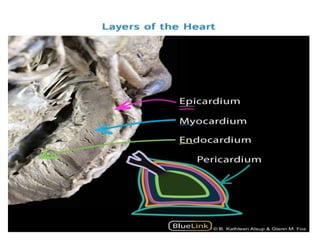
Structure of the Heart Wall
• Epicardium – Epicardium is the outermost layer of the
heart. It is composed of a thin-layered membrane that
serves to lubricate and protect the outer section.
• Myocardium – This is a layer of muscle tissue and it
constitutes the middle layer wall of the heart. It
contributes to the thickness and is responsible for the
pumping action.
• Endocardium – It is the innermost layer that lines the
inner heart chambers and covers the heart valves.
Furthermore, it prevents the blood from sticking to the
inner walls, thereby preventing potentially fatal blood
clots.
Internal Structure of Heart
The internal structure of the heart is rather
intricate with several chambers and valves that
control the flow of blood.
Chambers of the Heart
• Left atrium
• Right atrium
• Left ventricle
• Right ventricle
Blood Vessels
The blood vessels typically comprise the following:
 Veins supply deoxygenated blood to the heart
via inferior and superior vena cava, and it
eventually drains into the right atrium.
 Capillaries are tiny, tube-like vessels which form
a network between the arteries to veins.
Arteries are muscular-walled tubes mainly
involved in supplying oxygenated blood away
from the heart to all other parts of the body.
Aorta is the largest of the arteries and it
branches off into various smaller arteries
throughout the body.

CARDIOVASCUALAR SYSTEM.pptx

  • 1.
  • 2.
    Introduction to theHuman Heart • The human heart is one of the most important organs responsible for sustaining life. It is a muscular organ with four chambers. The size of the heart is the size of about a clenched fist. • The human heart functions throughout a person’s lifespan and is one of the most robust and hardest working muscles in the human body. • Besides humans, most of the other animals also possess a heart that pumps blood throughout their body. Even invertebrates such as grasshoppers possess a heart like pumping organ, though they do not function the same way a human heart does.
  • 3.
    Position of Heartin Human Body • The human heart is located between the lungs in the thoracic cavity, slightly towards the left of the sternum (breastbone).
  • 4.
    Function of Heart Thefunction of the heart in any organism is to maintain a constant flow of blood throughout the body. This replenishes oxygen and circulates nutrients among the cells and tissues. Main functions of the heart: primary functions of the human heart is to Pump blood throughout the body. Blood delivers oxygen, hormones, glucose and other components to various parts of the body, including the human heart. • Ensures that adequate blood pressure is maintained in the body
  • 5.
    There are twotypes of circulation within the body: 1. pulmonary circulation 2. systemic circulation
  • 6.
    Types of Circulation •Pulmonary circulation is a portion of circulation responsible for carrying deoxygenated blood away from the heart, to the lungs and then brings oxygenated blood back to the heart. • Systemic circulation is another portion of circulation where the oxygenated blood is pumped from the heart to every organ and tissue in the body, and deoxygenated blood comes back again to the heart. Now, the heart itself is a muscle and therefore, it needs a constant supply of oxygenated blood. This is where another type of circulation comes into play, the coronary circulation.
  • 7.
    • Coronary circulationis an essential portion of the circulation, where oxygenated blood is supplied to the heart. This is important as the heart is responsible for supplying blood throughout the body. • Moreover, organs like the brain need a steady flow of fresh, oxygenated blood to ensure functionality. • In a nutshell, the circulatory system plays a vital role in supplying oxygen, nutrients and removing carbon dioxide and other wastes from the body. Let us gain a deeper insight into the various anatomical structures of the heart:
  • 8.
    Structure of theHuman Heart The human heart is about the size of a human fist and is divided into four chambers, namely two ventricles and two atria. 1. Ventricles are the chambers that pump blood 2. Atrium are the chambers that receive blood Among which both right atrium and ventricle make up the “right heart,” and the left atrium and ventricle make up the “left heart.”
  • 9.
    • The structureof the heart also houses the biggest artery in the body – the aorta.
  • 10.
    External Structure ofHeart Pericardium • The human heart is situated to the left of the chest and is enclosed within a fluid-filled cavity described as the pericardial cavity. The walls and lining of the pericardial cavity are made up of a membrane known as the pericardium. • It protects the heart by producing a serous fluid, which serves to lubricate the heart and prevent friction between the surrounding organs. Apart from the lubrication, the pericardium also helps by holding the heart in its position and by maintaining a hollow space for the heart to expand itself when it is full. The pericardium has two exclusive layers— • Visceral Layer: It directly covers the outside of the heart. • Parietal Layer: It forms a sac around the outer region of the heart that contains the fluid in the pericardial cavity.
  • 11.
    Structure of theHeart Wall • Epicardium – Epicardium is the outermost layer of the heart. It is composed of a thin-layered membrane that serves to lubricate and protect the outer section. • Myocardium – This is a layer of muscle tissue and it constitutes the middle layer wall of the heart. It contributes to the thickness and is responsible for the pumping action. • Endocardium – It is the innermost layer that lines the inner heart chambers and covers the heart valves. Furthermore, it prevents the blood from sticking to the inner walls, thereby preventing potentially fatal blood clots.
  • 13.
    Internal Structure ofHeart The internal structure of the heart is rather intricate with several chambers and valves that control the flow of blood. Chambers of the Heart • Left atrium • Right atrium • Left ventricle • Right ventricle
  • 14.
    Blood Vessels The bloodvessels typically comprise the following:  Veins supply deoxygenated blood to the heart via inferior and superior vena cava, and it eventually drains into the right atrium.  Capillaries are tiny, tube-like vessels which form a network between the arteries to veins.
  • 15.
    Arteries are muscular-walledtubes mainly involved in supplying oxygenated blood away from the heart to all other parts of the body. Aorta is the largest of the arteries and it branches off into various smaller arteries throughout the body.