M-Adeel-Razzaq
FA17-BBA-041
Cardinal
Approach
Topic
In this approach the consumer
satisfaction/utility are expressed
in the term of unit or we say that it
is measureable
What is Cardinal Approach
 Some assumption of the cardinal
approaches
 Rationality
 Measured Cardinal Utility
 Constant Marginal Utility of Money
 Diminishing Marginal Utility
 Total utility
Assumptions
The consumer is rational. He
seeks to maximize satisfaction
from the limited income which is
at his disposal
Rationality
 The utility can be measured in cardinal
numbers such as 1, 3, 10, 15, etc. The
utility is expressed in imaginary
cardinal numbers tells us a great deal
about the preference of the consumer
for a good
Measured Cardinal Utility
Another important premise of
cardinal utility of money spent on
the purchase of a good or service
should remain constant.
Constant Marginal Utility of
Money
It is also assumed that the
marginal utility obtained from the
consumption of a good diminishes
continuously as its consumption is
increased
Diminishing Marginal Utility
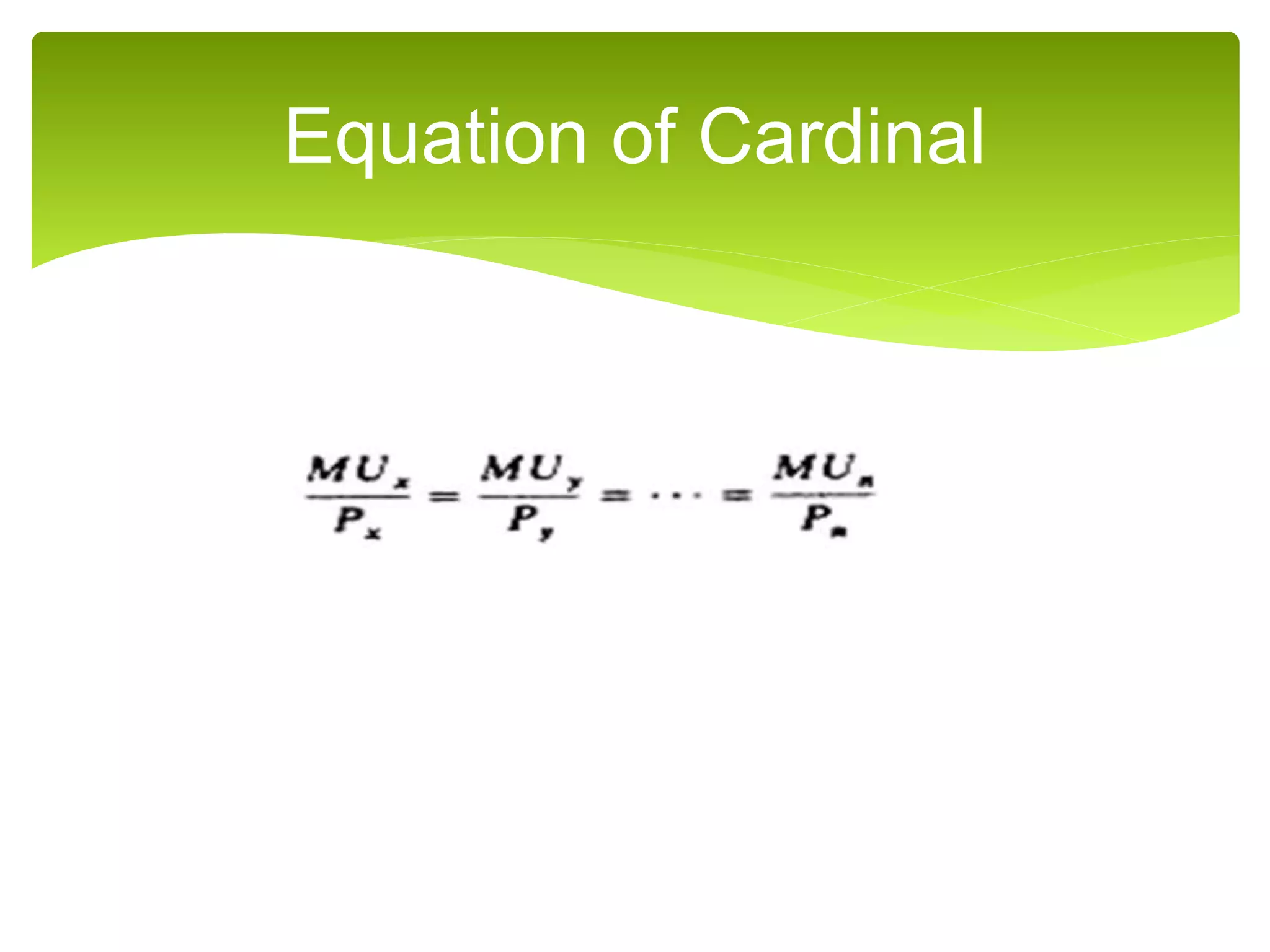
Equation of Cardinal
 Where utility is measured in monetary units.
If the consumer buys qx his expenditure is
qx and px Presumably the consumer seeks
to maximize the difference between his
utility and his expend ture
U-pxqx
Mathematical Derivation
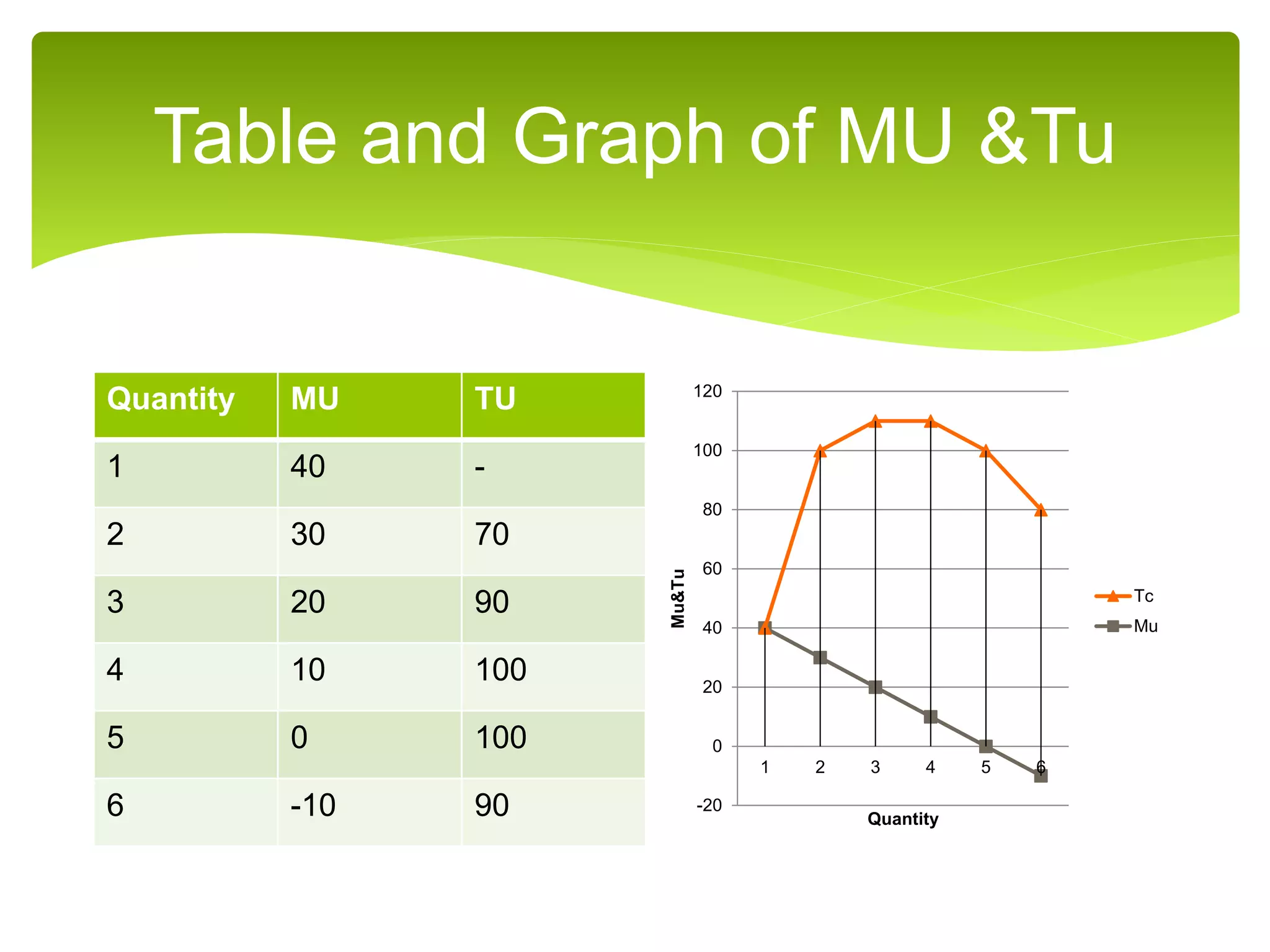
Table and Graph of MU &Tu
-20
0
20
40
60
80
100
120
1 2 3 4 5 6
Mu&Tu
Quantity
Tc
Mu
Quantity MU TU
1 40 -
2 30 70
3 20 90
4 10 100
5 0 100
6 -10 90
The basic 3 weakness
in Cardinal
approaches
Criticism
of cardinal Approach
 Unrealistic Assumptions
 MU of Money Can Never be Constant
 No Formal Distinction between
Income and Substitution Effect
Criticism
of cardinal Approach

Cardinal approches

  • 2.
  • 3.
  • 4.
    In this approachthe consumer satisfaction/utility are expressed in the term of unit or we say that it is measureable What is Cardinal Approach
  • 5.
     Some assumptionof the cardinal approaches  Rationality  Measured Cardinal Utility  Constant Marginal Utility of Money  Diminishing Marginal Utility  Total utility Assumptions
  • 6.
    The consumer isrational. He seeks to maximize satisfaction from the limited income which is at his disposal Rationality
  • 7.
     The utilitycan be measured in cardinal numbers such as 1, 3, 10, 15, etc. The utility is expressed in imaginary cardinal numbers tells us a great deal about the preference of the consumer for a good Measured Cardinal Utility
  • 8.
    Another important premiseof cardinal utility of money spent on the purchase of a good or service should remain constant. Constant Marginal Utility of Money
  • 9.
    It is alsoassumed that the marginal utility obtained from the consumption of a good diminishes continuously as its consumption is increased Diminishing Marginal Utility
  • 10.
  • 11.
     Where utilityis measured in monetary units. If the consumer buys qx his expenditure is qx and px Presumably the consumer seeks to maximize the difference between his utility and his expend ture U-pxqx
  • 12.
  • 13.
    Table and Graphof MU &Tu -20 0 20 40 60 80 100 120 1 2 3 4 5 6 Mu&Tu Quantity Tc Mu Quantity MU TU 1 40 - 2 30 70 3 20 90 4 10 100 5 0 100 6 -10 90
  • 14.
    The basic 3weakness in Cardinal approaches Criticism of cardinal Approach
  • 15.
     Unrealistic Assumptions MU of Money Can Never be Constant  No Formal Distinction between Income and Substitution Effect Criticism of cardinal Approach