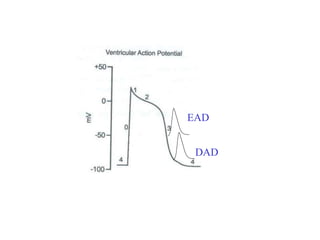
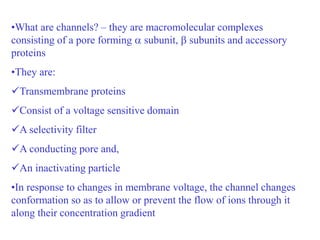
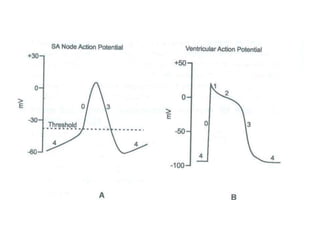
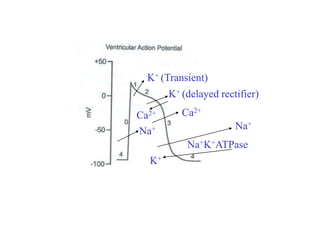
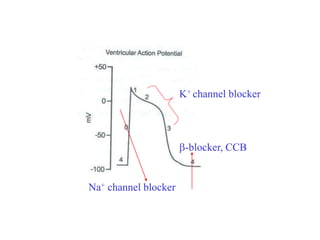
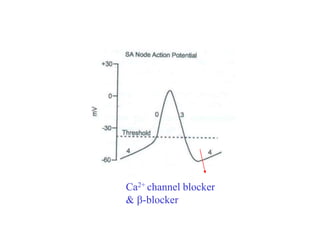
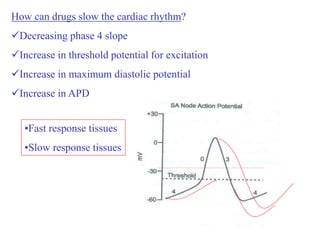
Cardiac arrhythmias can be categorized as bradyarrhythmias or tachyarrhythmias. Tachyarrhythmias occur due to enhanced automaticity, afterdepolarizations, or re-entry. Sodium channel blockers, potassium channel blockers, beta-blockers, and calcium channel blockers can be used to treat arrhythmias by decreasing phase 4 depolarization slope, increasing threshold for excitation, or increasing action potential duration. The effects of antiarrhythmic drugs depend on their specific mechanisms of action on ion channels and whether they suppress or exacerbate arrhythmias through effects on conduction velocity and refractoriness.