Capital Budgeting 
Introduction and Project Risk
Capital Budgeting 
Is the process of: 
• Measuring 
• Evaluating 
• Selecting long-term investment 
opportunity
Project Risk 
Capital undertakings have elements of both 
• Risk 
• Reward 
Risk: The possibility of loss or other unfavorable 
Results that derives from uncertainty 
implicitly in future outcomes
Definition of risk 
11/24/2014 4
A particular project may be at risk from 
the following: 
• Incomplete or incorrect analysis of the project, 
including failure to incorporate revenue or cost 
elements or mis-estimation of those elements. 
• Unanticipated actions of customers, suppliers, 
and competitors, including changing prices of 
resources, and the advent of new technology.
A particular project may be at risk from 
the following: 
• Unanticipated changes in laws, regulations, or 
other political changes. 
• Unanticipated macroeconomic changes, 
including 
changes in interest rates, inflation/deflation rates, 
tax rates, and currency exchange rates.
An alternate content page. 
REDUCING RISK 
11/24/2014 7
In effect, having a diverse portfolio of projects reduces the 
aggregate risk to the firm in much the same manner that 
diversification of securities holdings reduces the risk in a securities 
investment portfolio. 
WITH A LARGE NUMBER OF DIVERSE PROJECTS, THE UNFAVORABLE OUTCOMES EXPERIENCED 
BY SOME PROJECTS ARE MORE LIKELY TO BE OFFSET BY FAVORABLE OUTCOMES EXPERIENCED 
BY OTHER PROJECTS. 
11/24/2014 8
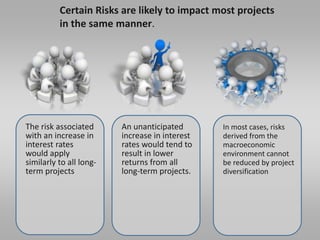
Certain Risks are likely to impact most projects 
in the same manner. 
The risk associated 
with an increase in 
interest rates 
would apply 
similarly to all long-term 
projects 
An unanticipated 
increase in interest 
rates would tend to 
result in lower 
returns from all 
long-term projects. 
In most cases, risks 
derived from the 
macroeconomic 
environment cannot 
be reduced by project 
diversification
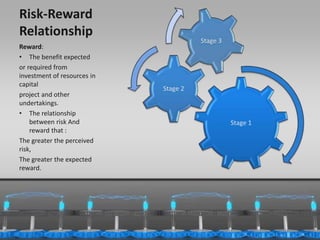
Risk-Reward 
Relationship 
Stage 1 
Stage 2 
Stage 3 
Reward: 
• The benefit expected 
or required from 
investment of resources in 
capital 
project and other 
undertakings. 
• The relationship 
between risk And 
reward that : 
The greater the perceived 
risk, 
The greater the expected 
reward. 
11/24/2014 10
The risk-reward 
relationship 
6 
5 
4 
3 
2 
1 
0 
Chart Title 
Series 1 Series 2 Series 3 
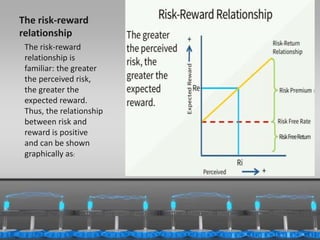
The risk-reward 
relationship is 
familiar: the greater 
the perceived risk, 
the greater the 
expected reward. 
Thus, the relationship 
between risk and 
reward is positive 
and can be shown 
graphically as: 
11/24/2014 11
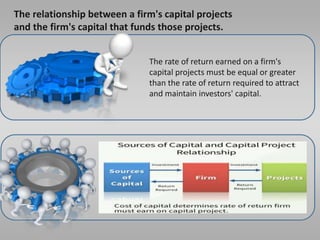
The relationship between a firm's capital projects 
and the firm's capital that funds those projects. 
The rate of return earned on a firm's 
capital projects must be equal or greater 
than the rate of return required to attract 
and maintain investors' capital.
In the U.S. the risk-free rate of return normally is 
measured by the rates on U.S. 
• Treasury securities (bills and notes). paid on these securities 
without incurring the risk associated with commercial Investors 
or firms could earn the rates securities or with project 
undertakings. 
• The return expected above the risk-free rate, called the risk 
premium, depends on the perceived risk inherent in an 
investment opportunity-securities, projects.
Hurdle Rate or Discount rate 
The resulting weighted average is the rate of return 
that a firm must expect to earn on a project it 
undertakes. 
11/24/2014 14
Risk-free rate of return 
The rate of return expected solely 
for the deferred current 
consumption that results from 
making an investment. 
11/24/2014 15

Capital Budgeting

  • 1.
  • 2.
    Capital Budgeting Isthe process of: • Measuring • Evaluating • Selecting long-term investment opportunity
  • 3.
    Project Risk Capitalundertakings have elements of both • Risk • Reward Risk: The possibility of loss or other unfavorable Results that derives from uncertainty implicitly in future outcomes
  • 4.
    Definition of risk 11/24/2014 4
  • 5.
    A particular projectmay be at risk from the following: • Incomplete or incorrect analysis of the project, including failure to incorporate revenue or cost elements or mis-estimation of those elements. • Unanticipated actions of customers, suppliers, and competitors, including changing prices of resources, and the advent of new technology.
  • 6.
    A particular projectmay be at risk from the following: • Unanticipated changes in laws, regulations, or other political changes. • Unanticipated macroeconomic changes, including changes in interest rates, inflation/deflation rates, tax rates, and currency exchange rates.
  • 7.
    An alternate contentpage. REDUCING RISK 11/24/2014 7
  • 8.
    In effect, havinga diverse portfolio of projects reduces the aggregate risk to the firm in much the same manner that diversification of securities holdings reduces the risk in a securities investment portfolio. WITH A LARGE NUMBER OF DIVERSE PROJECTS, THE UNFAVORABLE OUTCOMES EXPERIENCED BY SOME PROJECTS ARE MORE LIKELY TO BE OFFSET BY FAVORABLE OUTCOMES EXPERIENCED BY OTHER PROJECTS. 11/24/2014 8
  • 9.
    Certain Risks arelikely to impact most projects in the same manner. The risk associated with an increase in interest rates would apply similarly to all long-term projects An unanticipated increase in interest rates would tend to result in lower returns from all long-term projects. In most cases, risks derived from the macroeconomic environment cannot be reduced by project diversification
  • 10.
    Risk-Reward Relationship Stage1 Stage 2 Stage 3 Reward: • The benefit expected or required from investment of resources in capital project and other undertakings. • The relationship between risk And reward that : The greater the perceived risk, The greater the expected reward. 11/24/2014 10
  • 11.
    The risk-reward relationship 6 5 4 3 2 1 0 Chart Title Series 1 Series 2 Series 3 The risk-reward relationship is familiar: the greater the perceived risk, the greater the expected reward. Thus, the relationship between risk and reward is positive and can be shown graphically as: 11/24/2014 11
  • 12.
    The relationship betweena firm's capital projects and the firm's capital that funds those projects. The rate of return earned on a firm's capital projects must be equal or greater than the rate of return required to attract and maintain investors' capital.
  • 13.
    In the U.S.the risk-free rate of return normally is measured by the rates on U.S. • Treasury securities (bills and notes). paid on these securities without incurring the risk associated with commercial Investors or firms could earn the rates securities or with project undertakings. • The return expected above the risk-free rate, called the risk premium, depends on the perceived risk inherent in an investment opportunity-securities, projects.
  • 14.
    Hurdle Rate orDiscount rate The resulting weighted average is the rate of return that a firm must expect to earn on a project it undertakes. 11/24/2014 14
  • 15.
    Risk-free rate ofreturn The rate of return expected solely for the deferred current consumption that results from making an investment. 11/24/2014 15