Steve Song
Network Startup Resource Center
11 May 2017
Wireless Regulation in
Africa:
Challenges &
Opportunities
THE SPREAD OF FIBRE OPTIC
INFRASTRUCTURE
Opportunity
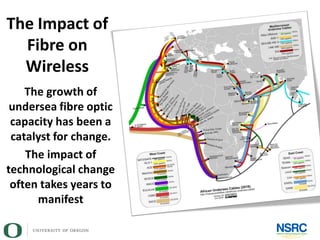
The Impact of
Fibre on
Wireless
The growth of
undersea fibre optic
capacity has been a
catalyst for change.
The impact of
technological change
often takes years to
manifest
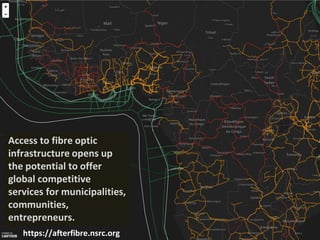
https://afterfibre.nsrc.org
Access to fibre optic
infrastructure opens up
the potential to offer
global competitive
services for municipalities,
communities,
entrepreneurs.
WIRELESS REGULATION AND THE
PACE OF TECHNOLOGICAL CHANGE
Challenge
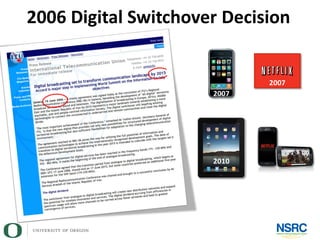
2006 Digital Switchover Decision
2007
2007
2010
EFFECTIVE SPECTRUM LICENSING
Challenge
Spectrum auctions: Nigeria
• 2013 - 2.3GHz
– 30 MHz of 2.3GHz spectrum
– 23 million USD
– won by Bitflux (a local consortium)
– 4 years later little evidence of roll-out
• 2014 - 2.6 GHz
– 14 lots of 2x5MHz of spectrum
(140MHz in total)
– Launched and withdrawn twice in
2014 then 2015
– Finally 2016, on MTN successfully bids
for 6 lots meeting the reserve of $16M
per lot, a total of $96M
Spectrum Auctions: Mozambique
2013 - 800MHz
• auction of five lots of 2x5MHz
• reserve price of $30M per lot
• no bids, auction withdrawn
• remains fallow with no
published plans to re-auction
Spectrum Auctions: South Africa
• Three attempts since 2010 to launch
auctions in 2.6GHz and 3.5GHz and more
recently 800MHz
• Attempts to include national strategic
objectives into the auction design
resulting in significant pushback from
operators
• Recent announcement of plans to claw
back licensed mobile spectrum for
national wholesale network has now
paralysed the sector with the regulator at
odds with the Ministry of Communication
Spectrum Auctions: Kenya
2014 - 800MHz
• Kenyan government agrees on
exchange with largest incumbent
Safaricom. 2x15MHz spectrum in
exchange for $56M plus promise to
build police communications network
• Predictably, Airtel and Telkom file
complaints
• Net result: all three operators get
2x10MHz and pay $25M each
• No auction. Successful outcome by
accident?
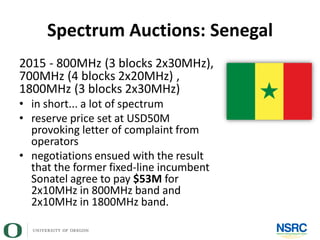
Spectrum Auctions: Senegal
2015 - 800MHz (3 blocks 2x30MHz),
700MHz (4 blocks 2x20MHz) ,
1800MHz (3 blocks 2x30MHz)
• in short... a lot of spectrum
• reserve price set at USD50M
provoking letter of complaint from
operators
• negotiations ensued with the result
that the former fixed-line incumbent
Sonatel agree to pay $53M for
2x10MHz in 800MHz band and
2x10MHz in 1800MHz band.
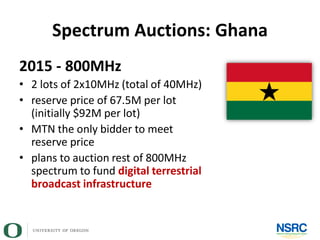
Spectrum Auctions: Ghana
2015 - 800MHz
• 2 lots of 2x10MHz (total of 40MHz)
• reserve price of 67.5M per lot
(initially $92M per lot)
• MTN the only bidder to meet
reserve price
• plans to auction rest of 800MHz
spectrum to fund digital terrestrial
broadcast infrastructure
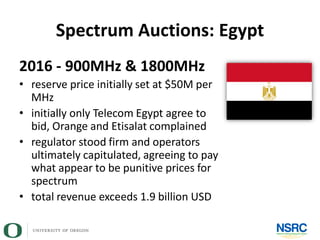
Spectrum Auctions: Egypt
2016 - 900MHz & 1800MHz
• reserve price initially set at $50M per
MHz
• initially only Telecom Egypt agree to
bid, Orange and Etisalat complained
• regulator stood firm and operators
ultimately capitulated, agreeing to pay
what appear to be punitive prices for
spectrum
• total revenue exceeds 1.9 billion USD
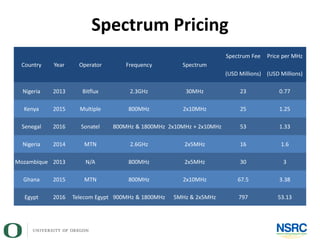
Spectrum Pricing
Country Year Operator Frequency Spectrum
Spectrum Fee Price per MHz
(USD Millions) (USD Millions)
Nigeria 2013 Bitflux 2.3GHz 30MHz 23 0.77
Kenya 2015 Multiple 800MHz 2x10MHz 25 1.25
Senegal 2016 Sonatel 800MHz & 1800MHz 2x10MHz + 2x10MHz 53 1.33
Nigeria 2014 MTN 2.6GHz 2x5MHz 16 1.6
Mozambique 2013 N/A 800MHz 2x5MHz 30 3
Ghana 2015 MTN 800MHz 2x10MHz 67.5 3.38
Egypt 2016 Telecom Egypt 900MHz & 1800MHz 5MHz & 2x5MHz 797 53.13
UNLICENSED SPECTRUM
Opportunity
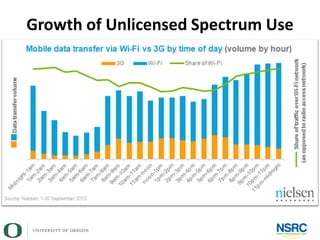
Growth of Unlicensed Spectrum Use
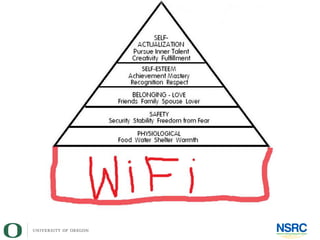
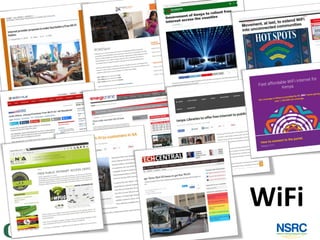
WiFi
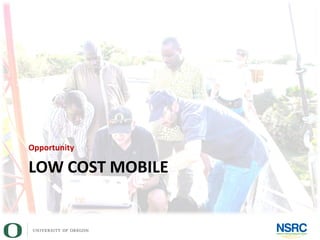
LOW COST MOBILE
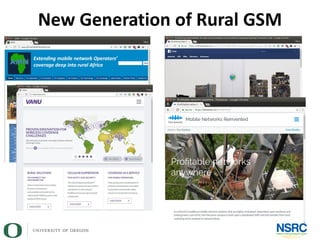
Opportunity
New Generation of Rural GSM
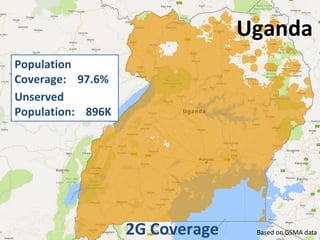
Uganda
2G Coverage
Population
Coverage: 97.6%
Unserved
Population: 896K
Based on GSMA data
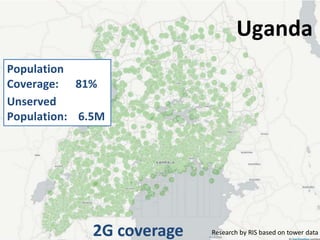
Research by RIS based on tower data
Uganda
Population
Coverage: 81%
Unserved
Population: 6.5M
DYNAMIC SPECTRUM
Opportunity
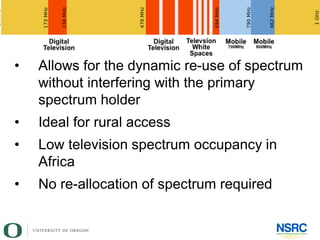
Television White Spaces
• Allows for the dynamic re-use of spectrum
without interfering with the primary
spectrum holder
• Ideal for rural access
• Low television spectrum occupancy in
Africa
• No re-allocation of spectrum required
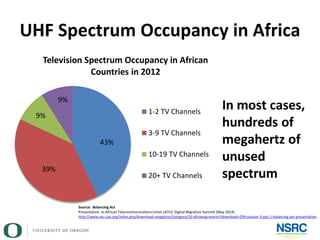
UHF Spectrum Occupancy in Africa
43%
39%
9%
9%
Television Spectrum Occupancy in African
Countries in 2012
1-2 TV Channels
3-9 TV Channels
10-19 TV Channels
20+ TV Channels
Source: Balancing Act
Presentation to African TelecommunicationsUnion (ATU) Digital Migration Summit (May 2014)
http://www.atu-uat.org/index.php/download-categories/category/10-afriswog-events?download=299:session-3-ppt-1-balancing-act-presentation
In most cases,
hundreds of
megahertz of
unused
spectrum
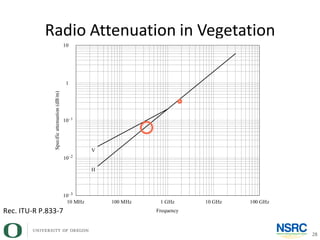
Radio Attenuation in Vegetation
28
Rec. ITU-R P.833-7
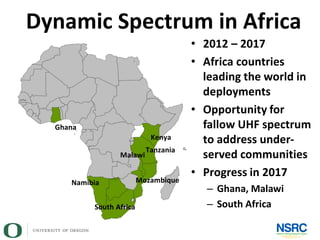
Dynamic Spectrum in Africa
• 2012 – 2017
• Africa countries
leading the world in
deployments
• Opportunity for
fallow UHF spectrum
to address under-
served communities
• Progress in 2017
– Ghana, Malawi
– South AfricaSouth Africa
Namibia
Ghana
Kenya
Malawi
Tanzania
Mozambique
CONCLUSION
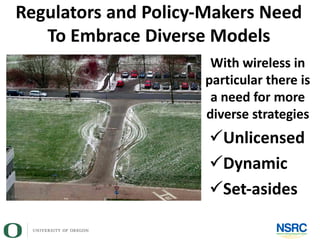
Regulators and Policy-Makers Need
To Embrace Diverse Models
With wireless in
particular there is
a need for more
diverse strategies
Unlicensed
Dynamic
Set-asides
THANK YOU
Steve Song
@stevesong
https://nsrc.org
https://manypossibilities.net

Canadian Spectrum Summit - 2017

  • 1.
    Steve Song Network StartupResource Center 11 May 2017 Wireless Regulation in Africa: Challenges & Opportunities
  • 2.
    THE SPREAD OFFIBRE OPTIC INFRASTRUCTURE Opportunity
  • 3.
    The Impact of Fibreon Wireless The growth of undersea fibre optic capacity has been a catalyst for change. The impact of technological change often takes years to manifest
  • 4.
    https://afterfibre.nsrc.org Access to fibreoptic infrastructure opens up the potential to offer global competitive services for municipalities, communities, entrepreneurs.
  • 5.
    WIRELESS REGULATION ANDTHE PACE OF TECHNOLOGICAL CHANGE Challenge
  • 6.
    2006 Digital SwitchoverDecision 2007 2007 2010
  • 8.
  • 9.
    Spectrum auctions: Nigeria •2013 - 2.3GHz – 30 MHz of 2.3GHz spectrum – 23 million USD – won by Bitflux (a local consortium) – 4 years later little evidence of roll-out • 2014 - 2.6 GHz – 14 lots of 2x5MHz of spectrum (140MHz in total) – Launched and withdrawn twice in 2014 then 2015 – Finally 2016, on MTN successfully bids for 6 lots meeting the reserve of $16M per lot, a total of $96M
  • 10.
    Spectrum Auctions: Mozambique 2013- 800MHz • auction of five lots of 2x5MHz • reserve price of $30M per lot • no bids, auction withdrawn • remains fallow with no published plans to re-auction
  • 11.
    Spectrum Auctions: SouthAfrica • Three attempts since 2010 to launch auctions in 2.6GHz and 3.5GHz and more recently 800MHz • Attempts to include national strategic objectives into the auction design resulting in significant pushback from operators • Recent announcement of plans to claw back licensed mobile spectrum for national wholesale network has now paralysed the sector with the regulator at odds with the Ministry of Communication
  • 12.
    Spectrum Auctions: Kenya 2014- 800MHz • Kenyan government agrees on exchange with largest incumbent Safaricom. 2x15MHz spectrum in exchange for $56M plus promise to build police communications network • Predictably, Airtel and Telkom file complaints • Net result: all three operators get 2x10MHz and pay $25M each • No auction. Successful outcome by accident?
  • 13.
    Spectrum Auctions: Senegal 2015- 800MHz (3 blocks 2x30MHz), 700MHz (4 blocks 2x20MHz) , 1800MHz (3 blocks 2x30MHz) • in short... a lot of spectrum • reserve price set at USD50M provoking letter of complaint from operators • negotiations ensued with the result that the former fixed-line incumbent Sonatel agree to pay $53M for 2x10MHz in 800MHz band and 2x10MHz in 1800MHz band.
  • 14.
    Spectrum Auctions: Ghana 2015- 800MHz • 2 lots of 2x10MHz (total of 40MHz) • reserve price of 67.5M per lot (initially $92M per lot) • MTN the only bidder to meet reserve price • plans to auction rest of 800MHz spectrum to fund digital terrestrial broadcast infrastructure
  • 15.
    Spectrum Auctions: Egypt 2016- 900MHz & 1800MHz • reserve price initially set at $50M per MHz • initially only Telecom Egypt agree to bid, Orange and Etisalat complained • regulator stood firm and operators ultimately capitulated, agreeing to pay what appear to be punitive prices for spectrum • total revenue exceeds 1.9 billion USD
  • 16.
    Spectrum Pricing Country YearOperator Frequency Spectrum Spectrum Fee Price per MHz (USD Millions) (USD Millions) Nigeria 2013 Bitflux 2.3GHz 30MHz 23 0.77 Kenya 2015 Multiple 800MHz 2x10MHz 25 1.25 Senegal 2016 Sonatel 800MHz & 1800MHz 2x10MHz + 2x10MHz 53 1.33 Nigeria 2014 MTN 2.6GHz 2x5MHz 16 1.6 Mozambique 2013 N/A 800MHz 2x5MHz 30 3 Ghana 2015 MTN 800MHz 2x10MHz 67.5 3.38 Egypt 2016 Telecom Egypt 900MHz & 1800MHz 5MHz & 2x5MHz 797 53.13
  • 17.
  • 19.
  • 20.
  • 21.
  • 22.
  • 23.
  • 24.
    Research by RISbased on tower data Uganda Population Coverage: 81% Unserved Population: 6.5M
  • 25.
  • 26.
    Television White Spaces •Allows for the dynamic re-use of spectrum without interfering with the primary spectrum holder • Ideal for rural access • Low television spectrum occupancy in Africa • No re-allocation of spectrum required
  • 27.
    UHF Spectrum Occupancyin Africa 43% 39% 9% 9% Television Spectrum Occupancy in African Countries in 2012 1-2 TV Channels 3-9 TV Channels 10-19 TV Channels 20+ TV Channels Source: Balancing Act Presentation to African TelecommunicationsUnion (ATU) Digital Migration Summit (May 2014) http://www.atu-uat.org/index.php/download-categories/category/10-afriswog-events?download=299:session-3-ppt-1-balancing-act-presentation In most cases, hundreds of megahertz of unused spectrum
  • 28.
    Radio Attenuation inVegetation 28 Rec. ITU-R P.833-7
  • 29.
    Dynamic Spectrum inAfrica • 2012 – 2017 • Africa countries leading the world in deployments • Opportunity for fallow UHF spectrum to address under- served communities • Progress in 2017 – Ghana, Malawi – South AfricaSouth Africa Namibia Ghana Kenya Malawi Tanzania Mozambique
  • 30.
  • 31.
    Regulators and Policy-MakersNeed To Embrace Diverse Models With wireless in particular there is a need for more diverse strategies Unlicensed Dynamic Set-asides
  • 32.