Johann Heinrich 
Schulz 
discovered that 
a substance 
called silver 
nitrate would 
change color 
when exposed 
to light. This 
paved the way 
for the first 
pictures to be 
taken and 
processed.
Joseph 
Niepce 
developed 
the camera 
obscura 
and took 
the first 
photo with 
it. It wasn't 
ideal, 
though, 
because it 
took 8 
hours of 
light 
exposure to 
make a 
picture, 
and the 
picture 
faded with 
time.
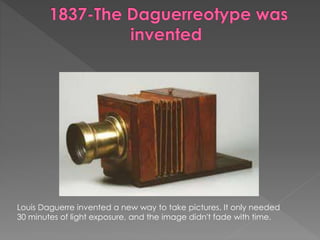
Louis Daguerre invented a new way to take pictures. It only needed 
30 minutes of light exposure, and the image didn't fade with time.
William Henry Talbot 
developed the 
Calotype process. 
This made it possible 
to make multiple 
copies of the same 
picture.
With the 
new 
Collodion 
process, 
cameras 
only 
needed a 
few 
seconds of 
light 
exposure to 
make a 
picture.
Up until this 
time pictures 
had to be 
developed 
immediately 
after being 
taken. 
Richard 
Leach 
Maddox 
invented the 
gelatin dry 
plate silver 
bromide 
process, 
which made 
it possible to 
take a 
picture and 
develop it 
later.
George Eastman 
invented the first 
roll-film camera.
The Polaroid 
allowed 
people to 
take a photo 
and have it 
developed 
immediately, 
right from the 
camera.
Polaroid 
came out 
with the first 
colored film.
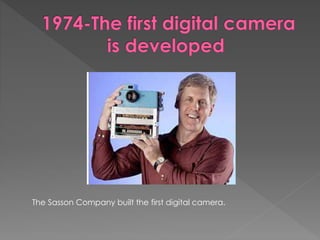
The Sasson Company built the first digital camera.
Canon put 
out the first 
digital 
camera for 
the public, 
which was 
later 
improved by 
Pixar.
Sony put out 
the first 
consumer 
camcorder, 
allowing 
people to 
record their 
memories in 
real time.
The camera 
phone 
technology was 
first used in 
Japan, but it 
quickly spread 
around the 
world.
Kodak put out 
their Easy Share 
digital camera, 
which made it 
easy to snap 
pictures and 
download 
them to the 
computer.
Kodak put out 
cameras that 
didn't have to 
be 
connected to 
a computer in 
order to 
download 
and share the 
pictures.

Camera timeline

  • 2.
    Johann Heinrich Schulz discovered that a substance called silver nitrate would change color when exposed to light. This paved the way for the first pictures to be taken and processed.
  • 3.
    Joseph Niepce developed the camera obscura and took the first photo with it. It wasn't ideal, though, because it took 8 hours of light exposure to make a picture, and the picture faded with time.
  • 4.
    Louis Daguerre inventeda new way to take pictures. It only needed 30 minutes of light exposure, and the image didn't fade with time.
  • 5.
    William Henry Talbot developed the Calotype process. This made it possible to make multiple copies of the same picture.
  • 6.
    With the new Collodion process, cameras only needed a few seconds of light exposure to make a picture.
  • 7.
    Up until this time pictures had to be developed immediately after being taken. Richard Leach Maddox invented the gelatin dry plate silver bromide process, which made it possible to take a picture and develop it later.
  • 8.
    George Eastman inventedthe first roll-film camera.
  • 9.
    The Polaroid allowed people to take a photo and have it developed immediately, right from the camera.
  • 10.
    Polaroid came out with the first colored film.
  • 11.
    The Sasson Companybuilt the first digital camera.
  • 12.
    Canon put outthe first digital camera for the public, which was later improved by Pixar.
  • 13.
    Sony put out the first consumer camcorder, allowing people to record their memories in real time.
  • 14.
    The camera phone technology was first used in Japan, but it quickly spread around the world.
  • 15.
    Kodak put out their Easy Share digital camera, which made it easy to snap pictures and download them to the computer.
  • 16.
    Kodak put out cameras that didn't have to be connected to a computer in order to download and share the pictures.