CALL CENTER TRAINING
This presentation contains:Cross Cultural Dynamics (USA/Global).
 Cultural Awareness.
Social Graces, Etiquette and Body language.
Map and Time zones.
Voice and Accent Training.
Anything else which will be covered during induction.
Customer Service.
Basics of BPO industry Call Handling.
Quality- nature, scope, importance, ways to measure.
Team building exercises. 
Trouble Shooting skills.
Mock Calls.Cross Cultural Dynamics (USA/Global)
All people are the same. It's only their habits  and cultures that are so different.CULTURES: The term "culture' has been adopted from the Latin word “cultura”  and in the broadest sense `the result of human action'.According to Hall (1959) culture is the pattern of taken-for-granted Assumptions about how a given collection of people shouldthink, act, and feel as  they go about their daily affairs.
Other definitions include:  Common value
Common beliefs
Common attitudes
Common Behaviour
Common norms
Symbols
Customs - Rituals
Ceremonies
Inter-Organisational Dynamics
Assumptions
PerceptionsPatterns of culture is simultaneously a product of human action as well as a determinant of future human action, .a composite of meanings and associated traditions which define , inform, and constitute the range of our understandings and investments'.
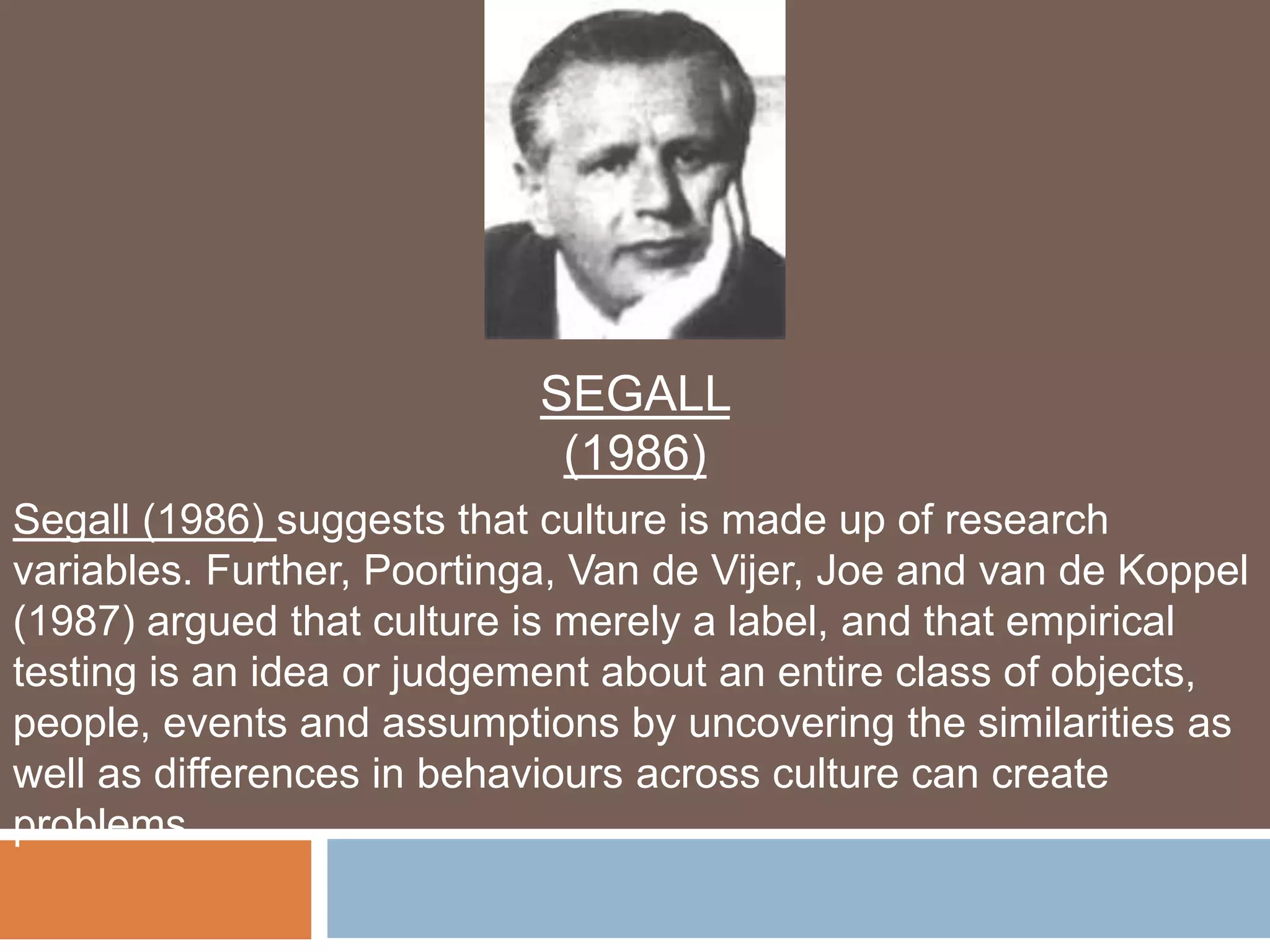
SEGALL (1986) Segall (1986) suggests that culture is made up of research variables. Further, Poortinga, Van de Vijer, Joe and van de Koppel (1987) argued that culture is merely a label, and that empirical testing is an idea or judgement about an entire class of objects, people, events and assumptions by uncovering the similarities as well as differences in behaviours across culture can create problems.
There is a diffuse range of elements ' involved in cultural programming:Language - both verbal and non verbal
Economics
Religion
Politics
Social institutions
Social strata or classes and family structure
Values
Attitude
Manners
Customs
Material items
Aesthetics
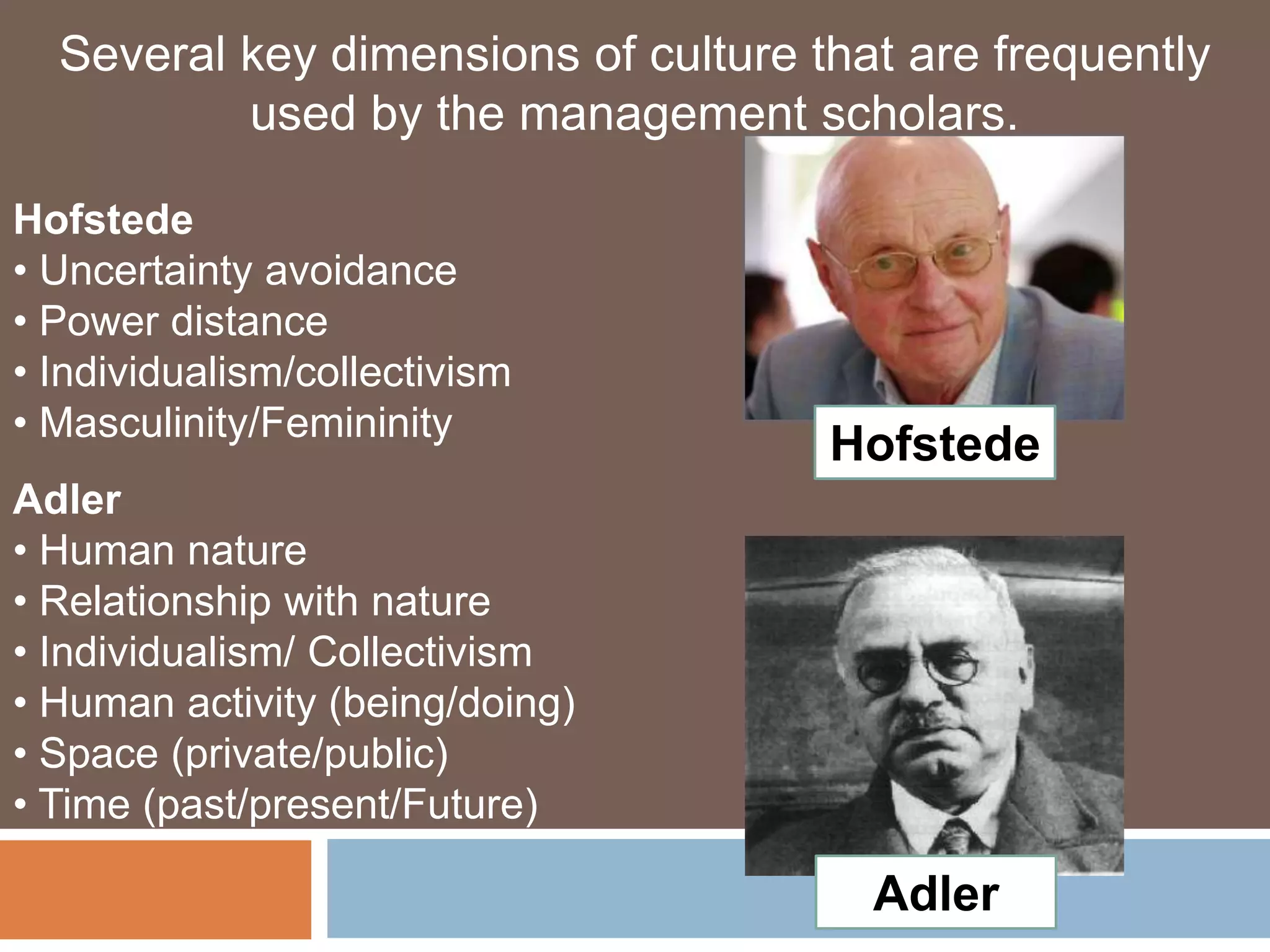
EducationSeveral key dimensions of culture that are frequently used by the management scholars.Hofstede• Uncertainty avoidance• Power distance• Individualism/collectivism• Masculinity/FemininityHofstedeAdler• Human nature• Relationship with nature• Individualism/ Collectivism• Human activity (being/doing)• Space (private/public)• Time (past/present/Future)Adler
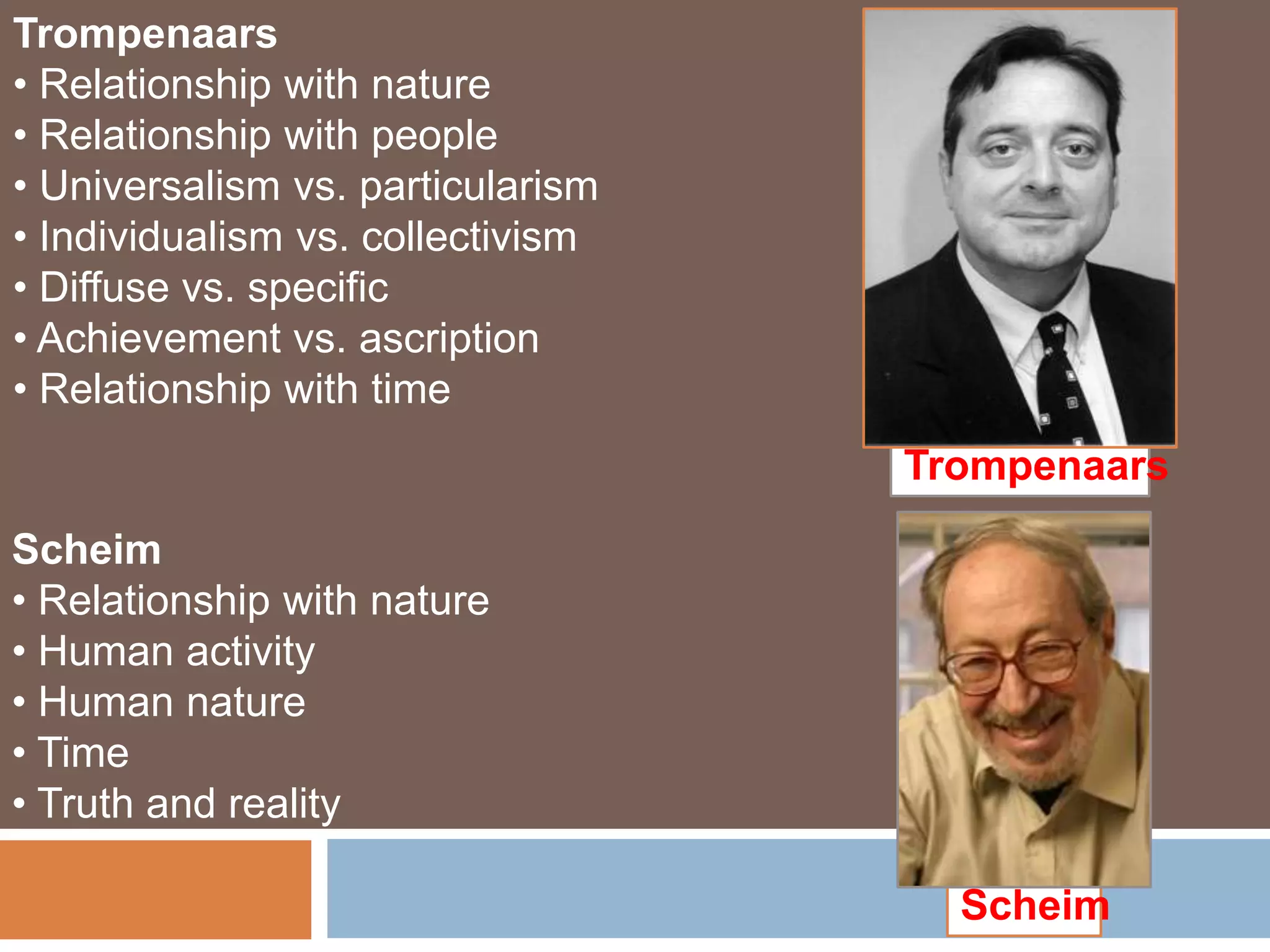
Trompenaars• Relationship with nature• Relationship with people• Universalism vs. particularism• Individualism vs. collectivism• Diffuse vs. specific• Achievement vs. ascription• Relationship with timeTrompenaarsScheim• Relationship with nature• Human activity• Human nature• Time• Truth and realityScheim
Cultural Awareness
CULTURAL AWARENESS : Cultural Awareness is the foundation of communication and it involves the ability of standing back from ourselves and becoming aware of our  cultural values, beliefs and perceptions.Cultural awareness in America is a thing of the past. There are so many different cultures and so little understanding in America that we are just one big melting pot, whether we like it or not. That is why America is going through the religious and governmental changes that we are today ,,, we are encouraged to have the ability to overlook certain aspects of culture.
The only cultural awareness of any concern in America is The Money Awareness Culture. I think it is that way to help cover all the cultural abuse throughout the history of America, which has contributed to making America a land of fear. There is fierce competition for it and everything is geared around money.
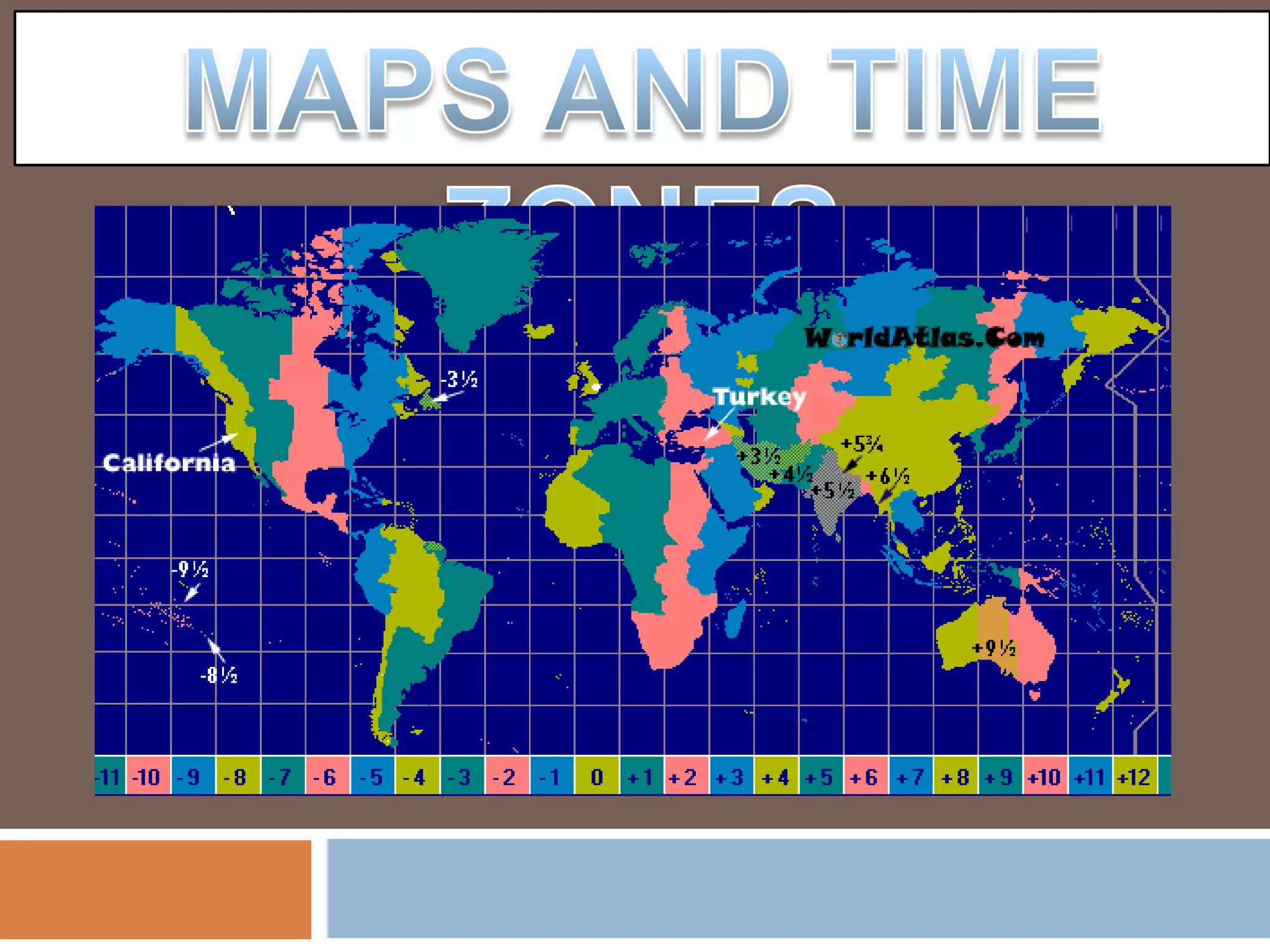
MAPS AND TIME ZONES
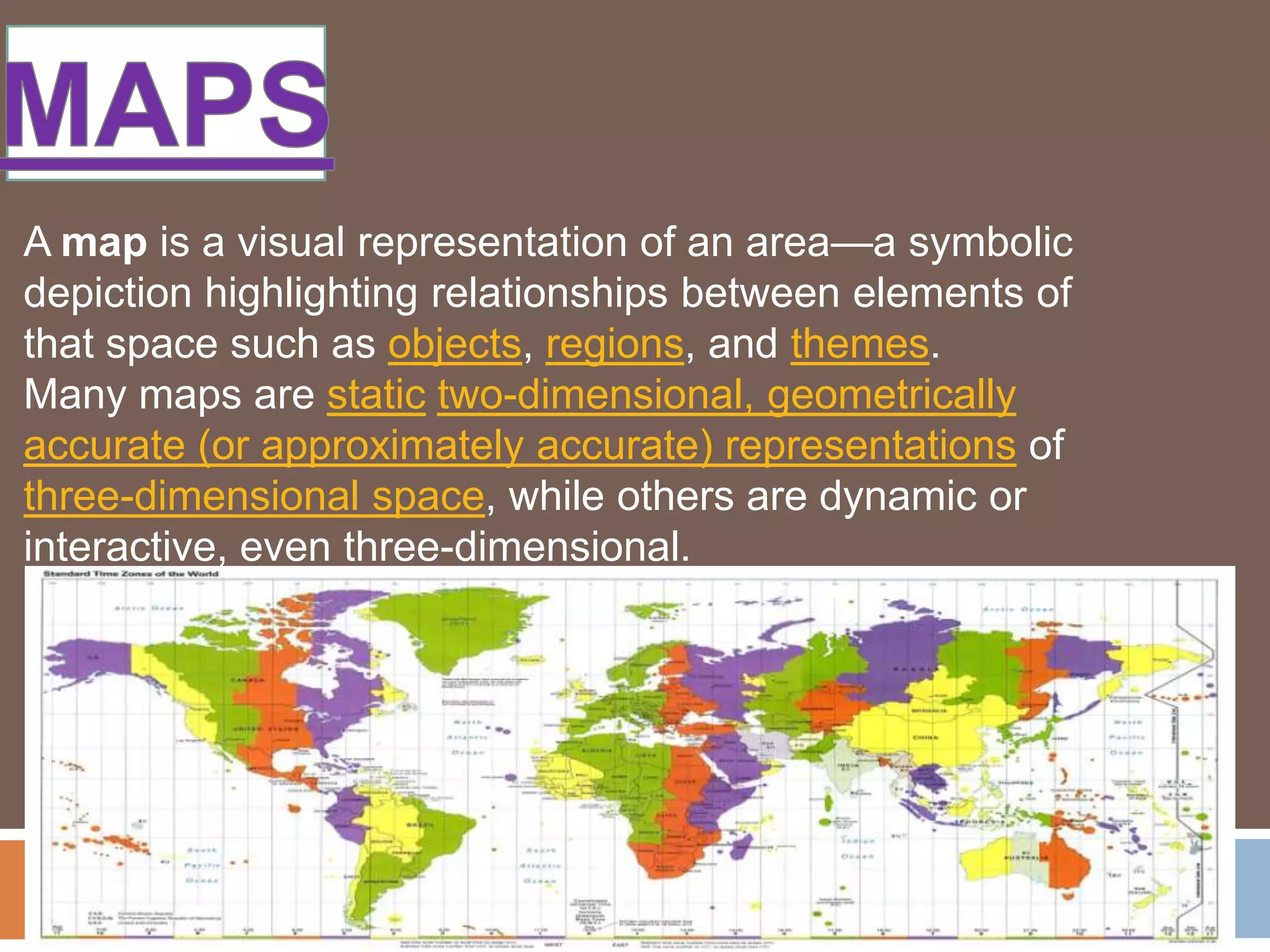
MAPSA map is a visual representation of an area—a symbolic depiction highlighting relationships between elements of that space such as objects, regions, and themes.Many maps are statictwo-dimensional, geometrically accurate (or approximately accurate) representations of three-dimensional space, while others are dynamic or interactive, even three-dimensional.
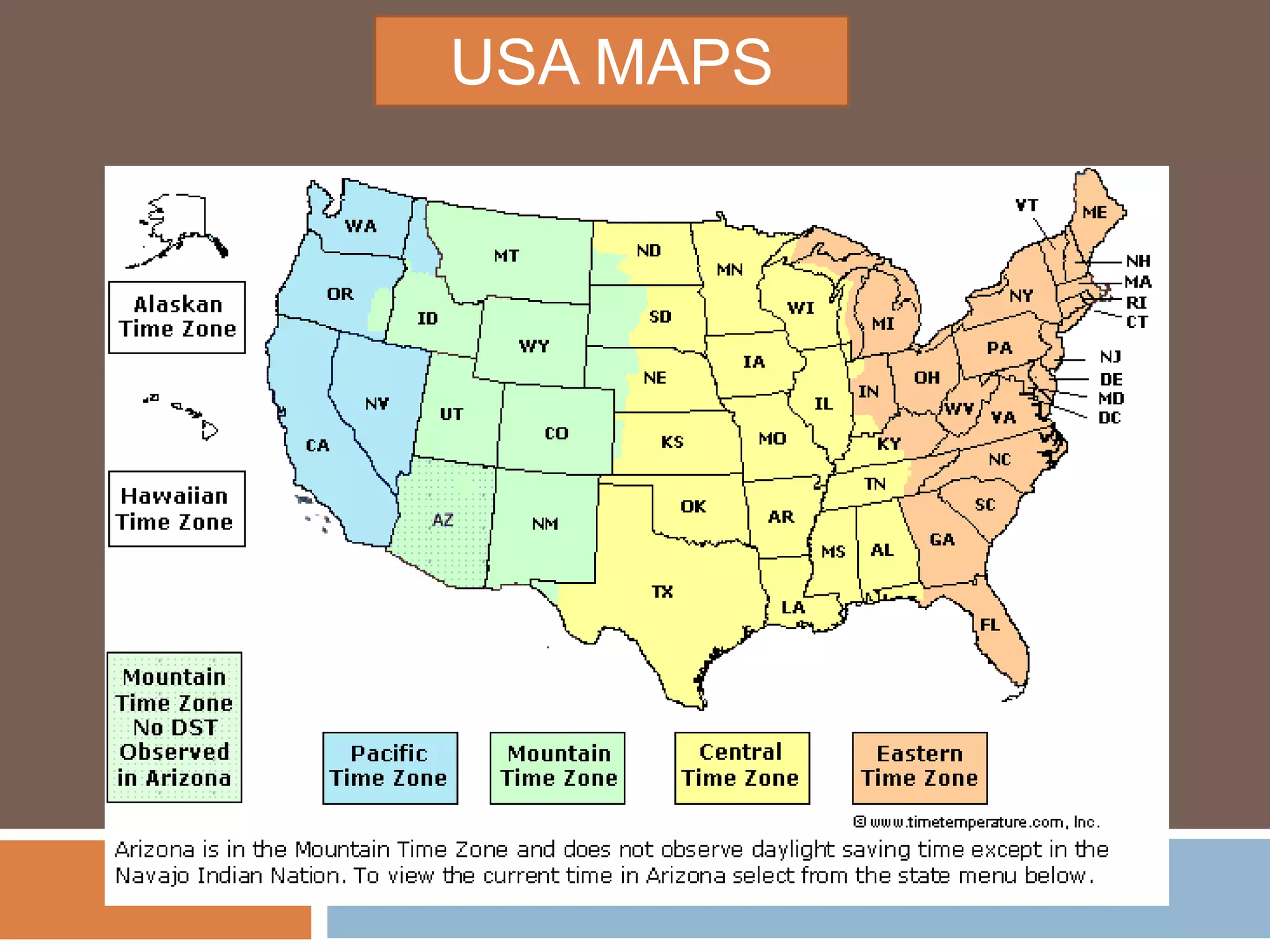
USA MAPS
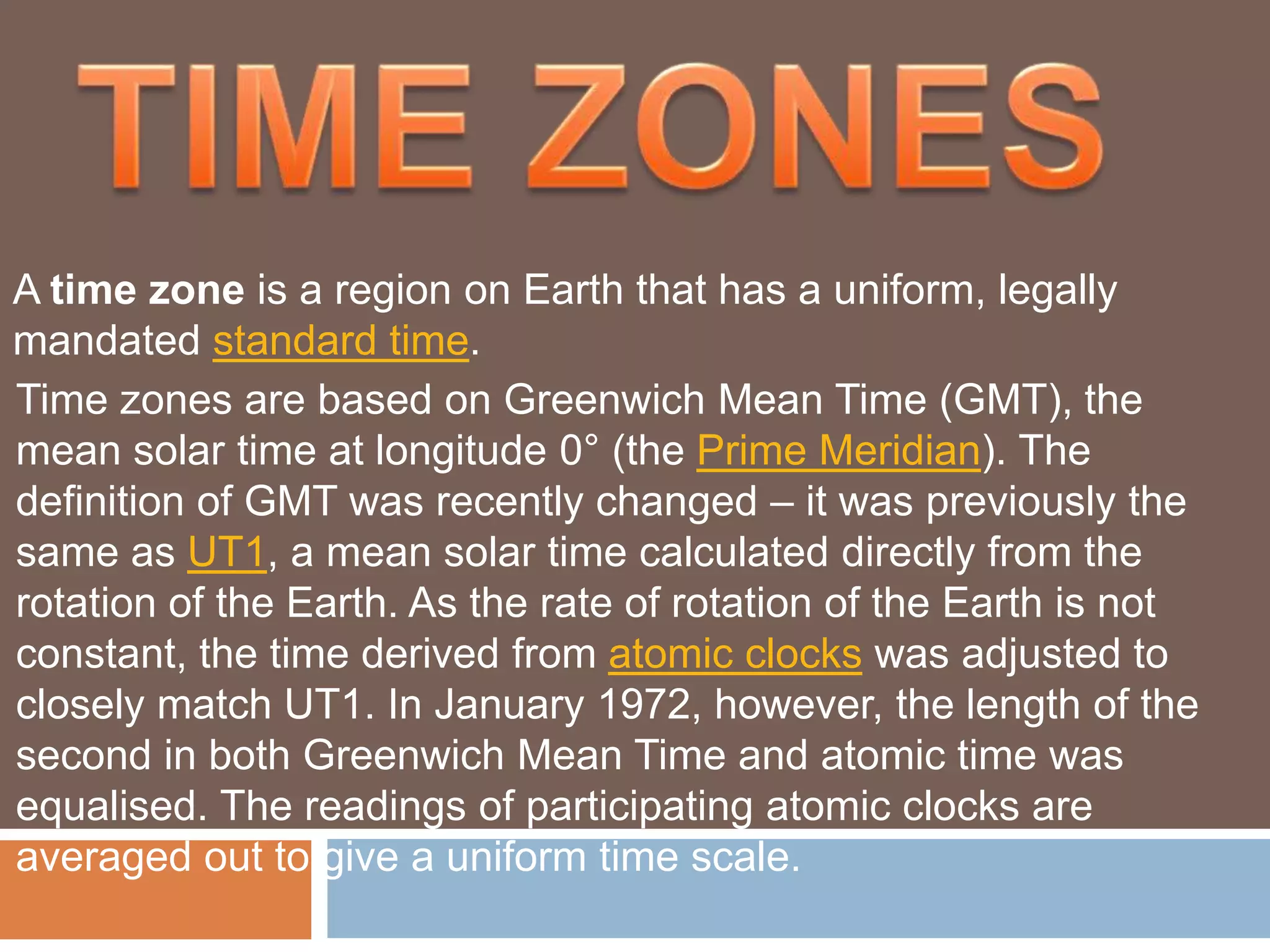
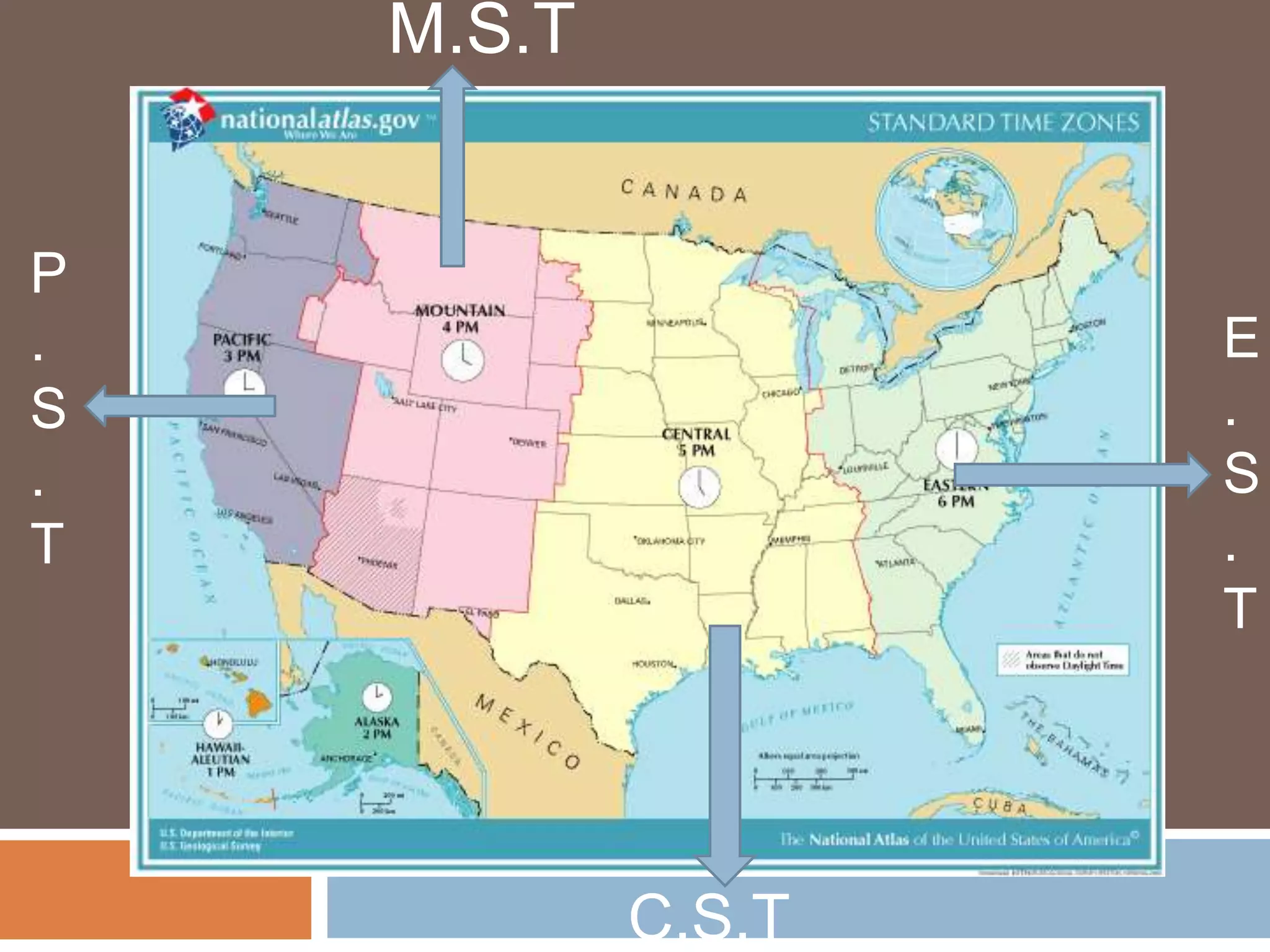
TIME ZONESA time zone is a region on Earth that has a uniform, legally mandated standard time.Time zones are based on Greenwich Mean Time (GMT), the mean solar time at longitude 0° (the Prime Meridian). The definition of GMT was recently changed – it was previously the same as UT1, a mean solar time calculated directly from the rotation of the Earth. As the rate of rotation of the Earth is not constant, the time derived from atomic clocks was adjusted to closely match UT1. In January 1972, however, the length of the second in both Greenwich Mean Time and atomic time was equalised. The readings of participating atomic clocks are averaged out to give a uniform time scale.
M.S.TP.S.TE.S.TC.S.T
CUSTOMER SERVICE
WHAT IS A CUSTOMER SERVICE“Customer service is a series of activities designed to enhance the level of customer satisfaction that is, the feeling that a product or service has met the customer expectation."“Customer service is a range of customer services to assist customers in making cost effective and correct use of a product. It includes assistance in planning, installation, training, trouble shooting, maintenance, upgrading, and disposal of a product.”"Customer Service is a function of how well an organization is able to constantly and consistently exceed the needs of the customer.""Customer Service is a function of how well an organization meets the needs of its customers."

Call center training SPR

  • 1.
  • 2.
    This presentation contains:CrossCultural Dynamics (USA/Global).
  • 3.
  • 4.
    Social Graces, Etiquetteand Body language.
  • 5.
  • 6.
  • 7.
    Anything else whichwill be covered during induction.
  • 8.
  • 9.
    Basics of BPOindustry Call Handling.
  • 10.
    Quality- nature, scope,importance, ways to measure.
  • 11.
  • 12.
  • 13.
    Mock Calls.Cross CulturalDynamics (USA/Global)
  • 14.
    All people arethe same. It's only their habits and cultures that are so different.CULTURES: The term "culture' has been adopted from the Latin word “cultura” and in the broadest sense `the result of human action'.According to Hall (1959) culture is the pattern of taken-for-granted Assumptions about how a given collection of people shouldthink, act, and feel as they go about their daily affairs.
  • 15.
  • 16.
  • 17.
  • 18.
  • 19.
  • 20.
  • 21.
  • 22.
  • 23.
  • 24.
  • 25.
    PerceptionsPatterns of cultureis simultaneously a product of human action as well as a determinant of future human action, .a composite of meanings and associated traditions which define , inform, and constitute the range of our understandings and investments'.
  • 26.
    SEGALL (1986) Segall(1986) suggests that culture is made up of research variables. Further, Poortinga, Van de Vijer, Joe and van de Koppel (1987) argued that culture is merely a label, and that empirical testing is an idea or judgement about an entire class of objects, people, events and assumptions by uncovering the similarities as well as differences in behaviours across culture can create problems.
  • 27.
    There is adiffuse range of elements ' involved in cultural programming:Language - both verbal and non verbal
  • 28.
  • 29.
  • 30.
  • 31.
  • 32.
    Social strata orclasses and family structure
  • 33.
  • 34.
  • 35.
  • 36.
  • 37.
  • 38.
  • 39.
    EducationSeveral key dimensionsof culture that are frequently used by the management scholars.Hofstede• Uncertainty avoidance• Power distance• Individualism/collectivism• Masculinity/FemininityHofstedeAdler• Human nature• Relationship with nature• Individualism/ Collectivism• Human activity (being/doing)• Space (private/public)• Time (past/present/Future)Adler
  • 40.
    Trompenaars• Relationship withnature• Relationship with people• Universalism vs. particularism• Individualism vs. collectivism• Diffuse vs. specific• Achievement vs. ascription• Relationship with timeTrompenaarsScheim• Relationship with nature• Human activity• Human nature• Time• Truth and realityScheim
  • 41.
  • 42.
    CULTURAL AWARENESS :Cultural Awareness is the foundation of communication and it involves the ability of standing back from ourselves and becoming aware of our cultural values, beliefs and perceptions.Cultural awareness in America is a thing of the past. There are so many different cultures and so little understanding in America that we are just one big melting pot, whether we like it or not. That is why America is going through the religious and governmental changes that we are today ,,, we are encouraged to have the ability to overlook certain aspects of culture.
  • 43.
    The only culturalawareness of any concern in America is The Money Awareness Culture. I think it is that way to help cover all the cultural abuse throughout the history of America, which has contributed to making America a land of fear. There is fierce competition for it and everything is geared around money.
  • 44.
  • 45.
    MAPSA map isa visual representation of an area—a symbolic depiction highlighting relationships between elements of that space such as objects, regions, and themes.Many maps are statictwo-dimensional, geometrically accurate (or approximately accurate) representations of three-dimensional space, while others are dynamic or interactive, even three-dimensional.
  • 46.
  • 47.
    TIME ZONESA timezone is a region on Earth that has a uniform, legally mandated standard time.Time zones are based on Greenwich Mean Time (GMT), the mean solar time at longitude 0° (the Prime Meridian). The definition of GMT was recently changed – it was previously the same as UT1, a mean solar time calculated directly from the rotation of the Earth. As the rate of rotation of the Earth is not constant, the time derived from atomic clocks was adjusted to closely match UT1. In January 1972, however, the length of the second in both Greenwich Mean Time and atomic time was equalised. The readings of participating atomic clocks are averaged out to give a uniform time scale.
  • 48.
  • 49.
  • 50.
    WHAT IS ACUSTOMER SERVICE“Customer service is a series of activities designed to enhance the level of customer satisfaction that is, the feeling that a product or service has met the customer expectation."“Customer service is a range of customer services to assist customers in making cost effective and correct use of a product. It includes assistance in planning, installation, training, trouble shooting, maintenance, upgrading, and disposal of a product.”"Customer Service is a function of how well an organization is able to constantly and consistently exceed the needs of the customer.""Customer Service is a function of how well an organization meets the needs of its customers."
  • 51.
    DELIGHTED CUSTOMER :Adelighted customer is a satisfied customer after doing business with your company. In turn they would be more likely to do business with you again and will hopefully tell others about their experience / recommend your business.
  • 52.
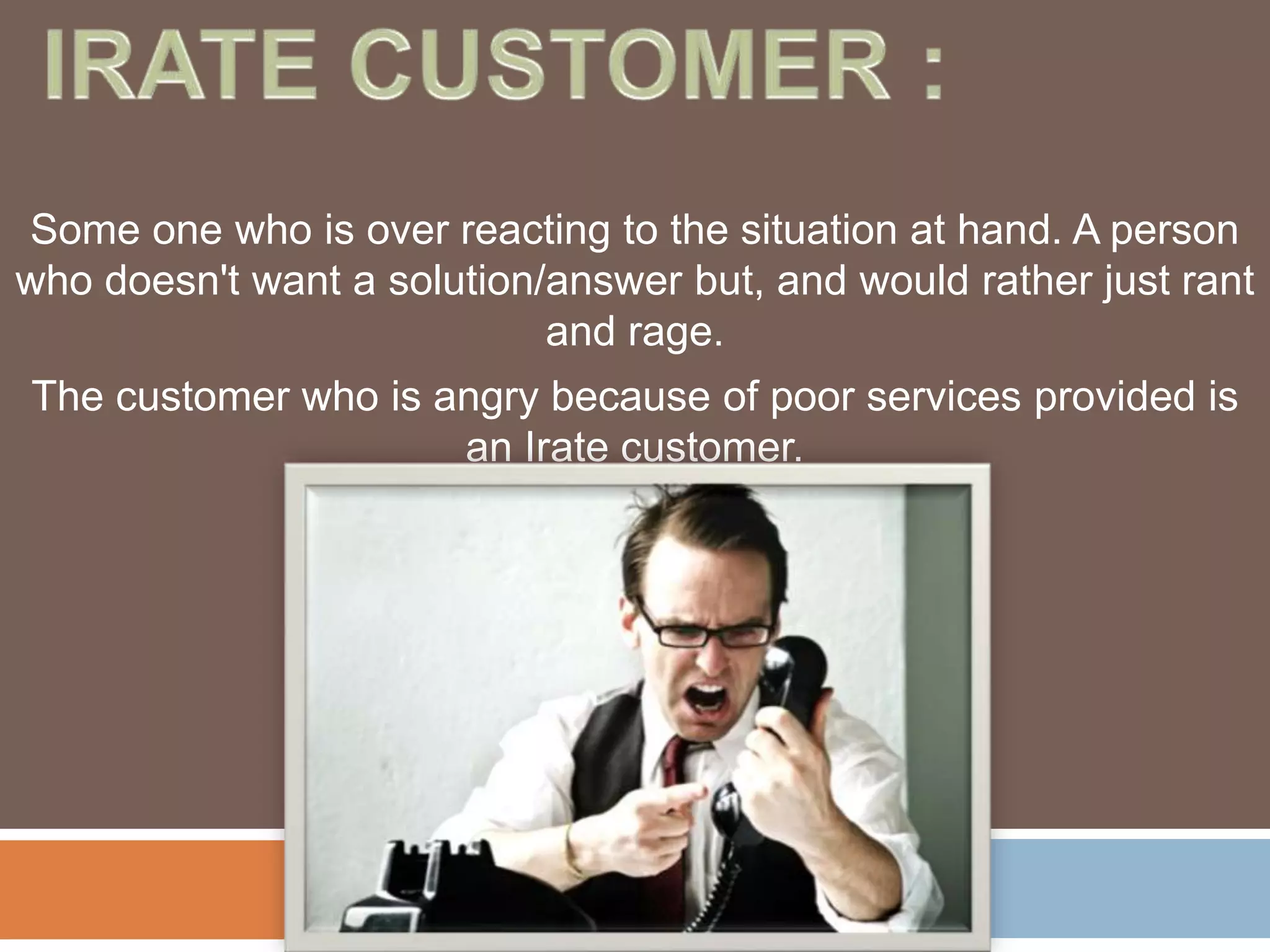
    IRATE CUSTOMER :Someone who is over reacting to the situation at hand. A person who doesn't want a solution/answer but, and would rather just rant and rage.The customer who is angry because of poor services provided is an Irate customer.
  • 53.
    10 STEPS FORGOOD CUSTOMER SERVICE1. Take the customer seriously. He is always right, especially when he's wrong! He is right about how he feels and he is right in that he can leave your premises and tell the world and his wife that you and your company suck, so - take the customer very seriously!2. Communicate, communicate, communicate. If things have gone wrong say so. Do not lie (this is insulting and sends a message you do not want to send). It insults your customer's intelligence. Customers understand that people make mistakes, they do not expect you to be perfect, they expect you to care when you screw up..
  • 54.
    3. When thingsgo wrong, do not despair, complaints are gifts. Customers are so used to flawless service now it is taken as standard. When things go wrong your responses may be the only chance you will get to show just how special you are. I will say again, A complaint is a gift - treat it as such.4. Be available, if you cannot deal with someone immediately at least acknowledge them immediately. People do not mind waiting, what frustrates them is feeling ignored.5. Respect - should be a given, isn't.6. Listen don't talk. Do not assume you know what the customer wants and do not answer them from your own perspective. The solution that will work in the long-term is the solution the customer wants, not the one you do.
  • 55.
    7. Know yourstuff. It is not acceptable to be ignorant in front of a customer. All staff who are customer facing (and that includes those on telephones) must know their products and services and where and how to route a call and when (and this is so much better) to 'own' the problem themselves.8. Quality and value - Both are very important, both are hugely subjective and both are determined in the customer's brain. Taking the time and trouble to know the customer and to listen to him really pays off here. The world is full of companies giving 'added-value-solutions', many of them are giving added-cost-non-solutions since their interventions cost them money and if they haven't taken the time to listen to the authentic voice of the customer, will almost always not be perceived as either quality or value because they do not address the specific problem the customer has in mind.
  • 56.
    9. Treat asyou would be treated. Courtesy, respect and appreciation are the bare minimum. Many customer service staff complain that customers do not respect them. Remember that respect, like love, has to be given away before it can be received. No customer will ever respect us until and unless we respect them first.10. My word is my bond. Give staff the power and authority to deal with a customer's problem. The ownership belongs with the person taking the call, they should be allowed to provide a fix. If the staff member always says "I'll have to ask my boss" the customer will get frustrated and want to deal just with the boss. Have the faith and confidence in your staff and your products & services that you can trust them both and that you will stand behind them and back them. THEN you will have the basics for world-class customer-service and world class customers.
  • 57.
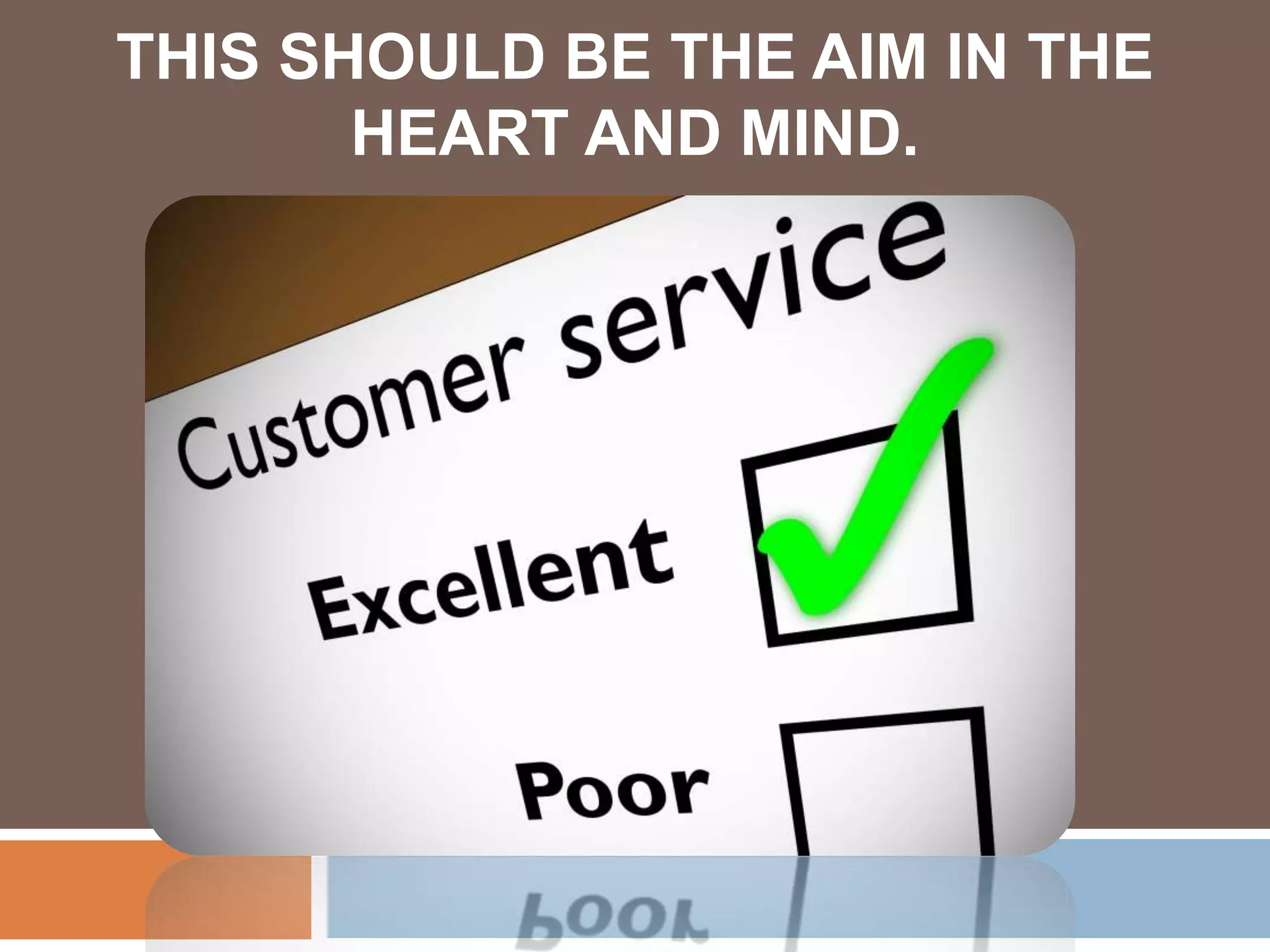
    THIS SHOULD BETHE AIM IN THE HEART AND MIND.
  • 58.
  • 59.
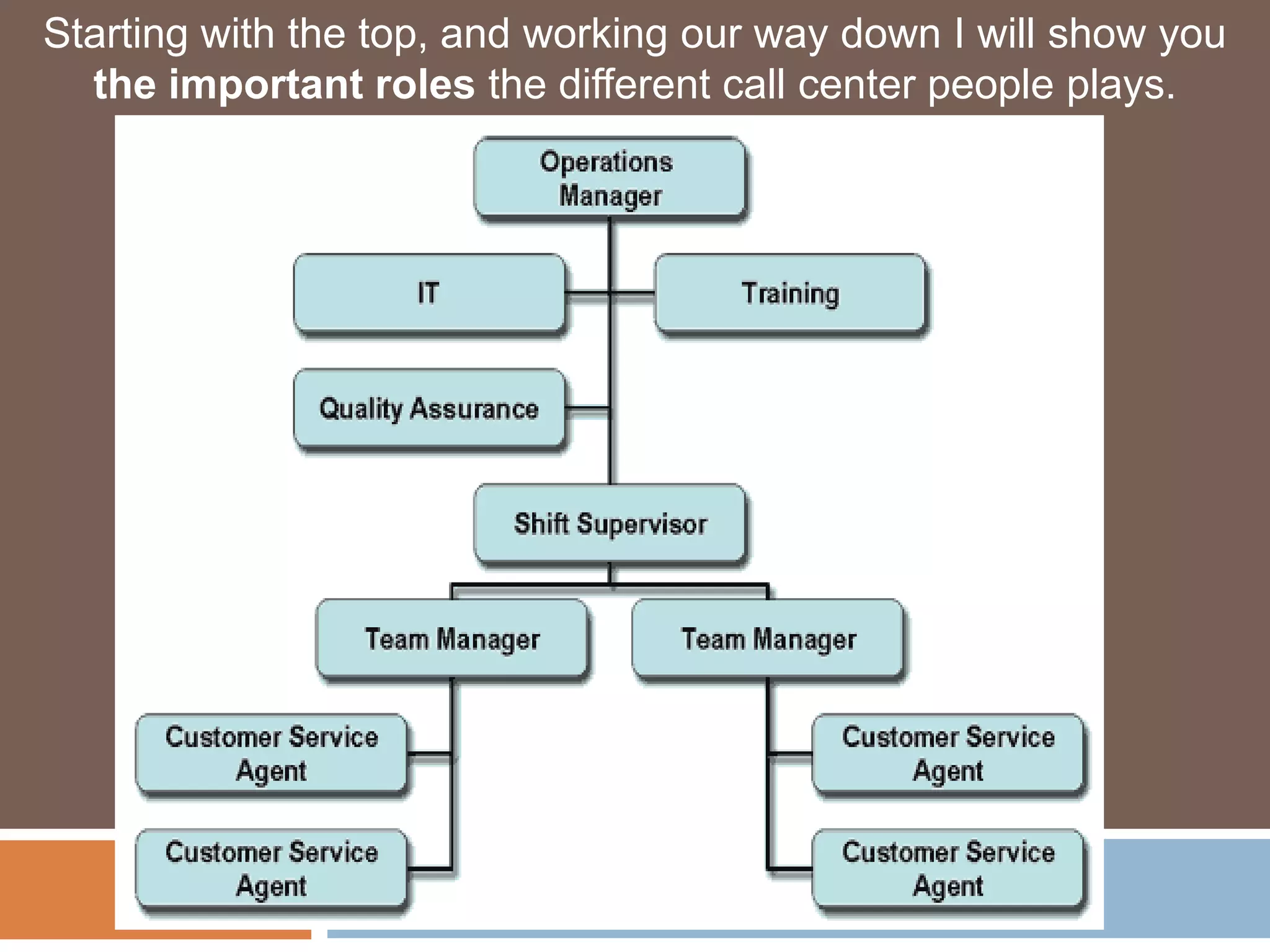
    Starting with thetop, and working our way down I will show you the important roles the different call center people plays.
  • 60.
    It all beginswith the operations manager, sometimes also known as a call center manager. They are responsible for all departments within the call center, as well as relations with all outside contacts such as maintenance, vending, payroll, human resources, or any other company the call center works with. The shift supervisoris the person that communicates between the operations manager and the team managers, ensuring everyone is on the same page. They will produce reports that are needed and make sure all team managers report directly to them in regards to problems with things such as attendance, call times, and customer satisfaction rates.
  • 61.
    Team managersspend theirtime on the call floor, coaching the customer service agents in a positive manner when it comes to attendance, quality, policy adherence, and following procedure. Customer service agents would report directly to the team manager in all aspects of their work including calling them when they will miss a day, or coming to them when they have an issue they cannot correct or handle on their own. This position is one that you will have to stand out as a positive role model, knowing that what is said and done by a team manager is what sets the tone for everyone elseTraining is an important aspect of running a quality call center, as customer service agents will not appropriately represent a company without it. Within a training department, there is usually a training manager that oversees trainers on a daily basis and reports daily achievements and problems to the operations manager.
  • 62.
    Quality assuranceis monitoredwithin a call center, to ensure customers are receiving the best possible experience when calling in. Quality teams will consist of a manager within the department who reports to the shift supervisor, and a team of agents who listen to customer calls and score them on a number of things. Without an IT team, the call center simply cannot run. They are the ones to keep the equipment including phones and computers running smoothly so calls can be answered in a timely fashion. The IT department will usually report to the operations manager, but all departments will report to the IT team with problems that need to be addressed.
  • 63.
    Last but certainlynot least is the bread and butter of the call center. A customer service agentis what makes a company. Without them, there is nothing to operate, as they are the ones whom are relied on to represent the company and take care of any customer contacting the company. There is a lot of responsibility for an agent to deal with on a daily basis as far as keeping within policy and procedure guidelines while sometimes dealing with irate customers and still keeping a smile on their face. In all honesty, of all different aspects of a call center, customer service agents are known to have the highest turnover for many different reasons. To lessen the turnover in a company all departments must operate effectively with each other to provide the agent with essential needs such as support and on going training.
  • 64.
  • 65.
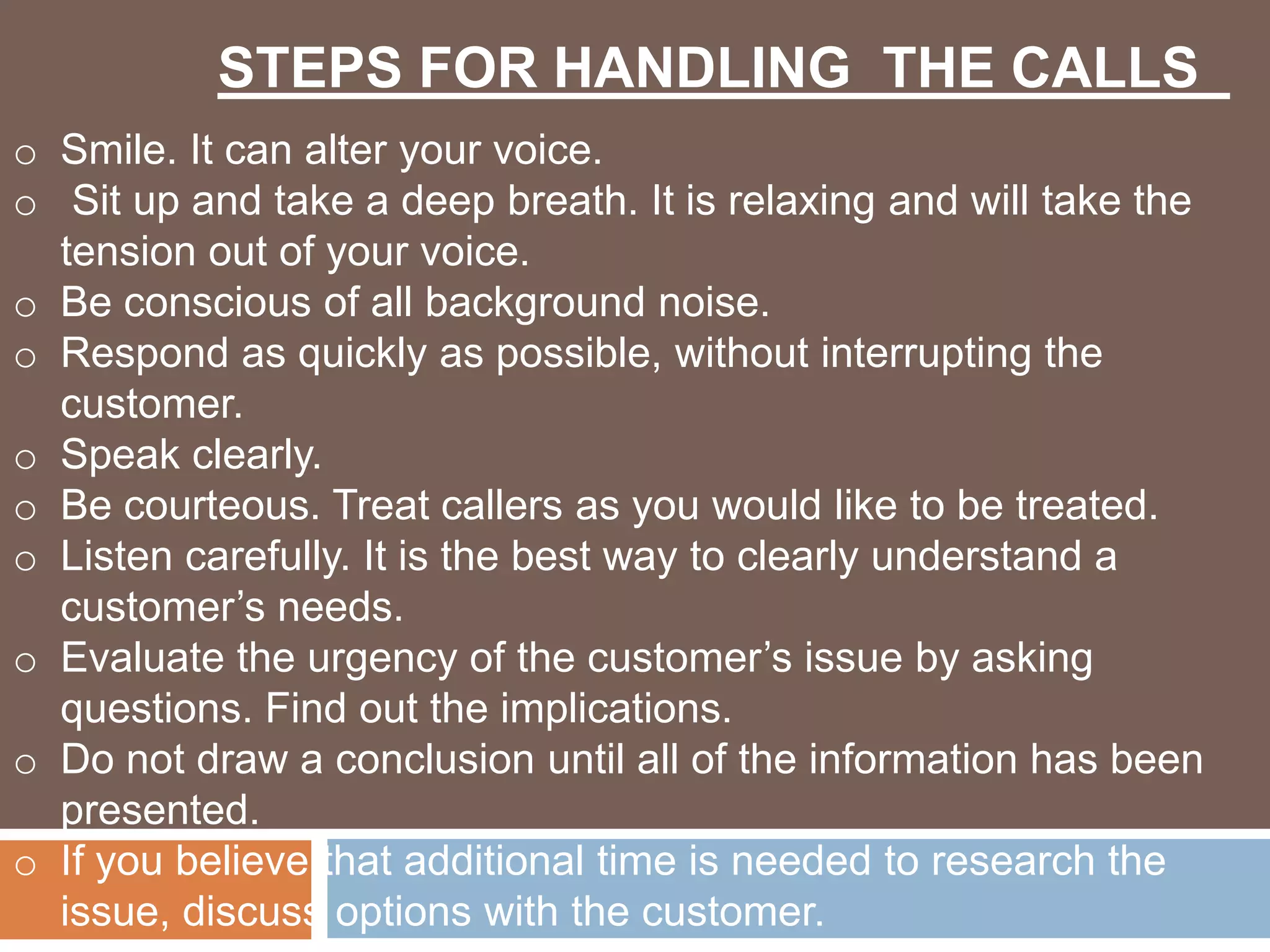
    STEPS FOR HANDLING THE CALLS Smile. It can alter your voice.
  • 66.
    Sit up andtake a deep breath. It is relaxing and will take the tension out of your voice.
  • 67.
    Be conscious ofall background noise.
  • 68.
    Respond as quicklyas possible, without interrupting the customer.
  • 69.
  • 70.
    Be courteous. Treatcallers as you would like to be treated.
  • 71.
    Listen carefully. Itis the best way to clearly understand a customer’s needs.
  • 72.
    Evaluate the urgencyof the customer’s issue by asking questions. Find out the implications.
  • 73.
    Do not drawa conclusion until all of the information has been presented.
  • 74.
    If you believethat additional time is needed to research the issue, discuss options with the customer.Once the issue is resolved, be certain that the customer is satisfied with the resolution.
  • 75.
    Fully document allof the details in the database.
  • 76.
    Do not placea customer on hold unless it is absolutely necessary. If you need to place
  • 77.
    a customer onhold, then explain how long you expect to be away from the telephone.
  • 78.
    Obtain permission forputting them on hold. Always check back with the caller if you are
  • 79.
    longer than expected.Ask if they would prefer you to call them back by a certain time.
  • 80.
    Always thank thecaller for holding.TEAM BUILDING EXCERCISES
  • 81.
    All good plansstart with the desired end result. What is it that you are trying to achieve? Before you select a team building activity, you probably want to have two types of goal - session and longer term. The latter should help make it plain where the former sits in the development process. That is, a team building session needs to be happening for a reason and have a defined role in moving you towards what you are trying to achieve overall. The session goals should be measurable and understood by the team's management, the team and the activity provider. That is, a team building session needs to achieve its part in the development process
  • 82.
    It should berelevant to the group. For example, if the team is office based, they will struggle to see the relevance of climbing mountains back in the workplace - as much as they might enjoy it.2) It should require the same kind of skill sets and team approaches that are necessary for the group's real work. For example, if you want a team to develop their decision-making skills to improve their effectiveness at work, it needs to have strong elements of decision-making within it.3) It should be fully inclusive. That is, all team members need to be enthused by the activity. Activities are sometime chosen by a clique within the team to their own preferences and this can actually split a team rather than build it if their idea of heaven is one or more colleagues' vision of hell.4) It should have a proven track record in delivering the kind of outcomes that you are looking to achieve. Or you need to trust the deliverer implicitly if it is a new activity.
  • 83.
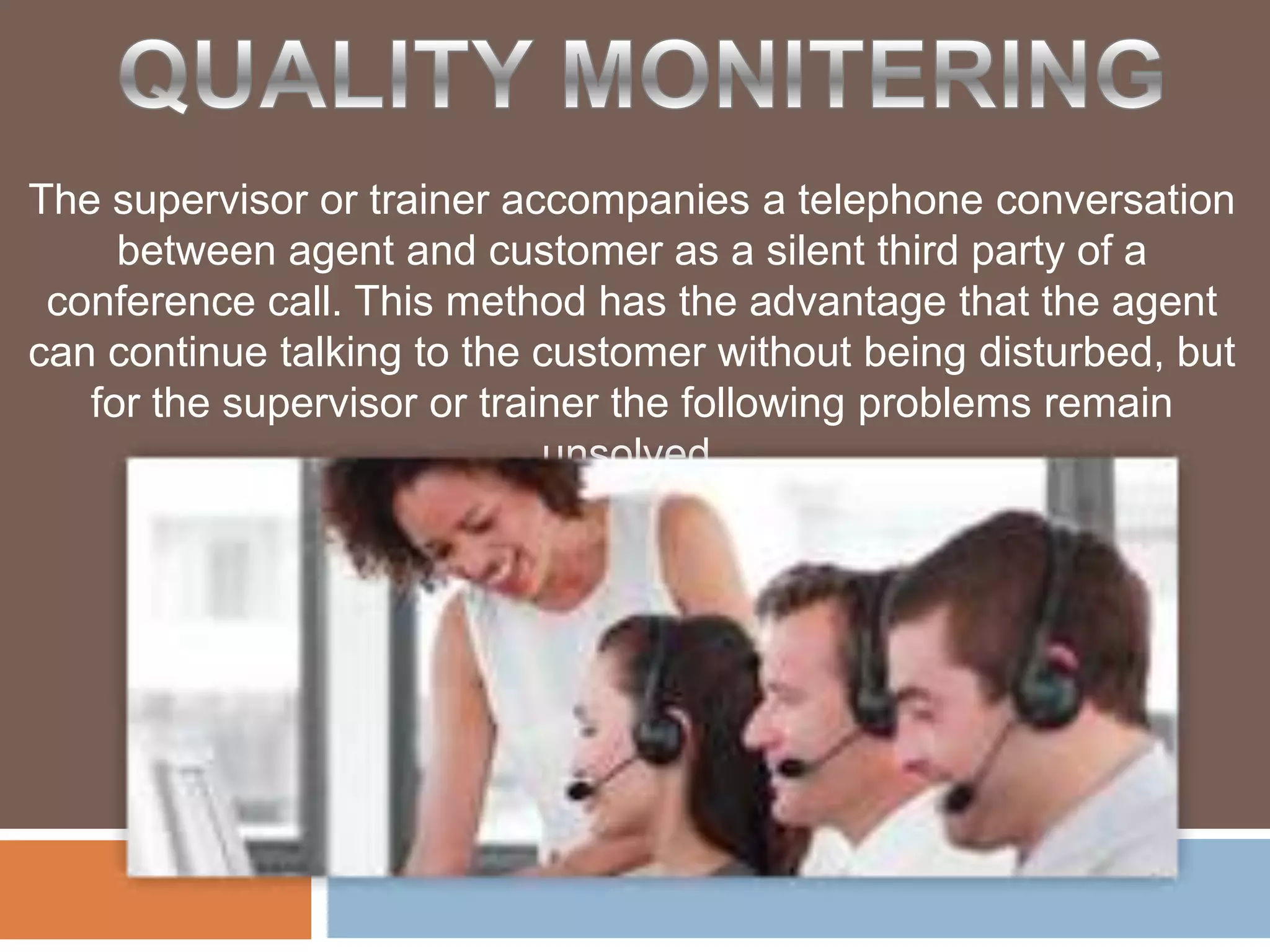
    QUALITY MONITERINGThe supervisoror trainer accompanies a telephone conversation between agent and customer as a silent third party of a conference call. This method has the advantage that the agent can continue talking to the customer without being disturbed, but for the supervisor or trainer the following problems remain unsolved.
  • 84.
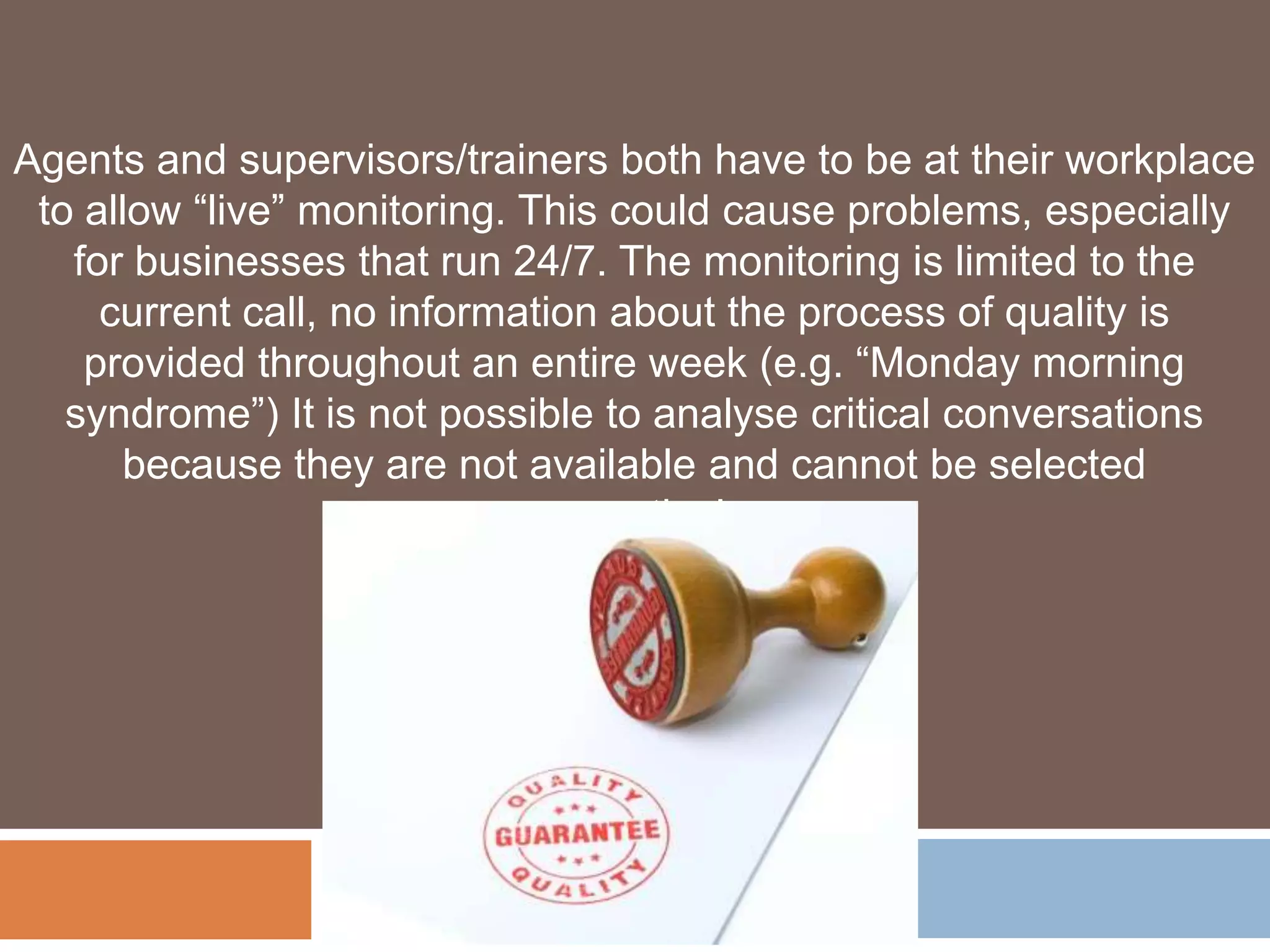
    Agents and supervisors/trainersboth have to be at their workplace to allow “live” monitoring. This could cause problems, especially for businesses that run 24/7. The monitoring is limited to the current call, no information about the process of quality is provided throughout an entire week (e.g. “Monday morning syndrome”) It is not possible to analyse critical conversations because they are not available and cannot be selected respectively
  • 85.
    Selective recording ofcalls (voice and screen) according to a variety of user-defined or project-specific parameters
  • 86.
    Easy and comfortablesearch for calls according to user-definable criteria (agent, content, time of day, CTI event)
  • 87.
    Highly flexible generationand use of evaluation templates
  • 88.
    Easy creation anddistribution of management reports
  • 89.
    Conversion of callsinto instructive examples using additional functions (eCoaching)
  • 90.
    Integration of agentsas active parts into the Quality Monitoring process
  • 91.
    eLearning and eCoachingcapabilities to close the loop between recording and evaluation of agents SOCIAL GRACES, ETIQUETTESAND BODY LANGUAGE
  • 92.
    Greater awareness ofgrooming and etiquette skills will help you to increase your poise and confidence. This will significantly change the impact that you have in any formal, professional and social situations. The Benefits are:  Enhanced social skills
  • 93.
    Greater confidence tointeract with people from all walks of life  Ability to make a positive first impression
  • 94.
    Ability to makea lasting impression
  • 95.
  • 96.
    Making a GreatFirst Impression:   How to present yourself to people
  • 97.
    How tomake proper introductions, Paying & Receiving Compliments, Small Talk & Networking
  • 98.
    Developing YourProfessional and Personal Image
  • 99.
    Managing DifferentPersonalities Greeting and Introductions  Greeting Components
  • 100.
    The Protocol ofShaking Hands
  • 101.
  • 102.
  • 103.
    Addressing Individuals E-MailEtiquette:  General etiquette
  • 104.
  • 105.
    Form and toneof the messages
  • 106.
  • 107.
    Organizing the differentparts of an email:  
  • 108.
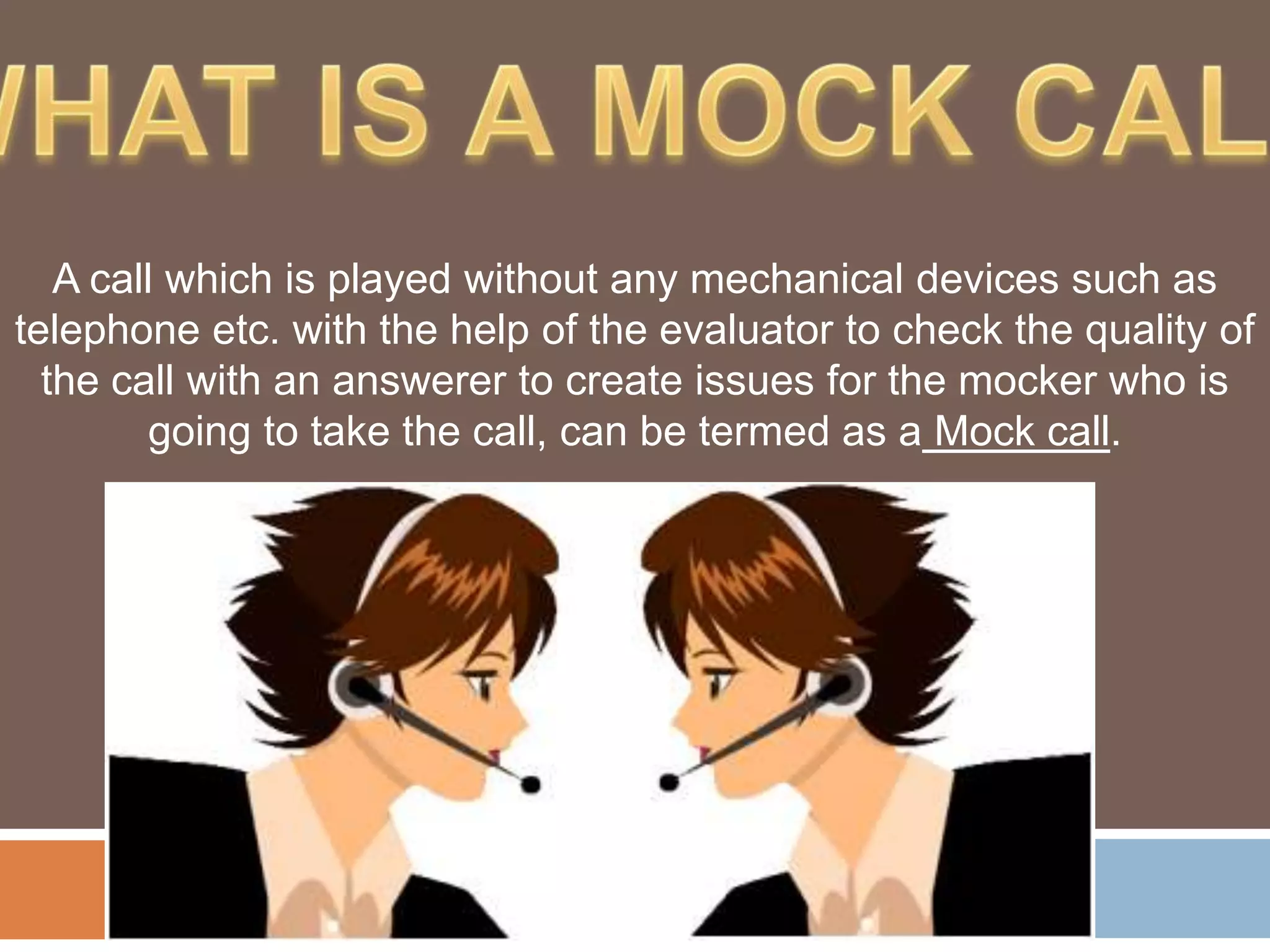
    WHAT IS AMOCK CALLA call which is played without any mechanical devices such as telephone etc. with the help of the evaluator to check the quality of the call with an answerer to create issues for the mocker who is going to take the call, can be termed as a Mock call.
  • 109.
    ADVANTAGES OF MOCKCALLS:It helps to improve our communication skills
  • 110.
    It also worksin appraisal of confidence in an executive
  • 111.
    It motivates thecaller to be prepared even if he had failed in the past calls
  • 112.
    It is veryimportant to consider mock calls in the training before taking calls on the floor
  • 113.
    We can learnabout different scenarios which comes across while negotiating with the customers during the calls
  • 114.
    With a properpreparation & concentrated training considering all the quality parameters, without making any fatal in the call we can rock on the floor
  • 115.
    It helps toachieve your goals or targets in any process you work.DISADVANTAGES OF MOCK CALLS:It is not a practical
  • 116.
    Many executives orpeople becomes nervous with this type of calling and many of them are so nervous that they start sweating there only
  • 117.
    We does nothandles the call on a telephone as its an oral face to face communication.
  • 118.
    Concentration level onthe call is low as compared to telephonic call. Thank you for giving us an opportunity to prepare this presentation on the topics which are very useful for our present job role and also for our future projects. We heart fully thank Mr.Anandfor his support for making this research project successful.
  • 119.