
Inflation
What is inflation?

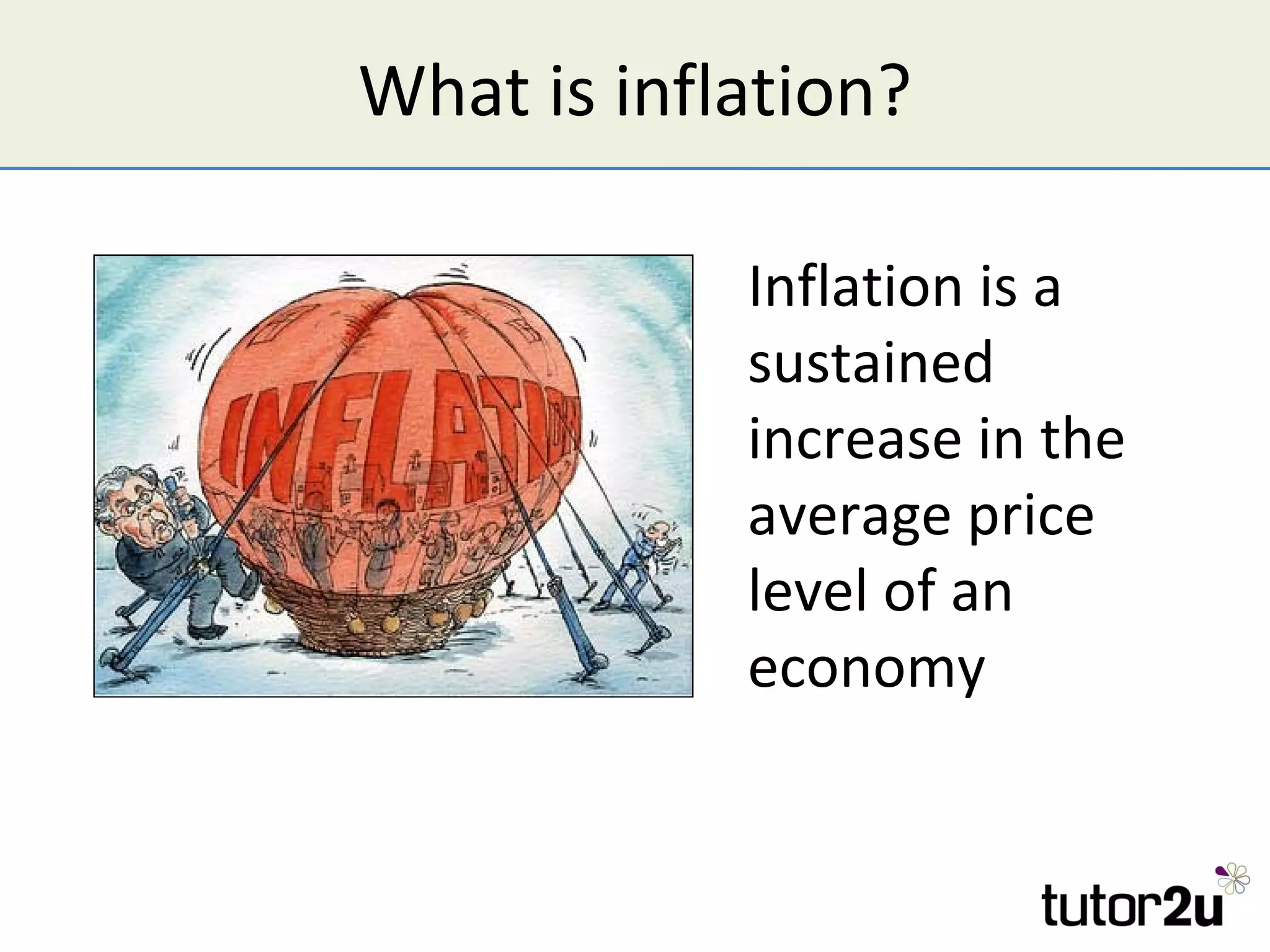
            Inflation is a
            sustained
            increase in the
            average price
            level of an
            economy
How inflation is measured

• The rate of inflation is measured by
  the annual percentage change in the
  level of prices as measured by the
  consumer price index
• A sustained fall in the general price
  level is called deflation – in this
  situation, the rate of inflation
  becomes negative
Consumer Price Index (“CPI”)
• The consumer price index is the main
  measure of inflation for the UK
• The government has set the Bank of
  England a target for inflation (using the CPI)
  of 2%
• The aim of this target is to achieve a
  sustained period of low and stable inflation
• Low inflation is also known as price stability
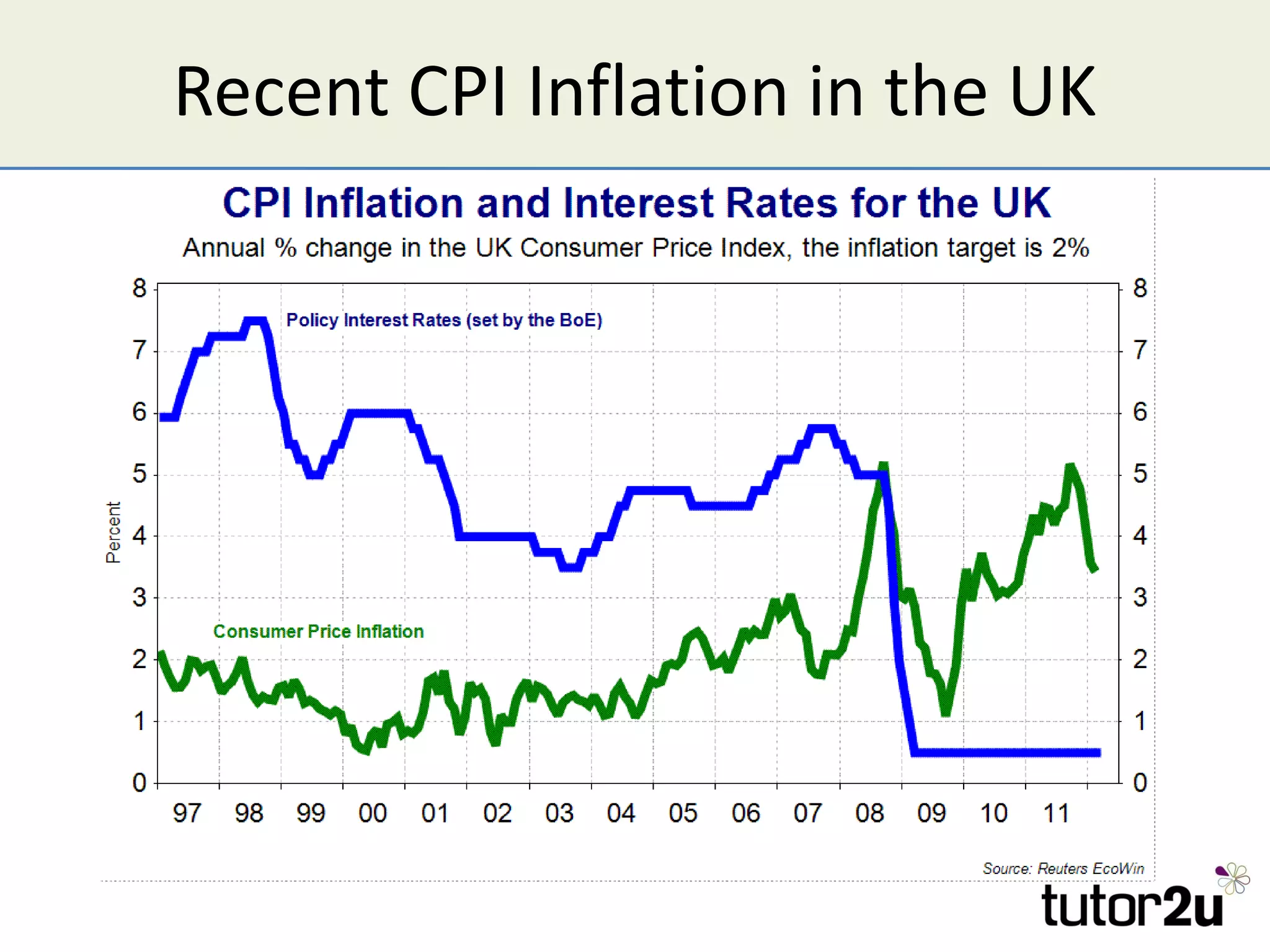
Recent CPI Inflation in the UK
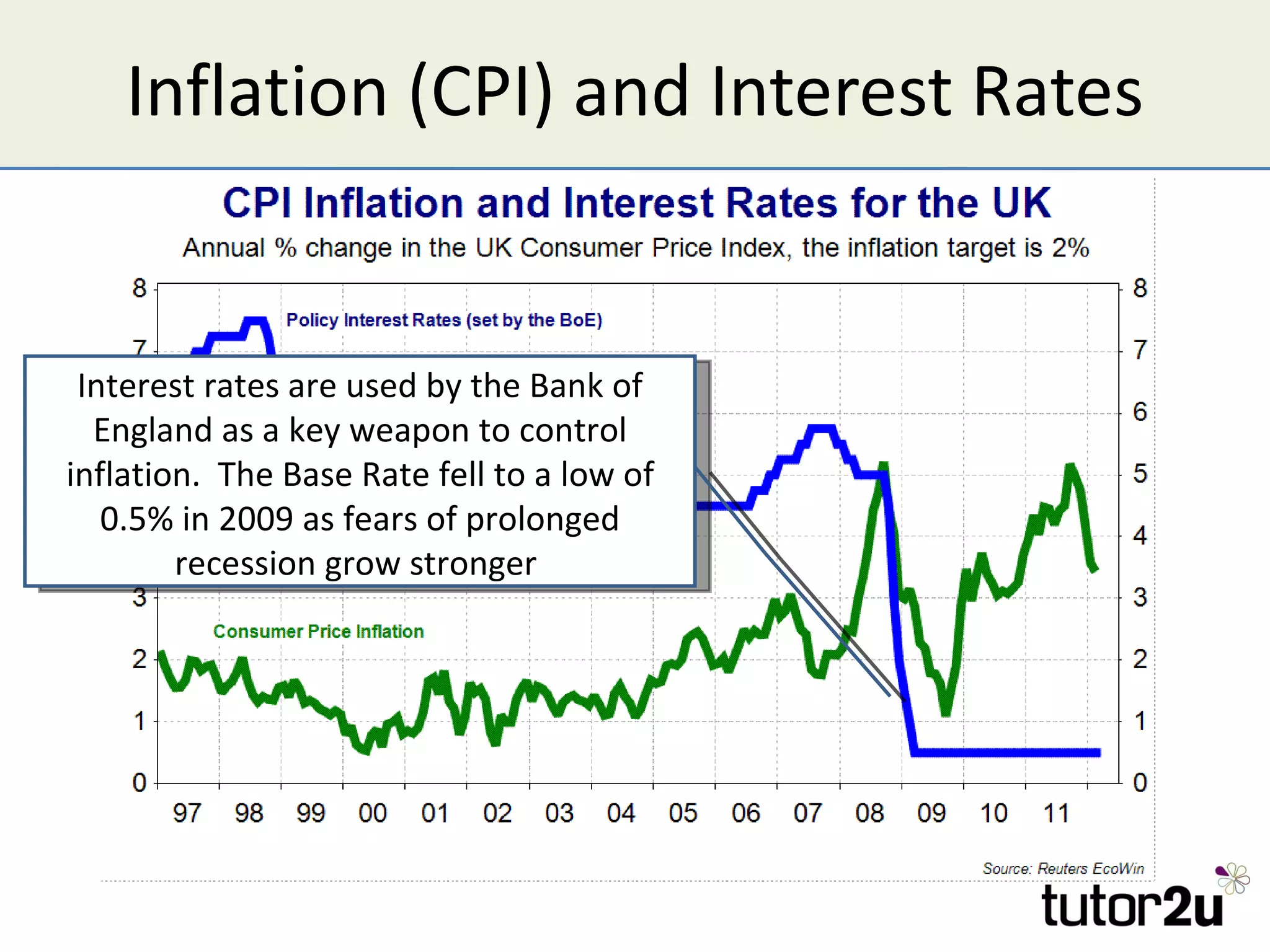
Inflation (CPI) and Interest Rates


 Interest rates are used by the Bank of
  England as a key weapon to control
inflation. The Base Rate fell to a low of
   0.5% in 2009 as fears of prolonged
        recession grow stronger
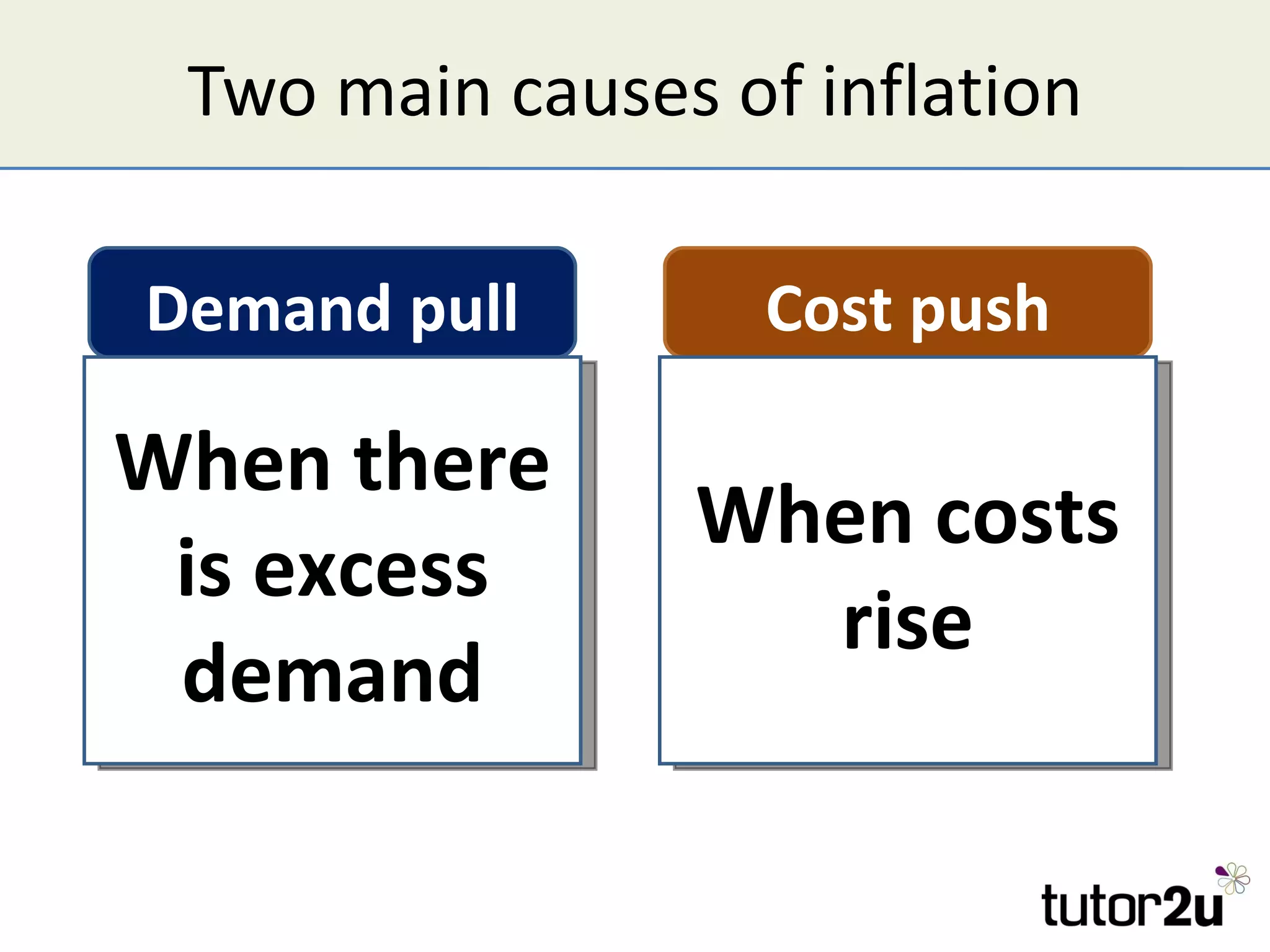
Two main causes of inflation

Demand pull        Cost push

When there
                When costs
 is excess
                  rise
 demand
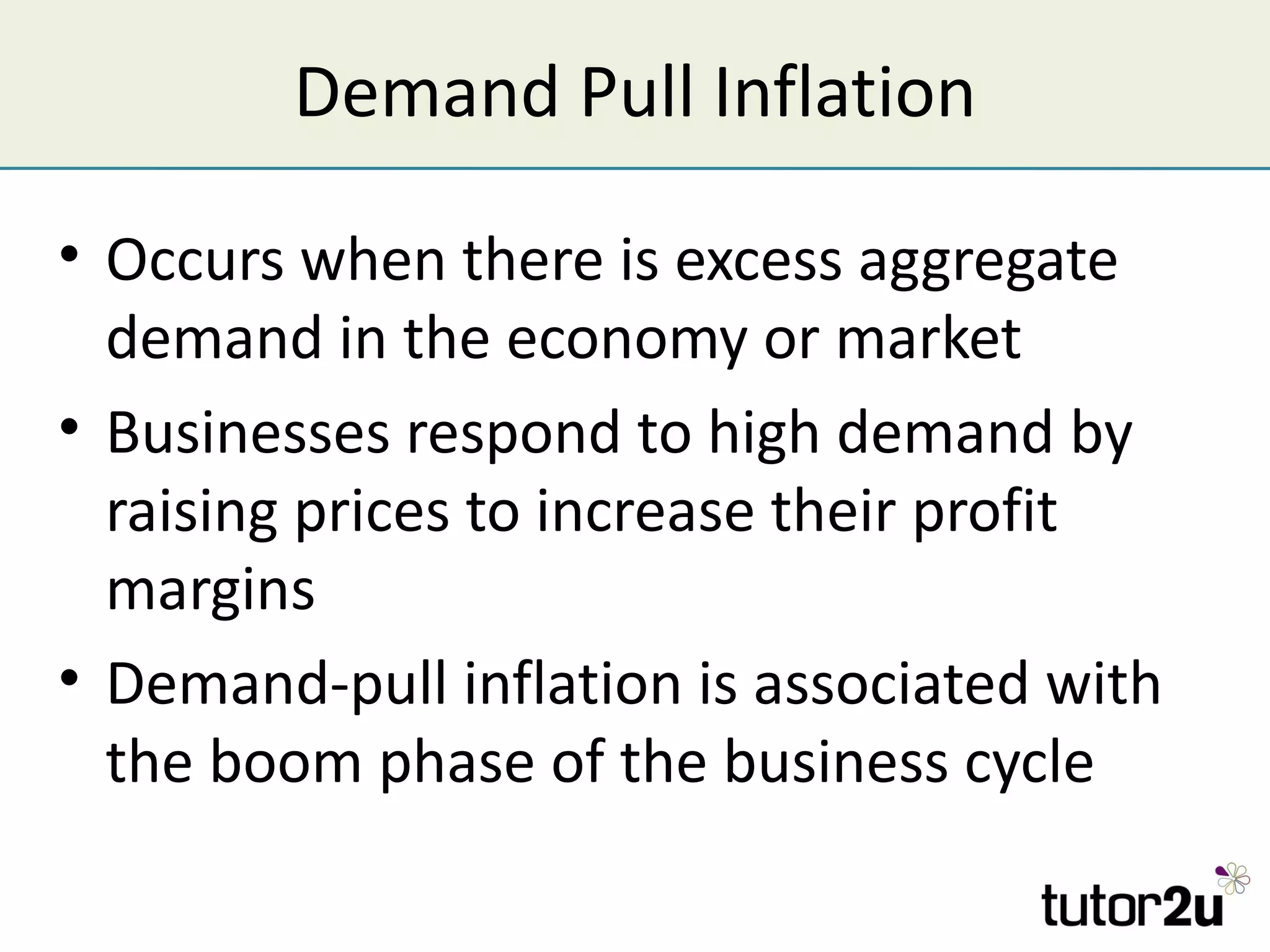
Demand Pull Inflation

• Occurs when there is excess aggregate
  demand in the economy or market
• Businesses respond to high demand by
  raising prices to increase their profit
  margins
• Demand-pull inflation is associated with
  the boom phase of the business cycle
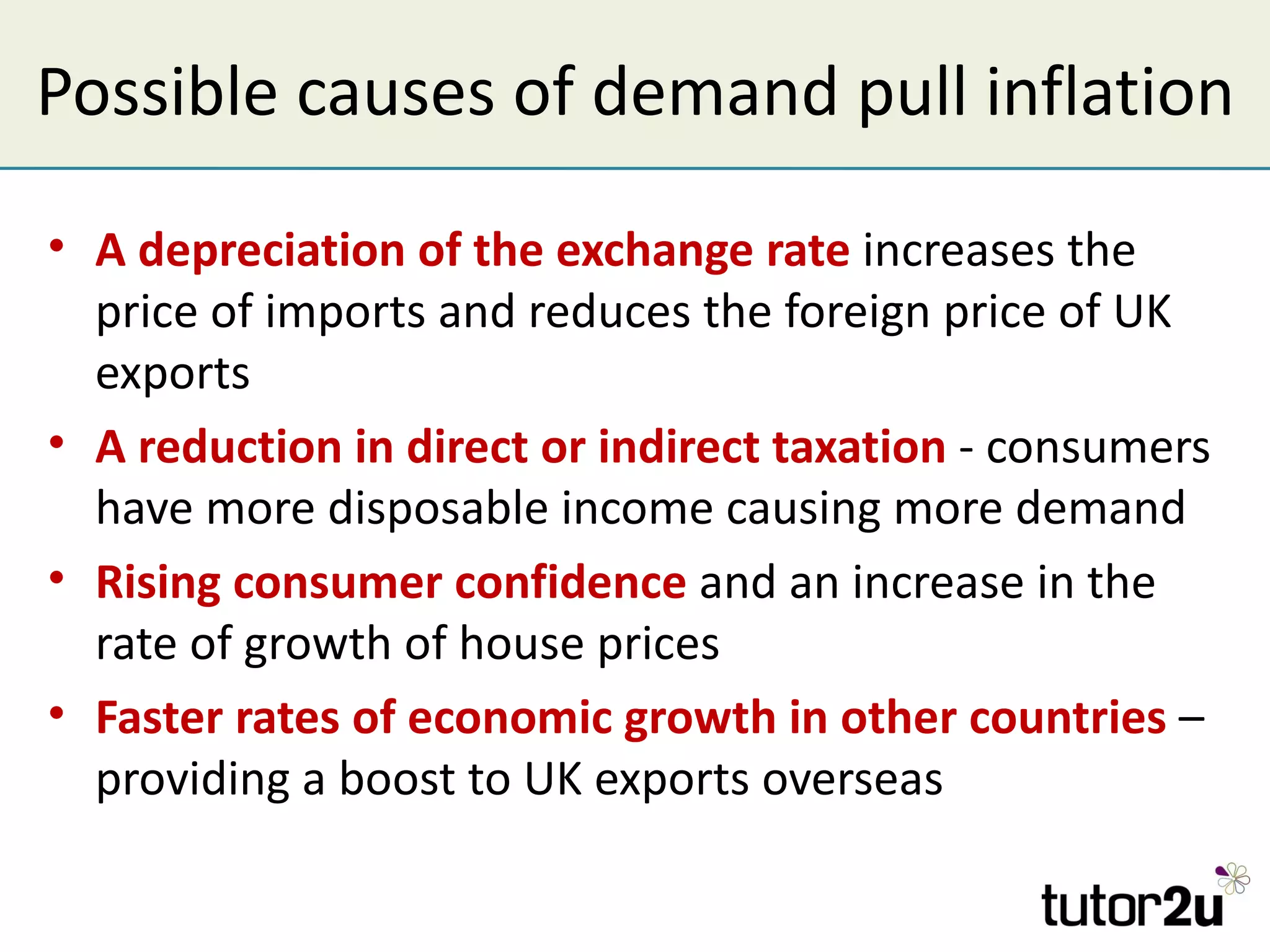
Possible causes of demand pull inflation

• A depreciation of the exchange rate increases the
  price of imports and reduces the foreign price of UK
  exports
• A reduction in direct or indirect taxation - consumers
  have more disposable income causing more demand
• Rising consumer confidence and an increase in the
  rate of growth of house prices
• Faster rates of economic growth in other countries –
  providing a boost to UK exports overseas
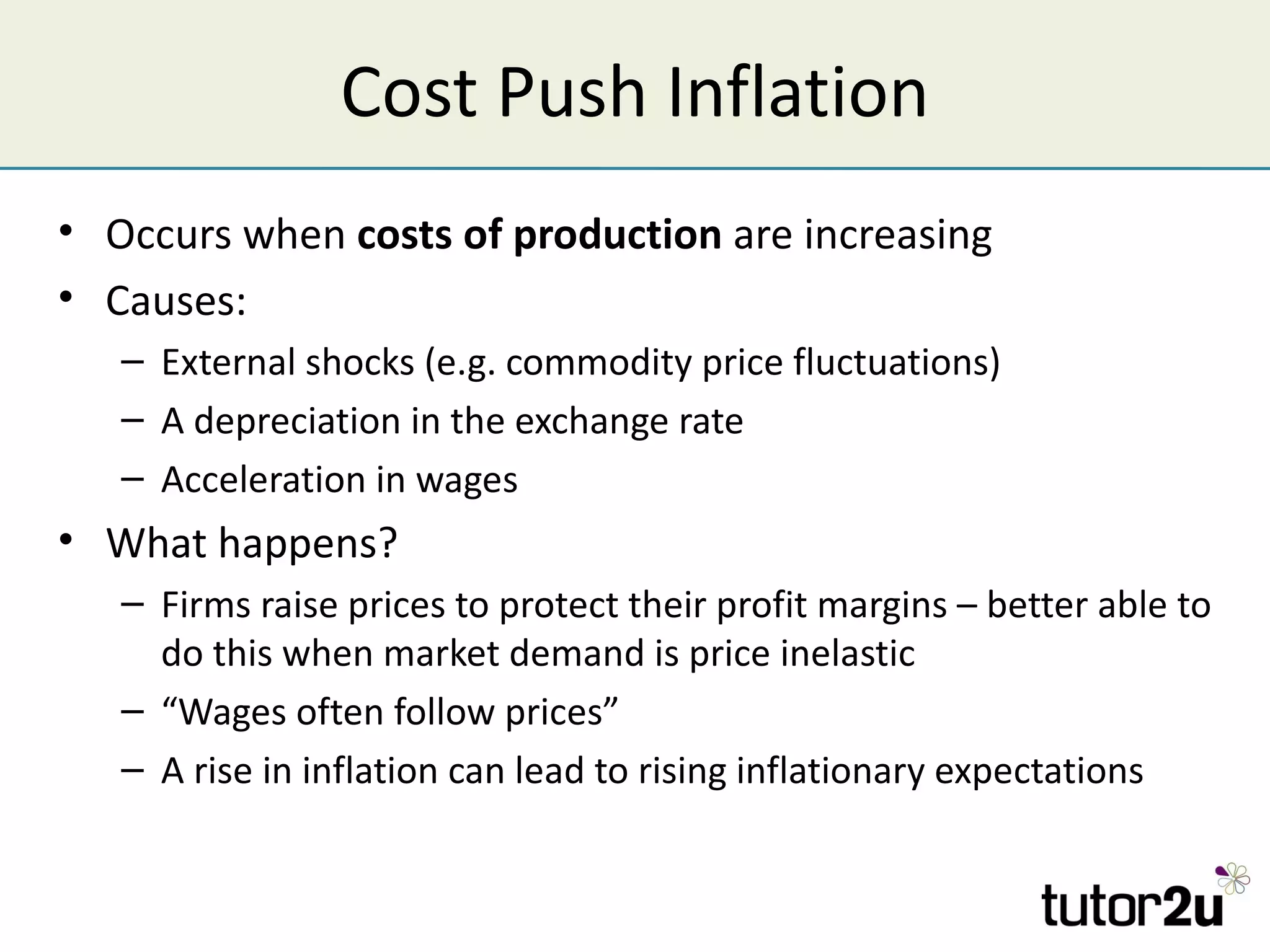
Cost Push Inflation
• Occurs when costs of production are increasing
• Causes:
   – External shocks (e.g. commodity price fluctuations)
   – A depreciation in the exchange rate
   – Acceleration in wages
• What happens?
   – Firms raise prices to protect their profit margins – better able to
     do this when market demand is price inelastic
   – “Wages often follow prices”
   – A rise in inflation can lead to rising inflationary expectations
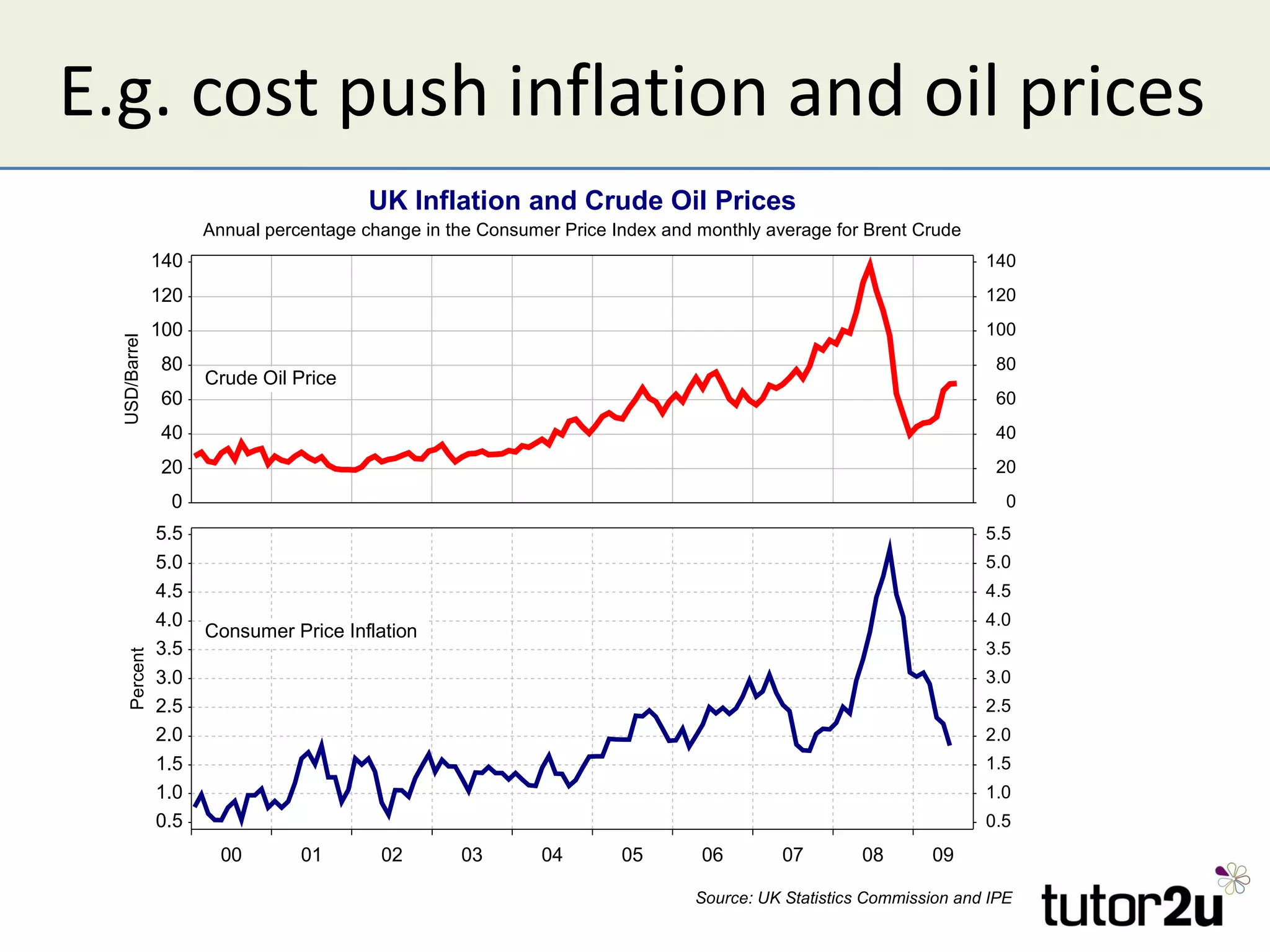
E.g. cost push inflation and oil prices
                                        UK Inflation and Crude Oil Prices
                     Annual percentage change in the Consumer Price Index and monthly average for Brent Crude
               140                                                                                                140
               120                                                                                                120
               100                                                                                                100
  USD/Barrel


               80                                                                                                  80
                     Crude Oil Price
               60                                                                                                  60
               40                                                                                                  40
               20                                                                                                  20
                0                                                                                                    0
               5.5                                                                                                5.5
               5.0                                                                                                5.0
               4.5                                                                                                4.5
               4.0                                                                                                4.0
                     Consumer Price Inflation
               3.5                                                                                                3.5
    Percent


               3.0                                                                                                3.0
               2.5                                                                                                2.5
               2.0                                                                                                2.0
               1.5                                                                                                1.5
               1.0                                                                                                1.0
               0.5                                                                                                0.5
                       00       01       02       03        04       05       06        07         08      09

                                                                              Source: UK Statistics Commission and IPE
Inflation - Costs and Consequences (1)
• Money loses its value and people lose confidence
  in money as the value of savings is reduced
• Inflation can get out of control - price increases
  lead to higher wage demands as people try to
  maintain their living standards. This is known as a
  wage-price spiral.
• Consumers and businesses on fixed incomes lose
  out because the their real incomes falls -
  employees in poor bargaining positions lose out
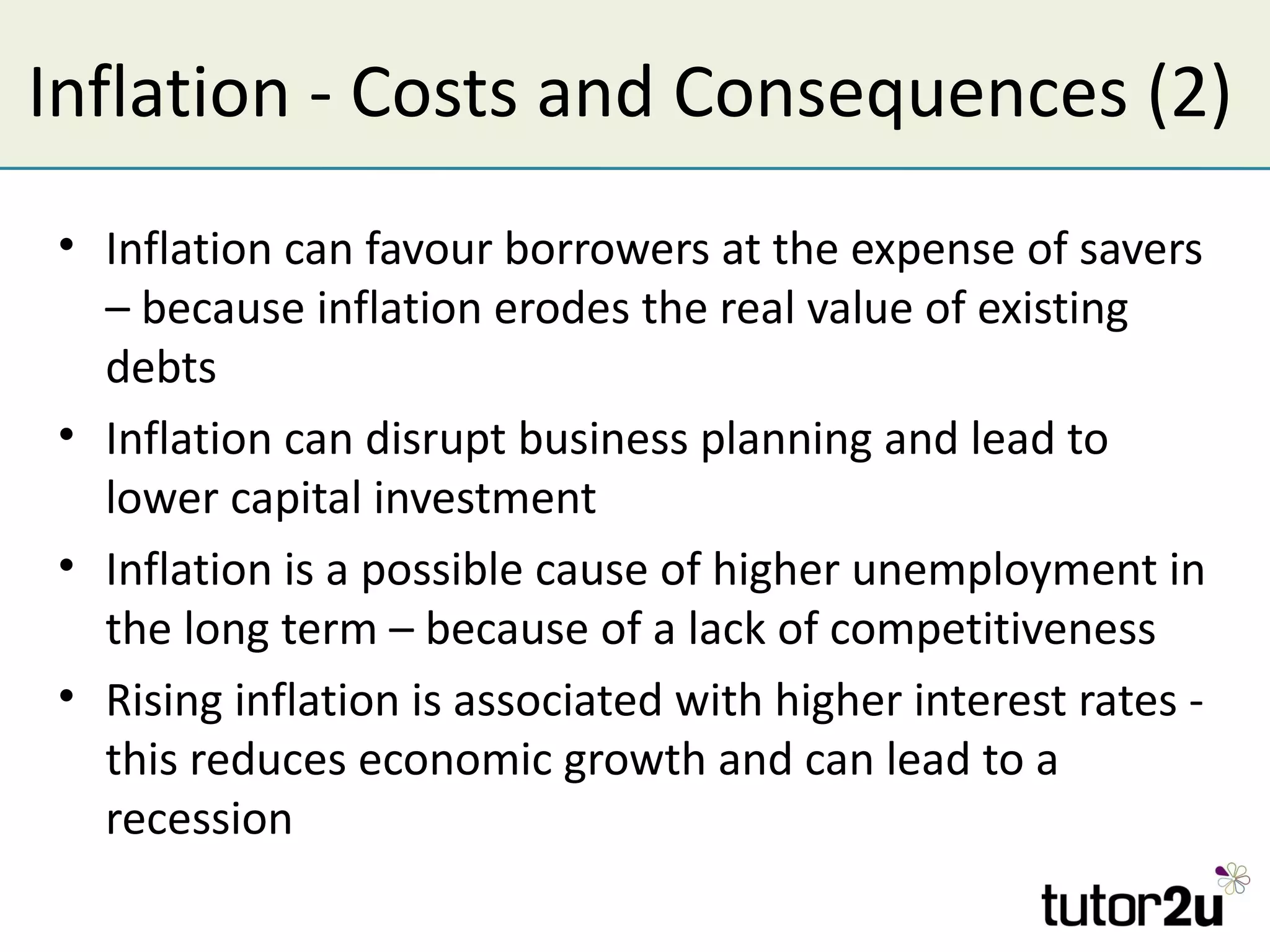
Inflation - Costs and Consequences (2)
• Inflation can favour borrowers at the expense of savers
  – because inflation erodes the real value of existing
  debts
• Inflation can disrupt business planning and lead to
  lower capital investment
• Inflation is a possible cause of higher unemployment in
  the long term – because of a lack of competitiveness
• Rising inflation is associated with higher interest rates -
  this reduces economic growth and can lead to a
  recession
Business effects of inflation (1)

                 Industry-wide price rises
   Some          enable revenues to grow
                 Growing revenues +
inflation is     constant gross margin =
                 higher gross profit
 good for        Makes using debt as a
 business!       source of finance cheaper
                 in real terms
Business effects of inflation (2)

  Effect of inflation on
        revenue?

What is the price elasticity of
 demand for the product?
Price elasticity of demand
• Refers to the responsiveness of demand
  to changes in price
• When demand is elastic, a price rise
  leads to a more than proportionate fall
  off in quantity demanded
• When demand is inelastic, a price rise
  leads to a less than proportionate fall
  off in quantity demanded
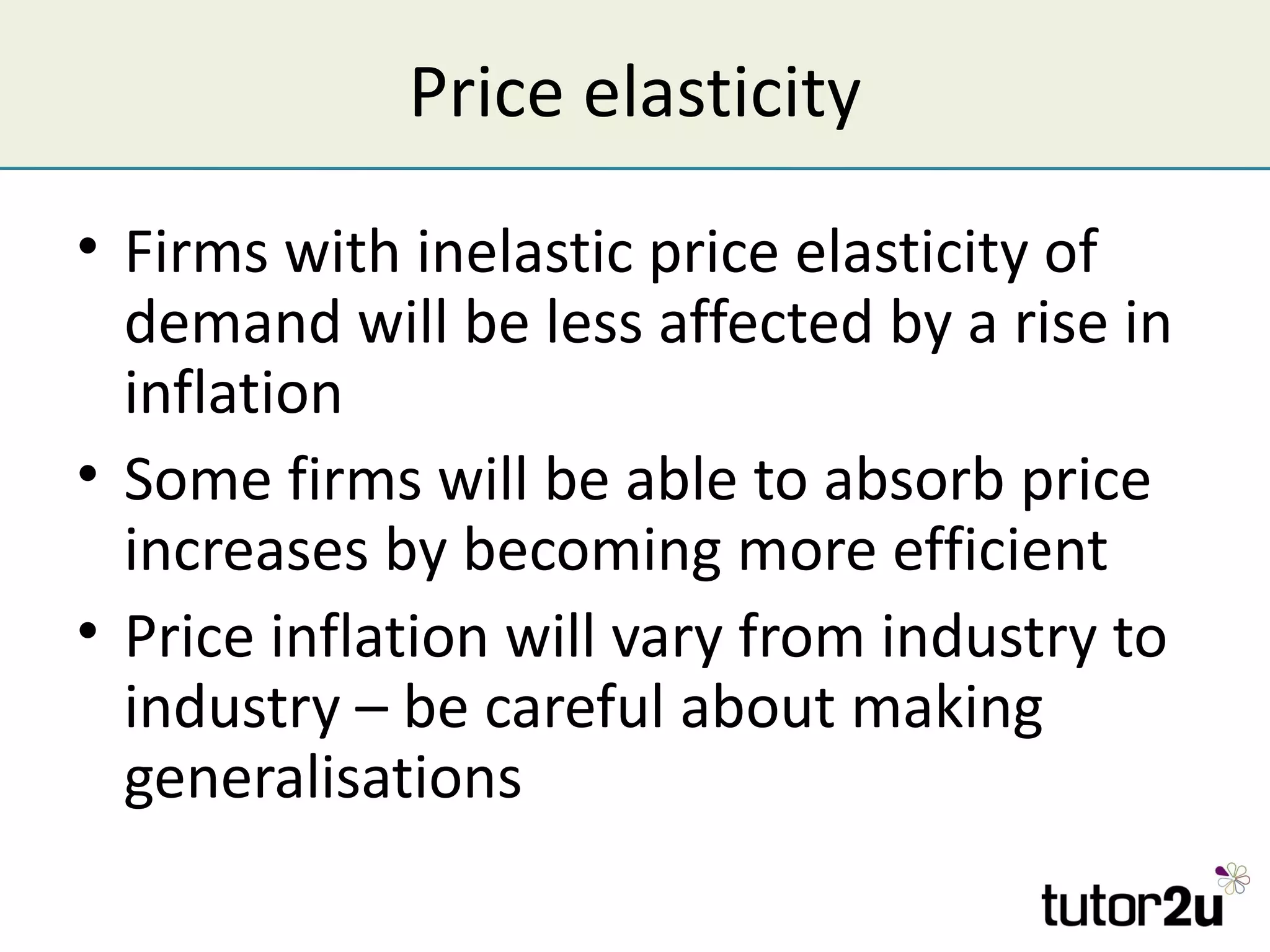
Price elasticity
• Firms with inelastic price elasticity of
  demand will be less affected by a rise in
  inflation
• Some firms will be able to absorb price
  increases by becoming more efficient
• Price inflation will vary from industry to
  industry – be careful about making
  generalisations
Inflation and business costs
• A rise in general inflation:
  – Sales revenue should rise
  – But workers likely to demand higher pay to
    compensate for consumer price inflation
  – Labour intensive industries more at risk
• Input cost inflation
  – Cost-push inflation will vary from industry to
    industry
  – Firms that need to buy significant commodity raw
    materials may find profit margins squeezed if they
    cannot pass on increased costs to customers
Expectations of inflation
• Expectations of inflation are important in
  shaping what actually happens to inflation!
• When people see prices are rising for the
  everyday items they purchase they start to
  get concerned about the effects of inflation
  on their standard of living
• An initial rise in prices triggers higher pay
  claims as workers look to protect their way
  of life
What is Deflation?

• Deflation is a period when the general
  price level falls
• Normally associated with a significant
  reduction in economic activity
  (depression / slump)
• Can also occur if the economy is rapidly
  building its productive potential
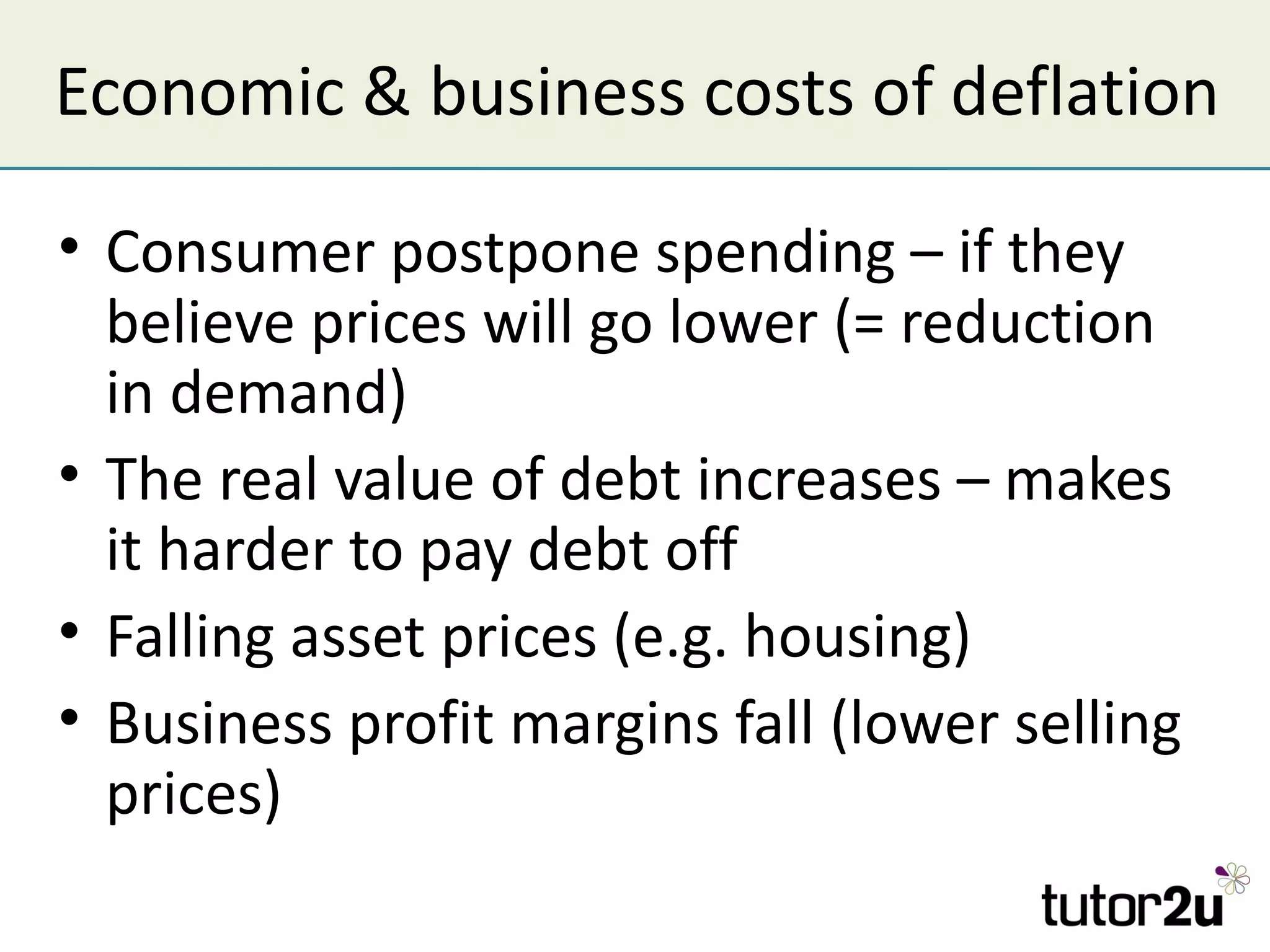
Economic & business costs of deflation

• Consumer postpone spending – if they
  believe prices will go lower (= reduction
  in demand)
• The real value of debt increases – makes
  it harder to pay debt off
• Falling asset prices (e.g. housing)
• Business profit margins fall (lower selling
  prices)
Keep up-to-date with business
stories, resources, quizzes and
 worksheets for your business
    course. Click the logo!

Business and Inflation

  • 1.
  • 2.
    What is inflation? Inflation is a sustained increase in the average price level of an economy
  • 3.
    How inflation ismeasured • The rate of inflation is measured by the annual percentage change in the level of prices as measured by the consumer price index • A sustained fall in the general price level is called deflation – in this situation, the rate of inflation becomes negative
  • 4.
    Consumer Price Index(“CPI”) • The consumer price index is the main measure of inflation for the UK • The government has set the Bank of England a target for inflation (using the CPI) of 2% • The aim of this target is to achieve a sustained period of low and stable inflation • Low inflation is also known as price stability
  • 5.
  • 6.
    Inflation (CPI) andInterest Rates Interest rates are used by the Bank of England as a key weapon to control inflation. The Base Rate fell to a low of 0.5% in 2009 as fears of prolonged recession grow stronger
  • 7.
    Two main causesof inflation Demand pull Cost push When there When costs is excess rise demand
  • 8.
    Demand Pull Inflation •Occurs when there is excess aggregate demand in the economy or market • Businesses respond to high demand by raising prices to increase their profit margins • Demand-pull inflation is associated with the boom phase of the business cycle
  • 9.
    Possible causes ofdemand pull inflation • A depreciation of the exchange rate increases the price of imports and reduces the foreign price of UK exports • A reduction in direct or indirect taxation - consumers have more disposable income causing more demand • Rising consumer confidence and an increase in the rate of growth of house prices • Faster rates of economic growth in other countries – providing a boost to UK exports overseas
  • 10.
    Cost Push Inflation •Occurs when costs of production are increasing • Causes: – External shocks (e.g. commodity price fluctuations) – A depreciation in the exchange rate – Acceleration in wages • What happens? – Firms raise prices to protect their profit margins – better able to do this when market demand is price inelastic – “Wages often follow prices” – A rise in inflation can lead to rising inflationary expectations
  • 11.
    E.g. cost pushinflation and oil prices UK Inflation and Crude Oil Prices Annual percentage change in the Consumer Price Index and monthly average for Brent Crude 140 140 120 120 100 100 USD/Barrel 80 80 Crude Oil Price 60 60 40 40 20 20 0 0 5.5 5.5 5.0 5.0 4.5 4.5 4.0 4.0 Consumer Price Inflation 3.5 3.5 Percent 3.0 3.0 2.5 2.5 2.0 2.0 1.5 1.5 1.0 1.0 0.5 0.5 00 01 02 03 04 05 06 07 08 09 Source: UK Statistics Commission and IPE
  • 12.
    Inflation - Costsand Consequences (1) • Money loses its value and people lose confidence in money as the value of savings is reduced • Inflation can get out of control - price increases lead to higher wage demands as people try to maintain their living standards. This is known as a wage-price spiral. • Consumers and businesses on fixed incomes lose out because the their real incomes falls - employees in poor bargaining positions lose out
  • 13.
    Inflation - Costsand Consequences (2) • Inflation can favour borrowers at the expense of savers – because inflation erodes the real value of existing debts • Inflation can disrupt business planning and lead to lower capital investment • Inflation is a possible cause of higher unemployment in the long term – because of a lack of competitiveness • Rising inflation is associated with higher interest rates - this reduces economic growth and can lead to a recession
  • 14.
    Business effects ofinflation (1) Industry-wide price rises Some enable revenues to grow Growing revenues + inflation is constant gross margin = higher gross profit good for Makes using debt as a business! source of finance cheaper in real terms
  • 15.
    Business effects ofinflation (2) Effect of inflation on revenue? What is the price elasticity of demand for the product?
  • 16.
    Price elasticity ofdemand • Refers to the responsiveness of demand to changes in price • When demand is elastic, a price rise leads to a more than proportionate fall off in quantity demanded • When demand is inelastic, a price rise leads to a less than proportionate fall off in quantity demanded
  • 17.
    Price elasticity • Firmswith inelastic price elasticity of demand will be less affected by a rise in inflation • Some firms will be able to absorb price increases by becoming more efficient • Price inflation will vary from industry to industry – be careful about making generalisations
  • 18.
    Inflation and businesscosts • A rise in general inflation: – Sales revenue should rise – But workers likely to demand higher pay to compensate for consumer price inflation – Labour intensive industries more at risk • Input cost inflation – Cost-push inflation will vary from industry to industry – Firms that need to buy significant commodity raw materials may find profit margins squeezed if they cannot pass on increased costs to customers
  • 19.
    Expectations of inflation •Expectations of inflation are important in shaping what actually happens to inflation! • When people see prices are rising for the everyday items they purchase they start to get concerned about the effects of inflation on their standard of living • An initial rise in prices triggers higher pay claims as workers look to protect their way of life
  • 20.
    What is Deflation? •Deflation is a period when the general price level falls • Normally associated with a significant reduction in economic activity (depression / slump) • Can also occur if the economy is rapidly building its productive potential
  • 21.
    Economic & businesscosts of deflation • Consumer postpone spending – if they believe prices will go lower (= reduction in demand) • The real value of debt increases – makes it harder to pay debt off • Falling asset prices (e.g. housing) • Business profit margins fall (lower selling prices)
  • 22.
    Keep up-to-date withbusiness stories, resources, quizzes and worksheets for your business course. Click the logo!