Table of Contents:
 Retail Location: Three basic types of retail location
Retail Market strategy
 Three important elements of retail strategy
 Ways of Building Loyalty
 Growth strategy
 Five characteristics of retailing
 Steps on strategic planning
Prepared by:
Priscilia P. Esto
Differentiate retailing and
retailer?
 Retailing – is the distribution process of retailer
getting the goods (either from the
manufacturer, wholesaler or agents ) and
selling them to the customers for the actual
use.
 Retailer- is a person or a business who sells
small quantities of goods to customers for the
actual use.
Retail Location:
3 basic types of retail location
Typically a store location maybe:
1. Freestanding/Isolated Store
2. Part of Business
District/Centers (unplanned
Business Districts)
3. Part of a Shopping Center
(Planned Shopping Centers)
1. Free Standing/ Isolated store
Advantages:
 No competition
 Low costs
 Flexibility
 Better road and visibility
 Customization
 Easy parking
Disadvantages:
 Initial Difficulty in attracting
customers
 Most people like variety of
shopping
 Travel time
 Advertising costs
 Operating costs are not shared
 Unplanned and planned business
are preferred by customers
2. Part of Business District/Centers
(unplanned Business Districts)
Advantages
 Excellent goods .service
assortment
 Variety of store types
 Wide range of prices
 Variety of customer services
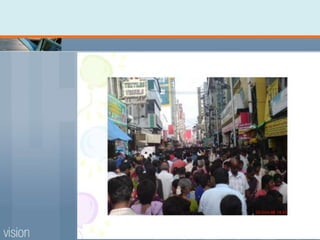
 High level of pedestrian traffic
 Nearness to commercial or social
facilities
Disadvantages
 Inadequate parking
 Traffic congestion
 Travel time for sub urban
customers
 Aging retail facilities
 High rent and taxes
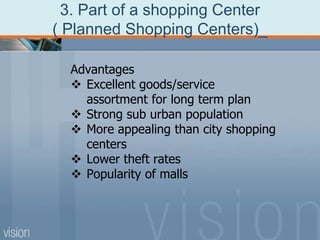
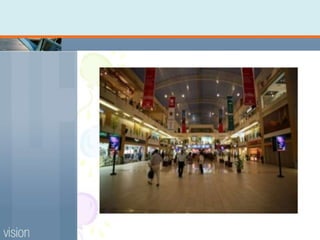
3. Part of a shopping Center
( Planned Shopping Centers)_
Advantages
 Excellent goods/service
assortment for long term plan
 Strong sub urban population
 More appealing than city shopping
centers
 Lower theft rates
 Popularity of malls
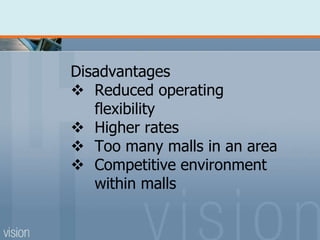
Disadvantages
 Reduced operating
flexibility
 Higher rates
 Too many malls in an area
 Competitive environment
within malls
“Strategy” Is Over Used
PPT 5-12
Retailers Talk About A Lot of Different
“Strategies”
 Sales Strategy
 Advertising Strategy
 Merchandise Strategy
 Location Strategy
Strategy Is Not Just Another Term for
A Management Decision
Elements in Retail Strategy
• Target Market
Customer Needs
• Retail Format
Method for Satisfying Needs
• Bases for Building Sustainable Competitive Advantage
Defending Position Against Competitors
PPT 5-13
Examples of Retail Strategies
• Starbucks
• Target
• 7 Eleven
• Olive Garden
What is the target market, retail offering, and
source of competitive advantage for each
retailer?
PPT 5-14
Why Does a Retailer
Need to Focus on a
Specific Target Market?
Why Not Sell to
Everyone?
PPT 5-15
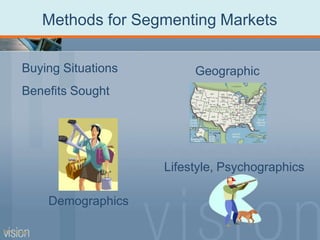
Methods for Segmenting Markets
Geographic
PPT 5-16
Lifestyle, Psychographics
Demographics
Buying Situations
Benefits Sought
Criteria For Selecting A Target Market
PPT 5-17
 Attractiveness --
Large, Growing,
Little Competition
More
Profits
 Consistent with Your
Competitive
Advantages
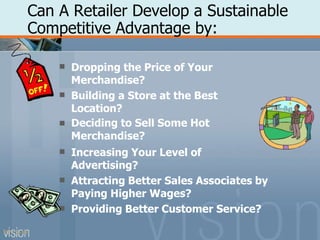
Can A Retailer Develop a Sustainable
Competitive Advantage by:






Dropping the Price of Your
Merchandise?
Building a Store at the Best
Location?
Deciding to Sell Some Hot
Merchandise?
Increasing Your Level of
Advertising?
Attracting Better Sales Associates by
Paying Higher Wages?
Providing Better Customer Service?
PPT 5-18
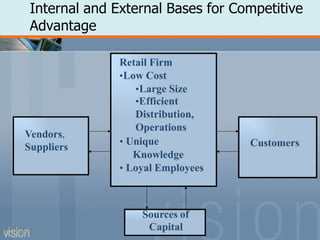
Internal and External Bases for Competitive
Advantage
Retail Firm
•Low Cost
•Large Size
•Efficient
Distribution,
Operations
• Unique
Knowledge
• Loyal Employees
Sources of
PPT 5-19
Capital
Vendors,
Suppliers Customers
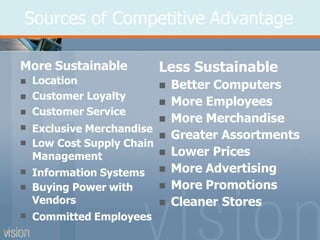
Sources of Competitive Advantage
PPT 5-20
More Sustainable








Location
Customer Loyalty
Customer Service
Exclusive Merchandise
Low Cost Supply Chain
Management
Information Systems
Buying Power with
Vendors
Committed Employees
Less Sustainable
 Better Computers
 More Employees
 More Merchandise
 Greater Assortments
 Lower Prices
 More Advertising
 More Promotions
 Cleaner Stores
What does loyalty mean?
Is It the same as liking a store?
…Going to the store frequently?
PPT 5-21
Loyalty
Approaches for Building Customer Loyalty
PPT 5-22
Unique Positioning
Customer Service
Information About Customers (Database
Retailing)
Unique Merchandise
Location
Basis of Loyalty, Commitment
PPT 5-23
 Costs
Location
Frequent Shopper Programs
Unique Merchandise
 Mental, Emotional Attachment
Creating Store Loyalty
Mental and Emotional Attachments
PPT 5-24
 Elements in a Strong
Brand

 Top of the Mind
Awareness
Associations with
Brand/Store Name
 Methods Used to
Develop a Strong
Brand




Massive Exposure
Symbols to Reinforce
Image
Consistent
Positioning Creating
Strong Associations
Limited Brand
Extensions
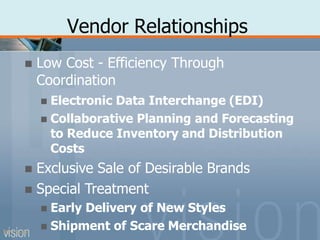
Vendor Relationships
PPT 5-25
 Low Cost - Efficiency Through
Coordination
 Electronic Data Interchange (EDI)
 Collaborative Planning and Forecasting
to Reduce Inventory and Distribution
Costs
 Exclusive Sale of Desirable Brands
 Special Treatment
 Early Delivery of New Styles
 Shipment of Scare Merchandise
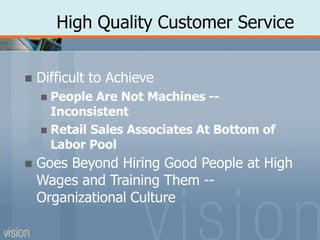
High Quality Customer Service
PPT 5-26
 Difficult to Achieve
 People Are Not Machines --
Inconsistent
 Retail Sales Associates At Bottom of
Labor Pool
 Goes Beyond Hiring Good People at High
Wages and Training Them --
Organizational Culture
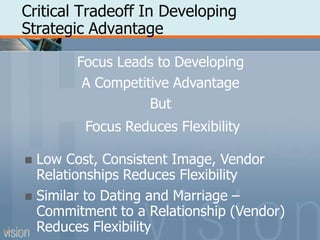
Critical Tradeoff In Developing
Strategic Advantage
PPT 5-27
Focus Leads to Developing
A Competitive Advantage
But
Focus Reduces Flexibility
 Low Cost, Consistent Image, Vendor
Relationships Reduces Flexibility
 Similar to Dating and Marriage –
Commitment to a Relationship (Vendor)
Reduces Flexibility
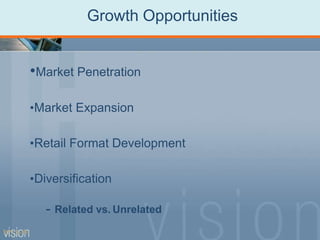
Growth Opportunities
PPT 5-28
•Market Penetration
•Market Expansion
•Retail Format Development
•Diversification
- Related vs. Unrelated
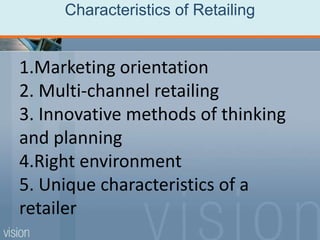
Characteristics of Retailing
1.Marketing orientation
2. Multi-channel retailing
3. Innovative methods of thinking
and planning
4.Right environment
5. Unique characteristics of a
retailer
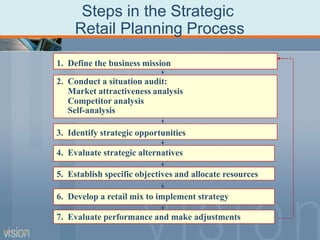
Steps in the Strategic
Retail Planning Process
1. Define the business mission
2. Conduct a situation audit:
Market attractiveness analysis
Competitor analysis
Self-analysis
3. Identify strategic opportunities
5. Establish specific objectives and allocate resources
7. Evaluate performance and make adjustments
6. Develop a retail mix to implement strategy
4. Evaluate strategic alternatives
PPT 5-30

Business-Management-Priscilia-P.-Esto.pptx

  • 1.
    Table of Contents: Retail Location: Three basic types of retail location Retail Market strategy  Three important elements of retail strategy  Ways of Building Loyalty  Growth strategy  Five characteristics of retailing  Steps on strategic planning Prepared by: Priscilia P. Esto
  • 2.
    Differentiate retailing and retailer? Retailing – is the distribution process of retailer getting the goods (either from the manufacturer, wholesaler or agents ) and selling them to the customers for the actual use.  Retailer- is a person or a business who sells small quantities of goods to customers for the actual use.
  • 3.
    Retail Location: 3 basictypes of retail location Typically a store location maybe: 1. Freestanding/Isolated Store 2. Part of Business District/Centers (unplanned Business Districts) 3. Part of a Shopping Center (Planned Shopping Centers)
  • 4.
    1. Free Standing/Isolated store Advantages:  No competition  Low costs  Flexibility  Better road and visibility  Customization  Easy parking
  • 5.
    Disadvantages:  Initial Difficultyin attracting customers  Most people like variety of shopping  Travel time  Advertising costs  Operating costs are not shared  Unplanned and planned business are preferred by customers
  • 6.
    2. Part ofBusiness District/Centers (unplanned Business Districts) Advantages  Excellent goods .service assortment  Variety of store types  Wide range of prices  Variety of customer services  High level of pedestrian traffic  Nearness to commercial or social facilities
  • 7.
    Disadvantages  Inadequate parking Traffic congestion  Travel time for sub urban customers  Aging retail facilities  High rent and taxes
  • 9.
    3. Part ofa shopping Center ( Planned Shopping Centers)_ Advantages  Excellent goods/service assortment for long term plan  Strong sub urban population  More appealing than city shopping centers  Lower theft rates  Popularity of malls
  • 10.
    Disadvantages  Reduced operating flexibility Higher rates  Too many malls in an area  Competitive environment within malls
  • 12.
    “Strategy” Is OverUsed PPT 5-12 Retailers Talk About A Lot of Different “Strategies”  Sales Strategy  Advertising Strategy  Merchandise Strategy  Location Strategy Strategy Is Not Just Another Term for A Management Decision
  • 13.
    Elements in RetailStrategy • Target Market Customer Needs • Retail Format Method for Satisfying Needs • Bases for Building Sustainable Competitive Advantage Defending Position Against Competitors PPT 5-13
  • 14.
    Examples of RetailStrategies • Starbucks • Target • 7 Eleven • Olive Garden What is the target market, retail offering, and source of competitive advantage for each retailer? PPT 5-14
  • 15.
    Why Does aRetailer Need to Focus on a Specific Target Market? Why Not Sell to Everyone? PPT 5-15
  • 16.
    Methods for SegmentingMarkets Geographic PPT 5-16 Lifestyle, Psychographics Demographics Buying Situations Benefits Sought
  • 17.
    Criteria For SelectingA Target Market PPT 5-17  Attractiveness -- Large, Growing, Little Competition More Profits  Consistent with Your Competitive Advantages
  • 18.
    Can A RetailerDevelop a Sustainable Competitive Advantage by:       Dropping the Price of Your Merchandise? Building a Store at the Best Location? Deciding to Sell Some Hot Merchandise? Increasing Your Level of Advertising? Attracting Better Sales Associates by Paying Higher Wages? Providing Better Customer Service? PPT 5-18
  • 19.
    Internal and ExternalBases for Competitive Advantage Retail Firm •Low Cost •Large Size •Efficient Distribution, Operations • Unique Knowledge • Loyal Employees Sources of PPT 5-19 Capital Vendors, Suppliers Customers
  • 20.
    Sources of CompetitiveAdvantage PPT 5-20 More Sustainable         Location Customer Loyalty Customer Service Exclusive Merchandise Low Cost Supply Chain Management Information Systems Buying Power with Vendors Committed Employees Less Sustainable  Better Computers  More Employees  More Merchandise  Greater Assortments  Lower Prices  More Advertising  More Promotions  Cleaner Stores
  • 21.
    What does loyaltymean? Is It the same as liking a store? …Going to the store frequently? PPT 5-21 Loyalty
  • 22.
    Approaches for BuildingCustomer Loyalty PPT 5-22 Unique Positioning Customer Service Information About Customers (Database Retailing) Unique Merchandise Location
  • 23.
    Basis of Loyalty,Commitment PPT 5-23  Costs Location Frequent Shopper Programs Unique Merchandise  Mental, Emotional Attachment
  • 24.
    Creating Store Loyalty Mentaland Emotional Attachments PPT 5-24  Elements in a Strong Brand   Top of the Mind Awareness Associations with Brand/Store Name  Methods Used to Develop a Strong Brand     Massive Exposure Symbols to Reinforce Image Consistent Positioning Creating Strong Associations Limited Brand Extensions
  • 25.
    Vendor Relationships PPT 5-25 Low Cost - Efficiency Through Coordination  Electronic Data Interchange (EDI)  Collaborative Planning and Forecasting to Reduce Inventory and Distribution Costs  Exclusive Sale of Desirable Brands  Special Treatment  Early Delivery of New Styles  Shipment of Scare Merchandise
  • 26.
    High Quality CustomerService PPT 5-26  Difficult to Achieve  People Are Not Machines -- Inconsistent  Retail Sales Associates At Bottom of Labor Pool  Goes Beyond Hiring Good People at High Wages and Training Them -- Organizational Culture
  • 27.
    Critical Tradeoff InDeveloping Strategic Advantage PPT 5-27 Focus Leads to Developing A Competitive Advantage But Focus Reduces Flexibility  Low Cost, Consistent Image, Vendor Relationships Reduces Flexibility  Similar to Dating and Marriage – Commitment to a Relationship (Vendor) Reduces Flexibility
  • 28.
    Growth Opportunities PPT 5-28 •MarketPenetration •Market Expansion •Retail Format Development •Diversification - Related vs. Unrelated
  • 29.
    Characteristics of Retailing 1.Marketingorientation 2. Multi-channel retailing 3. Innovative methods of thinking and planning 4.Right environment 5. Unique characteristics of a retailer
  • 30.
    Steps in theStrategic Retail Planning Process 1. Define the business mission 2. Conduct a situation audit: Market attractiveness analysis Competitor analysis Self-analysis 3. Identify strategic opportunities 5. Establish specific objectives and allocate resources 7. Evaluate performance and make adjustments 6. Develop a retail mix to implement strategy 4. Evaluate strategic alternatives PPT 5-30