NMIMS Global Access - School for Continuing Education
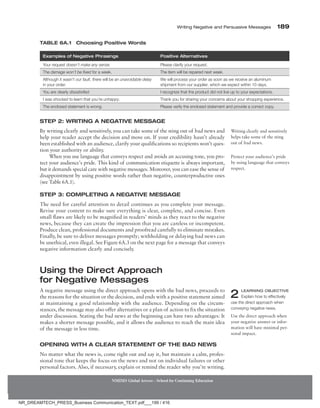
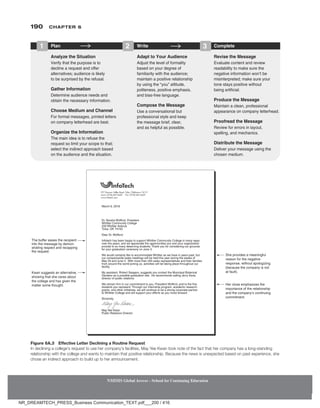
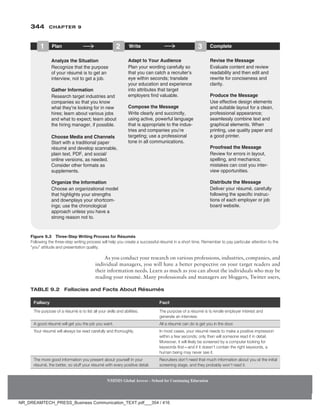
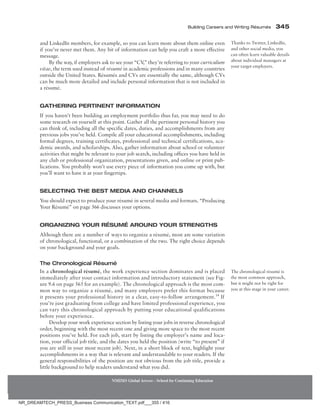
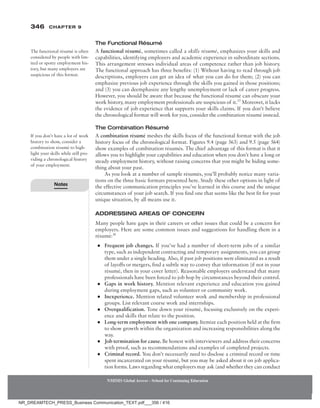
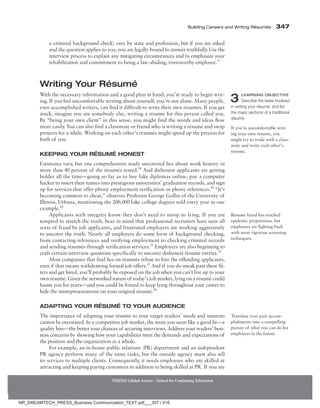
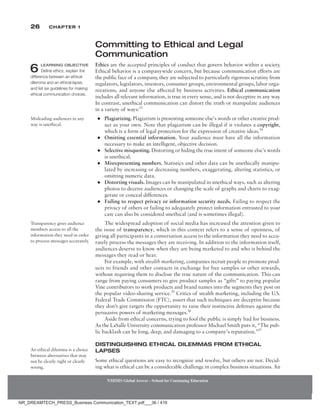
Business Communication
NR_DREAMTECH_PRESS_Business Communication_TEXT.pdf___1 / 416
NR_DREAMTECH_PRESS_Business Communication_TEXT.pdf___2 / 416
NMIMS Global Access - School for Continuing Education
Courtland L. Bovée
Professor of Business Communication, C. Allen Paul Distinguished Chair
Grossmont College
John V. Thill
Chairman and Chief Executive Officer, Global Communication Strategies
Roshan Lal Raina
Vice Chancellor, JK Lakshmipat University
Copyright © 2019 Pearson India Education Services Pvt. Ltd
Address
15th Floor, Tower-B, World Trade Tower, Plot No. 1, Block-C, Sector 16,
Noida 201 301,Uttar Pradesh, India.
Only for
NMIMS Global Access - School for Continuing Education School
Address
V
. L. Mehta Road, Vile Parle (W), Mumbai – 400 056, India.
Business Communication
Chief Academic Officer
Dr. Arun Mohan Sherry
M. Sc. (Gold Medalist), M. Tech (Computer Science - IIT Kharagpur), Ph. D.
NMIMS Global Access—School for Continuing Education
Reviewed By
Dr. Pooja Basu
NMIMS Global Access—School for Continuing Education
NR_DREAMTECH_PRESS_Business Communication_TEXT.pdf___3 / 416
Microsoft and/or its respective suppliers make no representations about the suitability of the information contained
in the documents and related graphics published as part of the services for any purpose. All such documents and
related graphics are provided “as is” without warranty of any kind. Microsoft and/or its respective suppliers hereby
disclaim all warranties and conditions with regard to this informa­
tion, including all warranties and conditions of
merchantability, whether express, implied or statutory, fitness for a particular purpose, title and non-infringement. In
no event shall Microsoft and/or its respective suppliers be liable for any special, indirect or consequential damages
or any damages whatsoever resulting from loss of use, data or profits, whether in an action of contract, negligence
or other tortious action, arising out of or in connection with the use or performance of information available from
the services.
The documents and related graphics contained herein could include technical inaccuracies or typographical errors.
Changes are periodically added to the information herein. Microsoft and/or its respective suppliers may make
improvements and/or changes in the product(s) and/or the program(s) described herein at any time. Partial screen
shots may be viewed in full within the software version specified.
Microsoft®
and Windows®
are registered trademarks of the Microsoft Corporation in the U.S.A. and other countries.
This book is not spon­
sored or endorsed by or affiliated with the Microsoft Corporation.
Acknowledgements of third-party content appear on the appropriate page within the text.
PEARSON, ALWAYS LEARNING, and MYBCOMMLAB®
are exclusive trademarks owned by Pearson Education,
Inc. or its affiliates in the U.S. and/or other countries.
Authorized adaptation from the United States edition, entitled Business Communication Today, 14th Edition,
ISBN 9780134562186, by Bovee, Courtland L. and Thill, John V., published by Pearson Education, Inc,
Copyright © 2018.
Indian Subcontinent Adaptation
Copyright © 2019 Pearson India Education Services Pvt. Ltd
All rights reserved. This book is sold subject to the condition that it shall not, by way of trade or otherwise, be
lent, resold, hired out, or otherwise circulated without the publisher’s prior written consent in any form of binding
or cover other than that in which it is published and without a similar condition including this condition being
imposed on the subsequent purchaser and without limiting the rights under copyright reserved above, no part of this
publication may be reproduced, stored in or introduced into a retrieval system, or transmitted in any form or by any
means (electronic, mechanical, photocopying, recording or otherwise), without the prior written permission of both
the copyright owner and the publisher of this book.
ISBN 978-93-530-6713-7
First Impression
This edition is manufactured in India and is authorized for sale only in India, Bangladesh, Bhutan, Pakistan,
Nepal, Sri Lanka and the Maldives. Circulation of this edition outside of these territories is UNAUTHORIZED.
Published by Pearson India Education Services Pvt. Ltd, CIN: U72200TN2005PTC057128.
Head Office: 15th Floor, Tower-B, World Trade Tower, Plot No. 1, Block-C,
Sector-16, Noida 201 301, Uttar Pradesh, India.
Registered Office: 4th Floor, Software Block, Elnet Software City, TS-140,
Block 2 & 9, Rajiv Gandhi Salai, Taramani, Chennai 600 113, Tamil Nadu, India.
Fax: 080-30461003, Phone: 080-30461060
Website: in.pearson.com, Email: companysecretary.india@pearson.com
NR_DREAMTECH_PRESS_Business Communication_TEXT.pdf___4 / 416
Printed in India by: Repro India Ltd., Surat.
v
1 
Professional Communication in a
Digital, Social, Mobile World 1
Communication Close-Up At Dabur 1
Understanding Why Communication Matters 2
Communication Is Important to Your Career 2
Communication Is Important to Your Company 4
What Makes Business Communication Effective? 4
Communicating as a Professional 4
Understanding What Employers Expect from You 6
Communicating in an Organizational Context 7
Adopting an Audience-Centered Approach 7
Exploring the Communication Process 8
The Basic Communication Model 9
The Social Communication Model 14
The Mobile Revolution 15
The Rise of Mobile as a Communication Platform 15
How Mobile Technologies Are Changing Business
Communication 17
Using Technology to Improve Business
Communication 19
Keeping Technology in Perspective 19
Guarding Against Information Overload 20
Using Technological Tools Productively 20
Reconnecting with People 21
Committing to Ethical and Legal
Communication 26
Distinguishing Ethical Dilemmas from Ethical Lapses 26
Ensuring Ethical Communication 28
Ensuring Legal Communication 29
COMMUNICATION CHALLENGES AT Dabur 30
Quick Learning Guide 31
Test Your Knowledge 33
Apply Your Knowledge 33
Practice Your Skills 33
Expand Your Skills 35
The Future Of Communication The Internet of
Things 13
DIGITAL + SOCIAL + MOBILE: TODAY’s COMMUNICATION
ENVIRONMENT It’s All Fun and Games—and
Effective Business Communication 21
2A 
Writing Business
Messages 39
Communication Close-Up At Tour My India 39
Adapting to Your Audience: Being Sensitive to
Audience Needs 40
Using the “You” Attitude 40
Maintaining Standards of Etiquette 41
Emphasizing the Positive 42
Using Bias-Free Language 43
Adapting to Your Audience: Building Strong
Relationships 44
Establishing Your Credibility 44
Projecting Your Company’s Image 46
Adapting to Your Audience: Controlling
Your Style and Tone 47
Creating a Conversational Tone 47
Using Plain Language 48
Selecting the Active or Passive Voice 49
Composing Your Message: Choosing
Powerful Words 50
Understanding Denotation and Connotation 51
Balancing Abstract and Concrete Words 51
Finding Words That Communicate Well 53
Composing Your Message: Creating Effective
Sentences 53
Choosing from the Four Types of Sentences 53
Using Sentence Style to Emphasize Key Thoughts 55
Composing Your Message: Crafting Unified,
Coherent Paragraphs 56
Creating the Elements of a Paragraph 56
Choosing the Best Way to Develop Each Paragraph 59
Writing Messages for Mobile Devices 60
Communication Challenges at Tour My India 62
Quick Learning Guide 63
Test Your Knowledge 65
Apply Your Knowledge 65
Practice Your Skills 65
Expand Your Skills 68
The Art of Professionalism Being Dependable
and Accountable 46
C o n t e n t s
C o n t e n t s
NR_DREAMTECH_PRESS_Business Communication_TEXT.pdf___5 / 416
vi Contents
NMIMS Global Access - School for Continuing Education
2B 
Completing Business
Messages 71
Communication Close-Up at PHI Learning 71
Revising Your Message: Evaluating
the First Draft 72
Evaluating Your Content, Organization, Style, and Tone 72
Evaluating, Editing, and Revising the Work of Others 75
Revising to Improve Readability 75
Varying Your Sentence Length 76
Keeping Your Paragraphs Short 77
Using Lists to Clarify and Emphasize 77
Adding Headings and Subheadings 78
Editing for Clarity and Conciseness 79
Editing for Clarity 79
Editing for Conciseness 81
Producing Your Message 83
Designing for Readability 83
Formatting Formal Letters and Memos 87
Designing Messages for Mobile Devices 87
Proofreading Your Message 88
Distributing Your Message 90
Communication Challenges At PHI Learning 90
Quick Learning Guide 91
Test Your Knowledge 93
Apply Your Knowledge 93
Practice Your Skills 93
Expand Your Skills 96
The Future of Communication Haptic
Technologies 83
3 Digital Media 99
Communication Close-Up At Asian Paints 99
Digital Media for Business Communication 100
Digital and Social Media Options 100
Compositional Modes for Digital and Social Media 101
Optimizing Content for Mobile Devices 103
Email 104
Planning Email Messages 105
Writing Email Messages 105
Completing Email Messages 107
Messaging 109
Advantages and Disadvantages of Messaging 109
Guidelines for Successful Messaging 110
Website Content 112
Organizing Website Content 112
Drafting Website Content 113
Podcasting 115
Understanding the Business Applications of Podcasting 115
Adapting the Three-Step Process for Successful
Podcasting 116
Communication Challenges At Asian Paints 211
Quick Learning Guide 118
Test Your Knowledge 119
Apply Your Knowledge 119
Practice Your Skills 119
Expand Your Skills 121
DIGITAL + SOCIAL + MOBILE: TODAY’s COMMUNICATION
ENVIRONMENT Will Emoticons Give Your Career a
Frowny Face? 107
THE FUTURE OF COMMUNICATION Telepathic
Communication 112
4 
Social Media 127
Communication Close-Up At Jet Airways 127
Writing Strategies for Social Media 128
Social Networks 130
Business Communication Uses of Social Networks 130
Strategies for Business Communication on Social
Networks 134
Information- and Content-Sharing Sites 135
User-Generated Content Sites 136
Content Curation Sites 136
Community QA Sites 137
Blogging 137
Understanding the Business Applications of Blogging 138
Adapting the Three-Step Process for Successful Blogging 139
Microblogging 142
Wikis 143
Understanding the Wiki Philosophy 143
Adapting the Three-Step Process for Successful Wiki
Writing 145
Communication Challenges at Jet Airways 145
Quick Learning Guide 146
Test Your Knowledge 147
Apply Your Knowledge 147
Practice Your Skills 147
Expand Your Skills 149
The Future of Communication Augmented Reality
and Virtual Reality 135
Digital + Social + Mobile: Today’s Communication
Environment Community Manager: Keeping a
Company Connected to Its Stakeholders 137
5 
Writing Routine and Positive
Messages 155
Communication Close-Up At Britannia 155
Strategy for Routine Requests 156
Stating Your Request up Front 156
Explaining and Justifying Your Request 156
Requesting Specific Action in a Courteous Close 157
Common Examples of Routine Requests 157
Asking for Information and Action 157
NR_DREAMTECH_PRESS_Business Communication_TEXT.pdf___6 / 416
Contents vii
NMIMS Global Access - School for Continuing Education
Asking for Recommendations 159
Making Claims and Requesting Adjustments 159
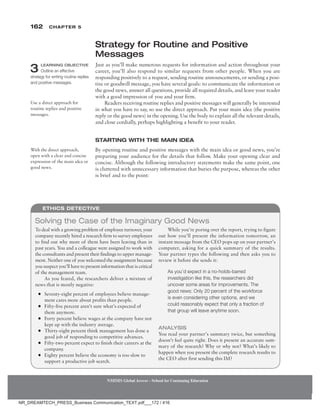
Strategy for Routine and Positive Messages 162
Starting with the Main Idea 162
Providing Necessary Details and Explanation 163
Ending with a Courteous Close 163
Common Examples of Routine and Positive
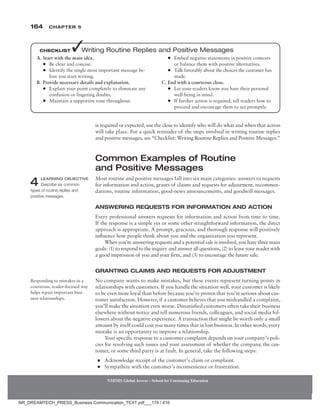
Messages 164
Answering Requests for Information and Action 164
Granting Claims and Requests for Adjustment 164
Providing Recommendations and References 165
Sharing Routine Information 168
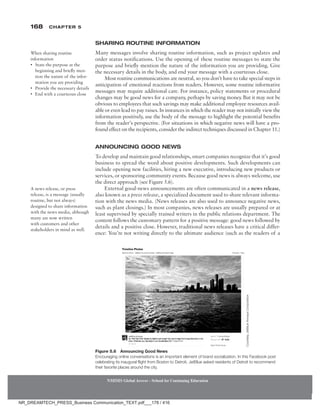
Announcing Good News 168
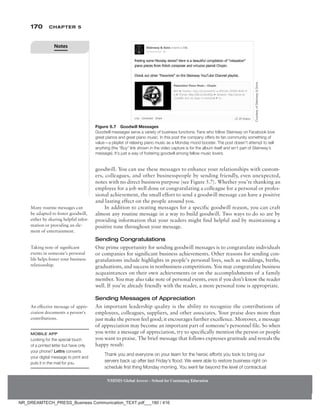
Fostering Goodwill 169
Communication Challenges At Britannia 172
Quick Learning Guide 173
Test Your Knowledge 174
Apply Your Knowledge 174
Practice Your Skills 174
Expand Your Skills 176
Ethics Detective Solving the Case of the
Imaginary Good News 162
THE FUTURE OF COMMUNICATION Communication
Bots 169
6A 
Writing Negative and
Persuasive Messages 185
Communication Close-Up At Hailo 185
Using the Three-Step Writing Process for
Negative Messages 186
Step 1: Planning a Negative Message 186
Step 2: Writing a Negative Message 189
Step 3: Completing a Negative Message 189
Using the Direct Approach for Negative
Messages 189
Opening with a Clear Statement of the Bad News 189
Providing Reasons and Additional Information 191
Closing on a Respectful Note 191
Using the Indirect Approach for Negative
Messages 192
Opening with a Buffer 192
Providing Reasons and Additional Information 193
Continuing with a Clear Statement of the Bad News 194
Closing on a Respectful Note 195
Maintaining High Standards of Ethics and
Etiquette 195
Sending Negative Messages on Routine Business
Matters 197
Making Negative Announcements on Routine Business
Matters 198
Rejecting Suggestions and Proposals 198
Refusing Routine Requests 198
Handling Bad News About Transactions 198
Refusing Claims and Requests for Adjustment 200
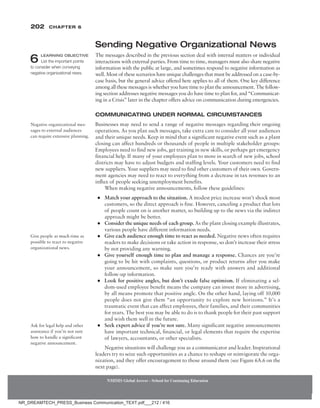
Sending Negative Organizational News 202
Communicating Under Normal Circumstances 202
Responding to Negative Information in
a Social Media Environment 204
Communicating in a Crisis 204
Sending Negative Employment Messages 205
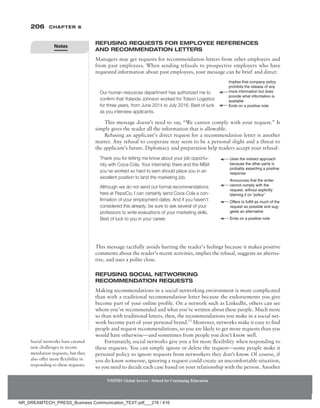
Refusing Requests for Employee References and
Recommendation Letters 206
Refusing Social Networking Recommendation Requests 206
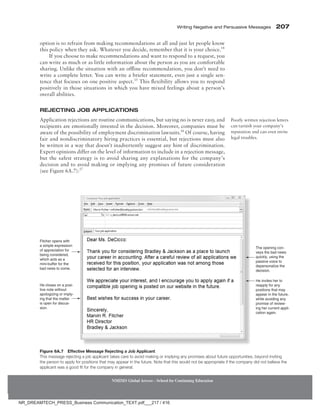
Rejecting Job Applications 207
Giving Negative Performance Reviews 208
Terminating Employment 209
Communication Challenges at Hailo 210
Quick Learning Guide 211
Test Your Knowledge 213
Apply Your Knowledge 213
Practice Your Skills 213
Expand Your Skills 215
Ethics Detective Solving the Case of the
Deceptive Soft Sell 196
6B 
Writing Persuasive
Messages 225
Communication Close-Up At Amul 225
Using the Three-Step Writing Process
for Persuasive Messages 226
Step 1: Planning Persuasive Messages 226
Step 2: Writing Persuasive Messages 229
Step 3: Completing Persuasive Messages 230
Developing Persuasive Business
Messages 231
Strategies for Persuasive Business Messages 231
Avoiding Common Mistakes in Persuasive
Communication 235
Common Examples of Persuasive Business Messages 237
Developing Marketing and Sales
Messages 240
Planning Marketing and Sales Messages 240
Writing Conventional Marketing and Sales Messages 241
Writing Promotional Messages for Social Media 242
Creating Promotional Messages for Mobile Devices 243
Maintaining High Standards of Ethics, Legal
Compliance, and Etiquette 244
Communication Challenges At Amul 246
Quick Learning Guide 247
Test Your Knowledge 249
Apply Your Knowledge 249
Practice Your Skills 249
Expand Your Skills 251
Ethics Detective Solving the Case of the Incredible
Credibility 230
NR_DREAMTECH_PRESS_Business Communication_TEXT.pdf___7 / 416
viii Contents
NMIMS Global Access - School for Continuing Education
THE FUTURE OF COMMUNICATION Emotion
Recognition Software 241
7 
Writing and Completing Reports
and Proposals 261
Communication Close-Up At Rupa Publications 261
Writing Reports and Proposals: Adapting to Your
Audience 262
Being Sensitive to Your Audience’s Needs 262
Building Strong Relationships with Your Audience 263
Controlling Your Style and Tone 264
Drafting Report Content 264
Drafting Proposal Content 267
Completing Reports and Proposals 269
Producing Formal Reports and Proposals 269
Distributing Reports and Proposals 272
Writing Requests for Proposals 276
REPORT WRITER’S NOTEBOOK Analyzing a Formal
Report 278
Communication Challenges At Rupa
Publications 293
Quick Learning Guide 294
Test Your Knowledge 295
Apply Your Knowledge 295
Practice Your Skills 295
Expand Your Skills 296
8 
Developing Presentations in a
Social Media Environment 307
Communication Close-Up At DreaMarT
Interactive 307
Planning a Presentation 308
Analyzing the Situation 308
Selecting the Best Combination of Media and
Channels 312
Organizing a Presentation 312
Crafting Presentation Content 316
Adapting to Your Audience 317
Developing Your Presentation 318
Delivering a Presentation 321
Choosing Your Presentation Method 321
Practicing Your Delivery 322
Preparing to Speak 323
Overcoming Anxiety 323
Handling Questions Responsively 325
Incorporating Technology in Your
Presentation 326
Embracing the Backchannel 326
Giving Presentations Online 327
Communication Challenges At DreaMarT
Interactive 328
Quick Learning Guide 329
Test Your Knowledge 331
Apply Your Knowledge 331
Practice Your Skills 331
Expand Your Skills 332
Communicating Across Cultures Making
Sure Your Message Doesn’t Get Lost in
Translation 311
The Art of Professionalism Recovering from
Disasters 324
9 
Building Careers and Writing
Résumés 335
Communication Close-Up At Ace Consultants 335
Finding the Ideal Opportunity in Today’s Job
Market 336
Writing the Story of You 336
Learning to Think Like an Employer 337
Researching Industries and Companies of Interest 338
Translating Your General Potential into a Specific Solution for
Each Employer 339
Taking the Initiative to Find Opportunities 339
Building Your Network 339
Seeking Career Counseling 342
Avoiding Mistakes 343
Planning Your Résumé 343
Analyzing Your Purpose and Audience 343
Gathering Pertinent Information 345
Selecting the Best Media and Channels 345
Organizing Your Résumé Around Your Strengths 345
Addressing Areas of Concern 346
Writing Your Résumé 347
Keeping Your Résumé Honest 347
Adapting Your Résumé to Your Audience 347
Composing Your Résumé 348
Completing Your Résumé 356
Revising Your Résumé 356
Producing Your Résumé 356
Proofreading Your Résumé 359
Distributing Your Résumé 359
Communication Challenges At Ace
Consultants 361
Quick Learning Guide 362
Test Your Knowledge 363
Apply Your Knowledge 363
Practice Your Skills 363
Expand Your Skills 364
DIGITAL + SOCIAL + MOBILE: TODAY’s COMMUNICATION
ENVIRONMENT Job-Search Strategies: Maximize
Your Mobile 340
The Art of Professionalism Striving to Excel 342
NR_DREAMTECH_PRESS_Business Communication_TEXT.pdf___8 / 416
Contents ix
NMIMS Global Access - School for Continuing Education
10 
Applying and Interviewing for
Employment 369
Communication Close-Up At Larsen  Toubro
Infotech Limited 369
Submitting Your Résumé 370
Writing Application Letters 370
Following Up After Submitting a Résumé 376
Understanding the Interviewing Process 376
The Typical Sequence of Interviews 377
Common Types of Interviews 377
Interview Media 378
What Employers Look for in an Interview 379
Preemployment Testing and Background Checks 380
Preparing for a Job Interview 381
Learning About the Organization and Your Interviewers 381
Thinking Ahead About Questions 382
Boosting Your Confidence 384
Polishing Your Interview Style 384
Presenting a Professional Image 386
Being Ready When You Arrive 386
Interviewing for Success 388
The Warm-Up 388
The Question-and-Answer Stage 388
The Close 390
Interview Notes 391
Following up After the Interview 391
Follow-Up Message 392
Message of Inquiry 392
Request for a Time Extension 392
Letter of Acceptance 392
Letter Declining a Job Offer 395
Letter of Resignation 395
Communication Challenges At Larsen  Toubro
Infotech Limited 396
Quick Learning Guide 397
Test Your Knowledge 399
Apply Your Knowledge 399
Practice Your Skills 399
Expand Your Skills 401
COMMUNICATING ACROSS CULTURES Successfully
Interviewing Across Borders 387
NR_DREAMTECH_PRESS_Business Communication_TEXT.pdf___9 / 416
NR_DREAMTECH_PRESS_Business Communication_TEXT.pdf___10 / 416
1
LEARNING OBJECTIVES
After studying this chapter, you will be able to
1 Explain the importance of effective communication to
your career and to the companies where you will work.
2 Explain what it means to communicate as a profes-
sional in a business context.
3 Describe the communication process model and the
ways social media are changing the nature of business
communication.
4 Outline the challenges and opportunities of mobile
communication in business.
5 List four general guidelines for using communication
technology effectively.
6 Define ethics, explain the difference between an ethical
dilemma and an ethical lapse, and list six guidelines for
making ethical communication choices.
Professional Communication in a
Digital, Social, Mobile World
COMMUNICATION CLOsE-UP AT
dabur
India’s fourth-largest fast moving consumer goods (FMCG)
company, Dabur India Limited, was founded by Dr. S.
K. Burman, a West Bengal-based physician. Dr. Burman
was a name well known in the medical fraternity for having
introduced Ayurvedic cures for malaria and cholera. His
medicines became popular and people started calling him
“Daktar” meaning “trusted doctor.”
Although Dabur was initially started as a family-based
enterprise, it is now a highly professional business entity. It
is one of the most trusted names in India and the largest
manufacturer of Ayurvedic medicines in the world. It
manufactures more than 380 popular products, across 21
categories. In 2015–16, Dabur generated revenues in excess
of `84 billion and its market capitalization was more than `501
billion. Currently, Dabur’s main goal is to use the immense
potential of online technology and incorporate modern digital
strategies to create brand visibility and rebuild its processes.
With online retail giants, such as Snapdeal, Amazon,
and Flipkart, having already established themselves through
a strong network of distributors and warehousing facilities,
Dabur started using an innovative online platform to reach
out to its customers. The firm collaborated with some
online grocery stores, such as BigBasket and Grofers.
Additionally, it worked toward improving its websites so
that they were more informative and user-friendly. From its
initial three websites, it is now down to a single website that
provides insight into the company. The firm also launched its
channels, NewU and DaburUveda.com, in an effort to reach
out to geographically dispersed customers. Over the last few
years, Dabur has been actively involved in transforming its
perception into a “young, modern, and socially conscious
organization.”
In a continued effort to associate more with
its customers, Dabur has launched a portal named
mybeautynaturally.com. The portal aims at customer
engagement and relationship building. The company also
sells some of its popular products through popular online
portals; for example, it sells Chyavanapravash on Amazon.
1
NR_DREAMTECH_PRESS_Business Communication_TEXT.pdf___11 / 416
2 Chapter 1
Understanding Why
Communication Matters
Whether it’s as simple as a smile or as ambitious as Dabur’s digital and social media
program (profiled in the chapter-opening Communication Close-Up), communication
is the process of building credible and visible connect by transferring information and
meaning between senders and receivers, using one or more media and communication
channels. The essence of communication is sharing—­
providing data, information,
insights, and inspiration in an exchange that benefits both you and the people with
whom you are communicating.2
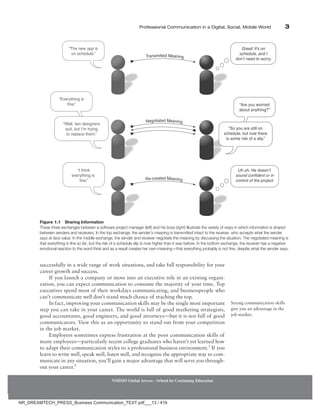
As Figure 1.1 indicates, this sharing can happen in a
variety of ways, including simple and successful transfers of information, negotiations in
which the sender and receiver arrive at an agreed-on ­
meaning, and unsuccessful attempts
in which the receiver creates a different message than the one the sender intended.
You will invest a lot of time and energy in this course developing your commu-
nication skills, so it’s fair to ask whether the effort will be worthwhile. This section
outlines the many ways in which good communication skills are critical for your
career and for any company you join.
Communication Is Important to Your Career
Improving your communication skills may be the single most important step you can
take in your career. You can have the greatest ideas in the world, but they’re no good to
your company or your career if you can’t express them clearly and persuasively. Some
jobs, such as sales and customer support, are primarily about communicating. In fields
such as engineering or finance, you often need to share complex ideas with executives,
customers, and colleagues, and your ability to connect with people outside your field
can be as important as your technical expertise. If you have the entrepreneurial urge,
you will need to communicate with a wide range of audiences—from investors, bank-
ers, and government regulators to employees, customers, and business partners.
The changing nature of employment is putting new pressure on communica-
tion skills, too. Many companies now supplement their permanent workforces with
independent contractors who are brought on for a short period or even just a single
project. Chances are you will spend some of your career as one of these freelanc-
ers, working without the support network that an established company environ-
ment provides. You will have to “sell yourself” into each new contract, communicate
1 LEARNING OBJECTIVE
Explain the importance of
effective communication to your
career and to the companies
where you will work.
Communication is the process
of transferring information
and meaning between senders
and receivers.
Ambition and great ideas
aren’t enough; you need
to be able to communicate
with people to succeed in
business.
Such a strategy has helped Dabur give its products a more
contemporary and modern look, which has resulted in a
better connect with the youth. Dabur’s online grocery stores
have proved to be a huge hit, resulting in better returns.
Regular and constant consumption is the key feature of
FMCG products, consequently, making them popular
objects in horizontal marketplaces.
In 2015–16, Dabur achieved a 13% growth rate even
after facing some operational issues. Through online sales,
Dabur has given itself a strong opportunity for creating high
visibility and brand rebuilding. Currently, the retail sector is a
mere 2% of the entire e-commerce industry, but according
to some estimates, it will be around 11% by the year 2019.
Judging by the trends of the online sector, most of the big
names offline will be forced to become members of the
online mediums. The Reliance Group is one such example.
In 2009, it started selling FMCGs under the name “Reliance
Fresh,” but later came up with reliancefreshdirect.com, an
online portal for selling its products. Dabur has adapted
very well to the changes in the external environment and
has achieved this through a digital transformation of its
core processes, mainly sales and distribution. With the
e-commerce market set to grow even further, Dabur seems
to be on course to attain further efficiency.1
NMIMS Global Access - School for Continuing Education
NR_DREAMTECH_PRESS_Business Communication_TEXT.pdf___12 / 416
Professional Communication in a Digital, Social, Mobile World 3
NMIMS Global Access - School for Continuing Education
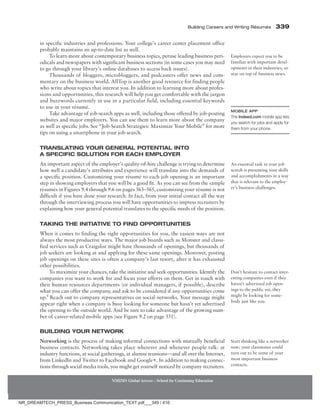
Figure 1.1 Sharing Information
These three exchanges between a software project manager (left) and his boss (right) illustrate the variety of ways in which information is shared
between senders and receivers. In the top exchange, the sender’s meaning is transmitted intact to the receiver, who accepts what the sender
says at face value. In the middle exchange, the sender and receiver negotiate the meaning by discussing the situation. The negotiated meaning is
that everything is fine so far, but the risk of a schedule slip is now higher than it was before. In the bottom exchange, the receiver has a negative
emotional reaction to the word think and as a result creates her own meaning—that everything probably is not fine, despite what the sender says.
“The new app is
on schedule.”
“Everything is
fine.”
“Well, two designers
quit, but I’m trying
to replace them.”
“I think
everything is
fine.”
Uh oh. He doesn’t
sound confident or in
control of the project.
Great! It’s on
schedule, and I
don’t need to worry.
“So you are still on
schedule, but now there
is some risk of a slip.”
“Are you worried
about anything?”
Re-created Meaning
Negotiated Meaning
Transmitted Meaning
successfully in a wide range of work situations, and take full responsibility for your
career growth and success.
If you launch a company or move into an executive role in an existing organi-
zation, you can expect communication to consume the majority of your time. Top
executives spend most of their workdays communicating, and businesspeople who
can’t communicate well don’t stand much chance of reaching the top.
In fact, improving your communication skills may be the single most important
step you can take in your career. The world is full of good marketing strategists,
good accountants, good engineers, and good attorneys—but it is not full of good
communicators. View this as an opportunity to stand out from your competition
in the job market.
Employers sometimes express frustration at the poor communication skills of
many employees—particularly recent college graduates who haven’t yet learned how
to adapt their communication styles to a professional business environment.3
If you
learn to write well, speak well, listen well, and recognize the appropriate way to com-
municate in any situation, you’ll gain a major advantage that will serve you through-
out your career.4
Strong communication skills
give you an advantage in the
job market.
NR_DREAMTECH_PRESS_Business Communication_TEXT.pdf___13 / 416
4 Chapter 1
Communication Is Important to Your Company
Aside from the personal benefits, communication should be important to you because
it is important to your company. Effective communication helps businesses in numer-
ous ways, by promoting5
●
● A stronger sense of trust between individuals and organizations
●
● Closer ties with important communities in the marketplace
●
● Opportunities to influence conversations, perceptions, and trends
●
● Increased productivity and faster problem solving
●
● Better financial results and higher return for investors
●
● Earlier warning of potential problems, from increasing business costs to critical
safety issues
●
● Stronger decision making based on timely, reliable information
●
● Clearer and more persuasive marketing messages
●
● Greater employee engagement with their work, leading to higher employee sat-
isfaction and lower employee turnover
What Makes Business Communication Effective?
Effective communication strengthens the connections between a company and all of
its stakeholders—those groups affected in some way by the company’s actions: cus-
tomers, employees, shareholders, suppliers, neighbors, the community, the nation,
and the world as a whole.6
To make your communication efforts as effective as pos-
sible, focus on making them practical, factual, concise, clear, and persuasive:
●
● Provide practical information. Give recipients useful information, whether it’s to
help them perform a desired action or understand a new company policy.
●
● Give facts rather than vague impressions. Use concrete language, specific detail,
and information that is clear, convincing, accurate, and ethical. Even when an
opinion is called for, present compelling evidence to support your conclusion.
●
● Present information in a concise, efficient manner. Concise messages show respect
for people’s time, and they increase the chances of a positive response. Do your
best to simplify complex subjects to help your readers, and make sure you don’t
inadvertently complicate simple subjects through careless writing.7
The ability to
explain a complex subject in simple terms is immensely valuable, whether you’re
training new employees or pitching a business plan to investors.
●
● Clarify expectations and responsibilities. Craft messages to generate a specific
response from a specific audience. When appropriate, clearly state what you
expect from audience members or what you can do for them.
●
● Offer compelling, persuasive arguments and recommendations. Show your read-
ers precisely how they will benefit by responding to your message in the way you
want them to.
Keep these five important characteristics in mind as you compare the ineffective
and effective versions of the message in Figure 1.2.
Communicating as a Professional
You’ve been communicating your entire life, of course, but if you don’t have a lot of
work experience yet, meeting the expectations of a professional environment might
require some adjustment. A good place to start is to consider what it means to
be a professional. Professionalism is the quality of performing at a high level and
Effective communication
yields numerous business
benefits.
Effective messages are ­
practical, factual, concise,
clear, and persuasive.
2 LEARNING OBJECTIVE
Explain what it means to
communicate as a professional
in a business context.
NMIMS Global Access - School for Continuing Education
NR_DREAMTECH_PRESS_Business Communication_TEXT.pdf___14 / 416
Professional Communication in a Digital, Social, Mobile World 5
NMIMS Global Access - School for Continuing Education
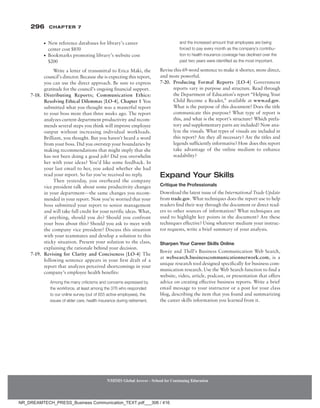
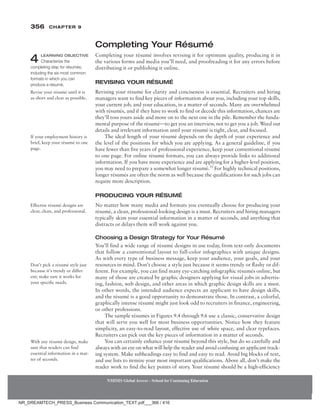
Figure 1.2 Effective Professional Communication
At first glance, the top email message here looks like a reasonable attempt at communicating with the members of a project team. However, com-
pare it with the bottom version by referencing the notes lettered (a) through (h) to see just how many problems the original message really has.
(a) The vague subject line fails to alert people to the
upcoming meeting.
(b) The greeting is cold and off-putting.
(c) The opening paragraph fails to provide necessary
background information for anyone who missed the
meeting.
(d) A negative, accusatory tone puts readers on the
defensive, and the request for action fails to clarify
who needs to do what by when.
(e) The meeting information includes the day, but not
the date, which could lead to confusion.
(f) The wording here assumes that people who won’t
attend don’t want to, which might not be true. The
writer also fails to invite questions ahead of the meeting.
(g) The lack of a closing (such as “Thank you,”) con-
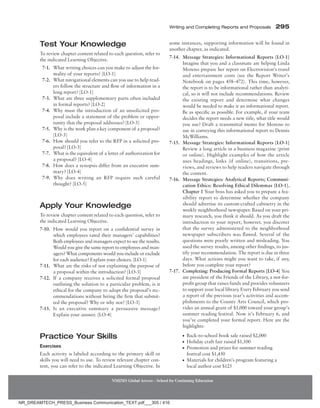
tributes to the harsh, abrupt tone.
(h) The writer fails to provide alternative contact infor-
mation or invite questions about the meeting.
(a) An informative subject line helps people grasp
important details immediately.
(b) The greeting is friendly without being too casual.
(e) The date eliminates scheduling uncertainty.
(c) The opening paragraph fills in missing information
so that everyone can grasp the importance of the
message.
(d) This upbeat paragraph emphasizes the positive
value of the meeting, and the request provides
enough information to enable readers to respond.
(f) The writer offers everyone a chance to participate,
without making anyone feel guilty about not being
able to attend in person. The closing paragraph
invites questions ahead of time so they don’t derail
the meeting.
(g) Like the greeting, the close has a warm and
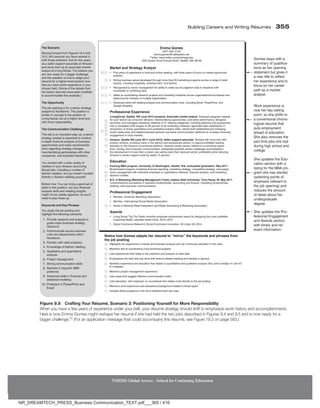
personal tone, without being too casual.
(h) The email signature provides additional infor-
mation and alternative contact options.
Ineffective
Ineffective
Effective
Effective
NR_DREAMTECH_PRESS_Business Communication_TEXT.pdf___15 / 416
6 Chapter 1
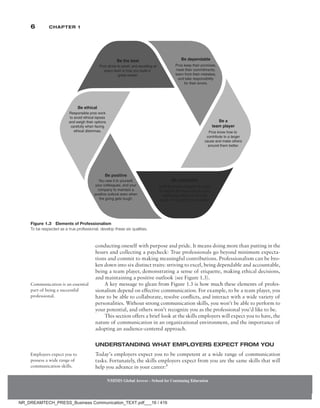
conducting oneself with purpose and pride. It means doing more than putting in the
hours and collecting a paycheck: True professionals go beyond minimum expecta-
tions and commit to making meaningful contributions. Professionalism can be bro-
ken down into six distinct traits: striving to excel, being dependable and accountable,
being a team player, demonstrating a sense of etiquette, making ethical decisions,
and maintaining a positive outlook (see Figure 1.3).
A key message to glean from Figure 1.3 is how much these elements of profes-
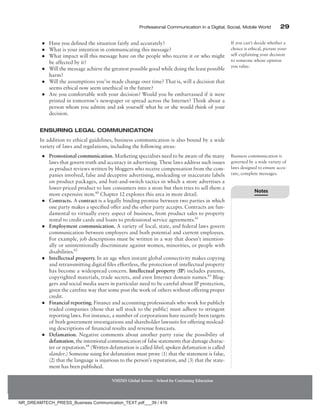
sionalism depend on effective communication. For example, to be a team player, you
have to be able to collaborate, resolve conflicts, and interact with a wide variety of
personalities. Without strong communication skills, you won’t be able to perform to
your potential, and others won’t recognize you as the professional you’d like to be.
This section offers a brief look at the skills employers will expect you to have, the
nature of communication in an organizational environment, and the importance of
adopting an audience-centered approach.
Understanding What Employers Expect from You
Today’s employers expect you to be competent at a wide range of communication
tasks. Fortunately, the skills employers expect from you are the same skills that will
help you advance in your career:8
Communication is an essential
part of being a successful
professional.
Employers expect you to
possess a wide range of
communication skills.
NMIMS Global Access - School for Continuing Education
Figure 1.3 Elements of Professionalism
To be respected as a true professional, develop these six qualities.
Pros keep their promises,
meet their commitments,
learn from their mistakes,
and take responsibility
for their errors.
Be dependable
Pros strive to excel, and excelling at
every level is how you build a
great career.
Be the best
Be ethical
Responsible pros work
to avoid ethical lapses
and weigh their options
carefully when facing
ethical dilemmas.
Be positive
You owe it to yourself,
your colleagues, and your
company to maintain a
positive outlook even when
the going gets tough.
Be respectful
Good business etiquette is a sign
of respect for those around you;
respecting others is not only
good—it’s good for your career.
Be a
team player
Pros know how to
contribute to a larger
cause and make others
around them better.
NR_DREAMTECH_PRESS_Business Communication_TEXT.pdf___16 / 416
Professional Communication in a Digital, Social, Mobile World 7
●
● Recognizing information needs, using efficient search techniques to locate reliable
sources of information (particularly from online sources), and using gathered
information ethically; this collection of skills is often referred to as digital infor-
mation fluency9
●
● Organizing ideas and information logically and completely
●
● Expressing ideas and information coherently, persuasively, and concisely
●
● Actively listening to others
●
● Communicating effectively with people from diverse backgrounds and experiences
●
● Using communication technologies effectively and efficiently
●
● Following accepted standards of grammar, spelling, and other aspects of high-
quality writing and speaking
●
● Communicating in a civilized manner that reflects contemporary expectations of
business etiquette, even when dealing with indifferent or hostile audiences
●
● Communicating ethically, even when choices aren’t crystal clear or you have to
share news that people don’t want to hear
●
● Managing your time wisely and using resources efficiently
●
● Using critical thinking, which is the ability to evaluate evidence completely and
objectively in order to form logical conclusions and make sound recommendations
You’ll have the opportunity to practice these skills throughout this course, but
don’t stop there. Successful professionals continue to hone communication skills
throughout their careers.
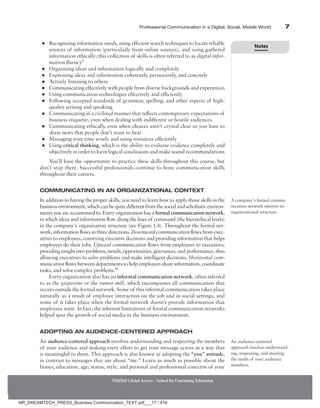
Communicating in an Organizational Context
In addition to having the proper skills, you need to learn how to apply those skills in the
business environment, which can be quite different from the social and scholastic environ-
ments you are accustomed to. Every organization has a formal communication network,
in which ideas and information flow along the lines of command (the hierarchical levels)
in the ­
company’s organization structure (see Figure 1.4). Throughout the formal net-
work, information flows in three directions. Downward communication flows from exec-
utives to employees, conveying executive decisions and providing information that helps
employees do their jobs. Upward communication flows from employees to executives,
providing insight into problems, trends, opportunities, grievances, and performance, thus
allowing executives to solve ­
problems and make intelligent decisions. Horizontal com-
munication flows between departments to help employees share information, coordinate
tasks, and solve complex problems.10
Every organization also has an informal communication network, often referred
to as the grapevine or the rumor mill, which encompasses all communication that
occurs outside the formal network. Some of this informal communication takes place
naturally as a result of employee interaction on the job and in social settings, and
some of it takes place when the formal network doesn’t provide information that
employees want. In fact, the inherent limitations of formal communication networks
helped spur the growth of social media in the business environment.
Adopting an Audience-Centered Approach
An audience-centered approach involves understanding and respecting the members
of your audience and making every effort to get your message across in a way that
is meaningful to them. This approach is also known as adopting the “you” attitude,
in contrast to messages that are about “me.” Learn as much as possible about the
biases, education, age, status, style, and personal and professional concerns of your
A company’s formal commu-
nication network mirrors its
organizational structure.
An audience-centered
approach involves understand-
ing, respecting, and meeting
the needs of your audience
members.
NMIMS Global Access - School for Continuing Education
Notes
NR_DREAMTECH_PRESS_Business Communication_TEXT.pdf___17 / 416
8 Chapter 1
receivers. If you’re addressing people you don’t know and you’re unable to find out
more about them, try to project yourself into their position by using common sense
and imagination. This ability to relate to the needs of others is a key part of emotional
intelligence, a combination of emotional and social skills that is widely considered
to be a vital characteristic of successful managers and leaders.11
The more you know
about the people you’re communicating with, the easier it is to concentrate on their
needs—which, in turn, makes it easier for them to hear your message, understand it,
and respond positively.
A vital element of audience-centered communication is etiquette, the expected
norms of behavior in any particular situation. In today’s hectic, competitive world,
etiquette might seem a quaint and outdated notion. However, the way you conduct
yourself and interact with others can have a profound influence on your company’s suc-
cess and your career. When executives hire and promote you, they expect your behavior
to protect the company’s reputation. The more you understand such expectations,
the better chance you have of avoiding career-damaging mistakes. The principles of
etiquette discussed in Chapter 2 will help you communicate with an audience-centered
approach in a variety of business settings.
Exploring the Communication Process
Even with the best intentions, communication efforts can fail. Messages can get lost
or simply ignored. The receiver of a message can interpret it in ways the sender never
imagined. In fact, two people receiving the same information can reach different
conclusions about what it means.
Fortunately, by understanding communication as a process with distinct steps,
you can improve the odds that your messages will reach their intended audiences and
Etiquette, the expected norms
of behavior in a particular
situation, can have a profound
influence on your company’s
success and your career.
3 LEARNING OBJECTIVE
Describe the
communication process model
and the ways social media are
changing the nature of business
communication.
NMIMS Global Access - School for Continuing Education
Figure 1.4 Formal Communication Network
The formal communication network is defined by the relationships between the various job positions in the organization. Messages can flow
upward (from a lower-level employee to a higher-level employee), downward (from a higher-level employee to a lower-level employee), and
horizontally (between employees at the same or similar levels across the organization).
Line C
supervisor
Line B
supervisor
Line A
supervisor
Director
of sales
Accounting
manager
Vice president
of finance
Vice president
of production
President
Vice president
of research and
development
Vice president
of marketing
Advertising
manager
Industrial
sales
manager
Examples of downward communication
Examples of upward communication
Examples of horizontal communication
E-commerce
manager
Retail
sales
manager
Plant
manager
Director of
advertising and
promotion
NR_DREAMTECH_PRESS_Business Communication_TEXT.pdf___18 / 416
Professional Communication in a Digital, Social, Mobile World 9
produce their intended effects. This section explores the communication process in
two stages: first by following a message from one sender to one receiver in the basic
communication model and then by expanding on that approach with multiple mes-
sages and participants in the social communication model.
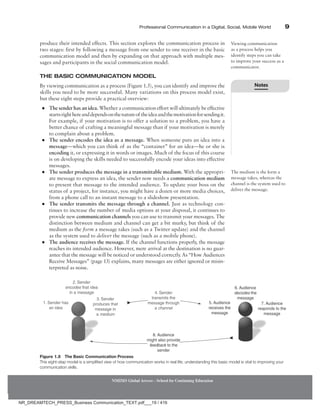
The Basic Communication Model
By viewing communication as a process (Figure 1.5), you can identify and improve the
skills you need to be more successful. Many variations on this process model exist,
but these eight steps provide a practical overview:
●
● The sender has an idea. Whether a communication effort will ultimately be effective
startsrighthereanddependsonthenatureof theideaandthemotivationforsendingit.
For example, if your motivation is to offer a solution to a problem, you have a
better chance of crafting a meaningful message than if your motivation is merely
to complain about a problem.
●
● The sender encodes the idea as a message. When someone puts an idea into a
message—which you can think of as the “container” for an idea—he or she is
encoding it, or expressing it in words or images. Much of the focus of this course
is on developing the skills needed to successfully encode your ideas into effective
messages.
●
● The sender produces the message in a transmittable medium. With the appropri-
ate message to express an idea, the sender now needs a communication medium
to present that message to the intended audience. To update your boss on the
status of a project, for instance, you might have a dozen or more media choices,
from a phone call to an instant message to a slideshow presentation.
●
● The sender transmits the message through a channel. Just as technology con-
tinues to increase the number of media options at your disposal, it continues to
provide new communication channels you can use to transmit your messages. The
distinction between medium and channel can get a bit murky, but think of the
medium as the form a message takes (such as a Twitter update) and the channel
as the system used to deliver the message (such as a mobile phone).
●
● The audience receives the message. If the channel functions properly, the message
reaches its intended audience. However, mere arrival at the destination is no guar-
antee that the message will be noticed or understood correctly. As “How Audiences
Receive Messages” (page 13) explains, many messages are either ignored or misin-
terpreted as noise.
Viewing communication
as a process helps you
identify steps you can take
to improve your success as a
communicator.
The medium is the form a
message takes, whereas the
channel is the system used to
deliver the message.
NMIMS Global Access - School for Continuing Education
Figure 1.5 The Basic Communication Process
This eight-step model is a simplified view of how communication works in real life; understanding this basic model is vital to improving your
communication skills.
1. Sender has
an idea
2. Sender
encodes that idea
in a message
3. Sender
produces that
message in
a medium
5. Audience
receives the
message
6. Audience
decodes the
message
7. Audience
responds to the
message
e
7. Audience
responds to the
e
responds to
message
4. Sender
transmits the
message through
a channel
8. Audience
might also provide
feedback to the
sender
Notes
NR_DREAMTECH_PRESS_Business Communication_TEXT.pdf___19 / 416
10 Chapter 1
●
● The audience decodes the message. After a message is received, the receiver needs
to extract the idea from the message, a step known as decoding. “How Audiences
Decode Messages” (page 14) takes a closer look at this complex and subtle step
in the process.
●
● The audience responds to the message. By crafting messages in ways that show
the benefits of responding, senders can increase the chances that recipients will
respond in positive ways. However, as “How Audiences Respond to Messages”
(page 15) points out, whether a receiver responds as the sender hopes depends on
the receiver (1) remembering the message long enough to act on it, (2) being able
to act on it, and (3) being motivated to respond.
●
● The audience provides feedback to the sender. In addition to responding (or not
responding) to the message, audience members may give feedback that helps the
sender evaluate the effectiveness of the communication effort. Feedback can be
verbal (using written or spoken words), nonverbal (using gestures, facial expres-
sions, or other signals), or both. Just like the original message, however, this feed-
back from the receiver also needs to be decoded carefully. A smile, for example,
can have many meanings.
Considering the complexity of this process—and the barriers and distractions
that often stand between sender and receiver—it should come as no surprise that
communication efforts often fail to achieve the sender’s objective. Fortunately, the
better you understand the process, the more successful you’ll be.
The following sections take a closer look at two important aspects of the process:
environmental barriers that can block or distort messages and the steps audiences take
to receive, decode, and respond to messages.
Barriers in the Communication Environment
Within any communication environment, messages can be disrupted by a variety of
communication barriers. These barriers include noise and distractions, competing
messages, filters, and channel breakdowns:
●
● Noise and distractions. External distractions range from uncomfortable meeting
rooms to computer screens cluttered with instant messages and reminders popping
up all over the place. Internal distractions are thoughts and emotions that prevent
audiences from focusing on incoming messages. The common habit of multitask-
ing—attempting more than one task at a time—is practically guaranteed to create
communication distractions. Multitasking dramatically increases the workload
on your brain because you’re forcing it to constantly switch between sets of rules
and contexts, which requires it to reorient each time.12
Rather than getting more
done, research shows that chronic multitasking often reduces productivity and
increases errors.13
As more communication takes place on mobile devices, the need
to insulate yourself from noise and distractions will keep growing.
●
● Competing messages. Having your audience’s undivided attention is a rare luxury.
In most cases you must compete with other messages that are trying to reach your
audience at the same time.
●
● Filters. Messages can be blocked or distorted by filters, any human or technologi-
cal interventions between the sender and the receiver. Filtering can be both inten-
tional (such as automatically filing incoming messages based on sender or content)
or unintentional (such as an overly aggressive spam filter that deletes legitimate
emails). As mentioned previously, the structure and culture of an organization can
also inhibit the flow of vital messages. And in some cases the people or companies
you rely on to deliver your message can distort it or filter it to meet their own needs.
A number of barriers can
block or distort messages
before they reach the intended
audience.
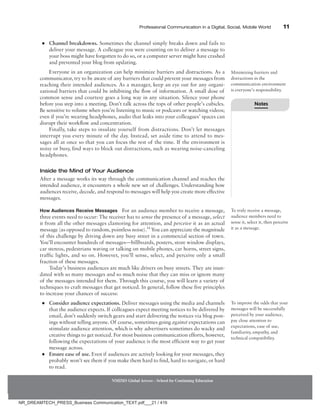
NMIMS Global Access - School for Continuing Education
Notes
NR_DREAMTECH_PRESS_Business Communication_TEXT.pdf___20 / 416
Professional Communication in a Digital, Social, Mobile World 11
●
● Channel breakdowns. Sometimes the channel simply breaks down and fails to
deliver your message. A colleague you were counting on to deliver a message to
your boss might have forgotten to do so, or a computer server might have crashed
and prevented your blog from updating.
Everyone in an organization can help minimize barriers and distractions. As a
communicator, try to be aware of any barriers that could prevent your messages from
reaching their intended audiences. As a manager, keep an eye out for any organi-
zational barriers that could be inhibiting the flow of information. A small dose of
common sense and courtesy goes a long way in any situation. Silence your phone
before you step into a meeting. Don’t talk across the tops of other people’s cubicles.
Be sensitive to volume when you’re listening to music or podcasts or watching videos;
even if you’re wearing headphones, audio that leaks into your colleagues’ spaces can
disrupt their workflow and concentration.
Finally, take steps to insulate yourself from distractions. Don’t let messages
interrupt you every minute of the day. Instead, set aside time to attend to mes-
sages all at once so that you can focus the rest of the time. If the environment is
noisy or busy, find ways to block out distractions, such as wearing noise-canceling
headphones.
Inside the Mind of Your Audience
After a message works its way through the communication channel and reaches the
intended audience, it encounters a whole new set of challenges. Understanding how
audiences receive, decode, and respond to messages will help you create more effective
messages.
How Audiences Receive Messages For an audience member to receive a message,
three events need to occur: The receiver has to sense the presence of a message, select
it from all the other messages clamoring for attention, and perceive it as an actual
message (as opposed to random, pointless noise).14
You can appreciate the magnitude
of this challenge by driving down any busy street in a commercial section of town.
You’ll encounter hundreds of messages—billboards, posters, store window displays,
car stereos, pedestrians waving or talking on mobile phones, car horns, street signs,
traffic lights, and so on. However, you’ll sense, select, and perceive only a small
fraction of these messages.
Today’s business audiences are much like drivers on busy streets. They are inun-
dated with so many messages and so much noise that they can miss or ignore many
of the messages intended for them. Through this course, you will learn a variety of
techniques to craft messages that get noticed. In general, follow these five principles
to increase your chances of success:
●
● Consider audience expectations. Deliver messages using the media and channels
that the audience expects. If colleagues expect meeting notices to be delivered by
email, don’t suddenly switch gears and start delivering the notices via blog post-
ings without telling anyone. Of course, sometimes going against expectations can
stimulate audience attention, which is why advertisers sometimes do wacky and
creative things to get noticed. For most business communication efforts, however,
following the expectations of your audience is the most efficient way to get your
message across.
●
● Ensure ease of use. Even if audiences are actively looking for your messages, they
probably won’t see them if you make them hard to find, hard to navigate, or hard
to read.
Minimizing barriers and
distractions in the
communication environment
is everyone’s responsibility.
To truly receive a message,
audience members need to
sense it, select it, then perceive
it as a message.
To improve the odds that your
messages will be successfully
perceived by your audience,
pay close attention to
expectations, ease of use,
familiarity, empathy, and
technical compatibility.
NMIMS Global Access - School for Continuing Education
Notes
NR_DREAMTECH_PRESS_Business Communication_TEXT.pdf___21 / 416
12 Chapter 1
●
● Emphasize familiarity. Use words, images, and designs that are familiar to your
audience. For example, most visitors to company websites expect to see informa-
tion about the company on a page called “About” or “About Us.”
●
● Practice empathy. Make sure your messages speak to the audience by clearly
addressing their wants and needs—not yours. People are inclined to notice mes-
sages that relate to their individual concerns.15
●
● Design for compatibility. For the many messages delivered electronically these
days, be sure to verify technological compatibility with your audience. For
instance, if your website requires visitors to have a particular video capability
in their browsers, you won’t reach those audience members who don’t have that
software installed or updated.
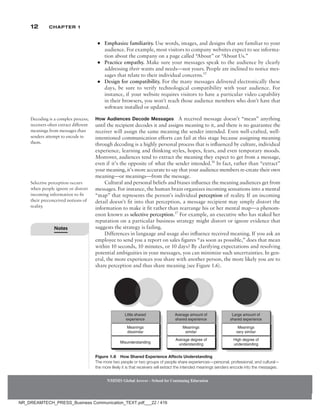
How Audiences Decode Messages A received message doesn’t “mean” anything
until the recipient decodes it and assigns meaning to it, and there is no guarantee the
receiver will assign the same meaning the sender intended. Even well-crafted, well-
intentioned communication efforts can fail at this stage because assigning meaning
through decoding is a highly personal process that is influenced by culture, individual
experience, learning and thinking styles, hopes, fears, and even temporary moods.
Moreover, audiences tend to extract the meaning they expect to get from a message,
even if it’s the opposite of what the sender intended.16
In fact, rather than “extract”
your meaning, it’s more accurate to say that your audience members re-create their own
meaning—or meanings—from the message.
Cultural and personal beliefs and biases influence the meaning audiences get from
messages. For instance, the human brain organizes incoming sensations into a mental
“map” that represents the person’s individual perception of reality. If an incoming
detail doesn’t fit into that perception, a message recipient may simply distort the
information to make it fit rather than rearrange his or her mental map—a phenom-
enon known as selective perception.17
For example, an executive who has staked her
reputation on a particular business strategy might distort or ignore evidence that
suggests the strategy is failing.
Differences in language and usage also influence received meaning. If you ask an
employee to send you a report on sales figures “as soon as possible,” does that mean
within 10 seconds, 10 minutes, or 10 days? By clarifying expectations and resolving
potential ambiguities in your messages, you can minimize such uncertainties. In gen-
eral, the more experiences you share with another person, the more likely you are to
share perception and thus share meaning (see Figure 1.6).
Decoding is a complex process;
receivers often extract different
meanings from messages than
senders attempt to encode in
them.
Selective perception occurs
when people ignore or distort
incoming information to fit
their preconceived notions of
reality.
NMIMS Global Access - School for Continuing Education
Figure 1.6 How Shared Experience Affects Understanding
The more two people or two groups of people share experiences—personal, professional, and cultural—
the more likely it is that receivers will extract the intended meanings senders encode into the messages.
Little shared
experience
Misunderstanding
Meanings
dissimilar
Average amount of
shared experience
Average degree of
understanding
Meanings
similar
Large amount of
shared experience
High degree of
understanding
Meanings
very similar
Notes
NR_DREAMTECH_PRESS_Business Communication_TEXT.pdf___22 / 416
Professional Communication in a Digital, Social, Mobile World 13
Individual thinking styles are another important factor in message decoding.
For example, someone who places a high value on objective analysis and clear logic
might interpret a message differently than someone who values emotion or intuition
(reaching conclusions without using rational processes).
How Audiences Respond to Messages Your message has been delivered, received, and
correctly decoded. Now what? Will audience members respond in the way you’d like
them to? Only if three events occur.
First, the recipient has to remember the message long enough to act on it. Simpli-
fying greatly, memory works in several stages: Sensory memory momentarily captures
incoming data from the senses; then, whatever the recipient pays attention to is trans-
ferred to short-term memory. Information in short-term memory quickly disappears
if it isn’t transferred to long-term memory, which can be done either actively (such
as when a person memorizes a list of items) or passively (such as when a new piece
of information connects with something else the recipient already has stored in long-
term memory). Finally, the information needs to be retrieved when the recipient wants
to act on it.18
In general, people find it easier to remember and retrieve information
that is important to them personally or professionally. Consequently, by communicat-
ing in ways that are sensitive to your audience’s wants and needs, you greatly increase
the chance that your messages will be remembered and retrieved.
Audiences will likely respond
to a message if they remember
it, if they’re able to respond,
and if they’re properly
motivated to do so.
NMIMS Global Access - School for Continuing Education
The Future Of Communication
The Internet of Things (IoT) refers to the billions of devices
now connected to the Internet and the networking potential
of having all these gadgets communicate with each other,
feed data into vast information warehouses, and interact
with people and the physical environment. These “things”
range from simple sensors that measure temperature, loca-
tion, and other parameters all the way up to robots and
other complex systems. People and animals with Internet-
capable sensors (such as implanted chips) or devices also
qualify as things in this model.
Imagine you walk into a department store and your
mobile phone automatically gives you directions to the
aisle where you could find the clothing styles you have
recently been browsing online or discussing in social
media. When you reach that aisle and start browsing, a
coupon pops up on your phone, offering discounts on the
specific items you’re considering. When you pull a gar-
ment off the rack, the store’s customer database checks
other purchases you’ve made and suggests which items you
already own that coordinate with this piece. If you could
use an accessory to complete the outfit, the store’s com-
puters can tell your phone just where to take you. And if
you need more advice, you can text or talk—and possibly
not know whether you’re conversing with a store employee
or an automated chatbot on a computer somewhere.
Now imagine this simple concept expanded and
applied in various ways to industrial facilities, agriculture,
transportation, buildings, health care, and other systems.
By relying on networked IoT devices for such commu-
nication functions as observing, measuring, and report-
ing, these enhanced systems can supplement or replace
communication flows that were previously carried out by
human participants.
IoT is poised to reshape many business processes on a
scale that some experts compare to the Industrial Revolu-
tion of the 19th century. It also seems likely to influence
business communication as it takes over some routine tasks
and brings the power of smart networking and computing
to others. Basic communication skills will remain as essen-
tial as ever, but don’t be surprised if some of the conversa-
tions you have in the future aren’t with your fellow humans.
What’s Your Prediction?
Research the current state of IoT innovation to identify
one way in which the technology has the potential to
change business communication practices, such as auto-
mated report writing or conversational bots that mimic
human speech or writing. Do you agree with the predic-
tions the experts make? Why or why not?
Sources: Stacey Higginbotham, “IBM Is Bringing in Watson to Conquer
the Internet of Things,” Fortune, 15 December 2015, fortune.com; Jacques
Bughin, Michael Chui, and James Manyika, “An Executive’s Guide to the
Internet of Things,” McKinsey Quarterly, August 2015, www.mckinsey.com;
Cora Cloud, “Internet of Things (IOT) Role in Business Communications,”
Digium, 9 April 2015, blogs.digium.com; Danial Burrus, “The Internet of
Things Is Far Bigger Than Anyone Realizes,” Wired, accessed 3 March 2016,
www.wired.com.
The Internet of Things
NR_DREAMTECH_PRESS_Business Communication_TEXT.pdf___23 / 416
14 Chapter 1
Second, the recipient has to be able to respond as you wish. Obviously, if recipi-
ents simply cannot do what you want them to do, they will not respond according to
your plan. By understanding your audience (you’ll learn more about audience analysis
in Chapter 4), you can work to minimize these unsuccessful outcomes.
Third, the recipient has to be motivated to respond. You’ll encounter many situ-
ations in which your audience has the option of responding but isn’t required to. For
instance, a record company may or may not offer your band a contract, or your boss
may or may not respond to your request for a raise. Throughout this course, you’ll
learn techniques for crafting messages that can help motivate readers to respond
positively to your messages.
The Social Communication Model
The basic model presented in Figure 1.5 illustrates how a single idea moves from
one sender to one receiver. In a larger sense, it also helps represent the traditional
nature of much business communication, which was primarily defined by a pub-
lishing or broadcasting mindset. For external communication, a company issued
carefully scripted messages to a mass audience that didn’t have many options for
responding to those messages or initiating messages of their own. Customers and
other interested parties had few ways to connect with one another to ask questions,
share information, or offer support. Internal communication tended to follow the
same “we talk, you listen” model, with upper managers issuing directives to lower-
level supervisors and employees.
In recent years, however, a variety of technologies have enabled and inspired a
new approach to business communication. In contrast to the publishing mindset,
this social communication model is interactive, conversational, and usually open
to all who wish to participate. Audience members are no longer passive recipients
of messages but active participants in a conversation. Social media have given
customers and other stakeholders a voice they did not have in the past. And busi-
nesses are listening to that voice. In fact, one of the most common uses of social
media among U.S. businesses is monitoring online discussions about a company
and its brands.19
Instead of transmitting a fixed message, a sender in a social media environment
initiates a conversation by asking a question or sharing valuable information. Infor-
mation shared this way is often revised and reshaped by the web of participants as
they forward it and comment on it. People can add to it or take pieces from it, depend-
ing on their needs and interests. Figure 1.7 lists some of the significant differences
between the traditional and social models of business communication.
The social communication model offers many advantages, but it has a number
of disadvantages as well. Potential problems include information overload, a lower
level of engagement with tasks and other people, fragmented attention, informa-
tion security risks, reduced productivity, and the difficulty of maintaining a healthy
boundary between personal and professional lives.20
All business professionals and
managers need to choose and use digital tools wisely to control the flow of informa-
tion they receive.
Of course, no company, no matter how enthusiastically it embraces the social
communication model, is going to be run as a club in which everyone has a say in
every business matter. Instead, a hybrid approach is emerging in which some com-
munications (such as strategic plans and policy documents) follow the traditional
approach, whereas others (such as project management updates and customer sup-
port messages) follow the social model.
You can learn more about business uses of social media in Chapter 8.
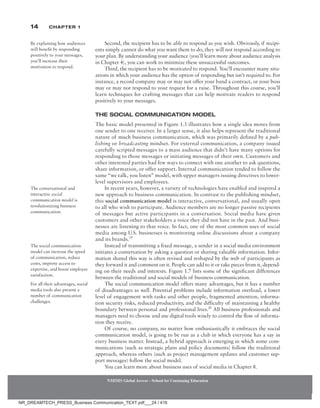
By explaining how audiences
will benefit by responding
positively to your messages,
you’ll increase their
motivation to respond.
The conversational and
interactive social
communication model is
revolutionizing business
communication.
The social communication
model can increase the speed
of communication, reduce
costs, improve access to
expertise, and boost employee
satisfaction.
For all their advantages, social
media tools also present a
number of communication
challenges.
NMIMS Global Access - School for Continuing Education
NR_DREAMTECH_PRESS_Business Communication_TEXT.pdf___24 / 416
Professional Communication in a Digital, Social, Mobile World 15
The Mobile Revolution
As much of a game changer as social media have been, some experts predict that
mobile communication will change the nature of business and business communica-
tion even more. The venture capitalist Joe Schoendorf says that “mobile is the most
disruptive technology that I have seen in 48 years in Silicon Valley.”21
The researcher
Maribel Lopez calls mobile “the biggest technology shift since the Internet.”22
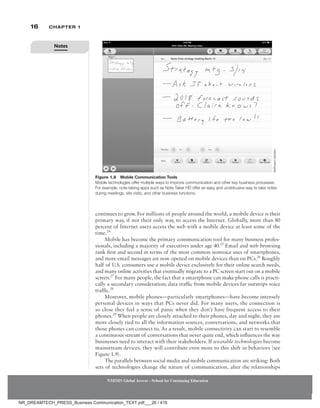
Companies recognize the value of integrating mobile technology, from communi-
cation platforms to banking to retail. Mobile apps and communication systems can
boost employee productivity, help companies form closer relationships with custom-
ers and business partners, and spur innovation in products and services (see Figure
1.8). Given the advantages and the rising expectations of employees and customers,
firms on the leading edge of the mobile revolution are working to integrate mobile
technology throughout their organizations.23
This section offers a high-level view of the mobile revolution, and you’ll see cover-
age of specific topics integrated throughout the book—everything from collaborative
writing and research to presentations and job search strategies.
The Rise of Mobile as a Communication Platform
Whether it’s emailing, social networking, watching videos, or doing research, the
percentage of communication and media consumption performed on mobile devices
4 LEARNING OBJECTIVE
Outline the challenges
and opportunities of mobile
communication in business.
Mobile devices are rapidly
taking over as the primary
communication platform for
many business professionals.
NMIMS Global Access - School for Continuing Education
Figure 1.7 The Social Communication Model
The social communication model differs from conventional communication strategies and practices in
a ­
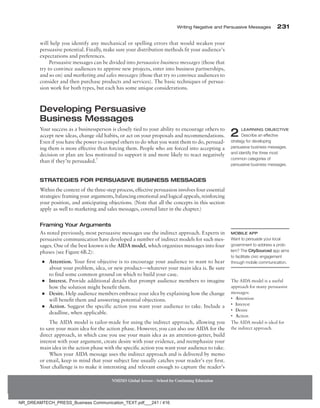
number of significant ways. You’re probably already an accomplished user of many new-media tools,
and this experience will help you on the job.
Tendencies
Publication, broadcast
Lecture
Intrusion
Unidirectinal
One to many; mass audience
Control
Low message frequency
Few channels
Information hoarding
Static
Hierarchical
Structured
Isolated
Planned
Resistive
Conventional Promotion:
“We Talk,You Listen”
The Social Model:
“Let’s Have a Conversation”
Tendencies
Converstion
Discussion
Permission
Bidirectional, multidirectional
One to one; many to many
Influence
High message frequency
Many channels
Information sharing
Dynamic
Egalitarian
Amorphous
Collaborative
Reactive
Responsive
Notes
NR_DREAMTECH_PRESS_Business Communication_TEXT.pdf___25 / 416
16 Chapter 1
continues to grow. For millions of people around the world, a mobile device is their
primary way, if not their only way, to access the Internet. Globally, more than 80
percent of Internet users access the web with a mobile device at least some of the
time.24
Mobile has become the primary communication tool for many business profes-
sionals, including a majority of executives under age 40.25
Email and web browsing
rank first and second in terms of the most common nonvoice uses of smartphones,
and more email messages are now opened on mobile devices than on PCs.26
Roughly
half of U.S. consumers use a mobile device exclusively for their online search needs,
and many online activities that eventually migrate to a PC screen start out on a mobile
screen.27
For many people, the fact that a smartphone can make phone calls is practi-
cally a secondary consideration; data traffic from mobile devices far outstrips voice
traffic.28
Moreover, mobile phones—particularly smartphones—have become intensely
personal devices in ways that PCs never did. For many users, the connection is
so close they feel a sense of panic when they don’t have frequent access to their
phones.29
When people are closely attached to their phones, day and night, they are
more closely tied to all the information sources, conversations, and networks that
those phones can connect to. As a result, mobile connectivity can start to resemble
a continuous stream of conversations that never quite end, which influences the way
businesses need to interact with their stakeholders. If wearable technologies become
mainstream devices, they will contribute even more to this shift in behaviors (see
Figure 1.9).
The parallels between social media and mobile communication are striking: Both
sets of technologies change the nature of communication, alter the relationships
NMIMS Global Access - School for Continuing Education
Figure 1.8 Mobile Communication Tools
Mobile technologies offer multiple ways to improve communication and other key business processes.
For example, note-taking apps such as Note Taker HD offer an easy and unobtrusive way to take notes
during meetings, site visits, and other business functions.
Software
Garden
Notes
NR_DREAMTECH_PRESS_Business Communication_TEXT.pdf___26 / 416
Professional Communication in a Digital, Social, Mobile World 17
between senders and receivers, create opportunities as well as challenges, and force
business professionals to hone new skills. In fact, much of the rise in social com-
munication can be attributed to the connectivity made possible by mobile devices.
Companies that work to understand and embrace mobile, both internally and exter-
nally, stand the best chance of capitalizing on this monumental shift in the way people
communicate.
How Mobile Technologies Are Changing Business
Communication
The rise of mobile communication has some obvious implications, such as the need
for websites to be mobile friendly. If you’ve ever tried to browse a conventional web-
site on a tiny screen or fill in complicated online forms using the keypad on your
phone, you know how frustrating the experience can be. Users increasingly expect
websites to be mobile friendly, and they’re likely to avoid sites that aren’t optimized
for mobile.30
As mobile access overtakes computer-based access, some companies now
take a mobile-first approach, in which websites are designed for optimum viewing on
smartphones and tablets rather than conventional PC screens.31
Another successful
approach is creating mobile apps that offer a more interactive and mobile-friendly
experience than a conventional website can provide.
However, device size and portability are only the most obvious changes. Just as
with social media, the changes brought about by mobile go far deeper than the tech-
nology itself. Mobile changes the way people communicate, with profound implica-
tions for virtually every aspect of business communication.
The social media pioneer Nicco Mele coined the term radical connectivity to
describe “the breathtaking ability to send vast amounts of data instantly, constantly,
and globally.”32
Mobile plays a major and ever-expanding role in this phenomenon
by keeping people connected 24/7, wherever they may be. People who’ve grown
up with mobile communication technology expect to have immediate access to
information and the ability to stay connected to their various social and business
networks.33
Here are the most significant ways mobile technology is changing the practice of
business communication:
●
● Constant connectivity is a mixed blessing. As with social media, mobile con-
nectivity can blur the boundaries between personal and professional time and
space, preventing people from fully disengaging from work during personal and
family time. On the other hand, it can give employees more flexibility to meet
People who grew up with
mobile phones often expect
to have the same level of con-
nectivity in their roles as both
customers and as employees.
Constant connectivity is
a mixed blessing: You can
work from anywhere at any
time, but it’s more difficult
to disconnect from work and
recharge yourself.
NMIMS Global Access - School for Continuing Education
Figure 1.9 Wearable Technology
Smartwatches and other wearable mobile devices offer intriguing possibilities for business communication.
The Uno Noteband incorporates Spritz speed-reading technology that makes it easier to read message
content quickly.
Used
by
permission
of
Uno
Inc.
Notes
NR_DREAMTECH_PRESS_Business Communication_TEXT.pdf___27 / 416
18 Chapter 1
their personal and professional obligations.34
In this regard, mobile plays an
important role in efforts to reduce operating costs through telecommuting and
other nontraditional work models.35
●
● Small mobile displays and sometimes-awkward input technologies present chal-
lenges for creating and consuming content, whether it’s typing an email message
or watching a video. As you’ll read in Chapter 6, for example, email messages
need to be written and formatted differently to make them easier to read on
mobile devices.
●
● Mobile users are often multitasking—roughly half of mobile phone usage
happens while people are walking, for instance—so they can’t give full
attention to the information on their screens.36
Moreover, mobile use often
occurs in environments with multiple distractions and barriers to successful
communication.
●
● Mobile communication, particularly text messaging, has put pressure on tradi-
tional standards of grammar, punctuation, and writing in general. Chapter 4 has
more on this topic.
●
● Mobile devices can serve as sensory and cognitive extensions.37
For example, they
can help people experience more of their environment (such as augmented reality
apps that superimpose information on a live camera view) and have instant access
to information without relying on faulty and limited human memory. The addi-
tion of location-aware content, such as facility maps and property information,
enhances the mobile experience.
●
● Mobile devices create a host of security and privacy concerns for end users and
corporate technology managers alike.38
Companies are wrestling with the “bring
your own device” or “BYOD” phenomenon, in which employees want to be able
to access company networks and files with their personal smartphones and tab-
lets, both in the office and away from it. These devices don’t always have the
rigorous security controls that corporate networks need, however, and users don’t
always use the devices in secure ways.
●
● Mobile tools can enhance productivity and collaboration by making it easier for
employees to stay connected and giving them access to information and work
tasks during forced gaps in the workday or while traveling.39
●
● Mobile apps can assist in a wide variety of business tasks, from research to pre-
sentations40
(see Figure 1.10). Companies aren’t restricted to commercially avail-
able apps, either. With digital publishing tools, companies can create custom
apps with content and capabilities geared specifically toward their customers or
employees.41
●
● Mobile connectivity can accelerate decision making and problem solving by put-
ting the right information in the hands of the right people at the right time. For
example, if the people in a decision-making meeting need more information, they
can do the necessary research on the spot.42
Mobile communication also makes
it easier to quickly tap into pockets of expertise within a company.43
Customer
service can be improved by making sure technicians and other workers always
have the information they need right at hand.44
Companies can also respond and
communicate faster ­
during crises.45
●
● With interactivity designed to take advantage of the capabilities of mobile devices
(including cameras, accelerometers, compasses, and GPS), companies can create
more engaging experiences for customers and other users.46
The mobile revolution complicates business communication in some ways, but
it can enhance communication in many other ways if done thoughtfully.You’ll read
more about mobile in the chapters ahead.
Collaboration and problem
solving are two key areas
where mobile connectivity can
boost productivity by enabling
real-time interaction and
access to vital information.
NMIMS Global Access - School for Continuing Education
Notes
NR_DREAMTECH_PRESS_Business Communication_TEXT.pdf___28 / 416
Professional Communication in a Digital, Social, Mobile World 19
Using Technology to Improve Business
Communication
Today’s businesses rely heavily on technology to enhance communication. In fact,
many of the technologies you might use in your personal life, from microblogs
to video games, are also used in business. Technology is discussed extensively
throughout this book, with specific advice on using both common and emerging
tools. The four-page photo essay “Powerful Tools for Communicating Effectively”
(see pages 24–27) provides an overview of the technologies that connect people in
offices, factories, and other business settings.
However, anyone who has used advanced technology knows the benefits are
not automatic. Poorly designed or inappropriately used technology can hinder
communication more than help. To communicate effectively, learn to keep technology
in perspective, guard against information overload and information addiction, use
technological tools productively, and frequently disengage from the computer to
communicate in person.
Keeping Technology in Perspective
Perhaps the single most important point to remember about technology is that it is
simply a tool, a means by which you can accomplish certain tasks. Technology is an
5 LEARNING OBJECTIVE
List four general guidelines
for using communication
technology effectively.
Mobile App
Pocket collects content you’d
like to read or view later and
syncs it across your mobile
devices.
Don’t rely too much on tech-
nology or let it overwhelm the
communication process.
NMIMS Global Access - School for Continuing Education
Figure 1.10 Mobile Communication: Opportunities and Challenges
From 24/7 connectivity to business-oriented apps that let professionals perform work tasks on the go
(such as making notes for a presentation, as shown here on the mobile version of PowerPoint), mobile
technology is revolutionizing business communication.
MS
PowerPoint
by
Microsoft
Corporation
Notes
NR_DREAMTECH_PRESS_Business Communication_TEXT.pdf___29 / 416
20 Chapter 1
aid to interpersonal communication, not a replacement for it. Technology can’t think
for you or communicate for you, and if you lack some essential skills, technology can’t
fill in the gaps. Throughout the book, you’ll see advice on keeping the focus on your
messages and your audiences, and using technology to enhance the communication
process.
Guarding Against Information Overload
The overuse or misuse of communication technology can lead to
information overload, in which people receive more information than they can
effectively process. Information overload makes it difficult to discriminate between
useful and useless information, reduces productivity, and amplifies employee stress
both on the job and at home, even to the point of causing health and relationship
problems.47
You often have some level of control over the number and types of messages you
choose to receive. Use the filtering features of your communication systems to isolate
high-priority messages that deserve your attention. Also, be wary of subscribing to
too many Twitter streams and other sources. Focus on the information you truly need
in order to do your job.
As a sender, you can help reduce information overload by making sure you don’t
send unnecessary messages. In addition, when you send messages that aren’t urgent or
crucial, let people know so they can prioritize. Also, most communication systems let
you mark messages as urgent; however, use this feature only when it is truly needed.
Its overuse leads to annoyance and anxiety, not action.
Using Technological Tools Productively
Facebook, Twitter, YouTube, and other technologies are key parts of what has been
called the information technology paradox, in which information tools can waste
as much time as they save. Social media are a particular source of concern: While
they offer great opportunities for connecting with customers and other stake-
holders, the potential for distraction can waste significant amounts of employee
time.
Inappropriate web use not only distracts employees from work responsibilities, it
can leave employers open to lawsuits for sexual harassment if inappropriate images
are displayed in or transmitted around the company.48
Social media have created
another set of managerial challenges, given the risk that employee blogs or social
networking pages can expose confidential information or damage a firm’s reputation
in the marketplace. With all these technologies, the best solution lies in developing
clear policies that are enforced evenly for all employees.49
Managers need to guide their employees in the productive use of information
tools because the speed and simplicity of these tools are also among their greatest
weaknesses. The flood of messages from an expanding array of digital sources can
significantly affect employees’ ability to focus on their work. In one study, workers
exposed to a constant barrage of emails, instant messages, and phone calls experi-
enced an average 10-point drop in their functioning intelligence quotient.50
In addition to using your tools appropriately, knowing how to use them efficiently
can make a big difference in your productivity. You don’t have to become an expert
in most cases, but you do need to be familiar with the basic features and functions of
the tools you are expected to use on the job. As a manager, you also need to ensure
Information overload results
when people receive more
information than they can
effectively process.
An important step in reducing
information overload is to
avoid sending unnecessary
messages.
Mobile App
WhatsApp lets you send and
receive messages, videos, and
other content via your phone’s
Internet connection.
Communicating in today’s
business environment requires
at least a basic level of techni-
cal competence.
NMIMS Global Access - School for Continuing Education
NR_DREAMTECH_PRESS_Business Communication_TEXT.pdf___30 / 416
Professional Communication in a Digital, Social, Mobile World 21
that your employees have sufficient training to productively apply the tools you expect
them to use.
Reconnecting with People
Even the best technologies can hinder communication if they are overused. For
instance, a common complaint among employees is that managers rely too heavily
on email and don’t communicate face to face often enough.51
Speaking with people
over the phone or in person can take more time and effort and can sometimes force
you to confront unpleasant situations directly, but it is often essential for solving
tough problems and maintaining productive relationships.52
Moreover, even the best communication technologies can’t show people who
you really are. Remember to step out from behind the technology frequently to learn
more about the people you work with and to let them learn more about you.
No matter how much
technology is involved,
communication is still
about people connecting
with people.
DIGITAL 1 SOCIAL 1 MOBILE: TODAY’s COMMUNICATION ENVIRONMENT
The fact that millions of people spend billions of hours
playing games on their mobile devices is not lost on com-
panies looking for ways to enhance communication with
employees and customers. Whether they feature skill,
chance, or compelling story lines, successful games try to
engage users intellectually and emotionally—just as suc-
cessful business communicators try to do.
Gamification is the addition of game-playing aspects
to an activity or a process with the goal of increasing user
engagement, and it’s a natural fit for social media and
mobile devices. Foursquare’s check-in competitions, in
which the person who “checks in” using Foursquare the
most times during a certain time window is crowned the
“mayor” of that location, were an early use of gamifica-
tion. Foursquare wasn’t invented as a way for people to
become imaginary mayors of places where they shop or
eat, of course. It is an advertising platform that relies on
user activity and user-generated content, and the game ele-
ment encourages people to use the app more frequently.
Foursquare is a simple example of gamification, but
other companies are pushing the concept in new ways to
engage and motivate employees and other stakeholders.
For example, Bunchball’s Nitro software applies gamifi-
cation concepts to a number of business communication
platforms. On a customer-service system, the software
rewards employees for increasing their productivity, meet-
ing their service commitments to customers, and sharing
knowledge with their colleagues. On several collabora-
tion and brainstorming systems, gamification encourages
people to make more connections, share ideas, and boost
their influence within a community. Employee orientation
systems can use game concepts to help new hires learn
their way around the organization.
Gamification is also a key strategy for many com-
panies trying to improve customer loyalty. Badgeville’s
Reputation Mechanics system, for example, boosts the
profile of knowledgeable customers who share expertise
on social media sites and other online forums. By reward-
ing their product champions (see page 369) this way,
companies encourage them to keep contributing their
expertise, thereby helping other customers be successful
and satisfied.
Incidentally, if you are in the Millennial generation—
those born between about 1981 and 1995—you’re a special
target of gamification in the workplace and the market-
place, given your generation’s enthusiasm for video games.
Don’t be surprised to find more gamified apps and systems
on the job and everywhere you turn as a consumer.
Career Applications
1. Gamification is about influencing employee and cus-
tomer behaviors in ways that benefit a company. Is
this ethical? Explain your answer.
2. Assume a company provides a job-search game app
that helps you navigate your way through applying for
a job, explore various job openings, and understand
what it would be like to work there. Would the app
make you feel more positively about the company, or
would you find that using a game for this purpose
would trivialize something as important as your job
search? Explain your answer.
Sources: Bunchball website, accessed 3 March 2016, www.bunchball.com;
Badgeville website, accessed 3 March 2016, badgeville.com; Foursquare for
Business website, accessed 3 March 2016, business.foursquare.com; Christo-
pher Swan, “Gamification: A New Way to Shape Behavior,” Communication
World, May–June 2012, 13–14.
It’s All Fun and Games—and Effective Business Communication
NMIMS Global Access - School for Continuing Education
NR_DREAMTECH_PRESS_Business Communication_TEXT.pdf___31 / 416
REDEFINING THE OFFICE
Thanks to advances in mobile and distributed communication, the “office” is no longer what it used to be. Technology lets today’s
professionals work on the move while staying in close contact with colleagues, customers, and suppliers. These technologies are
also redefining the very nature of some companies, as they replace traditional hierarchies with highly adaptable, virtual networks.
Powerful Tools for Communicating Effectively
The tools of business communication evolve with every advance in digital technology. The 20 technologies highlighted on
the next four pages help businesses redefine the office, collaborate and share information, connect with stakeholders, and
build communities of people with shared interests and needs. For more examples of business uses of social media tools in
particular, see pages 222–229 in Chapter 8.
Web-Based Meetings
Web-based meetings allow team
members from all over the world
to interact in real time. Meetings
can also be recorded for later
playback and review. Various sys-
tems support instant messaging,
video, collaborative editing tools,
and more.
Videoconferencing
and Telepresence
Shared Online Workspaces
Videoconferencing provides many of
the beneits of in-person meetings at a
fraction of the cost. Advanced systems
feature telepresence, in which the video
images of meeting participants are life-
sized and extremely realistic.
Online workspaces help teams work produc-
tively, even if they are on the move or spread
out across the country
. In addition to provid-
ing controlled access to shared files and other
digital resources, some systems include such
features as project management tools and
real-time document sharing (letting two or
more team members view and edit a docu-
ment on screen at the same time).
Voice Technologies
Speech recognition (converting human speech to computer commands) and speech
synthesis (converting computer commands to human speech) can enhance commu-
nication in many ways, including simplifying mobile computing, assisting workers
who are unwilling or unable to use keyboards, and allowing “one-sided” conversa-
tions with information systems. Speech analytics software can evaluate conversa-
tions to improve customer service and other interactions. Mobile VoIP lets people
make voice calls on WiFi networks to save connection and roaming charges.
Mobile Business Apps
As the range of business software applications on
smartphones and tablet computers continues to
expand, almost anything that can be accomplished on
a regular computer can be done on a mobile device
(although not always as efficiently or with the same
feature sets).
Andrey
Popov/Shutterstock
ITranslateapp.com
Courtesy of bossjock studio,
www.bossjockstudio.com
dotshock/Shutterstock
Microsoft
Office
2013,
copyright
©
2013
Microsoft
Corporation.
Fancy
Collection/Superstock
Courtesy
of
Hipmunk,
http://www.hipmunk.com
NMIMS Global Access - School for Continuing Education
NR_DREAMTECH_PRESS_Business Communication_TEXT.pdf___32 / 416
Instant Messaging
Instant messaging (IM) is one of the most
widely used digital communication tools in
the business world, replacing many conver-
sations and exchanges that once took place
via email or phone calls. Enterprise IM sys-
tems are similar to consumer IM systems in
many respects but have additional security
and collaboration features. Group messag-
ing systems add file sharing and informa-
tion-management tools to help teams work
more efficiently.
Wikis promote collaboration
by simplifying the process of
creating and editing online
content. ­
Anyone with access
(some wikis are private; some
are public) can add and mod-
ify pages as new information
becomes available.
COLLABORATING AND SHARING INFORMATION
The need to work with and share information quickly and easily is a constant
in business. A wide variety of tools have been developed to facilitate collabora-
tion and sharing, from general purpose systems such as instant messaging to
more specialized capabilities such as data visualization.
Crowdsourcing and
Collaboration Platforms
Crowdsourcing, inviting input from
groups of people inside or outside the
organization, can give companies access
to a much wider range of ideas, solutions
to problems, and insights into market
trends.
The Internet of Things (IoT)
refers to the billions of smart,
autonomous devices that are
now connected via the Internet.
These “things” are sensors, con-
trollers, and other devices that
send, receive, or process data.
This machine-based communica-
tion can support or even replace
conventional methods of busi-
ness communication.
Microsoft
Outlook,
copyright
©
2013
Microsoft
Corporation.
Wikis
Screenshot
”The
Motley
Fool”
from
The
Motley
Fool
website.
Copyright
©
by
Erik
Stadnik.
Used
by
permis-
sion
of
Erik
Stadnik
Data Visualization
Data visualization is a powerful tool
for presenting and exploring sets of
data that are very large, complex, or
dynamic. As more companies rely on
“big data” to identify and capitalize
on market opportunities, the ability to
extract insights from these large data
sets can be an important competitive
advantage.
Courtesy
Tableau
Internet of Things
Innocentive,
Inc.
NMIMS Global Access - School for Continuing Education
NR_DREAMTECH_PRESS_Business Communication_TEXT.pdf___33 / 416
Applicant Tracking
Systems
Blogging
Content Curation
Podcasting
CONNECTING WITH STAKEHOLDERS
Electronic media and social media in particular have redefined the relationships
businesses have with internal and external stakeholders. Any groups affected by a
company’s decisions now have tools to give voice to their opinions and needs, and
companies have many more conversational threads that need to be monitored and
managed.
Applicant tracking systems now play
a huge role in employment-related
communications. At virtually all
large companies and many medium
and small companies, your résumé
and application information will be
entered into one of these systems.
Recruiters use various tools to identify
promising candidates and manage the
interview and selection process. After
hiring, some firms use talent man-
agement systems to track employee
development through workers’ entire
careers at the company.
Blogs let companies connect with
customers and other audiences in a
fast and informal way. Commenting
features let readers participate in the
conversation, too.
Content curation, selecting videos
and other items of interest to fol-
lowers of a website or blog, has
become one of the most popular
ways to connect with stakeholders.
Pinterest and Scoop.it are among the
leading technologies in this area.
With the portability and conve-
nience of downloadable audio and
video recordings, podcasts have
become a popular means of deliver-
ing everything from college lectures
to marketing messages. Podcasts are
also used for internal communica-
tion, replacing conference calls,
newsletters, and other media.
Online Video
The combination of low-cost digi-
tal video cameras and video-shar-
ing websites such as YouTube has
spurred a revolution in business
video. Product demonstrations,
company overviews, promotional
presentations, and training semi-
nars are among the most popular
applications of business video.
Branded channels allow compa-
nies to present theirvideos as an
integrated collection in a custom-
ized user interface.
Screenshot
from
Recruit
by
ZOHO
Corporation.
Copyright
©
by
Mason
Hering.
Used
by
permission
of
Mason
Hering.
Courtesy
of
Xerox
Corporation
Bovee
and
Thill,
LLC
website
RoBeDeRo/E+/Getty
Images
Google
and
the
Google
logo
are
regis-
tered
trademarks
of
Google
Inc.,
used
with
permission.
NMIMS Global Access - School for Continuing Education
NR_DREAMTECH_PRESS_Business Communication_TEXT.pdf___34 / 416
User-Generated
Content Sites
BUILDING COMMUNITIES
One of the most significant benefits of new communication technologies
is the ease with which companies can foster a sense of community among
customers, enthusiasts, and other groups. In some instances, the company
establishes and manages the online community, while in others the commu-
nity is driven by product champions or other enthusiasts.
Gaming Technologies
Community QA Sites
Social Networking
Microblogging
User-generated content sites let
businesses host photos, videos,
software programs, technical
solutions, and other valuable
content for their customer
communities.
Many companies now rely heavily on
communities of customers to help
each other with product questions
and other routine matters.
Businesses use a variety of social
networks as specialized channels to
engage customers, find new employ-
ees, attract investors, and share ideas
and challenges with peers.
Microblogging services (of which
Twitter is by far the best known)
are a great way to share ideas,
solicit feedback, monitor market
trends, and announce special deals
and events.
“Screenshot”
from
Segway
Social.
Copyright
by
­
R
odney
C.
keller.
Used
by
permission
of
Rodney
C.
keller.
Adding game-playing elements
to business processes (such as
competitions for sales or service
teams) can increase engagement
from employees and customers
alike.
Monkey
Business/Fotolia
©
2015
Autodesk,
Inc.
Used
with
permission.
Courtesy
of
Fezzari
Bicycles.
To
see
more
information
go
to
www.fezzari.com.
Courtesy
of
Mathews,
Inc
NMIMS Global Access - School for Continuing Education
NR_DREAMTECH_PRESS_Business Communication_TEXT.pdf___35 / 416
26 Chapter 1
Committing to Ethical and Legal
Communication
Ethics are the accepted principles of conduct that govern behavior within a society.
Ethical behavior is a companywide concern, but because communication efforts are
the public face of a company, they are subjected to particularly rigorous scrutiny from
regulators, legislators, investors, consumer groups, environmental groups, labor orga-
nizations, and anyone else affected by business activities. Ethical communication
includes all relevant information, is true in every sense, and is not deceptive in any way.
In contrast, unethical communication can distort the truth or manipulate audiences
in a variety of ways:53
●
● Plagiarizing. Plagiarism is presenting someone else’s words or other creative prod-
uct as your own. Note that plagiarism can be illegal if it violates a copyright,
which is a form of legal protection for the expression of creative ideas.54
●
● Omitting essential information. Your audience must have all the information
necessary to make an intelligent, objective decision.
●
● Selective misquoting. Distorting or hiding the true intent of someone else’s words
is unethical.
●
● Misrepresenting numbers. Statistics and other data can be unethically manipu-
lated by increasing or decreasing numbers, exaggerating, altering statistics, or
omitting numeric data.
●
● Distorting visuals. Images can be manipulated in unethical ways, such as altering
photos to deceive audiences or changing the scale of graphs and charts to exag-
gerate or conceal differences.
●
● Failing to respect privacy or information security needs. Failing to respect the
privacy of others or failing to adequately protect information entrusted to your
care can also be considered unethical (and is sometimes illegal).
The widespread adoption of social media has increased the attention given to
the issue of transparency, which in this context refers to a sense of openness, of
giving all participants in a conversation access to the information they need to accu-
rately process the messages they are receiving. In addition to the information itself,
audiences deserve to know when they are being marketed to and who is behind the
messages they read or hear.
For example, with stealth marketing, companies recruit people to promote prod-
ucts to friends and other contacts in exchange for free samples or other rewards,
without requiring them to disclose the true nature of the communication. This can
range from paying consumers to give product samples as “gifts” to paying popular
Vine contributors to work products and brand names into the segments they post on
the popular video-sharing service.55
Critics of stealth marketing, including the U.S.
Federal Trade Commission (FTC), assert that such techniques are deceptive because
they don’t give targets the opportunity to raise their instinctive defenses against the
persuasive powers of marketing messages.56
Aside from ethical concerns, trying to fool the public is simply bad for business.
As the LaSalle University communication professor Michael Smith puts it, “The pub-
lic backlash can be long, deep, and damaging to a company’s reputation.”57
Distinguishing Ethical Dilemmas from Ethical
Lapses
Some ethical questions are easy to recognize and resolve, but others are not. Decid-
ing what is ethical can be a considerable challenge in complex business situations. An
6 LEARNING OBJECTIVE
Define ethics, explain the
difference between an ethical
dilemma and an ethical lapse,
and list six guidelines for making
ethical communication choices.
Misleading audiences in any
way is unethical.
Transparency gives audience
members access to all the
information they need in order
to ­
process messages accurately.
An ethical dilemma is a choice
between alternatives that may
not be clearly right or clearly
wrong.
NMIMS Global Access - School for Continuing Education
NR_DREAMTECH_PRESS_Business Communication_TEXT.pdf___36 / 416
Professional Communication in a Digital, Social, Mobile World 27
ethical dilemma involves choosing among alternatives that aren’t clear-cut. Perhaps
two conflicting alternatives are both ethical and valid, or perhaps the alternatives lie
somewhere in the gray area between clearly right and clearly wrong. Every company
has responsibilities to multiple groups of people inside and outside the firm, and those
groups often have competing interests. For instance, employees naturally want higher
wages and more benefits, but investors who have risked their money in the company
want management to keep costs low so that profits are strong enough to drive up the
stock price. Both sides have a valid ethical position.
In contrast, an ethical lapse is a clearly unethical choice. With both internal and
external communication efforts, the pressure to produce results or justify decisions
can make unethical communication a tempting choice. Telling a potential customer
you can complete a project by a certain date when you know you can’t is simply
dishonest, even if you need the contract to save your career or your company. There
is no ethical dilemma here.
Compare the messages in Figures 1.11 and 1.12 for examples of how business
­
messages can be unethically manipulated.
An ethical lapse is making
a choice you know to be
unethical.
NMIMS Global Access - School for Continuing Education
(e) This paragraph also
mixes the McMahon’s
opinions and conclusions
with O’Leary and
Caruthers’s own opinions.
(b) The opening paragraph is
dishonest, as you’ll see in
Figure 1.12. The phrase “as
we predicted” also suggests
that O’Leary and Caruthers
had their minds made up
before the research even
started. Plus, the writers don’t
provide any background on
the research or offer ways for
readers to see the results for
themselves.
(d) The statement that “a
two-thirds majority” expressed
interest in the product concept
is not true, as you can see in
Figure 1.12.
(f) The writers bias the conver-
sation again by implying that
the executive committee would
be making a mistake if it dis-
agreed with them.
(a) The subject line is mis-
leading. As you’ll see, the
research did not confirm
the market potential for
the new Pegasus product.
(c) The writers present
McMahon’s experience in
a way that suggests it
supports their claim, which
isn’t true. Plus, they don’t
provide any of McMahon’s
original text, so readers
can’t verify for themselves.
(g) The closing line
assumes the writers have
the committee’s support,
which may not be true.
Figure 1.11 Unethical Communication
The writers of this memo clearly want the company to continue funding their pet project, even though the marketing research doesn’t support
such a decision. By comparing this memo with the version shown in Figure 1.12 (be sure to read the lettered annotations), you can see how
the writers twisted the truth and omitted evidence in order to put a positive “spin” on the research.
NR_DREAMTECH_PRESS_Business Communication_TEXT.pdf___37 / 416
28 Chapter 1
Ensuring Ethical Communication
Ensuring ethical business communication requires three elements: ethical individuals,
ethical company leadership, and the appropriate policies and structures to support
employees’ efforts to make ethical choices.58
Moreover, these three elements need to
work in harmony. If employees see company executives making unethical decisions
and flouting company guidelines, they might conclude that the guidelines are mean-
ingless and emulate their bosses’ unethical behavior.
Employers have a responsibility to establish clear guidelines and set examples
for ethical behavior, including ethical business communication. Many companies
establish an explicit ethics policy by using a written code of ethics to help employees
determine what is acceptable. A code is often part of a larger program of employee
training and communication channels that allow employees to ask questions and
report instances of questionable ethics. To ensure ongoing compliance with their
codes of ethics, many companies also conduct ethics audits to monitor ethical prog-
ress and to point out any weaknesses that need to be addressed.
However, whether or not formal guidelines are in place, every employee has a
responsibility to communicate in an ethical manner. In the absence of clear guidelines,
ask yourself the following questions about your business communications:59
Mobile App
The PRSA Ethics app is a
mobile version of the Publish
Relations Society of America’s
code of ethics.
Responsible employers estab-
lish clear ethical guidelines for
their employees to follow.
NMIMS Global Access - School for Continuing Education
(b) Rather than hardselling
a conclusion that isn’t even
true, this opening offers a
quick overview of the re-
search and emphasizes the
experience of the researcher.
In the second paragraph,
the writers continue by
offering full disclosure of all
background information
related to the research
project.
(d) The numbers here show
how the original memo skewed
the results. Just because
one-third had no interest in
the product does not mean
two-thirds did. Moreover, the
second paragraph from the
researcher clearly indicates
that she is concerned about
the product’s viability in the
marketplace—a critical point
completely missing in the origi-
nal memo.
(f) The recommendation states
clearly and objectively that the
project probably will not live up
to original hopes.
(a) This neutral subject line
doesn’t try to sell the conclu-
sion before readers have the
opportunity to review the
evidence for themselves.
(c) By providing the com-
plete text of the researcher’s
summary, the memo allows
readers to reach their own
conclusions about what she
wrote.
(e) The writers are careful to
separate the researcher’s
observations and opinions
from their own, even to the
point of grouping them under
separate subheadings.
(g) The close invites further
discussion of the situation,
without assuming agreement
of the writers’ conclusions.
Figure 1.12 Ethical Communication
This version of the memo from Figure 1.11 presents the evidence in a more honest and ethical manner.
NR_DREAMTECH_PRESS_Business Communication_TEXT.pdf___38 / 416
Professional Communication in a Digital, Social, Mobile World 29
●
● Have you defined the situation fairly and accurately?
●
● What is your intention in communicating this message?
●
● What impact will this message have on the people who receive it or who might
be affected by it?
●
● Will the message achieve the greatest possible good while doing the least possible
harm?
●
● Will the assumptions you’ve made change over time? That is, will a decision that
seems ethical now seem unethical in the future?
●
● Are you comfortable with your decision? Would you be embarrassed if it were
printed in tomorrow’s newspaper or spread across the Internet? Think about a
person whom you admire and ask yourself what he or she would think of your
decision.
Ensuring Legal Communication
In addition to ethical guidelines, business communication is also bound by a wide
variety of laws and regulations, including the following areas:
●
● Promotional communication. Marketing specialists need to be aware of the many
laws that govern truth and accuracy in advertising. These laws address such issues
as product reviews written by bloggers who receive compensation from the com-
panies involved, false and deceptive advertising, misleading or inaccurate labels
on product packages, and bait-and-switch tactics in which a store advertises a
lower-priced product to lure consumers into a store but then tries to sell them a
more expensive item.60
Chapter 12 explores this area in more detail.
●
● Contracts. A contract is a legally binding promise between two parties in which
one party makes a specified offer and the other party accepts. Contracts are fun-
damental to virtually every aspect of business, from product sales to property
rental to credit cards and loans to professional service agreements.61
●
● Employment communication. A variety of local, state, and federal laws govern
communication between employers and both potential and current employees.
For example, job descriptions must be written in a way that doesn’t intention-
ally or unintentionally discriminate against women, minorities, or people with
disabilities.62
●
● Intellectual property. In an age when instant global connectivity makes copying
and retransmitting digital files effortless, the protection of intellectual property
has become a widespread concern. Intellectual property (IP) includes patents,
copyrighted materials, trade secrets, and even Internet domain names.63
Blog-
gers and social media users in particular need to be careful about IP protection,
given the carefree way that some post the work of others without offering proper
credit.
●
● Financial reporting. Finance and accounting professionals who work for publicly
traded companies (those that sell stock to the public) must adhere to stringent
reporting laws. For instance, a number of corporations have recently been targets
of both government investigations and shareholder lawsuits for offering mislead-
ing descriptions of financial results and revenue forecasts.
●
● Defamation. Negative comments about another party raise the possibility of
defamation, the intentional communication of false statements that damage charac-
ter or reputation.64
(Written defamation is called libel; spoken defamation is called
slander.) Someone suing for defamation must prove (1) that the statement is false,
(2) that the language is injurious to the person’s reputation, and (3) that the state-
ment has been published.
If you can’t decide whether a
choice is ethical, picture your-
self explaining your decision
to someone whose opinion
you value.
Business communication is
governed by a wide variety of
laws designed to ensure accu-
rate, complete messages.
NMIMS Global Access - School for Continuing Education
Notes
NR_DREAMTECH_PRESS_Business Communication_TEXT.pdf___39 / 416
30 Chapter 1
●
● Transparency requirements. Governments around the world are taking steps to
help ensure that consumers and other parties know who is behind the informa-
tion they receive, particularly when it appears online. The European Union, for
instance, outlaws a number of online marketing tactics, including “flogs,” short
for “fake blogs,” in which an employee or a paid agent posing as an indepen-
dent consumer posts positive stories about a company’s products.65
In the United
States, FTC guidelines require bloggers and other social media users who review
products to disclose if they receive compensation for writing reviews.66
If you have any doubts about the legality of a message you intend to distrib-
ute, ask for advice from your company’s legal department. A small dose of cau-
tion can prevent huge legal headaches and protect your company’s reputation in the
marketplace.
NMIMS Global Access - School for Continuing Education
Assume that you have been recruited by the social media
department at Dabur and will be working with 10 other
communication experts. Your task is to constantly monitor
various posts on Dabur’s official Facebook page and other
customer-created forums on Facebook that discuss the
customer service issues of the company. You are supposed
to keep an eye, respond to complaints and queries, and, at
times, initiate some conversations too. Using the insights
gained in this chapter, address these two communication
challenges.
Individual Challenge: Search for a recent Facebook
conversation between a Dabur customer and some
executive from the social media department regarding
a complaint. Critically review the manner in which the
complaint was addressed. Do you think that the executive
did what was supposed to be done? Was the response
reflective of the excellent levels of customer satisfaction that
the company boasts of? If you were the customer, would
you be happy with the resolution?
Team Challenge: Collect a team of individuals and
critically analyze at least 15 different Facebook posts from
the official Facebook page of Dabur. Examine them based
on critical factors, such as grammar, language suitability,
understandability, and the “you” attitude. Then, pick up a
Dabur competitor and select an equal number of posts from
its official Facebook page. Examine it exactly in the same
manner and compare the results. How do they stand? Does
Dabur fare better or worse? Does Dabur engage with its
customers more, answer promptly, and resolve complaints
quickly? Summarize the findings with suitable examples.
COMMUNICATION CHALLENGES AT Dabur
NR_DREAMTECH_PRESS_Business Communication_TEXT.pdf___40 / 416
Quick Learning Guide
summarY of learning oBJeCtives
1Explain the importance of effective communication to your career and to the compa-
nies where you will work. Effective communication is important to your career because
no matter what line of work you pursue, you need to be able to share information with
other people. You can have the greatest business ideas in the world, but they’re no good
to anyone if you can’t express them clearly and persuasively. In addition to benefiting you
personally, your communication skills will help your company in multiple ways, offering
(1) closer ties with important communities in the marketplace; (2) opportunities to influ-
ence conversations, perceptions, and trends; (3) increased productivity and faster problem
solving; (4) better financial results; (5) earlier warning of potential problems; (6) stronger
decision making; (7) clearer and more persuasive marketing messages; and (8) greater
employee engagement with work.
2Explain what it means to communicate as a professional in a business context.
Communicating as a professional starts with being a professional, which embodies
striving to excel, being dependable and accountable, being a team player, demonstrating a
sense of etiquette, making ethical decisions, and maintaining a positive outlook.
As a professional, you will be expected to apply a wide range of communication
skills, including organizing ideas and information; expressing yourself coherently and
persuasively in a variety of media; building persuasive arguments; critically evaluating
data and information; actively listening to others; communicating effectively with diverse
audiences; using communication technologies; following accepted standards of grammar,
spelling, and other aspects of high-quality writing and speaking; adapting your messages
and communication styles as needed; demonstrating strong business etiquette; communi-
cating ethically; respecting confidentiality; following applicable laws and regulations; and
managing your time wisely and using resources efficiently.
Applying these skills effectively in an organizational context involves learning how to
use both the formal and informal communication networks in your organization. The for-
mal network mirrors the official hierarchy and structure of the organization; the informal
network involves all the communication among members of the organization, regardless
of their job positions. Adopting an audience-centered approach involves understanding
and respecting the members of your audience and making every effort to get your message
across in a way that is meaningful to them. This approach is also known as adopting the
“you” attitude (where “you” is the recipient of the message you are sending).
3Describe the communication process model and the ways social media are chang-
ing the nature of business communication. Communication is a complex and subtle
process, and any attempt to model it involves some simplification, but it is helpful to
view the process as eight steps: (1) the sender starts with an idea to share; (2) the sender
encodes the meaning of that idea as a message; (3) the sender produces the message in a
transmittable medium; (4) the sender transmits the message through a channel; (5) the
audience receives the message; (6) the audience decodes the message to extract its mean-
ing; (7) the audience responds to the message; and (8) the audience provides feedback to
the sender.
Social media are transforming the practice of business communication and chang-
ing the nature of the relationships between companies and their stakeholders. Traditional
business communication can be thought of as having a “publishing” mindset, in which a
company produces carefully scripted messages and distributes them to an audience that
has few options for responding to the company or interacting with one another. In con-
trast, the social model uses social media tools to create an interactive and participatory
environment in which all parties have a chance to join the conversation. Many of the old
rules and expectations, including tight control of the content and distribution of the mes-
sage, no longer apply in this new environment.
keY terms
audience-centered approach Under-
standing and respecting the members
of your audience and making every
effort to get your message across in a
way that is meaningful to them
code of ethics A written set of ethical
guidelines that companies expect
their employees to follow
communication The process of trans-
ferring information and meaning
using one or more media and com-
munication channels
communication barriers Forces or
events that can disrupt communica-
tion, including noise and distrac-
tions, competing messages, filters,
and channel breakdowns
communication channels Systems used
to deliver messages
communication medium The form in
which a message is presented; the
three primary categories of media
are oral, written, and visual
contract A legally binding promise
between two parties in which one
party makes a specified offer and the
other party accepts
copyright A form of legal protection
for the expression of creative ideas
critical thinking The ability to evaluate
evidence completely and objectively
in order to form logical conclusions
and make sound recommendations
decoding Extracting the idea from a
message
defamation The intentional com-
munication of false statements that
damage someone’s character or
reputation
encoding Putting an idea into a mes-
sage (using words, images, or a com-
bination of both)
ethical communication Communica-
tion that includes all relevant infor-
mation, is true in every sense, and is
not deceptive in any way
ethical dilemma Situation that involves
making a choice when the alterna-
tives aren’t completely wrong or
completely right
ethical lapse A clearly unethical choice
31
NMIMS Global Access - School for Continuing Education
NR_DREAMTECH_PRESS_Business Communication_TEXT.pdf___41 / 416
4Outline the challenges and opportunities of mobile communication in business. The
challenges of mobile communications in business include the need for websites to
be mobile friendly, the difficulty of creating and consuming content on small screens and
keyboards, the potential for always-on connectivity to blur the lines between personal
and professional time, the difficulty of getting and keeping the attention of multitask-
ing audiences, and a variety of security and privacy concerns. The opportunities include
giving employees more flexibility to meet their personal and professional obligations,
using mobile devices as sensory and cognitive extensions, enhancing productivity and col-
laboration, assisting in a wide variety of business tasks, accelerating decision making and
problem solving, and creating more engaging experiences for customers and other users.
5List four general guidelines for using communication technology effectively. First,
keep technology in perspective. Make sure it supports the communication effort
rather than overwhelming or disrupting it. Second, guard against information overload
and information technology addiction. Third, learn how to use technological tools pro-
ductively—and avoid using them in deliberately unproductive ways. Fourth, reconnect in
person from time to time to ensure that communication is successful and that technology
doesn’t come between you and the people you need to reach.
6Define ethics, explain the difference between an ethical dilemma and an ethical
lapse, and list six guidelines for making ethical communication choices. Ethics are
the accepted principles of conduct that govern behavior within a society. Ethical commu-
nication is particularly important in business because communication is the public face
of a company, which is why communication efforts are intensely scrutinized by company
stakeholders. The difference between an ethical dilemma and an ethical lapse is a ques-
tion of clarity. An ethical dilemma occurs when the choice is unclear because two or more
alternatives seem equally right or equally wrong. In contrast, an ethical lapse occurs when
a person makes a conscious choice that is clearly unethical.
To make ethical choices in any situation, ask yourself these six questions: (1) Have
I defined the situation fairly and accurately? (2) What is my intention in communicat-
ing this message? (3) What impact will this message have on the people who receive it or
who might be affected by it? (4) Will the message achieve the greatest possible good while
doing the least possible harm? (5) Will the assumptions I’ve made change over time? That
is, will a decision that seems ethical now seem unethical in the future? (6) Am I truly com-
fortable with my decision?
ethics The accepted principles of conduct
that govern behavior within a society
ethics audits Ongoing efforts to monitor
ethical progress and to point out any
weaknesses that need to be addressed
etiquette The expected norms of
behavior in a particular situation
feedback Information from receivers
regarding the quality and effective-
ness of a message
formal communication network Com-
munication channels that flow along
the lines of command
informal communication network All
communication that takes place out-
side the formal network; often referred
to as the grapevine or the rumor mill
information overload Condition in
which people receive more informa-
tion than they can effectively process
intellectual property (IP) Assets
including patents, copyrighted mate-
rials, trade secrets, and even Internet
domain names
message The “container” in which an
idea is transmitted from a sender to
a receiver
perception A person’s awareness or
view of reality; also, the process of
detecting incoming messages
professionalism The quality of per-
forming at a high level and conduct-
ing oneself with purpose and pride
selective perception The inclination to
distort or ignore incoming informa-
tion rather than change one’s beliefs
social communication model An
interactive, conversational approach
to communication in which for-
merly passive audience members are
empowered to participate fully
stakeholders Groups affected by a
company’s actions: customers,
employees, shareholders, suppliers,
neighbors, the community, and the
world at large
transparency Giving all participants in
a conversation access to the informa-
tion they need to accurately process
the messages they are receiving
“you” attitude Communicating with
an audience-centered approach; cre-
ating messages that are about “you,”
the receiver, rather than “me,” the
sender
32
NMIMS Global Access - School for Continuing Education
NR_DREAMTECH_PRESS_Business Communication_TEXT.pdf___42 / 416
Professional Communication in a Digital, Social, Mobile World 33
Test Your Knowledge
To review chapter content related to each question, refer to
the indicated Learning Objective.
1-1. What benefits does effective communication give you
and your organization? [LO-1]
1-2. What are the five attributes of effective business com-
munication? [LO-1]
1-3. What are the six traits of professionalism? [LO-2]
1-4. Why should communicators take an audience-cen-
tered approach to communication? [LO-2]
1-5. What steps have to occur before an audience member
perceives the presence of an incoming message? [LO-3]
1-6. What are the most common barriers to successful
communication? [LO-3]
1-7. What does “BYOD” refer to, and what are the impli-
cations of this phenomenon? [LO-4]
1-8. How is communication affected by information over-
load? [LO-5]
1-9. What is an ethical dilemma? [LO-6]
1-10. What is an ethical lapse? [LO-6]
Apply Your Knowledge
To review chapter content related to each question, refer to
the indicated Learning Objective.
1-11. Why do you think communication is vital to the success
of every business organization? Explain briefly
. [LO-1]
1-12. How does a company’s use of social media reflect
­
audience-centered communication? [LO-2]
1-13. How might overuse of social media on the job affect
a person’s ability to truly receive important business
messages?
1-14. What changes would you make to your email mes-
sages if you know your recipients are typically walk-
ing or riding on mass transit when they read your
messages? [LO-4]
1-15. You’re the CEO of a company whose sales are declin-
ing, and there is a 50/50 chance you will need to lay
off some of your employees sometime in the next two
to three months. You have to decide whether to tell
them now so they can look for new jobs as soon as
possible, even though you’re not yet sure layoffs will be
necessary, or wait until you are sure layoffs will occur.
Explain why this is an ethical dilemma. Be sure to con-
sider the effect a sudden exodus of valuable employees
could have on the company’s prospects. [LO-6]
Practice Your Skills
1-16. Message for Analysis: Analyzing Communication
Effectiveness [LO-1] Read the following blog posting,
and then (1) analyze whether the message is effective
or ineffective (be sure to explain why) and (2) revise the
message so that it follows this chapter’s guidelines.
It has come to my attention that many of you are lying on
your time cards. If you come in late, you should not put
8:00 on your card. If you take a long lunch, you should
not put 1:00 on your time card. I will not stand for this
type of cheating. I simply have no choice but to institute
an employee monitoring system. Beginning next Mon-
day, video cameras will be installed at all entrances to
the building, and your entry and exit times will be logged
each time you use electronic key cards to enter or leave.
Anyone who is late for work or late coming back from
lunch more than three times will have to answer to me. I
don’t care if you had to take a nap or if you girls had to
shop. This is a place of business, and we do not want to be
taken advantage of by slackers who are cheaters to boot.
It is too bad that a few bad apples always have to spoil
things for everyone.
Exercises
Each activity is labeled according to the primary skill or
skills you will need to use. To review relevant chapter con-
tent, you can refer to the indicated Learning Objective. In
some instances, supporting information will be found in
another chapter, as indicated.
1-17. Writing: Compositional Modes: Summaries [LO-1],
Chapter 4 Write a paragraph introducing yourself to
your instructor and your class. Address such areas as
your background, interests, achievements, and goals.
Submit your paragraph using an email, blog, or social
network, as indicated by your instructor.
1-18. Media Skills: Microblogging [LO-1], Chapter 8 Write
four effective messages (no more than 140 characters
each)topersuadeothercollegestudentstotakethebusi-
ness communication course. Think of the first message
as the “headline” of an advertisement that makes a bold
promise regarding the value this course offers every
aspiring business professional. The next three messages
should be supporting points that provide evidence to
back up the promise made in the first message.67
1-19. Fundamentals: Analyzing Communication Effec-
tiveness [LO-1] Identify a video clip (on YouTube
or another online source) that you believe represents
an example of effective communication. It can be in
any context, business or otherwise, but make sure
it is something appropriate to discuss in class. Post
a link to the video on your class blog, along with a
brief written summary of why you think this example
shows effective communication in action.
1-20. Planning: Assessing Audience Needs [LO-2], Chapter 3
Choose a business career that sounds interesting to you
and imagine that you are getting ready to apply for jobs
in that field. Naturally, you want to create a compelling,
audience-focusedrésuméthatanswersthekeyquestions
a hiring manager is most likely to ask. Identify three
personal or professional qualities you have that would
NMIMS Global Access - School for Continuing Education
NR_DREAMTECH_PRESS_Business Communication_TEXT.pdf___43 / 416
34 Chapter 1
be important for someone in this career field. Write a
brief statement (one or two sentences) regarding each
quality, describing in audience-focused terms how you
can contribute to a company in this respect. Submit
your statements via email or the class blog.
1-21. Communication Etiquette: Communicating with Sen-
sitivity and Tact [LO-2] Potential customers frequently
visit your production facility before making purchase
decisions. You and the people who report to you in
the sales department have received extensive training
in etiquette issues because you deal with high-profile
clients so often. The rest of the workforce has not
received such training, however, and you worry that
someone might inadvertently say or do something that
would offend one of these potential customers. In a
two-paragraph email, explain to the general manager
why you think anyone who might come in contact with
customers should receive basic etiquette training.
1-22. Collaboration: Team Projects; Planning: Assessing
Audience Needs [LO-2], Chapter 2, Chapter 4 Your
boss has asked your work group to research and
report on corporate child-care facilities. Of course,
you’ll want to know who (besides your boss) will be
reading your report. Working with two team mem-
bers, list four or five other things you’ll want to know
about the situation and about your audience before
starting your research. Briefly explain why each of
the items on your list is important.
1-23. Planning: Constructing a Persuasive Argument [LO-2],
Chapter 12 Blogging is a popular way for employees
to communicate with customers and other parties
outside the company. In some cases employee blogs
have been quite beneficial for both companies and
their customers by providing helpful information and
“putting a human face” on other formal and imposing
corporations. In other cases, however, employees have
been fired for posting information that their employers
said was inappropriate. One particular area of con-
cern is criticism of the company or individual man-
agers. Should employees be allowed to criticize their
employers in a public forum such as a blog? In a brief
email message, argue for or against company policies
that prohibit critical information in employee blogs.
1-24. Fundamentals:AnalyzingCommunicationEffectiveness
[LO-3] Use the eight phases of the communication pro-
cesstoanalyzeamiscommunicationyou’verecentlyhad
with a coworker, supervisor, classmate, teacher, friend,
or family member. What idea were you trying to share?
How did you encode and transmit it? Did the receiver
get the message? Did the receiver correctly decode the
message? How do you know? Based on your analysis,
identify and explain the barriers that prevented your
successful communication in this instance.
1-25. Fundamentals: Analyzing Communication Effective-
ness [LO-4] Using a mobile device, visit the websites
of five companies that make products or provide ser-
vices you buy or might buy in the future. Which of
the websites is the most user friendly? How does it
differ from the other sites? Do any of the companies
offer a mobile shopping app for your device?
1-26. Technology: Using Communication Tools [LO-5]
Find a free online communication service that you
have no experience using as a content creator or
contributor. Services to consider include blogging
(such as Blogger), microblogging (such as Twitter),
community QA sites (such as YahooAnswers), and
user-generated content sites (such as Flickr). Perform
a basic task such as opening an account or setting
up a blog. Was the task easy to perform? Were the
instructions clear? Could you find help online if you
needed it? Is there anything about the experience that
could be improved? Summarize your conclusions in a
brief email message to your instructor.
1-27. Communication Ethics: Distinguishing Ethical
Dilemmas and Ethical Lapses [LO-6] Knowing that
you have numerous friends throughout the company,
your boss relies on you for feedback concerning
employee morale and other issues affecting the staff.
She recently asked you to start reporting any behav-
ior that might violate company policies, from taking
office supplies home to making personal long-dis-
tance calls. List the issues you’d like to discuss with
her before you respond to her request.
1.28. Communication Ethics: Distinguishing Ethical Dilem-
mas and Ethical Lapses [LO-6] Briefly explain why you
think each of the following is or is not ethical.
a. Keeping quiet about a possible environmental
hazard you’ve just discovered in your company’s
processing plant
b. Overselling the benefits of instant messaging to your
company’smanagers;theyneverseemtounderstand
thebenefitsof technology,soyoubelieveit’stheonly
way to convince them to make the right choice
c. Telling an associate and close friend that she
needs to pay more attention to her work respon-
sibilities, or management will fire her
d. Recommending the purchase of equipment your
department doesn’t really need in order to use up
your allocated funds before the end of the fiscal
year so that your budget won’t be cut next year,
when you might have a real need for the money
1-29. Communication Ethics: Providing Ethical Leadership
[LO-6] Cisco, a leading manufacturer of equipment
for the Internet and corporate networks, has devel-
opedacodeof ethicsthatitexpectsemployeestoabide
by. Visit the company’s website at www.cisco.com
NMIMS Global Access - School for Continuing Education
NR_DREAMTECH_PRESS_Business Communication_TEXT.pdf___44 / 416
Professional Communication in a Digital, Social, Mobile World 35
and find its Code of Conduct. In a brief paragraph
describe three specific examples of things you could
do that would violate these provisions; then list at
least three opportunities that Cisco provides its
employees to report ethics violations or ask questions
regarding ethical dilemmas.
Expand Your Skills
Critique the Professionals
Locate an example of professional communication from a
reputable online source. It can reflect any aspect of business
communication, from an advertisement or a press release to
a company blog or website. Evaluate this communication
effort in light of any aspect of this chapter that is relevant
to the sample and interesting to you. For example, is the
piece effective? Audience-centered? Ethical? Using whatever
medium your instructor requests, write a brief analysis of
the piece (no more than one page) citing specific elements
from the piece and support from the chapter.
Sharpening Your Career Skills Online
Bovée and Thill’s Business Communication Web Search,
at websearch.businesscommunicationnetwork.com, is
a unique research tool designed specifically for business
communication research. Use the Web Search function to
find a website, video, article, podcast, or presentation that
describes an innovative use of mobile technology in busi-
ness communication. Write a brief email message to your
instructor or a post for your class blog describing the item
and summarizing the ­
information you found.
9. “Digital Information Fluency Model,” 21cif.com, accessed
11 February 2014, 21cif.com.
10. Philip C. Kolin, Successful Writing at Work, 6th ed. (Bos-
ton: Houghton Mifflin, 2001), 17–23.
11. “The Explainer: Emotional Intelligence,” Harvard Business
Review video, 18 August 2015, accessed 2 March 2016, hbr.org;
Laura L. Myers and Mary L. Tucker, “Increasing Awareness
of Emotional Intelligence in a Business Curriculum,” Business
Communication Quarterly, March 2005, 44–51.
12. Walter Frick, “The Curious Science of When Multitasking
Works,” Harvard Business Review, 6 January 2015, hbr.org.
13. Pete Cashmore, “10 Web Trends to Watch in 2010,” CNN
Tech, 3 December 2009, www.cnn.com.
14. Paul Martin Lester, Visual Communication: Images with
Messages (Belmont, Calif.: Thomson South-Western, 2006), 6–8.
15. Michael R. Solomon, Consumer Behavior: Buying, Having,
and Being, 6th ed. (Upper Saddle River, N.J.: Pearson Prentice
Hall, 2004), 65.
16. Anne Field, “What You Say, What They Hear,” Harvard
Management Communication Letter, Winter 2005, 3–5.
17. Chuck Williams, Management, 2nd ed. (Cincinnati: Thom-
son South-Western, 2002), 690.
18. Charles G. Morris and Albert A. Maisto, Psychology: An
Introduction, 12th ed. (Upper Saddle River, N.J.: Pearson Pren-
tice Hall, 2005), 226–239; Saundra K. Ciccarelli and Glenn E.
Meyer, Psychology (Upper Saddle River, N.J.: Prentice Hall,
2006), 210–229; Mark H. Ashcraft, Cognition, 4th ed. (Upper
Saddle River, N.J.: Prentice Hall, 2006), 44–54.
19. Ben Hanna, 2009 Business Social Media Benchmarking
Study, Business.com, 2 November 2009, 11.
20. “Managing Yourself: Conquering Digital Distraction,”
Harvard Business Review, June 2015, 110–113, hbr.org;
Michael Killian, “The Communication Revolution—‘Deep
Impact’ About to Strike,” Avaya Insights blog, 4 December
2009, www.avayablog.com.
21. “The Mobile Revolution Is Just Beginning,” press release,
World Economic Forum, 13 September 2013, www.weforum.org.
Endnotes
1. Adapted from Dabur Company Adopts Digital Strategy For
Brand Rebuilding And Visibility, https://www.digitalvidya.com,
accessed on 03 March 2018 at 2 pm IST.
2. Richard L. Daft, Management, 6th ed. (Cincinnati:
Thomson South-Western, 2003), 580.
3. “Employers: 13 Common Complaints About Recent Grads,”
­
Youturn, 2 October 2012, www.youturn.com.
4. Julie Connelly, “Youthful Attitudes, Sobering Realities,”
New York Times, 28 October 2003, E1, E6; Nigel Andrews
and Laura D’Andrea Tyson, “The Upwardly Global MBA,”
Strategy + Business 36 (Fall 2004): 60–69; Jim McKay, “Com-
munication Skills Found Lacking,” Pittsburgh Post-Gazette, 28
February 2005, www.delawareonline.com.
5. Martin Zwilling, “How Effective Is Your Business Com-
munication Skill?” Forbes, 20 January 2015, www.forbes.
com; Brian Solis, Engage! (Hoboken, N.J.: John Wiley  Sons,
2010), 11–12; “Majority of Global Companies Face an Engage-
ment Gap,” Internal Comms Hub website, 23 October 2007,
www.internalcommshub.com; Gary L. Neilson, Karla L. Mar-
tin, and Elizabeth Powers, “The Secrets to Successful Strategy
Execution,” Harvard Business Review, June 2008, 61–70; Nich-
olas Carr, “Lessons in Corporate Blogging,” BusinessWeek, 18
July 2006, 9; Susan Meisinger, “To Keep Employees, Talk—and
Listen—to Them!” HR Magazine, August 2006, 10.
6. Daft, Management, 147.
7. Zwilling, “How Effective Is Your Business Communication
Skill?”
8. Susan Adams, “How to Communicate Effectively at Work,”
Forbes, 17 November 2015, www.forbes.com; “CEOs to Com-
municators: ‘Stick to Common Sense,’” Internal Comms Hub
website, 23 October 2007, www.internalcommshub.com; “A
Writing Competency Model for Business,” BizCom101.com,
14 December 2007, www.business-writing-courses.com; Sue
Dewhurst and Liam FitzPatrick, “What Should Be the Com-
petency of Your IC Team?” white paper, 2007, competentcom-
municators.com.
NMIMS Global Access - School for Continuing Education
NR_DREAMTECH_PRESS_Business Communication_TEXT.pdf___45 / 416
36 Chapter 1
22. Maribel Lopez, “Three Trends That Change Business: Mobile,
Social and Cloud,” Forbes, 28 January 2012, www.forbes.com.
23. Kevin Custis, “Three Ways Business Can Be Successful on
Mobile,” Forbes, 15 November 2013, www.forbes.com; “IBM Sur-
vey: Speed and Analytics Key Drivers in Mobile Adoption for Orga-
nizations,” press release, IBM, 19 November 2013, www.ibm.com.
24. “More Than Nine in 10 Internet Users Will Go Online via
Phone,” eMarketer, 6 January 2014, www.emarketer.com.
25. Christina “CK” Kerley, The Mobile Revolution  B2B,
white paper, 2011, www.b2bmobilerevolution.com.
26. Jordie van Rijn, “The Ultimate Mobile Email Statistics
Overview,” Emailmonday.com, accessed 9 February 2014,
www.emailmonday.com.
27. Jessica Lee, “46% of Searchers Now Use Mobile Exclu-
sively to Research [Study],” Search Engine Watch, 1 May 2013,
searchenginewatch.com.
28. Dennis McCafferty, “10 Awesome Facts About the Mobile
Revolution,” CIO Insight, 6 December 2013, www.cioinsight.com.
29. Yun-Sen Chan, “Smartphones Are Changing Person-to-
Person Communication,” Modern Media Mix, 23 April 2013,
modern­mediamix.com.
30. “Mobile Facts and Market Stats,” Mocapay, accessed 10
February 2014, www.mocapay.com.
31. Richa Jain, “Making a Case for Mobile First Designs,” Site-
point, 21 November 2014, www.sitepoint.com; Mobile Revolu-
tion (Nashua, NH: Extron, 2011, PDF ebook).
32. Nicco Mele, The End of Big: How the Internet Makes David
the New Goliath (New York: St. Martin’s Press, 2013), 1–2.
33. “JWT’s 13 Mobile Trends for 2013 and Beyond,” J. Walter
Thompson website, 2 April 2013, www.jwt.com.
34. The Changing Role of Mobile Communications in the
Workplace, white paper, Frost  Sullivan, accessed 8 February
2014, www.frost.com.
35. Top 10 Ways Successful Small Businesses Use Mobile Tech,
white paper, T-Mobile, 2012.
36. Armen Ghazarian, “How Do Users Interact with Mobile
Devices,” Medium.com, 29 November 2013, medium.com.
37. “JWT’s 13 Mobile Trends for 2013 and Beyond.”
38. “Bring Your Own Device: BYOD Is Here and You Can’t
Stop It,” Garner, accessed 9 February 2014, www.garner.com.
39. Jessica Twentyman, “Deploying Smartphones, Tables, and
Apps for a New Employee Communication Era,” SCM, Janu-
ary/February 2013, 28–29; The Changing Role of Mobile Com-
munications in the Workplace.
40. Aaref Hilaly, “The Biggest Opportunity in Mobile That
No One Is Talking About,” LinkedIn, 17 December 2013,
www.linkedin.com.
41. Adobe Digital Publishing Solution, accessed 3 March 2016,
www.adobe.com.
42. Michael Saylor, The Mobile Wave: How Mobile Intelligence
Will Change Everything (New York: Vanguard Press, 2012), 10.
43. The Changing Role of Mobile Communications in the
Workplace.
44. Top 10 Ways Successful Small Businesses Use Mobile Tech.
45. Milton Kazmeyer, “The Impact of Wireless Communication
in the Workplace,” Houston Chronicle, accessed 10 February
2014, smallbusiness.chron.com.
46. Gregg Hano, “The Power of Corporate Communications
on Mobile Apps,” Mag+, 1 August 2013, www.magplus.com.
47. Tara Craig, “How to Avoid Information Overload,” Person-
nel Today, 10 June 2008, 31; Jeff Davidson, “Fighting Informa-
tion Overload,” Canadian Manager, Spring 2005, 16+.
48. Eric J. Sinrod, “Perspective: It’s My Internet—I Can Do
What I Want,” News.com, 29 March 2006, www.news.com.
49. Eric J. Sinrod, “Time to Crack Down on Tech at Work?”
News.com, 14 June 2006, www.news.com.
50. Jack Trout, “Beware of ‘Infomania,’” Forbes, 11 August
2006, www.forbes.com.
51. “Many Senior Managers Communicate Badly, Survey
Says,” Internal Comms Hub, 6 August 2007,
www.internalcommshub.com.
52. Mike Schaffner, “Step Away from the Computer,” Forbes,
7 August 2009, www.forbes.com.
53. Philip C. Kolin, Successful Writing at Work, 6th ed. (Bos-
ton: Houghton Mifflin, 2001), 24–30.
54. Nancy K. Kubasek, Bartley A. Brennan, and M. Neil
Browne, The Legal Environment of Business, 3rd ed. (Upper
Saddle River, N.J.: Prentice Hall, 2003), 172.
55. Kurt Wagner, “Stealth Marketing: How Brands Infiltrate Vine
With Product Placement,” Mashable, 22 July 2014, mashable.com.
56. Word of Mouth Marketing Association, “WOM 101,”
accessed 2 June 2010, womma.org; Nate Anderson, “FTC Says
Stealth Marketing Unethical,” Ars Technica, 13 December
2006, arstechnica.com; “Undercover Marketing Uncovered,”
CBSnews.com, 25 July 2004, www.cbsnews.com; Stephanie
Dunnewind, “Teen Recruits Create Word-of-Mouth ‘Buzz’ to
Hook Peers on Products,” Seattle Times, 20 November 2004,
www.seattletimes.com.
57. Linda Pophal, “Tweet Ethics: Trust and Transparency in a
Web 2.0 World,” International Association of Business Com-
municators, 1 September 2009, www.iabc.com.
58. Daft, Management, 155.
59. Based in part on Robert Kreitner, Management, 9th ed.
(Boston: Houghton Mifflin, 2004), 163.
60. Henry R. Cheeseman, Contemporary Business and
E-Commerce Law, 4th ed. (Upper Saddle River, N.J.: Prentice
Hall, 2003), 841–843.
61. Cheeseman, Contemporary Business and E-Commerce
Law, 201.
62. John Jude Moran, Employment Law: New Challenges in
the Business Environment, 2nd ed. (Upper Saddle River, N.J.:
Prentice Hall, 2002), 186–187; Kubasek et al., The Legal Envi-
ronment of Business, 562.
63. Cheeseman, Contemporary Business and E-Commerce
Law, 325.
64. Kubasek et al., The Legal Environment of Business, 306.
65. Robert Plummer, “Will Fake Business Blogs Crash and
Burn?” BBC News, 22 May 2008, news.bbc.co.uk.
66. Liza Darwin, “Why Those FTC Blogger Requirements Aren’t
Working,” Refinery29, 7 April 2015, www.refinery29.com.
67. The concept of a four-tweet summary is based on Cliff
Atkinson, The Backchannel (Berkeley, Calif.: New Riders,
2010), 120–121.
NMIMS Global Access - School for Continuing Education
NR_DREAMTECH_PRESS_Business Communication_TEXT.pdf___46 / 416
Professional Communication in a Digital, Social, Mobile World 37
NMIMS Global Access - School for Continuing Education
Multiple Choice Questions
1. Communication is the process of
		 a. transferring information and meaning.
		 b. listening actively.
		 c. writing messages.
		 d. none of the above.
2. Which of the following is the process of transferring
information between senders and receivers?
		a. Communication
		b. Negotiation
		c. Productivity
		d. Engagement
		 e. Impressionism
3. Improving your communication skills will enhance
your career because
		 a. 
having great ideas won’t help you much, unless
you can communicate them effectively.
		 b. 
the higher you rise in an organization, the more
important your communication skills will be.
		 c. 
you’ll need to connect with decision makers out-
side of your area of expertise.
		 d. all of the above.
4. Which of the following is one of the essential goals
of communication?
		 a. Successful negotiations
		 b. Sharing
		 c. Data development
		 d. Engagement
		 e. Career development
5. All of the following EXCEPT ________ will make
your business messages more effective.
		 a. 
providing practical information
		 b. 
clarifying expectations and responsibilities
		 c. 
presenting information concisely and efficiently
		 d. discussing personal issues and complaining about
problems
6. How can strong communication skills lead to lower
employee turnover in an organization?
		a. 
Employees will create stronger ties in the
marketplace
		 b. 
There is more opportunity to influence percep-
tions and trends
		 c. Employees will feel more engaged with their work
		 d. 
There will be fewer critical safety issues
		 e. 
There will be higher returns on investments
7. What is the name of all the parties affected by the
actions of an organization?
		 a. Employees
		 b. Managers
		 c. The community
		 d. Stakeholders
		 e. The government
8. What can communicators do to ensure facts, rather
than vague impressions, are shared?
		 a. 
Provide practical information
		 b. 
Present information in a concise manner
		 c. Offer compelling arguments and recommendations
		 d. 
Identify areas of responsibility
		 e. 
Use concrete language with specific detail
9. If you start a company or become an executive in an
established firm, you can expect to spend the major-
ity of your time
		 a. budgeting.
		 b. traveling.
		 c. communicating.
		 d. 
plying your trade.
10. What can you do to show an audience how they will
benefit from your message?
		 a. Offercompellingargumentsandrecommendations
		 b. 
Clarify expectations and responsibilities
		 c. 
Present information in an efficient manner
		 d. 
Provide practical information
		 e. 
Give vague impressions
Answer Keys: 1. (a)  2. (a)  3. (d)  4. (b)  5. (d)  6. (c)  7. (d)  8. (e)  9. (c)  10. (a)
NR_DREAMTECH_PRESS_Business Communication_TEXT.pdf___47 / 416
NR_DREAMTECH_PRESS_Business Communication_TEXT.pdf___48 / 416
39
2
1 Identify the four aspects of being sensitive to audience
needs when writing business messages.
2 Explain how establishing your credibility and projecting
your company’s image are vital aspects of building
strong relationships with your audience.
3 Explain how to achieve a tone that is conversational
but businesslike, explain the value of using plain
language, and define active voice and passive voice.
4 Describe how to select words that are both correct
and effective.
5 Define the four types of sentences, and explain how
sentence style affects emphasis within a message.
6 Define the three key elements of a paragraph, and list
five ways to develop unified, coherent paragraphs.
7 List five techniques for writing effective messages for
mobile readers.
leARning oBJeCtiVes
After studying this chapter, you will be able to
cOMMUNicAtiON cLOSe-Up At
tour My india
Tour My India is one of the famous travel brands in India.
Accredited by Indian Association of Tour Operators (IATO),
it holds a big share in the travel industry, with its website
having a well-established consumer share and a huge
following on the web. The company’s success in the travel
industry has been further ratified by the “Excellence in
Tourism Industry” category award conferred by the World
Tourism Brand Academy. When Tour My India appointed
TIS India to act as their digital marketing partner, the prime
challenge was to put tourmyindia.com in one of the top
positions in Google search.
One of their first action plans was to perform
a comprehensive analysis of the website’s present
performance and the associated drawbacks, a detailed
defining of the users’ persona and targets, an in-depth
analysis of the competitor’s sites and performance, and,
finally, the formulation of the marketing approach. Tour My
India’s site was marred by low traffic and no ranking on
the most commonly productive keywords, resulting in low
conversions. TIS India formulated some productive keywords
for the website and optimized it for the users, considering
the modern search engine algorithms. Through this process,
the website was restructured toward user experience
improvement, content optimization, information addition, and
user-centric content. This was done to hook in new visitors,
engage with them, and, finally, convert them. Because there
was tremendous scope for driving traffic through relevant
searches, the site was also optimized for search engine
optimization (SEO). Related travel articles were pitched
to the media and the public relation (PR) initiatives were
combined with some blogging activities. Many portals, such
as Big Insider and Yahoo, splashed tourmyindia.com on their
homepages. Apart from strategic organic search marketing,
TIS India also successfully executed a number of other
campaigns, such as paid advertising (search and display)
and social media marketing to strengthen user engagement
and conversations. In the case of Tour My India, sales
Writing and Completing Business
Messages
part A Writing Business Messages
NR_DREAMTECH_PRESS_Business Communication_TEXT.pdf___49 / 416
40 Chapter 2
NMIMS Global Access - School for Continuing Education
generation was the major objective and, so, the first step
they took was that of site optimization, to engage users in
conversations, which mainly involved the redesigning of the
website’s home/primary pages, the building of smart landing
pages for paid campaigns, the optimization of the order
process, and performing A/B testing or split-run testing.
Adapting to Your Audience: Being
Sensitive to Audience Needs
Tour My India (profiled in the chapter-opening Communication Close-Up) illustrates
that it takes more than just a great idea to change the way people think. Expressing
ideas and using channels which are audience centric is the way forward.
Whether consciously or not, audiences greet most incoming messages with a
selfish question: “What’s in this for me?” If your readers or listeners don’t think you
understand or care about their needs, they won’t pay attention, plain and simple.
You can improve your audience sensitivity by adopting the “you” attitude, main-
taining good standards of etiquette, emphasizing the positive, and using bias-free
language.
Using the “You” Attitude
Chapter 1 introduced the notion of audience-centered communication and the “you”
­
attitude—speaking and writing in terms of your audience’s wishes, interests, hopes,
and preferences. On the simplest level, you can adopt the “you” attitude by replacing
terms such as I, me, mine, we, us, and ours with you and yours:
Instead of This Write This
Tuesday is the only day that we can promise
quick response to purchase order requests;
we are swamped the rest of the week.
If you need a quick response, please submit
your purchase order requests on Tuesday.
We offer MP3 players with 50, 75, or 100
gigabytes of storage capacity.
You can choose an MP3 player with 50, 75,
or 100 gigabytes of storage.
However, the “you” attitude is more than simply using particular pronouns. It’s
a matter of demonstrating genuine interest in your readers and concern for their needs
(see Figure 2A.1). You can use you 25 times in a single page and still offend your audi-
ence or ignore readers’ true concerns. If you’re writing to a retailer, try to think like
a retailer; if you’re dealing with a production supervisor, put yourself in that position;
if you’re writing to a dissatisfied customer, imagine how you would feel at the other
end of the transaction.
Be aware that on some occasions it’s better to avoid using you, particularly if
doing so will sound overly authoritative or accusing:
Instead of This Write This
You failed to deliver the customer’s order
on time.
The customer didn’t receive the order on
time.
You must correct all five copies by noon. All five copies must be corrected by noon.
As you practice using the “you” attitude, be sure to consider the attitudes of other
cultures and the policies of your organization. In some cultures it is improper to single
1 Learning Objective
Identify the four aspects of
being sensitive to audience needs
when writing business messages.
Readers and listeners are more
likely to respond positively
when they believe messages
are about them and their
concerns.
Adopting the “you” attitude
means speaking and writing
in terms of your audience’s
wishes, interests, hopes, and
preferences.
Avoid using you and your if
doing so
• Will make you sound
dictatorial
• Will make someone else feel
guilty
• Goes against your
­organization’s style
NR_DREAMTECH_PRESS_Business Communication_TEXT.pdf___50 / 416
Writing and Completing Business Messages 41
NMIMS Global Access - School for Continuing Education
out one person’s achievements because the whole team is responsible for the outcome;
in that case, using the pronoun we or our (when you and your audience are part of the
same team) would be more appropriate. Similarly, some companies have a tradition
of avoiding references to you and I in most messages and reports.
Maintaining Standards of Etiquette
Good etiquette not only indicates respect for your audience but also helps foster a
more successful environment for communication by minimizing negative emotional
reactions:
Instead of This Write This
Once again, you’ve managed to bring
down the entire website through your
incompetent programming.
Let’s review the last website update to explore
ways to improve the process.
You’ve been sitting on our order for
two weeks, and we need it now!
Our production schedules depend on timely
delivery of parts and supplies, but we have not
yet received the order you promised to deliver
two weeks ago. Please respond today with a firm
delivery commitment.
Even if a situation calls for you
to be brutally honest, express
the facts of the matter in a
kind and thoughtful manner.
Figure 2A.1 Fostering a Positive Relationship with an Audience
CD Baby, the world’s largest retailer of independent music, uses clear, positive language to help musicians understand the process of selling
their music through the company and its affiliates. By making the effort to communicate clearly and succinctly, the company encourages a
positive response from its target readers.
6JGPQPQPUGPUGJGCFNKPGOCMGUKVENGCT
YJCVVJKURCIGKUCDQWVCPFKVURGCMU
FKTGEVN[VQCOCLQTSWGUVKQPXKTVWCNN[CNN
CURKTKPIRTQHGUUKQPCNOWUKEKCPUJCXG
6JGHQWTPWODGTGFUWDJGCFKPIURTQXKFGC
DTKGHCPFENGCTQXGTXKGYQHVJGRTQEGUU
6JGƂTUVRCTCITCRJVGNNUTGCFGTUYJCVVQ
GZRGEVDGHQTGVJG[ENKEMVJTQWIJVQDGIKP
VJGUKIPWRRTQEGUU
6JGPGZVVYQRCTCITCRJUGZRNCKPVYQMG[
SWGUVKQPUJQYOWUKEKCPUIGVVJGKTOWUKE
VQ%$CD[CPFJQY%$CD[CPFKVUCHƂNK
CVGFTGVCKNGTUIGVVJGOWUKEKPHTQPVQH
EQPUWOGTU
6JGƂPCNRCTCITCRJCPUYGTUQPGQHVJG
OQUVKORQTVCPVSWGUVKQPUQHCNNp*QYFQ+
IGVRCKF!q
Courtesy
of
CD
Baby.
NR_DREAMTECH_PRESS_Business Communication_TEXT.pdf___51 / 416
42 Chapter 2
NMIMS Global Access - School for Continuing Education
Of course, some situations require more diplomacy than others. If you know
your audience well, a less formal approach may be more appropriate. However, when
you are communicating with people who outrank you or with people outside your
organization, an added measure of courtesy is usually needed.
Written communication and most forms of digital communication generally
require more tact than oral communication does. When you’re speaking, your words
can be softened by your tone of voice and facial expression. Plus, you can adjust your
approach according to the feedback you get. If you inadvertently offend someone
in writing or in a podcast, for example, you don’t usually get the immediate feed-
back you would need to resolve the situation. In fact, you may never know that you
offended your audience.
Emphasizing the Positive
During your career, you will have many occasions in which you need to communi-
cate bad news. However, there is a big difference between delivering negative news
and being negative. When the tone of your message is negative, you put unnecessary
strain on business relationships. Never try to hide negative news, but always be on the
lookout for positive points that will foster a good relationship with your audience:1
Instead of This Write This
It is impossible to repair your laptop today. Your computer can be ready by Tuesday.
Would you like a loaner until then?
We wasted $300,000 advertising in that
magazine.
Our $300,000 advertising investment did
not pay off. Let’s analyze the experience
and apply the insights to future campaigns.
If you find it necessary to criticize or correct, don’t dwell on the other person’s
mistakes. Avoid referring to failures, problems, or shortcomings. Focus instead on
what the audience members can do to improve the situation:
Instead of This Write This
The problem with this department is a
failure to control costs.
The performance of this department can be
improved by tightening cost controls.
You failed to provide all the necessary
information on the previous screen.
Please review the items marked in red on the
previous screen so that we can process your
order as quickly as possible.
If you’re trying to persuade audience members to buy a product, pay a bill, or
perform a service, emphasize what’s in it for them. When people recognize the benefits
of doing so, they are more likely to respond positively to your appeal.
Instead of This Write This
We will notify all three credit reporting
agencies if you do not pay your overdue
bill within 10 days.
Paying your overdue bill within 10 days
will prevent a negative entry on your credit
record.
I am tired of seeing so many errors in the
customer service blog.
Proofreading your blog postings will help
you avoid embarrassing mistakes that gen-
erate more customer service complaints.
In general, try to state your message without using words that may hurt or offend
your audience. Look for appropriate opportunities to use euphemisms—words or
phrases that express a thought in milder terms—that convey your meaning without
Use extra tact when communi-
cating with people higher up
in the organization or outside
the company.
You can communicate negative
news without being negative.
Show audience members how
they will benefit by responding
to your message.
Euphemisms are milder
synonyms that can express
an idea while triggering fewer
negative connotations, but
they should never be used to
obscure the truth.
NR_DREAMTECH_PRESS_Business Communication_TEXT.pdf___52 / 416
Writing and Completing Business Messages 43
NMIMS Global Access - School for Continuing Education
carrying negative or unpleasant connotations. For example, one common euphemism
is referring to people beyond a certain age as “senior citizens” rather than “old peo-
ple.” Senior conveys respect in a way that old does not.
Euphemisms can bring a tone of civility to unpleasant communication, but they
must be used with great care because they are so easy—and so tempting—to misuse.
­
Euphemisms can be annoying if they force readers to “read between the lines” to get
the message, and they can be unethical if they obscure the truth. For instance, one
of the toughest messages a manager ever has to write is an internal memo or email
announcing layoffs. This is a difficult situation for everyone involved, and managers
can be tempted to resort to euphemisms such as streamlining, restructuring, improv-
ing efficiency, reducing layers, or eliminating redundancies to avoid using the word
layoff.2
Doing so might ease the emotional burden on the writer and promote the
illusion that the message isn’t as negative as it really is. However, these euphemisms
can fail the “you” attitude test, as well as the standards of ethical information, by
failing to answer the question every reader in these situations has, which is simply,
Am I going to lose my job?
If you are considering using a euphemism, ask yourself this question: Are you
trying to protect the reader’s feelings or your own feelings? Even if it is unpleasant,
people generally respond better to an honest message delivered with integrity than
they do to a sugar-coated message that obscures the truth.
Using Bias-Free Language
Bias-free language avoids words and phrases that unfairly and even unethically cat-
egorize or stigmatize people in ways related to gender, race, ethnicity, age, disability,
or other personal characteristics. Contrary to what some may think, biased language
is not simply about “labels.” To a significant degree, language reflects the way we
think and what we believe, and biased language may well perpetuate the underlying
stereotypes and prejudices it represents.3
Moreover, because communication is all
about perception, simply being fair and objective isn’t enough. To establish a good
relationship with your audience, you must also appear to be fair.4
Good communica-
tors make every effort to change biased language (see Table 2A.1). Bias can come in
a variety of forms:
●
● Gender bias. Avoid sexist language by using the same labels for everyone, regard-
less of gender. Don’t refer to a woman as chairperson and then to a man as
chairman. Use chair, chairperson, or chairman consistently. (Note that it is not
uncommon to use chairman when referring to a woman who heads a board of
directors. Archer Daniels Midland’s Patricia Woertz and Xerox’s Ursula Burns,
for example, both refer to themselves as “chairman.”5
) Reword sentences to use
they or to use no pronoun at all rather than refer to all individuals as he. Note
that the preferred title for women in business is Ms. unless the individual asks to
be addressed as Miss or Mrs. or has some other title, such as Dr.
●
● Racial and ethnic bias. Avoid identifying people by race or ethnic origin unless
such a label is relevant to the matter at hand—and it rarely is.
●
● Age bias. Mention the age of a person only when it is relevant. Moreover, be careful
of the context in which you use words that refer to age; such words carry a variety
of positive and negative connotations. For example, young can imply energy,
youthfulness, inexperience, or even immaturity, depending on how it’s used.
●
● Disability bias. Physical, mental, sensory, or emotional impairments should never
be mentioned in business messages unless those conditions are directly relevant to
the subject. If you must refer to someone’s disability, put the person first and the
Mobile App
Dragon Dictation uses voice
recognition to convert speech to
text up to five times faster than
typing.
Bias-free language avoids
words and phrases that
unfairly and even unethi-
cally categorize or stigmatize
people.
Notes
NR_DREAMTECH_PRESS_Business Communication_TEXT.pdf___53 / 416
44 Chapter 2
NMIMS Global Access - School for Continuing Education
Examples Unacceptable Preferable
Gender Bias
Using words containing man
Using female-gender words
Using special designations
Using he to refer to “everyone”
Identifying roles with gender
Identifying women by marital
status
Man-made
Mankind
Manpower
Businessman
Salesman
Foreman
Actress, stewardess
Woman doctor, male nurse
The average worker . . . he
The typical executive spends four
hours of his day in meetings.
the consumer . . . she
the nurse/teacher . . . she
Mrs. Norm Lindstrom
Norm Lindstrom and Ms. Drake
Artificial, synthetic, manufactured, constructed, human-made
Humanity, human beings, human race, people
Workers, workforce
Executive, manager, businessperson, professional
Sales representative, salesperson
Supervisor
Actor, flight attendant
Doctor, nurse
The average worker . . . he or she OR Average
workers . . . they
Most executives spend four hours a day in meetings.
consumers . . . they
nurses/teachers . . . they
Maria Lindstrom OR Ms. Maria Lindstrom
Norm Lindstrom and Maria Drake OR Mr. Lindstrom and
Ms. Drake
Racial and Ethnic Bias
Assigning stereotypes
Identifying people by race or
ethnicity
Not surprisingly, Shing-Tung Yau
excels in mathematics.
Mario M. Cuomo, Italian American
politician and ex-governor of New York
Shing-Tung Yau excels in mathematics.
Mario M. Cuomo, politician and ex-governor of New York
Age Bias
Including age when irrelevant Mary Kirazy, 58, has just joined our
trust department.
Mary Kirazy has just joined our trust department.
Disability Bias
Putting the disability before the
person
Disabled workers face many barriers
on the job.
An epileptic, Tracy has no trouble
doing her job.
Workers with physical disabilities face many barriers on the
job.
Tracy’s epilepsy has no effect on her job performance.
Table 2A.1 Overcoming Bias in Language
disability second.6
For example, by saying “employees with physical handicaps,”
not “handicapped employees,” you focus on the whole person, not the disability.
Finally, never use outdated terminology such as crippled or retarded.
Adapting to Your Audience: Building
Strong Relationships
Successful communication relies on a positive relationship between sender and
receiver. Establishing your credibility and projecting your company’s image are two
vital steps in building and fostering positive business relationships.
Establishing Your Credibility
Audience responses to your messages depend heavily on your credibility, a measure
of your believability based on how reliable you are and how much trust you evoke in
2 Learning Objective
Explain how establishing
your credibility and projecting
your company’s image are
vital aspects of building strong
relationships with your audience.
People are more likely to react
positively to your message when
they have confidence in you.
NR_DREAMTECH_PRESS_Business Communication_TEXT.pdf___54 / 416
Writing and Completing Business Messages 45
NMIMS Global Access - School for Continuing Education
others. With audiences who don’t know you and trust you already, you need to establish
credibility before they’ll accept your messages (see Figure 2A.2). On the other hand,
when you do establish credibility, communication becomes much easier because you
no longer have to spend time and energy convincing people that you are a trustworthy
source of information and ideas. To build, maintain, or repair your credibility, empha-
size the following characteristics:
●
● Honesty. Demonstrating honesty and integrity will earn you the respect of your
audiences, even if they don’t always agree with or welcome your messages.
●
● Objectivity. Show that you can distance yourself from emotional situations and
look at all sides of an issue.
●
● Awareness of audience needs. Let your audience members know, directly or indi-
rectly, that you understand what’s important to them.
●
● Credentials, knowledge, and expertise. Audiences need to know that you have
whatever it takes to back up your message, whether it’s education, professional
certification, special training, past successes, or simply the fact that you’ve done
your research.
●
● Endorsements. An endorsement is a statement on your behalf by someone who
is accepted by your audience as an expert.
●
● Performance. Demonstrating impressive communication skills is not enough;
people need to know they can count on you to get the job done.
To enhance your credibility,
emphasize such factors as
honesty, objectivity, and
awareness of audience needs.
Figure 2A.2 Building Credibility
Gregg Fraley is a highly regarded expert in the field of creativity and business innovation, but because his services are intangible, potential
clients can’t “test drive” those services before making a purchase decision. He therefore takes special care to build credibility as part of his
communication efforts.
2JQVQITCRJ[RNC[UCPKORQTVCPVTQNG
DGECWUGENKGPVUCTGGUUGPVKCNN[pDW[KPIq
(TCNG[YJGPVJG[DW[JKUUGTXKEGU6JGUG
KOCIGUUJQYJKOVQDGHTKGPFN[GPICIKPI
CPFEQPƂFGPV
6JGƂTUVRCTCITCRJUWOOCTKGUJKUDWUK
PGUUDCEMITQWPFYJKEJUGPFUCUVTQPI
OGUUCIGVJCVJGJCUVJGGZRGTKGPEGVQ
DCEMWRVJGCFXKEGJGIKXGU
GUETKDKPIUQOGQHJKUECTGGTCEEQORNKUJ
OGPVURTQXKFGURGTUWCUKXGUWRRQTVVQJKU
JKIJNGXGNOGUUCIGQHDGKPICPKPPQXCVQT
JKOUGNHtPQVLWUVUQOGDQF[YJQMPQYU
JQYVQVCNMCDQWVKPPQXCVKQP
.KUVKPIRWDNKECVKQPUVJCVJCXGSWQVGFJKO
CFFUVQJKUETGFKDKNKV[CUCTGURGEVGF
GZRGTVKPVJGƂGNF
Courtesy
of
Gregg
Fraley.
NR_DREAMTECH_PRESS_Business Communication_TEXT.pdf___55 / 416
46 Chapter 2
NMIMS Global Access - School for Continuing Education
●
● Sincerity. When you offer praise, don’t use hyperbole, such as “you are the most
fantastic employee I could ever imagine.” Instead, point out specific qualities that
warrant praise.
In addition, audiences need to know that you believe in yourself and your message.
If you lack faith in yourself, you’re likely to communicate an uncertain attitude that
undermines your credibility. In contrast, if you are convinced that your message is
sound, you can state your case with authority. Look out for phrases containing words
such as hope and trust, which can drain the audience’s confidence in your message.
Instead of This Write This
We hope this recommendation will be
helpful.
We’re pleased to make this recommendation.
We trust that you’ll want to extend your
service contract.
By extending your service contract, you can
continue to enjoy top-notch performance
from your equipment.
Finally, keep in mind that credibility can take a long time to establish—and it can
be wiped out in an instant. An occasional mistake or letdown is usually forgiven, but
major lapses in honesty or integrity can destroy your reputation.
Projecting Your Company’s Image
When you communicate with anyone outside your organization, it is more than a con-
versation between two individuals. You represent your company and therefore play a
vital role in helping the company build and maintain positive relationships with all its
stakeholders. Most successful companies work hard to foster a specific public image,
and your external communication efforts need to project that image. As part of this
responsibility, the interests and preferred communication style of your company must
take precedence over your own views and personal communication style.
Many organizations have specific communication guidelines that show every-
thing from the correct use of the company name to preferred abbreviations and other
Your company’s interests and
reputation take precedence
over your personal views and
communication style.
The Art of Professionalism
By any definition, a “pro” is somebody who gets the
job done. Develop a reputation as somebody people
can count on. This means meeting your commitments,
including keeping on schedule and staying within bud-
gets. These are skills that take some time to develop as
you discover how much time and money are required to
accomplish various tasks and projects. With experience,
you’ll learn to be conservative with your commitments.
You don’t want to be known as someone who overprom-
ises and underdelivers.
If you can’t confidently predict how long a project
will take or how much it will cost, be sure to let your
client, colleagues, or supervisor know. And if changing
circumstances threaten your ability to meet a previous
commitment, be sure to share that information with any-
one who might be affected by your performance.
Being accountable also means owning up to your mis-
takes and learning from failure so that you can continue to
improve. Pros don’t make excuses or blame others. When
they make mistakes—and everybody does—they face the
situation head on, make amends, and move on.
Career Applications
1. What steps could you take to make realistic commit-
ments on tasks and projects in which you have little
or no experience?
2. Does being accountable mean you never make mis-
takes? Explain your answer.
Being Dependable and Accountable
Notes
NR_DREAMTECH_PRESS_Business Communication_TEXT.pdf___56 / 416
Writing and Completing Business Messages 47
NMIMS Global Access - School for Continuing Education
grammatical details. Specifying a desired style of communication is more difficult,
however. Observe more experienced colleagues, and never hesitate to ask for editorial
help to make sure you’re conveying the appropriate tone. For instance, because clients
entrust thousands or millions of dollars to an investment firm, it must communicate
in a style quite different from that of a clothing retailer. And a clothing retailer spe-
cializing in high-quality business attire communicates in a different style than a store
catering to the latest trends in casual wear.
Adapting to Your Audience: Controlling
Your Style and Tone
Your communication style involves the choices you make to express yourself: the
words you select, the manner in which you use those words in sentences, and the way
you build paragraphs from individual sentences. Your style creates a certain tone, or
overall impression, in your messages. The right tone depends on the nature of your
message and your relationship with the reader.
Creating a Conversational Tone
The tone of your business messages can range from informal to conversational to
formal. When you’re communicating with your superiors or with customers, your
tone may tend to be more formal and respectful.7
However, that formal tone might
sound distant and cold if used with close colleagues.
Compare the three versions of the message in Table 2A.2. The first is too formal
for today’s audiences, whereas the third is inappropriately casual for business. The
second message demonstrates the conversational tone used in most business com-
munication—plain language that sounds businesslike without being stuffy at one
extreme or too laid-back and informal at the other extreme. You can achieve a tone
that is conversational but still businesslike by following these guidelines:
●
● Understand the difference between texting and writing. Texting can be an effi-
cient way to communicate quickly, particularly on mobile devices with cramped
keyboards. However, it’s best to view texting as a mode of conversation, rather
than as a mode of writing—and to keep the two modes clear in your mind when
you are writing. Communication effectiveness and your personal credibility can
suffer if you let texting habits (such as using sentence fragments, sloppy punctua-
tion, and lots of acronyms) creep into your business writing.
●
● Avoid stale and pompous language. Most companies now shy away from such
dated phrases as “attached please find” and “please be advised that.” Similarly,
avoid using obscure words, stale or clichéd expressions, and overly complicated
sentences designed only to impress others (see Table 2A.3 on page 145).
●
● Avoid preaching and bragging. Readers tend to get irritated by know-it-alls who
like to preach or brag. However, if you need to remind your audience of some-
thing that should be obvious, try to work in the information casually, perhaps in
the middle of a paragraph, where it will sound like a secondary comment rather
than a major revelation.
●
● Be careful with intimacy. Business messages should generally avoid intimacy, such
as sharing personal details or adopting a casual, unprofessional tone. However,
when you have a close relationship with audience members, such as among the
members of a close-knit team, a more intimate tone is sometimes appropriate
and even expected.
3 Learning Objective
Explain how to achieve a
tone that is conversational but
businesslike, explain the value of
using plain language, and define
active voice and passive voice.
Most business messages aim
for a conversational style that
is warm but businesslike.
Notes
NR_DREAMTECH_PRESS_Business Communication_TEXT.pdf___57 / 416
48 Chapter 2
NMIMS Global Access - School for Continuing Education
●
● Be careful with humor. Humor can easily backfire and divert attention from your
message. If you don’t know your audience well or you’re not skilled at using
humor in a business setting, don’t use it at all. Avoid humor in formal messages
and when you’re communicating across cultural boundaries.
Using Plain Language
An important aspect of creating a conversational tone is using plain language (or
plain English specifically when English is involved). Plain language presents infor-
mation in a simple, unadorned style that allows your audience to easily grasp your
meaning—language that recipients “can read, understand and act upon the first time
they read it.”8
You can see how this definition supports using the “you” attitude and
shows respect for your audience. In addition, plain language can make companies
more productive and more profitable because people spend less time trying to figure
out messages that are confusing or aren’t written to meet their needs.9
Plain language
is also easier for nonnative speakers to read, a major benefit when you’re addressing
diverse, global audiences.
Creative Commons, a not-for-profit organization that provides content creators
with an alternative to traditional copyright law, offers a great example of adapting
to readers with plain language. Its licensing terms are available in three versions: a
Audiences can understand and
act on plain language without
reading it over and over.
Tone Example
Stuffy: too formal for today’s
audiences
Dear Ms. Navarro:
Enclosed please find the information that was requested during our telephone communication of
May 14. As was mentioned at that time, Midville Hospital has significantly more doctors of ­
exceptional
quality than any other health facility in the state.
As you were also informed, our organization has quite an impressive network of doctors and other
health-care professionals with offices located throughout the state. Should you need a specialist, our
professionals will be able to make an appropriate recommendation.
In the event that you have questions or would like additional information, you may certainly contact
me during regular business hours.
Most sincerely yours,
Samuel G. Berenz
Conversational: just right for
most
business communication
Dear Ms. Navarro:
Here’s the information you requested during our phone conversation on Friday. As I mentioned, Mid-
ville Hospital has the highest-rated doctors and more of them than any other hospital in the state.
In addition, we have a vast network of doctors and other health professionals with offices throughout
the state. If you need a specialist, they can refer you to the right one.
If you would like more information, please call any time between 9:00 and 5:00, Monday through
Friday.
Sincerely,
Samuel G. Berenz
Unprofessional: too casual for
business communication
Here’s the 411 you requested. IMHO, we have more and better doctors than any other hospital in the
state.
FYI, we also have a large group of doctors and other health professionals w/ offices close to U at
work/home. If U need a specialist, they’ll refer U to the right one.
Any? just ring or msg.
L8R,
S
Table 2A.2 Finding the Right Tone
NR_DREAMTECH_PRESS_Business Communication_TEXT.pdf___58 / 416
Writing and Completing Business Messages 49
NMIMS Global Access - School for Continuing Education
complete “legal code” document that spells out contractual details in specific legal terms
that meet the needs of legal professionals, a “human readable” version that explains the
licensing terms in nontechnical language that anyone can understand, and a “machine
readable” version fine-tuned for search engines and other systems (see Figure 2A.3).10
Selecting the Active or Passive Voice
Your choice of the active or passive voice affects the tone of your message. In
active voice, the subject performs the action and the object receives the action: “Jodi
sent the email message.” In passive voice, the subject receives the action: “The email
message was sent by Jodi.” As you can see, the passive voice combines the helping verb
to be with a form of the verb that is usually similar to the past tense.
Obsolete Phrase Up-to-Date Replacement
we are in receipt of we received
kindly advise please let me/us know
attached please find enclosed is or I/we have enclosed
it has come to my attention I have just learned or [someone] has just informed me
the undersigned I/we
in due course (specify a time or date)
permit me to say that (omit; just say whatever you need to say)
pursuant to (omit; just say whatever you need to say)
in closing, I’d like to say (omit; just say whatever you need to say)
we wish to inform you that (omit; just say whatever you need to say)
please be advised that (omit; just say whatever you need to say)
Table 2A.3 Weeding Out Obsolete Phrases
Figure 2A.3 Plain Language at Creative Commons
Creative Commons uses this diagram and text to explain the differences among its three versions of content licenses.
The introductory
sentence expresses
the main idea, that the
licenses are built in
three layers (note that
“use” would be a
simpler alternative to
“incorporate”).
The paragraph on the
“human readable”
version explains why
it exists and whom it
benefits.
The purpose and
function of the “machine
readable” version are
less obvious than in
the other two versions,
so this paragraph
offers a more exten-
sive explanation.
The notion of three
layers is carried
through the text and
reinforced with the
diagram.
Notes
NR_DREAMTECH_PRESS_Business Communication_TEXT.pdf___59 / 416
50 Chapter 2
NMIMS Global Access - School for Continuing Education
Using the active voice helps make your writing more direct, livelier, and easier
to read (see Table 2A.4). In contrast, the passive voice is often cumbersome, can be
unnecessarily vague, and can make sentences overly long. In most cases, the active
voice is your best choice.11
Nevertheless, using the passive voice can help you demon-
strate the “you” attitude in some situations:
●
● When you want to be diplomatic about pointing out a problem or an error of
some kind (the passive version seems less like an accusation)
●
● When you want to point out what’s being done without taking or attributing
either the credit or the blame (the passive version shifts the spotlight away from
the person or persons involved)
●
● When you want to avoid personal pronouns in order to create an objective tone
(the passive version may be used in a formal report, for example)
The second half of Table 2A.4 illustrates several other situations in which the
passive voice helps you focus your message on your audience.
Composing Your Message: Choosing
Powerful Words
After you have decided how to adapt to your audience, you’re ready to begin compos-
ing your message. As you write your first draft, let your creativity flow. Don’t try to
write and edit at the same time or worry about getting everything perfect. Make up
words if you can’t think of the right word, draw pictures, talk out loud—do whatever
it takes to get the ideas out of your head and onto screen or paper. If you’ve scheduled
carefully, you should have time to revise and refine the material later. In fact, many
writers find it helpful to establish a personal rule of never showing a first draft to
anyone. By working in this “safe zone,” away from the critical eyes of others, your
mind will stay free to think clearly and creatively.
If you get stuck and feel unable to write, try to overcome writer’s block by jogging
your brain in creative ways. The introduction is often the hardest part to write, so put
it aside and work on whichever parts of the document you’re most comfortable with
Use passive sentences to soften
bad news, to put yourself in
the background, or to cre-
ate an impersonal tone when
needed.
4 Learning Objective
Describe how to select
words that are both correct and
effective.
In general, avoid passive voice to make your writing lively and direct.
Dull and Indirect in Passive Voice Lively and Direct in Active Voice
The new procedure was developed by the
operations team.
The operations team developed the new
procedure.
Legal problems are created by this contract. This contract creates legal problems.
Reception preparations have been undertaken by
our PR people for the new CEO’s arrival.
Our PR people have begun planning a
reception for the new CEO.
However, passive voice is helpful when you need to be diplomatic or want to focus attention
on problems or solutions rather than on people.
Accusatory or Self-Congratulatory in
Active Voice
More Diplomatic in Passive Voice
You lost the shipment. The shipment was lost.
I recruited seven engineers last month. Seven engineers were recruited last month.
We are investigating the high rate of failures
on the final assembly line.
The high rate of failures on the final assembly
line is being investigated.
Table 2A.4 Choosing Active or Passive Voice
Active sentences are usually
stronger than passive ones.
Notes
NR_DREAMTECH_PRESS_Business Communication_TEXT.pdf___60 / 416
Writing and Completing Business Messages 51
NMIMS Global Access - School for Continuing Education
at any given moment. In most cases you don’t need to write the sections in any par-
ticular order.12
Work on nontext elements such as graphics or your cover page. Revisit
your purpose and confirm your intent in writing the message. Give yourself a mental
break by switching to a different project. Sometimes all you need to do is start writing
without worrying about the words you’re using or how they will sound to the audi-
ence. Words will start flowing, your mind will engage, and the writing will come easier.
You may find it helpful to hone your craft by viewing your writing at three levels:
strong words, effective sentences, and coherent paragraphs. Starting at the word level,
successful writers pay close attention to the correct use of words.13
If you make errors
of grammar or usage, you lose credibility with your audience—even if your message
is otherwise correct. Poor grammar suggests to readers that you’re unprofessional,
and they may choose not to trust you as a result. Moreover, poor grammar may imply
that you don’t respect your audience enough to get things right.
The rules of grammar and usage can be a source of worry for writers because
some of them are complex and some evolve over time. Even professional editors and
grammarians occasionally have questions about correct usage, and they may disagree
about the answers. For example, the word data is the plural form of datum, yet some
experts now prefer to treat data as a singular noun when it’s used in nonscientific
material to refer to a body of facts or figures.
With practice, you’ll become more skilled in making correct choices over time. If
you have doubts about what is correct, you have many ways to find the answer. Check
the Handbook of Grammar, Mechanics, and Usage at the end of this book, or consult
the many special reference books and resources available in libraries, in bookstores, and
on the Internet.
In addition to using words correctly, successful writers and speakers take care
to use the most effective words and phrases. Selecting and using words effectively is
often more challenging than using words correctly because doing so is a matter of
judgment and experience. Careful writers continue to work at their craft to find words
that communicate with power (see Figure 2A.4).
Understanding Denotation and Connotation
Awordmayhavebothadenotativeandaconnotativemeaning.Thedenotativemeaning
is the literal, or dictionary, meaning. The connotative meaning includes all the asso-
ciations and feelings evoked by the word.
The denotative meaning of desk is “a piece of furniture with a flat work surface and
various drawers for storage.” The connotative meaning of desk may include thoughts
associated with work or study, but the word desk has fairly neutral connotations—
neither strong nor emotional. However, some words have much stronger connotations
than others and should be used with care. For example, the connotations of the word
fail are negative and can have a dramatic emotional impact. If you say the sales depart-
ment failed to meet its annual quota, the connotative meaning suggests that the group is
inferior, incompetent, or below some standard of performance. However, the reason for
not achieving 100 percent might be an inferior product, incorrect pricing, or some other
factor outside the control of the sales department. In contrast, by saying the sales depart-
ment achieved 85 percent of its quota, you clearly communicate that the results were
less than expected without triggering all the negative emotions associated with failure.
Balancing Abstract and Concrete Words
Words vary dramatically in their degree of abstraction or concreteness. An
abstract word expresses a concept, quality, or characteristic. Abstractions are usually
Effectiveness is the second
consideration when choosing
words.
The more abstract a word is,
the more it is removed from
the tangible, objective world
of things that can be perceived
with the senses.
Correctness is the first consid-
eration when choosing words.
NR_DREAMTECH_PRESS_Business Communication_TEXT.pdf___61 / 416
52 Chapter 2
NMIMS Global Access - School for Continuing Education
broad, encompassing a category of ideas, and they are often intellectual, academic,
or philosophical. Love, honor, progress, tradition, and beauty are abstractions, as are
such important business concepts as productivity, profits, quality, and motivation. In
contrast, a concrete word stands for something you can touch, see, or visualize. Most
concrete terms are anchored in the tangible, material world. Chair, table, horse, rose,
kick, kiss, red, green, and two are concrete words; they are direct, clear, and exact.
Things don’t need to have a physical presence to be considered concrete, by the way;
software, database, and website are all concrete terms as well.
As you can imagine, abstractions tend to cause more trouble for writers and readers
than concrete words. Abstractions tend to be “fuzzy” and can be interpreted differently,
depending on the audience and the circumstances. The best way to minimize such prob-
lems is to blend abstract terms with concrete ones, the general with the specific. State
the concept, and then pin it down with details expressed in more concrete terms. Save
the abstractions for ideas that cannot be expressed any other way. In addition, abstract
words such as small, numerous, sizable, near, soon, good, and fine are imprecise, so
try to replace them with terms that are more accurate. Instead of referring to a sizable
loss, give an exact number.
Figure 2A.4 Making Effective Word and Phrase Choices
The opening paragraphs of this blog post from Slack, the maker of a popular group messaging service, illustrate a number of effective
word and phrase choices. Slack’s usual communication tone is upbeat and casual, even a little bit playful, but data and network security
is a critically important issue that had already affected the young company by this point in time, so this post strikes a balance between
conversational and serious.
Instilling confidence that Slack can
keep customer data safe is the spe-
cific purpose (see page 108) of this
message. To help build this percep-
tion, the post uses variations on the
word “confidence” three times in the
first two paragraphs.
Even though this is an announcement
about company matters (the executive hire),
the message starts with a strong “you” ori-
entation. The opening uses “you” and “your”
and addresses an important reader concern
(data security).
Uses third-party endorsements to help
build the credibility of the message.
The last two sentences in this paragraph
have a whimsical tone but they convey an
important message, which is that this per-
son eats, sleeps, and breathes data security
—which in turn supports the specific pur-
pose of the blog post.
The article continues with a list of security-
related accomplishments the company
made in the previous year, which supports
the claim of “busy and transformational.”
“Happy days” is a casual alternative
to “Fortunately” or similar wording.
Note that this is at the casual extreme
of conversational business style, and
some companies would consider it
too casual for a message such as this.
This paragraph is devoted to the new
executive’s qualifications, which lend
support to the “getting better” mes-
sage conveyed in the headline and
help bolster the confidence message
that is the underlying purpose of the
entire post.
“Transformational” suggests a funda-
mental shift in the way the company
approaches security, so it’s stronger
than something like “we made numer-
ous changes to improve security.”
Courtesy of Slack Technologies, Inc.
NR_DREAMTECH_PRESS_Business Communication_TEXT.pdf___62 / 416
Writing and Completing Business Messages 53
NMIMS Global Access - School for Continuing Education
Finding Words That Communicate Well
By practicing your writing, learning from experienced writers and editors, and read-
ing extensively, you’ll find it easier to choose words that communicate exactly what
you want to say. When you compose your business messages, think carefully to find
the most powerful words for each situation and to avoid obscure words, clichés, and
buzzwords that are turning into clichés (see Table 2A.5 on the next page):
●
● Choose strong, precise words. Choose words that express your thoughts clearly,
specifically, and dynamically. If you find yourself using a lot of adjectives and
adverbs, you’re probably trying to compensate for weak nouns and verbs. Saying
that sales plummeted is stronger and more efficient than saying sales dropped
dramatically or sales experienced a dramatic drop.
●
● Choose familiar words. You’ll communicate best with words that are familiar
to both you and your readers. Efforts to improve a situation certainly can be
ameliorative, but saying they are helpful is a lot more effective. Moreover, trying
to use an unfamiliar word for the first time in an important document can lead
to embarrassing mistakes.
●
● Avoid clichés and be careful with buzzwords. Although familiar words are gen-
erally the best choice, avoid clichés—terms and phrases so common that they
have lost some of their power to communicate. Buzzwords, newly coined terms
often associated with technology, business, or cultural changes, are slightly more
difficult to handle than clichés, but they can be useful in small doses and in the
right situation. The careful use of a buzzword can signal that you’re an insider,
someone in the know.14
However, buzzwords quickly become clichés, and using
them too late in their “life cycle” can mark you as an outsider desperately trying
to look like an insider. When people use clichés and overuse buzzwords, they
often sound as though they don’t know how to express themselves otherwise
and don’t invest the energy required for original writing.15
●
● Use jargon carefully. Jargon, the specialized language of a particular profession
or industry, has a bad reputation, but it’s not always bad. Using jargon is usually
an efficient way to communicate within the specific groups that understand these
terms. After all, that’s how jargon develops in the first place, as people with similar
interests devise ways to communicate complex ideas quickly. For instance, when
a recording engineer wants to communicate that a particular piece of music is
devoid of reverberation and other sound effects, it’s a lot easier to simply describe
the track as “dry.” Of course, to people who aren’t familiar with such insider
terms, jargon is meaningless and intimidating—one more reason it’s important
to understand your audience before you start writing.
Composing Your Message:
Creating Effective Sentences
Arranging your carefully chosen words in effective sentences is the next step in creat-
ing powerful messages. Start by selecting the best type of sentence to communicate
each point you want to make.
Choosing from the Four Types of Sentences
Sentences come in four basic varieties: simple, compound, complex, and compound-
complex. A simple sentence has one main clause (a single subject and a single predi-
cate), although it may be expanded by nouns and pronouns that serve as objects of the
Try to use words that are pow-
erful and familiar.
Avoid clichés, be extremely
­
careful with trendy buzzwords,
and use jargon only when
your audience is completely
familiar with it.
5 Learning Objective
Define the four types of
sentences, and explain how
sentence style affects emphasis
within a message.
A simple sentence has one
main clause.
Mobile App
The Advanced English
­
Dictionary and Thesaurus
helps you find the right word
by organizing words according
to their relationship with other
words.
NR_DREAMTECH_PRESS_Business Communication_TEXT.pdf___63 / 416
54 Chapter 2
NMIMS Global Access - School for Continuing Education
Potentially Weak Words and
Phrases
Stronger Alternatives (Effective Usage
Depends on the Situation)
Increase (as a verb) Accelerate, amplify, augment, enlarge, escalate,
expand, extend, magnify, multiply, soar, swell
Decrease (as a verb) Curb, cut back, depreciate, dwindle, shrink,
slacken
Large, small (Use a specific number, such as $100 million)
Good Admirable, beneficial, desirable, flawless, pleasant,
sound, superior, worthy
Bad Abysmal, corrupt, deficient, flawed, inadequate,
inferior, poor, substandard, worthless
We are committed to providing . . . We provide . . .
It is in our best interest to . . . We should . . .
Unfamiliar Words Familiar Words
Ascertain Find out, learn
Consummate Close, bring about
Peruse Read, study
Circumvent Avoid
Unequivocal Certain
Clichés and Buzzwords Plain Language
An uphill battle A challenge
Writing on the wall Prediction
Call the shots Lead
Take by storm Attack
Costs an arm and a leg Expensive
A new ball game Fresh start
Fall through the cracks Be overlooked
Think outside the box Be creative
Run it up the flagpole Find out what people think about it
Eat our own dog food Use our own products
Mission-critical Vital
Disintermediate Get rid of
Green light (as a verb) Approve
Architect (as a verb) Design
Space (as in, “we compete in the XYZ space”) Market or industry
Blocking and tackling Basic skills
Trying to boil the ocean Working frantically but without focus
Human capital People, employees, workforce
Low-hanging fruit Tasks that are easy to complete or sales that are
easy to close
Pushback Resistance
Table 2A.5 Examples of Finding Powerful Words
action and by modifying phrases. Here’s an example with the subject noun underlined
once and the predicate verb underlined twice:
Profits increased in the past year.
Notes
NR_DREAMTECH_PRESS_Business Communication_TEXT.pdf___64 / 416
Writing and Completing Business Messages 55
NMIMS Global Access - School for Continuing Education
A compound sentence has two main clauses that express two or more indepen-
dent but related thoughts of equal importance, usually joined by a conjunction (such
as and, but, or or). In effect, a compound sentence is a merger of two or more simple
sentences (independent clauses) that are related. For example:
Wage rates have declined by 5 percent, and employee turnover has been high.
The independent clauses in a compound sentence are always separated by a
comma or by a semicolon (in which case the conjunction—and, but, or—is dropped).
A complex sentence expresses one main thought (the independent clause) and
one or more subordinate, related thoughts (dependent clauses that cannot stand alone
as valid sentences). Independent and dependent clauses are usually separated by a
comma:
Although you may question Gerald’s conclusions, you must admit that his research
is thorough.
In this example, “Although you may question Gerald’s conclusions” is a subordi-
nate thought expressed in a dependent clause.
A compound-complex sentence has two main clauses, at least one of which con-
tains a subordinate clause:
Profits increased 35 percent in the past year, so although the company faces long-
term ­challenges, I agree that its short-term prospects look quite positive.
When constructing sentences, choose the form that matches the relationship of the
ideas you want to express. If you have two ideas of equal importance, express them as
two simple sentences or as one compound sentence. However, if one of the ideas is less
important than the other, place it in a dependent clause to form a complex sentence.
For example, although the following compound sentence uses a conjunction to join two
ideas, they aren’t truly equal:
The chemical products division is the strongest in the company, and its manage-
ment techniques should be adopted by the other divisions.
By making the first thought subordinate to the second, you establish a cause-and-
effect relationship and emphasize the more important idea (that the other divisions
should adopt the chemical division’s management techniques):
Because the chemical products division is the strongest in the company, its man-
agement techniques should be adopted by the other divisions.
In addition to selecting the best type for each thought you want to express, using
a variety of sentence types throughout a document can make your writing more inter-
esting and effective. For example, if you use too many simple sentences in a row, you
may struggle to properly express the relationships among your ideas, and your writ-
ing will sound choppy and abrupt. At the other extreme, a long series of compound,
complex, or compound-complex sentences can be tiring to read.
Using Sentence Style to Emphasize Key Thoughts
In every message of any length, some ideas are more important than others. You can
emphasize these key ideas through your sentence style. One obvious technique is to
give important points the most space. When you want to call attention to a thought,
use extra words to describe it. Consider this sentence:
The chairperson called for a vote of the shareholders.
A compound sentence has two
main clauses.
A complex sentence has one
main clause and one subordi-
nate clause.
A compound-complex
sentence has two main clauses
and at least one dependent
clause.
Mobile App
Pages is a full-featured word-­
processing app for iOS devices.
Maintain some variety among
the four sentence types to keep
your writing from getting
choppy (too many short, sim-
ple sentences) or exhausting
(too many long sentences).
Emphasize specific parts of
­sentences by
• Devoting more words to
them
• Putting them at the begin-
ning or at the end of the
sentence
• Making them the subject of
the sentence
NR_DREAMTECH_PRESS_Business Communication_TEXT.pdf___65 / 416
56 Chapter 2
NMIMS Global Access - School for Continuing Education
To emphasize the importance of the chairperson, you might describe her more fully:
Having considerable experience in corporate takeover battles, the chairperson
called for a vote of the shareholders.
You can increase the emphasis even more by adding a separate, short sentence to
augment the first:
The chairperson called for a vote of the shareholders. She has considerable experi-
ence in corporate takeover battles.
You can also call attention to a thought by making it the subject of the sentence.
In the following example, the emphasis is on the person:
I can write letters much more quickly by using voice dictation.
By changing the subject, however, the voice dictation capability takes center stage:
Using voice dictation enables me to write letters much more quickly.
Another way to emphasize an idea (in this instance, the idea of stimulating
demand) is to place it either at the beginning or at the end of a sentence:
Less emphatic: We are cutting the price to stimulate demand.
More emphatic: To stimulate demand, we are cutting the price.
In complex sentences the placement of the dependent clause hinges on the rela-
tionship between the ideas expressed. If you want to emphasize the subordinate idea,
put the dependent clause at the end of the sentence (the most emphatic position) or
at the beginning (the second most emphatic position). If you want to downplay the
idea, put the dependent clause within the sentence:
Most emphatic: The electronic parts are manufactured in Mexico, which has lower
wage rates than the United States.
Emphatic: Because wage rates are lower in Mexico than in the United States, the
electronic parts are manufactured there.
Least emphatic: Mexico, which has lower wage rates than the United States, was
selected as the production site for the electronic parts.
Techniques such as these give you a great deal of control over the way your audience
interprets what you have to say.
Composing Your Message: Crafting
Unified, Coherent Paragraphs
Paragraphs organize sentences related to the same general topic. Readers expect every
paragraph to be unified—focusing on a single topic—and coherent—presenting ideas
in a logically connected way. By carefully arranging the elements of each paragraph,
you help your readers grasp the main idea of your document and understand how the
specific pieces of support material back up that idea.
Creating the Elements of a Paragraph
Paragraphs vary widely in length and form, but a typical paragraph contains three
basic elements: a topic sentence, support sentences that develop the topic, and tran-
sitional words and phrases.
The best placement of a
dependent clause depends on
the relationship between the
ideas in the sentence.
6 Learning Objective
Define the three key
elements of a paragraph, and
list five ways to develop unified,
coherent paragraphs.
Most paragraphs consist of
• A topic sentence that reveals
the subject of the paragraph
• Related sentences that sup-
port and expand the topic
• Transitions that help read-
ers move between sentences
and paragraphs
Notes
NR_DREAMTECH_PRESS_Business Communication_TEXT.pdf___66 / 416
Writing and Completing Business Messages 57
NMIMS Global Access - School for Continuing Education
Topic Sentence
An effective paragraph deals with a single topic, and the sentence that introduces that
topic is called the topic sentence (see Figure 2A.5). In informal and creative writing
the topic sentence may be implied rather than stated. In business writing the topic
sentence is generally explicit and is often the first sentence in the paragraph. The topic
sentence gives readers a summary of the general idea that will be covered in the rest
of the paragraph. The following examples show how a topic sentence can introduce
the subject and suggest the way the subject will be developed:
The medical products division has been troubled for many years by public relations
problems. [In the rest of the paragraph, readers will learn the details of the problems.]
To get a refund, please supply us with the following information. [The details of the
necessary information will be described in the rest of the paragraph.]
In addition to helping your readers, topic sentences help you as a writer because
they remind you of the purpose of each paragraph and thereby encourage you to stay
focused. In fact, a good way to test the effectiveness of your writing is to prepare a
summary version that consists of only the first sentences of all your paragraphs. If
this summary communicates the essence of your message in a sensible, compelling
way, you’ve probably done a good job of presenting your information.16
Support Sentences
In most paragraphs, the topic sentence needs to be explained, justified, or extended
with one or more support sentences. These related sentences must all have a bearing
Figure 2A.5 Topic Sentences
This article from Walmart’s website uses topic sentences effectively. Note how the first two sentences are actually multipurpose topic sentences.
This sentence serves as both
a topic sentence for this para-
graph and as a statement
about the main idea of the
entire message. Note that
because she is inviting her
colleagues to have a brain-
storming session, she doesn’t
try to impose a solution in this
message.
This sentence is an introduc-
tion to the Walmart web article
that she would like her readers
to review.
This sentence functions as a
transition from the discussion
about Walmart and as a topic
sentence for the paragraph.
The request for action here is
the topic sentence of this
paragraph.
Notes
NR_DREAMTECH_PRESS_Business Communication_TEXT.pdf___67 / 416
58 Chapter 2
NMIMS Global Access - School for Continuing Education
on the general subject and must provide enough specific details to make the topic
clear.
The medical products division has been troubled for many years by public relations
problems. Since 2014, the local newspaper has published 15 articles that portray
the division in a negative light. We have been accused of everything from mistreating
laboratory animals to polluting the local groundwater. Our facility has been described
as a health hazard. Our scientists are referred to as “Frankensteins,” and our profits
are considered “obscene.”
The support sentences are all more specific than the topic sentence. Each one pro-
vides another piece of evidence to demonstrate the general truth of the main thought.
Also, each sentence is clearly related to the general idea being developed, which gives
the paragraph unity. A paragraph is well developed if it contains enough information
to make the topic sentence understood and convincing, and if it doesn’t contain any
extraneous, unrelated sentences.
Transitions
Transitions connect ideas by showing how one thought is related to another. They
also help alert the reader to what lies ahead so that shifts and changes don’t cause
confusion. In addition to helping readers understand the connections you’re trying
to make, transitions give your writing a smooth, even flow.
Depending on the specific need within a document, transitional elements can
range in length from a single word to an entire paragraph or more. You can establish
transitions in a variety of ways:
●
● Use connecting words. Use conjunctions such as and, but, or, nevertheless, how-
ever, in addition, and so on.
●
● Echo a word or phrase from a previous paragraph or sentence. “A system should
be established for monitoring inventory levels. This system will provide . . . ”
●
● Use a pronoun that refers to a noun used previously. “Ms. Arthur is the leading
candidate for the president’s position. She has excellent qualifications.”
●
● Use words that are frequently paired. “The machine has a minimum output
of . . . Its maximum output is . . . ”
Some transitions serve as mood changers, alerting the reader to a change in mood
from the previous material. Some announce a total contrast with what’s come before,
some announce a causal relationship, and some signal a change in time. Here is a list
of transitions frequently used to move readers smoothly between clauses, sentences,
and paragraphs:
Additional detail: moreover, furthermore, in addition, besides, first, second,
third, finally
Cause-and-effect relationship: therefore, because, accordingly, thus, conse-
quently, hence, as a result, so
Comparison: similarly, here again, likewise, in comparison, still
Contrast: yet, conversely, whereas, nevertheless, on the other hand, however,
but, nonetheless
Condition: although, if
Illustration: for example, in particular, in this case, for instance
Time sequence: formerly, before, after, when, meanwhile, sometimes
Intensification: indeed, in fact, in any event
Summary: in brief, in short, to sum up
Repetition: that is, in other words, as mentioned previously
Transitional elements include
• Connecting words
(conjunctions)
• Repeated words or phrases
• Pronouns
• Words that are frequently
paired
Notes
NR_DREAMTECH_PRESS_Business Communication_TEXT.pdf___68 / 416
Writing and Completing Business Messages 59
NMIMS Global Access - School for Continuing Education
Consider using a transition whenever it could help the reader better understand
your ideas and follow you from point to point. You can use transitions inside paragraphs
to tie related points together and between paragraphs to ease the shift from one distinct
thought to another. In longer reports, a transition that links major sections or chapters
may be a complete paragraph that serves as a mini introduction to the next section or
as a summary of the ideas presented in the section just ending. Here’s an example:
Given the nature of this product, our alternatives are limited. As the previous section
indicates, we can stop making it altogether, improve it, or continue with the current
model. Each of these alternatives has advantages and disadvantages, which are
discussed in the following section.
This paragraph makes it clear to the reader that the analysis of the problem
(offered in the previous section) is now over and that the document is making a transi-
tion to an analysis of the possible solutions (to be offered in the next section).
Choosing the Best Way to Develop Each Paragraph
You have a variety of options for developing paragraphs, each of which can convey a
specific type of idea. Five of the most common approaches are illustration, comparison
or contrast, cause and effect, classification, and problem and solution (see Table 2A.6).
In some instances combining approaches in a single paragraph is an effective
strategy. Notice how the example provided for “Problem and solution” in Table 2A.6
also includes an element of illustration by listing some of the unique products that
could be part of the proposed solution. When combining approaches, however, do so
carefully so that you don’t lose readers partway through the paragraph.
Five ways to develop
paragraphs:
• Illustration
• Comparison or contrast
• Cause and effect
• Classification
• Problem and solution
Technique Description Example
Illustration Giving examples
that demonstrate
the general idea
Some of our most popular products are available through local distributors. For example,
Everett  Lemmings carries our frozen soups and entrees. The J. B. Green Company carries
our complete line of seasonings, as well as the frozen soups. Wilmont Foods, also a major
distributor, now carries our new line of frozen desserts.
Comparison or
contrast
Using similarities
or differences to
develop the topic
When the company was small, the recruiting function could be handled informally. The need
for new employees was limited, and each manager could comfortably screen and hire her
or his own staff. However, our successful bid on the Owens contract means that we will be
doubling our labor force over the next six months. To hire that many people without disrupting
our ongoing activities, we will create a separate recruiting group within the human resources
department.
Cause and effect Focusing on
the reasons for
something
The heavy-duty fabric of your Wanderer tent probably broke down for one of two reasons: (1)
a sharp object punctured the fabric, and without reinforcement, the hole was enlarged by the
stress of pitching the tent daily for a week, or (2) the fibers gradually rotted because the tent was
folded and stored while still wet.
Classification Showing how a
general idea is
broken into specific
categories
Successful candidates for our supervisor trainee program generally come from one of several
groups. The largest group by far consists of recent graduates of accredited business manage-
ment programs. The next largest group comes from within our own company, as we try to
promote promising staff workers to positions of greater responsibility. Finally, we occasionally
accept candidates with outstanding supervisory experience in related industries.
Problem and
solution
Presenting a prob-
lem and then dis-
cussing the solution
Selling handmade toys online is a challenge because consumers are accustomed to buying
heavily advertised toys from major chain stores or well-known websites such as Amazon.com.
However, if we develop an appealing website, we can compete on the basis of product novelty
and quality. In addition, we can provide unusual crafts at a competitive price: a rocking horse
of birch, with a hand-knit tail and mane; a music box with the child’s name painted on the top;
and a real teepee made by Native American artisans.
Table 2A.6 Five Techniques for Developing Paragraphs
NR_DREAMTECH_PRESS_Business Communication_TEXT.pdf___69 / 416
60 Chapter 2
NMIMS Global Access - School for Continuing Education
In addition, before settling for the first approach that comes to mind, consider
alternatives. Think through various methods before committing yourself, or even
write several test paragraphs to see which method works best. By avoiding the easy
habit of repeating the same old paragraph pattern time after time, you can keep your
writing fresh and interesting.
Writing Messages for Mobile Devices
One obvious adaptation to make for audiences using mobile devices is to modify the
design and layout of your messages to fit smaller screen sizes and different user inter-
face features(see Chapter 6). However, modifying your approach to writing is also an
important step. Reading is more difficult on small screens, and consequently users’
ability to comprehend what they read on mobile devices is lower than it is on larger
screens.17
In fact, research shows that comprehension can drop by 50 percent when
users move from reading on a full-size screen to reading on a smartphone, and they
can scroll right past vital information without noticing it.18
Use these five techniques
to make your mobile messages more effective:
●
● Use a linear organization. In a printed document or on a larger screen, readers can
easily take in multiple elements on a page, such as preview or summary boxes, tables
and other supporting visuals, and sidebars with related information. All these ele-
ments are in view at the same time, so readers can jump around the page to read
various parts without feeling lost. With small mobile device screens, however, a
complicated organization requires readers to zoom in and out and pan around to
see all these elements at readable text sizes. This makes reading slower and increases
the odds that readers will get disoriented and lose the thread of the message because
they can’t see the big picture. In addition, using a touch screen momentarily obscures
some of the information, so the more that users have to hunt and scroll, the more
likely they will miss something.19
To simplify reading, organize with a linear flow
from the top to the bottom of the message or article.
●
● Prioritize information. Small screens make it difficult for readers to scan the page
to find the information they want most. Prioritize the information based on what
you know about their needs and put that information first.20
Use the inverted
pyramid style favored by journalists, in which you reveal the most important
information briefly at first and then provide successive layers of detail that read-
ers can consume if they want. Note that you may need to avoid using the indirect
approach (see page 124) if your message is complicated because it will be more
difficult for readers to follow your chain of reasoning.
●
● Write shorter and more focused messages and documents. Mobile users often
lack the patience or opportunity to read lengthy messages or documents, so keep
it short.21
In some cases this could require you to write two documents, a shorter
executive summary (see page 452) for mobile use and a longer supporting docu-
ment that readers can access with their PCs if they want more details.
●
● Use shorter subject lines and headings. Mobile devices, particularly phones, can’t
display as many characters in a single line of text as the typical computer screen
can. Depending on the app or website, email subject lines and page headings will
be truncated or will wrap around to take up multiple lines. Both formats make
reading more difficult. A good rule of thumb is to keep subject lines and head-
lines to around 25 characters.22
This doesn’t give you much text to work with, so
make every word count and make sure you start with the key words so readers
can instantly see what the subject line or heading is about.23
●
● Use shorter paragraphs. In addition to structuring a message according to discrete
blocks of information, paragraphs have a visual role in written communication
7Learning Objective
List five techniques for
writing effective messages for
mobile readers.
To write effectively for mobile
devices
• Use a linear organization
• Prioritize information
• Write short, focused
messages
• Use short subject lines and
headings
• Use short paragraphs
NR_DREAMTECH_PRESS_Business Communication_TEXT.pdf___70 / 416
Writing and Completing Business Messages 61
NMIMS Global Access - School for Continuing Education
as well. Shorter paragraphs are less intimidating and let readers take frequent
“micro rests” as they move through a document. Because far less text is displayed
at once on a mobile screen, keep paragraphs as short as possible so readers don’t
have to swipe through screen after screen before getting to paragraph breaks.
Compare the two messages in Figure 2A.6 to get a sense of how to write reader-
friendly mobile content.
Figure 2A.6 Writing for Mobile Devices
Messages and documents created for printed
pages and full-sized screens can be difficult
and frustrating on mobile devices (Figure 2A.6a
and b). For mobile audiences, rewrite with
short headlines and concise, linear content
(Figure 2A.6c).
Figure 5.6a
MS
Office
365,
©
Microsoft
Figure 5.6b
The text from this conven-
tional report page is too small
to read on a phone screen.
However, zooming in to read
forces the reader to lose con-
text and repeatedly move
around to find all the pieces
of the page.
Figure 5.6c
Optimizing for mobile includes
writing short headlines that get
right to the point.
This introduction conveys only the
information readers need in order
to grasp the scope of the article.
All the key points of the documents
appear here on the first screen.
Readers who want more detail can
swipe down for background infor-
mation on the five points.
NR_DREAMTECH_PRESS_Business Communication_TEXT.pdf___71 / 416
62 Chapter 2
NMIMS Global Access - School for Continuing Education
A. Adapt to your audience.
●
● Use the “you” attitude.
●
● Maintain good etiquette through polite
communication.
●
● Emphasize the positive whenever possible.
●
● Use bias-free language.
●
● Establish credibility in the eyes of your audience.
●
● Project your company’s preferred image.
●
● Use a conversational but still professional and
respectful tone.
●
● Use plain language for clarity.
B. Compose your message.
●
● Choose strong words that communicate
efficiently.
●
● Pay attention to the connotative meaning of your
words.
●
● Balance abstract and concrete terms to accurately
convey your meaning.
●
● Avoid clichés and trendy buzzwords.
●
● Use jargon only when your audience understands
it and prefers it.
●
● Vary your sentence structure for impact and
interest.
●
● Develop coherent, unified paragraphs.
●
● Use transitions generously to help your audience
follow your message.
●
● As needed, adapt your writing for the limitations
of mobile devices.
Checklist ✓Writing Business Messages
You have got a job with the content team at Tour My
India and have been assigned the task of managing the
company’s various blogs and forums. These are mostly
created by users themselves, but you can also come
up with your own. You are responsible for updating the
existing pages and creating new ones, depending on the
need. Using the insights gained in this chapter, address
these two communication challenges.
INDIVIDUAL CHALLENGE: Go through the “Share your
travel experience” link on the firm’s website and search
for some negative discussions or feedback. Thoroughly
dissect through the statements, arguments, and counter-
arguments. Find out if the negatives are genuine. What
do you do if the complaints raised are genuine ones?
What and how would you respond if you discover that
these are deliberate, malicious attempts by one of
your competitors? What would your reply be to such a
negative comment?
TEAM CHALLENGE: Collect a team of five individuals and
identify 10 travel experiences on the “Share your travel
experience” link given on the website. Take up two each,
and critically examine the kinds of comments (positive or
negative) given by the customers. Find out if the concerns of
the customers are being resolved on time. Do you suggest
any means to carry out the task in a more efficient manner?
Also, monitor the respective travel experiences for five to six
days, and see what the additions to the list of contributors
or new comments are.
Communication Challenges at Tour My India
For a reminder of the tasks involved in writing messages, see “Checklist: Writing
Business Messages.”
NR_DREAMTECH_PRESS_Business Communication_TEXT.pdf___72 / 416
Quick Learning guide
63
NMIMS Global Access - School for Continuing Education
abstract word Word that expresses a
concept, quality, or characteristic;
abstractions are usually broad
active voice Sentence structure in
which the subject performs the action
and the object receives the action
bias-free language Language that
avoids words and phrases that
categorize or stigmatize people
in ways related to gender, race,
ethnicity, age, or disability
complex sentence Sentence that
expresses one main thought (the
independent clause) and one or
more subordinate, related thoughts
(dependent clauses that cannot stand
alone as valid sentences)
compound sentence Sentence with
two main clauses that express two
or more independent but related
thoughts of equal importance,
usually joined by a conjunction such
as and, but, or or
compound-complex sentence Sentence
with two main clauses, at least one
of which contains a subordinate
clause
concrete word Word that represents
something you can touch, see, or
visualize; most concrete terms related
to the tangible, material world
connotative meaning All the
associations and feelings evoked by
a word
conversational tone The tone used
in most business communication;
it uses plain language that sounds
businesslike without being stuffy at
one extreme or too laid-back and
informal at the other extreme
credibility A measure of your
believability based on how reliable
you are and how much trust you
evoke in others
denotative meaning The literal, or
dictionary, meaning of a word
euphemisms Words or phrases that
express a thought in milder terms
passive voice Sentence structure in
which the subject receives the action
simple sentence Sentence with one
main clause (a single subject and a
single predicate)
KeY terMs sUMMarY of Learning oBjeCtives
1Identify the four aspects of being sensitive to audience needs when writing busi-
ness messages. First, the “you” attitude refers to speaking and writing in terms of
your audience’s wishes, interests, hopes, and preferences rather than your own. Writing
with this attitude is essential to effective communication because it shows your audience
that you have their needs in mind, not just your own. Second, good etiquette not only
indicates respect for your audience but also helps foster a more successful environment
for communication by minimizing negative emotional reaction. Third, sensitive com-
municators understand the difference between delivering negative news and being nega-
tive. Without hiding the negative news, they look for ways to emphasize positive aspects.
Fourth, being sensitive includes taking care to avoid biased language that unfairly and
even unethically categorizes or stigmatizes people in ways related to gender, race, ethnic-
ity, age, or disability.
2Explain how establishing your credibility and projecting your company’s image are
vital aspects of building strong relationships with your audience. Whether a one-time
interaction or a series of exchanges over the course of many months or years, success-
ful communication relies on a positive relationship existing between sender and receiver.
Audience responses to your messages depend heavily on your credibility—a measure of
your believability based on how reliable you are and how much trust you evoke in others.
When you have established credibility with an audience, communication becomes much
easier because you no longer have to spend time and energy convincing people that you
are a trustworthy source of information and ideas. Project your company’s desired image
when communicating with external audiences. You represent your company and therefore
play a vital role in helping the company build and maintain positive relationships with all
of its stakeholders.
3Explain how to achieve a tone that is conversational but businesslike, explain the
value of using plain language, and define active voice and passive voice. To achieve
a tone that is conversational but still businesslike, avoid obsolete and pompous lan-
guage, avoid preaching and bragging, be careful with intimacy (sharing personal details
or adopting an overly casual tone), and be careful with humor. Plain language is a way
of presenting information in a simple, unadorned style so that your audience can easily
grasp your meaning. By writing and speaking in plain terms, you demonstrate the “you”
attitude and show respect for your audience. In the active voice, the subject performs
the action and the object receives the action. In the passive voice, the subject receives the
action. The passive voice combines the helping verb to be with a form of the verb that is
usually in the past tense.
4Describe how to select words that are both correct and effective. To select the best
words, first make sure they are correct by checking grammar and usage guides. Then
choose words that have few connotations (to reduce the chance of misinterpretation) and
no unintended negative connotations (to reduce the chance of offending your audience).
Select words that communicate clearly, specifically, and dynamically. Choose words that
are strong and familiar, avoid clichés, be extremely careful with buzzwords, and use jar-
gon only when your audience will understand it.
5Define the four types of sentences, and explain how sentence style affects empha-
sis within a message. The four types of sentences are simple (one main clause),
compound (two main clauses that express independent but related ideas of equal impor-
tance), complex (one main clause and one subordinate clause of lesser importance), and
compound-complex (two main clauses, at least one of which contains a subordinate
clause). Sentence style affects emphasis by playing up or playing down specific parts of
a sentence. To emphasize a certain point, you can place it at the end of the sentence or
make it the subject of the sentence. To deemphasize a point, put it in the middle of the
sentence.
Quick Learning guide
NR_DREAMTECH_PRESS_Business Communication_TEXT.pdf___73 / 416
64
NMIMS Global Access - School for Continuing Education
6Define the three key elements of a paragraph, and list five ways to develop unified,
coherent paragraphs. The three key elements of a paragraph are a topic sentence
that identifies the subject of the paragraph, support sentences that develop the topic and
provide examples and evidence, and transitional words and phrases that help readers con-
nect one thought to the next. Effective paragraphs are both unified (focused on a single
idea) and coherent (logically organized). You can develop paragraphs through illustration
(giving examples), comparison or contrast (pointing out similarities or differences), cause
and effect (giving reasons), classification (discussing categories), and problem and solu-
tion (stating a problem and showing how to solve it).
7List five techniques for writing effective messages for mobile readers. Five techniques
for writing effective messages for mobile readers are using a linear organization so
readers don’t have to jump around the screen to find important message elements; pri-
oritizing information and delivering the most important information first; writing short,
focused messages; using short subjects lines and headings; and using short paragraphs.
style The choices you make to express
yourself: the words you select, the
manner in which you use those words
in sentences, and the way you build
paragraphs from individual sentences
tone The overall impression in your
messages, created by the style you
use
topic sentence Sentence that intro-
duces the topic of a paragraph
transitions Words or phrases that tie
ideas together by showing how one
thought is related to another
NR_DREAMTECH_PRESS_Business Communication_TEXT.pdf___74 / 416
Writing and Completing Business Messages 65
NMIMS Global Access - School for Continuing Education
Test Your Knowledge
To review chapter content related to each question, refer to
the indicated Learning Objective.
2A-1. What is meant by the “you” attitude? [LO-1]
2A-2. Why is it important to establish your credibility when
communicating with an audience of strangers? [LO-2]
2A-3. In what three situations is the passive voice appropri-
ate? [LO-3]
2A-4. How does an abstract word differ from a concrete
word? [LO-4]
2A-5. How does the denotative meaning of a word differ
from its connotative meaning? [LO-4]
2A-6. How can you use sentence style to emphasize key
thoughts? [LO-5]
2A-7. How can topic sentences help readers? [LO-6]
2A-8. What functions do transitions serve? [LO-6]
2A-9. How does reading comprehension on small, mobile
devices compare with comprehension on full-size
screens? [LO-7]
Apply Your Knowledge
To review chapter content related to each question, refer to
the indicated Learning Objective.
2A-10. Millions of people in the United States are aller-
gic to one or more food ingredients, including 1 of
every 13 children. Allergic reactions to food items
or ingredients send more than 200,000 people to the
emergency room every year. Many of these episodes
are tied to poorly written food labels that either fail
to identify dangerous allergens or use scientific terms
that most consumers don’t recognize.24
Do food
manufacturers have a responsibility to ensure that
consumers read, understand, and follow warnings
on food products? Explain your answer. [LO-1]
2A-11. When composing business messages, how can you
communicate with an authentic voice and project
your company’s image at the same time? [LO-2]
2A-12. Does using plain language make you come across
as less of an expert? Explain your answer. [LO-3]
2A-13. Should you bother using transitions if the logical
sequence of your message is obvious? Why or why
not? [LO-6]
2A-14. Why can it be difficult to use the indirect approach
for a complex message that will be read on mobile
devices? [LO-7]
Practice Your Skills
2A-15. Messages for Analysis: Creating a Businesslike Tone
­[LO-1], [LO-3] Read the following email draft, then
(a) analyze the strengths and weaknesses of each sen-
tence and (b) revise the document so that it follows
this chapter’s guidelines. The message was written by
the marketing manager of an online retailer of baby-
related products in the hope of becoming a retail outlet
for Inglesina strollers and high chairs. As a manufac-
turer of stylish, top-quality products, Inglesina (based
in Italy) is extremely selective about the retail outlets
through which it allows its products to be sold.
Our e-tailing site, www.BestBabyGear.com, specializes in
only the very best products for parents of newborns, infants,
and toddlers. We constantly scour the world looking for prod-
ucts that are good enough and well-built enough and classy
enough—good enough to take their place alongside the
hundreds of other carefully selected products that adorn the
pages of our award-winning website, www.bestbabygear.
com. We aim for the fences every time we select a product
to join this portfolio; we don’t want to waste our time with
onesey-twosey products that might sell a half dozen units per
annum—no, we want every product to be a top-drawer suc-
cess, selling at least one hundred units per specific model per
year in order to justify our expense and hassle factor in adding
it to the above mentioned portfolio. After careful consider-
ation, we thusly concluded that your Inglesina lines meet our
needs and would therefore like to add it.
Exercises
Each activity is labeled according to the primary skill or
skills you will need to use. To review relevant chapter con-
tent, you can refer to the indicated Learning Objective. In
some instances, supporting information will be found in
another chapter, as indicated.
Writing: Communicating with Sensitivity and Tact [LO-1]
­
Substitute a better phrase for each of the following:
2A-16. You claim that
2A-17. It is not our policy to
2A-18. You neglected to
2A-19. In which you assert
2A-20. We are sorry you are dissatisfied
2A-21. You failed to enclose
2A-22. We request that you send us
2A-23. Apparently you overlooked our terms
2A-24. We have been very patient
2A-25. We are at a loss to understand
Writing: Demonstrating the “You” Attitude [LO-1] Rewrite
these sentences to reflect your audience’s viewpoint:
2A-26.	
Your email order cannot be processed; we request
that you use the order form on our website instead.
2A-27.	
We insist that you always bring your credit card to
the store.
2A-28.	
We want to get rid of all our 15-inch LCD screens to
makeroominourwarehouseforthenew19-,23-,and
35-inch monitors. Thus, we are offering a 25 percent
discount on all sales of 15-inch models this week.
NR_DREAMTECH_PRESS_Business Communication_TEXT.pdf___75 / 416
66 Chapter 2
NMIMS Global Access - School for Continuing Education
2A-29.	
I am applying for the position of accounting intern
in your office. I feel my grades prove that I am bright
and capable, and I think I can do a good job for you.
2A-30. As requested, we are sending the refund for $25.
2A-31.	
If you cared about doing a good job, you would’ve
made the extra effort required to learn how to use
the machinery properly.
2A-32.	
Your strategy presentation this morning absolutely
blew me away; there’s no way we can fail with all
the brilliant ideas you’ve pulled together—I’m so
glad you’re running the company now!
2A-33. 
Regarding your email message from September 28
regardingtheslowpaymentof yourinvoice,it’simpor-
tant for you to realize that we’ve just undergone a
massive upgrade of our accounts payable system and
paymentshavebeendelayedforeverybody,notjustyou.
2A-34.	
I know I’m late with the asset valuation report, but
I haven’t been feeling well and I just haven’t had the
energy needed to work through the numbers yet.
2A-35.	
Withalltheonlinenewssourcesavailabletoday,Ican’t
believe you didn’t know that MyTravel and Thomas
Cook were in merger talks—I mean, you don’t even
have to get up from your computer to learn this!
Writing: Emphasizing the Positive [LO-1] Revise these sen-
tences to be positive rather than negative:
2A-36.	
To avoid damage to your credit rating, please remit
payment within 10 days.
2A-37.	
We don’t offer refunds on returned merchandise
that is soiled.
2A-38.	
Because we are temporarily out of Baby Cry dolls,
we won’t be able to ship your order for 10 days.
2A-39.	
You failed to specify the color of the blouse that
you ordered.
2A-40.	
You should have realized that waterbeds will freeze in
unheated houses during winter. Therefore, our guar-
antee does not cover the valve damage, and you must
pay the $9.50 valve-replacement fee (plus postage).
Writing: Using Unbiased Language [LO-1] Rewrite each of
the following to eliminate bias:
2A-41. For an Indian, Maggie certainly is outgoing.
2A-42.	
He needs a wheelchair, but he doesn’t let his handi-
cap affect his job performance.
2A-43.	
A pilot must have the ability to stay calm under
pressure, and then he must be trained to cope with
any problem that arises.
2A-44.	
Renata Parsons, married and the mother of a teen-
ager, is a top candidate for CEO.
2A-45.	
Evenathisage,SamNugentisstillanactivesalesman.
2A-46.	
Writing: Establishing Your Credibility; Microblog-
ging Skills [LO-2], Chapter 8 Search LinkedIn for
the profile of an expert in any industry or profes-
sion. Now imagine that you are going to introduce
this person as a speaker at a convention. You will
make an in-person introduction at the time of the
speech, but you decide to introduce him or her the
day before on Twitter. Write four tweets: one that
introduces the expert and three that cover three key
supporting points that will enhance the speaker’s
credibility in the minds of potential listeners. Make
up any information you need to complete this
assignment, and then email the text of your pro-
posed tweets to your instructor.
2A-47.	
Writing: Using Plain Language; Communication
­
Ethics: Making Ethical Choices, [LO-3], Chapter 1
Yourcompanyhasbeenamajoremployerinthelocal
community for years, but shifts in the global market-
place have forced some changes in the company’s
long-term direction. In fact, the company plans to
reduce local staffing by as much as 50 percent over
thenext5to10years,startingwithasmalllayoff next
month. The size and timing of future layoffs have not
been decided, although there is little doubt that more
layoffs will happen at some point. In the first draft of
a letter aimed at community leaders, you write that
“this first layoff is part of a continuing series of staff
reductions anticipated over the next several years.”
However, your boss is concerned about the vagueness
and negative tone of the language and asks you to
rewrite that sentence to read “this layoff is part of
the company’s ongoing efforts to continually align
its resources with global market conditions.” Do you
thinkthissuggestedwordingisethical,giventhecom-
pany’seconomicinfluenceinthecommunity?Explain
your answer in an email message to your instructor.
2A-48.	
Writing: Creating Effective Sentences: Media Skills:
Social Networking [LO-4], Chapter 8 If you are
interested in business, chances are you’ve had an idea
or two for starting a company
. If you haven’t yet, go
ahead and dream up an idea now. Make it something
you are passionate about, something you could really
throw yourself into. Now write a four-sentence sum-
marythatcouldappearontheInfotabonaFacebook
profile. Make sure the first sentence is a solid topic
sentence,andmakesurethenextthreesentencesoffer
relevant evidence and examples. Feel free to make up
any details you need. Email your summary to your
instructor or post it on your class blog.
Writing: Choosing Powerful Words [LO-4] Write a concrete
phrase for each of these vague phrases:
2A-49. Sometime this spring
2A-50. A substantial savings
2A-51. A large number attended
2A-52. Increased efficiency
2A-53. Expanded the work area
2A-54. Flatten the website structure
Writing: Choosing Powerful Words [LO-4] List terms that
are stronger than the following:
NR_DREAMTECH_PRESS_Business Communication_TEXT.pdf___76 / 416
Writing and Completing Business Messages 67
NMIMS Global Access - School for Continuing Education
2A-55. Ran after
2A-56. Seasonal ups and downs
2A-57. Bright
2A-58. Suddenly rises
2A-59. Moves forward
Writing: Choosing Powerful Words [LO-4] As you rewrite
these sentences, replace the clichés and buzzwords with plain
language (for any terms you don’t recognize, you can find
definitions online):
2A-60.	
Being a jack-of-all-trades, Dave worked well in his
new general manager job.
2A-61.	
MovingLeslieintotheaccountingdepartment,where
she was literally a fish out of water, was like putting a
square peg into a round hole, if you get my drift.
2A-62.	
My only takeaway from the offsite was that Laird
threw his entire department under the bus for
missing the deadline.
2A-63.	
I’dlovetohelpwiththatproject,butI’mbandwidth-
constrained.
2A-64.	
The board green-lighted our initiative to repurpose
our consumer products for the commercial space.
Writing: Choosing Powerful Words [LO-4] Suggest short,
simple words to replace each of the following:
2A-65. Inaugurate
2A-66. Terminate
2A-67. Utilize
2A-68. Anticipate
2A-69. Assistance
2A-70. Endeavor
2A-71. Ascertain
2A-72. Procure
2A-73. Consummate
2A-74. Advise
2A-75. Alteration
2A-76. Forwarded
2A-77. Fabricate
2A-78. Nevertheless
2A-79. Substantial
Writing: Choosing Powerful Words [LO-4] Write up-to-
date, less-stuffy versions of these phrases; write “none” if
you think there is no appropriate substitute or “delete” if
the phrase should simply be deleted:
2A-80. As per your instructions
2A-81. Attached herewith
2A-82. In lieu of
2A-83. In reply I wish to state
2A-84. Please be advised that
Writing: Creating Effective Sentences [LO-5] Rewrite each
­
sentence so that it is active rather than passive:
2A-85.	
The raw data are entered into the customer rela-
tionship management system by the sales represen-
tative each Friday.
2A-86. High profits are publicized by management.
2A-87.	
The policies announced in the directive were imple-
mented by the staff.
2A-88.	
Our computers are serviced by the Santee Company
.
2A-89.	
The employees were represented by Tamika Hogan.
2A-90.	Writing:CraftingUnified,CoherentParagraphs;Col-
laboration: Evaluating the Work of Others [LO-6],
Chapter 6 Working with four other students, divide
the following five topics among yourselves and each
write one paragraph on your selected topic. Be sure
each student uses a different technique when writ-
ing his or her paragraph: One student should use the
illustration technique, one the comparison or con-
trast technique, one a discussion of cause and effect,
one the classification technique, and one a discussion
of problem and solution. Then exchange paragraphs
within the team and pick out the main idea and gen-
eral purpose of the paragraph one of your team-
mates wrote. Was everyone able to correctly identify
the main idea and purpose? If not, suggest how the
paragraph could be rewritten for clarity
.
●
● Types of phablets available for sale
●
● Advantages and disadvantages of eating at
fast-food restaurants
●
● Finding that first full-time job
●
● Good qualities of my car (or house, or apart-
ment, or neighborhood)
●
● How to make a dessert (or barbecue a steak
or make coffee)
Writing: Using Transitions [LO-6] Add transitional ele-
ments to the following sentences to improve the flow of
ideas. (Note: You may need to eliminate or add some words
to smooth out your sentences.)
2A-91.	
Facing some of the toughest competitors in the
world, Harley-Davidson had to make some changes.
The company introduced new products. Harley’s
management team set out to rebuild the company’s
production process. New products were coming to
market and the company was turning a profit. Har-
ley’s quality standards were not on par with those
of its foreign competitors. Harley’s costs were still
among the highest in the industry. Harley made a
U-turn and restructured the company’s organiza-
tional structure. Harley’s efforts have paid off.
2A-92.	
Whetheryou’reindulginginadoughnutinNewYork
or California, Krispy Kreme wants you to enjoy the
same delicious taste with every bite. The company
maintains consistent product quality by carefully
controlling every step of the production process.
Krispy Kreme tests all raw ingredients against estab-
lishedqualitystandards.Everydeliveryof wheatflour
issampledandmeasuredforitsmoisturecontentand
protein levels. Krispy Kreme blends the ingredients.
Krispy Kreme tests the doughnut mix for quality.
NR_DREAMTECH_PRESS_Business Communication_TEXT.pdf___77 / 416
68 Chapter 2
NMIMS Global Access - School for Continuing Education
that topic? Second, evaluate each sentence. Are the sentences
easy to read and easy to understand? Did the writer vary the
types and lengths of sentences to produce a smooth flow and
rhythm? Is the most important idea presented prominently in
each sentence? Third, evaluate at least six word choices. Did
the writer use these words correctly and effectively? Using
whatever medium your instructor requests, write a brief
analysis of the piece (no more than one page), citing specific
elements from the piece and support from the chapter.
Sharpening Your Career Skills Online
Bovée and Thill’s Business Communication Web Search, at
websearch.businesscommunicationnetwork.com, is a unique
research tool designed specifically for business communica-
tion research. Use the Web Search function to find a website,
video, article, podcast, or presentation that offers advice on
writing effective sentences. Write a brief email message to
your instructor, describing the item that you found and sum-
marizing the career skills information you learned from it.
Krispy Kreme delivers the mix to its stores. Financial
critics are not as kind to the company as food critics
have been. Allegations of improper financial report-
ing have left the company’s future in doubt.
2A-93.	
Media Skills: Writing for Mobile Devices [LO-7]
Find an interesting website article on any busi-
ness topic. Write a three-paragraph summary that
would be easy to read on a phone screen.
Expand Your Skills
Critique the Professionals
Locate an example of professional communication from a
reputable online source. Choose a paragraph that has at least
three sentences. Evaluate the effectiveness of this paragraph
at three levels, starting with the paragraph structure. Is the
paragraph unified and cohesive? Does it have a clear topic
sentence and sufficient support to clarify and expand on
Endnotes
1. Annette N. Shelby and N. Lamar Reinsch Jr., “Positive
Emphasis and You Attitude: An Empirical Study,” Journal of
Business Communication 32, no. 4 (1995): 303–322.
2. Quinn Warnick, “A Close Textual Analysis of Corporate
Layoff Memos,” Business Communication Quarterly 73,
no. 3 (September 2010): 322–326.
3. Sherryl Kleinman, “Why Sexist Language Matters,”
Qualitative Sociology 25, no. 2 (Summer 2002): 299–304.
4. Judy E. Pickens, “Terms of Equality: A Guide to Bias-Free
Language,” Personnel Journal, August 1985, 24.
5. Xerox website, accessed 20 March 2016, www.xerox.com;
ADM website, accessed 20 March 2016, www.adm.com.
6. Lisa Taylor, “Communicating About People with Disabilities:
Does the Language We Use Make a Difference?” Bulletin of the
Association for Business Communication 53, no. 3 (September
1990): 65–67.
7. Susan Benjamin, Words at Work (Reading, Mass.: Addison
Wesley, 1997), 136–137.
8. Plain English Campaign website, accessed 28 June 2010,
www.plainenglish.co.uk.
9. Plain Language website, accessed 13 May 2016, www.plainlan-
guage.gov; Irene Etzkorn, “Amazingly Simple Stuff,” presentation,
7 November 2008, www.slideshare.net.
10. Creative Commons website, accessed 20 March 2016,
­creativecommons.org.
11. Susan Jaderstrom and Joanne Miller, “Active Writing,”
Office Pro, November/December 2003, 29.
12. Mary Munter, Guide to Managerial Communication, 7th ed.
(Upper Saddle River, N.J.: Pearson Prentice Hall, 2006), 41.
13. Portions of this section are adapted from Courtland L. Bovée,
Techniques of Writing Business Letters, Memos, and Reports
(Sherman Oaks, Calif.: Banner Books International, 1978), 13–90.
14. Catherine Quinn, “Lose the Office Jargon; It May Sunset
Your Career,” The Age (Australia), 1 September 2007,
www.theage.com.au.
15. Robert Hartwell Fiske, The Dimwit’s Dictionary (Oak Park,
Ill.: Marion Street Press, 2002), 16–20.
16. Beverly Ballaro and Christina Bielaszka-DuVernay, “Build-
ing a Bridge over the River Boredom,” Harvard Management
Communication Letter, Winter 2005, 3–5.
17. Jakob Nielsen, “Mobile Content Is Twice as Difficult,”
Nielsen Norman Group, 28 February 2011, www.nngroup.com.
18. Jakob Nielsen and Raluca Budiu, Mobile Usability
(Berkeley, Calif.: New Riders, 2013), 10, 102.
19. Nielsen and Budiu, Mobile Usability, 23.
20. “Mobile Web Best Practices,” W3C website, accessed
12 March 2014, www.w3.org.
21. “Mobile Message Mayhem,” Verne Ordman  Associates,
accessed 12 March 2014, www.businesswriting.biz.
22. “Mobile Message Mayhem.”
23. Marieke McCloskey, “Writing Hyperlinks: Salient,
Descriptive, Start with Keyword,” Nielsen Norman Group,
9 March 2014, www.nngroup.com.
24. Food Allergy Research  Education website, accessed 22
March 2016, www.foodallergy.org; Diana Keough, “Snacks
That Can Kill; Schools Take Steps to Protect Kids Who Have
Severe Allergies to Nuts,” Plain Dealer, 15 July 2003, E1;
“Dawdling over Food Labels,” New York Times, 2 June 2003,
A16; Sheila McNulty, “A Matter of Life and Death,” Financial
Times, 10 September 2003, 14.
NR_DREAMTECH_PRESS_Business Communication_TEXT.pdf___78 / 416
Writing and Completing Business Messages 69
NMIMS Global Access - School for Continuing Education
Multiple Choice Questions
1. Which of the following statements that would appear
in a business message best reflects the “you” attitude?
		 a. 
You failed to enclose a check for $25.
		 b. 
We need a check from you for $25 so that we can
send the merchandise by May 15.
		 c. 
We will send you the merchandise as soon as we
receive your check for $25.
		 d. 
You will have your merchandise by July 15 if you
send us your check for $25 today.
2. Which of the following should be used to increase your
audience’s interest in a message?
		 a. 
The “you” attitude
		 b. 
An emphasis on negative news
		 c. 
Words such as “I,” “me,” and “mine”
		 d. 
Negative emotional reactions
		 e. Personal appeals
3. The best way to convey the “you” attitude is to express
your message in terms of
		 a. 
the needs and interests of your organization.
		 b. 
your own personal needs and interests.
		 c. 
a universal set of needs and interests.
		 d. 
the needs and interests of your audience.
4. How can a writer best convey the “you” attitude?
		 a. 
Use the word “you” as often as possible
		 b. Demonstrate genuine interest in the audience’s need
		 c. 
Explain exactly what the audience needs to do to
comply with the message
		 d. 
Single out the reader’s achievements and why you
want to do business with him or her
		 e. 
Create an emotional reaction in the reader
5. Use ________ to avoid categorizing or stigmatizing
people based on their gender, race, ethnicity, age, level
of ability, or other personal characteristics.
		 a. abstract language
		 b. descriptive language
		 c. bias-free language
		 d. denotative language
6. When might a writer want to avoid using the word
“you” in a message?
		 a. 
When the name of the audience member is known
		 b. 
When it is culturally inappropriate
		 c. 
When it will sound accusatory
		 d. 
When it is against company policy
		 e. 
When there is a need to foster respect and good will
7. Which of the following indicates respect for the audi-
ence and helps foster successful communication?
		 a. 
Avoiding the “you” attitude
		 b. 
Jargon and buzzwords
		 c. Euphemisms
		 d. 
High standards of etiquette
		 e. Biased language
8. Whichofthefollowingisawordorphrasethatexpresses
a thought without having negative connotations?
		 a. Tone
		 b. Biased language
		 c. Credibility
		 d. Sincerity
		 e. Euphemism
9. Which of the following should be incorporated in
writing to emphasize the positive, even in a negative
situation?
		 a. 
The benefit for the audience
		 b. 
A way to hide the negative news
		 c. Persuasive techniques
		 d. Immediate feedback
		 e. 
An emphasis on etiquette
10. Select the sentence with the most positive emphasis.
		 a. 
We failed to complete the process audit on time.
		 b. 
We hope to complete the process audit by Friday.
		 c. 
We haven’t completed the process audit.
		 d. 
Because of Joan’s inaccurate figures on the Haymen
project, we are not finished with the process audit.
Answer Keys: 1. (d)  2. (a)  3. (d)  4. (b)  5. (c)  6. (c)  7. (d)  8. (e)  9. (a)  10. (b)
NR_DREAMTECH_PRESS_Business Communication_TEXT.pdf___79 / 416
NR_DREAMTECH_PRESS_Business Communication_TEXT.pdf___80 / 416
71
1 Discuss the value of careful revision, and describe the
tasks involved in evaluating your first drafts and the
work of other writers.
2 List four techniques you can use to improve the
readability of your messages.
3 Describe eight steps you can take to improve the
clarity of your writing, and give four tips on making
your writing more concise.
4 List four principles of effective design, and explain the
role of major design elements in document readability.
5 Explain the importance of proofreading and give eight
tips for successful proofreading.
6 Discuss the most important issues to consider when
distributing your messages.
leaRning oBJeCTiVes
After studying this chapter, you will be able to cOMMunicatiOn cLOsE-uP at
Phi Learning
PHI Learning is one of the leading academic publishers in
India. Established in 1963, it operates under the umbrella
of Eastern Economy Editions. PHI Learning is a name
synonymous with low-cost, high-quality affordable texts.
It publishes a variety of titles on a wide range of subjects
that mainly include management, engineering, sciences,
computer science and information technology, humanities,
and social sciences. PHI Learning boasts of more than 3000
titles. The publisher is also known to have played a pivotal
role in redesigning the syllabus of various Indian universities
based on some of its popular books. PHI Learning has always
strived toward meeting the academic needs of all concerned
parties, that is, students, teachers, and professionals, and
puts in efforts to help the Indian publishing industry grow by
virtue of author promotion, both nationally and globally. It has
in its kitty authors who are popular academics belonging to
premier educational institutions, such as IITs and IIMs.
The success of PHI Learning is mainly an outcome of
the quality contributions of its authors. Always endeavoring
to set up new knowledge avenues and horizons, PHI
has partnered with Microsoft Learning and NIIT, with
the objective of meeting the needs of students and of
IT professionals, for a wide variety of titles on modern
IT technologies. In addition to Indian publications, the
publishing house also provides readers with some popular
books from the university presses of Harvard, MIT, SUNY,
and The Brookings Institution and titles from reputed bodies
and professional institutions like American Management
Association.
In its 54-year-old history, PHI has published more than
5000 titles under the Eastern Economy Editions imprint,
covering almost every discipline. A large number of these
books have also been translated into Arabic, Chinese, and
Persian. It also holds strong publishing partnerships with
premier university presses, such as Microsoft Press and MIT,
and many other international publishers.
Part b completing business Messages
NMIMS Global Access - School for Continuing Education
NR_DREAMTECH_PRESS_Business Communication_TEXT.pdf___81 / 416
72 Chapter 2
NMIMS Global Access - School for Continuing Education
PHI Learning runs a program for book publishing
where it invites proposal and queries related to ideas
for new books in an author’s specialization area. PHI’s
editorial team, consisting of experts, goes through the
details of the manuscript proposals it receives in the
fields of engineering, management, education, law,
science, pharmacy, and social sciences. Those that are
assessed as having strong potential are approved. PHI
always strives to construct strong perpetual relationships
with the authors to comprehend, foresee, and respond
to their diverse needs. PHI’s five decades of experience
in editing, designing, and typesetting means that they
can undertake the publication of any book with minimal
gestation period.1
Revising Your Message: Evaluating
the First Draft
Decadesof experienceof PHILearning(profiledinthechapter-openingCommunication
Close-Up) illustrates that thorough editing and revision of the documents hold the key
to publishing winning books. You’ll read more about document design and production,
including choosing and using typefaces, later in the chapter.
Before getting to the design stage, though, it’s important to fine-tune the content
you’ve diligently researched, organized, and composed. Successful communicators
recognize that the first draft is rarely as tight, clear, and compelling as it needs to be.
Careful revision can mean the difference between a rambling, unfocused message and
a lively, direct message that gets results.
The revision task can vary somewhat, depending on the medium and the nature
of your message. For informal messages to internal audiences, particularly when using
instant messaging, text messaging, email, or blogging, the revision process is often as
simple as quickly looking over your message to correct any mistakes before sending
or posting it. However, don’t fall into the common trap of thinking that you don’t
need to worry about grammar, spelling, clarity, and other fundamentals of good writ-
ing when you use such media. These qualities can be especially important in digital
media, particularly if these messages are the only contact your audience has with you.
Audiences are likely to equate the quality of your writing with the quality of your
thinking. Poor-quality messages create an impression of poor-quality thinking and
can cause confusion, frustration, and costly delays.
With more complex messages, try to put your draft aside for a day or two before
you begin the revision process so that you can approach the material with a fresh eye.
Then start with the “big picture,” making sure that the document accomplishes your
overall goals before moving to finer points such as readability, clarity, and conciseness.
Compare the letters in Figures 2B.1 and 2B.2 on the next two pages for an example of
how careful revision improves a letter to a customer.
Evaluating Your Content, Organization,
Style, and Tone
When you begin the revision process, focus your attention on content, organization,
style, and tone. To evaluate the content of your message, answer these questions:
●
● Is the information accurate?
●
● Is the information relevant to the audience?
●
● Is there enough information to satisfy the readers’ needs?
1 Learning Objective
Discuss the value of careful
revision, and describe the tasks
involved in evaluating your first
drafts and the work of other
writers.
For important messages,
schedule time to put your draft
aside for a day or two before
you begin the revision process.
NR_DREAMTECH_PRESS_Business Communication_TEXT.pdf___82 / 416
Writing and Completing Business Messages 73
NMIMS Global Access - School for Continuing Education
Figure 2B.1 Improving a Letter Through Careful Revision
Careful revision makes this draft shorter, clearer, and more focused. The proofreading symbols you see here are still widely used whenever
printed ­
documents are edited and revised; you can find a complete list of symbols in Appendix C. Note that many business documents
are now “marked up” using such software tools as revision marks in Microsoft Word and comments in Adobe Acrobat. No matter what the
medium, however, careful revision is key to more effective messages.
important
your piano’s
dealer
Sincerely,
Owner
.
adjustment
We
strikethrough Delete text
Delete individual character or a circled block of text
Insert text (text to insert is written above)
Insert period
Insert comma
Start new line
Start new paragraph
Capitalize
Common Proofreading Symbols (see page 641 for more)
Delauny Music
56 Commerce Circle Davenport, IA 52806
(563) 555-4001 delaunymusic.net
6JGVYQEKTENGF
UGPVGPEGUUC[
GUUGPVKCNN[VJG
UCOGVJKPIUQ
VJKUGFKVEQODKPGU
VJGOKPVQQPG
UGPVGPEG
4GRNCEKPIKVUYKVJ
[QWTRKCPQoUCXQKFU
CP[EQPHWUKQP
CDQWVYJKEJPQWP
VJCVKVKUUWRRQUGF
VQTGRNCEG
6JGUKORNG
EQORNKOGPVCT[
ENQUGTGRNCEGUC
ENQUGVJCVYCU
UV[NKUVKECNN[QXGT
VJGVQR
6JGRJTCUG[QW
ECPDGVKUVQQ
KPHQTOCNHQTVJKU
OGUUCIG
6JGUGPVGPEGDGIKP
PKPIYKVJp/WEJVQ
VJGEQPVTCT[qKU
CYMYCTFCPF
WPPGEGUUCT[
6JKUGFKVKPUGTVUC
OKUUKPIYQTF
FGCNGT 
6JKUITQWRQHGFKVU
TGOQXGUWPPGEGU
UCT[YQTFUKPUGXGTC
RNCEGU
%JCPIKPICFLWUV
KPIVQCFLWUVOGPV
OCMGUKVRCTCNNGN
YKVJGXCNWCVKQP
June 21, 2018
Ms. Claudia Banks
122 River Heights Drive
Bettendorf, IA 52722
Dear Ms. Banks:
On behalf of everyone at Delauny Music, it is my pleasure to thank you for your
recent purchase of a Yamaha CG1 grand piano. The Cg1 carries more than a
century of Yamaha’s heritage in design and production of world-class musical
instruments and you can bet it will give you many years of playing and listening
pleasure. Our commitment to your satisfaction doesn’t stop with your purchase,
however. Much to the contrary, it continues for as long as you own your piano,
which we hope, of course, is for as long as you live. As a vital first step, please
remember to call us
your local Yamaha dealer, sometime within three to eight months after your
piano was delivered to take advantage of the free Yamaha ServicebondSM
Assurance Program. This free service program includes a thorough evaluation
and adjusting of the instrument after you’ve had some time to play your piano
and your piano has had time to adapt to its environment.
In addition to this vital service appointment, a regular program of tuning is
absolutely essential to ensure its impeccable performance. Our piano specialists
recommend four tunings during the first year and two tunings every year
thereafter that. As your local Yamaha we are ideally positioned to provide you
with optimum service for both regular tuning and any maintenance or repair
needs you may have over the years.
All of us at Delauny Music thank you for your recent purchase and wish you
many many, years of satisfaction with your new Yamaha CG1 grand piano.
Respectfully yours in beautiful music,
Madeline Delauny
NR_DREAMTECH_PRESS_Business Communication_TEXT.pdf___83 / 416
74 Chapter 2
NMIMS Global Access - School for Continuing Education
Figure 2B.2 Professional Business Letter
Here is the revised and finished version of the edited letter from Figure 2B.1. Note that the block format used here is just one of several layout
options; Appendix A also describes the modified block format and the simplified format.
,WPG
/U%NCWFKC$CPMU
4KXGT*GKIJVUTKXG
$GVVGPFQTH+#
GCT/U$CPMU
6JCPM[QWHQT[QWTTGEGPVRWTEJCUG9GYKUJ[QWOCP[[GCTUQHUCVKUHCEVKQPYKVJ[QWT
PGY;COCJC%)ITCPFRKCPQ6JG%)ECTTKGUOQTGVJCPCEGPVWT[QH;COCJCoU
JGTKVCIGKPFGUKIPCPFRTQFWEVKQPQHYQTNFENCUUOWUKECNKPUVTWOGPVUCPFYKNNIKXG[QW
OCP[[GCTUQHRNC[KPICPFNKUVGPKPIRNGCUWTG
1WTEQOOKVOGPVVQ[QWTUCVKUHCEVKQPFQGUPoVUVQRYKVJ[QWTRWTEJCUGJQYGXGT#UC
XKVCNƂTUVUVGRRNGCUGTGOGODGTVQECNNWUUQOGVKOGYKVJKPVJTGGVQGKIJVOQPVJUCHVGT
[QWTRKCPQKUFGNKXGTGFVQVCMGCFXCPVCIGQHVJG;COCJC5GTXKEGDQPF5/#UUWTCPEG
2TQITCO6JKUHTGGUGTXKEGRTQITCOKPENWFGUCVJQTQWIJGXCNWCVKQPCPFCFLWUVOGPVQH
VJGKPUVTWOGPVCHVGT[QWoXGJCFUQOGVKOGVQRNC[KVCPFKVJCUJCFVKOGVQCFCRVVQKVU
GPXKTQPOGPV
+PCFFKVKQPVQVJKUKORQTVCPVUGTXKEGCRRQKPVOGPVCTGIWNCTRTQITCOQHVWPKPIKUGUUGP
VKCNVQGPUWTG[QWTRKCPQoUKORGEECDNGRGTHQTOCPEG1WTRKCPQURGEKCNKUVUTGEQOOGPF
HQWTVWPKPIUFWTKPIVJGƂTUV[GCTCPFVYQVWPKPIUGXGT[[GCTVJGTGCHVGT#U[QWTNQECN
;COCJCFGCNGTYGCTGKFGCNN[RQUKVKQPGFVQRTQXKFG[QWYKVJQRVKOWOUGTXKEGHQTDQVJ
TGIWNCTVWPKPICPFCP[OCKPVGPCPEGQTTGRCKTPGGFU[QWOC[JCXG
5KPEGTGN[

/CFGNKPGGNCWP[
1YPGT
Delauny Music
56 Commerce Circle Davenport, IA 52806
(563) 555-4001 delaunymusic.net
6JGEQPVGPVKUPQYQTIC
PKGFKPVJTGGEQJGTGPV
RCTCITCRJUGCEJYKVJC
FKUVKPEVOGUUCIG
6JGVQPGKUHTKGPFN[CPF
GPICIKPIYKVJQWVDGKPI
ƃQYGT[
●
● Is there a good balance between general information (giving readers enough back-
ground information to appreciate the message) and specific information (giving
readers the details they need to understand the message)?
When you are satisfied with the content of your message, you can review its
organization. Answer another set of questions:
●
● Are all the points covered in the most logical order?
●
● Do the most important ideas receive the most space, and are they placed in the
most prominent positions?
●
● Would the message be more convincing if it were arranged in a different sequence?
●
● Are any points repeated unnecessarily?
NR_DREAMTECH_PRESS_Business Communication_TEXT.pdf___84 / 416
Writing and Completing Business Messages 75
NMIMS Global Access - School for Continuing Education
●
● Are details grouped together logically, or are some still scattered through the
document?
Next, consider whether you have achieved the right tone for your audience. Is your
writing formal enough to meet the audience’s expectations without being too formal
or academic? Is it too casual for a serious subject?
Spend a few extra moments on the beginning and end of your message; these
sections usually have the greatest impact on the audience. Be sure that the opening is
relevant, interesting, and geared to the reader’s probable reaction. In longer messages,
ensure that the first few paragraphs establish the subject, purpose, and organization
of the material. Review the conclusion to be sure that it summarizes the main idea
and leaves the audience with a positive impression.
Evaluating, Editing, and Revising the Work
of Others
At many points in your career, you will be asked to evaluate, edit, or revise the work
of others. Whether you’re suggesting improvements or actually making the improve-
ments yourself (as you might on a wiki site, for example), you can make a contribu-
tion by using all the skills you are learning in Chapter 4 through Chapter 6.
Before you dive into someone else’s work, recognize the dual responsibility that
doing so entails. First, unless you’ve been specifically asked to rewrite something in
your own style or to change the emphasis of the message, remember that your job is
to help the other writer succeed at his or her task, not to impose your writing style
or pursue your own agenda. In other words, make sure your input focuses on making
the piece more effective, not on making it more like something you would’ve written.
Second, make sure you understand the writer’s intent before you begin suggesting or
making changes. If you try to edit or revise without knowing what the writer hoped to
accomplish, you run the risk of making the piece less effective, not more. With those
thoughts in mind, answer the following questions as you evaluate someone else’s writing:
●
● What is the purpose of this document or message?
●
● Who is the target audience?
●
● What information does the audience need?
●
● Does the document provide this information in a well-organized way?
●
● Does the writing demonstrate the “you” attitude toward the audience?
●
● Is the tone of the writing appropriate for the audience?
●
● Can the readability be improved?
●
● Is the writing clear? If not, how can it be improved?
●
● Is the writing as concise as it could be?
●
● Does the design support the intended message?
You can read more about using these skills in the context of wiki writing in Chapter 8.
Revising to Improve Readability
After confirming the content, organization, style, and tone of your message, make
a second pass to improve readability. Most professionals are inundated with more
reading material than they can ever hope to consume, and they’ll appreciate your
efforts to make your documents easier to read. You’ll benefit from this effort, too: If
you earn a reputation for creating well-crafted documents that respect the audience’s
time, people will pay more attention to your work.
When you evaluate, edit, or
revise someone else’s work,
remember that your job is to
help that person succeed, not
to impose your own style.
2 Learning Objective
List four techniques
you can use to improve the
readability of your messages.
NR_DREAMTECH_PRESS_Business Communication_TEXT.pdf___85 / 416
76 Chapter 2
NMIMS Global Access - School for Continuing Education
You may be familiar with one of the indexes that have been developed over the
years in an attempt to measure readability. The Flesch-Kincaid Grade Level score
computes reading difficulty relative to U.S. grade-level achievement. For instance, a
score of 10 suggests that a document can be read and understood by the average 10th
grader. The Flesch Reading Ease score, a similar scoring system, ranks documents
on a 100-point scale. Higher scores suggest that the document should be easier to
read, based on word size and sentence length. If these measurements aren’t built
into your word-processing software, you can find a number of calculators for vari-
ous indexes online.
Readability indexes offer a useful reference point, but they are limited by what
they are able to measure: word length, number of syllables, sentence length, and para-
graph length. They can’t measure any of the other factors that affect readability, such
as document design, the “you” attitude, clear sentence structure, smooth transitions,
and proper word usage. Compare these two paragraphs:
Readability indexes offer a useful reference point, but they are all limited by what
they are able to measure: word length, number of syllables, sentence length, and
paragraph length. They can’t measure any of the other factors that affect readability,
from “you” orientation to writing clarity to document design.
Readability indexes can help. But they don’t measure everything. They don’t
measure whether your writing clarity is good. They don’t measure whether your
document design is good or not. Reading indexes are based on word length,
syllables, sentences, and paragraphs.
The second paragraph scores much better on both grade level and reading ease,
but it is choppy, unsophisticated, and poorly organized. As a general rule, then, don’t
assume that a piece of text is readable if it scores well on a readability index—or that
it is difficult to read if it doesn’t score well.
Beyond using shorter words and simpler sentences, you can improve the read-
ability of a message by making the document interesting and easy to skim. Most busi-
ness ­
audiences—particularly influential senior managers—tend to skim documents,
looking for key ideas, conclusions, and recommendations. If they think a document
contains valuable information or requires a response, they will read it more carefully
when time permits. Four techniques will make your message easier to read and easier
to skim: varying sentence length, using shorter paragraphs, using lists and bullets
instead of narrative, and adding effective headings and subheadings.
Varying Your Sentence Length
Varying the length of your sentences is a creative way to make your messages interest-
ing and readable. By choosing words and sentence structure with care, you can create
a rhythm that emphasizes important points, enlivens your writing style, and makes
information more appealing to your reader. For example, a short sentence that high-
lights a conclusion at the end of a substantial paragraph of evidence makes your key
message stand out. Try for a mixture of sentences that are short (up to 15 words or
so), medium (15–25 words), and long (more than 25 words).
Each sentence length has its advantages. Short sentences can be processed quickly
and are easier for nonnative speakers and translators to interpret. Medium-length
sentences are useful for showing the relationships among ideas. Long sentences are
often the best for conveying complex ideas, listing multiple related points, or sum-
marizing or previewing information.
To keep readers’ interest, look
for ways to combine a variety
of short, medium, and long
sentences.
Notes
NR_DREAMTECH_PRESS_Business Communication_TEXT.pdf___86 / 416
Writing and Completing Business Messages 77
NMIMS Global Access - School for Continuing Education
Of course, each sentence length also has disadvantages. Too many short sen-
tences in a row can make your writing choppy. Medium sentences can lack the punch
of short sentences and the informative power of longer sentences. Long sentences
can be difficult to understand because they contain more information and usually
have a more complicated structure. Because readers can absorb only a few words
per glance, longer sentences are also more difficult to skim. By choosing the best
sentence length for each communication need and remembering to mix sentence
lengths for variety, you’ll get your points across while keeping your messages lively
and interesting.
Keeping Your Paragraphs Short
Large blocks of text can be visually daunting, particularly on screen and even more
so on small mobile devices, so the optimum paragraph length is short to medium in
most cases. Unless you break up your thoughts somehow, you’ll end up with lengthy
paragraphs that are guaranteed to intimidate even the most dedicated reader. Short
paragraphs, generally 100 words or fewer (this paragraph has 92 words), are easier to
read than long ones, and they make your writing look inviting. You can also empha-
size ideas by isolating them in short, forceful paragraphs.
However, don’t go overboard with short paragraphs. In particular, be careful
to use one-sentence paragraphs only occasionally and usually only for emphasis.
Also, if you need to divide a subject into several pieces to keep paragraphs short, be
sure to help your readers keep the ideas connected by guiding them with plenty of
transitional elements.
Using Lists to Clarify and Emphasize
An effective alternative to using conventional sentences is to set off important ideas
in a list—a series of words, names, or other items. Lists can show the sequence of
your ideas, heighten their visual impact, and increase the likelihood that a reader
will find key points. In addition, lists help simplify complex subjects, highlight
main points, visually break up a page or screen, ease the skimming process for busy
readers, and give readers a breather. Compare these two treatments of the same
information:
Narrative List
Owning your own business has many potential
advantages. One is the opportunity to pursue
your own personal passion. Another advantage
is the satisfaction of working for yourself. As a
sole proprietor, you also have the advantage of
privacy because you do not have to reveal your
financial information or plans to anyone.
Owning your own business has three
advantages:
●
● Opportunity to pursue personal
passion
●
● Satisfaction of working for yourself
●
● Financial privacy
You can separate list items with numbers, letters, or bullets (a general term for
any kind of graphical element that precedes each item). Bullets are generally preferred
over numbers, unless the list is in some logical sequence or ranking or you need to
refer to specific list items elsewhere in the document.
Lists are easier to locate and read if the entire numbered or bulleted section is set
off by a blank line before and after. Furthermore, make sure to introduce lists clearly
so that people know what they’re about to read. One way to introduce lists is to make
them a part of the introductory sentence:
Short paragraphs have the
major advantage of being easy
to read.
Lists are effective tools for
highlighting and simplifying
material.
NR_DREAMTECH_PRESS_Business Communication_TEXT.pdf___87 / 416
78 Chapter 2
NMIMS Global Access - School for Continuing Education
The board of directors met to discuss the revised annual budget. To keep expenses
in line with declining sales, the directors voted to
●
● Cut everyone’s salary by 10 percent
●
● Close the employee cafeteria
●
● Reduce travel expenses
Another way to introduce a list is to precede it with a complete introductory sentence,
followed by a colon:
The decline in company profit is attributable to four factors:
●
● Slower holiday sales
●
● Increased transportation and fuel costs
●
● Higher employee wages
●
● Slower inventory turnover
Regardless of the format you choose, the items in a list should be parallel; that is,
they should all use the same grammatical pattern. For example, if one list item begins
with a verb, every item should begin with a verb. If one item is a noun phrase, all should
be noun phrases.
Nonparallel List Items (a mix of verb and
noun phrases)
Parallel List Items (all verb phrases)
●
● Improve our bottom line
●
● Identification of new foreign markets for
our products
●
● Global market strategies
●
● Issues regarding pricing and packaging size
●
● Improving our bottom line
●
● Identifying new foreign markets for
our products
●
● Developing our global market
strategies
●
● Resolving pricing and packaging
issues
Parallel forms are easier to read and skim. You can create parallelism by repeating
the pattern in words, phrases, clauses, or entire sentences (see Table 2B.1).
Adding Headings and Subheadings
A heading is a brief title that tells readers about the content of the section that fol-
lows. Subheadings are subordinate to headings, indicating subsections within a major
section. Headings and subheadings serve these important functions:
●
● Organization. Headings show your reader at a glance how the document is orga-
nized. They act as labels to group related paragraphs and organize lengthy mate-
rial into shorter sections.
Use headings to grab the read-
er’s attention and organize
material into short sections.
Method Example
Parallel words The plan was approved by Clausen, Whittaker, Merlin, and Carlucci.
Parallel phrases We are gaining market share in supermarkets, in department stores, and in
specialty stores.
Parallel clauses I’d like to discuss the issue after Vicki gives her presentation but before Marvin
shows his slides.
Parallel sentences In 2015 we exported 30 percent of our production. In 2016 we exported 50
percent.
Table 2B.1 Achieving Parallelism
Notes
NR_DREAMTECH_PRESS_Business Communication_TEXT.pdf___88 / 416
Writing and Completing Business Messages 79
NMIMS Global Access - School for Continuing Education
●
● Attention. Informative, inviting, and in some cases intriguing headings grab the
reader’s attention, make the text easier to read, and help the reader find the parts
he or she needs to read—or skip.
●
● Connection. Using headings and subheadings together helps readers see the rela-
tionship between main ideas and subordinate ones so that they can understand
your message more easily. Moreover, headings and subheadings visually indicate
shifts from one idea to the next.
Headings and subheadings fall into two categories. Descriptive headings, such
as “Cost Considerations,” identify a topic but do little more. Informative headings,
such as “Redesigning Material Flow to Cut Production Costs,” guide readers to think
in a certain way about the topic. They are also helpful in guiding your work as a
writer, especially if cast as questions you plan to address in your document. Well-
written informative headings are self-contained, which means readers can read just
the headings and subheadings and understand them without reading the rest of the
document. For example, “Staffing Shortages Cost the Company $150,000 Last Year”
provides a key piece of information and captures the reader’s attention. Whatever
types of headings you choose, keep them brief and use parallel construction through-
out the document.
Editing for Clarity and Conciseness
After you’ve reviewed and revised your message for readability, your next step is to
make your message as clear and as concise as possible.
Editing for Clarity
Verify that every sentence conveys the message you intend and that readers can extract
that meaning without needing to read it more than once. To ensure clarity, look
closely at your paragraph organization, sentence structure, and word choices (see
Chapter 5). Can readers make sense of the related sentences in a paragraph? Is the
meaning of each sentence easy to grasp? Is each word clear and unambiguous (mean-
ing it doesn’t have any risk of being interpreted in more than one way)?
See Table 2B.2 for examples of the following tips:
●
● Break up overly long sentences. If you find yourself stuck in a long sentence,
you’re probably trying to make the sentence do more than it reasonably can, such
as expressing two dissimilar thoughts or peppering the reader with too many
pieces of supporting evidence at once. (Did you notice how difficult this long
sentence was to read?)
●
● Rewrite hedging sentences. Hedging means pulling back from making a confident,
definitive statement about a topic. Granted, sometimes you have to write may or
seems to avoid stating a judgment or prediction as a fact. When you hedge too
often or without good reason, however, you come across as being unsure of what
you’re saying.
●
● Impose parallelism. When you have two or more similar ideas to express, make
them parallel by using the same grammatical construction. Parallelism shows that
the ideas are related, of similar importance, and on the same level of generality.
●
● Correct dangling modifiers. Sometimes a modifier is not just an adjective or an
adverb but an entire phrase modifying a noun or a verb. Be careful not to leave
this type of modifier dangling, with no connection to the subject of the sentence.
Informative headings are
generally more helpful than
descriptive ones.
3 Learning OBJECTIVE
Describe eight steps you
can take to improve the clarity of
your writing, and give four tips
on making your writing more
concise.
Clarity is essential to getting
your message across accurately
and efficiently.
Hedging is appropriate when
you can’t be absolutely sure
of a statement, but excessive
hedging undermines your
authority.
When you use parallel gram-
matical patterns to express two
or more ideas, you show that
they are ­
comparable thoughts.
NR_DREAMTECH_PRESS_Business Communication_TEXT.pdf___89 / 416
80 Chapter 2
NMIMS Global Access - School for Continuing Education
Issues to Review Ineffective Effective
Overly Long Sentences
­
(taking compound sentences
too far)
The magazine will be published January 1, and
I’d better meet the deadline if I want my article
included because we want the article to appear
before the trade show.
The magazine will be published January 1. I’d
better meet the deadline because we want the
article to appear before the trade show.
Hedging Sentences
­(overqualifying sentences)
I believe that Mr. Johnson’s employment record
seems to show that he may be capable of han-
dling the position.
Mr. Johnson’s employment record shows that he
is capable of handling the position.
Unparallel Sentences (using
dissimilar construction for similar
ideas)
Mr. Simms had been drenched with rain,
bombarded with telephone calls, and his boss
shouted at him.
To waste time and missing deadlines are bad
habits.
Mr. Sims had been drenched with rain, bom-
barded with telephone calls, and shouted at by
his boss.
Wasting time and missing deadlines are bad
habits.
Dangling Modifiers (placing
modifiers close to the wrong
nouns and verbs)
Walking to the office, a red sports car passed
her. [suggests that the car was walking to the
office]
Reduced by 25 percent, Europe had its lowest
semiconductor output in a decade. [suggests
that Europe shrank by 25 percent]
A red sports car passed her while she was walk-
ing to the office.
Europe reduced semiconductor output by 25
percent, its lowest output in a decade.
Long Noun Sequences
­
(stringing too many nouns
together)
The window sash installation company will give
us an estimate on Friday.
The company that installs window sashes will
give us an estimate on Friday.
Camouflaged Verbs (changing
verbs into nouns)
The manager undertook implementation of the
rules.
Verification of the shipments occurs weekly.
reach a conclusion about
give consideration to
The manager implemented the rules.
We verify shipments weekly.
conclude
consider
Subject-Predicate Separation
(putting the predicate too far
from the subject)
A 10% decline in market share, which resulted
from quality problems and an aggressive sales
campaign by Armitage, the market leader in the
Northeast, was the major problem in 2016.
The major problem in 2016 was a 10% loss
of market share, which resulted from quality
problems and an aggressive sales campaign by
Armitage, the market leader in the Northeast.
Modifier Separation (putting
adjectives, adverbs, or prepo-
sitional phrases too far from the
words they modify)
Our antique desk lends an air of strength and
substance with thick legs and large drawers.
With its thick legs and large drawers, our antique
desk lends an air of strength and substance.
Awkward References (linking
ideas in ways that cause more
work for the reader)
The Law Office and the Accounting Office dis-
tribute computer supplies for paralegals and
accountants, respectively.
The Law Office distributes computer supplies
for paralegals; the Accounting Office distributes
them for accountants.
Table 2B.2 Revising for Clarity
●
● Reword long noun sequences. When multiple nouns are strung together as modi-
fiers, the resulting sentence can be hard to read. See if a single well-chosen word
will do the job. If the nouns are all necessary, consider moving one or more to a
modifying phrase, as shown in Table 2B.2.
●
● Replace camouflaged verbs. Watch for words that end in -ion, -tion, -ing, -ment,
-ant, -ent, -ence, -ance, and -ency. These endings often change verbs into nouns
and adjectives, requiring you to add a verb to get your point across.
●
● Clarify sentence structure. Keep the subject and predicate of a sentence as close
together as possible. When the subject and predicate are far apart, readers may
need to read the sentence twice to figure out who did what. Similarly, adjectives,
adverbs, and prepositional phrases usually make the most sense when they’re
placed as close as possible to the words they modify.
Subject and predicate should
be placed as close together as
possible, as should modifiers
and the words they modify.
NR_DREAMTECH_PRESS_Business Communication_TEXT.pdf___90 / 416
Writing and Completing Business Messages 81
NMIMS Global Access - School for Continuing Education
●
● Clarify awkward references. If you want readers to refer to a specific point in a
document, avoid vague references such as the above-mentioned, as mentioned
above, the aforementioned, the former, the latter, and respectively. Use a specific
pointer such as “as described in the last paragraph on page 160.”
Editing for Conciseness
Many of the changes you make to improve clarity also shorten your message by
removing unnecessary words. The next step is to examine the text with the specific
goal of reducing the number of words. Readers appreciate conciseness and are
more likely to read your documents if you have a reputation for efficient writing.
See Table 2B.3 for examples of the following tips:
●
● Delete unnecessary words and phrases. To test whether a word or phrase is essen-
tial, try the sentence without it. If the meaning doesn’t change, leave it out.
●
● Shorten long words and phrases. Short words and phrases are generally more
vivid and easier to read than long ones. Also, by using infinitives (the “to” form
of a verb) in place of some phrases, you can often shorten sentences while mak-
ing them clearer.
●
● Eliminate redundancies. In some word combinations, the words say the same
thing. For instance, “visible to the eye” is redundant because visible is enough
without further clarification; “to the eye” adds nothing.
●
● Rewrite “It is/There are” starters. If you start a sentence with an indefinite pro-
noun such as it or there, chances are the sentence could be shorter and more
active. For instance, “We believe . . . ” is a stronger opening than “It is believed
that . . . ” because it is shorter and because it identifies who is doing the believing.
As you rewrite, concentrate on how each word contributes to an effective sentence
and on how each sentence helps build a coherent paragraph. For a reminder of the
tasks involved in revision, see “Checklist: Revising Business Messages.”
Make your documents tighter
by removing unnecessary
words, phrases, and sentences.
A. Evaluate content, organization, style, and tone.
●
● Make sure the information is accurate, relevant,
and sufficient.
●
● Check that all necessary points appear in logical
order.
●
● Verify that you present enough support to make
the main idea convincing and compelling.
●
● Be sure the beginning and ending of the message
are effective.
●
● Make sure you’ve achieved the right tone for the
­
audience and the situation.
B. Review for readability.
●
● Consider using a readability index, but be sure to
­
interpret the answer carefully.
●
● Use a mix of short, medium, and long sentences.
●
● Keep paragraphs short.
●
● Use bulleted and numbered lists to emphasize key
points.
●
● Make the document easy to skim with headings
and subheadings.
C. Edit for clarity.
●
● Break up overly long sentences and rewrite hedg-
ing sentences.
●
● Impose parallelism to simplify reading.
●
● Correct dangling modifiers.
●
● Reword long noun sequences and replace camou-
flaged verbs.
●
● Clarify sentence structure and awkward
references.
D. Edit for conciseness.
●
● Delete unnecessary words and phrases.
●
● Shorten long words and phrases.
●
● Eliminate redundancies.
●
● Rewrite sentences that start with “It is” or
“There are.”
Checklist ✓Revising Business Messages
NR_DREAMTECH_PRESS_Business Communication_TEXT.pdf___91 / 416
82 Chapter 2
NMIMS Global Access - School for Continuing Education
Issues to Review Less Effective More Effective
Unnecessary Words and
Phrases
Using wordy phrases for the sum of
in the event that
prior to the start of
in the near future
at this point in time
due to the fact that
in view of the fact that
until such time as
with reference to
for
if
before
soon
now
because
because
when
about
Using too many relative pro-
nouns (such as that or who)
Cars that are sold after January will not have a six-
month warranty.
Employees who are driving to work should park in
the underground garage.
Cars sold after January will not have a six-month
warranty.
Employees driving to work should park in the
underground garage.
OR
Employees should park in the underground
garage.
Using too few relative
pronouns
The project manager told the engineers last week
the specifications were changed.
The project manager told the engineers last week
that the specifications were changed.
OR
The project manager told the engineers that last
week the specifications were changed
Long Words and Phrases
Using overly long words During the preceding year, the company accelerated
productive operations.
The action was predicated on the assumption that
the company was operating at a financial deficit.
Last year the company sped up operations.
The action was based on the belief that the
company was losing money.
Using wordy phrases rather
than infinitives
If you want success as a writer, you must work hard.
He went to the library for the purpose of studying.
The employer increased salaries so that she could
improve morale.
To succeed as a writer, you must work hard.
He went to the library to study.
The employer increased salaries to improve
morale.
Redundancies
Repeating meanings absolutely complete
basic fundamentals
follows after
free and clear
refer back
repeat again
collect together
future plans
return back
important essentials
end result
actual truth
final outcome
uniquely unusual
surrounded on all sides
complete
fundamentals
follows
free
refer
repeat
collect
plans
return
essentials
result
truth
outcome
unique
surrounded
Table 2B.3 Revising for Conciseness
NR_DREAMTECH_PRESS_Business Communication_TEXT.pdf___92 / 416
Writing and Completing Business Messages 83
NMIMS Global Access - School for Continuing Education
Producing Your Message
Now it’s time to put your hard work on display. The production quality of your
message—the total effect of page or screen design, graphical elements, typography,
and so on—plays an important role in its effectiveness. A polished, inviting design not
only makes your material easier to read but also conveys a sense of professionalism
and importance.2
Designing for Readability
Design affects readability in two important ways. First, carefully chosen design ele-
ments can improve the effectiveness of your message. In contrast, poor design
4 Learning Objective
List four principles of
effective design, and explain the
role of major design elements in
document readability.
The quality of your document
design, both on paper and on
screen, affects readability and
audience perceptions.
Issues to Review Less Effective More Effective
Using double modifiers modern, up-to-date equipment modern equipment
It Is and There Are
Starters
It would be appreciated if you would sign the lease
today.
Please sign the lease today.
Starting sentences with It
or There
There are five employees in this division who were
late to work today.
Five employees in this division were late to work
today.
Table 2B.3 Revising for Conciseness (Continued)
The Future of Communication
As the most intimate form of communication, touch can
convey shades of emotion and meaning in ways that other
forms can’t match. Think of the range of messages you
can send by the way you greet someone, for example. A
firm handshake, a light kiss on the cheek, an awkward
embrace, and a fist bump all send different nonverbal
signals. Haptic communication or haptics is the study of
touch in a communication context.
Touch is a vital aspect of human-to-human and
human-to-machine interaction, but it is missing from most
forms of digital communication. You can’t give someone a
hearty handshake over email or feel the vibration patterns
of a machine while viewing it over a video link.
However, the field of haptic technology is enabling
touch and tactile sensations in a growing number of ways.
Many arcade video games and video game controllers use
haptic feedback to give players some sense of the feel of
driving a racecar, for example. Moving beyond simple
vibration feedback, some controllers can now simulate the
sensation of holding and using specific weapons or other
physical elements in a game.
Mobile devices and wearables such as smartwatches
are incorporating haptic input and output in ways that sim-
ulate the nuances of human touch. For instance, you can
use a smartwatch to send specific, personalized “touch mes-
sages” to other smartwatch wearers with complete privacy.
The ability to remotely manipulate objects and machines
through simulated touch (rather than abstracted devices
such as joysticks) is another intriguing promise of haptics.
The technology has exciting potential in such diverse
areas as training, online retailing, and making more devices
usable by people with limited vision. Imagine being able to
feel the texture of fabric from halfway around the world or
letting an expert’s hands remotely guide yours as you learn
a new procedure. Now that display technologies have more
or less reached the resolution capacity of human eyesight,
the next wave of user interface advances is likely to come
in the form of touch.
What’s Your Prediction?
Research the current state of haptic technology to iden-
tify one way in which the technology has the potential
to change business communication practices, such as
replacing detailed verbal descriptions of products with
touch-enabled virtual interaction. Do you agree with the
predictions the experts make? Why or why not?
Sources: Maya Baratz, “The Communication of the Future Is So Real You
Can Touch It,” Fast Company, 12 January 2015, www.fastcodesign.com; JV
Chamary, “The iPhone 7 Killer Feature Should Be Haptic Feedback,” Forbes,
25 September 2015, www.forbes.com; Brian S. Hall, “Taptic, Haptics, and the
Body Fantastic: The Real Apple Watch Revolution,” Macworld, 3 October
2014, www.macworld.com.
Haptic Technologies
NR_DREAMTECH_PRESS_Business Communication_TEXT.pdf___93 / 416
84 Chapter 2
NMIMS Global Access - School for Continuing Education
decisions, such as using distracting background images behind text, pointless anima-
tions, or tiny typefaces, act as barriers to communication. Second, the visual design
sends a nonverbal message to your readers, influencing their perceptions of the com-
munication before they read a single word.
Effective design helps you establish the tone of your document and helps guide
your readers through your message (see Figure 2B.3). To achieve an effective design,
pay careful attention to the following design elements:
●
● Consistency. Throughout each message, be consistent in your use of margins,
typeface, type size, and space. Also be consistent when using recurring design
elements, such as vertical lines, columns, and borders. In many cases you’ll
want to be consistent from message to message as well; that way, audiences
who receive multiple messages from you recognize your documents and know
what to expect.
Good design enhances the
readability of your material.
For effective design, pay atten-
tion to
• Consistency
• Balance
• Restraint
• Detail
Figure 2B.3 Designing for Readability
The website of the web development firm Iron to Iron is a model of elegant design that promotes easy reading.
6JGNC[QWVKUUVCVKECNN[DCNCPEGFYKVJ
GSWCNXKUWCNYGKIJVQPGKVJGTUKFGQHVJG
XGTVKECNEGPVGTNKPG
6JGRKEVWTGQHVJGCPXKN CFGXKEGWUGFD[
DNCEMUOKVJUVQUJCRGRKGEGUQHKTQP RNC[U
QHHVJGEQORCP[PCOGCPFRTQXKFGUXKUWCN
KPVGTGUVYKVJQWVQXGTYJGNOKPIVJGRCIG
6JGUGVJTGGEQPEKUGNCDGNUCTGVJGpUWD
JGCFKPIUqQHVJGYGDUKVGFKTGEVKPITGCFGTU
VQGCEJQHVJGOCLQTUGEVKQPUQHEQPVGPV
6JGUGKPVTQFWEVQT[RCTCITCRJUQHHGTUWE
EKPEVUWOOCTKGUQHVJGVJTGGEQPVGPV
CTGCU6JGEGPVGTGFRCTCITCRJURTQOQVG
VJGNQQMQHECNODCNCPEGCPFKPVJGUG
UOCNNUGEVKQPUVJGEGPVGTGFVGZVKUGCU[VQ
TGCF
9JGPCTGCFGTENKEMUQPCP[QHVJGVJTGG
UGEVKQPUCDQXGVJKUCTGCRTGUGPVUVJGPGZV
NGXGNQHFGVCKN
4GCFGTUECPpFTKNNFQYPqVJTQWIJNC[GTUQH
KPHQTOCVKQPYKVJQWVIGVVKPIQXGTYJGNOGF
D[NCTIGCOQWPVUQHVGZVQTFKUVTCEVKPI
XKUWCNGNGOGPVU
Courtesy
of
Iron
to
Iron.
NR_DREAMTECH_PRESS_Business Communication_TEXT.pdf___94 / 416
Writing and Completing Business Messages 85
NMIMS Global Access - School for Continuing Education
●
● Balance. Balance is an important but subjective issue. One document may have
a formal, rigid design in which the various elements are placed in a grid pattern,
whereas another may have a less formal design in which elements flow more freely
across the page—and both could be in balance. Like the tone of your language,
visual balance can be too formal, just right, or too informal for a given message.
●
● Restraint. Strive for simplicity in design. Don’t clutter your message with too
many design elements, too many typeface treatments, too many colors, or too
many decorative touches. Let “simpler” and “fewer” be your guiding concepts.
●
● Detail. Pay attention to details that affect your design and thus your message. For
instance, extremely wide columns of text can be difficult to read; in many cases
a better solution is to split the text into two narrower columns.
Even without special training in graphic design, you can make your print and
digital messages more effective by understanding the use of white space, margins and
line justification, typefaces, and type styles.
White Space
Any space that doesn’t contain text or artwork, both in print and online, is consid-
ered white space. (Note that “white space” isn’t necessarily white; it is simply blank.)
These unused areas provide visual contrast and important resting points for your
readers. White space includes the margins, paragraph indents, space around images,
open areas surrounding headings, vertical space between columns, and horizontal
space between paragraphs or lines of text. To increase the chance that readers will
read your messages, be generous with white space; it makes pages and screens feel less
intimidating and easier to read.3
Margins and Justification
Margins define the space around text and between text columns. In addition to
their width, the look and feel of margins are influenced by the way lines of text are
arranged. They can be set (1) justified (which means they are flush, or aligned verti-
cally, on both the left and the right), (2) flush left with a ragged right margin, (3) flush
right with a ragged left margin, or (4) centered. This paragraph is justified, whereas
the paragraphs in ­
Figure 2B.2 on page 168 are flush left with a ragged right margin.
Magazines, newspapers, and books often use justified type because it can accom-
modate more text in a given space. However, justified type needs to be used with care.
First, it creates a denser look because the uniform line lengths decrease the amount
of white space along the right margin. Second, it produces a more formal and less
personalized look. Third, unless it is used with some skill and attention, justified
type can be more difficult to read because it can produce large gaps between words
and excessive hyphenation at the ends of lines. The publishing specialists who create
magazines, newspapers, and books have the time and skill needed to carefully adjust
character and word spacing to eliminate these problems. (In some cases sentences are
even rewritten to improve the appearance of the printed page.) Because most business
communicators don’t have that time or skill, it’s best to avoid justified type in routine
business documents.
In contrast to justified type, flush-left, ragged-right type creates a more open
appearance on the page, producing a less formal and more contemporary look. Spac-
ing between words is consistent, and only long words that fall at the ends of lines are
hyphenated.
Centered type is rarely used for text paragraphs but is commonly used for headings
and subheadings. Flush-right, ragged-left type is rarely used in business documents.
Mobile App
Genius Scan lets you scan
documents with your phone and
create PDFs on the go.
White space separates ele-
ments in a document and
helps guide the reader’s eye.
Most business documents
use a flush left margin and a
ragged right margin.
NR_DREAMTECH_PRESS_Business Communication_TEXT.pdf___95 / 416
86 Chapter 2
NMIMS Global Access - School for Continuing Education
Typefaces
Typeface refers to the visual design of letters, numbers, and other text characters. As
the Type Together vignette at the beginning of the chapter noted, typeface and font
are often used interchangeably, but typeface is the design of the type itself, and a font
is a collection of characters using that design.
Typeface design influences the tone of your message, making it look authorita-
tive or friendly, businesslike or casual, classic or modern, and so on (see Table 2B.4).
Veronika Burian, José Scaglione, and other type designers know how to make design
choices that evoke specific emotional reactions and trigger particular visual associa-
tions, so be sure to choose fonts that are appropriate for your message. (Note that
many of the fonts on your computer are not appropriate for normal business use.)
Serif typefaces have small crosslines (called serifs) at the ends of each letter stroke.
Sans serif typefaces, in contrast, lack these serifs. For years, the conventional wisdom
in typography was that serif faces were easier to read in long blocks of text because the
serifs made it easier for the eye to pick out individual letters. Accordingly, the standard
advice was to use serif faces for the body of a document and sans serif for headings
and subheadings.
However, the research behind the conventional wisdom is not as conclusive as once
thought.4
In fact, many sans serif ­
typefaces work as well or better for body text than
some serif typefaces. This seems to be particularly true on screens, which often have lower
resolution than printed text. Many contemporary documents and webpages now use sans
serif faces for body text.
For most documents, you shouldn’t need more than two typefaces, although if
you want to make captions or other text elements stand out, you can use another font.5
Using more typefaces can clutter a document and produce an amateurish look.
Type Styles
Type style refers to any modification that lends contrast or emphasis to type, including
boldface, italic, underlining, color, and other highlighting and decorative styles. Using
boldface type for subheads breaks up long expanses of text. You can also set individual
words or phrases as bold to draw more attention to them. For example, the key terms in
each chapter in this book are set in boldface. Italic type also creates emphasis, although
not as pronounced as boldface. Italic type has specific uses as well, such as highlight-
ing quotations and indicating foreign words, irony, humor, book and movie titles, and
unconventional usage.
As a general rule, avoid using any style in a way that slows your audience’s prog-
ress through the message. For instance, underlining or using all uppercase letters can
The classic style of document
design uses a sans serif type-
face for headings and a serif
typeface for regular paragraph
text; however, many contem-
porary documents and web-
pages now use all sans serif.
Avoid using any type style that
inhibits your audience’s ability
to read your messages.
Serif Typefaces Sans Serif Typefaces
Specialty Typefaces
(rarely used for routine
business communication)
CiviliteMJ
Table 2B.4 Typeface Personalities: Serious to Casual to Playful
Notes
NR_DREAMTECH_PRESS_Business Communication_TEXT.pdf___96 / 416
Writing and Completing Business Messages 87
NMIMS Global Access - School for Continuing Education
interfere with a reader’s ability to recognize the shapes of words, and shadowed or
outlined type can seriously hinder legibility. Also, avoid overusing any type style. For
example, putting too many words in boldface dilutes the impact of the special treat-
ment by creating too many focal points in the paragraph.
Type size is an important consideration as well. For most printed business mes-
sages, use a size of 10 to 12 points for regular text and 12 to 18 points for headings
and subheadings (1 point is approximately 1/72 inch). Resist the temptation to reduce
type size too much in order to squeeze in extra text or to enlarge type to fill up space.
Type that is too small or too large can be difficult to read. Be particularly careful with
small type online. Small type that looks fine on a medium-resolution screen can be
hard to read on both low-resolution screens (because these displays can make letters
look jagged or fuzzy) and high-resolution screens (because these monitors reduce the
apparent size of the type even further).
Formatting Formal Letters and Memos
Formal business letters usually follow certain design conventions, as the letter in Fig-
ure 2B.2 illustrates. Most business letters are printed on letterhead stationery, which
includes the company’s name, address, and other contact information. The first element
to appear after the letterhead is the date, followed by the inside address, which identifies
the person receiving the letter. Next is the salutation, usually in the form of Dear Mr. or
Ms. Last Name. The message comes next, followed by the complimentary close, usu-
ally Sincerely or Cordially. And last comes the signature block: space for the signature,
followed by the sender’s printed name and title. Your company will probably have a
standard format to follow for letters, possibly along with a template in Microsoft Word
or whatever word processor is standard in the organization. For in-depth information
on letter ­
formats, see Appendix A, “Format and Layout of Business Documents.”
Like letters, business memos usually follow a preset design. Memos have largely
been replaced by digital media in many companies, but if they are still in use at the
firm you join, the company may have a standard format or template for you to use.
Most memos begin with a title such as Memo, Memorandum, or Interoffice Cor-
respondence. Following that are usually four headings: Date, To, From, and Subject.
(Re:, short for Regarding, is sometimes used instead of Subject.) Memos usually
don’t use a salutation, complimentary close, or signature, although signing your
initials next to your name on the From line is standard practice in most companies.
Bear in mind that memos are often distributed without sealed envelopes, so they are
less private than most other message formats.
Designing Messages for Mobile Devices
In addition to making your content mobile-friendly using the writing tips in Chap-
ter 5 (see page 156), you can follow these steps in formatting that content for mobile
devices:
●
● Think in small chunks. Remember that mobile users consume information one
screen at a time, so try to divide your message into independent, easy-to-consume
bites. If readers have to scroll through a dozen screens to piece together your mes-
sage, they might miss your point or just give up entirely.
●
● Make generous use of white space. White space is always helpful, but it’s critical on
small screens because readers are trying to get the point of every message as quickly
as possible. Keep your paragraphs short (four to six lines), and separate them with
blank lines so the reader’s eyes can easily jump from one point to the next.6
Notes
NR_DREAMTECH_PRESS_Business Communication_TEXT.pdf___97 / 416
88 Chapter 2
NMIMS Global Access - School for Continuing Education
●
● Format simply. Avoid anything that is likely to get in the way of fast, easy reading,
including busy typefaces, complex graphics, and complicated layouts.
●
● Consider horizontal and vertical layouts. Most phones and tablets can automati-
cally rotate their screen content from horizontal to vertical as the user rotates the
device. A layout that doesn’t work well with the narrow vertical perspective might
be acceptable at the wider horizontal perspective.
Compare the two messages in Figure 2B.4; notice how much more difficult the
screen in Figure 2B.4a is to read.
Proofreading Your Message
Proofreading is the quality inspection stage for your documents, your last chance
to make sure that your document is ready to carry your message—and your reputa-
tion—to the intended audience. Even a small mistake can doom your efforts, so take
proofreading seriously.
Look for two types of problems: (1) undetected mistakes from the writing, design,
and layout stages and (2) mistakes that crept in during production. For the first cat-
egory, you can review format and layout guidelines in Appendix A on page 616 and
brush up on writing basics with the Handbook of Grammar, Mechanics, and Usage on
page 642. The second category can include anything from computer glitches such as
missing fonts to broken web links to problems with the ink used in printing. Be par-
ticularly vigilant with complex documents and complex production processes that
involve multiple colleagues and multiple computers. Strange things can happen as
files move from computer to computer, especially when lots of fonts and multimedia
elements are involved.
Your credibility is affected by
your attention to the details of
mechanics and form.
5 Learning Objective
Explain the importance of
proofreading and give eight tips
for successful proofreading.
Figure 2B.4 Designing for Mobile Devices
Compare the readability of Figures 2B.4a and 2B.4b. Even simple changes such as revising with shorter ­
paragraphs, choosing cleaner
typefaces, and making generous use of white space in and around the text can dramatically improve readability on mobile screens.
Figure 6.4a Figure 6.4b
White space between the
heading and the body text
helps readers perceive the
heading as a single block of
text.
The sans serif typeface (right)
is easier to read than the serif
typeface (left).
Shorter paragraphs simplify
reading and allow for more
white space breaks between
paragraphs.
Generous margins reduce the
visual clutter on screen.
The types of details to look
for when proofreading include
language errors, missing mate-
rial, design errors, and typo-
graphical errors.
NR_DREAMTECH_PRESS_Business Communication_TEXT.pdf___98 / 416
Writing and Completing Business Messages 89
NMIMS Global Access - School for Continuing Education
Resist the temptation to treat proofreading as a casual scan up and down the
page or screen. Instead, approach it as a methodical procedure in which you look for
specific problems that may occur. Use these techniques from professional proofreaders
to help ensure high-quality output:
●
● Make multiple passes. Go through the document several times, focusing on a
different aspect each time. For instance, look for content errors the first time and
layout errors the second time.
●
● Use perceptual tricks. You’ve probably experienced the frustration of reading
over something a dozen times and still missing an obvious error. This happens
because your brain has developed a wonderful skill of subconsciously supplying
missing pieces and correcting mistakes when it knows what is supposed to be on
the page. To keep your brain from tricking you, you need to trick it by changing
the way you process the visual information. Try (1) reading each page backward,
from the bottom to the top, (2) placing your finger under each word and reading
it silently, (3) making a slit in a sheet of paper that reveals only one line of type at
a time, and (4) reading the document aloud and pronouncing each word carefully.
●
● Double-check high-priority items. Double-check the spelling of names and the
accuracy of dates, addresses, and any number that could cause grief if incorrect
(such as telling a potential employer that you’d be happy to work for $5,000 a
year when you meant to say $50,000).
●
● Give yourself some distance. If possible, don’t proofread immediately after
finishing a document; let your mind wander off to new topics and then come
back fresh later.
●
● Be vigilant. Avoid reading large amounts of material in one sitting and try not to
proofread when you’re tired.
●
● Stay focused. Concentrate on what you’re doing. Try to block out distractions
and focus as completely as possible on your proofreading task.
●
● Review complex digital documents on paper. Some people have trouble proof-
reading webpages, online reports, and other digital documents on screen. If you
have trouble, print the materials so you can review them on paper.
●
● Take your time. Quick proofreading is not careful proofreading.
The amount of time you need to spend on proofing depends on the length and
complexity of the document and the situation. A typo in an email message to your
team may not be a big deal, but a typo in a financial report, a contract, or a medical
file certainly could be serious. See “Checklist: Proofing Business Messages” for a
handy list of items to review during proofing.
Mobile App
The NounPlus English
Grammar Checker can check
your writing for a variety of basic
grammatical issues.
A. Look for writing errors.
●
● Typographical mistakes
●
● Misspelled words
●
● Grammatical errors
●
● Punctuation mistakes
B. Look for missing elements.
●
● Missing text sections
●
● Missing exhibits (drawings, tables, photographs,
charts, graphs, online images, and so on)
●
● Missing source notes, copyright notices, or
other ­
reference items
C. Look for design, formatting, and programming mistakes.
●
● Incorrect or inconsistent font selections
●
● Problems with column sizing, spacing, and alignment
●
● Incorrect margins
●
● Incorrect special characters
●
● Clumsy line and page breaks
●
● Problems with page numbers
●
● Problems with page headers and footers
●
● Lack of adherence to company standards
●
● Inactive or incorrect links
●
● Missing files
Checklist ✓Proofing Business Messages
Notes
NR_DREAMTECH_PRESS_Business Communication_TEXT.pdf___99 / 416
90 Chapter 2
NMIMS Global Access - School for Continuing Education
Distributing Your Message
With the production finished, you’re ready to distribute your message. As with every
other aspect of business communication, your options for distribution multiply with
every advance in technology. For many digital systems, distribution is a simple matter
of selecting a Send or Publish option when you’re ready to go. When you have a 100-
page report with full-color graphics or a massive multimedia file, however, you need to
plan the ­
distribution carefully so that your message is received by everyone who needs
it. When choosing a means to distribute messages, consider the following factors:
●
● Cost. Cost isn’t a concern for most messages, but for lengthy reports or multime-
dia productions, it may well be. Printing, binding, and delivering reports can be
expensive, so weigh the cost versus the benefits. Be sure to consider the nonverbal
message you send regarding cost as well. Overnight delivery of a printed report
could seem responsive in one situation but wasteful in another, for example.
●
● Convenience. How much work is involved for you and your audience? For
instance, if you use a file-compression utility to shrink the size of email attach-
ments, make sure your recipients have the means to expand the files on arrival.
For extremely large files, consider recordable media such as DVDs or one of the
many free or low-cost file-hosting sites now available.
●
● Time. How soon does the message need to reach the audience? Don’t waste
money on overnight delivery if the recipient won’t read the report for a week.
And speaking of time, don’t mark any messages, printed or digital, as “urgent”
if they aren’t truly urgent.
●
● Security and privacy. The convenience offered by digital communication needs to
be weighed against security and privacy concerns. For the most sensitive mes-
sages, your company will probably restrict both the people who can receive the
messages and the means you can use to distribute them. In addition, most com-
puter users are wary of opening attachments these days. Instead of sending word
processor files, you can use Adobe Acrobat or an equivalent product to convert
your documents to PDF files (which are more immune to viruses).
6 Learning Objective
Discuss the most
important issues to consider
when distributing your
messages.
Consider cost, convenience,
time, security, and privacy
when choosing a distribution
method.
Mobile App
SignEasy solves the problem of
signing digital documents such
as contracts; you can sign right
on your phone screen.
After graduating from a leading mass communication
school, you have been offered a content writer’s job at PHI
Learning. You are expected to write marketing content for
new writers. Using the learning from this chapter, work on
the following two assignments.
Individual Challenge: A young author has hired your
organization’s self-publishing services to get his work of
fiction published. The book is due to hit the stands in about
two months. You have been assigned the task of online
marketing and public relations for this project. You are to
help the author promote the book among the masses,
mainly the young generation in the age group of 20–25,
mostly from Indian metros and Tier-II cities. What digital
tools will you use and why? What factors will you consider
while deciding on the media? In addition, you need to
prepare a tentative budget for the client.
Team Challenge: Form a team of five individuals, and
visit the Facebook profiles or pages of three renowned
Indian fiction writers. Compare the three based on
readability, ease of navigation, attractiveness, reach, and
other factors discussed in this chapter. Based on your
findings, rate the three; thereafter, conduct a research on a
sample of at least 20 individuals, asking their views on the
same. Then, compare your (team’s) views with the findings.
Are the results similar? Prepare a presentation and deliver
it to the class.
Communication Challenges At PHI Learning
NR_DREAMTECH_PRESS_Business Communication_TEXT.pdf___100 / 416
Quick Learning guide
91
NMIMS Global Access - School for Continuing Education
descriptive headings Headings that
simply identify a topic
heading A brief title that tells readers
about the content of the section that
follows
informative headings Headings that
guide readers to think in a certain
way about a topic
sans serif typefaces Typefaces whose
letters lack serifs
serif typefaces Typefaces with small
crosslines (called serifs) at the ends
of letter strokes
subheadings Titles that are subordi-
nate to headings, indicating subsec-
tions with a major section
type style Any modification that lends
contrast or emphasis to type, includ-
ing boldface, italic, underlining,
color, and other highlighting and
decorative styles
typeface The physical design of letters,
numbers, and other text characters
(font and typeface are often used
interchangeably, although strictly
speaking, a font is a set of characters
in a given typeface)
white space Space (of any color) in a
document or screen that doesn’t con-
tain any text or artwork
keY termS SummarY of learning obJeCtiveS
1Discuss the value of careful revision and describe the tasks involved in evaluating
your first drafts and the work of other writers. Revision is a vital step in producing
effective business messages; even if the first draft conveys the necessary information,
chances are it can be made tighter, clearer, and more compelling—making it more
successful. Careful revision also helps you locate and correct errors that can reduce the
effectiveness of messages and damage your reputation as a communicator.
When evaluating your first drafts, check the content (is the content accurate,
relevant, complete, and well balanced between general and specific information?);
the organization (are your points grouped and sequenced logically, with focus on the
most important ideas?); and the tone (is the tone appropriate for the audience and the
specific situation?).
2List four techniques you can use to improve the readability of your messages.
Four techniques that help improve readability are varying sentence length,
keeping paragraphs short, using lists, and adding headings and subheadings. Varying
sentence length helps keep your writing fresh and dynamic while giving you a chance to
emphasize the most important points. Paragraphs, on the other hand, are usually best
kept short to make it easier for readers to consume your information in manageable
chunks. Lists are effective devices for delineating sets of items, steps in a procedure,
or other collections of related information. Headings and subheadings organize your
message, call attention to important information, and help readers make connections
between related pieces of information.
3Describe eight steps you can take to improve the clarity of your writing, and give
four tips on making your writing more concise. To clarify your writing, (1) break
up overly long sentences, (2) rewrite hedging sentences, (3) impose parallelism, (4)
correct dangling modifiers, (5) reword long noun sequences, (6) replace camouflaged
verbs, (7) improve sentence structure, and (8) clarify awkward references. To make
messages more concise, (1) delete unnecessary words and phrases, (2) shorten overly
long words and phrases, (3) eliminate redundancies, and (4) recast sentences that
begin with “It is” and “There are.”
4List four principles of effective design and explain the role of major design elements
in document readability. Four important principles of effective design are consistency
(using design elements in a consistent and predictable way throughout a document);
balance (creating a balanced effect on page or screen, whether that balance is dynamic
and informal or symmetrical and formal); restraint (striving for visual simplicity to avoid
drawing attention away from your ideas); and detail (making sure that details are handled
correctly so that errors or design misjudgments don’t detract from your message).
The major design elements for textual messages include white space, margins,
typefaces, and type styles. White space provides contrast and gives readers a resting
point. Margins define the space around the text and contribute to the amount of white
space. Margins can affect both readability and the overall visual appeal of your messages.
Typefaces influence the tone of the message and should be chosen carefully for each use
to ensure maximum readability. Type styles such as boldface, italics, and underlining
provide contrast or emphasis.
5Explain the importance of proofreading and give eight tips for successful
proofreading. Proofreading is essential because it is your final opportunity to verify
the quality of your communication efforts and to make sure that no errors in writing,
design, or production will undo all the hard work you’ve put in. Proofreading should be
more than just a quick glance through the document. Use the techniques the pros use to
make sure your documents are top quality: (1) Make multiple passes, looking for specific
types of problems each time. (2) Use perceptual tricks such as reading aloud or reading
Quick Learning guide
NR_DREAMTECH_PRESS_Business Communication_TEXT.pdf___101 / 416
92
NMIMS Global Access - School for Continuing Education
backward to prevent your brain from fooling you by filling in pieces or correcting errors.
(3) Double-check high-priority items such as names, dates, addresses, and financial data.
(4) Give yourself some distance by putting the document aside for a few hours or even
a few days if possible. (5) Stay vigilant by proofing only small sections at a time and not
proofing when you are tired. (6) Stay focused on your work. (7) Review complex digital
documents on paper if possible. (8) Take your time.
6Discuss the most important issues to consider when distributing your messages.
Consider cost, convenience, time, security, and privacy when choosing the method
to distribute your messages. Cost isn’t a major issue for most messages, although
production, printing, and distribution of lengthy or complex reports can be a concern. In
general, balance the cost with the importance and urgency of the message. Make sure the
distribution method is convenient for your audience. For example, attaching a document
to an email message might be easy for you, but that might not be the best approach for
a given audience. As with cost, balance the time factor with your needs and the needs of
your audience. Finally, consider security and privacy issues before distributing documents
that contain sensitive or confidential information. Your company may have restrictions
on the type of information that can be distributed through various media and channels.
NR_DREAMTECH_PRESS_Business Communication_TEXT.pdf___102 / 416
Writing and Completing Business Messages 93
NMIMS Global Access - School for Continuing Education
Test Your Knowledge
To review chapter content related to each question, refer to
the indicated Learning Objective.
2B-1. What are the three main tasks involved in revising a
business message? [LO-1]
2B-2. What are your two primary responsibilities when
editing or revising the work of another writer? [LO-1]
2B-3. What are the relative advantages of short, medium,
and long sentences? [LO-2]
2B-4. What functions do headings serve? [LO-2]
2B-5. What are some ways you can make a document more
concise? [LO-3]
2B-6. What are hedging sentences and why should they be
avoided unless truly necessary? [LO-3]
2B-7. What steps should you take to format content for
mobile devices? [LO-4]
2B-8. Why is proofreading an important part of the writing
process? [LO-5]
2B-9. What perceptual tricks can you use to improve your
chances of spotting errors during proofreading? [LO-5]
2B-10.What factors should you consider when choosing a
distribution method for your messages (other than
for systems where you don’t have a choice)? [LO-6]
Apply Your Knowledge
To review chapter content related to each question, refer to
the indicated Learning Objective.
2B-11.How does careful revision reflect the “you” attitude?
[LO-1]
2B-12.Why should you limit the number of typefaces and
type styles in most business documents? [LO-4]
2B-13.Why is white space particularly critical when design-
ing documents for mobile devices? [LO-4]
2B-14.How can you demonstrate good business sense in the
choices you make regarding message distribution?
[LO-6]
Practice Your Skills
2B-15.Message for Analysis 6.A: Revising to Improve Read-
ability [LO-2]Analyze the strengths and weaknesses
of this message, then revise it so that it follows the
guidelines in Chapter 4 through Chapter 6:
As an organization, the North American Personal Motorsports
Marketing Association has committed ourselves to helping
our members—a diverse group comprising of dealers of
motorcycles, all-terrain vehicles, Snowmobiles, and personal
watercraft—achieve their business objectives. Consequently,
our organization, which usually goes under the initials
NAPMMA, has the following aims, goals, and objectives.
Firstly, we endeavor to aid or assist our members in reaching
their business objectives. Second, NAPMMA communicates
(“lobbying” in slang terms) with local, state, and national gov-
ernmental agencies and leaders on issues of importance to
our members. And lastly, we educate the motorsports public,
that being current motorsports vehicle owners, and pro-
spective owners of said vehicles, on the safe and enjoyable
­
operation of they’re vehicles.
2B-16.Message for Analysis 6.B: Designing for Readability
­[LO-4] To access this message, visit real-timeupdates.
com/bct14, select Student Assignments, then select
­Chapter 6, Message 6.B. Download and open the doc-
ument. Using the various page, paragraph, and font
formatting options available in your word processor,
modify the formatting of the document so that its
visual tone matches the tone of the message.
2B-17.Message for Analysis 6.C: Evaluating the Work of
Another Writer [LO-1]To access this message, visit
real-timeupdates.com/bct14, select Student Assign-
ments, then select Chapter 6, Message 6.C. Down-
load and open the document. Using your knowledge
of effective writing and the tips on page 169 for evalu-
ating the work of other writers, evaluate this mes-
sage. After you set Microsoft Word to track changes,
make any necessary corrections. Insert comments, as
needed, to explain your changes to the author.
Exercises
Each activity is labeled according to the primary skill or
skills you will need to use. To review relevant chapter con-
tent, you can refer to the indicated Learning Objective. In
some instances, supporting information will be found in
another chapter, as indicated.
2B-18.Evaluating the Work of Other Writers [LO-1] Find a
blog post (at least three paragraphs long) on any busi-
ness-related topic. Evaluate it using the 10 questions on
page 169. Email your analysis to your instructor, along
with a permalink (a permanent link to this specific
post, rather than to the blog overall) to the blog post.
2B-19.Revising for Readability (Sentence and Paragraph
Length) [LO-2] Rewrite the following paragraph to
vary the length of the sentences and to shorten the
paragraph so it looks more inviting to readers:
Although major league baseball remains popular, more
people are attending minor league baseball games because
they can spend less on admission, snacks, and parking and
still enjoy the excitement of America’s pastime. Connecticut,
for example, has three AA minor league teams, including
the New Haven Ravens, who are affiliated with the St. Louis
Cardinals; the Norwich Navigators, who are affiliated with
the New York Yankees; and the New Britain Rock Cats, who
are affiliated with the Minnesota Twins. These teams play in
NR_DREAMTECH_PRESS_Business Communication_TEXT.pdf___103 / 416
94 Chapter 2
NMIMS Global Access - School for Continuing Education
relatively small stadiums, so fans are close enough to see
and hear everything, from the swing of the bat connecting
with the ball to the thud of the ball landing in the outfielder’s
glove. Best of all, the cost of a family outing to see rising
stars play in a local minor league game is just a fraction of
what the family would spend to attend a major league game
in a much larger, more crowded stadium.
2B-20.Revising for Readability (Sentence Length) [LO-2]
Break the following sentences into shorter ones by
adding more periods, and revise as needed for smooth
flow:
a. The next time you write something, check your
average sentence length in a 100-word passage,
and if your sentences average more than 16 to 20
words, see whether you can break up some of the
sentences.
b. Don’t do what the village blacksmith did when he
instructed his apprentice as follows: “When I take
the shoe out of the fire, I’ll lay it on the anvil, and
when I nod my head, you hit it with the hammer.”
The apprentice did just as he was told, and now
he’s the village blacksmith.
c. Unfortunately, no gadget will produce excellent
writing, but using a yardstick like the Fog Index
gives us some guideposts to follow for making
writing easier to read because its two factors re-
mind us to use short sentences and simple words.
d. Know the flexibility of the written word and
its power to convey an idea, and know how to
make your words behave so that your readers will
understand.
e. Words mean different things to different people,
and a word such as block may mean city block,
butcher block, engine block, auction block, or sev-
eral other things.
2B-21.Editing for Conciseness (Unnecessary Words) [LO-3]
Cross out unnecessary words in the following phrases:
a. Consensus of opinion
b. New innovations
c. Long period of time
d. At a price of $50
e. Still remains
2B-22.Editing for Conciseness (Long Words) [LO-3] Revise
the following sentences using shorter, simpler words:
a. My antiquated PC is ineffectual for solving so-
phisticated problems.
b. It is imperative that the pay increments be termi-
nated before an inordinate deficit is accumulated.
c. There was unanimity among the executives that
his behavior was cause for a mandatory meeting
with the company’s human resources director.
d. The impending liquidation of the company’s
assets was cause for jubilation among the com-
pany’s competitors.
e. The expectations of the president for a stock div-
idend were accentuated by the preponderance of
evidence that the company was in good financial
condition.
2B-23.Editing for Conciseness (Lengthy Phrases) [LO-3] Use
infinitives as substitutes for the overly long phrases in
these sentences:
a. For living, I require money.
b. They did not find sufficient evidence for believ-
ing in the future.
c. Bringing about the destruction of a dream is tragic.
2B-24.Editing for Conciseness (Lengthy Phrases) [LO-3]
Rephrase the following in fewer words:
a. In the near future
b. In the event that
c. In order that
d. For the purpose of
e. With regard to
f. It may be that
g. In very few cases
h. With reference to
i. At the present time
j. There is no doubt that
2B-25.Editing for Conciseness (Lengthy Phrases) [LO-3]
Revise to condense these sentences to as few words
as possible:
a. We are of the conviction that writing is important.
b. Inallprobability,we’relikelytohaveapriceincrease.
c. Our goals include making a determination about
that in the near future.
d. When all is said and done at the conclusion of this
experiment, I’d like to summarize the final windup.
e. After a trial period of three weeks, during which
time she worked for a total of 15 full working
days, we found her work was sufficiently satisfac-
tory so that we offered her full-time work.
2B-26.Editing for Conciseness (Unnecessary Modifiers)
­[LO-3] Remove all the unnecessary modifiers from
these sentences:
a. Tremendously high pay increases were given to
the extraordinarily skilled and extremely consci-
entious employees.
b. The union’s proposals were highly inflationary,
extremely demanding, and exceptionally bold.
2B-27.Editing for Clarity (Hedging) [LO-3] Rewrite these
sentences so that they no longer contain any hedging:
NR_DREAMTECH_PRESS_Business Communication_TEXT.pdf___104 / 416
Writing and Completing Business Messages 95
NMIMS Global Access - School for Continuing Education
a. It would appear that someone apparently entered
illegally.
b. It may be possible that sometime in the near fu-
ture the situation is likely to improve.
c. Your report seems to suggest that we might be los-
ing money.
d. I believe Yolanda apparently has somewhat
greater influence over employees in the inbound
marketing department.
e. It seems as if this letter of resignation means you
might be leaving us.
2B-28.Editing for Clarity (Indefinite Starters) [LO-3] Rewrite
these sentences to eliminate the indefinite starters:
a. There are several examples here to show that
Elaine can’t hold a position very long.
b. It would be greatly appreciated if every employee
would make a generous contribution to Dray-
mond Cook’s retirement party.
c. It has been learned in Washington today from gen-
erally reliable sources that an important announce-
ment will be made shortly by the White House.
d. There is a rule that states that we cannot work
overtime without permission.
e. It would be great if you could work late for the
next three Saturdays.
2B-29.Editing for Clarity (Parallelism) [LO-3] Revise these
sentences to present the ideas in parallel form:
a. Mr. Hill is expected to lecture three days a week,
to counsel two days a week, and must write for
publication in his spare time.
b. She knows not only accounting, but she also reads
Latin.
c. Both applicants had families, college degrees,
and were in their thirties, with considerable ac-
counting experience but few social connections.
d. This book was exciting, well written, and held
my interest.
e. Don is both a hard worker and he knows the fi-
nancial reporting standards.
2B-30. Editing for Clarity (Awkward References) [LO-3] Revise
thefollowingsentencestodeletetheawkwardreferences:
a. The vice president in charge of sales and the pro-
duction manager are responsible for the keys to
34A and 35A, respectively.
b. The keys to 34A and 35A are in executive hands,
with the former belonging to the vice president
in charge of sales and the latter belonging to the
production manager.
c. The keys to 34A and 35A have been given to the
production manager, with the aforementioned
keys being gold embossed.
d. A laser printer and an inkjet printer were deliv-
ered to John and Megan, respectively.
e. The walnut desk is more expensive than the oak
desk, the former costing $300 more than the
latter.
2B-31.EditingforClarity(DanglingModifiers)[LO-3]Rewrite
these sentences to clarify the dangling modifiers:
a. Full of trash and ripped-up newspapers, we left
Dallas on a plane that apparently hadn’t been
cleaned in days.
b. Lying on the shelf, Ruby found the operations
manual.
c. With leaking plumbing and outdated wiring, I
don’t think we should buy that property.
d. Being cluttered and filthy, Sandy took the whole
afternoon to clean up her desk.
e. After proofreading every word, the letter was
ready to be signed.
2B-32.Editing for Clarity (Noun Sequences) [LO-3] Rewrite
the following sentences to eliminate the long strings
of nouns:
a. The focus of the meeting was a discussion of the
bank interest rate deregulation issue.
b. Following the government task force report rec-
ommendations, we are revising our job applicant
evaluation procedures.
c. The production department quality assurance
program components include employee training,
supplier cooperation, and computerized detec-
tion equipment.
d. The supermarket warehouse inventory reduction
plan will be implemented next month.
e. The State University business school graduate
placement program is one of the best in the country
.
2B-33.Editing for Clarity (Sentence Structure) [LO-3] Rear-
range the following sentences to bring the subjects
closer to their verbs:
a. Trudy, when she first saw the bull pawing the
ground, ran.
b. It was Terri who, according to Ted, who is proba-
bly the worst gossip in the office (Tom excepted),
mailed the wrong order.
c. William Oberstreet, in his book Investment Cap-
ital Reconsidered, writes of the mistakes that
bankers through the decades have made.
d. Judy Schimmel, after passing up several sensible
investment opportunities, despite the warnings
of her friends and family, invested her inheri-
tance in a jojoba plantation.
e. The president of U-Stor-It, which was on the
brink of bankruptcy after the warehouse fire, the
NR_DREAMTECH_PRESS_Business Communication_TEXT.pdf___105 / 416
96 Chapter 2
NMIMS Global Access - School for Continuing Education
worst tragedy in the history of the company, pre-
pared a press announcement.
2B-34.Editing for Clarity (Camouflaged Verbs) [LO-3]
Rewrite each sentence so that the verbs are no longer
camouflaged:
a. Adaptation to the new rules was performed eas-
ily by the employees.
b. The assessor will make a determination of the
tax due.
c. Verification of the identity of the employees
must be made daily.
d. The board of directors made a recommendation
that Mr. Ronson be assigned to a new division.
e. The auditing procedure on the books was per-
formed by the vice president.
2B-35.Completing: Designing for Readability; Media Skills:
Blogging [LO-4], Chapter 8 Compare the home pages
of Bloomberg (www.bloomberg.com) and Market-
Watch (www.marketwatch.com), two websites that
cover financial markets. What are your first impressions
of these two sites? How do their overall designs com-
pare in terms of information delivery and overall user
experience? Choose three pieces of information that a
visitor to these sites would be likely to look for, such
as a current stock price, news from international mar-
kets, and commentary from market experts. Which site
makes it easier to find this information? Why? Present
your analysis in a post for your class blog.
2B-36.Communication Ethics: Making Ethical Choices;
Media Skills: Blogging [LO-3], Chapter 8 The time and
energy required for careful revision can often benefit
you or your company directly, such as by increasing
the probability that website visitors will buy your prod-
ucts. But what about situations in which the quality of
your writing and revision work really doesn’t stand to
benefit you directly? For instance, assume that you are
putting a notice on your website, informing the local
community about some upcoming construction to
your manufacturing plant. The work will disrupt traf-
fic for nearly a year and generate a significant amount
of noise and air pollution, but knowing the specific
dates and times of various construction activities will
allow people to adjust their commutes and other activi-
ties to minimize the negative impact on their daily
lives. However, your company does not sell products
in the local area, so the people affected by all this are
not potential customers. Moreover, providing accurate
information to the surrounding community and updat-
ing it as the project progresses will take time away from
your other job responsibilities. Do you have an ethical
obligation to keep the local community informed with
accurate, up-to-date information? Why or why not?
2B-37.Proofreading [LO-5] Proofread the following email
message and revise it to correct any problems you find:
Our final company orrientation of the year will be held on
Dec. 20. In preparation for this sesssion, please order 20
copies of the Policy handbook, the confindentiality agreen-
emt, the employee benefits Manual, please let me know if
you anticipate any delays in obtaining these materials.
Expand Your Skills
Critique the Professionals
Identify a company website that in your opinion violates
one or more of the principles of good design discussed on
pages 177–181. Using whatever medium your instructor
requests, write a brief analysis of the site (no more than
one page), citing specific elements from the piece and sup-
port from the chapter.
Sharpening Your Career Skills Online
Bovée and Thill’s Business Communication Web Search, at
websearch.businesscommunicationnetwork.com, is a unique
research tool designed specifically for business communica-
tion research. Use the Web Search function to find a website,
video, article, podcast, or presentation that offers advice on
effective proofreading. Write a brief email message to your
instructor, describing the item you found and summarizing
the career skills information you learned from it.
Endnotes
1. PHI India, https://www.phindia.com/, accessed 15 March 2018
at 2 pm IST.
2. Deborah Gunn, “Looking Good on Paper,” Office Pro,
March 2004, 10–11.
3. Jacci Howard Bear, “What are the Rules of Desktop Publishing?”
About Tech, accessed 13 May 2016, desktoppub.about.com.
4. Kas Thomas, “The Serif Readability Myth,” blogorrhea,
18 ­
January 2013, asserttrue.blogspot.com; Ole Lund,
“Knowledge Construction in Typography: The Case of
Legibility Research and the Legibility of Sans Serif Typefaces”
(PhD diss., University of Reading, October 1999).
5. Jacci Howard Bear, “Use Fewer Fonts: Desktop Publishing
Rules for How Many Fonts to Use,” About.com, accessed 22
August 2005, desktoppub.about.com.
6. “Mobile Message Mayhem,” Verne Ordman  Associates,
accessed 12 March 2014, www.businesswriting.biz.
NR_DREAMTECH_PRESS_Business Communication_TEXT.pdf___106 / 416
Writing and Completing Business Messages 97
NMIMS Global Access - School for Continuing Education
Multiple Choice Questions
1. Which of the following should be the goal of a well-
written document?
		 a. 
To verbally and nonverbally convey the intended
message
		 b. 
A mobile friendly typeface
		 c. Visual appeal
		 d. 
Understanding the readers intent
		 e. 
A high score on a readability index
2. When you begin the ________, focus your attention
on content, organization, style, and tone.
		 a. production process
		 b. editing process
		 c. revision process
		 d. research process
3. Why is it important to revise messages carefully?
		 a. 
To verify the research
		 b. 
To ensure the message gets results
		 c. 
To compose it based on writer’s needs
		 d. 
To keep the message flexible and unfocused
		 e. 
To allow the message to be viewed on a mobile
device
4. In business communication, the ________ of a mes-
sage usually have the greatest impact on the readers.
		 a. body paragraphs
		 b. appendix sections
		 c. 
topics and subtopics
		 d. 
beginning and ending sections
5. The optimum amount of time and effort required for
the revision step depends on
		 a. 
Whether you’ve chosen the direct or indirect
approach
		 b. 
Whether you initiated the message or it was
assigned to you
		 c. 
The medium you’ve chosen and the nature of your
message
		 d. 
Your status in the organization
		 e. 
The action you are asking your readers to take
6. When you need to revise a long, complex document
		 a. start the process as soon as you’ve finished your first
draft.
		 b. start by focusing on misspelled words and grammar
errors.
		 c. 
save time by multitasking while you’re revising the
document.
		 d. 
try to put your draft aside for a couple of days
before you start.
7. Which of the following will an audience judge based
on the quality of your writing?
		 a. 
The depth of the research
		 b. 
The focus of the topic sentences
		 c. 
The amount of time spent proofreading
		 d. 
The quality of your thinking
		 e. 
The readability index
8. Which of the following should be considered during
the first round of proofreading and revision?
		 a. 
Checking spelling and grammar
		 b. 
Making sure visual aids match the text
		 c. 
Inserting heading and subheadings
		 d. 
Including all the key points researched
		 e. 
Making sure the document accomplishes its goals
9. After ensuring a document accomplishes its goals,
what should be looked at in the next review of the
document?
		 a. 
Readability, clarity, and conciseness
		 b. Proper channel
		 c. Audience analysis
		 d. Mechanics
		 e. Format
10. Which of the following is an important point to verify
when you are evaluating the content of a draft?
		 a. 
That the primary readers are clearly identified
		 b. 
That all information is accurate, relevant, and
complete
		 c. 
That no points are repeated
		 d. 
That headings and subheadings are incorporated
		 e. 
That all information is given the same space and
attention
Answer Keys: 1. (a)  2. (c)  3. (b)  4. (d)  5. (c)  6. (d)  7. (d)  8. (e)  9. (a)  10. (b)
NR_DREAMTECH_PRESS_Business Communication_TEXT.pdf___107 / 416
NR_DREAMTECH_PRESS_Business Communication_TEXT.pdf___108 / 416
99
3
1 Identify the major digital media formats available for
business messages, and list nine compositional modes
used in digital media.
2 Describe the evolving role of email in business
communication, and explain how to adapt the three-
step writing process to email messages.
3 Identify the advantages and disadvantages of business
messaging systems.
4 Explain why organizing website content is so
challenging, and explain the concept of information
architecture.
5 Explain how to adapt the three-step writing process to
podcasting.
lEaRninG oBJECTiVEs
After studying this chapter, you will be able to COMMuniCatiOn CLOse-up at
asian paints
Asian Paints, one of India’s leading pioneers in paints and
coatings, has achieved excellence through a step-by-step
digital transformation of its business. By using digital
technology in all its processes, the company has
successfully maintained rapid growth and gone global while,
at the same time, increased its efficiency and significantly
reduced negative impacts on the environment.
During the start of the first decade of the twenty-
first century, the firm, in an effort to cut down debts and
augment internal efficiencies, introduced a system based
on enterprise resource planning (ERP) and advanced supply
chain management (SCM). This resulted in the creation of
an enterprise-wide platform, which formed the initial base
on which future advancements in sales and customer
processes took place. The transformation also helped in
freeing working capital—otherwise tied up—which boosted
its fund acquisitions in emerging markets. The company
developed additional efficiencies by bringing the suppliers and
subcontractors onto a common business-to-business (B2B)
portal. In 2003, the firm also invested heavily in a customer
relationship management (CRM) system.
In 2010, Asian Paints, in an attempt toward centralization,
started taking its orders through an exclusive call center. This
innovation assisted the firm in further improving operational
effectiveness and sustaining growth. Asian Paints started moti-
vating its retailers to order over the phone by speaking to their
call center executives, so that they were able to obtain better
and more consistent levels of service as compared to what
they got from the company’s local depots. This also helped
in the construction of a centralized data system that helped in
the delivery of products to big institutional customer job sites,
thereby giving Asian Paints a cutting edge over its competitors.
The move also changed the manner in which sales
personnel interacted with the retailers. Because they were
free of the regular order-collection jobs, the salespeople
could now concentrate on constructing strong relationships.
To help develop positive and result-oriented dialog among
the salespeople and retailers, the company gave them
Digital Media
NR_DREAMTECH_PRESS_Business Communication_TEXT.pdf___109 / 416
100 Chapter 3
NMIMS Global Access - School for Continuing Education
Digital Media for Business
Communication
Different digital initiatives, such as the integration of ERP, a centralized data system,
and the establishment of automated plants have enabled Asian Paints (profiled in the
chapter-opening Communication Close–Up) to achieve excellence through a step-by-
step digital transformation in all its processes. These initiatives have helped understand
the needs and preference of end customers, create a compelling digital vision, and
drive appropriate synergies to build technology platforms that foster customer-focused
innovation. Manish Choksi, President—International Business Unit, IT, Supply Chain
and Chemicals, Asian Paints, states, “Digital will transform us from being a brick-and-
mortar business into a click-and-mortar business. We are marrying digital technology
with the physical network we have built over the past 75 years, to service our customer.
Winning in a digital world is all about how you weave and create an ecosystem that is
digitally connected.” This chapter offers advice on using tools you are likely to encounter
in any profession: email, messaging, websites, and podcasting. (Digital media with a
social component is covered in Chapter 8.)
Digital and Social Media Options
The considerable range of digital media available for business messages continues to
grow as communication technologies evolve:
●
● Email. Conventional email has long been a vital medium for business communica-
tion, although in many instances it is being replaced by other tools that provide
better support for instant communication and real-time collaboration.
●
● Messaging. From basic text messaging on mobile devices to multifunction group
systems such as those offered by Slack, messaging in various forms now rivals or
exceeds email in many companies.
●
● Web content. Websites are one of the most important digital media types, from
small-business sites with a few pages to large corporate sites with hundreds or
thousands of pages.
1 Learning Objective
Identify the major digital
media formats available for busi­­
-
ness messages, and list nine
compositional modes used in
digital media.
Business communicators use
the full range of digital media
options, from conventional
email and messaging to social
networking tools.
access to crucial customer data on their mobile phone and
tablets.
Apart from the external processes, Asian Paints has taken
the digital transformation process to its internal processes
(mainly production) as well. Because of the high growth in the
demand for paint and related products, firms in this business
are required to establish new manufacturing units almost every
three years. Considering that these plants are huge, Asian
Paints has started developing highly automated plants. This
has resulted in higher scalability, superior quality, and better
safety features. The new automated plants are fully integrated
with other processes and departments, mainly from the
perspective of data and information. Data generated from the
control systems of production shop floors and warehouses
are fed to the ERP. This move has immensely helped the firm
attain better operational efficiencies.
Apart from paints and related products, Asian Paints also
provides painting and decoration services. These services
ensure that the firm’s high-end products are used expertly and
appropriately, helping improve customer satisfaction. In addi-
tion, these services allow the company form personal bonds
with the ultimate customers, comprehend their core demands
and choices, and, based on that, introduce changes or inno-
vations in its product lines. One of Asian Paints’ prime priorities
is to understand the needs and preferences of end customers.
Asian Paints also has a very strong IT team, and its rela-
tionship with its business executives is strong. The IT team
mainly consists of business graduates who possess a strong
understanding of major business processes. They are hired
to work as internal process consultants. The firm has central-
ized governance and a top-down management approach,
with a focus on coordination between various processes.1
NR_DREAMTECH_PRESS_Business Communication_TEXT.pdf___110 / 416
Digital Media 101
NMIMS Global Access - School for Continuing Education
●
● Podcasting. Businesses use podcasts to replace or supplement some conference
calls, newsletters, training courses, and other communication activities.
●
● Social networks. Social networks have evolved into a major business commu-
nication technology, from well-known public networks to the private, internal
networks that many companies now use.
●
● Information- and content-sharing sites. In addition to social networks, a variety
of systems have been designed specifically for sharing content, including user-
generated content sites, media curation sites, and community QA sites.
●
● Wikis. The collaborative nature of wikis—websites that can be expanded and
edited by teams, user communities, or the public at large—make them a natural
fit for aggregating the knowledge of groups ranging from individual departments
to the public at large.
●
● Blogging and microblogging. The ability to update content quickly and easily
makes blogs and microblogs (such as Twitter) a natural medium when commu-
nicators want to get messages out in a hurry.
●
● Online video. Digital and online video have transformed what used to be a fairly
specialized tool into a mainstream business communication medium.
The first four of these—email, messaging, web content, and podcasting—are cov-
ered in this chapter. Digital media with a strong social element, from social networks
to microblogs, are addressed in Chapter 8. Online video, along with other visual
media, is covered in Chapter 9.
Note that the lines between these media often get blurred as systems expand
their capabilities or people use them in new ways. Moreover, the mobile variants of
all these technologies add another layer of challenges and opportunities for business
communicators. For example, the ability to scan coded labels such as barcodes or the
similar Quick Response (QR) codes attached to printed materials, products, or store
windows (or the ability to pick up radio signals from near-field communication tags)
gives smartphone users a way to get more information—from companies themselves
and from other consumers providing reviews on social websites.
Most of your business communication is likely to be via digital means, but don’t
overlook the benefits of printed messages. (For more on formatting printed letters and
memos, see Chapter 6 and Appendix A.) Here are several situations in which you
should consider using a printed message rather than digital alternatives:
●
● When you want to make a formal impression. For special messages, such as send-
ing congratulations or condolences, the formality of printed documents usually
makes them a much better choice than digital messages.
●
● When you are legally required to provide information in printed form. Busi-
ness contracts and government regulations sometimes require that information
be provided on paper.
●
● When you want to stand out from the flood of digital messages. If your audience’s
computers are overflowing with Twitter updates, email messages, and messaging
notifications, sometimes a printed message can stand out enough to get noticed.
●
● When you need a permanent, unchangeable, or secure record. Letters and memos
are reliable. Once printed, they can’t be erased with a single keystroke or surrepti-
tiously modified the way some digital messages can be. Printed documents also
require more effort to copy and forward.
Compositional Modes for Digital and Social Media
As you practice using various media and channels in this course, it’s best to focus on
the fundamentals of planning, writing, and completing messages, rather than on the
Even with the widespread
use of digital media, printed
memos and letters still play
an important role in business
communication.
Notes
NR_DREAMTECH_PRESS_Business Communication_TEXT.pdf___111 / 416
102 Chapter 3
NMIMS Global Access - School for Continuing Education
specific details of any one medium or system.2
Fortunately, the basic communication
skills required usually transfer from one system to another. You can succeed with written
communication in virtually all digital media by using one of nine compositional modes:
●
● Conversations. Messaging is a great example of a written medium that mimics
spoken conversation. And just as you wouldn’t read a report to someone sitting
in your office, you wouldn’t use conversational modes to exchange large volumes
of information or to communicate with more than a few people at once.
●
● Comments and critiques. One of the most powerful aspects of social media is
the opportunity for interested parties to express opinions and provide feedback,
whether by leaving comments on a blog post or reviewing products on an e-com-
merce site. Sharing helpful tips and insightful commentary is also a great way to
build your personal brand. To be an effective commenter, focus on short chunks
of information that a broad spectrum of other site visitors will find helpful.
Rants, insults, jokes, and blatant self-promotion are of little benefit to others.
●
● Orientations. The ability to help people find their way through an unfamiliar
system or subject is a valuable writing skill and a talent that readers greatly appre-
ciate. Unlike summaries (see the next item), orientations don’t give away the key
points in the collection of information but rather tell readers where to find those
points. Writing effective orientations can be a delicate balancing act because you
need to know the material well enough to guide others through it while being
able to step back and view it from the inexperienced perspective of a “newbie.”
●
● Summaries. At the beginning of an article or webpage, a summary functions
as a miniature version of the document, giving readers all the key points while
skipping over details. At the end of an article or webpage, a summary functions
as a review, reminding readers of the key points they’ve just read. A series of key
points extracted from an article or webpage can also serve as a summary.
●
● Reference material. One of the greatest benefits of the Internet is the access it
can provide to vast quantities of reference materials—numerical or textual infor-
mation that people typically don’t read in a linear way but rather search through
to find particular data points, trends, or other details. One of the challenges of
writing reference material is that you can’t always know how readers will want
to access it. Making the information accessible via search engines is an important
step. However, readers don’t always know which search terms will yield the best
results, so consider an orientation and organize the material in logical ways with
clear headings that promote skimming.
●
● Narratives. The storytelling techniques covered in Chapter 4 can be effective in a
wide variety of situations. Narratives work best when they have an intriguing begin-
ning that ignites readers’ curiosity, a middle section that moves quickly through
the challenges that an individual or company faced, and an inspiring or instructive
ending that gives readers information they can apply in their own lives and jobs.
●
● Teasers. Teasers intentionally withhold key pieces of information as a way to
pull readers or listeners into a story or other document. Teasers are widely used
in marketing and sales messages, such as a bit of copy on the outside of an enve-
lope that promises important information on the inside. In digital media, the
space limitations and URL linking capabilities of Twitter and other microblog-
ging systems make them a natural tool for the teaser approach. Although they
can certainly be effective, teasers need to be used with respect for readers’ time
and information needs. Be sure that the payoff, the information a teaser links
to, is valuable and legitimate. You’ll quickly lose credibility if readers think they
are being tricked into clicking through to information they don’t really want.
(Tweetables are Twitter-ready bites of information extracted from a blog post or
Communicating successfully
with digital media requires
a wide range of writing
approaches.
Notes
NR_DREAMTECH_PRESS_Business Communication_TEXT.pdf___112 / 416
Digital Media 103
NMIMS Global Access - School for Continuing Education
other messages. They often serve as teasers, although a series of them can make
an effective summary as well.)
●
● Status updates and announcements. If you use social media frequently, much
of your writing will involve status updates and announcements (see Figure 3.1).
However, don’t post trivial information that only you are likely to find interest-
ing. Post only those updates that readers will find useful, and include only the
information they need.
●
● Tutorials. Given the community nature of social media, the purpose of many mes-
sages is to share how-to advice. Becoming known as a reliable expert is a great way to
build customer loyalty for your company while enhancing your own personal value.
As you approach a new communication task using ­
digital media, ask yourself
what kind of information ­
audience ­
members are likely to need, then choose the
appropriate compositional mode. Of course, many of these modes are also used in
written media, but over time, you may find yourself using all of them in various digital
and social media contexts.
Optimizing Content for Mobile Devices
Chapters 5 and 6 offer tips on writing and formatting messages for mobile devices.
While keeping the limitations of the small screens of mobile devices and alternative
input methods in mind, look for opportunities to take advantage of mobile-specific
capabilities via apps and mobile-friendly websites. Mobile expands your options as a
content creator, and it gives your audience members a wider range of engaging ways
to consume your content:
Figure 3.1 Compositional Modes: Status Updates and Announcements
Contests, such as this one featuring Fender musical equipment, are a popular message form on
Facebook and other social media.
Courtesy
Fender
Musical
Instruments
Corporation.
Notes
NR_DREAMTECH_PRESS_Business Communication_TEXT.pdf___113 / 416
104 Chapter 3
NMIMS Global Access - School for Continuing Education
●
● Location-based services. Location-based social networking links the virtual world
of online social networking with the physical world of retail stores and other
locations. As mobile web use in general continues to grow, location-based net-
working promises to become an important business communication medium
because mobile consumers are a significant economic force—through the pur-
chases they make directly and through their ability to influence other
consumers.3
●
● Gamification. The addition of game-playing aspects to apps and web services,
known as gamification, can increase audience engagement and encourage repeat
use. The highlight box on page 23 has more on this intriguing business tool.
●
● Augmented reality. Superimposing data on live camera images can enrich
experiences for consumers and supply useful information to business users
(see Figure 3.2). The Future of Communication box on page 227 has more on
augmented reality and virtual reality.
●
● Wearable technology. From virtual-reality goggles to smartwatches to body-move-
ment sensors, wearable technology pushes the radical connectivity of mobile to
the next level. Some of these items work as auxiliary screens and controls for
other mobile devices, but others are meant for independent use. One of the key
promises of wearable technology is simplifying and enhancing everyday tasks for
consumers and employees alike.4
●
● Mobile blogging. Smartphones and tablets are ideal for mobile blogs, sometimes
known as moblogs. The mobile capability is great for workers whose jobs keep
them on the move and for special-event coverage such as live-blogging trade shows
and industry conventions.
●
● Mobile podcasting. Similarly, smartphone-based podcasting tools make it easy
to record audio on the go and post finished podcasts to your blog or website.
●
● Cloud-based services. Mobile communication is ideal for cloud-based services—­
digital services that rely on resources stored in the cloud.
Email
Email has been a primary medium for many companies for several decades, and in
the beginning it offered a huge advantage in speed and efficiency over the media it
frequently replaced (printed and faxed messages). Over the years, email began to be
Mobile offers a range of excit-
ing ways to enhance the audi-
ence experience.
2 Learning Objective
Describe the evolving
role of email in business
communication, and explain how
to adapt the three-step writing
process to email messages.
Figure 3.2 Augmented Reality
The Maintenance Augmented Reality feature in Panasonic’s computer-integrated manufacturing software
is a great example of using augmented reality for business communication. By simply pointing a mobile
device at a machine, technicians can get detailed information needed for maintenance and repair.
Panasonic
Corporation
of
North
America
Notes
NR_DREAMTECH_PRESS_Business Communication_TEXT.pdf___114 / 416
Digital Media 105
NMIMS Global Access - School for Continuing Education
used for many communication tasks simply because it was the only widely available
digital medium for written messages and millions of users were comfortable with it.
In addition to the widespread availability of better alternatives for many
communication purposes, the indiscriminate use of email has lowered its appeal in
the eyes of many professionals. In a sense, email is too easy to use—it’s too easy to
send low-value messages to multiple recipients and to trigger long message chains
that become impossible to follow as people chime in along the way. And because it is
such a general-purpose tool, email gets used for everything from critically important
messages to automated updates and confirmations with little or no value.
Email also suffers from an enormous problem with spam (unsolicited bulk
email) and security risks such as computer viruses and phishing (fraudulent mes-
sages that prompt unwary users to divulge sensitivity information or grant access to
protected networks). Spam accounts for roughly half of all email and requires great
effort to keep it from flooding users’ inboxes.5
Most systems use spam and threat
filters, but these filters are never 100 percent accurate and can also reject messages
that are legitimate.
Even with these drawbacks, email still has compelling advantages that will
keep it in steady use in many companies. First, email is universal. Anybody with
an email address can reach anybody else with an email address, no matter which
systems the senders and receivers are on. Second, email is still the best medium for
many private, short- to medium-length messages, particularly when the exchange is
limited to two people. Unlike with microblogs or messaging, for instance, midsize
messages are easy to compose and easy to read on email. Third, email’s noninstan-
taneous nature is an advantage when used properly. Email lets senders compose
substantial messages in private and on their own schedule, and it lets recipients
read those messages at their leisure.
Planning Email Messages
The solution to email overload starts in the planning step, by making sure every message
has a valid, business-related purpose. Also, be aware that many companies now have
formal email policies that specify how employees can use email, including restrictions
against using the company email service for personal messages, sending confidential
information, or sending material that might be deemed objectionable. In addition,
many employers now monitor email, either automatically with software programmed
to look for sensitive content or manually via security staff actually reading selected
email messages. Regardless of formal policies, every email user has a responsibility to
avoid actions that could cause trouble, from downloading virus-infected software to
sending inappropriate photographs.
Even with fairly short messages, spend a moment or two on the message planning
tasks described in Chapter 4: analyzing the situation, gathering necessary informa-
tion for your readers, and organizing your message. You’ll save time in the long run
because you will craft a more effective message on the first attempt. Your readers will
get the information they need and won’t have to generate follow-up messages asking
for clarification or additional information.
Writing Email Messages
Business email is a more formal medium than you are probably accustomed to with
email for personal communication (see Figure 3.3). The expectations of writing quality
for business email are higher than for personal email, and the consequences of bad
writing or poor judgment can be much more serious. For example, email messages and
Overuse is one of the major
­
complaints about email.
In spite of its shortcomings,
email remains a major busi-
ness communication medium.
Cut down on message over-
load by making sure every
email message you send has a
valid business purpose.
Business email messages are
more formal than the email
messages you send to family
and friends.
NR_DREAMTECH_PRESS_Business Communication_TEXT.pdf___115 / 416
106 Chapter 3
NMIMS Global Access - School for Continuing Education
other digital documents have the same legal weight as printed documents, and they are
often used as evidence in lawsuits and criminal investigations.6
The email subject line might seem like a small detail, but it is actually one of the
most important parts of an email message because it helps recipients decide which
messages to read and when to read them. To capture your audience’s attention, make
your subject lines informative and compelling. Go beyond simply describing or clas-
sifying your message; use the opportunity to build interest with keywords, quotations,
directions, or questions.7
For example, “July sales results” accurately describes the
content of the message, but “July sales results: good news and bad news” is more
intriguing. Readers will want to know why some news is good and some is bad.
In addition, many email programs display the first few words or lines of incoming
messages, even before the recipient opens them. As noted by the social media public
relations expert Steve Rubel, you can “tweetify” the opening lines of your email mes-
sages to make them stand out. In other words, choose the first few words carefully to
grab your reader’s attention.8
Think of the first sentence as an extension of your
subject line.
As a lean medium, email can present challenges when you need to express emotional
nuances, whether positive or negative. For years, users of email (as well as messaging
The subject line is often the
most important part of an
email ­
message because it can
determine whether the mes-
sage gets read.
Attitudes about emoticons in
business communication are
changing; you’ll have to use
your best judgment in every
case.
Figure 3.3 Email for Business Communication
In this response to an email query from a colleague, Elaine Burgman takes advantage of her email system’s features to create
an efficient and effective message.
She opens with an infor-
mal salutation appropri-
ate for communication
between colleagues.
Burgman includes enough
of the original message to
remind Williams why she
is writing but doesn’t clut-
ter the screen with the
entire original message.
By itemizing the steps she
wants Williams to follow,
Burgman makes it easy
for him to respond and
helps ensure that the
work will be done correctly.
Her email signature
includes alternative con-
tact information, making
it easy for Williams to
reach her.
She includes the URL of
the website she wants
Williams to visit, so all
he needs to do is click
on or tap the link.
The warm complimen-
tary close expresses her
appreciation for his
efforts.
MS
Outlook
2013,
©
Microsoft.
NR_DREAMTECH_PRESS_Business Communication_TEXT.pdf___116 / 416
Digital Media 107
NMIMS Global Access - School for Continuing Education
and text messaging) have used a variety of emoticons to express emotions in casual
communication. For example, to express sympathy as a way to take some of the sting
out of negative news, one might use a “frowny face,” either the :( character string or a
graphical emoticon such as  or one of the colorful and sometimes animated characters
available in some systems.
In past years, the use of emoticons was widely regarded as unprofessional and
therefore advised against in business communication. Recently, though, an increasing
number of professionals seem to be using them, particularly for communication with
close colleagues, even as other professionals continue to view them as evidence of lazy
or immature writing.9
In the face of these conflicting perspectives, the best advice is to
use caution. Avoid emoticons for all types of external communication and for formal
internal communication, and avoid those bright yellow graphical emoticons (and
particularly animated emoticons) in all business communication.
Completing Email Messages
Particularly for important messages, taking a few moments to revise and proofread
might save you hours of headaches and damage control. The more important the
DIGITAL + SOCIAL + MOBILE: TODAY’s COMMUNICATION ENVIRONMENT
Your project team has just been reprimanded by the boss
for missing a deadline. Your colleagues left the meeting
grumbling about being criticized in public after working
nights and weekends, and you fear that morale will slip.
You could craft an inspirational message to soothe
the bruised egos and get the team’s energy turned around
in a positive direction. However, writing such a message
could be risky because world-weary teammates might just
brush it off as “happytalk” and resent you for trying to be
a cheerleader.
Alternatively, you could suggest that your colleagues
lighten up and stay focused on the ultimate goal of the
project. However, you already know that telling grumpy
people to cheer up is a surefire way to make most of them
even grumpier.
Instead, you opt for a quick bit of gentle sarcasm,
designed to help release the negative emotions in a col-
legial way. When you get back to your desk, you write the
following instant message:
Well, let’s pick up the pieces of our shattered
lives and move on ;-)
The over-the-top phrasing is a subtle way to remind every-
one that the criticism wasn’t all that traumatic, and that
winking emoticon tells everyone to lighten up without
actually ­
saying so. The apparent sarcasm connects with
people who are ­marinating in their negative emotions, but
it’s really a pep talk disguised as sarcasm.
Then you worry that the emoticon will seem unpro-
fessional, so you replace it with a simple period:
Well, let’s pick up the pieces of our shattered
lives and move on.
Oops. That one minor change to make the message more
professional turned it into a statement of resigned sadness.
You search your keyboard for any acceptable symbol that
might help:
Well, let’s pick up the pieces of our shattered
lives and move on!
Great, now you’ve managed to sound bitter and demand-
ing at the same time.
Given the difficulty of communicating emotional
nuance in lean media such as messaging and email, are
emoticons really all that bad? The answer depends on the
situation, your relationship with your audience, and the
company culture. Until emoticons become more widely
accepted in business communication, it’s wise to err on
the side of caution.
Career Applications
1. As a manager, what reaction would you have to job
applicants who use emoticons in their email messages?
2. Are emoticons just a generational difference in per-
spective, or is there more to the issue? Explain your
answer.
Will Emoticons Give Your Career a Frowny Face?
Notes
NR_DREAMTECH_PRESS_Business Communication_TEXT.pdf___117 / 416
108 Chapter 3
NMIMS Global Access - School for Continuing Education
message, the more carefully you need to proofread. Also, favor simplicity when it comes
to producing your email messages. A clean, easily readable font, in black on a white
background, is sufficient for nearly all email messages. Take advantage of your email
system’s ability to include an email signature, a small file that automatically includes
such items as your full name, title, company, and contact information at the end of your
messages.
When you’re ready to distribute your message, pause to verify what you’re doing
before you click “Send.” Make sure you’ve included everyone necessary—and no one
else. Don’t click “Reply All” when you mean to select “Reply.” The difference could
be embarrassing or even career threatening. Don’t include people in the cc (courtesy
copy or “carbon copy,” historically) or bcc (blind courtesy copy) fields unless you
know how these features work. (Everyone who receives the message can see who is
on the cc line but not who is on the bcc line.) Also, don’t set the message priority to
“high” or “urgent” unless your message is truly urgent. And if you intend to include
an attachment, be sure that it is indeed attached.
To review the tips and techniques for successful email, see Table 3.1.
Think twice before hitting
“Send.” A simple mistake in
your content or distribution
can cause major headaches.
Tip Why It’s Important
When you request information or action, make it clear what
you’re asking for, why it’s important, and how soon you need it;
don’t make your reader write back for details.
People will be tempted to ignore your messages if they’re not clear
about what you want or how soon you want it.
When responding to a request, either paraphrase the request
or include enough of the original message to remind the reader
what you’re replying to.
Some businesspeople get hundreds of email messages a day and
may need to be reminded what your specific response is about.
If possible, avoid sending long, complex messages via email. Long messages are easier to read as attached reports or web content.
Adjust the level of formality to the message and the audience. Overly formal messages to colleagues can be perceived as stuffy and
distant; overly informal messages to customers or top executives can
be perceived as disrespectful.
Activate a signature file, which automatically pastes your con-
tact ­
information into every message you create.
A signature saves you the trouble of retyping vital information and
ensures that recipients know how to reach you through other means.
Don’t let unread messages pile up in your inbox. You’ll miss important information and create the impression that you’re
ignoring other people.
Never type in all caps. ALL CAPS ARE INTERPRETED AS SCREAMING.
Don’t overformat your messages with background colors,
multicolored type, unusual fonts, and so on.
Such messages can be difficult and annoying to read on screen.
Remember that messages can be forwarded anywhere and
saved forever.
Don’t let a moment of anger or poor judgment haunt you for the rest
of your career.
Use the “return receipt requested” feature only for the most
critical messages.
This feature triggers a message back to you whenever someone
receives or opens your message; many consider this an invasion of
privacy.
Make sure your computer has up-to-date virus protection. One of the worst breaches of “netiquette” is infecting other computers
because you haven’t bothered to protect your own system.
Pay attention to grammar, spelling, and capitalization. Some people don’t think email needs formal rules, but careless mes-
sages make you look unprofessional and can annoy readers.
Use acronyms sparingly. Shorthand such as IMHO (in my humble opinion) and LOL (laughing
out loud) can be useful in informal correspondence with colleagues,
but avoid using them in more formal messages.
Table 3.1 Tips for Effective Email Messages
NR_DREAMTECH_PRESS_Business Communication_TEXT.pdf___118 / 416
Digital Media 109
NMIMS Global Access - School for Continuing Education
Messaging
Messaging, a category of communication tools whose core focus is conversational
exchanges, has seen rapid growth in recent times. In contrast to email, which is a digital
alternative to printed memos and letters, messaging is best thought of as a digital
alternative to live voice conversation. Messaging technologies include text messaging on
mobile phones, conventional instant messaging (IM) systems, online chat systems (such
as those used by many companies for customer support), and workplace messaging
systems such as Slack and its competitors.
Messaging is a diverse category, and various systems offer a range of capabili-
ties. They range from semipublic systems such as standard text messaging on mobile
phones, in which anyone with your phone number can send you a message, to private
systems that are closed to anyone other than invited members. Slack and other enter-
prise messaging systems are catching on with many businesses because they do a bet-
ter job of enabling and capturing the communication flows that teams, departments,
and other groups need in order to work together successfully. Messaging is also a func-
tion available on many collaboration platforms and social networks. And messaging
isn’t strictly limited to human-to-human exchanges. As the Future of Communication
box on page 297 in Chapter 10 points out, automated messaging bots can participate
in simple conversational exchanges and assist users with various business tasks.
Advantages and Disadvantages of Messaging
Messaging offers several key benefits over email for specific communication purposes,
so it’s not surprising that it has been steadily replacing email in many applications in
recent years. First, because it mimics voice conversation to a high degree, it is better
suited to back-and-forth exchanges than email and other digital formats. If you’ve
ever tried to carry on a conversation via email or Facebook comments, you know how
agonizingly slow it can be to wait for the other person to respond. Second, with closed
systems such as Slack, administrators can choose who is allowed to participate, which
means they can block out all outside distractions and threats.10
Unlike email, which
Mobile App
Telegram is a free messaging
app that offers one-on-one and
group chat capabilities.
3 Learning Objective
Identify the advantages
and disadvantages of business
messaging systems.
A variety of digital messaging
solutions are now available,
from text messaging on mobile
devices to private group mes-
saging systems.
Messaging offers several key
­
benefits over email:
• The ability to mimic live
conversation
• Improved security
• Instantaneous delivery
A. Planning email messages
●
● Make sure every email message you send is necessary
.
●
● Don’t cc or bcc anyone who doesn’t really need to
see the message.
●
● Follow company email policy; understand the re-
strictions your company places on email usage.
●
● Practice good email hygiene by not opening suspi-
cious messages, keeping virus protection up to
date, and following other company guidelines.
●
● Follow the chain of command.
B. Writing email messages
●
● Remember that business email is more formal than
personal email.
●
● Recognize that email messages carry the same le-
gal weight as other business documents.
●
● Pay attention to the quality of your writing and
use correct grammar, spelling, and punctuation.
●
● Make your subject lines informative by clearly
identifying the purpose of your message.
●
● Make your subject lines compelling by wording
them in a way that intrigues your audiences.
●
● Use the first few words of the email body to catch
the reader’s attention.
C. Completing email messages
●
● Revise and proofread carefully to avoid embarrassing
mistakes.
●
● Keep the layout of your messages simple and clean,
particularly for mobile recipients.
●
● Use an email signature file to give recipients your
contact information.
●
● Double-check your recipient list before sending.
●
● Don’t mark messages as “urgent” unless they truly
are urgent.
Checklist ✓Creating Effective Email Messages
NR_DREAMTECH_PRESS_Business Communication_TEXT.pdf___119 / 416
110 Chapter 3
NMIMS Global Access - School for Continuing Education
has no centralized control mechanism on the Internet, these private messaging systems
spare users from many of the overload problems and security threats that plague mail.
Third, the instantaneous nature of messaging makes it the best choice when senders
want messages to be seen and acted on immediately. (Email systems can be set up with
alerts to tell receivers about incoming messages, but the email messages still need to
be opened before they can be read.)
Messaging does have several potential drawbacks. First, for real-time
conversational exchange, users of all systems are at the mercy of other users’ typing
speed and accuracy, which can make messaging annoyingly slow in some cases.
Second, messaging systems vary widely in their levels of security and privacy, and
public IM systems aren’t as secure as private, enterprise-level systems. But even closed
messaging systems are at risk from security attacks. Third, like email, messaging is a
lean medium with little opportunity to convey nonverbal signals, which increases the
chances of misinterpretation.11
Guidelines for Successful Messaging
Although messages are often conceived, written, and sent within a matter of seconds,
you can still apply key principles of the three-step process:
●
● Planning instant messages. View every exchange as a conversation; while you may
not deliberately plan every individual statement you make or question you pose,
take a moment to plan the overall exchange. If you’re requesting something, think
through exactly what you need and the most effective way to ask for it. If someone
is asking you for something, consider his or her needs and your ability to meet
them before you respond. And although you rarely need to organize instant mes-
sages in the sense of creating an outline, try to deliver information in a coherent,
complete way that minimizes the number of individual messages required.
●
● Writing instant messages. As with email, the appropriate writing style for busi-
ness messaging is more formal than the style you may be accustomed to with
personal IM or text messaging. You should generally avoid acronyms (such as
FWIW for “for what it’s worth” or HTH for “hope that helps”) except when com-
municating with close colleagues. In the exchange in Figure 3.4, notice how the
participants communicate quickly and rather informally but still maintain good
etiquette and a professional tone. This style is even more important if you or your
staff use messaging to communicate with customers and other outside audiences.
●
● Completing instant messages. One of the biggest attractions of messaging is
that the completing step is so easy. You don’t have to produce the message in the
usual sense, and distribution is as simple as hitting “Enter” or clicking a “Send”
button. However, don’t skip over the revising and proofreading tasks. Quickly
scan each message before you send it, to make sure you don’t have any missing
or misspelled words and that your message is clear and complete. Keep in mind
that many corporate messaging systems store every message, and systems such
as Slack make them easily searchable, too, so even brief messages that you send
in a hurry become part of a permanent record.
Regardless of the system you’re using, you can make messaging more efficient
and effective by following these tips:12
●
● Be thoughtful and courteous. People can be overloaded by messages just as easily
as they can by emails and social media updates, so don’t waste time with chatter.
When you want to start an exchange, ask the other person if he or she is free to
chat, just as you would knock on someone’s office door and ask if this is a good
Messaging is vulnerable to
other people’s typing skills,
systems are vulnerable to
security attacks (although
generally less vulnerable
than email), and it is a lean
medium with potential for
miscommunication.
Although you don’t plan
individual instant messages in
the usual way, view important
messaging exchanges as con-
versations with specific goals.
Successful messaging starts
with being thoughtful and
courteous.
NR_DREAMTECH_PRESS_Business Communication_TEXT.pdf___120 / 416
Digital Media 111
NMIMS Global Access - School for Continuing Education
time to talk. Introduce yourself if you’re messaging someone in your company
for the first time.
●
● Make yourself unavailable when you need to focus on other work. You can reset
your availability when a messaging conversation or meeting is scheduled.
●
● If you’re not on a secure system, don’t send confidential information. Your com-
pany’s security policies may prohibit certain types of communication on its mes-
saging system.
●
● Be extremely careful about sending personal messages. They clutter communica-
tion channels meant for business, and they can embarrass recipients if they pop
up at awkward moments.
●
● Don’t use messaging for impromptu meetings if you can’t verify that everyone
concerned is available. You risk leaving important contributors out of the loop
otherwise.
●
● Don’t use messaging for lengthy, complex messages. Email and other formats
are better for those.
●
● Try to avoid carrying on multiple conversations at once. This minimizes the
chance of sending messages to the wrong people or making one person wait
while you tend to another conversation.
●
● Follow all security guidelines. These are designed to keep your company’s infor-
mation and systems safe from attack.
To review the advice for effective messaging in the workplace, see “Checklist:
Using Messaging Productively” or select Chapter 7 at real-timeupdates.com/bct14.
Figure 3.4 Instant Messaging for Business Communication
Instant messaging is widely used in business, but in most cases you should not use the same informal style of communication you probably
use for messaging with your friends and family.
Lopes ask if DeLong is available for a chat,
rather than launching right into his discussion
on the assumption that she can chat this
minute.
He makes his request clearly and succinctly.
He completes his request by provide a dead-
line. Note how he phrases it as a question,
which is less jarring than a demand.
Eduardo Lopes – Hi Marcy, do you have a second?
Marcy DeLong – You bet. What’s up?
Eduardo Lopes – I have a favor to ask, and I’m afraid I’m on a
tight deadline. We need to cut the Qualcomm bid by 5%. Can
we reduce the consulting time by 80 or 100 hrs?
Marcy DeLong – That’s a big chunk! I’m not sure we can cut
that much, but I’ll give it a try.
Eduardo Lopes – I really appreciate it. Any chance you can get
to it by noon my time?
Marcy DeLong – No problem. I’ll send you a revised bid sheet
in an hour. Wish me luck...
DeLong expresses skepticism, which helps to
set the expectations for what she can deliver.
Note how her tone remains positive, however.
She concludes with a positive response while
gently reiterating the difficulty of the task.
●
● Pay attention to security and privacy issues and be
sure to follow all company guidelines.
●
● Treat messaging as a professional communication
medium, not an informal, personal tool; avoid using
messaging slang with all but close colleagues.
●
● Maintain good etiquette, even during simple exchanges.
●
● Protect your own productivity by making yourself
unavailable when you need to focus.
●
● In most instances, don’t use messaging for complex or
personal messages.
Checklist ✓Using Messaging Productively
Notes
NR_DREAMTECH_PRESS_Business Communication_TEXT.pdf___121 / 416
112 Chapter 3
NMIMS Global Access - School for Continuing Education
Website Content
You probably won’t develop web content as often as you use email, social networks,
and other media, but most companies have at least a basic website, and you might be
involved in planning or expanding on it. Most of what you’re learning about using
other digital media is relevant to website content as well, although the unique nature
of websites presents some special challenges. (The information here applies to con-
ventional web content. Blogs and wikis are covered in Chapter 8.)
Organizing Website Content
The versatility of websites can be both a blessing and a curse. It’s a blessing because
a single web presence can serve multiple purposes for multiple audiences. For example,
a company website can have sections for potential employees, investors, future custom-
ers, current customers, business partners, the media, and members of the local com-
munity. Anyone who wants to learn more about the company can visit the website and
find what he or she needs.
That versatility can also be curse, however, because it makes websites more dif-
ficult to plan and organize than virtually any other type of communication. Each of
the target audiences has unique information needs and possibly little interest in the
other material that might be on the site. Visitors also enter the site at different points.
Some will type in the top-level URL, some will link through to lower-level pages from
other websites (a product review in a blog, for example), and many will land on spe-
cific pages after using a search engine.
4 Learning Objective
Explain why organizing
website content is so
challenging, and explain
the concept of information
architecture.
Mobile App
Weebly offers a simple way to
­
create mobile-friendly websites.
The versatility of websites
can make them a challenge
to organize because different
visitors want different types of
information.
THE FUTURE OF COMMUNICATION
Mental telepathy—sending and receiving messages purely
through the power of the mind—has long been a staple of
science fiction and the province of psychics. However, some
rudimentary experiments in technology-enabled telepathy
show at least a hint of promise that telepathy could add an
intriguing element to business communication in the future.
Using existing medical technologies for sensing and
stimulating brain activity, scientists at the University of
Washington demonstrated a simple video game in which
one user’s thoughts controlled a second user’s physical
motions. When the first user saw something on his screen
and made a decision about how to react (without actually
moving his hand), that brain activity was detected and
transmitted to a second user. Using essentially the reverse
technology, the decision the first user made would stimu-
late the brain of the second user and cause him to move
his hand to implement the decision via his game control-
ler. In a separate test, an international team of research-
ers showed it was possible to send simple verbal messages
using a similar concept of encoding and decoding.
If the technology has practical applications, it is
years away from being ready for the market. The poten-
tial is mindboggling to consider, though. Imagine just
thinking up a message and having it appear on a col-
league’s mobile screen or, better yet, directly in his or
her mind. ­
Facebook CEO Mark Zuckerberg has specu-
lated on this very possibility.
Even if it never achieves mainstream use, technologi-
cal telepathy could be a boon for people with sensory or
motor issues that prevent them from using existing modes
of sending and receiving messages. They could put the full
power of their creative and analytical minds directly to work
without being stymied by layers of input/output technology.
What’s Your Prediction?
Look into the current research on technology-enabled
telepathy. Is it getting close to practical application?
Aside from the technological hurdles, what other hur-
dlers will need to be overcome to make this a practical
tool for communication?
Sources: Caitlin Dewey, “Mark Zuckerberg Says the Future of Communica-
tion Is Telepathy. Here’s How That Would Actually Work,” Washington
Post, 1 July 2015, www.washingtonpost.com; University of Washington Neu-
ral Systems Laboratory, “Direct Brain-to-Brain Communication in Humans:
A Pilot Study,” 12 August 2013, neural.cs.washington.edu; Corinne Iozzio,
“Scientists Prove That Telepathic Communication Is Within Reach,” Smith-
sonian, 2 October 2014, smithsonianmag.com.
Telepathic Communication
NR_DREAMTECH_PRESS_Business Communication_TEXT.pdf___122 / 416
Digital Media 113
NMIMS Global Access - School for Continuing Education
Because the web is a multidimensional medium, readers move around in any order
they please; there often is no beginning, middle, or end. When organizing a website,
you need to anticipate the various paths your readers will want to follow and make sure
you provide the right hyperlinks in the right places to help readers explore successfully.
Professional website designers use the term information architecture to describe the
content structure, labeling, and navigational flow of all the parts of a website.
In a sense, the information architecture is a three-dimensional outline of the site,
showing (1) the vertical hierarchy of pages from the homepage down to the lower
level, (2) the horizontal division of pages across the various sections of the site, and
(3) the links that tie all these pages together, both internally (between various pages
on the site) and externally (between the site and other websites).
On simpler sites with few content categories, the information architecture is fairly
straightforward. A recent trend toward one-page websites, in which all the content
is presented on a single, scrolling page, represents the ultimate in website simplic-
ity. These sites can be particularly good for mobile devices because navigating them
requires nothing more than simple scrolling action by the user. Companies also use
one-page designs for individual sections of a larger website.
However, on large corporate or organizational websites (such as your college or
university’s website), the architecture can be extremely complex, and it is the informa-
tion architect’s job to make each visitor’s experience as simple as possible.
To organize a site effectively, follow these tips:13
●
● Brainstorm all the likely usage scenarios—who will visit the site, where will they
be coming from, what will they be looking for, and what terms will they use to
identify the information they need?
●
● Identify all the likely entry points to the site and the target information for each
visitor segment.
●
● Create a map or other visual tool (web designers refer to these as wireframes)
that shows all the pathways between entry points and target information, then
organize the content and links in the simplest, most direct way possible.
●
● Make sure visitors can always find their way back to the top level of the site, even
if a search engine link plunked them onto a page deep within the site.
●
● Give visitors options for finding what they want (see Figure 3.5 on the next page).
Some will want to search by key terms, for example, whereas others will prefer to
follow clearly defined paths that drill down into more specific information (such
as Products N Consumer Products N Tools N Handheld Power Tools, for example).
●
● Be consistent with labels and link behaviors, and use commonly accepted termi-
nology. For example, web visitors now expect information about a company to
be on a page titled “About Us.”
Think of your website as an information-delivery machine that visitors must
learn how to operate in order to use efficiently. By making your machine as easy to
use as possible, you’ll help visitors find what they want quickly and encourage them
to come back for more.
Drafting Website Content
Everything you know about effective writing applies to web content, but keep these
extra points in mind as well (see Figure 3.6 on page 209):
●
● Take special care to build trust with your intended audiences, as careful readers
can be skeptical of online content. Make sure your content is accurate, current,
complete, and authoritative.
Thinking through the
information architecture of a
website is essential to creating
a rewarding experience for all
visitors.
Start developing the infor-
mation architecture by
brainstorming how all your
potential visitors will want to
use the site.
With the inverted pyramid
style, summarize the key
points at the beginning of a
webpage, then move on to
provide details.
NR_DREAMTECH_PRESS_Business Communication_TEXT.pdf___123 / 416
114 Chapter 3
NMIMS Global Access - School for Continuing Education
●
● Wherever you can, use the inverted pyramid style, in which you briefly cover the
most important information first and then gradually reveal successive layers of
detail—­
letting readers choose to see those additional layers if they want to.
●
● Help readers absorb information by breaking it into small, self-contained, easily
readable chunks that are linked together logically. Many readers don’t have the
patience to read lengthy pages online.
●
● Present your information in a concise, skimmable format. Effective websites use
a variety of means to help readers skim pages quickly, including lists, careful use
of color and boldface, informative headings, and helpful summaries that give
readers a choice of learning more if they want to.
●
● Use direct and concise link names that serve for both site navigation and content
skimming. Above all else, clearly identify where a link will take readers. Don’t use
cute wordplay that obscures the content, and don’t force readers to click through
in order to figure out where they’re going.
●
● As much as possible, adapt your content for a global audience. Translating content
is expensive, however, so some companies compromise by localizing the homep-
age while keeping the deeper, more detailed content in its original language.
Figure 3.5 Reader-Friendly Web Design
This page from Zappos’s website shows how to organize content in ways that help readers find desired
information quickly. The numbered list on the left side serves as both a high-level overview and a click-
able table of contents, and selecting any item displays a one-sentence summary and a more detailed
description. Readers can quickly explore all 10 values without bouncing around from page to page.
Courtesy
of
Zappos.
Notes
NR_DREAMTECH_PRESS_Business Communication_TEXT.pdf___124 / 416
Digital Media 115
NMIMS Global Access - School for Continuing Education
Podcasting
Podcasting is the process of recording audio or video files and distributing them
online. Podcasting combines the media richness of voice or visual communication
with the convenience of portability. Audiences can listen to or watch podcasts on a
blog or website, or they can download them to phones or portable music players to
consume on the go. Particularly with audio podcasts, the hands-off, eyes-off aspect
makes them great for listening while driving or exercising.
Understanding the Business Applications
of Podcasting
Podcasting is a good choice to replace existing audio and video messages, such as one-
way teleconferences in which a speaker provides information without expecting to engage
in conversation with the listeners. Training is another good use of podcasting; you may
have already taken a college course via podcasts. Marketing departments can replace
expensive printed brochures with video podcasts that demonstrate new products in
action. Sales representatives who travel to meet with potential customers can listen to
audio podcasts or view video podcasts to get the latest information on their companies’
products. Human resources departments can offer video tours of their companies to
entice new recruits. Podcasts are also a useful feature on blogs to let audiences listen to
or watch recordings of their favorite bloggers.
5 Learning Objective
Explain how to adapt the
three-step writing process to
podcasting.
Podcasting can be used to
deliver a wide range of audio
and video messages.
Figure 3.6 Writing for the Web
This page from the Google Help feature for Gmail demonstrates several important points about effective web writing.
This navigation
panel shows the
hierarchy of infor-
mation in this
section and makes
it easy to reach
specific pages.
The third-level sub-
headings (in blue)
provide access to
specific task steps
and offer a quick
summary of the
topics in each
section.
The first two para-
graphs provide helpful
context for the specific
task in question.
The third paragraph of-
fers an alternative for
people who are unable
to use the information
provided on this page.
The two subheadings
deliver on the “promise”
made by the main page
heading.
A feedback link lets vis-
itors provide informa-
tion that could be used
to improve the quality
of the webpage content.
©
Google.
All
rights
reserved.
NR_DREAMTECH_PRESS_Business Communication_TEXT.pdf___125 / 416
116 Chapter 3
NMIMS Global Access - School for Continuing Education
Adapting the Three-Step Process for
Successful Podcasting
Although it might not seem obvious at first, the three-step writing process adapts quite
nicely to podcasting. First, focus the planning step on analyzing the situation, gathering
the information you’ll need, and organizing your material. One vital planning step
depends on whether you intend to create podcasts for limited use and distribution (such
as a weekly audio update to your virtual team) or a podcasting channel with regular
recordings on a consistent theme, designed for a wider public audience. If you intend
to create a podcasting channel, be sure to think through the range of topics you want
to address over time to verify that you have a sustainable purpose.14
If you bounce from
one theme to another, you risk losing your audience.15
Maintaining a consistent sched-
ule is also important; listeners will stop paying attention if they can’t count on regular
updates.16
As you organize the content for a podcast, pay close attention to previews, transi-
tions, and reviews. These steering devices are especially vital in audio recordings
because audio lacks the headings and other elements that audiences rely on in print
media. Moreover, scanning back and forth to find specific parts of an audio or video
message is much more difficult than with textual messages, so you need to do every-
thing possible to make sure your audience successfully receives and interprets your
message on the first try.
One of the attractions of podcasting is the conversational, person-to-person feel
of the recordings, so unless you need to capture exact wording, speaking from an
outline and notes rather than a prepared script is often the best choice. However, no
one wants to listen to rambling podcasts that take several minutes to get to the topic
or struggle to make a point, so don’t try to make up your content on the fly. Effective
podcasts, like effective stories, have a clear beginning, middle, and end.
The completing step is where podcasting differs most dramatically from writ-
ten communication, for the obvious reason that you are recording and distributing
audio or video files. Particularly for more formal podcasts, start by revising your
script or thinking through your speaking notes before you begin to record. The
closer you can get to recording your podcasts in one take, the more productive
you’ll be.
Most personal computers, smartphones (see Figure 3.7), and other devices
now have basic audio recording capability, including built-in microphones, and
free editing software such as Audacity is available online. If you require higher
production quality or greater flexibility, you’ll need additional pieces of hardware
and software, such as an audio processor (to filter out extraneous noise and oth-
erwise improve the audio signal), a mixer (to combine multiple audio or video
signals), a better microphone, more sophisticated recording and editing software,
and perhaps some physical changes in your recording location to improve the
acoustics.
Podcasts can be distributed in several ways, including through media stores
such as iTunes, by dedicated podcast hosting services, or on a blog with content
that supports the podcast channel.
For a quick review of the key points of business podcasting, see “Checklist:
Planning and Producing Business Podcasts.”
The three-step process adapts
quite well to podcasting.
Steering devices such as transi-
tions, previews, and reviews
are vital in podcasts.
Plan your podcast content
carefully; editing is more dif-
ficult with podcasts than with
textual messages.
For basic podcasts, your com-
puter and perhaps even your
smartphone might have the
hardware you already need,
and you can download free
recording software.
Mobile App
Mobile Podcaster lets you
record audio podcasts on your
iOS devices and instantly post
them on your WordPress blog.
Figure 3.7 Mobile Podcasting
Mobile podcasting apps make it
easy to record podcasts on location.
Courtesy
of
bossjock
studio,
www.bossjockstudio.com.
NR_DREAMTECH_PRESS_Business Communication_TEXT.pdf___126 / 416
Digital Media 117
NMIMS Global Access - School for Continuing Education
●
● Consider podcasting whenever you have the oppor-
tunity to replace existing audio or video messages.
●
● If you plan a podcast channel with a regular stream
of new content, make sure you’ve identified a theme
or purpose that is rich enough to sustain your effort.
●
● Pay close attention to previews, transitions, and
reviews to help prevent your audience from getting
lost.
●
● Decide whether you want to improvise or speak
from a written script.
●
● If you improvise, do enough planning and organiza-
tion to avoid floundering and rambling in search of
a point.
●
● Remember that editing is much more difficult to
do with audio or video than with textual media, so
plan your content and recording carefully.
Checklist ✓Planning and Producing Business Podcasts
You are an avid writer with a sound technical background,
mainly in the field of web designing. You had applied for a
job at Asian Paints. After successfully going through three
rounds of interviews, you made it to their IT department.
Using the insights gained in this chapter, address these two
communication challenges.
Individual Challenge: A friend of yours has the follow-
ing queries. What do hue, tint, and color mean? What are
first- and second-order colors or primary and secondary
colors? What are complementary colors? What is a mono-
chromatic color scheme and how does it work? You need to
find answers to these questions. How long did you take to
find answers to the questions? Was it an easy and satisfying
surfing experience? Were you able to locate the information
directly or had to use the “search” option? On a scale of 1
to 5, rate your browsing experience on the site: 1 being the
lowest rating and 5 the highest. Summarize your experience
and email your instructor.
Team Challenge: During a discussion about the Asian
Paints website, a professor pointed out the need for good
web experience on college and university websites for
information-seekers. She said that academia was also facing
similar challenges (as was Asian Paints). The two major
issues were hosting a miscellaneous crowd and providing a
very wide range of information. Form at least three teams of
five individuals each, and pick up three college or university
websites. On those, look for the following information:
• The current examination schedule for the MBA-I
or B Tech program
• The current timetable, in case there is still some time for
the exams
• Course syllabus for the MBA-I or B Tech program
• Information about ordering tickets to school sporting
events (if applicable)
• List of faculty
• List of publications by the faculty
For each category, record the time and number of clicks
it took the three teams separately to find the information.
Assess and compare the performance of the three websites
and rank them. Give suggestions on improving the browsing
experience for the existing students, prospective admission-
seekers, parents, and so on. Prepare a presentation of your
finding and deliver it to your class.
Communication Challenges At Asian Paints
NR_DREAMTECH_PRESS_Business Communication_TEXT.pdf___127 / 416
118
NMIMS Global Access - School for Continuing Education
email signature A small file that auto-
matically includes such items as your
full name, title, company, and con-
tact information at the end of your
messages
information architecture Plan or map
of the content structure, labeling,
and navigational flow of all the parts
of a website
messaging Category of communica-
tion system in which users’ mes-
sages appear on each other’s screens
instantly, without the need to be
opened individually, as with email;
includes phone-based text messaging,
conventional instant messaging, and
workplace messaging
podcasting Process of recording audio
or video files and distributing them
online
podcasting channel Series of regular
recordings on a consistent theme
KeY terMS SUMMarY of learning obJeCtiveS
1Identify the major digital media formats available for business messages, and list nine
compositional modes used in digital media. Major digital media for business messages
include email, messaging, web content, podcasting, social networks, information- and
media-sharing sites, wikis, blogging and microblogging, and online video. The nine
compositional modes used in digital communication are conversations, comments and
critiques, orientations, summaries, reference materials, narratives, teasers, status updates
and announcements, and tutorials.
2Describe the evolving role of email in business communication, and explain how
to adapt the three-step writing process to email messages. As the earliest widely
available digital written medium, email was applied to a broad range of communication
tasks—some it was well suited for and some it wasn’t. Over time, newer media such as
instant messaging, blogs, and social networks have been taking over some of these tasks,
but email remains a vital medium that is optimum for many private, short to medium-
length messages.
The three-step process adapts easily to email communication. One of the most
important planning decisions in crafting email is making sure every message has a valu-
able purpose. Any key planning decision should, in most instances, follow the chain of
command in your organization; emailing over your boss’s head is a good way to stir up
resentment. When writing email messages, bear in mind that the expectations of writ-
ing quality and formality are higher in business email. Also, pay close attention to the
wording of an email message’s subject line; it often determines whether and when recipi-
ents open and read the message. Effective subject lines are both informative (concisely
identifying what the message is about) and compelling (giving recipients a reason to read
the message). Completing email messages is straightforward. Proof and revise messages
(particularly important ones), stick with a clean design, make use of the email signature
feature, and make sure you distribute the message to the right people.
3Identify the advantages and disadvantages of business messaging systems. The
benefits of messaging include its ability to mimic conversational exchanges, the abil-
ity to avoid many of the distractions and security threats that affect email, and its instan-
taneous nature. Messaging’s disadvantages include its dependency on individual users’
typing skills during real-time exchanges, some vulnerability to security threats, and the
general disadvantages of lean media.
4Explain why organizing website content is so challenging, and explain the concept
of information architecture. The primary challenge in organizing website content
is the medium’s extreme versatility. This versatility can be a blessing because a single web
presence can serve multiple purposes for multiple audiences, but it also creates the challenge
of providing an efficient and successful experience for all these unique visitors. The key to
organizing a website is careful consideration of its information architecture, which is a map
of the content structure, labeling, and navigational links and pathways in a website.
5Explain how to adapt the three-step writing process to podcasting. Although you’ll
be recording audio or video when creating podcasts, rather than writing messages,
using the three-step process is an effective way to develop podcasts. Focus the planning
step on analyzing the situation, gathering the information you’ll need, and organizing
your material. If you plan to create a series of podcasts on a given theme (the equivalent
of starting a radio or TV show), make sure you’ve identified a range of topics extensive
enough to keep your podcasts going over time. As you organize and begin to think about
the words or images you’ll use as content, pay close attention to previews, transitions,
and reviews so that audiences don’t get lost while listening or watching. Before you
record, think through what you plan to say or shoot so that you don’t ramble while trying
to make your key points. Finally, consider the necessary level of production quality; good-
quality podcasts usually require some specialized hardware and software.
Quick Learning guide
NR_DREAMTECH_PRESS_Business Communication_TEXT.pdf___128 / 416
Digital Media 119
NMIMS Global Access - School for Continuing Education
Test Your Knowledge
To review chapter content related to each question, refer to
the indicated Learning Objective.
3-1. What are the situations in which a printed memo or
letter might be preferable to a digital message? [LO-1]
3-2. How do the compositional modes of orientations,
summaries, and teasers differ? [LO-1]
3-3. Why are subject lines important in email messages?
[LO-2]
3-4. What are the benefits of using messaging in business
communication? [LO-3]
3-5. Should you ever plan a messaging exchange? Explain
your answer. [LO-3]
3-6. What is information architecture? [LO-3]
3-7. Why is it important to have a long-term, sustainable
purpose in mind before you launch a podcast chan-
nel? [LO-5]
3-8. Is it wise to speak “off the cuff,” with no notes or
outline, when recording business podcasts? Why or
why not? [LO-5]
Apply Your Knowledge
To review chapter content related to each question, refer to
the indicated Learning Objective.
3-9. What are three innovative ways you could optimize
your college’s website for mobile devices? [LO-1]
3-10. If you wanted to get your employees’ attention about
the need to reduce costs without starting up the
rumor mill about the possibility of layoffs, would it
be wise to send out an email with the subject line
“To save everyone’s job, we must reduce costs now”?
Explain your answer. [LO-2]
3-11. Should you ever use emoticons in business email mes-
sages? Explain your answer. [LO-2]
3-12. Communication on a major project is suffering
because several team members are in the habit of
writing cryptic or careless instant messages that
often force recipients to engage in several rounds of
follow-up messaging to figure out what the sender
had in mind. As project leader, you’ve spoken with
these team members about the need to write clearer
messages, but they respond that careful planning and
writing defeats the whole purpose of instant messag-
ing. How should you handle the situation? [LO-3]
3-13. Your company’s webmaster has become a big fan of
tagging, the practice of identifying web content with
category labels to make it easy to later retrieve all the
content on a particular topic. She thinks tags are so
powerful, in fact, that there is no longer any need to
organize a website in any conventional, structured
way. By using tag filtering, she claims, people can find
whatever they need. In an email message, explain to
her why information architecture is still necessary.
[LO-2], [LO-4]
3-14. Imagine that you’ve been on the job for two or three
decades, and you’ve amassed a deep store of lead-
ership wisdom during the years. You’d like to share
your wisdom with your 800 employees in a biweekly
podcast. How should you go about planning this
podcast series to make sure your employees will listen
regularly? [LO-5]
Practice Your Skills
3-15. Message 3.A: Media Skills: Messaging, Creating a ­
Busi-­
nesslike Tone [LO-3] Review this messaging exchange
and explain how the customer service agent could
have handled the situation more effectively.
Agent: Thanks for contacting Home Exercise Equip-
ment. What’s up?
Customer: I’m having trouble assembling my home gym.
Agent: I hear that a lot! LOL
Customer: So is it me or the gym?
Agent: Well, let’s see ?g?. Where are you stuck?
Customer: The crossbar that connects the vertical pillars
doesn’t fit.
Agent: What do you mean doesn’t fit?
Customer: It doesn’t fit. It’s not long enough to reach
across the pillars.
Agent: Maybe you assembled the pillars in the
wrong place. Or maybe we sent the wrong
crossbar.
Customer: How do I tell?
Agent: The parts aren’t labeled so could be tough.
Do you have a measuring tape? Tell me how
long your crossbar is.
Exercises
Each activity is labeled according to the primary skill or
skills you will need to use. To review relevant chapter con-
tent, you can refer to the indicated Learning Objective. In
some instances, supporting information will be found in
another chapter, as indicated.
3-16. Collaboration: Working in Teams; Planning: Selecting
Media [LO-1] Chapter 2 For each of these message
needs, choose a medium that you think would work
effectively and explain your choice. (More than one
medium could work in some cases; just be able to sup-
port your particular choice.)
a. A technical support service for people trying to
use their digital music players
b. A message of condolence to the family of
an employee who passed away recently
NR_DREAMTECH_PRESS_Business Communication_TEXT.pdf___129 / 416
120 Chapter 3
NMIMS Global Access - School for Continuing Education
c. A message from the CEO of a small com-
pany to the employees of the firm, explain-
ing that she is leaving the company to join a
competitor
d. A series of observations on the state of the
industry, intended mostly for professionals
within the industry
e. A series of messages, questions, and an-
swers surrounding the work of a team on a
confidential company project
3-17. Media Skills: Writing Email Subject Lines [LO-2]
Using your imagination to make up whatever details
you need, revise the following email subject lines to
make them more informative:
a. New budget figures
b. Marketing brochure—your opinion?
c. Production schedule
3-18. Media Skills: Email [LO-2] The following email
message contains numerous errors related to what
you’ve learned about planning and writing business
messages. Using the information it contains, write a
more effective version.
TO: Felicia August fb_august@evertrust.com
SUBJECT: Those are the breaks, folks
Some of you may not like the rules about break
times; however, we determined that keeping track
of employees while they took breaks at times they
determined rather than regular breaks at prescribed
times was not working as well as we would have
liked it to work. The new rules are not going to be an
option. If you do not follow the new rules, you could be
docked from your pay for hours when you turned up
missing, since your direct supervisor will not be able
to tell whether you were on a “break” or not and will
assume that you have walked away from your job. We
cannot be responsible for any errors that result from
your inattentiveness to the new rules. I have already
heard complaints from some of you and I hope this
memo will end this issue once and for all. The decision
has already been made.
Starting Monday, January 1, you will all be required
to take a regular 15-minute break in the morning and
again in the afternoon, and a regular thirty-minute lunch
at the times specified by your supervisor, NOT when
you think you need a break or when you “get around
to it.”
There will be no exceptions to this new rule!
Felicia August
Manager, Billing and Accounting
3-19. Media Skills: Messaging, Creating a Businesslike
Tone [LO-3] Your firm, which makes professional-
grade paint sprayers, uses messaging extensively for
internal communication and frequently for external
communication with customers and suppliers. Sev-
eral customers have recently forwarded copies of
messages they’ve received from your staff, asking if
you know how casually some employees are treating
this important medium. You decide to revise parts of
several messages to show your staff a more appropri-
ate writing style. Rewrite these sentences, making up
any information you need, to convey a more business-
like style and tone. (Look up the acronyms online if
you need to.)
a. IMHO, our quad turbo sprayer is best model 4U.
b. No prob; happy2help!
c. FWIW, I use the L400 myself  it rocks.
d. Most cust see 20–30% reduct in fumes w/
this sprayer—of course, YMMV
.
3-20. Media Skills: Web Writing, Planning: Outlining Your
Content [LO-4] Find the website of a small company
or nonprofit organization; make sure it is a fairly
small and simple website. Identify all the individual
pages on the site, then as best you can, “reverse engi-
neer” the site’s information architecture, identifying
all the linkages between the individual pages. Draw
a map of the architecture, showing how the various
pages are linked together. (Hint: If the website has a
“Site map” link, select that to see a hierarchical list
of all the pages contained within the site.)
3-21. Media Skills: Podcasting, Planning: Outlining Your
Content [LO-5] You began recording a weekly
podcast to share information with your large and
far-flung staff. After a month, you ask for feedback
from several of your subordinates, and you’re dis-
appointed to learn that some people stopped listen-
ing to the podcast after the first couple of weeks.
Someone eventually admits that many staffers feel
the recordings are too long and rambling, and the
information they contain isn’t valuable enough to
justify the time it takes to listen. You aren’t pleased,
but you want to improve. An assistant transcribes
the introduction to last week’s podcast so you can
review it. You immediately see two problems. Revise
the introduction based on what you’ve learned in
this chapter.
So there I am, having lunch with Selma Gill, who
just joined and took over the Northeast sales region
from Jackson Stroud. In walks our beloved CEO
with Selma’s old boss at Uni-Plex; turns out they
were finalizing a deal to co-brand our products and
theirs and to set up a joint distribution program in all
NR_DREAMTECH_PRESS_Business Communication_TEXT.pdf___130 / 416
Digital Media 121
NMIMS Global Access - School for Continuing Education
four domestic regions. Pretty funny, huh? Selma left
Uni-Plex because she wanted to sell our products
instead, and now she’s back selling her old stuff,
too. Anyway, try to chat with her when you can; she
knows the biz inside and out and probably can offer
insight into just about any sales challenge you might
be running up against. We’ll post more info on the
co-brand deal next week; should be a boost for all
of us. Other than those two news items, the other
big news this week is the change in commission
reporting. I’ll go into the details in a minute, but when
you log onto the intranet, you’ll now see your sales
results split out by product line and industry sector.
Hope this helps you see where you’re doing well
and where you might beef things up a bit. Oh yeah,
I almost forgot the most important bit. Speaking of
our beloved CEO, Thomas is going to be our guest
of honor, so to speak, at the quarterly sales meeting
next week and wants an update on how petroleum
prices are affecting customer behavior. Each district
manager should be ready with a brief report. After I go
through the commission reporting scheme, I’ll outline
what you need to prepare.
Expand Your Skills
Critique the Professionals
Check out the Twitter accounts of several companies that sell
products or services you use or might use in the future. Find
three teaser messages that attempt to persuade you to click
through to another website. In a brief summary on your class
blog or in an email message to your instructor, compare the
effectivenessof thethreeteasers.Whichwasmosteffective,and
which was least effective? Why? Were the payoffs for all three
teasers satisfactory and in line with what you expected to see?
Sharpening Your Career Skills Online
Bovée and Thill’s Business Communication Web Search,
at websearch.businesscommunicationnetwork.com, is a
unique research tool designed specifically for business com-
munication research. Use the Web Search function to find a
website, video, article, podcast, or presentation that offers
advice on writing effective email and messages for mobile
devices. Write a brief email message to your instructor,
describing the item that you found and summarizing the
career skills information you learned from it.
NR_DREAMTECH_PRESS_Business Communication_TEXT.pdf___131 / 416
122 Chapter 3 Digital Media
NMIMS Global Access - School for Continuing Education
For all cases, feel free to use your creativity to make up any
details you need in order to craft effective messages.
eMaiL sKiLLs
3-22. Media Skills: Email; Message Strategies: Routine
Messages [lO-2], Chapter 10 Team messaging apps are
improving communication in all kinds of organizations,
from small teams to entire companies to school groups and
other nonbusiness entities.
Your task: Imagine that you are responsible for choosing an
organization’s new messaging software. You can use an orga-
nization you are already a member of, such as a current or
past employer, a nonprofit where you volunteer, or a project
team in one of your classes. Alternatively, choose any real or
imaginary organization in which at least a few people would
need to coordinate their efforts using text-centric messaging.
Research the capabilities of Slack and two of its com-
petitors, identifying the three or four most important fea-
tures of each system. Write an email message (no more than
four paragraphs) comparing these key features and recom-
mending one of the systems for your chosen organization.
eMaiL sKiLLs
3-23. Media Skills: Email; Message Strategies: nega-
tive Messages [lO-2], Chapter 11 Many companies
operate on the principle that the customer is always right,
even when the customer isn’t right. They take any steps
necessary to ensure happy customers, lots of repeat sales,
and a positive reputation among potential buyers. Overall,
this is a smart and successful approach to business. How-
ever, most companies eventually encounter a nightmare
customer who drains so much time, energy, and profits
that the only sensible option is to refuse the customer’s
business. For example, the nightmare customer might be
someone who constantly berates you and your employees,
repeatedly makes outlandish demands for refunds and dis-
counts, or simply requires so much help that you not only
lose money on this person but also no longer have enough
time to help your other customers. “Firing” a customer is
an unpleasant step that should be taken only in the most
extreme cases and only after other remedies have been
attempted (such as talking with the customer about the
problem), but it is sometimes necessary for the well-being
of your employees and your company.
Your task: If you are currently working or have held a job in
the recent past, imagine that you’ve encountered just such a
Cases
customer. If you don’t have job experience to call on, imagine
that you work in a retail location somewhere around campus
or in your neighborhood. Identify the type of behavior this
imaginary customer exhibits and the reasons the behavior
can no longer be accepted. Write a brief email message to
the customer to explain that you will no longer be able to
accommodate him or her as a customer. Calmly explain why
you have had to reach this difficult decision. Maintain a pro-
fessional tone and keep your emotions in check.
eMaiL sKiLLs/teaM sKiLLs
3-24. Media Skills: Email; Collaboration: Team Projects
[lO-2], Chapter 2 Colleges and universities are complex
organizations that try to optimize results for students while
wrestling with budgetary constraints, staffing issues, infra-
structure concerns, limitations on available space, and a
host of other issues. Even in the best-managed and most
generously funded institutions, there are aspects of campus
life that could be improved.
Your task: With a team assigned by your instructor, choose
an issue of campus life that you think could and should be
improved. It can be anything from transportation to hous-
ing to personal safety. Draft an email message that could
be sent to your school’s administration. In your message
concisely describe the problem, speculate on why the prob-
lem or situation exists, offer suggestions on how it could be
solved or improved, and explain how addressing it would
improve campus life. (Don’t send the message unless your
instructor directs you to do so.)
eMaiL sKiLLs/teaM sKiLLs
3-25. Media Skills: Email [lO-4] Studying real-life exam-
ples is a great way to get a feel for how various companies
communicate with customers and other stakeholders.
Your task: With teammates assigned by your instructor,
select five email messages from the Just Good Copy website
at www.goodemailcopy.com. Evaluate them based on the
criteria for effective email discussed in the chapter. Rank
them from most effective to least effective and summary
your analysis in a presentation to your class or a post on
your class blog.
eMaiL sKiLLs/MOBiLe sKiLLs
3-26. Media Skills: Email [lO-4] The size limitations
of smartphone screens call for a different approach to
NR_DREAMTECH_PRESS_Business Communication_TEXT.pdf___132 / 416
Digital Media 123
NMIMS Global Access - School for Continuing Education
writing (see page 156) and formatting (see page 181)
documents.
Your task: On the website of any company that interests
you, find a news release (some companies refer to them as
press releases) that announces the launch of a new product.
Using Pages or any other writing app at your disposal, revise
and format the material in a way that would be effective on
smartphone screens.
Messaging Skills
3-27. Media Skills: Messaging; Compositional Modes:
Tutorials [LO-1], [LO-5] High-definition television can be
a joy to watch—but, oh, what a pain to buy. The field is
cluttered with competing technologies and arcane termi-
nology that is meaningless to most consumers. Moreover,
it’s nearly impossible to define one technical term without
invoking two or three others, leaving consumers swimming
in an alphanumeric soup of confusion. As a sales support
manager for Crutchfield, a leading online retailer of audio
and video systems, you understand the frustration buyers
feel; your staff is deluged daily by their questions.
Your task: To help your staff respond quickly to consumers
who ask questions via Crutchfield’s online IM chat service,
you are developing a set of “canned” responses to common
questions. When a consumer asks one of these questions, a
sales adviser can simply select the ready-made answer. Visit
www.crutchfield.com/Learn/ and conduct the research you
need to write concise, consumer-friendly definitions of the
following terms: 1080p, HDMI, 4K, and 3D TV.
Web Writing Skills/Team Skills
3-28. Message Strategies: Online Content; Collabora-
tion: Team Projects [LO-4], Chapter 2 If you’re like many
other college students, your first year was more than you
expected: more difficult, more fun, more frustrating, more
expensive, more exhausting, more rewarding—more of
everything, positive and negative. Oh, the things you know
now that you didn’t know then!
Your task: With several other students, identify five or six
things you wish you would’ve realized or understood bet-
ter before you started your first year of college. These can
relate to your school life (such as “I didn’t realize how
much work I would have for my classes” or “I should’ve
asked for help as sooner”) and your personal and social life
(“I wish I would’ve been more open to meeting people”).
Use these items as the foundation of a brief informational
report that you could post on a blog that is read by high
school students and their families. Your goal with this
report is to help the next generation of students make a
successful and rewarding transition to college.
Web Writing Skills/Mobile Skills/
Portfolio Builder
3-29. Message Strategies: Online Content [LO-4] Adapt-
ing conventional web content to make it mobile friendly
can require rethinking the site’s information architecture to
simplify navigation and content.
Your task: Choose the website of a company that makes
products you find interesting. (Make it a conventional
website, not one already optimized for mobile.) Analyze
the section of the website that contains information about
the company’s products and determine the best way to
present that material on mobile device screens. Mock up
at least two screens showing how you would reformat the
content to make it mobile friendly. Create a brief presen-
tation with “before” and “after” views to show how your
redesign would benefit mobile site visitors.
Web Writing Skills
3-30. Message Strategies: Online Content [LO-4] As you
probably experienced, trying to keep all the different schools
straight in one’s mind while researching and applying for
colleges can be rather difficult. Applicants and their families
would no doubt appreciate a handy summary of your college
or university’s key points as they relate to the selection and
application process.
Your task: Adapt content from your college or university’s
website to create a one-page “Quick Facts” sheet about your
school. Choose the information you think prospective stu-
dents and their families would find most useful. (Note that
adapting existing content would be acceptable in a real-life
scenario like this because you would be reusing content on
behalf of the content owner. Doing so would definitely not
be acceptable if you were using the content for yourself or
for someone other than the original owner.)
Podcasting Skills
3-31. Media Skills: Podcasting; Career Management:
­
Personal Branding [LO-5], Prologue While writing the
many letters and email messages that are part of the job
search process, you find yourself wishing that you could just
talk to some of these companies so your personality could
shine through. Well, you’ve just gotten that opportunity.
One of the companies that you’ve applied to has emailed
you back, asking you to submit a two-minute podcast intro-
ducing yourself and explaining why you would be a good
person to hire.
Your task: Identify a company that you’d like to work for
after graduation and select a job that would be a good match
for your skills and interests. Write a script for a two-minute
NR_DREAMTECH_PRESS_Business Communication_TEXT.pdf___133 / 416
124 Chapter 3
NMIMS Global Access - School for Continuing Education
Quarterly, March 2003, 26; Renee B. Horowitz and Marian G.
Barchilon, “Stylistic Guidelines for Email,” IEEE Transactions
on Professional Communication 37, no. 4 (December 1994):
207–212.
8. Steve Rubel, “Tip: Tweetify the Lead of Your Emails,” The
Steve Rubel Stream blog, 20 July 2010, www.steverubel.com.
9. Judith Newman, “If You’re Happy and You Know It,
Must I Know, Too?” New York Times, 21 October 2011,
www.nytimes.com.
10. Eugene Kim, “The CEO of $2.8 Billion Slack Says It Has
One Big Advantage over Facebook or LinkedIn,” Business
Insider, 11 February 2016, www.businessinsider.com.
11. Martin Zwilling, “Texting is Killing Real Business
Communication,” Business Insider, 13 January 2012,
www.businessinsider.com.
12. Syndi Seid, “12 Tips for Instant Messaging in the
Workplace,” Advanced Etiquette, 1 June 2014,
www.advancedetiquette.com; Leo Babauta, “17 Tips to Be
Productive with Instant Messaging,” Web Worker Daily, 14
November 2007, webworkerdaily.com; John ­
Pallato, “Instant
Messaging Unites Work Groups and Inspires ­
Collaboration,”
Internet World, December 2002, 14.
13. Based in part on Shel Holtz, Writing for the Wired
World (San Francisco: International Association of Business
Communicators, 1999), 28–29.
14. “Set Up Your Podcast for Success,” Feed For All website,
accessed 4 October 2006, www.feedforall.com.
15. “Set Up Your Podcast for Success.”
16. Nathan Hangen, “4 Steps to Podcasting Success,” Social Media
Examiner, 14 February 2011, www.socialmediaexaminer.com.
Endnotes
1. Adapted from George Westerman, Case Study: Asian Paints -
Digital Transformation in India, “http://www.capgemini.com/”
www.capgemini.com/, accessed 15 March 2018 at 2 pm IST; MIT
Center for Digital Business and Capgemini Consulting, Digital
Transformation: A Roadmap for Billion-dollar Organizations
(Findings from Phase 1 of the Digital Transformation Study
Conducted by the MIT Center for Digital Business and
Capgemini Consulting), accessed from http://www.capgemini
.com/ on 15 March 2018 at 2 pm IST.
2. Richard Edelman, “Teaching Social Media: What Skills Do
­
Communicators Need?,” in Engaging the New Influencers;
Third Annual Social Media Academic Summit (white paper),
accessed 7 June 2010, www.newmediaacademicsummit
.com.
3. Samantha Murphy, “Why Mobile Commerce Is on the Rise,”
Mashable, 7 March 2012, mashable.com.
4. Christina ”CK” Kerley, “Wearables,” AllThingsCK, accessed
6 April 2014, allthingsck.com.
5. Maria Vergelis, Tatyana Shcherbakova, Nadezhda Demidova,
and Darya Gudkova, “Kaspersky Security Bulletin. Spam and
Phishing in 2015,” Securelist, 5 February 2016, securelist.com.
6. Hilary Potkewitz and Rachel Brown, “Spread of Email
Has Altered Communication Habits at Work,” Los Angeles
Business Journal, 18 April 2005, labusinessjournal.com;
Nancy Flynn, Instant Messaging Rules (New York: AMACOM,
2004), 47–54.
7. Mary Munter, Priscilla S. Rogers, and Jone Rymer, “Business
Email: Guidelines for Users,” Business Communication
podcast (roughly 250 words). Introduce yourself and the
position you’re applying for, describe your background, and
explain why you think you’re a good candidate for the job.
Make up any details you need. If your instructor asks you
to do so, record the podcast and submit the file.
Podcasting Skills/Portfolio Builder
3-32 Media Skills: Podcasting; Message Strategies:
­
Marketing and Sales Messages [LO-5], Chapter 12 With
any purchase decision, from a restaurant meal to a college
education, recommendations from satisfied customers are
often the strongest promotional messages.
Your task: Write a script for a one- to two-minute podcast
(roughly 150–250 words), explaining why your college or
university is a good place to get an education. Your audi-
ence is high school juniors and seniors. You can choose to
craft a general message—something that would be useful
to all prospective students—or you can focus on a spe-
cific academic discipline, the athletic program, or some
other important aspect of your college experience. Either
way, make sure your introductory comments make it clear
whether you are offering a general recommendation or a
specific recommendation. If your instructor asks you to do
so, record the podcast and submit the file.
NR_DREAMTECH_PRESS_Business Communication_TEXT.pdf___134 / 416
Digital Media 125
NMIMS Global Access - School for Continuing Education
Multiple Choice Questions
1. Marketers can use ________ to link the virtual world
of online social networking with the physical world of
retail stores.
		 a. near-field collaboration
		 b. 
location-based social networking
		 c. rapid-response enumeration
		 d. 
cloud-based social monetization
2. Which of the following is an important consideration
when using digital media?
		 a. 
Choosing the best tool for the specific task
		 b. 
Incorporating offline social behavior
		 c. Incompatible hardware
		 d. 
Differences in crafting the message
		 e. Response time
3. Which of the following is an important consideration
when using digital media?
		 a. Printing costs
		 b. 
Using technology tools wisely
		 c. Incompatible hardware
		 d. Revision costs
		 e. 
Availability of the technology
4. Which of these short-message technologies now rivals
or exceeds email usage in many companies?
		 a. Web content
		 b. Podcasting
		 c. Messaging
		 d. Wikis
		 e. Blogging
5. Using “teasers” in electronic media as a way to pull
readers or listeners into a story or other document
is
		 a. 
unethical and should always be avoided.
		 b. 
appropriate only when large purchases are not
involved.
		 c. 
acceptable, as long as the payoff is valuable and
legitimate.
		 d. 
never appropriate for microblogging sites.
6. Which of the following is versatile enough to allow
large companies to share hundreds or thousands of
pages of documents, and just as effectively allows small
businesses to create a digital presence with just a few
pages of content?
		 a. Podcasts
		 b. Online video
		 c. Social networks
		 d. Websites
		 e. Microblogs
7. When you’re posting comments on social media,
		 a. 
don’t worry about the details of spelling and
punctuation.
		 b. exercise your free-speech rights by ranting and rav-
ing at length.
		 c. 
promote your products and services aggressively.
		 d. provide short “chunks” of information that can help
others who visit the site.
8. Which of the following is an audio or video option
for replacing newsletters, training courses, and other
communication activities?
		 a. Social networks
		 b. 
Content sharing sites
		 c. Wikis
		 d. Blogs
		 e. Podcasts
9. The term ________ represents the use of game
thinking in mobile apps and web services to engage
audiences.
		 a. gamification
		 b. contest simulation
		 c. shadow boxing
		 d. event-based learning
10. Which of the following is one way to foster collabora-
tive writing when a group is geographically dispersed?
		 a. Podcasts
		 b. Wikis
		 c. Email
		 d. Messaging
		 e. Corporate websites
Answer Keys: 1. (b)  2. (a)  3. (b)  4. (c)  5. (c)  6. (d)  7. (d)  8. (e)  9. (a)  10. (b)
NR_DREAMTECH_PRESS_Business Communication_TEXT.pdf___135 / 416
NR_DREAMTECH_PRESS_Business Communication_TEXT.pdf___136 / 416
127
1 Identify seven key points for using social media in
business communication.
2 Describe the business communication applications of
social networks.
3 Explain how information- and content-sharing sites are
used in business communication.
4 Describe the role of blogging in business communication
today, and explain how to adapt the three-step writing
process to blogging.
5 Describe the business uses of Twitter and other
microblogging systems.
6 Offer guidelines for becoming a valuable wiki contributor.
leARnIng oBJeCtIVeS
After studying this chapter, you will be able to COMMuNICATION CLOSE-up AT
Jet Airways
Social media platforms such as Facebook, Twitter, Instagram,
and WhatsApp have reshaped the way organizations do
business. The aviation industry is not far behind in applying
social media tools aimed at providing better service
levels and a pleasant experience to customers. One of
the popular airlines in India, Jet Airways, has developed
a series of highly innovative advertising and marketing
programs on Facebook, transgressing the conventional
boundaries of online advertising. Jet Airways was founded
in 1992, when the Indian government, following the policy
of liberalization, opened its doors to the private sector. Jet
currently has a fleet of more than 80 aircraft, including 12
Airbus A330-200s, 10 Boeing 777-300 ERs, 14 modern
ATR 72-500 turboprops, and 47 next-generation Boeing
737/700/800/900s.
At an average of 4.57 years, Jet’s fleet of aircraft is one
of the youngest in the world. Jet has successfully been using
social media to connect with its customers, both existing and
potential. For example, Jet uses Twitter to post offers and
promotions, with a view to promote quick sales. The huge
number of followers that Jet has on Facebook is testimony to
the advertising and promotional success that it has attained
through the use of social marketing. Apart from Twitter, Jet
makes tremendous use of Facebook—through individual
interaction—to give more-detailed information to customers.
Facebook also helps Jet recognize and classify customer
inclinations and demands. It also uses Facebook’s real-
time communication tools, such as Facebook Messenger,
to provide instant resolution to customers’ queries and
complaints. This also helps it maintain great public relations.
In addition to Twitter and Facebook, Jet is now on the
professional site, LinkedIn, too. It is the first Indian airline to
use a professional network-building platform to showcase its
products. It updates information regularly on LinkedIn, letting
users know what’s new on the products and services fronts.
The LinkedIn connection is of definite help to the customers,
Social Media
4
NR_DREAMTECH_PRESS_Business Communication_TEXT.pdf___137 / 416
128 Chapter 4
NMIMS Global Access - School for Continuing Education
Writing Strategies for Social Media
Jet Airways’ use of social media (profiled in the chapter-opening Communication
Close-Up) may seem like an obvious move, but these media represent a fundamental
shift in the way companies handle business communication. The shift is still taking
place, as more consumers adopt social media and more businesses experiment with
the best ways to integrate these media and to adapt their internal and external com-
munication practices.
No matter what media or compositional mode you are using for a particular
message, writing for social media requires a different approach than for traditional
media. Social media have changed the relationship between sender and receiver, so
the nature of the messages needs to change as well. Whether you’re writing a blog or
posting a product demonstration video to YouTube, consider these tips for creating
successful content for social media:2
●
● Remember that it’s a conversation, not a lecture or a sales pitch. One of the great
appeals of social media is the feeling of conversation, of people talking with one
another instead of one person talking at everyone else (see Figure 4.1). For all their
technological sophistication, in an important sense social media provide a new
spin on the age-old practice of word-of-mouth communication. As more and more
people gain a voice in the marketplace, companies that try to maintain the old “we
talk, you listen” mindset are likely to be ignored in the social media landscape.
People generally join social networks for the chance to interact, and you can help
stimulate conversations by asking followers for their ideas, options, and feedback.3
●
● Write informally but not carelessly. Write as a human being, not as a cog in a
faceless corporate machine. At the same time, don’t get sloppy; no one wants to
slog through misspelled words and half-baked sentences to find the message.
●
● Create concise, specific, and informative headlines. Avoid the temptation to engage
in clever wordplay with headlines. This advice applies to all forms of business com-
munication, of course, but it is essential for social media. Readers don’t want to
spend time and energy figuring out what your witty headlines mean. Search engines
won’t know what they mean, either, so fewer people will find your content.
●
● Get involved and stay involved. Social media understandably make some busi-
nesspeople nervous because they don’t permit a high level of control over mes-
sages. However, don’t hide from criticism—it can be valuable feedback. Take
1 LEARNING OBJECTIVE
Identify seven key points for
using social media in business
communication.
Readers—and search
engines—don’t like spending
time trying to figure out clever
puns and other wordplay;
make your headlines clear and
direct.
especially those from the corporate sector because it
provides them with information that can be used for planning
their travel and learn about the services on offer. Jet also
uses Flickr to share regular pictures of its culture, ground
staff, and cabin crew. The idea behind this initiative is to
provide the customers with insight into the routine life of the
airline so that they become aware of its pleasant and friendly
climate. Jet’s association with Flickr is still in its infancy, and,
consequently, it is yet to achieve a significant following/traffic
on the portal. However, their efforts through regular posts
and updates prove their commitment. Jet is quite clear and
focused on its social media strategy and is an example for
organizations looking forward to using the tools to associate
with their customers.
Jet uses social commerce sites to sell its products on
a large scale. Well aware that customers with a positive
experience of social commerce portals are likely to revisit,
Jet started its social commerce business with minimal
investment. Jet’s social media strategy is a judicious mix of
customer service, advertising, promotion, information, and
sales. Using the popular social media tools, Jet has been
able to offer prompt solutions to customer queries and
issues and, at the same time, boosted its sales by promoting
exciting offers.1
Readers of social media
expect to have a more engaged
relationship with writers,
so creating content for
social media requires a new
approach to writing.
NR_DREAMTECH_PRESS_Business Communication_TEXT.pdf___138 / 416
Social Media 129
NMIMS Global Access - School for Continuing Education
the opportunity to correct misinformation or explain how mistakes will be
fixed.
●
● If you need to promote something, do so indirectly. Just as you shouldn’t impose
on people with a sales pitch during an informal social gathering, refrain from
blatant promotional efforts in social media.
●
● 
Be transparent and honest. Honesty is always essential, of course, but a particular
issue that has recently tripped up a few companies is hiding behind an online per-
sona—either a fictitious character whose writing is actually done by a corporate
marketing specialist or a real person who fails to disclose an affiliation with a
corporate sponsor.
●
● Think before you post! Individuals and companies have been sued because of
careless Twitter updates, employees have been fired for inappropriate Facebook
posts, vital company secrets have been leaked, and business and personal relation-
ships have been strained. To be safe, assume that every message you post will be
read by people far beyond your original audience.
A momentary lapse in judg-
ment while writing messages
for social media can cause
tremendous damage to your
career or your company.
Figure 4.1 Community Building via Social Media
Customer-affiliation groups can be an effective way to build stakeholder support for a company
and its products. Indian Motorcycles used this Google+ post to spur interest in its rider groups.
Courtesy
Polaris
Industries.
Google
and
the
Google
logo
are
registered
trademarks
of
Google
Inc.,
used
with
permission.
Notes
NR_DREAMTECH_PRESS_Business Communication_TEXT.pdf___139 / 416
130 Chapter 4
NMIMS Global Access - School for Continuing Education
Social Networks
Social networks, online services that help people and organizations form connections
and share information, have recently become a major force in both internal and exter-
nal business communication. In addition to Facebook, a variety of public and private
social networks are used by businesses and professionals. These can be grouped into
three categories:
●
● Public, general-purpose networks. Facebook and Google+ are the largest and
best-known of these networks. Additionally, regionally focused networks have
significant user bases in some countries, such as China’s Renren and Kaixin001.4
●
● Public, specialized networks. Whereas Facebook and Google+ serve a wide vari-
ety of personal and professional needs, other networks focus on a particular
function or a particular audience. The most widely known is LinkedIn, with
its emphasis on career- and sales-related networking. Other networks address
the needs of entrepreneurs, small-business owners, specific professions, product
enthusiasts, and other narrower audiences.
●
● Private networks. Some companies have built private social networks for inter-
nal use, either as standalone systems or as part of broader collaboration and
communication systems (such as Cemex’s Shift, profiled in Chapter 2). The Red
Robin restaurant chain, for example, uses the Yammer social network to share
information across the organization nationwide and up and down the corporate
ladder. While many companies have found success with internal social networks,
a recurring problem is getting enough people in an organization to use them.
When top executives are visible participants and use the networks to share vital
information, employees are more likely to stay active on them as well.5
Regardless of the purpose and audience, social networks are most beneficial when
all participants give and receive information, advice, support, and introductions—just
as in offline interactions. The following two sections describe how social networks are
used in business communication and offer advice on using these platforms successfully.
Business Communication Uses of Social Networks
With their ability to reach virtually unlimited numbers of people through a variety of
digital formats, social networks are a great fit for many business communication needs.
Here are some of the key applications of social networks for internal and external busi-
ness communication:
●
● Integrating company workforces. Just as public networks can bring friends
and families together, internal social networks can help companies grow closer,
including helping new employees navigate their way through the organization by
finding experts, mentors, and other important contacts; encouraging workforces
to jell after reorganizations or mergers; and overcoming structural barriers in
communication channels, bypassing the formal communication system to deliver
information where it is needed in a timely fashion.
●
● Fostering collaboration. Networks can play a major role in collaboration by
identifying the best people, both inside the company and at other companies, to
collaborate on projects; finding pockets of knowledge and expertise within the
organization; giving meeting or seminar participants a way to meet before an event
takes place and to maintain relationships after events; accelerating the development
of teams by helping team members get to know one another and identify individual
areas of expertise; and sharing information throughout the organization.
2 LEARNING OBJECTIVE
Describe the business
communication applications of
social networks.
Business communicators
make use of a wide range of
specialized and private social
networks, in addition to public
networks such as Facebook
and Google+.
Mobile App
The social media management
app SocialOomph lets you
monitor multiple social media
sites, schedule updates, and
perform other time-saving tasks.
NR_DREAMTECH_PRESS_Business Communication_TEXT.pdf___140 / 416
Social Media 131
NMIMS Global Access - School for Continuing Education
●
● Building communities. Social networks are a natural tool for bringing together
communities of practice, people who engage in similar work, and communities
of interest, people who share enthusiasm for a particular product or activity.
Large and geographically dispersed companies can benefit greatly from com-
munities of practice that connect experts who may work in different divisions or
different countries. Communities of interest that form around a specific product
are sometimes called brand communities, and nurturing these communities can
be a vital business communication task. Some communities spring up spontane-
ously when product enthusiasts connect online, whereas others are more formal
organizations established by companies to help customers use their products
more successfully and engage with like-minded individuals. The SAP Community
Network, for instance, set up by the enterprise software company SAP, has more
than 2.5 million members.6
●
● Socializing brands and companies. According to one survey of company exec-
utives, socialization now accounts for more than half of a company’s or
brand’s global reputation.7
Brand socialization is a measure of how effectively
a company engages with its various online stakeholders in a mutually benefi-
cial exchange of information. The game and doll maker Mattel engages its
Twitter followers by answering product questions, reposting fan videos, and
acknowledging enthusiastic praise from customers.8
●
● Understanding target markets. With hundreds of millions of people expressing
themselves via social media, you can be sure that smart companies are listening.
When asked about the value of having millions of Facebook fans, Coca-Cola’s
CEO Muhtar Kent replied, “The value is you can talk with them. They tell you
things that are important for your business and brands.”9
In addition, a number
of tools now exist to gather market intelligence from social media more or less
automatically. For example, sentiment analysis and reputation analysis tools use
advanced language-analysis algorithms to assess the reputations of companies
and individuals, measure the emotional quality of online conversations, identify
outrage “hot spots” on social media, and uncover trending topics of interest.10
●
● Recruiting employees and business partners. Companies use social networks to
find potential employees, short-term contractors, subject-matter experts, product
and service suppliers, and business partners. A key advantage here is that these
introductions are made via trusted connections in a professional network. On
LinkedIn, for example, members can recommend each other based on current
or past business relationships, which helps remove the uncertainty of initiating
business relationships with strangers.
●
● Connecting with sales prospects. Salespeople on networks such as LinkedIn can
use their network connections to identify potential buyers and then ask for intro-
ductions through those shared connections. Sales networking can reduce cold
calling, telephoning potential customers out of the blue—a practice that few
people on either end of the conversation find pleasant.
●
● Supporting customers. Customer service is another one of the fundamental
areas of business communication that have been revolutionized by social media.
Social customer service involves using social networks and other social media
tools to give customers a more convenient way to get help from the company
and to help each other.
●
● Extending the organization. Social networking is also fueling the growth of
networked organizations, sometimes known as virtual organizations, where
companies supplement the talents of their employees with services from one or
more external partners, such as a design lab, a manufacturing firm, or a sales
and distribution company.
Socializing a brand is becom-
ing an increasingly important
element of marketing and
public relations strategies.
Social networks are vital tools
for distributing information
as well as for gathering infor-
mation about the business
environment.
(continued on page 226)
Community building, both
within companies and with
customers and other external
parties, is an important func-
tion of social networking.
NR_DREAMTECH_PRESS_Business Communication_TEXT.pdf___141 / 416
132 Chapter 4
NMIMS Global Access - School for Continuing Education
BUSINESS COMMUNICATORS INNOVATING WITH SOCIAL
MEDIA
Companies in virtually every industry use social media and continue to experiment with new ways to
connect with customers and other stakeholders. From offering helpful tips on using products to helping
customers meet each other, these companies show the enormous range of possibilities that new media
continue to bring to business communication.
Recruiting and Business-Focused
Social networks
Marketo, a developer of digital marketing software,
maintains a profile in LinkedIn, as do hundreds of
its employees.
value-Added Content via Social networks
Thousands of companies are on social networking plat-
forms, but blatantly promotional posts are not always
welcome by fans and followers. Instead, companies such
as Whole Foods use social networks to share information
of interest, such as recipes and nutritional advice.
Tweetups
A powerful capability of online social media is bringing
people with similar interests together offline. Tweetups,
for example, are in-person meetings planned and orga-
nized over Twitter.
Monkey
Business/Fotolia
Courtesy
of
Marketo,
Inc.
All
rights
reserved.
Courtesy
Whole
Foods
Market.
NMIMS Global Access - School for Continuing Education
NR_DREAMTECH_PRESS_Business Communication_TEXT.pdf___142 / 416
Social Media 133
NMIMS Global Access - School for Continuing Education
value-Added Content via Blogging
One of the best ways to become a valued member
of a network is to provide content that is useful to
others in the network. The Quizzle personal finance
blog offers a steady stream of articles and advice
that help people manage their finances.
value-Added Content via Online video
Lie-Nielsen Toolworks of Warren, Maine, uses its You-
Tube channel to offer valuable information on choosing
and using premium woodworking tools. By providing
sought-after information for both current and potential
customers free of charge, these videos help Lie-Nielsen
foster relationships with the worldwide woodworking
community and solidify its position as one of the leaders
in this market. Animal Planet, Best Western, and Taco
Bell are among the many other companies that make
effective use of branded channels on YouTube.
employee Recruiting
Zappos is one of the many companies now using
Twitter as a recruiting tool. The company’s @
InsideZappos account gives potential employees an
insider’s look at the company’s offbeat and upbeat
culture.
value-Added Content via Online video
Lie-Nielsen Toolworks of Warren, Maine, uses its You-
Tube channel to offer valuable information on choosing
and using premium woodworking tools. By providing
sought-after information for both current and potential
customers free of charge, these videos help Lie-Nielsen
foster relationships with the worldwide woodworking
community and solidify its position as one of the leaders
in this market. Animal Planet, Best Western, and Taco
Bell are among the many other companies that make
effective use of branded channels on YouTube.
value-Added Content via Online video
©
Quizzle.
Courtesy
of
Zappos.
©
2013
by
Lie-Nielsen
Toolworks,
Inc.
Used
by
permission.
NMIMS Global Access - School for Continuing Education
NR_DREAMTECH_PRESS_Business Communication_TEXT.pdf___143 / 416
134 Chapter 4
NMIMS Global Access - School for Continuing Education
●
● Crowdspeaking. Companies, nonprofits, musicians, authors, and others can use
crowdspeaking to “boost a signal.” Crowdspeaking services such as Thunderclap
and HeadTalker work in much the same manner as Kickstarter and other crowd-
funding sites. Someone with a message to spread sets a campaign goal, such as
recruiting 100 supporters to help share the message. If that goal is reached, the
message is “triggered” and automatically sent to all the followers in all those
supporters’ social networks. By taking advantage of the social reach of their
supporters, communicators can reach hundreds or thousands of times as many
people as they could on their own.11
Strategies for Business Communication on Social
Networks
Social networks offer attractive opportunities for business communication, but they
must be used with the same care as other professional media. Follow these guidelines
to make the most of social networks for both personal branding and company
communication:12
●
● Choose the best compositional mode for each message, purpose, and network. As
you visit various social networks, take some time to observe the variety of mes-
sage types you see in different parts of each website. For example, the informal
status update mode works well for Facebook posts but would be less effective for
company overviews and mission statements.
●
● Offer valuable content to members of your online communities. People don’t
join social networks to be sales targets. They join looking for connections and
information. Content marketing is the practice of providing free information that
is valuable to community members but that also helps a company build closer ties
with current and potential customers.13
●
● Join existing conversations. Search for online conversations that are already
taking place. Answer questions, solve problems, and respond to rumors and
misinformation.
●
● Anchor your online presence in your hub. Although it’s important to join those con-
versations and be visible where your stakeholders are active, it’s equally important to
anchor your presence at your own central hub—a web presence you own and control.
(Control is important because trying to use Facebook, Twitter, or another service as
a hub leaves you at the mercy of changes in design, terms of service, and other vari-
ables.) The hub can be a conventional website or a combination of a website, a blog,
and a company-sponsored online community, for example.14
Use the hub to connect
the various pieces of your online “self” (as an individual or a company) to make it
easier for people to find and follow you. For example, you can link to your blog from
your LinkedIn profile or automatically announce new blog posts on Twitter.
●
● Facilitate community building. Make it easy for customers and other audiences
to connect with the company and with each other. For instance, you can use the
group feature on Facebook, LinkedIn, and other social networks to create and
foster special-interest communities within your networks. Groups are a great way
to connect people who are interested in specific topics, such as owners of a par-
ticular product.
●
● Restrict conventional promotional efforts to the right time and right place. Per-
suasive communication efforts are still valid for specific communication tasks,
such as regular advertising and the product information pages on a website, but
efforts to inject blatant “salespeak” into social networking conversations are usu-
ally not welcome.
Choose the best composition
mode (see Chapter 7) for every
message type you post on
social networks.
Products can be promoted on
social networks, but it needs to
be done in a low-key, indirect
way.
NR_DREAMTECH_PRESS_Business Communication_TEXT.pdf___144 / 416
Social Media 135
NMIMS Global Access - School for Continuing Education
●
● Maintain a consistent personality. Each social network is a unique environ-
ment with particular norms of communication.15
As a strictly business-oriented
network, for example, LinkedIn has a more formal “vibe” than Facebook and
Google+, which cater to both consumers and businesses. While adapting to the
expectations of each network, however, be sure to maintain a consistent personal-
ity across all the networks in which you are active.16
See “Writing Promotional Messages for Social Media” in Chapter 12 (pages
367–370) for more tips on writing messages for social networks and other social
media.
Information- and Content-Sharing Sites
Social networks allow members to share information and media as part of the net-
working experience, but a variety of systems have been designed specifically for
sharing content. Though the field is diverse and still evolving, the possibilities can
be divided into user-generated content sites, content curation sites, and community
QA sites.
3 LEARNING OBJECTIVE
Explain how information-
and content-sharing sites
are used in business
communication.
The Future of Communication
Augmented reality and virtual reality (VR) are two intrigu-
ing technologies that are starting to change the way
employees perform a variety of job tasks, from training to
research and development to customer service. Augmented
reality provides a layer of digital information that enhances
the immediate physical reality a person sees. This informa-
tion can be as simple as text that displays on a mobile or
wearable device pointed at a particular location or item, or
as elaborate as 3D graphics that overlay whatever live scene
the user is looking at through a device. For example, using
an augmented reality app, technicians can point a smart-
phone or tablet at a machine and get information about
its operation and repair. Travelers can use mobile devices
to get additional information about environments they’re
moving through—everything from reviews of a restaurant
they’re walking past to details about the various businesses
in an office building.
In contrast, VR creates a simulation in which the per-
son experiences the sensation of being in an environment,
even though that environment is entirely computer-gen-
erated. (Holograms, in which 3D representations of real
people are projected into a physical space, are explored
on page 517.) For training applications, for example, if
it is difficult, expensive, or dangerous to put trainees in a
real-life situation, a VR simulation can let employees expe-
rience the sensation of being there and doing whatever
tasks are required. VR can also help people experience a
product or structure before it is built. Ford uses VR to get
feedback from drivers by letting them sit in and experience
prototype designs before the cars are manufactured, and
Audi lets buyers experience a virtual car with the options
they’d like to order. The home improvement chain Lowes
uses VR to let customers walk through rooms they want
to build or redecorate in their homes. These simulated
experiences can communicate much more powerfully than
video, photos, or other conventional media.
What’s Your Prediction?
Research an augmented or VR system that is currently
used for business purposes (not games or other entertain-
ment systems, in other words). Write a one-paragraph
summary of how this technology is more effective than
conventional business media and offer your prediction on
whether it will enter the mainstream of business usage.
Sources: Peter Ray Allison, “Augmented Reality Business Applications Start
to Get Real,” ComputerWeekly, May 2015, www.computerweekly.com;
Nicole Laskowski, “Augmented and Virtual Reality Make a Play for the
Enterprise,” TechTarget, February 2016, www.techtarget.com; Leo King,
“Ford, Where Virtual Reality Is Already Manufacturing Reality,” Forbes,
3 May 2014, www.forbes​
.com; Jack E. Gold, “Augmented-Reality Technol-
ogy May Transform Work As We Know It,” TechTarget, June 2015, www.
techtarget.com; Lowe’s Innovation Labs, accessed 23 February 2016, www.
lowesinnovationlabs.com/holoroom.
Augmented Reality and Virtual Reality
NR_DREAMTECH_PRESS_Business Communication_TEXT.pdf___145 / 416
136 Chapter 4
NMIMS Global Access - School for Continuing Education
User-Generated Content Sites
YouTube, Flickr, Yelp, and other user-generated content (UGC) sites, in which users,
rather than website owners, contribute most or all of the content, have become seri-
ous business tools. On YouTube, for example, companies post everything from prod-
uct demonstrations and TV commercials to company profiles and technical support
explanations.
Moreover, the business communication value of sites such as YouTube goes
beyond the mere ability to deliver content. The social aspects of these sites, includ-
ing the ability to vote for, comment on, and share material, encourage enthusiasts to
spread the word about the companies and products they endorse.17
Companies can also encourage UGC submissions on their own websites or
through other social media platforms, such as Twitter and Facebook. Burberry, Star-
bucks, and Belkin are among the companies that generated thousands of responses
when they invited customers to submit photos and other media.18
As one example of the way these sites are changing business communication, Yelp
has become a major and sometimes controversial influence on consumer behavior
at a local level by aggregating millions of reviews of stores, restaurants, and other
businesses across the United States.19
With the voice of the crowd affecting consumer
behavior, businesses need to (1) focus on performing at a high level so that customers
reward them with positive reviews and (2) get involved on Yelp (the site encourages
business owners to tell potential customers about themselves as well). These efforts
could pay off much more handsomely than advertising and other conventional com-
munication efforts.
Content Curation Sites
In many fields of business, so much original content is already available that some-
times the biggest value a communicator can offer audiences is guiding them to the
best of what’s out there, rather than creating new content. Similar to what museum
curators do when they decide which pieces in their collection to display, business
communicators can find and share valuable material with the audiences through
content curation.
At its simplest, content curation can involve sharing links to useful articles
or video via blogs or social media accounts. Companies can also set up dedicated
websites that publish links to original content in a variety of topic categories. The
authors’ Business Communication Headline News (bchn.businesscommunication-
network.com), for instance, is one of the earliest examples of content curation
in the field of business communication. As an alternative, a number of websites
offer ready-made content curation solutions. Pinterest and Scoop.it, for exam-
ple, make it easy to assemble attractive online magazines or portfolios on specific
topics.
Curating content for a target audience can be a great way to add value and stand
out as an expert in your field. Not only can you save readers the time it would take to
find material on their own, but you can use your knowledge to locate and present the
most useful articles, videos, and other media on a given topic.
All content curators need to be aware of two key ethical concerns. First, you must
not plagiarize, which is presenting someone else’s content as your own. Second, you
are promoting yourself as an expert when you curate content, and people will expect
you to do a competent job of finding and filtering materials. As with any communi-
cation task, make sure you understand the needs of your target audience so that you
can provide the best material possible to meet their needs.20
YouTube and other user-gen-
erated content sites are now
important business communi-
cation channels.
The “voice of the crowd,”
which is enabled through
social media sites, can dra-
matically influence the way
businesses are managed.
Content curation is the pro-
cess of collecting and present-
ing articles, videos, and other
material on a particular topic
in a way that makes it conve-
nient for target readers.
NR_DREAMTECH_PRESS_Business Communication_TEXT.pdf___146 / 416
Social Media 137
NMIMS Global Access - School for Continuing Education
Community QA Sites
Community QA sites, on which visitors answer questions posted by other visitors,
are a contemporary twist on the early ethos of computer networking, which was people
helping each other. (Groups of like-minded people connected online long before the
World Wide Web was even created.) Community QA sites include dedicated customer
support communities such as those hosted on Get Satisfaction and public sites such as
Quora and Yahoo! Answers.
Responding to questions on QA sites can be a great way to build your personal
brand, to demonstrate your company’s commitment to customer service, and to coun-
ter misinformation about your company and its products. Keep in mind that when you
respond to an individual query on a community QA site, you are also “responding in
advance” to every person who comes to the site with the same question in the future. In
other words, you are writing a type of reference material in addition to corresponding
with the original questioner, so keep the long time frame and wider audience in mind.
Blogging
Blogs, online journals that are easier to personalize and update than conventional web-
sites, are a major force in business communication. To maintain a positive connection
with target audiences, business bloggers should follow several important guidelines:
Community QA sites offer
great opportunities for build-
ing your personal brand.
4 LEARNING OBJECTIVE
Describe the role
of blogging in business
communication today, and
explain how to adapt the three-
step writing process to blogging.
Digital + Social + Mobile: Today’s Communication Environment
In the narrowest sense, a community manager is the social
media interface between a company and its external stake-
holders. More broadly, some community managers also
plan and manage corporate events and oversee customer
support operations. In smaller firms the community man-
ager might be the sole voice in a company’s social media
presence (running its Twitter account and Facebook pages,
for example). In larger firms the job often entails super-
vising a team of people who carry out a broad range of
audience-engagement activities.
Not surprisingly, communication skills are essential for
community managers, from handling the nuts and bolts of
effectively using social media to fostering a sense of com-
munity and inspiring people to be passionate about a com-
pany and its brands. In addition, community management
is a data-intensive job in many companies; managers are
expected to make full use of analytical tools to measure the
effects of social interaction and to use those results to plan
new initiatives. Community managers also have to be well
versed in their company’s product and service offerings.
On a personal level, the job requires high energy, resil-
ience, a thick skin for handling negative comments, and
a willingness to be connected far beyond the limits of a
40-hour week. You are “the face of the brand,” as Adobe’s
community manager Rachael King describes it, and when
major events hit, social managers are expected to respond
in real time.
If the attractions and challenges of this job sound
appealing to you, be sure to add community manager
to the list of career paths to explore as you get closer to
graduation.
Career Applications
1. Would someone with limited work experience but a
long personal history of using social media be a good
candidate for a community manager position? Why
or why not?
2. What are the risks of having a single person be the
voice of a company? How should companies address
these risks?
Sources: Lindsay Kolowich, “What the Best Social Media Community Man-
agers Actually Do in Their Jobs,” HubSpot blog, 8 July 2015, blog.hubspot.
com; Don Power, “In Their Own Words: What Community Managers Do
Every Day,” SproutSocial, 7 March 2013, sproutsocial.com; Ryan Lytle,
“10 Qualities of an Effective Community Manager,” Mashable, 27 January
2013, mashable.com; Jennifer Grayeb, “The 4 Pillars of Community Man-
agement,” Forbes, 25 December 2013, www.forbes.com; Tim McDonald,
“Community Manager: Key to the Future of Business,” Huffington Post, 27
January 2014, www.huffingtonpost.com.
Community Manager: Keeping a Company Connected
to Its Stakeholders
NR_DREAMTECH_PRESS_Business Communication_TEXT.pdf___147 / 416
138 Chapter 4
NMIMS Global Access - School for Continuing Education
●
● Communicate with personal style and an authentic voice. Traditional business
messages designed for large audiences tend to be carefully scripted and written
in a “corporate voice” that is impersonal and objective. In contrast, successful
business blogs tend to exhibit the personal style of their authors. Audiences relate
to this fresh approach and often build closer emotional bonds with the blogger’s
organization as a result.
●
● Deliver new information quickly. Blogging tools let you post new material as soon
as you create or find it. This feature not only allows you to respond quickly when
needed—such as during a corporate crisis—but also lets your audiences know that
active communication is taking place. Blogs that don’t offer a continuous stream
of new and interesting content are quickly ignored in today’s online environment.
●
● Choose topics of peak interest to audiences. Successful blogs cover topics that
readers care about, and they emphasize useful information while downplaying
product promotion.21
These topics don’t need to be earthshaking or cutting
edge—they just need to be things that matter to target readers.
●
● Encourage audiences to join the conversation. Not all blogs invite comments,
but many bloggers consider comments to be an essential feature. These com-
ments can be a valuable source of news, information, and insights. In addition,
the relatively informal nature of blogging seems to make it easier for company
representatives to let their guards down and converse with their audiences. Of
course, not all comments are helpful or appropriate, which is why many blog-
gers moderate comments, previewing them before allowing them to be displayed.
Understanding the Business Applications
of Blogging
Blogs are a potential solution whenever you have a continuing stream of information to
share with an online audience—and particularly when you want the audience to have the
opportunity to respond. Here are some of the many ways businesses are using blogs:22
●
● Anchoring the social media presence. As noted earlier, the multiple threads of any
social media program should be anchored in a central hub that the company or
an individual owns and controls. Blogs make an ideal social media hub.
●
● Project management and team communication. Using blogs is a good way to
keep project teams up to date, particularly when team members are geographi-
cally dispersed.
●
● Internal company news. Companies can use blogs to keep employees informed
about general business matters, from facility news to benefit updates. By reducing
the need for grapevines to spring up, blogs can enhance communication across
all levels of a company.
●
● Customer support. Customer support blogs answer questions, offer tips and
advice, and inform customers about new products. Also, many companies moni-
tor the blogosphere (and Twittersphere), looking for complaints and responding
with offers to help dissatisfied customers.23
●
● Public relations and media relations. Many company employees and execu-
tives now share company news with both the general public and journalists
via their blogs.
●
● Recruiting. Using a blog is a great way to let potential employees know more
about your company, the people who work there, and the nature of the company
culture. In the other direction, employers often find and evaluate the blogs and
microblogs of prospective employees, making blogging a great way to build a
name for yourself within your industry or profession.
Writing in a personal, authen-
tic voice is key to attracting
and keeping blog readers.
Mobile App
The Feedly reader app gathers
fresh content from all your favor-
ite websites.
Most business blogs invite
readers to leave comments as
a way to encourage participa-
tion among stakeholders.
The business applications of
blogs include a wide range of
internal and external commu-
nication tasks.
NR_DREAMTECH_PRESS_Business Communication_TEXT.pdf___148 / 416
Social Media 139
NMIMS Global Access - School for Continuing Education
●
● Policy and issue discussions. Executive blogs in particular provide a public forum
for discussing legislation, regulations, and other broad issues of interest to an
organization.
●
● Crisis communication. Using blogs is an efficient way to provide up-to-the-
minute information during emergencies, to correct misinformation, or to
respond to rumors.
●
● Market research. Blogs are a clever mechanism for soliciting feedback from cus-
tomers and experts in the marketplace. In addition to using their own blogs for
research, today’s companies need to monitor blogs that are likely to discuss them,
their executives, and their products. Negative product reviews, rumors, and other
information can spread across the globe in a matter of hours, and managers need
to know what the online community is saying—whether it’s positive or negative.
●
● Brainstorming. Online brainstorming via blogs offers a way for people to toss
around ideas and build on each others’ contributions.
●
● Employee engagement. Blogs can enhance communication across all levels of a
company, giving senior managers a channel they can use to communicate with
employees and giving employees the chance to offer comments and ask questions.
●
● Customer education. Blogs are a great way to help current and potential customers
understand and use your products and services. Doing so can also improve sales
and support productivity by reducing the need for one-on-one communication.
●
● Word-of-mouth marketing. Bloggers and microbloggers often make a point of pro-
viding links to other blogs and websites that interest them, giving marketers a great
opportunity to have their messages spread by enthusiasts. Word-of-mouth market-
ing is often called viral marketing in reference to the transmission of messages in
much the same way that biological viruses are transmitted from person to person.
However, viral marketing is not really an accurate metaphor. As author Brian Solis
puts it, “There is no such thing as viral marketing.”24
Real viruses spread from
host to host on their own, whereas word-of-mouth marketing requires “hosts” to
spread messages voluntarily. The distinction is critical because you need to give
people a good reason—good content, in other words—to pass along your message.
●
● Influencing traditional media news coverage. According to the social media con-
sultant Tamar Weinberg, “The more prolific bloggers who provide valuable and
consistent content are often considered experts in their subject matter” and are
often called upon when journalists need insights into various topics.25
●
● Community building. Blogging is a great way to connect people with similar
interests, and popular bloggers often attract a community of readers who connect
with one another through the commenting function.
The possibilities of blogs are almost unlimited, so be on the lookout for new ways
to use them to foster positive relationships with colleagues, customers, and other
important audiences (see Figure 4.2).
Adapting the Three-Step Process for Successful
Blogging
The three-step writing process is easy to adapt to blogging. The planning step is particu-
larly important if you’re considering starting a blog because you’re planning an entire
communication channel, not just a single message. Pay close attention to your audience,
your purpose, and your scope.
●
● Audience. Except with team blogs and other efforts that have an obvious and well-
defined audience, defining the target audience for a blog can be challenging. You
want an audience that is large enough to justify the time you’ll be investing but
Before you launch a blog,
make sure you have a clear
understanding of your target
audience, the purpose of your
blog, and the scope of subjects
you plan to cover.
Notes
NR_DREAMTECH_PRESS_Business Communication_TEXT.pdf___149 / 416
140 Chapter 4
NMIMS Global Access - School for Continuing Education
narrow enough that you can provide a clear focus. For instance, if you work for
a firm that develops computer games, would you focus your blog on “hardcore”
players, the types who spend thousands of dollars on super-fast PCs optimized
for video games, or would you broaden the reach to include all video gamers?
The decision often comes down to business strategy.
●
● Purpose. A business blog needs to have a business-related purpose that is impor-
tant to your company and to your chosen audience. Moreover, the purpose has
to “have legs”—that is, it needs to be something that can drive the blog’s con-
tent for months or years—rather than focus on a single event or an issue of only
temporary interest. For instance, if you’re a technical expert, you might create a
blog to give the audience tips and techniques for using your company’s products
more effectively—a never-ending subject that’s important to both you and your
audience. This would be the general purpose of your blog; each post would have
a specific purpose within the context of that general purpose. Finally, if you
are not writing an official company blog but rather blogging as an individual
employee, make sure you understand your employer’s blogging guidelines. IBM,
for example, gives its employees 12 specific social computing guidelines, such
as identifying their role as IBM employees if they are discussing matters related
to the company and respecting intellectual property laws.26
Figure 4.2 Business Applications of Blogging
This Xerox blog illustrates the content, writing style, and features that make an effective, reader-friendly company blog.
Source: Courtesy of Xerox Corporation.
Like many large corporations, Xerox has a variety
of blogs. This menu give quick access to all of
them.
The search box lets visitors quickly find posts on
topics of interest.
A large photo helps draw readers in.
Readers can subscribe to future posts via email
or RSS newsfeed.
The post title is brief and clear, and it incorporates
key terms likely to trigger hits in search engines
(Internet of Everything and energy).
These links provide access to other posts by this
author and other posts tagged with “innovation.”
Social media share buttons make it easy for
readers to share this post with their followers.
The sidebar lists recent posts and recent com-
ments left by readers.
The post positions the company as an expert in
an important technology field, without overtly
selling Xerox products and services.
Hero
Images/Getty
Images
Notes
NR_DREAMTECH_PRESS_Business Communication_TEXT.pdf___150 / 416
Social Media 141
NMIMS Global Access - School for Continuing Education
●
● Scope. Defining the scope of your blog can be a bit tricky. You want to cover a
subject area that is broad enough to offer ongoing discussion possibilities but
narrow enough to have an identifiable focus. With a clear purpose in mind, you’ll
have a better idea of how wide or narrow your subject can be.
After you begin writing your blog, careful planning needs to continue with each
message. Unless you’re posting to a restricted-access blog, such as an internal blog on
a company’s intranet, you can never be sure who might see your posts or when other
bloggers might link to them.
Use a comfortable, personal writing style. Blog audiences don’t want to hear
from your company; they want to hear from you. Bear in mind, though, that com-
fortable does not mean careless. Sloppy writing annoys readers and damages your
credibility.
Successful blog content also needs to be interesting, valuable to readers, and as
brief as possible.27
In addition, although audiences expect you to be knowledgeable in
the subject area your blog covers, you don’t need to know everything about a topic. If
you don’t have all the information yourself, provide links to other blogs and websites
that supply relevant content. In fact, content curation (see page 228) is one of the
most valuable aspects of blogging.
As with email subject lines, compelling headlines for blog posts are an essential
tool to draw in readers. A headline needs to grab the reader’s attention in a split
second by promising something useful, surprising, challenging, or otherwise differ-
ent from what he or she already knows. Headlines should be as short as possible and
suggest that the information in the post will be easy to read and use. “List” headlines
that cut right to the heart of something readers care about, such as “10 Reasons You
Didn’t Get That Promotion” or “Seven Ways to Save Money with Your Smartphone,”
are particularly popular among bloggers.
Completing messages for your blog is usually easy. Evaluate the content and read-
ability of your message, proofread to correct any errors, and post it. Most blogging
systems have built-in newsfeed options (often called RSS newsfeeds) so that your
audience can automatically receive new posts from you.
Finally, make your material easier to find by tagging it with descriptive words.
Your readers can then select these “content labels” to find additional posts about those
topics. Tags are usually displayed with each post, and they can also be grouped in a
tag cloud display, which shows all the tags in use on your blog.
“Checklist: Blogging for Business” summarizes some of the key points to remem-
ber when creating and writing a business blog.
The ideal writing style for
blog posts is personal and
comfortable—but not careless.
●
● Consider creating a blog or microblog account
whenever you have a continuing stream of
information to share with an online audience.
●
● Identify an audience that is broad enough to justify the
effort but narrow enough to have common interests.
●
● Identify a purpose that is comprehensive enough to
provide ideas for a continuing stream of posts.
●
● Consider the scope of your blog carefully; make it
broad enough to attract an audience but narrow
enough to keep you focused.
●
● Communicate with a personal style and an authen-
tic voice, but don’t write carelessly.
●
● Deliver new information quickly.
●
● Choose topics of peak interest to your audience.
●
● Encourage audiences to join the conversation.
●
● Consider using Twitter or other microblog updates
to alert readers to new posts on your regular blog.
Checklist ✓
Blogging for Business
Notes
NR_DREAMTECH_PRESS_Business Communication_TEXT.pdf___151 / 416
142 Chapter 4
NMIMS Global Access - School for Continuing Education
Microblogging
A microblog is a variation on blogging in which messages are sharply restricted to
specific character counts. Twitter is the best known of these systems, but many others
exist. Some companies have private microblogging systems for internal use only, either
as standalone services or as part of broader collaboration systems.
Many of the concepts of regular blogging apply to microblogging as well, although
the severe length limitations call for a different approach to composition. Microblog
messages often involve short summaries or teasers that provide links to more informa-
tion. In addition, microblogs tend to have a stronger social aspect that makes it easier
for writers and readers to forward messages and for communities to form around indi-
vidual writers.28
Like regular blogging, microblogging quickly caught on with business users and
is now a mainstream business medium. Microblogs are used for virtually all of the
blog applications mentioned on pages 230–231. In addition, microblogs are frequently
used for providing company updates, offering coupons and notices of sales, present-
ing tips on product usage, sharing relevant and interesting information from experts,
announcing the headlines of new blog posts, engaging with customers (see Figure 4.3),
5 LEARNING OBJECTIVE
Describe the business
uses of Twitter and other
microblogging systems.
The business communication
uses of microblogging extend
well beyond the publication of
brief updates.
Figure 4.3 Business Applications of Microblogging
Mathews, a small manufacturer of archery products, uses Twitter to foster
relationships with customers and other interested parties. Notice how every
tweet in this time line is part of a conversation.
This tweet answers a follower’s question
about how to send materials to the
company.
This tweet promotes the company’s prod-
ucts in an unobtrusive way (“time to
upgrade”).
This tweet takes advantage of Twitter’s
URL-embedding capability to provide
readers with additional information.
Courtesy
of
Mathews
Archery,
Inc.
Notes
NR_DREAMTECH_PRESS_Business Communication_TEXT.pdf___152 / 416
Social Media 143
NMIMS Global Access - School for Continuing Education
and serving as the backchannel in meetings and presentations (see page 506). By fol-
lowing top names in your field, you can also customize Twitter as your own real-time
news source.29
Customer service is also becoming a popular use for Twitter, thanks to its ease
and speed and the option of switching between public tweets and private direct mes-
sages as the situation warrants.30
Even if a company doesn’t want to use Twitter as
a customer service channel, it should monitor the system to look for complaints or
questions from customers, many of whom use Twitter these days to ask for help or
publicize their disappointment.
The social networking aspect of Twitter and other microblogs also makes them
good for crowdsourcing research questions: asking one’s followers for input or
advice.31
Finally, the ease of retweeting, the practice of forwarding messages from
other Twitter users, is the microblogging equivalent of sharing other content from
other bloggers via content curation.
In addition to its usefulness as a standalone system, Twitter is integrated with
other social media systems and a variety of publishing and reading tools and services.
Many of these make use of the informal Twitter feature known as the hashtag (the #
symbol followed by a word or phrase), which makes it easy for people to label and
search for topics of interest and to monitor ongoing Twitter conversations about par-
ticular topics. Using the popular social media tools, Jet has been able to offer prompt
solutions to customer queries and issues and, at the same time, boosted its sales by
promoting exciting offers (see page 219).
Although microblogs are designed to encourage spontaneous communication,
when you’re using the medium for business communication, don’t just tweet whatever
pops into your head. Make sure messages are part of your overall communication
strategy. Twitter followers consider tweets that are entertaining, surprising, infor-
mative, or engaging (such as asking followers for advice) as the most valuable. In
contrast, the least-valuable tweets tend to be complaints, conversations between the
Twitter account owner and a specific follower, and relatively pointless messages such
as saying “good morning.”32
Table 4.1 summarizes the advice for successful blogging and microblogging in
business.
Wikis
As Chapter 2 points out, using wikis is a great way for teams and other groups to
collaborate on writing projects, from brief articles to long reports and reference
works. The benefits of wikis are compelling, but they do require a unique approach
to writing.
Understanding the Wiki Philosophy
To be a valuable wiki contributor, keep these points in mind:33
●
● Let go of traditional expectations of authorship, including individual recognition
and control.
●
● Encourage all team members to improve each other’s work.
●
● Use page templates and other formatting options to make sure your content
matches the rest of the wiki.
●
● Many wikis provide both editing and commenting capabilities, and participants
should use the appropriate tool for each. In other words, don’t insert comments
Mobile App
The mobile app for Twitter helps
you stay connected with your
followers and the accounts you
follow.
Don’t let the speed and sim-
plicity of microblogging lull
you into making careless mis-
takes; every message should
support your business commu-
nication objectives.
6 LEARNING OBJECTIVE
Offer guidelines for
becoming a valuable wiki
contributor.
Being an effective wiki
collaborator requires a
different mindset when
writing.
NR_DREAMTECH_PRESS_Business Communication_TEXT.pdf___153 / 416
144 Chapter 4
NMIMS Global Access - School for Continuing Education
or questions into the main content; use the “talk page” or other commenting
feature if you want to discuss the content.
●
● Take advantage of the sandbox, if available; this is a “safe,” nonpublished section
of the wiki where team members can practice editing and writing.
Wikis often have guideline pages to help new contributors integrate their work
into the group’s ongoing effort. Be sure to read and understand these guidelines, and
don’t be afraid to ask for help.
Tip Why It’s Important
Don’t blog without a clear plan. Without a clear plan, your blog or Twitter feed is likely to wander from topic to
topic and fail to build a sense of community with your audience.
Post frequently, but don’t overwhelm your readers. If you won’t have a constant supply of new information or new links, create a tra-
ditional website instead. On the other hand, blogging or tweeting too often can
overwhelm your followers.
Make it about your audience and the issues
important to them.
Readers want to know how your blog will help them, entertain them, or give them
a chance to communicate with others who have similar interests.
Write in an authentic voice; never create
an artificial character who supposedly
writes a blog.
Flogs, or fake blogs, violate the spirit of blogging, show disrespect for your audi-
ence, and will turn audiences against you as soon as they uncover the truth. Fake
blogs that are used to promote products are now illegal in some countries.
Link and retweet generously—but carefully. Providing interesting links to other blogs and websites is a fundamental aspect of
blogging, but make sure the links will be of value to your readers, and don’t point
to inappropriate material. Similarly, retweeting is a good way to share interesting
content and build relationships with other Twitter users, but retweeting too often
can annoy your followers.
Keep blog posts brief. Most online readers don’t have the patience to read lengthy reports. Rather than
writing long, report-style posts, you can write brief posts that link to in-depth
reports.
Don’t post or tweet anything you wouldn’t
want the entire world to see.
Future employers, government regulators, competitors, journalists, and community
critics are just a few of the people who might eventually see what you’ve written.
Minimize marketing and sales messages. Even product enthusiasts and motivated shoppers don’t want to be “sold to” on
company blogs. They want information about how products and services will meet
their needs.
Take time to write compelling, specific
headlines for your posts.
Readers usually decide within a couple of seconds whether to read a post; boring
or vague headlines will turn them away instantly.
Pay attention to spelling, grammar, and mechanics. No matter how smart or experienced you are, poor-quality writing undermines
your credibility with intelligent audiences.
Respond to criticism openly and honestly. Hiding sends the message that you don’t have a valid response to the criticism.
If your critics are wrong, patiently explain why you think they’re wrong. If they are
right, explain how you’ll fix the situation.
Listen and learn. If you don’t take the time to analyze the comments people leave on your blog or
the comments other bloggers make about you, you’re missing out on one of the
most valuable aspects of blogging.
Respect intellectual property. Improperly using material you don’t own is not only unethical but can be illegal as
well.
Be scrupulously honest and careful with facts. Honesty is an absolute requirement for every ethical business communicator, of
course, but you need to be extra careful online because inaccuracies (both inten-
tional and unintentional) are likely to be discovered quickly and shared widely.
If you review products on your blog, disclose
any beneficial relationships you have with the
companies that make those products.
Bloggers who receive free products or other compensation from companies
whose products they write about are now required to disclose the nature of these
relationships.
Table 4.1 Tips for Effective Business Blogging and Microblogging
NR_DREAMTECH_PRESS_Business Communication_TEXT.pdf___154 / 416
Social Media 145
NMIMS Global Access - School for Continuing Education
Adapting the Three-Step Process for Successful
Wiki Writing
You can easily adapt the three-step writing process for wikis, depending on whether
you are creating a new wiki, adding new material to an existing wiki, or revising
existing material on a wiki.
If you are creating a new wiki, think through your long-term purpose carefully,
just as you would with a new blog or podcast channel. Doing so will help you craft
appropriate guidelines, editorial oversight, and security policies.
If you are adding a page or an article to an existing wiki, figure out how this new
material fits in with the existing organization. Determine whether any similar mate-
rial already exists; it might be better to expand an existing article or add a subpage
than to create a new item. Also, learn the wiki’s preferred style for handling incom-
plete articles. For example, on the wiki that contains the user documentation for the
popular WordPress blogging software, contributors are discouraged from adding new
pages until the content is “fairly complete and accurate.”34
If you are revising or updating an existing wiki article, use the checklist on
page 169 in Chapter 6 to evaluate the content before you make changes. If you don’t
agree with published content and plan to revise it, you can use the wiki’s discus-
sion facility to share your concerns with other contributors. The wiki environment
should encourage discussions and even robust disagreements, as long as everyone
remains civil and respectful.
Make sure you understand
how a new wiki page will fit in
with the existing content.
After completing your postgraduation in business administra-
tion, you have been offered a job in the social media depart-
ment of Jet Airways. Using the insights gained in this chapter,
address the following two communication challenges.
Individual Challenge: Your team has come up with a
concept for a promotional campaign. The idea is to urge
people to shoot creative videos on the theme, “The Joy of
Flying.” The video should be no more than three minutes
long and produced in the avi format. Participants have to
register on the Jet Airways website and upload their video.
The first prizewinner gets `0.5 million; the second,
`0.25 million; the third, `0.1 million. Your first job is to
write a blog entry—not exceeding 250 words—informing
people of the competition. You also have to come up with
a creative ad for Facebook and Twitter, to attract people
to the contest. Create one using no more than 120 words;
you may use pictures relevant to the theme.
Team Challenge: Many other airlines in India are giving
good competition to Jet Airways. Form three teams of two
members each and prepare a blog entry for each team,
discussing Jet Airways’ new offers. Try to be as creative as
possible. Each blog entry should provide detailed information
on the offers and be within 350 words. On completion, ask
your instructor or teacher to go through the work and rank it
accordingly. The assessment should be done on parameters
such as language, style, and persuasion.
Communication Challenges at Jet Airways
NR_DREAMTECH_PRESS_Business Communication_TEXT.pdf___155 / 416
146
NMIMS Global Access - School for Continuing Education
Quick Learning Guide
summary of learning oBJeCtives
1Identify seven key points for using social media in business communication. Seven key
points for using social media are (1) remember that it’s a conversation, not a lecture or
a sales pitch; (2) write informally but not carelessly; (3) create concise, specific, and infor-
mative headlines that don’t force readers to solve clever wordplay puzzles; (4) get involved
and stay involved with conversations that concern your company; (5) promote your com-
pany and products indirectly; (6) be transparent and honest; and (7) think before you post
to avoid problems caused by careless messages.
2Describe the business communication applications of social networks. Businesses
now use a variety of social networks, including well-known public networks such as
Facebook and business-oriented networks such as LinkedIn, as well as a variety of spe-
cialized networks, single-company networks for customers, and internal employee-only
networks. The business communication applications of social networks are important
and diverse; major uses include collaborating, gathering market intelligence, recruit-
ing employees, connecting with business partners, marketing, and fostering brand
communities.
3Explain how information- and content-sharing sites are used in business communi-
cation. User-generated content sites such as YouTube allow companies to host media
(such as videos) that customers and other stakeholders can view, comment on, and share.
Content curation sites allow professionals and consumers with expertise or interest in a
particular field to collect and republish material on a particular topic. Community QA
sites give individuals the opportunity to build their personal brands by providing exper-
tise, and they give companies the chance to address customer complaints and correct
misinformation.
4Describe the role of blogging in business communication today, and explain how to
adapt the three-step writing process to blogging. Blogs are used in numerous ways
in business today, such as for project management and team communication, company
news, customer support, public relations and media relations, employee recruiting, policy
and issue discussions, crisis communication, market research, brainstorming, employee
engagement, viral marketing, influencing traditional media news coverage, and commu-
nity building.
The three-step writing process adapts readily to blogging. When planning, be par-
ticularly careful in defining your audience, identifying the overall purpose of your blog
and the specific purposes of each post, and establishing a scope that is narrow enough to
be focused but broad enough to afford a steady supply of topics. Be sure to write in a per-
sonal, authentic style, without slipping into overly familiar or careless writing. Complet-
ing messages involves the usual tasks of proofing and revising before posting, along with
the particular tasks needed to distribute your posts via newsfeeds.
5Describe the business uses of Twitter and other microblogging systems. Microblogs
such as Twitter are used for many of the same purposes as conventional blogging,
along with digital coupons, sale announcements, one-on-one customer service queries,
and customized news channels created by following experts of interest. Microblogs can
also serve as the backchannel during meetings and presentations.
6Offer guidelines for becoming a valuable wiki contributor. To become a valuable wiki
contributor, let go of traditional expectations of authorship, including individual
recognition and control; don’t be afraid to edit and improve existing content; use page
templates and other formatting options to make sure your content is formatted in the
same style as the rest of the wiki; keep edits and comments separate by using the “talk
page” to discuss content, rather than inserting comments directly into the text; take
advantage of the sandbox to learn how use the wiki’s writing and editing tools; and
understand and follow the wiki’s contributor guidelines.
key terms
blog An easily updatable online
journal; short for weblog
brand communities Groups of
people united by their interest in
and ownership or use of particular
products
brand socialization A measure of how
effectively a company engages with
its various online stakeholders in
a mutually beneficial exchange of
information
community QA sites Websites on
which visitors answer questions
posted by other visitors or by
company representatives
content curation The practice of
collecting, filtering, and republishing
material on a particular topic
microblog A variation on a blog in
which messages are restricted to
specific character counts; Twitter is
the best-known example
social networks Online services that
enable individual and organizational
members to form connections and
share information
tagging Attaching descriptive terms
to blog posts and other articles to
facilitate searching
user-generated content (UGC) sites
Websites on which users, rather than
website owners, contribute most or
all of the content
NR_DREAMTECH_PRESS_Business Communication_TEXT.pdf___156 / 416
Social Media 147
NMIMS Global Access - School for Continuing Education
Test Your Knowledge
To review chapter content related to each question, refer to
the indicated Learning Objective.
4-1. Why are straightforward, informative headlines bet-
ter for social media than headlines with witty word-
play? [LO-1]
4-2. How have social media tools spurred the growth of
communities of practice? [LO-2]
4-3. What does it mean to anchor your social media pres-
ence in a hub? [LO-2]
4-4. What is content curation? [LO-3]
4-5. How can blogs help with so-called viral marketing
efforts? [LO-4]
4-6. Why is it important to have a long-term, sustainable
purpose in mind before you launch a blog? [LO-4]
4-7. How can Twitter be used to crowdsource research?
[LO-5]
4-8. How does the use of hashtags on Twitter help people
find information of interest? [LO-5]
4-9. Why is it important to abandon traditional notions
of ownership when writing on a wiki? [LO-6]
Apply Your Knowledge
To review chapter content related to each question, refer to
the indicated Learning Objective.
4-10. Can your company stay in control of its messages if
it stays off social media? Why or why not?
4-11. Is leveraging your connections on social networks
for business purposes ethical? Why or why not?
[LO-2]
4-12. If one of the benefits of blogging and microblogging
is the personal, intimate style of writing, is it a good
idea to limit your creativity by adhering to conven-
tional rules of grammar, spelling, and mechanics?
Why or why not? [LO-4]
4-13. What are some of the ways the president of a hik-
ing equipment company can use Twitter to engage
potential customers without being overtly promo-
tional? [LO-5]
4-14. If you know that most readers of your management
advice blog access it on mobile devices, should you
switch to Twitter instead so the shorter messages
would be easier to read on small screens? Why or
why not? [LO-5]
Practice Your Skills
4-15. Message for Analysis 4.A: Media Skills: Blogging,
Creating a Businesslike Tone [LO-4] Revise this blog
post based on what you’ve learned in this chapter.
[headline]
We’re DOOMED!!!!!
[post]
I was at the Sikorsky plant in Stratford yesterday, just check-
ing to see how things were going with the assembly line
retrofit we did for them last year. I think I saw the future, and
it ain’t pretty. They were demo’ing a prototype robot from
Motoman that absolutely blows our stuff out of the water.
They wouldn’t let me really see it, but based on the 10-sec-
ond glimpse I got, it’s smaller, faster, and more maneuver-
able than any of our units. And when I asked about the
price, the guy just grinned. And it wasn’t the sort of grin
designed to make me feel good.
I’ve been saying for years that we need to pay more
attention to size, speed, and maneuverability instead of just
relying on our historical strengths of accuracy and payload
capacity, and you’d have to be blind not to agree that this
experience proves me right. If we can’t at least show a design
for a better unit within two or three months, Motoman is going
to lock up the market and leave us utterly in the dust.
Believe me, being able to say “I told you so” right now
is not nearly as satisfying as you might think!!
4-16. Message 4.B: Revising Web Content with a “You”
Attitude [LO-6] To access this wiki exercise, visit
real-timeupdates.com/bct14, select Student Assign-
ments, then select Chapter 8, Message 4.B. Follow the
instructions for evaluating the existing content and
revising it to make it more reader oriented.
4-17. Message 4.C: Improving the Effectiveness of a Wiki
Article [LO-6] To access this wiki exercise, go to
real-timeupdates.com/bct14, select Student Assign-
ments, then select Chapter 8, Message 4.C. Follow
the instructions for evaluating the existing content
and revising it to make it clear and concise.
Exercises
Each activity is labeled according to the primary skill or
skills you will need to use. To review relevant chapter con-
tent, you can refer to the indicated Learning Objective. In
some instances, supporting information will be found in
another chapter, as indicated.
4-18. Media Skills: Social Networking [LO-2] Pick a com-
pany in any industry that interests you. Imagine you
are doing strategic planning for this firm, and iden-
tify one of your company’s key competitors. (Hint:
You can use the free listings on www.hoovers.com
to find several top competitors for most medium-
size and large companies in the United States.) Now
search through social media sources to find three
strategically relevant pieces of information about this
competitor, such as the hiring of a new executive,
NR_DREAMTECH_PRESS_Business Communication_TEXT.pdf___157 / 416
148 Chapter 4
NMIMS Global Access - School for Continuing Education
the launch of a major new product, or a significant
problem of some kind. In a post on your class blog,
identify the information you found and the sources
you used. (If you can’t find useful information, pick
another firm or try another industry.)
4-19. Media Skills: Social Networking [LO-2] Joining
an ongoing social media conversation, such as a
comment thread on Facebook, requires a delicate
touch if you work for a company that has a com-
mercial interest in the subject at hand. Imagine you
work for a company that makes audiophile-quality
headphones, acoustic guitars, or electronic drum
kits (choose whichever product interests you most).
While monitoring a Facebook group for enthusiasts
of this product category, you see an active thread
in which people are complaining about the quality
of one of your competitor’s products. You know
that for years this company had a reputation for
making high-quality equipment, but after a poorly
executed plan to outsource manufacturing in order
to cut costs, quality has suffered. A similar product
that your company offers is slightly more expensive
but has significantly higher quality, according to a
recent survey conducted by a respected and impartial
industry website.
Draft a brief comment that you could use to join
the conversation. Decide what information you’ll
include and whether you will disclose your company
affiliation. Assume that representatives from vari-
ous companies do occasionally make posts and leave
comments in this group, but overt selling is explicitly
forbidden by the group’s moderator.
4-20. Media Skills: Blogging, Creating a Business-
like Tone; Mobile Skills [LO-4] The members of
the project team you lead have enthusiastically
embraced blogging as a communication medium.
Unfortunately, as emotions heat up during the proj-
ect, some of the blog posts are becoming too casual,
too personal, and even sloppy. Because your boss
and other managers within the company also read
this project blog, you don’t want the team to seem
unprofessional. Revise the following blog post so
that it communicates in a more businesslike manner
while retaining the informal, conversational tone of
a blog. In addition, break it into smaller paragraphs
that are more compatible with mobile devices. (Be
sure to correct any spelling and punctuation mis-
takes you find as well.)
[post]
Well, to the profound surprise of absolutely nobody,
we are not going to be able meet the June 1 com-
mitment to ship 100 operating tables to Southeast
Surgical Supply. (For those of you who have been liv-
ing in a cave the past six month, we have been fight-
ing to get our hands on enough high-grade chromium
steel to meet our production schedule.) Sure enough,
we got news, this morning that we will only get
enough for 30 tables. Yes, we look like fools for not
being able to follow through on promises we made to
the customer, but no, this didn’t have to happpen. Six
month’s ago, purchasing warned us about shrinking
supplies and suggested we advance-buy as much
as we would need for the next 12 months, or so.
We naturally tried to followed their advice, but just
as naturally were shot down by the bean counters
at corporate who trotted out the policy about never
buying more than three months worth of materials in
advance. Of course, it’ll be us—not the bean counters
who’ll take the flak when everybody starts asking why
revenues are down next quarter and why Southeast
is talking to our friends at Crighton!!! Maybe, some
day this company will get its head out of the sand and
realize that we need to have some financial flexibility in
order to compete.
4-21. Media Skills: Blogging [LO-4] Find a current politi-
cal issue that could have a direct effect on business,
such as immigration law, Internet sales tax, prod-
uct safety, or international trade policy. Identify a
company that is affected by this issue, and assume
you are the president or CEO and want to speak
out about it. Write a three-paragraph blog post that
summarizes the issue, explains how it could affect
your company, and urges a particular action from
political leaders.
4-22. Media Skills: Microblogging [LO-5] Busy knitters
can go through a lot of yarn in a hurry, so most keep
a sharp eye out for sales. You’re on the marketing
staff of Knitting-Warehouse, and you like to keep
your loyal shoppers up to date with the latest deals.
Visit the Knitting-Warehouse website at www.knit-
ting-warehouse.com, choose any on-sale product that
catches your eye, and compose a tweet that describes
the product and the sale. (Unless you are working
on a private Twitter account that is accessible only
by your instructor and your classmates, don’t actu-
ally tweet this message. Email it to your instructor
instead.)
4-23. Media Skills: Microblogging [LO-5] Choose a prod-
uct you purchased recently or something you’re con-
sidering purchasing. Compose a three-tweet sequence
that (1) introduces the product, (2) lists two or three
important advantages, and (3) identifies which
groups of consumers can benefit from it. Email your
tweets to your instructor rather than posting them on
Twitter.
NR_DREAMTECH_PRESS_Business Communication_TEXT.pdf___158 / 416
Social Media 149
NMIMS Global Access - School for Continuing Education
Expand Your Skills
Critique the Professionals
On Twitter, find two companies in the same industry and
review a dozen recent tweets from each. Considering the
tweets from the perspective of a potential customer, which
company does a better job of engaging your attention
and building your interest in its products? Using whatever
medium your instructor requests, write a brief analysis of
the two companies’ Twitter activity, and explain why one
is using the social network more effectively than the other.
Sharpening Your Career Skills Online
Bovée and Thill’s Business Communication Web Search,
at websearch.businesscommunicationnetwork.com, is a
unique research tool designed specifically for business com-
munication research. Use the Web Search function to find a
website, video, article, podcast, or presentation that offers
advice on using social media in business. In a brief email
message to your instructor, describe the item that you found
and summarize the career skills information you learned
from it.
NR_DREAMTECH_PRESS_Business Communication_TEXT.pdf___159 / 416
150 Chapter 4 Social Media
For all cases, feel free to use your creativity to make up any
details you need in order to craft effective messages.
SOCIAL NETWORKING SKILLS
4-24. Media Skills: Social networking; Media Skills:
Microblogging [lO-2] [lO-5] Foursquare is one of the
leading providers of location-based social networking ser-
vices. Millions of people use Foursquare for social engage-
ment and friendly competition, and many business owners
are starting to recognize the marketing potential of having
people who are on the move in local areas broadcast their
locations and share information about stores, restaurants,
clubs, and other merchants.
Your task: Review the information on Foursquare’s Mer-
chant Platform at business.foursquare.com. Now write four
brief messages, no more than 140 characters long. The first
should summarize the benefits to stores, restaurants, and
other “brick-and-mortar” businesses of participating in
Foursquare; the next three messages should convey three
compelling points that support that overall benefit state-
ment. If your class is set up with private Twitter accounts,
use your private account to send your messages. Otherwise,
email your four messages to your instructor or post them on
your class blog, as your instructor directs.
SOCIAL NETWORKING SKILLS
4-25. Media Skills: Social networking; Online etiquette
[lO-2], Chapter 2 Employees who take pride in their
work are a priceless resource for any business. However,
pride can sometimes manifest itself in negative ways when
employees receive criticism—and public criticism is a fact of
life in social media. Imagine that your company has recently
experienced a rash of product quality problems, and these
problems have generated some unpleasant and occasionally
unfair criticism on a variety of social media sites. Someone
even set up a Facebook page specifically to give customers a
place to vent their frustrations.
You and your public relations team jumped into action,
responding to complaints with offers to provide replace-
ment products and help customers who have been affected
by the quality problems. Everything seemed to be going as
well as could be expected, until you were checking a few
industry blogs one evening and discovered that a couple of
engineers in your company’s product design lab have been
responding to complaints on their own. They identified
themselves as company employees and defended their prod-
uct design, blaming the company’s production department
Cases
and even criticizing several customers for lacking the skills
needed to use such a sophisticated product. Within a matter
of minutes, you see their harsh comments being retweeted
and reposted on multiple sites, only fueling the fire of nega-
tive feedback against your firm. Needless to say, you are
horrified.
Your task: You manage to reach the engineers by private
message and tell them to stop posting messages, but you
realize you have a serious training issue on your hands. Write
a post for the internal company blog that advises employees
on how to respond appropriately when they are representing
the company online. Use your imagination to make up any
details you need.
SOCIAL NETWORKING SKILLS/TEAM
SKILLS
4-26. Media Skills: Social networking [lO-2] Social
media can be a great way to, well, socialize during your
college years, but employers are increasingly checking the
online activities of potential hires to avoid bringing in
employees who may reflect poorly on the company.
Your task: Team up with another student and review each
other’s public presence on Facebook, Twitter, blogs, and
any other website that an employer might check during the
interview and recruiting process. Identify any photos, vid-
eos, messages, or other material that could raise a red flag
when an employee is evaluating a job candidate. Write your
teammate an email message that lists any risky material.
BLOGGING SKILLS
4-27. Media Skills: Blogging; Compositional Modes:
Tutorials [lO-4] Studying abroad for a semester or a year
can be a rewarding experience in many ways—improving
your language skills, experiencing another culture, making
contacts in the international business arena, and building
your self-confidence.
Your task: Write a post for your class blog that describes your
college’s study abroad program and summarizes the steps
involved in applying for international study. If your school
doesn’t offer study abroad opportunities, base your post on
the program offered at another institution in your state.
BLOGGING SKILLS
4-28. Media Skills: Blogging [lO-4] Comic-Con Inter-
national is an annual convention that highlights a wide
NMIMS Global Access - School for Continuing Education
NR_DREAMTECH_PRESS_Business Communication_TEXT.pdf___160 / 416
Social Media 151
NMIMS Global Access - School for Continuing Education
variety of pop culture and entertainment media, from comic
books and collectibles to video games and movies. From its
early start as a comic book convention that attracted several
hundred fans and publishing industry insiders, Comic-Con
has become a major international event with more than
130,000 attendees.
Your task: Several readers of your pop culture blog have been
asking for your recommendation about visiting Comic-Con
in San Diego next summer. Write a two- or three-paragraph
post for your blog that explains what Comic-Con is and
what attendees can expect to experience at the convention.
Be sure to address your post to fans, not industry insiders.35
Blogging Skills/Mobile Skills
4-29. Media Skills: Blogging; Compositional Modes:
Tutorials; Mobile Skills [LO-4] Tumblr has become a
popular “short-form” blogging platform by combining the
simplicity of Twitter with the ability to share photos and
other media easily.
Your task: Write a 300- to 400-word mobile-friendly post
for your class blog that explains how to set up an account on
Tumblr and get involved in the Tumblr community. The help
pages on Tumblr are a good place to get more information
about the service.
Blogging Skills
4-30. Media Skills: Blogging [LO-4] Credit card debt can
be a crippling financial burden with myriad side effects, from
higher insurance rates to more expensive loans to difficulty
getting a job or a promotion. Unfortunately, credit debt is
also frighteningly easy to fall into, particularly for young
people trying to get started in life with limited cash flow.
Your task: Write a three- to five-paragraph blog post that
warns college students about the dangers of credit card
debt. Be sure to cite the sources you find in your research.
Microblogging Skills
4-31. Media Skills: Microblogging; Compositional
Modes: Summaries [LO-1] [LO-5] A carefully con-
structed series of tweets can serve as a summary of a blog
post, video, or other message or document.
Your task: Find any article, podcast, video, or webpage on a
business topic that interests you. Write four to six tweetables
that summarize the content of the piece. Restrict the first
tweetable to 120 characters to allow for a URL. Email the
series to your instructor or publish them on Twitter if your
instructor directs. If you quote phrases from the original
directly, be sure to put them in quotation marks.
Microblogging Skills
4-32. Media Skills: Microblogging; Compositional
Modes: Teasers [LO-5] Twitter updates are a great way
to alert people to helpful articles, videos, and other online
resources.
Your task: Find an online resource (it can be a website quiz,
a YouTube video, a PowerPoint presentation, a newspaper
article, or anything else appropriate) that offers some great
tips to help college students prepare for job interviews. Write
a teaser of no more than 120 characters that hints at the ben-
efits other students can get from this resource. If your class is
set up with private Twitter accounts, use your private account
to send your message. Otherwise, email it to your instructor.
Microblogging Skills
4-33. Media Skills: Microblogging; Compositional
Modes: Updates and Announcements [LO-5] JetBlue is
known for its innovations in customer service and customer
communication, including its pioneering use of the Twitter
microblogging system. Nearly 2 million JetBlue fans and
customers follow the company on Twitter to get updates on
flight status during weather disruptions, facility upgrades,
and other news.36
Your task: Write a message of no more than 140 characters
that announces the limited-time availability of flights and
travel packages—flights plus hotel rooms, for example—at
JetBlue’s store on eBay. The key selling point is that travelers
may be able to purchase flights they want at steep discounts.
If your class is set up with private Twitter accounts, use your
private account to send your message. Otherwise, email it
to your instructor.
Wiki Skills
4-34. Media Skills: Wiki Writing; Evaluating the Work of
Other Writers [LO-6] Evaluating existing content is a vital
step in making improvements to a wiki.
Your task: Find an article on Wikipedia that needs to be
updated, corrected, or otherwise improved. You can use an
article that has been flagged by Wikipedia editors or find an
article on a subject you are familiar with, such as the profile of
a favorite musical artist. To keep the project at a manageable
size, feel free to select a portion of a longer article (roughly
500 to 1,000 words). Using the guidelines on page 169 for
evaluating the work of other writers, evaluate the quality of
the article and identify the steps you would take to improve
it. Revise the piece and post your version on your class blog
or email it to your instructor. Include a brief summary of the
changes you made and your reasons for making them. (Do
not edit the Wikipedia entry as part of this assignment.)
NR_DREAMTECH_PRESS_Business Communication_TEXT.pdf___161 / 416
152 Chapter 4
NMIMS Global Access - School for Continuing Education
19. “About Us,” Yelp, accessed 10 February 2016, www.yelp
.com; Lisa Barone, “Keynote Conversation with Yelp Chief
Operating Officer Geoff Donaker,” Outspoken Media, 5
October 2010, outspokenmedia.com.
20. Ben Betts and Allison Anderson, “Diamond in the Rough,”
TD: Talent Development, January 2016, 30–34.
21. Amy Porterfield, “10 Top Business Blogs and Why They
Are Successful,” Social Media Examiner, 25 January 2011,
www.socialmediaexaminer.com.
22. Debbie Weil, “Why Your Blog Is the Hub of Social Media
Marketing,” Social Media Insights blog, 12 January 2010, deb-
bieweil​
.com; Ross Dawson, “A List of Business Applications for
Blogging in the Enterprise,” Trends in the Living Network blog,
7 July 2009, rossdawsonblog.com; Fredrik Wackå, “Six Types of
Blogs—A Classification,” CorporateBlogging.Info website, 10
August 2004, www.corporateblogging.info; Stephen Baker, “The
Inside Story on Company Blogs,” BusinessWeek, 14 February
2006, www.businessweek.com; Jeremy Wright, Blog Marketing
(New York: McGraw-Hill, 2006), 45–56; Paul Chaney, “Blogs:
Beyond the Hype!” Radiant Marketing Group blog, 26 May
2005, radiantmarketinggroup.com.
23. Solis, Engage!, 314.
24. Solis, Engage!, 86.
25. Tamara Weinberg, The New Community Rules: Marketing
on the Social Web (Sebastopol, Calif.: O’Reilly Media, 2009), 89.
26. “IBM Social Computing Guidelines,” IBM website,
accessed 10 February 2016, www.ibm.com.
27. Joel Falconer, “Six Rules for Writing Great Web Content,”
Blog News Watch, 9 November 2007, accessed 14 February
2008, www.blognewswatch.com.
28. Dion Hinchcliffe, “Twitter on Your Intranet: 17 Microblog-
ging Tools for Business,” ZDNet, 1 June 2009, www.zdnet.com.
29. B. L. Ochman, “Why Twitter Is a Better Brand Platform
Than Facebook,” Ad Age, 1 June 2012, adage.com.
30. Leon Widrich, “4 Ways to Use Twitter for Customer
Service and Support,” Social Media Examiner, 12 April 2012,
www.socialmediaexaminer.com.
31. Paul André, Michael Bernstein, and Kurt Luther, “What Makes
a Great Tweet,” Harvard Business Review, May 2012, 36–37.
32. André et al., “What Makes a Great Tweet.”
33. “Codex: Guidelines,” WordPress website, accessed 10 February
2016, wordpress.org; Michael Shanks, “Wiki Guidelines,”
Traumwerk website, accessed 18 August 2006, metamedia.stanford​
.edu/projects/traumwerk/home; Joe Moxley, M. C. Morgan,
Matt Barton, and Donna Hanak, “For Teachers New to Wikis,”
Writing Wiki, accessed 18 August 2006, writingwiki.org; “Wiki
Guidelines,” Psi, accessed 18 August 2006, psi-im.org.
34. “Codex: Guidelines.”
35. Comic-Con website, accessed 27 February 2016,
www.comic​
con.org; Tom Spurgeon, “Welcome to Nerd Vegas:
A Guide to Visiting and Enjoying Comic-Con International
2014,” The Comics Reporter, 25 May 2014,
www.comicsreporter.com; Rebecca Winters Keegan, “Boys
Who Like Toys,” Time, 19 April 2007, www.time​
.com.
36. JetBlue Twitter page, accessed 3 February 2011,
twitter.com/JetBlue.
Endnotes
1. Kavitha Venkatachari and Aziz German Wala, Social Media
Marketing: A Case Study on Jet Airways, http://studylib.net/,
accessed 15 March 2018 at 2 pm IST.
2. Catherine Toole, “My 7 Deadly Sins of Writing for Social
Media—Am I Right?” Econsultancy blog, 19 June 2007, www.
econsultancy​
.com; Muhammad Saleem, “How to Write a Social
Media Press Release,” Copyblogger, accessed 16 September 2008,
www.copyblogger​
.com; Melanie McBride, “5 Tips for (Better)
Social Media Writing,” Melanie McBride Online, 11 June 2008,
accessed 16 September 2008, melaniemcbride.net.
3. “Tips for Effective Social Media Writing,” MBO Partners,
accessed 12 February 2016, www.mbopartners.com.
4. Renren website, accessed 11 February 2016, renren-inc.com;
Jon Russell, “Why ‘Going Global’ Makes No Sense for China’s
Social Networks, for Now,” The Next Web, 14 May 2012,
thenextweb.com.
5. Charlene Li, “Why No One Uses the Corporate Social
Network,” Harvard Business Review, 7 April 2015, hbr.com.
6. Patrick Hong, “10 Exceptional Examples of Brand Communi-
ties,” Momentology, 15 January 2015, www.momentology.com.
7. Todd Wasserman, “What Drives Brand Socialability?” Mash-
able, 12 October 2011, mashable.com.
8. Michelle Manafy, “Stop Acting Like a Robot and Start Social-
izing Your Brand,” Inc., 29 June 2015, www.inc.com; Mattel
Twitter account, accessed 12 February 2016, twitter.com/mattel.
9. Muhtar Kent, “Shaking Things Up at Coca-Cola,” Harvard
Business Review, October 2011, 94–99.
10. Evolve24 website, accessed 10 February 2016,
www.evolve24.com.
11. “The Top 20 Social Media Trends in 2016, According to the
Experts,” Bitly, 16 December 2015, blog.bitly.com; HeadTalker
website, accessed 12 February 2016, headtalker.com.
12. Christian Pieter Hoffmann, “Holding Sway,” Communication
World, November–December 2011, 26–29; Josh Bernoff, “Social
Strategy for Exciting (and Not So Exciting) Brands,” Marketing
News, 15 May 2009, 18; Larry Weber, Marketing to the Social
Web (Hoboken, N.J.: Wiley, 2007), 12–14; David Meerman Scott,
The New Rules of Marketing and PR (Hoboken, N.J.: Wiley,
2007), 62; Paul Gillin, The New Influencers (Sanger, Calif.: Quill
Driver Books, 2007), 34–35; Jeremy Wright, Blog Marketing: The
Revolutionary Way to Increase Sales, Build Your Brand, and Get
Exceptional Results (New York: McGraw-Hill, 2006), 263–365.
13. Sonia Simone, “What’s the Difference Between Content
Marketing and Copywriting?” Copyblogger, accessed 4 June
2012, www.copyblogger.com.
14. Matt Rhodes, “Build Your Own Community or Go Where
People Are? Do Both,” FreshNetworks blog, 12 May 2009,
www.freshnetworks.com.
15. Brian Solis, Engage! (Hoboken, N.J.: Wiley, 2010), 13.
16. Zachary Sniderman, “5 Ways to Clean Up Your Social
Media Identity,” Mashable, 7 July 2010, mashable.com.
17. Vanessa Pappas, “5 Ways to Build a Loyal Audience on
YouTube,” Mashable, 15 June 2010, www.mashable.com.
18. Eric Siu, “10 User Generated Content Campaigns That
Actually Worked,” HubSpot blog, 12 March 2015, blog
.hubspot.com.
NR_DREAMTECH_PRESS_Business Communication_TEXT.pdf___162 / 416
Social Media 153
NMIMS Global Access - School for Continuing Education
Multiple Choice Questions
1. Why does writing for social media need a different
approach to writing than for traditional media?
		 a. 
The relationship between the sender and the
receiver is different
		 b. Companies are integrating social media to external
communication practices
		 c. 
Companies use social media internally, not just
externally
		d. 
There is an increase in word-of-mouth
communication
		 e. The communication is less like a conversation than
in the past
2. In the social media landscape, companies that
________ are likely to be ignored.
		 a. 
talk with customers, not at them
		 b. 
use a conversational approach
		 c. 
take a “we talk, you listen” approach
		 d. 
help customers gain a voice in the marketplace
3. Which of the following is one of the greatest appeals of
social media?
		 a. 
Improved sales pitches
		 b. 
The feeling of conversation
		 c. 
Fewer rumors in the marketplace
		 d. 
Less interaction between users
		 e. 
The ability to eliminate concise, specific headings
4. When you’re writing content for social media,
		 a. 
write in a corporate voice.
		 b. 
write informally, but not carelessly.
		 c. 
write from an objective third-person point of view.
		 d. 
don’t worry about revising or proofreading what
you’ve written.
5. What is a primary reason people join a social network?
		 a. News
		 b. Sales pitches
		 c. Interaction
		 d. Lectures
		 e. Blogging
6. Best practices for communicating via social media
include all of the following EXCEPT
		 a. 
thinking before you post.
		 b. 
getting involved and staying involved.
		 c. 
writing informally, but not carelessly.
		 d. 
using a “hard sell” to promote goods and services.
7. Which of the following writing styles is most appropri-
ate when creating content for social media?
		 a. 
Witty, with lots of wordplay
		 b. Texting
		 c. Formal
		 d. Informal
		 e. Nonconformist
8. If a customer uses the comment feature to criticize
your business blog, you should
		 a. 
respond promptly, honestly, and professionally.
		 b. 
ignore the criticism unless the critic is incorrect.
		 c. 
take verbal potshots at the critic’s integrity.
		 d. 
let blog readers know that you won’t tolerate
criticism.
9. How should headlines be developed for social media?
		 a. 
They should be mysterious and leave the reader
wanting more
		 b. They should use clever wordplay that challenges the
reader
		 c. 
They should be engaging and detailed
		 d. 
They should be casual and incomplete
		 e. 
They should be concise, specific, and informative
10. Effective headlines for social media messages are
		 a. 
clever and witty.
		 b. 
pithy and enigmatic.
		 c. 
brainteasers with a twist of irony.
		 d. 
concise, specific, and informative.
Answer Keys: 1. (a)  2. (c)  3. (b)  4. (b)  5. (c)  6. (d)  7. (d)  8. (a)  9. (e)  10. (d)
NR_DREAMTECH_PRESS_Business Communication_TEXT.pdf___163 / 416
NR_DREAMTECH_PRESS_Business Communication_TEXT.pdf___164 / 416
155
5
1 Outline an effective strategy for writing routine business
requests.
2 Describe three common types of routine requests.
3 Outline an effective strategy for writing routine replies
and positive messages.
4 Describe six common types of routine replies and posi-
tive messages.
leARNING oBJeCtIVeS
After studying this chapter, you will be able to cOMMunicatiOn cLOSe-uP at
britannia
For its “Good Day” brand, Britannia Industries Limited
has come out with an umbrella branding strategy. The
company initiated this strategy with the rebranding of
its “Merricake” brand of small cakes; it relaunched this
brand under the name “Britannia Good Day.” Going fur-
ther, Britannia plans to increase its offerings under the
Good Day brand. It has already gone ahead and intro-
duced its “Good Day Plum Cake,” which is priced at
` 35 per 300-gram pack. Good Day has fast become a
strong sub-brand of Britannia, with a number of popu-
lar products in the ` 20 billion Indian branded cookies
segment.
Discussing the new strategy for the Good Day sub-
brand, Somesh Dayal, the product manager for Britannia
Industries Limited, has said, “The decision emanates
from consumer research conducted late last year which
highlighted tremendous potential for the Good Day brand
equity and its extension possibility to other categories.”
The Good Day brand of small cakes comes at a number
of price ranges, catering to different customer preferences,
with the most popular packs available for ` 5 and ` 20.
In the coming days, the organization plans to grow the
Good Day brand by adding some new products that cater
to customers’ changing needs and preferences. Through
the Good Day range of cakes, Britannia is aiming to lead
the budding Indian branded cakes market. Analysts say
that, in India, currently, just one-third of the small cake
segment is in the organized sector, and this provides
tremendous opportunities for growth. Currently, the
contribution of cakes to Britannia’s turnover is just about
2 percent.
Britannia currently holds over 25 percent of the
Indian market. However, the market leader in the small
cake market is Monginis, with a market share of over 40
percent. Their success is even more significant due to
Writing Routine and Positive
Messages
NR_DREAMTECH_PRESS_Business Communication_TEXT.pdf___165 / 416
156 Chapter 5
NMIMS Global Access - School for Continuing Education
the fact that Monginis operates only in Western India.
Even though all the products of Britannia share the
universal communication platform: “Eat healthy, think
better,” the sub-brands have their target audiences
and own unique values, such as the “health” plank
of NutriChoice biscuits. Britannia, therefore, plans to
position Good Day on the “source of richness” platform.
Somesh Dayal further says, “Good Day will stand for
a brand with rich ingredients, offering taste and eating
pleasure.”
Currently, Good Day offers three cookie variants in the
branded biscuits market. In the Indian branded biscuits mar-
ket, Britannia Industries, a `8.24 billion company, is one of
the leading names. With a market share of about 38 percent,
its rival firm, Parle Foods Limited, currently holds the number
two slot in the market.1
Strategy for Routine Requests
Building a strategy for issuing routine positive messages through social media around
the words of Somesh Dayal (as seen in the chapter-opening Communication Close-Up
at Britannia) that “Good Day will stand for a brand with rich ingredients, offering
tastes, and eating pleasure” will solicit a positive response. Routine messages fall
into two groups: routine requests, in which you ask for information from or action
by another party, and a variety of routine and positive messages. Chapter 11 covers
messages in which you need to convey negative ­information, and Chapter 12 addresses
persuasive messages.
Making requests is a routine part of business, and in most cases your audience
will be prepared to comply. By applying a clear strategy and tailoring your approach
to each situation, you’ll be able to generate effective requests quickly.
Like all other business messages, a routine request has three parts: an opening,
a body, and a close. Using the direct approach, open with your main idea, which is a
clear statement of your request. Use the body to give details and justify your request.
Finally, close by requesting specific action.
Stating Your Request up Front
With routine requests, you can make your request at the beginning of the message. Of
course, getting right to the point should not be interpreted as license to be abrupt or
tactless:
●
● Pay attention to tone. Instead of demanding action (“Send me the latest version
of the budget spreadsheet”), show respect by using words such as please and I
would appreciate.
●
● Assume that your audience will comply. You can generally assume that your read-
ers will comply with routine requests, so you don’t need to devote a lot of time
or energy toward trying to convince them to do so.
●
● Be specific. State precisely what you want. For example, if you request the latest
market data from your research department, be sure to say whether you want a
1-page summary or 100 pages of raw data.
Explaining and Justifying Your Request
Use the body of your message to explain your request, as needed. Make the explana-
tion a smooth and logical outgrowth of your opening remarks. If complying with
1 Learning Objective
Outline an effective strategy
for writing routine business
requests.
For routine requests and posi-
tive messages
• State the request or main
idea
• Give necessary details
• Close with a cordial request
for specific action
Take care that your direct
approach doesn’t come across
as abrupt or tactless.
NR_DREAMTECH_PRESS_Business Communication_TEXT.pdf___166 / 416
Writing Routine and Positive Messages 157
NMIMS Global Access - School for Continuing Education
the request could benefit the reader, be sure to mention that. If you have multiple
requests or questions, ask the most important questions first and deal with only
one topic per question. If you have an unusual or complex request, break it down
into specific, individual questions so that the reader can address each one separately.
This consideration not only shows respect for your audience’s time but also gets you
a more accurate answer in less time.
Requesting Specific Action in a Courteous Close
Close your message with three important elements: (1) a specific request that
includes any relevant deadlines, (2) information about how you can be reached
(if it isn’t obvious), and (3) an expression of appreciation or goodwill. When you
ask readers to perform a specific action, ask for a response by a specific date or
time, if appropriate (for example, “Please send the figures by May 5 so that I
can return first-quarter results to you before the May 20 conference.”). Conclude
your message with a sincere thanks. To review, see “Checklist: Writing Routine
Requests.”
Common Examples of Routine Requests
The most common types of routine messages are asking for information or action,
asking for recommendations, and making claims and requesting adjustments.
Asking for Information and Action
Most simple requests can be handled with three message points:
●
● What you want to know or what you want your readers to do
●
● Why you’re making the request (not required in all cases)
●
● Why it may be in your readers’ interests to help you (not applicable in all
cases)
For simple requests, using the direct approach gets the job done with a minimum
of fuss. In more complex situations you may need to provide more extensive reasons
and justification for your request. If applicable, point out any benefits to the reader
of complying with your request. Naturally, be sure to adapt your request to your audi-
ence and the situation (see Figure 5.1 on the next page).
Close request messages with
• A request for some specific
action
• Information about how you
can be reached
• An expression of
appreciation
2 Learning Objective
Describe three common
types of routine requests.
Routine requests can be
handled with simple, straight-
forward messages, but more
complicated requests may
require additional justification
and explanation.
A. State your request up front.
●
● Write in a polite, undemanding, personal tone.
●
● Use the direct approach because your audience
will probably respond favorably to your request.
●
● Be specific and precise in your request.
B. Explain and justify your request.
●
● Justify the request or explain its importance.
●
● Explain any potential benefits of responding.
●
● Ask the most important questions first.
●
● Break complex requests into individual questions
that are limited to only one topic each.
C. Request specific action in a courteous close.
●
● Make it easy to comply by including appropriate
­contact information.
●
● Express your gratitude.
●
● Clearly state any important deadlines for the
request.
Checklist ✓Writing Routine Requests
NR_DREAMTECH_PRESS_Business Communication_TEXT.pdf___167 / 416
158 Chapter 5
NMIMS Global Access - School for Continuing Education
Figure 5.1 Routine Message Requesting Action
In this email request to district managers across the country, Helene Clausen asks them to fill out an attached information collection form.
Although the request is not unusual and responding to it is part of the managers’ responsibilities, Clausen asks for their help in a courteous
manner and points out the benefits of responding.
2NCP 9TKVG %QORNGVG
  
#PCN[GVJG5KVWCVKQP
8GTKH[VJCVVJGRWTRQUGKUVQ
TGSWGUVKPHQTOCVKQPHTQO
EQORCP[OCPCIGTU
)CVJGT+PHQTOCVKQP
)CVJGTCEEWTCVGEQORNGVG
KPHQTOCVKQPCDQWVNQECN
EQORGVKVKXGVJTGCVU
%JQQUG/GFKWOCPF%JCPPGN
'OCKNKUGHHGEVKXGHQTVJKUKPVGTPCN
OGUUCIGCPFKVCNNQYUVJG
CVVCEJOGPVQHC9QTFFQEWOGPV
VQEQNNGEVVJGKPHQTOCVKQP
1TICPKGVJG+PHQTOCVKQP
%NCTKH[VJCVVJGOCKPKFGCKU
EQNNGEVKPIKPHQTOCVKQPVJCVYKNN
NGCFVQCDGVVGTEQORGVKVKXG
UVTCVGI[YJKEJYKNNKPVWTPJGNR
VJGXCTKQWUFKUVTKEVOCPCIGTU
#FCRVVQ;QWT#WFKGPEG
5JQYUGPUKVKXKV[VQCWFKGPEG
PGGFUYKVJCp[QWqCVVKVWFG
RQNKVGPGUURQUKVKXGGORJCUKUCPF
DKCUHTGGNCPIWCIG6JGYTKVGT
CNTGCF[JCUETGFKDKNKV[CUOCPCIGT
QHVJGFGRCTVOGPV
%QORQUGVJG/GUUCIG
/CKPVCKPCUV[NGVJCVKUEQPXGTUC
VKQPCNDWVUVKNNDWUKPGUUNKMGWUKPI
RNCKP'PINKUJCPFCRRTQRTKCVGXQKEG
4GXKUGVJG/GUUCIG
'XCNWCVGEQPVGPVCPFTGXKGY
TGCFCDKNKV[CXQKFWPPGEGUUCT[
FGVCKNU
2TQFWEGVJG/GUUCIG
5KORNGGOCKNHQTOCVKUCNNVJG
FGUKIPVJKUOGUUCIGPGGFU
2TQQHTGCFVJG/GUUCIG
4GXKGYHQTGTTQTUKPNC[QWV
URGNNKPICPFOGEJCPKEU
KUVTKDWVGVJG/GUUCIG
GNKXGTVJGOGUUCIGXKCVJG
EQORCP[oUGOCKNU[UVGO
6JGKPHQTOCVKXGUWDLGEVNKPG
CNGTVUVJGCWFKGPEGVQCP
KORQTVCPVTGSWGUV
6JGQRGPKPIGZRNCKPUVJGEQP
VGZVQHVJGOGUUCIGVJGPIGVU
VQVJGRQKPVQHVJGTGSWGUV
%NCWUGPCEMPQYNGFIGUVJCV
TGURQPFKPIVQVJGTGSWGUV
YKNNTGSWKTGUQOGYQTMDWV
GORJCUKGUVJCVVJGTGUWNV
YKNNDGPGƂVGXGT[QPG
6JGDQF[GZRNCKPUVJGDGPGƂV
QHTGURQPFKPIVQVJGTGSWGUV
6JGENQUGRTQXKFGUCENGCT
FGCFNKPGVJGPEQPENWFGUKP
CEQWTVGQWUOCPPGT
NR_DREAMTECH_PRESS_Business Communication_TEXT.pdf___168 / 416
Writing Routine and Positive Messages 159
NMIMS Global Access - School for Continuing Education
Asking for Recommendations
The need to inquire about people arises often in business. For example, before awarding
contracts, jobs, promotions, or scholarships, companies often ask applicants to supply
references. Companies ask applicants to list people who can vouch for their ability,
skills, integrity, character, and fitness for the job. Before you volunteer someone’s name
as a reference, ask permission. Some people don’t want you to use their names, perhaps
because they don’t know enough about you to feel comfortable writing a letter or
because they or their employers have a policy of not providing recommendations.
Requests for recommendations and references are routine, so you can organize
your inquiry using the direct approach. Open your message by clearly stating why the
recommendation is required (if it’s not for a job, be sure to explain its purpose) and
that you would like your reader to write the letter. If you haven’t had contact with the
person for some time, use the opening to trigger the reader’s memory of the relation-
ship you had, the dates of association, and any special events or accomplishments
that might bring a clear and favorable picture of you to mind.
Close your message with an expression of appreciation and the full name and
address (email or physical address) of the person to whom the message should be sent.
When asking for an immediate recommendation, you should also mention the dead-
line. For printed letters, always be sure to enclose a stamped, preaddressed envelope
as a convenience to the other party. Figure 5.2 on the next page provides an example
of a request that follows these guidelines.
Making Claims and Requesting Adjustments
If you’re dissatisfied with a company’s product or service, you can opt to make a claim (a
formal complaint) or request an adjustment (a settlement of a claim). In either case, it’s
importanttomaintainaprofessionaltoneinallyourcommunication,nomatterhowangry
or frustrated you are. Keeping your cool will help you get the situation resolved sooner.
Open with a clear and calm statement of the problem along with your request. In
the body, give a complete, specific explanation of the details. Provide any information
the recipient needs to verify your complaint. In your close, politely request specific
action or convey a sincere desire to find a solution. And, if appropriate, suggest that the
business relationship will continue if the problem is solved satisfactorily. Be prepared to
back up your claim with invoices, sales receipts, canceled checks, dated correspondence,
and any other relevant documents. Send copies and keep the originals for your files.
If the remedy is obvious, tell your reader exactly what you expect to be done,
such as exchanging incorrectly shipped merchandise for the right item or issuing a
refund if the item is out of stock. However, if you’re uncertain about the precise
nature of the trouble, you could ask the company to assess the situation and then
advise you on how the situation could be fixed. Supply your full contact information
so that the company can discuss the situation with you, if necessary. Compare the
ineffective and effective versions in Figure 5.3 on page 289 for an example of making
a claim. To review the tasks involved in ­
making claims and requesting adjustments,
see “Checklist: Making Claims and ­
Requesting Adjustments.”
Always ask for permission
before using someone as a
reference.
Refresh the memory of any
potential reference you haven’t
been in touch with for a while.
When writing a claim or
requesting an adjustment
• Explain the problem and
give details
• Provide backup information
• Request specific action
Be prepared to document any
claims you make with a com-
pany. Send copies and keep the
original documents.
●
● Maintain a professional tone, even if you’re extremely
frustrated.
●
● Open with a straightforward statement of the problem.
●
● Provide specific details in the body.
●
● Present facts honestly and clearly.
●
● Politely summarize the desired action in the closing.
●
● Clearly state what you expect as a fair settlement or
ask the reader to propose a fair adjustment.
●
● Explain the benefits of complying with the request,
such as your continued patronage.
Checklist ✓Making Claims and Requesting Adjustments
NR_DREAMTECH_PRESS_Business Communication_TEXT.pdf___169 / 416
NMIMS Global Access - School for Continuing Education
Figure 5.2 Effective Request for a Recommendation
This writer uses a direct approach when asking for a recommendation from a former professor. Note how she takes care to refresh the
professor’s memory because she took the class a year and a half ago. She also indicates the date by which the letter is needed and
points to the enclosure of a stamped, preaddressed envelope.
6JGQRGPKPIUVCVGUVJG
RWTRQUGQHVJGNGVVGTCPF
OCMGUVJGTGSWGUVCUUWO
KPIVJGTGCFGTYKNNYCPV
VQEQORN[
6WEMGTKPENWFGUKPHQT
OCVKQPPGCTVJGQRGPKPI
VQTGHTGUJJGTRTQHGUUQToU
OGOQT[
5JGRTQXKFGUCFGCFNKPG
HQTTGURQPUGCPFKPENWFGU
KPHQTOCVKQPCDQWVVJG
RGTUQPYJQKUGZRGEVKPI
VJGTGEQOOGPFCVKQP
6JGDQF[TGHGTUVQVJG
GPENQUGFTÅUWOÅCPF
OGPVKQPUGZRGTKGPEG
VJCVEQWNFUGVVJGCRRNK
ECPVCRCTVHTQOQVJGT
ECPFKFCVGUtKPHQTOCVKQP
VJGRTQHGUUQTEQWNFWUG
KPYTKVKPIVJGTGEQOOGP
FCVKQP
6JGENQUGKUYCTOCPF
TGURGEVHWN
#UJRQTVTKXG
6CVG5RTKPIU60
/CTEJ
2TQHGUUQT.[PFQP-GPVQP
5EJQQNQH$WUKPGUU
7PKXGTUKV[QH6GPPGUUGG-PQZXKNNG
-PQZXKNNG60
GCT2TQHGUUQT-GPVQP
+TGEGPVN[KPVGTXKGYGFYKVJ5VTCVGIKE+PXGUVOGPVUCPFJCXGDGGPECNNGFHQTC
UGEQPFKPVGTXKGYHQTVJGKT#PCN[UV6TCKPKPI2TQITCO #62 6JG[JCXGTGSWGUVGFCV
NGCUVQPGTGEQOOGPFCVKQPHTQOCRTQHGUUQTCPF+KOOGFKCVGN[VJQWIJVQH[QW/C[
+JCXGCNGVVGTQHTGEQOOGPFCVKQPHTQO[QW!
#U[QWOC[TGECNN+VQQM(+0%+PXGUVOGPVCPF2QTVHQNKQ/CPCIGOGPVHTQO
[QWFWTKPIVJG(CNNUGOGUVGT+YCUHCUEKPCVGFD[VJGOGVJQFUQHTKUMCPF
TGVWTPCPCN[UKU[QWRTGUGPVGFCPFVJGENCUUEQPƂTOGFO[FGEKUKQPVQRWTUWGC
ECTGGTKPKPXGUVOGPVOCPCIGOGPV
/[GPENQUGFTÅUWOÅKPENWFGUCNNO[TGNGXCPVYQTMGZRGTKGPEGCPFXQNWPVGGT
CEVKXKVKGU+YQWNFCNUQNKMGVQCFFVJCV+oXGJCPFNGFVJGƂPCPEKCNRNCPPKPIHQTQWT
HCOKN[UKPEGO[HCVJGTRCUUGFCYC[UGXGTCN[GCTUCIQ#NVJQWIJ+KPKVKCNN[NGCTPGF
D[VTKCNCPFGTTQT+JCXGKPETGCUKPIN[CRRNKGFO[DWUKPGUUVTCKPKPIKPFGEKFKPIYJCV
UVQEMUQTDQPFUVQVTCFG6JKU+DGNKGXGJCUIKXGPOGCRTCEVKECNGFIGQXGTQVJGTU
YJQOC[DGCRRN[KPIHQTVJGUCOGLQD
+HRQUUKDNG/U$NCEMOQPKP*WOCP4GUQWTEGUPGGFUVQTGEGKXG[QWTNGVVGTD[
/CTEJ(QT[QWTEQPXGPKGPEG+oXGGPENQUGFCRTGCFFTGUUGFUVCORGF
GPXGNQRG
+CRRTGEKCVG[QWTVKOGCPFGHHQTVKPYTKVKPIVJKUNGVVGTQHTGEQOOGPFCVKQPHQTOG
+VYKNNDGITGCVVQRWVO[GFWECVKQPVQYQTMCPF+oNNMGGR[QWKPHQTOGFQHO[
RTQITGUU6JCPM[QWHQT[QWTEQPUKFGTCVKQPKPVJKUOCVVGT
5KPEGTGN[
,QCPPG6WEMGT
'PENQUWTG
2NCP 9TKVG %QORNGVG
  
#PCN[GVJG5KVWCVKQP
8GTKH[VJCVVJGRWTRQUGKUVQ
TGSWGUVCTGEQOOGPFCVKQP
NGVVGTHTQOCEQNNGIGRTQHGUUQT
)CVJGT+PHQTOCVKQP
)CVJGTKPHQTOCVKQPQPENCUUGU
CPFFCVGUVQJGNRVJGTGCFGTTGECNN
[QWCPFVQENCTKH[VJGRQUKVKQP
[QWUGGM
%JQQUG/GFKWOCPF%JCPPGN
6JGNGVVGTHQTOCVIKXGUVJKU
OGUUCIGCPCRRTQRTKCVGNGXGN
QHHQTOCNKV[CNVJQWIJOCP[RTQHGUUQTU
RTGHGTVQDGEQPVCEVGFD[GOCKN
1TICPKGVJG+PHQTOCVKQP
/GUUCIGUNKMGVJKUCTGEQOOQP
CPFGZRGEVGFUQCFKTGEV
CRRTQCEJKUƂPG
#FCRVVQ;QWT#WFKGPEG
5JQYUGPUKVKXKV[VQCWFKGPEG
PGGFUYKVJCp[QWqCVVKVWFG
RQNKVGPGUURQUKVKXGGORJCUKU
CPFDKCUHTGGNCPIWCIG
%QORQUGVJG/GUUCIG
5V[NGKUTGURGEVHWNCPFDWUKPGUUNKMG
YJKNGUVKNNWUKPIRNCKP'PINKUJCPF
CRRTQRTKCVGXQKEG
4GXKUGVJG/GUUCIG
'XCNWCVGEQPVGPVCPFTGXKGY
TGCFCDKNKV[CXQKFWPPGEGUUCT[
FGVCKNU
2TQFWEGVJG/GUUCIG
5KORNGNGVVGTHQTOCVKUCNNVJG
FGUKIPVJKUOGUUCIGPGGFU
2TQQHTGCFVJG/GUUCIG
4GXKGYHQTGTTQTUKPNC[QWV
URGNNKPICPFOGEJCPKEU
KUVTKDWVGVJG/GUUCIG
GNKXGTVJGOGUUCIGXKCRQUVCN
OCKNQTGOCKNKH[QWJCXGVJG
RTQHGUUQToUGOCKNCFFTGUU
160
NMIMS Global Access - School for Continuing Education
NR_DREAMTECH_PRESS_Business Communication_TEXT.pdf___170 / 416
Writing Routine and Positive Messages 161
NMIMS Global Access - School for Continuing Education
Figure 5.3 Ineffective and Effective Versions of a Claim
Note the difference in both tone and information content in these two versions. The ineffective version is emotional and unprofessional,
whereas the effective version communicates calmly and clearly.
(a) The opening has an emo-
tional tone and burdens the
reader with too many facts too
quickly.
(b) The body continues with the
emotional tone and includes
unhelpful statements that will
only put the reader on the
defensive.
(c) The close includes irrelevant
information and fails to make a
clear request.
(a) The opening clearly and
calmly states the problem.
(b) The body presents
details clearly, concisely,
and completely.
(c) The close requests spe-
cific action and provides
contact information to make
responding easy.
Ineffective
Ineffective
Effective
Effective
NMIMS Global Access - School for Continuing Education
NR_DREAMTECH_PRESS_Business Communication_TEXT.pdf___171 / 416
162 Chapter 5
NMIMS Global Access - School for Continuing Education
Strategy for Routine and Positive
Messages
Just as you’ll make numerous requests for information and action throughout your
career, you’ll also respond to similar requests from other people. When you are
responding positively to a request, sending routine announcements, or sending a posi-
tive or goodwill message, you have several goals: to communicate the information or
the good news, answer all questions, provide all required details, and leave your reader
with a good impression of you and your firm.
Readers receiving routine replies and positive messages will generally be interested
in what you have to say, so use the direct approach. Put your main idea (the positive
reply or the good news) in the opening. Use the body to explain all the relevant details,
and close cordially, perhaps highlighting a benefit to your reader.
Starting with the Main Idea
By opening routine and positive messages with the main idea or good news, you’re
preparing your audience for the details that follow. Make your opening clear and
concise. Although the following introductory statements make the same point, one
is cluttered with unnecessary information that buries the purpose, whereas the other
is brief and to the point:
3 Learning Objective
Outline an effective
strategy for writing routine replies
and positive messages.
Use a direct approach for
routine replies and positive
messages.
With the direct approach,
open with a clear and concise
expression of the main idea or
good news.
To deal with a growing problem of employee turnover, your
company recently hired a research firm to survey employees
to find out why more of them have been leaving than in
past years. You and a colleague were assigned to work with
the consultants and present their findings to upper manage-
ment. Neither one of you welcomed the assignment because
you suspect you’ll have to present information that is critical
of the management team.
As you feared, the researchers deliver a mixture of
news that is mostly negative:
●
● Seventy-eight percent of employees believe manage-
ment cares more about profits than people.
●
● Fifty-five percent aren’t sure what’s expected of
them anymore.
●
● Forty percent believe wages at the company have not
kept up with the industry average.
●
● Thirty-eight percent think management has done a
good job of responding to competitive advances.
●
● Fifty-two percent expect to finish their careers at the
company.
●
● Eighty percent believe the economy is too slow to
support a productive job search.
While you’re poring over the report, trying to figure
out how you’ll present the information tomorrow, an
instant message from the CEO pops up on your partner’s
computer, asking for a quick summary of the results.
Your partner types the following and then asks you to
review it before she sends it:
As you’d expect in a no-holds-barred
investigation like this, the researchers did
uncover some areas for improvements. The
good news: Only 20 percent of the workforce
is even considering other options, and we
could reasonably expect that only a fraction of
that group will leave anytime soon.
Analysis
You read your partner’s summary twice, but something
doesn’t feel quite right. Does it present an accurate sum-
mary of the research? Why or why not? What’s likely to
happen when you present the complete research results to
the CEO after first sending this IM?
Solving the Case of the Imaginary Good News
Ethics Detective
NR_DREAMTECH_PRESS_Business Communication_TEXT.pdf___172 / 416
Writing Routine and Positive Messages 163
NMIMS Global Access - School for Continuing Education
Instead of This Write This
I am pleased to inform you that after careful
consideration of a diverse and talented pool of
applicants, each of whom did a thorough job
of analyzing Trask Horton Pharmaceuticals’s
­
training needs, we have selected your bid.
Trask Horton Pharmaceuticals has accepted
your bid to provide public speaking and
presentation training to the sales staff.
The best way to write a clear opening is to have a clear idea of what you want to
say. Ask yourself, “What is the single most important message I have for the audience?”
Providing Necessary Details and Explanation
Use the body to explain your point completely so that your audience won’t be con-
fused about or doubt your meaning. As you provide the details, maintain the support-
ive tone established in the opening. This tone is easy to continue when your message
is entirely positive, as in this example:
Your educational background and internship have impressed us, and we believe
you would be a valuable addition to Green Valley Properties. As discussed during
your interview, your salary will be $4,300 per month, plus benefits. Please plan to
meet with our benefits manager, Paula Sanchez, at 8 a.m. on Monday, March 21.
She will assist you with all the paperwork necessary to tailor our benefit package to
your family situation. She will also arrange various orientation activities to help you
get on board with the Green Valley team.
However, if your routine message is mixed and must convey mildly disappoint-
ing information, put the negative portion of your message into as favorable a con-
text as possible:
Instead of This Write This
No, we no longer carry the HealthTrakk
Model V fitness watch.
The new HealthTrakk Optima has replaced the
HealthTrakk Model V. The Optima model features
a wider range of band colors and new tracking
features, including GPS for outdoor ­
fitness activities.
In this example, the more complete description is less negative and emphasizes how
the recipient can benefit from the change. Be careful, though: Use negative information
in this type of message only if you’re reasonably sure the audience will respond posi-
tively. Otherwise, use the indirect approach (discussed in Chapter 11).
If you are communicating with a customer, you might also want to use the body
of your message to assure the person of the wisdom of his or her purchase (without
being condescending or self-congratulatory). Using such favorable comments, often
known as resale, is a good way to build customer relationships. These comments are
commonly included in acknowledgments of orders and other routine announcements
to customers, and they are most effective when they are short and specific:
The KitchenAid mixer you ordered is our best-selling model. It should meet your
cooking needs for many years.
Ending with a Courteous Close
The close of routine replies and positive messages is usually short and simple because
you’re leaving things on a neutral or positive note and not usually asking for the reader
to do anything. Often, a simple thank you is all you need. However, if follow-up action
Mobile App
If your email service doesn’t
allow huge file attachments,
Hightail lets you post the file on
its servers and send your recipi-
ents a link instead.
Try to embed any negative
information in a positive
context.
In the close, make sure audi-
ence members understand
what to do next and how that
action will benefit them (if
applicable).
NR_DREAMTECH_PRESS_Business Communication_TEXT.pdf___173 / 416
164 Chapter 5
NMIMS Global Access - School for Continuing Education
A. Start with the main idea.
●
● Be clear and concise.
●
● Identify the single most important message be-
fore you start writing.
B. Provide necessary details and explanation.
●
● Explain your point completely to eliminate any
confusion or lingering doubts.
●
● Maintain a supportive tone throughout.
●
● Embed negative statements in positive contexts
or balance them with positive alternatives.
●
● Talk favorably about the choices the customer has
made.
C. End with a courteous close.
●
● Let your readers know you have their personal
well-being in mind.
●
● If further action is required, tell readers how to
proceed and encourage them to act promptly.
Checklist ✓Writing Routine Replies and Positive Messages
is required or expected, use the close to identify who will do what and when that action
will take place. For a quick reminder of the steps involved in writing routine replies
and positive messages, see “Checklist: Writing Routine Replies and Positive Messages.”
Common Examples of Routine
and Positive Messages
Most routine and positive messages fall into six main categories: answers to requests
for information and action, grants of claims and requests for adjustment, recommen-
dations, routine information, good-news announcements, and goodwill messages.
Answering Requests for Information and Action
Every professional answers requests for information and action from time to time.
If the response is a simple yes or some other straightforward information, the direct
approach is appropriate. A prompt, gracious, and thorough response will positively
influence how people think about you and the organization you represent.
When you’re answering requests and a potential sale is involved, you have three main
goals: (1) to respond to the inquiry and answer all questions, (2) to leave your reader with
a good impression of you and your firm, and (3) to encourage the future sale.
Granting Claims and Requests for Adjustment
No company wants to make mistakes, but these events represent turning points in
relationships with customers. If you handle the situation well, your customer is likely
to be even more loyal than before because you’ve proven that you’re serious about cus-
tomer satisfaction. However, if a customer believes that you mishandled a complaint,
you’ll make the situation even worse. Dissatisfied customers often take their business
elsewhere without notice and tell numerous friends, colleagues, and social media fol-
lowers about the negative experience. A transaction that might be worth only a small
amount by itself could cost you many times that in lost business. In other words, every
mistake is an opportunity to improve a relationship.
Your specific response to a customer complaint depends on your company’s poli-
cies for resolving such issues and your assessment of whether the company, the cus-
tomer, or some third party is at fault. In general, take the following steps:
●
● Acknowledge receipt of the customer’s claim or complaint.
●
● Sympathize with the customer’s inconvenience or frustration.
4 Learning Objective
Describe six common
types of routine replies and
positive messages.
Responding to mistakes in a
courteous, reader-focused way
helps repair important busi-
ness relationships.
NR_DREAMTECH_PRESS_Business Communication_TEXT.pdf___174 / 416
Writing Routine and Positive Messages 165
NMIMS Global Access - School for Continuing Education
●
● Take (or assign) personal responsibility for setting matters straight.
●
● Explain precisely how you have resolved, or plan to resolve, the situation.
●
● Take steps to repair the relationship.
●
● Follow up to verify that your response was correct.
In addition to taking these positive steps, maintain a professional demeanor.
Don’t blame colleagues by name; don’t make exaggerated, insincere apologies; don’t
imply that the customer is at fault; and don’t promise more than you can deliver.
Communication about a claim is a delicate matter when the customer is clearly at
fault. If you choose to grant the claim, open with that good news. However, the body
needs special attention because you want to discourage similar claims in the future.
Close in a courteous manner that expresses your appreciation for the customer’s
business (see Figure 5.4).
See “Checklist: Granting Claims and Adjustment Requests” to review the tasks
involved in these kinds of business messages.
Providing Recommendations and References
People who need endorsements from employers or colleagues (when applying for a
job, for example) often request letters of recommendation. These messages used to
be a fairly routine matter, but employment recommendations and references have
raised some complex legal issues in recent years. Employees have sued employers
and individual managers for providing negative information or refusing to provide
letters of recommendation, and employers have sued other employers for failing to
disclose negative information about job candidates. Before you write a letter of rec-
ommendation for a former employee or provide information in response to another
employer’s background check, make sure you understand your company’s policies.
The company may refuse to provide anything more than dates of employment and
other basic details, for example.2
If you decide to write a letter of recommendation or respond to a request for
information about a job candidate, your goal is to convince readers that the person
being recommended has the characteristics necessary for the job, assignment, or other
To grant a claim when the
­
customer is at fault, try to
­
discourage future mistakes
­
without insulting the
customer.
Recommendation letters
are vulnerable to legal
complications, so consult your
company’s legal department
before writing one.
A. Responding when your company is at fault
●
● Be aware of your company’s policies in such
cases ­
before you respond.
●
● For serious situations, refer to the company’s
crisis management plan.
●
● Start by acknowledging receipt of the claim or
complaint.
●
● Take or assign personal responsibility for
resolving the situation.
●
● Sympathize with the customer’s frustration.
●
● Explain how you have resolved the situation
(or plan to).
●
● Take steps to repair the customer relationship.
●
● Verify your response with the customer, and keep
the lines of communication open.
B. Responding when the customer is at fault
●
● Weigh the cost of complying with or refusing the
request.
●
● If you choose to comply, open with the good news.
●
● Use the body of the message to respectfully
educate the customer about steps needed to avoid
a similar outcome in the future.
●
● Close with an appreciation for the customer’s
business.
C. Responding when a third party is at fault
●
● Evaluate the situation and review your
company’s policies before responding.
●
● Avoid placing blame; focus on the solution.
●
● Regardless of who is responsible for resolving
the situation, let the customer know what will
happen to resolve the problem.
Checklist ✓Granting Claims and Adjustment Requests
NR_DREAMTECH_PRESS_Business Communication_TEXT.pdf___175 / 416
166 Chapter 5
NMIMS Global Access - School for Continuing Education
Figure 5.4 Responding to a Claim When the Buyer Is at Fault
Responding to a claim when the buyer is at fault is a positive gesture, so the content and tone of the message need to reflect that. After all,
there’s no point in fostering a positive relationship through actions but then undermining that through negative communication. Notice how
the ineffective version sounds like a crabby parent who gives in to a child’s demand but sends a mixed message by being highly critical any-
way. The effective version is much more subtle, letting the customer know how to take care of his skates, without blaming or insulting him.
(a) The salutation is cold and impersonal.
(b) The tone is immediately accusatory, and the
opening paragraph goes on to insult the customer
for not following instructions.
(d) The concluding paragraph continues with the
high-handed tone and ends on a negative note.
(c) The second paragraph finally delivers the good
news but does so in a selfcongratulatory way that
is likely to destroy whatever goodwill the gesture
builds.
(a) The salutation is personal and
respectful.
(b) The writer opens by thanking the cus-
tomer and then delivers the good news.
(d) The third paragraph offers a specific
suggestion for the customer’s next pur-
chase and does so in a positive way, then
the closing ends the message on an
upbeat, forward looking note.
(c) The second paragraph explains the
cause of the problem and gently sug-
gests that the customer could have
prevented it, but does so without insult-
ing or accusing.
Ineffective
Ineffective
Effective
Effective
NR_DREAMTECH_PRESS_Business Communication_TEXT.pdf___176 / 416
Writing Routine and Positive Messages 167
NMIMS Global Access - School for Continuing Education
objective the person is seeking. A successful recommendation letter contains a number
of relevant details (see Figure 5.5):
●
● The candidate’s full name
●
● The position or other objective the candidate is seeking
●
● The nature of your relationship with the candidate
●
● Facts and evidence relevant to the candidate and the opportunity
●
● A comparison of this candidate’s potential with that of peers, if available (for
example, “Ms. Jonasson consistently ranked in the top 10 percent of our national
salesforce.”)
●
● Your overall evaluation of the candidate’s suitability for the opportunity
Keep in mind that every time you write a recommendation, you’re putting your
own reputation on the line. If the person’s shortcomings are so pronounced that you
don’t think he or she is a good fit for the job, the only choice is to not write the letter
at all. Unless your relationship with the person warrants an explanation, simply sug-
gest that someone else might be in a better position to provide a recommendation.
Figure 5.5 Effective Recommendation Letter
This letter clearly states the nature of the writer’s relationship to the candidate and provides specific examples to support the writer’s
endorsements.
6JGQRGPKPIENGCTN[UVCVGU
VJGECPFKFCVGoUHWNNPCOGCPF
VJGURGEKƂERWTRQUGQHVJG
NGVVGT
.G%NGTEURGEKƂGUVJGFWTCVKQP
CPFPCVWTGQHVJGTGNCVKQPUJKR
KPVJGDQF[VQIKXGETGFKDKNKV[
VQJGTGXCNWCVKQP
6JGENQUGUWOOCTKGUVJG
YTKVGToUTGEQOOGPFCVKQPCPF
KPXKVGUHWTVJGTEQOOWPKECVKQP
6JGDQF[EQPVKPWGUYKVJURG
EKƂEGZCORNGUVQUWRRQTVVJG
YTKVGToURQUKVKXGGXCNWCVKQP
'/CFKUQP
#PP#TDQT/+
VGN
GOCKNKPHQRQKPVRTQOQPGV
YYYRQKPVRTQOQPGV
0QXGODGT
/U%NCTKEG)CKNG[
KTGEVQTQH1RGTCVKQPU
/E0CNN[CPF#UUQEKCVGU+PE
5QWVJICVG#XG
#WIWUVC)#
GCT/U)CKNG[
+CORNGCUGFVQTGEQOOGPF6CNXKP$KUYCUHQTVJGOCTMGVKPIRQUKVKQPCV/E0CNN[
CPF#UUQEKCVGU/T$KUYCUJCUYQTMGFYKVJ2QKPV2TQOQVKQPUCUCPKPVGTPHQT
VJGRCUVVYQUWOOGTUYJKNGYQTMKPIVQYCTFJKUFGITGGKPOCTMGVKPICPF
CFXGTVKUKPI*KUFWVKGUKPENWFGFEWUVQOGTEQTTGURQPFGPEGYGDEQPVGPV
WRFCVGUCPFFKTGEVOCKNECORCKIPRNCPPKPI
#UJKUUWRGTXKUQTKPCFFKVKQPVQMPQYKPIJKUYQTMJGTG+CNUQMPQYVJCV/T
$KUYCUJCUUGTXGFCUUGETGVCT[HQTVJG+PVGTPCVKQPCN$WUKPGUU#UUQEKCVKQPCVVJG
7PKXGTUKV[QH/KEJKICP*GVWVQTGFQVJGTKPVGTPCVKQPCNUVWFGPVUKPVJGWPKXGTUKV[oU
YTKVKPIEGPVGT*KUƃWGPE[KPVJTGGNCPIWCIGU 'PINKUJ(TGPEJCPF*KPFK CPF
VJQTQWIJMPQYNGFIGQHQVJGTEWNVWTGUYKNNOCMGJKOCPKOOGFKCVGEQPVTKDWVQTVQ
[QWTKPVGTPCVKQPCNQRGTCVKQPU
/T$KUYCUKUCVJQWIJVHWNCPFECTGHWNRTQHGUUKQPCNYJQYKNNPQVJGUKVCVGVQ
EQPVTKDWVGKFGCUYJGPKPXKVGFVQFQUQ+PCFFKVKQPDGECWUG/T$KUYCUNGCTPU
SWKEMN[JGYKNNNGCTP[QWTEQORCP[oUTQWVKPGYKVJGCUG
/T$KUYCUYKNNOCMGCPGZEGNNGPVCFFKVKQPVQ[QWTUVCHHCV/E0CNN[CPF
#UUQEKCVGU+H+ECPRTQXKFGCP[CFFKVKQPCNKPHQTOCVKQPRNGCUGECNNOGCVVJG
PWODGTCDQXG+H[QWRTGHGTVQEQOOWPKECVGD[GOCKNO[CFFTGUUKU
CPIGNCANGENGTERQKPVRTQOQPGV
5KPEGTGN[
#PIGNC.G%NGTE
8KEG2TGUKFGPV/CTMGVKPI
Notes
NR_DREAMTECH_PRESS_Business Communication_TEXT.pdf___177 / 416
168 Chapter 5
NMIMS Global Access - School for Continuing Education
Sharing Routine Information
Many messages involve sharing routine information, such as project updates and
order status notifications. Use the opening of these routine messages to state the
purpose and briefly mention the nature of the information you are providing. Give
the necessary details in the body, and end your message with a courteous close.
Most routine communications are neutral, so you don’t have to take special steps in
anticipation of emotional reactions from readers. However, some routine informative
messages may require additional care. For instance, policy statements or procedural
changes may be good news for a company, perhaps by saving money. But it may not be
obvious to employees that such savings may make additional employee resources avail-
able or even lead to pay raises. In instances in which the reader may not initially view the
information positively, use the body of the message to highlight the potential benefits
from the reader’s perspective. (For situations in which negative news will have a pro-
found effect on the recipients, consider the indirect techniques discussed in Chapter 11.)
Announcing Good News
To develop and maintain good relationships, smart companies recognize that it’s good
business to spread the word about positive developments. Such developments can
include opening new facilities, hiring a new executive, introducing new products or
services, or sponsoring community events. Because good news is always welcome, use
the direct approach (see Figure 5.6).
External good-news announcements are often communicated in a news release,
also known as a press release, a specialized document used to share relevant informa-
tion with the news media. (News releases are also used to announce negative news,
such as plant closings.) In most companies, news releases are usually prepared or at
least supervised by specially trained writers in the public relations department. The
content follows the customary pattern for a positive message: good news followed by
details and a positive close. However, traditional news releases have a critical differ-
ence: You’re not writing directly to the ultimate audience (such as the readers of a
When sharing routine
information
• State the purpose at the
beginning and briefly men-
tion the nature of the infor-
mation you are providing
• Provide the necessary details
• End with a courteous close
A news release, or press
release, is a message (usually
routine, but not always)
designed to share information
with the news media, although
many are now written
with customers and other
stakeholders in mind as well.
Figure 5.6 Announcing Good News
Encouraging online conversations is an important element of brand socialization. In this Facebook post
celebrating its inaugural flight from Boston to Detroit, JetBlue asked residents of Detroit to recommend
their favorite places around the city.
Courtesy
JetBlue
Airways
Corporation
NR_DREAMTECH_PRESS_Business Communication_TEXT.pdf___178 / 416
Writing Routine and Positive Messages 169
NMIMS Global Access - School for Continuing Education
blog or newspaper); you’re trying to spark the interest of an editor, reporter, blogger,
or other intermediary in the hope that person will write a piece that carries your mes-
sage to a larger audience.
Until recently, news releases were crafted in a way to provide information to
reporters, who would then write their own articles if the subject matter was interest-
ing to their readers. Thanks to the Internet and social media, however, the nature of
the news release is changing. Many companies now view it as a general-purpose tool
for communicating directly with customers and other audiences, creating direct-to-
consumer news releases.3
Many of these are considered social media releases because
they include social networking links, “tweetables” (Twitter-ready statements that can
be shared on Twitter at the click of a button), and other sharable content.
Fostering Goodwill
All business messages should be written with an eye toward fostering positive rela-
tionships with audiences, but some messages are written specifically to build
The social media release
includes ready-to-share
content that is easy to reuse in
blog posts, tweets, and other
social media formats.
Goodwill is the positive
feeling that encourages
people to maintain a business
relationship.
THE FUTURE OF COMMUNICATION
The bots are back. Automated bots (short for robots)
made a small wave a decade or so ago when “chatbots”
began appearing on websites to help companies handle
online conversations with customers. Ikea’s Anna, per-
haps the first chatbot to get widespread attention, was
built to answer routine questions from customers looking
for advice regarding the chain’s furniture products. Other
chatbots followed, smartphones gained virtual “voicebot”
assistants, and non-chatty bots continued to do automated
work of various kinds on the Internet, but bots didn’t
really take off as a mainstream technology.
With advances in artificial intelligence and the grow-
ing use of messaging systems for both consumer and
business communication, however, a new wave of bots as
personal digital assistants has taken off. Microsoft CEO
Satya Nadella goes so far as to say, “Bots are the new
apps,” suggesting they’ll transform technology usage the
same way mobile apps have. As bot capability is added to
more messaging systems—through which a growing num-
ber of employees now conduct increasing amounts of their
routine business communication—bots are finally entering
the mainstream.
Bots are wildly popular on the Slack messaging
system (see page 193), for example, where they can do
everything from ordering lunch to monitoring the mood
of team conversations. The Howdy bot, for example, can
perform such tasks as simultaneously interviewing all
the members of a project team to give the team leader a
real-time status update. On Slack, bots are treated just
like human team members in many ways—they can send
and receive messages, be assigned tasks, and be invited
to join specific groups and communication channels.
As bots get better at understanding language, they’ll
be able to contribute to conversations, such as finding
background information that could help solve a prob-
lem colleagues are discussing, without anyone asking for
their help.
How far this bot revolution will go is anybody’s
guess, but the appeal of this new generation of digital
genies is undeniable. They are more connected to the sys-
tems that people use every day on the job, and they can
reduce the need to navigate yet another website or learn
yet another app in order to get something done. Instead,
you just message your bot and let it figure out how to make
things happen.
To see a chatbot in action, check out BusCommBot,
­
created by Courtland L. Bovée, one of the authors of this
book. Log onto Facebook and search for Bovee  Thill’s
Business Communication Blog, then on that page, select
“Message” under the photo at the top of the page.
What’s Your Prediction?
Research the current state of bot communication to
identify one way in which the technology is changing
or has the potential to change business communication
practices. Do you agree with the predictions the experts
make? Why or why not?
Sources: Kelly Evans,” “Chatbots Rise, and the Future May be ‘Re-written,’”
CNBC, 10 April 2016, www.cnbc.com; Casey Newton, “The Search for the
Killer Bot,” The Verge, 6 January 2016, www.theverge.com; Clint Boulton,
“How Messaging Bots Will Change Workplace Productivity,” CIO,
1 February 2016, www.cio.com; Ben Brown, “Your New Digital Coworker,”
Howdy blog, 20 October 2015, blog.howdy.ai; “Bot Users,” Slack, accessed
10 April 2016, www.slack.com; Molly McHugh, “Slack Is Overrun with
Bots. Friendly, Wonderful Bots.” Wired, 21 August 2015, www.wired.com.
Communication Bots
NR_DREAMTECH_PRESS_Business Communication_TEXT.pdf___179 / 416
170 Chapter 5
NMIMS Global Access - School for Continuing Education
goodwill. You can use these messages to enhance your relationships with custom-
ers, colleagues, and other businesspeople by sending friendly, even unexpected,
notes with no direct business purpose (see Figure 5.7). Whether you’re thanking an
employee for a job well done or congratulating a colleague for a personal or profes-
sional achievement, the small effort to send a goodwill message can have a positive
and lasting effect on the people around you.
In addition to creating messages for a specific goodwill reason, you can craft
almost any routine message in a way to build goodwill. Two ways to do so are by
providing information that your readers might find helpful and by maintaining a
positive tone throughout your message.
Sending Congratulations
One prime opportunity for sending goodwill messages is to congratulate individuals
or companies for significant business achievements. Other reasons for sending con-
gratulations include highlights in people’s personal lives, such as weddings, births,
graduations, and success in nonbusiness competitions. You may congratulate business
acquaintances on their own achievements or on the accomplishments of a family
member. You may also take note of personal events, even if you don’t know the reader
well. If you’re already friendly with the reader, a more personal tone is appropriate.
Sending Messages of Appreciation
An important leadership quality is the ability to recognize the contributions of
employees, colleagues, suppliers, and other associates. Your praise does more than
just make the person feel good; it encourages further excellence. Moreover, a message
of appreciation may become an important part of someone’s personnel file. So when
you write a message of appreciation, try to specifically mention the person or people
you want to praise. The brief message that follows expresses gratitude and reveals the
happy result:
Thank you and everyone on your team for the heroic efforts you took to bring our
servers back up after last Friday’s flood. We were able to restore business right on
schedule first thing Monday morning. You went far beyond the level of contractual
Mobile App
Looking for the special touch
of a printed letter but have only
your phone? Lettrs converts
your digital message to print and
puts it in the mail for you.
Many routine messages can
be adapted to foster goodwill,
either by sharing helpful infor-
mation or providing an ele-
ment of entertainment.
Taking note of significant
events in someone’s personal
life helps foster your business
relationship.
An effective message of appre-
ciation documents a person’s
contributions.
Figure 5.7 Goodwill Messages
Goodwill messages serve a variety of business functions. Fans who follow Steinway on Facebook love
great pianos and great piano music. In this post the company offers its fan community something of
value—a ­
playlist of relaxing piano music as a Monday mood booster. The post doesn’t attempt to sell
anything (the “Buy” link shown in the video capture is for the album itself and isn’t part of Steinway’s
message). It’s just a way of fostering goodwill among fellow music lovers.
Courtesy
of
Steinway

Sons
Notes
NR_DREAMTECH_PRESS_Business Communication_TEXT.pdf___180 / 416
Writing Routine and Positive Messages 171
NMIMS Global Access - School for Continuing Education
service in restoring our data center within 16 hours. I would especially like to high-
light the contribution of networking specialist Julienne Marks, who worked for 12
straight hours to reconnect our Internet service. If I can serve as a reference in your
future sales activities, please do not hesitate to ask.
Hearing a sincere thank you can do wonders for morale.4
Moreover, in today’s
digital media environment, a handwritten thank-you note can be a particularly wel-
come acknowledgment.5
Offering Condolences
Condolence letters are brief personal messages written to comfort someone after the
death of a loved one. You may have occasion to offer condolences to employees or
other business associates (when the person has lost a family member) or to the family
of an employee or business associate (when that person has died).
These messages can feel intimidating to write, but they don’t need to be. Follow
these three principles: short, simple, and sincere. You don’t need to produce a work
of literary art; the fact that you are writing sends a message that is as meaningful as
anything you can say.
Timing and media choice are important considerations with condolence let-
ters. The sooner your message is received, the more comforting it will be, so don’t
delay. And unless circumstances absolutely leave you no choice, avoid using email
or another digital medium. A brief, handwritten note on quality stationery is the
way to go.
Open a condolence message with a simple expression of sympathy, such as “I am
deeply sorry to hear of your loss” or “I am sorry for your loss.” How you continue
from there depends on the circumstances and your relationships with the deceased
and the person to whom you are writing. For example, if you are writing to the
husband of a colleague who recently died and you have never met him, you might
continue with “Having worked with Janice for more than a decade, I know what a
kind and caring person she was.” Such a statement accomplishes two goals: explain-
ing why you in particular are writing and letting the recipient know that his loved one
was appreciated in the workplace.
Conversely, if you are writing to a colleague who recently lost a loved one, you
might continue with “After meeting Warren at last year’s company picnic and hearing
your stories about his involvement with your son’s soccer league and the many other
ways he contributed to his community, I know what a special person he was.” Shar-
ing brief and positive memories like this adds meaning and depth to your expression
of sympathy.
You can conclude with a simple statement such as “My thoughts are with you
during this difficult time.” If appropriate for the situation and your relationship,
you might also include an offer of assistance. “Please call if there is anything I do
for you.”
As you decide what to include in the message, keep two points in mind. First,
make it a personal expression of sympathy, but don’t make the whole message about
you and your sense of loss. You might be grieving as well, but unless you, the deceased,
and the reader were all personally close, don’t say things like “I was so devastated to
hear the news about Kalinda.”
Second, don’t offer “life advice,” and don’t include trite sayings that you may
have heard or read. At this point, soon after the loss, the recipient doesn’t want your
advice, only your sympathy. Also, don’t bring religion into the discussion unless you
have a close personal relationship with the recipient and religion is already a part of
it. Otherwise, you risk offending with unwelcome or inappropriate sentiments.
The primary purpose of con-
dolence messages is to let the
audience know that you and
the organization you represent
care about the person’s loss.
Keep your condolence message
focused on the recipient, not
your own emotions, and don’t
offer “life advice” or trite
sayings.
NR_DREAMTECH_PRESS_Business Communication_TEXT.pdf___181 / 416
172 Chapter 5
NMIMS Global Access - School for Continuing Education
Condolence letters are the most personal business messages you may ever have to
write, so they require the utmost in care and respect for your reader. By keeping the
messages simple, short, and sincere, you will be able to achieve the right tone.
To review the tasks involved in writing goodwill messages, see “Checklist: Sending
Goodwill Messages.”
●
● Be sincere and honest.
●
● Don’t exaggerate or use vague, grandiose language;
support positive statements with specific evidence.
●
● Use congratulatory messages to build goodwill with
clients and colleagues.
●
● Send messages of appreciation to emphasize how
much you value the work of others.
●
● When sending condolence messages, open with a
brief statement of sympathy, then adapt your message
based on the circumstances and your relationship
with the recipient.
Checklist ✓Sending Goodwill Messages
You hold a master’s degree in media communication
from an Indian institute and have been offered a position
in Britannia’s Marketing Communication division through
campus placement. Using the insights gained in this
chapter, address these two communication challenges.
Individual Challenge: Britannia is planning a grand
launch for its new range of delicious cookies. Per the
existing strategy, it wants to initiate a huge social media
campaign for promotion and advertising. You have been
assigned the task of creating attractive content for the
company’s official Facebook page. Use your creativity to
come up with advertisements that arouse curiosity and
interest. The content should also include some information
on the types of cookies people can expect. After you are
through with the exercise, discuss the content with your
instructor.
Team Challenge: Form a team of five individuals and
select five cookie manufacturers; one of which should be
Britannia. Choose one each, and thoroughly study the com-
pany’s social media strategies for promotion and advertising.
Find out the answers to the following questions.
• What are the various social media platforms being used
by the companies?
• How good is the information being presented or posted
on these platforms, and how well is it being shared?
• What are the existing shortcomings (if any) in the social
media strategies of these companies?
• What is the user reaction to these platforms?
After you have collected the relevant information, com-
pare the results of these five companies, and rate them
accordingly. Where does Britannia stand? Prepare a presen-
tation of your finding, and deliver it to the class.
Communication Challenges At Britannia
NR_DREAMTECH_PRESS_Business Communication_TEXT.pdf___182 / 416
Quick Learning guide
173
adjustment Settlement of a claim
claim A formal complaint made in
response to dissatisfaction over a
product or service
condolence letters Brief personal
messages written to comfort
someone after the death of a loved
one
news release A specialized document,
also known as a press release,
traditionally used to share relevant
information with the local or
national news media; today, many
companies issue news releases
directly to the public as well
keY termS SummarY oF learning oBJeCtiveS
1Outline an effective strategy for writing routine business requests. When writing a
routine request, open by stating your specific request. Use the body to justify your
request and explain its importance. Close routine requests by asking for specific action
(including a deadline, if appropriate) and expressing goodwill. A courteous close
contains three important elements: (1) a specific request, (2) information about how you
can be reached (if it isn’t obvious), and (3) an expression of appreciation or goodwill.
2Describe three common types of routine requests. The most common types of
routine messages are asking for information or action, asking for recommendations,
and making claims and requesting adjustments. Requests for information or action
should explain what you want to know or what you want readers to do, why you’re
making the request, and why it may be in your reader’s interest to help you (if applicable).
Requests for recommendations should open by stating what it is you are requesting
and asking the recipient to write the message in question. The body should list all the
information the recipient would need to write the recommendation (refer to an attached
résumé, if applicable). The close should contain an expression of appreciation and a
deadline, if applicable. To make a claim (a formal complaint about a product or service)
or request an adjustment (a settlement of a claim), open with a straightforward statement
of the problem, use the body to give a complete explanation of the situation, and close
with a polite request to resolve the situation.
3Outline an effective strategy for writing routine replies and positive messages.
The direct approach works well for routine replies and positive messages because
recipients will generally be interested in what you have to say. Place your main idea (the
positive reply or the good news) in the opening. Use the body to explain all the relevant
details, and close cordially, perhaps highlighting a benefit to your reader.
4Describe six common types of routine replies and positive messages. Most routine
and positive messages fall into six categories: answers to requests for information
and action, grants of claims and requests for adjustment, recommendations, informative
messages, good-news announcements, and goodwill messages. Providing answers to
requests for information or action is a simple task, often assisted with form responses
that can be customized as needed. Granting claims and requests for adjustments is more
complicated, and the right response depends on whether the company, the customer, or
a third party was at fault. Recommendations also require a careful approach to avoid
legal complications; some companies prohibit managers from writing recommendation
letters or providing anything beyond basic employment history. Informative messages
are often simple and straightforward, but some require extra care if the information
affects recipients in a significant way. Good-news announcements are often handled
by news releases, which used to be sent exclusively to members of the news media but
are now usually made available to the public as well. Finally, goodwill messages, meant
to foster positive business relationships, include congratulations, thank-you messages,
and messages of condolence. To make goodwill messages effective, make them honest,
sincere, and factual.
Quick Learning guide
NMIMS Global Access - School for Continuing Education
NR_DREAMTECH_PRESS_Business Communication_TEXT.pdf___183 / 416
174 Chapter 5
NMIMS Global Access - School for Continuing Education
Test Your Knowledge
To review chapter content related to each question, refer to
the indicated Learning Objective.
5-1. What information should be included in a routine
request? [LO-1]
5-2. Where in a routine message should you state your
actual request? [LO-1]
5-3. What information should you include in a request for
a recommendation? [LO-2]
5-4. How does a claim differ from an adjustment? [LO-2]
5-5. What is resale information? [LO-3]
5-6. What is the appropriate strategy for responding to a
request for a recommendation about a job candidate
whose performance was poor? [LO-4]
5-7. How can you avoid sounding insincere when writing
a goodwill message? [LO-4]
5-8. What are three principles to follow for writing con-
dolence messages? [LO-4]
Apply Your Knowledge
To review chapter content related to each question, refer to
the indicated Learning Objective.
5-9. You have a complaint against one of your suppliers, but
you have no documentation to back it up. Should you
requestanadjustmentanyway?Whyorwhynot?[LO-2]
5-10. The latest issue of a local business newspaper names
10 area executives who have exhibited excellent lead-
ership skills in the past year. You are currently search-
ing for a job, and a friend suggests that you write each
executive a congratulatory letter and mention in pass-
ing that you are looking for new career opportunities
and would appreciate the opportunity for an inter-
view. Is this a smart strategy? Why or why not? [LO-4]
5-11. You’ve been asked to write a letter of recommendation
foranemployeewhoworkedforyousomeyearsago.You
recall that the employee did an admirable job, but you
can’t remember any specific information at this point.
Should you write the letter anyway? Explain. [LO-4]
5-12. Your company’s error cost an important business
customer a new client; you know it, and your cus-
tomer knows it. Do you apologize, or do you refer to
the incident in a positive light without admitting any
responsibility? Briefly explain. [LO-4]
Practice Your Skills
Messages for Analysis
Read the following messages, then (1) analyze the strengths
and weaknesses of each sentence and (2) revise each docu-
ment so that it follows this chapter’s guidelines.
5-13. Message 5.A: Message Strategies: Routine Requests
[LO-2]
I’m fed up with the mistakes that our current accounting
firm makes. I run a small construction company, and I don’t
have time to double-check every bookkeeping entry and call
the accountants a dozen times when they won’t return my
messages. Please explain how your firm would do a better
job than my current accountants. You have a good reputa-
tion among homebuilders, but before I consider hiring you
to take over my accounting, I need to know that you care
about quality work and good customer service.
5-14. Message 5.B: Message Strategies: Responding to
Claims and Requests for Adjustments [LO-4]
We read your letter, requesting your deposit refund. We
couldn’t figure out why you hadn’t received it, so we talked
to our maintenance engineer, as you suggested. He said
you had left one of the doors off the hinges in your apart-
ment in order to get a large sofa through the door. He also
confirmed that you had paid him $5.00 to replace the door
since you had to turn in the U-Haul trailer and were in a big
hurry.
This entire situation really was caused by a lack of
communication between our housekeeping inspector and
the maintenance engineer. All we knew was that the door
was off the hinges when it was inspected by Sally Tarnley.
You know that our policy states that if anything is wrong
with the apartment, we keep the deposit. We had no way of
knowing that George just hadn’t gotten around to replacing
the door.
But we have good news. We approved the deposit
refund, which will be mailed to you from our home office in
Teaneck, New Jersey. I’m not sure how long that will take,
however. If you don’t receive the check by the end of next
month, give me a call.
Next time, it’s really a good idea to stay with your
apartment until it’s inspected, as stipulated in your lease
agreement. That way, you’ll be sure to receive your refund
when you expect it. Hope you have a good summer.
5-15. Message 5.C: Message Strategies: Providing Recom-
mendations [LO-4] (Note: Assume that your com-
pany allows you to write recommendations.)
Your letter to Kunitake Ando, president of Sony, was for-
warded to me because I am the human resources director.
In my job as head of HR, I have access to performance
reviews for all of the Sony employees in the United States.
This means, of course, that I would be the person best
qualified to answer your request for information on Nick
Oshinski.
In your letter of the 15th, you asked about Nick Oshin-
ski’s employment record with us because he has applied to
work for your company. Mr. Oshinski was employed with us
NR_DREAMTECH_PRESS_Business Communication_TEXT.pdf___184 / 416
Writing Routine and Positive Messages 175
NMIMS Global Access - School for Continuing Education
from January 5, 2008, until March 1, 2016. During that time,
Mr. Oshinski received ratings ranging from 2.5 up to 9.6,
with 10 being the top score. As you can see, he must have
done better reporting to some managers than to others. In
addition, he took all vacation days, which is a bit unusual.
Although I did not know Mr. Oshinski personally, I know that
our best workers seldom use all the vacation time they earn.
I do not know if that applies in this case.
In summary, Nick Oshinski performed his tasks well
depending on who managed him.
Exercises
Each activity is labeled according to the primary skill or
skills you will need to use. To review relevant chapter con-
tent, you can refer to the indicated Learning Objective. In
some instances, supporting information will be found in
another chapter, as indicated.
Message Strategies: Routine Requests; Revising for Con-
ciseness [LO-1], Chapter 6 Critique the following closing
paragraphs. How would you rewrite each to be concise,
courteous, and specific?
5-16. I need your response sometime soon so I can order
the parts in time for your service appointment. Oth-
erwise, your air-conditioning system may not be in
tip-top condition for the start of the summer season.
5-17. Thank you in advance for sending me as much
information as you can about your products. I look
forward to receiving your package in the very near
future.
5-18. To schedule an appointment with one of our knowl-
edgeable mortgage specialists in your area, you can
always call our hotline at 1-800-555-8765. This is also
the number to call if you have more questions about
mortgage rates, closing procedures, or any other
aspect of the mortgage process. Remember, we’re
here to make the home-buying experience as pain-
less as possible.
Message Strategies: Routine Responses; Media Skills: Email
[LO-3], Chapter 7 Revise the following short email mes-
sages so they are more direct and concise; develop a subject
line for each revised message.
5-19. I’m contacting you about your recent email request for
technical support on your cable Internet service. Part
of the problem we have in tech support is trying to
figure out exactly what each customer’s specific prob-
lem is so that we can troubleshoot quickly and get you
back in business as quickly as possible. You may have
noticed that in the online support request form, there
are a number of fields to enter your type of computer,
operating system, memory, and so on. While you did
tell us you were experiencing slow download speeds
during certain times of the day, you didn’t tell us which
times specifically, nor did you complete all the fields
telling us about your computer. Please return to our
support website and resubmit your request, being sure
to provide all the necessary information; then we’ll be
able to help you.
5-20. Thank you for contacting us about the difficulty you
had collecting your luggage at Denver International
Airport. We are very sorry for the inconvenience this
has caused you. As you know, traveling can create
problems of this sort regardless of how careful the
airline personnel might be. To receive compensation,
please send us a detailed list of the items that you lost
and complete the following questionnaire. You can
email it back to us.
5-21. Sorry it took us so long to get back to you. We were
flooded with résumés. Anyway, your résumé made
the final 10, and after meeting three hours yesterday,
we’ve decided we’d like to meet with you. What is
your schedule like for next week? Can you come in for
an interview on June 15 at 3:00 p.m.? Please get back
to us by the end of this workweek and let us know if
you will be able to attend. As you can imagine, this is
our busy season.
5-22. We’re letting you know that because we use over a ton
of paper a year and because so much of that paper
goes into the wastebasket to become so much more
environmental waste, starting Monday, we’re placing
white plastic bins outside the elevators on every floor
to recycle that paper and in the process, minimize
pollution.
Message Strategies: Routine and Positive Messages; Revis-
ing for Conciseness [LO-3], Chapter 6 Rewrite the following
sentences so that they are direct and concise. If necessary,
break your answer into two sentences.
5-23. We wanted to invite you to our special 40% off by-­
invitation-only sale; the sale is taking place on Novem-
ber 9.
5-24. We wanted to let you know that we are giving a tote
bag and a voucher for five iTunes downloads with
every $50 donation you make to our radio station.
5-25. The director planned to go to the meeting that will
be held on Monday at a little before 11 am.
5-26. In today’s meeting, we were happy to have the oppor-
tunity to welcome Paul Eccelson, who reviewed the
shopping cart function on our website and offered
some great advice; if you have any questions about
these new forms, feel free to call him at his office.
5-27. Message Strategies: Responding to Claims and
Requests for Adjustments [LO-4] Your company
markets a line of automotive accessories for people
who like to “tune” their cars for maximum perfor-
mance. A customer has just written a furious email,
claiming that a supercharger he purchased from
NR_DREAMTECH_PRESS_Business Communication_TEXT.pdf___185 / 416
176 Chapter 5
NMIMS Global Access - School for Continuing Education
your website didn’t deliver the extra engine power he
had expected. Your company has a standard refund
process to handle situations such as this, and you
have the information you need in order to inform
the customer about that. You also have information
that could help the customer find a more compat-
ible supercharger from one of your competitors, but
the customer’s email message is so abusive that you
don’t feel obligated to help. Is this an appropriate
response? Why or why not?
5-28. Message Strategies: Writing Positive Messages;
Media Skills: Microblogging [LO-4], Chapter 8
Locate an online announcement for a new product
you find interesting or useful. Read enough about
the product to be able to describe it to someone else
in your own words, then writer four Twitter tweets:
one to introduce the product to your followers and
three follow-up tweets that describe three particularly
compelling features or benefits of the product.
5-29. Message Strategies: Writing Goodwill Messages
[LO-4] Identify someone in your life who has recently
accomplished a significant achievement, such as
graduating from high school or college, completing a
major project, or winning an important professional
award. Write a brief congratulatory message using
the guidelines presented in the chapter.
Expand Your Skills
Critique the Professionals
Locate an online example of a news release in which a com-
pany announces good news, such as a new product, a notable
executive hire, an expansion, strong financial results, or an
industry award. Analyze the release using the guidance pro-
vided in the chapter. In what ways did the writer excel? What
aspects of the release could be improved? Does the release
provide social media–friendly content and features? Using
whatever medium your instructor requests, write a brief
analysis of the piece (no more than one page), citing specific
elements from the piece and support from the chapter.
Sharpening Your Career Skills Online
Bovée and Thill’s Business Communication Web Search,
at websearch.businesscommunicationnetwork.com, is a
unique research tool designed specifically for business com-
munication research. Use the Web Search function to find a
website, video, article, podcast, or presentation that offers
advice on writing goodwill messages such as thank-you
notes or congratulatory letters. Write a brief email mes-
sage to your instructor, describing the item that you found
and summarizing the career skills information you learned
from it.
NR_DREAMTECH_PRESS_Business Communication_TEXT.pdf___186 / 416
Writing Routine and Positive Messages 177
NMIMS Global Access - School for Continuing Education
For all cases, feel free to use your creativity to make up any
details you need in order to craft effective messages.
routine requests
bLOgging SKiLLS
5-30. Message Strategies: Requesting Information
[LO-2] You are writing a book about the advantages and
potential pitfalls of using online collaboration systems for
virtual team projects. You would like to include several
dozen real-life examples from people in a variety of indus-
tries. Fortunately, you publish a highly respected blog on the
subject, with several thousand regular readers.
Your task: Write a post for your blog that asks readers to
submit brief descriptions of their experiences using collabo-
ration tools for team projects. Ask them to email stories of
how well a specific system or approach worked for them.
Explain that they will receive an autographed copy of the
book as thanks and that they will need to sign a release form
if their stories are used. In addition, emphasize that you
would like to use real names—of people, companies, and
software—but you can keep the anecdotes anonymous if
readers require. To stay on schedule, you need to have these
stories by May 20.
MeSSaging SKiLLS
5-31. Message Strategies: Routine Requests [LO-2]
One of the reasons you accepted the job offer from your cur-
rent employer was the happy, relaxed vibe of the open-plan
office. When you interviewed, it seemed as far away from a
boring, conventional “cubicle farm” as you could get, which
appealed to your nonconformist instincts. After a year in the
job, however, you’ve experienced some of the disadvantages
of the company’s relaxed attitudes to just about every aspect
of workplace behavior. People routinely bring pets to work,
even though several people have explained they have allergies
to dogs or cats. Some of the pets are less than ideally behaved,
too, and a couple of dogs who are frequent visitors get into
snarling matches when they see each other. One person even
brings a pet bird, which has been known to fly loose around
the office. Employees bring children of all ages to work, too,
from infants still in diapers to teenagers who play video games
on mobile devices—sometimes using headphones but some-
times not. Music lovers get into volume wars at least once
a week, trying to drown each other out on their portable
speaker systems.
cases
You wonder how anybody can get any work done, until
you privately interview several colleagues and realize that, like
you, they aren’t getting any work done. The office has become
such a festival of distractions that people routinely bring work
home on nights and weekends because home is the only place
they can concentrate.
Your task: Write a brief request that could be sent out via
the company’s internal messaging system, asking people
to consider the needs of their colleagues before bringing
pets, children, and other potential distractions into the
workplace.
eMaiL SKiLLS
5-32. Message Strategies: Routine Requests [LO-2]
In the weeks after your company rolled out a new online
collaboration system, you thought your eyesight was begin-
ning to fail. You have to squint to read posted messages, and
the file archive is almost impossible to navigate because you
couldn’t read the file names. Then you noticed people in the
department you manage having the same problem, particu-
larly people who work on laptops and tablets.
You began to wonder how the programmers in the
information technology (IT) department who configured
the system didn’t notice the problem, until you walked
through their department and realized they all had multiple,
giant computer monitors. Everything you could see on their
screens was displayed in large, easily readable type.
Your task: Write a brief email message to the head of IT,
asking her group to meet with users in your department to
discuss the question of on-screen readability with the new
system.
eMaiL SKiLLS
5-33. Message Strategies: Requesting a
Recommendation [LO-2] One of your colleagues, Katina
Vander, was recently promoted to department manager and
now serves on the company’s strategic planning committee.
At its monthly meeting next week, the committee will choose
an employee to lead an important market research project
that will help define the company’s product portfolio for the
next five years.
You worked side by side with Vander for five years, so
she knows your abilities well and has complimented your
business insights on many occasions. You know that because
she has only recently been promoted to manager, she needs to
NR_DREAMTECH_PRESS_Business Communication_TEXT.pdf___187 / 416
178 Chapter 5
NMIMS Global Access - School for Continuing Education
build credibility among her peers and will therefore be cau-
tious about making such an important recommendation. On
the other hand, making a stellar recommendation for such
an important project would show that she has a good eye for
talent—an essential leadership trait.
Your task: Write an email message to Vander, telling her
that you are definitely interested in leading the project and
asking her to put in a good word for you with the com-
mittee. Mention four attributes that you believe would
serve you well in the role: a dozen years of experience in
the industry, an engineering degree that helps you under-
stand the technologies involved in product design, a con-
sistent record of excellent or exceptional ratings in annual
employee evaluations, and the three years you spent working
in the company’s customer support group, which gave you
a firsthand look at customer satisfaction and quality issues.
Email Skills
5-34. Message Strategies: Requesting a
­Recommendation [LO-2] After five years of work in the
human resources department at Cell Genesys (a company
that is developing cancer ­treatment drugs), you were laid off
in a round of cost-cutting moves that rippled through the
biotech industry in recent years. The good news is that you
found stable employment in the grocery distribution indus-
try. The bad news is that in the three years since you left
Cell Genesys, you have truly missed working in the exciting
biotechnology field and having the opportunity to be a part
of something as important as helping people recover from
life-threatening diseases. You know careers in biotech are
uncertain, but you have a few dollars in the bank now, and
you’re willing to ride that rollercoaster again.
Your task: Draft an email to Calvin Morris, your old boss
at Cell Genesys, reminding him of the time you worked
together and asking him to write a letter of recommenda-
tion for you.6
Messaging Skills
5-35. Message Strategies: Requesting Information
­[LO-2] Many companies now provide presales and post-
sales customer support through some form of instant mes-
saging or online chat function. As a consumer looking for
information, you’ll get better service if you can frame your
requests clearly and succinctly.
Your task: Imagine that you need to replace your old
laptop computer, but you’re not sure whether to go with
another laptop or switch to a tablet or perhaps one of the
new tablet/laptop hybrids. Think through the various ways
you will use this new device, from researching and note-
taking during class to watching movies and interacting
with friends on social media. Now imagine you’re in a
chat session with a sales representative from a computer
company, and this person has asked how he or she can
help you. Draft a message (no more than 100 words) that
summarizes your computing and media requirements and
asks the representative to recommend the right type of
device for you.
Text Messaging Skills
5-36. Message Strategies: Requesting Information
­[LO-2] The vast Consumer Electronics Show (CES) is
the premier promotional event in the industry. More than
150,000 industry insiders from all over the world come to
see the exciting new products on display from nearly 1,500
companies—everything from video game gadgets to Inter-
net-enabled refrigerators with built-in computer screens.7
You’ve just stumbled on a video game controller that has
a built-in webcam to allow networked gamers to see and
hear each other while they play. Your company also makes
game controllers, and you’re worried that your customers
will flock to this new controller-cam. You need to know how
much buzz around this new product is circulating through
the show: Have people seen it? What are they saying about
it? Are they excited about it?
Your task: Compose a text message to your colleagues
at the show, alerting them to the new controller-cam and
asking them to listen for any buzz it might be generating
among the attendees at the Las Vegas Convention Center
and the several surrounding hotels where the show takes
place. Here’s the catch: Your text-messaging service limits
messages to 160 characters, including spaces and punctua-
tion, so your message can’t be any longer than this.
Email Skills
5-37. Message Strategies: Requesting an Adjustment
­[LO-2] Love at first listen is the only way to describe the
way you felt when you discovered the music-streaming ser-
vice SongThrong. You enjoy dozens of styles of music, from
Afrobeat and Tropicalia to mainstream pop and the occa-
sional blast of industrial metal, and SongThrong has them
all for only $9.99 a month. You can explore every genre imag-
inable, listening to as many tracks as you like for a fixed
monthly fee. The service sounded too good to be true—and
sadly, it was. The service was so unreliable that you began
keeping note of when it was unavailable. Last month, it was
down for all or part of 12 days—well over a third of the
month. As much as you like it, you’ve had enough.
Your task: Write an email to support@songthrong.com,
requesting a full refund. To get the $9.99 monthly rate,
you prepaid for an entire year ($119.88), and you’ve been a
NR_DREAMTECH_PRESS_Business Communication_TEXT.pdf___188 / 416
Writing Routine and Positive Messages 179
NMIMS Global Access - School for Continuing Education
subscriber for two months now. You know the service has
been out for at least part of the time on 12 separate days last
month, and while you didn’t track outages during the first
month, you believe it was about the same number of days.
Letter-Writing Skills
5-38. Message Strategies: Requesting an Adjustment
­[LO-2] As a consumer, you’ve probably bought something
that didn’t work right or paid for a service that did not turn
out the way you expected. Maybe it was a pair of jeans with
a rip in a seam that you didn’t find until you got home or
a watch that broke a week after you bought it. Or maybe
your family hired a lawn service to do some yard work and
no one from the company showed up on the day promised,
and when the gardeners finally appeared, they did not do
what they’d been hired for but instead did other things that
wound up damaging valuable plants.
Your task: Choose an incident from your own experience
and write a claim letter, asking for a refund, repair, replace-
ment, or other adjustment. You’ll need to include all the
details of the transaction, plus your contact address and
phone number. If you can’t think of such an experience,
make up details for an imaginary situation. If your experi-
ence is real, you might want to mail the letter. The reply you
receive will provide a good test of your claim-writing skills.
Email Skills
5-39. Message Strategies: Requesting Action [LO-2]
You head up the corporate marketing department for a
nationwide chain of clothing stores. The company has
decided to launch a new store-within-a-store concept, in
which a small section of each store will showcase “business
casual” clothing. To ensure a successful launch of this new
strategy, you want to get input from the best retailing minds
in the company. You also know it’s important to get regional
insights from around the country, because a merchandising
strategy that works in one area might not succeed in another.
Your task: Write an email message to all 87 store manag-
ers, asking them to each nominate one person to serve on
an advisory team (managers can nominate themselves if
they are local market experts). Explain that you want to
find people with at least five years of retailing experience, a
good understanding of the local business climate, and thor-
ough knowledge of the local retail competition. In addition,
the best candidates will be good team players who are com-
fortable collaborating long distance using virtual meeting
technologies. Also, explain that while you are asking each
of the 87 stores to nominate someone, the team will be lim-
ited to no more than eight people. You’ve met many of the
store managers, but not all of them, so be sure to introduce
yourself at the beginning of the message.
Routine Messages
Email Skills
5-40. Message Strategies: Granting Claims [LO-4]
Your company sells flower arrangements and gift baskets.
Holidays are always a rush, and the overworked staff makes
the occasional mistake. Last week, somebody made a big
one. As a furious email message from a customer named
Anders Ellison explains, he ordered a Valentine’s Day
bouquet for his wife, but the company sent a bereavement
arrangement instead.
Your task: Respond to Ellison’s email message, apologiz-
ing for the error, promising to refund all costs that Ellison
incurred, informing him that the correct arrangement will
arrive tomorrow (and he won’t be charged anything for it),
and offering Ellison his choice of any floral arrangement or
gift basket free on his wife’s birthday.
Email Skills
5-41. Message Strategies: Granting Claims [LO-4]
Like many of the staff at Razer, you are an avid game player.
You can therefore sympathize with Louis Hapsberg, a cus-
tomer who got so excited during a hotly contested game that
he slammed his Razer Anansi keyboard against his chair in
celebration. Razer products are built for serious action, but
no keyboard can withstand a blow like that. However, in the
interest of building goodwill among the online gaming com-
munity, your manager has approved a free replacement. This
sort of damage is rare enough that the company isn’t worried
about unleashing a flood of similar requests.
Your task: Respond to Hapsberg’s email request for a
replacement, in which he admitted to inflicting some abuse
on this keyboard. Explain, tongue in cheek, that the com-
pany is “rewarding” him with a free keyboard in honor of
his massive gaming win, but gently remind him that even the
most robust electronic equipment needs to be used with care.
Podcasting Skills/Portfolio Builder
5-42. Message Strategies: Providing Routine Infor-
mation; Media Skills: Podcasting [LO-4] As a train-
ing specialist in Winnebago Industry’s human resources
department, you’re always on the lookout for new ways
to help employees learn vital job skills. While watching a
production worker page through a training manual while
learning how to assemble a new recreational vehicle, you
get what seems to be a great idea: Record the assembly
instructions as audio files that workers can listen to while
performing the necessary steps. With audio instructions,
they wouldn’t need to keep shifting their eyes between the
product and the manual—and constantly losing their place.
NR_DREAMTECH_PRESS_Business Communication_TEXT.pdf___189 / 416
180 Chapter 5
NMIMS Global Access - School for Continuing Education
They could focus on the product and listen for each instruc-
tion. Plus, the new system wouldn’t cost much at all; any
computer can record the audio files, and you’d simply make
them available on an intranet site for download into smart-
phones, tablets, and digital music players.
Your task: You immediately run your new idea past your
boss, who has heard about podcasting but doesn’t think it
has any place in business. He asks you to prove the viability
of the idea by recording a demonstration. Choose a process
you engage in yourself—anything from replacing the strings
on a guitar to sewing a quilt to changing the oil in a car—and
write a brief (one page or less) description of the process that
could be recorded as an audio file. Think carefully about the
limitations of the audio format as a replacement for printed
text. (For instance, do you need to tell people to pause the
audio while they perform a time-consuming task?) If directed
by your instructor, record your instructions as a podcast.
Blogging Skills/Portfolio Builder
5-43. Message Strategies: Providing Routine Infor-
mation [LO-4] You are normally an easygoing manager
who gives your employees a lot of leeway in using their own
personal communication styles. However, the weekly staff
meeting this morning pushed you over the edge. People were
interrupting one another, asking questions that had already
been answered, sending text messages during presentations,
and exhibiting just about every other poor listening habit
imaginable.
Your task: Review the advice in Chapter 2 on good listen-
ing skills, then write a post for the internal company blog.
Emphasize the importance of effective listening, and list at
least five steps your employees can take to become better
listeners.
Routine Replies
Email Skills
5-44. Message Strategies: Routine Responses [LO-4]
As the administrative assistant to Walmart’s director of
marketing, you have just received a request from the com-
pany’s webmaster to analyze Walmart’s website from a con-
sumer’s point of view.
Your task: Visit www.walmart.com and browse through the
site, considering the language, layout, graphics, and over-
all ease of use. In particular, look for aspects of the site
that might be confusing or frustrating—annoyances that
could prompt shoppers to abandon their quests and head
to a competitor such as Target or Amazon. Summarize your
findings and recommendations in an email message that
could be sent to the webmaster.
Microblogging Skills
5-45. Message Strategies: Routine Announcements
­[LO-4] As a way to give back to the communities in which
it does business, your company supports the efforts of the
United Way, a global organization that works to improve
lives through education, income stability, and healthy liv-
ing choices.8
Each year, your company runs a fundraising
campaign in which employees are encouraged to donate
money to their local United Way agencies, and it also grants
employees up to three paid days off to volunteer their time
for the United Way. This year, you are in charge of the com-
pany’s campaign.
Your task: Compose a four-message sequence to be posted
on the company’s internal microblogging system (essentially
a private version of Twitter). The messages are limited to 200
characters, including spaces and punctuation. The first mes-
sage will announce the company’s annual United Way volun-
teering and fundraising campaign (make up any details you
need), and the other three messages will explain the United
Way’s efforts in the areas of education, income stability, and
healthy living. Visit the United Way website to learn more
about these three areas.
Letter-Writing Skills/Team Skills
5-46. Message Strategies: Providing Recommenda-
tions [LO-4] As a project manager at Expedia, one of the
largest online travel services in the world, you’ve seen plenty
of college interns in action. However, few have impressed
you as much as Maxine “Max” Chenault. For one thing, she
learned how to navigate the company’s content manage-
ment system virtually overnight and always used it properly,
whereas other interns sometimes left things in a hopeless
mess. She asked lots of intelligent questions about the busi-
ness. You’ve been teaching her blogging and website design
principles, and she’s picked them up rapidly. Moreover, she
is always on time, professional, and eager to assist. Also, she
didn’t mind doing mundane tasks.
On the downside, Chenault is a popular student.
Early on, you often found her busy on the phone plan-
ning her many social activities when you needed her help.
However, after you had a brief talk with her, this problem
vanished.
You’ll be sorry to see Chenault leave when she returns
to school in the fall, but you’re pleased to respond when
she asks you for a letter of recommendation. She’s not sure
where she’ll apply for work after graduation or what career
path she’ll choose, so she asks you to keep the letter fairly
general.
Your task: Working with a team of your classmates, dis-
cuss what should and should not be in the letter. Prepare an
outline based on your discussion and then draft the letter.
NR_DREAMTECH_PRESS_Business Communication_TEXT.pdf___190 / 416
Writing Routine and Positive Messages 181
NMIMS Global Access - School for Continuing Education
Social Networking Skills
5-47. Message Strategies: Writing Routine Informative
­
Messages; Composition Modes: Summarizing [LO-4] As
energy costs trend ever upward and more people become
attuned to the environmental and geopolitical complexities
of petroleum-based energy, interest in solar, wind, and other
alternative energy sources continues to grow. In locations with
high insolation (a measure of cumulative sunlight), solar pan-
els can be cost-effective solutions over the long term. However,
the upfront costs of buying panels outright are still daunting
for most homeowners. To help lower the entry barrier, the
Foster City, California–based firm SolarCity now offers two
options that require no entry costs: leasing solar panels or
signing up for a Power Purchase Agreement, in which custom-
ers simply pay for the power generated by panels that Solar-
City installs and maintains on their homes.9
Your task: Visit the Solar City website at www.solarcity
.com, select Residential, and then select the “What It
Costs” tab. Read about the solar options the company cur-
rently offers. Next, study SolarCity’s presence on Facebook
at www.facebook.com/solarcity to get a feel for how the
company presents itself in a social networking environ-
ment. Now assume that you have been assigned the task of
writing a brief Facebook post that provides an overview of
the solar options the company offers home­
owners. In your
own language and in 200 words or less, write the post and
email it to your instructor.
Positive Messages
Web-Writing Skills
5-48. Message Strategies: Good-News Messages
[LO-4] Amateur and professional golfers in search of
lower scores want to find clubs that are optimized for
their individual swings. This process of club fitting has
gone decidedly high tech in recent years, with fitters using
Doppler radar, motion-capture video, and other tools to
evaluate golfers’ swing and ball flight characteristics. Hot
Stix Golf is a leader in this industry, having fitted more than
200 professionals and thousands of amateurs.10
Your task: Imagine that you are the communications direc-
tor at the Indian Wells Golf Resort in Indian Wells, Califor-
nia. Your operation has just signed a deal with Hot Stix to
open a fitting center on site. Write a three-paragraph article
that could be posted on the resort website. The first para-
graph should announce the news that the Hot Stix center
will open in six months, the second should summarize the
benefits of club fitting, and the third should offer a brief
overview of the services that will be available at the Indian
Wells Hot Stix Center. Information on club fitting can be
found on the Hot Stix website at www.hotstixgolf.com.
Blogging Skills/Portfolio Builder
5-49. Message Strategies: Good-News Messages
[LO-4] Most people have heard of the Emmy, Grammy,
Oscar, and Tony Awards for television, music, movies, and
theater performances, but fewer know what the Webby
Award is all about. Sponsored by the International Academy
of Digital Arts and Sciences, the Webbys shine a spotlight
on the best in website design, interactive media, and online
film and video.11
Your task: Visit the Webby Awards website at www.web-
byawards.com, select Winners, and choose one of the
companies listed as a winner in the Websites or Advertis-
ing  Media categories. Now imagine you are the chief
online strategist for this company, and you’ve just been
informed your company has won a Webby. Winning this
award is a nice validation of the work your team has put
in during the past year, and you want to share their success
with the entire company. Write a brief post for the inter-
nal company blog, describing what the Webby Awards are,
explaining why they are a significant measure of accom-
plishment in the online industry, and congratulating the
employees in your department who contributed to the suc-
cessful web effort.
Social Networking Skills
5-50. Message Strategies: Goodwill Messages [LO-4]
As the largest employer in Loganville, your construction
company provides jobs, purchasing activity, and tax receipts
that make up a vital part of the city’s economy. In your role
as CEO, however, you realize that the relationship between
your company and the community is mutually beneficial,
and the company could not survive without the efforts of its
employees, the business opportunities offered by a growing
marketplace, and the physical and legal infrastructure that
the government provides.
The company’s dependence on the community was
demonstrated in a moving and immediate way last week-
end, when a powerful storm pushed the Logan River past
flood stage and threatened to inundate your company’s
office and warehouse facilities. More than 200 volunteers
worked alongside your employees through the night to fill
and stack sandbags to protect your buildings, and the city
council authorized the deployment of heavy equipment
and additional staff to help in the emergency effort. As you
watched the water rise nearly 10 feet behind the makeshift
dike, you realized that the community came together to save
your company.
Your task: Write a 100- to 200-word post for your com-
pany’s Facebook page, thanking the citizens and govern-
ment officials of Loganville for their help in protecting the
company’s facilities during the storm.
NR_DREAMTECH_PRESS_Business Communication_TEXT.pdf___191 / 416
182 Chapter 5
NMIMS Global Access - School for Continuing Education
Social Networking Skills
5-51. Message Strategies: Goodwill Messages [LO-4]
Every April, your company stages a competition for the
sales department called Spring Surge, which awards sales
representatives who bring in the most new revenue during
the month. The awards are significant, including a first prize
of a trip to Hawai’i for the winning sales rep’s entire family,
and most people in the department take the competition
seriously.
Here are the results of this years’ competition:
1st place (trip for family to Hawai’i): Juanita Hermosa
2nd place (luxury box seats at an NFL playoff game):
Jackson Peabody
3rd place ($500 prepaid credit card): Duane Redd
Total new revenue booked during April: $4.7 million
Your task: Write a brief post (150 to 200 words) for your
company’s internal social networking platform, incorporat-
ing these results and thanking everyone in the sales depart-
ment for their efforts during the Spring Surge.
Letter-Writing Skills
5-52. Message Strategies: Goodwill Messages [LO-4]
­Shari Willison worked as a geologist in your civil engineering
firm for 20 years before succumbing to leukemia last week.
With only a few dozen employees, the company has always
been a tight-knit group, and you feel like you’ve lost a good
friend in addition to a valued employee.
Your task: Write a letter of condolence to Willison’s hus-
band, Arthur, and the couple’s teenaged children, Jordan
and Amy. You have known all three socially through a
variety of company holiday parties and events over the
years.
Letter-Writing Skills
5-53. Message Strategies: Goodwill Messages
[LO-4] The office was somber this morning when you
arrived to work, as employees learned that the partner of
the chief operating officer, Leo West, had been killed in
a car accident over the weekend. You never met Michael,
and West is two levels above you in the corporate hier-
archy (you’re a first-level supervisor), so you don’t have
a close working relationship. However, you have been on
comfortable terms with West during the ten years you’ve
been at this company, and although you’ve never socialized
with him outside of work, you’ve both occasionally shared
personal and social news during casual conversations in
the cafeteria.
Your task: Write a letter of condolence to West.
NR_DREAMTECH_PRESS_Business Communication_TEXT.pdf___192 / 416
Writing Routine and Positive Messages 183
NMIMS Global Access - School for Continuing Education
Endnotes
1. Adapted from Brand Strategy that Britannia used to promote
Good Day, http://blog.vavia.in/, as accessed on 03 March 2018
at 2pm IST.
2. “How to Write Reference Letters,” National Association
of Colleges and Employers website, accessed 5 July 2010,
www.naceweb.org; “Five (or More) Ways You Can Be Sued for
Writing (or Not Writing) Reference Letters,” Fair Employment
Practices Guidelines, July 2006, 1, 3.
3. David Meerman Scott, The New Rules of Marketing and PR
(Hoboken, N.J.: Wiley, 2007), 62.
4. Pat Cataldo, “Op-Ed: Saying ‘Thank You’ Can Open More
Doors Than You Think,” Penn State University Smeal College
of Business website, accessed 19 February 2008, www.smeal
.psu.edu.
5. Jackie Huba, “Five Must-Haves for Thank-You Notes,”
­
Church of the Customer blog, 16 November 2007,
www.churchofthecustomer.com.
6. Tom Abate, “Need to Preserve Cash Generates Wave of Lay-
offs in Biotech Industry,” San Francisco Chronicle, 10 February
2003, www.sfgate.com.
7. CES website, accessed 11 April 2016, www.cesweb.org; Dar-
ren Murph, “CES 2012 Sets All-Time Records for Attendance,
Exhibitors and Claimed Floor Space,” Engadget, 13 January
2012, www.engadget.com.
8. United Way website, accessed 11 April 2016, www.unitedway
.org.
9. SolarCity website, accessed 11 April 2016, www.solarcity.com.
10. Hot Stix Golf website, accessed 11 April 2016, www
.hotstixgolf.com.
11. The Webby Awards website, accessed 11 April 2016,
www.webbyawards.com
Multiple Choice Questions
1. Which of the following is used to begin a routine
request when using the direct approach?
		 a. 
Details and explanations
		 b. 
Justification for the request
		 c. Main idea
		 d. 
Reasons for the request
		 e. 
Specific action you need taken
2. In the closing section of a routine request, ________
would be out of place.
		 a. 
asking a series of questions
		 b. 
requesting some specific action
		 c. 
expressing your goodwill and appreciation
		 d. 
providing your contact information
3. In a routine request, in which part of the message
should you make your request?
		 a. 
In the middle paragraph
		 b. 
At the very end of the message
		 c. 
After the list of reasons for the request
		 d. 
Before identifying time frames for granting the
request
		 e. 
At the beginning of the message
4. In a routine request, what should be included in the
body of the message?
		 a. 
The specific request
		 b. 
An explanation of the request
		 c. 
Benefits to you if the request is granted
		 d. 
Benefits of a timely response
		 e. 
How to reach you if there are questions about the
request
5. How should a series of questions be handled in a rou-
tine request?
		 a. 
List each question in a new paragraph
		 b. 
Make each question a logical outgrowth of the pre-
vious question
		 c. 
Ask the most important questions first and deal
with one topic per question
		 d. 
Use transitions and cover multiple topics in one
question
		 e. 
Start with the least important
6. Which of the following assumption can you make
about how the audience will comply with a routine
request?
		 a. 
You all have the same goals
		 b. 
The reader will be convinced if one strong, mean-
ingful reason is included
		 c. 
The middle paragraph will contain a persuasive
message
		 d. 
The reader will comply
		 e. 
The request will include specific details about the
benefits of complying
7. In a routine request, where do you explain the request,
if an explanation is needed?
		 a. 
In the body
		 b. 
In the introduction
		 c. 
In the close
		 d. 
Before a list of questions
		 e. 
In its own paragraph
8. When writing a routine message, how is the explana-
tion developed?
NR_DREAMTECH_PRESS_Business Communication_TEXT.pdf___193 / 416
184 Chapter 5
NMIMS Global Access - School for Continuing Education
		 a. 
As a series of questions
		 b. 
As an outgrowth of your opening remarks
		 c. 
As an act of persuasion
		 d. 
As indirectly as possible
		 e. 
As a specific request that includes deadlines
9. A typical routine request contains all of the following
parts EXCEPT
		 a. an opening.
		 b. a body.
		 c. an appendix.
		 d. a close.
10. Which of the following will enable the reader to
respond to complex requests?
		 a. Relevant deadlines
		 b. 
Information about how you can be reached
		 c. 
Specific date and time you want the request to be
completed by
		 d. 
Breaking the request into specific, individual
questions
		 e. 
Combining the request with strong transitions
Answer Keys: 1. (c)  2. (a)  3. (e)  4. (b)  5. (c)  6. (d)  7. (a)  8. (b)  9. (c)  10. (d)
NR_DREAMTECH_PRESS_Business Communication_TEXT.pdf___194 / 416
185
6
1 Apply the three-step writing process to negative
messages.
2 Explain how to effectively use the direct approach
when conveying negative news.
3 Explain how to effectively use the indirect approach
when conveying negative news.
4 Explain the importance of maintaining high standards
of ethics and etiquette when delivering negative
messages.
5 Describe successful strategies for sending negative
messages on routine business matters.
6 List the important points to consider when conveying
negative organizational news.
7 Describe successful strategies for sending negative
employment-related messages.
leARNiNg oBJeCTiVeS
After studying this chapter, you will be able to cOMMUNicaTiON cLOSe-UP aT
Hailo
No one likes to hear about price increases, whether it’s
college tuition, your favorite Thai food, or a ride in a taxi.
Unfortunately, price increases are a fact of life in business
as costs increase or business conditions change.
At the same time, consumers don’t like to be kept
waiting when they want something. And when that
something is a taxi ride to an important meeting or a
favorite restaurant, consumers really don’t like to wait.
This was the dilemma facing Hailo, a cab-hailing
service based in London and now operating in many cities
around the world. Hailo’s business model is based on
simplifying the process of getting a taxi. The company
connects taxi drivers and passengers through a GPS-
enabled smartphone app that lets passengers hail a
cab simply by tapping their screens, similar to the apps
used by Uber and other ride-sharing services. A driver
in the vicinity can choose to make the pickup, and the
passenger can then follow the taxi’s progress on screen
as it approaches.
For the thousands of taxi drivers who have registered
with the service, Hailo offers the opportunity to gain more
business without waiting by the curb at busy locations or
cruising streets waiting for a people to flag them down. For
passengers, Hailo simplifies the process of finding a cab,
because drivers come directly to them; no more standing in
the street hoping an available taxi will pass by or waiting in line
at long taxi ranks.
Hailo’s growth suggests that drivers and passengers
alike find value in the service. In fact, Hailo was recently
tagged as the fastest-growing technology startup in the
United Kingdom. As popular as it is, though, there are times
when the service doesn’t operate to everyone’s complete
satisfaction. For example, a driver can respond to a Hailo
request and on the way to the pickup pass by several peo-
ple in the street trying to flag him or her down, only to dis-
cover that the Hailo customer just wants to be hauled a few
Writing Negative and
Persuasive Messages
Part a Writing Negative Messages
NR_DREAMTECH_PRESS_Business Communication_TEXT.pdf___195 / 416
186 Chapter 6
NMIMS Global Access - School for Continuing Education
hundred yards down the street to the next club or shop. The
result is a double loss for the driver—unpaid time driving to
the pickup location and the missed opportunity of potentially
higher fares from those would-be customers passed along
the way.
If drivers suspect that a potential passenger will want
only a short ride, they are more likely not to respond to
the request, because the short ride won’t compensate
for the time they have to invest. This phenomenon can
be troublesome for the system as a whole during peak
hours, when more passengers are trying to use it. To
keep its app users happy, Hailo wants as many drivers as
possible to participate during peak times. To encourage
drivers to pick up more Hailo customers, it guarantees
drivers a minimum amount of revenue for every Hailo rider
they pick up.
To boost driver participation, Hailo recently decided
to increase the minimum fare passengers must pay during
certain hours. Such news would be welcomed by drivers, of
course, but not by those passengers accustomed to using
the service for short hops around town.
Hailo announced the change in an email message
to its ­
customers, but it didn’t just blurt out the news.
Instead, it took the indirect approach, which you’ll learn
to use in this chapter. The email message started with
a reader benefit, explaining that to increase the avail-
ability of cabs, the company was modifying its minimum
fares. The message then provided a reminder of how
Hailo works—and how it works best if it works well for
both drivers and passengers. With that reasoning in
place, the message moved on to deliver the unwelcome
news about increases in the minimum fare during peak
hours. The message ended on a positive note, point-
ing out that the increase wouldn’t affect the majority
of customers because most London cab rides already
cost more than that amount. The message was a classic
example of how to prepare readers, logically and emo-
tionally, before delivering bad news.1
Using the Three-Step Writing Process
for Negative Messages
You may never have to share unwelcome pricing news with customers, as Hailo (pro-
filed in the chapter-opening Communication Close-Up) did, but you will have to share
unwelcome news at many points in your career. Communicating negative information
is a fact of life for all business professionals, whether it’s saying no to a request, sharing
unpleasant or unwelcome information, or issuing a public apology. With the techniques
you’ll learn in this chapter, however, you can successfully communicate unwelcome
news while minimizing unnecessary stress for everyone involved.
Depending on the situation, you can have as many as five distinct goals when
communicating negative information: (1) to convey the bad news, (2) to gain
acceptance of the bad news, (3) to maintain as much of your audience’s goodwill as
possible, (4) to maintain a good image for your organization, and, if appropriate, (5)
to reduce or eliminate the need for future correspondence on the matter. Five goals
are clearly a lot to accomplish in one message, so careful planning and execution are
particularly critical with negative messages.
Step 1: Planning a Negative Message
When you need to convey negative news, you can’t avoid the fact that your audience
does not want to hear what you have to say. To minimize the damage to business
relationships and to encourage the acceptance of your message, analyze the situation
carefully so you can better understand the context in which the recipient will process
your message.
Be sure to consider your purpose thoroughly—whether it’s straightforward
(such as rejecting a job applicant) or more complicated (such as drafting a negative
1 Learning Objective
Apply the three-step writing
process to negative messages.
Negative messages can have as
many as five goals:
• Give the bad news
• Ensure acceptance of the
bad news
• Maintain the reader’s
goodwill
• Maintain the organization’s
good image
• Minimize or eliminate
future correspondence on
the matter, as appropriate
Understanding your readers’
concerns helps you be sensitive
their needs while delivering an
effective message.
NR_DREAMTECH_PRESS_Business Communication_TEXT.pdf___196 / 416
Writing Negative and Persuasive Messages 187
NMIMS Global Access - School for Continuing Education
performance review, in which you not only give the employee feedback on past
performance but also help the person develop a plan to improve future perfor-
mance). With a clear purpose and your audience’s needs in mind, identify and
gather the information your audience requires in order to understand and accept
your message. Negative messages can be intensely personal to the recipient, and
recipients often have a right to expect a thorough explanation of your answer.
Selecting the right medium and channel is also important. For instance, bad
news for employees should be delivered in person whenever possible. This helps
guard their privacy, demonstrates respect, and gives them an opportunity to ask
questions. Doing so isn’t always possible or feasible, though, so there will be times
when you need to share important negative information through written or digital
media.
Defining your main idea in a negative message is often more complicated than
simply saying no. For instance, if you need to respond to a hardworking employee
who requested a raise, your message might go beyond saying no to explaining how
she can improve her performance by working smarter, not just harder.
Finally, the organization of a negative message requires particular care. One of
the most critical planning decisions is choosing whether to use the direct or indirect
approach (see Figure 6A.1). A negative message using the direct approach opens with
the bad news, proceeds to the reasons for the situation or the decision, and ends with
a positive statement aimed at maintaining a good relationship with the audience. In
When preparing negative
­
messages, choose the medium
and channel with care.
Appropriate organization
helps readers accept your
negative news.
Figure 6A.1 Comparing the Direct and Indirect Approaches for Negative Messages
The direct and indirect approaches differ in two important ways: the position of the bad news within the
sequence of message points and the use of a buffer in the indirect approach. (“Using the Indirect Approach
for Negative Messages” on page 317 explains the use of a buffer.) Both these messages deal with changes
made in response to negative financial developments, but the second example represents a much higher
emotional impact for readers, so the indirect approach is called for in that case. Figure 6A.2 on the next
page explains how to choose the right approach for each situation.
*KIJ'OQVKQPCN+PXQNXGOGPV+PFKTGEV
#RRTQCEJ
5RGEKƂERWTRQUG6QKPHQTOGORNQ[GGUVJCV
VJG6TKVQPRTQLGEVQPGQHVJGPGYRTQFWEVU
EWTTGPVN[KPFGXGNQROGPVKUDGKPIECPEGNGF
+ 4GOKPFGORNQ[GGUQHVJGEQORCP[oU
 UVTCVGI[QHRGTKQFKECNN[TGXKGYKPIEQUVCPF
 TGXGPWGRTQLGEVKQPUHQTGXGT[PGYRTQFWEV
 WPFGTFGXGNQROGPV
++ GUETKDGTGEGPVKPETGCUGUKPOCVGTKCNEQUVU
 VJCVYKNNCHHGEVVJGOCPWHCEVWTKPIEQUVUQH
 CNNVJGEQORCP[oURTQFWEVU
+++ GUETKDGVJGTGEGPVGPVT[KPVQVJGOCTMGV
 QHCPGYEQORGVKVQTYJQUGRTKEGU
 UKIPKƂECPVN[WPFGTEWVVJGRTQLGEVGFTGVCKN
 RTKEGQHVJG6TKVQPRTQFWEV
+8 'ZRNCKPVJCVDGVYGGPVJGUGHQTEGUVJG6TKVQP
 RTQLGEVPQNQPIGTNQQMUNKMGCRTQƂVCDNG
 RTQFWEVHQTVJGEQORCP[VQRWTUWG
8 #PPQWPEGVJCVVJGRTQLGEVKUDGKPI
 ECPEGNNGFGHHGEVKXGKOOGFKCVGN[
8+'ZRNCKPVJCVOCPCIGOGPVKUEWTTGPVN[
 FGEKFKPIYJGTGVQTGFGRNQ[VJG6TKVQPUVCHH
 VJGKTLQDUCTGUCHG
8++6JCPMCNNVJGGORNQ[GGUQPVJG6TKVQPVGCO
 HQTVJGKTEQOOKVOGPVCPFGHHQTVGORJCUKG
 VJGUVTQPIRTQURGEVUHQTVJGEQORCP[oU
 QVJGTPGYRTQFWEVU
6JGDCFPGYU
4GCUQPKPI
#FFKVKQPCNKPHQ
2QUKVKXGCPING
#FFKVKQPCNKPHQ
4GURGEVHWNENQUG
4GURGEVHWNENQUG
6JGDCFPGYU
4GCUQPKPI
$WHHGT
2QUKVKXGCPING
4GCUQPKPI
.QY'OQVKQPCN+PXQNXGOGPVKTGEV
#RRTQCEJ
5RGEKƂERWTRQUG6QKPHQTOGORNQ[GGUVJCV
VJGHTGGEQHHGGUVCVKQPUQPGCEJƃQQTCTGDGKPI
TGOQXGFVQUCXGOQPG[
+ #PPQWPEGVJCVVJGEQHHGGUVCVKQPUCTG
 DGKPITGOQXGF
++ 'ZRNCKPVJCVVJGEJCPIGKURCTVQHCP
 GHHQTVVQJGNRVJGEQORCP[CXQKFVGORQTCT[
 UCNCT[TGFWEVKQPUFWTKPIVJGUNQYGEQPQO[
+++ 'ZRNCKPVJCVEQHHGGCPFHTWKVYKNNDG
 CXCKNCDNGHQTRWTEJCUGVJTQWIJQWVVJGFC[
 KPVJGGORNQ[GGECHGVGTKCQPVJGƂTUVƃQQT
+8/GPVKQPtKPCPWRDGCVYC[tVJCVVJGYCNM
 WRCPFFQYPVJGUVCKTUYKNNJGNRGORNQ[GGU
 TGGPGTIKGYJGPVJG[PGGFCDTGCM
8 'ZRNCKPVJCVVJGOCPCIGOGPVVGCOYKNN
 TGXKGYRTQƂVNGXGNUSWCTVGTD[SWCTVGTVQ
 UGGKHVJGEQHHGGUVCVKQPUECPDGRWVDCEM
8+6JCPMGXGT[QPGHQTVJGKTEQPVKPWGFGHHQTVU
 VQDQQUVUCNGUCPFEWVEQUVUYKVJQWT
 EQODKPGFGHHQTVUYGYKNNIGVVJTQWIJVJKU
 UNQYRGTKQFCPFTGVWTPVQUQNKFITQYVJ
 CUUQQPCURQUUKDNG
NR_DREAMTECH_PRESS_Business Communication_TEXT.pdf___197 / 416
188 Chapter 6
NMIMS Global Access - School for Continuing Education
contrast, the indirect approach opens with the reasons behind the bad news before
presenting the bad news itself.
To help decide which approach to take in a particular situation, ask yourself the
following questions:
●
● Do you need to get the reader’s attention immediately? If the situation is an emer-
gency, or if someone has ignored repeated messages, the direct approach can help
you get attention quickly.
●
● Does the recipient prefer a direct style of communication? Some recipients prefer
the direct approach no matter what, so if you know this, go with direct.
●
● How important is this news to the reader? For minor or routine scenarios, the
direct approach is nearly always best. However, if the reader has an emotional
investment in the situation or the consequences to the reader are considerable,
the indirect approach is often better, particularly if the bad news is unexpected.
●
● Will the bad news come as a shock? The direct approach is fine for many business
situations in which people understand the possibility of receiving bad news. How-
ever, if the bad news might come as a shock to readers, use the indirect approach
to help them prepare for it.
Figure 6A.2 offers a convenient decision tree to help you decide which approach
to use.
You need to consider a variety
of factors when choosing
between direct and indirect
approaches for negative
messages.
Figure 6A.2 Choosing the Direct or Indirect Approach
Following this decision tree will help you decide whether the direct or indirect approach is better in a given
situation. Of course, use your best judgment as well. Your relationship with the audience, for example, could
affect your choice of approaches.
#PCN[GVJGUKVWCVKQPCPFVJG
OGUUCIG[QWJCXGVQFGNKXGT
+UVJKUCP
GOGTIGPE[QTFQ
[QWPGGFVQIGV
UQOGQPGoU
CVVGPVKQP!
7UGVJGKTGEV
#RRTQCEJ
1RGPYKVJVJG
 PGICVKXGPGYU
)KXGTGCUQPUHQT
 VJGUKVWCVKQPQT
 FGEKUKQP
1HHGTCP[CFFKVKQPCN
 KPHQTOCVKQPVJCVYKNN
 JGNRVJGCWFKGPEG
%NQUGQPC
 TGURGEVHWNPQVG
*QYKORQTVCPVKU
VJKUKUUWGVQVJG
CWFKGPEG!
9KNNVJGPGYU
EQOGCUCUJQEM!
Q[QWMPQYVJCV
VJGCWFKGPEGCNYC[U
RTGHGTUVJGFKTGEV
CRRTQCEJ!
0Q
;GU
;GU
0Q
/GFKWO
.QY
0Q
*KIJ
;GU
7UGVJG+PFKTGEV
#RRTQCEJ
1RGPYKVJCDWHHGT
$WKNFWRVJGTGCUQPU
 HQTVJGUKVWCVKQP
 QTFGEKUKQP
2TGUGPVVJG
 PGICVKXGPGYU
1HHGTCP[CFFKVKQPCN
 KPHQTOCVKQPVJCVYKNN
 JGNRVJGCWFKGPEG
%NQUGQPC
 TGURGEVHWNPQVG
Notes
NR_DREAMTECH_PRESS_Business Communication_TEXT.pdf___198 / 416
Writing Negative and Persuasive Messages 189
NMIMS Global Access - School for Continuing Education
Step 2: Writing a Negative Message
By writing clearly and sensitively, you can take some of the sting out of bad news and
help your reader accept the decision and move on. If your credibility hasn’t already
been established with an audience, clarify your qualifications so recipients won’t ques-
tion your authority or ability.
When you use language that conveys respect and avoids an accusing tone, you pro-
tect your audience’s pride. This kind of communication etiquette is always important,
but it demands special care with negative messages. Moreover, you can ease the sense of
disappointment by using positive words rather than negative, counterproductive ones
(see Table 6A.1).
Step 3: Completing a Negative Message
The need for careful attention to detail continues as you complete your message.
Revise your content to make sure everything is clear, complete, and concise. Even
small flaws are likely to be magnified in readers’ minds as they react to the negative
news, because they can create the impression that you are careless or incompetent.
Produce clean, professional documents and proofread carefully to eliminate mistakes.
Finally, be sure to deliver messages promptly; withholding or delaying bad news can
be unethical, even illegal. See Figure 6A.3 on the next page for a message that conveys
negative information clearly and concisely.
Using the Direct Approach
for Negative Messages
A negative message using the direct approach opens with the bad news, proceeds to
the reasons for the situation or the decision, and ends with a positive statement aimed
at maintaining a good relationship with the audience. Depending on the circum-
stances, the message may also offer alternatives or a plan of action to fix the situation
under discussion. Stating the bad news at the beginning can have two advantages: It
makes a shorter message possible, and it allows the audience to reach the main idea
of the message in less time.
Opening with a Clear Statement of the Bad News
No matter what the news is, come right out and say it, but maintain a calm, profes-
sional tone that keeps the focus on the news and not on individual failures or other
personal factors. Also, if necessary, explain or remind the reader why you’re writing.
Writing clearly and sensitively
helps take some of the sting
out of bad news.
Protect your audience’s pride
by using language that conveys
respect.
Use the direct approach when
your negative answer or infor-
mation will have minimal per-
sonal impact.
2 Learning Objective
Explain how to effectively
use the direct approach when
conveying negative news.
Examples of Negative Phrasings Positive Alternatives
Your request doesn’t make any sense. Please clarify your request.
The damage won’t be fixed for a week. The item will be repaired next week.
Although it wasn’t our fault, there will be an unavoidable delay
in your order.
We will process your order as soon as we receive an aluminum
shipment from our supplier, which we expect within 10 days.
You are clearly dissatisfied. I recognize that the product did not live up to your expectations.
I was shocked to learn that you’re unhappy. Thank you for sharing your concerns about your shopping experience.
The enclosed statement is wrong. Please verify the enclosed statement and provide a correct copy.
Table 6A.1 Choosing Positive Words
NR_DREAMTECH_PRESS_Business Communication_TEXT.pdf___199 / 416
190 Chapter 6
NMIMS Global Access - School for Continuing Education
Figure 6A.3 Effective Letter Declining a Routine Request
In declining a college’s request to use her company’s facilities, May Yee Kwan took note of the fact that her company has a long-standing
relationship with the college and wants to maintain that positive relationship. Because the news is unexpected based on past experience, she
chose an indirect approach to build up to her announcement.
2NCP 9TKVG %QORNGVG
  
#PCN[GVJG5KVWCVKQP
8GTKH[VJCVVJGRWTRQUGKUVQ
FGENKPGCTGSWGUVCPFQHHGT
CNVGTPCVKXGUCWFKGPEGKUNKMGN[
VQDGUWTRTKUGFD[VJGTGHWUCN
)CVJGT+PHQTOCVKQP
GVGTOKPGCWFKGPEGPGGFUCPF
QDVCKPVJGPGEGUUCT[KPHQTOCVKQP
%JQQUG/GFKWOCPF%JCPPGN
(QTHQTOCNOGUUCIGURTKPVGFNGVVGTU
QPEQORCP[NGVVGTJGCFCTGDGUV
1TICPKGVJG+PHQTOCVKQP
6JGOCKPKFGCKUVQTGHWUGVJG
TGSWGUVUQNKOKV[QWTUEQRGVQVJCV
UGNGEVVJGKPFKTGEVCRRTQCEJDCUGF
QPVJGCWFKGPEGCPFVJGUKVWCVKQP
#FCRVVQ;QWT#WFKGPEG
#FLWUVVJGNGXGNQHHQTOCNKV[
DCUGFQP[QWTFGITGGQH
HCOKNKCTKV[YKVJVJGCWFKGPEG
OCKPVCKPCRQUKVKXGTGNCVKQPUJKR
D[WUKPIVJGp[QWqCVVKVWFG
RQNKVGPGUURQUKVKXGGORJCUKU
CPFDKCUHTGGNCPIWCIG
%QORQUGVJG/GUUCIG
7UGCEQPXGTUCVKQPCNDWV
RTQHGUUKQPCNUV[NGCPFMGGR
VJGOGUUCIGDTKGHENGCT
CPFCUJGNRHWNCURQUUKDNG
4GXKUGVJG/GUUCIG
'XCNWCVGEQPVGPVCPFTGXKGY
TGCFCDKNKV[VQOCMGUWTGVJG
PGICVKXGKPHQTOCVKQPYQPoVDG
OKUKPVGTRTGVGFOCMGUWTG[QWT
VQPGUVC[URQUKVKXGYKVJQWV
DGKPICTVKƂEKCN
2TQFWEGVJG/GUUCIG
/CKPVCKPCENGCPRTQHGUUKQPCN
CRRGCTCPEGQPEQORCP[NGVVGTJGCF
2TQQHTGCFVJG/GUUCIG
4GXKGYHQTGTTQTUKPNC[QWV
URGNNKPICPFOGEJCPKEU
KUVTKDWVGVJG/GUUCIG
GNKXGT[QWTOGUUCIGWUKPIVJG
EJQUGPOGFKWO
/CTEJ
T5CPFTC9QHHQTF2TGUKFGPV
9JKVVKGT%QOOWPKV[%QNNGIG
9JKVVKGT#XGPWG
6WNUC1-
GCTT9QHHQTF
+PHQVGEJJCUDGGPJCRR[VQUWRRQTV9JKVVKGT%QOOWPKV[%QNNGIGKPOCP[YC[U
QXGTVJG[GCTUCPFYGCRRTGEKCVGVJGQRRQTVWPKVKGU[QWCPF[QWTQTICPKCVKQP
RTQXKFGVQUQOCP[FGUGTXKPIUVWFGPVU6JCPM[QWHQTEQPUKFGTKPIQWTITQWPFU
HQT[QWTITCFWCVKQPEGTGOQP[QP,WPG
9GYQWNFEGTVCKPN[NKMGVQCEEQOOQFCVG9JKVVKGTCUYGJCXGKP[GCTURCUVDWV
QWTEQORCP[YKFGUCNGUOGGVKPIUYKNNDGJGNFVJKU[GCTFWTKPIVJGYGGMUQH
/C[CPF,WPG9KVJOQTGVJCPUCNGUTGRTGUGPVCVKXGUCPFVJGKTHCOKNKGU
HTQOCTQWPFVJGYQTNFLQKPKPIWUCEVKXKVKGUYKNNDGVCMKPIRNCEGVJTQWIJQWVQWT
HCEKNKV[
/[CUUKUVCPV4QDGTV5GCIGTUUWIIGUVU[QWEQPVCEVVJG/WPKEKRCN$QVCPKECN
)CTFGPUCUCRQUUKDNGITCFWCVKQPUKVG*GTGEQOOGPFUECNNKPI,GTT[-CPG
FKTGEVQTQHRWDNKETGNCVKQPU
9GTGOCKPƂTOKPQWTEQOOKVOGPVVQ[QW2TGUKFGPV9QHHQTFCPFVQVJGƂPG
UVWFGPVU[QWTGRTGUGPV6JTQWIJQWTKPVGTPUJKRRTQITCOCECFGOKETGUGCTEJ
ITCPVUCPFQVJGTKPKVKCVKXGUYGYKNNEQPVKPWGVQDGCUVTQPIEQTRQTCVGRCTVPGT
VQ9JKVVKGT%QNNGIGCPFYKNNUWRRQTV[QWTGHHQTVUCU[QWOQXGHQTYCTF
5KPEGTGN[
/C[;GG-YCP
2WDNKE4GNCVKQPUKTGEVQT
-YCPUWIIGUVUCPCNVGTPCVKXG
UJQYKPIVJCVUJGECTGUCDQWV
VJGEQNNGIGCPFJCUIKXGPVJG
OCVVGTUQOGVJQWIJV *GTENQUGGORJCUKGUVJG
KORQTVCPEGQHVJGTGNCVKQPUJKR
CPFVJGEQORCP[oUEQPVKPWKPI
EQOOKVOGPV
5JGRTQXKFGUCOGCPKPIHWN
TGCUQPHQTVJGPGICVKXG
TGURQPUGYKVJQWVCRQNQIKKPI
DGECWUGVJGEQORCP[KUPQV
CVHCWNV 
6JGDWHHGTGCUGUVJGTGEKRKGPV
KPVQVJGOGUUCIGD[FGOQP
UVTCVKPITGURGEVCPFTGECRRKPI
VJGTGSWGUV
NR_DREAMTECH_PRESS_Business Communication_TEXT.pdf___200 / 416
Writing Negative and Persuasive Messages 191
NMIMS Global Access - School for Continuing Education
Providing Reasons and Additional Information
In most cases, follow the direct opening with an explanation of why the news is
negative. The extent of your explanation depends on the nature of the news and your
relationship with the reader. For example, if you want to preserve a long-standing
relationship with an important customer, a detailed explanation could well be worth
the extra effort such a message would require.
However, you will encounter some situations in which explaining negative news is
neither appropriate nor helpful, such as when the reasons are confidential, excessively
complicated, or irrelevant to the reader. To maintain a cordial working relationship
with the reader, you might want to explain why you can’t provide the information.
Should you apologize when delivering bad news or responding to negative situa-
tions? The answer isn’t quite as simple as one might think, partly because the notion
of apology is hard to pin down. To some people, it simply means an expression of
sympathy that something negative has happened to another person. At the other
extreme, it means admitting fault and taking responsibility for specific compensations
or corrections to atone for the mistake.
Some experts have advised that a company should never apologize, even when it
knows it has made a mistake, because the apology might be taken as a confession of
guilt that could be used against the company in a lawsuit. However, several states have
laws that specifically prevent expressions of sympathy from being used as evidence
of legal liability. In fact, judges, juries, and plaintiffs tend to be more forgiving of
companies that express sympathy for wronged parties. Moreover, a sincere, effective
apology can help repair—and even improve—a company’s reputation.2
Creating an effective apology involves four key decisions.3
First, the apology
should be delivered by someone whose position in the organization corresponds with
the gravity of the situation. The CEO doesn’t need to apologize for a late package
delivery, but he or she does need to be the public face of the company when a major
problem occurs. Second, the apology needs to be real. Don’t say “I’m sorry if anyone
was offended.” The conditional if implies that you’re not sorry at all and that it’s the
other party’s fault for being offended.4
Third, apologies need to be delivered quickly,
particularly in the social media age. A fast response makes the message more mean-
ingful to the affected parties, and it helps the company maintain some control over
the story, rather than reacting to social media outrage. Fourth, media and channel
choices are crucial. The right choice can range from a private conversation to a writ-
ten message posted or distributed online to a public press conference, depending on
the situation.
Note that you can also express sympathy with someone’s plight without suggest-
ing that you are to blame. For example, if a customer damaged a product through
misuse and suffered a financial loss as a result of not being able to use the product,
you can say something along the lines of “I’m sorry to hear of your difficulties.” This
approach demonstrates sensitivity without accepting blame.
Closing on a Respectful Note
After you’ve explained the negative news, close the message in a manner that respects
the impact the news is likely to have on the recipient. If appropriate, consider offering
your readers an alternative solution if you can and if doing so is a good use of your
time. Look for opportunities to include positive statements, but avoid creating false
hopes or writing in a way that seems to suggest to the recipient that something nega-
tive didn’t happen. Ending on a false positive can leave readers feeling “disrespected,
disregarded, or deceived.”5
The amount of detail you
should provide depends on
your relationship with the
audience.
Apologies can have legal
ramifications, but refusing
to apologize out of fear of
admitting guilt can damage a
company’s relationships with
its stakeholders.
Notes
NR_DREAMTECH_PRESS_Business Communication_TEXT.pdf___201 / 416
192 Chapter 6
NMIMS Global Access - School for Continuing Education
In situations where you’re responding after a mistake was made, an important
aspect of a respectful close is describing the actions being taken to avoid similar
mistakes in the future. Offering such explanations can underline the sincerity of an
apology because doing so signals that the person or organization is serious about
not repeating the error.
Using the Indirect Approach
for Negative Messages
The indirect approach helps prepare readers for the bad news by presenting the
reasons for it first. However, the indirect approach is not meant to obscure bad news,
delay it, or limit your responsibility. Rather, the purpose of this approach is to ease the
blow and help readers accept the situation. When done poorly, the indirect approach
can be disrespectful and even unethical. But when done well, it is a good example
of audience-oriented communication crafted with attention to ethics and etiquette.
Showing consideration for the feelings of others is never dishonest.
Opening with a Buffer
Messages using the indirect approach open with a buffer: a neutral statement that
establishes common ground with the reader without revealing the main idea (refer
to Figure 6A.1). A good buffer can express your appreciation for being considered (if
you’re responding to a request), assure the reader of your attention to the request,
or indicate your understanding of the reader’s needs. A good buffer also needs to be
relevant and sincere.
In contrast, a poorly written buffer might trivialize the reader’s concerns, divert
attention from the problem with insincere flattery or irrelevant material, or mislead
the reader into thinking your message actually contains good news.
Consider these possible responses to a manager of the order-fulfillment depart-
ment who requested some temporary staffing help from your department (a request
you won’t be able to fulfill):
Use the indirect approach
when some preparation will
help your audience accept your
bad news.
3 Learning Objective
Explain how to effectively
use the indirect approach when
conveying negative news.
A well-written buffer
establishes common
ground with the reader.
Poorly written buffers mislead
or insult the reader.
Our department shares your goal of
processing orders quickly and efficiently.
As a result of the last downsizing, every
department in the company is running
shorthanded.
You folks are doing a great job over there, and
I’d love to be able to help out.
Those new state labor regulations are driving
me mad over here; how about in your department?
Only the first of these buffers can be considered effective; the other three are likely
to damage your relationship with the other manager—and lower his or her opinion
of you. Table 6A.2 shows several types of effective buffers you could use to tactfully
open a negative message.
Establishes common ground with the
reader and validates the concerns that
prompted the original request—without
promising a positive answer
Establishes common ground, but in
a ­
negative way that downplays the
­recipient’s concerns
Potentially misleads the reader into
­
concluding that you will comply
with the request
Trivializes the reader’s concerns by
opening with an irrelevant issue
Notes
NR_DREAMTECH_PRESS_Business Communication_TEXT.pdf___202 / 416
Writing Negative and Persuasive Messages 193
NMIMS Global Access - School for Continuing Education
Providing Reasons and Additional Information
An effective buffer serves as a transition to the next part of your message, in which
you build up the explanations and information that will culminate in your negative
news. An ideal explanation section leads readers to your conclusion before you come
right out and say it. In other words, the reader has followed your line of reasoning
and is ready for the answer. By giving your reasons effectively, as Hailo did in its email
message (see page 314), you help maintain focus on the issues at hand and defuse the
emotions that always accompany significantly bad news.
As much as possible, avoid hiding behind company policy to cushion your bad
news. If you say, “Company policy forbids our hiring anyone who does not have two
years’ supervisory experience,” you imply that you won’t consider anyone on his or
her individual merits. By sharing the reasons behind the policy (if appropriate in the
circumstances), you can give readers a more satisfying answer. Consider this response
to an applicant:
Phrase your reasons to signal
the negative news ahead.
Don’t hide behind “company
­
policy” when you deliver bad
news; present logical answers
instead.
Buffer Strategy Example
Agreement Find a point on which you and the reader share
similar views.
We both know how hard it is to make a profit in this industry.
Appreciation Express sincere thanks for receiving something. Your check for $127.17 arrived yesterday. Thank you.
Cooperation Convey your willingness to help in any way you
realistically can.
Employee Services is here to assist all associates with their health
insurance, retirement planning, and continuing education needs.
Fairness Assure the reader that you’ve closely examined and
carefully considered the problem, or mention an
appropriate action that has already been taken.
For the past week, we have had our bandwidth monitoring tools
running around the clock to track your upload and download
speeds.
Good news Start with the part of your message that is
favorable.
We have credited your account in the amount of $14.95 to cover
the cost of return shipping.
Praise Find an attribute or an achievement to compliment. The Stratford Group has an impressive record of accomplish-
ment in helping clients resolve financial reporting problems.
Resale Favorably discuss the product or company related
to the subject of the letter.
With their heavy-duty, full-suspension hardware and fine
veneers, the desks and file cabinets in our Montclair line have
long been popular with value-conscious professionals.
Understanding Demonstrate that you understand the reader’s
goals and needs.
So that you can more easily find the printer with the features you
need, I have attached a brochure that describes the full line of
Epson printers.
Table 6A.2 Types of Buffers
This paragraph does a good job of stating reasons for the refusal:
●
● It provides enough detail to logically support the refusal.
●
● It implies that the applicant is better off avoiding a program in which he or she
might fail.
●
● It shows that the company’s policy is based on experience and careful analysis.
●
● It doesn’t offer an apology for the decision because no one is at fault.
●
● Itavoidsnegativepersonalexpressions(suchas“Youdonotmeetourrequirements”).
Well-written reasons are
• Detailed
• Tactful
• Individualized
• Unapologetic if no one
is at fault
• Positive
Because these management positions are quite
challenging, the human resources ­
department has
­
researched the qualifications needed to succeed in
them. The ­
findings show that the two most important
qualifications are a bachelor’s degree in business
­
administration and two years’ super­
visory experience.
Shows the reader that the decision
is based on a methodical analysis
of the company’s needs and not on
some arbitrary guideline
Establishes the criteria behind the
decision and lets the reader know
what to expect
NR_DREAMTECH_PRESS_Business Communication_TEXT.pdf___203 / 416
194 Chapter 6
NMIMS Global Access - School for Continuing Education
Even valid, well-thought-out reasons won’t convince every reader in every situa-
tion. However, if you’ve done a good job of laying out your reasoning, you’ve done
everything you can to prepare the reader for the main idea, which is the negative news
itself.
Continuing with a Clear Statement of the Bad
News
After you’ve thoughtfully and logically established your reasons and readers are pre-
pared to receive the bad news, you can use three techniques to convey the negative
information as clearly and as kindly as possible. First, deemphasize the bad news:
●
● Minimize the space or time devoted to the bad news—without trivializing it or
withholding any important information.
●
● Subordinate bad news in a complex or compound sentence (“My department is
already shorthanded, so I’ll need all my staff for at least the next two months”).
This construction presents the bad news in the middle of the sentence, the point
of least emphasis.
●
● Place bad news in the middle of a paragraph or use parenthetical expressions
(“Our profits, which are down, are only part of the picture”).
Keep in mind, however, that it’s possible to abuse deemphasis. For instance, if
the primary point of your message is that profits are down, it would be inappropriate
to marginalize that news by burying it in the middle of a sentence. State the nega-
tive news clearly, and then make a smooth transition to any positive news that might
­
balance the story.
Second, if appropriate, use a conditional (if or when) statement to imply that the
audience could have received, or might someday receive, a favorable answer (“When
you have more managerial experience, you are welcome to reapply”). Such a state-
ment could motivate applicants to improve their qualifications. However, avoid any
suggestion that you might reverse the decision you’ve just made, and refrain from any
phrasing that could give readers false hope.
Third, emphasize what you can do or have done rather than what you cannot
do. Say “We sell exclusively through retailers, and the one nearest you that carries
our merchandise is . . .” rather than “We are unable to serve you, so please call your
nearest dealer.” Also, by implying the bad news, you may not need to actually state it,
thereby making the bad news less personal (“Our development budget for next year
is fully committed to our existing slate of projects”). By focusing on the facts and
implying the bad news, you make the impact less personal.
When implying bad news, however, be sure your audience will be able to grasp
the entire message—including the bad news. Withholding negative information or
overemphasizing positive information is unethical and unfair to your reader. If an
implied message might lead to uncertainty, state your decision in direct terms. Just be
sure to avoid overly blunt statements that are likely to cause pain and anger:
Instead of This Write This
I must refuse your request. I will be out of town on the day you need me.
We must deny your application. The position has been filled.
I am unable to grant your request. Contact us again when you have established . . .
We cannot afford to continue the program. The program will conclude on May 1.
Much as I would like to attend . . . Our budget meeting ends too late for me to attend.
We must turn down your extension request. Please send in your payment by June 14.
To handle bad news carefully
• Deemphasize the bad news
visually and grammatically
• Use a conditional statement,
if appropriate
• Tell what you did do, not
what you didn’t do
Don’t disguise bad news when
you emphasize the positive.
Mobile App
Pocket Letter Pro for iOS
includes templates for a variety
of letter types to simplify writing
business letters on your mobile
device.
NR_DREAMTECH_PRESS_Business Communication_TEXT.pdf___204 / 416
Writing Negative and Persuasive Messages 195
NMIMS Global Access - School for Continuing Education
Closing on a Respectful Note
As with the direct approach, the close in the indirect approach offers an opportu-
nity to emphasize your respect for your audience, even though you’ve just delivered
unpleasant news. Express best wishes without ending on a falsely upbeat note. If you
can find a positive angle that’s meaningful to your audience, by all means consider
adding it to your conclusion. However, don’t try to pretend that the negative news
didn’t happen or that it won’t affect the reader. Suggest alternative solutions if such
information is available and doing so is a good use of your time. If you’ve asked read-
ers to decide between alternatives or to take some action, make sure that they know
what to do, when to do it, and how to do it. Whatever type of conclusion you use,
follow these guidelines:
●
● Avoid an uncertain conclusion. If the situation or decision is final, avoid state-
ments such as “I trust our decision is satisfactory,” which imply that the matter
is open to discussion or negotiation.
●
● Manage future correspondence. Encourage additional communication only if
you’re willing to discuss the situation further. (If you’re not, avoid statements
such as “If you have further questions, please write.”)
●
● Express optimism, if appropriate. If the situation might improve in the future,
share that with your readers if it’s relevant. However, don’t suggest the possibility
of a positive change if you don’t have insight that it might happen.
●
● Be sincere. Steer clear of clichés that are insincere in view of the bad news. (If you
can’t help, don’t say, “If we can be of any help, please contact us.”)
Keep in mind that the close is the last thing audience members have to remember
you by. Even though they’re disappointed, leave them with the impression that they
were treated with respect.
Maintaining High Standards
of Ethics and Etiquette
All business messages demand attention to ethics and etiquette, of course, but these
considerations take on special importance when you are delivering bad news—for
several reasons. First, a variety of laws and regulations dictate the content and deliv-
ery of many business messages with potentially negative content, such as the release
of financial information by a public company. Second, negative messages can have a
significant negative impact on the lives of those receiving them. Even if the news is
conveyed legally and conscientiously, good ethical practice demands that these situ-
ations be approached with care and sensitivity. Third, emotions often run high when
negative messages are involved, for both the sender and the receiver. Senders need
to manage their own emotions and consider the emotional state of their audiences.
For example, in a message announcing or discussing workforce cutbacks, you
have the emotional needs of several stakeholder groups to consider. The employees
who are losing their jobs are likely to experience fear about their futures and pos-
sibly a sense of betrayal. The employees who are keeping their jobs are likely to feel
anxiety about the long-term security of their jobs, the ability of company manage-
ment to turn things around, and the level of care and respect the company has for
its employees. These “survivors” may also feel guilty about keeping their jobs while
some colleagues lost theirs. Outside the company, investors, suppliers, and segments
of the community affected by the layoffs (such as retailers and homebuilders) will
have varying degrees of financial interest in the outcome of the decision. Writing such
A positive close
• Builds goodwill
• Offers a suggestion for
action
• Provides a look toward the
future
4 Learning Objective
Explain the importance
of maintaining high standards
of ethics and etiquette when
delivering negative messages.
Notes
NR_DREAMTECH_PRESS_Business Communication_TEXT.pdf___205 / 416
196 Chapter 6
NMIMS Global Access - School for Continuing Education
You and your colleagues are nervous. Sales have been
declining for months, and you see evidence of budget tight-
ening all over the place—the fruit and pastries have disap-
peared from the coffee stations, accountants are going over
expense reports with magnifying glasses, and managers
are slow to replace people who leave the company. Instant
messages fly around the office; everyone wants to know
whether anyone has heard anything about layoffs.
The job market in your area is weak, and you know
you might have to sell your house—in one of the weakest
housing markets in memory—and move your family out
of state to find another position in your field. If your job
is eliminated, you’re ready to cope with the loss, but you
need as much time as possible. You breathe a sigh of relief
when the following item from the CEO appears on the
company’s internal blog:
With news of workforce adjustments elsewhere
in our industry, we realize many of you are
concerned about the possibility here. I’d like to
reassure all of you that we remain confident in
the company’s fundamental business strategy,
and the executive team is examining all facets
of company operations to ensure our continued
financial strength.
The message calms your fears. Should it?
A month later, the CEO announces a layoff of 20
percent of the company’s workforce—nearly 700 people.
Analysis
You’re shocked by the news because you felt reassured by the
blog posting from last month. In light of what happened,
you retrieve a copy of the newsletter and reread the CEO’s
message. Does it seem ethical now? Why or why not? If you
had been in charge of writing this newsletter item and your
handsweretiedbecauseyoucouldn’tcomeoutandannounce
the layoffs yet, how would you have rewritten the message?
Solving the Case of the Deceptive Soft Sell
Ethics Detective
messages requires careful attention to all these needs, while balancing respect for the
departing employees with a positive outlook on the future.
The challenge of sending—and receiving—negative messages can tempt one to
delay, downplay, or distort the bad news (see “Ethics Detective: Solving the Case of
the Deceptive Soft Sell”).6
However, doing so may be unethical and even illegal. In
recent years, numerous companies have been sued by shareholders, consumers,
employees, and government regulators for allegedly withholding or delaying negative
information in such areas as company finances, environmental hazards, and product
safety. In many of these cases the problem was slow, incomplete, or inaccurate com-
munication between the company and external stakeholders. In others, problems
stemmed from a reluctance to send or receive negative news within the
organization.
Effectively sharing bad news within an organization requires commitment from
everyone involved. Employees must commit to sending negative messages when neces-
sary and doing so in a timely fashion, even when that is unpleasant or difficult. Con-
versely, managers must commit to maintaining open communication channels, truly
listening when employees have negative information to share and not punishing
employees who deliver bad news.
Employees who observe unethical or illegal behavior within their companies
and are unable to resolve the problems through normal channels may have no choice
but to resort to whistle-blowing, expressing their concerns internally through
company ethics hotlines—or externally through social media or the news media
if they perceive no other options. The decision to “blow the whistle” on one’s own
employer is rarely easy or without consequences; more than 80 percent of whistle-
blowers in one survey said they were punished in some way for coming forward
with their concerns.7
Although whistle-blowing is sometimes characterized as “ratting on” colleagues
or managers, it has an essential function. According to the international business
Sharing bad news effectively
requires commitment from
everyone in the organization.
Whistle-blowing is a difficult
decision for most employees
to make, but it provides a
vital element of feedback for
managers.
NR_DREAMTECH_PRESS_Business Communication_TEXT.pdf___206 / 416
Writing Negative and Persuasive Messages 197
NMIMS Global Access - School for Continuing Education
expert Alex MacBeath, “Whistle-blowing can be an invaluable way to alert manage-
ment to poor business practice within the workplace. Often whistle-blowing can be
the only way that information about issues such as rule breaking, criminal activity,
cover-ups, and fraud can be brought to management’s attention before serious dam-
age is suffered.”8
Recognizing the value of this feedback, many companies have formal reporting
­mechanisms that give employees a way to voice ethical and legal concerns to manage-
ment. Various government bodies have also instituted protections for whistle-blowers,
partly in recognition of the role that workers play in food safety and other vital areas.9
For a summary of the points to consider when crafting negative messages, see
­
“Checklist: Creating Negative Messages.”
Sending Negative Messages
on Routine Business Matters
Professionals and companies receive a wide variety of requests and cannot respond
positively to every single one. In addition, mistakes and unforeseen circumstances
can lead to delays and other minor problems that occur in the course of business.
Occasionally, companies must send negative messages to suppliers and other parties.
Whatever the purpose, crafting routine negative responses and messages quickly and
graciously is an important skill for every businessperson.
5 Learning Objective
Describe successful
strategies for sending negative
messages on routine business
matters.
A. Choose the better approach.
●
● Consider using the direct approach when the
audience is aware of the possibility of negative
news, when the reader is not emotionally involved
in the message, when you know that the reader
would prefer the bad news first, when you know
that firmness is necessary, and when you want to
discourage a response.
●
● Consider using the indirect approach when the
news is likely to come as a shock or surprise,
when your audience has a high emotional invest-
ment in the outcome, and when you want to
maintain a good relationship with the audience.
B. For the indirect approach, open with an effective
buffer.
●
● Establish common ground with the audience.
●
● Validate the request, if you are responding to one.
●
● Don’t trivialize the reader’s concerns.
●
● Don’t mislead the reader into thinking the coming
news might be positive.
C. Provide reasons and additional information.
●
● Explain why the news is negative.
●
● Adjust the amount of detail to fit the situation
and the audience.
●
● Avoid explanations when the reasons are confi-
dential, excessively complicated, or irrelevant to
the reader.
●
● If appropriate, state how you plan to correct or
respond to the negative news.
●
● Seek the advice of company lawyers if you’re un-
sure what to say.
D. Clearly state the bad news.
●
● State the bad news as positively as possible, using
tactful wording.
●
● To help protect readers’ feelings, deemphasize the
bad news by minimizing the space devoted to it,
subordinating it, or embedding it.
●
● If your response might change in the future if cir-
cumstances change, explain the conditions to the
reader.
●
● Emphasize what you can do or have done rather
than what you can’t or won’t do.
E. Close on a respectful note.
●
● Express best wishes without being falsely positive.
●
● Suggest actions readers might take, if appropriate,
and provide them with necessary information.
●
● Encourage further communication only if you’re
willing to discuss the situation further.
Checklist ✓Creating Negative Messages
Notes
NR_DREAMTECH_PRESS_Business Communication_TEXT.pdf___207 / 416
198 Chapter 6
NMIMS Global Access - School for Continuing Education
Making Negative Announcements
on Routine Business Matters
On occasion managers need to make unexpected negative announcements. For exam-
ple, a company might decide to consolidate its materials purchasing with fewer sup-
pliers and thereby need to tell several firms it will no longer be buying from them.
Internally, management may need to announce the elimination of an employee benefit
or other changes that employees will view negatively.
Except in the case of minor changes, the indirect approach is usually the bet-
ter choice. Follow the steps outlined for indirect messages: Open with a buffer that
establishes some mutual ground between you and the reader, advance your reasoning,
announce the change, and close with as much positive information and sentiment as
appropriate under the circumstances.
Rejecting Suggestions and Proposals
Managers receive a variety of suggestions and proposals, both solicited and unsolic-
ited, from internal and external sources. For an unsolicited proposal from an exter-
nal source, you may not even need to respond if you don’t already have a working
relationship with the sender. However, if you need to reject a proposal you solicited,
you owe the sender an explanation, and because the news may be unexpected, the
indirect approach is better. In general, the closer your working relationship, the more
thoughtful and complete you need to be in your response. For example, if you are
rejecting a proposal from an employee, explain your reasons fully and carefully so
that the employee can understand why the proposal was not accepted and so that you
don’t damage an important working relationship.
Refusing Routine Requests
When you are unable to meet a request, your primary communication challenge is
to give a clear negative response without generating negative feelings or damaging
anyone’s credibility. As simple as such messages may seem to be, they can test your
skills as a communicator because you often need to deliver negative information while
maintaining a positive relationship with the other party.
The direct approach works best for most routine negative responses. It helps your
audience get your answer quickly and move on to other possibilities, and it saves time
for you because messages with the direct approach are often easier to write than those
with the indirect approach.
The indirect approach is a better choice when the stakes are high for you or for the
receiver, when you or your company has an established relationship with the person
making the request, or when you’re forced to decline a request that you might have
accepted in the past (as was the case in Figure 6A.3).
Consider the following points as you develop your routine negative messages:
●
● Manage your time carefully; focus on the most important relationships and requests.
●
● If the matter is closed, don’t imply that it’s still open by using phrases such as “Let
me think about it and get back to you” as a way to delay saying no.
●
● Offer alternative ideas if you can, particularly if the relationship is important.
●
● Don’t imply that other assistance or information might be available if it isn’t.
Handling Bad News About Transactions
Bad news about transactions is always unwelcome. When you send such messages,
you have three goals: (1) to modify the customer’s expectations, (2) to explain how
Negative announcements
on routine business matters
­
usually should be handled
with the ­
indirect approach
because the news is
unexpected.
When turning down an invita-
tion or a request for a favor,
consider your relationship
with the reader.
If you aren’t in a position to
offer additional information
or assistance, don’t imply that
you are.
NR_DREAMTECH_PRESS_Business Communication_TEXT.pdf___208 / 416
Writing Negative and Persuasive Messages 199
NMIMS Global Access - School for Continuing Education
you plan to resolve the situation, and (3) to repair whatever damage might have been
done to the business relationship.
The specific content and tone of each message can vary widely, depending on
the nature of the transaction and your relationship with the customer. Telling an
individual consumer that his new sweater will be arriving a week later than you
promised is much simpler than telling Toyota that 30,000 transmission parts will be
a week late when you know the company will be forced to idle a multimillion-dollar
production facility as a result.
If you haven’t done anything specific to set the customer’s expectations—such as
promising delivery within 24 hours—the message simply needs to inform the cus-
tomer of the situation, with little or no emphasis on apologies (see Figure 6A.4).
If you did set the customer’s expectations and now find that you can’t meet
them, your task is more complicated. In addition to resetting those expectations
and explaining how you’ll resolve the problem, you should include an apology as
part of your message. The scope of the apology depends on the magnitude of the
mistake. For the customer who ordered the sweater, a simple apology followed by
a clear statement of when the sweater will arrive would probably be sufficient. For
Some negative messages
regarding transactions carry
significant financial and legal
ramifications.
Your approach to bad news
about business transactions
depends on what you’ve done
previously to set the custom-
er’s expectations.
Godfrey uses the
buffer to convey the
good news.
These two sentences
imply the forthcom-
ing bad news by
telling the reader
what’s being done,
not what can’t be
done.
The body and close
foster a positive on
going relationship
by inviting inquiries
and reminding the
customer of a key
benefit.
She includes helpful
contact information.
She explains the
delay and immedi-
ately cushions bad
news with a pledge
to ship by a definite
time.
This resale informa-
tion encourages
future purchasing,
but in a way that
addresses the cus-
tomer’s needs, not
La-Z-Boy’s.
Figure 6A.4 Effective Negative Message Regarding a Transaction
This message, which is a combination of good and bad news, uses the indirect approach—with the good news serving as a buffer for the
bad news. In this case the customer wasn’t promised delivery by a certain date, so the writer simply informs the customer when to expect
the rest of the order. The writer also takes steps to repair the relationship and encourage future business with her firm.
NR_DREAMTECH_PRESS_Business Communication_TEXT.pdf___209 / 416
200 Chapter 6
NMIMS Global Access - School for Continuing Education
larger business-to-business transactions, the customer may want an explanation of
what went wrong to determine whether you’ll be able to perform as you promise
in the future.
To help repair the damage to the relationship and encourage repeat business,
many companies offer discounts on future purchases, free merchandise, or other con-
siderations. However, you don’t always have a choice. Business-to-business purchasing
contracts sometimes include performance clauses that legally entitle the customer
to discounts or other restitution. To review the concepts covered in this section, see
“Checklist: Handling Bad News About Transactions.”
Refusing Claims and Requests for Adjustment
Customers who make a claim or request an adjustment tend to be emotionally involved,
so the indirect approach is usually the better choice when you are denying such a request.
Your delicate task is to avoid accepting responsibility for the unfortunate situation and
yet avoid blaming or accusing the customer. To steer clear of these pitfalls, pay special
attention to the tone of your letter. Demonstrate that you understand and have
considered the complaint carefully, and then calmly explain why you are refusing the
request. Close on a respectful and action-oriented note (see Figure 6A.5). And be sure
to respond quickly. With so many instantaneous media choices at their disposal, some
angry consumers will take their complaints public if they don’t hear back from you
within a few days or even a few hours.10
If you deal with enough customers over a long enough period, chances are you’ll
get a request that is outrageous, insulting, and perhaps even clearly dishonest. In such
a scenario it’s particularly important to control your emotions to avoid saying or
writing anything that the recipient might interpret as defamation (see page 31 in
Chapter 1). To avoid being accused of defamation, follow these guidelines:
●
● Avoid any kind of abusive language or terms that could be considered
defamatory.
●
● Provide accurate information and stick to the facts.
●
● Never let anger or malice motivate your messages.
●
● Consult your company’s legal advisers whenever you think a message might have
legal consequences.
●
● Communicate honestly and make sure you believe what you’re saying is true.
●
● Emphasize a desire for a good relationship in the future.
Keep in mind that nothing positive can come out of antagonizing a customer,
even one who has verbally abused you or your colleagues. Reject the claim or request
for adjustment in a professional manner and move on to the next challenge. For a
brief review of the tasks involved when refusing claims, see “Checklist: Refusing
Claims.”
If you’ve failed to meet expec-
tations that you set for the
customer, you should include
an element of apology.
Use the indirect approach in
most cases of refusing a claim.
When refusing a claim
• Demonstrate your under­
standing of the complaint
• Explain your refusal
• Suggest alternative action
You can help avoid committing
defamation by not responding
emotionally or abusively.
●
● Reset the customer’s expectations regarding the
transaction.
●
● Explain what happened and why, if appropriate.
●
● Explain how you will resolve the situation.
●
● Repair any damage done to the business relation-
ship, perhaps offering future discounts, free mer-
chandise, or other considerations.
●
● Offer a professional, businesslike expression of
apology if your organization made a mistake.
Checklist ✓Handling Bad News About Transactions
NR_DREAMTECH_PRESS_Business Communication_TEXT.pdf___210 / 416
Writing Negative and Persuasive Messages 201
NMIMS Global Access - School for Continuing Education
Figure 6A.5 Message to Refuse a Claim
Vera Shoemaker diplomatically refuses this customer’s request for a new saw blade; he inadvertently damaged his current blade after cutting
into some steel fasteners. Without blaming the customer (even though the customer clearly made a mistake), she points out that the saw
blade is not intended to cut steel, so the warranty doesn’t cover a replacement in this instance.
(a) The direct approach is not the right choice for
this message, and the opening is way too blunt,
even for the direct approach. The second sen-
tence is somewhat insulting, and “Sadly” and
“Sorry!!” sound unprofessional.
(b) This upbeat paragraph, coming immediately
after the disappointing and insulting opening, will
only annoy the reader.
(c) The information about the $25 coupon is pos-
itive and presented well. However, hiding behind
“policy” in the first sentence only tells the reader
that the company is unwilling to consider each
customer’s needs individually.
(d) This misguided attempt at humor is insulting.
The reader already knows about the problem; he
wants a solution.
(a) Using the indirect approach, the opening confirms the
customer’s claim, letting him know his request has been
considered. The writer also confirms the high level of
satisfaction with the product in general—signaling that
the situation is not a product problem.
(b) The second paragraph offers more confirmation that
the reader’s message was heard. The description of the
warranty lays out the reasoning for the refusal, which is
presented indirectly at the end of the paragraph.
(c) The writer continues with helpful advice and the offer
of a $25 discount that will help the customer solve his
problem.
(d) The closing is respectful and looks to the future on
a positive note.
●
● Use the indirect approach because the reader is
expecting or hoping for a positive response.
●
● Indicate your full understanding of the nature of the
complaint.
●
● Explain why you are refusing the request, without
hiding behind company policy.
●
● Provide an accurate, factual account of the transaction.
●
● Emphasize ways things should have been handled
rather than dwell on the reader’s negligence.
●
● Avoid any appearance of defamation.
●
● Avoid expressing personal opinions.
●
● End with a positive, friendly, helpful close.
●
● Make any suggested action easy for readers to
comply with.
Checklist ✓Refusing Claims
NR_DREAMTECH_PRESS_Business Communication_TEXT.pdf___211 / 416
202 Chapter 6
NMIMS Global Access - School for Continuing Education
Sending Negative Organizational News
The messages described in the previous section deal with internal matters or individual
interactions with external parties. From time to time, managers must also share negative
information with the public at large, and sometimes respond to negative information as
well. Most of these scenarios have unique challenges that must be addressed on a case-by-
case basis, but the general advice offered here applies to all of them. One key difference
amongallthesemessagesiswhetheryouhavetimetoplantheannouncement.Thefollow-
ing section addresses negative messages you do have time to plan for, and “Communicat-
ing in a Crisis” later in the chapter offers advice on communication during emergencies.
Communicating Under Normal Circumstances
Businesses may need to send a range of negative messages regarding their ongoing
operations. As you plan such messages, take extra care to consider all your audiences
and their unique needs. Keep in mind that a significant negative event such as a plant
closing can affect hundreds or thousands of people in multiple stakeholder groups:
Employees need to find new jobs, get training in new skills, or perhaps get emergency
financial help. If many of your employees plan to move in search of new jobs, school
districts may have to adjust budgets and staffing levels. Your customers need to find
new suppliers. Your suppliers may need to find other customers of their own. Govern-
ment agencies may need to react to everything from a decrease in tax revenues to an
influx of people seeking unemployment benefits.
When making negative announcements, follow these guidelines:
●
● Match your approach to the situation. A modest price increase won’t shock most
customers, so the direct approach is fine. However, canceling a product that lots
of people count on is another matter, so building up to the news via the indirect
approach might be better.
●
● Consider the unique needs of each group. As the plant closing example illustrates,
various people have different information needs.
●
● Give each audience enough time to react as needed. Negative news often requires
readers to make decisions or take action in response, so don’t increase their stress
by not providing any warning.
●
● Give yourself enough time to plan and manage a response. Chances are you’re
going to be hit with complaints, questions, or product returns after you make
your announcement, so make sure you’re ready with answers and additional
follow-up information.
●
● Look for positive angles, but don’t exude false optimism. If eliminating a sel-
dom-used employee benefit means the company can invest more in advertising,
by all means promote that positive angle. On the other hand, laying off 10,000
people does not give them “an opportunity to explore new horizons.” It’s a
traumatic event that can affect employees, their families, and their communities
for years. The best you may be able to do is to thank people for their past support
and wish them well in the future.
●
● Seek expert advice if you’re not sure. Many significant negative announcements
have important technical, financial, or legal elements that require the expertise
of lawyers, accountants, or other specialists.
Negative situations will challenge you as a communicator and leader. Inspirational
leaders try to seize such opportunities as a chance to reshape or reinvigorate the orga-
nization, and they offer encouragement to those around them (see Figure 6A.6 on the
next page).
6 Learning Objective
List the important points
to consider when conveying
negative organizational news.
Negative organizational mes-
sages to external audiences
can require extensive planning.
Give people as much time as
possible to react to negative
organizational news.
Ask for legal help and other
assistance if you’re not sure
how to handle a significant
negative announcement.
NR_DREAMTECH_PRESS_Business Communication_TEXT.pdf___212 / 416
Writing Negative and Persuasive Messages 203
NMIMS Global Access - School for Continuing Education
Figure 6A.6 Internal Message Providing Bad News About Company Operations
The cancelation of a major development project before completion can be a traumatic event for a company’s employees. People who
worked on the project are likely to feel that all their time and energy were wasted and worry that their jobs are in jeopardy. Employees
who didn’t work on the project might worry about the company’s financial health and the stability of their own jobs. Such messages
are therefore prime candidates for the indirect approach. Note how much more effectively the revised (effective) version manages the
reader’s emotions from beginning to end.
(a) The writer attempts the indirect approach in the body of the
message but gives away the bad news in the headline of the blog
post.
(b) This opening makes it more about the writer than the readers or
the company in general.
(c) Saying that Triton “will get hammered when it hits the market” is
too blunt for such a sensitive message.
(d) He started the post by saying most people don’t look at the
numbers, so this news will come as a surprise. Also, “pull the plug”
and “It just won’t fly” feel too flippant for such an important message.
(e) This remark about gossip introduces an additional layer of
negativity that serve no purpose.
(f) This paragraph has positive information about job security, but it
starts with an unnecessary negative remark about the rumor mill.
(g) This information would make a good buffer (see the Effective
example), but it makes a poor close because it doesn’t leave the
reader with anything to feel good about.
(a) The post title preserves the indirect approach by not
giving away the bad news.
(b) The opening serves as an effective buffer because it
explains the process that was used to reach the decision.
This will put the audience in a rational frame of mind, rather
than an emotional one.
(c) This paragraph conveys the first of the two reasons that
led to the decision, and it does so in a calm but authoritative
way.
(d) This paragraph shares the second reason and narrows
the focus from all products to just the Triton project. At this
point, readers should be prepared for the bad news that is
coming.
(e) He delivers the bad news while keeping the focus on the
project and its financial parameters. He also immediately
shifts into a positive stance, talking about the talented staff
and other opportunities.
(f) This paragraph puts to rest any worries other readers will
have about their jobs.
(g) The close is respectful and demonstrates sensitivity
toward the people most affected by the decision.
NR_DREAMTECH_PRESS_Business Communication_TEXT.pdf___213 / 416
204 Chapter 6
NMIMS Global Access - School for Continuing Education
Responding to Negative Information
in a Social Media Environment
For all the benefits they bring to business, social media and other communication
technologies have created a major new challenge: responding to online rumors, false
information, and attacks on a company’s reputation. Customers who believe they
have been treated unfairly can turn to Twitter, Facebook, and other tools to use public
exposure as leverage.
However, false rumors and both fair and unfair criticisms can spread around the
world in a matter of minutes. Responding to rumors and countering negative informa-
tion requires an ongoing effort and case-by-case decisions about which messages
require a response. Follow these four steps:11
●
● Engage early, engage often. The most important step in responding to negative
information has to be done before the negative information appears, and that is to
engage with communities of stakeholders as a long-term strategy. Companies that
have active, mutually beneficial relationships with customers and other interested
parties are less likely to be attacked unfairly online and more likely to survive
such attacks if they do occur. In contrast, companies that ignore constituents or
jump into “spin doctor” mode when a negative situation occurs don’t have the
same credibility as companies that have done the long, hard work of fostering
relationships within their physical and online communities.
●
● Monitor the conversation. If people are interested in what your company does,
chances are they are blogging, tweeting, podcasting, posting videos, writing on
Facebook, and otherwise sharing their opinions. Use the available technologies
to listen to what people are saying.
●
● Evaluate negative messages. When you encounter negative messages, resist the
urge to fire back immediately. Instead, evaluate the source, the tone, and the
content of the message—and then choose a response that fits the situation. For
example, the Public Affairs Agency of the U.S. Air Force groups senders of nega-
tive messages into four categories: “trolls” (those whose only intent is to stir up
conflict), “ragers” (those who are just ranting or telling jokes), “the misguided”
(those who are spreading incorrect information), and “unhappy customers”
(those who have had a negative experience with the Air Force).
●
● Respond appropriately. After you have assessed a negative message, make the
appropriate response based on an overall public relations plan. The Air Force,
for instance, doesn’t respond to trolls or ragers, responds to misguided mes-
sages with correct information, and responds to unhappy customers with efforts
to rectify the situation and reach a reasonable solution. In addition to replying
promptly, make sure your response won’t make the situation worse. For example,
taking legal action against critics, even if technically justified, can rally people to
their defense and create a public relations nightmare. In some instances the best
response is to contact a critic privately (through direct messaging on Twitter, for
example) to attempt a resolution away from the public forum.
Whatever you do, keep in mind that positive reputations are an important asset
and need to be diligently guarded and defended. Everybody has a voice now, and some
of those voices don’t care to play by the rules of ethical communication.
Communicating in a Crisis
Some of the most critical instances of business communication occur during crises,
which can include industrial accidents, crimes or scandals involving company
Mobile App
The Yelp mobile app is an easy
way to keep the consumer
review site at your fingertips—
and to monitor what’s being
said about your business.
Responding effectively
to rumors and negative
information in social
media requires continual
engagement with stakeholders
and careful decisions about
which messages should get a
response.
Notes
NR_DREAMTECH_PRESS_Business Communication_TEXT.pdf___214 / 416
Writing Negative and Persuasive Messages 205
NMIMS Global Access - School for Continuing Education
employees, on-site hostage situations, terrorist attacks, information theft, product
tampering incidents, and financial calamities. During a crisis, customers, employees,
local communities, and others will demand information. In addition, rumors can
spread unpredictably and uncontrollably. You can also expect the news media to
descend quickly, asking questions of anyone they can find.
The key to successful communication efforts during a crisis is having a
crisis management plan. In addition to defining operational procedures to deal with a
crisis, this plan outlines communication tasks and responsibilities, which can include
everything from media contacts to news release templates (see Table 6A.3). The plan
should clearly specify which people are authorized to speak for the company, provide
contact information for all key executives, and include a list of the news outlets and
social media tools that will be used to disseminate information.
Although you can’t predict catastrophes, you can prepare for them. Analysis of
corporate crises over the past several decades reveals that companies that respond
quickly with the information people need tend to fare much better in the long run
than those that go into hiding or release inconsistent or incorrect information.12
Sending Negative Employment
Messages
As a manager, you will find yourself in a variety of situations in which you have to
convey bad news to individual employees or potential employees. Recipients often
have an emotional stake in your message, so taking the indirect approach is usually
advised. In addition, use great care in choosing media for these messages. For instance,
email and other written forms let you control the message and avoid personal con-
frontation, but one-on-one conversations are often viewed as more sensitive and give
both sides the opportunity to ask and answer questions.
Anticipation and planning are
key to successful communica-
tion in a crisis.
7Learning Objective
Describe successful
strategies for sending negative
employment-related messages.
When a Crisis Hits:
Do Don’t
Prepare for trouble ahead of time by identifying potential problems, appointing and training a
response team, and preparing and testing a crisis management plan
Get top management involved immediately
Set up a news center for company representatives and the media that is equipped with phones,
computers, and other digital tools for preparing news releases and online updates. At the news
center, take the following steps:
●
● Issue frequent news updates and have trained personnel available to respond to questions
around the clock
●
● Provide complete information packets to the media as soon as possible
●
● Prevent conflicting statements and provide continuity by appointing a single person trained in
advance to speak for the company
●
● Tell receptionists and other employees to direct all phone calls to the designated spokesperson
in the news center
●
● Provide updates when new information is available via blog postings, Twitter updates, text
messaging, Facebook, and other appropriate media
Tell the whole story—openly, completely, and honestly; if you are at fault, apologize
Demonstrate the company’s concern by your statements and your actions
Blame anyone for anything
Speculate in public
Refuse to answer questions
Release information that will violate
anyone’s right to privacy
Use the crisis to pitch products
or services
Play favorites with media
representatives
Table 6A.3 How to Communicate in a Crisis
NR_DREAMTECH_PRESS_Business Communication_TEXT.pdf___215 / 416
206 Chapter 6
NMIMS Global Access - School for Continuing Education
Refusing Requests for Employee References
and Recommendation Letters
Managers may get requests for recommendation letters from other employers and
from past employees. When sending refusals to prospective employers who have
requested information about past employees, your message can be brief and direct:
This message doesn’t need to say, “We cannot comply with your request.” It
simply gives the reader all the information that is allowable.
Refusing an applicant’s direct request for a recommendation letter is another
matter. Any refusal to cooperate may seem to be a personal slight and a threat to
the applicant’s future. Diplomacy and preparation help readers accept your refusal:
Uses the indirect approach
because the other party is
probably expecting a ­
positive
response
Announces that the writer
cannot comply with the
request, without explicitly
blaming it on “policy”
Offers to fulfill as much of the
request as possible and sug-
gests an alternative
Ends on a positive note
Thank you for letting me know about your job opportu-
nity with Coca-Cola. Your internship there and the MBA
you’ve worked so hard to earn should place you in an
excellent position to land the marketing job.
Although we do not send out formal recommendations
here at PepsiCo, I can certainly send Coca-Cola a con-
firmation of your employment dates. And if you haven’t
considered this already, be sure to ask several of your
­
professors to write evaluations of your marketing skills.
Best of luck to you in your career.
This message tactfully avoids hurting the reader’s feelings because it makes positive
comments about the reader’s recent activities, implies the refusal, suggests an alterna-
tive, and uses a polite close.
Refusing Social Networking
Recommendation Requests
Making recommendations in a social networking environment is more complicated
than with a traditional recommendation letter because the endorsements you give
become part of your online profile. On a network such as LinkedIn, others can see
whom you’ve recommended and what you’ve written about these people. Much more
so than with traditional letters, then, the recommendations you make in a social net-
work become part of your personal brand.13
Moreover, networks make it easy to find
people and request recommendations, so you are likely to get more requests than you
would have otherwise—and sometimes from people you don’t know well.
Fortunately, social networks give you a bit more flexibility when responding to
these requests. You can simply ignore or delete the request—some people make it
personal policy to ignore requests from networkers they don’t know. Of course, if
you do know someone, ignoring a request could create an uncomfortable situation,
so you need to decide each case based on your relationship with the person. Another
Social networks have created
new challenges in recom-
mendation requests, but they
also offer more flexibility in
responding to these requests.
Our human resources department has authorized me to
confirm that Yolanda Johnson worked for Tolson Logistics
for three years, from June 2014 to July 2016. Best of luck
as you interview applicants.
Implies that company policy
prohibits the release of any
more information but does
provide what information is
available
Ends on a positive note
Notes
NR_DREAMTECH_PRESS_Business Communication_TEXT.pdf___216 / 416
Writing Negative and Persuasive Messages 207
NMIMS Global Access - School for Continuing Education
option is to refrain from making recommendations at all and just let people know
this policy when they ask. Whatever you decide, remember that it is your choice.14
If you choose to make recommendations and want to respond to a request, you
can write as much or as little information about the person as you are comfortable
sharing. Unlike the situation with an offline recommendation, you don’t need to
write a complete letter. You can write a briefer statement, even just a single sen-
tence that focuses on one positive aspect.15
This flexibility allows you to respond
positively in those situations in which you have mixed feelings about a person’s
overall abilities.
Rejecting Job Applications
Application rejections are routine communications, but saying no is never easy, and
recipients are emotionally invested in the decision. Moreover, companies must be
aware of the possibility of employment discrimination lawsuits.16
Of course, having
fair and nondiscriminatory hiring practices is essential, but rejections must also
be written in a way that doesn’t inadvertently suggest any hint of discrimination.
Expert opinions differ on the level of information to include in a rejection message,
but the safest strategy is to avoid sharing any explanations for the company’s
decision and to avoid making or implying any promises of future consideration
(see Figure 6A.7):17
Poorly written rejection letters
can tarnish your company’s
reputation and can even invite
legal troubles.
The opening con-
veys the bad news
quickly, using the
passive voice to
depersonalize the
decision.
He invites her to
reapply for any
positions that may
appear in the future,
while avoiding any
promise of review-
ing her current appli-
cation again.
Fitcher opens with
a simple expression
of appreciation for
being considered,
which acts as a
mini-buffer for the
bad news to come.
He closes on a posi-
tive note without
apologizing or imply-
ing that the matter
is open for discus-
sion.
Figure 6A.7 Effective Message Rejecting a Job Applicant
This message rejecting a job applicant takes care to avoid making or implying any promises about future opportunities, beyond inviting
the person to apply for positions that may appear in the future. Note that this would not be appropriate if the company did not believe the
applicant was a good fit for the company in general.
NR_DREAMTECH_PRESS_Business Communication_TEXT.pdf___217 / 416
208 Chapter 6
NMIMS Global Access - School for Continuing Education
●
● Personalize the email message or letter by using the recipient’s name. For exam-
ple, mail merge makes it easy to insert each recipient’s name into a form letter.
●
● Open with a courteous expression of appreciation for having applied. In a sense,
this is like the buffer in an indirect message because it gives you an opportunity
to begin the conversation without immediately and bluntly telling the reader that
his or her application has been rejected.
●
● Convey the negative news politely and concisely. The passive voice is helpful in
this situation because it shifts focus away from the people involved and thereby
depersonalizes the response. For example, “Your application was not among those
selected for an interview” is less blunt than the active phrase “We have rejected
your application.”
●
● Avoid explaining why an applicant was rejected or why other applicants were
chosen instead. Although it was once more common to offer such explanations,
and some experts still advocate this approach, the simplest strategy from a legal
standpoint is to avoid offering reasons for the decision. Avoiding explanations
lowers the possibility that an applicant will perceive discrimination in the hiring
decision or be tempted to challenge the reasons given.
●
● Don’t state or imply that the application will be reviewed at a later date. Saying
that “we will keep your résumé on file for future consideration” can create false
hopes for the recipient and leave the company vulnerable to legal complaints if a
future hiring decision is made without actually reviewing this candidate’s applica-
tion again. If the candidate might be a good fit for another position in the company
in the future, you can suggest he or she reapply if a new job opening is posted.
●
● Close with positive wishes for the applicant’s career success. A brief statement
such as “We wish you success in your career” is sufficient.
Naturally, you should adjust your tactics to the circumstances. A simple and direct
message is fine when someone has only submitted a job application, but rejecting a
candidate who has made it at least partway through the interview process requires
greater care. Personal contact has already been established through the interview
process, so a phone call may be more appropriate.
Giving Negative Performance Reviews
Performance reviews are designed to clarify job requirements, give employees feed-
back on their performance relative to those requirements, and establish a personal
plan of action to ensure continued performance in the future. Performance reviews
also help companies set organizational standards and communicate organizational
values.18
In addition, they document evidence of performance in the event that disci-
plinary action is needed or an employee later disputes management decisions regard-
ing pay or promotions.19
The worst possible outcome in an annual review is a negative surprise, such as
when an employee has been working toward different goals than the manager expects
or has been unknowingly underperforming throughout the year but didn’t receive any
feedback or improvement coaching along the way.20
To avoid negative surprises, managers should provide regular feedback and
coaching as needed throughout the year if employee performance falls below expec-
tations. In fact, some companies have gone so far as to abandon the traditional per-
formance review altogether. The online retailer Zappos, for example, has replaced
annual performance reviews with frequent status reports that give employees feed-
back on routine job tasks and an annual assessment of how well each employee
embodies the company’s core values.21
An important goal of any
performance evaluation is to
give the employee a plan of
action for improving his or her
performance.
By giving employees clear
goals and regular feedback,
you can help avoid unpleasant
surprises in a performance
review.
Notes
NR_DREAMTECH_PRESS_Business Communication_TEXT.pdf___218 / 416
Writing Negative and Persuasive Messages 209
NMIMS Global Access - School for Continuing Education
Regardless of the specific approach a company takes, writing an effective perfor-
mance review requires careful, objective assessment and a clear statement of how well
an employee has done relative to agreed-on goals. If you need to write a review that
includes negative information, keep the following points in mind:22
●
● Document performance problems. You will need this information in order to
write an effective appraisal and to support any decisions that need to be made
about pay, promotions, or termination.
●
● Evaluate all employees consistently. Consistency is not only fair but also helps
protect the company from claims of discriminatory practices.
●
● Write in a calm, objective voice. The employee is not likely to welcome your nega-
tive assessment, but you can manage the emotions of the situation by maintaining
professional reserve in your writing.
●
● Focus on opportunities for improvement. This information can serve as the foun-
dation for an improvement plan for the coming year.
●
● Keep job descriptions up to date. If a job evolves over time in response to changes
in the business, the employees’ current activities may no longer match an out-
dated job description.
Terminating Employment
If an employee’s performance cannot be brought up to company standards or if fac-
tors such as declining sales warrant a reduction in the workforce, a company often
has no choice but to terminate employment. As with other negative employment
messages, termination is fraught with emotions and legal ramifications, so careful
planning, complete documentation, and sensitive writing are essential.
Termination messages should always be written with input from the company’s
legal staff, but here are general writing guidelines to bear in mind:23
●
● Clearly present the reasons for this difficult action, whether it is the employee’s
performance or a business decision unrelated to performance.
●
● Make sure the reasons are presented in a way that cannot be construed as unfair
or discriminatory.
●
● Follow company policy, contractual requirements, and applicable laws to the
letter.
●
● Avoid personal attacks or insults of any kind.
●
● Ask another manager to review the letter before issuing it. An objective reviewer
who isn’t directly involved might spot troublesome wording or faulty reasoning.
●
● Deliver the termination letter in person if at all possible. Arrange a meeting that
will ensure privacy and freedom from interruptions.
Any unplanned termination is clearly a negative outcome for both employer and
employee, but careful attention to content and tone in the termination message can
help the employee move on gracefully and minimize the misunderstandings and anger
that can lead to expensive lawsuits. To review the tasks involved in this type of mes-
sage, see “Checklist: Writing Negative Employment Messages.”
Negative evaluations should
­
provide careful documentation
of performance concerns.
Carefully word a termination
message to avoid creating
undue ill will and grounds for
legal action.
NR_DREAMTECH_PRESS_Business Communication_TEXT.pdf___219 / 416
210 Chapter 6
NMIMS Global Access - School for Continuing Education
As Hailo expands around the world, it faces the challenges
every growing business faces. You recently joined the com-
pany as an app development manager in the New York
office. Use what you’ve learned in this chapter to address
the following challenges.
Individual Challenge: Another manager stopped by
this morning with a request to borrow two of your best
programmers for a three-week emergency. Under normal
conditions, you wouldn’t hesitate to help, but your team
has its own scheduling challenges to deal with. Plus, this
isn’t the first time this manager has run into trouble, and
you suspect that poor project management is the reason.
In one or two sentences, diplomatically state your refusal
to help while suggesting that your colleague’s manage-
ment skills need to be improved.
Team Challenge: You’ve found it easy to say yes to
recommendation letter requests from former employees who
were top performers, and you’ve learned to say no to those
people who didn’t perform so well. The requests you struggle
with are from employees in the middle—people who didn’t
really excel but didn’t really cause any trouble either. You’ve
just received a request from a computer systems specialist
who falls smack in the middle of the middle. Unfortunately,
he’s applying for a job at a firm that you know places high
demands on its employees and generally hires the best of
the best. He’s a great person, and you’d love to help, but
in your heart you know that if by some chance he does get
the job, he probably won’t last. Plus, you don’t want to get a
reputation in the industry for recommending weak candidates.
With your team, brainstorm a sensitive but effective buffer that
will help you set the stage for the negative news.
Communication Challenges at Hailo
A. Refusing requests for employee references and
recommendations
●
● Don’t feel obligated to write a recommendation
letter if you don’t feel comfortable doing so.
●
● Take a diplomatic approach to minimize hurt
feelings.
●
● Compliment the reader’s accomplishments.
●
● Suggest alternatives, if available.
●
● Use the options available to you on social
networks, such as ignoring a request from
someone you don’t know or writing a
recommendation on a single positive attribute.
B. Rejecting job applicants
●
● If possible, respond to all applications, even if
you use only a form message to acknowledge
receipt.
●
● If you use the direct approach, take care to avoid
being blunt or cold.
●
● If you use the indirect approach, don’t mislead
the reader in your buffer or delay the bad news
for more than a sentence or two.
●
● Avoid explaining why the applicant was
rejected.
●
● Suggest alternatives, if possible.
C. Giving negative performance reviews
●
● Document performance problems throughout
the year.
●
● Evaluate all employees consistently.
●
● Keep job descriptions up to date as employee
responsibilities change.
●
● Maintain an objective and unbiased tone.
●
● Use nonjudgmental language.
●
● Focus on problem resolution.
●
● Make sure negative feedback is documented and
shared with the employee.
●
● Don’t avoid confrontations by withholding
negative feedback.
●
● Ask the employee for a commitment to improve.
D. Terminating employment
●
● State your reasons accurately and make sure they
are objectively verifiable.
●
● Avoid statements that might expose your com-
pany to a wrongful termination lawsuit.
●
● Consult company lawyers to clarify all terms of
the separation.
●
● Deliver the letter in person if at all possible.
●
● End the relationship on terms as positive as
possible.
Checklist ✓Writing Negative Employment Messages
NR_DREAMTECH_PRESS_Business Communication_TEXT.pdf___220 / 416
Quick Learning guide
211
NMIMS Global Access - School for Continuing Education
buffer A neutral opening statement
in an indirect negative message that
establishes common ground with
the reader without revealing the
main idea
crisis management plan Plan that
defines operational procedures
to deal with a crisis, including
communication tasks and
responsibilities
performance review Employee
evaluation procedure giving
feedback on performance and
guidance for future efforts
whistle-blowing Efforts by employees
to report concerns about unethical
or illegal behavior
key terMS SuMMary of learning oBjeCtiveS
1Apply the three-step writing process to negative messages. Because the way you
convey negative information can be as damaging as the fact that you’re conveying it,
planning negative messages carefully is crucial. Make sure your purpose is specific, neces-
sary, and appropriate for the medium you’ve chosen. Find out how your audience prefers
to receive bad news. Collect all the facts necessary to support your negative decision,
and adapt your tone to the situation as well as to your audience. Negative messages may
be organized according to the direct or the indirect approach, and your choice depends
on audience preference as well as on the situation. In addition, carefully choose positive
words to construct diplomatic sentences. Finally, revision, design, and proofreading are
necessary to ensure that you are saying exactly what you want to say in the best possible
way and that careless errors don’t aggravate an already emotional situation.
2Explain how to effectively use the direct approach effectively when conveying nega-
tive news. The direct approach to negative messages puts the bad news up front, follows
with the reasons (and perhaps offers an alternative), and closes with a respectful statement that
is as positive as possible under the circumstances. Use the direct approach when you know your
audience prefers receiving bad news up front or if the bad news will cause readers relatively
little pain or disappointment. Otherwise, use the indirect approach. Even though it is direct,
however, don’t use the direct approach as a license to be rude or overly blunt.
3Explain how to effectively use the indirect approach effectively when conveying neg-
ative news. The indirect approach for negative messages begins with a buffer (a neutral
or positive statement to establish common ground with the reader), explains the reasons lead-
ing up to the decision or news, clearly states the negative news without unduly emphasizing it,
and closes with a respectful statement. When using the indirect approach, you need to be care-
ful to avoid obscuring the bad news or misleading your audience into thinking you’re actually
delivering good news. The key to avoiding both problems is remembering that the purpose of
the indirect approach is to cushion the blow, not to avoid delivering it. When using a buffer, you
must be sure it is neither deceptive nor insincere. To write an effective buffer, look for opportu-
nities to express your appreciation for being considered, to assure your reader of your attention
to the request, or to indicate your understanding of the reader’s needs.
4Explain the importance of maintaining high standards of ethics and etiquette when
delivering negative messages. Ethics and etiquette are important in every message,
of course, but they take on particular significance with negative messages for three rea-
sons. First, the communicator often needs to adhere to a variety of laws and regulations
when delivering negative messages. Second, good ethical practice demands care and
sensitivity in the content and delivery of negative messages, as these messages can have a
profoundly negative effect on the people who receive them. Third, communicators need to
manage their own emotions when crafting and distributing negative messages while at the
same time considering the emotional needs of their audiences.
5Describe successful strategies for sending negative messages on routine business
matters. When making negative announcements on routine business matters, the
indirect approach is usually preferred, although the direct approach can work for minor
issues. When rejecting suggestions and proposals, tailor the approach to the situation. An
unsolicited proposal from an external source doesn’t need as much of your attention as a
solicited proposal from an internal source, for example. For refusing routine requests, the
direct approach is usually sufficient, except when the matter at hand is significant, you or
your company have an established relationship with the person making the request, or
you’re forced to decline a request that you might have said yes to in the past.
When conveying bad news about transactions, you need to modify the customer’s
expectations, explain how you plan to resolve the situation, and repair whatever damage
might have been done to the business relationship. Whether you should apologize depends
in part on the magnitude of the situation and whether you previously established specific
expectations about the transaction.
Quick Learning guide
NR_DREAMTECH_PRESS_Business Communication_TEXT.pdf___221 / 416
212
NMIMS Global Access - School for Continuing Education
When refusing a claim or a request for adjustment, the indirect approach is usually pre-
ferred because the other party is emotionally involved and expects you to respond positively.
Demonstrate that you understand and have carefully considered the complaint, then ratio-
nally and calmly explain why you are refusing the request.
6List the important points to consider when conveying negative organizational news.
Public communications about various organization matters fall into two categories:
those you can plan for (and therefore have more time to prepare messages) and crises that
hit without warning. The first category includes a variety of announcements, from relatively
minor matters such as price increases to major matters such as layoffs and bankruptcy pro-
ceedings. For these messages, be sure to match your approach to the situation, consider the
unique needs of each audience group, give each audience enough time to react as needed,
give yourself enough time to plan and manage a response, look for positive angles but don’t
exude false optimism, and seek expert advice on legal, financial, or technical matters if
you’re not sure how to proceed.
To respond successfully to rumors and negative information in a social media environ-
ment, first be sure you are engaged with important stakeholders before negative situations
occur. Second, monitor the conversations taking place about your company and its products.
Third, when you see negative messages, evaluate them before responding. Fourth, after evalu-
ating negative messages, take the appropriate response based on an overall public relations
plan. Some messages are better ignored, whereas others should be addressed immediately
with corrective information.
The second category of negative organizational news involves communication during times
of crisis. Preparation is key for successful crisis management. Although you can’t anticipate the
nature and circumstances of every possible crisis, you can prepare by deciding such issues as who
is in charge of communications, where the press and the public can get information, and what
will be said in likely emergency scenarios. A good crisis communication plan includes such items
as email and phone lists for important media contacts, website templates for various emergency
scenarios, and after-hours contact information for key personnel in the company
.
7Describe successful strategies for sending negative employment-related messages. The
indirect approach is usually the better choice for negative employment messages because
the recipient is always emotionally involved and the decisions are usually significant. When
refusing requests from other employers for performance-related information about past
employees, your message can be brief and direct. Simply provide whatever information your
company allows to be shared in these situations. Refusing a recommendation request directly
from a former employee feels much more personal for the recipient, however, so the indirect
approach is better. Responding to requests on social networks is somewhat easier because you
have the option of recommending just one particular aspect of a person’s overall skill set, even
if you can’t make an unqualified, overall endorsement.
Messages rejecting job applicants raise a number of emotional and legal issues and
therefore must be approached with great care. Experts vary in their advice about how much
information to include in these messages. However, the safest strategy is a brief message that
opens with an expression of appreciation for being considered (which functions like a buffer
in an indirect message), continues with a statement to the effect that the applicant was not
chosen for the position applied for, and closes courteously without providing reasons for the
rejection or making promises about future consideration.
Negative performance reviews should take care to document the performance problems, be
sure that all employees are being evaluated consistently, be written in a calm and objective voice,
and focus on opportunities for improvement. Moreover, they must be written with reference to
accurate, current job descriptions that provide the basis for measuring employee performance.
Termination messages are the most challenging employment messages of all. They should
clearly present the reasons for the decision, present the reasons in a way that cannot be con-
strued as unfair or discriminatory, follow company policy and any relevant legal guidelines,
and avoid personal attacks or insults of any kind. Asking a manager not directly involved in
the situation to review your message can help you avoid troublesome wording or faulty reason-
ing. Finally, try to deliver the written message in person if possible.
NR_DREAMTECH_PRESS_Business Communication_TEXT.pdf___222 / 416
Writing Negative and Persuasive Messages 213
NMIMS Global Access - School for Continuing Education
Test Your Knowledge
To review chapter content related to each question, refer to
the indicated Learning Objective.
6A-1. Why is it particularly important to select your
medium and channel carefully and adapt your tone
to your audience’s needs and preferences when writ-
ing a negative message? [LO-1]
6A-2. Under what circumstances should you avoid offer-
ing explanations in negative indirect messages?
[LO-3]
6A-3. What is the sequence of presentation in a nega-
tive message that is organized using the indirect
approach? [LO-3]
6A-4. What is a buffer, and what steps must you take to
ensure that buffers you write are ethical? [LO-3]
6A-5. What is whistle-blowing? [LO-4]
6A-6. What steps can you take to minimize chances of
being accused of defamation when refusing a claim
or request for adjustment? [LO-5]
6A-7. Why is it important to be engaged with stakeholders
before trying to use social media during a crisis or
other negative scenario? [LO-6]
6A-8. What is a crisis management plan? [LO-6]
6A-9. What are the five guidelines for giving negative per-
formance reviews? [LO-7]
Apply Your Knowledge
To review chapter content related to each question, refer to
the indicated Learning Objective.
6A-10. Would you choose the direct or indirect approach
to announce that a popular employee benefit is being
eliminated for cost reasons? Why? [LO-1]
6A-11. Can you express sympathy with someone’s nega-
tive situation without apologizing for the circum-
stances? Explain your answer. [LO-2]
6A-12. Is intentionally deemphasizing bad news the same
as distorting graphs and charts to deemphasize unfa-
vorable data? Why or why not? [LO-3]
6A-13. Why is it important to be engaged with stakehold-
ers before trying to use social media during a crisis or
other negative scenario? [LO-6]
6A-14. If your social media monitoring efforts pick up
a tweet that accuses your customer service staff of
lying and claims to have evidence to back it up, how
would you respond? [LO-6]
6A-15. How would you respond to a LinkedIn network
connection who asks for a recommendation when
you barely remember working with this person and
don’t remember whether she was good at her job?
[LO-7]
Practice Your Skills
Messages for Analysis
Read the following messages, then (1) analyze the strengths
and weaknesses of each sentence and (2) revise each mes-
sage so that it follows this chapter’s guidelines.
6A-16. Message 6A.A: Sending Negative Organizational
News [LO-6]
From: M. Juhasz, Travel  Meeting Services
To: [mailing list]
Subject: Travel
Dear Traveling Executives:
We need you to start using some of the budget suggestions
we are going to issue as a separate memorandum. These
include using videoconference equipment and web confer-
encing instead of traveling to meetings, staying in cheaper
hotels, arranging flights for cheaper times, and flying from
less-convenient but also less-expensive suburban airports.
The company needs to cut travel expenses by fifty percent,
just as we’ve cut costs in all departments of Black  Decker.
This means you’ll no longer be able to stay in fancy hotels
and make last-minute, costly changes to your travel plans.
You’ll also be expected to avoid hotel surcharges for phone
calls and Internet access. If the hotel you want to stay in
doesn’t offer free wireless, go somewhere else. And never,
NEVER return a rental car with an empty tank! That causes
the rental agency to charge us a premium price for the gas
they sell when they fill it up upon your return.
You’ll be expected to make these changes in your travel
habits immediately.
Sincerely,
M. Juhasz
Travel  Meeting Services
6A-17. Message 6A.B: Refusing Requests for Claims and
Adjustments [LO-5]
I am responding to your letter of about six weeks ago asking
for an adjustment on your wireless hub, model WM39Z. We
test all our products before they leave the factory; therefore,
it could not have been our fault that your hub didn’t work.
If you or someone in your office dropped the unit, it might
have caused the damage. Or the damage could have been
caused by the shipper if he dropped it. If so, you should file
a claim with the shipper. At any rate, it wasn’t our fault. The
parts are already ­
covered by warranty. However, we will pro-
vide labor for the repairs for $50, which is less than our cost,
since you are a ­
valued customer.
We will have a booth at the upcoming trade show there
and hope to see you or someone from your office. We have
many new models of hubs, routers, and other computer
NR_DREAMTECH_PRESS_Business Communication_TEXT.pdf___223 / 416
214 Chapter 6
NMIMS Global Access - School for Continuing Education
gear that we’re sure you’ll want to see. I’ve enclosed our lat-
est catalog. Hope to see you there.
6A-18. Message 6A.C: Rejecting Job Applications [LO-7]
I regret to inform you that you were not selected for our
summer intern program at Equifax. We had over a thousand
résumés and cover letters to go through and simply could
not get to them all. We have been asked to notify everyone
that we have already selected students for the 25 positions
based on those who applied early and were qualified.
We’re sure you will be able to find a suitable position for
summer work in your field and wish you the best of luck. We
deeply regret any inconvenience associated with our reply.
Exercises
Each activity is labeled according to the primary skill or
skills you will need to use. To review relevant chapter con-
tent, you can refer to the indicated Learning Objective.
Planning: Choosing the Direct or Indirect Approach
[LO-1] Select which approach you would use (direct or
indirect) for the following negative messages.
6A-19.	
An email message to your boss, informing her that
one of your key clients is taking its business to a
different accounting firm
6A-20.	
An email message to a customer, informing her
that one of the books she ordered over the Internet
is temporarily out of stock
6A-21.	
An instant message to a customer, explaining that
the DVD recorder he ordered for his new computer
is on backorder and that, as a consequence, the
shipping of the entire order will be delayed
6A-22.	
A blog post to all employees, notifying them that
the company parking lot will be repaved during
the first week of June and that the company will
provide a shuttle service from a remote parking lot
during that period
6A-23.	
A letter from a travel agent to a customer, stating
that the airline will not refund her money for the
flight she missed but that her tickets are valid for
one year
6A-24.	
A form letter from a U.S. airline to a customer,
explaining that the company cannot extend the
expiration date of the customer’s frequent flyer
miles even though the customer was living overseas
for the past three years and unable to use the miles
during that time
6A-25.	
A letter from an insurance company to a policy-
holder, denying a claim for reimbursement for a
special medical procedure that is not covered under
the terms of the customer’s policy
6A-26.	
A letter from an electronics store, stating that
the customer will not be reimbursed for a
malfunctioning mobile phone that is still under
warranty (because the terms of the warranty do
not cover damages to phones that were accidentally
dropped from a moving car)
6A-27.	
An announcement to the repairs department, listing
parts that are on backorder and will be three weeks
late
6A-28.	MessageStrategies:RefusingRoutineRequests[LO-4]
As a customer service supervisor for a mobile phone
company, you’re in charge of responding to cus-
tomers’ requests for refunds. You’ve just received
an email from a customer who unwittingly ran up
a $550 bill for data charges after forgetting to dis-
able his smartphone’s Wi-Fi hotspot feature. The
customer says it wasn’t his fault because he didn’t
know his roommates were using his phone to get
free Internet access. However, you’ve dealt with this
situation before and provided a notice to all custom-
ers to be careful about excess data charges resulting
from the use of the hotspot capability. Draft a short
buffer (one or two sentences) for your email reply,
sympathizing with the customer’s plight but pre-
paring him for the bad news (that company policy
specifically prohibits refunds in such cases).
Etiquette: Communicating with Sensitivity and Tact; Collab-
oration: Team Projects [LO-4] Working alone, revise the fol-
lowing statements to deemphasize the bad news. Then team
up with a classmate and read each other’s revisions. Did you
both use the same approach in every case? Which approach
seems to be most effective for each of the revised statements?
6A-29.	
The airline can’t refund your money. The “Condi-
tions” section on the back of your ticket states that
there are no refunds for missed flights. Sometimes
the airline makes exceptions, but only when life
and death are involved. Of course, your ticket is
still valid and can be used on a flight to the same
destination.
6A-30.	
I’m sorry to tell you, we can’t supply the custom
decorations you requested. We called every sup-
plier, and none of them can do what you want on
such short notice. You can, however, get a standard
decorative package on the same theme in time. I
found a supplier that stocks these. Of course, it
won’t have quite the flair you originally requested.
6A-31.	
We can’t refund your money for the malfunction-
ing MP3 player. You shouldn’t have immersed the
unit in water while swimming; the users’ manual
clearly states that the unit is not designed to be
used in adverse environments.
6A-32.	
Communication Ethics [LO-4] The insurance
company where you work is planning to raise
all premiums for health-care coverage. Your boss
has asked you to read a draft of her letter to
NR_DREAMTECH_PRESS_Business Communication_TEXT.pdf___224 / 416
Writing Negative and Persuasive Messages 215
NMIMS Global Access - School for Continuing Education
customers announcing the new, higher rates. The
first two paragraphs discuss some exciting medi-
cal advances and the expanded coverage offered
by your company. Only in the final paragraph do
customers learn that they will have to pay more
for coverage starting next year. What are the ethi-
cal implications of this draft? What changes would
you suggest?
6A-33.	
Sending Negative Organizational News [LO-
6] Public companies occasionally need to issue
news releases to announce or explain downturns
in sales, profits, demand, or other business fac-
tors. Search the web to locate a company that
has issued a press release that recently reported
lower earnings or other bad news and access the
news release on the firm’s website. You can also
search for press releases at www.prnewswire
.com or www.businesswire.com. How does the
headline relate to the main message of the release?
Is the release organized according to the direct or
the indirect approach? What does the company
do to present the bad news in a favorable light—
and does this effort seem sincere and ethical
to you?
Expand Your Skills
Critique the Professionals
Locate an example online of a negative-news message from
any company. Possible examples include announcements
of product recalls, poor financial results, layoffs, and fines
or other legal troubles. Analyze the approach the company
took; was it the most effective strategy possible? Did the
company apologize, if doing so would have been appropri-
ate under the circumstances, and does the apology seem
sincere? Does the tone of the message match the serious-
ness of the situation? Does the message end on a positive
note, if appropriate? Using whatever medium your instruc-
tor requests, write a brief analysis of the message (no more
than one page), citing specific elements from the piece and
support from the chapter.
NR_DREAMTECH_PRESS_Business Communication_TEXT.pdf___225 / 416
216 Chapter 6 Writing Negative and Persuasive Messages
NMIMS Global Access - School for Continuing Education
For all cases, feel free to use your creativity to make up any
details you need in order to craft effective messages.
negative Messages on
routine Business Matters
eMaiL SKiLLS
6A-34. Message Strategies: Rejecting Suggestions
and Proposals; Communication Ethics: Making Ethi-
cal Choices [LO-5] Knowing how much online product
reviews can shape consumer behavior, the other cofounder
of your company has just circulated an internal email mes-
sage with the not-so-subtle hint that everyone in your small
start-up should pose as happy customers and post glowing
reviews of your new product on Amazon and other shop-
ping sites. You’re horrified at the idea—not only is this
highly unethical, but if (or more likely when) the scheme
is exposed, the company’s reputation will be severely
damaged.
Your task: You would prefer to address this in a private
conversation, but because your partner has already pitched
the idea to everyone via email, you have no choice but to
respond via email as well. You need to act quickly before
anyone acts on the suggestion. Write a response explaining
why this is a bad idea and telling employees not to do it.
Keep in mind that you are chastising your business partner
in front of all your employees. Make up any names or other
details you need.
MicrObLOggiNg SKiLLS
6A-35. Message Strategies: Making Routine Negative
Announcements [LO-5] Professional musicians do every-
thing they can to keep the show going, particularly for tours
that are scheduled months in advance. However, illness and
other unforeseeable circumstances can force an act to cancel
shows, even after all the tickets have been sold.
Your task: Choose one of your favorite musical acts and
assume that you are the tour manager who needs to tell
25,000 fans that an upcoming concert must be canceled
because of illness. Ticket holders can apply for a refund at
the artist’s website or keep their tickets for a future concert
date, which will be identified and announced as soon as
possible. Write two tweets, one announcing the cancelation
and one outlining the options for ticket holders. Make up
any information you need, and send your tweets to your
instructor via email (don’t actually tweet them!).
cases
eMaiL SKiLLS
6A-36. Message Strategies: Rejecting Suggestions and
Proposals [LO-5] Imagine that you are the president of a
student club or some other campus group that is unaffili-
ated with any larger national or international organization.
(It can be any type of organization—recreational, charitable,
academic, cultural, professional, or social—but try to use a
real organization, even if you aren’t a member.) You’ve just
received a message from someone who is the president of a
similar club in another college or university, proposing to
form a national organizational structure. Her proposal has
some appealing aspects, including unified branding and
recruiting, the opportunity to share best practices, and the
chance to socialize with and learn from like-minded students
across the country
. However, after talking it over with some of
your members, you decide it’s not right for you. You believe
that the time, trouble, and costs of being part of a national
organization would outweigh the benefits it could offer.
Your task: Draft an email response politely declining the
offer.
eMaiL SKiLLS
6A-37. Message Strategies: Rejecting Suggestions
and Proposals [LO-5] Walter Joss is one of the best
employees in your department, a smart and hard worker
with a keen mind for business. His upbeat attitude has
helped the entire department get through some recent
rough times, and on a personal level, his wise counsel
helped you grow into a leadership role when you were
promoted to marketing manager several years ago.
You generally welcome Joss’s input on the department’s
operations, and you have implemented several of his ideas to
improve the company’s marketing efforts. However, the pro-
posal he emailed you yesterday was not his best work, to put
it mildly
. He proposed that the company dump the advertis-
ing agency it has used for a decade and replace it with some
new agency you’ve never heard of. The only reasons he offered
were that the agency “had become unresponsive” and that a
“smaller agency could meet our needs better.” He failed to
address any of the other criteria that are used to select adver-
tising agencies, such as costs, creative skills, technical abilities,
geographic reach, research capabilities, and media experience.
This is the first you’ve heard any criticism of the agency,
and in fact, their work has helped your company increase
sales every year.
Your task: Draft an email message to Joss, rejecting his pro-
posal. (Note that in a real-life setting, you would want to
NR_DREAMTECH_PRESS_Business Communication_TEXT.pdf___226 / 416
Writing Negative and Persuasive Messages 217
NMIMS Global Access - School for Continuing Education
discuss this with Joss in person, rather than through email,
but use email for the purposes of this exercise.)
Email Skills
6A-38. Message Strategies: Making Routine Negative
Announcements [LO-5] You’ve been proud of many
things your gardening tool company has accomplished as
it grew from just you working in your basement shop to a
nationally known company that employs more than 200
people. However, nothing made you prouder than the com-
pany’s Helping Our Hometown Grow program, in which
employees volunteer on company time to help residents
in your city start their own vegetable gardens, using tools
donated by the company. Nearly 50 employees participated
directly, helping some 500 families supplement their grocery
budgets with home-grown produce. Virtually everyone in
the company contributed, though, because employees who
didn’t volunteer to help in the gardens pitched in to cover the
work responsibilities of the volunteers.
Sadly, 10 years after you launched the program, you
have reached the inescapable conclusion that the company
can no longer afford to keep the program going. With con-
sumers around the country still struggling with the after-
effects of a deep recession, sales have been dropping for
the past three years—even as lower-cost competitors step
up their presence in the market. To save the program, you
would have to lay off several employees, but your employees
come first.
Your task: Write an email to the entire company, announc-
ing the cancellation of the program.
Telephone Skills
6A-39. Message Strategies: Making Routine Negative
Announcements [LO-5] Vail Products of Toledo, Ohio,
manufactured a line of beds for use in hospitals and other
institutions that have a need to protect patients who might
otherwise fall out of bed and injure themselves (includ-
ing patients with cognitive impairments or patterns of
spasms or seizures). These “enclosed bed systems” use a
netted canopy to keep patients in bed rather than the tradi-
tional method of using physical restraints such as straps or
tranquilizing drugs. The intent is humane, but the design
is flawed: At least 30 patients have become trapped in the
various parts of the mattress and canopy structure, and 8
of them have suffocated.
Working with the U.S. Food and Drug Administration,
Vail issued a recall on the beds, as manufacturers often do in
the case of unsafe products. However, the recall is not really
a recall. Vail will not be replacing or modifying the beds,
nor will it accept returns. Instead, the company is urging
institutions to move patients to other beds, if possible. Vail
has also sent out revised manuals and warning labels to be
placed on the beds. The company also announced that it is
ceasing production of enclosed beds.
Your task: A flurry of phone calls from concerned patients,
family members, and institutional staff is overwhelming the
support staff. As a writer in Vail’s corporate communica-
tions office, you’ve been asked to draft a short script to be
recorded on the company’s phone system. When people
call the main number, they’ll hear “Press 1 for informa-
tion regarding the recall of Model 500, Model 1000, and
Model 2000 enclosed beds.” After they press 1, they’ll hear
the message you’re about to write, explaining that although
the action is classified as a recall, Vail will not be accept-
ing returned beds, nor will it replace any of the affected
beds. The message should also assure customers that Vail
has already sent revised operating manuals and warning
labels to every registered owner of the beds in question. The
phone system has limited memory, and you’ve been directed
to keep the message to 75 words or less.24
Microblogging Skills
6A-40. Message Strategies: Making Routine Negative
Announcements [LO-5] JetBlue was one of the first com-
panies to incorporate the Twitter microblogging service into
its customer communications, and thousands of fliers and
fans now follow the airline’s tweeting staff members. Mes-
sages include announcements about fare sales, celebrations
of company milestones, schedule updates, and even per-
sonalized responses to people who tweet with questions or
complaints about the company.25
Your task: Write a tweet alerting JetBlue customers to the
possibility that Hurricane Isaac might disrupt flight sched-
ules from August 13 through August 15. Tell them that
decisions about delays and cancellations will be made on a
city-by-city basis and will be announced on Twitter and the
company’s website.
Blogging Skills
6A-41. Message Strategies: Making Routine Negative
Announcements [LO-5] Marketing specialists usually
­
celebrate when target audiences forward their messages to
friends and family—essentially acting as unpaid advertis-
ing and sales representatives. In fact, the practice of viral
marketing is based on this hope. For one Starbucks regional
office, however, viral marketing started to make the com-
pany just a bit sick. The office sent employees in the South-
east an email coupon for a free iced drink and invited them
to share the coupon with family and friends. To the sur-
prise of virtually no one who understands the nature of
online life, the email coupon multiplied rapidly, to the point
NR_DREAMTECH_PRESS_Business Communication_TEXT.pdf___227 / 416
218 Chapter 6
NMIMS Global Access - School for Continuing Education
that Starbucks stores all around the country were quickly
overwhelmed with requests for free drinks. The company
decided to immediately terminate the free offer, a month
ahead of the expiration date on the coupon.26
Your task: Write a one-paragraph message that can be posted
on the Starbucks website and at individual stores, apologizing
for the mix-up and explaining that the offer is no longer valid.
Email Skills
6A-42. Message Strategies: Refusing Claims and
Requests for Adjustment [LO-5] Your company mar-
kets a line of rugged smartphone cases designed to protect
the sensitive devices from drops, spills, and other common
accidents. Your guarantee states that you will reimburse
customers for the cost of a new phone if the case fails to
protect it from any of the following: (a) a drop of no more
than 6 feet onto any surface; (b) spills of any beverage or
common household chemical; (c) being crushed by any
object weighing up to 100 pounds; or (d) being chewed on
by dogs, cats, or other common household pets.
Jack Simmons, a rancher from Wyoming, emailed your
customer support staff, requesting a reimbursement after he
dropped his iPhone in his hog barn and a 900-pound boar
crushed it in a single bite.
Your task: Write an email response to the customer, denying
his request for a new phone.
Podcasting Skills
6A-43. Message Strategies: Negative Announcements
on Routine Matters [LO-5] An employee concierge
seemed like a great idea when you added it as an employee
benefit last year. The concierge handles a wide variety of
personal chores for employees, everything from dropping
off dry cleaning to ordering event tickets to sending flowers.
Employees love the service, and you know that the time they
save can be devoted to work or family activities. Unfortu-
nately, profits are way down and concierge usage is up—up
so far that you’ll need to add a second concierge to keep up
with the demand. As painful as it will be for everyone, you
decide that the company needs to stop offering the service.
Your task: Script a brief podcast announcing the decision
and explaining why it is necessary. Make up any details you
need. If your instructor asks you to do so, record your pod-
cast and submit the file.
Email Skills/Portfolio Builder
6A-44. Message Strategies: Negative Announcements
on Routine Matters [LO-5] You can certainly sympathize
with employees when they complain about having their email
and instant messages monitored, but you’re implementing a
company policy that all employees agree to abide by when
they join the company. Your firm, Webcor Builders of San
Francisco, California, is one of the estimated 60 percent of
U.S. companies with such monitoring systems in place. More
and more companies use these systems (which typically oper-
ate by scanning messages for keywords that suggest confiden-
tial, illegal, or otherwise inappropriate content) in an attempt
to avoid instances of sexual harassment and other problems.
As the chief information officer, the manager in charge
of computer systems in the company, you’re often the
target when employees complain about being monitored.
Consequently, you know you’re really going to hear it
when employees learn that the monitoring program will be
expanded to personal blogs as well.
Your task: Write an email message to be distributed to the
entire workforce, explaining that the automated monitor-
ing program is about to be expanded to include employees’
personal blogs. Explain that, while you sympathize with
employee concerns regarding privacy and freedom of speech,
it is the management team’s responsibility to protect the com-
pany’s intellectual property and the value of the company
name. Therefore employees’ personal blogs will be added to
the monitoring system to ensure that employees don’t inten-
tionally or accidentally expose company secrets or criticize
management in a way that could harm the company.27
Social Networking Skills
6A-45. Message Strategies: Rejecting Suggestions and
Proposals [LO-5] All companies love product enthusiasts,
those customers who are such fans that their activities help
the company market its products and support its customers.
Enthusiasts of a particular company or product often join
owners groups or user groups to network, share ideas, and
support one another. These groups can be sponsored by the
company or entirely independent. Social media are a natural
forum for product enthusiasts as they meet online to share
tips, tricks, rumors about upcoming products, and the pros
and cons of various products, as well as provide feedback to
the companies that make the products they use and enjoy.
Imagine you’re on the social media team for Android,
the operating system made by Google that is used in more
than a billion mobile devices. With nearly 2 billion likes,
the Android Facebook page is a popular online destination
for Android smartphone and tablet users. After posting an
item about some new software features, you get a comment
from Shauna Roberts, who has commented on hundreds of
posts over the past few years. She is definitely an Android
enthusiast and has helped many other users with technical
support issues—and helped the Android team with a num-
ber of great product suggestions.
NR_DREAMTECH_PRESS_Business Communication_TEXT.pdf___228 / 416
Writing Negative and Persuasive Messages 219
NMIMS Global Access - School for Continuing Education
Today she has a proposal for you: She wants Google to
start paying the top commenters on the Android Facebook
page, in return for the work they do to help both custom-
ers and the company. Her argument is that Google benefits
from the enthusiasts’ time and expertise, so it would be fair
to offer some modest compensation in return.
Your task: Draft a response that you could post on the com-
pany’s Facebook page in response to this proposal. The idea
has come up before, and the company’s response has always
been that paying enthusiasts for social media activity, even
if it helps the company through word-of-mouth marketing
and lower support costs, would be too difficult to manage.
First, judging the relative value of thousands of comments
would be next to impossible. Second, quantity doesn’t nec-
essarily mean quality when it comes to sharing technical
information. And third, the administrative and contractual
overhead needed to make these work-for-hire relationships
legal and legitimate would be overwhelming.28
Letter-Writing Skills
6A-46.	  Message Strategies: Negative Announcements
on Routine Matters [LO-5] Your company, PolicyPlan
Insurance Services, is a 120-employee insurance claims pro-
cessor based in Milwaukee. PolicyPlan has engaged Midwest
Sparkleen for interior and exterior cleaning for the past five
years. Midwest Sparkleen did exemplary work for the first four
years, but after a change of ownership last year, the level of ser-
vice has plummeted. Offices are no longer cleaned thoroughly,
you’ve had to call the company at least six times to remind
them to take care of spills and other messes they’re supposed
to address routinely, and they’ve left toxic cleaning chemicals
in a public hallway on several occasions. You have spoken with
the owner about your concerns twice in the past three months,
buthisassurancesthatservicewouldimprovehavenotresulted
in any noticeable improvements. When the evening cleaning
crew forgot to lock the lobby door last Thursday—leaving
your entire facility vulnerable to theft from midnight until
8:00 Friday morning—you decided it was time for a change.
Your task: Write a letter to Jason Allred, owner of Midwest
Sparkleen, 4000 South Howell Avenue, Milwaukee, WI, 53207,
telling him that PolicyPlan will not be renewing its annual
cleaning contract with Midwest Sparkleen when the current
contract expires at the end of this month. Cite the examples
identified above, and keep the tone of your letter professional.
Letter-Writing Skills
6A-47. Message Strategies: Negative Announcements
on Routine Matters [LO-5] You enjoy helping other
people learn, and your part-time work as a tutor for high
school students has brought in some much-needed income
during the past two years. You pride yourself on giving
everything you can to help every one of your clients, but
you’ve reached the end of the line with Drew Whitechapel.
You know he has the ability, but he refuses to take tutoring
seriously and continues to get failing grades in his American
History class. You know he isn’t getting much value from
your tutoring, and you would rather devote your time and
energy to a more serious student.
Your task: Write a letter to Drew’s parents, explaining that
you will no longer be able to tutor him after this month.
(They’ve already paid you for this month’s sessions.)
Negative Organizational
News
Microblogging Skills
6A-48. Message Strategies: Responding to Rumors ­
[LO-6]
Sheila Elliot, a well-known actress, appeared on a national talk
show last night and claimed that your company’s Smoothstone
cookware was responsible for her toddler’s learning disabil-
ity
. Elliot claimed that the nonstick surfaces of Smoothstone
pots and pans contain a dangerous chemical that affected
her child’s cognitive development. There’s just one problem
with her story—well, three problems, actually: (a) your com-
pany’s cookware line is called Moonstone, not Smoothstone;
(b) Moonstone does not contain and never has contained the
chemical Elliot mentioned; and (c) the product she is really
thinking of was called Smoothfire, which was made by another
company and was pulled off the market five years ago.
Thousands of worried parents aren’t waiting for the
fact checkers, however. They took to the blogosphere and
Twittersphere with a vengeance overnight, warning people
to throw away anything made by your company (Tatum
Housewares). Several television stations have already picked
up the Twitter chatter and repeated the rumor. Retailers are
already calling your sales staff to cancel orders.
Your task: Write a three-message sequence to be posted on
your company’s Twitter account, correcting the rumor and
conveying the three points outlined above.
Blogging Skills
6A-49. Message Strategies: Negative Organizational
Announcements [LO-6] XtremityPlus is known for its out-
landish extreme-sports products, and the Looney Launch is no
exception. Fulfilling the dream of every childhood daredevil,
the Looney Launch is an aluminum and fiberglass contraption
that quickly unfolds to create the ultimate bicycle jump. The
product has been selling as fast as you can make it, even though
it comes plastered with warning labels proclaiming that its use
is inherently dangerous.
NR_DREAMTECH_PRESS_Business Communication_TEXT.pdf___229 / 416
220 Chapter 6
NMIMS Global Access - School for Continuing Education
As XtremityPlus’s CEO, you were nervous about intro-
ducing this product, and your fears were just confirmed:
You’ve been notified of the first lawsuit by a parent whose
child broke several bones after crash-landing off a Looney
Launch.
Your task: Write a post for your internal blog, explaining that
the Looney Launch is being removed from the market imme-
diately. Tell your employees to expect some negative reactions
from enthusiastic customers and retailers, but explain that
(a) the company can’t afford the risk of additional lawsuits,
and (b) even for XtremityPlus, the Looney Launch pushes the
envelope a bit too far. The product is simply too dangerous to
sell in good conscience.
Blogging Skills/Portfolio Builder
6A-50. Message Strategies: Communicating in a Crisis
­[LO-6] One of your company’s worst nightmares has just
come true. EQ Industrial Services (EQIS), based in Wayne,
Michigan, operates a number of facilities around the coun-
try that dispose of, recycle, and transport hazardous chem-
ical wastes. Last night, explosions and fires broke out at
the company’s Apex, North Carolina, facility, forcing the
evacuation of 17,000 local residents.
Your task: It’s now Friday, the day after the fire. Write a brief
post for the company’s blog, covering the following points:
• 
A fire broke out at the Apex facility at approximately
10 p.m. Thursday.
• No one was in the facility at the time.
• 
Because of the diverse nature of the materials stored at
the plant, the cause of the fire is not yet known.
• 
Rumors that the facility stores extremely dangerous
chlorine gas and that the fire was spreading to other
nearby businesses are not true.
• 
Special industrial firefighters hired by EQIS have
already brought the fire under control.
• 
Residents in the immediate area were evacuated as a
precaution, and they should be able to return to their
homes tomorrow, pending permission from local
authorities.
• 
Several dozen residents were admitted to local hospi-
tals with complaints of breathing problems, but most
have been released already; about a dozen emergency
responders were treated as well.
• 
At this point (Friday afternoon), tests conducted by
the North Carolina State Department of Environment
and Natural Resources “had not detected anything out
of the ordinary in the air.”
Conclude by thanking the local police and fire departments
for their assistance and directing readers to EQIS’s toll-free
hot line for more information.29
Blogging Skills
6A-51. Message Strategies: Responding to Rumors
and Public Criticism [LO-6] Spreading FUD—fear,
uncertainty, and doubt—about other companies is one of
the less-honorable ways of dealing with competition in the
business world. For example, someone can start a “whisper
campaign” in the market­
place, raising fears that a particu-
lar company is struggling financially. Customers who don’t
want to risk future instability in their supply chains might
then shift their purchasing away from the company, based
on nothing more than the false rumor.
Your task: Find the website of any company that seems
interesting. Imagine you are the CEO and the company
is the subject of an online rumor about impending bank-
ruptcy. Explore the website to get a basic feel for what the
company does. Making up any information you need, write
a post for the company’s blog, explaining that the bank-
ruptcy rumors are false and that the company is on solid
financial ground and plans to keep serving the industry for
many years to come. (Be sure to review page 332 for tips.)
Social Networking Skills
6A-52. Message Strategies: Responding to Rumors
and Public Criticism [LO-6] The consumer reviews on
Yelp can be a promotional boon to any local business—pro-
vided the reviews are positive, of course. Negative reviews,
fair or not, can affect a company’s reputation and drive away
potential customers. Fortunately for business owners, sites
like Yelp give them the means to respond to reviews, whether
they want to apologize for poor service, offer some form of
compensation, or correct misinformation in a review.
Your task: Search Yelp for a negative review (one or two
stars) on any business in any city. Find a review that has some
substance to it, not just a simple, angry rant. Now imagine
you are the owner of that business, and write a reply that
could be posted via the “Add Owner Comment” feature. Use
information you find on Yelp about the company and fill in
any details by using your imagination. Remember that your
comment will be visible to everyone who visits Yelp. (Be sure
to review page 332 for tips.)
Negative Employment
Messages
Social Networking Skills/Email Skills
6A-53. Message Strategies: Refusing Requests for
Recommendations [LO-7] You’re delighted to get a mes-
sage from an old friend and colleague, Heather Lang. You’re
delighted right up to the moment you read her request that
you write a recommendation about her web design and
NR_DREAMTECH_PRESS_Business Communication_TEXT.pdf___230 / 416
Writing Negative and Persuasive Messages 221
NMIMS Global Access - School for Continuing Education
programming skills for your LinkedIn profile. You would do
just about anything for Lang—anything except recommend
her web design skills. She is a master programmer whose
technical wizardry saved more client projects than you can
count, but when it comes to artistic design, Lang simply
doesn’t have “it.” From gaudy color schemes to unreadable
type treatment to confusing layouts, her design sense is as
weak as her technical acumen is strong.
Your task: First, write a brief email to Lang, explaining that
you would be most comfortable highlighting her technical
skills because that is where you believe her true strengths
lie. Second, write a two-sentence recommendation that
you could include in your LinkedIn profile, recommending
Lang’s technical skills. Make up or research any details you
need.
Telephone Skills
6A-54. Message Strategies: Terminating Employment
­[LO-7] As the human resources manager at Alion Sci-
ence and Technology, a military research firm in McLean,
Virginia, you were thrilled when one of the nation’s top
computer visualization specialists accepted your job offer.
Claus Gunnstein’s skills would have made a major contri-
bution to Alion’s work in designing flight simulators and
other systems. Unfortunately, the day after he accepted the
offer, Alion received news that a major Pentagon contract
had been canceled. In addition to letting several dozen cur-
rent employees know that the company will be forced to
lay them off, you need to tell Gunnstein that Alion has no
choice but to rescind the job offer.
Your task: Outline the points you’ll need to make in a tele-
phone call to Gunnstein. Pay special attention to your open-
ing and closing statements. (You’ll review your plans for
the phone call with Alion’s legal staff to make sure every-
thing you say follows employment law guidelines; for now,
just focus on the way you’ll present the negative news to
Gunnstein. Feel free to make up any details you need.)30
Email Skills
6A-55. Message Strategies: Refusing Requests for
Recommendations [LO-5] Well, this is awkward. Daniel
Sturgis, who quit last year just as you were planning to fire
him for consistently failing to meet agreed-on performance
targets, has just emailed you from his new job, asking for
a recommendation. He says his new job is awful and he
regrets leaving your company. He knows you don’t have any
openings, but he would be grateful for a recommendation.
Your task: Write an email message to Sturgis, explaining
that you will not be able to write him a recommendation.
Make up any details you need.
Messaging Skills/Mobile Skills
6A-56. Message Strategies: Refusing Requests for Rec-
ommendations [LO-7] Your classmates could end up being
important business contacts as you all progress through your
careers. Of course, this also means you might be asked for
favors that you’re not comfortable giving, such as providing
recommendations for someone whose skills or other attributes
you don’t admire. Choose a person who was in a course you
recently took and imagine that a few years after graduation he
orshetextsyouwitharequestforajobrecommendationletter.
You’ve kept in touch socially, at least online, and would like to
continue to do so, but your memory of this person’s profes-
sional potential is more negative than positive. (Make up any
combination of negative traits, such as failing to contribute to
team projects, giving up quickly in the face of adversity, strug-
gling to understand basic concepts, or other limitations.)
Your task: You’ve decided to decline the request, so now
you must figure out how to phrase your response. Draft a
response that you could send in this scenario, making up any
information you need. Don’t use the person’s real name and
don’t include any information that your instructor or anyone
else could use to identify the person, but imagine that you
are in fact writing to this individual. You’re on a compatible
mobile service that doesn’t limit the length of text messages,
but remember that your message will be read on a small
mobile screen. Email your response to your instructor.
Memo-Writing Skills/Portfolio Builder
6A-57. Message Strategies: Negative Performance
Reviews [LO-7] Elaine Bridgewater, the former profes-
sional golfer you hired to oversee your golf equipment com-
pany’s relationship with retailers, knows the business inside
and out. As a former touring pro, she has unmatched credibil-
ity. She also has seemingly boundless energy, solid technical
knowledge, and an engaging personal style. Unfortunately,
she hasn’t been quite as attentive as she needs to be when
it comes to communicating with retailers. You’ve been get-
ting complaints about voicemail messages gone unanswered
for days, confusing emails that require two or three rounds
of clarification, and reports that are haphazardly thrown
together. As valuable as Bridgewater’s other skills are, she’s
going to cost the company sales if this goes on much longer.
The retail channel is vital to your company’s survival, and
she’s the employee most involved in this channel.
Your task: Draft a brief (one page maximum) informal per-
formance appraisal and improvement plan for Bridgewater. Be
sure to compliment her on the areas in which she excels but
don’t shy away from highlighting the areas in which she needs
to improve, too: punctual response to customer messages; clear
writing; and careful revision, production, and proofreading.
Use what you’ve learned in this course so far to supply any
additional advice about the importance of these skills.
NR_DREAMTECH_PRESS_Business Communication_TEXT.pdf___231 / 416
222 Chapter 6
NMIMS Global Access - School for Continuing Education
Endnotes
1. Hailo website, accessed 13 April 2016, www.hailoapp.com;
email from Hailo dated 29 October 2013; Natasha Lomas,
“Hailo Ups Its Minimum Fare in London to £10, Triggers
Licensing Complaints,” 31 October 2013, TechCrunch,
techcrunch.com.
2. Maurice E. Schweitzer, Alison Wood Brooks, and Adam D.
Galinsky, “The Organizational Apology,” Harvard Business
Review, September 2015, hbr.org; Adrienne Carter and Amy
Borrus, “What if Companies Fessed Up?” BusinessWeek,
24 January 2005, 59–60; Patrick J. Kiger, “The Art of the
Apology,” Workforce Management, October 2004, 57–62.
3. Schweitzer, Brooks, and Galinsky, “The Organizational
Apology.”
4. John Guiniven, “Sorry! An Apology as a Strategic PR Tool,”
Public Relations Tactics, December 2007, 6.
5. Quinn Warnick, “A Close Textual Analysis of Corporate
Layoff Memos,” Business Communication Quarterly,
September 2010, 322–326.
6. “Advice from the Pros on the Best Way to Deliver Bad News,”
report on Customer Relationship Management, 1 February 2003,
www.elibrary
.com.
7. Ben Levisohn, “Getting More Workers to Whistle,”
BusinessWeek, 28 January 2008, 18.
8. “Less Than Half of Privately Held Businesses Support
Whistleblowing,” Grant Thornton website, accessed 13
October 2008, www.internationalbusinessreport.com.
9. Steve Karnowski, “New Food Safety Law Protects
Whistleblowers,” Bloomberg Businessweek, 11 February 2011,
www.businessweek.com.
10. Christopher Elliott, “7 Ways Smart Companies Tell Customers
‘No,’” CBS Money Watch, 7 June 2011, www.cbsnews.com.
11. Micah Solomon, “Mean Tweets: Managing Customer
Complaints,” CNBC, 22 February 2012, www.cnbc.com;
“When Fans Attack: How to Defend a Brand’s Reputation
Online,” Crenshaw Communications blog, 20 May 2010,
crenshawcomm.com; Leslie Gaines-Ross, “Reputation
Warfare,” Harvard Business Review, December 2010, 70–76;
David Meerman Scott, “The US Air Force: Armed with
Social Media,” WebInkNow blog, 15 December 2008, www.
webinknow.com; Matt Rhodes, “How to React If Somebody
Writes About Your Brand Online,” FreshNetworks blog, 9
January 2009, www.freshnetworks.com; Matt Rhodes, “Social
Media as a Crisis Management Tool,” Social Media Today
blog, 21 December 2009, www.socialmediatoday.com.
12. Courtland L. Bovée, John V
. Thill, George P. Dovel, and
­
Marian Burk Wood, Advertising Excellence (New York:
McGraw-Hill, 1995), 508–509; John Holusha, “Exxon’s Public-
Relations Problem,” New York Times, 12 April 1989, D1.
13. Omowale Casselle, “Really, You Want ME to Write YOU a
LinkedIn Recommendation,” RecruitingBlogs, 22 April 2010,
www.recruitingblogs.com.
14. “LinkedIn Profiles to Career Introductions: When You
Can’t Recommend Your Friend,” Seattle Post-Intelligencer
Personal Finance blog, 16 November 2010, blog.seattlepi.com.
15. Neal Schaffer, “How Should I Deal with a LinkedIn
­
Recommendation Request I Don’t Want to Give?” Social Web
School, 20 January 2010, humancapitalleague.com.
16. Dawn Wolf, “Job Applicant Rejection Letter Dos and
­
Donts—Writing an Appropriate ‘Dear John’ Letter to an
Unsuccessful Applicant,” 31 May 2009, Employment
Blawg.com, www.employmentblawg.com.
17. Wolf, “Job Applicant Rejection Letter Dos and Donts”;
“Prohibited Employment Policies/Practices,” U.S. Equal
Employment Opportunity Commission, accessed 14 July 2010,
www.eeoc.gov; Susan M. Heathfield, “Candidate Rejection
Letter,” About.com, accessed 14 July 2010, humanresources.
about.com; “Rejection Letters Under Scrutiny: 7 Do’s 
Don’ts,” Business Management Daily, 1 April 2009,
www.businessmanagementdaily.com.
18. Judi Brownell, “The Performance Appraisal Interviews:
A Multipurpose Communication Assignment,” Bulletin of the
Association for Business Communication 57, no. 2 (1994): 11–21.
19. Susan Friedfel, “Protecting Yourself in the Performance
Review Process,” Workforce Management, April 2009,
www.workforce.com.
20. Kelly Spors, “Why Performance Reviews Don’t Work—And
What You Can Do About It,” Independent Street blog, Wall
Street Journal, 21 October 2008, blogs.wsj.com.
21. Rita Pyrillis, “Is Your Performance Review Underperforming?”
Workforce Management, May 2011, 20–22, 24–25.
22. Friedfel, “Protecting Yourself in the Performance Review
Process.”
23. E. Michelle Bohreer and Todd J. Zucker, “Five Mistakes
Managers Make When Terminating Employees,” Texas Lawyer,
2 May 2006, www.law.com; Deborah Muller, “The Right Things
to Do to Avoid Wrongful Termination Claims,” Workforce
Management, October 2008, www.workforce.com; Maria
Greco Danaher, “Termination: Telling an Employee,” Workforce
Management, accessed 14 July 2010, www.workforce.com.
24. “FDA Notifies Public That Vail Products, Inc., Issues
Nationwide Recall of Enclosed Bed Systems,” U.S. Food and
Drug Administration press release, 30 June 2005, www.fda.gov.
25. Twitter/JetBlue website, accessed 29 October 2008,
twitter.com/JetBlue.
26. “Viral Effect of Email Promotion,” Alka Dwivedi blog,
accessed 19 October 2006, www.alkadwivedi.net; Teresa Valdez
Klein, “Starbucks Makes a Viral Marketing Misstep,” Blog
Business Summit website, accessed 19 October 2006, www.
blogbusinesssummit.com.
27. Pui-Wing Tam, Erin White, Nick Wingfield, and Kris
Maher, “Snooping Email by Software Is Now a Workplace
Norm,” Wall Street Journal, 9 March 2005, B1+.
28. This scenario, and all the information presented in this case,
is fictitious.
29. Environmental Quality Company press releases, accessed 27
October 2006, www.eqonline.com; “N.C. Residents to Return
After Fire,” Science Daily, 6 October 2006, www.sciencedaily.
com; “Hazardous Waste Plant Fire in N.C. Forces 17,000 to
Evacuate,” FOX News, 6 October 2006, www.foxnews.com.
30. Alion website, accessed 19 August 2005, www.alionscience.com.
NR_DREAMTECH_PRESS_Business Communication_TEXT.pdf___232 / 416
Writing Negative and Persuasive Messages 223
NMIMS Global Access - School for Continuing Education
Multiple Choice Questions
1. Which of the following is one of the five goals of com-
municating negative information?
		 a. 
Gain acceptance for the bad news
		 b. 
Let the audience assume the bad news
		 c. 
Offer alternatives to the bad news
		 d. 
Offer the opportunity to discuss the issue further
		 e. 
Avoid sharing the bad news
2. Which of the following is one of the five goals of com-
municating negative information?
		 a. 
Offer the opportunity to discuss the issue further
		 b. 
Reduce the need for future correspondence on the
matter, if appropriate
		 c. 
Offer alternatives to the bad news
		 d. 
Let the audience assume the bad news
		 e. 
End all opportunities for communication with the
audience
3. Which of the following is one of the goals of analyzing
a situation before conveying negative news?
		 a. 
Less acceptance of the message
		 b. 
Improved future performance on the part of the
sender
		 c. 
Minimized damage to the business relationship
		 d. 
Controlled context for the message
		 e. 
A personal message to the recipient
4. During which step of the planning process should you
determine the channel and medium for a negative
message?
		 a. Writing
		 b. Sending
		 c. Completing
		 d. Evaluating
		 e. Planning
5. When using the direct approach for a negative mes-
sage, which of the following should open the message?
		 a. 
Reasons for the situation
		 b. 
The bad news
		 c. 
Reasons for the decision
		 d. 
A positive statement of good will
		 e. 
A statement of your desire to maintain a good
relationship
6. Which approach to bad news should be taken if you
want to get the reader’s attention immediately?
		 a. Indirect
		 b. Persuasive
		 c. Leading
		 d. Direct
		 e. Complicated
7. Which approach to bad news should be taken if the
news is particularly important or consequential to the
reader?
		 a. Indirect
		 b. Persuasive
		 c. Leading
		 d. Direct
		 e. Routine
8. Which of the following will help to take some of the
sting out of bad news, helping your reader accept the
decision?
		 a. 
Avoiding positive words and replacing with nega-
tive ones
		 b. 
Using an accusing tone
		 c. 
Telling the reader how to avoid the issue in the
future
		 d. 
Explaining your qualifications
		 e. 
Writing clearly and with sensitivity
9. Use the ________ when you must deliver bad news,
if your audience has an emotional investment in the
situation.
		 a. blended approach
		 b. discretionary approach
		 c. direct approach
		 d. indirect approach
10. When you’re planning a negative message, ________
in order to minimize the damage to business relation-
ships and encourage acceptance of your message.
		 a. 
analyze the situation carefully
		 b. 
be direct at all times
		 c. 
emphasize your needs and concerns
		 d. quote the policies and regulations of your company
		 e. 
offer an opportunity to discuss the issue in person
Answer Keys: 1. (a)  2. (b)  3. (c)  4. (e)  5. (b)  6. (d)  7. (a)  8. (e)  9. (d)  10. (a)
NR_DREAMTECH_PRESS_Business Communication_TEXT.pdf___233 / 416
NR_DREAMTECH_PRESS_Business Communication_TEXT.pdf___234 / 416
225
1 Apply the three-step writing process to persuasive
messages.
2 Describe an effective strategy for developing persuasive
business messages, and identify the three most
common categories of persuasive business messages.
3 Describe an effective strategy for developing marketing
and sales messages, and explain how to modify your
approach when writing promotional messages for
social media.
4 Identify steps you can take to avoid ethical lapses in
marketing and sales messages.
lEaRNINg oBJECtIVES
After studying this chapter, you will be able to cOMMUnicATiOn cLOSe-UP AT
Amul
Amul is one of the most successful Indian fast moving
consumer goods (FMCG) brands. It also has to its credit
the famous White Revolution, which propelled the country
into becoming the world’s largest milk producer. The
brand was formed in 1946 and is managed by Gujarat
Cooperative Milk Marketing Federation Limited (GCMMF).
Currently, the cooperative is jointly managed by a strong
association of over 3.6 million milk producers from the
state of Gujarat. The credit for the success of Amul
goes to Dr. Verghese Kurien, the Founder-Chairman of
GCMMF from 1973 to 2006. Initially, Amul started with the
production of dairy products but is now into more modern
and in-demand products, such as butter, dahi (curd), milk
powder, shrikhand (sweetened strained yogurt), buttermilk,
flavored milk, ghee (clarified butter), chocolate, cheese,
yogurt, ice cream, cream, paneer (cottage cheese), gulab
jamuns (a milk-solid-based sweet dish), and basundi (a
sweetened condensed milk dessert). Keeping in mind
people’s consciousness of healthy diets, Amul has also
started selling beverages that are low in calories such
as Masti milk, AmulKool, and Amul Pro. Over a few
decades, Amul has become a popular household name
that is synonymous with health and quality. It has done
a tremendous job in keeping up with the rising demand
for milk in the country, and the credit goes to the strong
vision and clear policy of the visionaries, management,
and workers.
Amul’s efforts have always been directed at producing
quality products at highly affordable prices, and a strong
distribution channel system has helped this cause
immensely. The company does not spend a lot on product
advertisements because it does not want its product
prices increasing due to the advertising spend. However,
it has made strong use of various social media platforms,
such as Facebook and Twitter, to reach out to the masses.
The brand’s trademark, the “Amul girl”, has been used to
Part b Writing Persuasive Messages
NR_DREAMTECH_PRESS_Business Communication_TEXT.pdf___235 / 416
226 Chapter 6
NMIMS Global Access - School for Continuing Education
Using the Three-Step Writing Process
for Persuasive Messages
Amul (profiled in the chapter-opening Communication Close-Up), knowing its
strengths and weakness, relies heavily on connecting with its audiences through
social media by issuing persuasive messages. Whether you’re trying to convince your
boss to open a new office in Europe or encourage potential customers to try your
products, you need to call on your abilities of persuasion—an attempt to change an
audience’s attitudes, beliefs, or actions.2
Because persuasive messages ask audiences
to give something of value (money in exchange for a product, for example) or take
substantial action (such as changing a corporate policy), they are more challenging
to write than routine messages. Successful professionals understand that persuasion
is not about trickery or getting people to act against their own best interests; it’s
about letting audiences know they have choices and presenting your offering in the
best possible light.3
Step 1: Planning Persuasive Messages
In today’s information-saturated business environment, having a great idea or a great
product is no longer enough. Every day, untold numbers of good ideas go unnoticed
and good products go unsold simply because the messages meant to promote them
aren’t compelling enough to be heard above the competitive noise. Creating successful
persuasive messages in these challenging situations demands careful attention to all
four tasks in the planning step, starting with an insightful analysis of your purpose
and your audience.
Analyzing the Situation
In defining your purpose, make sure you’re clear about what you really hope to achieve.
Suppose you want to persuade company executives to support a particular research
project. But what does “support” mean? Do you want them to pat you on the back
and wish you well? Or do you want them to give you a staff of five researchers and a
$1 million annual budget?
Persuasion is the attempt to
change someone’s attitudes,
beliefs, or actions.
1 Learning Objective
Apply the three-step writing
process to persuasive messages.
Having a great idea or a great
product is not enough; you
need to be able to convince
others of its merits.
Clarifying your purpose is an
essential step with persuasive
messages.
communicate “one-line” messages that are full of humor
and, at times, sarcasm.
Amul is very active on Facebook and keeps its
followers interested through a variety of competitions.
For instance, a campaign, “Meme You,” was launched to
push fans toward creating memes that propagated the
message, “Drink milk with every meal.” The number of its
Facebook followers has been constantly rising because of
its regular posts and feeds.
It uses the same content on Twitter; yet, stays among
the most followed Indian brands. Its highly relatable
graphics have meant that people have come together
to celebrate various events with the brand on numerous
occasions. Even when some concerns related to products
or customer experience are raised on Twitter, Amul’s
social media team replies promptly. This has resulted in
a very strong association through social media with the
public, which is better than most brands. Pragmatic use
of social media platforms has meant that even without
allocating huge sums for marketing or advertising, Amul
has succeeded in establishing a strong connect with the
masses.1
NR_DREAMTECH_PRESS_Business Communication_TEXT.pdf___236 / 416
Writing Negative and Persuasive Messages 227
NMIMS Global Access - School for Continuing Education
The best persuasive messages are closely connected to your audience’s desires and
interests (see Figure 6B.1).4
Consider these important questions: Who is my audience?
What are my audience members’ needs? What do I want them to do? How might they
resist? Are there alternative positions I need to examine? What does the decision maker
consider to be the most important issue? How might the organization’s culture influ-
ence my strategy?
To understand and categorize audience needs, you can refer to specific informa-
tion, such as demographics (the age, gender, occupation, income, education, and
other quantifiable characteristics of the people you’re trying to persuade) and
psychographics (personality, attitudes, lifestyle, and other psychological characteris-
tics). When analyzing your audiences, take into account their cultural expectations
and practices so that you don’t undermine your persuasive message by using an inap-
propriate appeal or by organizing your message in a way that seems unfamiliar or
uncomfortable to your readers.
If you aim to change someone’s attitudes, beliefs, or actions, it is vital to under-
stand his or her motivation—the combination of forces that drive people to satisfy
their needs. Table 6B.1 on the next page lists some of the needs that psychologists
have identified or suggested as being important in influencing human motivation.
Obviously, the more closely a persuasive message aligns with a recipient’s existing
motivation, the more effective the message is likely to be. For example, if you try
to persuade consumers to purchase a product on the basis of its fashion appeal,
that message will connect with consumers who are motivated by a desire to be in
fashion, but it probably won’t connect with consumers driven more by functional
or financial concerns.
Demographics include char-
acteristics such as age, gender,
occupation, income, and
education.
Psychographics include char-
acteristics such as personality,
attitudes, and lifestyle.
Motivation is the combination
of forces that drive people to
satisfy their needs.
Figure 6B.1 Appealing to Audience Needs
This draft of a response to an inquiry about an editorial company’s services addresses the writer’s
concerns about the time, cost, and effectiveness of the company’s services.
This paragraph succinctly answers
the client’s first question, which was
whether the company had experience
editing business books like the one
he has written. By mentioning best-
sellers, the message also addresses
the client’s emotional and financial
needs to publish a successful book.
The message outlines the company’s
services but does so in a way that
addresses the client’s needs at every
step.
This section addresses the frequent
urge to jump right into the final stages
of editing by explaining that doing so
ultimately doesn’t meet the client’s
true objectives. Note the effective use
of metaphor here as well.
NR_DREAMTECH_PRESS_Business Communication_TEXT.pdf___237 / 416
228 Chapter 6
NMIMS Global Access - School for Continuing Education
Gathering Information
Once your situation analysis is complete, you need to gather the information neces-
sary to create a compelling persuasive message. You’ll learn more about the types of
information to include in persuasive business messages and marketing and sales mes-
sages later in this chapter. Chapter 13 presents advice on how to find the information
you need.
Selecting the Right Media and Channels
Persuasive messages can be found in virtually every communication format, from
instant messages and podcasts to radio advertisements and skywriting. In fact,
Need Implications for Communication
Basic physiological requirements: The needs
for food, water, sleep, oxygen, and other essentials
Everyone has these needs, but the degree of attention an individual gives to them
often depends on whether the needs are being met; for instance, an advertisement
for sleeping pills will have greater appeal to someone suffering from insomnia than
to someone who has no problem sleeping.
Safety and security: The needs for protection
from bodily harm, for the safety of loved ones, and
for financial security, protection of personal identity,
career security, and other assurances
These needs influence both consumer and business decisions in many ways; for
instance, advertisements for life insurance often encourage parents to think about
the financial security of their children and other loved ones.
Affiliation and belonging: The needs for com-
panionship, acceptance, love, popularity, and
approval
The need to feel loved, accepted, or popular drives a great deal of human behav-
ior, from the desire to be attractive to potential mates to wearing the clothing style
that a particular social group is likely to approve.
Power and control: The need to feel in control of
situations or to exert authority over others
You can see many examples appealing to this need in advertisements: Take control
of your life, your finances, your future, your career, and so on. Many people who
lack power want to know how to get it, and people who have power often want
others to know they have it.
Achievement: The need to feel a sense of
accomplishment—or to be admired by others for
accomplishments
This need can involve both knowing (when people experience a feeling of accom-
plishment) and showing (when people are able to show others that they’ve
achieved success); advertising for luxury consumer products frequently appeals to
this need.
Adventure and distraction: The need for excite-
ment or relief from daily routine
People vary widely in their need for adventure; some crave excitement—even dan-
ger—whereas others value calmness and predictability. Some needs for adventure
and distraction are met virtually, such as through horror movies, thriller novels, etc.
Knowledge, exploration, and understanding:
The need to keep learning
For some people, learning is usually a means to an end, a way to fulfill some other
need; for others, acquiring new knowledge is the goal.
Aesthetic appreciation: The desire to experience
beauty, order, symmetry, etc.
Although this need may seem “noncommercial” at first glance, advertisers appeal
to it frequently, from the pleasing shape of a package to the quality of the gem-
stones in a piece of jewelry.
Self-actualization: The need to “be all that one
can be,” to reach one’s full potential as a human
being
The psychologists Kurt Goldstein and Abraham Maslow popularized self-actualiza-
tion as the desire to make the most of one’s potential, and Maslow identified it as
one of the higher-level needs in his classic hierarchy; even if people met most or all
of their other needs, they would still feel the need to self-actualize. An often-quoted
example of appealing to this need is the U.S. Army’s one-time advertising slogan
“Be all that you can be.”
Helping others: The need to believe that one is
making a difference in the lives of other people
This need is the central motivation in fundraising messages and other appeals to
charity.
Sources: Courtland L. Bovée and John V. Thill, Business in Action, 8th ed. (Upper Saddle River, N.J.: Prentice Hall, 2017), 225–239; Saundra K. Ciccarelli and
Glenn E. Meyer, Psychology (Upper Saddle River, N.J.: Prentice Hall, 2006), 336–346; Abraham H. Maslow, “A Theory of Human Motivation,” Psychological Review
50 (1943): 370–396.
Table 6B.1 Human Needs That Influence Motivation
NR_DREAMTECH_PRESS_Business Communication_TEXT.pdf___238 / 416
Writing Negative and Persuasive Messages 229
NMIMS Global Access - School for Continuing Education
advertising agencies employ media specialists whose job is to analyze the options
available and select the most cost-effective combination for each client and each
advertising campaign.
In some situations, various members of your audience might prefer different
media for the same message. Some consumers like to do all their car shopping in
person, whereas others do most of their car-shopping research online. Some people
don’t mind promotional emails for products they’re interested in; others resent every
piece of commercial email they receive. If you can’t be sure you can reach most or
all of your audience through a single medium, you need to use two or more, such as
following up an email campaign with printed letters.
Social media provide some exciting options for persuasive messages, particu-
larly marketing and sales messages. However, as “Writing Promotional Messages
for Social Media” on page 368 explains, messages in these media require a unique
approach.
Organizing Your Information
The most effective main ideas for persuasive messages have one thing in common: They
are about the receiver, not the sender. For instance, if you’re trying to convince others to
join you in a business venture, explain how it will help them, not how it will help you.
Limiting your scope is vital. If you seem to be wrestling with more than one main
idea, you haven’t zeroed in on the heart of the matter. If you try to craft a persuasive
message without focusing on the one central problem or opportunity your audience
truly cares about, you’re unlikely to persuade successfully.5
Because the nature of persuasion is to convince people to change their attitudes,
beliefs, or actions, most persuasive messages use the indirect approach. That means
you’ll want to explain your reasons and build interest before asking for a decision or
for action—or perhaps even before revealing your purpose. In contrast, when you have
a close relationship with your audience and the message is welcome or at least neutral,
the direct approach can be effective.
For persuasive business messages, the choice between the direct and indirect
approaches is also influenced by the extent of your authority, expertise, or power in
an organization. For instance, if you are a highly regarded technical expert with years
of experience, you might use the direct approach in a message to top executives. In
contrast, if you aren’t well known and therefore need to rely more on the strength of
your message than the power of your reputation, the indirect approach will probably
be more successful.
Step 2: Writing Persuasive Messages
Encourage a positive response to your persuasive messages by (1) using positive and
polite language, (2) understanding and respecting cultural differences, (3) being sensitive
to organizational cultures, and (4) taking steps to establish your credibility.
Positive language usually happens naturally with persuasive messages because
you’re promoting an idea or product you believe in. However, take care not to inad-
vertently insult your readers by implying that they’ve made poor choices in the past
and that you’re here to save them from their misguided ways.
Be sure to understand cultural expectations as well. For example, a message that
seems forthright and direct in a low-context culture might seem brash and intrusive
in a high-context culture.
Just as social culture affects the success of a persuasive message, so too does the
culture within an organization. For instance, some organizations handle disagreement
Persuasive messages are often
unexpected and sometimes
even unwelcome, so choose
your medium carefully to
maximize the chance of get-
ting through to your audience.
Most persuasive messages use
the indirect approach.
The choice of approach is
influenced by your position
(or authority within the
organization) relative to your
audience’s.
Positive language is
an essential feature of
persuasive messages.
NR_DREAMTECH_PRESS_Business Communication_TEXT.pdf___239 / 416
230 Chapter 6
NMIMS Global Access - School for Continuing Education
and conflict indirectly, behind the scenes, whereas others accept and even encourage
open discussion and sharing differing viewpoints.
Finally, when you are trying to persuade a skeptical or hostile audience, credibility
is essential. You must convince people that you know what you’re talking about and
that you’re not trying to mislead them (see “Ethics Detective: Solving the Case of the
Incredible Credibility”). Use these techniques:
●
● Use simple language to avoid suspicions of fantastic claims and emotional
manipulation.
●
● Provide objective evidence for the claims and promises you make.
●
● Identify your information sources.
●
● Establish common ground by emphasizing beliefs, attitudes, and experiences you
have in common with the audience.
●
● Be objective and present fair and logical arguments.
●
● Display your willingness to keep your audience’s best interests at heart.
●
● Persuade with logic, evidence, and compelling narratives, rather than trying to
coerce with high-pressure, “hard sell” tactics.
●
● Whenever possible, try to build your credibility before you present a major pro-
posal or ask for a major decision. That way, audiences don’t have to evaluate both
you and your message at the same time.6
Step 3: Completing Persuasive Messages
The pros know from experience that details can make or break a persuasive message,
so they’re careful not to skimp on this part of the writing process. When you evaluate
your content, try to judge your argument objectively and to not overestimate your
credibility. If possible, ask an experienced colleague who knows your audience well
to review your draft. Make sure your design elements complement, rather than
detract from, your persuasive argument. In addition, meticulous proofreading
Organizational culture can
influence persuasion as much
as social culture.
Audiences often respond
unfavorably to over-the-top
language, so keep your writing
simple and straightforward.
Careless production
undermines your credibility,
so revise and proofread with
care.
As the director of human resources in your company,
you’re desperate for some help. You want to keep the costs
of employee benefits under control while making sure you
provide employees with a fair benefits package. However,
you don’t have time to research all the options for health
insurance, wellness programs, retirement plans, family
counseling, educational benefits, and everything else, so
you decide to hire a consultant. You receive the following
message from a consultant interested in working with you:
I am considered the country’s foremost author-
ity on employee health insurance programs. My
clients offer universally positive feedback on the
programs I’ve designed for them. They also love
how much time I save them—hundreds and
hundreds of hours. I am absolutely confident
that I can thoroughly ­
analyze your needs and
create a portfolio that ­
realizes every degree of
savings possible. I invite you to experience the
same level of service that has generated such
comments as “Best advice ever!” and “Saved us
an unbelievable amount of money.”
You’d love to get results like that, but the message almost
sounds too good to be true. Is it?
Analysis
The consultant’s message contains at least a dozen
instances in which this writer’s credibility might be ques-
tioned. Identify as many as you can, and explain how you
would bolster reader confidence by providing additional
or different information.
Solving the Case of the Incredible Credibility
Ethics Detective
NR_DREAMTECH_PRESS_Business Communication_TEXT.pdf___240 / 416
Writing Negative and Persuasive Messages 231
NMIMS Global Access - School for Continuing Education
will help you identify any mechanical or spelling errors that would weaken your
persuasive potential. Finally, make sure your distribution methods fit your audience’s
expectations and preferences.
Persuasive messages can be divided into persuasive business messages (those that
try to convince audiences to approve new projects, enter into business partnerships,
and so on) and marketing and sales messages (those that try to convince audiences to
consider and then purchase products and services). The basic techniques of persua-
sion work for both types, but each has some unique considerations.
Developing Persuasive
Business Messages
Your success as a businessperson is closely tied to your ability to encourage others to
accept new ideas, change old habits, or act on your proposals and recommendations.
Even if you have the power to compel others to do what you want them to do, persuad-
ing them is more effective than forcing them. People who are forced into accepting a
decision or plan are less motivated to support it and more likely to react negatively
than if they’re persuaded.7
Strategies for Persuasive Business Messages
Within the context of the three-step process, effective persuasion involves four essential
strategies: framing your arguments, balancing emotional and logical appeals, reinforcing
your position, and anticipating objections. (Note that all the concepts in this section
apply as well to marketing and sales messages, covered later in the chapter.)
Framing Your Arguments
As noted previously, most persuasive messages use the indirect approach. Experts in
persuasive communication have developed a number of indirect models for such mes-
sages. One of the best known is the AIDA model, which organizes messages into four
phases (see Figure 6B.2):
●
● Attention. Your first objective is to encourage your audience to want to hear
about your problem, idea, or new product—whatever your main idea is. Be sure
to find some common ground on which to build your case.
●
● Interest. Provide additional details that prompt audience members to imagine
how the solution might benefit them.
●
● Desire. Help audience members embrace your idea by explaining how the change
will benefit them and answering potential objections.
●
● Action. Suggest the specific action you want your audience to take. Include a
deadline, when applicable.
The AIDA model is tailor-made for using the indirect approach, allowing you
to save your main idea for the action phase. However, you can also use AIDA for the
direct approach, in which case you use your main idea as an attention-getter, build
interest with your argument, create desire with your evidence, and reemphasize your
main idea in the action phase with the specific action you want your audience to take.
When your AIDA message uses the indirect approach and is delivered by memo
or email, keep in mind that your subject line usually catches your reader’s eye first.
Your challenge is to make it interesting and relevant enough to capture the reader’s
2 Learning Objective
Describe an effective
strategy for developing
persuasive business messages,
and identify the three most
common categories of
persuasive business messages.
Mobile App
Want to persuade your local
government to address a prob-
lem? The CitySourced app aims
to facilitate civic engagement
through mobile communication.
The AIDA model is a useful
approach for many persuasive
messages:
• Attention
• Interest
• Desire
• Action
The AIDA model is ideal for
the indirect approach.
NR_DREAMTECH_PRESS_Business Communication_TEXT.pdf___241 / 416
232 Chapter 6
NMIMS Global Access - School for Continuing Education
attention without revealing your main idea. If you put your request in the subject
line, you might get a quick no before you’ve had a chance to present your arguments:
Instead of This Write This
Request for development budget to add
automated IM response system
Reducing the cost of customer support
inquiries
With either the direct or indirect approach, AIDA and similar models do have
limitations. First, AIDA is a unidirectional method that essentially talks at audiences,
not with them. Second, AIDA is built around a single event, such as asking an audi-
ence for a decision, rather than on building a mutually beneficial, long-term relation-
ship.8
AIDA is still a valuable tool for the right purposes, but as you’ll read later in the
chapter, a conversational approach is more compatible with today’s social media
environment.
Balancing Emotional and Logical Appeals
Imagine you’re sitting at a control panel with one knob labeled “logic” and another
labeled “emotion.” As you prepare persuasive messages, carefully adjust each knob,
tuning the message for maximum impact (see Figure 6B.3). Too little emotion, and
your audience might not care enough to respond. Too much emotion, and your audi-
ence might think you are ignoring tough business questions or even being irrational.
In general, persuasive business messages rely more heavily on logical than on
emotional appeals because the main idea is usually to save money, increase quality, or
improve some other practical, measurable aspect of business. To find the optimum
balance, consider four factors: (1) the actions you hope to motivate, (2) your readers’
expectations, (3) the degree of resistance you need to overcome, and (4) your position
in the formal and informal power structure of the organization.9
The AIDA approach does have
limitations:
• It essentially talks at audi-
ences, not with them
• It focuses on one-time
events, not long-term
relationships
Figure 6B.2 The AIDA Model for Persuasive Messages
With the AIDA model, you craft one or more messages to move recipients through the four stages of ­
attention, interest, desire, and action.
The model works well for both persuasive business messages (such as ­
persuading your manager to fund a new project) and marketing and
sales messages.
NR_DREAMTECH_PRESS_Business Communication_TEXT.pdf___242 / 416
Writing Negative and Persuasive Messages 233
NMIMS Global Access - School for Continuing Education
Emotional Appeals As its name implies, an emotional appeal calls on audience feelings
and sympathies rather than on facts, figures, and rational arguments. For instance, you
can make use of the emotion surrounding certain words. The word freedom evokes
strong feelings, as do words such as success, prestige, compassion, security, and com-
fort. Such words can help put your audience members in a positive frame of mind and
help them accept your message. However, emotional appeals in business messages aren’t
usually effective by themselves because the audience wants proof that you can solve a
Emotional appeals attempt to
connect with the reader’s feel-
ings or sympathies.
Figure 6B.3 Balancing Logical and Emotional Appeals
Whenever you plan a persuasive message, imagine you have a knob that turns from emotion at one
extreme to logic at the other, letting you adjust the relative proportions of each type of appeal. Compare
these two outlines for a proposal that asks management to fund an on-site daycare center. The version
on the left relies heavily on emotional appeals, whereas the version on the right uses logical appeals
(inductive reasoning,­­
specifically). Through your choice of words, images, and supporting details, you can
adjust the emotion-­
to-logic ratio in every message.
NR_DREAMTECH_PRESS_Business Communication_TEXT.pdf___243 / 416
234 Chapter 6
NMIMS Global Access - School for Continuing Education
business problem. Even if your audience members reach a conclusion based primarily
on emotions, they’ll look to you to provide logical support as well.
Logical Appeals A logical appeal calls on reasoning and evidence. The basic
approach with a logical appeal is to make a claim based on a rational argument, sup-
ported by solid evidence. When appealing to your audience’s logic, you might use
three types of reasoning:
●
● Analogy. With analogy, you reason from specific evidence to specific evidence, in
effect “borrowing” from something familiar to explain something unfamiliar. For
instance, to convince the executive committee to hire leadership coaches for newly
promoted managers, you might say it’s like hiring a nutritionist or a personal
trainer to help one develop positive habits and healthy routines.
●
● Induction. With inductive reasoning, you work from specific evidence to a general
conclusion. To convince your team to change to a new manufacturing process,
for example, you could point out that every company that has adopted it has
increased profits, so it must be a smart idea.
●
● Deduction. With deductive reasoning, you work from a generalization to a spe-
cific conclusion. To persuade your boss to hire additional customer support staff,
you might point to industry surveys that show how crucial customer satisfaction
is to corporate profits.
Every method of reasoning is vulnerable to misuse, both intentional and unin-
tentional, so verify your rational arguments carefully. For example, in the case of
the manufacturing process, are there any other factors that affect the integrity of
your reasoning? What if that process works well only for small companies with few
products, but your firm is a multinational behemoth with 10,000 products? To guard
against faulty logic, follow these guidelines:10
●
● Avoid hasty generalizations. Make sure you have plenty of evidence before draw-
ing conclusions.
●
● Avoid circular reasoning. Circular reasoning is a logical fallacy in which you
try to support your claim by restating it in different words. The statement “We
know temporary workers cannot handle this task because temps are unqualified
for it” doesn’t prove anything because the claim and the supporting evidence are
essentially identical. It doesn’t prove why the temps are unqualified.
●
● Avoid attacking an opponent. If your persuasive appeal involves countering a
competitive appeal made by someone else, make sure you attack the argument
your opponent is making, not his or her character or qualifications.
●
● Avoid oversimplifying a complex issue. Make sure you present all the factors and
don’t reduce a wide range of choices to a simple “either/or” scenario if that isn’t
the case.
●
● Avoid mistaken assumptions of cause and effect. If you can’t isolate the impact
of a specific factor, you can’t assume that it’s the cause of whatever effect you’re
discussing. You lowered prices, and sales went up. Were lower prices the cause?
Maybe, but the sales increase might have been caused by a better advertising
campaign, changes in the weather, or some other factor.
●
● Avoid faulty analogies. Be sure that the two objects or situations being compared
are similar enough for the analogy to hold. For instance, explaining that an Internet
firewall is like a prison wall is a poor analogy because a firewall keeps things out,
whereas a prison wall keeps things in.
●
● Avoid illogical support. Make sure the connection between your claim and your
support is truly logical and not based on a leap of faith, a missing premise, or
irrelevant evidence.
Logical appeals are based on
the reader’s notions of reason;
these appeals can use analogy,
induction, or deduction.
Using logical appeals carries
with it the ethical responsibil-
ity to avoid faulty logic.
Notes
NR_DREAMTECH_PRESS_Business Communication_TEXT.pdf___244 / 416
Writing Negative and Persuasive Messages 235
NMIMS Global Access - School for Continuing Education
Reinforcing Your Position
After you’ve worked out the basic elements of your argument, step back and look for
ways to strengthen your position. Are all your claims supported by believable evi-
dence? Would a quotation from a recognized expert help make your case?
Next, examine your language. Can you find more powerful words to convey your
message? For example, if your company is in serious financial trouble, talking about
fighting for survival is a more powerful emotional appeal than talking about ensuring
continued operations. As with any other powerful tool, though, use vivid language
and abstractions carefully and honestly.
In addition to examining individual word choices, consider using metaphors
and other figures of speech. If you want to describe a quality-control system as
being designed to detect every possible product flaw, you might call it a “spider
web” to imply that it catches everything that comes its way. Similarly, anecdotes
(brief stories) can help your audience grasp the meaning and importance of your
arguments. Instead of just listing the number of times the old laptop computers
in your department have failed, you could describe how you lost a sale when your
computer broke down during a critical sales presentation.
Beyond specific words and phrases, look for other factors that can reinforce your
position. When you’re asking for something, your audience members will find it easier
to grant your request if they stand to benefit from it as well.
Anticipating Objections
Even the most compelling ideas and proposals can be expected to encounter some
initial resistance. The best way to deal with audience resistance is to anticipate as
many objections as you can and address them in your message before your audience
can even bring them up. For instance, if you know that your proposal to switch to
lower-cost materials will raise concerns about product quality, address this issue head-
on in your message. If you wait until people raise the concern after reading your
message, they may gravitate toward another firm before you have a chance to address
their concerns. By bringing up such potential problems right away, you also demon-
strate a broad appreciation of the issue and imply confidence in your message.11
This
anticipation is particularly important when you’re not delivering a message in person
and won’t have the opportunity to detect and respond to objections on the spot.
To uncover potential audience objections, try to poke holes in your own theories and
ideas before your audience does. Then find solutions to the problems you’ve uncovered.
If possible, ask your audience members for their thoughts on the subject before you put
together your argument; people are more likely to support solutions they help create.
Keep two things in mind when anticipating objections. First, you don’t always
have to explicitly discuss a potential objection. You could simply mention that the
lower-cost materials have been tested and approved by the quality-control depart-
ment. Second, if you expect a hostile audience—one biased against your plan from
the beginning—­
present all sides of the story. As you cover each option, explain the
pros and cons. You’ll gain additional credibility if you present these options before
presenting your recommendation or decision.12
Avoiding Common Mistakes
in Persuasive Communication
When you believe in a concept or project you are promoting, it’s easy to get caught up
in your own confidence and enthusiasm and thereby fail to see things from the audi-
ence’s perspective. When putting together persuasive arguments, avoid these common
mistakes (see Figure 6B.4):13
Choose your words carefully to
trigger the desired responses.
Even powerful persuasive
messages can encounter
audience resistance.
If you expect to encounter
strong resistance, present all
sides of an issue.
Don’t let confidence or
enthusiasm lead you to
some common mistakes in
persuasive communication.
NR_DREAMTECH_PRESS_Business Communication_TEXT.pdf___245 / 416
236 Chapter 6
NMIMS Global Access - School for Continuing Education
+VoUVKOGVQECNNVJG(CUV6TCEMRTQITCOYJCVKVVTWN[KUtC
FKUCUVGT'XGT[QPG
YCUGZEKVGFNCUV[GCTYJGPYGCPPQWPEGFVJGRNCPVQURGGFWRQWTFGXGN
QROGPVGHHQTVUCPFKPVTQFWEGCVNGCUVQPGPGYRTQFWEVGXGT[OQPVJ9G
GPXKUKQPGFTCRKFN[GZRCPFKPIOCTMGVUJCTGCPFUVTQPITGXGPWGITQYVJ
9JCVYGIQVKPUVGCFKUCPKIJVOCTGVJCVKUIGVVKPIYQTUGGXGT[OQPVJ
#UCEQORCP[YGENGCTN[WPFGTGUVKOCVGFVJGTGUQWTEGUKVYQWNFVCMG
VQOCTMGVUGNNCPFUWRRQTVUQOCP[PGYRTQFWEVU9GECPoVJKTGCPF
VTCKPHCUVGPQWIJCPFGXGT[FGRCTVOGPVCTGQXGTYJGNOGF(QTEGFVQ
LWORHTQOQPGPGYRTQFWEVVQVJGPGZVVJGUCNGUCPFVGEJPKECNURGEKCN
KUVUECPoVFGXGNQRVJGGZRGTVKUGPGGFGFVQJGNRDW[GTUDGHQTGVJGUCNGQT
UWRRQTVVJGOCHVGTVJGUCNG#UCTGUWNVVQQOCP[EWUVQOGTUGKVJGTDW[
VJGYTQPIRTQFWEVQTDW[VJGTKIJVRTQFWEVDWVVJGPECPoVIGVMPQYNGFIG
CDNGJGNRYJGPVJG[PGGFKV9GoTGNQUKPIETGFKDKNKV[KPVJGOCTMGVYGoTG
UVCTVKPIVQNQUGUCNGUCPFKVYQPoVDGNQPIDGHQTGYGUVCTVNQUKPIGORNQ[
GGUYJQCTGHGFWRYKVJVJGKPUCPKV[
6QOCMGOCVVGTUGXGPYQTUGUQOGQHVJGTGEGPVRTQFWEVUYGTGENGCTN[
TWUJGFVQOCTMGVDGHQTGVJG[YGTGTGCF[9KVJPWOGTQWUSWCNKV[KUUWGU
TGVWTPUCPFYCTTCPV[EQUVUCTGUM[TQEMGVKPI
0GYRTQFWEVUCTGVJGNKHGDNQQFQHVJGEQORCP[VQDGUWTGDWVVJGTG
KUPQRQKPVKPKPVTQFWEKPIRTQFWEVUVJCVQPN[ETGCVGGPQTOQWUUWRRQTV
JGCFCEJGUCPFEQUVOQTGVQUWRRQTVVJCPVJG[IGPGTCVGKPRTQƂVU9G
PGGFVQRWVVJG(CUV6TCEMKPKVKCVKXGQPJQNFKOOGFKCVGN[UQVJGGPVKTG
EQORCP[ECPTGITQWR6JG4NCDECPFGXQVGKVUVKOGVQƂZKPIRTQD
NGOUKPVJGTGEGPVRTQFWEVUCPFVJGTGUVQHWU
ECPECVEJQWTDTGCVJCPFVT[VQƂIWTGQWVJQY
VQOGGVQWTUCNGUCPFEWUVQOGTUWRRQTVIQCNU
Ineffective
C 6JGEQORCP[JCUENGCTN[UVCMGFCNQVQPVJKU
RTQITCOUQQRGPKPID[ECNNKPIKVCFKUCUVGTYKNNQPN[
RWVVJGTGCFGTQPVJGFGHGPUKXG
D 9QTFEJQKEGUUWEJCUPKIJVOCTGJGTGCPFKPUCPKV[

KPVJGPGZVRCTCITCRJIKXGVJGOGUUCIGCPGOQVKQPCN
CNOQUVJ[UVGTKECNVQPGVJCVFGVTCEVUHTQOVJGUGTKQWU
OGUUCIG
E 6JGYTKVGTOKPINGUVQIGVJGTCPQDUGTXCVKQPVJCV
OC[DGUWDLGEVKXG FGENKPKPIETGFKDKNKV[ CJCTFFCVC
RQKPV FGENKPKPIUCNGU CPFCRTGFKEVKQP RQUUKDKNKV[QH
GORNQ[GGFGHGEVKQPU 
F 6JGENCKOVJCVTGEGPVRTQFWEVUYGTGpENGCTN[TWUJGF
VQOCTMGVqKUWPPGEGUUCTKN[KPƃCOOCVQT[ DGECWUGKV
DNCOGUCPQVJGTFGRCTVOGPV CPFFKUVTCEVUVJGTGCFGT
HTQOVJGOQTGKOOGFKCVGRTQDNGOUQHRQQTSWCNKV[
G 6JGƂTUVUGPVGPEGQHVJGNCUVRCTCITCRJKUKPUWNVKPI
VQCP[QPGYKVJDCUKEDWUKPGUUUGPUGtRCTVKEWNCTN[VJG
RTGUKFGPVQHCEQORCP[
'XGT[QPGYCUGZEKVGFNCUV[GCTYJGPYGNCWPEJGFVJG(CUV6TCEMRTQ
ITCOVQURGGFWRQWTFGXGNQROGPVGHHQTVUCPFKPVTQFWEGCVNGCUVQPG
PGYRTQFWEVGXGT[OQPVJ9GGPXKUKQPGFTCRKFN[GZRCPFKPIOCTMGV
UJCTGCPFUVTQPITGXGPWGITQYVJKPCNNQWTRTQFWEVNKPGU
9JKNGVJG4NCDJCUOGVKVUIQCNQHOQPVJN[TGNGCUGUCUCEQORCP[
YGENGCTN[WPFGTGUVKOCVGFVJGTGUQWTEGUKVYQWNFVCMGVQOCTMGVUGNN
CPFUWRRQTVUQOCP[PGYRTQFWEVU9GECPoVJKTGCPFVTCKPHCUVGPQWIJ
CPFQWTVGCOUKPGXGT[FGRCTVOGPVCTGQXGTYJGNOGF6JGUCNGUCPF
VGEJPKECNURGEKCNKUVUJCXGPoVJCFVKOGVQFGXGNQRVJGGZRGTVKUGPGGFGF
VQJGNRDW[GTUDGHQTGVJGUCNGQTUWRRQTVVJGOCHVGTVJGUCNG#UC
TGUWNVVQQOCP[EWUVQOGTUGKVJGTDW[VJGYTQPIRTQFWEVQTDW[VJGTKIJV
RTQFWEVDWVVJGPECPoVIGVMPQYNGFIGCDNGJGNRYJGPVJG[PGGFKV9GoTG
NQUKPIETGFKDKNKV[KPVJGOCTMGVCPFYGoTGUVCTVKPIVQNQUGUCNGU+HVJG
UKVWCVKQPEQPVKPWGU+HGCTYGYKNNDGKPINQUKPIGORNQ[GGUVQQ
+PCFFKVKQPUQOGQHVJGTGEGPVRTQFWEVUCTGIGPGTCVKPIOWNVKRNGTGRQTVU
QHJCTFYCTGSWCNKV[RTQDNGOUCPFDWII[UQHVYCTG4GVWTPUCPFYCTTCPV[
EQUVUCTGENKODKPICVCPWPRTGEGFGPVGFTCVG
9KVJEQUVUTKUKPIHCUVGTVJCPTGXGPWGUCPFQWTRGQRNGIGVVKPIQXGT
YJGNOGF+DGNKGXGKVKUVKOGVQRWVVJG(CUV6TCEMKPKVKCVKXGQPJQNFWPVKN
VJGEQORCP[ECPTGITQWR6JGJKCVWUYQWNFIKXG4VKOGVQCFFTGUU
VJGSWCNKV[RTQDNGOUCPFIKXGVJGOCTMGVKPIUCNGUCPFVGEJUWRRQTV
VGCOVJGEJCPEGVQTGCUUGUUQWTIQCNUYKVJVJGEWTTGPVRTQFWEV
RQTVHQNKQ
CPFQWTEWTTGPVUVCHƂPINGXGNU
Effective
C 6JKUPGWVTCNUWOOCT[QHGXGPVUUGTXGUCUCP
GHHGEVKXGDWHHGTHQTVJGKPFKTGEVCRRTQCEJCPFRTQXKFGU
CUWDVNGTGOKPFGTQHVJGQTKIKPCNIQCNUQHVJGRTQITCO
D 6JKURCTCITCRJEQPVCKPUVJGUCOGKPHQTOCVKQP
CUVJGKPGHHGEVKXGXGTUKQPDWVFQGUUQKPCECNOGT
YC[VJCVYQPoVVTKIIGTVJGTGCFGToUFGHGPUGOGEJC
PKUOUCPFYKNNVJGTGD[MGGRVJGHQEWUQPVJGHCEVU
E 6JGYTKVGTUGRCTCVGUCRGTUQPCNJWPEJ CDQWVVJG
RQUUKDKNKV[QHNQUKPIGORNQ[GGU HTQOCPQDUGTXCVKQP
CDQWVVJGOCTMGVCPFCOGCUWTGFFCVCRQKPV FGENKPKPI
UCNGU 
F 6JGYTKVGTKPVTQFWEGUVJGKPHQTOCVKQPCDQWV
SWCNKV[RTQDNGOUYKVJQWVFKTGEVKPIDNCOG
G 9KVJVJGGXKFGPEGCUUGODNGFVJGYTKVGTKPVTQ
FWEGUVJGOCKPKFGCQHRWVVKPIVJGRTQITCOQP
JQNF6JGTGEQOOGPFCVKQPKUCLWFIOGPVECNNCPF
CUWIIGUVKQPVQCUWRGTKQTUQVJGJGFIKPIRJTCUG
+DGNKGXGKUCRRTQRTKCVG
Figure 6B.4 Persuasive Argumentation
Imagine you’re the marketing manager in a company that decided to speed up its new product launches but did too much too fast and wound
up creating chaos. You decide enough is enough and write a memo to the company president advocating that the new program be shut down
until the company can regroup—a ­
suggestion you know will meet with resistance. Notice how the ineffective version doesn’t quite use the
direct approach but comes out swinging, so to speak, and is overly emotional throughout. The effective version builds to its recommendation
indirectly, using the same information but in a calm, logical way. Because it sticks to the facts, it is also shorter.
NR_DREAMTECH_PRESS_Business Communication_TEXT.pdf___246 / 416
Writing Negative and Persuasive Messages 237
NMIMS Global Access - School for Continuing Education
●
● Using a hard sell. Don’t push. No one likes being pressured into making a deci-
sion, and communicators who take this approach can come across as being more
concerned with meeting their own goals than with satisfying the needs of their
audiences. In contrast, a “soft sell” is more like a comfortable conversation that
uses calm, rational persuasion.
●
● Resisting compromise. Successful persuasion is often a process of give-and-
take, particularly in the case of persuasive business messages, where you don’t
always get everything you asked for in terms of budgets, investments, and
other commitments.
●
● Relying solely on great arguments. Great arguments are important, but connect-
ing with your audience on the right emotional level and communicating through
vivid language are just as vital. Sometimes a well-crafted story can be even more
compelling than dry logic.
●
● Assuming that persuasion is a one-shot effort. Persuasion is often a process, not a
one-time event. In many cases you need to move your audience members along one
small step at a time rather than try to convince them to say “yes” in one huge step.
To review the steps involved in developing persuasive messages, refer to “Check-
list: Developing Persuasive Messages.”
Common Examples of Persuasive
Business Messages
Throughout your career, you’ll have numerous opportunities to write persuasive
messages within your organization, such as reports suggesting more efficient operat-
ing procedures or memos requesting money for new equipment. Similarly, you may
produce a variety of persuasive messages for people outside the organization, such
as websites shaping public ­
opinion or letters requesting adjustments that go beyond
a supplier’s contractual obligations. In addition, some of the routine requests you
studied in Chapter 10 can become persuasive messages if you want a nonroutine
result or believe that you haven’t received fair treatment. Most of these messages can
A. Get your reader’s attention.
●
● Open with an audience benefit, a stimulating
question, a problem, or an unexpected statement.
●
● Establish common ground by mentioning a point
on which you and your audience agree.
●
● Show that you understand the audience’s concerns.
B. Build your reader’s interest.
●
● Expand and support your opening claim or
promise.
●
● Emphasize the relevance of your message to your
audience.
C. Increase your reader’s desire.
●
● Make audience members want to change by
explaining how the change will benefit them.
●
● Back up your claims with relevant evidence.
D. Motivate your reader to take action.
●
● Suggest the action you want readers to take.
●
● Stress the positive results of the action.
●
● Make the desired action clear and easy.
E. Balance emotional and logical appeals.
●
● Use emotional appeals to help the audience
accept your message.
●
● Use logical appeals when presenting facts and
evidence for complex ideas or recommendations.
●
● Avoid faulty logic.
F. Reinforce your position.
●
● Provide additional evidence of the benefits of your
proposal and your own credibility in offering it.
●
● Use abstractions, metaphors, and other figures of
speech to bring facts and figures to life.
G. Anticipate objections.
●
● Anticipate and answer potential objections.
●
● Present the pros and cons of all options if you
anticipate a hostile reaction.
Checklist ✓Developing Persuasive Messages
Notes
NR_DREAMTECH_PRESS_Business Communication_TEXT.pdf___247 / 416
238 Chapter 6
NMIMS Global Access - School for Continuing Education
be divided into persuasive requests for action, persuasive presentations of ideas, and
persuasive claims and requests for adjustment.
Persuasive Requests for Action
The bulk of your persuasive business messages will involve requests for action. In
some cases your request will be anticipated, so the direct approach is fine. In others
you’ll need to introduce your intention indirectly, and the AIDA model or a similar
approach is ideal for this purpose (see Figure 6B.5).
Open with an attention-getting device and show readers you understand their
concerns. Use the interest and desire sections of your message to demonstrate that
you have good reason for making such a request and to cover what you know about
the situation: the facts and figures, the benefits of helping, and any history or experi-
ence that will enhance your appeal. Your goals are (1) to gain credibility (for yourself
and your request) and (2) to make your readers believe that helping you will indeed
help solve a significant problem. Close with a request for some specific action, and
make that course of action as easy to follow as possible to maximize the chances of
a positive response.
Persuasive Presentations of Ideas
You may encounter situations in which you simply want to change attitudes or beliefs
about a particular topic, without asking the audience to decide or do anything—at
least not yet. The goal of your first message might be nothing more than convincing
your audience to reexamine long-held opinions or admit the possibility of new ways
of thinking.
For instance, the World Wide Web Consortium (a global association that defines
many of the guidelines and technologies behind the World Wide Web) launched a cam-
paign called the Web Accessibility Initiative. Although the consortium’s ultimate goal is
making websites more accessible to people with disabilities or age-related limitations,
a key interim goal is simply making website developers more aware of the need. As
part of this effort, the consortium has developed a variety of presentations and docu-
ments that highlight the problems many web visitors face.14
Persuasive Claims and Requests for Adjustments
Most claims and requests for adjustment are routine messages and use the direct
approach discussed in Chapter 10. However, consumers and professionals sometimes
encounter situations in which they believe they haven’t received a fair deal by follow-
ing normal procedures. These situations require a more persuasive message.
The key ingredients of a good persuasive claim are a complete and specific review
of the facts and a confident and positive tone. Keep in mind that you have the right to
be satisfied with every transaction. Begin persuasive claims by outlining the problem
and continue by reviewing what has been done about it so far, if anything. The recipient
might be juggling numerous claims and other demands on his or her attention, so be
clear, calm, and complete when presenting your case. Be specific about how you would
like the situation to be resolved.
Next, give your reader a good reason for granting your claim. Show how the indi-
vidual or organization is responsible for the problem, and appeal to your reader’s sense
of fair play, goodwill, or moral responsibility. Explain how you feel about the problem,
but don’t get carried away and don’t make threats. People generally respond most favor-
ably to requests that are calm and reasonable. Close on a respectful note that reflects
how a successful resolution of the situation will repair or maintain a mutually beneficial
working relationship.
Most persuasive business
messages involve a request
for action.
Sometimes the objective of
persuasive messages is simply
to encourage people to con-
sider a new idea.
Notes
NR_DREAMTECH_PRESS_Business Communication_TEXT.pdf___248 / 416
Writing Negative and Persuasive Messages 239
NMIMS Global Access - School for Continuing Education
2NCP 9TKVG %QORNGVG
  
#PCN[GVJG5KVWCVKQP
8GTKH[VJCVVJGRWTRQUGKUVQ
UQNXGCPQPIQKPIRTQDNGOUQ
VJGCWFKGPEGYKNNDGTGEGRVKXG
)CVJGT+PHQTOCVKQP
GVGTOKPGCWFKGPEGPGGFUCPF
QDVCKPVJGPGEGUUCT[KPHQTOCVKQP
QPTGE[ENKPIRTQDNGOCTGCU
%JQQUG/GFKWOCPF%JCPPGN
8GTKH[VJCVCPGOCKNOGUUCIG
KUCRRTQRTKCVGHQTVJKUEQO
OWPKECVKQP
1TICPKGVJG+PHQTOCVKQP
.KOKVVJGUEQRGVQVJGOCKP
KFGCYJKEJKUVQRTQRQUGC
TGE[ENKPIUQNWVKQPWUGVJG
KPFKTGEVCRRTQCEJVQNC[QWV
VJGGZVGPVQHVJGRTQDNGO
#FCRVVQ;QWT#WFKGPEG
#FLWUVVJGNGXGNQHHQTOCNKV[
DCUGFQPVJGFGITGGQH
HCOKNKCTKV[YKVJVJGCWFKGPEG
OCKPVCKPCRQUKVKXGTGNCVKQPUJKR
D[WUKPIVJGp[QWqCVVKVWFG
RQNKVGPGUURQUKVKXGGORJCUKU
CPFDKCUHTGGNCPIWCIG
%QORQUGVJG/GUUCIG
7UGCEQPXGTUCVKQPCNDWV
RTQHGUUKQPCNUV[NGCPFMGGR
VJGOGUUCIGDTKGHENGCTCPF
CUJGNRHWNCURQUUKDNG
4GXKUGVJG/GUUCIG
'XCNWCVGEQPVGPVCPFTGXKGY
TGCFCDKNKV[VQOCMGUWTGVJG
KPHQTOCVKQPKUENGCTCPFEQORNGVG
YKVJQWVDGKPIQXGTYJGNOKPI
2TQFWEGVJG/GUUCIG
'ORJCUKGCENGCPRTQHGUUKQPCN
CRRGCTCPEG
2TQQHTGCFVJG/GUUCIG
4GXKGYHQTGTTQTUKPNC[QWV
URGNNKPICPFOGEJCPKEU
KUVTKDWVGVJG/GUUCIG
8GTKH[VJCVVJGTKIJVƂNGKU
CVVCEJGFCPFVJGPFGNKXGTVJG
OGUUCIG
#VVGPVKQP6JGYTKVGTIGVUVJGTGCFGToU
CVVGPVKQPYKVJCRTQXQECVKXGSWGUVKQP
+PVGTGUV6JKURCTCITCRJpUGNNUVJG
RTQDNGOqVJCVVJGYTKVGTYCPVUVQƂZ$[
EQPXKPEKPIVJGTGCFGTVJCVVJGEWTTGPV
EQWTUGQHCEVKQPKUPoVUWUVCKPCDNGVJG
YTKVGTURCTMU,KPJYCoUKPVGTGUVKPJGCTKPI
CDQWVCPCNVGTPCVKXGUVTCVGI[
GUKTG6QDWKNF,KPJYCoUFGUKTGVQEQP
UKFGTCPGYCRRTQCEJVJGYTKVGTNKUVUUQOG
MG[DGPGƂVUVJCVVJGPGYUVTCVGI[EQWNF
DTKPI
#EVKQP6JGECNNVQCEVKQPCUMU,KPJYCHQT
RGTOKUUKQPVQVCMGVKOGQHHHTQOJKUTGIWNCT
FWVKGUHQTCHGYYGGMU
Figure 6B.5 Persuasive Message Using the AIDA Model
This writer uses the AIDA model to persuade his boss to give him a few weeks away from his regular duties to explore a new business
strategy. The passages in red are key points in each step of the AIDA approach. (These passages would not appear in red in the actual
email message.)
NR_DREAMTECH_PRESS_Business Communication_TEXT.pdf___249 / 416
240 Chapter 6
NMIMS Global Access - School for Continuing Education
Developing Marketing
and Sales Messages
Marketing and sales messages use the same basic techniques as other persuasive
messages, with the added emphasis of encouraging someone to participate in a
commercial transaction. Although the terms marketing message and sales message
are often used interchangeably, there is an important difference: Marketing messages
usher potential buyers through the purchasing process without asking them to make
an immediate decision. Sales messages take over at that point, encouraging potential
buyers to make a purchase decision then and there. Marketing messages focus on
such tasks as introducing new brands to the public and encouraging customers to
visit websites for more information, whereas sales messages make an explicit request
for people to buy a specific product or service.
Most marketing and sales messages, particularly in larger companies, are cre-
ated and delivered by professionals with specific training in marketing, advertising,
sales, or public relations. However, you may be called on to review the work of these
specialists or even to write such messages in smaller companies, and having a good
understanding of how these messages work will help you be a more effective manager.
Planning Marketing and Sales Messages
Everything you’ve learned about planning messages applies in general to marketing and
sales messages, but the planning steps for these messages have some particular aspects
to consider as well:
●
● Assessing audience needs. As with every other business message, successful
marketing and sales messages start with an understanding of audience needs.
Depending on the product and the market, these needs can range from a few
functional considerations (such as the size, weight, and finish of office paper) to
a complicated mix of emotional and logical issues (all the factors that play into
buying a house, for example).
●
● Analyzing your competition. Marketing and sales messages nearly always com-
pete with messages from other companies trying to reach the same audience.
When Nike plans a marketing campaign to introduce a new shoe model to current
customers, the company knows its audience has also been exposed to messages
from Adidas, New Balance, Reebok, and other shoe companies. Finding a unique
message in crowded markets can be quite a challenge.
●
● Determining key selling points and benefits. With some insight into audience
needs and the alternatives offered by your competitors, your next step is to decide
which features and benefits to highlight. Selling points are the most attractive
features of a product, whereas benefits are the particular advantages purchasers
can realize from those features. In other words, selling points focus on what the
product does. Benefits focus on what the user experiences or gains. Benefits can
be practical, emotional, or a combination of the two. For example, the feature of
a thin, flexible sole in a running shoe offers the practical benefit of a more natural
feel while running. In contrast, the visual design features of the shoe offer no
practical benefits but can offer the emotional benefit of wearing something stylish
or unusual.
●
● Anticipating purchase objections. Marketing and sales messages usually encounter
objections, and as with persuasive business messages, the best way to handle them
is to identify these objections up front and address as many as you can. They can
Marketing and sales messages
use many of the same
techniques as persuasive
business messages.
3 Learning Objective
Describe an effective
strategy for developing marketing
and sales messages, and explain
how to modify your approach
when writing promotional
messages for social media.
Understanding the purchase
decision from the buyer’s
perspective is a vital step in
framing an effective marketing
or sales message.
Marketing and sales messages
have to compete for the audi-
ence’s attention.
Selling points focus on the
product; benefits focus on the
user.
Anticipating objections is
crucial to effective marketing
and sales messages.
NR_DREAMTECH_PRESS_Business Communication_TEXT.pdf___250 / 416
Writing Negative and Persuasive Messages 241
NMIMS Global Access - School for Continuing Education
range from high price or low quality to a lack of compatibility with existing products
or a perceived risk involved with the product. By identifying potential objections up
front, you can craft your promotional messages in ways that address those concerns.
If price is a likely objection, for instance, you can look for ways to increase the per-
ceived value of the purchase and decrease the perception of high cost. When promot-
ing a home gym, you might say that it costs less than a year’s worth of health club
dues. Of course, any attempts to minimize perceptions of price or other potential
negatives must be done ethically.
Writing Conventional Marketing
and Sales Messages
Conventional marketing and sales messages are often prepared using the AIDA model or
some variation of it. (See the next section on crafting messages for social media.) Here
are the key points of using the AIDA model for these messages:
●
● Getting the reader’s attention. By looking and listening during any given day,
you’ll notice the many ways advertisers try to get your attention. For example, a
headline might offer an exciting product benefit, a piece of interesting news, an
appeal to people’s emotions or sense of financial value, or a unique solution to a
common problem. Of course, words aren’t the only attention-getting devices.
Depending on the medium, marketers can use evocative images, music, anima-
tion, or video. “Cutting through the clutter” to get the audience’s attention is one
of the biggest challenges with marketing and sales messages.
●
● Building interest. After catching the reader’s or viewer’s attention, your next step
is to build interest in the product, company, or idea you are promoting. A com-
mon technique is to “pay off” the promise made in the headline by explaining
To build interest, expand on
and support the promises
in your attention-getting
opening.
Assessing an audience’s emotional response is an impor-
tant step in judging the success of many communication
efforts. If you’re presenting a new idea to upper manage-
ment, for example, you can try to read facial clues and
other nonverbal signals to determine whether the executives
seem excited, annoyed, bored, or anywhere in between.
But what if you’re not there in person and your mes-
sage has to stand on its own? How can you judge the audi-
ence’s reaction? This challenge has been taken up by a
range of artificial intelligence software tools that attempt
to measure people’s emotional states based on their facial
gestures or voice tones. This capability is being incorpo-
rated into mobile apps and other systems to measure such
things as emotional reactions to TV commercials and other
video material, stress levels, and emotional states as peo-
ple interact with new products. The technology also holds
some promise for people on the autism spectrum who have
­
difficulty deciphering emotions from facial gestures.
Like many emerging technologies, emotion recogni-
tion has to navigate some complex issues surrounding
ethics, privacy, accuracy, and what might be called the
“creepiness factor” of knowing that a device is trying
to read your feelings. On the plus side, having apps that
respond to user moods could make device usage more sat-
isfying and give businesses a powerful tool for improving
communication.
What’s Your Prediction?
Research the current state of emotion recognition to
identify one way in which the technology has the poten-
tial to change business communication practices. Do you
agree with the predictions the experts make? Why or why
not?
Sources: Hannah Jane Parkinson, “Happy? Sad? Forget Age, Microsoft Can
NowGuessYourEmotions,”Guardian,11November2015,www.theguardian
.com; Microsoft Cognitive Services, accessed 19 April 2016, www.microsoft
.com; Eyeris website, accessed 19 April 2016, emovu.com; Bill Doerrfeld,
“20+ Emotion Recognition APIs That Will Leave You Impressed, and
Concerned,” Nordic APIs blog, 31 December 2015, nordicapis.com; Ned-
erlandse Omroep Stichting, “Computer Leert Autisten Emoties Herken-
nen,” 14 November 2015, nos.nl.
Emotion Recognition Software
THE FUTURE OF COMMUNICATION
Notes
NR_DREAMTECH_PRESS_Business Communication_TEXT.pdf___251 / 416
242 Chapter 6
NMIMS Global Access - School for Continuing Education
how you can deliver those benefits. For example, if the headline offers a way to
“Get Fit for $2 a Day,” the first paragraph could explain that the home gyms your
company sells start at under $700, which works out to less than $2 a day over the
course of a year.
●
● Increasing desire. Now that you’ve given the audience some initial information to
start building their interest, the next step is to boost their desire for the product
by expanding on your explanation of how it will benefit them. Think carefully
about the sequence of support points and use plenty of subheadings, hyperlinks,
video demonstrations, and other devices to help people quickly find the informa-
tion they need. By keeping the focus on potential customers and their practical
and emotional needs, you can layer on information that helps convince people
that your product really is the best solution for them. You can also use a variety
of techniques to address potential objections and minimize doubts, including
testimonials from satisfied users, articles written by industry experts, competi-
tive comparisons, offers of product samples or free demonstrations, independent
test results, and money-back guarantees.
●
● Motivating action. The final step in the AIDA model is persuading the audience
to take action, such as encouraging people to pick up the phone to place an order
or visit an online app store to download your software. The keys to a successful
call to action are making it as easy and risk-free as possible. If the process is
confusing or time-consuming, you’ll lose potential customers.
If you analyze the advertisements you encounter in any medium, you’ll see varia-
tions of these techniques used again and again.
Writing Promotional Messages for Social Media
The AIDA model and similar approaches have been successful with marketing and sales
messages for decades, but in the social media landscape consumers are more apt to look
for product information from other consumers, not from the companies marketing
those products. Consequently, your emphasis should shift to encouraging and partici-
pating in online conversations. Follow these guidelines (see Figure 6B.6):15
●
● Facilitate community building. Give customers and other audiences an oppor-
tunity to connect with you and one another, such as on your Facebook page or
through members-only online forums.
●
● Listen at least as much as you talk. Listening is just as essential for online conver-
sations as it is for in-person conversations.
●
● Initiate and respond to conversations within the community. Through your web-
site, blog postings, social network profiles and messages, newsletters, and other
tools, make sure you provide the information customers need in order to evaluate
your products and services. Use conversation marketing, rather than traditional
promotion, to initiate and facilitate conversations in your networked community
of customers, journalists, bloggers, and other interested parties.
●
● Provide information people want. Whether it’s industry-insider news, in-depth
technical guides to using your products, or brief answers to questions posted on
community QA sites, fill the information gaps about your company and its
products.
●
● Identify and support your champions. In marketing, champions are the most
enthusiastic fans of your company and its products. Champions are so enthu-
siastic they help spread your message (through their social media accounts, for
instance), defend you against detractors, and help other customers use your
products.
Add details and audience
benefits to increase desire for
the product or service.
After you’ve generated suffi-
cient interest and desire, you’re
ready to persuade readers to
take the preferred action.
In a social media environment,
persuasive efforts require a
more conversational, interac-
tive approach.
Mobile App
Talkwalker helps companies
monitor social media conversa-
tions in real time.
NR_DREAMTECH_PRESS_Business Communication_TEXT.pdf___252 / 416
Writing Negative and Persuasive Messages 243
NMIMS Global Access - School for Continuing Education
Figure 6B.6 Promotional Messages in Social Media
Persuasive communication on social media often avoids overt promotion and instead tries to engage the
­
target audience, as Fezzari Bicycles did with this post on Google+.
●
● Be real. Social media audiences respond positively to companies that are open and
conversational about themselves, their products, and subjects of shared interest.
In contrast, if a company is serving its stakeholders poorly with shoddy products,
bad customer service, or unethical behavior, an attempt to improve its reputation
by adopting social media without fixing the underlying problems is likely to fail
as soon as audiences see through the superficial attempt to “be social.”
●
● Integrate conventional marketing and sales strategies at the right time and in the
right places. AIDA and similar approaches are still valid for specific communica-
tion tasks, such as conventional advertising and the product promotion pages on
your website.
Creating Promotional Messages
for Mobile Devices
Mobile advertising and mobile commerce (sometimes referred to as m-commerce) are
two of the hottest developments in marketing communications. Mobile advertising is
Notes
NR_DREAMTECH_PRESS_Business Communication_TEXT.pdf___253 / 416
244 Chapter 6
NMIMS Global Access - School for Continuing Education
already a multibillion-dollar business.16
The types of marketing and sales messages
created for mobile audiences range from short, simple text ads that appear next to
search engine results to mobile-optimized video—the most common form of content
marketing in the mobile arena.17
Companies are putting so much emphasis on mobile marketing because mobile
devices now play such a big role in consumer buying behavior. Smartphone owners
tend to use their devices for many shopping-related tasks, from searching for prod-
uct reviews to finding stores and service businesses, looking for ­
coupons and other
promotions, and doing in-store price comparisons. In fact, some 80 percent of
smartphone-equipped consumers use their devices to get shopping-related
information.18
If you are involved with creating mobile marketing or sales messages, keep two
essential points in mind. First, like all mobile messages, promotional messages need to
be kept short and simple. Second, the mobile experience needs to be fast and straight-
forward. Mobile users are often time-constrained, and they will quickly abandon
websites that don’t load quickly or are confusing to navigate.
Maintaining High Standards of Ethics,
Legal Compliance, and Etiquette
The word persuasion has negative connotations for some people, especially in a
marketing or sales context. However, ethical businesspeople view persuasion as a
positive force, aligning their own interests with what is best for their audiences. They
influence audience members by providing information and aiding understanding,
which allows audiences the freedom to choose.19
To maintain the highest standards
of business ethics, always demonstrate the “you” attitude by showing honest concern
for your audience’s needs and interests.
As marketing and selling grow increasingly complex, so do the legal ramifications
of marketing and sales messages. In the United States, the Federal Trade Commission
(FTC; www.ftc.gov) has the authority to impose penalties (ranging from cease-and-
desist orders to multimillion-dollar fines) on advertisers who violate federal standards
for truthful advertising. Other federal agencies have authority over advertising in
specific industries, such as transportation and financial services. Individual states have
additional laws that may apply. The legal aspects of promotional communication can
be quite complex, ­
varying from state to state and from country to country, and most
companies require marketing and salespeople to get clearance from company lawyers
before ­
sending messages.
Moreover, communicators must stay on top of changing regulations, such as the
latest laws governing unsolicited bulk email (“spam”), disclosure requirements for
bloggers who review products, privacy, and data security. For example, two ethical
concerns that could produce new legislation are behavioral targeting, which tracks
the online behavior of website visitors and serves up ads based on what they seem
to be interested in, and remarketing, in which behaviorally targeted ads follow users
even as they move on to other websites. Many users consider the practice invasive.20
For all marketing and sales efforts, pay close attention to the following legal
considerations:21
●
● Marketing and sales messages must be truthful and nondeceptive. The FTC
considers messages to be deceptive if they include statements that are likely to
mislead reasonable customers and those statements are an important part of the
purchasing decision. Failing to include important information is also considered
Promotional messages aimed
at mobile audiences need to
be short, simple, and easy to
respond to.
4 Learning Objective
Identify steps you can
take to avoid ethical lapses in
marketing and sales messages.
Marketing and sales messages
are covered by a wide range of
laws and regulations.
Marketers have a responsibility
to stay up to date on laws
and regulations that restrict
promotional messages.
NR_DREAMTECH_PRESS_Business Communication_TEXT.pdf___254 / 416
Writing Negative and Persuasive Messages 245
NMIMS Global Access - School for Continuing Education
deceptive. The FTC also looks at implied claims—claims you don’t explicitly
make but that can be inferred from what you do or don’t say.
●
● You must back up your claims with evidence. According to the FTC, offering
a money-back guarantee or providing letters from satisfied customers is not
enough; you must still be able to support claims for your product with objective
evidence such as a survey or scientific study. If you claim that your food product
lowers cholesterol, you must have scientific evidence to support that claim.
●
● “Bait-and-switch” advertising is illegal. Trying to attract buyers by advertising a
product that you don’t intend to sell—and then trying to sell them another (and
usually more expensive) product—is illegal.
●
● Marketing messages and websites aimed at children are subject to special rules.
For example, online marketers must obtain consent from parents before collecting
personal information about children under age 13.
●
● Marketing and sales messages are considered binding contracts in many states.
If you imply or make an offer and then can’t fulfill your end of the bargain, you
can be sued for breach of contract.
●
● In most cases you can’t use a person’s name, photograph, or other identity with-
out permission. Doing so is considered an invasion of privacy. You can use images
of people considered to be public figures as long as you don’t unfairly imply that
they endorse your message.
Meeting your ethical and legal obligations will go a long way toward maintaining
good communication etiquette. However, you may still face etiquette decisions within
ethical and legal boundaries. For instance, you can produce a marketing campaign
that complies with all applicable laws and yet is offensive or insulting to your audi-
ence. Taking an audience-centered approach, in which you show respect for your
readers and their values, should help you avoid any such etiquette missteps.
Technology also gives communicators new ways to demonstrate sensitivity to
user needs and gives audiences more control over which messages they receive. By
liking a company’s Facebook page, for instance, people choose to see posts from that
company in their timelines. Opt-in email newsletters are another technology that
shows the “you” attitude at work. Unlike the unwelcome spam messages that litter
email inboxes these days, opt-in messages are sent only to those people who have
specifically requested information.
Notes
NR_DREAMTECH_PRESS_Business Communication_TEXT.pdf___255 / 416
246 Chapter 6
NMIMS Global Access - School for Continuing Education
The HR department of Amul has recently hired you to
take care of all the important customer communication
initiatives of the company. You will be majorly responsible
for managing content on the company website, sending
and responding to emails, and preparing newsletters.
Using the knowledge that you gained in this chapter,
address the following challenges.
Individual Challenge: Amul has always believed in
producing quality food at affordable prices and in being
present in every nook and corner of the country. It has been
very interactive on various social networking sites and keeps
users hooked through various competitions. This has given
Amul a good connect in the social circuit as compared to
other brands. Visit the Facebook page of Amul and prepare
a short write-up (about 50-100 words) that explains the
reasons for its popularity among Indians.
Team Challenge: Form a team of about five to seven
individuals, and perform a detailed analysis of the
company’s website. Study it for content, modernity, ease
of information access, and layout. You need to find out
whether the content is rich and if the information is complete
in all aspects. In addition, analyze whether the look of this
site is modern or belongs to the old school. Try navigating
it as a prospective customer, gather relevant information,
and write a paragraph of about 100-125 words on Amul’s
history.
Communication Challenges At Amul
NR_DREAMTECH_PRESS_Business Communication_TEXT.pdf___256 / 416
Quick Learning guide
247
NMIMS Global Access - School for Continuing Education
AIDA model Message sequence that
involves attention, interest, desire,
and action
benefits Particular advantages that
readers will realize from a product’s
selling points
conversation marketing Approach
in which companies initiate
and facilitate conversations in a
networked community of customers,
journalists, bloggers, and other
interested parties
demographics Quantifiable
characteristics of a population,
including age, gender, occupation,
income, and education
emotional appeal Persuasive approach
that calls on audience feelings and
sympathies rather than facts, figures,
and rational arguments
logical appeal Persuasive approach
that calls on reasoning and evidence
rather than audience feelings and
sympathies
marketing messages Promotional
messages that usher potential buyers
through the purchasing process
without asking them to make an
immediate decision
motivation The combination of forces
that drive people to satisfy their
needs
persuasion The attempt to change
an audience’s attitudes, beliefs, or
actions
psychographics Psychological
characteristics of an audience,
including personality, attitudes, and
lifestyle
sales messages Promotional messages
that encourage potential buyers to
make a purchase decision then and
there
selling points The most attractive
features of a product or service
keY terMS SuMMarY of learning obJeCtiveS
1Apply the three-step writing process to persuasive messages. To plan persuasive
messages, carefully clarify your purpose to make sure you focus on a single goal.
Understand audience needs, which can involve research to identify relevant demographic
and psychographic variables and to assess audience motivations. Persuasive messages
usually ask people to give up time, money, or other resources, so gathering the right
information to convince readers of the benefits of responding is essential. Media choices
need to be considered carefully, particularly with marketing and sales messages in a social
media landscape. For organizing persuasive messages, you will usually want to choose the
indirect approach to establish awareness and interest before asking the audience to take
action.
When writing persuasive messages, use positive and polite language, understand
and respect cultural differences, be sensitive to organizational cultures when writing
persuasive business messages, and take steps to establish your credibility. Seven common
ways to establish credibility in persuasive messages are using simple language, supporting
your claims, identifying your sources, establishing common ground, being objective,
displaying good intentions, and avoiding the hard sell.
The steps for completing persuasive messages are the same as for other types of
messages, but accuracy and completeness are especially important because they send
signals about your credibility—a crucial element in persuasive messages.
2Describe an effective strategy for developing persuasive business messages, and
identify the three most common categories of persuasive business messages.
Within the context of the three-step process, effective persuasion involves four essential
strategies: framing your arguments, balancing emotional and logical appeals, reinforcing
your position, and anticipating objections. One of the most commonly used methods for
framing a persuasive argument is the AIDA model, in which you open your message by
getting the audience’s attention; build interest with facts, details, and additional benefits;
increase desire by providing more evidence and answering possible objections; and
motivate a specific action.
Persuasive business messages combine emotional appeals (which call on feelings
and sympathies) and logical appeals (which call on reason using analogy, induction,
or deduction). To reinforce your position, look for ways to add convincing evidence,
quotations from experts, or other support material.
By identifying potential objections and addressing them as you craft your message,
you can help prevent audience members from gravitating toward negative answers before
you have the opportunity to ask them for a positive response. You can often resolve these
issues before the audience has a chance to go on the defensive.
The most common types of these messages are (1) persuasive requests for action, in
which you ask the recipient to make a decision or engage in some activity; (2) persuasive
presentations of ideas, in which you aren’t necessarily looking for a decision or action
but rather would like the audience to consider a different way of looking at a particular
topic; and (3) persuasive claims and requests for adjustments, in which you believe that
you have not received fair treatment under an organization’s standard policies and would
like the recipient to give your case fresh consideration.
3Describe an effective strategy for developing marketing and sales messages,
and explain how to modify your approach when writing promotional messages
for social media. Marketing and sales messages use the same basic techniques as other
persuasive messages, with the added emphasis of encouraging someone to participate
in a commercial transaction. Marketing messages do this indirectly, whereas sales
messages do it directly. The basic strategy for creating these messages includes assessing
audience needs, analyzing your competition, determining key selling points and benefits,
anticipating purchase objections, applying AIDA or a similar model, adapting your
Quick Learning guide
NR_DREAMTECH_PRESS_Business Communication_TEXT.pdf___257 / 416
248
NMIMS Global Access - School for Continuing Education
writing to social media (if appropriate), and maintaining high standards of ethical and
legal compliance.
To use social media for promotional communication, start by engaging audiences
with efforts to build networked communities of potential buyers and other interested
parties. Listen to conversations taking place about your company and its products.
Initiate and respond to conversations within these communities, being sure to use an
objective, conversational style. Provide the information interested parties want. Identify
and support the enthusiastic product champions who want to help spread your message.
Be authentic and transparent in all your communication. Speak directly to customers
so you don’t have to rely on the news media. Finally, continue to use the AIDA model
or similar approaches, but only at specific times and places, as part of a broader,
conversational approach.
4Identify steps you can take to avoid ethical lapses in marketing and sales messages.
Effective and ethical persuasive communicators focus on aligning their interests with
the interests of their audiences. They help audiences understand how their proposals
will provide benefits to the audience, using language that is persuasive without being
manipulative. They choose words that are less likely to be misinterpreted and take care
not to distort the truth. Throughout, they maintain a “you” attitude with honest concern
for the audience’s needs and interests. By following applicable laws and regulations,
marketers can avoid many ethical problems.
NR_DREAMTECH_PRESS_Business Communication_TEXT.pdf___258 / 416
Writing Negative and Persuasive Messages 249
NMIMS Global Access - School for Continuing Education
Test Your Knowledge
To review chapter content related to each question, refer to
the indicated Learning Objective.
6B-1. What are four of the many ways you can build cred-
ibility with an audience when planning a persuasive
message? [LO-1]
6B-2. What is the AIDA model and what are its limitations?
[LO-2]
6B-3. How do emotional appeals differ from logical
appeals? [LO-2]
6B-4. What three types of reasoning can you use in logical
appeals? [LO-2]
6B-5. What is conversation marketing? [LO-3]
6B-6. How do marketing and sales messages differ? [LO-3]
6B-7. What is likely to happen if you don’t anticipate audi-
ence objections when crafting your messages? [LO-2],
[LO-3]
6B-8. How do benefits differ from features? [LO-3]
6B-9. Why do promotional messages need to be short and
simple on mobile devices? [LO-4]
6B-10.How does ethical behavior contribute to positive eti-
quette in persuasive messages? [LO-4]
Apply Your Knowledge
To review chapter content related to each question, refer to
the indicated Learning Objective.
6B-11.Why is it essential to understand your readers’ likely
motivations before writing a persuasive message?
[LO-1]
6B-12.Why is it important to present all sides of an argu-
ment when writing a persuasive message to a poten-
tially hostile audience? [LO-2]
6B-13.Are emotional appeals ethical? Why or why not?
[LO-2]
6B-14.What is likely to happen if a promotional message
starts immediately with a call to action? Why? [LO-3]
6B-15.Are promotional slogans such as “Best sushi in town”
or “Atlanta’s most popular restaurant” ethical? Why
or why not? [LO-4]
Practice Your Skills
Messages for Analysis
For Message 6B.A and Message 6B.B, read the following
documents, then (1) analyze the strengths and weaknesses
of each sentence, and (2) revise each document so that it
follows this chapter’s guidelines.
6B-16.Message 6B.A: Message Strategies: Persuasive Claims
and Requests for Adjustment [LO-2]
Dear TechStar Computing:
I’m writing to you because of my disappointment
with my new multimedia PC display. The display part
works all right, but the audio volume is set too high
and the volume knob doesn’t turn it down. It’s driving
us crazy. The volume knob doesn’t seem to be con-
nected to anything but simply spins around. I can’t
believe you would put out a product like this without
testing it first.
I depend on my computer to run my small busi-
ness and want to know what you are going to do
about it. This reminds me of every time I buy elec-
tronic equipment from what seems like any company.
Something is always wrong. I thought quality was
supposed to be important, but I guess not. Anyway,
I need this fixed right away. Please tell me what you
want me to do.
6B-17.Message 6B.B: Message Strategies: Sales Messages
[LO-3]
We know how awful dining hall food can be, and
that’s why we’ve developed the “Mealaweek Club.”
Once a week, we’ll deliver food to your dormitory or
apartment. Our meals taste great. We have pizza,
buffalo wings, hamburgers and curly fries, veggie roll-
ups, and more!
When you sign up for just six months, we will ask
what day you want your delivery. We’ll ask you to fill
out your selection of meals. And the rest is up to us.
At “Mealaweek,” we deliver! And payment is easy. We
accept MasterCard and Visa or a personal check. It
will save money especially when compared with eat-
ing out.
Just fill out the enclosed card and indicate your
method of payment. As soon as we approve your
credit or check, we’ll begin delivery. Tell all your
friends about Mealaweek. We’re the best idea since
sliced bread!
Exercises
Each activity is labeled according to the primary skill or
skills you will need to use. To review relevant chapter con-
tent, you can refer to the indicated Learning Objective. In
some instances, supporting information will be found in
another chapter, as indicated.
Choosing a Message Strategy: [LO-1], Chapters 10 and 11
Now that you’ve explored routine, positive, negative, and
persuasive messages, review the following message sce-
narios and identify which of the four message strategies
would be most appropriate for the situation. Offer a brief
NR_DREAMTECH_PRESS_Business Communication_TEXT.pdf___259 / 416
250 Chapter 6
NMIMS Global Access - School for Continuing Education
to work on the installation of a new computer system.
Under current policy, vacation days not used by Decem-
ber 31 can’t be carried over to the following year.
6B-31.Communication Ethics: Making Ethical Choices
[LO-2], [LO-4] Your boss has asked you to post a
message on the company’s internal blog, urging
everyone in your department to donate money to
the company’s favorite charity, an organization that
operates a summer camp for children with physical
disabilities. You wind up writing a lengthy posting,
packed with facts and heartwarming anecdotes about
the camp and the children’s experiences. When you
must work that hard to persuade your audience to
take an action such as donating money to a charity,
are you being manipulative and unethical? Explain.
Message Strategies: Marketing and Sales Messages (Cus-
tomer Benefits) [LO-3] Determine whether the following
sentences focus on features or benefits; rewrite as necessary
to focus all the sentences on benefits.
6B-32.All-Cook skillets are coated with a durable, patented
nonstick surface.
6B-33.You can call anyone and talk as long as you like on
Saturdays and Sundays with our new FamilyTalk
wireless plan.
6B-34.With an eight-millisecond response time, the Sam-
sung LN-S4095D 40-inch LCD TV delivers fast video
action that is smooth and crisp.22
6B-35.Message Strategies: Marketing and Sales Messages
[LO-3] Have you ever wondered why certain websites
and blogs appear at the top of the list when you use an
online search engine? Or why a site you might expect
to find doesn’t show up at all? Such questions are at
the heart of one of the most important activities in
online communication: search engine optimization
(SEO). (SEO applies to the natural or organic search
results, not the sponsored, paid results you see above,
beside, or below the main search results listing.)
SEO is a complex topic that factors in dozens
of variables, but even without becoming an expert in
SEO, every website owner can work toward improv-
ing rankings by focusing on three important areas.
First, offer fresh, high-quality, audience-oriented
content. Content that doesn’t appeal to people won’t
appeal to search engines, either. Second, use relevant
keywords judiciously, particularly in important areas
such as the page title that displays at the top of the
browser screen. Third, encourage links to your site
from other high-quality sites with relevant content.
These links from other sites are crucial because they
tell the search engines that other people find your
content interesting and useful. Not surprisingly, given
the importance of links from other sites, the content
sharing encouraged by social media has had a huge
impact on SEO in recent years.23
justification for your choices. (Depending on the particular
circumstances, a scenario might lend itself to more than one
type of message; just be sure to offer compelling reasons for
your choices.)
6B-18.An unsolicited message to your department manager,
explaining why you believe the company’s experi-
ment with self-managed work teams has not been
successful
6B-19.An unsolicited message to your department manager,
explaining why you believe the company’s experiment
with self-managed work teams has not been success-
ful and suggesting that one of the more experienced
employees (such as yourself) should be promoted to
supervisor
6B-20.A message to a long-time industrial customer,
explaining that a glitch in your accounting system
resulted in the customer being overcharged on its last
five orders, apologizing for the problem, and assuring
the customer that you will refund the overcharged
amount immediately
6B-21.A news release announcing that your company plans
to invite back 50 employees who were laid off earlier in
the year
Message Strategies: Persuasive Business Messages; Collabo-
ration: Team Projects [LO-2] With another student, analyze
the persuasive email message in Figure 6B.5 by answering
the following questions:
6B-22.What techniques are used to capture the reader’s
attention?
6B-23.Does the writer use the direct or indirect organiza-
tional approach? Why?
6B-24.Is the subject line effective? Why or why not?
6B-25.How does the writer balance emotional and logical
appeals?
6B-26.What reader benefits are included?
6B-27.How does the writer establish credibility?
Message Strategies: Persuasive Business Messages, Market-
ing and Sales Messages: Media Skills: Email [LO-2], [LO-3]
Compose effective subject lines for the following persuasive
email messages:
6B-28.A recommendation to your branch manager to install
wireless networking throughout the facility. Your
primary reason is that management has encouraged
more teamwork, but teams often congregate in meet-
ing rooms, the cafeteria, and other places that lack
network access—without which they can’t do much
of the work they are expected to do.
6B-29.A message to area residents, soliciting customers for
your new business, “Meals à la Car,” a carryout dining
service that delivers from most of the local restaurants.
6B-30.A message to the company president, asking that
employees be allowed to carry over their unused vaca-
tion days to the following year. Apparently, many
employees canceled their fourth-quarter vacation plans
NR_DREAMTECH_PRESS_Business Communication_TEXT.pdf___260 / 416
Writing Negative and Persuasive Messages 251
NMIMS Global Access - School for Continuing Education
Locate a website for any company that sells prod-
ucts to consumers and write a new title for the site’s
home­
page (the title that appears at the top of a web
browser). Make the title short enough to read quickly
while still summarizing what the company offers. Be
sure to use one or more keywords that online shop-
pers would likely use when searching for the types of
products the company sells. Next, identify three high-
quality websites that would be good ones to link to
the site you chose. For instance, if you chose a website
that sells automotive parts and supplies, one of the
three linking sites could be a popular blog that deals
with automotive repair. Or if the site you chose sells
golf equipment, you might find a sports website that
covers the professional golf tours or one that provides
information about golf courses around the world.
Expand Your Skills
Critique the Professionals
Visit the Facebook pages of six companies in several indus-
tries. How do the companies make use of their timeline? Do
any of the companies use timeline posts to promote their
products? Compare the material on the About tabs. Which
company has the most compelling information here? How
about the use of custom tabs: which company does the best
job of using this Facebook feature? Using whatever medium
your instructor requests, write a brief analysis of the mes-
sage (no more than one page), citing specific elements from
the piece and support from the chapter.
Sharpening Your Career Skills Online
Bovée and Thill’s Business Communication Web Search,
at websearch.businesscommunicationnetwork.com, is a
unique research tool designed specifically for business com-
munication research. Use the Web Search function to find a
website, video, article, podcast, or presentation that offers
advice on writing persuasive messages (either persuasive
business messages or marketing and sales messages). Write
a brief email message to your instructor, describing the item
you found and summarizing the career skills information
you learned from it.
NR_DREAMTECH_PRESS_Business Communication_TEXT.pdf___261 / 416
252 Chapter 6 Writing Negative and Persuasive Messages
For all cases, feel free to use your creativity to make up
any details you need in order to craft effective messages.
persuasive business
Messages
MicrObLOgging SKiLLS
6B-36. Message Strategies: Persuasive Business Mes-
sages [LO-2] You’ve been trying for months to convince
your boss, company CEO Will Florence, to start using Twit-
ter. You’ve told him that top executives in numerous indus-
tries now use Twitter as a way to connect with customers
and other stakeholders without going through the filters
and barriers of formal corporate communications, but he
doesn’t see the value.
Your task: You come up with the brilliant plan to demon-
strate Twitter’s usefulness using Twitter itself. First, find three
executives from three companies who are on Twitter (choose
any companies and executives you find interesting). Second,
study their tweets to get a feel for the type of information
they share. Third, if you don’t already have a Twitter account
set up for this class, set one up for the purposes of this exer-
cise (you can deactivate later). Fourth, write four tweets to
demonstrate the value of executive microblogging: one that
summarizes the value of having a company CEO use Twitter
and three support tweets, each one summarizing how your
three real-life executive role models use Twitter.
bLOgging SKiLLS/TeAM SKiLLS
6B-37. Message Strategies: Persuasive Business Mes-
sages [LO-2] As a strong advocate for the use of social
media in business, you are pleased by how quickly people
in your company have taken up blogging, wiki writing, and
other new-media activities. You are considerably less excited
by the style and quality of your colleagues’ writing. Many
seem to have interpreted “authentic and conversational” to
mean “anything goes.” Several of the Twitter users in the
company seem to have abandoned any pretense of gram-
mar and spelling. A few managers have dragged internal
disagreements about company strategy out into public
view, arguing with each other through comments on vari-
ous industry-related forums. Product demonstration videos
have been posted to the company’s YouTube channel virtu-
ally unedited, making the whole firm look unpolished and
unprofessional. The company CEO has written some blog
cases
posts that bash competitors with coarse and even crude
language.
You pushed long and hard for greater use of these tools,
so you feel a sense of responsibility for this situation. In
addition, you are viewed by many in the company as the
resident expert on social media, so you have some “expert
authority” on this issue. On the other hand, you are only a
first-level manager, with three levels of managers above you,
so while you have some “position authority” as well, you
can hardly dictate best practices to the managers above you.
Your task: Working with two other students, write a post
for the company’s internal blog (which is not viewable out-
side the company), outlining your concerns about these
communication practices. Use the examples mentioned
previously and make up any additional details you need.
Emphasize that while social media communication is often
less formal and more flexible than traditional business com-
munication, it shouldn’t be unprofessional. You are thinking
of proposing a social media training program for everyone
in the company, but for this message you just want to bring
attention to the problem.
eMAiL SKiLLS/TeAM SKiLLS
6B-38. Message Strategies: Persuasive Business Mes-
sages [LO-2] At lunch with a colleague from your depart-
ment last week, you discovered that as much as you both love
your jobs, family obligations are making it difficult to keep
working full time. Unfortunately, your company doesn’t
offer any conventional part-time jobs because it needs to
keep positions such as yours staffed five days a week. How-
ever, you have heard about the concept of job sharing, in
which two people divide a single job.
Your task: With a partner, research job sharing. Identify the
pros and cons from the perspectives of the employer and
the employees involved. Using the AIDA approach, draft a
persuasive email message to your supervisor, outlining the
benefits and addressing the potential problem areas. Your
call to action should be to ask your supervisor to propose
job sharing to company management.
eMAiL SKiLLS
6B-39. Message Strategies: Persuasive Business Mes-
sages [LO-2] While sitting at your desk during lunch
break, slumped over as usual, staring at your computer
screen, you see an online article about the dangers of sitting
NMIMS Global Access - School for Continuing Education
NR_DREAMTECH_PRESS_Business Communication_TEXT.pdf___262 / 416
Writing Negative and Persuasive Messages 253
NMIMS Global Access - School for Continuing Education
at your desk all day. Yikes. The article suggests trying a
standing desk—or even better, a treadmill desk, which has
an exercise treadmill built into a standing desk. You’d love
to lose a few pounds while being healthier and feeling more
alert during the day. Plus, you know the company is encour-
aging employees to live healthier lifestyles to improve their
overall well-being and to reduce its health-care costs.
Your task: Research treadmill desks and write a persuasive
email message to your boss, requesting that the company
buy or rent a treadmill desk for you to try out. Offer to
serve as a research subject for the whole office, tracking your
weight loss, alertness levels, and any other relevant variables
you can think of.
Letter-Writing Skills
6B-40. Message Strategies: Persuasive Business Mes-
sages [LO-2] The coffee shop across the street from your
tiny apartment is your haven away from home—great bever-
ages, healthy snacks, free wireless, and an atmosphere that
is convivial but not so lively that you can’t focus on your
homework. It lacks only one thing: some way to print out
your homework and other files when you need hard copies.
Your college’s libraries and computer labs provide printers,
but you live three miles from campus, and it’s a long walk
or an inconvenient bus ride.
Your task: Write a letter to the owner of the coffee shop,
encouraging her to set up a printing service to complement
the free wireless access. Propose that the service run at
break-even prices, just enough to pay for paper, ink car-
tridges, and the cost of the printer itself. The benefit to the
shop would be enticing patrons to spend more time—and,
therefore, more of their coffee and tea money—in the shop.
You might also mention that you had to take the bus to
campus to print this letter, so you bought your afternoon
latté somewhere else.
Email Skills/Portfolio Builder
6B-41. Message Strategies: Persuasive Business Mes-
sages [LO-2] As someone who came of age in the “post-
email” world of blogs, wikis, social networks, and other Web
2.0 technologies, you were rather disappointed to find your
new employer solidly stuck in the age of email. You use email,
of course, but it is only one of the tools in your communi-
cation toolbox. From your college years, you have hands-on
experience with a wide range of social media tools, hav-
ing used them to collaborate on school projects, to become
involved in your local community, to learn more about various
industries and professions, and to research potential employ-
ers during your job search. (In fact, without social media, you
might never have heard about your current employer in the
first place.) Moreover, your use of social media on the job has
already paid several important dividends, including finding
potential sales contacts at several large companies, connect-
ing with peers in other companies to share ideas for working
more efficiently, and learning about some upcoming legisla-
tive matters in your state that could profoundly hamper your
company’s current way of doing business.
You hoped that by setting an example through your
own use of social media at work, your new colleagues and
company management would quickly adopt these tools
as well. However, just the opposite has happened. Wait-
ing in your email in-box this morning was a message from
the CEO, announcing that the company is now cutting off
access to social networking websites and banning the use of
any social media at work. The message says using company
time and company computers for socializing is highly inap-
propriate and might be considered grounds for dismissal in
the future if the problem gets out of hand.
Your task: You are stunned by the message. You fight the
urge to fire off a hotly worded reply to straighten out the
CEO’s misperceptions. Instead, you wisely decide to send
a message to your immediate superior first, explaining why
you believe the new policy should be reversed. Using your
boss’s favorite medium (email, of course!), write a persuasive
message explaining why Facebook, Twitter, and other social
networking technologies are valid—and valuable—business
tools. Bolster your argument with examples from other com-
panies and advice from communication experts.
Messaging Skills
6B-42. Message Strategies: Requests for Action [LO-2]
At IBM, you’re one of the coordinators for the annual
Employee Charitable Contributions Campaign. Since 1978,
the company has helped employees contribute to more than
2,000 health and human service agencies. These groups may
offer child care; treat substance abuse; provide health ser-
vices; or fight illiteracy, homelessness, and hunger. Some
offer disaster relief or care for the elderly. All deserve sup-
port. They’re carefully screened by IBM, one of the larg-
est corporate contributors of cash, equipment, and people
to nonprofit organizations and educational institutions in
the United States and around the world. As your literature
states, the program “has engaged our employees more fully
in the important mission of corporate citizenship.”
During the winter holidays, you target agencies that
cater to the needs of displaced families, women, and chil-
dren. It’s not difficult to raise enthusiasm. The prospect
of helping ­children enjoy the holidays—children who oth-
erwise might have nothing—usually awakens the spirit of
your most distracted workers. But some of them wait until
the last minute and then forget.
Workers have until December 16 to make cash contribu-
tions. To make it in time for holiday deliveries, they can also
NR_DREAMTECH_PRESS_Business Communication_TEXT.pdf___263 / 416
254 Chapter 6
NMIMS Global Access - School for Continuing Education
bringintoys,food,andblanketsthroughTuesday,December20.
They shouldn’t have any trouble finding the collection bins;
they’re everywhere, marked with bright red banners. But
some will want to call you with questions or (you hope)
to make credit card contributions: 800-658-3899, ext. 3342.
Your task: It’s December 14. Write a 75- to 100-word mes-
sage for your department’s workplace messaging systems,
encouraging last-minute holiday gifts.24
Email Skills
6B-43. Message Strategies: Requests for Action ­
[LO-2]
Managing a new-product launch can be an aggravating expe-
rience as you try to coordinate a wide variety of activities
and processes while barreling toward a deadline that is often
defined more by external factors than a realistic assessment of
whether you can actually meet it. You depend on lots of other
people to meet their deadlines, and if they fail, you fail. The
pressure is enough to push anybody over the edge. Unfortu-
nately, that happened to you last week. After a barrage of bad
news from suppliers and the members of the team you lead,
you lost your cool in a checkpoint meeting. Shouting at people
and accusing them of slacking off was embarrassing enough,
but the situation got a hundred times worse this morning when
your boss suggested you needed some low-pressure work for a
while and removed you as the leader of the launch team.
Your task: Write an email message to your boss, Sunil,
requesting to be reinstated as the project team leader. Make
up any information you need.
Email Skills
6B-44. Message Strategies: Requests for Action [LO-2]
You appreciate how important phones are to your company’s
operations, but the amount of conversational chatter in your
work area has gotten so bad that it’s hard to concentrate on
your work. You desperately need at least a few quiet hours
every day to engage in the analytical thinking your job requires.
Your task: Write an email message to the division vice
president, Jeri Ross, asking her to designate one of the con-
ference rooms as a quiet-zone work room. It would have
Wi-Fi so that employees can stay connected to the corporate
network, but it would not have any phone service, either
landline or mobile. (Mobile reception is already weak in the
conference rooms, but you will propose to equip the room
with a mobile signal jammer to ensure that no calls can be
made or received.) In addition, conversation of any kind
would be strictly forbidden. Make up any details you need.
Email Skills/Mobile Skills
6B-45. Message Strategies: Requests for Action [LO-2]
Your new company, WorldConnect Language Services,
started well and is going strong. However, to expand beyond
your Memphis, Tennessee, home market, you need a one-
time infusion of cash to open branch offices in other cities
around the Southeast. At the Entrepreneur’s Lunch Forum
you attended yesterday, you learned about several angels, as
they are called in the investment community—private indi-
viduals who invest money in small companies in exchange
for a share of ownership. One such angel, Melinda Sparks,
told the audience she is looking for investment opportunities
outside of high technology, where angels often invest their
money. She also indicated that she looks for entrepreneurs
who know their industries and markets well, who are pas-
sionate about the value they bring to the marketplace, who
are committed to growing their businesses, and who have
a solid plan for how they will spend an investor’s money.
Fortunately, you meet all of her criteria.
Your task: Draft an email message to Sparks, introduc-
ing yourself and your business and asking for a meet-
ing at which you can present your business plan in more
detail. Explain that your Memphis office was booked
to capacity within two months of opening, thanks to
the growing number of international business profes-
sionals looking for translators and interpreters. You’ve
researched the entire Southeast region and identified at least
10 other cities that could support a language services office
such as yours. Making up whatever other information you
need, draft a four-paragraph message following the AIDA
model, ending with a request for a meeting within the next
four weeks. You know Sparks tends to read email on her
phone, so craft your message to be mobile friendly.
Email Skills
6B-46. Message Strategies: Persuasive Claims and
Requests for Adjustment [LO-2] You thought it was
strange that no one called you on your new mobile phone,
even though you had given your family members, friends,
and boss your new number. Two weeks after getting the
new phone and agreeing to a $49 monthly fee, you called
the service provider, InstantCall, just to see if everything
was working. Sure enough, the technician discovered that
your incoming calls were being routed to an inactive num-
ber. You’re glad she found the problem, but then it took the
company nearly two more weeks to fix it. When you called
to complain about paying for service you didn’t receive, the
customer service agent suggests you send an email to Judy
Hinkley at the company’s regional business office to request
an adjustment.
Your task: Decide how much of an adjustment you think
you deserve under the circumstances and then send an
email message to Hinkley to request the adjustment to your
account. Write a summary of events in chronological order,
NR_DREAMTECH_PRESS_Business Communication_TEXT.pdf___264 / 416
Writing Negative and Persuasive Messages 255
NMIMS Global Access - School for Continuing Education
supplying exact dates for maximum effectiveness. Make up
any information you need, such as problems that the mal-
functioning service caused at home or at work.
Email Skills
6B-47. Message Strategies: Requests for Information
[LO-2] As a motivated, ambitious employee, you naturally
care about your performance on the job—and about making
sure your performance is being fairly judged and rewarded.
Unfortunately, the company has recently gone through a
period of turmoil, and you have reported to seven managers
during the past five years. One year, your annual perfor-
mance review was done by someone who had been your
boss for only three weeks and knew almost nothing about
you or your work. Last year, your boss was fired the day
after he wrote your review, and you can’t help but wonder
whether you got a fair review from someone in that situa-
tion. Overall, you are worried that your career progression
and wage increases have been hampered by inconsistent and
ill-informed performance reviews.
The company allows employees to keep copies of their
reviews, but you haven’t been diligent about doing so. You
would like to get copies of your last five reviews, but you
heard from a colleague that the human resources department
will not release copies of past reviews without approval from
the managers who wrote them. In your case, however, three
of the managers who reviewed you are no longer with the
company, and you do not want your current boss to know you
are concerned about your reviews.
Your task: Write an email message to the director of human
resources, Leon Sandes, requesting copies of your perfor-
mance reviews over the past five years. Use the information
included above and make up any additional details you need.
Marketing and Sales
Messages: Conventional
Media
Letter-Writing Skills/Portfolio
Builder
6B-48. Message Strategies: Marketing and Sales Mes-
sages [LO-3] Like all other states, Kentucky works hard
to attract businesses that are considering expanding into
the state or relocating entirely from another state. The Ken-
tucky Cabinet for Economic Development is responsible for
reaching out to these companies and overseeing the many
incentive programs the state offers to new and established
businesses.
Your task: As the communication director of the Kentucky
Cabinet for Economic Development, you play the lead role
in reaching out to companies that want to expand or relo-
cate to Kentucky. Visit www.thinkkentucky.com and read
“Top 10 Reasons for Locating or Expanding Your Business
in Kentucky” (look under “Why Kentucky” in the “Locat-
ing/Expanding in KY” dropdown menu). Identify the major
benefits the state uses to promote Kentucky as a great place
to locate a business. Summarize these reasons in a one-page
form letter that will be sent to business executives throughout
the country. Be sure to introduce yourself and your purpose
in the letter, and close with a compelling call to action (have
them reach you by telephone at 800-626-2930 or by email
at econdev@ky.gov). As you plan your letter, try to imagine
yourself as the CEO of a company and consider what a com-
plex choice it would be to move to another state.25
Letter-Writing Skills/Portfolio
Builder
6B-49. Message Strategies: Marketing and Sales Mes-
sages [LO-3] Water polo is an active sport that provides
great opportunities for exercise and for learning the collab-
orative skills involved in teamwork. You can learn more at
www.usawaterpolo.org.
Your task: Write a one-page letter to parents of 10- to
14-year-old boys and girls, promoting the health and social-
ization benefits of water polo and encouraging them to
introduce their children to the sport through a local club.
Tell them they can learn more about the sport and find a
club in their area by visiting the USA Water Polo website.
Web-Writing Skills
6B-50. Message Strategies: Marketing and Sales Mes-
sages [LO-3] Convincing people to give their music a try
is one of the toughest challenges new bands and performers
face.
Your task: Imagine you’ve taken on the job of promoting
an amazing new band or performer you just discovered.
Choose someone you’ve heard live or online and write 100
to 200 words of webpage copy describing the music in a way
that will convince people to listen to a few online samples.
Web-Writing Skills/Mobile Skills/
Team Skills
6B-51. Message Strategies: Marketing and Sales Mes-
sages [LO-3] You never intended to become an inventor,
but you saw a way to make something work more easily, so
you set to work. You developed a model, found a way to mass-
produce it, and set up a small manufacturing studio in your
home. You know that other people are going to benefit from
your invention. Now all you need to do is reach that market.
NR_DREAMTECH_PRESS_Business Communication_TEXT.pdf___265 / 416
256 Chapter 6
NMIMS Global Access - School for Continuing Education
Web-Writing Skills/Portfolio
Builder
6B-54. Message Strategies: Marketing and Sales
Messages [LO-3] After a shaky start as the technol-
ogy matured and advertisers tried to figure out this new
medium, online advertising has finally become a significant
force in both consumer and business marketing. Compa-
nies in a wide variety of industries are shifting some of the
ad budgets from traditional media such as TV and maga-
zines to the increasing selection of advertising possibilities
online—and more than a few companies now advertise
almost exclusively online. That’s fine for companies that
sell advertising time and space online, but your job involves
selling advertising in print magazines that are worried about
losing market share to online publishers.
Online advertising has two major advantages that you
can’t really compete with: interactivity and the ability to
precisely target individual audience members. On the other
hand, you have several advantages going for you, including
the ability to produce high-quality color photography, the
physical presence of print (such as when a magazine sits on
a table in a doctor’s waiting room), portability, guaranteed
circulation numbers, and close reader relationships that go
back years or decades.
Your task: You work as an advertising sales specialist for
the Time Inc. division of Time Warner, which publishes
dozens of magazines around the world. Write a brief per-
suasive message about the benefits of magazine advertising;
the statement will be posted on the individual websites of
Time Inc.’s numerous magazines, so you can’t narrow in
on any single publication. Also, Time Inc. coordinates its
print publications with an extensive online presence (includ-
ing thousands of paid online ads), so you can’t bash online
advertising, either.28
Marketing and Sales
Messages: Social Media
Web-Writing Skills
6B-55. Message Strategies: Marketing and Sales
Messages; Media Skills: Social Networking [LO-3],
Chapter 8 Curves is a fitness center franchise that
caters to women who may not feel at home in traditional
gyms. With its customer-focused and research-based
approach, Curves has become a significant force in the
fitness industry and one of the most successful franchise
operations in history.29
Your task: Read about the company on its website and
imagine that you are adapting this material for the compa-
ny’s Facebook page. Write a “Company Overview” (95–100
words) and “Mission” statement (45–50 words).
Your task: Team up with other students assigned by your
instructor and imagine a useful product that you might have
invented—perhaps something related to a hobby or sport-
ing activity. List the features and benefits of your imaginary
product and describe how it helps customers. Then write
the copy for the first screen of a mobile-friendly website
that would introduce and promote this product, using what
you’ve learned in this chapter and making up details as you
need them. With word processing software or another tool
if your instructor indicates, format the screen to show how
the information would appear on a typical smartphone
screen.
Podcasting Skills
6B-52. Message Strategies: Marketing and Sales Mes-
sages [LO-3] Your new podcast channel, School2Biz,
offers advice to business students making the transition
from college to career. You provide information on every-
thing from preparing résumés to interviewing to finding a
place in the business world and building a successful career.
As you expand your audience, you’d eventually like to turn
School2Biz into a profitable operation (perhaps by selling
advertising time during your podcasts). For now, you’re sim-
ply offering free advice.
Your task: As your instructor directs, either write a 50-word
description of your new podcast or record a 30-second pod-
cast describing the new service. Make up any information
you need to describe School2Biz. Be sure to mention who
you are and why the information you present is worth lis-
tening to.26
Letter-Writing Skills/Portfolio
Builder
6B-53. Message Strategies: Marketing and Sales Mes-
sages [LO-3] Kelly Services is a large staffing company
based in Troy, Michigan. Client firms turn to Kelly to stra-
tegically balance their workloads and workforces during
peaks and valleys of demand, to handle special projects,
and to evaluate employees before making a full-time hiring
decision. Facing the economic pressures of global competi-
tion, many companies now rely on a dynamic combination
of permanent employees and temporary contractors hired
through service providers such as Kelly. In addition to these
staffing services, Kelly offers project services (managing
both short- and long-term projects) and outsourcing and
consulting services (taking over entire business functions).27
Your task: Write a one-page sales letter that would be sent
to human resources executives at large U.S.-based corpora-
tions describing Kelly’s three groups of business services.
For current information, visit the Kelly website.
NR_DREAMTECH_PRESS_Business Communication_TEXT.pdf___266 / 416
Writing Negative and Persuasive Messages 257
NMIMS Global Access - School for Continuing Education
Your task: Find the website of any product that can be
ordered online (any product you find interesting and that is
appropriate to use for a class assignment). Adapt the infor-
mation on the website, using your own words, and write
four tweets to promote the product. The first should get
your audience’s attention (with an intriguing benefit claim,
for example), the second should build audience interest by
providing some support for the claim you made in the first
message, the third should increase readers’ desire to have
the product by layering on one or two more buyer benefits,
and the fourth should motivate readers to take action to
place an order.
If your class is set up with private Twitter accounts,
use your private account to send your messages. Otherwise,
email your four messages to your instructor or post them on
your class blog, as your instructor directs.
Social Networking Skills/Team
Skills
6B-58. Message Strategies: Marketing and Sales
Messages; Media Skills: Social Networking [LO-3],
Chapter 8 At this point in your collegiate career, you’ve
developed areas of academic expertise that could benefit
other students. After kicking around moneymaking ideas
with friends, you decide that the tutoring business would be
a more enjoyable way to share your expertise than a regular
part-time job.
Your task: In a team assigned by your instructor, compile
a list of all the subject areas in which your team would be
qualified to tutor high school students or other college stu-
dents. Now brainstorm the best way to present your offer-
ings on Facebook and other social media sites. Come up
with a name for your tutoring company and write a 100- to
200-word “About Us” statement.
Microblogging Skills/Team Skills
6B-59. Message Strategies: Marketing and Sales
Messages; Media Skills: Social Networking [LO-3],
Chapter 8 You and your tutoring team (from the previous
case) know you should take advantage of every social media
platform to get the word out on your new company.
Your task: With the same team as in the previous case,
compose four tweets to introduce your tutoring service on
Twitter.
Social Networking Skills/Team
Skills
6B-56. Message Strategies: Marketing and Sales
Messages; Media Skills: Social Networking [LO-3],
Chapter 8 You chose your college or university based on
certain expectations, and you’ve been enrolled long enough
now to have some idea about whether those expectations
have been met. In other words, you are something of an
expert about the “consumer benefits” your school can offer
prospective students.
Your task: In a team of four students, interview six other
students who are not taking this business communication
course. Try to get a broad sample of demographics and
psychographics, including students in a variety of majors
and programs. Ask these students (1) why they chose this
college or university and (2) whether the experience has
met their expectations so far. To ensure the privacy of your
respondents, do not record their names with their answers.
Each member of the team should then answer these same
two questions, so that you have responses from a total of
10 students.
After compiling the responses (you might use Google
Docs or a similar collaboration tool so that everyone on the
team has easy access to the information), analyze them as
a team to look for any recurring “benefit themes.” Is it the
quality of the education? Research opportunities? Location?
The camaraderie of school sporting events? The chance to
meet and study with fascinating students from a variety of
backgrounds? Identify two or three strong benefits that your
college or university can ­
promise—and deliver—to prospec-
tive students.
Now nominate one member of the team to draft a short
marketing message that could be posted on your school’s
Facebook page. The message should include a catchy title
that makes it clear the message is a student’s perspective on
why this is a great place to get a college education. When
the draft is ready, the other members of the team should
review it individually. Finally, meet as a team to complete
the message.
Microblogging Skills
6B-57. Message Strategies: Marketing and Sales Mes-
sages; Media Skills: Microblogging [LO-3], Chapter 8
Effective microblogging messages emphasize clarity and
conciseness—and so do effective sales messages.
NR_DREAMTECH_PRESS_Business Communication_TEXT.pdf___267 / 416
258 Chapter 6
NMIMS Global Access - School for Continuing Education
Endnotes
1. Divya Rawat, “Amul—The Most Forward and Digital Brand
of India”, Digital Vidya, www.digitalvidya.com, accessed
on 15 March 2018 at 2 pm IST.
2. Jay A. Conger, “The Necessary Art of Persuasion,” Harvard
Business Review, May–June 1998, 84–95; Jeanette W. Gilsdorf,
“Write Me Your Best Case for . . . ,” Bulletin of the Association
for Business Communication 54, no. 1 (March 1991): 7–12.
3. “Vital Skill for Today’s Managers: Persuading, Not Ordering,
Others,” Soundview Executive Book Summaries, September
1998, 1.
4. Mary Cross, “Aristotle and Business Writing: Why We Need
to Teach Persuasion,” Bulletin of the Association for Business
Communication 54, no. 1 (March 1991): 3–6.
5. Stephen Bayley and Roger Mavity, “How to Pitch,” Management
Today, March 2007, 48–53.
6. Robert B. Cialdini, “Harnessing the Science of Persuasion,”
BusinessWeek, 4 December 2007, www.businessweek.com.
7. Wesley Clark, “The Potency of Persuasion,” Fortune,
12 November 2007, 48; W. H. Weiss, “Using Persuasion
Successfully,” Supervision, October 2006, 13–16.
8. Tom Chandler, “The Copywriter’s Best Friend,”
Copywriter Underground blog, 20 December 2006,
copywriterunderground.com.
9. Raymond M. Olderman, 10-Minute Guide to Business
Communication (New York: Macmillan Spectrum/Alpha
Books, 1997), 57–61.
10. John D. Ramage and John C. Bean, Writing Arguments:
A Rhetoric with Readings, 3rd ed. (Boston: Allyn  Bacon,
1995), 430–442.
11. Philip Vassallo, “Persuading Powerfully: Tips for Writing
Persuasive Documents,” Et Cetera, Spring 2002, 65–71.
12. Dianna Booher, Communicate with Confidence (New York:
McGraw-Hill, 1994), 102.
13. Conger, “The Necessary Art of Persuasion.”
14. “Social Factors in Developing a Web Accessibility Business
Case for Your Organization,” W3C website, accessed 17 April
2016, www.w3.org.
15. Tamar Weinberg, The New Community Rules: Marketing
on the Social Web (Sebastapol, Calif.: O’Reilly Media, 2009),
22; 23–24; 187–191; Larry Weber, Marketing to the Social
Web (Hoboken, N.J.: Wiley, 2007), 12–14; David Meerman
Scott, The New Rules of Marketing and PR (Hoboken, N.J.:
Wiley, 2007), 62; Paul Gillin, The New Influencers (Sanger,
Calif.: Quill Driver Books, 2007), 34–35; Jeremy Wright,
Blog Marketing: The Revolutionary Way to Increase Sales,
Build Your Brand, and Get Exceptional Results (New York:
McGraw-Hill, 2006), 263–365.
16. Ingrid Lunden, “Global Mobile Ad Spend Jumped 105%
in 2013, on Track for $31.5B In 2014 Led by Google, Says
eMarketer,” TechCrunch, 19 March 2014, techcrunch.com.
17. Inessa Davydova, “The Rise in Mobile Video,”
DigitalSurgeons, 1 October 2013, www.digitalsurgeons.com.
18. Chris Kelley, “Why You Need a Mobile Website,” V2 Mar-
keting Communications, 18 June 2013, blog.marketingv2.com.
19. Gilsdorf, “Write Me Your Best Case for . . . .”
20. Robert Brady, “The Dark Side of Remarketing,” Clix, 21
­
January 2014, www.clixmarketing.com; Miguel Helft and Tanzina
Vega, “Retargeting Ads Follow Surfers to Other Sites,” New York
Times, 29 August 2010, www.nytimes.com.
21. “How to Comply with the Children’s Online Privacy
Protection Rule,” U.S. Federal Trade Commission website,
accessed 17 July 2010, www.ftc.gov; “Frequently Asked
Advertising Questions: A Guide for Small Business,” U.S.
Federal Trade Commission website, accessed 17 July 2010,
www.ftc.gov.
22. Samsung website, accessed 22 October 2006,
www.samsung.com.
23. “Webmaster Guidelines,” Google, accessed 5 February
2013, www.google.com; Brian Clark, “How to Create
Compelling Content That Ranks Well in Search Engines,”
Copyblogger, May 2010, www.copyblogger.com; P. J. Fusco,
“How Web 2.0 Affects SEO Strategy,” ClickZ, 23 May 2007,
www.clickz.com.
24. IBM website, accessed 15 January 2004, www.ibm.com;
“DAS Faces an Assured Future with IBM,” IBM website,
accessed 16 January 2004, www.ibm.com; “Sametime,” IBM
website, accessed 16 January 2004, www.ibm.com.
25. Kentucky Cabinet for Economic Development website,
accessed 8 May 2014, www.thinkkentucky.com.
26. Podcast Bunker website, accessed 19 July 2010,
www.podcastbunker.com.
27. Kelly Services website, accessed 19 July 2010,
www.kellyservices.com.
28. Time Inc. website, accessed 8 May 2014,
www.timewarner.com.
29. Curves website, accessed 19 July 2010, www.curves.com
NR_DREAMTECH_PRESS_Business Communication_TEXT.pdf___268 / 416
Writing Negative and Persuasive Messages 259
NMIMS Global Access - School for Continuing Education
Multiple Choice Questions
1. Which of the following is an attempt to change an
audience’s attitudes, beliefs, or actions?
		a. Persuasion
		b. Planning
		c. Analysis
		d. Motivation
		e. Psychographics
2. Marketers use quantifiable characteristics known as
________ and psychological characteristics known as
________ to help them understand the needs of an
audience.
		 a. social graphics, intuitional data
		 b. demographics, psychographics
		 c. crowdsourcing, regionalism
		 d. psychometrics, cryptography
3. Which of the following should be incorporated into a
persuasive message to make it as effective as possible?
		a. Demographics
		 b. Audience’s interest in being motivated
		 c. Audience’s desires and interests
		 d. Issues of safety and security
		 e. An authentic expression of appreciation
4. Which of the following are quantifiable characteristics
about audience members?
		a. Psychographics
		b. Affiliation
		c. Self-actualization
		d. Demographics
		 e. Physiological requirements
5. When you’re writing a persuasive message, you can
encourage a positive response by
		 a. using polite and positive language.
		 b. taking steps to establish your credibility.
		 c. understanding and respecting cultural differences.
		 d. all of the above.
6. Which of the following is an example of demographic
data you can gather about your audience?
		a. Personality
		b. Attitude
		c. Lifestyle
		 d. Cultural expectations
		e. Education
7. Which of the following is not an example of demo-
graphic information?
		a. Age
		b. Occupation
		c. Lifestyle
		d. Income
8. Which of the following is an example of psycho-
graphic information that can be determined about an
audience?
		a. Age
		b. Attitude
		c. Gender
		d. Occupation
		e. Education
9. Personality, lifestyle, and attitudes are assessed through
		 a. demographic surveys.
		 b. psychographic studies.
		 c. inkblot tests.
		 d. examinations of census data.
10. Which of the following is a measure of the combina-
tion of forces that drive people to satisfy their needs?
		a. Demographics
		b. Psychographics
		c. Motivation
		d. Appeal
		e. Self-actualization
Answer Keys: 1. (a)  2. (b)  3. (c)  4. (d)  5. (d)  6. (e)  7. (c)  8. (b)  9. (b)  10. (c)
NR_DREAMTECH_PRESS_Business Communication_TEXT.pdf___269 / 416
NR_DREAMTECH_PRESS_Business Communication_TEXT.pdf___270 / 416
261
7
1 Explain how to adapt to your audiences when writing
reports and proposals.
2 Name five characteristics of effective report content,
and list the topics commonly covered in the
introduction, body, and close of formal reports.
3 List six strategies to strengthen a proposal argument,
and identify the topics commonly covered in the
introduction, body, and close of proposals.
4 Summarize the four tasks involved in completing
business reports and proposals.
5 Identify the elements to include in a request for
proposals (RFP).
leARning oBJeCtiVes
After studying this chapter, you will be able to cOMMUnicATiOn cLOSe-UP AT
Rupa Publications
A leading Indian publishing house, Rupa Publications,
celebrated 80 successful years of its existence in 2016. Rupa
is famous worldwide, with about 95 percent of its catalog
available in the form of e-books, which people all over the
world can access. Rupa has also partnered with Amazon
Kindle, where it is a “platinum customer,” allowing it direct
access to millions of Amazon’s customers globally and is
also given a major share in the company’s merchandising
and marketing campaigns. This elite partnership means that
all Rupa’s books are available on Kindle Unlimited, which is
Amazon’s unique subscription program that makes books
available to nontraditional book buyers. The company has
always tried to publish some of the best Indian talents and,
as a result, it has brought to the readers some amazing
works from the fiction, non-fiction, and children’s categories.
In the first half of 2017, Rupa’s catalog of non-fiction
consisted of books on politics, business, history, films,
parenting, and memoirs. The firm’s world of fiction is created by
some of India’s most popular storytellers who are continuously
enchanting readers with their work. Rupa’s Red Turtle imprint is
especially designed to educate and entertain young readers. Its
Mighty Raju series educates children on facts in a fun way.
Rupa invites unsolicited publication proposals for both
works of fiction and general non-fiction, in English. Aspiring
writers can send them a detailed synopsis of their proposed
work and three sample chapters. The final decision on
whether to accept the proposal or reject it lies solely with
Rupa Publications. The company does not necessarily give
a reason for rejecting a submission. Authors are advised to
retain a copy of their submission because the publisher is not
accountable for any loss or damage to the submitted work.
Whether the proposal is accepted or rejected, submissions
are not returned to the author. Upon rejection, the
proposals are disposed off by the company and no further
communication is solicited. If the manuscript is accepted, the
author is formally notified by the editorial team, the terms and
conditions are discussed, and contracts are signed.1
Writing and Completing
Reports and Proposals
NR_DREAMTECH_PRESS_Business Communication_TEXT.pdf___271 / 416
262 Chapter 7
NMIMS Global Access - School for Continuing Education
Writing Reports and Proposals:
Adapting to Your Audience
The communicators at Rupa Publications (profiled in the chapter-opening Communica-
tion Close-Up) know that reports and proposals are most effective when they are adapted
to the needs and interests of their intended audiences. To ensure your own success with
reports, be sensitive to audience needs, build strong relationships with your audience, and
control your style and tone.
Being Sensitive to your
Audience’s Needs
Chapter 5 discusses four aspects of audience sensitivity, and all four apply to reports
and proposals: adopting the “you” attitude, maintaining a strong sense of etiquette,
emphasizing the positive, and using bias-free language. Reports and proposals that are
highly technical, complex, or lengthy can put heavy demands on readers, so the “you”
attitude takes on special importance with these messages.
In addition, various audience members can have widely different information needs.
For instance, if you’re reporting on the results of a customer satisfaction survey, the ser-
vice manager might want every detail, whereas the president might want only a top-level
summary
. With previews, summaries, appendixes, and other elements, you can meet the
needs of a diverse audience—provided that you plan for these elements in advance.
Today’s readers often lack the time or the inclination to plow through long
reports page by page or screen by screen. They typically want to browse quickly, find
a section of interest, dive in for details, browse for another section, and so on. If you
want readers to understand and accept your message, help them navigate your docu-
ment by using headings and links, smooth transitions, and previews and reviews.
Headings
Headings improve a document’s readability and are especially useful for identifying
the framework of a report. They also visually indicate shifts from one idea to the next
and, when used in a combination of levels, help readers see the relationship between
subordinate and main ideas. In addition, busy readers can quickly understand the gist
of a document simply by scanning the headings. In online reports, headings serve all
these functions, plus they can be used to provide links to other sections and other
websites.
Many companies specify a format for headings, either through style guides or
document templates. If yours does, use that recommended format. If you are creat-
ing your own scheme, make sure the hierarchy of headings and subheadings is clear.
If you have three levels of headings in a report, for example, you might use 20-point
bold type for the first-level headings, 16 points for the second level, and 12 points for
the third level:
First level
Second level
Third level
Another option is to put the first-level headings in all capital letters or to empha-
size them using color. The sample report on pages 458–472 does both of these, for
instance.
1 Learning Objective
Explain how to adapt to your
audiences when writing reports
and proposals.
The “you” attitude is espe-
cially important with long or
complex reports because they
demand a lot from readers.
Help your audiences navigate
through your reports by pro-
viding clear directions to key
pieces of content.
NR_DREAMTECH_PRESS_Business Communication_TEXT.pdf___272 / 416
Writing and Completing Reports and Proposals  263
NMIMS Global Access - School for Continuing Education
Transitions
Transitions help readers move from one section of a report to the next and from key
point to key point within sections. Transitions can be words, sentences, or complete
paragraphs. Here’s an example:
. . . As you can see, our profits have decreased by 12 percent over the past eight
months.
To counteract this decline in profits, we can explore alternatives. First, we can
raise our selling prices. Second, we can work to reduce our manufacturing costs.
Third, we can introduce new products that will support higher profit margins. How-
ever, each of these alternatives has both advantages and disadvantages.
The phrase As you can see alerts readers to the fact that they are reading a summary
of the information just presented. The phrase this decline in profits refers to the
previous paragraph, letting readers know that the text will be saying something else
about that topic. The words first, second, and third help readers stay on track as the
three alternatives are introduced, and the word however alerts readers to the fact that
evaluating the three alternatives requires some additional discussion. Effective transi-
tions such as these can help readers summarize and remember what they’ve learned
so far while giving them a mental framework to process new information.
Previews and Reviews
Preview sections introduce important topics by helping readers get ready for new
information; they are particularly helpful when the information is complex, unex-
pected, or unfamiliar. Think of a preview as an opportunity for readers to arrange
their mental file folders before you start giving them information to put in those
folders.
Review sections come after a body of material and summarize the information
just covered. They help readers absorb details while keeping track of the big picture.
Long reports and those dealing with complex subjects can often benefit from mul-
tiple review sections, one at the end of every major subject block, as well as a more
comprehensive review at the very end of a document.
Previews and reviews can be written in sentence format, in bulleted lists, or using
a combination of the two. Both are effective, but bullets can increase your document’s
readability by adding white space to the document design. Consider the following
preview, shown using both formats:
Sentence Format Bulleted List
The next section discusses the advantages of
online advertising. Among them are currency,
global reach, affordability, and interactivity.
As the next section shows, online
advertising has four advantages:
●
● Currency
●
● Global reach
●
● Affordability
●
● Interactivity
For more on writing effective lists, see “Using Lists to Clarify and Emphasize” on
page 171 in Chapter 6.
Building Strong Relationships with your Audience
Building relationships with your readers starts with planning how to adapt your style
and language to meet their needs and expectations. Bear in mind that some reports—
particularly those that can be transmitted online—can take on lives of their own,
Transitions connect ideas by
helping readers move from one
thought to the next.
Previews help readers prepare
for upcoming information,
whereas reviews help them
verify and clarify what they’ve
just read.
Your reports may continue to
be read for months or years
after you write them—and
reach audiences you never
envisioned.
NR_DREAMTECH_PRESS_Business Communication_TEXT.pdf___273 / 416
264 Chapter 7
NMIMS Global Access - School for Continuing Education
reaching a wider audience than you ever imagined and being read years after you write
them. Consequently, choose your content and language with care. Also, because many
companies have specific guidelines for communicating with public audiences, make sure
you’re aware of these preferences before you start writing.
As discussed in Chapter 5, establishing your credibility is vital to successful
communication. To gain your audience’s trust, research all sides of your topic and
document your findings with credible sources. Also, be aware that setting audience
expectations too high can lead to problems with your credibility if you can’t deliver
everything people expect you to, so take particular care with the introductory sections
of important reports.
Controlling your Style and Tone
If you know your readers reasonably well and your report is likely to meet with their
approval, you can adopt a fairly informal tone—provided that doing so is acceptable
in the situation and in your company’s culture. To make your tone less formal, refer to
readers as you and refer to yourself as I (or we, if there are multiple report authors).
A more formal tone is usually appropriate for longer reports, especially those that
deal with controversial or complex information. You’ll also want to use a more formal
tone when your report will be sent to other parts of the organization or to outsiders,
such as customers, suppliers, or members of the community (see Figure 7.1).
If the situation calls for a more formal tone, use the impersonal journalism style,
eliminating all references to you and I (including we, us, and our). When you use an
impersonal style, you impose a controlled distance between you and your readers.
Your tone is not only objective but also businesslike and unemotional. Be careful to
avoid jokes, and minimize the use of similes, metaphors, and overly colorful language.
However, when crafting a more formal tone, take care not to go overboard, or you’ll
end up sounding stiff or dull. In addition, don’t inadvertently slip into the passive voice.
You can avoid this potential weakness by making the report content itself the actor in
a sentence. For example, to convert “I think we should buy TramCo” to a more formal
tone, you could write “The financial analysis clearly shows that buying TramCo is the
best alternative.”
Drafting Report Content
With a clear picture of how you need to adapt to your audience, you’re ready to begin
composing your first draft. Before you put those first words down on paper, though,
review your outline one last time. Verify that the organization you’ve chosen makes
sense, given everything you’ve learned about your topic so far. Also, review the word-
ing of the headings and subheadings to make sure they establish the right tone. For a
hard-hitting, direct tone, use informative phrasing (“Quality Problems Result in
Nearly 500 Customer Defections Every Year”). For an objective, indirect tone, use
descriptive phrasing (“Effects of Product Quality on Customer Retention”).
Writing lengthy reports and proposals can be a huge task, so be sure to take
advantage of technological tools to help throughout the process. In addition to fea-
tures such as automatic table of contents and index generators, look for opportuni-
ties to use linked and embedded documents to incorporate graphics, spreadsheets,
databases, and other elements produced in other software programs. For instance,
in Microsoft Office you can choose to either link to another file (which ensures that
changes in that file are reflected in your file) or embed another file (which doesn’t
include the automatic updating feature).
Adjust the level of formality to
match the situation and your
audience’s expectations.
2 Learning Objective
Name five characteristics
of effective report content, and
list the topics commonly covered
in the introduction, body, and
close of formal reports.
Mobile App
Redbooth’s file and content
management features help
teams manage collaborative
report writing.
Before you start writing, review
your outline one more time
and verify the wording of your
headings and subheadings.
NR_DREAMTECH_PRESS_Business Communication_TEXT.pdf___274 / 416
Writing and Completing Reports and Proposals  265
NMIMS Global Access - School for Continuing Education
#NGUUHQTOCNTGRQTV
OKIJVoXGUCKFUQOG
VJKPICNQPIVJGNKPGU
QHp2QQTFKGVCPFRJ[U
KECNKPCEVKXKV[CTGMKNNKPI
75EKVKGPUqKPUVGCF
QHVJGOQTGHQTOCN
CPFOQTGRTGEKUG
pCTGCUUQEKCVGFYKVJ
OCLQTECWUGUQHOQT
DKFKV[CPFOQTVCNKV[q
6JKURCTCITCRJOGP
VKQPUVJGVTQWDNKPI
UVCVKUVKEVJCVRGT
EGPVQH75JQWUG
JQNFUECPoVCHHQTFVQ
OGGVDCUKEPWVTKVKQPCN
TGSWKTGOGPVUDWV
DGECWUGVJGTGRQTVKU
RTGUGPVKPIFKGVCT[TGE
QOOGPFCVKQPUCPF
PQVRWDNKERQNKE[UVCVG
OGPVUCDQWVGEQPQO
KEUQTQVJGTKUUWGU
VJGVQPGKUQDLGEVKXG
CPFFKURCUUKQPCVG
.QPICPFUQOGYJCV
TKIQTQWUUGPVGPEGU
JGNRIKXGVJGTGRQTV
KVUHQTOCNVQPG(QTC
OQTGEQPUWOGT
QTKGPVGFRWDNKECVKQP
VJKUYTKVKPIEQWNF
EGTVCKPN[DGUKORNKƂGF
Figure 7.1 Achieving the Appropriate Tone for a Report
This report excerpt (part of the executive summary of the Dietary Guidelines for Americans published by the U.S. Department of Agriculture and
the U.S. Department of Health and Human Services) uses a number of techniques to create a formal tone. This is a formal policy document
whose intended readers are educators, government regulators, and others charged with using the information to help inform consumers. If the
document had been ­
written with consumers in mind, you can imagine how the tone might have been lighter and less formal.
(continued)
Like other written business communications, reports and proposals have three
main sections: an introduction (or opening), a body, and a close. The content and
length of each section vary with the type and purpose of the document, the docu-
ment’s organizational structure, the length and depth of the material, the document’s
degree of formality, and your relationship with your audience.
NR_DREAMTECH_PRESS_Business Communication_TEXT.pdf___275 / 416
266 Chapter 7
NMIMS Global Access - School for Continuing Education
At a minimum, an effective introduction accomplishes these four tasks:
●
● It helps the reader understand the context of the report by tying it to a problem
or an assignment
●
● It introduces the subject matter and indicates why it is important
●
● It previews the main idea (if you’re using the direct approach)
●
● It establishes the tone and the writer’s relationship with the audience
The body presents, analyzes, and interprets the information gathered during your
investigation and supports your recommendations or conclusions. The length and
content of the body can vary widely based on the subject matter.
The introduction needs to put
the report in context for the
reader, introduce the subject,
preview main ideas, and estab-
lish the tone of the document.
The body of your report pres-
ents, analyzes, and interprets
the information you gathered
during your investigation and
supports your recommenda-
tions or conclusions.
+PCNGUUHQTOCNTGRQTV
VJGCWVJQTUOKIJVJCXG
YTKVVGPp1PGQHQWT
DCUKERTGOKUGUKUVJCV
PWVTKGPVPGGFUUJQWNF
DGOGVRTKOCTKN[
VJTQWIJEQPUWOKPI
HQQFUqQTGXGPp;QW
UJQWNFOGGV[QWT
PWVTKGPVPGGFUD[
GCVKPIHQQFPQVD[
VCMKPIUWRRNGOGPVUq
*QYGXGTVQOCKPVCKPC
HQTOCNVQPGVJG[CXQKF
DQVJƂTUVCPFUGEQPF
RGTUQPWUCIG
6JKUKUCPGZCORNGQH
CUGPVGPEGVJCVKURTG
EKUGCPFWUGUNCP
IWCIGCRRTQRTKCVGHQT
VJGRWTRQUGQHVJKU
TGRQTV+PEQPVTCUVC
FQEWOGPVCKOGFRTK
OCTKN[CVEQPUWOGTU
OKIJVJCXGUCKFp9GoXG
EQPXGTVGFVJGNCVGUV
PWVTKVKQPCNKPUKIJVUKPVQ
TGEQOOGPFCVKQPUHQT
JGCNVJ[GCVKPIq
Figure 7.1 Achieving the Appropriate Tone for a Report (continued)
NR_DREAMTECH_PRESS_Business Communication_TEXT.pdf___276 / 416
Writing and Completing Reports and Proposals  267
NMIMS Global Access - School for Continuing Education
The close has three important functions:
●
● It summarizes your key points
●
● It emphasizes the benefits to the reader if the document suggests a change or
some other course of action
●
● It brings all the action items together in one place
The final section of a report or proposal can leave a lasting impression, so use the
close to make sure your report says what you intended.2
In fact, readers who are in a
hurry might skip the body of the report and read only the summary, so make sure it
carries a strong, clear message.
Your credibility and prospects for the future are on the line with every business
report you write, so make sure your content is
●
● Accurate. Information presented in a report must be factually correct. When
writing reports, be sure to double-check your facts and references in addition to
checking for typos. If an audience ever gets the inkling that your information is
shaky, they’ll start to view all your work with a skeptical eye.
●
● Complete. To help audiences make informed decisions, include all the informa-
tion necessary for readers to understand the situation, problem, or proposal.
Support all key assertions using an appropriate combination of illustrations,
explanations, and facts.3
Tell your readers what they need to know—no more,
no less—and present the information in a way that is geared toward their needs.
Mobile reporting apps can help you integrate text with “live” data that let readers
explore if they need additional insights.
●
● Balanced. It’s important to present all sides of the issue fairly and equitably and
to include all the essential information, even if some of it doesn’t support your
line of reasoning. Omitting relevant information or facts can bias your report.
●
● Clear and logical. Save your readers time by making sure your sentences are
uncluttered, contain well-chosen words, and proceed logically. To help your read-
ers move from one point to the next, make your transitions clear and logical. For
a successful report, identify the ideas that belong together and organize them in
a way that’s easy to understand.4
●
● Documented properly. If you use primary and secondary sources for your report
or proposal, be sure to properly document and give credit to your sources, as
Chapter 13 explains.
Drafting Proposal Content
If you’re writing an unsolicited proposal, you have some latitude in the scope and
­organization of content. However, the scope and organization of a solicited proposal
are usually governed by the request for proposals. Most RFPs spell out precisely what
you should cover and in what order. This uniformity lets the recipient evaluate com-
peting proposals in a systematic way.
The general purpose of any proposal is to persuade readers to do something,
such as purchase goods or services, fund a project, or implement a program. Thus
your writing approach for a proposal is similar to that used for persuasive sales
messages (see Chapter 12). Your proposal must sell your audience on your ideas,
product, service, methods, and company. As with any other persuasive message, you
can use the AIDA model to gain attention, build interest, create desire, and motivate
action (of course, you may need to adapt it if you’re responding to an RFP or
Your close is often the last
opportunity to get your mes-
sage across, so make it clear
and compelling.
The close might be the only
part of your report some read-
ers have time for, so it should
convey the full weight of your
message.
Effective report content is
accurate, complete, balanced,
clear, logical, and properly
documented.
3 Learning Objective
List six strategies to
strengthen a proposal argument,
and identify the topics commonly
covered in the introduction,
body, and close of proposals.
The AIDA model works well
for proposals, although you
may need to adapt it if you’re
responding to an RFP.
NR_DREAMTECH_PRESS_Business Communication_TEXT.pdf___277 / 416
268 Chapter 7
NMIMS Global Access - School for Continuing Education
working within some other constraints). Here are some additional strategies to
strengthen your persuasive argument:5
●
● Demonstrate your knowledge. Everything you write should show the reader
that you have the knowledge and experience to solve the problem or address the
opportunity outlined in your proposal.
●
● Provide concrete information and examples. Avoid vague, unsupported general-
izations such as “We are losing money on this program.” Instead, provide quan-
tifiable details such as the amount of money being lost, how, why, and so on.
Explain how much money your proposed solution will save. Spell out your plan
and give details on how the job will be done.
●
● Research the competition. Find out what alternatives your audience might choose
over your proposal so that you can emphasize why your solution is the optimum
choice. Potential customers sometimes face a “buy or build” decision, in which
they must choose between buying a solution from an external party and build-
ing it themselves. In these cases you are effectively competing against your target
customers.
●
● Prove that your proposal is workable. Your proposal must be appropriate and
feasible for your audience. It should be consistent with your audience’s capabili-
ties. For instance, your proposal would be pointless if it recommended a plan of
action that requires three times the number of available employees or twice the
available budget.
●
● Adopt the “you” attitude. Relate your product, service, or personnel to the read-
er’s exact needs, either as stated in the RFP for a solicited proposal or as discov-
ered through your own investigation for an unsolicited proposal.
●
● Package your proposal attractively. Make sure your proposal is letter perfect,
inviting, and readable. Readers will prejudge the quality of your products or
services by the proposal you submit. Errors, omissions, and inconsistencies
will work against you—and may even cost you important career and business
opportunities.
Proposals in various industries often have their own special challenges as well.
For instance, management consultants have to convince every potential client that
they have the skills and knowledge to solve the client’s problem—without giving
away the answer for free in the proposal. In other industries, such as transportation
services, bidders may be asked to compute hundreds or thousands of individual
pricing scenarios. Hands-on experience goes a long way when you’re deciding what
to include or exclude; whenever possible, get advice from a senior colleague who’s
been through it before.
Consider using proposal-writing software if you and your company need to sub-
mit proposals as a routine part of doing business. These programs can automatically
personalize proposals, ensure proper structure (making sure you don’t forget any
sections, for instance), organize storage of all your boilerplate text, integrate contact
information from sales databases, scan RFPs to identify questions (and even assign
them to content experts), and fill in preliminary answers to common questions from
a centralized knowledge base.6
As with reports, approach proposals by identifying the pieces to include in the
introduction, body, and close. For solicited proposals, always follow the instructions
in the RFP, but here are some guidelines for unsolicited proposals. The introduction
presents and summarizes the problem you want to solve or the opportunity you want
to pursue, along with your proposed solution. It orients readers to the remainder of
the report. If your proposal is solicited, its introduction should refer to the RFP so
Business proposals need
to provide more than just
attractive ideas—readers look
for evidence of practical,
achievable solutions.
Notes
NR_DREAMTECH_PRESS_Business Communication_TEXT.pdf___278 / 416
Writing and Completing Reports and Proposals  269
NMIMS Global Access - School for Continuing Education
that readers know which RFP you’re responding to. If your proposal is unsolicited,
the introduction should mention any factors that led you to submit your proposal,
such as prior conversations with members of the recipient organization’s staff.
The proposal’s body gives complete details on the proposed solution and specifies
the anticipated results. Because a proposal is by definition a persuasive message, your
audience expects you to promote your offering in a confident, professional manner.
Even when you’re expressing an idea you believe in passionately, be sure to maintain
an objective tone so that you don’t risk overselling your message.
The close of a proposal generally summarizes the key points, emphasizes the ben-
efits readers will realize from your solution, summarizes the merits of your approach,
restates why you and your firm are the ones to perform the service or provide the
products in question, and asks for a decision from readers. The close is your last
opportunity to persuade readers to accept your proposal. In both formal and informal
proposals, make this section relatively brief, assertive (but not brash or abrupt), and
confident.
See Table 7.1 on the next page for a summary of the content to include in reports
and proposals. You can use this table as a handy reference whenever you need to write
a report in school or on the job.
Completing Reports and Proposals
As with shorter messages, when you have finished your first draft, you need to perform
four tasks to complete your document: revise, produce, proofread, and distribute. The
revision process is essentially the same for reports as for other business messages,
although it may take considerably longer, depending on the length and complexity of
your documents. Evaluate your organization, style, and tone, making sure your con-
tent is clear, logical, and reader oriented. Then work to improve the report’s read-
ability by varying sentence length, keeping paragraphs short, using lists and bullets,
and adding headings and subheadings. Remember that even minor mistakes can affect
your credibility.
Tight, efficient writing that is easy to skim is always a plus, but it’s especially
important for impatient online audiences.7
Review online content carefully; strip out
all information that doesn’t meet audience needs and condense everything else as
much as possible. Audiences will gladly return to sites that deliver quality information
quickly—and they’ll avoid sites that don’t.
After assembling your report or proposal in its final form, review it thoroughly
one last time, looking for inconsistencies, errors, and missing components. Don’t
forget to proof your visuals thoroughly and make sure they are positioned correctly.
For online reports, make sure all links work as expected and all necessary files are
active and ­
available. If you need specific tips on proofreading documents, look back
at Chapter 6.
Producing Formal Reports and Proposals
Formal reports and proposals can include a variety of features beyond the text and visu-
als (see Table 7.2 on page 451). Most of these elements provide additional information;
a few are more decorative and add a degree of formality.
One of the most important elements to consider is an introductory feature that
helps time-pressed readers get a sense of what’s in the document or even get all
the key points without reading the document. A synopsis—sometimes called an
abstract—is a brief overview (one page or less) of a report’s most important points.
Readers understand that
a proposal is a persuasive
message, so they’re willing to
accommodate a promotional
style—as long as it is
professional and focused on
their needs.
The revision process for long
reports can take considerable
time, so be sure to plan ahead.
4 Learning Objective
Summarize the four tasks
involved in completing business
reports and proposals.
Tight, efficient writing is
­
especially important with
online content.
The number and variety of
parts you include in a report
depend on the type of report,
audience requirements, orga-
nizational expectations, and
report length.
A synopsis is a brief overview
of a report’s key points; an
executive summary is a fully
developed “mini” version of
the report.
NR_DREAMTECH_PRESS_Business Communication_TEXT.pdf___279 / 416
270 Chapter 7
NMIMS Global Access - School for Continuing Education
Reports Proposals
Introduction: Establish the context, identify the subject, preview
main ideas (if using the direct approach), and establish tone and
reader relationship.
●
● Authorization. Reiterate who authorized the report, if
applicable.
●
● Problem/purpose. Explain the reason for the report’s existence
and what the report will achieve.
●
● Scope. Describe what will and won’t be covered in the report.
●
● Background. Review historical conditions or factors that led up
to the report.
●
● Sources and methods. Discuss the primary and secondary
sources consulted and methods used.
●
● Definitions. List terms and their definitions, including any terms
that might be misinterpreted. Terms may also be defined in the
body, explanatory notes, or glossary.
●
● Limitations. Discuss factors beyond your control that affect
report quality (but do not use this as an excuse for poor research
or a poorly written report).
●
● Report organization. Identify the topics to be covered and in
what order.
Introduction: Identify the problem you intend to solve or the
opportunity you want to pursue.
●
● Background or statement of the problem. Briefly review the
situation at hand, establish a need for action, and explain how
things could be better. In unsolicited proposals, convince read-
ers that a problem or an opportunity exists.
●
● Solution. Briefly describe the change you propose, highlighting
your key selling points and their benefits to show how your pro-
posal will solve the reader’s problem.
●
● Scope. State the boundaries of the proposal—what you will and
will not do.
●
● Report organization. Orient the reader to the remainder of the
proposal and call attention to the major divisions of thought.
Body: Present relevant information and support your recommen-
dations or conclusions.
●
● Explanations. Give complete details of the problem, project, or
idea.
●
● Facts, statistical evidence, and trends. Lay out the results of
studies or investigations.
●
● Analysis of action. Discuss potential courses of action.
●
● Pros and cons. Explain the advantages, disadvantages, costs,
and benefits of a particular course of action.
●
● Procedures. Outline steps for a process.
●
● Methods and approaches. Discuss how you’ve studied a
problem (or gathered evidence) and arrived at your solution (or
collected your data).
●
● Criteria. Describe the benchmarks for evaluating options and
alternatives.
●
● Conclusions and recommendations. Discuss what you
believe the evidence reveals and what you propose should be
done about it.
●
● Support. Give the reasons behind your conclusions or
recommendations.
Body: Give complete details on the proposed solution and
describe anticipated results.
●
● Facts and evidence to support your conclusions. Give
complete details of the proposed solution and anticipated
results.
●
● Proposed approach. Describe your concept, product, or ser-
vice. Stress reader benefits and emphasize any advantages you
have over your competitors.
●
● Work plan. Describe how you’ll accomplish what must be done
(unless you’re providing a standard, off-the-shelf item). Explain
the steps you’ll take, their timing, the methods or resources
you’ll use, and the person(s) responsible. State when work will
begin, how it will be divided into stages, when you’ll finish, and
whether follow-up will be needed.
●
● Statement of qualifications. Describe your organization’s
experience, personnel, and facilities—relating it all to readers’
needs. Include a list of client references.
●
● Costs. Prove that your costs are realistic—break them down so
that readers can see the costs of labor, materials, transportation,
travel, training, and other categories.
Close: Summarize key points, emphasize the benefits of any rec-
ommendations, list action items; label as “Summary” or “Conclu-
sions and Recommendations.”
●
● For direct approach. Summarize key points (except in short
reports), listing them in the order in which they appear in the
body. Briefly restate your conclusions or recommendations, if
appropriate.
●
● For indirect approach. If you haven’t done so at the end of the
body, present your conclusions or recommendations.
●
● For motivating action. Spell out exactly what should happen
next and provide a schedule with specific task assignments.
Close: Summarize key points, emphasize the benefits and advan-
tages of your proposed solution, ask for a decision from the reader.
●
● Review of argument. Briefly summarize the key points.
●
● Review of reader benefits. Briefly summarize how your pro-
posal will help the reader.
●
● Review of the merits of your approach. Briefly summarize
why your approach will be more effective than alternatives.
●
● Restatement of qualifications. For external proposals, briefly
reemphasize why you and your firm should do the work.
●
● Request. Ask for a decision from the reader.
Table 7.1 Content Elements to Consider for Reports and Proposals
NR_DREAMTECH_PRESS_Business Communication_TEXT.pdf___280 / 416
Writing and Completing Reports and Proposals  271
NMIMS Global Access - School for Continuing Education
Reports Proposals
Prefatory elements (before the introduction)
●
● Cover. Include a concise title that gives readers the information they
need to grasp the purpose and scope of the report. For a formal
printed report, choose heavy, high-quality cover stock.
●
● Title fly. Some formal reports open with a plain sheet of paper that has
only the title of the report on it, although this is certainly not necessary.
●
● Title page. Typically includes the report title, name(s) and title(s) of
the writer(s), and date of submission; this information can be put on
the cover instead.
●
● Letter of authorization. If you received written authorization to prepare
the report, you may want to include that letter or memo in your report.
●
● Letter of transmittal. “Cover letter” that introduces the report and
can include scope, methods, limitations, and highlights of the report;
offers to provide follow-on information or assistance; and acknowl-
edges help received while preparing the report.
●
● Table of contents. List all section headings and major subheadings
to show the location and hierarchy of the information in the report.
●
● List of illustrations. Consider including if the illustrations are
particularly important and you want to call attention to them.
●
● Synopsis or executive summary. See discussion on page 452.
Prefatory elements (before the introduction)
●
● Cover, title fly, title page. Same uses as with reports; be
sure to follow any instructions in the RFP, if relevant.
●
● Copy of or reference to the RFP. Instead of having a
letter of authorization, a solicited proposal should follow the
instructions in the RFP. Some will instruct you to include
the entire RFP in your proposal; others may want you to
simply identify it by a name and tracking number.
●
● Synopsis or executive summary. These components
are less common in formal proposals than in reports. In an
unsolicited proposal, your letter of transmittal will catch the
reader’s interest. In a solicited proposal, the introduction
will provide an adequate preview of the contents.
●
● Letter of transmittal. If the proposal is solicited, treat the
transmittal letter as a positive message, highlighting those
aspects of your proposal that may give you a competitive
advantage. If the proposal is unsolicited, the transmittal
letter should follow the advice for persuasive messages
(see Chapter 12)—the letter must persuade the reader
that you have something worthwhile to offer that justifies
reading the proposal.
Supplementary elements (after the close)
●
● Appendixes. Additional information related to the report but not
included in the main text because it is too lengthy or lacks direct rel-
evance. List appendixes in your table of contents and refer to them
as appropriate in the text.
●
● Bibliography. List the secondary sources you consulted; see
­Appendix B.
●
● Index. List names, places, and subjects mentioned in the report,
along with the pages on which they occur.
Supplementary elements (after the close)
●
● Appendixes. Same uses as with reports; be sure to follow
any instructions in the RFP, if relevant.
●
● Résumés of key players. For external proposals, résumés
can convince readers that you have the talent to achieve the
proposal’s objectives.
Table 7.2 Production Elements to Consider for Formal Reports and Proposals
The phrasing of a synopsis can be informative (presenting the main points in the
order in which they appear in the text) if you’re using the direct approach or descrip-
tive (simply describing what the report is about, without “giving away the ending”)
if you’re using the indirect approach. As an alternative to a synopsis or an abstract, a
longer report may include an executive summary—a fully developed “mini” version
of the report, for readers who lack the time or motivation to read the entire docu-
ment (see Figure 7.2 on page 452).
Following the body of the report, possible supplemental parts (those coming
after the main text of the report or proposal) include one or more appendixes, a
bibliography, and an index. In general, place here supporting materials that could be
of interest to some or all of your readers but that aren’t crucial to the main thrust of
your message.
For an illustration of how the various parts fit together in a report, see “Report
Writer’s Notebook: Analyzing a Formal Report,” starting on page 458.
In contrast to formal reports, synopses and executive summaries are less com-
mon in proposals. In an unsolicited proposal, the letter of transmittal should catch
the reader’s interest. In a solicited proposal, the introduction provides an adequate
preview of the contents. Moreover, proposals often take the indirect approach, which
means they build up to the call to action at the end of the report, and summarizing
Mobile App
For report writing on the go,
­
LogMeIn lets you access your
­
computer’s programs and files
from your mobile device.
NR_DREAMTECH_PRESS_Business Communication_TEXT.pdf___281 / 416
272 Chapter 7
NMIMS Global Access - School for Continuing Education
this information at the beginning could undermine the carefully structured persuasive
build-up (see Figure 7.3 on the next page).
Distributing Reports and Proposals
For physical distribution of important printed reports or proposals, consider spending
the extra money for a professional courier or package delivery service. Doing so can
help you stand out in a crowd, and it lets you verify receipt. Alternatively, if you’ve pre-
pared the document for a single person or small group in your office or the local area,
delivering it in person will give you the chance to personally “introduce” the report and
remind readers why they’re receiving it.
For digital distribution, unless your audience specifically requests a word proces-
sor file, provide documents as portable document format (PDF) files. Using Adobe
Acrobat or similar products, you can quickly convert reports and proposals to PDF
Mobile App
Dropbox lets you store files in
the cloud and access or share
them from PCs and mobile
devices.
Many businesses use the
Adobe portable document
format (PDF) to distribute
reports electronically.
Figure 7.2 Executive Summary
This executive summary from a Boeing report on worldwide air cargo markets highlights key facts, figures,
and trends using both text and visuals.
Courtesy
of
Boeing.
NR_DREAMTECH_PRESS_Business Communication_TEXT.pdf___282 / 416
Writing and Completing Reports and Proposals  273
NMIMS Global Access - School for Continuing Education
files that are easy to share digitally. PDFs are generally considered safer than word
processor files, but keep in mind that they can also be used to transmit computer
viruses.8
If your company or client expects you to distribute your reports via a web-based
content management system, a shared workspace, or some other online location,
double-check that you’ve uploaded the correct file(s) to the correct location. Verify
the on-screen display of your reports after you’ve posted them, making sure graphics,
charts, links, and other elements are in place and operational.
For a reminder of the tasks involved in producing formal reports and proposals,
see “Checklist: Producing Formal Reports and Proposals.”
Figure 7.3 External Solicited Proposal
This proposal was submitted by a geotechnical engineering firm that conducts a variety of environmental testing services. The company is
bidding on the mass grading and utility work specified by the prospective client, AGI Builders.
'CUV9GUVGTƂGNF4QCF#TNKPIVQP*GKIJVU+NNKPQKU
 (CZ  'OCKNFQFKZPGVEQOEQO
,WN[
/U,Q[EG%QNVQP2'
#)+$WKNFGTU+PE
5RTKPI.CMGTKXG
$GNXKFGTG+NNKPQKU
5WDLGEV2TQRQUCN0Q(HQT#)+$WKNFGTU'NIKP/CPWHCEVWTKPI%CORWU
GCT/U%QNVQP
1oQPPGNN#UUQEKCVGUKURNGCUGFVQUWDOKVVJGHQNNQYKPIRTQRQUCNVQRTQXKFGEQPUVTWEVKQP
VGUVKPIUGTXKEGUHQTVJGOCUUITCFKPIQRGTCVKQPUCPFWVKNKV[YQTMCVVJG'NIKP/CPWHCEVWTKPI
%CORWUVJ5V'NIKP+NNKPQKU1WTEQORCP[JCUDGGPRTQXKFKPIEQPUVTWEVKQPVGUVKPI
UGTXKEGUKPVJG%JKECIQCTGCUKPEGCPFJCURGTHQTOGFPWOGTQWUNCTIGUECNGIGQVGEJ
PKECNKPXGUVKICVKQPUCETQUU+NNKPQKUKPENWFKPIOQTGVJCPCV1 *CTG+PVGTPCVKQPCN#KTRQTV
/KFYC[#KTRQTV/GKI U(KGNFCPFQVJGTCKTRQTVU
$CEMITQWPF
+VKUQWTWPFGTUVCPFKPIVJCVVJGYQTMEQPUKUVUQHVYQRTQLGEVU  VJGOCUUITCFKPIRGTCVKQPU
YKNNTGSWKTGCRRTQZKOCVGN[UKZOQPVJUCPF  VJGWVKNKV[YQTMYKNNTGSWKTGCRRTQZKOCVGN[VJTGG
OQPVJU6JGVYQQRGTCVKQPUCTGUEJGFWNGFCUHQNNQYU
  /CUU)TCFKPI1RGTCVKQP 5GRVGODGTs(GDTWCT[
  7VKNKV[9QTM  /CTEJs/C[
2TQRQUGF#RRTQCEJCPF9QTM2NCP
1oQPPGNN#UUQEKCVGUYKNNRGTHQTOQDUGTXCVKQPCPFVGUVKPIUGTXKEGUFWTKPIDQVJVJGOCUU
ITCFKPIQRGTCVKQPUCPFVJGGZECXCVKQPCPFDCEMƂNNKPIQHVJGWPFGTITQWPFWVKNKVKGU5RGEKH
KECNN[YGYKNNRGTHQTOƂGNFFGPUKV[VGUVUQPVJGEQORCEVGFOCVGTKCNWUKPICPWENGCT
OQKUVWTGFGPUKV[ICWIGCUTGSWKTGFD[VJGLQDURGEKƂECVKQPU9GYKNNCNUQEQPFWEVCRRTQ
RTKCVGNCDQTCVQT[VGUVUUWEJCU#56//QFKƂGF2TQEVQTU9GYKNNRTGRCTGFGVCKNGF
TGRQTVUUWOOCTKKPIVJGTGUWNVUQHQWTƂGNFCPFNCDQTCVQT[VGUVKPI(KNNOCVGTKCNUVQDGRNCEGF
CVVJGUKVGOC[EQPUKUVQHPCVWTCNITCPWNCTOCVGTKCNU UCPF RTQEGUUGFOCVGTKCNU ETWUJGF
UVQPGETWUJGFEQPETGVGUNCI QTENC[UQKNU1oQPPGNN#UUQEKCVGUYKNNRTQXKFGSWCNKƂGF
RGTUQPPGNVQRGTHQTOVJGPGEGUUCT[VGUVKPI
6JGKPVTQFWEVKQP
ITCDUVJGTGCFGToU
CVVGPVKQPD[JKIJ
NKIJVKPIEQORCP[
SWCNKƂECVKQPU
6JGQRGPKPIRCTC
ITCRJUGTXGUCU
CPKPVTQFWEVKQP
*GCFKPIUFKXKFG
VJGRTQRQUCNKPVQ
NQIKECNUGIOGPVU
HQTGCU[TGCFKPI
6JGYQTMRNCPFG
UETKDGUVJGUEQRG
QHVJGRTQLGEVCPF
QWVNKPGUURGEKƂE
VGUVUVJGEQORCP[
YKNNRGTHQTO
6JGRTQLGEVDCEM
ITQWPFUGEVKQP
CEMPQYNGFIGU
VJGVYQRTQLGEVU
CPFVJGKTTG
SWKTGFVKOGNKPG
EQPVKPWGF
NR_DREAMTECH_PRESS_Business Communication_TEXT.pdf___283 / 416
274 Chapter 7
NMIMS Global Access - School for Continuing Education
6JGRTQLGEVNGCFGToU
TÅUWOÅKUCVVCEJGF
VQVJGRTQRQUCNRTQ
XKFKPICFFKVKQPCN
FGVCKNYKVJQWVENWVVGT
KPIWRVJGDQF[QH
VJGRTQRQUCN
6JGYQTMRNCPCNUQ
GZRNCKPUYJQYKNNDG
TGURQPUKDNGHQTVJG
XCTKQWUVCUMU
6JGSWCNKƂECVKQPU
UGEVKQPITCDU
CVVGPVKQPD[OGP
VKQPKPIEQORGNNKPI
SWCNKƂECVKQPU
GUETKDKPIEGTVKƂEC
VKQPU CRRTQXCNUD[
TGEQIPKGFKPFWUVT[
CUUQEKCVKQPUQTIQX
GTPOGPVCIGPEKGU
JGNRUDWKNFVJG
EQORCP[oUETGFKDKNKV[
/U,Q[EG%QNVQP#)+$WKNFGTU 2CIG     
 
-GXKP2CVGNYKNNDGVJGNGCFƂGNFVGEJPKEKCPTGURQPUKDNGHQTVJGRTQLGEV#EQR[QHJKUTÅUWOÅ
KUKPENWFGFYKVJVJKURTQRQUCNHQT[QWTTGXKGY-GXKPYKNNEQQTFKPCVGƂGNFCEVKXKVKGUYKVJ[QWT
LQDUKVGUWRGTKPVGPFGPVCPFOCMGUWTGVJCVCRRTQRTKCVGRGTUQPPGNCTGCUUKIPGFVQVJGLQD
UKVG1XGTCNNRTQLGEVOCPCIGOGPVYKNNDGVJGTGURQPUKDKNKV[QH,QUGRJ2TQGUGN2TQLGEVGPIK
PGGTKPIUGTXKEGUYKNNDGRGTHQTOGFWPFGTVJGFKTGEVKQPQHKZQP1oQPPGNN2'#NNƂGNF
RGTUQPPGNCUUKIPGFVQVJGUKVGYKNNDGHCOKNKCTYKVJCPFCDKFGD[VJG2TQLGEV5KVG*GCNVJCPF
5CHGV[2NCPRTGRCTGFD[%CTNUQP'PXKTQPOGPVCN+PEFCVGF#RTKN
3WCNKƂECVKQPU
1oQPPGNN#UUQEKCVGUJCUDGGPRTQXKFKPISWCNKV[RTQHGUUKQPCNUGTXKEGUUKPEGKPVJG
CTGCUQH
r)GQVGEJPKECNGPIKPGGTKPI
r/CVGTKCNUVGUVKPICPFKPURGEVKQP
r2CXGOGPVGXCNWCVKQP
r'PXKTQPOGPVCNUGTXKEGU
r'PIKPGGTKPICPFVGEJPKECNUWRRQTV %# UGTXKEGU
6JGEQORCP[RTQXKFGU2JCUG+CPF2JCUG++GPXKTQPOGPVCNUKVGCUUGUUOGPVURTGRCTCVKQP
QH.756UKVGENQUWTGTGRQTVUKPUVCNNCVKQPQHITQWPFYCVGTOQPKVQTKPIYGNNUCPFVGUVKPIQH
UQKNITQWPFYCVGTUCORNGUHQTGPXKTQPOGPVCNEQPVCOKPCPVU)GQVGEJPKECNUGTXKEGUKPENWFGCNN
RJCUGUQHUQKNOGEJCPKEUCPFHQWPFCVKQPGPIKPGGTKPIKPENWFKPIHQWPFCVKQPCPFNCVGTCNNQCF
CPCN[UKUUNQRGUVCDKNKV[CPCN[UKUUKVGRTGRCTCVKQPTGEQOOGPFCVKQPUUGGRCIGCPCN[UKU
RCXGOGPVFGUKIPCPFUGVVNGOGPVCPCN[UKU
1 QPPGNN#UUQEKCVGUOCVGTKCNUVGUVKPINCDQTCVQT[KUEGTVKƂGFD[##5*61#EETGFKVCVKQP
2TQITCOHQTVJGVGUVKPIQH5QKNU#IITGICVG*QV/KZ#URJCNVCPF2QTVNCPF%GOGPV%QPETGVG
#EQR[QHQWTNCDQTCVQT[EGTVKƂECVKQPKUKPENWFGFYKVJVJKURTQRQUCN+PCFFKVKQPVQKPJQWUG
VTCKPKPIƂGNFCPFNCDQTCVQT[VGEJPKEKCPURCTVKEKRCVGKPCXCTKGV[QHEGTVKƂECVKQPRTQITCOU
KPENWFKPIVJQUGURQPUQTGFD[VJG#OGTKECP%QPETGVG+PUVKVWVG #%+ CPF+NNKPQKUGRCTVOGPV
QH6TCPURQTVCVKQP +16 
%QUVU
1PVJGDCUKUQHQWTWPFGTUVCPFKPIQHVJGUEQRGQHVJGYQTMYGGUVKOCVGVJGVQVCNEQUVQHVJG
VYQRTQLGEVUVQDGCUHQNNQYU
,WN[
EQPVKPWGF
Figure 7.3 External Solicited Proposal (continued)
A. Prefatory parts
●
● Use your company’s standard report covers, if
available.
●
● Include a concise, descriptive title on the cover.
●
● Include a title fly only if you want an extra-
formal touch.
●
● On the title page, list (1) the report title; (2) the
name, title, and address of the group or person
who authorized the report; (3) the name, title,
and address of the group or person who prepared
the report; and (4) the date of submission.
●
● Include a copy of the letter of authorization, if
appropriate.
●
● If responding to an RFP, follow its instructions
for including a copy or referring to the RFP by
name or tracking number.
●
● Include a letter of transmittal that introduces the
report.
●
● Provide a table of contents in outline form, with
headings worded exactly as they appear in the
body of the report.
Checklist ✓Producing Formal Reports and Proposals
(Continued)
NR_DREAMTECH_PRESS_Business Communication_TEXT.pdf___284 / 416
Writing and Completing Reports and Proposals  275
NMIMS Global Access - School for Continuing Education
A clear and com-
plete itemization
of estimated costs
builds confidence
in the dependabil-
ity of the project’s
financial projections.
To give the client
some budgetary
flexibility, the
proposal offers
an alternative to
the fixed-fee
approach—which
may lower any
resistance to
accepting the bid.
Ms. Joyce Colton, AGI Builders Page 3 July 31, 2017
This estimate assumes full-time inspection services. However, our services may also be
performed on an as-requested basis, and actual charges will reflect time associated with the
project. We have attached our standard fee schedule for your review. Overtime rates are for
hours in excess of 8.0 hours per day, before 7:00 a.m., after 5:00 p.m., and on holidays and
weekends.
Cost Estimates
Cost Estimate: Mass Grading
Field Inspection
Labor
Nuclear Moisture Density Meter
Vehicle Expense
Laboratory Testing
Proctor Density Tests
(ASTM D-1557)
Engineering/Project Management
Principal Engineer
Project Manager
Administrative Assistant
Subtotal
Cost Estimate: Utility Work
Field Inspection
Labor
Nuclear Moisture Density Meter
Vehicle Expense
Laboratory Testing
Proctor Density Tests
(ASTM D-1557)
Engineering/Project Management
Principal Engineer
Project Manager
Administrative Assistant
Subtotal
Total Project Costs
1,320 hours
132 days
132 days
4 tests
16 hours
20 hours
12 hours
660 hours
66 days
66 days
2 tests
10 hours
20 hours
15 hours
$38.50
35.00
45.00
130.00
110.00
80.00
50.00
$ 38.50
5.00
45.00
130.00
110.00
80.00
50.00
$ 50,820.00
4,620.00
5,940.00
520.00
1,760.00
1,600.00
600.00
$ 65,860.00
$ 25,410.00
2,310.00
2,970.00
260.00
1,100.00
1,600.00
750.00
$ 34,400.00
$100,260.00
Units Rate ($) Total Cost ($)
(continued)
Figure 7.3 External Solicited Proposal (continued)
●
● Include a list of illustrations if the report con-
tains a large number of them.
●
● Include a synopsis (brief summary of the report)
or an executive summary (a condensed, “mini”
version of the report) for longer reports.
B. Body of the report
●
● Draft an introduction that prepares the reader
for the content that follows.
●
● Provide information that supports your conclu-
sions, recommendations, or proposals in the
body of the report.
●
● Don’t overload the body with unnecessary
detail.
●
● Close with a summary of your main idea.
C. Supplementary parts
●
● Use appendixes to provide supplementary infor-
mation or supporting evidence.
●
● List in a bibliography any secondary sources you
used.
●
● Provide an index if your report contains a large
number of terms or ideas and is likely to be con-
sulted over time.
NR_DREAMTECH_PRESS_Business Communication_TEXT.pdf___285 / 416
276 Chapter 7
NMIMS Global Access - School for Continuing Education
Writing Requests for Proposals
At some point in your career, you might be in a position to solicit proposals, and
learning how to request effective proposals will simplify the process considerably.
When writing an RFP, remember that it is more than just a request; it’s an infor-
mational report that provides potential bidders with the information they need in
order to craft effective proposals. Writing an RFP demands careful consideration
because it starts a process that leads to a proposal, a contract, and eventually the
delivery of a product or the performance of a service. In other words, mistakes at
5 Learning Objective
Identify the elements to
include in a request for proposals
(RFP).
The brief close
emphasizes
the bidder’s
qualifications
and asks for
a decision.
The call to
action clarifies
the steps
needed to put
the project in
motion.
The customer’s
signature will
make the pro-
posal a binding
contract.
Ms. Joyce Colton, AGI Builders Page 4 July 31, 2017
Authorization
Dixon O’Donnell
Vice President
Enclosures
Accepted for AGI BUILDERS, INC.
By__________________________________ Date ________________________________
With a staff of over 30 personnel, including registered professional engineers, resident
engineers, geologists, construction inspectors, laboratory technicians, and drillers, we are
confident that O’Donnell  Associates is capable of providing the services required for a
project of this magnitude.
If you would like our firm to provide the services as outlined in this proposal, please sign
this letter and return it to us along with a certified check in the amount of $10,000 (our re-
tainer) by August 14, 2017. Please call me if you have any questions regarding the terms
of this proposal or our approach.
Sincerely,
Figure 7.3 External Solicited Proposal (continued)
NR_DREAMTECH_PRESS_Business Communication_TEXT.pdf___286 / 416
Writing and Completing Reports and Proposals  277
NMIMS Global Access - School for Continuing Education
the RFP stage can ripple throughout the process and create costly headaches for
everyone involved.
An RFP’s specific content will vary widely from industry to industry, but all RFPs
should include some combination of the following elements:9
●
● Company background. Give potential bidders some background information on
your organization, your business priorities, and other information they might
need in order to respond in an informed manner.
●
● Project description. Put your requirements in context; are you seeking bids for
routine supplies or services, or do you need a major computer system?
●
● Requirements. The requirements section should spell out everything you expect
from potential vendors; don’t leave anything to unstated assumptions. Will poten-
tial vendors provide key equipment or will you? Will you expect vendors to work
under confidentiality restrictions, such as a nondisclosure agreement? Who will
pay if costs run higher than expected? Will you require ongoing service or sup-
port? Providing this information can be a lot of work, but again, overlooking
anything at this point is likely to create considerable problems once the project
gets rolling.
●
● Decision criteria. Let bidders know how you’ll be making the decision. Is qual-
ity more important than cost? Will you consider only certain types of vendors
or only those that use certain processes or technologies? Will you entertain bids
from companies that have never worked in your particular industry? The answers
to such questions not only help bidders determine whether they’re right for your
project but also help them craft proposals that meet your needs.
●
● Proposal requirements. Explain exactly what you expect to see in the proposal
itself—which sections, what media, how many copies, and so on.
●
● Submission and contact information. A well-written RFP answers most potential
questions, and it also tells people when, where, and how to respond. In addition,
effective RFPs always give bidders the name of a contact within the organization
who can answer detailed questions.
A smart approach to managing RFPs can minimize the work involved for everyone
and maximize the effectiveness of the RFP. First, identify your decision criteria and then
brainstorm the information you need to measure against those criteria. Don’t ask bid-
ders to submit information about every aspect of their operations if such details aren’t
relevant to your decision. Making such unreasonable demands is unfair to bidders, will
unnecessarily complicate your review process, and will discourage some potentially
attractive bidders from responding.
Second, to get quality responses that match your unique business needs, give bid-
ders plenty of time to respond. Successful companies are usually busy responding to
other RFPs and working on other projects; you can’t expect them to drop everything
to focus solely on your RFP.
Third, if your company generates numerous RFPs, tracking proposals can
become a full-time job. Consider establishing an online system for tracking responses
automatically.10
Notes
NR_DREAMTECH_PRESS_Business Communication_TEXT.pdf___287 / 416
278 Chapter 7
NMIMS Global Access - School for Continuing Education
REPORT WRITER’S NOTEBOOK
The report presented in the following pages was prepared
by Linda Moreno, the cost accounting manager at
Electrovision. Electrovision’s main product is optical
character recognition equipment, which is used by the U.S.
Postal Service for sorting mail. Moreno’s job is to help
analyze the company’s costs, and she has this to say about
the background of the report:
For the past three or four years, Electrovision has
been on a roll. Our A-12 optical character reader
was a real breakthrough, and the post office
grabbed up as many as we could make. Our sales
and profits kept climbing, and morale was fantas-
tic. Every­
body seemed to think that the good times
would last forever. Unfortunately, everybody was
wrong. When the Postal Service announced that it
was postponing all new equipment purchases be-
cause of cuts in its budget, we woke up to the fact
that we are essentially a one-product company
with one customer. At that point, management
started scrambling around looking for ways to cut
costs until we could diversify our business a bit.
The vice president of operations, Dennis
McWilliams, asked me to help identify cost-cut-
ting opportunities in travel and entertainment. On
the basis of his personal observations, he felt that
Electrovision was overly generous in its travel poli-
cies and that we might be able to save a significant
amount by controlling these costs more carefully.
My investigation ­
confirmed his suspicion.
I was reasonably confident that my report
would be well received. I’ve worked with Dennis
for several years and know what he likes: plenty
of facts, clearly stated conclusions, and specific
recommendations for what should be done next.
I also knew that my report would be passed on to
other Electrovision executives, so I wanted to cre-
ate a good impression. I wanted the report to be
accurate and thorough, visually appealing, read-
able, and appropriate in tone.
When writing the analytical report that follows,
Moreno based the organization on conclusions and recom-
mendations presented in direct order. The first two sections
of the report correspond to Moreno’s two main conclu-
sions: that Electrovision’s travel and entertainment costs
are too high and that cuts are essential. The third section
presents recommendations for achieving better control over
travel and entertainment expenses. As you review the report,
analyze both the mechanical aspects and the way Moreno
presents her ideas. Be prepared to discuss the way the vari-
ous components convey and reinforce the main message.
Analyzing a Formal Report
Stockbyte/Getty
Images
NR_DREAMTECH_PRESS_Business Communication_TEXT.pdf___288 / 416
Writing and Completing Reports and Proposals  279
NMIMS Global Access - School for Continuing Education
2TGRCTGFHQT
GPPKU/E9KNNKCOU
8KEG2TGUKFGPVQH1RGTCVKQPU
'NGEVTQXKUKQP+PE
2TGRCTGFD[
.KPFC/QTGPQ/CPCIGT
%QUV#EEQWPVKPI5GTXKEGU
'NGEVTQXKUKQP+PE
(GDTWCT[
.CTIGDQNFV[RGFKU
VKPIWKUJGUVJGVKVNG
HTQOVJGQVJGTGNG
OGPVUQPVJGEQXGT
6JGpJQYVQqVQPGQH/QTGPQoUVKVNGKUCRRTQRTKCVGHQTCPCEVKQPQTKGPVGFTGRQTVVJCVGORJCUKGUTGEQO
OGPFCVKQPU#OQTGPGWVTCNVKVNGUWEJCUp#P#PCN[UKUQH'NGEVTQXKUKQPoU6TCXGNCPF'PVGTVCKPOGPV%QUVUq
YQWNFDGOQTGUWKVCDNGHQTCPKPHQTOCVKQPCNTGRQTV
6JGPCOGQHVJG
TGEKRKGPVKHCRRNKECDNG
V[RKECNN[EQOGUCHVGT
VJGVKVNG
CVKPIVJGTGRQTV
IKXGUKVCHGGNKPIQH
EWTTGPE[YJGPKVKU
UWDOKVVGFCPFEQP
XGTUGN[CUVKOG
RCUUGUUKIPCNUVQ
HWVWTGTGCFGTUVJCV
VJGOCVGTKCNOKIJV
DGQWVQHFCVGCV
VJCVRQKPV
)GPGTQWUWUGQH
YJKVGURCEGDGVYGGP
GNGOGPVUIKXGUVJG
EQXGTCPQRGPHGGN
4GFWEKPI'NGEVTQXKUKQPoU
6TCXGNCPF'PVGTVCKPOGPV%QUVU
NR_DREAMTECH_PRESS_Business Communication_TEXT.pdf___289 / 416
280 Chapter 7
NMIMS Global Access - School for Continuing Education
61 GPPKU/E9KNNKCOU8KEG2TGUKFGPVQH1RGTCVKQPU
(41/ .KPFC/QTGPQ/CPCIGTQH%QUV#EEQWPVKPI5GTXKEGU
#6' (GDTWCT[
57$,'%6
 4GFWEKPI'NGEVTQXKUKQPoU6TCXGNCPF'PVGTVCKPOGPV%QUVU
+PVJKUTGRQTV/QTGPQFGEKFGFVQYTKVGCDTKGHOGOQQHVTCPUOKVVCNCPFKPENWFGCUGRCTCVGGZGEWVKXG
UWOOCT[5JQTVTGRQTVU HGYGTVJCPRCIGU QHVGPEQODKPGVJGU[PQRUKUQTGZGEWVKXGUWOOCT[YKVJ
VJGOGOQQTNGVVGTQHVTCPUOKVVCN
/'/14#07/
6JGOGOQHQTOCV
KUCRRTQRTKCVGHQT
VJKUKPVGTPCNTGRQTV
VJGNGVVGTHQTOCV
YQWNFDGWUGFHQT
VTCPUOKVVKPICP
GZVGTPCNTGRQTV
6JGVQPGKUEQP
XGTUCVKQPCN[GVUVKNN
DWUKPGUUNKMGCPF
TGURGEVHWN
/QTGPQGZRGEVUC
RQUKVKXGTGURQPUG
UQUJGRTGUGPVUJGT
OCKPEQPENWUKQP
TKIJVCYC[
5JGENQUGUITC
EKQWUN[YKVJVJCPMU
CPFCPQHHGTVQFKU
EWUUVJGTGUWNVU
#EMPQYNGFIKPI
JGNRIKXGPD[
QVJGTUKUIQQFGVK
SWGVVGCPFCYC[
VQHQUVGTRQUKVKXG
YQTMKPITGNCVKQPUJKRU
*GTGKUVJGTGRQTV[QWTGSWGUVGF,CPWCT[QP'NGEVTQXKUKQPoUVTCXGNCPFGPVGTVCKPOGPVEQUVU
;QWTUWURKEKQPUYGTGTKIJV9GCTGURGPFKPIHCTVQQOWEJQPDWUKPGUUVTCXGN1WTWPYTKVVGP
RQNKE[JCUDGGPpCP[VJKPIIQGUqNGCXKPIWUYKVJPQTGCNEQPVTQNQXGT6'GZRGPUGU#NVJQWIJ
VJKUJCPFUQHHCRRTQCEJOC[JCXGDGGPWPFGTUVCPFCDNGYJGP'NGEVTQXKUKQPoURTQƂVUYGTGJKIJ
YGECPPQNQPIGTCHHQTFVJGNWZWT[QHIQKPIƂTUVENCUU
6JGUQNWVKQPUVQVJGRTQDNGOUGGOTCVJGTENGCT9GPGGFVQJCXGUQOGQPGYKVJEGPVTCNKGF
TGURQPUKDKNKV[HQTVTCXGNCPFGPVGTVCKPOGPVEQUVUCENGCTUVCVGOGPVQHRQNKE[CPGHHGEVKXGEQPVTQN
U[UVGOCPFCDWUKPGUUQTKGPVGFVTCXGNUGTXKEGVJCVECPQRVKOKGQWTVTCXGNCTTCPIGOGPVU9G
UJQWNFCNUQKPXGUVKICVGCNVGTPCVKXGUVQVTCXGNUWEJCUXKFGQEQPHGTGPEKPI
)GVVKPIRGQRNGVQGEQPQOKGKUPQVIQKPIVQDGGCU[+PVJGEQWTUGQHTGUGCTEJKPIVJKUKUUWG
+oXGHQWPFVJCVQWTGORNQ[GGUCTGFGGRN[CVVCEJGFVQVJGKTIGPGTQWUVTCXGNRTKXKNGIGU+VJKPM
UQOGYQWNFCNOQUVRTGHGTCEWVKPRC[VQCNQUUKPVTCXGNUVCVWU9GoNNPGGFCNQVQHVQROCPCIG
OGPVKPXQNXGOGPVVQUGNNRGQRNGQPVJGPGGFHQTOQFGTCVKQP
+nOITCVGHWNVQ/CT[.GJOCPCPF%QPPKG/E+NNXCKPHQTVJGKTEQPUKFGTCDNGJGNRKPTQWPFKPIWR
CPFUQTVKPIVJTQWIJƂXG[GCTUoYQTVJQHGZRGPUGTGRQTVU
6JCPMUHQTIKXKPIOGVJGQRRQTVWPKV[VQYQTMQPVJKUCUUKIPOGPV+VoUDGGPCTGCNGFWECVKQP+H
[QWJCXGCP[SWGUVKQPUCDQWVVJGTGRQTVRNGCUGIKXGOGCECNN
NR_DREAMTECH_PRESS_Business Communication_TEXT.pdf___290 / 416
Writing and Completing Reports and Proposals  281
NMIMS Global Access - School for Continuing Education
Executive Summary
Introduction
The High Cost of Travel and Entertainment
$16 Million per Year Spent on Travel and Entertainment
Electrovision’s Travel Expenses Exceed National Averages
Spending Has Been Encouraged
Growing Impact on the Bottom Line
Lower Profits Underscore the Need for Change
Airfares and Hotel Rates Are Rising
Methods for Reducing TE Costs
Four Ways to Trim Expenses
The Impact of Reforms
Conclusions and Recommendations
Works Cited
PAGE
. . . . . . . . . . . . . . . . . . . . . . . . . . . . . . . . . . . . . . . . . . . . . . . . . . . . . . . . . . iv
. . . . . . . . . . . . . . . . . . . . . . . . . . . . . . . . . . . . . . . . . . . . . . . . . . . . . . . . . . . . . . . . . . 1
. . . . . . . . . . . . . . . . . . . . . . . . . . . . . . . . . . . . . . 1
. . . . . . . . . . . . . . . . . . . . . . . . . 2
. . . . . . . . . . . . . . . . . . . . . . 3
. . . . . . . . . . . . . . . . . . . . . . . . . . . . . . . . . . . . . . . . . . . . . 3
. . . . . . . . . . . . . . . . . . . . . . . . . . . . . . . . . . . . . . . . . . . . . 4
. . . . . . . . . . . . . . . . . . . . . . . . . . . . . . . . 4
. . . . . . . . . . . . . . . . . . . . . . . . . . . . . . . . . . . . . . . . . . 5
. . . . . . . . . . . . . . . . . . . . . . . . . . . . . . . . . . . . . . . . . . . . . . . 5
. . . . . . . . . . . . . . . . . . . . . . . . . . . . . . . . . . . . . . . . . . . . . . . . . 5
. . . . . . . . . . . . . . . . . . . . . . . . . . . . . . . . . . . . . . . . . . . . . . . . . . . . . . 8
. . . . . . . . . . . . . . . . . . . . . . . . . . . . . . . . . . . . . . . . . . . . 9
. . . . . . . . . . . . . . . . . . . . . . . . . . . . . . . . . . . . . . . . . . . . . . . . . . . . . . . . . . . . . . . . 10
Moreno included only first- and second-level headings in her table of contents, even though the report
contains third-level headings. She prefers a shorter table of contents that focuses attention on the main
divisions of thought. She used informative titles, which are appropriate for a report to a receptive audience.
iii
FIGURES
1. Airfares and Lodging Account for Over Two-Thirds of
Electrovision's TE Budget
2.™ TE Expenses Continue to Increase
as a Percentage of Sales
3.™ Electrovision Employees Spend Over Twice as Much as
the Average Business Traveler
TABLE
1.™ Electrovision Can Trim Travel and Entertainment Costs
by an Estimated $6 Million per Year
PAGE
. . . . . . . . . . . . . . . . . . . . . . . . . . . . . . . . . . . . . . . . . . . . . . 2
. . . . . . . . . . . . . . . . . . . . . . . . . . . . . . . . . . . . . . . . . . . . . . . . . 2
. . . . . . . . . . . . . . . . . . . . . . . . . . . . . . . . . . . . . . . . . . . . . 3
. . . . . . . . . . . . . . . . . . . . . . . . . . . . . . . . . . . . . . . . 8
CONTENTS
LIST OF ILLUSTRATIONS
The table of con-
tents doesn’t
include any ele-
ments that appear
before the
“Contents” page.
The headings are
worded exactly as
they appear in the
text.
The table lists only
the page number
on which a section
begins, not the
entire range of
numbers.
Moreno lists the
figures because
they are all signif-
icant, and the list
is fairly short.
This and other
prefatory pages
are numbered with
Roman numerals.
NR_DREAMTECH_PRESS_Business Communication_TEXT.pdf___291 / 416
282 Chapter 7
NMIMS Global Access - School for Continuing Education
Moreno decided to include an executive summary because her report is aimed at a mixed audience,
some of whom are interested in the details of her report and others who just want the “big picture.” The
executive summary is aimed at the second group, giving them enough information to make a decision
without burdening them with the task of reading the entire report.
Her writing style matches the serious nature of the content without sounding distant or stiff. Moreno
chose the formal approach because several members of her audience are considerably higher up in the
organization, and she did not want to sound too familiar. In addition, her company prefers the impersonal
style for formal reports.
iv
EXECUTIVE SUMMARY
Her audience is
receptive, so the
tone in the execu-
tive summary is
forceful; a more
neutral approach
would be better for
hostile or skeptical
readers.
The executive
summary uses the
same font and para-
graph treatment as
the text of the report.
The page number-
ing in the execu-
tive summary
continues with
Roman numerals.
The executive
summary begins
by stating the pur-
pose of the report.
Moreno presents
the points in the
executive sum-
mary in the same
order as they
appear in the
report, using sub-
headings that
summarize the
content of the
main sections of
the report.
This report analyzes Electrovision’s travel and entertainment (TE) costs and presents
recommendations for reducing those costs.
Travel and Entertainment Costs Are Too High
Travel and entertainment is a large and growing expense category for Electrovision. The
company spends over $16 million per year on business travel, and these costs have been
increasing by 12 percent annually. Company employees make roughly 3,390 trips each
year at an average cost per trip of $4,720. Airfares are the biggest expense, followed by
hotels, meals, and rental cars.
The nature of Electrovision’s business does require extensive travel, but the company’s
costs are excessive: Our employees spend more than twice the national average on travel
and entertainment. Although the location of the company’s facilities may partly explain this
discrepancy, the main reason for our high costs is a management style that gives
employees little incentive to economize.
Cuts Are Essential
Electrovision management now recognizes the need to gain more control over this element
of costs. The company is currently entering a period of declining profits, prompting man-
agement to look for every opportunity to reduce spending. At the same time, rising airfares
and hotel rates are making TE expenses more significant.
Electrovision Can Save $6 Million per Year
Fortunately, Electrovision has a number of excellent opportunities for reducing TE costs.
Savings of up to $6 million per year should be achievable, judging by the experience of
other companies. A sensible travel-management program can save companies as much as
35 percent a year (Gilligan 39–40), and we should be able to save even more, since we
purchase many more business-class tickets than the average. Four steps will help us cut
costs:
1. Hire a director of travel and entertainment to assume overall responsibility for TE
spending, policies, and technologies, including the hiring and management of a
national travel agency.
2. Educate employees on the need for cost containment, both in avoiding unnecessary
travel and reducing costs when travel is necessary.
3. Negotiate preferential rates with travel providers.
4. Implement technological alternatives to travel, such as virtual meetings.
As necessary as these changes are, they will likely hurt morale, at least in the short term.
Management will need to make a determined effort to explain the rationale for reduced
spending. By exercising moderation in their own travel arrangements, Electrovision exec-
utives can set a good example and help other employees accept the changes. On the plus
side, using travel alternatives such as web conferencing will reduce the travel burden on
many employees and help them balance their business and personal lives.
NR_DREAMTECH_PRESS_Business Communication_TEXT.pdf___292 / 416
Writing and Completing Reports and Proposals  283
NMIMS Global Access - School for Continuing Education
INTRODUCTION
In her brief introduction, Moreno counts on topic sentences and transitions to indicate that she is
discussing the purpose, scope, and limitations of the study.
REDUCING ELECTROVISION’S
TRAVEL AND ENTERTAINMENT COSTS
1
Reducing Electrovision’s Travel and Entertainment Costs P a g e 1
A running footer
that contains the
report title and
the page number
appears on every
page.
A color bar high-
lights the report
title and the
first-level head-
ings; a variety
of other design
treatments are
possible as well.
The introduction
opens by estab-
lishing the need
for action.
Moreno mentions
her sources and
methods to increase
credibility and to
give readers a
complete picture
of the study’s
background.
Electrovision has always encouraged a significant amount of business travel. To compensate
employees for the stress and inconvenience of frequent trips, management has authorized
generous travel and entertainment (TE) allowances. This philosophy has been good for
morale, but last year Electrovision spent $16 million on travel and entertainment—$7 million
more than it spent on research and development.
This year’s TE costs will affect profits even more because of increases in airline fares and
hotel rates. Also, the company anticipates that profits will be relatively weak for a variety of
other reasons. Therefore, Dennis McWilliams, Vice President of Operations, has asked the
accounting department to explore ways to reduce the TE budget.
The purpose of this report is to analyze TE expenses, evaluate the effect of recent hotel
and airfare increases, and suggest ways to tighten control over TE costs. The report out-
lines several steps that could reduce Electrovision’s expenses, but the precise financial
impact of these measures is difficult to project. The estimates presented here provide a “best
guess” of what Electrovision can expect to save.
In preparing this report, the accounting department analyzed internal expense reports for the
past five years to determine how much Electrovision spends on travel and entertainment.
These figures were then compared with average statistics compiled by Dow Jones (publisher
of the Wall Street Journal) and presented as the Dow Jones Travel Index. We also analyzed
trends and suggestions published in a variety of business journal articles to see how other
companies are coping with the high cost of business travel.
THE HIGH COST OF TRAVEL AND ENTERTAINMENT
Although many companies view travel and entertainment as an incidental cost of doing
business, the dollars add up. At Electrovision the bill for airfares, hotels, rental cars, meals,
and entertainment totaled $16 million last year. Our TE budget has increased by 12 percent
per year for the past five years. Compared with the average U.S. business traveler, Electro-
vision’s expenditures are high, largely because of management’s generous policy on travel
benefits.
NR_DREAMTECH_PRESS_Business Communication_TEXT.pdf___293 / 416
284 Chapter 7
NMIMS Global Access - School for Continuing Education
Moreno opens the first main section of the body with a topic sentence that introduces an important fact
about the subject of the section. Then she orients the reader to the three major points developed in the
section.
Figure 2
TE Expenses Continue to Increase as a
Percentage of Sales
$16 Million per Year Spent on Travel and Entertainment
Airfares
43%
Entertainment
8%
Rental Cars
10%
Meals
14%
Lodging
25%
Figure 1
Airfares and Lodging Accou
Business_Communication Book

Business_Communication Book

  • 1.
    NMIMS Global Access- School for Continuing Education Business Communication NR_DREAMTECH_PRESS_Business Communication_TEXT.pdf___1 / 416
  • 2.
  • 3.
    NMIMS Global Access- School for Continuing Education Courtland L. Bovée Professor of Business Communication, C. Allen Paul Distinguished Chair Grossmont College John V. Thill Chairman and Chief Executive Officer, Global Communication Strategies Roshan Lal Raina Vice Chancellor, JK Lakshmipat University Copyright © 2019 Pearson India Education Services Pvt. Ltd Address 15th Floor, Tower-B, World Trade Tower, Plot No. 1, Block-C, Sector 16, Noida 201 301,Uttar Pradesh, India. Only for NMIMS Global Access - School for Continuing Education School Address V . L. Mehta Road, Vile Parle (W), Mumbai – 400 056, India. Business Communication Chief Academic Officer Dr. Arun Mohan Sherry M. Sc. (Gold Medalist), M. Tech (Computer Science - IIT Kharagpur), Ph. D. NMIMS Global Access—School for Continuing Education Reviewed By Dr. Pooja Basu NMIMS Global Access—School for Continuing Education NR_DREAMTECH_PRESS_Business Communication_TEXT.pdf___3 / 416
  • 4.
    Microsoft and/or itsrespective suppliers make no representations about the suitability of the information contained in the documents and related graphics published as part of the services for any purpose. All such documents and related graphics are provided “as is” without warranty of any kind. Microsoft and/or its respective suppliers hereby disclaim all warranties and conditions with regard to this informa­ tion, including all warranties and conditions of merchantability, whether express, implied or statutory, fitness for a particular purpose, title and non-infringement. In no event shall Microsoft and/or its respective suppliers be liable for any special, indirect or consequential damages or any damages whatsoever resulting from loss of use, data or profits, whether in an action of contract, negligence or other tortious action, arising out of or in connection with the use or performance of information available from the services. The documents and related graphics contained herein could include technical inaccuracies or typographical errors. Changes are periodically added to the information herein. Microsoft and/or its respective suppliers may make improvements and/or changes in the product(s) and/or the program(s) described herein at any time. Partial screen shots may be viewed in full within the software version specified. Microsoft® and Windows® are registered trademarks of the Microsoft Corporation in the U.S.A. and other countries. This book is not spon­ sored or endorsed by or affiliated with the Microsoft Corporation. Acknowledgements of third-party content appear on the appropriate page within the text. PEARSON, ALWAYS LEARNING, and MYBCOMMLAB® are exclusive trademarks owned by Pearson Education, Inc. or its affiliates in the U.S. and/or other countries. Authorized adaptation from the United States edition, entitled Business Communication Today, 14th Edition, ISBN 9780134562186, by Bovee, Courtland L. and Thill, John V., published by Pearson Education, Inc, Copyright © 2018. Indian Subcontinent Adaptation Copyright © 2019 Pearson India Education Services Pvt. Ltd All rights reserved. This book is sold subject to the condition that it shall not, by way of trade or otherwise, be lent, resold, hired out, or otherwise circulated without the publisher’s prior written consent in any form of binding or cover other than that in which it is published and without a similar condition including this condition being imposed on the subsequent purchaser and without limiting the rights under copyright reserved above, no part of this publication may be reproduced, stored in or introduced into a retrieval system, or transmitted in any form or by any means (electronic, mechanical, photocopying, recording or otherwise), without the prior written permission of both the copyright owner and the publisher of this book. ISBN 978-93-530-6713-7 First Impression This edition is manufactured in India and is authorized for sale only in India, Bangladesh, Bhutan, Pakistan, Nepal, Sri Lanka and the Maldives. Circulation of this edition outside of these territories is UNAUTHORIZED. Published by Pearson India Education Services Pvt. Ltd, CIN: U72200TN2005PTC057128. Head Office: 15th Floor, Tower-B, World Trade Tower, Plot No. 1, Block-C, Sector-16, Noida 201 301, Uttar Pradesh, India. Registered Office: 4th Floor, Software Block, Elnet Software City, TS-140, Block 2 & 9, Rajiv Gandhi Salai, Taramani, Chennai 600 113, Tamil Nadu, India. Fax: 080-30461003, Phone: 080-30461060 Website: in.pearson.com, Email: companysecretary.india@pearson.com NR_DREAMTECH_PRESS_Business Communication_TEXT.pdf___4 / 416 Printed in India by: Repro India Ltd., Surat.
  • 5.
    v 1  Professional Communication ina Digital, Social, Mobile World 1 Communication Close-Up At Dabur 1 Understanding Why Communication Matters 2 Communication Is Important to Your Career 2 Communication Is Important to Your Company 4 What Makes Business Communication Effective? 4 Communicating as a Professional 4 Understanding What Employers Expect from You 6 Communicating in an Organizational Context 7 Adopting an Audience-Centered Approach 7 Exploring the Communication Process 8 The Basic Communication Model 9 The Social Communication Model 14 The Mobile Revolution 15 The Rise of Mobile as a Communication Platform 15 How Mobile Technologies Are Changing Business Communication 17 Using Technology to Improve Business Communication 19 Keeping Technology in Perspective 19 Guarding Against Information Overload 20 Using Technological Tools Productively 20 Reconnecting with People 21 Committing to Ethical and Legal Communication 26 Distinguishing Ethical Dilemmas from Ethical Lapses 26 Ensuring Ethical Communication 28 Ensuring Legal Communication 29 COMMUNICATION CHALLENGES AT Dabur 30 Quick Learning Guide 31 Test Your Knowledge 33 Apply Your Knowledge 33 Practice Your Skills 33 Expand Your Skills 35 The Future Of Communication The Internet of Things 13 DIGITAL + SOCIAL + MOBILE: TODAY’s COMMUNICATION ENVIRONMENT It’s All Fun and Games—and Effective Business Communication 21 2A Writing Business Messages 39 Communication Close-Up At Tour My India 39 Adapting to Your Audience: Being Sensitive to Audience Needs 40 Using the “You” Attitude 40 Maintaining Standards of Etiquette 41 Emphasizing the Positive 42 Using Bias-Free Language 43 Adapting to Your Audience: Building Strong Relationships 44 Establishing Your Credibility 44 Projecting Your Company’s Image 46 Adapting to Your Audience: Controlling Your Style and Tone 47 Creating a Conversational Tone 47 Using Plain Language 48 Selecting the Active or Passive Voice 49 Composing Your Message: Choosing Powerful Words 50 Understanding Denotation and Connotation 51 Balancing Abstract and Concrete Words 51 Finding Words That Communicate Well 53 Composing Your Message: Creating Effective Sentences 53 Choosing from the Four Types of Sentences 53 Using Sentence Style to Emphasize Key Thoughts 55 Composing Your Message: Crafting Unified, Coherent Paragraphs 56 Creating the Elements of a Paragraph 56 Choosing the Best Way to Develop Each Paragraph 59 Writing Messages for Mobile Devices 60 Communication Challenges at Tour My India 62 Quick Learning Guide 63 Test Your Knowledge 65 Apply Your Knowledge 65 Practice Your Skills 65 Expand Your Skills 68 The Art of Professionalism Being Dependable and Accountable 46 C o n t e n t s C o n t e n t s NR_DREAMTECH_PRESS_Business Communication_TEXT.pdf___5 / 416
  • 6.
    vi Contents NMIMS GlobalAccess - School for Continuing Education NMIMS Global Access - School for Continuing Education 2B Completing Business Messages 71 Communication Close-Up at PHI Learning 71 Revising Your Message: Evaluating the First Draft 72 Evaluating Your Content, Organization, Style, and Tone 72 Evaluating, Editing, and Revising the Work of Others 75 Revising to Improve Readability 75 Varying Your Sentence Length 76 Keeping Your Paragraphs Short 77 Using Lists to Clarify and Emphasize 77 Adding Headings and Subheadings 78 Editing for Clarity and Conciseness 79 Editing for Clarity 79 Editing for Conciseness 81 Producing Your Message 83 Designing for Readability 83 Formatting Formal Letters and Memos 87 Designing Messages for Mobile Devices 87 Proofreading Your Message 88 Distributing Your Message 90 Communication Challenges At PHI Learning 90 Quick Learning Guide 91 Test Your Knowledge 93 Apply Your Knowledge 93 Practice Your Skills 93 Expand Your Skills 96 The Future of Communication Haptic Technologies 83 3 Digital Media 99 Communication Close-Up At Asian Paints 99 Digital Media for Business Communication 100 Digital and Social Media Options 100 Compositional Modes for Digital and Social Media 101 Optimizing Content for Mobile Devices 103 Email 104 Planning Email Messages 105 Writing Email Messages 105 Completing Email Messages 107 Messaging 109 Advantages and Disadvantages of Messaging 109 Guidelines for Successful Messaging 110 Website Content 112 Organizing Website Content 112 Drafting Website Content 113 Podcasting 115 Understanding the Business Applications of Podcasting 115 Adapting the Three-Step Process for Successful Podcasting 116 Communication Challenges At Asian Paints 211 Quick Learning Guide 118 Test Your Knowledge 119 Apply Your Knowledge 119 Practice Your Skills 119 Expand Your Skills 121 DIGITAL + SOCIAL + MOBILE: TODAY’s COMMUNICATION ENVIRONMENT Will Emoticons Give Your Career a Frowny Face? 107 THE FUTURE OF COMMUNICATION Telepathic Communication 112 4 Social Media 127 Communication Close-Up At Jet Airways 127 Writing Strategies for Social Media 128 Social Networks 130 Business Communication Uses of Social Networks 130 Strategies for Business Communication on Social Networks 134 Information- and Content-Sharing Sites 135 User-Generated Content Sites 136 Content Curation Sites 136 Community QA Sites 137 Blogging 137 Understanding the Business Applications of Blogging 138 Adapting the Three-Step Process for Successful Blogging 139 Microblogging 142 Wikis 143 Understanding the Wiki Philosophy 143 Adapting the Three-Step Process for Successful Wiki Writing 145 Communication Challenges at Jet Airways 145 Quick Learning Guide 146 Test Your Knowledge 147 Apply Your Knowledge 147 Practice Your Skills 147 Expand Your Skills 149 The Future of Communication Augmented Reality and Virtual Reality 135 Digital + Social + Mobile: Today’s Communication Environment Community Manager: Keeping a Company Connected to Its Stakeholders 137 5 Writing Routine and Positive Messages 155 Communication Close-Up At Britannia 155 Strategy for Routine Requests 156 Stating Your Request up Front 156 Explaining and Justifying Your Request 156 Requesting Specific Action in a Courteous Close 157 Common Examples of Routine Requests 157 Asking for Information and Action 157 NR_DREAMTECH_PRESS_Business Communication_TEXT.pdf___6 / 416
  • 7.
    Contents vii NMIMS GlobalAccess - School for Continuing Education Asking for Recommendations 159 Making Claims and Requesting Adjustments 159 Strategy for Routine and Positive Messages 162 Starting with the Main Idea 162 Providing Necessary Details and Explanation 163 Ending with a Courteous Close 163 Common Examples of Routine and Positive Messages 164 Answering Requests for Information and Action 164 Granting Claims and Requests for Adjustment 164 Providing Recommendations and References 165 Sharing Routine Information 168 Announcing Good News 168 Fostering Goodwill 169 Communication Challenges At Britannia 172 Quick Learning Guide 173 Test Your Knowledge 174 Apply Your Knowledge 174 Practice Your Skills 174 Expand Your Skills 176 Ethics Detective Solving the Case of the Imaginary Good News 162 THE FUTURE OF COMMUNICATION Communication Bots 169 6A Writing Negative and Persuasive Messages 185 Communication Close-Up At Hailo 185 Using the Three-Step Writing Process for Negative Messages 186 Step 1: Planning a Negative Message 186 Step 2: Writing a Negative Message 189 Step 3: Completing a Negative Message 189 Using the Direct Approach for Negative Messages 189 Opening with a Clear Statement of the Bad News 189 Providing Reasons and Additional Information 191 Closing on a Respectful Note 191 Using the Indirect Approach for Negative Messages 192 Opening with a Buffer 192 Providing Reasons and Additional Information 193 Continuing with a Clear Statement of the Bad News 194 Closing on a Respectful Note 195 Maintaining High Standards of Ethics and Etiquette 195 Sending Negative Messages on Routine Business Matters 197 Making Negative Announcements on Routine Business Matters 198 Rejecting Suggestions and Proposals 198 Refusing Routine Requests 198 Handling Bad News About Transactions 198 Refusing Claims and Requests for Adjustment 200 Sending Negative Organizational News 202 Communicating Under Normal Circumstances 202 Responding to Negative Information in a Social Media Environment 204 Communicating in a Crisis 204 Sending Negative Employment Messages 205 Refusing Requests for Employee References and Recommendation Letters 206 Refusing Social Networking Recommendation Requests 206 Rejecting Job Applications 207 Giving Negative Performance Reviews 208 Terminating Employment 209 Communication Challenges at Hailo 210 Quick Learning Guide 211 Test Your Knowledge 213 Apply Your Knowledge 213 Practice Your Skills 213 Expand Your Skills 215 Ethics Detective Solving the Case of the Deceptive Soft Sell 196 6B Writing Persuasive Messages 225 Communication Close-Up At Amul 225 Using the Three-Step Writing Process for Persuasive Messages 226 Step 1: Planning Persuasive Messages 226 Step 2: Writing Persuasive Messages 229 Step 3: Completing Persuasive Messages 230 Developing Persuasive Business Messages 231 Strategies for Persuasive Business Messages 231 Avoiding Common Mistakes in Persuasive Communication 235 Common Examples of Persuasive Business Messages 237 Developing Marketing and Sales Messages 240 Planning Marketing and Sales Messages 240 Writing Conventional Marketing and Sales Messages 241 Writing Promotional Messages for Social Media 242 Creating Promotional Messages for Mobile Devices 243 Maintaining High Standards of Ethics, Legal Compliance, and Etiquette 244 Communication Challenges At Amul 246 Quick Learning Guide 247 Test Your Knowledge 249 Apply Your Knowledge 249 Practice Your Skills 249 Expand Your Skills 251 Ethics Detective Solving the Case of the Incredible Credibility 230 NR_DREAMTECH_PRESS_Business Communication_TEXT.pdf___7 / 416
  • 8.
    viii Contents NMIMS GlobalAccess - School for Continuing Education NMIMS Global Access - School for Continuing Education THE FUTURE OF COMMUNICATION Emotion Recognition Software 241 7 Writing and Completing Reports and Proposals 261 Communication Close-Up At Rupa Publications 261 Writing Reports and Proposals: Adapting to Your Audience 262 Being Sensitive to Your Audience’s Needs 262 Building Strong Relationships with Your Audience 263 Controlling Your Style and Tone 264 Drafting Report Content 264 Drafting Proposal Content 267 Completing Reports and Proposals 269 Producing Formal Reports and Proposals 269 Distributing Reports and Proposals 272 Writing Requests for Proposals 276 REPORT WRITER’S NOTEBOOK Analyzing a Formal Report 278 Communication Challenges At Rupa Publications 293 Quick Learning Guide 294 Test Your Knowledge 295 Apply Your Knowledge 295 Practice Your Skills 295 Expand Your Skills 296 8 Developing Presentations in a Social Media Environment 307 Communication Close-Up At DreaMarT Interactive 307 Planning a Presentation 308 Analyzing the Situation 308 Selecting the Best Combination of Media and Channels 312 Organizing a Presentation 312 Crafting Presentation Content 316 Adapting to Your Audience 317 Developing Your Presentation 318 Delivering a Presentation 321 Choosing Your Presentation Method 321 Practicing Your Delivery 322 Preparing to Speak 323 Overcoming Anxiety 323 Handling Questions Responsively 325 Incorporating Technology in Your Presentation 326 Embracing the Backchannel 326 Giving Presentations Online 327 Communication Challenges At DreaMarT Interactive 328 Quick Learning Guide 329 Test Your Knowledge 331 Apply Your Knowledge 331 Practice Your Skills 331 Expand Your Skills 332 Communicating Across Cultures Making Sure Your Message Doesn’t Get Lost in Translation 311 The Art of Professionalism Recovering from Disasters 324 9 Building Careers and Writing Résumés 335 Communication Close-Up At Ace Consultants 335 Finding the Ideal Opportunity in Today’s Job Market 336 Writing the Story of You 336 Learning to Think Like an Employer 337 Researching Industries and Companies of Interest 338 Translating Your General Potential into a Specific Solution for Each Employer 339 Taking the Initiative to Find Opportunities 339 Building Your Network 339 Seeking Career Counseling 342 Avoiding Mistakes 343 Planning Your Résumé 343 Analyzing Your Purpose and Audience 343 Gathering Pertinent Information 345 Selecting the Best Media and Channels 345 Organizing Your Résumé Around Your Strengths 345 Addressing Areas of Concern 346 Writing Your Résumé 347 Keeping Your Résumé Honest 347 Adapting Your Résumé to Your Audience 347 Composing Your Résumé 348 Completing Your Résumé 356 Revising Your Résumé 356 Producing Your Résumé 356 Proofreading Your Résumé 359 Distributing Your Résumé 359 Communication Challenges At Ace Consultants 361 Quick Learning Guide 362 Test Your Knowledge 363 Apply Your Knowledge 363 Practice Your Skills 363 Expand Your Skills 364 DIGITAL + SOCIAL + MOBILE: TODAY’s COMMUNICATION ENVIRONMENT Job-Search Strategies: Maximize Your Mobile 340 The Art of Professionalism Striving to Excel 342 NR_DREAMTECH_PRESS_Business Communication_TEXT.pdf___8 / 416
  • 9.
    Contents ix NMIMS GlobalAccess - School for Continuing Education 10 Applying and Interviewing for Employment 369 Communication Close-Up At Larsen Toubro Infotech Limited 369 Submitting Your Résumé 370 Writing Application Letters 370 Following Up After Submitting a Résumé 376 Understanding the Interviewing Process 376 The Typical Sequence of Interviews 377 Common Types of Interviews 377 Interview Media 378 What Employers Look for in an Interview 379 Preemployment Testing and Background Checks 380 Preparing for a Job Interview 381 Learning About the Organization and Your Interviewers 381 Thinking Ahead About Questions 382 Boosting Your Confidence 384 Polishing Your Interview Style 384 Presenting a Professional Image 386 Being Ready When You Arrive 386 Interviewing for Success 388 The Warm-Up 388 The Question-and-Answer Stage 388 The Close 390 Interview Notes 391 Following up After the Interview 391 Follow-Up Message 392 Message of Inquiry 392 Request for a Time Extension 392 Letter of Acceptance 392 Letter Declining a Job Offer 395 Letter of Resignation 395 Communication Challenges At Larsen Toubro Infotech Limited 396 Quick Learning Guide 397 Test Your Knowledge 399 Apply Your Knowledge 399 Practice Your Skills 399 Expand Your Skills 401 COMMUNICATING ACROSS CULTURES Successfully Interviewing Across Borders 387 NR_DREAMTECH_PRESS_Business Communication_TEXT.pdf___9 / 416
  • 10.
  • 11.
    1 LEARNING OBJECTIVES After studyingthis chapter, you will be able to 1 Explain the importance of effective communication to your career and to the companies where you will work. 2 Explain what it means to communicate as a profes- sional in a business context. 3 Describe the communication process model and the ways social media are changing the nature of business communication. 4 Outline the challenges and opportunities of mobile communication in business. 5 List four general guidelines for using communication technology effectively. 6 Define ethics, explain the difference between an ethical dilemma and an ethical lapse, and list six guidelines for making ethical communication choices. Professional Communication in a Digital, Social, Mobile World COMMUNICATION CLOsE-UP AT dabur India’s fourth-largest fast moving consumer goods (FMCG) company, Dabur India Limited, was founded by Dr. S. K. Burman, a West Bengal-based physician. Dr. Burman was a name well known in the medical fraternity for having introduced Ayurvedic cures for malaria and cholera. His medicines became popular and people started calling him “Daktar” meaning “trusted doctor.” Although Dabur was initially started as a family-based enterprise, it is now a highly professional business entity. It is one of the most trusted names in India and the largest manufacturer of Ayurvedic medicines in the world. It manufactures more than 380 popular products, across 21 categories. In 2015–16, Dabur generated revenues in excess of `84 billion and its market capitalization was more than `501 billion. Currently, Dabur’s main goal is to use the immense potential of online technology and incorporate modern digital strategies to create brand visibility and rebuild its processes. With online retail giants, such as Snapdeal, Amazon, and Flipkart, having already established themselves through a strong network of distributors and warehousing facilities, Dabur started using an innovative online platform to reach out to its customers. The firm collaborated with some online grocery stores, such as BigBasket and Grofers. Additionally, it worked toward improving its websites so that they were more informative and user-friendly. From its initial three websites, it is now down to a single website that provides insight into the company. The firm also launched its channels, NewU and DaburUveda.com, in an effort to reach out to geographically dispersed customers. Over the last few years, Dabur has been actively involved in transforming its perception into a “young, modern, and socially conscious organization.” In a continued effort to associate more with its customers, Dabur has launched a portal named mybeautynaturally.com. The portal aims at customer engagement and relationship building. The company also sells some of its popular products through popular online portals; for example, it sells Chyavanapravash on Amazon. 1 NR_DREAMTECH_PRESS_Business Communication_TEXT.pdf___11 / 416
  • 12.
    2 Chapter 1 UnderstandingWhy Communication Matters Whether it’s as simple as a smile or as ambitious as Dabur’s digital and social media program (profiled in the chapter-opening Communication Close-Up), communication is the process of building credible and visible connect by transferring information and meaning between senders and receivers, using one or more media and communication channels. The essence of communication is sharing—­ providing data, information, insights, and inspiration in an exchange that benefits both you and the people with whom you are communicating.2 As Figure 1.1 indicates, this sharing can happen in a variety of ways, including simple and successful transfers of information, negotiations in which the sender and receiver arrive at an agreed-on ­ meaning, and unsuccessful attempts in which the receiver creates a different message than the one the sender intended. You will invest a lot of time and energy in this course developing your commu- nication skills, so it’s fair to ask whether the effort will be worthwhile. This section outlines the many ways in which good communication skills are critical for your career and for any company you join. Communication Is Important to Your Career Improving your communication skills may be the single most important step you can take in your career. You can have the greatest ideas in the world, but they’re no good to your company or your career if you can’t express them clearly and persuasively. Some jobs, such as sales and customer support, are primarily about communicating. In fields such as engineering or finance, you often need to share complex ideas with executives, customers, and colleagues, and your ability to connect with people outside your field can be as important as your technical expertise. If you have the entrepreneurial urge, you will need to communicate with a wide range of audiences—from investors, bank- ers, and government regulators to employees, customers, and business partners. The changing nature of employment is putting new pressure on communica- tion skills, too. Many companies now supplement their permanent workforces with independent contractors who are brought on for a short period or even just a single project. Chances are you will spend some of your career as one of these freelanc- ers, working without the support network that an established company environ- ment provides. You will have to “sell yourself” into each new contract, communicate 1 LEARNING OBJECTIVE Explain the importance of effective communication to your career and to the companies where you will work. Communication is the process of transferring information and meaning between senders and receivers. Ambition and great ideas aren’t enough; you need to be able to communicate with people to succeed in business. Such a strategy has helped Dabur give its products a more contemporary and modern look, which has resulted in a better connect with the youth. Dabur’s online grocery stores have proved to be a huge hit, resulting in better returns. Regular and constant consumption is the key feature of FMCG products, consequently, making them popular objects in horizontal marketplaces. In 2015–16, Dabur achieved a 13% growth rate even after facing some operational issues. Through online sales, Dabur has given itself a strong opportunity for creating high visibility and brand rebuilding. Currently, the retail sector is a mere 2% of the entire e-commerce industry, but according to some estimates, it will be around 11% by the year 2019. Judging by the trends of the online sector, most of the big names offline will be forced to become members of the online mediums. The Reliance Group is one such example. In 2009, it started selling FMCGs under the name “Reliance Fresh,” but later came up with reliancefreshdirect.com, an online portal for selling its products. Dabur has adapted very well to the changes in the external environment and has achieved this through a digital transformation of its core processes, mainly sales and distribution. With the e-commerce market set to grow even further, Dabur seems to be on course to attain further efficiency.1 NMIMS Global Access - School for Continuing Education NMIMS Global Access - School for Continuing Education NR_DREAMTECH_PRESS_Business Communication_TEXT.pdf___12 / 416
  • 13.
    Professional Communication ina Digital, Social, Mobile World 3 NMIMS Global Access - School for Continuing Education Figure 1.1 Sharing Information These three exchanges between a software project manager (left) and his boss (right) illustrate the variety of ways in which information is shared between senders and receivers. In the top exchange, the sender’s meaning is transmitted intact to the receiver, who accepts what the sender says at face value. In the middle exchange, the sender and receiver negotiate the meaning by discussing the situation. The negotiated meaning is that everything is fine so far, but the risk of a schedule slip is now higher than it was before. In the bottom exchange, the receiver has a negative emotional reaction to the word think and as a result creates her own meaning—that everything probably is not fine, despite what the sender says. “The new app is on schedule.” “Everything is fine.” “Well, two designers quit, but I’m trying to replace them.” “I think everything is fine.” Uh oh. He doesn’t sound confident or in control of the project. Great! It’s on schedule, and I don’t need to worry. “So you are still on schedule, but now there is some risk of a slip.” “Are you worried about anything?” Re-created Meaning Negotiated Meaning Transmitted Meaning successfully in a wide range of work situations, and take full responsibility for your career growth and success. If you launch a company or move into an executive role in an existing organi- zation, you can expect communication to consume the majority of your time. Top executives spend most of their workdays communicating, and businesspeople who can’t communicate well don’t stand much chance of reaching the top. In fact, improving your communication skills may be the single most important step you can take in your career. The world is full of good marketing strategists, good accountants, good engineers, and good attorneys—but it is not full of good communicators. View this as an opportunity to stand out from your competition in the job market. Employers sometimes express frustration at the poor communication skills of many employees—particularly recent college graduates who haven’t yet learned how to adapt their communication styles to a professional business environment.3 If you learn to write well, speak well, listen well, and recognize the appropriate way to com- municate in any situation, you’ll gain a major advantage that will serve you through- out your career.4 Strong communication skills give you an advantage in the job market. NR_DREAMTECH_PRESS_Business Communication_TEXT.pdf___13 / 416
  • 14.
    4 Chapter 1 CommunicationIs Important to Your Company Aside from the personal benefits, communication should be important to you because it is important to your company. Effective communication helps businesses in numer- ous ways, by promoting5 ● ● A stronger sense of trust between individuals and organizations ● ● Closer ties with important communities in the marketplace ● ● Opportunities to influence conversations, perceptions, and trends ● ● Increased productivity and faster problem solving ● ● Better financial results and higher return for investors ● ● Earlier warning of potential problems, from increasing business costs to critical safety issues ● ● Stronger decision making based on timely, reliable information ● ● Clearer and more persuasive marketing messages ● ● Greater employee engagement with their work, leading to higher employee sat- isfaction and lower employee turnover What Makes Business Communication Effective? Effective communication strengthens the connections between a company and all of its stakeholders—those groups affected in some way by the company’s actions: cus- tomers, employees, shareholders, suppliers, neighbors, the community, the nation, and the world as a whole.6 To make your communication efforts as effective as pos- sible, focus on making them practical, factual, concise, clear, and persuasive: ● ● Provide practical information. Give recipients useful information, whether it’s to help them perform a desired action or understand a new company policy. ● ● Give facts rather than vague impressions. Use concrete language, specific detail, and information that is clear, convincing, accurate, and ethical. Even when an opinion is called for, present compelling evidence to support your conclusion. ● ● Present information in a concise, efficient manner. Concise messages show respect for people’s time, and they increase the chances of a positive response. Do your best to simplify complex subjects to help your readers, and make sure you don’t inadvertently complicate simple subjects through careless writing.7 The ability to explain a complex subject in simple terms is immensely valuable, whether you’re training new employees or pitching a business plan to investors. ● ● Clarify expectations and responsibilities. Craft messages to generate a specific response from a specific audience. When appropriate, clearly state what you expect from audience members or what you can do for them. ● ● Offer compelling, persuasive arguments and recommendations. Show your read- ers precisely how they will benefit by responding to your message in the way you want them to. Keep these five important characteristics in mind as you compare the ineffective and effective versions of the message in Figure 1.2. Communicating as a Professional You’ve been communicating your entire life, of course, but if you don’t have a lot of work experience yet, meeting the expectations of a professional environment might require some adjustment. A good place to start is to consider what it means to be a professional. Professionalism is the quality of performing at a high level and Effective communication yields numerous business benefits. Effective messages are ­ practical, factual, concise, clear, and persuasive. 2 LEARNING OBJECTIVE Explain what it means to communicate as a professional in a business context. NMIMS Global Access - School for Continuing Education NMIMS Global Access - School for Continuing Education NR_DREAMTECH_PRESS_Business Communication_TEXT.pdf___14 / 416
  • 15.
    Professional Communication ina Digital, Social, Mobile World 5 NMIMS Global Access - School for Continuing Education Figure 1.2 Effective Professional Communication At first glance, the top email message here looks like a reasonable attempt at communicating with the members of a project team. However, com- pare it with the bottom version by referencing the notes lettered (a) through (h) to see just how many problems the original message really has. (a) The vague subject line fails to alert people to the upcoming meeting. (b) The greeting is cold and off-putting. (c) The opening paragraph fails to provide necessary background information for anyone who missed the meeting. (d) A negative, accusatory tone puts readers on the defensive, and the request for action fails to clarify who needs to do what by when. (e) The meeting information includes the day, but not the date, which could lead to confusion. (f) The wording here assumes that people who won’t attend don’t want to, which might not be true. The writer also fails to invite questions ahead of the meeting. (g) The lack of a closing (such as “Thank you,”) con- tributes to the harsh, abrupt tone. (h) The writer fails to provide alternative contact infor- mation or invite questions about the meeting. (a) An informative subject line helps people grasp important details immediately. (b) The greeting is friendly without being too casual. (e) The date eliminates scheduling uncertainty. (c) The opening paragraph fills in missing information so that everyone can grasp the importance of the message. (d) This upbeat paragraph emphasizes the positive value of the meeting, and the request provides enough information to enable readers to respond. (f) The writer offers everyone a chance to participate, without making anyone feel guilty about not being able to attend in person. The closing paragraph invites questions ahead of time so they don’t derail the meeting. (g) Like the greeting, the close has a warm and personal tone, without being too casual. (h) The email signature provides additional infor- mation and alternative contact options. Ineffective Ineffective Effective Effective NR_DREAMTECH_PRESS_Business Communication_TEXT.pdf___15 / 416
  • 16.
    6 Chapter 1 conductingoneself with purpose and pride. It means doing more than putting in the hours and collecting a paycheck: True professionals go beyond minimum expecta- tions and commit to making meaningful contributions. Professionalism can be bro- ken down into six distinct traits: striving to excel, being dependable and accountable, being a team player, demonstrating a sense of etiquette, making ethical decisions, and maintaining a positive outlook (see Figure 1.3). A key message to glean from Figure 1.3 is how much these elements of profes- sionalism depend on effective communication. For example, to be a team player, you have to be able to collaborate, resolve conflicts, and interact with a wide variety of personalities. Without strong communication skills, you won’t be able to perform to your potential, and others won’t recognize you as the professional you’d like to be. This section offers a brief look at the skills employers will expect you to have, the nature of communication in an organizational environment, and the importance of adopting an audience-centered approach. Understanding What Employers Expect from You Today’s employers expect you to be competent at a wide range of communication tasks. Fortunately, the skills employers expect from you are the same skills that will help you advance in your career:8 Communication is an essential part of being a successful professional. Employers expect you to possess a wide range of communication skills. NMIMS Global Access - School for Continuing Education NMIMS Global Access - School for Continuing Education Figure 1.3 Elements of Professionalism To be respected as a true professional, develop these six qualities. Pros keep their promises, meet their commitments, learn from their mistakes, and take responsibility for their errors. Be dependable Pros strive to excel, and excelling at every level is how you build a great career. Be the best Be ethical Responsible pros work to avoid ethical lapses and weigh their options carefully when facing ethical dilemmas. Be positive You owe it to yourself, your colleagues, and your company to maintain a positive outlook even when the going gets tough. Be respectful Good business etiquette is a sign of respect for those around you; respecting others is not only good—it’s good for your career. Be a team player Pros know how to contribute to a larger cause and make others around them better. NR_DREAMTECH_PRESS_Business Communication_TEXT.pdf___16 / 416
  • 17.
    Professional Communication ina Digital, Social, Mobile World 7 ● ● Recognizing information needs, using efficient search techniques to locate reliable sources of information (particularly from online sources), and using gathered information ethically; this collection of skills is often referred to as digital infor- mation fluency9 ● ● Organizing ideas and information logically and completely ● ● Expressing ideas and information coherently, persuasively, and concisely ● ● Actively listening to others ● ● Communicating effectively with people from diverse backgrounds and experiences ● ● Using communication technologies effectively and efficiently ● ● Following accepted standards of grammar, spelling, and other aspects of high- quality writing and speaking ● ● Communicating in a civilized manner that reflects contemporary expectations of business etiquette, even when dealing with indifferent or hostile audiences ● ● Communicating ethically, even when choices aren’t crystal clear or you have to share news that people don’t want to hear ● ● Managing your time wisely and using resources efficiently ● ● Using critical thinking, which is the ability to evaluate evidence completely and objectively in order to form logical conclusions and make sound recommendations You’ll have the opportunity to practice these skills throughout this course, but don’t stop there. Successful professionals continue to hone communication skills throughout their careers. Communicating in an Organizational Context In addition to having the proper skills, you need to learn how to apply those skills in the business environment, which can be quite different from the social and scholastic environ- ments you are accustomed to. Every organization has a formal communication network, in which ideas and information flow along the lines of command (the hierarchical levels) in the ­ company’s organization structure (see Figure 1.4). Throughout the formal net- work, information flows in three directions. Downward communication flows from exec- utives to employees, conveying executive decisions and providing information that helps employees do their jobs. Upward communication flows from employees to executives, providing insight into problems, trends, opportunities, grievances, and performance, thus allowing executives to solve ­ problems and make intelligent decisions. Horizontal com- munication flows between departments to help employees share information, coordinate tasks, and solve complex problems.10 Every organization also has an informal communication network, often referred to as the grapevine or the rumor mill, which encompasses all communication that occurs outside the formal network. Some of this informal communication takes place naturally as a result of employee interaction on the job and in social settings, and some of it takes place when the formal network doesn’t provide information that employees want. In fact, the inherent limitations of formal communication networks helped spur the growth of social media in the business environment. Adopting an Audience-Centered Approach An audience-centered approach involves understanding and respecting the members of your audience and making every effort to get your message across in a way that is meaningful to them. This approach is also known as adopting the “you” attitude, in contrast to messages that are about “me.” Learn as much as possible about the biases, education, age, status, style, and personal and professional concerns of your A company’s formal commu- nication network mirrors its organizational structure. An audience-centered approach involves understand- ing, respecting, and meeting the needs of your audience members. NMIMS Global Access - School for Continuing Education Notes NR_DREAMTECH_PRESS_Business Communication_TEXT.pdf___17 / 416
  • 18.
    8 Chapter 1 receivers.If you’re addressing people you don’t know and you’re unable to find out more about them, try to project yourself into their position by using common sense and imagination. This ability to relate to the needs of others is a key part of emotional intelligence, a combination of emotional and social skills that is widely considered to be a vital characteristic of successful managers and leaders.11 The more you know about the people you’re communicating with, the easier it is to concentrate on their needs—which, in turn, makes it easier for them to hear your message, understand it, and respond positively. A vital element of audience-centered communication is etiquette, the expected norms of behavior in any particular situation. In today’s hectic, competitive world, etiquette might seem a quaint and outdated notion. However, the way you conduct yourself and interact with others can have a profound influence on your company’s suc- cess and your career. When executives hire and promote you, they expect your behavior to protect the company’s reputation. The more you understand such expectations, the better chance you have of avoiding career-damaging mistakes. The principles of etiquette discussed in Chapter 2 will help you communicate with an audience-centered approach in a variety of business settings. Exploring the Communication Process Even with the best intentions, communication efforts can fail. Messages can get lost or simply ignored. The receiver of a message can interpret it in ways the sender never imagined. In fact, two people receiving the same information can reach different conclusions about what it means. Fortunately, by understanding communication as a process with distinct steps, you can improve the odds that your messages will reach their intended audiences and Etiquette, the expected norms of behavior in a particular situation, can have a profound influence on your company’s success and your career. 3 LEARNING OBJECTIVE Describe the communication process model and the ways social media are changing the nature of business communication. NMIMS Global Access - School for Continuing Education NMIMS Global Access - School for Continuing Education Figure 1.4 Formal Communication Network The formal communication network is defined by the relationships between the various job positions in the organization. Messages can flow upward (from a lower-level employee to a higher-level employee), downward (from a higher-level employee to a lower-level employee), and horizontally (between employees at the same or similar levels across the organization). Line C supervisor Line B supervisor Line A supervisor Director of sales Accounting manager Vice president of finance Vice president of production President Vice president of research and development Vice president of marketing Advertising manager Industrial sales manager Examples of downward communication Examples of upward communication Examples of horizontal communication E-commerce manager Retail sales manager Plant manager Director of advertising and promotion NR_DREAMTECH_PRESS_Business Communication_TEXT.pdf___18 / 416
  • 19.
    Professional Communication ina Digital, Social, Mobile World 9 produce their intended effects. This section explores the communication process in two stages: first by following a message from one sender to one receiver in the basic communication model and then by expanding on that approach with multiple mes- sages and participants in the social communication model. The Basic Communication Model By viewing communication as a process (Figure 1.5), you can identify and improve the skills you need to be more successful. Many variations on this process model exist, but these eight steps provide a practical overview: ● ● The sender has an idea. Whether a communication effort will ultimately be effective startsrighthereanddependsonthenatureof theideaandthemotivationforsendingit. For example, if your motivation is to offer a solution to a problem, you have a better chance of crafting a meaningful message than if your motivation is merely to complain about a problem. ● ● The sender encodes the idea as a message. When someone puts an idea into a message—which you can think of as the “container” for an idea—he or she is encoding it, or expressing it in words or images. Much of the focus of this course is on developing the skills needed to successfully encode your ideas into effective messages. ● ● The sender produces the message in a transmittable medium. With the appropri- ate message to express an idea, the sender now needs a communication medium to present that message to the intended audience. To update your boss on the status of a project, for instance, you might have a dozen or more media choices, from a phone call to an instant message to a slideshow presentation. ● ● The sender transmits the message through a channel. Just as technology con- tinues to increase the number of media options at your disposal, it continues to provide new communication channels you can use to transmit your messages. The distinction between medium and channel can get a bit murky, but think of the medium as the form a message takes (such as a Twitter update) and the channel as the system used to deliver the message (such as a mobile phone). ● ● The audience receives the message. If the channel functions properly, the message reaches its intended audience. However, mere arrival at the destination is no guar- antee that the message will be noticed or understood correctly. As “How Audiences Receive Messages” (page 13) explains, many messages are either ignored or misin- terpreted as noise. Viewing communication as a process helps you identify steps you can take to improve your success as a communicator. The medium is the form a message takes, whereas the channel is the system used to deliver the message. NMIMS Global Access - School for Continuing Education Figure 1.5 The Basic Communication Process This eight-step model is a simplified view of how communication works in real life; understanding this basic model is vital to improving your communication skills. 1. Sender has an idea 2. Sender encodes that idea in a message 3. Sender produces that message in a medium 5. Audience receives the message 6. Audience decodes the message 7. Audience responds to the message e 7. Audience responds to the e responds to message 4. Sender transmits the message through a channel 8. Audience might also provide feedback to the sender Notes NR_DREAMTECH_PRESS_Business Communication_TEXT.pdf___19 / 416
  • 20.
    10 Chapter 1 ● ●The audience decodes the message. After a message is received, the receiver needs to extract the idea from the message, a step known as decoding. “How Audiences Decode Messages” (page 14) takes a closer look at this complex and subtle step in the process. ● ● The audience responds to the message. By crafting messages in ways that show the benefits of responding, senders can increase the chances that recipients will respond in positive ways. However, as “How Audiences Respond to Messages” (page 15) points out, whether a receiver responds as the sender hopes depends on the receiver (1) remembering the message long enough to act on it, (2) being able to act on it, and (3) being motivated to respond. ● ● The audience provides feedback to the sender. In addition to responding (or not responding) to the message, audience members may give feedback that helps the sender evaluate the effectiveness of the communication effort. Feedback can be verbal (using written or spoken words), nonverbal (using gestures, facial expres- sions, or other signals), or both. Just like the original message, however, this feed- back from the receiver also needs to be decoded carefully. A smile, for example, can have many meanings. Considering the complexity of this process—and the barriers and distractions that often stand between sender and receiver—it should come as no surprise that communication efforts often fail to achieve the sender’s objective. Fortunately, the better you understand the process, the more successful you’ll be. The following sections take a closer look at two important aspects of the process: environmental barriers that can block or distort messages and the steps audiences take to receive, decode, and respond to messages. Barriers in the Communication Environment Within any communication environment, messages can be disrupted by a variety of communication barriers. These barriers include noise and distractions, competing messages, filters, and channel breakdowns: ● ● Noise and distractions. External distractions range from uncomfortable meeting rooms to computer screens cluttered with instant messages and reminders popping up all over the place. Internal distractions are thoughts and emotions that prevent audiences from focusing on incoming messages. The common habit of multitask- ing—attempting more than one task at a time—is practically guaranteed to create communication distractions. Multitasking dramatically increases the workload on your brain because you’re forcing it to constantly switch between sets of rules and contexts, which requires it to reorient each time.12 Rather than getting more done, research shows that chronic multitasking often reduces productivity and increases errors.13 As more communication takes place on mobile devices, the need to insulate yourself from noise and distractions will keep growing. ● ● Competing messages. Having your audience’s undivided attention is a rare luxury. In most cases you must compete with other messages that are trying to reach your audience at the same time. ● ● Filters. Messages can be blocked or distorted by filters, any human or technologi- cal interventions between the sender and the receiver. Filtering can be both inten- tional (such as automatically filing incoming messages based on sender or content) or unintentional (such as an overly aggressive spam filter that deletes legitimate emails). As mentioned previously, the structure and culture of an organization can also inhibit the flow of vital messages. And in some cases the people or companies you rely on to deliver your message can distort it or filter it to meet their own needs. A number of barriers can block or distort messages before they reach the intended audience. NMIMS Global Access - School for Continuing Education NMIMS Global Access - School for Continuing Education Notes NR_DREAMTECH_PRESS_Business Communication_TEXT.pdf___20 / 416
  • 21.
    Professional Communication ina Digital, Social, Mobile World 11 ● ● Channel breakdowns. Sometimes the channel simply breaks down and fails to deliver your message. A colleague you were counting on to deliver a message to your boss might have forgotten to do so, or a computer server might have crashed and prevented your blog from updating. Everyone in an organization can help minimize barriers and distractions. As a communicator, try to be aware of any barriers that could prevent your messages from reaching their intended audiences. As a manager, keep an eye out for any organi- zational barriers that could be inhibiting the flow of information. A small dose of common sense and courtesy goes a long way in any situation. Silence your phone before you step into a meeting. Don’t talk across the tops of other people’s cubicles. Be sensitive to volume when you’re listening to music or podcasts or watching videos; even if you’re wearing headphones, audio that leaks into your colleagues’ spaces can disrupt their workflow and concentration. Finally, take steps to insulate yourself from distractions. Don’t let messages interrupt you every minute of the day. Instead, set aside time to attend to mes- sages all at once so that you can focus the rest of the time. If the environment is noisy or busy, find ways to block out distractions, such as wearing noise-canceling headphones. Inside the Mind of Your Audience After a message works its way through the communication channel and reaches the intended audience, it encounters a whole new set of challenges. Understanding how audiences receive, decode, and respond to messages will help you create more effective messages. How Audiences Receive Messages For an audience member to receive a message, three events need to occur: The receiver has to sense the presence of a message, select it from all the other messages clamoring for attention, and perceive it as an actual message (as opposed to random, pointless noise).14 You can appreciate the magnitude of this challenge by driving down any busy street in a commercial section of town. You’ll encounter hundreds of messages—billboards, posters, store window displays, car stereos, pedestrians waving or talking on mobile phones, car horns, street signs, traffic lights, and so on. However, you’ll sense, select, and perceive only a small fraction of these messages. Today’s business audiences are much like drivers on busy streets. They are inun- dated with so many messages and so much noise that they can miss or ignore many of the messages intended for them. Through this course, you will learn a variety of techniques to craft messages that get noticed. In general, follow these five principles to increase your chances of success: ● ● Consider audience expectations. Deliver messages using the media and channels that the audience expects. If colleagues expect meeting notices to be delivered by email, don’t suddenly switch gears and start delivering the notices via blog post- ings without telling anyone. Of course, sometimes going against expectations can stimulate audience attention, which is why advertisers sometimes do wacky and creative things to get noticed. For most business communication efforts, however, following the expectations of your audience is the most efficient way to get your message across. ● ● Ensure ease of use. Even if audiences are actively looking for your messages, they probably won’t see them if you make them hard to find, hard to navigate, or hard to read. Minimizing barriers and distractions in the communication environment is everyone’s responsibility. To truly receive a message, audience members need to sense it, select it, then perceive it as a message. To improve the odds that your messages will be successfully perceived by your audience, pay close attention to expectations, ease of use, familiarity, empathy, and technical compatibility. NMIMS Global Access - School for Continuing Education Notes NR_DREAMTECH_PRESS_Business Communication_TEXT.pdf___21 / 416
  • 22.
    12 Chapter 1 ● ●Emphasize familiarity. Use words, images, and designs that are familiar to your audience. For example, most visitors to company websites expect to see informa- tion about the company on a page called “About” or “About Us.” ● ● Practice empathy. Make sure your messages speak to the audience by clearly addressing their wants and needs—not yours. People are inclined to notice mes- sages that relate to their individual concerns.15 ● ● Design for compatibility. For the many messages delivered electronically these days, be sure to verify technological compatibility with your audience. For instance, if your website requires visitors to have a particular video capability in their browsers, you won’t reach those audience members who don’t have that software installed or updated. How Audiences Decode Messages A received message doesn’t “mean” anything until the recipient decodes it and assigns meaning to it, and there is no guarantee the receiver will assign the same meaning the sender intended. Even well-crafted, well- intentioned communication efforts can fail at this stage because assigning meaning through decoding is a highly personal process that is influenced by culture, individual experience, learning and thinking styles, hopes, fears, and even temporary moods. Moreover, audiences tend to extract the meaning they expect to get from a message, even if it’s the opposite of what the sender intended.16 In fact, rather than “extract” your meaning, it’s more accurate to say that your audience members re-create their own meaning—or meanings—from the message. Cultural and personal beliefs and biases influence the meaning audiences get from messages. For instance, the human brain organizes incoming sensations into a mental “map” that represents the person’s individual perception of reality. If an incoming detail doesn’t fit into that perception, a message recipient may simply distort the information to make it fit rather than rearrange his or her mental map—a phenom- enon known as selective perception.17 For example, an executive who has staked her reputation on a particular business strategy might distort or ignore evidence that suggests the strategy is failing. Differences in language and usage also influence received meaning. If you ask an employee to send you a report on sales figures “as soon as possible,” does that mean within 10 seconds, 10 minutes, or 10 days? By clarifying expectations and resolving potential ambiguities in your messages, you can minimize such uncertainties. In gen- eral, the more experiences you share with another person, the more likely you are to share perception and thus share meaning (see Figure 1.6). Decoding is a complex process; receivers often extract different meanings from messages than senders attempt to encode in them. Selective perception occurs when people ignore or distort incoming information to fit their preconceived notions of reality. NMIMS Global Access - School for Continuing Education NMIMS Global Access - School for Continuing Education Figure 1.6 How Shared Experience Affects Understanding The more two people or two groups of people share experiences—personal, professional, and cultural— the more likely it is that receivers will extract the intended meanings senders encode into the messages. Little shared experience Misunderstanding Meanings dissimilar Average amount of shared experience Average degree of understanding Meanings similar Large amount of shared experience High degree of understanding Meanings very similar Notes NR_DREAMTECH_PRESS_Business Communication_TEXT.pdf___22 / 416
  • 23.
    Professional Communication ina Digital, Social, Mobile World 13 Individual thinking styles are another important factor in message decoding. For example, someone who places a high value on objective analysis and clear logic might interpret a message differently than someone who values emotion or intuition (reaching conclusions without using rational processes). How Audiences Respond to Messages Your message has been delivered, received, and correctly decoded. Now what? Will audience members respond in the way you’d like them to? Only if three events occur. First, the recipient has to remember the message long enough to act on it. Simpli- fying greatly, memory works in several stages: Sensory memory momentarily captures incoming data from the senses; then, whatever the recipient pays attention to is trans- ferred to short-term memory. Information in short-term memory quickly disappears if it isn’t transferred to long-term memory, which can be done either actively (such as when a person memorizes a list of items) or passively (such as when a new piece of information connects with something else the recipient already has stored in long- term memory). Finally, the information needs to be retrieved when the recipient wants to act on it.18 In general, people find it easier to remember and retrieve information that is important to them personally or professionally. Consequently, by communicat- ing in ways that are sensitive to your audience’s wants and needs, you greatly increase the chance that your messages will be remembered and retrieved. Audiences will likely respond to a message if they remember it, if they’re able to respond, and if they’re properly motivated to do so. NMIMS Global Access - School for Continuing Education The Future Of Communication The Internet of Things (IoT) refers to the billions of devices now connected to the Internet and the networking potential of having all these gadgets communicate with each other, feed data into vast information warehouses, and interact with people and the physical environment. These “things” range from simple sensors that measure temperature, loca- tion, and other parameters all the way up to robots and other complex systems. People and animals with Internet- capable sensors (such as implanted chips) or devices also qualify as things in this model. Imagine you walk into a department store and your mobile phone automatically gives you directions to the aisle where you could find the clothing styles you have recently been browsing online or discussing in social media. When you reach that aisle and start browsing, a coupon pops up on your phone, offering discounts on the specific items you’re considering. When you pull a gar- ment off the rack, the store’s customer database checks other purchases you’ve made and suggests which items you already own that coordinate with this piece. If you could use an accessory to complete the outfit, the store’s com- puters can tell your phone just where to take you. And if you need more advice, you can text or talk—and possibly not know whether you’re conversing with a store employee or an automated chatbot on a computer somewhere. Now imagine this simple concept expanded and applied in various ways to industrial facilities, agriculture, transportation, buildings, health care, and other systems. By relying on networked IoT devices for such commu- nication functions as observing, measuring, and report- ing, these enhanced systems can supplement or replace communication flows that were previously carried out by human participants. IoT is poised to reshape many business processes on a scale that some experts compare to the Industrial Revolu- tion of the 19th century. It also seems likely to influence business communication as it takes over some routine tasks and brings the power of smart networking and computing to others. Basic communication skills will remain as essen- tial as ever, but don’t be surprised if some of the conversa- tions you have in the future aren’t with your fellow humans. What’s Your Prediction? Research the current state of IoT innovation to identify one way in which the technology has the potential to change business communication practices, such as auto- mated report writing or conversational bots that mimic human speech or writing. Do you agree with the predic- tions the experts make? Why or why not? Sources: Stacey Higginbotham, “IBM Is Bringing in Watson to Conquer the Internet of Things,” Fortune, 15 December 2015, fortune.com; Jacques Bughin, Michael Chui, and James Manyika, “An Executive’s Guide to the Internet of Things,” McKinsey Quarterly, August 2015, www.mckinsey.com; Cora Cloud, “Internet of Things (IOT) Role in Business Communications,” Digium, 9 April 2015, blogs.digium.com; Danial Burrus, “The Internet of Things Is Far Bigger Than Anyone Realizes,” Wired, accessed 3 March 2016, www.wired.com. The Internet of Things NR_DREAMTECH_PRESS_Business Communication_TEXT.pdf___23 / 416
  • 24.
    14 Chapter 1 Second,the recipient has to be able to respond as you wish. Obviously, if recipi- ents simply cannot do what you want them to do, they will not respond according to your plan. By understanding your audience (you’ll learn more about audience analysis in Chapter 4), you can work to minimize these unsuccessful outcomes. Third, the recipient has to be motivated to respond. You’ll encounter many situ- ations in which your audience has the option of responding but isn’t required to. For instance, a record company may or may not offer your band a contract, or your boss may or may not respond to your request for a raise. Throughout this course, you’ll learn techniques for crafting messages that can help motivate readers to respond positively to your messages. The Social Communication Model The basic model presented in Figure 1.5 illustrates how a single idea moves from one sender to one receiver. In a larger sense, it also helps represent the traditional nature of much business communication, which was primarily defined by a pub- lishing or broadcasting mindset. For external communication, a company issued carefully scripted messages to a mass audience that didn’t have many options for responding to those messages or initiating messages of their own. Customers and other interested parties had few ways to connect with one another to ask questions, share information, or offer support. Internal communication tended to follow the same “we talk, you listen” model, with upper managers issuing directives to lower- level supervisors and employees. In recent years, however, a variety of technologies have enabled and inspired a new approach to business communication. In contrast to the publishing mindset, this social communication model is interactive, conversational, and usually open to all who wish to participate. Audience members are no longer passive recipients of messages but active participants in a conversation. Social media have given customers and other stakeholders a voice they did not have in the past. And busi- nesses are listening to that voice. In fact, one of the most common uses of social media among U.S. businesses is monitoring online discussions about a company and its brands.19 Instead of transmitting a fixed message, a sender in a social media environment initiates a conversation by asking a question or sharing valuable information. Infor- mation shared this way is often revised and reshaped by the web of participants as they forward it and comment on it. People can add to it or take pieces from it, depend- ing on their needs and interests. Figure 1.7 lists some of the significant differences between the traditional and social models of business communication. The social communication model offers many advantages, but it has a number of disadvantages as well. Potential problems include information overload, a lower level of engagement with tasks and other people, fragmented attention, informa- tion security risks, reduced productivity, and the difficulty of maintaining a healthy boundary between personal and professional lives.20 All business professionals and managers need to choose and use digital tools wisely to control the flow of informa- tion they receive. Of course, no company, no matter how enthusiastically it embraces the social communication model, is going to be run as a club in which everyone has a say in every business matter. Instead, a hybrid approach is emerging in which some com- munications (such as strategic plans and policy documents) follow the traditional approach, whereas others (such as project management updates and customer sup- port messages) follow the social model. You can learn more about business uses of social media in Chapter 8. By explaining how audiences will benefit by responding positively to your messages, you’ll increase their motivation to respond. The conversational and interactive social communication model is revolutionizing business communication. The social communication model can increase the speed of communication, reduce costs, improve access to expertise, and boost employee satisfaction. For all their advantages, social media tools also present a number of communication challenges. NMIMS Global Access - School for Continuing Education NMIMS Global Access - School for Continuing Education NR_DREAMTECH_PRESS_Business Communication_TEXT.pdf___24 / 416
  • 25.
    Professional Communication ina Digital, Social, Mobile World 15 The Mobile Revolution As much of a game changer as social media have been, some experts predict that mobile communication will change the nature of business and business communica- tion even more. The venture capitalist Joe Schoendorf says that “mobile is the most disruptive technology that I have seen in 48 years in Silicon Valley.”21 The researcher Maribel Lopez calls mobile “the biggest technology shift since the Internet.”22 Companies recognize the value of integrating mobile technology, from communi- cation platforms to banking to retail. Mobile apps and communication systems can boost employee productivity, help companies form closer relationships with custom- ers and business partners, and spur innovation in products and services (see Figure 1.8). Given the advantages and the rising expectations of employees and customers, firms on the leading edge of the mobile revolution are working to integrate mobile technology throughout their organizations.23 This section offers a high-level view of the mobile revolution, and you’ll see cover- age of specific topics integrated throughout the book—everything from collaborative writing and research to presentations and job search strategies. The Rise of Mobile as a Communication Platform Whether it’s emailing, social networking, watching videos, or doing research, the percentage of communication and media consumption performed on mobile devices 4 LEARNING OBJECTIVE Outline the challenges and opportunities of mobile communication in business. Mobile devices are rapidly taking over as the primary communication platform for many business professionals. NMIMS Global Access - School for Continuing Education Figure 1.7 The Social Communication Model The social communication model differs from conventional communication strategies and practices in a ­ number of significant ways. You’re probably already an accomplished user of many new-media tools, and this experience will help you on the job. Tendencies Publication, broadcast Lecture Intrusion Unidirectinal One to many; mass audience Control Low message frequency Few channels Information hoarding Static Hierarchical Structured Isolated Planned Resistive Conventional Promotion: “We Talk,You Listen” The Social Model: “Let’s Have a Conversation” Tendencies Converstion Discussion Permission Bidirectional, multidirectional One to one; many to many Influence High message frequency Many channels Information sharing Dynamic Egalitarian Amorphous Collaborative Reactive Responsive Notes NR_DREAMTECH_PRESS_Business Communication_TEXT.pdf___25 / 416
  • 26.
    16 Chapter 1 continuesto grow. For millions of people around the world, a mobile device is their primary way, if not their only way, to access the Internet. Globally, more than 80 percent of Internet users access the web with a mobile device at least some of the time.24 Mobile has become the primary communication tool for many business profes- sionals, including a majority of executives under age 40.25 Email and web browsing rank first and second in terms of the most common nonvoice uses of smartphones, and more email messages are now opened on mobile devices than on PCs.26 Roughly half of U.S. consumers use a mobile device exclusively for their online search needs, and many online activities that eventually migrate to a PC screen start out on a mobile screen.27 For many people, the fact that a smartphone can make phone calls is practi- cally a secondary consideration; data traffic from mobile devices far outstrips voice traffic.28 Moreover, mobile phones—particularly smartphones—have become intensely personal devices in ways that PCs never did. For many users, the connection is so close they feel a sense of panic when they don’t have frequent access to their phones.29 When people are closely attached to their phones, day and night, they are more closely tied to all the information sources, conversations, and networks that those phones can connect to. As a result, mobile connectivity can start to resemble a continuous stream of conversations that never quite end, which influences the way businesses need to interact with their stakeholders. If wearable technologies become mainstream devices, they will contribute even more to this shift in behaviors (see Figure 1.9). The parallels between social media and mobile communication are striking: Both sets of technologies change the nature of communication, alter the relationships NMIMS Global Access - School for Continuing Education NMIMS Global Access - School for Continuing Education Figure 1.8 Mobile Communication Tools Mobile technologies offer multiple ways to improve communication and other key business processes. For example, note-taking apps such as Note Taker HD offer an easy and unobtrusive way to take notes during meetings, site visits, and other business functions. Software Garden Notes NR_DREAMTECH_PRESS_Business Communication_TEXT.pdf___26 / 416
  • 27.
    Professional Communication ina Digital, Social, Mobile World 17 between senders and receivers, create opportunities as well as challenges, and force business professionals to hone new skills. In fact, much of the rise in social com- munication can be attributed to the connectivity made possible by mobile devices. Companies that work to understand and embrace mobile, both internally and exter- nally, stand the best chance of capitalizing on this monumental shift in the way people communicate. How Mobile Technologies Are Changing Business Communication The rise of mobile communication has some obvious implications, such as the need for websites to be mobile friendly. If you’ve ever tried to browse a conventional web- site on a tiny screen or fill in complicated online forms using the keypad on your phone, you know how frustrating the experience can be. Users increasingly expect websites to be mobile friendly, and they’re likely to avoid sites that aren’t optimized for mobile.30 As mobile access overtakes computer-based access, some companies now take a mobile-first approach, in which websites are designed for optimum viewing on smartphones and tablets rather than conventional PC screens.31 Another successful approach is creating mobile apps that offer a more interactive and mobile-friendly experience than a conventional website can provide. However, device size and portability are only the most obvious changes. Just as with social media, the changes brought about by mobile go far deeper than the tech- nology itself. Mobile changes the way people communicate, with profound implica- tions for virtually every aspect of business communication. The social media pioneer Nicco Mele coined the term radical connectivity to describe “the breathtaking ability to send vast amounts of data instantly, constantly, and globally.”32 Mobile plays a major and ever-expanding role in this phenomenon by keeping people connected 24/7, wherever they may be. People who’ve grown up with mobile communication technology expect to have immediate access to information and the ability to stay connected to their various social and business networks.33 Here are the most significant ways mobile technology is changing the practice of business communication: ● ● Constant connectivity is a mixed blessing. As with social media, mobile con- nectivity can blur the boundaries between personal and professional time and space, preventing people from fully disengaging from work during personal and family time. On the other hand, it can give employees more flexibility to meet People who grew up with mobile phones often expect to have the same level of con- nectivity in their roles as both customers and as employees. Constant connectivity is a mixed blessing: You can work from anywhere at any time, but it’s more difficult to disconnect from work and recharge yourself. NMIMS Global Access - School for Continuing Education Figure 1.9 Wearable Technology Smartwatches and other wearable mobile devices offer intriguing possibilities for business communication. The Uno Noteband incorporates Spritz speed-reading technology that makes it easier to read message content quickly. Used by permission of Uno Inc. Notes NR_DREAMTECH_PRESS_Business Communication_TEXT.pdf___27 / 416
  • 28.
    18 Chapter 1 theirpersonal and professional obligations.34 In this regard, mobile plays an important role in efforts to reduce operating costs through telecommuting and other nontraditional work models.35 ● ● Small mobile displays and sometimes-awkward input technologies present chal- lenges for creating and consuming content, whether it’s typing an email message or watching a video. As you’ll read in Chapter 6, for example, email messages need to be written and formatted differently to make them easier to read on mobile devices. ● ● Mobile users are often multitasking—roughly half of mobile phone usage happens while people are walking, for instance—so they can’t give full attention to the information on their screens.36 Moreover, mobile use often occurs in environments with multiple distractions and barriers to successful communication. ● ● Mobile communication, particularly text messaging, has put pressure on tradi- tional standards of grammar, punctuation, and writing in general. Chapter 4 has more on this topic. ● ● Mobile devices can serve as sensory and cognitive extensions.37 For example, they can help people experience more of their environment (such as augmented reality apps that superimpose information on a live camera view) and have instant access to information without relying on faulty and limited human memory. The addi- tion of location-aware content, such as facility maps and property information, enhances the mobile experience. ● ● Mobile devices create a host of security and privacy concerns for end users and corporate technology managers alike.38 Companies are wrestling with the “bring your own device” or “BYOD” phenomenon, in which employees want to be able to access company networks and files with their personal smartphones and tab- lets, both in the office and away from it. These devices don’t always have the rigorous security controls that corporate networks need, however, and users don’t always use the devices in secure ways. ● ● Mobile tools can enhance productivity and collaboration by making it easier for employees to stay connected and giving them access to information and work tasks during forced gaps in the workday or while traveling.39 ● ● Mobile apps can assist in a wide variety of business tasks, from research to pre- sentations40 (see Figure 1.10). Companies aren’t restricted to commercially avail- able apps, either. With digital publishing tools, companies can create custom apps with content and capabilities geared specifically toward their customers or employees.41 ● ● Mobile connectivity can accelerate decision making and problem solving by put- ting the right information in the hands of the right people at the right time. For example, if the people in a decision-making meeting need more information, they can do the necessary research on the spot.42 Mobile communication also makes it easier to quickly tap into pockets of expertise within a company.43 Customer service can be improved by making sure technicians and other workers always have the information they need right at hand.44 Companies can also respond and communicate faster ­ during crises.45 ● ● With interactivity designed to take advantage of the capabilities of mobile devices (including cameras, accelerometers, compasses, and GPS), companies can create more engaging experiences for customers and other users.46 The mobile revolution complicates business communication in some ways, but it can enhance communication in many other ways if done thoughtfully.You’ll read more about mobile in the chapters ahead. Collaboration and problem solving are two key areas where mobile connectivity can boost productivity by enabling real-time interaction and access to vital information. NMIMS Global Access - School for Continuing Education NMIMS Global Access - School for Continuing Education Notes NR_DREAMTECH_PRESS_Business Communication_TEXT.pdf___28 / 416
  • 29.
    Professional Communication ina Digital, Social, Mobile World 19 Using Technology to Improve Business Communication Today’s businesses rely heavily on technology to enhance communication. In fact, many of the technologies you might use in your personal life, from microblogs to video games, are also used in business. Technology is discussed extensively throughout this book, with specific advice on using both common and emerging tools. The four-page photo essay “Powerful Tools for Communicating Effectively” (see pages 24–27) provides an overview of the technologies that connect people in offices, factories, and other business settings. However, anyone who has used advanced technology knows the benefits are not automatic. Poorly designed or inappropriately used technology can hinder communication more than help. To communicate effectively, learn to keep technology in perspective, guard against information overload and information addiction, use technological tools productively, and frequently disengage from the computer to communicate in person. Keeping Technology in Perspective Perhaps the single most important point to remember about technology is that it is simply a tool, a means by which you can accomplish certain tasks. Technology is an 5 LEARNING OBJECTIVE List four general guidelines for using communication technology effectively. Mobile App Pocket collects content you’d like to read or view later and syncs it across your mobile devices. Don’t rely too much on tech- nology or let it overwhelm the communication process. NMIMS Global Access - School for Continuing Education Figure 1.10 Mobile Communication: Opportunities and Challenges From 24/7 connectivity to business-oriented apps that let professionals perform work tasks on the go (such as making notes for a presentation, as shown here on the mobile version of PowerPoint), mobile technology is revolutionizing business communication. MS PowerPoint by Microsoft Corporation Notes NR_DREAMTECH_PRESS_Business Communication_TEXT.pdf___29 / 416
  • 30.
    20 Chapter 1 aidto interpersonal communication, not a replacement for it. Technology can’t think for you or communicate for you, and if you lack some essential skills, technology can’t fill in the gaps. Throughout the book, you’ll see advice on keeping the focus on your messages and your audiences, and using technology to enhance the communication process. Guarding Against Information Overload The overuse or misuse of communication technology can lead to information overload, in which people receive more information than they can effectively process. Information overload makes it difficult to discriminate between useful and useless information, reduces productivity, and amplifies employee stress both on the job and at home, even to the point of causing health and relationship problems.47 You often have some level of control over the number and types of messages you choose to receive. Use the filtering features of your communication systems to isolate high-priority messages that deserve your attention. Also, be wary of subscribing to too many Twitter streams and other sources. Focus on the information you truly need in order to do your job. As a sender, you can help reduce information overload by making sure you don’t send unnecessary messages. In addition, when you send messages that aren’t urgent or crucial, let people know so they can prioritize. Also, most communication systems let you mark messages as urgent; however, use this feature only when it is truly needed. Its overuse leads to annoyance and anxiety, not action. Using Technological Tools Productively Facebook, Twitter, YouTube, and other technologies are key parts of what has been called the information technology paradox, in which information tools can waste as much time as they save. Social media are a particular source of concern: While they offer great opportunities for connecting with customers and other stake- holders, the potential for distraction can waste significant amounts of employee time. Inappropriate web use not only distracts employees from work responsibilities, it can leave employers open to lawsuits for sexual harassment if inappropriate images are displayed in or transmitted around the company.48 Social media have created another set of managerial challenges, given the risk that employee blogs or social networking pages can expose confidential information or damage a firm’s reputation in the marketplace. With all these technologies, the best solution lies in developing clear policies that are enforced evenly for all employees.49 Managers need to guide their employees in the productive use of information tools because the speed and simplicity of these tools are also among their greatest weaknesses. The flood of messages from an expanding array of digital sources can significantly affect employees’ ability to focus on their work. In one study, workers exposed to a constant barrage of emails, instant messages, and phone calls experi- enced an average 10-point drop in their functioning intelligence quotient.50 In addition to using your tools appropriately, knowing how to use them efficiently can make a big difference in your productivity. You don’t have to become an expert in most cases, but you do need to be familiar with the basic features and functions of the tools you are expected to use on the job. As a manager, you also need to ensure Information overload results when people receive more information than they can effectively process. An important step in reducing information overload is to avoid sending unnecessary messages. Mobile App WhatsApp lets you send and receive messages, videos, and other content via your phone’s Internet connection. Communicating in today’s business environment requires at least a basic level of techni- cal competence. NMIMS Global Access - School for Continuing Education NMIMS Global Access - School for Continuing Education NR_DREAMTECH_PRESS_Business Communication_TEXT.pdf___30 / 416
  • 31.
    Professional Communication ina Digital, Social, Mobile World 21 that your employees have sufficient training to productively apply the tools you expect them to use. Reconnecting with People Even the best technologies can hinder communication if they are overused. For instance, a common complaint among employees is that managers rely too heavily on email and don’t communicate face to face often enough.51 Speaking with people over the phone or in person can take more time and effort and can sometimes force you to confront unpleasant situations directly, but it is often essential for solving tough problems and maintaining productive relationships.52 Moreover, even the best communication technologies can’t show people who you really are. Remember to step out from behind the technology frequently to learn more about the people you work with and to let them learn more about you. No matter how much technology is involved, communication is still about people connecting with people. DIGITAL 1 SOCIAL 1 MOBILE: TODAY’s COMMUNICATION ENVIRONMENT The fact that millions of people spend billions of hours playing games on their mobile devices is not lost on com- panies looking for ways to enhance communication with employees and customers. Whether they feature skill, chance, or compelling story lines, successful games try to engage users intellectually and emotionally—just as suc- cessful business communicators try to do. Gamification is the addition of game-playing aspects to an activity or a process with the goal of increasing user engagement, and it’s a natural fit for social media and mobile devices. Foursquare’s check-in competitions, in which the person who “checks in” using Foursquare the most times during a certain time window is crowned the “mayor” of that location, were an early use of gamifica- tion. Foursquare wasn’t invented as a way for people to become imaginary mayors of places where they shop or eat, of course. It is an advertising platform that relies on user activity and user-generated content, and the game ele- ment encourages people to use the app more frequently. Foursquare is a simple example of gamification, but other companies are pushing the concept in new ways to engage and motivate employees and other stakeholders. For example, Bunchball’s Nitro software applies gamifi- cation concepts to a number of business communication platforms. On a customer-service system, the software rewards employees for increasing their productivity, meet- ing their service commitments to customers, and sharing knowledge with their colleagues. On several collabora- tion and brainstorming systems, gamification encourages people to make more connections, share ideas, and boost their influence within a community. Employee orientation systems can use game concepts to help new hires learn their way around the organization. Gamification is also a key strategy for many com- panies trying to improve customer loyalty. Badgeville’s Reputation Mechanics system, for example, boosts the profile of knowledgeable customers who share expertise on social media sites and other online forums. By reward- ing their product champions (see page 369) this way, companies encourage them to keep contributing their expertise, thereby helping other customers be successful and satisfied. Incidentally, if you are in the Millennial generation— those born between about 1981 and 1995—you’re a special target of gamification in the workplace and the market- place, given your generation’s enthusiasm for video games. Don’t be surprised to find more gamified apps and systems on the job and everywhere you turn as a consumer. Career Applications 1. Gamification is about influencing employee and cus- tomer behaviors in ways that benefit a company. Is this ethical? Explain your answer. 2. Assume a company provides a job-search game app that helps you navigate your way through applying for a job, explore various job openings, and understand what it would be like to work there. Would the app make you feel more positively about the company, or would you find that using a game for this purpose would trivialize something as important as your job search? Explain your answer. Sources: Bunchball website, accessed 3 March 2016, www.bunchball.com; Badgeville website, accessed 3 March 2016, badgeville.com; Foursquare for Business website, accessed 3 March 2016, business.foursquare.com; Christo- pher Swan, “Gamification: A New Way to Shape Behavior,” Communication World, May–June 2012, 13–14. It’s All Fun and Games—and Effective Business Communication NMIMS Global Access - School for Continuing Education NR_DREAMTECH_PRESS_Business Communication_TEXT.pdf___31 / 416
  • 32.
    REDEFINING THE OFFICE Thanksto advances in mobile and distributed communication, the “office” is no longer what it used to be. Technology lets today’s professionals work on the move while staying in close contact with colleagues, customers, and suppliers. These technologies are also redefining the very nature of some companies, as they replace traditional hierarchies with highly adaptable, virtual networks. Powerful Tools for Communicating Effectively The tools of business communication evolve with every advance in digital technology. The 20 technologies highlighted on the next four pages help businesses redefine the office, collaborate and share information, connect with stakeholders, and build communities of people with shared interests and needs. For more examples of business uses of social media tools in particular, see pages 222–229 in Chapter 8. Web-Based Meetings Web-based meetings allow team members from all over the world to interact in real time. Meetings can also be recorded for later playback and review. Various sys- tems support instant messaging, video, collaborative editing tools, and more. Videoconferencing and Telepresence Shared Online Workspaces Videoconferencing provides many of the beneits of in-person meetings at a fraction of the cost. Advanced systems feature telepresence, in which the video images of meeting participants are life- sized and extremely realistic. Online workspaces help teams work produc- tively, even if they are on the move or spread out across the country . In addition to provid- ing controlled access to shared files and other digital resources, some systems include such features as project management tools and real-time document sharing (letting two or more team members view and edit a docu- ment on screen at the same time). Voice Technologies Speech recognition (converting human speech to computer commands) and speech synthesis (converting computer commands to human speech) can enhance commu- nication in many ways, including simplifying mobile computing, assisting workers who are unwilling or unable to use keyboards, and allowing “one-sided” conversa- tions with information systems. Speech analytics software can evaluate conversa- tions to improve customer service and other interactions. Mobile VoIP lets people make voice calls on WiFi networks to save connection and roaming charges. Mobile Business Apps As the range of business software applications on smartphones and tablet computers continues to expand, almost anything that can be accomplished on a regular computer can be done on a mobile device (although not always as efficiently or with the same feature sets). Andrey Popov/Shutterstock ITranslateapp.com Courtesy of bossjock studio, www.bossjockstudio.com dotshock/Shutterstock Microsoft Office 2013, copyright © 2013 Microsoft Corporation. Fancy Collection/Superstock Courtesy of Hipmunk, http://www.hipmunk.com NMIMS Global Access - School for Continuing Education NMIMS Global Access - School for Continuing Education NMIMS Global Access - School for Continuing Education NMIMS Global Access - School for Continuing Education NR_DREAMTECH_PRESS_Business Communication_TEXT.pdf___32 / 416
  • 33.
    Instant Messaging Instant messaging(IM) is one of the most widely used digital communication tools in the business world, replacing many conver- sations and exchanges that once took place via email or phone calls. Enterprise IM sys- tems are similar to consumer IM systems in many respects but have additional security and collaboration features. Group messag- ing systems add file sharing and informa- tion-management tools to help teams work more efficiently. Wikis promote collaboration by simplifying the process of creating and editing online content. ­ Anyone with access (some wikis are private; some are public) can add and mod- ify pages as new information becomes available. COLLABORATING AND SHARING INFORMATION The need to work with and share information quickly and easily is a constant in business. A wide variety of tools have been developed to facilitate collabora- tion and sharing, from general purpose systems such as instant messaging to more specialized capabilities such as data visualization. Crowdsourcing and Collaboration Platforms Crowdsourcing, inviting input from groups of people inside or outside the organization, can give companies access to a much wider range of ideas, solutions to problems, and insights into market trends. The Internet of Things (IoT) refers to the billions of smart, autonomous devices that are now connected via the Internet. These “things” are sensors, con- trollers, and other devices that send, receive, or process data. This machine-based communica- tion can support or even replace conventional methods of busi- ness communication. Microsoft Outlook, copyright © 2013 Microsoft Corporation. Wikis Screenshot ”The Motley Fool” from The Motley Fool website. Copyright © by Erik Stadnik. Used by permis- sion of Erik Stadnik Data Visualization Data visualization is a powerful tool for presenting and exploring sets of data that are very large, complex, or dynamic. As more companies rely on “big data” to identify and capitalize on market opportunities, the ability to extract insights from these large data sets can be an important competitive advantage. Courtesy Tableau Internet of Things Innocentive, Inc. NMIMS Global Access - School for Continuing Education NR_DREAMTECH_PRESS_Business Communication_TEXT.pdf___33 / 416
  • 34.
    Applicant Tracking Systems Blogging Content Curation Podcasting CONNECTINGWITH STAKEHOLDERS Electronic media and social media in particular have redefined the relationships businesses have with internal and external stakeholders. Any groups affected by a company’s decisions now have tools to give voice to their opinions and needs, and companies have many more conversational threads that need to be monitored and managed. Applicant tracking systems now play a huge role in employment-related communications. At virtually all large companies and many medium and small companies, your résumé and application information will be entered into one of these systems. Recruiters use various tools to identify promising candidates and manage the interview and selection process. After hiring, some firms use talent man- agement systems to track employee development through workers’ entire careers at the company. Blogs let companies connect with customers and other audiences in a fast and informal way. Commenting features let readers participate in the conversation, too. Content curation, selecting videos and other items of interest to fol- lowers of a website or blog, has become one of the most popular ways to connect with stakeholders. Pinterest and Scoop.it are among the leading technologies in this area. With the portability and conve- nience of downloadable audio and video recordings, podcasts have become a popular means of deliver- ing everything from college lectures to marketing messages. Podcasts are also used for internal communica- tion, replacing conference calls, newsletters, and other media. Online Video The combination of low-cost digi- tal video cameras and video-shar- ing websites such as YouTube has spurred a revolution in business video. Product demonstrations, company overviews, promotional presentations, and training semi- nars are among the most popular applications of business video. Branded channels allow compa- nies to present theirvideos as an integrated collection in a custom- ized user interface. Screenshot from Recruit by ZOHO Corporation. Copyright © by Mason Hering. Used by permission of Mason Hering. Courtesy of Xerox Corporation Bovee and Thill, LLC website RoBeDeRo/E+/Getty Images Google and the Google logo are regis- tered trademarks of Google Inc., used with permission. NMIMS Global Access - School for Continuing Education NMIMS Global Access - School for Continuing Education NR_DREAMTECH_PRESS_Business Communication_TEXT.pdf___34 / 416
  • 35.
    User-Generated Content Sites BUILDING COMMUNITIES Oneof the most significant benefits of new communication technologies is the ease with which companies can foster a sense of community among customers, enthusiasts, and other groups. In some instances, the company establishes and manages the online community, while in others the commu- nity is driven by product champions or other enthusiasts. Gaming Technologies Community QA Sites Social Networking Microblogging User-generated content sites let businesses host photos, videos, software programs, technical solutions, and other valuable content for their customer communities. Many companies now rely heavily on communities of customers to help each other with product questions and other routine matters. Businesses use a variety of social networks as specialized channels to engage customers, find new employ- ees, attract investors, and share ideas and challenges with peers. Microblogging services (of which Twitter is by far the best known) are a great way to share ideas, solicit feedback, monitor market trends, and announce special deals and events. “Screenshot” from Segway Social. Copyright by ­ R odney C. keller. Used by permission of Rodney C. keller. Adding game-playing elements to business processes (such as competitions for sales or service teams) can increase engagement from employees and customers alike. Monkey Business/Fotolia © 2015 Autodesk, Inc. Used with permission. Courtesy of Fezzari Bicycles. To see more information go to www.fezzari.com. Courtesy of Mathews, Inc NMIMS Global Access - School for Continuing Education NR_DREAMTECH_PRESS_Business Communication_TEXT.pdf___35 / 416
  • 36.
    26 Chapter 1 Committingto Ethical and Legal Communication Ethics are the accepted principles of conduct that govern behavior within a society. Ethical behavior is a companywide concern, but because communication efforts are the public face of a company, they are subjected to particularly rigorous scrutiny from regulators, legislators, investors, consumer groups, environmental groups, labor orga- nizations, and anyone else affected by business activities. Ethical communication includes all relevant information, is true in every sense, and is not deceptive in any way. In contrast, unethical communication can distort the truth or manipulate audiences in a variety of ways:53 ● ● Plagiarizing. Plagiarism is presenting someone else’s words or other creative prod- uct as your own. Note that plagiarism can be illegal if it violates a copyright, which is a form of legal protection for the expression of creative ideas.54 ● ● Omitting essential information. Your audience must have all the information necessary to make an intelligent, objective decision. ● ● Selective misquoting. Distorting or hiding the true intent of someone else’s words is unethical. ● ● Misrepresenting numbers. Statistics and other data can be unethically manipu- lated by increasing or decreasing numbers, exaggerating, altering statistics, or omitting numeric data. ● ● Distorting visuals. Images can be manipulated in unethical ways, such as altering photos to deceive audiences or changing the scale of graphs and charts to exag- gerate or conceal differences. ● ● Failing to respect privacy or information security needs. Failing to respect the privacy of others or failing to adequately protect information entrusted to your care can also be considered unethical (and is sometimes illegal). The widespread adoption of social media has increased the attention given to the issue of transparency, which in this context refers to a sense of openness, of giving all participants in a conversation access to the information they need to accu- rately process the messages they are receiving. In addition to the information itself, audiences deserve to know when they are being marketed to and who is behind the messages they read or hear. For example, with stealth marketing, companies recruit people to promote prod- ucts to friends and other contacts in exchange for free samples or other rewards, without requiring them to disclose the true nature of the communication. This can range from paying consumers to give product samples as “gifts” to paying popular Vine contributors to work products and brand names into the segments they post on the popular video-sharing service.55 Critics of stealth marketing, including the U.S. Federal Trade Commission (FTC), assert that such techniques are deceptive because they don’t give targets the opportunity to raise their instinctive defenses against the persuasive powers of marketing messages.56 Aside from ethical concerns, trying to fool the public is simply bad for business. As the LaSalle University communication professor Michael Smith puts it, “The pub- lic backlash can be long, deep, and damaging to a company’s reputation.”57 Distinguishing Ethical Dilemmas from Ethical Lapses Some ethical questions are easy to recognize and resolve, but others are not. Decid- ing what is ethical can be a considerable challenge in complex business situations. An 6 LEARNING OBJECTIVE Define ethics, explain the difference between an ethical dilemma and an ethical lapse, and list six guidelines for making ethical communication choices. Misleading audiences in any way is unethical. Transparency gives audience members access to all the information they need in order to ­ process messages accurately. An ethical dilemma is a choice between alternatives that may not be clearly right or clearly wrong. NMIMS Global Access - School for Continuing Education NMIMS Global Access - School for Continuing Education NR_DREAMTECH_PRESS_Business Communication_TEXT.pdf___36 / 416
  • 37.
    Professional Communication ina Digital, Social, Mobile World 27 ethical dilemma involves choosing among alternatives that aren’t clear-cut. Perhaps two conflicting alternatives are both ethical and valid, or perhaps the alternatives lie somewhere in the gray area between clearly right and clearly wrong. Every company has responsibilities to multiple groups of people inside and outside the firm, and those groups often have competing interests. For instance, employees naturally want higher wages and more benefits, but investors who have risked their money in the company want management to keep costs low so that profits are strong enough to drive up the stock price. Both sides have a valid ethical position. In contrast, an ethical lapse is a clearly unethical choice. With both internal and external communication efforts, the pressure to produce results or justify decisions can make unethical communication a tempting choice. Telling a potential customer you can complete a project by a certain date when you know you can’t is simply dishonest, even if you need the contract to save your career or your company. There is no ethical dilemma here. Compare the messages in Figures 1.11 and 1.12 for examples of how business ­ messages can be unethically manipulated. An ethical lapse is making a choice you know to be unethical. NMIMS Global Access - School for Continuing Education (e) This paragraph also mixes the McMahon’s opinions and conclusions with O’Leary and Caruthers’s own opinions. (b) The opening paragraph is dishonest, as you’ll see in Figure 1.12. The phrase “as we predicted” also suggests that O’Leary and Caruthers had their minds made up before the research even started. Plus, the writers don’t provide any background on the research or offer ways for readers to see the results for themselves. (d) The statement that “a two-thirds majority” expressed interest in the product concept is not true, as you can see in Figure 1.12. (f) The writers bias the conver- sation again by implying that the executive committee would be making a mistake if it dis- agreed with them. (a) The subject line is mis- leading. As you’ll see, the research did not confirm the market potential for the new Pegasus product. (c) The writers present McMahon’s experience in a way that suggests it supports their claim, which isn’t true. Plus, they don’t provide any of McMahon’s original text, so readers can’t verify for themselves. (g) The closing line assumes the writers have the committee’s support, which may not be true. Figure 1.11 Unethical Communication The writers of this memo clearly want the company to continue funding their pet project, even though the marketing research doesn’t support such a decision. By comparing this memo with the version shown in Figure 1.12 (be sure to read the lettered annotations), you can see how the writers twisted the truth and omitted evidence in order to put a positive “spin” on the research. NR_DREAMTECH_PRESS_Business Communication_TEXT.pdf___37 / 416
  • 38.
    28 Chapter 1 EnsuringEthical Communication Ensuring ethical business communication requires three elements: ethical individuals, ethical company leadership, and the appropriate policies and structures to support employees’ efforts to make ethical choices.58 Moreover, these three elements need to work in harmony. If employees see company executives making unethical decisions and flouting company guidelines, they might conclude that the guidelines are mean- ingless and emulate their bosses’ unethical behavior. Employers have a responsibility to establish clear guidelines and set examples for ethical behavior, including ethical business communication. Many companies establish an explicit ethics policy by using a written code of ethics to help employees determine what is acceptable. A code is often part of a larger program of employee training and communication channels that allow employees to ask questions and report instances of questionable ethics. To ensure ongoing compliance with their codes of ethics, many companies also conduct ethics audits to monitor ethical prog- ress and to point out any weaknesses that need to be addressed. However, whether or not formal guidelines are in place, every employee has a responsibility to communicate in an ethical manner. In the absence of clear guidelines, ask yourself the following questions about your business communications:59 Mobile App The PRSA Ethics app is a mobile version of the Publish Relations Society of America’s code of ethics. Responsible employers estab- lish clear ethical guidelines for their employees to follow. NMIMS Global Access - School for Continuing Education NMIMS Global Access - School for Continuing Education (b) Rather than hardselling a conclusion that isn’t even true, this opening offers a quick overview of the re- search and emphasizes the experience of the researcher. In the second paragraph, the writers continue by offering full disclosure of all background information related to the research project. (d) The numbers here show how the original memo skewed the results. Just because one-third had no interest in the product does not mean two-thirds did. Moreover, the second paragraph from the researcher clearly indicates that she is concerned about the product’s viability in the marketplace—a critical point completely missing in the origi- nal memo. (f) The recommendation states clearly and objectively that the project probably will not live up to original hopes. (a) This neutral subject line doesn’t try to sell the conclu- sion before readers have the opportunity to review the evidence for themselves. (c) By providing the com- plete text of the researcher’s summary, the memo allows readers to reach their own conclusions about what she wrote. (e) The writers are careful to separate the researcher’s observations and opinions from their own, even to the point of grouping them under separate subheadings. (g) The close invites further discussion of the situation, without assuming agreement of the writers’ conclusions. Figure 1.12 Ethical Communication This version of the memo from Figure 1.11 presents the evidence in a more honest and ethical manner. NR_DREAMTECH_PRESS_Business Communication_TEXT.pdf___38 / 416
  • 39.
    Professional Communication ina Digital, Social, Mobile World 29 ● ● Have you defined the situation fairly and accurately? ● ● What is your intention in communicating this message? ● ● What impact will this message have on the people who receive it or who might be affected by it? ● ● Will the message achieve the greatest possible good while doing the least possible harm? ● ● Will the assumptions you’ve made change over time? That is, will a decision that seems ethical now seem unethical in the future? ● ● Are you comfortable with your decision? Would you be embarrassed if it were printed in tomorrow’s newspaper or spread across the Internet? Think about a person whom you admire and ask yourself what he or she would think of your decision. Ensuring Legal Communication In addition to ethical guidelines, business communication is also bound by a wide variety of laws and regulations, including the following areas: ● ● Promotional communication. Marketing specialists need to be aware of the many laws that govern truth and accuracy in advertising. These laws address such issues as product reviews written by bloggers who receive compensation from the com- panies involved, false and deceptive advertising, misleading or inaccurate labels on product packages, and bait-and-switch tactics in which a store advertises a lower-priced product to lure consumers into a store but then tries to sell them a more expensive item.60 Chapter 12 explores this area in more detail. ● ● Contracts. A contract is a legally binding promise between two parties in which one party makes a specified offer and the other party accepts. Contracts are fun- damental to virtually every aspect of business, from product sales to property rental to credit cards and loans to professional service agreements.61 ● ● Employment communication. A variety of local, state, and federal laws govern communication between employers and both potential and current employees. For example, job descriptions must be written in a way that doesn’t intention- ally or unintentionally discriminate against women, minorities, or people with disabilities.62 ● ● Intellectual property. In an age when instant global connectivity makes copying and retransmitting digital files effortless, the protection of intellectual property has become a widespread concern. Intellectual property (IP) includes patents, copyrighted materials, trade secrets, and even Internet domain names.63 Blog- gers and social media users in particular need to be careful about IP protection, given the carefree way that some post the work of others without offering proper credit. ● ● Financial reporting. Finance and accounting professionals who work for publicly traded companies (those that sell stock to the public) must adhere to stringent reporting laws. For instance, a number of corporations have recently been targets of both government investigations and shareholder lawsuits for offering mislead- ing descriptions of financial results and revenue forecasts. ● ● Defamation. Negative comments about another party raise the possibility of defamation, the intentional communication of false statements that damage charac- ter or reputation.64 (Written defamation is called libel; spoken defamation is called slander.) Someone suing for defamation must prove (1) that the statement is false, (2) that the language is injurious to the person’s reputation, and (3) that the state- ment has been published. If you can’t decide whether a choice is ethical, picture your- self explaining your decision to someone whose opinion you value. Business communication is governed by a wide variety of laws designed to ensure accu- rate, complete messages. NMIMS Global Access - School for Continuing Education Notes NR_DREAMTECH_PRESS_Business Communication_TEXT.pdf___39 / 416
  • 40.
    30 Chapter 1 ● ●Transparency requirements. Governments around the world are taking steps to help ensure that consumers and other parties know who is behind the informa- tion they receive, particularly when it appears online. The European Union, for instance, outlaws a number of online marketing tactics, including “flogs,” short for “fake blogs,” in which an employee or a paid agent posing as an indepen- dent consumer posts positive stories about a company’s products.65 In the United States, FTC guidelines require bloggers and other social media users who review products to disclose if they receive compensation for writing reviews.66 If you have any doubts about the legality of a message you intend to distrib- ute, ask for advice from your company’s legal department. A small dose of cau- tion can prevent huge legal headaches and protect your company’s reputation in the marketplace. NMIMS Global Access - School for Continuing Education NMIMS Global Access - School for Continuing Education Assume that you have been recruited by the social media department at Dabur and will be working with 10 other communication experts. Your task is to constantly monitor various posts on Dabur’s official Facebook page and other customer-created forums on Facebook that discuss the customer service issues of the company. You are supposed to keep an eye, respond to complaints and queries, and, at times, initiate some conversations too. Using the insights gained in this chapter, address these two communication challenges. Individual Challenge: Search for a recent Facebook conversation between a Dabur customer and some executive from the social media department regarding a complaint. Critically review the manner in which the complaint was addressed. Do you think that the executive did what was supposed to be done? Was the response reflective of the excellent levels of customer satisfaction that the company boasts of? If you were the customer, would you be happy with the resolution? Team Challenge: Collect a team of individuals and critically analyze at least 15 different Facebook posts from the official Facebook page of Dabur. Examine them based on critical factors, such as grammar, language suitability, understandability, and the “you” attitude. Then, pick up a Dabur competitor and select an equal number of posts from its official Facebook page. Examine it exactly in the same manner and compare the results. How do they stand? Does Dabur fare better or worse? Does Dabur engage with its customers more, answer promptly, and resolve complaints quickly? Summarize the findings with suitable examples. COMMUNICATION CHALLENGES AT Dabur NR_DREAMTECH_PRESS_Business Communication_TEXT.pdf___40 / 416
  • 41.
    Quick Learning Guide summarYof learning oBJeCtives 1Explain the importance of effective communication to your career and to the compa- nies where you will work. Effective communication is important to your career because no matter what line of work you pursue, you need to be able to share information with other people. You can have the greatest business ideas in the world, but they’re no good to anyone if you can’t express them clearly and persuasively. In addition to benefiting you personally, your communication skills will help your company in multiple ways, offering (1) closer ties with important communities in the marketplace; (2) opportunities to influ- ence conversations, perceptions, and trends; (3) increased productivity and faster problem solving; (4) better financial results; (5) earlier warning of potential problems; (6) stronger decision making; (7) clearer and more persuasive marketing messages; and (8) greater employee engagement with work. 2Explain what it means to communicate as a professional in a business context. Communicating as a professional starts with being a professional, which embodies striving to excel, being dependable and accountable, being a team player, demonstrating a sense of etiquette, making ethical decisions, and maintaining a positive outlook. As a professional, you will be expected to apply a wide range of communication skills, including organizing ideas and information; expressing yourself coherently and persuasively in a variety of media; building persuasive arguments; critically evaluating data and information; actively listening to others; communicating effectively with diverse audiences; using communication technologies; following accepted standards of grammar, spelling, and other aspects of high-quality writing and speaking; adapting your messages and communication styles as needed; demonstrating strong business etiquette; communi- cating ethically; respecting confidentiality; following applicable laws and regulations; and managing your time wisely and using resources efficiently. Applying these skills effectively in an organizational context involves learning how to use both the formal and informal communication networks in your organization. The for- mal network mirrors the official hierarchy and structure of the organization; the informal network involves all the communication among members of the organization, regardless of their job positions. Adopting an audience-centered approach involves understanding and respecting the members of your audience and making every effort to get your message across in a way that is meaningful to them. This approach is also known as adopting the “you” attitude (where “you” is the recipient of the message you are sending). 3Describe the communication process model and the ways social media are chang- ing the nature of business communication. Communication is a complex and subtle process, and any attempt to model it involves some simplification, but it is helpful to view the process as eight steps: (1) the sender starts with an idea to share; (2) the sender encodes the meaning of that idea as a message; (3) the sender produces the message in a transmittable medium; (4) the sender transmits the message through a channel; (5) the audience receives the message; (6) the audience decodes the message to extract its mean- ing; (7) the audience responds to the message; and (8) the audience provides feedback to the sender. Social media are transforming the practice of business communication and chang- ing the nature of the relationships between companies and their stakeholders. Traditional business communication can be thought of as having a “publishing” mindset, in which a company produces carefully scripted messages and distributes them to an audience that has few options for responding to the company or interacting with one another. In con- trast, the social model uses social media tools to create an interactive and participatory environment in which all parties have a chance to join the conversation. Many of the old rules and expectations, including tight control of the content and distribution of the mes- sage, no longer apply in this new environment. keY terms audience-centered approach Under- standing and respecting the members of your audience and making every effort to get your message across in a way that is meaningful to them code of ethics A written set of ethical guidelines that companies expect their employees to follow communication The process of trans- ferring information and meaning using one or more media and com- munication channels communication barriers Forces or events that can disrupt communica- tion, including noise and distrac- tions, competing messages, filters, and channel breakdowns communication channels Systems used to deliver messages communication medium The form in which a message is presented; the three primary categories of media are oral, written, and visual contract A legally binding promise between two parties in which one party makes a specified offer and the other party accepts copyright A form of legal protection for the expression of creative ideas critical thinking The ability to evaluate evidence completely and objectively in order to form logical conclusions and make sound recommendations decoding Extracting the idea from a message defamation The intentional com- munication of false statements that damage someone’s character or reputation encoding Putting an idea into a mes- sage (using words, images, or a com- bination of both) ethical communication Communica- tion that includes all relevant infor- mation, is true in every sense, and is not deceptive in any way ethical dilemma Situation that involves making a choice when the alterna- tives aren’t completely wrong or completely right ethical lapse A clearly unethical choice 31 NMIMS Global Access - School for Continuing Education NR_DREAMTECH_PRESS_Business Communication_TEXT.pdf___41 / 416
  • 42.
    4Outline the challengesand opportunities of mobile communication in business. The challenges of mobile communications in business include the need for websites to be mobile friendly, the difficulty of creating and consuming content on small screens and keyboards, the potential for always-on connectivity to blur the lines between personal and professional time, the difficulty of getting and keeping the attention of multitask- ing audiences, and a variety of security and privacy concerns. The opportunities include giving employees more flexibility to meet their personal and professional obligations, using mobile devices as sensory and cognitive extensions, enhancing productivity and col- laboration, assisting in a wide variety of business tasks, accelerating decision making and problem solving, and creating more engaging experiences for customers and other users. 5List four general guidelines for using communication technology effectively. First, keep technology in perspective. Make sure it supports the communication effort rather than overwhelming or disrupting it. Second, guard against information overload and information technology addiction. Third, learn how to use technological tools pro- ductively—and avoid using them in deliberately unproductive ways. Fourth, reconnect in person from time to time to ensure that communication is successful and that technology doesn’t come between you and the people you need to reach. 6Define ethics, explain the difference between an ethical dilemma and an ethical lapse, and list six guidelines for making ethical communication choices. Ethics are the accepted principles of conduct that govern behavior within a society. Ethical commu- nication is particularly important in business because communication is the public face of a company, which is why communication efforts are intensely scrutinized by company stakeholders. The difference between an ethical dilemma and an ethical lapse is a ques- tion of clarity. An ethical dilemma occurs when the choice is unclear because two or more alternatives seem equally right or equally wrong. In contrast, an ethical lapse occurs when a person makes a conscious choice that is clearly unethical. To make ethical choices in any situation, ask yourself these six questions: (1) Have I defined the situation fairly and accurately? (2) What is my intention in communicat- ing this message? (3) What impact will this message have on the people who receive it or who might be affected by it? (4) Will the message achieve the greatest possible good while doing the least possible harm? (5) Will the assumptions I’ve made change over time? That is, will a decision that seems ethical now seem unethical in the future? (6) Am I truly com- fortable with my decision? ethics The accepted principles of conduct that govern behavior within a society ethics audits Ongoing efforts to monitor ethical progress and to point out any weaknesses that need to be addressed etiquette The expected norms of behavior in a particular situation feedback Information from receivers regarding the quality and effective- ness of a message formal communication network Com- munication channels that flow along the lines of command informal communication network All communication that takes place out- side the formal network; often referred to as the grapevine or the rumor mill information overload Condition in which people receive more informa- tion than they can effectively process intellectual property (IP) Assets including patents, copyrighted mate- rials, trade secrets, and even Internet domain names message The “container” in which an idea is transmitted from a sender to a receiver perception A person’s awareness or view of reality; also, the process of detecting incoming messages professionalism The quality of per- forming at a high level and conduct- ing oneself with purpose and pride selective perception The inclination to distort or ignore incoming informa- tion rather than change one’s beliefs social communication model An interactive, conversational approach to communication in which for- merly passive audience members are empowered to participate fully stakeholders Groups affected by a company’s actions: customers, employees, shareholders, suppliers, neighbors, the community, and the world at large transparency Giving all participants in a conversation access to the informa- tion they need to accurately process the messages they are receiving “you” attitude Communicating with an audience-centered approach; cre- ating messages that are about “you,” the receiver, rather than “me,” the sender 32 NMIMS Global Access - School for Continuing Education NMIMS Global Access - School for Continuing Education NR_DREAMTECH_PRESS_Business Communication_TEXT.pdf___42 / 416
  • 43.
    Professional Communication ina Digital, Social, Mobile World 33 Test Your Knowledge To review chapter content related to each question, refer to the indicated Learning Objective. 1-1. What benefits does effective communication give you and your organization? [LO-1] 1-2. What are the five attributes of effective business com- munication? [LO-1] 1-3. What are the six traits of professionalism? [LO-2] 1-4. Why should communicators take an audience-cen- tered approach to communication? [LO-2] 1-5. What steps have to occur before an audience member perceives the presence of an incoming message? [LO-3] 1-6. What are the most common barriers to successful communication? [LO-3] 1-7. What does “BYOD” refer to, and what are the impli- cations of this phenomenon? [LO-4] 1-8. How is communication affected by information over- load? [LO-5] 1-9. What is an ethical dilemma? [LO-6] 1-10. What is an ethical lapse? [LO-6] Apply Your Knowledge To review chapter content related to each question, refer to the indicated Learning Objective. 1-11. Why do you think communication is vital to the success of every business organization? Explain briefly . [LO-1] 1-12. How does a company’s use of social media reflect ­ audience-centered communication? [LO-2] 1-13. How might overuse of social media on the job affect a person’s ability to truly receive important business messages? 1-14. What changes would you make to your email mes- sages if you know your recipients are typically walk- ing or riding on mass transit when they read your messages? [LO-4] 1-15. You’re the CEO of a company whose sales are declin- ing, and there is a 50/50 chance you will need to lay off some of your employees sometime in the next two to three months. You have to decide whether to tell them now so they can look for new jobs as soon as possible, even though you’re not yet sure layoffs will be necessary, or wait until you are sure layoffs will occur. Explain why this is an ethical dilemma. Be sure to con- sider the effect a sudden exodus of valuable employees could have on the company’s prospects. [LO-6] Practice Your Skills 1-16. Message for Analysis: Analyzing Communication Effectiveness [LO-1] Read the following blog posting, and then (1) analyze whether the message is effective or ineffective (be sure to explain why) and (2) revise the message so that it follows this chapter’s guidelines. It has come to my attention that many of you are lying on your time cards. If you come in late, you should not put 8:00 on your card. If you take a long lunch, you should not put 1:00 on your time card. I will not stand for this type of cheating. I simply have no choice but to institute an employee monitoring system. Beginning next Mon- day, video cameras will be installed at all entrances to the building, and your entry and exit times will be logged each time you use electronic key cards to enter or leave. Anyone who is late for work or late coming back from lunch more than three times will have to answer to me. I don’t care if you had to take a nap or if you girls had to shop. This is a place of business, and we do not want to be taken advantage of by slackers who are cheaters to boot. It is too bad that a few bad apples always have to spoil things for everyone. Exercises Each activity is labeled according to the primary skill or skills you will need to use. To review relevant chapter con- tent, you can refer to the indicated Learning Objective. In some instances, supporting information will be found in another chapter, as indicated. 1-17. Writing: Compositional Modes: Summaries [LO-1], Chapter 4 Write a paragraph introducing yourself to your instructor and your class. Address such areas as your background, interests, achievements, and goals. Submit your paragraph using an email, blog, or social network, as indicated by your instructor. 1-18. Media Skills: Microblogging [LO-1], Chapter 8 Write four effective messages (no more than 140 characters each)topersuadeothercollegestudentstotakethebusi- ness communication course. Think of the first message as the “headline” of an advertisement that makes a bold promise regarding the value this course offers every aspiring business professional. The next three messages should be supporting points that provide evidence to back up the promise made in the first message.67 1-19. Fundamentals: Analyzing Communication Effec- tiveness [LO-1] Identify a video clip (on YouTube or another online source) that you believe represents an example of effective communication. It can be in any context, business or otherwise, but make sure it is something appropriate to discuss in class. Post a link to the video on your class blog, along with a brief written summary of why you think this example shows effective communication in action. 1-20. Planning: Assessing Audience Needs [LO-2], Chapter 3 Choose a business career that sounds interesting to you and imagine that you are getting ready to apply for jobs in that field. Naturally, you want to create a compelling, audience-focusedrésuméthatanswersthekeyquestions a hiring manager is most likely to ask. Identify three personal or professional qualities you have that would NMIMS Global Access - School for Continuing Education NR_DREAMTECH_PRESS_Business Communication_TEXT.pdf___43 / 416
  • 44.
    34 Chapter 1 beimportant for someone in this career field. Write a brief statement (one or two sentences) regarding each quality, describing in audience-focused terms how you can contribute to a company in this respect. Submit your statements via email or the class blog. 1-21. Communication Etiquette: Communicating with Sen- sitivity and Tact [LO-2] Potential customers frequently visit your production facility before making purchase decisions. You and the people who report to you in the sales department have received extensive training in etiquette issues because you deal with high-profile clients so often. The rest of the workforce has not received such training, however, and you worry that someone might inadvertently say or do something that would offend one of these potential customers. In a two-paragraph email, explain to the general manager why you think anyone who might come in contact with customers should receive basic etiquette training. 1-22. Collaboration: Team Projects; Planning: Assessing Audience Needs [LO-2], Chapter 2, Chapter 4 Your boss has asked your work group to research and report on corporate child-care facilities. Of course, you’ll want to know who (besides your boss) will be reading your report. Working with two team mem- bers, list four or five other things you’ll want to know about the situation and about your audience before starting your research. Briefly explain why each of the items on your list is important. 1-23. Planning: Constructing a Persuasive Argument [LO-2], Chapter 12 Blogging is a popular way for employees to communicate with customers and other parties outside the company. In some cases employee blogs have been quite beneficial for both companies and their customers by providing helpful information and “putting a human face” on other formal and imposing corporations. In other cases, however, employees have been fired for posting information that their employers said was inappropriate. One particular area of con- cern is criticism of the company or individual man- agers. Should employees be allowed to criticize their employers in a public forum such as a blog? In a brief email message, argue for or against company policies that prohibit critical information in employee blogs. 1-24. Fundamentals:AnalyzingCommunicationEffectiveness [LO-3] Use the eight phases of the communication pro- cesstoanalyzeamiscommunicationyou’verecentlyhad with a coworker, supervisor, classmate, teacher, friend, or family member. What idea were you trying to share? How did you encode and transmit it? Did the receiver get the message? Did the receiver correctly decode the message? How do you know? Based on your analysis, identify and explain the barriers that prevented your successful communication in this instance. 1-25. Fundamentals: Analyzing Communication Effective- ness [LO-4] Using a mobile device, visit the websites of five companies that make products or provide ser- vices you buy or might buy in the future. Which of the websites is the most user friendly? How does it differ from the other sites? Do any of the companies offer a mobile shopping app for your device? 1-26. Technology: Using Communication Tools [LO-5] Find a free online communication service that you have no experience using as a content creator or contributor. Services to consider include blogging (such as Blogger), microblogging (such as Twitter), community QA sites (such as YahooAnswers), and user-generated content sites (such as Flickr). Perform a basic task such as opening an account or setting up a blog. Was the task easy to perform? Were the instructions clear? Could you find help online if you needed it? Is there anything about the experience that could be improved? Summarize your conclusions in a brief email message to your instructor. 1-27. Communication Ethics: Distinguishing Ethical Dilemmas and Ethical Lapses [LO-6] Knowing that you have numerous friends throughout the company, your boss relies on you for feedback concerning employee morale and other issues affecting the staff. She recently asked you to start reporting any behav- ior that might violate company policies, from taking office supplies home to making personal long-dis- tance calls. List the issues you’d like to discuss with her before you respond to her request. 1.28. Communication Ethics: Distinguishing Ethical Dilem- mas and Ethical Lapses [LO-6] Briefly explain why you think each of the following is or is not ethical. a. Keeping quiet about a possible environmental hazard you’ve just discovered in your company’s processing plant b. Overselling the benefits of instant messaging to your company’smanagers;theyneverseemtounderstand thebenefitsof technology,soyoubelieveit’stheonly way to convince them to make the right choice c. Telling an associate and close friend that she needs to pay more attention to her work respon- sibilities, or management will fire her d. Recommending the purchase of equipment your department doesn’t really need in order to use up your allocated funds before the end of the fiscal year so that your budget won’t be cut next year, when you might have a real need for the money 1-29. Communication Ethics: Providing Ethical Leadership [LO-6] Cisco, a leading manufacturer of equipment for the Internet and corporate networks, has devel- opedacodeof ethicsthatitexpectsemployeestoabide by. Visit the company’s website at www.cisco.com NMIMS Global Access - School for Continuing Education NMIMS Global Access - School for Continuing Education NR_DREAMTECH_PRESS_Business Communication_TEXT.pdf___44 / 416
  • 45.
    Professional Communication ina Digital, Social, Mobile World 35 and find its Code of Conduct. In a brief paragraph describe three specific examples of things you could do that would violate these provisions; then list at least three opportunities that Cisco provides its employees to report ethics violations or ask questions regarding ethical dilemmas. Expand Your Skills Critique the Professionals Locate an example of professional communication from a reputable online source. It can reflect any aspect of business communication, from an advertisement or a press release to a company blog or website. Evaluate this communication effort in light of any aspect of this chapter that is relevant to the sample and interesting to you. For example, is the piece effective? Audience-centered? Ethical? Using whatever medium your instructor requests, write a brief analysis of the piece (no more than one page) citing specific elements from the piece and support from the chapter. Sharpening Your Career Skills Online Bovée and Thill’s Business Communication Web Search, at websearch.businesscommunicationnetwork.com, is a unique research tool designed specifically for business communication research. Use the Web Search function to find a website, video, article, podcast, or presentation that describes an innovative use of mobile technology in busi- ness communication. Write a brief email message to your instructor or a post for your class blog describing the item and summarizing the ­ information you found. 9. “Digital Information Fluency Model,” 21cif.com, accessed 11 February 2014, 21cif.com. 10. Philip C. Kolin, Successful Writing at Work, 6th ed. (Bos- ton: Houghton Mifflin, 2001), 17–23. 11. “The Explainer: Emotional Intelligence,” Harvard Business Review video, 18 August 2015, accessed 2 March 2016, hbr.org; Laura L. Myers and Mary L. Tucker, “Increasing Awareness of Emotional Intelligence in a Business Curriculum,” Business Communication Quarterly, March 2005, 44–51. 12. Walter Frick, “The Curious Science of When Multitasking Works,” Harvard Business Review, 6 January 2015, hbr.org. 13. Pete Cashmore, “10 Web Trends to Watch in 2010,” CNN Tech, 3 December 2009, www.cnn.com. 14. Paul Martin Lester, Visual Communication: Images with Messages (Belmont, Calif.: Thomson South-Western, 2006), 6–8. 15. Michael R. Solomon, Consumer Behavior: Buying, Having, and Being, 6th ed. (Upper Saddle River, N.J.: Pearson Prentice Hall, 2004), 65. 16. Anne Field, “What You Say, What They Hear,” Harvard Management Communication Letter, Winter 2005, 3–5. 17. Chuck Williams, Management, 2nd ed. (Cincinnati: Thom- son South-Western, 2002), 690. 18. Charles G. Morris and Albert A. Maisto, Psychology: An Introduction, 12th ed. (Upper Saddle River, N.J.: Pearson Pren- tice Hall, 2005), 226–239; Saundra K. Ciccarelli and Glenn E. Meyer, Psychology (Upper Saddle River, N.J.: Prentice Hall, 2006), 210–229; Mark H. Ashcraft, Cognition, 4th ed. (Upper Saddle River, N.J.: Prentice Hall, 2006), 44–54. 19. Ben Hanna, 2009 Business Social Media Benchmarking Study, Business.com, 2 November 2009, 11. 20. “Managing Yourself: Conquering Digital Distraction,” Harvard Business Review, June 2015, 110–113, hbr.org; Michael Killian, “The Communication Revolution—‘Deep Impact’ About to Strike,” Avaya Insights blog, 4 December 2009, www.avayablog.com. 21. “The Mobile Revolution Is Just Beginning,” press release, World Economic Forum, 13 September 2013, www.weforum.org. Endnotes 1. Adapted from Dabur Company Adopts Digital Strategy For Brand Rebuilding And Visibility, https://www.digitalvidya.com, accessed on 03 March 2018 at 2 pm IST. 2. Richard L. Daft, Management, 6th ed. (Cincinnati: Thomson South-Western, 2003), 580. 3. “Employers: 13 Common Complaints About Recent Grads,” ­ Youturn, 2 October 2012, www.youturn.com. 4. Julie Connelly, “Youthful Attitudes, Sobering Realities,” New York Times, 28 October 2003, E1, E6; Nigel Andrews and Laura D’Andrea Tyson, “The Upwardly Global MBA,” Strategy + Business 36 (Fall 2004): 60–69; Jim McKay, “Com- munication Skills Found Lacking,” Pittsburgh Post-Gazette, 28 February 2005, www.delawareonline.com. 5. Martin Zwilling, “How Effective Is Your Business Com- munication Skill?” Forbes, 20 January 2015, www.forbes. com; Brian Solis, Engage! (Hoboken, N.J.: John Wiley Sons, 2010), 11–12; “Majority of Global Companies Face an Engage- ment Gap,” Internal Comms Hub website, 23 October 2007, www.internalcommshub.com; Gary L. Neilson, Karla L. Mar- tin, and Elizabeth Powers, “The Secrets to Successful Strategy Execution,” Harvard Business Review, June 2008, 61–70; Nich- olas Carr, “Lessons in Corporate Blogging,” BusinessWeek, 18 July 2006, 9; Susan Meisinger, “To Keep Employees, Talk—and Listen—to Them!” HR Magazine, August 2006, 10. 6. Daft, Management, 147. 7. Zwilling, “How Effective Is Your Business Communication Skill?” 8. Susan Adams, “How to Communicate Effectively at Work,” Forbes, 17 November 2015, www.forbes.com; “CEOs to Com- municators: ‘Stick to Common Sense,’” Internal Comms Hub website, 23 October 2007, www.internalcommshub.com; “A Writing Competency Model for Business,” BizCom101.com, 14 December 2007, www.business-writing-courses.com; Sue Dewhurst and Liam FitzPatrick, “What Should Be the Com- petency of Your IC Team?” white paper, 2007, competentcom- municators.com. NMIMS Global Access - School for Continuing Education NR_DREAMTECH_PRESS_Business Communication_TEXT.pdf___45 / 416
  • 46.
    36 Chapter 1 22.Maribel Lopez, “Three Trends That Change Business: Mobile, Social and Cloud,” Forbes, 28 January 2012, www.forbes.com. 23. Kevin Custis, “Three Ways Business Can Be Successful on Mobile,” Forbes, 15 November 2013, www.forbes.com; “IBM Sur- vey: Speed and Analytics Key Drivers in Mobile Adoption for Orga- nizations,” press release, IBM, 19 November 2013, www.ibm.com. 24. “More Than Nine in 10 Internet Users Will Go Online via Phone,” eMarketer, 6 January 2014, www.emarketer.com. 25. Christina “CK” Kerley, The Mobile Revolution B2B, white paper, 2011, www.b2bmobilerevolution.com. 26. Jordie van Rijn, “The Ultimate Mobile Email Statistics Overview,” Emailmonday.com, accessed 9 February 2014, www.emailmonday.com. 27. Jessica Lee, “46% of Searchers Now Use Mobile Exclu- sively to Research [Study],” Search Engine Watch, 1 May 2013, searchenginewatch.com. 28. Dennis McCafferty, “10 Awesome Facts About the Mobile Revolution,” CIO Insight, 6 December 2013, www.cioinsight.com. 29. Yun-Sen Chan, “Smartphones Are Changing Person-to- Person Communication,” Modern Media Mix, 23 April 2013, modern­mediamix.com. 30. “Mobile Facts and Market Stats,” Mocapay, accessed 10 February 2014, www.mocapay.com. 31. Richa Jain, “Making a Case for Mobile First Designs,” Site- point, 21 November 2014, www.sitepoint.com; Mobile Revolu- tion (Nashua, NH: Extron, 2011, PDF ebook). 32. Nicco Mele, The End of Big: How the Internet Makes David the New Goliath (New York: St. Martin’s Press, 2013), 1–2. 33. “JWT’s 13 Mobile Trends for 2013 and Beyond,” J. Walter Thompson website, 2 April 2013, www.jwt.com. 34. The Changing Role of Mobile Communications in the Workplace, white paper, Frost Sullivan, accessed 8 February 2014, www.frost.com. 35. Top 10 Ways Successful Small Businesses Use Mobile Tech, white paper, T-Mobile, 2012. 36. Armen Ghazarian, “How Do Users Interact with Mobile Devices,” Medium.com, 29 November 2013, medium.com. 37. “JWT’s 13 Mobile Trends for 2013 and Beyond.” 38. “Bring Your Own Device: BYOD Is Here and You Can’t Stop It,” Garner, accessed 9 February 2014, www.garner.com. 39. Jessica Twentyman, “Deploying Smartphones, Tables, and Apps for a New Employee Communication Era,” SCM, Janu- ary/February 2013, 28–29; The Changing Role of Mobile Com- munications in the Workplace. 40. Aaref Hilaly, “The Biggest Opportunity in Mobile That No One Is Talking About,” LinkedIn, 17 December 2013, www.linkedin.com. 41. Adobe Digital Publishing Solution, accessed 3 March 2016, www.adobe.com. 42. Michael Saylor, The Mobile Wave: How Mobile Intelligence Will Change Everything (New York: Vanguard Press, 2012), 10. 43. The Changing Role of Mobile Communications in the Workplace. 44. Top 10 Ways Successful Small Businesses Use Mobile Tech. 45. Milton Kazmeyer, “The Impact of Wireless Communication in the Workplace,” Houston Chronicle, accessed 10 February 2014, smallbusiness.chron.com. 46. Gregg Hano, “The Power of Corporate Communications on Mobile Apps,” Mag+, 1 August 2013, www.magplus.com. 47. Tara Craig, “How to Avoid Information Overload,” Person- nel Today, 10 June 2008, 31; Jeff Davidson, “Fighting Informa- tion Overload,” Canadian Manager, Spring 2005, 16+. 48. Eric J. Sinrod, “Perspective: It’s My Internet—I Can Do What I Want,” News.com, 29 March 2006, www.news.com. 49. Eric J. Sinrod, “Time to Crack Down on Tech at Work?” News.com, 14 June 2006, www.news.com. 50. Jack Trout, “Beware of ‘Infomania,’” Forbes, 11 August 2006, www.forbes.com. 51. “Many Senior Managers Communicate Badly, Survey Says,” Internal Comms Hub, 6 August 2007, www.internalcommshub.com. 52. Mike Schaffner, “Step Away from the Computer,” Forbes, 7 August 2009, www.forbes.com. 53. Philip C. Kolin, Successful Writing at Work, 6th ed. (Bos- ton: Houghton Mifflin, 2001), 24–30. 54. Nancy K. Kubasek, Bartley A. Brennan, and M. Neil Browne, The Legal Environment of Business, 3rd ed. (Upper Saddle River, N.J.: Prentice Hall, 2003), 172. 55. Kurt Wagner, “Stealth Marketing: How Brands Infiltrate Vine With Product Placement,” Mashable, 22 July 2014, mashable.com. 56. Word of Mouth Marketing Association, “WOM 101,” accessed 2 June 2010, womma.org; Nate Anderson, “FTC Says Stealth Marketing Unethical,” Ars Technica, 13 December 2006, arstechnica.com; “Undercover Marketing Uncovered,” CBSnews.com, 25 July 2004, www.cbsnews.com; Stephanie Dunnewind, “Teen Recruits Create Word-of-Mouth ‘Buzz’ to Hook Peers on Products,” Seattle Times, 20 November 2004, www.seattletimes.com. 57. Linda Pophal, “Tweet Ethics: Trust and Transparency in a Web 2.0 World,” International Association of Business Com- municators, 1 September 2009, www.iabc.com. 58. Daft, Management, 155. 59. Based in part on Robert Kreitner, Management, 9th ed. (Boston: Houghton Mifflin, 2004), 163. 60. Henry R. Cheeseman, Contemporary Business and E-Commerce Law, 4th ed. (Upper Saddle River, N.J.: Prentice Hall, 2003), 841–843. 61. Cheeseman, Contemporary Business and E-Commerce Law, 201. 62. John Jude Moran, Employment Law: New Challenges in the Business Environment, 2nd ed. (Upper Saddle River, N.J.: Prentice Hall, 2002), 186–187; Kubasek et al., The Legal Envi- ronment of Business, 562. 63. Cheeseman, Contemporary Business and E-Commerce Law, 325. 64. Kubasek et al., The Legal Environment of Business, 306. 65. Robert Plummer, “Will Fake Business Blogs Crash and Burn?” BBC News, 22 May 2008, news.bbc.co.uk. 66. Liza Darwin, “Why Those FTC Blogger Requirements Aren’t Working,” Refinery29, 7 April 2015, www.refinery29.com. 67. The concept of a four-tweet summary is based on Cliff Atkinson, The Backchannel (Berkeley, Calif.: New Riders, 2010), 120–121. NMIMS Global Access - School for Continuing Education NMIMS Global Access - School for Continuing Education NR_DREAMTECH_PRESS_Business Communication_TEXT.pdf___46 / 416
  • 47.
    Professional Communication ina Digital, Social, Mobile World 37 NMIMS Global Access - School for Continuing Education Multiple Choice Questions 1. Communication is the process of a. transferring information and meaning. b. listening actively. c. writing messages. d. none of the above. 2. Which of the following is the process of transferring information between senders and receivers? a. Communication b. Negotiation c. Productivity d. Engagement e. Impressionism 3. Improving your communication skills will enhance your career because a.  having great ideas won’t help you much, unless you can communicate them effectively. b.  the higher you rise in an organization, the more important your communication skills will be. c.  you’ll need to connect with decision makers out- side of your area of expertise. d. all of the above. 4. Which of the following is one of the essential goals of communication? a. Successful negotiations b. Sharing c. Data development d. Engagement e. Career development 5. All of the following EXCEPT ________ will make your business messages more effective. a.  providing practical information b.  clarifying expectations and responsibilities c.  presenting information concisely and efficiently d. discussing personal issues and complaining about problems 6. How can strong communication skills lead to lower employee turnover in an organization? a.  Employees will create stronger ties in the marketplace b.  There is more opportunity to influence percep- tions and trends c. Employees will feel more engaged with their work d.  There will be fewer critical safety issues e.  There will be higher returns on investments 7. What is the name of all the parties affected by the actions of an organization? a. Employees b. Managers c. The community d. Stakeholders e. The government 8. What can communicators do to ensure facts, rather than vague impressions, are shared? a.  Provide practical information b.  Present information in a concise manner c. Offer compelling arguments and recommendations d.  Identify areas of responsibility e.  Use concrete language with specific detail 9. If you start a company or become an executive in an established firm, you can expect to spend the major- ity of your time a. budgeting. b. traveling. c. communicating. d.  plying your trade. 10. What can you do to show an audience how they will benefit from your message? a. Offercompellingargumentsandrecommendations b.  Clarify expectations and responsibilities c.  Present information in an efficient manner d.  Provide practical information e.  Give vague impressions Answer Keys: 1. (a)  2. (a)  3. (d)  4. (b)  5. (d)  6. (c)  7. (d)  8. (e)  9. (c)  10. (a) NR_DREAMTECH_PRESS_Business Communication_TEXT.pdf___47 / 416
  • 48.
  • 49.
    39 2 1 Identify thefour aspects of being sensitive to audience needs when writing business messages. 2 Explain how establishing your credibility and projecting your company’s image are vital aspects of building strong relationships with your audience. 3 Explain how to achieve a tone that is conversational but businesslike, explain the value of using plain language, and define active voice and passive voice. 4 Describe how to select words that are both correct and effective. 5 Define the four types of sentences, and explain how sentence style affects emphasis within a message. 6 Define the three key elements of a paragraph, and list five ways to develop unified, coherent paragraphs. 7 List five techniques for writing effective messages for mobile readers. leARning oBJeCtiVes After studying this chapter, you will be able to cOMMUNicAtiON cLOSe-Up At tour My india Tour My India is one of the famous travel brands in India. Accredited by Indian Association of Tour Operators (IATO), it holds a big share in the travel industry, with its website having a well-established consumer share and a huge following on the web. The company’s success in the travel industry has been further ratified by the “Excellence in Tourism Industry” category award conferred by the World Tourism Brand Academy. When Tour My India appointed TIS India to act as their digital marketing partner, the prime challenge was to put tourmyindia.com in one of the top positions in Google search. One of their first action plans was to perform a comprehensive analysis of the website’s present performance and the associated drawbacks, a detailed defining of the users’ persona and targets, an in-depth analysis of the competitor’s sites and performance, and, finally, the formulation of the marketing approach. Tour My India’s site was marred by low traffic and no ranking on the most commonly productive keywords, resulting in low conversions. TIS India formulated some productive keywords for the website and optimized it for the users, considering the modern search engine algorithms. Through this process, the website was restructured toward user experience improvement, content optimization, information addition, and user-centric content. This was done to hook in new visitors, engage with them, and, finally, convert them. Because there was tremendous scope for driving traffic through relevant searches, the site was also optimized for search engine optimization (SEO). Related travel articles were pitched to the media and the public relation (PR) initiatives were combined with some blogging activities. Many portals, such as Big Insider and Yahoo, splashed tourmyindia.com on their homepages. Apart from strategic organic search marketing, TIS India also successfully executed a number of other campaigns, such as paid advertising (search and display) and social media marketing to strengthen user engagement and conversations. In the case of Tour My India, sales Writing and Completing Business Messages part A Writing Business Messages NR_DREAMTECH_PRESS_Business Communication_TEXT.pdf___49 / 416
  • 50.
    40 Chapter 2 NMIMSGlobal Access - School for Continuing Education NMIMS Global Access - School for Continuing Education generation was the major objective and, so, the first step they took was that of site optimization, to engage users in conversations, which mainly involved the redesigning of the website’s home/primary pages, the building of smart landing pages for paid campaigns, the optimization of the order process, and performing A/B testing or split-run testing. Adapting to Your Audience: Being Sensitive to Audience Needs Tour My India (profiled in the chapter-opening Communication Close-Up) illustrates that it takes more than just a great idea to change the way people think. Expressing ideas and using channels which are audience centric is the way forward. Whether consciously or not, audiences greet most incoming messages with a selfish question: “What’s in this for me?” If your readers or listeners don’t think you understand or care about their needs, they won’t pay attention, plain and simple. You can improve your audience sensitivity by adopting the “you” attitude, main- taining good standards of etiquette, emphasizing the positive, and using bias-free language. Using the “You” Attitude Chapter 1 introduced the notion of audience-centered communication and the “you” ­ attitude—speaking and writing in terms of your audience’s wishes, interests, hopes, and preferences. On the simplest level, you can adopt the “you” attitude by replacing terms such as I, me, mine, we, us, and ours with you and yours: Instead of This Write This Tuesday is the only day that we can promise quick response to purchase order requests; we are swamped the rest of the week. If you need a quick response, please submit your purchase order requests on Tuesday. We offer MP3 players with 50, 75, or 100 gigabytes of storage capacity. You can choose an MP3 player with 50, 75, or 100 gigabytes of storage. However, the “you” attitude is more than simply using particular pronouns. It’s a matter of demonstrating genuine interest in your readers and concern for their needs (see Figure 2A.1). You can use you 25 times in a single page and still offend your audi- ence or ignore readers’ true concerns. If you’re writing to a retailer, try to think like a retailer; if you’re dealing with a production supervisor, put yourself in that position; if you’re writing to a dissatisfied customer, imagine how you would feel at the other end of the transaction. Be aware that on some occasions it’s better to avoid using you, particularly if doing so will sound overly authoritative or accusing: Instead of This Write This You failed to deliver the customer’s order on time. The customer didn’t receive the order on time. You must correct all five copies by noon. All five copies must be corrected by noon. As you practice using the “you” attitude, be sure to consider the attitudes of other cultures and the policies of your organization. In some cultures it is improper to single 1 Learning Objective Identify the four aspects of being sensitive to audience needs when writing business messages. Readers and listeners are more likely to respond positively when they believe messages are about them and their concerns. Adopting the “you” attitude means speaking and writing in terms of your audience’s wishes, interests, hopes, and preferences. Avoid using you and your if doing so • Will make you sound dictatorial • Will make someone else feel guilty • Goes against your ­organization’s style NR_DREAMTECH_PRESS_Business Communication_TEXT.pdf___50 / 416
  • 51.
    Writing and CompletingBusiness Messages 41 NMIMS Global Access - School for Continuing Education out one person’s achievements because the whole team is responsible for the outcome; in that case, using the pronoun we or our (when you and your audience are part of the same team) would be more appropriate. Similarly, some companies have a tradition of avoiding references to you and I in most messages and reports. Maintaining Standards of Etiquette Good etiquette not only indicates respect for your audience but also helps foster a more successful environment for communication by minimizing negative emotional reactions: Instead of This Write This Once again, you’ve managed to bring down the entire website through your incompetent programming. Let’s review the last website update to explore ways to improve the process. You’ve been sitting on our order for two weeks, and we need it now! Our production schedules depend on timely delivery of parts and supplies, but we have not yet received the order you promised to deliver two weeks ago. Please respond today with a firm delivery commitment. Even if a situation calls for you to be brutally honest, express the facts of the matter in a kind and thoughtful manner. Figure 2A.1 Fostering a Positive Relationship with an Audience CD Baby, the world’s largest retailer of independent music, uses clear, positive language to help musicians understand the process of selling their music through the company and its affiliates. By making the effort to communicate clearly and succinctly, the company encourages a positive response from its target readers. 6JGPQPQPUGPUGJGCFNKPGOCMGUKVENGCT YJCVVJKURCIGKUCDQWVCPFKVURGCMU FKTGEVN[VQCOCLQTSWGUVKQPXKTVWCNN[CNN CURKTKPIRTQHGUUKQPCNOWUKEKCPUJCXG 6JGHQWTPWODGTGFUWDJGCFKPIURTQXKFGC DTKGHCPFENGCTQXGTXKGYQHVJGRTQEGUU 6JGƂTUVRCTCITCRJVGNNUTGCFGTUYJCVVQ GZRGEVDGHQTGVJG[ENKEMVJTQWIJVQDGIKP VJGUKIPWRRTQEGUU 6JGPGZVVYQRCTCITCRJUGZRNCKPVYQMG[ SWGUVKQPUJQYOWUKEKCPUIGVVJGKTOWUKE VQ%$CD[CPFJQY%$CD[CPFKVUCHƂNK CVGFTGVCKNGTUIGVVJGOWUKEKPHTQPVQH EQPUWOGTU 6JGƂPCNRCTCITCRJCPUYGTUQPGQHVJG OQUVKORQTVCPVSWGUVKQPUQHCNNp*QYFQ+ IGVRCKF!q Courtesy of CD Baby. NR_DREAMTECH_PRESS_Business Communication_TEXT.pdf___51 / 416
  • 52.
    42 Chapter 2 NMIMSGlobal Access - School for Continuing Education NMIMS Global Access - School for Continuing Education Of course, some situations require more diplomacy than others. If you know your audience well, a less formal approach may be more appropriate. However, when you are communicating with people who outrank you or with people outside your organization, an added measure of courtesy is usually needed. Written communication and most forms of digital communication generally require more tact than oral communication does. When you’re speaking, your words can be softened by your tone of voice and facial expression. Plus, you can adjust your approach according to the feedback you get. If you inadvertently offend someone in writing or in a podcast, for example, you don’t usually get the immediate feed- back you would need to resolve the situation. In fact, you may never know that you offended your audience. Emphasizing the Positive During your career, you will have many occasions in which you need to communi- cate bad news. However, there is a big difference between delivering negative news and being negative. When the tone of your message is negative, you put unnecessary strain on business relationships. Never try to hide negative news, but always be on the lookout for positive points that will foster a good relationship with your audience:1 Instead of This Write This It is impossible to repair your laptop today. Your computer can be ready by Tuesday. Would you like a loaner until then? We wasted $300,000 advertising in that magazine. Our $300,000 advertising investment did not pay off. Let’s analyze the experience and apply the insights to future campaigns. If you find it necessary to criticize or correct, don’t dwell on the other person’s mistakes. Avoid referring to failures, problems, or shortcomings. Focus instead on what the audience members can do to improve the situation: Instead of This Write This The problem with this department is a failure to control costs. The performance of this department can be improved by tightening cost controls. You failed to provide all the necessary information on the previous screen. Please review the items marked in red on the previous screen so that we can process your order as quickly as possible. If you’re trying to persuade audience members to buy a product, pay a bill, or perform a service, emphasize what’s in it for them. When people recognize the benefits of doing so, they are more likely to respond positively to your appeal. Instead of This Write This We will notify all three credit reporting agencies if you do not pay your overdue bill within 10 days. Paying your overdue bill within 10 days will prevent a negative entry on your credit record. I am tired of seeing so many errors in the customer service blog. Proofreading your blog postings will help you avoid embarrassing mistakes that gen- erate more customer service complaints. In general, try to state your message without using words that may hurt or offend your audience. Look for appropriate opportunities to use euphemisms—words or phrases that express a thought in milder terms—that convey your meaning without Use extra tact when communi- cating with people higher up in the organization or outside the company. You can communicate negative news without being negative. Show audience members how they will benefit by responding to your message. Euphemisms are milder synonyms that can express an idea while triggering fewer negative connotations, but they should never be used to obscure the truth. NR_DREAMTECH_PRESS_Business Communication_TEXT.pdf___52 / 416
  • 53.
    Writing and CompletingBusiness Messages 43 NMIMS Global Access - School for Continuing Education carrying negative or unpleasant connotations. For example, one common euphemism is referring to people beyond a certain age as “senior citizens” rather than “old peo- ple.” Senior conveys respect in a way that old does not. Euphemisms can bring a tone of civility to unpleasant communication, but they must be used with great care because they are so easy—and so tempting—to misuse. ­ Euphemisms can be annoying if they force readers to “read between the lines” to get the message, and they can be unethical if they obscure the truth. For instance, one of the toughest messages a manager ever has to write is an internal memo or email announcing layoffs. This is a difficult situation for everyone involved, and managers can be tempted to resort to euphemisms such as streamlining, restructuring, improv- ing efficiency, reducing layers, or eliminating redundancies to avoid using the word layoff.2 Doing so might ease the emotional burden on the writer and promote the illusion that the message isn’t as negative as it really is. However, these euphemisms can fail the “you” attitude test, as well as the standards of ethical information, by failing to answer the question every reader in these situations has, which is simply, Am I going to lose my job? If you are considering using a euphemism, ask yourself this question: Are you trying to protect the reader’s feelings or your own feelings? Even if it is unpleasant, people generally respond better to an honest message delivered with integrity than they do to a sugar-coated message that obscures the truth. Using Bias-Free Language Bias-free language avoids words and phrases that unfairly and even unethically cat- egorize or stigmatize people in ways related to gender, race, ethnicity, age, disability, or other personal characteristics. Contrary to what some may think, biased language is not simply about “labels.” To a significant degree, language reflects the way we think and what we believe, and biased language may well perpetuate the underlying stereotypes and prejudices it represents.3 Moreover, because communication is all about perception, simply being fair and objective isn’t enough. To establish a good relationship with your audience, you must also appear to be fair.4 Good communica- tors make every effort to change biased language (see Table 2A.1). Bias can come in a variety of forms: ● ● Gender bias. Avoid sexist language by using the same labels for everyone, regard- less of gender. Don’t refer to a woman as chairperson and then to a man as chairman. Use chair, chairperson, or chairman consistently. (Note that it is not uncommon to use chairman when referring to a woman who heads a board of directors. Archer Daniels Midland’s Patricia Woertz and Xerox’s Ursula Burns, for example, both refer to themselves as “chairman.”5 ) Reword sentences to use they or to use no pronoun at all rather than refer to all individuals as he. Note that the preferred title for women in business is Ms. unless the individual asks to be addressed as Miss or Mrs. or has some other title, such as Dr. ● ● Racial and ethnic bias. Avoid identifying people by race or ethnic origin unless such a label is relevant to the matter at hand—and it rarely is. ● ● Age bias. Mention the age of a person only when it is relevant. Moreover, be careful of the context in which you use words that refer to age; such words carry a variety of positive and negative connotations. For example, young can imply energy, youthfulness, inexperience, or even immaturity, depending on how it’s used. ● ● Disability bias. Physical, mental, sensory, or emotional impairments should never be mentioned in business messages unless those conditions are directly relevant to the subject. If you must refer to someone’s disability, put the person first and the Mobile App Dragon Dictation uses voice recognition to convert speech to text up to five times faster than typing. Bias-free language avoids words and phrases that unfairly and even unethi- cally categorize or stigmatize people. Notes NR_DREAMTECH_PRESS_Business Communication_TEXT.pdf___53 / 416
  • 54.
    44 Chapter 2 NMIMSGlobal Access - School for Continuing Education NMIMS Global Access - School for Continuing Education Examples Unacceptable Preferable Gender Bias Using words containing man Using female-gender words Using special designations Using he to refer to “everyone” Identifying roles with gender Identifying women by marital status Man-made Mankind Manpower Businessman Salesman Foreman Actress, stewardess Woman doctor, male nurse The average worker . . . he The typical executive spends four hours of his day in meetings. the consumer . . . she the nurse/teacher . . . she Mrs. Norm Lindstrom Norm Lindstrom and Ms. Drake Artificial, synthetic, manufactured, constructed, human-made Humanity, human beings, human race, people Workers, workforce Executive, manager, businessperson, professional Sales representative, salesperson Supervisor Actor, flight attendant Doctor, nurse The average worker . . . he or she OR Average workers . . . they Most executives spend four hours a day in meetings. consumers . . . they nurses/teachers . . . they Maria Lindstrom OR Ms. Maria Lindstrom Norm Lindstrom and Maria Drake OR Mr. Lindstrom and Ms. Drake Racial and Ethnic Bias Assigning stereotypes Identifying people by race or ethnicity Not surprisingly, Shing-Tung Yau excels in mathematics. Mario M. Cuomo, Italian American politician and ex-governor of New York Shing-Tung Yau excels in mathematics. Mario M. Cuomo, politician and ex-governor of New York Age Bias Including age when irrelevant Mary Kirazy, 58, has just joined our trust department. Mary Kirazy has just joined our trust department. Disability Bias Putting the disability before the person Disabled workers face many barriers on the job. An epileptic, Tracy has no trouble doing her job. Workers with physical disabilities face many barriers on the job. Tracy’s epilepsy has no effect on her job performance. Table 2A.1 Overcoming Bias in Language disability second.6 For example, by saying “employees with physical handicaps,” not “handicapped employees,” you focus on the whole person, not the disability. Finally, never use outdated terminology such as crippled or retarded. Adapting to Your Audience: Building Strong Relationships Successful communication relies on a positive relationship between sender and receiver. Establishing your credibility and projecting your company’s image are two vital steps in building and fostering positive business relationships. Establishing Your Credibility Audience responses to your messages depend heavily on your credibility, a measure of your believability based on how reliable you are and how much trust you evoke in 2 Learning Objective Explain how establishing your credibility and projecting your company’s image are vital aspects of building strong relationships with your audience. People are more likely to react positively to your message when they have confidence in you. NR_DREAMTECH_PRESS_Business Communication_TEXT.pdf___54 / 416
  • 55.
    Writing and CompletingBusiness Messages 45 NMIMS Global Access - School for Continuing Education others. With audiences who don’t know you and trust you already, you need to establish credibility before they’ll accept your messages (see Figure 2A.2). On the other hand, when you do establish credibility, communication becomes much easier because you no longer have to spend time and energy convincing people that you are a trustworthy source of information and ideas. To build, maintain, or repair your credibility, empha- size the following characteristics: ● ● Honesty. Demonstrating honesty and integrity will earn you the respect of your audiences, even if they don’t always agree with or welcome your messages. ● ● Objectivity. Show that you can distance yourself from emotional situations and look at all sides of an issue. ● ● Awareness of audience needs. Let your audience members know, directly or indi- rectly, that you understand what’s important to them. ● ● Credentials, knowledge, and expertise. Audiences need to know that you have whatever it takes to back up your message, whether it’s education, professional certification, special training, past successes, or simply the fact that you’ve done your research. ● ● Endorsements. An endorsement is a statement on your behalf by someone who is accepted by your audience as an expert. ● ● Performance. Demonstrating impressive communication skills is not enough; people need to know they can count on you to get the job done. To enhance your credibility, emphasize such factors as honesty, objectivity, and awareness of audience needs. Figure 2A.2 Building Credibility Gregg Fraley is a highly regarded expert in the field of creativity and business innovation, but because his services are intangible, potential clients can’t “test drive” those services before making a purchase decision. He therefore takes special care to build credibility as part of his communication efforts. 2JQVQITCRJ[RNC[UCPKORQTVCPVTQNG DGECWUGENKGPVUCTGGUUGPVKCNN[pDW[KPIq (TCNG[YJGPVJG[DW[JKUUGTXKEGU6JGUG KOCIGUUJQYJKOVQDGHTKGPFN[GPICIKPI CPFEQPƂFGPV 6JGƂTUVRCTCITCRJUWOOCTKGUJKUDWUK PGUUDCEMITQWPFYJKEJUGPFUCUVTQPI OGUUCIGVJCVJGJCUVJGGZRGTKGPEGVQ DCEMWRVJGCFXKEGJGIKXGU GUETKDKPIUQOGQHJKUECTGGTCEEQORNKUJ OGPVURTQXKFGURGTUWCUKXGUWRRQTVVQJKU JKIJNGXGNOGUUCIGQHDGKPICPKPPQXCVQT JKOUGNHtPQVLWUVUQOGDQF[YJQMPQYU JQYVQVCNMCDQWVKPPQXCVKQP .KUVKPIRWDNKECVKQPUVJCVJCXGSWQVGFJKO CFFUVQJKUETGFKDKNKV[CUCTGURGEVGF GZRGTVKPVJGƂGNF Courtesy of Gregg Fraley. NR_DREAMTECH_PRESS_Business Communication_TEXT.pdf___55 / 416
  • 56.
    46 Chapter 2 NMIMSGlobal Access - School for Continuing Education NMIMS Global Access - School for Continuing Education ● ● Sincerity. When you offer praise, don’t use hyperbole, such as “you are the most fantastic employee I could ever imagine.” Instead, point out specific qualities that warrant praise. In addition, audiences need to know that you believe in yourself and your message. If you lack faith in yourself, you’re likely to communicate an uncertain attitude that undermines your credibility. In contrast, if you are convinced that your message is sound, you can state your case with authority. Look out for phrases containing words such as hope and trust, which can drain the audience’s confidence in your message. Instead of This Write This We hope this recommendation will be helpful. We’re pleased to make this recommendation. We trust that you’ll want to extend your service contract. By extending your service contract, you can continue to enjoy top-notch performance from your equipment. Finally, keep in mind that credibility can take a long time to establish—and it can be wiped out in an instant. An occasional mistake or letdown is usually forgiven, but major lapses in honesty or integrity can destroy your reputation. Projecting Your Company’s Image When you communicate with anyone outside your organization, it is more than a con- versation between two individuals. You represent your company and therefore play a vital role in helping the company build and maintain positive relationships with all its stakeholders. Most successful companies work hard to foster a specific public image, and your external communication efforts need to project that image. As part of this responsibility, the interests and preferred communication style of your company must take precedence over your own views and personal communication style. Many organizations have specific communication guidelines that show every- thing from the correct use of the company name to preferred abbreviations and other Your company’s interests and reputation take precedence over your personal views and communication style. The Art of Professionalism By any definition, a “pro” is somebody who gets the job done. Develop a reputation as somebody people can count on. This means meeting your commitments, including keeping on schedule and staying within bud- gets. These are skills that take some time to develop as you discover how much time and money are required to accomplish various tasks and projects. With experience, you’ll learn to be conservative with your commitments. You don’t want to be known as someone who overprom- ises and underdelivers. If you can’t confidently predict how long a project will take or how much it will cost, be sure to let your client, colleagues, or supervisor know. And if changing circumstances threaten your ability to meet a previous commitment, be sure to share that information with any- one who might be affected by your performance. Being accountable also means owning up to your mis- takes and learning from failure so that you can continue to improve. Pros don’t make excuses or blame others. When they make mistakes—and everybody does—they face the situation head on, make amends, and move on. Career Applications 1. What steps could you take to make realistic commit- ments on tasks and projects in which you have little or no experience? 2. Does being accountable mean you never make mis- takes? Explain your answer. Being Dependable and Accountable Notes NR_DREAMTECH_PRESS_Business Communication_TEXT.pdf___56 / 416
  • 57.
    Writing and CompletingBusiness Messages 47 NMIMS Global Access - School for Continuing Education grammatical details. Specifying a desired style of communication is more difficult, however. Observe more experienced colleagues, and never hesitate to ask for editorial help to make sure you’re conveying the appropriate tone. For instance, because clients entrust thousands or millions of dollars to an investment firm, it must communicate in a style quite different from that of a clothing retailer. And a clothing retailer spe- cializing in high-quality business attire communicates in a different style than a store catering to the latest trends in casual wear. Adapting to Your Audience: Controlling Your Style and Tone Your communication style involves the choices you make to express yourself: the words you select, the manner in which you use those words in sentences, and the way you build paragraphs from individual sentences. Your style creates a certain tone, or overall impression, in your messages. The right tone depends on the nature of your message and your relationship with the reader. Creating a Conversational Tone The tone of your business messages can range from informal to conversational to formal. When you’re communicating with your superiors or with customers, your tone may tend to be more formal and respectful.7 However, that formal tone might sound distant and cold if used with close colleagues. Compare the three versions of the message in Table 2A.2. The first is too formal for today’s audiences, whereas the third is inappropriately casual for business. The second message demonstrates the conversational tone used in most business com- munication—plain language that sounds businesslike without being stuffy at one extreme or too laid-back and informal at the other extreme. You can achieve a tone that is conversational but still businesslike by following these guidelines: ● ● Understand the difference between texting and writing. Texting can be an effi- cient way to communicate quickly, particularly on mobile devices with cramped keyboards. However, it’s best to view texting as a mode of conversation, rather than as a mode of writing—and to keep the two modes clear in your mind when you are writing. Communication effectiveness and your personal credibility can suffer if you let texting habits (such as using sentence fragments, sloppy punctua- tion, and lots of acronyms) creep into your business writing. ● ● Avoid stale and pompous language. Most companies now shy away from such dated phrases as “attached please find” and “please be advised that.” Similarly, avoid using obscure words, stale or clichéd expressions, and overly complicated sentences designed only to impress others (see Table 2A.3 on page 145). ● ● Avoid preaching and bragging. Readers tend to get irritated by know-it-alls who like to preach or brag. However, if you need to remind your audience of some- thing that should be obvious, try to work in the information casually, perhaps in the middle of a paragraph, where it will sound like a secondary comment rather than a major revelation. ● ● Be careful with intimacy. Business messages should generally avoid intimacy, such as sharing personal details or adopting a casual, unprofessional tone. However, when you have a close relationship with audience members, such as among the members of a close-knit team, a more intimate tone is sometimes appropriate and even expected. 3 Learning Objective Explain how to achieve a tone that is conversational but businesslike, explain the value of using plain language, and define active voice and passive voice. Most business messages aim for a conversational style that is warm but businesslike. Notes NR_DREAMTECH_PRESS_Business Communication_TEXT.pdf___57 / 416
  • 58.
    48 Chapter 2 NMIMSGlobal Access - School for Continuing Education NMIMS Global Access - School for Continuing Education ● ● Be careful with humor. Humor can easily backfire and divert attention from your message. If you don’t know your audience well or you’re not skilled at using humor in a business setting, don’t use it at all. Avoid humor in formal messages and when you’re communicating across cultural boundaries. Using Plain Language An important aspect of creating a conversational tone is using plain language (or plain English specifically when English is involved). Plain language presents infor- mation in a simple, unadorned style that allows your audience to easily grasp your meaning—language that recipients “can read, understand and act upon the first time they read it.”8 You can see how this definition supports using the “you” attitude and shows respect for your audience. In addition, plain language can make companies more productive and more profitable because people spend less time trying to figure out messages that are confusing or aren’t written to meet their needs.9 Plain language is also easier for nonnative speakers to read, a major benefit when you’re addressing diverse, global audiences. Creative Commons, a not-for-profit organization that provides content creators with an alternative to traditional copyright law, offers a great example of adapting to readers with plain language. Its licensing terms are available in three versions: a Audiences can understand and act on plain language without reading it over and over. Tone Example Stuffy: too formal for today’s audiences Dear Ms. Navarro: Enclosed please find the information that was requested during our telephone communication of May 14. As was mentioned at that time, Midville Hospital has significantly more doctors of ­ exceptional quality than any other health facility in the state. As you were also informed, our organization has quite an impressive network of doctors and other health-care professionals with offices located throughout the state. Should you need a specialist, our professionals will be able to make an appropriate recommendation. In the event that you have questions or would like additional information, you may certainly contact me during regular business hours. Most sincerely yours, Samuel G. Berenz Conversational: just right for most business communication Dear Ms. Navarro: Here’s the information you requested during our phone conversation on Friday. As I mentioned, Mid- ville Hospital has the highest-rated doctors and more of them than any other hospital in the state. In addition, we have a vast network of doctors and other health professionals with offices throughout the state. If you need a specialist, they can refer you to the right one. If you would like more information, please call any time between 9:00 and 5:00, Monday through Friday. Sincerely, Samuel G. Berenz Unprofessional: too casual for business communication Here’s the 411 you requested. IMHO, we have more and better doctors than any other hospital in the state. FYI, we also have a large group of doctors and other health professionals w/ offices close to U at work/home. If U need a specialist, they’ll refer U to the right one. Any? just ring or msg. L8R, S Table 2A.2 Finding the Right Tone NR_DREAMTECH_PRESS_Business Communication_TEXT.pdf___58 / 416
  • 59.
    Writing and CompletingBusiness Messages 49 NMIMS Global Access - School for Continuing Education complete “legal code” document that spells out contractual details in specific legal terms that meet the needs of legal professionals, a “human readable” version that explains the licensing terms in nontechnical language that anyone can understand, and a “machine readable” version fine-tuned for search engines and other systems (see Figure 2A.3).10 Selecting the Active or Passive Voice Your choice of the active or passive voice affects the tone of your message. In active voice, the subject performs the action and the object receives the action: “Jodi sent the email message.” In passive voice, the subject receives the action: “The email message was sent by Jodi.” As you can see, the passive voice combines the helping verb to be with a form of the verb that is usually similar to the past tense. Obsolete Phrase Up-to-Date Replacement we are in receipt of we received kindly advise please let me/us know attached please find enclosed is or I/we have enclosed it has come to my attention I have just learned or [someone] has just informed me the undersigned I/we in due course (specify a time or date) permit me to say that (omit; just say whatever you need to say) pursuant to (omit; just say whatever you need to say) in closing, I’d like to say (omit; just say whatever you need to say) we wish to inform you that (omit; just say whatever you need to say) please be advised that (omit; just say whatever you need to say) Table 2A.3 Weeding Out Obsolete Phrases Figure 2A.3 Plain Language at Creative Commons Creative Commons uses this diagram and text to explain the differences among its three versions of content licenses. The introductory sentence expresses the main idea, that the licenses are built in three layers (note that “use” would be a simpler alternative to “incorporate”). The paragraph on the “human readable” version explains why it exists and whom it benefits. The purpose and function of the “machine readable” version are less obvious than in the other two versions, so this paragraph offers a more exten- sive explanation. The notion of three layers is carried through the text and reinforced with the diagram. Notes NR_DREAMTECH_PRESS_Business Communication_TEXT.pdf___59 / 416
  • 60.
    50 Chapter 2 NMIMSGlobal Access - School for Continuing Education NMIMS Global Access - School for Continuing Education Using the active voice helps make your writing more direct, livelier, and easier to read (see Table 2A.4). In contrast, the passive voice is often cumbersome, can be unnecessarily vague, and can make sentences overly long. In most cases, the active voice is your best choice.11 Nevertheless, using the passive voice can help you demon- strate the “you” attitude in some situations: ● ● When you want to be diplomatic about pointing out a problem or an error of some kind (the passive version seems less like an accusation) ● ● When you want to point out what’s being done without taking or attributing either the credit or the blame (the passive version shifts the spotlight away from the person or persons involved) ● ● When you want to avoid personal pronouns in order to create an objective tone (the passive version may be used in a formal report, for example) The second half of Table 2A.4 illustrates several other situations in which the passive voice helps you focus your message on your audience. Composing Your Message: Choosing Powerful Words After you have decided how to adapt to your audience, you’re ready to begin compos- ing your message. As you write your first draft, let your creativity flow. Don’t try to write and edit at the same time or worry about getting everything perfect. Make up words if you can’t think of the right word, draw pictures, talk out loud—do whatever it takes to get the ideas out of your head and onto screen or paper. If you’ve scheduled carefully, you should have time to revise and refine the material later. In fact, many writers find it helpful to establish a personal rule of never showing a first draft to anyone. By working in this “safe zone,” away from the critical eyes of others, your mind will stay free to think clearly and creatively. If you get stuck and feel unable to write, try to overcome writer’s block by jogging your brain in creative ways. The introduction is often the hardest part to write, so put it aside and work on whichever parts of the document you’re most comfortable with Use passive sentences to soften bad news, to put yourself in the background, or to cre- ate an impersonal tone when needed. 4 Learning Objective Describe how to select words that are both correct and effective. In general, avoid passive voice to make your writing lively and direct. Dull and Indirect in Passive Voice Lively and Direct in Active Voice The new procedure was developed by the operations team. The operations team developed the new procedure. Legal problems are created by this contract. This contract creates legal problems. Reception preparations have been undertaken by our PR people for the new CEO’s arrival. Our PR people have begun planning a reception for the new CEO. However, passive voice is helpful when you need to be diplomatic or want to focus attention on problems or solutions rather than on people. Accusatory or Self-Congratulatory in Active Voice More Diplomatic in Passive Voice You lost the shipment. The shipment was lost. I recruited seven engineers last month. Seven engineers were recruited last month. We are investigating the high rate of failures on the final assembly line. The high rate of failures on the final assembly line is being investigated. Table 2A.4 Choosing Active or Passive Voice Active sentences are usually stronger than passive ones. Notes NR_DREAMTECH_PRESS_Business Communication_TEXT.pdf___60 / 416
  • 61.
    Writing and CompletingBusiness Messages 51 NMIMS Global Access - School for Continuing Education at any given moment. In most cases you don’t need to write the sections in any par- ticular order.12 Work on nontext elements such as graphics or your cover page. Revisit your purpose and confirm your intent in writing the message. Give yourself a mental break by switching to a different project. Sometimes all you need to do is start writing without worrying about the words you’re using or how they will sound to the audi- ence. Words will start flowing, your mind will engage, and the writing will come easier. You may find it helpful to hone your craft by viewing your writing at three levels: strong words, effective sentences, and coherent paragraphs. Starting at the word level, successful writers pay close attention to the correct use of words.13 If you make errors of grammar or usage, you lose credibility with your audience—even if your message is otherwise correct. Poor grammar suggests to readers that you’re unprofessional, and they may choose not to trust you as a result. Moreover, poor grammar may imply that you don’t respect your audience enough to get things right. The rules of grammar and usage can be a source of worry for writers because some of them are complex and some evolve over time. Even professional editors and grammarians occasionally have questions about correct usage, and they may disagree about the answers. For example, the word data is the plural form of datum, yet some experts now prefer to treat data as a singular noun when it’s used in nonscientific material to refer to a body of facts or figures. With practice, you’ll become more skilled in making correct choices over time. If you have doubts about what is correct, you have many ways to find the answer. Check the Handbook of Grammar, Mechanics, and Usage at the end of this book, or consult the many special reference books and resources available in libraries, in bookstores, and on the Internet. In addition to using words correctly, successful writers and speakers take care to use the most effective words and phrases. Selecting and using words effectively is often more challenging than using words correctly because doing so is a matter of judgment and experience. Careful writers continue to work at their craft to find words that communicate with power (see Figure 2A.4). Understanding Denotation and Connotation Awordmayhavebothadenotativeandaconnotativemeaning.Thedenotativemeaning is the literal, or dictionary, meaning. The connotative meaning includes all the asso- ciations and feelings evoked by the word. The denotative meaning of desk is “a piece of furniture with a flat work surface and various drawers for storage.” The connotative meaning of desk may include thoughts associated with work or study, but the word desk has fairly neutral connotations— neither strong nor emotional. However, some words have much stronger connotations than others and should be used with care. For example, the connotations of the word fail are negative and can have a dramatic emotional impact. If you say the sales depart- ment failed to meet its annual quota, the connotative meaning suggests that the group is inferior, incompetent, or below some standard of performance. However, the reason for not achieving 100 percent might be an inferior product, incorrect pricing, or some other factor outside the control of the sales department. In contrast, by saying the sales depart- ment achieved 85 percent of its quota, you clearly communicate that the results were less than expected without triggering all the negative emotions associated with failure. Balancing Abstract and Concrete Words Words vary dramatically in their degree of abstraction or concreteness. An abstract word expresses a concept, quality, or characteristic. Abstractions are usually Effectiveness is the second consideration when choosing words. The more abstract a word is, the more it is removed from the tangible, objective world of things that can be perceived with the senses. Correctness is the first consid- eration when choosing words. NR_DREAMTECH_PRESS_Business Communication_TEXT.pdf___61 / 416
  • 62.
    52 Chapter 2 NMIMSGlobal Access - School for Continuing Education NMIMS Global Access - School for Continuing Education broad, encompassing a category of ideas, and they are often intellectual, academic, or philosophical. Love, honor, progress, tradition, and beauty are abstractions, as are such important business concepts as productivity, profits, quality, and motivation. In contrast, a concrete word stands for something you can touch, see, or visualize. Most concrete terms are anchored in the tangible, material world. Chair, table, horse, rose, kick, kiss, red, green, and two are concrete words; they are direct, clear, and exact. Things don’t need to have a physical presence to be considered concrete, by the way; software, database, and website are all concrete terms as well. As you can imagine, abstractions tend to cause more trouble for writers and readers than concrete words. Abstractions tend to be “fuzzy” and can be interpreted differently, depending on the audience and the circumstances. The best way to minimize such prob- lems is to blend abstract terms with concrete ones, the general with the specific. State the concept, and then pin it down with details expressed in more concrete terms. Save the abstractions for ideas that cannot be expressed any other way. In addition, abstract words such as small, numerous, sizable, near, soon, good, and fine are imprecise, so try to replace them with terms that are more accurate. Instead of referring to a sizable loss, give an exact number. Figure 2A.4 Making Effective Word and Phrase Choices The opening paragraphs of this blog post from Slack, the maker of a popular group messaging service, illustrate a number of effective word and phrase choices. Slack’s usual communication tone is upbeat and casual, even a little bit playful, but data and network security is a critically important issue that had already affected the young company by this point in time, so this post strikes a balance between conversational and serious. Instilling confidence that Slack can keep customer data safe is the spe- cific purpose (see page 108) of this message. To help build this percep- tion, the post uses variations on the word “confidence” three times in the first two paragraphs. Even though this is an announcement about company matters (the executive hire), the message starts with a strong “you” ori- entation. The opening uses “you” and “your” and addresses an important reader concern (data security). Uses third-party endorsements to help build the credibility of the message. The last two sentences in this paragraph have a whimsical tone but they convey an important message, which is that this per- son eats, sleeps, and breathes data security —which in turn supports the specific pur- pose of the blog post. The article continues with a list of security- related accomplishments the company made in the previous year, which supports the claim of “busy and transformational.” “Happy days” is a casual alternative to “Fortunately” or similar wording. Note that this is at the casual extreme of conversational business style, and some companies would consider it too casual for a message such as this. This paragraph is devoted to the new executive’s qualifications, which lend support to the “getting better” mes- sage conveyed in the headline and help bolster the confidence message that is the underlying purpose of the entire post. “Transformational” suggests a funda- mental shift in the way the company approaches security, so it’s stronger than something like “we made numer- ous changes to improve security.” Courtesy of Slack Technologies, Inc. NR_DREAMTECH_PRESS_Business Communication_TEXT.pdf___62 / 416
  • 63.
    Writing and CompletingBusiness Messages 53 NMIMS Global Access - School for Continuing Education Finding Words That Communicate Well By practicing your writing, learning from experienced writers and editors, and read- ing extensively, you’ll find it easier to choose words that communicate exactly what you want to say. When you compose your business messages, think carefully to find the most powerful words for each situation and to avoid obscure words, clichés, and buzzwords that are turning into clichés (see Table 2A.5 on the next page): ● ● Choose strong, precise words. Choose words that express your thoughts clearly, specifically, and dynamically. If you find yourself using a lot of adjectives and adverbs, you’re probably trying to compensate for weak nouns and verbs. Saying that sales plummeted is stronger and more efficient than saying sales dropped dramatically or sales experienced a dramatic drop. ● ● Choose familiar words. You’ll communicate best with words that are familiar to both you and your readers. Efforts to improve a situation certainly can be ameliorative, but saying they are helpful is a lot more effective. Moreover, trying to use an unfamiliar word for the first time in an important document can lead to embarrassing mistakes. ● ● Avoid clichés and be careful with buzzwords. Although familiar words are gen- erally the best choice, avoid clichés—terms and phrases so common that they have lost some of their power to communicate. Buzzwords, newly coined terms often associated with technology, business, or cultural changes, are slightly more difficult to handle than clichés, but they can be useful in small doses and in the right situation. The careful use of a buzzword can signal that you’re an insider, someone in the know.14 However, buzzwords quickly become clichés, and using them too late in their “life cycle” can mark you as an outsider desperately trying to look like an insider. When people use clichés and overuse buzzwords, they often sound as though they don’t know how to express themselves otherwise and don’t invest the energy required for original writing.15 ● ● Use jargon carefully. Jargon, the specialized language of a particular profession or industry, has a bad reputation, but it’s not always bad. Using jargon is usually an efficient way to communicate within the specific groups that understand these terms. After all, that’s how jargon develops in the first place, as people with similar interests devise ways to communicate complex ideas quickly. For instance, when a recording engineer wants to communicate that a particular piece of music is devoid of reverberation and other sound effects, it’s a lot easier to simply describe the track as “dry.” Of course, to people who aren’t familiar with such insider terms, jargon is meaningless and intimidating—one more reason it’s important to understand your audience before you start writing. Composing Your Message: Creating Effective Sentences Arranging your carefully chosen words in effective sentences is the next step in creat- ing powerful messages. Start by selecting the best type of sentence to communicate each point you want to make. Choosing from the Four Types of Sentences Sentences come in four basic varieties: simple, compound, complex, and compound- complex. A simple sentence has one main clause (a single subject and a single predi- cate), although it may be expanded by nouns and pronouns that serve as objects of the Try to use words that are pow- erful and familiar. Avoid clichés, be extremely ­ careful with trendy buzzwords, and use jargon only when your audience is completely familiar with it. 5 Learning Objective Define the four types of sentences, and explain how sentence style affects emphasis within a message. A simple sentence has one main clause. Mobile App The Advanced English ­ Dictionary and Thesaurus helps you find the right word by organizing words according to their relationship with other words. NR_DREAMTECH_PRESS_Business Communication_TEXT.pdf___63 / 416
  • 64.
    54 Chapter 2 NMIMSGlobal Access - School for Continuing Education NMIMS Global Access - School for Continuing Education Potentially Weak Words and Phrases Stronger Alternatives (Effective Usage Depends on the Situation) Increase (as a verb) Accelerate, amplify, augment, enlarge, escalate, expand, extend, magnify, multiply, soar, swell Decrease (as a verb) Curb, cut back, depreciate, dwindle, shrink, slacken Large, small (Use a specific number, such as $100 million) Good Admirable, beneficial, desirable, flawless, pleasant, sound, superior, worthy Bad Abysmal, corrupt, deficient, flawed, inadequate, inferior, poor, substandard, worthless We are committed to providing . . . We provide . . . It is in our best interest to . . . We should . . . Unfamiliar Words Familiar Words Ascertain Find out, learn Consummate Close, bring about Peruse Read, study Circumvent Avoid Unequivocal Certain Clichés and Buzzwords Plain Language An uphill battle A challenge Writing on the wall Prediction Call the shots Lead Take by storm Attack Costs an arm and a leg Expensive A new ball game Fresh start Fall through the cracks Be overlooked Think outside the box Be creative Run it up the flagpole Find out what people think about it Eat our own dog food Use our own products Mission-critical Vital Disintermediate Get rid of Green light (as a verb) Approve Architect (as a verb) Design Space (as in, “we compete in the XYZ space”) Market or industry Blocking and tackling Basic skills Trying to boil the ocean Working frantically but without focus Human capital People, employees, workforce Low-hanging fruit Tasks that are easy to complete or sales that are easy to close Pushback Resistance Table 2A.5 Examples of Finding Powerful Words action and by modifying phrases. Here’s an example with the subject noun underlined once and the predicate verb underlined twice: Profits increased in the past year. Notes NR_DREAMTECH_PRESS_Business Communication_TEXT.pdf___64 / 416
  • 65.
    Writing and CompletingBusiness Messages 55 NMIMS Global Access - School for Continuing Education A compound sentence has two main clauses that express two or more indepen- dent but related thoughts of equal importance, usually joined by a conjunction (such as and, but, or or). In effect, a compound sentence is a merger of two or more simple sentences (independent clauses) that are related. For example: Wage rates have declined by 5 percent, and employee turnover has been high. The independent clauses in a compound sentence are always separated by a comma or by a semicolon (in which case the conjunction—and, but, or—is dropped). A complex sentence expresses one main thought (the independent clause) and one or more subordinate, related thoughts (dependent clauses that cannot stand alone as valid sentences). Independent and dependent clauses are usually separated by a comma: Although you may question Gerald’s conclusions, you must admit that his research is thorough. In this example, “Although you may question Gerald’s conclusions” is a subordi- nate thought expressed in a dependent clause. A compound-complex sentence has two main clauses, at least one of which con- tains a subordinate clause: Profits increased 35 percent in the past year, so although the company faces long- term ­challenges, I agree that its short-term prospects look quite positive. When constructing sentences, choose the form that matches the relationship of the ideas you want to express. If you have two ideas of equal importance, express them as two simple sentences or as one compound sentence. However, if one of the ideas is less important than the other, place it in a dependent clause to form a complex sentence. For example, although the following compound sentence uses a conjunction to join two ideas, they aren’t truly equal: The chemical products division is the strongest in the company, and its manage- ment techniques should be adopted by the other divisions. By making the first thought subordinate to the second, you establish a cause-and- effect relationship and emphasize the more important idea (that the other divisions should adopt the chemical division’s management techniques): Because the chemical products division is the strongest in the company, its man- agement techniques should be adopted by the other divisions. In addition to selecting the best type for each thought you want to express, using a variety of sentence types throughout a document can make your writing more inter- esting and effective. For example, if you use too many simple sentences in a row, you may struggle to properly express the relationships among your ideas, and your writ- ing will sound choppy and abrupt. At the other extreme, a long series of compound, complex, or compound-complex sentences can be tiring to read. Using Sentence Style to Emphasize Key Thoughts In every message of any length, some ideas are more important than others. You can emphasize these key ideas through your sentence style. One obvious technique is to give important points the most space. When you want to call attention to a thought, use extra words to describe it. Consider this sentence: The chairperson called for a vote of the shareholders. A compound sentence has two main clauses. A complex sentence has one main clause and one subordi- nate clause. A compound-complex sentence has two main clauses and at least one dependent clause. Mobile App Pages is a full-featured word-­ processing app for iOS devices. Maintain some variety among the four sentence types to keep your writing from getting choppy (too many short, sim- ple sentences) or exhausting (too many long sentences). Emphasize specific parts of ­sentences by • Devoting more words to them • Putting them at the begin- ning or at the end of the sentence • Making them the subject of the sentence NR_DREAMTECH_PRESS_Business Communication_TEXT.pdf___65 / 416
  • 66.
    56 Chapter 2 NMIMSGlobal Access - School for Continuing Education NMIMS Global Access - School for Continuing Education To emphasize the importance of the chairperson, you might describe her more fully: Having considerable experience in corporate takeover battles, the chairperson called for a vote of the shareholders. You can increase the emphasis even more by adding a separate, short sentence to augment the first: The chairperson called for a vote of the shareholders. She has considerable experi- ence in corporate takeover battles. You can also call attention to a thought by making it the subject of the sentence. In the following example, the emphasis is on the person: I can write letters much more quickly by using voice dictation. By changing the subject, however, the voice dictation capability takes center stage: Using voice dictation enables me to write letters much more quickly. Another way to emphasize an idea (in this instance, the idea of stimulating demand) is to place it either at the beginning or at the end of a sentence: Less emphatic: We are cutting the price to stimulate demand. More emphatic: To stimulate demand, we are cutting the price. In complex sentences the placement of the dependent clause hinges on the rela- tionship between the ideas expressed. If you want to emphasize the subordinate idea, put the dependent clause at the end of the sentence (the most emphatic position) or at the beginning (the second most emphatic position). If you want to downplay the idea, put the dependent clause within the sentence: Most emphatic: The electronic parts are manufactured in Mexico, which has lower wage rates than the United States. Emphatic: Because wage rates are lower in Mexico than in the United States, the electronic parts are manufactured there. Least emphatic: Mexico, which has lower wage rates than the United States, was selected as the production site for the electronic parts. Techniques such as these give you a great deal of control over the way your audience interprets what you have to say. Composing Your Message: Crafting Unified, Coherent Paragraphs Paragraphs organize sentences related to the same general topic. Readers expect every paragraph to be unified—focusing on a single topic—and coherent—presenting ideas in a logically connected way. By carefully arranging the elements of each paragraph, you help your readers grasp the main idea of your document and understand how the specific pieces of support material back up that idea. Creating the Elements of a Paragraph Paragraphs vary widely in length and form, but a typical paragraph contains three basic elements: a topic sentence, support sentences that develop the topic, and tran- sitional words and phrases. The best placement of a dependent clause depends on the relationship between the ideas in the sentence. 6 Learning Objective Define the three key elements of a paragraph, and list five ways to develop unified, coherent paragraphs. Most paragraphs consist of • A topic sentence that reveals the subject of the paragraph • Related sentences that sup- port and expand the topic • Transitions that help read- ers move between sentences and paragraphs Notes NR_DREAMTECH_PRESS_Business Communication_TEXT.pdf___66 / 416
  • 67.
    Writing and CompletingBusiness Messages 57 NMIMS Global Access - School for Continuing Education Topic Sentence An effective paragraph deals with a single topic, and the sentence that introduces that topic is called the topic sentence (see Figure 2A.5). In informal and creative writing the topic sentence may be implied rather than stated. In business writing the topic sentence is generally explicit and is often the first sentence in the paragraph. The topic sentence gives readers a summary of the general idea that will be covered in the rest of the paragraph. The following examples show how a topic sentence can introduce the subject and suggest the way the subject will be developed: The medical products division has been troubled for many years by public relations problems. [In the rest of the paragraph, readers will learn the details of the problems.] To get a refund, please supply us with the following information. [The details of the necessary information will be described in the rest of the paragraph.] In addition to helping your readers, topic sentences help you as a writer because they remind you of the purpose of each paragraph and thereby encourage you to stay focused. In fact, a good way to test the effectiveness of your writing is to prepare a summary version that consists of only the first sentences of all your paragraphs. If this summary communicates the essence of your message in a sensible, compelling way, you’ve probably done a good job of presenting your information.16 Support Sentences In most paragraphs, the topic sentence needs to be explained, justified, or extended with one or more support sentences. These related sentences must all have a bearing Figure 2A.5 Topic Sentences This article from Walmart’s website uses topic sentences effectively. Note how the first two sentences are actually multipurpose topic sentences. This sentence serves as both a topic sentence for this para- graph and as a statement about the main idea of the entire message. Note that because she is inviting her colleagues to have a brain- storming session, she doesn’t try to impose a solution in this message. This sentence is an introduc- tion to the Walmart web article that she would like her readers to review. This sentence functions as a transition from the discussion about Walmart and as a topic sentence for the paragraph. The request for action here is the topic sentence of this paragraph. Notes NR_DREAMTECH_PRESS_Business Communication_TEXT.pdf___67 / 416
  • 68.
    58 Chapter 2 NMIMSGlobal Access - School for Continuing Education NMIMS Global Access - School for Continuing Education on the general subject and must provide enough specific details to make the topic clear. The medical products division has been troubled for many years by public relations problems. Since 2014, the local newspaper has published 15 articles that portray the division in a negative light. We have been accused of everything from mistreating laboratory animals to polluting the local groundwater. Our facility has been described as a health hazard. Our scientists are referred to as “Frankensteins,” and our profits are considered “obscene.” The support sentences are all more specific than the topic sentence. Each one pro- vides another piece of evidence to demonstrate the general truth of the main thought. Also, each sentence is clearly related to the general idea being developed, which gives the paragraph unity. A paragraph is well developed if it contains enough information to make the topic sentence understood and convincing, and if it doesn’t contain any extraneous, unrelated sentences. Transitions Transitions connect ideas by showing how one thought is related to another. They also help alert the reader to what lies ahead so that shifts and changes don’t cause confusion. In addition to helping readers understand the connections you’re trying to make, transitions give your writing a smooth, even flow. Depending on the specific need within a document, transitional elements can range in length from a single word to an entire paragraph or more. You can establish transitions in a variety of ways: ● ● Use connecting words. Use conjunctions such as and, but, or, nevertheless, how- ever, in addition, and so on. ● ● Echo a word or phrase from a previous paragraph or sentence. “A system should be established for monitoring inventory levels. This system will provide . . . ” ● ● Use a pronoun that refers to a noun used previously. “Ms. Arthur is the leading candidate for the president’s position. She has excellent qualifications.” ● ● Use words that are frequently paired. “The machine has a minimum output of . . . Its maximum output is . . . ” Some transitions serve as mood changers, alerting the reader to a change in mood from the previous material. Some announce a total contrast with what’s come before, some announce a causal relationship, and some signal a change in time. Here is a list of transitions frequently used to move readers smoothly between clauses, sentences, and paragraphs: Additional detail: moreover, furthermore, in addition, besides, first, second, third, finally Cause-and-effect relationship: therefore, because, accordingly, thus, conse- quently, hence, as a result, so Comparison: similarly, here again, likewise, in comparison, still Contrast: yet, conversely, whereas, nevertheless, on the other hand, however, but, nonetheless Condition: although, if Illustration: for example, in particular, in this case, for instance Time sequence: formerly, before, after, when, meanwhile, sometimes Intensification: indeed, in fact, in any event Summary: in brief, in short, to sum up Repetition: that is, in other words, as mentioned previously Transitional elements include • Connecting words (conjunctions) • Repeated words or phrases • Pronouns • Words that are frequently paired Notes NR_DREAMTECH_PRESS_Business Communication_TEXT.pdf___68 / 416
  • 69.
    Writing and CompletingBusiness Messages 59 NMIMS Global Access - School for Continuing Education Consider using a transition whenever it could help the reader better understand your ideas and follow you from point to point. You can use transitions inside paragraphs to tie related points together and between paragraphs to ease the shift from one distinct thought to another. In longer reports, a transition that links major sections or chapters may be a complete paragraph that serves as a mini introduction to the next section or as a summary of the ideas presented in the section just ending. Here’s an example: Given the nature of this product, our alternatives are limited. As the previous section indicates, we can stop making it altogether, improve it, or continue with the current model. Each of these alternatives has advantages and disadvantages, which are discussed in the following section. This paragraph makes it clear to the reader that the analysis of the problem (offered in the previous section) is now over and that the document is making a transi- tion to an analysis of the possible solutions (to be offered in the next section). Choosing the Best Way to Develop Each Paragraph You have a variety of options for developing paragraphs, each of which can convey a specific type of idea. Five of the most common approaches are illustration, comparison or contrast, cause and effect, classification, and problem and solution (see Table 2A.6). In some instances combining approaches in a single paragraph is an effective strategy. Notice how the example provided for “Problem and solution” in Table 2A.6 also includes an element of illustration by listing some of the unique products that could be part of the proposed solution. When combining approaches, however, do so carefully so that you don’t lose readers partway through the paragraph. Five ways to develop paragraphs: • Illustration • Comparison or contrast • Cause and effect • Classification • Problem and solution Technique Description Example Illustration Giving examples that demonstrate the general idea Some of our most popular products are available through local distributors. For example, Everett Lemmings carries our frozen soups and entrees. The J. B. Green Company carries our complete line of seasonings, as well as the frozen soups. Wilmont Foods, also a major distributor, now carries our new line of frozen desserts. Comparison or contrast Using similarities or differences to develop the topic When the company was small, the recruiting function could be handled informally. The need for new employees was limited, and each manager could comfortably screen and hire her or his own staff. However, our successful bid on the Owens contract means that we will be doubling our labor force over the next six months. To hire that many people without disrupting our ongoing activities, we will create a separate recruiting group within the human resources department. Cause and effect Focusing on the reasons for something The heavy-duty fabric of your Wanderer tent probably broke down for one of two reasons: (1) a sharp object punctured the fabric, and without reinforcement, the hole was enlarged by the stress of pitching the tent daily for a week, or (2) the fibers gradually rotted because the tent was folded and stored while still wet. Classification Showing how a general idea is broken into specific categories Successful candidates for our supervisor trainee program generally come from one of several groups. The largest group by far consists of recent graduates of accredited business manage- ment programs. The next largest group comes from within our own company, as we try to promote promising staff workers to positions of greater responsibility. Finally, we occasionally accept candidates with outstanding supervisory experience in related industries. Problem and solution Presenting a prob- lem and then dis- cussing the solution Selling handmade toys online is a challenge because consumers are accustomed to buying heavily advertised toys from major chain stores or well-known websites such as Amazon.com. However, if we develop an appealing website, we can compete on the basis of product novelty and quality. In addition, we can provide unusual crafts at a competitive price: a rocking horse of birch, with a hand-knit tail and mane; a music box with the child’s name painted on the top; and a real teepee made by Native American artisans. Table 2A.6 Five Techniques for Developing Paragraphs NR_DREAMTECH_PRESS_Business Communication_TEXT.pdf___69 / 416
  • 70.
    60 Chapter 2 NMIMSGlobal Access - School for Continuing Education NMIMS Global Access - School for Continuing Education In addition, before settling for the first approach that comes to mind, consider alternatives. Think through various methods before committing yourself, or even write several test paragraphs to see which method works best. By avoiding the easy habit of repeating the same old paragraph pattern time after time, you can keep your writing fresh and interesting. Writing Messages for Mobile Devices One obvious adaptation to make for audiences using mobile devices is to modify the design and layout of your messages to fit smaller screen sizes and different user inter- face features(see Chapter 6). However, modifying your approach to writing is also an important step. Reading is more difficult on small screens, and consequently users’ ability to comprehend what they read on mobile devices is lower than it is on larger screens.17 In fact, research shows that comprehension can drop by 50 percent when users move from reading on a full-size screen to reading on a smartphone, and they can scroll right past vital information without noticing it.18 Use these five techniques to make your mobile messages more effective: ● ● Use a linear organization. In a printed document or on a larger screen, readers can easily take in multiple elements on a page, such as preview or summary boxes, tables and other supporting visuals, and sidebars with related information. All these ele- ments are in view at the same time, so readers can jump around the page to read various parts without feeling lost. With small mobile device screens, however, a complicated organization requires readers to zoom in and out and pan around to see all these elements at readable text sizes. This makes reading slower and increases the odds that readers will get disoriented and lose the thread of the message because they can’t see the big picture. In addition, using a touch screen momentarily obscures some of the information, so the more that users have to hunt and scroll, the more likely they will miss something.19 To simplify reading, organize with a linear flow from the top to the bottom of the message or article. ● ● Prioritize information. Small screens make it difficult for readers to scan the page to find the information they want most. Prioritize the information based on what you know about their needs and put that information first.20 Use the inverted pyramid style favored by journalists, in which you reveal the most important information briefly at first and then provide successive layers of detail that read- ers can consume if they want. Note that you may need to avoid using the indirect approach (see page 124) if your message is complicated because it will be more difficult for readers to follow your chain of reasoning. ● ● Write shorter and more focused messages and documents. Mobile users often lack the patience or opportunity to read lengthy messages or documents, so keep it short.21 In some cases this could require you to write two documents, a shorter executive summary (see page 452) for mobile use and a longer supporting docu- ment that readers can access with their PCs if they want more details. ● ● Use shorter subject lines and headings. Mobile devices, particularly phones, can’t display as many characters in a single line of text as the typical computer screen can. Depending on the app or website, email subject lines and page headings will be truncated or will wrap around to take up multiple lines. Both formats make reading more difficult. A good rule of thumb is to keep subject lines and head- lines to around 25 characters.22 This doesn’t give you much text to work with, so make every word count and make sure you start with the key words so readers can instantly see what the subject line or heading is about.23 ● ● Use shorter paragraphs. In addition to structuring a message according to discrete blocks of information, paragraphs have a visual role in written communication 7Learning Objective List five techniques for writing effective messages for mobile readers. To write effectively for mobile devices • Use a linear organization • Prioritize information • Write short, focused messages • Use short subject lines and headings • Use short paragraphs NR_DREAMTECH_PRESS_Business Communication_TEXT.pdf___70 / 416
  • 71.
    Writing and CompletingBusiness Messages 61 NMIMS Global Access - School for Continuing Education as well. Shorter paragraphs are less intimidating and let readers take frequent “micro rests” as they move through a document. Because far less text is displayed at once on a mobile screen, keep paragraphs as short as possible so readers don’t have to swipe through screen after screen before getting to paragraph breaks. Compare the two messages in Figure 2A.6 to get a sense of how to write reader- friendly mobile content. Figure 2A.6 Writing for Mobile Devices Messages and documents created for printed pages and full-sized screens can be difficult and frustrating on mobile devices (Figure 2A.6a and b). For mobile audiences, rewrite with short headlines and concise, linear content (Figure 2A.6c). Figure 5.6a MS Office 365, © Microsoft Figure 5.6b The text from this conven- tional report page is too small to read on a phone screen. However, zooming in to read forces the reader to lose con- text and repeatedly move around to find all the pieces of the page. Figure 5.6c Optimizing for mobile includes writing short headlines that get right to the point. This introduction conveys only the information readers need in order to grasp the scope of the article. All the key points of the documents appear here on the first screen. Readers who want more detail can swipe down for background infor- mation on the five points. NR_DREAMTECH_PRESS_Business Communication_TEXT.pdf___71 / 416
  • 72.
    62 Chapter 2 NMIMSGlobal Access - School for Continuing Education NMIMS Global Access - School for Continuing Education A. Adapt to your audience. ● ● Use the “you” attitude. ● ● Maintain good etiquette through polite communication. ● ● Emphasize the positive whenever possible. ● ● Use bias-free language. ● ● Establish credibility in the eyes of your audience. ● ● Project your company’s preferred image. ● ● Use a conversational but still professional and respectful tone. ● ● Use plain language for clarity. B. Compose your message. ● ● Choose strong words that communicate efficiently. ● ● Pay attention to the connotative meaning of your words. ● ● Balance abstract and concrete terms to accurately convey your meaning. ● ● Avoid clichés and trendy buzzwords. ● ● Use jargon only when your audience understands it and prefers it. ● ● Vary your sentence structure for impact and interest. ● ● Develop coherent, unified paragraphs. ● ● Use transitions generously to help your audience follow your message. ● ● As needed, adapt your writing for the limitations of mobile devices. Checklist ✓Writing Business Messages You have got a job with the content team at Tour My India and have been assigned the task of managing the company’s various blogs and forums. These are mostly created by users themselves, but you can also come up with your own. You are responsible for updating the existing pages and creating new ones, depending on the need. Using the insights gained in this chapter, address these two communication challenges. INDIVIDUAL CHALLENGE: Go through the “Share your travel experience” link on the firm’s website and search for some negative discussions or feedback. Thoroughly dissect through the statements, arguments, and counter- arguments. Find out if the negatives are genuine. What do you do if the complaints raised are genuine ones? What and how would you respond if you discover that these are deliberate, malicious attempts by one of your competitors? What would your reply be to such a negative comment? TEAM CHALLENGE: Collect a team of five individuals and identify 10 travel experiences on the “Share your travel experience” link given on the website. Take up two each, and critically examine the kinds of comments (positive or negative) given by the customers. Find out if the concerns of the customers are being resolved on time. Do you suggest any means to carry out the task in a more efficient manner? Also, monitor the respective travel experiences for five to six days, and see what the additions to the list of contributors or new comments are. Communication Challenges at Tour My India For a reminder of the tasks involved in writing messages, see “Checklist: Writing Business Messages.” NR_DREAMTECH_PRESS_Business Communication_TEXT.pdf___72 / 416
  • 73.
    Quick Learning guide 63 NMIMSGlobal Access - School for Continuing Education abstract word Word that expresses a concept, quality, or characteristic; abstractions are usually broad active voice Sentence structure in which the subject performs the action and the object receives the action bias-free language Language that avoids words and phrases that categorize or stigmatize people in ways related to gender, race, ethnicity, age, or disability complex sentence Sentence that expresses one main thought (the independent clause) and one or more subordinate, related thoughts (dependent clauses that cannot stand alone as valid sentences) compound sentence Sentence with two main clauses that express two or more independent but related thoughts of equal importance, usually joined by a conjunction such as and, but, or or compound-complex sentence Sentence with two main clauses, at least one of which contains a subordinate clause concrete word Word that represents something you can touch, see, or visualize; most concrete terms related to the tangible, material world connotative meaning All the associations and feelings evoked by a word conversational tone The tone used in most business communication; it uses plain language that sounds businesslike without being stuffy at one extreme or too laid-back and informal at the other extreme credibility A measure of your believability based on how reliable you are and how much trust you evoke in others denotative meaning The literal, or dictionary, meaning of a word euphemisms Words or phrases that express a thought in milder terms passive voice Sentence structure in which the subject receives the action simple sentence Sentence with one main clause (a single subject and a single predicate) KeY terMs sUMMarY of Learning oBjeCtives 1Identify the four aspects of being sensitive to audience needs when writing busi- ness messages. First, the “you” attitude refers to speaking and writing in terms of your audience’s wishes, interests, hopes, and preferences rather than your own. Writing with this attitude is essential to effective communication because it shows your audience that you have their needs in mind, not just your own. Second, good etiquette not only indicates respect for your audience but also helps foster a more successful environment for communication by minimizing negative emotional reaction. Third, sensitive com- municators understand the difference between delivering negative news and being nega- tive. Without hiding the negative news, they look for ways to emphasize positive aspects. Fourth, being sensitive includes taking care to avoid biased language that unfairly and even unethically categorizes or stigmatizes people in ways related to gender, race, ethnic- ity, age, or disability. 2Explain how establishing your credibility and projecting your company’s image are vital aspects of building strong relationships with your audience. Whether a one-time interaction or a series of exchanges over the course of many months or years, success- ful communication relies on a positive relationship existing between sender and receiver. Audience responses to your messages depend heavily on your credibility—a measure of your believability based on how reliable you are and how much trust you evoke in others. When you have established credibility with an audience, communication becomes much easier because you no longer have to spend time and energy convincing people that you are a trustworthy source of information and ideas. Project your company’s desired image when communicating with external audiences. You represent your company and therefore play a vital role in helping the company build and maintain positive relationships with all of its stakeholders. 3Explain how to achieve a tone that is conversational but businesslike, explain the value of using plain language, and define active voice and passive voice. To achieve a tone that is conversational but still businesslike, avoid obsolete and pompous lan- guage, avoid preaching and bragging, be careful with intimacy (sharing personal details or adopting an overly casual tone), and be careful with humor. Plain language is a way of presenting information in a simple, unadorned style so that your audience can easily grasp your meaning. By writing and speaking in plain terms, you demonstrate the “you” attitude and show respect for your audience. In the active voice, the subject performs the action and the object receives the action. In the passive voice, the subject receives the action. The passive voice combines the helping verb to be with a form of the verb that is usually in the past tense. 4Describe how to select words that are both correct and effective. To select the best words, first make sure they are correct by checking grammar and usage guides. Then choose words that have few connotations (to reduce the chance of misinterpretation) and no unintended negative connotations (to reduce the chance of offending your audience). Select words that communicate clearly, specifically, and dynamically. Choose words that are strong and familiar, avoid clichés, be extremely careful with buzzwords, and use jar- gon only when your audience will understand it. 5Define the four types of sentences, and explain how sentence style affects empha- sis within a message. The four types of sentences are simple (one main clause), compound (two main clauses that express independent but related ideas of equal impor- tance), complex (one main clause and one subordinate clause of lesser importance), and compound-complex (two main clauses, at least one of which contains a subordinate clause). Sentence style affects emphasis by playing up or playing down specific parts of a sentence. To emphasize a certain point, you can place it at the end of the sentence or make it the subject of the sentence. To deemphasize a point, put it in the middle of the sentence. Quick Learning guide NR_DREAMTECH_PRESS_Business Communication_TEXT.pdf___73 / 416
  • 74.
    64 NMIMS Global Access- School for Continuing Education NMIMS Global Access - School for Continuing Education 6Define the three key elements of a paragraph, and list five ways to develop unified, coherent paragraphs. The three key elements of a paragraph are a topic sentence that identifies the subject of the paragraph, support sentences that develop the topic and provide examples and evidence, and transitional words and phrases that help readers con- nect one thought to the next. Effective paragraphs are both unified (focused on a single idea) and coherent (logically organized). You can develop paragraphs through illustration (giving examples), comparison or contrast (pointing out similarities or differences), cause and effect (giving reasons), classification (discussing categories), and problem and solu- tion (stating a problem and showing how to solve it). 7List five techniques for writing effective messages for mobile readers. Five techniques for writing effective messages for mobile readers are using a linear organization so readers don’t have to jump around the screen to find important message elements; pri- oritizing information and delivering the most important information first; writing short, focused messages; using short subjects lines and headings; and using short paragraphs. style The choices you make to express yourself: the words you select, the manner in which you use those words in sentences, and the way you build paragraphs from individual sentences tone The overall impression in your messages, created by the style you use topic sentence Sentence that intro- duces the topic of a paragraph transitions Words or phrases that tie ideas together by showing how one thought is related to another NR_DREAMTECH_PRESS_Business Communication_TEXT.pdf___74 / 416
  • 75.
    Writing and CompletingBusiness Messages 65 NMIMS Global Access - School for Continuing Education Test Your Knowledge To review chapter content related to each question, refer to the indicated Learning Objective. 2A-1. What is meant by the “you” attitude? [LO-1] 2A-2. Why is it important to establish your credibility when communicating with an audience of strangers? [LO-2] 2A-3. In what three situations is the passive voice appropri- ate? [LO-3] 2A-4. How does an abstract word differ from a concrete word? [LO-4] 2A-5. How does the denotative meaning of a word differ from its connotative meaning? [LO-4] 2A-6. How can you use sentence style to emphasize key thoughts? [LO-5] 2A-7. How can topic sentences help readers? [LO-6] 2A-8. What functions do transitions serve? [LO-6] 2A-9. How does reading comprehension on small, mobile devices compare with comprehension on full-size screens? [LO-7] Apply Your Knowledge To review chapter content related to each question, refer to the indicated Learning Objective. 2A-10. Millions of people in the United States are aller- gic to one or more food ingredients, including 1 of every 13 children. Allergic reactions to food items or ingredients send more than 200,000 people to the emergency room every year. Many of these episodes are tied to poorly written food labels that either fail to identify dangerous allergens or use scientific terms that most consumers don’t recognize.24 Do food manufacturers have a responsibility to ensure that consumers read, understand, and follow warnings on food products? Explain your answer. [LO-1] 2A-11. When composing business messages, how can you communicate with an authentic voice and project your company’s image at the same time? [LO-2] 2A-12. Does using plain language make you come across as less of an expert? Explain your answer. [LO-3] 2A-13. Should you bother using transitions if the logical sequence of your message is obvious? Why or why not? [LO-6] 2A-14. Why can it be difficult to use the indirect approach for a complex message that will be read on mobile devices? [LO-7] Practice Your Skills 2A-15. Messages for Analysis: Creating a Businesslike Tone ­[LO-1], [LO-3] Read the following email draft, then (a) analyze the strengths and weaknesses of each sen- tence and (b) revise the document so that it follows this chapter’s guidelines. The message was written by the marketing manager of an online retailer of baby- related products in the hope of becoming a retail outlet for Inglesina strollers and high chairs. As a manufac- turer of stylish, top-quality products, Inglesina (based in Italy) is extremely selective about the retail outlets through which it allows its products to be sold. Our e-tailing site, www.BestBabyGear.com, specializes in only the very best products for parents of newborns, infants, and toddlers. We constantly scour the world looking for prod- ucts that are good enough and well-built enough and classy enough—good enough to take their place alongside the hundreds of other carefully selected products that adorn the pages of our award-winning website, www.bestbabygear. com. We aim for the fences every time we select a product to join this portfolio; we don’t want to waste our time with onesey-twosey products that might sell a half dozen units per annum—no, we want every product to be a top-drawer suc- cess, selling at least one hundred units per specific model per year in order to justify our expense and hassle factor in adding it to the above mentioned portfolio. After careful consider- ation, we thusly concluded that your Inglesina lines meet our needs and would therefore like to add it. Exercises Each activity is labeled according to the primary skill or skills you will need to use. To review relevant chapter con- tent, you can refer to the indicated Learning Objective. In some instances, supporting information will be found in another chapter, as indicated. Writing: Communicating with Sensitivity and Tact [LO-1] ­ Substitute a better phrase for each of the following: 2A-16. You claim that 2A-17. It is not our policy to 2A-18. You neglected to 2A-19. In which you assert 2A-20. We are sorry you are dissatisfied 2A-21. You failed to enclose 2A-22. We request that you send us 2A-23. Apparently you overlooked our terms 2A-24. We have been very patient 2A-25. We are at a loss to understand Writing: Demonstrating the “You” Attitude [LO-1] Rewrite these sentences to reflect your audience’s viewpoint: 2A-26. Your email order cannot be processed; we request that you use the order form on our website instead. 2A-27. We insist that you always bring your credit card to the store. 2A-28. We want to get rid of all our 15-inch LCD screens to makeroominourwarehouseforthenew19-,23-,and 35-inch monitors. Thus, we are offering a 25 percent discount on all sales of 15-inch models this week. NR_DREAMTECH_PRESS_Business Communication_TEXT.pdf___75 / 416
  • 76.
    66 Chapter 2 NMIMSGlobal Access - School for Continuing Education NMIMS Global Access - School for Continuing Education 2A-29. I am applying for the position of accounting intern in your office. I feel my grades prove that I am bright and capable, and I think I can do a good job for you. 2A-30. As requested, we are sending the refund for $25. 2A-31. If you cared about doing a good job, you would’ve made the extra effort required to learn how to use the machinery properly. 2A-32. Your strategy presentation this morning absolutely blew me away; there’s no way we can fail with all the brilliant ideas you’ve pulled together—I’m so glad you’re running the company now! 2A-33.  Regarding your email message from September 28 regardingtheslowpaymentof yourinvoice,it’simpor- tant for you to realize that we’ve just undergone a massive upgrade of our accounts payable system and paymentshavebeendelayedforeverybody,notjustyou. 2A-34. I know I’m late with the asset valuation report, but I haven’t been feeling well and I just haven’t had the energy needed to work through the numbers yet. 2A-35. Withalltheonlinenewssourcesavailabletoday,Ican’t believe you didn’t know that MyTravel and Thomas Cook were in merger talks—I mean, you don’t even have to get up from your computer to learn this! Writing: Emphasizing the Positive [LO-1] Revise these sen- tences to be positive rather than negative: 2A-36. To avoid damage to your credit rating, please remit payment within 10 days. 2A-37. We don’t offer refunds on returned merchandise that is soiled. 2A-38. Because we are temporarily out of Baby Cry dolls, we won’t be able to ship your order for 10 days. 2A-39. You failed to specify the color of the blouse that you ordered. 2A-40. You should have realized that waterbeds will freeze in unheated houses during winter. Therefore, our guar- antee does not cover the valve damage, and you must pay the $9.50 valve-replacement fee (plus postage). Writing: Using Unbiased Language [LO-1] Rewrite each of the following to eliminate bias: 2A-41. For an Indian, Maggie certainly is outgoing. 2A-42. He needs a wheelchair, but he doesn’t let his handi- cap affect his job performance. 2A-43. A pilot must have the ability to stay calm under pressure, and then he must be trained to cope with any problem that arises. 2A-44. Renata Parsons, married and the mother of a teen- ager, is a top candidate for CEO. 2A-45. Evenathisage,SamNugentisstillanactivesalesman. 2A-46. Writing: Establishing Your Credibility; Microblog- ging Skills [LO-2], Chapter 8 Search LinkedIn for the profile of an expert in any industry or profes- sion. Now imagine that you are going to introduce this person as a speaker at a convention. You will make an in-person introduction at the time of the speech, but you decide to introduce him or her the day before on Twitter. Write four tweets: one that introduces the expert and three that cover three key supporting points that will enhance the speaker’s credibility in the minds of potential listeners. Make up any information you need to complete this assignment, and then email the text of your pro- posed tweets to your instructor. 2A-47. Writing: Using Plain Language; Communication ­ Ethics: Making Ethical Choices, [LO-3], Chapter 1 Yourcompanyhasbeenamajoremployerinthelocal community for years, but shifts in the global market- place have forced some changes in the company’s long-term direction. In fact, the company plans to reduce local staffing by as much as 50 percent over thenext5to10years,startingwithasmalllayoff next month. The size and timing of future layoffs have not been decided, although there is little doubt that more layoffs will happen at some point. In the first draft of a letter aimed at community leaders, you write that “this first layoff is part of a continuing series of staff reductions anticipated over the next several years.” However, your boss is concerned about the vagueness and negative tone of the language and asks you to rewrite that sentence to read “this layoff is part of the company’s ongoing efforts to continually align its resources with global market conditions.” Do you thinkthissuggestedwordingisethical,giventhecom- pany’seconomicinfluenceinthecommunity?Explain your answer in an email message to your instructor. 2A-48. Writing: Creating Effective Sentences: Media Skills: Social Networking [LO-4], Chapter 8 If you are interested in business, chances are you’ve had an idea or two for starting a company . If you haven’t yet, go ahead and dream up an idea now. Make it something you are passionate about, something you could really throw yourself into. Now write a four-sentence sum- marythatcouldappearontheInfotabonaFacebook profile. Make sure the first sentence is a solid topic sentence,andmakesurethenextthreesentencesoffer relevant evidence and examples. Feel free to make up any details you need. Email your summary to your instructor or post it on your class blog. Writing: Choosing Powerful Words [LO-4] Write a concrete phrase for each of these vague phrases: 2A-49. Sometime this spring 2A-50. A substantial savings 2A-51. A large number attended 2A-52. Increased efficiency 2A-53. Expanded the work area 2A-54. Flatten the website structure Writing: Choosing Powerful Words [LO-4] List terms that are stronger than the following: NR_DREAMTECH_PRESS_Business Communication_TEXT.pdf___76 / 416
  • 77.
    Writing and CompletingBusiness Messages 67 NMIMS Global Access - School for Continuing Education 2A-55. Ran after 2A-56. Seasonal ups and downs 2A-57. Bright 2A-58. Suddenly rises 2A-59. Moves forward Writing: Choosing Powerful Words [LO-4] As you rewrite these sentences, replace the clichés and buzzwords with plain language (for any terms you don’t recognize, you can find definitions online): 2A-60. Being a jack-of-all-trades, Dave worked well in his new general manager job. 2A-61. MovingLeslieintotheaccountingdepartment,where she was literally a fish out of water, was like putting a square peg into a round hole, if you get my drift. 2A-62. My only takeaway from the offsite was that Laird threw his entire department under the bus for missing the deadline. 2A-63. I’dlovetohelpwiththatproject,butI’mbandwidth- constrained. 2A-64. The board green-lighted our initiative to repurpose our consumer products for the commercial space. Writing: Choosing Powerful Words [LO-4] Suggest short, simple words to replace each of the following: 2A-65. Inaugurate 2A-66. Terminate 2A-67. Utilize 2A-68. Anticipate 2A-69. Assistance 2A-70. Endeavor 2A-71. Ascertain 2A-72. Procure 2A-73. Consummate 2A-74. Advise 2A-75. Alteration 2A-76. Forwarded 2A-77. Fabricate 2A-78. Nevertheless 2A-79. Substantial Writing: Choosing Powerful Words [LO-4] Write up-to- date, less-stuffy versions of these phrases; write “none” if you think there is no appropriate substitute or “delete” if the phrase should simply be deleted: 2A-80. As per your instructions 2A-81. Attached herewith 2A-82. In lieu of 2A-83. In reply I wish to state 2A-84. Please be advised that Writing: Creating Effective Sentences [LO-5] Rewrite each ­ sentence so that it is active rather than passive: 2A-85. The raw data are entered into the customer rela- tionship management system by the sales represen- tative each Friday. 2A-86. High profits are publicized by management. 2A-87. The policies announced in the directive were imple- mented by the staff. 2A-88. Our computers are serviced by the Santee Company . 2A-89. The employees were represented by Tamika Hogan. 2A-90. Writing:CraftingUnified,CoherentParagraphs;Col- laboration: Evaluating the Work of Others [LO-6], Chapter 6 Working with four other students, divide the following five topics among yourselves and each write one paragraph on your selected topic. Be sure each student uses a different technique when writ- ing his or her paragraph: One student should use the illustration technique, one the comparison or con- trast technique, one a discussion of cause and effect, one the classification technique, and one a discussion of problem and solution. Then exchange paragraphs within the team and pick out the main idea and gen- eral purpose of the paragraph one of your team- mates wrote. Was everyone able to correctly identify the main idea and purpose? If not, suggest how the paragraph could be rewritten for clarity . ● ● Types of phablets available for sale ● ● Advantages and disadvantages of eating at fast-food restaurants ● ● Finding that first full-time job ● ● Good qualities of my car (or house, or apart- ment, or neighborhood) ● ● How to make a dessert (or barbecue a steak or make coffee) Writing: Using Transitions [LO-6] Add transitional ele- ments to the following sentences to improve the flow of ideas. (Note: You may need to eliminate or add some words to smooth out your sentences.) 2A-91. Facing some of the toughest competitors in the world, Harley-Davidson had to make some changes. The company introduced new products. Harley’s management team set out to rebuild the company’s production process. New products were coming to market and the company was turning a profit. Har- ley’s quality standards were not on par with those of its foreign competitors. Harley’s costs were still among the highest in the industry. Harley made a U-turn and restructured the company’s organiza- tional structure. Harley’s efforts have paid off. 2A-92. Whetheryou’reindulginginadoughnutinNewYork or California, Krispy Kreme wants you to enjoy the same delicious taste with every bite. The company maintains consistent product quality by carefully controlling every step of the production process. Krispy Kreme tests all raw ingredients against estab- lishedqualitystandards.Everydeliveryof wheatflour issampledandmeasuredforitsmoisturecontentand protein levels. Krispy Kreme blends the ingredients. Krispy Kreme tests the doughnut mix for quality. NR_DREAMTECH_PRESS_Business Communication_TEXT.pdf___77 / 416
  • 78.
    68 Chapter 2 NMIMSGlobal Access - School for Continuing Education NMIMS Global Access - School for Continuing Education that topic? Second, evaluate each sentence. Are the sentences easy to read and easy to understand? Did the writer vary the types and lengths of sentences to produce a smooth flow and rhythm? Is the most important idea presented prominently in each sentence? Third, evaluate at least six word choices. Did the writer use these words correctly and effectively? Using whatever medium your instructor requests, write a brief analysis of the piece (no more than one page), citing specific elements from the piece and support from the chapter. Sharpening Your Career Skills Online Bovée and Thill’s Business Communication Web Search, at websearch.businesscommunicationnetwork.com, is a unique research tool designed specifically for business communica- tion research. Use the Web Search function to find a website, video, article, podcast, or presentation that offers advice on writing effective sentences. Write a brief email message to your instructor, describing the item that you found and sum- marizing the career skills information you learned from it. Krispy Kreme delivers the mix to its stores. Financial critics are not as kind to the company as food critics have been. Allegations of improper financial report- ing have left the company’s future in doubt. 2A-93. Media Skills: Writing for Mobile Devices [LO-7] Find an interesting website article on any busi- ness topic. Write a three-paragraph summary that would be easy to read on a phone screen. Expand Your Skills Critique the Professionals Locate an example of professional communication from a reputable online source. Choose a paragraph that has at least three sentences. Evaluate the effectiveness of this paragraph at three levels, starting with the paragraph structure. Is the paragraph unified and cohesive? Does it have a clear topic sentence and sufficient support to clarify and expand on Endnotes 1. Annette N. Shelby and N. Lamar Reinsch Jr., “Positive Emphasis and You Attitude: An Empirical Study,” Journal of Business Communication 32, no. 4 (1995): 303–322. 2. Quinn Warnick, “A Close Textual Analysis of Corporate Layoff Memos,” Business Communication Quarterly 73, no. 3 (September 2010): 322–326. 3. Sherryl Kleinman, “Why Sexist Language Matters,” Qualitative Sociology 25, no. 2 (Summer 2002): 299–304. 4. Judy E. Pickens, “Terms of Equality: A Guide to Bias-Free Language,” Personnel Journal, August 1985, 24. 5. Xerox website, accessed 20 March 2016, www.xerox.com; ADM website, accessed 20 March 2016, www.adm.com. 6. Lisa Taylor, “Communicating About People with Disabilities: Does the Language We Use Make a Difference?” Bulletin of the Association for Business Communication 53, no. 3 (September 1990): 65–67. 7. Susan Benjamin, Words at Work (Reading, Mass.: Addison Wesley, 1997), 136–137. 8. Plain English Campaign website, accessed 28 June 2010, www.plainenglish.co.uk. 9. Plain Language website, accessed 13 May 2016, www.plainlan- guage.gov; Irene Etzkorn, “Amazingly Simple Stuff,” presentation, 7 November 2008, www.slideshare.net. 10. Creative Commons website, accessed 20 March 2016, ­creativecommons.org. 11. Susan Jaderstrom and Joanne Miller, “Active Writing,” Office Pro, November/December 2003, 29. 12. Mary Munter, Guide to Managerial Communication, 7th ed. (Upper Saddle River, N.J.: Pearson Prentice Hall, 2006), 41. 13. Portions of this section are adapted from Courtland L. Bovée, Techniques of Writing Business Letters, Memos, and Reports (Sherman Oaks, Calif.: Banner Books International, 1978), 13–90. 14. Catherine Quinn, “Lose the Office Jargon; It May Sunset Your Career,” The Age (Australia), 1 September 2007, www.theage.com.au. 15. Robert Hartwell Fiske, The Dimwit’s Dictionary (Oak Park, Ill.: Marion Street Press, 2002), 16–20. 16. Beverly Ballaro and Christina Bielaszka-DuVernay, “Build- ing a Bridge over the River Boredom,” Harvard Management Communication Letter, Winter 2005, 3–5. 17. Jakob Nielsen, “Mobile Content Is Twice as Difficult,” Nielsen Norman Group, 28 February 2011, www.nngroup.com. 18. Jakob Nielsen and Raluca Budiu, Mobile Usability (Berkeley, Calif.: New Riders, 2013), 10, 102. 19. Nielsen and Budiu, Mobile Usability, 23. 20. “Mobile Web Best Practices,” W3C website, accessed 12 March 2014, www.w3.org. 21. “Mobile Message Mayhem,” Verne Ordman Associates, accessed 12 March 2014, www.businesswriting.biz. 22. “Mobile Message Mayhem.” 23. Marieke McCloskey, “Writing Hyperlinks: Salient, Descriptive, Start with Keyword,” Nielsen Norman Group, 9 March 2014, www.nngroup.com. 24. Food Allergy Research Education website, accessed 22 March 2016, www.foodallergy.org; Diana Keough, “Snacks That Can Kill; Schools Take Steps to Protect Kids Who Have Severe Allergies to Nuts,” Plain Dealer, 15 July 2003, E1; “Dawdling over Food Labels,” New York Times, 2 June 2003, A16; Sheila McNulty, “A Matter of Life and Death,” Financial Times, 10 September 2003, 14. NR_DREAMTECH_PRESS_Business Communication_TEXT.pdf___78 / 416
  • 79.
    Writing and CompletingBusiness Messages 69 NMIMS Global Access - School for Continuing Education Multiple Choice Questions 1. Which of the following statements that would appear in a business message best reflects the “you” attitude? a.  You failed to enclose a check for $25. b.  We need a check from you for $25 so that we can send the merchandise by May 15. c.  We will send you the merchandise as soon as we receive your check for $25. d.  You will have your merchandise by July 15 if you send us your check for $25 today. 2. Which of the following should be used to increase your audience’s interest in a message? a.  The “you” attitude b.  An emphasis on negative news c.  Words such as “I,” “me,” and “mine” d.  Negative emotional reactions e. Personal appeals 3. The best way to convey the “you” attitude is to express your message in terms of a.  the needs and interests of your organization. b.  your own personal needs and interests. c.  a universal set of needs and interests. d.  the needs and interests of your audience. 4. How can a writer best convey the “you” attitude? a.  Use the word “you” as often as possible b. Demonstrate genuine interest in the audience’s need c.  Explain exactly what the audience needs to do to comply with the message d.  Single out the reader’s achievements and why you want to do business with him or her e.  Create an emotional reaction in the reader 5. Use ________ to avoid categorizing or stigmatizing people based on their gender, race, ethnicity, age, level of ability, or other personal characteristics. a. abstract language b. descriptive language c. bias-free language d. denotative language 6. When might a writer want to avoid using the word “you” in a message? a.  When the name of the audience member is known b.  When it is culturally inappropriate c.  When it will sound accusatory d.  When it is against company policy e.  When there is a need to foster respect and good will 7. Which of the following indicates respect for the audi- ence and helps foster successful communication? a.  Avoiding the “you” attitude b.  Jargon and buzzwords c. Euphemisms d.  High standards of etiquette e. Biased language 8. Whichofthefollowingisawordorphrasethatexpresses a thought without having negative connotations? a. Tone b. Biased language c. Credibility d. Sincerity e. Euphemism 9. Which of the following should be incorporated in writing to emphasize the positive, even in a negative situation? a.  The benefit for the audience b.  A way to hide the negative news c. Persuasive techniques d. Immediate feedback e.  An emphasis on etiquette 10. Select the sentence with the most positive emphasis. a.  We failed to complete the process audit on time. b.  We hope to complete the process audit by Friday. c.  We haven’t completed the process audit. d.  Because of Joan’s inaccurate figures on the Haymen project, we are not finished with the process audit. Answer Keys: 1. (d)  2. (a)  3. (d)  4. (b)  5. (c)  6. (c)  7. (d)  8. (e)  9. (a)  10. (b) NR_DREAMTECH_PRESS_Business Communication_TEXT.pdf___79 / 416
  • 80.
  • 81.
    71 1 Discuss thevalue of careful revision, and describe the tasks involved in evaluating your first drafts and the work of other writers. 2 List four techniques you can use to improve the readability of your messages. 3 Describe eight steps you can take to improve the clarity of your writing, and give four tips on making your writing more concise. 4 List four principles of effective design, and explain the role of major design elements in document readability. 5 Explain the importance of proofreading and give eight tips for successful proofreading. 6 Discuss the most important issues to consider when distributing your messages. leaRning oBJeCTiVes After studying this chapter, you will be able to cOMMunicatiOn cLOsE-uP at Phi Learning PHI Learning is one of the leading academic publishers in India. Established in 1963, it operates under the umbrella of Eastern Economy Editions. PHI Learning is a name synonymous with low-cost, high-quality affordable texts. It publishes a variety of titles on a wide range of subjects that mainly include management, engineering, sciences, computer science and information technology, humanities, and social sciences. PHI Learning boasts of more than 3000 titles. The publisher is also known to have played a pivotal role in redesigning the syllabus of various Indian universities based on some of its popular books. PHI Learning has always strived toward meeting the academic needs of all concerned parties, that is, students, teachers, and professionals, and puts in efforts to help the Indian publishing industry grow by virtue of author promotion, both nationally and globally. It has in its kitty authors who are popular academics belonging to premier educational institutions, such as IITs and IIMs. The success of PHI Learning is mainly an outcome of the quality contributions of its authors. Always endeavoring to set up new knowledge avenues and horizons, PHI has partnered with Microsoft Learning and NIIT, with the objective of meeting the needs of students and of IT professionals, for a wide variety of titles on modern IT technologies. In addition to Indian publications, the publishing house also provides readers with some popular books from the university presses of Harvard, MIT, SUNY, and The Brookings Institution and titles from reputed bodies and professional institutions like American Management Association. In its 54-year-old history, PHI has published more than 5000 titles under the Eastern Economy Editions imprint, covering almost every discipline. A large number of these books have also been translated into Arabic, Chinese, and Persian. It also holds strong publishing partnerships with premier university presses, such as Microsoft Press and MIT, and many other international publishers. Part b completing business Messages NMIMS Global Access - School for Continuing Education NR_DREAMTECH_PRESS_Business Communication_TEXT.pdf___81 / 416
  • 82.
    72 Chapter 2 NMIMSGlobal Access - School for Continuing Education NMIMS Global Access - School for Continuing Education PHI Learning runs a program for book publishing where it invites proposal and queries related to ideas for new books in an author’s specialization area. PHI’s editorial team, consisting of experts, goes through the details of the manuscript proposals it receives in the fields of engineering, management, education, law, science, pharmacy, and social sciences. Those that are assessed as having strong potential are approved. PHI always strives to construct strong perpetual relationships with the authors to comprehend, foresee, and respond to their diverse needs. PHI’s five decades of experience in editing, designing, and typesetting means that they can undertake the publication of any book with minimal gestation period.1 Revising Your Message: Evaluating the First Draft Decadesof experienceof PHILearning(profiledinthechapter-openingCommunication Close-Up) illustrates that thorough editing and revision of the documents hold the key to publishing winning books. You’ll read more about document design and production, including choosing and using typefaces, later in the chapter. Before getting to the design stage, though, it’s important to fine-tune the content you’ve diligently researched, organized, and composed. Successful communicators recognize that the first draft is rarely as tight, clear, and compelling as it needs to be. Careful revision can mean the difference between a rambling, unfocused message and a lively, direct message that gets results. The revision task can vary somewhat, depending on the medium and the nature of your message. For informal messages to internal audiences, particularly when using instant messaging, text messaging, email, or blogging, the revision process is often as simple as quickly looking over your message to correct any mistakes before sending or posting it. However, don’t fall into the common trap of thinking that you don’t need to worry about grammar, spelling, clarity, and other fundamentals of good writ- ing when you use such media. These qualities can be especially important in digital media, particularly if these messages are the only contact your audience has with you. Audiences are likely to equate the quality of your writing with the quality of your thinking. Poor-quality messages create an impression of poor-quality thinking and can cause confusion, frustration, and costly delays. With more complex messages, try to put your draft aside for a day or two before you begin the revision process so that you can approach the material with a fresh eye. Then start with the “big picture,” making sure that the document accomplishes your overall goals before moving to finer points such as readability, clarity, and conciseness. Compare the letters in Figures 2B.1 and 2B.2 on the next two pages for an example of how careful revision improves a letter to a customer. Evaluating Your Content, Organization, Style, and Tone When you begin the revision process, focus your attention on content, organization, style, and tone. To evaluate the content of your message, answer these questions: ● ● Is the information accurate? ● ● Is the information relevant to the audience? ● ● Is there enough information to satisfy the readers’ needs? 1 Learning Objective Discuss the value of careful revision, and describe the tasks involved in evaluating your first drafts and the work of other writers. For important messages, schedule time to put your draft aside for a day or two before you begin the revision process. NR_DREAMTECH_PRESS_Business Communication_TEXT.pdf___82 / 416
  • 83.
    Writing and CompletingBusiness Messages 73 NMIMS Global Access - School for Continuing Education Figure 2B.1 Improving a Letter Through Careful Revision Careful revision makes this draft shorter, clearer, and more focused. The proofreading symbols you see here are still widely used whenever printed ­ documents are edited and revised; you can find a complete list of symbols in Appendix C. Note that many business documents are now “marked up” using such software tools as revision marks in Microsoft Word and comments in Adobe Acrobat. No matter what the medium, however, careful revision is key to more effective messages. important your piano’s dealer Sincerely, Owner . adjustment We strikethrough Delete text Delete individual character or a circled block of text Insert text (text to insert is written above) Insert period Insert comma Start new line Start new paragraph Capitalize Common Proofreading Symbols (see page 641 for more) Delauny Music 56 Commerce Circle Davenport, IA 52806 (563) 555-4001 delaunymusic.net 6JGVYQEKTENGF UGPVGPEGUUC[ GUUGPVKCNN[VJG UCOGVJKPIUQ VJKUGFKVEQODKPGU VJGOKPVQQPG UGPVGPEG 4GRNCEKPIKVUYKVJ [QWTRKCPQoUCXQKFU CP[EQPHWUKQP CDQWVYJKEJPQWP VJCVKVKUUWRRQUGF VQTGRNCEG 6JGUKORNG EQORNKOGPVCT[ ENQUGTGRNCEGUC ENQUGVJCVYCU UV[NKUVKECNN[QXGT VJGVQR 6JGRJTCUG[QW ECPDGVKUVQQ KPHQTOCNHQTVJKU OGUUCIG 6JGUGPVGPEGDGIKP PKPIYKVJp/WEJVQ VJGEQPVTCT[qKU CYMYCTFCPF WPPGEGUUCT[ 6JKUGFKVKPUGTVUC OKUUKPIYQTF FGCNGT 6JKUITQWRQHGFKVU TGOQXGUWPPGEGU UCT[YQTFUKPUGXGTC RNCEGU %JCPIKPICFLWUV KPIVQCFLWUVOGPV OCMGUKVRCTCNNGN YKVJGXCNWCVKQP June 21, 2018 Ms. Claudia Banks 122 River Heights Drive Bettendorf, IA 52722 Dear Ms. Banks: On behalf of everyone at Delauny Music, it is my pleasure to thank you for your recent purchase of a Yamaha CG1 grand piano. The Cg1 carries more than a century of Yamaha’s heritage in design and production of world-class musical instruments and you can bet it will give you many years of playing and listening pleasure. Our commitment to your satisfaction doesn’t stop with your purchase, however. Much to the contrary, it continues for as long as you own your piano, which we hope, of course, is for as long as you live. As a vital first step, please remember to call us your local Yamaha dealer, sometime within three to eight months after your piano was delivered to take advantage of the free Yamaha ServicebondSM Assurance Program. This free service program includes a thorough evaluation and adjusting of the instrument after you’ve had some time to play your piano and your piano has had time to adapt to its environment. In addition to this vital service appointment, a regular program of tuning is absolutely essential to ensure its impeccable performance. Our piano specialists recommend four tunings during the first year and two tunings every year thereafter that. As your local Yamaha we are ideally positioned to provide you with optimum service for both regular tuning and any maintenance or repair needs you may have over the years. All of us at Delauny Music thank you for your recent purchase and wish you many many, years of satisfaction with your new Yamaha CG1 grand piano. Respectfully yours in beautiful music, Madeline Delauny NR_DREAMTECH_PRESS_Business Communication_TEXT.pdf___83 / 416
  • 84.
    74 Chapter 2 NMIMSGlobal Access - School for Continuing Education NMIMS Global Access - School for Continuing Education Figure 2B.2 Professional Business Letter Here is the revised and finished version of the edited letter from Figure 2B.1. Note that the block format used here is just one of several layout options; Appendix A also describes the modified block format and the simplified format. ,WPG /U%NCWFKC$CPMU 4KXGT*GKIJVUTKXG $GVVGPFQTH+# GCT/U$CPMU 6JCPM[QWHQT[QWTTGEGPVRWTEJCUG9GYKUJ[QWOCP[[GCTUQHUCVKUHCEVKQPYKVJ[QWT PGY;COCJC%)ITCPFRKCPQ6JG%)ECTTKGUOQTGVJCPCEGPVWT[QH;COCJCoU JGTKVCIGKPFGUKIPCPFRTQFWEVKQPQHYQTNFENCUUOWUKECNKPUVTWOGPVUCPFYKNNIKXG[QW OCP[[GCTUQHRNC[KPICPFNKUVGPKPIRNGCUWTG 1WTEQOOKVOGPVVQ[QWTUCVKUHCEVKQPFQGUPoVUVQRYKVJ[QWTRWTEJCUGJQYGXGT#UC XKVCNƂTUVUVGRRNGCUGTGOGODGTVQECNNWUUQOGVKOGYKVJKPVJTGGVQGKIJVOQPVJUCHVGT [QWTRKCPQKUFGNKXGTGFVQVCMGCFXCPVCIGQHVJG;COCJC5GTXKEGDQPF5/#UUWTCPEG 2TQITCO6JKUHTGGUGTXKEGRTQITCOKPENWFGUCVJQTQWIJGXCNWCVKQPCPFCFLWUVOGPVQH VJGKPUVTWOGPVCHVGT[QWoXGJCFUQOGVKOGVQRNC[KVCPFKVJCUJCFVKOGVQCFCRVVQKVU GPXKTQPOGPV +PCFFKVKQPVQVJKUKORQTVCPVUGTXKEGCRRQKPVOGPVCTGIWNCTRTQITCOQHVWPKPIKUGUUGP VKCNVQGPUWTG[QWTRKCPQoUKORGEECDNGRGTHQTOCPEG1WTRKCPQURGEKCNKUVUTGEQOOGPF HQWTVWPKPIUFWTKPIVJGƂTUV[GCTCPFVYQVWPKPIUGXGT[[GCTVJGTGCHVGT#U[QWTNQECN ;COCJCFGCNGTYGCTGKFGCNN[RQUKVKQPGFVQRTQXKFG[QWYKVJQRVKOWOUGTXKEGHQTDQVJ TGIWNCTVWPKPICPFCP[OCKPVGPCPEGQTTGRCKTPGGFU[QWOC[JCXG 5KPEGTGN[ /CFGNKPGGNCWP[ 1YPGT Delauny Music 56 Commerce Circle Davenport, IA 52806 (563) 555-4001 delaunymusic.net 6JGEQPVGPVKUPQYQTIC PKGFKPVJTGGEQJGTGPV RCTCITCRJUGCEJYKVJC FKUVKPEVOGUUCIG 6JGVQPGKUHTKGPFN[CPF GPICIKPIYKVJQWVDGKPI ƃQYGT[ ● ● Is there a good balance between general information (giving readers enough back- ground information to appreciate the message) and specific information (giving readers the details they need to understand the message)? When you are satisfied with the content of your message, you can review its organization. Answer another set of questions: ● ● Are all the points covered in the most logical order? ● ● Do the most important ideas receive the most space, and are they placed in the most prominent positions? ● ● Would the message be more convincing if it were arranged in a different sequence? ● ● Are any points repeated unnecessarily? NR_DREAMTECH_PRESS_Business Communication_TEXT.pdf___84 / 416
  • 85.
    Writing and CompletingBusiness Messages 75 NMIMS Global Access - School for Continuing Education ● ● Are details grouped together logically, or are some still scattered through the document? Next, consider whether you have achieved the right tone for your audience. Is your writing formal enough to meet the audience’s expectations without being too formal or academic? Is it too casual for a serious subject? Spend a few extra moments on the beginning and end of your message; these sections usually have the greatest impact on the audience. Be sure that the opening is relevant, interesting, and geared to the reader’s probable reaction. In longer messages, ensure that the first few paragraphs establish the subject, purpose, and organization of the material. Review the conclusion to be sure that it summarizes the main idea and leaves the audience with a positive impression. Evaluating, Editing, and Revising the Work of Others At many points in your career, you will be asked to evaluate, edit, or revise the work of others. Whether you’re suggesting improvements or actually making the improve- ments yourself (as you might on a wiki site, for example), you can make a contribu- tion by using all the skills you are learning in Chapter 4 through Chapter 6. Before you dive into someone else’s work, recognize the dual responsibility that doing so entails. First, unless you’ve been specifically asked to rewrite something in your own style or to change the emphasis of the message, remember that your job is to help the other writer succeed at his or her task, not to impose your writing style or pursue your own agenda. In other words, make sure your input focuses on making the piece more effective, not on making it more like something you would’ve written. Second, make sure you understand the writer’s intent before you begin suggesting or making changes. If you try to edit or revise without knowing what the writer hoped to accomplish, you run the risk of making the piece less effective, not more. With those thoughts in mind, answer the following questions as you evaluate someone else’s writing: ● ● What is the purpose of this document or message? ● ● Who is the target audience? ● ● What information does the audience need? ● ● Does the document provide this information in a well-organized way? ● ● Does the writing demonstrate the “you” attitude toward the audience? ● ● Is the tone of the writing appropriate for the audience? ● ● Can the readability be improved? ● ● Is the writing clear? If not, how can it be improved? ● ● Is the writing as concise as it could be? ● ● Does the design support the intended message? You can read more about using these skills in the context of wiki writing in Chapter 8. Revising to Improve Readability After confirming the content, organization, style, and tone of your message, make a second pass to improve readability. Most professionals are inundated with more reading material than they can ever hope to consume, and they’ll appreciate your efforts to make your documents easier to read. You’ll benefit from this effort, too: If you earn a reputation for creating well-crafted documents that respect the audience’s time, people will pay more attention to your work. When you evaluate, edit, or revise someone else’s work, remember that your job is to help that person succeed, not to impose your own style. 2 Learning Objective List four techniques you can use to improve the readability of your messages. NR_DREAMTECH_PRESS_Business Communication_TEXT.pdf___85 / 416
  • 86.
    76 Chapter 2 NMIMSGlobal Access - School for Continuing Education NMIMS Global Access - School for Continuing Education You may be familiar with one of the indexes that have been developed over the years in an attempt to measure readability. The Flesch-Kincaid Grade Level score computes reading difficulty relative to U.S. grade-level achievement. For instance, a score of 10 suggests that a document can be read and understood by the average 10th grader. The Flesch Reading Ease score, a similar scoring system, ranks documents on a 100-point scale. Higher scores suggest that the document should be easier to read, based on word size and sentence length. If these measurements aren’t built into your word-processing software, you can find a number of calculators for vari- ous indexes online. Readability indexes offer a useful reference point, but they are limited by what they are able to measure: word length, number of syllables, sentence length, and para- graph length. They can’t measure any of the other factors that affect readability, such as document design, the “you” attitude, clear sentence structure, smooth transitions, and proper word usage. Compare these two paragraphs: Readability indexes offer a useful reference point, but they are all limited by what they are able to measure: word length, number of syllables, sentence length, and paragraph length. They can’t measure any of the other factors that affect readability, from “you” orientation to writing clarity to document design. Readability indexes can help. But they don’t measure everything. They don’t measure whether your writing clarity is good. They don’t measure whether your document design is good or not. Reading indexes are based on word length, syllables, sentences, and paragraphs. The second paragraph scores much better on both grade level and reading ease, but it is choppy, unsophisticated, and poorly organized. As a general rule, then, don’t assume that a piece of text is readable if it scores well on a readability index—or that it is difficult to read if it doesn’t score well. Beyond using shorter words and simpler sentences, you can improve the read- ability of a message by making the document interesting and easy to skim. Most busi- ness ­ audiences—particularly influential senior managers—tend to skim documents, looking for key ideas, conclusions, and recommendations. If they think a document contains valuable information or requires a response, they will read it more carefully when time permits. Four techniques will make your message easier to read and easier to skim: varying sentence length, using shorter paragraphs, using lists and bullets instead of narrative, and adding effective headings and subheadings. Varying Your Sentence Length Varying the length of your sentences is a creative way to make your messages interest- ing and readable. By choosing words and sentence structure with care, you can create a rhythm that emphasizes important points, enlivens your writing style, and makes information more appealing to your reader. For example, a short sentence that high- lights a conclusion at the end of a substantial paragraph of evidence makes your key message stand out. Try for a mixture of sentences that are short (up to 15 words or so), medium (15–25 words), and long (more than 25 words). Each sentence length has its advantages. Short sentences can be processed quickly and are easier for nonnative speakers and translators to interpret. Medium-length sentences are useful for showing the relationships among ideas. Long sentences are often the best for conveying complex ideas, listing multiple related points, or sum- marizing or previewing information. To keep readers’ interest, look for ways to combine a variety of short, medium, and long sentences. Notes NR_DREAMTECH_PRESS_Business Communication_TEXT.pdf___86 / 416
  • 87.
    Writing and CompletingBusiness Messages 77 NMIMS Global Access - School for Continuing Education Of course, each sentence length also has disadvantages. Too many short sen- tences in a row can make your writing choppy. Medium sentences can lack the punch of short sentences and the informative power of longer sentences. Long sentences can be difficult to understand because they contain more information and usually have a more complicated structure. Because readers can absorb only a few words per glance, longer sentences are also more difficult to skim. By choosing the best sentence length for each communication need and remembering to mix sentence lengths for variety, you’ll get your points across while keeping your messages lively and interesting. Keeping Your Paragraphs Short Large blocks of text can be visually daunting, particularly on screen and even more so on small mobile devices, so the optimum paragraph length is short to medium in most cases. Unless you break up your thoughts somehow, you’ll end up with lengthy paragraphs that are guaranteed to intimidate even the most dedicated reader. Short paragraphs, generally 100 words or fewer (this paragraph has 92 words), are easier to read than long ones, and they make your writing look inviting. You can also empha- size ideas by isolating them in short, forceful paragraphs. However, don’t go overboard with short paragraphs. In particular, be careful to use one-sentence paragraphs only occasionally and usually only for emphasis. Also, if you need to divide a subject into several pieces to keep paragraphs short, be sure to help your readers keep the ideas connected by guiding them with plenty of transitional elements. Using Lists to Clarify and Emphasize An effective alternative to using conventional sentences is to set off important ideas in a list—a series of words, names, or other items. Lists can show the sequence of your ideas, heighten their visual impact, and increase the likelihood that a reader will find key points. In addition, lists help simplify complex subjects, highlight main points, visually break up a page or screen, ease the skimming process for busy readers, and give readers a breather. Compare these two treatments of the same information: Narrative List Owning your own business has many potential advantages. One is the opportunity to pursue your own personal passion. Another advantage is the satisfaction of working for yourself. As a sole proprietor, you also have the advantage of privacy because you do not have to reveal your financial information or plans to anyone. Owning your own business has three advantages: ● ● Opportunity to pursue personal passion ● ● Satisfaction of working for yourself ● ● Financial privacy You can separate list items with numbers, letters, or bullets (a general term for any kind of graphical element that precedes each item). Bullets are generally preferred over numbers, unless the list is in some logical sequence or ranking or you need to refer to specific list items elsewhere in the document. Lists are easier to locate and read if the entire numbered or bulleted section is set off by a blank line before and after. Furthermore, make sure to introduce lists clearly so that people know what they’re about to read. One way to introduce lists is to make them a part of the introductory sentence: Short paragraphs have the major advantage of being easy to read. Lists are effective tools for highlighting and simplifying material. NR_DREAMTECH_PRESS_Business Communication_TEXT.pdf___87 / 416
  • 88.
    78 Chapter 2 NMIMSGlobal Access - School for Continuing Education NMIMS Global Access - School for Continuing Education The board of directors met to discuss the revised annual budget. To keep expenses in line with declining sales, the directors voted to ● ● Cut everyone’s salary by 10 percent ● ● Close the employee cafeteria ● ● Reduce travel expenses Another way to introduce a list is to precede it with a complete introductory sentence, followed by a colon: The decline in company profit is attributable to four factors: ● ● Slower holiday sales ● ● Increased transportation and fuel costs ● ● Higher employee wages ● ● Slower inventory turnover Regardless of the format you choose, the items in a list should be parallel; that is, they should all use the same grammatical pattern. For example, if one list item begins with a verb, every item should begin with a verb. If one item is a noun phrase, all should be noun phrases. Nonparallel List Items (a mix of verb and noun phrases) Parallel List Items (all verb phrases) ● ● Improve our bottom line ● ● Identification of new foreign markets for our products ● ● Global market strategies ● ● Issues regarding pricing and packaging size ● ● Improving our bottom line ● ● Identifying new foreign markets for our products ● ● Developing our global market strategies ● ● Resolving pricing and packaging issues Parallel forms are easier to read and skim. You can create parallelism by repeating the pattern in words, phrases, clauses, or entire sentences (see Table 2B.1). Adding Headings and Subheadings A heading is a brief title that tells readers about the content of the section that fol- lows. Subheadings are subordinate to headings, indicating subsections within a major section. Headings and subheadings serve these important functions: ● ● Organization. Headings show your reader at a glance how the document is orga- nized. They act as labels to group related paragraphs and organize lengthy mate- rial into shorter sections. Use headings to grab the read- er’s attention and organize material into short sections. Method Example Parallel words The plan was approved by Clausen, Whittaker, Merlin, and Carlucci. Parallel phrases We are gaining market share in supermarkets, in department stores, and in specialty stores. Parallel clauses I’d like to discuss the issue after Vicki gives her presentation but before Marvin shows his slides. Parallel sentences In 2015 we exported 30 percent of our production. In 2016 we exported 50 percent. Table 2B.1 Achieving Parallelism Notes NR_DREAMTECH_PRESS_Business Communication_TEXT.pdf___88 / 416
  • 89.
    Writing and CompletingBusiness Messages 79 NMIMS Global Access - School for Continuing Education ● ● Attention. Informative, inviting, and in some cases intriguing headings grab the reader’s attention, make the text easier to read, and help the reader find the parts he or she needs to read—or skip. ● ● Connection. Using headings and subheadings together helps readers see the rela- tionship between main ideas and subordinate ones so that they can understand your message more easily. Moreover, headings and subheadings visually indicate shifts from one idea to the next. Headings and subheadings fall into two categories. Descriptive headings, such as “Cost Considerations,” identify a topic but do little more. Informative headings, such as “Redesigning Material Flow to Cut Production Costs,” guide readers to think in a certain way about the topic. They are also helpful in guiding your work as a writer, especially if cast as questions you plan to address in your document. Well- written informative headings are self-contained, which means readers can read just the headings and subheadings and understand them without reading the rest of the document. For example, “Staffing Shortages Cost the Company $150,000 Last Year” provides a key piece of information and captures the reader’s attention. Whatever types of headings you choose, keep them brief and use parallel construction through- out the document. Editing for Clarity and Conciseness After you’ve reviewed and revised your message for readability, your next step is to make your message as clear and as concise as possible. Editing for Clarity Verify that every sentence conveys the message you intend and that readers can extract that meaning without needing to read it more than once. To ensure clarity, look closely at your paragraph organization, sentence structure, and word choices (see Chapter 5). Can readers make sense of the related sentences in a paragraph? Is the meaning of each sentence easy to grasp? Is each word clear and unambiguous (mean- ing it doesn’t have any risk of being interpreted in more than one way)? See Table 2B.2 for examples of the following tips: ● ● Break up overly long sentences. If you find yourself stuck in a long sentence, you’re probably trying to make the sentence do more than it reasonably can, such as expressing two dissimilar thoughts or peppering the reader with too many pieces of supporting evidence at once. (Did you notice how difficult this long sentence was to read?) ● ● Rewrite hedging sentences. Hedging means pulling back from making a confident, definitive statement about a topic. Granted, sometimes you have to write may or seems to avoid stating a judgment or prediction as a fact. When you hedge too often or without good reason, however, you come across as being unsure of what you’re saying. ● ● Impose parallelism. When you have two or more similar ideas to express, make them parallel by using the same grammatical construction. Parallelism shows that the ideas are related, of similar importance, and on the same level of generality. ● ● Correct dangling modifiers. Sometimes a modifier is not just an adjective or an adverb but an entire phrase modifying a noun or a verb. Be careful not to leave this type of modifier dangling, with no connection to the subject of the sentence. Informative headings are generally more helpful than descriptive ones. 3 Learning OBJECTIVE Describe eight steps you can take to improve the clarity of your writing, and give four tips on making your writing more concise. Clarity is essential to getting your message across accurately and efficiently. Hedging is appropriate when you can’t be absolutely sure of a statement, but excessive hedging undermines your authority. When you use parallel gram- matical patterns to express two or more ideas, you show that they are ­ comparable thoughts. NR_DREAMTECH_PRESS_Business Communication_TEXT.pdf___89 / 416
  • 90.
    80 Chapter 2 NMIMSGlobal Access - School for Continuing Education NMIMS Global Access - School for Continuing Education Issues to Review Ineffective Effective Overly Long Sentences ­ (taking compound sentences too far) The magazine will be published January 1, and I’d better meet the deadline if I want my article included because we want the article to appear before the trade show. The magazine will be published January 1. I’d better meet the deadline because we want the article to appear before the trade show. Hedging Sentences ­(overqualifying sentences) I believe that Mr. Johnson’s employment record seems to show that he may be capable of han- dling the position. Mr. Johnson’s employment record shows that he is capable of handling the position. Unparallel Sentences (using dissimilar construction for similar ideas) Mr. Simms had been drenched with rain, bombarded with telephone calls, and his boss shouted at him. To waste time and missing deadlines are bad habits. Mr. Sims had been drenched with rain, bom- barded with telephone calls, and shouted at by his boss. Wasting time and missing deadlines are bad habits. Dangling Modifiers (placing modifiers close to the wrong nouns and verbs) Walking to the office, a red sports car passed her. [suggests that the car was walking to the office] Reduced by 25 percent, Europe had its lowest semiconductor output in a decade. [suggests that Europe shrank by 25 percent] A red sports car passed her while she was walk- ing to the office. Europe reduced semiconductor output by 25 percent, its lowest output in a decade. Long Noun Sequences ­ (stringing too many nouns together) The window sash installation company will give us an estimate on Friday. The company that installs window sashes will give us an estimate on Friday. Camouflaged Verbs (changing verbs into nouns) The manager undertook implementation of the rules. Verification of the shipments occurs weekly. reach a conclusion about give consideration to The manager implemented the rules. We verify shipments weekly. conclude consider Subject-Predicate Separation (putting the predicate too far from the subject) A 10% decline in market share, which resulted from quality problems and an aggressive sales campaign by Armitage, the market leader in the Northeast, was the major problem in 2016. The major problem in 2016 was a 10% loss of market share, which resulted from quality problems and an aggressive sales campaign by Armitage, the market leader in the Northeast. Modifier Separation (putting adjectives, adverbs, or prepo- sitional phrases too far from the words they modify) Our antique desk lends an air of strength and substance with thick legs and large drawers. With its thick legs and large drawers, our antique desk lends an air of strength and substance. Awkward References (linking ideas in ways that cause more work for the reader) The Law Office and the Accounting Office dis- tribute computer supplies for paralegals and accountants, respectively. The Law Office distributes computer supplies for paralegals; the Accounting Office distributes them for accountants. Table 2B.2 Revising for Clarity ● ● Reword long noun sequences. When multiple nouns are strung together as modi- fiers, the resulting sentence can be hard to read. See if a single well-chosen word will do the job. If the nouns are all necessary, consider moving one or more to a modifying phrase, as shown in Table 2B.2. ● ● Replace camouflaged verbs. Watch for words that end in -ion, -tion, -ing, -ment, -ant, -ent, -ence, -ance, and -ency. These endings often change verbs into nouns and adjectives, requiring you to add a verb to get your point across. ● ● Clarify sentence structure. Keep the subject and predicate of a sentence as close together as possible. When the subject and predicate are far apart, readers may need to read the sentence twice to figure out who did what. Similarly, adjectives, adverbs, and prepositional phrases usually make the most sense when they’re placed as close as possible to the words they modify. Subject and predicate should be placed as close together as possible, as should modifiers and the words they modify. NR_DREAMTECH_PRESS_Business Communication_TEXT.pdf___90 / 416
  • 91.
    Writing and CompletingBusiness Messages 81 NMIMS Global Access - School for Continuing Education ● ● Clarify awkward references. If you want readers to refer to a specific point in a document, avoid vague references such as the above-mentioned, as mentioned above, the aforementioned, the former, the latter, and respectively. Use a specific pointer such as “as described in the last paragraph on page 160.” Editing for Conciseness Many of the changes you make to improve clarity also shorten your message by removing unnecessary words. The next step is to examine the text with the specific goal of reducing the number of words. Readers appreciate conciseness and are more likely to read your documents if you have a reputation for efficient writing. See Table 2B.3 for examples of the following tips: ● ● Delete unnecessary words and phrases. To test whether a word or phrase is essen- tial, try the sentence without it. If the meaning doesn’t change, leave it out. ● ● Shorten long words and phrases. Short words and phrases are generally more vivid and easier to read than long ones. Also, by using infinitives (the “to” form of a verb) in place of some phrases, you can often shorten sentences while mak- ing them clearer. ● ● Eliminate redundancies. In some word combinations, the words say the same thing. For instance, “visible to the eye” is redundant because visible is enough without further clarification; “to the eye” adds nothing. ● ● Rewrite “It is/There are” starters. If you start a sentence with an indefinite pro- noun such as it or there, chances are the sentence could be shorter and more active. For instance, “We believe . . . ” is a stronger opening than “It is believed that . . . ” because it is shorter and because it identifies who is doing the believing. As you rewrite, concentrate on how each word contributes to an effective sentence and on how each sentence helps build a coherent paragraph. For a reminder of the tasks involved in revision, see “Checklist: Revising Business Messages.” Make your documents tighter by removing unnecessary words, phrases, and sentences. A. Evaluate content, organization, style, and tone. ● ● Make sure the information is accurate, relevant, and sufficient. ● ● Check that all necessary points appear in logical order. ● ● Verify that you present enough support to make the main idea convincing and compelling. ● ● Be sure the beginning and ending of the message are effective. ● ● Make sure you’ve achieved the right tone for the ­ audience and the situation. B. Review for readability. ● ● Consider using a readability index, but be sure to ­ interpret the answer carefully. ● ● Use a mix of short, medium, and long sentences. ● ● Keep paragraphs short. ● ● Use bulleted and numbered lists to emphasize key points. ● ● Make the document easy to skim with headings and subheadings. C. Edit for clarity. ● ● Break up overly long sentences and rewrite hedg- ing sentences. ● ● Impose parallelism to simplify reading. ● ● Correct dangling modifiers. ● ● Reword long noun sequences and replace camou- flaged verbs. ● ● Clarify sentence structure and awkward references. D. Edit for conciseness. ● ● Delete unnecessary words and phrases. ● ● Shorten long words and phrases. ● ● Eliminate redundancies. ● ● Rewrite sentences that start with “It is” or “There are.” Checklist ✓Revising Business Messages NR_DREAMTECH_PRESS_Business Communication_TEXT.pdf___91 / 416
  • 92.
    82 Chapter 2 NMIMSGlobal Access - School for Continuing Education NMIMS Global Access - School for Continuing Education Issues to Review Less Effective More Effective Unnecessary Words and Phrases Using wordy phrases for the sum of in the event that prior to the start of in the near future at this point in time due to the fact that in view of the fact that until such time as with reference to for if before soon now because because when about Using too many relative pro- nouns (such as that or who) Cars that are sold after January will not have a six- month warranty. Employees who are driving to work should park in the underground garage. Cars sold after January will not have a six-month warranty. Employees driving to work should park in the underground garage. OR Employees should park in the underground garage. Using too few relative pronouns The project manager told the engineers last week the specifications were changed. The project manager told the engineers last week that the specifications were changed. OR The project manager told the engineers that last week the specifications were changed Long Words and Phrases Using overly long words During the preceding year, the company accelerated productive operations. The action was predicated on the assumption that the company was operating at a financial deficit. Last year the company sped up operations. The action was based on the belief that the company was losing money. Using wordy phrases rather than infinitives If you want success as a writer, you must work hard. He went to the library for the purpose of studying. The employer increased salaries so that she could improve morale. To succeed as a writer, you must work hard. He went to the library to study. The employer increased salaries to improve morale. Redundancies Repeating meanings absolutely complete basic fundamentals follows after free and clear refer back repeat again collect together future plans return back important essentials end result actual truth final outcome uniquely unusual surrounded on all sides complete fundamentals follows free refer repeat collect plans return essentials result truth outcome unique surrounded Table 2B.3 Revising for Conciseness NR_DREAMTECH_PRESS_Business Communication_TEXT.pdf___92 / 416
  • 93.
    Writing and CompletingBusiness Messages 83 NMIMS Global Access - School for Continuing Education Producing Your Message Now it’s time to put your hard work on display. The production quality of your message—the total effect of page or screen design, graphical elements, typography, and so on—plays an important role in its effectiveness. A polished, inviting design not only makes your material easier to read but also conveys a sense of professionalism and importance.2 Designing for Readability Design affects readability in two important ways. First, carefully chosen design ele- ments can improve the effectiveness of your message. In contrast, poor design 4 Learning Objective List four principles of effective design, and explain the role of major design elements in document readability. The quality of your document design, both on paper and on screen, affects readability and audience perceptions. Issues to Review Less Effective More Effective Using double modifiers modern, up-to-date equipment modern equipment It Is and There Are Starters It would be appreciated if you would sign the lease today. Please sign the lease today. Starting sentences with It or There There are five employees in this division who were late to work today. Five employees in this division were late to work today. Table 2B.3 Revising for Conciseness (Continued) The Future of Communication As the most intimate form of communication, touch can convey shades of emotion and meaning in ways that other forms can’t match. Think of the range of messages you can send by the way you greet someone, for example. A firm handshake, a light kiss on the cheek, an awkward embrace, and a fist bump all send different nonverbal signals. Haptic communication or haptics is the study of touch in a communication context. Touch is a vital aspect of human-to-human and human-to-machine interaction, but it is missing from most forms of digital communication. You can’t give someone a hearty handshake over email or feel the vibration patterns of a machine while viewing it over a video link. However, the field of haptic technology is enabling touch and tactile sensations in a growing number of ways. Many arcade video games and video game controllers use haptic feedback to give players some sense of the feel of driving a racecar, for example. Moving beyond simple vibration feedback, some controllers can now simulate the sensation of holding and using specific weapons or other physical elements in a game. Mobile devices and wearables such as smartwatches are incorporating haptic input and output in ways that sim- ulate the nuances of human touch. For instance, you can use a smartwatch to send specific, personalized “touch mes- sages” to other smartwatch wearers with complete privacy. The ability to remotely manipulate objects and machines through simulated touch (rather than abstracted devices such as joysticks) is another intriguing promise of haptics. The technology has exciting potential in such diverse areas as training, online retailing, and making more devices usable by people with limited vision. Imagine being able to feel the texture of fabric from halfway around the world or letting an expert’s hands remotely guide yours as you learn a new procedure. Now that display technologies have more or less reached the resolution capacity of human eyesight, the next wave of user interface advances is likely to come in the form of touch. What’s Your Prediction? Research the current state of haptic technology to iden- tify one way in which the technology has the potential to change business communication practices, such as replacing detailed verbal descriptions of products with touch-enabled virtual interaction. Do you agree with the predictions the experts make? Why or why not? Sources: Maya Baratz, “The Communication of the Future Is So Real You Can Touch It,” Fast Company, 12 January 2015, www.fastcodesign.com; JV Chamary, “The iPhone 7 Killer Feature Should Be Haptic Feedback,” Forbes, 25 September 2015, www.forbes.com; Brian S. Hall, “Taptic, Haptics, and the Body Fantastic: The Real Apple Watch Revolution,” Macworld, 3 October 2014, www.macworld.com. Haptic Technologies NR_DREAMTECH_PRESS_Business Communication_TEXT.pdf___93 / 416
  • 94.
    84 Chapter 2 NMIMSGlobal Access - School for Continuing Education NMIMS Global Access - School for Continuing Education decisions, such as using distracting background images behind text, pointless anima- tions, or tiny typefaces, act as barriers to communication. Second, the visual design sends a nonverbal message to your readers, influencing their perceptions of the com- munication before they read a single word. Effective design helps you establish the tone of your document and helps guide your readers through your message (see Figure 2B.3). To achieve an effective design, pay careful attention to the following design elements: ● ● Consistency. Throughout each message, be consistent in your use of margins, typeface, type size, and space. Also be consistent when using recurring design elements, such as vertical lines, columns, and borders. In many cases you’ll want to be consistent from message to message as well; that way, audiences who receive multiple messages from you recognize your documents and know what to expect. Good design enhances the readability of your material. For effective design, pay atten- tion to • Consistency • Balance • Restraint • Detail Figure 2B.3 Designing for Readability The website of the web development firm Iron to Iron is a model of elegant design that promotes easy reading. 6JGNC[QWVKUUVCVKECNN[DCNCPEGFYKVJ GSWCNXKUWCNYGKIJVQPGKVJGTUKFGQHVJG XGTVKECNEGPVGTNKPG 6JGRKEVWTGQHVJGCPXKN CFGXKEGWUGFD[ DNCEMUOKVJUVQUJCRGRKGEGUQHKTQP RNC[U QHHVJGEQORCP[PCOGCPFRTQXKFGUXKUWCN KPVGTGUVYKVJQWVQXGTYJGNOKPIVJGRCIG 6JGUGVJTGGEQPEKUGNCDGNUCTGVJGpUWD JGCFKPIUqQHVJGYGDUKVGFKTGEVKPITGCFGTU VQGCEJQHVJGOCLQTUGEVKQPUQHEQPVGPV 6JGUGKPVTQFWEVQT[RCTCITCRJUQHHGTUWE EKPEVUWOOCTKGUQHVJGVJTGGEQPVGPV CTGCU6JGEGPVGTGFRCTCITCRJURTQOQVG VJGNQQMQHECNODCNCPEGCPFKPVJGUG UOCNNUGEVKQPUVJGEGPVGTGFVGZVKUGCU[VQ TGCF 9JGPCTGCFGTENKEMUQPCP[QHVJGVJTGG UGEVKQPUCDQXGVJKUCTGCRTGUGPVUVJGPGZV NGXGNQHFGVCKN 4GCFGTUECPpFTKNNFQYPqVJTQWIJNC[GTUQH KPHQTOCVKQPYKVJQWVIGVVKPIQXGTYJGNOGF D[NCTIGCOQWPVUQHVGZVQTFKUVTCEVKPI XKUWCNGNGOGPVU Courtesy of Iron to Iron. NR_DREAMTECH_PRESS_Business Communication_TEXT.pdf___94 / 416
  • 95.
    Writing and CompletingBusiness Messages 85 NMIMS Global Access - School for Continuing Education ● ● Balance. Balance is an important but subjective issue. One document may have a formal, rigid design in which the various elements are placed in a grid pattern, whereas another may have a less formal design in which elements flow more freely across the page—and both could be in balance. Like the tone of your language, visual balance can be too formal, just right, or too informal for a given message. ● ● Restraint. Strive for simplicity in design. Don’t clutter your message with too many design elements, too many typeface treatments, too many colors, or too many decorative touches. Let “simpler” and “fewer” be your guiding concepts. ● ● Detail. Pay attention to details that affect your design and thus your message. For instance, extremely wide columns of text can be difficult to read; in many cases a better solution is to split the text into two narrower columns. Even without special training in graphic design, you can make your print and digital messages more effective by understanding the use of white space, margins and line justification, typefaces, and type styles. White Space Any space that doesn’t contain text or artwork, both in print and online, is consid- ered white space. (Note that “white space” isn’t necessarily white; it is simply blank.) These unused areas provide visual contrast and important resting points for your readers. White space includes the margins, paragraph indents, space around images, open areas surrounding headings, vertical space between columns, and horizontal space between paragraphs or lines of text. To increase the chance that readers will read your messages, be generous with white space; it makes pages and screens feel less intimidating and easier to read.3 Margins and Justification Margins define the space around text and between text columns. In addition to their width, the look and feel of margins are influenced by the way lines of text are arranged. They can be set (1) justified (which means they are flush, or aligned verti- cally, on both the left and the right), (2) flush left with a ragged right margin, (3) flush right with a ragged left margin, or (4) centered. This paragraph is justified, whereas the paragraphs in ­ Figure 2B.2 on page 168 are flush left with a ragged right margin. Magazines, newspapers, and books often use justified type because it can accom- modate more text in a given space. However, justified type needs to be used with care. First, it creates a denser look because the uniform line lengths decrease the amount of white space along the right margin. Second, it produces a more formal and less personalized look. Third, unless it is used with some skill and attention, justified type can be more difficult to read because it can produce large gaps between words and excessive hyphenation at the ends of lines. The publishing specialists who create magazines, newspapers, and books have the time and skill needed to carefully adjust character and word spacing to eliminate these problems. (In some cases sentences are even rewritten to improve the appearance of the printed page.) Because most business communicators don’t have that time or skill, it’s best to avoid justified type in routine business documents. In contrast to justified type, flush-left, ragged-right type creates a more open appearance on the page, producing a less formal and more contemporary look. Spac- ing between words is consistent, and only long words that fall at the ends of lines are hyphenated. Centered type is rarely used for text paragraphs but is commonly used for headings and subheadings. Flush-right, ragged-left type is rarely used in business documents. Mobile App Genius Scan lets you scan documents with your phone and create PDFs on the go. White space separates ele- ments in a document and helps guide the reader’s eye. Most business documents use a flush left margin and a ragged right margin. NR_DREAMTECH_PRESS_Business Communication_TEXT.pdf___95 / 416
  • 96.
    86 Chapter 2 NMIMSGlobal Access - School for Continuing Education NMIMS Global Access - School for Continuing Education Typefaces Typeface refers to the visual design of letters, numbers, and other text characters. As the Type Together vignette at the beginning of the chapter noted, typeface and font are often used interchangeably, but typeface is the design of the type itself, and a font is a collection of characters using that design. Typeface design influences the tone of your message, making it look authorita- tive or friendly, businesslike or casual, classic or modern, and so on (see Table 2B.4). Veronika Burian, José Scaglione, and other type designers know how to make design choices that evoke specific emotional reactions and trigger particular visual associa- tions, so be sure to choose fonts that are appropriate for your message. (Note that many of the fonts on your computer are not appropriate for normal business use.) Serif typefaces have small crosslines (called serifs) at the ends of each letter stroke. Sans serif typefaces, in contrast, lack these serifs. For years, the conventional wisdom in typography was that serif faces were easier to read in long blocks of text because the serifs made it easier for the eye to pick out individual letters. Accordingly, the standard advice was to use serif faces for the body of a document and sans serif for headings and subheadings. However, the research behind the conventional wisdom is not as conclusive as once thought.4 In fact, many sans serif ­ typefaces work as well or better for body text than some serif typefaces. This seems to be particularly true on screens, which often have lower resolution than printed text. Many contemporary documents and webpages now use sans serif faces for body text. For most documents, you shouldn’t need more than two typefaces, although if you want to make captions or other text elements stand out, you can use another font.5 Using more typefaces can clutter a document and produce an amateurish look. Type Styles Type style refers to any modification that lends contrast or emphasis to type, including boldface, italic, underlining, color, and other highlighting and decorative styles. Using boldface type for subheads breaks up long expanses of text. You can also set individual words or phrases as bold to draw more attention to them. For example, the key terms in each chapter in this book are set in boldface. Italic type also creates emphasis, although not as pronounced as boldface. Italic type has specific uses as well, such as highlight- ing quotations and indicating foreign words, irony, humor, book and movie titles, and unconventional usage. As a general rule, avoid using any style in a way that slows your audience’s prog- ress through the message. For instance, underlining or using all uppercase letters can The classic style of document design uses a sans serif type- face for headings and a serif typeface for regular paragraph text; however, many contem- porary documents and web- pages now use all sans serif. Avoid using any type style that inhibits your audience’s ability to read your messages. Serif Typefaces Sans Serif Typefaces Specialty Typefaces (rarely used for routine business communication) CiviliteMJ Table 2B.4 Typeface Personalities: Serious to Casual to Playful Notes NR_DREAMTECH_PRESS_Business Communication_TEXT.pdf___96 / 416
  • 97.
    Writing and CompletingBusiness Messages 87 NMIMS Global Access - School for Continuing Education interfere with a reader’s ability to recognize the shapes of words, and shadowed or outlined type can seriously hinder legibility. Also, avoid overusing any type style. For example, putting too many words in boldface dilutes the impact of the special treat- ment by creating too many focal points in the paragraph. Type size is an important consideration as well. For most printed business mes- sages, use a size of 10 to 12 points for regular text and 12 to 18 points for headings and subheadings (1 point is approximately 1/72 inch). Resist the temptation to reduce type size too much in order to squeeze in extra text or to enlarge type to fill up space. Type that is too small or too large can be difficult to read. Be particularly careful with small type online. Small type that looks fine on a medium-resolution screen can be hard to read on both low-resolution screens (because these displays can make letters look jagged or fuzzy) and high-resolution screens (because these monitors reduce the apparent size of the type even further). Formatting Formal Letters and Memos Formal business letters usually follow certain design conventions, as the letter in Fig- ure 2B.2 illustrates. Most business letters are printed on letterhead stationery, which includes the company’s name, address, and other contact information. The first element to appear after the letterhead is the date, followed by the inside address, which identifies the person receiving the letter. Next is the salutation, usually in the form of Dear Mr. or Ms. Last Name. The message comes next, followed by the complimentary close, usu- ally Sincerely or Cordially. And last comes the signature block: space for the signature, followed by the sender’s printed name and title. Your company will probably have a standard format to follow for letters, possibly along with a template in Microsoft Word or whatever word processor is standard in the organization. For in-depth information on letter ­ formats, see Appendix A, “Format and Layout of Business Documents.” Like letters, business memos usually follow a preset design. Memos have largely been replaced by digital media in many companies, but if they are still in use at the firm you join, the company may have a standard format or template for you to use. Most memos begin with a title such as Memo, Memorandum, or Interoffice Cor- respondence. Following that are usually four headings: Date, To, From, and Subject. (Re:, short for Regarding, is sometimes used instead of Subject.) Memos usually don’t use a salutation, complimentary close, or signature, although signing your initials next to your name on the From line is standard practice in most companies. Bear in mind that memos are often distributed without sealed envelopes, so they are less private than most other message formats. Designing Messages for Mobile Devices In addition to making your content mobile-friendly using the writing tips in Chap- ter 5 (see page 156), you can follow these steps in formatting that content for mobile devices: ● ● Think in small chunks. Remember that mobile users consume information one screen at a time, so try to divide your message into independent, easy-to-consume bites. If readers have to scroll through a dozen screens to piece together your mes- sage, they might miss your point or just give up entirely. ● ● Make generous use of white space. White space is always helpful, but it’s critical on small screens because readers are trying to get the point of every message as quickly as possible. Keep your paragraphs short (four to six lines), and separate them with blank lines so the reader’s eyes can easily jump from one point to the next.6 Notes NR_DREAMTECH_PRESS_Business Communication_TEXT.pdf___97 / 416
  • 98.
    88 Chapter 2 NMIMSGlobal Access - School for Continuing Education NMIMS Global Access - School for Continuing Education ● ● Format simply. Avoid anything that is likely to get in the way of fast, easy reading, including busy typefaces, complex graphics, and complicated layouts. ● ● Consider horizontal and vertical layouts. Most phones and tablets can automati- cally rotate their screen content from horizontal to vertical as the user rotates the device. A layout that doesn’t work well with the narrow vertical perspective might be acceptable at the wider horizontal perspective. Compare the two messages in Figure 2B.4; notice how much more difficult the screen in Figure 2B.4a is to read. Proofreading Your Message Proofreading is the quality inspection stage for your documents, your last chance to make sure that your document is ready to carry your message—and your reputa- tion—to the intended audience. Even a small mistake can doom your efforts, so take proofreading seriously. Look for two types of problems: (1) undetected mistakes from the writing, design, and layout stages and (2) mistakes that crept in during production. For the first cat- egory, you can review format and layout guidelines in Appendix A on page 616 and brush up on writing basics with the Handbook of Grammar, Mechanics, and Usage on page 642. The second category can include anything from computer glitches such as missing fonts to broken web links to problems with the ink used in printing. Be par- ticularly vigilant with complex documents and complex production processes that involve multiple colleagues and multiple computers. Strange things can happen as files move from computer to computer, especially when lots of fonts and multimedia elements are involved. Your credibility is affected by your attention to the details of mechanics and form. 5 Learning Objective Explain the importance of proofreading and give eight tips for successful proofreading. Figure 2B.4 Designing for Mobile Devices Compare the readability of Figures 2B.4a and 2B.4b. Even simple changes such as revising with shorter ­ paragraphs, choosing cleaner typefaces, and making generous use of white space in and around the text can dramatically improve readability on mobile screens. Figure 6.4a Figure 6.4b White space between the heading and the body text helps readers perceive the heading as a single block of text. The sans serif typeface (right) is easier to read than the serif typeface (left). Shorter paragraphs simplify reading and allow for more white space breaks between paragraphs. Generous margins reduce the visual clutter on screen. The types of details to look for when proofreading include language errors, missing mate- rial, design errors, and typo- graphical errors. NR_DREAMTECH_PRESS_Business Communication_TEXT.pdf___98 / 416
  • 99.
    Writing and CompletingBusiness Messages 89 NMIMS Global Access - School for Continuing Education Resist the temptation to treat proofreading as a casual scan up and down the page or screen. Instead, approach it as a methodical procedure in which you look for specific problems that may occur. Use these techniques from professional proofreaders to help ensure high-quality output: ● ● Make multiple passes. Go through the document several times, focusing on a different aspect each time. For instance, look for content errors the first time and layout errors the second time. ● ● Use perceptual tricks. You’ve probably experienced the frustration of reading over something a dozen times and still missing an obvious error. This happens because your brain has developed a wonderful skill of subconsciously supplying missing pieces and correcting mistakes when it knows what is supposed to be on the page. To keep your brain from tricking you, you need to trick it by changing the way you process the visual information. Try (1) reading each page backward, from the bottom to the top, (2) placing your finger under each word and reading it silently, (3) making a slit in a sheet of paper that reveals only one line of type at a time, and (4) reading the document aloud and pronouncing each word carefully. ● ● Double-check high-priority items. Double-check the spelling of names and the accuracy of dates, addresses, and any number that could cause grief if incorrect (such as telling a potential employer that you’d be happy to work for $5,000 a year when you meant to say $50,000). ● ● Give yourself some distance. If possible, don’t proofread immediately after finishing a document; let your mind wander off to new topics and then come back fresh later. ● ● Be vigilant. Avoid reading large amounts of material in one sitting and try not to proofread when you’re tired. ● ● Stay focused. Concentrate on what you’re doing. Try to block out distractions and focus as completely as possible on your proofreading task. ● ● Review complex digital documents on paper. Some people have trouble proof- reading webpages, online reports, and other digital documents on screen. If you have trouble, print the materials so you can review them on paper. ● ● Take your time. Quick proofreading is not careful proofreading. The amount of time you need to spend on proofing depends on the length and complexity of the document and the situation. A typo in an email message to your team may not be a big deal, but a typo in a financial report, a contract, or a medical file certainly could be serious. See “Checklist: Proofing Business Messages” for a handy list of items to review during proofing. Mobile App The NounPlus English Grammar Checker can check your writing for a variety of basic grammatical issues. A. Look for writing errors. ● ● Typographical mistakes ● ● Misspelled words ● ● Grammatical errors ● ● Punctuation mistakes B. Look for missing elements. ● ● Missing text sections ● ● Missing exhibits (drawings, tables, photographs, charts, graphs, online images, and so on) ● ● Missing source notes, copyright notices, or other ­ reference items C. Look for design, formatting, and programming mistakes. ● ● Incorrect or inconsistent font selections ● ● Problems with column sizing, spacing, and alignment ● ● Incorrect margins ● ● Incorrect special characters ● ● Clumsy line and page breaks ● ● Problems with page numbers ● ● Problems with page headers and footers ● ● Lack of adherence to company standards ● ● Inactive or incorrect links ● ● Missing files Checklist ✓Proofing Business Messages Notes NR_DREAMTECH_PRESS_Business Communication_TEXT.pdf___99 / 416
  • 100.
    90 Chapter 2 NMIMSGlobal Access - School for Continuing Education NMIMS Global Access - School for Continuing Education Distributing Your Message With the production finished, you’re ready to distribute your message. As with every other aspect of business communication, your options for distribution multiply with every advance in technology. For many digital systems, distribution is a simple matter of selecting a Send or Publish option when you’re ready to go. When you have a 100- page report with full-color graphics or a massive multimedia file, however, you need to plan the ­ distribution carefully so that your message is received by everyone who needs it. When choosing a means to distribute messages, consider the following factors: ● ● Cost. Cost isn’t a concern for most messages, but for lengthy reports or multime- dia productions, it may well be. Printing, binding, and delivering reports can be expensive, so weigh the cost versus the benefits. Be sure to consider the nonverbal message you send regarding cost as well. Overnight delivery of a printed report could seem responsive in one situation but wasteful in another, for example. ● ● Convenience. How much work is involved for you and your audience? For instance, if you use a file-compression utility to shrink the size of email attach- ments, make sure your recipients have the means to expand the files on arrival. For extremely large files, consider recordable media such as DVDs or one of the many free or low-cost file-hosting sites now available. ● ● Time. How soon does the message need to reach the audience? Don’t waste money on overnight delivery if the recipient won’t read the report for a week. And speaking of time, don’t mark any messages, printed or digital, as “urgent” if they aren’t truly urgent. ● ● Security and privacy. The convenience offered by digital communication needs to be weighed against security and privacy concerns. For the most sensitive mes- sages, your company will probably restrict both the people who can receive the messages and the means you can use to distribute them. In addition, most com- puter users are wary of opening attachments these days. Instead of sending word processor files, you can use Adobe Acrobat or an equivalent product to convert your documents to PDF files (which are more immune to viruses). 6 Learning Objective Discuss the most important issues to consider when distributing your messages. Consider cost, convenience, time, security, and privacy when choosing a distribution method. Mobile App SignEasy solves the problem of signing digital documents such as contracts; you can sign right on your phone screen. After graduating from a leading mass communication school, you have been offered a content writer’s job at PHI Learning. You are expected to write marketing content for new writers. Using the learning from this chapter, work on the following two assignments. Individual Challenge: A young author has hired your organization’s self-publishing services to get his work of fiction published. The book is due to hit the stands in about two months. You have been assigned the task of online marketing and public relations for this project. You are to help the author promote the book among the masses, mainly the young generation in the age group of 20–25, mostly from Indian metros and Tier-II cities. What digital tools will you use and why? What factors will you consider while deciding on the media? In addition, you need to prepare a tentative budget for the client. Team Challenge: Form a team of five individuals, and visit the Facebook profiles or pages of three renowned Indian fiction writers. Compare the three based on readability, ease of navigation, attractiveness, reach, and other factors discussed in this chapter. Based on your findings, rate the three; thereafter, conduct a research on a sample of at least 20 individuals, asking their views on the same. Then, compare your (team’s) views with the findings. Are the results similar? Prepare a presentation and deliver it to the class. Communication Challenges At PHI Learning NR_DREAMTECH_PRESS_Business Communication_TEXT.pdf___100 / 416
  • 101.
    Quick Learning guide 91 NMIMSGlobal Access - School for Continuing Education descriptive headings Headings that simply identify a topic heading A brief title that tells readers about the content of the section that follows informative headings Headings that guide readers to think in a certain way about a topic sans serif typefaces Typefaces whose letters lack serifs serif typefaces Typefaces with small crosslines (called serifs) at the ends of letter strokes subheadings Titles that are subordi- nate to headings, indicating subsec- tions with a major section type style Any modification that lends contrast or emphasis to type, includ- ing boldface, italic, underlining, color, and other highlighting and decorative styles typeface The physical design of letters, numbers, and other text characters (font and typeface are often used interchangeably, although strictly speaking, a font is a set of characters in a given typeface) white space Space (of any color) in a document or screen that doesn’t con- tain any text or artwork keY termS SummarY of learning obJeCtiveS 1Discuss the value of careful revision and describe the tasks involved in evaluating your first drafts and the work of other writers. Revision is a vital step in producing effective business messages; even if the first draft conveys the necessary information, chances are it can be made tighter, clearer, and more compelling—making it more successful. Careful revision also helps you locate and correct errors that can reduce the effectiveness of messages and damage your reputation as a communicator. When evaluating your first drafts, check the content (is the content accurate, relevant, complete, and well balanced between general and specific information?); the organization (are your points grouped and sequenced logically, with focus on the most important ideas?); and the tone (is the tone appropriate for the audience and the specific situation?). 2List four techniques you can use to improve the readability of your messages. Four techniques that help improve readability are varying sentence length, keeping paragraphs short, using lists, and adding headings and subheadings. Varying sentence length helps keep your writing fresh and dynamic while giving you a chance to emphasize the most important points. Paragraphs, on the other hand, are usually best kept short to make it easier for readers to consume your information in manageable chunks. Lists are effective devices for delineating sets of items, steps in a procedure, or other collections of related information. Headings and subheadings organize your message, call attention to important information, and help readers make connections between related pieces of information. 3Describe eight steps you can take to improve the clarity of your writing, and give four tips on making your writing more concise. To clarify your writing, (1) break up overly long sentences, (2) rewrite hedging sentences, (3) impose parallelism, (4) correct dangling modifiers, (5) reword long noun sequences, (6) replace camouflaged verbs, (7) improve sentence structure, and (8) clarify awkward references. To make messages more concise, (1) delete unnecessary words and phrases, (2) shorten overly long words and phrases, (3) eliminate redundancies, and (4) recast sentences that begin with “It is” and “There are.” 4List four principles of effective design and explain the role of major design elements in document readability. Four important principles of effective design are consistency (using design elements in a consistent and predictable way throughout a document); balance (creating a balanced effect on page or screen, whether that balance is dynamic and informal or symmetrical and formal); restraint (striving for visual simplicity to avoid drawing attention away from your ideas); and detail (making sure that details are handled correctly so that errors or design misjudgments don’t detract from your message). The major design elements for textual messages include white space, margins, typefaces, and type styles. White space provides contrast and gives readers a resting point. Margins define the space around the text and contribute to the amount of white space. Margins can affect both readability and the overall visual appeal of your messages. Typefaces influence the tone of the message and should be chosen carefully for each use to ensure maximum readability. Type styles such as boldface, italics, and underlining provide contrast or emphasis. 5Explain the importance of proofreading and give eight tips for successful proofreading. Proofreading is essential because it is your final opportunity to verify the quality of your communication efforts and to make sure that no errors in writing, design, or production will undo all the hard work you’ve put in. Proofreading should be more than just a quick glance through the document. Use the techniques the pros use to make sure your documents are top quality: (1) Make multiple passes, looking for specific types of problems each time. (2) Use perceptual tricks such as reading aloud or reading Quick Learning guide NR_DREAMTECH_PRESS_Business Communication_TEXT.pdf___101 / 416
  • 102.
    92 NMIMS Global Access- School for Continuing Education NMIMS Global Access - School for Continuing Education backward to prevent your brain from fooling you by filling in pieces or correcting errors. (3) Double-check high-priority items such as names, dates, addresses, and financial data. (4) Give yourself some distance by putting the document aside for a few hours or even a few days if possible. (5) Stay vigilant by proofing only small sections at a time and not proofing when you are tired. (6) Stay focused on your work. (7) Review complex digital documents on paper if possible. (8) Take your time. 6Discuss the most important issues to consider when distributing your messages. Consider cost, convenience, time, security, and privacy when choosing the method to distribute your messages. Cost isn’t a major issue for most messages, although production, printing, and distribution of lengthy or complex reports can be a concern. In general, balance the cost with the importance and urgency of the message. Make sure the distribution method is convenient for your audience. For example, attaching a document to an email message might be easy for you, but that might not be the best approach for a given audience. As with cost, balance the time factor with your needs and the needs of your audience. Finally, consider security and privacy issues before distributing documents that contain sensitive or confidential information. Your company may have restrictions on the type of information that can be distributed through various media and channels. NR_DREAMTECH_PRESS_Business Communication_TEXT.pdf___102 / 416
  • 103.
    Writing and CompletingBusiness Messages 93 NMIMS Global Access - School for Continuing Education Test Your Knowledge To review chapter content related to each question, refer to the indicated Learning Objective. 2B-1. What are the three main tasks involved in revising a business message? [LO-1] 2B-2. What are your two primary responsibilities when editing or revising the work of another writer? [LO-1] 2B-3. What are the relative advantages of short, medium, and long sentences? [LO-2] 2B-4. What functions do headings serve? [LO-2] 2B-5. What are some ways you can make a document more concise? [LO-3] 2B-6. What are hedging sentences and why should they be avoided unless truly necessary? [LO-3] 2B-7. What steps should you take to format content for mobile devices? [LO-4] 2B-8. Why is proofreading an important part of the writing process? [LO-5] 2B-9. What perceptual tricks can you use to improve your chances of spotting errors during proofreading? [LO-5] 2B-10.What factors should you consider when choosing a distribution method for your messages (other than for systems where you don’t have a choice)? [LO-6] Apply Your Knowledge To review chapter content related to each question, refer to the indicated Learning Objective. 2B-11.How does careful revision reflect the “you” attitude? [LO-1] 2B-12.Why should you limit the number of typefaces and type styles in most business documents? [LO-4] 2B-13.Why is white space particularly critical when design- ing documents for mobile devices? [LO-4] 2B-14.How can you demonstrate good business sense in the choices you make regarding message distribution? [LO-6] Practice Your Skills 2B-15.Message for Analysis 6.A: Revising to Improve Read- ability [LO-2]Analyze the strengths and weaknesses of this message, then revise it so that it follows the guidelines in Chapter 4 through Chapter 6: As an organization, the North American Personal Motorsports Marketing Association has committed ourselves to helping our members—a diverse group comprising of dealers of motorcycles, all-terrain vehicles, Snowmobiles, and personal watercraft—achieve their business objectives. Consequently, our organization, which usually goes under the initials NAPMMA, has the following aims, goals, and objectives. Firstly, we endeavor to aid or assist our members in reaching their business objectives. Second, NAPMMA communicates (“lobbying” in slang terms) with local, state, and national gov- ernmental agencies and leaders on issues of importance to our members. And lastly, we educate the motorsports public, that being current motorsports vehicle owners, and pro- spective owners of said vehicles, on the safe and enjoyable ­ operation of they’re vehicles. 2B-16.Message for Analysis 6.B: Designing for Readability ­[LO-4] To access this message, visit real-timeupdates. com/bct14, select Student Assignments, then select ­Chapter 6, Message 6.B. Download and open the doc- ument. Using the various page, paragraph, and font formatting options available in your word processor, modify the formatting of the document so that its visual tone matches the tone of the message. 2B-17.Message for Analysis 6.C: Evaluating the Work of Another Writer [LO-1]To access this message, visit real-timeupdates.com/bct14, select Student Assign- ments, then select Chapter 6, Message 6.C. Down- load and open the document. Using your knowledge of effective writing and the tips on page 169 for evalu- ating the work of other writers, evaluate this mes- sage. After you set Microsoft Word to track changes, make any necessary corrections. Insert comments, as needed, to explain your changes to the author. Exercises Each activity is labeled according to the primary skill or skills you will need to use. To review relevant chapter con- tent, you can refer to the indicated Learning Objective. In some instances, supporting information will be found in another chapter, as indicated. 2B-18.Evaluating the Work of Other Writers [LO-1] Find a blog post (at least three paragraphs long) on any busi- ness-related topic. Evaluate it using the 10 questions on page 169. Email your analysis to your instructor, along with a permalink (a permanent link to this specific post, rather than to the blog overall) to the blog post. 2B-19.Revising for Readability (Sentence and Paragraph Length) [LO-2] Rewrite the following paragraph to vary the length of the sentences and to shorten the paragraph so it looks more inviting to readers: Although major league baseball remains popular, more people are attending minor league baseball games because they can spend less on admission, snacks, and parking and still enjoy the excitement of America’s pastime. Connecticut, for example, has three AA minor league teams, including the New Haven Ravens, who are affiliated with the St. Louis Cardinals; the Norwich Navigators, who are affiliated with the New York Yankees; and the New Britain Rock Cats, who are affiliated with the Minnesota Twins. These teams play in NR_DREAMTECH_PRESS_Business Communication_TEXT.pdf___103 / 416
  • 104.
    94 Chapter 2 NMIMSGlobal Access - School for Continuing Education NMIMS Global Access - School for Continuing Education relatively small stadiums, so fans are close enough to see and hear everything, from the swing of the bat connecting with the ball to the thud of the ball landing in the outfielder’s glove. Best of all, the cost of a family outing to see rising stars play in a local minor league game is just a fraction of what the family would spend to attend a major league game in a much larger, more crowded stadium. 2B-20.Revising for Readability (Sentence Length) [LO-2] Break the following sentences into shorter ones by adding more periods, and revise as needed for smooth flow: a. The next time you write something, check your average sentence length in a 100-word passage, and if your sentences average more than 16 to 20 words, see whether you can break up some of the sentences. b. Don’t do what the village blacksmith did when he instructed his apprentice as follows: “When I take the shoe out of the fire, I’ll lay it on the anvil, and when I nod my head, you hit it with the hammer.” The apprentice did just as he was told, and now he’s the village blacksmith. c. Unfortunately, no gadget will produce excellent writing, but using a yardstick like the Fog Index gives us some guideposts to follow for making writing easier to read because its two factors re- mind us to use short sentences and simple words. d. Know the flexibility of the written word and its power to convey an idea, and know how to make your words behave so that your readers will understand. e. Words mean different things to different people, and a word such as block may mean city block, butcher block, engine block, auction block, or sev- eral other things. 2B-21.Editing for Conciseness (Unnecessary Words) [LO-3] Cross out unnecessary words in the following phrases: a. Consensus of opinion b. New innovations c. Long period of time d. At a price of $50 e. Still remains 2B-22.Editing for Conciseness (Long Words) [LO-3] Revise the following sentences using shorter, simpler words: a. My antiquated PC is ineffectual for solving so- phisticated problems. b. It is imperative that the pay increments be termi- nated before an inordinate deficit is accumulated. c. There was unanimity among the executives that his behavior was cause for a mandatory meeting with the company’s human resources director. d. The impending liquidation of the company’s assets was cause for jubilation among the com- pany’s competitors. e. The expectations of the president for a stock div- idend were accentuated by the preponderance of evidence that the company was in good financial condition. 2B-23.Editing for Conciseness (Lengthy Phrases) [LO-3] Use infinitives as substitutes for the overly long phrases in these sentences: a. For living, I require money. b. They did not find sufficient evidence for believ- ing in the future. c. Bringing about the destruction of a dream is tragic. 2B-24.Editing for Conciseness (Lengthy Phrases) [LO-3] Rephrase the following in fewer words: a. In the near future b. In the event that c. In order that d. For the purpose of e. With regard to f. It may be that g. In very few cases h. With reference to i. At the present time j. There is no doubt that 2B-25.Editing for Conciseness (Lengthy Phrases) [LO-3] Revise to condense these sentences to as few words as possible: a. We are of the conviction that writing is important. b. Inallprobability,we’relikelytohaveapriceincrease. c. Our goals include making a determination about that in the near future. d. When all is said and done at the conclusion of this experiment, I’d like to summarize the final windup. e. After a trial period of three weeks, during which time she worked for a total of 15 full working days, we found her work was sufficiently satisfac- tory so that we offered her full-time work. 2B-26.Editing for Conciseness (Unnecessary Modifiers) ­[LO-3] Remove all the unnecessary modifiers from these sentences: a. Tremendously high pay increases were given to the extraordinarily skilled and extremely consci- entious employees. b. The union’s proposals were highly inflationary, extremely demanding, and exceptionally bold. 2B-27.Editing for Clarity (Hedging) [LO-3] Rewrite these sentences so that they no longer contain any hedging: NR_DREAMTECH_PRESS_Business Communication_TEXT.pdf___104 / 416
  • 105.
    Writing and CompletingBusiness Messages 95 NMIMS Global Access - School for Continuing Education a. It would appear that someone apparently entered illegally. b. It may be possible that sometime in the near fu- ture the situation is likely to improve. c. Your report seems to suggest that we might be los- ing money. d. I believe Yolanda apparently has somewhat greater influence over employees in the inbound marketing department. e. It seems as if this letter of resignation means you might be leaving us. 2B-28.Editing for Clarity (Indefinite Starters) [LO-3] Rewrite these sentences to eliminate the indefinite starters: a. There are several examples here to show that Elaine can’t hold a position very long. b. It would be greatly appreciated if every employee would make a generous contribution to Dray- mond Cook’s retirement party. c. It has been learned in Washington today from gen- erally reliable sources that an important announce- ment will be made shortly by the White House. d. There is a rule that states that we cannot work overtime without permission. e. It would be great if you could work late for the next three Saturdays. 2B-29.Editing for Clarity (Parallelism) [LO-3] Revise these sentences to present the ideas in parallel form: a. Mr. Hill is expected to lecture three days a week, to counsel two days a week, and must write for publication in his spare time. b. She knows not only accounting, but she also reads Latin. c. Both applicants had families, college degrees, and were in their thirties, with considerable ac- counting experience but few social connections. d. This book was exciting, well written, and held my interest. e. Don is both a hard worker and he knows the fi- nancial reporting standards. 2B-30. Editing for Clarity (Awkward References) [LO-3] Revise thefollowingsentencestodeletetheawkwardreferences: a. The vice president in charge of sales and the pro- duction manager are responsible for the keys to 34A and 35A, respectively. b. The keys to 34A and 35A are in executive hands, with the former belonging to the vice president in charge of sales and the latter belonging to the production manager. c. The keys to 34A and 35A have been given to the production manager, with the aforementioned keys being gold embossed. d. A laser printer and an inkjet printer were deliv- ered to John and Megan, respectively. e. The walnut desk is more expensive than the oak desk, the former costing $300 more than the latter. 2B-31.EditingforClarity(DanglingModifiers)[LO-3]Rewrite these sentences to clarify the dangling modifiers: a. Full of trash and ripped-up newspapers, we left Dallas on a plane that apparently hadn’t been cleaned in days. b. Lying on the shelf, Ruby found the operations manual. c. With leaking plumbing and outdated wiring, I don’t think we should buy that property. d. Being cluttered and filthy, Sandy took the whole afternoon to clean up her desk. e. After proofreading every word, the letter was ready to be signed. 2B-32.Editing for Clarity (Noun Sequences) [LO-3] Rewrite the following sentences to eliminate the long strings of nouns: a. The focus of the meeting was a discussion of the bank interest rate deregulation issue. b. Following the government task force report rec- ommendations, we are revising our job applicant evaluation procedures. c. The production department quality assurance program components include employee training, supplier cooperation, and computerized detec- tion equipment. d. The supermarket warehouse inventory reduction plan will be implemented next month. e. The State University business school graduate placement program is one of the best in the country . 2B-33.Editing for Clarity (Sentence Structure) [LO-3] Rear- range the following sentences to bring the subjects closer to their verbs: a. Trudy, when she first saw the bull pawing the ground, ran. b. It was Terri who, according to Ted, who is proba- bly the worst gossip in the office (Tom excepted), mailed the wrong order. c. William Oberstreet, in his book Investment Cap- ital Reconsidered, writes of the mistakes that bankers through the decades have made. d. Judy Schimmel, after passing up several sensible investment opportunities, despite the warnings of her friends and family, invested her inheri- tance in a jojoba plantation. e. The president of U-Stor-It, which was on the brink of bankruptcy after the warehouse fire, the NR_DREAMTECH_PRESS_Business Communication_TEXT.pdf___105 / 416
  • 106.
    96 Chapter 2 NMIMSGlobal Access - School for Continuing Education NMIMS Global Access - School for Continuing Education worst tragedy in the history of the company, pre- pared a press announcement. 2B-34.Editing for Clarity (Camouflaged Verbs) [LO-3] Rewrite each sentence so that the verbs are no longer camouflaged: a. Adaptation to the new rules was performed eas- ily by the employees. b. The assessor will make a determination of the tax due. c. Verification of the identity of the employees must be made daily. d. The board of directors made a recommendation that Mr. Ronson be assigned to a new division. e. The auditing procedure on the books was per- formed by the vice president. 2B-35.Completing: Designing for Readability; Media Skills: Blogging [LO-4], Chapter 8 Compare the home pages of Bloomberg (www.bloomberg.com) and Market- Watch (www.marketwatch.com), two websites that cover financial markets. What are your first impressions of these two sites? How do their overall designs com- pare in terms of information delivery and overall user experience? Choose three pieces of information that a visitor to these sites would be likely to look for, such as a current stock price, news from international mar- kets, and commentary from market experts. Which site makes it easier to find this information? Why? Present your analysis in a post for your class blog. 2B-36.Communication Ethics: Making Ethical Choices; Media Skills: Blogging [LO-3], Chapter 8 The time and energy required for careful revision can often benefit you or your company directly, such as by increasing the probability that website visitors will buy your prod- ucts. But what about situations in which the quality of your writing and revision work really doesn’t stand to benefit you directly? For instance, assume that you are putting a notice on your website, informing the local community about some upcoming construction to your manufacturing plant. The work will disrupt traf- fic for nearly a year and generate a significant amount of noise and air pollution, but knowing the specific dates and times of various construction activities will allow people to adjust their commutes and other activi- ties to minimize the negative impact on their daily lives. However, your company does not sell products in the local area, so the people affected by all this are not potential customers. Moreover, providing accurate information to the surrounding community and updat- ing it as the project progresses will take time away from your other job responsibilities. Do you have an ethical obligation to keep the local community informed with accurate, up-to-date information? Why or why not? 2B-37.Proofreading [LO-5] Proofread the following email message and revise it to correct any problems you find: Our final company orrientation of the year will be held on Dec. 20. In preparation for this sesssion, please order 20 copies of the Policy handbook, the confindentiality agreen- emt, the employee benefits Manual, please let me know if you anticipate any delays in obtaining these materials. Expand Your Skills Critique the Professionals Identify a company website that in your opinion violates one or more of the principles of good design discussed on pages 177–181. Using whatever medium your instructor requests, write a brief analysis of the site (no more than one page), citing specific elements from the piece and sup- port from the chapter. Sharpening Your Career Skills Online Bovée and Thill’s Business Communication Web Search, at websearch.businesscommunicationnetwork.com, is a unique research tool designed specifically for business communica- tion research. Use the Web Search function to find a website, video, article, podcast, or presentation that offers advice on effective proofreading. Write a brief email message to your instructor, describing the item you found and summarizing the career skills information you learned from it. Endnotes 1. PHI India, https://www.phindia.com/, accessed 15 March 2018 at 2 pm IST. 2. Deborah Gunn, “Looking Good on Paper,” Office Pro, March 2004, 10–11. 3. Jacci Howard Bear, “What are the Rules of Desktop Publishing?” About Tech, accessed 13 May 2016, desktoppub.about.com. 4. Kas Thomas, “The Serif Readability Myth,” blogorrhea, 18 ­ January 2013, asserttrue.blogspot.com; Ole Lund, “Knowledge Construction in Typography: The Case of Legibility Research and the Legibility of Sans Serif Typefaces” (PhD diss., University of Reading, October 1999). 5. Jacci Howard Bear, “Use Fewer Fonts: Desktop Publishing Rules for How Many Fonts to Use,” About.com, accessed 22 August 2005, desktoppub.about.com. 6. “Mobile Message Mayhem,” Verne Ordman Associates, accessed 12 March 2014, www.businesswriting.biz. NR_DREAMTECH_PRESS_Business Communication_TEXT.pdf___106 / 416
  • 107.
    Writing and CompletingBusiness Messages 97 NMIMS Global Access - School for Continuing Education Multiple Choice Questions 1. Which of the following should be the goal of a well- written document? a.  To verbally and nonverbally convey the intended message b.  A mobile friendly typeface c. Visual appeal d.  Understanding the readers intent e.  A high score on a readability index 2. When you begin the ________, focus your attention on content, organization, style, and tone. a. production process b. editing process c. revision process d. research process 3. Why is it important to revise messages carefully? a.  To verify the research b.  To ensure the message gets results c.  To compose it based on writer’s needs d.  To keep the message flexible and unfocused e.  To allow the message to be viewed on a mobile device 4. In business communication, the ________ of a mes- sage usually have the greatest impact on the readers. a. body paragraphs b. appendix sections c.  topics and subtopics d.  beginning and ending sections 5. The optimum amount of time and effort required for the revision step depends on a.  Whether you’ve chosen the direct or indirect approach b.  Whether you initiated the message or it was assigned to you c.  The medium you’ve chosen and the nature of your message d.  Your status in the organization e.  The action you are asking your readers to take 6. When you need to revise a long, complex document a. start the process as soon as you’ve finished your first draft. b. start by focusing on misspelled words and grammar errors. c.  save time by multitasking while you’re revising the document. d.  try to put your draft aside for a couple of days before you start. 7. Which of the following will an audience judge based on the quality of your writing? a.  The depth of the research b.  The focus of the topic sentences c.  The amount of time spent proofreading d.  The quality of your thinking e.  The readability index 8. Which of the following should be considered during the first round of proofreading and revision? a.  Checking spelling and grammar b.  Making sure visual aids match the text c.  Inserting heading and subheadings d.  Including all the key points researched e.  Making sure the document accomplishes its goals 9. After ensuring a document accomplishes its goals, what should be looked at in the next review of the document? a.  Readability, clarity, and conciseness b. Proper channel c. Audience analysis d. Mechanics e. Format 10. Which of the following is an important point to verify when you are evaluating the content of a draft? a.  That the primary readers are clearly identified b.  That all information is accurate, relevant, and complete c.  That no points are repeated d.  That headings and subheadings are incorporated e.  That all information is given the same space and attention Answer Keys: 1. (a)  2. (c)  3. (b)  4. (d)  5. (c)  6. (d)  7. (d)  8. (e)  9. (a)  10. (b) NR_DREAMTECH_PRESS_Business Communication_TEXT.pdf___107 / 416
  • 108.
  • 109.
    99 3 1 Identify themajor digital media formats available for business messages, and list nine compositional modes used in digital media. 2 Describe the evolving role of email in business communication, and explain how to adapt the three- step writing process to email messages. 3 Identify the advantages and disadvantages of business messaging systems. 4 Explain why organizing website content is so challenging, and explain the concept of information architecture. 5 Explain how to adapt the three-step writing process to podcasting. lEaRninG oBJECTiVEs After studying this chapter, you will be able to COMMuniCatiOn CLOse-up at asian paints Asian Paints, one of India’s leading pioneers in paints and coatings, has achieved excellence through a step-by-step digital transformation of its business. By using digital technology in all its processes, the company has successfully maintained rapid growth and gone global while, at the same time, increased its efficiency and significantly reduced negative impacts on the environment. During the start of the first decade of the twenty- first century, the firm, in an effort to cut down debts and augment internal efficiencies, introduced a system based on enterprise resource planning (ERP) and advanced supply chain management (SCM). This resulted in the creation of an enterprise-wide platform, which formed the initial base on which future advancements in sales and customer processes took place. The transformation also helped in freeing working capital—otherwise tied up—which boosted its fund acquisitions in emerging markets. The company developed additional efficiencies by bringing the suppliers and subcontractors onto a common business-to-business (B2B) portal. In 2003, the firm also invested heavily in a customer relationship management (CRM) system. In 2010, Asian Paints, in an attempt toward centralization, started taking its orders through an exclusive call center. This innovation assisted the firm in further improving operational effectiveness and sustaining growth. Asian Paints started moti- vating its retailers to order over the phone by speaking to their call center executives, so that they were able to obtain better and more consistent levels of service as compared to what they got from the company’s local depots. This also helped in the construction of a centralized data system that helped in the delivery of products to big institutional customer job sites, thereby giving Asian Paints a cutting edge over its competitors. The move also changed the manner in which sales personnel interacted with the retailers. Because they were free of the regular order-collection jobs, the salespeople could now concentrate on constructing strong relationships. To help develop positive and result-oriented dialog among the salespeople and retailers, the company gave them Digital Media NR_DREAMTECH_PRESS_Business Communication_TEXT.pdf___109 / 416
  • 110.
    100 Chapter 3 NMIMSGlobal Access - School for Continuing Education NMIMS Global Access - School for Continuing Education Digital Media for Business Communication Different digital initiatives, such as the integration of ERP, a centralized data system, and the establishment of automated plants have enabled Asian Paints (profiled in the chapter-opening Communication Close–Up) to achieve excellence through a step-by- step digital transformation in all its processes. These initiatives have helped understand the needs and preference of end customers, create a compelling digital vision, and drive appropriate synergies to build technology platforms that foster customer-focused innovation. Manish Choksi, President—International Business Unit, IT, Supply Chain and Chemicals, Asian Paints, states, “Digital will transform us from being a brick-and- mortar business into a click-and-mortar business. We are marrying digital technology with the physical network we have built over the past 75 years, to service our customer. Winning in a digital world is all about how you weave and create an ecosystem that is digitally connected.” This chapter offers advice on using tools you are likely to encounter in any profession: email, messaging, websites, and podcasting. (Digital media with a social component is covered in Chapter 8.) Digital and Social Media Options The considerable range of digital media available for business messages continues to grow as communication technologies evolve: ● ● Email. Conventional email has long been a vital medium for business communica- tion, although in many instances it is being replaced by other tools that provide better support for instant communication and real-time collaboration. ● ● Messaging. From basic text messaging on mobile devices to multifunction group systems such as those offered by Slack, messaging in various forms now rivals or exceeds email in many companies. ● ● Web content. Websites are one of the most important digital media types, from small-business sites with a few pages to large corporate sites with hundreds or thousands of pages. 1 Learning Objective Identify the major digital media formats available for busi­­ - ness messages, and list nine compositional modes used in digital media. Business communicators use the full range of digital media options, from conventional email and messaging to social networking tools. access to crucial customer data on their mobile phone and tablets. Apart from the external processes, Asian Paints has taken the digital transformation process to its internal processes (mainly production) as well. Because of the high growth in the demand for paint and related products, firms in this business are required to establish new manufacturing units almost every three years. Considering that these plants are huge, Asian Paints has started developing highly automated plants. This has resulted in higher scalability, superior quality, and better safety features. The new automated plants are fully integrated with other processes and departments, mainly from the perspective of data and information. Data generated from the control systems of production shop floors and warehouses are fed to the ERP. This move has immensely helped the firm attain better operational efficiencies. Apart from paints and related products, Asian Paints also provides painting and decoration services. These services ensure that the firm’s high-end products are used expertly and appropriately, helping improve customer satisfaction. In addi- tion, these services allow the company form personal bonds with the ultimate customers, comprehend their core demands and choices, and, based on that, introduce changes or inno- vations in its product lines. One of Asian Paints’ prime priorities is to understand the needs and preferences of end customers. Asian Paints also has a very strong IT team, and its rela- tionship with its business executives is strong. The IT team mainly consists of business graduates who possess a strong understanding of major business processes. They are hired to work as internal process consultants. The firm has central- ized governance and a top-down management approach, with a focus on coordination between various processes.1 NR_DREAMTECH_PRESS_Business Communication_TEXT.pdf___110 / 416
  • 111.
    Digital Media 101 NMIMSGlobal Access - School for Continuing Education ● ● Podcasting. Businesses use podcasts to replace or supplement some conference calls, newsletters, training courses, and other communication activities. ● ● Social networks. Social networks have evolved into a major business commu- nication technology, from well-known public networks to the private, internal networks that many companies now use. ● ● Information- and content-sharing sites. In addition to social networks, a variety of systems have been designed specifically for sharing content, including user- generated content sites, media curation sites, and community QA sites. ● ● Wikis. The collaborative nature of wikis—websites that can be expanded and edited by teams, user communities, or the public at large—make them a natural fit for aggregating the knowledge of groups ranging from individual departments to the public at large. ● ● Blogging and microblogging. The ability to update content quickly and easily makes blogs and microblogs (such as Twitter) a natural medium when commu- nicators want to get messages out in a hurry. ● ● Online video. Digital and online video have transformed what used to be a fairly specialized tool into a mainstream business communication medium. The first four of these—email, messaging, web content, and podcasting—are cov- ered in this chapter. Digital media with a strong social element, from social networks to microblogs, are addressed in Chapter 8. Online video, along with other visual media, is covered in Chapter 9. Note that the lines between these media often get blurred as systems expand their capabilities or people use them in new ways. Moreover, the mobile variants of all these technologies add another layer of challenges and opportunities for business communicators. For example, the ability to scan coded labels such as barcodes or the similar Quick Response (QR) codes attached to printed materials, products, or store windows (or the ability to pick up radio signals from near-field communication tags) gives smartphone users a way to get more information—from companies themselves and from other consumers providing reviews on social websites. Most of your business communication is likely to be via digital means, but don’t overlook the benefits of printed messages. (For more on formatting printed letters and memos, see Chapter 6 and Appendix A.) Here are several situations in which you should consider using a printed message rather than digital alternatives: ● ● When you want to make a formal impression. For special messages, such as send- ing congratulations or condolences, the formality of printed documents usually makes them a much better choice than digital messages. ● ● When you are legally required to provide information in printed form. Busi- ness contracts and government regulations sometimes require that information be provided on paper. ● ● When you want to stand out from the flood of digital messages. If your audience’s computers are overflowing with Twitter updates, email messages, and messaging notifications, sometimes a printed message can stand out enough to get noticed. ● ● When you need a permanent, unchangeable, or secure record. Letters and memos are reliable. Once printed, they can’t be erased with a single keystroke or surrepti- tiously modified the way some digital messages can be. Printed documents also require more effort to copy and forward. Compositional Modes for Digital and Social Media As you practice using various media and channels in this course, it’s best to focus on the fundamentals of planning, writing, and completing messages, rather than on the Even with the widespread use of digital media, printed memos and letters still play an important role in business communication. Notes NR_DREAMTECH_PRESS_Business Communication_TEXT.pdf___111 / 416
  • 112.
    102 Chapter 3 NMIMSGlobal Access - School for Continuing Education NMIMS Global Access - School for Continuing Education specific details of any one medium or system.2 Fortunately, the basic communication skills required usually transfer from one system to another. You can succeed with written communication in virtually all digital media by using one of nine compositional modes: ● ● Conversations. Messaging is a great example of a written medium that mimics spoken conversation. And just as you wouldn’t read a report to someone sitting in your office, you wouldn’t use conversational modes to exchange large volumes of information or to communicate with more than a few people at once. ● ● Comments and critiques. One of the most powerful aspects of social media is the opportunity for interested parties to express opinions and provide feedback, whether by leaving comments on a blog post or reviewing products on an e-com- merce site. Sharing helpful tips and insightful commentary is also a great way to build your personal brand. To be an effective commenter, focus on short chunks of information that a broad spectrum of other site visitors will find helpful. Rants, insults, jokes, and blatant self-promotion are of little benefit to others. ● ● Orientations. The ability to help people find their way through an unfamiliar system or subject is a valuable writing skill and a talent that readers greatly appre- ciate. Unlike summaries (see the next item), orientations don’t give away the key points in the collection of information but rather tell readers where to find those points. Writing effective orientations can be a delicate balancing act because you need to know the material well enough to guide others through it while being able to step back and view it from the inexperienced perspective of a “newbie.” ● ● Summaries. At the beginning of an article or webpage, a summary functions as a miniature version of the document, giving readers all the key points while skipping over details. At the end of an article or webpage, a summary functions as a review, reminding readers of the key points they’ve just read. A series of key points extracted from an article or webpage can also serve as a summary. ● ● Reference material. One of the greatest benefits of the Internet is the access it can provide to vast quantities of reference materials—numerical or textual infor- mation that people typically don’t read in a linear way but rather search through to find particular data points, trends, or other details. One of the challenges of writing reference material is that you can’t always know how readers will want to access it. Making the information accessible via search engines is an important step. However, readers don’t always know which search terms will yield the best results, so consider an orientation and organize the material in logical ways with clear headings that promote skimming. ● ● Narratives. The storytelling techniques covered in Chapter 4 can be effective in a wide variety of situations. Narratives work best when they have an intriguing begin- ning that ignites readers’ curiosity, a middle section that moves quickly through the challenges that an individual or company faced, and an inspiring or instructive ending that gives readers information they can apply in their own lives and jobs. ● ● Teasers. Teasers intentionally withhold key pieces of information as a way to pull readers or listeners into a story or other document. Teasers are widely used in marketing and sales messages, such as a bit of copy on the outside of an enve- lope that promises important information on the inside. In digital media, the space limitations and URL linking capabilities of Twitter and other microblog- ging systems make them a natural tool for the teaser approach. Although they can certainly be effective, teasers need to be used with respect for readers’ time and information needs. Be sure that the payoff, the information a teaser links to, is valuable and legitimate. You’ll quickly lose credibility if readers think they are being tricked into clicking through to information they don’t really want. (Tweetables are Twitter-ready bites of information extracted from a blog post or Communicating successfully with digital media requires a wide range of writing approaches. Notes NR_DREAMTECH_PRESS_Business Communication_TEXT.pdf___112 / 416
  • 113.
    Digital Media 103 NMIMSGlobal Access - School for Continuing Education other messages. They often serve as teasers, although a series of them can make an effective summary as well.) ● ● Status updates and announcements. If you use social media frequently, much of your writing will involve status updates and announcements (see Figure 3.1). However, don’t post trivial information that only you are likely to find interest- ing. Post only those updates that readers will find useful, and include only the information they need. ● ● Tutorials. Given the community nature of social media, the purpose of many mes- sages is to share how-to advice. Becoming known as a reliable expert is a great way to build customer loyalty for your company while enhancing your own personal value. As you approach a new communication task using ­ digital media, ask yourself what kind of information ­ audience ­ members are likely to need, then choose the appropriate compositional mode. Of course, many of these modes are also used in written media, but over time, you may find yourself using all of them in various digital and social media contexts. Optimizing Content for Mobile Devices Chapters 5 and 6 offer tips on writing and formatting messages for mobile devices. While keeping the limitations of the small screens of mobile devices and alternative input methods in mind, look for opportunities to take advantage of mobile-specific capabilities via apps and mobile-friendly websites. Mobile expands your options as a content creator, and it gives your audience members a wider range of engaging ways to consume your content: Figure 3.1 Compositional Modes: Status Updates and Announcements Contests, such as this one featuring Fender musical equipment, are a popular message form on Facebook and other social media. Courtesy Fender Musical Instruments Corporation. Notes NR_DREAMTECH_PRESS_Business Communication_TEXT.pdf___113 / 416
  • 114.
    104 Chapter 3 NMIMSGlobal Access - School for Continuing Education NMIMS Global Access - School for Continuing Education ● ● Location-based services. Location-based social networking links the virtual world of online social networking with the physical world of retail stores and other locations. As mobile web use in general continues to grow, location-based net- working promises to become an important business communication medium because mobile consumers are a significant economic force—through the pur- chases they make directly and through their ability to influence other consumers.3 ● ● Gamification. The addition of game-playing aspects to apps and web services, known as gamification, can increase audience engagement and encourage repeat use. The highlight box on page 23 has more on this intriguing business tool. ● ● Augmented reality. Superimposing data on live camera images can enrich experiences for consumers and supply useful information to business users (see Figure 3.2). The Future of Communication box on page 227 has more on augmented reality and virtual reality. ● ● Wearable technology. From virtual-reality goggles to smartwatches to body-move- ment sensors, wearable technology pushes the radical connectivity of mobile to the next level. Some of these items work as auxiliary screens and controls for other mobile devices, but others are meant for independent use. One of the key promises of wearable technology is simplifying and enhancing everyday tasks for consumers and employees alike.4 ● ● Mobile blogging. Smartphones and tablets are ideal for mobile blogs, sometimes known as moblogs. The mobile capability is great for workers whose jobs keep them on the move and for special-event coverage such as live-blogging trade shows and industry conventions. ● ● Mobile podcasting. Similarly, smartphone-based podcasting tools make it easy to record audio on the go and post finished podcasts to your blog or website. ● ● Cloud-based services. Mobile communication is ideal for cloud-based services—­ digital services that rely on resources stored in the cloud. Email Email has been a primary medium for many companies for several decades, and in the beginning it offered a huge advantage in speed and efficiency over the media it frequently replaced (printed and faxed messages). Over the years, email began to be Mobile offers a range of excit- ing ways to enhance the audi- ence experience. 2 Learning Objective Describe the evolving role of email in business communication, and explain how to adapt the three-step writing process to email messages. Figure 3.2 Augmented Reality The Maintenance Augmented Reality feature in Panasonic’s computer-integrated manufacturing software is a great example of using augmented reality for business communication. By simply pointing a mobile device at a machine, technicians can get detailed information needed for maintenance and repair. Panasonic Corporation of North America Notes NR_DREAMTECH_PRESS_Business Communication_TEXT.pdf___114 / 416
  • 115.
    Digital Media 105 NMIMSGlobal Access - School for Continuing Education used for many communication tasks simply because it was the only widely available digital medium for written messages and millions of users were comfortable with it. In addition to the widespread availability of better alternatives for many communication purposes, the indiscriminate use of email has lowered its appeal in the eyes of many professionals. In a sense, email is too easy to use—it’s too easy to send low-value messages to multiple recipients and to trigger long message chains that become impossible to follow as people chime in along the way. And because it is such a general-purpose tool, email gets used for everything from critically important messages to automated updates and confirmations with little or no value. Email also suffers from an enormous problem with spam (unsolicited bulk email) and security risks such as computer viruses and phishing (fraudulent mes- sages that prompt unwary users to divulge sensitivity information or grant access to protected networks). Spam accounts for roughly half of all email and requires great effort to keep it from flooding users’ inboxes.5 Most systems use spam and threat filters, but these filters are never 100 percent accurate and can also reject messages that are legitimate. Even with these drawbacks, email still has compelling advantages that will keep it in steady use in many companies. First, email is universal. Anybody with an email address can reach anybody else with an email address, no matter which systems the senders and receivers are on. Second, email is still the best medium for many private, short- to medium-length messages, particularly when the exchange is limited to two people. Unlike with microblogs or messaging, for instance, midsize messages are easy to compose and easy to read on email. Third, email’s noninstan- taneous nature is an advantage when used properly. Email lets senders compose substantial messages in private and on their own schedule, and it lets recipients read those messages at their leisure. Planning Email Messages The solution to email overload starts in the planning step, by making sure every message has a valid, business-related purpose. Also, be aware that many companies now have formal email policies that specify how employees can use email, including restrictions against using the company email service for personal messages, sending confidential information, or sending material that might be deemed objectionable. In addition, many employers now monitor email, either automatically with software programmed to look for sensitive content or manually via security staff actually reading selected email messages. Regardless of formal policies, every email user has a responsibility to avoid actions that could cause trouble, from downloading virus-infected software to sending inappropriate photographs. Even with fairly short messages, spend a moment or two on the message planning tasks described in Chapter 4: analyzing the situation, gathering necessary informa- tion for your readers, and organizing your message. You’ll save time in the long run because you will craft a more effective message on the first attempt. Your readers will get the information they need and won’t have to generate follow-up messages asking for clarification or additional information. Writing Email Messages Business email is a more formal medium than you are probably accustomed to with email for personal communication (see Figure 3.3). The expectations of writing quality for business email are higher than for personal email, and the consequences of bad writing or poor judgment can be much more serious. For example, email messages and Overuse is one of the major ­ complaints about email. In spite of its shortcomings, email remains a major busi- ness communication medium. Cut down on message over- load by making sure every email message you send has a valid business purpose. Business email messages are more formal than the email messages you send to family and friends. NR_DREAMTECH_PRESS_Business Communication_TEXT.pdf___115 / 416
  • 116.
    106 Chapter 3 NMIMSGlobal Access - School for Continuing Education NMIMS Global Access - School for Continuing Education other digital documents have the same legal weight as printed documents, and they are often used as evidence in lawsuits and criminal investigations.6 The email subject line might seem like a small detail, but it is actually one of the most important parts of an email message because it helps recipients decide which messages to read and when to read them. To capture your audience’s attention, make your subject lines informative and compelling. Go beyond simply describing or clas- sifying your message; use the opportunity to build interest with keywords, quotations, directions, or questions.7 For example, “July sales results” accurately describes the content of the message, but “July sales results: good news and bad news” is more intriguing. Readers will want to know why some news is good and some is bad. In addition, many email programs display the first few words or lines of incoming messages, even before the recipient opens them. As noted by the social media public relations expert Steve Rubel, you can “tweetify” the opening lines of your email mes- sages to make them stand out. In other words, choose the first few words carefully to grab your reader’s attention.8 Think of the first sentence as an extension of your subject line. As a lean medium, email can present challenges when you need to express emotional nuances, whether positive or negative. For years, users of email (as well as messaging The subject line is often the most important part of an email ­ message because it can determine whether the mes- sage gets read. Attitudes about emoticons in business communication are changing; you’ll have to use your best judgment in every case. Figure 3.3 Email for Business Communication In this response to an email query from a colleague, Elaine Burgman takes advantage of her email system’s features to create an efficient and effective message. She opens with an infor- mal salutation appropri- ate for communication between colleagues. Burgman includes enough of the original message to remind Williams why she is writing but doesn’t clut- ter the screen with the entire original message. By itemizing the steps she wants Williams to follow, Burgman makes it easy for him to respond and helps ensure that the work will be done correctly. Her email signature includes alternative con- tact information, making it easy for Williams to reach her. She includes the URL of the website she wants Williams to visit, so all he needs to do is click on or tap the link. The warm complimen- tary close expresses her appreciation for his efforts. MS Outlook 2013, © Microsoft. NR_DREAMTECH_PRESS_Business Communication_TEXT.pdf___116 / 416
  • 117.
    Digital Media 107 NMIMSGlobal Access - School for Continuing Education and text messaging) have used a variety of emoticons to express emotions in casual communication. For example, to express sympathy as a way to take some of the sting out of negative news, one might use a “frowny face,” either the :( character string or a graphical emoticon such as  or one of the colorful and sometimes animated characters available in some systems. In past years, the use of emoticons was widely regarded as unprofessional and therefore advised against in business communication. Recently, though, an increasing number of professionals seem to be using them, particularly for communication with close colleagues, even as other professionals continue to view them as evidence of lazy or immature writing.9 In the face of these conflicting perspectives, the best advice is to use caution. Avoid emoticons for all types of external communication and for formal internal communication, and avoid those bright yellow graphical emoticons (and particularly animated emoticons) in all business communication. Completing Email Messages Particularly for important messages, taking a few moments to revise and proofread might save you hours of headaches and damage control. The more important the DIGITAL + SOCIAL + MOBILE: TODAY’s COMMUNICATION ENVIRONMENT Your project team has just been reprimanded by the boss for missing a deadline. Your colleagues left the meeting grumbling about being criticized in public after working nights and weekends, and you fear that morale will slip. You could craft an inspirational message to soothe the bruised egos and get the team’s energy turned around in a positive direction. However, writing such a message could be risky because world-weary teammates might just brush it off as “happytalk” and resent you for trying to be a cheerleader. Alternatively, you could suggest that your colleagues lighten up and stay focused on the ultimate goal of the project. However, you already know that telling grumpy people to cheer up is a surefire way to make most of them even grumpier. Instead, you opt for a quick bit of gentle sarcasm, designed to help release the negative emotions in a col- legial way. When you get back to your desk, you write the following instant message: Well, let’s pick up the pieces of our shattered lives and move on ;-) The over-the-top phrasing is a subtle way to remind every- one that the criticism wasn’t all that traumatic, and that winking emoticon tells everyone to lighten up without actually ­ saying so. The apparent sarcasm connects with people who are ­marinating in their negative emotions, but it’s really a pep talk disguised as sarcasm. Then you worry that the emoticon will seem unpro- fessional, so you replace it with a simple period: Well, let’s pick up the pieces of our shattered lives and move on. Oops. That one minor change to make the message more professional turned it into a statement of resigned sadness. You search your keyboard for any acceptable symbol that might help: Well, let’s pick up the pieces of our shattered lives and move on! Great, now you’ve managed to sound bitter and demand- ing at the same time. Given the difficulty of communicating emotional nuance in lean media such as messaging and email, are emoticons really all that bad? The answer depends on the situation, your relationship with your audience, and the company culture. Until emoticons become more widely accepted in business communication, it’s wise to err on the side of caution. Career Applications 1. As a manager, what reaction would you have to job applicants who use emoticons in their email messages? 2. Are emoticons just a generational difference in per- spective, or is there more to the issue? Explain your answer. Will Emoticons Give Your Career a Frowny Face? Notes NR_DREAMTECH_PRESS_Business Communication_TEXT.pdf___117 / 416
  • 118.
    108 Chapter 3 NMIMSGlobal Access - School for Continuing Education NMIMS Global Access - School for Continuing Education message, the more carefully you need to proofread. Also, favor simplicity when it comes to producing your email messages. A clean, easily readable font, in black on a white background, is sufficient for nearly all email messages. Take advantage of your email system’s ability to include an email signature, a small file that automatically includes such items as your full name, title, company, and contact information at the end of your messages. When you’re ready to distribute your message, pause to verify what you’re doing before you click “Send.” Make sure you’ve included everyone necessary—and no one else. Don’t click “Reply All” when you mean to select “Reply.” The difference could be embarrassing or even career threatening. Don’t include people in the cc (courtesy copy or “carbon copy,” historically) or bcc (blind courtesy copy) fields unless you know how these features work. (Everyone who receives the message can see who is on the cc line but not who is on the bcc line.) Also, don’t set the message priority to “high” or “urgent” unless your message is truly urgent. And if you intend to include an attachment, be sure that it is indeed attached. To review the tips and techniques for successful email, see Table 3.1. Think twice before hitting “Send.” A simple mistake in your content or distribution can cause major headaches. Tip Why It’s Important When you request information or action, make it clear what you’re asking for, why it’s important, and how soon you need it; don’t make your reader write back for details. People will be tempted to ignore your messages if they’re not clear about what you want or how soon you want it. When responding to a request, either paraphrase the request or include enough of the original message to remind the reader what you’re replying to. Some businesspeople get hundreds of email messages a day and may need to be reminded what your specific response is about. If possible, avoid sending long, complex messages via email. Long messages are easier to read as attached reports or web content. Adjust the level of formality to the message and the audience. Overly formal messages to colleagues can be perceived as stuffy and distant; overly informal messages to customers or top executives can be perceived as disrespectful. Activate a signature file, which automatically pastes your con- tact ­ information into every message you create. A signature saves you the trouble of retyping vital information and ensures that recipients know how to reach you through other means. Don’t let unread messages pile up in your inbox. You’ll miss important information and create the impression that you’re ignoring other people. Never type in all caps. ALL CAPS ARE INTERPRETED AS SCREAMING. Don’t overformat your messages with background colors, multicolored type, unusual fonts, and so on. Such messages can be difficult and annoying to read on screen. Remember that messages can be forwarded anywhere and saved forever. Don’t let a moment of anger or poor judgment haunt you for the rest of your career. Use the “return receipt requested” feature only for the most critical messages. This feature triggers a message back to you whenever someone receives or opens your message; many consider this an invasion of privacy. Make sure your computer has up-to-date virus protection. One of the worst breaches of “netiquette” is infecting other computers because you haven’t bothered to protect your own system. Pay attention to grammar, spelling, and capitalization. Some people don’t think email needs formal rules, but careless mes- sages make you look unprofessional and can annoy readers. Use acronyms sparingly. Shorthand such as IMHO (in my humble opinion) and LOL (laughing out loud) can be useful in informal correspondence with colleagues, but avoid using them in more formal messages. Table 3.1 Tips for Effective Email Messages NR_DREAMTECH_PRESS_Business Communication_TEXT.pdf___118 / 416
  • 119.
    Digital Media 109 NMIMSGlobal Access - School for Continuing Education Messaging Messaging, a category of communication tools whose core focus is conversational exchanges, has seen rapid growth in recent times. In contrast to email, which is a digital alternative to printed memos and letters, messaging is best thought of as a digital alternative to live voice conversation. Messaging technologies include text messaging on mobile phones, conventional instant messaging (IM) systems, online chat systems (such as those used by many companies for customer support), and workplace messaging systems such as Slack and its competitors. Messaging is a diverse category, and various systems offer a range of capabili- ties. They range from semipublic systems such as standard text messaging on mobile phones, in which anyone with your phone number can send you a message, to private systems that are closed to anyone other than invited members. Slack and other enter- prise messaging systems are catching on with many businesses because they do a bet- ter job of enabling and capturing the communication flows that teams, departments, and other groups need in order to work together successfully. Messaging is also a func- tion available on many collaboration platforms and social networks. And messaging isn’t strictly limited to human-to-human exchanges. As the Future of Communication box on page 297 in Chapter 10 points out, automated messaging bots can participate in simple conversational exchanges and assist users with various business tasks. Advantages and Disadvantages of Messaging Messaging offers several key benefits over email for specific communication purposes, so it’s not surprising that it has been steadily replacing email in many applications in recent years. First, because it mimics voice conversation to a high degree, it is better suited to back-and-forth exchanges than email and other digital formats. If you’ve ever tried to carry on a conversation via email or Facebook comments, you know how agonizingly slow it can be to wait for the other person to respond. Second, with closed systems such as Slack, administrators can choose who is allowed to participate, which means they can block out all outside distractions and threats.10 Unlike email, which Mobile App Telegram is a free messaging app that offers one-on-one and group chat capabilities. 3 Learning Objective Identify the advantages and disadvantages of business messaging systems. A variety of digital messaging solutions are now available, from text messaging on mobile devices to private group mes- saging systems. Messaging offers several key ­ benefits over email: • The ability to mimic live conversation • Improved security • Instantaneous delivery A. Planning email messages ● ● Make sure every email message you send is necessary . ● ● Don’t cc or bcc anyone who doesn’t really need to see the message. ● ● Follow company email policy; understand the re- strictions your company places on email usage. ● ● Practice good email hygiene by not opening suspi- cious messages, keeping virus protection up to date, and following other company guidelines. ● ● Follow the chain of command. B. Writing email messages ● ● Remember that business email is more formal than personal email. ● ● Recognize that email messages carry the same le- gal weight as other business documents. ● ● Pay attention to the quality of your writing and use correct grammar, spelling, and punctuation. ● ● Make your subject lines informative by clearly identifying the purpose of your message. ● ● Make your subject lines compelling by wording them in a way that intrigues your audiences. ● ● Use the first few words of the email body to catch the reader’s attention. C. Completing email messages ● ● Revise and proofread carefully to avoid embarrassing mistakes. ● ● Keep the layout of your messages simple and clean, particularly for mobile recipients. ● ● Use an email signature file to give recipients your contact information. ● ● Double-check your recipient list before sending. ● ● Don’t mark messages as “urgent” unless they truly are urgent. Checklist ✓Creating Effective Email Messages NR_DREAMTECH_PRESS_Business Communication_TEXT.pdf___119 / 416
  • 120.
    110 Chapter 3 NMIMSGlobal Access - School for Continuing Education NMIMS Global Access - School for Continuing Education has no centralized control mechanism on the Internet, these private messaging systems spare users from many of the overload problems and security threats that plague mail. Third, the instantaneous nature of messaging makes it the best choice when senders want messages to be seen and acted on immediately. (Email systems can be set up with alerts to tell receivers about incoming messages, but the email messages still need to be opened before they can be read.) Messaging does have several potential drawbacks. First, for real-time conversational exchange, users of all systems are at the mercy of other users’ typing speed and accuracy, which can make messaging annoyingly slow in some cases. Second, messaging systems vary widely in their levels of security and privacy, and public IM systems aren’t as secure as private, enterprise-level systems. But even closed messaging systems are at risk from security attacks. Third, like email, messaging is a lean medium with little opportunity to convey nonverbal signals, which increases the chances of misinterpretation.11 Guidelines for Successful Messaging Although messages are often conceived, written, and sent within a matter of seconds, you can still apply key principles of the three-step process: ● ● Planning instant messages. View every exchange as a conversation; while you may not deliberately plan every individual statement you make or question you pose, take a moment to plan the overall exchange. If you’re requesting something, think through exactly what you need and the most effective way to ask for it. If someone is asking you for something, consider his or her needs and your ability to meet them before you respond. And although you rarely need to organize instant mes- sages in the sense of creating an outline, try to deliver information in a coherent, complete way that minimizes the number of individual messages required. ● ● Writing instant messages. As with email, the appropriate writing style for busi- ness messaging is more formal than the style you may be accustomed to with personal IM or text messaging. You should generally avoid acronyms (such as FWIW for “for what it’s worth” or HTH for “hope that helps”) except when com- municating with close colleagues. In the exchange in Figure 3.4, notice how the participants communicate quickly and rather informally but still maintain good etiquette and a professional tone. This style is even more important if you or your staff use messaging to communicate with customers and other outside audiences. ● ● Completing instant messages. One of the biggest attractions of messaging is that the completing step is so easy. You don’t have to produce the message in the usual sense, and distribution is as simple as hitting “Enter” or clicking a “Send” button. However, don’t skip over the revising and proofreading tasks. Quickly scan each message before you send it, to make sure you don’t have any missing or misspelled words and that your message is clear and complete. Keep in mind that many corporate messaging systems store every message, and systems such as Slack make them easily searchable, too, so even brief messages that you send in a hurry become part of a permanent record. Regardless of the system you’re using, you can make messaging more efficient and effective by following these tips:12 ● ● Be thoughtful and courteous. People can be overloaded by messages just as easily as they can by emails and social media updates, so don’t waste time with chatter. When you want to start an exchange, ask the other person if he or she is free to chat, just as you would knock on someone’s office door and ask if this is a good Messaging is vulnerable to other people’s typing skills, systems are vulnerable to security attacks (although generally less vulnerable than email), and it is a lean medium with potential for miscommunication. Although you don’t plan individual instant messages in the usual way, view important messaging exchanges as con- versations with specific goals. Successful messaging starts with being thoughtful and courteous. NR_DREAMTECH_PRESS_Business Communication_TEXT.pdf___120 / 416
  • 121.
    Digital Media 111 NMIMSGlobal Access - School for Continuing Education time to talk. Introduce yourself if you’re messaging someone in your company for the first time. ● ● Make yourself unavailable when you need to focus on other work. You can reset your availability when a messaging conversation or meeting is scheduled. ● ● If you’re not on a secure system, don’t send confidential information. Your com- pany’s security policies may prohibit certain types of communication on its mes- saging system. ● ● Be extremely careful about sending personal messages. They clutter communica- tion channels meant for business, and they can embarrass recipients if they pop up at awkward moments. ● ● Don’t use messaging for impromptu meetings if you can’t verify that everyone concerned is available. You risk leaving important contributors out of the loop otherwise. ● ● Don’t use messaging for lengthy, complex messages. Email and other formats are better for those. ● ● Try to avoid carrying on multiple conversations at once. This minimizes the chance of sending messages to the wrong people or making one person wait while you tend to another conversation. ● ● Follow all security guidelines. These are designed to keep your company’s infor- mation and systems safe from attack. To review the advice for effective messaging in the workplace, see “Checklist: Using Messaging Productively” or select Chapter 7 at real-timeupdates.com/bct14. Figure 3.4 Instant Messaging for Business Communication Instant messaging is widely used in business, but in most cases you should not use the same informal style of communication you probably use for messaging with your friends and family. Lopes ask if DeLong is available for a chat, rather than launching right into his discussion on the assumption that she can chat this minute. He makes his request clearly and succinctly. He completes his request by provide a dead- line. Note how he phrases it as a question, which is less jarring than a demand. Eduardo Lopes – Hi Marcy, do you have a second? Marcy DeLong – You bet. What’s up? Eduardo Lopes – I have a favor to ask, and I’m afraid I’m on a tight deadline. We need to cut the Qualcomm bid by 5%. Can we reduce the consulting time by 80 or 100 hrs? Marcy DeLong – That’s a big chunk! I’m not sure we can cut that much, but I’ll give it a try. Eduardo Lopes – I really appreciate it. Any chance you can get to it by noon my time? Marcy DeLong – No problem. I’ll send you a revised bid sheet in an hour. Wish me luck... DeLong expresses skepticism, which helps to set the expectations for what she can deliver. Note how her tone remains positive, however. She concludes with a positive response while gently reiterating the difficulty of the task. ● ● Pay attention to security and privacy issues and be sure to follow all company guidelines. ● ● Treat messaging as a professional communication medium, not an informal, personal tool; avoid using messaging slang with all but close colleagues. ● ● Maintain good etiquette, even during simple exchanges. ● ● Protect your own productivity by making yourself unavailable when you need to focus. ● ● In most instances, don’t use messaging for complex or personal messages. Checklist ✓Using Messaging Productively Notes NR_DREAMTECH_PRESS_Business Communication_TEXT.pdf___121 / 416
  • 122.
    112 Chapter 3 NMIMSGlobal Access - School for Continuing Education NMIMS Global Access - School for Continuing Education Website Content You probably won’t develop web content as often as you use email, social networks, and other media, but most companies have at least a basic website, and you might be involved in planning or expanding on it. Most of what you’re learning about using other digital media is relevant to website content as well, although the unique nature of websites presents some special challenges. (The information here applies to con- ventional web content. Blogs and wikis are covered in Chapter 8.) Organizing Website Content The versatility of websites can be both a blessing and a curse. It’s a blessing because a single web presence can serve multiple purposes for multiple audiences. For example, a company website can have sections for potential employees, investors, future custom- ers, current customers, business partners, the media, and members of the local com- munity. Anyone who wants to learn more about the company can visit the website and find what he or she needs. That versatility can also be curse, however, because it makes websites more dif- ficult to plan and organize than virtually any other type of communication. Each of the target audiences has unique information needs and possibly little interest in the other material that might be on the site. Visitors also enter the site at different points. Some will type in the top-level URL, some will link through to lower-level pages from other websites (a product review in a blog, for example), and many will land on spe- cific pages after using a search engine. 4 Learning Objective Explain why organizing website content is so challenging, and explain the concept of information architecture. Mobile App Weebly offers a simple way to ­ create mobile-friendly websites. The versatility of websites can make them a challenge to organize because different visitors want different types of information. THE FUTURE OF COMMUNICATION Mental telepathy—sending and receiving messages purely through the power of the mind—has long been a staple of science fiction and the province of psychics. However, some rudimentary experiments in technology-enabled telepathy show at least a hint of promise that telepathy could add an intriguing element to business communication in the future. Using existing medical technologies for sensing and stimulating brain activity, scientists at the University of Washington demonstrated a simple video game in which one user’s thoughts controlled a second user’s physical motions. When the first user saw something on his screen and made a decision about how to react (without actually moving his hand), that brain activity was detected and transmitted to a second user. Using essentially the reverse technology, the decision the first user made would stimu- late the brain of the second user and cause him to move his hand to implement the decision via his game control- ler. In a separate test, an international team of research- ers showed it was possible to send simple verbal messages using a similar concept of encoding and decoding. If the technology has practical applications, it is years away from being ready for the market. The poten- tial is mindboggling to consider, though. Imagine just thinking up a message and having it appear on a col- league’s mobile screen or, better yet, directly in his or her mind. ­ Facebook CEO Mark Zuckerberg has specu- lated on this very possibility. Even if it never achieves mainstream use, technologi- cal telepathy could be a boon for people with sensory or motor issues that prevent them from using existing modes of sending and receiving messages. They could put the full power of their creative and analytical minds directly to work without being stymied by layers of input/output technology. What’s Your Prediction? Look into the current research on technology-enabled telepathy. Is it getting close to practical application? Aside from the technological hurdles, what other hur- dlers will need to be overcome to make this a practical tool for communication? Sources: Caitlin Dewey, “Mark Zuckerberg Says the Future of Communica- tion Is Telepathy. Here’s How That Would Actually Work,” Washington Post, 1 July 2015, www.washingtonpost.com; University of Washington Neu- ral Systems Laboratory, “Direct Brain-to-Brain Communication in Humans: A Pilot Study,” 12 August 2013, neural.cs.washington.edu; Corinne Iozzio, “Scientists Prove That Telepathic Communication Is Within Reach,” Smith- sonian, 2 October 2014, smithsonianmag.com. Telepathic Communication NR_DREAMTECH_PRESS_Business Communication_TEXT.pdf___122 / 416
  • 123.
    Digital Media 113 NMIMSGlobal Access - School for Continuing Education Because the web is a multidimensional medium, readers move around in any order they please; there often is no beginning, middle, or end. When organizing a website, you need to anticipate the various paths your readers will want to follow and make sure you provide the right hyperlinks in the right places to help readers explore successfully. Professional website designers use the term information architecture to describe the content structure, labeling, and navigational flow of all the parts of a website. In a sense, the information architecture is a three-dimensional outline of the site, showing (1) the vertical hierarchy of pages from the homepage down to the lower level, (2) the horizontal division of pages across the various sections of the site, and (3) the links that tie all these pages together, both internally (between various pages on the site) and externally (between the site and other websites). On simpler sites with few content categories, the information architecture is fairly straightforward. A recent trend toward one-page websites, in which all the content is presented on a single, scrolling page, represents the ultimate in website simplic- ity. These sites can be particularly good for mobile devices because navigating them requires nothing more than simple scrolling action by the user. Companies also use one-page designs for individual sections of a larger website. However, on large corporate or organizational websites (such as your college or university’s website), the architecture can be extremely complex, and it is the informa- tion architect’s job to make each visitor’s experience as simple as possible. To organize a site effectively, follow these tips:13 ● ● Brainstorm all the likely usage scenarios—who will visit the site, where will they be coming from, what will they be looking for, and what terms will they use to identify the information they need? ● ● Identify all the likely entry points to the site and the target information for each visitor segment. ● ● Create a map or other visual tool (web designers refer to these as wireframes) that shows all the pathways between entry points and target information, then organize the content and links in the simplest, most direct way possible. ● ● Make sure visitors can always find their way back to the top level of the site, even if a search engine link plunked them onto a page deep within the site. ● ● Give visitors options for finding what they want (see Figure 3.5 on the next page). Some will want to search by key terms, for example, whereas others will prefer to follow clearly defined paths that drill down into more specific information (such as Products N Consumer Products N Tools N Handheld Power Tools, for example). ● ● Be consistent with labels and link behaviors, and use commonly accepted termi- nology. For example, web visitors now expect information about a company to be on a page titled “About Us.” Think of your website as an information-delivery machine that visitors must learn how to operate in order to use efficiently. By making your machine as easy to use as possible, you’ll help visitors find what they want quickly and encourage them to come back for more. Drafting Website Content Everything you know about effective writing applies to web content, but keep these extra points in mind as well (see Figure 3.6 on page 209): ● ● Take special care to build trust with your intended audiences, as careful readers can be skeptical of online content. Make sure your content is accurate, current, complete, and authoritative. Thinking through the information architecture of a website is essential to creating a rewarding experience for all visitors. Start developing the infor- mation architecture by brainstorming how all your potential visitors will want to use the site. With the inverted pyramid style, summarize the key points at the beginning of a webpage, then move on to provide details. NR_DREAMTECH_PRESS_Business Communication_TEXT.pdf___123 / 416
  • 124.
    114 Chapter 3 NMIMSGlobal Access - School for Continuing Education NMIMS Global Access - School for Continuing Education ● ● Wherever you can, use the inverted pyramid style, in which you briefly cover the most important information first and then gradually reveal successive layers of detail—­ letting readers choose to see those additional layers if they want to. ● ● Help readers absorb information by breaking it into small, self-contained, easily readable chunks that are linked together logically. Many readers don’t have the patience to read lengthy pages online. ● ● Present your information in a concise, skimmable format. Effective websites use a variety of means to help readers skim pages quickly, including lists, careful use of color and boldface, informative headings, and helpful summaries that give readers a choice of learning more if they want to. ● ● Use direct and concise link names that serve for both site navigation and content skimming. Above all else, clearly identify where a link will take readers. Don’t use cute wordplay that obscures the content, and don’t force readers to click through in order to figure out where they’re going. ● ● As much as possible, adapt your content for a global audience. Translating content is expensive, however, so some companies compromise by localizing the homep- age while keeping the deeper, more detailed content in its original language. Figure 3.5 Reader-Friendly Web Design This page from Zappos’s website shows how to organize content in ways that help readers find desired information quickly. The numbered list on the left side serves as both a high-level overview and a click- able table of contents, and selecting any item displays a one-sentence summary and a more detailed description. Readers can quickly explore all 10 values without bouncing around from page to page. Courtesy of Zappos. Notes NR_DREAMTECH_PRESS_Business Communication_TEXT.pdf___124 / 416
  • 125.
    Digital Media 115 NMIMSGlobal Access - School for Continuing Education Podcasting Podcasting is the process of recording audio or video files and distributing them online. Podcasting combines the media richness of voice or visual communication with the convenience of portability. Audiences can listen to or watch podcasts on a blog or website, or they can download them to phones or portable music players to consume on the go. Particularly with audio podcasts, the hands-off, eyes-off aspect makes them great for listening while driving or exercising. Understanding the Business Applications of Podcasting Podcasting is a good choice to replace existing audio and video messages, such as one- way teleconferences in which a speaker provides information without expecting to engage in conversation with the listeners. Training is another good use of podcasting; you may have already taken a college course via podcasts. Marketing departments can replace expensive printed brochures with video podcasts that demonstrate new products in action. Sales representatives who travel to meet with potential customers can listen to audio podcasts or view video podcasts to get the latest information on their companies’ products. Human resources departments can offer video tours of their companies to entice new recruits. Podcasts are also a useful feature on blogs to let audiences listen to or watch recordings of their favorite bloggers. 5 Learning Objective Explain how to adapt the three-step writing process to podcasting. Podcasting can be used to deliver a wide range of audio and video messages. Figure 3.6 Writing for the Web This page from the Google Help feature for Gmail demonstrates several important points about effective web writing. This navigation panel shows the hierarchy of infor- mation in this section and makes it easy to reach specific pages. The third-level sub- headings (in blue) provide access to specific task steps and offer a quick summary of the topics in each section. The first two para- graphs provide helpful context for the specific task in question. The third paragraph of- fers an alternative for people who are unable to use the information provided on this page. The two subheadings deliver on the “promise” made by the main page heading. A feedback link lets vis- itors provide informa- tion that could be used to improve the quality of the webpage content. © Google. All rights reserved. NR_DREAMTECH_PRESS_Business Communication_TEXT.pdf___125 / 416
  • 126.
    116 Chapter 3 NMIMSGlobal Access - School for Continuing Education NMIMS Global Access - School for Continuing Education Adapting the Three-Step Process for Successful Podcasting Although it might not seem obvious at first, the three-step writing process adapts quite nicely to podcasting. First, focus the planning step on analyzing the situation, gathering the information you’ll need, and organizing your material. One vital planning step depends on whether you intend to create podcasts for limited use and distribution (such as a weekly audio update to your virtual team) or a podcasting channel with regular recordings on a consistent theme, designed for a wider public audience. If you intend to create a podcasting channel, be sure to think through the range of topics you want to address over time to verify that you have a sustainable purpose.14 If you bounce from one theme to another, you risk losing your audience.15 Maintaining a consistent sched- ule is also important; listeners will stop paying attention if they can’t count on regular updates.16 As you organize the content for a podcast, pay close attention to previews, transi- tions, and reviews. These steering devices are especially vital in audio recordings because audio lacks the headings and other elements that audiences rely on in print media. Moreover, scanning back and forth to find specific parts of an audio or video message is much more difficult than with textual messages, so you need to do every- thing possible to make sure your audience successfully receives and interprets your message on the first try. One of the attractions of podcasting is the conversational, person-to-person feel of the recordings, so unless you need to capture exact wording, speaking from an outline and notes rather than a prepared script is often the best choice. However, no one wants to listen to rambling podcasts that take several minutes to get to the topic or struggle to make a point, so don’t try to make up your content on the fly. Effective podcasts, like effective stories, have a clear beginning, middle, and end. The completing step is where podcasting differs most dramatically from writ- ten communication, for the obvious reason that you are recording and distributing audio or video files. Particularly for more formal podcasts, start by revising your script or thinking through your speaking notes before you begin to record. The closer you can get to recording your podcasts in one take, the more productive you’ll be. Most personal computers, smartphones (see Figure 3.7), and other devices now have basic audio recording capability, including built-in microphones, and free editing software such as Audacity is available online. If you require higher production quality or greater flexibility, you’ll need additional pieces of hardware and software, such as an audio processor (to filter out extraneous noise and oth- erwise improve the audio signal), a mixer (to combine multiple audio or video signals), a better microphone, more sophisticated recording and editing software, and perhaps some physical changes in your recording location to improve the acoustics. Podcasts can be distributed in several ways, including through media stores such as iTunes, by dedicated podcast hosting services, or on a blog with content that supports the podcast channel. For a quick review of the key points of business podcasting, see “Checklist: Planning and Producing Business Podcasts.” The three-step process adapts quite well to podcasting. Steering devices such as transi- tions, previews, and reviews are vital in podcasts. Plan your podcast content carefully; editing is more dif- ficult with podcasts than with textual messages. For basic podcasts, your com- puter and perhaps even your smartphone might have the hardware you already need, and you can download free recording software. Mobile App Mobile Podcaster lets you record audio podcasts on your iOS devices and instantly post them on your WordPress blog. Figure 3.7 Mobile Podcasting Mobile podcasting apps make it easy to record podcasts on location. Courtesy of bossjock studio, www.bossjockstudio.com. NR_DREAMTECH_PRESS_Business Communication_TEXT.pdf___126 / 416
  • 127.
    Digital Media 117 NMIMSGlobal Access - School for Continuing Education ● ● Consider podcasting whenever you have the oppor- tunity to replace existing audio or video messages. ● ● If you plan a podcast channel with a regular stream of new content, make sure you’ve identified a theme or purpose that is rich enough to sustain your effort. ● ● Pay close attention to previews, transitions, and reviews to help prevent your audience from getting lost. ● ● Decide whether you want to improvise or speak from a written script. ● ● If you improvise, do enough planning and organiza- tion to avoid floundering and rambling in search of a point. ● ● Remember that editing is much more difficult to do with audio or video than with textual media, so plan your content and recording carefully. Checklist ✓Planning and Producing Business Podcasts You are an avid writer with a sound technical background, mainly in the field of web designing. You had applied for a job at Asian Paints. After successfully going through three rounds of interviews, you made it to their IT department. Using the insights gained in this chapter, address these two communication challenges. Individual Challenge: A friend of yours has the follow- ing queries. What do hue, tint, and color mean? What are first- and second-order colors or primary and secondary colors? What are complementary colors? What is a mono- chromatic color scheme and how does it work? You need to find answers to these questions. How long did you take to find answers to the questions? Was it an easy and satisfying surfing experience? Were you able to locate the information directly or had to use the “search” option? On a scale of 1 to 5, rate your browsing experience on the site: 1 being the lowest rating and 5 the highest. Summarize your experience and email your instructor. Team Challenge: During a discussion about the Asian Paints website, a professor pointed out the need for good web experience on college and university websites for information-seekers. She said that academia was also facing similar challenges (as was Asian Paints). The two major issues were hosting a miscellaneous crowd and providing a very wide range of information. Form at least three teams of five individuals each, and pick up three college or university websites. On those, look for the following information: • The current examination schedule for the MBA-I or B Tech program • The current timetable, in case there is still some time for the exams • Course syllabus for the MBA-I or B Tech program • Information about ordering tickets to school sporting events (if applicable) • List of faculty • List of publications by the faculty For each category, record the time and number of clicks it took the three teams separately to find the information. Assess and compare the performance of the three websites and rank them. Give suggestions on improving the browsing experience for the existing students, prospective admission- seekers, parents, and so on. Prepare a presentation of your finding and deliver it to your class. Communication Challenges At Asian Paints NR_DREAMTECH_PRESS_Business Communication_TEXT.pdf___127 / 416
  • 128.
    118 NMIMS Global Access- School for Continuing Education NMIMS Global Access - School for Continuing Education email signature A small file that auto- matically includes such items as your full name, title, company, and con- tact information at the end of your messages information architecture Plan or map of the content structure, labeling, and navigational flow of all the parts of a website messaging Category of communica- tion system in which users’ mes- sages appear on each other’s screens instantly, without the need to be opened individually, as with email; includes phone-based text messaging, conventional instant messaging, and workplace messaging podcasting Process of recording audio or video files and distributing them online podcasting channel Series of regular recordings on a consistent theme KeY terMS SUMMarY of learning obJeCtiveS 1Identify the major digital media formats available for business messages, and list nine compositional modes used in digital media. Major digital media for business messages include email, messaging, web content, podcasting, social networks, information- and media-sharing sites, wikis, blogging and microblogging, and online video. The nine compositional modes used in digital communication are conversations, comments and critiques, orientations, summaries, reference materials, narratives, teasers, status updates and announcements, and tutorials. 2Describe the evolving role of email in business communication, and explain how to adapt the three-step writing process to email messages. As the earliest widely available digital written medium, email was applied to a broad range of communication tasks—some it was well suited for and some it wasn’t. Over time, newer media such as instant messaging, blogs, and social networks have been taking over some of these tasks, but email remains a vital medium that is optimum for many private, short to medium- length messages. The three-step process adapts easily to email communication. One of the most important planning decisions in crafting email is making sure every message has a valu- able purpose. Any key planning decision should, in most instances, follow the chain of command in your organization; emailing over your boss’s head is a good way to stir up resentment. When writing email messages, bear in mind that the expectations of writ- ing quality and formality are higher in business email. Also, pay close attention to the wording of an email message’s subject line; it often determines whether and when recipi- ents open and read the message. Effective subject lines are both informative (concisely identifying what the message is about) and compelling (giving recipients a reason to read the message). Completing email messages is straightforward. Proof and revise messages (particularly important ones), stick with a clean design, make use of the email signature feature, and make sure you distribute the message to the right people. 3Identify the advantages and disadvantages of business messaging systems. The benefits of messaging include its ability to mimic conversational exchanges, the abil- ity to avoid many of the distractions and security threats that affect email, and its instan- taneous nature. Messaging’s disadvantages include its dependency on individual users’ typing skills during real-time exchanges, some vulnerability to security threats, and the general disadvantages of lean media. 4Explain why organizing website content is so challenging, and explain the concept of information architecture. The primary challenge in organizing website content is the medium’s extreme versatility. This versatility can be a blessing because a single web presence can serve multiple purposes for multiple audiences, but it also creates the challenge of providing an efficient and successful experience for all these unique visitors. The key to organizing a website is careful consideration of its information architecture, which is a map of the content structure, labeling, and navigational links and pathways in a website. 5Explain how to adapt the three-step writing process to podcasting. Although you’ll be recording audio or video when creating podcasts, rather than writing messages, using the three-step process is an effective way to develop podcasts. Focus the planning step on analyzing the situation, gathering the information you’ll need, and organizing your material. If you plan to create a series of podcasts on a given theme (the equivalent of starting a radio or TV show), make sure you’ve identified a range of topics extensive enough to keep your podcasts going over time. As you organize and begin to think about the words or images you’ll use as content, pay close attention to previews, transitions, and reviews so that audiences don’t get lost while listening or watching. Before you record, think through what you plan to say or shoot so that you don’t ramble while trying to make your key points. Finally, consider the necessary level of production quality; good- quality podcasts usually require some specialized hardware and software. Quick Learning guide NR_DREAMTECH_PRESS_Business Communication_TEXT.pdf___128 / 416
  • 129.
    Digital Media 119 NMIMSGlobal Access - School for Continuing Education Test Your Knowledge To review chapter content related to each question, refer to the indicated Learning Objective. 3-1. What are the situations in which a printed memo or letter might be preferable to a digital message? [LO-1] 3-2. How do the compositional modes of orientations, summaries, and teasers differ? [LO-1] 3-3. Why are subject lines important in email messages? [LO-2] 3-4. What are the benefits of using messaging in business communication? [LO-3] 3-5. Should you ever plan a messaging exchange? Explain your answer. [LO-3] 3-6. What is information architecture? [LO-3] 3-7. Why is it important to have a long-term, sustainable purpose in mind before you launch a podcast chan- nel? [LO-5] 3-8. Is it wise to speak “off the cuff,” with no notes or outline, when recording business podcasts? Why or why not? [LO-5] Apply Your Knowledge To review chapter content related to each question, refer to the indicated Learning Objective. 3-9. What are three innovative ways you could optimize your college’s website for mobile devices? [LO-1] 3-10. If you wanted to get your employees’ attention about the need to reduce costs without starting up the rumor mill about the possibility of layoffs, would it be wise to send out an email with the subject line “To save everyone’s job, we must reduce costs now”? Explain your answer. [LO-2] 3-11. Should you ever use emoticons in business email mes- sages? Explain your answer. [LO-2] 3-12. Communication on a major project is suffering because several team members are in the habit of writing cryptic or careless instant messages that often force recipients to engage in several rounds of follow-up messaging to figure out what the sender had in mind. As project leader, you’ve spoken with these team members about the need to write clearer messages, but they respond that careful planning and writing defeats the whole purpose of instant messag- ing. How should you handle the situation? [LO-3] 3-13. Your company’s webmaster has become a big fan of tagging, the practice of identifying web content with category labels to make it easy to later retrieve all the content on a particular topic. She thinks tags are so powerful, in fact, that there is no longer any need to organize a website in any conventional, structured way. By using tag filtering, she claims, people can find whatever they need. In an email message, explain to her why information architecture is still necessary. [LO-2], [LO-4] 3-14. Imagine that you’ve been on the job for two or three decades, and you’ve amassed a deep store of lead- ership wisdom during the years. You’d like to share your wisdom with your 800 employees in a biweekly podcast. How should you go about planning this podcast series to make sure your employees will listen regularly? [LO-5] Practice Your Skills 3-15. Message 3.A: Media Skills: Messaging, Creating a ­ Busi-­ nesslike Tone [LO-3] Review this messaging exchange and explain how the customer service agent could have handled the situation more effectively. Agent: Thanks for contacting Home Exercise Equip- ment. What’s up? Customer: I’m having trouble assembling my home gym. Agent: I hear that a lot! LOL Customer: So is it me or the gym? Agent: Well, let’s see ?g?. Where are you stuck? Customer: The crossbar that connects the vertical pillars doesn’t fit. Agent: What do you mean doesn’t fit? Customer: It doesn’t fit. It’s not long enough to reach across the pillars. Agent: Maybe you assembled the pillars in the wrong place. Or maybe we sent the wrong crossbar. Customer: How do I tell? Agent: The parts aren’t labeled so could be tough. Do you have a measuring tape? Tell me how long your crossbar is. Exercises Each activity is labeled according to the primary skill or skills you will need to use. To review relevant chapter con- tent, you can refer to the indicated Learning Objective. In some instances, supporting information will be found in another chapter, as indicated. 3-16. Collaboration: Working in Teams; Planning: Selecting Media [LO-1] Chapter 2 For each of these message needs, choose a medium that you think would work effectively and explain your choice. (More than one medium could work in some cases; just be able to sup- port your particular choice.) a. A technical support service for people trying to use their digital music players b. A message of condolence to the family of an employee who passed away recently NR_DREAMTECH_PRESS_Business Communication_TEXT.pdf___129 / 416
  • 130.
    120 Chapter 3 NMIMSGlobal Access - School for Continuing Education NMIMS Global Access - School for Continuing Education c. A message from the CEO of a small com- pany to the employees of the firm, explain- ing that she is leaving the company to join a competitor d. A series of observations on the state of the industry, intended mostly for professionals within the industry e. A series of messages, questions, and an- swers surrounding the work of a team on a confidential company project 3-17. Media Skills: Writing Email Subject Lines [LO-2] Using your imagination to make up whatever details you need, revise the following email subject lines to make them more informative: a. New budget figures b. Marketing brochure—your opinion? c. Production schedule 3-18. Media Skills: Email [LO-2] The following email message contains numerous errors related to what you’ve learned about planning and writing business messages. Using the information it contains, write a more effective version. TO: Felicia August fb_august@evertrust.com SUBJECT: Those are the breaks, folks Some of you may not like the rules about break times; however, we determined that keeping track of employees while they took breaks at times they determined rather than regular breaks at prescribed times was not working as well as we would have liked it to work. The new rules are not going to be an option. If you do not follow the new rules, you could be docked from your pay for hours when you turned up missing, since your direct supervisor will not be able to tell whether you were on a “break” or not and will assume that you have walked away from your job. We cannot be responsible for any errors that result from your inattentiveness to the new rules. I have already heard complaints from some of you and I hope this memo will end this issue once and for all. The decision has already been made. Starting Monday, January 1, you will all be required to take a regular 15-minute break in the morning and again in the afternoon, and a regular thirty-minute lunch at the times specified by your supervisor, NOT when you think you need a break or when you “get around to it.” There will be no exceptions to this new rule! Felicia August Manager, Billing and Accounting 3-19. Media Skills: Messaging, Creating a Businesslike Tone [LO-3] Your firm, which makes professional- grade paint sprayers, uses messaging extensively for internal communication and frequently for external communication with customers and suppliers. Sev- eral customers have recently forwarded copies of messages they’ve received from your staff, asking if you know how casually some employees are treating this important medium. You decide to revise parts of several messages to show your staff a more appropri- ate writing style. Rewrite these sentences, making up any information you need, to convey a more business- like style and tone. (Look up the acronyms online if you need to.) a. IMHO, our quad turbo sprayer is best model 4U. b. No prob; happy2help! c. FWIW, I use the L400 myself it rocks. d. Most cust see 20–30% reduct in fumes w/ this sprayer—of course, YMMV . 3-20. Media Skills: Web Writing, Planning: Outlining Your Content [LO-4] Find the website of a small company or nonprofit organization; make sure it is a fairly small and simple website. Identify all the individual pages on the site, then as best you can, “reverse engi- neer” the site’s information architecture, identifying all the linkages between the individual pages. Draw a map of the architecture, showing how the various pages are linked together. (Hint: If the website has a “Site map” link, select that to see a hierarchical list of all the pages contained within the site.) 3-21. Media Skills: Podcasting, Planning: Outlining Your Content [LO-5] You began recording a weekly podcast to share information with your large and far-flung staff. After a month, you ask for feedback from several of your subordinates, and you’re dis- appointed to learn that some people stopped listen- ing to the podcast after the first couple of weeks. Someone eventually admits that many staffers feel the recordings are too long and rambling, and the information they contain isn’t valuable enough to justify the time it takes to listen. You aren’t pleased, but you want to improve. An assistant transcribes the introduction to last week’s podcast so you can review it. You immediately see two problems. Revise the introduction based on what you’ve learned in this chapter. So there I am, having lunch with Selma Gill, who just joined and took over the Northeast sales region from Jackson Stroud. In walks our beloved CEO with Selma’s old boss at Uni-Plex; turns out they were finalizing a deal to co-brand our products and theirs and to set up a joint distribution program in all NR_DREAMTECH_PRESS_Business Communication_TEXT.pdf___130 / 416
  • 131.
    Digital Media 121 NMIMSGlobal Access - School for Continuing Education four domestic regions. Pretty funny, huh? Selma left Uni-Plex because she wanted to sell our products instead, and now she’s back selling her old stuff, too. Anyway, try to chat with her when you can; she knows the biz inside and out and probably can offer insight into just about any sales challenge you might be running up against. We’ll post more info on the co-brand deal next week; should be a boost for all of us. Other than those two news items, the other big news this week is the change in commission reporting. I’ll go into the details in a minute, but when you log onto the intranet, you’ll now see your sales results split out by product line and industry sector. Hope this helps you see where you’re doing well and where you might beef things up a bit. Oh yeah, I almost forgot the most important bit. Speaking of our beloved CEO, Thomas is going to be our guest of honor, so to speak, at the quarterly sales meeting next week and wants an update on how petroleum prices are affecting customer behavior. Each district manager should be ready with a brief report. After I go through the commission reporting scheme, I’ll outline what you need to prepare. Expand Your Skills Critique the Professionals Check out the Twitter accounts of several companies that sell products or services you use or might use in the future. Find three teaser messages that attempt to persuade you to click through to another website. In a brief summary on your class blog or in an email message to your instructor, compare the effectivenessof thethreeteasers.Whichwasmosteffective,and which was least effective? Why? Were the payoffs for all three teasers satisfactory and in line with what you expected to see? Sharpening Your Career Skills Online Bovée and Thill’s Business Communication Web Search, at websearch.businesscommunicationnetwork.com, is a unique research tool designed specifically for business com- munication research. Use the Web Search function to find a website, video, article, podcast, or presentation that offers advice on writing effective email and messages for mobile devices. Write a brief email message to your instructor, describing the item that you found and summarizing the career skills information you learned from it. NR_DREAMTECH_PRESS_Business Communication_TEXT.pdf___131 / 416
  • 132.
    122 Chapter 3Digital Media NMIMS Global Access - School for Continuing Education NMIMS Global Access - School for Continuing Education For all cases, feel free to use your creativity to make up any details you need in order to craft effective messages. eMaiL sKiLLs 3-22. Media Skills: Email; Message Strategies: Routine Messages [lO-2], Chapter 10 Team messaging apps are improving communication in all kinds of organizations, from small teams to entire companies to school groups and other nonbusiness entities. Your task: Imagine that you are responsible for choosing an organization’s new messaging software. You can use an orga- nization you are already a member of, such as a current or past employer, a nonprofit where you volunteer, or a project team in one of your classes. Alternatively, choose any real or imaginary organization in which at least a few people would need to coordinate their efforts using text-centric messaging. Research the capabilities of Slack and two of its com- petitors, identifying the three or four most important fea- tures of each system. Write an email message (no more than four paragraphs) comparing these key features and recom- mending one of the systems for your chosen organization. eMaiL sKiLLs 3-23. Media Skills: Email; Message Strategies: nega- tive Messages [lO-2], Chapter 11 Many companies operate on the principle that the customer is always right, even when the customer isn’t right. They take any steps necessary to ensure happy customers, lots of repeat sales, and a positive reputation among potential buyers. Overall, this is a smart and successful approach to business. How- ever, most companies eventually encounter a nightmare customer who drains so much time, energy, and profits that the only sensible option is to refuse the customer’s business. For example, the nightmare customer might be someone who constantly berates you and your employees, repeatedly makes outlandish demands for refunds and dis- counts, or simply requires so much help that you not only lose money on this person but also no longer have enough time to help your other customers. “Firing” a customer is an unpleasant step that should be taken only in the most extreme cases and only after other remedies have been attempted (such as talking with the customer about the problem), but it is sometimes necessary for the well-being of your employees and your company. Your task: If you are currently working or have held a job in the recent past, imagine that you’ve encountered just such a Cases customer. If you don’t have job experience to call on, imagine that you work in a retail location somewhere around campus or in your neighborhood. Identify the type of behavior this imaginary customer exhibits and the reasons the behavior can no longer be accepted. Write a brief email message to the customer to explain that you will no longer be able to accommodate him or her as a customer. Calmly explain why you have had to reach this difficult decision. Maintain a pro- fessional tone and keep your emotions in check. eMaiL sKiLLs/teaM sKiLLs 3-24. Media Skills: Email; Collaboration: Team Projects [lO-2], Chapter 2 Colleges and universities are complex organizations that try to optimize results for students while wrestling with budgetary constraints, staffing issues, infra- structure concerns, limitations on available space, and a host of other issues. Even in the best-managed and most generously funded institutions, there are aspects of campus life that could be improved. Your task: With a team assigned by your instructor, choose an issue of campus life that you think could and should be improved. It can be anything from transportation to hous- ing to personal safety. Draft an email message that could be sent to your school’s administration. In your message concisely describe the problem, speculate on why the prob- lem or situation exists, offer suggestions on how it could be solved or improved, and explain how addressing it would improve campus life. (Don’t send the message unless your instructor directs you to do so.) eMaiL sKiLLs/teaM sKiLLs 3-25. Media Skills: Email [lO-4] Studying real-life exam- ples is a great way to get a feel for how various companies communicate with customers and other stakeholders. Your task: With teammates assigned by your instructor, select five email messages from the Just Good Copy website at www.goodemailcopy.com. Evaluate them based on the criteria for effective email discussed in the chapter. Rank them from most effective to least effective and summary your analysis in a presentation to your class or a post on your class blog. eMaiL sKiLLs/MOBiLe sKiLLs 3-26. Media Skills: Email [lO-4] The size limitations of smartphone screens call for a different approach to NR_DREAMTECH_PRESS_Business Communication_TEXT.pdf___132 / 416
  • 133.
    Digital Media 123 NMIMSGlobal Access - School for Continuing Education writing (see page 156) and formatting (see page 181) documents. Your task: On the website of any company that interests you, find a news release (some companies refer to them as press releases) that announces the launch of a new product. Using Pages or any other writing app at your disposal, revise and format the material in a way that would be effective on smartphone screens. Messaging Skills 3-27. Media Skills: Messaging; Compositional Modes: Tutorials [LO-1], [LO-5] High-definition television can be a joy to watch—but, oh, what a pain to buy. The field is cluttered with competing technologies and arcane termi- nology that is meaningless to most consumers. Moreover, it’s nearly impossible to define one technical term without invoking two or three others, leaving consumers swimming in an alphanumeric soup of confusion. As a sales support manager for Crutchfield, a leading online retailer of audio and video systems, you understand the frustration buyers feel; your staff is deluged daily by their questions. Your task: To help your staff respond quickly to consumers who ask questions via Crutchfield’s online IM chat service, you are developing a set of “canned” responses to common questions. When a consumer asks one of these questions, a sales adviser can simply select the ready-made answer. Visit www.crutchfield.com/Learn/ and conduct the research you need to write concise, consumer-friendly definitions of the following terms: 1080p, HDMI, 4K, and 3D TV. Web Writing Skills/Team Skills 3-28. Message Strategies: Online Content; Collabora- tion: Team Projects [LO-4], Chapter 2 If you’re like many other college students, your first year was more than you expected: more difficult, more fun, more frustrating, more expensive, more exhausting, more rewarding—more of everything, positive and negative. Oh, the things you know now that you didn’t know then! Your task: With several other students, identify five or six things you wish you would’ve realized or understood bet- ter before you started your first year of college. These can relate to your school life (such as “I didn’t realize how much work I would have for my classes” or “I should’ve asked for help as sooner”) and your personal and social life (“I wish I would’ve been more open to meeting people”). Use these items as the foundation of a brief informational report that you could post on a blog that is read by high school students and their families. Your goal with this report is to help the next generation of students make a successful and rewarding transition to college. Web Writing Skills/Mobile Skills/ Portfolio Builder 3-29. Message Strategies: Online Content [LO-4] Adapt- ing conventional web content to make it mobile friendly can require rethinking the site’s information architecture to simplify navigation and content. Your task: Choose the website of a company that makes products you find interesting. (Make it a conventional website, not one already optimized for mobile.) Analyze the section of the website that contains information about the company’s products and determine the best way to present that material on mobile device screens. Mock up at least two screens showing how you would reformat the content to make it mobile friendly. Create a brief presen- tation with “before” and “after” views to show how your redesign would benefit mobile site visitors. Web Writing Skills 3-30. Message Strategies: Online Content [LO-4] As you probably experienced, trying to keep all the different schools straight in one’s mind while researching and applying for colleges can be rather difficult. Applicants and their families would no doubt appreciate a handy summary of your college or university’s key points as they relate to the selection and application process. Your task: Adapt content from your college or university’s website to create a one-page “Quick Facts” sheet about your school. Choose the information you think prospective stu- dents and their families would find most useful. (Note that adapting existing content would be acceptable in a real-life scenario like this because you would be reusing content on behalf of the content owner. Doing so would definitely not be acceptable if you were using the content for yourself or for someone other than the original owner.) Podcasting Skills 3-31. Media Skills: Podcasting; Career Management: ­ Personal Branding [LO-5], Prologue While writing the many letters and email messages that are part of the job search process, you find yourself wishing that you could just talk to some of these companies so your personality could shine through. Well, you’ve just gotten that opportunity. One of the companies that you’ve applied to has emailed you back, asking you to submit a two-minute podcast intro- ducing yourself and explaining why you would be a good person to hire. Your task: Identify a company that you’d like to work for after graduation and select a job that would be a good match for your skills and interests. Write a script for a two-minute NR_DREAMTECH_PRESS_Business Communication_TEXT.pdf___133 / 416
  • 134.
    124 Chapter 3 NMIMSGlobal Access - School for Continuing Education NMIMS Global Access - School for Continuing Education Quarterly, March 2003, 26; Renee B. Horowitz and Marian G. Barchilon, “Stylistic Guidelines for Email,” IEEE Transactions on Professional Communication 37, no. 4 (December 1994): 207–212. 8. Steve Rubel, “Tip: Tweetify the Lead of Your Emails,” The Steve Rubel Stream blog, 20 July 2010, www.steverubel.com. 9. Judith Newman, “If You’re Happy and You Know It, Must I Know, Too?” New York Times, 21 October 2011, www.nytimes.com. 10. Eugene Kim, “The CEO of $2.8 Billion Slack Says It Has One Big Advantage over Facebook or LinkedIn,” Business Insider, 11 February 2016, www.businessinsider.com. 11. Martin Zwilling, “Texting is Killing Real Business Communication,” Business Insider, 13 January 2012, www.businessinsider.com. 12. Syndi Seid, “12 Tips for Instant Messaging in the Workplace,” Advanced Etiquette, 1 June 2014, www.advancedetiquette.com; Leo Babauta, “17 Tips to Be Productive with Instant Messaging,” Web Worker Daily, 14 November 2007, webworkerdaily.com; John ­ Pallato, “Instant Messaging Unites Work Groups and Inspires ­ Collaboration,” Internet World, December 2002, 14. 13. Based in part on Shel Holtz, Writing for the Wired World (San Francisco: International Association of Business Communicators, 1999), 28–29. 14. “Set Up Your Podcast for Success,” Feed For All website, accessed 4 October 2006, www.feedforall.com. 15. “Set Up Your Podcast for Success.” 16. Nathan Hangen, “4 Steps to Podcasting Success,” Social Media Examiner, 14 February 2011, www.socialmediaexaminer.com. Endnotes 1. Adapted from George Westerman, Case Study: Asian Paints - Digital Transformation in India, “http://www.capgemini.com/” www.capgemini.com/, accessed 15 March 2018 at 2 pm IST; MIT Center for Digital Business and Capgemini Consulting, Digital Transformation: A Roadmap for Billion-dollar Organizations (Findings from Phase 1 of the Digital Transformation Study Conducted by the MIT Center for Digital Business and Capgemini Consulting), accessed from http://www.capgemini .com/ on 15 March 2018 at 2 pm IST. 2. Richard Edelman, “Teaching Social Media: What Skills Do ­ Communicators Need?,” in Engaging the New Influencers; Third Annual Social Media Academic Summit (white paper), accessed 7 June 2010, www.newmediaacademicsummit .com. 3. Samantha Murphy, “Why Mobile Commerce Is on the Rise,” Mashable, 7 March 2012, mashable.com. 4. Christina ”CK” Kerley, “Wearables,” AllThingsCK, accessed 6 April 2014, allthingsck.com. 5. Maria Vergelis, Tatyana Shcherbakova, Nadezhda Demidova, and Darya Gudkova, “Kaspersky Security Bulletin. Spam and Phishing in 2015,” Securelist, 5 February 2016, securelist.com. 6. Hilary Potkewitz and Rachel Brown, “Spread of Email Has Altered Communication Habits at Work,” Los Angeles Business Journal, 18 April 2005, labusinessjournal.com; Nancy Flynn, Instant Messaging Rules (New York: AMACOM, 2004), 47–54. 7. Mary Munter, Priscilla S. Rogers, and Jone Rymer, “Business Email: Guidelines for Users,” Business Communication podcast (roughly 250 words). Introduce yourself and the position you’re applying for, describe your background, and explain why you think you’re a good candidate for the job. Make up any details you need. If your instructor asks you to do so, record the podcast and submit the file. Podcasting Skills/Portfolio Builder 3-32 Media Skills: Podcasting; Message Strategies: ­ Marketing and Sales Messages [LO-5], Chapter 12 With any purchase decision, from a restaurant meal to a college education, recommendations from satisfied customers are often the strongest promotional messages. Your task: Write a script for a one- to two-minute podcast (roughly 150–250 words), explaining why your college or university is a good place to get an education. Your audi- ence is high school juniors and seniors. You can choose to craft a general message—something that would be useful to all prospective students—or you can focus on a spe- cific academic discipline, the athletic program, or some other important aspect of your college experience. Either way, make sure your introductory comments make it clear whether you are offering a general recommendation or a specific recommendation. If your instructor asks you to do so, record the podcast and submit the file. NR_DREAMTECH_PRESS_Business Communication_TEXT.pdf___134 / 416
  • 135.
    Digital Media 125 NMIMSGlobal Access - School for Continuing Education Multiple Choice Questions 1. Marketers can use ________ to link the virtual world of online social networking with the physical world of retail stores. a. near-field collaboration b.  location-based social networking c. rapid-response enumeration d.  cloud-based social monetization 2. Which of the following is an important consideration when using digital media? a.  Choosing the best tool for the specific task b.  Incorporating offline social behavior c. Incompatible hardware d.  Differences in crafting the message e. Response time 3. Which of the following is an important consideration when using digital media? a. Printing costs b.  Using technology tools wisely c. Incompatible hardware d. Revision costs e.  Availability of the technology 4. Which of these short-message technologies now rivals or exceeds email usage in many companies? a. Web content b. Podcasting c. Messaging d. Wikis e. Blogging 5. Using “teasers” in electronic media as a way to pull readers or listeners into a story or other document is a.  unethical and should always be avoided. b.  appropriate only when large purchases are not involved. c.  acceptable, as long as the payoff is valuable and legitimate. d.  never appropriate for microblogging sites. 6. Which of the following is versatile enough to allow large companies to share hundreds or thousands of pages of documents, and just as effectively allows small businesses to create a digital presence with just a few pages of content? a. Podcasts b. Online video c. Social networks d. Websites e. Microblogs 7. When you’re posting comments on social media, a.  don’t worry about the details of spelling and punctuation. b. exercise your free-speech rights by ranting and rav- ing at length. c.  promote your products and services aggressively. d. provide short “chunks” of information that can help others who visit the site. 8. Which of the following is an audio or video option for replacing newsletters, training courses, and other communication activities? a. Social networks b.  Content sharing sites c. Wikis d. Blogs e. Podcasts 9. The term ________ represents the use of game thinking in mobile apps and web services to engage audiences. a. gamification b. contest simulation c. shadow boxing d. event-based learning 10. Which of the following is one way to foster collabora- tive writing when a group is geographically dispersed? a. Podcasts b. Wikis c. Email d. Messaging e. Corporate websites Answer Keys: 1. (b)  2. (a)  3. (b)  4. (c)  5. (c)  6. (d)  7. (d)  8. (e)  9. (a)  10. (b) NR_DREAMTECH_PRESS_Business Communication_TEXT.pdf___135 / 416
  • 136.
  • 137.
    127 1 Identify sevenkey points for using social media in business communication. 2 Describe the business communication applications of social networks. 3 Explain how information- and content-sharing sites are used in business communication. 4 Describe the role of blogging in business communication today, and explain how to adapt the three-step writing process to blogging. 5 Describe the business uses of Twitter and other microblogging systems. 6 Offer guidelines for becoming a valuable wiki contributor. leARnIng oBJeCtIVeS After studying this chapter, you will be able to COMMuNICATION CLOSE-up AT Jet Airways Social media platforms such as Facebook, Twitter, Instagram, and WhatsApp have reshaped the way organizations do business. The aviation industry is not far behind in applying social media tools aimed at providing better service levels and a pleasant experience to customers. One of the popular airlines in India, Jet Airways, has developed a series of highly innovative advertising and marketing programs on Facebook, transgressing the conventional boundaries of online advertising. Jet Airways was founded in 1992, when the Indian government, following the policy of liberalization, opened its doors to the private sector. Jet currently has a fleet of more than 80 aircraft, including 12 Airbus A330-200s, 10 Boeing 777-300 ERs, 14 modern ATR 72-500 turboprops, and 47 next-generation Boeing 737/700/800/900s. At an average of 4.57 years, Jet’s fleet of aircraft is one of the youngest in the world. Jet has successfully been using social media to connect with its customers, both existing and potential. For example, Jet uses Twitter to post offers and promotions, with a view to promote quick sales. The huge number of followers that Jet has on Facebook is testimony to the advertising and promotional success that it has attained through the use of social marketing. Apart from Twitter, Jet makes tremendous use of Facebook—through individual interaction—to give more-detailed information to customers. Facebook also helps Jet recognize and classify customer inclinations and demands. It also uses Facebook’s real- time communication tools, such as Facebook Messenger, to provide instant resolution to customers’ queries and complaints. This also helps it maintain great public relations. In addition to Twitter and Facebook, Jet is now on the professional site, LinkedIn, too. It is the first Indian airline to use a professional network-building platform to showcase its products. It updates information regularly on LinkedIn, letting users know what’s new on the products and services fronts. The LinkedIn connection is of definite help to the customers, Social Media 4 NR_DREAMTECH_PRESS_Business Communication_TEXT.pdf___137 / 416
  • 138.
    128 Chapter 4 NMIMSGlobal Access - School for Continuing Education NMIMS Global Access - School for Continuing Education Writing Strategies for Social Media Jet Airways’ use of social media (profiled in the chapter-opening Communication Close-Up) may seem like an obvious move, but these media represent a fundamental shift in the way companies handle business communication. The shift is still taking place, as more consumers adopt social media and more businesses experiment with the best ways to integrate these media and to adapt their internal and external com- munication practices. No matter what media or compositional mode you are using for a particular message, writing for social media requires a different approach than for traditional media. Social media have changed the relationship between sender and receiver, so the nature of the messages needs to change as well. Whether you’re writing a blog or posting a product demonstration video to YouTube, consider these tips for creating successful content for social media:2 ● ● Remember that it’s a conversation, not a lecture or a sales pitch. One of the great appeals of social media is the feeling of conversation, of people talking with one another instead of one person talking at everyone else (see Figure 4.1). For all their technological sophistication, in an important sense social media provide a new spin on the age-old practice of word-of-mouth communication. As more and more people gain a voice in the marketplace, companies that try to maintain the old “we talk, you listen” mindset are likely to be ignored in the social media landscape. People generally join social networks for the chance to interact, and you can help stimulate conversations by asking followers for their ideas, options, and feedback.3 ● ● Write informally but not carelessly. Write as a human being, not as a cog in a faceless corporate machine. At the same time, don’t get sloppy; no one wants to slog through misspelled words and half-baked sentences to find the message. ● ● Create concise, specific, and informative headlines. Avoid the temptation to engage in clever wordplay with headlines. This advice applies to all forms of business com- munication, of course, but it is essential for social media. Readers don’t want to spend time and energy figuring out what your witty headlines mean. Search engines won’t know what they mean, either, so fewer people will find your content. ● ● Get involved and stay involved. Social media understandably make some busi- nesspeople nervous because they don’t permit a high level of control over mes- sages. However, don’t hide from criticism—it can be valuable feedback. Take 1 LEARNING OBJECTIVE Identify seven key points for using social media in business communication. Readers—and search engines—don’t like spending time trying to figure out clever puns and other wordplay; make your headlines clear and direct. especially those from the corporate sector because it provides them with information that can be used for planning their travel and learn about the services on offer. Jet also uses Flickr to share regular pictures of its culture, ground staff, and cabin crew. The idea behind this initiative is to provide the customers with insight into the routine life of the airline so that they become aware of its pleasant and friendly climate. Jet’s association with Flickr is still in its infancy, and, consequently, it is yet to achieve a significant following/traffic on the portal. However, their efforts through regular posts and updates prove their commitment. Jet is quite clear and focused on its social media strategy and is an example for organizations looking forward to using the tools to associate with their customers. Jet uses social commerce sites to sell its products on a large scale. Well aware that customers with a positive experience of social commerce portals are likely to revisit, Jet started its social commerce business with minimal investment. Jet’s social media strategy is a judicious mix of customer service, advertising, promotion, information, and sales. Using the popular social media tools, Jet has been able to offer prompt solutions to customer queries and issues and, at the same time, boosted its sales by promoting exciting offers.1 Readers of social media expect to have a more engaged relationship with writers, so creating content for social media requires a new approach to writing. NR_DREAMTECH_PRESS_Business Communication_TEXT.pdf___138 / 416
  • 139.
    Social Media 129 NMIMSGlobal Access - School for Continuing Education the opportunity to correct misinformation or explain how mistakes will be fixed. ● ● If you need to promote something, do so indirectly. Just as you shouldn’t impose on people with a sales pitch during an informal social gathering, refrain from blatant promotional efforts in social media. ● ● Be transparent and honest. Honesty is always essential, of course, but a particular issue that has recently tripped up a few companies is hiding behind an online per- sona—either a fictitious character whose writing is actually done by a corporate marketing specialist or a real person who fails to disclose an affiliation with a corporate sponsor. ● ● Think before you post! Individuals and companies have been sued because of careless Twitter updates, employees have been fired for inappropriate Facebook posts, vital company secrets have been leaked, and business and personal relation- ships have been strained. To be safe, assume that every message you post will be read by people far beyond your original audience. A momentary lapse in judg- ment while writing messages for social media can cause tremendous damage to your career or your company. Figure 4.1 Community Building via Social Media Customer-affiliation groups can be an effective way to build stakeholder support for a company and its products. Indian Motorcycles used this Google+ post to spur interest in its rider groups. Courtesy Polaris Industries. Google and the Google logo are registered trademarks of Google Inc., used with permission. Notes NR_DREAMTECH_PRESS_Business Communication_TEXT.pdf___139 / 416
  • 140.
    130 Chapter 4 NMIMSGlobal Access - School for Continuing Education NMIMS Global Access - School for Continuing Education Social Networks Social networks, online services that help people and organizations form connections and share information, have recently become a major force in both internal and exter- nal business communication. In addition to Facebook, a variety of public and private social networks are used by businesses and professionals. These can be grouped into three categories: ● ● Public, general-purpose networks. Facebook and Google+ are the largest and best-known of these networks. Additionally, regionally focused networks have significant user bases in some countries, such as China’s Renren and Kaixin001.4 ● ● Public, specialized networks. Whereas Facebook and Google+ serve a wide vari- ety of personal and professional needs, other networks focus on a particular function or a particular audience. The most widely known is LinkedIn, with its emphasis on career- and sales-related networking. Other networks address the needs of entrepreneurs, small-business owners, specific professions, product enthusiasts, and other narrower audiences. ● ● Private networks. Some companies have built private social networks for inter- nal use, either as standalone systems or as part of broader collaboration and communication systems (such as Cemex’s Shift, profiled in Chapter 2). The Red Robin restaurant chain, for example, uses the Yammer social network to share information across the organization nationwide and up and down the corporate ladder. While many companies have found success with internal social networks, a recurring problem is getting enough people in an organization to use them. When top executives are visible participants and use the networks to share vital information, employees are more likely to stay active on them as well.5 Regardless of the purpose and audience, social networks are most beneficial when all participants give and receive information, advice, support, and introductions—just as in offline interactions. The following two sections describe how social networks are used in business communication and offer advice on using these platforms successfully. Business Communication Uses of Social Networks With their ability to reach virtually unlimited numbers of people through a variety of digital formats, social networks are a great fit for many business communication needs. Here are some of the key applications of social networks for internal and external busi- ness communication: ● ● Integrating company workforces. Just as public networks can bring friends and families together, internal social networks can help companies grow closer, including helping new employees navigate their way through the organization by finding experts, mentors, and other important contacts; encouraging workforces to jell after reorganizations or mergers; and overcoming structural barriers in communication channels, bypassing the formal communication system to deliver information where it is needed in a timely fashion. ● ● Fostering collaboration. Networks can play a major role in collaboration by identifying the best people, both inside the company and at other companies, to collaborate on projects; finding pockets of knowledge and expertise within the organization; giving meeting or seminar participants a way to meet before an event takes place and to maintain relationships after events; accelerating the development of teams by helping team members get to know one another and identify individual areas of expertise; and sharing information throughout the organization. 2 LEARNING OBJECTIVE Describe the business communication applications of social networks. Business communicators make use of a wide range of specialized and private social networks, in addition to public networks such as Facebook and Google+. Mobile App The social media management app SocialOomph lets you monitor multiple social media sites, schedule updates, and perform other time-saving tasks. NR_DREAMTECH_PRESS_Business Communication_TEXT.pdf___140 / 416
  • 141.
    Social Media 131 NMIMSGlobal Access - School for Continuing Education ● ● Building communities. Social networks are a natural tool for bringing together communities of practice, people who engage in similar work, and communities of interest, people who share enthusiasm for a particular product or activity. Large and geographically dispersed companies can benefit greatly from com- munities of practice that connect experts who may work in different divisions or different countries. Communities of interest that form around a specific product are sometimes called brand communities, and nurturing these communities can be a vital business communication task. Some communities spring up spontane- ously when product enthusiasts connect online, whereas others are more formal organizations established by companies to help customers use their products more successfully and engage with like-minded individuals. The SAP Community Network, for instance, set up by the enterprise software company SAP, has more than 2.5 million members.6 ● ● Socializing brands and companies. According to one survey of company exec- utives, socialization now accounts for more than half of a company’s or brand’s global reputation.7 Brand socialization is a measure of how effectively a company engages with its various online stakeholders in a mutually benefi- cial exchange of information. The game and doll maker Mattel engages its Twitter followers by answering product questions, reposting fan videos, and acknowledging enthusiastic praise from customers.8 ● ● Understanding target markets. With hundreds of millions of people expressing themselves via social media, you can be sure that smart companies are listening. When asked about the value of having millions of Facebook fans, Coca-Cola’s CEO Muhtar Kent replied, “The value is you can talk with them. They tell you things that are important for your business and brands.”9 In addition, a number of tools now exist to gather market intelligence from social media more or less automatically. For example, sentiment analysis and reputation analysis tools use advanced language-analysis algorithms to assess the reputations of companies and individuals, measure the emotional quality of online conversations, identify outrage “hot spots” on social media, and uncover trending topics of interest.10 ● ● Recruiting employees and business partners. Companies use social networks to find potential employees, short-term contractors, subject-matter experts, product and service suppliers, and business partners. A key advantage here is that these introductions are made via trusted connections in a professional network. On LinkedIn, for example, members can recommend each other based on current or past business relationships, which helps remove the uncertainty of initiating business relationships with strangers. ● ● Connecting with sales prospects. Salespeople on networks such as LinkedIn can use their network connections to identify potential buyers and then ask for intro- ductions through those shared connections. Sales networking can reduce cold calling, telephoning potential customers out of the blue—a practice that few people on either end of the conversation find pleasant. ● ● Supporting customers. Customer service is another one of the fundamental areas of business communication that have been revolutionized by social media. Social customer service involves using social networks and other social media tools to give customers a more convenient way to get help from the company and to help each other. ● ● Extending the organization. Social networking is also fueling the growth of networked organizations, sometimes known as virtual organizations, where companies supplement the talents of their employees with services from one or more external partners, such as a design lab, a manufacturing firm, or a sales and distribution company. Socializing a brand is becom- ing an increasingly important element of marketing and public relations strategies. Social networks are vital tools for distributing information as well as for gathering infor- mation about the business environment. (continued on page 226) Community building, both within companies and with customers and other external parties, is an important func- tion of social networking. NR_DREAMTECH_PRESS_Business Communication_TEXT.pdf___141 / 416
  • 142.
    132 Chapter 4 NMIMSGlobal Access - School for Continuing Education NMIMS Global Access - School for Continuing Education BUSINESS COMMUNICATORS INNOVATING WITH SOCIAL MEDIA Companies in virtually every industry use social media and continue to experiment with new ways to connect with customers and other stakeholders. From offering helpful tips on using products to helping customers meet each other, these companies show the enormous range of possibilities that new media continue to bring to business communication. Recruiting and Business-Focused Social networks Marketo, a developer of digital marketing software, maintains a profile in LinkedIn, as do hundreds of its employees. value-Added Content via Social networks Thousands of companies are on social networking plat- forms, but blatantly promotional posts are not always welcome by fans and followers. Instead, companies such as Whole Foods use social networks to share information of interest, such as recipes and nutritional advice. Tweetups A powerful capability of online social media is bringing people with similar interests together offline. Tweetups, for example, are in-person meetings planned and orga- nized over Twitter. Monkey Business/Fotolia Courtesy of Marketo, Inc. All rights reserved. Courtesy Whole Foods Market. NMIMS Global Access - School for Continuing Education NMIMS Global Access - School for Continuing Education NMIMS Global Access - School for Continuing Education NMIMS Global Access - School for Continuing Education NR_DREAMTECH_PRESS_Business Communication_TEXT.pdf___142 / 416
  • 143.
    Social Media 133 NMIMSGlobal Access - School for Continuing Education value-Added Content via Blogging One of the best ways to become a valued member of a network is to provide content that is useful to others in the network. The Quizzle personal finance blog offers a steady stream of articles and advice that help people manage their finances. value-Added Content via Online video Lie-Nielsen Toolworks of Warren, Maine, uses its You- Tube channel to offer valuable information on choosing and using premium woodworking tools. By providing sought-after information for both current and potential customers free of charge, these videos help Lie-Nielsen foster relationships with the worldwide woodworking community and solidify its position as one of the leaders in this market. Animal Planet, Best Western, and Taco Bell are among the many other companies that make effective use of branded channels on YouTube. employee Recruiting Zappos is one of the many companies now using Twitter as a recruiting tool. The company’s @ InsideZappos account gives potential employees an insider’s look at the company’s offbeat and upbeat culture. value-Added Content via Online video Lie-Nielsen Toolworks of Warren, Maine, uses its You- Tube channel to offer valuable information on choosing and using premium woodworking tools. By providing sought-after information for both current and potential customers free of charge, these videos help Lie-Nielsen foster relationships with the worldwide woodworking community and solidify its position as one of the leaders in this market. Animal Planet, Best Western, and Taco Bell are among the many other companies that make effective use of branded channels on YouTube. value-Added Content via Online video © Quizzle. Courtesy of Zappos. © 2013 by Lie-Nielsen Toolworks, Inc. Used by permission. NMIMS Global Access - School for Continuing Education NR_DREAMTECH_PRESS_Business Communication_TEXT.pdf___143 / 416
  • 144.
    134 Chapter 4 NMIMSGlobal Access - School for Continuing Education NMIMS Global Access - School for Continuing Education ● ● Crowdspeaking. Companies, nonprofits, musicians, authors, and others can use crowdspeaking to “boost a signal.” Crowdspeaking services such as Thunderclap and HeadTalker work in much the same manner as Kickstarter and other crowd- funding sites. Someone with a message to spread sets a campaign goal, such as recruiting 100 supporters to help share the message. If that goal is reached, the message is “triggered” and automatically sent to all the followers in all those supporters’ social networks. By taking advantage of the social reach of their supporters, communicators can reach hundreds or thousands of times as many people as they could on their own.11 Strategies for Business Communication on Social Networks Social networks offer attractive opportunities for business communication, but they must be used with the same care as other professional media. Follow these guidelines to make the most of social networks for both personal branding and company communication:12 ● ● Choose the best compositional mode for each message, purpose, and network. As you visit various social networks, take some time to observe the variety of mes- sage types you see in different parts of each website. For example, the informal status update mode works well for Facebook posts but would be less effective for company overviews and mission statements. ● ● Offer valuable content to members of your online communities. People don’t join social networks to be sales targets. They join looking for connections and information. Content marketing is the practice of providing free information that is valuable to community members but that also helps a company build closer ties with current and potential customers.13 ● ● Join existing conversations. Search for online conversations that are already taking place. Answer questions, solve problems, and respond to rumors and misinformation. ● ● Anchor your online presence in your hub. Although it’s important to join those con- versations and be visible where your stakeholders are active, it’s equally important to anchor your presence at your own central hub—a web presence you own and control. (Control is important because trying to use Facebook, Twitter, or another service as a hub leaves you at the mercy of changes in design, terms of service, and other vari- ables.) The hub can be a conventional website or a combination of a website, a blog, and a company-sponsored online community, for example.14 Use the hub to connect the various pieces of your online “self” (as an individual or a company) to make it easier for people to find and follow you. For example, you can link to your blog from your LinkedIn profile or automatically announce new blog posts on Twitter. ● ● Facilitate community building. Make it easy for customers and other audiences to connect with the company and with each other. For instance, you can use the group feature on Facebook, LinkedIn, and other social networks to create and foster special-interest communities within your networks. Groups are a great way to connect people who are interested in specific topics, such as owners of a par- ticular product. ● ● Restrict conventional promotional efforts to the right time and right place. Per- suasive communication efforts are still valid for specific communication tasks, such as regular advertising and the product information pages on a website, but efforts to inject blatant “salespeak” into social networking conversations are usu- ally not welcome. Choose the best composition mode (see Chapter 7) for every message type you post on social networks. Products can be promoted on social networks, but it needs to be done in a low-key, indirect way. NR_DREAMTECH_PRESS_Business Communication_TEXT.pdf___144 / 416
  • 145.
    Social Media 135 NMIMSGlobal Access - School for Continuing Education ● ● Maintain a consistent personality. Each social network is a unique environ- ment with particular norms of communication.15 As a strictly business-oriented network, for example, LinkedIn has a more formal “vibe” than Facebook and Google+, which cater to both consumers and businesses. While adapting to the expectations of each network, however, be sure to maintain a consistent personal- ity across all the networks in which you are active.16 See “Writing Promotional Messages for Social Media” in Chapter 12 (pages 367–370) for more tips on writing messages for social networks and other social media. Information- and Content-Sharing Sites Social networks allow members to share information and media as part of the net- working experience, but a variety of systems have been designed specifically for sharing content. Though the field is diverse and still evolving, the possibilities can be divided into user-generated content sites, content curation sites, and community QA sites. 3 LEARNING OBJECTIVE Explain how information- and content-sharing sites are used in business communication. The Future of Communication Augmented reality and virtual reality (VR) are two intrigu- ing technologies that are starting to change the way employees perform a variety of job tasks, from training to research and development to customer service. Augmented reality provides a layer of digital information that enhances the immediate physical reality a person sees. This informa- tion can be as simple as text that displays on a mobile or wearable device pointed at a particular location or item, or as elaborate as 3D graphics that overlay whatever live scene the user is looking at through a device. For example, using an augmented reality app, technicians can point a smart- phone or tablet at a machine and get information about its operation and repair. Travelers can use mobile devices to get additional information about environments they’re moving through—everything from reviews of a restaurant they’re walking past to details about the various businesses in an office building. In contrast, VR creates a simulation in which the per- son experiences the sensation of being in an environment, even though that environment is entirely computer-gen- erated. (Holograms, in which 3D representations of real people are projected into a physical space, are explored on page 517.) For training applications, for example, if it is difficult, expensive, or dangerous to put trainees in a real-life situation, a VR simulation can let employees expe- rience the sensation of being there and doing whatever tasks are required. VR can also help people experience a product or structure before it is built. Ford uses VR to get feedback from drivers by letting them sit in and experience prototype designs before the cars are manufactured, and Audi lets buyers experience a virtual car with the options they’d like to order. The home improvement chain Lowes uses VR to let customers walk through rooms they want to build or redecorate in their homes. These simulated experiences can communicate much more powerfully than video, photos, or other conventional media. What’s Your Prediction? Research an augmented or VR system that is currently used for business purposes (not games or other entertain- ment systems, in other words). Write a one-paragraph summary of how this technology is more effective than conventional business media and offer your prediction on whether it will enter the mainstream of business usage. Sources: Peter Ray Allison, “Augmented Reality Business Applications Start to Get Real,” ComputerWeekly, May 2015, www.computerweekly.com; Nicole Laskowski, “Augmented and Virtual Reality Make a Play for the Enterprise,” TechTarget, February 2016, www.techtarget.com; Leo King, “Ford, Where Virtual Reality Is Already Manufacturing Reality,” Forbes, 3 May 2014, www.forbes​ .com; Jack E. Gold, “Augmented-Reality Technol- ogy May Transform Work As We Know It,” TechTarget, June 2015, www. techtarget.com; Lowe’s Innovation Labs, accessed 23 February 2016, www. lowesinnovationlabs.com/holoroom. Augmented Reality and Virtual Reality NR_DREAMTECH_PRESS_Business Communication_TEXT.pdf___145 / 416
  • 146.
    136 Chapter 4 NMIMSGlobal Access - School for Continuing Education NMIMS Global Access - School for Continuing Education User-Generated Content Sites YouTube, Flickr, Yelp, and other user-generated content (UGC) sites, in which users, rather than website owners, contribute most or all of the content, have become seri- ous business tools. On YouTube, for example, companies post everything from prod- uct demonstrations and TV commercials to company profiles and technical support explanations. Moreover, the business communication value of sites such as YouTube goes beyond the mere ability to deliver content. The social aspects of these sites, includ- ing the ability to vote for, comment on, and share material, encourage enthusiasts to spread the word about the companies and products they endorse.17 Companies can also encourage UGC submissions on their own websites or through other social media platforms, such as Twitter and Facebook. Burberry, Star- bucks, and Belkin are among the companies that generated thousands of responses when they invited customers to submit photos and other media.18 As one example of the way these sites are changing business communication, Yelp has become a major and sometimes controversial influence on consumer behavior at a local level by aggregating millions of reviews of stores, restaurants, and other businesses across the United States.19 With the voice of the crowd affecting consumer behavior, businesses need to (1) focus on performing at a high level so that customers reward them with positive reviews and (2) get involved on Yelp (the site encourages business owners to tell potential customers about themselves as well). These efforts could pay off much more handsomely than advertising and other conventional com- munication efforts. Content Curation Sites In many fields of business, so much original content is already available that some- times the biggest value a communicator can offer audiences is guiding them to the best of what’s out there, rather than creating new content. Similar to what museum curators do when they decide which pieces in their collection to display, business communicators can find and share valuable material with the audiences through content curation. At its simplest, content curation can involve sharing links to useful articles or video via blogs or social media accounts. Companies can also set up dedicated websites that publish links to original content in a variety of topic categories. The authors’ Business Communication Headline News (bchn.businesscommunication- network.com), for instance, is one of the earliest examples of content curation in the field of business communication. As an alternative, a number of websites offer ready-made content curation solutions. Pinterest and Scoop.it, for exam- ple, make it easy to assemble attractive online magazines or portfolios on specific topics. Curating content for a target audience can be a great way to add value and stand out as an expert in your field. Not only can you save readers the time it would take to find material on their own, but you can use your knowledge to locate and present the most useful articles, videos, and other media on a given topic. All content curators need to be aware of two key ethical concerns. First, you must not plagiarize, which is presenting someone else’s content as your own. Second, you are promoting yourself as an expert when you curate content, and people will expect you to do a competent job of finding and filtering materials. As with any communi- cation task, make sure you understand the needs of your target audience so that you can provide the best material possible to meet their needs.20 YouTube and other user-gen- erated content sites are now important business communi- cation channels. The “voice of the crowd,” which is enabled through social media sites, can dra- matically influence the way businesses are managed. Content curation is the pro- cess of collecting and present- ing articles, videos, and other material on a particular topic in a way that makes it conve- nient for target readers. NR_DREAMTECH_PRESS_Business Communication_TEXT.pdf___146 / 416
  • 147.
    Social Media 137 NMIMSGlobal Access - School for Continuing Education Community QA Sites Community QA sites, on which visitors answer questions posted by other visitors, are a contemporary twist on the early ethos of computer networking, which was people helping each other. (Groups of like-minded people connected online long before the World Wide Web was even created.) Community QA sites include dedicated customer support communities such as those hosted on Get Satisfaction and public sites such as Quora and Yahoo! Answers. Responding to questions on QA sites can be a great way to build your personal brand, to demonstrate your company’s commitment to customer service, and to coun- ter misinformation about your company and its products. Keep in mind that when you respond to an individual query on a community QA site, you are also “responding in advance” to every person who comes to the site with the same question in the future. In other words, you are writing a type of reference material in addition to corresponding with the original questioner, so keep the long time frame and wider audience in mind. Blogging Blogs, online journals that are easier to personalize and update than conventional web- sites, are a major force in business communication. To maintain a positive connection with target audiences, business bloggers should follow several important guidelines: Community QA sites offer great opportunities for build- ing your personal brand. 4 LEARNING OBJECTIVE Describe the role of blogging in business communication today, and explain how to adapt the three- step writing process to blogging. Digital + Social + Mobile: Today’s Communication Environment In the narrowest sense, a community manager is the social media interface between a company and its external stake- holders. More broadly, some community managers also plan and manage corporate events and oversee customer support operations. In smaller firms the community man- ager might be the sole voice in a company’s social media presence (running its Twitter account and Facebook pages, for example). In larger firms the job often entails super- vising a team of people who carry out a broad range of audience-engagement activities. Not surprisingly, communication skills are essential for community managers, from handling the nuts and bolts of effectively using social media to fostering a sense of com- munity and inspiring people to be passionate about a com- pany and its brands. In addition, community management is a data-intensive job in many companies; managers are expected to make full use of analytical tools to measure the effects of social interaction and to use those results to plan new initiatives. Community managers also have to be well versed in their company’s product and service offerings. On a personal level, the job requires high energy, resil- ience, a thick skin for handling negative comments, and a willingness to be connected far beyond the limits of a 40-hour week. You are “the face of the brand,” as Adobe’s community manager Rachael King describes it, and when major events hit, social managers are expected to respond in real time. If the attractions and challenges of this job sound appealing to you, be sure to add community manager to the list of career paths to explore as you get closer to graduation. Career Applications 1. Would someone with limited work experience but a long personal history of using social media be a good candidate for a community manager position? Why or why not? 2. What are the risks of having a single person be the voice of a company? How should companies address these risks? Sources: Lindsay Kolowich, “What the Best Social Media Community Man- agers Actually Do in Their Jobs,” HubSpot blog, 8 July 2015, blog.hubspot. com; Don Power, “In Their Own Words: What Community Managers Do Every Day,” SproutSocial, 7 March 2013, sproutsocial.com; Ryan Lytle, “10 Qualities of an Effective Community Manager,” Mashable, 27 January 2013, mashable.com; Jennifer Grayeb, “The 4 Pillars of Community Man- agement,” Forbes, 25 December 2013, www.forbes.com; Tim McDonald, “Community Manager: Key to the Future of Business,” Huffington Post, 27 January 2014, www.huffingtonpost.com. Community Manager: Keeping a Company Connected to Its Stakeholders NR_DREAMTECH_PRESS_Business Communication_TEXT.pdf___147 / 416
  • 148.
    138 Chapter 4 NMIMSGlobal Access - School for Continuing Education NMIMS Global Access - School for Continuing Education ● ● Communicate with personal style and an authentic voice. Traditional business messages designed for large audiences tend to be carefully scripted and written in a “corporate voice” that is impersonal and objective. In contrast, successful business blogs tend to exhibit the personal style of their authors. Audiences relate to this fresh approach and often build closer emotional bonds with the blogger’s organization as a result. ● ● Deliver new information quickly. Blogging tools let you post new material as soon as you create or find it. This feature not only allows you to respond quickly when needed—such as during a corporate crisis—but also lets your audiences know that active communication is taking place. Blogs that don’t offer a continuous stream of new and interesting content are quickly ignored in today’s online environment. ● ● Choose topics of peak interest to audiences. Successful blogs cover topics that readers care about, and they emphasize useful information while downplaying product promotion.21 These topics don’t need to be earthshaking or cutting edge—they just need to be things that matter to target readers. ● ● Encourage audiences to join the conversation. Not all blogs invite comments, but many bloggers consider comments to be an essential feature. These com- ments can be a valuable source of news, information, and insights. In addition, the relatively informal nature of blogging seems to make it easier for company representatives to let their guards down and converse with their audiences. Of course, not all comments are helpful or appropriate, which is why many blog- gers moderate comments, previewing them before allowing them to be displayed. Understanding the Business Applications of Blogging Blogs are a potential solution whenever you have a continuing stream of information to share with an online audience—and particularly when you want the audience to have the opportunity to respond. Here are some of the many ways businesses are using blogs:22 ● ● Anchoring the social media presence. As noted earlier, the multiple threads of any social media program should be anchored in a central hub that the company or an individual owns and controls. Blogs make an ideal social media hub. ● ● Project management and team communication. Using blogs is a good way to keep project teams up to date, particularly when team members are geographi- cally dispersed. ● ● Internal company news. Companies can use blogs to keep employees informed about general business matters, from facility news to benefit updates. By reducing the need for grapevines to spring up, blogs can enhance communication across all levels of a company. ● ● Customer support. Customer support blogs answer questions, offer tips and advice, and inform customers about new products. Also, many companies moni- tor the blogosphere (and Twittersphere), looking for complaints and responding with offers to help dissatisfied customers.23 ● ● Public relations and media relations. Many company employees and execu- tives now share company news with both the general public and journalists via their blogs. ● ● Recruiting. Using a blog is a great way to let potential employees know more about your company, the people who work there, and the nature of the company culture. In the other direction, employers often find and evaluate the blogs and microblogs of prospective employees, making blogging a great way to build a name for yourself within your industry or profession. Writing in a personal, authen- tic voice is key to attracting and keeping blog readers. Mobile App The Feedly reader app gathers fresh content from all your favor- ite websites. Most business blogs invite readers to leave comments as a way to encourage participa- tion among stakeholders. The business applications of blogs include a wide range of internal and external commu- nication tasks. NR_DREAMTECH_PRESS_Business Communication_TEXT.pdf___148 / 416
  • 149.
    Social Media 139 NMIMSGlobal Access - School for Continuing Education ● ● Policy and issue discussions. Executive blogs in particular provide a public forum for discussing legislation, regulations, and other broad issues of interest to an organization. ● ● Crisis communication. Using blogs is an efficient way to provide up-to-the- minute information during emergencies, to correct misinformation, or to respond to rumors. ● ● Market research. Blogs are a clever mechanism for soliciting feedback from cus- tomers and experts in the marketplace. In addition to using their own blogs for research, today’s companies need to monitor blogs that are likely to discuss them, their executives, and their products. Negative product reviews, rumors, and other information can spread across the globe in a matter of hours, and managers need to know what the online community is saying—whether it’s positive or negative. ● ● Brainstorming. Online brainstorming via blogs offers a way for people to toss around ideas and build on each others’ contributions. ● ● Employee engagement. Blogs can enhance communication across all levels of a company, giving senior managers a channel they can use to communicate with employees and giving employees the chance to offer comments and ask questions. ● ● Customer education. Blogs are a great way to help current and potential customers understand and use your products and services. Doing so can also improve sales and support productivity by reducing the need for one-on-one communication. ● ● Word-of-mouth marketing. Bloggers and microbloggers often make a point of pro- viding links to other blogs and websites that interest them, giving marketers a great opportunity to have their messages spread by enthusiasts. Word-of-mouth market- ing is often called viral marketing in reference to the transmission of messages in much the same way that biological viruses are transmitted from person to person. However, viral marketing is not really an accurate metaphor. As author Brian Solis puts it, “There is no such thing as viral marketing.”24 Real viruses spread from host to host on their own, whereas word-of-mouth marketing requires “hosts” to spread messages voluntarily. The distinction is critical because you need to give people a good reason—good content, in other words—to pass along your message. ● ● Influencing traditional media news coverage. According to the social media con- sultant Tamar Weinberg, “The more prolific bloggers who provide valuable and consistent content are often considered experts in their subject matter” and are often called upon when journalists need insights into various topics.25 ● ● Community building. Blogging is a great way to connect people with similar interests, and popular bloggers often attract a community of readers who connect with one another through the commenting function. The possibilities of blogs are almost unlimited, so be on the lookout for new ways to use them to foster positive relationships with colleagues, customers, and other important audiences (see Figure 4.2). Adapting the Three-Step Process for Successful Blogging The three-step writing process is easy to adapt to blogging. The planning step is particu- larly important if you’re considering starting a blog because you’re planning an entire communication channel, not just a single message. Pay close attention to your audience, your purpose, and your scope. ● ● Audience. Except with team blogs and other efforts that have an obvious and well- defined audience, defining the target audience for a blog can be challenging. You want an audience that is large enough to justify the time you’ll be investing but Before you launch a blog, make sure you have a clear understanding of your target audience, the purpose of your blog, and the scope of subjects you plan to cover. Notes NR_DREAMTECH_PRESS_Business Communication_TEXT.pdf___149 / 416
  • 150.
    140 Chapter 4 NMIMSGlobal Access - School for Continuing Education NMIMS Global Access - School for Continuing Education narrow enough that you can provide a clear focus. For instance, if you work for a firm that develops computer games, would you focus your blog on “hardcore” players, the types who spend thousands of dollars on super-fast PCs optimized for video games, or would you broaden the reach to include all video gamers? The decision often comes down to business strategy. ● ● Purpose. A business blog needs to have a business-related purpose that is impor- tant to your company and to your chosen audience. Moreover, the purpose has to “have legs”—that is, it needs to be something that can drive the blog’s con- tent for months or years—rather than focus on a single event or an issue of only temporary interest. For instance, if you’re a technical expert, you might create a blog to give the audience tips and techniques for using your company’s products more effectively—a never-ending subject that’s important to both you and your audience. This would be the general purpose of your blog; each post would have a specific purpose within the context of that general purpose. Finally, if you are not writing an official company blog but rather blogging as an individual employee, make sure you understand your employer’s blogging guidelines. IBM, for example, gives its employees 12 specific social computing guidelines, such as identifying their role as IBM employees if they are discussing matters related to the company and respecting intellectual property laws.26 Figure 4.2 Business Applications of Blogging This Xerox blog illustrates the content, writing style, and features that make an effective, reader-friendly company blog. Source: Courtesy of Xerox Corporation. Like many large corporations, Xerox has a variety of blogs. This menu give quick access to all of them. The search box lets visitors quickly find posts on topics of interest. A large photo helps draw readers in. Readers can subscribe to future posts via email or RSS newsfeed. The post title is brief and clear, and it incorporates key terms likely to trigger hits in search engines (Internet of Everything and energy). These links provide access to other posts by this author and other posts tagged with “innovation.” Social media share buttons make it easy for readers to share this post with their followers. The sidebar lists recent posts and recent com- ments left by readers. The post positions the company as an expert in an important technology field, without overtly selling Xerox products and services. Hero Images/Getty Images Notes NR_DREAMTECH_PRESS_Business Communication_TEXT.pdf___150 / 416
  • 151.
    Social Media 141 NMIMSGlobal Access - School for Continuing Education ● ● Scope. Defining the scope of your blog can be a bit tricky. You want to cover a subject area that is broad enough to offer ongoing discussion possibilities but narrow enough to have an identifiable focus. With a clear purpose in mind, you’ll have a better idea of how wide or narrow your subject can be. After you begin writing your blog, careful planning needs to continue with each message. Unless you’re posting to a restricted-access blog, such as an internal blog on a company’s intranet, you can never be sure who might see your posts or when other bloggers might link to them. Use a comfortable, personal writing style. Blog audiences don’t want to hear from your company; they want to hear from you. Bear in mind, though, that com- fortable does not mean careless. Sloppy writing annoys readers and damages your credibility. Successful blog content also needs to be interesting, valuable to readers, and as brief as possible.27 In addition, although audiences expect you to be knowledgeable in the subject area your blog covers, you don’t need to know everything about a topic. If you don’t have all the information yourself, provide links to other blogs and websites that supply relevant content. In fact, content curation (see page 228) is one of the most valuable aspects of blogging. As with email subject lines, compelling headlines for blog posts are an essential tool to draw in readers. A headline needs to grab the reader’s attention in a split second by promising something useful, surprising, challenging, or otherwise differ- ent from what he or she already knows. Headlines should be as short as possible and suggest that the information in the post will be easy to read and use. “List” headlines that cut right to the heart of something readers care about, such as “10 Reasons You Didn’t Get That Promotion” or “Seven Ways to Save Money with Your Smartphone,” are particularly popular among bloggers. Completing messages for your blog is usually easy. Evaluate the content and read- ability of your message, proofread to correct any errors, and post it. Most blogging systems have built-in newsfeed options (often called RSS newsfeeds) so that your audience can automatically receive new posts from you. Finally, make your material easier to find by tagging it with descriptive words. Your readers can then select these “content labels” to find additional posts about those topics. Tags are usually displayed with each post, and they can also be grouped in a tag cloud display, which shows all the tags in use on your blog. “Checklist: Blogging for Business” summarizes some of the key points to remem- ber when creating and writing a business blog. The ideal writing style for blog posts is personal and comfortable—but not careless. ● ● Consider creating a blog or microblog account whenever you have a continuing stream of information to share with an online audience. ● ● Identify an audience that is broad enough to justify the effort but narrow enough to have common interests. ● ● Identify a purpose that is comprehensive enough to provide ideas for a continuing stream of posts. ● ● Consider the scope of your blog carefully; make it broad enough to attract an audience but narrow enough to keep you focused. ● ● Communicate with a personal style and an authen- tic voice, but don’t write carelessly. ● ● Deliver new information quickly. ● ● Choose topics of peak interest to your audience. ● ● Encourage audiences to join the conversation. ● ● Consider using Twitter or other microblog updates to alert readers to new posts on your regular blog. Checklist ✓ Blogging for Business Notes NR_DREAMTECH_PRESS_Business Communication_TEXT.pdf___151 / 416
  • 152.
    142 Chapter 4 NMIMSGlobal Access - School for Continuing Education NMIMS Global Access - School for Continuing Education Microblogging A microblog is a variation on blogging in which messages are sharply restricted to specific character counts. Twitter is the best known of these systems, but many others exist. Some companies have private microblogging systems for internal use only, either as standalone services or as part of broader collaboration systems. Many of the concepts of regular blogging apply to microblogging as well, although the severe length limitations call for a different approach to composition. Microblog messages often involve short summaries or teasers that provide links to more informa- tion. In addition, microblogs tend to have a stronger social aspect that makes it easier for writers and readers to forward messages and for communities to form around indi- vidual writers.28 Like regular blogging, microblogging quickly caught on with business users and is now a mainstream business medium. Microblogs are used for virtually all of the blog applications mentioned on pages 230–231. In addition, microblogs are frequently used for providing company updates, offering coupons and notices of sales, present- ing tips on product usage, sharing relevant and interesting information from experts, announcing the headlines of new blog posts, engaging with customers (see Figure 4.3), 5 LEARNING OBJECTIVE Describe the business uses of Twitter and other microblogging systems. The business communication uses of microblogging extend well beyond the publication of brief updates. Figure 4.3 Business Applications of Microblogging Mathews, a small manufacturer of archery products, uses Twitter to foster relationships with customers and other interested parties. Notice how every tweet in this time line is part of a conversation. This tweet answers a follower’s question about how to send materials to the company. This tweet promotes the company’s prod- ucts in an unobtrusive way (“time to upgrade”). This tweet takes advantage of Twitter’s URL-embedding capability to provide readers with additional information. Courtesy of Mathews Archery, Inc. Notes NR_DREAMTECH_PRESS_Business Communication_TEXT.pdf___152 / 416
  • 153.
    Social Media 143 NMIMSGlobal Access - School for Continuing Education and serving as the backchannel in meetings and presentations (see page 506). By fol- lowing top names in your field, you can also customize Twitter as your own real-time news source.29 Customer service is also becoming a popular use for Twitter, thanks to its ease and speed and the option of switching between public tweets and private direct mes- sages as the situation warrants.30 Even if a company doesn’t want to use Twitter as a customer service channel, it should monitor the system to look for complaints or questions from customers, many of whom use Twitter these days to ask for help or publicize their disappointment. The social networking aspect of Twitter and other microblogs also makes them good for crowdsourcing research questions: asking one’s followers for input or advice.31 Finally, the ease of retweeting, the practice of forwarding messages from other Twitter users, is the microblogging equivalent of sharing other content from other bloggers via content curation. In addition to its usefulness as a standalone system, Twitter is integrated with other social media systems and a variety of publishing and reading tools and services. Many of these make use of the informal Twitter feature known as the hashtag (the # symbol followed by a word or phrase), which makes it easy for people to label and search for topics of interest and to monitor ongoing Twitter conversations about par- ticular topics. Using the popular social media tools, Jet has been able to offer prompt solutions to customer queries and issues and, at the same time, boosted its sales by promoting exciting offers (see page 219). Although microblogs are designed to encourage spontaneous communication, when you’re using the medium for business communication, don’t just tweet whatever pops into your head. Make sure messages are part of your overall communication strategy. Twitter followers consider tweets that are entertaining, surprising, infor- mative, or engaging (such as asking followers for advice) as the most valuable. In contrast, the least-valuable tweets tend to be complaints, conversations between the Twitter account owner and a specific follower, and relatively pointless messages such as saying “good morning.”32 Table 4.1 summarizes the advice for successful blogging and microblogging in business. Wikis As Chapter 2 points out, using wikis is a great way for teams and other groups to collaborate on writing projects, from brief articles to long reports and reference works. The benefits of wikis are compelling, but they do require a unique approach to writing. Understanding the Wiki Philosophy To be a valuable wiki contributor, keep these points in mind:33 ● ● Let go of traditional expectations of authorship, including individual recognition and control. ● ● Encourage all team members to improve each other’s work. ● ● Use page templates and other formatting options to make sure your content matches the rest of the wiki. ● ● Many wikis provide both editing and commenting capabilities, and participants should use the appropriate tool for each. In other words, don’t insert comments Mobile App The mobile app for Twitter helps you stay connected with your followers and the accounts you follow. Don’t let the speed and sim- plicity of microblogging lull you into making careless mis- takes; every message should support your business commu- nication objectives. 6 LEARNING OBJECTIVE Offer guidelines for becoming a valuable wiki contributor. Being an effective wiki collaborator requires a different mindset when writing. NR_DREAMTECH_PRESS_Business Communication_TEXT.pdf___153 / 416
  • 154.
    144 Chapter 4 NMIMSGlobal Access - School for Continuing Education NMIMS Global Access - School for Continuing Education or questions into the main content; use the “talk page” or other commenting feature if you want to discuss the content. ● ● Take advantage of the sandbox, if available; this is a “safe,” nonpublished section of the wiki where team members can practice editing and writing. Wikis often have guideline pages to help new contributors integrate their work into the group’s ongoing effort. Be sure to read and understand these guidelines, and don’t be afraid to ask for help. Tip Why It’s Important Don’t blog without a clear plan. Without a clear plan, your blog or Twitter feed is likely to wander from topic to topic and fail to build a sense of community with your audience. Post frequently, but don’t overwhelm your readers. If you won’t have a constant supply of new information or new links, create a tra- ditional website instead. On the other hand, blogging or tweeting too often can overwhelm your followers. Make it about your audience and the issues important to them. Readers want to know how your blog will help them, entertain them, or give them a chance to communicate with others who have similar interests. Write in an authentic voice; never create an artificial character who supposedly writes a blog. Flogs, or fake blogs, violate the spirit of blogging, show disrespect for your audi- ence, and will turn audiences against you as soon as they uncover the truth. Fake blogs that are used to promote products are now illegal in some countries. Link and retweet generously—but carefully. Providing interesting links to other blogs and websites is a fundamental aspect of blogging, but make sure the links will be of value to your readers, and don’t point to inappropriate material. Similarly, retweeting is a good way to share interesting content and build relationships with other Twitter users, but retweeting too often can annoy your followers. Keep blog posts brief. Most online readers don’t have the patience to read lengthy reports. Rather than writing long, report-style posts, you can write brief posts that link to in-depth reports. Don’t post or tweet anything you wouldn’t want the entire world to see. Future employers, government regulators, competitors, journalists, and community critics are just a few of the people who might eventually see what you’ve written. Minimize marketing and sales messages. Even product enthusiasts and motivated shoppers don’t want to be “sold to” on company blogs. They want information about how products and services will meet their needs. Take time to write compelling, specific headlines for your posts. Readers usually decide within a couple of seconds whether to read a post; boring or vague headlines will turn them away instantly. Pay attention to spelling, grammar, and mechanics. No matter how smart or experienced you are, poor-quality writing undermines your credibility with intelligent audiences. Respond to criticism openly and honestly. Hiding sends the message that you don’t have a valid response to the criticism. If your critics are wrong, patiently explain why you think they’re wrong. If they are right, explain how you’ll fix the situation. Listen and learn. If you don’t take the time to analyze the comments people leave on your blog or the comments other bloggers make about you, you’re missing out on one of the most valuable aspects of blogging. Respect intellectual property. Improperly using material you don’t own is not only unethical but can be illegal as well. Be scrupulously honest and careful with facts. Honesty is an absolute requirement for every ethical business communicator, of course, but you need to be extra careful online because inaccuracies (both inten- tional and unintentional) are likely to be discovered quickly and shared widely. If you review products on your blog, disclose any beneficial relationships you have with the companies that make those products. Bloggers who receive free products or other compensation from companies whose products they write about are now required to disclose the nature of these relationships. Table 4.1 Tips for Effective Business Blogging and Microblogging NR_DREAMTECH_PRESS_Business Communication_TEXT.pdf___154 / 416
  • 155.
    Social Media 145 NMIMSGlobal Access - School for Continuing Education Adapting the Three-Step Process for Successful Wiki Writing You can easily adapt the three-step writing process for wikis, depending on whether you are creating a new wiki, adding new material to an existing wiki, or revising existing material on a wiki. If you are creating a new wiki, think through your long-term purpose carefully, just as you would with a new blog or podcast channel. Doing so will help you craft appropriate guidelines, editorial oversight, and security policies. If you are adding a page or an article to an existing wiki, figure out how this new material fits in with the existing organization. Determine whether any similar mate- rial already exists; it might be better to expand an existing article or add a subpage than to create a new item. Also, learn the wiki’s preferred style for handling incom- plete articles. For example, on the wiki that contains the user documentation for the popular WordPress blogging software, contributors are discouraged from adding new pages until the content is “fairly complete and accurate.”34 If you are revising or updating an existing wiki article, use the checklist on page 169 in Chapter 6 to evaluate the content before you make changes. If you don’t agree with published content and plan to revise it, you can use the wiki’s discus- sion facility to share your concerns with other contributors. The wiki environment should encourage discussions and even robust disagreements, as long as everyone remains civil and respectful. Make sure you understand how a new wiki page will fit in with the existing content. After completing your postgraduation in business administra- tion, you have been offered a job in the social media depart- ment of Jet Airways. Using the insights gained in this chapter, address the following two communication challenges. Individual Challenge: Your team has come up with a concept for a promotional campaign. The idea is to urge people to shoot creative videos on the theme, “The Joy of Flying.” The video should be no more than three minutes long and produced in the avi format. Participants have to register on the Jet Airways website and upload their video. The first prizewinner gets `0.5 million; the second, `0.25 million; the third, `0.1 million. Your first job is to write a blog entry—not exceeding 250 words—informing people of the competition. You also have to come up with a creative ad for Facebook and Twitter, to attract people to the contest. Create one using no more than 120 words; you may use pictures relevant to the theme. Team Challenge: Many other airlines in India are giving good competition to Jet Airways. Form three teams of two members each and prepare a blog entry for each team, discussing Jet Airways’ new offers. Try to be as creative as possible. Each blog entry should provide detailed information on the offers and be within 350 words. On completion, ask your instructor or teacher to go through the work and rank it accordingly. The assessment should be done on parameters such as language, style, and persuasion. Communication Challenges at Jet Airways NR_DREAMTECH_PRESS_Business Communication_TEXT.pdf___155 / 416
  • 156.
    146 NMIMS Global Access- School for Continuing Education NMIMS Global Access - School for Continuing Education Quick Learning Guide summary of learning oBJeCtives 1Identify seven key points for using social media in business communication. Seven key points for using social media are (1) remember that it’s a conversation, not a lecture or a sales pitch; (2) write informally but not carelessly; (3) create concise, specific, and infor- mative headlines that don’t force readers to solve clever wordplay puzzles; (4) get involved and stay involved with conversations that concern your company; (5) promote your com- pany and products indirectly; (6) be transparent and honest; and (7) think before you post to avoid problems caused by careless messages. 2Describe the business communication applications of social networks. Businesses now use a variety of social networks, including well-known public networks such as Facebook and business-oriented networks such as LinkedIn, as well as a variety of spe- cialized networks, single-company networks for customers, and internal employee-only networks. The business communication applications of social networks are important and diverse; major uses include collaborating, gathering market intelligence, recruit- ing employees, connecting with business partners, marketing, and fostering brand communities. 3Explain how information- and content-sharing sites are used in business communi- cation. User-generated content sites such as YouTube allow companies to host media (such as videos) that customers and other stakeholders can view, comment on, and share. Content curation sites allow professionals and consumers with expertise or interest in a particular field to collect and republish material on a particular topic. Community QA sites give individuals the opportunity to build their personal brands by providing exper- tise, and they give companies the chance to address customer complaints and correct misinformation. 4Describe the role of blogging in business communication today, and explain how to adapt the three-step writing process to blogging. Blogs are used in numerous ways in business today, such as for project management and team communication, company news, customer support, public relations and media relations, employee recruiting, policy and issue discussions, crisis communication, market research, brainstorming, employee engagement, viral marketing, influencing traditional media news coverage, and commu- nity building. The three-step writing process adapts readily to blogging. When planning, be par- ticularly careful in defining your audience, identifying the overall purpose of your blog and the specific purposes of each post, and establishing a scope that is narrow enough to be focused but broad enough to afford a steady supply of topics. Be sure to write in a per- sonal, authentic style, without slipping into overly familiar or careless writing. Complet- ing messages involves the usual tasks of proofing and revising before posting, along with the particular tasks needed to distribute your posts via newsfeeds. 5Describe the business uses of Twitter and other microblogging systems. Microblogs such as Twitter are used for many of the same purposes as conventional blogging, along with digital coupons, sale announcements, one-on-one customer service queries, and customized news channels created by following experts of interest. Microblogs can also serve as the backchannel during meetings and presentations. 6Offer guidelines for becoming a valuable wiki contributor. To become a valuable wiki contributor, let go of traditional expectations of authorship, including individual recognition and control; don’t be afraid to edit and improve existing content; use page templates and other formatting options to make sure your content is formatted in the same style as the rest of the wiki; keep edits and comments separate by using the “talk page” to discuss content, rather than inserting comments directly into the text; take advantage of the sandbox to learn how use the wiki’s writing and editing tools; and understand and follow the wiki’s contributor guidelines. key terms blog An easily updatable online journal; short for weblog brand communities Groups of people united by their interest in and ownership or use of particular products brand socialization A measure of how effectively a company engages with its various online stakeholders in a mutually beneficial exchange of information community QA sites Websites on which visitors answer questions posted by other visitors or by company representatives content curation The practice of collecting, filtering, and republishing material on a particular topic microblog A variation on a blog in which messages are restricted to specific character counts; Twitter is the best-known example social networks Online services that enable individual and organizational members to form connections and share information tagging Attaching descriptive terms to blog posts and other articles to facilitate searching user-generated content (UGC) sites Websites on which users, rather than website owners, contribute most or all of the content NR_DREAMTECH_PRESS_Business Communication_TEXT.pdf___156 / 416
  • 157.
    Social Media 147 NMIMSGlobal Access - School for Continuing Education Test Your Knowledge To review chapter content related to each question, refer to the indicated Learning Objective. 4-1. Why are straightforward, informative headlines bet- ter for social media than headlines with witty word- play? [LO-1] 4-2. How have social media tools spurred the growth of communities of practice? [LO-2] 4-3. What does it mean to anchor your social media pres- ence in a hub? [LO-2] 4-4. What is content curation? [LO-3] 4-5. How can blogs help with so-called viral marketing efforts? [LO-4] 4-6. Why is it important to have a long-term, sustainable purpose in mind before you launch a blog? [LO-4] 4-7. How can Twitter be used to crowdsource research? [LO-5] 4-8. How does the use of hashtags on Twitter help people find information of interest? [LO-5] 4-9. Why is it important to abandon traditional notions of ownership when writing on a wiki? [LO-6] Apply Your Knowledge To review chapter content related to each question, refer to the indicated Learning Objective. 4-10. Can your company stay in control of its messages if it stays off social media? Why or why not? 4-11. Is leveraging your connections on social networks for business purposes ethical? Why or why not? [LO-2] 4-12. If one of the benefits of blogging and microblogging is the personal, intimate style of writing, is it a good idea to limit your creativity by adhering to conven- tional rules of grammar, spelling, and mechanics? Why or why not? [LO-4] 4-13. What are some of the ways the president of a hik- ing equipment company can use Twitter to engage potential customers without being overtly promo- tional? [LO-5] 4-14. If you know that most readers of your management advice blog access it on mobile devices, should you switch to Twitter instead so the shorter messages would be easier to read on small screens? Why or why not? [LO-5] Practice Your Skills 4-15. Message for Analysis 4.A: Media Skills: Blogging, Creating a Businesslike Tone [LO-4] Revise this blog post based on what you’ve learned in this chapter. [headline] We’re DOOMED!!!!! [post] I was at the Sikorsky plant in Stratford yesterday, just check- ing to see how things were going with the assembly line retrofit we did for them last year. I think I saw the future, and it ain’t pretty. They were demo’ing a prototype robot from Motoman that absolutely blows our stuff out of the water. They wouldn’t let me really see it, but based on the 10-sec- ond glimpse I got, it’s smaller, faster, and more maneuver- able than any of our units. And when I asked about the price, the guy just grinned. And it wasn’t the sort of grin designed to make me feel good. I’ve been saying for years that we need to pay more attention to size, speed, and maneuverability instead of just relying on our historical strengths of accuracy and payload capacity, and you’d have to be blind not to agree that this experience proves me right. If we can’t at least show a design for a better unit within two or three months, Motoman is going to lock up the market and leave us utterly in the dust. Believe me, being able to say “I told you so” right now is not nearly as satisfying as you might think!! 4-16. Message 4.B: Revising Web Content with a “You” Attitude [LO-6] To access this wiki exercise, visit real-timeupdates.com/bct14, select Student Assign- ments, then select Chapter 8, Message 4.B. Follow the instructions for evaluating the existing content and revising it to make it more reader oriented. 4-17. Message 4.C: Improving the Effectiveness of a Wiki Article [LO-6] To access this wiki exercise, go to real-timeupdates.com/bct14, select Student Assign- ments, then select Chapter 8, Message 4.C. Follow the instructions for evaluating the existing content and revising it to make it clear and concise. Exercises Each activity is labeled according to the primary skill or skills you will need to use. To review relevant chapter con- tent, you can refer to the indicated Learning Objective. In some instances, supporting information will be found in another chapter, as indicated. 4-18. Media Skills: Social Networking [LO-2] Pick a com- pany in any industry that interests you. Imagine you are doing strategic planning for this firm, and iden- tify one of your company’s key competitors. (Hint: You can use the free listings on www.hoovers.com to find several top competitors for most medium- size and large companies in the United States.) Now search through social media sources to find three strategically relevant pieces of information about this competitor, such as the hiring of a new executive, NR_DREAMTECH_PRESS_Business Communication_TEXT.pdf___157 / 416
  • 158.
    148 Chapter 4 NMIMSGlobal Access - School for Continuing Education NMIMS Global Access - School for Continuing Education the launch of a major new product, or a significant problem of some kind. In a post on your class blog, identify the information you found and the sources you used. (If you can’t find useful information, pick another firm or try another industry.) 4-19. Media Skills: Social Networking [LO-2] Joining an ongoing social media conversation, such as a comment thread on Facebook, requires a delicate touch if you work for a company that has a com- mercial interest in the subject at hand. Imagine you work for a company that makes audiophile-quality headphones, acoustic guitars, or electronic drum kits (choose whichever product interests you most). While monitoring a Facebook group for enthusiasts of this product category, you see an active thread in which people are complaining about the quality of one of your competitor’s products. You know that for years this company had a reputation for making high-quality equipment, but after a poorly executed plan to outsource manufacturing in order to cut costs, quality has suffered. A similar product that your company offers is slightly more expensive but has significantly higher quality, according to a recent survey conducted by a respected and impartial industry website. Draft a brief comment that you could use to join the conversation. Decide what information you’ll include and whether you will disclose your company affiliation. Assume that representatives from vari- ous companies do occasionally make posts and leave comments in this group, but overt selling is explicitly forbidden by the group’s moderator. 4-20. Media Skills: Blogging, Creating a Business- like Tone; Mobile Skills [LO-4] The members of the project team you lead have enthusiastically embraced blogging as a communication medium. Unfortunately, as emotions heat up during the proj- ect, some of the blog posts are becoming too casual, too personal, and even sloppy. Because your boss and other managers within the company also read this project blog, you don’t want the team to seem unprofessional. Revise the following blog post so that it communicates in a more businesslike manner while retaining the informal, conversational tone of a blog. In addition, break it into smaller paragraphs that are more compatible with mobile devices. (Be sure to correct any spelling and punctuation mis- takes you find as well.) [post] Well, to the profound surprise of absolutely nobody, we are not going to be able meet the June 1 com- mitment to ship 100 operating tables to Southeast Surgical Supply. (For those of you who have been liv- ing in a cave the past six month, we have been fight- ing to get our hands on enough high-grade chromium steel to meet our production schedule.) Sure enough, we got news, this morning that we will only get enough for 30 tables. Yes, we look like fools for not being able to follow through on promises we made to the customer, but no, this didn’t have to happpen. Six month’s ago, purchasing warned us about shrinking supplies and suggested we advance-buy as much as we would need for the next 12 months, or so. We naturally tried to followed their advice, but just as naturally were shot down by the bean counters at corporate who trotted out the policy about never buying more than three months worth of materials in advance. Of course, it’ll be us—not the bean counters who’ll take the flak when everybody starts asking why revenues are down next quarter and why Southeast is talking to our friends at Crighton!!! Maybe, some day this company will get its head out of the sand and realize that we need to have some financial flexibility in order to compete. 4-21. Media Skills: Blogging [LO-4] Find a current politi- cal issue that could have a direct effect on business, such as immigration law, Internet sales tax, prod- uct safety, or international trade policy. Identify a company that is affected by this issue, and assume you are the president or CEO and want to speak out about it. Write a three-paragraph blog post that summarizes the issue, explains how it could affect your company, and urges a particular action from political leaders. 4-22. Media Skills: Microblogging [LO-5] Busy knitters can go through a lot of yarn in a hurry, so most keep a sharp eye out for sales. You’re on the marketing staff of Knitting-Warehouse, and you like to keep your loyal shoppers up to date with the latest deals. Visit the Knitting-Warehouse website at www.knit- ting-warehouse.com, choose any on-sale product that catches your eye, and compose a tweet that describes the product and the sale. (Unless you are working on a private Twitter account that is accessible only by your instructor and your classmates, don’t actu- ally tweet this message. Email it to your instructor instead.) 4-23. Media Skills: Microblogging [LO-5] Choose a prod- uct you purchased recently or something you’re con- sidering purchasing. Compose a three-tweet sequence that (1) introduces the product, (2) lists two or three important advantages, and (3) identifies which groups of consumers can benefit from it. Email your tweets to your instructor rather than posting them on Twitter. NR_DREAMTECH_PRESS_Business Communication_TEXT.pdf___158 / 416
  • 159.
    Social Media 149 NMIMSGlobal Access - School for Continuing Education Expand Your Skills Critique the Professionals On Twitter, find two companies in the same industry and review a dozen recent tweets from each. Considering the tweets from the perspective of a potential customer, which company does a better job of engaging your attention and building your interest in its products? Using whatever medium your instructor requests, write a brief analysis of the two companies’ Twitter activity, and explain why one is using the social network more effectively than the other. Sharpening Your Career Skills Online Bovée and Thill’s Business Communication Web Search, at websearch.businesscommunicationnetwork.com, is a unique research tool designed specifically for business com- munication research. Use the Web Search function to find a website, video, article, podcast, or presentation that offers advice on using social media in business. In a brief email message to your instructor, describe the item that you found and summarize the career skills information you learned from it. NR_DREAMTECH_PRESS_Business Communication_TEXT.pdf___159 / 416
  • 160.
    150 Chapter 4Social Media For all cases, feel free to use your creativity to make up any details you need in order to craft effective messages. SOCIAL NETWORKING SKILLS 4-24. Media Skills: Social networking; Media Skills: Microblogging [lO-2] [lO-5] Foursquare is one of the leading providers of location-based social networking ser- vices. Millions of people use Foursquare for social engage- ment and friendly competition, and many business owners are starting to recognize the marketing potential of having people who are on the move in local areas broadcast their locations and share information about stores, restaurants, clubs, and other merchants. Your task: Review the information on Foursquare’s Mer- chant Platform at business.foursquare.com. Now write four brief messages, no more than 140 characters long. The first should summarize the benefits to stores, restaurants, and other “brick-and-mortar” businesses of participating in Foursquare; the next three messages should convey three compelling points that support that overall benefit state- ment. If your class is set up with private Twitter accounts, use your private account to send your messages. Otherwise, email your four messages to your instructor or post them on your class blog, as your instructor directs. SOCIAL NETWORKING SKILLS 4-25. Media Skills: Social networking; Online etiquette [lO-2], Chapter 2 Employees who take pride in their work are a priceless resource for any business. However, pride can sometimes manifest itself in negative ways when employees receive criticism—and public criticism is a fact of life in social media. Imagine that your company has recently experienced a rash of product quality problems, and these problems have generated some unpleasant and occasionally unfair criticism on a variety of social media sites. Someone even set up a Facebook page specifically to give customers a place to vent their frustrations. You and your public relations team jumped into action, responding to complaints with offers to provide replace- ment products and help customers who have been affected by the quality problems. Everything seemed to be going as well as could be expected, until you were checking a few industry blogs one evening and discovered that a couple of engineers in your company’s product design lab have been responding to complaints on their own. They identified themselves as company employees and defended their prod- uct design, blaming the company’s production department Cases and even criticizing several customers for lacking the skills needed to use such a sophisticated product. Within a matter of minutes, you see their harsh comments being retweeted and reposted on multiple sites, only fueling the fire of nega- tive feedback against your firm. Needless to say, you are horrified. Your task: You manage to reach the engineers by private message and tell them to stop posting messages, but you realize you have a serious training issue on your hands. Write a post for the internal company blog that advises employees on how to respond appropriately when they are representing the company online. Use your imagination to make up any details you need. SOCIAL NETWORKING SKILLS/TEAM SKILLS 4-26. Media Skills: Social networking [lO-2] Social media can be a great way to, well, socialize during your college years, but employers are increasingly checking the online activities of potential hires to avoid bringing in employees who may reflect poorly on the company. Your task: Team up with another student and review each other’s public presence on Facebook, Twitter, blogs, and any other website that an employer might check during the interview and recruiting process. Identify any photos, vid- eos, messages, or other material that could raise a red flag when an employee is evaluating a job candidate. Write your teammate an email message that lists any risky material. BLOGGING SKILLS 4-27. Media Skills: Blogging; Compositional Modes: Tutorials [lO-4] Studying abroad for a semester or a year can be a rewarding experience in many ways—improving your language skills, experiencing another culture, making contacts in the international business arena, and building your self-confidence. Your task: Write a post for your class blog that describes your college’s study abroad program and summarizes the steps involved in applying for international study. If your school doesn’t offer study abroad opportunities, base your post on the program offered at another institution in your state. BLOGGING SKILLS 4-28. Media Skills: Blogging [lO-4] Comic-Con Inter- national is an annual convention that highlights a wide NMIMS Global Access - School for Continuing Education NMIMS Global Access - School for Continuing Education NR_DREAMTECH_PRESS_Business Communication_TEXT.pdf___160 / 416
  • 161.
    Social Media 151 NMIMSGlobal Access - School for Continuing Education variety of pop culture and entertainment media, from comic books and collectibles to video games and movies. From its early start as a comic book convention that attracted several hundred fans and publishing industry insiders, Comic-Con has become a major international event with more than 130,000 attendees. Your task: Several readers of your pop culture blog have been asking for your recommendation about visiting Comic-Con in San Diego next summer. Write a two- or three-paragraph post for your blog that explains what Comic-Con is and what attendees can expect to experience at the convention. Be sure to address your post to fans, not industry insiders.35 Blogging Skills/Mobile Skills 4-29. Media Skills: Blogging; Compositional Modes: Tutorials; Mobile Skills [LO-4] Tumblr has become a popular “short-form” blogging platform by combining the simplicity of Twitter with the ability to share photos and other media easily. Your task: Write a 300- to 400-word mobile-friendly post for your class blog that explains how to set up an account on Tumblr and get involved in the Tumblr community. The help pages on Tumblr are a good place to get more information about the service. Blogging Skills 4-30. Media Skills: Blogging [LO-4] Credit card debt can be a crippling financial burden with myriad side effects, from higher insurance rates to more expensive loans to difficulty getting a job or a promotion. Unfortunately, credit debt is also frighteningly easy to fall into, particularly for young people trying to get started in life with limited cash flow. Your task: Write a three- to five-paragraph blog post that warns college students about the dangers of credit card debt. Be sure to cite the sources you find in your research. Microblogging Skills 4-31. Media Skills: Microblogging; Compositional Modes: Summaries [LO-1] [LO-5] A carefully con- structed series of tweets can serve as a summary of a blog post, video, or other message or document. Your task: Find any article, podcast, video, or webpage on a business topic that interests you. Write four to six tweetables that summarize the content of the piece. Restrict the first tweetable to 120 characters to allow for a URL. Email the series to your instructor or publish them on Twitter if your instructor directs. If you quote phrases from the original directly, be sure to put them in quotation marks. Microblogging Skills 4-32. Media Skills: Microblogging; Compositional Modes: Teasers [LO-5] Twitter updates are a great way to alert people to helpful articles, videos, and other online resources. Your task: Find an online resource (it can be a website quiz, a YouTube video, a PowerPoint presentation, a newspaper article, or anything else appropriate) that offers some great tips to help college students prepare for job interviews. Write a teaser of no more than 120 characters that hints at the ben- efits other students can get from this resource. If your class is set up with private Twitter accounts, use your private account to send your message. Otherwise, email it to your instructor. Microblogging Skills 4-33. Media Skills: Microblogging; Compositional Modes: Updates and Announcements [LO-5] JetBlue is known for its innovations in customer service and customer communication, including its pioneering use of the Twitter microblogging system. Nearly 2 million JetBlue fans and customers follow the company on Twitter to get updates on flight status during weather disruptions, facility upgrades, and other news.36 Your task: Write a message of no more than 140 characters that announces the limited-time availability of flights and travel packages—flights plus hotel rooms, for example—at JetBlue’s store on eBay. The key selling point is that travelers may be able to purchase flights they want at steep discounts. If your class is set up with private Twitter accounts, use your private account to send your message. Otherwise, email it to your instructor. Wiki Skills 4-34. Media Skills: Wiki Writing; Evaluating the Work of Other Writers [LO-6] Evaluating existing content is a vital step in making improvements to a wiki. Your task: Find an article on Wikipedia that needs to be updated, corrected, or otherwise improved. You can use an article that has been flagged by Wikipedia editors or find an article on a subject you are familiar with, such as the profile of a favorite musical artist. To keep the project at a manageable size, feel free to select a portion of a longer article (roughly 500 to 1,000 words). Using the guidelines on page 169 for evaluating the work of other writers, evaluate the quality of the article and identify the steps you would take to improve it. Revise the piece and post your version on your class blog or email it to your instructor. Include a brief summary of the changes you made and your reasons for making them. (Do not edit the Wikipedia entry as part of this assignment.) NR_DREAMTECH_PRESS_Business Communication_TEXT.pdf___161 / 416
  • 162.
    152 Chapter 4 NMIMSGlobal Access - School for Continuing Education NMIMS Global Access - School for Continuing Education 19. “About Us,” Yelp, accessed 10 February 2016, www.yelp .com; Lisa Barone, “Keynote Conversation with Yelp Chief Operating Officer Geoff Donaker,” Outspoken Media, 5 October 2010, outspokenmedia.com. 20. Ben Betts and Allison Anderson, “Diamond in the Rough,” TD: Talent Development, January 2016, 30–34. 21. Amy Porterfield, “10 Top Business Blogs and Why They Are Successful,” Social Media Examiner, 25 January 2011, www.socialmediaexaminer.com. 22. Debbie Weil, “Why Your Blog Is the Hub of Social Media Marketing,” Social Media Insights blog, 12 January 2010, deb- bieweil​ .com; Ross Dawson, “A List of Business Applications for Blogging in the Enterprise,” Trends in the Living Network blog, 7 July 2009, rossdawsonblog.com; Fredrik Wackå, “Six Types of Blogs—A Classification,” CorporateBlogging.Info website, 10 August 2004, www.corporateblogging.info; Stephen Baker, “The Inside Story on Company Blogs,” BusinessWeek, 14 February 2006, www.businessweek.com; Jeremy Wright, Blog Marketing (New York: McGraw-Hill, 2006), 45–56; Paul Chaney, “Blogs: Beyond the Hype!” Radiant Marketing Group blog, 26 May 2005, radiantmarketinggroup.com. 23. Solis, Engage!, 314. 24. Solis, Engage!, 86. 25. Tamara Weinberg, The New Community Rules: Marketing on the Social Web (Sebastopol, Calif.: O’Reilly Media, 2009), 89. 26. “IBM Social Computing Guidelines,” IBM website, accessed 10 February 2016, www.ibm.com. 27. Joel Falconer, “Six Rules for Writing Great Web Content,” Blog News Watch, 9 November 2007, accessed 14 February 2008, www.blognewswatch.com. 28. Dion Hinchcliffe, “Twitter on Your Intranet: 17 Microblog- ging Tools for Business,” ZDNet, 1 June 2009, www.zdnet.com. 29. B. L. Ochman, “Why Twitter Is a Better Brand Platform Than Facebook,” Ad Age, 1 June 2012, adage.com. 30. Leon Widrich, “4 Ways to Use Twitter for Customer Service and Support,” Social Media Examiner, 12 April 2012, www.socialmediaexaminer.com. 31. Paul André, Michael Bernstein, and Kurt Luther, “What Makes a Great Tweet,” Harvard Business Review, May 2012, 36–37. 32. André et al., “What Makes a Great Tweet.” 33. “Codex: Guidelines,” WordPress website, accessed 10 February 2016, wordpress.org; Michael Shanks, “Wiki Guidelines,” Traumwerk website, accessed 18 August 2006, metamedia.stanford​ .edu/projects/traumwerk/home; Joe Moxley, M. C. Morgan, Matt Barton, and Donna Hanak, “For Teachers New to Wikis,” Writing Wiki, accessed 18 August 2006, writingwiki.org; “Wiki Guidelines,” Psi, accessed 18 August 2006, psi-im.org. 34. “Codex: Guidelines.” 35. Comic-Con website, accessed 27 February 2016, www.comic​ con.org; Tom Spurgeon, “Welcome to Nerd Vegas: A Guide to Visiting and Enjoying Comic-Con International 2014,” The Comics Reporter, 25 May 2014, www.comicsreporter.com; Rebecca Winters Keegan, “Boys Who Like Toys,” Time, 19 April 2007, www.time​ .com. 36. JetBlue Twitter page, accessed 3 February 2011, twitter.com/JetBlue. Endnotes 1. Kavitha Venkatachari and Aziz German Wala, Social Media Marketing: A Case Study on Jet Airways, http://studylib.net/, accessed 15 March 2018 at 2 pm IST. 2. Catherine Toole, “My 7 Deadly Sins of Writing for Social Media—Am I Right?” Econsultancy blog, 19 June 2007, www. econsultancy​ .com; Muhammad Saleem, “How to Write a Social Media Press Release,” Copyblogger, accessed 16 September 2008, www.copyblogger​ .com; Melanie McBride, “5 Tips for (Better) Social Media Writing,” Melanie McBride Online, 11 June 2008, accessed 16 September 2008, melaniemcbride.net. 3. “Tips for Effective Social Media Writing,” MBO Partners, accessed 12 February 2016, www.mbopartners.com. 4. Renren website, accessed 11 February 2016, renren-inc.com; Jon Russell, “Why ‘Going Global’ Makes No Sense for China’s Social Networks, for Now,” The Next Web, 14 May 2012, thenextweb.com. 5. Charlene Li, “Why No One Uses the Corporate Social Network,” Harvard Business Review, 7 April 2015, hbr.com. 6. Patrick Hong, “10 Exceptional Examples of Brand Communi- ties,” Momentology, 15 January 2015, www.momentology.com. 7. Todd Wasserman, “What Drives Brand Socialability?” Mash- able, 12 October 2011, mashable.com. 8. Michelle Manafy, “Stop Acting Like a Robot and Start Social- izing Your Brand,” Inc., 29 June 2015, www.inc.com; Mattel Twitter account, accessed 12 February 2016, twitter.com/mattel. 9. Muhtar Kent, “Shaking Things Up at Coca-Cola,” Harvard Business Review, October 2011, 94–99. 10. Evolve24 website, accessed 10 February 2016, www.evolve24.com. 11. “The Top 20 Social Media Trends in 2016, According to the Experts,” Bitly, 16 December 2015, blog.bitly.com; HeadTalker website, accessed 12 February 2016, headtalker.com. 12. Christian Pieter Hoffmann, “Holding Sway,” Communication World, November–December 2011, 26–29; Josh Bernoff, “Social Strategy for Exciting (and Not So Exciting) Brands,” Marketing News, 15 May 2009, 18; Larry Weber, Marketing to the Social Web (Hoboken, N.J.: Wiley, 2007), 12–14; David Meerman Scott, The New Rules of Marketing and PR (Hoboken, N.J.: Wiley, 2007), 62; Paul Gillin, The New Influencers (Sanger, Calif.: Quill Driver Books, 2007), 34–35; Jeremy Wright, Blog Marketing: The Revolutionary Way to Increase Sales, Build Your Brand, and Get Exceptional Results (New York: McGraw-Hill, 2006), 263–365. 13. Sonia Simone, “What’s the Difference Between Content Marketing and Copywriting?” Copyblogger, accessed 4 June 2012, www.copyblogger.com. 14. Matt Rhodes, “Build Your Own Community or Go Where People Are? Do Both,” FreshNetworks blog, 12 May 2009, www.freshnetworks.com. 15. Brian Solis, Engage! (Hoboken, N.J.: Wiley, 2010), 13. 16. Zachary Sniderman, “5 Ways to Clean Up Your Social Media Identity,” Mashable, 7 July 2010, mashable.com. 17. Vanessa Pappas, “5 Ways to Build a Loyal Audience on YouTube,” Mashable, 15 June 2010, www.mashable.com. 18. Eric Siu, “10 User Generated Content Campaigns That Actually Worked,” HubSpot blog, 12 March 2015, blog .hubspot.com. NR_DREAMTECH_PRESS_Business Communication_TEXT.pdf___162 / 416
  • 163.
    Social Media 153 NMIMSGlobal Access - School for Continuing Education Multiple Choice Questions 1. Why does writing for social media need a different approach to writing than for traditional media? a.  The relationship between the sender and the receiver is different b. Companies are integrating social media to external communication practices c.  Companies use social media internally, not just externally d.  There is an increase in word-of-mouth communication e. The communication is less like a conversation than in the past 2. In the social media landscape, companies that ________ are likely to be ignored. a.  talk with customers, not at them b.  use a conversational approach c.  take a “we talk, you listen” approach d.  help customers gain a voice in the marketplace 3. Which of the following is one of the greatest appeals of social media? a.  Improved sales pitches b.  The feeling of conversation c.  Fewer rumors in the marketplace d.  Less interaction between users e.  The ability to eliminate concise, specific headings 4. When you’re writing content for social media, a.  write in a corporate voice. b.  write informally, but not carelessly. c.  write from an objective third-person point of view. d.  don’t worry about revising or proofreading what you’ve written. 5. What is a primary reason people join a social network? a. News b. Sales pitches c. Interaction d. Lectures e. Blogging 6. Best practices for communicating via social media include all of the following EXCEPT a.  thinking before you post. b.  getting involved and staying involved. c.  writing informally, but not carelessly. d.  using a “hard sell” to promote goods and services. 7. Which of the following writing styles is most appropri- ate when creating content for social media? a.  Witty, with lots of wordplay b. Texting c. Formal d. Informal e. Nonconformist 8. If a customer uses the comment feature to criticize your business blog, you should a.  respond promptly, honestly, and professionally. b.  ignore the criticism unless the critic is incorrect. c.  take verbal potshots at the critic’s integrity. d.  let blog readers know that you won’t tolerate criticism. 9. How should headlines be developed for social media? a.  They should be mysterious and leave the reader wanting more b. They should use clever wordplay that challenges the reader c.  They should be engaging and detailed d.  They should be casual and incomplete e.  They should be concise, specific, and informative 10. Effective headlines for social media messages are a.  clever and witty. b.  pithy and enigmatic. c.  brainteasers with a twist of irony. d.  concise, specific, and informative. Answer Keys: 1. (a)  2. (c)  3. (b)  4. (b)  5. (c)  6. (d)  7. (d)  8. (a)  9. (e)  10. (d) NR_DREAMTECH_PRESS_Business Communication_TEXT.pdf___163 / 416
  • 164.
  • 165.
    155 5 1 Outline aneffective strategy for writing routine business requests. 2 Describe three common types of routine requests. 3 Outline an effective strategy for writing routine replies and positive messages. 4 Describe six common types of routine replies and posi- tive messages. leARNING oBJeCtIVeS After studying this chapter, you will be able to cOMMunicatiOn cLOSe-uP at britannia For its “Good Day” brand, Britannia Industries Limited has come out with an umbrella branding strategy. The company initiated this strategy with the rebranding of its “Merricake” brand of small cakes; it relaunched this brand under the name “Britannia Good Day.” Going fur- ther, Britannia plans to increase its offerings under the Good Day brand. It has already gone ahead and intro- duced its “Good Day Plum Cake,” which is priced at ` 35 per 300-gram pack. Good Day has fast become a strong sub-brand of Britannia, with a number of popu- lar products in the ` 20 billion Indian branded cookies segment. Discussing the new strategy for the Good Day sub- brand, Somesh Dayal, the product manager for Britannia Industries Limited, has said, “The decision emanates from consumer research conducted late last year which highlighted tremendous potential for the Good Day brand equity and its extension possibility to other categories.” The Good Day brand of small cakes comes at a number of price ranges, catering to different customer preferences, with the most popular packs available for ` 5 and ` 20. In the coming days, the organization plans to grow the Good Day brand by adding some new products that cater to customers’ changing needs and preferences. Through the Good Day range of cakes, Britannia is aiming to lead the budding Indian branded cakes market. Analysts say that, in India, currently, just one-third of the small cake segment is in the organized sector, and this provides tremendous opportunities for growth. Currently, the contribution of cakes to Britannia’s turnover is just about 2 percent. Britannia currently holds over 25 percent of the Indian market. However, the market leader in the small cake market is Monginis, with a market share of over 40 percent. Their success is even more significant due to Writing Routine and Positive Messages NR_DREAMTECH_PRESS_Business Communication_TEXT.pdf___165 / 416
  • 166.
    156 Chapter 5 NMIMSGlobal Access - School for Continuing Education NMIMS Global Access - School for Continuing Education the fact that Monginis operates only in Western India. Even though all the products of Britannia share the universal communication platform: “Eat healthy, think better,” the sub-brands have their target audiences and own unique values, such as the “health” plank of NutriChoice biscuits. Britannia, therefore, plans to position Good Day on the “source of richness” platform. Somesh Dayal further says, “Good Day will stand for a brand with rich ingredients, offering taste and eating pleasure.” Currently, Good Day offers three cookie variants in the branded biscuits market. In the Indian branded biscuits mar- ket, Britannia Industries, a `8.24 billion company, is one of the leading names. With a market share of about 38 percent, its rival firm, Parle Foods Limited, currently holds the number two slot in the market.1 Strategy for Routine Requests Building a strategy for issuing routine positive messages through social media around the words of Somesh Dayal (as seen in the chapter-opening Communication Close-Up at Britannia) that “Good Day will stand for a brand with rich ingredients, offering tastes, and eating pleasure” will solicit a positive response. Routine messages fall into two groups: routine requests, in which you ask for information from or action by another party, and a variety of routine and positive messages. Chapter 11 covers messages in which you need to convey negative ­information, and Chapter 12 addresses persuasive messages. Making requests is a routine part of business, and in most cases your audience will be prepared to comply. By applying a clear strategy and tailoring your approach to each situation, you’ll be able to generate effective requests quickly. Like all other business messages, a routine request has three parts: an opening, a body, and a close. Using the direct approach, open with your main idea, which is a clear statement of your request. Use the body to give details and justify your request. Finally, close by requesting specific action. Stating Your Request up Front With routine requests, you can make your request at the beginning of the message. Of course, getting right to the point should not be interpreted as license to be abrupt or tactless: ● ● Pay attention to tone. Instead of demanding action (“Send me the latest version of the budget spreadsheet”), show respect by using words such as please and I would appreciate. ● ● Assume that your audience will comply. You can generally assume that your read- ers will comply with routine requests, so you don’t need to devote a lot of time or energy toward trying to convince them to do so. ● ● Be specific. State precisely what you want. For example, if you request the latest market data from your research department, be sure to say whether you want a 1-page summary or 100 pages of raw data. Explaining and Justifying Your Request Use the body of your message to explain your request, as needed. Make the explana- tion a smooth and logical outgrowth of your opening remarks. If complying with 1 Learning Objective Outline an effective strategy for writing routine business requests. For routine requests and posi- tive messages • State the request or main idea • Give necessary details • Close with a cordial request for specific action Take care that your direct approach doesn’t come across as abrupt or tactless. NR_DREAMTECH_PRESS_Business Communication_TEXT.pdf___166 / 416
  • 167.
    Writing Routine andPositive Messages 157 NMIMS Global Access - School for Continuing Education the request could benefit the reader, be sure to mention that. If you have multiple requests or questions, ask the most important questions first and deal with only one topic per question. If you have an unusual or complex request, break it down into specific, individual questions so that the reader can address each one separately. This consideration not only shows respect for your audience’s time but also gets you a more accurate answer in less time. Requesting Specific Action in a Courteous Close Close your message with three important elements: (1) a specific request that includes any relevant deadlines, (2) information about how you can be reached (if it isn’t obvious), and (3) an expression of appreciation or goodwill. When you ask readers to perform a specific action, ask for a response by a specific date or time, if appropriate (for example, “Please send the figures by May 5 so that I can return first-quarter results to you before the May 20 conference.”). Conclude your message with a sincere thanks. To review, see “Checklist: Writing Routine Requests.” Common Examples of Routine Requests The most common types of routine messages are asking for information or action, asking for recommendations, and making claims and requesting adjustments. Asking for Information and Action Most simple requests can be handled with three message points: ● ● What you want to know or what you want your readers to do ● ● Why you’re making the request (not required in all cases) ● ● Why it may be in your readers’ interests to help you (not applicable in all cases) For simple requests, using the direct approach gets the job done with a minimum of fuss. In more complex situations you may need to provide more extensive reasons and justification for your request. If applicable, point out any benefits to the reader of complying with your request. Naturally, be sure to adapt your request to your audi- ence and the situation (see Figure 5.1 on the next page). Close request messages with • A request for some specific action • Information about how you can be reached • An expression of appreciation 2 Learning Objective Describe three common types of routine requests. Routine requests can be handled with simple, straight- forward messages, but more complicated requests may require additional justification and explanation. A. State your request up front. ● ● Write in a polite, undemanding, personal tone. ● ● Use the direct approach because your audience will probably respond favorably to your request. ● ● Be specific and precise in your request. B. Explain and justify your request. ● ● Justify the request or explain its importance. ● ● Explain any potential benefits of responding. ● ● Ask the most important questions first. ● ● Break complex requests into individual questions that are limited to only one topic each. C. Request specific action in a courteous close. ● ● Make it easy to comply by including appropriate ­contact information. ● ● Express your gratitude. ● ● Clearly state any important deadlines for the request. Checklist ✓Writing Routine Requests NR_DREAMTECH_PRESS_Business Communication_TEXT.pdf___167 / 416
  • 168.
    158 Chapter 5 NMIMSGlobal Access - School for Continuing Education NMIMS Global Access - School for Continuing Education Figure 5.1 Routine Message Requesting Action In this email request to district managers across the country, Helene Clausen asks them to fill out an attached information collection form. Although the request is not unusual and responding to it is part of the managers’ responsibilities, Clausen asks for their help in a courteous manner and points out the benefits of responding. 2NCP 9TKVG %QORNGVG #PCN[GVJG5KVWCVKQP 8GTKH[VJCVVJGRWTRQUGKUVQ TGSWGUVKPHQTOCVKQPHTQO EQORCP[OCPCIGTU )CVJGT+PHQTOCVKQP )CVJGTCEEWTCVGEQORNGVG KPHQTOCVKQPCDQWVNQECN EQORGVKVKXGVJTGCVU %JQQUG/GFKWOCPF%JCPPGN 'OCKNKUGHHGEVKXGHQTVJKUKPVGTPCN OGUUCIGCPFKVCNNQYUVJG CVVCEJOGPVQHC9QTFFQEWOGPV VQEQNNGEVVJGKPHQTOCVKQP 1TICPKGVJG+PHQTOCVKQP %NCTKH[VJCVVJGOCKPKFGCKU EQNNGEVKPIKPHQTOCVKQPVJCVYKNN NGCFVQCDGVVGTEQORGVKVKXG UVTCVGI[YJKEJYKNNKPVWTPJGNR VJGXCTKQWUFKUVTKEVOCPCIGTU #FCRVVQ;QWT#WFKGPEG 5JQYUGPUKVKXKV[VQCWFKGPEG PGGFUYKVJCp[QWqCVVKVWFG RQNKVGPGUURQUKVKXGGORJCUKUCPF DKCUHTGGNCPIWCIG6JGYTKVGT CNTGCF[JCUETGFKDKNKV[CUOCPCIGT QHVJGFGRCTVOGPV %QORQUGVJG/GUUCIG /CKPVCKPCUV[NGVJCVKUEQPXGTUC VKQPCNDWVUVKNNDWUKPGUUNKMGWUKPI RNCKP'PINKUJCPFCRRTQRTKCVGXQKEG 4GXKUGVJG/GUUCIG 'XCNWCVGEQPVGPVCPFTGXKGY TGCFCDKNKV[CXQKFWPPGEGUUCT[ FGVCKNU 2TQFWEGVJG/GUUCIG 5KORNGGOCKNHQTOCVKUCNNVJG FGUKIPVJKUOGUUCIGPGGFU 2TQQHTGCFVJG/GUUCIG 4GXKGYHQTGTTQTUKPNC[QWV URGNNKPICPFOGEJCPKEU KUVTKDWVGVJG/GUUCIG GNKXGTVJGOGUUCIGXKCVJG EQORCP[oUGOCKNU[UVGO 6JGKPHQTOCVKXGUWDLGEVNKPG CNGTVUVJGCWFKGPEGVQCP KORQTVCPVTGSWGUV 6JGQRGPKPIGZRNCKPUVJGEQP VGZVQHVJGOGUUCIGVJGPIGVU VQVJGRQKPVQHVJGTGSWGUV %NCWUGPCEMPQYNGFIGUVJCV TGURQPFKPIVQVJGTGSWGUV YKNNTGSWKTGUQOGYQTMDWV GORJCUKGUVJCVVJGTGUWNV YKNNDGPGƂVGXGT[QPG 6JGDQF[GZRNCKPUVJGDGPGƂV QHTGURQPFKPIVQVJGTGSWGUV 6JGENQUGRTQXKFGUCENGCT FGCFNKPGVJGPEQPENWFGUKP CEQWTVGQWUOCPPGT NR_DREAMTECH_PRESS_Business Communication_TEXT.pdf___168 / 416
  • 169.
    Writing Routine andPositive Messages 159 NMIMS Global Access - School for Continuing Education Asking for Recommendations The need to inquire about people arises often in business. For example, before awarding contracts, jobs, promotions, or scholarships, companies often ask applicants to supply references. Companies ask applicants to list people who can vouch for their ability, skills, integrity, character, and fitness for the job. Before you volunteer someone’s name as a reference, ask permission. Some people don’t want you to use their names, perhaps because they don’t know enough about you to feel comfortable writing a letter or because they or their employers have a policy of not providing recommendations. Requests for recommendations and references are routine, so you can organize your inquiry using the direct approach. Open your message by clearly stating why the recommendation is required (if it’s not for a job, be sure to explain its purpose) and that you would like your reader to write the letter. If you haven’t had contact with the person for some time, use the opening to trigger the reader’s memory of the relation- ship you had, the dates of association, and any special events or accomplishments that might bring a clear and favorable picture of you to mind. Close your message with an expression of appreciation and the full name and address (email or physical address) of the person to whom the message should be sent. When asking for an immediate recommendation, you should also mention the dead- line. For printed letters, always be sure to enclose a stamped, preaddressed envelope as a convenience to the other party. Figure 5.2 on the next page provides an example of a request that follows these guidelines. Making Claims and Requesting Adjustments If you’re dissatisfied with a company’s product or service, you can opt to make a claim (a formal complaint) or request an adjustment (a settlement of a claim). In either case, it’s importanttomaintainaprofessionaltoneinallyourcommunication,nomatterhowangry or frustrated you are. Keeping your cool will help you get the situation resolved sooner. Open with a clear and calm statement of the problem along with your request. In the body, give a complete, specific explanation of the details. Provide any information the recipient needs to verify your complaint. In your close, politely request specific action or convey a sincere desire to find a solution. And, if appropriate, suggest that the business relationship will continue if the problem is solved satisfactorily. Be prepared to back up your claim with invoices, sales receipts, canceled checks, dated correspondence, and any other relevant documents. Send copies and keep the originals for your files. If the remedy is obvious, tell your reader exactly what you expect to be done, such as exchanging incorrectly shipped merchandise for the right item or issuing a refund if the item is out of stock. However, if you’re uncertain about the precise nature of the trouble, you could ask the company to assess the situation and then advise you on how the situation could be fixed. Supply your full contact information so that the company can discuss the situation with you, if necessary. Compare the ineffective and effective versions in Figure 5.3 on page 289 for an example of making a claim. To review the tasks involved in ­ making claims and requesting adjustments, see “Checklist: Making Claims and ­ Requesting Adjustments.” Always ask for permission before using someone as a reference. Refresh the memory of any potential reference you haven’t been in touch with for a while. When writing a claim or requesting an adjustment • Explain the problem and give details • Provide backup information • Request specific action Be prepared to document any claims you make with a com- pany. Send copies and keep the original documents. ● ● Maintain a professional tone, even if you’re extremely frustrated. ● ● Open with a straightforward statement of the problem. ● ● Provide specific details in the body. ● ● Present facts honestly and clearly. ● ● Politely summarize the desired action in the closing. ● ● Clearly state what you expect as a fair settlement or ask the reader to propose a fair adjustment. ● ● Explain the benefits of complying with the request, such as your continued patronage. Checklist ✓Making Claims and Requesting Adjustments NR_DREAMTECH_PRESS_Business Communication_TEXT.pdf___169 / 416
  • 170.
    NMIMS Global Access- School for Continuing Education NMIMS Global Access - School for Continuing Education Figure 5.2 Effective Request for a Recommendation This writer uses a direct approach when asking for a recommendation from a former professor. Note how she takes care to refresh the professor’s memory because she took the class a year and a half ago. She also indicates the date by which the letter is needed and points to the enclosure of a stamped, preaddressed envelope. 6JGQRGPKPIUVCVGUVJG RWTRQUGQHVJGNGVVGTCPF OCMGUVJGTGSWGUVCUUWO KPIVJGTGCFGTYKNNYCPV VQEQORN[ 6WEMGTKPENWFGUKPHQT OCVKQPPGCTVJGQRGPKPI VQTGHTGUJJGTRTQHGUUQToU OGOQT[ 5JGRTQXKFGUCFGCFNKPG HQTTGURQPUGCPFKPENWFGU KPHQTOCVKQPCDQWVVJG RGTUQPYJQKUGZRGEVKPI VJGTGEQOOGPFCVKQP 6JGDQF[TGHGTUVQVJG GPENQUGFTÅUWOÅCPF OGPVKQPUGZRGTKGPEG VJCVEQWNFUGVVJGCRRNK ECPVCRCTVHTQOQVJGT ECPFKFCVGUtKPHQTOCVKQP VJGRTQHGUUQTEQWNFWUG KPYTKVKPIVJGTGEQOOGP FCVKQP 6JGENQUGKUYCTOCPF TGURGEVHWN #UJRQTVTKXG 6CVG5RTKPIU60 /CTEJ 2TQHGUUQT.[PFQP-GPVQP 5EJQQNQH$WUKPGUU 7PKXGTUKV[QH6GPPGUUGG-PQZXKNNG -PQZXKNNG60 GCT2TQHGUUQT-GPVQP +TGEGPVN[KPVGTXKGYGFYKVJ5VTCVGIKE+PXGUVOGPVUCPFJCXGDGGPECNNGFHQTC UGEQPFKPVGTXKGYHQTVJGKT#PCN[UV6TCKPKPI2TQITCO #62 6JG[JCXGTGSWGUVGFCV NGCUVQPGTGEQOOGPFCVKQPHTQOCRTQHGUUQTCPF+KOOGFKCVGN[VJQWIJVQH[QW/C[ +JCXGCNGVVGTQHTGEQOOGPFCVKQPHTQO[QW! #U[QWOC[TGECNN+VQQM(+0%+PXGUVOGPVCPF2QTVHQNKQ/CPCIGOGPVHTQO [QWFWTKPIVJG(CNNUGOGUVGT+YCUHCUEKPCVGFD[VJGOGVJQFUQHTKUMCPF TGVWTPCPCN[UKU[QWRTGUGPVGFCPFVJGENCUUEQPƂTOGFO[FGEKUKQPVQRWTUWGC ECTGGTKPKPXGUVOGPVOCPCIGOGPV /[GPENQUGFTÅUWOÅKPENWFGUCNNO[TGNGXCPVYQTMGZRGTKGPEGCPFXQNWPVGGT CEVKXKVKGU+YQWNFCNUQNKMGVQCFFVJCV+oXGJCPFNGFVJGƂPCPEKCNRNCPPKPIHQTQWT HCOKN[UKPEGO[HCVJGTRCUUGFCYC[UGXGTCN[GCTUCIQ#NVJQWIJ+KPKVKCNN[NGCTPGF D[VTKCNCPFGTTQT+JCXGKPETGCUKPIN[CRRNKGFO[DWUKPGUUVTCKPKPIKPFGEKFKPIYJCV UVQEMUQTDQPFUVQVTCFG6JKU+DGNKGXGJCUIKXGPOGCRTCEVKECNGFIGQXGTQVJGTU YJQOC[DGCRRN[KPIHQTVJGUCOGLQD +HRQUUKDNG/U$NCEMOQPKP*WOCP4GUQWTEGUPGGFUVQTGEGKXG[QWTNGVVGTD[ /CTEJ(QT[QWTEQPXGPKGPEG+oXGGPENQUGFCRTGCFFTGUUGFUVCORGF GPXGNQRG +CRRTGEKCVG[QWTVKOGCPFGHHQTVKPYTKVKPIVJKUNGVVGTQHTGEQOOGPFCVKQPHQTOG +VYKNNDGITGCVVQRWVO[GFWECVKQPVQYQTMCPF+oNNMGGR[QWKPHQTOGFQHO[ RTQITGUU6JCPM[QWHQT[QWTEQPUKFGTCVKQPKPVJKUOCVVGT 5KPEGTGN[ ,QCPPG6WEMGT 'PENQUWTG 2NCP 9TKVG %QORNGVG #PCN[GVJG5KVWCVKQP 8GTKH[VJCVVJGRWTRQUGKUVQ TGSWGUVCTGEQOOGPFCVKQP NGVVGTHTQOCEQNNGIGRTQHGUUQT )CVJGT+PHQTOCVKQP )CVJGTKPHQTOCVKQPQPENCUUGU CPFFCVGUVQJGNRVJGTGCFGTTGECNN [QWCPFVQENCTKH[VJGRQUKVKQP [QWUGGM %JQQUG/GFKWOCPF%JCPPGN 6JGNGVVGTHQTOCVIKXGUVJKU OGUUCIGCPCRRTQRTKCVGNGXGN QHHQTOCNKV[CNVJQWIJOCP[RTQHGUUQTU RTGHGTVQDGEQPVCEVGFD[GOCKN 1TICPKGVJG+PHQTOCVKQP /GUUCIGUNKMGVJKUCTGEQOOQP CPFGZRGEVGFUQCFKTGEV CRRTQCEJKUƂPG #FCRVVQ;QWT#WFKGPEG 5JQYUGPUKVKXKV[VQCWFKGPEG PGGFUYKVJCp[QWqCVVKVWFG RQNKVGPGUURQUKVKXGGORJCUKU CPFDKCUHTGGNCPIWCIG %QORQUGVJG/GUUCIG 5V[NGKUTGURGEVHWNCPFDWUKPGUUNKMG YJKNGUVKNNWUKPIRNCKP'PINKUJCPF CRRTQRTKCVGXQKEG 4GXKUGVJG/GUUCIG 'XCNWCVGEQPVGPVCPFTGXKGY TGCFCDKNKV[CXQKFWPPGEGUUCT[ FGVCKNU 2TQFWEGVJG/GUUCIG 5KORNGNGVVGTHQTOCVKUCNNVJG FGUKIPVJKUOGUUCIGPGGFU 2TQQHTGCFVJG/GUUCIG 4GXKGYHQTGTTQTUKPNC[QWV URGNNKPICPFOGEJCPKEU KUVTKDWVGVJG/GUUCIG GNKXGTVJGOGUUCIGXKCRQUVCN OCKNQTGOCKNKH[QWJCXGVJG RTQHGUUQToUGOCKNCFFTGUU 160 NMIMS Global Access - School for Continuing Education NMIMS Global Access - School for Continuing Education NR_DREAMTECH_PRESS_Business Communication_TEXT.pdf___170 / 416
  • 171.
    Writing Routine andPositive Messages 161 NMIMS Global Access - School for Continuing Education Figure 5.3 Ineffective and Effective Versions of a Claim Note the difference in both tone and information content in these two versions. The ineffective version is emotional and unprofessional, whereas the effective version communicates calmly and clearly. (a) The opening has an emo- tional tone and burdens the reader with too many facts too quickly. (b) The body continues with the emotional tone and includes unhelpful statements that will only put the reader on the defensive. (c) The close includes irrelevant information and fails to make a clear request. (a) The opening clearly and calmly states the problem. (b) The body presents details clearly, concisely, and completely. (c) The close requests spe- cific action and provides contact information to make responding easy. Ineffective Ineffective Effective Effective NMIMS Global Access - School for Continuing Education NR_DREAMTECH_PRESS_Business Communication_TEXT.pdf___171 / 416
  • 172.
    162 Chapter 5 NMIMSGlobal Access - School for Continuing Education NMIMS Global Access - School for Continuing Education Strategy for Routine and Positive Messages Just as you’ll make numerous requests for information and action throughout your career, you’ll also respond to similar requests from other people. When you are responding positively to a request, sending routine announcements, or sending a posi- tive or goodwill message, you have several goals: to communicate the information or the good news, answer all questions, provide all required details, and leave your reader with a good impression of you and your firm. Readers receiving routine replies and positive messages will generally be interested in what you have to say, so use the direct approach. Put your main idea (the positive reply or the good news) in the opening. Use the body to explain all the relevant details, and close cordially, perhaps highlighting a benefit to your reader. Starting with the Main Idea By opening routine and positive messages with the main idea or good news, you’re preparing your audience for the details that follow. Make your opening clear and concise. Although the following introductory statements make the same point, one is cluttered with unnecessary information that buries the purpose, whereas the other is brief and to the point: 3 Learning Objective Outline an effective strategy for writing routine replies and positive messages. Use a direct approach for routine replies and positive messages. With the direct approach, open with a clear and concise expression of the main idea or good news. To deal with a growing problem of employee turnover, your company recently hired a research firm to survey employees to find out why more of them have been leaving than in past years. You and a colleague were assigned to work with the consultants and present their findings to upper manage- ment. Neither one of you welcomed the assignment because you suspect you’ll have to present information that is critical of the management team. As you feared, the researchers deliver a mixture of news that is mostly negative: ● ● Seventy-eight percent of employees believe manage- ment cares more about profits than people. ● ● Fifty-five percent aren’t sure what’s expected of them anymore. ● ● Forty percent believe wages at the company have not kept up with the industry average. ● ● Thirty-eight percent think management has done a good job of responding to competitive advances. ● ● Fifty-two percent expect to finish their careers at the company. ● ● Eighty percent believe the economy is too slow to support a productive job search. While you’re poring over the report, trying to figure out how you’ll present the information tomorrow, an instant message from the CEO pops up on your partner’s computer, asking for a quick summary of the results. Your partner types the following and then asks you to review it before she sends it: As you’d expect in a no-holds-barred investigation like this, the researchers did uncover some areas for improvements. The good news: Only 20 percent of the workforce is even considering other options, and we could reasonably expect that only a fraction of that group will leave anytime soon. Analysis You read your partner’s summary twice, but something doesn’t feel quite right. Does it present an accurate sum- mary of the research? Why or why not? What’s likely to happen when you present the complete research results to the CEO after first sending this IM? Solving the Case of the Imaginary Good News Ethics Detective NR_DREAMTECH_PRESS_Business Communication_TEXT.pdf___172 / 416
  • 173.
    Writing Routine andPositive Messages 163 NMIMS Global Access - School for Continuing Education Instead of This Write This I am pleased to inform you that after careful consideration of a diverse and talented pool of applicants, each of whom did a thorough job of analyzing Trask Horton Pharmaceuticals’s ­ training needs, we have selected your bid. Trask Horton Pharmaceuticals has accepted your bid to provide public speaking and presentation training to the sales staff. The best way to write a clear opening is to have a clear idea of what you want to say. Ask yourself, “What is the single most important message I have for the audience?” Providing Necessary Details and Explanation Use the body to explain your point completely so that your audience won’t be con- fused about or doubt your meaning. As you provide the details, maintain the support- ive tone established in the opening. This tone is easy to continue when your message is entirely positive, as in this example: Your educational background and internship have impressed us, and we believe you would be a valuable addition to Green Valley Properties. As discussed during your interview, your salary will be $4,300 per month, plus benefits. Please plan to meet with our benefits manager, Paula Sanchez, at 8 a.m. on Monday, March 21. She will assist you with all the paperwork necessary to tailor our benefit package to your family situation. She will also arrange various orientation activities to help you get on board with the Green Valley team. However, if your routine message is mixed and must convey mildly disappoint- ing information, put the negative portion of your message into as favorable a con- text as possible: Instead of This Write This No, we no longer carry the HealthTrakk Model V fitness watch. The new HealthTrakk Optima has replaced the HealthTrakk Model V. The Optima model features a wider range of band colors and new tracking features, including GPS for outdoor ­ fitness activities. In this example, the more complete description is less negative and emphasizes how the recipient can benefit from the change. Be careful, though: Use negative information in this type of message only if you’re reasonably sure the audience will respond posi- tively. Otherwise, use the indirect approach (discussed in Chapter 11). If you are communicating with a customer, you might also want to use the body of your message to assure the person of the wisdom of his or her purchase (without being condescending or self-congratulatory). Using such favorable comments, often known as resale, is a good way to build customer relationships. These comments are commonly included in acknowledgments of orders and other routine announcements to customers, and they are most effective when they are short and specific: The KitchenAid mixer you ordered is our best-selling model. It should meet your cooking needs for many years. Ending with a Courteous Close The close of routine replies and positive messages is usually short and simple because you’re leaving things on a neutral or positive note and not usually asking for the reader to do anything. Often, a simple thank you is all you need. However, if follow-up action Mobile App If your email service doesn’t allow huge file attachments, Hightail lets you post the file on its servers and send your recipi- ents a link instead. Try to embed any negative information in a positive context. In the close, make sure audi- ence members understand what to do next and how that action will benefit them (if applicable). NR_DREAMTECH_PRESS_Business Communication_TEXT.pdf___173 / 416
  • 174.
    164 Chapter 5 NMIMSGlobal Access - School for Continuing Education NMIMS Global Access - School for Continuing Education A. Start with the main idea. ● ● Be clear and concise. ● ● Identify the single most important message be- fore you start writing. B. Provide necessary details and explanation. ● ● Explain your point completely to eliminate any confusion or lingering doubts. ● ● Maintain a supportive tone throughout. ● ● Embed negative statements in positive contexts or balance them with positive alternatives. ● ● Talk favorably about the choices the customer has made. C. End with a courteous close. ● ● Let your readers know you have their personal well-being in mind. ● ● If further action is required, tell readers how to proceed and encourage them to act promptly. Checklist ✓Writing Routine Replies and Positive Messages is required or expected, use the close to identify who will do what and when that action will take place. For a quick reminder of the steps involved in writing routine replies and positive messages, see “Checklist: Writing Routine Replies and Positive Messages.” Common Examples of Routine and Positive Messages Most routine and positive messages fall into six main categories: answers to requests for information and action, grants of claims and requests for adjustment, recommen- dations, routine information, good-news announcements, and goodwill messages. Answering Requests for Information and Action Every professional answers requests for information and action from time to time. If the response is a simple yes or some other straightforward information, the direct approach is appropriate. A prompt, gracious, and thorough response will positively influence how people think about you and the organization you represent. When you’re answering requests and a potential sale is involved, you have three main goals: (1) to respond to the inquiry and answer all questions, (2) to leave your reader with a good impression of you and your firm, and (3) to encourage the future sale. Granting Claims and Requests for Adjustment No company wants to make mistakes, but these events represent turning points in relationships with customers. If you handle the situation well, your customer is likely to be even more loyal than before because you’ve proven that you’re serious about cus- tomer satisfaction. However, if a customer believes that you mishandled a complaint, you’ll make the situation even worse. Dissatisfied customers often take their business elsewhere without notice and tell numerous friends, colleagues, and social media fol- lowers about the negative experience. A transaction that might be worth only a small amount by itself could cost you many times that in lost business. In other words, every mistake is an opportunity to improve a relationship. Your specific response to a customer complaint depends on your company’s poli- cies for resolving such issues and your assessment of whether the company, the cus- tomer, or some third party is at fault. In general, take the following steps: ● ● Acknowledge receipt of the customer’s claim or complaint. ● ● Sympathize with the customer’s inconvenience or frustration. 4 Learning Objective Describe six common types of routine replies and positive messages. Responding to mistakes in a courteous, reader-focused way helps repair important busi- ness relationships. NR_DREAMTECH_PRESS_Business Communication_TEXT.pdf___174 / 416
  • 175.
    Writing Routine andPositive Messages 165 NMIMS Global Access - School for Continuing Education ● ● Take (or assign) personal responsibility for setting matters straight. ● ● Explain precisely how you have resolved, or plan to resolve, the situation. ● ● Take steps to repair the relationship. ● ● Follow up to verify that your response was correct. In addition to taking these positive steps, maintain a professional demeanor. Don’t blame colleagues by name; don’t make exaggerated, insincere apologies; don’t imply that the customer is at fault; and don’t promise more than you can deliver. Communication about a claim is a delicate matter when the customer is clearly at fault. If you choose to grant the claim, open with that good news. However, the body needs special attention because you want to discourage similar claims in the future. Close in a courteous manner that expresses your appreciation for the customer’s business (see Figure 5.4). See “Checklist: Granting Claims and Adjustment Requests” to review the tasks involved in these kinds of business messages. Providing Recommendations and References People who need endorsements from employers or colleagues (when applying for a job, for example) often request letters of recommendation. These messages used to be a fairly routine matter, but employment recommendations and references have raised some complex legal issues in recent years. Employees have sued employers and individual managers for providing negative information or refusing to provide letters of recommendation, and employers have sued other employers for failing to disclose negative information about job candidates. Before you write a letter of rec- ommendation for a former employee or provide information in response to another employer’s background check, make sure you understand your company’s policies. The company may refuse to provide anything more than dates of employment and other basic details, for example.2 If you decide to write a letter of recommendation or respond to a request for information about a job candidate, your goal is to convince readers that the person being recommended has the characteristics necessary for the job, assignment, or other To grant a claim when the ­ customer is at fault, try to ­ discourage future mistakes ­ without insulting the customer. Recommendation letters are vulnerable to legal complications, so consult your company’s legal department before writing one. A. Responding when your company is at fault ● ● Be aware of your company’s policies in such cases ­ before you respond. ● ● For serious situations, refer to the company’s crisis management plan. ● ● Start by acknowledging receipt of the claim or complaint. ● ● Take or assign personal responsibility for resolving the situation. ● ● Sympathize with the customer’s frustration. ● ● Explain how you have resolved the situation (or plan to). ● ● Take steps to repair the customer relationship. ● ● Verify your response with the customer, and keep the lines of communication open. B. Responding when the customer is at fault ● ● Weigh the cost of complying with or refusing the request. ● ● If you choose to comply, open with the good news. ● ● Use the body of the message to respectfully educate the customer about steps needed to avoid a similar outcome in the future. ● ● Close with an appreciation for the customer’s business. C. Responding when a third party is at fault ● ● Evaluate the situation and review your company’s policies before responding. ● ● Avoid placing blame; focus on the solution. ● ● Regardless of who is responsible for resolving the situation, let the customer know what will happen to resolve the problem. Checklist ✓Granting Claims and Adjustment Requests NR_DREAMTECH_PRESS_Business Communication_TEXT.pdf___175 / 416
  • 176.
    166 Chapter 5 NMIMSGlobal Access - School for Continuing Education NMIMS Global Access - School for Continuing Education Figure 5.4 Responding to a Claim When the Buyer Is at Fault Responding to a claim when the buyer is at fault is a positive gesture, so the content and tone of the message need to reflect that. After all, there’s no point in fostering a positive relationship through actions but then undermining that through negative communication. Notice how the ineffective version sounds like a crabby parent who gives in to a child’s demand but sends a mixed message by being highly critical any- way. The effective version is much more subtle, letting the customer know how to take care of his skates, without blaming or insulting him. (a) The salutation is cold and impersonal. (b) The tone is immediately accusatory, and the opening paragraph goes on to insult the customer for not following instructions. (d) The concluding paragraph continues with the high-handed tone and ends on a negative note. (c) The second paragraph finally delivers the good news but does so in a selfcongratulatory way that is likely to destroy whatever goodwill the gesture builds. (a) The salutation is personal and respectful. (b) The writer opens by thanking the cus- tomer and then delivers the good news. (d) The third paragraph offers a specific suggestion for the customer’s next pur- chase and does so in a positive way, then the closing ends the message on an upbeat, forward looking note. (c) The second paragraph explains the cause of the problem and gently sug- gests that the customer could have prevented it, but does so without insult- ing or accusing. Ineffective Ineffective Effective Effective NR_DREAMTECH_PRESS_Business Communication_TEXT.pdf___176 / 416
  • 177.
    Writing Routine andPositive Messages 167 NMIMS Global Access - School for Continuing Education objective the person is seeking. A successful recommendation letter contains a number of relevant details (see Figure 5.5): ● ● The candidate’s full name ● ● The position or other objective the candidate is seeking ● ● The nature of your relationship with the candidate ● ● Facts and evidence relevant to the candidate and the opportunity ● ● A comparison of this candidate’s potential with that of peers, if available (for example, “Ms. Jonasson consistently ranked in the top 10 percent of our national salesforce.”) ● ● Your overall evaluation of the candidate’s suitability for the opportunity Keep in mind that every time you write a recommendation, you’re putting your own reputation on the line. If the person’s shortcomings are so pronounced that you don’t think he or she is a good fit for the job, the only choice is to not write the letter at all. Unless your relationship with the person warrants an explanation, simply sug- gest that someone else might be in a better position to provide a recommendation. Figure 5.5 Effective Recommendation Letter This letter clearly states the nature of the writer’s relationship to the candidate and provides specific examples to support the writer’s endorsements. 6JGQRGPKPIENGCTN[UVCVGU VJGECPFKFCVGoUHWNNPCOGCPF VJGURGEKƂERWTRQUGQHVJG NGVVGT .G%NGTEURGEKƂGUVJGFWTCVKQP CPFPCVWTGQHVJGTGNCVKQPUJKR KPVJGDQF[VQIKXGETGFKDKNKV[ VQJGTGXCNWCVKQP 6JGENQUGUWOOCTKGUVJG YTKVGToUTGEQOOGPFCVKQPCPF KPXKVGUHWTVJGTEQOOWPKECVKQP 6JGDQF[EQPVKPWGUYKVJURG EKƂEGZCORNGUVQUWRRQTVVJG YTKVGToURQUKVKXGGXCNWCVKQP '/CFKUQP #PP#TDQT/+ VGN GOCKNKPHQRQKPVRTQOQPGV YYYRQKPVRTQOQPGV 0QXGODGT /U%NCTKEG)CKNG[ KTGEVQTQH1RGTCVKQPU /E0CNN[CPF#UUQEKCVGU+PE 5QWVJICVG#XG #WIWUVC)# GCT/U)CKNG[ +CORNGCUGFVQTGEQOOGPF6CNXKP$KUYCUHQTVJGOCTMGVKPIRQUKVKQPCV/E0CNN[ CPF#UUQEKCVGU/T$KUYCUJCUYQTMGFYKVJ2QKPV2TQOQVKQPUCUCPKPVGTPHQT VJGRCUVVYQUWOOGTUYJKNGYQTMKPIVQYCTFJKUFGITGGKPOCTMGVKPICPF CFXGTVKUKPI*KUFWVKGUKPENWFGFEWUVQOGTEQTTGURQPFGPEGYGDEQPVGPV WRFCVGUCPFFKTGEVOCKNECORCKIPRNCPPKPI #UJKUUWRGTXKUQTKPCFFKVKQPVQMPQYKPIJKUYQTMJGTG+CNUQMPQYVJCV/T $KUYCUJCUUGTXGFCUUGETGVCT[HQTVJG+PVGTPCVKQPCN$WUKPGUU#UUQEKCVKQPCVVJG 7PKXGTUKV[QH/KEJKICP*GVWVQTGFQVJGTKPVGTPCVKQPCNUVWFGPVUKPVJGWPKXGTUKV[oU YTKVKPIEGPVGT*KUƃWGPE[KPVJTGGNCPIWCIGU 'PINKUJ(TGPEJCPF*KPFK CPF VJQTQWIJMPQYNGFIGQHQVJGTEWNVWTGUYKNNOCMGJKOCPKOOGFKCVGEQPVTKDWVQTVQ [QWTKPVGTPCVKQPCNQRGTCVKQPU /T$KUYCUKUCVJQWIJVHWNCPFECTGHWNRTQHGUUKQPCNYJQYKNNPQVJGUKVCVGVQ EQPVTKDWVGKFGCUYJGPKPXKVGFVQFQUQ+PCFFKVKQPDGECWUG/T$KUYCUNGCTPU SWKEMN[JGYKNNNGCTP[QWTEQORCP[oUTQWVKPGYKVJGCUG /T$KUYCUYKNNOCMGCPGZEGNNGPVCFFKVKQPVQ[QWTUVCHHCV/E0CNN[CPF #UUQEKCVGU+H+ECPRTQXKFGCP[CFFKVKQPCNKPHQTOCVKQPRNGCUGECNNOGCVVJG PWODGTCDQXG+H[QWRTGHGTVQEQOOWPKECVGD[GOCKNO[CFFTGUUKU CPIGNCANGENGTERQKPVRTQOQPGV 5KPEGTGN[ #PIGNC.G%NGTE 8KEG2TGUKFGPV/CTMGVKPI Notes NR_DREAMTECH_PRESS_Business Communication_TEXT.pdf___177 / 416
  • 178.
    168 Chapter 5 NMIMSGlobal Access - School for Continuing Education NMIMS Global Access - School for Continuing Education Sharing Routine Information Many messages involve sharing routine information, such as project updates and order status notifications. Use the opening of these routine messages to state the purpose and briefly mention the nature of the information you are providing. Give the necessary details in the body, and end your message with a courteous close. Most routine communications are neutral, so you don’t have to take special steps in anticipation of emotional reactions from readers. However, some routine informative messages may require additional care. For instance, policy statements or procedural changes may be good news for a company, perhaps by saving money. But it may not be obvious to employees that such savings may make additional employee resources avail- able or even lead to pay raises. In instances in which the reader may not initially view the information positively, use the body of the message to highlight the potential benefits from the reader’s perspective. (For situations in which negative news will have a pro- found effect on the recipients, consider the indirect techniques discussed in Chapter 11.) Announcing Good News To develop and maintain good relationships, smart companies recognize that it’s good business to spread the word about positive developments. Such developments can include opening new facilities, hiring a new executive, introducing new products or services, or sponsoring community events. Because good news is always welcome, use the direct approach (see Figure 5.6). External good-news announcements are often communicated in a news release, also known as a press release, a specialized document used to share relevant informa- tion with the news media. (News releases are also used to announce negative news, such as plant closings.) In most companies, news releases are usually prepared or at least supervised by specially trained writers in the public relations department. The content follows the customary pattern for a positive message: good news followed by details and a positive close. However, traditional news releases have a critical differ- ence: You’re not writing directly to the ultimate audience (such as the readers of a When sharing routine information • State the purpose at the beginning and briefly men- tion the nature of the infor- mation you are providing • Provide the necessary details • End with a courteous close A news release, or press release, is a message (usually routine, but not always) designed to share information with the news media, although many are now written with customers and other stakeholders in mind as well. Figure 5.6 Announcing Good News Encouraging online conversations is an important element of brand socialization. In this Facebook post celebrating its inaugural flight from Boston to Detroit, JetBlue asked residents of Detroit to recommend their favorite places around the city. Courtesy JetBlue Airways Corporation NR_DREAMTECH_PRESS_Business Communication_TEXT.pdf___178 / 416
  • 179.
    Writing Routine andPositive Messages 169 NMIMS Global Access - School for Continuing Education blog or newspaper); you’re trying to spark the interest of an editor, reporter, blogger, or other intermediary in the hope that person will write a piece that carries your mes- sage to a larger audience. Until recently, news releases were crafted in a way to provide information to reporters, who would then write their own articles if the subject matter was interest- ing to their readers. Thanks to the Internet and social media, however, the nature of the news release is changing. Many companies now view it as a general-purpose tool for communicating directly with customers and other audiences, creating direct-to- consumer news releases.3 Many of these are considered social media releases because they include social networking links, “tweetables” (Twitter-ready statements that can be shared on Twitter at the click of a button), and other sharable content. Fostering Goodwill All business messages should be written with an eye toward fostering positive rela- tionships with audiences, but some messages are written specifically to build The social media release includes ready-to-share content that is easy to reuse in blog posts, tweets, and other social media formats. Goodwill is the positive feeling that encourages people to maintain a business relationship. THE FUTURE OF COMMUNICATION The bots are back. Automated bots (short for robots) made a small wave a decade or so ago when “chatbots” began appearing on websites to help companies handle online conversations with customers. Ikea’s Anna, per- haps the first chatbot to get widespread attention, was built to answer routine questions from customers looking for advice regarding the chain’s furniture products. Other chatbots followed, smartphones gained virtual “voicebot” assistants, and non-chatty bots continued to do automated work of various kinds on the Internet, but bots didn’t really take off as a mainstream technology. With advances in artificial intelligence and the grow- ing use of messaging systems for both consumer and business communication, however, a new wave of bots as personal digital assistants has taken off. Microsoft CEO Satya Nadella goes so far as to say, “Bots are the new apps,” suggesting they’ll transform technology usage the same way mobile apps have. As bot capability is added to more messaging systems—through which a growing num- ber of employees now conduct increasing amounts of their routine business communication—bots are finally entering the mainstream. Bots are wildly popular on the Slack messaging system (see page 193), for example, where they can do everything from ordering lunch to monitoring the mood of team conversations. The Howdy bot, for example, can perform such tasks as simultaneously interviewing all the members of a project team to give the team leader a real-time status update. On Slack, bots are treated just like human team members in many ways—they can send and receive messages, be assigned tasks, and be invited to join specific groups and communication channels. As bots get better at understanding language, they’ll be able to contribute to conversations, such as finding background information that could help solve a prob- lem colleagues are discussing, without anyone asking for their help. How far this bot revolution will go is anybody’s guess, but the appeal of this new generation of digital genies is undeniable. They are more connected to the sys- tems that people use every day on the job, and they can reduce the need to navigate yet another website or learn yet another app in order to get something done. Instead, you just message your bot and let it figure out how to make things happen. To see a chatbot in action, check out BusCommBot, ­ created by Courtland L. Bovée, one of the authors of this book. Log onto Facebook and search for Bovee Thill’s Business Communication Blog, then on that page, select “Message” under the photo at the top of the page. What’s Your Prediction? Research the current state of bot communication to identify one way in which the technology is changing or has the potential to change business communication practices. Do you agree with the predictions the experts make? Why or why not? Sources: Kelly Evans,” “Chatbots Rise, and the Future May be ‘Re-written,’” CNBC, 10 April 2016, www.cnbc.com; Casey Newton, “The Search for the Killer Bot,” The Verge, 6 January 2016, www.theverge.com; Clint Boulton, “How Messaging Bots Will Change Workplace Productivity,” CIO, 1 February 2016, www.cio.com; Ben Brown, “Your New Digital Coworker,” Howdy blog, 20 October 2015, blog.howdy.ai; “Bot Users,” Slack, accessed 10 April 2016, www.slack.com; Molly McHugh, “Slack Is Overrun with Bots. Friendly, Wonderful Bots.” Wired, 21 August 2015, www.wired.com. Communication Bots NR_DREAMTECH_PRESS_Business Communication_TEXT.pdf___179 / 416
  • 180.
    170 Chapter 5 NMIMSGlobal Access - School for Continuing Education NMIMS Global Access - School for Continuing Education goodwill. You can use these messages to enhance your relationships with custom- ers, colleagues, and other businesspeople by sending friendly, even unexpected, notes with no direct business purpose (see Figure 5.7). Whether you’re thanking an employee for a job well done or congratulating a colleague for a personal or profes- sional achievement, the small effort to send a goodwill message can have a positive and lasting effect on the people around you. In addition to creating messages for a specific goodwill reason, you can craft almost any routine message in a way to build goodwill. Two ways to do so are by providing information that your readers might find helpful and by maintaining a positive tone throughout your message. Sending Congratulations One prime opportunity for sending goodwill messages is to congratulate individuals or companies for significant business achievements. Other reasons for sending con- gratulations include highlights in people’s personal lives, such as weddings, births, graduations, and success in nonbusiness competitions. You may congratulate business acquaintances on their own achievements or on the accomplishments of a family member. You may also take note of personal events, even if you don’t know the reader well. If you’re already friendly with the reader, a more personal tone is appropriate. Sending Messages of Appreciation An important leadership quality is the ability to recognize the contributions of employees, colleagues, suppliers, and other associates. Your praise does more than just make the person feel good; it encourages further excellence. Moreover, a message of appreciation may become an important part of someone’s personnel file. So when you write a message of appreciation, try to specifically mention the person or people you want to praise. The brief message that follows expresses gratitude and reveals the happy result: Thank you and everyone on your team for the heroic efforts you took to bring our servers back up after last Friday’s flood. We were able to restore business right on schedule first thing Monday morning. You went far beyond the level of contractual Mobile App Looking for the special touch of a printed letter but have only your phone? Lettrs converts your digital message to print and puts it in the mail for you. Many routine messages can be adapted to foster goodwill, either by sharing helpful infor- mation or providing an ele- ment of entertainment. Taking note of significant events in someone’s personal life helps foster your business relationship. An effective message of appre- ciation documents a person’s contributions. Figure 5.7 Goodwill Messages Goodwill messages serve a variety of business functions. Fans who follow Steinway on Facebook love great pianos and great piano music. In this post the company offers its fan community something of value—a ­ playlist of relaxing piano music as a Monday mood booster. The post doesn’t attempt to sell anything (the “Buy” link shown in the video capture is for the album itself and isn’t part of Steinway’s message). It’s just a way of fostering goodwill among fellow music lovers. Courtesy of Steinway Sons Notes NR_DREAMTECH_PRESS_Business Communication_TEXT.pdf___180 / 416
  • 181.
    Writing Routine andPositive Messages 171 NMIMS Global Access - School for Continuing Education service in restoring our data center within 16 hours. I would especially like to high- light the contribution of networking specialist Julienne Marks, who worked for 12 straight hours to reconnect our Internet service. If I can serve as a reference in your future sales activities, please do not hesitate to ask. Hearing a sincere thank you can do wonders for morale.4 Moreover, in today’s digital media environment, a handwritten thank-you note can be a particularly wel- come acknowledgment.5 Offering Condolences Condolence letters are brief personal messages written to comfort someone after the death of a loved one. You may have occasion to offer condolences to employees or other business associates (when the person has lost a family member) or to the family of an employee or business associate (when that person has died). These messages can feel intimidating to write, but they don’t need to be. Follow these three principles: short, simple, and sincere. You don’t need to produce a work of literary art; the fact that you are writing sends a message that is as meaningful as anything you can say. Timing and media choice are important considerations with condolence let- ters. The sooner your message is received, the more comforting it will be, so don’t delay. And unless circumstances absolutely leave you no choice, avoid using email or another digital medium. A brief, handwritten note on quality stationery is the way to go. Open a condolence message with a simple expression of sympathy, such as “I am deeply sorry to hear of your loss” or “I am sorry for your loss.” How you continue from there depends on the circumstances and your relationships with the deceased and the person to whom you are writing. For example, if you are writing to the husband of a colleague who recently died and you have never met him, you might continue with “Having worked with Janice for more than a decade, I know what a kind and caring person she was.” Such a statement accomplishes two goals: explain- ing why you in particular are writing and letting the recipient know that his loved one was appreciated in the workplace. Conversely, if you are writing to a colleague who recently lost a loved one, you might continue with “After meeting Warren at last year’s company picnic and hearing your stories about his involvement with your son’s soccer league and the many other ways he contributed to his community, I know what a special person he was.” Shar- ing brief and positive memories like this adds meaning and depth to your expression of sympathy. You can conclude with a simple statement such as “My thoughts are with you during this difficult time.” If appropriate for the situation and your relationship, you might also include an offer of assistance. “Please call if there is anything I do for you.” As you decide what to include in the message, keep two points in mind. First, make it a personal expression of sympathy, but don’t make the whole message about you and your sense of loss. You might be grieving as well, but unless you, the deceased, and the reader were all personally close, don’t say things like “I was so devastated to hear the news about Kalinda.” Second, don’t offer “life advice,” and don’t include trite sayings that you may have heard or read. At this point, soon after the loss, the recipient doesn’t want your advice, only your sympathy. Also, don’t bring religion into the discussion unless you have a close personal relationship with the recipient and religion is already a part of it. Otherwise, you risk offending with unwelcome or inappropriate sentiments. The primary purpose of con- dolence messages is to let the audience know that you and the organization you represent care about the person’s loss. Keep your condolence message focused on the recipient, not your own emotions, and don’t offer “life advice” or trite sayings. NR_DREAMTECH_PRESS_Business Communication_TEXT.pdf___181 / 416
  • 182.
    172 Chapter 5 NMIMSGlobal Access - School for Continuing Education NMIMS Global Access - School for Continuing Education Condolence letters are the most personal business messages you may ever have to write, so they require the utmost in care and respect for your reader. By keeping the messages simple, short, and sincere, you will be able to achieve the right tone. To review the tasks involved in writing goodwill messages, see “Checklist: Sending Goodwill Messages.” ● ● Be sincere and honest. ● ● Don’t exaggerate or use vague, grandiose language; support positive statements with specific evidence. ● ● Use congratulatory messages to build goodwill with clients and colleagues. ● ● Send messages of appreciation to emphasize how much you value the work of others. ● ● When sending condolence messages, open with a brief statement of sympathy, then adapt your message based on the circumstances and your relationship with the recipient. Checklist ✓Sending Goodwill Messages You hold a master’s degree in media communication from an Indian institute and have been offered a position in Britannia’s Marketing Communication division through campus placement. Using the insights gained in this chapter, address these two communication challenges. Individual Challenge: Britannia is planning a grand launch for its new range of delicious cookies. Per the existing strategy, it wants to initiate a huge social media campaign for promotion and advertising. You have been assigned the task of creating attractive content for the company’s official Facebook page. Use your creativity to come up with advertisements that arouse curiosity and interest. The content should also include some information on the types of cookies people can expect. After you are through with the exercise, discuss the content with your instructor. Team Challenge: Form a team of five individuals and select five cookie manufacturers; one of which should be Britannia. Choose one each, and thoroughly study the com- pany’s social media strategies for promotion and advertising. Find out the answers to the following questions. • What are the various social media platforms being used by the companies? • How good is the information being presented or posted on these platforms, and how well is it being shared? • What are the existing shortcomings (if any) in the social media strategies of these companies? • What is the user reaction to these platforms? After you have collected the relevant information, com- pare the results of these five companies, and rate them accordingly. Where does Britannia stand? Prepare a presen- tation of your finding, and deliver it to the class. Communication Challenges At Britannia NR_DREAMTECH_PRESS_Business Communication_TEXT.pdf___182 / 416
  • 183.
    Quick Learning guide 173 adjustmentSettlement of a claim claim A formal complaint made in response to dissatisfaction over a product or service condolence letters Brief personal messages written to comfort someone after the death of a loved one news release A specialized document, also known as a press release, traditionally used to share relevant information with the local or national news media; today, many companies issue news releases directly to the public as well keY termS SummarY oF learning oBJeCtiveS 1Outline an effective strategy for writing routine business requests. When writing a routine request, open by stating your specific request. Use the body to justify your request and explain its importance. Close routine requests by asking for specific action (including a deadline, if appropriate) and expressing goodwill. A courteous close contains three important elements: (1) a specific request, (2) information about how you can be reached (if it isn’t obvious), and (3) an expression of appreciation or goodwill. 2Describe three common types of routine requests. The most common types of routine messages are asking for information or action, asking for recommendations, and making claims and requesting adjustments. Requests for information or action should explain what you want to know or what you want readers to do, why you’re making the request, and why it may be in your reader’s interest to help you (if applicable). Requests for recommendations should open by stating what it is you are requesting and asking the recipient to write the message in question. The body should list all the information the recipient would need to write the recommendation (refer to an attached résumé, if applicable). The close should contain an expression of appreciation and a deadline, if applicable. To make a claim (a formal complaint about a product or service) or request an adjustment (a settlement of a claim), open with a straightforward statement of the problem, use the body to give a complete explanation of the situation, and close with a polite request to resolve the situation. 3Outline an effective strategy for writing routine replies and positive messages. The direct approach works well for routine replies and positive messages because recipients will generally be interested in what you have to say. Place your main idea (the positive reply or the good news) in the opening. Use the body to explain all the relevant details, and close cordially, perhaps highlighting a benefit to your reader. 4Describe six common types of routine replies and positive messages. Most routine and positive messages fall into six categories: answers to requests for information and action, grants of claims and requests for adjustment, recommendations, informative messages, good-news announcements, and goodwill messages. Providing answers to requests for information or action is a simple task, often assisted with form responses that can be customized as needed. Granting claims and requests for adjustments is more complicated, and the right response depends on whether the company, the customer, or a third party was at fault. Recommendations also require a careful approach to avoid legal complications; some companies prohibit managers from writing recommendation letters or providing anything beyond basic employment history. Informative messages are often simple and straightforward, but some require extra care if the information affects recipients in a significant way. Good-news announcements are often handled by news releases, which used to be sent exclusively to members of the news media but are now usually made available to the public as well. Finally, goodwill messages, meant to foster positive business relationships, include congratulations, thank-you messages, and messages of condolence. To make goodwill messages effective, make them honest, sincere, and factual. Quick Learning guide NMIMS Global Access - School for Continuing Education NR_DREAMTECH_PRESS_Business Communication_TEXT.pdf___183 / 416
  • 184.
    174 Chapter 5 NMIMSGlobal Access - School for Continuing Education NMIMS Global Access - School for Continuing Education Test Your Knowledge To review chapter content related to each question, refer to the indicated Learning Objective. 5-1. What information should be included in a routine request? [LO-1] 5-2. Where in a routine message should you state your actual request? [LO-1] 5-3. What information should you include in a request for a recommendation? [LO-2] 5-4. How does a claim differ from an adjustment? [LO-2] 5-5. What is resale information? [LO-3] 5-6. What is the appropriate strategy for responding to a request for a recommendation about a job candidate whose performance was poor? [LO-4] 5-7. How can you avoid sounding insincere when writing a goodwill message? [LO-4] 5-8. What are three principles to follow for writing con- dolence messages? [LO-4] Apply Your Knowledge To review chapter content related to each question, refer to the indicated Learning Objective. 5-9. You have a complaint against one of your suppliers, but you have no documentation to back it up. Should you requestanadjustmentanyway?Whyorwhynot?[LO-2] 5-10. The latest issue of a local business newspaper names 10 area executives who have exhibited excellent lead- ership skills in the past year. You are currently search- ing for a job, and a friend suggests that you write each executive a congratulatory letter and mention in pass- ing that you are looking for new career opportunities and would appreciate the opportunity for an inter- view. Is this a smart strategy? Why or why not? [LO-4] 5-11. You’ve been asked to write a letter of recommendation foranemployeewhoworkedforyousomeyearsago.You recall that the employee did an admirable job, but you can’t remember any specific information at this point. Should you write the letter anyway? Explain. [LO-4] 5-12. Your company’s error cost an important business customer a new client; you know it, and your cus- tomer knows it. Do you apologize, or do you refer to the incident in a positive light without admitting any responsibility? Briefly explain. [LO-4] Practice Your Skills Messages for Analysis Read the following messages, then (1) analyze the strengths and weaknesses of each sentence and (2) revise each docu- ment so that it follows this chapter’s guidelines. 5-13. Message 5.A: Message Strategies: Routine Requests [LO-2] I’m fed up with the mistakes that our current accounting firm makes. I run a small construction company, and I don’t have time to double-check every bookkeeping entry and call the accountants a dozen times when they won’t return my messages. Please explain how your firm would do a better job than my current accountants. You have a good reputa- tion among homebuilders, but before I consider hiring you to take over my accounting, I need to know that you care about quality work and good customer service. 5-14. Message 5.B: Message Strategies: Responding to Claims and Requests for Adjustments [LO-4] We read your letter, requesting your deposit refund. We couldn’t figure out why you hadn’t received it, so we talked to our maintenance engineer, as you suggested. He said you had left one of the doors off the hinges in your apart- ment in order to get a large sofa through the door. He also confirmed that you had paid him $5.00 to replace the door since you had to turn in the U-Haul trailer and were in a big hurry. This entire situation really was caused by a lack of communication between our housekeeping inspector and the maintenance engineer. All we knew was that the door was off the hinges when it was inspected by Sally Tarnley. You know that our policy states that if anything is wrong with the apartment, we keep the deposit. We had no way of knowing that George just hadn’t gotten around to replacing the door. But we have good news. We approved the deposit refund, which will be mailed to you from our home office in Teaneck, New Jersey. I’m not sure how long that will take, however. If you don’t receive the check by the end of next month, give me a call. Next time, it’s really a good idea to stay with your apartment until it’s inspected, as stipulated in your lease agreement. That way, you’ll be sure to receive your refund when you expect it. Hope you have a good summer. 5-15. Message 5.C: Message Strategies: Providing Recom- mendations [LO-4] (Note: Assume that your com- pany allows you to write recommendations.) Your letter to Kunitake Ando, president of Sony, was for- warded to me because I am the human resources director. In my job as head of HR, I have access to performance reviews for all of the Sony employees in the United States. This means, of course, that I would be the person best qualified to answer your request for information on Nick Oshinski. In your letter of the 15th, you asked about Nick Oshin- ski’s employment record with us because he has applied to work for your company. Mr. Oshinski was employed with us NR_DREAMTECH_PRESS_Business Communication_TEXT.pdf___184 / 416
  • 185.
    Writing Routine andPositive Messages 175 NMIMS Global Access - School for Continuing Education from January 5, 2008, until March 1, 2016. During that time, Mr. Oshinski received ratings ranging from 2.5 up to 9.6, with 10 being the top score. As you can see, he must have done better reporting to some managers than to others. In addition, he took all vacation days, which is a bit unusual. Although I did not know Mr. Oshinski personally, I know that our best workers seldom use all the vacation time they earn. I do not know if that applies in this case. In summary, Nick Oshinski performed his tasks well depending on who managed him. Exercises Each activity is labeled according to the primary skill or skills you will need to use. To review relevant chapter con- tent, you can refer to the indicated Learning Objective. In some instances, supporting information will be found in another chapter, as indicated. Message Strategies: Routine Requests; Revising for Con- ciseness [LO-1], Chapter 6 Critique the following closing paragraphs. How would you rewrite each to be concise, courteous, and specific? 5-16. I need your response sometime soon so I can order the parts in time for your service appointment. Oth- erwise, your air-conditioning system may not be in tip-top condition for the start of the summer season. 5-17. Thank you in advance for sending me as much information as you can about your products. I look forward to receiving your package in the very near future. 5-18. To schedule an appointment with one of our knowl- edgeable mortgage specialists in your area, you can always call our hotline at 1-800-555-8765. This is also the number to call if you have more questions about mortgage rates, closing procedures, or any other aspect of the mortgage process. Remember, we’re here to make the home-buying experience as pain- less as possible. Message Strategies: Routine Responses; Media Skills: Email [LO-3], Chapter 7 Revise the following short email mes- sages so they are more direct and concise; develop a subject line for each revised message. 5-19. I’m contacting you about your recent email request for technical support on your cable Internet service. Part of the problem we have in tech support is trying to figure out exactly what each customer’s specific prob- lem is so that we can troubleshoot quickly and get you back in business as quickly as possible. You may have noticed that in the online support request form, there are a number of fields to enter your type of computer, operating system, memory, and so on. While you did tell us you were experiencing slow download speeds during certain times of the day, you didn’t tell us which times specifically, nor did you complete all the fields telling us about your computer. Please return to our support website and resubmit your request, being sure to provide all the necessary information; then we’ll be able to help you. 5-20. Thank you for contacting us about the difficulty you had collecting your luggage at Denver International Airport. We are very sorry for the inconvenience this has caused you. As you know, traveling can create problems of this sort regardless of how careful the airline personnel might be. To receive compensation, please send us a detailed list of the items that you lost and complete the following questionnaire. You can email it back to us. 5-21. Sorry it took us so long to get back to you. We were flooded with résumés. Anyway, your résumé made the final 10, and after meeting three hours yesterday, we’ve decided we’d like to meet with you. What is your schedule like for next week? Can you come in for an interview on June 15 at 3:00 p.m.? Please get back to us by the end of this workweek and let us know if you will be able to attend. As you can imagine, this is our busy season. 5-22. We’re letting you know that because we use over a ton of paper a year and because so much of that paper goes into the wastebasket to become so much more environmental waste, starting Monday, we’re placing white plastic bins outside the elevators on every floor to recycle that paper and in the process, minimize pollution. Message Strategies: Routine and Positive Messages; Revis- ing for Conciseness [LO-3], Chapter 6 Rewrite the following sentences so that they are direct and concise. If necessary, break your answer into two sentences. 5-23. We wanted to invite you to our special 40% off by-­ invitation-only sale; the sale is taking place on Novem- ber 9. 5-24. We wanted to let you know that we are giving a tote bag and a voucher for five iTunes downloads with every $50 donation you make to our radio station. 5-25. The director planned to go to the meeting that will be held on Monday at a little before 11 am. 5-26. In today’s meeting, we were happy to have the oppor- tunity to welcome Paul Eccelson, who reviewed the shopping cart function on our website and offered some great advice; if you have any questions about these new forms, feel free to call him at his office. 5-27. Message Strategies: Responding to Claims and Requests for Adjustments [LO-4] Your company markets a line of automotive accessories for people who like to “tune” their cars for maximum perfor- mance. A customer has just written a furious email, claiming that a supercharger he purchased from NR_DREAMTECH_PRESS_Business Communication_TEXT.pdf___185 / 416
  • 186.
    176 Chapter 5 NMIMSGlobal Access - School for Continuing Education NMIMS Global Access - School for Continuing Education your website didn’t deliver the extra engine power he had expected. Your company has a standard refund process to handle situations such as this, and you have the information you need in order to inform the customer about that. You also have information that could help the customer find a more compat- ible supercharger from one of your competitors, but the customer’s email message is so abusive that you don’t feel obligated to help. Is this an appropriate response? Why or why not? 5-28. Message Strategies: Writing Positive Messages; Media Skills: Microblogging [LO-4], Chapter 8 Locate an online announcement for a new product you find interesting or useful. Read enough about the product to be able to describe it to someone else in your own words, then writer four Twitter tweets: one to introduce the product to your followers and three follow-up tweets that describe three particularly compelling features or benefits of the product. 5-29. Message Strategies: Writing Goodwill Messages [LO-4] Identify someone in your life who has recently accomplished a significant achievement, such as graduating from high school or college, completing a major project, or winning an important professional award. Write a brief congratulatory message using the guidelines presented in the chapter. Expand Your Skills Critique the Professionals Locate an online example of a news release in which a com- pany announces good news, such as a new product, a notable executive hire, an expansion, strong financial results, or an industry award. Analyze the release using the guidance pro- vided in the chapter. In what ways did the writer excel? What aspects of the release could be improved? Does the release provide social media–friendly content and features? Using whatever medium your instructor requests, write a brief analysis of the piece (no more than one page), citing specific elements from the piece and support from the chapter. Sharpening Your Career Skills Online Bovée and Thill’s Business Communication Web Search, at websearch.businesscommunicationnetwork.com, is a unique research tool designed specifically for business com- munication research. Use the Web Search function to find a website, video, article, podcast, or presentation that offers advice on writing goodwill messages such as thank-you notes or congratulatory letters. Write a brief email mes- sage to your instructor, describing the item that you found and summarizing the career skills information you learned from it. NR_DREAMTECH_PRESS_Business Communication_TEXT.pdf___186 / 416
  • 187.
    Writing Routine andPositive Messages 177 NMIMS Global Access - School for Continuing Education For all cases, feel free to use your creativity to make up any details you need in order to craft effective messages. routine requests bLOgging SKiLLS 5-30. Message Strategies: Requesting Information [LO-2] You are writing a book about the advantages and potential pitfalls of using online collaboration systems for virtual team projects. You would like to include several dozen real-life examples from people in a variety of indus- tries. Fortunately, you publish a highly respected blog on the subject, with several thousand regular readers. Your task: Write a post for your blog that asks readers to submit brief descriptions of their experiences using collabo- ration tools for team projects. Ask them to email stories of how well a specific system or approach worked for them. Explain that they will receive an autographed copy of the book as thanks and that they will need to sign a release form if their stories are used. In addition, emphasize that you would like to use real names—of people, companies, and software—but you can keep the anecdotes anonymous if readers require. To stay on schedule, you need to have these stories by May 20. MeSSaging SKiLLS 5-31. Message Strategies: Routine Requests [LO-2] One of the reasons you accepted the job offer from your cur- rent employer was the happy, relaxed vibe of the open-plan office. When you interviewed, it seemed as far away from a boring, conventional “cubicle farm” as you could get, which appealed to your nonconformist instincts. After a year in the job, however, you’ve experienced some of the disadvantages of the company’s relaxed attitudes to just about every aspect of workplace behavior. People routinely bring pets to work, even though several people have explained they have allergies to dogs or cats. Some of the pets are less than ideally behaved, too, and a couple of dogs who are frequent visitors get into snarling matches when they see each other. One person even brings a pet bird, which has been known to fly loose around the office. Employees bring children of all ages to work, too, from infants still in diapers to teenagers who play video games on mobile devices—sometimes using headphones but some- times not. Music lovers get into volume wars at least once a week, trying to drown each other out on their portable speaker systems. cases You wonder how anybody can get any work done, until you privately interview several colleagues and realize that, like you, they aren’t getting any work done. The office has become such a festival of distractions that people routinely bring work home on nights and weekends because home is the only place they can concentrate. Your task: Write a brief request that could be sent out via the company’s internal messaging system, asking people to consider the needs of their colleagues before bringing pets, children, and other potential distractions into the workplace. eMaiL SKiLLS 5-32. Message Strategies: Routine Requests [LO-2] In the weeks after your company rolled out a new online collaboration system, you thought your eyesight was begin- ning to fail. You have to squint to read posted messages, and the file archive is almost impossible to navigate because you couldn’t read the file names. Then you noticed people in the department you manage having the same problem, particu- larly people who work on laptops and tablets. You began to wonder how the programmers in the information technology (IT) department who configured the system didn’t notice the problem, until you walked through their department and realized they all had multiple, giant computer monitors. Everything you could see on their screens was displayed in large, easily readable type. Your task: Write a brief email message to the head of IT, asking her group to meet with users in your department to discuss the question of on-screen readability with the new system. eMaiL SKiLLS 5-33. Message Strategies: Requesting a Recommendation [LO-2] One of your colleagues, Katina Vander, was recently promoted to department manager and now serves on the company’s strategic planning committee. At its monthly meeting next week, the committee will choose an employee to lead an important market research project that will help define the company’s product portfolio for the next five years. You worked side by side with Vander for five years, so she knows your abilities well and has complimented your business insights on many occasions. You know that because she has only recently been promoted to manager, she needs to NR_DREAMTECH_PRESS_Business Communication_TEXT.pdf___187 / 416
  • 188.
    178 Chapter 5 NMIMSGlobal Access - School for Continuing Education NMIMS Global Access - School for Continuing Education build credibility among her peers and will therefore be cau- tious about making such an important recommendation. On the other hand, making a stellar recommendation for such an important project would show that she has a good eye for talent—an essential leadership trait. Your task: Write an email message to Vander, telling her that you are definitely interested in leading the project and asking her to put in a good word for you with the com- mittee. Mention four attributes that you believe would serve you well in the role: a dozen years of experience in the industry, an engineering degree that helps you under- stand the technologies involved in product design, a con- sistent record of excellent or exceptional ratings in annual employee evaluations, and the three years you spent working in the company’s customer support group, which gave you a firsthand look at customer satisfaction and quality issues. Email Skills 5-34. Message Strategies: Requesting a ­Recommendation [LO-2] After five years of work in the human resources department at Cell Genesys (a company that is developing cancer ­treatment drugs), you were laid off in a round of cost-cutting moves that rippled through the biotech industry in recent years. The good news is that you found stable employment in the grocery distribution indus- try. The bad news is that in the three years since you left Cell Genesys, you have truly missed working in the exciting biotechnology field and having the opportunity to be a part of something as important as helping people recover from life-threatening diseases. You know careers in biotech are uncertain, but you have a few dollars in the bank now, and you’re willing to ride that rollercoaster again. Your task: Draft an email to Calvin Morris, your old boss at Cell Genesys, reminding him of the time you worked together and asking him to write a letter of recommenda- tion for you.6 Messaging Skills 5-35. Message Strategies: Requesting Information ­[LO-2] Many companies now provide presales and post- sales customer support through some form of instant mes- saging or online chat function. As a consumer looking for information, you’ll get better service if you can frame your requests clearly and succinctly. Your task: Imagine that you need to replace your old laptop computer, but you’re not sure whether to go with another laptop or switch to a tablet or perhaps one of the new tablet/laptop hybrids. Think through the various ways you will use this new device, from researching and note- taking during class to watching movies and interacting with friends on social media. Now imagine you’re in a chat session with a sales representative from a computer company, and this person has asked how he or she can help you. Draft a message (no more than 100 words) that summarizes your computing and media requirements and asks the representative to recommend the right type of device for you. Text Messaging Skills 5-36. Message Strategies: Requesting Information ­[LO-2] The vast Consumer Electronics Show (CES) is the premier promotional event in the industry. More than 150,000 industry insiders from all over the world come to see the exciting new products on display from nearly 1,500 companies—everything from video game gadgets to Inter- net-enabled refrigerators with built-in computer screens.7 You’ve just stumbled on a video game controller that has a built-in webcam to allow networked gamers to see and hear each other while they play. Your company also makes game controllers, and you’re worried that your customers will flock to this new controller-cam. You need to know how much buzz around this new product is circulating through the show: Have people seen it? What are they saying about it? Are they excited about it? Your task: Compose a text message to your colleagues at the show, alerting them to the new controller-cam and asking them to listen for any buzz it might be generating among the attendees at the Las Vegas Convention Center and the several surrounding hotels where the show takes place. Here’s the catch: Your text-messaging service limits messages to 160 characters, including spaces and punctua- tion, so your message can’t be any longer than this. Email Skills 5-37. Message Strategies: Requesting an Adjustment ­[LO-2] Love at first listen is the only way to describe the way you felt when you discovered the music-streaming ser- vice SongThrong. You enjoy dozens of styles of music, from Afrobeat and Tropicalia to mainstream pop and the occa- sional blast of industrial metal, and SongThrong has them all for only $9.99 a month. You can explore every genre imag- inable, listening to as many tracks as you like for a fixed monthly fee. The service sounded too good to be true—and sadly, it was. The service was so unreliable that you began keeping note of when it was unavailable. Last month, it was down for all or part of 12 days—well over a third of the month. As much as you like it, you’ve had enough. Your task: Write an email to support@songthrong.com, requesting a full refund. To get the $9.99 monthly rate, you prepaid for an entire year ($119.88), and you’ve been a NR_DREAMTECH_PRESS_Business Communication_TEXT.pdf___188 / 416
  • 189.
    Writing Routine andPositive Messages 179 NMIMS Global Access - School for Continuing Education subscriber for two months now. You know the service has been out for at least part of the time on 12 separate days last month, and while you didn’t track outages during the first month, you believe it was about the same number of days. Letter-Writing Skills 5-38. Message Strategies: Requesting an Adjustment ­[LO-2] As a consumer, you’ve probably bought something that didn’t work right or paid for a service that did not turn out the way you expected. Maybe it was a pair of jeans with a rip in a seam that you didn’t find until you got home or a watch that broke a week after you bought it. Or maybe your family hired a lawn service to do some yard work and no one from the company showed up on the day promised, and when the gardeners finally appeared, they did not do what they’d been hired for but instead did other things that wound up damaging valuable plants. Your task: Choose an incident from your own experience and write a claim letter, asking for a refund, repair, replace- ment, or other adjustment. You’ll need to include all the details of the transaction, plus your contact address and phone number. If you can’t think of such an experience, make up details for an imaginary situation. If your experi- ence is real, you might want to mail the letter. The reply you receive will provide a good test of your claim-writing skills. Email Skills 5-39. Message Strategies: Requesting Action [LO-2] You head up the corporate marketing department for a nationwide chain of clothing stores. The company has decided to launch a new store-within-a-store concept, in which a small section of each store will showcase “business casual” clothing. To ensure a successful launch of this new strategy, you want to get input from the best retailing minds in the company. You also know it’s important to get regional insights from around the country, because a merchandising strategy that works in one area might not succeed in another. Your task: Write an email message to all 87 store manag- ers, asking them to each nominate one person to serve on an advisory team (managers can nominate themselves if they are local market experts). Explain that you want to find people with at least five years of retailing experience, a good understanding of the local business climate, and thor- ough knowledge of the local retail competition. In addition, the best candidates will be good team players who are com- fortable collaborating long distance using virtual meeting technologies. Also, explain that while you are asking each of the 87 stores to nominate someone, the team will be lim- ited to no more than eight people. You’ve met many of the store managers, but not all of them, so be sure to introduce yourself at the beginning of the message. Routine Messages Email Skills 5-40. Message Strategies: Granting Claims [LO-4] Your company sells flower arrangements and gift baskets. Holidays are always a rush, and the overworked staff makes the occasional mistake. Last week, somebody made a big one. As a furious email message from a customer named Anders Ellison explains, he ordered a Valentine’s Day bouquet for his wife, but the company sent a bereavement arrangement instead. Your task: Respond to Ellison’s email message, apologiz- ing for the error, promising to refund all costs that Ellison incurred, informing him that the correct arrangement will arrive tomorrow (and he won’t be charged anything for it), and offering Ellison his choice of any floral arrangement or gift basket free on his wife’s birthday. Email Skills 5-41. Message Strategies: Granting Claims [LO-4] Like many of the staff at Razer, you are an avid game player. You can therefore sympathize with Louis Hapsberg, a cus- tomer who got so excited during a hotly contested game that he slammed his Razer Anansi keyboard against his chair in celebration. Razer products are built for serious action, but no keyboard can withstand a blow like that. However, in the interest of building goodwill among the online gaming com- munity, your manager has approved a free replacement. This sort of damage is rare enough that the company isn’t worried about unleashing a flood of similar requests. Your task: Respond to Hapsberg’s email request for a replacement, in which he admitted to inflicting some abuse on this keyboard. Explain, tongue in cheek, that the com- pany is “rewarding” him with a free keyboard in honor of his massive gaming win, but gently remind him that even the most robust electronic equipment needs to be used with care. Podcasting Skills/Portfolio Builder 5-42. Message Strategies: Providing Routine Infor- mation; Media Skills: Podcasting [LO-4] As a train- ing specialist in Winnebago Industry’s human resources department, you’re always on the lookout for new ways to help employees learn vital job skills. While watching a production worker page through a training manual while learning how to assemble a new recreational vehicle, you get what seems to be a great idea: Record the assembly instructions as audio files that workers can listen to while performing the necessary steps. With audio instructions, they wouldn’t need to keep shifting their eyes between the product and the manual—and constantly losing their place. NR_DREAMTECH_PRESS_Business Communication_TEXT.pdf___189 / 416
  • 190.
    180 Chapter 5 NMIMSGlobal Access - School for Continuing Education NMIMS Global Access - School for Continuing Education They could focus on the product and listen for each instruc- tion. Plus, the new system wouldn’t cost much at all; any computer can record the audio files, and you’d simply make them available on an intranet site for download into smart- phones, tablets, and digital music players. Your task: You immediately run your new idea past your boss, who has heard about podcasting but doesn’t think it has any place in business. He asks you to prove the viability of the idea by recording a demonstration. Choose a process you engage in yourself—anything from replacing the strings on a guitar to sewing a quilt to changing the oil in a car—and write a brief (one page or less) description of the process that could be recorded as an audio file. Think carefully about the limitations of the audio format as a replacement for printed text. (For instance, do you need to tell people to pause the audio while they perform a time-consuming task?) If directed by your instructor, record your instructions as a podcast. Blogging Skills/Portfolio Builder 5-43. Message Strategies: Providing Routine Infor- mation [LO-4] You are normally an easygoing manager who gives your employees a lot of leeway in using their own personal communication styles. However, the weekly staff meeting this morning pushed you over the edge. People were interrupting one another, asking questions that had already been answered, sending text messages during presentations, and exhibiting just about every other poor listening habit imaginable. Your task: Review the advice in Chapter 2 on good listen- ing skills, then write a post for the internal company blog. Emphasize the importance of effective listening, and list at least five steps your employees can take to become better listeners. Routine Replies Email Skills 5-44. Message Strategies: Routine Responses [LO-4] As the administrative assistant to Walmart’s director of marketing, you have just received a request from the com- pany’s webmaster to analyze Walmart’s website from a con- sumer’s point of view. Your task: Visit www.walmart.com and browse through the site, considering the language, layout, graphics, and over- all ease of use. In particular, look for aspects of the site that might be confusing or frustrating—annoyances that could prompt shoppers to abandon their quests and head to a competitor such as Target or Amazon. Summarize your findings and recommendations in an email message that could be sent to the webmaster. Microblogging Skills 5-45. Message Strategies: Routine Announcements ­[LO-4] As a way to give back to the communities in which it does business, your company supports the efforts of the United Way, a global organization that works to improve lives through education, income stability, and healthy liv- ing choices.8 Each year, your company runs a fundraising campaign in which employees are encouraged to donate money to their local United Way agencies, and it also grants employees up to three paid days off to volunteer their time for the United Way. This year, you are in charge of the com- pany’s campaign. Your task: Compose a four-message sequence to be posted on the company’s internal microblogging system (essentially a private version of Twitter). The messages are limited to 200 characters, including spaces and punctuation. The first mes- sage will announce the company’s annual United Way volun- teering and fundraising campaign (make up any details you need), and the other three messages will explain the United Way’s efforts in the areas of education, income stability, and healthy living. Visit the United Way website to learn more about these three areas. Letter-Writing Skills/Team Skills 5-46. Message Strategies: Providing Recommenda- tions [LO-4] As a project manager at Expedia, one of the largest online travel services in the world, you’ve seen plenty of college interns in action. However, few have impressed you as much as Maxine “Max” Chenault. For one thing, she learned how to navigate the company’s content manage- ment system virtually overnight and always used it properly, whereas other interns sometimes left things in a hopeless mess. She asked lots of intelligent questions about the busi- ness. You’ve been teaching her blogging and website design principles, and she’s picked them up rapidly. Moreover, she is always on time, professional, and eager to assist. Also, she didn’t mind doing mundane tasks. On the downside, Chenault is a popular student. Early on, you often found her busy on the phone plan- ning her many social activities when you needed her help. However, after you had a brief talk with her, this problem vanished. You’ll be sorry to see Chenault leave when she returns to school in the fall, but you’re pleased to respond when she asks you for a letter of recommendation. She’s not sure where she’ll apply for work after graduation or what career path she’ll choose, so she asks you to keep the letter fairly general. Your task: Working with a team of your classmates, dis- cuss what should and should not be in the letter. Prepare an outline based on your discussion and then draft the letter. NR_DREAMTECH_PRESS_Business Communication_TEXT.pdf___190 / 416
  • 191.
    Writing Routine andPositive Messages 181 NMIMS Global Access - School for Continuing Education Social Networking Skills 5-47. Message Strategies: Writing Routine Informative ­ Messages; Composition Modes: Summarizing [LO-4] As energy costs trend ever upward and more people become attuned to the environmental and geopolitical complexities of petroleum-based energy, interest in solar, wind, and other alternative energy sources continues to grow. In locations with high insolation (a measure of cumulative sunlight), solar pan- els can be cost-effective solutions over the long term. However, the upfront costs of buying panels outright are still daunting for most homeowners. To help lower the entry barrier, the Foster City, California–based firm SolarCity now offers two options that require no entry costs: leasing solar panels or signing up for a Power Purchase Agreement, in which custom- ers simply pay for the power generated by panels that Solar- City installs and maintains on their homes.9 Your task: Visit the Solar City website at www.solarcity .com, select Residential, and then select the “What It Costs” tab. Read about the solar options the company cur- rently offers. Next, study SolarCity’s presence on Facebook at www.facebook.com/solarcity to get a feel for how the company presents itself in a social networking environ- ment. Now assume that you have been assigned the task of writing a brief Facebook post that provides an overview of the solar options the company offers home­ owners. In your own language and in 200 words or less, write the post and email it to your instructor. Positive Messages Web-Writing Skills 5-48. Message Strategies: Good-News Messages [LO-4] Amateur and professional golfers in search of lower scores want to find clubs that are optimized for their individual swings. This process of club fitting has gone decidedly high tech in recent years, with fitters using Doppler radar, motion-capture video, and other tools to evaluate golfers’ swing and ball flight characteristics. Hot Stix Golf is a leader in this industry, having fitted more than 200 professionals and thousands of amateurs.10 Your task: Imagine that you are the communications direc- tor at the Indian Wells Golf Resort in Indian Wells, Califor- nia. Your operation has just signed a deal with Hot Stix to open a fitting center on site. Write a three-paragraph article that could be posted on the resort website. The first para- graph should announce the news that the Hot Stix center will open in six months, the second should summarize the benefits of club fitting, and the third should offer a brief overview of the services that will be available at the Indian Wells Hot Stix Center. Information on club fitting can be found on the Hot Stix website at www.hotstixgolf.com. Blogging Skills/Portfolio Builder 5-49. Message Strategies: Good-News Messages [LO-4] Most people have heard of the Emmy, Grammy, Oscar, and Tony Awards for television, music, movies, and theater performances, but fewer know what the Webby Award is all about. Sponsored by the International Academy of Digital Arts and Sciences, the Webbys shine a spotlight on the best in website design, interactive media, and online film and video.11 Your task: Visit the Webby Awards website at www.web- byawards.com, select Winners, and choose one of the companies listed as a winner in the Websites or Advertis- ing Media categories. Now imagine you are the chief online strategist for this company, and you’ve just been informed your company has won a Webby. Winning this award is a nice validation of the work your team has put in during the past year, and you want to share their success with the entire company. Write a brief post for the inter- nal company blog, describing what the Webby Awards are, explaining why they are a significant measure of accom- plishment in the online industry, and congratulating the employees in your department who contributed to the suc- cessful web effort. Social Networking Skills 5-50. Message Strategies: Goodwill Messages [LO-4] As the largest employer in Loganville, your construction company provides jobs, purchasing activity, and tax receipts that make up a vital part of the city’s economy. In your role as CEO, however, you realize that the relationship between your company and the community is mutually beneficial, and the company could not survive without the efforts of its employees, the business opportunities offered by a growing marketplace, and the physical and legal infrastructure that the government provides. The company’s dependence on the community was demonstrated in a moving and immediate way last week- end, when a powerful storm pushed the Logan River past flood stage and threatened to inundate your company’s office and warehouse facilities. More than 200 volunteers worked alongside your employees through the night to fill and stack sandbags to protect your buildings, and the city council authorized the deployment of heavy equipment and additional staff to help in the emergency effort. As you watched the water rise nearly 10 feet behind the makeshift dike, you realized that the community came together to save your company. Your task: Write a 100- to 200-word post for your com- pany’s Facebook page, thanking the citizens and govern- ment officials of Loganville for their help in protecting the company’s facilities during the storm. NR_DREAMTECH_PRESS_Business Communication_TEXT.pdf___191 / 416
  • 192.
    182 Chapter 5 NMIMSGlobal Access - School for Continuing Education NMIMS Global Access - School for Continuing Education Social Networking Skills 5-51. Message Strategies: Goodwill Messages [LO-4] Every April, your company stages a competition for the sales department called Spring Surge, which awards sales representatives who bring in the most new revenue during the month. The awards are significant, including a first prize of a trip to Hawai’i for the winning sales rep’s entire family, and most people in the department take the competition seriously. Here are the results of this years’ competition: 1st place (trip for family to Hawai’i): Juanita Hermosa 2nd place (luxury box seats at an NFL playoff game): Jackson Peabody 3rd place ($500 prepaid credit card): Duane Redd Total new revenue booked during April: $4.7 million Your task: Write a brief post (150 to 200 words) for your company’s internal social networking platform, incorporat- ing these results and thanking everyone in the sales depart- ment for their efforts during the Spring Surge. Letter-Writing Skills 5-52. Message Strategies: Goodwill Messages [LO-4] ­Shari Willison worked as a geologist in your civil engineering firm for 20 years before succumbing to leukemia last week. With only a few dozen employees, the company has always been a tight-knit group, and you feel like you’ve lost a good friend in addition to a valued employee. Your task: Write a letter of condolence to Willison’s hus- band, Arthur, and the couple’s teenaged children, Jordan and Amy. You have known all three socially through a variety of company holiday parties and events over the years. Letter-Writing Skills 5-53. Message Strategies: Goodwill Messages [LO-4] The office was somber this morning when you arrived to work, as employees learned that the partner of the chief operating officer, Leo West, had been killed in a car accident over the weekend. You never met Michael, and West is two levels above you in the corporate hier- archy (you’re a first-level supervisor), so you don’t have a close working relationship. However, you have been on comfortable terms with West during the ten years you’ve been at this company, and although you’ve never socialized with him outside of work, you’ve both occasionally shared personal and social news during casual conversations in the cafeteria. Your task: Write a letter of condolence to West. NR_DREAMTECH_PRESS_Business Communication_TEXT.pdf___192 / 416
  • 193.
    Writing Routine andPositive Messages 183 NMIMS Global Access - School for Continuing Education Endnotes 1. Adapted from Brand Strategy that Britannia used to promote Good Day, http://blog.vavia.in/, as accessed on 03 March 2018 at 2pm IST. 2. “How to Write Reference Letters,” National Association of Colleges and Employers website, accessed 5 July 2010, www.naceweb.org; “Five (or More) Ways You Can Be Sued for Writing (or Not Writing) Reference Letters,” Fair Employment Practices Guidelines, July 2006, 1, 3. 3. David Meerman Scott, The New Rules of Marketing and PR (Hoboken, N.J.: Wiley, 2007), 62. 4. Pat Cataldo, “Op-Ed: Saying ‘Thank You’ Can Open More Doors Than You Think,” Penn State University Smeal College of Business website, accessed 19 February 2008, www.smeal .psu.edu. 5. Jackie Huba, “Five Must-Haves for Thank-You Notes,” ­ Church of the Customer blog, 16 November 2007, www.churchofthecustomer.com. 6. Tom Abate, “Need to Preserve Cash Generates Wave of Lay- offs in Biotech Industry,” San Francisco Chronicle, 10 February 2003, www.sfgate.com. 7. CES website, accessed 11 April 2016, www.cesweb.org; Dar- ren Murph, “CES 2012 Sets All-Time Records for Attendance, Exhibitors and Claimed Floor Space,” Engadget, 13 January 2012, www.engadget.com. 8. United Way website, accessed 11 April 2016, www.unitedway .org. 9. SolarCity website, accessed 11 April 2016, www.solarcity.com. 10. Hot Stix Golf website, accessed 11 April 2016, www .hotstixgolf.com. 11. The Webby Awards website, accessed 11 April 2016, www.webbyawards.com Multiple Choice Questions 1. Which of the following is used to begin a routine request when using the direct approach? a.  Details and explanations b.  Justification for the request c. Main idea d.  Reasons for the request e.  Specific action you need taken 2. In the closing section of a routine request, ________ would be out of place. a.  asking a series of questions b.  requesting some specific action c.  expressing your goodwill and appreciation d.  providing your contact information 3. In a routine request, in which part of the message should you make your request? a.  In the middle paragraph b.  At the very end of the message c.  After the list of reasons for the request d.  Before identifying time frames for granting the request e.  At the beginning of the message 4. In a routine request, what should be included in the body of the message? a.  The specific request b.  An explanation of the request c.  Benefits to you if the request is granted d.  Benefits of a timely response e.  How to reach you if there are questions about the request 5. How should a series of questions be handled in a rou- tine request? a.  List each question in a new paragraph b.  Make each question a logical outgrowth of the pre- vious question c.  Ask the most important questions first and deal with one topic per question d.  Use transitions and cover multiple topics in one question e.  Start with the least important 6. Which of the following assumption can you make about how the audience will comply with a routine request? a.  You all have the same goals b.  The reader will be convinced if one strong, mean- ingful reason is included c.  The middle paragraph will contain a persuasive message d.  The reader will comply e.  The request will include specific details about the benefits of complying 7. In a routine request, where do you explain the request, if an explanation is needed? a.  In the body b.  In the introduction c.  In the close d.  Before a list of questions e.  In its own paragraph 8. When writing a routine message, how is the explana- tion developed? NR_DREAMTECH_PRESS_Business Communication_TEXT.pdf___193 / 416
  • 194.
    184 Chapter 5 NMIMSGlobal Access - School for Continuing Education NMIMS Global Access - School for Continuing Education a.  As a series of questions b.  As an outgrowth of your opening remarks c.  As an act of persuasion d.  As indirectly as possible e.  As a specific request that includes deadlines 9. A typical routine request contains all of the following parts EXCEPT a. an opening. b. a body. c. an appendix. d. a close. 10. Which of the following will enable the reader to respond to complex requests? a. Relevant deadlines b.  Information about how you can be reached c.  Specific date and time you want the request to be completed by d.  Breaking the request into specific, individual questions e.  Combining the request with strong transitions Answer Keys: 1. (c)  2. (a)  3. (e)  4. (b)  5. (c)  6. (d)  7. (a)  8. (b)  9. (c)  10. (d) NR_DREAMTECH_PRESS_Business Communication_TEXT.pdf___194 / 416
  • 195.
    185 6 1 Apply thethree-step writing process to negative messages. 2 Explain how to effectively use the direct approach when conveying negative news. 3 Explain how to effectively use the indirect approach when conveying negative news. 4 Explain the importance of maintaining high standards of ethics and etiquette when delivering negative messages. 5 Describe successful strategies for sending negative messages on routine business matters. 6 List the important points to consider when conveying negative organizational news. 7 Describe successful strategies for sending negative employment-related messages. leARNiNg oBJeCTiVeS After studying this chapter, you will be able to cOMMUNicaTiON cLOSe-UP aT Hailo No one likes to hear about price increases, whether it’s college tuition, your favorite Thai food, or a ride in a taxi. Unfortunately, price increases are a fact of life in business as costs increase or business conditions change. At the same time, consumers don’t like to be kept waiting when they want something. And when that something is a taxi ride to an important meeting or a favorite restaurant, consumers really don’t like to wait. This was the dilemma facing Hailo, a cab-hailing service based in London and now operating in many cities around the world. Hailo’s business model is based on simplifying the process of getting a taxi. The company connects taxi drivers and passengers through a GPS- enabled smartphone app that lets passengers hail a cab simply by tapping their screens, similar to the apps used by Uber and other ride-sharing services. A driver in the vicinity can choose to make the pickup, and the passenger can then follow the taxi’s progress on screen as it approaches. For the thousands of taxi drivers who have registered with the service, Hailo offers the opportunity to gain more business without waiting by the curb at busy locations or cruising streets waiting for a people to flag them down. For passengers, Hailo simplifies the process of finding a cab, because drivers come directly to them; no more standing in the street hoping an available taxi will pass by or waiting in line at long taxi ranks. Hailo’s growth suggests that drivers and passengers alike find value in the service. In fact, Hailo was recently tagged as the fastest-growing technology startup in the United Kingdom. As popular as it is, though, there are times when the service doesn’t operate to everyone’s complete satisfaction. For example, a driver can respond to a Hailo request and on the way to the pickup pass by several peo- ple in the street trying to flag him or her down, only to dis- cover that the Hailo customer just wants to be hauled a few Writing Negative and Persuasive Messages Part a Writing Negative Messages NR_DREAMTECH_PRESS_Business Communication_TEXT.pdf___195 / 416
  • 196.
    186 Chapter 6 NMIMSGlobal Access - School for Continuing Education NMIMS Global Access - School for Continuing Education hundred yards down the street to the next club or shop. The result is a double loss for the driver—unpaid time driving to the pickup location and the missed opportunity of potentially higher fares from those would-be customers passed along the way. If drivers suspect that a potential passenger will want only a short ride, they are more likely not to respond to the request, because the short ride won’t compensate for the time they have to invest. This phenomenon can be troublesome for the system as a whole during peak hours, when more passengers are trying to use it. To keep its app users happy, Hailo wants as many drivers as possible to participate during peak times. To encourage drivers to pick up more Hailo customers, it guarantees drivers a minimum amount of revenue for every Hailo rider they pick up. To boost driver participation, Hailo recently decided to increase the minimum fare passengers must pay during certain hours. Such news would be welcomed by drivers, of course, but not by those passengers accustomed to using the service for short hops around town. Hailo announced the change in an email message to its ­ customers, but it didn’t just blurt out the news. Instead, it took the indirect approach, which you’ll learn to use in this chapter. The email message started with a reader benefit, explaining that to increase the avail- ability of cabs, the company was modifying its minimum fares. The message then provided a reminder of how Hailo works—and how it works best if it works well for both drivers and passengers. With that reasoning in place, the message moved on to deliver the unwelcome news about increases in the minimum fare during peak hours. The message ended on a positive note, point- ing out that the increase wouldn’t affect the majority of customers because most London cab rides already cost more than that amount. The message was a classic example of how to prepare readers, logically and emo- tionally, before delivering bad news.1 Using the Three-Step Writing Process for Negative Messages You may never have to share unwelcome pricing news with customers, as Hailo (pro- filed in the chapter-opening Communication Close-Up) did, but you will have to share unwelcome news at many points in your career. Communicating negative information is a fact of life for all business professionals, whether it’s saying no to a request, sharing unpleasant or unwelcome information, or issuing a public apology. With the techniques you’ll learn in this chapter, however, you can successfully communicate unwelcome news while minimizing unnecessary stress for everyone involved. Depending on the situation, you can have as many as five distinct goals when communicating negative information: (1) to convey the bad news, (2) to gain acceptance of the bad news, (3) to maintain as much of your audience’s goodwill as possible, (4) to maintain a good image for your organization, and, if appropriate, (5) to reduce or eliminate the need for future correspondence on the matter. Five goals are clearly a lot to accomplish in one message, so careful planning and execution are particularly critical with negative messages. Step 1: Planning a Negative Message When you need to convey negative news, you can’t avoid the fact that your audience does not want to hear what you have to say. To minimize the damage to business relationships and to encourage the acceptance of your message, analyze the situation carefully so you can better understand the context in which the recipient will process your message. Be sure to consider your purpose thoroughly—whether it’s straightforward (such as rejecting a job applicant) or more complicated (such as drafting a negative 1 Learning Objective Apply the three-step writing process to negative messages. Negative messages can have as many as five goals: • Give the bad news • Ensure acceptance of the bad news • Maintain the reader’s goodwill • Maintain the organization’s good image • Minimize or eliminate future correspondence on the matter, as appropriate Understanding your readers’ concerns helps you be sensitive their needs while delivering an effective message. NR_DREAMTECH_PRESS_Business Communication_TEXT.pdf___196 / 416
  • 197.
    Writing Negative andPersuasive Messages 187 NMIMS Global Access - School for Continuing Education performance review, in which you not only give the employee feedback on past performance but also help the person develop a plan to improve future perfor- mance). With a clear purpose and your audience’s needs in mind, identify and gather the information your audience requires in order to understand and accept your message. Negative messages can be intensely personal to the recipient, and recipients often have a right to expect a thorough explanation of your answer. Selecting the right medium and channel is also important. For instance, bad news for employees should be delivered in person whenever possible. This helps guard their privacy, demonstrates respect, and gives them an opportunity to ask questions. Doing so isn’t always possible or feasible, though, so there will be times when you need to share important negative information through written or digital media. Defining your main idea in a negative message is often more complicated than simply saying no. For instance, if you need to respond to a hardworking employee who requested a raise, your message might go beyond saying no to explaining how she can improve her performance by working smarter, not just harder. Finally, the organization of a negative message requires particular care. One of the most critical planning decisions is choosing whether to use the direct or indirect approach (see Figure 6A.1). A negative message using the direct approach opens with the bad news, proceeds to the reasons for the situation or the decision, and ends with a positive statement aimed at maintaining a good relationship with the audience. In When preparing negative ­ messages, choose the medium and channel with care. Appropriate organization helps readers accept your negative news. Figure 6A.1 Comparing the Direct and Indirect Approaches for Negative Messages The direct and indirect approaches differ in two important ways: the position of the bad news within the sequence of message points and the use of a buffer in the indirect approach. (“Using the Indirect Approach for Negative Messages” on page 317 explains the use of a buffer.) Both these messages deal with changes made in response to negative financial developments, but the second example represents a much higher emotional impact for readers, so the indirect approach is called for in that case. Figure 6A.2 on the next page explains how to choose the right approach for each situation. *KIJ'OQVKQPCN+PXQNXGOGPV+PFKTGEV #RRTQCEJ 5RGEKƂERWTRQUG6QKPHQTOGORNQ[GGUVJCV VJG6TKVQPRTQLGEVQPGQHVJGPGYRTQFWEVU EWTTGPVN[KPFGXGNQROGPVKUDGKPIECPEGNGF + 4GOKPFGORNQ[GGUQHVJGEQORCP[oU UVTCVGI[QHRGTKQFKECNN[TGXKGYKPIEQUVCPF TGXGPWGRTQLGEVKQPUHQTGXGT[PGYRTQFWEV WPFGTFGXGNQROGPV ++ GUETKDGTGEGPVKPETGCUGUKPOCVGTKCNEQUVU VJCVYKNNCHHGEVVJGOCPWHCEVWTKPIEQUVUQH CNNVJGEQORCP[oURTQFWEVU +++ GUETKDGVJGTGEGPVGPVT[KPVQVJGOCTMGV QHCPGYEQORGVKVQTYJQUGRTKEGU UKIPKƂECPVN[WPFGTEWVVJGRTQLGEVGFTGVCKN RTKEGQHVJG6TKVQPRTQFWEV +8 'ZRNCKPVJCVDGVYGGPVJGUGHQTEGUVJG6TKVQP RTQLGEVPQNQPIGTNQQMUNKMGCRTQƂVCDNG RTQFWEVHQTVJGEQORCP[VQRWTUWG 8 #PPQWPEGVJCVVJGRTQLGEVKUDGKPI ECPEGNNGFGHHGEVKXGKOOGFKCVGN[ 8+'ZRNCKPVJCVOCPCIGOGPVKUEWTTGPVN[ FGEKFKPIYJGTGVQTGFGRNQ[VJG6TKVQPUVCHH VJGKTLQDUCTGUCHG 8++6JCPMCNNVJGGORNQ[GGUQPVJG6TKVQPVGCO HQTVJGKTEQOOKVOGPVCPFGHHQTVGORJCUKG VJGUVTQPIRTQURGEVUHQTVJGEQORCP[oU QVJGTPGYRTQFWEVU 6JGDCFPGYU 4GCUQPKPI #FFKVKQPCNKPHQ 2QUKVKXGCPING #FFKVKQPCNKPHQ 4GURGEVHWNENQUG 4GURGEVHWNENQUG 6JGDCFPGYU 4GCUQPKPI $WHHGT 2QUKVKXGCPING 4GCUQPKPI .QY'OQVKQPCN+PXQNXGOGPVKTGEV #RRTQCEJ 5RGEKƂERWTRQUG6QKPHQTOGORNQ[GGUVJCV VJGHTGGEQHHGGUVCVKQPUQPGCEJƃQQTCTGDGKPI TGOQXGFVQUCXGOQPG[ + #PPQWPEGVJCVVJGEQHHGGUVCVKQPUCTG DGKPITGOQXGF ++ 'ZRNCKPVJCVVJGEJCPIGKURCTVQHCP GHHQTVVQJGNRVJGEQORCP[CXQKFVGORQTCT[ UCNCT[TGFWEVKQPUFWTKPIVJGUNQYGEQPQO[ +++ 'ZRNCKPVJCVEQHHGGCPFHTWKVYKNNDG CXCKNCDNGHQTRWTEJCUGVJTQWIJQWVVJGFC[ KPVJGGORNQ[GGECHGVGTKCQPVJGƂTUVƃQQT +8/GPVKQPtKPCPWRDGCVYC[tVJCVVJGYCNM WRCPFFQYPVJGUVCKTUYKNNJGNRGORNQ[GGU TGGPGTIKGYJGPVJG[PGGFCDTGCM 8 'ZRNCKPVJCVVJGOCPCIGOGPVVGCOYKNN TGXKGYRTQƂVNGXGNUSWCTVGTD[SWCTVGTVQ UGGKHVJGEQHHGGUVCVKQPUECPDGRWVDCEM 8+6JCPMGXGT[QPGHQTVJGKTEQPVKPWGFGHHQTVU VQDQQUVUCNGUCPFEWVEQUVUYKVJQWT EQODKPGFGHHQTVUYGYKNNIGVVJTQWIJVJKU UNQYRGTKQFCPFTGVWTPVQUQNKFITQYVJ CUUQQPCURQUUKDNG NR_DREAMTECH_PRESS_Business Communication_TEXT.pdf___197 / 416
  • 198.
    188 Chapter 6 NMIMSGlobal Access - School for Continuing Education NMIMS Global Access - School for Continuing Education contrast, the indirect approach opens with the reasons behind the bad news before presenting the bad news itself. To help decide which approach to take in a particular situation, ask yourself the following questions: ● ● Do you need to get the reader’s attention immediately? If the situation is an emer- gency, or if someone has ignored repeated messages, the direct approach can help you get attention quickly. ● ● Does the recipient prefer a direct style of communication? Some recipients prefer the direct approach no matter what, so if you know this, go with direct. ● ● How important is this news to the reader? For minor or routine scenarios, the direct approach is nearly always best. However, if the reader has an emotional investment in the situation or the consequences to the reader are considerable, the indirect approach is often better, particularly if the bad news is unexpected. ● ● Will the bad news come as a shock? The direct approach is fine for many business situations in which people understand the possibility of receiving bad news. How- ever, if the bad news might come as a shock to readers, use the indirect approach to help them prepare for it. Figure 6A.2 offers a convenient decision tree to help you decide which approach to use. You need to consider a variety of factors when choosing between direct and indirect approaches for negative messages. Figure 6A.2 Choosing the Direct or Indirect Approach Following this decision tree will help you decide whether the direct or indirect approach is better in a given situation. Of course, use your best judgment as well. Your relationship with the audience, for example, could affect your choice of approaches. #PCN[GVJGUKVWCVKQPCPFVJG OGUUCIG[QWJCXGVQFGNKXGT +UVJKUCP GOGTIGPE[QTFQ [QWPGGFVQIGV UQOGQPGoU CVVGPVKQP! 7UGVJGKTGEV #RRTQCEJ 1RGPYKVJVJG PGICVKXGPGYU )KXGTGCUQPUHQT VJGUKVWCVKQPQT FGEKUKQP 1HHGTCP[CFFKVKQPCN KPHQTOCVKQPVJCVYKNN JGNRVJGCWFKGPEG %NQUGQPC TGURGEVHWNPQVG *QYKORQTVCPVKU VJKUKUUWGVQVJG CWFKGPEG! 9KNNVJGPGYU EQOGCUCUJQEM! Q[QWMPQYVJCV VJGCWFKGPEGCNYC[U RTGHGTUVJGFKTGEV CRRTQCEJ! 0Q ;GU ;GU 0Q /GFKWO .QY 0Q *KIJ ;GU 7UGVJG+PFKTGEV #RRTQCEJ 1RGPYKVJCDWHHGT $WKNFWRVJGTGCUQPU HQTVJGUKVWCVKQP QTFGEKUKQP 2TGUGPVVJG PGICVKXGPGYU 1HHGTCP[CFFKVKQPCN KPHQTOCVKQPVJCVYKNN JGNRVJGCWFKGPEG %NQUGQPC TGURGEVHWNPQVG Notes NR_DREAMTECH_PRESS_Business Communication_TEXT.pdf___198 / 416
  • 199.
    Writing Negative andPersuasive Messages 189 NMIMS Global Access - School for Continuing Education Step 2: Writing a Negative Message By writing clearly and sensitively, you can take some of the sting out of bad news and help your reader accept the decision and move on. If your credibility hasn’t already been established with an audience, clarify your qualifications so recipients won’t ques- tion your authority or ability. When you use language that conveys respect and avoids an accusing tone, you pro- tect your audience’s pride. This kind of communication etiquette is always important, but it demands special care with negative messages. Moreover, you can ease the sense of disappointment by using positive words rather than negative, counterproductive ones (see Table 6A.1). Step 3: Completing a Negative Message The need for careful attention to detail continues as you complete your message. Revise your content to make sure everything is clear, complete, and concise. Even small flaws are likely to be magnified in readers’ minds as they react to the negative news, because they can create the impression that you are careless or incompetent. Produce clean, professional documents and proofread carefully to eliminate mistakes. Finally, be sure to deliver messages promptly; withholding or delaying bad news can be unethical, even illegal. See Figure 6A.3 on the next page for a message that conveys negative information clearly and concisely. Using the Direct Approach for Negative Messages A negative message using the direct approach opens with the bad news, proceeds to the reasons for the situation or the decision, and ends with a positive statement aimed at maintaining a good relationship with the audience. Depending on the circum- stances, the message may also offer alternatives or a plan of action to fix the situation under discussion. Stating the bad news at the beginning can have two advantages: It makes a shorter message possible, and it allows the audience to reach the main idea of the message in less time. Opening with a Clear Statement of the Bad News No matter what the news is, come right out and say it, but maintain a calm, profes- sional tone that keeps the focus on the news and not on individual failures or other personal factors. Also, if necessary, explain or remind the reader why you’re writing. Writing clearly and sensitively helps take some of the sting out of bad news. Protect your audience’s pride by using language that conveys respect. Use the direct approach when your negative answer or infor- mation will have minimal per- sonal impact. 2 Learning Objective Explain how to effectively use the direct approach when conveying negative news. Examples of Negative Phrasings Positive Alternatives Your request doesn’t make any sense. Please clarify your request. The damage won’t be fixed for a week. The item will be repaired next week. Although it wasn’t our fault, there will be an unavoidable delay in your order. We will process your order as soon as we receive an aluminum shipment from our supplier, which we expect within 10 days. You are clearly dissatisfied. I recognize that the product did not live up to your expectations. I was shocked to learn that you’re unhappy. Thank you for sharing your concerns about your shopping experience. The enclosed statement is wrong. Please verify the enclosed statement and provide a correct copy. Table 6A.1 Choosing Positive Words NR_DREAMTECH_PRESS_Business Communication_TEXT.pdf___199 / 416
  • 200.
    190 Chapter 6 NMIMSGlobal Access - School for Continuing Education NMIMS Global Access - School for Continuing Education Figure 6A.3 Effective Letter Declining a Routine Request In declining a college’s request to use her company’s facilities, May Yee Kwan took note of the fact that her company has a long-standing relationship with the college and wants to maintain that positive relationship. Because the news is unexpected based on past experience, she chose an indirect approach to build up to her announcement. 2NCP 9TKVG %QORNGVG #PCN[GVJG5KVWCVKQP 8GTKH[VJCVVJGRWTRQUGKUVQ FGENKPGCTGSWGUVCPFQHHGT CNVGTPCVKXGUCWFKGPEGKUNKMGN[ VQDGUWTRTKUGFD[VJGTGHWUCN )CVJGT+PHQTOCVKQP GVGTOKPGCWFKGPEGPGGFUCPF QDVCKPVJGPGEGUUCT[KPHQTOCVKQP %JQQUG/GFKWOCPF%JCPPGN (QTHQTOCNOGUUCIGURTKPVGFNGVVGTU QPEQORCP[NGVVGTJGCFCTGDGUV 1TICPKGVJG+PHQTOCVKQP 6JGOCKPKFGCKUVQTGHWUGVJG TGSWGUVUQNKOKV[QWTUEQRGVQVJCV UGNGEVVJGKPFKTGEVCRRTQCEJDCUGF QPVJGCWFKGPEGCPFVJGUKVWCVKQP #FCRVVQ;QWT#WFKGPEG #FLWUVVJGNGXGNQHHQTOCNKV[ DCUGFQP[QWTFGITGGQH HCOKNKCTKV[YKVJVJGCWFKGPEG OCKPVCKPCRQUKVKXGTGNCVKQPUJKR D[WUKPIVJGp[QWqCVVKVWFG RQNKVGPGUURQUKVKXGGORJCUKU CPFDKCUHTGGNCPIWCIG %QORQUGVJG/GUUCIG 7UGCEQPXGTUCVKQPCNDWV RTQHGUUKQPCNUV[NGCPFMGGR VJGOGUUCIGDTKGHENGCT CPFCUJGNRHWNCURQUUKDNG 4GXKUGVJG/GUUCIG 'XCNWCVGEQPVGPVCPFTGXKGY TGCFCDKNKV[VQOCMGUWTGVJG PGICVKXGKPHQTOCVKQPYQPoVDG OKUKPVGTRTGVGFOCMGUWTG[QWT VQPGUVC[URQUKVKXGYKVJQWV DGKPICTVKƂEKCN 2TQFWEGVJG/GUUCIG /CKPVCKPCENGCPRTQHGUUKQPCN CRRGCTCPEGQPEQORCP[NGVVGTJGCF 2TQQHTGCFVJG/GUUCIG 4GXKGYHQTGTTQTUKPNC[QWV URGNNKPICPFOGEJCPKEU KUVTKDWVGVJG/GUUCIG GNKXGT[QWTOGUUCIGWUKPIVJG EJQUGPOGFKWO /CTEJ T5CPFTC9QHHQTF2TGUKFGPV 9JKVVKGT%QOOWPKV[%QNNGIG 9JKVVKGT#XGPWG 6WNUC1- GCTT9QHHQTF +PHQVGEJJCUDGGPJCRR[VQUWRRQTV9JKVVKGT%QOOWPKV[%QNNGIGKPOCP[YC[U QXGTVJG[GCTUCPFYGCRRTGEKCVGVJGQRRQTVWPKVKGU[QWCPF[QWTQTICPKCVKQP RTQXKFGVQUQOCP[FGUGTXKPIUVWFGPVU6JCPM[QWHQTEQPUKFGTKPIQWTITQWPFU HQT[QWTITCFWCVKQPEGTGOQP[QP,WPG 9GYQWNFEGTVCKPN[NKMGVQCEEQOOQFCVG9JKVVKGTCUYGJCXGKP[GCTURCUVDWV QWTEQORCP[YKFGUCNGUOGGVKPIUYKNNDGJGNFVJKU[GCTFWTKPIVJGYGGMUQH /C[CPF,WPG9KVJOQTGVJCPUCNGUTGRTGUGPVCVKXGUCPFVJGKTHCOKNKGU HTQOCTQWPFVJGYQTNFLQKPKPIWUCEVKXKVKGUYKNNDGVCMKPIRNCEGVJTQWIJQWVQWT HCEKNKV[ /[CUUKUVCPV4QDGTV5GCIGTUUWIIGUVU[QWEQPVCEVVJG/WPKEKRCN$QVCPKECN )CTFGPUCUCRQUUKDNGITCFWCVKQPUKVG*GTGEQOOGPFUECNNKPI,GTT[-CPG FKTGEVQTQHRWDNKETGNCVKQPU 9GTGOCKPƂTOKPQWTEQOOKVOGPVVQ[QW2TGUKFGPV9QHHQTFCPFVQVJGƂPG UVWFGPVU[QWTGRTGUGPV6JTQWIJQWTKPVGTPUJKRRTQITCOCECFGOKETGUGCTEJ ITCPVUCPFQVJGTKPKVKCVKXGUYGYKNNEQPVKPWGVQDGCUVTQPIEQTRQTCVGRCTVPGT VQ9JKVVKGT%QNNGIGCPFYKNNUWRRQTV[QWTGHHQTVUCU[QWOQXGHQTYCTF 5KPEGTGN[ /C[;GG-YCP 2WDNKE4GNCVKQPUKTGEVQT -YCPUWIIGUVUCPCNVGTPCVKXG UJQYKPIVJCVUJGECTGUCDQWV VJGEQNNGIGCPFJCUIKXGPVJG OCVVGTUQOGVJQWIJV *GTENQUGGORJCUKGUVJG KORQTVCPEGQHVJGTGNCVKQPUJKR CPFVJGEQORCP[oUEQPVKPWKPI EQOOKVOGPV 5JGRTQXKFGUCOGCPKPIHWN TGCUQPHQTVJGPGICVKXG TGURQPUGYKVJQWVCRQNQIKKPI DGECWUGVJGEQORCP[KUPQV CVHCWNV 6JGDWHHGTGCUGUVJGTGEKRKGPV KPVQVJGOGUUCIGD[FGOQP UVTCVKPITGURGEVCPFTGECRRKPI VJGTGSWGUV NR_DREAMTECH_PRESS_Business Communication_TEXT.pdf___200 / 416
  • 201.
    Writing Negative andPersuasive Messages 191 NMIMS Global Access - School for Continuing Education Providing Reasons and Additional Information In most cases, follow the direct opening with an explanation of why the news is negative. The extent of your explanation depends on the nature of the news and your relationship with the reader. For example, if you want to preserve a long-standing relationship with an important customer, a detailed explanation could well be worth the extra effort such a message would require. However, you will encounter some situations in which explaining negative news is neither appropriate nor helpful, such as when the reasons are confidential, excessively complicated, or irrelevant to the reader. To maintain a cordial working relationship with the reader, you might want to explain why you can’t provide the information. Should you apologize when delivering bad news or responding to negative situa- tions? The answer isn’t quite as simple as one might think, partly because the notion of apology is hard to pin down. To some people, it simply means an expression of sympathy that something negative has happened to another person. At the other extreme, it means admitting fault and taking responsibility for specific compensations or corrections to atone for the mistake. Some experts have advised that a company should never apologize, even when it knows it has made a mistake, because the apology might be taken as a confession of guilt that could be used against the company in a lawsuit. However, several states have laws that specifically prevent expressions of sympathy from being used as evidence of legal liability. In fact, judges, juries, and plaintiffs tend to be more forgiving of companies that express sympathy for wronged parties. Moreover, a sincere, effective apology can help repair—and even improve—a company’s reputation.2 Creating an effective apology involves four key decisions.3 First, the apology should be delivered by someone whose position in the organization corresponds with the gravity of the situation. The CEO doesn’t need to apologize for a late package delivery, but he or she does need to be the public face of the company when a major problem occurs. Second, the apology needs to be real. Don’t say “I’m sorry if anyone was offended.” The conditional if implies that you’re not sorry at all and that it’s the other party’s fault for being offended.4 Third, apologies need to be delivered quickly, particularly in the social media age. A fast response makes the message more mean- ingful to the affected parties, and it helps the company maintain some control over the story, rather than reacting to social media outrage. Fourth, media and channel choices are crucial. The right choice can range from a private conversation to a writ- ten message posted or distributed online to a public press conference, depending on the situation. Note that you can also express sympathy with someone’s plight without suggest- ing that you are to blame. For example, if a customer damaged a product through misuse and suffered a financial loss as a result of not being able to use the product, you can say something along the lines of “I’m sorry to hear of your difficulties.” This approach demonstrates sensitivity without accepting blame. Closing on a Respectful Note After you’ve explained the negative news, close the message in a manner that respects the impact the news is likely to have on the recipient. If appropriate, consider offering your readers an alternative solution if you can and if doing so is a good use of your time. Look for opportunities to include positive statements, but avoid creating false hopes or writing in a way that seems to suggest to the recipient that something nega- tive didn’t happen. Ending on a false positive can leave readers feeling “disrespected, disregarded, or deceived.”5 The amount of detail you should provide depends on your relationship with the audience. Apologies can have legal ramifications, but refusing to apologize out of fear of admitting guilt can damage a company’s relationships with its stakeholders. Notes NR_DREAMTECH_PRESS_Business Communication_TEXT.pdf___201 / 416
  • 202.
    192 Chapter 6 NMIMSGlobal Access - School for Continuing Education NMIMS Global Access - School for Continuing Education In situations where you’re responding after a mistake was made, an important aspect of a respectful close is describing the actions being taken to avoid similar mistakes in the future. Offering such explanations can underline the sincerity of an apology because doing so signals that the person or organization is serious about not repeating the error. Using the Indirect Approach for Negative Messages The indirect approach helps prepare readers for the bad news by presenting the reasons for it first. However, the indirect approach is not meant to obscure bad news, delay it, or limit your responsibility. Rather, the purpose of this approach is to ease the blow and help readers accept the situation. When done poorly, the indirect approach can be disrespectful and even unethical. But when done well, it is a good example of audience-oriented communication crafted with attention to ethics and etiquette. Showing consideration for the feelings of others is never dishonest. Opening with a Buffer Messages using the indirect approach open with a buffer: a neutral statement that establishes common ground with the reader without revealing the main idea (refer to Figure 6A.1). A good buffer can express your appreciation for being considered (if you’re responding to a request), assure the reader of your attention to the request, or indicate your understanding of the reader’s needs. A good buffer also needs to be relevant and sincere. In contrast, a poorly written buffer might trivialize the reader’s concerns, divert attention from the problem with insincere flattery or irrelevant material, or mislead the reader into thinking your message actually contains good news. Consider these possible responses to a manager of the order-fulfillment depart- ment who requested some temporary staffing help from your department (a request you won’t be able to fulfill): Use the indirect approach when some preparation will help your audience accept your bad news. 3 Learning Objective Explain how to effectively use the indirect approach when conveying negative news. A well-written buffer establishes common ground with the reader. Poorly written buffers mislead or insult the reader. Our department shares your goal of processing orders quickly and efficiently. As a result of the last downsizing, every department in the company is running shorthanded. You folks are doing a great job over there, and I’d love to be able to help out. Those new state labor regulations are driving me mad over here; how about in your department? Only the first of these buffers can be considered effective; the other three are likely to damage your relationship with the other manager—and lower his or her opinion of you. Table 6A.2 shows several types of effective buffers you could use to tactfully open a negative message. Establishes common ground with the reader and validates the concerns that prompted the original request—without promising a positive answer Establishes common ground, but in a ­ negative way that downplays the ­recipient’s concerns Potentially misleads the reader into ­ concluding that you will comply with the request Trivializes the reader’s concerns by opening with an irrelevant issue Notes NR_DREAMTECH_PRESS_Business Communication_TEXT.pdf___202 / 416
  • 203.
    Writing Negative andPersuasive Messages 193 NMIMS Global Access - School for Continuing Education Providing Reasons and Additional Information An effective buffer serves as a transition to the next part of your message, in which you build up the explanations and information that will culminate in your negative news. An ideal explanation section leads readers to your conclusion before you come right out and say it. In other words, the reader has followed your line of reasoning and is ready for the answer. By giving your reasons effectively, as Hailo did in its email message (see page 314), you help maintain focus on the issues at hand and defuse the emotions that always accompany significantly bad news. As much as possible, avoid hiding behind company policy to cushion your bad news. If you say, “Company policy forbids our hiring anyone who does not have two years’ supervisory experience,” you imply that you won’t consider anyone on his or her individual merits. By sharing the reasons behind the policy (if appropriate in the circumstances), you can give readers a more satisfying answer. Consider this response to an applicant: Phrase your reasons to signal the negative news ahead. Don’t hide behind “company ­ policy” when you deliver bad news; present logical answers instead. Buffer Strategy Example Agreement Find a point on which you and the reader share similar views. We both know how hard it is to make a profit in this industry. Appreciation Express sincere thanks for receiving something. Your check for $127.17 arrived yesterday. Thank you. Cooperation Convey your willingness to help in any way you realistically can. Employee Services is here to assist all associates with their health insurance, retirement planning, and continuing education needs. Fairness Assure the reader that you’ve closely examined and carefully considered the problem, or mention an appropriate action that has already been taken. For the past week, we have had our bandwidth monitoring tools running around the clock to track your upload and download speeds. Good news Start with the part of your message that is favorable. We have credited your account in the amount of $14.95 to cover the cost of return shipping. Praise Find an attribute or an achievement to compliment. The Stratford Group has an impressive record of accomplish- ment in helping clients resolve financial reporting problems. Resale Favorably discuss the product or company related to the subject of the letter. With their heavy-duty, full-suspension hardware and fine veneers, the desks and file cabinets in our Montclair line have long been popular with value-conscious professionals. Understanding Demonstrate that you understand the reader’s goals and needs. So that you can more easily find the printer with the features you need, I have attached a brochure that describes the full line of Epson printers. Table 6A.2 Types of Buffers This paragraph does a good job of stating reasons for the refusal: ● ● It provides enough detail to logically support the refusal. ● ● It implies that the applicant is better off avoiding a program in which he or she might fail. ● ● It shows that the company’s policy is based on experience and careful analysis. ● ● It doesn’t offer an apology for the decision because no one is at fault. ● ● Itavoidsnegativepersonalexpressions(suchas“Youdonotmeetourrequirements”). Well-written reasons are • Detailed • Tactful • Individualized • Unapologetic if no one is at fault • Positive Because these management positions are quite challenging, the human resources ­ department has ­ researched the qualifications needed to succeed in them. The ­ findings show that the two most important qualifications are a bachelor’s degree in business ­ administration and two years’ super­ visory experience. Shows the reader that the decision is based on a methodical analysis of the company’s needs and not on some arbitrary guideline Establishes the criteria behind the decision and lets the reader know what to expect NR_DREAMTECH_PRESS_Business Communication_TEXT.pdf___203 / 416
  • 204.
    194 Chapter 6 NMIMSGlobal Access - School for Continuing Education NMIMS Global Access - School for Continuing Education Even valid, well-thought-out reasons won’t convince every reader in every situa- tion. However, if you’ve done a good job of laying out your reasoning, you’ve done everything you can to prepare the reader for the main idea, which is the negative news itself. Continuing with a Clear Statement of the Bad News After you’ve thoughtfully and logically established your reasons and readers are pre- pared to receive the bad news, you can use three techniques to convey the negative information as clearly and as kindly as possible. First, deemphasize the bad news: ● ● Minimize the space or time devoted to the bad news—without trivializing it or withholding any important information. ● ● Subordinate bad news in a complex or compound sentence (“My department is already shorthanded, so I’ll need all my staff for at least the next two months”). This construction presents the bad news in the middle of the sentence, the point of least emphasis. ● ● Place bad news in the middle of a paragraph or use parenthetical expressions (“Our profits, which are down, are only part of the picture”). Keep in mind, however, that it’s possible to abuse deemphasis. For instance, if the primary point of your message is that profits are down, it would be inappropriate to marginalize that news by burying it in the middle of a sentence. State the nega- tive news clearly, and then make a smooth transition to any positive news that might ­ balance the story. Second, if appropriate, use a conditional (if or when) statement to imply that the audience could have received, or might someday receive, a favorable answer (“When you have more managerial experience, you are welcome to reapply”). Such a state- ment could motivate applicants to improve their qualifications. However, avoid any suggestion that you might reverse the decision you’ve just made, and refrain from any phrasing that could give readers false hope. Third, emphasize what you can do or have done rather than what you cannot do. Say “We sell exclusively through retailers, and the one nearest you that carries our merchandise is . . .” rather than “We are unable to serve you, so please call your nearest dealer.” Also, by implying the bad news, you may not need to actually state it, thereby making the bad news less personal (“Our development budget for next year is fully committed to our existing slate of projects”). By focusing on the facts and implying the bad news, you make the impact less personal. When implying bad news, however, be sure your audience will be able to grasp the entire message—including the bad news. Withholding negative information or overemphasizing positive information is unethical and unfair to your reader. If an implied message might lead to uncertainty, state your decision in direct terms. Just be sure to avoid overly blunt statements that are likely to cause pain and anger: Instead of This Write This I must refuse your request. I will be out of town on the day you need me. We must deny your application. The position has been filled. I am unable to grant your request. Contact us again when you have established . . . We cannot afford to continue the program. The program will conclude on May 1. Much as I would like to attend . . . Our budget meeting ends too late for me to attend. We must turn down your extension request. Please send in your payment by June 14. To handle bad news carefully • Deemphasize the bad news visually and grammatically • Use a conditional statement, if appropriate • Tell what you did do, not what you didn’t do Don’t disguise bad news when you emphasize the positive. Mobile App Pocket Letter Pro for iOS includes templates for a variety of letter types to simplify writing business letters on your mobile device. NR_DREAMTECH_PRESS_Business Communication_TEXT.pdf___204 / 416
  • 205.
    Writing Negative andPersuasive Messages 195 NMIMS Global Access - School for Continuing Education Closing on a Respectful Note As with the direct approach, the close in the indirect approach offers an opportu- nity to emphasize your respect for your audience, even though you’ve just delivered unpleasant news. Express best wishes without ending on a falsely upbeat note. If you can find a positive angle that’s meaningful to your audience, by all means consider adding it to your conclusion. However, don’t try to pretend that the negative news didn’t happen or that it won’t affect the reader. Suggest alternative solutions if such information is available and doing so is a good use of your time. If you’ve asked read- ers to decide between alternatives or to take some action, make sure that they know what to do, when to do it, and how to do it. Whatever type of conclusion you use, follow these guidelines: ● ● Avoid an uncertain conclusion. If the situation or decision is final, avoid state- ments such as “I trust our decision is satisfactory,” which imply that the matter is open to discussion or negotiation. ● ● Manage future correspondence. Encourage additional communication only if you’re willing to discuss the situation further. (If you’re not, avoid statements such as “If you have further questions, please write.”) ● ● Express optimism, if appropriate. If the situation might improve in the future, share that with your readers if it’s relevant. However, don’t suggest the possibility of a positive change if you don’t have insight that it might happen. ● ● Be sincere. Steer clear of clichés that are insincere in view of the bad news. (If you can’t help, don’t say, “If we can be of any help, please contact us.”) Keep in mind that the close is the last thing audience members have to remember you by. Even though they’re disappointed, leave them with the impression that they were treated with respect. Maintaining High Standards of Ethics and Etiquette All business messages demand attention to ethics and etiquette, of course, but these considerations take on special importance when you are delivering bad news—for several reasons. First, a variety of laws and regulations dictate the content and deliv- ery of many business messages with potentially negative content, such as the release of financial information by a public company. Second, negative messages can have a significant negative impact on the lives of those receiving them. Even if the news is conveyed legally and conscientiously, good ethical practice demands that these situ- ations be approached with care and sensitivity. Third, emotions often run high when negative messages are involved, for both the sender and the receiver. Senders need to manage their own emotions and consider the emotional state of their audiences. For example, in a message announcing or discussing workforce cutbacks, you have the emotional needs of several stakeholder groups to consider. The employees who are losing their jobs are likely to experience fear about their futures and pos- sibly a sense of betrayal. The employees who are keeping their jobs are likely to feel anxiety about the long-term security of their jobs, the ability of company manage- ment to turn things around, and the level of care and respect the company has for its employees. These “survivors” may also feel guilty about keeping their jobs while some colleagues lost theirs. Outside the company, investors, suppliers, and segments of the community affected by the layoffs (such as retailers and homebuilders) will have varying degrees of financial interest in the outcome of the decision. Writing such A positive close • Builds goodwill • Offers a suggestion for action • Provides a look toward the future 4 Learning Objective Explain the importance of maintaining high standards of ethics and etiquette when delivering negative messages. Notes NR_DREAMTECH_PRESS_Business Communication_TEXT.pdf___205 / 416
  • 206.
    196 Chapter 6 NMIMSGlobal Access - School for Continuing Education NMIMS Global Access - School for Continuing Education You and your colleagues are nervous. Sales have been declining for months, and you see evidence of budget tight- ening all over the place—the fruit and pastries have disap- peared from the coffee stations, accountants are going over expense reports with magnifying glasses, and managers are slow to replace people who leave the company. Instant messages fly around the office; everyone wants to know whether anyone has heard anything about layoffs. The job market in your area is weak, and you know you might have to sell your house—in one of the weakest housing markets in memory—and move your family out of state to find another position in your field. If your job is eliminated, you’re ready to cope with the loss, but you need as much time as possible. You breathe a sigh of relief when the following item from the CEO appears on the company’s internal blog: With news of workforce adjustments elsewhere in our industry, we realize many of you are concerned about the possibility here. I’d like to reassure all of you that we remain confident in the company’s fundamental business strategy, and the executive team is examining all facets of company operations to ensure our continued financial strength. The message calms your fears. Should it? A month later, the CEO announces a layoff of 20 percent of the company’s workforce—nearly 700 people. Analysis You’re shocked by the news because you felt reassured by the blog posting from last month. In light of what happened, you retrieve a copy of the newsletter and reread the CEO’s message. Does it seem ethical now? Why or why not? If you had been in charge of writing this newsletter item and your handsweretiedbecauseyoucouldn’tcomeoutandannounce the layoffs yet, how would you have rewritten the message? Solving the Case of the Deceptive Soft Sell Ethics Detective messages requires careful attention to all these needs, while balancing respect for the departing employees with a positive outlook on the future. The challenge of sending—and receiving—negative messages can tempt one to delay, downplay, or distort the bad news (see “Ethics Detective: Solving the Case of the Deceptive Soft Sell”).6 However, doing so may be unethical and even illegal. In recent years, numerous companies have been sued by shareholders, consumers, employees, and government regulators for allegedly withholding or delaying negative information in such areas as company finances, environmental hazards, and product safety. In many of these cases the problem was slow, incomplete, or inaccurate com- munication between the company and external stakeholders. In others, problems stemmed from a reluctance to send or receive negative news within the organization. Effectively sharing bad news within an organization requires commitment from everyone involved. Employees must commit to sending negative messages when neces- sary and doing so in a timely fashion, even when that is unpleasant or difficult. Con- versely, managers must commit to maintaining open communication channels, truly listening when employees have negative information to share and not punishing employees who deliver bad news. Employees who observe unethical or illegal behavior within their companies and are unable to resolve the problems through normal channels may have no choice but to resort to whistle-blowing, expressing their concerns internally through company ethics hotlines—or externally through social media or the news media if they perceive no other options. The decision to “blow the whistle” on one’s own employer is rarely easy or without consequences; more than 80 percent of whistle- blowers in one survey said they were punished in some way for coming forward with their concerns.7 Although whistle-blowing is sometimes characterized as “ratting on” colleagues or managers, it has an essential function. According to the international business Sharing bad news effectively requires commitment from everyone in the organization. Whistle-blowing is a difficult decision for most employees to make, but it provides a vital element of feedback for managers. NR_DREAMTECH_PRESS_Business Communication_TEXT.pdf___206 / 416
  • 207.
    Writing Negative andPersuasive Messages 197 NMIMS Global Access - School for Continuing Education expert Alex MacBeath, “Whistle-blowing can be an invaluable way to alert manage- ment to poor business practice within the workplace. Often whistle-blowing can be the only way that information about issues such as rule breaking, criminal activity, cover-ups, and fraud can be brought to management’s attention before serious dam- age is suffered.”8 Recognizing the value of this feedback, many companies have formal reporting ­mechanisms that give employees a way to voice ethical and legal concerns to manage- ment. Various government bodies have also instituted protections for whistle-blowers, partly in recognition of the role that workers play in food safety and other vital areas.9 For a summary of the points to consider when crafting negative messages, see ­ “Checklist: Creating Negative Messages.” Sending Negative Messages on Routine Business Matters Professionals and companies receive a wide variety of requests and cannot respond positively to every single one. In addition, mistakes and unforeseen circumstances can lead to delays and other minor problems that occur in the course of business. Occasionally, companies must send negative messages to suppliers and other parties. Whatever the purpose, crafting routine negative responses and messages quickly and graciously is an important skill for every businessperson. 5 Learning Objective Describe successful strategies for sending negative messages on routine business matters. A. Choose the better approach. ● ● Consider using the direct approach when the audience is aware of the possibility of negative news, when the reader is not emotionally involved in the message, when you know that the reader would prefer the bad news first, when you know that firmness is necessary, and when you want to discourage a response. ● ● Consider using the indirect approach when the news is likely to come as a shock or surprise, when your audience has a high emotional invest- ment in the outcome, and when you want to maintain a good relationship with the audience. B. For the indirect approach, open with an effective buffer. ● ● Establish common ground with the audience. ● ● Validate the request, if you are responding to one. ● ● Don’t trivialize the reader’s concerns. ● ● Don’t mislead the reader into thinking the coming news might be positive. C. Provide reasons and additional information. ● ● Explain why the news is negative. ● ● Adjust the amount of detail to fit the situation and the audience. ● ● Avoid explanations when the reasons are confi- dential, excessively complicated, or irrelevant to the reader. ● ● If appropriate, state how you plan to correct or respond to the negative news. ● ● Seek the advice of company lawyers if you’re un- sure what to say. D. Clearly state the bad news. ● ● State the bad news as positively as possible, using tactful wording. ● ● To help protect readers’ feelings, deemphasize the bad news by minimizing the space devoted to it, subordinating it, or embedding it. ● ● If your response might change in the future if cir- cumstances change, explain the conditions to the reader. ● ● Emphasize what you can do or have done rather than what you can’t or won’t do. E. Close on a respectful note. ● ● Express best wishes without being falsely positive. ● ● Suggest actions readers might take, if appropriate, and provide them with necessary information. ● ● Encourage further communication only if you’re willing to discuss the situation further. Checklist ✓Creating Negative Messages Notes NR_DREAMTECH_PRESS_Business Communication_TEXT.pdf___207 / 416
  • 208.
    198 Chapter 6 NMIMSGlobal Access - School for Continuing Education NMIMS Global Access - School for Continuing Education Making Negative Announcements on Routine Business Matters On occasion managers need to make unexpected negative announcements. For exam- ple, a company might decide to consolidate its materials purchasing with fewer sup- pliers and thereby need to tell several firms it will no longer be buying from them. Internally, management may need to announce the elimination of an employee benefit or other changes that employees will view negatively. Except in the case of minor changes, the indirect approach is usually the bet- ter choice. Follow the steps outlined for indirect messages: Open with a buffer that establishes some mutual ground between you and the reader, advance your reasoning, announce the change, and close with as much positive information and sentiment as appropriate under the circumstances. Rejecting Suggestions and Proposals Managers receive a variety of suggestions and proposals, both solicited and unsolic- ited, from internal and external sources. For an unsolicited proposal from an exter- nal source, you may not even need to respond if you don’t already have a working relationship with the sender. However, if you need to reject a proposal you solicited, you owe the sender an explanation, and because the news may be unexpected, the indirect approach is better. In general, the closer your working relationship, the more thoughtful and complete you need to be in your response. For example, if you are rejecting a proposal from an employee, explain your reasons fully and carefully so that the employee can understand why the proposal was not accepted and so that you don’t damage an important working relationship. Refusing Routine Requests When you are unable to meet a request, your primary communication challenge is to give a clear negative response without generating negative feelings or damaging anyone’s credibility. As simple as such messages may seem to be, they can test your skills as a communicator because you often need to deliver negative information while maintaining a positive relationship with the other party. The direct approach works best for most routine negative responses. It helps your audience get your answer quickly and move on to other possibilities, and it saves time for you because messages with the direct approach are often easier to write than those with the indirect approach. The indirect approach is a better choice when the stakes are high for you or for the receiver, when you or your company has an established relationship with the person making the request, or when you’re forced to decline a request that you might have accepted in the past (as was the case in Figure 6A.3). Consider the following points as you develop your routine negative messages: ● ● Manage your time carefully; focus on the most important relationships and requests. ● ● If the matter is closed, don’t imply that it’s still open by using phrases such as “Let me think about it and get back to you” as a way to delay saying no. ● ● Offer alternative ideas if you can, particularly if the relationship is important. ● ● Don’t imply that other assistance or information might be available if it isn’t. Handling Bad News About Transactions Bad news about transactions is always unwelcome. When you send such messages, you have three goals: (1) to modify the customer’s expectations, (2) to explain how Negative announcements on routine business matters ­ usually should be handled with the ­ indirect approach because the news is unexpected. When turning down an invita- tion or a request for a favor, consider your relationship with the reader. If you aren’t in a position to offer additional information or assistance, don’t imply that you are. NR_DREAMTECH_PRESS_Business Communication_TEXT.pdf___208 / 416
  • 209.
    Writing Negative andPersuasive Messages 199 NMIMS Global Access - School for Continuing Education you plan to resolve the situation, and (3) to repair whatever damage might have been done to the business relationship. The specific content and tone of each message can vary widely, depending on the nature of the transaction and your relationship with the customer. Telling an individual consumer that his new sweater will be arriving a week later than you promised is much simpler than telling Toyota that 30,000 transmission parts will be a week late when you know the company will be forced to idle a multimillion-dollar production facility as a result. If you haven’t done anything specific to set the customer’s expectations—such as promising delivery within 24 hours—the message simply needs to inform the cus- tomer of the situation, with little or no emphasis on apologies (see Figure 6A.4). If you did set the customer’s expectations and now find that you can’t meet them, your task is more complicated. In addition to resetting those expectations and explaining how you’ll resolve the problem, you should include an apology as part of your message. The scope of the apology depends on the magnitude of the mistake. For the customer who ordered the sweater, a simple apology followed by a clear statement of when the sweater will arrive would probably be sufficient. For Some negative messages regarding transactions carry significant financial and legal ramifications. Your approach to bad news about business transactions depends on what you’ve done previously to set the custom- er’s expectations. Godfrey uses the buffer to convey the good news. These two sentences imply the forthcom- ing bad news by telling the reader what’s being done, not what can’t be done. The body and close foster a positive on going relationship by inviting inquiries and reminding the customer of a key benefit. She includes helpful contact information. She explains the delay and immedi- ately cushions bad news with a pledge to ship by a definite time. This resale informa- tion encourages future purchasing, but in a way that addresses the cus- tomer’s needs, not La-Z-Boy’s. Figure 6A.4 Effective Negative Message Regarding a Transaction This message, which is a combination of good and bad news, uses the indirect approach—with the good news serving as a buffer for the bad news. In this case the customer wasn’t promised delivery by a certain date, so the writer simply informs the customer when to expect the rest of the order. The writer also takes steps to repair the relationship and encourage future business with her firm. NR_DREAMTECH_PRESS_Business Communication_TEXT.pdf___209 / 416
  • 210.
    200 Chapter 6 NMIMSGlobal Access - School for Continuing Education NMIMS Global Access - School for Continuing Education larger business-to-business transactions, the customer may want an explanation of what went wrong to determine whether you’ll be able to perform as you promise in the future. To help repair the damage to the relationship and encourage repeat business, many companies offer discounts on future purchases, free merchandise, or other con- siderations. However, you don’t always have a choice. Business-to-business purchasing contracts sometimes include performance clauses that legally entitle the customer to discounts or other restitution. To review the concepts covered in this section, see “Checklist: Handling Bad News About Transactions.” Refusing Claims and Requests for Adjustment Customers who make a claim or request an adjustment tend to be emotionally involved, so the indirect approach is usually the better choice when you are denying such a request. Your delicate task is to avoid accepting responsibility for the unfortunate situation and yet avoid blaming or accusing the customer. To steer clear of these pitfalls, pay special attention to the tone of your letter. Demonstrate that you understand and have considered the complaint carefully, and then calmly explain why you are refusing the request. Close on a respectful and action-oriented note (see Figure 6A.5). And be sure to respond quickly. With so many instantaneous media choices at their disposal, some angry consumers will take their complaints public if they don’t hear back from you within a few days or even a few hours.10 If you deal with enough customers over a long enough period, chances are you’ll get a request that is outrageous, insulting, and perhaps even clearly dishonest. In such a scenario it’s particularly important to control your emotions to avoid saying or writing anything that the recipient might interpret as defamation (see page 31 in Chapter 1). To avoid being accused of defamation, follow these guidelines: ● ● Avoid any kind of abusive language or terms that could be considered defamatory. ● ● Provide accurate information and stick to the facts. ● ● Never let anger or malice motivate your messages. ● ● Consult your company’s legal advisers whenever you think a message might have legal consequences. ● ● Communicate honestly and make sure you believe what you’re saying is true. ● ● Emphasize a desire for a good relationship in the future. Keep in mind that nothing positive can come out of antagonizing a customer, even one who has verbally abused you or your colleagues. Reject the claim or request for adjustment in a professional manner and move on to the next challenge. For a brief review of the tasks involved when refusing claims, see “Checklist: Refusing Claims.” If you’ve failed to meet expec- tations that you set for the customer, you should include an element of apology. Use the indirect approach in most cases of refusing a claim. When refusing a claim • Demonstrate your under­ standing of the complaint • Explain your refusal • Suggest alternative action You can help avoid committing defamation by not responding emotionally or abusively. ● ● Reset the customer’s expectations regarding the transaction. ● ● Explain what happened and why, if appropriate. ● ● Explain how you will resolve the situation. ● ● Repair any damage done to the business relation- ship, perhaps offering future discounts, free mer- chandise, or other considerations. ● ● Offer a professional, businesslike expression of apology if your organization made a mistake. Checklist ✓Handling Bad News About Transactions NR_DREAMTECH_PRESS_Business Communication_TEXT.pdf___210 / 416
  • 211.
    Writing Negative andPersuasive Messages 201 NMIMS Global Access - School for Continuing Education Figure 6A.5 Message to Refuse a Claim Vera Shoemaker diplomatically refuses this customer’s request for a new saw blade; he inadvertently damaged his current blade after cutting into some steel fasteners. Without blaming the customer (even though the customer clearly made a mistake), she points out that the saw blade is not intended to cut steel, so the warranty doesn’t cover a replacement in this instance. (a) The direct approach is not the right choice for this message, and the opening is way too blunt, even for the direct approach. The second sen- tence is somewhat insulting, and “Sadly” and “Sorry!!” sound unprofessional. (b) This upbeat paragraph, coming immediately after the disappointing and insulting opening, will only annoy the reader. (c) The information about the $25 coupon is pos- itive and presented well. However, hiding behind “policy” in the first sentence only tells the reader that the company is unwilling to consider each customer’s needs individually. (d) This misguided attempt at humor is insulting. The reader already knows about the problem; he wants a solution. (a) Using the indirect approach, the opening confirms the customer’s claim, letting him know his request has been considered. The writer also confirms the high level of satisfaction with the product in general—signaling that the situation is not a product problem. (b) The second paragraph offers more confirmation that the reader’s message was heard. The description of the warranty lays out the reasoning for the refusal, which is presented indirectly at the end of the paragraph. (c) The writer continues with helpful advice and the offer of a $25 discount that will help the customer solve his problem. (d) The closing is respectful and looks to the future on a positive note. ● ● Use the indirect approach because the reader is expecting or hoping for a positive response. ● ● Indicate your full understanding of the nature of the complaint. ● ● Explain why you are refusing the request, without hiding behind company policy. ● ● Provide an accurate, factual account of the transaction. ● ● Emphasize ways things should have been handled rather than dwell on the reader’s negligence. ● ● Avoid any appearance of defamation. ● ● Avoid expressing personal opinions. ● ● End with a positive, friendly, helpful close. ● ● Make any suggested action easy for readers to comply with. Checklist ✓Refusing Claims NR_DREAMTECH_PRESS_Business Communication_TEXT.pdf___211 / 416
  • 212.
    202 Chapter 6 NMIMSGlobal Access - School for Continuing Education NMIMS Global Access - School for Continuing Education Sending Negative Organizational News The messages described in the previous section deal with internal matters or individual interactions with external parties. From time to time, managers must also share negative information with the public at large, and sometimes respond to negative information as well. Most of these scenarios have unique challenges that must be addressed on a case-by- case basis, but the general advice offered here applies to all of them. One key difference amongallthesemessagesiswhetheryouhavetimetoplantheannouncement.Thefollow- ing section addresses negative messages you do have time to plan for, and “Communicat- ing in a Crisis” later in the chapter offers advice on communication during emergencies. Communicating Under Normal Circumstances Businesses may need to send a range of negative messages regarding their ongoing operations. As you plan such messages, take extra care to consider all your audiences and their unique needs. Keep in mind that a significant negative event such as a plant closing can affect hundreds or thousands of people in multiple stakeholder groups: Employees need to find new jobs, get training in new skills, or perhaps get emergency financial help. If many of your employees plan to move in search of new jobs, school districts may have to adjust budgets and staffing levels. Your customers need to find new suppliers. Your suppliers may need to find other customers of their own. Govern- ment agencies may need to react to everything from a decrease in tax revenues to an influx of people seeking unemployment benefits. When making negative announcements, follow these guidelines: ● ● Match your approach to the situation. A modest price increase won’t shock most customers, so the direct approach is fine. However, canceling a product that lots of people count on is another matter, so building up to the news via the indirect approach might be better. ● ● Consider the unique needs of each group. As the plant closing example illustrates, various people have different information needs. ● ● Give each audience enough time to react as needed. Negative news often requires readers to make decisions or take action in response, so don’t increase their stress by not providing any warning. ● ● Give yourself enough time to plan and manage a response. Chances are you’re going to be hit with complaints, questions, or product returns after you make your announcement, so make sure you’re ready with answers and additional follow-up information. ● ● Look for positive angles, but don’t exude false optimism. If eliminating a sel- dom-used employee benefit means the company can invest more in advertising, by all means promote that positive angle. On the other hand, laying off 10,000 people does not give them “an opportunity to explore new horizons.” It’s a traumatic event that can affect employees, their families, and their communities for years. The best you may be able to do is to thank people for their past support and wish them well in the future. ● ● Seek expert advice if you’re not sure. Many significant negative announcements have important technical, financial, or legal elements that require the expertise of lawyers, accountants, or other specialists. Negative situations will challenge you as a communicator and leader. Inspirational leaders try to seize such opportunities as a chance to reshape or reinvigorate the orga- nization, and they offer encouragement to those around them (see Figure 6A.6 on the next page). 6 Learning Objective List the important points to consider when conveying negative organizational news. Negative organizational mes- sages to external audiences can require extensive planning. Give people as much time as possible to react to negative organizational news. Ask for legal help and other assistance if you’re not sure how to handle a significant negative announcement. NR_DREAMTECH_PRESS_Business Communication_TEXT.pdf___212 / 416
  • 213.
    Writing Negative andPersuasive Messages 203 NMIMS Global Access - School for Continuing Education Figure 6A.6 Internal Message Providing Bad News About Company Operations The cancelation of a major development project before completion can be a traumatic event for a company’s employees. People who worked on the project are likely to feel that all their time and energy were wasted and worry that their jobs are in jeopardy. Employees who didn’t work on the project might worry about the company’s financial health and the stability of their own jobs. Such messages are therefore prime candidates for the indirect approach. Note how much more effectively the revised (effective) version manages the reader’s emotions from beginning to end. (a) The writer attempts the indirect approach in the body of the message but gives away the bad news in the headline of the blog post. (b) This opening makes it more about the writer than the readers or the company in general. (c) Saying that Triton “will get hammered when it hits the market” is too blunt for such a sensitive message. (d) He started the post by saying most people don’t look at the numbers, so this news will come as a surprise. Also, “pull the plug” and “It just won’t fly” feel too flippant for such an important message. (e) This remark about gossip introduces an additional layer of negativity that serve no purpose. (f) This paragraph has positive information about job security, but it starts with an unnecessary negative remark about the rumor mill. (g) This information would make a good buffer (see the Effective example), but it makes a poor close because it doesn’t leave the reader with anything to feel good about. (a) The post title preserves the indirect approach by not giving away the bad news. (b) The opening serves as an effective buffer because it explains the process that was used to reach the decision. This will put the audience in a rational frame of mind, rather than an emotional one. (c) This paragraph conveys the first of the two reasons that led to the decision, and it does so in a calm but authoritative way. (d) This paragraph shares the second reason and narrows the focus from all products to just the Triton project. At this point, readers should be prepared for the bad news that is coming. (e) He delivers the bad news while keeping the focus on the project and its financial parameters. He also immediately shifts into a positive stance, talking about the talented staff and other opportunities. (f) This paragraph puts to rest any worries other readers will have about their jobs. (g) The close is respectful and demonstrates sensitivity toward the people most affected by the decision. NR_DREAMTECH_PRESS_Business Communication_TEXT.pdf___213 / 416
  • 214.
    204 Chapter 6 NMIMSGlobal Access - School for Continuing Education NMIMS Global Access - School for Continuing Education Responding to Negative Information in a Social Media Environment For all the benefits they bring to business, social media and other communication technologies have created a major new challenge: responding to online rumors, false information, and attacks on a company’s reputation. Customers who believe they have been treated unfairly can turn to Twitter, Facebook, and other tools to use public exposure as leverage. However, false rumors and both fair and unfair criticisms can spread around the world in a matter of minutes. Responding to rumors and countering negative informa- tion requires an ongoing effort and case-by-case decisions about which messages require a response. Follow these four steps:11 ● ● Engage early, engage often. The most important step in responding to negative information has to be done before the negative information appears, and that is to engage with communities of stakeholders as a long-term strategy. Companies that have active, mutually beneficial relationships with customers and other interested parties are less likely to be attacked unfairly online and more likely to survive such attacks if they do occur. In contrast, companies that ignore constituents or jump into “spin doctor” mode when a negative situation occurs don’t have the same credibility as companies that have done the long, hard work of fostering relationships within their physical and online communities. ● ● Monitor the conversation. If people are interested in what your company does, chances are they are blogging, tweeting, podcasting, posting videos, writing on Facebook, and otherwise sharing their opinions. Use the available technologies to listen to what people are saying. ● ● Evaluate negative messages. When you encounter negative messages, resist the urge to fire back immediately. Instead, evaluate the source, the tone, and the content of the message—and then choose a response that fits the situation. For example, the Public Affairs Agency of the U.S. Air Force groups senders of nega- tive messages into four categories: “trolls” (those whose only intent is to stir up conflict), “ragers” (those who are just ranting or telling jokes), “the misguided” (those who are spreading incorrect information), and “unhappy customers” (those who have had a negative experience with the Air Force). ● ● Respond appropriately. After you have assessed a negative message, make the appropriate response based on an overall public relations plan. The Air Force, for instance, doesn’t respond to trolls or ragers, responds to misguided mes- sages with correct information, and responds to unhappy customers with efforts to rectify the situation and reach a reasonable solution. In addition to replying promptly, make sure your response won’t make the situation worse. For example, taking legal action against critics, even if technically justified, can rally people to their defense and create a public relations nightmare. In some instances the best response is to contact a critic privately (through direct messaging on Twitter, for example) to attempt a resolution away from the public forum. Whatever you do, keep in mind that positive reputations are an important asset and need to be diligently guarded and defended. Everybody has a voice now, and some of those voices don’t care to play by the rules of ethical communication. Communicating in a Crisis Some of the most critical instances of business communication occur during crises, which can include industrial accidents, crimes or scandals involving company Mobile App The Yelp mobile app is an easy way to keep the consumer review site at your fingertips— and to monitor what’s being said about your business. Responding effectively to rumors and negative information in social media requires continual engagement with stakeholders and careful decisions about which messages should get a response. Notes NR_DREAMTECH_PRESS_Business Communication_TEXT.pdf___214 / 416
  • 215.
    Writing Negative andPersuasive Messages 205 NMIMS Global Access - School for Continuing Education employees, on-site hostage situations, terrorist attacks, information theft, product tampering incidents, and financial calamities. During a crisis, customers, employees, local communities, and others will demand information. In addition, rumors can spread unpredictably and uncontrollably. You can also expect the news media to descend quickly, asking questions of anyone they can find. The key to successful communication efforts during a crisis is having a crisis management plan. In addition to defining operational procedures to deal with a crisis, this plan outlines communication tasks and responsibilities, which can include everything from media contacts to news release templates (see Table 6A.3). The plan should clearly specify which people are authorized to speak for the company, provide contact information for all key executives, and include a list of the news outlets and social media tools that will be used to disseminate information. Although you can’t predict catastrophes, you can prepare for them. Analysis of corporate crises over the past several decades reveals that companies that respond quickly with the information people need tend to fare much better in the long run than those that go into hiding or release inconsistent or incorrect information.12 Sending Negative Employment Messages As a manager, you will find yourself in a variety of situations in which you have to convey bad news to individual employees or potential employees. Recipients often have an emotional stake in your message, so taking the indirect approach is usually advised. In addition, use great care in choosing media for these messages. For instance, email and other written forms let you control the message and avoid personal con- frontation, but one-on-one conversations are often viewed as more sensitive and give both sides the opportunity to ask and answer questions. Anticipation and planning are key to successful communica- tion in a crisis. 7Learning Objective Describe successful strategies for sending negative employment-related messages. When a Crisis Hits: Do Don’t Prepare for trouble ahead of time by identifying potential problems, appointing and training a response team, and preparing and testing a crisis management plan Get top management involved immediately Set up a news center for company representatives and the media that is equipped with phones, computers, and other digital tools for preparing news releases and online updates. At the news center, take the following steps: ● ● Issue frequent news updates and have trained personnel available to respond to questions around the clock ● ● Provide complete information packets to the media as soon as possible ● ● Prevent conflicting statements and provide continuity by appointing a single person trained in advance to speak for the company ● ● Tell receptionists and other employees to direct all phone calls to the designated spokesperson in the news center ● ● Provide updates when new information is available via blog postings, Twitter updates, text messaging, Facebook, and other appropriate media Tell the whole story—openly, completely, and honestly; if you are at fault, apologize Demonstrate the company’s concern by your statements and your actions Blame anyone for anything Speculate in public Refuse to answer questions Release information that will violate anyone’s right to privacy Use the crisis to pitch products or services Play favorites with media representatives Table 6A.3 How to Communicate in a Crisis NR_DREAMTECH_PRESS_Business Communication_TEXT.pdf___215 / 416
  • 216.
    206 Chapter 6 NMIMSGlobal Access - School for Continuing Education NMIMS Global Access - School for Continuing Education Refusing Requests for Employee References and Recommendation Letters Managers may get requests for recommendation letters from other employers and from past employees. When sending refusals to prospective employers who have requested information about past employees, your message can be brief and direct: This message doesn’t need to say, “We cannot comply with your request.” It simply gives the reader all the information that is allowable. Refusing an applicant’s direct request for a recommendation letter is another matter. Any refusal to cooperate may seem to be a personal slight and a threat to the applicant’s future. Diplomacy and preparation help readers accept your refusal: Uses the indirect approach because the other party is probably expecting a ­ positive response Announces that the writer cannot comply with the request, without explicitly blaming it on “policy” Offers to fulfill as much of the request as possible and sug- gests an alternative Ends on a positive note Thank you for letting me know about your job opportu- nity with Coca-Cola. Your internship there and the MBA you’ve worked so hard to earn should place you in an excellent position to land the marketing job. Although we do not send out formal recommendations here at PepsiCo, I can certainly send Coca-Cola a con- firmation of your employment dates. And if you haven’t considered this already, be sure to ask several of your ­ professors to write evaluations of your marketing skills. Best of luck to you in your career. This message tactfully avoids hurting the reader’s feelings because it makes positive comments about the reader’s recent activities, implies the refusal, suggests an alterna- tive, and uses a polite close. Refusing Social Networking Recommendation Requests Making recommendations in a social networking environment is more complicated than with a traditional recommendation letter because the endorsements you give become part of your online profile. On a network such as LinkedIn, others can see whom you’ve recommended and what you’ve written about these people. Much more so than with traditional letters, then, the recommendations you make in a social net- work become part of your personal brand.13 Moreover, networks make it easy to find people and request recommendations, so you are likely to get more requests than you would have otherwise—and sometimes from people you don’t know well. Fortunately, social networks give you a bit more flexibility when responding to these requests. You can simply ignore or delete the request—some people make it personal policy to ignore requests from networkers they don’t know. Of course, if you do know someone, ignoring a request could create an uncomfortable situation, so you need to decide each case based on your relationship with the person. Another Social networks have created new challenges in recom- mendation requests, but they also offer more flexibility in responding to these requests. Our human resources department has authorized me to confirm that Yolanda Johnson worked for Tolson Logistics for three years, from June 2014 to July 2016. Best of luck as you interview applicants. Implies that company policy prohibits the release of any more information but does provide what information is available Ends on a positive note Notes NR_DREAMTECH_PRESS_Business Communication_TEXT.pdf___216 / 416
  • 217.
    Writing Negative andPersuasive Messages 207 NMIMS Global Access - School for Continuing Education option is to refrain from making recommendations at all and just let people know this policy when they ask. Whatever you decide, remember that it is your choice.14 If you choose to make recommendations and want to respond to a request, you can write as much or as little information about the person as you are comfortable sharing. Unlike the situation with an offline recommendation, you don’t need to write a complete letter. You can write a briefer statement, even just a single sen- tence that focuses on one positive aspect.15 This flexibility allows you to respond positively in those situations in which you have mixed feelings about a person’s overall abilities. Rejecting Job Applications Application rejections are routine communications, but saying no is never easy, and recipients are emotionally invested in the decision. Moreover, companies must be aware of the possibility of employment discrimination lawsuits.16 Of course, having fair and nondiscriminatory hiring practices is essential, but rejections must also be written in a way that doesn’t inadvertently suggest any hint of discrimination. Expert opinions differ on the level of information to include in a rejection message, but the safest strategy is to avoid sharing any explanations for the company’s decision and to avoid making or implying any promises of future consideration (see Figure 6A.7):17 Poorly written rejection letters can tarnish your company’s reputation and can even invite legal troubles. The opening con- veys the bad news quickly, using the passive voice to depersonalize the decision. He invites her to reapply for any positions that may appear in the future, while avoiding any promise of review- ing her current appli- cation again. Fitcher opens with a simple expression of appreciation for being considered, which acts as a mini-buffer for the bad news to come. He closes on a posi- tive note without apologizing or imply- ing that the matter is open for discus- sion. Figure 6A.7 Effective Message Rejecting a Job Applicant This message rejecting a job applicant takes care to avoid making or implying any promises about future opportunities, beyond inviting the person to apply for positions that may appear in the future. Note that this would not be appropriate if the company did not believe the applicant was a good fit for the company in general. NR_DREAMTECH_PRESS_Business Communication_TEXT.pdf___217 / 416
  • 218.
    208 Chapter 6 NMIMSGlobal Access - School for Continuing Education NMIMS Global Access - School for Continuing Education ● ● Personalize the email message or letter by using the recipient’s name. For exam- ple, mail merge makes it easy to insert each recipient’s name into a form letter. ● ● Open with a courteous expression of appreciation for having applied. In a sense, this is like the buffer in an indirect message because it gives you an opportunity to begin the conversation without immediately and bluntly telling the reader that his or her application has been rejected. ● ● Convey the negative news politely and concisely. The passive voice is helpful in this situation because it shifts focus away from the people involved and thereby depersonalizes the response. For example, “Your application was not among those selected for an interview” is less blunt than the active phrase “We have rejected your application.” ● ● Avoid explaining why an applicant was rejected or why other applicants were chosen instead. Although it was once more common to offer such explanations, and some experts still advocate this approach, the simplest strategy from a legal standpoint is to avoid offering reasons for the decision. Avoiding explanations lowers the possibility that an applicant will perceive discrimination in the hiring decision or be tempted to challenge the reasons given. ● ● Don’t state or imply that the application will be reviewed at a later date. Saying that “we will keep your résumé on file for future consideration” can create false hopes for the recipient and leave the company vulnerable to legal complaints if a future hiring decision is made without actually reviewing this candidate’s applica- tion again. If the candidate might be a good fit for another position in the company in the future, you can suggest he or she reapply if a new job opening is posted. ● ● Close with positive wishes for the applicant’s career success. A brief statement such as “We wish you success in your career” is sufficient. Naturally, you should adjust your tactics to the circumstances. A simple and direct message is fine when someone has only submitted a job application, but rejecting a candidate who has made it at least partway through the interview process requires greater care. Personal contact has already been established through the interview process, so a phone call may be more appropriate. Giving Negative Performance Reviews Performance reviews are designed to clarify job requirements, give employees feed- back on their performance relative to those requirements, and establish a personal plan of action to ensure continued performance in the future. Performance reviews also help companies set organizational standards and communicate organizational values.18 In addition, they document evidence of performance in the event that disci- plinary action is needed or an employee later disputes management decisions regard- ing pay or promotions.19 The worst possible outcome in an annual review is a negative surprise, such as when an employee has been working toward different goals than the manager expects or has been unknowingly underperforming throughout the year but didn’t receive any feedback or improvement coaching along the way.20 To avoid negative surprises, managers should provide regular feedback and coaching as needed throughout the year if employee performance falls below expec- tations. In fact, some companies have gone so far as to abandon the traditional per- formance review altogether. The online retailer Zappos, for example, has replaced annual performance reviews with frequent status reports that give employees feed- back on routine job tasks and an annual assessment of how well each employee embodies the company’s core values.21 An important goal of any performance evaluation is to give the employee a plan of action for improving his or her performance. By giving employees clear goals and regular feedback, you can help avoid unpleasant surprises in a performance review. Notes NR_DREAMTECH_PRESS_Business Communication_TEXT.pdf___218 / 416
  • 219.
    Writing Negative andPersuasive Messages 209 NMIMS Global Access - School for Continuing Education Regardless of the specific approach a company takes, writing an effective perfor- mance review requires careful, objective assessment and a clear statement of how well an employee has done relative to agreed-on goals. If you need to write a review that includes negative information, keep the following points in mind:22 ● ● Document performance problems. You will need this information in order to write an effective appraisal and to support any decisions that need to be made about pay, promotions, or termination. ● ● Evaluate all employees consistently. Consistency is not only fair but also helps protect the company from claims of discriminatory practices. ● ● Write in a calm, objective voice. The employee is not likely to welcome your nega- tive assessment, but you can manage the emotions of the situation by maintaining professional reserve in your writing. ● ● Focus on opportunities for improvement. This information can serve as the foun- dation for an improvement plan for the coming year. ● ● Keep job descriptions up to date. If a job evolves over time in response to changes in the business, the employees’ current activities may no longer match an out- dated job description. Terminating Employment If an employee’s performance cannot be brought up to company standards or if fac- tors such as declining sales warrant a reduction in the workforce, a company often has no choice but to terminate employment. As with other negative employment messages, termination is fraught with emotions and legal ramifications, so careful planning, complete documentation, and sensitive writing are essential. Termination messages should always be written with input from the company’s legal staff, but here are general writing guidelines to bear in mind:23 ● ● Clearly present the reasons for this difficult action, whether it is the employee’s performance or a business decision unrelated to performance. ● ● Make sure the reasons are presented in a way that cannot be construed as unfair or discriminatory. ● ● Follow company policy, contractual requirements, and applicable laws to the letter. ● ● Avoid personal attacks or insults of any kind. ● ● Ask another manager to review the letter before issuing it. An objective reviewer who isn’t directly involved might spot troublesome wording or faulty reasoning. ● ● Deliver the termination letter in person if at all possible. Arrange a meeting that will ensure privacy and freedom from interruptions. Any unplanned termination is clearly a negative outcome for both employer and employee, but careful attention to content and tone in the termination message can help the employee move on gracefully and minimize the misunderstandings and anger that can lead to expensive lawsuits. To review the tasks involved in this type of mes- sage, see “Checklist: Writing Negative Employment Messages.” Negative evaluations should ­ provide careful documentation of performance concerns. Carefully word a termination message to avoid creating undue ill will and grounds for legal action. NR_DREAMTECH_PRESS_Business Communication_TEXT.pdf___219 / 416
  • 220.
    210 Chapter 6 NMIMSGlobal Access - School for Continuing Education NMIMS Global Access - School for Continuing Education As Hailo expands around the world, it faces the challenges every growing business faces. You recently joined the com- pany as an app development manager in the New York office. Use what you’ve learned in this chapter to address the following challenges. Individual Challenge: Another manager stopped by this morning with a request to borrow two of your best programmers for a three-week emergency. Under normal conditions, you wouldn’t hesitate to help, but your team has its own scheduling challenges to deal with. Plus, this isn’t the first time this manager has run into trouble, and you suspect that poor project management is the reason. In one or two sentences, diplomatically state your refusal to help while suggesting that your colleague’s manage- ment skills need to be improved. Team Challenge: You’ve found it easy to say yes to recommendation letter requests from former employees who were top performers, and you’ve learned to say no to those people who didn’t perform so well. The requests you struggle with are from employees in the middle—people who didn’t really excel but didn’t really cause any trouble either. You’ve just received a request from a computer systems specialist who falls smack in the middle of the middle. Unfortunately, he’s applying for a job at a firm that you know places high demands on its employees and generally hires the best of the best. He’s a great person, and you’d love to help, but in your heart you know that if by some chance he does get the job, he probably won’t last. Plus, you don’t want to get a reputation in the industry for recommending weak candidates. With your team, brainstorm a sensitive but effective buffer that will help you set the stage for the negative news. Communication Challenges at Hailo A. Refusing requests for employee references and recommendations ● ● Don’t feel obligated to write a recommendation letter if you don’t feel comfortable doing so. ● ● Take a diplomatic approach to minimize hurt feelings. ● ● Compliment the reader’s accomplishments. ● ● Suggest alternatives, if available. ● ● Use the options available to you on social networks, such as ignoring a request from someone you don’t know or writing a recommendation on a single positive attribute. B. Rejecting job applicants ● ● If possible, respond to all applications, even if you use only a form message to acknowledge receipt. ● ● If you use the direct approach, take care to avoid being blunt or cold. ● ● If you use the indirect approach, don’t mislead the reader in your buffer or delay the bad news for more than a sentence or two. ● ● Avoid explaining why the applicant was rejected. ● ● Suggest alternatives, if possible. C. Giving negative performance reviews ● ● Document performance problems throughout the year. ● ● Evaluate all employees consistently. ● ● Keep job descriptions up to date as employee responsibilities change. ● ● Maintain an objective and unbiased tone. ● ● Use nonjudgmental language. ● ● Focus on problem resolution. ● ● Make sure negative feedback is documented and shared with the employee. ● ● Don’t avoid confrontations by withholding negative feedback. ● ● Ask the employee for a commitment to improve. D. Terminating employment ● ● State your reasons accurately and make sure they are objectively verifiable. ● ● Avoid statements that might expose your com- pany to a wrongful termination lawsuit. ● ● Consult company lawyers to clarify all terms of the separation. ● ● Deliver the letter in person if at all possible. ● ● End the relationship on terms as positive as possible. Checklist ✓Writing Negative Employment Messages NR_DREAMTECH_PRESS_Business Communication_TEXT.pdf___220 / 416
  • 221.
    Quick Learning guide 211 NMIMSGlobal Access - School for Continuing Education buffer A neutral opening statement in an indirect negative message that establishes common ground with the reader without revealing the main idea crisis management plan Plan that defines operational procedures to deal with a crisis, including communication tasks and responsibilities performance review Employee evaluation procedure giving feedback on performance and guidance for future efforts whistle-blowing Efforts by employees to report concerns about unethical or illegal behavior key terMS SuMMary of learning oBjeCtiveS 1Apply the three-step writing process to negative messages. Because the way you convey negative information can be as damaging as the fact that you’re conveying it, planning negative messages carefully is crucial. Make sure your purpose is specific, neces- sary, and appropriate for the medium you’ve chosen. Find out how your audience prefers to receive bad news. Collect all the facts necessary to support your negative decision, and adapt your tone to the situation as well as to your audience. Negative messages may be organized according to the direct or the indirect approach, and your choice depends on audience preference as well as on the situation. In addition, carefully choose positive words to construct diplomatic sentences. Finally, revision, design, and proofreading are necessary to ensure that you are saying exactly what you want to say in the best possible way and that careless errors don’t aggravate an already emotional situation. 2Explain how to effectively use the direct approach effectively when conveying nega- tive news. The direct approach to negative messages puts the bad news up front, follows with the reasons (and perhaps offers an alternative), and closes with a respectful statement that is as positive as possible under the circumstances. Use the direct approach when you know your audience prefers receiving bad news up front or if the bad news will cause readers relatively little pain or disappointment. Otherwise, use the indirect approach. Even though it is direct, however, don’t use the direct approach as a license to be rude or overly blunt. 3Explain how to effectively use the indirect approach effectively when conveying neg- ative news. The indirect approach for negative messages begins with a buffer (a neutral or positive statement to establish common ground with the reader), explains the reasons lead- ing up to the decision or news, clearly states the negative news without unduly emphasizing it, and closes with a respectful statement. When using the indirect approach, you need to be care- ful to avoid obscuring the bad news or misleading your audience into thinking you’re actually delivering good news. The key to avoiding both problems is remembering that the purpose of the indirect approach is to cushion the blow, not to avoid delivering it. When using a buffer, you must be sure it is neither deceptive nor insincere. To write an effective buffer, look for opportu- nities to express your appreciation for being considered, to assure your reader of your attention to the request, or to indicate your understanding of the reader’s needs. 4Explain the importance of maintaining high standards of ethics and etiquette when delivering negative messages. Ethics and etiquette are important in every message, of course, but they take on particular significance with negative messages for three rea- sons. First, the communicator often needs to adhere to a variety of laws and regulations when delivering negative messages. Second, good ethical practice demands care and sensitivity in the content and delivery of negative messages, as these messages can have a profoundly negative effect on the people who receive them. Third, communicators need to manage their own emotions when crafting and distributing negative messages while at the same time considering the emotional needs of their audiences. 5Describe successful strategies for sending negative messages on routine business matters. When making negative announcements on routine business matters, the indirect approach is usually preferred, although the direct approach can work for minor issues. When rejecting suggestions and proposals, tailor the approach to the situation. An unsolicited proposal from an external source doesn’t need as much of your attention as a solicited proposal from an internal source, for example. For refusing routine requests, the direct approach is usually sufficient, except when the matter at hand is significant, you or your company have an established relationship with the person making the request, or you’re forced to decline a request that you might have said yes to in the past. When conveying bad news about transactions, you need to modify the customer’s expectations, explain how you plan to resolve the situation, and repair whatever damage might have been done to the business relationship. Whether you should apologize depends in part on the magnitude of the situation and whether you previously established specific expectations about the transaction. Quick Learning guide NR_DREAMTECH_PRESS_Business Communication_TEXT.pdf___221 / 416
  • 222.
    212 NMIMS Global Access- School for Continuing Education NMIMS Global Access - School for Continuing Education When refusing a claim or a request for adjustment, the indirect approach is usually pre- ferred because the other party is emotionally involved and expects you to respond positively. Demonstrate that you understand and have carefully considered the complaint, then ratio- nally and calmly explain why you are refusing the request. 6List the important points to consider when conveying negative organizational news. Public communications about various organization matters fall into two categories: those you can plan for (and therefore have more time to prepare messages) and crises that hit without warning. The first category includes a variety of announcements, from relatively minor matters such as price increases to major matters such as layoffs and bankruptcy pro- ceedings. For these messages, be sure to match your approach to the situation, consider the unique needs of each audience group, give each audience enough time to react as needed, give yourself enough time to plan and manage a response, look for positive angles but don’t exude false optimism, and seek expert advice on legal, financial, or technical matters if you’re not sure how to proceed. To respond successfully to rumors and negative information in a social media environ- ment, first be sure you are engaged with important stakeholders before negative situations occur. Second, monitor the conversations taking place about your company and its products. Third, when you see negative messages, evaluate them before responding. Fourth, after evalu- ating negative messages, take the appropriate response based on an overall public relations plan. Some messages are better ignored, whereas others should be addressed immediately with corrective information. The second category of negative organizational news involves communication during times of crisis. Preparation is key for successful crisis management. Although you can’t anticipate the nature and circumstances of every possible crisis, you can prepare by deciding such issues as who is in charge of communications, where the press and the public can get information, and what will be said in likely emergency scenarios. A good crisis communication plan includes such items as email and phone lists for important media contacts, website templates for various emergency scenarios, and after-hours contact information for key personnel in the company . 7Describe successful strategies for sending negative employment-related messages. The indirect approach is usually the better choice for negative employment messages because the recipient is always emotionally involved and the decisions are usually significant. When refusing requests from other employers for performance-related information about past employees, your message can be brief and direct. Simply provide whatever information your company allows to be shared in these situations. Refusing a recommendation request directly from a former employee feels much more personal for the recipient, however, so the indirect approach is better. Responding to requests on social networks is somewhat easier because you have the option of recommending just one particular aspect of a person’s overall skill set, even if you can’t make an unqualified, overall endorsement. Messages rejecting job applicants raise a number of emotional and legal issues and therefore must be approached with great care. Experts vary in their advice about how much information to include in these messages. However, the safest strategy is a brief message that opens with an expression of appreciation for being considered (which functions like a buffer in an indirect message), continues with a statement to the effect that the applicant was not chosen for the position applied for, and closes courteously without providing reasons for the rejection or making promises about future consideration. Negative performance reviews should take care to document the performance problems, be sure that all employees are being evaluated consistently, be written in a calm and objective voice, and focus on opportunities for improvement. Moreover, they must be written with reference to accurate, current job descriptions that provide the basis for measuring employee performance. Termination messages are the most challenging employment messages of all. They should clearly present the reasons for the decision, present the reasons in a way that cannot be con- strued as unfair or discriminatory, follow company policy and any relevant legal guidelines, and avoid personal attacks or insults of any kind. Asking a manager not directly involved in the situation to review your message can help you avoid troublesome wording or faulty reason- ing. Finally, try to deliver the written message in person if possible. NR_DREAMTECH_PRESS_Business Communication_TEXT.pdf___222 / 416
  • 223.
    Writing Negative andPersuasive Messages 213 NMIMS Global Access - School for Continuing Education Test Your Knowledge To review chapter content related to each question, refer to the indicated Learning Objective. 6A-1. Why is it particularly important to select your medium and channel carefully and adapt your tone to your audience’s needs and preferences when writ- ing a negative message? [LO-1] 6A-2. Under what circumstances should you avoid offer- ing explanations in negative indirect messages? [LO-3] 6A-3. What is the sequence of presentation in a nega- tive message that is organized using the indirect approach? [LO-3] 6A-4. What is a buffer, and what steps must you take to ensure that buffers you write are ethical? [LO-3] 6A-5. What is whistle-blowing? [LO-4] 6A-6. What steps can you take to minimize chances of being accused of defamation when refusing a claim or request for adjustment? [LO-5] 6A-7. Why is it important to be engaged with stakeholders before trying to use social media during a crisis or other negative scenario? [LO-6] 6A-8. What is a crisis management plan? [LO-6] 6A-9. What are the five guidelines for giving negative per- formance reviews? [LO-7] Apply Your Knowledge To review chapter content related to each question, refer to the indicated Learning Objective. 6A-10. Would you choose the direct or indirect approach to announce that a popular employee benefit is being eliminated for cost reasons? Why? [LO-1] 6A-11. Can you express sympathy with someone’s nega- tive situation without apologizing for the circum- stances? Explain your answer. [LO-2] 6A-12. Is intentionally deemphasizing bad news the same as distorting graphs and charts to deemphasize unfa- vorable data? Why or why not? [LO-3] 6A-13. Why is it important to be engaged with stakehold- ers before trying to use social media during a crisis or other negative scenario? [LO-6] 6A-14. If your social media monitoring efforts pick up a tweet that accuses your customer service staff of lying and claims to have evidence to back it up, how would you respond? [LO-6] 6A-15. How would you respond to a LinkedIn network connection who asks for a recommendation when you barely remember working with this person and don’t remember whether she was good at her job? [LO-7] Practice Your Skills Messages for Analysis Read the following messages, then (1) analyze the strengths and weaknesses of each sentence and (2) revise each mes- sage so that it follows this chapter’s guidelines. 6A-16. Message 6A.A: Sending Negative Organizational News [LO-6] From: M. Juhasz, Travel Meeting Services To: [mailing list] Subject: Travel Dear Traveling Executives: We need you to start using some of the budget suggestions we are going to issue as a separate memorandum. These include using videoconference equipment and web confer- encing instead of traveling to meetings, staying in cheaper hotels, arranging flights for cheaper times, and flying from less-convenient but also less-expensive suburban airports. The company needs to cut travel expenses by fifty percent, just as we’ve cut costs in all departments of Black Decker. This means you’ll no longer be able to stay in fancy hotels and make last-minute, costly changes to your travel plans. You’ll also be expected to avoid hotel surcharges for phone calls and Internet access. If the hotel you want to stay in doesn’t offer free wireless, go somewhere else. And never, NEVER return a rental car with an empty tank! That causes the rental agency to charge us a premium price for the gas they sell when they fill it up upon your return. You’ll be expected to make these changes in your travel habits immediately. Sincerely, M. Juhasz Travel Meeting Services 6A-17. Message 6A.B: Refusing Requests for Claims and Adjustments [LO-5] I am responding to your letter of about six weeks ago asking for an adjustment on your wireless hub, model WM39Z. We test all our products before they leave the factory; therefore, it could not have been our fault that your hub didn’t work. If you or someone in your office dropped the unit, it might have caused the damage. Or the damage could have been caused by the shipper if he dropped it. If so, you should file a claim with the shipper. At any rate, it wasn’t our fault. The parts are already ­ covered by warranty. However, we will pro- vide labor for the repairs for $50, which is less than our cost, since you are a ­ valued customer. We will have a booth at the upcoming trade show there and hope to see you or someone from your office. We have many new models of hubs, routers, and other computer NR_DREAMTECH_PRESS_Business Communication_TEXT.pdf___223 / 416
  • 224.
    214 Chapter 6 NMIMSGlobal Access - School for Continuing Education NMIMS Global Access - School for Continuing Education gear that we’re sure you’ll want to see. I’ve enclosed our lat- est catalog. Hope to see you there. 6A-18. Message 6A.C: Rejecting Job Applications [LO-7] I regret to inform you that you were not selected for our summer intern program at Equifax. We had over a thousand résumés and cover letters to go through and simply could not get to them all. We have been asked to notify everyone that we have already selected students for the 25 positions based on those who applied early and were qualified. We’re sure you will be able to find a suitable position for summer work in your field and wish you the best of luck. We deeply regret any inconvenience associated with our reply. Exercises Each activity is labeled according to the primary skill or skills you will need to use. To review relevant chapter con- tent, you can refer to the indicated Learning Objective. Planning: Choosing the Direct or Indirect Approach [LO-1] Select which approach you would use (direct or indirect) for the following negative messages. 6A-19. An email message to your boss, informing her that one of your key clients is taking its business to a different accounting firm 6A-20. An email message to a customer, informing her that one of the books she ordered over the Internet is temporarily out of stock 6A-21. An instant message to a customer, explaining that the DVD recorder he ordered for his new computer is on backorder and that, as a consequence, the shipping of the entire order will be delayed 6A-22. A blog post to all employees, notifying them that the company parking lot will be repaved during the first week of June and that the company will provide a shuttle service from a remote parking lot during that period 6A-23. A letter from a travel agent to a customer, stating that the airline will not refund her money for the flight she missed but that her tickets are valid for one year 6A-24. A form letter from a U.S. airline to a customer, explaining that the company cannot extend the expiration date of the customer’s frequent flyer miles even though the customer was living overseas for the past three years and unable to use the miles during that time 6A-25. A letter from an insurance company to a policy- holder, denying a claim for reimbursement for a special medical procedure that is not covered under the terms of the customer’s policy 6A-26. A letter from an electronics store, stating that the customer will not be reimbursed for a malfunctioning mobile phone that is still under warranty (because the terms of the warranty do not cover damages to phones that were accidentally dropped from a moving car) 6A-27. An announcement to the repairs department, listing parts that are on backorder and will be three weeks late 6A-28. MessageStrategies:RefusingRoutineRequests[LO-4] As a customer service supervisor for a mobile phone company, you’re in charge of responding to cus- tomers’ requests for refunds. You’ve just received an email from a customer who unwittingly ran up a $550 bill for data charges after forgetting to dis- able his smartphone’s Wi-Fi hotspot feature. The customer says it wasn’t his fault because he didn’t know his roommates were using his phone to get free Internet access. However, you’ve dealt with this situation before and provided a notice to all custom- ers to be careful about excess data charges resulting from the use of the hotspot capability. Draft a short buffer (one or two sentences) for your email reply, sympathizing with the customer’s plight but pre- paring him for the bad news (that company policy specifically prohibits refunds in such cases). Etiquette: Communicating with Sensitivity and Tact; Collab- oration: Team Projects [LO-4] Working alone, revise the fol- lowing statements to deemphasize the bad news. Then team up with a classmate and read each other’s revisions. Did you both use the same approach in every case? Which approach seems to be most effective for each of the revised statements? 6A-29. The airline can’t refund your money. The “Condi- tions” section on the back of your ticket states that there are no refunds for missed flights. Sometimes the airline makes exceptions, but only when life and death are involved. Of course, your ticket is still valid and can be used on a flight to the same destination. 6A-30. I’m sorry to tell you, we can’t supply the custom decorations you requested. We called every sup- plier, and none of them can do what you want on such short notice. You can, however, get a standard decorative package on the same theme in time. I found a supplier that stocks these. Of course, it won’t have quite the flair you originally requested. 6A-31. We can’t refund your money for the malfunction- ing MP3 player. You shouldn’t have immersed the unit in water while swimming; the users’ manual clearly states that the unit is not designed to be used in adverse environments. 6A-32. Communication Ethics [LO-4] The insurance company where you work is planning to raise all premiums for health-care coverage. Your boss has asked you to read a draft of her letter to NR_DREAMTECH_PRESS_Business Communication_TEXT.pdf___224 / 416
  • 225.
    Writing Negative andPersuasive Messages 215 NMIMS Global Access - School for Continuing Education customers announcing the new, higher rates. The first two paragraphs discuss some exciting medi- cal advances and the expanded coverage offered by your company. Only in the final paragraph do customers learn that they will have to pay more for coverage starting next year. What are the ethi- cal implications of this draft? What changes would you suggest? 6A-33. Sending Negative Organizational News [LO- 6] Public companies occasionally need to issue news releases to announce or explain downturns in sales, profits, demand, or other business fac- tors. Search the web to locate a company that has issued a press release that recently reported lower earnings or other bad news and access the news release on the firm’s website. You can also search for press releases at www.prnewswire .com or www.businesswire.com. How does the headline relate to the main message of the release? Is the release organized according to the direct or the indirect approach? What does the company do to present the bad news in a favorable light— and does this effort seem sincere and ethical to you? Expand Your Skills Critique the Professionals Locate an example online of a negative-news message from any company. Possible examples include announcements of product recalls, poor financial results, layoffs, and fines or other legal troubles. Analyze the approach the company took; was it the most effective strategy possible? Did the company apologize, if doing so would have been appropri- ate under the circumstances, and does the apology seem sincere? Does the tone of the message match the serious- ness of the situation? Does the message end on a positive note, if appropriate? Using whatever medium your instruc- tor requests, write a brief analysis of the message (no more than one page), citing specific elements from the piece and support from the chapter. NR_DREAMTECH_PRESS_Business Communication_TEXT.pdf___225 / 416
  • 226.
    216 Chapter 6Writing Negative and Persuasive Messages NMIMS Global Access - School for Continuing Education NMIMS Global Access - School for Continuing Education For all cases, feel free to use your creativity to make up any details you need in order to craft effective messages. negative Messages on routine Business Matters eMaiL SKiLLS 6A-34. Message Strategies: Rejecting Suggestions and Proposals; Communication Ethics: Making Ethi- cal Choices [LO-5] Knowing how much online product reviews can shape consumer behavior, the other cofounder of your company has just circulated an internal email mes- sage with the not-so-subtle hint that everyone in your small start-up should pose as happy customers and post glowing reviews of your new product on Amazon and other shop- ping sites. You’re horrified at the idea—not only is this highly unethical, but if (or more likely when) the scheme is exposed, the company’s reputation will be severely damaged. Your task: You would prefer to address this in a private conversation, but because your partner has already pitched the idea to everyone via email, you have no choice but to respond via email as well. You need to act quickly before anyone acts on the suggestion. Write a response explaining why this is a bad idea and telling employees not to do it. Keep in mind that you are chastising your business partner in front of all your employees. Make up any names or other details you need. MicrObLOggiNg SKiLLS 6A-35. Message Strategies: Making Routine Negative Announcements [LO-5] Professional musicians do every- thing they can to keep the show going, particularly for tours that are scheduled months in advance. However, illness and other unforeseeable circumstances can force an act to cancel shows, even after all the tickets have been sold. Your task: Choose one of your favorite musical acts and assume that you are the tour manager who needs to tell 25,000 fans that an upcoming concert must be canceled because of illness. Ticket holders can apply for a refund at the artist’s website or keep their tickets for a future concert date, which will be identified and announced as soon as possible. Write two tweets, one announcing the cancelation and one outlining the options for ticket holders. Make up any information you need, and send your tweets to your instructor via email (don’t actually tweet them!). cases eMaiL SKiLLS 6A-36. Message Strategies: Rejecting Suggestions and Proposals [LO-5] Imagine that you are the president of a student club or some other campus group that is unaffili- ated with any larger national or international organization. (It can be any type of organization—recreational, charitable, academic, cultural, professional, or social—but try to use a real organization, even if you aren’t a member.) You’ve just received a message from someone who is the president of a similar club in another college or university, proposing to form a national organizational structure. Her proposal has some appealing aspects, including unified branding and recruiting, the opportunity to share best practices, and the chance to socialize with and learn from like-minded students across the country . However, after talking it over with some of your members, you decide it’s not right for you. You believe that the time, trouble, and costs of being part of a national organization would outweigh the benefits it could offer. Your task: Draft an email response politely declining the offer. eMaiL SKiLLS 6A-37. Message Strategies: Rejecting Suggestions and Proposals [LO-5] Walter Joss is one of the best employees in your department, a smart and hard worker with a keen mind for business. His upbeat attitude has helped the entire department get through some recent rough times, and on a personal level, his wise counsel helped you grow into a leadership role when you were promoted to marketing manager several years ago. You generally welcome Joss’s input on the department’s operations, and you have implemented several of his ideas to improve the company’s marketing efforts. However, the pro- posal he emailed you yesterday was not his best work, to put it mildly . He proposed that the company dump the advertis- ing agency it has used for a decade and replace it with some new agency you’ve never heard of. The only reasons he offered were that the agency “had become unresponsive” and that a “smaller agency could meet our needs better.” He failed to address any of the other criteria that are used to select adver- tising agencies, such as costs, creative skills, technical abilities, geographic reach, research capabilities, and media experience. This is the first you’ve heard any criticism of the agency, and in fact, their work has helped your company increase sales every year. Your task: Draft an email message to Joss, rejecting his pro- posal. (Note that in a real-life setting, you would want to NR_DREAMTECH_PRESS_Business Communication_TEXT.pdf___226 / 416
  • 227.
    Writing Negative andPersuasive Messages 217 NMIMS Global Access - School for Continuing Education discuss this with Joss in person, rather than through email, but use email for the purposes of this exercise.) Email Skills 6A-38. Message Strategies: Making Routine Negative Announcements [LO-5] You’ve been proud of many things your gardening tool company has accomplished as it grew from just you working in your basement shop to a nationally known company that employs more than 200 people. However, nothing made you prouder than the com- pany’s Helping Our Hometown Grow program, in which employees volunteer on company time to help residents in your city start their own vegetable gardens, using tools donated by the company. Nearly 50 employees participated directly, helping some 500 families supplement their grocery budgets with home-grown produce. Virtually everyone in the company contributed, though, because employees who didn’t volunteer to help in the gardens pitched in to cover the work responsibilities of the volunteers. Sadly, 10 years after you launched the program, you have reached the inescapable conclusion that the company can no longer afford to keep the program going. With con- sumers around the country still struggling with the after- effects of a deep recession, sales have been dropping for the past three years—even as lower-cost competitors step up their presence in the market. To save the program, you would have to lay off several employees, but your employees come first. Your task: Write an email to the entire company, announc- ing the cancellation of the program. Telephone Skills 6A-39. Message Strategies: Making Routine Negative Announcements [LO-5] Vail Products of Toledo, Ohio, manufactured a line of beds for use in hospitals and other institutions that have a need to protect patients who might otherwise fall out of bed and injure themselves (includ- ing patients with cognitive impairments or patterns of spasms or seizures). These “enclosed bed systems” use a netted canopy to keep patients in bed rather than the tradi- tional method of using physical restraints such as straps or tranquilizing drugs. The intent is humane, but the design is flawed: At least 30 patients have become trapped in the various parts of the mattress and canopy structure, and 8 of them have suffocated. Working with the U.S. Food and Drug Administration, Vail issued a recall on the beds, as manufacturers often do in the case of unsafe products. However, the recall is not really a recall. Vail will not be replacing or modifying the beds, nor will it accept returns. Instead, the company is urging institutions to move patients to other beds, if possible. Vail has also sent out revised manuals and warning labels to be placed on the beds. The company also announced that it is ceasing production of enclosed beds. Your task: A flurry of phone calls from concerned patients, family members, and institutional staff is overwhelming the support staff. As a writer in Vail’s corporate communica- tions office, you’ve been asked to draft a short script to be recorded on the company’s phone system. When people call the main number, they’ll hear “Press 1 for informa- tion regarding the recall of Model 500, Model 1000, and Model 2000 enclosed beds.” After they press 1, they’ll hear the message you’re about to write, explaining that although the action is classified as a recall, Vail will not be accept- ing returned beds, nor will it replace any of the affected beds. The message should also assure customers that Vail has already sent revised operating manuals and warning labels to every registered owner of the beds in question. The phone system has limited memory, and you’ve been directed to keep the message to 75 words or less.24 Microblogging Skills 6A-40. Message Strategies: Making Routine Negative Announcements [LO-5] JetBlue was one of the first com- panies to incorporate the Twitter microblogging service into its customer communications, and thousands of fliers and fans now follow the airline’s tweeting staff members. Mes- sages include announcements about fare sales, celebrations of company milestones, schedule updates, and even per- sonalized responses to people who tweet with questions or complaints about the company.25 Your task: Write a tweet alerting JetBlue customers to the possibility that Hurricane Isaac might disrupt flight sched- ules from August 13 through August 15. Tell them that decisions about delays and cancellations will be made on a city-by-city basis and will be announced on Twitter and the company’s website. Blogging Skills 6A-41. Message Strategies: Making Routine Negative Announcements [LO-5] Marketing specialists usually ­ celebrate when target audiences forward their messages to friends and family—essentially acting as unpaid advertis- ing and sales representatives. In fact, the practice of viral marketing is based on this hope. For one Starbucks regional office, however, viral marketing started to make the com- pany just a bit sick. The office sent employees in the South- east an email coupon for a free iced drink and invited them to share the coupon with family and friends. To the sur- prise of virtually no one who understands the nature of online life, the email coupon multiplied rapidly, to the point NR_DREAMTECH_PRESS_Business Communication_TEXT.pdf___227 / 416
  • 228.
    218 Chapter 6 NMIMSGlobal Access - School for Continuing Education NMIMS Global Access - School for Continuing Education that Starbucks stores all around the country were quickly overwhelmed with requests for free drinks. The company decided to immediately terminate the free offer, a month ahead of the expiration date on the coupon.26 Your task: Write a one-paragraph message that can be posted on the Starbucks website and at individual stores, apologizing for the mix-up and explaining that the offer is no longer valid. Email Skills 6A-42. Message Strategies: Refusing Claims and Requests for Adjustment [LO-5] Your company mar- kets a line of rugged smartphone cases designed to protect the sensitive devices from drops, spills, and other common accidents. Your guarantee states that you will reimburse customers for the cost of a new phone if the case fails to protect it from any of the following: (a) a drop of no more than 6 feet onto any surface; (b) spills of any beverage or common household chemical; (c) being crushed by any object weighing up to 100 pounds; or (d) being chewed on by dogs, cats, or other common household pets. Jack Simmons, a rancher from Wyoming, emailed your customer support staff, requesting a reimbursement after he dropped his iPhone in his hog barn and a 900-pound boar crushed it in a single bite. Your task: Write an email response to the customer, denying his request for a new phone. Podcasting Skills 6A-43. Message Strategies: Negative Announcements on Routine Matters [LO-5] An employee concierge seemed like a great idea when you added it as an employee benefit last year. The concierge handles a wide variety of personal chores for employees, everything from dropping off dry cleaning to ordering event tickets to sending flowers. Employees love the service, and you know that the time they save can be devoted to work or family activities. Unfortu- nately, profits are way down and concierge usage is up—up so far that you’ll need to add a second concierge to keep up with the demand. As painful as it will be for everyone, you decide that the company needs to stop offering the service. Your task: Script a brief podcast announcing the decision and explaining why it is necessary. Make up any details you need. If your instructor asks you to do so, record your pod- cast and submit the file. Email Skills/Portfolio Builder 6A-44. Message Strategies: Negative Announcements on Routine Matters [LO-5] You can certainly sympathize with employees when they complain about having their email and instant messages monitored, but you’re implementing a company policy that all employees agree to abide by when they join the company. Your firm, Webcor Builders of San Francisco, California, is one of the estimated 60 percent of U.S. companies with such monitoring systems in place. More and more companies use these systems (which typically oper- ate by scanning messages for keywords that suggest confiden- tial, illegal, or otherwise inappropriate content) in an attempt to avoid instances of sexual harassment and other problems. As the chief information officer, the manager in charge of computer systems in the company, you’re often the target when employees complain about being monitored. Consequently, you know you’re really going to hear it when employees learn that the monitoring program will be expanded to personal blogs as well. Your task: Write an email message to be distributed to the entire workforce, explaining that the automated monitor- ing program is about to be expanded to include employees’ personal blogs. Explain that, while you sympathize with employee concerns regarding privacy and freedom of speech, it is the management team’s responsibility to protect the com- pany’s intellectual property and the value of the company name. Therefore employees’ personal blogs will be added to the monitoring system to ensure that employees don’t inten- tionally or accidentally expose company secrets or criticize management in a way that could harm the company.27 Social Networking Skills 6A-45. Message Strategies: Rejecting Suggestions and Proposals [LO-5] All companies love product enthusiasts, those customers who are such fans that their activities help the company market its products and support its customers. Enthusiasts of a particular company or product often join owners groups or user groups to network, share ideas, and support one another. These groups can be sponsored by the company or entirely independent. Social media are a natural forum for product enthusiasts as they meet online to share tips, tricks, rumors about upcoming products, and the pros and cons of various products, as well as provide feedback to the companies that make the products they use and enjoy. Imagine you’re on the social media team for Android, the operating system made by Google that is used in more than a billion mobile devices. With nearly 2 billion likes, the Android Facebook page is a popular online destination for Android smartphone and tablet users. After posting an item about some new software features, you get a comment from Shauna Roberts, who has commented on hundreds of posts over the past few years. She is definitely an Android enthusiast and has helped many other users with technical support issues—and helped the Android team with a num- ber of great product suggestions. NR_DREAMTECH_PRESS_Business Communication_TEXT.pdf___228 / 416
  • 229.
    Writing Negative andPersuasive Messages 219 NMIMS Global Access - School for Continuing Education Today she has a proposal for you: She wants Google to start paying the top commenters on the Android Facebook page, in return for the work they do to help both custom- ers and the company. Her argument is that Google benefits from the enthusiasts’ time and expertise, so it would be fair to offer some modest compensation in return. Your task: Draft a response that you could post on the com- pany’s Facebook page in response to this proposal. The idea has come up before, and the company’s response has always been that paying enthusiasts for social media activity, even if it helps the company through word-of-mouth marketing and lower support costs, would be too difficult to manage. First, judging the relative value of thousands of comments would be next to impossible. Second, quantity doesn’t nec- essarily mean quality when it comes to sharing technical information. And third, the administrative and contractual overhead needed to make these work-for-hire relationships legal and legitimate would be overwhelming.28 Letter-Writing Skills 6A-46.   Message Strategies: Negative Announcements on Routine Matters [LO-5] Your company, PolicyPlan Insurance Services, is a 120-employee insurance claims pro- cessor based in Milwaukee. PolicyPlan has engaged Midwest Sparkleen for interior and exterior cleaning for the past five years. Midwest Sparkleen did exemplary work for the first four years, but after a change of ownership last year, the level of ser- vice has plummeted. Offices are no longer cleaned thoroughly, you’ve had to call the company at least six times to remind them to take care of spills and other messes they’re supposed to address routinely, and they’ve left toxic cleaning chemicals in a public hallway on several occasions. You have spoken with the owner about your concerns twice in the past three months, buthisassurancesthatservicewouldimprovehavenotresulted in any noticeable improvements. When the evening cleaning crew forgot to lock the lobby door last Thursday—leaving your entire facility vulnerable to theft from midnight until 8:00 Friday morning—you decided it was time for a change. Your task: Write a letter to Jason Allred, owner of Midwest Sparkleen, 4000 South Howell Avenue, Milwaukee, WI, 53207, telling him that PolicyPlan will not be renewing its annual cleaning contract with Midwest Sparkleen when the current contract expires at the end of this month. Cite the examples identified above, and keep the tone of your letter professional. Letter-Writing Skills 6A-47. Message Strategies: Negative Announcements on Routine Matters [LO-5] You enjoy helping other people learn, and your part-time work as a tutor for high school students has brought in some much-needed income during the past two years. You pride yourself on giving everything you can to help every one of your clients, but you’ve reached the end of the line with Drew Whitechapel. You know he has the ability, but he refuses to take tutoring seriously and continues to get failing grades in his American History class. You know he isn’t getting much value from your tutoring, and you would rather devote your time and energy to a more serious student. Your task: Write a letter to Drew’s parents, explaining that you will no longer be able to tutor him after this month. (They’ve already paid you for this month’s sessions.) Negative Organizational News Microblogging Skills 6A-48. Message Strategies: Responding to Rumors ­ [LO-6] Sheila Elliot, a well-known actress, appeared on a national talk show last night and claimed that your company’s Smoothstone cookware was responsible for her toddler’s learning disabil- ity . Elliot claimed that the nonstick surfaces of Smoothstone pots and pans contain a dangerous chemical that affected her child’s cognitive development. There’s just one problem with her story—well, three problems, actually: (a) your com- pany’s cookware line is called Moonstone, not Smoothstone; (b) Moonstone does not contain and never has contained the chemical Elliot mentioned; and (c) the product she is really thinking of was called Smoothfire, which was made by another company and was pulled off the market five years ago. Thousands of worried parents aren’t waiting for the fact checkers, however. They took to the blogosphere and Twittersphere with a vengeance overnight, warning people to throw away anything made by your company (Tatum Housewares). Several television stations have already picked up the Twitter chatter and repeated the rumor. Retailers are already calling your sales staff to cancel orders. Your task: Write a three-message sequence to be posted on your company’s Twitter account, correcting the rumor and conveying the three points outlined above. Blogging Skills 6A-49. Message Strategies: Negative Organizational Announcements [LO-6] XtremityPlus is known for its out- landish extreme-sports products, and the Looney Launch is no exception. Fulfilling the dream of every childhood daredevil, the Looney Launch is an aluminum and fiberglass contraption that quickly unfolds to create the ultimate bicycle jump. The product has been selling as fast as you can make it, even though it comes plastered with warning labels proclaiming that its use is inherently dangerous. NR_DREAMTECH_PRESS_Business Communication_TEXT.pdf___229 / 416
  • 230.
    220 Chapter 6 NMIMSGlobal Access - School for Continuing Education NMIMS Global Access - School for Continuing Education As XtremityPlus’s CEO, you were nervous about intro- ducing this product, and your fears were just confirmed: You’ve been notified of the first lawsuit by a parent whose child broke several bones after crash-landing off a Looney Launch. Your task: Write a post for your internal blog, explaining that the Looney Launch is being removed from the market imme- diately. Tell your employees to expect some negative reactions from enthusiastic customers and retailers, but explain that (a) the company can’t afford the risk of additional lawsuits, and (b) even for XtremityPlus, the Looney Launch pushes the envelope a bit too far. The product is simply too dangerous to sell in good conscience. Blogging Skills/Portfolio Builder 6A-50. Message Strategies: Communicating in a Crisis ­[LO-6] One of your company’s worst nightmares has just come true. EQ Industrial Services (EQIS), based in Wayne, Michigan, operates a number of facilities around the coun- try that dispose of, recycle, and transport hazardous chem- ical wastes. Last night, explosions and fires broke out at the company’s Apex, North Carolina, facility, forcing the evacuation of 17,000 local residents. Your task: It’s now Friday, the day after the fire. Write a brief post for the company’s blog, covering the following points: • A fire broke out at the Apex facility at approximately 10 p.m. Thursday. • No one was in the facility at the time. • Because of the diverse nature of the materials stored at the plant, the cause of the fire is not yet known. • Rumors that the facility stores extremely dangerous chlorine gas and that the fire was spreading to other nearby businesses are not true. • Special industrial firefighters hired by EQIS have already brought the fire under control. • Residents in the immediate area were evacuated as a precaution, and they should be able to return to their homes tomorrow, pending permission from local authorities. • Several dozen residents were admitted to local hospi- tals with complaints of breathing problems, but most have been released already; about a dozen emergency responders were treated as well. • At this point (Friday afternoon), tests conducted by the North Carolina State Department of Environment and Natural Resources “had not detected anything out of the ordinary in the air.” Conclude by thanking the local police and fire departments for their assistance and directing readers to EQIS’s toll-free hot line for more information.29 Blogging Skills 6A-51. Message Strategies: Responding to Rumors and Public Criticism [LO-6] Spreading FUD—fear, uncertainty, and doubt—about other companies is one of the less-honorable ways of dealing with competition in the business world. For example, someone can start a “whisper campaign” in the market­ place, raising fears that a particu- lar company is struggling financially. Customers who don’t want to risk future instability in their supply chains might then shift their purchasing away from the company, based on nothing more than the false rumor. Your task: Find the website of any company that seems interesting. Imagine you are the CEO and the company is the subject of an online rumor about impending bank- ruptcy. Explore the website to get a basic feel for what the company does. Making up any information you need, write a post for the company’s blog, explaining that the bank- ruptcy rumors are false and that the company is on solid financial ground and plans to keep serving the industry for many years to come. (Be sure to review page 332 for tips.) Social Networking Skills 6A-52. Message Strategies: Responding to Rumors and Public Criticism [LO-6] The consumer reviews on Yelp can be a promotional boon to any local business—pro- vided the reviews are positive, of course. Negative reviews, fair or not, can affect a company’s reputation and drive away potential customers. Fortunately for business owners, sites like Yelp give them the means to respond to reviews, whether they want to apologize for poor service, offer some form of compensation, or correct misinformation in a review. Your task: Search Yelp for a negative review (one or two stars) on any business in any city. Find a review that has some substance to it, not just a simple, angry rant. Now imagine you are the owner of that business, and write a reply that could be posted via the “Add Owner Comment” feature. Use information you find on Yelp about the company and fill in any details by using your imagination. Remember that your comment will be visible to everyone who visits Yelp. (Be sure to review page 332 for tips.) Negative Employment Messages Social Networking Skills/Email Skills 6A-53. Message Strategies: Refusing Requests for Recommendations [LO-7] You’re delighted to get a mes- sage from an old friend and colleague, Heather Lang. You’re delighted right up to the moment you read her request that you write a recommendation about her web design and NR_DREAMTECH_PRESS_Business Communication_TEXT.pdf___230 / 416
  • 231.
    Writing Negative andPersuasive Messages 221 NMIMS Global Access - School for Continuing Education programming skills for your LinkedIn profile. You would do just about anything for Lang—anything except recommend her web design skills. She is a master programmer whose technical wizardry saved more client projects than you can count, but when it comes to artistic design, Lang simply doesn’t have “it.” From gaudy color schemes to unreadable type treatment to confusing layouts, her design sense is as weak as her technical acumen is strong. Your task: First, write a brief email to Lang, explaining that you would be most comfortable highlighting her technical skills because that is where you believe her true strengths lie. Second, write a two-sentence recommendation that you could include in your LinkedIn profile, recommending Lang’s technical skills. Make up or research any details you need. Telephone Skills 6A-54. Message Strategies: Terminating Employment ­[LO-7] As the human resources manager at Alion Sci- ence and Technology, a military research firm in McLean, Virginia, you were thrilled when one of the nation’s top computer visualization specialists accepted your job offer. Claus Gunnstein’s skills would have made a major contri- bution to Alion’s work in designing flight simulators and other systems. Unfortunately, the day after he accepted the offer, Alion received news that a major Pentagon contract had been canceled. In addition to letting several dozen cur- rent employees know that the company will be forced to lay them off, you need to tell Gunnstein that Alion has no choice but to rescind the job offer. Your task: Outline the points you’ll need to make in a tele- phone call to Gunnstein. Pay special attention to your open- ing and closing statements. (You’ll review your plans for the phone call with Alion’s legal staff to make sure every- thing you say follows employment law guidelines; for now, just focus on the way you’ll present the negative news to Gunnstein. Feel free to make up any details you need.)30 Email Skills 6A-55. Message Strategies: Refusing Requests for Recommendations [LO-5] Well, this is awkward. Daniel Sturgis, who quit last year just as you were planning to fire him for consistently failing to meet agreed-on performance targets, has just emailed you from his new job, asking for a recommendation. He says his new job is awful and he regrets leaving your company. He knows you don’t have any openings, but he would be grateful for a recommendation. Your task: Write an email message to Sturgis, explaining that you will not be able to write him a recommendation. Make up any details you need. Messaging Skills/Mobile Skills 6A-56. Message Strategies: Refusing Requests for Rec- ommendations [LO-7] Your classmates could end up being important business contacts as you all progress through your careers. Of course, this also means you might be asked for favors that you’re not comfortable giving, such as providing recommendations for someone whose skills or other attributes you don’t admire. Choose a person who was in a course you recently took and imagine that a few years after graduation he orshetextsyouwitharequestforajobrecommendationletter. You’ve kept in touch socially, at least online, and would like to continue to do so, but your memory of this person’s profes- sional potential is more negative than positive. (Make up any combination of negative traits, such as failing to contribute to team projects, giving up quickly in the face of adversity, strug- gling to understand basic concepts, or other limitations.) Your task: You’ve decided to decline the request, so now you must figure out how to phrase your response. Draft a response that you could send in this scenario, making up any information you need. Don’t use the person’s real name and don’t include any information that your instructor or anyone else could use to identify the person, but imagine that you are in fact writing to this individual. You’re on a compatible mobile service that doesn’t limit the length of text messages, but remember that your message will be read on a small mobile screen. Email your response to your instructor. Memo-Writing Skills/Portfolio Builder 6A-57. Message Strategies: Negative Performance Reviews [LO-7] Elaine Bridgewater, the former profes- sional golfer you hired to oversee your golf equipment com- pany’s relationship with retailers, knows the business inside and out. As a former touring pro, she has unmatched credibil- ity. She also has seemingly boundless energy, solid technical knowledge, and an engaging personal style. Unfortunately, she hasn’t been quite as attentive as she needs to be when it comes to communicating with retailers. You’ve been get- ting complaints about voicemail messages gone unanswered for days, confusing emails that require two or three rounds of clarification, and reports that are haphazardly thrown together. As valuable as Bridgewater’s other skills are, she’s going to cost the company sales if this goes on much longer. The retail channel is vital to your company’s survival, and she’s the employee most involved in this channel. Your task: Draft a brief (one page maximum) informal per- formance appraisal and improvement plan for Bridgewater. Be sure to compliment her on the areas in which she excels but don’t shy away from highlighting the areas in which she needs to improve, too: punctual response to customer messages; clear writing; and careful revision, production, and proofreading. Use what you’ve learned in this course so far to supply any additional advice about the importance of these skills. NR_DREAMTECH_PRESS_Business Communication_TEXT.pdf___231 / 416
  • 232.
    222 Chapter 6 NMIMSGlobal Access - School for Continuing Education NMIMS Global Access - School for Continuing Education Endnotes 1. Hailo website, accessed 13 April 2016, www.hailoapp.com; email from Hailo dated 29 October 2013; Natasha Lomas, “Hailo Ups Its Minimum Fare in London to £10, Triggers Licensing Complaints,” 31 October 2013, TechCrunch, techcrunch.com. 2. Maurice E. Schweitzer, Alison Wood Brooks, and Adam D. Galinsky, “The Organizational Apology,” Harvard Business Review, September 2015, hbr.org; Adrienne Carter and Amy Borrus, “What if Companies Fessed Up?” BusinessWeek, 24 January 2005, 59–60; Patrick J. Kiger, “The Art of the Apology,” Workforce Management, October 2004, 57–62. 3. Schweitzer, Brooks, and Galinsky, “The Organizational Apology.” 4. John Guiniven, “Sorry! An Apology as a Strategic PR Tool,” Public Relations Tactics, December 2007, 6. 5. Quinn Warnick, “A Close Textual Analysis of Corporate Layoff Memos,” Business Communication Quarterly, September 2010, 322–326. 6. “Advice from the Pros on the Best Way to Deliver Bad News,” report on Customer Relationship Management, 1 February 2003, www.elibrary .com. 7. Ben Levisohn, “Getting More Workers to Whistle,” BusinessWeek, 28 January 2008, 18. 8. “Less Than Half of Privately Held Businesses Support Whistleblowing,” Grant Thornton website, accessed 13 October 2008, www.internationalbusinessreport.com. 9. Steve Karnowski, “New Food Safety Law Protects Whistleblowers,” Bloomberg Businessweek, 11 February 2011, www.businessweek.com. 10. Christopher Elliott, “7 Ways Smart Companies Tell Customers ‘No,’” CBS Money Watch, 7 June 2011, www.cbsnews.com. 11. Micah Solomon, “Mean Tweets: Managing Customer Complaints,” CNBC, 22 February 2012, www.cnbc.com; “When Fans Attack: How to Defend a Brand’s Reputation Online,” Crenshaw Communications blog, 20 May 2010, crenshawcomm.com; Leslie Gaines-Ross, “Reputation Warfare,” Harvard Business Review, December 2010, 70–76; David Meerman Scott, “The US Air Force: Armed with Social Media,” WebInkNow blog, 15 December 2008, www. webinknow.com; Matt Rhodes, “How to React If Somebody Writes About Your Brand Online,” FreshNetworks blog, 9 January 2009, www.freshnetworks.com; Matt Rhodes, “Social Media as a Crisis Management Tool,” Social Media Today blog, 21 December 2009, www.socialmediatoday.com. 12. Courtland L. Bovée, John V . Thill, George P. Dovel, and ­ Marian Burk Wood, Advertising Excellence (New York: McGraw-Hill, 1995), 508–509; John Holusha, “Exxon’s Public- Relations Problem,” New York Times, 12 April 1989, D1. 13. Omowale Casselle, “Really, You Want ME to Write YOU a LinkedIn Recommendation,” RecruitingBlogs, 22 April 2010, www.recruitingblogs.com. 14. “LinkedIn Profiles to Career Introductions: When You Can’t Recommend Your Friend,” Seattle Post-Intelligencer Personal Finance blog, 16 November 2010, blog.seattlepi.com. 15. Neal Schaffer, “How Should I Deal with a LinkedIn ­ Recommendation Request I Don’t Want to Give?” Social Web School, 20 January 2010, humancapitalleague.com. 16. Dawn Wolf, “Job Applicant Rejection Letter Dos and ­ Donts—Writing an Appropriate ‘Dear John’ Letter to an Unsuccessful Applicant,” 31 May 2009, Employment Blawg.com, www.employmentblawg.com. 17. Wolf, “Job Applicant Rejection Letter Dos and Donts”; “Prohibited Employment Policies/Practices,” U.S. Equal Employment Opportunity Commission, accessed 14 July 2010, www.eeoc.gov; Susan M. Heathfield, “Candidate Rejection Letter,” About.com, accessed 14 July 2010, humanresources. about.com; “Rejection Letters Under Scrutiny: 7 Do’s Don’ts,” Business Management Daily, 1 April 2009, www.businessmanagementdaily.com. 18. Judi Brownell, “The Performance Appraisal Interviews: A Multipurpose Communication Assignment,” Bulletin of the Association for Business Communication 57, no. 2 (1994): 11–21. 19. Susan Friedfel, “Protecting Yourself in the Performance Review Process,” Workforce Management, April 2009, www.workforce.com. 20. Kelly Spors, “Why Performance Reviews Don’t Work—And What You Can Do About It,” Independent Street blog, Wall Street Journal, 21 October 2008, blogs.wsj.com. 21. Rita Pyrillis, “Is Your Performance Review Underperforming?” Workforce Management, May 2011, 20–22, 24–25. 22. Friedfel, “Protecting Yourself in the Performance Review Process.” 23. E. Michelle Bohreer and Todd J. Zucker, “Five Mistakes Managers Make When Terminating Employees,” Texas Lawyer, 2 May 2006, www.law.com; Deborah Muller, “The Right Things to Do to Avoid Wrongful Termination Claims,” Workforce Management, October 2008, www.workforce.com; Maria Greco Danaher, “Termination: Telling an Employee,” Workforce Management, accessed 14 July 2010, www.workforce.com. 24. “FDA Notifies Public That Vail Products, Inc., Issues Nationwide Recall of Enclosed Bed Systems,” U.S. Food and Drug Administration press release, 30 June 2005, www.fda.gov. 25. Twitter/JetBlue website, accessed 29 October 2008, twitter.com/JetBlue. 26. “Viral Effect of Email Promotion,” Alka Dwivedi blog, accessed 19 October 2006, www.alkadwivedi.net; Teresa Valdez Klein, “Starbucks Makes a Viral Marketing Misstep,” Blog Business Summit website, accessed 19 October 2006, www. blogbusinesssummit.com. 27. Pui-Wing Tam, Erin White, Nick Wingfield, and Kris Maher, “Snooping Email by Software Is Now a Workplace Norm,” Wall Street Journal, 9 March 2005, B1+. 28. This scenario, and all the information presented in this case, is fictitious. 29. Environmental Quality Company press releases, accessed 27 October 2006, www.eqonline.com; “N.C. Residents to Return After Fire,” Science Daily, 6 October 2006, www.sciencedaily. com; “Hazardous Waste Plant Fire in N.C. Forces 17,000 to Evacuate,” FOX News, 6 October 2006, www.foxnews.com. 30. Alion website, accessed 19 August 2005, www.alionscience.com. NR_DREAMTECH_PRESS_Business Communication_TEXT.pdf___232 / 416
  • 233.
    Writing Negative andPersuasive Messages 223 NMIMS Global Access - School for Continuing Education Multiple Choice Questions 1. Which of the following is one of the five goals of com- municating negative information? a.  Gain acceptance for the bad news b.  Let the audience assume the bad news c.  Offer alternatives to the bad news d.  Offer the opportunity to discuss the issue further e.  Avoid sharing the bad news 2. Which of the following is one of the five goals of com- municating negative information? a.  Offer the opportunity to discuss the issue further b.  Reduce the need for future correspondence on the matter, if appropriate c.  Offer alternatives to the bad news d.  Let the audience assume the bad news e.  End all opportunities for communication with the audience 3. Which of the following is one of the goals of analyzing a situation before conveying negative news? a.  Less acceptance of the message b.  Improved future performance on the part of the sender c.  Minimized damage to the business relationship d.  Controlled context for the message e.  A personal message to the recipient 4. During which step of the planning process should you determine the channel and medium for a negative message? a. Writing b. Sending c. Completing d. Evaluating e. Planning 5. When using the direct approach for a negative mes- sage, which of the following should open the message? a.  Reasons for the situation b.  The bad news c.  Reasons for the decision d.  A positive statement of good will e.  A statement of your desire to maintain a good relationship 6. Which approach to bad news should be taken if you want to get the reader’s attention immediately? a. Indirect b. Persuasive c. Leading d. Direct e. Complicated 7. Which approach to bad news should be taken if the news is particularly important or consequential to the reader? a. Indirect b. Persuasive c. Leading d. Direct e. Routine 8. Which of the following will help to take some of the sting out of bad news, helping your reader accept the decision? a.  Avoiding positive words and replacing with nega- tive ones b.  Using an accusing tone c.  Telling the reader how to avoid the issue in the future d.  Explaining your qualifications e.  Writing clearly and with sensitivity 9. Use the ________ when you must deliver bad news, if your audience has an emotional investment in the situation. a. blended approach b. discretionary approach c. direct approach d. indirect approach 10. When you’re planning a negative message, ________ in order to minimize the damage to business relation- ships and encourage acceptance of your message. a.  analyze the situation carefully b.  be direct at all times c.  emphasize your needs and concerns d. quote the policies and regulations of your company e.  offer an opportunity to discuss the issue in person Answer Keys: 1. (a)  2. (b)  3. (c)  4. (e)  5. (b)  6. (d)  7. (a)  8. (e)  9. (d)  10. (a) NR_DREAMTECH_PRESS_Business Communication_TEXT.pdf___233 / 416
  • 234.
  • 235.
    225 1 Apply thethree-step writing process to persuasive messages. 2 Describe an effective strategy for developing persuasive business messages, and identify the three most common categories of persuasive business messages. 3 Describe an effective strategy for developing marketing and sales messages, and explain how to modify your approach when writing promotional messages for social media. 4 Identify steps you can take to avoid ethical lapses in marketing and sales messages. lEaRNINg oBJECtIVES After studying this chapter, you will be able to cOMMUnicATiOn cLOSe-UP AT Amul Amul is one of the most successful Indian fast moving consumer goods (FMCG) brands. It also has to its credit the famous White Revolution, which propelled the country into becoming the world’s largest milk producer. The brand was formed in 1946 and is managed by Gujarat Cooperative Milk Marketing Federation Limited (GCMMF). Currently, the cooperative is jointly managed by a strong association of over 3.6 million milk producers from the state of Gujarat. The credit for the success of Amul goes to Dr. Verghese Kurien, the Founder-Chairman of GCMMF from 1973 to 2006. Initially, Amul started with the production of dairy products but is now into more modern and in-demand products, such as butter, dahi (curd), milk powder, shrikhand (sweetened strained yogurt), buttermilk, flavored milk, ghee (clarified butter), chocolate, cheese, yogurt, ice cream, cream, paneer (cottage cheese), gulab jamuns (a milk-solid-based sweet dish), and basundi (a sweetened condensed milk dessert). Keeping in mind people’s consciousness of healthy diets, Amul has also started selling beverages that are low in calories such as Masti milk, AmulKool, and Amul Pro. Over a few decades, Amul has become a popular household name that is synonymous with health and quality. It has done a tremendous job in keeping up with the rising demand for milk in the country, and the credit goes to the strong vision and clear policy of the visionaries, management, and workers. Amul’s efforts have always been directed at producing quality products at highly affordable prices, and a strong distribution channel system has helped this cause immensely. The company does not spend a lot on product advertisements because it does not want its product prices increasing due to the advertising spend. However, it has made strong use of various social media platforms, such as Facebook and Twitter, to reach out to the masses. The brand’s trademark, the “Amul girl”, has been used to Part b Writing Persuasive Messages NR_DREAMTECH_PRESS_Business Communication_TEXT.pdf___235 / 416
  • 236.
    226 Chapter 6 NMIMSGlobal Access - School for Continuing Education NMIMS Global Access - School for Continuing Education Using the Three-Step Writing Process for Persuasive Messages Amul (profiled in the chapter-opening Communication Close-Up), knowing its strengths and weakness, relies heavily on connecting with its audiences through social media by issuing persuasive messages. Whether you’re trying to convince your boss to open a new office in Europe or encourage potential customers to try your products, you need to call on your abilities of persuasion—an attempt to change an audience’s attitudes, beliefs, or actions.2 Because persuasive messages ask audiences to give something of value (money in exchange for a product, for example) or take substantial action (such as changing a corporate policy), they are more challenging to write than routine messages. Successful professionals understand that persuasion is not about trickery or getting people to act against their own best interests; it’s about letting audiences know they have choices and presenting your offering in the best possible light.3 Step 1: Planning Persuasive Messages In today’s information-saturated business environment, having a great idea or a great product is no longer enough. Every day, untold numbers of good ideas go unnoticed and good products go unsold simply because the messages meant to promote them aren’t compelling enough to be heard above the competitive noise. Creating successful persuasive messages in these challenging situations demands careful attention to all four tasks in the planning step, starting with an insightful analysis of your purpose and your audience. Analyzing the Situation In defining your purpose, make sure you’re clear about what you really hope to achieve. Suppose you want to persuade company executives to support a particular research project. But what does “support” mean? Do you want them to pat you on the back and wish you well? Or do you want them to give you a staff of five researchers and a $1 million annual budget? Persuasion is the attempt to change someone’s attitudes, beliefs, or actions. 1 Learning Objective Apply the three-step writing process to persuasive messages. Having a great idea or a great product is not enough; you need to be able to convince others of its merits. Clarifying your purpose is an essential step with persuasive messages. communicate “one-line” messages that are full of humor and, at times, sarcasm. Amul is very active on Facebook and keeps its followers interested through a variety of competitions. For instance, a campaign, “Meme You,” was launched to push fans toward creating memes that propagated the message, “Drink milk with every meal.” The number of its Facebook followers has been constantly rising because of its regular posts and feeds. It uses the same content on Twitter; yet, stays among the most followed Indian brands. Its highly relatable graphics have meant that people have come together to celebrate various events with the brand on numerous occasions. Even when some concerns related to products or customer experience are raised on Twitter, Amul’s social media team replies promptly. This has resulted in a very strong association through social media with the public, which is better than most brands. Pragmatic use of social media platforms has meant that even without allocating huge sums for marketing or advertising, Amul has succeeded in establishing a strong connect with the masses.1 NR_DREAMTECH_PRESS_Business Communication_TEXT.pdf___236 / 416
  • 237.
    Writing Negative andPersuasive Messages 227 NMIMS Global Access - School for Continuing Education The best persuasive messages are closely connected to your audience’s desires and interests (see Figure 6B.1).4 Consider these important questions: Who is my audience? What are my audience members’ needs? What do I want them to do? How might they resist? Are there alternative positions I need to examine? What does the decision maker consider to be the most important issue? How might the organization’s culture influ- ence my strategy? To understand and categorize audience needs, you can refer to specific informa- tion, such as demographics (the age, gender, occupation, income, education, and other quantifiable characteristics of the people you’re trying to persuade) and psychographics (personality, attitudes, lifestyle, and other psychological characteris- tics). When analyzing your audiences, take into account their cultural expectations and practices so that you don’t undermine your persuasive message by using an inap- propriate appeal or by organizing your message in a way that seems unfamiliar or uncomfortable to your readers. If you aim to change someone’s attitudes, beliefs, or actions, it is vital to under- stand his or her motivation—the combination of forces that drive people to satisfy their needs. Table 6B.1 on the next page lists some of the needs that psychologists have identified or suggested as being important in influencing human motivation. Obviously, the more closely a persuasive message aligns with a recipient’s existing motivation, the more effective the message is likely to be. For example, if you try to persuade consumers to purchase a product on the basis of its fashion appeal, that message will connect with consumers who are motivated by a desire to be in fashion, but it probably won’t connect with consumers driven more by functional or financial concerns. Demographics include char- acteristics such as age, gender, occupation, income, and education. Psychographics include char- acteristics such as personality, attitudes, and lifestyle. Motivation is the combination of forces that drive people to satisfy their needs. Figure 6B.1 Appealing to Audience Needs This draft of a response to an inquiry about an editorial company’s services addresses the writer’s concerns about the time, cost, and effectiveness of the company’s services. This paragraph succinctly answers the client’s first question, which was whether the company had experience editing business books like the one he has written. By mentioning best- sellers, the message also addresses the client’s emotional and financial needs to publish a successful book. The message outlines the company’s services but does so in a way that addresses the client’s needs at every step. This section addresses the frequent urge to jump right into the final stages of editing by explaining that doing so ultimately doesn’t meet the client’s true objectives. Note the effective use of metaphor here as well. NR_DREAMTECH_PRESS_Business Communication_TEXT.pdf___237 / 416
  • 238.
    228 Chapter 6 NMIMSGlobal Access - School for Continuing Education NMIMS Global Access - School for Continuing Education Gathering Information Once your situation analysis is complete, you need to gather the information neces- sary to create a compelling persuasive message. You’ll learn more about the types of information to include in persuasive business messages and marketing and sales mes- sages later in this chapter. Chapter 13 presents advice on how to find the information you need. Selecting the Right Media and Channels Persuasive messages can be found in virtually every communication format, from instant messages and podcasts to radio advertisements and skywriting. In fact, Need Implications for Communication Basic physiological requirements: The needs for food, water, sleep, oxygen, and other essentials Everyone has these needs, but the degree of attention an individual gives to them often depends on whether the needs are being met; for instance, an advertisement for sleeping pills will have greater appeal to someone suffering from insomnia than to someone who has no problem sleeping. Safety and security: The needs for protection from bodily harm, for the safety of loved ones, and for financial security, protection of personal identity, career security, and other assurances These needs influence both consumer and business decisions in many ways; for instance, advertisements for life insurance often encourage parents to think about the financial security of their children and other loved ones. Affiliation and belonging: The needs for com- panionship, acceptance, love, popularity, and approval The need to feel loved, accepted, or popular drives a great deal of human behav- ior, from the desire to be attractive to potential mates to wearing the clothing style that a particular social group is likely to approve. Power and control: The need to feel in control of situations or to exert authority over others You can see many examples appealing to this need in advertisements: Take control of your life, your finances, your future, your career, and so on. Many people who lack power want to know how to get it, and people who have power often want others to know they have it. Achievement: The need to feel a sense of accomplishment—or to be admired by others for accomplishments This need can involve both knowing (when people experience a feeling of accom- plishment) and showing (when people are able to show others that they’ve achieved success); advertising for luxury consumer products frequently appeals to this need. Adventure and distraction: The need for excite- ment or relief from daily routine People vary widely in their need for adventure; some crave excitement—even dan- ger—whereas others value calmness and predictability. Some needs for adventure and distraction are met virtually, such as through horror movies, thriller novels, etc. Knowledge, exploration, and understanding: The need to keep learning For some people, learning is usually a means to an end, a way to fulfill some other need; for others, acquiring new knowledge is the goal. Aesthetic appreciation: The desire to experience beauty, order, symmetry, etc. Although this need may seem “noncommercial” at first glance, advertisers appeal to it frequently, from the pleasing shape of a package to the quality of the gem- stones in a piece of jewelry. Self-actualization: The need to “be all that one can be,” to reach one’s full potential as a human being The psychologists Kurt Goldstein and Abraham Maslow popularized self-actualiza- tion as the desire to make the most of one’s potential, and Maslow identified it as one of the higher-level needs in his classic hierarchy; even if people met most or all of their other needs, they would still feel the need to self-actualize. An often-quoted example of appealing to this need is the U.S. Army’s one-time advertising slogan “Be all that you can be.” Helping others: The need to believe that one is making a difference in the lives of other people This need is the central motivation in fundraising messages and other appeals to charity. Sources: Courtland L. Bovée and John V. Thill, Business in Action, 8th ed. (Upper Saddle River, N.J.: Prentice Hall, 2017), 225–239; Saundra K. Ciccarelli and Glenn E. Meyer, Psychology (Upper Saddle River, N.J.: Prentice Hall, 2006), 336–346; Abraham H. Maslow, “A Theory of Human Motivation,” Psychological Review 50 (1943): 370–396. Table 6B.1 Human Needs That Influence Motivation NR_DREAMTECH_PRESS_Business Communication_TEXT.pdf___238 / 416
  • 239.
    Writing Negative andPersuasive Messages 229 NMIMS Global Access - School for Continuing Education advertising agencies employ media specialists whose job is to analyze the options available and select the most cost-effective combination for each client and each advertising campaign. In some situations, various members of your audience might prefer different media for the same message. Some consumers like to do all their car shopping in person, whereas others do most of their car-shopping research online. Some people don’t mind promotional emails for products they’re interested in; others resent every piece of commercial email they receive. If you can’t be sure you can reach most or all of your audience through a single medium, you need to use two or more, such as following up an email campaign with printed letters. Social media provide some exciting options for persuasive messages, particu- larly marketing and sales messages. However, as “Writing Promotional Messages for Social Media” on page 368 explains, messages in these media require a unique approach. Organizing Your Information The most effective main ideas for persuasive messages have one thing in common: They are about the receiver, not the sender. For instance, if you’re trying to convince others to join you in a business venture, explain how it will help them, not how it will help you. Limiting your scope is vital. If you seem to be wrestling with more than one main idea, you haven’t zeroed in on the heart of the matter. If you try to craft a persuasive message without focusing on the one central problem or opportunity your audience truly cares about, you’re unlikely to persuade successfully.5 Because the nature of persuasion is to convince people to change their attitudes, beliefs, or actions, most persuasive messages use the indirect approach. That means you’ll want to explain your reasons and build interest before asking for a decision or for action—or perhaps even before revealing your purpose. In contrast, when you have a close relationship with your audience and the message is welcome or at least neutral, the direct approach can be effective. For persuasive business messages, the choice between the direct and indirect approaches is also influenced by the extent of your authority, expertise, or power in an organization. For instance, if you are a highly regarded technical expert with years of experience, you might use the direct approach in a message to top executives. In contrast, if you aren’t well known and therefore need to rely more on the strength of your message than the power of your reputation, the indirect approach will probably be more successful. Step 2: Writing Persuasive Messages Encourage a positive response to your persuasive messages by (1) using positive and polite language, (2) understanding and respecting cultural differences, (3) being sensitive to organizational cultures, and (4) taking steps to establish your credibility. Positive language usually happens naturally with persuasive messages because you’re promoting an idea or product you believe in. However, take care not to inad- vertently insult your readers by implying that they’ve made poor choices in the past and that you’re here to save them from their misguided ways. Be sure to understand cultural expectations as well. For example, a message that seems forthright and direct in a low-context culture might seem brash and intrusive in a high-context culture. Just as social culture affects the success of a persuasive message, so too does the culture within an organization. For instance, some organizations handle disagreement Persuasive messages are often unexpected and sometimes even unwelcome, so choose your medium carefully to maximize the chance of get- ting through to your audience. Most persuasive messages use the indirect approach. The choice of approach is influenced by your position (or authority within the organization) relative to your audience’s. Positive language is an essential feature of persuasive messages. NR_DREAMTECH_PRESS_Business Communication_TEXT.pdf___239 / 416
  • 240.
    230 Chapter 6 NMIMSGlobal Access - School for Continuing Education NMIMS Global Access - School for Continuing Education and conflict indirectly, behind the scenes, whereas others accept and even encourage open discussion and sharing differing viewpoints. Finally, when you are trying to persuade a skeptical or hostile audience, credibility is essential. You must convince people that you know what you’re talking about and that you’re not trying to mislead them (see “Ethics Detective: Solving the Case of the Incredible Credibility”). Use these techniques: ● ● Use simple language to avoid suspicions of fantastic claims and emotional manipulation. ● ● Provide objective evidence for the claims and promises you make. ● ● Identify your information sources. ● ● Establish common ground by emphasizing beliefs, attitudes, and experiences you have in common with the audience. ● ● Be objective and present fair and logical arguments. ● ● Display your willingness to keep your audience’s best interests at heart. ● ● Persuade with logic, evidence, and compelling narratives, rather than trying to coerce with high-pressure, “hard sell” tactics. ● ● Whenever possible, try to build your credibility before you present a major pro- posal or ask for a major decision. That way, audiences don’t have to evaluate both you and your message at the same time.6 Step 3: Completing Persuasive Messages The pros know from experience that details can make or break a persuasive message, so they’re careful not to skimp on this part of the writing process. When you evaluate your content, try to judge your argument objectively and to not overestimate your credibility. If possible, ask an experienced colleague who knows your audience well to review your draft. Make sure your design elements complement, rather than detract from, your persuasive argument. In addition, meticulous proofreading Organizational culture can influence persuasion as much as social culture. Audiences often respond unfavorably to over-the-top language, so keep your writing simple and straightforward. Careless production undermines your credibility, so revise and proofread with care. As the director of human resources in your company, you’re desperate for some help. You want to keep the costs of employee benefits under control while making sure you provide employees with a fair benefits package. However, you don’t have time to research all the options for health insurance, wellness programs, retirement plans, family counseling, educational benefits, and everything else, so you decide to hire a consultant. You receive the following message from a consultant interested in working with you: I am considered the country’s foremost author- ity on employee health insurance programs. My clients offer universally positive feedback on the programs I’ve designed for them. They also love how much time I save them—hundreds and hundreds of hours. I am absolutely confident that I can thoroughly ­ analyze your needs and create a portfolio that ­ realizes every degree of savings possible. I invite you to experience the same level of service that has generated such comments as “Best advice ever!” and “Saved us an unbelievable amount of money.” You’d love to get results like that, but the message almost sounds too good to be true. Is it? Analysis The consultant’s message contains at least a dozen instances in which this writer’s credibility might be ques- tioned. Identify as many as you can, and explain how you would bolster reader confidence by providing additional or different information. Solving the Case of the Incredible Credibility Ethics Detective NR_DREAMTECH_PRESS_Business Communication_TEXT.pdf___240 / 416
  • 241.
    Writing Negative andPersuasive Messages 231 NMIMS Global Access - School for Continuing Education will help you identify any mechanical or spelling errors that would weaken your persuasive potential. Finally, make sure your distribution methods fit your audience’s expectations and preferences. Persuasive messages can be divided into persuasive business messages (those that try to convince audiences to approve new projects, enter into business partnerships, and so on) and marketing and sales messages (those that try to convince audiences to consider and then purchase products and services). The basic techniques of persua- sion work for both types, but each has some unique considerations. Developing Persuasive Business Messages Your success as a businessperson is closely tied to your ability to encourage others to accept new ideas, change old habits, or act on your proposals and recommendations. Even if you have the power to compel others to do what you want them to do, persuad- ing them is more effective than forcing them. People who are forced into accepting a decision or plan are less motivated to support it and more likely to react negatively than if they’re persuaded.7 Strategies for Persuasive Business Messages Within the context of the three-step process, effective persuasion involves four essential strategies: framing your arguments, balancing emotional and logical appeals, reinforcing your position, and anticipating objections. (Note that all the concepts in this section apply as well to marketing and sales messages, covered later in the chapter.) Framing Your Arguments As noted previously, most persuasive messages use the indirect approach. Experts in persuasive communication have developed a number of indirect models for such mes- sages. One of the best known is the AIDA model, which organizes messages into four phases (see Figure 6B.2): ● ● Attention. Your first objective is to encourage your audience to want to hear about your problem, idea, or new product—whatever your main idea is. Be sure to find some common ground on which to build your case. ● ● Interest. Provide additional details that prompt audience members to imagine how the solution might benefit them. ● ● Desire. Help audience members embrace your idea by explaining how the change will benefit them and answering potential objections. ● ● Action. Suggest the specific action you want your audience to take. Include a deadline, when applicable. The AIDA model is tailor-made for using the indirect approach, allowing you to save your main idea for the action phase. However, you can also use AIDA for the direct approach, in which case you use your main idea as an attention-getter, build interest with your argument, create desire with your evidence, and reemphasize your main idea in the action phase with the specific action you want your audience to take. When your AIDA message uses the indirect approach and is delivered by memo or email, keep in mind that your subject line usually catches your reader’s eye first. Your challenge is to make it interesting and relevant enough to capture the reader’s 2 Learning Objective Describe an effective strategy for developing persuasive business messages, and identify the three most common categories of persuasive business messages. Mobile App Want to persuade your local government to address a prob- lem? The CitySourced app aims to facilitate civic engagement through mobile communication. The AIDA model is a useful approach for many persuasive messages: • Attention • Interest • Desire • Action The AIDA model is ideal for the indirect approach. NR_DREAMTECH_PRESS_Business Communication_TEXT.pdf___241 / 416
  • 242.
    232 Chapter 6 NMIMSGlobal Access - School for Continuing Education NMIMS Global Access - School for Continuing Education attention without revealing your main idea. If you put your request in the subject line, you might get a quick no before you’ve had a chance to present your arguments: Instead of This Write This Request for development budget to add automated IM response system Reducing the cost of customer support inquiries With either the direct or indirect approach, AIDA and similar models do have limitations. First, AIDA is a unidirectional method that essentially talks at audiences, not with them. Second, AIDA is built around a single event, such as asking an audi- ence for a decision, rather than on building a mutually beneficial, long-term relation- ship.8 AIDA is still a valuable tool for the right purposes, but as you’ll read later in the chapter, a conversational approach is more compatible with today’s social media environment. Balancing Emotional and Logical Appeals Imagine you’re sitting at a control panel with one knob labeled “logic” and another labeled “emotion.” As you prepare persuasive messages, carefully adjust each knob, tuning the message for maximum impact (see Figure 6B.3). Too little emotion, and your audience might not care enough to respond. Too much emotion, and your audi- ence might think you are ignoring tough business questions or even being irrational. In general, persuasive business messages rely more heavily on logical than on emotional appeals because the main idea is usually to save money, increase quality, or improve some other practical, measurable aspect of business. To find the optimum balance, consider four factors: (1) the actions you hope to motivate, (2) your readers’ expectations, (3) the degree of resistance you need to overcome, and (4) your position in the formal and informal power structure of the organization.9 The AIDA approach does have limitations: • It essentially talks at audi- ences, not with them • It focuses on one-time events, not long-term relationships Figure 6B.2 The AIDA Model for Persuasive Messages With the AIDA model, you craft one or more messages to move recipients through the four stages of ­ attention, interest, desire, and action. The model works well for both persuasive business messages (such as ­ persuading your manager to fund a new project) and marketing and sales messages. NR_DREAMTECH_PRESS_Business Communication_TEXT.pdf___242 / 416
  • 243.
    Writing Negative andPersuasive Messages 233 NMIMS Global Access - School for Continuing Education Emotional Appeals As its name implies, an emotional appeal calls on audience feelings and sympathies rather than on facts, figures, and rational arguments. For instance, you can make use of the emotion surrounding certain words. The word freedom evokes strong feelings, as do words such as success, prestige, compassion, security, and com- fort. Such words can help put your audience members in a positive frame of mind and help them accept your message. However, emotional appeals in business messages aren’t usually effective by themselves because the audience wants proof that you can solve a Emotional appeals attempt to connect with the reader’s feel- ings or sympathies. Figure 6B.3 Balancing Logical and Emotional Appeals Whenever you plan a persuasive message, imagine you have a knob that turns from emotion at one extreme to logic at the other, letting you adjust the relative proportions of each type of appeal. Compare these two outlines for a proposal that asks management to fund an on-site daycare center. The version on the left relies heavily on emotional appeals, whereas the version on the right uses logical appeals (inductive reasoning,­­ specifically). Through your choice of words, images, and supporting details, you can adjust the emotion-­ to-logic ratio in every message. NR_DREAMTECH_PRESS_Business Communication_TEXT.pdf___243 / 416
  • 244.
    234 Chapter 6 NMIMSGlobal Access - School for Continuing Education NMIMS Global Access - School for Continuing Education business problem. Even if your audience members reach a conclusion based primarily on emotions, they’ll look to you to provide logical support as well. Logical Appeals A logical appeal calls on reasoning and evidence. The basic approach with a logical appeal is to make a claim based on a rational argument, sup- ported by solid evidence. When appealing to your audience’s logic, you might use three types of reasoning: ● ● Analogy. With analogy, you reason from specific evidence to specific evidence, in effect “borrowing” from something familiar to explain something unfamiliar. For instance, to convince the executive committee to hire leadership coaches for newly promoted managers, you might say it’s like hiring a nutritionist or a personal trainer to help one develop positive habits and healthy routines. ● ● Induction. With inductive reasoning, you work from specific evidence to a general conclusion. To convince your team to change to a new manufacturing process, for example, you could point out that every company that has adopted it has increased profits, so it must be a smart idea. ● ● Deduction. With deductive reasoning, you work from a generalization to a spe- cific conclusion. To persuade your boss to hire additional customer support staff, you might point to industry surveys that show how crucial customer satisfaction is to corporate profits. Every method of reasoning is vulnerable to misuse, both intentional and unin- tentional, so verify your rational arguments carefully. For example, in the case of the manufacturing process, are there any other factors that affect the integrity of your reasoning? What if that process works well only for small companies with few products, but your firm is a multinational behemoth with 10,000 products? To guard against faulty logic, follow these guidelines:10 ● ● Avoid hasty generalizations. Make sure you have plenty of evidence before draw- ing conclusions. ● ● Avoid circular reasoning. Circular reasoning is a logical fallacy in which you try to support your claim by restating it in different words. The statement “We know temporary workers cannot handle this task because temps are unqualified for it” doesn’t prove anything because the claim and the supporting evidence are essentially identical. It doesn’t prove why the temps are unqualified. ● ● Avoid attacking an opponent. If your persuasive appeal involves countering a competitive appeal made by someone else, make sure you attack the argument your opponent is making, not his or her character or qualifications. ● ● Avoid oversimplifying a complex issue. Make sure you present all the factors and don’t reduce a wide range of choices to a simple “either/or” scenario if that isn’t the case. ● ● Avoid mistaken assumptions of cause and effect. If you can’t isolate the impact of a specific factor, you can’t assume that it’s the cause of whatever effect you’re discussing. You lowered prices, and sales went up. Were lower prices the cause? Maybe, but the sales increase might have been caused by a better advertising campaign, changes in the weather, or some other factor. ● ● Avoid faulty analogies. Be sure that the two objects or situations being compared are similar enough for the analogy to hold. For instance, explaining that an Internet firewall is like a prison wall is a poor analogy because a firewall keeps things out, whereas a prison wall keeps things in. ● ● Avoid illogical support. Make sure the connection between your claim and your support is truly logical and not based on a leap of faith, a missing premise, or irrelevant evidence. Logical appeals are based on the reader’s notions of reason; these appeals can use analogy, induction, or deduction. Using logical appeals carries with it the ethical responsibil- ity to avoid faulty logic. Notes NR_DREAMTECH_PRESS_Business Communication_TEXT.pdf___244 / 416
  • 245.
    Writing Negative andPersuasive Messages 235 NMIMS Global Access - School for Continuing Education Reinforcing Your Position After you’ve worked out the basic elements of your argument, step back and look for ways to strengthen your position. Are all your claims supported by believable evi- dence? Would a quotation from a recognized expert help make your case? Next, examine your language. Can you find more powerful words to convey your message? For example, if your company is in serious financial trouble, talking about fighting for survival is a more powerful emotional appeal than talking about ensuring continued operations. As with any other powerful tool, though, use vivid language and abstractions carefully and honestly. In addition to examining individual word choices, consider using metaphors and other figures of speech. If you want to describe a quality-control system as being designed to detect every possible product flaw, you might call it a “spider web” to imply that it catches everything that comes its way. Similarly, anecdotes (brief stories) can help your audience grasp the meaning and importance of your arguments. Instead of just listing the number of times the old laptop computers in your department have failed, you could describe how you lost a sale when your computer broke down during a critical sales presentation. Beyond specific words and phrases, look for other factors that can reinforce your position. When you’re asking for something, your audience members will find it easier to grant your request if they stand to benefit from it as well. Anticipating Objections Even the most compelling ideas and proposals can be expected to encounter some initial resistance. The best way to deal with audience resistance is to anticipate as many objections as you can and address them in your message before your audience can even bring them up. For instance, if you know that your proposal to switch to lower-cost materials will raise concerns about product quality, address this issue head- on in your message. If you wait until people raise the concern after reading your message, they may gravitate toward another firm before you have a chance to address their concerns. By bringing up such potential problems right away, you also demon- strate a broad appreciation of the issue and imply confidence in your message.11 This anticipation is particularly important when you’re not delivering a message in person and won’t have the opportunity to detect and respond to objections on the spot. To uncover potential audience objections, try to poke holes in your own theories and ideas before your audience does. Then find solutions to the problems you’ve uncovered. If possible, ask your audience members for their thoughts on the subject before you put together your argument; people are more likely to support solutions they help create. Keep two things in mind when anticipating objections. First, you don’t always have to explicitly discuss a potential objection. You could simply mention that the lower-cost materials have been tested and approved by the quality-control depart- ment. Second, if you expect a hostile audience—one biased against your plan from the beginning—­ present all sides of the story. As you cover each option, explain the pros and cons. You’ll gain additional credibility if you present these options before presenting your recommendation or decision.12 Avoiding Common Mistakes in Persuasive Communication When you believe in a concept or project you are promoting, it’s easy to get caught up in your own confidence and enthusiasm and thereby fail to see things from the audi- ence’s perspective. When putting together persuasive arguments, avoid these common mistakes (see Figure 6B.4):13 Choose your words carefully to trigger the desired responses. Even powerful persuasive messages can encounter audience resistance. If you expect to encounter strong resistance, present all sides of an issue. Don’t let confidence or enthusiasm lead you to some common mistakes in persuasive communication. NR_DREAMTECH_PRESS_Business Communication_TEXT.pdf___245 / 416
  • 246.
    236 Chapter 6 NMIMSGlobal Access - School for Continuing Education NMIMS Global Access - School for Continuing Education +VoUVKOGVQECNNVJG(CUV6TCEMRTQITCOYJCVKVVTWN[KUtC FKUCUVGT'XGT[QPG YCUGZEKVGFNCUV[GCTYJGPYGCPPQWPEGFVJGRNCPVQURGGFWRQWTFGXGN QROGPVGHHQTVUCPFKPVTQFWEGCVNGCUVQPGPGYRTQFWEVGXGT[OQPVJ9G GPXKUKQPGFTCRKFN[GZRCPFKPIOCTMGVUJCTGCPFUVTQPITGXGPWGITQYVJ 9JCVYGIQVKPUVGCFKUCPKIJVOCTGVJCVKUIGVVKPIYQTUGGXGT[OQPVJ #UCEQORCP[YGENGCTN[WPFGTGUVKOCVGFVJGTGUQWTEGUKVYQWNFVCMG VQOCTMGVUGNNCPFUWRRQTVUQOCP[PGYRTQFWEVU9GECPoVJKTGCPF VTCKPHCUVGPQWIJCPFGXGT[FGRCTVOGPVCTGQXGTYJGNOGF(QTEGFVQ LWORHTQOQPGPGYRTQFWEVVQVJGPGZVVJGUCNGUCPFVGEJPKECNURGEKCN KUVUECPoVFGXGNQRVJGGZRGTVKUGPGGFGFVQJGNRDW[GTUDGHQTGVJGUCNGQT UWRRQTVVJGOCHVGTVJGUCNG#UCTGUWNVVQQOCP[EWUVQOGTUGKVJGTDW[ VJGYTQPIRTQFWEVQTDW[VJGTKIJVRTQFWEVDWVVJGPECPoVIGVMPQYNGFIG CDNGJGNRYJGPVJG[PGGFKV9GoTGNQUKPIETGFKDKNKV[KPVJGOCTMGVYGoTG UVCTVKPIVQNQUGUCNGUCPFKVYQPoVDGNQPIDGHQTGYGUVCTVNQUKPIGORNQ[ GGUYJQCTGHGFWRYKVJVJGKPUCPKV[ 6QOCMGOCVVGTUGXGPYQTUGUQOGQHVJGTGEGPVRTQFWEVUYGTGENGCTN[ TWUJGFVQOCTMGVDGHQTGVJG[YGTGTGCF[9KVJPWOGTQWUSWCNKV[KUUWGU TGVWTPUCPFYCTTCPV[EQUVUCTGUM[TQEMGVKPI 0GYRTQFWEVUCTGVJGNKHGDNQQFQHVJGEQORCP[VQDGUWTGDWVVJGTG KUPQRQKPVKPKPVTQFWEKPIRTQFWEVUVJCVQPN[ETGCVGGPQTOQWUUWRRQTV JGCFCEJGUCPFEQUVOQTGVQUWRRQTVVJCPVJG[IGPGTCVGKPRTQƂVU9G PGGFVQRWVVJG(CUV6TCEMKPKVKCVKXGQPJQNFKOOGFKCVGN[UQVJGGPVKTG EQORCP[ECPTGITQWR6JG4NCDECPFGXQVGKVUVKOGVQƂZKPIRTQD NGOUKPVJGTGEGPVRTQFWEVUCPFVJGTGUVQHWU ECPECVEJQWTDTGCVJCPFVT[VQƂIWTGQWVJQY VQOGGVQWTUCNGUCPFEWUVQOGTUWRRQTVIQCNU Ineffective C 6JGEQORCP[JCUENGCTN[UVCMGFCNQVQPVJKU RTQITCOUQQRGPKPID[ECNNKPIKVCFKUCUVGTYKNNQPN[ RWVVJGTGCFGTQPVJGFGHGPUKXG D 9QTFEJQKEGUUWEJCUPKIJVOCTGJGTGCPFKPUCPKV[ KPVJGPGZVRCTCITCRJIKXGVJGOGUUCIGCPGOQVKQPCN CNOQUVJ[UVGTKECNVQPGVJCVFGVTCEVUHTQOVJGUGTKQWU OGUUCIG E 6JGYTKVGTOKPINGUVQIGVJGTCPQDUGTXCVKQPVJCV OC[DGUWDLGEVKXG FGENKPKPIETGFKDKNKV[ CJCTFFCVC RQKPV FGENKPKPIUCNGU CPFCRTGFKEVKQP RQUUKDKNKV[QH GORNQ[GGFGHGEVKQPU F 6JGENCKOVJCVTGEGPVRTQFWEVUYGTGpENGCTN[TWUJGF VQOCTMGVqKUWPPGEGUUCTKN[KPƃCOOCVQT[ DGECWUGKV DNCOGUCPQVJGTFGRCTVOGPV CPFFKUVTCEVUVJGTGCFGT HTQOVJGOQTGKOOGFKCVGRTQDNGOUQHRQQTSWCNKV[ G 6JGƂTUVUGPVGPEGQHVJGNCUVRCTCITCRJKUKPUWNVKPI VQCP[QPGYKVJDCUKEDWUKPGUUUGPUGtRCTVKEWNCTN[VJG RTGUKFGPVQHCEQORCP[ 'XGT[QPGYCUGZEKVGFNCUV[GCTYJGPYGNCWPEJGFVJG(CUV6TCEMRTQ ITCOVQURGGFWRQWTFGXGNQROGPVGHHQTVUCPFKPVTQFWEGCVNGCUVQPG PGYRTQFWEVGXGT[OQPVJ9GGPXKUKQPGFTCRKFN[GZRCPFKPIOCTMGV UJCTGCPFUVTQPITGXGPWGITQYVJKPCNNQWTRTQFWEVNKPGU 9JKNGVJG4NCDJCUOGVKVUIQCNQHOQPVJN[TGNGCUGUCUCEQORCP[ YGENGCTN[WPFGTGUVKOCVGFVJGTGUQWTEGUKVYQWNFVCMGVQOCTMGVUGNN CPFUWRRQTVUQOCP[PGYRTQFWEVU9GECPoVJKTGCPFVTCKPHCUVGPQWIJ CPFQWTVGCOUKPGXGT[FGRCTVOGPVCTGQXGTYJGNOGF6JGUCNGUCPF VGEJPKECNURGEKCNKUVUJCXGPoVJCFVKOGVQFGXGNQRVJGGZRGTVKUGPGGFGF VQJGNRDW[GTUDGHQTGVJGUCNGQTUWRRQTVVJGOCHVGTVJGUCNG#UC TGUWNVVQQOCP[EWUVQOGTUGKVJGTDW[VJGYTQPIRTQFWEVQTDW[VJGTKIJV RTQFWEVDWVVJGPECPoVIGVMPQYNGFIGCDNGJGNRYJGPVJG[PGGFKV9GoTG NQUKPIETGFKDKNKV[KPVJGOCTMGVCPFYGoTGUVCTVKPIVQNQUGUCNGU+HVJG UKVWCVKQPEQPVKPWGU+HGCTYGYKNNDGKPINQUKPIGORNQ[GGUVQQ +PCFFKVKQPUQOGQHVJGTGEGPVRTQFWEVUCTGIGPGTCVKPIOWNVKRNGTGRQTVU QHJCTFYCTGSWCNKV[RTQDNGOUCPFDWII[UQHVYCTG4GVWTPUCPFYCTTCPV[ EQUVUCTGENKODKPICVCPWPRTGEGFGPVGFTCVG 9KVJEQUVUTKUKPIHCUVGTVJCPTGXGPWGUCPFQWTRGQRNGIGVVKPIQXGT YJGNOGF+DGNKGXGKVKUVKOGVQRWVVJG(CUV6TCEMKPKVKCVKXGQPJQNFWPVKN VJGEQORCP[ECPTGITQWR6JGJKCVWUYQWNFIKXG4VKOGVQCFFTGUU VJGSWCNKV[RTQDNGOUCPFIKXGVJGOCTMGVKPIUCNGUCPFVGEJUWRRQTV VGCOVJGEJCPEGVQTGCUUGUUQWTIQCNUYKVJVJGEWTTGPVRTQFWEV RQTVHQNKQ CPFQWTEWTTGPVUVCHƂPINGXGNU Effective C 6JKUPGWVTCNUWOOCT[QHGXGPVUUGTXGUCUCP GHHGEVKXGDWHHGTHQTVJGKPFKTGEVCRRTQCEJCPFRTQXKFGU CUWDVNGTGOKPFGTQHVJGQTKIKPCNIQCNUQHVJGRTQITCO D 6JKURCTCITCRJEQPVCKPUVJGUCOGKPHQTOCVKQP CUVJGKPGHHGEVKXGXGTUKQPDWVFQGUUQKPCECNOGT YC[VJCVYQPoVVTKIIGTVJGTGCFGToUFGHGPUGOGEJC PKUOUCPFYKNNVJGTGD[MGGRVJGHQEWUQPVJGHCEVU E 6JGYTKVGTUGRCTCVGUCRGTUQPCNJWPEJ CDQWVVJG RQUUKDKNKV[QHNQUKPIGORNQ[GGU HTQOCPQDUGTXCVKQP CDQWVVJGOCTMGVCPFCOGCUWTGFFCVCRQKPV FGENKPKPI UCNGU F 6JGYTKVGTKPVTQFWEGUVJGKPHQTOCVKQPCDQWV SWCNKV[RTQDNGOUYKVJQWVFKTGEVKPIDNCOG G 9KVJVJGGXKFGPEGCUUGODNGFVJGYTKVGTKPVTQ FWEGUVJGOCKPKFGCQHRWVVKPIVJGRTQITCOQP JQNF6JGTGEQOOGPFCVKQPKUCLWFIOGPVECNNCPF CUWIIGUVKQPVQCUWRGTKQTUQVJGJGFIKPIRJTCUG +DGNKGXGKUCRRTQRTKCVG Figure 6B.4 Persuasive Argumentation Imagine you’re the marketing manager in a company that decided to speed up its new product launches but did too much too fast and wound up creating chaos. You decide enough is enough and write a memo to the company president advocating that the new program be shut down until the company can regroup—a ­ suggestion you know will meet with resistance. Notice how the ineffective version doesn’t quite use the direct approach but comes out swinging, so to speak, and is overly emotional throughout. The effective version builds to its recommendation indirectly, using the same information but in a calm, logical way. Because it sticks to the facts, it is also shorter. NR_DREAMTECH_PRESS_Business Communication_TEXT.pdf___246 / 416
  • 247.
    Writing Negative andPersuasive Messages 237 NMIMS Global Access - School for Continuing Education ● ● Using a hard sell. Don’t push. No one likes being pressured into making a deci- sion, and communicators who take this approach can come across as being more concerned with meeting their own goals than with satisfying the needs of their audiences. In contrast, a “soft sell” is more like a comfortable conversation that uses calm, rational persuasion. ● ● Resisting compromise. Successful persuasion is often a process of give-and- take, particularly in the case of persuasive business messages, where you don’t always get everything you asked for in terms of budgets, investments, and other commitments. ● ● Relying solely on great arguments. Great arguments are important, but connect- ing with your audience on the right emotional level and communicating through vivid language are just as vital. Sometimes a well-crafted story can be even more compelling than dry logic. ● ● Assuming that persuasion is a one-shot effort. Persuasion is often a process, not a one-time event. In many cases you need to move your audience members along one small step at a time rather than try to convince them to say “yes” in one huge step. To review the steps involved in developing persuasive messages, refer to “Check- list: Developing Persuasive Messages.” Common Examples of Persuasive Business Messages Throughout your career, you’ll have numerous opportunities to write persuasive messages within your organization, such as reports suggesting more efficient operat- ing procedures or memos requesting money for new equipment. Similarly, you may produce a variety of persuasive messages for people outside the organization, such as websites shaping public ­ opinion or letters requesting adjustments that go beyond a supplier’s contractual obligations. In addition, some of the routine requests you studied in Chapter 10 can become persuasive messages if you want a nonroutine result or believe that you haven’t received fair treatment. Most of these messages can A. Get your reader’s attention. ● ● Open with an audience benefit, a stimulating question, a problem, or an unexpected statement. ● ● Establish common ground by mentioning a point on which you and your audience agree. ● ● Show that you understand the audience’s concerns. B. Build your reader’s interest. ● ● Expand and support your opening claim or promise. ● ● Emphasize the relevance of your message to your audience. C. Increase your reader’s desire. ● ● Make audience members want to change by explaining how the change will benefit them. ● ● Back up your claims with relevant evidence. D. Motivate your reader to take action. ● ● Suggest the action you want readers to take. ● ● Stress the positive results of the action. ● ● Make the desired action clear and easy. E. Balance emotional and logical appeals. ● ● Use emotional appeals to help the audience accept your message. ● ● Use logical appeals when presenting facts and evidence for complex ideas or recommendations. ● ● Avoid faulty logic. F. Reinforce your position. ● ● Provide additional evidence of the benefits of your proposal and your own credibility in offering it. ● ● Use abstractions, metaphors, and other figures of speech to bring facts and figures to life. G. Anticipate objections. ● ● Anticipate and answer potential objections. ● ● Present the pros and cons of all options if you anticipate a hostile reaction. Checklist ✓Developing Persuasive Messages Notes NR_DREAMTECH_PRESS_Business Communication_TEXT.pdf___247 / 416
  • 248.
    238 Chapter 6 NMIMSGlobal Access - School for Continuing Education NMIMS Global Access - School for Continuing Education be divided into persuasive requests for action, persuasive presentations of ideas, and persuasive claims and requests for adjustment. Persuasive Requests for Action The bulk of your persuasive business messages will involve requests for action. In some cases your request will be anticipated, so the direct approach is fine. In others you’ll need to introduce your intention indirectly, and the AIDA model or a similar approach is ideal for this purpose (see Figure 6B.5). Open with an attention-getting device and show readers you understand their concerns. Use the interest and desire sections of your message to demonstrate that you have good reason for making such a request and to cover what you know about the situation: the facts and figures, the benefits of helping, and any history or experi- ence that will enhance your appeal. Your goals are (1) to gain credibility (for yourself and your request) and (2) to make your readers believe that helping you will indeed help solve a significant problem. Close with a request for some specific action, and make that course of action as easy to follow as possible to maximize the chances of a positive response. Persuasive Presentations of Ideas You may encounter situations in which you simply want to change attitudes or beliefs about a particular topic, without asking the audience to decide or do anything—at least not yet. The goal of your first message might be nothing more than convincing your audience to reexamine long-held opinions or admit the possibility of new ways of thinking. For instance, the World Wide Web Consortium (a global association that defines many of the guidelines and technologies behind the World Wide Web) launched a cam- paign called the Web Accessibility Initiative. Although the consortium’s ultimate goal is making websites more accessible to people with disabilities or age-related limitations, a key interim goal is simply making website developers more aware of the need. As part of this effort, the consortium has developed a variety of presentations and docu- ments that highlight the problems many web visitors face.14 Persuasive Claims and Requests for Adjustments Most claims and requests for adjustment are routine messages and use the direct approach discussed in Chapter 10. However, consumers and professionals sometimes encounter situations in which they believe they haven’t received a fair deal by follow- ing normal procedures. These situations require a more persuasive message. The key ingredients of a good persuasive claim are a complete and specific review of the facts and a confident and positive tone. Keep in mind that you have the right to be satisfied with every transaction. Begin persuasive claims by outlining the problem and continue by reviewing what has been done about it so far, if anything. The recipient might be juggling numerous claims and other demands on his or her attention, so be clear, calm, and complete when presenting your case. Be specific about how you would like the situation to be resolved. Next, give your reader a good reason for granting your claim. Show how the indi- vidual or organization is responsible for the problem, and appeal to your reader’s sense of fair play, goodwill, or moral responsibility. Explain how you feel about the problem, but don’t get carried away and don’t make threats. People generally respond most favor- ably to requests that are calm and reasonable. Close on a respectful note that reflects how a successful resolution of the situation will repair or maintain a mutually beneficial working relationship. Most persuasive business messages involve a request for action. Sometimes the objective of persuasive messages is simply to encourage people to con- sider a new idea. Notes NR_DREAMTECH_PRESS_Business Communication_TEXT.pdf___248 / 416
  • 249.
    Writing Negative andPersuasive Messages 239 NMIMS Global Access - School for Continuing Education 2NCP 9TKVG %QORNGVG #PCN[GVJG5KVWCVKQP 8GTKH[VJCVVJGRWTRQUGKUVQ UQNXGCPQPIQKPIRTQDNGOUQ VJGCWFKGPEGYKNNDGTGEGRVKXG )CVJGT+PHQTOCVKQP GVGTOKPGCWFKGPEGPGGFUCPF QDVCKPVJGPGEGUUCT[KPHQTOCVKQP QPTGE[ENKPIRTQDNGOCTGCU %JQQUG/GFKWOCPF%JCPPGN 8GTKH[VJCVCPGOCKNOGUUCIG KUCRRTQRTKCVGHQTVJKUEQO OWPKECVKQP 1TICPKGVJG+PHQTOCVKQP .KOKVVJGUEQRGVQVJGOCKP KFGCYJKEJKUVQRTQRQUGC TGE[ENKPIUQNWVKQPWUGVJG KPFKTGEVCRRTQCEJVQNC[QWV VJGGZVGPVQHVJGRTQDNGO #FCRVVQ;QWT#WFKGPEG #FLWUVVJGNGXGNQHHQTOCNKV[ DCUGFQPVJGFGITGGQH HCOKNKCTKV[YKVJVJGCWFKGPEG OCKPVCKPCRQUKVKXGTGNCVKQPUJKR D[WUKPIVJGp[QWqCVVKVWFG RQNKVGPGUURQUKVKXGGORJCUKU CPFDKCUHTGGNCPIWCIG %QORQUGVJG/GUUCIG 7UGCEQPXGTUCVKQPCNDWV RTQHGUUKQPCNUV[NGCPFMGGR VJGOGUUCIGDTKGHENGCTCPF CUJGNRHWNCURQUUKDNG 4GXKUGVJG/GUUCIG 'XCNWCVGEQPVGPVCPFTGXKGY TGCFCDKNKV[VQOCMGUWTGVJG KPHQTOCVKQPKUENGCTCPFEQORNGVG YKVJQWVDGKPIQXGTYJGNOKPI 2TQFWEGVJG/GUUCIG 'ORJCUKGCENGCPRTQHGUUKQPCN CRRGCTCPEG 2TQQHTGCFVJG/GUUCIG 4GXKGYHQTGTTQTUKPNC[QWV URGNNKPICPFOGEJCPKEU KUVTKDWVGVJG/GUUCIG 8GTKH[VJCVVJGTKIJVƂNGKU CVVCEJGFCPFVJGPFGNKXGTVJG OGUUCIG #VVGPVKQP6JGYTKVGTIGVUVJGTGCFGToU CVVGPVKQPYKVJCRTQXQECVKXGSWGUVKQP +PVGTGUV6JKURCTCITCRJpUGNNUVJG RTQDNGOqVJCVVJGYTKVGTYCPVUVQƂZ$[ EQPXKPEKPIVJGTGCFGTVJCVVJGEWTTGPV EQWTUGQHCEVKQPKUPoVUWUVCKPCDNGVJG YTKVGTURCTMU,KPJYCoUKPVGTGUVKPJGCTKPI CDQWVCPCNVGTPCVKXGUVTCVGI[ GUKTG6QDWKNF,KPJYCoUFGUKTGVQEQP UKFGTCPGYCRRTQCEJVJGYTKVGTNKUVUUQOG MG[DGPGƂVUVJCVVJGPGYUVTCVGI[EQWNF DTKPI #EVKQP6JGECNNVQCEVKQPCUMU,KPJYCHQT RGTOKUUKQPVQVCMGVKOGQHHHTQOJKUTGIWNCT FWVKGUHQTCHGYYGGMU Figure 6B.5 Persuasive Message Using the AIDA Model This writer uses the AIDA model to persuade his boss to give him a few weeks away from his regular duties to explore a new business strategy. The passages in red are key points in each step of the AIDA approach. (These passages would not appear in red in the actual email message.) NR_DREAMTECH_PRESS_Business Communication_TEXT.pdf___249 / 416
  • 250.
    240 Chapter 6 NMIMSGlobal Access - School for Continuing Education NMIMS Global Access - School for Continuing Education Developing Marketing and Sales Messages Marketing and sales messages use the same basic techniques as other persuasive messages, with the added emphasis of encouraging someone to participate in a commercial transaction. Although the terms marketing message and sales message are often used interchangeably, there is an important difference: Marketing messages usher potential buyers through the purchasing process without asking them to make an immediate decision. Sales messages take over at that point, encouraging potential buyers to make a purchase decision then and there. Marketing messages focus on such tasks as introducing new brands to the public and encouraging customers to visit websites for more information, whereas sales messages make an explicit request for people to buy a specific product or service. Most marketing and sales messages, particularly in larger companies, are cre- ated and delivered by professionals with specific training in marketing, advertising, sales, or public relations. However, you may be called on to review the work of these specialists or even to write such messages in smaller companies, and having a good understanding of how these messages work will help you be a more effective manager. Planning Marketing and Sales Messages Everything you’ve learned about planning messages applies in general to marketing and sales messages, but the planning steps for these messages have some particular aspects to consider as well: ● ● Assessing audience needs. As with every other business message, successful marketing and sales messages start with an understanding of audience needs. Depending on the product and the market, these needs can range from a few functional considerations (such as the size, weight, and finish of office paper) to a complicated mix of emotional and logical issues (all the factors that play into buying a house, for example). ● ● Analyzing your competition. Marketing and sales messages nearly always com- pete with messages from other companies trying to reach the same audience. When Nike plans a marketing campaign to introduce a new shoe model to current customers, the company knows its audience has also been exposed to messages from Adidas, New Balance, Reebok, and other shoe companies. Finding a unique message in crowded markets can be quite a challenge. ● ● Determining key selling points and benefits. With some insight into audience needs and the alternatives offered by your competitors, your next step is to decide which features and benefits to highlight. Selling points are the most attractive features of a product, whereas benefits are the particular advantages purchasers can realize from those features. In other words, selling points focus on what the product does. Benefits focus on what the user experiences or gains. Benefits can be practical, emotional, or a combination of the two. For example, the feature of a thin, flexible sole in a running shoe offers the practical benefit of a more natural feel while running. In contrast, the visual design features of the shoe offer no practical benefits but can offer the emotional benefit of wearing something stylish or unusual. ● ● Anticipating purchase objections. Marketing and sales messages usually encounter objections, and as with persuasive business messages, the best way to handle them is to identify these objections up front and address as many as you can. They can Marketing and sales messages use many of the same techniques as persuasive business messages. 3 Learning Objective Describe an effective strategy for developing marketing and sales messages, and explain how to modify your approach when writing promotional messages for social media. Understanding the purchase decision from the buyer’s perspective is a vital step in framing an effective marketing or sales message. Marketing and sales messages have to compete for the audi- ence’s attention. Selling points focus on the product; benefits focus on the user. Anticipating objections is crucial to effective marketing and sales messages. NR_DREAMTECH_PRESS_Business Communication_TEXT.pdf___250 / 416
  • 251.
    Writing Negative andPersuasive Messages 241 NMIMS Global Access - School for Continuing Education range from high price or low quality to a lack of compatibility with existing products or a perceived risk involved with the product. By identifying potential objections up front, you can craft your promotional messages in ways that address those concerns. If price is a likely objection, for instance, you can look for ways to increase the per- ceived value of the purchase and decrease the perception of high cost. When promot- ing a home gym, you might say that it costs less than a year’s worth of health club dues. Of course, any attempts to minimize perceptions of price or other potential negatives must be done ethically. Writing Conventional Marketing and Sales Messages Conventional marketing and sales messages are often prepared using the AIDA model or some variation of it. (See the next section on crafting messages for social media.) Here are the key points of using the AIDA model for these messages: ● ● Getting the reader’s attention. By looking and listening during any given day, you’ll notice the many ways advertisers try to get your attention. For example, a headline might offer an exciting product benefit, a piece of interesting news, an appeal to people’s emotions or sense of financial value, or a unique solution to a common problem. Of course, words aren’t the only attention-getting devices. Depending on the medium, marketers can use evocative images, music, anima- tion, or video. “Cutting through the clutter” to get the audience’s attention is one of the biggest challenges with marketing and sales messages. ● ● Building interest. After catching the reader’s or viewer’s attention, your next step is to build interest in the product, company, or idea you are promoting. A com- mon technique is to “pay off” the promise made in the headline by explaining To build interest, expand on and support the promises in your attention-getting opening. Assessing an audience’s emotional response is an impor- tant step in judging the success of many communication efforts. If you’re presenting a new idea to upper manage- ment, for example, you can try to read facial clues and other nonverbal signals to determine whether the executives seem excited, annoyed, bored, or anywhere in between. But what if you’re not there in person and your mes- sage has to stand on its own? How can you judge the audi- ence’s reaction? This challenge has been taken up by a range of artificial intelligence software tools that attempt to measure people’s emotional states based on their facial gestures or voice tones. This capability is being incorpo- rated into mobile apps and other systems to measure such things as emotional reactions to TV commercials and other video material, stress levels, and emotional states as peo- ple interact with new products. The technology also holds some promise for people on the autism spectrum who have ­ difficulty deciphering emotions from facial gestures. Like many emerging technologies, emotion recogni- tion has to navigate some complex issues surrounding ethics, privacy, accuracy, and what might be called the “creepiness factor” of knowing that a device is trying to read your feelings. On the plus side, having apps that respond to user moods could make device usage more sat- isfying and give businesses a powerful tool for improving communication. What’s Your Prediction? Research the current state of emotion recognition to identify one way in which the technology has the poten- tial to change business communication practices. Do you agree with the predictions the experts make? Why or why not? Sources: Hannah Jane Parkinson, “Happy? Sad? Forget Age, Microsoft Can NowGuessYourEmotions,”Guardian,11November2015,www.theguardian .com; Microsoft Cognitive Services, accessed 19 April 2016, www.microsoft .com; Eyeris website, accessed 19 April 2016, emovu.com; Bill Doerrfeld, “20+ Emotion Recognition APIs That Will Leave You Impressed, and Concerned,” Nordic APIs blog, 31 December 2015, nordicapis.com; Ned- erlandse Omroep Stichting, “Computer Leert Autisten Emoties Herken- nen,” 14 November 2015, nos.nl. Emotion Recognition Software THE FUTURE OF COMMUNICATION Notes NR_DREAMTECH_PRESS_Business Communication_TEXT.pdf___251 / 416
  • 252.
    242 Chapter 6 NMIMSGlobal Access - School for Continuing Education NMIMS Global Access - School for Continuing Education how you can deliver those benefits. For example, if the headline offers a way to “Get Fit for $2 a Day,” the first paragraph could explain that the home gyms your company sells start at under $700, which works out to less than $2 a day over the course of a year. ● ● Increasing desire. Now that you’ve given the audience some initial information to start building their interest, the next step is to boost their desire for the product by expanding on your explanation of how it will benefit them. Think carefully about the sequence of support points and use plenty of subheadings, hyperlinks, video demonstrations, and other devices to help people quickly find the informa- tion they need. By keeping the focus on potential customers and their practical and emotional needs, you can layer on information that helps convince people that your product really is the best solution for them. You can also use a variety of techniques to address potential objections and minimize doubts, including testimonials from satisfied users, articles written by industry experts, competi- tive comparisons, offers of product samples or free demonstrations, independent test results, and money-back guarantees. ● ● Motivating action. The final step in the AIDA model is persuading the audience to take action, such as encouraging people to pick up the phone to place an order or visit an online app store to download your software. The keys to a successful call to action are making it as easy and risk-free as possible. If the process is confusing or time-consuming, you’ll lose potential customers. If you analyze the advertisements you encounter in any medium, you’ll see varia- tions of these techniques used again and again. Writing Promotional Messages for Social Media The AIDA model and similar approaches have been successful with marketing and sales messages for decades, but in the social media landscape consumers are more apt to look for product information from other consumers, not from the companies marketing those products. Consequently, your emphasis should shift to encouraging and partici- pating in online conversations. Follow these guidelines (see Figure 6B.6):15 ● ● Facilitate community building. Give customers and other audiences an oppor- tunity to connect with you and one another, such as on your Facebook page or through members-only online forums. ● ● Listen at least as much as you talk. Listening is just as essential for online conver- sations as it is for in-person conversations. ● ● Initiate and respond to conversations within the community. Through your web- site, blog postings, social network profiles and messages, newsletters, and other tools, make sure you provide the information customers need in order to evaluate your products and services. Use conversation marketing, rather than traditional promotion, to initiate and facilitate conversations in your networked community of customers, journalists, bloggers, and other interested parties. ● ● Provide information people want. Whether it’s industry-insider news, in-depth technical guides to using your products, or brief answers to questions posted on community QA sites, fill the information gaps about your company and its products. ● ● Identify and support your champions. In marketing, champions are the most enthusiastic fans of your company and its products. Champions are so enthu- siastic they help spread your message (through their social media accounts, for instance), defend you against detractors, and help other customers use your products. Add details and audience benefits to increase desire for the product or service. After you’ve generated suffi- cient interest and desire, you’re ready to persuade readers to take the preferred action. In a social media environment, persuasive efforts require a more conversational, interac- tive approach. Mobile App Talkwalker helps companies monitor social media conversa- tions in real time. NR_DREAMTECH_PRESS_Business Communication_TEXT.pdf___252 / 416
  • 253.
    Writing Negative andPersuasive Messages 243 NMIMS Global Access - School for Continuing Education Figure 6B.6 Promotional Messages in Social Media Persuasive communication on social media often avoids overt promotion and instead tries to engage the ­ target audience, as Fezzari Bicycles did with this post on Google+. ● ● Be real. Social media audiences respond positively to companies that are open and conversational about themselves, their products, and subjects of shared interest. In contrast, if a company is serving its stakeholders poorly with shoddy products, bad customer service, or unethical behavior, an attempt to improve its reputation by adopting social media without fixing the underlying problems is likely to fail as soon as audiences see through the superficial attempt to “be social.” ● ● Integrate conventional marketing and sales strategies at the right time and in the right places. AIDA and similar approaches are still valid for specific communica- tion tasks, such as conventional advertising and the product promotion pages on your website. Creating Promotional Messages for Mobile Devices Mobile advertising and mobile commerce (sometimes referred to as m-commerce) are two of the hottest developments in marketing communications. Mobile advertising is Notes NR_DREAMTECH_PRESS_Business Communication_TEXT.pdf___253 / 416
  • 254.
    244 Chapter 6 NMIMSGlobal Access - School for Continuing Education NMIMS Global Access - School for Continuing Education already a multibillion-dollar business.16 The types of marketing and sales messages created for mobile audiences range from short, simple text ads that appear next to search engine results to mobile-optimized video—the most common form of content marketing in the mobile arena.17 Companies are putting so much emphasis on mobile marketing because mobile devices now play such a big role in consumer buying behavior. Smartphone owners tend to use their devices for many shopping-related tasks, from searching for prod- uct reviews to finding stores and service businesses, looking for ­ coupons and other promotions, and doing in-store price comparisons. In fact, some 80 percent of smartphone-equipped consumers use their devices to get shopping-related information.18 If you are involved with creating mobile marketing or sales messages, keep two essential points in mind. First, like all mobile messages, promotional messages need to be kept short and simple. Second, the mobile experience needs to be fast and straight- forward. Mobile users are often time-constrained, and they will quickly abandon websites that don’t load quickly or are confusing to navigate. Maintaining High Standards of Ethics, Legal Compliance, and Etiquette The word persuasion has negative connotations for some people, especially in a marketing or sales context. However, ethical businesspeople view persuasion as a positive force, aligning their own interests with what is best for their audiences. They influence audience members by providing information and aiding understanding, which allows audiences the freedom to choose.19 To maintain the highest standards of business ethics, always demonstrate the “you” attitude by showing honest concern for your audience’s needs and interests. As marketing and selling grow increasingly complex, so do the legal ramifications of marketing and sales messages. In the United States, the Federal Trade Commission (FTC; www.ftc.gov) has the authority to impose penalties (ranging from cease-and- desist orders to multimillion-dollar fines) on advertisers who violate federal standards for truthful advertising. Other federal agencies have authority over advertising in specific industries, such as transportation and financial services. Individual states have additional laws that may apply. The legal aspects of promotional communication can be quite complex, ­ varying from state to state and from country to country, and most companies require marketing and salespeople to get clearance from company lawyers before ­ sending messages. Moreover, communicators must stay on top of changing regulations, such as the latest laws governing unsolicited bulk email (“spam”), disclosure requirements for bloggers who review products, privacy, and data security. For example, two ethical concerns that could produce new legislation are behavioral targeting, which tracks the online behavior of website visitors and serves up ads based on what they seem to be interested in, and remarketing, in which behaviorally targeted ads follow users even as they move on to other websites. Many users consider the practice invasive.20 For all marketing and sales efforts, pay close attention to the following legal considerations:21 ● ● Marketing and sales messages must be truthful and nondeceptive. The FTC considers messages to be deceptive if they include statements that are likely to mislead reasonable customers and those statements are an important part of the purchasing decision. Failing to include important information is also considered Promotional messages aimed at mobile audiences need to be short, simple, and easy to respond to. 4 Learning Objective Identify steps you can take to avoid ethical lapses in marketing and sales messages. Marketing and sales messages are covered by a wide range of laws and regulations. Marketers have a responsibility to stay up to date on laws and regulations that restrict promotional messages. NR_DREAMTECH_PRESS_Business Communication_TEXT.pdf___254 / 416
  • 255.
    Writing Negative andPersuasive Messages 245 NMIMS Global Access - School for Continuing Education deceptive. The FTC also looks at implied claims—claims you don’t explicitly make but that can be inferred from what you do or don’t say. ● ● You must back up your claims with evidence. According to the FTC, offering a money-back guarantee or providing letters from satisfied customers is not enough; you must still be able to support claims for your product with objective evidence such as a survey or scientific study. If you claim that your food product lowers cholesterol, you must have scientific evidence to support that claim. ● ● “Bait-and-switch” advertising is illegal. Trying to attract buyers by advertising a product that you don’t intend to sell—and then trying to sell them another (and usually more expensive) product—is illegal. ● ● Marketing messages and websites aimed at children are subject to special rules. For example, online marketers must obtain consent from parents before collecting personal information about children under age 13. ● ● Marketing and sales messages are considered binding contracts in many states. If you imply or make an offer and then can’t fulfill your end of the bargain, you can be sued for breach of contract. ● ● In most cases you can’t use a person’s name, photograph, or other identity with- out permission. Doing so is considered an invasion of privacy. You can use images of people considered to be public figures as long as you don’t unfairly imply that they endorse your message. Meeting your ethical and legal obligations will go a long way toward maintaining good communication etiquette. However, you may still face etiquette decisions within ethical and legal boundaries. For instance, you can produce a marketing campaign that complies with all applicable laws and yet is offensive or insulting to your audi- ence. Taking an audience-centered approach, in which you show respect for your readers and their values, should help you avoid any such etiquette missteps. Technology also gives communicators new ways to demonstrate sensitivity to user needs and gives audiences more control over which messages they receive. By liking a company’s Facebook page, for instance, people choose to see posts from that company in their timelines. Opt-in email newsletters are another technology that shows the “you” attitude at work. Unlike the unwelcome spam messages that litter email inboxes these days, opt-in messages are sent only to those people who have specifically requested information. Notes NR_DREAMTECH_PRESS_Business Communication_TEXT.pdf___255 / 416
  • 256.
    246 Chapter 6 NMIMSGlobal Access - School for Continuing Education NMIMS Global Access - School for Continuing Education The HR department of Amul has recently hired you to take care of all the important customer communication initiatives of the company. You will be majorly responsible for managing content on the company website, sending and responding to emails, and preparing newsletters. Using the knowledge that you gained in this chapter, address the following challenges. Individual Challenge: Amul has always believed in producing quality food at affordable prices and in being present in every nook and corner of the country. It has been very interactive on various social networking sites and keeps users hooked through various competitions. This has given Amul a good connect in the social circuit as compared to other brands. Visit the Facebook page of Amul and prepare a short write-up (about 50-100 words) that explains the reasons for its popularity among Indians. Team Challenge: Form a team of about five to seven individuals, and perform a detailed analysis of the company’s website. Study it for content, modernity, ease of information access, and layout. You need to find out whether the content is rich and if the information is complete in all aspects. In addition, analyze whether the look of this site is modern or belongs to the old school. Try navigating it as a prospective customer, gather relevant information, and write a paragraph of about 100-125 words on Amul’s history. Communication Challenges At Amul NR_DREAMTECH_PRESS_Business Communication_TEXT.pdf___256 / 416
  • 257.
    Quick Learning guide 247 NMIMSGlobal Access - School for Continuing Education AIDA model Message sequence that involves attention, interest, desire, and action benefits Particular advantages that readers will realize from a product’s selling points conversation marketing Approach in which companies initiate and facilitate conversations in a networked community of customers, journalists, bloggers, and other interested parties demographics Quantifiable characteristics of a population, including age, gender, occupation, income, and education emotional appeal Persuasive approach that calls on audience feelings and sympathies rather than facts, figures, and rational arguments logical appeal Persuasive approach that calls on reasoning and evidence rather than audience feelings and sympathies marketing messages Promotional messages that usher potential buyers through the purchasing process without asking them to make an immediate decision motivation The combination of forces that drive people to satisfy their needs persuasion The attempt to change an audience’s attitudes, beliefs, or actions psychographics Psychological characteristics of an audience, including personality, attitudes, and lifestyle sales messages Promotional messages that encourage potential buyers to make a purchase decision then and there selling points The most attractive features of a product or service keY terMS SuMMarY of learning obJeCtiveS 1Apply the three-step writing process to persuasive messages. To plan persuasive messages, carefully clarify your purpose to make sure you focus on a single goal. Understand audience needs, which can involve research to identify relevant demographic and psychographic variables and to assess audience motivations. Persuasive messages usually ask people to give up time, money, or other resources, so gathering the right information to convince readers of the benefits of responding is essential. Media choices need to be considered carefully, particularly with marketing and sales messages in a social media landscape. For organizing persuasive messages, you will usually want to choose the indirect approach to establish awareness and interest before asking the audience to take action. When writing persuasive messages, use positive and polite language, understand and respect cultural differences, be sensitive to organizational cultures when writing persuasive business messages, and take steps to establish your credibility. Seven common ways to establish credibility in persuasive messages are using simple language, supporting your claims, identifying your sources, establishing common ground, being objective, displaying good intentions, and avoiding the hard sell. The steps for completing persuasive messages are the same as for other types of messages, but accuracy and completeness are especially important because they send signals about your credibility—a crucial element in persuasive messages. 2Describe an effective strategy for developing persuasive business messages, and identify the three most common categories of persuasive business messages. Within the context of the three-step process, effective persuasion involves four essential strategies: framing your arguments, balancing emotional and logical appeals, reinforcing your position, and anticipating objections. One of the most commonly used methods for framing a persuasive argument is the AIDA model, in which you open your message by getting the audience’s attention; build interest with facts, details, and additional benefits; increase desire by providing more evidence and answering possible objections; and motivate a specific action. Persuasive business messages combine emotional appeals (which call on feelings and sympathies) and logical appeals (which call on reason using analogy, induction, or deduction). To reinforce your position, look for ways to add convincing evidence, quotations from experts, or other support material. By identifying potential objections and addressing them as you craft your message, you can help prevent audience members from gravitating toward negative answers before you have the opportunity to ask them for a positive response. You can often resolve these issues before the audience has a chance to go on the defensive. The most common types of these messages are (1) persuasive requests for action, in which you ask the recipient to make a decision or engage in some activity; (2) persuasive presentations of ideas, in which you aren’t necessarily looking for a decision or action but rather would like the audience to consider a different way of looking at a particular topic; and (3) persuasive claims and requests for adjustments, in which you believe that you have not received fair treatment under an organization’s standard policies and would like the recipient to give your case fresh consideration. 3Describe an effective strategy for developing marketing and sales messages, and explain how to modify your approach when writing promotional messages for social media. Marketing and sales messages use the same basic techniques as other persuasive messages, with the added emphasis of encouraging someone to participate in a commercial transaction. Marketing messages do this indirectly, whereas sales messages do it directly. The basic strategy for creating these messages includes assessing audience needs, analyzing your competition, determining key selling points and benefits, anticipating purchase objections, applying AIDA or a similar model, adapting your Quick Learning guide NR_DREAMTECH_PRESS_Business Communication_TEXT.pdf___257 / 416
  • 258.
    248 NMIMS Global Access- School for Continuing Education NMIMS Global Access - School for Continuing Education writing to social media (if appropriate), and maintaining high standards of ethical and legal compliance. To use social media for promotional communication, start by engaging audiences with efforts to build networked communities of potential buyers and other interested parties. Listen to conversations taking place about your company and its products. Initiate and respond to conversations within these communities, being sure to use an objective, conversational style. Provide the information interested parties want. Identify and support the enthusiastic product champions who want to help spread your message. Be authentic and transparent in all your communication. Speak directly to customers so you don’t have to rely on the news media. Finally, continue to use the AIDA model or similar approaches, but only at specific times and places, as part of a broader, conversational approach. 4Identify steps you can take to avoid ethical lapses in marketing and sales messages. Effective and ethical persuasive communicators focus on aligning their interests with the interests of their audiences. They help audiences understand how their proposals will provide benefits to the audience, using language that is persuasive without being manipulative. They choose words that are less likely to be misinterpreted and take care not to distort the truth. Throughout, they maintain a “you” attitude with honest concern for the audience’s needs and interests. By following applicable laws and regulations, marketers can avoid many ethical problems. NR_DREAMTECH_PRESS_Business Communication_TEXT.pdf___258 / 416
  • 259.
    Writing Negative andPersuasive Messages 249 NMIMS Global Access - School for Continuing Education Test Your Knowledge To review chapter content related to each question, refer to the indicated Learning Objective. 6B-1. What are four of the many ways you can build cred- ibility with an audience when planning a persuasive message? [LO-1] 6B-2. What is the AIDA model and what are its limitations? [LO-2] 6B-3. How do emotional appeals differ from logical appeals? [LO-2] 6B-4. What three types of reasoning can you use in logical appeals? [LO-2] 6B-5. What is conversation marketing? [LO-3] 6B-6. How do marketing and sales messages differ? [LO-3] 6B-7. What is likely to happen if you don’t anticipate audi- ence objections when crafting your messages? [LO-2], [LO-3] 6B-8. How do benefits differ from features? [LO-3] 6B-9. Why do promotional messages need to be short and simple on mobile devices? [LO-4] 6B-10.How does ethical behavior contribute to positive eti- quette in persuasive messages? [LO-4] Apply Your Knowledge To review chapter content related to each question, refer to the indicated Learning Objective. 6B-11.Why is it essential to understand your readers’ likely motivations before writing a persuasive message? [LO-1] 6B-12.Why is it important to present all sides of an argu- ment when writing a persuasive message to a poten- tially hostile audience? [LO-2] 6B-13.Are emotional appeals ethical? Why or why not? [LO-2] 6B-14.What is likely to happen if a promotional message starts immediately with a call to action? Why? [LO-3] 6B-15.Are promotional slogans such as “Best sushi in town” or “Atlanta’s most popular restaurant” ethical? Why or why not? [LO-4] Practice Your Skills Messages for Analysis For Message 6B.A and Message 6B.B, read the following documents, then (1) analyze the strengths and weaknesses of each sentence, and (2) revise each document so that it follows this chapter’s guidelines. 6B-16.Message 6B.A: Message Strategies: Persuasive Claims and Requests for Adjustment [LO-2] Dear TechStar Computing: I’m writing to you because of my disappointment with my new multimedia PC display. The display part works all right, but the audio volume is set too high and the volume knob doesn’t turn it down. It’s driving us crazy. The volume knob doesn’t seem to be con- nected to anything but simply spins around. I can’t believe you would put out a product like this without testing it first. I depend on my computer to run my small busi- ness and want to know what you are going to do about it. This reminds me of every time I buy elec- tronic equipment from what seems like any company. Something is always wrong. I thought quality was supposed to be important, but I guess not. Anyway, I need this fixed right away. Please tell me what you want me to do. 6B-17.Message 6B.B: Message Strategies: Sales Messages [LO-3] We know how awful dining hall food can be, and that’s why we’ve developed the “Mealaweek Club.” Once a week, we’ll deliver food to your dormitory or apartment. Our meals taste great. We have pizza, buffalo wings, hamburgers and curly fries, veggie roll- ups, and more! When you sign up for just six months, we will ask what day you want your delivery. We’ll ask you to fill out your selection of meals. And the rest is up to us. At “Mealaweek,” we deliver! And payment is easy. We accept MasterCard and Visa or a personal check. It will save money especially when compared with eat- ing out. Just fill out the enclosed card and indicate your method of payment. As soon as we approve your credit or check, we’ll begin delivery. Tell all your friends about Mealaweek. We’re the best idea since sliced bread! Exercises Each activity is labeled according to the primary skill or skills you will need to use. To review relevant chapter con- tent, you can refer to the indicated Learning Objective. In some instances, supporting information will be found in another chapter, as indicated. Choosing a Message Strategy: [LO-1], Chapters 10 and 11 Now that you’ve explored routine, positive, negative, and persuasive messages, review the following message sce- narios and identify which of the four message strategies would be most appropriate for the situation. Offer a brief NR_DREAMTECH_PRESS_Business Communication_TEXT.pdf___259 / 416
  • 260.
    250 Chapter 6 NMIMSGlobal Access - School for Continuing Education NMIMS Global Access - School for Continuing Education to work on the installation of a new computer system. Under current policy, vacation days not used by Decem- ber 31 can’t be carried over to the following year. 6B-31.Communication Ethics: Making Ethical Choices [LO-2], [LO-4] Your boss has asked you to post a message on the company’s internal blog, urging everyone in your department to donate money to the company’s favorite charity, an organization that operates a summer camp for children with physical disabilities. You wind up writing a lengthy posting, packed with facts and heartwarming anecdotes about the camp and the children’s experiences. When you must work that hard to persuade your audience to take an action such as donating money to a charity, are you being manipulative and unethical? Explain. Message Strategies: Marketing and Sales Messages (Cus- tomer Benefits) [LO-3] Determine whether the following sentences focus on features or benefits; rewrite as necessary to focus all the sentences on benefits. 6B-32.All-Cook skillets are coated with a durable, patented nonstick surface. 6B-33.You can call anyone and talk as long as you like on Saturdays and Sundays with our new FamilyTalk wireless plan. 6B-34.With an eight-millisecond response time, the Sam- sung LN-S4095D 40-inch LCD TV delivers fast video action that is smooth and crisp.22 6B-35.Message Strategies: Marketing and Sales Messages [LO-3] Have you ever wondered why certain websites and blogs appear at the top of the list when you use an online search engine? Or why a site you might expect to find doesn’t show up at all? Such questions are at the heart of one of the most important activities in online communication: search engine optimization (SEO). (SEO applies to the natural or organic search results, not the sponsored, paid results you see above, beside, or below the main search results listing.) SEO is a complex topic that factors in dozens of variables, but even without becoming an expert in SEO, every website owner can work toward improv- ing rankings by focusing on three important areas. First, offer fresh, high-quality, audience-oriented content. Content that doesn’t appeal to people won’t appeal to search engines, either. Second, use relevant keywords judiciously, particularly in important areas such as the page title that displays at the top of the browser screen. Third, encourage links to your site from other high-quality sites with relevant content. These links from other sites are crucial because they tell the search engines that other people find your content interesting and useful. Not surprisingly, given the importance of links from other sites, the content sharing encouraged by social media has had a huge impact on SEO in recent years.23 justification for your choices. (Depending on the particular circumstances, a scenario might lend itself to more than one type of message; just be sure to offer compelling reasons for your choices.) 6B-18.An unsolicited message to your department manager, explaining why you believe the company’s experi- ment with self-managed work teams has not been successful 6B-19.An unsolicited message to your department manager, explaining why you believe the company’s experiment with self-managed work teams has not been success- ful and suggesting that one of the more experienced employees (such as yourself) should be promoted to supervisor 6B-20.A message to a long-time industrial customer, explaining that a glitch in your accounting system resulted in the customer being overcharged on its last five orders, apologizing for the problem, and assuring the customer that you will refund the overcharged amount immediately 6B-21.A news release announcing that your company plans to invite back 50 employees who were laid off earlier in the year Message Strategies: Persuasive Business Messages; Collabo- ration: Team Projects [LO-2] With another student, analyze the persuasive email message in Figure 6B.5 by answering the following questions: 6B-22.What techniques are used to capture the reader’s attention? 6B-23.Does the writer use the direct or indirect organiza- tional approach? Why? 6B-24.Is the subject line effective? Why or why not? 6B-25.How does the writer balance emotional and logical appeals? 6B-26.What reader benefits are included? 6B-27.How does the writer establish credibility? Message Strategies: Persuasive Business Messages, Market- ing and Sales Messages: Media Skills: Email [LO-2], [LO-3] Compose effective subject lines for the following persuasive email messages: 6B-28.A recommendation to your branch manager to install wireless networking throughout the facility. Your primary reason is that management has encouraged more teamwork, but teams often congregate in meet- ing rooms, the cafeteria, and other places that lack network access—without which they can’t do much of the work they are expected to do. 6B-29.A message to area residents, soliciting customers for your new business, “Meals à la Car,” a carryout dining service that delivers from most of the local restaurants. 6B-30.A message to the company president, asking that employees be allowed to carry over their unused vaca- tion days to the following year. Apparently, many employees canceled their fourth-quarter vacation plans NR_DREAMTECH_PRESS_Business Communication_TEXT.pdf___260 / 416
  • 261.
    Writing Negative andPersuasive Messages 251 NMIMS Global Access - School for Continuing Education Locate a website for any company that sells prod- ucts to consumers and write a new title for the site’s home­ page (the title that appears at the top of a web browser). Make the title short enough to read quickly while still summarizing what the company offers. Be sure to use one or more keywords that online shop- pers would likely use when searching for the types of products the company sells. Next, identify three high- quality websites that would be good ones to link to the site you chose. For instance, if you chose a website that sells automotive parts and supplies, one of the three linking sites could be a popular blog that deals with automotive repair. Or if the site you chose sells golf equipment, you might find a sports website that covers the professional golf tours or one that provides information about golf courses around the world. Expand Your Skills Critique the Professionals Visit the Facebook pages of six companies in several indus- tries. How do the companies make use of their timeline? Do any of the companies use timeline posts to promote their products? Compare the material on the About tabs. Which company has the most compelling information here? How about the use of custom tabs: which company does the best job of using this Facebook feature? Using whatever medium your instructor requests, write a brief analysis of the mes- sage (no more than one page), citing specific elements from the piece and support from the chapter. Sharpening Your Career Skills Online Bovée and Thill’s Business Communication Web Search, at websearch.businesscommunicationnetwork.com, is a unique research tool designed specifically for business com- munication research. Use the Web Search function to find a website, video, article, podcast, or presentation that offers advice on writing persuasive messages (either persuasive business messages or marketing and sales messages). Write a brief email message to your instructor, describing the item you found and summarizing the career skills information you learned from it. NR_DREAMTECH_PRESS_Business Communication_TEXT.pdf___261 / 416
  • 262.
    252 Chapter 6Writing Negative and Persuasive Messages For all cases, feel free to use your creativity to make up any details you need in order to craft effective messages. persuasive business Messages MicrObLOgging SKiLLS 6B-36. Message Strategies: Persuasive Business Mes- sages [LO-2] You’ve been trying for months to convince your boss, company CEO Will Florence, to start using Twit- ter. You’ve told him that top executives in numerous indus- tries now use Twitter as a way to connect with customers and other stakeholders without going through the filters and barriers of formal corporate communications, but he doesn’t see the value. Your task: You come up with the brilliant plan to demon- strate Twitter’s usefulness using Twitter itself. First, find three executives from three companies who are on Twitter (choose any companies and executives you find interesting). Second, study their tweets to get a feel for the type of information they share. Third, if you don’t already have a Twitter account set up for this class, set one up for the purposes of this exer- cise (you can deactivate later). Fourth, write four tweets to demonstrate the value of executive microblogging: one that summarizes the value of having a company CEO use Twitter and three support tweets, each one summarizing how your three real-life executive role models use Twitter. bLOgging SKiLLS/TeAM SKiLLS 6B-37. Message Strategies: Persuasive Business Mes- sages [LO-2] As a strong advocate for the use of social media in business, you are pleased by how quickly people in your company have taken up blogging, wiki writing, and other new-media activities. You are considerably less excited by the style and quality of your colleagues’ writing. Many seem to have interpreted “authentic and conversational” to mean “anything goes.” Several of the Twitter users in the company seem to have abandoned any pretense of gram- mar and spelling. A few managers have dragged internal disagreements about company strategy out into public view, arguing with each other through comments on vari- ous industry-related forums. Product demonstration videos have been posted to the company’s YouTube channel virtu- ally unedited, making the whole firm look unpolished and unprofessional. The company CEO has written some blog cases posts that bash competitors with coarse and even crude language. You pushed long and hard for greater use of these tools, so you feel a sense of responsibility for this situation. In addition, you are viewed by many in the company as the resident expert on social media, so you have some “expert authority” on this issue. On the other hand, you are only a first-level manager, with three levels of managers above you, so while you have some “position authority” as well, you can hardly dictate best practices to the managers above you. Your task: Working with two other students, write a post for the company’s internal blog (which is not viewable out- side the company), outlining your concerns about these communication practices. Use the examples mentioned previously and make up any additional details you need. Emphasize that while social media communication is often less formal and more flexible than traditional business com- munication, it shouldn’t be unprofessional. You are thinking of proposing a social media training program for everyone in the company, but for this message you just want to bring attention to the problem. eMAiL SKiLLS/TeAM SKiLLS 6B-38. Message Strategies: Persuasive Business Mes- sages [LO-2] At lunch with a colleague from your depart- ment last week, you discovered that as much as you both love your jobs, family obligations are making it difficult to keep working full time. Unfortunately, your company doesn’t offer any conventional part-time jobs because it needs to keep positions such as yours staffed five days a week. How- ever, you have heard about the concept of job sharing, in which two people divide a single job. Your task: With a partner, research job sharing. Identify the pros and cons from the perspectives of the employer and the employees involved. Using the AIDA approach, draft a persuasive email message to your supervisor, outlining the benefits and addressing the potential problem areas. Your call to action should be to ask your supervisor to propose job sharing to company management. eMAiL SKiLLS 6B-39. Message Strategies: Persuasive Business Mes- sages [LO-2] While sitting at your desk during lunch break, slumped over as usual, staring at your computer screen, you see an online article about the dangers of sitting NMIMS Global Access - School for Continuing Education NMIMS Global Access - School for Continuing Education NR_DREAMTECH_PRESS_Business Communication_TEXT.pdf___262 / 416
  • 263.
    Writing Negative andPersuasive Messages 253 NMIMS Global Access - School for Continuing Education at your desk all day. Yikes. The article suggests trying a standing desk—or even better, a treadmill desk, which has an exercise treadmill built into a standing desk. You’d love to lose a few pounds while being healthier and feeling more alert during the day. Plus, you know the company is encour- aging employees to live healthier lifestyles to improve their overall well-being and to reduce its health-care costs. Your task: Research treadmill desks and write a persuasive email message to your boss, requesting that the company buy or rent a treadmill desk for you to try out. Offer to serve as a research subject for the whole office, tracking your weight loss, alertness levels, and any other relevant variables you can think of. Letter-Writing Skills 6B-40. Message Strategies: Persuasive Business Mes- sages [LO-2] The coffee shop across the street from your tiny apartment is your haven away from home—great bever- ages, healthy snacks, free wireless, and an atmosphere that is convivial but not so lively that you can’t focus on your homework. It lacks only one thing: some way to print out your homework and other files when you need hard copies. Your college’s libraries and computer labs provide printers, but you live three miles from campus, and it’s a long walk or an inconvenient bus ride. Your task: Write a letter to the owner of the coffee shop, encouraging her to set up a printing service to complement the free wireless access. Propose that the service run at break-even prices, just enough to pay for paper, ink car- tridges, and the cost of the printer itself. The benefit to the shop would be enticing patrons to spend more time—and, therefore, more of their coffee and tea money—in the shop. You might also mention that you had to take the bus to campus to print this letter, so you bought your afternoon latté somewhere else. Email Skills/Portfolio Builder 6B-41. Message Strategies: Persuasive Business Mes- sages [LO-2] As someone who came of age in the “post- email” world of blogs, wikis, social networks, and other Web 2.0 technologies, you were rather disappointed to find your new employer solidly stuck in the age of email. You use email, of course, but it is only one of the tools in your communi- cation toolbox. From your college years, you have hands-on experience with a wide range of social media tools, hav- ing used them to collaborate on school projects, to become involved in your local community, to learn more about various industries and professions, and to research potential employ- ers during your job search. (In fact, without social media, you might never have heard about your current employer in the first place.) Moreover, your use of social media on the job has already paid several important dividends, including finding potential sales contacts at several large companies, connect- ing with peers in other companies to share ideas for working more efficiently, and learning about some upcoming legisla- tive matters in your state that could profoundly hamper your company’s current way of doing business. You hoped that by setting an example through your own use of social media at work, your new colleagues and company management would quickly adopt these tools as well. However, just the opposite has happened. Wait- ing in your email in-box this morning was a message from the CEO, announcing that the company is now cutting off access to social networking websites and banning the use of any social media at work. The message says using company time and company computers for socializing is highly inap- propriate and might be considered grounds for dismissal in the future if the problem gets out of hand. Your task: You are stunned by the message. You fight the urge to fire off a hotly worded reply to straighten out the CEO’s misperceptions. Instead, you wisely decide to send a message to your immediate superior first, explaining why you believe the new policy should be reversed. Using your boss’s favorite medium (email, of course!), write a persuasive message explaining why Facebook, Twitter, and other social networking technologies are valid—and valuable—business tools. Bolster your argument with examples from other com- panies and advice from communication experts. Messaging Skills 6B-42. Message Strategies: Requests for Action [LO-2] At IBM, you’re one of the coordinators for the annual Employee Charitable Contributions Campaign. Since 1978, the company has helped employees contribute to more than 2,000 health and human service agencies. These groups may offer child care; treat substance abuse; provide health ser- vices; or fight illiteracy, homelessness, and hunger. Some offer disaster relief or care for the elderly. All deserve sup- port. They’re carefully screened by IBM, one of the larg- est corporate contributors of cash, equipment, and people to nonprofit organizations and educational institutions in the United States and around the world. As your literature states, the program “has engaged our employees more fully in the important mission of corporate citizenship.” During the winter holidays, you target agencies that cater to the needs of displaced families, women, and chil- dren. It’s not difficult to raise enthusiasm. The prospect of helping ­children enjoy the holidays—children who oth- erwise might have nothing—usually awakens the spirit of your most distracted workers. But some of them wait until the last minute and then forget. Workers have until December 16 to make cash contribu- tions. To make it in time for holiday deliveries, they can also NR_DREAMTECH_PRESS_Business Communication_TEXT.pdf___263 / 416
  • 264.
    254 Chapter 6 NMIMSGlobal Access - School for Continuing Education NMIMS Global Access - School for Continuing Education bringintoys,food,andblanketsthroughTuesday,December20. They shouldn’t have any trouble finding the collection bins; they’re everywhere, marked with bright red banners. But some will want to call you with questions or (you hope) to make credit card contributions: 800-658-3899, ext. 3342. Your task: It’s December 14. Write a 75- to 100-word mes- sage for your department’s workplace messaging systems, encouraging last-minute holiday gifts.24 Email Skills 6B-43. Message Strategies: Requests for Action ­ [LO-2] Managing a new-product launch can be an aggravating expe- rience as you try to coordinate a wide variety of activities and processes while barreling toward a deadline that is often defined more by external factors than a realistic assessment of whether you can actually meet it. You depend on lots of other people to meet their deadlines, and if they fail, you fail. The pressure is enough to push anybody over the edge. Unfortu- nately, that happened to you last week. After a barrage of bad news from suppliers and the members of the team you lead, you lost your cool in a checkpoint meeting. Shouting at people and accusing them of slacking off was embarrassing enough, but the situation got a hundred times worse this morning when your boss suggested you needed some low-pressure work for a while and removed you as the leader of the launch team. Your task: Write an email message to your boss, Sunil, requesting to be reinstated as the project team leader. Make up any information you need. Email Skills 6B-44. Message Strategies: Requests for Action [LO-2] You appreciate how important phones are to your company’s operations, but the amount of conversational chatter in your work area has gotten so bad that it’s hard to concentrate on your work. You desperately need at least a few quiet hours every day to engage in the analytical thinking your job requires. Your task: Write an email message to the division vice president, Jeri Ross, asking her to designate one of the con- ference rooms as a quiet-zone work room. It would have Wi-Fi so that employees can stay connected to the corporate network, but it would not have any phone service, either landline or mobile. (Mobile reception is already weak in the conference rooms, but you will propose to equip the room with a mobile signal jammer to ensure that no calls can be made or received.) In addition, conversation of any kind would be strictly forbidden. Make up any details you need. Email Skills/Mobile Skills 6B-45. Message Strategies: Requests for Action [LO-2] Your new company, WorldConnect Language Services, started well and is going strong. However, to expand beyond your Memphis, Tennessee, home market, you need a one- time infusion of cash to open branch offices in other cities around the Southeast. At the Entrepreneur’s Lunch Forum you attended yesterday, you learned about several angels, as they are called in the investment community—private indi- viduals who invest money in small companies in exchange for a share of ownership. One such angel, Melinda Sparks, told the audience she is looking for investment opportunities outside of high technology, where angels often invest their money. She also indicated that she looks for entrepreneurs who know their industries and markets well, who are pas- sionate about the value they bring to the marketplace, who are committed to growing their businesses, and who have a solid plan for how they will spend an investor’s money. Fortunately, you meet all of her criteria. Your task: Draft an email message to Sparks, introduc- ing yourself and your business and asking for a meet- ing at which you can present your business plan in more detail. Explain that your Memphis office was booked to capacity within two months of opening, thanks to the growing number of international business profes- sionals looking for translators and interpreters. You’ve researched the entire Southeast region and identified at least 10 other cities that could support a language services office such as yours. Making up whatever other information you need, draft a four-paragraph message following the AIDA model, ending with a request for a meeting within the next four weeks. You know Sparks tends to read email on her phone, so craft your message to be mobile friendly. Email Skills 6B-46. Message Strategies: Persuasive Claims and Requests for Adjustment [LO-2] You thought it was strange that no one called you on your new mobile phone, even though you had given your family members, friends, and boss your new number. Two weeks after getting the new phone and agreeing to a $49 monthly fee, you called the service provider, InstantCall, just to see if everything was working. Sure enough, the technician discovered that your incoming calls were being routed to an inactive num- ber. You’re glad she found the problem, but then it took the company nearly two more weeks to fix it. When you called to complain about paying for service you didn’t receive, the customer service agent suggests you send an email to Judy Hinkley at the company’s regional business office to request an adjustment. Your task: Decide how much of an adjustment you think you deserve under the circumstances and then send an email message to Hinkley to request the adjustment to your account. Write a summary of events in chronological order, NR_DREAMTECH_PRESS_Business Communication_TEXT.pdf___264 / 416
  • 265.
    Writing Negative andPersuasive Messages 255 NMIMS Global Access - School for Continuing Education supplying exact dates for maximum effectiveness. Make up any information you need, such as problems that the mal- functioning service caused at home or at work. Email Skills 6B-47. Message Strategies: Requests for Information [LO-2] As a motivated, ambitious employee, you naturally care about your performance on the job—and about making sure your performance is being fairly judged and rewarded. Unfortunately, the company has recently gone through a period of turmoil, and you have reported to seven managers during the past five years. One year, your annual perfor- mance review was done by someone who had been your boss for only three weeks and knew almost nothing about you or your work. Last year, your boss was fired the day after he wrote your review, and you can’t help but wonder whether you got a fair review from someone in that situa- tion. Overall, you are worried that your career progression and wage increases have been hampered by inconsistent and ill-informed performance reviews. The company allows employees to keep copies of their reviews, but you haven’t been diligent about doing so. You would like to get copies of your last five reviews, but you heard from a colleague that the human resources department will not release copies of past reviews without approval from the managers who wrote them. In your case, however, three of the managers who reviewed you are no longer with the company, and you do not want your current boss to know you are concerned about your reviews. Your task: Write an email message to the director of human resources, Leon Sandes, requesting copies of your perfor- mance reviews over the past five years. Use the information included above and make up any additional details you need. Marketing and Sales Messages: Conventional Media Letter-Writing Skills/Portfolio Builder 6B-48. Message Strategies: Marketing and Sales Mes- sages [LO-3] Like all other states, Kentucky works hard to attract businesses that are considering expanding into the state or relocating entirely from another state. The Ken- tucky Cabinet for Economic Development is responsible for reaching out to these companies and overseeing the many incentive programs the state offers to new and established businesses. Your task: As the communication director of the Kentucky Cabinet for Economic Development, you play the lead role in reaching out to companies that want to expand or relo- cate to Kentucky. Visit www.thinkkentucky.com and read “Top 10 Reasons for Locating or Expanding Your Business in Kentucky” (look under “Why Kentucky” in the “Locat- ing/Expanding in KY” dropdown menu). Identify the major benefits the state uses to promote Kentucky as a great place to locate a business. Summarize these reasons in a one-page form letter that will be sent to business executives throughout the country. Be sure to introduce yourself and your purpose in the letter, and close with a compelling call to action (have them reach you by telephone at 800-626-2930 or by email at econdev@ky.gov). As you plan your letter, try to imagine yourself as the CEO of a company and consider what a com- plex choice it would be to move to another state.25 Letter-Writing Skills/Portfolio Builder 6B-49. Message Strategies: Marketing and Sales Mes- sages [LO-3] Water polo is an active sport that provides great opportunities for exercise and for learning the collab- orative skills involved in teamwork. You can learn more at www.usawaterpolo.org. Your task: Write a one-page letter to parents of 10- to 14-year-old boys and girls, promoting the health and social- ization benefits of water polo and encouraging them to introduce their children to the sport through a local club. Tell them they can learn more about the sport and find a club in their area by visiting the USA Water Polo website. Web-Writing Skills 6B-50. Message Strategies: Marketing and Sales Mes- sages [LO-3] Convincing people to give their music a try is one of the toughest challenges new bands and performers face. Your task: Imagine you’ve taken on the job of promoting an amazing new band or performer you just discovered. Choose someone you’ve heard live or online and write 100 to 200 words of webpage copy describing the music in a way that will convince people to listen to a few online samples. Web-Writing Skills/Mobile Skills/ Team Skills 6B-51. Message Strategies: Marketing and Sales Mes- sages [LO-3] You never intended to become an inventor, but you saw a way to make something work more easily, so you set to work. You developed a model, found a way to mass- produce it, and set up a small manufacturing studio in your home. You know that other people are going to benefit from your invention. Now all you need to do is reach that market. NR_DREAMTECH_PRESS_Business Communication_TEXT.pdf___265 / 416
  • 266.
    256 Chapter 6 NMIMSGlobal Access - School for Continuing Education NMIMS Global Access - School for Continuing Education Web-Writing Skills/Portfolio Builder 6B-54. Message Strategies: Marketing and Sales Messages [LO-3] After a shaky start as the technol- ogy matured and advertisers tried to figure out this new medium, online advertising has finally become a significant force in both consumer and business marketing. Compa- nies in a wide variety of industries are shifting some of the ad budgets from traditional media such as TV and maga- zines to the increasing selection of advertising possibilities online—and more than a few companies now advertise almost exclusively online. That’s fine for companies that sell advertising time and space online, but your job involves selling advertising in print magazines that are worried about losing market share to online publishers. Online advertising has two major advantages that you can’t really compete with: interactivity and the ability to precisely target individual audience members. On the other hand, you have several advantages going for you, including the ability to produce high-quality color photography, the physical presence of print (such as when a magazine sits on a table in a doctor’s waiting room), portability, guaranteed circulation numbers, and close reader relationships that go back years or decades. Your task: You work as an advertising sales specialist for the Time Inc. division of Time Warner, which publishes dozens of magazines around the world. Write a brief per- suasive message about the benefits of magazine advertising; the statement will be posted on the individual websites of Time Inc.’s numerous magazines, so you can’t narrow in on any single publication. Also, Time Inc. coordinates its print publications with an extensive online presence (includ- ing thousands of paid online ads), so you can’t bash online advertising, either.28 Marketing and Sales Messages: Social Media Web-Writing Skills 6B-55. Message Strategies: Marketing and Sales Messages; Media Skills: Social Networking [LO-3], Chapter 8 Curves is a fitness center franchise that caters to women who may not feel at home in traditional gyms. With its customer-focused and research-based approach, Curves has become a significant force in the fitness industry and one of the most successful franchise operations in history.29 Your task: Read about the company on its website and imagine that you are adapting this material for the compa- ny’s Facebook page. Write a “Company Overview” (95–100 words) and “Mission” statement (45–50 words). Your task: Team up with other students assigned by your instructor and imagine a useful product that you might have invented—perhaps something related to a hobby or sport- ing activity. List the features and benefits of your imaginary product and describe how it helps customers. Then write the copy for the first screen of a mobile-friendly website that would introduce and promote this product, using what you’ve learned in this chapter and making up details as you need them. With word processing software or another tool if your instructor indicates, format the screen to show how the information would appear on a typical smartphone screen. Podcasting Skills 6B-52. Message Strategies: Marketing and Sales Mes- sages [LO-3] Your new podcast channel, School2Biz, offers advice to business students making the transition from college to career. You provide information on every- thing from preparing résumés to interviewing to finding a place in the business world and building a successful career. As you expand your audience, you’d eventually like to turn School2Biz into a profitable operation (perhaps by selling advertising time during your podcasts). For now, you’re sim- ply offering free advice. Your task: As your instructor directs, either write a 50-word description of your new podcast or record a 30-second pod- cast describing the new service. Make up any information you need to describe School2Biz. Be sure to mention who you are and why the information you present is worth lis- tening to.26 Letter-Writing Skills/Portfolio Builder 6B-53. Message Strategies: Marketing and Sales Mes- sages [LO-3] Kelly Services is a large staffing company based in Troy, Michigan. Client firms turn to Kelly to stra- tegically balance their workloads and workforces during peaks and valleys of demand, to handle special projects, and to evaluate employees before making a full-time hiring decision. Facing the economic pressures of global competi- tion, many companies now rely on a dynamic combination of permanent employees and temporary contractors hired through service providers such as Kelly. In addition to these staffing services, Kelly offers project services (managing both short- and long-term projects) and outsourcing and consulting services (taking over entire business functions).27 Your task: Write a one-page sales letter that would be sent to human resources executives at large U.S.-based corpora- tions describing Kelly’s three groups of business services. For current information, visit the Kelly website. NR_DREAMTECH_PRESS_Business Communication_TEXT.pdf___266 / 416
  • 267.
    Writing Negative andPersuasive Messages 257 NMIMS Global Access - School for Continuing Education Your task: Find the website of any product that can be ordered online (any product you find interesting and that is appropriate to use for a class assignment). Adapt the infor- mation on the website, using your own words, and write four tweets to promote the product. The first should get your audience’s attention (with an intriguing benefit claim, for example), the second should build audience interest by providing some support for the claim you made in the first message, the third should increase readers’ desire to have the product by layering on one or two more buyer benefits, and the fourth should motivate readers to take action to place an order. If your class is set up with private Twitter accounts, use your private account to send your messages. Otherwise, email your four messages to your instructor or post them on your class blog, as your instructor directs. Social Networking Skills/Team Skills 6B-58. Message Strategies: Marketing and Sales Messages; Media Skills: Social Networking [LO-3], Chapter 8 At this point in your collegiate career, you’ve developed areas of academic expertise that could benefit other students. After kicking around moneymaking ideas with friends, you decide that the tutoring business would be a more enjoyable way to share your expertise than a regular part-time job. Your task: In a team assigned by your instructor, compile a list of all the subject areas in which your team would be qualified to tutor high school students or other college stu- dents. Now brainstorm the best way to present your offer- ings on Facebook and other social media sites. Come up with a name for your tutoring company and write a 100- to 200-word “About Us” statement. Microblogging Skills/Team Skills 6B-59. Message Strategies: Marketing and Sales Messages; Media Skills: Social Networking [LO-3], Chapter 8 You and your tutoring team (from the previous case) know you should take advantage of every social media platform to get the word out on your new company. Your task: With the same team as in the previous case, compose four tweets to introduce your tutoring service on Twitter. Social Networking Skills/Team Skills 6B-56. Message Strategies: Marketing and Sales Messages; Media Skills: Social Networking [LO-3], Chapter 8 You chose your college or university based on certain expectations, and you’ve been enrolled long enough now to have some idea about whether those expectations have been met. In other words, you are something of an expert about the “consumer benefits” your school can offer prospective students. Your task: In a team of four students, interview six other students who are not taking this business communication course. Try to get a broad sample of demographics and psychographics, including students in a variety of majors and programs. Ask these students (1) why they chose this college or university and (2) whether the experience has met their expectations so far. To ensure the privacy of your respondents, do not record their names with their answers. Each member of the team should then answer these same two questions, so that you have responses from a total of 10 students. After compiling the responses (you might use Google Docs or a similar collaboration tool so that everyone on the team has easy access to the information), analyze them as a team to look for any recurring “benefit themes.” Is it the quality of the education? Research opportunities? Location? The camaraderie of school sporting events? The chance to meet and study with fascinating students from a variety of backgrounds? Identify two or three strong benefits that your college or university can ­ promise—and deliver—to prospec- tive students. Now nominate one member of the team to draft a short marketing message that could be posted on your school’s Facebook page. The message should include a catchy title that makes it clear the message is a student’s perspective on why this is a great place to get a college education. When the draft is ready, the other members of the team should review it individually. Finally, meet as a team to complete the message. Microblogging Skills 6B-57. Message Strategies: Marketing and Sales Mes- sages; Media Skills: Microblogging [LO-3], Chapter 8 Effective microblogging messages emphasize clarity and conciseness—and so do effective sales messages. NR_DREAMTECH_PRESS_Business Communication_TEXT.pdf___267 / 416
  • 268.
    258 Chapter 6 NMIMSGlobal Access - School for Continuing Education NMIMS Global Access - School for Continuing Education Endnotes 1. Divya Rawat, “Amul—The Most Forward and Digital Brand of India”, Digital Vidya, www.digitalvidya.com, accessed on 15 March 2018 at 2 pm IST. 2. Jay A. Conger, “The Necessary Art of Persuasion,” Harvard Business Review, May–June 1998, 84–95; Jeanette W. Gilsdorf, “Write Me Your Best Case for . . . ,” Bulletin of the Association for Business Communication 54, no. 1 (March 1991): 7–12. 3. “Vital Skill for Today’s Managers: Persuading, Not Ordering, Others,” Soundview Executive Book Summaries, September 1998, 1. 4. Mary Cross, “Aristotle and Business Writing: Why We Need to Teach Persuasion,” Bulletin of the Association for Business Communication 54, no. 1 (March 1991): 3–6. 5. Stephen Bayley and Roger Mavity, “How to Pitch,” Management Today, March 2007, 48–53. 6. Robert B. Cialdini, “Harnessing the Science of Persuasion,” BusinessWeek, 4 December 2007, www.businessweek.com. 7. Wesley Clark, “The Potency of Persuasion,” Fortune, 12 November 2007, 48; W. H. Weiss, “Using Persuasion Successfully,” Supervision, October 2006, 13–16. 8. Tom Chandler, “The Copywriter’s Best Friend,” Copywriter Underground blog, 20 December 2006, copywriterunderground.com. 9. Raymond M. Olderman, 10-Minute Guide to Business Communication (New York: Macmillan Spectrum/Alpha Books, 1997), 57–61. 10. John D. Ramage and John C. Bean, Writing Arguments: A Rhetoric with Readings, 3rd ed. (Boston: Allyn Bacon, 1995), 430–442. 11. Philip Vassallo, “Persuading Powerfully: Tips for Writing Persuasive Documents,” Et Cetera, Spring 2002, 65–71. 12. Dianna Booher, Communicate with Confidence (New York: McGraw-Hill, 1994), 102. 13. Conger, “The Necessary Art of Persuasion.” 14. “Social Factors in Developing a Web Accessibility Business Case for Your Organization,” W3C website, accessed 17 April 2016, www.w3.org. 15. Tamar Weinberg, The New Community Rules: Marketing on the Social Web (Sebastapol, Calif.: O’Reilly Media, 2009), 22; 23–24; 187–191; Larry Weber, Marketing to the Social Web (Hoboken, N.J.: Wiley, 2007), 12–14; David Meerman Scott, The New Rules of Marketing and PR (Hoboken, N.J.: Wiley, 2007), 62; Paul Gillin, The New Influencers (Sanger, Calif.: Quill Driver Books, 2007), 34–35; Jeremy Wright, Blog Marketing: The Revolutionary Way to Increase Sales, Build Your Brand, and Get Exceptional Results (New York: McGraw-Hill, 2006), 263–365. 16. Ingrid Lunden, “Global Mobile Ad Spend Jumped 105% in 2013, on Track for $31.5B In 2014 Led by Google, Says eMarketer,” TechCrunch, 19 March 2014, techcrunch.com. 17. Inessa Davydova, “The Rise in Mobile Video,” DigitalSurgeons, 1 October 2013, www.digitalsurgeons.com. 18. Chris Kelley, “Why You Need a Mobile Website,” V2 Mar- keting Communications, 18 June 2013, blog.marketingv2.com. 19. Gilsdorf, “Write Me Your Best Case for . . . .” 20. Robert Brady, “The Dark Side of Remarketing,” Clix, 21 ­ January 2014, www.clixmarketing.com; Miguel Helft and Tanzina Vega, “Retargeting Ads Follow Surfers to Other Sites,” New York Times, 29 August 2010, www.nytimes.com. 21. “How to Comply with the Children’s Online Privacy Protection Rule,” U.S. Federal Trade Commission website, accessed 17 July 2010, www.ftc.gov; “Frequently Asked Advertising Questions: A Guide for Small Business,” U.S. Federal Trade Commission website, accessed 17 July 2010, www.ftc.gov. 22. Samsung website, accessed 22 October 2006, www.samsung.com. 23. “Webmaster Guidelines,” Google, accessed 5 February 2013, www.google.com; Brian Clark, “How to Create Compelling Content That Ranks Well in Search Engines,” Copyblogger, May 2010, www.copyblogger.com; P. J. Fusco, “How Web 2.0 Affects SEO Strategy,” ClickZ, 23 May 2007, www.clickz.com. 24. IBM website, accessed 15 January 2004, www.ibm.com; “DAS Faces an Assured Future with IBM,” IBM website, accessed 16 January 2004, www.ibm.com; “Sametime,” IBM website, accessed 16 January 2004, www.ibm.com. 25. Kentucky Cabinet for Economic Development website, accessed 8 May 2014, www.thinkkentucky.com. 26. Podcast Bunker website, accessed 19 July 2010, www.podcastbunker.com. 27. Kelly Services website, accessed 19 July 2010, www.kellyservices.com. 28. Time Inc. website, accessed 8 May 2014, www.timewarner.com. 29. Curves website, accessed 19 July 2010, www.curves.com NR_DREAMTECH_PRESS_Business Communication_TEXT.pdf___268 / 416
  • 269.
    Writing Negative andPersuasive Messages 259 NMIMS Global Access - School for Continuing Education Multiple Choice Questions 1. Which of the following is an attempt to change an audience’s attitudes, beliefs, or actions? a. Persuasion b. Planning c. Analysis d. Motivation e. Psychographics 2. Marketers use quantifiable characteristics known as ________ and psychological characteristics known as ________ to help them understand the needs of an audience. a. social graphics, intuitional data b. demographics, psychographics c. crowdsourcing, regionalism d. psychometrics, cryptography 3. Which of the following should be incorporated into a persuasive message to make it as effective as possible? a. Demographics b. Audience’s interest in being motivated c. Audience’s desires and interests d. Issues of safety and security e. An authentic expression of appreciation 4. Which of the following are quantifiable characteristics about audience members? a. Psychographics b. Affiliation c. Self-actualization d. Demographics e. Physiological requirements 5. When you’re writing a persuasive message, you can encourage a positive response by a. using polite and positive language. b. taking steps to establish your credibility. c. understanding and respecting cultural differences. d. all of the above. 6. Which of the following is an example of demographic data you can gather about your audience? a. Personality b. Attitude c. Lifestyle d. Cultural expectations e. Education 7. Which of the following is not an example of demo- graphic information? a. Age b. Occupation c. Lifestyle d. Income 8. Which of the following is an example of psycho- graphic information that can be determined about an audience? a. Age b. Attitude c. Gender d. Occupation e. Education 9. Personality, lifestyle, and attitudes are assessed through a. demographic surveys. b. psychographic studies. c. inkblot tests. d. examinations of census data. 10. Which of the following is a measure of the combina- tion of forces that drive people to satisfy their needs? a. Demographics b. Psychographics c. Motivation d. Appeal e. Self-actualization Answer Keys: 1. (a)  2. (b)  3. (c)  4. (d)  5. (d)  6. (e)  7. (c)  8. (b)  9. (b)  10. (c) NR_DREAMTECH_PRESS_Business Communication_TEXT.pdf___269 / 416
  • 270.
  • 271.
    261 7 1 Explain howto adapt to your audiences when writing reports and proposals. 2 Name five characteristics of effective report content, and list the topics commonly covered in the introduction, body, and close of formal reports. 3 List six strategies to strengthen a proposal argument, and identify the topics commonly covered in the introduction, body, and close of proposals. 4 Summarize the four tasks involved in completing business reports and proposals. 5 Identify the elements to include in a request for proposals (RFP). leARning oBJeCtiVes After studying this chapter, you will be able to cOMMUnicATiOn cLOSe-UP AT Rupa Publications A leading Indian publishing house, Rupa Publications, celebrated 80 successful years of its existence in 2016. Rupa is famous worldwide, with about 95 percent of its catalog available in the form of e-books, which people all over the world can access. Rupa has also partnered with Amazon Kindle, where it is a “platinum customer,” allowing it direct access to millions of Amazon’s customers globally and is also given a major share in the company’s merchandising and marketing campaigns. This elite partnership means that all Rupa’s books are available on Kindle Unlimited, which is Amazon’s unique subscription program that makes books available to nontraditional book buyers. The company has always tried to publish some of the best Indian talents and, as a result, it has brought to the readers some amazing works from the fiction, non-fiction, and children’s categories. In the first half of 2017, Rupa’s catalog of non-fiction consisted of books on politics, business, history, films, parenting, and memoirs. The firm’s world of fiction is created by some of India’s most popular storytellers who are continuously enchanting readers with their work. Rupa’s Red Turtle imprint is especially designed to educate and entertain young readers. Its Mighty Raju series educates children on facts in a fun way. Rupa invites unsolicited publication proposals for both works of fiction and general non-fiction, in English. Aspiring writers can send them a detailed synopsis of their proposed work and three sample chapters. The final decision on whether to accept the proposal or reject it lies solely with Rupa Publications. The company does not necessarily give a reason for rejecting a submission. Authors are advised to retain a copy of their submission because the publisher is not accountable for any loss or damage to the submitted work. Whether the proposal is accepted or rejected, submissions are not returned to the author. Upon rejection, the proposals are disposed off by the company and no further communication is solicited. If the manuscript is accepted, the author is formally notified by the editorial team, the terms and conditions are discussed, and contracts are signed.1 Writing and Completing Reports and Proposals NR_DREAMTECH_PRESS_Business Communication_TEXT.pdf___271 / 416
  • 272.
    262 Chapter 7 NMIMSGlobal Access - School for Continuing Education NMIMS Global Access - School for Continuing Education Writing Reports and Proposals: Adapting to Your Audience The communicators at Rupa Publications (profiled in the chapter-opening Communica- tion Close-Up) know that reports and proposals are most effective when they are adapted to the needs and interests of their intended audiences. To ensure your own success with reports, be sensitive to audience needs, build strong relationships with your audience, and control your style and tone. Being Sensitive to your Audience’s Needs Chapter 5 discusses four aspects of audience sensitivity, and all four apply to reports and proposals: adopting the “you” attitude, maintaining a strong sense of etiquette, emphasizing the positive, and using bias-free language. Reports and proposals that are highly technical, complex, or lengthy can put heavy demands on readers, so the “you” attitude takes on special importance with these messages. In addition, various audience members can have widely different information needs. For instance, if you’re reporting on the results of a customer satisfaction survey, the ser- vice manager might want every detail, whereas the president might want only a top-level summary . With previews, summaries, appendixes, and other elements, you can meet the needs of a diverse audience—provided that you plan for these elements in advance. Today’s readers often lack the time or the inclination to plow through long reports page by page or screen by screen. They typically want to browse quickly, find a section of interest, dive in for details, browse for another section, and so on. If you want readers to understand and accept your message, help them navigate your docu- ment by using headings and links, smooth transitions, and previews and reviews. Headings Headings improve a document’s readability and are especially useful for identifying the framework of a report. They also visually indicate shifts from one idea to the next and, when used in a combination of levels, help readers see the relationship between subordinate and main ideas. In addition, busy readers can quickly understand the gist of a document simply by scanning the headings. In online reports, headings serve all these functions, plus they can be used to provide links to other sections and other websites. Many companies specify a format for headings, either through style guides or document templates. If yours does, use that recommended format. If you are creat- ing your own scheme, make sure the hierarchy of headings and subheadings is clear. If you have three levels of headings in a report, for example, you might use 20-point bold type for the first-level headings, 16 points for the second level, and 12 points for the third level: First level Second level Third level Another option is to put the first-level headings in all capital letters or to empha- size them using color. The sample report on pages 458–472 does both of these, for instance. 1 Learning Objective Explain how to adapt to your audiences when writing reports and proposals. The “you” attitude is espe- cially important with long or complex reports because they demand a lot from readers. Help your audiences navigate through your reports by pro- viding clear directions to key pieces of content. NR_DREAMTECH_PRESS_Business Communication_TEXT.pdf___272 / 416
  • 273.
    Writing and CompletingReports and Proposals 263 NMIMS Global Access - School for Continuing Education Transitions Transitions help readers move from one section of a report to the next and from key point to key point within sections. Transitions can be words, sentences, or complete paragraphs. Here’s an example: . . . As you can see, our profits have decreased by 12 percent over the past eight months. To counteract this decline in profits, we can explore alternatives. First, we can raise our selling prices. Second, we can work to reduce our manufacturing costs. Third, we can introduce new products that will support higher profit margins. How- ever, each of these alternatives has both advantages and disadvantages. The phrase As you can see alerts readers to the fact that they are reading a summary of the information just presented. The phrase this decline in profits refers to the previous paragraph, letting readers know that the text will be saying something else about that topic. The words first, second, and third help readers stay on track as the three alternatives are introduced, and the word however alerts readers to the fact that evaluating the three alternatives requires some additional discussion. Effective transi- tions such as these can help readers summarize and remember what they’ve learned so far while giving them a mental framework to process new information. Previews and Reviews Preview sections introduce important topics by helping readers get ready for new information; they are particularly helpful when the information is complex, unex- pected, or unfamiliar. Think of a preview as an opportunity for readers to arrange their mental file folders before you start giving them information to put in those folders. Review sections come after a body of material and summarize the information just covered. They help readers absorb details while keeping track of the big picture. Long reports and those dealing with complex subjects can often benefit from mul- tiple review sections, one at the end of every major subject block, as well as a more comprehensive review at the very end of a document. Previews and reviews can be written in sentence format, in bulleted lists, or using a combination of the two. Both are effective, but bullets can increase your document’s readability by adding white space to the document design. Consider the following preview, shown using both formats: Sentence Format Bulleted List The next section discusses the advantages of online advertising. Among them are currency, global reach, affordability, and interactivity. As the next section shows, online advertising has four advantages: ● ● Currency ● ● Global reach ● ● Affordability ● ● Interactivity For more on writing effective lists, see “Using Lists to Clarify and Emphasize” on page 171 in Chapter 6. Building Strong Relationships with your Audience Building relationships with your readers starts with planning how to adapt your style and language to meet their needs and expectations. Bear in mind that some reports— particularly those that can be transmitted online—can take on lives of their own, Transitions connect ideas by helping readers move from one thought to the next. Previews help readers prepare for upcoming information, whereas reviews help them verify and clarify what they’ve just read. Your reports may continue to be read for months or years after you write them—and reach audiences you never envisioned. NR_DREAMTECH_PRESS_Business Communication_TEXT.pdf___273 / 416
  • 274.
    264 Chapter 7 NMIMSGlobal Access - School for Continuing Education NMIMS Global Access - School for Continuing Education reaching a wider audience than you ever imagined and being read years after you write them. Consequently, choose your content and language with care. Also, because many companies have specific guidelines for communicating with public audiences, make sure you’re aware of these preferences before you start writing. As discussed in Chapter 5, establishing your credibility is vital to successful communication. To gain your audience’s trust, research all sides of your topic and document your findings with credible sources. Also, be aware that setting audience expectations too high can lead to problems with your credibility if you can’t deliver everything people expect you to, so take particular care with the introductory sections of important reports. Controlling your Style and Tone If you know your readers reasonably well and your report is likely to meet with their approval, you can adopt a fairly informal tone—provided that doing so is acceptable in the situation and in your company’s culture. To make your tone less formal, refer to readers as you and refer to yourself as I (or we, if there are multiple report authors). A more formal tone is usually appropriate for longer reports, especially those that deal with controversial or complex information. You’ll also want to use a more formal tone when your report will be sent to other parts of the organization or to outsiders, such as customers, suppliers, or members of the community (see Figure 7.1). If the situation calls for a more formal tone, use the impersonal journalism style, eliminating all references to you and I (including we, us, and our). When you use an impersonal style, you impose a controlled distance between you and your readers. Your tone is not only objective but also businesslike and unemotional. Be careful to avoid jokes, and minimize the use of similes, metaphors, and overly colorful language. However, when crafting a more formal tone, take care not to go overboard, or you’ll end up sounding stiff or dull. In addition, don’t inadvertently slip into the passive voice. You can avoid this potential weakness by making the report content itself the actor in a sentence. For example, to convert “I think we should buy TramCo” to a more formal tone, you could write “The financial analysis clearly shows that buying TramCo is the best alternative.” Drafting Report Content With a clear picture of how you need to adapt to your audience, you’re ready to begin composing your first draft. Before you put those first words down on paper, though, review your outline one last time. Verify that the organization you’ve chosen makes sense, given everything you’ve learned about your topic so far. Also, review the word- ing of the headings and subheadings to make sure they establish the right tone. For a hard-hitting, direct tone, use informative phrasing (“Quality Problems Result in Nearly 500 Customer Defections Every Year”). For an objective, indirect tone, use descriptive phrasing (“Effects of Product Quality on Customer Retention”). Writing lengthy reports and proposals can be a huge task, so be sure to take advantage of technological tools to help throughout the process. In addition to fea- tures such as automatic table of contents and index generators, look for opportuni- ties to use linked and embedded documents to incorporate graphics, spreadsheets, databases, and other elements produced in other software programs. For instance, in Microsoft Office you can choose to either link to another file (which ensures that changes in that file are reflected in your file) or embed another file (which doesn’t include the automatic updating feature). Adjust the level of formality to match the situation and your audience’s expectations. 2 Learning Objective Name five characteristics of effective report content, and list the topics commonly covered in the introduction, body, and close of formal reports. Mobile App Redbooth’s file and content management features help teams manage collaborative report writing. Before you start writing, review your outline one more time and verify the wording of your headings and subheadings. NR_DREAMTECH_PRESS_Business Communication_TEXT.pdf___274 / 416
  • 275.
    Writing and CompletingReports and Proposals 265 NMIMS Global Access - School for Continuing Education #NGUUHQTOCNTGRQTV OKIJVoXGUCKFUQOG VJKPICNQPIVJGNKPGU QHp2QQTFKGVCPFRJ[U KECNKPCEVKXKV[CTGMKNNKPI 75EKVKGPUqKPUVGCF QHVJGOQTGHQTOCN CPFOQTGRTGEKUG pCTGCUUQEKCVGFYKVJ OCLQTECWUGUQHOQT DKFKV[CPFOQTVCNKV[q 6JKURCTCITCRJOGP VKQPUVJGVTQWDNKPI UVCVKUVKEVJCVRGT EGPVQH75JQWUG JQNFUECPoVCHHQTFVQ OGGVDCUKEPWVTKVKQPCN TGSWKTGOGPVUDWV DGECWUGVJGTGRQTVKU RTGUGPVKPIFKGVCT[TGE QOOGPFCVKQPUCPF PQVRWDNKERQNKE[UVCVG OGPVUCDQWVGEQPQO KEUQTQVJGTKUUWGU VJGVQPGKUQDLGEVKXG CPFFKURCUUKQPCVG .QPICPFUQOGYJCV TKIQTQWUUGPVGPEGU JGNRIKXGVJGTGRQTV KVUHQTOCNVQPG(QTC OQTGEQPUWOGT QTKGPVGFRWDNKECVKQP VJKUYTKVKPIEQWNF EGTVCKPN[DGUKORNKƂGF Figure 7.1 Achieving the Appropriate Tone for a Report This report excerpt (part of the executive summary of the Dietary Guidelines for Americans published by the U.S. Department of Agriculture and the U.S. Department of Health and Human Services) uses a number of techniques to create a formal tone. This is a formal policy document whose intended readers are educators, government regulators, and others charged with using the information to help inform consumers. If the document had been ­ written with consumers in mind, you can imagine how the tone might have been lighter and less formal. (continued) Like other written business communications, reports and proposals have three main sections: an introduction (or opening), a body, and a close. The content and length of each section vary with the type and purpose of the document, the docu- ment’s organizational structure, the length and depth of the material, the document’s degree of formality, and your relationship with your audience. NR_DREAMTECH_PRESS_Business Communication_TEXT.pdf___275 / 416
  • 276.
    266 Chapter 7 NMIMSGlobal Access - School for Continuing Education NMIMS Global Access - School for Continuing Education At a minimum, an effective introduction accomplishes these four tasks: ● ● It helps the reader understand the context of the report by tying it to a problem or an assignment ● ● It introduces the subject matter and indicates why it is important ● ● It previews the main idea (if you’re using the direct approach) ● ● It establishes the tone and the writer’s relationship with the audience The body presents, analyzes, and interprets the information gathered during your investigation and supports your recommendations or conclusions. The length and content of the body can vary widely based on the subject matter. The introduction needs to put the report in context for the reader, introduce the subject, preview main ideas, and estab- lish the tone of the document. The body of your report pres- ents, analyzes, and interprets the information you gathered during your investigation and supports your recommenda- tions or conclusions. +PCNGUUHQTOCNTGRQTV VJGCWVJQTUOKIJVJCXG YTKVVGPp1PGQHQWT DCUKERTGOKUGUKUVJCV PWVTKGPVPGGFUUJQWNF DGOGVRTKOCTKN[ VJTQWIJEQPUWOKPI HQQFUqQTGXGPp;QW UJQWNFOGGV[QWT PWVTKGPVPGGFUD[ GCVKPIHQQFPQVD[ VCMKPIUWRRNGOGPVUq *QYGXGTVQOCKPVCKPC HQTOCNVQPGVJG[CXQKF DQVJƂTUVCPFUGEQPF RGTUQPWUCIG 6JKUKUCPGZCORNGQH CUGPVGPEGVJCVKURTG EKUGCPFWUGUNCP IWCIGCRRTQRTKCVGHQT VJGRWTRQUGQHVJKU TGRQTV+PEQPVTCUVC FQEWOGPVCKOGFRTK OCTKN[CVEQPUWOGTU OKIJVJCXGUCKFp9GoXG EQPXGTVGFVJGNCVGUV PWVTKVKQPCNKPUKIJVUKPVQ TGEQOOGPFCVKQPUHQT JGCNVJ[GCVKPIq Figure 7.1 Achieving the Appropriate Tone for a Report (continued) NR_DREAMTECH_PRESS_Business Communication_TEXT.pdf___276 / 416
  • 277.
    Writing and CompletingReports and Proposals 267 NMIMS Global Access - School for Continuing Education The close has three important functions: ● ● It summarizes your key points ● ● It emphasizes the benefits to the reader if the document suggests a change or some other course of action ● ● It brings all the action items together in one place The final section of a report or proposal can leave a lasting impression, so use the close to make sure your report says what you intended.2 In fact, readers who are in a hurry might skip the body of the report and read only the summary, so make sure it carries a strong, clear message. Your credibility and prospects for the future are on the line with every business report you write, so make sure your content is ● ● Accurate. Information presented in a report must be factually correct. When writing reports, be sure to double-check your facts and references in addition to checking for typos. If an audience ever gets the inkling that your information is shaky, they’ll start to view all your work with a skeptical eye. ● ● Complete. To help audiences make informed decisions, include all the informa- tion necessary for readers to understand the situation, problem, or proposal. Support all key assertions using an appropriate combination of illustrations, explanations, and facts.3 Tell your readers what they need to know—no more, no less—and present the information in a way that is geared toward their needs. Mobile reporting apps can help you integrate text with “live” data that let readers explore if they need additional insights. ● ● Balanced. It’s important to present all sides of the issue fairly and equitably and to include all the essential information, even if some of it doesn’t support your line of reasoning. Omitting relevant information or facts can bias your report. ● ● Clear and logical. Save your readers time by making sure your sentences are uncluttered, contain well-chosen words, and proceed logically. To help your read- ers move from one point to the next, make your transitions clear and logical. For a successful report, identify the ideas that belong together and organize them in a way that’s easy to understand.4 ● ● Documented properly. If you use primary and secondary sources for your report or proposal, be sure to properly document and give credit to your sources, as Chapter 13 explains. Drafting Proposal Content If you’re writing an unsolicited proposal, you have some latitude in the scope and ­organization of content. However, the scope and organization of a solicited proposal are usually governed by the request for proposals. Most RFPs spell out precisely what you should cover and in what order. This uniformity lets the recipient evaluate com- peting proposals in a systematic way. The general purpose of any proposal is to persuade readers to do something, such as purchase goods or services, fund a project, or implement a program. Thus your writing approach for a proposal is similar to that used for persuasive sales messages (see Chapter 12). Your proposal must sell your audience on your ideas, product, service, methods, and company. As with any other persuasive message, you can use the AIDA model to gain attention, build interest, create desire, and motivate action (of course, you may need to adapt it if you’re responding to an RFP or Your close is often the last opportunity to get your mes- sage across, so make it clear and compelling. The close might be the only part of your report some read- ers have time for, so it should convey the full weight of your message. Effective report content is accurate, complete, balanced, clear, logical, and properly documented. 3 Learning Objective List six strategies to strengthen a proposal argument, and identify the topics commonly covered in the introduction, body, and close of proposals. The AIDA model works well for proposals, although you may need to adapt it if you’re responding to an RFP. NR_DREAMTECH_PRESS_Business Communication_TEXT.pdf___277 / 416
  • 278.
    268 Chapter 7 NMIMSGlobal Access - School for Continuing Education NMIMS Global Access - School for Continuing Education working within some other constraints). Here are some additional strategies to strengthen your persuasive argument:5 ● ● Demonstrate your knowledge. Everything you write should show the reader that you have the knowledge and experience to solve the problem or address the opportunity outlined in your proposal. ● ● Provide concrete information and examples. Avoid vague, unsupported general- izations such as “We are losing money on this program.” Instead, provide quan- tifiable details such as the amount of money being lost, how, why, and so on. Explain how much money your proposed solution will save. Spell out your plan and give details on how the job will be done. ● ● Research the competition. Find out what alternatives your audience might choose over your proposal so that you can emphasize why your solution is the optimum choice. Potential customers sometimes face a “buy or build” decision, in which they must choose between buying a solution from an external party and build- ing it themselves. In these cases you are effectively competing against your target customers. ● ● Prove that your proposal is workable. Your proposal must be appropriate and feasible for your audience. It should be consistent with your audience’s capabili- ties. For instance, your proposal would be pointless if it recommended a plan of action that requires three times the number of available employees or twice the available budget. ● ● Adopt the “you” attitude. Relate your product, service, or personnel to the read- er’s exact needs, either as stated in the RFP for a solicited proposal or as discov- ered through your own investigation for an unsolicited proposal. ● ● Package your proposal attractively. Make sure your proposal is letter perfect, inviting, and readable. Readers will prejudge the quality of your products or services by the proposal you submit. Errors, omissions, and inconsistencies will work against you—and may even cost you important career and business opportunities. Proposals in various industries often have their own special challenges as well. For instance, management consultants have to convince every potential client that they have the skills and knowledge to solve the client’s problem—without giving away the answer for free in the proposal. In other industries, such as transportation services, bidders may be asked to compute hundreds or thousands of individual pricing scenarios. Hands-on experience goes a long way when you’re deciding what to include or exclude; whenever possible, get advice from a senior colleague who’s been through it before. Consider using proposal-writing software if you and your company need to sub- mit proposals as a routine part of doing business. These programs can automatically personalize proposals, ensure proper structure (making sure you don’t forget any sections, for instance), organize storage of all your boilerplate text, integrate contact information from sales databases, scan RFPs to identify questions (and even assign them to content experts), and fill in preliminary answers to common questions from a centralized knowledge base.6 As with reports, approach proposals by identifying the pieces to include in the introduction, body, and close. For solicited proposals, always follow the instructions in the RFP, but here are some guidelines for unsolicited proposals. The introduction presents and summarizes the problem you want to solve or the opportunity you want to pursue, along with your proposed solution. It orients readers to the remainder of the report. If your proposal is solicited, its introduction should refer to the RFP so Business proposals need to provide more than just attractive ideas—readers look for evidence of practical, achievable solutions. Notes NR_DREAMTECH_PRESS_Business Communication_TEXT.pdf___278 / 416
  • 279.
    Writing and CompletingReports and Proposals 269 NMIMS Global Access - School for Continuing Education that readers know which RFP you’re responding to. If your proposal is unsolicited, the introduction should mention any factors that led you to submit your proposal, such as prior conversations with members of the recipient organization’s staff. The proposal’s body gives complete details on the proposed solution and specifies the anticipated results. Because a proposal is by definition a persuasive message, your audience expects you to promote your offering in a confident, professional manner. Even when you’re expressing an idea you believe in passionately, be sure to maintain an objective tone so that you don’t risk overselling your message. The close of a proposal generally summarizes the key points, emphasizes the ben- efits readers will realize from your solution, summarizes the merits of your approach, restates why you and your firm are the ones to perform the service or provide the products in question, and asks for a decision from readers. The close is your last opportunity to persuade readers to accept your proposal. In both formal and informal proposals, make this section relatively brief, assertive (but not brash or abrupt), and confident. See Table 7.1 on the next page for a summary of the content to include in reports and proposals. You can use this table as a handy reference whenever you need to write a report in school or on the job. Completing Reports and Proposals As with shorter messages, when you have finished your first draft, you need to perform four tasks to complete your document: revise, produce, proofread, and distribute. The revision process is essentially the same for reports as for other business messages, although it may take considerably longer, depending on the length and complexity of your documents. Evaluate your organization, style, and tone, making sure your con- tent is clear, logical, and reader oriented. Then work to improve the report’s read- ability by varying sentence length, keeping paragraphs short, using lists and bullets, and adding headings and subheadings. Remember that even minor mistakes can affect your credibility. Tight, efficient writing that is easy to skim is always a plus, but it’s especially important for impatient online audiences.7 Review online content carefully; strip out all information that doesn’t meet audience needs and condense everything else as much as possible. Audiences will gladly return to sites that deliver quality information quickly—and they’ll avoid sites that don’t. After assembling your report or proposal in its final form, review it thoroughly one last time, looking for inconsistencies, errors, and missing components. Don’t forget to proof your visuals thoroughly and make sure they are positioned correctly. For online reports, make sure all links work as expected and all necessary files are active and ­ available. If you need specific tips on proofreading documents, look back at Chapter 6. Producing Formal Reports and Proposals Formal reports and proposals can include a variety of features beyond the text and visu- als (see Table 7.2 on page 451). Most of these elements provide additional information; a few are more decorative and add a degree of formality. One of the most important elements to consider is an introductory feature that helps time-pressed readers get a sense of what’s in the document or even get all the key points without reading the document. A synopsis—sometimes called an abstract—is a brief overview (one page or less) of a report’s most important points. Readers understand that a proposal is a persuasive message, so they’re willing to accommodate a promotional style—as long as it is professional and focused on their needs. The revision process for long reports can take considerable time, so be sure to plan ahead. 4 Learning Objective Summarize the four tasks involved in completing business reports and proposals. Tight, efficient writing is ­ especially important with online content. The number and variety of parts you include in a report depend on the type of report, audience requirements, orga- nizational expectations, and report length. A synopsis is a brief overview of a report’s key points; an executive summary is a fully developed “mini” version of the report. NR_DREAMTECH_PRESS_Business Communication_TEXT.pdf___279 / 416
  • 280.
    270 Chapter 7 NMIMSGlobal Access - School for Continuing Education NMIMS Global Access - School for Continuing Education Reports Proposals Introduction: Establish the context, identify the subject, preview main ideas (if using the direct approach), and establish tone and reader relationship. ● ● Authorization. Reiterate who authorized the report, if applicable. ● ● Problem/purpose. Explain the reason for the report’s existence and what the report will achieve. ● ● Scope. Describe what will and won’t be covered in the report. ● ● Background. Review historical conditions or factors that led up to the report. ● ● Sources and methods. Discuss the primary and secondary sources consulted and methods used. ● ● Definitions. List terms and their definitions, including any terms that might be misinterpreted. Terms may also be defined in the body, explanatory notes, or glossary. ● ● Limitations. Discuss factors beyond your control that affect report quality (but do not use this as an excuse for poor research or a poorly written report). ● ● Report organization. Identify the topics to be covered and in what order. Introduction: Identify the problem you intend to solve or the opportunity you want to pursue. ● ● Background or statement of the problem. Briefly review the situation at hand, establish a need for action, and explain how things could be better. In unsolicited proposals, convince read- ers that a problem or an opportunity exists. ● ● Solution. Briefly describe the change you propose, highlighting your key selling points and their benefits to show how your pro- posal will solve the reader’s problem. ● ● Scope. State the boundaries of the proposal—what you will and will not do. ● ● Report organization. Orient the reader to the remainder of the proposal and call attention to the major divisions of thought. Body: Present relevant information and support your recommen- dations or conclusions. ● ● Explanations. Give complete details of the problem, project, or idea. ● ● Facts, statistical evidence, and trends. Lay out the results of studies or investigations. ● ● Analysis of action. Discuss potential courses of action. ● ● Pros and cons. Explain the advantages, disadvantages, costs, and benefits of a particular course of action. ● ● Procedures. Outline steps for a process. ● ● Methods and approaches. Discuss how you’ve studied a problem (or gathered evidence) and arrived at your solution (or collected your data). ● ● Criteria. Describe the benchmarks for evaluating options and alternatives. ● ● Conclusions and recommendations. Discuss what you believe the evidence reveals and what you propose should be done about it. ● ● Support. Give the reasons behind your conclusions or recommendations. Body: Give complete details on the proposed solution and describe anticipated results. ● ● Facts and evidence to support your conclusions. Give complete details of the proposed solution and anticipated results. ● ● Proposed approach. Describe your concept, product, or ser- vice. Stress reader benefits and emphasize any advantages you have over your competitors. ● ● Work plan. Describe how you’ll accomplish what must be done (unless you’re providing a standard, off-the-shelf item). Explain the steps you’ll take, their timing, the methods or resources you’ll use, and the person(s) responsible. State when work will begin, how it will be divided into stages, when you’ll finish, and whether follow-up will be needed. ● ● Statement of qualifications. Describe your organization’s experience, personnel, and facilities—relating it all to readers’ needs. Include a list of client references. ● ● Costs. Prove that your costs are realistic—break them down so that readers can see the costs of labor, materials, transportation, travel, training, and other categories. Close: Summarize key points, emphasize the benefits of any rec- ommendations, list action items; label as “Summary” or “Conclu- sions and Recommendations.” ● ● For direct approach. Summarize key points (except in short reports), listing them in the order in which they appear in the body. Briefly restate your conclusions or recommendations, if appropriate. ● ● For indirect approach. If you haven’t done so at the end of the body, present your conclusions or recommendations. ● ● For motivating action. Spell out exactly what should happen next and provide a schedule with specific task assignments. Close: Summarize key points, emphasize the benefits and advan- tages of your proposed solution, ask for a decision from the reader. ● ● Review of argument. Briefly summarize the key points. ● ● Review of reader benefits. Briefly summarize how your pro- posal will help the reader. ● ● Review of the merits of your approach. Briefly summarize why your approach will be more effective than alternatives. ● ● Restatement of qualifications. For external proposals, briefly reemphasize why you and your firm should do the work. ● ● Request. Ask for a decision from the reader. Table 7.1 Content Elements to Consider for Reports and Proposals NR_DREAMTECH_PRESS_Business Communication_TEXT.pdf___280 / 416
  • 281.
    Writing and CompletingReports and Proposals 271 NMIMS Global Access - School for Continuing Education Reports Proposals Prefatory elements (before the introduction) ● ● Cover. Include a concise title that gives readers the information they need to grasp the purpose and scope of the report. For a formal printed report, choose heavy, high-quality cover stock. ● ● Title fly. Some formal reports open with a plain sheet of paper that has only the title of the report on it, although this is certainly not necessary. ● ● Title page. Typically includes the report title, name(s) and title(s) of the writer(s), and date of submission; this information can be put on the cover instead. ● ● Letter of authorization. If you received written authorization to prepare the report, you may want to include that letter or memo in your report. ● ● Letter of transmittal. “Cover letter” that introduces the report and can include scope, methods, limitations, and highlights of the report; offers to provide follow-on information or assistance; and acknowl- edges help received while preparing the report. ● ● Table of contents. List all section headings and major subheadings to show the location and hierarchy of the information in the report. ● ● List of illustrations. Consider including if the illustrations are particularly important and you want to call attention to them. ● ● Synopsis or executive summary. See discussion on page 452. Prefatory elements (before the introduction) ● ● Cover, title fly, title page. Same uses as with reports; be sure to follow any instructions in the RFP, if relevant. ● ● Copy of or reference to the RFP. Instead of having a letter of authorization, a solicited proposal should follow the instructions in the RFP. Some will instruct you to include the entire RFP in your proposal; others may want you to simply identify it by a name and tracking number. ● ● Synopsis or executive summary. These components are less common in formal proposals than in reports. In an unsolicited proposal, your letter of transmittal will catch the reader’s interest. In a solicited proposal, the introduction will provide an adequate preview of the contents. ● ● Letter of transmittal. If the proposal is solicited, treat the transmittal letter as a positive message, highlighting those aspects of your proposal that may give you a competitive advantage. If the proposal is unsolicited, the transmittal letter should follow the advice for persuasive messages (see Chapter 12)—the letter must persuade the reader that you have something worthwhile to offer that justifies reading the proposal. Supplementary elements (after the close) ● ● Appendixes. Additional information related to the report but not included in the main text because it is too lengthy or lacks direct rel- evance. List appendixes in your table of contents and refer to them as appropriate in the text. ● ● Bibliography. List the secondary sources you consulted; see ­Appendix B. ● ● Index. List names, places, and subjects mentioned in the report, along with the pages on which they occur. Supplementary elements (after the close) ● ● Appendixes. Same uses as with reports; be sure to follow any instructions in the RFP, if relevant. ● ● Résumés of key players. For external proposals, résumés can convince readers that you have the talent to achieve the proposal’s objectives. Table 7.2 Production Elements to Consider for Formal Reports and Proposals The phrasing of a synopsis can be informative (presenting the main points in the order in which they appear in the text) if you’re using the direct approach or descrip- tive (simply describing what the report is about, without “giving away the ending”) if you’re using the indirect approach. As an alternative to a synopsis or an abstract, a longer report may include an executive summary—a fully developed “mini” version of the report, for readers who lack the time or motivation to read the entire docu- ment (see Figure 7.2 on page 452). Following the body of the report, possible supplemental parts (those coming after the main text of the report or proposal) include one or more appendixes, a bibliography, and an index. In general, place here supporting materials that could be of interest to some or all of your readers but that aren’t crucial to the main thrust of your message. For an illustration of how the various parts fit together in a report, see “Report Writer’s Notebook: Analyzing a Formal Report,” starting on page 458. In contrast to formal reports, synopses and executive summaries are less com- mon in proposals. In an unsolicited proposal, the letter of transmittal should catch the reader’s interest. In a solicited proposal, the introduction provides an adequate preview of the contents. Moreover, proposals often take the indirect approach, which means they build up to the call to action at the end of the report, and summarizing Mobile App For report writing on the go, ­ LogMeIn lets you access your ­ computer’s programs and files from your mobile device. NR_DREAMTECH_PRESS_Business Communication_TEXT.pdf___281 / 416
  • 282.
    272 Chapter 7 NMIMSGlobal Access - School for Continuing Education NMIMS Global Access - School for Continuing Education this information at the beginning could undermine the carefully structured persuasive build-up (see Figure 7.3 on the next page). Distributing Reports and Proposals For physical distribution of important printed reports or proposals, consider spending the extra money for a professional courier or package delivery service. Doing so can help you stand out in a crowd, and it lets you verify receipt. Alternatively, if you’ve pre- pared the document for a single person or small group in your office or the local area, delivering it in person will give you the chance to personally “introduce” the report and remind readers why they’re receiving it. For digital distribution, unless your audience specifically requests a word proces- sor file, provide documents as portable document format (PDF) files. Using Adobe Acrobat or similar products, you can quickly convert reports and proposals to PDF Mobile App Dropbox lets you store files in the cloud and access or share them from PCs and mobile devices. Many businesses use the Adobe portable document format (PDF) to distribute reports electronically. Figure 7.2 Executive Summary This executive summary from a Boeing report on worldwide air cargo markets highlights key facts, figures, and trends using both text and visuals. Courtesy of Boeing. NR_DREAMTECH_PRESS_Business Communication_TEXT.pdf___282 / 416
  • 283.
    Writing and CompletingReports and Proposals 273 NMIMS Global Access - School for Continuing Education files that are easy to share digitally. PDFs are generally considered safer than word processor files, but keep in mind that they can also be used to transmit computer viruses.8 If your company or client expects you to distribute your reports via a web-based content management system, a shared workspace, or some other online location, double-check that you’ve uploaded the correct file(s) to the correct location. Verify the on-screen display of your reports after you’ve posted them, making sure graphics, charts, links, and other elements are in place and operational. For a reminder of the tasks involved in producing formal reports and proposals, see “Checklist: Producing Formal Reports and Proposals.” Figure 7.3 External Solicited Proposal This proposal was submitted by a geotechnical engineering firm that conducts a variety of environmental testing services. The company is bidding on the mass grading and utility work specified by the prospective client, AGI Builders. 'CUV9GUVGTƂGNF4QCF#TNKPIVQP*GKIJVU+NNKPQKU (CZ 'OCKNFQFKZPGVEQOEQO ,WN[ /U,Q[EG%QNVQP2' #)+$WKNFGTU+PE 5RTKPI.CMGTKXG $GNXKFGTG+NNKPQKU 5WDLGEV2TQRQUCN0Q(HQT#)+$WKNFGTU'NIKP/CPWHCEVWTKPI%CORWU GCT/U%QNVQP 1oQPPGNN#UUQEKCVGUKURNGCUGFVQUWDOKVVJGHQNNQYKPIRTQRQUCNVQRTQXKFGEQPUVTWEVKQP VGUVKPIUGTXKEGUHQTVJGOCUUITCFKPIQRGTCVKQPUCPFWVKNKV[YQTMCVVJG'NIKP/CPWHCEVWTKPI %CORWUVJ5V'NIKP+NNKPQKU1WTEQORCP[JCUDGGPRTQXKFKPIEQPUVTWEVKQPVGUVKPI UGTXKEGUKPVJG%JKECIQCTGCUKPEGCPFJCURGTHQTOGFPWOGTQWUNCTIGUECNGIGQVGEJ PKECNKPXGUVKICVKQPUCETQUU+NNKPQKUKPENWFKPIOQTGVJCPCV1 *CTG+PVGTPCVKQPCN#KTRQTV /KFYC[#KTRQTV/GKI U(KGNFCPFQVJGTCKTRQTVU $CEMITQWPF +VKUQWTWPFGTUVCPFKPIVJCVVJGYQTMEQPUKUVUQHVYQRTQLGEVU VJGOCUUITCFKPIRGTCVKQPU YKNNTGSWKTGCRRTQZKOCVGN[UKZOQPVJUCPF VJGWVKNKV[YQTMYKNNTGSWKTGCRRTQZKOCVGN[VJTGG OQPVJU6JGVYQQRGTCVKQPUCTGUEJGFWNGFCUHQNNQYU /CUU)TCFKPI1RGTCVKQP 5GRVGODGTs(GDTWCT[ 7VKNKV[9QTM /CTEJs/C[ 2TQRQUGF#RRTQCEJCPF9QTM2NCP 1oQPPGNN#UUQEKCVGUYKNNRGTHQTOQDUGTXCVKQPCPFVGUVKPIUGTXKEGUFWTKPIDQVJVJGOCUU ITCFKPIQRGTCVKQPUCPFVJGGZECXCVKQPCPFDCEMƂNNKPIQHVJGWPFGTITQWPFWVKNKVKGU5RGEKH KECNN[YGYKNNRGTHQTOƂGNFFGPUKV[VGUVUQPVJGEQORCEVGFOCVGTKCNWUKPICPWENGCT OQKUVWTGFGPUKV[ICWIGCUTGSWKTGFD[VJGLQDURGEKƂECVKQPU9GYKNNCNUQEQPFWEVCRRTQ RTKCVGNCDQTCVQT[VGUVUUWEJCU#56//QFKƂGF2TQEVQTU9GYKNNRTGRCTGFGVCKNGF TGRQTVUUWOOCTKKPIVJGTGUWNVUQHQWTƂGNFCPFNCDQTCVQT[VGUVKPI(KNNOCVGTKCNUVQDGRNCEGF CVVJGUKVGOC[EQPUKUVQHPCVWTCNITCPWNCTOCVGTKCNU UCPF RTQEGUUGFOCVGTKCNU ETWUJGF UVQPGETWUJGFEQPETGVGUNCI QTENC[UQKNU1oQPPGNN#UUQEKCVGUYKNNRTQXKFGSWCNKƂGF RGTUQPPGNVQRGTHQTOVJGPGEGUUCT[VGUVKPI 6JGKPVTQFWEVKQP ITCDUVJGTGCFGToU CVVGPVKQPD[JKIJ NKIJVKPIEQORCP[ SWCNKƂECVKQPU 6JGQRGPKPIRCTC ITCRJUGTXGUCU CPKPVTQFWEVKQP *GCFKPIUFKXKFG VJGRTQRQUCNKPVQ NQIKECNUGIOGPVU HQTGCU[TGCFKPI 6JGYQTMRNCPFG UETKDGUVJGUEQRG QHVJGRTQLGEVCPF QWVNKPGUURGEKƂE VGUVUVJGEQORCP[ YKNNRGTHQTO 6JGRTQLGEVDCEM ITQWPFUGEVKQP CEMPQYNGFIGU VJGVYQRTQLGEVU CPFVJGKTTG SWKTGFVKOGNKPG EQPVKPWGF NR_DREAMTECH_PRESS_Business Communication_TEXT.pdf___283 / 416
  • 284.
    274 Chapter 7 NMIMSGlobal Access - School for Continuing Education NMIMS Global Access - School for Continuing Education 6JGRTQLGEVNGCFGToU TÅUWOÅKUCVVCEJGF VQVJGRTQRQUCNRTQ XKFKPICFFKVKQPCN FGVCKNYKVJQWVENWVVGT KPIWRVJGDQF[QH VJGRTQRQUCN 6JGYQTMRNCPCNUQ GZRNCKPUYJQYKNNDG TGURQPUKDNGHQTVJG XCTKQWUVCUMU 6JGSWCNKƂECVKQPU UGEVKQPITCDU CVVGPVKQPD[OGP VKQPKPIEQORGNNKPI SWCNKƂECVKQPU GUETKDKPIEGTVKƂEC VKQPU CRRTQXCNUD[ TGEQIPKGFKPFWUVT[ CUUQEKCVKQPUQTIQX GTPOGPVCIGPEKGU JGNRUDWKNFVJG EQORCP[oUETGFKDKNKV[ /U,Q[EG%QNVQP#)+$WKNFGTU 2CIG -GXKP2CVGNYKNNDGVJGNGCFƂGNFVGEJPKEKCPTGURQPUKDNGHQTVJGRTQLGEV#EQR[QHJKUTÅUWOÅ KUKPENWFGFYKVJVJKURTQRQUCNHQT[QWTTGXKGY-GXKPYKNNEQQTFKPCVGƂGNFCEVKXKVKGUYKVJ[QWT LQDUKVGUWRGTKPVGPFGPVCPFOCMGUWTGVJCVCRRTQRTKCVGRGTUQPPGNCTGCUUKIPGFVQVJGLQD UKVG1XGTCNNRTQLGEVOCPCIGOGPVYKNNDGVJGTGURQPUKDKNKV[QH,QUGRJ2TQGUGN2TQLGEVGPIK PGGTKPIUGTXKEGUYKNNDGRGTHQTOGFWPFGTVJGFKTGEVKQPQHKZQP1oQPPGNN2'#NNƂGNF RGTUQPPGNCUUKIPGFVQVJGUKVGYKNNDGHCOKNKCTYKVJCPFCDKFGD[VJG2TQLGEV5KVG*GCNVJCPF 5CHGV[2NCPRTGRCTGFD[%CTNUQP'PXKTQPOGPVCN+PEFCVGF#RTKN 3WCNKƂECVKQPU 1oQPPGNN#UUQEKCVGUJCUDGGPRTQXKFKPISWCNKV[RTQHGUUKQPCNUGTXKEGUUKPEGKPVJG CTGCUQH r)GQVGEJPKECNGPIKPGGTKPI r/CVGTKCNUVGUVKPICPFKPURGEVKQP r2CXGOGPVGXCNWCVKQP r'PXKTQPOGPVCNUGTXKEGU r'PIKPGGTKPICPFVGEJPKECNUWRRQTV %# UGTXKEGU 6JGEQORCP[RTQXKFGU2JCUG+CPF2JCUG++GPXKTQPOGPVCNUKVGCUUGUUOGPVURTGRCTCVKQP QH.756UKVGENQUWTGTGRQTVUKPUVCNNCVKQPQHITQWPFYCVGTOQPKVQTKPIYGNNUCPFVGUVKPIQH UQKNITQWPFYCVGTUCORNGUHQTGPXKTQPOGPVCNEQPVCOKPCPVU)GQVGEJPKECNUGTXKEGUKPENWFGCNN RJCUGUQHUQKNOGEJCPKEUCPFHQWPFCVKQPGPIKPGGTKPIKPENWFKPIHQWPFCVKQPCPFNCVGTCNNQCF CPCN[UKUUNQRGUVCDKNKV[CPCN[UKUUKVGRTGRCTCVKQPTGEQOOGPFCVKQPUUGGRCIGCPCN[UKU RCXGOGPVFGUKIPCPFUGVVNGOGPVCPCN[UKU 1 QPPGNN#UUQEKCVGUOCVGTKCNUVGUVKPINCDQTCVQT[KUEGTVKƂGFD[##5*61#EETGFKVCVKQP 2TQITCOHQTVJGVGUVKPIQH5QKNU#IITGICVG*QV/KZ#URJCNVCPF2QTVNCPF%GOGPV%QPETGVG #EQR[QHQWTNCDQTCVQT[EGTVKƂECVKQPKUKPENWFGFYKVJVJKURTQRQUCN+PCFFKVKQPVQKPJQWUG VTCKPKPIƂGNFCPFNCDQTCVQT[VGEJPKEKCPURCTVKEKRCVGKPCXCTKGV[QHEGTVKƂECVKQPRTQITCOU KPENWFKPIVJQUGURQPUQTGFD[VJG#OGTKECP%QPETGVG+PUVKVWVG #%+ CPF+NNKPQKUGRCTVOGPV QH6TCPURQTVCVKQP +16 %QUVU 1PVJGDCUKUQHQWTWPFGTUVCPFKPIQHVJGUEQRGQHVJGYQTMYGGUVKOCVGVJGVQVCNEQUVQHVJG VYQRTQLGEVUVQDGCUHQNNQYU ,WN[ EQPVKPWGF Figure 7.3 External Solicited Proposal (continued) A. Prefatory parts ● ● Use your company’s standard report covers, if available. ● ● Include a concise, descriptive title on the cover. ● ● Include a title fly only if you want an extra- formal touch. ● ● On the title page, list (1) the report title; (2) the name, title, and address of the group or person who authorized the report; (3) the name, title, and address of the group or person who prepared the report; and (4) the date of submission. ● ● Include a copy of the letter of authorization, if appropriate. ● ● If responding to an RFP, follow its instructions for including a copy or referring to the RFP by name or tracking number. ● ● Include a letter of transmittal that introduces the report. ● ● Provide a table of contents in outline form, with headings worded exactly as they appear in the body of the report. Checklist ✓Producing Formal Reports and Proposals (Continued) NR_DREAMTECH_PRESS_Business Communication_TEXT.pdf___284 / 416
  • 285.
    Writing and CompletingReports and Proposals 275 NMIMS Global Access - School for Continuing Education A clear and com- plete itemization of estimated costs builds confidence in the dependabil- ity of the project’s financial projections. To give the client some budgetary flexibility, the proposal offers an alternative to the fixed-fee approach—which may lower any resistance to accepting the bid. Ms. Joyce Colton, AGI Builders Page 3 July 31, 2017 This estimate assumes full-time inspection services. However, our services may also be performed on an as-requested basis, and actual charges will reflect time associated with the project. We have attached our standard fee schedule for your review. Overtime rates are for hours in excess of 8.0 hours per day, before 7:00 a.m., after 5:00 p.m., and on holidays and weekends. Cost Estimates Cost Estimate: Mass Grading Field Inspection Labor Nuclear Moisture Density Meter Vehicle Expense Laboratory Testing Proctor Density Tests (ASTM D-1557) Engineering/Project Management Principal Engineer Project Manager Administrative Assistant Subtotal Cost Estimate: Utility Work Field Inspection Labor Nuclear Moisture Density Meter Vehicle Expense Laboratory Testing Proctor Density Tests (ASTM D-1557) Engineering/Project Management Principal Engineer Project Manager Administrative Assistant Subtotal Total Project Costs 1,320 hours 132 days 132 days 4 tests 16 hours 20 hours 12 hours 660 hours 66 days 66 days 2 tests 10 hours 20 hours 15 hours $38.50 35.00 45.00 130.00 110.00 80.00 50.00 $ 38.50 5.00 45.00 130.00 110.00 80.00 50.00 $ 50,820.00 4,620.00 5,940.00 520.00 1,760.00 1,600.00 600.00 $ 65,860.00 $ 25,410.00 2,310.00 2,970.00 260.00 1,100.00 1,600.00 750.00 $ 34,400.00 $100,260.00 Units Rate ($) Total Cost ($) Units Rate ($) Total Cost ($) (continued) Figure 7.3 External Solicited Proposal (continued) ● ● Include a list of illustrations if the report con- tains a large number of them. ● ● Include a synopsis (brief summary of the report) or an executive summary (a condensed, “mini” version of the report) for longer reports. B. Body of the report ● ● Draft an introduction that prepares the reader for the content that follows. ● ● Provide information that supports your conclu- sions, recommendations, or proposals in the body of the report. ● ● Don’t overload the body with unnecessary detail. ● ● Close with a summary of your main idea. C. Supplementary parts ● ● Use appendixes to provide supplementary infor- mation or supporting evidence. ● ● List in a bibliography any secondary sources you used. ● ● Provide an index if your report contains a large number of terms or ideas and is likely to be con- sulted over time. NR_DREAMTECH_PRESS_Business Communication_TEXT.pdf___285 / 416
  • 286.
    276 Chapter 7 NMIMSGlobal Access - School for Continuing Education NMIMS Global Access - School for Continuing Education Writing Requests for Proposals At some point in your career, you might be in a position to solicit proposals, and learning how to request effective proposals will simplify the process considerably. When writing an RFP, remember that it is more than just a request; it’s an infor- mational report that provides potential bidders with the information they need in order to craft effective proposals. Writing an RFP demands careful consideration because it starts a process that leads to a proposal, a contract, and eventually the delivery of a product or the performance of a service. In other words, mistakes at 5 Learning Objective Identify the elements to include in a request for proposals (RFP). The brief close emphasizes the bidder’s qualifications and asks for a decision. The call to action clarifies the steps needed to put the project in motion. The customer’s signature will make the pro- posal a binding contract. Ms. Joyce Colton, AGI Builders Page 4 July 31, 2017 Authorization Dixon O’Donnell Vice President Enclosures Accepted for AGI BUILDERS, INC. By__________________________________ Date ________________________________ With a staff of over 30 personnel, including registered professional engineers, resident engineers, geologists, construction inspectors, laboratory technicians, and drillers, we are confident that O’Donnell Associates is capable of providing the services required for a project of this magnitude. If you would like our firm to provide the services as outlined in this proposal, please sign this letter and return it to us along with a certified check in the amount of $10,000 (our re- tainer) by August 14, 2017. Please call me if you have any questions regarding the terms of this proposal or our approach. Sincerely, Figure 7.3 External Solicited Proposal (continued) NR_DREAMTECH_PRESS_Business Communication_TEXT.pdf___286 / 416
  • 287.
    Writing and CompletingReports and Proposals 277 NMIMS Global Access - School for Continuing Education the RFP stage can ripple throughout the process and create costly headaches for everyone involved. An RFP’s specific content will vary widely from industry to industry, but all RFPs should include some combination of the following elements:9 ● ● Company background. Give potential bidders some background information on your organization, your business priorities, and other information they might need in order to respond in an informed manner. ● ● Project description. Put your requirements in context; are you seeking bids for routine supplies or services, or do you need a major computer system? ● ● Requirements. The requirements section should spell out everything you expect from potential vendors; don’t leave anything to unstated assumptions. Will poten- tial vendors provide key equipment or will you? Will you expect vendors to work under confidentiality restrictions, such as a nondisclosure agreement? Who will pay if costs run higher than expected? Will you require ongoing service or sup- port? Providing this information can be a lot of work, but again, overlooking anything at this point is likely to create considerable problems once the project gets rolling. ● ● Decision criteria. Let bidders know how you’ll be making the decision. Is qual- ity more important than cost? Will you consider only certain types of vendors or only those that use certain processes or technologies? Will you entertain bids from companies that have never worked in your particular industry? The answers to such questions not only help bidders determine whether they’re right for your project but also help them craft proposals that meet your needs. ● ● Proposal requirements. Explain exactly what you expect to see in the proposal itself—which sections, what media, how many copies, and so on. ● ● Submission and contact information. A well-written RFP answers most potential questions, and it also tells people when, where, and how to respond. In addition, effective RFPs always give bidders the name of a contact within the organization who can answer detailed questions. A smart approach to managing RFPs can minimize the work involved for everyone and maximize the effectiveness of the RFP. First, identify your decision criteria and then brainstorm the information you need to measure against those criteria. Don’t ask bid- ders to submit information about every aspect of their operations if such details aren’t relevant to your decision. Making such unreasonable demands is unfair to bidders, will unnecessarily complicate your review process, and will discourage some potentially attractive bidders from responding. Second, to get quality responses that match your unique business needs, give bid- ders plenty of time to respond. Successful companies are usually busy responding to other RFPs and working on other projects; you can’t expect them to drop everything to focus solely on your RFP. Third, if your company generates numerous RFPs, tracking proposals can become a full-time job. Consider establishing an online system for tracking responses automatically.10 Notes NR_DREAMTECH_PRESS_Business Communication_TEXT.pdf___287 / 416
  • 288.
    278 Chapter 7 NMIMSGlobal Access - School for Continuing Education NMIMS Global Access - School for Continuing Education REPORT WRITER’S NOTEBOOK The report presented in the following pages was prepared by Linda Moreno, the cost accounting manager at Electrovision. Electrovision’s main product is optical character recognition equipment, which is used by the U.S. Postal Service for sorting mail. Moreno’s job is to help analyze the company’s costs, and she has this to say about the background of the report: For the past three or four years, Electrovision has been on a roll. Our A-12 optical character reader was a real breakthrough, and the post office grabbed up as many as we could make. Our sales and profits kept climbing, and morale was fantas- tic. Every­ body seemed to think that the good times would last forever. Unfortunately, everybody was wrong. When the Postal Service announced that it was postponing all new equipment purchases be- cause of cuts in its budget, we woke up to the fact that we are essentially a one-product company with one customer. At that point, management started scrambling around looking for ways to cut costs until we could diversify our business a bit. The vice president of operations, Dennis McWilliams, asked me to help identify cost-cut- ting opportunities in travel and entertainment. On the basis of his personal observations, he felt that Electrovision was overly generous in its travel poli- cies and that we might be able to save a significant amount by controlling these costs more carefully. My investigation ­ confirmed his suspicion. I was reasonably confident that my report would be well received. I’ve worked with Dennis for several years and know what he likes: plenty of facts, clearly stated conclusions, and specific recommendations for what should be done next. I also knew that my report would be passed on to other Electrovision executives, so I wanted to cre- ate a good impression. I wanted the report to be accurate and thorough, visually appealing, read- able, and appropriate in tone. When writing the analytical report that follows, Moreno based the organization on conclusions and recom- mendations presented in direct order. The first two sections of the report correspond to Moreno’s two main conclu- sions: that Electrovision’s travel and entertainment costs are too high and that cuts are essential. The third section presents recommendations for achieving better control over travel and entertainment expenses. As you review the report, analyze both the mechanical aspects and the way Moreno presents her ideas. Be prepared to discuss the way the vari- ous components convey and reinforce the main message. Analyzing a Formal Report Stockbyte/Getty Images NR_DREAMTECH_PRESS_Business Communication_TEXT.pdf___288 / 416
  • 289.
    Writing and CompletingReports and Proposals 279 NMIMS Global Access - School for Continuing Education 2TGRCTGFHQT GPPKU/E9KNNKCOU 8KEG2TGUKFGPVQH1RGTCVKQPU 'NGEVTQXKUKQP+PE 2TGRCTGFD[ .KPFC/QTGPQ/CPCIGT %QUV#EEQWPVKPI5GTXKEGU 'NGEVTQXKUKQP+PE (GDTWCT[ .CTIGDQNFV[RGFKU VKPIWKUJGUVJGVKVNG HTQOVJGQVJGTGNG OGPVUQPVJGEQXGT 6JGpJQYVQqVQPGQH/QTGPQoUVKVNGKUCRRTQRTKCVGHQTCPCEVKQPQTKGPVGFTGRQTVVJCVGORJCUKGUTGEQO OGPFCVKQPU#OQTGPGWVTCNVKVNGUWEJCUp#P#PCN[UKUQH'NGEVTQXKUKQPoU6TCXGNCPF'PVGTVCKPOGPV%QUVUq YQWNFDGOQTGUWKVCDNGHQTCPKPHQTOCVKQPCNTGRQTV 6JGPCOGQHVJG TGEKRKGPVKHCRRNKECDNG V[RKECNN[EQOGUCHVGT VJGVKVNG CVKPIVJGTGRQTV IKXGUKVCHGGNKPIQH EWTTGPE[YJGPKVKU UWDOKVVGFCPFEQP XGTUGN[CUVKOG RCUUGUUKIPCNUVQ HWVWTGTGCFGTUVJCV VJGOCVGTKCNOKIJV DGQWVQHFCVGCV VJCVRQKPV )GPGTQWUWUGQH YJKVGURCEGDGVYGGP GNGOGPVUIKXGUVJG EQXGTCPQRGPHGGN 4GFWEKPI'NGEVTQXKUKQPoU 6TCXGNCPF'PVGTVCKPOGPV%QUVU NR_DREAMTECH_PRESS_Business Communication_TEXT.pdf___289 / 416
  • 290.
    280 Chapter 7 NMIMSGlobal Access - School for Continuing Education NMIMS Global Access - School for Continuing Education 61 GPPKU/E9KNNKCOU8KEG2TGUKFGPVQH1RGTCVKQPU (41/ .KPFC/QTGPQ/CPCIGTQH%QUV#EEQWPVKPI5GTXKEGU #6' (GDTWCT[ 57$,'%6 4GFWEKPI'NGEVTQXKUKQPoU6TCXGNCPF'PVGTVCKPOGPV%QUVU +PVJKUTGRQTV/QTGPQFGEKFGFVQYTKVGCDTKGHOGOQQHVTCPUOKVVCNCPFKPENWFGCUGRCTCVGGZGEWVKXG UWOOCT[5JQTVTGRQTVU HGYGTVJCPRCIGU QHVGPEQODKPGVJGU[PQRUKUQTGZGEWVKXGUWOOCT[YKVJ VJGOGOQQTNGVVGTQHVTCPUOKVVCN /'/14#07/ 6JGOGOQHQTOCV KUCRRTQRTKCVGHQT VJKUKPVGTPCNTGRQTV VJGNGVVGTHQTOCV YQWNFDGWUGFHQT VTCPUOKVVKPICP GZVGTPCNTGRQTV 6JGVQPGKUEQP XGTUCVKQPCN[GVUVKNN DWUKPGUUNKMGCPF TGURGEVHWN /QTGPQGZRGEVUC RQUKVKXGTGURQPUG UQUJGRTGUGPVUJGT OCKPEQPENWUKQP TKIJVCYC[ 5JGENQUGUITC EKQWUN[YKVJVJCPMU CPFCPQHHGTVQFKU EWUUVJGTGUWNVU #EMPQYNGFIKPI JGNRIKXGPD[ QVJGTUKUIQQFGVK SWGVVGCPFCYC[ VQHQUVGTRQUKVKXG YQTMKPITGNCVKQPUJKRU *GTGKUVJGTGRQTV[QWTGSWGUVGF,CPWCT[QP'NGEVTQXKUKQPoUVTCXGNCPFGPVGTVCKPOGPVEQUVU ;QWTUWURKEKQPUYGTGTKIJV9GCTGURGPFKPIHCTVQQOWEJQPDWUKPGUUVTCXGN1WTWPYTKVVGP RQNKE[JCUDGGPpCP[VJKPIIQGUqNGCXKPIWUYKVJPQTGCNEQPVTQNQXGT6'GZRGPUGU#NVJQWIJ VJKUJCPFUQHHCRRTQCEJOC[JCXGDGGPWPFGTUVCPFCDNGYJGP'NGEVTQXKUKQPoURTQƂVUYGTGJKIJ YGECPPQNQPIGTCHHQTFVJGNWZWT[QHIQKPIƂTUVENCUU 6JGUQNWVKQPUVQVJGRTQDNGOUGGOTCVJGTENGCT9GPGGFVQJCXGUQOGQPGYKVJEGPVTCNKGF TGURQPUKDKNKV[HQTVTCXGNCPFGPVGTVCKPOGPVEQUVUCENGCTUVCVGOGPVQHRQNKE[CPGHHGEVKXGEQPVTQN U[UVGOCPFCDWUKPGUUQTKGPVGFVTCXGNUGTXKEGVJCVECPQRVKOKGQWTVTCXGNCTTCPIGOGPVU9G UJQWNFCNUQKPXGUVKICVGCNVGTPCVKXGUVQVTCXGNUWEJCUXKFGQEQPHGTGPEKPI )GVVKPIRGQRNGVQGEQPQOKGKUPQVIQKPIVQDGGCU[+PVJGEQWTUGQHTGUGCTEJKPIVJKUKUUWG +oXGHQWPFVJCVQWTGORNQ[GGUCTGFGGRN[CVVCEJGFVQVJGKTIGPGTQWUVTCXGNRTKXKNGIGU+VJKPM UQOGYQWNFCNOQUVRTGHGTCEWVKPRC[VQCNQUUKPVTCXGNUVCVWU9GoNNPGGFCNQVQHVQROCPCIG OGPVKPXQNXGOGPVVQUGNNRGQRNGQPVJGPGGFHQTOQFGTCVKQP +nOITCVGHWNVQ/CT[.GJOCPCPF%QPPKG/E+NNXCKPHQTVJGKTEQPUKFGTCDNGJGNRKPTQWPFKPIWR CPFUQTVKPIVJTQWIJƂXG[GCTUoYQTVJQHGZRGPUGTGRQTVU 6JCPMUHQTIKXKPIOGVJGQRRQTVWPKV[VQYQTMQPVJKUCUUKIPOGPV+VoUDGGPCTGCNGFWECVKQP+H [QWJCXGCP[SWGUVKQPUCDQWVVJGTGRQTVRNGCUGIKXGOGCECNN NR_DREAMTECH_PRESS_Business Communication_TEXT.pdf___290 / 416
  • 291.
    Writing and CompletingReports and Proposals 281 NMIMS Global Access - School for Continuing Education Executive Summary Introduction The High Cost of Travel and Entertainment $16 Million per Year Spent on Travel and Entertainment Electrovision’s Travel Expenses Exceed National Averages Spending Has Been Encouraged Growing Impact on the Bottom Line Lower Profits Underscore the Need for Change Airfares and Hotel Rates Are Rising Methods for Reducing TE Costs Four Ways to Trim Expenses The Impact of Reforms Conclusions and Recommendations Works Cited PAGE . . . . . . . . . . . . . . . . . . . . . . . . . . . . . . . . . . . . . . . . . . . . . . . . . . . . . . . . . . iv . . . . . . . . . . . . . . . . . . . . . . . . . . . . . . . . . . . . . . . . . . . . . . . . . . . . . . . . . . . . . . . . . . 1 . . . . . . . . . . . . . . . . . . . . . . . . . . . . . . . . . . . . . . 1 . . . . . . . . . . . . . . . . . . . . . . . . . 2 . . . . . . . . . . . . . . . . . . . . . . 3 . . . . . . . . . . . . . . . . . . . . . . . . . . . . . . . . . . . . . . . . . . . . . 3 . . . . . . . . . . . . . . . . . . . . . . . . . . . . . . . . . . . . . . . . . . . . . 4 . . . . . . . . . . . . . . . . . . . . . . . . . . . . . . . . 4 . . . . . . . . . . . . . . . . . . . . . . . . . . . . . . . . . . . . . . . . . . 5 . . . . . . . . . . . . . . . . . . . . . . . . . . . . . . . . . . . . . . . . . . . . . . . 5 . . . . . . . . . . . . . . . . . . . . . . . . . . . . . . . . . . . . . . . . . . . . . . . . . 5 . . . . . . . . . . . . . . . . . . . . . . . . . . . . . . . . . . . . . . . . . . . . . . . . . . . . . . 8 . . . . . . . . . . . . . . . . . . . . . . . . . . . . . . . . . . . . . . . . . . . . 9 . . . . . . . . . . . . . . . . . . . . . . . . . . . . . . . . . . . . . . . . . . . . . . . . . . . . . . . . . . . . . . . . 10 Moreno included only first- and second-level headings in her table of contents, even though the report contains third-level headings. She prefers a shorter table of contents that focuses attention on the main divisions of thought. She used informative titles, which are appropriate for a report to a receptive audience. iii FIGURES 1. Airfares and Lodging Account for Over Two-Thirds of Electrovision's TE Budget 2.™ TE Expenses Continue to Increase as a Percentage of Sales 3.™ Electrovision Employees Spend Over Twice as Much as the Average Business Traveler TABLE 1.™ Electrovision Can Trim Travel and Entertainment Costs by an Estimated $6 Million per Year PAGE . . . . . . . . . . . . . . . . . . . . . . . . . . . . . . . . . . . . . . . . . . . . . . 2 . . . . . . . . . . . . . . . . . . . . . . . . . . . . . . . . . . . . . . . . . . . . . . . . . 2 . . . . . . . . . . . . . . . . . . . . . . . . . . . . . . . . . . . . . . . . . . . . . 3 . . . . . . . . . . . . . . . . . . . . . . . . . . . . . . . . . . . . . . . . 8 CONTENTS LIST OF ILLUSTRATIONS The table of con- tents doesn’t include any ele- ments that appear before the “Contents” page. The headings are worded exactly as they appear in the text. The table lists only the page number on which a section begins, not the entire range of numbers. Moreno lists the figures because they are all signif- icant, and the list is fairly short. This and other prefatory pages are numbered with Roman numerals. NR_DREAMTECH_PRESS_Business Communication_TEXT.pdf___291 / 416
  • 292.
    282 Chapter 7 NMIMSGlobal Access - School for Continuing Education NMIMS Global Access - School for Continuing Education Moreno decided to include an executive summary because her report is aimed at a mixed audience, some of whom are interested in the details of her report and others who just want the “big picture.” The executive summary is aimed at the second group, giving them enough information to make a decision without burdening them with the task of reading the entire report. Her writing style matches the serious nature of the content without sounding distant or stiff. Moreno chose the formal approach because several members of her audience are considerably higher up in the organization, and she did not want to sound too familiar. In addition, her company prefers the impersonal style for formal reports. iv EXECUTIVE SUMMARY Her audience is receptive, so the tone in the execu- tive summary is forceful; a more neutral approach would be better for hostile or skeptical readers. The executive summary uses the same font and para- graph treatment as the text of the report. The page number- ing in the execu- tive summary continues with Roman numerals. The executive summary begins by stating the pur- pose of the report. Moreno presents the points in the executive sum- mary in the same order as they appear in the report, using sub- headings that summarize the content of the main sections of the report. This report analyzes Electrovision’s travel and entertainment (TE) costs and presents recommendations for reducing those costs. Travel and Entertainment Costs Are Too High Travel and entertainment is a large and growing expense category for Electrovision. The company spends over $16 million per year on business travel, and these costs have been increasing by 12 percent annually. Company employees make roughly 3,390 trips each year at an average cost per trip of $4,720. Airfares are the biggest expense, followed by hotels, meals, and rental cars. The nature of Electrovision’s business does require extensive travel, but the company’s costs are excessive: Our employees spend more than twice the national average on travel and entertainment. Although the location of the company’s facilities may partly explain this discrepancy, the main reason for our high costs is a management style that gives employees little incentive to economize. Cuts Are Essential Electrovision management now recognizes the need to gain more control over this element of costs. The company is currently entering a period of declining profits, prompting man- agement to look for every opportunity to reduce spending. At the same time, rising airfares and hotel rates are making TE expenses more significant. Electrovision Can Save $6 Million per Year Fortunately, Electrovision has a number of excellent opportunities for reducing TE costs. Savings of up to $6 million per year should be achievable, judging by the experience of other companies. A sensible travel-management program can save companies as much as 35 percent a year (Gilligan 39–40), and we should be able to save even more, since we purchase many more business-class tickets than the average. Four steps will help us cut costs: 1. Hire a director of travel and entertainment to assume overall responsibility for TE spending, policies, and technologies, including the hiring and management of a national travel agency. 2. Educate employees on the need for cost containment, both in avoiding unnecessary travel and reducing costs when travel is necessary. 3. Negotiate preferential rates with travel providers. 4. Implement technological alternatives to travel, such as virtual meetings. As necessary as these changes are, they will likely hurt morale, at least in the short term. Management will need to make a determined effort to explain the rationale for reduced spending. By exercising moderation in their own travel arrangements, Electrovision exec- utives can set a good example and help other employees accept the changes. On the plus side, using travel alternatives such as web conferencing will reduce the travel burden on many employees and help them balance their business and personal lives. NR_DREAMTECH_PRESS_Business Communication_TEXT.pdf___292 / 416
  • 293.
    Writing and CompletingReports and Proposals 283 NMIMS Global Access - School for Continuing Education INTRODUCTION In her brief introduction, Moreno counts on topic sentences and transitions to indicate that she is discussing the purpose, scope, and limitations of the study. REDUCING ELECTROVISION’S TRAVEL AND ENTERTAINMENT COSTS 1 Reducing Electrovision’s Travel and Entertainment Costs P a g e 1 A running footer that contains the report title and the page number appears on every page. A color bar high- lights the report title and the first-level head- ings; a variety of other design treatments are possible as well. The introduction opens by estab- lishing the need for action. Moreno mentions her sources and methods to increase credibility and to give readers a complete picture of the study’s background. Electrovision has always encouraged a significant amount of business travel. To compensate employees for the stress and inconvenience of frequent trips, management has authorized generous travel and entertainment (TE) allowances. This philosophy has been good for morale, but last year Electrovision spent $16 million on travel and entertainment—$7 million more than it spent on research and development. This year’s TE costs will affect profits even more because of increases in airline fares and hotel rates. Also, the company anticipates that profits will be relatively weak for a variety of other reasons. Therefore, Dennis McWilliams, Vice President of Operations, has asked the accounting department to explore ways to reduce the TE budget. The purpose of this report is to analyze TE expenses, evaluate the effect of recent hotel and airfare increases, and suggest ways to tighten control over TE costs. The report out- lines several steps that could reduce Electrovision’s expenses, but the precise financial impact of these measures is difficult to project. The estimates presented here provide a “best guess” of what Electrovision can expect to save. In preparing this report, the accounting department analyzed internal expense reports for the past five years to determine how much Electrovision spends on travel and entertainment. These figures were then compared with average statistics compiled by Dow Jones (publisher of the Wall Street Journal) and presented as the Dow Jones Travel Index. We also analyzed trends and suggestions published in a variety of business journal articles to see how other companies are coping with the high cost of business travel. THE HIGH COST OF TRAVEL AND ENTERTAINMENT Although many companies view travel and entertainment as an incidental cost of doing business, the dollars add up. At Electrovision the bill for airfares, hotels, rental cars, meals, and entertainment totaled $16 million last year. Our TE budget has increased by 12 percent per year for the past five years. Compared with the average U.S. business traveler, Electro- vision’s expenditures are high, largely because of management’s generous policy on travel benefits. NR_DREAMTECH_PRESS_Business Communication_TEXT.pdf___293 / 416
  • 294.
    284 Chapter 7 NMIMSGlobal Access - School for Continuing Education NMIMS Global Access - School for Continuing Education Moreno opens the first main section of the body with a topic sentence that introduces an important fact about the subject of the section. Then she orients the reader to the three major points developed in the section. Figure 2 TE Expenses Continue to Increase as a Percentage of Sales $16 Million per Year Spent on Travel and Entertainment Airfares 43% Entertainment 8% Rental Cars 10% Meals 14% Lodging 25% Figure 1 Airfares and Lodging Accou