BUSINESS
VALIDATION
VALIDATION
IS ANYONE INTERESTED IN OUR
PRODUCT?
WHAT FEATURES DO
CUSTOMERS CARE ABOUT?
WHAT FEATURES ARE
MISSING?
WHAT FEATURES AREN’T
NECESSARY?
WE TAKE THE DATA WE LEARN
FROM CUSTOMERS AND
CONSTANTLY REVISE THE
PRODUCT
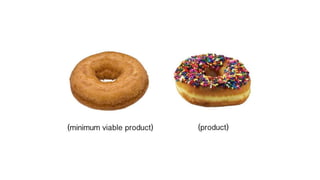
The Lean Startup method advocates that we build a basic product/prototype and get out to test
and validate our idea.
VALIDATION
IS ANYONE INTERESTED IN OUR
PRODUCT?
WHAT FEATURES DO
CUSTOMERS CARE ABOUT?
WHAT FEATURES ARE
MISSING?
WHAT FEATURES AREN’T
NECESSARY?
WE TAKE THE DATA WE LEARN
FROM CUSTOMERS AND
CONSTANTLY REVISE THE
PRODUCT
The Lean Startup method advocates that we build a basic product/prototype and get out to test
and validate our idea.
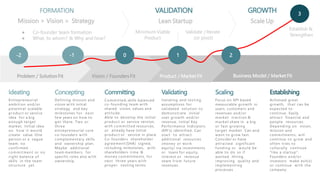
Business Model / Market Fit
Product / Market Fit
Vision / Founders Fit
Problem / Solution Fit
Minimum Viable
Product
Validate / Iterate
(or pivot)
Ideating
Entrepreneurial
ambition and/or
potential scalable
product or service
idea for a big
enough target
market. Initial idea
on how it would
create value. One
person or a vague
team; no
confirmed
commitment or no
right balance of
skills in the team
structure yet.
Concepting
Defining mission and
vision with initial
strategy and key
milestones for next
few years on how to
get there. Two or
three
entrepreneurial core
co-founders with
complementary skills
and ownership plan.
Maybe additional
team members for
specific roles also with
ownership.
Committing
Committed, skills balanced
co-founding team with
shared vision, values and
attitude.
Able to develop the initial
product or service version,
with committed resources,
or already have initial
product or service in place.
Co-founders shareholder
agreement (SHA) signed,
including milestones, with
shareholders time &
money commitments, for
next three years with
proper vesting terms.
Validating
Iterating and testing
assumptions for
validated solution to
demonstrate initial
user growth and/or
revenue. Initial Key
Performance Indicators
(KPI’s) identified. Can
start to attract
additional resources
(money or work
equity) via investments
or loans for equity,
interest or revenue
share from future
revenues.
Scaling
Focus on KPI based
measurable growth in
users, customers and
revenues and/or
market traction &
market share in a big
or fast growing
target market. Can and
want to grow fast.
Consider or have
attracted significant
funding or would be
able to do so if
wanted. Hiring,
improving quality and
implementing
processes
Establishing
Achieved great
growth, that can be
expected to
continue. Easily
attract financial and
people resources.
Depending on vision,
mission and
commitments, will
continue to grow and
often tries to
culturally continue
“like a startup".
Founders and/or
investors make exit(s)
or continue with the
company.
VALIDATION
Lean Startup
FORMATION
Mission > Vision > Strategy
GROWTH
Scale Up
● Co-founder team formation
● What, to whom? & Why and how?
Establish &
Strengthen
-2 -1
3
0 2
1
Problem / Solution Fit Vision / Founders Fit Product / Market Fit Business Model / Market Fit
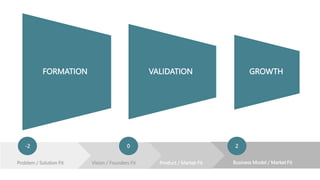
-2 0 2
FORMATION VALIDATION GROWTH
a startup is “born” w h e n f o u n d i n g
entrepreneurial team memberscommitto
contribute t o build value and confirmthis
value t o b e captured t o “a company” w i t h
w i t h f ound e r s shareholder
a g re e m e n t
FORMATION
a startup is ready f o r growth,
a f te r t h e core teams ability and
commitment t o build andexecute t h e
vision isvalidated and product have
have clear customer andmarket
validation.
VALIDATION
Growth is a b o u t scaling,
multip lying all required thingst h a t are
are validated to work in m o s t efficient
manner,w hile having clear methodsin
place t o actively measure andvalidate
t h e scalingprocesses& overallprogress.
GROWTH
HOW TO VALIDATE YOUR BUSINESS
IDEA IN 6 EASY STEPS
Entrepreneurs are action-oriented people. We
like to dive in, build something and learn by
trial-and-error along the way. But time is
precious. And there’s a few easy things you can
do to save yourself a lot of wasted time and
effort!
It all starts with really understanding what problems you’re trying to solve and
who you’re trying to solve them for. Changing people’s behaviour requires
there to be something broken about what they do now, even if they don’t
realise it yet, and a compelling reason to change.
The customer hypothesis: Who are your prospective customers?
Think about who your idea would appeal to in terms of the problems or
challenges they face. Are they in a certain age group? What are their needs
and interests? What behaviors do they exhibit? What’s their financial situation?
To help with this you can create a predictive persona. These simply describe
the characteristics of someone who could become a real customer. This helps
later when you’ve got to go out and test your idea with potential customers –
you’ll already know who you’re looking for.
The problem hypothesis: What customer problem are you solving?
Think about the specific problem your customer group is facing. Be sure to
put yourself in their shoes. How would they describe the problem? What is it
they simply can’t do now or find too difficult? What is it they really care about
but can’t act upon?
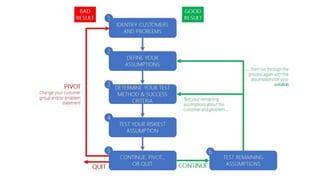
STEP 1: IDENTIFY YOUR CUSTOMERS AND WHAT PROBLEMS YOU’RE SOLVING
The next step is then to define your assumptions. These are the things you’ve
assumed about the customer or problem that need to be tested and validated.
In other words, what tests do you need to run to prove you’re on to
something?
Typically, assumptions relate to things like whether you’ve focused on the
right customer group and whether customers actually agree there’s a problem
that needs to be solved.
Which one of these assumptions is your riskiest? This one is the most
fundamental to whether your business could succeed or fail. You’ll test it first,
because the results will give you the most valuable feedback about whether
your idea has promise.
STEP 2: DEFINE YOUR ASSUMPTIONS – WHAT YOU THINK YOU KNOW BUT NEED TO BE SURE
ABOUT
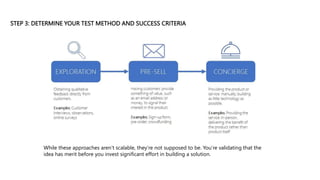
STEP 3: DETERMINE YOUR TEST METHOD AND SUCCESS CRITERIA
While these approaches aren’t scalable, they’re not supposed to be. You’re validating that the
idea has merit before you invest significant effort in building a solution.
•Clothing? Visit a fashion market and talk to the shoppers.
•Games? Visit a gaming café and talk to the gamers.
•Enterprise software? Get into the diary of some CxOs. Use your
network to get a warm introduction.
•The list goes on…
Let’s face it, this step will require you to step out of your
comfort zone, but it’s a small price to pay to validate your idea.
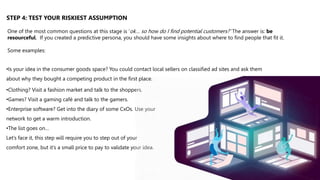
One of the most common questions at this stage is ‘ok… so how do I find potential customers?’ The answer is: be
resourceful. If you created a predictive persona, you should have some insights about where to find people that fit it.
Some examples:
•Is your idea in the consumer goods space? You could contact local sellers on classified ad sites and ask them
about why they bought a competing product in the first place.
STEP 4: TEST YOUR RISKIEST ASSUMPTION
Quit – people often ask ‘how do I know when to quit?’
This is never straightforward, but it’s fair to say that if
you’ve unsuccessfully tested all your potential
customer and problem hypotheses that’s a natural
point to seriously consider whether the idea is worth
pursuing further.
STEP 5: CONTINUE, PIVOT… OR QUIT
Ok you’ve done your customer exploration and the results are in. At this point you have three options:
Continue – if you’ve had a great outcome and validated your thoughts about customers and their problems,
move forward with further validation. See Step 6.
Pivot – if you were a long way short of your success criteria, it’s time to go back to Step 1. This
time you’ll test the next most promising customer and problem hypothesis.
Then start testing assumptions about your solution
Once you’ve validated there is indeed a group of customers who have
a meaningful problem you can solve, you can form a view about how
you’ll solve it. This is your solution hypothesis.
You’ll follow the process again, this time testing your assumptions
about the solution. You can introduce higher effort testing methods,
such as the pre-sell and the concierge to gain rich feedback about
whether your solution hits the mark.
The 6 steps are mapped out below. All going well, by the end of the
process you’ll have a keen group of customers wanting your product
and enough validation to start investing resources to build it.
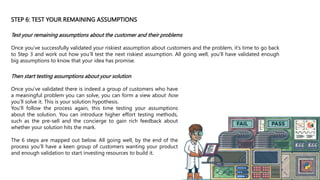
STEP 6: TEST YOUR REMAINING ASSUMPTIONS
Test your remaining assumptions about the customer and their problems
Once you’ve successfully validated your riskiest assumption about customers and the problem, it’s time to go back
to Step 3 and work out how you’ll test the next riskiest assumption. All going well, you’ll have validated enough
big assumptions to know that your idea has promise.
Successful
PIVOTS
Facebook
Before Facebook, there was Facemash, a website created by Mark
Zuckerberg and three of his classmates (Andrew McCollum, Chris
Hughes, and Dustin Moskovitz) while students at Harvard University.
The concept of the website was simple – users would be shown two
pictures of students side-by-side and would have to choose which
student was hot and which one was not.
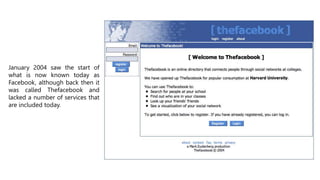
January 2004 saw the start of
what is now known today as
Facebook, although back then it
was called Thefacebook and
lacked a number of services that
are included today.
What was originally called twttr is the 140-character social network responsible for
the invention of the #hashtag.
TWITTER
How It Started
Back in March of 2006, four board members
(Jack Dorsey, Evan Williams, Biz Stone, and
Noah Glass) of Odeo, a podcasting company,
came up with an idea of developing an SMS
service that would allow a person to
communicate with a small group of people.
Dropbox could have been an integral part of Apple’s iCloud, but instead of selling his
company off just two years in to one of the world’s biggest companies, Drew Houston
decided to grow his company privately and had to politely squash Steve Jobs’ hopes
of an acquisition.
How it Started
Going shopping can be frustrating, especially when you can’t find the product you really
want. Zappos’ founder, Nick Swinmurn, had an experience just like this and turned it into a
billion-dollar e-commerce company.
The original Zappos website was very basic and contained just a bunch of photos of shoes
that were taken by Swinmurn himself at a few different shoe shops. This initial activity
wasn’t to make a profit; he told the store owners that if he sold any shoes, he would buy
them from the shop at full price. The main aim was to test his idea and answer the all-
important question, “Will people buy shoes online?
Create a new business product / Service
Inspired from an existing one / replicated or a complete new one
Create its Business Plan ( USP , need assessment , Market validation/ Demand), components
of Business Plan
Create its BMC

Business Validation presentation ppt.pptx

  • 1.
  • 2.
    VALIDATION IS ANYONE INTERESTEDIN OUR PRODUCT? WHAT FEATURES DO CUSTOMERS CARE ABOUT? WHAT FEATURES ARE MISSING? WHAT FEATURES AREN’T NECESSARY? WE TAKE THE DATA WE LEARN FROM CUSTOMERS AND CONSTANTLY REVISE THE PRODUCT The Lean Startup method advocates that we build a basic product/prototype and get out to test and validate our idea.
  • 3.
    VALIDATION IS ANYONE INTERESTEDIN OUR PRODUCT? WHAT FEATURES DO CUSTOMERS CARE ABOUT? WHAT FEATURES ARE MISSING? WHAT FEATURES AREN’T NECESSARY? WE TAKE THE DATA WE LEARN FROM CUSTOMERS AND CONSTANTLY REVISE THE PRODUCT The Lean Startup method advocates that we build a basic product/prototype and get out to test and validate our idea.
  • 6.
    Business Model /Market Fit Product / Market Fit Vision / Founders Fit Problem / Solution Fit Minimum Viable Product Validate / Iterate (or pivot) Ideating Entrepreneurial ambition and/or potential scalable product or service idea for a big enough target market. Initial idea on how it would create value. One person or a vague team; no confirmed commitment or no right balance of skills in the team structure yet. Concepting Defining mission and vision with initial strategy and key milestones for next few years on how to get there. Two or three entrepreneurial core co-founders with complementary skills and ownership plan. Maybe additional team members for specific roles also with ownership. Committing Committed, skills balanced co-founding team with shared vision, values and attitude. Able to develop the initial product or service version, with committed resources, or already have initial product or service in place. Co-founders shareholder agreement (SHA) signed, including milestones, with shareholders time & money commitments, for next three years with proper vesting terms. Validating Iterating and testing assumptions for validated solution to demonstrate initial user growth and/or revenue. Initial Key Performance Indicators (KPI’s) identified. Can start to attract additional resources (money or work equity) via investments or loans for equity, interest or revenue share from future revenues. Scaling Focus on KPI based measurable growth in users, customers and revenues and/or market traction & market share in a big or fast growing target market. Can and want to grow fast. Consider or have attracted significant funding or would be able to do so if wanted. Hiring, improving quality and implementing processes Establishing Achieved great growth, that can be expected to continue. Easily attract financial and people resources. Depending on vision, mission and commitments, will continue to grow and often tries to culturally continue “like a startup". Founders and/or investors make exit(s) or continue with the company. VALIDATION Lean Startup FORMATION Mission > Vision > Strategy GROWTH Scale Up ● Co-founder team formation ● What, to whom? & Why and how? Establish & Strengthen -2 -1 3 0 2 1
  • 7.
    Problem / SolutionFit Vision / Founders Fit Product / Market Fit Business Model / Market Fit -2 0 2 FORMATION VALIDATION GROWTH
  • 8.
    a startup is“born” w h e n f o u n d i n g entrepreneurial team memberscommitto contribute t o build value and confirmthis value t o b e captured t o “a company” w i t h w i t h f ound e r s shareholder a g re e m e n t FORMATION
  • 9.
    a startup isready f o r growth, a f te r t h e core teams ability and commitment t o build andexecute t h e vision isvalidated and product have have clear customer andmarket validation. VALIDATION
  • 10.
    Growth is ab o u t scaling, multip lying all required thingst h a t are are validated to work in m o s t efficient manner,w hile having clear methodsin place t o actively measure andvalidate t h e scalingprocesses& overallprogress. GROWTH
  • 12.
    HOW TO VALIDATEYOUR BUSINESS IDEA IN 6 EASY STEPS
  • 13.
    Entrepreneurs are action-orientedpeople. We like to dive in, build something and learn by trial-and-error along the way. But time is precious. And there’s a few easy things you can do to save yourself a lot of wasted time and effort!
  • 14.
    It all startswith really understanding what problems you’re trying to solve and who you’re trying to solve them for. Changing people’s behaviour requires there to be something broken about what they do now, even if they don’t realise it yet, and a compelling reason to change. The customer hypothesis: Who are your prospective customers? Think about who your idea would appeal to in terms of the problems or challenges they face. Are they in a certain age group? What are their needs and interests? What behaviors do they exhibit? What’s their financial situation? To help with this you can create a predictive persona. These simply describe the characteristics of someone who could become a real customer. This helps later when you’ve got to go out and test your idea with potential customers – you’ll already know who you’re looking for. The problem hypothesis: What customer problem are you solving? Think about the specific problem your customer group is facing. Be sure to put yourself in their shoes. How would they describe the problem? What is it they simply can’t do now or find too difficult? What is it they really care about but can’t act upon? STEP 1: IDENTIFY YOUR CUSTOMERS AND WHAT PROBLEMS YOU’RE SOLVING
  • 15.
    The next stepis then to define your assumptions. These are the things you’ve assumed about the customer or problem that need to be tested and validated. In other words, what tests do you need to run to prove you’re on to something? Typically, assumptions relate to things like whether you’ve focused on the right customer group and whether customers actually agree there’s a problem that needs to be solved. Which one of these assumptions is your riskiest? This one is the most fundamental to whether your business could succeed or fail. You’ll test it first, because the results will give you the most valuable feedback about whether your idea has promise. STEP 2: DEFINE YOUR ASSUMPTIONS – WHAT YOU THINK YOU KNOW BUT NEED TO BE SURE ABOUT
  • 16.
    STEP 3: DETERMINEYOUR TEST METHOD AND SUCCESS CRITERIA While these approaches aren’t scalable, they’re not supposed to be. You’re validating that the idea has merit before you invest significant effort in building a solution.
  • 17.
    •Clothing? Visit afashion market and talk to the shoppers. •Games? Visit a gaming café and talk to the gamers. •Enterprise software? Get into the diary of some CxOs. Use your network to get a warm introduction. •The list goes on… Let’s face it, this step will require you to step out of your comfort zone, but it’s a small price to pay to validate your idea. One of the most common questions at this stage is ‘ok… so how do I find potential customers?’ The answer is: be resourceful. If you created a predictive persona, you should have some insights about where to find people that fit it. Some examples: •Is your idea in the consumer goods space? You could contact local sellers on classified ad sites and ask them about why they bought a competing product in the first place. STEP 4: TEST YOUR RISKIEST ASSUMPTION
  • 18.
    Quit – peopleoften ask ‘how do I know when to quit?’ This is never straightforward, but it’s fair to say that if you’ve unsuccessfully tested all your potential customer and problem hypotheses that’s a natural point to seriously consider whether the idea is worth pursuing further. STEP 5: CONTINUE, PIVOT… OR QUIT Ok you’ve done your customer exploration and the results are in. At this point you have three options: Continue – if you’ve had a great outcome and validated your thoughts about customers and their problems, move forward with further validation. See Step 6. Pivot – if you were a long way short of your success criteria, it’s time to go back to Step 1. This time you’ll test the next most promising customer and problem hypothesis.
  • 19.
    Then start testingassumptions about your solution Once you’ve validated there is indeed a group of customers who have a meaningful problem you can solve, you can form a view about how you’ll solve it. This is your solution hypothesis. You’ll follow the process again, this time testing your assumptions about the solution. You can introduce higher effort testing methods, such as the pre-sell and the concierge to gain rich feedback about whether your solution hits the mark. The 6 steps are mapped out below. All going well, by the end of the process you’ll have a keen group of customers wanting your product and enough validation to start investing resources to build it. STEP 6: TEST YOUR REMAINING ASSUMPTIONS Test your remaining assumptions about the customer and their problems Once you’ve successfully validated your riskiest assumption about customers and the problem, it’s time to go back to Step 3 and work out how you’ll test the next riskiest assumption. All going well, you’ll have validated enough big assumptions to know that your idea has promise.
  • 24.
  • 25.
    Facebook Before Facebook, therewas Facemash, a website created by Mark Zuckerberg and three of his classmates (Andrew McCollum, Chris Hughes, and Dustin Moskovitz) while students at Harvard University. The concept of the website was simple – users would be shown two pictures of students side-by-side and would have to choose which student was hot and which one was not.
  • 26.
    January 2004 sawthe start of what is now known today as Facebook, although back then it was called Thefacebook and lacked a number of services that are included today.
  • 27.
    What was originallycalled twttr is the 140-character social network responsible for the invention of the #hashtag. TWITTER
  • 28.
    How It Started Backin March of 2006, four board members (Jack Dorsey, Evan Williams, Biz Stone, and Noah Glass) of Odeo, a podcasting company, came up with an idea of developing an SMS service that would allow a person to communicate with a small group of people.
  • 29.
    Dropbox could havebeen an integral part of Apple’s iCloud, but instead of selling his company off just two years in to one of the world’s biggest companies, Drew Houston decided to grow his company privately and had to politely squash Steve Jobs’ hopes of an acquisition.
  • 30.
    How it Started Goingshopping can be frustrating, especially when you can’t find the product you really want. Zappos’ founder, Nick Swinmurn, had an experience just like this and turned it into a billion-dollar e-commerce company. The original Zappos website was very basic and contained just a bunch of photos of shoes that were taken by Swinmurn himself at a few different shoe shops. This initial activity wasn’t to make a profit; he told the store owners that if he sold any shoes, he would buy them from the shop at full price. The main aim was to test his idea and answer the all- important question, “Will people buy shoes online?
  • 31.
    Create a newbusiness product / Service Inspired from an existing one / replicated or a complete new one Create its Business Plan ( USP , need assessment , Market validation/ Demand), components of Business Plan Create its BMC

Editor's Notes

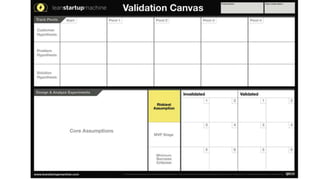
  • #13 Perhaps you’ve got a great idea for a new business? Or maybe you’re having trouble getting customers and can’t work out why? Here’s how to validate your idea. Validating your idea is a crucial step to confirm there are real customers out there who will buy your product or service. In this presentation I’ll walk through the key steps to validate your startup idea. It’s based upon Lean Startup Machine’s excellent tool – the Validation Board* with lots of extra resources to get you started.
  • #17 Here are a couple of examples in more detail. Exploration: The customer interview The goal of an interview is typically to confirm that potential customers rank the problem as a significant pain point. Interviews often work better than online surveys because you can adapt your questions in real time. Conduct 20-25 customer interviews to ensure you really understand whether they face the problem and to what degree. If your idea involves a two-sided market (e.g. eBay, AirBnB) then you need to do this for both sides. Use the 5 whys technique to peel away the layers and get to the heart of how customers feel about the problem. Be sure to come away with an understanding of how big a problem this is for them, how frequently they experience it and what their current solutions or workarounds are. You may want to supplement face-to-face interviews with surveys for further validation. Check out tools such as SurveyMonkey or Typeform which let you build and publish a survey. There are also services like IdeaCheck which even locate people to complete the survey as well. The success criteria for an interview is often the percentage of people who rank the problem as significant. Remember that a low percentage may just mean that you’re talking to the wrong customer group. The percentage is set based on what you think is the minimum amount of validation you need to justify investing more time and effort in pursuing the idea. Pre-sell: The landing page The goal of the pre-sell is to have your potential customers give up something of value as a sign of their interest. They might provide their email address because they want to know when the product is launched, or even better, place a pre-order and offer payment. Crowdfunding sites such as Kickstarter or Indiegogo are a good example of the pre-order. A landing page is simply a web page you direct customers to, describing your (future) product or service and including a call to action such as ‘Register your Interest’ or ‘Order Now’. These are a quick and low-cost way to perform validation. Build a landing page – there are many different services available which allow you to do this in minutes. Some examples include launchrock, QuickMVP and Unbounce. Often they allow split testing, so you can route visitors between two different versions of your page to see which one produces the best result and then optimise your message. If you need some feedback on the page design, you can use services like UsabilityHub’s Five Second Test. Promote the landing page. Some examples: Send the URL to customers you’ve already spoken to. Post the URL on community and social media sites. For example Facebook or LinkedIn groups where your customers might hang out. Run a small advertising campaign using Facebook or Google ads. Try and make the landing page visual and engaging. It’s dated now but check out Dropbox’s original pre-sell video from 2009. You can create similar videos for free using tools like PowToon. The success criteria for a landing page tends to involve a couple of dimensions. It’s useful to know how many people clicked through to the page as a percentage of how many viewed it. And then of course you want to measure how many of them ‘signed up’. Again the percentage is set based on what you think is the minimum amount of validation you need to justify further time and effort.
  • #22 Validation Board https://www.youtube.com/watch?v=yBA4y-78e2A