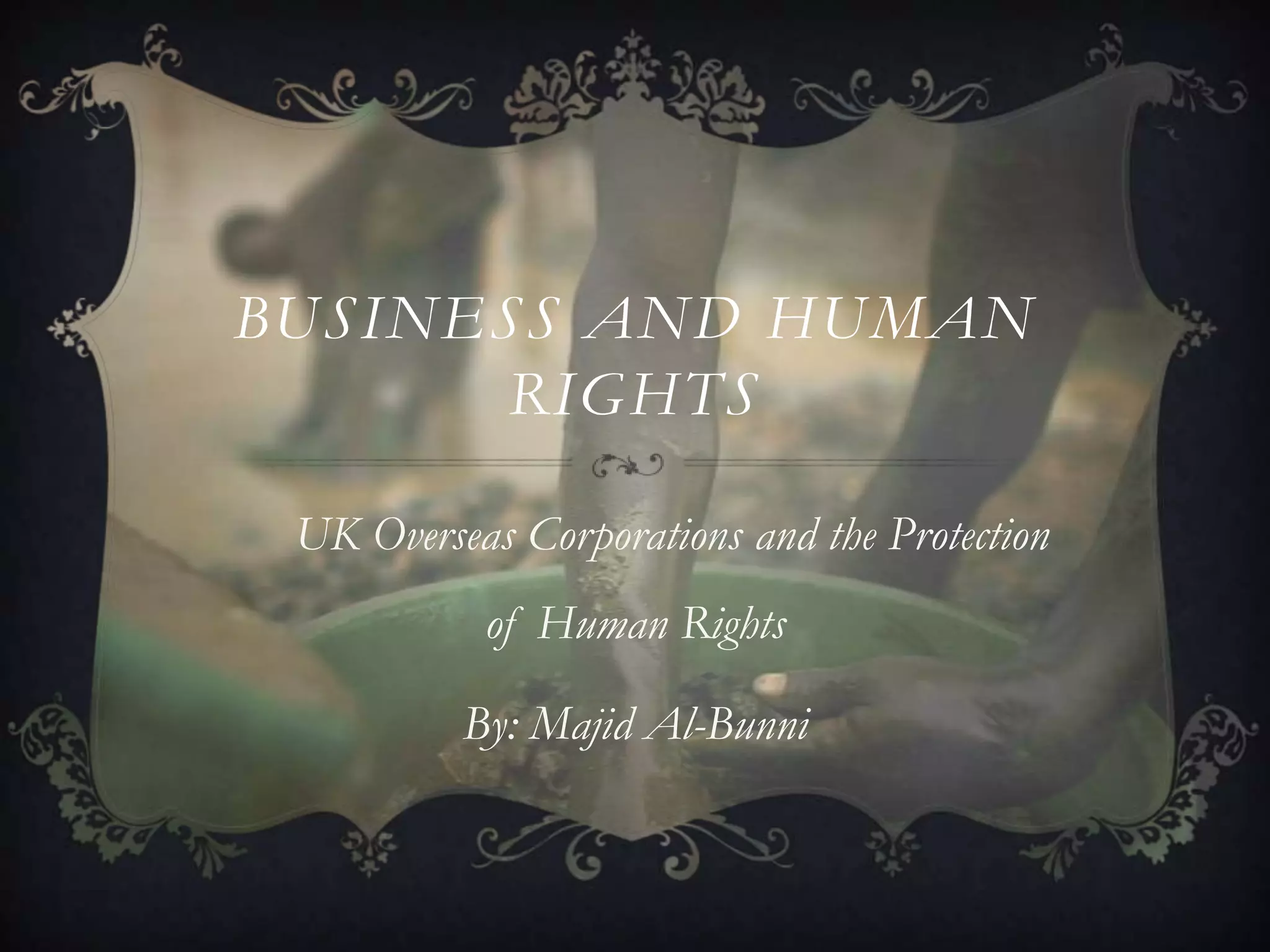
BUSINESS AND HUMAN
RIGHTS
UK Overseas Corporations and the Protection
of Human Rights
By: Majid Al-Bunni
MAIN QUESTIONS
 What are the main principles of Business and Human Rights?
 Who is obliged to implement these principles? The parent state,
the firm or the host state?
 Can Human Rights be regulated within the field of Business?
What are the main obstacles?
 Recommendations and conclusions.
HISTORY OF BUSINESS AND
HUMAN RIGHTS
 Deregulations and privatization in the late 1980’s
 Free trade ideology after the Cold War.
 The 21 century, Globalization and the Corporate agenda.
 Comparative advantage and the need for FDI in the developing countries.
 The issue of HR been questioned.
 OECD Guidelines for Multinational Enterprises and UN Guiding Principles on
Business and Human Rights ( Protect, Respect, and Remedy).
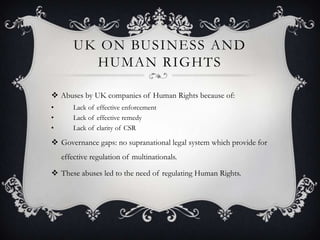
UK ON BUSINESS AND
HUMAN RIGHTS
 Abuses by UK companies of Human Rights because of:
• Lack of effective enforcement
• Lack of effective remedy
• Lack of clarity of CSR
 Governance gaps: no supranational legal system which provide for
effective regulation of multinationals.
 These abuses led to the need of regulating Human Rights.
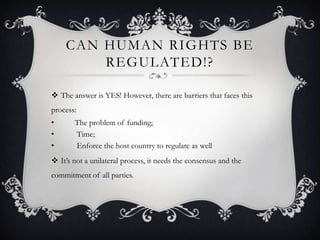
CAN HUMAN RIGHTS BE
REGULATED!?
 The answer is YES! However, there are barriers that faces this
process:
• The problem of funding;
• Time;
• Enforce the host country to regulate as well
 It’s not a unilateral process, it needs the consensus and the
commitment of all parties.
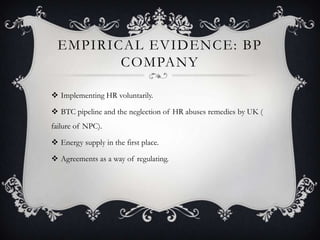
EMPIRICAL EVIDENCE: BP
COMPANY
 Implementing HR voluntarily.
 BTC pipeline and the neglection of HR abuses remedies by UK (
failure of NPC).
 Energy supply in the first place.
 Agreements as a way of regulating.
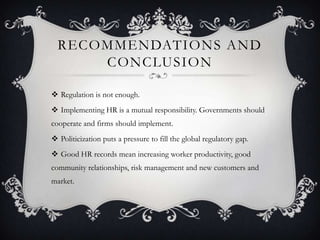
RECOMMENDATIONS AND
CONCLUSION
 Regulation is not enough.
 Implementing HR is a mutual responsibility. Governments should
cooperate and firms should implement.
 Politicization puts a pressure to fill the global regulatory gap.
 Good HR records mean increasing worker productivity, good
community relationships, risk management and new customers and
market.
The End
Thanks for listening

Business and human rights

  • 1.
    BUSINESS AND HUMAN RIGHTS UKOverseas Corporations and the Protection of Human Rights By: Majid Al-Bunni
  • 2.
    MAIN QUESTIONS  Whatare the main principles of Business and Human Rights?  Who is obliged to implement these principles? The parent state, the firm or the host state?  Can Human Rights be regulated within the field of Business? What are the main obstacles?  Recommendations and conclusions.
  • 3.
    HISTORY OF BUSINESSAND HUMAN RIGHTS  Deregulations and privatization in the late 1980’s  Free trade ideology after the Cold War.  The 21 century, Globalization and the Corporate agenda.  Comparative advantage and the need for FDI in the developing countries.  The issue of HR been questioned.  OECD Guidelines for Multinational Enterprises and UN Guiding Principles on Business and Human Rights ( Protect, Respect, and Remedy).
  • 4.
    UK ON BUSINESSAND HUMAN RIGHTS  Abuses by UK companies of Human Rights because of: • Lack of effective enforcement • Lack of effective remedy • Lack of clarity of CSR  Governance gaps: no supranational legal system which provide for effective regulation of multinationals.  These abuses led to the need of regulating Human Rights.
  • 5.
    CAN HUMAN RIGHTSBE REGULATED!?  The answer is YES! However, there are barriers that faces this process: • The problem of funding; • Time; • Enforce the host country to regulate as well  It’s not a unilateral process, it needs the consensus and the commitment of all parties.
  • 6.
    EMPIRICAL EVIDENCE: BP COMPANY Implementing HR voluntarily.  BTC pipeline and the neglection of HR abuses remedies by UK ( failure of NPC).  Energy supply in the first place.  Agreements as a way of regulating.
  • 7.
    RECOMMENDATIONS AND CONCLUSION  Regulationis not enough.  Implementing HR is a mutual responsibility. Governments should cooperate and firms should implement.  Politicization puts a pressure to fill the global regulatory gap.  Good HR records mean increasing worker productivity, good community relationships, risk management and new customers and market.
  • 8.