Business Analytics
Presented by
Sagnik Banerjee
CONTENTS
:
What is Business Analytics?
Types
Importance
Where we can use BA?
Benefits
Challenges
Tools
What is
Business
Analytics?
BUSINESS ANALYTICS IS A FIELD THAT DRIVES PRACTICAL,
DATA-DRIVEN CHANGES IN A BUSINESS. IT IS A PRACTICAL
APPLICATION OF STATISTICAL ANALYSIS THATFOCUSES ON
PROVIDING ACTIONABLE RECOMMENDATIONS.
ANALYSTS IN THIS FIELD FOCUS ON HOW TO APPLY THE
INSIGHTS THEY DERIVE FROM DATA. THEIR GOAL IS TO
DRAW CONCRETE CONCLUSIONS ABOUT A BUSINESS BY
ANSWERING SPECIFIC QUESTIONS ABOUT WHY THINGS
HAPPENED, WHAT WILL HAPPEN AND WHAT SHOULD BE
DONE.
Types of BA
four categories:
Anticipatory analytics:
Predictive analytics:
Descriptive analytics:
Prescriptive analytics
Anticipatory
analytics:
 Building on the foundation of predictive
analytics, anticipatorycan identify
and adjust predictions based on
inflectionpoints such as the acceleration
and deceleration ofcertain
business behaviors or sudden change in
business direction. Anticipatory analytics
helps to anticipate the future needs of a
business before they show obvious signs
in their respective opportunity/riskprofile.
Predictive
analytics:
 Algorithms use real-worlddata to help
businesses understand the most
probable outcome of a given action.
Descriptive
analytics:
 Computingpower utilizescurrent
performance metricsto analyze why
a specific outcomeoccurred.
Prescriptive analytics:
 Analytics applications simulate how variables
may affect outcomes, providing guidance on
the best course of action.
Importance
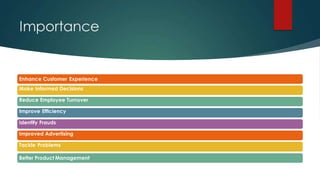
Enhance Customer Experience
Make Informed Decisions
Reduce Employee Turnover
Improve Efficiency
Identify Frauds
Improved Advertising
Tackle Problems
Better Product Management
Where we can use BA ?
 Business analytics has also come to play a pivotal role in the
manufacturing sector. It can use the data to offer meaningful
insights into inventory management,supply chain management,
the performance of targets, and risk mitigation plans. Also, BA
tools can help companies scale up the efficiency of their
operations.
 Business analytics is the process of using quantitative methodsto
derive meaning from data in order to make informed business
decisions.
Benefits
 Analytics helps you measurehow much of your mission statement is
accomplished
 Analytics Encourages SmartDecision-Making
 Analytics Provides Clearer Insights Through DataVisualization
 Analytics Keep You Updated
 Analytics Offer Efficiency
Challenges:
 Misconception of BA's scopeof work.
 There are differences between Business Analyst's actual functions
and tasks they really should perform.
 Created specifications do not satisfy the needs of
the development team.
 Changing requirements or businessneeds.
 Conflicts with stakeholders.
 Undocumented processes.
Tools we need to use to become a
buisness analyst / data analyst :
 Power BI
 Google docs
 Microsoft Advanced Excel
 Microsoft SQL
 Python
 Tableau
 MACHINE LEARNING
 AI
Business analytics is all about decision-making—not the way it was
done in the past, which relied heavily on experience, gut feeling, and
intuition, but the one that relies on data/evidence and
computational/mathematical/statistical sciences.
END
 THANK YOU

Business analytics

  • 1.
  • 2.
    CONTENTS : What is BusinessAnalytics? Types Importance Where we can use BA? Benefits Challenges Tools
  • 3.
    What is Business Analytics? BUSINESS ANALYTICSIS A FIELD THAT DRIVES PRACTICAL, DATA-DRIVEN CHANGES IN A BUSINESS. IT IS A PRACTICAL APPLICATION OF STATISTICAL ANALYSIS THATFOCUSES ON PROVIDING ACTIONABLE RECOMMENDATIONS. ANALYSTS IN THIS FIELD FOCUS ON HOW TO APPLY THE INSIGHTS THEY DERIVE FROM DATA. THEIR GOAL IS TO DRAW CONCRETE CONCLUSIONS ABOUT A BUSINESS BY ANSWERING SPECIFIC QUESTIONS ABOUT WHY THINGS HAPPENED, WHAT WILL HAPPEN AND WHAT SHOULD BE DONE.
  • 4.
    Types of BA fourcategories: Anticipatory analytics: Predictive analytics: Descriptive analytics: Prescriptive analytics
  • 5.
    Anticipatory analytics:  Building onthe foundation of predictive analytics, anticipatorycan identify and adjust predictions based on inflectionpoints such as the acceleration and deceleration ofcertain business behaviors or sudden change in business direction. Anticipatory analytics helps to anticipate the future needs of a business before they show obvious signs in their respective opportunity/riskprofile.
  • 6.
    Predictive analytics:  Algorithms usereal-worlddata to help businesses understand the most probable outcome of a given action.
  • 7.
    Descriptive analytics:  Computingpower utilizescurrent performancemetricsto analyze why a specific outcomeoccurred.
  • 8.
    Prescriptive analytics:  Analyticsapplications simulate how variables may affect outcomes, providing guidance on the best course of action.
  • 9.
    Importance Enhance Customer Experience MakeInformed Decisions Reduce Employee Turnover Improve Efficiency Identify Frauds Improved Advertising Tackle Problems Better Product Management
  • 10.
    Where we canuse BA ?  Business analytics has also come to play a pivotal role in the manufacturing sector. It can use the data to offer meaningful insights into inventory management,supply chain management, the performance of targets, and risk mitigation plans. Also, BA tools can help companies scale up the efficiency of their operations.  Business analytics is the process of using quantitative methodsto derive meaning from data in order to make informed business decisions.
  • 11.
    Benefits  Analytics helpsyou measurehow much of your mission statement is accomplished  Analytics Encourages SmartDecision-Making  Analytics Provides Clearer Insights Through DataVisualization  Analytics Keep You Updated  Analytics Offer Efficiency
  • 12.
    Challenges:  Misconception ofBA's scopeof work.  There are differences between Business Analyst's actual functions and tasks they really should perform.  Created specifications do not satisfy the needs of the development team.  Changing requirements or businessneeds.  Conflicts with stakeholders.  Undocumented processes.
  • 13.
    Tools we needto use to become a buisness analyst / data analyst :  Power BI  Google docs  Microsoft Advanced Excel  Microsoft SQL  Python  Tableau  MACHINE LEARNING  AI
  • 14.
    Business analytics isall about decision-making—not the way it was done in the past, which relied heavily on experience, gut feeling, and intuition, but the one that relies on data/evidence and computational/mathematical/statistical sciences.
  • 15.