Building Design Construction And Performance In Tropical Climates Cotgrave
Building Design Construction And Performance In Tropical Climates Cotgrave
Building Design Construction And Performance In Tropical Climates Cotgrave
Building Design Construction And Performance In Tropical Climates Cotgrave
Building Design Construction And Performance In Tropical Climates Cotgrave
1.
Building Design ConstructionAnd Performance In
Tropical Climates Cotgrave download
https://ebookbell.com/product/building-design-construction-and-
performance-in-tropical-climates-cotgrave-9952316
Explore and download more ebooks at ebookbell.com
2.
Here are somerecommended products that we believe you will be
interested in. You can click the link to download.
Design And Construction Of High Performance Homes Building Envelopes
Renewable Energies And Integrated Practice Franca Trubiano
https://ebookbell.com/product/design-and-construction-of-high-
performance-homes-building-envelopes-renewable-energies-and-
integrated-practice-franca-trubiano-12277608
Building Information Modelling Building Performance Design And Smart
Construction 1st Edition Mohammad Dastbaz
https://ebookbell.com/product/building-information-modelling-building-
performance-design-and-smart-construction-1st-edition-mohammad-
dastbaz-5881970
Tall Wood Buildings Design Construction And Performance Second And
Expanded Edition Michael Green Jim Taggart
https://ebookbell.com/product/tall-wood-buildings-design-construction-
and-performance-second-and-expanded-edition-michael-green-jim-
taggart-51927432
Tall Wood Buildings Design Construction And Performance Michael Green
Jim Taggart
https://ebookbell.com/product/tall-wood-buildings-design-construction-
and-performance-michael-green-jim-taggart-51927862
3.
Building Design AndConstruction Handbook 6th Edition Frederick S
Merritt Editor
https://ebookbell.com/product/building-design-and-construction-
handbook-6th-edition-frederick-s-merritt-editor-43253780
Building Design And Construction Handbook 6th Ed Merritt Frederick S
Ricketts
https://ebookbell.com/product/building-design-and-construction-
handbook-6th-ed-merritt-frederick-s-ricketts-10509796
Green Building Design And Construction 2009th Edition Us Green
Building Council
https://ebookbell.com/product/green-building-design-and-
construction-2009th-edition-us-green-building-council-2339518
Handbook Of Green Building Design And Construction Leedreg Breeamreg
And Green Globesreg Kubba
https://ebookbell.com/product/handbook-of-green-building-design-and-
construction-leedreg-breeamreg-and-green-globesreg-kubba-4707064
Handbook On Good Building Design And Construction Aceh And Nias
Islands
https://ebookbell.com/product/handbook-on-good-building-design-and-
construction-aceh-and-nias-islands-5396278
6.
Building Design, Constructionand
Performance in Tropical Climates
The design, construction and use of buildings in tropical climates pose specific chal-
lenges to built environment professionals. This text seeks to capture some of the key
issues of technology and practice in the areas of building design, refurbishment, con-
struction and facilities management in tropical regions.
Using a consistent chapter structure throughout, and incorporating the latest
research findings, this book outlines:
• the functional requirements of buildings in tropical climates;
• the challenges associated with the sustainability of the built environment, build-
ing form and whole life performance in the context of a tropical setting;
• the impact of potentially hostile tropical conditions upon building pathology
and the durability of components, structure and fabric;
• the tasks which face those responsible for appraising the design, condition,
maintenance and conservation of built heritage in tropical regions;
• the facilities management issues faced in tropical climates; and
• the refurbishment, upgrade and renewal of the tropical built environment.
The book is ideal as a course text for students of Architecture, Construction, Survey-
ing and FM as well as providing a sound reference for practitioners working in these
regions.
Mike Riley is Director of the School of the Built Environment, Liverpool John
Moores University, UK.
Alison Cotgrave is Deputy Director of the School of the Built Environment, Liver-
pool John Moores University, UK.
Michael Farragher is Senior Lecturer in Architectural Technology, Liverpool John
Moores University, UK.
8.
Building Design, Constructionand
Performance in Tropical Climates
Edited by
Mike Riley, Alison Cotgrave
and Michael Farragher
Contents
Notes on contributorsviii
Acknowledgements xiii
1 Introduction 1
M i k e R i l e y an d P ayam S h afi g h
Introduction 1
Overview 2
Building design 3
Building construction 7
Building performance 11
2 Environment and sustainability in tropical regions 13
N oor S u z aini M o h am e d Zai d an d B rit A N A K Kayan
Introduction 13
Overview 13
Impact of climate change 14
Sustainability in the construction industry 22
Life cycle assessment and eco-
labelling 29
Embodied energy in buildings 29
3 Functional requirements of buildings: tropical context 37
N or h ayati M a h y u d d in , F ari d W a j d i A k as h a h an d
R a h a S u l aiman
Introduction 37
Overview 38
Physical performance requirements of buildings in tropical
climates 38
Macro, mesa and micro climate in tropical regions 43
Building science in tropical climates 49
11.
vi Contents
4 Historicalevolution of buildings in tropical regions 68
N or h ani z a I s h a k , N u r F ar h ana A z mi an d N oor S u z aini
M o h am e d Zai d
Introduction 68
Overview 68
General characteristics of buildings in response to tropical climate 68
Building in context 82
Evolution of tropical buildings typology and morphology 90
5 Construction technology for tropical regions 103
M ic h a e l F arra g h e r
Introduction 103
Overview 104
Building form: the humid tropics 107
Building form: the hot and dry tropics 117
Urban morphology 131
Climate analyses 136
Domestic building elements in the tropical regions 137
Industrial and commercial building in the tropical regions 158
Environmental services 176
Sustainable construction materials in the tropical regions 180
6 Building pathology, maintenance and refurbishment 188
Za h ir u d d in F itri A B U H A S S A N , A z l an S h a h A l i ,
S h ir l e y Jin Lin C h u a an d M o h d R i z a l B a h ar u m
Introduction 188
Overview 189
Common building pathology 190
Remediation of building defects 203
Maintenance consideration and techniques 203
Building refurbishment 208
7 Operational building performance in tropical climates 218
N i k E l yna M y e d a , S ya h r u l N i z am Kamar u z z aman
an d C h e on g P e n g A u -
Y on g
Introduction 218
Overview 218
Assessment trends 220
Building information modelling 225
FM practice in tropical zones 231
Performance planning and control 234
Optimising building performance 235
12.
Contents vii
8 Casestudies 240
M ic h a e l F arra g h e r an d M i k e R i l e y
Africa: Uganda 240
South America: Brazil 247
Australasia: Australia 252
Index 267
13.
Contributors
Alison Cotgrave isSubject Leader in the Department of Built Environment at Liver-
pool John Moores University, UK and Associate Dean (Quality Assurance and
Enhancement) in the faculty of Engineering and Technology. She has worked in
academia for 23 years and was previously employed in the construction industry
as a site manager. Alison is a Chartered Builder and Chartered Surveyor and has
significant experience in the design and validation of construction programmes
both in the UK and internationally. She is the co-
author of a number of books on
Construction Technology and has also published extensively in her area of
research which is sustainability in construction education. She is currently on the
supervision teams for five PhD students whose topics range from the psychologi-
cal aspects of changing attitudes to sustainability via the curriculum to the design
of a decision making aid for the selection of renewable/sustainable energy systems
for buildings.
Mike Riley is the Head of the Department of Built Environment and Professor of
Building Surveying at Liverpool John Moores University, UK. He is also Visiting
Professor in Building Surveying at University of Malaya and has more than 25
years’ experience in Building Surveying practice and Construction and Property
education. Mike is a consultant to several national organisations in the UK and
internationally, including Malaysia and Ghana. Mike is the joint author of several
text books in the field of Construction Technology and Sustainability and he has
published numerous academic papers in the areas of building pathology, property
management and building performance appraisal. In addition he has presented
papers and keynote addresses to numerous international conferences and is a
regular reviewer for several internationally renowned academic journals and con-
ferences. He obtained his first degree from Salford University (Building Survey-
ing), followed by a Master of Science from Heriot-
Watt University (Building
Services Engineering) and PhD from Liverpool John Moores University (Building
Performance). He is a Fellow of the Royal Institution of Chartered Surveyors and
Fellow of the Royal Institution of Surveyors Malaysia, Senior Fellow of the
Higher Education Academy and is a Chartered Environmentalist. He is also a
Chairman of Assessors for the RICS Assessment of Professional Competence and
has assessed candidates in Hong Kong and Malaysia as well as the UK.
Payam Shafigh received his doctoral degree in Structural Engineering and Materials
from the University of Malaya as well as an MSc (Civil Engineering-
Structure)
and a BSc (Civil Engineering) from the University of Mazandaran, Iran. He is
14.
Contributors ix
currently SeniorLecturer in the Department of Building Surveying, University of
Malaya. He has received a number of national and international awards. He has
taught courses of Concrete Technology, Theory of Structure, Structural Design
and Strength of Material at the undergraduate level. His research interests include
Concrete Technology, Lightweight Concrete, Concrete Pavement, Concrete Com-
posites and Strengthening of Concrete Structures.
Noor Suzaini Mohamed Zaid teaches at the Department of Building Surveying, Uni-
versity of Malaya. Suzaini holds a PhD in Planning and Urban Development from
the Faculty of the Built Environment, University of New South Wales. She has
teaching experience in the fields of building surveying, urban planning and sus-
tainable development. Her current research interest focuses on energy efficiency,
zero-
carbon development, climate change mitigation and adaptation in built
environment. Suzaini was part of the testing of the United Nations Environment
Programme’s Sustainable Building and Climate Initiative (UNEP-
SBCI)’s Common
Carbon Metric and Protocol tool Pilot Test Phase 1 and Phase 2 in the Malaysian
context, through her PhD research. Her research was conducted in collaboration
of the Ministry of Higher Education Malaysia, University of New South Wales,
UNEP-
SBCI and the City Hall of Kuala Lumpur. Her current research project
includes SULED-
BIM: Sustainability Led Design Through Building Information
Modelling in collaboration with the University of Manchester under the 2015 UK
Newton Fund. Other projects she is involved in are within areas of affordability,
acoustic properties of residential buildings, and housing and rehabilitation.
Brit Anak Kayan is a Senior Lecturer at Department of Building Surveying, Uni-
versity of Malaya and graduated with Bachelor of Science (Building Surveying)
(Hons) in 1999. He received Master of Science (Building) in 2003, from Univer-
sity of Malaya and Doctor of Philosophy (PhD) (Construction Management)
from Heriot-
Watt University, UK, in 2013. Brit has over 16 years of experience
as an academician and two years in industrial practice, latterly specialising in
sustainable materials and repair in the context of ‘Green Maintenance’ model-
ling, Life-
Cycle Assessment (LCA) approaches, Environmental Maintenance
Impact (EMI) and low-carbon building materials, both in new built construc-
tion and heritage buildings conservation. Professionally, Brit is a full Member
of the Royal Institution of Surveyors, Malaysia (MRISM) and a Registered
Conservator of Department of National Heritage, Ministry of Tourism and
Culture (MOTAC), Malaysia.
Norhayati Mahyuddin holds an honours degree from the University of Science
Malaysia, a Master of Science degree from Universiti Teknologi MARA and a
PhD degree from the University of Reading, UK. She is also a Registered Building
Surveyor and a member of the Royal Institution of Chartered Surveyors
(MRISM). She is currently the Head of the Building Surveying Department,
Faculty of Built Environment, University of Malaya. Norhayati has been involved
in Environmental Sustainability since early 2002. She is currently concerned about
the long-term future of Indoor Environmental Quality. Her major research efforts
include studies on ventilation effectiveness in built environment and building sim-
ulation through the application of Computational Fluid Dynamics (CFD), thermal
comfort and Indoor Air Quality. Her research articles are published in many of
15.
x Contributors
the world’stop ranked journals including Building and Environment, Indoor and
Built Environment, Renewable and Sustainable Energy Reviews, Building Per-
formance and Simulation, and a few others.
Farid Wajdi Akashah is a Senior Lecturer at the Faculty of Built Environment, Univer-
sity of Malaya and a registered building surveyor. He holds a Doctorate in Fire
Safety Engineering from the Institute for Fire Safety Engineering Research and Tech-
nology (FireSERT), University of Ulster. He is actively involved in the development
of standards related to fire safety, being one of the committee members for Techni-
cal Committee on Passive Fire Protection System with Engineering Standards Man-
agement Consulting Services Section, SIRIM Berhad. His areas of interest are in
the field of Fire Safety Engineering relating to Quantitative Fire Risk Assessment
and Human Behaviour in Fire. He is a member of the Royal Institution of Surveyors
Malaysia and the International Association of Fire Safety Science.
Raha Sulaiman is a Senior Lecturer in Building Surveying at the University of Malaya
and specialises in indoor environmental quality. She holds the awards of MSc
from Heriot-
Watt University, UK and BSc in Building Surveying from the Univer-
sity of Malaya.
Nor Haniza Ishak is a Senior Lecturer in the Building Surveying programme in the
Faculty of Built Environment, University of Malaya. Her qualifications include a
Diploma in Architecture, a Bachelor of Building Surveying, an MSc in Project
Management from Universiti Teknologi MARA and a PhD in Building Pathology
from Universiti Kebangsaan Malaysia. Her research interests are in Building Per-
formance, Project Management and Sustainability.
Nur Farhana Azmi is currently a Senior Lecturer in the Department of Building Sur-
veying, University of Malaya. She holds a PhD degree in Building Control and a
Performance and Bachelor degree in Building Surveying. Her research interests are
in Building Control and Urban Conservation.
Michael Farragher graduated from John Moores University, UK in 1991 with RIBA
Part II Diploma in Architectural Studies (Distinction) and RIBA Part I Bachelor of
Arts (Hons) Architecture (1:1). He was elected onto the membership of the RIBA
in 1997 after passing the RIBA Part III examination externally through Liverpool
John Moores University. Qualified as a Chartered Architect and member of the
RIBA, Mike has also won a government award for Integrated Renewable Techno-
logy use within a building project in Kent. Following some 18 years in private
practice, Mike moved into the education sector and has recently spent 18 months
teaching in central China at Henan University. He has worked in the commercial
field of architecture and his built work in Merseyside includes social housing,
healthcare and part of the Queen’s Square development as well as collaboratively
on the Speke Airport Hotel. His teaching experience within the Built Environment
Profession has been within both Architecture (LJMU) and Architectural Techno-
logy (LJMU and Henan University, China). Mike has travelled extensively in Asia
and Africa and is interested in how tropical forms of construction can inform
passive design in temperate climates. He has published work on zero-
carbon pro-
jects in the UK and is currently researching the development of sanitation systems
in sub-
Saharan Africa.
16.
Contributors xi
Zahiruddin FitriAbu Hassan is a Senior Lecturer in Building Surveying at the Uni-
versity of Malaya. He holds a PhD from the University of Dundee, UK as well as
an MSc in Building Surveying from the University of the West of England and a
BS (Hons) in Building Surveying from the University of Malaya. His expertise and
research is in building pathology, concrete durability and construction techno-
logy. An avid e-Learning advocate, he loves tinkering with computers and
exploring new softwares and web 2.0 tools for education. His passion led the uni-
versity to appoint him as the Head of e-Learning at the Academic Enhancement
Leadership Development Centre (ADeC).
Azlan Shah Ali is a professor in the Department of Building Surveying, Faculty of
Built Environment, University of Malaya, Kuala Lumpur, where he has been a
faculty member since 2004. He is also currently a Visiting Professor at School of
Built Environment, Liverpool John Moores University, UK. He completed his PhD
at Universiti Teknologi MARA, Malaysia specialising in building refurbishment.
His research interests lie in the area of building maintenance and refurbishment
with the focus to improve management strategies. He has collaborated actively
with researchers in several other disciplines of built environment, particularly sur-
veying and architecture local and internationally. Dr Azlan has been involved in a
number of academic researches with a total amount of more than RM 1 million
and has published over a hundred technical publications in journals, proceedings
and books. He is a Chartered Building Surveyor, UK; a Registered Building Sur-
veyor, Malaysia; a Fellow of The Royal Institution of Surveyors Malaysia
(FRISM) and The Royal Institution of Chartered Surveyors, UK (FRICS).
Shirley Jin Lin Chua holds a PhD degree in Asset and Facilities Management and a
Bachelor degree in Building Surveying from the Faculty of Built Environment, Uni-
versity of Malaya, Malaysia. Her research interests are in Facilities Management and
Analytic Hierarchy Process. She has also been involved in various research grants
and has published several ISI and Scopus-
indexed technical publications in journals
and proceedings pertaining to building maintenance and facilities management. She
has also received a number of awards throughout her studies and career path which
include the Building Surveying Excellence Award, University of Malaya Book Prize
and University of Malaya Excellence Award 2015.
Mohd Rizal Baharum is a consultant at the University of Malaya Consultancy Unit,
and also administrative member at the Faculty of Built Environment, University
of Malaya. He has been involved in teaching, programme development, research
and consultancy projects for more than ten years. He is also a professional
member of the International Facility Management Association and the Malaysian
Association of Facility Management. He received his MSc in Facilities Manage-
ment and Asset Maintenance from Heriot-
Watt University, UK, and a doctoral
degree from Liverpool John Moores University, UK. The study was granted by
the University of Malaya–Liverpool John Moores University bursary scheme.
Rizal also carries out external advisory roles for the Royal Malaysian Navy; Facil-
ity Management programmes both at the Malaysian Polytechnic and Ministry of
Higher Education; and Open University Malaysia.
Nik Elyna Myeda is a Senior Lecturer at the Department of Building Surveying, Uni-
versity of Malaya and holds a doctoral degree in Facilities Management from The
17.
xii Contributors
Bartlett Schoolof Graduate Studies, University College London. Elyna’s main
teaching and research interests focus on Strategic Facilities Management and Per-
formance Measurement and Sustainable Environment.
Syahrul Nizam Kamaruzzaman is Associate Professor in the Department of Building
Surveying at the University of Malaya. He obtained his PhD from the School of
Mechanical, Aerospace and Civil Engineering, University of Manchester, UK. His
research interest is in Building Technology, Construction Engineering, Energy
Efficiency in Buildings and Facilities Management. Dr Syahrul is a certified Build-
ing Surveyor and also a registered member of the Royal Institution of Surveyors
Malaysia (MRISM).
Cheong Peng Au-
Yong holds a PhD degree in Facilities Management from the
Faculty of Built Environment, University of Malaya. His research interest is in
facilities management and building maintenance. He has published several articles
in reputable journals. His recent publications are ‘Improving Occupants’ Satisfac-
tion with Effective Maintenance Management of HVAC System in Office Build-
ings’ in Automation in Construction; ‘Prediction Cost Maintenance Model of
Office Building Based on Condition-
Based Maintenance’ in Eksploatacja i Nieza-
wodnosc – Maintenance and Reliability; ‘Office Building Maintenance: Cost Pre-
diction Model’ in Gradevinar; and ‘Significant Characteristics of Scheduled and
Condition-
Based Maintenance in Office Building’ and ‘Participative Mechanisms
to Improve Office Maintenance Performance and Customers’ Satisfaction’ in
Journal of Performance of Constructed Facilities.
1 Introduction
Mike Rileyand Payam Shafigh
After reading this chapter you should:
• recognize the geographical positioning of areas considered to be ‘tropical’;
• appreciate the characteristics of the tropical climate;
• be aware of the factors that impact upon the design, construction and use of
buildings in tropical climates; and
• understand the importance of considering buildings in tropical climates dis-
cretely from those in other climatic zones.
Introduction
The tropical regions of the World are typically characterized by climatic conditions that
are hot, humid and lacking in great thermal variability between seasons. The areas that
fall within what are referred to as ‘the tropics’ are located close to the equator, between
the Tropic of Cancer to the North and the Tropic of Capricorn to the south. The warm,
moist conditions of these areas create a distinctive environment for the creation and use
of buildings. By nature the environment would be lush and potentially dense with
vegetation as a result of the favourable conditions for growth of flora and fauna. These
same conditions provide potential challenges to the creators and users of buildings as
the control of unwanted natural agencies can require high levels of consideration. The
belt of land and sea that forms the tropics includes many variants of local climate and
geography. Similarly it provides home to a multitude of nations and communities. As
such it is impossible to generalize about the design, construction and use of buildings in
such regions. Similarly, in a text such as this it is impossible to make specific reference
to all. However, across these areas there are similarities that are consequent to their
positioning within a tropical context. Whether considering sub-
Saharan Africa, Central
and South America, India or South East Asia, all share common elements in the ways in
which creators and users of buildings have responded to the challenges and the oppor-
tunities created by their tropical positioning. This text seeks to highlight some of these
broad themes with reference to the context of tropical buildings. The case studies within
the final chapter provide some specific examples of buildings and the use of materials in
some of the regions that we include in our consideration of the tropics.
Historically the buildings in such regions would have been developed using local
materials and vernacular design and construction principles. However, as industrial,
commercial and residential building forms have become more homogenous across
World regions, the specificity of design and construction features has been altered.
21.
2 M. Rileyand P. Shafigh
Overview
The creation and use of buildings in tropical climates pose specific challenges to
designers, surveyors, constructors, facilities managers and occupiers. Traditional
approaches to dealing with the challenges of tropical climates exploited natural
materials and vernacular design approaches. However, as the nature of buildings
and their construction form have become more internationally uniform, different
approaches and design features have evolved to allow buildings to perform in dif-
ferent climatic conditions. Designers must recognize the specific functional and
environmental requirements of buildings in such situations. Similarly, the impact of
potentially hostile tropical conditions upon building pathology and the durability of
components, structure and fabric can be significant. Building maintenance and man-
agement must take into account these issues in order to diagnose and develop solu-
tions to building defects. At the same time the use and occupation of these buildings
must be approached in a manner that ensures appropriate functionality and achieve-
ment of performance expectations on the part of developers and occupiers.
Challenges associated with the sustainability of the built environment have
become widely recognized in terms of urban development, building form and whole
life performance. The context of these issues in a tropical setting presents unique
demands on built environment professionals as they seek to respond to these chal-
lenges. Alongside the increasingly rapid pace of development in many tropical coun-
tries there is the will to conserve the heritage that is manifested within the existing
and historic built environment. The technology of such buildings ranges immensely
and the task which faces those responsible for appraising their design, condition,
maintenance, conservation and use differs fundamentally from that faced by those
developing contemporary urban environments capable of delivering the needs of
modern commerce and society. Innovative approaches to surveying, building pathol-
ogy, design, refurbishment, project management, property management, and mainte-
nance and facilities management afford the opportunity to conserve and enhance
existing buildings and to create new buildings and facilities that are fit for purpose
and sustainable in a tropical setting.
It is important to recognize that the nature of property as a global asset has the
potential to result in a degree of homogeneity in the form and function of modern real
estate. It is essential that buildings are considered in terms of their local context with
reference to the impact of challenging climates. Many of the features that are expected
by building occupiers in terms of comfort and internal environmental quality are
directly opposed to the natural principles of sustainable design and construction.
Evaluative mechanisms such as post-
occupancy evaluation need to be cautious of this.
The perspectives and skills sets of professionals seeking to recognize and address such
challenges must be informed by in-depth understanding of the underlying principles of
building pathology and performance. Approaches to meeting these challenges need to
be balanced against the economic constraints, competing priorities, cultural issues and
aesthetic tastes of people and society in tropical environments.
This text seeks to capture some of the key issues of technology and practice in the
areas of building design, refurbishment, construction and facilities management in
tropical regions. It is aimed at students of Architecture, Construction, Surveying and
Facilities Management as well as providing a sound reference for practitioners
working in these regions. Based upon cutting-edge research the text makes a unique
22.
Introduction 3
and originalcontribution to knowledge and understanding of buildings, the built
environment and built environment practice in a tropical context. The chapters are
written in language that is easy for students to understand and each chapter includes
information under a series of themed, main headings. Each chapter is suitably refer-
enced so that students can easily determine where further reading can be found on
the particular aspect of the content.
Building design
The building sector, worldwide, is responsible for around a quarter of the total
greenhouse gas (GHG) emissions associated with the consumption of fossil fuels. At
the same time the embodied energy of construction materials has a very considerable
impact upon their overall GHG emissions and, if included, result in a far higher
effect. As a consequence the construction sector is often considered as one of the
primary global generators of greenhouse gasses (UNSBCI 2010).
Hence, the design, construction and use of buildings has a massive effect upon the
ability of nations across the globe to achieve the targets for GHG reduction required
to arrest the issue of climate change. Many of the countries in the tropical regions
are developing countries and their potential impact upon the sustainability agenda is
great. Much of the energy consumed in such areas is currently derived from biomass
and the overall level of energy consumed per capita is lower than in developed coun-
tries. However, there is expected to be significant improvement in living conditions
in the future, with the associated increase in levels of energy consumption, which is
anticipated to lead to a shift from biomass to fossil fuels. Such a shift will increase
CO2 emissions quite dramatically. The design, construction and use of buildings will
play an important part in the overall position of developing countries, many of
which are in tropical climates, in the ongoing sustainability agenda. As more
advanced building forms are adopted and the nature of development and urbaniza-
tion shifts there is likely to be an increase in the use of air-
conditioning and growth
in the number of domestic appliances, allied to an overall increase in the number of
buildings constructed. In Europe it is estimated that, by 2050, around 25 per cent of
the total building stock will be made up of new buildings; in developing countries it
is estimated that the figure will be closer to 75 per cent. The energy demands of
buildings in tropical regions, if utilizing air-
conditioning and modern building ser-
vices and amenities, will be higher than traditional, vernacular forms.
If these new buildings are as energy hungry as those currently existing the impact
upon GHG production and the ability to achieve targets associated with reduction in
CO2 emissions will be challenging.
Hence, the design, construction and operation of buildings in tropical regions
must recognize the long-
term goal of reducing energy consumption from the creation
and use of buildings. Unlike buildings in temperate areas, which derive much of their
energy demand from space heating, buildings in tropical areas derive much of theirs
from cooling. Increases in the extent of commercial, retail and high quality residen-
tial real estate in developing nations have a significant impact upon overall energy
demands. Design approaches for new buildings that aim to use natural ventilation
and to minimize solar gain can assist in reducing energy demands to some extent.
There is a degree of variability in the tropical climatic zones but the general tend-
ency is for them to display a fairly consistent set of environmental conditions with
23.
4 M. Rileyand P. Shafigh
respect to heat, humidity and seasonal variability. Most tropical regions will tend to
have hot, humid climates with high rainfall and relatively little variance in day and
night temperatures or seasonal temperatures. There are, of course, several sub-
sets of
tropical climatic types, which are described in detail in later chapters.
With such climatic characteristics in mind there is a set of generally accepted
design principles that might logically be applied for both vernacular and more
modern buildings and for both residential and commercial forms. These include the
following:
• Promotion of air movement using large openings in external enclosure and
minimal internal sub-
division to promote natural cross-
ventilation. Such an
approach makes the maximum use of the slight cooling breezes that may exist in
the absence of a significant difference in internal and external temperatures. To
this end buildings in these regions will often adopt a long, thin floor plan to
maximize the potential for fenestration and exploit cross ventilation as effect-
ively as possible.
• Minimization of thermal mass of the building by using lightweight materials for
the external fabric. This approach is aimed at ensuring that the building fabric
does not act as a heat store and that it allows rapid response to temperature
changes in the ambient environment. This should assist in shedding heat from
the internal enclosure quickly when cooling breezes do exist. This is seen in tra-
ditional building forms, using local, lightweight materials such as woven rattan,
as well as more modern buildings using lightweight cladding rather than brick
and masonry exterior walls. If such an approach is not adopted there is the
danger that external fabric, which heats up during the day, will radiate heat to
the building interior at night.
• Insulation of building fabric on surfaces and elevations that are exposed to solar
radiation. This assists in preventing heat gain in the building interior and can be
combined with the adoption of light-coloured, reflective surface treatments to
inhibit solar gain.
• Control of solar gain. The use of reduced sizes and number of windows on ele-
vations exposed to solar radiation is useful in reducing the amount of heat gen-
erated within the building. This might be in tension with aspiration to maximize
cross ventilation but the use of solar shading and tactical vegetation can assist
greatly with this aspect, whilst, at the same time, providing protection from high
rainfall and possibly monsoon conditions. The potential use of vegetation as
solar shading in both winter and summer conditions is shown in Figure 1.1.
However, it is most often the case in tropical regions that there is minimal dif-
ference between the winter and summer state of vegetation. This is different
from moderate climates where there is significant difference in both extent of
vegetation and solar aspect between seasons.
• High ceilings within interior spaces allow for increased air movement and are
often combined with approaches to window design such as louvred claddings as
illustrated in Figure 1.2. In this example, taken from Colombo in Sri Lanka, the
contemporary building adopts a bioclimatic approach to design which maxi-
mizes passive features to manage the hot, humid conditions. Such an approach
is in contrast to the transition of international designs to tropical regions that is
typified by the air-
conditioned office block.
24.
Introduction 5
The designfeatures of buildings in tropical regions are covered in detail in later
chapters of this book. Chapter 5 considers the nature of the overall design and the
design features of buildings in tropical regions.
The way in which buildings are designed in response to the tropical context
reflects the recognized climatic parameters of solar radiation, air temperature, rel-
ative humidity and wind. Many areas in the tropics must also cope with the poten-
tial dangers of earthquake and tsunami. However, this is not a consistent threat
across all tropical areas, and much of central Africa and central South America are
free from such issues. The local variation in conditions results in geographically spe-
cific responses to the various demands of the tropical climate and specific site con-
ditions. Hence there is tremendous variety of built form in response across the
international distribution of countries in the tropical regions. Each reflects the local
design influences, materials availability, climatic and environmental demands, and
cultural variance.
In many developed areas the techniques of construction are the same as those in
non-
tropical regions. The use of reinforced concrete, steel and the major materials
groups used in international commercial and industrial buildings are reflected in
tropical areas also. Whilst the vernacular forms of traditional buildings in local-
ized tropical regions reflect local climate, materials and design approaches, more
modern buildings adopt generic international features. Construction has evolved
to integrate international materials and construction details and techniques. The
development of bioclimatic design, which seeks to maximize the synergies between
climate, locality and construction form, has driven an evolution in approach to
built form.
The adoption of passive design features, which maximize the environmental and
physical performance of buildings in tropical zones results in demonstration of dis-
tinctive construction features. Natural ventilation, control of solar gain and the
Figure 1.1
Vegetation as solar control.
Sun at high aspect
As low as
20%
SUMMER
Sun at low aspect Up to
70%
WINTER
25.
6 M. Rileyand P. Shafigh
matching of thermal mass with environmental conditions are concepts familiar to
vernacular buildings. They are now featured more prominently in modern commer-
cial and industrial built form. Figure 1.2 illustrates the utilization of louvred clad-
ding, high internal ceilings and light external fabric in the modern convention centre
in Colombo, Sri Lanka. Such features are also manifest in traditional tropical con-
struction forms such as the Thai or Malay house, which matches thermally light
envelope, large openings to promote ventilation and high ceiling voids. This is illus-
trated in Figure 1.3, the image of which is used several times within this text as an
illustration of multiple design and performance concepts.
The increased adoption of bioclimatic design, which is discussed in detail in a
later chapter, infers the adoption of natural ventilation, passive solar gain reduc-
tion, and non-
active design and construction features to match the building per-
formance to the local environment. There are some excellent examples of such a
design approach in many tropical areas, as illustrated in the case studies at the
end of this text. However, commercial, residential and other forms of modern
building still experience a natural tension between such an approach and the more
generic adoption of air-
conditioned spaces within internationally derived building
designs.
The distinguishing typologies of vernacular buildings in tropical climates are far
more visible than they are in more modern, commercial forms. The principles of
their design and construction, based upon the use of locally sourced materials and
appropriate design features and technologies, has not been lost in more modern
forms. However, in many tropical countries there has been an overlaying of colonial
styles and approaches that draws heavily upon materials and techniques from quite
different climatic regions. Many parts of the World display the design heritage of
British, Dutch, Portuguese and Spanish colonialization amongst others. Indeed some
locations display the combined heritage of multiple different colonial periods in the
same place. This is certainly the case in towns such as Malacca.
Figure 1.2
Colombo Convention Centre, Sri Lanka.
26.
Introduction 7
Building construction
Thetechniques of constructing buildings in tropical regions share much with those
adopted in the rest of the World. Vernacular forms have traditionally adopted local
craft skills to fashion locally derived materials into traditional typologies. The advent
of more significant urban and rural development has seen a shift to the use of inter-
nationally adopted materials and techniques. Steel and concrete structural frames,
clad with a range of external claddings and finishing, typify commercial construction
across the globe.
In that sense the variance in construction practice between tropical and non-
tropical regions might be considered to be very limited. However, the manner in
which construction materials behave is different in warm, humid environs from that
of cooler, dryer conditions. Essentially, however, the principles are the same and the
process of construction varies in terms of context rather than principle. The use of
cementitious materials needs to be carefully considered and managed, given the
potential for high temperatures to cause premature drying, with the subsequent
implications for strength, durability and surface appearance.
The behaviour of building elements and components depends primarily upon
three factors; the environmental conditions, material characteristics and geometrical
form. The prevailing environmental conditions influence the nature of loading on the
Figure 1.3
Features of a traditional Malay house.
Shading from
overhanging
eaves
Roof covering
provides insulation
from solargain
Ventilated
roof void
Void
Interior
Void
Low !hennal mass
materials for roof and
extemal walls
Airflow via
roofjoints large
openable
window
Stilted construction
allows sub-floor
ventilation at higher
velocity
27.
8 M. Rileyand P. Shafigh
structural elements. As such the climatic context of the tropics may take on a signi-
ficant influence upon built form and performance in use.
Changes in temperature result in changes to dimensions of construction materials.
The fact that tropical buildings are likely to be subject to a very limited diurnal tem-
perature range means that components are less likely to suffer from defects derived
from repeated expansion and contraction. However, rapid cooling of elements such
as roof coverings that have been heated by solar gain can occur in the event of the
high rainfall that is common in tropical areas. In such circumstances temperature
drops of more than 40 degrees in a few minutes are not unusual. This creates poten-
tial for rapid contraction of elements such as roof membranes, relative to the more
stable underlying structure, which retains heat due to its thermal mass. Such per-
formance characteristics need to be reflected in both design and construction prac-
tice. The issue of defects in tropical areas is dealt with specifically in a later chapter
of this book.
Thermal variation also derives from solar gain on specific elevations of some
buildings. If a structure such as a high-rise building is heated from one side only, by
the sun shining on it, its temperature will not rise uniformly; the sunny side will heat
up more quickly and there will be a – potentially high – temperature ‘drop’ across
the width of the building. This means that the side of the building facing the sun will
get longer than that facing away from the sun. As such the building will seek to bend
along its height, inducing strain in connections, components and fabric. In addition
the detailing of movement joints to cope with expansion and contraction takes on a
huge significance.
Changes in average temperature and temperature differentials are the key thermal
loading parameters in tropical climates. High temperature can induce stress in the
structural elements beyond allowable limits.
The primary characteristics of the various tropical areas are warm and dry air
and dry ground, or warm and moist air together with high rainfall. In warm, dry
areas the temperature remains high during the day time and humidity fluctuates
between modest to low. Outdoor climate is highly influential on the interiors of
the buildings located in such tropical areas. Arrangements are needed in these dry
areas to save the exterior and interior of the building from solar radiation and the
hot, dusty winds. Consideration should be given to using heavy materials with
high thermal resistance to construct walls and roofs. The outer wall, if constructed
with a material with increased thermal capacity, will capture a large amount of
temperature during the day time. In contrast, the warm-
humid climate is charac-
terized by hot, sweaty and sticky conditions as well as continual presence of
dampness. Air temperatures remain moderately high with little variation between
day and night. Such a scenario is best catered for by the use of lightweight build-
ing enclosures with low thermal mass.
Historically, the use of local materials that reflect the performance requirements
has resulted in very recognizable vernacular forms that reflect climatic conditions. As
buildings of greater scale have developed the nature of their construction has aligned
more with generic, international approaches to construction. It is still essential,
however, to reflect the particular design requirements of such regions. In tropical cli-
mates, the construction of the whole building with the same material is not usually
possible. Since the serviceability requirements have differences, it is essential to
choose different materials based on their use. As far as the main structural elements
28.
Introduction 9
(columns, beams,slabs and connections) are concerned, the material which has
higher resistance to temperature with lesser moisture content should be preferred.
Tropical and equatorial construction is subject to its own unique set of defect
characteristics. This is, in part, because the intensity of the sun, which sits at a higher
azimuth from the horizon and which is constant throughout the year, influences the
weather and humidity of this area. The tropical and equatorial belt has high humid-
ity due to the downdraft of the jet stream pushing warm and humid air downwards.
This climatic feature is one of the main distinguishing characteristics of tropical
countries and it is significant in the manner in which building defects derive and
propagate. Humidity is perhaps the main factor in the tropical regions that make
them different from the climate in other parts of the world. As such it is a factor that
also forces distinction in the nature and extent of defects in building structure, fabric
and components. In terms of vegetation growth, the warm, humid environs provide
an excellent environment for the development of flora. Even well developed, modern
cities give the impression that if left untended the forests would consume them
rapidly given the chance. These fertile conditions can result in rapid growth of
vegetation mould and fungi in and around buildings, which must be controlled. The
warm, moist conditions are ideal for vegetation growth but also ideal for the devel-
opment of organic agencies that damage buildings.
Unlike temperate regions, decay mechanisms influenced by water and water
vapour work consistently throughout the year with minimal seasonal variation. In
addition the exposure to these consistently elevated temperatures accelerate chemical
reactions resulting in degradation of materials and components. The tropical regions
are also distinguished, in part, by high levels of rainfall and in some instances
monsoon climates. In such conditions even minor defects in the external building
enclosure that might result in a modest leakage in a temperate climate might be the
cause of catastrophic water ingress in a monsoon climate. This is particularly the
case with modern commercial buildings where the external enclosure is likely to be
based on some form of non-
porous rainscreen cladding. In such circumstances, even
minor fissure can be responsible for major ingress of water.
Local building practice has responded and has been largely successful in reflecting
the nuances of the climate, with specific adaptation to deal with the threat of defects
appropriate to the locality and the micro-
climatic conditions.
However, as buildings and construction practice have homogenized internation-
ally to reflect a ‘global’ construction form for modern commercial buildings, the
approach to dealing with pathology and defects has changed. Construction processes
and materials selection have shifted to less climatically specific forms using steel,
concrete, bricks, mortar and plaster. As such the typography of defects in tropical
areas has changed with these materials. Although the construction of buildings does
take into account, to some extent, the vagaries of the tropical climate, the defects
that occur in these modern buildings are different to the types of defect that befall
similar buildings in other climates.
Sustainable construction materials in tropical regions
One of the key characteristics of tropical regions is the extent to which the warm
and wet climate supports rapid growth of vegetation. This has traditionally provided
a ready source of natural materials for vernacular and traditional construction.
29.
10 M. Rileyand P. Shafigh
However, as more modern construction techniques have become widespread, such
materials have fallen out of mainstream use. More recently, in the strive towards
sustainable construction approaches there have been some major innovations which
seek to utilize locally available materials and waste products to support modern,
mainstream construction technologies. An example of this is the use of oil palm shell
(OPS).
An average 10–20 million tonnes of OPS is produced annually in the tropical
countries, such as Malaysia, Indonesia and Thailand. Historically the oil palm waste
including OPS and palm oil fly ash (POFA) was disposed of by uncontrolled
dumping which eventually caused environmental pollution. However, the utilization
of these waste materials into potential materials in the production of concrete helps
to reduce pollution as well as reducing the requirements to monitor the dumping
sites. Abdullah (1984) pioneered the incorporation of OPS as aggregate in concrete
and, by using this, lightweight aggregate concrete (LWAC) can be produced.
Similar approaches have been taken with other readily available materials such as
coconut shell. The cultivation of the coconut is predominant in East Africa and the
tropical regime countries of Asia. This material can be used as a construction
material in the concrete industry due to its varying shape, weight, size and colour.
Similar to OPSs, coconut shells are produced in very large quantities in the tropical
regions of the World. Gunasekaran and Kumar (2008) reported that the coconut
shells are one of the most auspicious agro-
waste materials and they can easily be
used as coarse aggregate in the production of structural and sustainable LWAC.
Coconut shell can successfully be used as a lightweight aggregate to produce green
and sustainable LWAC.
Corn cob has also been utilized as an aggregate and was first introduced by Pinto
et al. (2012) to produce lightweight concrete for non-
structural applications. It was
found that by using corn cob as an alternative aggregate to the natural and artificial
materials several economic and environmental benefits could be realized.
Rice husk ash has also been considered as a possible cement replacement for the
production of concrete. Concrete containing rice husks can be used as a material
with hybrid characteristics between insulating concrete and structural LWAC.
The by-
products produced from the incineration and the cogeneration process of
sugar cane bagasse at certain temperatures is called bagasse ash (BA). Currently a
huge amount of BA is being produced in tropical countries such as Thailand, Paki-
stan, Brazil, India, the Philippines, Colombia, Malaysia and Indonesia. It has been
found that this material is a very promising pozzolanic material which can be effect-
ively utilized as a supplementary binding material with ordinary Portland cement for
the production of mortars and concretes.
In many instances tropical countries are developing countries that have, at some
point in their history, experienced the impact of colonalization of foreign powers.
The colonial powers brought with them their building materials, construction
methods and styles. They were extremely successful in adapting these imported
materials to the local climate through detail changes to take into account the con-
ditions and context of the local climate. These colonial approaches worked in
harmony with vernacular building forms, local materials and cultural context in
many instances, although perhaps less successfully in others. More recently,
however, such local adaptation has been superseded by more generic and inter-
national construction trends imported from more temperate regions. These modern
30.
Introduction 11
commercial stylescharacterizing modern international architecture are often overlaid
with local contextual or culturally relevant detailing. For example, broadly similar
high-rise building forms in Asia, Africa and India are often distinguished only by
cosmetic locally specific adornment.
Building performance
In the tropical regions, there has been a tendency for few designers to take into
account the climate of the surroundings in the base form of their buildings. A variety
of building forms and construction methodologies based on those usually employed
in Europe and America have become increasingly prevalent for commercial building
in Africa, Asia and the Indian sub-
continent. As a result, thermal discomfort afflicts
these types of buildings and necessitates the occupants using artificial ventilation and
air-
conditioning systems (HVAC). The high relative humidity in these regions can
lead to problems with Internal Environmental Quality (IEQ) that have been dealt
with through mechanical ventilation and cooling rather than natural or passive
approaches. Clearly this impacts upon the sustainability of the building development
in such areas. As the trend for redevelopment and restoration of existing buildings
has spread across the tropical regions, so the issues of rectifying IEQ failings have
taken a higher prominence. In newly renovated buildings in central and eastern
Cameroon, the high indoor relative humidity is a persistent problem. Consequently,
the indoor air almost always contains a higher percentage of water vapour than the
outdoor air, which results in condensation risk and potential occupant health issues.
Chapter 6 of this text considers the main forms of defect associated with build-
ings in tropical regions. One of the key characteristics of such issues is the rapid pace
with which organic agencies can develop to cause deterioration to building fabric.
The lush tropical climate is a great advantage for developing flora and fauna.
However, this very advantage can wreak havoc in even relatively new buildings
through the action of mould, fungus, insect attack and vegetation growth. Whilst
there is huge variability in the sub-
categories of tropical climate, the broad principles
and effects of these agencies are applicable throughout.
High levels of humidity and occasional high rainfall, or even monsoon conditions,
result in the aggressive weathering of external fabric. In many tropical countries
buildings that have been built very recently appear dilapidated due to this effect. The
monsoonal climate also brings with it the potential for structural damage, flooding
and for the building to be the target of flying debris in high winds. This imposes
upon building occupiers a unique set of maintenance and whole life performance
issues that are unknown to occupiers in moderate climatic areas. For instance, with
a tropical climate and average rainfall of 250 centimetres in a year, waterproofing
systems for roofs and external fabric are crucial for buildings. The implications of
even minor failure can be significant in terms of water penetration to the interior.
However, the performance of waterproofing systems depends on many factors,
including the choice and quality of materials, the skill of workers, application
methods, substrate condition, prevailing weather conditions, building orientation
and the whole life approach to maintenance.
The culture of building maintenance and effective Facilities Management is far
less advanced in many developing countries than in Europe or America. As many of
the countries in tropical regions fall into this category, it is implicit that the
31.
12 M. Rileyand P. Shafigh
development and application of effective property maintenance is still underdevel-
oped in these areas.
Poor building maintenance will lead to unchecked building defects and resultant
damage and costly repair work. In Malaysia and Singapore, for example, buildings
are built broadly in accordance with British Standard and under strict supervision.
However, the maintenance approach to buildings is still weak, and developers and
occupiers do not yet value ongoing maintenance in the same way that they consider
new building developments.
Chapter 7 of this book considers the issues around building performance in use
and building management or FM. Generic discussion of the principles and benefits
of various established approaches is provided with reflection on the specific context
of tropical countries. As noted above the application of these approaches is far less
developed in tropical areas than it is in Europe and America. Hence, this chapter
focuses to some extent on what is possible and what is needed rather than what is
currently being undertaken. As the developing World accelerates urban develop-
ment, the issues around establishing robust philosophies regarding the whole life
performance of existing buildings is in danger of taking even less prominence than
currently exists.
The final chapter presents a series of case studies from Uganda, Brazil and
Australasia that illustrate the ways in which designers are approaching response to
the challenges of the tropical climate. In addition there is illustration of the nature of
materials performance and the increasing tendency to apply sympathetic bioclimatic
approaches rather than simply transposing international design approaches into
tropical climates. This is a welcome shift away from the homogenized application of
generic built form which typified the 1970s, 1980s and 1990s. Such approaches
relied upon the construction of generic building types with a retro-
engineered climate
control system based on mechanical ventilation and comfort cooling. More con-
temporary approaches seek to maximize the benefit of natural, passive approaches
to promoting natural ventilation, solar shading and complementary action of the
building with the local ambient environment.
References
Abdullah, A. A. (1984). Basic strength properties of lightweight concrete using agricultural
wastes as aggregates. Paper presented at the Proceedings of the international conference on
low-
cost housing for developing countries, Roorkee, India.
Gunasekaran, K. and Kumar, P. S. (2008). Lightweight concrete using coconut shell as
aggregate. Paper presented at the Proceedings of the ICACC-
2008. International conference
on advances in concrete and construction, Hyderabad, India.
Pinto, Jorge, Vieira, Barbosa, Pereira, Hélder, Jacinto, Carlos, Vilela, Paulo, Paiva, Anabela,
… Varum, Humberto (2012). Corn cob lightweight concrete for non-
structural applica-
tions. Construction and Building Materials, 34, 346–351.
United Nations Sustainable Buildings and Climate Initiative (UNSBCI) (2010). Common
carbon metric: protocol for measuring energy use and reporting greenhouse gas emissions
from building operations. Draft for Pilot Testing. Paris, France: UNSBCI.
32.
2 Environment andsustainability
in tropical regions
Noor Suzaini Mohamed Zaid
and Brit Anak Kayan
After studying this chapter you should be able to:
• understand the concept of sustainability and climate change in the tropical
context;
• appreciate strategies of adaptation and mitigation of climate change;
• recognize the drivers and barriers, together with the benchmark and policy and
guidelines relating to sustainable construction techniques;
• discuss the link between life cycle assessment (LCA) and environmental
consideration; and
• appreciate energy and carbon management to reduce environmental impact.
Introduction
The most commonly accepted definition of the term sustainable development derives
from the Brundtland Commission (1987) that defines sustainable development as
“development that meets the needs of the present without compromising the ability
of future generations to meet their own needs” (Brundtland 1987, p. 43). Sustain-
able development as a concept was developed alongside acute awareness of the eco-
logical destruction and social concerns manifested as poverty, deprivation and urban
dereliction that blight many parts of the world.
In the last few decades, the concept of sustainable development has been gaining
attention and becoming a cornerstone to development policies in the built and natural
environments. The term ‘sustainability’ itself has become a contested concept by politi-
cians, economists, academics, theorists, businesses and corporations alike. Such ten-
sions were openly acknowledged by the President of the United Nations General
Assembly (Razali Ismail), not more than five years after the Rio summit at which the
concept of sustainable development was officially adopted and operationalized.
He mooted that the vision of Agenda 21 is not being achieved and that industry
was moving away from, not towards, sustainable development.
Overview
In some ways, progress of sustainable development has been normalized into the
mainstream medium of development. There has been a debate about the contested
meaning and contradictions of the term ‘sustainable development’ itself, in which
sustainable brings meaning to maintain and sustain; and development is often
33.
14 N. S.M. Zaid and B. A. Kayan
associated with growth. The Brundtland definition also raised questions of what are
the ‘needs’, what should be sustained, and which direction for development? These
issues must be in accordance with specific context, in order to meet the needs of
current and future generations (CIB and UNEP-
IETC, 2002). There is an underlying
tension between the associated aspects of sustainability, as well as the wide interpre-
tation of the concept that has led to a variety of urban form being described as
‘sustainable’.
The CIB report on Agenda 21 for Sustainable Construction in Developing
Countries (CIB and UNEP-
IETC, 2002) defines ‘sustainable development’ as “the
kind of development we need to pursue in order to achieve the state of sustain-
ability” (CIB and UNEP-
IETC, 2002, p. 6); and ‘sustainability’ as “the condition
or state which would allow the continued existence of homo sapiens” (CIB and
UNEP-
IETC, 2002, p. 6).
The report also stresses that sustainable development is not a goal, but merely the
process of maintaining a balance between the demands of human beings for equity,
prosperity and quality of life in the most ecological way possible. Other debates on
sustainable development also surround the tension between the ‘North’ and ‘South’,
what time frame responses are planned for, and the question of whether the prob-
lems that sustainable development attempts to address can be solved by the same
consciousness that created them in the first place. The terminology ‘the North and
the South’ that is increasingly being used in development circles contains geograph-
ical inaccuracy when many of the countries termed as ‘the South’ are located in the
northern hemisphere or equatorial, tropical zones.
There is an increasing need for the developing countries – many of which are in
tropical zones – to address sustainability if real global change is to be achieved.
According to the World Bank glossary, developed countries are known as industrial
countries, industrially advanced countries, or high-
income countries with Gross
National Income (GNI) of more than $11,905 per capita (measured by quantity of
various goods and services consumed) (World Bank, 2004, 2010). The developing
countries are those with GNI below $11,906 per capita (including five high-
income
developing economies that are Hong Kong (China), Israel, Kuwait, Singapore and
United Arab Emirates (UAE)) (World Bank 2004, 2010). It is also worth noting that
80 per cent of the world’s population lives in the developing world (World Bank,
2004) and most of these regions are predominantly urban, with an average of 5
million growth every month (UN-
HABITAT 2008). The developed world’s urban
population has largely remained unchanged and is experiencing a decline due to low
rates of natural population increase and declining fertility rates. This phenomenon is
however not explicit, as some countries in the developing world have shown decline in
urban population (UN-
HABITAT, 2008, p. xiii). Urban populations are increasing in
countries that can least afford to provide appropriate infrastructure. Providing basic
services such as affordable housing, educational facilities and sanitation and trans-
portation systems are therefore pressing concerns. It is for these reasons that sustain-
able practices need to be adopted at a much greater rate than in developed countries.
Impact of climate change
The United Nations Framework Convention on Climate Change (UNFCC) defines
climate change as “a change in climate which is attributed directly or indirectly to
34.
Environment and sustainability 15
human activity that alters the composition of the global atmosphere and which is in
addition to natural climate variability observed over comparable time period”
(UNFCC, 1992, p. 3). Human activities are the main drivers of climate change,
either directly or indirectly. Climate change is attributed to changes in atmospheric
concentration, land cover and solar radiation that alter the energy balance of the
climate system (IPCC, 2007a). The earth receives energy from the sun and the flow
of energy is scattered back into space through infrared radiation. The growing
intensity of greenhouse gases (GHGs) in the atmosphere blocks the earth’s infrared
radiation from escaping directly to space, subsequently warming the earth’s surface
and increasing global temperature, i.e. global warming.
Concentrations of GHGs such as carbon dioxide (CO2), methane (CH4), nitrous
oxide (N20) and halocarbons which are gases containing fluorine, chlorine or
bromine, in the atmosphere have exceeded the natural range over the last 650,000
years, as a result of human activities since industrial revolution in the eighteenth
century (IPCC, 2007a). The biggest contributor to GHGs is CO2 emitted from using
fossil fuels, at 56.6 per cent, while the largest sector contributing to CO2 is energy
supply at 25.9 per cent, and industry at 19.4 per cent (IPCC, 2007a, p. 36).
It is estimated that global temperatures will rise by about 3°C over the next
century (IPCC, 2007b). The severity of climate change and environmental degrada-
tion will be felt globally, even when the action that causes it, happens in a different
continent (Table 2.1). Such catastrophic events as sea-level rise, draught, biodiversity
loss and decreased rainfall will be a direct impact on temperature increase antici-
pated from 0.5 to 6°C. Subsequent to the sea-level rise, there is a growing concern as
to how it will impact human health, especially for small islands that are located in
the tropical regions, where the weather and climate are already conducive to many
Table 2.1 Tipping elements in the Earth’s climate system
Tipping element Global warming
parameter (°Celsius)
Key impacts
Disappearance of Arctic summer sea ice 0.5–2 Amplified warming,
ecosystem change
Greenland ice-sheet meltdown 1–2 2–7m rise in sea-level
West Antarctic ice-sheet collapse 3–5 5m sea-level rise
Reorganization of the Atlantic thermohaline
circulation impacts on inter-tropical
convergence
3–5 Regional cooling, sea-
level affected
El Nino Southern Oscillation (ENSO):
increased amplitude elsewhere
3–6 Drought in South East
Asia
Indian summer monsoon: change in variability Temperature not
concerned
Drought
Sahara/Sahel and West African monsoon:
collapse
3–5 Increased rainfall in
the Sahel
Amazon rainforest: dieback 3–4 Biodiversity loss,
decreased rainfall
Boreal forest: dieback 3–5 Biome switch
Source: Lenton et al. in IUCN (2008).
35.
16 N. S.M. Zaid and B. A. Kayan
transmitted diseases such as malaria, dengue, filariasis, schistosomiasis, and other
food- and water-
borne diseases (Mimura et al., 2007).
With growing innovations in technology, urbanization, population growth and
consumerism behaviour, the Earth’s resources are being consumed faster than ever,
polluting the environment and emitting toxins without proper consideration for the
planet’s future. The rate of consumption and depletion of the Earth’s resources are
now faster than the pace of natural reproduction and nations are going into ecolo-
gical debts. The Living Planet Report (WWF, 2008) records the growing rate of
environmental degradation and introduces the notion of ecological debt, which
estimates national consumption that exceeds their country’s bio-
capacity. It stresses
the consequences of living beyond our means, using resources at a quicker rate than
they can be replenished.
There is a need for transitional economies to deal with issues of environmental
impact and sustainable development, especially when cities are competing against each
other to reach world-
class status and achieve advanced development. The current
world footprint is at a global overshoot – humanity currently uses the equivalent of 1.6
planets to supply the demand on natural resources, and that exceeds the biosphere’s
supply or regenerative capacity. The condition of generating waste faster than waste
can be turned back into resources is called an ecological overshoot, and it is estimated
now that the Earth takes one year and six months to regenerate what we use in a year
(Global Footprint Network, 2015). Figure 2.1 illustrates the overshoot of 1.6 planet
earths needed to cope with humanity’s demand on resources and absorb waste, and
calculated that the Earth Overshoot Day for 2016 was on 8 August, where humanity
had exhausted the ecological supply and for the rest of the year we consume earth’s
resources on an ecological deficit (Global Footprint Network, 2015).
With reference to tropical regions the global trend of rising CO2 emission from
fuel combustion has seen a particularly drastic increase from Asia. The current
culture of consumption, which is perpetuated by economic growth, is a major chal-
lenge in achieving sustainability. The implication of current consumption levels is
that we might have to change some of our fundamental beliefs about how we will
behave and how the future will unfold.
According to the Fifth Assessment Report from the IPCC, adaptation and mitiga-
tion are only complementary strategies to reduce and manage risks of climate change
impact. The amount of CO2 in the atmosphere has caused the Earth’s temperature to
rise to warmer temperatures than ever recorded before any preceding decade since
1850 (IPCC, 2014), breaking records of temperature anticipated by scientists.
2016 Earth Overshot day: 8 August, 2016
1 0.6
Ecological supply
Ecological deficit
Figure 2.1
World Ecological Footprint,
Source: Global Footprint Network (2015).
36.
Environment and sustainability 17
Sustainability and climate change in tropical climates
Sustainable development does not only deal with environmental issues, it also entails
economic and social features that are more commonly known as the three pillars of
sustainable development or the ‘triple bottom line’: economic, environmental and
social. One of the remaining principal challenges of sustainability is to make the
Brundtland definition operational, that is, use it to guide direction, and developing
sustainability criteria or indicators for the design of policies must be clearly defined in
order to make the definition operational. Some have used sustainable development as a
political strategy and resource to pursue differing sets of interests, and it is becoming a
politicized battleground that struggles over value, meaning and knowledge.
For developing world cities, sustainability is becoming an increasingly elusive
object, because of the impacts by forces that are beyond their own borders. Some
argue that the cost incurred in the interests of sustainable development falls unevenly
on different social groups, resulting in the poor being disproportionately affected.
This supports the hypothesis that sustainable development’s benefits are being
enjoyed by those privileged few. Therefore, it is important to explore how the trop-
ical regions have dealt with sustainability, and more importantly climate change
issues.
According to the Koppen-
Geiger Climate Classification, the tropical region is a
climatic region that is specific to the equatorial line and categorized as Tropical
Moist Climate (A). The Tropical Moist Climate can be further classified according
to the distribution of precipitation patterns such as Tropical Fully Humid (Af),
Tropical Monsoonal (Am) and Tropical Wet and Dry (Aw) (Institute for Veterinary
Public Health, 2011; Pidwirny, 2011). The locations of these classifications are listed
in Table 2.2.
CO
,
,
. .
.
Figure 2.2
CO2 emissions (metric tons per capita) for tropical countries.
Source: adapted from World Bank (2015).
30.00
Brunei Darussalam
Malaysia
25.00 Singapore
~
World average
B Brazil
li; 20.00
c. Colombia
U
CD
c: Congo, Oem. Rep
c:
.s
~
15.00 Congo, Rep
.§. EoJador
U
c: Gabon
0
10.00
-en
_!!2 Indonesia
E
CD
ON Kenya
U 5.00 IM2l 4.98 Iml 4.90 4.87
~
Papua New Guinea
Philippines
0.00 Uganda
21106 21107 2008 2009 2010 2011
Year
37.
18 N. S.M. Zaid and B. A. Kayan
World Bank metadata, relating to climate change indicators such as the amount
of CO2 emissions (metric tons per capita), electric power consumption (kWh per
capita), energy use (kg of oil equivalent per capita), forest area (per cent of land area
or sq. km), and so forth are available publically. Based on the World Bank metadata,
the combined figures for individual countries listed in the Tropical Fully Humid (Af)
climate classification are taken to display the amount of CO2 emissions (metric tons
per capita) for the tropical region against the World Average in Table 2.3.
From Table 2.3, it can be seen that the highest emitter per capita is Brunei Darus-
salam (24.39 metric tons per capita), well beyond the world average CO2 emissions
(4.87 metric tons per capita) by approximately 400 per cent in 2011 but has success-
fully declined its emission in the consequent years to 18.9 metric tons per capita in
2013 (World Bank, 2015). Another South East Asian country that has emitted more
than the world average is Malaysia, by approximately 61 per cent more in 2013
(8.03 metric tons per capita) (World Bank, 2015). Figure 2.2 illustrates this worrying
trend of CO2 emissions for two rapidly developing South East Asian countries,
Brunei and Malaysia.
Table 2.2 Locations of tropical moist climate classification
Tropical Fully Humid or Tropical Wet (Af) •
Amazon River Basin (South America)
•
Congo River Basin (Africa)
•
Eastern coast of Central America
•
Eastern coast of Brazil
•
The Philippines
•
Coast of Madagascar
•
Eastern India
•
Southern Bangladesh
•
Malaysia
•
Indonesia
Tropical Monsoonal (Am) •
Coast of south-western India
•
Sri Lanka
•
Bangladesh
•
Myanmar
•
South-western Africa
•
Guyana
•
Surinam
•
French Guiana
•
Parts of north-east and south-east Brazil
Tropical Wet and Dry (Aw) •
Northern and eastern India
•
Central Myanmar
•
The Indo-Chinese Peninsular
•
Northern Australia
•
Region around the Congo River Basin
•
South-central Africa
•
Western Central America
•
Parts of Venezuela
•
Parts of Brazil
•
Southern tip of Florida
•
The Caribbean Islands
Source: Pidwirny (2011).
38.
Environment and sustainability 19
Other developing countries located in the tropical region in South America
(Brazil, Colombia, Ecuador), Africa (Gabon, Congo, Democratic Republic of Congo,
Uganda, Kenya, Maldives), Asia (Indonesia, Philippines) and Australasia (Papua
New Guinea) were emitting less than the world average with the exception of Singa-
pore. Singapore has managed to steadily reduce its CO2 emissions lower than world
average since 2007.
One of the key factors that affects global climate change is the change in our
forests. The world’s forest has a significant role in the Earth’s carbon cycle, where it
absorbs and stores carbon in its trees and soil – known as carbon sequestration.
When deforestation happens, the carbon that is stored is released as carbon dioxide
(CO2) and other GHGs, which contribute to approximately a fifth of global GHGs
(WWF-
UK, 2016). Climate change mitigation options through forest mitigation
include reducing emissions from deforestation, enhancing sequestration rate in exist-
ing and new forests, providing wood fuels to substitute fossil fuels and providing
wood products for energy-
intensive materials.
The estimated global forest cover on Earth is 3,952 million hectares, which is
approximately 30 per cent of the global land area. Between 2000 and 2010, gross
deforestation was at 13 million hectares per year, due to conversion of forest to agri-
cultural land, expansion of settlements, infrastructure and unsustainable logging
practices (Nabuurs et al., 2007; WWF, 2016). Deforestation threatens species and
biodiversity loss, jeopardizes people’s livelihoods and intensifies global warming, and
most of the global deforestation took place in tropical countries such as Malaysia,
Indonesia and the Philippines.
Environmental degradation of tropical forests
Tropical forest and its soil provide one of the world’s largest terrestrial (land)
natural carbon capture and storage functions, sequestering an equivalent of 1.5Gt of
Table 2.3 CO2 emissions (metric tons per capita) for the tropical region
Country name 2006 2007 2008 2009 2010 2011
Brazil 1.82 1.88 1.99 1.87 2.11 2.19
Brunei Darussalam 11.60 24.18 26.34 22.15 21.87 24.39
Colombia 1.44 1.41 1.45 1.48 1.71 1.56
Congo, Dem. Rep. 0.05 0.05 0.05 0.05 0.05 0.05
Congo, Rep. 0.31 0.33 0.34 0.43 0.47 0.54
Ecuador 2.07 2.20 2.06 2.36 2.29 2.35
Gabon 1.48 1.38 1.40 1.42 1.46 1.42
Indonesia 1.51 1.62 1.75 1.90 1.81 2.30
Kenya 0.26 0.26 0.27 0.31 0.31 0.33
Malaysia 6.50 7.04 7.66 7.37 7.99 7.90
Maldives 2.66 2.63 2.79 2.96 2.93 2.93
Papua New Guinea 0.69 0.96 0.73 0.76 0.68 0.75
Philippines 0.77 0.78 0.84 0.82 0.88 0.87
Singapore 7.00 3.97 4.93 4.78 2.66 4.32
Uganda 0.09 0.10 0.10 0.11 0.11 0.11
World Average 4.95 5.02 4.98 4.75 4.90 4.87
Source: World Bank (2015).
39.
20 N. S.M. Zaid and B. A. Kayan
global carbon emissions annually (or 17 per cent) (IAP, 2010). However, when the
forest is cut down, the same amount of carbon is released into the atmosphere,
which consequently makes the deforestation impact on climate change bigger than
emissions from transportation (Dattaro, 2014).
The global deforestation rate annually is at an average of 8–15 million hectares
per year (IAP, 2010) and Malaysia saw a 115 per cent increase in deforestation
during the first three months of 2013 according to National Aeronautics and Space
Administration (NASA) researchers, and noted Sarawak with the most forest cover
change since 2011 (Sukumaran, 2013). The alarming rate of deforestation has been
linked to illegal logging activities in both Peninsular and East Malaysia, and Malay-
sia’s deforestation was the highest among the top five countries with massive defor-
estation detected in 2013: Nepal (114 per cent), Mexico (92 per cent), Argentina (72
per cent) and Madagascar (51 per cent) (Butler, 2013; Sukumaran, 2013). Malaysia’s
forest loss from 2000 to 2012 accounted for 14.4 per cent or 47,278 square kilo-
metres (km2
), a total area larger than the country of Denmark. Realistically, land
that was once forest and has been deforested will never become forest land again
unless it is replanted. If the land is used for development then this will never occur.
In 2014, NASA researchers found severe forest loss occurred in Bolivia, Malaysia
and Cambodia using a satellite called MODIS that orbits and captures images of the
Earth, orbiting the North and South poles (Dattaro, 2014). The data image in a
given location is compared with an image taken on the same day in previous years to
detect whether there is loss of over 40 per cent of green vegetation (Dattaro, 2014).
The green vegetation loss can be from natural causes such as hurricanes or wildfires,
or can be the result of human activities such as cutting down or burning trees for
lumber or clearing of land for grazing, crops or other developments.
Climate change and ecological impact in tropical South East
Asia region
All of South East Asia (SEA) falls under the definition of tropical and subtropical
climate zone, and stretches to some 13,000,000km2
of land and sea (Encyclopædia
Britannica, 2016). According to the Association of Southeast Asian Nations
(ASEAN), there are ten member states that comprise Brunei Darussalam, Cambodia,
Indonesia, Lao People’s Democratic Republic (PDR), Malaysia, Myanmar, Philip-
pines, Singapore, Thailand and Vietnam (ASEAN, 2009).
SEA is annually affected by climate change impacts and climate extreme con-
ditions such as flooding, drought and tropical cyclones, which severely threaten
the livelihood of poor population in rural areas with limited adaptive capacity
and resources (IFAD, 2009). Climate change is affecting many sectors in SEA such
as agriculture, coastal systems, ecosystems and water resource (IFAD, 2009;
IPCC, 2007a). Coastal hazards such as large tidal variations, tropical cyclones
and heavy regional rainfall is predicted to increase with climate change impact
due to the geology and geography of SEA’s regional coastal zone, which puts the
growing coastal population and infrastructure at risk (IFAD, 2009). Studies have
projected the displacement of several million people in coastal areas with only a
one metre rise in sea level, and mitigation measures to reduce the sea-
level rise (to
between 30 and 50 centimetres) could cost millions of dollars annually (IFAD,
2009; IPCC, 2007a).
40.
Environment and sustainability 21
In recent years, NASA researchers have not been able to link the deforestation in
Bolivia, Malaysia and Cambodia to any natural causes; it would be most likely lost
through human activities. Based on data gathered by Global Forest Watch, in 2014
Malaysia accounted for 200,715 hectare (ha) of forest loss outside of plantation pur-
poses, and a total tree cover loss of 40.68 per cent (Hansen et al., 2013), which
causes an ecological deficit.
An ecological deficit occurs when the ecological footprint of a population exceeds
the biocapacity of the area available to that population. A national ecological deficit
means that the nation is importing biocapacity through trade, liquidating national
ecological assets or emitting carbon dioxide waste into the atmosphere. An ecolo-
gical reserve exists when the biocapacity of a region exceeds its population’s ecolo-
gical footprint. Biocapacity is the capacity of biosphere to regenerate and provide for
life (Carbon Footprint Network, 2016).
Table 2.4 further highlights the state of biocapacity deficit or biocapacity reserve
for countries located in the SEA region, in terms of global hectare (biologically pro-
ductive hectare with the world average productivity) per capita. Singapore has an
biocapacity deficit of 5.9 global hectares per capita and is one of the highest bioca-
pacity deficits in the world (Carbon Footprint Network, 2016). There are only two
countries in the SEA region that have a biocapacity reserve, which are Lao PDR and
Myanmar at 0.3 and 0.4 global hectares per capita respectively. This deficit will con-
tinue to grow if the region continues to allow deforestation at alarming rates, which
in turn will affect its climate change contribution in reduction of carbon sequestra-
tion capacity.
Therefore, according to the facts presented earlier in terms of CO2 emissions rate,
the climate change and ecological impact occurring in the tropical region and alarm-
ing rate of some SEA countries, we need to find strategies for adaptation and mitiga-
tion. One of the biggest areas of potential to reduce these impacts lies within the
tropical forests in increasing carbon sequestration capacity, and in the building
sector to reduce CO2 emissions in its operation for the existing building stock.
Table 2.4 South-east Asian ecological deficit/reserve
Country Ecological deficit Ecological reserve Biocapacity (deficit) or
reserve (gha per capita)
Total ecological footprint
(gha per capita)
Total biocapacity
(gha per capita)
Brunei Not available Not available Not available
Cambodia 1.1 1.1 (0.0)
Indonesia 1.3 1.2 (0.1)
Lao PDR 1.2 1.5 0.3
Malaysia 2.9 2.3 (0.6)
Myanmar 1.5 1.9 0.4
Philippines 1.0 0.5 (0.5)
Singapore 5.9 0 (5.9)
Thailand 1.9 1.2 (0.7)
Vietnam 1.4 1.0 (0.4)
Source: Carbon Footprint Network (2016).
41.
22 N. S.M. Zaid and B. A. Kayan
Adaptation and mitigation of climate change
The building sector, comprising residential and commercial buildings, contributes
7.9 per cent to global CO2 emissions (IPCC, 2007a, p. 36). The building sector prim-
arily contributes to climate change through the causal effect of using fossil fuels in
building operations, more than its construction (UNEP, 2009). According to the
Asian Business Council, Asian cities account for more than half of the world’s total
new construction, with China and India leading Asia in levels of new construction
and the expansion of built-
up areas (ABC, 2007). China alone accounts for 18.7 per
cent of total CO2 global emissions (IPCC, 2007b), and this increasing trend is
expected to continue with the construction of two new coal-
fired plants every week
to meet high electricity demands (ABC, 2007, p. 2). The Indian gross built-
up area is
fast growing with a rate of 10 per cent per annum since the last decade (UNEP,
2010). The rising trend of CO2 emissions from Asia is replicated in the striking rate
of economic development and expansion of international market forces (IEA, 2009).
Sustainability in the construction industry
The construction industry has not made significant efforts in addressing the sustain-
ability and efficiency issues within the built environment (ABC, 2007), and an urgent
call for a more sustainable construction industry is noted. Cities and buildings are in
themselves not sustainable, as they are causally linked to the global ecological
degradation, but they also play a major role in contributing to global sustainability
(Burnett, 2007; Rees and Wackernagel, 1996). Buildings consume approximately 40
per cent of energy and 60 per cent of electricity in most countries, producing 30 per
cent of annual GHG emissions and contributing 10–40 per cent of urban solid
wastes (Graham, 2003; WBCSD, 2008, 2009). Higher levels of consumption are pre-
dicted to increase with the expansion of the construction industry. The majority of
energy consumption during building occupation is for indoor space heating (10–30
per cent) and cooling purposes (0–50 per cent) (IPCC, 2007b; WBCSD, 2008, 2009)
but varies according to culture, climate, building design and choice of building
envelope (WBCSD, 2009). In tropical areas by far the most significant issue is cooling.
However, globally the construction industry generates employment for millions of
people, contributes approximately 11 per cent to a nation’s GDP and monetary
growth, and provides society with housing and services (CIB, 1997; CIB and UNEP-
IETC, 2002; UNCED, 1992; WBCSD, 2009). Therefore construction, it can be
argued, contributes towards two of the pillars of sustainability: economic strength
and social improvement. Residential properties cover the vast majority of the exist-
ing building stock in most countries, with approximately 30 billion square miles of
existing residential covering China’s built landscape and an estimated 2 billion
square meters being added annually (WBCSD, 2008, p. 22). The construction indus-
try plays a fundamental role in shaping a sustainable future as it impacts substan-
tially on building human settlements and infrastructure that are needed for
development.
At the same time, the built environment and the construction industry have the
largest potential to address these issues head on (UNEP, 2009; WBCSD, 2008). The
construction industry’s direction has slowly shifted from traditional resource con-
sumption with little regard to the environment to a more environmentally integrated
42.
Environment and sustainability 23
agenda. As more awareness of environmental protection policies, climate change and
environmental degradation issues are introduced to developers, contractors, policy
makers and the general public, a more sustainable construction industry is presented.
Identified measures for buildings to reduce GHG emissions can be addressed within
three categories: “reducing energy consumption and embodied energy in buildings,
switching to low-
carbon fuels including a higher share of renewable energy, and con-
trolling the emissions of non-
CO2 GHG gases” (IPCC, 2007b, p. 389).
According to the OECD’s Sustainable Building Project, governmental policies
should address environmental impacts of the building sector through reduction of
CO2 emissions, minimization of construction and demolition waste, and prevention
of indoor air pollution (OECD, 2001). Actions taken now in the building sector will
continue to affect its contribution of GHG emissions. This is due to the relatively
long lifespan of buildings and by using the life-
cycle approach as it is estimated that
over 80 per cent of GHG emissions are during building operation for heating,
cooling, lighting and other applications (UNEP, 2009, p. 6). Much of building’s
GHG emissions and energy consumption is wasted through three significant, but
changeable factors (WBCSD, 2009, p. 10):
1 Poor building design
2 Inadequate technology
3 Inappropriate behaviour
Based on the evidence available, the direct link between the built environment and
contribution to climate change is undeniable. Cities and the built environment play a
pivotal role in mitigating climate change and addressing environmental degradation
(Burnett, 2007).
Sustainable construction is seen as a subset to the ideology of sustainable develop-
ment, and has the potential to contribute positively and proactively towards environ-
mental protection (CIB, 1997; CIB and UNEP-
IETC, 2002; Zainul Abidin, 2009).
According to the first International Conference on Sustainable Construction (1994),
sustainable construction is defined as “the creation and responsible maintenance of a
healthy built environment based on resource efficient and ecological principles”
(Kibert, 1994 cited in Bourdeau, 1999, p. 354). This broad definition plays only a
starting point role (Bourdeau, 1999) as the construction industry in itself is multi-
dimensional and with diversified professionals. In order to achieve the goal of sus-
tainable construction, all sectors of the construction industry, the civil society and
voluntary organizations must work together in finding the best possible solutions
(Gill, 2000).
Sustainable construction can be identified as a process that, with time, sustain-
ability is achieved (Zainul Abidin, 2009) in terms of methods of production, design
and existing stock of the built environment. The linear method of the construction
industry’s production, operation, maintenance and disposal has caused separation of
responsibilities, which resulted in failure of feedback loops among stakeholders
involved within the creation and operation of the built environment (Kibert, 2000).
Sustainable construction should entail a closed loop cycle between production, use
and demolition/refurbishment. The need for a more ‘cradle to cradle’ approach,
which recycles the waste at the end of a building’s lifespan for production of new
construction has been recognized (Braungart et al., 2007; Graham, 2003).
43.
24 N. S.M. Zaid and B. A. Kayan
The construction industry is an active player in consumption of extensive amounts
of global resources and waste emissions, but also plays a role in socio-
economic
development and quality of life (du Plessis, 2002). Sustainable construction must
then incorporate the triple-
bottom-line concept that integrates economic prosperity,
social well-
being and environmental protection within the construction industry
(Zainul Abidin, 2009). It has also been recognized for an international agreement on
what constitutes sustainable construction. The International Council for Research
and Innovation in Building and Construction (CIB) in 1999 prepared a report specif-
ically for this reason, the Agenda 21 on Sustainable Construction Report (CIB, 1997;
du Plessis, 2002).
Sustainable construction as defined by CIB is “a holistic process aiming to restore
and maintain harmony between the natural and built environments, and create set-
tlements that affirm human dignity and encourage economic equity” (du Plessis,
2002, p. 8). Sustainable construction is also recognized as “a way for the building
industry to respond towards achieving sustainable development on the various
environmental, socio-
economic and cultural facets” (CIB, 1997, pp. 18–19). Sustain-
able buildings are then the most significant and logical manifestation of the many
aspects to sustainable construction (Gill, 2000). Constructing more sustainable
buildings will have an impact on the larger built and natural environment.
However, the more mainstream sustainable development concept is built upon
market-
driven technologies that promise to steer sustainability without dramatic
changes, or “upsetting the comfortable, the rich or the powerful” (IUCN, 2008,
p. 12). There is a huge potential for new buildings to be more energy efficient with
appropriate building design approaches, but one of the biggest challenges to over-
come is a shift of behaviour barriers (Graham, 2003, 2008; IPCC, 2007b; Watson,
2004; WBCSD, 2008).
The combination of Western Europe and North America’s way of life, which
represents 10 per cent of the world’s population and consumes approximately 50
per cent of the world’s resources, has inspired the standards and direction for global
development (Hartkopf and Loftness, 1999). The American built landmarks of
supermarkets, restaurant chains and highways have changed the built environment’s
landscape with stocks of McDonalds, Starbucks and K-
Marts (Smith et al., 1998).
This wave of change is not only seen in America but also in many developing world
cities, as with globalization and economic growth (Sassen, 2009). As many cities
develop tropical regions there is a tendency to mimic these international character-
istics of affluence. Affluence and wealth, which are influenced by economic, social
and psychological factors, have empowered the behaviour of consumption of non-
renewable resources at distressing rates (Hester, 1995; WBCSD, 2008). This chang-
ing and sprawling landscape increases travelling distance as suburbs are being built
and connected through layers of highway (Smith et al., 1998). It is detrimental that
changes are needed in the way we build, especially in the developing world where
the majority of the world’s new construction is taking place (ABC, 2007). It has
been recognized that the developing world requires a different approach to the dir-
ection of development, as they have different needs and priorities, and their
problem, scale and capacity are very much different from the developed world (du
Plessis, 2002).
According to the World Bank, in China alone, it is estimated that every year lost
in failure to build efficient buildings locks in approximately 800 million square
44.
Environment and sustainability 25
meters of urban built space of inefficient energy use for decades in the future (ABC,
2007). China’s construction industry consumes almost 50 per cent of total energy
and produces 650 million tonnes of waste per annum (Wang et al., 2010). It is also
projected that by the year 2020 China will have constructed a total of 70 billion
square meters of buildings (Wang et al., 2010). This raises the important issue of
locking the future of the built environment to be ‘unsustainable’, through construct-
ing more new buildings, which are inefficient in the way they consume energy and
emit CO2 gas.
The developing world needs to make a decision. To follow the example of the
developed world in contributing to an unsustainable world via its choice of building
design and development, is to fail to learn from the developed world’s mistakes.
CIB produced a report following this concern which is directed specifically to the
developing world’s construction industry and the Agenda 21 for Sustainable Con-
struction in Developing Countries (du Plessis, 2002). Sustainability depends on an
institution of consensus of contribution made by each sector within the economy,
e.g. buildings, and specific targets need to be identified to make an appropriate con-
tribution to sustainability (Zimmermann et al., 2005). The construction industry is,
by nature, fragmented (Spence and Mulligan, 1995), hence reaching a consensus
between all the stakeholders involved is essential to improve the current conditions.
Without consensus of the identified target of each sector, it is difficult to determine a
standard within the construction industry, and to identify which direction that con-
tributes to sustainability. As Zimmermann et al. (2005) stress, “without binding sub-
targets for the different sectors, it will be almost impossible to move systematically
towards a sustainable society” (Zimmermann et al., 2005, p. 1148).
A study conducted in 2009 to investigate awareness levels of the sustainable con-
struction concept amongst developers in Malaysia concluded that little efforts are
made to implement it, despite the rising awareness (Zainul Abidin, 2009). The study
also deduced that developers, as a majority, perceived sustainability was only about
environmental protection, with social and economic considerations being out of the
remit of the construction industry (Zainul Abidin, 2009). As low-
cost housing is
seen as a government effort to provide affordable housing for the lower income
population, and not as a means to generate capital return, it is unlikely for develop-
ers to consider quality and performance towards low-
cost housing projects. Most of
the initiatives and demonstration projects for sustainable construction were imple-
mented in commercial or office buildings, and private houses. Factors recognized as
impeding the implementation of sustainable practices are, foremost, lack of legisla-
tion and enforcement; lack of knowledge and awareness; and a passive construction
industry culture (Zainul Abidin, 2009, 2010).
The building sector holds tremendous potential in addressing the challenge of
carbon mitigation through the lifespan of buildings in tropical areas. Mitigation of
GHG emissions and assessing actual building performance during its operational
phase is more likely to have a positive impact on the environment. Actual building
performance depends of the quality construction, design, operation and maintenance
systems (Levine et al., 2007). Measuring energy performance of buildings will play a
large role in contributing to sustainable building performance, as carbon emission is
recognized as the largest building pollutant to climate change. The operational stage
in buildings account for 80–90 per cent of total carbon emissions from energy use
(United Nations Sustainable Buildings and Climate Initiative, 2010), which justifies
45.
26 N. S.M. Zaid and B. A. Kayan
the need to measure actual operating building performance. Monitoring the per-
formance level of buildings will also facilitate its operating efficiency (Levine et al.,
2007). The construction industry can play a major contributor role towards sustain-
able development, locally and globally, and in accordance with the 20 per cent CO2
emissions reduction by the year 2050 as set by the Intergovernmental Panel on
Climate Change (IPCC) (UNDP Communications Office, 2007).
Sustainable assessment tools
A sustainability assessment must measure the performance and interactions of ecolo-
gical, economic and social quality, to identify possible directions of development
(Draaijers et al., 2003). The assessment is addressed through three main aspects of
sustainable development; ecological, economical, and social and cultural (Draaijers
et al., 2003, p. 4). Sustainability assessment does not necessarily include a quant-
itative assessment, but should however strive to provide an assessment or guidance
for all domains of sustainability (Draaijers et al., 2003).
The growing concern on improving the construction industry’s detrimental impact on
the natural environment has also consequently given birth to many eco-
labelling, green
rating schemes and environmental building performance assessment amongst profes-
sionals in the building sector (Cole, 1999; Ding, 2008; George, 2009; Watson, 2009).
An abundance of assessment and rating tools has been created in an effort to lessen the
built environment’s impact and provide a more sustainable construction future.
International collaboration to develop a building environmental assessment tool
started with the Green Building Challenge by the International Initiative for a
Sustainable Built Environment (iiSBE) in 1998, and since 2008 has evolved as the Sus-
tainable Building Challenge (Cole and Larsson, 2000; iiSBE, 2009). The Green/
Sustainable Building Challenge is a series of ongoing conferences to explore and refine
the development and testing of a comprehensive assessment method, which focuses on
the controversial aspects of wholesome building performance (Cole and Larsson, 2000;
iiSBE, 2009). Through this international collaborative process, the GBTool was
developed as a generic software that can be locally modified to suit national conditions
(Cole, 2005; iiSBE, 2005; Watson, 2004).
Environmental assessment tools, like the Building Environmental Assessment
(BEA), have been used as a means to rate the environmental performance of build-
ings in many countries (Scipioni et al., 2009; Watson, 2004). BEA tools measure
environmental performance through methods such as the Environmental Impact
Assessment (EIA) method, which predicts the environmental impact of a develop-
ment; and the life cycle assessment (LCA) method that determines the environmental
impacts of products, materials and building components (Watson, 2004). Tools like
the Building Research Establishment Environmental Assessment Method (BREEAM)
in the UK, and EcoProfile in Norway, are credit assessment methods that rate the
post-
design performance of whole buildings based on environmental weightings on
an overall scale (BRE, 2009; Watson, 2004).
Another rating tool based on a point scoring system is the widely recognized Leader-
ship in Energy and Environmental Design (LEED), developed by the U.S. Green
Building Council, and the Malaysian version of the Green Building Index (GBI) that
evaluates building on a 100–point scale weighted against its performance areas
(GBS, 2012; Graham, 2003; USGBC, 2010; Watson, 2004). The LEED building
46.
Environment and sustainability 27
certification programme promotes ‘sustainability by recognizing performances’ through
nine identified key areas (USGBC, 2010). BEA tools have also been recognized as a
contributor to environmental awareness and environmentally responsible design in
buildings (Watson, 2004). BEA tools can be conceptualized as a means to bridge the
environmental assessment of the built environment together with decision making by
stakeholders in building design, construction and operation (Watson, 2004).
Most of these BEA tools have included emissions accounting in their rating
systems, such as BREEAM, LEED, CASBEE, Green Mark and Green Star (Ng et al.,
2013). However, these emission assessments vary from tool to tool, due to different
environmental regulations, accounting methodology and building life-
cycle phase.
Table 2.5 (Managan and Araya, 2012; Ng et al., 2013) compares the different assess-
ment methodologies. These building tools cater mostly for individual buildings,
designed to be used in their country and/or region and climatic conditions, and are
also implemented on different levels as voluntary or partially mandatory mechanisms,
which also have different environmental criteria (Ng et al., 2013; Reed et al., 2009).
Drivers for sustainable construction techniques
Driven by future investment, sustainable construction is the tenet of conservation of
energy, water and natural resources. It is attained by reuse, recycling, innovative
design and the minimization of waste and pollution. According to Suliman and
Omran (2009) sustainable construction delivers built assets and their immediate sur-
roundings that are able to:
• improve the quality of life and offer customer satisfaction;
• offer flexibility and the potential to cater for user changes in the future;
• provide and support desirable natural and social environments; and
• maximize the efficient use of resources.
Moreover, sustainable construction signifies one way of approaching the complex
issues of sustainability and their drivers to the construction process: foundation for the
Table 2.5 Building life-cycle phase regarding emissions assessment
Building environmental
assessment (BEA) tools
Stages concerning carbon emissions evaluation
Pre-construction Operational Renovation End-of-life
BREEAM ***
BEAM Plus * ***
LEED ** ***
CASBEE ** ** ** **
Green Mark ***
Green Star ** ***
Sources: Managan and Araya (2012); Ng et al. (2013).
Notes
* Qualitative assessment of CO2 emissions performance.
** Quantitative assessment of CO2 emissions performance.
*** Both qualitative and quantitative assessment of CO2 emissions performance.
47.
28 N. S.M. Zaid and B. A. Kayan
whole process in achieving balance in financial, environmental and operational con-
siderations; assessment and remediation of contaminated land and consideration of
materials, energy, design, construction and community. Philosophically, sustainable
construction was expounded and promoted under different terms such as ‘Intelligent
Buildings’, ‘Energy Efficient Buildings’ and ‘Green Buildings’. As a whole, sustain-
able construction promotes environmental, social and economic beneficial impacts –
now and for the future by creating a better quality of life at the present day and for
generations to come, regardless of regional climates.
In tropical climates, reuse of crushed aggregates on site, harvesting of rainwater
for flushing toilets, reuse of road planning in asphalt production, natural ventilation
and schemes are the common approach adopted in working towards sustainable
construction.
Benchmark, policies and guidelines
Philosophically, significant benefits of sustainable construction can be obtained by
innovative design or consideration of alternative methods of project delivery. From a
Malaysian perspective, the adoption of environmental quality standards such as the
Building Research Establishment Environmental Assessment Method (BBREEAM),
Civil Engineering Environmental Quality Assessment (CEEQUAL) or the National
Health Service Environmental Assessment Tool (NEAT) are useful. Darus and
Hashim (2012) expounded that these standards significantly stimulate the considera-
tion of sustainable issues at the early stages of project development.
In addition, significant numbers of environmental methodologies and methods for
evaluating environmental performance of buildings are being developed in tropical
climate countries, based on international policy and guidelines. Commonly adopted
policy and guidelines adopted include Canada’s SB (Sustainable Building Tool, for-
merly known as Green Building Tool), USA’s LEED (Leadership in Energy and
Environmental Design) and Japan’s CASBEE (Comprehensive Assessment System for
Building Environmental Efficiency) (Suliman and Omran, 2009). Also, European
policy and guidelines were commonly adopted in Malaysian construction sectors
including United Kingdom’s BREEAM (Building Research Establishment Environ-
mental Assessment Method), France’s HQE (High Environmental Quality) and
Spain’s VERDE method (resulting certification scheme).
Barriers
a The lack of awareness
In order to achieve sustainable construction, capacity, technologies and tools, total
and ardent commitment by all players in the construction sector, including the gov-
ernments and the public at large, is essential. This will increase demand for sustain-
able building. In tropical climate countries such as Malaysia, more buildings will try
to be certified with the Sustainable Building Rating System (SBRS), mainly to
compete in the niche market. In Malaysia particularly, recycling and reuse are pro-
moted everywhere by the government and non-
government organizations, and
energy saving is the main driver. Darus and Hashim (2012) highlighted that aware-
ness of sustainable development by the Malaysian public has created industry drive
48.
Environment and sustainability 29
and demand for sustainable building design. In addition, demand for energy saving
equipment has also increased recently because the equipment lowers the cost of
energy bills. Conversely, however, there is often the perception among the Malaysian
public and construction sector that ‘green’ or sustainable features will increase the
cost of projects.
b Lack of training and education
Nowadays, there is an overarching need for developing countries (including coun-
tries of tropical climate including Malaysia) to be able to assess the sustainability of
their infrastructure projects using economic, societal and environmental impact. The
three parameters need to be incorporated with specific indicators for sustainable
development. San-
Jose et al. (2007) suggested that consideration of these parameters
will help the projects’ decision-
making process.
Life cycle assessment and eco-
labelling
A good example of an initiative to address this in a tropical context was the LCA
Malaysia that was created in 2008, in connection with the National LCA Project for
the establishment of the national life cycle assessment (LCA) related database. This
aims to support a cleaner production approach in the country’s industrial activities.
The ultimate goal of this organization is to bring together the different players
namely practitioners, software developers, users, decision-
makers, students and the
public at large in LCA activities for sustainability development. As a voluntary initi-
ative LCA Malaysia is working with the SIRIM (SIRIM Berhad, formerly known as
the Scientific and Industrial Research Institute of Malaysia) LCA Team with the aim
of promoting the development and application of LCA activities in Malaysia with
the following objectives:
• to create an LCA dissemination platform in Malaysia;
• to promote the life cycle thinking approach in sustainable consumption and
production; and
• to provide linkages to LCA related tools and applications available locally and
internationally.
However, unless these approaches become policy, and adherence mandatory, little
impact will be seen.
Eco-
labelling involves undertaking an evaluation of the inputs, outputs and the
potential environmental impacts of a product system or process by considering the
whole life cycle chain. This can be of benefit when considering which materials and
systems to use based on ecological good practice.
Embodied energy in buildings
Previously, several LCA studies have been undertaken to evaluate embodied carbon
in different types of buildings. The focus of these works are centred largely on
embodied energy figures (rather than embodied carbon expenditure) for limited types
of buildings, such as new residential and commercial buildings.
49.
30 N. S.M. Zaid and B. A. Kayan
Embodied energy is defined as the energy consumed by all of the processes associ-
ated with the production of a building, from the mining and processing of natural
resources to manufacturing, transport and product or materials delivery. Calculations
on embodied energy in buildings is commonly based on the relevant data as follows:
a All direct embodied carbon use from fuels and electricity at raw material extrac-
tion (embodied carbon coefficient for quarrying, mining, manufacturing and
processing); and
b Off-
site embodied carbon (CO2 emissions) used related to materials transportation.
It must be noted that the mode of transportation used for materials delivery from
their respective resourcing locations to building sites was commonly based on type
of mode of transportation. The average gross weight in tonnes of mode of trans-
portation, their height laden (percentage), size, body type (rigid and articulated), dis-
tance travelled (in kilometres), number of deliveries, delivery weight (in tonnes) and
what is carried on the return journey (on percentage part load) were also to be con-
sidered in embodied calculation. Also, an estimate of the tonnage from each delivery
was also included in the calculation of embodied energy.
For instance, stainless steel has a high embodied carbon coefficient value. This is
mainly due to the high energy that was expended in production. Conversely, a pref-
erence for using low embodied carbon materials for building maintenance and repair
(such as locally sourced lime and sand) is commonly accepted wisdom. However, the
benefits potentially derived from the use of locally available materials of similar dur-
ability for buildings needs to be considered. The use of low carbon locally sourced
materials commonly contribute to lower embodied energy.
Studies undertaken show that developing countries have more buildings with high
embodied energy. Jones (1991) asserts that industrialization and urbanization in
developing countries obviously affect embodied energy consumption. Industrializa-
tion and urbanization are commonly known to accompany each other during eco-
nomic development of these countries, but urbanization exerts influences on
embodied energy use, for example in hospital buildings.
A considerable amount of research has been undertaken in developing countries
with tropical climates concerning the analysis of the Energy Efficiency Index (EEI)
for hospital buildings. Commonly, worldwide organizations implemented EEI ana-
lysis on their buildings by using the kWh/m2
approach, where energy consumption
evaluations are based on per unit floor area. For example, Bakar et al. (2015) com-
pared the end-
use energy in a large-
scale hospital building in Malaysia by using this
index. The case study was conducted at Universiti Kebangsaan Malaysia Medical
Centre (UKMMC). In this research, Bakar et al. (2015) calculated the EEI of this
hospital then compared it to the EEI of other hospitals to measure the level of energy
usage in this hospital. In Malaysia, the EEI standard value for hospital buildings is
estimated at 200kWh/m2
/year. This is the baseline rating to achieve energy efficiency
in the building. However, the EEI comparison of this research reveals that this
hospital, had an EEI value of approximately 384kWh/m2
/year, which is significantly
higher than the Malaysian recommended rating standard. Thus, UKMMC requires
some strategies for reducing the EEI. Moreover, various factors influence the energy
consumption of a building system, such as the types of activities carried out in the
building, weather conditions, building materials, HVAC system and occupancy.
50.
Environment and sustainability 31
Studies undertaken by the Australian CSIRO (Scientific and Industrial Research
Organization) have concluded that there is a relationship between CO2 emissions
and the embodied carbon expended in the building materials manufacturing
process (an average of 0.098 tonnes of CO2 per GJ of embodied energy)
(Holtzhausen, 2007).
Existing buildings have an important role in reducing carbon emissions and
energy consumption, to meet global targets for 2050. Maintenance interventions
clearly expend energy, with some leading to higher CO2 expenditure than others, e.g.
the significance of transport.
The development of tools to select embodied energy construction systems is con-
sidered timely as it may help less experienced designers with limited energy efficiency
knowledge to make decisions in the same way as experts. Common construction
systems for buildings can be grouped into several main groupings such as Structural
Frame Systems, Wall Systems and Slab Systems. In construction sectors, the main
criteria that need to be considered by the designer in order to evaluate embodied
energy of these construction systems that have been identified include among others
recycling of materials, CO2 emission and transportation.
In the case of steel, its embodied energy values are calculated based on its main
materials, namely 50 per cent recycled, market average, predominant recycled,
unspecified, virgin and other specification. Hammond and Jones (2011) suggested
that the embodied energy value for steel is the total of the energy consumption
mixture in its production. However, this total value does not include the final
cutting of the steel product to the specified dimensions (such as an estimate from
World Steel Association (Worldsteel) data. With regard to embodied energy, a
breakdown of fuel use or carbon emissions was not commonly included as this
generally was not possible. This is because the steel industry is complicated by the
production of by-
products (which may be allocated energy or carbon credits),
excess electricity production (producers generate some of their own electricity)
and non-
fuel related emissions (from the calcination of lime during the production
process).
Material selection
Building maintenance forms a large component of the construction sector. It is there-
fore clear that maintenance has a substantial potential capacity to reduce carbon
emissions through repair intervention and the selection of materials and techniques
of building in tropical climates. Building repair is an integral part of the maintenance
sector and appropriate techniques can reduce carbon expenditure, whilst inappropri-
ate techniques can increase carbon.
In order to achieve a good environmental outcome (with low embodied carbon
expenditure and fewer CO2 emissions), and in order to fulfil building conservation
philosophical defensibility, appropriate LCA could be adopted to evaluate embodied
carbon expenditure for repair. The selected LCA boundary and the associated
inputs, and maintenance periods and longevity are essential in determining the
embodied carbon expenditure or how ‘green’ the interventions are. The concept of
‘green’ maintenance provides benefits for those involved in the building maintenance
decision-
making process, enabling rational selection of repair, not solely based
on cost.
51.
32 N. S.M. Zaid and B. A. Kayan
Low carbon impact
Generally, different types of materials used in repair are derived from different loca-
tions. Different resourcing locations for materials used contribute significantly
towards variation in transportation distances to building site. The greater the dis-
tance of resourcing location of materials, the greater the CO2 that is emitted during
the transportation process, i.e. within the ‘gate-
to-site’ boundary. Therefore, the use
of locally sourced materials for repair of buildings in tropical climates is to be
encouraged when evaluating the selection of materials.
It also has been found that the resourcing location for materials is determined
based on where they are being produced, processed and manufactured. It has been
ascertained that each repair material has a different resourcing location as they have
a different nature of procurement: quarry and processing plant.
References
ABC. 2007. Building Energy Efficiency: Why Green Buildings Are Key to Asia’s Future. Hong
Kong: Asia Business Council (ABC).
ASEAN. 2009. ASEAN Member States. Association of Southeast Asian Nations (ASEAN).
Available at: http://asean.org/asean/asean-
member-states/ [accessed 10 July 2016].
Bakar, N. N. A., Hassan, M. Y., Abdullah, H., Rahman, H. A., Abdullah, M. P., Hussin, F.
and Bandi, M. 2015. Energy efficiency index as an indicator for measuring building energy
performance: a review. Renewable and Sustainable Energy Reviews, 44, 1–11.
Bourdeau, L. 1999. Sustainable development and the future of construction: a comparison of
visions from various countries. Building Research Information, 27, 354–366.
Braungart, M., McDonough, W. and Bollinger, A. 2007. Cradle-
to-cradle design: creating
healthy emissions – a strategy for eco-
effective product and system design. Journal of
Cleaner Production, 15, 1337–1348.
BRE. 2009. What is BREEAM. BRE Global Ltd. Available at: www.breeam.org/page.
jsp?id=66 [accessed 28 May 2010].
Brundtland, G. 1987. Our Common Future. Oxford: World Commission on Environment
and Development.
Burnett, J. 2007. City buildings – eco-
labels and shades of green! Landscape and Urban Plan-
ning, 83, 29–38.
Butler, R. A. 2013. Malaysia has the world’s highest deforestation rate, reveals Google forest
map. 15 November 2013. Available at: http://news.mongabay.com/2013/1115-worlds-
highest-deforestation-
rate.html [accessed 19 December 2016].
Carbon Footprint Network. 2016. Ecological Wealth of Nations: Earth’s Biocapacity as a
New Framework for International Cooperation. Oakland, CA: Carbon Footprint Network.
CIB. 1997. Agenda 21 on Sustainable Construction. CIB Report Publication 237. Rotterdam, the
Netherlands: International Council for Research and Innovation in Building and Construction.
CIB and UNEP-
IETC. 2002. Agenda 21 for Sustainable Construction in Developing Coun-
tries. Plessis, C. D. and WSSD (eds). South Africa: CIB, International Council for Research
and Innovation in Building and Construction, UNEP-
IETC, United Nations Environment
Programme, International Environmental Technology Centre.
Cole, R. J. 1999. Building environmental assessment methods: clarifying intentions. Building
Research and Information, 27, 230–246.
Cole, R. J. 2005. Building environmental assessment methods: redefining intentions and roles.
Building Research Information, 33, 455–467.
Cole, R. J. and Larsson, N. 2000. Green building challenge: lessons learned from GBC ’98
and GBC 2000. In: Boonstra, C., Rovers, R. and Pauwels, S. (eds) International Conference
52.
Environment and sustainability 33
Sustainable Building 2000, Proceedings 22–25 October 2000. Maastricht, the Netherlands:
Eneas, Technical Publishers.
Darus, Z. M. and Hashim, N. A. 2012. Sustainable building in Malaysia: the development of
sustainable building rating system. In: Sustainable Development-
Education, Business and
Management-
Architecture and Building Construction-
Agriculture and Food Security,
InTech Europe, Rijeka: Croatia.
Dattaro, L. 2014. NASA catches deforestation in the act. 24 April 2014, ed. The Weather
Channel.
Ding, G. K. C. 2008. Sustainable construction: the role of environmental assessment tools.
Journal of Environmental Management, 86, 451–464.
Draaijers, G. P. J., Verheem, R. A. A. and Morel, S. A. A. 2003. Developing a General Frame-
work for Sustainability Assessment. Utrecht: Netherlands Commission for Environmental
Impact Assessment.
Du Plessis, C. 2002. Agenda 21 for Sustainable Construction in Developing Countries. A dis-
cussion document. WSSD (ed.). South Africa: International Council for Research and
Innovation in Building and Construction (CIB); United Nations Environment Programme,
International Environmental Technology Centre (UNEP-
IETC).
Encyclopædia Britannica. 2016. Southeast Asia. Encyclopædia Britannica, Inc.
GBS. 2012. Greening Malaysia. Kuala Lumpur: Greenbuildingindex Sdn. Bhd (GBS).
George, O. B. 2009. Taking the LEED. BusinessWest, 26, 47.
Gill, C. C. 2000. The impacts of facilities/maintenance management on the long term sustain-
ability of the built environment: performance indicators at post-
construction stage (opera-
tion + maintenance phases) of building life cycle. In: Boonstra, C., Rovers, R. and Pauwels,
S. (eds) International Conference Sustainable Building 2000, Proceedings 22–25 October
2000. Maastricht, the Netherlands: Eneas, Technical Publishers.
Global Footprint Network. 2015. World Footprint. 20 November 2015, ed. Global Footprint
Network.
Graham, P. 2003. Building Ecology: First Principles for a Sustainable Built Environment.
United Kingdom: Blackwell Science Ltd.
Graham, P. 2008. Sustainability and the Struggle for Hegemony in Australian Architectural
Education. Doctoral (PhD), University of New South Wales.
Hammond, G. P. and Jones, C. I. 2011. Inventory of Carbon and Energy (ICE), Beta Version
V2.0. Department of Mechanical Engineering, University of Bath. Available at: www.bath.
ac.uk/mech-
eng/sert/embodied/ [accessed 21 December 2016].
Hansen, M. C., Potapov, P. V., Moore, R., Hancher, M., Turubanova, S. A., Tyukavina, A.,
Thau, D., Stehman, S. V., Goetz, S. J., Loveland, T. R., Kommareddy, A., Egorov, A.,
Chini, L., Justice, C. O. and Townshend, J. R. G. 2013. Hansen/UMD/Google/USGS/NASA
Tree Cover and Tree Cover Loss and Gain, Country Profiles. Global Forest Watch – www.
globalforestwatch.org: University of Maryland, Google, USGS and NASA.
Hartkopf, V. and Loftness, V. 1999. Global relevance of total building performance. Automa-
tion in Construction, 8, 377–393.
Hester, R. T. 1995. Life, liberty and the pursuit of sustainable happiness. Places, 9.
Holtzhausen, H. J. 2007. Embodied energy and its impact on architectural decisions. WIT
Transactions on Ecology and the Environment, 102, 377–385.
IAP. 2010. IAP Statement on Tropical Forests and Climate Change. Trieste, Italy: The Inter
Academy Partnership (IAP).
IEA. 2009. CO2 Emissions from Fuel Combustion Highlights. Paris: International Energy
Agency (IEA).
IFAD. 2009. Climate Change Impacts – South East Asia. International Fund for Agricultural
Development (IFAD).
iiSBE. 2005. GBTool. International Initiative for a Sustainable Built Environment (iiSBE).
iiSBE. 2009. GB/SB Challenge. International Initiative for a Sustainable Built Environment
(iiSBE).
53.
34 N. S.M. Zaid and B. A. Kayan
Institute for Veterinary Public Health. 2011. Observed and projected climate shifts
1901–2100. Depicted by world maps of the Köppen-Geiger climate classification. World
Maps of Köppen-Geiger Climate Classification. Institute for Veterinary Public Health.
IPCC. 2007a. Climate change 2007: synthesis report. In: Allali, A., Bojariu, R., Diaz, S.,
Elgizouli, I., Griggs, D., Hawkins, D., Hohmeyer, O., Pateh Jallow, B., Kajfez-
Bogataj, L.,
Leary, N., Lee, H. and Wratt, D. (eds) An Assessment of the Intergovernmental Panel on
Climate Change. Valencia, Spain: Intergovernmental Panel on Climate Change (IPCC).
IPCC. 2007b. Climate change 2007: working group III: mitigation of climate change. In:
Metz, B., Davidson, O. R., Bosch, P. R., Dave, R. and Mayer, L. A. (eds) Contribution of
Working Group III to the Fourth Assessment Report of the Intergovermental Panel on
Climate Change. Cambridge, UK; New York: Cambridge University Press/Intergovernmen-
tal Panel on Climate Change (IPCC).
IPCC. 2014. Climate change 2014: synthesis report. In: Pachauri, R. K. and Meyer, L. A.
(eds) Contribution of Working Groups I, II and III of the Fifth Assessment Report of the
Intergovernmental Panel on Climate Change. Geneva, Switzerland: Intergovernmental Panel
on Climate Change (IPCC).
IUCN. 2008. Transition to sustainability: towards a humane and diverse world. In: Adams,
W. M. and Jeanrenaud, S. J. (eds) IUCN Future of Sustainability Initiative 2008. Geneva,
Switzerland: International Union for Conservation and Nature (IUCN).
Jones, D. W. 1991. How urbanization affects energy use in developing countries. Energy
Policy, 19(7), 621–630.
Kibert, C. J. 2000. Construction ecology and metabolism. In: Boonstra, C., Rovers, R. and
Pauwels, S. (eds) International Conference Sustainable Building 2000, Proceedings 22–25
October 2000. Maastricht, the Netherlands: Eneas, Technical Publishers.
Levine, M., Urge-
Vorsatz, D., Blok, K., Geng, L., Harvey, D., Lang, S., Levermore, G.,
Mehlwana, A. M., Mirasgedis, S., Novikova, A., Rilling, J. and Yoshino, H. 2007. Residen-
tial and commercial buildings. In: Metz, B., Davidson, O. R., Bosch, P. R., Dave, R. and
Meyers, L. A. (eds) Contribution of Working Group III to the Fourth Assessment Report of
the Intergovernmental Panel on Climate Change. Cambridge, UK; New York: Cambridge
University Press/Intergovernmental Panel on Climate Change (IPCC).
Managan, K. and Araya, M. 2012. Driving Transformation to Energy Efficient Buildings.
Washington, DC: Institute for Building Efficiency.
Mimura, N., Nurse, L., McLean, R. F., Agard, J., Briguglio, L., Lefale, P., Payet, R. and Sem,
G. 2007. Small islands. In: Parry, M. L., Canziani, O. F., Palutikof, J. P., Linden, P. J. V. D.
and Hanson, C. E. (eds) Climate Change 2007: Impacts, Adaptation and Vulnerability.
Contribution of Working Group II to the Fourth Assessment Report of the Intergovern-
mental Panel on Climate Change. Cambridge, UK: Intergovernmental Panel on Climate
Change (IPCC).
Nabuurs, G. J., Masera, O., Andrasko, K., Benitez-
Ponce, P., Boer, R., Dutschke, M., Elsiddig,
E., Ford-
Robertson, J., Frumhoff, P., Karjalainen, T., Krankina, O., Kurz, W. A., Matsumoto,
M., Oyhantcabal, W., Ravindranath, N. H., Sanz Sanchez, M. J. and Zhang, X. 2007. For-
estry. In: Metz, B., Davidson, O. R., Bosch, P. R., Dave, R. and Meyers, L. A. (eds) Climate
Change 2007: Mitigation. Contribution of Working Group III to the Fourth Assessment
Report of the Intergovernmental Panel on Climate Change. Cambridge, UK; New York: Cam-
bridge University Press/Intergovernmental Panel on Climate Change (IPCC).
Ng, S. T., Chen, Y. and Wong, J. M. W. 2013. Variability of building environmental assess-
ment tools on evaluating carbon emissions. Environmental Impact Assessment Review, 38,
131–141.
OECD. 2001. Workshop on the Design of Sustainable Building Policies. The OECD Environ-
ment Programme. Organisation for Economic Co-
operation and Development (OECD).
Pidwirny, M. 2011. Tropical moist climates – a climate type. The Encyclopedia of Earth
(EoE). Available at: www.eoearth.org/view/article/162264/ [accessed 10 July 2016].
54.
Environment and sustainability 35
Reed, R., Bilos, A., Wilkinson, S. and Schulte, K.-W. 2009. International comparison of sus-
tainable rating tools. Journal of Sustainable Real Estate, 1, 1–22.
Rees, W. and Wackernagel, M. 1996. Urban ecological footprints: why cities cannot be sus-
tainable – and why they are a key to sustainability. Environmental Impact Assessment
Review, 16, 223–248.
San-
Jose, J. T., Losada, R., Cuadrado, J. and Garrucho, I. 2007. Approach to the quantification
of the sustainable value in industrial buildings. Building and Environment, 42, 3916–3923.
Sassen, S. 2009. Cities today: a new frontier for major developments. Annals of the American
Academy of Political and Social Science, 626, 53–71.
Scipioni, A., Mazzi, A., Mason, M. and Manzardo, A. 2009. The Dashboard of Sustainability
to measure the local urban sustainable development: the case study of Padua Municipality.
Ecological Indicators, 9, 364–380.
Smith, M., Whitelegg, J. and Williams, N. 1998. Greening the Built Environment. UK: Earthscan
Publications Ltd.
Spence, R. and Mulligan, H. 1995. Sustainable development and the construction industry.
Habitat International, 19, 279–292.
Sukumaran, T. 2013. NASA: Malaysia sees 115% jump in deforestation. The Star Online.
Suliman, L. Kh. M. and Omran, A. 2009. Sustainable development and construction industry
in Malaysia. Manager, 10, 76–85.
UN-
HABITAT. 2008. State of the World’s Cities 2008–2009: Harmonious Cities. UK/USA:
United Nations Human Settlements Programme (UN-
HABITAT).
UNCED. 1992. Agenda 21. Earth Summit: The United Nations Programme of Action from
Rio. Rio de Janeiro: United Nations Department of Economic and Social Affairs; United
Nations Conference on Environment and Development (UNCED).
UNDP Communications Office. 2007. UNDP Report: Multi-
Billion Facility Crucial to Spur
Climate Mitigation Initiatives. UNDP Communications Office: Press Release. Kuala
Lumpur: United Nations Development Programme (UNDP).
UNEP. 2009. Buildings and Climate Change: Summary for Decision-
makers. Yamamoto, J.
and Graham, P. (eds). Paris: United Nations Environment Programme – Sustainable Build-
ings and Climate Change Initiative (UNEP-
SBCI).
UNEP. 2010. The ‘State of Play’ of Sustainable Buildings in India. UNEP DTIE Sustainable
Consumption Production Branch.
UNFCC. 1992. United Nations Framework Convention on Climate Change (UNFCC).
United Nations Sustainable Buildings and Climate Initiative. 2010. Common Carbon Metric:
Protocol for Measuring Energy Use and Reporting Greenhouse Gas Emissions from Build-
ing Operations. Draft for Pilot Testing. Paris: United Nations Sustainable Buildings and
Climate Initiative (UNEPSBCI).
USGBC. 2010. Introduction – What LEED is [Online]. U.S Green Building Council. Available
at: www.usgbc.org/DisplayPage.aspx?CMSPageID=1988 [accessed 29 May 2010].
Wang, N., Chang, Y.-C. and Nunn, C. 2010. Lifecycle assessment for sustainable design
options of a commercial building in Shanghai. Building and Environment, 45, 1415–1421.
Watson, P. 2009. Addressing the need for common definitions of building performance in
respect of the sustainability agenda. Journal of Building Appraisal, 5, 67–74.
Watson, S. 2004. Improving the Implementation of Environmental Strategies in the Design of
Buildings: Towards a Life-
Cycle Based, Front-
Loaded, Framework for Building Environ-
mental Assessment During Design. Doctoral (PhD), University of Queensland.
WBCSD. 2008. Energy Efficiency in Buildings: Business Realities and Opportunities. Geneva,
Switzerland: World Business Council for Sustainable Development (WBCSD).
WBCSD. 2009. Energy Efficiency in Buildings: Transforming the Market. Geneva, Switzer-
land: World Business Council for Sustainable Development (WBCSD).
World Bank. 2004. Beyond Economic Growth. The World Bank Group. Available at: www.
worldbank.org/depweb/english/beyond/global/glossary.html [accessed 22 April 2010].
Yet there inBridnorth at twenty-nine, no greater impetus had
come to her to live than the most vague wonderings, the most
transient of dreams.
VIII
It was the Sunday before Christmas of the year 1894. No coach had
come to Bridnorth for three weeks. The snow which had fallen there
was still lying six inches deep all over the countryside and on the
roads where it had been beaten down at all, was as hard as ice.
Footmarks had mottled it. It shone in the sun like the skin of a snow
leopard.
The hills around Bridnorth and all the fields as far as eye could
see were washed the purest white. Every hedge had its mantle,
every tree and every branch its sleeves of snow. The whole world
seemed buried. Scarce one dark object was to be seen. Only the sea
stretched dark and gray like ice water, the little waves in that still air
there was, falling on the beach with the brittle noises of breaking
glass.
Only for this, a silence had fallen everywhere. Footsteps made
no sound. The birds were hidden in the hearts of the hedges and
even when hunger drew them forth in search of berries, it was
without noise they went, in swift, dipping flights--a dark thing
flashing by, no more.
Every one put on goloshes to climb or descend the hill to
church. The Vicar and his wife came stepping over from the Vicarage
57.
close by likea pair of storks and when the bell stopped ringing it
was as though another cloak of silence had been flung over
Bridnorth village. The Vicar felt that additional silence as acutely as
any one. It seemed to him it fell to prepare the way for worship in
the house of God and the sermon he was about to preach.
The attendance that morning was no different from what it
would have been had the roads been clear. Going to church in the
country is a comfortable habit. At their midday meal afterwards the
subject of the attendance would crop up at the Vicar's table as it
always did, ever full of interest as is the subject of the booking-office
returns to a theatrical manager. He would congratulate himself upon
the numbers he had seen below him from that eminence of the
pulpit and would have been hurt beyond degree had any one
suggested it was largely habit that brought them there.
The Throgmorton family would no more have thought of staying
away because of the weather than they would have thought of
turning the two portraits in the dining-room with their faces to the
wall.
They collected in the square hall of the square, white house.
They put on their gloves and their goloshes; they held their prayer
books in their hands; they each looked for the last time to see that
their threepenny bits were safe in the palms of their gloves. Then
they set off.
The church in the country is a meeting place in a sense other
than that of worship. You may desire at most times the quietness of
your own home, but you like to see the world about you in a public
place.
58.
They worshipped God,those people in Bridnorth. Who could
hope to maintain that they did not? They were close enough to Him
in all conscience and fact on those Devon hills. But that worship was
more in the silence of their own hearts, more on the floor at their
own bedside than ever it was at the service conducted by the Vicar
as so many services are conducted by so many Vicars in so many
parishes throughout the length and breadth of the whole country.
The interest of seeing a fresh face, of even seeing an old face if
it be under a new hat; the mere interest of human contact, of
exchanging a word as they went in or mildly criticizing as they came
out; the mild necessity of listening to what the Vicar said from the
pulpit, the sterner necessity of trying to understand what he meant;
the excitement of wearing a new frock, the speculations upon the
new frock worn by another, these were more the causes of a good
attendance in the worst of weather, these and that same
consciousness of being overlooked, of having one's conduct under
the gaze of all who chose to satisfy themselves about it.
As the Vicar climbed the pulpit steps, the congregation settled
themselves down with that moving in their pews with all customary
signs of that spirit of patience every priest believes to be one of
interest. Leaning her square, strong shoulders against the upright
back of the Throgmorton pew, Mary composed her mind with mild
attention. Fanny shifted her hassock to the most restful position for
her feet. That sharp interrogative look of criticism drew itself out in
the line of Jane's lips and steadied itself in her eyes. Hannah was the
only one upon whose face a rapt expression fell. With all her gray
hair and her forty years, she was the youngest of them all, still
cherishing her ideals of the infallible priest in the man of cloth; still
59.
believing that thevoice of God could speak even through the inferior
brain of a country Vicar. Above all there were her children who the
next morning would ask her what the sermon meant. It was
necessary if only for their sakes she should not lose a word that was
said.
After that pause on his knees when the Vicar's head was bent in
prayer, he rose to his feet and, as he spread out the pages of his
sermon before him, cast a significant glance around the church. This
was preliminary to every sermon he preached. It was as though he
said--I cannot have any signs of inattention. If your minds have
wandered at all during the service, they must wander no more. I feel
I have got something to say which is vital to all of you.
All this happened that December morning, just as it had
occurred every morning for the twenty years he had been the
shepherd of their souls. It was almost as long as Mary could
remember.
Having cast that glance about him, he cleared his throat--the
same sounds as Jane once caustically remarked they had heard one
thousand times, allowing two Sundays in the year for a locum
tenens.
Then he gave out his text: And the Angel said unto her--'Fear
not, Mary, for thou hast found favor with God.'
IX
60.
Perhaps it wasthe sound of her own name there amongst all those
people which stirred her mind and added a quicker beat of the pulse
to Mary Throgmorton's heart. The full significance of the text, the
circumstance to which it referred, these could not have reached her
mind so swiftly, even though Fanny with a sharp turn of the head
had looked at her.
'Fear not, Mary, for thou hast found favor with God.'
It was at first the sound of her name, the more as he repeated
it. Listening to that habitual intonation of the Vicar's voice, it meant
nothing to her as yet that Mary had found favor with her God. The
only effect it had was the more completely to arrest her mind in a
manner in which she had never been conscious of its arrest before.
She folded her hands in her lap. It was a characteristic sign of
attention in her. She folded her hands and raised her eyes steadily to
the pulpit.
There are some things, began the Vicar, which it is necessary
for us to understand though they are completely outside the range
of our comprehension.
Involuntarily her interest was set back. It was the delivery of
such statements as these with which the Vicar had fed the mind of
his congregation for the last twenty years. For how could one
understand that which was completely outside the range of
comprehension? Insensibly Mary's fingers relaxed as they lay in her
lap. She drew a long breath of disappointment.
The immaculate conception of the Virgin Mary, he continued,
is one of those mysteries in the teaching of the Church which
passes comprehension but which it is expedient for us to
61.
understand, lest webe led away by it towards such false
conceptions as are held by the Church of Rome.
There was scarcely a sermon he preached in which the Vicar
lost opportunity for such attacks as these. He seemed to fear the
Roman Catholic Church as a man fears the alluring attractions of an
unscrupulous woman. From the eminence of his pulpit, he would
have cursed it if he could and, firmly as she had been brought up to
disapprove of the Romish doctrines, Mary often found in her mind a
wonder of this fear of his, an inclination to suspect the power of the
Roman Catholic Church.
From that moment, fully anticipating all they were going to be
told, her mind became listless. She looked about her to see if the
Mainwarings were in Church. Often there were moments in the
sermon when she would catch the old General's eye which for her
appreciation would lift heavenwards with a solemn expression of
patient forbearance.
They lived too far out of Bridnorth. It was not to be expected
they would have walked all that distance in the snow. Her eyes had
scarcely turned back from their empty pew when the Vicar's words
arrested her again.
Because Mary was the sinless mother of Our Lord, he was
saying, is no justification for us to direct our prayers to her. For this
is what it is necessary for us to understand. It is necessary for us to
understand that Mary was the mother of Our Lord's manhood. His
divinity comes from God alone. What is the Trinity to which we
attach our faith? It is the Father, the Son, and the Holy Ghost, the
three in one. Mary, the Virgin, has no place here and it is beyond
this in our thoughts of worship we have no power or authority to go.
62.
The Roman CatholicChurch claims the mediation of the Virgin
Mary between the hearts of its people and the divine throne of God.
Lest we should drift into such distress of error as that, let us
understand the mystery of the Immaculate Conception, however
much as a mystery we allow it to be beyond our comprehension.
Being the Son of God, Christ must have been born without sin, yet
being the Son of Man, He must, with His manhood, have shared all
the inheritance of suffering which is the accompaniment of our
earthly life. How else could He have been tempted in the
Wilderness? How else could He have passed through His agony on
the Cross?
To what conclusion then are we thus led? It is to the conclusion
that Mary, the Mother of that manhood in Christ, must have suffered
as all women suffer. She had found favor with God; but the Angel
did not say she had found immunity from that nature which, being
born in sin as are we all, was her inevitable portion.
So, lest we fall into the temptation of raising her in dignity to
the very throne of God, lest we succumb to the false teaching of
those who would address their prayers to her, it becomes incumbent
upon us to see the Virgin Mary in a clear and no uncertain light.
Mystery in her conception there must always be, but in her giving
birth in that manger of Bethlehem, it is as Mary the wife of Joseph,
the carpenter of Nazareth, we must regard her.
To all those present in the congregation this was no more than
one of the many tirades the Vicar had so often preached against the
Roman Catholic Church. They listened as they had always listened
before, with patience but without interest. It was no real matter of
concern to them. They had no desire to be converted. They had not
63.
in the silenceof their homes been reading the works of Roman
Catholic authorities as the Vicar had done. They did not entertain
the spirit of rivalry or feel the sense of competition as he felt it. They
listened because it was their duty to listen and one and all of them
except Mary, thinking of their warm firesides, hoped that he would
soon make an end.
Only Mary amongst them all sat now with heart and mind
attentive to what he said, pursuing not the meaning he intended to
convey, but a train of thought, the sudden illumination of an idea
which yet she dared not find words in her consciousness to express.
We must think of her, the Vicar continued, as a woman
passing through the hours of her travail. We must think of her
brought in secret haste by the fear of consequence and the
expedience of necessity to that manger in Bethlehem, where, upon
her bed of straw, with the cattle all about her in their stalls, she gave
birth to a man child in all the suffering and all the pain it is the lot of
women to endure. For here is the origin of that manhood in which
we must place our faith if we are to appreciate the fullness of
sacrifice our Savior made upon the Cross. It was a woman, as any
one of you, who was the mother of Our Lord. A woman, blessed
above all women to be the link between the divinity of God the
Father and the manhood of God the Son. It was a woman who had
found favor in the eyes of her Creator, such favor as had sought her
out to be the instrument of the will and mercy of God.
And the Angel said unto her--'Fear not, Mary, for thou hast
found favor with God.'
So often had Mary's name been repeated that by now no
association was left in Fanny's mind with her sister. She turned and
64.
looked at herno more. But to Mary herself, with this last reiteration
of all, the sound of it throbbed in every vein and beat in violent
echoes in her heart. For now no longer could she keep back the
conscious words that sought expression of those thoughts in her
mind. She knew beyond concealment the idea which had forced
itself in a suspicion upon her acceptance.
In all his eagerness to lead their minds away from worship of
the Virgin Mary, the Vicar had destroyed for her every shred of that
mystery it had been his earnest intention to maintain. Now indeed it
seemed she did understand and nothing was left that lay beyond her
comprehension.
It was the woman, as he had urged them, whom she saw, the
woman on her bed of straw, with that look in the eyes, the look of a
woman waiting for her hour which often she had seen in the eyes of
others it had been her duty to visit in Bridnorth. It was the woman,
eager and suffering, with that eagerness she sometimes had felt as
though it were a vision seen within herself. He had substituted a
woman--just such a woman it might be as herself.
And here it was then that the thought leapt upon her like some
ambushed thing, bearing her down beneath its weight; beating at
her heart, lacerating her mind so that she knew she never in any
time to come could hide from herself the scars it made.
If she had suffered, Mary asked herself--must she not also
have known? And then, shaking her with the terror of its
blasphemy, there sprang upon her mind the words--
Who was the father of the Son of Man?
In the name of the Father and of the Son and of the Holy
Ghost! a voice intoned in a far distance and with all the others she
65.
rose automatically toher feet. Her eyes were glazed. She scarcely
could see the Vicar as he descended from the pulpit. Her heart was
thumping in her breast. She could hear only that.
X
They walked home in groups and in couples when the service was
over. Only Fanny kept alone. A verse of poetry was building itself in
her mind. One couplet already had formed a rounded phrase. It had
been revolving in her thoughts all through the sermon. Round and
about she had beaten it as with a pestle in a mortar until she had
pounded it into shape.
Were all the trees as green to you
As they were green to me?
It was not so much what rhymed with you or me that was
troubling her as what more she could continue to make the full
matter of her verse. She could think of no more. The whole
substance of life was summed up in those two lines to her. She
walked alone that morning, cutting words to a measure that would
not meet and had no meaning.
Mary walked with Jane. The sound of the voice and the laughter
of others behind her in that sharp air was like the breaking of china
falling upon a floor as hard as that beaten snow beneath their feet.
66.
She was stillin an amaze with the bewilderment of what she had
thought. Every long-trained sense in her was horrified at the
knowledge of its blasphemy. She tried to believe she had never
thought it. To induce that belief, she would have persuaded herself if
she could that the Vicar had never preached his sermon, that it was
not to church they had been, that it was all a dream, horrible and
more vivid than life itself, but a dream.
For life was peaceful and sweet enough there in Bridnorth.
Notwithstanding the song the hoofs of the coach horses had always
beaten out for her on the roads, she had been well content with it.
Often doubtless the call of life had come to her there beyond the
hill; it came with its cry of pain and joy, its voice of sorrow as well as
happiness. But now, here amongst the peace and the sweetness,
where none of these vital contrasts had ever existed, there had
come something more terrible than pain, more cruel and relentless
than sorrow.
In moments she was astonished at herself that she did not
dismiss it all with one sweep of her mind, dismiss it all as lies and
blasphemy, as machinations of the Devil himself. For what was the
good just of telling herself it was a dream, of pretending to hide her
thoughts from it as though it were not there? It was there! She had
thought it and so had the thought come to her like a light suddenly
in dark corners, that she knew it was true. Never now could she cast
out its significance from the processes of her mind. In the desperate
fear that the very foundations of her religious beliefs were shaken,
she might buttress her faith with the determined exclusion of all
blasphemy in her thoughts. Never again might she allow her mind to
dwell upon the origin of the manhood of that figure of Christ, still
67.
dearer to herthan life itself. With persistent effort of will, she knew
she could make blind her vision of that scene in the manger at
Bethlehem which the Vicar in his ignorance and the pettiness of his
apprehensions had conjured forth so clearly in her sight.
All this she might do, clinging to the faith in which she had been
brought up; but never could she efface the change which in those
few moments had been made in her. How could she know so soon
what that change might be? She knew only it was there. She was a
different being. Already she felt apart and aloof from her sisters.
Even Jane, walking there beside her, appeared at a strange distance
in which was a clearer light for her to see by, a crystal atmosphere
through which she could distinguish nothing but the truth.
Suddenly as they walked together, these two in silence, Jane
looked up and said--
I wish some one would kill that bee in the Vicar's bonnet. As if
there was the slightest chance of any of us becoming Roman
Catholics!
It was like Jane, that remark. Suddenly Mary knew how like it
was. But more she knew in that moment the change had not come
to her sisters. They had not seen what she had seen. No vision such
as hers had been vouchsafed to them. Still they were happy,
contented, and at peace in their garden of Eden. It was she alone
who had tasted of the fruit; she alone who now had knowledge of
good and evil.
Already she felt the edge of the sword of the angel of God
turned against her. The gates of that garden they lived in were
opened. In the deep consciousness of her heart she felt she was
being turned away. How it would difference her life, where she
68.
should go nowthat she had been driven forth, what even the world
outside those gates might be, she did not know.
All she realized was that for twenty-nine years a Mary
Throgmorton had been living in Bridnorth, that now she had gone
and another Mary Throgmorton had taken her place.
Looking down at Jane beside her when she spoke, she saw for
the first time a sad figure of a woman, shrivelled and dried of heart,
bitter and resentful of mind. No longer was she the Jane who, with
her sharp tongue, had often made them laugh, who, with her
shrewd criticisms had often shown them their little weaknesses and
the pettiness of their thoughts. In place of her she saw a woman
wilted and seared, a body parched with the need of the moisture of
life; one who had been cut from the tree to wither and decay, one,
the thought then sprang upon her, who had never found favor with
God or man.
XI
They came loitering to the square, white house, pausing at the gate
and talking to friends, lingering over the removal of their goloshes
indoors. The crisp air was in their lungs. There was the scent of
cooking faintly in the hall. It rose pleasantly in their nostrils. They
laughed and chatted like a nestful of starlings. Jane was more
amusing than usual. Her comments upon the hat bought by the
police sergeant's wife in Exeter and worn that Sunday morning for
the first time were shrewd and close of observation; too close to be
69.
kind, yet soshrewd as to prick even the soft heart of Hannah to
laughter she would have restrained if she could.
Even Fanny, with mind still beating out her meters, lost that far-
off look in her eyes and lingered in the hall to listen to Jane's sallies,
to every one of which Hannah would murmur between her laughter-
-
Jane! Jane--how can you? Fancy your noticing that! Oh dear!
we oughtn't to be laughing at all. Poor thing! She can't help her eye
or her figure.
If I were fat, said Jane, I wouldn't go in stripes. You don't put
hoops round a barrel to make it look thin.
Foolish though that might have sounded in London drawing-
rooms, it found a burst of laughter in the square, white house.
On her knees above, upstairs in her bedroom, Mary heard the
noise of it. She could guess well the kind of remark from Jane that
had evoked it. Until those moments Jane had been a source of
amusement to her as much as to any of them. She was a source of
amusement no longer. Even there on her knees with the sound of
their laughter far away in the distance of the house, it was that sad
figure of a woman, shrivelled and dried, bitter with the need of sun
to ripen her, that came before her eyes.
Then what were the others? With this new vision, she dreaded
to think that she in time must look at them. What thoughts to have
on one's knee! What thoughts to bring into the sight and mind of
God!
She had come there alone to her bedroom to pray--but what
for? How could prayer help? Could she by prayer make numb and
70.
dead the motionof her mind? By prayer could she silence her
thoughts, inducing oblivion as a drug could induce sleep?
Hastening away alone to her bedroom, she had hoped she
could. Even then she cherished the belief of all she had been taught
of the efficacy of prayer. But having fallen upon her knees at her
bedside, what could she pray? Nothing.
Oh--God, my heavenly Father, she began, and staring before
her with rigid eyes at the pillow on her bed it became a twisted
bundle of straw on which for poor comfort rested the pale face of a
woman patient and enduring in her hour.
How could prayer put away such visions as these? With
conscious muscular effort she closed her eyes and began repeating
in a voice her ears could hear--Our Father which art in Heaven,
hallowed be Thy name.
So she would have decoyed herself into the attitude of mind of
prayer, but the sound of laughter in the house broke in upon the
midst of it. She saw that thin, withered woman in whom the sap of
life had dried to pith, and, casting away the formula of supplication,
her voice had cried out for understanding of it all.
Something's all wrong! she said aloud as though one were
there in the room beside her to hear and oppose her accusations. I
don't know what it is. I've never thought it was wrong before. And
perhaps after all it's I who am wrong.
She knew what she meant by that. Wrong she might insist it
was for her to have thought what she thought in church. And yet
some quality of deliberation seemed necessary to compose the
substance of evil. What deliberation had there been in her? Out of
71.
the even andplacid monotony of life had shrilled this voice into her
heart.
Who was the father of the Son of Man?
She had not beckoned the voice. It had lifted out of nowhere
above the soulless intonation of the Vicar's sermon. But what was
more, now once she had heard it, it appeared as though it long had
been waiting to cry its message in her ears. She wondered why she
had never heard it before. For twenty-nine years she realized as she
knelt there on her knees, she had been little more than a child. Now
in the lateness of the day she was a woman, knowing more of the
world than ever she would have learnt by experience.
The deeper purposes of life they were that had come without
seeking upon her imagination. It was not this or that she knew
about women, not this or that which had come in revelation to her
about men. Only that there was a meaning within herself, pitiably
and almost shamefully unfulfilled. Something there was wrong--all
wrong. Half she suspected in herself what it was. For those few
moments as they walked back from church, she had caught actual
sight of it in her sister Jane.
Would she discern it in the others? Discovering it in them would
she know what it was in her? Why was she on her knees for
thoughts like this? This was not prayer. She could not pray.
The sound of the bell downstairs raised her slowly to her feet.
She took off her hat and laid it on the bed. Automatically she
crossed to the mirror and began to tidy her hair.
Was there anything in her face that made her heart beat the
faster? She stood looking at her reflection, pondering that there was
not. What beauty of color was there in her cheeks? What line of
72.
beauty in herlips? And why did she look for these things and why,
when behind her eyes she saw something in her mind she dared not
speak, did her heart set up a beating in every pulse?
With a gesture of impatient self-rebuke, she turned away and
went downstairs.
XII
Jane carved. As their father had always done, she still gave them
just portions of fat so that the joint might evenly be consumed.
There was not the same necessity to eat it when it was hot as there
had been when Mr. Throgmorton was alive; yet even still, Fanny with
an unconquerable distaste for it, did her best to leave a clean plate.
When Mary came in, they were already seated at the table.
Hannah had said grace. They all asked where she had been.
Tidying up, said she, and pulling out her chair, sat down,
beginning her meal at once with her eyes steady upon her plate.
Fanny was opposite to her. Being the eldest, Hannah sat at the head
of the table. With the new vision of mind that had come to her, there
were long moments before Mary could determine to raise her head
and look at them. It was sufficient to hear them talking. The subject
of Christmas presents was monopolizing the conversation. They
were all going in to Exeter for a day's shopping if the roads
permitted. Mary found herself caught in astonishment at the
apparent note of happiness in their voices.
73.
Were they happyafter all? Had she herself become morbid and
supersensitive with the sudden unexpectedness of her revelation?
Was it all a mood? Would she wake on the morrow after a night of
sleep, finding the whole aspect of life set back again to its old focus?
In a sudden hope and expectancy that it might be so, she raised
her head and looked across the table at Fanny seated there with the
full light of the window on her face.
It was a moment when, in a pause of the conversation, Fanny's
thoughts had slipped back to the labor of her verses.
Were ever the trees so green to you
As they were green to me?
The strained expression of fretted composition was settled on her
forehead. The far-off look of a memory clutching at the past was a
pain in her eyes. In every outline and feature of her pale, thin face
were the unmistakable signs of the utter weariness of her soul.
In that one glance, Mary knew her vision was true. It was no
mood. All those signs of fatigue she had seen in Fanny's face again
and again. It was her health, she had often said to herself. Fanny
was not strong. Ill-health it might have been, but the root of the evil
was in her spirit, not in her blood.
Sitting there opposite, as in all the countless times from
childhood upwards she had seen her, it was another Fanny--the real
Fanny--she beheld, just as she knew now it was the real Jane. These
three sisters of hers, suddenly they had all become real. Hannah
with her heart more in the flow of the Bridnorth stream, to the
74.
smooth round edgesof contentment, each one of them in her turn
they were presented with their new significance in her eyes.
But it was Fanny most of all in whom she felt full sense of the
tragedy of circumstance. That episode of the visitor to Bridnorth
came now with a fresh meaning upon Mary's mind. They had all felt
deeply sorry for Fanny at the time, but one and all they had agreed
she had had a lucky escape.
Was it such a lucky escape after all? Did Fanny regard it in that
light? Could they be considered fortunate who escaped from life
however it might wound and ill-treat them?
Mary realized as she sat there, fascinated by the terribleness of
her thoughts, that they all had escaped from life. Not in one of them
had there been the moment's fulfillment of their being. They were
women, but it was not as women they had lived. One by one the
purpose of life was running slower in their veins. She with the rest of
them. Her turn would come. First she would become a Fanny, tired
with waiting. That eager look of a spirit hunger would come into her
eyes, alternating as events came and passed her by with those dull,
dead shadows of fatigue. Hope she would cling to as a blind man to
the string that is knotted to the collar of his dog. Hope, becoming
fainter and weaker year by year, would lead her until, as with Jane,
bitter and seared and dry of heart, she sought its services no more.
Still like the blind man then she would beat with her stick up and
down the unchanging pavements of her life till at last with Hannah
she found a numbed contentment in her lot.
Something indeed, as she had cried up there alone in her room,
something was wrong. She had come as just a few women do to
that conscious realization. But her vision had not power to show her
75.
what it was.In those moments it never occurred to her to raise her
eyes to the portrait of her father on the wall. She was not didactic
enough of mind to argue it with herself or trace the origin of those
conventions which had bound and still were binding the lives of
those three women her eyes were watching.
Something was wrong. Vaguely she sensed it was the waste of
life. It was beyond the function of her mind to follow the reason of
that wastage to its source. Her process of thought could not seek
out the social laws that had woven themselves about the lives of
women until, so much were they the slaves of the law, that they
would preach it, earnestly, fervently, believingly as her mother had
done.
Something was wrong. That was just all she knew; but in those
moments, she knew it well. There were those three women about
her to prove how wrong it was. There was she herself nearing that
phase when the wrong would be done to her, and she would be
powerless as they had been to prevent it.
Fear not, Mary-- it was as though she heard a voice beckoning
within her--Fear not, Mary, for thou hast found favor with God.
Ever since they had come to an age of understanding, their
spirits had been warped and twisted with the formalities of life. To fit
the plan of those laws man makes by force, they had been bent in
their growing to the pattern of his needs. It was those needs of his
that had invented the forced virtues of their modesty and self-
respect, beneath the pressure of which he kept them as he required
them, trained and set back to fulfill the meaning of his self-centered
purpose.
76.
Modesty and self-respect,surely these were qualities of all, of
men as well as women. By unnatural temperatures to force them in
their growth was to produce exotic flowers having none of the
simple sweetness of sun-given odors in their scent.
As life was meant, it grew in the open spaces; it was an upright
tree, spreading its green boughs under the pure light of heaven.
There was nothing artificial about life. It was free.
It was the favor of God. That was the truth she had come by
and with her eyes marking that weary look of resignation in Fanny's
face, she knew she would not fear it whenever or however it came.
This was the seed, planted in the heart of Mary Throgmorton,
which in its season was to bring forth and, for the life of the woman
she was, bear the fruit of her being.
PHASE II
I
It was in the summer of 1895 that Julius Liddiard came to Bridnorth.
He came alone, having engaged rooms at the White Hart.
From the Throgmorton windows he was observed descending at
the George Hotel when, with a glance at Mary, it was announced by
Jane that he played golf. As he slung a bulky satchel over his
shoulder, Fanny surmised him to be an artist, entertaining for a swift
moment as it sped across her mind, a vision of herself sitting beside
77.
him, watching hissketches with absorbing interest as they came to
life beneath his brush.
It remained with Jane to make the final observation as,
accompanied by a man carrying his trunk, he passed the windows
on his way back to the White Hart.
Has his suit case polished, she said. He's not an artist. Paints
for fun. Probably has a valet. Too wealthy for the likes of Bridnorth.
Comes here to be alone.
If judging the facts of appearance leads to a concept of truth,
these observations of Jane were shrewdly accurate. Time, during the
first week, proved the soundness of their deduction.
He was seen by Fanny on the cliff's edge above the bay,
painting with pleasing amateurish results and so engrossed in his
work as scarcely to notice her presence. She had looked over his
shoulder as she passed. She was no critic but had, what is more
common to find, the candor of ill-formed opinion.
It was not bad, she said--rather slobbery. It was running all
over the paper. P'r'aps he pulls it together. Course I didn't stop.
Jane's eyes narrowed. It was superfluous to say she did not
stop. That was one of Fanny's lies; one of the lies all women tell
which record their conscious intentions while they belie the
subconscious things they do. She had not meant to stop. It was
obvious to Jane that she did. Her next words proved it.
Can't understand, she said, how any one can become so
engrossed, messing about with paints on a piece of paper.
She had stopped and he had not noticed her. After a week had
passed, Mary came back one evening from the golf club. They were
all having tea.
78.
His name's Liddiard,she said casually in the midst of a silence,
and they all knew to whom she alluded and what had occurred.
Questions poured upon her then from all but Hannah, who went
on eating her pieces of bread and butter, letting her eyes wander
from one to another as they spoke.
She informed them of all she had gathered about him during
their game of golf, but gave her information only under pressure of
their questioning.
Ever since her eyes had penetrated the veil that for so long had
hidden her sisters from her, Mary had resented, while so well she
understood, their curiosity about the visitors who came to Bridnorth.
There were times when it almost had a savor of indecency to her;
times when she felt her cheeks grow warm at the ill-hidden purpose
of their interest; times when it seemed to her as though Fanny,
revealing her soul, had dressed it in diaphanous garments which
almost were immodest in their transparent flimsiness.
She knew Fanny's soul now. She knew the souls of all of them.
She knew her own and often she prayed that however Fate might
treat her, even if as it now treated them, she still would keep it
secret and hidden from eyes that were not meant to see.
He comes from Somerset, she told them. He has a large
estate there. Something like two thousand acres and I suppose a big
house. No--does nothing. I expect looking after a place like that is
work enough. Farms himself, I believe--the way he speaks about it.
Yes--married.
Jane thought the annoyance with which she gave it out was
upon her own account. There was a smile in her eyes when Mary
79.
admitted it, asthough her rejoinder might have been--What a suck
for you.
Such good nature as she had kept the words from utterance.
But as well it was that Mary's annoyance had really had nothing to
do with herself. Their question, chimed from Fanny and Jane
together, had made the blood tingle in her cheeks. Why did they
expose themselves like that? She would sooner have seen them with
too short a skirt or too low a bodice. Scarcely conscious of this
shame in Mary, it yet had had power to hold back the words from
Jane's lips. Nevertheless she credited it to her virtue.
They say I'm bitter, she thought. They don't know how bitter
I could be.
Why isn't his wife with him? she asked.
Mary professed complete indifference and ignorance.
Do you suppose I asked him? she said. Marriage isn't a
grazing in one field, is it? Life isn't one acre to everybody.
How interestingly he must have talked about his estate and
farming. That came leaping at once into Jane's mind. A grazing in
one field--that was a new-learnt phrase for Mary. There was little she
knew about grazing and could not tell an acre from a rood.
How does he play golf? she inquired.
Fairly well.
How many strokes did he give you?
None--we played level.
What did he win by?
I did--two and one.
So you're going to play again?
Well, of course. It was a tight match.
80.
Jane rose fromthe table to go and make out the linen for the
laundry. Fanny sat staring at the tea leaves in the bottom of her cup.
Hannah inquired in her gentle voice if any one wanted the last piece
of bread and butter.
II
It was a closer observation than she knew when Jane said that Julius
Liddiard came to Bridnorth to be alone.
He was a lonely man. There is that condition of loneliness more
insuperable than others, the loneliness of mind in a body surrounded
by the evidences of companionship. In this condition he suffered,
unable to explain, unable to express.
Much as he loved it, in his own home at times he felt a stranger,
whose presence within its walls was largely upon sufferance.
Mastery, he claimed, exacting the purpose of his will, but in the very
consciousness that it must be forced upon those about him, he felt
his loneliness the more.
Authority was not his conception of a home. He had looked for
unity, but could not find it. His wife and her sister who lived with
them, the frequent visits of their friends and relations, these were
the evidences of a companionship that served merely to drive him
further and deeper into the lonely companionship of himself.
She had her right to life, he was forced in common justice to tell
himself, and if she chose the transitory gayeties, finding more
substance of life in a late night in London than an early morning on
81.
Somersetshire downs, thatwas her view of things to which she was
fully entitled.
Of his own accord, he had invited her sister to live with them,
seeking to please her; hoping to please himself. She made her home
there. It was too late actually to turn her away when he had
discovered the habit of her life was an incurable laziness which
fretted and jarred against the energies of his mind.
We make our lives, he said, enigmatically to Mary, that first
day when they were playing golf. Lord knows what powers direct
us. I may make the most perfect approach on to this green, but
nothing on earth can tell me exactly which way the ball is going to
kick.
He had approached his life with all the precision of which he
was capable, but the kick had come and it had come the wrong way.
There was no accounting for its direction. It was obvious to him he
could not see the world through his wife's eyes. After some years it
had become no less obvious that she could not see it through his.
He wandered through the rooms of his own house, a stranger to
the sounds of meaningless laughter that echoed there. He took his
walking-stick, called a dog and strode out on to the downs, glad to
be in fact alone.
Gradually such laughter as there was in him--he had his full
share of it--died out of him. Much as he loved his wife, much as she
loved him, he knew he was becoming more and more of a
disappointment to her. In the keener moments of consciousness of
his loneliness, she found him morose, until, unable to sing or laugh
with the songs and laughter of that house, he came at times to
believe he was morose himself.
82.
What's happening tome, he would say when he was alone;
what's happening to me is that I'm losing the joy of life.
Yet the sight of the countryside at Springtime seemed to himself
to give him more sense of joy than all the revels in London that
made his wife's eyes dance with youth.
He had laughed inordinately once; had won her heart by the
compound of his spirits, grave and gay. It was quite true when she
accused him of becoming too serious-minded. He heard the absence
of his laughter and sometimes took himself away and alone that she
might notice it the less.
There were times when it seemed she had lost all touch with his
mind that once had interested her. He took his mind away and left
his heart there at Wenlock Hall behind him.
What can happen with a man's mind when he holds it alone in
his keeping is what happened to Julius Liddiard.
Jane was more accurate than she knew when she declared that
he had come to Bridnorth to be alone.
It was his intention to sketch and play golf with the professional
until such time as the longing for his home again would urge him
back with a mind ready to ignore its disappointments in the joy of
mating and meeting with his heart again.
Upon his first appearance on the golf links, the professional had
disappointed him. Mary Throgmorton had stepped into the breach,
recommended by the secretary as being able to give him as good a
game as many of the members.
For the first half, they had played with little interchange of
conversation. As they left the ninth green, she was two up. Then he
had looked at her with an increasing interest, seeing what most men
83.
Welcome to ourwebsite – the perfect destination for book lovers and
knowledge seekers. We believe that every book holds a new world,
offering opportunities for learning, discovery, and personal growth.
That’s why we are dedicated to bringing you a diverse collection of
books, ranging from classic literature and specialized publications to
self-development guides and children's books.
More than just a book-buying platform, we strive to be a bridge
connecting you with timeless cultural and intellectual values. With an
elegant, user-friendly interface and a smart search system, you can
quickly find the books that best suit your interests. Additionally,
our special promotions and home delivery services help you save time
and fully enjoy the joy of reading.
Join us on a journey of knowledge exploration, passion nurturing, and
personal growth every day!
ebookbell.com


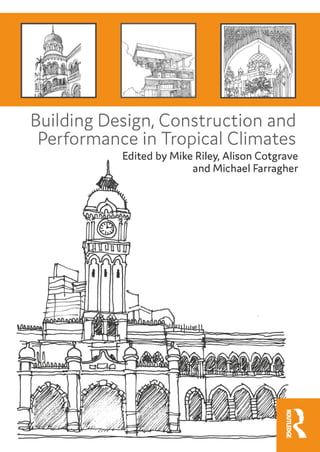




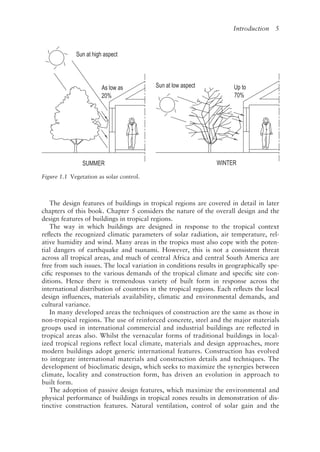
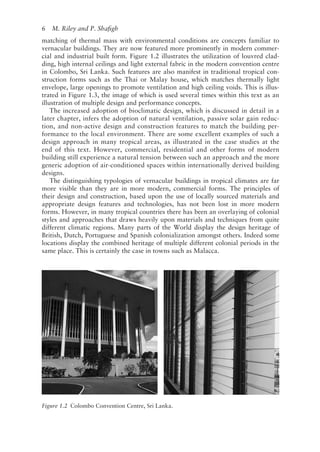
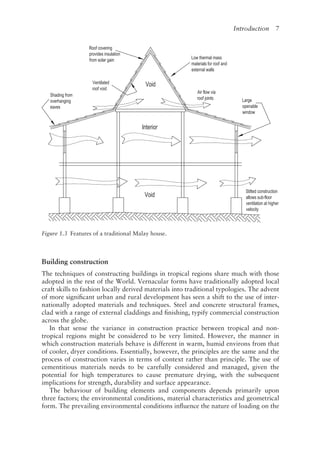
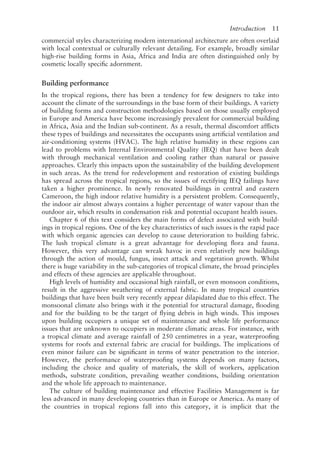
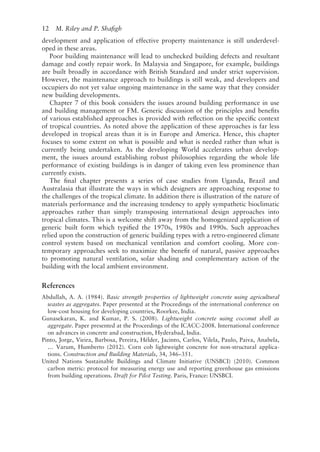
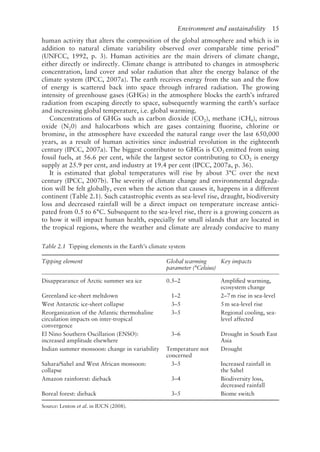
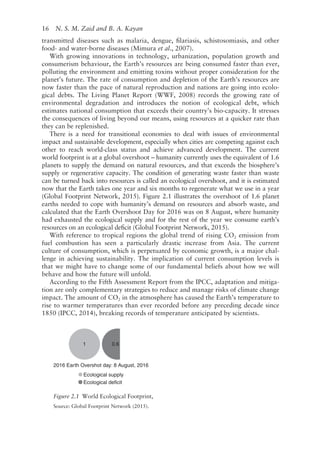
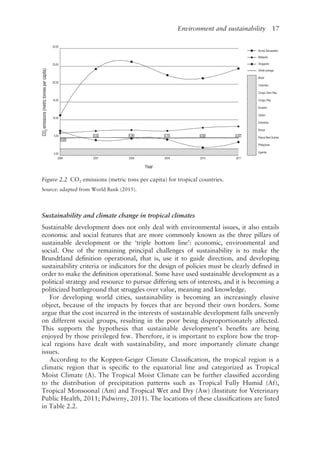
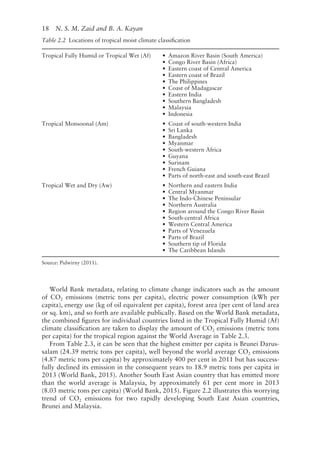
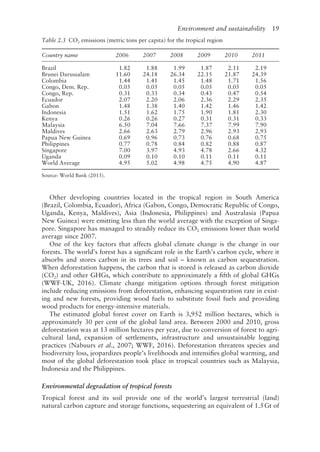
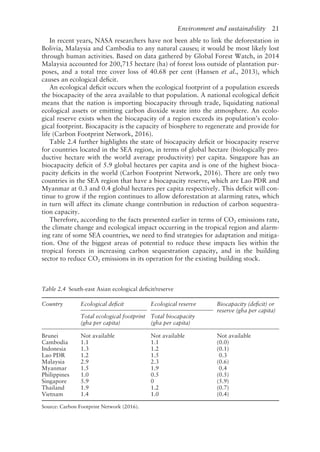
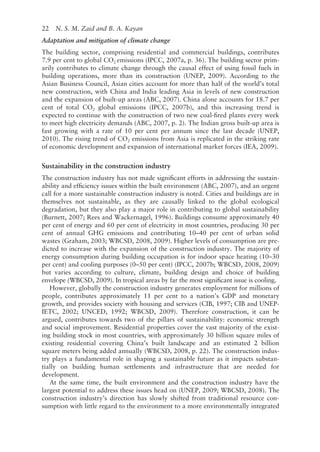
![32 N. S. M. Zaid and B. A. Kayan
Low carbon impact
Generally, different types of materials used in repair are derived from different loca-
tions. Different resourcing locations for materials used contribute significantly
towards variation in transportation distances to building site. The greater the dis-
tance of resourcing location of materials, the greater the CO2 that is emitted during
the transportation process, i.e. within the ‘gate-
to-site’ boundary. Therefore, the use
of locally sourced materials for repair of buildings in tropical climates is to be
encouraged when evaluating the selection of materials.
It also has been found that the resourcing location for materials is determined
based on where they are being produced, processed and manufactured. It has been
ascertained that each repair material has a different resourcing location as they have
a different nature of procurement: quarry and processing plant.
References
ABC. 2007. Building Energy Efficiency: Why Green Buildings Are Key to Asia’s Future. Hong
Kong: Asia Business Council (ABC).
ASEAN. 2009. ASEAN Member States. Association of Southeast Asian Nations (ASEAN).
Available at: http://asean.org/asean/asean-
member-states/ [accessed 10 July 2016].
Bakar, N. N. A., Hassan, M. Y., Abdullah, H., Rahman, H. A., Abdullah, M. P., Hussin, F.
and Bandi, M. 2015. Energy efficiency index as an indicator for measuring building energy
performance: a review. Renewable and Sustainable Energy Reviews, 44, 1–11.
Bourdeau, L. 1999. Sustainable development and the future of construction: a comparison of
visions from various countries. Building Research Information, 27, 354–366.
Braungart, M., McDonough, W. and Bollinger, A. 2007. Cradle-
to-cradle design: creating
healthy emissions – a strategy for eco-
effective product and system design. Journal of
Cleaner Production, 15, 1337–1348.
BRE. 2009. What is BREEAM. BRE Global Ltd. Available at: www.breeam.org/page.
jsp?id=66 [accessed 28 May 2010].
Brundtland, G. 1987. Our Common Future. Oxford: World Commission on Environment
and Development.
Burnett, J. 2007. City buildings – eco-
labels and shades of green! Landscape and Urban Plan-
ning, 83, 29–38.
Butler, R. A. 2013. Malaysia has the world’s highest deforestation rate, reveals Google forest
map. 15 November 2013. Available at: http://news.mongabay.com/2013/1115-worlds-
highest-deforestation-
rate.html [accessed 19 December 2016].
Carbon Footprint Network. 2016. Ecological Wealth of Nations: Earth’s Biocapacity as a
New Framework for International Cooperation. Oakland, CA: Carbon Footprint Network.
CIB. 1997. Agenda 21 on Sustainable Construction. CIB Report Publication 237. Rotterdam, the
Netherlands: International Council for Research and Innovation in Building and Construction.
CIB and UNEP-
IETC. 2002. Agenda 21 for Sustainable Construction in Developing Coun-
tries. Plessis, C. D. and WSSD (eds). South Africa: CIB, International Council for Research
and Innovation in Building and Construction, UNEP-
IETC, United Nations Environment
Programme, International Environmental Technology Centre.
Cole, R. J. 1999. Building environmental assessment methods: clarifying intentions. Building
Research and Information, 27, 230–246.
Cole, R. J. 2005. Building environmental assessment methods: redefining intentions and roles.
Building Research Information, 33, 455–467.
Cole, R. J. and Larsson, N. 2000. Green building challenge: lessons learned from GBC ’98
and GBC 2000. In: Boonstra, C., Rovers, R. and Pauwels, S. (eds) International Conference](https://image.slidesharecdn.com/4976158-250523005658-6ad58c8c/85/Building-Design-Construction-And-Performance-In-Tropical-Climates-Cotgrave-51-320.jpg)
![Environment and sustainability 33
Sustainable Building 2000, Proceedings 22–25 October 2000. Maastricht, the Netherlands:
Eneas, Technical Publishers.
Darus, Z. M. and Hashim, N. A. 2012. Sustainable building in Malaysia: the development of
sustainable building rating system. In: Sustainable Development-
Education, Business and
Management-
Architecture and Building Construction-
Agriculture and Food Security,
InTech Europe, Rijeka: Croatia.
Dattaro, L. 2014. NASA catches deforestation in the act. 24 April 2014, ed. The Weather
Channel.
Ding, G. K. C. 2008. Sustainable construction: the role of environmental assessment tools.
Journal of Environmental Management, 86, 451–464.
Draaijers, G. P. J., Verheem, R. A. A. and Morel, S. A. A. 2003. Developing a General Frame-
work for Sustainability Assessment. Utrecht: Netherlands Commission for Environmental
Impact Assessment.
Du Plessis, C. 2002. Agenda 21 for Sustainable Construction in Developing Countries. A dis-
cussion document. WSSD (ed.). South Africa: International Council for Research and
Innovation in Building and Construction (CIB); United Nations Environment Programme,
International Environmental Technology Centre (UNEP-
IETC).
Encyclopædia Britannica. 2016. Southeast Asia. Encyclopædia Britannica, Inc.
GBS. 2012. Greening Malaysia. Kuala Lumpur: Greenbuildingindex Sdn. Bhd (GBS).
George, O. B. 2009. Taking the LEED. BusinessWest, 26, 47.
Gill, C. C. 2000. The impacts of facilities/maintenance management on the long term sustain-
ability of the built environment: performance indicators at post-
construction stage (opera-
tion + maintenance phases) of building life cycle. In: Boonstra, C., Rovers, R. and Pauwels,
S. (eds) International Conference Sustainable Building 2000, Proceedings 22–25 October
2000. Maastricht, the Netherlands: Eneas, Technical Publishers.
Global Footprint Network. 2015. World Footprint. 20 November 2015, ed. Global Footprint
Network.
Graham, P. 2003. Building Ecology: First Principles for a Sustainable Built Environment.
United Kingdom: Blackwell Science Ltd.
Graham, P. 2008. Sustainability and the Struggle for Hegemony in Australian Architectural
Education. Doctoral (PhD), University of New South Wales.
Hammond, G. P. and Jones, C. I. 2011. Inventory of Carbon and Energy (ICE), Beta Version
V2.0. Department of Mechanical Engineering, University of Bath. Available at: www.bath.
ac.uk/mech-
eng/sert/embodied/ [accessed 21 December 2016].
Hansen, M. C., Potapov, P. V., Moore, R., Hancher, M., Turubanova, S. A., Tyukavina, A.,
Thau, D., Stehman, S. V., Goetz, S. J., Loveland, T. R., Kommareddy, A., Egorov, A.,
Chini, L., Justice, C. O. and Townshend, J. R. G. 2013. Hansen/UMD/Google/USGS/NASA
Tree Cover and Tree Cover Loss and Gain, Country Profiles. Global Forest Watch – www.
globalforestwatch.org: University of Maryland, Google, USGS and NASA.
Hartkopf, V. and Loftness, V. 1999. Global relevance of total building performance. Automa-
tion in Construction, 8, 377–393.
Hester, R. T. 1995. Life, liberty and the pursuit of sustainable happiness. Places, 9.
Holtzhausen, H. J. 2007. Embodied energy and its impact on architectural decisions. WIT
Transactions on Ecology and the Environment, 102, 377–385.
IAP. 2010. IAP Statement on Tropical Forests and Climate Change. Trieste, Italy: The Inter
Academy Partnership (IAP).
IEA. 2009. CO2 Emissions from Fuel Combustion Highlights. Paris: International Energy
Agency (IEA).
IFAD. 2009. Climate Change Impacts – South East Asia. International Fund for Agricultural
Development (IFAD).
iiSBE. 2005. GBTool. International Initiative for a Sustainable Built Environment (iiSBE).
iiSBE. 2009. GB/SB Challenge. International Initiative for a Sustainable Built Environment
(iiSBE).](https://image.slidesharecdn.com/4976158-250523005658-6ad58c8c/85/Building-Design-Construction-And-Performance-In-Tropical-Climates-Cotgrave-52-320.jpg)
![34 N. S. M. Zaid and B. A. Kayan
Institute for Veterinary Public Health. 2011. Observed and projected climate shifts
1901–2100. Depicted by world maps of the Köppen-Geiger climate classification. World
Maps of Köppen-Geiger Climate Classification. Institute for Veterinary Public Health.
IPCC. 2007a. Climate change 2007: synthesis report. In: Allali, A., Bojariu, R., Diaz, S.,
Elgizouli, I., Griggs, D., Hawkins, D., Hohmeyer, O., Pateh Jallow, B., Kajfez-
Bogataj, L.,
Leary, N., Lee, H. and Wratt, D. (eds) An Assessment of the Intergovernmental Panel on
Climate Change. Valencia, Spain: Intergovernmental Panel on Climate Change (IPCC).
IPCC. 2007b. Climate change 2007: working group III: mitigation of climate change. In:
Metz, B., Davidson, O. R., Bosch, P. R., Dave, R. and Mayer, L. A. (eds) Contribution of
Working Group III to the Fourth Assessment Report of the Intergovermental Panel on
Climate Change. Cambridge, UK; New York: Cambridge University Press/Intergovernmen-
tal Panel on Climate Change (IPCC).
IPCC. 2014. Climate change 2014: synthesis report. In: Pachauri, R. K. and Meyer, L. A.
(eds) Contribution of Working Groups I, II and III of the Fifth Assessment Report of the
Intergovernmental Panel on Climate Change. Geneva, Switzerland: Intergovernmental Panel
on Climate Change (IPCC).
IUCN. 2008. Transition to sustainability: towards a humane and diverse world. In: Adams,
W. M. and Jeanrenaud, S. J. (eds) IUCN Future of Sustainability Initiative 2008. Geneva,
Switzerland: International Union for Conservation and Nature (IUCN).
Jones, D. W. 1991. How urbanization affects energy use in developing countries. Energy
Policy, 19(7), 621–630.
Kibert, C. J. 2000. Construction ecology and metabolism. In: Boonstra, C., Rovers, R. and
Pauwels, S. (eds) International Conference Sustainable Building 2000, Proceedings 22–25
October 2000. Maastricht, the Netherlands: Eneas, Technical Publishers.
Levine, M., Urge-
Vorsatz, D., Blok, K., Geng, L., Harvey, D., Lang, S., Levermore, G.,
Mehlwana, A. M., Mirasgedis, S., Novikova, A., Rilling, J. and Yoshino, H. 2007. Residen-
tial and commercial buildings. In: Metz, B., Davidson, O. R., Bosch, P. R., Dave, R. and
Meyers, L. A. (eds) Contribution of Working Group III to the Fourth Assessment Report of
the Intergovernmental Panel on Climate Change. Cambridge, UK; New York: Cambridge
University Press/Intergovernmental Panel on Climate Change (IPCC).
Managan, K. and Araya, M. 2012. Driving Transformation to Energy Efficient Buildings.
Washington, DC: Institute for Building Efficiency.
Mimura, N., Nurse, L., McLean, R. F., Agard, J., Briguglio, L., Lefale, P., Payet, R. and Sem,
G. 2007. Small islands. In: Parry, M. L., Canziani, O. F., Palutikof, J. P., Linden, P. J. V. D.
and Hanson, C. E. (eds) Climate Change 2007: Impacts, Adaptation and Vulnerability.
Contribution of Working Group II to the Fourth Assessment Report of the Intergovern-
mental Panel on Climate Change. Cambridge, UK: Intergovernmental Panel on Climate
Change (IPCC).
Nabuurs, G. J., Masera, O., Andrasko, K., Benitez-
Ponce, P., Boer, R., Dutschke, M., Elsiddig,
E., Ford-
Robertson, J., Frumhoff, P., Karjalainen, T., Krankina, O., Kurz, W. A., Matsumoto,
M., Oyhantcabal, W., Ravindranath, N. H., Sanz Sanchez, M. J. and Zhang, X. 2007. For-
estry. In: Metz, B., Davidson, O. R., Bosch, P. R., Dave, R. and Meyers, L. A. (eds) Climate
Change 2007: Mitigation. Contribution of Working Group III to the Fourth Assessment
Report of the Intergovernmental Panel on Climate Change. Cambridge, UK; New York: Cam-
bridge University Press/Intergovernmental Panel on Climate Change (IPCC).
Ng, S. T., Chen, Y. and Wong, J. M. W. 2013. Variability of building environmental assess-
ment tools on evaluating carbon emissions. Environmental Impact Assessment Review, 38,
131–141.
OECD. 2001. Workshop on the Design of Sustainable Building Policies. The OECD Environ-
ment Programme. Organisation for Economic Co-
operation and Development (OECD).
Pidwirny, M. 2011. Tropical moist climates – a climate type. The Encyclopedia of Earth
(EoE). Available at: www.eoearth.org/view/article/162264/ [accessed 10 July 2016].](https://image.slidesharecdn.com/4976158-250523005658-6ad58c8c/85/Building-Design-Construction-And-Performance-In-Tropical-Climates-Cotgrave-53-320.jpg)
![Environment and sustainability 35
Reed, R., Bilos, A., Wilkinson, S. and Schulte, K.-W. 2009. International comparison of sus-
tainable rating tools. Journal of Sustainable Real Estate, 1, 1–22.
Rees, W. and Wackernagel, M. 1996. Urban ecological footprints: why cities cannot be sus-
tainable – and why they are a key to sustainability. Environmental Impact Assessment
Review, 16, 223–248.
San-
Jose, J. T., Losada, R., Cuadrado, J. and Garrucho, I. 2007. Approach to the quantification
of the sustainable value in industrial buildings. Building and Environment, 42, 3916–3923.
Sassen, S. 2009. Cities today: a new frontier for major developments. Annals of the American
Academy of Political and Social Science, 626, 53–71.
Scipioni, A., Mazzi, A., Mason, M. and Manzardo, A. 2009. The Dashboard of Sustainability
to measure the local urban sustainable development: the case study of Padua Municipality.
Ecological Indicators, 9, 364–380.
Smith, M., Whitelegg, J. and Williams, N. 1998. Greening the Built Environment. UK: Earthscan
Publications Ltd.
Spence, R. and Mulligan, H. 1995. Sustainable development and the construction industry.
Habitat International, 19, 279–292.
Sukumaran, T. 2013. NASA: Malaysia sees 115% jump in deforestation. The Star Online.
Suliman, L. Kh. M. and Omran, A. 2009. Sustainable development and construction industry
in Malaysia. Manager, 10, 76–85.
UN-
HABITAT. 2008. State of the World’s Cities 2008–2009: Harmonious Cities. UK/USA:
United Nations Human Settlements Programme (UN-
HABITAT).
UNCED. 1992. Agenda 21. Earth Summit: The United Nations Programme of Action from
Rio. Rio de Janeiro: United Nations Department of Economic and Social Affairs; United
Nations Conference on Environment and Development (UNCED).
UNDP Communications Office. 2007. UNDP Report: Multi-
Billion Facility Crucial to Spur
Climate Mitigation Initiatives. UNDP Communications Office: Press Release. Kuala
Lumpur: United Nations Development Programme (UNDP).
UNEP. 2009. Buildings and Climate Change: Summary for Decision-
makers. Yamamoto, J.
and Graham, P. (eds). Paris: United Nations Environment Programme – Sustainable Build-
ings and Climate Change Initiative (UNEP-
SBCI).
UNEP. 2010. The ‘State of Play’ of Sustainable Buildings in India. UNEP DTIE Sustainable
Consumption Production Branch.
UNFCC. 1992. United Nations Framework Convention on Climate Change (UNFCC).
United Nations Sustainable Buildings and Climate Initiative. 2010. Common Carbon Metric:
Protocol for Measuring Energy Use and Reporting Greenhouse Gas Emissions from Build-
ing Operations. Draft for Pilot Testing. Paris: United Nations Sustainable Buildings and
Climate Initiative (UNEPSBCI).
USGBC. 2010. Introduction – What LEED is [Online]. U.S Green Building Council. Available
at: www.usgbc.org/DisplayPage.aspx?CMSPageID=1988 [accessed 29 May 2010].
Wang, N., Chang, Y.-C. and Nunn, C. 2010. Lifecycle assessment for sustainable design
options of a commercial building in Shanghai. Building and Environment, 45, 1415–1421.
Watson, P. 2009. Addressing the need for common definitions of building performance in
respect of the sustainability agenda. Journal of Building Appraisal, 5, 67–74.
Watson, S. 2004. Improving the Implementation of Environmental Strategies in the Design of
Buildings: Towards a Life-
Cycle Based, Front-
Loaded, Framework for Building Environ-
mental Assessment During Design. Doctoral (PhD), University of Queensland.
WBCSD. 2008. Energy Efficiency in Buildings: Business Realities and Opportunities. Geneva,
Switzerland: World Business Council for Sustainable Development (WBCSD).
WBCSD. 2009. Energy Efficiency in Buildings: Transforming the Market. Geneva, Switzer-
land: World Business Council for Sustainable Development (WBCSD).
World Bank. 2004. Beyond Economic Growth. The World Bank Group. Available at: www.
worldbank.org/depweb/english/beyond/global/glossary.html [accessed 22 April 2010].](https://image.slidesharecdn.com/4976158-250523005658-6ad58c8c/85/Building-Design-Construction-And-Performance-In-Tropical-Climates-Cotgrave-54-320.jpg)