2019 ESC Guidelines for the management of
patients with supraventricular tachycardia
The Task Force for the management of patients with supraventricu-
lar tachycardia of the European Society of Cardiology (ESC)
Developed in collaboration with the Association for European
Paediatric and Congenital Cardiology (AEPC)
Authors/Task Force Members: Josep Brugada* (Chairperson) (Spain),
Demosthenes G. Katritsis* (Chairperson) (Greece), Elena Arbelo (Spain),
Fernando Arribas (Spain), Jeroen J. Bax (Netherlands),
Carina Blomström-Lundqvist (Sweden), Hugh Calkins (United States of America),
Domenico Corrado (Italy), Spyridon G. Deftereos (Greece), Gerhard-Paul Diller
(Germany), Juan J. Gomez-Doblas (Spain), Bulent Gorenek (Turkey), Andrew Grace
(United Kingdom), Siew Yen Ho (United Kingdom), Juan-Carlos Kaski (United
Kingdom), Karl-Heinz Kuck (Germany), Pier David Lambiase (United Kingdom),
Frederic Sacher (France), Georgia Sarquella-Brugada1
(Spain),
Piotr Suwalski (Poland), Antonio Zaza (Italy)
* Corresponding authors: Josep Brugada, Cardiology Department, Hospital Clinic, and Pediatric Arrhythmia Unit, Hospital Sant Joan de Déu, University of Barcelona, Spain.
Tel: þ34 3460 902 2351, Fax: þ34 3493 227 1777, Email: jbrugada@clinic.cat.
Demosthenes G. Katritsis, Department of Cardiology, Hygeia Hospital, E. Stavrou 4, 15123 Athens, Greece, Tel: þ30 6944 845 505, Fax: þ30 210 6722535,
Email: dkatrits@dgkatritsis.gr.
Author/Task Force Member Affiliations: listed in the Appendix.
ESC CPG and National Cardiac Societies document reviewers: listed in the Appendix.
1
Representing the AEPC.
ESC entities having participated in the development of this document:
Associations: Acute Cardiovascular Care Association (ACCA), European Association of Cardiovascular Imaging (EACVI), European Association of Preventive Cardiology
(EAPC), European Heart Rhythm Association (EHRA), Heart Failure Association (HFA).
Councils: Council for Cardiology Practice.
Working Groups: Cardiac Cellular Electrophysiology, Cardiovascular Pharmacotherapy, Cardiovascular Surgery, Development Anatomy and Pathology, Grown-up Congenital
Heart Disease.
The content of these ESC Guidelines has been published for personal and educational use only. No commercial use is authorized. No part of the ESC Guidelines may be trans-
lated or reproduced in any form without written permission from the ESC. Permission can be obtained upon submission of a written request to Oxford University Press, the
publisher of the European Heart Journal and the party authorized to handle such permissions on behalf of the ESC (journals.permissions@oxfordjournals.org).
Disclaimer: The ESC Guidelines represent the views of the ESC and were produced after careful consideration of the scientific and medical knowledge, and the evidence avail-
able at the time of their publication. The ESC is not responsible in the event of any contradiction, discrepancy, and/or ambiguity between the ESC Guidelines and any other offi-
cial recommendations or guidelines issued by the relevant public health authorities, in particular in relation to good use of healthcare or therapeutic strategies. Health
professionals are encouraged to take the ESC Guidelines fully into account when exercising their clinical judgment, as well as in the determination and the implementation of pre-
ventive, diagnostic, or therapeutic medical strategies; however, the ESC Guidelines do not override, in any way whatsoever, the individual responsibility of health professionals to
make appropriate and accurate decisions in consideration of each patient’s health condition and in consultation with that patient and, where appropriate and/or necessary, the
patient’s caregiver. Nor do the ESC Guidelines exempt health professionals from taking into full and careful consideration the relevant official updated recommendations or
guidelines issued by the competent public health authorities, in order to manage each patient’s case in light of the scientifically accepted data pursuant to their respective ethical
and professional obligations. It is also the health professional’s responsibility to verify the applicable rules and regulations relating to drugs and medical devices at the time of
prescription.
V
C The European Society of Cardiology and the European Atherosclerosis Association 2019. All rights reserved.
For permissions please email: journals.permissions@oup.com.
European Heart Journal (2019) 00, 165
ESC GUIDELINES
doi:10.1093/eurheartj/ehz467
Downloaded
from
https://academic.oup.com/eurheartj/advance-article-abstract/doi/10.1093/eurheartj/ehz467/5556821
by
guest
on
18
September
2019
.
.
.
.
.
.
.
.
.
.
.
.
.
.
.
.
.
.
.
.
.
.
.
.
.
.
.
.
.
.
.
.
.
.
.
.
.
.
.
.
.
.
.
.
.
.
.
.
.
.
.
.
.
.
.
.
.
.
.
.
.
.
.
.
.
.
.
.
.
.
.
.
.
.
.
.
.
.
.
.
.
.
.
.
.
.
.
.
.
.
Document Reviewers: Tom De Potter [Committee for Practice Guidelines (CPG) Review Coordinator]
(Belgium), Christian Sticherling (CPG Review Coordinator) (Switzerland), Victor Aboyans (France),
Cristina Basso (Italy), Mario Bocchiardo (Italy), Werner Budts (Belgium), Victoria Delgado
(Netherlands), Dobromir Dobrev (Germany), Donna Fitzsimons (United Kingdom), Sofie Gevaert
(Belgium), Hein Heidbuchel (Belgium), Gerhard Hindricks (Germany), Peter Hlivak (Slovakia),
Prapa Kanagaratnam (United Kingdom), Hugo Katus (Germany), Josef Kautzner (Czech Republic),
Thomas Kriebel1
(Germany), Patrizio Lancellotti (Belgium), Ulf Landmesser (Germany),
Christophe Leclercq (France), Basil Lewis (Israel), Yury Lopatin (Russian Federation), Béla Merkely
(Hungary), Thomas Paul (Germany), Nikola Pavlovi
c (Croatia), Steffen Petersen (United Kingdom),
Anna Sonia Petronio (Italy), Tatjana Potpara (Serbia), Marco Roffi (Switzerland), Daniel Scherr (Austria),
Evgeny Shlyakhto (Russian Federation), Iain A. Simpson (United Kingdom), Katja Zeppenfeld
(Netherlands)
The disclosure forms of all experts involved in the development of these Guidelines are available on the
ESC website www.escardio.org/guidelines
For the Supplementary Data which include background information and detailed discussion of the data
that have provided the basis for the Guidelines see https://academic.oup.com/eurheartj/article-lookup/doi/
10.1093/eurheartj/ehz467#supplementary-data
...................................................................................................................................................................................................
Keywords Guidelines • arrhythmia • tachycardia • supraventricular • flutter • atrioventricular • re-entrant • focal
• macrore-entrant • junctional • nodal • pre-excitation • ablation
Table of contents
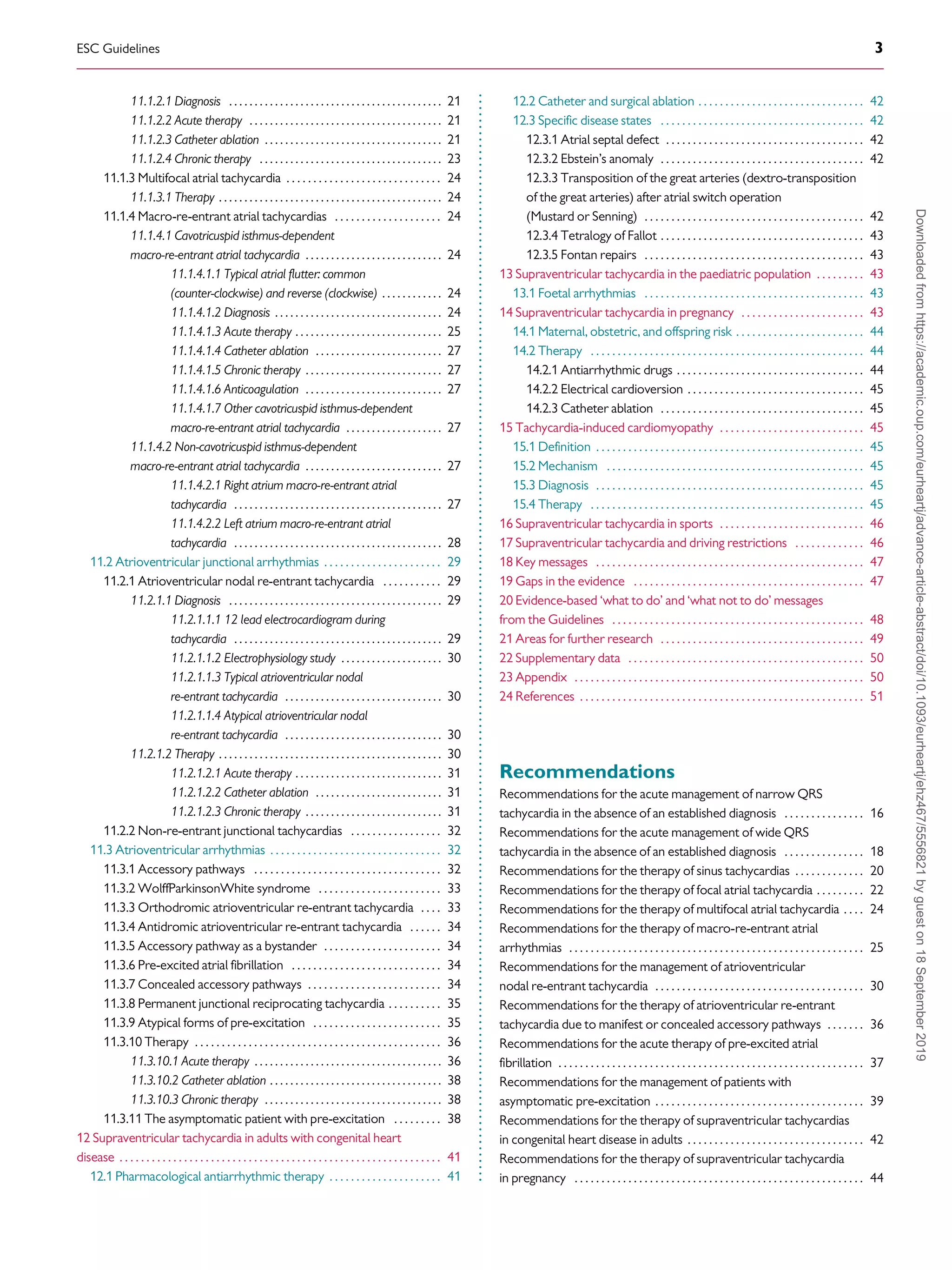
1 Preamble . . . . . . . . . . . . . . . . . . . . . . . . . . . . . . . . . . . . . . . . . . . . . . . . . . . . . . . . . 5
2 Introduction . . . . . . . . . . . . . . . . . . . . . . . . . . . . . . . . . . . . . . . . . . . . . . . . . . . . . . 7
2.1 Evidence review . . . . . . . . . . . . . . . . . . . . . . . . . . . . . . . . . . . . . . . . . . . . . . 7
2.2 Relationships with industry and other conflicts of interest . . . . . . 7
2.3 What is new in the 2019 Guidelines? . . . . . . . . . . . . . . . . . . . . . . . . . . 7
2.3.1 Change in recommendations from 2003 to 2019 . . . . . . . . . . 7
2.3.2 New recommendations in 2019 . . . . . . . . . . . . . . . . . . . . . . . . . . . 8
2.3.3 New revised concepts . . . . . . . . . . . . . . . . . . . . . . . . . . . . . . . . . . . . 8
3 Definitions and classification . . . . . . . . . . . . . . . . . . . . . . . . . . . . . . . . . . . . . . . 8
4 Electrophysiological mechanisms of supraventricular
tachycardia . . . . . . . . . . . . . . . . . . . . . . . . . . . . . . . . . . . . . . . . . . . . . . . . . . . . . . . . . 9
5 Cardiac anatomy for the electrophysiologist . . . . . . . . . . . . . . . . . . . . . . 10
6 Epidemiology of supraventricular tachycardia . . . . . . . . . . . . . . . . . . . . . 10
7 Clinical presentation . . . . . . . . . . . . . . . . . . . . . . . . . . . . . . . . . . . . . . . . . . . . . 10
8 Initial evaluation of patients with supraventricular tachycardia . . . . . . 11
9 Differential diagnosis of tachycardias . . . . . . . . . . . . . . . . . . . . . . . . . . . . . . 11
9.1 Narrow QRS (=120 ms) tachycardias . . . . . . . . . . . . . . . . . . . . . . . . 11
9.1.1 Electrocardiographic differential diagnosis . . . . . . . . . . . . . . . . 11
9.1.1.1 Initiation and termination of the tachycardia . . . . . . . . . . . . 11
9.1.1.2 Regularity of tachycardia cycle length . . . . . . . . . . . . . . . . . . 11
9.1.1.3 P/QRS relationship . . . . . . . . . . . . . . . . . . . . . . . . . . . . . . . . . . . 11
9.1.2 Vagal manoeuvres and adenosine . . . . . . . . . . . . . . . . . . . . . . . . 13
9.1.3 Electrophysiology study . . . . . . . . . . . . . . . . . . . . . . . . . . . . . . . . . 14
9.2 Wide QRS (120 ms) tachycardias . . . . . . . . . . . . . . . . . . . . . . . . . . . 14
9.2.1 Electrocardiographic differential diagnosis . . . . . . . . . . . . . . . . 14
9.2.1.1 Atrioventricular dissociation . . . . . . . . . . . . . . . . . . . . . . . . . . . 14
9.2.1.2 QRS duration . . . . . . . . . . . . . . . . . . . . . . . . . . . . . . . . . . . . . . . . 14
9.2.1.3 QRS axis . . . . . . . . . . . . . . . . . . . . . . . . . . . . . . . . . . . . . . . . . . . . 14
9.2.1.4 Chest lead concordance . . . . . . . . . . . . . . . . . . . . . . . . . . . . . . 14
9.2.1.5 Right bundle branch block morphology . . . . . . . . . . . . . . . . . 15
9.2.1.6 Left bundle branch block morphology . . . . . . . . . . . . . . . . . . 15
9.2.2 Electrophysiology study . . . . . . . . . . . . . . . . . . . . . . . . . . . . . . . . . 16
9.3 Irregular tachycardias . . . . . . . . . . . . . . . . . . . . . . . . . . . . . . . . . . . . . . . . 16
10 Acute management in the absence of an established diagnosis . . . . 16
10.1 Regular tachycardias . . . . . . . . . . . . . . . . . . . . . . . . . . . . . . . . . . . . . . . . 16
10.1.1 Narrow QRS (=120 ms) tachycardias . . . . . . . . . . . . . . . . . . . 16
10.1.1.1 Haemodynamically unstable patients . . . . . . . . . . . . . . . . 16
10.1.1.2 Haemodynamically stable patients . . . . . . . . . . . . . . . . . . . 16
10.1.2 Wide QRS (120 ms) tachycardias . . . . . . . . . . . . . . . . . . . . . 18
10.1.2.1 Haemodynamically unstable patients . . . . . . . . . . . . . . . . 18
10.1.2.2 Haemodynamically stable patients . . . . . . . . . . . . . . . . . . . 18
10.2 Irregular tachycardias . . . . . . . . . . . . . . . . . . . . . . . . . . . . . . . . . . . . . . . 19
11 Specific types of supraventricular tachycardia . . . . . . . . . . . . . . . . . . . . 19
11.1 Atrial arrhythmias . . . . . . . . . . . . . . . . . . . . . . . . . . . . . . . . . . . . . . . . . . 19
11.1.1 Sinus tachycardia . . . . . . . . . . . . . . . . . . . . . . . . . . . . . . . . . . . . . . . 19
11.1.1.1 Physiological sinus tachycardia . . . . . . . . . . . . . . . . . . . . . . . 19
11.1.1.2 Inappropriate sinus tachycardia . . . . . . . . . . . . . . . . . . . . . . 19
11.1.1.2.1 Diagnosis . . . . . . . . . . . . . . . . . . . . . . . . . . . . . . . . . 19
11.1.1.2.2 Therapy . . . . . . . . . . . . . . . . . . . . . . . . . . . . . . . . . . 19
11.1.1.3 Sinus node re-entrant tachycardia . . . . . . . . . . . . . . . . . . . . 20
11.1.1.3.1 Diagnosis . . . . . . . . . . . . . . . . . . . . . . . . . . . . . . . . . 20
11.1.1.3.2 Therapy . . . . . . . . . . . . . . . . . . . . . . . . . . . . . . . . . . 20
11.1.1.4 Postural orthostatic tachycardia syndrome . . . . . . . . . . . . 20
11.1.1.4.1 Diagnosis . . . . . . . . . . . . . . . . . . . . . . . . . . . . . . . . . 20
11.1.1.4.2 Therapy . . . . . . . . . . . . . . . . . . . . . . . . . . . . . . . . . . 21
11.1.2 Focal atrial tachycardia . . . . . . . . . . . . . . . . . . . . . . . . . . . . . . . . . 21
2 ESC Guidelines
Downloaded
from
https://academic.oup.com/eurheartj/advance-article-abstract/doi/10.1093/eurheartj/ehz467/5556821
by
guest
on
18
September
2019
.
.
.
.
.
.
.
.
.
.
.
.
.
.
.
.
.
.
.
.
.
.
.
.
.
.
.
.
.
.
.
.
.
.
.
.
.
.
.
.
.
.
.
.
.
.
.
.
.
.
.
.
.
.
.
.
.
.
.
.
.
.
.
.
.
.
.
.
.
.
.
.
.
.
.
.
.
.
.
.
.
.
.
.
.
.
.
.
.
.
.
.
.
.
.
.
.
.
.
.
.
.
.
.
.
.
.
.
.
.
.
.
.
.
.
.
.
.
.
.
.
.
.
.
.
.
.
.
.
.
.
.
.
.
.
.
.
.
.
.
.
.
.
.
.
.
.
.
.
.
.
.
.
.
.
.
.
.
.
.
.
.
.
.
.
.
.
.
.
.
.
.
.
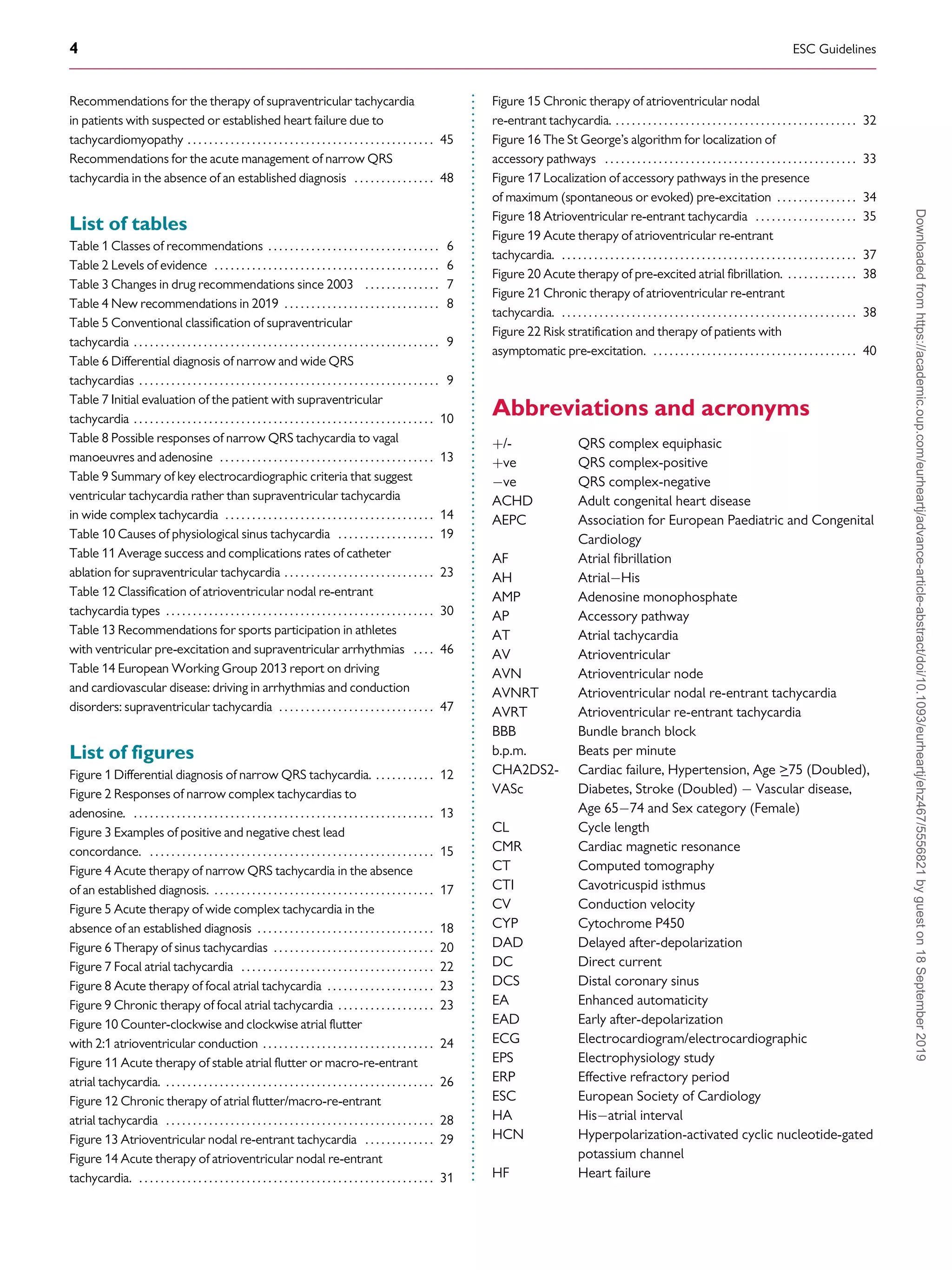
11.1.2.1 Diagnosis . . . . . . . . . . . . . . . . . . . . . . . . . . . . . . . . . . . . . . . . . . 21
11.1.2.2 Acute therapy . . . . . . . . . . . . . . . . . . . . . . . . . . . . . . . . . . . . . . 21
11.1.2.3 Catheter ablation . . . . . . . . . . . . . . . . . . . . . . . . . . . . . . . . . . . 21
11.1.2.4 Chronic therapy . . . . . . . . . . . . . . . . . . . . . . . . . . . . . . . . . . . . 23
11.1.3 Multifocal atrial tachycardia . . . . . . . . . . . . . . . . . . . . . . . . . . . . . 24
11.1.3.1 Therapy . . . . . . . . . . . . . . . . . . . . . . . . . . . . . . . . . . . . . . . . . . . . 24
11.1.4 Macro-re-entrant atrial tachycardias . . . . . . . . . . . . . . . . . . . . 24
11.1.4.1 Cavotricuspid isthmus-dependent
macro-re-entrant atrial tachycardia . . . . . . . . . . . . . . . . . . . . . . . . . . . 24
11.1.4.1.1 Typical atrial flutter: common
(counter-clockwise) and reverse (clockwise) . . . . . . . . . . . . 24
11.1.4.1.2 Diagnosis . . . . . . . . . . . . . . . . . . . . . . . . . . . . . . . . . 24
11.1.4.1.3 Acute therapy . . . . . . . . . . . . . . . . . . . . . . . . . . . . . 25
11.1.4.1.4 Catheter ablation . . . . . . . . . . . . . . . . . . . . . . . . . 27
11.1.4.1.5 Chronic therapy . . . . . . . . . . . . . . . . . . . . . . . . . . . 27
11.1.4.1.6 Anticoagulation . . . . . . . . . . . . . . . . . . . . . . . . . . . 27
11.1.4.1.7 Other cavotricuspid isthmus-dependent
macro-re-entrant atrial tachycardia . . . . . . . . . . . . . . . . . . . 27
11.1.4.2 Non-cavotricuspid isthmus-dependent
macro-re-entrant atrial tachycardia . . . . . . . . . . . . . . . . . . . . . . . . . . . 27
11.1.4.2.1 Right atrium macro-re-entrant atrial
tachycardia . . . . . . . . . . . . . . . . . . . . . . . . . . . . . . . . . . . . . . . . . 27
11.1.4.2.2 Left atrium macro-re-entrant atrial
tachycardia . . . . . . . . . . . . . . . . . . . . . . . . . . . . . . . . . . . . . . . . . 28
11.2 Atrioventricular junctional arrhythmias . . . . . . . . . . . . . . . . . . . . . . 29
11.2.1 Atrioventricular nodal re-entrant tachycardia . . . . . . . . . . . 29
11.2.1.1 Diagnosis . . . . . . . . . . . . . . . . . . . . . . . . . . . . . . . . . . . . . . . . . . 29
11.2.1.1.1 12 lead electrocardiogram during
tachycardia . . . . . . . . . . . . . . . . . . . . . . . . . . . . . . . . . . . . . . . . . 29
11.2.1.1.2 Electrophysiology study . . . . . . . . . . . . . . . . . . . . 30
11.2.1.1.3 Typical atrioventricular nodal
re-entrant tachycardia . . . . . . . . . . . . . . . . . . . . . . . . . . . . . . . 30
11.2.1.1.4 Atypical atrioventricular nodal
re-entrant tachycardia . . . . . . . . . . . . . . . . . . . . . . . . . . . . . . . 30
11.2.1.2 Therapy . . . . . . . . . . . . . . . . . . . . . . . . . . . . . . . . . . . . . . . . . . . . 30
11.2.1.2.1 Acute therapy . . . . . . . . . . . . . . . . . . . . . . . . . . . . . 31
11.2.1.2.2 Catheter ablation . . . . . . . . . . . . . . . . . . . . . . . . . 31
11.2.1.2.3 Chronic therapy . . . . . . . . . . . . . . . . . . . . . . . . . . . 31
11.2.2 Non-re-entrant junctional tachycardias . . . . . . . . . . . . . . . . . 32
11.3 Atrioventricular arrhythmias . . . . . . . . . . . . . . . . . . . . . . . . . . . . . . . . 32
11.3.1 Accessory pathways . . . . . . . . . . . . . . . . . . . . . . . . . . . . . . . . . . . 32
11.3.2 WolffParkinsonWhite syndrome . . . . . . . . . . . . . . . . . . . . . . . 33
11.3.3 Orthodromic atrioventricular re-entrant tachycardia . . . . 33
11.3.4 Antidromic atrioventricular re-entrant tachycardia . . . . . . 34
11.3.5 Accessory pathway as a bystander . . . . . . . . . . . . . . . . . . . . . . 34
11.3.6 Pre-excited atrial fibrillation . . . . . . . . . . . . . . . . . . . . . . . . . . . . 34
11.3.7 Concealed accessory pathways . . . . . . . . . . . . . . . . . . . . . . . . . 34
11.3.8 Permanent junctional reciprocating tachycardia . . . . . . . . . . 35
11.3.9 Atypical forms of pre-excitation . . . . . . . . . . . . . . . . . . . . . . . . 35
11.3.10 Therapy . . . . . . . . . . . . . . . . . . . . . . . . . . . . . . . . . . . . . . . . . . . . . . 36
11.3.10.1 Acute therapy . . . . . . . . . . . . . . . . . . . . . . . . . . . . . . . . . . . . . 36
11.3.10.2 Catheter ablation . . . . . . . . . . . . . . . . . . . . . . . . . . . . . . . . . . 38
11.3.10.3 Chronic therapy . . . . . . . . . . . . . . . . . . . . . . . . . . . . . . . . . . . 38
11.3.11 The asymptomatic patient with pre-excitation . . . . . . . . . 38
12 Supraventricular tachycardia in adults with congenital heart
disease . . . . . . . . . . . . . . . . . . . . . . . . . . . . . . . . . . . . . . . . . . . . . . . . . . . . . . . . . . . . 41
12.1 Pharmacological antiarrhythmic therapy . . . . . . . . . . . . . . . . . . . . . 41
12.2 Catheter and surgical ablation . . . . . . . . . . . . . . . . . . . . . . . . . . . . . . . 42
12.3 Specific disease states . . . . . . . . . . . . . . . . . . . . . . . . . . . . . . . . . . . . . . 42
12.3.1 Atrial septal defect . . . . . . . . . . . . . . . . . . . . . . . . . . . . . . . . . . . . . 42
12.3.2 Ebstein’s anomaly . . . . . . . . . . . . . . . . . . . . . . . . . . . . . . . . . . . . . . 42
12.3.3 Transposition of the great arteries (dextro-transposition
of the great arteries) after atrial switch operation
(Mustard or Senning) . . . . . . . . . . . . . . . . . . . . . . . . . . . . . . . . . . . . . . . . . 42
12.3.4 Tetralogy of Fallot . . . . . . . . . . . . . . . . . . . . . . . . . . . . . . . . . . . . . . 43
12.3.5 Fontan repairs . . . . . . . . . . . . . . . . . . . . . . . . . . . . . . . . . . . . . . . . . 43
13 Supraventricular tachycardia in the paediatric population . . . . . . . . . 43
13.1 Foetal arrhythmias . . . . . . . . . . . . . . . . . . . . . . . . . . . . . . . . . . . . . . . . . 43
14 Supraventricular tachycardia in pregnancy . . . . . . . . . . . . . . . . . . . . . . . 43
14.1 Maternal, obstetric, and offspring risk . . . . . . . . . . . . . . . . . . . . . . . . 44
14.2 Therapy . . . . . . . . . . . . . . . . . . . . . . . . . . . . . . . . . . . . . . . . . . . . . . . . . . . 44
14.2.1 Antiarrhythmic drugs . . . . . . . . . . . . . . . . . . . . . . . . . . . . . . . . . . . 44
14.2.2 Electrical cardioversion . . . . . . . . . . . . . . . . . . . . . . . . . . . . . . . . . 45
14.2.3 Catheter ablation . . . . . . . . . . . . . . . . . . . . . . . . . . . . . . . . . . . . . . 45
15 Tachycardia-induced cardiomyopathy . . . . . . . . . . . . . . . . . . . . . . . . . . . 45
15.1 Definition . . . . . . . . . . . . . . . . . . . . . . . . . . . . . . . . . . . . . . . . . . . . . . . . . . 45
15.2 Mechanism . . . . . . . . . . . . . . . . . . . . . . . . . . . . . . . . . . . . . . . . . . . . . . . . 45
15.3 Diagnosis . . . . . . . . . . . . . . . . . . . . . . . . . . . . . . . . . . . . . . . . . . . . . . . . . . 45
15.4 Therapy . . . . . . . . . . . . . . . . . . . . . . . . . . . . . . . . . . . . . . . . . . . . . . . . . . . 45
16 Supraventricular tachycardia in sports . . . . . . . . . . . . . . . . . . . . . . . . . . . 46
17 Supraventricular tachycardia and driving restrictions . . . . . . . . . . . . . 46
18 Key messages . . . . . . . . . . . . . . . . . . . . . . . . . . . . . . . . . . . . . . . . . . . . . . . . . . 47
19 Gaps in the evidence . . . . . . . . . . . . . . . . . . . . . . . . . . . . . . . . . . . . . . . . . . . 47
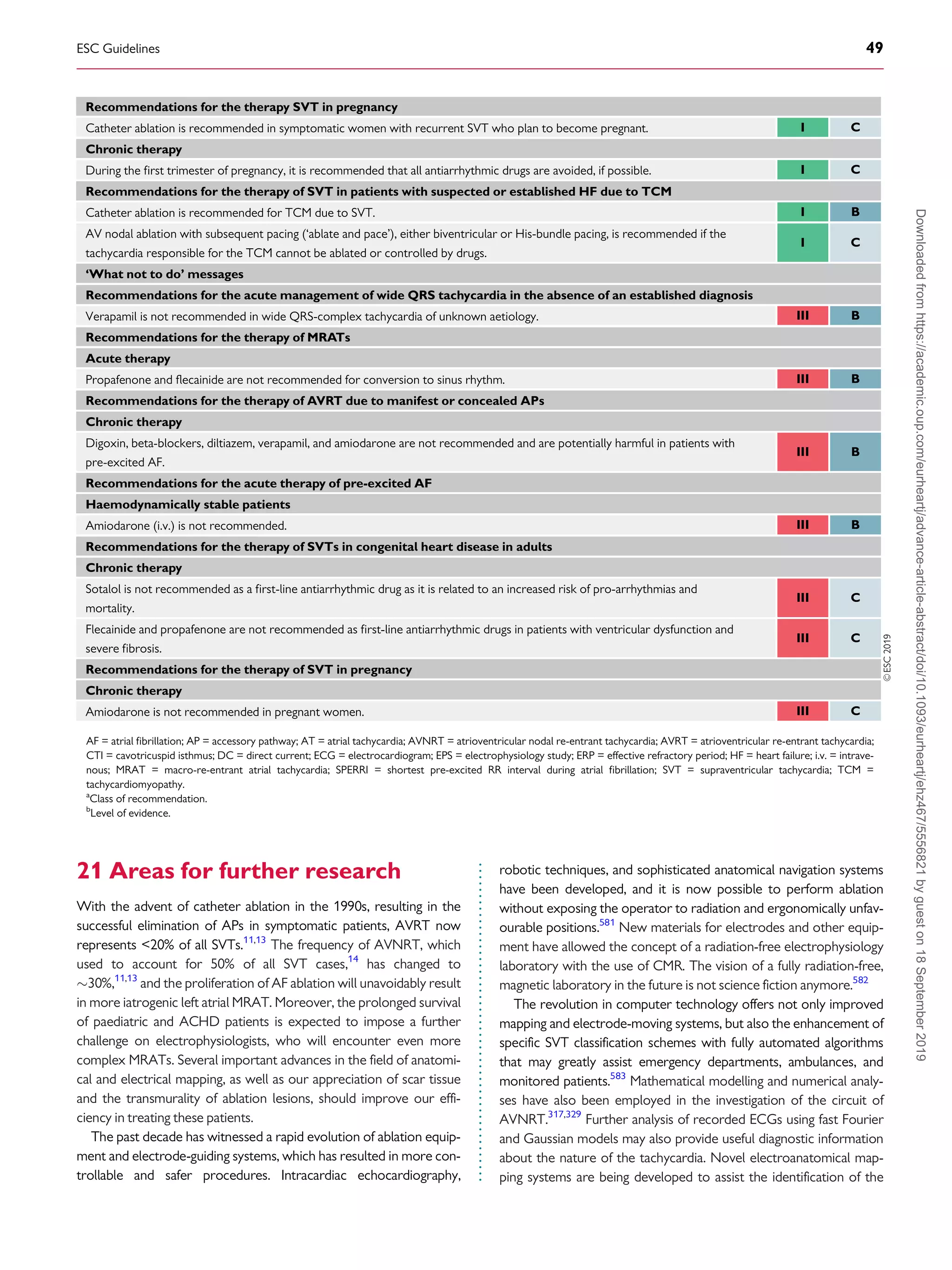
20 Evidence-based ‘what to do’ and ‘what not to do’ messages
from the Guidelines . . . . . . . . . . . . . . . . . . . . . . . . . . . . . . . . . . . . . . . . . . . . . . . 48
21 Areas for further research . . . . . . . . . . . . . . . . . . . . . . . . . . . . . . . . . . . . . . 49
22 Supplementary data . . . . . . . . . . . . . . . . . . . . . . . . . . . . . . . . . . . . . . . . . . . . 50
23 Appendix . . . . . . . . . . . . . . . . . . . . . . . . . . . . . . . . . . . . . . . . . . . . . . . . . . . . . . 50
24 References . . . . . . . . . . . . . . . . . . . . . . . . . . . . . . . . . . . . . . . . . . . . . . . . . . . . . 51
Recommendations
Recommendations for the acute management of narrow QRS
tachycardia in the absence of an established diagnosis . . . . . . . . . . . . . . . 16
Recommendations for the acute management of wide QRS
tachycardia in the absence of an established diagnosis . . . . . . . . . . . . . . . 18
Recommendations for the therapy of sinus tachycardias . . . . . . . . . . . . . 20
Recommendations for the therapy of focal atrial tachycardia . . . . . . . . . 22
Recommendations for the therapy of multifocal atrial tachycardia . . . . 24
Recommendations for the therapy of macro-re-entrant atrial
arrhythmias . . . . . . . . . . . . . . . . . . . . . . . . . . . . . . . . . . . . . . . . . . . . . . . . . . . . . . . 25
Recommendations for the management of atrioventricular
nodal re-entrant tachycardia . . . . . . . . . . . . . . . . . . . . . . . . . . . . . . . . . . . . . . . 30
Recommendations for the therapy of atrioventricular re-entrant
tachycardia due to manifest or concealed accessory pathways . . . . . . . 36
Recommendations for the acute therapy of pre-excited atrial
fibrillation . . . . . . . . . . . . . . . . . . . . . . . . . . . . . . . . . . . . . . . . . . . . . . . . . . . . . . . . . 37
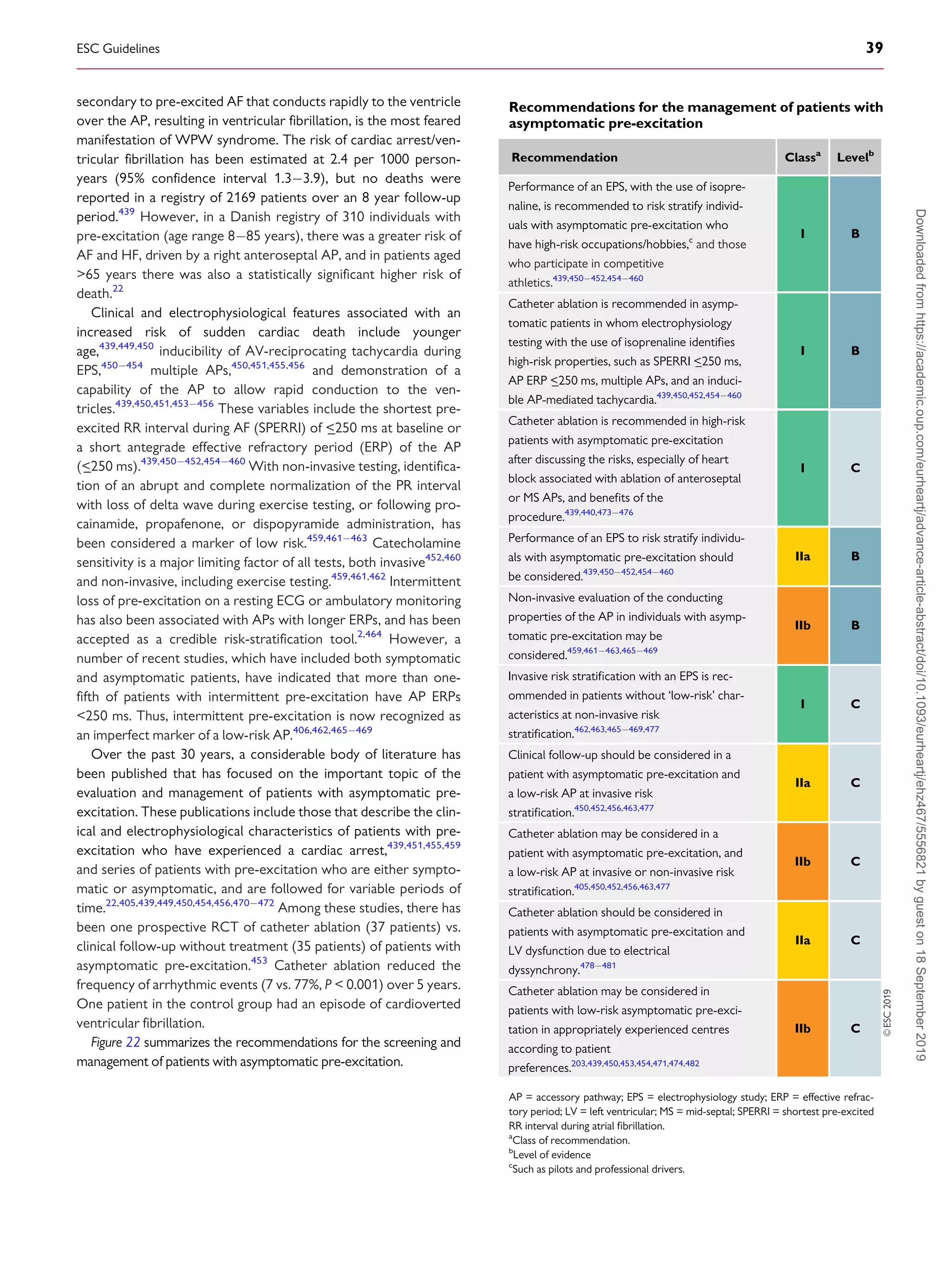
Recommendations for the management of patients with
asymptomatic pre-excitation . . . . . . . . . . . . . . . . . . . . . . . . . . . . . . . . . . . . . . . 39
Recommendations for the therapy of supraventricular tachycardias
in congenital heart disease in adults . . . . . . . . . . . . . . . . . . . . . . . . . . . . . . . . . 42
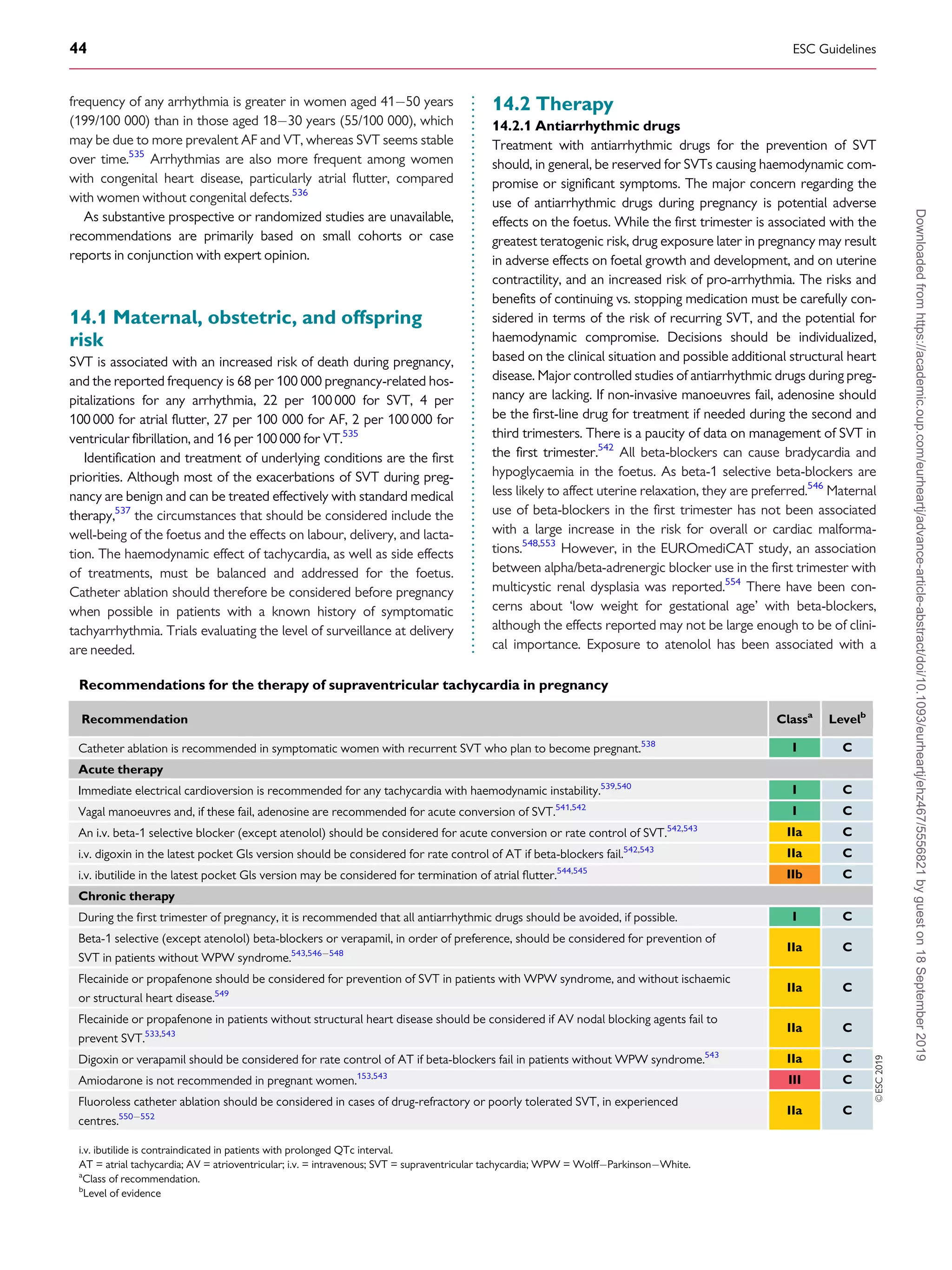
Recommendations for the therapy of supraventricular tachycardia
in pregnancy . . . . . . . . . . . . . . . . . . . . . . . . . . . . . . . . . . . . . . . . . . . . . . . . . . . . . . 44
ESC Guidelines 3
Downloaded
from
https://academic.oup.com/eurheartj/advance-article-abstract/doi/10.1093/eurheartj/ehz467/5556821
by
guest
on
18
September
2019
.
.
.
.
.
.
.
.
.
.
.
.
.
.
.
.
.
.
.
.
.
.
.
.
.
.
.
.
.
.
.
.
.
.
.
.
.
.
.
.
.
.
.
.
.
.
.
.
.
.
.
.
.
.
.
.
.
.
.
.
.
.
.
.
.
.
.
.
.
.
.
.
.
.
.
.
.
.
.
.
.
.
.
.
.
.
.
.
.
.
.
.
.
.
.
.
.
.
.
.
.
.
.
.
.
.
.
.
.
.
.
.
.
.
.
.
.
.
.
.
.
.
.
.
.
.
.
.
.
.
.
.
.
.
.
.
.
.
.
.
.
.
.
.
.
.
.
.
.
.
.
.
.
.
.
.
.
.
.
.
.
.
.
.
.
.
.
.
.
.
.
.
.
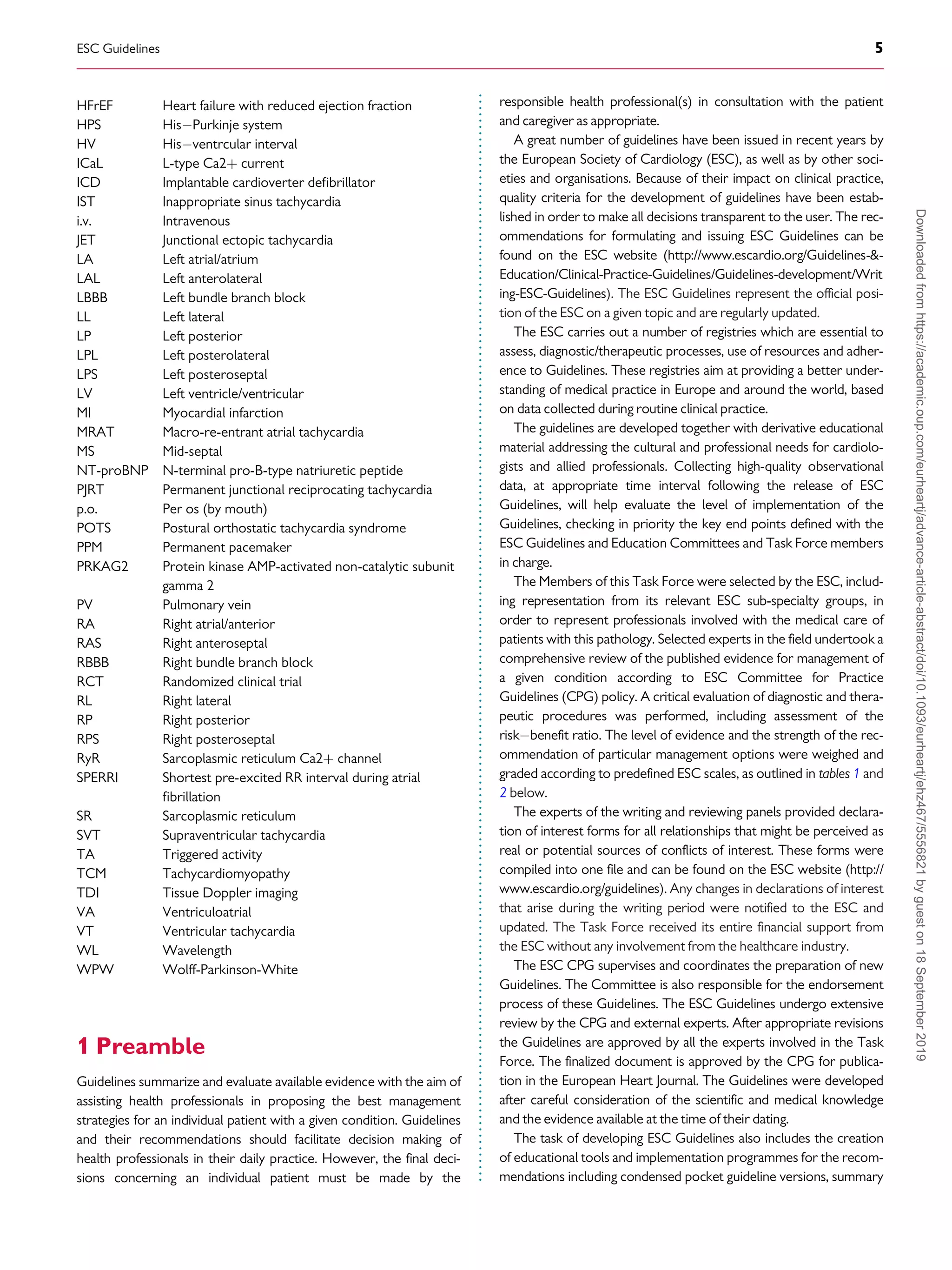
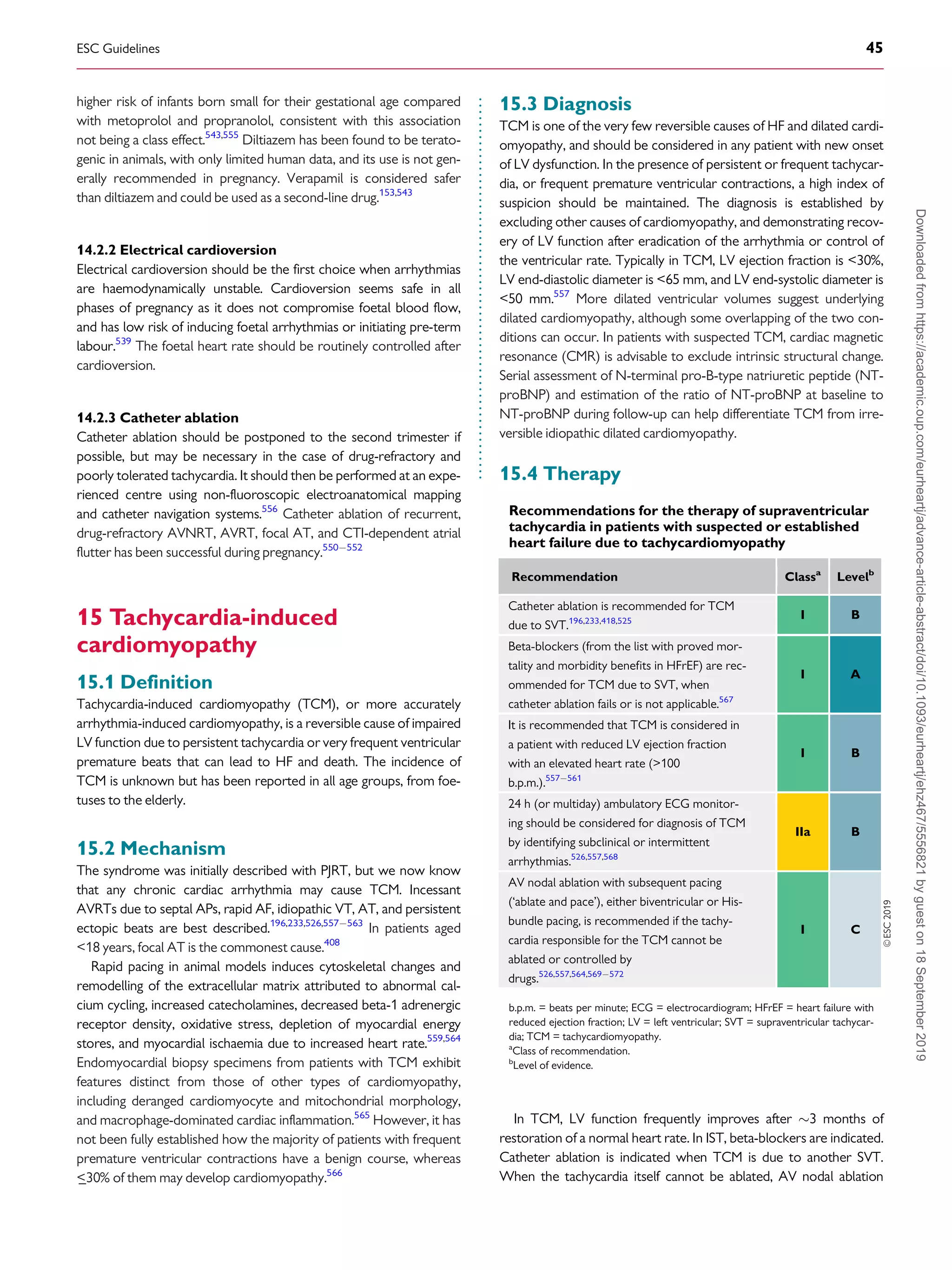
Recommendations for the therapy of supraventricular tachycardia
in patients with suspected or established heart failure due to
tachycardiomyopathy . . . . . . . . . . . . . . . . . . . . . . . . . . . . . . . . . . . . . . . . . . . . . . 45
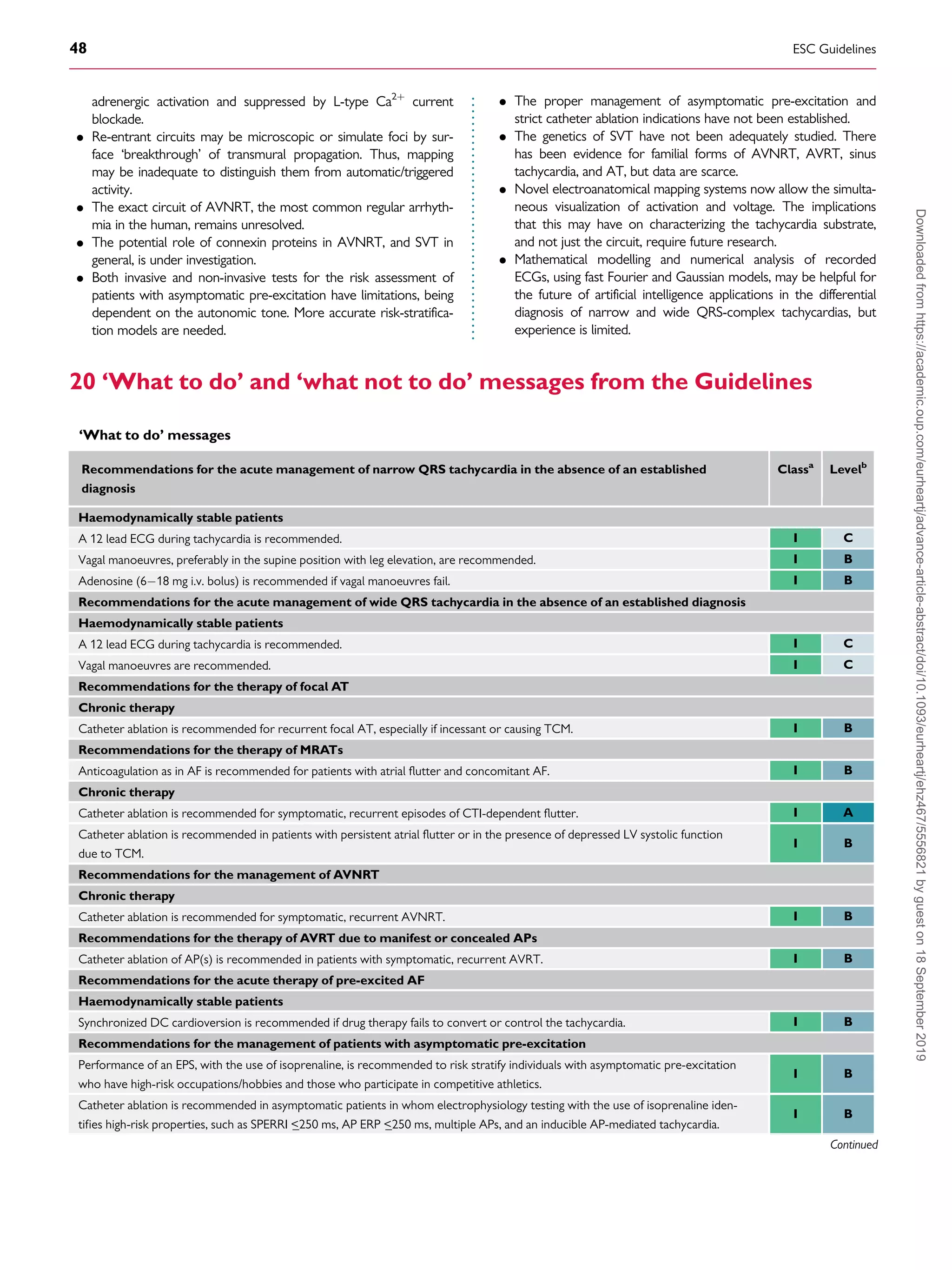
Recommendations for the acute management of narrow QRS
tachycardia in the absence of an established diagnosis . . . . . . . . . . . . . . . 48
List of tables
Table 1 Classes of recommendations . . . . . . . . . . . . . . . . . . . . . . . . . . . . . . . . 6
Table 2 Levels of evidence . . . . . . . . . . . . . . . . . . . . . . . . . . . . . . . . . . . . . . . . . . 6
Table 3 Changes in drug recommendations since 2003 . . . . . . . . . . . . . . 7
Table 4 New recommendations in 2019 . . . . . . . . . . . . . . . . . . . . . . . . . . . . . 8
Table 5 Conventional classification of supraventricular
tachycardia . . . . . . . . . . . . . . . . . . . . . . . . . . . . . . . . . . . . . . . . . . . . . . . . . . . . . . . . . 9
Table 6 Differential diagnosis of narrow and wide QRS
tachycardias . . . . . . . . . . . . . . . . . . . . . . . . . . . . . . . . . . . . . . . . . . . . . . . . . . . . . . . . 9
Table 7 Initial evaluation of the patient with supraventricular
tachycardia . . . . . . . . . . . . . . . . . . . . . . . . . . . . . . . . . . . . . . . . . . . . . . . . . . . . . . . . 10
Table 8 Possible responses of narrow QRS tachycardia to vagal
manoeuvres and adenosine . . . . . . . . . . . . . . . . . . . . . . . . . . . . . . . . . . . . . . . . 13
Table 9 Summary of key electrocardiographic criteria that suggest
ventricular tachycardia rather than supraventricular tachycardia
in wide complex tachycardia . . . . . . . . . . . . . . . . . . . . . . . . . . . . . . . . . . . . . . . 14
Table 10 Causes of physiological sinus tachycardia . . . . . . . . . . . . . . . . . . 19
Table 11 Average success and complications rates of catheter
ablation for supraventricular tachycardia . . . . . . . . . . . . . . . . . . . . . . . . . . . . 23
Table 12 Classification of atrioventricular nodal re-entrant
tachycardia types . . . . . . . . . . . . . . . . . . . . . . . . . . . . . . . . . . . . . . . . . . . . . . . . . . 30
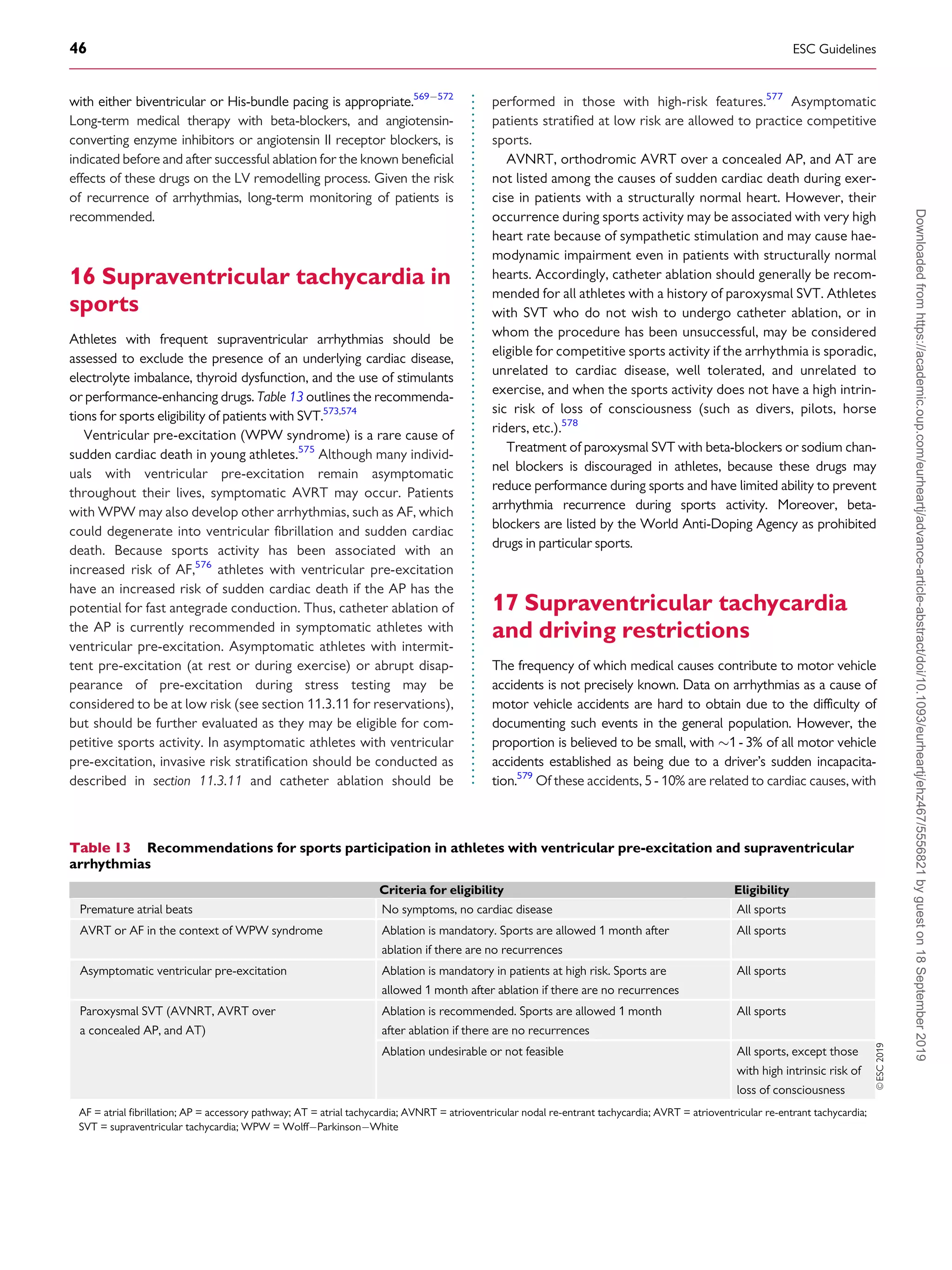
Table 13 Recommendations for sports participation in athletes
with ventricular pre-excitation and supraventricular arrhythmias . . . . 46
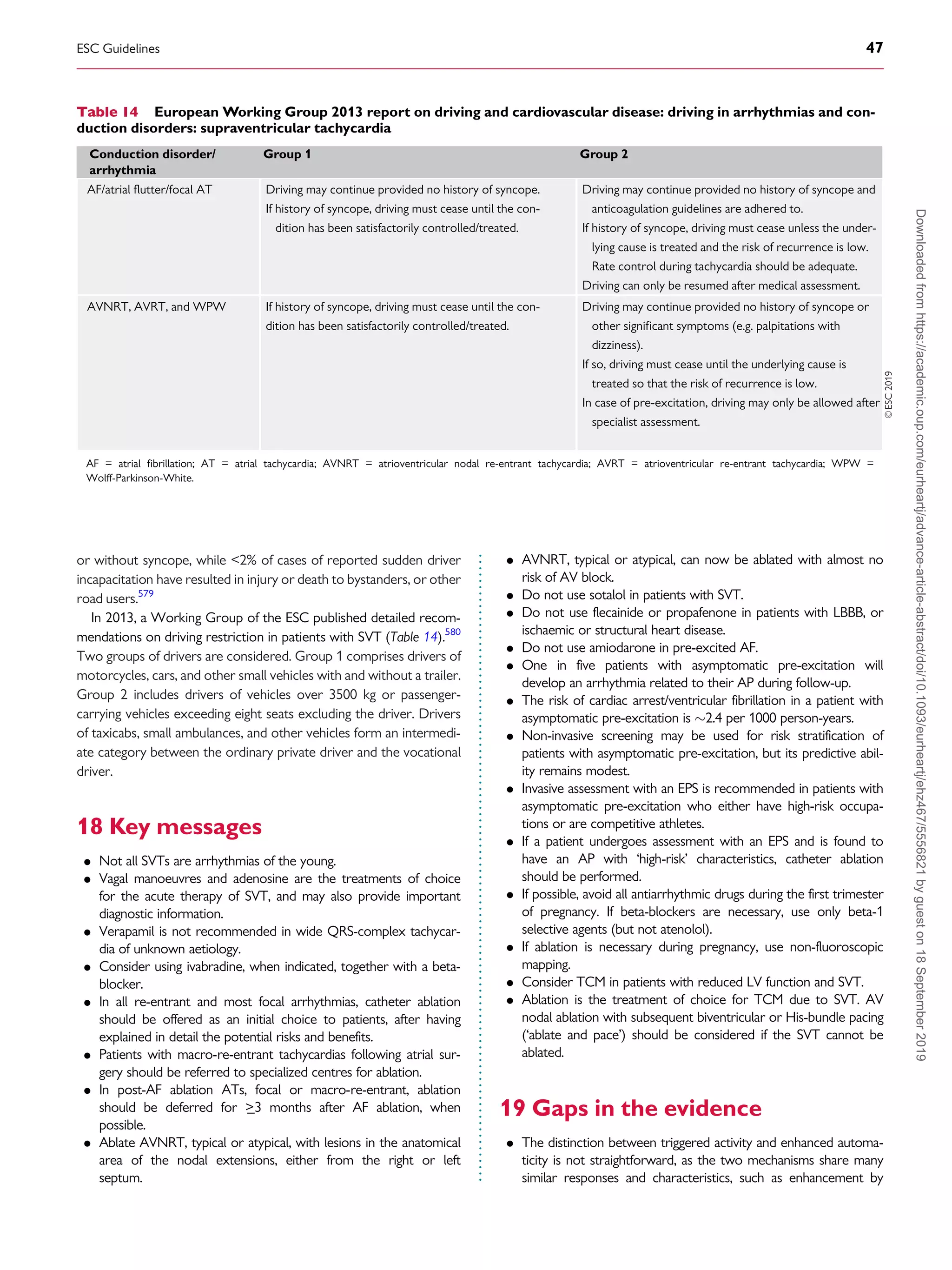
Table 14 European Working Group 2013 report on driving
and cardiovascular disease: driving in arrhythmias and conduction
disorders: supraventricular tachycardia . . . . . . . . . . . . . . . . . . . . . . . . . . . . . 47
List of figures
Figure 1 Differential diagnosis of narrow QRS tachycardia. . . . . . . . . . . . 12
Figure 2 Responses of narrow complex tachycardias to
adenosine. . . . . . . . . . . . . . . . . . . . . . . . . . . . . . . . . . . . . . . . . . . . . . . . . . . . . . . . . 13
Figure 3 Examples of positive and negative chest lead
concordance. . . . . . . . . . . . . . . . . . . . . . . . . . . . . . . . . . . . . . . . . . . . . . . . . . . . . . 15
Figure 4 Acute therapy of narrow QRS tachycardia in the absence
of an established diagnosis. . . . . . . . . . . . . . . . . . . . . . . . . . . . . . . . . . . . . . . . . . 17
Figure 5 Acute therapy of wide complex tachycardia in the
absence of an established diagnosis . . . . . . . . . . . . . . . . . . . . . . . . . . . . . . . . . 18
Figure 6 Therapy of sinus tachycardias . . . . . . . . . . . . . . . . . . . . . . . . . . . . . . 20
Figure 7 Focal atrial tachycardia . . . . . . . . . . . . . . . . . . . . . . . . . . . . . . . . . . . . 22
Figure 8 Acute therapy of focal atrial tachycardia . . . . . . . . . . . . . . . . . . . . 23
Figure 9 Chronic therapy of focal atrial tachycardia . . . . . . . . . . . . . . . . . . 23
Figure 10 Counter-clockwise and clockwise atrial flutter
with 2:1 atrioventricular conduction . . . . . . . . . . . . . . . . . . . . . . . . . . . . . . . . 24
Figure 11 Acute therapy of stable atrial flutter or macro-re-entrant
atrial tachycardia. . . . . . . . . . . . . . . . . . . . . . . . . . . . . . . . . . . . . . . . . . . . . . . . . . . 26
Figure 12 Chronic therapy of atrial flutter/macro-re-entrant
atrial tachycardia . . . . . . . . . . . . . . . . . . . . . . . . . . . . . . . . . . . . . . . . . . . . . . . . . . 28
Figure 13 Atrioventricular nodal re-entrant tachycardia . . . . . . . . . . . . . 29
Figure 14 Acute therapy of atrioventricular nodal re-entrant
tachycardia. . . . . . . . . . . . . . . . . . . . . . . . . . . . . . . . . . . . . . . . . . . . . . . . . . . . . . . . 31
Figure 15 Chronic therapy of atrioventricular nodal
re-entrant tachycardia. . . . . . . . . . . . . . . . . . . . . . . . . . . . . . . . . . . . . . . . . . . . . . 32
Figure 16 The St George’s algorithm for localization of
accessory pathways . . . . . . . . . . . . . . . . . . . . . . . . . . . . . . . . . . . . . . . . . . . . . . . 33
Figure 17 Localization of accessory pathways in the presence
of maximum (spontaneous or evoked) pre-excitation . . . . . . . . . . . . . . . 34
Figure 18 Atrioventricular re-entrant tachycardia . . . . . . . . . . . . . . . . . . . 35
Figure 19 Acute therapy of atrioventricular re-entrant
tachycardia. . . . . . . . . . . . . . . . . . . . . . . . . . . . . . . . . . . . . . . . . . . . . . . . . . . . . . . . 37
Figure 20 Acute therapy of pre-excited atrial fibrillation. . . . . . . . . . . . . . 38
Figure 21 Chronic therapy of atrioventricular re-entrant
tachycardia. . . . . . . . . . . . . . . . . . . . . . . . . . . . . . . . . . . . . . . . . . . . . . . . . . . . . . . . 38
Figure 22 Risk stratification and therapy of patients with
asymptomatic pre-excitation. . . . . . . . . . . . . . . . . . . . . . . . . . . . . . . . . . . . . . . 40
Abbreviations and acronyms
þ/- QRS complex equiphasic
þve QRS complex-positive
ve QRS complex-negative
ACHD Adult congenital heart disease
AEPC Association for European Paediatric and Congenital
Cardiology
AF Atrial fibrillation
AH AtrialHis
AMP Adenosine monophosphate
AP Accessory pathway
AT Atrial tachycardia
AV Atrioventricular
AVN Atrioventricular node
AVNRT Atrioventricular nodal re-entrant tachycardia
AVRT Atrioventricular re-entrant tachycardia
BBB Bundle branch block
b.p.m. Beats per minute
CHA2DS2-
VASc
Cardiac failure, Hypertension, Age 
_75 (Doubled),
Diabetes, Stroke (Doubled)  Vascular disease,
Age 6574 and Sex category (Female)
CL Cycle length
CMR Cardiac magnetic resonance
CT Computed tomography
CTI Cavotricuspid isthmus
CV Conduction velocity
CYP Cytochrome P450
DAD Delayed after-depolarization
DC Direct current
DCS Distal coronary sinus
EA Enhanced automaticity
EAD Early after-depolarization
ECG Electrocardiogram/electrocardiographic
EPS Electrophysiology study
ERP Effective refractory period
ESC European Society of Cardiology
HA Hisatrial interval
HCN Hyperpolarization-activated cyclic nucleotide-gated
potassium channel
HF Heart failure
4 ESC Guidelines
Downloaded
from
https://academic.oup.com/eurheartj/advance-article-abstract/doi/10.1093/eurheartj/ehz467/5556821
by
guest
on
18
September
2019
.
.
.
.
.
.
.
.
.
.
.
.
.
.
.
.
.
.
.
.
.
.
.
.
.
.
.
.
.
.
.
.
.
.
.
.
.
.
.
.
.
.
.
.
.
.
.
.
.
.
.
.
.
.
.
.
.
.
.
.
.
.
.
.
.
.
.
.
.
.
.
.
.
.
.
.
.
.
.
.
.
.
.
.
.
.
.
.
.
.
.
.
.
.
.
.
.
.
.
.
.
.
.
.
.
.
.
.
.
.
.
.
.
.
.
.
.
.
.
.
.
.
.
.
.
.
.
.
.
.
.
.
.
.
.
.
.
.
.
.
.
.
.
.
.
.
.
.
.
.
.
.
.
.
.
.
.
.
.
.
.
.
.
.
.
.
.
.
.
.
.
.
.
HFrEF Heart failure with reduced ejection fraction
HPS HisPurkinje system
HV Hisventrcular interval
ICaL L-type Ca2þ current
ICD Implantable cardioverter defibrillator
IST Inappropriate sinus tachycardia
i.v. Intravenous
JET Junctional ectopic tachycardia
LA Left atrial/atrium
LAL Left anterolateral
LBBB Left bundle branch block
LL Left lateral
LP Left posterior
LPL Left posterolateral
LPS Left posteroseptal
LV Left ventricle/ventricular
MI Myocardial infarction
MRAT Macro-re-entrant atrial tachycardia
MS Mid-septal
NT-proBNP N-terminal pro-B-type natriuretic peptide
PJRT Permanent junctional reciprocating tachycardia
p.o. Per os (by mouth)
POTS Postural orthostatic tachycardia syndrome
PPM Permanent pacemaker
PRKAG2 Protein kinase AMP-activated non-catalytic subunit
gamma 2
PV Pulmonary vein
RA Right atrial/anterior
RAS Right anteroseptal
RBBB Right bundle branch block
RCT Randomized clinical trial
RL Right lateral
RP Right posterior
RPS Right posteroseptal
RyR Sarcoplasmic reticulum Ca2þ channel
SPERRI Shortest pre-excited RR interval during atrial
fibrillation
SR Sarcoplasmic reticulum
SVT Supraventricular tachycardia
TA Triggered activity
TCM Tachycardiomyopathy
TDI Tissue Doppler imaging
VA Ventriculoatrial
VT Ventricular tachycardia
WL Wavelength
WPW Wolff-Parkinson-White
1 Preamble
Guidelines summarize and evaluate available evidence with the aim of
assisting health professionals in proposing the best management
strategies for an individual patient with a given condition. Guidelines
and their recommendations should facilitate decision making of
health professionals in their daily practice. However, the final deci-
sions concerning an individual patient must be made by the
responsible health professional(s) in consultation with the patient
and caregiver as appropriate.
A great number of guidelines have been issued in recent years by
the European Society of Cardiology (ESC), as well as by other soci-
eties and organisations. Because of their impact on clinical practice,
quality criteria for the development of guidelines have been estab-
lished in order to make all decisions transparent to the user. The rec-
ommendations for formulating and issuing ESC Guidelines can be
found on the ESC website (http://www.escardio.org/Guidelines--
Education/Clinical-Practice-Guidelines/Guidelines-development/Writ
ing-ESC-Guidelines). The ESC Guidelines represent the official posi-
tion of the ESC on a given topic and are regularly updated.
The ESC carries out a number of registries which are essential to
assess, diagnostic/therapeutic processes, use of resources and adher-
ence to Guidelines. These registries aim at providing a better under-
standing of medical practice in Europe and around the world, based
on data collected during routine clinical practice.
The guidelines are developed together with derivative educational
material addressing the cultural and professional needs for cardiolo-
gists and allied professionals. Collecting high-quality observational
data, at appropriate time interval following the release of ESC
Guidelines, will help evaluate the level of implementation of the
Guidelines, checking in priority the key end points defined with the
ESC Guidelines and Education Committees and Task Force members
in charge.
The Members of this Task Force were selected by the ESC, includ-
ing representation from its relevant ESC sub-specialty groups, in
order to represent professionals involved with the medical care of
patients with this pathology. Selected experts in the field undertook a
comprehensive review of the published evidence for management of
a given condition according to ESC Committee for Practice
Guidelines (CPG) policy. A critical evaluation of diagnostic and thera-
peutic procedures was performed, including assessment of the
riskbenefit ratio. The level of evidence and the strength of the rec-
ommendation of particular management options were weighed and
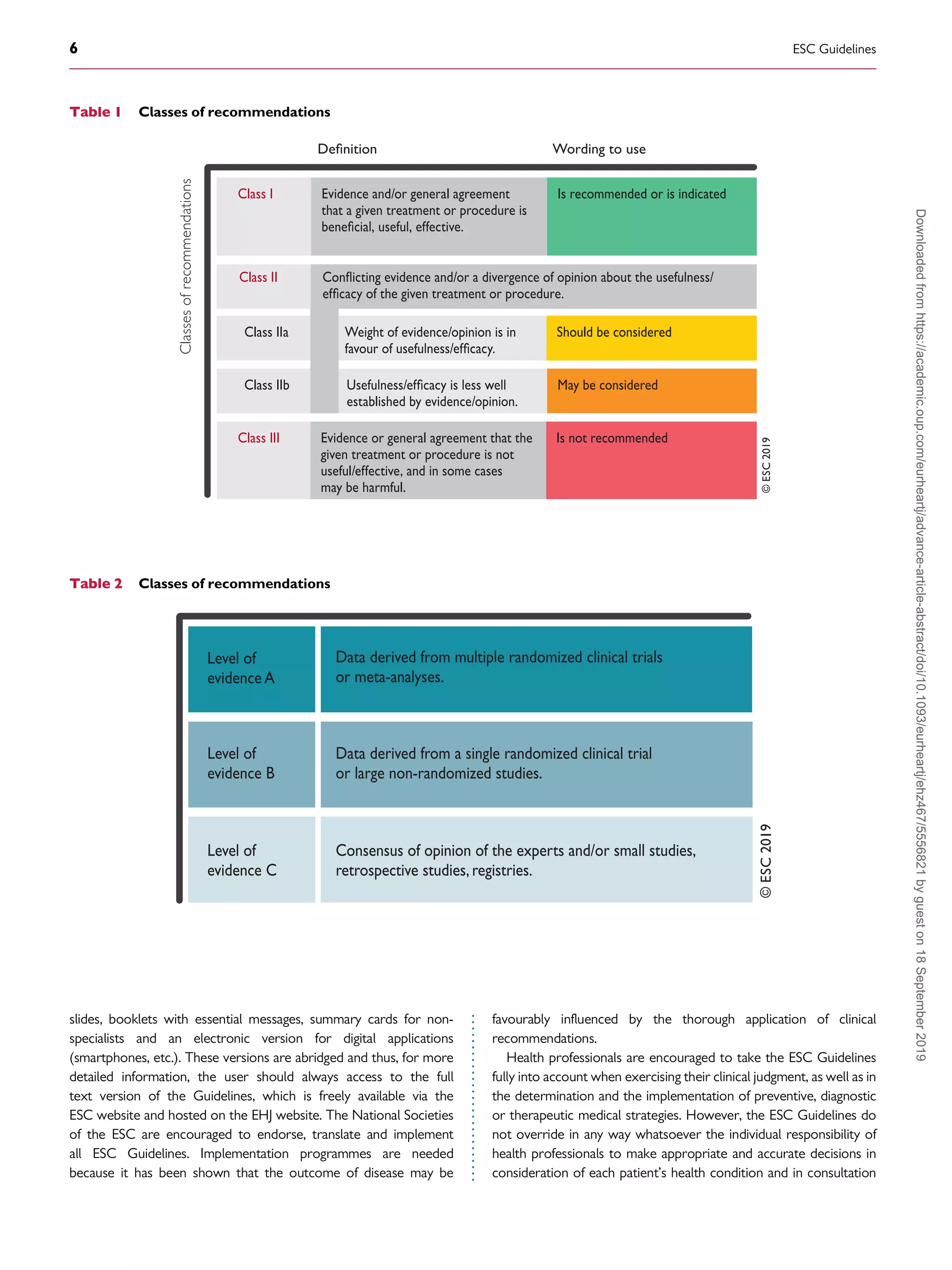
graded according to predefined ESC scales, as outlined in tables 1 and
2 below.
The experts of the writing and reviewing panels provided declara-
tion of interest forms for all relationships that might be perceived as
real or potential sources of conflicts of interest. These forms were
compiled into one file and can be found on the ESC website (http://
www.escardio.org/guidelines). Any changes in declarations of interest
that arise during the writing period were notified to the ESC and
updated. The Task Force received its entire financial support from
the ESC without any involvement from the healthcare industry.
The ESC CPG supervises and coordinates the preparation of new
Guidelines. The Committee is also responsible for the endorsement
process of these Guidelines. The ESC Guidelines undergo extensive
review by the CPG and external experts. After appropriate revisions
the Guidelines are approved by all the experts involved in the Task
Force. The finalized document is approved by the CPG for publica-
tion in the European Heart Journal. The Guidelines were developed
after careful consideration of the scientific and medical knowledge
and the evidence available at the time of their dating.
The task of developing ESC Guidelines also includes the creation
of educational tools and implementation programmes for the recom-
mendations including condensed pocket guideline versions, summary
ESC Guidelines 5
Downloaded
from
https://academic.oup.com/eurheartj/advance-article-abstract/doi/10.1093/eurheartj/ehz467/5556821
by
guest
on
18
September
2019
.
.
.
.
.
.
.
.
.
.
.
.
.
.
.
.
.
.
.
.
.
.
.
.
.
.
.
slides, booklets with essential messages, summary cards for non-
specialists and an electronic version for digital applications
(smartphones, etc.). These versions are abridged and thus, for more
detailed information, the user should always access to the full
text version of the Guidelines, which is freely available via the
ESC website and hosted on the EHJ website. The National Societies
of the ESC are encouraged to endorse, translate and implement
all ESC Guidelines. Implementation programmes are needed
because it has been shown that the outcome of disease may be
favourably influenced by the thorough application of clinical
recommendations.
Health professionals are encouraged to take the ESC Guidelines
fully into account when exercising their clinical judgment, as well as in
the determination and the implementation of preventive, diagnostic
or therapeutic medical strategies. However, the ESC Guidelines do
not override in any way whatsoever the individual responsibility of
health professionals to make appropriate and accurate decisions in
consideration of each patient’s health condition and in consultation
Table 2 Classes of recommendations
©
ESC
2019
Level of
evidence A
Data derived from multiple randomized clinical trials
or meta-analyses.
Level of
evidence B
Data derived from a single randomized clinical trial
or large non-randomized studies.
Level of
evidence C
Consensus of opinion of the experts and/or small studies,
retrospective studies, registries.
Table 1 Classes of recommendations
©
ESC
2019
Classes
of
recommendations
Class I Evidence and/or general agreement
that a given treatment or procedure is
Is recommended or is indicated
Wording to use
Class III Evidence or general agreement that the
given treatment or procedure is not
useful/effective, and in some cases
may be harmful.
Is not recommended
Class IIb
established by evidence/opinion.
May be considered
Class IIa Weight of evidence/opinion is in Should be considered
Class II
6 ESC Guidelines
Downloaded
from
https://academic.oup.com/eurheartj/advance-article-abstract/doi/10.1093/eurheartj/ehz467/5556821
by
guest
on
18
September
2019
.
.
.
.
.
.
.
.
.
.
.
.
.
.
.
.
.
.
.
.
.
.
.
.
with that patient or the patient’s caregiver where appropriate and/or
necessary. It is also the health professional’s responsibility to verify
the rules and regulations applicable in each country to drugs and devi-
ces at the time of prescription.
2 Introduction
Supraventricular arrhythmias are common and patients are often
symptomatic, requiring management with drugs and electrophysio-
logical procedures. The ESC published management Guidelines for
supraventricular tachycardias (SVTs) in 20031
; corresponding US
guidelines have also been published, the most recent being in 2015.2
There is a need to provide expert recommendations for professio-
nals participating in the care of patients presenting with SVT. In addi-
tion, several associated conditions where SVTs may coexist need to
be explained in more detail. To address this topic, a Task Force was
convened by the ESC, with the remit to comprehensively review the
published evidence and to publish Guidelines on the management of
patients with SVT, with up-to-date consensus recommendations for
clinical practice. This document summarizes current developments in
the field, with a focus on advances since the last ESC Guidelines were
published, and provides general recommendations for the manage-
ment of adults with SVT based on the principles of evidence-based
medicine.
2.1 Evidence review
Members of the Task Force were asked to perform a detailed litera-
ture review, weigh the strength of evidence for or against a particular
treatment or procedure, and include estimates of expected health
outcomes where data exist. Patient-specific modifiers, comorbidities,
and issues of patient preference that might influence the choice of
particular tests or therapies were considered, as were frequency of
follow-up and cost-effectiveness. In controversial areas, or with
regard to issues without evidence other than usual clinical practice,
consensus was achieved by agreement of the expert panel after thor-
ough deliberation. The document was peer-reviewed by official
external reviewers.
The strengths of the recommendations and levels of evidence of
particular management options were weighed and graded according
to predefined scales, as outlined above in Tables 1 and 2, respectively.
Overall, these Guidelines include evidence and expert opinions
from several countries. The pharmacological and non-
pharmacological antiarrhythmic approaches discussed may therefore
include drugs that do not have the approval of governmental regula-
tory agencies in all countries.
2.2 Relationships with industry and other
conflicts of interest
It is ESC policy to sponsor position papers and Guidelines without
commercial support, and all members volunteered their time. Thus,
all members of the writing group, as well as the reviewers, have dis-
closed any potential conflicts of interest in detail. The details of these
declarations will be posted on the ESC website upon publication of
these Guidelines.
2.3 What is new in the 2019 Guidelines?
2.3.1 Change in recommendations from 2003 to 2019
Owing to the fact that the previous Guidelines on SVT were pub-
lished 16 years ago, many drugs that were recommended at that time
are not considered in the 2019 Guidelines. In addition, techniques
and indications of ablation techniques have changed. These recom-
mendation changes are indicated for each section in Table 3 below.
Table 3 Changes in SVT Guidelines recommendations
since 2003
2003 2019
Acute management of narrow QRS
tachycardias
Verapamil and diltiazem I IIa
Beta-blockers IIb IIa
Amiodarone and digoxin are not mentioned in the
2019 Guidelines
Acute management of wide QRS
tachycardias
Procainamide I IIa
Adenosine IIb IIa
Amiodarone I IIb
Sotalol and lidocaine are not mentioned in the
2019 Guidelines
Therapy of inappropriate sinus
tachycardia
Beta-blockers I IIa
Verapamil/diltiazem and catheter ablation are not
mentioned in the 2019 Guidelines
Therapy of postural orthostatic tachy-
cardia syndrome
Salt and fluid intake IIa IIb
Head-up tilt sleep, compression stockings, selective
beta-blockers, fludrocortisone, clonidine, methyl-
phenidate, fluoxetine, erythropoietin, ergotamine/
octreotide, and phenobarbitone are not mentioned
in the 2019 guidelines.
Therapy of focal AT
Acute
Flecainide/propafenone IIa IIb
Beta-blockers I IIa
Amiodarone IIa IIb
Procainamide, sotalol, and digoxin are not men-
tioned in the 2019 Guidelines
Chronic
Beta-blockers I IIa
Verapamil and diltiazem I IIa
Amiodarone, sotalol, and disopyramide are not
mentioned in the 2019 Guidelines
Therapy of atrial flutter
Acute
Atrial or transoesophageal pacing I IIb
Ibutilide IIa I
Flecainide/propafenone IIb III
Continued
ESC Guidelines 7
Downloaded
from
https://academic.oup.com/eurheartj/advance-article-abstract/doi/10.1093/eurheartj/ehz467/5556821
by
guest
on
18
September
2019
.
.
.
.
.
.
.
.
.
.
.
.
.
.
.
.
.
.
.
.
.
.
.
.
.
.
.
.
.
.
.
.
.
.
.
.
.
.
.
.
.
.
.
.
.
.
.
.
.
.
.
.
.
.
.
.
.
.
2.3.2 New recommendations in 2019
2.3.3 New revised concepts
• Drug therapy for inappropriate sinus tachycardia and focal atrial
tachycardia.
• Therapeutic options for acute conversion and anticoagulation of
atrial flutter.
• Therapy of atrioventricular nodal re-entrant tachycardia.
• Therapy of antidromic atrioventricular re-entrant tachycardia and
pre-excited atrial fibrillation.
• Management of patients with asymptomatic pre-excitation.
• Diagnosis and therapy of tachycardiomyopathy.
3 Definitions and classification
The term ‘SVT’ literally indicates tachycardia [atrial rates 100 beats
per minute (b.p.m.) at rest], the mechanism of which involves tissue
from the His bundle or above.2,3
Traditionally, SVT has been used to
describe all kinds of tachycardias apart from ventricular tachycardias
(VTs) and AF. It has therefore included tachycardias such as atrioven-
tricular (AV) re-entry due to accessory connections, which is not, in
Table 3 Continued
2003 2019
Verapamil and diltiazem I IIa
Beta-blockers I IIa
Digitalis is not mentioned in the 2019 Guidelines
Chronic
Dofetilide, sotalol, flecainide, propafenone, procai-
namide, quinidine, and disopyramide are not men-
tioned in the 2019 Guidelines
Therapy of AVNRT
Acute
Amiodarone, sotalol, flecainide, and propafenone
are not mentioned in the 2019 Guidelines
Chronic
Verapamil and diltiazem I IIa
Beta-blockers I IIa
Amiodarone, sotalol, flecainide, propafenone, and
the ‘pill-in-the pocket’ approach are not men-
tioned in the 2019 Guidelines
Therapy of AVRT
Flecainide/propafenone IIa IIb
Beta-blockers IIb IIa
Amiodarone, sotalol, and the ‘pill-in-the pocket’
approach are not mentioned in the 2019
Guidelines
SVT in pregnancy
Verapamil IIb IIa
Catheter ablation IIb IIa*
Sotalol, propranolol, quinidine, and procainamide
are not mentioned in the 2019 Guidelines.
*: when fluoroless ablation is available. AT = atrial tachycardia; AVNRT = atrio-
ventricular nodal re-entrant tachycardia; AVRT = atrioventricular re-entrant
tachycardia.
Table 4 New recommendations in 2019
Ivabradine alone or in combination with a beta-
blocker should be considered in symptomatic patients
with inappropriate sinus tachycardia.
IIa
Ibutilide (i.v.) ibutilide may be considered for acute
therapy of focal atrial tachycardia.
IIb
Ivabradine for postural orthostatic tachycardia syn-
drome, and ivabradine with a beta-blocker for chronic
therapy of focal atrial tachycardia, may be considered.
IIb
Patients with atrial flutter without AF should be con-
sidered for anticoagulation, but the threshold for ini-
tiation is not established.
IIa
Ibutilide (i.v.), or i.v. or oral (in-hospital) dofetilide are
recommended for conversion of atrial flutter.
I
High-rate atrial pacing is recommended for termina-
tion of atrial flutter in the presence of an implanted
pacemaker or defibrillator.
I
Continued
i.v. amiodarone is not recommended for pre-excited AF. III
Performance of an EPS to risk-stratify individuals with
asymptomatic pre-excitation should be considered.
IIa
Catheter ablation is recommended in asymptomatic
patients in whom electrophysiology testing with the
use of isoprenaline identifies high-risk properties, such
as SPERRI 
_250 ms, AP ERP 
_250 ms, multiple APs,
and an inducible AP-mediated tachycardia.
I
Non-invasive evaluation of the conducting properties
of the AP in individuals with asymptomatic pre-excita-
tion may be considered.
IIb
Catheter ablation may be considered in a patient with
asymptomatic pre-excitation and low-risk AP at inva-
sive or non-invasive risk stratification.
IIb
Catheter ablations should be considered in patients
with asymptomatic pre-excitation and LV dysfunction
due to electrical dyssynchrony.
IIa
AV nodal ablation with subsequent pacing (‘ablate and
pace’), either biventricular or His-bundle pacing, is
recommended if a tachycardia responsible for TCM
cannot be ablated or controlled by drugs.
I
During the first trimester of pregnancy, it is recommended
that all antiarrhythmic drugs are avoided, if possible.
I
In pregnant women, beta-1 selective blockers (except
atenolol) or verapamil, in order of preference, should
be considered for prevention of SVT in patients with-
out WPW syndrome.
IIa
In pregnant women, flecainide or propafenone should
be considered for prevention of SVT in patients with
WPW syndrome and without ischaemic or structural
heart disease.
IIa
AF = atrial fibrillation; AP = accessory pathway; AT = atrial tachycardia; AV =
atrioventricular; EPS = electrophysiology study; ERP = effective refractory period;
i.v. = intravenous; LV = left ventricular; POTS: postural orthostatic tachycardia
syndrome; SPERRI = shortest pre-excited RR interval during atrial fibrillation;
SVT = supraventricular tachycardia; TCM = tachycardiomyopathy; WPW =
Wolff-Parkinson-White.
8 ESC Guidelines
Downloaded
from
https://academic.oup.com/eurheartj/advance-article-abstract/doi/10.1093/eurheartj/ehz467/5556821
by
guest
on
18
September
2019
.
.
.
.
.
.
.
.
.
.
.
.
.
.
.
.
.
.
.
.
.
.
.
.
.
.
.
.
.
.
.
.
.
essence, a supraventricular rhythm (Table 5). The term ‘narrow QRS
tachycardia’ indicates those with a QRS duration 
_120 ms. A wide
QRS tachycardia refers to one with a QRS duration 120 ms
(Table 6). In clinical practice, SVT may present as narrow or wide QRS
tachycardias, most of which, although not invariably, manifest as regu-
lar rhythms. These Guidelines do not cover AF, which is the subject of
separate clinical Guidelines4
and various consensus documents.57
4 Electrophysiological
mechanisms of supraventricular
tachycardia
Arrhythmia can originate from abnormal impulse initiation in an individ-
ual myocyte or, more realistically, in a close cluster of myocytes. This
can occur in non-pacemaker cells through a mechanism similar to the
physiological automaticity of pacemaker cells [sinus node and AV node
(AVN)], and is thus named ‘abnormal’ or ‘enhanced automaticity’. An
alternative form of abnormal impulse initiation involves oscillations of
membrane potential, named early or delayed ‘after-depolarizations’. In
such cases, the resulting arrhythmias take the name of ‘triggered activ-
ity’.8
Arrhythmias resulting from enhanced automaticity and triggered
activity are defined as ‘non-re-entrant’. Arrhythmias can also arise
when myocardial regions activated later in propagation re-excite
regions that have already recovered excitability. This results from
abnormal propagation of the excitation wavefront and/or of tissue
refractoriness. This mechanism, named ‘re-entry’, is based on the syn-
cytial nature of myocardial tissue and is thus radically different from
focal impulse initiation.8
A detailed discussion and schematic represen-
tation of common SVT circuits is provided in the Supplementary Data.
Table 6 Differential diagnosis of narrow and wide QRS
tachycardias
Narrow QRS (120 ms) tachycardias
Regular
• Physiological sinus tachycardia
• Inappropriate sinus tachycardia
• Sinus nodal re-entrant tachycardia
• Focal AT
• Atrial flutter with fixed AV conduction
• AVNRT
• JET (or other non-re-entrant variants)
• Orthodromic AVRT
• Idiopathic VT (especially high septal VT)
Irregular
• AF
• Focal AT or atrial flutter with varying AV block
• Multifocal AT
Wide QRS (120 ms) tachycardias
Regular
• VT/flutter
• Ventricular paced rhythm
• Antidromic AVRT
• SVTs with aberration/BBB (pre-existing or rate-dependent during
tachycardia)
• Atrial or junctional tachycardia with pre-excitation/bystander AP
• SVT with QRS widening due to electrolyte disturbance or antiarrhyth-
mic drugs
Irregular
• AF or atrial flutter or focal AT with varying block conducted with
aberration
• Antidromic AV re-entrant tachycardia due to a nodo-ventricular/fascic-
ular AP with variable VA conduction
• Pre-excited AF
• Polymorphic VT
• Torsade de pointes
• Ventricular fibrillation
Occasionally, AF with very fast ventricular response may apparently
resemble a regular narrow QRS tachycardia.
AF = atrial fibrillation; AP = accessory pathway; AT = atrial tachycardia; AV =
atrioventricular; AVNRT = atrioventricular nodal re-entrant tachycardia; AVRT =
atrioventricular re-entrant tachycardia; BBB = bundle branch block; JET = junc-
tional ectopic tachycardia; SVT = supraventricular tachycardia; VA = ventriculoa-
trial; VT = ventricular tachycardia.
Table 5 Conventional classification of supraventricular
tachycardias
Atrial tachycardias
Sinus tachycardia
• Physiological sinus tachycardia
• Inappropriate sinus tachycardia
• Sinus nodal re-entrant tachycardia
Focal AT
Multifocal AT
MRAT
• Cavotricuspid isthmus-dependent MRAT
 Typical atrial flutter, counter-clockwise (common) or clockwise
(reverse)
 Other cavotricuspid isthmus-dependent MRAT
• Non-cavotricuspid isthmus-dependent MRAT
 RA MRAT
 LA MRAT
AF
AV junctional tachycardias
Atrioventricular nodal re-entrant tachycardia (AVNRT)
• Typical
• Atypical
Non-re-entrant junctional tachycardia
• JET (junctional ectopic or focal junctional tachycardia)
• Other non-re-entrant variants
Atrioventricular re-entrant tachycardia (AVRT)
• Orthodromic (including PJRT)
• Antidromic (with retrograde conduction through the AVN or, rarely,
over another pathway)
AF = atrial fibrillation; AT = atrial tachycardia; AV = atrioventricular; AVN =
atrioventricular node; JET = junctional ectopic tachycardia; RA = right atrial; LA
= left atrial; MRAT = macro-re-entrant atrial tachycardia; PJRT = permanent junc-
tional reciprocating tachycardia; RA = right atrial.
ESC Guidelines 9
Downloaded
from
https://academic.oup.com/eurheartj/advance-article-abstract/doi/10.1093/eurheartj/ehz467/5556821
by
guest
on
18
September
2019
.
.
.
.
.
.
.
.
.
.
.
.
.
.
.
.
.
.
.
.
.
.
.
.
.
.
.
.
.
.
.
.
.
.
.
.
.
.
.
.
.
.
.
.
.
.
.
.
.
.
.
.
.
.
.
.
.
.
.
.
.
.
.
.
.
.
.
.
.
.
.
.
.
.
.
.
.
.
.
.
.
.
.
.
.
.
.
.
.
.
.
.
.
.
.
.
.
.
.
.
.
.
.
.
.
.
.
.
5 Cardiac anatomy for the
electrophysiologist
Knowledge of anatomical structures inside and outside the atrial
chambers is of clinical importance, especially when interventional
procedures are being considered. A detailed discussion is provided in
the Supplementary Data.
6 Epidemiology of
supraventricular tachycardia
Epidemiological studies on the SVT population are limited. In the gen-
eral population, the SVT prevalence is 2.25/1000 persons and the
incidence is 35/100000 person-years. Women have a risk of develop-
ing SVT that is two times greater than that of men, and persons aged

_65 years or have more than five times the risk of developing SVT
than younger individuals. Patients with lone paroxysmal SVT vs. those
with cardiovascular disease are younger, have a faster SVT rate, have
an earlier onset of symptoms, and are more likely to have their condi-
tion first documented in the emergency department.9
In a paediatric
cohort study of 1 967 911 live births between 200008, 2021
patients (51.6% male, overall incidence 1.03/1000) had SVT
[Wolff-Parkinson-White (WPW) syndrome accounted for 16.2%].
By the age of 15 years, the annual risk of sudden death was 0.01% per
patient-year.10
In specialized centres, AVNRT is the most frequently treated sub-
strate after AF, followed by atrial flutter and AVRT, in patients
referred for catheter ablation.1113
Women are more likely to be
affected by AVNRT than men (ratio 70:30),1416
while the con-
verse is true for AVRT (ratio 45:55).14
A relationship with the
monthly cycle has been suggested,17
and episodes are more frequent
during pregnancy in women with pre-existing SVT.18
In the general population, the prevalence of a WPW pattern on
surface electrocardiogram (ECG) ranges from 0.150.25%,19
increasing to 0.55% among first-degree relatives of affected
patients.20
However, not all patients develop SVT and
intermittent pre-excitation is not rare. Compared with the remaining
population, the pre-excitation population is generally younger, pre-
dominantly male, and has less comorbidity.21,22
The proportion of
patients with AVRT decreases with age, whereas the proportion of
those with AVNRT and AT increases with age.14
The epidemiology of atrial flutter is not known with certainty, as
atrial flutter and AF can coexist. The prevalence of AF before flutter
ablation ranges from 2462%, and after ablation could be 3070%.
The overall incidence of atrial flutter is 88/100 000 person-years in
the US population annually. Adjusted for age, the incidence of atrial
flutter in men (125/100 000) is 2.5 times that of women (59/
100 000) and increases exponentially with age. Patients with atrial
flutter are more likely to have been smokers, have a longer PR inter-
val, history of myocardial infarction (MI), and history of heart failure
(HF).23
Catheter ablation is now used extensively for most varieties of
SVT, and patient-reported outcome measures have shown that
patients experience significant improvements in their quality of life
following ablation.2427
Patient-reported outcome measures using
various questionnaires are useful in the audit of ablation techniques.
Women are more often prescribed antiarrhythmic drugs before abla-
tion for SVT than men,28
and recurrence rates following AVNRT
ablation are higher in young women.29
However, overall, no signifi-
cant differences in health-related quality of life or access to healthcare
resources between men and women have been reported.28
7 Clinical presentation
The impact of SVT on an individual is based on a range of factors and
may result in palpitations, fatigue, light-headedness, chest discomfort,
dyspnoea, and altered consciousness.30
Rapid rhythms are more
likely to present with a clear history and acutely than less-rapid
rhythms, but SVT usually produces symptoms.31
The duration of
symptoms and the patient’s age at onset are important. An individual
with an onset in the teenage years or younger is less likely to have AT
or AF continuing into adulthood. Such a long history will point
towards a re-entrant mechanism.32
Dyspnoea, or other clinical signs
and symptoms of HF, can occur when the patient has developed
TCM. Light-headedness in association with SVT is not infrequent.30
Presyncope and syncope are less common,33,34
and tend to be asso-
ciated with presentation in older individuals.32
In older patients,
symptoms may be more extreme—with dizziness, presyncope, and
syncope—in view of the less-accommodating characteristics of the
circulation; drops in blood pressure are usually immediate and tend
to recover.35
In some patients, a description of polyuria (possibly due
to atrial stretch-induced atrial natriuretic peptide activity) can be elu-
cidated, although this is infrequent.36
Direct risks due to SVT are
unusual, but in specific situations (e.g. in patients with WPW syn-
drome and AF,22
or after atrial switch operation37
) may lead to sud-
den cardiac death.
A sudden onset more likely points to AVNRT or AVRT, although
an AT may also present in this way.32
Characteristics in terms of the
regularity or irregularity are helpful. The duration of individual epi-
sodes may help in terms of differentiation. Re-entrant tachycardias
Table 7 Initial evaluation of the patient with supraven-
tricular tachycardia
Standard
• History, physical examination, and 12 lead ECG
• Full blood counts, biochemistry profile, and thyroid function
• An ECG during tachycardia should be sought
• Transthoracic echocardiography
Optional
• Exercise tolerance testing
• 24 h ECG monitoring, transtelephonic monitoring, or an implantable
loop recorder
• Myocardial ischaemia testing in patients with risk factors for coronary
artery disease (including men aged 40 years and post-menopausal
women)
• An EPS should be considered for a definitive diagnosis and when cathe-
ter ablation is anticipated
ECG = electrocardiogram; EPS = electrophysiology study.
10 ESC Guidelines
Downloaded
from
https://academic.oup.com/eurheartj/advance-article-abstract/doi/10.1093/eurheartj/ehz467/5556821
by
guest
on
18
September
2019
.
.
.
.
.
.
.
.
.
.
.
.
.
.
.
.
.
.
.
.
.
.
.
.
.
.
.
.
.
.
.
.
.
.
.
.
.
.
.
.
.
.
.
.
.
.
.
.
.
.
.
.
.
.
.
.
.
.
.
.
.
.
.
.
.
.
.
.
.
.
.
.
.
.
.
.
.
.
.
.
.
.
.
.
.
.
.
.
.
.
.
.
.
.
.
.
.
.
.
.
.
.
.
.
.
.
.
.
.
.
.
.
.
.
.
.
.
.
.
.
.
.
.
.
.
.
.
.
.
.
.
.
.
.
.
.
.
.
.
.
.
.
.
.
.
.
.
.
.
.
.
.
.
.
.
.
.
.
.
.
.
.
.
.
.
.
.
.
.
.
.
.
.
tend to last longer than AT episodes, which may occur in a series of
repetitive runs.32
Clear descriptions of pounding in the neck (the so-
called ‘frog sign’) or ‘shirt flapping’ would point to the possible com-
peting influences of atrial and ventricular contraction on the tricuspid
valve, and to AVNRT as a likely cause.15,38,39
SVT may be unrecognized at initial medical evaluation and the clini-
cal characteristics can mimic panic disorder.40
In patients with possi-
ble sinus tachycardia in association with anxiety and postural
orthostatic tachycardia syndrome (POTS), it is important to rule out
the possibility of a re-entrant tachycardia.
8 Initial evaluation of patients with
supraventricular tachycardia
Complete history taking, including family history, and physical exami-
nation are essential. As discussed, clinical history is especially relevant
in cases of palpitations without ECG documentation of the tachycar-
dia. Initial evaluation points to a re-entrant arrhythmia when the
mode of onset/termination is sudden, is often associated with a
change of position, and the tachycardia is perceived as regular.
Initiation of the episode(s), frequency, and conditions of triggering
the arrhythmia are important clues for a specific diagnosis.3
There
may be evidence that specific actions lead to arrhythmia termination.
These could include standard vagal manoeuvres,41
but also abortive
measures such as drinking a glass of iced water. Also, responses to
the administration of drugs (e.g. adenosine or verapamil), where ter-
mination has been observed but ECGs are missing, may provide diag-
nostic help.
Full blood counts and a biochemistry profile—including renal func-
tion, electrolytes, and thyroid function tests—can be useful in specific
cases (Table 7). An ECG recorded during tachycardia is ideal, and
patients should be encouraged to seek medical assistance and
recording of their ECG during episodes. A 12 lead resting ECG and
baseline echocardiographic assessment are necessary. It may be use-
ful to do 24 h ECG recordings, but tachycardia episodes are usually
sporadic and may not be frequent enough to be recorded on ambula-
tory monitoring. Transtelephonic monitoring, mobile recording devi-
ces, or, very rarely, an implantable loop recorder may be required.
Wrist-worn, optically based heart rate monitors are user-friendly,
but appropriate validation of the device used is imperative.42
A toler-
ance exercise test may also be useful in patients with apparent pre-
excitation and in cases of catecholamine-dependent arrhythmias.
Myocardial ischaemia testing is also needed in patients with angina or
significant risk factors for coronary artery disease.43
An electrophysi-
ology study (EPS) is usually necessary to establish the diagnosis, par-
ticularly when catheter ablation is anticipated.
9 Differential diagnosis of
tachycardias
9.1 Narrow QRS (120 ms) tachycardias
Narrow QRS complexes are due to rapid activation of the ventricles
via the HisPurkinje system (HPS), which suggests that the origin of
the arrhythmia is above or within the His bundle. However, early
activation of the His bundle can also occur in high septal VTs, thus
resulting in relatively narrow QRS complexes (110140 ms).44
9.1.1 Electrocardiographic differential diagnosis
In the absence of an ECG recorded during the tachycardia, a 12 lead
ECG in sinus rhythm may provide clues for the diagnosis of SVT and
should be scrutinized for any abnormality. The presence of pre-
excitation in a patient with a history of regular paroxysmal palpitations is
generally suggestive of AVRT. The absence of apparent pre-excitation
does not rule out the diagnosis of AVRT, as it may be due to a con-
cealed accessory pathway (AP) that conducts only retrogradely or to
an atypical (Mahaim) pathway, which is latent at sinus rhythm.
An ECG taken during tachycardia is very useful in the efficient diag-
nosis of SVT, although it may fail to lead to a specific diagnosis.45
It
may not be available in patients with very short or infrequent periods
of palpitations.
9.1.1.1 Initiation and termination of the tachycardia
Sudden prolongation of the PR interval occurs in typical AVNRT after
an atrial ectopic beat. An AT may also be initiated by an atrial ectopic
beat, but is not dependent on marked PR prolongation. Automatic,
focal ATs are characterized by gradual acceleration (warm-up phe-
nomenon) followed by deceleration (cool-down phenomenon),46
and may also be incessant with short interruption by sinus beats.
Premature atrial or ventricular beats may trigger AVRT. Premature
ventricular complexes are a common trigger of atypical AVNRT, but
rarely induce typical AVNRT, and only exceptionally AT.
9.1.1.2 Regularity of tachycardia cycle length
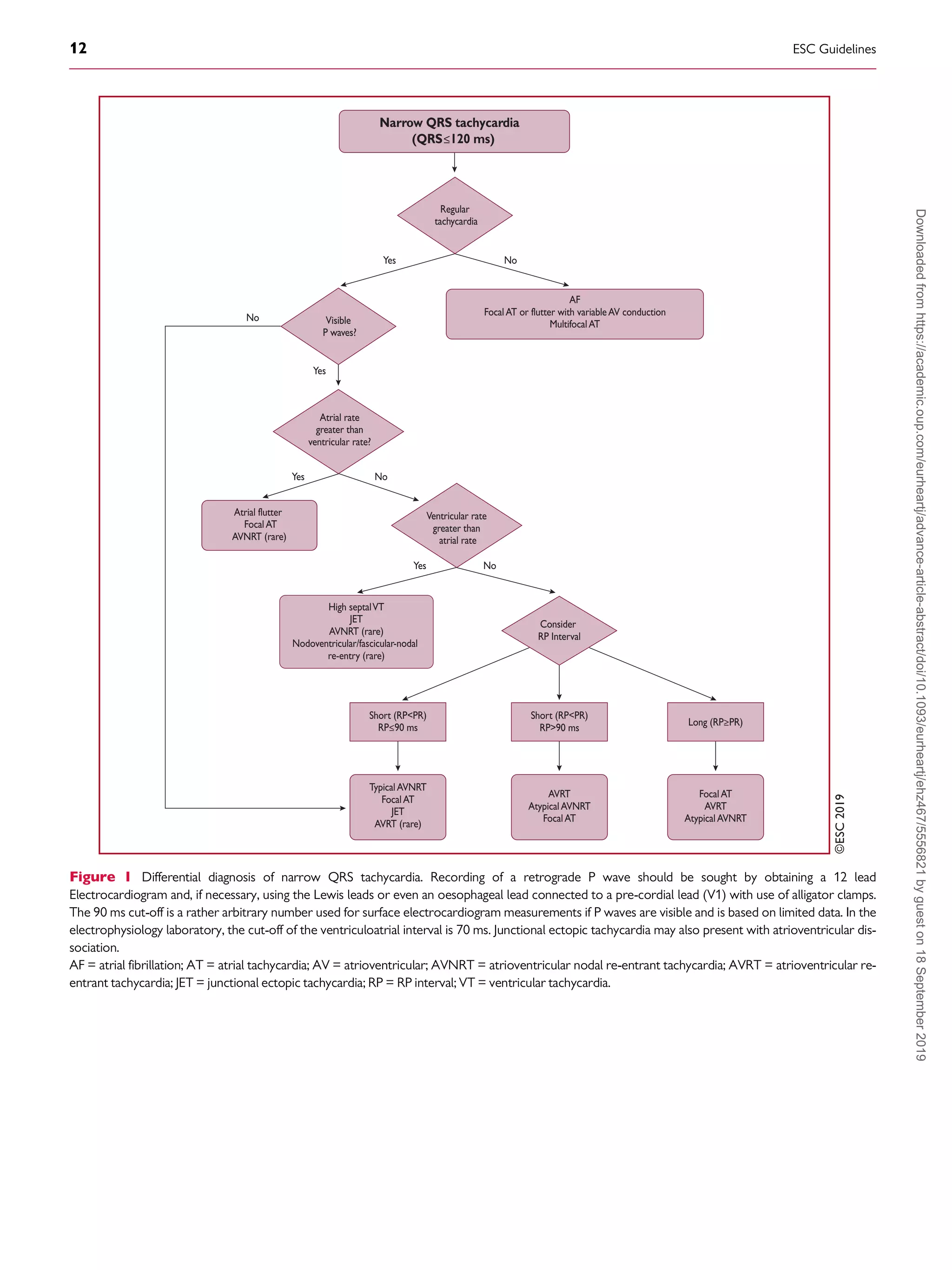
The regularity of the RR interval should be assessed (Figure 1).
Irregular tachycardias may represent focal or multifocal AT, focal AF,
and atrial flutter with varying AV conduction. Patterns of irregularity
can sometimes be found, such as in atrial flutter conducted with
Wenckebach periodicity. Irregular arrhythmias, such as multifocal
AT, typically display variable P-wave morphologies, and varying PP,
RR, and PR intervals. Atrial flutter can have fixed AV conduction and
present as a regular tachycardia, and even AF may appear almost reg-
ular when very fast. Re-entrant tachycardias, whether micro or
macro-re-entries, are usually regular. Incessant tachycardias may be
the so-called permanent junctional reciprocating tachycardia (PJRT),
focal AT, or, rarely, atypical AVNRT. Cycle length (CL) alternans
(also called RR alternans) may be seen in AVNRT, but these changes
are 15% of the tachycardia CL.47
If the irregularity exceeds 15% of
the CL, a focal arrhythmia is much more likely.48
QRS alternans is a
rare phenomenon in slow SVTs, which may not be related to CL
alternans, and has been initially described with AVRT.49,50
However,
this may be seen in any fast SVT.51
A change in ventricular CL preceded by a change in atrial CL is
seen in AT or atypical AVNRT. A change in ventricular CL preceding
a change in subsequent atrial CL favours typical AVNRT or
AVRT.47,52
A fixed ventriculoatrial (VA) interval in the presence of
variable RR intervals excludes AT.45
9.1.1.3 P/QRS relationship
According to their P/QRS relationships, SVTs are classified as having
short or long RP intervals. Short-RP SVTs are those with RP intervals
ESC Guidelines 11
Downloaded
from
https://academic.oup.com/eurheartj/advance-article-abstract/doi/10.1093/eurheartj/ehz467/5556821
by
guest
on
18
September
2019
©ESC
2019
AF
FocalAT or flutter with variableAV conduction
MultifocalAT
Narrow QRS tachycardia
(QRS≤120 ms)
Yes
Yes
Yes
Yes
No
No
No
No
Atrial flutter
FocalAT
AVNRT (rare)
Short (RPPR)
RP90 ms
Short (RPPR)
RP≤90 ms
Long (RP≥PR)
AVRT
AtypicalAVNRT
FocalAT
TypicalAVNRT
FocalAT
JET
AVRT (rare)
FocalAT
AVRT
AtypicalAVNRT
High septalVT
JET
AVNRT (rare)
Nodoventricular/fascicular-nodal
re-entry (rare)
Visible
P waves?
Atrial rate
greater than
ventricular rate?
Ventricular rate
greater than
atrial rate
Consider
RP Interval
Regular
tachycardia
Figure 1 Differential diagnosis of narrow QRS tachycardia. Recording of a retrograde P wave should be sought by obtaining a 12 lead
Electrocardiogram and, if necessary, using the Lewis leads or even an oesophageal lead connected to a pre-cordial lead (V1) with use of alligator clamps.
The 90 ms cut-off is a rather arbitrary number used for surface electrocardiogram measurements if P waves are visible and is based on limited data. In the
electrophysiology laboratory, the cut-off of the ventriculoatrial interval is 70 ms. Junctional ectopic tachycardia may also present with atrioventricular dis-
sociation.
AF = atrial fibrillation; AT = atrial tachycardia; AV = atrioventricular; AVNRT = atrioventricular nodal re-entrant tachycardia; AVRT = atrioventricular re-
entrant tachycardia; JET = junctional ectopic tachycardia; RP = RP interval; VT = ventricular tachycardia.
12 ESC Guidelines
Downloaded
from
https://academic.oup.com/eurheartj/advance-article-abstract/doi/10.1093/eurheartj/ehz467/5556821
by
guest
on
18
September
2019
.
.
.
.
.
.
.
.
.
.
.
.
.
.
.
shorter than one-half the tachycardia RR interval, whereas long-RP
SVTs display RP
_PR (Figure 1). Rarely, recording of U waves during
typical AVNRT may simulate a long-RP tachycardia.53
On EPS, a very short VA interval (
_70 ms) usually indicates typical
AVNRT, or less commonly focal AT, but has also been reported in
AVRT.54
For surface ECG measurements, a cut-off interval of 90 ms
has been shown to be useful and can be used if P waves are visible,55
but data on actual RP measurements during various types of SVT are
scarce.
P waves similar to those in normal sinus rhythm suggest appropri-
ate or inappropriate sinus nodal tachycardia, sinus nodal re-entrant
tachycardia, or focal AT arising close to the sinus node. P waves dif-
ferent from those in sinus rhythm, and conducted with a PR interval
equal to or longer than the PR in sinus rhythm, are typically seen in
focal AT. In AT, the conduction to the ventricles may be fast (1:1) or
slow (3:1 or 4:1). The possibility of atrial flutter with 2:1 conduction
should also be considered if the ventricular rate during SVT is 150
b.p.m., as the atrial activity is usually 250 - 330 b.p.m. In the presence
of antiarrhythmic medication in this setting, lowering the atrial rate
may result in a higher ventricular rate in the absence of AV nodal
blockade.
In the case of relatively delayed retrograde conduction that allows
the identification of retrograde P waves, a pseudo r deflection in lead
V1 and a pseudo S wave in the inferior leads are more common in
typical AVNRT than in AVRT or AT.56,57
These criteria are specific
(91100%) but modestly sensitive (58 and 14%, respectively).56
A
difference in RP intervals in leads V1 and III 20 ms is also indicative
of AVNRT rather than AVRT due to a posteroseptal pathway.57
The
presence of a QRS notch in lead aVL has also been found to be a reli-
able criterion suggesting AVNRT,58
while a pseudo r in aVR has been
shown to have greater sensitivity and specificity than a pseudo r in V1
for the diagnosis of typical AVNRT.59
However, in all referenced
studies, cases of AT or atypical AVNRT were limited or entirely
absent.
AV block or dissociation during narrow QRS tachycardia is not
often seen, but it rules out AVRT as both atria and ventricles are
parts of the circuit. The development of bundle branch block (BBB)
during SVT may also be helpful in the diagnosis of AVRT. BBB ipsilat-
eral to the AP can result in CL prolongation due to VA prolongation,
as the ventricular arm of the circuit is prolonged by conduction
through the interventricular septum from the conducting bundle
branch.60
However, it should be noted that lengthening of the VA
interval may not necessarily result in CL prolongation, due to a
potential switch of antegrade conduction from the slow to the fast
AV nodal pathway.
9.1.2 Vagal manoeuvres and adenosine
Vagal manoeuvres (such as carotid sinus massage) and adenosine
injection may help in clinical diagnosis, particularly in situations in
which the ECG during tachycardia is unclear. Possible responses to
vagal manoeuvres and adenosine are shown in Table 8 and Figure 2.
Termination of the arrhythmia with a P wave after the last QRS
complex is very unlikely in AT, and most common in AVRT and typi-
cal AVNRT. Termination with a QRS complex is often seen in AT,
and possibly in atypical AVNRT. Adenosine does not interrupt mac-
ro-re-entrant ATs (MRATs).61
Fascicular VTs, in particular, are
verapamil- but not adenosine-sensitive. Most VTs, as opposed to
SVTs, do not respond to carotid sinus massage, but a narrow QRS
VT originating at the left bundle branch and terminated with carotid
sinus massage has been reported.62
Table 8 Possible responses of narrow QRS tachycardia
to vagal manoeuvres and adenosine
(1) Slowing of AVN conduction and induction of intermittent AV block.
Atrial electrical activity can thus be unmasked, revealing dissociated P
waves (focal AT, atrial flutter, or AF waves).
(2) Temporary decrease in the atrial rate of automatic tachycardias (focal
AT, sinus tachycardia, and JET).
(3) Tachycardia termination. This can happen by interrupting the re-entry
circuit in AVNRT and AVRT by acting on the AVN that is part of the
circuit. More rarely, sinus nodal re-entry and ATs due to triggered
activity can slow down and terminate.
(4) No effect is observed in some cases.
AF = atrial fibrillation; AT = atrial tachycardia; AV = atrioventricular; AVN =
atrioventricular node; AVNRT = atrioventricular nodal re-entrant tachycardia;
AVRT = atrioventricular re-entrant tachycardia; JET = junctional ectopic
tachycardia.
©ESC
2019
Adenosine
in regular, narrow QRS tachycardia
Response Diagnosis
No effect
Inadequate dose/
delivery
High septalVT
Gradual slowing
then reacceleration
Sinus tachycardia
Automatic focalAT
Junctional ectopic
tachycardia
Sudden termination
AVNRT
AVRT
Sinus nodal re-entry
Triggered focalAT
(DADs)
Persisting atrial
tachycardia with
transient high-grade
AV block
Atrial flutter
Micro-re-entrant
focalAT
Figure 2 Responses of narrow-complex tachycardias to adenosine.
AT = atrial tachycardia; AV = atrioventricular; AVNRT = atrioventricular
nodal re-entrant tachycardia; AVRT = atrioventricular re-entrant tachy-
cardia; DADs = delayed after-depolarizations; VT = ventricular
tachycardia.
ESC Guidelines 13
Downloaded
from
https://academic.oup.com/eurheartj/advance-article-abstract/doi/10.1093/eurheartj/ehz467/5556821
by
guest
on
18
September
2019
.
.
.
.
.
.
.
.
.
.
.
.
.
.
.
.
.
.
.
.
.
.
.
.
.
.
.
.
.
.
.
.
.
.
.
.
.
.
.
.
.
.
.
.
.
.
.
.
.
.
.
.
.
.
.
.
.
.
.
.
.
9.1.3 Electrophysiology study
Several electrophysiological techniques and manoeuvres can be
employed in the electrophysiology laboratory for differential diagno-
sis of regular narrow QRS tachycardia.45
A detailed discussion is
beyond the scope of these Guidelines.
9.2 Wide QRS (120 ms) tachycardias
Wide QRS tachycardias can be VT, SVT conducting with BBB aberra-
tion, or antegrade conduction over an AP, with reported proportions
of 80, 15, and 5%, respectively.63
The correct diagnosis of a VT is crit-
ical to management, as misdiagnosis and administration of drugs usu-
ally utilized for SVT can be harmful for patients in VT.64
Therefore,
the default diagnosis should be VT until proven otherwise. The
differential diagnosis includes:65
(1) SVT with BBB. This may arise due to pre-existing BBB or the devel-
opment of aberrancy during tachycardia (so-called phase 3 block),
which is more commonly, although not invariably, a right BBB
(RBBB) pattern due to the longer RP of the right bundle branch.
(2) SVT with antegrade conduction over an AP, ‘pre-excited SVT’,
which participates in the circuit (antidromic AVRT) or is a bystander
during AF, focal AT/atrial flutter, or AVNRT.
(3) SVT with widening of QRS interval induced by drugs or electrolyte
disturbances. Class IA and IC drugs cause use-dependent slowing of
conduction, and class III drugs prolong refractoriness at
HisPurkinje tissue more than in the ventricular myocardium. They
can both result in atypical BBB morphologies during SVT that
mimics VT.
(4) Pacemaker-related endless loop tachycardia and artefacts, which
can also mimic VT.
9.2.1 Electrocardiographic differential diagnosis
If the 12 lead ECG is available in sinus rhythm, it can provide useful
diagnostic information. Specifically, if the QRS morphology is identical
during sinus rhythm and tachycardia, the arrhythmia is most likely not
a VT. However, bundle branch re-entrant VTs and high septal VTs
exiting close to the conduction system can have similar morphologies
to sinus rhythm. The presence of a contralateral BBB pattern in sinus
rhythm is more indicative of VT.
9.2.1.1 Atrioventricular dissociation
The presence of either AV dissociation or capture/fusion beats in the
12 lead ECG during tachycardia are key diagnostic features of VT. AV
dissociation may be difficult to recognize because P waves are often
hidden by wide QRS and T waves during a wide QRS tachycardia. P
waves are usually more prominent in inferior leads and in modified
chest lead placement (Lewis lead).63
The relationship between atrial and ventricular events is 1:1 or
greater (more atrial than ventricular beats) in most SVTs (Table 9).
AVNRT can be associated with 2:1 conduction,66
but this is rare.
Although VA conduction can be found in 
_50% of patients with VT
and a 1:1 relationship is possible, most VTs have a relationship 1:1
(more QRS complexes than P waves).
9.2.1.2 QRS duration
A QRS duration 140 ms with RBBB or 160 ms with left BBB
(LBBB) pattern suggests VT. These criteria are not helpful for differ-
entiating VT from SVT in specific settings, such as pre-excited SVT,
or when class IC or class IA antiarrhythmic drugs are administered.67
9.2.1.3 QRS axis
As VT circuits (especially post-MI or in cardiomyopathies) frequently
lie outside the normal HisPurkinje network, significant axis shifts
are likely to occur, enabling diagnosis. Therefore, in patients with SVT
and aberrancy, the QRS axis is confined between -60 and þ120
. In
particular, extreme axis deviation (axis from -90 to ±180
) is strongly
indicative of VT, both in the presence of RBBB and LBBB.65
9.2.1.4 Chest lead concordance
The presence of negative chest lead concordance (all QRS com-
plexes negative V1V6) (Figure 3) is almost diagnostic of VT, with a
specificity 90%, but is only present in 20% of VTs. Positive concord-
ance can be indicative of VT or an antidromic tachycardia utilizing a
left posterior or left lateral AP.68
Table 9 Summary of key electrocardiographic criteria
that suggest ventricular tachycardia rather than supraven-
tricular tachycardia in wide complex tachycardia
AV dissociation Ventricular rate  atrial rate
Fusion/capture beats Different QRS morphology from that
of tachycardia
Chest lead negative
concordance
All precordial chest leads
negative
RS in precordial leads - Absence of RS in precordial leads
- RS 100 ms in any leada
QRS complex in aVR • Initial R wave
• Initial R or Q wave 40 ms
• Presence of a notch of a predomi-
nantly negative complex
QRS axis 290 to 6180
Both in the presence of RBBB and
LBBB morphology
R wave peak time
in lead II
R wave peak time 
_50 ms
RBBB morphology Lead V1: Monophasic R, Rsr’, biphasic
qR complex, broad R (40 ms), and a
double-peaked R wave with the left
peak taller than the right (the so-called
‘rabbit ear’ sign)
Lead V6: R:S ratio 1 (rS, QS patterns)
LBBB morphology Lead V1: Broad R wave, slurred or
notched-down stroke of the S wave,
and delayed nadir of S wave
Lead V6: Q or QS wave
AV = atrioventricular; LBBB = left bundle branch block; RBBB = right bundle
branch block.
a
RS: beginning of R to deepest part of S.
14 ESC Guidelines
Downloaded
from
https://academic.oup.com/eurheartj/advance-article-abstract/doi/10.1093/eurheartj/ehz467/5556821
by
guest
on
18
September
2019
.
.
.
.
.
.
.
.
.
.
.
.
.
.
.
.
.
.
.
.
.
.
.
.
.
.
.
.
.
.
.
.
.
.
.
.
.
.
.
.
.
.
.
.
.
.
.
.
.
.
.
.
.
.
.
.
.
.
.
.
.
.
.
.
.
.
.
.
.
.
.
.
.
.
.
.
.
.
.
.
.
.
9.2.1.5 Right bundle branch block morphology
Lead V1: Typical RBBB aberrancy has a small initial r’, because in
RBBB the high septum is activated primarily from the left septal bun-
dle. Therefore, the following patterns are evident: rSR0
, rSr0
, or rR0
in
lead V1. However, in VT, the activation wavefront progresses from
the left ventricle (LV) to the right precordial lead V1, in a way that a
prominent R wave (monophasic R, Rsr0
, biphasic qR complex, or
broad R 40 ms) will be more commonly seen in lead V1.
Additionally, a double-peaked R wave (M pattern) in lead V1 favours
VT if the left peak is taller than the right peak (the so-called ‘rabbit
ear’ sign). A taller right rabbit ear characterizes the RBBB aberrancy
but does not exclude VT.
Lead V6: A small amount of normal right ventricular voltage is
directed away from lead V6. As this is a small vector in RBBB aber-
rancy, the R:S ratio is 1. In VT, all of the right ventricular voltage, and
some of the left, is directed away from V6, leading to an R:S ratio 1
(rS and QS patterns). An RBBB morphology with an R:S ratio in V6 of
1 is seen rarely in SVT with aberrancy, mainly when the patient has
a left axis deviation during sinus rhythm.
Differentiating fascicular VT from SVT with bifascicular block
(RBBB and left anterior hemiblock) is very challenging. Features that
indicate SVT in this context include QRS 140 ms, r’ in V1, overall
negative QRS in aVR, and an R/S ratio 1 in V6.44
9.2.1.6 Left bundle branch block morphology
Lead V1: As stated above for RBBB, for the same reasons, the
presence of a broad R wave, slurred or notched-down stroke of
the S wave, and delayed nadir of the S wave are strong predictors
of VT.
Lead V6: In true LBBB, no Q wave is present in the lateral precor-
dial leads. Therefore, the presence of any Q or QS wave in lead V6
favours VT, indicating that the activation wavefront is moving away
from the LV apical site.
These morphology criteria are not fulfilled in any lead in 4% of
SVTs and 6% of VTs, and in one-third of cases when one lead (V1 or
V6) favours one diagnosis, the other favours the opposite diagnosis
(VT in one lead and SVT in the other, and vice versa).69,70
A number of algorithms have been developed to differentiate
VT from SVT.69,71,72
Detailed presentation and comments are
beyond the scope of these Guidelines, and can be found in the
2018 European Heart Rhythm Association/Heart Rhythm
Society/Asia Pacific Heart Rhythm Society/Sociedad
Latinoamericana de Estimulaci
on Card
ıaca y Electrofisiolog
ıa
consensus document.3
All of these criteria have limitations. Conditions such as bundle
branch re-entrant tachycardia, fascicular VT, VT with exit site close
to the HisPurkinje system, and wide QRS tachycardia occurring
during antiarrhythmic drug treatment are difficult to diagnose using
the mentioned morphological criteria. Differentiating VT from anti-
dromic AVRT is extremely difficult for the very fact that the QRS
morphology in antidromic AVRT is similar to that of a VT, with its ori-
gin at the insertion of the AP in the ventricular myocardium. An algo-
rithm has been derived for differential diagnosis, based on the analysis
of 267 wide QRS tachycardias, consisting of VT and antidromic
Antidromic AVRT VT with negative
concordance
VT with positive
concordance
©ESC
2019
Figure 3 Examples of positive and negative chest lead concordance in VT.
AVRT = atrioventricular re-entrant tachycardia; VT = ventricular tachycardia.
ESC Guidelines 15
Downloaded
from
https://academic.oup.com/eurheartj/advance-article-abstract/doi/10.1093/eurheartj/ehz467/5556821
by
guest
on
18
September
2019
.
.
.
.
.
.
.
.
.
.
.
.
.
.
.
.
.
.
.
.
.
.
.
.
.
.
.
.
.
.
.
.
.
.
.
.
.
.
.
.
.
.
.
.
.
.
.
.
.
.
.
.
.
.
.
.
.
.
.
.
.
.
.
AVRT. The derived criteria were found to offer sensitivity of 75% and
specificity of 100%,73
and the algorithm was also validated in another
study,74
but experience is still limited.
In fact, several independent studies have found that various ECG-
based methods have specificities of 4080% and accuracies of
75%.44,68,7580
Indeed, a similar diagnostic accuracy of 75% would
be achieved effortlessly by considering every wide QRS tachycardia
to be a VT, because only 2530% are SVTs. Therefore, emerging
approaches to integrate these algorithms and provide more accurate
scoring systems are being evaluated.81
Furthermore, conventional
ECG criteria have reduced the sensitivity to distinguish VT from SVT
with aberrancy in patients with idiopathic VT. This is most pro-
nounced in VTs originating from septal sites, particularly Purkinje sites
and the septal outflow tract regions.82
9.2.2 Electrophysiology study
On certain occasions, an EPS is necessary for diagnosis.
9.3 Irregular tachycardias
An irregular ventricular rhythm most commonly indicates AF, multi-
focal AT, or focal AT/atrial flutter with variable AV conduction, and
may occur in the context of both narrow and broad QRS complexes.
When AF is associated with rapid ventricular rates, the irregularity of
this ventricular response is less easily detected and can be misdiag-
nosed as a regular SVT.83
If the atrial rate exceeds the ventricular
rate, then atrial flutter or AT (focal or multifocal) is usually present.
Polymorphic VT and, rarely, monomorphic VT may also be irregular.
Occasionally, a junctional, non-re-entrant tachycardia may have a var-
iable rate.
Specifically, the differential diagnosis of an irregular wide QRS
tachycardia is either pre-excited AF or polymorphic VT, or AT
with variable block in the context of aberrancy. Pre-excited AF
manifests itself by irregularity, a varying QRS morphology, and a
rapid ventricular rate (owing to the short RP of the AP). The
changing QRS morphology results from varying degrees of fusion
due to activation over both the AP and the AVN, which also result
in variation in the width of the delta wave. A further cause of vary-
ing QRS morphology in this context will be if more than one ante-
grade AP is present with intermittent conduction over each. The
ventricular rate tends to be higher than in those with non-pre-
excited AF.84
10 Acute management in the
absence of an established
diagnosis
10.1 Regular tachycardias
10.1.1 Narrow QRS (120 ms) tachycardias
Patients with SVT are common and potentially recurrent attenders
in emergency departments, with an estimated 50 000 visits each
year in the USA.85
The initial approach to acute management tends
to be non-drug-based, with escalation to intravenous (i.v.) drugs
or electrical cardioversion in the absence of early correction
(Figure 4).
10.1.1.1 Haemodynamically unstable patients
Immediate direct-current (DC) cardioversion is the first choice in
haemodynamically compromised patients with narrow QRS
tachycardia.8688,101
10.1.1.2 Haemodynamically stable patients
Vagal manoeuvres can be used to terminate an episode of narrow
QRS SVT.41
The effectiveness of conventional vagal manoeuvres in
terminating SVT, when correctly performed, has been reported as
between 19 and 54%.41,8991,102,103
Vagal manoeuvres include differ-
ent techniques used to stimulate the receptors in the internal carotid
arteries. This stimulation causes a reflex stimulation of the vagus
nerve, which results in the release of acetylcholine, which may in turn
slow the electrical impulse through the AVN and slow the heart rate.
Many of these manoeuvres can be performed with minimal risk at the
bedside or in an office setting, and can be both diagnostic and thera-
peutic. The Valsalva manoeuvre is a safe and internationally recom-
mended first-line emergency treatment for SVT, although a recent
Cochrane review found insufficient evidence to support or refute its
utility.89
The Valsalva manoeuvre has generally been shown to be
most effective in adults, and in AVRT rather than AVNRT. A modified
Recommendations for the acute management of nar-
row QRS tachycardia in the absence of an established
diagnosis
Recommendation Classa
Levelb
Haemodynamically unstable patients
Synchronized DC cardioversion is recom-
mended for haemodynamically unstable
patients.8688
I B
Haemodynamically stable patients
A 12 lead ECG during tachycardia is
recommended.
I C
Vagal manoeuvres, preferably in the supine
position with leg elevation, are
recommended.41,8991
I B
Adenosine (618 mg i.v. bolus) is recom-
mended if vagal manoeuvres fail.9294
I B
Verapamil or diltiazem (i.v.) should be consid-
ered, if vagal manoeuvres and adenosine
fail.92,9498
IIa B
Beta-blockers (i.v. esmolol or metoprolol)
should be considered if vagal manoeuvres and
adenosine fail.97,99,100
IIa C
Synchronized direct-current cardioversion is
recommended when drug therapy fails to con-
vert or control the tachycardia.87,88
I B
i.v. beta-blockers are contraindicated in the presence of decompensated HF.
i.v. verapamil and diltiazem are contraindicated in the presence of hypotension or
HFrEF.
DC = direct current; ECG = electrocardiogram; HF = heart failure; HFrEF =
heart failure with reduced ejection fraction; i.v. = intravenous.
a
Class of recommendation.
b
Level of evidence.
16 ESC Guidelines
Downloaded
from
https://academic.oup.com/eurheartj/advance-article-abstract/doi/10.1093/eurheartj/ehz467/5556821
by
guest
on
18
September
2019
.
.
.
.
.
.
.
.
.
.
.
.
.
.
.
.
.
.
.
.
.
.
.
.
.
.
.
.
.
.
.
.
.
.
.
.
.
.
.
.
.
.
.
.
.
.
.
.
.
.
.
.
.
.
.
.
.
.
.
.
.
.
.
.
.
.
.
.
.
.
.
.
.
.
.
.
.
.
.
.
.
.
.
.
.
.
.
.
.
.
.
.
.
.
.
.
.
.
.
.
.
.
.
.
.
.
.
.
.
.
.
.
.
.
.
.
.
.
.
.
.
.
.
.
.
.
.
.
.
.
.
.
.
.
.
.
.
.
.
.
.
.
.
.
.
.
.
.
.
.
.
.
.
.
.
.
.
.
.
.
.
.
.
.
.
.
.
.
.
.
.
.
.
approach to the Valsalva manoeuvre provides a considerable
enhancement of conversion success rates (43 vs. 17% conversion
rate).41
This enhanced method requires the Valsalva to be completed
semi-recumbent, with supine repositioning and passive leg raise after
the Valsalva strain. Blowing into a 10 mL syringe with sufficient force
to move the plunger may standardize the approach.104
Carotid sinus
massage is performed with the patient’s neck in an extended posi-
tion, with the head turned away from the side to which pressure is
applied. It should always be unilateral as there is a potential risk with
bilateral pressure, and it should be limited to 5 s. The patient should
be monitored. This technique should be avoided in patients with pre-
vious transient ischaemic attack or stroke, and in patients with carotid
bruits.3
Other manoeuvres, such as facial immersion in cold water or
forceful coughing, are rarely used now.
Adenosine, an endogenous purine nucleoside (618 mg i.v. bolus)
is the first drug of choice.9294
Pharmacologically relevant electro-
physiological influences are mediated through cardiac adenosine A1
receptors.105,106
Clinical EPSs have documented progressive dose-
related prolongation of AV conduction [due to effects on the
atrialHis (AH) interval, and none on the HV interval], culminating in
transient AV block that is then responsible for tachycardia
termination.107
The mean dose required for termination is 6 mg. To achieve effi-
cient rhythm correction, injection should be as a rapid bolus with
immediate saline flush. Large, centrally located (e.g. antecubital) veins
are likely to deliver more effective drug concentrations to the heart
than smaller distal veins.108
Dosing should then be incremental, start-
ing at 6 mg in adults followed by 12 mg. An 18 mg dose should then
be considered, also taking into account tolerability/side effects in the
individual patient. Adenosine has a very short plasma half-life due to
enzymatic deamination to inactive inosine being achieved in seconds,
with end-organ clinical effects complete within 2030 s.107
Thus,
repeat administration is safe within 1 min of the last dose.2,3
The dose
range between patients may be very wide,107
with 90% success gen-
erally expected.94,109
Some drugs (e.g. dipyridamole and theophyl-
line) may on occasion affect dose requirements, but any influence of
recent intake of caffeinated beverages is disputed.110,111
Transient dyspnoea is common with increased ventilation, and is
more likely to result from the stimulation of pulmonary vagal C
fibres.112
Facial flushing may occur, associated with vasodilatation and
increased skin temperature.107
Chest pain, variable in terms of radia-
tion over the thorax, may suggest ischaemic or oesophageal origins,
and has been associated with increased coronary sinus blood flow so
may well be of cardiac origin.107
Depression of sinoatrial node function is to be expected based on
established pharmacology, but prolonged bradycardia is
unusual.105,107
Nonetheless, adenosine administration should be
approached cautiously in those with known sinus node disease.113
Perceived risks of bradycardia in recipients of denervated orthotropic
heart transplants, in whom SVT is common, have prompted a relative
contraindication.114,115
However, more recent substantive evidence
supports adenosine use in this group with no particular cautions.116
AF may occur following adenosine administration as a result of either
direct pulmonary vein (PV) triggering117
or increasing heterogeneity
of repolarization,118
and appears more commonly associated with
AVRT than AVNRT.93
Adenosine may also occasionally cause or
accelerate pre-excited atrial arrhythmias.119,120
Clinically important bronchoconstriction has been rarely reported
in those receiving i.v. adenosine for SVT,121
and this observation is
further supported by the large experience obtained when adenosine
infusions have been given for cardiac stress testing.105,122,123
Furthermore, despite inhaled adenosine producing bronchoconstric-
tion in people with asthma,124
i.v. administration has had no impact
on the airways in clinical experimental studies.125
There have been
isolated reports of clinically well-documented bronchoconstriction
occurring in patients with or without respiratory disease, thus sug-
gesting that care is required in patients with asthma.121,126,127
However, adenosine can be used cautiously in those with asthma,
although verapamil may be a more appropriate choice in patients
with severe asthma.
Adenosine triphosphate may also be used but clinical experience is
limited.
Calcium channel blockers (verapamil/diltiazem i.v.) and beta-
blockers (e.g. esmolol and metoprolol i.v.) are of value, particularly
in patients with frequent atrial or ventricular premature beats.
Verapamil [0.075 - 0.15 mg/kg i.v. (average 5 - 10 mg) over 2 min] or
i.v. diltiazem [0.25 mg/kg (average 20 mg) over 2 min] has been
shown to terminate SVT in 6498% of patients, but is associated
with a risk of hypotension.92,9498,128
These drugs should be avoided
in patients with haemodynamic instability, HF with reduced LV ejec-
tion fraction (40%), a suspicion of VT, or pre-excited AF. Beta-
blockers (i.v.), such as short-acting esmolol (0.5 mg/kg i.v. bolus or
0.05 - 0.3 mg/kg/min infusion) or metoprolol (2.515 mg given i.v. in
©ESC
2019
Narrow QRS
tachycardia
Vagal manoeuvres
(I B)
i.v.adenosine
(I B)
i.v.verapamil or
diltiazem
(IIa B)
i.v.beta-blocker
(IIa C)
Synchronized
cardioversion
(I B)
Yes
No
If ineffective
If ineffective
If ineffective
Haemodynamic
instability
Figure 4 Acute therapy of narrow QRS tachycardia in the absence of
an established diagnosis.
i.v. = intravenous.
ESC Guidelines 17
Downloaded
from
https://academic.oup.com/eurheartj/advance-article-abstract/doi/10.1093/eurheartj/ehz467/5556821
by
guest
on
18
September
2019
.
.
.
.
.
.
.
.
.
.
.
.
.
.
.
.
.
.
.
.
.
.
.
.
.
.
.
.
.
.
.
.
.
.
.
.
.
.
.
.
.
.
.
.
.
.
.
.
.
.
.
.
.
.
.
.
.
.
.
.
.
.
.
.
.
.
.
.
.
2.5 mg boluses), are more effective in reducing the tachycardia rate
than in terminating it.97,99,100,128
Although evidence for the effective-
ness of beta-blockers in terminating SVT is limited, they have an
excellent safety profile in haemodynamically stable patients. Beta-
blockers are contraindicated in patients with decompensated HF.
Caution is needed with concomitant use of i.v. calcium channel block-
ers and beta-blockers, because of possible potentiation of hypoten-
sive and bradycardic effects. In the first clinical trial of etripamil, a
short-acting L-type calcium channel blocker with a rapid onset of
action after intranasal administration, conversion rates from SVT to
sinus rhythm ranged from 6595%.129
10.1.2 Wide QRS (120 ms) tachycardias
The acute management of a patient with wide QRS tachycardia
depends on the haemodynamic stability of the patient
(Figure 5).106,130,131
10.1.2.1 Haemodynamically unstable patients
Haemodynamic instability may occur with any wide QRS tachycardia,
regardless of the cause, but is more likely in patients with VT.
Synchronized cardioversion is recommended for any persistent wide
QRS tachycardia resulting in hypotension, acutely altered mental sta-
tus, chest pain, acute HF symptoms, or signs of shock.86,87
10.1.2.2 Haemodynamically stable patients
In a patient with wide QRS tachycardia who is haemodynamically sta-
ble, the response to vagal manoeuvres may provide insight into the
mechanism responsible for the arrhythmia. SVT with aberrancy, if
definitively identified, may be treated in the same manner as narrow
complex SVT, with vagal manoeuvres or drugs (adenosine and other
AVN-blocking agents such as beta-blockers or calcium channel
blockers).117119,129
Some drugs used for the diagnosis or treatment of SVT (e.g. vera-
pamil) can cause severe haemodynamic deterioration in patients with
a previously stable VT.64,133,134
Thus, they should only be used for
the treatment of patients in whom the diagnosis of SVT is fully estab-
lished and secure. Adenosine may be helpful by means of allowing a
diagnosis or interrupting an adenosine-sensitive VT, but it must be
avoided if pre-excitation on resting ECG suggests a pre-excited
tachycardia. There is a risk that in antidromic re-entry, adenosine
may precipitate cardiac arrest if there is induction of AF by adenosine,
as may occasionally occur.135
For pharmacological termination of a haemodynamically stable
wide QRS-complex tachycardia of unknown aetiology, i.v. procaina-
mide or amiodarone can be used in-hospital.132,136138
In the
PROCAMIO trial132 in patients with well-tolerated wide QRS
Recommendations for the acute management of wide
QRS tachycardia in the absence of an established
diagnosis
Recommendation Classa
Levelb
Haemodynamically unstable patients
Synchronized DC cardioversion is recom-
mended in haemodynamically unstable
patients.86,130
I B
Haemodynamically stable patients
A 12 lead ECG during tachycardia is
recommended.
I C
Vagal manoeuvres are recommended. I C
Adenosine should be considered if vagal
manoeuvres fail and there is no pre-excitation
on a resting ECG.
IIa C
Procainamide (i.v.) should be considered if
vagal manoeuvres and adenosine fail.132
IIa B
Amiodarone (i.v.) may be considered if vagal
manoeuvres and adenosine fail.132
IIb B
Synchronized DC cardioversion is recom-
mended if drug therapy fails to convert or
control the tachycardia.86,130
I B
Verapamil is not recommended in wide QRS-
complex tachycardia of unknown
aetiology.64,133,134
III B
DC = direct current; ECG = electrocardiogram; i.v. = intravenous.
a
Class of recommendation.
b
Level of evidence.
©ESC
2019
Wide QRS
tachycardia
Vagal manoeuvres
(I C)
i.v.adenosine
(if no evidence of
pre-excitation
on resting ECG)
(IIa C)
i.v.procainamide
(IIa B)
i.v.amiodarone
(IIb B)
Synchronized
cardioversion
(I B)
Yes
No
If ineffective
If ineffective
If ineffective
Haemodynamic
instability
Figure 5 Acute therapy of wide complex tachycardia in the absence of
an established diagnosis.
AVRT = atrioventricular re-entrant tachycardia; i.v. = intravenous.
18 ESC Guidelines
Downloaded
from
https://academic.oup.com/eurheartj/advance-article-abstract/doi/10.1093/eurheartj/ehz467/5556821
by
guest
on
18
September
2019
.
.
.
.
.
.
.
.
.
.
.
.
.
.
.
.
.
.
.
.
.
.
.
.
.
.
.
.
.
.
.
.
.
.
.
.
.
.
.
.
.
.
.
.
.
.
.
.
.
.
.
.
.
.
.
.
.
.
.
.
.
.
.
.
.
.
.
.
.
.
.
.
.
.
.
.
.
.
.
.
.
.
.
.
.
.
.
.
.
.
.
.
.
.
.
.
.
.
.
.
.
.
.
.
.
.
.
.
.
.
.
.
.
.
.
.
.
.
.
.
.
.
.
.
.
.
.
.
.
.
.
.
.
.
tachycardia, with or without reduced LV ejection fraction, procaina-
mide was associated with fewer major cardiac adverse events and a
higher proportion of tachycardia termination within 40 min com-
pared with amiodarone.
In case the mechanism of the arrhythmia is not fully understood,
the arrhythmia should be treated as VT.
10.2 Irregular tachycardias
A wide QRS irregular tachycardia is usually a manifestation of AF.
Rarely, polymorphic VT and, very rarely, monomorphic VT may also
present as irregular tachycardias. Electrical cardioversion is the acute
treatment of choice in irregular pre-excited tachycardias associated
with haemodynamic instability. Specific therapy of pre-excited AF is
discussed in section 11.
If the rhythm is well tolerated with a narrow QRS-complex irregu-
lar tachycardia, this should be considered likely to be AF, and rate
control with beta-blockers or calcium channel blockers, and elective
chemical or electrical cardioversion once thromboprophylaxis is in
place, may be appropriate.4
11 Specific types of
supraventricular tachycardia
11.1 Atrial arrhythmias
11.1.1 Sinus tachycardia
Sinus tachycardia is defined as a sinus rate 100 b.p.m. On the ECG,
the P wave is positive in leads I, II, and aVF, and biphasic/negative in
lead V1.
11.1.1.1 Physiological sinus tachycardia
The determinants of physiological sinus tachycardia are, by definition,
physiological (effort, stress, or pregnancy), and may also arise secon-
dary to other medical conditions or drugs (Table 10). The 12 lead
ECG shows P-wave morphology typical of normal sinus rhythm.
Physiological sinus tachycardia is treated by identifying and eliminating
the cause.
11.1.1.2 Inappropriate sinus tachycardia
IST is defined as a fast sinus rhythm (100 b.p.m.) at rest or minimal
activity that is out of proportion with the level of physical, emotional,
pathological, or pharmacological stress.139
The tachycardia tends to
be persistent, and most of the affected patients are young and female,
but this disorder is not limited to that population.140
The underlying
mechanism of IST remains poorly understood and is likely to be mul-
tifactorial (e.g. dysautonomia, neurohormonal dysregulation, and
intrinsic sinus node hyperactivity). Recently, a gain-of-function muta-
tion of the pacemaker hyperpolarization-activated cyclic nucleotide-
gated 4 (HCN4) channel has been reported in a familial form of
IST.141
There is also evolving evidence that immunoglobulin G anti-
beta receptor antibodies are found in IST.142
The prognosis of IST is
generally considered benign140
and the arrhythmia has not been asso-
ciated with tachycardia-induced cardiomyopathy.
11.1.1.2.1 Diagnosis. Patients with IST have a wide spectrum of clinical
presentations ranging from usually asymptomatic or minimally symp-
tomatic palpitations to dyspnoea, exercise intolerance, dizziness, and
light-headedness. The diagnosis of IST is one of exclusion of POTS,
sinus re-entrant tachycardia, or focal AT from the superior part of
the crista terminalis or right superior PV. Characteristically, 24 h
Holter monitoring demonstrates a mean heart rate 90 b.p.m. with
an exaggerated heart rate response 100 b.p.m. during waking
hours.140
Tolerance exercise testing might also be considered to
document the exaggerated heart rate or blood pressure response to
minimal exercise. An EPS is generally not required in making the diag-
nosis, and should not be routinely performed unless, rarely, sinus
node re-entry is suspected.
11.1.1.2.2 Therapy. Reassurance and lifestyle interventions such as
exercise training, volume expansion, and avoidance of cardiac stimu-
lants should be tried before drug treatment (Figure 6).139,143,144
As
the prognosis of IST is benign, treatment is aimed at symptom reduc-
tion and may not be necessary. Beta-blockers have been used in
patients with IST for several years, but may be needed at doses high
enough to cause intolerable side effects such as chronic fatigue. Non-
dihydropyridine calcium channel blockers may also be used, but at
doses that may cause hypotension, and the evidence regarding these
drugs is limited.139,145
Ivabradine, a selective blocker of the ‘pace-
maker current’ (If) in sinoatrial myocytes that directly slow the heart
rate, has been found to be safe and effective in several small tri-
als.146150
However, blockade of the If may perturb the feedback
loop underlying baroreceptor control of autonomic balance, thereby
increasing sympathetic activity to the heart.151
If this effect occurred
chronically at therapeutic dosages, it would be a matter of concern
for its remodelling and pro-arrhythmic potential. Ivabradine should
be preferably co-administered with a beta-blocker when possible;
this combination may also be more beneficial than each drug alone
for IST.152
Ivabradine should not be taken during pregnancy or
Table 10 Causes of physiological sinus tachycardia
Physiological causes Emotion, physical exercise, sexual intercourse, pain, pregnancy
Pathological causes Anxiety, panic attack, anaemia, fever, dehydration, infection, malignancies, hyperthyroidism, hypoglycaemia,
pheochromocytoma, Cushing’s disease, diabetes mellitus with evidence of autonomic dysfunction, pulmonary embolus,
myocardial infarction, pericarditis, valve disease, congestive heart failure, shock
Drugs Epinephrine, norepinephrine, dopamine, dobutamine, atropine, beta-2 adrenergic receptor agonists (salbutamol),
methylxanthines, doxorubicin, daunorubicin, beta-blocker withdrawal
Illicit drugs Amphetamines, cocaine, lysergic acid diethylamide, psilocybin, ecstasy, crack, cocaine
Other Caffeine, alcohol
ESC Guidelines 19
Downloaded
from
https://academic.oup.com/eurheartj/advance-article-abstract/doi/10.1093/eurheartj/ehz467/5556821
by
guest
on
18
September
2019
.
.
.
.
.
.
.
.
.
.
.
.
.
.
.
.
.
.
.
.
.
.
.
.
.
.
.
.
.
.
.
.
.
.
.
.
.
.
.
.
.
.
.
.
.
.
.
.
.
.
.
.
.
.
.
.
.
.
.
.
.
.
.
.
.
.
.
.
.
.
.
.
.
.
.
.
.
.
.
.
breastfeeding.153
As a substrate of cytochrome p450 (CYP) 3A4,
ivabradine should be avoided or used with caution with concomitant
administration of CYP44A inhibitors (ketoconazole, verapamil, diltia-
zem, clarithromycin, and grapefruit juice) or inducers (rifampin and
carbamazepine).154
The limited and disappointing evidence, reported
from small observational studies, suggests that catheter ablation
should not be considered as part of the routine management of most
patients with IST.155161
11.1.1.3 Sinus node re-entrant tachycardia
Sinus node re-entrant tachycardia arises from a re-entry circuit
involving the sinus node and, in contrast to IST, is characterized by
paroxysmal episodes of tachycardia.176
This uncommon arrhythmia
may be associated with paroxysmal symptoms of palpitation, dizzi-
ness, and light-headedness. On the ECG, the polarity and configura-
tion of the P waves are similar to the configuration of sinus
P waves.163
11.1.1.3.1 Diagnosis. The diagnosis of sinus node re-entrant tachycar-
dia is suspected on ECG and Holter ECG. It can be confirmed with
an EPS.
11.1.1.3.2 Therapy. Medical treatment is empirical, and no drugs have
been studied in controlled trials. Verapamil and amiodarone have
demonstrated variable success, whereas beta-blockers are often inef-
fective.163
Sinus node re-entrant tachycardia may be effectively and
safely treated with catheter ablation targeting the site of earliest atrial
activation with respect to the P wave. This approach has been shown
to be feasible with a good long-term outcome.164166
11.1.1.4 Postural orthostatic tachycardia syndrome
POTS is defined as a clinical syndrome usually characterized by an
increase in heart rate of 
_30 b.p.m. when standing for 30 s (or 
_40
b.p.m. in individuals aged 12 - 19 years) and an absence of orthostatic
hypotension (20 mmHg drop in systolic blood pressure).177,178
The prevalence of POTS is 0.2% and it represents the most com-
mon cause of orthostatic intolerance in the young,178
with most
patients aged between 15 and 25 years, and 75% being female.
Although the long-term prognosis of POTS has been poorly
explored, 50% of patients spontaneously recover within 1 - 3 years.
A number of mechanisms have been described in patients with
POTS, including autonomic nervous system dysfunction,
peripheral autonomic denervation, hypovolaemia, hyperadrenergic
stimulation, diabetic neuropathy, deconditioning, anxiety, and
hypervigilance.178181
11.1.1.4.1 Diagnosis. POTS is diagnosed during a 10 min active stand
test or head-up tilt test with non-invasive haemodynamic
Recommendations for the therapy of sinus tachycardias
Recommendation Classa
Levelb
Inappropriate sinus tachycardia
Evaluation and treatment of reversible causes
is recommended.139,144,162
I C
Ivabradine alone or in combination with a
beta-blocker should be considered in sympto-
matic patients.146149,151,152
IIa B
Beta-blockers should be considered in symp-
tomatic patients.139,147
IIa C
Sinus nodal re-entrant tachycardia
Non-dihydropyridine calcium channel block-
ers (verapamil or diltiazem) in the absence of
HFrEF, may be considered in symptomatic
patients.163
IIb C
Catheter ablation should be considered in
symptomatic patients who do not respond to
drug therapy.164166
IIa C
Postural orthostatic tachycardia syndrome
A regular and progressive exercise pro-
gramme should be considered.167169
IIa B
The consumption of 
_23 L of water and
1012 g of sodium chloride daily may be
considered.170,171
IIb C
Midodrine, low-dose non-selective beta-
blocker, or pyridostigmine may be
considered.167,170,172174
IIb B
Ivabradine may be considered.175
IIb C
HFrEF = heart failure with reduced ejection fraction.
a
Class of recommendation.
b
Level of evidence.
©ESC
2019
Sinus tachycardia
Ivabradine
(IIa B)
Treatment of reversible causes
(I C)
Verapamil or
diltiazem
(IIb C)
Catheter
ablation
(IIa C)
Ivabradine with a
beta-blocker
(IIa B)
Beta-blocker
(IIa C)
Yes No
Yes No
If ineffective
If ineffective If ineffective
If ineffective
Symptomatic
and recurrent sinus
node re-entry
Drug therapy
desirable
Figure 6 Therapy of sinus tachycardias.
20 ESC Guidelines
Downloaded
from
https://academic.oup.com/eurheartj/advance-article-abstract/doi/10.1093/eurheartj/ehz467/5556821
by
guest
on
18
September
2019
.
.
.
.
.
.
.
.
.
.
.
.
.
.
.
.
.
.
.
.
.
.
.
.
.
.
.
.
.
.
.
.
.
.
.
.
.
.
.
.
.
.
.
.
.
.
.
.
.
.
.
.
.
.
.
.
.
.
.
.
.
.
.
.
.
.
.
.
.
.
.
.
.
.
.
.
.
.
.
.
.
.
.
.
.
.
.
.
.
.
.
.
.
.
.
.
.
.
.
.
.
.
.
.
.
.
.
.
.
.
.
.
.
.
.
.
.
.
.
.
.
.
.
.
.
.
.
.
.
.
.
.
.
.
.
.
.
.
.
.
.
.
.
.
.
.
.
.
.
.
.
.
.
.
.
.
.
.
.
.
.
.
.
.
.
.
.
.
.
.
.
.
.
monitoring. The evaluation of a patient suspected of having POTS
should eliminate other causes of sinus tachycardia such as hypovo-
laemia, anaemia, hyperthyroidism, pulmonary embolus, or pheo-
chromocytoma.178
The clinical history should focus on defining
the chronicity of the condition, possible causes of orthostatic
tachycardia, modifying factors, impact on daily activities, and
potential triggers.
11.1.1.4.2 Therapy. Non-pharmacological treatments should be
attempted first in all patients. These include withdrawing medications
that might worsen POTS, such as norepinephrine transport inhibi-
tors, increasing blood volume with enhanced salt and fluid intake,
reducing venous pooling with compression garments, and limiting
deconditioning. Patients should engage in a regular, graduated, and
supervised exercise programme featuring aerobic reconditioning
with some resistance training for the thighs. Initially, exercise should
be restricted to non-upright exercise, including the use of rowing
machines and swimming, to minimize orthostatic stress on the
heart.180182
If non-pharmacological approaches prove ineffective, pharmaco-
logical therapies may be targeted at specific aspects. Patients strongly
suspected of having hypovolaemia should drink 
_23 L of water per
day, and dietary salt intake should be increased to 1012 g/day if
tolerated. Midodrine significantly reduces orthostatic tachycardia but
to a lesser degree than i.v. saline.170
Midodrine has a rapid onset with
only brief effects and is usually administered three times daily. The
drug should only be administered during daytime hours as it can
cause supine hypertension. To reduce unpleasant sinus tachycardia
and palpitations, low-dose propranolol [1020 mg per os (p.o.)]
acutely lowers standing heart rate and improves symptoms in
patients with POTS, while higher doses of propranolol are less well
tolerated.172
Long-acting propranolol does not improve the quality
of life of patients with POTS.167
Non-selective beta-blockers are
preferable because they additionally block epinephrine-mediated
beta-2-vasodilation, but other beta-blockers have not been
adequately studied. Pyridostigmine, a cholinergic agonist that works
by inhibiting acetylcholinesterase, can increase parasympathetic auto-
nomic tone and has a lower risk of hypertension compared with
other medications. Potential side effects include abdominal cramping,
diarrhoea, and muscle cramps.173,174
Ivabradine slows sinus rates
without affecting blood pressure, and in an open-label study 60% of
patients with POTS had symptomatic improvement.175
Ivabradine
should ideally be administered with concomitant beta-blockers for
long-term therapy.151
11.1.2 Focal atrial tachycardia
Focal AT is defined as an organized atrial rhythm 
_100 b.p.m. initiated
from a discrete origin and spreading over both atria in a centrifugal
pattern. The ventricular rate varies, depending on AV nodal conduc-
tion. In asymptomatic young people (50 years of age), the preva-
lence of focal AT has been reported to be as low as 0.34% with an
increased prevalence of 0.46% in symptomatic arrhythmia patients.183
Most studies have reported no influence of sex.
Symptoms may include palpitations, shortness of breath, chest
pain, and rarely syncope or presyncope. The arrhythmia may be
sustained or incessant. Dynamic forms with recurrent interruptions
and reinitiations may be frequent.
In patients with PV-related AT, the focus is located at the ostium
of the vein (or within 1 cm of the designated ostium)184
rather than
further distally (24 cm).185
11.1.2.1 Diagnosis
P wave identification from a 12 lead ECG recording during tachycar-
dia is critical (Figure 7). Depending on the AV conduction and AT
rate, the P waves may be hidden in the QRS or T waves. The P waves
are monomorphic with stable CL, which helps to rule out organized
AF. Adenosine injection can help by slowing the ventricular rate or,
less frequently, by terminating focal AT. A discrete P wave with an
intervening isoelectric interval suggests a focal AT. However, distin-
guishing focal from macro-re-entrant arrhythmias by surface ECG is
not always possible. The presence of an isoelectric line does not rule
out a macro-re-entrant mechanism, particularly in the presence of
scar atrial tissue (from structural heart disease or previous extensive
ablation/surgery procedures). In a normal heart and in the absence of
previous ablation, the usual ECG localization rules apply,186
but their
value in localizing the origin of the arrhythmia is also limited in this
context. Focal AT may arise from any site in both atria, but particular
sites of predilection in the normal heart rate are the crista terminalis,
the tricuspid and mitral valve annulus, and within the thoracic veins
joining the atria.46,186
A negative P wave in lead I and aVL suggests an
LA origin. V1 is negative when the arrhythmia source or exit is in the
lateral right atrium, while septal right atrial (RA) and LA origins show
biphasic or positive P waves (Figure 7). Negative P waves in the infe-
rior leads suggest a caudal origin, whereas positive P waves in those
leads favour a superior location.
11.1.2.2 Acute therapy
Hard data for an evidence-based choice of drugs for the acute ther-
apy of focal AT are scarce. In general, acute therapy may be initiated
with beta-blockers or calcium channel blockers, which may terminate
focal ATs or slow the ventricular rate (Figure 8).92,94,187,188
Adenosine (i.v.) may terminate AT [delayed after-depolarizations
(DAD)-triggered AT], but the tachycardia may also continue with AV
block. Class IA, IC, and III drugs may also be effective, by prolonging
refractoriness or suppressing automaticity.189191
Amiodarone may
also be used for cardioversion or slowing of the ventricular rate,192
but the efficacy of rate control is unproven in critically ill patients
with atrial arrhythmias.193
DC cardioversion is usually effective in
acutely terminating the tachycardia, irrespective of the mechanism.
However, in incessant forms of focal AT due to enhanced automatic-
ity, the arrhythmia reinitiates, and repeating DC cardioversion is
unlikely to be appropriate.
11.1.2.3 Catheter ablation
Catheter ablation is the treatment of choice for recurrent focal
AT, especially for incessant AT due to which TCM ensues
(Figure 9).196
Distinguishing macro-re-entrant from focal ATs is
critical for the ablation strategy. Focal ATs, as well as localized/
micro-re-entry ATs, display a centrifugal activation pattern that
spreads throughout the atria. Mapping and ablation of focal ATs is
based on determining the earliest activation site. In PV-related AT,
focal ablation may be performed, but electrical isolation of both
ESC Guidelines 21
Downloaded
from
https://academic.oup.com/eurheartj/advance-article-abstract/doi/10.1093/eurheartj/ehz467/5556821
by
guest
on
18
September
2019
A B C
©ESC
2019
Figure 7 Focal atrial tachycardia. (A) Focal atrial tachycardia originating at the lateral right atrium conducted initially with full and then incomplete right
branch bundle block aberration. (B) Focal atrial tachycardia originating at the left atrium (left superior pulmonary vein). (C) Focal atrial tachycardia from the
right atrial appendage. Atrioventricular dissociation during carotid sinus massage (P waves indicated by arrows).
Recommendations for the therapy of focal atrial tachycardia
Recommendation Classa
Levelb
Acute therapy
Haemodynamically unstable patients
Synchronized DC cardioversion is recommended for haemodynamically unstable patients.8688
I B
Haemodynamically stable patients
Adenosine (618 mg i.v. bolus) should be considered.9294
IIa B
Beta-blockers (i.v. esmolol or metoprolol) should be considered in the absence of decompensated HF, if adenosine fails.187,188
IIa C
Verapamil or diltiazem (i.v.) should be considered for haemodynamically stable patients in the absence of hypotension or HFrEF,
if adenosine fails.92,94
IIa C
If the above measures fail, the following may be used:
• i.v. ibutilide191
;
• or i.v. flecainide or propafenone189,190
;
• or i.v. amiodarone.192
IIb C
Synchronized DC cardioversion is recommended when drug therapy fails to convert or control the tachycardia.87,88
I B
Chronic therapy
Catheter ablation is recommended for recurrent focal AT, especially if incessant or causing TCM.184,187,194197
I B
Beta-blockers or non-dihydropyridine calcium channel blockers (verapamil or diltiazem in the absence of HFrEF), or propafenone or fle-
cainide in the absence of structural or ischaemic heart disease, should be considered if ablation is not desirable or feasible.188190,198
IIa C
Ivabradine with a beta-blocker may be considered if the above measures fail.199,200
IIb C
Amiodarone may be considered if the above measures fail.201,202
IIb C
i.v. verapamil and diltiazem are contraindicated in the presence of hypotension or HFrEF.
i.v. beta-blockers are contraindicated in the presence of decompensated heart failure.
i.v. ibutilide is contraindicated in patients with prolonged QTc interval.
i.v. flecainide and propafenone are contraindicated in patients with ischaemic or structural heart disease. They also prolong the QTc interval but much less than class III agents.
i.v. amiodarone prolongs the QTc but torsades des pointes is rare.
AT = atrial tachycardia; DC = direct current; HF = heart failure; HFrEF = heart failure with reduced ejection fraction; i.v. = intravenous; TCM = tachycardiomyopathy.
a
Class of recommendation.
b
Level of evidence.
22 ESC Guidelines
Downloaded
from
https://academic.oup.com/eurheartj/advance-article-abstract/doi/10.1093/eurheartj/ehz467/5556821
by
guest
on
18
September
2019
.
.
.
.
.
.
.
.
.
.
.
.
.
.
.
.
.
.
.
.
.
.
.
.
the culprit PV along with other PVs may be preferred. Catheter
ablation is reported to have a 75100% success rate.184,187,194197
Table 11 presents a synopsis of success rates and complications of
catheter ablation for the most common SVTs in the current
era.1113,203208
11.1.2.4 Chronic therapy
Studies addressing chronic therapy are also limited, and thus firm
conclusions cannot be drawn. Beta-blockers and calcium channel
blockers may be effective, and there is a low risk of side effects
(Figure 9).188
Class IC drugs may be effective if first-line therapy has
failed.189,190,198
Ivabradine may also be effective in focal AT,199,200
and
ideally should be given with a beta-blocker. Amiodarone has been
tried in the young and paediatric populations,201,202
and theoretically
should be attractive in patients with impaired LV function. However,
its long-term efficacy is limited by its side effects.
©ESC
2019
Focal AT
Adenosine
(IIa B)
i.v.ibutilde
or flecainide
or propafenone
or amiodarone
(IIb C)
Synchronized
cardioversion
(I B)
Yes
No
If ineffective If ineffective
If ineffective
If ineffective
Haemodynamic
instability
i.v.verapamil
or diltiazem
(IIa C)
i.v.
beta-blocker
(IIa C)
Figure 8 Acute therapy of focal atrial tachycardia.
AT = atrial tachycardia; i.v. = intravenous.
©ESC
2019
Catheter ablation
(I B)
Beta-blocker or
verapamil or diltiazem
or propafenone
or flecainide
(IIa C)
Ivabradine with a
beta-blocker
(IIb C)
Amiodarone
(IIb C)
No
No
Yes
Yes
If ineffective
If ineffective
If ineffective
or not tolerated
Recurrent or
incessant
Drug therapy
desirable
Focal AT
Figure 9 Chronic therapy of focal atrial tachycardia.
AT = atrial tachycardia.
Table 11 Average success and complication rates of catheter ablation for supraventricular tachycardia
Acute success (%) Recurrence (%) Complications (%) Mortality (%)
Focal AT 85 20 1.4a
0.1
Cavotricuspid-dependent atrial flutter 95 10 2b
0.3
AVNRT 97 2 0.3c
0.01
AVRT 92 8 1.5d
0.1
Success rates, recurrence, and complications for focal atrial tachycardia and atrioventricular re-entrant tachycardia vary, being dependent on the location of the focus or path-
way, respectively.1113,203208
a
Vascular complications, AV block, and pericardial effusion.
b
Vascular complications, stroke, myocardial infarction, and pericardial effusion.
c
Vascular complications, AV block, and pericardial effusion.
d
Vascular complications, AV block, myocardial infarction, pulmonary thromboembolism, and pericardial effusion.
AT = atrial tachycardia; AV = atrioventricular; AVNRT = atrioventricular nodal re-entrant tachycardia; AVRT = atrioventricular re-entrant tachycardia.
ESC Guidelines 23
Downloaded
from
https://academic.oup.com/eurheartj/advance-article-abstract/doi/10.1093/eurheartj/ehz467/5556821
by
guest
on
18
September
2019
.
.
.
.
.
.
.
.
.
.
.
.
.
.
.
.
.
.
.
.
.
.
.
.
.
.
.
.
.
.
.
.
.
.
.
.
.
.
.
.
.
.
.
.
.
.
.
.
.
.
.
.
.
.
.
.
.
.
.
.
.
.
.
.
.
.
.
.
.
.
.
.
.
.
.
.
.
.
.
.
.
.
.
.
.
.
.
.
.
.
.
.
.
.
.
.
11.1.3 Multifocal atrial tachycardia
Multifocal AT is defined as a rapid, irregular rhythm with at least three
distinct morphologies of P waves on the surface ECG. Multifocal AT is
commonly associated with underlying conditions, including pulmonary
disease, pulmonary hypertension, coronary disease, and valvular heart
disease, as well as hypomagnesaemia and theophylline therapy.209
It
may also be seen in healthy infants under 1 year of age, and carries a
good prognosis in the absence of underlying cardiac disease.210
It may be difficult to distinguish multifocal AT from AF on a single
ECG trace, so a 12 lead ECG is indicated to confirm the diagnosis.
On the ECG, the atrial rate is 100 b.p.m. Unlike AF, there is a dis-
tinct isoelectric period between visible P waves. The PP, PR, and RR
intervals are variable. Although it is assumed that the variability of
P-wave morphology implies a multifocal origin, there have been very
few mapping studies of multifocal AT.
11.1.3.1 Therapy
The first-line treatment is management of the underlying condition.
Magnesium (i.v.) may also be helpful in patients, even in those with
normal magnesium levels.211
Antiarrhythmic medications, in general,
are not helpful in suppressing multifocal AT.209
Management often
involves slowing conduction at the AVN level to control heart rate.
Verapamil has some efficacy in patients with multifocal AT who do
not have ventricular dysfunction, sinus node dysfunction, or AV
block.212,213
Metoprolol has been found to be superior to verapa-
mil,214
and beta-blockers can be used with caution to treat multifocal
AT in the absence of respiratory decompensation, sinus node
dysfunction, or AV block. There has also been a case report on the
successful use of ibutilide.215
In symptomatic and medically refractory
cases in which LV deterioration is seen, AV nodal modification may
be used for the control of ventricular rate.216
11.1.4 Macro-re-entrant atrial tachycardias
Atrial flutter and focal AT are traditionally defined according to the
ECG appearance: continuous regular electrical activity, most commonly
a saw-tooth pattern, vs. discrete P waves with an isoelectric line in
between. ECGs with flutter-like appearances are mostly due to macro-
re-entrant atrial circuits but micro-re-entry is also possible. However,
MRATs with a significant part of the activation of the circuit in pro-
tected areas may display a focal AT pattern, with discrete P waves.220
11.1.4.1 Cavotricuspid isthmus-dependent macrore-entrant AT
11.1.4.1.1 Typical atrial flutter: common (counter-clockwise) and
reverse (clockwise). Typical common atrial flutter is the most fre-
quent cavotricuspid isthmus (CTI)-dependent flutter, i.e. a macro-re-
entry circuit around the tricuspid annulus using the CTI as a critical
passage at the inferior boundary. Activation goes downward in the RA
free wall, through the CTI, and ascends in the right septum. Activation
of the LA is passive. The upper part of the circuit may be anterior or
posterior to the superior vena cava. This activation is also known as
counter-clockwise (or anticlockwise) when seen from the apex.
When the circuit is activated in the opposite direction, i.e. clockwise,
it results in a different ECG pattern, then called typical reverse flutter.
11.1.4.1.2 Diagnosis. In counter-clockwise flutter, the circuit results in
regular atrial activation from 250330 b.p.m., with negative saw-
tooth waves in inferior leads and positive waves in V1 (Figure 10). In
Recommendations for the therapy of multifocal atrial
tachycardia
Recommendation Classa
Levelb
Acute therapy
Treatment of an underlying condition is rec-
ommended as a first step, if feasible.209
I C
i.v. beta-blockers, or i.v. non-dihydropyridine
calcium channel blockers (verapamil or diltia-
zem) should be considered.213,214
IIa B
Chronic therapy
Oral verapamil or diltiazem should be consid-
ered for patients with recurrent symptomatic
multifocal AT in the absence of HFrEF.217,218
IIa B
A selective beta-blocker should be considered
for patients with recurrent symptomatic multi-
focal AT.214,219
IIa B
AV nodal ablation followed by pacing (prefera-
ble biventricular or His-bundle pacing) should
be considered for patients with LV dysfunction
due to recurrent multifocal AT refractory to
drug therapy.216
IIa C
AT = atrial tachycardia; HF = heart failure; HFrEF = heart failure with reduced
ejection fraction; i.v. = intravenous; LV = left ventricular.
i.v. verapamil and diltiazem are contraindicated in the presence of hypotension or
HFrEF.
i.v. beta-blockers are contraindicated in the presence of decompensated heart
failure.
a
Class of recommendation.
b
Level of evidence.
A B
©ESC
2019
Figure 10 Counter-clockwise (A) and clockwise (B) atrial flutter with
2:1 atrioventricular conduction.
24 ESC Guidelines
Downloaded
from
https://academic.oup.com/eurheartj/advance-article-abstract/doi/10.1093/eurheartj/ehz467/5556821
by
guest
on
18
September
2019
.
.
.
.
.
.
.
.
.
.
.
.
.
.
.
.
.
.
.
.
.
.
.
.
.
.
.
.
.
.
.
.
.
.
.
.
.
.
.
.
.
.
.
.
.
.
.
.
.
.
.
.
.
.
.
clockwise flutter, ECG flutter waves in inferior leads look positive
and broad, and are frequently bimodal negative in V1.220,221
Typical
atrial flutter has a strong reproducible anatomical dependence,222
resulting in the morphological reproducibility of the ECG. However,
this well-recognized ECG pattern may be significantly changed when
atrial activation has been modified, as it is in cardiac surgery involving
atrial tissue, after extensive radiofrequency ablation, or in advanced
atrial disease.223,224
Antiarrhythmic drugs may also modify the typical
ECG pattern.225
In these situations, an atypical ECG does not rule
out a circuit of typical flutter using the CTI.226
Typical flutter is related to AF in clinical practice, with both being
associated with similar clinical settings and coexisting in the same
patients: AF may trigger atrial flutter, and after typical flutter ablation
AF is frequent.23,227229
Typical flutter may also frequently occur in
patients treated for AF with class IC drugs or amiodarone. In this
case, flutter rate may be reduced to 200 b.p.m. facilitating 1:1 AV
conduction. The action of antiarrhythmic drugs on ventricular activa-
tion may result in wide QRS tachycardia.230232
Beyond symptoms associated with high-rate and loss of atrial kick,
reversible systolic dysfunction and subsequent TCM are not
unusual.233,234
11.1.4.1.3 Acute therapy. Although the first step should be rate con-
trol when the ventricular rate is high, this may be difficult to achieve.
AV nodal blocking drugs,235238
including amiodarone applied mostly
in HF or critically ill patients,239,240
may be of help, but cardioversion
may be necessary (Figure 11).
In some cases, presenting with 2:1 AV block, the diagnosis of atrial
flutter may not be obvious on the ECG. In these situations, i.v. adeno-
sine may increase the degree of AV block and reveal the typical ECG
pattern. However, adenosine can produce a rebound increase in AV
conduction to 1:1 and may also precipitate AF.271,272
Thus, it should
only be used if deemed necessary for diagnosis and resuscitation
equipment is available.
Rate control should be the first step in very symptomatic patients
with rapid ventricular rates. This is a particularly difficult goal in atrial
Recommendations for the therapy of macro2re-entrant atrial arrhythmias
Recommendations Classa
Levelb
Anticoagulation, as in AF, is recommended for patients with atrial flutter and concomitant AF.4
I B
Patients with atrial flutter without AF should be considered for anticoagulation, but the threshold for initiation has not been
established.241247
IIa C
Acute therapy
Haemodynamically unstable patients
Synchronized DC cardioversion is recommended for haemodynamically unstable patients.248,249
I B
Haemodynamically stable patients
i.v. ibutilide or i.v. or oral (in-hospital) dofetilide are recommended for conversion to sinus rhythm.250257
I B
Low-energy (
_100 J biphasic) electrical cardioversion is recommended for conversion to sinus rhythm.248,249
I B
High-rate atrial pacing is recommended for termination of atrial flutter in the presence of an implanted pacemaker or
defibrillator.258260
I B
i.v. beta-blockers or non-dihydropyridine calcium channel blockers (verapamil or diltiazem) (i.v.), should be considered for control of
rapid ventricular rate.235238
IIa B
Invasive and non-invasive high-rate atrial pacing may be considered for termination of atrial flutter.258,261
IIb B
i.v. amiodarone may be tried if the above are not available or desirable.239,240
IIb C
Propafenone and flecainide are not recommended for conversion to sinus rhythm.250
III B
Chronic therapy
Catheter ablation should be considered after the first episode of symptomatic typical atrial flutter.262,263
IIa B
Catheter ablation is recommended for symptomatic, recurrent episodes of CTI-dependent flutter.262264
I A
Catheter ablation in experienced centres is recommended for symptomatic, recurrent episodes of non-CTI-dependent
flutter.224,265269
I B
Catheter ablation is recommended in patients with persistent atrial flutter or in the presence of depressed LV systolic function due
to TCM.233,234
I B
Beta-blockers or non-dihydropyridine calcium channel blockers (verapamil or diltiazem, in the absence HFrEF) should be considered
if ablation is not desirable or feasible.237,270
IIa C
Amiodarone may be considered to maintain sinus rhythm if the above measures fail.263
IIb C
AV nodal ablation with subsequent pacing (‘ablate and pace’), either biventricular or His-bundle pacing, should be considered if all the
above fail and the patient has symptomatic persistent macro-re-entrant atrial arrhythmias with fast ventricular rates.
IIa C
i.v. verapamil and diltiazem are contraindicated in the presence of hypotension or HFrEF.
i.v. beta-blockers are contraindicated in the presence of decompensated heart failure.
i.v. ibutilide, and i.v. and oral dofertilide are contraindicated in patients with prolonged QTc interval.
i.v. amiodarone prolongs the QTc but torsades des pointes is rare.
AF = atrial fibrillation; AV = atrioventricular; CTI = cavotricuspid isthmus; DC = direct current; HFrEF = heart failure with reduced ejection fraction; i.v. = intravenous; LV = left
ventricular; TCM = tachycardiomyopathy.
a
Class of recommendation.
b
Level of evidence.
ESC Guidelines 25
Downloaded
from
https://academic.oup.com/eurheartj/advance-article-abstract/doi/10.1093/eurheartj/ehz467/5556821
by
guest
on
18
September
2019
©ESC
2019
No
Yes
Yes
Yes
No
Yes
No
No
i.v.beta-blocker
or
i.v.diltiazem or verapamil
(IIa B)
Low-energy
synchronized cardioversion
(I B)
i.v.ibutilide
or dofetilide i.v.or
oral (in-hospital)
(I B)
Ηigh-rate
atrial pacing
(I B)
i.v.amiodarone
(IIb C)
Invasive or non-invasive
high-rate atrial pacing
(IIb B)
Rhythm control
strategy
Electrical
cardioversion
preferred
PPM/ICD
present?
Haemodynamic
instability
Synchronized
cardioversion
(I B)
If not available
or contra-indicated
Atrial flutter/MRAT
Figure 11 Acute therapy of stable atrial flutter or macro-re-entrant atrial tachycardia.
ICD = implantable cardioverter defibrillator; i.v. = intravenous; MRAT = macro-re-entrant atrial tachycardia; PPM: permanent pacemaker.
26 ESC Guidelines
Downloaded
from
https://academic.oup.com/eurheartj/advance-article-abstract/doi/10.1093/eurheartj/ehz467/5556821
by
guest
on
18
September
2019
.
.
.
.
.
.
.
.
.
.
.
.
.
.
.
.
.
.
.
.
.
.
.
.
.
.
.
.
.
.
.
.
.
.
.
.
.
.
.
.
.
.
.
.
.
.
.
.
.
.
.
.
.
.
.
.
.
.
.
.
.
.
.
.
.
.
.
.
.
.
.
.
.
.
.
.
.
.
.
.
.
.
.
.
.
.
.
.
.
.
.
.
.
.
.
.
.
.
.
.
.
.
.
.
.
.
.
.
.
.
.
.
.
.
.
.
.
.
.
.
.
.
.
.
.
.
.
.
.
.
.
.
.
.
.
.
.
.
.
.
.
.
.
.
.
.
.
.
.
.
.
.
.
.
.
.
.
.
.
.
.
.
.
.
.
.
.
.
flutter and even the combination of AVN-blocking drugs (digoxin,
beta-blockers, and calcium channel blockers)235238
may fail, mak-
ing cardioversion to sinus rhythm necessary. Dofetilide and ibuti-
lide, pure class III antiarrhythmic drugs, are generally effective in
interrupting atrial flutter in i.v. administration (dofetilide may be
also given orally for this purpose), while class IA and IC drugs have
little or no effect.250257
Class IC antiarrhythmic drugs should not
be used in the absence of AV-blocking agents because of the risk
of slowing the atrial rate, which may result in 1:1 AV conduc-
tion.273,274
Amiodarone may not be very effective acutely to re-
establish sinus rhythm, but it does help to control the ventricular
rate if it is too fast.275,276
Low-energy electrical cardioversion is
commonly used with haemodynamic compromise or after failure
of previous actions, but it could be the first choice due to its high
efficacy. Electrical cardioversion for atrial flutter is more effective
and less energy is required, compared with AF.248,249
When atrial
electrodes are in place, high-rate stimulation can be used to con-
vert flutter, sometimes through AF.258,259
If pacing induces AF,
this may allow better control of the ventricular rate than flutter.
Atrial stimulation can also be done with percutaneous endocardial
electrodes or from the oesophagus; this is mostly done in paediat-
rics.261
Pre-treatment with procainamide may facilitate conver-
sion of atrial flutter by atrial pacing.277
Data on pre-cardioversion
anticoagulation are lacking, but most probably patients should be
treated the same as those with AF.4,278
11.1.4.1.4 Catheter ablation. Catheter ablation is the most effective
therapy to maintain sinus rhythm, and is clearly superior to amio-
darone.262,263
Ablation of CTI with confirmed bidirectional con-
duction block results in a 10% rate of recurrence.279
However,
the incidence of AF is high in the long-term.280
When typical CTI-
dependent atrial flutter ensues during antiarrhythmic drug therapy
(class IC or amiodarone) for AF, CTI ablation is a reasonable
choice to ensure that antiarrhythmic drugs can be continued for
AF control.262,263
Although no procedure-related mortality had been detected in
early studies,203,204
in recent studies, mortality and stroke rates of
0.2 - 0.34 and 0.19 - 0.5%, respectively, have been reported
(Table 11).12,206
In a recent registry, ablation for flutter had a higher
mortality than that for AF (0.3 vs. 0.05%), but this might have been
due to the comorbidities or advanced ages of patients referred for
flutter ablation.207
11.1.4.1.5 Chronic therapy. Rate control is part of the therapeutic
approach, using AV nodal blocking agents such as diltiazem, verapamil,
or beta-blockers (Figure 12). When ablation is not feasible or the
patient’s preference, antiarrhythmic drugs may also be used to maintain
sinus rhythm. Dofetilide257
and sotalol281
are useful, but there are con-
cerns about pro-arrhythmia. Amiodarone may have a role,263
but it
should be restricted to cases of HF or significant structural heart disease.
11.1.4.1.6 Anticoagulation. Data about the embolic risk of atrial
flutter have usually been derived in the presence of concomitant
AF, thus making individualized risk stratification difficult. Left
atrial (LA) appendage ‘stunning’ and thrombi seem to be lower
compared with those in AF.247,282
The thrombo-embolic risk of
atrial flutter, although lower than that of AF,246
is still signifi-
cant.241244
That, together with the association with AF, justifies
thromboprophylaxis, and anticoagulation has been recom-
mended as in AF.2,3
These recommendations extend to the acute
setting for cardioversion when flutter lasts for 48 h.278
However, it should be noted that there is a lack of prospective,
dedicated, randomized studies on the subject. Furthermore, the
value of the CHA2DS2-VASc [Cardiac failure, Hypertension, Age

_75 (Doubled), Diabetes, Stroke (Doubled)  Vascular disease,
Age 6574 and Sex category (Female)] score in preventing
ischaemic stroke in patients with atrial flutter has not been estab-
lished,245
and in patients without concomitant AF the threshold
for the initiation of anticoagulation appears to be higher than that
for patients with AF.246
11.1.4.1.7 Other cavotricuspid isthmus-dependent macrore-
entrant atrial tachycardia. An atypical ECG pattern may not
exclude CTI-dependent MRAT.283
Lower-loop re-entry refers to a
circuit rotating around the inferior vena cava instead of around the
tricuspid annulus. It may be clockwise or counter-clockwise.284,285
When rotating counter-clockwise, it might be considered a variant of
typical counter-clockwise flutter with a caudal shift of the cranial
turning point posterior to the entry of the superior vena cava, result-
ing in a similar ECG appearance. ‘Figure-of-eight double-loop re-
entry’ may also occur around the inferior vena cava and tricuspid
annulus, and mimic typical clockwise atrial flutter.285
Other circuits
using part of the CTI or even restricted inside it, are in essence CTI-
dependent with a similar ECG appearance to typical common
flutter.286,287
11.1.4.2 Non-cavotricuspid isthmus-dependent macrore-entrant atrial
tachycardia
The terms non-CTI-dependent MRAT and atypical flutter are
used interchangeably, and describe flutter waves in the ECG not
suggestive of typical circuits. The pitfall with this use comes from
the atypical ECG that may happen when typical circuits develop in
diseased atria, most frequently after surgery or extensive ablation,
or under the effects of antiarrhythmic drugs. Conversely, upper-
loop re-entry may mimic a typical flutter ECG pattern without
being CTI-dependent.283
True atypical flutter is actually a post hoc
diagnosis when the circuit has been outlined and dependence on
CTI has been ruled out.
11.1.4.2.1 Right atrium macro2re-entrant atrial tachycardia. Atrial
sutures and patches used for complex congenital heart disease sur-
gery, together with progressive atrial damage, create multiple
obstacles and protected isthmuses that constitute the substrate for
complex and multiple MRAT.288,289
This usually happens around RA
free wall scars. However, in patients with complex congenital heart
disease, the presence of extensive atrial scars hinders the differential
diagnosis of focal or MRAT.290
Figure-of-eight double-loop tachycardias mimicking the ECG pat-
tern of a common atrial flutter may also occur following surgical
atriotomy.291
ESC Guidelines 27
Downloaded
from
https://academic.oup.com/eurheartj/advance-article-abstract/doi/10.1093/eurheartj/ehz467/5556821
by
guest
on
18
September
2019
.
.
.
.
.
.
.
.
.
.
.
.
.
.
.
.
.
.
.
.
.
.
.
.
.
.
.
.
.
.
.
.
.
.
.
.
.
.
.
.
.
.
.
.
.
.
.
.
.
.
.
.
.
.
.
.
.
.
.
.
.
.
.
.
.
.
.
.
.
RA MRAT may also occur in the absence of previous interven-
tion. Most of these are sustained around areas of ‘electrical
silence’ in the RA free wall, probably due to fibrosis.224,264,266
Atypical atrial flutter could also arise from upper loop re-entry in
the right atrium with conduction through the gap in the crista
terminalis.269
Rate control is often difficult due to the regularity and usually
slow rate of the tachycardia. Antiarrhythmic drugs are often inef-
fective, or their use is limited because of structural heart disease
and comorbidities. Radiofrequency ablation of often several crit-
ical isthmuses is the most effective treatment. Circuits around
scars of longitudinal atriotomy can be mapped and ablated with
good long-term results.267,292
However, owing to the complexity
of possible substrates and difficulty of reaching critical isthmuses,
ablation procedures for these patients should be restricted to
experienced operators and centres.
11.1.4.2.2 Left atrium macro2re-entrant atrial tachycardia. Circuits
sustaining LA atypical flutter/MRAT are most usually due to electri-
cally silent areas of abnormal tissue, following medical interventions
or progressive atrial degeneration/fibrosis.268
Anatomical obstacles
such as the ostia of PVs, and mitral annulus, are often involved.
Owing to its widespread use, AF ablation is the procedure that fre-
quently causes the lesions able to sustain re-entry circuits, usually after
linear ablation or extensive defragmentation. Pre-existing atrial disease
is also predictive of macro-re-entry.293
Localized segmental PV dis-
connection may cause focal tachycardias,294
and circumferential antral
ablation may also create MRAT due to gaps in the lines.295299
AT
due to a small re-entrant circuit after ablation of AF may possibly be
distinguished from macro-re-entry by a shorter P-wave duration. RA
MRATs have a higher incidence of negative polarity in at least one pre-
cordial lead compared with LA macro-re-entry.300302
Atrial circuits are also created after surgery for different condi-
tions, including mitral valve disease, and are related to incisions or
cannulation.303
Surgery to treat AF may also result in macro-re-entry
circuits and focal AT.304
Circuits causing atypical left MRAT may also occur in the LA with-
out prior intervention, commonly, but not invariably, associated with
significant left heart disease.305
These are based on areas of electrical
silence, probably due to fibrosis, engaging anatomical obstacles such
as the ostia of the PVs or the mitral annulus, and may be ablated by
interrupting critical isthmuses.265,306
Circuits may also happen in the
LA septum due to slow conduction caused by atrial disease or antiar-
rhythmic drugs.307
©ESC
2019
Atrial flutter/MRAT
Amiodarone
(IIb C)
Catheter
ablation
(IA)
Catheter ablation
in experienced
centres (I B)
Beta-blocker
or diltiazem
or verapamil
(IIa C)
Catheter
ablation
(IIa B)
No
Yes
Yes No
Yes No
If ineffective
If ineffective
or not tolerated
Symptomatic and
recurrent
Drug therapy
desirable
CTI dependent
flutter
Figure 12 Chronic therapy of atrial flutter/macro-re-entrant atrial tachycardia.
CTI = cavotricuspid isthmus; MRAT = macro-re-entrant atrial tachycardia.
28 ESC Guidelines
Downloaded
from
https://academic.oup.com/eurheartj/advance-article-abstract/doi/10.1093/eurheartj/ehz467/5556821
by
guest
on
18
September
2019
.
.
.
.
.
.
.
.
.
.
.
.
.
.
.
.
.
.
.
.
.
.
.
.
.
.
.
.
.
.
.
.
.
.
.
.
.
.
.
.
.
.
.
.
.
.
.
.
.
.
.
.
.
.
.
.
.
.
.
.
.
.
.
.
.
.
.
.
.
.
.
.
.
.
Peri-mitral flutter, sometimes incorporating silent areas at the
roof of the LA, is ablated in a similar way to peri-tricuspid circuits.
However, the deployment of a stable line of block at critical isth-
muses is more challenging.308310
Circuits around the PVs are
also frequently recognized and ablated.280,295,296
Intervention to
treat these tachycardias after the initial procedure should be
delayed, if possible, for 
_3 months. As part of the maturation
process of the deployed lesions, some tachycardias may be transi-
ent in nature,311
and initial rate control and/or use of antiarrhyth-
mic drugs is favoured.
11.2 Atrioventricular junctional
arrhythmias
11.2.1 Atrioventricular nodal re-entrant tachycardia
AVNRT denotes re-entry in the area of the AVN, but the exact cir-
cuit remains elusive. The AVN is a three-dimensional structure with
greater variability in the space constant of tissue, and poor gap junc-
tion connectivity due to differential expression of connexin isoforms,
conditions that provide an explanation for dual conduction and nodal
re-entrant arrhythmogenesis.312314
There has also been consider-
able histological and electrophysiological evidence that the right and
left inferior extensions of the human AVN, and the atrionodal inputs
that they facilitate, may provide the anatomical substrate for the slow
pathway.315,316
Thus, comprehensive models of the tachycardia
circuit for all forms of AVNRT based on the concept of atrionodal
inputs have been proposed.47,317
Onset of AVNRT seems to occur bimodally over time. In
many patients, attacks indeed manifest early in life, whereas in a sub-
stantial proportion of patients AVNRT starts later, e.g. in the
fourth or fifth decade of life.318
One-half of the patients with minimal
symptoms and short-lived, infrequent episodes of tachycardia may
become asymptomatic within the next 13 years.319
AVNRT may
result in AF that usually, although not invariably, is eliminated follow-
ing catheter ablation of AVNRT.320
Familial AVNRT should be
considered.321
11.2.1.1 Diagnosis
11.2.1.1.1 12 lead electrocardiogram during tachycardia. Typically,
AVNRT is a narrow complex tachycardia, i.e. QRS duration 120 ms,
unless there is aberrant conduction, which is usually of the RBBB type,
or a previous conduction defect exists (Figure 13). AV dissociation is
exceptionally uncommon, but it can occur as neither the atria nor the
ventricles are necessary for the re-entry circuit. Thus, coexistence with
AF or AV conduction block is possible but rare.66,322
ST-segment
depression may be seen during or after the tachycardia.
In the typical form of AVNRT (also called slowfast AVNRT),
retrograde P waves are constantly related to the QRS and, in the
I
II
III
aVR
aVL
aVF
V1
V2
V3
V4
V5
V6
25 mm/sec
A B C
©ESC
2019
Figure 13 Atrioventricular nodal re-entrant tachycardia. (A) Typical atrioventricular nodal re-entrant tachycardia. (B) Atypical atrioventricular nodal re-
entrant tachycardia. (C) Atypical AVNRT with (unusual) left bundle branch block aberration. Retrograde P waves are indicated by arrows.
ESC Guidelines 29
Downloaded
from
https://academic.oup.com/eurheartj/advance-article-abstract/doi/10.1093/eurheartj/ehz467/5556821
by
guest
on
18
September
2019
.
.
.
.
.
.
.
.
.
.
.
.
.
.
.
.
.
.
.
.
.
.
.
.
.
.
.
.
.
.
.
.
.
.
.
.
.
.
.
.
.
.
.
.
.
.
.
.
.
.
.
.
.
.
.
.
.
.
.
.
.
.
.
.
.
.
.
.
.
.
.
.
.
.
.
.
.
.
.
.
.
.
.
.
.
.
.
.
.
.
.
.
majority of cases, are indiscernible or very close to the QRS com-
plex. Thus, P waves are either masked by the QRS complex or
seen as a small terminal P’ wave that is not present during sinus
rhythm.323
In the atypical form of AVNRT, P waves are clearly visible before
the QRS, i.e. RPPR, denoting a long RP tachycardia, and are negative
or shallow in leads II, III, aVF, and V6, but positive in V1.317
Tachycardia-related ST-segment depression, RR-interval varia-
tion, as well as QRS alternans may be seen. Specific, although
modestly sensitive, ECG criteria for AVNRT, as opposed to AT
and AVRT, are a pseudo R deflection in lead V1 and a pseudo S
wave in the inferior leads, a notch in lead aVL, and a pseudo R in
aVR.45
If the tachycardia is initiated by atrial ectopic beats, the ini-
tial (ectopic) P wave usually differs from the subsequent (retro-
grade) P waves.
11.2.1.1.2 Electrophysiology study. Heterogeneity of both fast and
slow conduction patterns has been well described, and all forms of
AVNRT may display anterior, posterior, and middle, or even LA ret-
rograde, activation patterns.322324
Thus, specific electrophysiologi-
cal manoeuvres may be required for differential diagnosis of typical
and, especially, atypical AVNRT from focal AT or AVRT due to a
concealed septal pathway.45
The rare form of verapamil-sensitive AT
is due to re-entry in the atrial tissue close to the AVN, but not the
AV nodal conducting system.325
11.2.1.1.3 Typical atrioventricular nodal re-entrant tachycardia. In
the slowfast form of AVNRT, the onset of atrial activation appears
before, at the onset of, or just after the QRS complex, thus maintain-
ing an AH/Hisatrial (HA) ratio 1. The VA interval measured from
the onset of ventricular activation on surface ECG to the earliest
deflection of the atrial activation in the His bundle electrogram is 
_60
ms. Although, the earliest retrograde atrial activation is typically
recorded at the His bundle electrogram, careful mapping studies
have demonstrated that posterior or even left septal fast pathways
may occur in 
_7.6% in patients with typical AVNRT.326328
11.2.1.1.4 Atypical atrioventricular nodal re-entrant tachycardia.
Atypical AVNRT is seen in 6% of all AVNRT cases,317
and in some
patients may coexist with the typical form.329
A higher incidence of
atypical AVNRT has been documented in athletes.330
In the so-
called ‘fastslow form of AVNRT, retrograde atrial electrograms
begin well after ventricular activation with an AH/HA ratio 1,
indicating that retrograde conduction is slower than antegrade
conduction. The AH interval is 185200 ms. The VA interval
measured from the onset of ventricular activation on surface ECG
to the earliest deflection of the atrial activation in the His bundle
electrogram is 60 ms. Earliest retrograde atrial activation has gen-
erally been reported at the base of the triangle of Koch, near the
coronary sinus ostium, but it can be variable, with eccentric atrial
activation at the lower septum or even the distal coronary
sinus.328,331,332
In the ‘slowslow’ form, the AH/HA ratio is 1
and the AH interval 200 ms, but the VA interval is 60 ms, sug-
gesting that two slow pathways are utilized for both anterograde
and retrograde activation. Earliest retrograde atrial activation is
usually at the coronary sinus ostium, but variants of left-sided atrial
retrograde activation have also been published.333,334
The distinc-
tion between ‘fastslow’ and ‘slowslow’ forms is of no practical
significance, and certain cases of atypical AVNRT cannot be classi-
fied according to described criteria.324
There is also evidence that
the ‘fast’ pathway during slowfast AVNRT is not identical to the
‘fast’ component of so-called fastslow AVNRT.329
Therefore,
AVNRT can be classified as typical or atypical according to the HA
interval, or—when a His bundle electrogram is not reliably
recorded—according to the VA interval measured on the His bun-
dle recording electrode.322
Table 12 presents a conventional classi-
fication system. Other approaches have also been published.335
11.2.1.2 Therapy
Table 12 Classification of atrioventricular nodal re-
entrant tachycardia types324
HA VA (His) AH/HA
Typical AVNRT 
_70 ms 
_60 ms 1
Atypical AVNRT 70 ms 60 ms Variable
Atypical atrioventricular nodal re-entrant tachycardia has been traditionally classi-
fied as fastslow (Hisatrial 70 ms, ventriculoatrial 60, atrialHis/Hisatrial
1, and atrialHis 200 ms) or slowslow (Hisatrial 70 ms, ventriculoatrial
interval 60 ms, atrialHis/Hisatrial 1, and atrialHis 200 ms). Intermediate,
unclassified types may also exist. AH = atrialHis interval; AVNRT = atrioven-
tricular nodal re-entrant tachycardia; HA = Hisatrial interval; VA = ventriculoa-
trial interval measured from the onset of ventricular activation on surface ECG to
the earliest deflection of the atrial activation on the His bundle electrogram.
Recommendations for the management of atrioventric-
ular nodal re-entrant tachycardia (AVNRT)
Recommendation Classa
Levelb
Acute therapy
Haemodynamically unstable patients
Synchronized DC cardioversion is recommended
for haemodynamically unstable patients.8688
I B
Haemodynamically stable patients
Vagal manoeuvres, preferably in the supine posi-
tion with leg elevation, are recommended.41,8991
I B
Adenosine (618 mg i.v. bolus) is recommended
if vagal manoeuvres fail.9294
I B
Verapamil or diltiazem i.v. should be considered if
vagal manoeuvres and adenosine fail.92,9498
IIa B
Beta-blockers (i.v. esmolol or metoprolol) should
be considered if vagal manoeuvres and adenosine
fail.97,99,100
IIa C
Synchronized DC cardioversion is recommended
when drug therapy fails to convert or control the
tachycardia.87,88
I B
Continued
30 ESC Guidelines
Downloaded
from
https://academic.oup.com/eurheartj/advance-article-abstract/doi/10.1093/eurheartj/ehz467/5556821
by
guest
on
18
September
2019
.
.
.
.
.
.
.
.
.
.
.
.
.
.
.
.
.
.
.
.
.
.
.
.
.
.
.
.
.
.
.
.
.
.
.
.
.
.
.
.
.
.
.
.
.
.
.
.
.
.
.
.
.
.
.
.
.
.
.
.
.
.
.
.
.
.
.
.
.
.
.
.
.
.
.
.
.
.
.
.
.
.
.
.
.
.
.
.
.
.
.
.
.
.
.
.
.
.
.
.
.
.
.
.
.
.
.
.
.
.
.
.
.
.
.
.
.
.
.
.
.
.
.
.
.
.
.
.
.
.
.
.
.
.
.
.
.
.
.
.
.
.
.
.
.
.
.
.
.
.
.
.
.
.
.
.
.
.
.
.
.
.
.
.
.
.
.
.
.
.
.
.
.
11.2.1.2.1 Acute therapy. Most data on the effectiveness of vagal
manoeuvres and adenosine for acute termination of tachycardia
are derived from mixed populations of SVT, as described in section
10.1.1 on the acute therapy of SVT in general, but it seems that
they are less successful in AVNRT than in AVRT.89,90,102
A single
dose of oral diltiazem (120 mg) plus a beta-blocker (i.e. proprano-
lol 80 mg) may convert 
_94% of patients, but there is a risk of
hypotension, transient AV block, or—rarely—syncope.342,343
Caution is needed in the elderly, and in patients with known sinus
or AV nodal conduction disturbances. A single dose of oral flecai-
nide (3 mg/kg) may also be effective, albeit at a lower rate.342,344
Intranasal etripamil is promising (see section 10.1.1).129
Rarely,
when vagal manoeuvres and adenosine cannot terminate the
tachycardia and hypotension ensues, synchronized DC cardiover-
sion is indicated101
(Figure 14).
11.2.1.2.2 Catheter ablation. A recent randomized clinical trial
(RCT) that compared catheter ablation as first-line treatment with
antiarrhythmic drugs demonstrated significant benefits in arrhythmia-
related hospitalizations.336
Furthermore, catheter ablation for SVT in
general, and AVNRT in particular, is the current treatment of choice
for symptomatic patients because it substantially improves quality of
life28,345,346
and reduces costs.347349
Slow-pathway modification is
effective in both typical and atypical AVNRT.338
Usually, a combined
anatomical and mapping approach is employed, with ablation lesions
delivered at the inferior part of the triangle of Koch, either from the
right or the left septal side.337339,350,351
This approach offers a suc-
cess rate of 97%, has an 1.34% recurrence rate, and has been
associated with a risk of AV block of 1% in previous
reports.203,204,352,353
Recent experience indicates that in experienced
centres, the procedure can be accomplished in both typical and atypi-
cal AVNRT with almost no risk of AV block, by targeting the inferior
nodal extension and avoiding the mid-septum, and the roof of the
coronary sinus.208,338,354,355
Success rates are lower (82%) and the
risk of heart block higher (14%) in patients with adult congenital heart
disease (ACHD).356
Usually, recurrences are seen within 3 months
following a successful procedure in symptomatic patients who expe-
rience frequent episodes of tachycardia,317,329,336,338
but in the young,
aged 
_18 years, recurrences may be seen as long as 5 years
post-ablation.357
IST may occur, but is usually transient and not
frequent following slow-pathway ablation.358
Advanced age is not a
contraindication for slow-pathway ablation.359
The pre-existence
of first-degree heart block carries a higher risk for late AV block
and avoidance of extensive slow pathway ablation is preferable
under such conditions.360
There is almost no procedure-related
mortality.11,13,203205,208
Cryoablation may carry a lower risk of AV
block, but is associated with a significantly higher recurrence
rate.361363
Its favourable safety profile and higher long-term success
rate in younger patients make it especially attractive for the treat-
ment of children.364
AVNRT is a cause of inappropriate shocks
in patients with implantable cardioverter defibrillators (ICDs) and,
in the case of frequent episodes, catheter ablation is clearly
indicated.365
11.2.1.2.3 Chronic therapy. Patients with minimal symptoms and
short-lived, infrequent episodes of tachycardia can be followed-up
without the need for ablation or long-term pharmacological ther-
apy (Figure 15). Approximately one-half of them may become
asymptomatic within the next 13 years.319
Chronic administration
of antiarrhythmic drugs decreases the frequency and duration of
Chronic therapy
Catheter ablation is recommended for sympto-
matic, recurrent AVNRT.208,336339
I B
Diltiazem or verapamil, in patients without HFrEF,
or beta-blockers should be considered if ablation
is not desirable or feasible.340342
IIa B
Abstinence from therapy should be considered
for minimally symptomatic patients with very
infrequent, short-lived episodes of tachycardia.319
IIa C
i.v. verapamil and diltiazem are contraindicated in the presence of hypotension or
HFrEF.
i.v. beta-blockers are contraindicated in the presence of decompensated heart
failure.
DC = direct-current; HF = heart failure; HFrEF = heart failure with reduced ejec-
tion fraction; i.v. = intravenous.
a
Class of recommendation.
b
Level of evidence.
©ESC
2019
AVNRT
Vagal
manoeuvres
(I B)
Vagal
manoeuvres
(I B)
i.v.adenosine
(I B)
i.v.verapamil
or diltiazem
(IIa B)
i.v.beta-blocker
(IIa C)
Synchronized
cardioversion
(I B)
No
No
Yes
Yes
If ineffective
If ineffective
If ineffective
Patient out
of hospital
Haemodynamic
instability
Figure 14 Acute therapy of atrioventricular nodal re-entrant
tachycardia.
AVNRT = atrioventricular nodal re-entrant tachycardia; i.v. =
intravenous.
ESC Guidelines 31
Downloaded
from
https://academic.oup.com/eurheartj/advance-article-abstract/doi/10.1093/eurheartj/ehz467/5556821
by
guest
on
18
September
2019
.
.
.
.
.
.
.
.
.
.
.
.
.
.
.
.
.
.
.
.
.
.
.
.
.
.
.
.
.
.
.
.
.
.
.
.
.
.
.
.
.
.
.
.
.
.
.
.
.
.
.
.
.
.
.
.
.
.
.
.
.
.
.
.
.
.
.
.
.
.
.
.
.
.
.
.
.
.
.
.
.
.
.
.
.
.
.
.
.
.
.
.
.
.
.
.
.
.
.
.
.
.
.
.
.
.
.
.
.
.
.
.
.
.
.
.
.
.
.
.
.
.
.
.
.
.
.
.
.
.
.
.
.
.
.
.
.
.
.
.
.
.
.
.
.
.
.
.
.
.
.
.
.
.
.
.
.
.
.
.
.
.
.
.
.
.
.
.
.
.
.
.
.
AVNRT, but has a variable success rate in abolishing tachycardia
episodes, ranging from 13 - 82%, and 
_20% of patients may discon-
tinue therapy.323
In view of the excellent success rate and minimal
risk of catheter ablation in symptomatic cases, the value of long-
term antiarrhythmic drug therapy seems very limited.
11.2.2 Non-re-entrant junctional tachycardias
Junctional ectopic tachycardia (JET), or focal junctional tachy-
cardia, is an uncommon arrhythmia that arises from abnormal
automaticity at the AVN or proximal His bundle. Focal junctional
tachycardia in children may be seen as a congenital arrhythmia or,
more often, early after infant open-heart surgery.366,367
Congenital junctional tachycardia carries considerable morbidity
and mortality.368
Junctional tachycardia can also be seen in adult
patients with a structurally normal heart,369,370
and has in the past
been associated with non-fibrinolysed acute MI.371
The usual ECG
finding in JET is a narrow QRS tachycardia with a short RP interval
or AV dissociation. Occasionally, the tachycardia might be irregu-
lar and resemble AF.
Propranolol (i.v.) with or without procainamide,370
verapamil,
or procainamide,372
or flecainide,373
may be used for acute ther-
apy, but data are scarce. Amiodarone (i.v.) is the drug of choice
for post-operative JET as well as for preventing early JET in chil-
dren after open-heart surgery.374,375
In children with congenital
junctional tachycardia, amiodarone alone, or with propafenone
or ivabradine, appears effective.368,376379
For chronic therapy,
propranolol370 or, in the absence of ischaemic or structural
heart disease, flecainide380
and propafenone,381
may be tried.
Selective catheter ablation at the site of the earliest retrograde
atrial activation is feasible, but carries a lower success rate and
higher AV block risk compared with AVNRT (5 - 10%).369,382
Cryoablation is safer.375,383
Non-paroxysmal junctional tachycardia was frequently diag-
nosed in the past as a junctional rhythm of gradual onset and ter-
mination, with a rate between 70130 b.p.m., and was considered
a typical example of digitalis-induced DADs and triggered activity
in the AVN.3
The RP interval during tachycardia is variable.
Myocardial ischaemia, hypokalaemia, chronic obstructive pulmo-
nary disease, and myocarditis are also associated conditions.
Non-re-entrant AV nodal tachycardia caused by simultane-
ous multiple nodal pathway conduction (often called
double-fire pathology or dual AV nodal tachycardia) is an
uncommon mechanism of AV nodal tachycardia,384,385
and has
been associated with repetitive retrograde concealment or
‘linking’ phenomena.386388
These are expressed in the form
of ventricular pauses with consistent AV relationship after the
pause, and can often be misdiagnosed as AF.389
These extremely
rare tachycardias may cause TCM and respond to slow-pathway
ablation.
11.3 Atrioventricular arrhythmias
AVRTs use an anatomically defined re-entrant circuit that consists of
two limbs: first, the AVNHPS, and second, an AP also called the
bypass tract. The two limbs are characterized by differences in refrac-
toriness and conduction times, with critically timed premature atrial
or ventricular beats initiating re-entrant tachycardia. On rare occa-
sions, the circuit consists of two APs.
11.3.1 Accessory pathways
APs are single or multiple strands of myocardial cells that bypass
the physiological conduction system, and directly connect atrial
and ventricular myocardium.390
These AV connections are due to
incomplete embryological development of the AV annuli, without
complete separation of the atria and ventricles. While there are
different types of APs, the most common are those that connect
the atrium and the ventricle along the mitral or tricuspid annulus.
Approximately 60% are located along the mitral valve and are
referred to as left free wall APs, 25% insert along the septal aspect
of the mitral or tricuspid annulus, and 15% insert along the right
free wall.391393
Because ventricular muscle is lacking in the prox-
imity of the anterior leaflet of the mitral valve, left-sided APs are
usually limited to the region of the mitral annulus at the attach-
ment of the mural (posterior) leaflet. APs located in the supero-
paraseptal area in close proximity to the His bundle and AVN may
also occur.394
APs present characteristic electrophysiological features that differ
from AV nodal conduction properties. They typically exhibit fast con-
duction (with the exception of atypical pathways-see section 11.3.9),
dependent on a sodium current similar to that of myocardial cells.
Moreover, although a majority of APs conduct both antegradely and
retrogradely, some propagate impulses in only one direction. Those
that conduct in the antegrade direction only are uncommon (
_10%),
©ESC
2019
Catheter
ablation
(I B)
Diltiazem or verapamil
or beta-blocker
or diltiazem
plus beta-blocker
(IIa B)
No
No
Yes
Yes
If ineffective
Symptomatic and
recurrent
Drug therapy
desirable
AVNRT
Figure 15 Chronic therapy of atrioventricular nodal re-entrant tachy-
cardia.
AVNRT = atrioventricular nodal re-entrant tachycardia.
32 ESC Guidelines
Downloaded
from
https://academic.oup.com/eurheartj/advance-article-abstract/doi/10.1093/eurheartj/ehz467/5556821
by
guest
on
18
September
2019
.
.
.
.
.
.
.
.
.
.
.
.
.
.
.
.
.
.
.
.
.
.
.
.
.
.
.
.
.
.
.
.
.
.
.
.
.
.
.
.
.
.
.
.
.
.
.
.
.
.
.
.
.
.
.
.
.
.
.
.
.
.
.
.
.
.
.
whereas those that conduct in the retrograde direction only are
more frequent (
_50%). When the AP conducts antegradely, ventric-
ular pre-excitation is usually evident at rest during sinus rhythm and
the AP is referred to as ‘manifest’. Conversely, APs are referred to as
‘concealed’ if they exclusively conduct retrogradely. Concealed APs
may have decremental properties.395
The term ‘latent AP’ denotes
an AP that is not, or is barely, visible due to location or faster conduc-
tion through the AVN.
Multiple APs occur in 
_12% of patients with pre-excitation, and in

_50% in patients with Ebstein’s anomaly.396
AVRT is the most common tachycardia associated with APs. Two
mechanisms of re-entry are possible according to the antegrade or
retrograde conduction over the AVNHPS, and are classified as
orthodromic and antidromic AVRT.
11.3.2 WolffParkinsonWhite syndrome
WPW syndrome refers to the presence of an overt (manifest) AP,
thus resulting in the so-called pre-excitation, in combination with
usually recurrent tachyarrhythmias.397
During sinus rhythm, a typ-
ical pattern in the resting ECG with the following characteristics is
present: (i) a short PR interval (
_120 ms); (ii) slurred upstroke (or
downstroke) of the QRS complex (‘delta wave’); and (iii) a wide
QRS complex (120 ms). In most cases, APs giving rise to the
WPW pattern are seen in structurally normal hearts. Rare, familial
forms of pre-excitation associated with LV hypertrophy and multi-
system disease [mutations in the protein kinase adenosine
monophosphate-activated non-catalytic subunit gamma 2
(PRKAG2) gene, Danon and Fabry disease, and others] have also
been described.398
Several surface ECG algorithms have been developed that can be
applied for the localization of APs in the presence of overt pre-
excitation (Figures 16 and 17).399401
Pre-excitation on the surface
ECG can be intermittent and can even disappear permanently (in

_35% of cases) over time. Furthermore, various degrees of pre-
excitation are possible depending on the location of the AP as well as
on AVN conduction properties.
11.3.3 Orthodromic atrioventricular re-entrant
tachycardia
Orthodromic AVRT accounts for 90% of AVRTs and for
20 - 30% of all sustained SVTs. The re-entrant impulse conducts
from the atrium to the ventricle through the AVNHPS, which is
the anterograde limb of the re-entrant circuit, whereas the AP
conducts from the ventricle to the atrium, and serves as the
Figure 16 The St George’s algorithm for the localization of accessory pathways.399
þve = QRS complex-positive; ve = QRS complex-negative; þ/- =
QRS complex equiphasic; AP = accessory pathway; LAL = left anterolateral; LP = left posterior; LPL = left posterolateral; LPS = left posteroseptal; MS =
mid-septal; RAS = right anteroseptal; RL = right lateral; RP = right posterior; RPS = right posteroseptal.
ESC Guidelines 33
Downloaded
from
https://academic.oup.com/eurheartj/advance-article-abstract/doi/10.1093/eurheartj/ehz467/5556821
by
guest
on
18
September
2019
.
.
.
.
.
.
.
.
.
.
.
.
.
.
.
.
.
.
.
.
.
.
.
.
.
.
.
.
.
.
.
.
.
.
.
.
.
.
.
.
.
.
.
.
.
.
.
.
.
.
.
.
.
.
.
.
.
.
.
.
.
.
.
.
.
.
.
.
.
.
.
.
retrograde limb of the re-entrant circuit. Orthodromic
AVRT tends to be a rapid tachycardia, with frequencies
ranging from 150 to, rarely, 220 b.p.m. During tachycardia
(Figure 18), the following ECG features can be present: (i) RP
interval constant and, usually but not invariably, up to one-half of
the tachycardia CL; (ii) narrow QRS; (iii) functional BBB usually
associated with an AP ipsilateral to the blocked bundle, especially
in young patients (aged 40 years); and (iv) ST-segment
depression.
11.3.4 Antidromic atrioventricular re-entrant tachycardia
Antidromic AVRT occurs in 3 - 8% of patients with WPW syn-
drome.402404
The re-entrant impulse travels from the atrium to
the ventricle through the AP with anterograde conduction; mean-
while, retrograde conduction occurs over the AVN or another
AP, usually located in a contralateral position to ensure longer
travel distances, thus allowing for sufficient recovery of refractori-
ness of the respective elements of the re-entrant circuit. In
30 - 60% of patients with spontaneous antidromic AVRT, multiple
APs (manifest or concealed), which could act or not as the retro-
grade limb during the AVRT, may be detected. Antidromic AVRT
has the following ECG features, illustrated in Figure 18: (i) a wide
QRS complex (fully pre-excited) and (ii) an RP interval that is
difficult to assess as the retrograde P wave is usually inscribed
within the ST-T segment.
11.3.5 Accessory pathway as a bystander
In the presence of focal AT, atrial flutter, AF, or AVNRT, the QRS
complexes can be pre-excited when the AP acts as a bystander, and
is not a critical part of the re-entry circuit.
11.3.6 Pre-excited atrial fibrillation
Paroxysmal AF has been found in 50% of patients with WPW, and
may be the presenting arrhythmia in affected patients.405,406
These patients are typically young and have no structural heart
disease. High-rate AVRT may potentially initiate AF. AF with
fast ventricular response over an overt AP with a short anterog-
rade refractory period is a potentially life-threatening arrhythmia
in patients with WPW syndrome, due to potential degeneration
into VF.
11.3.7 Concealed accessory pathways
Concealed APs give rise only to orthodromic AVRT. Their true prev-
alence is unknown because they are not detectable on the resting
surface ECG, but only at occurrence of AVRT, or during electro-
physiology testing.45
No sex predilection is found and these pathways
Figure 17 Localization of accessory pathways in the presence of maximum (spontaneous or evoked) pre-excitation.400
Accessory pathway locations
are green when right-sided and red when left-sided. Left posterolateral accessory pathways can have 0, 1, or 2 inferior leads with positive polarity, whereas
nodo-Hisian accessory pathways can have 1, 2, or 3 inferior leads with positive polarity. Right-sided accessory pathways are framed orange or yellow when
the V3 lead is negative or positive, respectively. Left posterior accessory pathways are framed blue when the V1/I ratio is 1 or purple when V1/I ratio is

_1. AP = accessory pathway; DCS = deep coronary sinus; LL = left lateral; LPL = left posterolateral; LPS = left paraseptal; NH = nodo-Hisian; RA = right
anterior; RL = right lateral; RP = right posterior; RPS = right paraseptal.
34 ESC Guidelines
Downloaded
from
https://academic.oup.com/eurheartj/advance-article-abstract/doi/10.1093/eurheartj/ehz467/5556821
by
guest
on
18
September
2019
.
.
.
.
.
.
.
.
.
.
.
.
.
.
.
.
.
.
.
.
.
.
.
.
.
.
.
.
.
.
.
.
.
.
.
.
.
.
.
.
.
.
.
.
.
.
.
.
.
.
.
.
.
.
.
.
.
.
.
.
.
.
.
.
.
.
.
.
.
.
.
.
.
tend to occur more frequently in younger patients than in those with
AVNRT; however, significant overlap exists.3
Concealed APs are pre-
dominantly localized along the left free wall (64%), and less frequently
at septal (31%) and right free wall locations.395
Clinical presentation
is with AVRT. Concealed pathways are not associated with an
increased risk of sudden cardiac death. The management of AVRT
due to a concealed AP is similar to that of an overt AP, but in this
case is related to symptoms without significant prognostic relevance
in most cases.
11.3.8 Permanent junctional reciprocating tachycardia
PJRT is a rare form of AV reciprocating tachycardia using a concealed
AP. Usually these APs, originally described by Coumel, are located in
the posteroseptal region and are associated with retrograde decre-
mental conduction properties.407
PJRT is a long RP tachycardia due
to the slow conduction properties of the AP, and is characterized by
deeply inverted retrograde P waves in leads II, III, and aVF due to the
retrograde nature of atrial activation. The incessant nature of PJRT
may result in TCM that usually resolves after successful treatment by
radiofrequency catheter ablation, particularly in younger
patients.407,408
Catheter ablation is strongly recommended in symp-
tomatic patients or in cases with impaired LV ejection fraction likely
related to TCM.
Other potential causes of long RP tachycardias are sinus tachycar-
dia, AT, atypical AVRT, and JET with 1:1 retrograde conduction.
11.3.9 Atypical forms of pre-excitation
Other APs are postulated to result in cardiac pre-excitation. Atypical
APs (also called Mahaim fibers) are connections between the right
atrium or the AVN and the right ventricle, into or close to the right
bundle branch.409414
Most of them are atriofascicular or nodoven-
tricular (as initially described), but they can also be atriofascicular,
atrioventricular, nodofascicular, or nodoventricular, depending on
their variable proximal and distal insertions.413,414
Left-sided atypical
pathways have also been described but are extremely rare.415417
Atypical pathways usually contain accessory nodal tissue, which
results in decremental properties, and connect the atrium to the fas-
cicles by crossing the lateral aspect of the tricuspid annulus, but post-
eroseptal locations can also be found in rare cases. Conduction is
usually anterograde only, but concealed fibres have also been
described.412,418
The following properties define the behaviour of
atypical pathways:
• Baseline normal QRS or different degrees of manifest pre-
excitation with LBBB morphology;
• Programmed atrial pacing, leading to obvious manifest pre-
excitation following an increase in AV interval along with short-
ening of the HV interval at shorter pacing CLs;
©ESC
2019
I
II
III
aVR
aVL
aVF
V1
V2
V3
V4
V5
V6
I
II
III
aVR
aVL
aVF
V1
V2
V3
V4
V5
V6
Figure 18 Atrioventricular re-entrant tachycardia. Left: othodromic atrioventricular re-entrant tachycardia due to a concealed posteroseptal accessory
pathway. Retrograde P waves are negative during tachycardia in the inferior leads (arrows). Right: Antidromic atrioventricular re-entrant tachycardia due
to an atriofascicular accessory pathway. The axis during tachycardia due to atypical pathways depends on the way of insertion into the right bundle and
fusion over the left anterior fascicle.
ESC Guidelines 35
Downloaded
from
https://academic.oup.com/eurheartj/advance-article-abstract/doi/10.1093/eurheartj/ehz467/5556821
by
guest
on
18
September
2019
.
.
.
.
.
.
.
.
.
.
.
.
.
.
.
.
.
.
.
.
.
.
.
.
.
.
.
.
.
.
.
.
.
.
.
.
.
.
.
.
.
.
.
.
.
.
.
.
.
.
.
.
.
.
.
.
.
.
.
.
.
.
.
.
.
• Antidromic AVRT due to an atriofascicular pathway usually pro-
duces a horizontal or superior QRS axis, but a normal axis may
also occur, depending on the way of insertion into the right bun-
dle and fusion over the left anterior fascicle.
• Right bundle electrogram preceding His bundle activation during
anterograde pre-excitation and SVT.
Mapping identifies the proximal and distal insertion of accessory
fibres, and demonstrates pathway potentials in most cases that then
guide ablation.409,411
Catheter ablation is associated with a high suc-
cess rate and low recurrence rates, and is therefore recommended
for all patients with recurrent symptomatic tachycardia, and espe-
cially incessant tachycardias due to concealed nodofascicular or
nodoventricular pathways.418
Preventive ablation for prognostic rea-
sons is not routinely recommended, not even in patients with pre-
excitation or BBB in the surface ECG, as fast conduction via the AP is
unlikely due to decremental conduction properties.
11.3.10 Therapy
11.3.10.1 Acute therapy
Adenosine should be used with caution for the treatment of AVRT
because of potential induction of fast AF.119,120,272
AF with fast ventricular
conduction could also induce ventricular fibrillation, therefore electrical
cardioversion should always be available. During orthodromic and anti-
dromic AVRT, drug therapy could be directed at one of the components
of the circuit, the AVN (beta-blockers, diltiazem, verapamil, or etripa-
mil),100,129,419,420
or the AP (ibutilide, procainamide, propafenone, or fle-
cainide)421,422
(Figure 19). Antidromic AVRT is associated with malignant
WPW syndrome due to a very fast-conducting AP,403
and drugs acting
mainly on the AP should be preferred. In addition, in case of antidromic
AVRT with APs representing both the anterograde and retrograde limb,
drugs acting on the AVN are ineffective. In drug-refractory antidromic
AVRT, amiodarone may also be considered.423425
In patients presenting with pre-excited AF, urgent cardioversion is
usually required and the threshold for the use of electrical cardiover-
sion is lower. Conduction of electrical impulses can occur preferen-
tially via the AP due to its shorter RP compared with the AVN.426
Accordingly, any AVN-modulating agents (adenosine, verapamil, dil-
tiazem, beta-blockers, or digoxin) should be avoided in pre-excited
AF as they may contribute to a risk of ventricular fibrillation.427,428
Pharmacological cardioversion of pre-excited AF or delayed AP con-
duction can be achieved with ibutilide (Figure 20).421
Drugs such as
procainamide, propafenone, or flecainide, which affect conduction
Recommendations for the therapy of atrioventricular re-entrant tachycardia due to manifest or concealed accessory
pathways
Recommendation Classa
Levelb
Acute therapy
Haemodynamically unstable patients
Synchronized DC cardioversion is recommended for haemodynamically unstable patients.8688
I B
Haemodynamically stable patients
Vagal manoeuvres, preferably in the supine position with leg elevation, are recommended.41,8991
I B
In orthodromic AVRT, adenosine (618 mg i.v. bolus) is recommended if vagal manoeuvres fail and the tachycardia is
orthodromic.9294
I B
In orthodromic AVRT, i.v. verapamil or diltiazem should be considered if vagal manoeuvres and adenosine fail.92,9498
IIa B
In orthodromic AVRT, i.v. beta-blockers (esmolol or metoprolol) should be considered in the absence of decompensated HF, if
vagal manoeuvres and adenosine fail.97,99,100
IIa C
In antidromic AVRT, i.v. ibutilide or procainamide or i.v. flecainide or profanenone or synchronized DC cardioversion should be
considered if vagal manoeuvres and adenosine fail.421,422,429,437
IIa B
In antidromic AVRT, i.v. amiodarone may be considered in refractory cases.423425,435
IIb B
Synchronized DC cardioversion is recommended when drug therapy fails to convert or control the tachycardia.87,88
I B
Chronic therapy
Catheter ablation of AP(s) is recommended in patients with symptomatic, recurrent AVRT.391393,438441
I B
Beta-blockers or non-dihydropyridine calcium-channel blockers (verapamil or diltiazem in the absence of HFrEF) should be consid-
ered if no signs of pre-excitation are present on resting ECG, if ablation is not desirable or feasible.340,341,442,443
IIa B
Propafenone or flecainide may be considered in patients with AVRT and without ischaemic or structural heart disease, if ablation
is not desirable or feasible.429,444,445
IIb B
Digoxin, beta-blockers, diltiazem, verapamil, and amiodarone are not recommended and are potentially harmful in patients with
pre-excited AF.427,428,432434,446
III B
i.v. verapamil and diltiazem are contraindicated in the presence of hypotension or HFrEF.
i.v. beta-blockers are contraindicated in the presence of decompensated heart failure.
i.v. ibutilide is contraindicated in patients with prolonged QTc interval.
i.v. procainamide prolongs the QTc interval but much less than class III agents.
i.v. flecainide and propafenone are contraindicated in patients with ischaemic or structural heart disease. They also prolong the QTc interval but much less than class III agents.
i.v. amiodarone prolongs the QTc but torsades des pointes is rare.
AF = atrial fibrillation; AP = accessory pathway; AVRT = atrioventricular re-entrant tachycardia; DC = direct-current; ECG = electrocardiogram; HFrEF = heart failure with
reduced ejection fraction; i.v. = intravenous.
a
Class of recommendation.
b
Level of evidence.
36 ESC Guidelines
Downloaded
from
https://academic.oup.com/eurheartj/advance-article-abstract/doi/10.1093/eurheartj/ehz467/5556821
by
guest
on
18
September
2019
©ESC
2019
Yes No
Yes No
No Yes
i.v.adenosine
(I B)
i.v.ibutilide
or procainamide
or i.v.propafenone or flecainide
or synchronized,cardioversion
(IIa B)
i.v.verapamil
or diltiazem
(IIa B)
i.v.beta-blocker
(IIa C)
Haemodynamic
instability
Orthodromic
Patient out
of hospital
Vagal
manoeuvres
(I B)
Vagal
manoeuvres
(I B)
Synchronized
cardioversion
(I B)
If ineffective
If ineffective
If ineffective
If ineffective
AVRT
Figure 19 Acute therapy of atrioventricular re-entrant tachycardia.
AVRT = atrioventricular re-entrant tachycardia; i.v. = intravenous.
Recommendations for the acute therapy of pre-excited atrial fibrillation
Recommendation Classa
Levelb
Haemodynamically unstable patients
Synchronized DC cardioversion is recommended in haemodynamically unstable patients.86,130
I B
Haemodynamically stable patients
Ibutilide or procainamide (i.v.) should be considered.421,430,436
IIa B
Flecainide or propafenone (i.v.) may be considered.429,431
IIb B
Synchronized DC cardioversion is recommended if drug therapy fails to convert or control the tachycardia.86,130
I B
Amiodarone (i.v.) is not recommended.432435
III B
i.v. ibutilide is contraindicated in patients with prolonged QTc interval.
i.v. procainamide prolongs the QTc interval but much less than class III agents.
i.v. flecainide and propafenone are contraindicated in patients with ischaemic or structural heart disease. They also prolong the QTc interval but much less than class III agents.
DC = direct current.
a
Class of recommendation.
b
Level of evidence.
ESC Guidelines 37
Downloaded
from
https://academic.oup.com/eurheartj/advance-article-abstract/doi/10.1093/eurheartj/ehz467/5556821
by
guest
on
18
September
2019
.
.
.
.
.
.
.
.
.
.
.
.
.
.
.
.
.
.
.
.
.
.
.
.
.
.
.
.
.
.
.
.
.
.
.
.
.
.
.
.
.
.
.
.
.
.
.
.
.
.
.
.
.
.
.
.
.
.
.
.
.
.
.
.
.
.
.
.
.
.
.
.
.
.
.
.
.
.
.
.
.
.
.
.
.
.
.
.
.
.
over the AP, may also be used, even if they may not restore sinus
rhythm.429431
However, class Ic drugs should be used with caution
as they do exert an effect on the AVN. In pre-excited AF, i.v. amio-
darone may not be as safe as previously thought, because enhanced
pathway conduction and ventricular fibrillation have been reported,
and should not be considered.432435
Procainamide appears to be
safer in this setting.436
11.3.10.2 Catheter ablation
The treatment of choice for patients with symptomatic and recur-
rent AVRT, or pre-excited AF, is catheter ablation (Figure 21). For
other patients with asymptomatic and infrequent episodes, thera-
peutic decisions should be balanced between the overall risks and
benefits of the invasive nature of ablation vs. long-term commit-
ment to pharmacological therapy. Ablation of the AP has a high
acute success rate and is associated with a low complication rate
depending on the pathway location (Table 9).391393,438440
Major
complications include cardiac tamponade (0.131.1%) and com-
plete AV block (0.172.7%) in patients in whom ablation of septal
APs is attempted. With septal APs close to the AVN, the ECG typ-
ically displays a positive delta wave in leads avF and avL, and a nar-
row positive delta wave in lead V1 that has a prominently negative
QRS complex.394
When targeting septal pathways and applying cryoenergy, the inci-
dence of AV block is lower compared with radiofrequency energy.447
However, recurrence of previously blocked pathways has been
reported to be significantly higher when cryoenergy is applied.438
Two approaches are available for left-sided pathways: an antegrade
transseptal and a retrograde aortic approach. There is evidence that
the transseptal approach, in experienced hands, results in reduced
radiation and procedure times.441,448
The 2015 American College of Cardiology/American Heart
Association/Heart Rhythm Society Guideline for the Management
of Adult Patients With Supraventricular Tachycardia reported
major complication rates after radiofrequency catheter ablation
of 3.0 and 2.8% for AVNRT and AVRT, respectively.2
These rates
are much higher than those reported by experienced electro-
physiologists in the current era, as summarized in Table 9, but the
procedure still carries a very small, non-negligible, mortality
risk.203,205
11.3.10.3 Chronic therapy
If ablation is not desirable or feasible in patients with pre-
excitation and symptomatic antidromic AVRT, and in whom struc-
tural or ischaemic heart disease has been excluded, class IC antiar-
rhythmic drugs act mainly on the AP and can be used in
antidromic tachycardia (Figure 21).429,437,444,445
In cases of pre-
excited AF, caution should be taken not to transform it into atrial
flutter and induce 1:1 conduction. Apart from class IC drugs, beta-
blockers, diltiazem, or verapamil may also be considered in case of
orthodromic tachycardias if no signs of pre-excitation are
observed on the resting ECG.340,341,442,443
11.3.11 The asymptomatic patient with pre-excitation
Most patients with an asymptomatic WPW pattern will go
through life without any clinical events related to their ventricular
pre-excitation. Approximately one in five patients will develop an
arrhythmia related to their AP during follow-up. The most com-
mon arrhythmia in patients with WPW syndrome is AVRT (80%),
followed by a 2030% incidence of AF. Sudden cardiac death
©ESC
2019
Catheter
ablation
(I B)
Propafenone
or flecainide
(IIb B)
Diltiazem
or verapamil
or beta-blocker
(IIa B)
No
No
No
Yes
Yes
Yes
If ineffective If
ineffective
Symptomatic and
recurrent
Drug therapy
desirable
Orthodromic
AVRT
AVRT
Figure 21 Chronic therapy of atrioventricular re-entrant tachycardia.
AVRT = atrioventricular re-entrant tachycardia.
©ESC
2019
Pre-excited AF
Synchronized
cardioversion
(I B)
Yes
No
If ineffective
Haemodynamic
instability
i.v.ibutilide
or procainamide
(IIa B)
i.v.flecainide or
propafenone
(IIb B)
Figure 20 Acute therapy of pre-excited atrial fibrillation.
AF = atrial fibrillation; i.v. = intravenous.
38 ESC Guidelines
Downloaded
from
https://academic.oup.com/eurheartj/advance-article-abstract/doi/10.1093/eurheartj/ehz467/5556821
by
guest
on
18
September
2019
secondary to pre-excited AF that conducts rapidly to the ventricle
over the AP, resulting in ventricular fibrillation, is the most feared
manifestation of WPW syndrome. The risk of cardiac arrest/ven-
tricular fibrillation has been estimated at 2.4 per 1000 person-
years (95% confidence interval 1.33.9), but no deaths were
reported in a registry of 2169 patients over an 8 year follow-up
period.439
However, in a Danish registry of 310 individuals with
pre-excitation (age range 885 years), there was a greater risk of
AF and HF, driven by a right anteroseptal AP, and in patients aged
65 years there was also a statistically significant higher risk of
death.22
Clinical and electrophysiological features associated with an
increased risk of sudden cardiac death include younger
age,439,449,450
inducibility of AV-reciprocating tachycardia during
EPS,450454
multiple APs,450,451,455,456
and demonstration of a
capability of the AP to allow rapid conduction to the ven-
tricles.439,450,451,453456
These variables include the shortest pre-
excited RR interval during AF (SPERRI) of 
_250 ms at baseline or
a short antegrade effective refractory period (ERP) of the AP
(
_250 ms).439,450452,454460
With non-invasive testing, identifica-
tion of an abrupt and complete normalization of the PR interval
with loss of delta wave during exercise testing, or following pro-
cainamide, propafenone, or dispopyramide administration, has
been considered a marker of low risk.459,461463
Catecholamine
sensitivity is a major limiting factor of all tests, both invasive452,460
and non-invasive, including exercise testing.459,461,462
Intermittent
loss of pre-excitation on a resting ECG or ambulatory monitoring
has also been associated with APs with longer ERPs, and has been
accepted as a credible risk-stratification tool.2,464
However, a
number of recent studies, which have included both symptomatic
and asymptomatic patients, have indicated that more than one-
fifth of patients with intermittent pre-excitation have AP ERPs
250 ms. Thus, intermittent pre-excitation is now recognized as
an imperfect marker of a low-risk AP.406,462,465469
Over the past 30 years, a considerable body of literature has
been published that has focused on the important topic of the
evaluation and management of patients with asymptomatic pre-
excitation. These publications include those that describe the clin-
ical and electrophysiological characteristics of patients with pre-
excitation who have experienced a cardiac arrest,439,451,455,459
and series of patients with pre-excitation who are either sympto-
matic or asymptomatic, and are followed for variable periods of
time.22,405,439,449,450,454,456,470472
Among these studies, there has
been one prospective RCT of catheter ablation (37 patients) vs.
clinical follow-up without treatment (35 patients) of patients with
asymptomatic pre-excitation.453
Catheter ablation reduced the
frequency of arrhythmic events (7 vs. 77%, P  0.001) over 5 years.
One patient in the control group had an episode of cardioverted
ventricular fibrillation.
Figure 22 summarizes the recommendations for the screening and
management of patients with asymptomatic pre-excitation.
Recommendations for the management of patients with
asymptomatic pre-excitation
Recommendation Classa
Levelb
Performance of an EPS, with the use of isopre-
naline, is recommended to risk stratify individ-
uals with asymptomatic pre-excitation who
have high-risk occupations/hobbies,c
and those
who participate in competitive
athletics.439,450452,454460
I B
Catheter ablation is recommended in asymp-
tomatic patients in whom electrophysiology
testing with the use of isoprenaline identifies
high-risk properties, such as SPERRI 
_250 ms,
AP ERP 
_250 ms, multiple APs, and an induci-
ble AP-mediated tachycardia.439,450,452,454460
I B
Catheter ablation is recommended in high-risk
patients with asymptomatic pre-excitation
after discussing the risks, especially of heart
block associated with ablation of anteroseptal
or MS APs, and benefits of the
procedure.439,440,473476
I C
Performance of an EPS to risk stratify individu-
als with asymptomatic pre-excitation should
be considered.439,450452,454460
IIa B
Non-invasive evaluation of the conducting
properties of the AP in individuals with asymp-
tomatic pre-excitation may be
considered.459,461463,465469
IIb B
Invasive risk stratification with an EPS is rec-
ommended in patients without ‘low-risk’ char-
acteristics at non-invasive risk
stratification.462,463,465469,477
I C
Clinical follow-up should be considered in a
patient with asymptomatic pre-excitation and
a low-risk AP at invasive risk
stratification.450,452,456,463,477
IIa C
Catheter ablation may be considered in a
patient with asymptomatic pre-excitation, and
a low-risk AP at invasive or non-invasive risk
stratification.405,450,452,456,463,477
IIb C
Catheter ablation should be considered in
patients with asymptomatic pre-excitation and
LV dysfunction due to electrical
dyssynchrony.478481
IIa C
Catheter ablation may be considered in
patients with low-risk asymptomatic pre-exci-
tation in appropriately experienced centres
according to patient
preferences.203,439,450,453,454,471,474,482
IIb C
AP = accessory pathway; EPS = electrophysiology study; ERP = effective refrac-
tory period; LV = left ventricular; MS = mid-septal; SPERRI = shortest pre-excited
RR interval during atrial fibrillation.
a
Class of recommendation.
b
Level of evidence
c
Such as pilots and professional drivers.
ESC Guidelines 39
Downloaded
from
https://academic.oup.com/eurheartj/advance-article-abstract/doi/10.1093/eurheartj/ehz467/5556821
by
guest
on
18
September
2019
.
.
.
.
.
.
.
.
.
.
.
.
.
.
.
.
.
.
.
.
.
.
.
.
.
.
Invasive screening with an EPS should be performed in patients
with asymptomatic pre-excitation who either have high-risk occupa-
tions or are competitive athletes (Figure 22). Variables on the EPS
that identify patients with a high-risk AP include a SPERRI 
_250 ms,
AP ERP 
_250 ms, multiple APs, and an inducible AP-mediated tachy-
cardia in the baseline state or during isoproterenol infusion, which
should always be tried.452,460
The options for screening patients who
do not fall into these groups include the use of EPS as a risk-stratifying
tool or the use of non-invasive screening with exercise testing, drug
testing, and ambulatory monitoring as risk-stratification tools.
If a patient undergoes screening with an EPS and is found to have
an AP with ‘high-risk’ characteristics, catheter ablation should be per-
formed. Catheter ablation of an AP, when performed by an experi-
enced operator, is associated with a high cure rate (95%) and low
risk (0.5%) of major complications (see also Section
11.1.2.3).438440
However, it should be noted that even invasive
©ESC
2019
Asymptomatic
pre-excitation
Yes No
No
Yes
Yes
No
Catheter ablation
(I C)
Clinical follow-up
(IIa C)
Catheter ablation
(IIb C)
EPS for
risk stratification
(IIa B)
Non-invasive
risk stratification
(IIb B)
High-risk features
Low-risk features
High-risk occupation
or competitive athlete?
EPS for
risk stratification
(I B)
Figure 22 Risk stratification and therapy of patients with asymptomatic pre-excitation. High-risk features at electrophysiology study are shortest pre-
excited RR interval during atrial fibrillation 
_250 ms, accessory pathway effective refractory period 
_250 ms, multiple accessory pathways, and inducible
atrioventricular re-entrant tachycardia. Low-risk features at non-invasive risk stratification are induced or intermittent loss of pre-excitation on exercise or
drug testing, resting electrocardiogram, and ambulatory electrocardiogram monitoring.
EPS = electrophysiology study.
40 ESC Guidelines
Downloaded
from
https://academic.oup.com/eurheartj/advance-article-abstract/doi/10.1093/eurheartj/ehz467/5556821
by
guest
on
18
September
2019
.
.
.
.
.
.
.
.
.
.
.
.
.
.
.
.
.
.
.
.
.
.
.
.
.
.
.
.
.
.
.
.
.
.
.
.
.
.
.
.
.
.
.
.
.
.
.
.
.
.
.
.
.
.
.
.
.
.
.
.
.
.
.
.
.
.
.
.
.
.
.
.
.
.
.
.
.
.
.
.
.
.
.
.
.
.
.
.
.
.
.
.
.
.
.
.
.
.
.
.
.
.
.
.
.
.
.
.
.
.
.
.
.
.
.
.
.
.
.
.
.
.
.
.
.
.
.
.
.
.
.
.
.
.
.
.
.
.
.
.
.
.
.
.
.
.
.
.
.
.
.
.
.
.
.
.
.
.
.
.
studies do not confer absolute certainty about risk assessment. In a
recent retrospective study in 912 young patients (aged 
_21 years)
with WPW syndrome, 96 experienced life-threatening events,405
of
whom 49% had rapidly conducted pre-excited AF. In patients with
events subjected to EPS risk stratification, 22 of 60 (37%) did not
have EPS-determined high-risk characteristics, and 15 of 60 (25%)
had neither concerning pathway characteristics nor inducible AVRT.
There has also been evidence supporting the notion of LV dysfunc-
tion related to electrical asynchrony in patients, especially children,
with asymptomatic pre-excitation.478481
It seems reasonable to rec-
ommend EPS and consider ablation if a link between pre-excitation
and LV dysfunction can be made.
Catheter ablation of an asymptomatic ‘low-risk’ AP also appears
reasonable in appropriately experienced centres according to
informed patient choice. However, when a decision is made to per-
form catheter ablation, it is important to recognise that ablation of
APs in the anteroseptal or mid-septal (MS) region is associated with a
small risk of AV block. The risk of heart block associated with ablation
of anteroseptal or MS APs may preclude ablation of an anteroseptal
or MS AP in an asymptomatic patient.
Thus, the approach for patients with asymptomatic pre-excitation
that does not exhibit high-risk characteristics at EPS depends on the
experience and expertise of the electrophysiologist performing the
procedure, as well as the preferences and values of the patient. In the
CASPED registry involving 182 children and adolescents with asymp-
tomatic pre-excitation, catheter ablation achieved a 91% success rate
without significant complications.482
12 Supraventricular tachycardia in
adults with congenital heart
disease
The number of adults with congenital heart disease is increasing at a
rate of 60% per decade in developed countries.483,484
Currently, it
is estimated that 1 million adults with congenital heart disease live
in the European Union. Despite ongoing advances in paediatric sur-
gery and cardiology, allowing 90% of children born with congenital
heart disease to survive to adulthood,485
these patients usually con-
tinue to be afflicted by late complications leading to increased mor-
bidity and mortality. Alongside HF, cardiac arrhythmias are a
common late complication in adults with congenital heart defects.486
This is due to the underlying cardiac defect, previous or persisting
haemodynamic issues, and previous surgical interventions resulting in
myocardial damage and scarring.487
Arrhythmic burden ranges from
bradycardia arrhythmias to SVTs, and life-threatening VTs or
fibrillation.
Owing to preceding operations and underlying anatomy, patients
with tetralogy of Fallot, Ebstein’s anomaly, transposition of the great
arteries after atrial switch procedure, and complex patients with uni-
ventricular hearts and Fontan palliation are especially prone to late
development of arrhythmias, such as incisional or intra-atrial re-entry
tachycardia, and ventricular tachycardia.488
However, even patients
with usually non-complex lesions such as atrial septal defects have an
increased life risk of atrial arrhythmias.
In addition to being related to symptoms, SVTs have been
reported as risk factors for sudden cardiac death in patients with
ACHD. This issue particularly affects patients with obstructive lesions
of the systemic ventricle, tetralogy of Fallot, after Fontan operation,
and a systemic right ventricle.489,490
Unfortunately, diagnosis and
treatment of arrhythmias in ACHD patients is complicated by the
unusual nature of tachycardia, complex intracardiac anatomy, and
especially by difficulties in accessing the heart, for example due to
abnormal venous anatomy (e.g. azygos continuity or previous Fontan
operation). As a consequence, specific expertise in patients with
ACHD and access to adequate electrophysiological tools are
required when performing catheter ablation procedures in these
patients.
12.1 Pharmacological antiarrhythmic
therapy
Acute therapy of SVT in the context of ACHD is as described for
narrow QRS SVT, in general.491,492
Randomized controlled trials of
chronic antiarrhythmic therapy in patients with complex ACHD are
lacking. All antiarrhythmic drugs carry a proarrhythmic risk, and many
patients with ACHD have underlying sinus node dysfunction or a
predisposition for AVN disease. Antiarrhythmic drugs should there-
fore be used with particular caution, and are generally reserved for
symptomatic patients after options for catheter ablation procedures
and haemodynamic optimization (e.g. correction of underlying valvu-
lar problems) have been exhausted. Beta-blockers may be used to
slow AV nodal conduction and may be considered, with caution, in
patients with transposition of the great arteries after the atrial switch
operation. This is supported by studies reporting a reduction in ven-
tricular fibrillation and/or appropriate ICD shocks in patients treated
with beta-blocking drugs.493,494
However, care is needed as these
patients may suffer from chronotropic incompetence and cannot tol-
erate beta-blockade.495
Owing to recognized pro-arrhythmic effects,
class IC drugs should be used with appropriate caution in the ACHD
setting. Similar considerations refer to quinidine, disopyramide, and
sotalol. In the recent report of the DARE study cohort, amiodarone,
flecainide, and sotalol were clearly found to be pro-arrhythmic, espe-
cially in the presence of a prolonged QT, in older women, and in
patients with underlying cardiovascular comorbidity, family history of
sudden death, and hypokalaemia.496
Flecainide is highly effective in
infants with SVT, but there are concerns about its toxicity at older
ages.496,497
Most centres have a lower threshold for the use of
amiodarone in patients with ACHD as it is perceived to be less pro-
arrhythmic. However, it is commonly associated with thyroid disor-
ders and less commonly with other well-described potentially
life-changing complications. These considerations should severely
limit its long-term use in patients with ACHD, thus further support-
ing the first-line use of ablation attempts wherever possible.498
ESC Guidelines 41
Downloaded
from
https://academic.oup.com/eurheartj/advance-article-abstract/doi/10.1093/eurheartj/ehz467/5556821
by
guest
on
18
September
2019
.
.
.
.
.
.
.
.
.
.
.
.
.
.
.
.
.
.
.
.
.
.
.
.
.
.
.
.
.
.
.
.
.
.
.
.
.
.
.
.
.
.
.
.
.
.
.
.
.
.
.
.
.
.
.
.
.
.
.
.
.
.
.
.
.
.
.
.
.
.
.
.
.
.
.
.
.
.
.
.
12.2 Catheter and surgical ablation
Owing to underlying anatomy and previous operations, interventional
access for ablation procedures may be challenging in patients with
ACHD. In addition, the nature of SVT is often atypical, and related to
multiple re-entrant circuits and fibrotic atrial tissue. As a consequence,
special expertise and experience with ablation of complex tachyarrhyth-
mias and scar-related procedures are necessary.506
It is recommended
that patients with complex incisional tachycardias are referred to spe-
cialist centres with adequate experience, volumes of ablation proce-
dures, and advanced mapping capabilities. Catheter ablation procedures
in the setting of ACHD are associated with lower success rates com-
pared with the general cohort of patients with AF or atrial flutter.484
However, ablation of CTI-related arrhythmias has been reported to
have a high acute success rate (95%), although the mid-term recur-
rence rate may approach 20%.507
Pre-operative catheter ablation or
concomitant arrhythmia surgery should be considered in patients with
ACHD undergoing cardiac surgery, as its incorporation can result in
improved functional class and potentially decreased requirements for
chronic antiarrhythmic medication in this vulnerable population.502504
12.3 Specific disease states
12.3.1 Atrial septal defect
The incidence of atrial arrhythmias in patients with atrial septal defects
ranges between 515%.508
The exact impact of atrial septal defect clo-
sure, especially of late closure, on the risk of developing AT is contro-
versial. Patients commonly present with RA MRAT. The leading
mechanism is CTI-dependent tachycardia and this is generally suscepti-
ble to catheter ablation. However, CTI-dependent and ‘incisional’ atrial
flutter may coexist. Closure of an existing atrial septal defect, in isola-
tion, is generally insufficient to abolish an existing AT and catheter abla-
tion should be considered before defect closure. Mid-term recurrence
rates of 4044% have been reported in atrial septal defect patients
post-flutter or AF ablation508,509
; however, this should not preclude
ablation procedures wherever possible.
12.3.2 Ebstein’s anomaly
ATs are common in Ebstein’s anomaly, occurring in 2565% of
patients.501,510512
The types of arrhythmia include atrial flutter, focal AT,
and AF. In addition, 1045% of patients have right-sided APs, including
WPW syndrome. More than one AP is common in this setting, and can in
itself increase the risk of haemodynamic compromise and sudden cardiac
death. Catheter ablation of APs has a high success rate; however, ablation
procedures may be challenging and repeat procedures may be necessary
as some patients have multiple ablation targets. In addition, patients may
develop different arrhythmia mechanisms following ablation.501
In patients
undergoing surgical repair, routine pre-operative EPS can be recom-
mended as the diagnostic and therapeutic yield in this population is high.513
12.3.3 Transposition of the great arteries (dextro-
transposition of the great arteries) after atrial switch
operation (Mustard or Senning)
Owing to previous surgery and scarring, atrial re-entrant tachycardias
are common in patients with a Mustard or Senning repair. In addition,
Recommendations for the therapy of supraventricular tachycardia in congenital heart disease in adults
Recommendation Classa
Levelb
Anticoagulation for focal AT or atrial flutter should be similar to that for patients with AF.241,242,499
I C
Acute therapy
Haemodynamically unstable patients
Synchronized DC cardioversion is recommended for haemodynamically unstable patients.8688,491,492
I B
Haemodynamically stable patients
Vagal manoeuvres, preferably in the supine position with leg elevation, are recommended.41,8991
I B
Adenosine (618 mg i.v. bolus) is recommended if vagal manoeuvres fail.9294
I B
i.v. verapamil or diltiazem should be considered, if vagal manoeuvres and adenosine fail.92,9498
IIa B
i.v. beta-blockers esmolol or metoprolol) should be considered if vagal manoeuvres and adenosine fail.97,99,100
IIa C
Synchronized DC cardioversion is recommended when drug therapy fails to convert or control the tachycardia.87,88
I B
Chronic therapy
Catheter ablation in experienced centres should be considered.292,500,501
IIa C
Beta-blockers should be considered for recurrent focal AT or atrial flutter, if ablation is not possible or successful.237
IIa C
In patients with SVT planned for surgical repair of a congenital heart disease anomaly, pre-operative catheter ablation or intraopera-
tive surgical ablation should be considered.502504
IIa C
Amiodarone may be considered for prevention if ablation is not possible or successful.505
IIb C
Sotalol is not recommended as a first-line antiarrhythmic drug as it is related to an increased risk of pro-arrhythmias and mortality.496
III C
Flecainide and propafenone are not recommended as first-line antiarrhythmic drugs in patients with ventricular dysfunction and
severe fibrosis.497
III C
i.v. verapamil and diltiazem are contraindicated in the presence of hypotension or HFrEF.
i.v. beta-blockers are contraindicated in the presence of decompensated heart failure.
AF = atrial fibrillation; AT = atrial tachycardia; DC = direct-current; HF = heart failure; HFrEF = heart failure with reduced ejection fraction; i.v. = intravenous; SVT = supraven-
tricular tachycardia.
a
Class of recommendation.
b
Level of evidence
42 ESC Guidelines
Downloaded
from
https://academic.oup.com/eurheartj/advance-article-abstract/doi/10.1093/eurheartj/ehz467/5556821
by
guest
on
18
September
2019
.
.
.
.
.
.
.
.
.
.
.
.
.
.
.
.
.
.
.
.
.
.
.
.
.
.
.
.
.
.
.
.
.
.
.
.
.
.
.
.
.
.
.
.
.
.
.
.
.
.
.
.
.
.
.
.
.
.
.
.
.
.
.
.
.
.
.
.
.
.
.
.
.
.
.
.
.
.
.
.
.
.
.
.
.
.
.
.
.
.
.
.
.
.
.
.
.
.
.
.
.
.
.
.
.
.
.
.
.
.
.
.
.
.
.
.
.
.
.
.
.
.
.
.
.
.
.
.
.
.
.
.
.
.
.
.
.
.
.
.
.
.
.
.
.
.
.
.
.
.
.
.
.
.
.
.
.
.
.
.
.
.
.
.
.
.
.
.
.
.
.
.
.
sinus node dysfunction may occur as a consequence of the atrial redi-
rection procedure.495
As tachycardia is not well tolerated in patients
with asystemic right ventricular and diastolic dysfunction, maintaining
long-term sinus rhythm is highly desirable in this setting. Use of antiar-
rhythmic drugs is limited due to ventricular and sinus node dysfunction,
and pro-arrhythmic risk. Ablation procedures in patients with a
Mustard or Senning repair have a high acute success rate; however,
recurrence rates approach 30% during long-term follow-up.500,514516
12.3.4 Tetralogy of Fallot
SVTs are not uncommon in patients with tetralogy of Fallot. In addition to
being related to symptoms, the occurrence of supraventricular arrhyth-
mias has been linked to a statistically higher risk of sudden cardiac death in
this population.517
As catheter ablation has a high procedural success rate,
it should be considered as a first-line option in this setting.518
In addition,
patients with new-onset atrial arrhythmias should be thoroughly eval-
uated to exclude addressable haemodynamic lesions such as severe pul-
monary valve regurgitation, which may be amenable to surgical or
interventional therapy leading indirectly to reduced arrhythmia burden.
12.3.5 Fontan repairs
AT is common in patients post-Fontan palliation. Patients with a classic
(atriopulmonary) Fontan procedure are at especially high risk for AT,
with 
_60% developing SVTs after 15 years of follow-up.519
In addition to
symptoms and the risk of cardiac thromboembolism, AT is poorly toler-
ated haemodynamically in patients with univentricular hearts, and may
lead to acute deterioration and overt HF in this setting.520
Catheter abla-
tion is often effective but challenging, due to the nature of the arrhythmia
circuits as well as issues with cardiac access.514,515
Various surgical modi-
fications, such as the conversion to total cavopulmonary connection,
have evolved and can ameliorate the risk of atrial arrhythmias.521
13 Supraventricular tachycardia in
the paediatric population
Specific detailed recommendations for paediatric patients are pub-
lished elsewhere522,523
and are beyond the scope of this document.
In general, certain aspects are different in the paediatric population
and should be taken into account.
Immaturity of the cardiac structures, including conduction tissue,
may lead to modifications in the electrophysiology of the heart.
Therefore, some APs present in the first months of life (even those
associated with tachycardias) may disappear before the first year of
age.522
Actually, AVRT due to WPW that begins in infancy may
resolve in 90% of patients, but may recur in later childhood in
30- 50% of patients; however, if the tachycardia is present after the
age of 5, it persists in 75% of patients.524
It is clear that small children may not complain of symptoms, so
indirect signs have to be assessed when SVT is suspected, i.e. irritabil-
ity, failure to thrive, and even flat growing curves. It is not uncommon
to discover an incessant SVT in a patient presenting with cardiogenic
shock due to TCM. This most frequently occurs in relatively slow
SVTs, such as PJRT and focal AT.525,526
Pharmacokinetics and pharmacodynamics in children are different
to those in adults; therefore, special attention has to be given when
prescribing drugs.527
This is particularly important in newborns as
milk can substantially modify the absorption of the drug and, as feed-
ing schedules tend to be erratic, can affect effective drug availability.
Furthermore, many drugs have to be prepared at specialized pharma-
cies, adding to the risk of incorrect dosing, and drug solutions may
also need to be stored under special conditions to maintain their
stability. This can be inconvenient when long-term treatment is
required as, for example, a portable cooler bag must be carried. In
addition, the long-term effects of some drugs, as they accumulate, are
especially dangerous in growing bodies. This is of special interest
regarding amiodarone, which can chronically provoke the same sec-
ondary effects as it does in adults. Verapamil has to be avoided when-
ever possible or given very carefully to small patients as it can
provoke severe hypotension.522
A decreased response of adenosine
in younger children has also been suggested.528
Invasive techniques are possible and effective even in very small
children, when indicated, but there are several limiting factors. First,
radiofrequency lesion formation in immature sheep myocardium is
similar to that in adult sheep myocardium acutely, but is associated
with late lesion enlargement and fibrous tissue invasion of normal
myocardium. These observations may have implications for clinical
radiofrequency ablation procedures in infants529
and avoidance of
radiofrequency ablation, if at all possible, in the first 2 years of life is
prudent. Second, no specific catheters and tools exist for the paediat-
ric population. Currently, available catheters (minimum 5 French for
non-irrigated radiofrequency tips) and curves are, in general, too
large. This is particularly limiting in small children needing an ablation
to resolve incessant tachycardia. Finally, the experience of the opera-
tor and the centre is crucial. Small patients requiring ablation should
be referred to experienced reference centres for treatment. The
number of catheters used, and procedural and radiation times, should
be minimized in these growing bodies.530
Electroanatomical mapping
systems are most valuable in this setting.
13.1 Foetal arrhythmias
Foetal arrhythmias can be detected at an early gestational age, with
incessant, rapid SVTs associated with foetal death due to hydrops.
Therefore, a special effort has to be made to detect and control foetal
arrhythmias. A strong correlation between post-natal SVT and later ges-
tational age at foetal SVT diagnosis has been reported.531
Diagnosis
relies on echocardiography as foetal ECGs are not available in most clin-
ics (it is used in just a few centres worldwide and primarily for research
purposes).532
When sustained foetal tachycardia is observed, treatment
is mandated. There are several protocols for this purpose, and they are
mostly based on digoxin, flecainide, and sotalol alone or in combination
depending on the type of tachycardia. These drugs have to be given to
the mother, with a fraction reaching the foetus. This means that the sec-
ondary effects of these drugs can manifest in both the foetus and
mother. Close follow-up is therefore needed.522,533,534
14 Supraventricular tachycardia in
pregnancy
Sustained SVT becomes more frequent during pregnancy, occurring
in 2224/100000 pregnancies. It may even manifest for the first
time, particularly in the third trimester or peri-partum, according to
comprehensive discharge data from hospitals.535
The overall
ESC Guidelines 43
Downloaded
from
https://academic.oup.com/eurheartj/advance-article-abstract/doi/10.1093/eurheartj/ehz467/5556821
by
guest
on
18
September
2019
.
.
.
.
.
.
.
.
.
.
.
.
.
.
.
.
.
.
.
.
.
.
.
.
.
.
.
.
.
.
.
.
.
.
.
.
.
.
.
.
.
.
.
.
.
.
.
.
.
.
.
.
.
.
.
.
.
.
.
.
.
.
.
.
.
.
.
.
.
.
.
.
.
.
.
.
.
.
.
.
.
.
.
.
.
.
.
.
.
frequency of any arrhythmia is greater in women aged 4150 years
(199/100 000) than in those aged 1830 years (55/100 000), which
may be due to more prevalent AF and VT, whereas SVT seems stable
over time.535
Arrhythmias are also more frequent among women
with congenital heart disease, particularly atrial flutter, compared
with women without congenital defects.536
As substantive prospective or randomized studies are unavailable,
recommendations are primarily based on small cohorts or case
reports in conjunction with expert opinion.
14.1 Maternal, obstetric, and offspring
risk
SVT is associated with an increased risk of death during pregnancy,
and the reported frequency is 68 per 100 000 pregnancy-related hos-
pitalizations for any arrhythmia, 22 per 100000 for SVT, 4 per
100 000 for atrial flutter, 27 per 100 000 for AF, 2 per 100 000 for
ventricular fibrillation, and 16 per 100 000 for VT.535
Identification and treatment of underlying conditions are the first
priorities. Although most of the exacerbations of SVT during preg-
nancy are benign and can be treated effectively with standard medical
therapy,537
the circumstances that should be considered include the
well-being of the foetus and the effects on labour, delivery, and lacta-
tion. The haemodynamic effect of tachycardia, as well as side effects
of treatments, must be balanced and addressed for the foetus.
Catheter ablation should therefore be considered before pregnancy
when possible in patients with a known history of symptomatic
tachyarrhythmia. Trials evaluating the level of surveillance at delivery
are needed.
14.2 Therapy
14.2.1 Antiarrhythmic drugs
Treatment with antiarrhythmic drugs for the prevention of SVT
should, in general, be reserved for SVTs causing haemodynamic com-
promise or significant symptoms. The major concern regarding the
use of antiarrhythmic drugs during pregnancy is potential adverse
effects on the foetus. While the first trimester is associated with the
greatest teratogenic risk, drug exposure later in pregnancy may result
in adverse effects on foetal growth and development, and on uterine
contractility, and an increased risk of pro-arrhythmia. The risks and
benefits of continuing vs. stopping medication must be carefully con-
sidered in terms of the risk of recurring SVT, and the potential for
haemodynamic compromise. Decisions should be individualized,
based on the clinical situation and possible additional structural heart
disease. Major controlled studies of antiarrhythmic drugs during preg-
nancy are lacking. If non-invasive manoeuvres fail, adenosine should
be the first-line drug for treatment if needed during the second and
third trimesters. There is a paucity of data on management of SVT in
the first trimester.542
All beta-blockers can cause bradycardia and
hypoglycaemia in the foetus. As beta-1 selective beta-blockers are
less likely to affect uterine relaxation, they are preferred.546
Maternal
use of beta-blockers in the first trimester has not been associated
with a large increase in the risk for overall or cardiac malforma-
tions.548,553
However, in the EUROmediCAT study, an association
between alpha/beta-adrenergic blocker use in the first trimester with
multicystic renal dysplasia was reported.554
There have been con-
cerns about ‘low weight for gestational age’ with beta-blockers,
although the effects reported may not be large enough to be of clini-
cal importance. Exposure to atenolol has been associated with a
Recommendations for the therapy of supraventricular tachycardia in pregnancy
Recommendation Classa
Levelb
Catheter ablation is recommended in symptomatic women with recurrent SVT who plan to become pregnant.538
I C
Acute therapy
Immediate electrical cardioversion is recommended for any tachycardia with haemodynamic instability.539,540
I C
Vagal manoeuvres and, if these fail, adenosine are recommended for acute conversion of SVT.541,542
I C
An i.v. beta-1 selective blocker (except atenolol) should be considered for acute conversion or rate control of SVT.542,543
IIa C
i.v. digoxin in the latest pocket Gls version should be considered for rate control of AT if beta-blockers fail.542,543
IIa C
i.v. ibutilide in the latest pocket Gls version may be considered for termination of atrial flutter.544,545
IIb C
Chronic therapy
During the first trimester of pregnancy, it is recommended that all antiarrhythmic drugs should be avoided, if possible. I C
Beta-1 selective (except atenolol) beta-blockers or verapamil, in order of preference, should be considered for prevention of
SVT in patients without WPW syndrome.543,546548
IIa C
Flecainide or propafenone should be considered for prevention of SVT in patients with WPW syndrome, and without ischaemic
or structural heart disease.549
IIa C
Flecainide or propafenone in patients without structural heart disease should be considered if AV nodal blocking agents fail to
prevent SVT.533,543
IIa C
Digoxin or verapamil should be considered for rate control of AT if beta-blockers fail in patients without WPW syndrome.543
IIa C
Amiodarone is not recommended in pregnant women.153,543
III C
Fluoroless catheter ablation should be considered in cases of drug-refractory or poorly tolerated SVT, in experienced
centres.550552
IIa C
i.v. ibutilide is contraindicated in patients with prolonged QTc interval.
AT = atrial tachycardia; AV = atrioventricular; i.v. = intravenous; SVT = supraventricular tachycardia; WPW = WolffParkinsonWhite.
a
Class of recommendation.
b
Level of evidence
44 ESC Guidelines
Downloaded
from
https://academic.oup.com/eurheartj/advance-article-abstract/doi/10.1093/eurheartj/ehz467/5556821
by
guest
on
18
September
2019
.
.
.
.
.
.
.
.
.
.
.
.
.
.
.
.
.
.
.
.
.
.
.
.
.
.
.
.
.
.
.
.
.
.
.
.
.
.
.
.
.
.
.
.
.
.
.
.
.
.
.
.
.
.
.
.
.
.
.
.
.
higher risk of infants born small for their gestational age compared
with metoprolol and propranolol, consistent with this association
not being a class effect.543,555
Diltiazem has been found to be terato-
genic in animals, with only limited human data, and its use is not gen-
erally recommended in pregnancy. Verapamil is considered safer
than diltiazem and could be used as a second-line drug.153,543
14.2.2 Electrical cardioversion
Electrical cardioversion should be the first choice when arrhythmias
are haemodynamically unstable. Cardioversion seems safe in all
phases of pregnancy as it does not compromise foetal blood flow,
and has low risk of inducing foetal arrhythmias or initiating pre-term
labour.539
The foetal heart rate should be routinely controlled after
cardioversion.
14.2.3 Catheter ablation
Catheter ablation should be postponed to the second trimester if
possible, but may be necessary in the case of drug-refractory and
poorly tolerated tachycardia. It should then be performed at an expe-
rienced centre using non-fluoroscopic electroanatomical mapping
and catheter navigation systems.556
Catheter ablation of recurrent,
drug-refractory AVNRT, AVRT, focal AT, and CTI-dependent atrial
flutter has been successful during pregnancy.550552
15 Tachycardia-induced
cardiomyopathy
15.1 Definition
Tachycardia-induced cardiomyopathy (TCM), or more accurately
arrhythmia-induced cardiomyopathy, is a reversible cause of impaired
LV function due to persistent tachycardia or very frequent ventricular
premature beats that can lead to HF and death. The incidence of
TCM is unknown but has been reported in all age groups, from foe-
tuses to the elderly.
15.2 Mechanism
The syndrome was initially described with PJRT, but we now know
that any chronic cardiac arrhythmia may cause TCM. Incessant
AVRTs due to septal APs, rapid AF, idiopathic VT, AT, and persistent
ectopic beats are best described.196,233,526,557563
In patients aged
18 years, focal AT is the commonest cause.408
Rapid pacing in animal models induces cytoskeletal changes and
remodelling of the extracellular matrix attributed to abnormal cal-
cium cycling, increased catecholamines, decreased beta-1 adrenergic
receptor density, oxidative stress, depletion of myocardial energy
stores, and myocardial ischaemia due to increased heart rate.559,564
Endomyocardial biopsy specimens from patients with TCM exhibit
features distinct from those of other types of cardiomyopathy,
including deranged cardiomyocyte and mitochondrial morphology,
and macrophage-dominated cardiac inflammation.565
However, it has
not been fully established how the majority of patients with frequent
premature ventricular contractions have a benign course, whereas

_30% of them may develop cardiomyopathy.566
15.3 Diagnosis
TCM is one of the very few reversible causes of HF and dilated cardi-
omyopathy, and should be considered in any patient with new onset
of LV dysfunction. In the presence of persistent or frequent tachycar-
dia, or frequent premature ventricular contractions, a high index of
suspicion should be maintained. The diagnosis is established by
excluding other causes of cardiomyopathy, and demonstrating recov-
ery of LV function after eradication of the arrhythmia or control of
the ventricular rate. Typically in TCM, LV ejection fraction is 30%,
LV end-diastolic diameter is 65 mm, and LV end-systolic diameter is
50 mm.557
More dilated ventricular volumes suggest underlying
dilated cardiomyopathy, although some overlapping of the two con-
ditions can occur. In patients with suspected TCM, cardiac magnetic
resonance (CMR) is advisable to exclude intrinsic structural change.
Serial assessment of N-terminal pro-B-type natriuretic peptide (NT-
proBNP) and estimation of the ratio of NT-proBNP at baseline to
NT-proBNP during follow-up can help differentiate TCM from irre-
versible idiopathic dilated cardiomyopathy.
15.4 Therapy
In TCM, LV function frequently improves after 3 months of
restoration of a normal heart rate. In IST, beta-blockers are indicated.
Catheter ablation is indicated when TCM is due to another SVT.
When the tachycardia itself cannot be ablated, AV nodal ablation
Recommendations for the therapy of supraventricular
tachycardia in patients with suspected or established
heart failure due to tachycardiomyopathy
Recommendation Classa
Levelb
Catheter ablation is recommended for TCM
due to SVT.196,233,418,525
I B
Beta-blockers (from the list with proved mor-
tality and morbidity benefits in HFrEF) are rec-
ommended for TCM due to SVT, when
catheter ablation fails or is not applicable.567
I A
It is recommended that TCM is considered in
a patient with reduced LV ejection fraction
with an elevated heart rate (100
b.p.m.).557561
I B
24 h (or multiday) ambulatory ECG monitor-
ing should be considered for diagnosis of TCM
by identifying subclinical or intermittent
arrhythmias.526,557,568
IIa B
AV nodal ablation with subsequent pacing
(‘ablate and pace’), either biventricular or His-
bundle pacing, is recommended if the tachy-
cardia responsible for the TCM cannot be
ablated or controlled by
drugs.526,557,564,569572
I C
b.p.m. = beats per minute; ECG = electrocardiogram; HFrEF = heart failure with
reduced ejection fraction; LV = left ventricular; SVT = supraventricular tachycar-
dia; TCM = tachycardiomyopathy.
a
Class of recommendation.
b
Level of evidence.
ESC Guidelines 45
Downloaded
from
https://academic.oup.com/eurheartj/advance-article-abstract/doi/10.1093/eurheartj/ehz467/5556821
by
guest
on
18
September
2019
.
.
.
.
.
.
.
.
.
.
.
.
.
.
.
.
.
.
.
.
.
.
.
.
.
.
.
.
.
.
.
.
.
.
.
.
.
.
.
.
.
.
.
.
.
.
.
.
.
.
.
.
.
.
.
.
.
.
.
.
.
.
.
.
.
.
.
.
.
.
.
.
.
.
.
.
.
.
.
.
.
.
.
.
.
.
.
.
.
.
.
.
.
.
.
.
.
.
.
.
.
.
.
.
.
.
.
.
.
.
with either biventricular or His-bundle pacing is appropriate.569572
Long-term medical therapy with beta-blockers, and angiotensin-
converting enzyme inhibitors or angiotensin II receptor blockers, is
indicated before and after successful ablation for the known beneficial
effects of these drugs on the LV remodelling process. Given the risk
of recurrence of arrhythmias, long-term monitoring of patients is
recommended.
16 Supraventricular tachycardia in
sports
Athletes with frequent supraventricular arrhythmias should be
assessed to exclude the presence of an underlying cardiac disease,
electrolyte imbalance, thyroid dysfunction, and the use of stimulants
or performance-enhancing drugs. Table 13 outlines the recommenda-
tions for sports eligibility of patients with SVT.573,574
Ventricular pre-excitation (WPW syndrome) is a rare cause of
sudden cardiac death in young athletes.575
Although many individ-
uals with ventricular pre-excitation remain asymptomatic
throughout their lives, symptomatic AVRT may occur. Patients
with WPW may also develop other arrhythmias, such as AF, which
could degenerate into ventricular fibrillation and sudden cardiac
death. Because sports activity has been associated with an
increased risk of AF,576
athletes with ventricular pre-excitation
have an increased risk of sudden cardiac death if the AP has the
potential for fast antegrade conduction. Thus, catheter ablation of
the AP is currently recommended in symptomatic athletes with
ventricular pre-excitation. Asymptomatic athletes with intermit-
tent pre-excitation (at rest or during exercise) or abrupt disap-
pearance of pre-excitation during stress testing may be
considered to be at low risk (see section 11.3.11 for reservations),
but should be further evaluated as they may be eligible for com-
petitive sports activity. In asymptomatic athletes with ventricular
pre-excitation, invasive risk stratification should be conducted as
described in section 11.3.11 and catheter ablation should be
performed in those with high-risk features.577
Asymptomatic
patients stratified at low risk are allowed to practice competitive
sports.
AVNRT, orthodromic AVRT over a concealed AP, and AT are
not listed among the causes of sudden cardiac death during exer-
cise in patients with a structurally normal heart. However, their
occurrence during sports activity may be associated with very high
heart rate because of sympathetic stimulation and may cause hae-
modynamic impairment even in patients with structurally normal
hearts. Accordingly, catheter ablation should generally be recom-
mended for all athletes with a history of paroxysmal SVT. Athletes
with SVT who do not wish to undergo catheter ablation, or in
whom the procedure has been unsuccessful, may be considered
eligible for competitive sports activity if the arrhythmia is sporadic,
unrelated to cardiac disease, well tolerated, and unrelated to
exercise, and when the sports activity does not have a high intrin-
sic risk of loss of consciousness (such as divers, pilots, horse
riders, etc.).578
Treatment of paroxysmal SVT with beta-blockers or sodium chan-
nel blockers is discouraged in athletes, because these drugs may
reduce performance during sports and have limited ability to prevent
arrhythmia recurrence during sports activity. Moreover, beta-
blockers are listed by the World Anti-Doping Agency as prohibited
drugs in particular sports.
17 Supraventricular tachycardia
and driving restrictions
The frequency of which medical causes contribute to motor vehicle
accidents is not precisely known. Data on arrhythmias as a cause of
motor vehicle accidents are hard to obtain due to the difficulty of
documenting such events in the general population. However, the
proportion is believed to be small, with 1 - 3% of all motor vehicle
accidents established as being due to a driver’s sudden incapacita-
tion.579
Of these accidents, 5 - 10% are related to cardiac causes, with
Table 13 Recommendations for sports participation in athletes with ventricular pre-excitation and supraventricular
arrhythmias
Criteria for eligibility Eligibility
Premature atrial beats No symptoms, no cardiac disease All sports
AVRT or AF in the context of WPW syndrome Ablation is mandatory. Sports are allowed 1 month after
ablation if there are no recurrences
All sports
Asymptomatic ventricular pre-excitation Ablation is mandatory in patients at high risk. Sports are
allowed 1 month after ablation if there are no recurrences
All sports
Paroxysmal SVT (AVNRT, AVRT over
a concealed AP, and AT)
Ablation is recommended. Sports are allowed 1 month
after ablation if there are no recurrences
All sports
All sports, except those
with high intrinsic risk of
loss of consciousness
Ablation undesirable or not feasible
AF = atrial fibrillation; AP = accessory pathway; AT = atrial tachycardia; AVNRT = atrioventricular nodal re-entrant tachycardia; AVRT = atrioventricular re-entrant tachycardia;
SVT = supraventricular tachycardia; WPW = WolffParkinsonWhite
46 ESC Guidelines
Downloaded
from
https://academic.oup.com/eurheartj/advance-article-abstract/doi/10.1093/eurheartj/ehz467/5556821
by
guest
on
18
September
2019
.
.
.
.
.
.
.
.
.
.
.
.
.
.
.
.
.
.
.
.
.
.
.
.
.
.
.
.
.
.
.
.
.
.
.
.
.
.
.
.
.
.
.
.
.
.
.
.
.
.
.
.
.
.
.
.
.
.
.
.
.
.
.
.
.
.
.
.
.
.
.
.
.
.
.
.
.
.
.
.
.
.
.
.
.
.
.
.
.
.
.
.
.
.
.
.
.
.
.
.
or without syncope, while 2% of cases of reported sudden driver
incapacitation have resulted in injury or death to bystanders, or other
road users.579
In 2013, a Working Group of the ESC published detailed recom-
mendations on driving restriction in patients with SVT (Table 14).580
Two groups of drivers are considered. Group 1 comprises drivers of
motorcycles, cars, and other small vehicles with and without a trailer.
Group 2 includes drivers of vehicles over 3500 kg or passenger-
carrying vehicles exceeding eight seats excluding the driver. Drivers
of taxicabs, small ambulances, and other vehicles form an intermedi-
ate category between the ordinary private driver and the vocational
driver.
18 Key messages
• Not all SVTs are arrhythmias of the young.
• Vagal manoeuvres and adenosine are the treatments of choice
for the acute therapy of SVT, and may also provide important
diagnostic information.
• Verapamil is not recommended in wide QRS-complex tachycar-
dia of unknown aetiology.
• Consider using ivabradine, when indicated, together with a beta-
blocker.
• In all re-entrant and most focal arrhythmias, catheter ablation
should be offered as an initial choice to patients, after having
explained in detail the potential risks and benefits.
• Patients with macro-re-entrant tachycardias following atrial sur-
gery should be referred to specialized centres for ablation.
• In post-AF ablation ATs, focal or macro-re-entrant, ablation
should be deferred for 
_3 months after AF ablation, when
possible.
• Ablate AVNRT, typical or atypical, with lesions in the anatomical
area of the nodal extensions, either from the right or left
septum.
• AVNRT, typical or atypical, can now be ablated with almost no
risk of AV block.
• Do not use sotalol in patients with SVT.
• Do not use flecainide or propafenone in patients with LBBB, or
ischaemic or structural heart disease.
• Do not use amiodarone in pre-excited AF.
• One in five patients with asymptomatic pre-excitation will
develop an arrhythmia related to their AP during follow-up.
• The risk of cardiac arrest/ventricular fibrillation in a patient with
asymptomatic pre-excitation is 2.4 per 1000 person-years.
• Non-invasive screening may be used for risk stratification of
patients with asymptomatic pre-excitation, but its predictive abil-
ity remains modest.
• Invasive assessment with an EPS is recommended in patients with
asymptomatic pre-excitation who either have high-risk occupa-
tions or are competitive athletes.
• If a patient undergoes assessment with an EPS and is found to
have an AP with ‘high-risk’ characteristics, catheter ablation
should be performed.
• If possible, avoid all antiarrhythmic drugs during the first trimester
of pregnancy. If beta-blockers are necessary, use only beta-1
selective agents (but not atenolol).
• If ablation is necessary during pregnancy, use non-fluoroscopic
mapping.
• Consider TCM in patients with reduced LV function and SVT.
• Ablation is the treatment of choice for TCM due to SVT. AV
nodal ablation with subsequent biventricular or His-bundle pacing
(‘ablate and pace’) should be considered if the SVT cannot be
ablated.
19 Gaps in the evidence
• The distinction between triggered activity and enhanced automa-
ticity is not straightforward, as the two mechanisms share many
similar responses and characteristics, such as enhancement by
Table 14 European Working Group 2013 report on driving and cardiovascular disease: driving in arrhythmias and con-
duction disorders: supraventricular tachycardia
Conduction disorder/
arrhythmia
Group 1 Group 2
AF/atrial flutter/focal AT Driving may continue provided no history of syncope.
If history of syncope, driving must cease until the con-
dition has been satisfactorily controlled/treated.
Driving may continue provided no history of syncope and
anticoagulation guidelines are adhered to.
If history of syncope, driving must cease unless the under-
lying cause is treated and the risk of recurrence is low.
Rate control during tachycardia should be adequate.
Driving can only be resumed after medical assessment.
AVNRT, AVRT, and WPW If history of syncope, driving must cease until the con-
dition has been satisfactorily controlled/treated.
Driving may continue provided no history of syncope or
other significant symptoms (e.g. palpitations with
dizziness).
If so, driving must cease until the underlying cause is
treated so that the risk of recurrence is low.
In case of pre-excitation, driving may only be allowed after
specialist assessment.
AF = atrial fibrillation; AT = atrial tachycardia; AVNRT = atrioventricular nodal re-entrant tachycardia; AVRT = atrioventricular re-entrant tachycardia; WPW =
Wolff-Parkinson-White.
ESC Guidelines 47
Downloaded
from
https://academic.oup.com/eurheartj/advance-article-abstract/doi/10.1093/eurheartj/ehz467/5556821
by
guest
on
18
September
2019
.
.
.
.
.
.
.
.
.
.
.
.
.
.
.
.
.
.
.
.
.
.
.
.
.
.
.
.
.
.
.
.
.
.
.
.
.
.
.
adrenergic activation and suppressed by L-type Ca2þ
current
blockade.
• Re-entrant circuits may be microscopic or simulate foci by sur-
face ‘breakthrough’ of transmural propagation. Thus, mapping
may be inadequate to distinguish them from automatic/triggered
activity.
• The exact circuit of AVNRT, the most common regular arrhyth-
mia in the human, remains unresolved.
• The potential role of connexin proteins in AVNRT, and SVT in
general, is under investigation.
• Both invasive and non-invasive tests for the risk assessment of
patients with asymptomatic pre-excitation have limitations, being
dependent on the autonomic tone. More accurate risk-stratifica-
tion models are needed.
• The proper management of asymptomatic pre-excitation and
strict catheter ablation indications have not been established.
• The genetics of SVT have not been adequately studied. There
has been evidence for familial forms of AVNRT, AVRT, sinus
tachycardia, and AT, but data are scarce.
• Novel electroanatomical mapping systems now allow the simulta-
neous visualization of activation and voltage. The implications
that this may have on characterizing the tachycardia substrate,
and not just the circuit, require future research.
• Mathematical modelling and numerical analysis of recorded
ECGs, using fast Fourier and Gaussian models, may be helpful for
the future of artificial intelligence applications in the differential
diagnosis of narrow and wide QRS-complex tachycardias, but
experience is limited.
20 ‘What to do’ and ‘what not to do’ messages from the Guidelines
‘What to do’ messages
Recommendations for the acute management of narrow QRS tachycardia in the absence of an established
diagnosis
Classa
Levelb
Haemodynamically stable patients
A 12 lead ECG during tachycardia is recommended. I C
Vagal manoeuvres, preferably in the supine position with leg elevation, are recommended. I B
Adenosine (618 mg i.v. bolus) is recommended if vagal manoeuvres fail. I B
Recommendations for the acute management of wide QRS tachycardia in the absence of an established diagnosis
Haemodynamically stable patients
A 12 lead ECG during tachycardia is recommended. I C
Vagal manoeuvres are recommended. I C
Recommendations for the therapy of focal AT
Chronic therapy
Catheter ablation is recommended for recurrent focal AT, especially if incessant or causing TCM. I B
Recommendations for the therapy of MRATs
Anticoagulation as in AF is recommended for patients with atrial flutter and concomitant AF. I B
Chronic therapy
Catheter ablation is recommended for symptomatic, recurrent episodes of CTI-dependent flutter. I A
Catheter ablation is recommended in patients with persistent atrial flutter or in the presence of depressed LV systolic function
due to TCM.
I B
Recommendations for the management of AVNRT
Chronic therapy
Catheter ablation is recommended for symptomatic, recurrent AVNRT. I B
Recommendations for the therapy of AVRT due to manifest or concealed APs
Catheter ablation of AP(s) is recommended in patients with symptomatic, recurrent AVRT. I B
Recommendations for the acute therapy of pre-excited AF
Haemodynamically stable patients
Synchronized DC cardioversion is recommended if drug therapy fails to convert or control the tachycardia. I B
Recommendations for the management of patients with asymptomatic pre-excitation
Performance of an EPS, with the use of isoprenaline, is recommended to risk stratify individuals with asymptomatic pre-excitation
who have high-risk occupations/hobbies and those who participate in competitive athletics.
I B
Catheter ablation is recommended in asymptomatic patients in whom electrophysiology testing with the use of isoprenaline iden-
tifies high-risk properties, such as SPERRI 
_250 ms, AP ERP 
_250 ms, multiple APs, and an inducible AP-mediated tachycardia.
I B
Continued
48 ESC Guidelines
Downloaded
from
https://academic.oup.com/eurheartj/advance-article-abstract/doi/10.1093/eurheartj/ehz467/5556821
by
guest
on
18
September
2019
.
.
.
.
.
.
.
.
.
.
.
.
.
.
.
.
.
.
.
.
.
.
.
.
.
.
.
.
.
.
.
.
.
.
.
.
.
.
.
.
.
.
.
.
.
.
.
.
.
.
.
21 Areas for further research
With the advent of catheter ablation in the 1990s, resulting in the
successful elimination of APs in symptomatic patients, AVRT now
represents 20% of all SVTs.11,13
The frequency of AVNRT, which
used to account for 50% of all SVT cases,14
has changed to
30%,11,13
and the proliferation of AF ablation will unavoidably result
in more iatrogenic left atrial MRAT. Moreover, the prolonged survival
of paediatric and ACHD patients is expected to impose a further
challenge on electrophysiologists, who will encounter even more
complex MRATs. Several important advances in the field of anatomi-
cal and electrical mapping, as well as our appreciation of scar tissue
and the transmurality of ablation lesions, should improve our effi-
ciency in treating these patients.
The past decade has witnessed a rapid evolution of ablation equip-
ment and electrode-guiding systems, which has resulted in more con-
trollable and safer procedures. Intracardiac echocardiography,
robotic techniques, and sophisticated anatomical navigation systems
have been developed, and it is now possible to perform ablation
without exposing the operator to radiation and ergonomically unfav-
ourable positions.581
New materials for electrodes and other equip-
ment have allowed the concept of a radiation-free electrophysiology
laboratory with the use of CMR. The vision of a fully radiation-free,
magnetic laboratory in the future is not science fiction anymore.582
The revolution in computer technology offers not only improved
mapping and electrode-moving systems, but also the enhancement of
specific SVT classification schemes with fully automated algorithms
that may greatly assist emergency departments, ambulances, and
monitored patients.583
Mathematical modelling and numerical analy-
ses have also been employed in the investigation of the circuit of
AVNRT.317,329
Further analysis of recorded ECGs using fast Fourier
and Gaussian models may also provide useful diagnostic information
about the nature of the tachycardia. Novel electroanatomical map-
ping systems are being developed to assist the identification of the
Recommendations for the therapy SVT in pregnancy
Catheter ablation is recommended in symptomatic women with recurrent SVT who plan to become pregnant. I C
Chronic therapy
During the first trimester of pregnancy, it is recommended that all antiarrhythmic drugs are avoided, if possible. I C
Recommendations for the therapy of SVT in patients with suspected or established HF due to TCM
Catheter ablation is recommended for TCM due to SVT. I B
AV nodal ablation with subsequent pacing (‘ablate and pace’), either biventricular or His-bundle pacing, is recommended if the
tachycardia responsible for the TCM cannot be ablated or controlled by drugs.
I C
‘What not to do’ messages
Recommendations for the acute management of wide QRS tachycardia in the absence of an established diagnosis
Verapamil is not recommended in wide QRS-complex tachycardia of unknown aetiology. III B
Recommendations for the therapy of MRATs
Acute therapy
Propafenone and flecainide are not recommended for conversion to sinus rhythm. III B
Recommendations for the therapy of AVRT due to manifest or concealed APs
Chronic therapy
Digoxin, beta-blockers, diltiazem, verapamil, and amiodarone are not recommended and are potentially harmful in patients with
pre-excited AF.
III B
Recommendations for the acute therapy of pre-excited AF
Haemodynamically stable patients
Amiodarone (i.v.) is not recommended. III B
Recommendations for the therapy of SVTs in congenital heart disease in adults
Chronic therapy
Sotalol is not recommended as a first-line antiarrhythmic drug as it is related to an increased risk of pro-arrhythmias and
mortality.
III C
Flecainide and propafenone are not recommended as first-line antiarrhythmic drugs in patients with ventricular dysfunction and
severe fibrosis.
III C
Recommendations for the therapy of SVT in pregnancy
Chronic therapy
Amiodarone is not recommended in pregnant women. III C
AF = atrial fibrillation; AP = accessory pathway; AT = atrial tachycardia; AVNRT = atrioventricular nodal re-entrant tachycardia; AVRT = atrioventricular re-entrant tachycardia;
CTI = cavotricuspid isthmus; DC = direct current; ECG = electrocardiogram; EPS = electrophysiology study; ERP = effective refractory period; HF = heart failure; i.v. = intrave-
nous; MRAT = macro-re-entrant atrial tachycardia; SPERRI = shortest pre-excited RR interval during atrial fibrillation; SVT = supraventricular tachycardia; TCM =
tachycardiomyopathy.
a
Class of recommendation.
b
Level of evidence.
ESC Guidelines 49
Downloaded
from
https://academic.oup.com/eurheartj/advance-article-abstract/doi/10.1093/eurheartj/ehz467/5556821
by
guest
on
18
September
2019
.
.
.
.
.
.
.
.
.
.
.
.
.
.
.
.
.
.
.
.
.
.
.
.
.
.
.
.
.
.
.
.
.
.
.
.
.
.
.
.
.
.
.
.
.
.
.
.
.
.
.
.
.
.
.
.
.
.
.
.
.
.
.
.
.
.
.
.
.
.
.
.
.
.
.
.
.
.
.
.
.
.
.
.
.
.
.
.
.
.
.
.
.
.
.
.
.
.
.
.
.
.
.
.
.
.
.
.
.
.
.
.
.
.
.
.
.
.
.
.
.
.
.
.
.
.
.
.
.
.
.
.
.
.
.
.
.
.
.
.
.
.
.
.
.
.
.
.
.
.
.
.
.
.
.
.
.
.
.
.
.
.
.
.
.
.
tachycardia mechanism and optimal ablation site of SVT, and, espe-
cially, complex atrial macro-re-entrant tachycardias, with reduced flu-
oroscopy times.584589
Systems are now available that allow the
simultaneous visualization of activation and voltage. The implications
that these may have on characterizing the tachycardia substrate, and
not just the circuit, require future research.
New data on the genetics of SVT continually appear since the identifi-
cation of a missense mutation in the PRKAG2 gene, which encodes the
regulatory c-subunit of adenosine monophosphate (AMP)-activated
protein kinase, as a cause of familial WPW syndrome.590,591
The
R302Q mutation in PRKAG2 has been associated with Mahaim fibers.592
A novel form of WPW syndrome is associated with microdeletion of
the BMP2 gene, which encodes bone morphogenetic protein-2, a mem-
ber of the transforming growth factor-beta gene superfamily, and affects
the development of annulus fibrosus.593
Other rare, genetic forms of
pre-excitation have also been described.398
Whether this kind of
genetic predisposition translates into a higher ventricular fibrillation risk
remains to be seen. Genetic animal models of WPW that express muta-
tions (such as of the gene encoding the AMP-activated protein kinase)
responsible for a familial form of WPW syndrome with a phenotype
identical to that of the human syndrome have been developed, and may
provide insight into the development and properties of the cardiac con-
duction system and APs.594
Spontaneous AVNRT has also been identi-
fied as a potential first clinical manifestation of concealed Brugada
syndrome, particularly in female patients.595
It has been postulated that
genetic variants that reduce the sodium current may predispose individ-
uals to expression of both phenotypes. Cellular electrophysiology is
now being integrated into genetic analysis. The coupling of whole-
exome sequencing with cellular electrophysiological functional analysis
may elucidate the underlying pathophysiological mechanism responsible
for certain phenotypes.596
Recently, a familial form of IST was shown to
be associated with a gain-of-function mutation in the HCN4 pacemaker
channel (R524Q), conferring an increased sensitivity to the second mes-
senger cyclic AMP, which is a key mediator in sympathetic modula-
tion.597
These developments may have important implications for a
more specific diagnostic and personalized therapeutic approach in SVT.
Future research should define actionable patient-specific molecular
arrhythmia mechanisms, clarify the responses of the underlying sub-
strates to interventions, and achieve selective supraventricular targeting
of specific arrhythmic mechanisms with drugs.
SVTs are not only an everyday clinical problem, with AVNRT being
the most common regular arrhythmia in humans. They also provide
the background for proper training of future electrophysiologists by
means of their well-defined circuits, in most cases, and predictable
responses in the electrophysiology laboratory. In the era of compu-
terized approaches that are now available for AF, complex AT, and
VT ablation, this is very important for a rational, Aristotelian
approach to the art of medicine.598
22 Supplementary data
Supplementary Data with additional Supplementary Figures and text
complementing the full text, as well as sections on the electrophysiologi-
cal mechanisms of SVT, tachycardia circuits, and cardiac anatomy for the
electrophysiologist, along with the related supplementary references, are
available on the European Heart Journal website and via the ESC website at
www.escardio.org/guidelines.
23 Appendix
Author/Task Force Member Affiliations
Elena Arbelo, Arrhythmia Unit, Cardiovascular Institute, Hospital
Clinic de Barcelona, Universitat de Barcelona, Spain; Cardiovascular
Institute, Hospital Cl
ınic, Universitat de Barcelona, Barcelona, Spain; and
Institut d’Investigaci
o August Pi i Sunyer (IDIBAPS), Centro de
Investigaci
on Biomédica en Red de Enfermedades; Barcelona, Spain;
Fernando Arribas, Department of Cardiology, Hospital 12 de
Octubre, Madrid, Spain; Jeroen J. Bax, Cardiology, Leiden University
Medical Center, Leiden, Netherlands; Carina Blomström-
Lundqvist, Department of Medical Science and Cardiology, Uppsala
University, Uppsala, Sweden; Hugh Calkins, Cardiology, John Hopkins
Medical Institutions, Baltimore, United States of America; Spyridon G.
Deftereos, 2nd
Department of Cardioloy, National and Kapodistrian
University of Athens, Athens, Greece; Gerhard-Paul Diller,
Cardiology III, University Hospital Muenster, Muenster, Germany; Juan
J. Gomez-Doblas, Cardiology, Hospital Universitario Virgen de la
Victoria, CIBERG, Malaga, Spain; Bulent Gorenek, Cardiology
Department, Eskisehir Osmangazi University, Turkey; Andrew Grace,
Department of Cardiology, Royal Papworth Hospital NHS Foundation
Trust, Cambridge University Health Partners, Cambridge, United
Kingdom; Siew Yen Ho, Cardiac Morphology, Royal Brompton
Hospital, London, United Kingdom; Juan-Carlos Kaski, Molecular and
Clinical Sciences Research Institute, St George’s University of London,
London, United Kingdom; Karl-Heinz Kuck, Cardiology, Asklepios
Klinik St. Georg, Hamburg, Germany; Pier David Lambiase,
Cardiology, UCL  Barts Heart Centre, London, United Kingdom;
Frederic Sacher, Service de Rythmologie, IHU LIRYC/Bordeaux
University Hospital, Bordeaux, France; Georgia Sarquella-Brugada,
Arrhythmia, Inherited Cardiac Disease and Sudden Death Unit, Hospital
Sant Joan de Déu, Barcelona, Spain; Piotr Suwalski, Central Clinical
Hospital of the Ministry of Interior and Administration, Centre of
Postgraduate Medical Education, Warsaw, Poland; Antonio Zaza,
Universit
a degli Studi Milano-Bicocca, Dipartimento di Biotecnologie e
Bioscienze, Bldg U3, p.za della Scienza 2, 20126 Milano, Italy.
ESC Committee for Practice Guidelines (CPG): Stephan
Windecker (Chairperson) (Switzerland), Victor Aboyans (France),
Colin Baigent (United Kingdom), Jean-Philippe Collet (France), Veronica
Dean (France), Victoria Delgado (Netherlands), Donna Fitzsimons
(United Kingdom), Chris P. Gale (United Kingdom), Diederick E.
Grobbee (Netherlands), Sigrun Halvorsen (Norway), Gerhard
Hindricks (Germany), Bernard Iung (France), Peter Jüni (Canada), Hugo
A. Katus (Germany), Ulf Landmesser (Germany), Christophe Leclercq
(France), Maddalena Lettino (Italy), Basil S. Lewis (Israel), Bela Merkely
(Hungary), Christian Mueller (Switzerland), Steffen E. Petersen (United
Kingdom), Anna Sonia Petronio (Italy), Dimitrios J. Richter (Greece),
Marco Roffi (Switzerland), Evgeny Shlyakhto (Russian Federation), Iain
A. Simpson (United Kingdom), Miguel Sousa-Uva (Portugal), Rhian M.
Touyz (United Kingdom).
50 ESC Guidelines
Downloaded
from
https://academic.oup.com/eurheartj/advance-article-abstract/doi/10.1093/eurheartj/ehz467/5556821
by
guest
on
18
September
2019
.
.
.
.
.
.
.
.
.
.
.
.
.
.
.
.
.
.
.
.
.
.
.
.
.
.
.
.
.
.
.
.
.
.
.
.
.
.
.
.
.
.
.
.
.
.
.
.
.
.
.
.
.
.
.
.
.
.
.
.
.
.
.
.
.
.
.
.
.
.
.
.
.
.
.
.
.
.
.
.
.
.
.
.
.
.
.
.
.
.
.
.
.
.
.
.
.
.
.
.
.
.
.
.
.
.
.
.
.
.
.
.
.
.
.
.
.
.
.
.
.
.
.
.
.
.
.
.
.
.
.
.
.
.
.
.
.
.
.
.
.
.
.
.
.
.
.
.
.
.
.
.
.
.
.
.
.
.
.
.
.
.
.
.
.
.
.
.
.
.
.
.
.
ESC National Cardiac Societies actively involved in the review
process of the 2019 ESC Guidelines for the management of patients
with supraventricular tachycardia:
Algeria: Algerian Society of Cardiology, Walid Amara; Armenia:
Armenian Cardiologists Association, Svetlana Grigoryan; Austria:
Austrian Society of Cardiology, Andrea Podczeck-Schweighofer;
Belarus: Belorussian Scientific Society of Cardiologists, Alexandr
Chasnoits; Belgium: Belgian Society of Cardiology, Yves
Vandekerckhove; Bosnia and Herzegovina: Association of
Cardiologists of Bosnia and Herzegovina, Sekib Sokolovich;
Bulgaria: Bulgarian Society of Cardiology, Vassil Traykov; Croatia:
Croatian Cardiac Society, Bosko Skoric; Cyprus: Cyprus Society
of Cardiology, Elias Papasavvas; Czech Republic: Czech Society of
Cardiology, Josef Kautzner; Denmark: Danish Society of
Cardiology, Sam Riahi; Estonia: Estonian Society of Cardiology, Priit
Kampus; Finland: Finnish Cardiac Society, Hannu Parikka; France:
French Society of Cardiology, Olivier Piot; Georgia: Georgian
Society of Cardiology, Kakhaber Etsadashvili; Germany: German
Cardiac Society, Christoph Stellbrink; Greece: Hellenic Society of
Cardiology, Antonis S. Manolis; Hungary: Hungarian Society of
Cardiology, Zolt
an Csan
adi; Iceland: Icelandic Society of
Cardiology, Kristjan Gudmundsson; Ireland: Irish Cardiac Society,
John Erwin; Israel: Israel Heart Society, Alon Barsheshet; Italy:
Italian Federation of Cardiology, Roberto De Ponti; Kazakhstan:
Association of Cardiologists of Kazakhstan, Ayan Abdrakhmanov;
Kosovo (Republic of): Kosovo Society of Cardiology, Haki Jashari;
Kyrgyzstan: Kyrgyz Society of Cardiology, Olga Lunegova; Latvia:
Latvian Society of Cardiology, Kristine Jubele; Lebanon: Lebanese
Society of Cardiology, Marwan M. Refaat; Lithuania: Lithuanian
Society of Cardiology, Aras Puodziukynas; Luxembourg:
Luxembourg Society of Cardiology, Laurent Groben; Moldova
(Republic of): Moldavian Society of Cardiology, Aurel Grosu;
Montenegro: Montenegro Society of Cardiology, Nikola Pavlovic;
Morocco: Moroccan Society of Cardiology, Fellat Ibtissam;
Netherlands: Netherlands Society of Cardiology, Serge A. Trines;
North Macedonia: North Macedonian Society of Cardiology,
Lidija Poposka; Norway: Norwegian Society of Cardiology, Kristina
H. Haugaa; Poland: Polish Cardiac Society, Oskar Kowalski;
Portugal: Portuguese Society of Cardiology, Diogo Cavaco;
Romania: Romanian Society of Cardiology, Dan Dobreanu;
Russian Federation: Russian Society of Cardiology, Evgeny N.
Mikhaylov; San Marino: San Marino Society of Cardiology, Marco
Zavatta; Serbia: Cardiology Society of Serbia, Mujovi
c Neboj
sa;
Slovakia: Slovak Society of Cardiology, Peter Hlivak; Spain: Spanish
Society of Cardiology, Ignacio Ferreira-Gonzalez; Sweden: Swedish
Society of Cardiology, Tord Juhlin; Switzerland: Swiss Society of
Cardiology, Tobias Reichlin; Tunisia: Tunisian Society of Cardiology
and Cardio-Vascular Surgery, Habib Haouala; Turkey: Turkish
Society of Cardiology, Taylan Akgun; United Kingdom of Great
Britain and Northern Ireland: British Cardiovascular Society,
Dhiraj Gupta.
24 References
1. Blomström-Lundqvist C, Scheinman MM, Aliot EM, Alpert JS, Calkins H, Camm
AJ, Campbell WB, Haines DE, Kuck KH, Lerman BB, Miller DD, Shaeffer CW,
Stevenson WG, Tomaselli GF. ACC/AHA/ESC guidelines for the management of
patients with supraventricular arrhythmias–executive summary: a report of the
American college of cardiology/American heart association task force on practice
guidelines and the European society of cardiology committee for practice guide-
lines (writing committee to develop guidelines for the management of patients
with supraventricular arrhythmias) developed in collaboration with NASPE-Heart
Rhythm Society. J Am Coll Cardiol 2003;42:14931531.
2. Page RL, Joglar JA, Caldwell MA, Calkins H, Conti JB, Deal BJ, Estes NAM, Field
ME, Goldberger ZD, Hammill SC, Indik JH, Lindsay BD, Olshansky B, Russo AM,
Shen W-K, Tracy CM, Al-Khatib SM. 2015 ACC/AHA/HRS guideline for the man-
agement of adult patients with supraventricular tachycardia: executive summary: a
report of the American College of Cardiology/American Heart Association Task
Force on Clinical Practice Guidelines and the Heart Rhythm Society. J Am Coll
Cardiol 2016;67:15751623.
3. Katritsis DG, Boriani G, Cosio FG, Hindricks G, Jais P, Josephson ME, Keegan R,
Kim Y-H, Knight BP, Kuck K-H, Lane DA, Lip GYH, Malmborg H, Oral H,
Pappone C, Themistoclakis S, Wood KA, Blomström-Lundqvist C. European
Heart Rhythm Association (EHRA) consensus document on the management of
supraventricular arrhythmias, endorsed by Heart Rhythm Society (HRS), Asia-
Pacific Heart Rhythm Society (APHRS), and Sociedad Latinoamericana de
Estimulaci
on Cardiaca y Electrofisiologia (SOLAECE). Eur Heart J
2018;39:14421445.
4. Kirchhof P, Benussi S, Kotecha D, Ahlsson A, Atar D, Casadei B, Castella M,
Diener H-C, Heidbuchel H, Hendriks J, Hindricks G, Manolis AS, Oldgren J,
Popescu BA, Schotten U, Van Putte B, Vardas P, Agewall S, Camm J, Baron
Esquivias G, Budts W, Carerj S, Casselman F, Coca A, De Caterina R, Deftereos
S, Dobrev D, Ferro JM, Filippatos G, Fitzsimons D, Gorenek B, Guenoun M,
Hohnloser SH, Kolh P, Lip GYH, Manolis A, McMurray J, Ponikowski P, Rosenhek
R, Ruschitzka F, Savelieva I, Sharma S, Suwalski P, Tamargo JL, Taylor CJ, Van
Gelder IC, Voors AA, Windecker S, Zamorano JL, Zeppenfeld K. 2016 ESC
Guidelines for the management of atrial fibrillation developed in collaboration
with EACTS. Eur Heart J 2016;37:28932962.
5. Calkins H, Hindricks G, Cappato R, Kim YH, Saad EB, Aguinaga L, Akar JG,
Badhwar V, Brugada J, Camm J, Chen PS, Chen SA, Chung MK, Nielsen JC, Curtis
AB, Davies DW, Day JD, d’Avila A, de Groot N, Di Biase L, Duytschaever M,
Edgerton JR, Ellenbogen KA, Ellinor PT, Ernst S, Fenelon G, Gerstenfeld EP,
Haines DE, Haissaguerre M, Helm RH, Hylek E, Jackman WM, Jalife J, Kalman JM,
Kautzner J, Kottkamp H, Kuck KH, Kumagai K, Lee R, Lewalter T, Lindsay BD,
Macle L, Mansour M, Marchlinski FE, Michaud GF, Nakagawa H, Natale A, Nattel
S, Okumura K, Packer D, Pokushalov E, Reynolds MR, Sanders P, Scanavacca M,
Schilling R, Tondo C, Tsao HM, Verma A, Wilber DJ, Yamane T. 2017 HRS/
EHRA/ECAS/APHRS/SOLAECE expert consensus statement on catheter and sur-
gical ablation of atrial fibrillation: executive summary. Europace 2018;20:157208.
6. Mairesse GH, Moran P, Van Gelder IC, Elsner C, Rosenqvist M, Mant J, Banerjee
A, Gorenek B, Brachmann J, Varma N, Glotz de Lima G, Kalman J, Claes N,
Lobban T, Lane D, Lip GYH, Boriani G; ESC Scientific Document Group.
Screening for atrial fibrillation: a European Heart Rhythm Association (EHRA)
consensus document endorsed by the Heart Rhythm Society (HRS), Asia Pacific
Heart Rhythm Society (APHRS), and Sociedad Latinoamericana de Estimulacion
Cardiaca y Electrofisiologia (SOLAECE). Europace 2017;19:15891623.
7. Lip GYH, Collet JP, Haude M, Huber K. Management of antithrombotic therapy in
AF patients presenting with ACS and/or undergoing PCI: a summary of the Joint
Consensus Document of the European Heart Rhythm Association (EHRA),
European Society of Cardiology Working Group on Thrombosis, European
Association of Percutaneous Cardiovascular Interventions (EAPCI) and European
Association of Acute Cardiac Care (ACCA) endorsed by the Heart Rhythm
Society (HRS), Asia-Pacific Heart Rhythm Society (APHRS), Latin America Heart
Rhythm Society (LAHRS), and Cardiac Arrhythmia Society of Southern Africa
(CASSA). Eur Heart J 2018;39:28472850.
8. Wit AL, Wellens HJ, Josephson ME. Electrophysiological foundations of cardiac
arrhythmias. 1st ed. Minneapolis: Cardiotext Publishing; 2017.
9. Orejarena LA, Vidaillet H, DeStefano F, Nordstrom DL, Vierkant RA, Smith PN,
Hayes JJ. Paroxysmal supraventricular tachycardia in the general population. J Am
Coll Cardiol 1998;31:150157.
10. Wu M-H, Chen H-C, Kao F-Y, Huang S-K. Postnatal cumulative incidence of
supraventricular tachycardia in a general pediatric population: a national birth
cohort database study. Heart Rhythm 2016;13:20702075.
11. Garc
ıa-Fern
andez FJ, Ib
a~
nez Criado JL, Quesada Dorador A; collaborators of the
Spanish Catheter Ablation Registry; REGISTRY COLLABORATORS. Spanish
Catheter Ablation Registry. 17th Official Report of the Spanish Society of
Cardiology Working Group on Electrophysiology and Arrhythmias (2017). Rev
Esp Cardiol (Engl Ed) 2018;71:941951.
12. Hosseini SM, Rozen G, Saleh A, Vaid J, Biton Y, Moazzami K, Heist EK, Mansour
MC, Kaadan MI, Vangel M, Ruskin JN. Catheter ablation for cardiac arrhythmias:
utilization and in-hospital complications, 2000 to 2013. JACC Clin Electrophysiol
2017;3:12401248.
ESC Guidelines 51
Downloaded
from
https://academic.oup.com/eurheartj/advance-article-abstract/doi/10.1093/eurheartj/ehz467/5556821
by
guest
on
18
September
2019
.
.
.
.
.
.
.
.
.
.
.
.
.
.
.
.
.
.
.
.
.
.
.
.
.
.
.
.
.
.
.
.
.
.
.
.
.
.
.
.
.
.
.
.
.
.
.
.
.
.
.
.
.
.
.
.
.
.
.
.
.
.
.
.
.
.
.
.
.
.
.
.
.
.
.
.
.
.
.
.
.
.
.
.
.
.
.
.
.
.
.
.
.
.
.
.
.
.
.
.
.
.
.
.
.
.
.
.
.
.
.
.
.
.
.
.
.
.
.
.
.
.
.
.
.
.
.
.
.
.
.
.
.
.
.
.
.
.
.
.
.
.
.
.
.
.
.
.
.
.
.
.
.
.
.
.
.
.
.
.
.
.
.
.
.
.
.
.
.
.
.
.
.
13. Holmqvist F, Kesek M, Englund A, Blomström-Lundqvist C, Karlsson LO,
Kenneb€
ack G, Poçi D, Samo-Ayou R, Sigurj
onsd
ottir R, Ringborn M, Herczku C,
Carlson J, Fengsrud E, Tabrizi F, Höglund N, Lönnerholm S, Kongstad O, Jönsson
A, Insulander P. A decade of catheter ablation of cardiac arrhythmias in Sweden:
ablation practices and outcomes. Eur Heart J 2019;40:820830.
14. Porter MJ, Morton JB, Denman R, Lin AC, Tierney S, Santucci PA, Cai JJ, Madsen
N, Wilber DJ. Influence of age and gender on the mechanism of supraventricular
tachycardia. Heart Rhythm 2004;1:393396.
15. Gonzalez-Torrecilla E, Almendral J, Arenal A, Atienza F, Atea LF, del Castillo S,
Fernandez-Aviles F. Combined evaluation of bedside clinical variables and the
electrocardiogram for the differential diagnosis of paroxysmal atrioventricular
reciprocating tachycardias in patients without pre-excitation. J Am Coll Cardiol
2009;53:23532358.
16. Liuba I, Jönsson A, S€
afström K, Walfridsson H. Gender-related differences in
patients with atrioventricular nodal reentry tachycardia. Am J Cardiol
2006;97:384388.
17. Rosano GMC, Leonardo F, Rosano GMC, De Luca F, Sarrel PM, Beale CM,
Collins P. Cyclical variation in paroxysmal supraventricular tachycardia in
women. Lancet 1996;347:786788.
18. Chang S-H, Kuo C-F, Chou I-J, See L-C, Yu K-H, Luo S-F, Chiou M-J, Zhang W,
Doherty M, Wen M-S, Chen W-J, Yeh Y-H. Outcomes associated with paroxys-
mal supraventricular tachycardia during pregnancy. Circulation
2017;135:616618.
19. Krahn AD, Manfreda J, Tate RB, Mathewson FL, Cuddy T. The natural history of
electrocardiographic preexcitation in men: the Manitoba Follow-up Study. Ann
Intern Med 1992;116:456460.
20. Vidaillet HJJ, Pressley JC, Henke E, Harrell FEJ, German LD. Familial occurrence
of accessory atrioventricular pathways (preexcitation syndrome). N Engl J Med
1987;317:6569.
21. Lu C-W, Wu M-H, Chen H-C, Kao F-Y, Huang S-K. Epidemiological profile of
WolffParkinsonWhite syndrome in a general population younger than 50
years of age in an era of radiofrequency catheter ablation. Int J Cardiol
2014;174:530534.
22. Skov MW, Rasmussen PV, Ghouse J, Hansen SM, Graff C, Olesen MS, Pietersen
A, Torp-Pedersen C, Haunsø S, Køber L, Svendsen JH, Holst AG, Nielsen JB.
Electrocardiographic preexcitation and risk of cardiovascular morbidity and mor-
tality. Results from the Copenhagen ECG Study. Circ Arrhythm Electrophysiol
2017;10:e004778.
23. Granada J, Uribe W, Chyou P-H, Maassen K, Vierkant R, Smith PN, Hayes J,
Eaker E, Vidaillet H. Incidence and predictors of atrial flutter in the general popu-
lation. J Am Coll Cardiol 2000;36:22422246.
24. Withers KL, White J, Carolan-Rees G, Patrick H, O’Callaghan P, Murray S,
Cunningham D, Wood KA, Lencioni M, Griffith M. Patient reported outcome
measures for cardiac ablation procedures: a multicentre pilot to develop a new
questionnaire. Europace 2014;16:16261633.
25. Wood KA, Stewart AL, Drew BJ, Scheinman MM, Froelicher ES. Patient percep-
tion of symptoms and quality of life following ablation in patients with supraven-
tricular tachycardia. Heart Lung 2010;39:1220.
26. White J, Withers KL, Lencioni M, Carolan-Rees G, Wilkes AR, Wood KA,
Patrick H, Cunningham D, Griffith M. Cardiff cardiac ablation patient-reported
outcome measure (C-CAP): validation of a new questionnaire set for patients
undergoing catheter ablation for cardiac arrhythmias in the UK. Qual Life Res
2016;25:15711583.
27. Brachmann J, Lewalter T, Kuck KH, Andresen D, Willems S, Spitzer SG, Straube
F, Schumacher B, Eckardt L, Danilovic D, Thomas D, Hochadel M, Senges J.
Long-term symptom improvement and patient satisfaction following catheter
ablation of supraventricular tachycardia: insights from the German ablation regis-
try. Eur Heart J 2017;38:13171326.
28. Farkowski MM, Pytkowski M, Maciag A, Golicki D, Wood KA, Kowalik I,
Kuteszko R, Szwed H. Gender-related differences in outcomes and resource uti-
lization in patients undergoing radiofrequency ablation of supraventricular tachy-
cardia: results from Patients’ Perspective on Radiofrequency Catheter Ablation
of AVRT and AVNRT Study. Europace 2014;16:18211827.
29. Feldman A, Voskoboinik A, Kumar S, Spence S, Morton JB, Kistler PM, Sparks PB,
Vohra JK, Kalman JM. Predictors of acute and long-term success of slow pathway
ablation for atrioventricular nodal reentrant tachycardia: a single center series of
1,419 consecutive patients. Pacing Clin Electrophysiol 2011;34:927933.
30. Zimetbaum P, Josephson ME. Evaluation of patients with palpitations. N Engl J
Med 1998;338:13691373.
31. Page RL, Wilkinson WE, Clair WK, McCarthy EA, Pritchett EL. Asymptomatic
arrhythmias in patients with symptomatic paroxysmal atrial fibrillation and parox-
ysmal supraventricular tachycardia. Circulation 1994;89:224227.
32. Thavendiranathan P, Bagai A, Khoo C, Dorian P, Choudhry NK. Does this patient
with palpitations have a cardiac arrhythmia? JAMA 2009;302:21352143.
33. Leitch JW, Klein GJ, Yee R, Leather RA, Kim YH. Syncope associated with supra-
ventricular tachycardia. An expression of tachycardia rate or vasomotor
response? Circulation 1992;85:10641071.
34. Thiruganasambandamoorthy V, Rowe BH, Sivilotti MLA, McRae AD, Arcot K,
Nemnom MJ, Huang L, Mukarram M, Krahn AD, Wells GA, Taljaard M. Duration
of electrocardiographic monitoring of emergency department patients with syn-
cope. Circulation 2019;139:13961406.
35. Razavi M, Luria DM, Jahangir A, Hodge DO, Low PA, Shen W-K. Acute blood
pressure changes after the onset of atrioventricular nodal reentrant tachycardia:
a time-course analysis. J Cardiovasc Electrophysiol 2005;16:10371040.
36. Abe H, Nagatomo T, Kobayashi H, Miura Y, Araki M, Kuroiwa A, Nakashima Y.
Neurohumoral and hemodynamic mechanisms of diuresis during atrioventricular
nodal reentrant tachycardia. Pacing Clin Electrophysiol 1997;20(11):2783-2788.
37. Chinen S, Miura M, Tamame T, Matsuoka M, Ohki H, Sumitomo N. Life-threat-
ening atrial tachycardia after the Senning operation in a patient with transposition
of the great arteries. Heart Vessels 2012;27:424427.
38. Gürsoy S, Steurer G, Brugada J, Andries E, Brugada P. The hemodynamic mecha-
nism of pounding in the neck in atrioventricular nodal reentrant tachycardia. N
Engl J Med 1992;327:772774.
39. Contreras-Valdes FM, Josephson ME. IMAGES IN CLINICAL MEDICINE.
“Frog sign” in atrioventricular nodal reentrant tachycardia. N Engl J Med
2016;374:e17.
40. Lessmeier TJ, Gamperling D, Johnson-Liddon V, Fromm BS, Steinman RT,
Meissner MD, Lehmann MH. Unrecognized paroxysmal supraventricular tachy-
cardia: potential for misdiagnosis as panic disorder. Arch Intern Med
1997;157:537543.
41. Appelboam A, Reuben A, Mann C, Gagg J, Ewings P, Barton A, Lobban T, Dayer
M, Vickery J, Benger J. Postural modification to the standard Valsalva manoeuvre
for emergency treatment of supraventricular tachycardias (REVERT): a rando-
mised controlled trial. Lancet 2015;386:17471753.
42. Wang R, Blackburn G, Desai M, Phelan D, Gillinov L, Houghtaling P, Gillinov M.
Accuracy of wrist-worn heart rate monitors. JAMA Cardiol 2017;2:104106.
43. Katritsis DG, Mark DB, Gersh BJ. Revascularization in stable coronary disease:
evidence and uncertainties. Nat Rev Cardiol 2018;15:408419.
44. Michowitz Y, Tovia-Brodie O, Heusler I, Sabbag A, Rahkovich M, Shmueli H,
Glick A, Belhassen B. Differentiating the QRS morphology of posterior fascicular
ventricular tachycardia from right bundle branch block and left anterior hemi-
block aberrancy. Circ Arrhythm Electrophysiol 2017;10:e005074.
45. Katritsis DG, Josephson ME. Differential diagnosis of regular, narrow-QRS tachy-
cardias. Heart Rhythm 2015;12:16671676.
46. Roberts-Thomson KC, Kistler PM, Kalman JM. Focal atrial tachycardia I: clinical
features, diagnosis, mechanisms, and anatomic location. Pacing Clin Electrophysiol
2006;29:643652.
47. Katritsis DG, Becker A. The atrioventricular nodal reentrant tachycardia circuit:
a proposal. Heart Rhythm 2007;4:13541360.
48. Jaı̈s P, Matsuo S, Knecht S, Weerasooriya R, Hocini M, Sacher F, Wright M, Nault
I, Lellouche N, Klein G, Clémenty J, Haı̈ssaguerre M. A deductive mapping strat-
egy for atrial tachycardia following atrial fibrillation ablation: importance of local-
ized reentry. J Cardiovasc Electrophysiol 2009;20:480491.
49. Green M, Heddle B, Dassen W, Wehr M, Abdollah H, Brugada P, Wellens HJ.
Value of QRS alteration in determining the site of origin of narrow QRS supra-
ventricular tachycardia. Circulation 1983;68:368373.
50. Chen SA, Tai CT, Chiang CE, Chang MS. Role of the surface electrocardiogram
in the diagnosis of patients with supraventricular tachycardia. Cardiol Clin
1997;15:539565.
51. Morady F. Significance of QRS alternans during narrow QRS tachycardias. Pacing
Clin Electrophysiol 1991;14:21932198.
52. Crawford TC, Mukerji S, Good E, Chugh A, Bogun F, Pelosi F, Oral H, Morady F,
Jongnarangsin K. Utility of atrial and ventricular cycle length variability in deter-
mining the mechanism of paroxysmal supraventricular tachycardia. J Cardiovasc
Electrophysiol 2007;18:698703.
53. Bogossian H, Ninios I, Frommeyer G, Bandorski D, Eckardt L, Lemke B, Zarse M.
U wave during supraventricular tachycardia: simulation of a long RP tachycardia
and hiding the common type AVNRT. Ann Noninvasive Electrocardiol
2015;20:292295.
54. Nagashima K, Watanabe I, Okumura Y, Kaneko Y, Sonoda K, Kogawa R, Sasaki
N, Iso K, Takahashi K, Kurokawa S, Nakai T, Ohkubo K, Hirayama A.
Ventriculoatrial intervals 
_70 ms in orthodromic atrioventricular reciprocating
tachycardia. Pacing Clin Electrophysiol 2016;39:11081115.
55. Letsas KP, Weber R, Herrera Sikl
ody C, Mihas CC, Stockinger J, Blum T,
Kalusche D, Arentz T. Electrocardiographic differentiation of common type
atrioventricular nodal reentrant tachycardia from atrioventricular reciprocating
tachycardia via a concealed accessory pathway. Acta Cardiologica
2010;65:171176.
52 ESC Guidelines
Downloaded
from
https://academic.oup.com/eurheartj/advance-article-abstract/doi/10.1093/eurheartj/ehz467/5556821
by
guest
on
18
September
2019
.
.
.
.
.
.
.
.
.
.
.
.
.
.
.
.
.
.
.
.
.
.
.
.
.
.
.
.
.
.
.
.
.
.
.
.
.
.
.
.
.
.
.
.
.
.
.
.
.
.
.
.
.
.
.
.
.
.
.
.
.
.
.
.
.
.
.
.
.
.
.
.
.
.
.
.
.
.
.
.
.
.
.
.
.
.
.
.
.
.
.
.
.
.
.
.
.
.
.
.
.
.
.
.
.
.
.
.
.
.
.
.
.
.
.
.
.
.
.
.
.
.
.
.
.
.
.
.
.
.
.
.
.
.
.
.
.
.
.
.
.
.
.
.
.
.
.
.
.
.
.
.
.
.
.
.
.
.
.
.
.
.
.
.
.
.
.
.
.
.
.
.
.
56. Kalbfleisch SJ, el-Atassi R, Calkins H, Langberg JJ, Morady F. Differentiation of
paroxysmal narrow QRS complex tachycardias using the 12-lead electrocardio-
gram. J Am Coll Cardiol 1993;21:8589.
57. Tai CT, Chen SA, Chiang CE, Lee SH, Wen ZC, Chiou CW, Ueng KC, Chen YJ,
Yu WC, Chang MS. A new electrocardiographic algorithm using retrograde P
waves for differentiating atrioventricular node reentrant tachycardia from atrio-
ventricular reciprocating tachycardia mediated by concealed accessory pathway.
J Am Coll Cardiol 1997;29:394402.
58. Di Toro D, Hadid C, L
opez C, Fuselli J, Luis V, Labadet C. Utility of the aVL lead
in the electrocardiographic diagnosis of atrioventricular node re-entrant tachy-
cardia. Europace 2009;11:944948.
59. Haghjoo M, Bahramali E, Sharifkazemi M, Shahrzad S, Peighambari M. Value of
the aVR lead in differential diagnosis of atrioventricular nodal reentrant tachycar-
dia. Europace 2012;14:16241628.
60. Knight BP, Ebinger M, Oral H, Kim MH, Sticherling C, Pelosi F, Michaud GF,
Strickberger SA, Morady F. Diagnostic value of tachycardia features and pacing
maneuvers during paroxysmal supraventricular tachycardia. J Am Coll Cardiol
2000;36:574582.
61. Markowitz SM, Stein KM, Mittal S, Slotwtner DJ, Lerman BB. Differential effects
of adenosine on focal and macroreentrant atrial tachycardia. J Cardiovasc
Electrophysiol 1999;10:489502.
62. Alzand BSN, Manusama R, Gorgels APM, Wellens HJJ. An “almost wide” QRS
tachycardia. Circ Arrhythm Electrophysiol 2009;2:e1e3.
63. Alzand BSN, Crijns HJ. Diagnostic criteria of broad QRS complex tachycardia:
decades of evolution. Europace 2011;13:465472.
64. Stewart RB, Bardy GH, Greene H. Wide complex tachycardia: misdiagnosis and
outcome after emergent therapy. Ann Intern Med 1986;104:766771.
65. Wellens HJJ. Ventricular tachycardia: diagnosis of broad QRS complex tachycar-
dia. Heart 2001;86:579585.
66. Willems S, Shenasa M, Borggrefe M, Hindricks G, Chen X, Rotman B, Kottkamp
H, Haverkamp W, Breithardt G. Atrioventricular nodal reentry tachycardia: elec-
trophysiologic comparisons in patients with and without 2:1 infra-His block. Clin
Cardiol 1993;16:883888.
67. Ranger S, Talajic M, Lemery R, Roy D, Villemaire C, Nattel S. Kinetics of use-
dependent ventricular conduction slowing by antiarrhythmic drugs in humans.
Circulation 1991;83:19871994.
68. Jastrzebski M, Kukla P, Czarnecka D, Kawecka-Jaszcz K. Comparison of five elec-
trocardiographic methods for differentiation of wide QRS-complex tachycardias.
Europace 2012;14:11651171.
69. Brugada P, Brugada J, Mont L, Smeets J, Andries EW. A new approach to the dif-
ferential diagnosis of a regular tachycardia with a wide QRS complex. Circulation
1991;83:16491659.
70. Kindwall KE, Brown J, Josephson ME. Electrocardiographic criteria for ventricular
tachycardia in wide complex left bundle branch block morphology tachycardias.
Am J Cardiol 1988;61:12791283.
71. Vereckei A, Duray G, Szén
asi G, Altemose GT, Miller JM. New algorithm using
only lead aVR for differential diagnosis of wide QRS complex tachycardia. Heart
Rhythm 2008;5:8998.
72. Pava LF, Peraf
an P, Badiel M, Arango JJ, Mont L, Morillo CA, Brugada J. R-wave
peak time at DII: a new criterion for differentiating between wide complex QRS
tachycardias. Heart Rhythm 2010;7:922926.
73. Steurer G, Gursoy S, Frey B, Simonis F, Andries E, Kuck K, Brugada P. The differ-
ential diagnosis on the electrocardiogram between ventricular tachycardia and
preexcited tachycardia. Clin Cardiol 1994;17:306308.
74. Jastrzebski M, Moskal P, Kukla P, Fijorek K, Kisiel R, Czarnecka D. Specificity of
wide QRS complex tachycardia criteria and algorithms in patients with ventricu-
lar preexcitation. Ann Noninvasive Electrocardiol 2018;23:e12493.
75. Alberca T, Almendral J, Sanz P, Almazan A, Cantalapiedra JL, Delc
an JL.
Evaluation of the specificity of morphological electrocardiographic criteria for
the differential diagnosis of wide QRS complex tachycardia in patients with intra-
ventricular conduction defects. Circulation 1997;96:35273533.
76. Ceresnak SR, Liberman L, Avasarala K, Tanel R, Motonaga KS, Dubin AM. Are
wide complex tachycardia algorithms applicable in children and patients with
congenital heart disease? J Electrocardiol 2010;43:694700.
77. Jastrzebski M, Kukla P, Czarnecka D, Kawecka-Jaszcz K. Specificity of the wide
QRS complex tachycardia algorithms in recipients of cardiac resynchronization
therapy. J Electrocardiol 2012;45:319326.
78. Lau EW, Ng GA. Comparison of the performance of three diagnostic algorithms
for regular broad complex tachycardia in practical application. Pacing Clin
Electrophysiol 2002;25:822827.
79. Isenhour JL, Craig S, Gibbs M, Littmann L, Rose G, Risch R. Wide-complex tachy-
cardia: continued evaluation of diagnostic criteria. Acad Emerg Med
2000;7:769773.
80. Baxi RP, Hart KW, Vereckei A, Miller J, Chung S, Chang W, Gottesman B, Hunt
M, Culyer G, Trimarco T, Willoughby C, Suarez G, Lindsell CJ, Collins SP.
Vereckei criteria as a diagnostic tool amongst emergency medicine residents to
distinguish between ventricular tachycardia and supra-ventricular tachycardia
with aberrancy. J Cardiol 2012;59:307312.
81. Jastrzebski M, Sasaki K, Kukla P, Fijorek K, Stec S, Czarnecka D. The ventricular
tachycardia score: a novel approach to electrocardiographic diagnosis of ventric-
ular tachycardia. Europace 2016;18:578584.
82. Yadav AV, Nazer B, Drew BJ, Miller JM, El Masry H, Groh WJ, Natale A,
Marrouche N, Badhwar N, Yang Y, Scheinman MM. Utility of conventional elec-
trocardiographic criteria in patients with idiopathic ventricular tachycardia. JACC
Clin Electrophysiol 2017;3:669677.
83. Knight BP, Zivin A, Souza J, Goyal R, Man KC, Strickberger A, Morady F. Use of
adenosine in patients hospitalized in a university medical center. Am J Med
1998;105:275280.
84. Jolobe OMP. Caveats in preexcitation-related atrial fibrillation. Am J Emerg Med
2010;28:252253.
85. Murman DH, McDonald AJ, Pelletier AJ, Camargo CA. U.S. Emergency
Department Visits for Supraventricular Tachycardia, 19932003. Acad Emerg
Med 2007;14(6):578-581.
86. Roth A, Elkayam I, Shapira I, Sander J, Malov N, Kehati M, Golovner M.
Effectiveness of prehospital synchronous direct-current cardioversion for supra-
ventricular tachyarrhythmias causing unstable hemodynamic states. Am J Cardiol
2003;91:489491.
87. Wittwer MR, Rajendran S, Kealley J, Arstall MA. A South Australian registry of
biphasic cardioversions of atrial arrhythmias: efficacy and predictors of success.
Heart Lung Circ 2015;24:342347.
88. Reisinger J, Gstrein C, Winter T, Zeindlhofer E, Höllinger K, Mori M, Schiller A,
Winter A, Geiger H, Siostrzonek P. Optimization of initial energy for cardiover-
sion of atrial tachyarrhythmias with biphasic shocks. Am J Emerg Med
2010;28:159165.
89. Smith GD, Fry MM, Taylor D, Morgans A, Cantwell K. Effectiveness of the
Valsalva Manoeuvre for reversion of supraventricular tachycardia. Cochrane
Database Syst Rev 2015;2:CD009502.
90. Lim SH, Anantharaman V, Teo WS, Goh PP, Tan ATH. Comparison of treatment
of supraventricular tachycardia by Valsalva maneuver and carotid sinus massage.
Ann Emerg Med 1998;31:3035.
91. Smith G, Morgans A, Boyle M. Use of the Valsalva manoeuvre in the prehospital
setting: a review of the literature. Emerg Med J 2009;26:810.
92. Brady WJJ, DeBehnke DJ, Wickman LL, Lindbeck G. Treatment of out-of-hospital
supraventricular tachycardia: adenosine vs verapamil. Acad Emerg Med
1996;3(6):574-585.
93. Glatter KA, Cheng J, Dorostkar P, Modin G, Talwar S, Al-Nimri M, Lee RJ, Saxon
LA, Lesh MD, Scheinman MM. Electrophysiologic effects of adenosine in patients
with supraventricular tachycardia. Circulation 1999;99:10341040.
94. Delaney B, Loy J, Kelly A-M. The relative efficacy of adenosine versus verapamil
for the treatment of stable paroxysmal supraventricular tachycardia in adults: a
meta-analysis. Eur J Emerg Med 2011;18:148152.
95. Dougherty AH, Jackman WM, Naccarelli GV, Friday KJ, Dias VC. Acute conver-
sion of paroxysmal supraventricular tachycardia with intravenous diltiazem. Am J
Cardiol 1992;70:587592.
96. Hood MA, Smith WM. Adenosine versus verapamil in the treatment of supra-
ventricular tachycardia: A randomized double-crossover trial. Am Heart J
1992;123:15431549.
97. Gupta A, Naik A, Vora A, Lokhandwala Y. Comparison of efficacy of intravenous
diltiazem and esmolol in terminating supraventricular tachycardia. J Assoc
Physicians India 1999;47:969972.
98. Lim SH, Anantharaman V, Teo WS, Chan YH. Slow infusion of calcium channel
blockers compared with intravenous adenosine in the emergency treatment of
supraventricular tachycardia. Resuscitation 2009;80:523528.
99. Das G, Tschida V, Gray R, Dhurandhar R, Lester R, McGrew F, Askenazi J, Kaplan
K, Emanuele M, Turlapaty P, Hua TA, Hoff J, Allin D, Laddu A. Efficacy of esmolol
in the treatment and transfer of patients with supraventricular tachyarrhythmias to
alternate oral antiarrhythmic agents. J Clin Pharmacol 1988;28:746750.
100. Amsterdam EA, Kulcyski J, Ridgeway MG. Efficacy of cardioselective beta-adre-
nergic blockade with intravenously administered metoprolol in the treatment
of supraventricular tachyarrhythmias. J Clin Pharmacol 1991;31:714718.
101. Smith G, Taylor DM, Morgans A, Cameron P. Prehospital synchronized electri-
cal cardioversion of a poorly perfused SVT patient by paramedics. Prehosp
Disaster Med 2013;28:301304.
102. Wen Z-C, Chen S-A, Tai C-T, Chiang C-E, Chiou C-W, Chang M-S.
Electrophysiological mechanisms and determinants of vagal maneuvers for termi-
nation of paroxysmal supraventricular tachycardia. Circulation 1998;98:27162723.
103. Taylor DM, Wong LF. Incorrect instruction in the use of the Valsalva manoeu-
vre for paroxysmal supra-ventricular tachycardia is common. Emergency
Medicine 2004;16(4):284-287.
104. Smith G, Boyle MJ. The 10 mL syringe is useful in generating the recom-
mended standard of 40 mmHg intrathoracic pressure for the Valsalva
manoeuvre. Emerg Med Australas 2009;21:449454.
ESC Guidelines 53
Downloaded
from
https://academic.oup.com/eurheartj/advance-article-abstract/doi/10.1093/eurheartj/ehz467/5556821
by
guest
on
18
September
2019
.
.
.
.
.
.
.
.
.
.
.
.
.
.
.
.
.
.
.
.
.
.
.
.
.
.
.
.
.
.
.
.
.
.
.
.
.
.
.
.
.
.
.
.
.
.
.
.
.
.
.
.
.
.
.
.
.
.
.
.
.
.
.
.
.
.
.
.
.
.
.
.
.
.
.
.
.
.
.
.
.
.
.
.
.
.
.
.
.
.
.
.
.
.
.
.
.
.
.
.
.
.
.
.
.
.
.
.
.
.
.
.
.
.
.
.
.
.
.
.
.
.
.
.
.
.
.
.
.
.
.
.
.
.
.
.
.
.
.
.
.
.
.
.
.
.
.
.
.
.
.
.
.
.
.
.
.
.
.
.
.
.
.
.
.
.
.
.
.
.
.
.
.
105. Layland J, Carrick D, Lee M, Oldroyd K, Berry C. Adenosine: physiology, phar-
macology, and clinical applications. JACC Cardiovasc Interv 2014;7:581591.
106. Lerman BB, Markowitz SM, Cheung JW, Liu CF, Thomas G, Ip JE.
Supraventricular tachycardia. Circ Arrhythm Electrophysiol 2018;11:e006953.
107. Camm AJ, Garratt CJ. Adenosine and supraventricular tachycardia. N Engl J Med
1991;325:16211629.
108. Ng GA, Martin W, Rankin AC. Imaging of adenosine bolus transit following
intravenous administration: insights into antiarrhythmic efficacy. Heart
1999;82:163169.
109. Alabed S, Sabouni A, Providencia R, Atallah E, Qintar M, Chico TJA. Adenosine
versus intravenous calcium channel antagonists for supraventricular tachycardia.
Cochrane Database Syst Rev 2017;10:CD005154.
110. Cabalag MS, Taylor DM, Knott JC, Buntine P, Smit D, Meyer A. Recent caffeine
ingestion reduces adenosine efficacy in the treatment of paroxysmal supraven-
tricular tachycardia. Acad Emerg Med 2010;17:4449.
111. Karydes HC, Bryant SM. Adenosine and caffeine-induced paroxysmal supraven-
tricular tachycardia. Acad Emerg Med 2010;17:570570.
112. Burki NK, Wheeler JD, Lu-Yuan L. Intravenous adenosine and dyspnea in
humans. J Appl Physiol (1985) 2005;98:180185.
113. Fragakis N, Antoniadis AP, Korantzopoulos P, Kyriakou P, Koskinas KC, Geleris
P. Sinus nodal response to adenosine relates to the severity of sinus node dys-
function. Europace 2012;14:859864.
114. Ellenbogen KA, Thames MD, DiMarco JP, Sheehan H, Lerman BB.
Electrophysiological effects of adenosine in the transplanted human heart.
Evidence of supersensitivity. Circulation 1990;81:821828.
115. Toft J, Mortensen J, Hesse B. Risk of atrioventricular block during adenosine
pharmacologic stress testing in heart transplant recipients. Am J Cardiol
1998;82:696697.
116. Flyer JN, Zuckerman WA, Richmond ME, Anderson BR, Mendelsberg TG,
McAllister JM, Liberman L, Addonizio LJ, Silver ES. Prospective study of adeno-
sine on atrioventricular nodal conduction in pediatric and young adult patients
after heart transplantation. Circulation 2017;135:24852493.
117. Ip JE, Cheung JW, Chung JH, Liu CF, Thomas G, Markowitz SM, Lerman BB.
Adenosine-induced atrial fibrillation. Insights into mechanism. Circ Arrhythm
Electrophysiol 2013;6:e34e37.
118. Li N, Csepe TA, Hansen BJ, Sul LV, Kalyanasundaram A, Zakharkin SO, Zhao J,
Guha A, Van Wagoner DR, Kilic A, Mohler PJ, Janssen PML, Biesiadecki BJ,
Hummel JD, Weiss R, Fedorov VV. adenosine-induced atrial fibrillation.
Localized reentrant drivers in lateral right atria due to heterogeneous expres-
sion of adenosine A1 receptors and GIRK4 subunits in the human heart.
Circulation 2016;134:486498.
119. Turley AJ, Murray S, Thambyrajah J. Pre-excited atrial fibrillation triggered by
intravenous adenosine: a commonly used drug with potentially life-threatening
adverse effects. Emerg Med J 2008;25:4648.
120. Garratt CJ, Griffith MJ, O’Nunain S, Ward DE, Camm AJ. Effects of intravenous
adenosine on antegrade refractoriness of accessory atrioventricular connec-
tions. Circulation 1991;84:19621968.
121. Coli S, Mantovani F, Ferro J, Gonzi G, Zardini M, Ardissino D. Adenosine-
induced severe bronchospasm in a patient without pulmonary disease. Am J
Emerg Med 2012;30:2082.e32082.e5.
122. Cerqueira MD, Verani MS, Schwaiger M, Heo J, Iskandrian AS. Safety profile of
adenosine stress perfusion imaging: results from the adenoscan multicenter trial
registry. J Am Coll Cardiol 1994;23:384389.
123. Balan KK, Critchley M. Is the dyspnea during adenosine cardiac stress test
caused by bronchospasm? Am Heart J 2001;142:142145.
124. Cushley MJ, Tattersfield AE, Holgate ST. Inhaled adenosine and guanosine on
airway resistance in normal and asthmatic subjects. Br J Clin Pharmacol
2004;58:S751S755.
125. Burki NK, Alam M, Lee L-Y. The pulmonary effects of intravenous adenosine in
asthmatic subjects. Respiratory Research 2006;7:139139.
126. Burkhart KK. Respiratory failure following adenosine administration. Am J Emerg
Med 1993;11:249250.
127. DeGroff CG, Silka MJ. Bronchospasm after intravenous administration of
adenosine in a patient with asthma. J Pediatr 1994;125:822823.
128. Brubaker S, Long B, Koyfman A. Alternative treatment options for
atrioventricular-nodal-reentry tachycardia: an emergency medicine review.
J Emerg Med 2018;54:198206.
129. Stambler BS, Dorian P, Sager PT, Wight D, Douville P, Potvin D, Shamszad P,
Haberman RJ, Kuk RS, Lakkireddy DR, Teixeira JM, Bilchick KC, Damle RS,
Bernstein RC, Lam WW, O’Neill G, Noseworthy PA, Venkatachalam KL, Coutu
B, Mondesert B, Plat F. Etripamil nasal spray for rapid conversion of supraventricu-
lar tachycardia to sinus rhythm. J Am Coll Cardiol 2018;72:489497.
130. Olasveengen TM, de Caen AR, Mancini ME, Maconochie IK, Aickin R, Atkins
DL, Berg RA, Bingham RM, Brooks SC, Castrén M, Chung SP, Considine J,
Couto TB, Escalante R, Gazmuri RJ, Guerguerian AM, Hatanaka T, Koster RW,
Kudenchuk PJ, Lang E, Lim SH, Løfgren B, Meaney PA, Montgomery WH,
Morley PT, Morrison LJ, Nation KJ, Ng KC, Nadkarni VM, Nishiyama C, Nuthall
G, Ong GY, Perkins GD, Reis AG, Ristagno G, Sakamoto T, Sayre MR,
Schexnayder SM, Sierra AF, Singletary EM, Shimizu N, Smyth MA, Stanton D,
Tijssen JA, Travers A, Vaillancourt C, Van de Voorde P, Hazinski MF, Nolan JP;
ILCOR Collaborators. 2017 international consensus on cardiopulmonary resus-
citation and emergency cardiovascular care science with treatment recommen-
dations summary. Circulation 2017;136:e424e440.
131. Priori SG, Blomström-Lundqvist C, Mazzanti A, Blom N, Borggrefe M, Camm J,
Elliott PM, Fitzsimons D, Hatala R, Hindricks G, Kirchhof P, Kjeldsen K, Kuck K-
H, Hernandez-Madrid A, Nikolaou N, Norekvål TM, Spaulding C, Van
Veldhuisen DJ, Kolh P, Lip GYH, Agewall S, Bar
on-Esquivias G, Boriani G, Budts
W, Bueno H, Capodanno D, Carerj S, Crespo-Leiro MG, Czerny M, Deaton C,
Dobrev D, Erol Ç, Galderisi M, Gorenek B, Kriebel T, Lambiase P, Lancellotti P,
Lane DA, Lang I, Manolis AJ, Morais J, Moreno J, Piepoli MF, Rutten FH,
Sredniawa B, Zamorano JL, Zannad F. 2015 ESC Guidelines for the management
of patients with ventricular arrhythmias and the prevention of sudden cardiac
death. The Task Force for the Management of Patients with Ventricular
Arrhythmias and the Prevention of Sudden Cardiac Death of the European
Society of Cardiology (ESC) Endorsed by: Association for European Paediatric
and Congenital Cardiology (AEPC). Eur Heart J 2015;36:27932867.
132. Ortiz M, Martin A, Arribas F, Coll-Vinent B, Del Arco C, Peinado R, Almendral
J; PROCAMIO Study Investigators. Randomized comparison of intravenous pro-
cainamide vs. intravenous amiodarone for the acute treatment of tolerated
wide QRS tachycardia: the PROCAMIO study. Eur Heart J 2017;38:13291335.
133. Buxton AE, Marchlinski FE, Doherty JU, Flores B, Josephson ME. Hazards of
intravenous verapamil for sustained ventricular tachycardia. Am J Cardiol
1987;59:11071110.
134. Dancy M, Camm AJ, Ward D. Misdiagnosis of chronic recurrent ventricular
tachycardia. Lancet 1985;326:320323.
135. Crijns HJ, Lie KI. Haemodynamic deterioration after treatment with adenosine.
Br Heart J 1995;73:103.
136. Gorgels APM, van den Dool A, Hofs A, Mulleneers R, Smeets JLRM, Vos MA,
Wellens HJJ. Comparison of procainamide and lidocaine in terminating sus-
tained monomorphic ventricular tachycardia. Am J Cardiol 1996;78:4346.
137. Scheinman MM, Levine JH, Cannom DS, Friehling T, Kopelman HA, Chilson
DA, Platia EV, Wilber DJ, Kowey PR. Dose-ranging study of intravenous amio-
darone in patients with life-threatening ventricular tachyarrhythmias. Circulation
1995;92:32643272.
138. Levine JH, Massumi A, Scheinman MM, Winkle RA, Platia EV, Chilson DA,
Gomes JA, Woosley RL. Intravenous amiodarone for recurrent sustained hypo-
tensive ventricular tachyarrhythmias. J Am Coll Cardiol 1996;27:6775.
139. Olshansky B, Sullivan RM. Inappropriate sinus tachycardia. Europace
2019;21:194207.
140. Still A-M, Raatikainen P, Ylitalo A, Kauma H, Ik€
aheimo M, Kes€
aniemi YA,
Huikuri HV. Prevalence, characteristics and natural course of inappropriate
sinus tachycardia. Europace 2005;7:104112.
141. Baruscotti M, Bucchi A, Milanesi R, Paina M, Barbuti A, Gnecchi-Ruscone T,
Bianco E, Vitali-Serdoz L, Cappato R, DiFrancesco D. A gain-of-function muta-
tion in the cardiac pacemaker HCN4 channel increasing cAMP sensitivity is
associated with familial Inappropriate Sinus Tachycardia. Eur Heart J
2017;38:280288.
142. Ruzieh M, Moustafa A, Sabbagh E, Karim MM, Karim S. Challenges in treatment
of inappropriate sinus tachycardia. Curr Cardiol Rev 2018;14:4244.
143. Brunner S, Herbel R, Drobesch C, Peters A, Massberg S, Kaab S, Sinner MF.
Alcohol consumption, sinus tachycardia, and cardiac arrhythmias at the Munich
Octoberfest: results from the Munich Beer Related Electrocardiogram Workup
Study (MunichBREW). Eur Heart J 2017;38:21002106.
144. Shen WK. How to manage patients with inappropriate sinus tachycardia. Heart
Rhythm 2005;2:10151019.
145. Foster MC, Levine PA. Use of verapamil to control an inappropriate chronic
sinus tachycardia. Chest 1984;85:697699.
146. Cappato R, Castelvecchio S, Ricci C, Bianco E, Vitali-Serdoz L, Gnecchi-
Ruscone T, Pittalis M, De Ambroggi L, Baruscotti M, Gaeta M, Furlanello F, Di
Francesco D, Lupo PP. Clinical efficacy of ivabradine in patients with inappropri-
ate sinus tachycardia: a prospective, randomized, placebo-controlled, double-
blind, crossover evaluation. J Am Coll Cardiol 2012;60:13231329.
147. Ptaszynski P, Kaczmarek K, Ruta J, Klingenheben T, Wranicz JK. Metoprolol suc-
cinate vs. ivabradine in the treatment of inappropriate sinus tachycardia in
patients unresponsive to previous pharmacological therapy. Europace
2013;15:116121.
148. Benezet-Mazuecos J, Rubio JM, Farr
E J, Qui~
NOnes M
A, Sanchez-Borque P,
Mac
IA E. Long-term outcomes of ivabradine in inappropriate sinus tachycardia
patients: appropriate efficacy or inappropriate patients. Pacing Clin Electrophysiol
2013;36:830836.
149. Cal
o L, Rebecchi M, Sette A, Martino A, de Ruvo E, Sciarra L, De Luca L,
Zuccaro LM, Giunta G, Ciccaglioni A, Lioy E, Fedele F. Efficacy of ivabradine
54 ESC Guidelines
Downloaded
from
https://academic.oup.com/eurheartj/advance-article-abstract/doi/10.1093/eurheartj/ehz467/5556821
by
guest
on
18
September
2019
.
.
.
.
.
.
.
.
.
.
.
.
.
.
.
.
.
.
.
.
.
.
.
.
.
.
.
.
.
.
.
.
.
.
.
.
.
.
.
.
.
.
.
.
.
.
.
.
.
.
.
.
.
.
.
.
.
.
.
.
.
.
.
.
.
.
.
.
.
.
.
.
.
.
.
.
.
.
.
.
.
.
.
.
.
.
.
.
.
.
.
.
.
.
.
.
.
.
.
.
.
.
.
.
.
.
.
.
.
.
.
.
.
.
.
.
.
.
.
.
.
.
.
.
.
.
.
.
.
.
.
.
.
.
.
.
.
.
.
.
.
.
.
.
.
.
.
.
.
.
.
.
.
.
.
.
.
.
.
.
.
.
.
.
.
.
.
.
.
.
.
.
.
administration in patients affected by inappropriate sinus tachycardia. Heart
Rhythm 2010;7:13181323.
150. Ptaszynski P, Kaczmarek K, Ruta J, Klingenheben T, Wranicz JK. Ivabradine in
the treatment of inappropriate sinus tachycardia in patients after successful
radiofrequency catheter ablation of atrioventricular node slow pathway. Pacing
Clin Electrophysiol 2013;36:4249.
151. Dias da Silva VJ, Tobaldini E, Rocchetti M, Wu MA, Malfatto G, Montano N,
Zaza A. Modulation of sympathetic activity and heart rate variability by ivabra-
dine. Cardiovasc Res 2015;108:3138.
152. Ptaszynski P, Kaczmarek K, Ruta J, Klingenheben T, Cygankiewicz I, Wranicz JK.
Ivabradine in combination with metoprolol succinate in the treatment of inap-
propriate sinus tachycardia. J Cardiovasc Pharmacol Ther 2013;18:338344.
153. Regitz-Zagrosek V, Roos-Hesselink JW, Bauersachs J, Blomström-Lundqvist C,
C
ıfkov
a R, De Bonis M, Iung B, Johnson MR, Kintscher U, Kranke P, Lang IM,
Morais J, Pieper PG, Presbitero P, Price S, Rosano GMC, Seeland U, Simoncini
T, Swan L, Warnes CA; ESC Scientific Document Group. 2018 ESC Guidelines
for the management of cardiovascular diseases during pregnancy. Eur Heart J
2018:39:31653241.
154. Yu J, Zhou Z, Tay-Sontheimer J, Levy RH, Ragueneau-Majlessi I. Risk of clinically
relevant pharmacokinetic-based drug-drug interactions with drugs approved by
the U.S. Food and Drug Administration between 2013 and 2016. Drug Metab
Dispos 2018;46:835845.
155. Man KC, Knight B, Tse H-F, Pelosi F, Michaud GF, Flemming M, Strickberger SA,
Morady F. Radiofrequency catheter ablation of inappropriate sinus tachycardia
guided by activation mapping. J Am Coll Cardiol 2000;35:451457.
156. Marrouche NF, Beheiry S, Tomassoni G, Cole C, Bash D, Dresing T, Saliba W,
Abdul-Karim A, Tchou P, Schweikert R, Leonelli F, Natale A. Three-dimensional
nonfluoroscopic mapping and ablation of inappropriate sinus tachycardia: pro-
cedural strategies and long-term outcome. J Am Coll Cardiol
2002;39:10461054.
157. Callans DJ, Ren J-F, Schwartzman D, Gottlieb CD, Chaudhry FA, Marchlinski FE.
Narrowing of the superior vena cavaright atrium junction during radiofre-
quency catheter ablation for inappropriate sinus tachycardia: analysis with intra-
cardiac echocardiography. J Am Coll Cardiol 1999;33:16671670.
158. Takemoto M, Mukai Y, Inoue S, Matoba T, Nishizaka M, Ide T, Chishaki A,
Sunagawa K. Usefulness of non-contact mapping for radiofrequency catheter
ablation of inappropriate sinus tachycardia: new procedural strategy and long-
term clinical outcome. Intern Med 2012;51:357362.
159. Koplan BA, Parkash R, Couper G, Stevenson WG. Combined epicardial-endo-
cardial approach to ablation of inappropriate sinus tachycardia. J Cardiovasc
Electrophysiol 2004;15:237240.
160. Jacobson JT, Kraus A, Lee R, Goldberger JJ. Epicardial/endocardial sinus node
ablation after failed endocardial ablation for the treatment of inappropriate
sinus tachycardia. J Cardiovasc Electrophysiol 2014;25:236241.
161. Rodr
ıguez-Ma~
nero M, Kreidieh B, Al Rifai M, Ibarra-Cortez S, Schurmann P,

Alvarez PA, Fern
andez-L
opez XA, Garc
ıa-Seara J, Mart
ınez-Sande L, Gonz
alez-
Juanatey JR, Valderr
abano M. Ablation of inappropriate sinus tachycardia: a sys-
tematic review of the literature. JACC Clin Electrophysiol 2017;3:253265.
162. Klein I, Ojamaa K. Thyroid hormone and the cardiovascular system. N Engl J
Med 2001;344:501509.
163. Gomes JA, Hariman RJ, Kang PS, Chowdry IH. Sustained symptomatic sinus
node reentrant tachycardia: Incidence, clinical significance, electrophysiologic
observations and the effects of antiarrhythmic agents. J Am Coll Cardiol
1985;5:4557.
164. Malik AK, Ching CK, Liew R, Chong DT, Teo WS. Successful ablation of sinus
node reentrant tachycardia using remote magnetic navigation system. Europace
2012;14:455456.
165. Cossu SF, Steinberg JS. Supraventricular tachyarrhythmias involving the sinus
node: clinical and electrophysiologic characteristics. Prog Cardiovasc Dis
1998;41:5163.
166. Sanders WE Jr, Sorrentino RA, Greenfield RA, Shenasa H, Hamer ME, Wharton
JM. Catheter ablation of sinoatrial node reentrant tachycardia. J Am Coll Cardiol
1994;23:926934.
167. Fu Q, VanGundy TB, Shibata S, Auchus RJ, Williams GH, Levine BD. Exercise
training versus propranolol in the treatment of the postural orthostatic tachy-
cardia syndrome. Hypertension 2011;58:167175.
168. Fu Q, VanGundy TB, Galbreath MM, Shibata S, Jain M, Hastings JL, Bhella PS,
Levine BD. Cardiac origins of the postural orthostatic tachycardia syndrome.
J Am Coll Cardiol 2010;55:28582868.
169. Winker R, Barth A, Bidmon D, Ponocny I, Weber M, Mayr O, Robertson D,
Diedrich A, Maier R, Pilger A, Haber P, Rüdiger HW. Endurance exercise
training in orthostatic intolerance. A randomized, controlled trial 2005;45:
391398.
170. Jacob G, Shannon JR, Black B, Biaggioni I, Mosqueda-Garcia R, Robertson RM,
Robertson D. Effects of volume loading and pressor agents in idiopathic ortho-
static tachycardia. Circulation 1997;96:575580.
171. Raj SR, Biaggioni I, Yamhure PC, Black BK, Paranjape SY, Byrne DW, Robertson
D. Renin-aldosterone paradox and perturbed blood volume regulation underly-
ing postural tachycardia syndrome. Circulation 2005;111:15741582.
172. Raj SR, Black BK, Biaggioni I, Paranjape SY, Ramirez M, Dupont WD, Robertson
D. Propranolol decreases tachycardia and improves symptoms in the postural
tachycardia syndrome. Less is more. Circulation 2009;120:725734.
173. Kanjwal K, Karabin B, Sheikh M, Elmer L, Kanjwal Y, Saeed B, Grubb BP.
Pyridostigmine in the treatment of postural orthostatic tachycardia: A single-
center experience. Pacing Clin Electrophysiol 2011;34:750755.
174. Raj SR, Black BK, Biaggioni I, Harris PA, Robertson D. Acetylcholinesterase
inhibition improves tachycardia in postural tachycardia syndrome. Circulation
2005;111:27342740.
175. McDonald C, Frith J, Newton JL. Single centre experience of ivabradine in pos-
tural orthostatic tachycardia syndrome. Europace 2011;13:427430.
176. Glukhov AV, Hage LT, Hansen BJ, Pedraza-Toscano A, Vargas-Pinto P, Hamlin
RL, Weiss R, Carnes CA, Billman GE, Fedorov VV. Sinoatrial node reentry in a
canine chronic left ventricular infarct model: role of intranodal fibrosis and het-
erogeneity of refractoriness. Circ Arrhythm Electrophysiol 2013;6:984994.
177. Sheldon RS, Grubb BP, Olshansky B, Shen W-K, Calkins H, Brignole M, Raj SR,
Krahn AD, Morillo CA, Stewart JM, Sutton R, Sandroni P, Friday KJ, Hachul DT,
Cohen MI, Lau DH, Mayuga KA, Moak JP, Sandhu RK, Kanjwal K. 2015 Heart
Rhythm Society expert consensus statement on the diagnosis and treatment of
postural tachycardia syndrome, inappropriate sinus tachycardia, and vasovagal
syncope. Heart Rhythm 2015;12:e41e63.
178. Bryarly M, Phillips LT, Fu Q, Vernino S, Levine BD. Postural orthostatic tachy-
cardia syndrome: JACC Focus Seminar. J Am Coll Cardiol 2019;73:12071228.
179. Benarroch EE. Postural tachycardia syndrome: a heterogeneous and multifacto-
rial disorder. Mayo Clinic Proceedings 2012;87:12141225.
180. Tomichi Y, Kawano H, Mukaino A, Chiba A, Doi Y, Arakawa S, Ishimatsu T,
Fukae S, Abiru N, Maemura K. Postural orthostatic tachycardia in a patient with
type 2 diabetes with diabetic neuropathy. Int Heart J 2018;59:14881490.
181. Low PA, Sandroni P, Joyner M, Shen WK. Postural tachycardia syndrome
(POTS). J Cardiovasc Electrophysiol 2009;20:352358.
182. Fedorowski A. Postural orthostatic tachycardia syndrome: clinical presentation,
aetiology, and management. J Intern Med 2018;285:352366.
183. Poutiainen AM, Koistinen MJ, Airaksinen KE, Hartikainen EK, Kettunen RVJ,
Karjalainen JE, Huikuri HV. Prevalence and natural course of ectopic atrial
tachycardia. Eur Heart J 1999;20:694700.
184. Kistler PM, Sanders P, Fynn SP, Stevenson IH, Hussin A, Vohra JK, Sparks PB,
Kalman JM. Electrophysiological and electrocardiographic characteristics of focal
atrial tachycardia originating from the pulmonary veins: acute and long-term
outcomes of radiofrequency ablation. Circulation 2003;108:19681975.
185. Haissaguerre M, Jais P, Shah DC, Takahashi A, Hocini M, Quiniou G, Garrigue S,
Le Mouroux A, Le Metayer P, Clementy J. Spontaneous initiation of atrial fibril-
lation by ectopic beats originating in the pulmonary veins. N Engl J Med
1998;339:659666.
186. Kistler PM, Roberts-Thomson KC, Haqqani HM, Fynn SP, Singarayar S, Vohra
JK, Morton JB, Sparks PB, Kalman JM. P-wave morphology in focal atrial tachy-
cardia: development of an algorithm to predict the anatomic site of origin. J Am
Coll Cardiol 2006;48:10101017.
187. Chen SA, Chiang CE, Yang CJ, Cheng CC, Wu TJ, Wang SP, Chiang BN, Chang
MS. Sustained atrial tachycardia in adult patients. Electrophysiological character-
istics, pharmacological response, possible mechanisms, and effects of radiofre-
quency ablation. Circulation 1994;90:12621278.
188. Mehta AV, Sanchez GR, Sacks EJ, Casta A, Dunn JM, Donner RM. Ectopic auto-
matic atrial tachycardia in children: clinical characteristics, management and fol-
low-up. J Am Coll Cardiol 1988;11:379385.
189. Hohnloser SH, Zabel M. Short- and long-term efficacy and safety of flecainide
acetate for supraventricular arrhythmias. Am J Cardiol 1992;70:A3A10.
190. Kunze K-P, Kuck K-H, Schlüter M, Bleifeld W. Effect of encainide and flecainide
on chronic ectopic atrial tachycardia. J Am Coll Cardiol 1986;7:11211126.
191. Eidher U, Freihoff F, Kaltenbrunner W, Steinbach K. Efficacy and safety of ibuti-
lide for the conversion of monomorphic atrial tachycardia. Pacing Clin
Electrophysiol 2006;29:358362.
192. Vietti-Ramus G, Veglio F, Marchisio U, Burzio P, Latini R. Efficacy and safety of
short intravenous amiodarone in supraventricular tachyarrhythmias. Int J Cardiol
1992;35:7785.
193. Salem JE, Dureau P, Funck-Brentano C, Hulot JS, El-Aissaoui M, Aissaoui N,
Urien S, Faisy C. Effectiveness of heart rate control on hemodynamics in crit-
ically ill patients with atrial tachyarrhythmias managed by amiodarone.
Pharmacol Res 2017;122:118126.
194. Anguera I, Brugada J, Roba M, Mont Ls, Aguinaga L, Geelen P, Brugada P.
Outcomes after radiofrequency catheter ablation of atrial tachycardia. Am J
Cardiol 2001;87:886890.
195. Biviano AB, Bain W, Whang W, Leitner J, Dizon J, Hickey K, Garan H. Focal left
atrial tachycardias not associated with prior catheter ablation for atrial
ESC Guidelines 55
Downloaded
from
https://academic.oup.com/eurheartj/advance-article-abstract/doi/10.1093/eurheartj/ehz467/5556821
by
guest
on
18
September
2019
.
.
.
.
.
.
.
.
.
.
.
.
.
.
.
.
.
.
.
.
.
.
.
.
.
.
.
.
.
.
.
.
.
.
.
.
.
.
.
.
.
.
.
.
.
.
.
.
.
.
.
.
.
.
.
.
.
.
.
.
.
.
.
.
.
.
.
.
.
.
.
.
.
.
.
.
.
.
.
.
.
.
.
.
.
.
.
.
.
.
.
.
.
.
.
.
.
.
.
.
.
.
.
.
.
.
.
.
.
.
.
.
.
.
.
.
.
.
.
.
.
.
.
.
.
.
.
.
.
.
.
.
.
.
.
.
.
.
.
.
.
.
.
.
.
.
.
.
.
.
.
.
.
.
.
.
.
.
.
.
.
.
.
.
.
.
.
.
.
.
.
.
.
fibrillation: clinical and electrophysiological characteristics. Pacing Clin
Electrophysiol 2012;35:1727.
196. Medi C, Kalman JM, Haqqani H, Vohra JK, Morton JB, Sparks PB, Kistler PM.
Tachycardia-mediated cardiomyopathy secondary to focal atrial tachycardia:
long-term outcome after catheter ablation. J Am Coll Cardiol
2009;53:17911797.
197. Ouyang F, Ma J, Ho SY, B€
ansch D, Schmidt B, Ernst S, Kuck K-H, Liu S, Huang
H, Chen M, Chun J, Xia Y, Satomi K, Chu H, Zhang S, Antz M. Focal atrial
tachycardia originating from the non-coronary aortic sinus: electrophysiological
characteristics and catheter ablation. J Am Coll Cardiol 2006;48:122131.
198. Heusch A, Kramer HH, Krogmann ON, Rammos S, Bourgeois M. Clinical expe-
rience with propafenone for cardiac arrhythmias in the young. Eur Heart J
1994;15:10501056.
199. Meles E, Carbone C, Maggiolini S, Moretti P, CC DECGentile G, Gnecchi-
Ruscone T. A case of atrial tachycardia treated with ivabradine as bridge to
ablation. J Cardiovasc Electrophysiol 2015;26:565568.
200. Bohora S, Lokhandwala Y, Parekh P, Vasavda A. Reversal of tachycardiomyop-
athy due to left atrial tachycardia by ivabradine. J Cardiovasc Electrophysiol
2011;22:340342.
201. Guccione P, Paul T, Garson A Jr. Long-term follow-up of amiodarone therapy
in the young: continued efficacy, unimpaired growth, moderate side effects.
J Am Coll Cardiol 1990;15:11181124.
202. von Bernuth G, Engelhardt W, Kramer HH, Singer H, Schneider P, Ulmer H,
Brodherr-Heberlein S, Kienast W, Lang D, Lindinger A, Schmidt K. Atrial auto-
matic tachycardia in infancy and childhood. Eur Heart J 1992;13:14101415.
203. Spector P, Reynolds MR, Calkins H, Sondhi M, Xu Y, Martin A, Williams CJ,
Sledge I. Meta-analysis of ablation of atrial flutter and supraventricular tachycar-
dia. Am J Cardiol 2009;104:671677.
204. Bohnen M, Stevenson WG, Tedrow UB, Michaud GF, John RM, Epstein LM,
Albert CM, Koplan BA. Incidence and predictors of major complications from
contemporary catheter ablation to treat cardiac arrhythmias. Heart Rhythm
2011;8:16611666.
205. Keegan R, Aguinaga L, Fenelon G, Uribe W, Rodriguez Diez G, Scanavacca M,
Patete M, Carhuaz RZ, Labadet C, De Zuloaga C, Pozzer D, Scazzuso F. The
first Latin American Catheter Ablation Registry. Europace 2015;17:794800.
206. Steinbeck G, Sinner MF, Lutz M, Muller-Nurasyid M, Kaab S, Reinecke H.
Incidence of complications related to catheter ablation of atrial fibrillation and
atrial flutter: a nationwide in-hospital analysis of administrative data for
Germany in 2014. Eur Heart J 2018;39:40204029.
207. Konig S, Ueberham L, Schuler E, Wiedemann M, Reithmann C, Seyfarth M,
Sause A, Tebbenjohanns J, Schade A, Shin DI, Staudt A, Zacharzowsky U,
Andrie R, Wetzel U, Neuser H, Wunderlich C, Kuhlen R, Tijssen JGP, Hindricks
G, Bollmann A. In-hospital mortality of patients with atrial arrhythmias: insights
from the German-wide Helios hospital network of 161 502 patients and 34 025
arrhythmia-related procedures. Eur Heart J 2018;39:39473957.
208. Katritsis DG, Zografos T, Siontis KC, Giannopoulos G, Muthalaly RG, Liu Q,
Latchamsetty R, Varga Z, Deftereos S, Swerdlow C, Callans DJ, Miller JM,
Morady F, John RM, Stevenson WG. End-points for successful slow pathway
catheter ablation in typical and atypical atrioventricular nodal reentrant tachy-
cardia: a contemporary, multicenter study. JACC Clin Electrophysiol
2019;5:113119.
209. Kastor JA. Multifocal atrial tachycardia. N Engl J Med 1990;322:17131717.
210. Bradley DJ, Fischbach PS, Law IH, Serwer GA, Dick M II. The clinical course of
multifocal atrial tachycardia in infants and children. J Am Coll Cardiol
2001;38:401408.
211. Iseri LT, Fairshter RD, Hardemann JL, Brodsky MA. Magnesium and potassium
therapy in multifocal atrial tachycardia. Am Heart J 1985;110:789794.
212. Marchlinski FE, Miller JM. Atrial arrhythmias exacerbated by theophylline:
response to verapamil and evidence for triggered activity in man. Chest
1985;88:931934.
213. Salerno DM, Anderson B, Sharkey PJ, Iber C. Intravenous verapamil for treat-
ment of multifocal atrial tachycardia with and without calcium pretreatment.
Ann Intern Med 1987;107:623628.
214. Arsura E, Lefkin AS, Scher DL, Solar M, Tessler S. A randomized, double-blind,
placebo-controlled study of verapamil and metoprolol in treatment of multifo-
cal atrial tachycardia. Am J Med 1988;85:519524.
215. Pierce WJ, McGroary K. Multifocal atrial tachycardia and Ibutilide. Am J Geriatr
Cardiol 2001;10:193195.
216. Ueng KC, Lee SH, Wu DJ, Lin CS, Chang MS, Chen SA. Radiofrequency cathe-
ter modification of atrioventricular junction in patients with COPD and medi-
cally refractory multifocal atrial tachycardia. Chest 2000;117:5259.
217. Hazard PB, Burnett CR. Verapamil in multifocal atrial tachycardia: hemodynamic
and respiratory changes. Chest 1987;91:6870.
218. Levine JH, Michael JR, Guarnieri T. Treatment of multifocal atrial tachycardia
with verapamil. N Engl J Med 1985;312:2125.
219. Hazard PB, Burnett CR. Treatment of multifocal atrial tachycardia with meto-
prolol. Crit Care Med 1987;15:2025.
220. Saoudi N, Cosio F, Waldo A, Chen S-A, Iesaka Y, Lesh M, Saksena S, Salerno J,
Schoels W. Classification of atrial flutter and regular atrial tachycardia according
to electrophysiologic mechanism and anatomic bases: a statement from a joint
expert group from the Working Group of Arrhythmias of the European
Society of Cardiology and the North American Society of Pacing and
Electrophysiology. J Cardiovasc Electrophysiol 2001;12:852866.
221. Saoudi N, Nair M, Abdelazziz A, Poty H, Daou A, Anselme F, Letac B.
Electrocardiographic patterns and results of radiofrequency catheter ablation of
clockwise type I atrial flutter. J Cardiovasc Electrophysiol 1996;7:931942.
222. Olgin JE, Kalman JM, Fitzpatrick AP, Lesh MD. Role of right atrial endocardial
structures as barriers to conduction during human type I atrial flutter.
Activation and entrainment mapping guided by intracardiac echocardiography.
Circulation 1995;92:18391848.
223. Chugh A, Latchamsetty R, Oral H, Elmouchi D, Tschopp D, Reich S, Igic P,
Lemerand T, Good E, Bogun F, Pelosi F Jr, Morady F. Characteristics of cavotri-
cuspid isthmus-dependent atrial flutter after left atrial ablation of atrial fibrilla-
tion. Circulation 2006;113:609615.
224. Stevenson IH, Kistler PM, Spence SJ, Vohra JK, Sparks PB, Morton JB, Kalman
JM. Scar-related right atrial macroreentrant tachycardia in patients without
prior atrial surgery: electroanatomic characterization and ablation outcome.
Heart Rhythm 2005;2:594601.
225. Havr
anek S, Simek J, Stov
ıcek P, Wichterle D. Distribution of mean cycle
length in cavo-tricuspid isthmus dependent atrial flutter. Physiol Res 2012;61:
4351.
226. Barbato G, Carinci V, Tomasi C, Frassineti V, Margheri M, Di Pasquale G. Is
electrocardiography a reliable tool for identifying patients with isthmus-
dependent atrial flutter? Europace 2009;11:10711076.
227. Halligan SC, Gersh BJ, Brown RD Jr, Rosales AG, Munger TM, Shen WK,
Hammill SC, Friedman PA. The natural history of lone atrial flutter. Ann Intern
Med 2004;140:265268.
228. Chinitz JS, Gerstenfeld EP, Marchlinski FE, Callans DJ. Atrial fibrillation is com-
mon after ablation of isolated atrial flutter during long-term follow-up. Heart
Rhythm 2007;4:10291033.
229. Pérez FJ, Schubert CM, Parvez B, Pathak V, Ellenbogen KA, Wood MA. Long-
term outcomes after catheter ablation of cavo-tricuspid isthmus dependent
atrial flutter. A meta-analysis. Circ Arrhythm Electrophysiol 2009;2:393401.
230. Reithmann C, Hoffmann E, Spitzlberger G, Dorwarth U, Gerth A, Remp T,
Steinbeck G. Catheter ablation of atrial flutter due to amiodarone therapy for
paroxysmal atrial fibrillation. Eur Heart J 2000;21:565572.
231. Bertaglia E, Bonso A, Zoppo F, Proclemer A, Verlato R, Cor 
O L, Mantovan R,
Themistoclakis S, Raviele A, Pascotto P. Different clinical courses and predic-
tors of atrial fibrillation occurrence after transisthmic ablation in patients with
preablation lone atrial flutter, coexistent atrial fibrillation, and drug induced
atrial flutter. Pacing Clin Electrophysiol 2004;27:15071512.
232. Nabar A, Rodriguez LM, Timmermans C, van Mechelen R, Wellens HJJ. Class
IC antiarrhythmic drug induced atrial flutter: electrocardiographic and electro-
physiological findings and their importance for long term outcome after right
atrial isthmus ablation. Heart 2001;85:424429.
233. Luchsinger JA, Steinberg JS. Resolution of cardiomyopathy after ablation of atrial
flutter. J Am Coll Cardiol 1998;32:205210.
234. Pizzale S, Lemery R, Green MS, Gollob MH, Tang ASL, Birnie DH. Frequency
and predictors of tachycardia-induced cardiomyopathy in patients with persis-
tent atrial flutter. Can J Cardiol 2009;25:469472.
235. Ellenbogen KA, Dias VC, Cardello FP, Strauss WE, Simonton CA, Pollak SJ,
Wood MA, Stambler BS. Safety and efficacy of intravenousdiltiazem in atrial
fibrillation or atrial flutter. Am J Cardiol 1995;75:4549.
236. Salerno DM, Dias VC, Kleiger RE, Tschida VH, Sung RJ, Sami M, Giorgi LV.
Efficacy and safety of intravenous diltiazem for treatment of atrial fibrillation
and atrial flutter. Am J Cardiol 1989;63:10461051.
237. Platia EV, Michelson EL, Porterfield JK, Das G. Esmolol versus verapamil in the
acute treatment of atrial fibrillation or atrial flutter. Am J Cardiol
1989;63:925929.
238. Ellenbogen KA, Dias VC, Plumb VJ, Heywood JT, Mirvis DM. A placebo-
controlled trial of continuous intravenous diltiazem infusion for 24-hour heart
rate control during atrial fibrillation and atrial flutter: a multicenter study. J Am
Coll Cardiol 1991;18:891897.
239. Delle Karth G, Geppert A, Neunteufl T, Priglinger U, Haumer M,
Gschwandtner M, Siostrzonek P, Heinz G. Amiodarone versus diltiazem for
rate control in critically ill patients with atrial tachyarrhythmias. Crit Care Med
2001;29:11491153.
240. Clemo HF, Wood MA, Gilligan DM, Ellenbogen KA. Intravenous amiodarone
for acute heart rate control in the critically ill patient with atrial tachyarrhyth-
mias. Am J Cardiol 1998;81:594598.
56 ESC Guidelines
Downloaded
from
https://academic.oup.com/eurheartj/advance-article-abstract/doi/10.1093/eurheartj/ehz467/5556821
by
guest
on
18
September
2019
.
.
.
.
.
.
.
.
.
.
.
.
.
.
.
.
.
.
.
.
.
.
.
.
.
.
.
.
.
.
.
.
.
.
.
.
.
.
.
.
.
.
.
.
.
.
.
.
.
.
.
.
.
.
.
.
.
.
.
.
.
.
.
.
.
.
.
.
.
.
.
.
.
.
.
.
.
.
.
.
.
.
.
.
.
.
.
.
.
.
.
.
.
.
.
.
.
.
.
.
.
.
.
.
.
.
.
.
.
.
.
.
.
.
.
.
.
.
.
.
.
.
.
.
.
.
.
.
.
.
.
.
.
.
.
.
.
.
.
.
.
.
.
.
.
.
.
.
.
.
.
.
.
.
.
.
.
.
.
.
.
.
.
.
.
.
.
.
.
.
.
.
.
241. Ghali WA, Wasil BI, Brant R, Exner DV, Cornuz J. Atrial flutter and the risk of
thromboembolism: a systematic review and meta-analysis. Am J Med
2005;118:101107.
242. Vadmann H, Nielsen PB, Hjortshøj SP, Riahi S, Rasmussen LH, Lip GYH, Larsen
TB. Atrial flutter and thromboembolic risk: a systematic review. Heart
2015;101:14461455.
243. Seidl K, Hauer B, Schwick NG, Zellner D, Zahn R, Senges J. Risk of throm-
boembolic events in patients with atrial flutter. Am J Cardiol 1998;82:580583.
244. Wood KA, Eisenberg SJ, Kalman JM, Drew BJ, Saxon LA, Lee RJ, Lesh MD,
Scheinman MM. Risk of thromboembolism in chronic atrial flutter. Am J Cardiol
1997;79:10431047.
245. Lin YS, Chen YL, Chen TH, Lin MS, Liu CH, Yang TY, Chung CM, Chen MC.
Comparison of clinical outcomes among patients with atrial fibrillation or atrial
flutter stratified by CHA2DS2-VASc score. JAMA Netw Open 2018;1:e180941.
246. Chen YL, Lin YS, Wang HT, Liu WH, Chen HC, Chen MC. Clinical outcomes
of solitary atrial flutter patients using anticoagulation therapy: a national cohort
study. Europace 2019;21:313321.
247. Schmidt H, von der Recke G, Illien S, Lewalter T, Schimpf R, Wolpert C,
Becher H, Lüderitz B, Omran H. Prevalence of left atrial chamber and append-
age thrombi in patients with atrial flutter and its clinical significance. J Am Coll
Cardiol 2001;38:778784.
248. Gallagher MM, Guo X-H, Poloniecki JD, Guan Yap Y, Ward D, Camm AJ. Initial
energy setting, outcome and efficiency in direct current cardioversion of atrial
fibrillation and flutter. J Am Coll Cardiol 2001;38:14981504.
249. Van Gelder IC, Crijns HJ, Van Gilst WH, Verwer R, Lie KI. Prediction of
uneventful cardioversion and maintenance of sinus rhythm from direct-current
electrical cardioversion of chronic atrial fibrillation and flutter. Am J Cardiol
1991;68:4146.
250. Crijns HJGM, Van Gelder IC, Kingma JH, Dunselman PHJM, Gosselink ATM, Lie
KI. Atrial flutter can be terminated by a class III antiarrhythmic drug but not by
a class IC drug. Eur Heart J 1994;15:14031408.
251. Stambler BS, Wood MA, Ellenbogen KA, Perry KT, Wakefield LK, VanderLugt
JT. Efficacy and safety of repeated intravenous doses of ibutilide for rapid con-
version of atrial flutter or fibrillation. Circulation 1996;94:16131621.
252. Ellenbogen KA, Stambler BS, Wood MA, Sager PT, Wesley RC, Meissner MD,
Zoble RG, Wakefield LK, Perry KT, Vanderlugtt JT, Ibutilide I. Efficacy of intra-
venous ibutilide for rapid termination of atrial fibrillation and atrial flutter: a
dose-response study. J Am Coll Cardiol 1996;28:130136.
253. Falk MDFRH, Pollak MDA, Singh MDFSN, Friedrich MDT. Intravenous dofeti-
lide, a class III antiarrhythmic agent, for the termination of sustained atrial fibril-
lation or flutter. J Am Coll Cardiol 1997;29:385390.
254. Stambler BS, Wood MA, Ellenbogen KA. Antiarrhythmic actions of intravenous
ibutilide compared with procainamide during human atrial flutter and fibrillation:
electrophysiological determinants of enhanced conversion efficacy. Circulation
1997;96:42984306.
255. Volgman AS, Carberry PA, Stambler B, Lewis WR, Dunn GH, Perry KT,
VanderLugt JT, Kowey PR. Conversion efficacy and safety of intravenous ibuti-
lide compared with intravenous procainamide in patients with atrial flutter or
fibrillation. J Am Coll Cardiol 1998;31:14141419.
256. Vos MA, Golitsyn SR, Stangl K, Ruda MY, Van Wijk L, Harry JD, Perry KT,
Touboul P, Steinbeck G, Wellens HJJ. Superiority of ibutilide (a new class III
agent) over dl-sotalol in converting atrial flutter and atrial fibrillation. Heart
1998;79:568575.
257. Singh S, Zoble RG, Yellen L, Brodsky MA, Feld GK, Berk M, Billing CB. Efficacy
and safety of oral dofetilide in converting to and maintaining sinus rhythm in
patients with chronic atrial fibrillation or atrial flutter. The Symptomatic Atrial
Fibrillation Investigative Research on Dofetilide (SAFIRE-D) study 2000;102:
23852390.
258. Peters RW, Shorofsky SR, Pelini M, Olsovsky M, Gold MR. Overdrive atrial pac-
ing for conversion of atrial flutter: comparison of postoperative with nonposto-
perative patients. Am Heart J 1999;137:100103.
259. Gillis AM, Unterberg-Buchwald C, Schmidinger H, Massimo S, Wolfe K,
Kavaney DJ, Otterness MF, Hohnloser SH. Safety and efficacy of advanced
atrial pacing therapies for atrial tachyarrhythmias in patients with a new
implantable dual chamber cardioverter-defibrillator. J Am Coll Cardiol 2002;40:
16531659.
260. Mitchell AR, Spurrell PA, Cheatle L, Sulke N. Effect of atrial antitachycardia pac-
ing treatments in patients with an atrial defibrillator: randomised study compar-
ing subthreshold and nominal pacing outputs. Heart 2002;87:433437.
261. Rhodes LA, Walsh EP, Saul JP. Conversion of atrial flutter in pediatric patients
by transesophageal atrial pacing: a safe, effective, minimally invasive procedure.
Am Heart J 1995;130:323327.
262. Natale A, Newby KH, Pisan
o E, Leonelli F, Fanelli R, Potenza D, Beheiry S,
Tomassoni G. Prospective randomized comparison of antiarrhythmic therapy
versus first-line radiofrequency ablation in patients with atrial flutter. J Am Coll
Cardiol 2000;35:18981904.
263. Da Costa A, Thévenin J, Roche F, Romeyer-Bouchard C, Abdellaoui L, Messier
M, Denis L, Faure E, Gonthier R, Kruszynski G, Pages JM, Bonijoly S, Lamaison
D, Defaye P, Barthélemy JC, Gouttard T, Isaaz K. Results from the Loire-
Ardèche-Drôme-Isère-Puy-de-Dôme (LADIP) trial on atrial flutter, a multicen-
tric prospective randomized study comparing amiodarone and radiofrequency
ablation after the first episode of symptomatic atrial flutter. Circulation
2006;114:16761681.
264. Satomi K, Chun KRJ, Tilz R, Bansch D, Ernst S, Antz M, Schmidt B, Kuck K-H,
Ouyang F. Catheter ablation of multiple unstable macroreentrant tachycardia
within the right atrium free wall in patients without previous cardiac surgery.
Circ Arrhythm Electrophysiol 2010;3:2431.
265. Jais P, Shah DC, Haissaguerre M, Hocini M, Peng JT, Takahashi A, Garrigue S, Le
Metayer P, Clementy J. Mapping and ablation of left atrial flutters. Circulation
2000;101:29282934.
266. Kall JG, Rubenstein DS, Kopp DE, Burke MC, Verdino RJ, Lin AC, Johnson CT,
Cooke PA, Wang ZG, Fumo M, Wilber DJ. Atypical atrial flutter originating in
the right atrial free wall. Circulation 2000;101:270279.
267. Nakagawa H, Shah N, Matsudaira K, Overholt E, Chandrasekaran K, Beckman
KJ, Spector P, Calame JD, Rao A, Hasdemir C, Otomo K, Wang Z, Lazzara R,
Jackman WM. Characterization of reentrant circuit in macroreentrant right
atrial tachycardia after surgical repair of congenital heart disease: isolated chan-
nels between scars allow focal ablation. Circulation 2001;103:699709.
268. Ouyang F, Ernst S, Vogtmann T, Goya M, Volkmer M, Schaumann A, Bansch D,
Antz M, Kuck K-H. Characterization of reentrant circuits in left atrial macro-
reentrant tachycardia: critical isthmus block can prevent atrial tachycardia
recurrence. Circulation 2002;105:19341942.
269. Tai C-T, Huang J-L, Lin Y-K, Hsieh M-H, Lee P-C, Ding Y-A, Chang M-S, Chen
S-A. Noncontact three-dimensional mapping and ablation of upper loop re-
entry originating in the right atrium. J Am Coll Cardiol 2002;40:746753.
270. Blackshear JL, Stambler BS, Strauss WE, Roy D, Dias VC, Beach CL, Ebener
MK. Control of heart rate during transition from intravenous to oral diltiazem
in atrial fibrillation or flutter. Am J Cardiol 1996;78:12461250.
271. Brodsky MA, Allen BJ, Grimes JA, Gold C. Enhanced atrioventricular conduc-
tion during atrial flutter after intravenous adenosine. N Engl J Med
1994;330:288289.
272. Strickberger SA, Man KC, Daoud EG, Goyal R, Brinkman K, Knight BP, Weiss R,
Bahu M, Morady F. Adenosine-induced atrial arrhythmia: a prospective analysis.
Ann Intern Med 1997;127:417422.
273. Crozier IG, Ikram H, Kenealy M, Levy L. Flecainide acetate for conversion of
acute supraventricular tachycardia to sinus rhythm. Am J Cardiol
1987;59:607609.
274. Murdock CJ, Kyles AE, Yeung-Lai-Wah JA, Qi A, Vorderbrugge S, Kerr CR.
Atrial flutter in patients treated for atrial fibrillation with propafenone. Am J
Cardiol 1990;66:755757.
275. Bianconi L, Castro A, Dinelli M, Alboni P, Pappalardo A, Richiardi E, Santini M.
Comparison of intravenously administered dofetilide versus amiodarone in the
acute termination of atrial fibrillation and flutter. A multicentre, randomized,
double-blind, placebo-controlled study. Eur Heart J 2000;21:12651273.
276. Kafkas NV, Patsilinakos SP, Mertzanos GA, Papageorgiou KI, Chaveles JI,
Dagadaki OK, Kelesidis KM. Conversion efficacy of intravenous ibutilide com-
pared with intravenous amiodarone in patients with recent-onset atrial fibrilla-
tion and atrial flutter. Int J Cardiol 2007;118:321325.
277. Heisel A, Jung J, Stopp M, Schieffer H. Facilitating influence of procainamide on
conversion of atrial flutter by rapid atrial pacing. Eur Heart J 1997;18:866869.
278. Katritsis DG, Josephson ME. Anticoagulation for cardioversion of acute onset
atrial fibrillation: time to revise guidelines? JACC Clin Electrophysiol
2016;2:495497.
279. Schwartzman D, Callans DJ, Gottlieb CD, Dillon SM, Movsowitz C, Marchlinski
FE. Conduction block in the inferior vena caval-tricuspid valve isthmus: associa-
tion with outcome of radiofrequency ablation of type I atrial flutter. J Am Coll
Cardiol 1996;28:15191531.
280. De Bortoli A, Shi LB, Ohm OJ, Hoff PI, Schuster P, Solheim E, Chen J. Incidence
and clinical predictors of subsequent atrial fibrillation requiring additional abla-
tion after cavotricuspid isthmus ablation for typical atrial flutter. Scand
Cardiovasc J 2017;51:123128.
281. Benditt DG, Williams JH, Jin J, Deering TF, Zucker R, Browne K, Chang-Sing P,
Singh BN. Maintenance of sinus rhythm with oral d,l-Sotalol therapy in patients
with symptomatic atrial fibrillation and/or atrial flutter. d,l-Soltalol Atrial
Fibrillation/Flutter Study Group. Am J Cardiol 1999;84:270277.
282. Grimm RA, Stewart WJ, Arheart KL, Thomas JD, Klein AL. Left atrial appendage
“stunning” after electrical cardioversion of atrial flutter: an attenuated response
compared with atrial fibrillation as the mechanism for lower susceptibility to
thromboembolic events. J Am Coll Cardiol 1997;29:582589.
283. Bochoeyer A, Yang Y, Cheng J, Lee RJ, Keung EC, Marrouche NF, Natale A,
Scheinman MM. Surface electrocardiographic characteristics of right and left
atrial flutter. Circulation 2003;108:6066.
ESC Guidelines 57
Downloaded
from
https://academic.oup.com/eurheartj/advance-article-abstract/doi/10.1093/eurheartj/ehz467/5556821
by
guest
on
18
September
2019
.
.
.
.
.
.
.
.
.
.
.
.
.
.
.
.
.
.
.
.
.
.
.
.
.
.
.
.
.
.
.
.
.
.
.
.
.
.
.
.
.
.
.
.
.
.
.
.
.
.
.
.
.
.
.
.
.
.
.
.
.
.
.
.
.
.
.
.
.
.
.
.
.
.
.
.
.
.
.
.
.
.
.
.
.
.
.
.
.
.
.
.
.
.
.
.
.
.
.
.
.
.
.
.
.
.
.
.
.
.
.
.
.
.
.
.
.
.
.
.
.
.
.
.
.
.
.
.
.
.
.
.
.
.
.
.
.
.
.
.
.
.
.
.
.
.
.
.
.
.
.
.
.
.
.
.
.
.
.
.
.
.
.
.
.
.
.
.
.
.
.
.
.
284. Cheng J, Cabeen WR Jr, Scheinman MM. Right atrial flutter due to lower loop
reentry: mechanism and anatomic substrates. Circulation 1999;99:17001705.
285. Zhang S, Younis G, Hariharan R, Ho J, Yang Y, Ip J, Thakur RK, Seger J,
Scheinman MM, Cheng J. Lower loop reentry as a mechanism of clockwise right
atrial flutter. Circulation 2004;109:16301635.
286. Yang Y, Cheng J, Bochoeyer A, Hamdan MH, Kowal RC, Page R, Lee RJ, Steiner
PR, Saxon LA, Lesh MD, Modin GW, Scheinman MM. Atypical right atrial flutter
patterns. Circulation 2001;103:30923098.
287. Yang Y, Varma N, Badhwar N, Tanel RE, Sundara S, Lee RJ, Lee BK, Tseng ZH,
Marcus GM, Kim AM, Olgin JE, Scheinman MM. Prospective observations in the
clinical and electrophysiological characteristics of intra-isthmus reentry.
J Cardiovasc Electrophysiol 2010;21:10991106.
288. Zrenner B, Dong JUN, Schreieck J, Ndrepepa G, Meisner H, Kaemmerer H,
Schömig A, Hess J, Schmitt C. Delineation of intra-atrial reentrant tachycardia
circuits after mustard operation for transposition of the great arteries using bia-
trial electroanatomic mapping and entrainment mapping. J Cardiovasc
Electrophysiol 2003;14:13021310.
289. Ueda A, Suman-Horduna I, Mantziari L, Gujic M, Marchese P, Ho SY, Babu-
Narayan SV, Ernst S. Contemporary outcomes of supraventricular tachycardia
ablation in congenital heart disease: a single-center experience in 116 patients.
Circ Arrhythm Electrophysiol 2013;6:606613.
290. Akca F, Bauernfeind T, De Groot NMS, Shalganov T, Schwagten B, Szili-Torok
T. The presence of extensive atrial scars hinders the differential diagnosis of
focal or macroreentrant atrial tachycardias in patients with complex congenital
heart disease. Europace 2014;16:893898.
291. Shah D, Jais P, Takahashi A, Hocini M, Peng JT, Clementy J, Haissaguerre M.
Dual-loop intra-atrial reentry in humans. Circulation 2000;101:631639.
292. Scaglione M, Caponi D, Ebrille E, Di Donna P, Di Clemente F, Battaglia A,
Raimondo C, Appendino M, Gaita F. Very long-term results of
electroanatomic-guided radiofrequency ablation of atrial arrhythmias in patients
with surgically corrected atrial septal defect. Europace 2014;16:18001807.
293. Gucuk Ipek E, Marine JE, Habibi M, Chrispin J, Lima J, Rickard J, Spragg D,
Zimmerman SL, Zipunnikov V, Berger R, Calkins H, Nazarian S. Association of
left atrial function with incident atypical atrial flutter after atrial fibrillation abla-
tion. Heart Rhythm 2016;13:391398.
294. Gerstenfeld EP, Callans DJ, Dixit S, Russo AM, Nayak H, Lin D, Pulliam W,
Siddique S, Marchlinski FE. Mechanisms of organized left atrial tachycardias
occurring after pulmonary vein isolation. Circulation 2004;110:13511357.
295. Wasmer K, Mönnig G, Bittner A, Dechering D, Zellerhoff S, Milberg P, Köbe J,
Eckardt L. Incidence, characteristics, and outcome of left atrial tachycardias
after circumferential antral ablation of atrial fibrillation. Heart Rhythm
2012;9:16601666.
296. Satomi K, B€
ansch D, Tilz R, Chun J, Ernst S, Antz M, Greten H, Kuck K-H,
Ouyang F. Left atrial and pulmonary vein macroreentrant tachycardia associated
with double conduction gaps: a novel type of man-made tachycardia after cir-
cumferential pulmonary vein isolation. Heart Rhythm 2008;5:4351.
297. Katritsis D, Wood MA, Shepard RK, Giazitzoglou E, Kourlaba G, Ellenbogen
KA. Atrial arrhythmias following ostial or circumferential pulmonary vein abla-
tion. J Interv Card Electrophysiol 2006;16:123130.
298. Barbhaiya CR, Baldinger SH, Kumar S, Chinitz JS, Enriquez AD, John R,
Stevenson WG, Michaud GF. Downstream overdrive pacing and intracardiac
concealed fusion to guide rapid identification of atrial tachycardia after atrial
fibrillation ablation. Europace 2018;20:596603.
299. Johner N, Shah DC, Jousset F, Dall’Aglio PB, Namdar M. Electrophysiological
and anatomical correlates of sites with postpacing intervals shorter than tachy-
cardia cycle length in atypical atrial flutter. Circ Arrhythm Electrophysiol
2019;12:e006955.
300. Yokokawa M, Latchamsetty R, Ghanbari H, Belardi D, Makkar A, Roberts B,
Saint-Phard W, Sinno M, Carrigan T, Kennedy R, Suwanagool A, Good E,
Crawford T, Jongnarangsin K, Pelosi F, Bogun F, Oral H, Morady F, Chugh A.
Characteristics of atrial tachycardia due to small vs large reentrant circuits after
ablation of persistent atrial fibrillation. Heart Rhythm 2013;10:469476.
301. Chang S-L, Tsao H-M, Lin Y-J, Lo L-W, Hu Y-F, Tuan T-C, Tsai W-C, Chang C-
J, Suenari K, Huang S-Y, Tai C-T, Li C-H, Chao T-F, Wu T-J, Chen S-A.
Differentiating macroreentrant from focal atrial tachycardias occurred after cir-
cumferential pulmonary vein isolation. J Cardiovasc Electrophysiol
2011;22:748755.
302. Gerstenfeld EP, Dixit S, Bala R, Callans DJ, Lin D, Sauer W, Garcia F, Cooper J,
Russo AM, Marchlinski FE. Surface electrocardiogram characteristics of atrial
tachycardias occurring after pulmonary vein isolation. Heart Rhythm
2007;4:11361143.
303. Markowitz SM, Brodman RF, Stein KM, Mittal S, Slotwiner DJ, Iwai S, Das MK,
Lerman BB. Lesional tachycardias related to mitral valve surgery. J Am Coll
Cardiol 2002;39:19731983.
304. Takahashi K, Miyauchi Y, Hayashi M, Iwasaki Y-k, Yodogawa K, Tsuboi I, Hayashi
H, Oka E, Ito Hagiwara K, Fujimoto Y, Shimizu W. Mechanisms of postoperative
atrial tachycardia following biatrial surgical ablation of atrial fibrillation in rela-
tion to the surgical lesion sets. Heart Rhythm 2016;13:10591065.
305. Zhang J, Tang C, Zhang Y, Han H, Li Z, Su XI. Electroanatomic characterization
and ablation outcome of nonlesion related left atrial macroreentrant tachycar-
dia in patients without obvious structural heart disease. J Cardiovasc
Electrophysiol 2013;24:5359.
306. Fukamizu S, Sakurada H, Hayashi T, Hojo R, Komiyama K, Tanabe Y, Tejima T,
Nishizaki M, Kobayashi Y, Hiraoka M. Macroreentrant atrial tachycardia in
patients without previous atrial surgery or catheter ablation: clinical and elec-
trophysiological characteristics of scar-related left atrial anterior wall reentry.
J Cardiovasc Electrophysiol 2013;24:404412.
307. Marrouche NF, Natale A, Wazni OM, Cheng J, Yang Y, Pollack H, Verma A,
Ursell P, Scheinman MM. Left septal atrial flutter: electrophysiology, anatomy,
and results of ablation. Circulation 2004;109:24402447.
308. Sawhney N, Anand K, Robertson CE, Wurdeman T, Anousheh R, Feld GK.
Recovery of mitral isthmus conduction leads to the development of macro-
reentrant tachycardia after left atrial linear ablation for atrial fibrillation. Circ
Arrhythm Electrophysiol 2011;4:832837.
309. Miyazaki S, Shah AJ, Hocini M, Haı̈ssaguerre M, Jaı̈s P. Recurrent spontaneous
clinical perimitral atrial tachycardia in the context of atrial fibrillation ablation.
Heart Rhythm 2015;12:104110.
310. Ammar S, Luik A, Hessling G, Bruhm A, Reents T, Semmler V, Buiatti A, Kathan
S, Hofmann M, Kolb C, Schmitt C, Deisenhofer I. Ablation of perimitral flutter:
acute and long-term success of the modified anterior line. Europace
2015;17:447452.
311. Chugh A, Oral H, Lemola K, Hall B, Cheung P, Good E, Tamirisa K, Han J,
Bogun F, Pelosi F, Morady F. Prevalence, mechanisms, and clinical significance of
macroreentrant atrial tachycardia during and following left atrial ablation for
atrial fibrillation. Heart Rhythm 2005;2:464471.
312. Nikolaidou T, Aslanidi OV, Zhang H, Efimov IR. Structurefunction relationship
in the sinus and atrioventricular nodes. Pediatr Cardiol 2012;33:890899.
313. Hucker WJ, McCain ML, Laughner JI, Iaizzo PA, Efimov IR. Connexin 43 expres-
sion delineates two discrete pathways in the human atrioventricular junction.
Anat Rec (Hoboken) 2008;291:204215.
314. Katritsis DG, Efimov IR. Cardiac connexin genotyping for identification of the
circuit of atrioventricular nodal re-entrant tachycardia. Europace
2018;21:190191.
315. Katritsis DG, Becker AE, Ellenbogen KA, Giazitzoglou E, Korovesis S, Camm AJ.
Effect of slow pathway ablation in atrioventricular nodal reentrant tachycardia
on the electrophysiologic characteristics of the inferior atrial inputs to the
human atrioventricular node. Am J Cardiol 2006;97:860865.
316. Katritsis DG, Ellenbogen KA, Becker AE, Camm AJ. Retrograde slow pathway
conduction in patients with atrioventricular nodal re-entrant tachycardia.
Europace 2007;9:458465.
317. Katritsis DG, Sepahpour A, Marine JE, Katritsis GD, Tanawuttiwat T, Calkins H,
Rowland E, Josephson ME. Atypical atrioventricular nodal reentrant tachycardia:
prevalence, electrophysiologic characteristics, and tachycardia circuit. Europace
2015;17:10991106.
318. Pentinga ML, Meeder JG, Crijns HJGM, de Muinck ED, Wiesfeld ACP, Lie KI.
Late onset atrioventricular nodal tachycardia. Int J Cardiol 1993;38:293298.
319. D’Este D, Zoppo F, Bertaglia E, Zerbo F, Picciolo A, Scarabeo V, Pascotto A,
Pascotto P. Long-term outcome of patients with atrioventricular node reen-
trant tachycardia. Int J Cardiol 2007;115:350353.
320. Sauer WH, Alonso C, Zado E, Cooper JM, Lin D, Dixit S, Russo A, Verdino R,
Ji S, Gerstenfeld EP, Callans DJ, Marchlinski FE. Atrioventricular nodal reentrant
tachycardia in patients referred for atrial fibrillation ablation: response to abla-
tion that incorporates slow-pathway modification. Circulation
2006;114:191195.
321. Michowitz Y, Anis-Heusler A, Reinstein E, Tovia-Brodie O, Glick A, Belhassen
B. Familial occurrence of atrioventricular nodal reentrant tachycardia. Circ
Arrhythm Electrophysiol 2017;10:e004680.
322. Katritsis DG, Josephson ME. Classification, electrophysiological features and
therapy of atrioventricular nodal reentrant tachycardia. Arrhythm Electrophysiol
Rev 2016;5:130135.
323. Katritsis DG, Camm AJ. Atrioventricular nodal reentrant tachycardia. Circulation
2010;122:831840.
324. Katritsis DG, Josephson ME. Classification of electrophysiological types of atrio-
ventricular nodal re-entrant tachycardia: a reappraisal. Europace
2013;15:12311240.
325. Yamabe H, Tanaka Y, Morihisa K, Uemura T, Enomoto K, Kawano H, Ogawa H.
Analysis of the anatomical tachycardia circuit in verapamil-sensitive atrial tachy-
cardia originating from the vicinity of the atrioventricular node. Circ Arrhythm
Electrophysiol 2010;3:5462.
326. Engelstein ED, Stein KM, Markowitz SM, Lerman BB. Posterior fast atrioventric-
ular node pathways: Implications for radiofrequency catheter ablation of atrio-
ventricular node reentrant tachycardia. J Am Coll Cardiol 1996;27:10981105.
58 ESC Guidelines
Downloaded
from
https://academic.oup.com/eurheartj/advance-article-abstract/doi/10.1093/eurheartj/ehz467/5556821
by
guest
on
18
September
2019
.
.
.
.
.
.
.
.
.
.
.
.
.
.
.
.
.
.
.
.
.
.
.
.
.
.
.
.
.
.
.
.
.
.
.
.
.
.
.
.
.
.
.
.
.
.
.
.
.
.
.
.
.
.
.
.
.
.
.
.
.
.
.
.
.
.
.
.
.
.
.
.
.
.
.
.
.
.
.
.
.
.
.
.
.
.
.
.
.
.
.
.
.
.
.
.
.
.
.
.
.
.
.
.
.
.
.
.
.
.
.
.
.
.
.
.
.
.
.
.
.
.
.
.
.
.
.
.
.
.
.
.
.
.
.
.
.
.
.
.
.
.
.
.
.
.
.
.
.
.
.
.
.
.
.
.
.
.
.
.
.
.
.
.
.
.
.
.
.
.
.
.
.
327. Katritsis DG, Ellenbogen KA, Becker AE. Atrial activation during atrioventricular
nodal reentrant tachycardia: studies on retrograde fast pathway conduction.
Heart Rhythm 2006;3:9931000.
328. Nam G-B, Rhee K-S, Kim JUN, Choi K-J, Kim Y-H. Left atrionodal connections
in typical and atypical atrioventricular nodal reentrant tachycardias: activation
sequence in the coronary sinus and results of radiofrequency catheter ablation.
J Cardiovasc Electrophysiol 2006;17:171177.
329. Katritsis DG, Marine JE, Latchamsetty R, Zografos T, Tanawuttiwat T, Sheldon
SH, Buxton AE, Calkins H, Morady F, Josephson ME. Coexistent types of atrio-
ventricular nodal re-entrant tachycardia. Implications for the tachycardia circuit.
Circ Arrhythm Electrophysiol 2015;8:11891193.
330. Miljoen H, Ector J, Garweg C, Saenen J, Huybrechts W, Sarkozy A, Willems R,
Heidbuchel H. Differential presentation of atrioventricular nodal re-entrant
tachycardia in athletes and non-athletes. Europace 2019;21:944949.
331. Nawata H, Yamamoto N, Hirao K, Miyasaka N, Kawara T, Hiejima K, Harada T,
Suzuki F. Heterogeneity of anterograde fast-pathway and retrograde slow-
pathway conduction patterns in patients with the fastslow form of atrioven-
tricular nodal reentrant tachycardia: electrophysiologic and electrocardio-
graphic considerations. J Am Coll Cardiol 1998;32:17311740.
332. Hwang C, Martin DJ, Goodman JS, Gang ES, Mandel WJ, Swerdlow CD, Peter
CT, Chen P-S. Atypical atrioventricular node reciprocating tachycardia mas-
querading as tachycardia using a left-sided accessory pathway. J Am Coll Cardiol
1997;30:218225.
333. Sakabe K, Wakatsuki T, Fujinaga H, Oishi Y, Ikata J, Toyoshima T, Hiura N,
Nishikado A, Oki T, Ito S. Patient with atrioventricular node reentrant tachycar-
dia with eccentric retrograde left-sided activation: treatment with radiofre-
quency catheter ablation. Jpn Heart J 2000;41:227234.
334. Vijayaraman P, Kok LC, Rhee B, Ellenbogen KA. Unusual variant of atrioventric-
ular nodal reentrant tachycardia. Heart Rhythm 2005;2:100102.
335. Heidbuchel H, Jackman WM. Characterization of subforms of AV nodal reen-
trant tachycardia. Europace 2004;6:316329.
336. Katritsis DG, Zografos T, Katritsis GD, Giazitzoglou E, Vachliotis V, Paxinos G,
Camm AJ, Josephson ME. Catheter ablation vs. antiarrhythmic drug therapy in
patients with symptomatic atrioventricular nodal re-entrant tachycardia: a
randomized, controlled trial. Europace 2017;19:602606.
337. Katritsis DG, John RM, Latchamsetty R, Muthalaly RG, Zografos T, Katritsis GD,
Stevenson WG, Efimov IR, Morady F. Left septal slow pathway ablation for
atrioventricular nodal reentrant tachycardia. Circ Arrhythm Electrophysiol
2018;11:e005907.
338. Katritsis DG, Marine JE, Contreras FM, Fujii A, Latchamsetty R, Siontis KC,
Katritsis GD, Zografos T, John RM, Epstein LM, Michaud GF, Anter E,
Sepahpour A, Rowland E, Buxton AE, Calkins H, Morady F, Stevenson WG,
Josephson ME. Catheter ablation of atypical atrioventricular nodal reentrant
tachycardia. Circulation 2016;134:16551663.
339. Stavrakis S, Jackman WM, Lockwood D, Nakagawa H, Beckman K, Elkholey K,
Wang Z, Po SS. Slow/fast atrioventricular nodal reentrant tachycardia using the
inferolateral left atrial slow pathway. Circ Arrhythm Electrophysiol
2018;11:e006631.
340. Rinkenberger RL, Prystowsky EN, Heger JJ, Troup PJ, Jackman WM, Zipes DP.
Effects of intravenous and chronic oral verapamil administration in patients with
supraventricular tachyarrhythmias. Circulation 1980;62:9961010.
341. Winniford MD, Fulton KL, Hills LD. Long-term therapy of paroxysmal supra-
ventricular tachycardia: a randomized, double-blind comparison of digoxin, pro-
pranolol and verapamil. Am J Cardiol 1984;54:11381139.
342. Alboni P, Tomasi C, Menozzi C, Bottoni N, Paparella N, Fuc
a G, Brignole M,
Cappato R. Efficacy and safety of out-of-hospital self-administered single-dose
oral drug treatment in the management of infrequent, well-tolerated paroxys-
mal supraventricular tachycardia. J Am Coll Cardiol 2001;37:548553.
343. Yeh SJ, Lin FC, Chou YY, Hung JS, Wu D. Termination of paroxysmal supraven-
tricular tachycardia with a single oral dose of diltiazem and propranolol.
Circulation 1985;71:104109.
344. Musto B, Cavallaro C, Musto A, D’Onofrio A, Belli A, De Vincentis L. Flecainide
single oral dose for management of paroxysmal supraventricular tachycardia in
children and young adults. Am Heart J 1992;124:110115.
345. Goldberg AS, Bathina MN, Mickelsen S, Nawman R, West G, Kusumoto FM.
Long-term outcomes on quality-of-life and health care costs in patients with
supraventricular tachycardia (radiofrequency catheter ablation versus medical
therapy). Am J Cardiol 2002;89:11201123.
346. Larson MS, McDonald K, Young C, Sung R, Hlatky MA. Quality of life
before and after radiofrequency catheter ablation in patients with drug refrac-
tory atrioventricular nodal reentrant tachycardia. Am J Cardiol 1999;84:
471473.
347. Bathina M, Mickelsen S, Brooks C, Jaramillo J, Hepton T, Kusumoto F.
Radiofrequency catheter ablation versus medical therapy for initial treatment of
supraventricular tachycardia and its impact on quality of life and healthcare
costs. Am J Cardiol 1998;82:589593.
348. Cheng CF, Sanders GD, Hlatky MA, Heidenreich P, McDonald KM, Lee BK,
Larson MS, Owens DK. Cost-effectiveness of radiofrequency ablation for supra-
ventricular tachycardia. Ann Intern Med 2000;133:864876.
349. Kalbfleisch SJ, Calkins H, Langberg JJ, El-Atassi R, Leon A, Borganelli M, Morady
F. Comparison of the cost of radiofrequency catheter modification of the atrio-
ventricular node and medical therapy for drug-refractory atrioventricular node
reentrant tachycardia. J Am Coll Cardiol 1992;19:15831587.
350. Kalbfleisch SJ, Strickberger SA, Williamson B, Vorperian VR, Man C, Hummel
JD, Langberg JJ, Morady F. Randomized comparison of anatomic and electro-
gram mapping approaches to ablation of the slow pathway of atrioventricular
node reentrant tachycardia. J Am Coll Cardiol 1994;23:716723.
351. Katritsis DG, Giazitzoglou E, Zografos T, Ellenbogen KA, Camm AJ. An
approach to left septal slow pathway ablation. J Interv Card Electrophysiol
2011;30:7379.
352. Morady F. Catheter ablation of supraventricular arrhythmias: state of the art.
Heart Rhythm 2004;1:C67C84.
353. Van Hare GF, Javitz H, Carmelli D, Saul JP, Tanel RE, Fischbach PS, Kanter RJ,
Schaffer M, Dunnigan A, Colan S, Serwer G; Pediatric Electrophysiology Society.
Prospective assessment after pediatric cardiac ablation: demographics, medical
profiles, and initial outcomes. J Cardiovasc Electrophysiol 2004;15:759770.
354. Katritsis DG. Catheter ablation of atrioventricular nodal re-entrant tachycardia:
facts and fiction. Arrhythm Electrophysiol Rev 2018;7:230231.
355. Chen H, Shehata M, Ma W, Xu J, Cao J, Cingolani E, Swerdlow C, Chen M,
Chugh SS, Wang X. Atrioventricular block during slow pathway ablation:
entirely preventable? Circ Arrhythm Electrophysiol 2015;8:739744.
356. Papagiannis J, Beissel DJ, Krause U, Cabrera M, Telishevska M, Seslar S,
Johnsrude C, Anderson C, Tisma-Dupanovic S, Connelly D, Avramidis D,
Carter C, Kornyei L, Law I, Von Bergen N, Janusek J, Silva J, Rosenthal E,
Willcox M, Kubus P, Hessling G, Paul T; Paediatric and Congenital
Electrophysiology Society. Atrioventricular nodal reentrant tachycardia in
patients with congenital heart disease. Outcome after catheter ablation. Circ
Arrhythm Electrophysiol 2017;10:e004869.
357. Backhoff D, Klehs S, Müller MJ, Schneider HE, Kriebel T, Paul T, Krause U.
Long-term follow-up after catheter ablation of atrioventricular nodal reentrant
tachycardia in children. Circ Arrhythm Electrophysiol 2016;9:e004264.
358. Skeberis V, Simonis F, Tsakonas K, Celiker Alp AY, Andries E, Brugada P.
Inappropriate sinus tachycardia following radiofrequency ablation of AV nodal
tachycardia: incidence and clinical significance. Pacing Clin Electrophysiol
1994;17:924927.
359. Rostock T, Risius T, Ventura R, Klemm HU, Weiss C, Keitel A, Meinertz T,
Willems S. Efficacy and safety of radiofrequency catheter ablation of atrioven-
tricular nodal reentrant tachycardia in the elderly. J Cardiovasc Electrophysiol
2005;16:608610.
360. Li YG, Gronefeld G, Bender B, Machura C, Hohnloser SH. Risk of development
of delayed atrioventricular block after slow pathway modification in patients
with atrioventricular nodal reentrant tachycardia and a pre-existing prolonged
PR interval. Eur Heart J 2001;22:8995.
361. Deisenhofer I, Zrenner B, Yin Y-h, Pitschner H-F, Kuniss M, Grossmann G,
Stiller S, Luik A, Veltmann C, Frank J, Linner J, Estner HL, Pflaumer A, Wu J, von
Bary C, Ucer E, Reents T, Tzeis S, Fichtner S, Kathan S, Karch MR, Jilek C,
Ammar S, Kolb C, Liu Z-C, Haller B, Schmitt C, Hessling G. Cryoablation ver-
sus radiofrequency energy for the ablation of atrioventricular nodal reentrant
tachycardia (the CYRANO Study): results from a large multicenter prospective
randomized trial. Circulation 2010;122:22392245.
362. Hanninen M, Yeung-Lai-Wah N, Massel D, Gula LJ, Skanes AC, Yee R, Klein GJ,
Manlucu J, Leong-Sit P. Cryoablation versus RF ablation for AVNRT: a meta-
analysis and systematic review. J Cardiovasc Electrophysiol 2013;24:13541360.
363. Matta M, Anselmino M, Scaglione M, Vitolo M, Ferraris F, Di Donna P, Caponi
D, Castagno D, Gaita F. Cooling dynamics: a new predictor of long-term effi-
cacy of atrioventricular nodal reentrant tachycardia cryoablation. J Interv Card
Electrophysiol 2017;48:333341.
364. Pieragnoli P, Paoletti Perini A, Checchi L, Carrassa G, Giomi A, Carrai P,
Michelucci A, Padeletti L, Ricciardi G. Cryoablation of typical AVNRT: younger
age and administration of bonus ablation favor long-term success. Heart Rhythm
2015;12:21252131.
365. Enriquez A, Ellenbogen KA, Boles U, Baranchuk A. Atrioventricular nodal reen-
trant tachycardia in implantable cardioverter defibrillators: diagnosis and trou-
bleshooting. J Cardiovasc Electrophysiol 2015;26:12821288.
366. Walsh EP, Saul JP, Sholler GF, Triedman JK, Jonas RA, Mayer JE, Wessel DL.
Evaluation of a staged treatment protocol for rapid automatic junctional tachy-
cardia after operation for congenital heart disease. J Am Coll Cardiol
1997;29:10461053.
367. Cools E, Missant C. Junctional ectopic tachycardia after congenital heart sur-
gery. Acta Anaesthesiol Belg 2014;65:18.
368. Collins KK, Van Hare GF, Kertesz NJ, Law IH, Bar-Cohen Y, Dubin AM,
Etheridge SP, Berul CI, Avari JN, Tuzcu V, Sreeram N, Schaffer MS, Fournier A,
ESC Guidelines 59
Downloaded
from
https://academic.oup.com/eurheartj/advance-article-abstract/doi/10.1093/eurheartj/ehz467/5556821
by
guest
on
18
September
2019
.
.
.
.
.
.
.
.
.
.
.
.
.
.
.
.
.
.
.
.
.
.
.
.
.
.
.
.
.
.
.
.
.
.
.
.
.
.
.
.
.
.
.
.
.
.
.
.
.
.
.
.
.
.
.
.
.
.
.
.
.
.
.
.
.
.
.
.
.
.
.
.
.
.
.
.
.
.
.
.
.
.
.
.
.
.
.
.
.
.
.
.
.
.
.
.
.
.
.
.
.
.
.
.
.
.
.
.
.
.
.
.
.
.
.
.
.
.
.
.
.
.
.
.
.
.
.
.
.
.
.
.
.
.
.
.
.
.
.
.
.
.
.
.
.
.
.
.
.
.
.
.
.
.
.
.
.
.
.
.
.
.
.
.
.
.
.
.
.
.
.
.
.
Sanatani S, Snyder CS, Smith RT Jr, Arabia L, Hamilton R, Chun T, Liberman L,
Kakavand B, Paul T, Tanel RE. Pediatric nonpost-operative junctional ectopic
tachycardia medical management and interventional therapies. J Am Coll Cardiol
2009;53:690697.
369. Hamdan M, Van Hare GF, Fisher W, Gonzalez R, Dorostkar P, Lee R, Lesh M,
Saxon L, Kalman J, Scheinman M. Selective catheter ablation of the tachycardia
focus in patients with nonreentrant junctional tachycardia. Am J Cardiol
1996;78:12921297.
370. Ruder MA, Davis JC, Eldar M, Abbott JA, Griffin JC, Seger JJ, Scheinman MM.
Clinical and electrophysiologic characterization of automatic junctional tachy-
cardia in adults. Circulation 1986;73:930937.
371. Fishenfeld J, Desser KB, Benchimol A. Non-paroxysmal A-V junctional tachycar-
dia associated with acute myocardial infarction. Am Heart J 1973;86:754758.
372. Kumagai K, Yamato H, Yamanouchi Y, Matsuo K, Tashiro N, Hiroki T, Arakawa
K. Automatic junctional tachycardia in an adult. Clinical Cardiology
1990;13:813816.
373. Cook JR, Steinberg JS. An incessant form of junctional ectopic tachycardia in an
adult responsive to a class 1C agent. Am Heart J 1991;122:14871489.
374. Amrousy DE, Elshehaby W, Feky WE, Elshmaa NS. Safety and efficacy of pro-
phylactic amiodarone in preventing early junctional ectopic tachycardia (JET) in
children after cardiac surgery and determination of its risk factor. Pediatr Cardiol
2016;37:734739.
375. Entenmann A, Michel M, Herberg U, Haas N, Kumpf M, Gass M, Egender F,
Gebauer R. Management of postoperative junctional ectopic tachycardia in
pediatric patients: a survey of 30 centers in Germany, Austria, and Switzerland.
Eur J Pediatr 2017;176:12171226.
376. Raja P, Hawker RE, Chaikitpinyo A, Cooper SG, Lau KC, Nunn GR, Cartmill
TB, Sholler GF. Amiodarone management of junctional ectopic tachycardia after
cardiac surgery in children. Br Heart J 1994;72:261265.
377. Sarubbi B, Musto B, Ducceschi V, D‘Onofrio A, Cavallaro C, Vecchione F,
Musto C, Calabr
o R. Congenital junctional ectopic tachycardia in children and
adolescents: a 20 year experience based study. Heart 2002;88:188190.
378. Dieks J-K, Klehs S, Müller MJ, Paul T, Krause U. Adjunctive ivabradine in combi-
nation with amiodarone: A novel therapy for pediatric congenital junctional
ectopic tachycardia. Heart Rhythm 2016;13:12971302.
379. Al-Ghamdi S, Al-Fayyadh MI, Hamilton RM. Potential new indication for ivabra-
dine: treatment of a patient with congenital junctional ectopic tachycardia.
J Cardiovasc Electrophysiol 2013;24:822824.
380. Kuck K-H, Kunze K-P, Schlüter M, Duckeck W. Encainide versus flecainide for
chronic atrial and junctional ectopic tachycardia. Am J Cardiol 1988;62:L37L44.
381. Paul T, Reimer A, Janousek J, Kallfelz H-C. Efficacy and safety of propafenone in
congenital junctional ectopic tachycardia. J Am Coll Cardiol 1992;20:911914.
382. Hamdan MH, Badhwar N, Scheinman MM. Role of invasive electrophysiologic
testing in the evaluation and management of adult patients with focal junctional
tachycardia. Card Electrophysiol Rev 2002;6:431435.
383. Law IH, Von Bergen NH, Gingerich JC, Saarel EV, Fischbach PS, Dick M.
Transcatheter cryothermal ablation of junctional ectopic tachycardia in the nor-
mal heart. Heart Rhythm 2006;3:903907.
384. Jackowska-Zduniak B, Forys U. Mathematical model of the atrioventricular
nodal double response tachycardia and double-fire pathology. Math Biosci Eng
2016;13:11431158.
385. Peiker C, Pott C, Eckardt L, Kelm M, Shin DI, Willems S, Meyer C. Dual atrio-
ventricular nodal non-re-entrant tachycardia. Europace 2016;18:332339.
386. Yokoshiki H, Sasaki K, Shimokawa J, Sakurai M, Tsutsui H. Nonreentrant atrio-
ventricular nodal tachycardia due to triple nodal pathways manifested by radio-
frequency ablation at coronary sinus ostium. J Electrocardiol 2006;39:395399.
387. Itagaki T, Ohnishi Y, Inoue T, Yokoyama M. Linking phenomenon in dual atrio-
ventricular nodal pathways. Jpn Circ J 2001;65:937940.
388. Arena G, Bongiorni MG, Soldati E, Gherarducci G, Mariani M. Incessant non-
reentrant atrioventricular nodal tachycardia due to multiple nodal pathways
treated by radiofrequency ablation of the slow pathways. J Cardiovasc
Electrophysiol 1999;10:16361642.
389. Wang NC. Dual atrioventricular nodal nonreentrant tachycardia: a systematic
review. Pacing Clin Electrophysiol 2011;34:16711681.
390. Ho SY. Accessory atrioventricular pathways: getting to the origins. Circulation
2008;117:15021504.
391. Jackman WM, Wang XZ, Friday KJ, Roman CA, Moulton KP, Beckman KJ,
McClelland JH, Twidale N, Hazlitt HA, Prior MI, Margolis PD, Calame JD,
Overholt ED, Lazzara R. Catheter ablation of accessory atrioventricular path-
ways (Wolff-Parkinson-White syndrome) by radiofrequency current. N Engl J
Med 1991;324:16051611.
392. Katritsis D, Bashir Y, Heald S, Poloniecki J, Ward DE. Radiofrequency ablation
of accessory pathways: implications of accumulated experience and time dedi-
cated to procedures. Eur Heart J 1994;15:339344.
393. Schluter M, Geiger M, Siebels J, Duckeck W, Kuck KH. Catheter ablation using
radiofrequency current to cure symptomatic patients with tachyarrhythmias
related to an accessory atrioventricular pathway. Circulation
1991;84:16441661.
394. Liu Q, Shehata M, Lan DZ, Ehdaie A, Cingolani E, Chugh SS, Fu G, Jiang C,
Wang X. Accurate localization and catheter ablation of superoparaseptal acces-
sory pathways. Heart Rhythm 2018;15:688695.
395. Kuck KH, Friday KJ, Kunze KP, Schluter M, Lazzara R, Jackman WM. Sites of
conduction block in accessory atrioventricular pathways. Basis for concealed
accessory pathways. Circulation 1990;82:407417.
396. Cappato R, Schluter M, Weiss C, Antz M, Koschyk DH, Hofmann T, Kuck KH.
Radiofrequency current catheter ablation of accessory atrioventricular path-
ways in Ebstein’s anomaly. Circulation 1996;94:376383.
397. Bhatia A, Sra J, Akhtar M. Preexcitation syndromes. Curr Probl Cardiol
2016;41:99137.
398. Koneru JN, Wood MA, Ellenbogen KA. Rare forms of preexcitation: a case
study and brief overview of familial forms of preexcitation. Circ Arrhythm
Electrophysiol 2012;5:e82e87.
399. Xie B, Heald SC, Bashir Y, Katritsis D, Murgatroyd FD, Camm AJ, Rowland E,
Ward DE. Localization of accessory pathways from the 12-lead electrocardio-
gram using a new algorithm. Am J Cardiol 1994;74:161165.
400. Pambrun T, El Bouazzaoui R, Combes N, Combes S, Sousa P, Le Bloa M,
Massoullie G, Cheniti G, Martin R, Pillois X, Duchateau J, Sacher F, Hocini M,
Jais P, Derval N, Bortone A, Boveda S, Denis A, Haissaguerre M, Albenque JP.
Maximal pre-excitation based algorithm for localization of manifest accessory
pathways in adults. JACC Clin Electrophysiol 2018;4:10521061.
401. Basiouny T, de Chillou C, Fareh S, Kirkorian G, Messier M, Sadoul N, Chevalier P,
Magnin-Poull I, Blankoff I, Chen J, Touboul P, Aliot E. Accuracy and limitations of
published algorithms using the twelve-lead electrocardiogram to localize overt
atrioventricular accessory pathways. J Cardiovasc Electrophysiol 1999;10:13401349.
402. Packer DL, Gallagher JJ, Prystowsky EN. Physiological substrate for antidromic
reciprocating tachycardia. Prerequisite characteristics of the accessory pathway
and atrioventricular conduction system. Circulation 1992;85:574588.
403. Brembilla-Perrot B, Pauriah M, Sellal JM, Zinzius PY, Schwartz J, de Chillou C,
Cismaru G, Beurrier D, Voilliot D, Selton O, Louis P, Andronache M, Nosu R,
de la Chaise AT. Incidence and prognostic significance of spontaneous and indu-
cible antidromic tachycardia. Europace 2013;15:871876.
404. Ceresnak SR, Tanel RE, Pass RH, Liberman L, Collins KK, Van Hare GF, Gates
GJ, Dubin AM. Clinical and electrophysiologic characteristics of antidromic
tachycardia in children with Wolff-Parkinson-White syndrome. Pacing Clin
Electrophysiol 2012;35:480488.
405. Etheridge SP, Escudero CA, Blaufox AD, Law IH, Dechert-Crooks BE,
Stephenson EA, Dubin AM, Ceresnak SR, Motonaga KS, Skinner JR, Marcondes
LD, Perry JC, Collins KK, Seslar SP, Cabrera M, Uzun O, Cannon BC, Aziz PF,
Kubus P, Tanel RE, Valdes SO, Sami S, Kertesz NJ, Maldonado J, Erickson C,
Moore JP, Asakai H, Mill L, Abcede M, Spector ZZ, Menon S, Shwayder M,
Bradley DJ, Cohen MI, Sanatani S. Life-threatening event risk in children with
Wolff-Parkinson-White syndrome: a multicenter international study. JACC Clin
Electrophysiol 2018;4:433444.
406. Gemma LW, Steinberg LA, Prystowsky EN, Padanilam BJ. Development of rapid
preexcited ventricular response to atrial fibrillation in a patient with intermit-
tent preexcitation. J Cardiovasc Electrophysiol 2013;24:347350.
407. Kang KT, Potts JE, Radbill AE, La Page MJ, Papagiannis J, Garnreiter JM, Kubus P,
Kantoch MJ, Von Bergen NH, Fournier A, Côté J-M, Paul T, Anderson CC,
Cannon BC, Miyake CY, Blaufox AD, Etheridge SP, Sanatani S. Permanent junc-
tional reciprocating tachycardia in children: a multicenter experience. Heart
Rhythm 2014;11:14261432.
408. Moore JP, Patel PA, Shannon KM, Albers EL, Salerno JC, Stein MA, Stephenson EA,
Mohan S, Shah MJ, Asakai H, Pflaumer A, Czosek RJ, Everitt MD, Garnreiter JM,
McCanta AC, Papez AL, Escudero C, Sanatani S, Cain NB, Kannankeril PJ, Bratincsak
A, Mandapati R, Silva JNA, Knecht KR, Balaji S. Predictors of myocardial recovery in
pediatric tachycardia-induced cardiomyopathy. Heart Rhythm 2014;11:11631169.
409. Kottkamp H, Hindricks G, Shenasa H, Chen X, Wichter T, Borggrefe M,
Breithardt G. Variants of preexcitation–specialized atriofascicular pathways,
nodofascicular pathways, and fasciculoventricular pathways: electrophysiologic
findings and target sites for radiofrequency catheter ablation. J Cardiovasc
Electrophysiol 1996;7:916930.
410. Gandhavadi M, Sternick EB, Jackman WM, Wellens HJJ, Josephson ME.
Characterization of the distal insertion of atriofascicular accessory pathways
and mechanisms of QRS patterns in atriofascicular antidromic tachycardia.
Heart Rhythm 2013;10:13851392.
411. Haissaguerre M, Cauchemez B, Marcus F, Le Metayer P, Lauribe P, Poquet F,
Gencel L, Clementy J. Characteristics of the ventricular insertion sites of acces-
sory pathways with anterograde decremental conduction properties. Circulation
1995;91:10771085.
412. Hluchy JAN, Schlegelmilch P, Schickel S, Jörger URS, Jurkovicova O, Sabin GV.
Radiofrequency ablation of a concealed nodoventricular Mahaim fiber guided by
a discrete potential. J Cardiovasc Electrophysiol 1999;10:603610.
60 ESC Guidelines
Downloaded
from
https://academic.oup.com/eurheartj/advance-article-abstract/doi/10.1093/eurheartj/ehz467/5556821
by
guest
on
18
September
2019
.
.
.
.
.
.
.
.
.
.
.
.
.
.
.
.
.
.
.
.
.
.
.
.
.
.
.
.
.
.
.
.
.
.
.
.
.
.
.
.
.
.
.
.
.
.
.
.
.
.
.
.
.
.
.
.
.
.
.
.
.
.
.
.
.
.
.
.
.
.
.
.
.
.
.
.
.
.
.
.
.
.
.
.
.
.
.
.
.
.
.
.
.
.
.
.
.
.
.
.
.
.
.
.
.
.
.
.
.
.
.
.
.
.
.
.
.
.
.
.
.
.
.
.
.
.
.
.
.
.
.
.
.
.
.
.
.
.
.
.
.
.
.
.
.
.
.
.
.
.
.
.
.
.
.
.
.
.
.
.
.
.
.
.
.
.
.
.
.
.
.
.
.
413. Katritsis DG, Wellens HJ, Josephson ME. Mahaim accessory pathways. Arrhythm
Electrophysiol Rev 2017;6:2932.
414. de Alencar Neto JN, Ramalho de Moraes SR, Back Sternick E, Wellens HJJ.
Atypical bypass tracts: can they be recognized during sinus rhythm? Europace
2019;21:208218.
415. Francia P, Pittalis MC, Ali H, Cappato R. Electrophysiological study and catheter
ablation of a Mahaim fibre located at the mitral annulus-aorta junction. J Interv
Card Electrophysiol 2008;23:153157.
416. Johnson CT, Brooks C, Jaramillo J, Mickelsen S, Kusumoto FM. A left free-wall,
decrementally conducting, atrioventricular (Mahaim) fiber: diagnosis at electro-
physiological study and radiofrequency catheter ablation guided by direct
recording of a Mahaim potential. Pacing Clin Electrophysiol 1997;20:24862488.
417. Yamabe H, Okumura K, Minoda K, Yasue H. Nodoventricular Mahaim fiber
connecting to the left ventricle. Am Heart J 1991;122:232234.
418. Han FT, Riles EM, Badhwar N, Scheinman MM. Clinical features and sites of ablation
for patients with incessant supraventricular tachycardia from concealed nodofascicu-
lar and nodoventricular tachycardias. JACC Clin Electrophysiol 2017;3:15471556.
419. Hamer A, Peter T, Platt M, Mandel WJ. Effects of verapamil on supraventricular
tachycardia in patients with overt and concealed Wolff-Parkinson-White syn-
drome. Am Heart J 1981;101:600612.
420. Huycke EC, Sung RJ, Dias VC, Milstein S, Hariman RJ, Platia EV. Intravenous dil-
tiazem for termination of reentrant supraventricular tachycardia: a placebo-
controlled, randomized, double-blind, multicenter study. J Am Coll Cardiol
1989;13:538544.
421. Glatter KA, Dorostkar PC, Yang Y, Lee RJ, Van Hare GF, Keung E, Modin G,
Scheinman MM. Electrophysiological effects of ibutilide in patients with acces-
sory pathways. Circulation 2001;104:19331939.
422. Sellers TD Jr, Campbell RW, Bashore TM, Gallagher JJ. Effects of procainamide
and quinidine sulfate in the Wolff-Parkinson-White syndrome. Circulation
1977;55:1522.
423. Wellens HJJ, Brugada P, Abdollah H. Effect of amiodarone in paroxysmal supra-
ventricular tachycardia with or without Wolff-Parkinson-White syndrome. Am
Heart J 1983;106:876880.
424. Holt P, Crick JCP, Davies DW, Curry P. Intravenous amiodarone in the acute
termination of supraventricular arrhythmias. Int J Cardiol 1985;8:6776.
425. Levy S, Ricard P. Using the right drug: a treatment algorithm for regular supra-
ventricular tachycardias. Eur Heart J 1997;18:2732.
426. Fujimura O, Kuo C-S, Smith BA. Pre-excited RR intervals during atrial fibrillation
in the Wolff-Parkinson-White syndrome: influence of the atrioventricular node
refractory period. J Am Coll Cardiol 1991;18:17221726.
427. Morady F, DiCarlo LA Jr, Baerman JM, De Buitleir M. Effect of propranolol on
ventricular rate during atrial fibrillation in the Wolff-Parkinson-White syn-
drome. Pacing Clin Electrophysiol 1987;10:492496.
428. Sellers TD Jr, Bashore TM, Gallagher JJ. Digitalis in the pre-excitation syndrome.
Analysis during atrial fibrillation. Circulation 1977;56:260267.
429. Ludmer PL, McGowan NE, Antman EM, Friedman PL. Efficacy of propafenone
in Wolff-Parkinson-White syndrome: electrophysiologic findings and long-term
follow-up. J Am Coll Cardiol 1987;9:13571363.
430. Boahene KA, Klein GJ, Yee R, Sharma AD, Fujimura O. Termination of acute
atrial fibrillation in the Wolff-Parkinson-White syndrome by procainamide and
propafenone: importance of atrial fibrillatory cycle length. J Am Coll Cardiol
1990;16:14081414.
431. Crijns HJGM, den Heijer P, van Wijk LM, Lie KI. Successful use of flecainide in
atrial fibrillation with rapid ventricular rate in the Wolff-Parkinson-White syn-
drome. Am Heart J 1988;115:13171321.
432. Boriani G, Biffi M, Frabetti L, Azzolini U, Sabbatani P, Bronzetti G, Capucci A,
Magnani B. Ventricular fibrillation after intravenous amiodarone in Wolff-
Parkinson-White syndrome with atrial fibrillation. Am Heart J
1996;131:12141216.
433. Schützenberger W, Leisch F, Gmeiner R. Enhanced accessory pathway conduc-
tion following intravenous amiodarone in atrial fibrillation. A case report. Int J
Cardiol 1987;16:9395.
434. Tijunelis MA, Herbert ME. Myth: intravenous amiodarone is safe in patients
with atrial fibrillation and Wolff-Parkinson-White syndrome in the emergency
department. CJEM 2005;7:262265.
435. Kappenberger LJ, Fromer MA, Steinbrunn W, Shenasa M. Efficacy of amiodar-
one in the Wolff-Parkinson-White syndrome with rapid ventricular response
via accessory pathway during atrial fibrillation. Am J Cardiol 1984;54:330335.
436. Simonian SM, Lotfipour S, Wall C, Langdorf MI. Challenging the superiority of
amiodarone for rate control in Wolff-Parkinson-White and atrial fibrillation.
Intern Emerg Med 2010;5:421426.
437. Kim SS, Lal R, Ruffy R. Treatment of paroxysmal reentrant supraventricular
tachycardia with flecainide acetate. Am J Cardiol 1986;58:8085.
438. Bravo L, Atienza F, Eidelman G, 
Avila P, Pelliza M, Castellanos E, Loughlin G,
Datino T, Torrecilla EG, Almendral J, S
anchez PL, Arenal 
A, Mart
ınez-Alzamora
N, Fern
andez-Avilés F. Safety and efficacy of cryoablation vs. radiofrequency
ablation of septal accessory pathways: systematic review of the literature and
meta-analyses. Europace 2017:20:13341342.
439. Pappone C, Vicedomini G, Manguso F, Saviano M, Baldi M, Pappone A, Ciaccio
C, Giannelli L, Ionescu B, Petretta A, Vitale R, Cuko A, Calovic Z, Fundaliotis A,
Moscatiello M, Tavazzi L, Santinelli V. Wolff-Parkinson-White syndrome in the
era of catheter ablation: insights from a registry study of 2169 patients.
Circulation 2014;130:811819.
440. Xue Y, Zhan X, Wu S, Wang H, Liu Y, Liao Z, Deng H, Duan X, Zeng S, Liang
D, Elvan A, Fang X, Liao H, Ramdat Misier AR, Smit JJJ, Metzner A, Heeger C-H,
Liu F, Wang F, Zhang Z, Kuck K-H, Yen Ho S, Ouyang F. Experimental, patho-
logic, and clinical findings of radiofrequency catheter ablation of para-Hisian
region from the right ventricle in dogs and humans. Circ Arrhythm Electrophysiol
2017;10:e005207.
441. Katritsis D, Giazitzoglou E, Korovesis S, Zambartas C. Comparison of the trans-
septal approach to the transaortic approach for ablation of left-sided accessory
pathways in patients with Wolff-Parkinson-White syndrome. Am J Cardiol
2003;91:610613.
442. Mauritson DR, Winniford MD, Walker W, Rude RE, Cary JR, Hillis L. Oral vera-
pamil for paroxysmal supraventricular tachycardia: a long-term, double-blind
randomized trial. Ann Intern Med 1982;96:409412.
443. Sakurai M, Yasuda H, Kato N, Nomura A, Fujita M, Nishino T, Fujita K, Koike Y,
Saito H. Acute and chronic effects of verapamil in patients with paroxysmal
supraventricular tachycardia. Am Heart J 1983;105:619628.
444. Vassiliadis I, Papoutsakis P, Kallikazaros I, Stefanadis C. Propafenone in the pre-
vention of non-ventricular arrhythmias associated with the Wolff-Parkinson-
White syndrome. Int J Cardiol 1990;27:6370.
445. Cockrell JL, Scheinman MM, Titus C, Helmy I, Langberg JJ, Lee MA, Griffin JC.
Safety and efficacy of oral flecainide therapy in patients with atrioventricular re-
entrant tachycardia. Ann Intern Med 1991;114:189194.
446. Schützenberger W, Leisch F, Gmeiner R. Enhanced accessory pathway conduc-
tion following intravenous amiodarone in atrial fibrillation. A case report. Int J
Cardiol 1987;16:9395.
447. Marazzato J, Fonte G, Marazzi R, Doni LA, Mitacchione G, Vilotta M, De Ponti
R. Efficacy and safety of cryoablation of para-Hisian and mid-septal accessory
pathways using a specific protocol: single-center experience in consecutive
patients. J Interv Card Electrophysiol 2019;55:4754.
448. Manolis AS, Wang PJ, Estes NA III. Radiofrequency ablation of left-sided acces-
sory pathways: transaortic versus transseptal approach. Am Heart J
1994;128:896902.
449. Obeyesekere MN, Leong-Sit P, Massel D, Manlucu J, Modi S, Krahn AD, Skanes
AC, Yee R, Gula LJ, Klein GJ. Risk of arrhythmia and sudden death in patients with
asymptomatic preexcitation. A meta-analysis. Circulation 2012;125:23082315.
450. Santinelli V, Radinovic A, Manguso F, Vicedomini G, Gulletta S, Paglino G,
Mazzone P, Ciconte G, Sacchi S, Sala S, Pappone C. The natural history of
asymptomatic ventricular pre-excitation: a long-term prospective follow-up
study of 184 asymptomatic children. J Am Coll Cardiol 2009;53:275280.
451. Klein GJ, Bashore TM, Sellers TD, Pritchett ELC, Smith WM, Gallagher JJ.
Ventricular fibrillation in the Wolff-Parkinson-White syndrome. N Engl J Med
1979;301:10801085.
452. Kubu
s P, V
ıt P, Gebauer RA, Materna O, Janou
sek J. Electrophysiologic profile
and results of invasive risk stratification in asymptomatic children and adoles-
cents with the WolffParkinsonWhite electrocardiographic pattern. Circ
Arrhythm Electrophysiol 2014;7:218223.
453. Pappone C, Santinelli V, Manguso F, Augello G, Santinelli O, Vicedomini G,
Gulletta S, Mazzone P, Tortoriello V, Pappone A, Dicandia C, Rosanio S. A
randomized study of prophylactic catheter ablation in asymptomatic patients with
the Wolff-Parkinson-White Syndrome. N Engl J Med 2003;349:18031811.
454. Santinelli V, Radinovic A, Manguso F, Vicedomini G, Ciconte G, Gulletta S,
Paglino G, Sacchi S, Sala S, Ciaccio C, Pappone C. Asymptomatic ventricular
preexcitation: a long-term prospective follow-up study of 293 adult patients.
Circ Arrhythm Electrophysiol 2009;2:102107.
455. Montoya PT, Brugada P, Smeets J, Talajic M, Della Bella P, Lezaun R, Dool AVD,
Wellens HJJ, De Luna AB, Oter R, Breithardt G, Borggrefe M, Klein H, Kuck KH,
Kunze K, Coumel P, Leclercq JF, Chouty F, Frank R, Fontanine G. Ventricular fibril-
lation in the Wolff-Parkinson-White syndrome. Eur Heart J 1991;12:144150.
456. Pappone C, Vicedomini G, Manguso F, Baldi M, Pappone A, Petretta A, Vitale R,
Saviano M, Ciaccio C, Giannelli L, Calovic Z, Tavazzi L, Santinelli V. Risk of
malignant arrhythmias in initially symptomatic patients with Wolff-Parkinson-
White syndrome: results of a prospective long-term electrophysiological
follow-up study. Circulation 2012;125:661668.
457. Leitch JW, Klein GJ, Yee R, Murdock C. Prognostic value of electrophysiology
testing in asymptomatic patients with Wolff-Parkinson-White pattern.
Circulation 1990;82:17181723.
458. Rinne C, Klein GJ, Sharma AD, Yee R, Milstein S, Rattes MF. Relation between
clinical presentation and induced arrhythmias in the Wolff-Parkinson-White
syndrome. Am J Cardiol 1987;60:576579.
ESC Guidelines 61
Downloaded
from
https://academic.oup.com/eurheartj/advance-article-abstract/doi/10.1093/eurheartj/ehz467/5556821
by
guest
on
18
September
2019
.
.
.
.
.
.
.
.
.
.
.
.
.
.
.
.
.
.
.
.
.
.
.
.
.
.
.
.
.
.
.
.
.
.
.
.
.
.
.
.
.
.
.
.
.
.
.
.
.
.
.
.
.
.
.
.
.
.
.
.
.
.
.
.
.
.
.
.
.
.
.
.
.
.
.
.
.
.
.
.
.
.
.
.
.
.
.
.
.
.
.
.
.
.
.
.
.
.
.
.
.
.
.
.
.
.
.
.
.
.
.
.
.
.
.
.
.
.
.
.
.
.
.
.
.
.
.
.
.
.
.
.
.
.
.
.
.
.
.
.
.
.
.
.
.
.
.
.
.
.
.
.
.
.
.
.
.
.
.
.
.
.
.
.
.
.
.
.
.
.
.
.
.
459. Sharma AD, Yee R, Guiraudon G, Klein GJ. Sensitivity and specificity of invasive
and noninvasive testing for risk of sudden death in Wolff-Parkinson-White syn-
drome. J Am Coll Cardiol 1987;10:373381.
460. Moore JP, Kannankeril PJ, Fish FA. Isoproterenol administration during general
anesthesia for the evaluation of children with ventricular preexcitation. Circ
Arrhythm Electrophysiol 2011;4:7378.
461. Daubert C, Ollitrault J, Descaves C, Mabo P, Ritter P, Gouffault J. Failure of the
exercise test to predict the anterograde refractory period of the accessory
pathway in Wolff Parkinson White syndrome. Pacing Clin Electrophysiol
1988;11:11301138.
462. Wackel P, Irving C, Webber S, Beerman L, Arora G. Risk stratification in Wolff-
Parkinson-White syndrome: the correlation between noninvasive and invasive
testing in pediatric patients. Pacing Clin Electrophysiol 2012;35:14511457.
463. Gaita F, Giustetto C, Riccardi R, Mangiardi L, Brusca A. Stress and pharmaco-
logic tests as methods to identify patients with Wolff-Parkinson-White syn-
drome at risk of sudden death. Am J Cardiol 1989;64:487490.
464. PediatricCongenital Electrophysiology S, Heart Rhythm S, American College of
Cardiology F, American Heart A, American Academy of P, Canadian Heart
Rhythm SCohen MI, Triedman JK, Cannon BC, Davis AM, Drago F, Janousek J,
Klein GJ, Law IH, Morady FJ, Paul T, Perry JC, Sanatani S, Tanel RE. PACES/HRS
expert consensus statement on the management of the asymptomatic young
patient with a Wolff-Parkinson-White (WPW, ventricular preexcitation) elec-
trocardiographic pattern: developed in partnership between the Pediatric and
Congenital Electrophysiology Society (PACES) and the Heart Rhythm Society
(HRS). Endorsed by the governing bodies of PACES, HRS, the American
College of Cardiology Foundation (ACCF), the American Heart Association
(AHA), the American Academy of Pediatrics (AAP), and the Canadian Heart
Rhythm Society (CHRS). Heart Rhythm 2012;9:10061024.
465. Jastrzebski M, Kukla P, Pitak M, Rudzinski A, Baranchuk A, Czarnecka D.
Intermittent preexcitation indicates a low-risk accessory pathway: time for a
paradigm shift? Ann Noninvasive Electrocardiol 2017;22:e12464.
466. Kiger ME, McCanta AC, Tong S, Schaffer M, Runciman M, Collins KK.
Intermittent versus persistent Wolff-Parkinson-White syndrome in children:
electrophysiologic properties and clinical outcomes. Pacing Clin Electrophysiol
2016;39:1420.
467. Cohen M. Intermittent preexcitation: should we rethink the current guidelines?
Pacing Clin Electrophysiol 2016;39:911.
468. Mah DY, Sherwin ED, Alexander ME, Cecchin F, Abrams DJ, Walsh EP,
Triedman JK. The electrophysiological characteristics of accessory pathways in
pediatric patients with intermittent preexcitation. Pacing Clin Electrophysiol
2013;36:11171122.
469. Spar DS, Silver ES, Hordof AJ, Liberman L. Relation of the utility of exercise
testing for risk assessment in pediatric patients with ventricular preexcitation to
pathway location. Am J Cardiol 2012;109:10111014.
470. Beckman KJ, Gallastegui JL, Bauman JL, Hariman RJ. The predictive value of elec-
trophysiologic studies in untreated patients with Wolff-Parkinson-White syn-
drome. J Am Coll Cardiol 1990;15:640647.
471. Bunch TJ, May HT, Bair TL, Anderson JL, Crandall BG, Cutler MJ, Jacobs V,
Mallender C, Muhlestein JB, Osborn JS, Weiss JP, Day JD. Long-term natural his-
tory of adult WolffParkinsonWhite syndrome patients treated with and
without catheter ablation. Circ Arrhythm Electrophysiol 2015;8:14651471.
472. Cain N, Irving C, Webber S, Beerman L, Arora G. Natural history of Wolff-
Parkinson-White syndrome diagnosed in childhood. Am J Cardiol
2013;112:961965.
473. Brugada J, Puigfel M, Mont L, Garcia-Bolao I, Figueiredo M, Matas M, Navarro-
Lopez F. Radiofrequency ablation of anteroseptal, para-Hisian, and mid-septal
accessory pathways using a simplified femoral approach. Pacing Clin Electrophysiol
1998;21:735741.
474. Calkins H, Yong P, Miller JM, Olshansky B, Carlson M, Saul JP, Huang SK, Liem
LB, Klein LS, Moser SA, Bloch DA, Gillette P, Prystowsky E. Catheter
ablation of accessory pathways, atrioventricular nodal reentrant tachycardia,
and the atrioventricular junction: final results of a prospective, multicenter clini-
cal trial. The Atakr Multicenter Investigators Group. Circulation 1999;99:
262270.
475. Schaffer MS, Silka MJ, Ross BA, Kugler JD. Inadvertent atrioventricular block
during radiofrequency catheter ablation. Results of the Pediatric
Radiofrequency Ablation Registry. Pediatric Electrophysiology Society.
Circulation 1996;94:32143220.
476. Bravo L, Atienza F, Eidelman G, 
Avila P, Pelliza M, Castellanos E, Loughlin G,
Datino T, Torrecilla EG, Almendral J, S
anchez PL, Arenal 
A, Mart
ınez-Alzamora
N, Fern
andez-Avilés F. Safety and efficacy of cryoablation vs. radiofrequency
ablation of septal accessory pathways: systematic review of the literature and
meta-analyses. Europace 2017;20:13341342.
477. Al-Khatib SM, Arshad A, Balk EM, Das SR, Hsu JC, Joglar JA, Page RL. Risk strat-
ification for arrhythmic events in patients with asymptomatic pre-excitation: a
systematic review for the 2015 ACC/AHA/HRS guideline for the management
of adult patients with supraventricular tachycardia: a report of the American
College of Cardiology/American Heart Association Task Force on Clinical
Practice Guidelines and the Heart Rhythm Society. J Am Coll Cardiol
2016;67:16241638.
478. Dai C, Guo B, Li W, Xiao Y, Jin M, Han L, Dong J. The effect of ventricular pre-
excitation on ventricular wall motion and left ventricular systolic function.
Europace 2018;20:11751181.
479. Kohli U, Pumphrey KL, Ahmed A, Das S. Pre-excitation induced ventricular dys-
function and successful berlin heart explantation after accessory pathway abla-
tion. J Electrocardiol 2018;51:10671070.
480. Nagai T, Hamabe A, Arakawa J, Tabata H, Nishioka T. The impact of left ven-
tricular deformation and dyssynchrony on improvement of left ventricular ejec-
tion fraction following radiofrequency catheter ablation in Wolff-Parkinson-
White syndrome: a comprehensive study by speckle tracking echocardiography.
Echocardiography 2017;34:16101616.
481. Kwon EN, Carter KA, Kanter RJ. Radiofrequency catheter ablation for
dyssynchrony-induced dilated cardiomyopathy in an infant. Congenit Heart Dis
2014;9:E179E184.
482. Telishevska M, Hebe J, Paul T, Nurnberg JH, Krause U, Gebauer R, Gass M, Balmer
C, Berger F, Molatta S, Emmel M, Lawrenz W, Kriebel T, Hessling G. Catheter abla-
tion in ASymptomatic PEDiatric patients with ventricular preexcitation: results from
the multicenter CASPED study. Clin Res Cardiol 2018;108:683690.
483. Marelli AJ, Ionescu-Ittu R, Mackie AS, Guo L, Dendukuri N, Kaouache M.
Lifetime prevalence of congenital heart disease in the general population from
2000 to 2010. Circulation 2014;130:749756.
484. Hernandez-Madrid A, Paul T, Abrams D, Aziz PF, Blom NA, Chen J, Chessa M,
Combes N, Dagres N, Diller G, Ernst S, Giamberti A, Hebe J, Janousek J,
Kriebel T, Moltedo J, Moreno J, Peinado R, Pison L, Rosenthal E, Skinner JR,
Zeppenfeld K; ESC Scientific Document Group. Arrhythmias in congenital heart
disease: a position paper of the European Heart Rhythm Association (EHRA),
Association for European Paediatric and Congenital Cardiology (AEPC), and
the European Society of Cardiology (ESC) Working Group on Grown-up
Congenital Heart Disease, endorsed by HRS, PACES, APHRS, and SOLAECE.
Europace 2018;20:17191753.
485. Moons P, Bovijn L, Budts W, Belmans A, Gewillig M. Temporal trends in sur-
vival to adulthood among patients born with congenital heart disease from
1970 to 1992 in Belgium. Circulation 2010;122:22642272.
486. Avila P, Mercier LA, Dore A, Marcotte F, Mongeon FP, Ibrahim R, Asgar A,
Miro J, Andelfinger G, Mondesert B, de Guise P, Poirier N, Khairy P. Adult con-
genital heart disease: a growing epidemic. Can J Cardiol 2014;30:S410S419.
487. Janson CM, Shah MJ. Supraventricular tachycardia in adult congenital heart dis-
ease: mechanisms, diagnosis, and clinical aspects. Card Electrophysiol Clin
2017;9:189211.
488. Verheugt CL, Uiterwaal CS, van der Velde ET, Meijboom FJ, Pieper PG,
Sieswerda GT, Plokker HW, Grobbee DE, Mulder BJ. The emerging burden of
hospital admissions of adults with congenital heart disease. Heart
2010;96:872878.
489. Gallego P, Gonzalez AE, Sanchez-Recalde A, Peinado R, Polo L, Gomez-Rubin
C, Lopez-Sendon JL, Oliver JM. Incidence and predictors of sudden cardiac
arrest in adults with congenital heart defects repaired before adult life. Am J
Cardiol 2012;110:109117.
490. Koyak Z, Harris L, de Groot JR, Silversides CK, Oechslin EN, Bouma BJ, Budts
W, Zwinderman AH, Van Gelder IC, Mulder BJ. Sudden cardiac death in adult
congenital heart disease. Circulation 2012;126:19441954.
491. Lin JH, Kean AC, Cordes TM. The risk of thromboembolic complications in
Fontan patients with atrial flutter/fibrillation treated with electrical cardiover-
sion. Pediatr Cardiol 2016;37:13511360.
492. Ammash NM, Phillips SD, Hodge DO, Connolly HM, Grogan MA, Friedman
PA, Warnes CA, Asirvatham SJ. Outcome of direct current cardioversion for
atrial arrhythmias in adults with congenital heart disease. Int J Cardiol
2012;154:270274.
493. Israel CW, Barold SS. Electrical storm in patients with an implanted defibrillator:
a matter of definition. Ann Noninvasive Electrocardiol 2007;12:375382.
494. Sherman L, Niemann J, Youngquist ST, Shah AP, Rosborough JP. Beta-blockade
causes a reduction in the frequency spectrum of VF but improves resuscitation
outcome: a potential limitation of quantitative waveform measures. Resuscitation
2012;83:511516.
495. Khairy P, Clair M, Fernandes SM, Blume ED, Powell AJ, Newburger JW, Landzberg
MJ, Mayer JE. Cardiovascular outcomes after the arterial switch operation for D-
transposition of the great arteries. Circulation 2013;127:331339.
496. Coughtrie AL, Behr ER, Layton D, Marshall V, Camm AJ, Shakir SAW. Drugs
and life-threatening ventricular arrhythmia risk: results from the DARE study
cohort. BMJ Open 2017;7:e016627.
497. Valentino MA, Panakos A, Ragupathi L, Williams J, Pavri BB. Flecainide toxicity:
a case report and systematic review of its electrocardiographic patterns and
management. Cardiovasc Toxicol 2017;17:260266.
62 ESC Guidelines
Downloaded
from
https://academic.oup.com/eurheartj/advance-article-abstract/doi/10.1093/eurheartj/ehz467/5556821
by
guest
on
18
September
2019
.
.
.
.
.
.
.
.
.
.
.
.
.
.
.
.
.
.
.
.
.
.
.
.
.
.
.
.
.
.
.
.
.
.
.
.
.
.
.
.
.
.
.
.
.
.
.
.
.
.
.
.
.
.
.
.
.
.
.
.
.
.
.
.
.
.
.
.
.
.
.
.
.
.
.
.
.
.
.
.
.
.
.
.
.
.
.
.
.
.
.
.
.
.
.
.
.
.
.
.
.
.
.
.
.
.
.
.
.
.
.
.
.
.
.
.
.
.
.
.
.
.
.
.
.
.
.
.
.
.
.
.
.
.
.
.
.
.
.
.
.
.
.
.
.
.
.
.
.
.
.
.
.
.
.
.
.
.
.
.
.
.
.
.
.
.
.
.
.
.
.
.
.
498. Thorne SA, Barnes I, Cullinan P, Somerville J. Amiodarone-associated thyroid
dysfunction. Risk factors in adults with congenital heart disease. Circulation
1999;100:149154.
499. Pujol C, Niesert A-C, Engelhardt A, Schoen P, Kusmenkov E, Pittrow D, Ewert
P, Kaemmerer H. Usefulness of direct oral anticoagulants in adult congenital
heart disease. Am J Cardiol 2016;117:450455.
500. Wu J, Deisenhofer I, Ammar S, Fichtner S, Reents T, Zhu P, Jilek C, Kolb C,
Hess J, Hessling G. Acute and long-term outcome after catheter ablation of
supraventricular tachycardia in patients after the Mustard or Senning operation
for D-transposition of the great arteries. Europace 2013;15:886891.
501. Roten L, Lukac P, De Groot N, Cosedis Nielsen J, Szili-Torok T, Kjaerulf Jensen
H, Zimmermann M, Delacrétaz E. Catheter ablation of arrhythmias in Ebstein’s
anomaly: a multicenter study. J Cardiovasc Electrophysiol 2011;22:13911396.
502. Deal BJ, Mavroudis C. Arrhythmia surgery for adults with congenital heart dis-
ease. Card Electrophysiol Clin 2017;9:329340.
503. Shivapour JK, Sherwin ED, Alexander ME, Cecchin F, Mah DY, Triedman JK,
Marx GR, del Nido PJ, Walsh EP. Utility of preoperative electrophysiologic
studies in patients with Ebstein’s anomaly undergoing the Cone procedure.
Heart Rhythm 2014;11:182186.
504. Deal BJ, Mavroudis C, Backer CL, Buck SH, Johnsrude C. Comparison of ana-
tomic isthmus block with the modified right atrial maze procedure for late atrial
tachycardia in Fontan patients. Circulation 2002;106:575579.
505. Koyak Z, Kroon B, de Groot JR, Wagenaar LJ, van Dijk AP, Mulder BA, Van
Gelder IC, Post MC, Mulder BJM, Bouma BJ. Efficacy of antiarrhythmic drugs in
adults with congenital heart disease and supraventricular tachycardias. Am J
Cardiol 2013;112:14611467.
506. Combes N, Derval N, Hascoet S, Zhao A, Amet D, Le Bloa M, Maltret A, Heitz
F, Thambo JB, Marijon E. Ablation of supraventricular arrhythmias in adult con-
genital heart disease: a contemporary review. Arch Cardiovasc Dis
2017;110:334345.
507. Dallaglio PD, Anguera I, Jiménez-Candil J, Peinado R, Garc
ıa-Seara J, Arcocha
MF, Mac
ıas R, Herreros B, Quesada A, Hern
andez-Madrid A, Alvarez M, Di
Marco A, Filgueiras D, Mat
ıa R, Cequier A, Sabaté X. Impact of previous cardiac
surgery on long-term outcome of cavotricuspid isthmus-dependent atrial flutter
ablation. Europace 2016;18:873880.
508. Wasmer K, Köbe J, Dechering DG, Bittner A, Mönnig G, Milberg P,
Baumgartner H, Breithardt G, Eckardt L. Isthmus-dependent right atrial flutter
as the leading cause of atrial tachycardias after surgical atrial septal defect
repair. Int J Cardiol 2013;168:24472452.
509. Nie J-G, Dong J-Z, Salim M, Li S-N, Wu X-Y, Chen Y-W, Bai R, Liu N, Du X,
Ma C-S. Catheter ablation of atrial fibrillation in patients with atrial septal
defect: long-term follow-up results. J Interv Card Electrophysiol 2015;42:4349.
510. Chauvaud SM, Brancaccio G, Carpentier AF. Cardiac arrhythmia in patients
undergoing surgical repair of Ebstein’s anomaly. Ann Thorac Surg
2001;71:15471552.
511. Khairy P, Van Hare GF, Balaji S, Berul CI, Cecchin F, Cohen MI, Daniels CJ,
Deal BJ, Dearani JA, Groot Nd, Dubin AM, Harris L, Janousek J, Kanter RJ,
Karpawich PP, Perry JC, Seslar SP, Shah MJ, Silka MJ, Triedman JK, Walsh EP,
Warnes CA. PACES/HRS Expert Consensus Statement on the Recognition and
Management of Arrhythmias in Adult Congenital Heart Disease: Developed in
partnership between the Pediatric and Congenital Electrophysiology Society
(PACES) and the Heart Rhythm Society (HRS). Endorsed by the governing
bodies of PACES, HRS, the American College of Cardiology (ACC), the
American Heart Association (AHA), the European Heart Rhythm Association
(EHRA), the Canadian Heart Rhythm Society (CHRS), and the International
Society for Adult Congenital Heart Disease (ISACHD). Heart Rhythm
2014;11:e102e165.
512. Khositseth A, Danielson GK, Dearani JA, Munger TM, Porter CJ.
Supraventricular tachyarrhythmias in Ebstein anomaly: management and out-
come. J Thorac Cardiovasc Surg 2004;128:826833.
513. Shivapour JKL, Sherwin ED, Alexander ME, Cecchin F, Mah DY, Triedman JK,
Marx GR, del Nido PJ, Walsh EP. Utility of preoperative electrophysiologic
studies in patients with Ebstein’s anomaly undergoing the Cone procedure.
Heart Rhythm 2014;11:182186.
514. Correa R, Walsh EP, Alexander ME, Mah DY, Cecchin F, Abrams DJ, Triedman
JK. Transbaffle mapping and ablation for atrial tachycardias after mustard, sen-
ning, or Fontan operations. J Am Heart Assoc 2013;2:e000325.
515. Krause U, Backhoff D, Klehs S, Schneider HE, Paul T. Transbaffle catheter abla-
tion of atrial re-entrant tachycardia within the pulmonary venous atrium in adult
patients with congenital heart disease. Europace 2016;18:10551060.
516. Houck CA, Teuwen CP, Bogers AJ, de Groot NM. Atrial tachyarrhythmias after
atrial switch operation for transposition of the great arteries: treating old sur-
gery with new catheters. Heart Rhythm 2016;13:17311738.
517. Wu M-H, Lu C-W, Chen H-C, Chiu S-N, Kao F-Y, Huang S-K. Arrhythmic bur-
dens in patients with tetralogy of Fallot: a national database study. Heart Rhythm
2015;12:604609.
518. de Groot NMS, Lukac P, Schalij MJ, Makowski K, Szili-Torok T, Jordaens L,
Nielsen JC, Jensen HK, Gerdes JC, Delacretaz E. Long-term outcome of ablative
therapy of post-operative atrial tachyarrhythmias in patients with tetralogy of
Fallot: a European multi-centre study. Europace 2012;14:522527.
519. Weipert J, Noebauer C, Schreiber C, Kostolny M, Zrenner B, Wacker A, Hess
J, Lange R. Occurrence and management of atrial arrhythmia after long-term
Fontan circulation. J Thorac Cardiovasc Surg 2004;127:457464.
520. Mavroudis C, Deal BJ. Fontan conversion: literature review and lessons learned
over 20 years. World J Pediatr Congenit Heart Surg 2016;7:192198.
521. Stewart RD, Pasquali SK, Jacobs JP, Benjamin DK, Jaggers J, Cheng J, Mavroudis
C, Jacobs ML. Contemporary Fontan operation: association between early out-
come and type of cavopulmonary connection. Ann Thorac Surg
2012;93:12541260; discussion 1261.
522. Brugada J, Blom N, Sarquella-Brugada G, Blomstrom-Lundqvist C, Deanfield J,
Janousek J, Abrams D, Bauersfeld U, Brugada R, Drago F, de Groot N,
Happonen J-M, Hebe J, Yen Ho S, Marijon E, Paul T, Pfammatter J-P, Rosenthal
E. Pharmacological and non-pharmacological therapy for arrhythmias in the
pediatric population: EHRA and AEPC-Arrhythmia Working Group joint con-
sensus statement. Europace 2013;15:13371382.
523. Philip Saul J, Kanter RJ, Writing C, Abrams D, Asirvatham S, Bar-Cohen Y,
Blaufox AD, Cannon B, Clark J, Dick M, Freter A, Kertesz NJ, Kirsh JA, Kugler J,
LaPage M, McGowan FX, Miyake CY, Nathan A, Papagiannis J, Paul T, Pflaumer
A, Skanes AC, Stevenson WG, Von Bergen N, Zimmerman F. PACES/HRS
expert consensus statement on the use of catheter ablation in children and
patients with congenital heart disease: developed in partnership with the
Pediatric and Congenital Electrophysiology Society (PACES) and the Heart
Rhythm Society (HRS). Endorsed by the governing bodies of PACES, HRS, the
American Academy of Pediatrics (AAP), the American Heart Association
(AHA), and the Association for European Pediatric and Congenital Cardiology
(AEPC). Heart Rhythm 2016;13:e251e289.
524. Perry JC, Garson A Jr. Supraventricular tachycardia due to Wolff-Parkinson-
White syndrome in children: early disappearance and late recurrence. J Am Coll
Cardiol 1990;16:12151220.
525. Bensler JM, Frank CM, Razavi M, Rasekh A, Saeed M, Haas PC, Nazeri A,
Massumi A. Tachycardia-mediated cardiomyopathy and the permanent form of
junctional reciprocating tachycardia. Tex Heart Inst J 2010;37:695698.
526. Ellis ER, Josephson ME. What about tachycardia-induced cardiomyopathy?
Arrhythm Electrophysiol Rev 2013;2:8290.
527. Richardson C, Silver ES. Management of supraventricular tachycardia in infants.
Paediatr Drugs 2017;19:539551.
528. Lewis J, Arora G, Tudorascu DL, Hickey RW, Saladino RA, Manole MD. Acute
management of refractory and unstable pediatric supraventricular tachycardia.
J Pediatr 2017;181:177182.e2.
529. Saul JP, Hulse JE, Papagiannis J, Van Praagh R, Walsh EP. Late enlargement of
radiofrequency lesions in infant lambs. Implications for ablation procedures in
small children. Circulation 1994;90:492499.
530. Femen
ıa F, Sarquella-Brugada G, Brugada J. Single-catheter radiofrequency abla-
tion of a permanent junctional reciprocating tachycardia in a premature neo-
nate. Cardiol Young 2012;22:606609.
531. Hinkle KA, Peyvandi S, Stiver C, Killen SAS, Weng HY, Etheridge SP, Puchalski
MD. Postnatal outcomes of fetal supraventricular tachycardia: a multicenter
study. Pediatr Cardiol 2017;38:13171323.
532. Fouron J-C, Fournier A, Proulx F, Lamarche J, Bigras JL, Boutin C, Brassard M,
Gamache S. Management of fetal tachyarrhythmia based on superior vena cava/
aorta Doppler flow recordings. Heart 2003;89:12111216.
533. Jaeggi ET, Carvalho JS, De Groot E, Api O, Clur S-AB, Rammeloo L, McCrindle
BW, Ryan G, Manlhiot C, Blom NA. Comparison of transplacental treatment of
fetal supraventricular tachyarrhythmias with digoxin, flecainide, and sotalol:
results of a nonrandomized multicenter study. Circulation 2011;124:17471754.
534. Price JF, Kertesz NJ, Snyder CS, Friedman RA, Fenrich AL. Flecainide and sota-
lol: a new combination therapy for refractory supraventricular tachycardia in
children 1 year of age. J Am Coll Cardiol 2002;39:51720.
535. Vaidya VR, Arora S, Patel N, Badheka AO, Patel N, Agnihotri K, Billimoria Z,
Turakhia MP, Friedman PA, Madhavan M, Kapa S, Noseworthy PA, Cha Y-M,
Gersh B, Asirvatham SJ, Deshmukh AJ. Burden of arrhythmia in pregnancy.
Circulation 2017;135:619621.
536. Opotowsky AR, Siddiqi OK, D’Souza B, Webb GD, Fernandes SM, Landzberg
MJ. Maternal cardiovascular events during childbirth among women with con-
genital heart disease. Heart 2012;98:145151.
537. Silversides CK, Harris L, Haberer K, Sermer M, Colman JM, Siu SC. Recurrence
rates of arrhythmias during pregnancy in women with previous tachyarrhy-
thmia and impact on fetal and neonatal outcomes. Am J Cardiol 2006;97:
12061212.
538. Lee SH, Chen SA, Wu TJ, Chiang CE, Cheng CC, Tai CT, Chiou CW, Ueng
KC, Chang MS. Effects of pregnancy on first onset and symptoms of paroxysmal
supraventricular tachycardia. Am J Cardiol 1995;76:675678.
ESC Guidelines 63
Downloaded
from
https://academic.oup.com/eurheartj/advance-article-abstract/doi/10.1093/eurheartj/ehz467/5556821
by
guest
on
18
September
2019
.
.
.
.
.
.
.
.
.
.
.
.
.
.
.
.
.
.
.
.
.
.
.
.
.
.
.
.
.
.
.
.
.
.
.
.
.
.
.
.
.
.
.
.
.
.
.
.
.
.
.
.
.
.
.
.
.
.
.
.
.
.
.
.
.
.
.
.
.
.
.
.
.
.
.
.
.
.
.
.
.
.
.
.
.
.
.
.
.
.
.
.
.
.
.
.
.
.
.
.
.
.
.
.
.
.
.
.
.
.
.
.
.
.
.
.
.
.
.
.
.
.
.
.
.
.
.
.
.
.
.
.
.
.
.
.
.
.
.
.
.
.
.
.
.
.
.
.
.
.
.
.
.
.
.
.
.
.
.
.
.
.
.
.
.
.
.
.
.
.
.
.
.
539. Moore JS, Teefey P, Rao K, Berlowitz MS, Chae SH, Yankowitz J. Maternal
arrhythmia: a case report and review of the literature. Obstet Gynecol Surv
2012;67:298312.
540. Wang YC, Chen CH, Su HY, Yu MH. The impact of maternal cardioversion on
fetal haemodynamics. Eur J Obstet Gynecol Reprod Biol 2006;126:268269.
541. Elkayam U, Goodwin TM. Adenosine therapy for supraventricular tachycardia
during pregnancy. Am J Cardiol 1995;75:521523.
542. Ghosh N, Luk A, Derzko C, Dorian P, Chow CM. The acute treatment of
maternal supraventricular tachycardias during pregnancy: a review of the litera-
ture. J Obstet Gynaecol Can 2011;33:1723.
543. Halpern DG, Weinberg CR, Pinnelas R, Mehta-Lee S, Economy KE, Valente
AM. Use of medication for cardiovascular disease during pregnancy: JACC
State-of-the-Art Review. J Am Coll Cardiol 2019;73:457476.
544. Kockova R, Kocka V, Kiernan T, Fahy GJ. Ibutilide-induced cardioversion of
atrial fibrillation during pregnancy. J Cardiovasc Electrophysiol 2007;18:545547.
545. Burkart TA, Kron J, Miles WM, Conti JB, Gonzalez MD. Successful termination
of atrial flutter by ibutilide during pregnancy. Pacing Clin Electrophysiol
2007;30:283286.
546. Liu YL, Nwosu UC, Rice PJ. Relaxation of isolated human myometrial muscle
by beta2-adrenergic receptors but not beta1-adrenergic receptors. Am J Obstet
Gynecol 1998;179:895898.
547. Tanaka K, Tanaka H, Kamiya C, Katsuragi S, Sawada M, Tsuritani M, Yoshida M,
Iwanaga N, Yoshimatsu J, Ikeda T. Beta-blockers and fetal growth restriction in
pregnant women with cardiovascular disease. Circ J 2016;80:22212226.
548. Bateman BT, Heide-Jorgensen U, Einarsdottir K, Engeland A, Furu K, Gissler M,
Hernandez-Diaz S, Kieler H, Lahesmaa-Korpinen AM, Mogun H, Norgaard M,
Reutfors J, Selmer R, Huybrechts KF, Zoega H. Beta-blocker use in pregnancy
and the risk for congenital malformations: an international cohort study. Ann
Intern Med 2018;169:665673.
549. Jaeggi ET, Carvalho JS, De Groot E, Api O, Clur SA, Rammeloo L, McCrindle
BW, Ryan G, Manlhiot C, Blom NA. Comparison of transplacental treatment of
fetal supraventricular tachyarrhythmias with digoxin, flecainide, and sotalol:
results of a nonrandomized multicenter study. Circulation 2011;124:17471754.
550. Driver K, Chisholm CA, Darby AE, Malhotra R, Dimarco JP, Ferguson JD.
Catheter ablation of arrhythmia during pregnancy. J Cardiovasc Electrophysiol
2015;26:698702.
551. Chen G, Sun G, Xu R, Chen X, Yang L, Bai Y, Yang S, Guo P, Zhang Y, Zhao C,
Wang DW, Wang Y. Zero-fluoroscopy catheter ablation of severe
drug-resistant arrhythmia guided by Ensite NavX system during pregnancy: two
case reports and literature review. Medicine (Baltimore) 2016;95:e4487.
552. Szumowski L, Szufladowicz E, Orczykowski M, Bodalski R, Derejko P, Przybylski
A, Urbanek P, Kusmierczyk M, Kozluk E, Sacher F, Sanders P, Dangel J,
Haissaguerre M, Walczak F. Ablation of severe drug-resistant tachyarrhythmia
during pregnancy. J Cardiovasc Electrophysiol 2010;21:877882.
553. Duan L, Ng A, Chen W, Spencer HT, Nguyen J, Shen AY, Lee MS. Beta-blocker
exposure in pregnancy and risk of fetal cardiac anomalies. JAMA Intern Med
2017;177:885887.
554. Duan L, Ng A, Chen W, Spencer HT, Lee MS. Beta-blocker subtypes and risk
of low birth weight in newborns. J Clin Hypertens (Greenwich)
2018;20:16031609.
555. Bergman JEH, Lutke LR, Gans ROB, Addor MC, Barisic I, Cavero-Carbonell C,
Garne E, Gatt M, Klungsoyr K, Lelong N, Lynch C, Mokoroa O, Nelen V,
Neville AJ, Pierini A, Randrianaivo H, Rissmann A, Tucker D, Wiesel A, Dolk H,
Loane M, Bakker MK. Beta-blocker use in pregnancy and risk of specific congen-
ital anomalies: a European case-malformed control study. Drug Saf
2018;41:415427.
556. Razminia M, Willoughby MC, Demo H, Keshmiri H, Wang T, D’Silva OJ,
Zheutlin TA, Jibawi H, Okhumale P, Kehoe RF. Fluoroless catheter ablation of
cardiac arrhythmias: a 5-year experience. Pacing Clin Electrophysiol
2017;40:425433.
557. Lishmanov A, Chockalingam P, Senthilkumar A, Chockalingam A. Tachycardia-
induced cardiomyopathy: evaluation and therapeutic options. Congest Heart Fail
2010;16:122126.
558. Nerheim P, Birger-Botkin S, Piracha L, Olshansky B. Heart failure and sudden
death in patients with tachycardia-induced cardiomyopathy and recurrent
tachycardia. Circulation 2004;110:247252.
559. Shinbane JS, Wood MA, Jensen DN, Ellenbogen KA, Fitzpatrick AP, Scheinman
MM. Tachycardia-induced cardiomyopathy: a review of animal models and clini-
cal studies. J Am Coll Cardiol 1997;29:709715.
560. Ellis ER, Josephson ME. Heart failure and tachycardia-induced cardiomyopathy.
Curr Heart Fail Rep 2013;10:296306.
561. Gopinathannair R, Etheridge SP, Marchlinski FE, Spinale FG, Lakkireddy D,
Olshansky B. Arrhythmia-induced cardiomyopathies: mechanisms, recognition,
and management. J Am Coll Cardiol 2015;66:17141728.
562. Callans DJ. Premature ventricular contraction-induced cardiomyopathy.
Arrhythm Electrophysiol Rev 2017;6:153155.
563. Clementy N, Casset-Senon D, Giraudeau C, Cosnay P. Tachycardiomyopathy
secondary to nonreentrant atrioventricular nodal tachycardia: recovery after
slow pathway ablation. Pacing Clin Electrophysiol 2007;30:925928.
564. Gopinathannair R, Sullivan RM, Olshansky B. Tachycardia-mediated cardiomy-
opathy: recognition and management. Curr Heart Fail Rep 2009;6:257264.
565. Mueller KAL, Heinzmann D, Klingel K, Fallier-Becker P, Kandolf R, Kilias A,
Walker-Allgaier B, Borst O, Kumbrink J, Kirchner T, Langer H, Geisler T,
Schreieck J, Gramlich M, Gawaz M, Seizer P. Histopathological and immunologi-
cal characteristics of tachycardia-induced cardiomyopathy. J Am Coll Cardiol
2017;69:21602172.
566. Cha Y-M, Lee GK, Klarich KW, Grogan M. Premature ventricular contraction-
induced cardiomyopathy. A treatable condition. Circ Arrhythm Electrophysiol
2012;5:229236.
567. Kotecha D, Flather MD, Altman DG, Holmes J, Rosano G, Wikstrand J, Packer
M, Coats AJS, Manzano L, Böhm M, van Veldhuisen DJ, Andersson B, Wedel H,
von Lueder TG, Rigby AS, Hjalmarson Å, Kjekshus J, Cleland JGF. Heart rate
and rhythm and the benefit of beta-blockers in patients with heart failure. J Am
Coll Cardiol 2017;69:28852896.
568. Sadron Blaye-Felice M, Hamon D, Sacher F, Pascale P, Rollin A, Duparc A,
Mondoly P, Derval N, Denis A, Cardin C, Hocini M, Jaı̈s P, Schlaepfer J, Bongard
V, Carrié D, Galinier M, Pruvot E, Lellouche N, Haı̈ssaguerre M, Maury P.
Premature ventricular contraction-induced cardiomyopathy: related clinical and
electrophysiologic parameters. Heart Rhythm 2016;13:103110.
569. Sohinki D, Ho J, Srinivasan N, Collins LJ, Obel OA. Outcomes after atrioven-
tricular node ablation and biventricular pacing in patients with refractory atrial
fibrillation and heart failure: a comparison between non-ischaemic and ischae-
mic cardiomyopathy. Europace 2014;16:880886.
570. Stavrakis S, Garabelli P, Reynolds DW. Cardiac resynchronization therapy after
atrioventricular junction ablation for symptomatic atrial fibrillation: a meta-anal-
ysis. Europace 2012;14:14901497.
571. Brignole M, Botto G, Mont L, Iacopino S, De Marchi G, Oddone D, Luzi M,
Tolosana JM, Navazio A, Menozzi C. Cardiac resynchronization therapy in
patients undergoing atrioventricular junction ablation for permanent atrial fibril-
lation: a randomized trial. Eur Heart J 2011;32:24202429.
572. Huang W, Su L, Wu S, Xu L, Xiao F, Zhou X, Ellenbogen KA. Benefits of per-
manent His bundle pacing combined with atrioventricular node ablation in atrial
fibrillation patients with heart failure with both preserved and reduced left ven-
tricular ejection fraction. J Am Heart Assoc 2017;6:e005309.
573. Pelliccia A, Fagard R, Bjørnstad HH, Anastassakis A, Arbustini E, Assanelli D,
Biffi A, Borjesson M, Carrè F, Corrado D, Delise P, Dorwarth U, Hirth A,
Heidbuchel H, Hoffmann E, Mellwig KP, Panhuyzen-Goedkoop N, Pisani A,
Solberg EE, van-Buuren F, Vanhees L, Blomstrom-Lundqvist C, Deligiannis A,
Dugmore D, Glikson M, Hoff PI, Hoffmann A, Hoffmann E, Horstkotte D,
Nordrehaug JE, Oudhof J, McKenna WJ, Penco M, Priori S, Reybrouck T,
Senden J, Spataro A, Thiene G; Study Group of Sports Cardiology of the
Working Group of Cardiac Rehabilitation and Exercise Physiology; Working
Group of Myocardial and Pericardial Diseases of the European Society of
Cardiology. Recommendations for competitive sports participation in athletes
with cardiovascular disease: a consensus document from the Study Group of
Sports Cardiology of the Working Group of Cardiac Rehabilitation and
Exercise Physiology and the Working Group of Myocardial and Pericardial
Diseases of the European Society of Cardiology. Eur Heart J
2005;26:14221445.
574. Heidbüchel H, Panhuyzen-Goedkoop N, Corrado D, Hoffmann E, Biffi A,
Delise P, Blomstrom-Lundqvist C, Vanhees L, Hoff PI, Dorwarth U, Pelliccia A;
Study Group on Sports Cardiology of the European Association for
Cardiovascular Prevention and Rehabilitation. Recommendations for participa-
tion in leisure-time physical activity and competitive sports in patients with
arrhythmias and potentially arrhythmogenic conditions Part I: supraventricular
arrhythmias and pacemakers. Eur J Cardiovasc Prev Rehabil 2006;13:475484.
575. Rao AL, Salerno JC, Asif IM, Drezner JA. Evaluation and management of Wolff-
Parkinson-White in athletes. Sports health: a multidisciplinary approach
2014;6:326332.
576. Abdulla J, Nielsen JR. Is the risk of atrial fibrillation higher in athletes than in the
general population? A systematic review and meta-analysis. Europace
2009;11:11561159.
577. Heidbüchel H, Panhuyzen-Goedkoop N, Corrado D, Hoffmann E, Biffi A,
Delise P, Blomstrom-Lundqvist C, Vanhees L, Ivarhoff P, Dorwarth U, Pelliccia
A; Study Group on Sports Cardiology of the European Association for
Cardiovascular Prevention and Rehabilitation. Recommendations for participa-
tion in leisure-time physical activity and competitive sports in patients with
arrhythmias and potentially arrhythmogenic conditions Part I: supraventricular
arrhythmias and pacemakers. Eur J Cardiovasc Prev Rehabil 2006;13:475484.
578. Heidbüchel H, Corrado D, Biffi A, Hoffmann E, Panhuyzen-Goedkoop N,
Hoogsteen J, Delise P, Hoff PI, Pelliccia A; Study Group on Sports Cardiology
of the European Association for Cardiovascular Prevention and Rehabilitation.
64 ESC Guidelines
Downloaded
from
https://academic.oup.com/eurheartj/advance-article-abstract/doi/10.1093/eurheartj/ehz467/5556821
by
guest
on
18
September
2019
.
.
.
.
.
.
.
.
.
.
.
.
.
.
.
.
.
.
.
.
.
.
.
.
.
.
.
.
.
.
.
.
.
.
.
.
.
.
.
.
.
.
.
.
.
.
.
.
.
.
.
.
.
.
.
.
.
.
.
.
.
.
.
.
.
.
.
.
.
.
.
.
.
.
.
.
.
.
.
.
.
.
.
.
.
.
.
.
.
.
.
.
.
.
.
.
.
Recommendations for participation in leisure-time physical activity and compet-
itive sports of patients with arrhythmias and potentially arrhythmogenic condi-
tions. Part II: ventricular arrhythmias, channelopathies and implantable
defibrillators. Eur J Cardiovasc Prev Rehabil 2006;13:676686.
579. Katritsis D, Anderson A, Webb-Peploe MM. Regulations concerning individual
risk and public safety. ESC Textbook of Cardiology 2018.
580. European Working Group on Driving and Cardiovascular Disease. New stand-
ards for driving and cardiovascular diseases. Report of the Expert Group on
Driving and Cardiovascular Disease. https://ec.europa.eu/transport/road_safety/
sites/roadsafety/files/pdf/behavior/driving_and_cardiovascular_disease_final.pdf
(date accessed May 2019).
581. Nakagawa H, Natale A. Catheter ablation of complex tachyarrhythmias using remote
magnetic catheter navigation system. J Cardiovasc Electrophysiol 2016;27:S3S4.
582. Hilbert S, Sommer P, Gutberlet M, Gaspar T, Foldyna B, Piorkowski C, Weiss
S, Lloyd T, Schnackenburg B, Krueger S, Fleiter C, Paetsch I, Jahnke C,
Hindricks G, Grothoff M. Real-time magnetic resonance-guided ablation of typi-
cal right atrial flutter using a combination of active catheter tracking and passive
catheter visualization in man: initial results from a consecutive patient series.
Europace 2016;18:572577.
583. Perlman O, Katz A, Amit G, Zigel Y. Supraventricular tachycardia classification
in the 12-lead ECG using atrial waves detection and a clinically based tree
scheme. IEEE J Biomed Health Inform 2016;20:15131520.
584. Katritsis G, Luther V, Kanagaratnam P, Linton NW. Arrhythmia mechanisms
revealed by ripple mapping. Arrhythm Electrophysiol Rev 2018;7:261264.
585. Luther V, Cortez-Dias N, Carpinteiro L, de Sousa J, Balasubramaniam R,
Agarwal S, Farwell D, Sopher M, Babu G, Till R, Jones N, Tan S, Chow A, Lowe
M, Lane J, Pappachan N, Linton N, Kanagaratnam P. Ripple mapping: initial mul-
ticenter experience of an intuitive approach to overcoming the limitations of
3D activation mapping. J Cardiovasc Electrophysiol 2017;28:12851294.
586. Latcu DG, Bun SS, Viera F, Delassi T, El Jamili M, Al Amoura A, Saoudi N.
Selection of critical isthmus in scar-related atrial tachycardia using a new auto-
mated ultrahigh resolution mapping system. Circ Arrhythm Electrophysiol
2017;10:e004510.
587. Walsh KA, Galvin J, Keaney J, Keelan E, Szeplaki G. First experience with
zero-fluoroscopic ablation for supraventricular tachycardias using a novel impedance
and magnetic-field-based mapping system. Clin Res Cardiol 2018;107:578585.
588. Luther V, Linton NW, Koa-Wing M, Lim PB, Jamil-Copley S, Qureshi N, Ng FS,
Hayat S, Whinnett Z, Davies DW, Peters NS, Kanagaratnam P. A prospective
study of ripple mapping in atrial tachycardias: a novel approach to interpreting
activation in low-voltage areas. Circ Arrhythm Electrophysiol 2016;9:e003582.
589. Anter E, McElderry TH, Contreras-Valdes FM, Li J, Tung P, Leshem E, Haffajee
CI, Nakagawa H, Josephson ME. Evaluation of a novel high-resolution mapping
technology for ablation of recurrent scar-related atrial tachycardias. Heart
Rhythm 2016;13:20482055.
590. Gollob MH, Green MS, Tang AS-L, Gollob T, Karibe A, Hassan A-S, Ahmad F,
Lozado R, Shah G, Fananapazir L, Bachinski LL, Tapscott T, Gonzales O, Begley
D, Mohiddin S, Roberts R. Identification of a gene responsible for familial
WolffParkinsonWhite syndrome. N Engl J Med 2001;344:18231831.
591. Wolf CM, Arad M, Ahmad F, Sanbe A, Bernstein SA, Toka O, Konno T, Morley
G, Robbins J, Seidman JG, Seidman CE, Berul CI. Reversibility of PRKAG2
glycogen-storage cardiomyopathy and electrophysiological manifestations.
Circulation 2008;117:144154.
592. Tan HL, van der Wal AC, Campian ME, Kruyswijk HH, ten Hove Jansen B, van
Doorn D-J, Oskam HJ, Becker AE, Wilde AAM. Nodoventricular accessory
pathways in PRKAG2-dependent familial preexcitation syndrome reveal a disor-
der in cardiac development. Circ Arrhythm Electrophysiol 2008;1:276281.
593. Lalani SR, Thakuria JV, Cox GF, Wang X, Bi W, Bray MS, Shaw C, Cheung SW,
Chinault AC, Boggs BA, Ou Z, Brundage EK, Lupski JR, Gentile J, Waisbren S,
Pursley A, Ma L, Khajavi M, Zapata G, Friedman R, Kim JJ, Towbin JA,
Stankiewicz P, Schnittger S, Hansmann I, Ai T, Sood S, Wehrens XH, Martin JF,
Belmont JW, Potocki L. 20p12.3 microdeletion predisposes to
WolffParkinsonWhite syndrome with variable neurocognitive deficits. J Med
Genet 2009;46:168175.
594. Sidhu JS, Rajawat YS, Rami TG, Gollob MH, Wang Z, Yuan R, Marian AJ,
DeMayo FJ, Weilbacher D, Taffet GE, Davies JK, Carling D, Khoury DS, Roberts
R. Transgenic mouse model of ventricular preexcitation and atrioventricular
reentrant tachycardia induced by an AMP-activated protein kinase loss-of-
function mutation responsible for Wolff-Parkinson-White syndrome. Circulation
2005;111:2129.
595. Hasdemir C, Payzin S, Kocabas U, Sahin H, Yildirim N, Alp A, Aydin M, Pfeiffer
R, Burashnikov E, Wu Y, Antzelevitch C. High prevalence of concealed Brugada
syndrome in patients with atrioventricular nodal reentrant tachycardia. Heart
Rhythm 2015;12:15841594.
596. Weyhrauch DL, Ye D, Boczek NJ, Tester DJ, Gavrilova RH, Patterson MC,
Wieben ED, Ackerman MJ. Whole exome sequencing and heterologous
cellular electrophysiology studies elucidate a novel loss-of-function mutation
in the CACNA1A-encoded neuronal P/Q-type calcium channel in a child
with congenital hypotonia and developmental delay. Pediatr Neurol 2016;55:
4651.
597. Baruscotti M, Bianco E, Bucchi A, DiFrancesco D. Current understanding of the
pathophysiological mechanisms responsible for inappropriate sinus tachycardia:
role of the If “funny” current. J Interv Card Electrophysiol 2016;46:1928.
598. Josephson ME. Electrophysiology at a crossroads. Heart Rhythm 2007;4:
658661.
ESC Guidelines 65
Downloaded
from
https://academic.oup.com/eurheartj/advance-article-abstract/doi/10.1093/eurheartj/ehz467/5556821
by
guest
on
18
September
2019

Brugada 2020--esc-guidelines-for-the-management-supraventricular tachycardia -samir rafla

  • 1.
    2019 ESC Guidelinesfor the management of patients with supraventricular tachycardia The Task Force for the management of patients with supraventricu- lar tachycardia of the European Society of Cardiology (ESC) Developed in collaboration with the Association for European Paediatric and Congenital Cardiology (AEPC) Authors/Task Force Members: Josep Brugada* (Chairperson) (Spain), Demosthenes G. Katritsis* (Chairperson) (Greece), Elena Arbelo (Spain), Fernando Arribas (Spain), Jeroen J. Bax (Netherlands), Carina Blomström-Lundqvist (Sweden), Hugh Calkins (United States of America), Domenico Corrado (Italy), Spyridon G. Deftereos (Greece), Gerhard-Paul Diller (Germany), Juan J. Gomez-Doblas (Spain), Bulent Gorenek (Turkey), Andrew Grace (United Kingdom), Siew Yen Ho (United Kingdom), Juan-Carlos Kaski (United Kingdom), Karl-Heinz Kuck (Germany), Pier David Lambiase (United Kingdom), Frederic Sacher (France), Georgia Sarquella-Brugada1 (Spain), Piotr Suwalski (Poland), Antonio Zaza (Italy) * Corresponding authors: Josep Brugada, Cardiology Department, Hospital Clinic, and Pediatric Arrhythmia Unit, Hospital Sant Joan de Déu, University of Barcelona, Spain. Tel: þ34 3460 902 2351, Fax: þ34 3493 227 1777, Email: jbrugada@clinic.cat. Demosthenes G. Katritsis, Department of Cardiology, Hygeia Hospital, E. Stavrou 4, 15123 Athens, Greece, Tel: þ30 6944 845 505, Fax: þ30 210 6722535, Email: dkatrits@dgkatritsis.gr. Author/Task Force Member Affiliations: listed in the Appendix. ESC CPG and National Cardiac Societies document reviewers: listed in the Appendix. 1 Representing the AEPC. ESC entities having participated in the development of this document: Associations: Acute Cardiovascular Care Association (ACCA), European Association of Cardiovascular Imaging (EACVI), European Association of Preventive Cardiology (EAPC), European Heart Rhythm Association (EHRA), Heart Failure Association (HFA). Councils: Council for Cardiology Practice. Working Groups: Cardiac Cellular Electrophysiology, Cardiovascular Pharmacotherapy, Cardiovascular Surgery, Development Anatomy and Pathology, Grown-up Congenital Heart Disease. The content of these ESC Guidelines has been published for personal and educational use only. No commercial use is authorized. No part of the ESC Guidelines may be trans- lated or reproduced in any form without written permission from the ESC. Permission can be obtained upon submission of a written request to Oxford University Press, the publisher of the European Heart Journal and the party authorized to handle such permissions on behalf of the ESC (journals.permissions@oxfordjournals.org). Disclaimer: The ESC Guidelines represent the views of the ESC and were produced after careful consideration of the scientific and medical knowledge, and the evidence avail- able at the time of their publication. The ESC is not responsible in the event of any contradiction, discrepancy, and/or ambiguity between the ESC Guidelines and any other offi- cial recommendations or guidelines issued by the relevant public health authorities, in particular in relation to good use of healthcare or therapeutic strategies. Health professionals are encouraged to take the ESC Guidelines fully into account when exercising their clinical judgment, as well as in the determination and the implementation of pre- ventive, diagnostic, or therapeutic medical strategies; however, the ESC Guidelines do not override, in any way whatsoever, the individual responsibility of health professionals to make appropriate and accurate decisions in consideration of each patient’s health condition and in consultation with that patient and, where appropriate and/or necessary, the patient’s caregiver. Nor do the ESC Guidelines exempt health professionals from taking into full and careful consideration the relevant official updated recommendations or guidelines issued by the competent public health authorities, in order to manage each patient’s case in light of the scientifically accepted data pursuant to their respective ethical and professional obligations. It is also the health professional’s responsibility to verify the applicable rules and regulations relating to drugs and medical devices at the time of prescription. V C The European Society of Cardiology and the European Atherosclerosis Association 2019. All rights reserved. For permissions please email: journals.permissions@oup.com. European Heart Journal (2019) 00, 165 ESC GUIDELINES doi:10.1093/eurheartj/ehz467 Downloaded from https://academic.oup.com/eurheartj/advance-article-abstract/doi/10.1093/eurheartj/ehz467/5556821 by guest on 18 September 2019
  • 2.
    . . . . . . . . . . . . . . . . . . . . . . . . . . . . . . . . . . . . . . . . . . . . . . . . . . . . . . . . . . . . . . . . . . . . . . . . . . . . . . . . . . . . . . . . . . Document Reviewers: TomDe Potter [Committee for Practice Guidelines (CPG) Review Coordinator] (Belgium), Christian Sticherling (CPG Review Coordinator) (Switzerland), Victor Aboyans (France), Cristina Basso (Italy), Mario Bocchiardo (Italy), Werner Budts (Belgium), Victoria Delgado (Netherlands), Dobromir Dobrev (Germany), Donna Fitzsimons (United Kingdom), Sofie Gevaert (Belgium), Hein Heidbuchel (Belgium), Gerhard Hindricks (Germany), Peter Hlivak (Slovakia), Prapa Kanagaratnam (United Kingdom), Hugo Katus (Germany), Josef Kautzner (Czech Republic), Thomas Kriebel1 (Germany), Patrizio Lancellotti (Belgium), Ulf Landmesser (Germany), Christophe Leclercq (France), Basil Lewis (Israel), Yury Lopatin (Russian Federation), Béla Merkely (Hungary), Thomas Paul (Germany), Nikola Pavlovi c (Croatia), Steffen Petersen (United Kingdom), Anna Sonia Petronio (Italy), Tatjana Potpara (Serbia), Marco Roffi (Switzerland), Daniel Scherr (Austria), Evgeny Shlyakhto (Russian Federation), Iain A. Simpson (United Kingdom), Katja Zeppenfeld (Netherlands) The disclosure forms of all experts involved in the development of these Guidelines are available on the ESC website www.escardio.org/guidelines For the Supplementary Data which include background information and detailed discussion of the data that have provided the basis for the Guidelines see https://academic.oup.com/eurheartj/article-lookup/doi/ 10.1093/eurheartj/ehz467#supplementary-data ................................................................................................................................................................................................... Keywords Guidelines • arrhythmia • tachycardia • supraventricular • flutter • atrioventricular • re-entrant • focal • macrore-entrant • junctional • nodal • pre-excitation • ablation Table of contents 1 Preamble . . . . . . . . . . . . . . . . . . . . . . . . . . . . . . . . . . . . . . . . . . . . . . . . . . . . . . . . . 5 2 Introduction . . . . . . . . . . . . . . . . . . . . . . . . . . . . . . . . . . . . . . . . . . . . . . . . . . . . . . 7 2.1 Evidence review . . . . . . . . . . . . . . . . . . . . . . . . . . . . . . . . . . . . . . . . . . . . . . 7 2.2 Relationships with industry and other conflicts of interest . . . . . . 7 2.3 What is new in the 2019 Guidelines? . . . . . . . . . . . . . . . . . . . . . . . . . . 7 2.3.1 Change in recommendations from 2003 to 2019 . . . . . . . . . . 7 2.3.2 New recommendations in 2019 . . . . . . . . . . . . . . . . . . . . . . . . . . . 8 2.3.3 New revised concepts . . . . . . . . . . . . . . . . . . . . . . . . . . . . . . . . . . . . 8 3 Definitions and classification . . . . . . . . . . . . . . . . . . . . . . . . . . . . . . . . . . . . . . . 8 4 Electrophysiological mechanisms of supraventricular tachycardia . . . . . . . . . . . . . . . . . . . . . . . . . . . . . . . . . . . . . . . . . . . . . . . . . . . . . . . . . 9 5 Cardiac anatomy for the electrophysiologist . . . . . . . . . . . . . . . . . . . . . . 10 6 Epidemiology of supraventricular tachycardia . . . . . . . . . . . . . . . . . . . . . 10 7 Clinical presentation . . . . . . . . . . . . . . . . . . . . . . . . . . . . . . . . . . . . . . . . . . . . . 10 8 Initial evaluation of patients with supraventricular tachycardia . . . . . . 11 9 Differential diagnosis of tachycardias . . . . . . . . . . . . . . . . . . . . . . . . . . . . . . 11 9.1 Narrow QRS (=120 ms) tachycardias . . . . . . . . . . . . . . . . . . . . . . . . 11 9.1.1 Electrocardiographic differential diagnosis . . . . . . . . . . . . . . . . 11 9.1.1.1 Initiation and termination of the tachycardia . . . . . . . . . . . . 11 9.1.1.2 Regularity of tachycardia cycle length . . . . . . . . . . . . . . . . . . 11 9.1.1.3 P/QRS relationship . . . . . . . . . . . . . . . . . . . . . . . . . . . . . . . . . . . 11 9.1.2 Vagal manoeuvres and adenosine . . . . . . . . . . . . . . . . . . . . . . . . 13 9.1.3 Electrophysiology study . . . . . . . . . . . . . . . . . . . . . . . . . . . . . . . . . 14 9.2 Wide QRS (120 ms) tachycardias . . . . . . . . . . . . . . . . . . . . . . . . . . . 14 9.2.1 Electrocardiographic differential diagnosis . . . . . . . . . . . . . . . . 14 9.2.1.1 Atrioventricular dissociation . . . . . . . . . . . . . . . . . . . . . . . . . . . 14 9.2.1.2 QRS duration . . . . . . . . . . . . . . . . . . . . . . . . . . . . . . . . . . . . . . . . 14 9.2.1.3 QRS axis . . . . . . . . . . . . . . . . . . . . . . . . . . . . . . . . . . . . . . . . . . . . 14 9.2.1.4 Chest lead concordance . . . . . . . . . . . . . . . . . . . . . . . . . . . . . . 14 9.2.1.5 Right bundle branch block morphology . . . . . . . . . . . . . . . . . 15 9.2.1.6 Left bundle branch block morphology . . . . . . . . . . . . . . . . . . 15 9.2.2 Electrophysiology study . . . . . . . . . . . . . . . . . . . . . . . . . . . . . . . . . 16 9.3 Irregular tachycardias . . . . . . . . . . . . . . . . . . . . . . . . . . . . . . . . . . . . . . . . 16 10 Acute management in the absence of an established diagnosis . . . . 16 10.1 Regular tachycardias . . . . . . . . . . . . . . . . . . . . . . . . . . . . . . . . . . . . . . . . 16 10.1.1 Narrow QRS (=120 ms) tachycardias . . . . . . . . . . . . . . . . . . . 16 10.1.1.1 Haemodynamically unstable patients . . . . . . . . . . . . . . . . 16 10.1.1.2 Haemodynamically stable patients . . . . . . . . . . . . . . . . . . . 16 10.1.2 Wide QRS (120 ms) tachycardias . . . . . . . . . . . . . . . . . . . . . 18 10.1.2.1 Haemodynamically unstable patients . . . . . . . . . . . . . . . . 18 10.1.2.2 Haemodynamically stable patients . . . . . . . . . . . . . . . . . . . 18 10.2 Irregular tachycardias . . . . . . . . . . . . . . . . . . . . . . . . . . . . . . . . . . . . . . . 19 11 Specific types of supraventricular tachycardia . . . . . . . . . . . . . . . . . . . . 19 11.1 Atrial arrhythmias . . . . . . . . . . . . . . . . . . . . . . . . . . . . . . . . . . . . . . . . . . 19 11.1.1 Sinus tachycardia . . . . . . . . . . . . . . . . . . . . . . . . . . . . . . . . . . . . . . . 19 11.1.1.1 Physiological sinus tachycardia . . . . . . . . . . . . . . . . . . . . . . . 19 11.1.1.2 Inappropriate sinus tachycardia . . . . . . . . . . . . . . . . . . . . . . 19 11.1.1.2.1 Diagnosis . . . . . . . . . . . . . . . . . . . . . . . . . . . . . . . . . 19 11.1.1.2.2 Therapy . . . . . . . . . . . . . . . . . . . . . . . . . . . . . . . . . . 19 11.1.1.3 Sinus node re-entrant tachycardia . . . . . . . . . . . . . . . . . . . . 20 11.1.1.3.1 Diagnosis . . . . . . . . . . . . . . . . . . . . . . . . . . . . . . . . . 20 11.1.1.3.2 Therapy . . . . . . . . . . . . . . . . . . . . . . . . . . . . . . . . . . 20 11.1.1.4 Postural orthostatic tachycardia syndrome . . . . . . . . . . . . 20 11.1.1.4.1 Diagnosis . . . . . . . . . . . . . . . . . . . . . . . . . . . . . . . . . 20 11.1.1.4.2 Therapy . . . . . . . . . . . . . . . . . . . . . . . . . . . . . . . . . . 21 11.1.2 Focal atrial tachycardia . . . . . . . . . . . . . . . . . . . . . . . . . . . . . . . . . 21 2 ESC Guidelines Downloaded from https://academic.oup.com/eurheartj/advance-article-abstract/doi/10.1093/eurheartj/ehz467/5556821 by guest on 18 September 2019
  • 3.
    . . . . . . . . . . . . . . . . . . . . . . . . . . . . . . . . . . . . . . . . . . . . . . . . . . . . . . . . . . . . . . . . . . . . . . . . . . . . . . . . . . . . . . . . . . . . . . . . . . . . . . . . . . . . . . . . . . . . . . . . . . . . . . . . . . . . . . . . . . . . . . . . . . . . . . . . . . . . . . . . . . . . . . . . . . . . . 11.1.2.1 Diagnosis .. . . . . . . . . . . . . . . . . . . . . . . . . . . . . . . . . . . . . . . . . 21 11.1.2.2 Acute therapy . . . . . . . . . . . . . . . . . . . . . . . . . . . . . . . . . . . . . . 21 11.1.2.3 Catheter ablation . . . . . . . . . . . . . . . . . . . . . . . . . . . . . . . . . . . 21 11.1.2.4 Chronic therapy . . . . . . . . . . . . . . . . . . . . . . . . . . . . . . . . . . . . 23 11.1.3 Multifocal atrial tachycardia . . . . . . . . . . . . . . . . . . . . . . . . . . . . . 24 11.1.3.1 Therapy . . . . . . . . . . . . . . . . . . . . . . . . . . . . . . . . . . . . . . . . . . . . 24 11.1.4 Macro-re-entrant atrial tachycardias . . . . . . . . . . . . . . . . . . . . 24 11.1.4.1 Cavotricuspid isthmus-dependent macro-re-entrant atrial tachycardia . . . . . . . . . . . . . . . . . . . . . . . . . . . 24 11.1.4.1.1 Typical atrial flutter: common (counter-clockwise) and reverse (clockwise) . . . . . . . . . . . . 24 11.1.4.1.2 Diagnosis . . . . . . . . . . . . . . . . . . . . . . . . . . . . . . . . . 24 11.1.4.1.3 Acute therapy . . . . . . . . . . . . . . . . . . . . . . . . . . . . . 25 11.1.4.1.4 Catheter ablation . . . . . . . . . . . . . . . . . . . . . . . . . 27 11.1.4.1.5 Chronic therapy . . . . . . . . . . . . . . . . . . . . . . . . . . . 27 11.1.4.1.6 Anticoagulation . . . . . . . . . . . . . . . . . . . . . . . . . . . 27 11.1.4.1.7 Other cavotricuspid isthmus-dependent macro-re-entrant atrial tachycardia . . . . . . . . . . . . . . . . . . . 27 11.1.4.2 Non-cavotricuspid isthmus-dependent macro-re-entrant atrial tachycardia . . . . . . . . . . . . . . . . . . . . . . . . . . . 27 11.1.4.2.1 Right atrium macro-re-entrant atrial tachycardia . . . . . . . . . . . . . . . . . . . . . . . . . . . . . . . . . . . . . . . . . 27 11.1.4.2.2 Left atrium macro-re-entrant atrial tachycardia . . . . . . . . . . . . . . . . . . . . . . . . . . . . . . . . . . . . . . . . . 28 11.2 Atrioventricular junctional arrhythmias . . . . . . . . . . . . . . . . . . . . . . 29 11.2.1 Atrioventricular nodal re-entrant tachycardia . . . . . . . . . . . 29 11.2.1.1 Diagnosis . . . . . . . . . . . . . . . . . . . . . . . . . . . . . . . . . . . . . . . . . . 29 11.2.1.1.1 12 lead electrocardiogram during tachycardia . . . . . . . . . . . . . . . . . . . . . . . . . . . . . . . . . . . . . . . . . 29 11.2.1.1.2 Electrophysiology study . . . . . . . . . . . . . . . . . . . . 30 11.2.1.1.3 Typical atrioventricular nodal re-entrant tachycardia . . . . . . . . . . . . . . . . . . . . . . . . . . . . . . . 30 11.2.1.1.4 Atypical atrioventricular nodal re-entrant tachycardia . . . . . . . . . . . . . . . . . . . . . . . . . . . . . . . 30 11.2.1.2 Therapy . . . . . . . . . . . . . . . . . . . . . . . . . . . . . . . . . . . . . . . . . . . . 30 11.2.1.2.1 Acute therapy . . . . . . . . . . . . . . . . . . . . . . . . . . . . . 31 11.2.1.2.2 Catheter ablation . . . . . . . . . . . . . . . . . . . . . . . . . 31 11.2.1.2.3 Chronic therapy . . . . . . . . . . . . . . . . . . . . . . . . . . . 31 11.2.2 Non-re-entrant junctional tachycardias . . . . . . . . . . . . . . . . . 32 11.3 Atrioventricular arrhythmias . . . . . . . . . . . . . . . . . . . . . . . . . . . . . . . . 32 11.3.1 Accessory pathways . . . . . . . . . . . . . . . . . . . . . . . . . . . . . . . . . . . 32 11.3.2 WolffParkinsonWhite syndrome . . . . . . . . . . . . . . . . . . . . . . . 33 11.3.3 Orthodromic atrioventricular re-entrant tachycardia . . . . 33 11.3.4 Antidromic atrioventricular re-entrant tachycardia . . . . . . 34 11.3.5 Accessory pathway as a bystander . . . . . . . . . . . . . . . . . . . . . . 34 11.3.6 Pre-excited atrial fibrillation . . . . . . . . . . . . . . . . . . . . . . . . . . . . 34 11.3.7 Concealed accessory pathways . . . . . . . . . . . . . . . . . . . . . . . . . 34 11.3.8 Permanent junctional reciprocating tachycardia . . . . . . . . . . 35 11.3.9 Atypical forms of pre-excitation . . . . . . . . . . . . . . . . . . . . . . . . 35 11.3.10 Therapy . . . . . . . . . . . . . . . . . . . . . . . . . . . . . . . . . . . . . . . . . . . . . . 36 11.3.10.1 Acute therapy . . . . . . . . . . . . . . . . . . . . . . . . . . . . . . . . . . . . . 36 11.3.10.2 Catheter ablation . . . . . . . . . . . . . . . . . . . . . . . . . . . . . . . . . . 38 11.3.10.3 Chronic therapy . . . . . . . . . . . . . . . . . . . . . . . . . . . . . . . . . . . 38 11.3.11 The asymptomatic patient with pre-excitation . . . . . . . . . 38 12 Supraventricular tachycardia in adults with congenital heart disease . . . . . . . . . . . . . . . . . . . . . . . . . . . . . . . . . . . . . . . . . . . . . . . . . . . . . . . . . . . . 41 12.1 Pharmacological antiarrhythmic therapy . . . . . . . . . . . . . . . . . . . . . 41 12.2 Catheter and surgical ablation . . . . . . . . . . . . . . . . . . . . . . . . . . . . . . . 42 12.3 Specific disease states . . . . . . . . . . . . . . . . . . . . . . . . . . . . . . . . . . . . . . 42 12.3.1 Atrial septal defect . . . . . . . . . . . . . . . . . . . . . . . . . . . . . . . . . . . . . 42 12.3.2 Ebstein’s anomaly . . . . . . . . . . . . . . . . . . . . . . . . . . . . . . . . . . . . . . 42 12.3.3 Transposition of the great arteries (dextro-transposition of the great arteries) after atrial switch operation (Mustard or Senning) . . . . . . . . . . . . . . . . . . . . . . . . . . . . . . . . . . . . . . . . . 42 12.3.4 Tetralogy of Fallot . . . . . . . . . . . . . . . . . . . . . . . . . . . . . . . . . . . . . . 43 12.3.5 Fontan repairs . . . . . . . . . . . . . . . . . . . . . . . . . . . . . . . . . . . . . . . . . 43 13 Supraventricular tachycardia in the paediatric population . . . . . . . . . 43 13.1 Foetal arrhythmias . . . . . . . . . . . . . . . . . . . . . . . . . . . . . . . . . . . . . . . . . 43 14 Supraventricular tachycardia in pregnancy . . . . . . . . . . . . . . . . . . . . . . . 43 14.1 Maternal, obstetric, and offspring risk . . . . . . . . . . . . . . . . . . . . . . . . 44 14.2 Therapy . . . . . . . . . . . . . . . . . . . . . . . . . . . . . . . . . . . . . . . . . . . . . . . . . . . 44 14.2.1 Antiarrhythmic drugs . . . . . . . . . . . . . . . . . . . . . . . . . . . . . . . . . . . 44 14.2.2 Electrical cardioversion . . . . . . . . . . . . . . . . . . . . . . . . . . . . . . . . . 45 14.2.3 Catheter ablation . . . . . . . . . . . . . . . . . . . . . . . . . . . . . . . . . . . . . . 45 15 Tachycardia-induced cardiomyopathy . . . . . . . . . . . . . . . . . . . . . . . . . . . 45 15.1 Definition . . . . . . . . . . . . . . . . . . . . . . . . . . . . . . . . . . . . . . . . . . . . . . . . . . 45 15.2 Mechanism . . . . . . . . . . . . . . . . . . . . . . . . . . . . . . . . . . . . . . . . . . . . . . . . 45 15.3 Diagnosis . . . . . . . . . . . . . . . . . . . . . . . . . . . . . . . . . . . . . . . . . . . . . . . . . . 45 15.4 Therapy . . . . . . . . . . . . . . . . . . . . . . . . . . . . . . . . . . . . . . . . . . . . . . . . . . . 45 16 Supraventricular tachycardia in sports . . . . . . . . . . . . . . . . . . . . . . . . . . . 46 17 Supraventricular tachycardia and driving restrictions . . . . . . . . . . . . . 46 18 Key messages . . . . . . . . . . . . . . . . . . . . . . . . . . . . . . . . . . . . . . . . . . . . . . . . . . 47 19 Gaps in the evidence . . . . . . . . . . . . . . . . . . . . . . . . . . . . . . . . . . . . . . . . . . . 47 20 Evidence-based ‘what to do’ and ‘what not to do’ messages from the Guidelines . . . . . . . . . . . . . . . . . . . . . . . . . . . . . . . . . . . . . . . . . . . . . . . 48 21 Areas for further research . . . . . . . . . . . . . . . . . . . . . . . . . . . . . . . . . . . . . . 49 22 Supplementary data . . . . . . . . . . . . . . . . . . . . . . . . . . . . . . . . . . . . . . . . . . . . 50 23 Appendix . . . . . . . . . . . . . . . . . . . . . . . . . . . . . . . . . . . . . . . . . . . . . . . . . . . . . . 50 24 References . . . . . . . . . . . . . . . . . . . . . . . . . . . . . . . . . . . . . . . . . . . . . . . . . . . . . 51 Recommendations Recommendations for the acute management of narrow QRS tachycardia in the absence of an established diagnosis . . . . . . . . . . . . . . . 16 Recommendations for the acute management of wide QRS tachycardia in the absence of an established diagnosis . . . . . . . . . . . . . . . 18 Recommendations for the therapy of sinus tachycardias . . . . . . . . . . . . . 20 Recommendations for the therapy of focal atrial tachycardia . . . . . . . . . 22 Recommendations for the therapy of multifocal atrial tachycardia . . . . 24 Recommendations for the therapy of macro-re-entrant atrial arrhythmias . . . . . . . . . . . . . . . . . . . . . . . . . . . . . . . . . . . . . . . . . . . . . . . . . . . . . . . 25 Recommendations for the management of atrioventricular nodal re-entrant tachycardia . . . . . . . . . . . . . . . . . . . . . . . . . . . . . . . . . . . . . . . 30 Recommendations for the therapy of atrioventricular re-entrant tachycardia due to manifest or concealed accessory pathways . . . . . . . 36 Recommendations for the acute therapy of pre-excited atrial fibrillation . . . . . . . . . . . . . . . . . . . . . . . . . . . . . . . . . . . . . . . . . . . . . . . . . . . . . . . . . 37 Recommendations for the management of patients with asymptomatic pre-excitation . . . . . . . . . . . . . . . . . . . . . . . . . . . . . . . . . . . . . . . 39 Recommendations for the therapy of supraventricular tachycardias in congenital heart disease in adults . . . . . . . . . . . . . . . . . . . . . . . . . . . . . . . . . 42 Recommendations for the therapy of supraventricular tachycardia in pregnancy . . . . . . . . . . . . . . . . . . . . . . . . . . . . . . . . . . . . . . . . . . . . . . . . . . . . . . 44 ESC Guidelines 3 Downloaded from https://academic.oup.com/eurheartj/advance-article-abstract/doi/10.1093/eurheartj/ehz467/5556821 by guest on 18 September 2019
  • 4.
    . . . . . . . . . . . . . . . . . . . . . . . . . . . . . . . . . . . . . . . . . . . . . . . . . . . . . . . . . . . . . . . . . . . . . . . . . . . . . . . . . . . . . . . . . . . . . . . . . . . . . . . . . . . . . . . . . . . . . . . . . . . . . . . . . . . . . . . . . . . . . . . . . . . . . . . . . . . . . . . . . . . . . . . . . . . . . Recommendations for thetherapy of supraventricular tachycardia in patients with suspected or established heart failure due to tachycardiomyopathy . . . . . . . . . . . . . . . . . . . . . . . . . . . . . . . . . . . . . . . . . . . . . . 45 Recommendations for the acute management of narrow QRS tachycardia in the absence of an established diagnosis . . . . . . . . . . . . . . . 48 List of tables Table 1 Classes of recommendations . . . . . . . . . . . . . . . . . . . . . . . . . . . . . . . . 6 Table 2 Levels of evidence . . . . . . . . . . . . . . . . . . . . . . . . . . . . . . . . . . . . . . . . . . 6 Table 3 Changes in drug recommendations since 2003 . . . . . . . . . . . . . . 7 Table 4 New recommendations in 2019 . . . . . . . . . . . . . . . . . . . . . . . . . . . . . 8 Table 5 Conventional classification of supraventricular tachycardia . . . . . . . . . . . . . . . . . . . . . . . . . . . . . . . . . . . . . . . . . . . . . . . . . . . . . . . . . 9 Table 6 Differential diagnosis of narrow and wide QRS tachycardias . . . . . . . . . . . . . . . . . . . . . . . . . . . . . . . . . . . . . . . . . . . . . . . . . . . . . . . . 9 Table 7 Initial evaluation of the patient with supraventricular tachycardia . . . . . . . . . . . . . . . . . . . . . . . . . . . . . . . . . . . . . . . . . . . . . . . . . . . . . . . . 10 Table 8 Possible responses of narrow QRS tachycardia to vagal manoeuvres and adenosine . . . . . . . . . . . . . . . . . . . . . . . . . . . . . . . . . . . . . . . . 13 Table 9 Summary of key electrocardiographic criteria that suggest ventricular tachycardia rather than supraventricular tachycardia in wide complex tachycardia . . . . . . . . . . . . . . . . . . . . . . . . . . . . . . . . . . . . . . . 14 Table 10 Causes of physiological sinus tachycardia . . . . . . . . . . . . . . . . . . 19 Table 11 Average success and complications rates of catheter ablation for supraventricular tachycardia . . . . . . . . . . . . . . . . . . . . . . . . . . . . 23 Table 12 Classification of atrioventricular nodal re-entrant tachycardia types . . . . . . . . . . . . . . . . . . . . . . . . . . . . . . . . . . . . . . . . . . . . . . . . . . 30 Table 13 Recommendations for sports participation in athletes with ventricular pre-excitation and supraventricular arrhythmias . . . . 46 Table 14 European Working Group 2013 report on driving and cardiovascular disease: driving in arrhythmias and conduction disorders: supraventricular tachycardia . . . . . . . . . . . . . . . . . . . . . . . . . . . . . 47 List of figures Figure 1 Differential diagnosis of narrow QRS tachycardia. . . . . . . . . . . . 12 Figure 2 Responses of narrow complex tachycardias to adenosine. . . . . . . . . . . . . . . . . . . . . . . . . . . . . . . . . . . . . . . . . . . . . . . . . . . . . . . . . 13 Figure 3 Examples of positive and negative chest lead concordance. . . . . . . . . . . . . . . . . . . . . . . . . . . . . . . . . . . . . . . . . . . . . . . . . . . . . . 15 Figure 4 Acute therapy of narrow QRS tachycardia in the absence of an established diagnosis. . . . . . . . . . . . . . . . . . . . . . . . . . . . . . . . . . . . . . . . . . 17 Figure 5 Acute therapy of wide complex tachycardia in the absence of an established diagnosis . . . . . . . . . . . . . . . . . . . . . . . . . . . . . . . . . 18 Figure 6 Therapy of sinus tachycardias . . . . . . . . . . . . . . . . . . . . . . . . . . . . . . 20 Figure 7 Focal atrial tachycardia . . . . . . . . . . . . . . . . . . . . . . . . . . . . . . . . . . . . 22 Figure 8 Acute therapy of focal atrial tachycardia . . . . . . . . . . . . . . . . . . . . 23 Figure 9 Chronic therapy of focal atrial tachycardia . . . . . . . . . . . . . . . . . . 23 Figure 10 Counter-clockwise and clockwise atrial flutter with 2:1 atrioventricular conduction . . . . . . . . . . . . . . . . . . . . . . . . . . . . . . . . 24 Figure 11 Acute therapy of stable atrial flutter or macro-re-entrant atrial tachycardia. . . . . . . . . . . . . . . . . . . . . . . . . . . . . . . . . . . . . . . . . . . . . . . . . . . 26 Figure 12 Chronic therapy of atrial flutter/macro-re-entrant atrial tachycardia . . . . . . . . . . . . . . . . . . . . . . . . . . . . . . . . . . . . . . . . . . . . . . . . . . 28 Figure 13 Atrioventricular nodal re-entrant tachycardia . . . . . . . . . . . . . 29 Figure 14 Acute therapy of atrioventricular nodal re-entrant tachycardia. . . . . . . . . . . . . . . . . . . . . . . . . . . . . . . . . . . . . . . . . . . . . . . . . . . . . . . . 31 Figure 15 Chronic therapy of atrioventricular nodal re-entrant tachycardia. . . . . . . . . . . . . . . . . . . . . . . . . . . . . . . . . . . . . . . . . . . . . . 32 Figure 16 The St George’s algorithm for localization of accessory pathways . . . . . . . . . . . . . . . . . . . . . . . . . . . . . . . . . . . . . . . . . . . . . . . 33 Figure 17 Localization of accessory pathways in the presence of maximum (spontaneous or evoked) pre-excitation . . . . . . . . . . . . . . . 34 Figure 18 Atrioventricular re-entrant tachycardia . . . . . . . . . . . . . . . . . . . 35 Figure 19 Acute therapy of atrioventricular re-entrant tachycardia. . . . . . . . . . . . . . . . . . . . . . . . . . . . . . . . . . . . . . . . . . . . . . . . . . . . . . . . 37 Figure 20 Acute therapy of pre-excited atrial fibrillation. . . . . . . . . . . . . . 38 Figure 21 Chronic therapy of atrioventricular re-entrant tachycardia. . . . . . . . . . . . . . . . . . . . . . . . . . . . . . . . . . . . . . . . . . . . . . . . . . . . . . . . 38 Figure 22 Risk stratification and therapy of patients with asymptomatic pre-excitation. . . . . . . . . . . . . . . . . . . . . . . . . . . . . . . . . . . . . . . 40 Abbreviations and acronyms þ/- QRS complex equiphasic þve QRS complex-positive ve QRS complex-negative ACHD Adult congenital heart disease AEPC Association for European Paediatric and Congenital Cardiology AF Atrial fibrillation AH AtrialHis AMP Adenosine monophosphate AP Accessory pathway AT Atrial tachycardia AV Atrioventricular AVN Atrioventricular node AVNRT Atrioventricular nodal re-entrant tachycardia AVRT Atrioventricular re-entrant tachycardia BBB Bundle branch block b.p.m. Beats per minute CHA2DS2- VASc Cardiac failure, Hypertension, Age _75 (Doubled), Diabetes, Stroke (Doubled) Vascular disease, Age 6574 and Sex category (Female) CL Cycle length CMR Cardiac magnetic resonance CT Computed tomography CTI Cavotricuspid isthmus CV Conduction velocity CYP Cytochrome P450 DAD Delayed after-depolarization DC Direct current DCS Distal coronary sinus EA Enhanced automaticity EAD Early after-depolarization ECG Electrocardiogram/electrocardiographic EPS Electrophysiology study ERP Effective refractory period ESC European Society of Cardiology HA Hisatrial interval HCN Hyperpolarization-activated cyclic nucleotide-gated potassium channel HF Heart failure 4 ESC Guidelines Downloaded from https://academic.oup.com/eurheartj/advance-article-abstract/doi/10.1093/eurheartj/ehz467/5556821 by guest on 18 September 2019
  • 5.
    . . . . . . . . . . . . . . . . . . . . . . . . . . . . . . . . . . . . . . . . . . . . . . . . . . . . . . . . . . . . . . . . . . . . . . . . . . . . . . . . . . . . . . . . . . . . . . . . . . . . . . . . . . . . . . . . . . . . . . . . . . . . . . . . . . . . . . . . . . . . . . . . . . . . . . . . . . . . . . . . . . . . . . . . . . . . . HFrEF Heart failurewith reduced ejection fraction HPS HisPurkinje system HV Hisventrcular interval ICaL L-type Ca2þ current ICD Implantable cardioverter defibrillator IST Inappropriate sinus tachycardia i.v. Intravenous JET Junctional ectopic tachycardia LA Left atrial/atrium LAL Left anterolateral LBBB Left bundle branch block LL Left lateral LP Left posterior LPL Left posterolateral LPS Left posteroseptal LV Left ventricle/ventricular MI Myocardial infarction MRAT Macro-re-entrant atrial tachycardia MS Mid-septal NT-proBNP N-terminal pro-B-type natriuretic peptide PJRT Permanent junctional reciprocating tachycardia p.o. Per os (by mouth) POTS Postural orthostatic tachycardia syndrome PPM Permanent pacemaker PRKAG2 Protein kinase AMP-activated non-catalytic subunit gamma 2 PV Pulmonary vein RA Right atrial/anterior RAS Right anteroseptal RBBB Right bundle branch block RCT Randomized clinical trial RL Right lateral RP Right posterior RPS Right posteroseptal RyR Sarcoplasmic reticulum Ca2þ channel SPERRI Shortest pre-excited RR interval during atrial fibrillation SR Sarcoplasmic reticulum SVT Supraventricular tachycardia TA Triggered activity TCM Tachycardiomyopathy TDI Tissue Doppler imaging VA Ventriculoatrial VT Ventricular tachycardia WL Wavelength WPW Wolff-Parkinson-White 1 Preamble Guidelines summarize and evaluate available evidence with the aim of assisting health professionals in proposing the best management strategies for an individual patient with a given condition. Guidelines and their recommendations should facilitate decision making of health professionals in their daily practice. However, the final deci- sions concerning an individual patient must be made by the responsible health professional(s) in consultation with the patient and caregiver as appropriate. A great number of guidelines have been issued in recent years by the European Society of Cardiology (ESC), as well as by other soci- eties and organisations. Because of their impact on clinical practice, quality criteria for the development of guidelines have been estab- lished in order to make all decisions transparent to the user. The rec- ommendations for formulating and issuing ESC Guidelines can be found on the ESC website (http://www.escardio.org/Guidelines-- Education/Clinical-Practice-Guidelines/Guidelines-development/Writ ing-ESC-Guidelines). The ESC Guidelines represent the official posi- tion of the ESC on a given topic and are regularly updated. The ESC carries out a number of registries which are essential to assess, diagnostic/therapeutic processes, use of resources and adher- ence to Guidelines. These registries aim at providing a better under- standing of medical practice in Europe and around the world, based on data collected during routine clinical practice. The guidelines are developed together with derivative educational material addressing the cultural and professional needs for cardiolo- gists and allied professionals. Collecting high-quality observational data, at appropriate time interval following the release of ESC Guidelines, will help evaluate the level of implementation of the Guidelines, checking in priority the key end points defined with the ESC Guidelines and Education Committees and Task Force members in charge. The Members of this Task Force were selected by the ESC, includ- ing representation from its relevant ESC sub-specialty groups, in order to represent professionals involved with the medical care of patients with this pathology. Selected experts in the field undertook a comprehensive review of the published evidence for management of a given condition according to ESC Committee for Practice Guidelines (CPG) policy. A critical evaluation of diagnostic and thera- peutic procedures was performed, including assessment of the riskbenefit ratio. The level of evidence and the strength of the rec- ommendation of particular management options were weighed and graded according to predefined ESC scales, as outlined in tables 1 and 2 below. The experts of the writing and reviewing panels provided declara- tion of interest forms for all relationships that might be perceived as real or potential sources of conflicts of interest. These forms were compiled into one file and can be found on the ESC website (http:// www.escardio.org/guidelines). Any changes in declarations of interest that arise during the writing period were notified to the ESC and updated. The Task Force received its entire financial support from the ESC without any involvement from the healthcare industry. The ESC CPG supervises and coordinates the preparation of new Guidelines. The Committee is also responsible for the endorsement process of these Guidelines. The ESC Guidelines undergo extensive review by the CPG and external experts. After appropriate revisions the Guidelines are approved by all the experts involved in the Task Force. The finalized document is approved by the CPG for publica- tion in the European Heart Journal. The Guidelines were developed after careful consideration of the scientific and medical knowledge and the evidence available at the time of their dating. The task of developing ESC Guidelines also includes the creation of educational tools and implementation programmes for the recom- mendations including condensed pocket guideline versions, summary ESC Guidelines 5 Downloaded from https://academic.oup.com/eurheartj/advance-article-abstract/doi/10.1093/eurheartj/ehz467/5556821 by guest on 18 September 2019
  • 6.
    . . . . . . . . . . . . . . . . . . . . . . . . . . . slides, booklets withessential messages, summary cards for non- specialists and an electronic version for digital applications (smartphones, etc.). These versions are abridged and thus, for more detailed information, the user should always access to the full text version of the Guidelines, which is freely available via the ESC website and hosted on the EHJ website. The National Societies of the ESC are encouraged to endorse, translate and implement all ESC Guidelines. Implementation programmes are needed because it has been shown that the outcome of disease may be favourably influenced by the thorough application of clinical recommendations. Health professionals are encouraged to take the ESC Guidelines fully into account when exercising their clinical judgment, as well as in the determination and the implementation of preventive, diagnostic or therapeutic medical strategies. However, the ESC Guidelines do not override in any way whatsoever the individual responsibility of health professionals to make appropriate and accurate decisions in consideration of each patient’s health condition and in consultation Table 2 Classes of recommendations © ESC 2019 Level of evidence A Data derived from multiple randomized clinical trials or meta-analyses. Level of evidence B Data derived from a single randomized clinical trial or large non-randomized studies. Level of evidence C Consensus of opinion of the experts and/or small studies, retrospective studies, registries. Table 1 Classes of recommendations © ESC 2019 Classes of recommendations Class I Evidence and/or general agreement that a given treatment or procedure is Is recommended or is indicated Wording to use Class III Evidence or general agreement that the given treatment or procedure is not useful/effective, and in some cases may be harmful. Is not recommended Class IIb established by evidence/opinion. May be considered Class IIa Weight of evidence/opinion is in Should be considered Class II 6 ESC Guidelines Downloaded from https://academic.oup.com/eurheartj/advance-article-abstract/doi/10.1093/eurheartj/ehz467/5556821 by guest on 18 September 2019
  • 7.
    . . . . . . . . . . . . . . . . . . . . . . . . with that patientor the patient’s caregiver where appropriate and/or necessary. It is also the health professional’s responsibility to verify the rules and regulations applicable in each country to drugs and devi- ces at the time of prescription. 2 Introduction Supraventricular arrhythmias are common and patients are often symptomatic, requiring management with drugs and electrophysio- logical procedures. The ESC published management Guidelines for supraventricular tachycardias (SVTs) in 20031 ; corresponding US guidelines have also been published, the most recent being in 2015.2 There is a need to provide expert recommendations for professio- nals participating in the care of patients presenting with SVT. In addi- tion, several associated conditions where SVTs may coexist need to be explained in more detail. To address this topic, a Task Force was convened by the ESC, with the remit to comprehensively review the published evidence and to publish Guidelines on the management of patients with SVT, with up-to-date consensus recommendations for clinical practice. This document summarizes current developments in the field, with a focus on advances since the last ESC Guidelines were published, and provides general recommendations for the manage- ment of adults with SVT based on the principles of evidence-based medicine. 2.1 Evidence review Members of the Task Force were asked to perform a detailed litera- ture review, weigh the strength of evidence for or against a particular treatment or procedure, and include estimates of expected health outcomes where data exist. Patient-specific modifiers, comorbidities, and issues of patient preference that might influence the choice of particular tests or therapies were considered, as were frequency of follow-up and cost-effectiveness. In controversial areas, or with regard to issues without evidence other than usual clinical practice, consensus was achieved by agreement of the expert panel after thor- ough deliberation. The document was peer-reviewed by official external reviewers. The strengths of the recommendations and levels of evidence of particular management options were weighed and graded according to predefined scales, as outlined above in Tables 1 and 2, respectively. Overall, these Guidelines include evidence and expert opinions from several countries. The pharmacological and non- pharmacological antiarrhythmic approaches discussed may therefore include drugs that do not have the approval of governmental regula- tory agencies in all countries. 2.2 Relationships with industry and other conflicts of interest It is ESC policy to sponsor position papers and Guidelines without commercial support, and all members volunteered their time. Thus, all members of the writing group, as well as the reviewers, have dis- closed any potential conflicts of interest in detail. The details of these declarations will be posted on the ESC website upon publication of these Guidelines. 2.3 What is new in the 2019 Guidelines? 2.3.1 Change in recommendations from 2003 to 2019 Owing to the fact that the previous Guidelines on SVT were pub- lished 16 years ago, many drugs that were recommended at that time are not considered in the 2019 Guidelines. In addition, techniques and indications of ablation techniques have changed. These recom- mendation changes are indicated for each section in Table 3 below. Table 3 Changes in SVT Guidelines recommendations since 2003 2003 2019 Acute management of narrow QRS tachycardias Verapamil and diltiazem I IIa Beta-blockers IIb IIa Amiodarone and digoxin are not mentioned in the 2019 Guidelines Acute management of wide QRS tachycardias Procainamide I IIa Adenosine IIb IIa Amiodarone I IIb Sotalol and lidocaine are not mentioned in the 2019 Guidelines Therapy of inappropriate sinus tachycardia Beta-blockers I IIa Verapamil/diltiazem and catheter ablation are not mentioned in the 2019 Guidelines Therapy of postural orthostatic tachy- cardia syndrome Salt and fluid intake IIa IIb Head-up tilt sleep, compression stockings, selective beta-blockers, fludrocortisone, clonidine, methyl- phenidate, fluoxetine, erythropoietin, ergotamine/ octreotide, and phenobarbitone are not mentioned in the 2019 guidelines. Therapy of focal AT Acute Flecainide/propafenone IIa IIb Beta-blockers I IIa Amiodarone IIa IIb Procainamide, sotalol, and digoxin are not men- tioned in the 2019 Guidelines Chronic Beta-blockers I IIa Verapamil and diltiazem I IIa Amiodarone, sotalol, and disopyramide are not mentioned in the 2019 Guidelines Therapy of atrial flutter Acute Atrial or transoesophageal pacing I IIb Ibutilide IIa I Flecainide/propafenone IIb III Continued ESC Guidelines 7 Downloaded from https://academic.oup.com/eurheartj/advance-article-abstract/doi/10.1093/eurheartj/ehz467/5556821 by guest on 18 September 2019
  • 8.
    . . . . . . . . . . . . . . . . . . . . . . . . . . . . . . . . . . . . . . . . . . . . . . . . . . . . . . . . . . 2.3.2 New recommendationsin 2019 2.3.3 New revised concepts • Drug therapy for inappropriate sinus tachycardia and focal atrial tachycardia. • Therapeutic options for acute conversion and anticoagulation of atrial flutter. • Therapy of atrioventricular nodal re-entrant tachycardia. • Therapy of antidromic atrioventricular re-entrant tachycardia and pre-excited atrial fibrillation. • Management of patients with asymptomatic pre-excitation. • Diagnosis and therapy of tachycardiomyopathy. 3 Definitions and classification The term ‘SVT’ literally indicates tachycardia [atrial rates 100 beats per minute (b.p.m.) at rest], the mechanism of which involves tissue from the His bundle or above.2,3 Traditionally, SVT has been used to describe all kinds of tachycardias apart from ventricular tachycardias (VTs) and AF. It has therefore included tachycardias such as atrioven- tricular (AV) re-entry due to accessory connections, which is not, in Table 3 Continued 2003 2019 Verapamil and diltiazem I IIa Beta-blockers I IIa Digitalis is not mentioned in the 2019 Guidelines Chronic Dofetilide, sotalol, flecainide, propafenone, procai- namide, quinidine, and disopyramide are not men- tioned in the 2019 Guidelines Therapy of AVNRT Acute Amiodarone, sotalol, flecainide, and propafenone are not mentioned in the 2019 Guidelines Chronic Verapamil and diltiazem I IIa Beta-blockers I IIa Amiodarone, sotalol, flecainide, propafenone, and the ‘pill-in-the pocket’ approach are not men- tioned in the 2019 Guidelines Therapy of AVRT Flecainide/propafenone IIa IIb Beta-blockers IIb IIa Amiodarone, sotalol, and the ‘pill-in-the pocket’ approach are not mentioned in the 2019 Guidelines SVT in pregnancy Verapamil IIb IIa Catheter ablation IIb IIa* Sotalol, propranolol, quinidine, and procainamide are not mentioned in the 2019 Guidelines. *: when fluoroless ablation is available. AT = atrial tachycardia; AVNRT = atrio- ventricular nodal re-entrant tachycardia; AVRT = atrioventricular re-entrant tachycardia. Table 4 New recommendations in 2019 Ivabradine alone or in combination with a beta- blocker should be considered in symptomatic patients with inappropriate sinus tachycardia. IIa Ibutilide (i.v.) ibutilide may be considered for acute therapy of focal atrial tachycardia. IIb Ivabradine for postural orthostatic tachycardia syn- drome, and ivabradine with a beta-blocker for chronic therapy of focal atrial tachycardia, may be considered. IIb Patients with atrial flutter without AF should be con- sidered for anticoagulation, but the threshold for ini- tiation is not established. IIa Ibutilide (i.v.), or i.v. or oral (in-hospital) dofetilide are recommended for conversion of atrial flutter. I High-rate atrial pacing is recommended for termina- tion of atrial flutter in the presence of an implanted pacemaker or defibrillator. I Continued i.v. amiodarone is not recommended for pre-excited AF. III Performance of an EPS to risk-stratify individuals with asymptomatic pre-excitation should be considered. IIa Catheter ablation is recommended in asymptomatic patients in whom electrophysiology testing with the use of isoprenaline identifies high-risk properties, such as SPERRI _250 ms, AP ERP _250 ms, multiple APs, and an inducible AP-mediated tachycardia. I Non-invasive evaluation of the conducting properties of the AP in individuals with asymptomatic pre-excita- tion may be considered. IIb Catheter ablation may be considered in a patient with asymptomatic pre-excitation and low-risk AP at inva- sive or non-invasive risk stratification. IIb Catheter ablations should be considered in patients with asymptomatic pre-excitation and LV dysfunction due to electrical dyssynchrony. IIa AV nodal ablation with subsequent pacing (‘ablate and pace’), either biventricular or His-bundle pacing, is recommended if a tachycardia responsible for TCM cannot be ablated or controlled by drugs. I During the first trimester of pregnancy, it is recommended that all antiarrhythmic drugs are avoided, if possible. I In pregnant women, beta-1 selective blockers (except atenolol) or verapamil, in order of preference, should be considered for prevention of SVT in patients with- out WPW syndrome. IIa In pregnant women, flecainide or propafenone should be considered for prevention of SVT in patients with WPW syndrome and without ischaemic or structural heart disease. IIa AF = atrial fibrillation; AP = accessory pathway; AT = atrial tachycardia; AV = atrioventricular; EPS = electrophysiology study; ERP = effective refractory period; i.v. = intravenous; LV = left ventricular; POTS: postural orthostatic tachycardia syndrome; SPERRI = shortest pre-excited RR interval during atrial fibrillation; SVT = supraventricular tachycardia; TCM = tachycardiomyopathy; WPW = Wolff-Parkinson-White. 8 ESC Guidelines Downloaded from https://academic.oup.com/eurheartj/advance-article-abstract/doi/10.1093/eurheartj/ehz467/5556821 by guest on 18 September 2019
  • 9.
    . . . . . . . . . . . . . . . . . . . . . . . . . . . . . . . . . essence, a supraventricularrhythm (Table 5). The term ‘narrow QRS tachycardia’ indicates those with a QRS duration _120 ms. A wide QRS tachycardia refers to one with a QRS duration 120 ms (Table 6). In clinical practice, SVT may present as narrow or wide QRS tachycardias, most of which, although not invariably, manifest as regu- lar rhythms. These Guidelines do not cover AF, which is the subject of separate clinical Guidelines4 and various consensus documents.57 4 Electrophysiological mechanisms of supraventricular tachycardia Arrhythmia can originate from abnormal impulse initiation in an individ- ual myocyte or, more realistically, in a close cluster of myocytes. This can occur in non-pacemaker cells through a mechanism similar to the physiological automaticity of pacemaker cells [sinus node and AV node (AVN)], and is thus named ‘abnormal’ or ‘enhanced automaticity’. An alternative form of abnormal impulse initiation involves oscillations of membrane potential, named early or delayed ‘after-depolarizations’. In such cases, the resulting arrhythmias take the name of ‘triggered activ- ity’.8 Arrhythmias resulting from enhanced automaticity and triggered activity are defined as ‘non-re-entrant’. Arrhythmias can also arise when myocardial regions activated later in propagation re-excite regions that have already recovered excitability. This results from abnormal propagation of the excitation wavefront and/or of tissue refractoriness. This mechanism, named ‘re-entry’, is based on the syn- cytial nature of myocardial tissue and is thus radically different from focal impulse initiation.8 A detailed discussion and schematic represen- tation of common SVT circuits is provided in the Supplementary Data. Table 6 Differential diagnosis of narrow and wide QRS tachycardias Narrow QRS (120 ms) tachycardias Regular • Physiological sinus tachycardia • Inappropriate sinus tachycardia • Sinus nodal re-entrant tachycardia • Focal AT • Atrial flutter with fixed AV conduction • AVNRT • JET (or other non-re-entrant variants) • Orthodromic AVRT • Idiopathic VT (especially high septal VT) Irregular • AF • Focal AT or atrial flutter with varying AV block • Multifocal AT Wide QRS (120 ms) tachycardias Regular • VT/flutter • Ventricular paced rhythm • Antidromic AVRT • SVTs with aberration/BBB (pre-existing or rate-dependent during tachycardia) • Atrial or junctional tachycardia with pre-excitation/bystander AP • SVT with QRS widening due to electrolyte disturbance or antiarrhyth- mic drugs Irregular • AF or atrial flutter or focal AT with varying block conducted with aberration • Antidromic AV re-entrant tachycardia due to a nodo-ventricular/fascic- ular AP with variable VA conduction • Pre-excited AF • Polymorphic VT • Torsade de pointes • Ventricular fibrillation Occasionally, AF with very fast ventricular response may apparently resemble a regular narrow QRS tachycardia. AF = atrial fibrillation; AP = accessory pathway; AT = atrial tachycardia; AV = atrioventricular; AVNRT = atrioventricular nodal re-entrant tachycardia; AVRT = atrioventricular re-entrant tachycardia; BBB = bundle branch block; JET = junc- tional ectopic tachycardia; SVT = supraventricular tachycardia; VA = ventriculoa- trial; VT = ventricular tachycardia. Table 5 Conventional classification of supraventricular tachycardias Atrial tachycardias Sinus tachycardia • Physiological sinus tachycardia • Inappropriate sinus tachycardia • Sinus nodal re-entrant tachycardia Focal AT Multifocal AT MRAT • Cavotricuspid isthmus-dependent MRAT Typical atrial flutter, counter-clockwise (common) or clockwise (reverse) Other cavotricuspid isthmus-dependent MRAT • Non-cavotricuspid isthmus-dependent MRAT RA MRAT LA MRAT AF AV junctional tachycardias Atrioventricular nodal re-entrant tachycardia (AVNRT) • Typical • Atypical Non-re-entrant junctional tachycardia • JET (junctional ectopic or focal junctional tachycardia) • Other non-re-entrant variants Atrioventricular re-entrant tachycardia (AVRT) • Orthodromic (including PJRT) • Antidromic (with retrograde conduction through the AVN or, rarely, over another pathway) AF = atrial fibrillation; AT = atrial tachycardia; AV = atrioventricular; AVN = atrioventricular node; JET = junctional ectopic tachycardia; RA = right atrial; LA = left atrial; MRAT = macro-re-entrant atrial tachycardia; PJRT = permanent junc- tional reciprocating tachycardia; RA = right atrial. ESC Guidelines 9 Downloaded from https://academic.oup.com/eurheartj/advance-article-abstract/doi/10.1093/eurheartj/ehz467/5556821 by guest on 18 September 2019
  • 10.
    . . . . . . . . . . . . . . . . . . . . . . . . . . . . . . . . . . . . . . . . . . . . . . . . . . . . . . . . . . . . . . . . . . . . . . . . . . . . . . . . . . . . . . . . . . . . . . . . . . . . . . . . . . . . 5 Cardiac anatomyfor the electrophysiologist Knowledge of anatomical structures inside and outside the atrial chambers is of clinical importance, especially when interventional procedures are being considered. A detailed discussion is provided in the Supplementary Data. 6 Epidemiology of supraventricular tachycardia Epidemiological studies on the SVT population are limited. In the gen- eral population, the SVT prevalence is 2.25/1000 persons and the incidence is 35/100000 person-years. Women have a risk of develop- ing SVT that is two times greater than that of men, and persons aged _65 years or have more than five times the risk of developing SVT than younger individuals. Patients with lone paroxysmal SVT vs. those with cardiovascular disease are younger, have a faster SVT rate, have an earlier onset of symptoms, and are more likely to have their condi- tion first documented in the emergency department.9 In a paediatric cohort study of 1 967 911 live births between 200008, 2021 patients (51.6% male, overall incidence 1.03/1000) had SVT [Wolff-Parkinson-White (WPW) syndrome accounted for 16.2%]. By the age of 15 years, the annual risk of sudden death was 0.01% per patient-year.10 In specialized centres, AVNRT is the most frequently treated sub- strate after AF, followed by atrial flutter and AVRT, in patients referred for catheter ablation.1113 Women are more likely to be affected by AVNRT than men (ratio 70:30),1416 while the con- verse is true for AVRT (ratio 45:55).14 A relationship with the monthly cycle has been suggested,17 and episodes are more frequent during pregnancy in women with pre-existing SVT.18 In the general population, the prevalence of a WPW pattern on surface electrocardiogram (ECG) ranges from 0.150.25%,19 increasing to 0.55% among first-degree relatives of affected patients.20 However, not all patients develop SVT and intermittent pre-excitation is not rare. Compared with the remaining population, the pre-excitation population is generally younger, pre- dominantly male, and has less comorbidity.21,22 The proportion of patients with AVRT decreases with age, whereas the proportion of those with AVNRT and AT increases with age.14 The epidemiology of atrial flutter is not known with certainty, as atrial flutter and AF can coexist. The prevalence of AF before flutter ablation ranges from 2462%, and after ablation could be 3070%. The overall incidence of atrial flutter is 88/100 000 person-years in the US population annually. Adjusted for age, the incidence of atrial flutter in men (125/100 000) is 2.5 times that of women (59/ 100 000) and increases exponentially with age. Patients with atrial flutter are more likely to have been smokers, have a longer PR inter- val, history of myocardial infarction (MI), and history of heart failure (HF).23 Catheter ablation is now used extensively for most varieties of SVT, and patient-reported outcome measures have shown that patients experience significant improvements in their quality of life following ablation.2427 Patient-reported outcome measures using various questionnaires are useful in the audit of ablation techniques. Women are more often prescribed antiarrhythmic drugs before abla- tion for SVT than men,28 and recurrence rates following AVNRT ablation are higher in young women.29 However, overall, no signifi- cant differences in health-related quality of life or access to healthcare resources between men and women have been reported.28 7 Clinical presentation The impact of SVT on an individual is based on a range of factors and may result in palpitations, fatigue, light-headedness, chest discomfort, dyspnoea, and altered consciousness.30 Rapid rhythms are more likely to present with a clear history and acutely than less-rapid rhythms, but SVT usually produces symptoms.31 The duration of symptoms and the patient’s age at onset are important. An individual with an onset in the teenage years or younger is less likely to have AT or AF continuing into adulthood. Such a long history will point towards a re-entrant mechanism.32 Dyspnoea, or other clinical signs and symptoms of HF, can occur when the patient has developed TCM. Light-headedness in association with SVT is not infrequent.30 Presyncope and syncope are less common,33,34 and tend to be asso- ciated with presentation in older individuals.32 In older patients, symptoms may be more extreme—with dizziness, presyncope, and syncope—in view of the less-accommodating characteristics of the circulation; drops in blood pressure are usually immediate and tend to recover.35 In some patients, a description of polyuria (possibly due to atrial stretch-induced atrial natriuretic peptide activity) can be elu- cidated, although this is infrequent.36 Direct risks due to SVT are unusual, but in specific situations (e.g. in patients with WPW syn- drome and AF,22 or after atrial switch operation37 ) may lead to sud- den cardiac death. A sudden onset more likely points to AVNRT or AVRT, although an AT may also present in this way.32 Characteristics in terms of the regularity or irregularity are helpful. The duration of individual epi- sodes may help in terms of differentiation. Re-entrant tachycardias Table 7 Initial evaluation of the patient with supraven- tricular tachycardia Standard • History, physical examination, and 12 lead ECG • Full blood counts, biochemistry profile, and thyroid function • An ECG during tachycardia should be sought • Transthoracic echocardiography Optional • Exercise tolerance testing • 24 h ECG monitoring, transtelephonic monitoring, or an implantable loop recorder • Myocardial ischaemia testing in patients with risk factors for coronary artery disease (including men aged 40 years and post-menopausal women) • An EPS should be considered for a definitive diagnosis and when cathe- ter ablation is anticipated ECG = electrocardiogram; EPS = electrophysiology study. 10 ESC Guidelines Downloaded from https://academic.oup.com/eurheartj/advance-article-abstract/doi/10.1093/eurheartj/ehz467/5556821 by guest on 18 September 2019
  • 11.
    . . . . . . . . . . . . . . . . . . . . . . . . . . . . . . . . . . . . . . . . . . . . . . . . . . . . . . . . . . . . . . . . . . . . . . . . . . . . . . . . . . . . . . . . . . . . . . . . . . . . . . . . . . . . . . . . . . . . . . . . . . . . . . . . . . . . . . . . . . . . . . . . . . . . . . . . . . . . . . . . . . . . . . . . . . . . . tend to lastlonger than AT episodes, which may occur in a series of repetitive runs.32 Clear descriptions of pounding in the neck (the so- called ‘frog sign’) or ‘shirt flapping’ would point to the possible com- peting influences of atrial and ventricular contraction on the tricuspid valve, and to AVNRT as a likely cause.15,38,39 SVT may be unrecognized at initial medical evaluation and the clini- cal characteristics can mimic panic disorder.40 In patients with possi- ble sinus tachycardia in association with anxiety and postural orthostatic tachycardia syndrome (POTS), it is important to rule out the possibility of a re-entrant tachycardia. 8 Initial evaluation of patients with supraventricular tachycardia Complete history taking, including family history, and physical exami- nation are essential. As discussed, clinical history is especially relevant in cases of palpitations without ECG documentation of the tachycar- dia. Initial evaluation points to a re-entrant arrhythmia when the mode of onset/termination is sudden, is often associated with a change of position, and the tachycardia is perceived as regular. Initiation of the episode(s), frequency, and conditions of triggering the arrhythmia are important clues for a specific diagnosis.3 There may be evidence that specific actions lead to arrhythmia termination. These could include standard vagal manoeuvres,41 but also abortive measures such as drinking a glass of iced water. Also, responses to the administration of drugs (e.g. adenosine or verapamil), where ter- mination has been observed but ECGs are missing, may provide diag- nostic help. Full blood counts and a biochemistry profile—including renal func- tion, electrolytes, and thyroid function tests—can be useful in specific cases (Table 7). An ECG recorded during tachycardia is ideal, and patients should be encouraged to seek medical assistance and recording of their ECG during episodes. A 12 lead resting ECG and baseline echocardiographic assessment are necessary. It may be use- ful to do 24 h ECG recordings, but tachycardia episodes are usually sporadic and may not be frequent enough to be recorded on ambula- tory monitoring. Transtelephonic monitoring, mobile recording devi- ces, or, very rarely, an implantable loop recorder may be required. Wrist-worn, optically based heart rate monitors are user-friendly, but appropriate validation of the device used is imperative.42 A toler- ance exercise test may also be useful in patients with apparent pre- excitation and in cases of catecholamine-dependent arrhythmias. Myocardial ischaemia testing is also needed in patients with angina or significant risk factors for coronary artery disease.43 An electrophysi- ology study (EPS) is usually necessary to establish the diagnosis, par- ticularly when catheter ablation is anticipated. 9 Differential diagnosis of tachycardias 9.1 Narrow QRS (120 ms) tachycardias Narrow QRS complexes are due to rapid activation of the ventricles via the HisPurkinje system (HPS), which suggests that the origin of the arrhythmia is above or within the His bundle. However, early activation of the His bundle can also occur in high septal VTs, thus resulting in relatively narrow QRS complexes (110140 ms).44 9.1.1 Electrocardiographic differential diagnosis In the absence of an ECG recorded during the tachycardia, a 12 lead ECG in sinus rhythm may provide clues for the diagnosis of SVT and should be scrutinized for any abnormality. The presence of pre- excitation in a patient with a history of regular paroxysmal palpitations is generally suggestive of AVRT. The absence of apparent pre-excitation does not rule out the diagnosis of AVRT, as it may be due to a con- cealed accessory pathway (AP) that conducts only retrogradely or to an atypical (Mahaim) pathway, which is latent at sinus rhythm. An ECG taken during tachycardia is very useful in the efficient diag- nosis of SVT, although it may fail to lead to a specific diagnosis.45 It may not be available in patients with very short or infrequent periods of palpitations. 9.1.1.1 Initiation and termination of the tachycardia Sudden prolongation of the PR interval occurs in typical AVNRT after an atrial ectopic beat. An AT may also be initiated by an atrial ectopic beat, but is not dependent on marked PR prolongation. Automatic, focal ATs are characterized by gradual acceleration (warm-up phe- nomenon) followed by deceleration (cool-down phenomenon),46 and may also be incessant with short interruption by sinus beats. Premature atrial or ventricular beats may trigger AVRT. Premature ventricular complexes are a common trigger of atypical AVNRT, but rarely induce typical AVNRT, and only exceptionally AT. 9.1.1.2 Regularity of tachycardia cycle length The regularity of the RR interval should be assessed (Figure 1). Irregular tachycardias may represent focal or multifocal AT, focal AF, and atrial flutter with varying AV conduction. Patterns of irregularity can sometimes be found, such as in atrial flutter conducted with Wenckebach periodicity. Irregular arrhythmias, such as multifocal AT, typically display variable P-wave morphologies, and varying PP, RR, and PR intervals. Atrial flutter can have fixed AV conduction and present as a regular tachycardia, and even AF may appear almost reg- ular when very fast. Re-entrant tachycardias, whether micro or macro-re-entries, are usually regular. Incessant tachycardias may be the so-called permanent junctional reciprocating tachycardia (PJRT), focal AT, or, rarely, atypical AVNRT. Cycle length (CL) alternans (also called RR alternans) may be seen in AVNRT, but these changes are 15% of the tachycardia CL.47 If the irregularity exceeds 15% of the CL, a focal arrhythmia is much more likely.48 QRS alternans is a rare phenomenon in slow SVTs, which may not be related to CL alternans, and has been initially described with AVRT.49,50 However, this may be seen in any fast SVT.51 A change in ventricular CL preceded by a change in atrial CL is seen in AT or atypical AVNRT. A change in ventricular CL preceding a change in subsequent atrial CL favours typical AVNRT or AVRT.47,52 A fixed ventriculoatrial (VA) interval in the presence of variable RR intervals excludes AT.45 9.1.1.3 P/QRS relationship According to their P/QRS relationships, SVTs are classified as having short or long RP intervals. Short-RP SVTs are those with RP intervals ESC Guidelines 11 Downloaded from https://academic.oup.com/eurheartj/advance-article-abstract/doi/10.1093/eurheartj/ehz467/5556821 by guest on 18 September 2019
  • 12.
    ©ESC 2019 AF FocalAT or flutterwith variableAV conduction MultifocalAT Narrow QRS tachycardia (QRS≤120 ms) Yes Yes Yes Yes No No No No Atrial flutter FocalAT AVNRT (rare) Short (RPPR) RP90 ms Short (RPPR) RP≤90 ms Long (RP≥PR) AVRT AtypicalAVNRT FocalAT TypicalAVNRT FocalAT JET AVRT (rare) FocalAT AVRT AtypicalAVNRT High septalVT JET AVNRT (rare) Nodoventricular/fascicular-nodal re-entry (rare) Visible P waves? Atrial rate greater than ventricular rate? Ventricular rate greater than atrial rate Consider RP Interval Regular tachycardia Figure 1 Differential diagnosis of narrow QRS tachycardia. Recording of a retrograde P wave should be sought by obtaining a 12 lead Electrocardiogram and, if necessary, using the Lewis leads or even an oesophageal lead connected to a pre-cordial lead (V1) with use of alligator clamps. The 90 ms cut-off is a rather arbitrary number used for surface electrocardiogram measurements if P waves are visible and is based on limited data. In the electrophysiology laboratory, the cut-off of the ventriculoatrial interval is 70 ms. Junctional ectopic tachycardia may also present with atrioventricular dis- sociation. AF = atrial fibrillation; AT = atrial tachycardia; AV = atrioventricular; AVNRT = atrioventricular nodal re-entrant tachycardia; AVRT = atrioventricular re- entrant tachycardia; JET = junctional ectopic tachycardia; RP = RP interval; VT = ventricular tachycardia. 12 ESC Guidelines Downloaded from https://academic.oup.com/eurheartj/advance-article-abstract/doi/10.1093/eurheartj/ehz467/5556821 by guest on 18 September 2019
  • 13.
    . . . . . . . . . . . . . . . shorter than one-halfthe tachycardia RR interval, whereas long-RP SVTs display RP _PR (Figure 1). Rarely, recording of U waves during typical AVNRT may simulate a long-RP tachycardia.53 On EPS, a very short VA interval ( _70 ms) usually indicates typical AVNRT, or less commonly focal AT, but has also been reported in AVRT.54 For surface ECG measurements, a cut-off interval of 90 ms has been shown to be useful and can be used if P waves are visible,55 but data on actual RP measurements during various types of SVT are scarce. P waves similar to those in normal sinus rhythm suggest appropri- ate or inappropriate sinus nodal tachycardia, sinus nodal re-entrant tachycardia, or focal AT arising close to the sinus node. P waves dif- ferent from those in sinus rhythm, and conducted with a PR interval equal to or longer than the PR in sinus rhythm, are typically seen in focal AT. In AT, the conduction to the ventricles may be fast (1:1) or slow (3:1 or 4:1). The possibility of atrial flutter with 2:1 conduction should also be considered if the ventricular rate during SVT is 150 b.p.m., as the atrial activity is usually 250 - 330 b.p.m. In the presence of antiarrhythmic medication in this setting, lowering the atrial rate may result in a higher ventricular rate in the absence of AV nodal blockade. In the case of relatively delayed retrograde conduction that allows the identification of retrograde P waves, a pseudo r deflection in lead V1 and a pseudo S wave in the inferior leads are more common in typical AVNRT than in AVRT or AT.56,57 These criteria are specific (91100%) but modestly sensitive (58 and 14%, respectively).56 A difference in RP intervals in leads V1 and III 20 ms is also indicative of AVNRT rather than AVRT due to a posteroseptal pathway.57 The presence of a QRS notch in lead aVL has also been found to be a reli- able criterion suggesting AVNRT,58 while a pseudo r in aVR has been shown to have greater sensitivity and specificity than a pseudo r in V1 for the diagnosis of typical AVNRT.59 However, in all referenced studies, cases of AT or atypical AVNRT were limited or entirely absent. AV block or dissociation during narrow QRS tachycardia is not often seen, but it rules out AVRT as both atria and ventricles are parts of the circuit. The development of bundle branch block (BBB) during SVT may also be helpful in the diagnosis of AVRT. BBB ipsilat- eral to the AP can result in CL prolongation due to VA prolongation, as the ventricular arm of the circuit is prolonged by conduction through the interventricular septum from the conducting bundle branch.60 However, it should be noted that lengthening of the VA interval may not necessarily result in CL prolongation, due to a potential switch of antegrade conduction from the slow to the fast AV nodal pathway. 9.1.2 Vagal manoeuvres and adenosine Vagal manoeuvres (such as carotid sinus massage) and adenosine injection may help in clinical diagnosis, particularly in situations in which the ECG during tachycardia is unclear. Possible responses to vagal manoeuvres and adenosine are shown in Table 8 and Figure 2. Termination of the arrhythmia with a P wave after the last QRS complex is very unlikely in AT, and most common in AVRT and typi- cal AVNRT. Termination with a QRS complex is often seen in AT, and possibly in atypical AVNRT. Adenosine does not interrupt mac- ro-re-entrant ATs (MRATs).61 Fascicular VTs, in particular, are verapamil- but not adenosine-sensitive. Most VTs, as opposed to SVTs, do not respond to carotid sinus massage, but a narrow QRS VT originating at the left bundle branch and terminated with carotid sinus massage has been reported.62 Table 8 Possible responses of narrow QRS tachycardia to vagal manoeuvres and adenosine (1) Slowing of AVN conduction and induction of intermittent AV block. Atrial electrical activity can thus be unmasked, revealing dissociated P waves (focal AT, atrial flutter, or AF waves). (2) Temporary decrease in the atrial rate of automatic tachycardias (focal AT, sinus tachycardia, and JET). (3) Tachycardia termination. This can happen by interrupting the re-entry circuit in AVNRT and AVRT by acting on the AVN that is part of the circuit. More rarely, sinus nodal re-entry and ATs due to triggered activity can slow down and terminate. (4) No effect is observed in some cases. AF = atrial fibrillation; AT = atrial tachycardia; AV = atrioventricular; AVN = atrioventricular node; AVNRT = atrioventricular nodal re-entrant tachycardia; AVRT = atrioventricular re-entrant tachycardia; JET = junctional ectopic tachycardia. ©ESC 2019 Adenosine in regular, narrow QRS tachycardia Response Diagnosis No effect Inadequate dose/ delivery High septalVT Gradual slowing then reacceleration Sinus tachycardia Automatic focalAT Junctional ectopic tachycardia Sudden termination AVNRT AVRT Sinus nodal re-entry Triggered focalAT (DADs) Persisting atrial tachycardia with transient high-grade AV block Atrial flutter Micro-re-entrant focalAT Figure 2 Responses of narrow-complex tachycardias to adenosine. AT = atrial tachycardia; AV = atrioventricular; AVNRT = atrioventricular nodal re-entrant tachycardia; AVRT = atrioventricular re-entrant tachy- cardia; DADs = delayed after-depolarizations; VT = ventricular tachycardia. ESC Guidelines 13 Downloaded from https://academic.oup.com/eurheartj/advance-article-abstract/doi/10.1093/eurheartj/ehz467/5556821 by guest on 18 September 2019
  • 14.
    . . . . . . . . . . . . . . . . . . . . . . . . . . . . . . . . . . . . . . . . . . . . . . . . . . . . . . . . . . . . . 9.1.3 Electrophysiology study Severalelectrophysiological techniques and manoeuvres can be employed in the electrophysiology laboratory for differential diagno- sis of regular narrow QRS tachycardia.45 A detailed discussion is beyond the scope of these Guidelines. 9.2 Wide QRS (120 ms) tachycardias Wide QRS tachycardias can be VT, SVT conducting with BBB aberra- tion, or antegrade conduction over an AP, with reported proportions of 80, 15, and 5%, respectively.63 The correct diagnosis of a VT is crit- ical to management, as misdiagnosis and administration of drugs usu- ally utilized for SVT can be harmful for patients in VT.64 Therefore, the default diagnosis should be VT until proven otherwise. The differential diagnosis includes:65 (1) SVT with BBB. This may arise due to pre-existing BBB or the devel- opment of aberrancy during tachycardia (so-called phase 3 block), which is more commonly, although not invariably, a right BBB (RBBB) pattern due to the longer RP of the right bundle branch. (2) SVT with antegrade conduction over an AP, ‘pre-excited SVT’, which participates in the circuit (antidromic AVRT) or is a bystander during AF, focal AT/atrial flutter, or AVNRT. (3) SVT with widening of QRS interval induced by drugs or electrolyte disturbances. Class IA and IC drugs cause use-dependent slowing of conduction, and class III drugs prolong refractoriness at HisPurkinje tissue more than in the ventricular myocardium. They can both result in atypical BBB morphologies during SVT that mimics VT. (4) Pacemaker-related endless loop tachycardia and artefacts, which can also mimic VT. 9.2.1 Electrocardiographic differential diagnosis If the 12 lead ECG is available in sinus rhythm, it can provide useful diagnostic information. Specifically, if the QRS morphology is identical during sinus rhythm and tachycardia, the arrhythmia is most likely not a VT. However, bundle branch re-entrant VTs and high septal VTs exiting close to the conduction system can have similar morphologies to sinus rhythm. The presence of a contralateral BBB pattern in sinus rhythm is more indicative of VT. 9.2.1.1 Atrioventricular dissociation The presence of either AV dissociation or capture/fusion beats in the 12 lead ECG during tachycardia are key diagnostic features of VT. AV dissociation may be difficult to recognize because P waves are often hidden by wide QRS and T waves during a wide QRS tachycardia. P waves are usually more prominent in inferior leads and in modified chest lead placement (Lewis lead).63 The relationship between atrial and ventricular events is 1:1 or greater (more atrial than ventricular beats) in most SVTs (Table 9). AVNRT can be associated with 2:1 conduction,66 but this is rare. Although VA conduction can be found in _50% of patients with VT and a 1:1 relationship is possible, most VTs have a relationship 1:1 (more QRS complexes than P waves). 9.2.1.2 QRS duration A QRS duration 140 ms with RBBB or 160 ms with left BBB (LBBB) pattern suggests VT. These criteria are not helpful for differ- entiating VT from SVT in specific settings, such as pre-excited SVT, or when class IC or class IA antiarrhythmic drugs are administered.67 9.2.1.3 QRS axis As VT circuits (especially post-MI or in cardiomyopathies) frequently lie outside the normal HisPurkinje network, significant axis shifts are likely to occur, enabling diagnosis. Therefore, in patients with SVT and aberrancy, the QRS axis is confined between -60 and þ120 . In particular, extreme axis deviation (axis from -90 to ±180 ) is strongly indicative of VT, both in the presence of RBBB and LBBB.65 9.2.1.4 Chest lead concordance The presence of negative chest lead concordance (all QRS com- plexes negative V1V6) (Figure 3) is almost diagnostic of VT, with a specificity 90%, but is only present in 20% of VTs. Positive concord- ance can be indicative of VT or an antidromic tachycardia utilizing a left posterior or left lateral AP.68 Table 9 Summary of key electrocardiographic criteria that suggest ventricular tachycardia rather than supraven- tricular tachycardia in wide complex tachycardia AV dissociation Ventricular rate atrial rate Fusion/capture beats Different QRS morphology from that of tachycardia Chest lead negative concordance All precordial chest leads negative RS in precordial leads - Absence of RS in precordial leads - RS 100 ms in any leada QRS complex in aVR • Initial R wave • Initial R or Q wave 40 ms • Presence of a notch of a predomi- nantly negative complex QRS axis 290 to 6180 Both in the presence of RBBB and LBBB morphology R wave peak time in lead II R wave peak time _50 ms RBBB morphology Lead V1: Monophasic R, Rsr’, biphasic qR complex, broad R (40 ms), and a double-peaked R wave with the left peak taller than the right (the so-called ‘rabbit ear’ sign) Lead V6: R:S ratio 1 (rS, QS patterns) LBBB morphology Lead V1: Broad R wave, slurred or notched-down stroke of the S wave, and delayed nadir of S wave Lead V6: Q or QS wave AV = atrioventricular; LBBB = left bundle branch block; RBBB = right bundle branch block. a RS: beginning of R to deepest part of S. 14 ESC Guidelines Downloaded from https://academic.oup.com/eurheartj/advance-article-abstract/doi/10.1093/eurheartj/ehz467/5556821 by guest on 18 September 2019
  • 15.
    . . . . . . . . . . . . . . . . . . . . . . . . . . . . . . . . . . . . . . . . . . . . . . . . . . . . . . . . . . . . . . . . . . . . . . . . . . . . . . . . . . 9.2.1.5 Right bundlebranch block morphology Lead V1: Typical RBBB aberrancy has a small initial r’, because in RBBB the high septum is activated primarily from the left septal bun- dle. Therefore, the following patterns are evident: rSR0 , rSr0 , or rR0 in lead V1. However, in VT, the activation wavefront progresses from the left ventricle (LV) to the right precordial lead V1, in a way that a prominent R wave (monophasic R, Rsr0 , biphasic qR complex, or broad R 40 ms) will be more commonly seen in lead V1. Additionally, a double-peaked R wave (M pattern) in lead V1 favours VT if the left peak is taller than the right peak (the so-called ‘rabbit ear’ sign). A taller right rabbit ear characterizes the RBBB aberrancy but does not exclude VT. Lead V6: A small amount of normal right ventricular voltage is directed away from lead V6. As this is a small vector in RBBB aber- rancy, the R:S ratio is 1. In VT, all of the right ventricular voltage, and some of the left, is directed away from V6, leading to an R:S ratio 1 (rS and QS patterns). An RBBB morphology with an R:S ratio in V6 of 1 is seen rarely in SVT with aberrancy, mainly when the patient has a left axis deviation during sinus rhythm. Differentiating fascicular VT from SVT with bifascicular block (RBBB and left anterior hemiblock) is very challenging. Features that indicate SVT in this context include QRS 140 ms, r’ in V1, overall negative QRS in aVR, and an R/S ratio 1 in V6.44 9.2.1.6 Left bundle branch block morphology Lead V1: As stated above for RBBB, for the same reasons, the presence of a broad R wave, slurred or notched-down stroke of the S wave, and delayed nadir of the S wave are strong predictors of VT. Lead V6: In true LBBB, no Q wave is present in the lateral precor- dial leads. Therefore, the presence of any Q or QS wave in lead V6 favours VT, indicating that the activation wavefront is moving away from the LV apical site. These morphology criteria are not fulfilled in any lead in 4% of SVTs and 6% of VTs, and in one-third of cases when one lead (V1 or V6) favours one diagnosis, the other favours the opposite diagnosis (VT in one lead and SVT in the other, and vice versa).69,70 A number of algorithms have been developed to differentiate VT from SVT.69,71,72 Detailed presentation and comments are beyond the scope of these Guidelines, and can be found in the 2018 European Heart Rhythm Association/Heart Rhythm Society/Asia Pacific Heart Rhythm Society/Sociedad Latinoamericana de Estimulaci on Card ıaca y Electrofisiolog ıa consensus document.3 All of these criteria have limitations. Conditions such as bundle branch re-entrant tachycardia, fascicular VT, VT with exit site close to the HisPurkinje system, and wide QRS tachycardia occurring during antiarrhythmic drug treatment are difficult to diagnose using the mentioned morphological criteria. Differentiating VT from anti- dromic AVRT is extremely difficult for the very fact that the QRS morphology in antidromic AVRT is similar to that of a VT, with its ori- gin at the insertion of the AP in the ventricular myocardium. An algo- rithm has been derived for differential diagnosis, based on the analysis of 267 wide QRS tachycardias, consisting of VT and antidromic Antidromic AVRT VT with negative concordance VT with positive concordance ©ESC 2019 Figure 3 Examples of positive and negative chest lead concordance in VT. AVRT = atrioventricular re-entrant tachycardia; VT = ventricular tachycardia. ESC Guidelines 15 Downloaded from https://academic.oup.com/eurheartj/advance-article-abstract/doi/10.1093/eurheartj/ehz467/5556821 by guest on 18 September 2019
  • 16.
    . . . . . . . . . . . . . . . . . . . . . . . . . . . . . . . . . . . . . . . . . . . . . . . . . . . . . . . . . . . . . . . AVRT. The derivedcriteria were found to offer sensitivity of 75% and specificity of 100%,73 and the algorithm was also validated in another study,74 but experience is still limited. In fact, several independent studies have found that various ECG- based methods have specificities of 4080% and accuracies of 75%.44,68,7580 Indeed, a similar diagnostic accuracy of 75% would be achieved effortlessly by considering every wide QRS tachycardia to be a VT, because only 2530% are SVTs. Therefore, emerging approaches to integrate these algorithms and provide more accurate scoring systems are being evaluated.81 Furthermore, conventional ECG criteria have reduced the sensitivity to distinguish VT from SVT with aberrancy in patients with idiopathic VT. This is most pro- nounced in VTs originating from septal sites, particularly Purkinje sites and the septal outflow tract regions.82 9.2.2 Electrophysiology study On certain occasions, an EPS is necessary for diagnosis. 9.3 Irregular tachycardias An irregular ventricular rhythm most commonly indicates AF, multi- focal AT, or focal AT/atrial flutter with variable AV conduction, and may occur in the context of both narrow and broad QRS complexes. When AF is associated with rapid ventricular rates, the irregularity of this ventricular response is less easily detected and can be misdiag- nosed as a regular SVT.83 If the atrial rate exceeds the ventricular rate, then atrial flutter or AT (focal or multifocal) is usually present. Polymorphic VT and, rarely, monomorphic VT may also be irregular. Occasionally, a junctional, non-re-entrant tachycardia may have a var- iable rate. Specifically, the differential diagnosis of an irregular wide QRS tachycardia is either pre-excited AF or polymorphic VT, or AT with variable block in the context of aberrancy. Pre-excited AF manifests itself by irregularity, a varying QRS morphology, and a rapid ventricular rate (owing to the short RP of the AP). The changing QRS morphology results from varying degrees of fusion due to activation over both the AP and the AVN, which also result in variation in the width of the delta wave. A further cause of vary- ing QRS morphology in this context will be if more than one ante- grade AP is present with intermittent conduction over each. The ventricular rate tends to be higher than in those with non-pre- excited AF.84 10 Acute management in the absence of an established diagnosis 10.1 Regular tachycardias 10.1.1 Narrow QRS (120 ms) tachycardias Patients with SVT are common and potentially recurrent attenders in emergency departments, with an estimated 50 000 visits each year in the USA.85 The initial approach to acute management tends to be non-drug-based, with escalation to intravenous (i.v.) drugs or electrical cardioversion in the absence of early correction (Figure 4). 10.1.1.1 Haemodynamically unstable patients Immediate direct-current (DC) cardioversion is the first choice in haemodynamically compromised patients with narrow QRS tachycardia.8688,101 10.1.1.2 Haemodynamically stable patients Vagal manoeuvres can be used to terminate an episode of narrow QRS SVT.41 The effectiveness of conventional vagal manoeuvres in terminating SVT, when correctly performed, has been reported as between 19 and 54%.41,8991,102,103 Vagal manoeuvres include differ- ent techniques used to stimulate the receptors in the internal carotid arteries. This stimulation causes a reflex stimulation of the vagus nerve, which results in the release of acetylcholine, which may in turn slow the electrical impulse through the AVN and slow the heart rate. Many of these manoeuvres can be performed with minimal risk at the bedside or in an office setting, and can be both diagnostic and thera- peutic. The Valsalva manoeuvre is a safe and internationally recom- mended first-line emergency treatment for SVT, although a recent Cochrane review found insufficient evidence to support or refute its utility.89 The Valsalva manoeuvre has generally been shown to be most effective in adults, and in AVRT rather than AVNRT. A modified Recommendations for the acute management of nar- row QRS tachycardia in the absence of an established diagnosis Recommendation Classa Levelb Haemodynamically unstable patients Synchronized DC cardioversion is recom- mended for haemodynamically unstable patients.8688 I B Haemodynamically stable patients A 12 lead ECG during tachycardia is recommended. I C Vagal manoeuvres, preferably in the supine position with leg elevation, are recommended.41,8991 I B Adenosine (618 mg i.v. bolus) is recom- mended if vagal manoeuvres fail.9294 I B Verapamil or diltiazem (i.v.) should be consid- ered, if vagal manoeuvres and adenosine fail.92,9498 IIa B Beta-blockers (i.v. esmolol or metoprolol) should be considered if vagal manoeuvres and adenosine fail.97,99,100 IIa C Synchronized direct-current cardioversion is recommended when drug therapy fails to con- vert or control the tachycardia.87,88 I B i.v. beta-blockers are contraindicated in the presence of decompensated HF. i.v. verapamil and diltiazem are contraindicated in the presence of hypotension or HFrEF. DC = direct current; ECG = electrocardiogram; HF = heart failure; HFrEF = heart failure with reduced ejection fraction; i.v. = intravenous. a Class of recommendation. b Level of evidence. 16 ESC Guidelines Downloaded from https://academic.oup.com/eurheartj/advance-article-abstract/doi/10.1093/eurheartj/ehz467/5556821 by guest on 18 September 2019
  • 17.
    . . . . . . . . . . . . . . . . . . . . . . . . . . . . . . . . . . . . . . . . . . . . . . . . . . . . . . . . . . . . . . . . . . . . . . . . . . . . . . . . . . . . . . . . . . . . . . . . . . . . . . . . . . . . . . . . . . . . . . . . . . . . . . . . . . . . . . . . . . . . . . . . . . . . . . . . . . . . . . . . . . . . . . . . . . . . . approach to theValsalva manoeuvre provides a considerable enhancement of conversion success rates (43 vs. 17% conversion rate).41 This enhanced method requires the Valsalva to be completed semi-recumbent, with supine repositioning and passive leg raise after the Valsalva strain. Blowing into a 10 mL syringe with sufficient force to move the plunger may standardize the approach.104 Carotid sinus massage is performed with the patient’s neck in an extended posi- tion, with the head turned away from the side to which pressure is applied. It should always be unilateral as there is a potential risk with bilateral pressure, and it should be limited to 5 s. The patient should be monitored. This technique should be avoided in patients with pre- vious transient ischaemic attack or stroke, and in patients with carotid bruits.3 Other manoeuvres, such as facial immersion in cold water or forceful coughing, are rarely used now. Adenosine, an endogenous purine nucleoside (618 mg i.v. bolus) is the first drug of choice.9294 Pharmacologically relevant electro- physiological influences are mediated through cardiac adenosine A1 receptors.105,106 Clinical EPSs have documented progressive dose- related prolongation of AV conduction [due to effects on the atrialHis (AH) interval, and none on the HV interval], culminating in transient AV block that is then responsible for tachycardia termination.107 The mean dose required for termination is 6 mg. To achieve effi- cient rhythm correction, injection should be as a rapid bolus with immediate saline flush. Large, centrally located (e.g. antecubital) veins are likely to deliver more effective drug concentrations to the heart than smaller distal veins.108 Dosing should then be incremental, start- ing at 6 mg in adults followed by 12 mg. An 18 mg dose should then be considered, also taking into account tolerability/side effects in the individual patient. Adenosine has a very short plasma half-life due to enzymatic deamination to inactive inosine being achieved in seconds, with end-organ clinical effects complete within 2030 s.107 Thus, repeat administration is safe within 1 min of the last dose.2,3 The dose range between patients may be very wide,107 with 90% success gen- erally expected.94,109 Some drugs (e.g. dipyridamole and theophyl- line) may on occasion affect dose requirements, but any influence of recent intake of caffeinated beverages is disputed.110,111 Transient dyspnoea is common with increased ventilation, and is more likely to result from the stimulation of pulmonary vagal C fibres.112 Facial flushing may occur, associated with vasodilatation and increased skin temperature.107 Chest pain, variable in terms of radia- tion over the thorax, may suggest ischaemic or oesophageal origins, and has been associated with increased coronary sinus blood flow so may well be of cardiac origin.107 Depression of sinoatrial node function is to be expected based on established pharmacology, but prolonged bradycardia is unusual.105,107 Nonetheless, adenosine administration should be approached cautiously in those with known sinus node disease.113 Perceived risks of bradycardia in recipients of denervated orthotropic heart transplants, in whom SVT is common, have prompted a relative contraindication.114,115 However, more recent substantive evidence supports adenosine use in this group with no particular cautions.116 AF may occur following adenosine administration as a result of either direct pulmonary vein (PV) triggering117 or increasing heterogeneity of repolarization,118 and appears more commonly associated with AVRT than AVNRT.93 Adenosine may also occasionally cause or accelerate pre-excited atrial arrhythmias.119,120 Clinically important bronchoconstriction has been rarely reported in those receiving i.v. adenosine for SVT,121 and this observation is further supported by the large experience obtained when adenosine infusions have been given for cardiac stress testing.105,122,123 Furthermore, despite inhaled adenosine producing bronchoconstric- tion in people with asthma,124 i.v. administration has had no impact on the airways in clinical experimental studies.125 There have been isolated reports of clinically well-documented bronchoconstriction occurring in patients with or without respiratory disease, thus sug- gesting that care is required in patients with asthma.121,126,127 However, adenosine can be used cautiously in those with asthma, although verapamil may be a more appropriate choice in patients with severe asthma. Adenosine triphosphate may also be used but clinical experience is limited. Calcium channel blockers (verapamil/diltiazem i.v.) and beta- blockers (e.g. esmolol and metoprolol i.v.) are of value, particularly in patients with frequent atrial or ventricular premature beats. Verapamil [0.075 - 0.15 mg/kg i.v. (average 5 - 10 mg) over 2 min] or i.v. diltiazem [0.25 mg/kg (average 20 mg) over 2 min] has been shown to terminate SVT in 6498% of patients, but is associated with a risk of hypotension.92,9498,128 These drugs should be avoided in patients with haemodynamic instability, HF with reduced LV ejec- tion fraction (40%), a suspicion of VT, or pre-excited AF. Beta- blockers (i.v.), such as short-acting esmolol (0.5 mg/kg i.v. bolus or 0.05 - 0.3 mg/kg/min infusion) or metoprolol (2.515 mg given i.v. in ©ESC 2019 Narrow QRS tachycardia Vagal manoeuvres (I B) i.v.adenosine (I B) i.v.verapamil or diltiazem (IIa B) i.v.beta-blocker (IIa C) Synchronized cardioversion (I B) Yes No If ineffective If ineffective If ineffective Haemodynamic instability Figure 4 Acute therapy of narrow QRS tachycardia in the absence of an established diagnosis. i.v. = intravenous. ESC Guidelines 17 Downloaded from https://academic.oup.com/eurheartj/advance-article-abstract/doi/10.1093/eurheartj/ehz467/5556821 by guest on 18 September 2019
  • 18.
    . . . . . . . . . . . . . . . . . . . . . . . . . . . . . . . . . . . . . . . . . . . . . . . . . . . . . . . . . . . . . . . . . . . . . 2.5 mg boluses),are more effective in reducing the tachycardia rate than in terminating it.97,99,100,128 Although evidence for the effective- ness of beta-blockers in terminating SVT is limited, they have an excellent safety profile in haemodynamically stable patients. Beta- blockers are contraindicated in patients with decompensated HF. Caution is needed with concomitant use of i.v. calcium channel block- ers and beta-blockers, because of possible potentiation of hypoten- sive and bradycardic effects. In the first clinical trial of etripamil, a short-acting L-type calcium channel blocker with a rapid onset of action after intranasal administration, conversion rates from SVT to sinus rhythm ranged from 6595%.129 10.1.2 Wide QRS (120 ms) tachycardias The acute management of a patient with wide QRS tachycardia depends on the haemodynamic stability of the patient (Figure 5).106,130,131 10.1.2.1 Haemodynamically unstable patients Haemodynamic instability may occur with any wide QRS tachycardia, regardless of the cause, but is more likely in patients with VT. Synchronized cardioversion is recommended for any persistent wide QRS tachycardia resulting in hypotension, acutely altered mental sta- tus, chest pain, acute HF symptoms, or signs of shock.86,87 10.1.2.2 Haemodynamically stable patients In a patient with wide QRS tachycardia who is haemodynamically sta- ble, the response to vagal manoeuvres may provide insight into the mechanism responsible for the arrhythmia. SVT with aberrancy, if definitively identified, may be treated in the same manner as narrow complex SVT, with vagal manoeuvres or drugs (adenosine and other AVN-blocking agents such as beta-blockers or calcium channel blockers).117119,129 Some drugs used for the diagnosis or treatment of SVT (e.g. vera- pamil) can cause severe haemodynamic deterioration in patients with a previously stable VT.64,133,134 Thus, they should only be used for the treatment of patients in whom the diagnosis of SVT is fully estab- lished and secure. Adenosine may be helpful by means of allowing a diagnosis or interrupting an adenosine-sensitive VT, but it must be avoided if pre-excitation on resting ECG suggests a pre-excited tachycardia. There is a risk that in antidromic re-entry, adenosine may precipitate cardiac arrest if there is induction of AF by adenosine, as may occasionally occur.135 For pharmacological termination of a haemodynamically stable wide QRS-complex tachycardia of unknown aetiology, i.v. procaina- mide or amiodarone can be used in-hospital.132,136138 In the PROCAMIO trial132 in patients with well-tolerated wide QRS Recommendations for the acute management of wide QRS tachycardia in the absence of an established diagnosis Recommendation Classa Levelb Haemodynamically unstable patients Synchronized DC cardioversion is recom- mended in haemodynamically unstable patients.86,130 I B Haemodynamically stable patients A 12 lead ECG during tachycardia is recommended. I C Vagal manoeuvres are recommended. I C Adenosine should be considered if vagal manoeuvres fail and there is no pre-excitation on a resting ECG. IIa C Procainamide (i.v.) should be considered if vagal manoeuvres and adenosine fail.132 IIa B Amiodarone (i.v.) may be considered if vagal manoeuvres and adenosine fail.132 IIb B Synchronized DC cardioversion is recom- mended if drug therapy fails to convert or control the tachycardia.86,130 I B Verapamil is not recommended in wide QRS- complex tachycardia of unknown aetiology.64,133,134 III B DC = direct current; ECG = electrocardiogram; i.v. = intravenous. a Class of recommendation. b Level of evidence. ©ESC 2019 Wide QRS tachycardia Vagal manoeuvres (I C) i.v.adenosine (if no evidence of pre-excitation on resting ECG) (IIa C) i.v.procainamide (IIa B) i.v.amiodarone (IIb B) Synchronized cardioversion (I B) Yes No If ineffective If ineffective If ineffective Haemodynamic instability Figure 5 Acute therapy of wide complex tachycardia in the absence of an established diagnosis. AVRT = atrioventricular re-entrant tachycardia; i.v. = intravenous. 18 ESC Guidelines Downloaded from https://academic.oup.com/eurheartj/advance-article-abstract/doi/10.1093/eurheartj/ehz467/5556821 by guest on 18 September 2019
  • 19.
    . . . . . . . . . . . . . . . . . . . . . . . . . . . . . . . . . . . . . . . . . . . . . . . . . . . . . . . . . . . . . . . . . . . . . . . . . . . . . . . . . . . . . . . . . . . . . . . . . . . . . . . . . . . . . . . . . . . . . . . . . . . . . . . . . . . . . . tachycardia, with orwithout reduced LV ejection fraction, procaina- mide was associated with fewer major cardiac adverse events and a higher proportion of tachycardia termination within 40 min com- pared with amiodarone. In case the mechanism of the arrhythmia is not fully understood, the arrhythmia should be treated as VT. 10.2 Irregular tachycardias A wide QRS irregular tachycardia is usually a manifestation of AF. Rarely, polymorphic VT and, very rarely, monomorphic VT may also present as irregular tachycardias. Electrical cardioversion is the acute treatment of choice in irregular pre-excited tachycardias associated with haemodynamic instability. Specific therapy of pre-excited AF is discussed in section 11. If the rhythm is well tolerated with a narrow QRS-complex irregu- lar tachycardia, this should be considered likely to be AF, and rate control with beta-blockers or calcium channel blockers, and elective chemical or electrical cardioversion once thromboprophylaxis is in place, may be appropriate.4 11 Specific types of supraventricular tachycardia 11.1 Atrial arrhythmias 11.1.1 Sinus tachycardia Sinus tachycardia is defined as a sinus rate 100 b.p.m. On the ECG, the P wave is positive in leads I, II, and aVF, and biphasic/negative in lead V1. 11.1.1.1 Physiological sinus tachycardia The determinants of physiological sinus tachycardia are, by definition, physiological (effort, stress, or pregnancy), and may also arise secon- dary to other medical conditions or drugs (Table 10). The 12 lead ECG shows P-wave morphology typical of normal sinus rhythm. Physiological sinus tachycardia is treated by identifying and eliminating the cause. 11.1.1.2 Inappropriate sinus tachycardia IST is defined as a fast sinus rhythm (100 b.p.m.) at rest or minimal activity that is out of proportion with the level of physical, emotional, pathological, or pharmacological stress.139 The tachycardia tends to be persistent, and most of the affected patients are young and female, but this disorder is not limited to that population.140 The underlying mechanism of IST remains poorly understood and is likely to be mul- tifactorial (e.g. dysautonomia, neurohormonal dysregulation, and intrinsic sinus node hyperactivity). Recently, a gain-of-function muta- tion of the pacemaker hyperpolarization-activated cyclic nucleotide- gated 4 (HCN4) channel has been reported in a familial form of IST.141 There is also evolving evidence that immunoglobulin G anti- beta receptor antibodies are found in IST.142 The prognosis of IST is generally considered benign140 and the arrhythmia has not been asso- ciated with tachycardia-induced cardiomyopathy. 11.1.1.2.1 Diagnosis. Patients with IST have a wide spectrum of clinical presentations ranging from usually asymptomatic or minimally symp- tomatic palpitations to dyspnoea, exercise intolerance, dizziness, and light-headedness. The diagnosis of IST is one of exclusion of POTS, sinus re-entrant tachycardia, or focal AT from the superior part of the crista terminalis or right superior PV. Characteristically, 24 h Holter monitoring demonstrates a mean heart rate 90 b.p.m. with an exaggerated heart rate response 100 b.p.m. during waking hours.140 Tolerance exercise testing might also be considered to document the exaggerated heart rate or blood pressure response to minimal exercise. An EPS is generally not required in making the diag- nosis, and should not be routinely performed unless, rarely, sinus node re-entry is suspected. 11.1.1.2.2 Therapy. Reassurance and lifestyle interventions such as exercise training, volume expansion, and avoidance of cardiac stimu- lants should be tried before drug treatment (Figure 6).139,143,144 As the prognosis of IST is benign, treatment is aimed at symptom reduc- tion and may not be necessary. Beta-blockers have been used in patients with IST for several years, but may be needed at doses high enough to cause intolerable side effects such as chronic fatigue. Non- dihydropyridine calcium channel blockers may also be used, but at doses that may cause hypotension, and the evidence regarding these drugs is limited.139,145 Ivabradine, a selective blocker of the ‘pace- maker current’ (If) in sinoatrial myocytes that directly slow the heart rate, has been found to be safe and effective in several small tri- als.146150 However, blockade of the If may perturb the feedback loop underlying baroreceptor control of autonomic balance, thereby increasing sympathetic activity to the heart.151 If this effect occurred chronically at therapeutic dosages, it would be a matter of concern for its remodelling and pro-arrhythmic potential. Ivabradine should be preferably co-administered with a beta-blocker when possible; this combination may also be more beneficial than each drug alone for IST.152 Ivabradine should not be taken during pregnancy or Table 10 Causes of physiological sinus tachycardia Physiological causes Emotion, physical exercise, sexual intercourse, pain, pregnancy Pathological causes Anxiety, panic attack, anaemia, fever, dehydration, infection, malignancies, hyperthyroidism, hypoglycaemia, pheochromocytoma, Cushing’s disease, diabetes mellitus with evidence of autonomic dysfunction, pulmonary embolus, myocardial infarction, pericarditis, valve disease, congestive heart failure, shock Drugs Epinephrine, norepinephrine, dopamine, dobutamine, atropine, beta-2 adrenergic receptor agonists (salbutamol), methylxanthines, doxorubicin, daunorubicin, beta-blocker withdrawal Illicit drugs Amphetamines, cocaine, lysergic acid diethylamide, psilocybin, ecstasy, crack, cocaine Other Caffeine, alcohol ESC Guidelines 19 Downloaded from https://academic.oup.com/eurheartj/advance-article-abstract/doi/10.1093/eurheartj/ehz467/5556821 by guest on 18 September 2019
  • 20.
    . . . . . . . . . . . . . . . . . . . . . . . . . . . . . . . . . . . . . . . . . . . . . . . . . . . . . . . . . . . . . . . . . . . . . . . . . . . . . . . . breastfeeding.153 As a substrateof cytochrome p450 (CYP) 3A4, ivabradine should be avoided or used with caution with concomitant administration of CYP44A inhibitors (ketoconazole, verapamil, diltia- zem, clarithromycin, and grapefruit juice) or inducers (rifampin and carbamazepine).154 The limited and disappointing evidence, reported from small observational studies, suggests that catheter ablation should not be considered as part of the routine management of most patients with IST.155161 11.1.1.3 Sinus node re-entrant tachycardia Sinus node re-entrant tachycardia arises from a re-entry circuit involving the sinus node and, in contrast to IST, is characterized by paroxysmal episodes of tachycardia.176 This uncommon arrhythmia may be associated with paroxysmal symptoms of palpitation, dizzi- ness, and light-headedness. On the ECG, the polarity and configura- tion of the P waves are similar to the configuration of sinus P waves.163 11.1.1.3.1 Diagnosis. The diagnosis of sinus node re-entrant tachycar- dia is suspected on ECG and Holter ECG. It can be confirmed with an EPS. 11.1.1.3.2 Therapy. Medical treatment is empirical, and no drugs have been studied in controlled trials. Verapamil and amiodarone have demonstrated variable success, whereas beta-blockers are often inef- fective.163 Sinus node re-entrant tachycardia may be effectively and safely treated with catheter ablation targeting the site of earliest atrial activation with respect to the P wave. This approach has been shown to be feasible with a good long-term outcome.164166 11.1.1.4 Postural orthostatic tachycardia syndrome POTS is defined as a clinical syndrome usually characterized by an increase in heart rate of _30 b.p.m. when standing for 30 s (or _40 b.p.m. in individuals aged 12 - 19 years) and an absence of orthostatic hypotension (20 mmHg drop in systolic blood pressure).177,178 The prevalence of POTS is 0.2% and it represents the most com- mon cause of orthostatic intolerance in the young,178 with most patients aged between 15 and 25 years, and 75% being female. Although the long-term prognosis of POTS has been poorly explored, 50% of patients spontaneously recover within 1 - 3 years. A number of mechanisms have been described in patients with POTS, including autonomic nervous system dysfunction, peripheral autonomic denervation, hypovolaemia, hyperadrenergic stimulation, diabetic neuropathy, deconditioning, anxiety, and hypervigilance.178181 11.1.1.4.1 Diagnosis. POTS is diagnosed during a 10 min active stand test or head-up tilt test with non-invasive haemodynamic Recommendations for the therapy of sinus tachycardias Recommendation Classa Levelb Inappropriate sinus tachycardia Evaluation and treatment of reversible causes is recommended.139,144,162 I C Ivabradine alone or in combination with a beta-blocker should be considered in sympto- matic patients.146149,151,152 IIa B Beta-blockers should be considered in symp- tomatic patients.139,147 IIa C Sinus nodal re-entrant tachycardia Non-dihydropyridine calcium channel block- ers (verapamil or diltiazem) in the absence of HFrEF, may be considered in symptomatic patients.163 IIb C Catheter ablation should be considered in symptomatic patients who do not respond to drug therapy.164166 IIa C Postural orthostatic tachycardia syndrome A regular and progressive exercise pro- gramme should be considered.167169 IIa B The consumption of _23 L of water and 1012 g of sodium chloride daily may be considered.170,171 IIb C Midodrine, low-dose non-selective beta- blocker, or pyridostigmine may be considered.167,170,172174 IIb B Ivabradine may be considered.175 IIb C HFrEF = heart failure with reduced ejection fraction. a Class of recommendation. b Level of evidence. ©ESC 2019 Sinus tachycardia Ivabradine (IIa B) Treatment of reversible causes (I C) Verapamil or diltiazem (IIb C) Catheter ablation (IIa C) Ivabradine with a beta-blocker (IIa B) Beta-blocker (IIa C) Yes No Yes No If ineffective If ineffective If ineffective If ineffective Symptomatic and recurrent sinus node re-entry Drug therapy desirable Figure 6 Therapy of sinus tachycardias. 20 ESC Guidelines Downloaded from https://academic.oup.com/eurheartj/advance-article-abstract/doi/10.1093/eurheartj/ehz467/5556821 by guest on 18 September 2019
  • 21.
    . . . . . . . . . . . . . . . . . . . . . . . . . . . . . . . . . . . . . . . . . . . . . . . . . . . . . . . . . . . . . . . . . . . . . . . . . . . . . . . . . . . . . . . . . . . . . . . . . . . . . . . . . . . . . . . . . . . . . . . . . . . . . . . . . . . . . . . . . . . . . . . . . . . . . . . . . . . . . . . . . . . . . . . . . . . . . monitoring. The evaluationof a patient suspected of having POTS should eliminate other causes of sinus tachycardia such as hypovo- laemia, anaemia, hyperthyroidism, pulmonary embolus, or pheo- chromocytoma.178 The clinical history should focus on defining the chronicity of the condition, possible causes of orthostatic tachycardia, modifying factors, impact on daily activities, and potential triggers. 11.1.1.4.2 Therapy. Non-pharmacological treatments should be attempted first in all patients. These include withdrawing medications that might worsen POTS, such as norepinephrine transport inhibi- tors, increasing blood volume with enhanced salt and fluid intake, reducing venous pooling with compression garments, and limiting deconditioning. Patients should engage in a regular, graduated, and supervised exercise programme featuring aerobic reconditioning with some resistance training for the thighs. Initially, exercise should be restricted to non-upright exercise, including the use of rowing machines and swimming, to minimize orthostatic stress on the heart.180182 If non-pharmacological approaches prove ineffective, pharmaco- logical therapies may be targeted at specific aspects. Patients strongly suspected of having hypovolaemia should drink _23 L of water per day, and dietary salt intake should be increased to 1012 g/day if tolerated. Midodrine significantly reduces orthostatic tachycardia but to a lesser degree than i.v. saline.170 Midodrine has a rapid onset with only brief effects and is usually administered three times daily. The drug should only be administered during daytime hours as it can cause supine hypertension. To reduce unpleasant sinus tachycardia and palpitations, low-dose propranolol [1020 mg per os (p.o.)] acutely lowers standing heart rate and improves symptoms in patients with POTS, while higher doses of propranolol are less well tolerated.172 Long-acting propranolol does not improve the quality of life of patients with POTS.167 Non-selective beta-blockers are preferable because they additionally block epinephrine-mediated beta-2-vasodilation, but other beta-blockers have not been adequately studied. Pyridostigmine, a cholinergic agonist that works by inhibiting acetylcholinesterase, can increase parasympathetic auto- nomic tone and has a lower risk of hypertension compared with other medications. Potential side effects include abdominal cramping, diarrhoea, and muscle cramps.173,174 Ivabradine slows sinus rates without affecting blood pressure, and in an open-label study 60% of patients with POTS had symptomatic improvement.175 Ivabradine should ideally be administered with concomitant beta-blockers for long-term therapy.151 11.1.2 Focal atrial tachycardia Focal AT is defined as an organized atrial rhythm _100 b.p.m. initiated from a discrete origin and spreading over both atria in a centrifugal pattern. The ventricular rate varies, depending on AV nodal conduc- tion. In asymptomatic young people (50 years of age), the preva- lence of focal AT has been reported to be as low as 0.34% with an increased prevalence of 0.46% in symptomatic arrhythmia patients.183 Most studies have reported no influence of sex. Symptoms may include palpitations, shortness of breath, chest pain, and rarely syncope or presyncope. The arrhythmia may be sustained or incessant. Dynamic forms with recurrent interruptions and reinitiations may be frequent. In patients with PV-related AT, the focus is located at the ostium of the vein (or within 1 cm of the designated ostium)184 rather than further distally (24 cm).185 11.1.2.1 Diagnosis P wave identification from a 12 lead ECG recording during tachycar- dia is critical (Figure 7). Depending on the AV conduction and AT rate, the P waves may be hidden in the QRS or T waves. The P waves are monomorphic with stable CL, which helps to rule out organized AF. Adenosine injection can help by slowing the ventricular rate or, less frequently, by terminating focal AT. A discrete P wave with an intervening isoelectric interval suggests a focal AT. However, distin- guishing focal from macro-re-entrant arrhythmias by surface ECG is not always possible. The presence of an isoelectric line does not rule out a macro-re-entrant mechanism, particularly in the presence of scar atrial tissue (from structural heart disease or previous extensive ablation/surgery procedures). In a normal heart and in the absence of previous ablation, the usual ECG localization rules apply,186 but their value in localizing the origin of the arrhythmia is also limited in this context. Focal AT may arise from any site in both atria, but particular sites of predilection in the normal heart rate are the crista terminalis, the tricuspid and mitral valve annulus, and within the thoracic veins joining the atria.46,186 A negative P wave in lead I and aVL suggests an LA origin. V1 is negative when the arrhythmia source or exit is in the lateral right atrium, while septal right atrial (RA) and LA origins show biphasic or positive P waves (Figure 7). Negative P waves in the infe- rior leads suggest a caudal origin, whereas positive P waves in those leads favour a superior location. 11.1.2.2 Acute therapy Hard data for an evidence-based choice of drugs for the acute ther- apy of focal AT are scarce. In general, acute therapy may be initiated with beta-blockers or calcium channel blockers, which may terminate focal ATs or slow the ventricular rate (Figure 8).92,94,187,188 Adenosine (i.v.) may terminate AT [delayed after-depolarizations (DAD)-triggered AT], but the tachycardia may also continue with AV block. Class IA, IC, and III drugs may also be effective, by prolonging refractoriness or suppressing automaticity.189191 Amiodarone may also be used for cardioversion or slowing of the ventricular rate,192 but the efficacy of rate control is unproven in critically ill patients with atrial arrhythmias.193 DC cardioversion is usually effective in acutely terminating the tachycardia, irrespective of the mechanism. However, in incessant forms of focal AT due to enhanced automatic- ity, the arrhythmia reinitiates, and repeating DC cardioversion is unlikely to be appropriate. 11.1.2.3 Catheter ablation Catheter ablation is the treatment of choice for recurrent focal AT, especially for incessant AT due to which TCM ensues (Figure 9).196 Distinguishing macro-re-entrant from focal ATs is critical for the ablation strategy. Focal ATs, as well as localized/ micro-re-entry ATs, display a centrifugal activation pattern that spreads throughout the atria. Mapping and ablation of focal ATs is based on determining the earliest activation site. In PV-related AT, focal ablation may be performed, but electrical isolation of both ESC Guidelines 21 Downloaded from https://academic.oup.com/eurheartj/advance-article-abstract/doi/10.1093/eurheartj/ehz467/5556821 by guest on 18 September 2019
  • 22.
    A B C ©ESC 2019 Figure7 Focal atrial tachycardia. (A) Focal atrial tachycardia originating at the lateral right atrium conducted initially with full and then incomplete right branch bundle block aberration. (B) Focal atrial tachycardia originating at the left atrium (left superior pulmonary vein). (C) Focal atrial tachycardia from the right atrial appendage. Atrioventricular dissociation during carotid sinus massage (P waves indicated by arrows). Recommendations for the therapy of focal atrial tachycardia Recommendation Classa Levelb Acute therapy Haemodynamically unstable patients Synchronized DC cardioversion is recommended for haemodynamically unstable patients.8688 I B Haemodynamically stable patients Adenosine (618 mg i.v. bolus) should be considered.9294 IIa B Beta-blockers (i.v. esmolol or metoprolol) should be considered in the absence of decompensated HF, if adenosine fails.187,188 IIa C Verapamil or diltiazem (i.v.) should be considered for haemodynamically stable patients in the absence of hypotension or HFrEF, if adenosine fails.92,94 IIa C If the above measures fail, the following may be used: • i.v. ibutilide191 ; • or i.v. flecainide or propafenone189,190 ; • or i.v. amiodarone.192 IIb C Synchronized DC cardioversion is recommended when drug therapy fails to convert or control the tachycardia.87,88 I B Chronic therapy Catheter ablation is recommended for recurrent focal AT, especially if incessant or causing TCM.184,187,194197 I B Beta-blockers or non-dihydropyridine calcium channel blockers (verapamil or diltiazem in the absence of HFrEF), or propafenone or fle- cainide in the absence of structural or ischaemic heart disease, should be considered if ablation is not desirable or feasible.188190,198 IIa C Ivabradine with a beta-blocker may be considered if the above measures fail.199,200 IIb C Amiodarone may be considered if the above measures fail.201,202 IIb C i.v. verapamil and diltiazem are contraindicated in the presence of hypotension or HFrEF. i.v. beta-blockers are contraindicated in the presence of decompensated heart failure. i.v. ibutilide is contraindicated in patients with prolonged QTc interval. i.v. flecainide and propafenone are contraindicated in patients with ischaemic or structural heart disease. They also prolong the QTc interval but much less than class III agents. i.v. amiodarone prolongs the QTc but torsades des pointes is rare. AT = atrial tachycardia; DC = direct current; HF = heart failure; HFrEF = heart failure with reduced ejection fraction; i.v. = intravenous; TCM = tachycardiomyopathy. a Class of recommendation. b Level of evidence. 22 ESC Guidelines Downloaded from https://academic.oup.com/eurheartj/advance-article-abstract/doi/10.1093/eurheartj/ehz467/5556821 by guest on 18 September 2019
  • 23.
    . . . . . . . . . . . . . . . . . . . . . . . . the culprit PValong with other PVs may be preferred. Catheter ablation is reported to have a 75100% success rate.184,187,194197 Table 11 presents a synopsis of success rates and complications of catheter ablation for the most common SVTs in the current era.1113,203208 11.1.2.4 Chronic therapy Studies addressing chronic therapy are also limited, and thus firm conclusions cannot be drawn. Beta-blockers and calcium channel blockers may be effective, and there is a low risk of side effects (Figure 9).188 Class IC drugs may be effective if first-line therapy has failed.189,190,198 Ivabradine may also be effective in focal AT,199,200 and ideally should be given with a beta-blocker. Amiodarone has been tried in the young and paediatric populations,201,202 and theoretically should be attractive in patients with impaired LV function. However, its long-term efficacy is limited by its side effects. ©ESC 2019 Focal AT Adenosine (IIa B) i.v.ibutilde or flecainide or propafenone or amiodarone (IIb C) Synchronized cardioversion (I B) Yes No If ineffective If ineffective If ineffective If ineffective Haemodynamic instability i.v.verapamil or diltiazem (IIa C) i.v. beta-blocker (IIa C) Figure 8 Acute therapy of focal atrial tachycardia. AT = atrial tachycardia; i.v. = intravenous. ©ESC 2019 Catheter ablation (I B) Beta-blocker or verapamil or diltiazem or propafenone or flecainide (IIa C) Ivabradine with a beta-blocker (IIb C) Amiodarone (IIb C) No No Yes Yes If ineffective If ineffective If ineffective or not tolerated Recurrent or incessant Drug therapy desirable Focal AT Figure 9 Chronic therapy of focal atrial tachycardia. AT = atrial tachycardia. Table 11 Average success and complication rates of catheter ablation for supraventricular tachycardia Acute success (%) Recurrence (%) Complications (%) Mortality (%) Focal AT 85 20 1.4a 0.1 Cavotricuspid-dependent atrial flutter 95 10 2b 0.3 AVNRT 97 2 0.3c 0.01 AVRT 92 8 1.5d 0.1 Success rates, recurrence, and complications for focal atrial tachycardia and atrioventricular re-entrant tachycardia vary, being dependent on the location of the focus or path- way, respectively.1113,203208 a Vascular complications, AV block, and pericardial effusion. b Vascular complications, stroke, myocardial infarction, and pericardial effusion. c Vascular complications, AV block, and pericardial effusion. d Vascular complications, AV block, myocardial infarction, pulmonary thromboembolism, and pericardial effusion. AT = atrial tachycardia; AV = atrioventricular; AVNRT = atrioventricular nodal re-entrant tachycardia; AVRT = atrioventricular re-entrant tachycardia. ESC Guidelines 23 Downloaded from https://academic.oup.com/eurheartj/advance-article-abstract/doi/10.1093/eurheartj/ehz467/5556821 by guest on 18 September 2019
  • 24.
    . . . . . . . . . . . . . . . . . . . . . . . . . . . . . . . . . . . . . . . . . . . . . . . . . . . . . . . . . . . . . . . . . . . . . . . . . . . . . . . . . . . . . . . . . . . . . . . . 11.1.3 Multifocal atrialtachycardia Multifocal AT is defined as a rapid, irregular rhythm with at least three distinct morphologies of P waves on the surface ECG. Multifocal AT is commonly associated with underlying conditions, including pulmonary disease, pulmonary hypertension, coronary disease, and valvular heart disease, as well as hypomagnesaemia and theophylline therapy.209 It may also be seen in healthy infants under 1 year of age, and carries a good prognosis in the absence of underlying cardiac disease.210 It may be difficult to distinguish multifocal AT from AF on a single ECG trace, so a 12 lead ECG is indicated to confirm the diagnosis. On the ECG, the atrial rate is 100 b.p.m. Unlike AF, there is a dis- tinct isoelectric period between visible P waves. The PP, PR, and RR intervals are variable. Although it is assumed that the variability of P-wave morphology implies a multifocal origin, there have been very few mapping studies of multifocal AT. 11.1.3.1 Therapy The first-line treatment is management of the underlying condition. Magnesium (i.v.) may also be helpful in patients, even in those with normal magnesium levels.211 Antiarrhythmic medications, in general, are not helpful in suppressing multifocal AT.209 Management often involves slowing conduction at the AVN level to control heart rate. Verapamil has some efficacy in patients with multifocal AT who do not have ventricular dysfunction, sinus node dysfunction, or AV block.212,213 Metoprolol has been found to be superior to verapa- mil,214 and beta-blockers can be used with caution to treat multifocal AT in the absence of respiratory decompensation, sinus node dysfunction, or AV block. There has also been a case report on the successful use of ibutilide.215 In symptomatic and medically refractory cases in which LV deterioration is seen, AV nodal modification may be used for the control of ventricular rate.216 11.1.4 Macro-re-entrant atrial tachycardias Atrial flutter and focal AT are traditionally defined according to the ECG appearance: continuous regular electrical activity, most commonly a saw-tooth pattern, vs. discrete P waves with an isoelectric line in between. ECGs with flutter-like appearances are mostly due to macro- re-entrant atrial circuits but micro-re-entry is also possible. However, MRATs with a significant part of the activation of the circuit in pro- tected areas may display a focal AT pattern, with discrete P waves.220 11.1.4.1 Cavotricuspid isthmus-dependent macrore-entrant AT 11.1.4.1.1 Typical atrial flutter: common (counter-clockwise) and reverse (clockwise). Typical common atrial flutter is the most fre- quent cavotricuspid isthmus (CTI)-dependent flutter, i.e. a macro-re- entry circuit around the tricuspid annulus using the CTI as a critical passage at the inferior boundary. Activation goes downward in the RA free wall, through the CTI, and ascends in the right septum. Activation of the LA is passive. The upper part of the circuit may be anterior or posterior to the superior vena cava. This activation is also known as counter-clockwise (or anticlockwise) when seen from the apex. When the circuit is activated in the opposite direction, i.e. clockwise, it results in a different ECG pattern, then called typical reverse flutter. 11.1.4.1.2 Diagnosis. In counter-clockwise flutter, the circuit results in regular atrial activation from 250330 b.p.m., with negative saw- tooth waves in inferior leads and positive waves in V1 (Figure 10). In Recommendations for the therapy of multifocal atrial tachycardia Recommendation Classa Levelb Acute therapy Treatment of an underlying condition is rec- ommended as a first step, if feasible.209 I C i.v. beta-blockers, or i.v. non-dihydropyridine calcium channel blockers (verapamil or diltia- zem) should be considered.213,214 IIa B Chronic therapy Oral verapamil or diltiazem should be consid- ered for patients with recurrent symptomatic multifocal AT in the absence of HFrEF.217,218 IIa B A selective beta-blocker should be considered for patients with recurrent symptomatic multi- focal AT.214,219 IIa B AV nodal ablation followed by pacing (prefera- ble biventricular or His-bundle pacing) should be considered for patients with LV dysfunction due to recurrent multifocal AT refractory to drug therapy.216 IIa C AT = atrial tachycardia; HF = heart failure; HFrEF = heart failure with reduced ejection fraction; i.v. = intravenous; LV = left ventricular. i.v. verapamil and diltiazem are contraindicated in the presence of hypotension or HFrEF. i.v. beta-blockers are contraindicated in the presence of decompensated heart failure. a Class of recommendation. b Level of evidence. A B ©ESC 2019 Figure 10 Counter-clockwise (A) and clockwise (B) atrial flutter with 2:1 atrioventricular conduction. 24 ESC Guidelines Downloaded from https://academic.oup.com/eurheartj/advance-article-abstract/doi/10.1093/eurheartj/ehz467/5556821 by guest on 18 September 2019
  • 25.
    . . . . . . . . . . . . . . . . . . . . . . . . . . . . . . . . . . . . . . . . . . . . . . . . . . . . . . . clockwise flutter, ECGflutter waves in inferior leads look positive and broad, and are frequently bimodal negative in V1.220,221 Typical atrial flutter has a strong reproducible anatomical dependence,222 resulting in the morphological reproducibility of the ECG. However, this well-recognized ECG pattern may be significantly changed when atrial activation has been modified, as it is in cardiac surgery involving atrial tissue, after extensive radiofrequency ablation, or in advanced atrial disease.223,224 Antiarrhythmic drugs may also modify the typical ECG pattern.225 In these situations, an atypical ECG does not rule out a circuit of typical flutter using the CTI.226 Typical flutter is related to AF in clinical practice, with both being associated with similar clinical settings and coexisting in the same patients: AF may trigger atrial flutter, and after typical flutter ablation AF is frequent.23,227229 Typical flutter may also frequently occur in patients treated for AF with class IC drugs or amiodarone. In this case, flutter rate may be reduced to 200 b.p.m. facilitating 1:1 AV conduction. The action of antiarrhythmic drugs on ventricular activa- tion may result in wide QRS tachycardia.230232 Beyond symptoms associated with high-rate and loss of atrial kick, reversible systolic dysfunction and subsequent TCM are not unusual.233,234 11.1.4.1.3 Acute therapy. Although the first step should be rate con- trol when the ventricular rate is high, this may be difficult to achieve. AV nodal blocking drugs,235238 including amiodarone applied mostly in HF or critically ill patients,239,240 may be of help, but cardioversion may be necessary (Figure 11). In some cases, presenting with 2:1 AV block, the diagnosis of atrial flutter may not be obvious on the ECG. In these situations, i.v. adeno- sine may increase the degree of AV block and reveal the typical ECG pattern. However, adenosine can produce a rebound increase in AV conduction to 1:1 and may also precipitate AF.271,272 Thus, it should only be used if deemed necessary for diagnosis and resuscitation equipment is available. Rate control should be the first step in very symptomatic patients with rapid ventricular rates. This is a particularly difficult goal in atrial Recommendations for the therapy of macro2re-entrant atrial arrhythmias Recommendations Classa Levelb Anticoagulation, as in AF, is recommended for patients with atrial flutter and concomitant AF.4 I B Patients with atrial flutter without AF should be considered for anticoagulation, but the threshold for initiation has not been established.241247 IIa C Acute therapy Haemodynamically unstable patients Synchronized DC cardioversion is recommended for haemodynamically unstable patients.248,249 I B Haemodynamically stable patients i.v. ibutilide or i.v. or oral (in-hospital) dofetilide are recommended for conversion to sinus rhythm.250257 I B Low-energy ( _100 J biphasic) electrical cardioversion is recommended for conversion to sinus rhythm.248,249 I B High-rate atrial pacing is recommended for termination of atrial flutter in the presence of an implanted pacemaker or defibrillator.258260 I B i.v. beta-blockers or non-dihydropyridine calcium channel blockers (verapamil or diltiazem) (i.v.), should be considered for control of rapid ventricular rate.235238 IIa B Invasive and non-invasive high-rate atrial pacing may be considered for termination of atrial flutter.258,261 IIb B i.v. amiodarone may be tried if the above are not available or desirable.239,240 IIb C Propafenone and flecainide are not recommended for conversion to sinus rhythm.250 III B Chronic therapy Catheter ablation should be considered after the first episode of symptomatic typical atrial flutter.262,263 IIa B Catheter ablation is recommended for symptomatic, recurrent episodes of CTI-dependent flutter.262264 I A Catheter ablation in experienced centres is recommended for symptomatic, recurrent episodes of non-CTI-dependent flutter.224,265269 I B Catheter ablation is recommended in patients with persistent atrial flutter or in the presence of depressed LV systolic function due to TCM.233,234 I B Beta-blockers or non-dihydropyridine calcium channel blockers (verapamil or diltiazem, in the absence HFrEF) should be considered if ablation is not desirable or feasible.237,270 IIa C Amiodarone may be considered to maintain sinus rhythm if the above measures fail.263 IIb C AV nodal ablation with subsequent pacing (‘ablate and pace’), either biventricular or His-bundle pacing, should be considered if all the above fail and the patient has symptomatic persistent macro-re-entrant atrial arrhythmias with fast ventricular rates. IIa C i.v. verapamil and diltiazem are contraindicated in the presence of hypotension or HFrEF. i.v. beta-blockers are contraindicated in the presence of decompensated heart failure. i.v. ibutilide, and i.v. and oral dofertilide are contraindicated in patients with prolonged QTc interval. i.v. amiodarone prolongs the QTc but torsades des pointes is rare. AF = atrial fibrillation; AV = atrioventricular; CTI = cavotricuspid isthmus; DC = direct current; HFrEF = heart failure with reduced ejection fraction; i.v. = intravenous; LV = left ventricular; TCM = tachycardiomyopathy. a Class of recommendation. b Level of evidence. ESC Guidelines 25 Downloaded from https://academic.oup.com/eurheartj/advance-article-abstract/doi/10.1093/eurheartj/ehz467/5556821 by guest on 18 September 2019
  • 26.
    ©ESC 2019 No Yes Yes Yes No Yes No No i.v.beta-blocker or i.v.diltiazem or verapamil (IIaB) Low-energy synchronized cardioversion (I B) i.v.ibutilide or dofetilide i.v.or oral (in-hospital) (I B) Ηigh-rate atrial pacing (I B) i.v.amiodarone (IIb C) Invasive or non-invasive high-rate atrial pacing (IIb B) Rhythm control strategy Electrical cardioversion preferred PPM/ICD present? Haemodynamic instability Synchronized cardioversion (I B) If not available or contra-indicated Atrial flutter/MRAT Figure 11 Acute therapy of stable atrial flutter or macro-re-entrant atrial tachycardia. ICD = implantable cardioverter defibrillator; i.v. = intravenous; MRAT = macro-re-entrant atrial tachycardia; PPM: permanent pacemaker. 26 ESC Guidelines Downloaded from https://academic.oup.com/eurheartj/advance-article-abstract/doi/10.1093/eurheartj/ehz467/5556821 by guest on 18 September 2019
  • 27.
    . . . . . . . . . . . . . . . . . . . . . . . . . . . . . . . . . . . . . . . . . . . . . . . . . . . . . . . . . . . . . . . . . . . . . . . . . . . . . . . . . . . . . . . . . . . . . . . . . . . . . . . . . . . . . . . . . . . . . . . . . . . . . . . . . . . . . . . . . . . . . . . . . . . . . . . . . . . . . . . . . . . . . . . . flutter and eventhe combination of AVN-blocking drugs (digoxin, beta-blockers, and calcium channel blockers)235238 may fail, mak- ing cardioversion to sinus rhythm necessary. Dofetilide and ibuti- lide, pure class III antiarrhythmic drugs, are generally effective in interrupting atrial flutter in i.v. administration (dofetilide may be also given orally for this purpose), while class IA and IC drugs have little or no effect.250257 Class IC antiarrhythmic drugs should not be used in the absence of AV-blocking agents because of the risk of slowing the atrial rate, which may result in 1:1 AV conduc- tion.273,274 Amiodarone may not be very effective acutely to re- establish sinus rhythm, but it does help to control the ventricular rate if it is too fast.275,276 Low-energy electrical cardioversion is commonly used with haemodynamic compromise or after failure of previous actions, but it could be the first choice due to its high efficacy. Electrical cardioversion for atrial flutter is more effective and less energy is required, compared with AF.248,249 When atrial electrodes are in place, high-rate stimulation can be used to con- vert flutter, sometimes through AF.258,259 If pacing induces AF, this may allow better control of the ventricular rate than flutter. Atrial stimulation can also be done with percutaneous endocardial electrodes or from the oesophagus; this is mostly done in paediat- rics.261 Pre-treatment with procainamide may facilitate conver- sion of atrial flutter by atrial pacing.277 Data on pre-cardioversion anticoagulation are lacking, but most probably patients should be treated the same as those with AF.4,278 11.1.4.1.4 Catheter ablation. Catheter ablation is the most effective therapy to maintain sinus rhythm, and is clearly superior to amio- darone.262,263 Ablation of CTI with confirmed bidirectional con- duction block results in a 10% rate of recurrence.279 However, the incidence of AF is high in the long-term.280 When typical CTI- dependent atrial flutter ensues during antiarrhythmic drug therapy (class IC or amiodarone) for AF, CTI ablation is a reasonable choice to ensure that antiarrhythmic drugs can be continued for AF control.262,263 Although no procedure-related mortality had been detected in early studies,203,204 in recent studies, mortality and stroke rates of 0.2 - 0.34 and 0.19 - 0.5%, respectively, have been reported (Table 11).12,206 In a recent registry, ablation for flutter had a higher mortality than that for AF (0.3 vs. 0.05%), but this might have been due to the comorbidities or advanced ages of patients referred for flutter ablation.207 11.1.4.1.5 Chronic therapy. Rate control is part of the therapeutic approach, using AV nodal blocking agents such as diltiazem, verapamil, or beta-blockers (Figure 12). When ablation is not feasible or the patient’s preference, antiarrhythmic drugs may also be used to maintain sinus rhythm. Dofetilide257 and sotalol281 are useful, but there are con- cerns about pro-arrhythmia. Amiodarone may have a role,263 but it should be restricted to cases of HF or significant structural heart disease. 11.1.4.1.6 Anticoagulation. Data about the embolic risk of atrial flutter have usually been derived in the presence of concomitant AF, thus making individualized risk stratification difficult. Left atrial (LA) appendage ‘stunning’ and thrombi seem to be lower compared with those in AF.247,282 The thrombo-embolic risk of atrial flutter, although lower than that of AF,246 is still signifi- cant.241244 That, together with the association with AF, justifies thromboprophylaxis, and anticoagulation has been recom- mended as in AF.2,3 These recommendations extend to the acute setting for cardioversion when flutter lasts for 48 h.278 However, it should be noted that there is a lack of prospective, dedicated, randomized studies on the subject. Furthermore, the value of the CHA2DS2-VASc [Cardiac failure, Hypertension, Age _75 (Doubled), Diabetes, Stroke (Doubled) Vascular disease, Age 6574 and Sex category (Female)] score in preventing ischaemic stroke in patients with atrial flutter has not been estab- lished,245 and in patients without concomitant AF the threshold for the initiation of anticoagulation appears to be higher than that for patients with AF.246 11.1.4.1.7 Other cavotricuspid isthmus-dependent macrore- entrant atrial tachycardia. An atypical ECG pattern may not exclude CTI-dependent MRAT.283 Lower-loop re-entry refers to a circuit rotating around the inferior vena cava instead of around the tricuspid annulus. It may be clockwise or counter-clockwise.284,285 When rotating counter-clockwise, it might be considered a variant of typical counter-clockwise flutter with a caudal shift of the cranial turning point posterior to the entry of the superior vena cava, result- ing in a similar ECG appearance. ‘Figure-of-eight double-loop re- entry’ may also occur around the inferior vena cava and tricuspid annulus, and mimic typical clockwise atrial flutter.285 Other circuits using part of the CTI or even restricted inside it, are in essence CTI- dependent with a similar ECG appearance to typical common flutter.286,287 11.1.4.2 Non-cavotricuspid isthmus-dependent macrore-entrant atrial tachycardia The terms non-CTI-dependent MRAT and atypical flutter are used interchangeably, and describe flutter waves in the ECG not suggestive of typical circuits. The pitfall with this use comes from the atypical ECG that may happen when typical circuits develop in diseased atria, most frequently after surgery or extensive ablation, or under the effects of antiarrhythmic drugs. Conversely, upper- loop re-entry may mimic a typical flutter ECG pattern without being CTI-dependent.283 True atypical flutter is actually a post hoc diagnosis when the circuit has been outlined and dependence on CTI has been ruled out. 11.1.4.2.1 Right atrium macro2re-entrant atrial tachycardia. Atrial sutures and patches used for complex congenital heart disease sur- gery, together with progressive atrial damage, create multiple obstacles and protected isthmuses that constitute the substrate for complex and multiple MRAT.288,289 This usually happens around RA free wall scars. However, in patients with complex congenital heart disease, the presence of extensive atrial scars hinders the differential diagnosis of focal or MRAT.290 Figure-of-eight double-loop tachycardias mimicking the ECG pat- tern of a common atrial flutter may also occur following surgical atriotomy.291 ESC Guidelines 27 Downloaded from https://academic.oup.com/eurheartj/advance-article-abstract/doi/10.1093/eurheartj/ehz467/5556821 by guest on 18 September 2019
  • 28.
    . . . . . . . . . . . . . . . . . . . . . . . . . . . . . . . . . . . . . . . . . . . . . . . . . . . . . . . . . . . . . . . . . . . . . RA MRAT mayalso occur in the absence of previous interven- tion. Most of these are sustained around areas of ‘electrical silence’ in the RA free wall, probably due to fibrosis.224,264,266 Atypical atrial flutter could also arise from upper loop re-entry in the right atrium with conduction through the gap in the crista terminalis.269 Rate control is often difficult due to the regularity and usually slow rate of the tachycardia. Antiarrhythmic drugs are often inef- fective, or their use is limited because of structural heart disease and comorbidities. Radiofrequency ablation of often several crit- ical isthmuses is the most effective treatment. Circuits around scars of longitudinal atriotomy can be mapped and ablated with good long-term results.267,292 However, owing to the complexity of possible substrates and difficulty of reaching critical isthmuses, ablation procedures for these patients should be restricted to experienced operators and centres. 11.1.4.2.2 Left atrium macro2re-entrant atrial tachycardia. Circuits sustaining LA atypical flutter/MRAT are most usually due to electri- cally silent areas of abnormal tissue, following medical interventions or progressive atrial degeneration/fibrosis.268 Anatomical obstacles such as the ostia of PVs, and mitral annulus, are often involved. Owing to its widespread use, AF ablation is the procedure that fre- quently causes the lesions able to sustain re-entry circuits, usually after linear ablation or extensive defragmentation. Pre-existing atrial disease is also predictive of macro-re-entry.293 Localized segmental PV dis- connection may cause focal tachycardias,294 and circumferential antral ablation may also create MRAT due to gaps in the lines.295299 AT due to a small re-entrant circuit after ablation of AF may possibly be distinguished from macro-re-entry by a shorter P-wave duration. RA MRATs have a higher incidence of negative polarity in at least one pre- cordial lead compared with LA macro-re-entry.300302 Atrial circuits are also created after surgery for different condi- tions, including mitral valve disease, and are related to incisions or cannulation.303 Surgery to treat AF may also result in macro-re-entry circuits and focal AT.304 Circuits causing atypical left MRAT may also occur in the LA with- out prior intervention, commonly, but not invariably, associated with significant left heart disease.305 These are based on areas of electrical silence, probably due to fibrosis, engaging anatomical obstacles such as the ostia of the PVs or the mitral annulus, and may be ablated by interrupting critical isthmuses.265,306 Circuits may also happen in the LA septum due to slow conduction caused by atrial disease or antiar- rhythmic drugs.307 ©ESC 2019 Atrial flutter/MRAT Amiodarone (IIb C) Catheter ablation (IA) Catheter ablation in experienced centres (I B) Beta-blocker or diltiazem or verapamil (IIa C) Catheter ablation (IIa B) No Yes Yes No Yes No If ineffective If ineffective or not tolerated Symptomatic and recurrent Drug therapy desirable CTI dependent flutter Figure 12 Chronic therapy of atrial flutter/macro-re-entrant atrial tachycardia. CTI = cavotricuspid isthmus; MRAT = macro-re-entrant atrial tachycardia. 28 ESC Guidelines Downloaded from https://academic.oup.com/eurheartj/advance-article-abstract/doi/10.1093/eurheartj/ehz467/5556821 by guest on 18 September 2019
  • 29.
    . . . . . . . . . . . . . . . . . . . . . . . . . . . . . . . . . . . . . . . . . . . . . . . . . . . . . . . . . . . . . . . . . . . . . . . . . . Peri-mitral flutter, sometimesincorporating silent areas at the roof of the LA, is ablated in a similar way to peri-tricuspid circuits. However, the deployment of a stable line of block at critical isth- muses is more challenging.308310 Circuits around the PVs are also frequently recognized and ablated.280,295,296 Intervention to treat these tachycardias after the initial procedure should be delayed, if possible, for _3 months. As part of the maturation process of the deployed lesions, some tachycardias may be transi- ent in nature,311 and initial rate control and/or use of antiarrhyth- mic drugs is favoured. 11.2 Atrioventricular junctional arrhythmias 11.2.1 Atrioventricular nodal re-entrant tachycardia AVNRT denotes re-entry in the area of the AVN, but the exact cir- cuit remains elusive. The AVN is a three-dimensional structure with greater variability in the space constant of tissue, and poor gap junc- tion connectivity due to differential expression of connexin isoforms, conditions that provide an explanation for dual conduction and nodal re-entrant arrhythmogenesis.312314 There has also been consider- able histological and electrophysiological evidence that the right and left inferior extensions of the human AVN, and the atrionodal inputs that they facilitate, may provide the anatomical substrate for the slow pathway.315,316 Thus, comprehensive models of the tachycardia circuit for all forms of AVNRT based on the concept of atrionodal inputs have been proposed.47,317 Onset of AVNRT seems to occur bimodally over time. In many patients, attacks indeed manifest early in life, whereas in a sub- stantial proportion of patients AVNRT starts later, e.g. in the fourth or fifth decade of life.318 One-half of the patients with minimal symptoms and short-lived, infrequent episodes of tachycardia may become asymptomatic within the next 13 years.319 AVNRT may result in AF that usually, although not invariably, is eliminated follow- ing catheter ablation of AVNRT.320 Familial AVNRT should be considered.321 11.2.1.1 Diagnosis 11.2.1.1.1 12 lead electrocardiogram during tachycardia. Typically, AVNRT is a narrow complex tachycardia, i.e. QRS duration 120 ms, unless there is aberrant conduction, which is usually of the RBBB type, or a previous conduction defect exists (Figure 13). AV dissociation is exceptionally uncommon, but it can occur as neither the atria nor the ventricles are necessary for the re-entry circuit. Thus, coexistence with AF or AV conduction block is possible but rare.66,322 ST-segment depression may be seen during or after the tachycardia. In the typical form of AVNRT (also called slowfast AVNRT), retrograde P waves are constantly related to the QRS and, in the I II III aVR aVL aVF V1 V2 V3 V4 V5 V6 25 mm/sec A B C ©ESC 2019 Figure 13 Atrioventricular nodal re-entrant tachycardia. (A) Typical atrioventricular nodal re-entrant tachycardia. (B) Atypical atrioventricular nodal re- entrant tachycardia. (C) Atypical AVNRT with (unusual) left bundle branch block aberration. Retrograde P waves are indicated by arrows. ESC Guidelines 29 Downloaded from https://academic.oup.com/eurheartj/advance-article-abstract/doi/10.1093/eurheartj/ehz467/5556821 by guest on 18 September 2019
  • 30.
    . . . . . . . . . . . . . . . . . . . . . . . . . . . . . . . . . . . . . . . . . . . . . . . . . . . . . . . . . . . . . . . . . . . . . . . . . . . . . . . . . . . . . . . . . . . . majority of cases,are indiscernible or very close to the QRS com- plex. Thus, P waves are either masked by the QRS complex or seen as a small terminal P’ wave that is not present during sinus rhythm.323 In the atypical form of AVNRT, P waves are clearly visible before the QRS, i.e. RPPR, denoting a long RP tachycardia, and are negative or shallow in leads II, III, aVF, and V6, but positive in V1.317 Tachycardia-related ST-segment depression, RR-interval varia- tion, as well as QRS alternans may be seen. Specific, although modestly sensitive, ECG criteria for AVNRT, as opposed to AT and AVRT, are a pseudo R deflection in lead V1 and a pseudo S wave in the inferior leads, a notch in lead aVL, and a pseudo R in aVR.45 If the tachycardia is initiated by atrial ectopic beats, the ini- tial (ectopic) P wave usually differs from the subsequent (retro- grade) P waves. 11.2.1.1.2 Electrophysiology study. Heterogeneity of both fast and slow conduction patterns has been well described, and all forms of AVNRT may display anterior, posterior, and middle, or even LA ret- rograde, activation patterns.322324 Thus, specific electrophysiologi- cal manoeuvres may be required for differential diagnosis of typical and, especially, atypical AVNRT from focal AT or AVRT due to a concealed septal pathway.45 The rare form of verapamil-sensitive AT is due to re-entry in the atrial tissue close to the AVN, but not the AV nodal conducting system.325 11.2.1.1.3 Typical atrioventricular nodal re-entrant tachycardia. In the slowfast form of AVNRT, the onset of atrial activation appears before, at the onset of, or just after the QRS complex, thus maintain- ing an AH/Hisatrial (HA) ratio 1. The VA interval measured from the onset of ventricular activation on surface ECG to the earliest deflection of the atrial activation in the His bundle electrogram is _60 ms. Although, the earliest retrograde atrial activation is typically recorded at the His bundle electrogram, careful mapping studies have demonstrated that posterior or even left septal fast pathways may occur in _7.6% in patients with typical AVNRT.326328 11.2.1.1.4 Atypical atrioventricular nodal re-entrant tachycardia. Atypical AVNRT is seen in 6% of all AVNRT cases,317 and in some patients may coexist with the typical form.329 A higher incidence of atypical AVNRT has been documented in athletes.330 In the so- called ‘fastslow form of AVNRT, retrograde atrial electrograms begin well after ventricular activation with an AH/HA ratio 1, indicating that retrograde conduction is slower than antegrade conduction. The AH interval is 185200 ms. The VA interval measured from the onset of ventricular activation on surface ECG to the earliest deflection of the atrial activation in the His bundle electrogram is 60 ms. Earliest retrograde atrial activation has gen- erally been reported at the base of the triangle of Koch, near the coronary sinus ostium, but it can be variable, with eccentric atrial activation at the lower septum or even the distal coronary sinus.328,331,332 In the ‘slowslow’ form, the AH/HA ratio is 1 and the AH interval 200 ms, but the VA interval is 60 ms, sug- gesting that two slow pathways are utilized for both anterograde and retrograde activation. Earliest retrograde atrial activation is usually at the coronary sinus ostium, but variants of left-sided atrial retrograde activation have also been published.333,334 The distinc- tion between ‘fastslow’ and ‘slowslow’ forms is of no practical significance, and certain cases of atypical AVNRT cannot be classi- fied according to described criteria.324 There is also evidence that the ‘fast’ pathway during slowfast AVNRT is not identical to the ‘fast’ component of so-called fastslow AVNRT.329 Therefore, AVNRT can be classified as typical or atypical according to the HA interval, or—when a His bundle electrogram is not reliably recorded—according to the VA interval measured on the His bun- dle recording electrode.322 Table 12 presents a conventional classi- fication system. Other approaches have also been published.335 11.2.1.2 Therapy Table 12 Classification of atrioventricular nodal re- entrant tachycardia types324 HA VA (His) AH/HA Typical AVNRT _70 ms _60 ms 1 Atypical AVNRT 70 ms 60 ms Variable Atypical atrioventricular nodal re-entrant tachycardia has been traditionally classi- fied as fastslow (Hisatrial 70 ms, ventriculoatrial 60, atrialHis/Hisatrial 1, and atrialHis 200 ms) or slowslow (Hisatrial 70 ms, ventriculoatrial interval 60 ms, atrialHis/Hisatrial 1, and atrialHis 200 ms). Intermediate, unclassified types may also exist. AH = atrialHis interval; AVNRT = atrioven- tricular nodal re-entrant tachycardia; HA = Hisatrial interval; VA = ventriculoa- trial interval measured from the onset of ventricular activation on surface ECG to the earliest deflection of the atrial activation on the His bundle electrogram. Recommendations for the management of atrioventric- ular nodal re-entrant tachycardia (AVNRT) Recommendation Classa Levelb Acute therapy Haemodynamically unstable patients Synchronized DC cardioversion is recommended for haemodynamically unstable patients.8688 I B Haemodynamically stable patients Vagal manoeuvres, preferably in the supine posi- tion with leg elevation, are recommended.41,8991 I B Adenosine (618 mg i.v. bolus) is recommended if vagal manoeuvres fail.9294 I B Verapamil or diltiazem i.v. should be considered if vagal manoeuvres and adenosine fail.92,9498 IIa B Beta-blockers (i.v. esmolol or metoprolol) should be considered if vagal manoeuvres and adenosine fail.97,99,100 IIa C Synchronized DC cardioversion is recommended when drug therapy fails to convert or control the tachycardia.87,88 I B Continued 30 ESC Guidelines Downloaded from https://academic.oup.com/eurheartj/advance-article-abstract/doi/10.1093/eurheartj/ehz467/5556821 by guest on 18 September 2019
  • 31.
    . . . . . . . . . . . . . . . . . . . . . . . . . . . . . . . . . . . . . . . . . . . . . . . . . . . . . . . . . . . . . . . . . . . . . . . . . . . . . . . . . . . . . . . . . . . . . . . . . . . . . . . . . . . . . . . . . . . . . . . . . . . . . . . . . . . . . . . . . . . . . . . . . . . . . . . . . . . . . . . . . . . . . . . . . . . . . 11.2.1.2.1 Acute therapy.Most data on the effectiveness of vagal manoeuvres and adenosine for acute termination of tachycardia are derived from mixed populations of SVT, as described in section 10.1.1 on the acute therapy of SVT in general, but it seems that they are less successful in AVNRT than in AVRT.89,90,102 A single dose of oral diltiazem (120 mg) plus a beta-blocker (i.e. proprano- lol 80 mg) may convert _94% of patients, but there is a risk of hypotension, transient AV block, or—rarely—syncope.342,343 Caution is needed in the elderly, and in patients with known sinus or AV nodal conduction disturbances. A single dose of oral flecai- nide (3 mg/kg) may also be effective, albeit at a lower rate.342,344 Intranasal etripamil is promising (see section 10.1.1).129 Rarely, when vagal manoeuvres and adenosine cannot terminate the tachycardia and hypotension ensues, synchronized DC cardiover- sion is indicated101 (Figure 14). 11.2.1.2.2 Catheter ablation. A recent randomized clinical trial (RCT) that compared catheter ablation as first-line treatment with antiarrhythmic drugs demonstrated significant benefits in arrhythmia- related hospitalizations.336 Furthermore, catheter ablation for SVT in general, and AVNRT in particular, is the current treatment of choice for symptomatic patients because it substantially improves quality of life28,345,346 and reduces costs.347349 Slow-pathway modification is effective in both typical and atypical AVNRT.338 Usually, a combined anatomical and mapping approach is employed, with ablation lesions delivered at the inferior part of the triangle of Koch, either from the right or the left septal side.337339,350,351 This approach offers a suc- cess rate of 97%, has an 1.34% recurrence rate, and has been associated with a risk of AV block of 1% in previous reports.203,204,352,353 Recent experience indicates that in experienced centres, the procedure can be accomplished in both typical and atypi- cal AVNRT with almost no risk of AV block, by targeting the inferior nodal extension and avoiding the mid-septum, and the roof of the coronary sinus.208,338,354,355 Success rates are lower (82%) and the risk of heart block higher (14%) in patients with adult congenital heart disease (ACHD).356 Usually, recurrences are seen within 3 months following a successful procedure in symptomatic patients who expe- rience frequent episodes of tachycardia,317,329,336,338 but in the young, aged _18 years, recurrences may be seen as long as 5 years post-ablation.357 IST may occur, but is usually transient and not frequent following slow-pathway ablation.358 Advanced age is not a contraindication for slow-pathway ablation.359 The pre-existence of first-degree heart block carries a higher risk for late AV block and avoidance of extensive slow pathway ablation is preferable under such conditions.360 There is almost no procedure-related mortality.11,13,203205,208 Cryoablation may carry a lower risk of AV block, but is associated with a significantly higher recurrence rate.361363 Its favourable safety profile and higher long-term success rate in younger patients make it especially attractive for the treat- ment of children.364 AVNRT is a cause of inappropriate shocks in patients with implantable cardioverter defibrillators (ICDs) and, in the case of frequent episodes, catheter ablation is clearly indicated.365 11.2.1.2.3 Chronic therapy. Patients with minimal symptoms and short-lived, infrequent episodes of tachycardia can be followed-up without the need for ablation or long-term pharmacological ther- apy (Figure 15). Approximately one-half of them may become asymptomatic within the next 13 years.319 Chronic administration of antiarrhythmic drugs decreases the frequency and duration of Chronic therapy Catheter ablation is recommended for sympto- matic, recurrent AVNRT.208,336339 I B Diltiazem or verapamil, in patients without HFrEF, or beta-blockers should be considered if ablation is not desirable or feasible.340342 IIa B Abstinence from therapy should be considered for minimally symptomatic patients with very infrequent, short-lived episodes of tachycardia.319 IIa C i.v. verapamil and diltiazem are contraindicated in the presence of hypotension or HFrEF. i.v. beta-blockers are contraindicated in the presence of decompensated heart failure. DC = direct-current; HF = heart failure; HFrEF = heart failure with reduced ejec- tion fraction; i.v. = intravenous. a Class of recommendation. b Level of evidence. ©ESC 2019 AVNRT Vagal manoeuvres (I B) Vagal manoeuvres (I B) i.v.adenosine (I B) i.v.verapamil or diltiazem (IIa B) i.v.beta-blocker (IIa C) Synchronized cardioversion (I B) No No Yes Yes If ineffective If ineffective If ineffective Patient out of hospital Haemodynamic instability Figure 14 Acute therapy of atrioventricular nodal re-entrant tachycardia. AVNRT = atrioventricular nodal re-entrant tachycardia; i.v. = intravenous. ESC Guidelines 31 Downloaded from https://academic.oup.com/eurheartj/advance-article-abstract/doi/10.1093/eurheartj/ehz467/5556821 by guest on 18 September 2019
  • 32.
    . . . . . . . . . . . . . . . . . . . . . . . . . . . . . . . . . . . . . . . . . . . . . . . . . . . . . . . . . . . . . . . . . . . . . . . . . . . . . . . . . . . . . . . . . . . . . . . . . . . . . . . . . . . . . . . . . . . . . . . . . . . . . . . . . . . . . . . . . . . . . . . . . . . . . . . . . . . . . . . . . . . . . . . . . . . . . AVNRT, but hasa variable success rate in abolishing tachycardia episodes, ranging from 13 - 82%, and _20% of patients may discon- tinue therapy.323 In view of the excellent success rate and minimal risk of catheter ablation in symptomatic cases, the value of long- term antiarrhythmic drug therapy seems very limited. 11.2.2 Non-re-entrant junctional tachycardias Junctional ectopic tachycardia (JET), or focal junctional tachy- cardia, is an uncommon arrhythmia that arises from abnormal automaticity at the AVN or proximal His bundle. Focal junctional tachycardia in children may be seen as a congenital arrhythmia or, more often, early after infant open-heart surgery.366,367 Congenital junctional tachycardia carries considerable morbidity and mortality.368 Junctional tachycardia can also be seen in adult patients with a structurally normal heart,369,370 and has in the past been associated with non-fibrinolysed acute MI.371 The usual ECG finding in JET is a narrow QRS tachycardia with a short RP interval or AV dissociation. Occasionally, the tachycardia might be irregu- lar and resemble AF. Propranolol (i.v.) with or without procainamide,370 verapamil, or procainamide,372 or flecainide,373 may be used for acute ther- apy, but data are scarce. Amiodarone (i.v.) is the drug of choice for post-operative JET as well as for preventing early JET in chil- dren after open-heart surgery.374,375 In children with congenital junctional tachycardia, amiodarone alone, or with propafenone or ivabradine, appears effective.368,376379 For chronic therapy, propranolol370 or, in the absence of ischaemic or structural heart disease, flecainide380 and propafenone,381 may be tried. Selective catheter ablation at the site of the earliest retrograde atrial activation is feasible, but carries a lower success rate and higher AV block risk compared with AVNRT (5 - 10%).369,382 Cryoablation is safer.375,383 Non-paroxysmal junctional tachycardia was frequently diag- nosed in the past as a junctional rhythm of gradual onset and ter- mination, with a rate between 70130 b.p.m., and was considered a typical example of digitalis-induced DADs and triggered activity in the AVN.3 The RP interval during tachycardia is variable. Myocardial ischaemia, hypokalaemia, chronic obstructive pulmo- nary disease, and myocarditis are also associated conditions. Non-re-entrant AV nodal tachycardia caused by simultane- ous multiple nodal pathway conduction (often called double-fire pathology or dual AV nodal tachycardia) is an uncommon mechanism of AV nodal tachycardia,384,385 and has been associated with repetitive retrograde concealment or ‘linking’ phenomena.386388 These are expressed in the form of ventricular pauses with consistent AV relationship after the pause, and can often be misdiagnosed as AF.389 These extremely rare tachycardias may cause TCM and respond to slow-pathway ablation. 11.3 Atrioventricular arrhythmias AVRTs use an anatomically defined re-entrant circuit that consists of two limbs: first, the AVNHPS, and second, an AP also called the bypass tract. The two limbs are characterized by differences in refrac- toriness and conduction times, with critically timed premature atrial or ventricular beats initiating re-entrant tachycardia. On rare occa- sions, the circuit consists of two APs. 11.3.1 Accessory pathways APs are single or multiple strands of myocardial cells that bypass the physiological conduction system, and directly connect atrial and ventricular myocardium.390 These AV connections are due to incomplete embryological development of the AV annuli, without complete separation of the atria and ventricles. While there are different types of APs, the most common are those that connect the atrium and the ventricle along the mitral or tricuspid annulus. Approximately 60% are located along the mitral valve and are referred to as left free wall APs, 25% insert along the septal aspect of the mitral or tricuspid annulus, and 15% insert along the right free wall.391393 Because ventricular muscle is lacking in the prox- imity of the anterior leaflet of the mitral valve, left-sided APs are usually limited to the region of the mitral annulus at the attach- ment of the mural (posterior) leaflet. APs located in the supero- paraseptal area in close proximity to the His bundle and AVN may also occur.394 APs present characteristic electrophysiological features that differ from AV nodal conduction properties. They typically exhibit fast con- duction (with the exception of atypical pathways-see section 11.3.9), dependent on a sodium current similar to that of myocardial cells. Moreover, although a majority of APs conduct both antegradely and retrogradely, some propagate impulses in only one direction. Those that conduct in the antegrade direction only are uncommon ( _10%), ©ESC 2019 Catheter ablation (I B) Diltiazem or verapamil or beta-blocker or diltiazem plus beta-blocker (IIa B) No No Yes Yes If ineffective Symptomatic and recurrent Drug therapy desirable AVNRT Figure 15 Chronic therapy of atrioventricular nodal re-entrant tachy- cardia. AVNRT = atrioventricular nodal re-entrant tachycardia. 32 ESC Guidelines Downloaded from https://academic.oup.com/eurheartj/advance-article-abstract/doi/10.1093/eurheartj/ehz467/5556821 by guest on 18 September 2019
  • 33.
    . . . . . . . . . . . . . . . . . . . . . . . . . . . . . . . . . . . . . . . . . . . . . . . . . . . . . . . . . . . . . . . . . . . whereas those thatconduct in the retrograde direction only are more frequent ( _50%). When the AP conducts antegradely, ventric- ular pre-excitation is usually evident at rest during sinus rhythm and the AP is referred to as ‘manifest’. Conversely, APs are referred to as ‘concealed’ if they exclusively conduct retrogradely. Concealed APs may have decremental properties.395 The term ‘latent AP’ denotes an AP that is not, or is barely, visible due to location or faster conduc- tion through the AVN. Multiple APs occur in _12% of patients with pre-excitation, and in _50% in patients with Ebstein’s anomaly.396 AVRT is the most common tachycardia associated with APs. Two mechanisms of re-entry are possible according to the antegrade or retrograde conduction over the AVNHPS, and are classified as orthodromic and antidromic AVRT. 11.3.2 WolffParkinsonWhite syndrome WPW syndrome refers to the presence of an overt (manifest) AP, thus resulting in the so-called pre-excitation, in combination with usually recurrent tachyarrhythmias.397 During sinus rhythm, a typ- ical pattern in the resting ECG with the following characteristics is present: (i) a short PR interval ( _120 ms); (ii) slurred upstroke (or downstroke) of the QRS complex (‘delta wave’); and (iii) a wide QRS complex (120 ms). In most cases, APs giving rise to the WPW pattern are seen in structurally normal hearts. Rare, familial forms of pre-excitation associated with LV hypertrophy and multi- system disease [mutations in the protein kinase adenosine monophosphate-activated non-catalytic subunit gamma 2 (PRKAG2) gene, Danon and Fabry disease, and others] have also been described.398 Several surface ECG algorithms have been developed that can be applied for the localization of APs in the presence of overt pre- excitation (Figures 16 and 17).399401 Pre-excitation on the surface ECG can be intermittent and can even disappear permanently (in _35% of cases) over time. Furthermore, various degrees of pre- excitation are possible depending on the location of the AP as well as on AVN conduction properties. 11.3.3 Orthodromic atrioventricular re-entrant tachycardia Orthodromic AVRT accounts for 90% of AVRTs and for 20 - 30% of all sustained SVTs. The re-entrant impulse conducts from the atrium to the ventricle through the AVNHPS, which is the anterograde limb of the re-entrant circuit, whereas the AP conducts from the ventricle to the atrium, and serves as the Figure 16 The St George’s algorithm for the localization of accessory pathways.399 þve = QRS complex-positive; ve = QRS complex-negative; þ/- = QRS complex equiphasic; AP = accessory pathway; LAL = left anterolateral; LP = left posterior; LPL = left posterolateral; LPS = left posteroseptal; MS = mid-septal; RAS = right anteroseptal; RL = right lateral; RP = right posterior; RPS = right posteroseptal. ESC Guidelines 33 Downloaded from https://academic.oup.com/eurheartj/advance-article-abstract/doi/10.1093/eurheartj/ehz467/5556821 by guest on 18 September 2019
  • 34.
    . . . . . . . . . . . . . . . . . . . . . . . . . . . . . . . . . . . . . . . . . . . . . . . . . . . . . . . . . . . . . . . . . . . . . . . . retrograde limb ofthe re-entrant circuit. Orthodromic AVRT tends to be a rapid tachycardia, with frequencies ranging from 150 to, rarely, 220 b.p.m. During tachycardia (Figure 18), the following ECG features can be present: (i) RP interval constant and, usually but not invariably, up to one-half of the tachycardia CL; (ii) narrow QRS; (iii) functional BBB usually associated with an AP ipsilateral to the blocked bundle, especially in young patients (aged 40 years); and (iv) ST-segment depression. 11.3.4 Antidromic atrioventricular re-entrant tachycardia Antidromic AVRT occurs in 3 - 8% of patients with WPW syn- drome.402404 The re-entrant impulse travels from the atrium to the ventricle through the AP with anterograde conduction; mean- while, retrograde conduction occurs over the AVN or another AP, usually located in a contralateral position to ensure longer travel distances, thus allowing for sufficient recovery of refractori- ness of the respective elements of the re-entrant circuit. In 30 - 60% of patients with spontaneous antidromic AVRT, multiple APs (manifest or concealed), which could act or not as the retro- grade limb during the AVRT, may be detected. Antidromic AVRT has the following ECG features, illustrated in Figure 18: (i) a wide QRS complex (fully pre-excited) and (ii) an RP interval that is difficult to assess as the retrograde P wave is usually inscribed within the ST-T segment. 11.3.5 Accessory pathway as a bystander In the presence of focal AT, atrial flutter, AF, or AVNRT, the QRS complexes can be pre-excited when the AP acts as a bystander, and is not a critical part of the re-entry circuit. 11.3.6 Pre-excited atrial fibrillation Paroxysmal AF has been found in 50% of patients with WPW, and may be the presenting arrhythmia in affected patients.405,406 These patients are typically young and have no structural heart disease. High-rate AVRT may potentially initiate AF. AF with fast ventricular response over an overt AP with a short anterog- rade refractory period is a potentially life-threatening arrhythmia in patients with WPW syndrome, due to potential degeneration into VF. 11.3.7 Concealed accessory pathways Concealed APs give rise only to orthodromic AVRT. Their true prev- alence is unknown because they are not detectable on the resting surface ECG, but only at occurrence of AVRT, or during electro- physiology testing.45 No sex predilection is found and these pathways Figure 17 Localization of accessory pathways in the presence of maximum (spontaneous or evoked) pre-excitation.400 Accessory pathway locations are green when right-sided and red when left-sided. Left posterolateral accessory pathways can have 0, 1, or 2 inferior leads with positive polarity, whereas nodo-Hisian accessory pathways can have 1, 2, or 3 inferior leads with positive polarity. Right-sided accessory pathways are framed orange or yellow when the V3 lead is negative or positive, respectively. Left posterior accessory pathways are framed blue when the V1/I ratio is 1 or purple when V1/I ratio is _1. AP = accessory pathway; DCS = deep coronary sinus; LL = left lateral; LPL = left posterolateral; LPS = left paraseptal; NH = nodo-Hisian; RA = right anterior; RL = right lateral; RP = right posterior; RPS = right paraseptal. 34 ESC Guidelines Downloaded from https://academic.oup.com/eurheartj/advance-article-abstract/doi/10.1093/eurheartj/ehz467/5556821 by guest on 18 September 2019
  • 35.
    . . . . . . . . . . . . . . . . . . . . . . . . . . . . . . . . . . . . . . . . . . . . . . . . . . . . . . . . . . . . . . . . . . . . . . . . . tend to occurmore frequently in younger patients than in those with AVNRT; however, significant overlap exists.3 Concealed APs are pre- dominantly localized along the left free wall (64%), and less frequently at septal (31%) and right free wall locations.395 Clinical presentation is with AVRT. Concealed pathways are not associated with an increased risk of sudden cardiac death. The management of AVRT due to a concealed AP is similar to that of an overt AP, but in this case is related to symptoms without significant prognostic relevance in most cases. 11.3.8 Permanent junctional reciprocating tachycardia PJRT is a rare form of AV reciprocating tachycardia using a concealed AP. Usually these APs, originally described by Coumel, are located in the posteroseptal region and are associated with retrograde decre- mental conduction properties.407 PJRT is a long RP tachycardia due to the slow conduction properties of the AP, and is characterized by deeply inverted retrograde P waves in leads II, III, and aVF due to the retrograde nature of atrial activation. The incessant nature of PJRT may result in TCM that usually resolves after successful treatment by radiofrequency catheter ablation, particularly in younger patients.407,408 Catheter ablation is strongly recommended in symp- tomatic patients or in cases with impaired LV ejection fraction likely related to TCM. Other potential causes of long RP tachycardias are sinus tachycar- dia, AT, atypical AVRT, and JET with 1:1 retrograde conduction. 11.3.9 Atypical forms of pre-excitation Other APs are postulated to result in cardiac pre-excitation. Atypical APs (also called Mahaim fibers) are connections between the right atrium or the AVN and the right ventricle, into or close to the right bundle branch.409414 Most of them are atriofascicular or nodoven- tricular (as initially described), but they can also be atriofascicular, atrioventricular, nodofascicular, or nodoventricular, depending on their variable proximal and distal insertions.413,414 Left-sided atypical pathways have also been described but are extremely rare.415417 Atypical pathways usually contain accessory nodal tissue, which results in decremental properties, and connect the atrium to the fas- cicles by crossing the lateral aspect of the tricuspid annulus, but post- eroseptal locations can also be found in rare cases. Conduction is usually anterograde only, but concealed fibres have also been described.412,418 The following properties define the behaviour of atypical pathways: • Baseline normal QRS or different degrees of manifest pre- excitation with LBBB morphology; • Programmed atrial pacing, leading to obvious manifest pre- excitation following an increase in AV interval along with short- ening of the HV interval at shorter pacing CLs; ©ESC 2019 I II III aVR aVL aVF V1 V2 V3 V4 V5 V6 I II III aVR aVL aVF V1 V2 V3 V4 V5 V6 Figure 18 Atrioventricular re-entrant tachycardia. Left: othodromic atrioventricular re-entrant tachycardia due to a concealed posteroseptal accessory pathway. Retrograde P waves are negative during tachycardia in the inferior leads (arrows). Right: Antidromic atrioventricular re-entrant tachycardia due to an atriofascicular accessory pathway. The axis during tachycardia due to atypical pathways depends on the way of insertion into the right bundle and fusion over the left anterior fascicle. ESC Guidelines 35 Downloaded from https://academic.oup.com/eurheartj/advance-article-abstract/doi/10.1093/eurheartj/ehz467/5556821 by guest on 18 September 2019
  • 36.
    . . . . . . . . . . . . . . . . . . . . . . . . . . . . . . . . . . . . . . . . . . . . . . . . . . . . . . . . . . . . . . . . . • Antidromic AVRTdue to an atriofascicular pathway usually pro- duces a horizontal or superior QRS axis, but a normal axis may also occur, depending on the way of insertion into the right bun- dle and fusion over the left anterior fascicle. • Right bundle electrogram preceding His bundle activation during anterograde pre-excitation and SVT. Mapping identifies the proximal and distal insertion of accessory fibres, and demonstrates pathway potentials in most cases that then guide ablation.409,411 Catheter ablation is associated with a high suc- cess rate and low recurrence rates, and is therefore recommended for all patients with recurrent symptomatic tachycardia, and espe- cially incessant tachycardias due to concealed nodofascicular or nodoventricular pathways.418 Preventive ablation for prognostic rea- sons is not routinely recommended, not even in patients with pre- excitation or BBB in the surface ECG, as fast conduction via the AP is unlikely due to decremental conduction properties. 11.3.10 Therapy 11.3.10.1 Acute therapy Adenosine should be used with caution for the treatment of AVRT because of potential induction of fast AF.119,120,272 AF with fast ventricular conduction could also induce ventricular fibrillation, therefore electrical cardioversion should always be available. During orthodromic and anti- dromic AVRT, drug therapy could be directed at one of the components of the circuit, the AVN (beta-blockers, diltiazem, verapamil, or etripa- mil),100,129,419,420 or the AP (ibutilide, procainamide, propafenone, or fle- cainide)421,422 (Figure 19). Antidromic AVRT is associated with malignant WPW syndrome due to a very fast-conducting AP,403 and drugs acting mainly on the AP should be preferred. In addition, in case of antidromic AVRT with APs representing both the anterograde and retrograde limb, drugs acting on the AVN are ineffective. In drug-refractory antidromic AVRT, amiodarone may also be considered.423425 In patients presenting with pre-excited AF, urgent cardioversion is usually required and the threshold for the use of electrical cardiover- sion is lower. Conduction of electrical impulses can occur preferen- tially via the AP due to its shorter RP compared with the AVN.426 Accordingly, any AVN-modulating agents (adenosine, verapamil, dil- tiazem, beta-blockers, or digoxin) should be avoided in pre-excited AF as they may contribute to a risk of ventricular fibrillation.427,428 Pharmacological cardioversion of pre-excited AF or delayed AP con- duction can be achieved with ibutilide (Figure 20).421 Drugs such as procainamide, propafenone, or flecainide, which affect conduction Recommendations for the therapy of atrioventricular re-entrant tachycardia due to manifest or concealed accessory pathways Recommendation Classa Levelb Acute therapy Haemodynamically unstable patients Synchronized DC cardioversion is recommended for haemodynamically unstable patients.8688 I B Haemodynamically stable patients Vagal manoeuvres, preferably in the supine position with leg elevation, are recommended.41,8991 I B In orthodromic AVRT, adenosine (618 mg i.v. bolus) is recommended if vagal manoeuvres fail and the tachycardia is orthodromic.9294 I B In orthodromic AVRT, i.v. verapamil or diltiazem should be considered if vagal manoeuvres and adenosine fail.92,9498 IIa B In orthodromic AVRT, i.v. beta-blockers (esmolol or metoprolol) should be considered in the absence of decompensated HF, if vagal manoeuvres and adenosine fail.97,99,100 IIa C In antidromic AVRT, i.v. ibutilide or procainamide or i.v. flecainide or profanenone or synchronized DC cardioversion should be considered if vagal manoeuvres and adenosine fail.421,422,429,437 IIa B In antidromic AVRT, i.v. amiodarone may be considered in refractory cases.423425,435 IIb B Synchronized DC cardioversion is recommended when drug therapy fails to convert or control the tachycardia.87,88 I B Chronic therapy Catheter ablation of AP(s) is recommended in patients with symptomatic, recurrent AVRT.391393,438441 I B Beta-blockers or non-dihydropyridine calcium-channel blockers (verapamil or diltiazem in the absence of HFrEF) should be consid- ered if no signs of pre-excitation are present on resting ECG, if ablation is not desirable or feasible.340,341,442,443 IIa B Propafenone or flecainide may be considered in patients with AVRT and without ischaemic or structural heart disease, if ablation is not desirable or feasible.429,444,445 IIb B Digoxin, beta-blockers, diltiazem, verapamil, and amiodarone are not recommended and are potentially harmful in patients with pre-excited AF.427,428,432434,446 III B i.v. verapamil and diltiazem are contraindicated in the presence of hypotension or HFrEF. i.v. beta-blockers are contraindicated in the presence of decompensated heart failure. i.v. ibutilide is contraindicated in patients with prolonged QTc interval. i.v. procainamide prolongs the QTc interval but much less than class III agents. i.v. flecainide and propafenone are contraindicated in patients with ischaemic or structural heart disease. They also prolong the QTc interval but much less than class III agents. i.v. amiodarone prolongs the QTc but torsades des pointes is rare. AF = atrial fibrillation; AP = accessory pathway; AVRT = atrioventricular re-entrant tachycardia; DC = direct-current; ECG = electrocardiogram; HFrEF = heart failure with reduced ejection fraction; i.v. = intravenous. a Class of recommendation. b Level of evidence. 36 ESC Guidelines Downloaded from https://academic.oup.com/eurheartj/advance-article-abstract/doi/10.1093/eurheartj/ehz467/5556821 by guest on 18 September 2019
  • 37.
    ©ESC 2019 Yes No Yes No NoYes i.v.adenosine (I B) i.v.ibutilide or procainamide or i.v.propafenone or flecainide or synchronized,cardioversion (IIa B) i.v.verapamil or diltiazem (IIa B) i.v.beta-blocker (IIa C) Haemodynamic instability Orthodromic Patient out of hospital Vagal manoeuvres (I B) Vagal manoeuvres (I B) Synchronized cardioversion (I B) If ineffective If ineffective If ineffective If ineffective AVRT Figure 19 Acute therapy of atrioventricular re-entrant tachycardia. AVRT = atrioventricular re-entrant tachycardia; i.v. = intravenous. Recommendations for the acute therapy of pre-excited atrial fibrillation Recommendation Classa Levelb Haemodynamically unstable patients Synchronized DC cardioversion is recommended in haemodynamically unstable patients.86,130 I B Haemodynamically stable patients Ibutilide or procainamide (i.v.) should be considered.421,430,436 IIa B Flecainide or propafenone (i.v.) may be considered.429,431 IIb B Synchronized DC cardioversion is recommended if drug therapy fails to convert or control the tachycardia.86,130 I B Amiodarone (i.v.) is not recommended.432435 III B i.v. ibutilide is contraindicated in patients with prolonged QTc interval. i.v. procainamide prolongs the QTc interval but much less than class III agents. i.v. flecainide and propafenone are contraindicated in patients with ischaemic or structural heart disease. They also prolong the QTc interval but much less than class III agents. DC = direct current. a Class of recommendation. b Level of evidence. ESC Guidelines 37 Downloaded from https://academic.oup.com/eurheartj/advance-article-abstract/doi/10.1093/eurheartj/ehz467/5556821 by guest on 18 September 2019
  • 38.
    . . . . . . . . . . . . . . . . . . . . . . . . . . . . . . . . . . . . . . . . . . . . . . . . . . . . . . . . . . . . . . . . . . . . . . . . . . . . . . . . . . . . . . . . . . over the AP,may also be used, even if they may not restore sinus rhythm.429431 However, class Ic drugs should be used with caution as they do exert an effect on the AVN. In pre-excited AF, i.v. amio- darone may not be as safe as previously thought, because enhanced pathway conduction and ventricular fibrillation have been reported, and should not be considered.432435 Procainamide appears to be safer in this setting.436 11.3.10.2 Catheter ablation The treatment of choice for patients with symptomatic and recur- rent AVRT, or pre-excited AF, is catheter ablation (Figure 21). For other patients with asymptomatic and infrequent episodes, thera- peutic decisions should be balanced between the overall risks and benefits of the invasive nature of ablation vs. long-term commit- ment to pharmacological therapy. Ablation of the AP has a high acute success rate and is associated with a low complication rate depending on the pathway location (Table 9).391393,438440 Major complications include cardiac tamponade (0.131.1%) and com- plete AV block (0.172.7%) in patients in whom ablation of septal APs is attempted. With septal APs close to the AVN, the ECG typ- ically displays a positive delta wave in leads avF and avL, and a nar- row positive delta wave in lead V1 that has a prominently negative QRS complex.394 When targeting septal pathways and applying cryoenergy, the inci- dence of AV block is lower compared with radiofrequency energy.447 However, recurrence of previously blocked pathways has been reported to be significantly higher when cryoenergy is applied.438 Two approaches are available for left-sided pathways: an antegrade transseptal and a retrograde aortic approach. There is evidence that the transseptal approach, in experienced hands, results in reduced radiation and procedure times.441,448 The 2015 American College of Cardiology/American Heart Association/Heart Rhythm Society Guideline for the Management of Adult Patients With Supraventricular Tachycardia reported major complication rates after radiofrequency catheter ablation of 3.0 and 2.8% for AVNRT and AVRT, respectively.2 These rates are much higher than those reported by experienced electro- physiologists in the current era, as summarized in Table 9, but the procedure still carries a very small, non-negligible, mortality risk.203,205 11.3.10.3 Chronic therapy If ablation is not desirable or feasible in patients with pre- excitation and symptomatic antidromic AVRT, and in whom struc- tural or ischaemic heart disease has been excluded, class IC antiar- rhythmic drugs act mainly on the AP and can be used in antidromic tachycardia (Figure 21).429,437,444,445 In cases of pre- excited AF, caution should be taken not to transform it into atrial flutter and induce 1:1 conduction. Apart from class IC drugs, beta- blockers, diltiazem, or verapamil may also be considered in case of orthodromic tachycardias if no signs of pre-excitation are observed on the resting ECG.340,341,442,443 11.3.11 The asymptomatic patient with pre-excitation Most patients with an asymptomatic WPW pattern will go through life without any clinical events related to their ventricular pre-excitation. Approximately one in five patients will develop an arrhythmia related to their AP during follow-up. The most com- mon arrhythmia in patients with WPW syndrome is AVRT (80%), followed by a 2030% incidence of AF. Sudden cardiac death ©ESC 2019 Catheter ablation (I B) Propafenone or flecainide (IIb B) Diltiazem or verapamil or beta-blocker (IIa B) No No No Yes Yes Yes If ineffective If ineffective Symptomatic and recurrent Drug therapy desirable Orthodromic AVRT AVRT Figure 21 Chronic therapy of atrioventricular re-entrant tachycardia. AVRT = atrioventricular re-entrant tachycardia. ©ESC 2019 Pre-excited AF Synchronized cardioversion (I B) Yes No If ineffective Haemodynamic instability i.v.ibutilide or procainamide (IIa B) i.v.flecainide or propafenone (IIb B) Figure 20 Acute therapy of pre-excited atrial fibrillation. AF = atrial fibrillation; i.v. = intravenous. 38 ESC Guidelines Downloaded from https://academic.oup.com/eurheartj/advance-article-abstract/doi/10.1093/eurheartj/ehz467/5556821 by guest on 18 September 2019
  • 39.
    secondary to pre-excitedAF that conducts rapidly to the ventricle over the AP, resulting in ventricular fibrillation, is the most feared manifestation of WPW syndrome. The risk of cardiac arrest/ven- tricular fibrillation has been estimated at 2.4 per 1000 person- years (95% confidence interval 1.33.9), but no deaths were reported in a registry of 2169 patients over an 8 year follow-up period.439 However, in a Danish registry of 310 individuals with pre-excitation (age range 885 years), there was a greater risk of AF and HF, driven by a right anteroseptal AP, and in patients aged 65 years there was also a statistically significant higher risk of death.22 Clinical and electrophysiological features associated with an increased risk of sudden cardiac death include younger age,439,449,450 inducibility of AV-reciprocating tachycardia during EPS,450454 multiple APs,450,451,455,456 and demonstration of a capability of the AP to allow rapid conduction to the ven- tricles.439,450,451,453456 These variables include the shortest pre- excited RR interval during AF (SPERRI) of _250 ms at baseline or a short antegrade effective refractory period (ERP) of the AP ( _250 ms).439,450452,454460 With non-invasive testing, identifica- tion of an abrupt and complete normalization of the PR interval with loss of delta wave during exercise testing, or following pro- cainamide, propafenone, or dispopyramide administration, has been considered a marker of low risk.459,461463 Catecholamine sensitivity is a major limiting factor of all tests, both invasive452,460 and non-invasive, including exercise testing.459,461,462 Intermittent loss of pre-excitation on a resting ECG or ambulatory monitoring has also been associated with APs with longer ERPs, and has been accepted as a credible risk-stratification tool.2,464 However, a number of recent studies, which have included both symptomatic and asymptomatic patients, have indicated that more than one- fifth of patients with intermittent pre-excitation have AP ERPs 250 ms. Thus, intermittent pre-excitation is now recognized as an imperfect marker of a low-risk AP.406,462,465469 Over the past 30 years, a considerable body of literature has been published that has focused on the important topic of the evaluation and management of patients with asymptomatic pre- excitation. These publications include those that describe the clin- ical and electrophysiological characteristics of patients with pre- excitation who have experienced a cardiac arrest,439,451,455,459 and series of patients with pre-excitation who are either sympto- matic or asymptomatic, and are followed for variable periods of time.22,405,439,449,450,454,456,470472 Among these studies, there has been one prospective RCT of catheter ablation (37 patients) vs. clinical follow-up without treatment (35 patients) of patients with asymptomatic pre-excitation.453 Catheter ablation reduced the frequency of arrhythmic events (7 vs. 77%, P 0.001) over 5 years. One patient in the control group had an episode of cardioverted ventricular fibrillation. Figure 22 summarizes the recommendations for the screening and management of patients with asymptomatic pre-excitation. Recommendations for the management of patients with asymptomatic pre-excitation Recommendation Classa Levelb Performance of an EPS, with the use of isopre- naline, is recommended to risk stratify individ- uals with asymptomatic pre-excitation who have high-risk occupations/hobbies,c and those who participate in competitive athletics.439,450452,454460 I B Catheter ablation is recommended in asymp- tomatic patients in whom electrophysiology testing with the use of isoprenaline identifies high-risk properties, such as SPERRI _250 ms, AP ERP _250 ms, multiple APs, and an induci- ble AP-mediated tachycardia.439,450,452,454460 I B Catheter ablation is recommended in high-risk patients with asymptomatic pre-excitation after discussing the risks, especially of heart block associated with ablation of anteroseptal or MS APs, and benefits of the procedure.439,440,473476 I C Performance of an EPS to risk stratify individu- als with asymptomatic pre-excitation should be considered.439,450452,454460 IIa B Non-invasive evaluation of the conducting properties of the AP in individuals with asymp- tomatic pre-excitation may be considered.459,461463,465469 IIb B Invasive risk stratification with an EPS is rec- ommended in patients without ‘low-risk’ char- acteristics at non-invasive risk stratification.462,463,465469,477 I C Clinical follow-up should be considered in a patient with asymptomatic pre-excitation and a low-risk AP at invasive risk stratification.450,452,456,463,477 IIa C Catheter ablation may be considered in a patient with asymptomatic pre-excitation, and a low-risk AP at invasive or non-invasive risk stratification.405,450,452,456,463,477 IIb C Catheter ablation should be considered in patients with asymptomatic pre-excitation and LV dysfunction due to electrical dyssynchrony.478481 IIa C Catheter ablation may be considered in patients with low-risk asymptomatic pre-exci- tation in appropriately experienced centres according to patient preferences.203,439,450,453,454,471,474,482 IIb C AP = accessory pathway; EPS = electrophysiology study; ERP = effective refrac- tory period; LV = left ventricular; MS = mid-septal; SPERRI = shortest pre-excited RR interval during atrial fibrillation. a Class of recommendation. b Level of evidence c Such as pilots and professional drivers. ESC Guidelines 39 Downloaded from https://academic.oup.com/eurheartj/advance-article-abstract/doi/10.1093/eurheartj/ehz467/5556821 by guest on 18 September 2019
  • 40.
    . . . . . . . . . . . . . . . . . . . . . . . . . . Invasive screening withan EPS should be performed in patients with asymptomatic pre-excitation who either have high-risk occupa- tions or are competitive athletes (Figure 22). Variables on the EPS that identify patients with a high-risk AP include a SPERRI _250 ms, AP ERP _250 ms, multiple APs, and an inducible AP-mediated tachy- cardia in the baseline state or during isoproterenol infusion, which should always be tried.452,460 The options for screening patients who do not fall into these groups include the use of EPS as a risk-stratifying tool or the use of non-invasive screening with exercise testing, drug testing, and ambulatory monitoring as risk-stratification tools. If a patient undergoes screening with an EPS and is found to have an AP with ‘high-risk’ characteristics, catheter ablation should be per- formed. Catheter ablation of an AP, when performed by an experi- enced operator, is associated with a high cure rate (95%) and low risk (0.5%) of major complications (see also Section 11.1.2.3).438440 However, it should be noted that even invasive ©ESC 2019 Asymptomatic pre-excitation Yes No No Yes Yes No Catheter ablation (I C) Clinical follow-up (IIa C) Catheter ablation (IIb C) EPS for risk stratification (IIa B) Non-invasive risk stratification (IIb B) High-risk features Low-risk features High-risk occupation or competitive athlete? EPS for risk stratification (I B) Figure 22 Risk stratification and therapy of patients with asymptomatic pre-excitation. High-risk features at electrophysiology study are shortest pre- excited RR interval during atrial fibrillation _250 ms, accessory pathway effective refractory period _250 ms, multiple accessory pathways, and inducible atrioventricular re-entrant tachycardia. Low-risk features at non-invasive risk stratification are induced or intermittent loss of pre-excitation on exercise or drug testing, resting electrocardiogram, and ambulatory electrocardiogram monitoring. EPS = electrophysiology study. 40 ESC Guidelines Downloaded from https://academic.oup.com/eurheartj/advance-article-abstract/doi/10.1093/eurheartj/ehz467/5556821 by guest on 18 September 2019
  • 41.
    . . . . . . . . . . . . . . . . . . . . . . . . . . . . . . . . . . . . . . . . . . . . . . . . . . . . . . . . . . . . . . . . . . . . . . . . . . . . . . . . . . . . . . . . . . . . . . . . . . . . . . . . . . . . . . . . . . . . . . . . . . . . . . . . . . . . . . . . . . . . . . . . . . . . . . . . . . . . . . . . studies do notconfer absolute certainty about risk assessment. In a recent retrospective study in 912 young patients (aged _21 years) with WPW syndrome, 96 experienced life-threatening events,405 of whom 49% had rapidly conducted pre-excited AF. In patients with events subjected to EPS risk stratification, 22 of 60 (37%) did not have EPS-determined high-risk characteristics, and 15 of 60 (25%) had neither concerning pathway characteristics nor inducible AVRT. There has also been evidence supporting the notion of LV dysfunc- tion related to electrical asynchrony in patients, especially children, with asymptomatic pre-excitation.478481 It seems reasonable to rec- ommend EPS and consider ablation if a link between pre-excitation and LV dysfunction can be made. Catheter ablation of an asymptomatic ‘low-risk’ AP also appears reasonable in appropriately experienced centres according to informed patient choice. However, when a decision is made to per- form catheter ablation, it is important to recognise that ablation of APs in the anteroseptal or mid-septal (MS) region is associated with a small risk of AV block. The risk of heart block associated with ablation of anteroseptal or MS APs may preclude ablation of an anteroseptal or MS AP in an asymptomatic patient. Thus, the approach for patients with asymptomatic pre-excitation that does not exhibit high-risk characteristics at EPS depends on the experience and expertise of the electrophysiologist performing the procedure, as well as the preferences and values of the patient. In the CASPED registry involving 182 children and adolescents with asymp- tomatic pre-excitation, catheter ablation achieved a 91% success rate without significant complications.482 12 Supraventricular tachycardia in adults with congenital heart disease The number of adults with congenital heart disease is increasing at a rate of 60% per decade in developed countries.483,484 Currently, it is estimated that 1 million adults with congenital heart disease live in the European Union. Despite ongoing advances in paediatric sur- gery and cardiology, allowing 90% of children born with congenital heart disease to survive to adulthood,485 these patients usually con- tinue to be afflicted by late complications leading to increased mor- bidity and mortality. Alongside HF, cardiac arrhythmias are a common late complication in adults with congenital heart defects.486 This is due to the underlying cardiac defect, previous or persisting haemodynamic issues, and previous surgical interventions resulting in myocardial damage and scarring.487 Arrhythmic burden ranges from bradycardia arrhythmias to SVTs, and life-threatening VTs or fibrillation. Owing to preceding operations and underlying anatomy, patients with tetralogy of Fallot, Ebstein’s anomaly, transposition of the great arteries after atrial switch procedure, and complex patients with uni- ventricular hearts and Fontan palliation are especially prone to late development of arrhythmias, such as incisional or intra-atrial re-entry tachycardia, and ventricular tachycardia.488 However, even patients with usually non-complex lesions such as atrial septal defects have an increased life risk of atrial arrhythmias. In addition to being related to symptoms, SVTs have been reported as risk factors for sudden cardiac death in patients with ACHD. This issue particularly affects patients with obstructive lesions of the systemic ventricle, tetralogy of Fallot, after Fontan operation, and a systemic right ventricle.489,490 Unfortunately, diagnosis and treatment of arrhythmias in ACHD patients is complicated by the unusual nature of tachycardia, complex intracardiac anatomy, and especially by difficulties in accessing the heart, for example due to abnormal venous anatomy (e.g. azygos continuity or previous Fontan operation). As a consequence, specific expertise in patients with ACHD and access to adequate electrophysiological tools are required when performing catheter ablation procedures in these patients. 12.1 Pharmacological antiarrhythmic therapy Acute therapy of SVT in the context of ACHD is as described for narrow QRS SVT, in general.491,492 Randomized controlled trials of chronic antiarrhythmic therapy in patients with complex ACHD are lacking. All antiarrhythmic drugs carry a proarrhythmic risk, and many patients with ACHD have underlying sinus node dysfunction or a predisposition for AVN disease. Antiarrhythmic drugs should there- fore be used with particular caution, and are generally reserved for symptomatic patients after options for catheter ablation procedures and haemodynamic optimization (e.g. correction of underlying valvu- lar problems) have been exhausted. Beta-blockers may be used to slow AV nodal conduction and may be considered, with caution, in patients with transposition of the great arteries after the atrial switch operation. This is supported by studies reporting a reduction in ven- tricular fibrillation and/or appropriate ICD shocks in patients treated with beta-blocking drugs.493,494 However, care is needed as these patients may suffer from chronotropic incompetence and cannot tol- erate beta-blockade.495 Owing to recognized pro-arrhythmic effects, class IC drugs should be used with appropriate caution in the ACHD setting. Similar considerations refer to quinidine, disopyramide, and sotalol. In the recent report of the DARE study cohort, amiodarone, flecainide, and sotalol were clearly found to be pro-arrhythmic, espe- cially in the presence of a prolonged QT, in older women, and in patients with underlying cardiovascular comorbidity, family history of sudden death, and hypokalaemia.496 Flecainide is highly effective in infants with SVT, but there are concerns about its toxicity at older ages.496,497 Most centres have a lower threshold for the use of amiodarone in patients with ACHD as it is perceived to be less pro- arrhythmic. However, it is commonly associated with thyroid disor- ders and less commonly with other well-described potentially life-changing complications. These considerations should severely limit its long-term use in patients with ACHD, thus further support- ing the first-line use of ablation attempts wherever possible.498 ESC Guidelines 41 Downloaded from https://academic.oup.com/eurheartj/advance-article-abstract/doi/10.1093/eurheartj/ehz467/5556821 by guest on 18 September 2019
  • 42.
    . . . . . . . . . . . . . . . . . . . . . . . . . . . . . . . . . . . . . . . . . . . . . . . . . . . . . . . . . . . . . . . . . . . . . . . . . . . . . . . . 12.2 Catheter andsurgical ablation Owing to underlying anatomy and previous operations, interventional access for ablation procedures may be challenging in patients with ACHD. In addition, the nature of SVT is often atypical, and related to multiple re-entrant circuits and fibrotic atrial tissue. As a consequence, special expertise and experience with ablation of complex tachyarrhyth- mias and scar-related procedures are necessary.506 It is recommended that patients with complex incisional tachycardias are referred to spe- cialist centres with adequate experience, volumes of ablation proce- dures, and advanced mapping capabilities. Catheter ablation procedures in the setting of ACHD are associated with lower success rates com- pared with the general cohort of patients with AF or atrial flutter.484 However, ablation of CTI-related arrhythmias has been reported to have a high acute success rate (95%), although the mid-term recur- rence rate may approach 20%.507 Pre-operative catheter ablation or concomitant arrhythmia surgery should be considered in patients with ACHD undergoing cardiac surgery, as its incorporation can result in improved functional class and potentially decreased requirements for chronic antiarrhythmic medication in this vulnerable population.502504 12.3 Specific disease states 12.3.1 Atrial septal defect The incidence of atrial arrhythmias in patients with atrial septal defects ranges between 515%.508 The exact impact of atrial septal defect clo- sure, especially of late closure, on the risk of developing AT is contro- versial. Patients commonly present with RA MRAT. The leading mechanism is CTI-dependent tachycardia and this is generally suscepti- ble to catheter ablation. However, CTI-dependent and ‘incisional’ atrial flutter may coexist. Closure of an existing atrial septal defect, in isola- tion, is generally insufficient to abolish an existing AT and catheter abla- tion should be considered before defect closure. Mid-term recurrence rates of 4044% have been reported in atrial septal defect patients post-flutter or AF ablation508,509 ; however, this should not preclude ablation procedures wherever possible. 12.3.2 Ebstein’s anomaly ATs are common in Ebstein’s anomaly, occurring in 2565% of patients.501,510512 The types of arrhythmia include atrial flutter, focal AT, and AF. In addition, 1045% of patients have right-sided APs, including WPW syndrome. More than one AP is common in this setting, and can in itself increase the risk of haemodynamic compromise and sudden cardiac death. Catheter ablation of APs has a high success rate; however, ablation procedures may be challenging and repeat procedures may be necessary as some patients have multiple ablation targets. In addition, patients may develop different arrhythmia mechanisms following ablation.501 In patients undergoing surgical repair, routine pre-operative EPS can be recom- mended as the diagnostic and therapeutic yield in this population is high.513 12.3.3 Transposition of the great arteries (dextro- transposition of the great arteries) after atrial switch operation (Mustard or Senning) Owing to previous surgery and scarring, atrial re-entrant tachycardias are common in patients with a Mustard or Senning repair. In addition, Recommendations for the therapy of supraventricular tachycardia in congenital heart disease in adults Recommendation Classa Levelb Anticoagulation for focal AT or atrial flutter should be similar to that for patients with AF.241,242,499 I C Acute therapy Haemodynamically unstable patients Synchronized DC cardioversion is recommended for haemodynamically unstable patients.8688,491,492 I B Haemodynamically stable patients Vagal manoeuvres, preferably in the supine position with leg elevation, are recommended.41,8991 I B Adenosine (618 mg i.v. bolus) is recommended if vagal manoeuvres fail.9294 I B i.v. verapamil or diltiazem should be considered, if vagal manoeuvres and adenosine fail.92,9498 IIa B i.v. beta-blockers esmolol or metoprolol) should be considered if vagal manoeuvres and adenosine fail.97,99,100 IIa C Synchronized DC cardioversion is recommended when drug therapy fails to convert or control the tachycardia.87,88 I B Chronic therapy Catheter ablation in experienced centres should be considered.292,500,501 IIa C Beta-blockers should be considered for recurrent focal AT or atrial flutter, if ablation is not possible or successful.237 IIa C In patients with SVT planned for surgical repair of a congenital heart disease anomaly, pre-operative catheter ablation or intraopera- tive surgical ablation should be considered.502504 IIa C Amiodarone may be considered for prevention if ablation is not possible or successful.505 IIb C Sotalol is not recommended as a first-line antiarrhythmic drug as it is related to an increased risk of pro-arrhythmias and mortality.496 III C Flecainide and propafenone are not recommended as first-line antiarrhythmic drugs in patients with ventricular dysfunction and severe fibrosis.497 III C i.v. verapamil and diltiazem are contraindicated in the presence of hypotension or HFrEF. i.v. beta-blockers are contraindicated in the presence of decompensated heart failure. AF = atrial fibrillation; AT = atrial tachycardia; DC = direct-current; HF = heart failure; HFrEF = heart failure with reduced ejection fraction; i.v. = intravenous; SVT = supraven- tricular tachycardia. a Class of recommendation. b Level of evidence 42 ESC Guidelines Downloaded from https://academic.oup.com/eurheartj/advance-article-abstract/doi/10.1093/eurheartj/ehz467/5556821 by guest on 18 September 2019
  • 43.
    . . . . . . . . . . . . . . . . . . . . . . . . . . . . . . . . . . . . . . . . . . . . . . . . . . . . . . . . . . . . . . . . . . . . . . . . . . . . . . . . . . . . . . . . . . . . . . . . . . . . . . . . . . . . . . . . . . . . . . . . . . . . . . . . . . . . . . . . . . . . . . . . . . . . . . . . . . . . . . . . . . . . . . . . . . . . . sinus node dysfunctionmay occur as a consequence of the atrial redi- rection procedure.495 As tachycardia is not well tolerated in patients with asystemic right ventricular and diastolic dysfunction, maintaining long-term sinus rhythm is highly desirable in this setting. Use of antiar- rhythmic drugs is limited due to ventricular and sinus node dysfunction, and pro-arrhythmic risk. Ablation procedures in patients with a Mustard or Senning repair have a high acute success rate; however, recurrence rates approach 30% during long-term follow-up.500,514516 12.3.4 Tetralogy of Fallot SVTs are not uncommon in patients with tetralogy of Fallot. In addition to being related to symptoms, the occurrence of supraventricular arrhyth- mias has been linked to a statistically higher risk of sudden cardiac death in this population.517 As catheter ablation has a high procedural success rate, it should be considered as a first-line option in this setting.518 In addition, patients with new-onset atrial arrhythmias should be thoroughly eval- uated to exclude addressable haemodynamic lesions such as severe pul- monary valve regurgitation, which may be amenable to surgical or interventional therapy leading indirectly to reduced arrhythmia burden. 12.3.5 Fontan repairs AT is common in patients post-Fontan palliation. Patients with a classic (atriopulmonary) Fontan procedure are at especially high risk for AT, with _60% developing SVTs after 15 years of follow-up.519 In addition to symptoms and the risk of cardiac thromboembolism, AT is poorly toler- ated haemodynamically in patients with univentricular hearts, and may lead to acute deterioration and overt HF in this setting.520 Catheter abla- tion is often effective but challenging, due to the nature of the arrhythmia circuits as well as issues with cardiac access.514,515 Various surgical modi- fications, such as the conversion to total cavopulmonary connection, have evolved and can ameliorate the risk of atrial arrhythmias.521 13 Supraventricular tachycardia in the paediatric population Specific detailed recommendations for paediatric patients are pub- lished elsewhere522,523 and are beyond the scope of this document. In general, certain aspects are different in the paediatric population and should be taken into account. Immaturity of the cardiac structures, including conduction tissue, may lead to modifications in the electrophysiology of the heart. Therefore, some APs present in the first months of life (even those associated with tachycardias) may disappear before the first year of age.522 Actually, AVRT due to WPW that begins in infancy may resolve in 90% of patients, but may recur in later childhood in 30- 50% of patients; however, if the tachycardia is present after the age of 5, it persists in 75% of patients.524 It is clear that small children may not complain of symptoms, so indirect signs have to be assessed when SVT is suspected, i.e. irritabil- ity, failure to thrive, and even flat growing curves. It is not uncommon to discover an incessant SVT in a patient presenting with cardiogenic shock due to TCM. This most frequently occurs in relatively slow SVTs, such as PJRT and focal AT.525,526 Pharmacokinetics and pharmacodynamics in children are different to those in adults; therefore, special attention has to be given when prescribing drugs.527 This is particularly important in newborns as milk can substantially modify the absorption of the drug and, as feed- ing schedules tend to be erratic, can affect effective drug availability. Furthermore, many drugs have to be prepared at specialized pharma- cies, adding to the risk of incorrect dosing, and drug solutions may also need to be stored under special conditions to maintain their stability. This can be inconvenient when long-term treatment is required as, for example, a portable cooler bag must be carried. In addition, the long-term effects of some drugs, as they accumulate, are especially dangerous in growing bodies. This is of special interest regarding amiodarone, which can chronically provoke the same sec- ondary effects as it does in adults. Verapamil has to be avoided when- ever possible or given very carefully to small patients as it can provoke severe hypotension.522 A decreased response of adenosine in younger children has also been suggested.528 Invasive techniques are possible and effective even in very small children, when indicated, but there are several limiting factors. First, radiofrequency lesion formation in immature sheep myocardium is similar to that in adult sheep myocardium acutely, but is associated with late lesion enlargement and fibrous tissue invasion of normal myocardium. These observations may have implications for clinical radiofrequency ablation procedures in infants529 and avoidance of radiofrequency ablation, if at all possible, in the first 2 years of life is prudent. Second, no specific catheters and tools exist for the paediat- ric population. Currently, available catheters (minimum 5 French for non-irrigated radiofrequency tips) and curves are, in general, too large. This is particularly limiting in small children needing an ablation to resolve incessant tachycardia. Finally, the experience of the opera- tor and the centre is crucial. Small patients requiring ablation should be referred to experienced reference centres for treatment. The number of catheters used, and procedural and radiation times, should be minimized in these growing bodies.530 Electroanatomical mapping systems are most valuable in this setting. 13.1 Foetal arrhythmias Foetal arrhythmias can be detected at an early gestational age, with incessant, rapid SVTs associated with foetal death due to hydrops. Therefore, a special effort has to be made to detect and control foetal arrhythmias. A strong correlation between post-natal SVT and later ges- tational age at foetal SVT diagnosis has been reported.531 Diagnosis relies on echocardiography as foetal ECGs are not available in most clin- ics (it is used in just a few centres worldwide and primarily for research purposes).532 When sustained foetal tachycardia is observed, treatment is mandated. There are several protocols for this purpose, and they are mostly based on digoxin, flecainide, and sotalol alone or in combination depending on the type of tachycardia. These drugs have to be given to the mother, with a fraction reaching the foetus. This means that the sec- ondary effects of these drugs can manifest in both the foetus and mother. Close follow-up is therefore needed.522,533,534 14 Supraventricular tachycardia in pregnancy Sustained SVT becomes more frequent during pregnancy, occurring in 2224/100000 pregnancies. It may even manifest for the first time, particularly in the third trimester or peri-partum, according to comprehensive discharge data from hospitals.535 The overall ESC Guidelines 43 Downloaded from https://academic.oup.com/eurheartj/advance-article-abstract/doi/10.1093/eurheartj/ehz467/5556821 by guest on 18 September 2019
  • 44.
    . . . . . . . . . . . . . . . . . . . . . . . . . . . . . . . . . . . . . . . . . . . . . . . . . . . . . . . . . . . . . . . . . . . . . . . . . . . . . . . . . . . . . . . . . frequency of anyarrhythmia is greater in women aged 4150 years (199/100 000) than in those aged 1830 years (55/100 000), which may be due to more prevalent AF and VT, whereas SVT seems stable over time.535 Arrhythmias are also more frequent among women with congenital heart disease, particularly atrial flutter, compared with women without congenital defects.536 As substantive prospective or randomized studies are unavailable, recommendations are primarily based on small cohorts or case reports in conjunction with expert opinion. 14.1 Maternal, obstetric, and offspring risk SVT is associated with an increased risk of death during pregnancy, and the reported frequency is 68 per 100 000 pregnancy-related hos- pitalizations for any arrhythmia, 22 per 100000 for SVT, 4 per 100 000 for atrial flutter, 27 per 100 000 for AF, 2 per 100 000 for ventricular fibrillation, and 16 per 100 000 for VT.535 Identification and treatment of underlying conditions are the first priorities. Although most of the exacerbations of SVT during preg- nancy are benign and can be treated effectively with standard medical therapy,537 the circumstances that should be considered include the well-being of the foetus and the effects on labour, delivery, and lacta- tion. The haemodynamic effect of tachycardia, as well as side effects of treatments, must be balanced and addressed for the foetus. Catheter ablation should therefore be considered before pregnancy when possible in patients with a known history of symptomatic tachyarrhythmia. Trials evaluating the level of surveillance at delivery are needed. 14.2 Therapy 14.2.1 Antiarrhythmic drugs Treatment with antiarrhythmic drugs for the prevention of SVT should, in general, be reserved for SVTs causing haemodynamic com- promise or significant symptoms. The major concern regarding the use of antiarrhythmic drugs during pregnancy is potential adverse effects on the foetus. While the first trimester is associated with the greatest teratogenic risk, drug exposure later in pregnancy may result in adverse effects on foetal growth and development, and on uterine contractility, and an increased risk of pro-arrhythmia. The risks and benefits of continuing vs. stopping medication must be carefully con- sidered in terms of the risk of recurring SVT, and the potential for haemodynamic compromise. Decisions should be individualized, based on the clinical situation and possible additional structural heart disease. Major controlled studies of antiarrhythmic drugs during preg- nancy are lacking. If non-invasive manoeuvres fail, adenosine should be the first-line drug for treatment if needed during the second and third trimesters. There is a paucity of data on management of SVT in the first trimester.542 All beta-blockers can cause bradycardia and hypoglycaemia in the foetus. As beta-1 selective beta-blockers are less likely to affect uterine relaxation, they are preferred.546 Maternal use of beta-blockers in the first trimester has not been associated with a large increase in the risk for overall or cardiac malforma- tions.548,553 However, in the EUROmediCAT study, an association between alpha/beta-adrenergic blocker use in the first trimester with multicystic renal dysplasia was reported.554 There have been con- cerns about ‘low weight for gestational age’ with beta-blockers, although the effects reported may not be large enough to be of clini- cal importance. Exposure to atenolol has been associated with a Recommendations for the therapy of supraventricular tachycardia in pregnancy Recommendation Classa Levelb Catheter ablation is recommended in symptomatic women with recurrent SVT who plan to become pregnant.538 I C Acute therapy Immediate electrical cardioversion is recommended for any tachycardia with haemodynamic instability.539,540 I C Vagal manoeuvres and, if these fail, adenosine are recommended for acute conversion of SVT.541,542 I C An i.v. beta-1 selective blocker (except atenolol) should be considered for acute conversion or rate control of SVT.542,543 IIa C i.v. digoxin in the latest pocket Gls version should be considered for rate control of AT if beta-blockers fail.542,543 IIa C i.v. ibutilide in the latest pocket Gls version may be considered for termination of atrial flutter.544,545 IIb C Chronic therapy During the first trimester of pregnancy, it is recommended that all antiarrhythmic drugs should be avoided, if possible. I C Beta-1 selective (except atenolol) beta-blockers or verapamil, in order of preference, should be considered for prevention of SVT in patients without WPW syndrome.543,546548 IIa C Flecainide or propafenone should be considered for prevention of SVT in patients with WPW syndrome, and without ischaemic or structural heart disease.549 IIa C Flecainide or propafenone in patients without structural heart disease should be considered if AV nodal blocking agents fail to prevent SVT.533,543 IIa C Digoxin or verapamil should be considered for rate control of AT if beta-blockers fail in patients without WPW syndrome.543 IIa C Amiodarone is not recommended in pregnant women.153,543 III C Fluoroless catheter ablation should be considered in cases of drug-refractory or poorly tolerated SVT, in experienced centres.550552 IIa C i.v. ibutilide is contraindicated in patients with prolonged QTc interval. AT = atrial tachycardia; AV = atrioventricular; i.v. = intravenous; SVT = supraventricular tachycardia; WPW = WolffParkinsonWhite. a Class of recommendation. b Level of evidence 44 ESC Guidelines Downloaded from https://academic.oup.com/eurheartj/advance-article-abstract/doi/10.1093/eurheartj/ehz467/5556821 by guest on 18 September 2019
  • 45.
    . . . . . . . . . . . . . . . . . . . . . . . . . . . . . . . . . . . . . . . . . . . . . . . . . . . . . . . . . . . . . higher risk ofinfants born small for their gestational age compared with metoprolol and propranolol, consistent with this association not being a class effect.543,555 Diltiazem has been found to be terato- genic in animals, with only limited human data, and its use is not gen- erally recommended in pregnancy. Verapamil is considered safer than diltiazem and could be used as a second-line drug.153,543 14.2.2 Electrical cardioversion Electrical cardioversion should be the first choice when arrhythmias are haemodynamically unstable. Cardioversion seems safe in all phases of pregnancy as it does not compromise foetal blood flow, and has low risk of inducing foetal arrhythmias or initiating pre-term labour.539 The foetal heart rate should be routinely controlled after cardioversion. 14.2.3 Catheter ablation Catheter ablation should be postponed to the second trimester if possible, but may be necessary in the case of drug-refractory and poorly tolerated tachycardia. It should then be performed at an expe- rienced centre using non-fluoroscopic electroanatomical mapping and catheter navigation systems.556 Catheter ablation of recurrent, drug-refractory AVNRT, AVRT, focal AT, and CTI-dependent atrial flutter has been successful during pregnancy.550552 15 Tachycardia-induced cardiomyopathy 15.1 Definition Tachycardia-induced cardiomyopathy (TCM), or more accurately arrhythmia-induced cardiomyopathy, is a reversible cause of impaired LV function due to persistent tachycardia or very frequent ventricular premature beats that can lead to HF and death. The incidence of TCM is unknown but has been reported in all age groups, from foe- tuses to the elderly. 15.2 Mechanism The syndrome was initially described with PJRT, but we now know that any chronic cardiac arrhythmia may cause TCM. Incessant AVRTs due to septal APs, rapid AF, idiopathic VT, AT, and persistent ectopic beats are best described.196,233,526,557563 In patients aged 18 years, focal AT is the commonest cause.408 Rapid pacing in animal models induces cytoskeletal changes and remodelling of the extracellular matrix attributed to abnormal cal- cium cycling, increased catecholamines, decreased beta-1 adrenergic receptor density, oxidative stress, depletion of myocardial energy stores, and myocardial ischaemia due to increased heart rate.559,564 Endomyocardial biopsy specimens from patients with TCM exhibit features distinct from those of other types of cardiomyopathy, including deranged cardiomyocyte and mitochondrial morphology, and macrophage-dominated cardiac inflammation.565 However, it has not been fully established how the majority of patients with frequent premature ventricular contractions have a benign course, whereas _30% of them may develop cardiomyopathy.566 15.3 Diagnosis TCM is one of the very few reversible causes of HF and dilated cardi- omyopathy, and should be considered in any patient with new onset of LV dysfunction. In the presence of persistent or frequent tachycar- dia, or frequent premature ventricular contractions, a high index of suspicion should be maintained. The diagnosis is established by excluding other causes of cardiomyopathy, and demonstrating recov- ery of LV function after eradication of the arrhythmia or control of the ventricular rate. Typically in TCM, LV ejection fraction is 30%, LV end-diastolic diameter is 65 mm, and LV end-systolic diameter is 50 mm.557 More dilated ventricular volumes suggest underlying dilated cardiomyopathy, although some overlapping of the two con- ditions can occur. In patients with suspected TCM, cardiac magnetic resonance (CMR) is advisable to exclude intrinsic structural change. Serial assessment of N-terminal pro-B-type natriuretic peptide (NT- proBNP) and estimation of the ratio of NT-proBNP at baseline to NT-proBNP during follow-up can help differentiate TCM from irre- versible idiopathic dilated cardiomyopathy. 15.4 Therapy In TCM, LV function frequently improves after 3 months of restoration of a normal heart rate. In IST, beta-blockers are indicated. Catheter ablation is indicated when TCM is due to another SVT. When the tachycardia itself cannot be ablated, AV nodal ablation Recommendations for the therapy of supraventricular tachycardia in patients with suspected or established heart failure due to tachycardiomyopathy Recommendation Classa Levelb Catheter ablation is recommended for TCM due to SVT.196,233,418,525 I B Beta-blockers (from the list with proved mor- tality and morbidity benefits in HFrEF) are rec- ommended for TCM due to SVT, when catheter ablation fails or is not applicable.567 I A It is recommended that TCM is considered in a patient with reduced LV ejection fraction with an elevated heart rate (100 b.p.m.).557561 I B 24 h (or multiday) ambulatory ECG monitor- ing should be considered for diagnosis of TCM by identifying subclinical or intermittent arrhythmias.526,557,568 IIa B AV nodal ablation with subsequent pacing (‘ablate and pace’), either biventricular or His- bundle pacing, is recommended if the tachy- cardia responsible for the TCM cannot be ablated or controlled by drugs.526,557,564,569572 I C b.p.m. = beats per minute; ECG = electrocardiogram; HFrEF = heart failure with reduced ejection fraction; LV = left ventricular; SVT = supraventricular tachycar- dia; TCM = tachycardiomyopathy. a Class of recommendation. b Level of evidence. ESC Guidelines 45 Downloaded from https://academic.oup.com/eurheartj/advance-article-abstract/doi/10.1093/eurheartj/ehz467/5556821 by guest on 18 September 2019
  • 46.
    . . . . . . . . . . . . . . . . . . . . . . . . . . . . . . . . . . . . . . . . . . . . . . . . . . . . . . . . . . . . . . . . . . . . . . . . . . . . . . . . . . . . . . . . . . . . . . . . . . . . . . . . . . . . . . with either biventricularor His-bundle pacing is appropriate.569572 Long-term medical therapy with beta-blockers, and angiotensin- converting enzyme inhibitors or angiotensin II receptor blockers, is indicated before and after successful ablation for the known beneficial effects of these drugs on the LV remodelling process. Given the risk of recurrence of arrhythmias, long-term monitoring of patients is recommended. 16 Supraventricular tachycardia in sports Athletes with frequent supraventricular arrhythmias should be assessed to exclude the presence of an underlying cardiac disease, electrolyte imbalance, thyroid dysfunction, and the use of stimulants or performance-enhancing drugs. Table 13 outlines the recommenda- tions for sports eligibility of patients with SVT.573,574 Ventricular pre-excitation (WPW syndrome) is a rare cause of sudden cardiac death in young athletes.575 Although many individ- uals with ventricular pre-excitation remain asymptomatic throughout their lives, symptomatic AVRT may occur. Patients with WPW may also develop other arrhythmias, such as AF, which could degenerate into ventricular fibrillation and sudden cardiac death. Because sports activity has been associated with an increased risk of AF,576 athletes with ventricular pre-excitation have an increased risk of sudden cardiac death if the AP has the potential for fast antegrade conduction. Thus, catheter ablation of the AP is currently recommended in symptomatic athletes with ventricular pre-excitation. Asymptomatic athletes with intermit- tent pre-excitation (at rest or during exercise) or abrupt disap- pearance of pre-excitation during stress testing may be considered to be at low risk (see section 11.3.11 for reservations), but should be further evaluated as they may be eligible for com- petitive sports activity. In asymptomatic athletes with ventricular pre-excitation, invasive risk stratification should be conducted as described in section 11.3.11 and catheter ablation should be performed in those with high-risk features.577 Asymptomatic patients stratified at low risk are allowed to practice competitive sports. AVNRT, orthodromic AVRT over a concealed AP, and AT are not listed among the causes of sudden cardiac death during exer- cise in patients with a structurally normal heart. However, their occurrence during sports activity may be associated with very high heart rate because of sympathetic stimulation and may cause hae- modynamic impairment even in patients with structurally normal hearts. Accordingly, catheter ablation should generally be recom- mended for all athletes with a history of paroxysmal SVT. Athletes with SVT who do not wish to undergo catheter ablation, or in whom the procedure has been unsuccessful, may be considered eligible for competitive sports activity if the arrhythmia is sporadic, unrelated to cardiac disease, well tolerated, and unrelated to exercise, and when the sports activity does not have a high intrin- sic risk of loss of consciousness (such as divers, pilots, horse riders, etc.).578 Treatment of paroxysmal SVT with beta-blockers or sodium chan- nel blockers is discouraged in athletes, because these drugs may reduce performance during sports and have limited ability to prevent arrhythmia recurrence during sports activity. Moreover, beta- blockers are listed by the World Anti-Doping Agency as prohibited drugs in particular sports. 17 Supraventricular tachycardia and driving restrictions The frequency of which medical causes contribute to motor vehicle accidents is not precisely known. Data on arrhythmias as a cause of motor vehicle accidents are hard to obtain due to the difficulty of documenting such events in the general population. However, the proportion is believed to be small, with 1 - 3% of all motor vehicle accidents established as being due to a driver’s sudden incapacita- tion.579 Of these accidents, 5 - 10% are related to cardiac causes, with Table 13 Recommendations for sports participation in athletes with ventricular pre-excitation and supraventricular arrhythmias Criteria for eligibility Eligibility Premature atrial beats No symptoms, no cardiac disease All sports AVRT or AF in the context of WPW syndrome Ablation is mandatory. Sports are allowed 1 month after ablation if there are no recurrences All sports Asymptomatic ventricular pre-excitation Ablation is mandatory in patients at high risk. Sports are allowed 1 month after ablation if there are no recurrences All sports Paroxysmal SVT (AVNRT, AVRT over a concealed AP, and AT) Ablation is recommended. Sports are allowed 1 month after ablation if there are no recurrences All sports All sports, except those with high intrinsic risk of loss of consciousness Ablation undesirable or not feasible AF = atrial fibrillation; AP = accessory pathway; AT = atrial tachycardia; AVNRT = atrioventricular nodal re-entrant tachycardia; AVRT = atrioventricular re-entrant tachycardia; SVT = supraventricular tachycardia; WPW = WolffParkinsonWhite 46 ESC Guidelines Downloaded from https://academic.oup.com/eurheartj/advance-article-abstract/doi/10.1093/eurheartj/ehz467/5556821 by guest on 18 September 2019
  • 47.
    . . . . . . . . . . . . . . . . . . . . . . . . . . . . . . . . . . . . . . . . . . . . . . . . . . . . . . . . . . . . . . . . . . . . . . . . . . . . . . . . . . . . . . . . . . . . . . . . . . . . or without syncope,while 2% of cases of reported sudden driver incapacitation have resulted in injury or death to bystanders, or other road users.579 In 2013, a Working Group of the ESC published detailed recom- mendations on driving restriction in patients with SVT (Table 14).580 Two groups of drivers are considered. Group 1 comprises drivers of motorcycles, cars, and other small vehicles with and without a trailer. Group 2 includes drivers of vehicles over 3500 kg or passenger- carrying vehicles exceeding eight seats excluding the driver. Drivers of taxicabs, small ambulances, and other vehicles form an intermedi- ate category between the ordinary private driver and the vocational driver. 18 Key messages • Not all SVTs are arrhythmias of the young. • Vagal manoeuvres and adenosine are the treatments of choice for the acute therapy of SVT, and may also provide important diagnostic information. • Verapamil is not recommended in wide QRS-complex tachycar- dia of unknown aetiology. • Consider using ivabradine, when indicated, together with a beta- blocker. • In all re-entrant and most focal arrhythmias, catheter ablation should be offered as an initial choice to patients, after having explained in detail the potential risks and benefits. • Patients with macro-re-entrant tachycardias following atrial sur- gery should be referred to specialized centres for ablation. • In post-AF ablation ATs, focal or macro-re-entrant, ablation should be deferred for _3 months after AF ablation, when possible. • Ablate AVNRT, typical or atypical, with lesions in the anatomical area of the nodal extensions, either from the right or left septum. • AVNRT, typical or atypical, can now be ablated with almost no risk of AV block. • Do not use sotalol in patients with SVT. • Do not use flecainide or propafenone in patients with LBBB, or ischaemic or structural heart disease. • Do not use amiodarone in pre-excited AF. • One in five patients with asymptomatic pre-excitation will develop an arrhythmia related to their AP during follow-up. • The risk of cardiac arrest/ventricular fibrillation in a patient with asymptomatic pre-excitation is 2.4 per 1000 person-years. • Non-invasive screening may be used for risk stratification of patients with asymptomatic pre-excitation, but its predictive abil- ity remains modest. • Invasive assessment with an EPS is recommended in patients with asymptomatic pre-excitation who either have high-risk occupa- tions or are competitive athletes. • If a patient undergoes assessment with an EPS and is found to have an AP with ‘high-risk’ characteristics, catheter ablation should be performed. • If possible, avoid all antiarrhythmic drugs during the first trimester of pregnancy. If beta-blockers are necessary, use only beta-1 selective agents (but not atenolol). • If ablation is necessary during pregnancy, use non-fluoroscopic mapping. • Consider TCM in patients with reduced LV function and SVT. • Ablation is the treatment of choice for TCM due to SVT. AV nodal ablation with subsequent biventricular or His-bundle pacing (‘ablate and pace’) should be considered if the SVT cannot be ablated. 19 Gaps in the evidence • The distinction between triggered activity and enhanced automa- ticity is not straightforward, as the two mechanisms share many similar responses and characteristics, such as enhancement by Table 14 European Working Group 2013 report on driving and cardiovascular disease: driving in arrhythmias and con- duction disorders: supraventricular tachycardia Conduction disorder/ arrhythmia Group 1 Group 2 AF/atrial flutter/focal AT Driving may continue provided no history of syncope. If history of syncope, driving must cease until the con- dition has been satisfactorily controlled/treated. Driving may continue provided no history of syncope and anticoagulation guidelines are adhered to. If history of syncope, driving must cease unless the under- lying cause is treated and the risk of recurrence is low. Rate control during tachycardia should be adequate. Driving can only be resumed after medical assessment. AVNRT, AVRT, and WPW If history of syncope, driving must cease until the con- dition has been satisfactorily controlled/treated. Driving may continue provided no history of syncope or other significant symptoms (e.g. palpitations with dizziness). If so, driving must cease until the underlying cause is treated so that the risk of recurrence is low. In case of pre-excitation, driving may only be allowed after specialist assessment. AF = atrial fibrillation; AT = atrial tachycardia; AVNRT = atrioventricular nodal re-entrant tachycardia; AVRT = atrioventricular re-entrant tachycardia; WPW = Wolff-Parkinson-White. ESC Guidelines 47 Downloaded from https://academic.oup.com/eurheartj/advance-article-abstract/doi/10.1093/eurheartj/ehz467/5556821 by guest on 18 September 2019
  • 48.
    . . . . . . . . . . . . . . . . . . . . . . . . . . . . . . . . . . . . . . . adrenergic activation andsuppressed by L-type Ca2þ current blockade. • Re-entrant circuits may be microscopic or simulate foci by sur- face ‘breakthrough’ of transmural propagation. Thus, mapping may be inadequate to distinguish them from automatic/triggered activity. • The exact circuit of AVNRT, the most common regular arrhyth- mia in the human, remains unresolved. • The potential role of connexin proteins in AVNRT, and SVT in general, is under investigation. • Both invasive and non-invasive tests for the risk assessment of patients with asymptomatic pre-excitation have limitations, being dependent on the autonomic tone. More accurate risk-stratifica- tion models are needed. • The proper management of asymptomatic pre-excitation and strict catheter ablation indications have not been established. • The genetics of SVT have not been adequately studied. There has been evidence for familial forms of AVNRT, AVRT, sinus tachycardia, and AT, but data are scarce. • Novel electroanatomical mapping systems now allow the simulta- neous visualization of activation and voltage. The implications that this may have on characterizing the tachycardia substrate, and not just the circuit, require future research. • Mathematical modelling and numerical analysis of recorded ECGs, using fast Fourier and Gaussian models, may be helpful for the future of artificial intelligence applications in the differential diagnosis of narrow and wide QRS-complex tachycardias, but experience is limited. 20 ‘What to do’ and ‘what not to do’ messages from the Guidelines ‘What to do’ messages Recommendations for the acute management of narrow QRS tachycardia in the absence of an established diagnosis Classa Levelb Haemodynamically stable patients A 12 lead ECG during tachycardia is recommended. I C Vagal manoeuvres, preferably in the supine position with leg elevation, are recommended. I B Adenosine (618 mg i.v. bolus) is recommended if vagal manoeuvres fail. I B Recommendations for the acute management of wide QRS tachycardia in the absence of an established diagnosis Haemodynamically stable patients A 12 lead ECG during tachycardia is recommended. I C Vagal manoeuvres are recommended. I C Recommendations for the therapy of focal AT Chronic therapy Catheter ablation is recommended for recurrent focal AT, especially if incessant or causing TCM. I B Recommendations for the therapy of MRATs Anticoagulation as in AF is recommended for patients with atrial flutter and concomitant AF. I B Chronic therapy Catheter ablation is recommended for symptomatic, recurrent episodes of CTI-dependent flutter. I A Catheter ablation is recommended in patients with persistent atrial flutter or in the presence of depressed LV systolic function due to TCM. I B Recommendations for the management of AVNRT Chronic therapy Catheter ablation is recommended for symptomatic, recurrent AVNRT. I B Recommendations for the therapy of AVRT due to manifest or concealed APs Catheter ablation of AP(s) is recommended in patients with symptomatic, recurrent AVRT. I B Recommendations for the acute therapy of pre-excited AF Haemodynamically stable patients Synchronized DC cardioversion is recommended if drug therapy fails to convert or control the tachycardia. I B Recommendations for the management of patients with asymptomatic pre-excitation Performance of an EPS, with the use of isoprenaline, is recommended to risk stratify individuals with asymptomatic pre-excitation who have high-risk occupations/hobbies and those who participate in competitive athletics. I B Catheter ablation is recommended in asymptomatic patients in whom electrophysiology testing with the use of isoprenaline iden- tifies high-risk properties, such as SPERRI _250 ms, AP ERP _250 ms, multiple APs, and an inducible AP-mediated tachycardia. I B Continued 48 ESC Guidelines Downloaded from https://academic.oup.com/eurheartj/advance-article-abstract/doi/10.1093/eurheartj/ehz467/5556821 by guest on 18 September 2019
  • 49.
    . . . . . . . . . . . . . . . . . . . . . . . . . . . . . . . . . . . . . . . . . . . . . . . . . . . 21 Areas forfurther research With the advent of catheter ablation in the 1990s, resulting in the successful elimination of APs in symptomatic patients, AVRT now represents 20% of all SVTs.11,13 The frequency of AVNRT, which used to account for 50% of all SVT cases,14 has changed to 30%,11,13 and the proliferation of AF ablation will unavoidably result in more iatrogenic left atrial MRAT. Moreover, the prolonged survival of paediatric and ACHD patients is expected to impose a further challenge on electrophysiologists, who will encounter even more complex MRATs. Several important advances in the field of anatomi- cal and electrical mapping, as well as our appreciation of scar tissue and the transmurality of ablation lesions, should improve our effi- ciency in treating these patients. The past decade has witnessed a rapid evolution of ablation equip- ment and electrode-guiding systems, which has resulted in more con- trollable and safer procedures. Intracardiac echocardiography, robotic techniques, and sophisticated anatomical navigation systems have been developed, and it is now possible to perform ablation without exposing the operator to radiation and ergonomically unfav- ourable positions.581 New materials for electrodes and other equip- ment have allowed the concept of a radiation-free electrophysiology laboratory with the use of CMR. The vision of a fully radiation-free, magnetic laboratory in the future is not science fiction anymore.582 The revolution in computer technology offers not only improved mapping and electrode-moving systems, but also the enhancement of specific SVT classification schemes with fully automated algorithms that may greatly assist emergency departments, ambulances, and monitored patients.583 Mathematical modelling and numerical analy- ses have also been employed in the investigation of the circuit of AVNRT.317,329 Further analysis of recorded ECGs using fast Fourier and Gaussian models may also provide useful diagnostic information about the nature of the tachycardia. Novel electroanatomical map- ping systems are being developed to assist the identification of the Recommendations for the therapy SVT in pregnancy Catheter ablation is recommended in symptomatic women with recurrent SVT who plan to become pregnant. I C Chronic therapy During the first trimester of pregnancy, it is recommended that all antiarrhythmic drugs are avoided, if possible. I C Recommendations for the therapy of SVT in patients with suspected or established HF due to TCM Catheter ablation is recommended for TCM due to SVT. I B AV nodal ablation with subsequent pacing (‘ablate and pace’), either biventricular or His-bundle pacing, is recommended if the tachycardia responsible for the TCM cannot be ablated or controlled by drugs. I C ‘What not to do’ messages Recommendations for the acute management of wide QRS tachycardia in the absence of an established diagnosis Verapamil is not recommended in wide QRS-complex tachycardia of unknown aetiology. III B Recommendations for the therapy of MRATs Acute therapy Propafenone and flecainide are not recommended for conversion to sinus rhythm. III B Recommendations for the therapy of AVRT due to manifest or concealed APs Chronic therapy Digoxin, beta-blockers, diltiazem, verapamil, and amiodarone are not recommended and are potentially harmful in patients with pre-excited AF. III B Recommendations for the acute therapy of pre-excited AF Haemodynamically stable patients Amiodarone (i.v.) is not recommended. III B Recommendations for the therapy of SVTs in congenital heart disease in adults Chronic therapy Sotalol is not recommended as a first-line antiarrhythmic drug as it is related to an increased risk of pro-arrhythmias and mortality. III C Flecainide and propafenone are not recommended as first-line antiarrhythmic drugs in patients with ventricular dysfunction and severe fibrosis. III C Recommendations for the therapy of SVT in pregnancy Chronic therapy Amiodarone is not recommended in pregnant women. III C AF = atrial fibrillation; AP = accessory pathway; AT = atrial tachycardia; AVNRT = atrioventricular nodal re-entrant tachycardia; AVRT = atrioventricular re-entrant tachycardia; CTI = cavotricuspid isthmus; DC = direct current; ECG = electrocardiogram; EPS = electrophysiology study; ERP = effective refractory period; HF = heart failure; i.v. = intrave- nous; MRAT = macro-re-entrant atrial tachycardia; SPERRI = shortest pre-excited RR interval during atrial fibrillation; SVT = supraventricular tachycardia; TCM = tachycardiomyopathy. a Class of recommendation. b Level of evidence. ESC Guidelines 49 Downloaded from https://academic.oup.com/eurheartj/advance-article-abstract/doi/10.1093/eurheartj/ehz467/5556821 by guest on 18 September 2019
  • 50.
    . . . . . . . . . . . . . . . . . . . . . . . . . . . . . . . . . . . . . . . . . . . . . . . . . . . . . . . . . . . . . . . . . . . . . . . . . . . . . . . . . . . . . . . . . . . . . . . . . . . . . . . . . . . . . . . . . . . . . . . . . . . . . . . . . . . . . . . . . . . . . . . . . . . . . . . . . . . . . . . . . . . . . . tachycardia mechanism andoptimal ablation site of SVT, and, espe- cially, complex atrial macro-re-entrant tachycardias, with reduced flu- oroscopy times.584589 Systems are now available that allow the simultaneous visualization of activation and voltage. The implications that these may have on characterizing the tachycardia substrate, and not just the circuit, require future research. New data on the genetics of SVT continually appear since the identifi- cation of a missense mutation in the PRKAG2 gene, which encodes the regulatory c-subunit of adenosine monophosphate (AMP)-activated protein kinase, as a cause of familial WPW syndrome.590,591 The R302Q mutation in PRKAG2 has been associated with Mahaim fibers.592 A novel form of WPW syndrome is associated with microdeletion of the BMP2 gene, which encodes bone morphogenetic protein-2, a mem- ber of the transforming growth factor-beta gene superfamily, and affects the development of annulus fibrosus.593 Other rare, genetic forms of pre-excitation have also been described.398 Whether this kind of genetic predisposition translates into a higher ventricular fibrillation risk remains to be seen. Genetic animal models of WPW that express muta- tions (such as of the gene encoding the AMP-activated protein kinase) responsible for a familial form of WPW syndrome with a phenotype identical to that of the human syndrome have been developed, and may provide insight into the development and properties of the cardiac con- duction system and APs.594 Spontaneous AVNRT has also been identi- fied as a potential first clinical manifestation of concealed Brugada syndrome, particularly in female patients.595 It has been postulated that genetic variants that reduce the sodium current may predispose individ- uals to expression of both phenotypes. Cellular electrophysiology is now being integrated into genetic analysis. The coupling of whole- exome sequencing with cellular electrophysiological functional analysis may elucidate the underlying pathophysiological mechanism responsible for certain phenotypes.596 Recently, a familial form of IST was shown to be associated with a gain-of-function mutation in the HCN4 pacemaker channel (R524Q), conferring an increased sensitivity to the second mes- senger cyclic AMP, which is a key mediator in sympathetic modula- tion.597 These developments may have important implications for a more specific diagnostic and personalized therapeutic approach in SVT. Future research should define actionable patient-specific molecular arrhythmia mechanisms, clarify the responses of the underlying sub- strates to interventions, and achieve selective supraventricular targeting of specific arrhythmic mechanisms with drugs. SVTs are not only an everyday clinical problem, with AVNRT being the most common regular arrhythmia in humans. They also provide the background for proper training of future electrophysiologists by means of their well-defined circuits, in most cases, and predictable responses in the electrophysiology laboratory. In the era of compu- terized approaches that are now available for AF, complex AT, and VT ablation, this is very important for a rational, Aristotelian approach to the art of medicine.598 22 Supplementary data Supplementary Data with additional Supplementary Figures and text complementing the full text, as well as sections on the electrophysiologi- cal mechanisms of SVT, tachycardia circuits, and cardiac anatomy for the electrophysiologist, along with the related supplementary references, are available on the European Heart Journal website and via the ESC website at www.escardio.org/guidelines. 23 Appendix Author/Task Force Member Affiliations Elena Arbelo, Arrhythmia Unit, Cardiovascular Institute, Hospital Clinic de Barcelona, Universitat de Barcelona, Spain; Cardiovascular Institute, Hospital Cl ınic, Universitat de Barcelona, Barcelona, Spain; and Institut d’Investigaci o August Pi i Sunyer (IDIBAPS), Centro de Investigaci on Biomédica en Red de Enfermedades; Barcelona, Spain; Fernando Arribas, Department of Cardiology, Hospital 12 de Octubre, Madrid, Spain; Jeroen J. Bax, Cardiology, Leiden University Medical Center, Leiden, Netherlands; Carina Blomström- Lundqvist, Department of Medical Science and Cardiology, Uppsala University, Uppsala, Sweden; Hugh Calkins, Cardiology, John Hopkins Medical Institutions, Baltimore, United States of America; Spyridon G. Deftereos, 2nd Department of Cardioloy, National and Kapodistrian University of Athens, Athens, Greece; Gerhard-Paul Diller, Cardiology III, University Hospital Muenster, Muenster, Germany; Juan J. Gomez-Doblas, Cardiology, Hospital Universitario Virgen de la Victoria, CIBERG, Malaga, Spain; Bulent Gorenek, Cardiology Department, Eskisehir Osmangazi University, Turkey; Andrew Grace, Department of Cardiology, Royal Papworth Hospital NHS Foundation Trust, Cambridge University Health Partners, Cambridge, United Kingdom; Siew Yen Ho, Cardiac Morphology, Royal Brompton Hospital, London, United Kingdom; Juan-Carlos Kaski, Molecular and Clinical Sciences Research Institute, St George’s University of London, London, United Kingdom; Karl-Heinz Kuck, Cardiology, Asklepios Klinik St. Georg, Hamburg, Germany; Pier David Lambiase, Cardiology, UCL Barts Heart Centre, London, United Kingdom; Frederic Sacher, Service de Rythmologie, IHU LIRYC/Bordeaux University Hospital, Bordeaux, France; Georgia Sarquella-Brugada, Arrhythmia, Inherited Cardiac Disease and Sudden Death Unit, Hospital Sant Joan de Déu, Barcelona, Spain; Piotr Suwalski, Central Clinical Hospital of the Ministry of Interior and Administration, Centre of Postgraduate Medical Education, Warsaw, Poland; Antonio Zaza, Universit a degli Studi Milano-Bicocca, Dipartimento di Biotecnologie e Bioscienze, Bldg U3, p.za della Scienza 2, 20126 Milano, Italy. ESC Committee for Practice Guidelines (CPG): Stephan Windecker (Chairperson) (Switzerland), Victor Aboyans (France), Colin Baigent (United Kingdom), Jean-Philippe Collet (France), Veronica Dean (France), Victoria Delgado (Netherlands), Donna Fitzsimons (United Kingdom), Chris P. Gale (United Kingdom), Diederick E. Grobbee (Netherlands), Sigrun Halvorsen (Norway), Gerhard Hindricks (Germany), Bernard Iung (France), Peter Jüni (Canada), Hugo A. Katus (Germany), Ulf Landmesser (Germany), Christophe Leclercq (France), Maddalena Lettino (Italy), Basil S. Lewis (Israel), Bela Merkely (Hungary), Christian Mueller (Switzerland), Steffen E. Petersen (United Kingdom), Anna Sonia Petronio (Italy), Dimitrios J. Richter (Greece), Marco Roffi (Switzerland), Evgeny Shlyakhto (Russian Federation), Iain A. Simpson (United Kingdom), Miguel Sousa-Uva (Portugal), Rhian M. Touyz (United Kingdom). 50 ESC Guidelines Downloaded from https://academic.oup.com/eurheartj/advance-article-abstract/doi/10.1093/eurheartj/ehz467/5556821 by guest on 18 September 2019
  • 51.
    . . . . . . . . . . . . . . . . . . . . . . . . . . . . . . . . . . . . . . . . . . . . . . . . . . . . . . . . . . . . . . . . . . . . . . . . . . . . . . . . . . . . . . . . . . . . . . . . . . . . . . . . . . . . . . . . . . . . . . . . . . . . . . . . . . . . . . . . . . . . . . . . . . . . . . . . . . . . . . . . . . . . . . . . . . . . . ESC National CardiacSocieties actively involved in the review process of the 2019 ESC Guidelines for the management of patients with supraventricular tachycardia: Algeria: Algerian Society of Cardiology, Walid Amara; Armenia: Armenian Cardiologists Association, Svetlana Grigoryan; Austria: Austrian Society of Cardiology, Andrea Podczeck-Schweighofer; Belarus: Belorussian Scientific Society of Cardiologists, Alexandr Chasnoits; Belgium: Belgian Society of Cardiology, Yves Vandekerckhove; Bosnia and Herzegovina: Association of Cardiologists of Bosnia and Herzegovina, Sekib Sokolovich; Bulgaria: Bulgarian Society of Cardiology, Vassil Traykov; Croatia: Croatian Cardiac Society, Bosko Skoric; Cyprus: Cyprus Society of Cardiology, Elias Papasavvas; Czech Republic: Czech Society of Cardiology, Josef Kautzner; Denmark: Danish Society of Cardiology, Sam Riahi; Estonia: Estonian Society of Cardiology, Priit Kampus; Finland: Finnish Cardiac Society, Hannu Parikka; France: French Society of Cardiology, Olivier Piot; Georgia: Georgian Society of Cardiology, Kakhaber Etsadashvili; Germany: German Cardiac Society, Christoph Stellbrink; Greece: Hellenic Society of Cardiology, Antonis S. Manolis; Hungary: Hungarian Society of Cardiology, Zolt an Csan adi; Iceland: Icelandic Society of Cardiology, Kristjan Gudmundsson; Ireland: Irish Cardiac Society, John Erwin; Israel: Israel Heart Society, Alon Barsheshet; Italy: Italian Federation of Cardiology, Roberto De Ponti; Kazakhstan: Association of Cardiologists of Kazakhstan, Ayan Abdrakhmanov; Kosovo (Republic of): Kosovo Society of Cardiology, Haki Jashari; Kyrgyzstan: Kyrgyz Society of Cardiology, Olga Lunegova; Latvia: Latvian Society of Cardiology, Kristine Jubele; Lebanon: Lebanese Society of Cardiology, Marwan M. Refaat; Lithuania: Lithuanian Society of Cardiology, Aras Puodziukynas; Luxembourg: Luxembourg Society of Cardiology, Laurent Groben; Moldova (Republic of): Moldavian Society of Cardiology, Aurel Grosu; Montenegro: Montenegro Society of Cardiology, Nikola Pavlovic; Morocco: Moroccan Society of Cardiology, Fellat Ibtissam; Netherlands: Netherlands Society of Cardiology, Serge A. Trines; North Macedonia: North Macedonian Society of Cardiology, Lidija Poposka; Norway: Norwegian Society of Cardiology, Kristina H. Haugaa; Poland: Polish Cardiac Society, Oskar Kowalski; Portugal: Portuguese Society of Cardiology, Diogo Cavaco; Romania: Romanian Society of Cardiology, Dan Dobreanu; Russian Federation: Russian Society of Cardiology, Evgeny N. Mikhaylov; San Marino: San Marino Society of Cardiology, Marco Zavatta; Serbia: Cardiology Society of Serbia, Mujovi c Neboj sa; Slovakia: Slovak Society of Cardiology, Peter Hlivak; Spain: Spanish Society of Cardiology, Ignacio Ferreira-Gonzalez; Sweden: Swedish Society of Cardiology, Tord Juhlin; Switzerland: Swiss Society of Cardiology, Tobias Reichlin; Tunisia: Tunisian Society of Cardiology and Cardio-Vascular Surgery, Habib Haouala; Turkey: Turkish Society of Cardiology, Taylan Akgun; United Kingdom of Great Britain and Northern Ireland: British Cardiovascular Society, Dhiraj Gupta. 24 References 1. Blomström-Lundqvist C, Scheinman MM, Aliot EM, Alpert JS, Calkins H, Camm AJ, Campbell WB, Haines DE, Kuck KH, Lerman BB, Miller DD, Shaeffer CW, Stevenson WG, Tomaselli GF. ACC/AHA/ESC guidelines for the management of patients with supraventricular arrhythmias–executive summary: a report of the American college of cardiology/American heart association task force on practice guidelines and the European society of cardiology committee for practice guide- lines (writing committee to develop guidelines for the management of patients with supraventricular arrhythmias) developed in collaboration with NASPE-Heart Rhythm Society. J Am Coll Cardiol 2003;42:14931531. 2. Page RL, Joglar JA, Caldwell MA, Calkins H, Conti JB, Deal BJ, Estes NAM, Field ME, Goldberger ZD, Hammill SC, Indik JH, Lindsay BD, Olshansky B, Russo AM, Shen W-K, Tracy CM, Al-Khatib SM. 2015 ACC/AHA/HRS guideline for the man- agement of adult patients with supraventricular tachycardia: executive summary: a report of the American College of Cardiology/American Heart Association Task Force on Clinical Practice Guidelines and the Heart Rhythm Society. J Am Coll Cardiol 2016;67:15751623. 3. Katritsis DG, Boriani G, Cosio FG, Hindricks G, Jais P, Josephson ME, Keegan R, Kim Y-H, Knight BP, Kuck K-H, Lane DA, Lip GYH, Malmborg H, Oral H, Pappone C, Themistoclakis S, Wood KA, Blomström-Lundqvist C. European Heart Rhythm Association (EHRA) consensus document on the management of supraventricular arrhythmias, endorsed by Heart Rhythm Society (HRS), Asia- Pacific Heart Rhythm Society (APHRS), and Sociedad Latinoamericana de Estimulaci on Cardiaca y Electrofisiologia (SOLAECE). Eur Heart J 2018;39:14421445. 4. Kirchhof P, Benussi S, Kotecha D, Ahlsson A, Atar D, Casadei B, Castella M, Diener H-C, Heidbuchel H, Hendriks J, Hindricks G, Manolis AS, Oldgren J, Popescu BA, Schotten U, Van Putte B, Vardas P, Agewall S, Camm J, Baron Esquivias G, Budts W, Carerj S, Casselman F, Coca A, De Caterina R, Deftereos S, Dobrev D, Ferro JM, Filippatos G, Fitzsimons D, Gorenek B, Guenoun M, Hohnloser SH, Kolh P, Lip GYH, Manolis A, McMurray J, Ponikowski P, Rosenhek R, Ruschitzka F, Savelieva I, Sharma S, Suwalski P, Tamargo JL, Taylor CJ, Van Gelder IC, Voors AA, Windecker S, Zamorano JL, Zeppenfeld K. 2016 ESC Guidelines for the management of atrial fibrillation developed in collaboration with EACTS. Eur Heart J 2016;37:28932962. 5. Calkins H, Hindricks G, Cappato R, Kim YH, Saad EB, Aguinaga L, Akar JG, Badhwar V, Brugada J, Camm J, Chen PS, Chen SA, Chung MK, Nielsen JC, Curtis AB, Davies DW, Day JD, d’Avila A, de Groot N, Di Biase L, Duytschaever M, Edgerton JR, Ellenbogen KA, Ellinor PT, Ernst S, Fenelon G, Gerstenfeld EP, Haines DE, Haissaguerre M, Helm RH, Hylek E, Jackman WM, Jalife J, Kalman JM, Kautzner J, Kottkamp H, Kuck KH, Kumagai K, Lee R, Lewalter T, Lindsay BD, Macle L, Mansour M, Marchlinski FE, Michaud GF, Nakagawa H, Natale A, Nattel S, Okumura K, Packer D, Pokushalov E, Reynolds MR, Sanders P, Scanavacca M, Schilling R, Tondo C, Tsao HM, Verma A, Wilber DJ, Yamane T. 2017 HRS/ EHRA/ECAS/APHRS/SOLAECE expert consensus statement on catheter and sur- gical ablation of atrial fibrillation: executive summary. Europace 2018;20:157208. 6. Mairesse GH, Moran P, Van Gelder IC, Elsner C, Rosenqvist M, Mant J, Banerjee A, Gorenek B, Brachmann J, Varma N, Glotz de Lima G, Kalman J, Claes N, Lobban T, Lane D, Lip GYH, Boriani G; ESC Scientific Document Group. Screening for atrial fibrillation: a European Heart Rhythm Association (EHRA) consensus document endorsed by the Heart Rhythm Society (HRS), Asia Pacific Heart Rhythm Society (APHRS), and Sociedad Latinoamericana de Estimulacion Cardiaca y Electrofisiologia (SOLAECE). Europace 2017;19:15891623. 7. Lip GYH, Collet JP, Haude M, Huber K. Management of antithrombotic therapy in AF patients presenting with ACS and/or undergoing PCI: a summary of the Joint Consensus Document of the European Heart Rhythm Association (EHRA), European Society of Cardiology Working Group on Thrombosis, European Association of Percutaneous Cardiovascular Interventions (EAPCI) and European Association of Acute Cardiac Care (ACCA) endorsed by the Heart Rhythm Society (HRS), Asia-Pacific Heart Rhythm Society (APHRS), Latin America Heart Rhythm Society (LAHRS), and Cardiac Arrhythmia Society of Southern Africa (CASSA). Eur Heart J 2018;39:28472850. 8. Wit AL, Wellens HJ, Josephson ME. Electrophysiological foundations of cardiac arrhythmias. 1st ed. Minneapolis: Cardiotext Publishing; 2017. 9. Orejarena LA, Vidaillet H, DeStefano F, Nordstrom DL, Vierkant RA, Smith PN, Hayes JJ. Paroxysmal supraventricular tachycardia in the general population. J Am Coll Cardiol 1998;31:150157. 10. Wu M-H, Chen H-C, Kao F-Y, Huang S-K. Postnatal cumulative incidence of supraventricular tachycardia in a general pediatric population: a national birth cohort database study. Heart Rhythm 2016;13:20702075. 11. Garc ıa-Fern andez FJ, Ib a~ nez Criado JL, Quesada Dorador A; collaborators of the Spanish Catheter Ablation Registry; REGISTRY COLLABORATORS. Spanish Catheter Ablation Registry. 17th Official Report of the Spanish Society of Cardiology Working Group on Electrophysiology and Arrhythmias (2017). Rev Esp Cardiol (Engl Ed) 2018;71:941951. 12. Hosseini SM, Rozen G, Saleh A, Vaid J, Biton Y, Moazzami K, Heist EK, Mansour MC, Kaadan MI, Vangel M, Ruskin JN. Catheter ablation for cardiac arrhythmias: utilization and in-hospital complications, 2000 to 2013. JACC Clin Electrophysiol 2017;3:12401248. ESC Guidelines 51 Downloaded from https://academic.oup.com/eurheartj/advance-article-abstract/doi/10.1093/eurheartj/ehz467/5556821 by guest on 18 September 2019
  • 52.
    . . . . . . . . . . . . . . . . . . . . . . . . . . . . . . . . . . . . . . . . . . . . . . . . . . . . . . . . . . . . . . . . . . . . . . . . . . . . . . . . . . . . . . . . . . . . . . . . . . . . . . . . . . . . . . . . . . . . . . . . . . . . . . . . . . . . . . . . . . . . . . . . . . . . . . . . . . . . . . . . . . . . . . . . . . . . . 13. Holmqvist F,Kesek M, Englund A, Blomström-Lundqvist C, Karlsson LO, Kenneb€ ack G, Poçi D, Samo-Ayou R, Sigurj onsd ottir R, Ringborn M, Herczku C, Carlson J, Fengsrud E, Tabrizi F, Höglund N, Lönnerholm S, Kongstad O, Jönsson A, Insulander P. A decade of catheter ablation of cardiac arrhythmias in Sweden: ablation practices and outcomes. Eur Heart J 2019;40:820830. 14. Porter MJ, Morton JB, Denman R, Lin AC, Tierney S, Santucci PA, Cai JJ, Madsen N, Wilber DJ. Influence of age and gender on the mechanism of supraventricular tachycardia. Heart Rhythm 2004;1:393396. 15. Gonzalez-Torrecilla E, Almendral J, Arenal A, Atienza F, Atea LF, del Castillo S, Fernandez-Aviles F. Combined evaluation of bedside clinical variables and the electrocardiogram for the differential diagnosis of paroxysmal atrioventricular reciprocating tachycardias in patients without pre-excitation. J Am Coll Cardiol 2009;53:23532358. 16. Liuba I, Jönsson A, S€ afström K, Walfridsson H. Gender-related differences in patients with atrioventricular nodal reentry tachycardia. Am J Cardiol 2006;97:384388. 17. Rosano GMC, Leonardo F, Rosano GMC, De Luca F, Sarrel PM, Beale CM, Collins P. Cyclical variation in paroxysmal supraventricular tachycardia in women. Lancet 1996;347:786788. 18. Chang S-H, Kuo C-F, Chou I-J, See L-C, Yu K-H, Luo S-F, Chiou M-J, Zhang W, Doherty M, Wen M-S, Chen W-J, Yeh Y-H. Outcomes associated with paroxys- mal supraventricular tachycardia during pregnancy. Circulation 2017;135:616618. 19. Krahn AD, Manfreda J, Tate RB, Mathewson FL, Cuddy T. The natural history of electrocardiographic preexcitation in men: the Manitoba Follow-up Study. Ann Intern Med 1992;116:456460. 20. Vidaillet HJJ, Pressley JC, Henke E, Harrell FEJ, German LD. Familial occurrence of accessory atrioventricular pathways (preexcitation syndrome). N Engl J Med 1987;317:6569. 21. Lu C-W, Wu M-H, Chen H-C, Kao F-Y, Huang S-K. Epidemiological profile of WolffParkinsonWhite syndrome in a general population younger than 50 years of age in an era of radiofrequency catheter ablation. Int J Cardiol 2014;174:530534. 22. Skov MW, Rasmussen PV, Ghouse J, Hansen SM, Graff C, Olesen MS, Pietersen A, Torp-Pedersen C, Haunsø S, Køber L, Svendsen JH, Holst AG, Nielsen JB. Electrocardiographic preexcitation and risk of cardiovascular morbidity and mor- tality. Results from the Copenhagen ECG Study. Circ Arrhythm Electrophysiol 2017;10:e004778. 23. Granada J, Uribe W, Chyou P-H, Maassen K, Vierkant R, Smith PN, Hayes J, Eaker E, Vidaillet H. Incidence and predictors of atrial flutter in the general popu- lation. J Am Coll Cardiol 2000;36:22422246. 24. Withers KL, White J, Carolan-Rees G, Patrick H, O’Callaghan P, Murray S, Cunningham D, Wood KA, Lencioni M, Griffith M. Patient reported outcome measures for cardiac ablation procedures: a multicentre pilot to develop a new questionnaire. Europace 2014;16:16261633. 25. Wood KA, Stewart AL, Drew BJ, Scheinman MM, Froelicher ES. Patient percep- tion of symptoms and quality of life following ablation in patients with supraven- tricular tachycardia. Heart Lung 2010;39:1220. 26. White J, Withers KL, Lencioni M, Carolan-Rees G, Wilkes AR, Wood KA, Patrick H, Cunningham D, Griffith M. Cardiff cardiac ablation patient-reported outcome measure (C-CAP): validation of a new questionnaire set for patients undergoing catheter ablation for cardiac arrhythmias in the UK. Qual Life Res 2016;25:15711583. 27. Brachmann J, Lewalter T, Kuck KH, Andresen D, Willems S, Spitzer SG, Straube F, Schumacher B, Eckardt L, Danilovic D, Thomas D, Hochadel M, Senges J. Long-term symptom improvement and patient satisfaction following catheter ablation of supraventricular tachycardia: insights from the German ablation regis- try. Eur Heart J 2017;38:13171326. 28. Farkowski MM, Pytkowski M, Maciag A, Golicki D, Wood KA, Kowalik I, Kuteszko R, Szwed H. Gender-related differences in outcomes and resource uti- lization in patients undergoing radiofrequency ablation of supraventricular tachy- cardia: results from Patients’ Perspective on Radiofrequency Catheter Ablation of AVRT and AVNRT Study. Europace 2014;16:18211827. 29. Feldman A, Voskoboinik A, Kumar S, Spence S, Morton JB, Kistler PM, Sparks PB, Vohra JK, Kalman JM. Predictors of acute and long-term success of slow pathway ablation for atrioventricular nodal reentrant tachycardia: a single center series of 1,419 consecutive patients. Pacing Clin Electrophysiol 2011;34:927933. 30. Zimetbaum P, Josephson ME. Evaluation of patients with palpitations. N Engl J Med 1998;338:13691373. 31. Page RL, Wilkinson WE, Clair WK, McCarthy EA, Pritchett EL. Asymptomatic arrhythmias in patients with symptomatic paroxysmal atrial fibrillation and parox- ysmal supraventricular tachycardia. Circulation 1994;89:224227. 32. Thavendiranathan P, Bagai A, Khoo C, Dorian P, Choudhry NK. Does this patient with palpitations have a cardiac arrhythmia? JAMA 2009;302:21352143. 33. Leitch JW, Klein GJ, Yee R, Leather RA, Kim YH. Syncope associated with supra- ventricular tachycardia. An expression of tachycardia rate or vasomotor response? Circulation 1992;85:10641071. 34. Thiruganasambandamoorthy V, Rowe BH, Sivilotti MLA, McRae AD, Arcot K, Nemnom MJ, Huang L, Mukarram M, Krahn AD, Wells GA, Taljaard M. Duration of electrocardiographic monitoring of emergency department patients with syn- cope. Circulation 2019;139:13961406. 35. Razavi M, Luria DM, Jahangir A, Hodge DO, Low PA, Shen W-K. Acute blood pressure changes after the onset of atrioventricular nodal reentrant tachycardia: a time-course analysis. J Cardiovasc Electrophysiol 2005;16:10371040. 36. Abe H, Nagatomo T, Kobayashi H, Miura Y, Araki M, Kuroiwa A, Nakashima Y. Neurohumoral and hemodynamic mechanisms of diuresis during atrioventricular nodal reentrant tachycardia. Pacing Clin Electrophysiol 1997;20(11):2783-2788. 37. Chinen S, Miura M, Tamame T, Matsuoka M, Ohki H, Sumitomo N. Life-threat- ening atrial tachycardia after the Senning operation in a patient with transposition of the great arteries. Heart Vessels 2012;27:424427. 38. Gürsoy S, Steurer G, Brugada J, Andries E, Brugada P. The hemodynamic mecha- nism of pounding in the neck in atrioventricular nodal reentrant tachycardia. N Engl J Med 1992;327:772774. 39. Contreras-Valdes FM, Josephson ME. IMAGES IN CLINICAL MEDICINE. “Frog sign” in atrioventricular nodal reentrant tachycardia. N Engl J Med 2016;374:e17. 40. Lessmeier TJ, Gamperling D, Johnson-Liddon V, Fromm BS, Steinman RT, Meissner MD, Lehmann MH. Unrecognized paroxysmal supraventricular tachy- cardia: potential for misdiagnosis as panic disorder. Arch Intern Med 1997;157:537543. 41. Appelboam A, Reuben A, Mann C, Gagg J, Ewings P, Barton A, Lobban T, Dayer M, Vickery J, Benger J. Postural modification to the standard Valsalva manoeuvre for emergency treatment of supraventricular tachycardias (REVERT): a rando- mised controlled trial. Lancet 2015;386:17471753. 42. Wang R, Blackburn G, Desai M, Phelan D, Gillinov L, Houghtaling P, Gillinov M. Accuracy of wrist-worn heart rate monitors. JAMA Cardiol 2017;2:104106. 43. Katritsis DG, Mark DB, Gersh BJ. Revascularization in stable coronary disease: evidence and uncertainties. Nat Rev Cardiol 2018;15:408419. 44. Michowitz Y, Tovia-Brodie O, Heusler I, Sabbag A, Rahkovich M, Shmueli H, Glick A, Belhassen B. Differentiating the QRS morphology of posterior fascicular ventricular tachycardia from right bundle branch block and left anterior hemi- block aberrancy. Circ Arrhythm Electrophysiol 2017;10:e005074. 45. Katritsis DG, Josephson ME. Differential diagnosis of regular, narrow-QRS tachy- cardias. Heart Rhythm 2015;12:16671676. 46. Roberts-Thomson KC, Kistler PM, Kalman JM. Focal atrial tachycardia I: clinical features, diagnosis, mechanisms, and anatomic location. Pacing Clin Electrophysiol 2006;29:643652. 47. Katritsis DG, Becker A. The atrioventricular nodal reentrant tachycardia circuit: a proposal. Heart Rhythm 2007;4:13541360. 48. Jaı̈s P, Matsuo S, Knecht S, Weerasooriya R, Hocini M, Sacher F, Wright M, Nault I, Lellouche N, Klein G, Clémenty J, Haı̈ssaguerre M. A deductive mapping strat- egy for atrial tachycardia following atrial fibrillation ablation: importance of local- ized reentry. J Cardiovasc Electrophysiol 2009;20:480491. 49. Green M, Heddle B, Dassen W, Wehr M, Abdollah H, Brugada P, Wellens HJ. Value of QRS alteration in determining the site of origin of narrow QRS supra- ventricular tachycardia. Circulation 1983;68:368373. 50. Chen SA, Tai CT, Chiang CE, Chang MS. Role of the surface electrocardiogram in the diagnosis of patients with supraventricular tachycardia. Cardiol Clin 1997;15:539565. 51. Morady F. Significance of QRS alternans during narrow QRS tachycardias. Pacing Clin Electrophysiol 1991;14:21932198. 52. Crawford TC, Mukerji S, Good E, Chugh A, Bogun F, Pelosi F, Oral H, Morady F, Jongnarangsin K. Utility of atrial and ventricular cycle length variability in deter- mining the mechanism of paroxysmal supraventricular tachycardia. J Cardiovasc Electrophysiol 2007;18:698703. 53. Bogossian H, Ninios I, Frommeyer G, Bandorski D, Eckardt L, Lemke B, Zarse M. U wave during supraventricular tachycardia: simulation of a long RP tachycardia and hiding the common type AVNRT. Ann Noninvasive Electrocardiol 2015;20:292295. 54. Nagashima K, Watanabe I, Okumura Y, Kaneko Y, Sonoda K, Kogawa R, Sasaki N, Iso K, Takahashi K, Kurokawa S, Nakai T, Ohkubo K, Hirayama A. Ventriculoatrial intervals _70 ms in orthodromic atrioventricular reciprocating tachycardia. Pacing Clin Electrophysiol 2016;39:11081115. 55. Letsas KP, Weber R, Herrera Sikl ody C, Mihas CC, Stockinger J, Blum T, Kalusche D, Arentz T. Electrocardiographic differentiation of common type atrioventricular nodal reentrant tachycardia from atrioventricular reciprocating tachycardia via a concealed accessory pathway. Acta Cardiologica 2010;65:171176. 52 ESC Guidelines Downloaded from https://academic.oup.com/eurheartj/advance-article-abstract/doi/10.1093/eurheartj/ehz467/5556821 by guest on 18 September 2019
  • 53.
    . . . . . . . . . . . . . . . . . . . . . . . . . . . . . . . . . . . . . . . . . . . . . . . . . . . . . . . . . . . . . . . . . . . . . . . . . . . . . . . . . . . . . . . . . . . . . . . . . . . . . . . . . . . . . . . . . . . . . . . . . . . . . . . . . . . . . . . . . . . . . . . . . . . . . . . . . . . . . . . . . . . . . . . . . . . . . 56. Kalbfleisch SJ,el-Atassi R, Calkins H, Langberg JJ, Morady F. Differentiation of paroxysmal narrow QRS complex tachycardias using the 12-lead electrocardio- gram. J Am Coll Cardiol 1993;21:8589. 57. Tai CT, Chen SA, Chiang CE, Lee SH, Wen ZC, Chiou CW, Ueng KC, Chen YJ, Yu WC, Chang MS. A new electrocardiographic algorithm using retrograde P waves for differentiating atrioventricular node reentrant tachycardia from atrio- ventricular reciprocating tachycardia mediated by concealed accessory pathway. J Am Coll Cardiol 1997;29:394402. 58. Di Toro D, Hadid C, L opez C, Fuselli J, Luis V, Labadet C. Utility of the aVL lead in the electrocardiographic diagnosis of atrioventricular node re-entrant tachy- cardia. Europace 2009;11:944948. 59. Haghjoo M, Bahramali E, Sharifkazemi M, Shahrzad S, Peighambari M. Value of the aVR lead in differential diagnosis of atrioventricular nodal reentrant tachycar- dia. Europace 2012;14:16241628. 60. Knight BP, Ebinger M, Oral H, Kim MH, Sticherling C, Pelosi F, Michaud GF, Strickberger SA, Morady F. Diagnostic value of tachycardia features and pacing maneuvers during paroxysmal supraventricular tachycardia. J Am Coll Cardiol 2000;36:574582. 61. Markowitz SM, Stein KM, Mittal S, Slotwtner DJ, Lerman BB. Differential effects of adenosine on focal and macroreentrant atrial tachycardia. J Cardiovasc Electrophysiol 1999;10:489502. 62. Alzand BSN, Manusama R, Gorgels APM, Wellens HJJ. An “almost wide” QRS tachycardia. Circ Arrhythm Electrophysiol 2009;2:e1e3. 63. Alzand BSN, Crijns HJ. Diagnostic criteria of broad QRS complex tachycardia: decades of evolution. Europace 2011;13:465472. 64. Stewart RB, Bardy GH, Greene H. Wide complex tachycardia: misdiagnosis and outcome after emergent therapy. Ann Intern Med 1986;104:766771. 65. Wellens HJJ. Ventricular tachycardia: diagnosis of broad QRS complex tachycar- dia. Heart 2001;86:579585. 66. Willems S, Shenasa M, Borggrefe M, Hindricks G, Chen X, Rotman B, Kottkamp H, Haverkamp W, Breithardt G. Atrioventricular nodal reentry tachycardia: elec- trophysiologic comparisons in patients with and without 2:1 infra-His block. Clin Cardiol 1993;16:883888. 67. Ranger S, Talajic M, Lemery R, Roy D, Villemaire C, Nattel S. Kinetics of use- dependent ventricular conduction slowing by antiarrhythmic drugs in humans. Circulation 1991;83:19871994. 68. Jastrzebski M, Kukla P, Czarnecka D, Kawecka-Jaszcz K. Comparison of five elec- trocardiographic methods for differentiation of wide QRS-complex tachycardias. Europace 2012;14:11651171. 69. Brugada P, Brugada J, Mont L, Smeets J, Andries EW. A new approach to the dif- ferential diagnosis of a regular tachycardia with a wide QRS complex. Circulation 1991;83:16491659. 70. Kindwall KE, Brown J, Josephson ME. Electrocardiographic criteria for ventricular tachycardia in wide complex left bundle branch block morphology tachycardias. Am J Cardiol 1988;61:12791283. 71. Vereckei A, Duray G, Szén asi G, Altemose GT, Miller JM. New algorithm using only lead aVR for differential diagnosis of wide QRS complex tachycardia. Heart Rhythm 2008;5:8998. 72. Pava LF, Peraf an P, Badiel M, Arango JJ, Mont L, Morillo CA, Brugada J. R-wave peak time at DII: a new criterion for differentiating between wide complex QRS tachycardias. Heart Rhythm 2010;7:922926. 73. Steurer G, Gursoy S, Frey B, Simonis F, Andries E, Kuck K, Brugada P. The differ- ential diagnosis on the electrocardiogram between ventricular tachycardia and preexcited tachycardia. Clin Cardiol 1994;17:306308. 74. Jastrzebski M, Moskal P, Kukla P, Fijorek K, Kisiel R, Czarnecka D. Specificity of wide QRS complex tachycardia criteria and algorithms in patients with ventricu- lar preexcitation. Ann Noninvasive Electrocardiol 2018;23:e12493. 75. Alberca T, Almendral J, Sanz P, Almazan A, Cantalapiedra JL, Delc an JL. Evaluation of the specificity of morphological electrocardiographic criteria for the differential diagnosis of wide QRS complex tachycardia in patients with intra- ventricular conduction defects. Circulation 1997;96:35273533. 76. Ceresnak SR, Liberman L, Avasarala K, Tanel R, Motonaga KS, Dubin AM. Are wide complex tachycardia algorithms applicable in children and patients with congenital heart disease? J Electrocardiol 2010;43:694700. 77. Jastrzebski M, Kukla P, Czarnecka D, Kawecka-Jaszcz K. Specificity of the wide QRS complex tachycardia algorithms in recipients of cardiac resynchronization therapy. J Electrocardiol 2012;45:319326. 78. Lau EW, Ng GA. Comparison of the performance of three diagnostic algorithms for regular broad complex tachycardia in practical application. Pacing Clin Electrophysiol 2002;25:822827. 79. Isenhour JL, Craig S, Gibbs M, Littmann L, Rose G, Risch R. Wide-complex tachy- cardia: continued evaluation of diagnostic criteria. Acad Emerg Med 2000;7:769773. 80. Baxi RP, Hart KW, Vereckei A, Miller J, Chung S, Chang W, Gottesman B, Hunt M, Culyer G, Trimarco T, Willoughby C, Suarez G, Lindsell CJ, Collins SP. Vereckei criteria as a diagnostic tool amongst emergency medicine residents to distinguish between ventricular tachycardia and supra-ventricular tachycardia with aberrancy. J Cardiol 2012;59:307312. 81. Jastrzebski M, Sasaki K, Kukla P, Fijorek K, Stec S, Czarnecka D. The ventricular tachycardia score: a novel approach to electrocardiographic diagnosis of ventric- ular tachycardia. Europace 2016;18:578584. 82. Yadav AV, Nazer B, Drew BJ, Miller JM, El Masry H, Groh WJ, Natale A, Marrouche N, Badhwar N, Yang Y, Scheinman MM. Utility of conventional elec- trocardiographic criteria in patients with idiopathic ventricular tachycardia. JACC Clin Electrophysiol 2017;3:669677. 83. Knight BP, Zivin A, Souza J, Goyal R, Man KC, Strickberger A, Morady F. Use of adenosine in patients hospitalized in a university medical center. Am J Med 1998;105:275280. 84. Jolobe OMP. Caveats in preexcitation-related atrial fibrillation. Am J Emerg Med 2010;28:252253. 85. Murman DH, McDonald AJ, Pelletier AJ, Camargo CA. U.S. Emergency Department Visits for Supraventricular Tachycardia, 19932003. Acad Emerg Med 2007;14(6):578-581. 86. Roth A, Elkayam I, Shapira I, Sander J, Malov N, Kehati M, Golovner M. Effectiveness of prehospital synchronous direct-current cardioversion for supra- ventricular tachyarrhythmias causing unstable hemodynamic states. Am J Cardiol 2003;91:489491. 87. Wittwer MR, Rajendran S, Kealley J, Arstall MA. A South Australian registry of biphasic cardioversions of atrial arrhythmias: efficacy and predictors of success. Heart Lung Circ 2015;24:342347. 88. Reisinger J, Gstrein C, Winter T, Zeindlhofer E, Höllinger K, Mori M, Schiller A, Winter A, Geiger H, Siostrzonek P. Optimization of initial energy for cardiover- sion of atrial tachyarrhythmias with biphasic shocks. Am J Emerg Med 2010;28:159165. 89. Smith GD, Fry MM, Taylor D, Morgans A, Cantwell K. Effectiveness of the Valsalva Manoeuvre for reversion of supraventricular tachycardia. Cochrane Database Syst Rev 2015;2:CD009502. 90. Lim SH, Anantharaman V, Teo WS, Goh PP, Tan ATH. Comparison of treatment of supraventricular tachycardia by Valsalva maneuver and carotid sinus massage. Ann Emerg Med 1998;31:3035. 91. Smith G, Morgans A, Boyle M. Use of the Valsalva manoeuvre in the prehospital setting: a review of the literature. Emerg Med J 2009;26:810. 92. Brady WJJ, DeBehnke DJ, Wickman LL, Lindbeck G. Treatment of out-of-hospital supraventricular tachycardia: adenosine vs verapamil. Acad Emerg Med 1996;3(6):574-585. 93. Glatter KA, Cheng J, Dorostkar P, Modin G, Talwar S, Al-Nimri M, Lee RJ, Saxon LA, Lesh MD, Scheinman MM. Electrophysiologic effects of adenosine in patients with supraventricular tachycardia. Circulation 1999;99:10341040. 94. Delaney B, Loy J, Kelly A-M. The relative efficacy of adenosine versus verapamil for the treatment of stable paroxysmal supraventricular tachycardia in adults: a meta-analysis. Eur J Emerg Med 2011;18:148152. 95. Dougherty AH, Jackman WM, Naccarelli GV, Friday KJ, Dias VC. Acute conver- sion of paroxysmal supraventricular tachycardia with intravenous diltiazem. Am J Cardiol 1992;70:587592. 96. Hood MA, Smith WM. Adenosine versus verapamil in the treatment of supra- ventricular tachycardia: A randomized double-crossover trial. Am Heart J 1992;123:15431549. 97. Gupta A, Naik A, Vora A, Lokhandwala Y. Comparison of efficacy of intravenous diltiazem and esmolol in terminating supraventricular tachycardia. J Assoc Physicians India 1999;47:969972. 98. Lim SH, Anantharaman V, Teo WS, Chan YH. Slow infusion of calcium channel blockers compared with intravenous adenosine in the emergency treatment of supraventricular tachycardia. Resuscitation 2009;80:523528. 99. Das G, Tschida V, Gray R, Dhurandhar R, Lester R, McGrew F, Askenazi J, Kaplan K, Emanuele M, Turlapaty P, Hua TA, Hoff J, Allin D, Laddu A. Efficacy of esmolol in the treatment and transfer of patients with supraventricular tachyarrhythmias to alternate oral antiarrhythmic agents. J Clin Pharmacol 1988;28:746750. 100. Amsterdam EA, Kulcyski J, Ridgeway MG. Efficacy of cardioselective beta-adre- nergic blockade with intravenously administered metoprolol in the treatment of supraventricular tachyarrhythmias. J Clin Pharmacol 1991;31:714718. 101. Smith G, Taylor DM, Morgans A, Cameron P. Prehospital synchronized electri- cal cardioversion of a poorly perfused SVT patient by paramedics. Prehosp Disaster Med 2013;28:301304. 102. Wen Z-C, Chen S-A, Tai C-T, Chiang C-E, Chiou C-W, Chang M-S. Electrophysiological mechanisms and determinants of vagal maneuvers for termi- nation of paroxysmal supraventricular tachycardia. Circulation 1998;98:27162723. 103. Taylor DM, Wong LF. Incorrect instruction in the use of the Valsalva manoeu- vre for paroxysmal supra-ventricular tachycardia is common. Emergency Medicine 2004;16(4):284-287. 104. Smith G, Boyle MJ. The 10 mL syringe is useful in generating the recom- mended standard of 40 mmHg intrathoracic pressure for the Valsalva manoeuvre. Emerg Med Australas 2009;21:449454. ESC Guidelines 53 Downloaded from https://academic.oup.com/eurheartj/advance-article-abstract/doi/10.1093/eurheartj/ehz467/5556821 by guest on 18 September 2019
  • 54.
    . . . . . . . . . . . . . . . . . . . . . . . . . . . . . . . . . . . . . . . . . . . . . . . . . . . . . . . . . . . . . . . . . . . . . . . . . . . . . . . . . . . . . . . . . . . . . . . . . . . . . . . . . . . . . . . . . . . . . . . . . . . . . . . . . . . . . . . . . . . . . . . . . . . . . . . . . . . . . . . . . . . . . . . . . . . . . 105. Layland J,Carrick D, Lee M, Oldroyd K, Berry C. Adenosine: physiology, phar- macology, and clinical applications. JACC Cardiovasc Interv 2014;7:581591. 106. Lerman BB, Markowitz SM, Cheung JW, Liu CF, Thomas G, Ip JE. Supraventricular tachycardia. Circ Arrhythm Electrophysiol 2018;11:e006953. 107. Camm AJ, Garratt CJ. Adenosine and supraventricular tachycardia. N Engl J Med 1991;325:16211629. 108. Ng GA, Martin W, Rankin AC. Imaging of adenosine bolus transit following intravenous administration: insights into antiarrhythmic efficacy. Heart 1999;82:163169. 109. Alabed S, Sabouni A, Providencia R, Atallah E, Qintar M, Chico TJA. Adenosine versus intravenous calcium channel antagonists for supraventricular tachycardia. Cochrane Database Syst Rev 2017;10:CD005154. 110. Cabalag MS, Taylor DM, Knott JC, Buntine P, Smit D, Meyer A. Recent caffeine ingestion reduces adenosine efficacy in the treatment of paroxysmal supraven- tricular tachycardia. Acad Emerg Med 2010;17:4449. 111. Karydes HC, Bryant SM. Adenosine and caffeine-induced paroxysmal supraven- tricular tachycardia. Acad Emerg Med 2010;17:570570. 112. Burki NK, Wheeler JD, Lu-Yuan L. Intravenous adenosine and dyspnea in humans. J Appl Physiol (1985) 2005;98:180185. 113. Fragakis N, Antoniadis AP, Korantzopoulos P, Kyriakou P, Koskinas KC, Geleris P. Sinus nodal response to adenosine relates to the severity of sinus node dys- function. Europace 2012;14:859864. 114. Ellenbogen KA, Thames MD, DiMarco JP, Sheehan H, Lerman BB. Electrophysiological effects of adenosine in the transplanted human heart. Evidence of supersensitivity. Circulation 1990;81:821828. 115. Toft J, Mortensen J, Hesse B. Risk of atrioventricular block during adenosine pharmacologic stress testing in heart transplant recipients. Am J Cardiol 1998;82:696697. 116. Flyer JN, Zuckerman WA, Richmond ME, Anderson BR, Mendelsberg TG, McAllister JM, Liberman L, Addonizio LJ, Silver ES. Prospective study of adeno- sine on atrioventricular nodal conduction in pediatric and young adult patients after heart transplantation. Circulation 2017;135:24852493. 117. Ip JE, Cheung JW, Chung JH, Liu CF, Thomas G, Markowitz SM, Lerman BB. Adenosine-induced atrial fibrillation. Insights into mechanism. Circ Arrhythm Electrophysiol 2013;6:e34e37. 118. Li N, Csepe TA, Hansen BJ, Sul LV, Kalyanasundaram A, Zakharkin SO, Zhao J, Guha A, Van Wagoner DR, Kilic A, Mohler PJ, Janssen PML, Biesiadecki BJ, Hummel JD, Weiss R, Fedorov VV. adenosine-induced atrial fibrillation. Localized reentrant drivers in lateral right atria due to heterogeneous expres- sion of adenosine A1 receptors and GIRK4 subunits in the human heart. Circulation 2016;134:486498. 119. Turley AJ, Murray S, Thambyrajah J. Pre-excited atrial fibrillation triggered by intravenous adenosine: a commonly used drug with potentially life-threatening adverse effects. Emerg Med J 2008;25:4648. 120. Garratt CJ, Griffith MJ, O’Nunain S, Ward DE, Camm AJ. Effects of intravenous adenosine on antegrade refractoriness of accessory atrioventricular connec- tions. Circulation 1991;84:19621968. 121. Coli S, Mantovani F, Ferro J, Gonzi G, Zardini M, Ardissino D. Adenosine- induced severe bronchospasm in a patient without pulmonary disease. Am J Emerg Med 2012;30:2082.e32082.e5. 122. Cerqueira MD, Verani MS, Schwaiger M, Heo J, Iskandrian AS. Safety profile of adenosine stress perfusion imaging: results from the adenoscan multicenter trial registry. J Am Coll Cardiol 1994;23:384389. 123. Balan KK, Critchley M. Is the dyspnea during adenosine cardiac stress test caused by bronchospasm? Am Heart J 2001;142:142145. 124. Cushley MJ, Tattersfield AE, Holgate ST. Inhaled adenosine and guanosine on airway resistance in normal and asthmatic subjects. Br J Clin Pharmacol 2004;58:S751S755. 125. Burki NK, Alam M, Lee L-Y. The pulmonary effects of intravenous adenosine in asthmatic subjects. Respiratory Research 2006;7:139139. 126. Burkhart KK. Respiratory failure following adenosine administration. Am J Emerg Med 1993;11:249250. 127. DeGroff CG, Silka MJ. Bronchospasm after intravenous administration of adenosine in a patient with asthma. J Pediatr 1994;125:822823. 128. Brubaker S, Long B, Koyfman A. Alternative treatment options for atrioventricular-nodal-reentry tachycardia: an emergency medicine review. J Emerg Med 2018;54:198206. 129. Stambler BS, Dorian P, Sager PT, Wight D, Douville P, Potvin D, Shamszad P, Haberman RJ, Kuk RS, Lakkireddy DR, Teixeira JM, Bilchick KC, Damle RS, Bernstein RC, Lam WW, O’Neill G, Noseworthy PA, Venkatachalam KL, Coutu B, Mondesert B, Plat F. Etripamil nasal spray for rapid conversion of supraventricu- lar tachycardia to sinus rhythm. J Am Coll Cardiol 2018;72:489497. 130. Olasveengen TM, de Caen AR, Mancini ME, Maconochie IK, Aickin R, Atkins DL, Berg RA, Bingham RM, Brooks SC, Castrén M, Chung SP, Considine J, Couto TB, Escalante R, Gazmuri RJ, Guerguerian AM, Hatanaka T, Koster RW, Kudenchuk PJ, Lang E, Lim SH, Løfgren B, Meaney PA, Montgomery WH, Morley PT, Morrison LJ, Nation KJ, Ng KC, Nadkarni VM, Nishiyama C, Nuthall G, Ong GY, Perkins GD, Reis AG, Ristagno G, Sakamoto T, Sayre MR, Schexnayder SM, Sierra AF, Singletary EM, Shimizu N, Smyth MA, Stanton D, Tijssen JA, Travers A, Vaillancourt C, Van de Voorde P, Hazinski MF, Nolan JP; ILCOR Collaborators. 2017 international consensus on cardiopulmonary resus- citation and emergency cardiovascular care science with treatment recommen- dations summary. Circulation 2017;136:e424e440. 131. Priori SG, Blomström-Lundqvist C, Mazzanti A, Blom N, Borggrefe M, Camm J, Elliott PM, Fitzsimons D, Hatala R, Hindricks G, Kirchhof P, Kjeldsen K, Kuck K- H, Hernandez-Madrid A, Nikolaou N, Norekvål TM, Spaulding C, Van Veldhuisen DJ, Kolh P, Lip GYH, Agewall S, Bar on-Esquivias G, Boriani G, Budts W, Bueno H, Capodanno D, Carerj S, Crespo-Leiro MG, Czerny M, Deaton C, Dobrev D, Erol Ç, Galderisi M, Gorenek B, Kriebel T, Lambiase P, Lancellotti P, Lane DA, Lang I, Manolis AJ, Morais J, Moreno J, Piepoli MF, Rutten FH, Sredniawa B, Zamorano JL, Zannad F. 2015 ESC Guidelines for the management of patients with ventricular arrhythmias and the prevention of sudden cardiac death. The Task Force for the Management of Patients with Ventricular Arrhythmias and the Prevention of Sudden Cardiac Death of the European Society of Cardiology (ESC) Endorsed by: Association for European Paediatric and Congenital Cardiology (AEPC). Eur Heart J 2015;36:27932867. 132. Ortiz M, Martin A, Arribas F, Coll-Vinent B, Del Arco C, Peinado R, Almendral J; PROCAMIO Study Investigators. Randomized comparison of intravenous pro- cainamide vs. intravenous amiodarone for the acute treatment of tolerated wide QRS tachycardia: the PROCAMIO study. Eur Heart J 2017;38:13291335. 133. Buxton AE, Marchlinski FE, Doherty JU, Flores B, Josephson ME. Hazards of intravenous verapamil for sustained ventricular tachycardia. Am J Cardiol 1987;59:11071110. 134. Dancy M, Camm AJ, Ward D. Misdiagnosis of chronic recurrent ventricular tachycardia. Lancet 1985;326:320323. 135. Crijns HJ, Lie KI. Haemodynamic deterioration after treatment with adenosine. Br Heart J 1995;73:103. 136. Gorgels APM, van den Dool A, Hofs A, Mulleneers R, Smeets JLRM, Vos MA, Wellens HJJ. Comparison of procainamide and lidocaine in terminating sus- tained monomorphic ventricular tachycardia. Am J Cardiol 1996;78:4346. 137. Scheinman MM, Levine JH, Cannom DS, Friehling T, Kopelman HA, Chilson DA, Platia EV, Wilber DJ, Kowey PR. Dose-ranging study of intravenous amio- darone in patients with life-threatening ventricular tachyarrhythmias. Circulation 1995;92:32643272. 138. Levine JH, Massumi A, Scheinman MM, Winkle RA, Platia EV, Chilson DA, Gomes JA, Woosley RL. Intravenous amiodarone for recurrent sustained hypo- tensive ventricular tachyarrhythmias. J Am Coll Cardiol 1996;27:6775. 139. Olshansky B, Sullivan RM. Inappropriate sinus tachycardia. Europace 2019;21:194207. 140. Still A-M, Raatikainen P, Ylitalo A, Kauma H, Ik€ aheimo M, Kes€ aniemi YA, Huikuri HV. Prevalence, characteristics and natural course of inappropriate sinus tachycardia. Europace 2005;7:104112. 141. Baruscotti M, Bucchi A, Milanesi R, Paina M, Barbuti A, Gnecchi-Ruscone T, Bianco E, Vitali-Serdoz L, Cappato R, DiFrancesco D. A gain-of-function muta- tion in the cardiac pacemaker HCN4 channel increasing cAMP sensitivity is associated with familial Inappropriate Sinus Tachycardia. Eur Heart J 2017;38:280288. 142. Ruzieh M, Moustafa A, Sabbagh E, Karim MM, Karim S. Challenges in treatment of inappropriate sinus tachycardia. Curr Cardiol Rev 2018;14:4244. 143. Brunner S, Herbel R, Drobesch C, Peters A, Massberg S, Kaab S, Sinner MF. Alcohol consumption, sinus tachycardia, and cardiac arrhythmias at the Munich Octoberfest: results from the Munich Beer Related Electrocardiogram Workup Study (MunichBREW). Eur Heart J 2017;38:21002106. 144. Shen WK. How to manage patients with inappropriate sinus tachycardia. Heart Rhythm 2005;2:10151019. 145. Foster MC, Levine PA. Use of verapamil to control an inappropriate chronic sinus tachycardia. Chest 1984;85:697699. 146. Cappato R, Castelvecchio S, Ricci C, Bianco E, Vitali-Serdoz L, Gnecchi- Ruscone T, Pittalis M, De Ambroggi L, Baruscotti M, Gaeta M, Furlanello F, Di Francesco D, Lupo PP. Clinical efficacy of ivabradine in patients with inappropri- ate sinus tachycardia: a prospective, randomized, placebo-controlled, double- blind, crossover evaluation. J Am Coll Cardiol 2012;60:13231329. 147. Ptaszynski P, Kaczmarek K, Ruta J, Klingenheben T, Wranicz JK. Metoprolol suc- cinate vs. ivabradine in the treatment of inappropriate sinus tachycardia in patients unresponsive to previous pharmacological therapy. Europace 2013;15:116121. 148. Benezet-Mazuecos J, Rubio JM, Farr E J, Qui~ NOnes M A, Sanchez-Borque P, Mac IA E. Long-term outcomes of ivabradine in inappropriate sinus tachycardia patients: appropriate efficacy or inappropriate patients. Pacing Clin Electrophysiol 2013;36:830836. 149. Cal o L, Rebecchi M, Sette A, Martino A, de Ruvo E, Sciarra L, De Luca L, Zuccaro LM, Giunta G, Ciccaglioni A, Lioy E, Fedele F. Efficacy of ivabradine 54 ESC Guidelines Downloaded from https://academic.oup.com/eurheartj/advance-article-abstract/doi/10.1093/eurheartj/ehz467/5556821 by guest on 18 September 2019
  • 55.
    . . . . . . . . . . . . . . . . . . . . . . . . . . . . . . . . . . . . . . . . . . . . . . . . . . . . . . . . . . . . . . . . . . . . . . . . . . . . . . . . . . . . . . . . . . . . . . . . . . . . . . . . . . . . . . . . . . . . . . . . . . . . . . . . . . . . . . . . . . . . . . . . . . . . . . . . . . . . . . . . . . . . . . . . . . . . . administration in patientsaffected by inappropriate sinus tachycardia. Heart Rhythm 2010;7:13181323. 150. Ptaszynski P, Kaczmarek K, Ruta J, Klingenheben T, Wranicz JK. Ivabradine in the treatment of inappropriate sinus tachycardia in patients after successful radiofrequency catheter ablation of atrioventricular node slow pathway. Pacing Clin Electrophysiol 2013;36:4249. 151. Dias da Silva VJ, Tobaldini E, Rocchetti M, Wu MA, Malfatto G, Montano N, Zaza A. Modulation of sympathetic activity and heart rate variability by ivabra- dine. Cardiovasc Res 2015;108:3138. 152. Ptaszynski P, Kaczmarek K, Ruta J, Klingenheben T, Cygankiewicz I, Wranicz JK. Ivabradine in combination with metoprolol succinate in the treatment of inap- propriate sinus tachycardia. J Cardiovasc Pharmacol Ther 2013;18:338344. 153. Regitz-Zagrosek V, Roos-Hesselink JW, Bauersachs J, Blomström-Lundqvist C, C ıfkov a R, De Bonis M, Iung B, Johnson MR, Kintscher U, Kranke P, Lang IM, Morais J, Pieper PG, Presbitero P, Price S, Rosano GMC, Seeland U, Simoncini T, Swan L, Warnes CA; ESC Scientific Document Group. 2018 ESC Guidelines for the management of cardiovascular diseases during pregnancy. Eur Heart J 2018:39:31653241. 154. Yu J, Zhou Z, Tay-Sontheimer J, Levy RH, Ragueneau-Majlessi I. Risk of clinically relevant pharmacokinetic-based drug-drug interactions with drugs approved by the U.S. Food and Drug Administration between 2013 and 2016. Drug Metab Dispos 2018;46:835845. 155. Man KC, Knight B, Tse H-F, Pelosi F, Michaud GF, Flemming M, Strickberger SA, Morady F. Radiofrequency catheter ablation of inappropriate sinus tachycardia guided by activation mapping. J Am Coll Cardiol 2000;35:451457. 156. Marrouche NF, Beheiry S, Tomassoni G, Cole C, Bash D, Dresing T, Saliba W, Abdul-Karim A, Tchou P, Schweikert R, Leonelli F, Natale A. Three-dimensional nonfluoroscopic mapping and ablation of inappropriate sinus tachycardia: pro- cedural strategies and long-term outcome. J Am Coll Cardiol 2002;39:10461054. 157. Callans DJ, Ren J-F, Schwartzman D, Gottlieb CD, Chaudhry FA, Marchlinski FE. Narrowing of the superior vena cavaright atrium junction during radiofre- quency catheter ablation for inappropriate sinus tachycardia: analysis with intra- cardiac echocardiography. J Am Coll Cardiol 1999;33:16671670. 158. Takemoto M, Mukai Y, Inoue S, Matoba T, Nishizaka M, Ide T, Chishaki A, Sunagawa K. Usefulness of non-contact mapping for radiofrequency catheter ablation of inappropriate sinus tachycardia: new procedural strategy and long- term clinical outcome. Intern Med 2012;51:357362. 159. Koplan BA, Parkash R, Couper G, Stevenson WG. Combined epicardial-endo- cardial approach to ablation of inappropriate sinus tachycardia. J Cardiovasc Electrophysiol 2004;15:237240. 160. Jacobson JT, Kraus A, Lee R, Goldberger JJ. Epicardial/endocardial sinus node ablation after failed endocardial ablation for the treatment of inappropriate sinus tachycardia. J Cardiovasc Electrophysiol 2014;25:236241. 161. Rodr ıguez-Ma~ nero M, Kreidieh B, Al Rifai M, Ibarra-Cortez S, Schurmann P, Alvarez PA, Fern andez-L opez XA, Garc ıa-Seara J, Mart ınez-Sande L, Gonz alez- Juanatey JR, Valderr abano M. Ablation of inappropriate sinus tachycardia: a sys- tematic review of the literature. JACC Clin Electrophysiol 2017;3:253265. 162. Klein I, Ojamaa K. Thyroid hormone and the cardiovascular system. N Engl J Med 2001;344:501509. 163. Gomes JA, Hariman RJ, Kang PS, Chowdry IH. Sustained symptomatic sinus node reentrant tachycardia: Incidence, clinical significance, electrophysiologic observations and the effects of antiarrhythmic agents. J Am Coll Cardiol 1985;5:4557. 164. Malik AK, Ching CK, Liew R, Chong DT, Teo WS. Successful ablation of sinus node reentrant tachycardia using remote magnetic navigation system. Europace 2012;14:455456. 165. Cossu SF, Steinberg JS. Supraventricular tachyarrhythmias involving the sinus node: clinical and electrophysiologic characteristics. Prog Cardiovasc Dis 1998;41:5163. 166. Sanders WE Jr, Sorrentino RA, Greenfield RA, Shenasa H, Hamer ME, Wharton JM. Catheter ablation of sinoatrial node reentrant tachycardia. J Am Coll Cardiol 1994;23:926934. 167. Fu Q, VanGundy TB, Shibata S, Auchus RJ, Williams GH, Levine BD. Exercise training versus propranolol in the treatment of the postural orthostatic tachy- cardia syndrome. Hypertension 2011;58:167175. 168. Fu Q, VanGundy TB, Galbreath MM, Shibata S, Jain M, Hastings JL, Bhella PS, Levine BD. Cardiac origins of the postural orthostatic tachycardia syndrome. J Am Coll Cardiol 2010;55:28582868. 169. Winker R, Barth A, Bidmon D, Ponocny I, Weber M, Mayr O, Robertson D, Diedrich A, Maier R, Pilger A, Haber P, Rüdiger HW. Endurance exercise training in orthostatic intolerance. A randomized, controlled trial 2005;45: 391398. 170. Jacob G, Shannon JR, Black B, Biaggioni I, Mosqueda-Garcia R, Robertson RM, Robertson D. Effects of volume loading and pressor agents in idiopathic ortho- static tachycardia. Circulation 1997;96:575580. 171. Raj SR, Biaggioni I, Yamhure PC, Black BK, Paranjape SY, Byrne DW, Robertson D. Renin-aldosterone paradox and perturbed blood volume regulation underly- ing postural tachycardia syndrome. Circulation 2005;111:15741582. 172. Raj SR, Black BK, Biaggioni I, Paranjape SY, Ramirez M, Dupont WD, Robertson D. Propranolol decreases tachycardia and improves symptoms in the postural tachycardia syndrome. Less is more. Circulation 2009;120:725734. 173. Kanjwal K, Karabin B, Sheikh M, Elmer L, Kanjwal Y, Saeed B, Grubb BP. Pyridostigmine in the treatment of postural orthostatic tachycardia: A single- center experience. Pacing Clin Electrophysiol 2011;34:750755. 174. Raj SR, Black BK, Biaggioni I, Harris PA, Robertson D. Acetylcholinesterase inhibition improves tachycardia in postural tachycardia syndrome. Circulation 2005;111:27342740. 175. McDonald C, Frith J, Newton JL. Single centre experience of ivabradine in pos- tural orthostatic tachycardia syndrome. Europace 2011;13:427430. 176. Glukhov AV, Hage LT, Hansen BJ, Pedraza-Toscano A, Vargas-Pinto P, Hamlin RL, Weiss R, Carnes CA, Billman GE, Fedorov VV. Sinoatrial node reentry in a canine chronic left ventricular infarct model: role of intranodal fibrosis and het- erogeneity of refractoriness. Circ Arrhythm Electrophysiol 2013;6:984994. 177. Sheldon RS, Grubb BP, Olshansky B, Shen W-K, Calkins H, Brignole M, Raj SR, Krahn AD, Morillo CA, Stewart JM, Sutton R, Sandroni P, Friday KJ, Hachul DT, Cohen MI, Lau DH, Mayuga KA, Moak JP, Sandhu RK, Kanjwal K. 2015 Heart Rhythm Society expert consensus statement on the diagnosis and treatment of postural tachycardia syndrome, inappropriate sinus tachycardia, and vasovagal syncope. Heart Rhythm 2015;12:e41e63. 178. Bryarly M, Phillips LT, Fu Q, Vernino S, Levine BD. Postural orthostatic tachy- cardia syndrome: JACC Focus Seminar. J Am Coll Cardiol 2019;73:12071228. 179. Benarroch EE. Postural tachycardia syndrome: a heterogeneous and multifacto- rial disorder. Mayo Clinic Proceedings 2012;87:12141225. 180. Tomichi Y, Kawano H, Mukaino A, Chiba A, Doi Y, Arakawa S, Ishimatsu T, Fukae S, Abiru N, Maemura K. Postural orthostatic tachycardia in a patient with type 2 diabetes with diabetic neuropathy. Int Heart J 2018;59:14881490. 181. Low PA, Sandroni P, Joyner M, Shen WK. Postural tachycardia syndrome (POTS). J Cardiovasc Electrophysiol 2009;20:352358. 182. Fedorowski A. Postural orthostatic tachycardia syndrome: clinical presentation, aetiology, and management. J Intern Med 2018;285:352366. 183. Poutiainen AM, Koistinen MJ, Airaksinen KE, Hartikainen EK, Kettunen RVJ, Karjalainen JE, Huikuri HV. Prevalence and natural course of ectopic atrial tachycardia. Eur Heart J 1999;20:694700. 184. Kistler PM, Sanders P, Fynn SP, Stevenson IH, Hussin A, Vohra JK, Sparks PB, Kalman JM. Electrophysiological and electrocardiographic characteristics of focal atrial tachycardia originating from the pulmonary veins: acute and long-term outcomes of radiofrequency ablation. Circulation 2003;108:19681975. 185. Haissaguerre M, Jais P, Shah DC, Takahashi A, Hocini M, Quiniou G, Garrigue S, Le Mouroux A, Le Metayer P, Clementy J. Spontaneous initiation of atrial fibril- lation by ectopic beats originating in the pulmonary veins. N Engl J Med 1998;339:659666. 186. Kistler PM, Roberts-Thomson KC, Haqqani HM, Fynn SP, Singarayar S, Vohra JK, Morton JB, Sparks PB, Kalman JM. P-wave morphology in focal atrial tachy- cardia: development of an algorithm to predict the anatomic site of origin. J Am Coll Cardiol 2006;48:10101017. 187. Chen SA, Chiang CE, Yang CJ, Cheng CC, Wu TJ, Wang SP, Chiang BN, Chang MS. Sustained atrial tachycardia in adult patients. Electrophysiological character- istics, pharmacological response, possible mechanisms, and effects of radiofre- quency ablation. Circulation 1994;90:12621278. 188. Mehta AV, Sanchez GR, Sacks EJ, Casta A, Dunn JM, Donner RM. Ectopic auto- matic atrial tachycardia in children: clinical characteristics, management and fol- low-up. J Am Coll Cardiol 1988;11:379385. 189. Hohnloser SH, Zabel M. Short- and long-term efficacy and safety of flecainide acetate for supraventricular arrhythmias. Am J Cardiol 1992;70:A3A10. 190. Kunze K-P, Kuck K-H, Schlüter M, Bleifeld W. Effect of encainide and flecainide on chronic ectopic atrial tachycardia. J Am Coll Cardiol 1986;7:11211126. 191. Eidher U, Freihoff F, Kaltenbrunner W, Steinbach K. Efficacy and safety of ibuti- lide for the conversion of monomorphic atrial tachycardia. Pacing Clin Electrophysiol 2006;29:358362. 192. Vietti-Ramus G, Veglio F, Marchisio U, Burzio P, Latini R. Efficacy and safety of short intravenous amiodarone in supraventricular tachyarrhythmias. Int J Cardiol 1992;35:7785. 193. Salem JE, Dureau P, Funck-Brentano C, Hulot JS, El-Aissaoui M, Aissaoui N, Urien S, Faisy C. Effectiveness of heart rate control on hemodynamics in crit- ically ill patients with atrial tachyarrhythmias managed by amiodarone. Pharmacol Res 2017;122:118126. 194. Anguera I, Brugada J, Roba M, Mont Ls, Aguinaga L, Geelen P, Brugada P. Outcomes after radiofrequency catheter ablation of atrial tachycardia. Am J Cardiol 2001;87:886890. 195. Biviano AB, Bain W, Whang W, Leitner J, Dizon J, Hickey K, Garan H. Focal left atrial tachycardias not associated with prior catheter ablation for atrial ESC Guidelines 55 Downloaded from https://academic.oup.com/eurheartj/advance-article-abstract/doi/10.1093/eurheartj/ehz467/5556821 by guest on 18 September 2019
  • 56.
    . . . . . . . . . . . . . . . . . . . . . . . . . . . . . . . . . . . . . . . . . . . . . . . . . . . . . . . . . . . . . . . . . . . . . . . . . . . . . . . . . . . . . . . . . . . . . . . . . . . . . . . . . . . . . . . . . . . . . . . . . . . . . . . . . . . . . . . . . . . . . . . . . . . . . . . . . . . . . . . . . . . . . . . . . . . . . fibrillation: clinical andelectrophysiological characteristics. Pacing Clin Electrophysiol 2012;35:1727. 196. Medi C, Kalman JM, Haqqani H, Vohra JK, Morton JB, Sparks PB, Kistler PM. Tachycardia-mediated cardiomyopathy secondary to focal atrial tachycardia: long-term outcome after catheter ablation. J Am Coll Cardiol 2009;53:17911797. 197. Ouyang F, Ma J, Ho SY, B€ ansch D, Schmidt B, Ernst S, Kuck K-H, Liu S, Huang H, Chen M, Chun J, Xia Y, Satomi K, Chu H, Zhang S, Antz M. Focal atrial tachycardia originating from the non-coronary aortic sinus: electrophysiological characteristics and catheter ablation. J Am Coll Cardiol 2006;48:122131. 198. Heusch A, Kramer HH, Krogmann ON, Rammos S, Bourgeois M. Clinical expe- rience with propafenone for cardiac arrhythmias in the young. Eur Heart J 1994;15:10501056. 199. Meles E, Carbone C, Maggiolini S, Moretti P, CC DECGentile G, Gnecchi- Ruscone T. A case of atrial tachycardia treated with ivabradine as bridge to ablation. J Cardiovasc Electrophysiol 2015;26:565568. 200. Bohora S, Lokhandwala Y, Parekh P, Vasavda A. Reversal of tachycardiomyop- athy due to left atrial tachycardia by ivabradine. J Cardiovasc Electrophysiol 2011;22:340342. 201. Guccione P, Paul T, Garson A Jr. Long-term follow-up of amiodarone therapy in the young: continued efficacy, unimpaired growth, moderate side effects. J Am Coll Cardiol 1990;15:11181124. 202. von Bernuth G, Engelhardt W, Kramer HH, Singer H, Schneider P, Ulmer H, Brodherr-Heberlein S, Kienast W, Lang D, Lindinger A, Schmidt K. Atrial auto- matic tachycardia in infancy and childhood. Eur Heart J 1992;13:14101415. 203. Spector P, Reynolds MR, Calkins H, Sondhi M, Xu Y, Martin A, Williams CJ, Sledge I. Meta-analysis of ablation of atrial flutter and supraventricular tachycar- dia. Am J Cardiol 2009;104:671677. 204. Bohnen M, Stevenson WG, Tedrow UB, Michaud GF, John RM, Epstein LM, Albert CM, Koplan BA. Incidence and predictors of major complications from contemporary catheter ablation to treat cardiac arrhythmias. Heart Rhythm 2011;8:16611666. 205. Keegan R, Aguinaga L, Fenelon G, Uribe W, Rodriguez Diez G, Scanavacca M, Patete M, Carhuaz RZ, Labadet C, De Zuloaga C, Pozzer D, Scazzuso F. The first Latin American Catheter Ablation Registry. Europace 2015;17:794800. 206. Steinbeck G, Sinner MF, Lutz M, Muller-Nurasyid M, Kaab S, Reinecke H. Incidence of complications related to catheter ablation of atrial fibrillation and atrial flutter: a nationwide in-hospital analysis of administrative data for Germany in 2014. Eur Heart J 2018;39:40204029. 207. Konig S, Ueberham L, Schuler E, Wiedemann M, Reithmann C, Seyfarth M, Sause A, Tebbenjohanns J, Schade A, Shin DI, Staudt A, Zacharzowsky U, Andrie R, Wetzel U, Neuser H, Wunderlich C, Kuhlen R, Tijssen JGP, Hindricks G, Bollmann A. In-hospital mortality of patients with atrial arrhythmias: insights from the German-wide Helios hospital network of 161 502 patients and 34 025 arrhythmia-related procedures. Eur Heart J 2018;39:39473957. 208. Katritsis DG, Zografos T, Siontis KC, Giannopoulos G, Muthalaly RG, Liu Q, Latchamsetty R, Varga Z, Deftereos S, Swerdlow C, Callans DJ, Miller JM, Morady F, John RM, Stevenson WG. End-points for successful slow pathway catheter ablation in typical and atypical atrioventricular nodal reentrant tachy- cardia: a contemporary, multicenter study. JACC Clin Electrophysiol 2019;5:113119. 209. Kastor JA. Multifocal atrial tachycardia. N Engl J Med 1990;322:17131717. 210. Bradley DJ, Fischbach PS, Law IH, Serwer GA, Dick M II. The clinical course of multifocal atrial tachycardia in infants and children. J Am Coll Cardiol 2001;38:401408. 211. Iseri LT, Fairshter RD, Hardemann JL, Brodsky MA. Magnesium and potassium therapy in multifocal atrial tachycardia. Am Heart J 1985;110:789794. 212. Marchlinski FE, Miller JM. Atrial arrhythmias exacerbated by theophylline: response to verapamil and evidence for triggered activity in man. Chest 1985;88:931934. 213. Salerno DM, Anderson B, Sharkey PJ, Iber C. Intravenous verapamil for treat- ment of multifocal atrial tachycardia with and without calcium pretreatment. Ann Intern Med 1987;107:623628. 214. Arsura E, Lefkin AS, Scher DL, Solar M, Tessler S. A randomized, double-blind, placebo-controlled study of verapamil and metoprolol in treatment of multifo- cal atrial tachycardia. Am J Med 1988;85:519524. 215. Pierce WJ, McGroary K. Multifocal atrial tachycardia and Ibutilide. Am J Geriatr Cardiol 2001;10:193195. 216. Ueng KC, Lee SH, Wu DJ, Lin CS, Chang MS, Chen SA. Radiofrequency cathe- ter modification of atrioventricular junction in patients with COPD and medi- cally refractory multifocal atrial tachycardia. Chest 2000;117:5259. 217. Hazard PB, Burnett CR. Verapamil in multifocal atrial tachycardia: hemodynamic and respiratory changes. Chest 1987;91:6870. 218. Levine JH, Michael JR, Guarnieri T. Treatment of multifocal atrial tachycardia with verapamil. N Engl J Med 1985;312:2125. 219. Hazard PB, Burnett CR. Treatment of multifocal atrial tachycardia with meto- prolol. Crit Care Med 1987;15:2025. 220. Saoudi N, Cosio F, Waldo A, Chen S-A, Iesaka Y, Lesh M, Saksena S, Salerno J, Schoels W. Classification of atrial flutter and regular atrial tachycardia according to electrophysiologic mechanism and anatomic bases: a statement from a joint expert group from the Working Group of Arrhythmias of the European Society of Cardiology and the North American Society of Pacing and Electrophysiology. J Cardiovasc Electrophysiol 2001;12:852866. 221. Saoudi N, Nair M, Abdelazziz A, Poty H, Daou A, Anselme F, Letac B. Electrocardiographic patterns and results of radiofrequency catheter ablation of clockwise type I atrial flutter. J Cardiovasc Electrophysiol 1996;7:931942. 222. Olgin JE, Kalman JM, Fitzpatrick AP, Lesh MD. Role of right atrial endocardial structures as barriers to conduction during human type I atrial flutter. Activation and entrainment mapping guided by intracardiac echocardiography. Circulation 1995;92:18391848. 223. Chugh A, Latchamsetty R, Oral H, Elmouchi D, Tschopp D, Reich S, Igic P, Lemerand T, Good E, Bogun F, Pelosi F Jr, Morady F. Characteristics of cavotri- cuspid isthmus-dependent atrial flutter after left atrial ablation of atrial fibrilla- tion. Circulation 2006;113:609615. 224. Stevenson IH, Kistler PM, Spence SJ, Vohra JK, Sparks PB, Morton JB, Kalman JM. Scar-related right atrial macroreentrant tachycardia in patients without prior atrial surgery: electroanatomic characterization and ablation outcome. Heart Rhythm 2005;2:594601. 225. Havr anek S, Simek J, Stov ıcek P, Wichterle D. Distribution of mean cycle length in cavo-tricuspid isthmus dependent atrial flutter. Physiol Res 2012;61: 4351. 226. Barbato G, Carinci V, Tomasi C, Frassineti V, Margheri M, Di Pasquale G. Is electrocardiography a reliable tool for identifying patients with isthmus- dependent atrial flutter? Europace 2009;11:10711076. 227. Halligan SC, Gersh BJ, Brown RD Jr, Rosales AG, Munger TM, Shen WK, Hammill SC, Friedman PA. The natural history of lone atrial flutter. Ann Intern Med 2004;140:265268. 228. Chinitz JS, Gerstenfeld EP, Marchlinski FE, Callans DJ. Atrial fibrillation is com- mon after ablation of isolated atrial flutter during long-term follow-up. Heart Rhythm 2007;4:10291033. 229. Pérez FJ, Schubert CM, Parvez B, Pathak V, Ellenbogen KA, Wood MA. Long- term outcomes after catheter ablation of cavo-tricuspid isthmus dependent atrial flutter. A meta-analysis. Circ Arrhythm Electrophysiol 2009;2:393401. 230. Reithmann C, Hoffmann E, Spitzlberger G, Dorwarth U, Gerth A, Remp T, Steinbeck G. Catheter ablation of atrial flutter due to amiodarone therapy for paroxysmal atrial fibrillation. Eur Heart J 2000;21:565572. 231. Bertaglia E, Bonso A, Zoppo F, Proclemer A, Verlato R, Cor O L, Mantovan R, Themistoclakis S, Raviele A, Pascotto P. Different clinical courses and predic- tors of atrial fibrillation occurrence after transisthmic ablation in patients with preablation lone atrial flutter, coexistent atrial fibrillation, and drug induced atrial flutter. Pacing Clin Electrophysiol 2004;27:15071512. 232. Nabar A, Rodriguez LM, Timmermans C, van Mechelen R, Wellens HJJ. Class IC antiarrhythmic drug induced atrial flutter: electrocardiographic and electro- physiological findings and their importance for long term outcome after right atrial isthmus ablation. Heart 2001;85:424429. 233. Luchsinger JA, Steinberg JS. Resolution of cardiomyopathy after ablation of atrial flutter. J Am Coll Cardiol 1998;32:205210. 234. Pizzale S, Lemery R, Green MS, Gollob MH, Tang ASL, Birnie DH. Frequency and predictors of tachycardia-induced cardiomyopathy in patients with persis- tent atrial flutter. Can J Cardiol 2009;25:469472. 235. Ellenbogen KA, Dias VC, Cardello FP, Strauss WE, Simonton CA, Pollak SJ, Wood MA, Stambler BS. Safety and efficacy of intravenousdiltiazem in atrial fibrillation or atrial flutter. Am J Cardiol 1995;75:4549. 236. Salerno DM, Dias VC, Kleiger RE, Tschida VH, Sung RJ, Sami M, Giorgi LV. Efficacy and safety of intravenous diltiazem for treatment of atrial fibrillation and atrial flutter. Am J Cardiol 1989;63:10461051. 237. Platia EV, Michelson EL, Porterfield JK, Das G. Esmolol versus verapamil in the acute treatment of atrial fibrillation or atrial flutter. Am J Cardiol 1989;63:925929. 238. Ellenbogen KA, Dias VC, Plumb VJ, Heywood JT, Mirvis DM. A placebo- controlled trial of continuous intravenous diltiazem infusion for 24-hour heart rate control during atrial fibrillation and atrial flutter: a multicenter study. J Am Coll Cardiol 1991;18:891897. 239. Delle Karth G, Geppert A, Neunteufl T, Priglinger U, Haumer M, Gschwandtner M, Siostrzonek P, Heinz G. Amiodarone versus diltiazem for rate control in critically ill patients with atrial tachyarrhythmias. Crit Care Med 2001;29:11491153. 240. Clemo HF, Wood MA, Gilligan DM, Ellenbogen KA. Intravenous amiodarone for acute heart rate control in the critically ill patient with atrial tachyarrhyth- mias. Am J Cardiol 1998;81:594598. 56 ESC Guidelines Downloaded from https://academic.oup.com/eurheartj/advance-article-abstract/doi/10.1093/eurheartj/ehz467/5556821 by guest on 18 September 2019
  • 57.
    . . . . . . . . . . . . . . . . . . . . . . . . . . . . . . . . . . . . . . . . . . . . . . . . . . . . . . . . . . . . . . . . . . . . . . . . . . . . . . . . . . . . . . . . . . . . . . . . . . . . . . . . . . . . . . . . . . . . . . . . . . . . . . . . . . . . . . . . . . . . . . . . . . . . . . . . . . . . . . . . . . . . . . . . . . . . . 241. Ghali WA,Wasil BI, Brant R, Exner DV, Cornuz J. Atrial flutter and the risk of thromboembolism: a systematic review and meta-analysis. Am J Med 2005;118:101107. 242. Vadmann H, Nielsen PB, Hjortshøj SP, Riahi S, Rasmussen LH, Lip GYH, Larsen TB. Atrial flutter and thromboembolic risk: a systematic review. Heart 2015;101:14461455. 243. Seidl K, Hauer B, Schwick NG, Zellner D, Zahn R, Senges J. Risk of throm- boembolic events in patients with atrial flutter. Am J Cardiol 1998;82:580583. 244. Wood KA, Eisenberg SJ, Kalman JM, Drew BJ, Saxon LA, Lee RJ, Lesh MD, Scheinman MM. Risk of thromboembolism in chronic atrial flutter. Am J Cardiol 1997;79:10431047. 245. Lin YS, Chen YL, Chen TH, Lin MS, Liu CH, Yang TY, Chung CM, Chen MC. Comparison of clinical outcomes among patients with atrial fibrillation or atrial flutter stratified by CHA2DS2-VASc score. JAMA Netw Open 2018;1:e180941. 246. Chen YL, Lin YS, Wang HT, Liu WH, Chen HC, Chen MC. Clinical outcomes of solitary atrial flutter patients using anticoagulation therapy: a national cohort study. Europace 2019;21:313321. 247. Schmidt H, von der Recke G, Illien S, Lewalter T, Schimpf R, Wolpert C, Becher H, Lüderitz B, Omran H. Prevalence of left atrial chamber and append- age thrombi in patients with atrial flutter and its clinical significance. J Am Coll Cardiol 2001;38:778784. 248. Gallagher MM, Guo X-H, Poloniecki JD, Guan Yap Y, Ward D, Camm AJ. Initial energy setting, outcome and efficiency in direct current cardioversion of atrial fibrillation and flutter. J Am Coll Cardiol 2001;38:14981504. 249. Van Gelder IC, Crijns HJ, Van Gilst WH, Verwer R, Lie KI. Prediction of uneventful cardioversion and maintenance of sinus rhythm from direct-current electrical cardioversion of chronic atrial fibrillation and flutter. Am J Cardiol 1991;68:4146. 250. Crijns HJGM, Van Gelder IC, Kingma JH, Dunselman PHJM, Gosselink ATM, Lie KI. Atrial flutter can be terminated by a class III antiarrhythmic drug but not by a class IC drug. Eur Heart J 1994;15:14031408. 251. Stambler BS, Wood MA, Ellenbogen KA, Perry KT, Wakefield LK, VanderLugt JT. Efficacy and safety of repeated intravenous doses of ibutilide for rapid con- version of atrial flutter or fibrillation. Circulation 1996;94:16131621. 252. Ellenbogen KA, Stambler BS, Wood MA, Sager PT, Wesley RC, Meissner MD, Zoble RG, Wakefield LK, Perry KT, Vanderlugtt JT, Ibutilide I. Efficacy of intra- venous ibutilide for rapid termination of atrial fibrillation and atrial flutter: a dose-response study. J Am Coll Cardiol 1996;28:130136. 253. Falk MDFRH, Pollak MDA, Singh MDFSN, Friedrich MDT. Intravenous dofeti- lide, a class III antiarrhythmic agent, for the termination of sustained atrial fibril- lation or flutter. J Am Coll Cardiol 1997;29:385390. 254. Stambler BS, Wood MA, Ellenbogen KA. Antiarrhythmic actions of intravenous ibutilide compared with procainamide during human atrial flutter and fibrillation: electrophysiological determinants of enhanced conversion efficacy. Circulation 1997;96:42984306. 255. Volgman AS, Carberry PA, Stambler B, Lewis WR, Dunn GH, Perry KT, VanderLugt JT, Kowey PR. Conversion efficacy and safety of intravenous ibuti- lide compared with intravenous procainamide in patients with atrial flutter or fibrillation. J Am Coll Cardiol 1998;31:14141419. 256. Vos MA, Golitsyn SR, Stangl K, Ruda MY, Van Wijk L, Harry JD, Perry KT, Touboul P, Steinbeck G, Wellens HJJ. Superiority of ibutilide (a new class III agent) over dl-sotalol in converting atrial flutter and atrial fibrillation. Heart 1998;79:568575. 257. Singh S, Zoble RG, Yellen L, Brodsky MA, Feld GK, Berk M, Billing CB. Efficacy and safety of oral dofetilide in converting to and maintaining sinus rhythm in patients with chronic atrial fibrillation or atrial flutter. The Symptomatic Atrial Fibrillation Investigative Research on Dofetilide (SAFIRE-D) study 2000;102: 23852390. 258. Peters RW, Shorofsky SR, Pelini M, Olsovsky M, Gold MR. Overdrive atrial pac- ing for conversion of atrial flutter: comparison of postoperative with nonposto- perative patients. Am Heart J 1999;137:100103. 259. Gillis AM, Unterberg-Buchwald C, Schmidinger H, Massimo S, Wolfe K, Kavaney DJ, Otterness MF, Hohnloser SH. Safety and efficacy of advanced atrial pacing therapies for atrial tachyarrhythmias in patients with a new implantable dual chamber cardioverter-defibrillator. J Am Coll Cardiol 2002;40: 16531659. 260. Mitchell AR, Spurrell PA, Cheatle L, Sulke N. Effect of atrial antitachycardia pac- ing treatments in patients with an atrial defibrillator: randomised study compar- ing subthreshold and nominal pacing outputs. Heart 2002;87:433437. 261. Rhodes LA, Walsh EP, Saul JP. Conversion of atrial flutter in pediatric patients by transesophageal atrial pacing: a safe, effective, minimally invasive procedure. Am Heart J 1995;130:323327. 262. Natale A, Newby KH, Pisan o E, Leonelli F, Fanelli R, Potenza D, Beheiry S, Tomassoni G. Prospective randomized comparison of antiarrhythmic therapy versus first-line radiofrequency ablation in patients with atrial flutter. J Am Coll Cardiol 2000;35:18981904. 263. Da Costa A, Thévenin J, Roche F, Romeyer-Bouchard C, Abdellaoui L, Messier M, Denis L, Faure E, Gonthier R, Kruszynski G, Pages JM, Bonijoly S, Lamaison D, Defaye P, Barthélemy JC, Gouttard T, Isaaz K. Results from the Loire- Ardèche-Drôme-Isère-Puy-de-Dôme (LADIP) trial on atrial flutter, a multicen- tric prospective randomized study comparing amiodarone and radiofrequency ablation after the first episode of symptomatic atrial flutter. Circulation 2006;114:16761681. 264. Satomi K, Chun KRJ, Tilz R, Bansch D, Ernst S, Antz M, Schmidt B, Kuck K-H, Ouyang F. Catheter ablation of multiple unstable macroreentrant tachycardia within the right atrium free wall in patients without previous cardiac surgery. Circ Arrhythm Electrophysiol 2010;3:2431. 265. Jais P, Shah DC, Haissaguerre M, Hocini M, Peng JT, Takahashi A, Garrigue S, Le Metayer P, Clementy J. Mapping and ablation of left atrial flutters. Circulation 2000;101:29282934. 266. Kall JG, Rubenstein DS, Kopp DE, Burke MC, Verdino RJ, Lin AC, Johnson CT, Cooke PA, Wang ZG, Fumo M, Wilber DJ. Atypical atrial flutter originating in the right atrial free wall. Circulation 2000;101:270279. 267. Nakagawa H, Shah N, Matsudaira K, Overholt E, Chandrasekaran K, Beckman KJ, Spector P, Calame JD, Rao A, Hasdemir C, Otomo K, Wang Z, Lazzara R, Jackman WM. Characterization of reentrant circuit in macroreentrant right atrial tachycardia after surgical repair of congenital heart disease: isolated chan- nels between scars allow focal ablation. Circulation 2001;103:699709. 268. Ouyang F, Ernst S, Vogtmann T, Goya M, Volkmer M, Schaumann A, Bansch D, Antz M, Kuck K-H. Characterization of reentrant circuits in left atrial macro- reentrant tachycardia: critical isthmus block can prevent atrial tachycardia recurrence. Circulation 2002;105:19341942. 269. Tai C-T, Huang J-L, Lin Y-K, Hsieh M-H, Lee P-C, Ding Y-A, Chang M-S, Chen S-A. Noncontact three-dimensional mapping and ablation of upper loop re- entry originating in the right atrium. J Am Coll Cardiol 2002;40:746753. 270. Blackshear JL, Stambler BS, Strauss WE, Roy D, Dias VC, Beach CL, Ebener MK. Control of heart rate during transition from intravenous to oral diltiazem in atrial fibrillation or flutter. Am J Cardiol 1996;78:12461250. 271. Brodsky MA, Allen BJ, Grimes JA, Gold C. Enhanced atrioventricular conduc- tion during atrial flutter after intravenous adenosine. N Engl J Med 1994;330:288289. 272. Strickberger SA, Man KC, Daoud EG, Goyal R, Brinkman K, Knight BP, Weiss R, Bahu M, Morady F. Adenosine-induced atrial arrhythmia: a prospective analysis. Ann Intern Med 1997;127:417422. 273. Crozier IG, Ikram H, Kenealy M, Levy L. Flecainide acetate for conversion of acute supraventricular tachycardia to sinus rhythm. Am J Cardiol 1987;59:607609. 274. Murdock CJ, Kyles AE, Yeung-Lai-Wah JA, Qi A, Vorderbrugge S, Kerr CR. Atrial flutter in patients treated for atrial fibrillation with propafenone. Am J Cardiol 1990;66:755757. 275. Bianconi L, Castro A, Dinelli M, Alboni P, Pappalardo A, Richiardi E, Santini M. Comparison of intravenously administered dofetilide versus amiodarone in the acute termination of atrial fibrillation and flutter. A multicentre, randomized, double-blind, placebo-controlled study. Eur Heart J 2000;21:12651273. 276. Kafkas NV, Patsilinakos SP, Mertzanos GA, Papageorgiou KI, Chaveles JI, Dagadaki OK, Kelesidis KM. Conversion efficacy of intravenous ibutilide com- pared with intravenous amiodarone in patients with recent-onset atrial fibrilla- tion and atrial flutter. Int J Cardiol 2007;118:321325. 277. Heisel A, Jung J, Stopp M, Schieffer H. Facilitating influence of procainamide on conversion of atrial flutter by rapid atrial pacing. Eur Heart J 1997;18:866869. 278. Katritsis DG, Josephson ME. Anticoagulation for cardioversion of acute onset atrial fibrillation: time to revise guidelines? JACC Clin Electrophysiol 2016;2:495497. 279. Schwartzman D, Callans DJ, Gottlieb CD, Dillon SM, Movsowitz C, Marchlinski FE. Conduction block in the inferior vena caval-tricuspid valve isthmus: associa- tion with outcome of radiofrequency ablation of type I atrial flutter. J Am Coll Cardiol 1996;28:15191531. 280. De Bortoli A, Shi LB, Ohm OJ, Hoff PI, Schuster P, Solheim E, Chen J. Incidence and clinical predictors of subsequent atrial fibrillation requiring additional abla- tion after cavotricuspid isthmus ablation for typical atrial flutter. Scand Cardiovasc J 2017;51:123128. 281. Benditt DG, Williams JH, Jin J, Deering TF, Zucker R, Browne K, Chang-Sing P, Singh BN. Maintenance of sinus rhythm with oral d,l-Sotalol therapy in patients with symptomatic atrial fibrillation and/or atrial flutter. d,l-Soltalol Atrial Fibrillation/Flutter Study Group. Am J Cardiol 1999;84:270277. 282. Grimm RA, Stewart WJ, Arheart KL, Thomas JD, Klein AL. Left atrial appendage “stunning” after electrical cardioversion of atrial flutter: an attenuated response compared with atrial fibrillation as the mechanism for lower susceptibility to thromboembolic events. J Am Coll Cardiol 1997;29:582589. 283. Bochoeyer A, Yang Y, Cheng J, Lee RJ, Keung EC, Marrouche NF, Natale A, Scheinman MM. Surface electrocardiographic characteristics of right and left atrial flutter. Circulation 2003;108:6066. ESC Guidelines 57 Downloaded from https://academic.oup.com/eurheartj/advance-article-abstract/doi/10.1093/eurheartj/ehz467/5556821 by guest on 18 September 2019
  • 58.
    . . . . . . . . . . . . . . . . . . . . . . . . . . . . . . . . . . . . . . . . . . . . . . . . . . . . . . . . . . . . . . . . . . . . . . . . . . . . . . . . . . . . . . . . . . . . . . . . . . . . . . . . . . . . . . . . . . . . . . . . . . . . . . . . . . . . . . . . . . . . . . . . . . . . . . . . . . . . . . . . . . . . . . . . . . . . . 284. Cheng J,Cabeen WR Jr, Scheinman MM. Right atrial flutter due to lower loop reentry: mechanism and anatomic substrates. Circulation 1999;99:17001705. 285. Zhang S, Younis G, Hariharan R, Ho J, Yang Y, Ip J, Thakur RK, Seger J, Scheinman MM, Cheng J. Lower loop reentry as a mechanism of clockwise right atrial flutter. Circulation 2004;109:16301635. 286. Yang Y, Cheng J, Bochoeyer A, Hamdan MH, Kowal RC, Page R, Lee RJ, Steiner PR, Saxon LA, Lesh MD, Modin GW, Scheinman MM. Atypical right atrial flutter patterns. Circulation 2001;103:30923098. 287. Yang Y, Varma N, Badhwar N, Tanel RE, Sundara S, Lee RJ, Lee BK, Tseng ZH, Marcus GM, Kim AM, Olgin JE, Scheinman MM. Prospective observations in the clinical and electrophysiological characteristics of intra-isthmus reentry. J Cardiovasc Electrophysiol 2010;21:10991106. 288. Zrenner B, Dong JUN, Schreieck J, Ndrepepa G, Meisner H, Kaemmerer H, Schömig A, Hess J, Schmitt C. Delineation of intra-atrial reentrant tachycardia circuits after mustard operation for transposition of the great arteries using bia- trial electroanatomic mapping and entrainment mapping. J Cardiovasc Electrophysiol 2003;14:13021310. 289. Ueda A, Suman-Horduna I, Mantziari L, Gujic M, Marchese P, Ho SY, Babu- Narayan SV, Ernst S. Contemporary outcomes of supraventricular tachycardia ablation in congenital heart disease: a single-center experience in 116 patients. Circ Arrhythm Electrophysiol 2013;6:606613. 290. Akca F, Bauernfeind T, De Groot NMS, Shalganov T, Schwagten B, Szili-Torok T. The presence of extensive atrial scars hinders the differential diagnosis of focal or macroreentrant atrial tachycardias in patients with complex congenital heart disease. Europace 2014;16:893898. 291. Shah D, Jais P, Takahashi A, Hocini M, Peng JT, Clementy J, Haissaguerre M. Dual-loop intra-atrial reentry in humans. Circulation 2000;101:631639. 292. Scaglione M, Caponi D, Ebrille E, Di Donna P, Di Clemente F, Battaglia A, Raimondo C, Appendino M, Gaita F. Very long-term results of electroanatomic-guided radiofrequency ablation of atrial arrhythmias in patients with surgically corrected atrial septal defect. Europace 2014;16:18001807. 293. Gucuk Ipek E, Marine JE, Habibi M, Chrispin J, Lima J, Rickard J, Spragg D, Zimmerman SL, Zipunnikov V, Berger R, Calkins H, Nazarian S. Association of left atrial function with incident atypical atrial flutter after atrial fibrillation abla- tion. Heart Rhythm 2016;13:391398. 294. Gerstenfeld EP, Callans DJ, Dixit S, Russo AM, Nayak H, Lin D, Pulliam W, Siddique S, Marchlinski FE. Mechanisms of organized left atrial tachycardias occurring after pulmonary vein isolation. Circulation 2004;110:13511357. 295. Wasmer K, Mönnig G, Bittner A, Dechering D, Zellerhoff S, Milberg P, Köbe J, Eckardt L. Incidence, characteristics, and outcome of left atrial tachycardias after circumferential antral ablation of atrial fibrillation. Heart Rhythm 2012;9:16601666. 296. Satomi K, B€ ansch D, Tilz R, Chun J, Ernst S, Antz M, Greten H, Kuck K-H, Ouyang F. Left atrial and pulmonary vein macroreentrant tachycardia associated with double conduction gaps: a novel type of man-made tachycardia after cir- cumferential pulmonary vein isolation. Heart Rhythm 2008;5:4351. 297. Katritsis D, Wood MA, Shepard RK, Giazitzoglou E, Kourlaba G, Ellenbogen KA. Atrial arrhythmias following ostial or circumferential pulmonary vein abla- tion. J Interv Card Electrophysiol 2006;16:123130. 298. Barbhaiya CR, Baldinger SH, Kumar S, Chinitz JS, Enriquez AD, John R, Stevenson WG, Michaud GF. Downstream overdrive pacing and intracardiac concealed fusion to guide rapid identification of atrial tachycardia after atrial fibrillation ablation. Europace 2018;20:596603. 299. Johner N, Shah DC, Jousset F, Dall’Aglio PB, Namdar M. Electrophysiological and anatomical correlates of sites with postpacing intervals shorter than tachy- cardia cycle length in atypical atrial flutter. Circ Arrhythm Electrophysiol 2019;12:e006955. 300. Yokokawa M, Latchamsetty R, Ghanbari H, Belardi D, Makkar A, Roberts B, Saint-Phard W, Sinno M, Carrigan T, Kennedy R, Suwanagool A, Good E, Crawford T, Jongnarangsin K, Pelosi F, Bogun F, Oral H, Morady F, Chugh A. Characteristics of atrial tachycardia due to small vs large reentrant circuits after ablation of persistent atrial fibrillation. Heart Rhythm 2013;10:469476. 301. Chang S-L, Tsao H-M, Lin Y-J, Lo L-W, Hu Y-F, Tuan T-C, Tsai W-C, Chang C- J, Suenari K, Huang S-Y, Tai C-T, Li C-H, Chao T-F, Wu T-J, Chen S-A. Differentiating macroreentrant from focal atrial tachycardias occurred after cir- cumferential pulmonary vein isolation. J Cardiovasc Electrophysiol 2011;22:748755. 302. Gerstenfeld EP, Dixit S, Bala R, Callans DJ, Lin D, Sauer W, Garcia F, Cooper J, Russo AM, Marchlinski FE. Surface electrocardiogram characteristics of atrial tachycardias occurring after pulmonary vein isolation. Heart Rhythm 2007;4:11361143. 303. Markowitz SM, Brodman RF, Stein KM, Mittal S, Slotwiner DJ, Iwai S, Das MK, Lerman BB. Lesional tachycardias related to mitral valve surgery. J Am Coll Cardiol 2002;39:19731983. 304. Takahashi K, Miyauchi Y, Hayashi M, Iwasaki Y-k, Yodogawa K, Tsuboi I, Hayashi H, Oka E, Ito Hagiwara K, Fujimoto Y, Shimizu W. Mechanisms of postoperative atrial tachycardia following biatrial surgical ablation of atrial fibrillation in rela- tion to the surgical lesion sets. Heart Rhythm 2016;13:10591065. 305. Zhang J, Tang C, Zhang Y, Han H, Li Z, Su XI. Electroanatomic characterization and ablation outcome of nonlesion related left atrial macroreentrant tachycar- dia in patients without obvious structural heart disease. J Cardiovasc Electrophysiol 2013;24:5359. 306. Fukamizu S, Sakurada H, Hayashi T, Hojo R, Komiyama K, Tanabe Y, Tejima T, Nishizaki M, Kobayashi Y, Hiraoka M. Macroreentrant atrial tachycardia in patients without previous atrial surgery or catheter ablation: clinical and elec- trophysiological characteristics of scar-related left atrial anterior wall reentry. J Cardiovasc Electrophysiol 2013;24:404412. 307. Marrouche NF, Natale A, Wazni OM, Cheng J, Yang Y, Pollack H, Verma A, Ursell P, Scheinman MM. Left septal atrial flutter: electrophysiology, anatomy, and results of ablation. Circulation 2004;109:24402447. 308. Sawhney N, Anand K, Robertson CE, Wurdeman T, Anousheh R, Feld GK. Recovery of mitral isthmus conduction leads to the development of macro- reentrant tachycardia after left atrial linear ablation for atrial fibrillation. Circ Arrhythm Electrophysiol 2011;4:832837. 309. Miyazaki S, Shah AJ, Hocini M, Haı̈ssaguerre M, Jaı̈s P. Recurrent spontaneous clinical perimitral atrial tachycardia in the context of atrial fibrillation ablation. Heart Rhythm 2015;12:104110. 310. Ammar S, Luik A, Hessling G, Bruhm A, Reents T, Semmler V, Buiatti A, Kathan S, Hofmann M, Kolb C, Schmitt C, Deisenhofer I. Ablation of perimitral flutter: acute and long-term success of the modified anterior line. Europace 2015;17:447452. 311. Chugh A, Oral H, Lemola K, Hall B, Cheung P, Good E, Tamirisa K, Han J, Bogun F, Pelosi F, Morady F. Prevalence, mechanisms, and clinical significance of macroreentrant atrial tachycardia during and following left atrial ablation for atrial fibrillation. Heart Rhythm 2005;2:464471. 312. Nikolaidou T, Aslanidi OV, Zhang H, Efimov IR. Structurefunction relationship in the sinus and atrioventricular nodes. Pediatr Cardiol 2012;33:890899. 313. Hucker WJ, McCain ML, Laughner JI, Iaizzo PA, Efimov IR. Connexin 43 expres- sion delineates two discrete pathways in the human atrioventricular junction. Anat Rec (Hoboken) 2008;291:204215. 314. Katritsis DG, Efimov IR. Cardiac connexin genotyping for identification of the circuit of atrioventricular nodal re-entrant tachycardia. Europace 2018;21:190191. 315. Katritsis DG, Becker AE, Ellenbogen KA, Giazitzoglou E, Korovesis S, Camm AJ. Effect of slow pathway ablation in atrioventricular nodal reentrant tachycardia on the electrophysiologic characteristics of the inferior atrial inputs to the human atrioventricular node. Am J Cardiol 2006;97:860865. 316. Katritsis DG, Ellenbogen KA, Becker AE, Camm AJ. Retrograde slow pathway conduction in patients with atrioventricular nodal re-entrant tachycardia. Europace 2007;9:458465. 317. Katritsis DG, Sepahpour A, Marine JE, Katritsis GD, Tanawuttiwat T, Calkins H, Rowland E, Josephson ME. Atypical atrioventricular nodal reentrant tachycardia: prevalence, electrophysiologic characteristics, and tachycardia circuit. Europace 2015;17:10991106. 318. Pentinga ML, Meeder JG, Crijns HJGM, de Muinck ED, Wiesfeld ACP, Lie KI. Late onset atrioventricular nodal tachycardia. Int J Cardiol 1993;38:293298. 319. D’Este D, Zoppo F, Bertaglia E, Zerbo F, Picciolo A, Scarabeo V, Pascotto A, Pascotto P. Long-term outcome of patients with atrioventricular node reen- trant tachycardia. Int J Cardiol 2007;115:350353. 320. Sauer WH, Alonso C, Zado E, Cooper JM, Lin D, Dixit S, Russo A, Verdino R, Ji S, Gerstenfeld EP, Callans DJ, Marchlinski FE. Atrioventricular nodal reentrant tachycardia in patients referred for atrial fibrillation ablation: response to abla- tion that incorporates slow-pathway modification. Circulation 2006;114:191195. 321. Michowitz Y, Anis-Heusler A, Reinstein E, Tovia-Brodie O, Glick A, Belhassen B. Familial occurrence of atrioventricular nodal reentrant tachycardia. Circ Arrhythm Electrophysiol 2017;10:e004680. 322. Katritsis DG, Josephson ME. Classification, electrophysiological features and therapy of atrioventricular nodal reentrant tachycardia. Arrhythm Electrophysiol Rev 2016;5:130135. 323. Katritsis DG, Camm AJ. Atrioventricular nodal reentrant tachycardia. Circulation 2010;122:831840. 324. Katritsis DG, Josephson ME. Classification of electrophysiological types of atrio- ventricular nodal re-entrant tachycardia: a reappraisal. Europace 2013;15:12311240. 325. Yamabe H, Tanaka Y, Morihisa K, Uemura T, Enomoto K, Kawano H, Ogawa H. Analysis of the anatomical tachycardia circuit in verapamil-sensitive atrial tachy- cardia originating from the vicinity of the atrioventricular node. Circ Arrhythm Electrophysiol 2010;3:5462. 326. Engelstein ED, Stein KM, Markowitz SM, Lerman BB. Posterior fast atrioventric- ular node pathways: Implications for radiofrequency catheter ablation of atrio- ventricular node reentrant tachycardia. J Am Coll Cardiol 1996;27:10981105. 58 ESC Guidelines Downloaded from https://academic.oup.com/eurheartj/advance-article-abstract/doi/10.1093/eurheartj/ehz467/5556821 by guest on 18 September 2019
  • 59.
    . . . . . . . . . . . . . . . . . . . . . . . . . . . . . . . . . . . . . . . . . . . . . . . . . . . . . . . . . . . . . . . . . . . . . . . . . . . . . . . . . . . . . . . . . . . . . . . . . . . . . . . . . . . . . . . . . . . . . . . . . . . . . . . . . . . . . . . . . . . . . . . . . . . . . . . . . . . . . . . . . . . . . . . . . . . . . 327. Katritsis DG,Ellenbogen KA, Becker AE. Atrial activation during atrioventricular nodal reentrant tachycardia: studies on retrograde fast pathway conduction. Heart Rhythm 2006;3:9931000. 328. Nam G-B, Rhee K-S, Kim JUN, Choi K-J, Kim Y-H. Left atrionodal connections in typical and atypical atrioventricular nodal reentrant tachycardias: activation sequence in the coronary sinus and results of radiofrequency catheter ablation. J Cardiovasc Electrophysiol 2006;17:171177. 329. Katritsis DG, Marine JE, Latchamsetty R, Zografos T, Tanawuttiwat T, Sheldon SH, Buxton AE, Calkins H, Morady F, Josephson ME. Coexistent types of atrio- ventricular nodal re-entrant tachycardia. Implications for the tachycardia circuit. Circ Arrhythm Electrophysiol 2015;8:11891193. 330. Miljoen H, Ector J, Garweg C, Saenen J, Huybrechts W, Sarkozy A, Willems R, Heidbuchel H. Differential presentation of atrioventricular nodal re-entrant tachycardia in athletes and non-athletes. Europace 2019;21:944949. 331. Nawata H, Yamamoto N, Hirao K, Miyasaka N, Kawara T, Hiejima K, Harada T, Suzuki F. Heterogeneity of anterograde fast-pathway and retrograde slow- pathway conduction patterns in patients with the fastslow form of atrioven- tricular nodal reentrant tachycardia: electrophysiologic and electrocardio- graphic considerations. J Am Coll Cardiol 1998;32:17311740. 332. Hwang C, Martin DJ, Goodman JS, Gang ES, Mandel WJ, Swerdlow CD, Peter CT, Chen P-S. Atypical atrioventricular node reciprocating tachycardia mas- querading as tachycardia using a left-sided accessory pathway. J Am Coll Cardiol 1997;30:218225. 333. Sakabe K, Wakatsuki T, Fujinaga H, Oishi Y, Ikata J, Toyoshima T, Hiura N, Nishikado A, Oki T, Ito S. Patient with atrioventricular node reentrant tachycar- dia with eccentric retrograde left-sided activation: treatment with radiofre- quency catheter ablation. Jpn Heart J 2000;41:227234. 334. Vijayaraman P, Kok LC, Rhee B, Ellenbogen KA. Unusual variant of atrioventric- ular nodal reentrant tachycardia. Heart Rhythm 2005;2:100102. 335. Heidbuchel H, Jackman WM. Characterization of subforms of AV nodal reen- trant tachycardia. Europace 2004;6:316329. 336. Katritsis DG, Zografos T, Katritsis GD, Giazitzoglou E, Vachliotis V, Paxinos G, Camm AJ, Josephson ME. Catheter ablation vs. antiarrhythmic drug therapy in patients with symptomatic atrioventricular nodal re-entrant tachycardia: a randomized, controlled trial. Europace 2017;19:602606. 337. Katritsis DG, John RM, Latchamsetty R, Muthalaly RG, Zografos T, Katritsis GD, Stevenson WG, Efimov IR, Morady F. Left septal slow pathway ablation for atrioventricular nodal reentrant tachycardia. Circ Arrhythm Electrophysiol 2018;11:e005907. 338. Katritsis DG, Marine JE, Contreras FM, Fujii A, Latchamsetty R, Siontis KC, Katritsis GD, Zografos T, John RM, Epstein LM, Michaud GF, Anter E, Sepahpour A, Rowland E, Buxton AE, Calkins H, Morady F, Stevenson WG, Josephson ME. Catheter ablation of atypical atrioventricular nodal reentrant tachycardia. Circulation 2016;134:16551663. 339. Stavrakis S, Jackman WM, Lockwood D, Nakagawa H, Beckman K, Elkholey K, Wang Z, Po SS. Slow/fast atrioventricular nodal reentrant tachycardia using the inferolateral left atrial slow pathway. Circ Arrhythm Electrophysiol 2018;11:e006631. 340. Rinkenberger RL, Prystowsky EN, Heger JJ, Troup PJ, Jackman WM, Zipes DP. Effects of intravenous and chronic oral verapamil administration in patients with supraventricular tachyarrhythmias. Circulation 1980;62:9961010. 341. Winniford MD, Fulton KL, Hills LD. Long-term therapy of paroxysmal supra- ventricular tachycardia: a randomized, double-blind comparison of digoxin, pro- pranolol and verapamil. Am J Cardiol 1984;54:11381139. 342. Alboni P, Tomasi C, Menozzi C, Bottoni N, Paparella N, Fuc a G, Brignole M, Cappato R. Efficacy and safety of out-of-hospital self-administered single-dose oral drug treatment in the management of infrequent, well-tolerated paroxys- mal supraventricular tachycardia. J Am Coll Cardiol 2001;37:548553. 343. Yeh SJ, Lin FC, Chou YY, Hung JS, Wu D. Termination of paroxysmal supraven- tricular tachycardia with a single oral dose of diltiazem and propranolol. Circulation 1985;71:104109. 344. Musto B, Cavallaro C, Musto A, D’Onofrio A, Belli A, De Vincentis L. Flecainide single oral dose for management of paroxysmal supraventricular tachycardia in children and young adults. Am Heart J 1992;124:110115. 345. Goldberg AS, Bathina MN, Mickelsen S, Nawman R, West G, Kusumoto FM. Long-term outcomes on quality-of-life and health care costs in patients with supraventricular tachycardia (radiofrequency catheter ablation versus medical therapy). Am J Cardiol 2002;89:11201123. 346. Larson MS, McDonald K, Young C, Sung R, Hlatky MA. Quality of life before and after radiofrequency catheter ablation in patients with drug refrac- tory atrioventricular nodal reentrant tachycardia. Am J Cardiol 1999;84: 471473. 347. Bathina M, Mickelsen S, Brooks C, Jaramillo J, Hepton T, Kusumoto F. Radiofrequency catheter ablation versus medical therapy for initial treatment of supraventricular tachycardia and its impact on quality of life and healthcare costs. Am J Cardiol 1998;82:589593. 348. Cheng CF, Sanders GD, Hlatky MA, Heidenreich P, McDonald KM, Lee BK, Larson MS, Owens DK. Cost-effectiveness of radiofrequency ablation for supra- ventricular tachycardia. Ann Intern Med 2000;133:864876. 349. Kalbfleisch SJ, Calkins H, Langberg JJ, El-Atassi R, Leon A, Borganelli M, Morady F. Comparison of the cost of radiofrequency catheter modification of the atrio- ventricular node and medical therapy for drug-refractory atrioventricular node reentrant tachycardia. J Am Coll Cardiol 1992;19:15831587. 350. Kalbfleisch SJ, Strickberger SA, Williamson B, Vorperian VR, Man C, Hummel JD, Langberg JJ, Morady F. Randomized comparison of anatomic and electro- gram mapping approaches to ablation of the slow pathway of atrioventricular node reentrant tachycardia. J Am Coll Cardiol 1994;23:716723. 351. Katritsis DG, Giazitzoglou E, Zografos T, Ellenbogen KA, Camm AJ. An approach to left septal slow pathway ablation. J Interv Card Electrophysiol 2011;30:7379. 352. Morady F. Catheter ablation of supraventricular arrhythmias: state of the art. Heart Rhythm 2004;1:C67C84. 353. Van Hare GF, Javitz H, Carmelli D, Saul JP, Tanel RE, Fischbach PS, Kanter RJ, Schaffer M, Dunnigan A, Colan S, Serwer G; Pediatric Electrophysiology Society. Prospective assessment after pediatric cardiac ablation: demographics, medical profiles, and initial outcomes. J Cardiovasc Electrophysiol 2004;15:759770. 354. Katritsis DG. Catheter ablation of atrioventricular nodal re-entrant tachycardia: facts and fiction. Arrhythm Electrophysiol Rev 2018;7:230231. 355. Chen H, Shehata M, Ma W, Xu J, Cao J, Cingolani E, Swerdlow C, Chen M, Chugh SS, Wang X. Atrioventricular block during slow pathway ablation: entirely preventable? Circ Arrhythm Electrophysiol 2015;8:739744. 356. Papagiannis J, Beissel DJ, Krause U, Cabrera M, Telishevska M, Seslar S, Johnsrude C, Anderson C, Tisma-Dupanovic S, Connelly D, Avramidis D, Carter C, Kornyei L, Law I, Von Bergen N, Janusek J, Silva J, Rosenthal E, Willcox M, Kubus P, Hessling G, Paul T; Paediatric and Congenital Electrophysiology Society. Atrioventricular nodal reentrant tachycardia in patients with congenital heart disease. Outcome after catheter ablation. Circ Arrhythm Electrophysiol 2017;10:e004869. 357. Backhoff D, Klehs S, Müller MJ, Schneider HE, Kriebel T, Paul T, Krause U. Long-term follow-up after catheter ablation of atrioventricular nodal reentrant tachycardia in children. Circ Arrhythm Electrophysiol 2016;9:e004264. 358. Skeberis V, Simonis F, Tsakonas K, Celiker Alp AY, Andries E, Brugada P. Inappropriate sinus tachycardia following radiofrequency ablation of AV nodal tachycardia: incidence and clinical significance. Pacing Clin Electrophysiol 1994;17:924927. 359. Rostock T, Risius T, Ventura R, Klemm HU, Weiss C, Keitel A, Meinertz T, Willems S. Efficacy and safety of radiofrequency catheter ablation of atrioven- tricular nodal reentrant tachycardia in the elderly. J Cardiovasc Electrophysiol 2005;16:608610. 360. Li YG, Gronefeld G, Bender B, Machura C, Hohnloser SH. Risk of development of delayed atrioventricular block after slow pathway modification in patients with atrioventricular nodal reentrant tachycardia and a pre-existing prolonged PR interval. Eur Heart J 2001;22:8995. 361. Deisenhofer I, Zrenner B, Yin Y-h, Pitschner H-F, Kuniss M, Grossmann G, Stiller S, Luik A, Veltmann C, Frank J, Linner J, Estner HL, Pflaumer A, Wu J, von Bary C, Ucer E, Reents T, Tzeis S, Fichtner S, Kathan S, Karch MR, Jilek C, Ammar S, Kolb C, Liu Z-C, Haller B, Schmitt C, Hessling G. Cryoablation ver- sus radiofrequency energy for the ablation of atrioventricular nodal reentrant tachycardia (the CYRANO Study): results from a large multicenter prospective randomized trial. Circulation 2010;122:22392245. 362. Hanninen M, Yeung-Lai-Wah N, Massel D, Gula LJ, Skanes AC, Yee R, Klein GJ, Manlucu J, Leong-Sit P. Cryoablation versus RF ablation for AVNRT: a meta- analysis and systematic review. J Cardiovasc Electrophysiol 2013;24:13541360. 363. Matta M, Anselmino M, Scaglione M, Vitolo M, Ferraris F, Di Donna P, Caponi D, Castagno D, Gaita F. Cooling dynamics: a new predictor of long-term effi- cacy of atrioventricular nodal reentrant tachycardia cryoablation. J Interv Card Electrophysiol 2017;48:333341. 364. Pieragnoli P, Paoletti Perini A, Checchi L, Carrassa G, Giomi A, Carrai P, Michelucci A, Padeletti L, Ricciardi G. Cryoablation of typical AVNRT: younger age and administration of bonus ablation favor long-term success. Heart Rhythm 2015;12:21252131. 365. Enriquez A, Ellenbogen KA, Boles U, Baranchuk A. Atrioventricular nodal reen- trant tachycardia in implantable cardioverter defibrillators: diagnosis and trou- bleshooting. J Cardiovasc Electrophysiol 2015;26:12821288. 366. Walsh EP, Saul JP, Sholler GF, Triedman JK, Jonas RA, Mayer JE, Wessel DL. Evaluation of a staged treatment protocol for rapid automatic junctional tachy- cardia after operation for congenital heart disease. J Am Coll Cardiol 1997;29:10461053. 367. Cools E, Missant C. Junctional ectopic tachycardia after congenital heart sur- gery. Acta Anaesthesiol Belg 2014;65:18. 368. Collins KK, Van Hare GF, Kertesz NJ, Law IH, Bar-Cohen Y, Dubin AM, Etheridge SP, Berul CI, Avari JN, Tuzcu V, Sreeram N, Schaffer MS, Fournier A, ESC Guidelines 59 Downloaded from https://academic.oup.com/eurheartj/advance-article-abstract/doi/10.1093/eurheartj/ehz467/5556821 by guest on 18 September 2019
  • 60.
    . . . . . . . . . . . . . . . . . . . . . . . . . . . . . . . . . . . . . . . . . . . . . . . . . . . . . . . . . . . . . . . . . . . . . . . . . . . . . . . . . . . . . . . . . . . . . . . . . . . . . . . . . . . . . . . . . . . . . . . . . . . . . . . . . . . . . . . . . . . . . . . . . . . . . . . . . . . . . . . . . . . . . . . . . . . . . Sanatani S, SnyderCS, Smith RT Jr, Arabia L, Hamilton R, Chun T, Liberman L, Kakavand B, Paul T, Tanel RE. Pediatric nonpost-operative junctional ectopic tachycardia medical management and interventional therapies. J Am Coll Cardiol 2009;53:690697. 369. Hamdan M, Van Hare GF, Fisher W, Gonzalez R, Dorostkar P, Lee R, Lesh M, Saxon L, Kalman J, Scheinman M. Selective catheter ablation of the tachycardia focus in patients with nonreentrant junctional tachycardia. Am J Cardiol 1996;78:12921297. 370. Ruder MA, Davis JC, Eldar M, Abbott JA, Griffin JC, Seger JJ, Scheinman MM. Clinical and electrophysiologic characterization of automatic junctional tachy- cardia in adults. Circulation 1986;73:930937. 371. Fishenfeld J, Desser KB, Benchimol A. Non-paroxysmal A-V junctional tachycar- dia associated with acute myocardial infarction. Am Heart J 1973;86:754758. 372. Kumagai K, Yamato H, Yamanouchi Y, Matsuo K, Tashiro N, Hiroki T, Arakawa K. Automatic junctional tachycardia in an adult. Clinical Cardiology 1990;13:813816. 373. Cook JR, Steinberg JS. An incessant form of junctional ectopic tachycardia in an adult responsive to a class 1C agent. Am Heart J 1991;122:14871489. 374. Amrousy DE, Elshehaby W, Feky WE, Elshmaa NS. Safety and efficacy of pro- phylactic amiodarone in preventing early junctional ectopic tachycardia (JET) in children after cardiac surgery and determination of its risk factor. Pediatr Cardiol 2016;37:734739. 375. Entenmann A, Michel M, Herberg U, Haas N, Kumpf M, Gass M, Egender F, Gebauer R. Management of postoperative junctional ectopic tachycardia in pediatric patients: a survey of 30 centers in Germany, Austria, and Switzerland. Eur J Pediatr 2017;176:12171226. 376. Raja P, Hawker RE, Chaikitpinyo A, Cooper SG, Lau KC, Nunn GR, Cartmill TB, Sholler GF. Amiodarone management of junctional ectopic tachycardia after cardiac surgery in children. Br Heart J 1994;72:261265. 377. Sarubbi B, Musto B, Ducceschi V, D‘Onofrio A, Cavallaro C, Vecchione F, Musto C, Calabr o R. Congenital junctional ectopic tachycardia in children and adolescents: a 20 year experience based study. Heart 2002;88:188190. 378. Dieks J-K, Klehs S, Müller MJ, Paul T, Krause U. Adjunctive ivabradine in combi- nation with amiodarone: A novel therapy for pediatric congenital junctional ectopic tachycardia. Heart Rhythm 2016;13:12971302. 379. Al-Ghamdi S, Al-Fayyadh MI, Hamilton RM. Potential new indication for ivabra- dine: treatment of a patient with congenital junctional ectopic tachycardia. J Cardiovasc Electrophysiol 2013;24:822824. 380. Kuck K-H, Kunze K-P, Schlüter M, Duckeck W. Encainide versus flecainide for chronic atrial and junctional ectopic tachycardia. Am J Cardiol 1988;62:L37L44. 381. Paul T, Reimer A, Janousek J, Kallfelz H-C. Efficacy and safety of propafenone in congenital junctional ectopic tachycardia. J Am Coll Cardiol 1992;20:911914. 382. Hamdan MH, Badhwar N, Scheinman MM. Role of invasive electrophysiologic testing in the evaluation and management of adult patients with focal junctional tachycardia. Card Electrophysiol Rev 2002;6:431435. 383. Law IH, Von Bergen NH, Gingerich JC, Saarel EV, Fischbach PS, Dick M. Transcatheter cryothermal ablation of junctional ectopic tachycardia in the nor- mal heart. Heart Rhythm 2006;3:903907. 384. Jackowska-Zduniak B, Forys U. Mathematical model of the atrioventricular nodal double response tachycardia and double-fire pathology. Math Biosci Eng 2016;13:11431158. 385. Peiker C, Pott C, Eckardt L, Kelm M, Shin DI, Willems S, Meyer C. Dual atrio- ventricular nodal non-re-entrant tachycardia. Europace 2016;18:332339. 386. Yokoshiki H, Sasaki K, Shimokawa J, Sakurai M, Tsutsui H. Nonreentrant atrio- ventricular nodal tachycardia due to triple nodal pathways manifested by radio- frequency ablation at coronary sinus ostium. J Electrocardiol 2006;39:395399. 387. Itagaki T, Ohnishi Y, Inoue T, Yokoyama M. Linking phenomenon in dual atrio- ventricular nodal pathways. Jpn Circ J 2001;65:937940. 388. Arena G, Bongiorni MG, Soldati E, Gherarducci G, Mariani M. Incessant non- reentrant atrioventricular nodal tachycardia due to multiple nodal pathways treated by radiofrequency ablation of the slow pathways. J Cardiovasc Electrophysiol 1999;10:16361642. 389. Wang NC. Dual atrioventricular nodal nonreentrant tachycardia: a systematic review. Pacing Clin Electrophysiol 2011;34:16711681. 390. Ho SY. Accessory atrioventricular pathways: getting to the origins. Circulation 2008;117:15021504. 391. Jackman WM, Wang XZ, Friday KJ, Roman CA, Moulton KP, Beckman KJ, McClelland JH, Twidale N, Hazlitt HA, Prior MI, Margolis PD, Calame JD, Overholt ED, Lazzara R. Catheter ablation of accessory atrioventricular path- ways (Wolff-Parkinson-White syndrome) by radiofrequency current. N Engl J Med 1991;324:16051611. 392. Katritsis D, Bashir Y, Heald S, Poloniecki J, Ward DE. Radiofrequency ablation of accessory pathways: implications of accumulated experience and time dedi- cated to procedures. Eur Heart J 1994;15:339344. 393. Schluter M, Geiger M, Siebels J, Duckeck W, Kuck KH. Catheter ablation using radiofrequency current to cure symptomatic patients with tachyarrhythmias related to an accessory atrioventricular pathway. Circulation 1991;84:16441661. 394. Liu Q, Shehata M, Lan DZ, Ehdaie A, Cingolani E, Chugh SS, Fu G, Jiang C, Wang X. Accurate localization and catheter ablation of superoparaseptal acces- sory pathways. Heart Rhythm 2018;15:688695. 395. Kuck KH, Friday KJ, Kunze KP, Schluter M, Lazzara R, Jackman WM. Sites of conduction block in accessory atrioventricular pathways. Basis for concealed accessory pathways. Circulation 1990;82:407417. 396. Cappato R, Schluter M, Weiss C, Antz M, Koschyk DH, Hofmann T, Kuck KH. Radiofrequency current catheter ablation of accessory atrioventricular path- ways in Ebstein’s anomaly. Circulation 1996;94:376383. 397. Bhatia A, Sra J, Akhtar M. Preexcitation syndromes. Curr Probl Cardiol 2016;41:99137. 398. Koneru JN, Wood MA, Ellenbogen KA. Rare forms of preexcitation: a case study and brief overview of familial forms of preexcitation. Circ Arrhythm Electrophysiol 2012;5:e82e87. 399. Xie B, Heald SC, Bashir Y, Katritsis D, Murgatroyd FD, Camm AJ, Rowland E, Ward DE. Localization of accessory pathways from the 12-lead electrocardio- gram using a new algorithm. Am J Cardiol 1994;74:161165. 400. Pambrun T, El Bouazzaoui R, Combes N, Combes S, Sousa P, Le Bloa M, Massoullie G, Cheniti G, Martin R, Pillois X, Duchateau J, Sacher F, Hocini M, Jais P, Derval N, Bortone A, Boveda S, Denis A, Haissaguerre M, Albenque JP. Maximal pre-excitation based algorithm for localization of manifest accessory pathways in adults. JACC Clin Electrophysiol 2018;4:10521061. 401. Basiouny T, de Chillou C, Fareh S, Kirkorian G, Messier M, Sadoul N, Chevalier P, Magnin-Poull I, Blankoff I, Chen J, Touboul P, Aliot E. Accuracy and limitations of published algorithms using the twelve-lead electrocardiogram to localize overt atrioventricular accessory pathways. J Cardiovasc Electrophysiol 1999;10:13401349. 402. Packer DL, Gallagher JJ, Prystowsky EN. Physiological substrate for antidromic reciprocating tachycardia. Prerequisite characteristics of the accessory pathway and atrioventricular conduction system. Circulation 1992;85:574588. 403. Brembilla-Perrot B, Pauriah M, Sellal JM, Zinzius PY, Schwartz J, de Chillou C, Cismaru G, Beurrier D, Voilliot D, Selton O, Louis P, Andronache M, Nosu R, de la Chaise AT. Incidence and prognostic significance of spontaneous and indu- cible antidromic tachycardia. Europace 2013;15:871876. 404. Ceresnak SR, Tanel RE, Pass RH, Liberman L, Collins KK, Van Hare GF, Gates GJ, Dubin AM. Clinical and electrophysiologic characteristics of antidromic tachycardia in children with Wolff-Parkinson-White syndrome. Pacing Clin Electrophysiol 2012;35:480488. 405. Etheridge SP, Escudero CA, Blaufox AD, Law IH, Dechert-Crooks BE, Stephenson EA, Dubin AM, Ceresnak SR, Motonaga KS, Skinner JR, Marcondes LD, Perry JC, Collins KK, Seslar SP, Cabrera M, Uzun O, Cannon BC, Aziz PF, Kubus P, Tanel RE, Valdes SO, Sami S, Kertesz NJ, Maldonado J, Erickson C, Moore JP, Asakai H, Mill L, Abcede M, Spector ZZ, Menon S, Shwayder M, Bradley DJ, Cohen MI, Sanatani S. Life-threatening event risk in children with Wolff-Parkinson-White syndrome: a multicenter international study. JACC Clin Electrophysiol 2018;4:433444. 406. Gemma LW, Steinberg LA, Prystowsky EN, Padanilam BJ. Development of rapid preexcited ventricular response to atrial fibrillation in a patient with intermit- tent preexcitation. J Cardiovasc Electrophysiol 2013;24:347350. 407. Kang KT, Potts JE, Radbill AE, La Page MJ, Papagiannis J, Garnreiter JM, Kubus P, Kantoch MJ, Von Bergen NH, Fournier A, Côté J-M, Paul T, Anderson CC, Cannon BC, Miyake CY, Blaufox AD, Etheridge SP, Sanatani S. Permanent junc- tional reciprocating tachycardia in children: a multicenter experience. Heart Rhythm 2014;11:14261432. 408. Moore JP, Patel PA, Shannon KM, Albers EL, Salerno JC, Stein MA, Stephenson EA, Mohan S, Shah MJ, Asakai H, Pflaumer A, Czosek RJ, Everitt MD, Garnreiter JM, McCanta AC, Papez AL, Escudero C, Sanatani S, Cain NB, Kannankeril PJ, Bratincsak A, Mandapati R, Silva JNA, Knecht KR, Balaji S. Predictors of myocardial recovery in pediatric tachycardia-induced cardiomyopathy. Heart Rhythm 2014;11:11631169. 409. Kottkamp H, Hindricks G, Shenasa H, Chen X, Wichter T, Borggrefe M, Breithardt G. Variants of preexcitation–specialized atriofascicular pathways, nodofascicular pathways, and fasciculoventricular pathways: electrophysiologic findings and target sites for radiofrequency catheter ablation. J Cardiovasc Electrophysiol 1996;7:916930. 410. Gandhavadi M, Sternick EB, Jackman WM, Wellens HJJ, Josephson ME. Characterization of the distal insertion of atriofascicular accessory pathways and mechanisms of QRS patterns in atriofascicular antidromic tachycardia. Heart Rhythm 2013;10:13851392. 411. Haissaguerre M, Cauchemez B, Marcus F, Le Metayer P, Lauribe P, Poquet F, Gencel L, Clementy J. Characteristics of the ventricular insertion sites of acces- sory pathways with anterograde decremental conduction properties. Circulation 1995;91:10771085. 412. Hluchy JAN, Schlegelmilch P, Schickel S, Jörger URS, Jurkovicova O, Sabin GV. Radiofrequency ablation of a concealed nodoventricular Mahaim fiber guided by a discrete potential. J Cardiovasc Electrophysiol 1999;10:603610. 60 ESC Guidelines Downloaded from https://academic.oup.com/eurheartj/advance-article-abstract/doi/10.1093/eurheartj/ehz467/5556821 by guest on 18 September 2019
  • 61.
    . . . . . . . . . . . . . . . . . . . . . . . . . . . . . . . . . . . . . . . . . . . . . . . . . . . . . . . . . . . . . . . . . . . . . . . . . . . . . . . . . . . . . . . . . . . . . . . . . . . . . . . . . . . . . . . . . . . . . . . . . . . . . . . . . . . . . . . . . . . . . . . . . . . . . . . . . . . . . . . . . . . . . . . . . . . . . 413. Katritsis DG,Wellens HJ, Josephson ME. Mahaim accessory pathways. Arrhythm Electrophysiol Rev 2017;6:2932. 414. de Alencar Neto JN, Ramalho de Moraes SR, Back Sternick E, Wellens HJJ. Atypical bypass tracts: can they be recognized during sinus rhythm? Europace 2019;21:208218. 415. Francia P, Pittalis MC, Ali H, Cappato R. Electrophysiological study and catheter ablation of a Mahaim fibre located at the mitral annulus-aorta junction. J Interv Card Electrophysiol 2008;23:153157. 416. Johnson CT, Brooks C, Jaramillo J, Mickelsen S, Kusumoto FM. A left free-wall, decrementally conducting, atrioventricular (Mahaim) fiber: diagnosis at electro- physiological study and radiofrequency catheter ablation guided by direct recording of a Mahaim potential. Pacing Clin Electrophysiol 1997;20:24862488. 417. Yamabe H, Okumura K, Minoda K, Yasue H. Nodoventricular Mahaim fiber connecting to the left ventricle. Am Heart J 1991;122:232234. 418. Han FT, Riles EM, Badhwar N, Scheinman MM. Clinical features and sites of ablation for patients with incessant supraventricular tachycardia from concealed nodofascicu- lar and nodoventricular tachycardias. JACC Clin Electrophysiol 2017;3:15471556. 419. Hamer A, Peter T, Platt M, Mandel WJ. Effects of verapamil on supraventricular tachycardia in patients with overt and concealed Wolff-Parkinson-White syn- drome. Am Heart J 1981;101:600612. 420. Huycke EC, Sung RJ, Dias VC, Milstein S, Hariman RJ, Platia EV. Intravenous dil- tiazem for termination of reentrant supraventricular tachycardia: a placebo- controlled, randomized, double-blind, multicenter study. J Am Coll Cardiol 1989;13:538544. 421. Glatter KA, Dorostkar PC, Yang Y, Lee RJ, Van Hare GF, Keung E, Modin G, Scheinman MM. Electrophysiological effects of ibutilide in patients with acces- sory pathways. Circulation 2001;104:19331939. 422. Sellers TD Jr, Campbell RW, Bashore TM, Gallagher JJ. Effects of procainamide and quinidine sulfate in the Wolff-Parkinson-White syndrome. Circulation 1977;55:1522. 423. Wellens HJJ, Brugada P, Abdollah H. Effect of amiodarone in paroxysmal supra- ventricular tachycardia with or without Wolff-Parkinson-White syndrome. Am Heart J 1983;106:876880. 424. Holt P, Crick JCP, Davies DW, Curry P. Intravenous amiodarone in the acute termination of supraventricular arrhythmias. Int J Cardiol 1985;8:6776. 425. Levy S, Ricard P. Using the right drug: a treatment algorithm for regular supra- ventricular tachycardias. Eur Heart J 1997;18:2732. 426. Fujimura O, Kuo C-S, Smith BA. Pre-excited RR intervals during atrial fibrillation in the Wolff-Parkinson-White syndrome: influence of the atrioventricular node refractory period. J Am Coll Cardiol 1991;18:17221726. 427. Morady F, DiCarlo LA Jr, Baerman JM, De Buitleir M. Effect of propranolol on ventricular rate during atrial fibrillation in the Wolff-Parkinson-White syn- drome. Pacing Clin Electrophysiol 1987;10:492496. 428. Sellers TD Jr, Bashore TM, Gallagher JJ. Digitalis in the pre-excitation syndrome. Analysis during atrial fibrillation. Circulation 1977;56:260267. 429. Ludmer PL, McGowan NE, Antman EM, Friedman PL. Efficacy of propafenone in Wolff-Parkinson-White syndrome: electrophysiologic findings and long-term follow-up. J Am Coll Cardiol 1987;9:13571363. 430. Boahene KA, Klein GJ, Yee R, Sharma AD, Fujimura O. Termination of acute atrial fibrillation in the Wolff-Parkinson-White syndrome by procainamide and propafenone: importance of atrial fibrillatory cycle length. J Am Coll Cardiol 1990;16:14081414. 431. Crijns HJGM, den Heijer P, van Wijk LM, Lie KI. Successful use of flecainide in atrial fibrillation with rapid ventricular rate in the Wolff-Parkinson-White syn- drome. Am Heart J 1988;115:13171321. 432. Boriani G, Biffi M, Frabetti L, Azzolini U, Sabbatani P, Bronzetti G, Capucci A, Magnani B. Ventricular fibrillation after intravenous amiodarone in Wolff- Parkinson-White syndrome with atrial fibrillation. Am Heart J 1996;131:12141216. 433. Schützenberger W, Leisch F, Gmeiner R. Enhanced accessory pathway conduc- tion following intravenous amiodarone in atrial fibrillation. A case report. Int J Cardiol 1987;16:9395. 434. Tijunelis MA, Herbert ME. Myth: intravenous amiodarone is safe in patients with atrial fibrillation and Wolff-Parkinson-White syndrome in the emergency department. CJEM 2005;7:262265. 435. Kappenberger LJ, Fromer MA, Steinbrunn W, Shenasa M. Efficacy of amiodar- one in the Wolff-Parkinson-White syndrome with rapid ventricular response via accessory pathway during atrial fibrillation. Am J Cardiol 1984;54:330335. 436. Simonian SM, Lotfipour S, Wall C, Langdorf MI. Challenging the superiority of amiodarone for rate control in Wolff-Parkinson-White and atrial fibrillation. Intern Emerg Med 2010;5:421426. 437. Kim SS, Lal R, Ruffy R. Treatment of paroxysmal reentrant supraventricular tachycardia with flecainide acetate. Am J Cardiol 1986;58:8085. 438. Bravo L, Atienza F, Eidelman G, Avila P, Pelliza M, Castellanos E, Loughlin G, Datino T, Torrecilla EG, Almendral J, S anchez PL, Arenal A, Mart ınez-Alzamora N, Fern andez-Avilés F. Safety and efficacy of cryoablation vs. radiofrequency ablation of septal accessory pathways: systematic review of the literature and meta-analyses. Europace 2017:20:13341342. 439. Pappone C, Vicedomini G, Manguso F, Saviano M, Baldi M, Pappone A, Ciaccio C, Giannelli L, Ionescu B, Petretta A, Vitale R, Cuko A, Calovic Z, Fundaliotis A, Moscatiello M, Tavazzi L, Santinelli V. Wolff-Parkinson-White syndrome in the era of catheter ablation: insights from a registry study of 2169 patients. Circulation 2014;130:811819. 440. Xue Y, Zhan X, Wu S, Wang H, Liu Y, Liao Z, Deng H, Duan X, Zeng S, Liang D, Elvan A, Fang X, Liao H, Ramdat Misier AR, Smit JJJ, Metzner A, Heeger C-H, Liu F, Wang F, Zhang Z, Kuck K-H, Yen Ho S, Ouyang F. Experimental, patho- logic, and clinical findings of radiofrequency catheter ablation of para-Hisian region from the right ventricle in dogs and humans. Circ Arrhythm Electrophysiol 2017;10:e005207. 441. Katritsis D, Giazitzoglou E, Korovesis S, Zambartas C. Comparison of the trans- septal approach to the transaortic approach for ablation of left-sided accessory pathways in patients with Wolff-Parkinson-White syndrome. Am J Cardiol 2003;91:610613. 442. Mauritson DR, Winniford MD, Walker W, Rude RE, Cary JR, Hillis L. Oral vera- pamil for paroxysmal supraventricular tachycardia: a long-term, double-blind randomized trial. Ann Intern Med 1982;96:409412. 443. Sakurai M, Yasuda H, Kato N, Nomura A, Fujita M, Nishino T, Fujita K, Koike Y, Saito H. Acute and chronic effects of verapamil in patients with paroxysmal supraventricular tachycardia. Am Heart J 1983;105:619628. 444. Vassiliadis I, Papoutsakis P, Kallikazaros I, Stefanadis C. Propafenone in the pre- vention of non-ventricular arrhythmias associated with the Wolff-Parkinson- White syndrome. Int J Cardiol 1990;27:6370. 445. Cockrell JL, Scheinman MM, Titus C, Helmy I, Langberg JJ, Lee MA, Griffin JC. Safety and efficacy of oral flecainide therapy in patients with atrioventricular re- entrant tachycardia. Ann Intern Med 1991;114:189194. 446. Schützenberger W, Leisch F, Gmeiner R. Enhanced accessory pathway conduc- tion following intravenous amiodarone in atrial fibrillation. A case report. Int J Cardiol 1987;16:9395. 447. Marazzato J, Fonte G, Marazzi R, Doni LA, Mitacchione G, Vilotta M, De Ponti R. Efficacy and safety of cryoablation of para-Hisian and mid-septal accessory pathways using a specific protocol: single-center experience in consecutive patients. J Interv Card Electrophysiol 2019;55:4754. 448. Manolis AS, Wang PJ, Estes NA III. Radiofrequency ablation of left-sided acces- sory pathways: transaortic versus transseptal approach. Am Heart J 1994;128:896902. 449. Obeyesekere MN, Leong-Sit P, Massel D, Manlucu J, Modi S, Krahn AD, Skanes AC, Yee R, Gula LJ, Klein GJ. Risk of arrhythmia and sudden death in patients with asymptomatic preexcitation. A meta-analysis. Circulation 2012;125:23082315. 450. Santinelli V, Radinovic A, Manguso F, Vicedomini G, Gulletta S, Paglino G, Mazzone P, Ciconte G, Sacchi S, Sala S, Pappone C. The natural history of asymptomatic ventricular pre-excitation: a long-term prospective follow-up study of 184 asymptomatic children. J Am Coll Cardiol 2009;53:275280. 451. Klein GJ, Bashore TM, Sellers TD, Pritchett ELC, Smith WM, Gallagher JJ. Ventricular fibrillation in the Wolff-Parkinson-White syndrome. N Engl J Med 1979;301:10801085. 452. Kubu s P, V ıt P, Gebauer RA, Materna O, Janou sek J. Electrophysiologic profile and results of invasive risk stratification in asymptomatic children and adoles- cents with the WolffParkinsonWhite electrocardiographic pattern. Circ Arrhythm Electrophysiol 2014;7:218223. 453. Pappone C, Santinelli V, Manguso F, Augello G, Santinelli O, Vicedomini G, Gulletta S, Mazzone P, Tortoriello V, Pappone A, Dicandia C, Rosanio S. A randomized study of prophylactic catheter ablation in asymptomatic patients with the Wolff-Parkinson-White Syndrome. N Engl J Med 2003;349:18031811. 454. Santinelli V, Radinovic A, Manguso F, Vicedomini G, Ciconte G, Gulletta S, Paglino G, Sacchi S, Sala S, Ciaccio C, Pappone C. Asymptomatic ventricular preexcitation: a long-term prospective follow-up study of 293 adult patients. Circ Arrhythm Electrophysiol 2009;2:102107. 455. Montoya PT, Brugada P, Smeets J, Talajic M, Della Bella P, Lezaun R, Dool AVD, Wellens HJJ, De Luna AB, Oter R, Breithardt G, Borggrefe M, Klein H, Kuck KH, Kunze K, Coumel P, Leclercq JF, Chouty F, Frank R, Fontanine G. Ventricular fibril- lation in the Wolff-Parkinson-White syndrome. Eur Heart J 1991;12:144150. 456. Pappone C, Vicedomini G, Manguso F, Baldi M, Pappone A, Petretta A, Vitale R, Saviano M, Ciaccio C, Giannelli L, Calovic Z, Tavazzi L, Santinelli V. Risk of malignant arrhythmias in initially symptomatic patients with Wolff-Parkinson- White syndrome: results of a prospective long-term electrophysiological follow-up study. Circulation 2012;125:661668. 457. Leitch JW, Klein GJ, Yee R, Murdock C. Prognostic value of electrophysiology testing in asymptomatic patients with Wolff-Parkinson-White pattern. Circulation 1990;82:17181723. 458. Rinne C, Klein GJ, Sharma AD, Yee R, Milstein S, Rattes MF. Relation between clinical presentation and induced arrhythmias in the Wolff-Parkinson-White syndrome. Am J Cardiol 1987;60:576579. ESC Guidelines 61 Downloaded from https://academic.oup.com/eurheartj/advance-article-abstract/doi/10.1093/eurheartj/ehz467/5556821 by guest on 18 September 2019
  • 62.
    . . . . . . . . . . . . . . . . . . . . . . . . . . . . . . . . . . . . . . . . . . . . . . . . . . . . . . . . . . . . . . . . . . . . . . . . . . . . . . . . . . . . . . . . . . . . . . . . . . . . . . . . . . . . . . . . . . . . . . . . . . . . . . . . . . . . . . . . . . . . . . . . . . . . . . . . . . . . . . . . . . . . . . . . . . . . . 459. Sharma AD,Yee R, Guiraudon G, Klein GJ. Sensitivity and specificity of invasive and noninvasive testing for risk of sudden death in Wolff-Parkinson-White syn- drome. J Am Coll Cardiol 1987;10:373381. 460. Moore JP, Kannankeril PJ, Fish FA. Isoproterenol administration during general anesthesia for the evaluation of children with ventricular preexcitation. Circ Arrhythm Electrophysiol 2011;4:7378. 461. Daubert C, Ollitrault J, Descaves C, Mabo P, Ritter P, Gouffault J. Failure of the exercise test to predict the anterograde refractory period of the accessory pathway in Wolff Parkinson White syndrome. Pacing Clin Electrophysiol 1988;11:11301138. 462. Wackel P, Irving C, Webber S, Beerman L, Arora G. Risk stratification in Wolff- Parkinson-White syndrome: the correlation between noninvasive and invasive testing in pediatric patients. Pacing Clin Electrophysiol 2012;35:14511457. 463. Gaita F, Giustetto C, Riccardi R, Mangiardi L, Brusca A. Stress and pharmaco- logic tests as methods to identify patients with Wolff-Parkinson-White syn- drome at risk of sudden death. Am J Cardiol 1989;64:487490. 464. PediatricCongenital Electrophysiology S, Heart Rhythm S, American College of Cardiology F, American Heart A, American Academy of P, Canadian Heart Rhythm SCohen MI, Triedman JK, Cannon BC, Davis AM, Drago F, Janousek J, Klein GJ, Law IH, Morady FJ, Paul T, Perry JC, Sanatani S, Tanel RE. PACES/HRS expert consensus statement on the management of the asymptomatic young patient with a Wolff-Parkinson-White (WPW, ventricular preexcitation) elec- trocardiographic pattern: developed in partnership between the Pediatric and Congenital Electrophysiology Society (PACES) and the Heart Rhythm Society (HRS). Endorsed by the governing bodies of PACES, HRS, the American College of Cardiology Foundation (ACCF), the American Heart Association (AHA), the American Academy of Pediatrics (AAP), and the Canadian Heart Rhythm Society (CHRS). Heart Rhythm 2012;9:10061024. 465. Jastrzebski M, Kukla P, Pitak M, Rudzinski A, Baranchuk A, Czarnecka D. Intermittent preexcitation indicates a low-risk accessory pathway: time for a paradigm shift? Ann Noninvasive Electrocardiol 2017;22:e12464. 466. Kiger ME, McCanta AC, Tong S, Schaffer M, Runciman M, Collins KK. Intermittent versus persistent Wolff-Parkinson-White syndrome in children: electrophysiologic properties and clinical outcomes. Pacing Clin Electrophysiol 2016;39:1420. 467. Cohen M. Intermittent preexcitation: should we rethink the current guidelines? Pacing Clin Electrophysiol 2016;39:911. 468. Mah DY, Sherwin ED, Alexander ME, Cecchin F, Abrams DJ, Walsh EP, Triedman JK. The electrophysiological characteristics of accessory pathways in pediatric patients with intermittent preexcitation. Pacing Clin Electrophysiol 2013;36:11171122. 469. Spar DS, Silver ES, Hordof AJ, Liberman L. Relation of the utility of exercise testing for risk assessment in pediatric patients with ventricular preexcitation to pathway location. Am J Cardiol 2012;109:10111014. 470. Beckman KJ, Gallastegui JL, Bauman JL, Hariman RJ. The predictive value of elec- trophysiologic studies in untreated patients with Wolff-Parkinson-White syn- drome. J Am Coll Cardiol 1990;15:640647. 471. Bunch TJ, May HT, Bair TL, Anderson JL, Crandall BG, Cutler MJ, Jacobs V, Mallender C, Muhlestein JB, Osborn JS, Weiss JP, Day JD. Long-term natural his- tory of adult WolffParkinsonWhite syndrome patients treated with and without catheter ablation. Circ Arrhythm Electrophysiol 2015;8:14651471. 472. Cain N, Irving C, Webber S, Beerman L, Arora G. Natural history of Wolff- Parkinson-White syndrome diagnosed in childhood. Am J Cardiol 2013;112:961965. 473. Brugada J, Puigfel M, Mont L, Garcia-Bolao I, Figueiredo M, Matas M, Navarro- Lopez F. Radiofrequency ablation of anteroseptal, para-Hisian, and mid-septal accessory pathways using a simplified femoral approach. Pacing Clin Electrophysiol 1998;21:735741. 474. Calkins H, Yong P, Miller JM, Olshansky B, Carlson M, Saul JP, Huang SK, Liem LB, Klein LS, Moser SA, Bloch DA, Gillette P, Prystowsky E. Catheter ablation of accessory pathways, atrioventricular nodal reentrant tachycardia, and the atrioventricular junction: final results of a prospective, multicenter clini- cal trial. The Atakr Multicenter Investigators Group. Circulation 1999;99: 262270. 475. Schaffer MS, Silka MJ, Ross BA, Kugler JD. Inadvertent atrioventricular block during radiofrequency catheter ablation. Results of the Pediatric Radiofrequency Ablation Registry. Pediatric Electrophysiology Society. Circulation 1996;94:32143220. 476. Bravo L, Atienza F, Eidelman G, Avila P, Pelliza M, Castellanos E, Loughlin G, Datino T, Torrecilla EG, Almendral J, S anchez PL, Arenal A, Mart ınez-Alzamora N, Fern andez-Avilés F. Safety and efficacy of cryoablation vs. radiofrequency ablation of septal accessory pathways: systematic review of the literature and meta-analyses. Europace 2017;20:13341342. 477. Al-Khatib SM, Arshad A, Balk EM, Das SR, Hsu JC, Joglar JA, Page RL. Risk strat- ification for arrhythmic events in patients with asymptomatic pre-excitation: a systematic review for the 2015 ACC/AHA/HRS guideline for the management of adult patients with supraventricular tachycardia: a report of the American College of Cardiology/American Heart Association Task Force on Clinical Practice Guidelines and the Heart Rhythm Society. J Am Coll Cardiol 2016;67:16241638. 478. Dai C, Guo B, Li W, Xiao Y, Jin M, Han L, Dong J. The effect of ventricular pre- excitation on ventricular wall motion and left ventricular systolic function. Europace 2018;20:11751181. 479. Kohli U, Pumphrey KL, Ahmed A, Das S. Pre-excitation induced ventricular dys- function and successful berlin heart explantation after accessory pathway abla- tion. J Electrocardiol 2018;51:10671070. 480. Nagai T, Hamabe A, Arakawa J, Tabata H, Nishioka T. The impact of left ven- tricular deformation and dyssynchrony on improvement of left ventricular ejec- tion fraction following radiofrequency catheter ablation in Wolff-Parkinson- White syndrome: a comprehensive study by speckle tracking echocardiography. Echocardiography 2017;34:16101616. 481. Kwon EN, Carter KA, Kanter RJ. Radiofrequency catheter ablation for dyssynchrony-induced dilated cardiomyopathy in an infant. Congenit Heart Dis 2014;9:E179E184. 482. Telishevska M, Hebe J, Paul T, Nurnberg JH, Krause U, Gebauer R, Gass M, Balmer C, Berger F, Molatta S, Emmel M, Lawrenz W, Kriebel T, Hessling G. Catheter abla- tion in ASymptomatic PEDiatric patients with ventricular preexcitation: results from the multicenter CASPED study. Clin Res Cardiol 2018;108:683690. 483. Marelli AJ, Ionescu-Ittu R, Mackie AS, Guo L, Dendukuri N, Kaouache M. Lifetime prevalence of congenital heart disease in the general population from 2000 to 2010. Circulation 2014;130:749756. 484. Hernandez-Madrid A, Paul T, Abrams D, Aziz PF, Blom NA, Chen J, Chessa M, Combes N, Dagres N, Diller G, Ernst S, Giamberti A, Hebe J, Janousek J, Kriebel T, Moltedo J, Moreno J, Peinado R, Pison L, Rosenthal E, Skinner JR, Zeppenfeld K; ESC Scientific Document Group. Arrhythmias in congenital heart disease: a position paper of the European Heart Rhythm Association (EHRA), Association for European Paediatric and Congenital Cardiology (AEPC), and the European Society of Cardiology (ESC) Working Group on Grown-up Congenital Heart Disease, endorsed by HRS, PACES, APHRS, and SOLAECE. Europace 2018;20:17191753. 485. Moons P, Bovijn L, Budts W, Belmans A, Gewillig M. Temporal trends in sur- vival to adulthood among patients born with congenital heart disease from 1970 to 1992 in Belgium. Circulation 2010;122:22642272. 486. Avila P, Mercier LA, Dore A, Marcotte F, Mongeon FP, Ibrahim R, Asgar A, Miro J, Andelfinger G, Mondesert B, de Guise P, Poirier N, Khairy P. Adult con- genital heart disease: a growing epidemic. Can J Cardiol 2014;30:S410S419. 487. Janson CM, Shah MJ. Supraventricular tachycardia in adult congenital heart dis- ease: mechanisms, diagnosis, and clinical aspects. Card Electrophysiol Clin 2017;9:189211. 488. Verheugt CL, Uiterwaal CS, van der Velde ET, Meijboom FJ, Pieper PG, Sieswerda GT, Plokker HW, Grobbee DE, Mulder BJ. The emerging burden of hospital admissions of adults with congenital heart disease. Heart 2010;96:872878. 489. Gallego P, Gonzalez AE, Sanchez-Recalde A, Peinado R, Polo L, Gomez-Rubin C, Lopez-Sendon JL, Oliver JM. Incidence and predictors of sudden cardiac arrest in adults with congenital heart defects repaired before adult life. Am J Cardiol 2012;110:109117. 490. Koyak Z, Harris L, de Groot JR, Silversides CK, Oechslin EN, Bouma BJ, Budts W, Zwinderman AH, Van Gelder IC, Mulder BJ. Sudden cardiac death in adult congenital heart disease. Circulation 2012;126:19441954. 491. Lin JH, Kean AC, Cordes TM. The risk of thromboembolic complications in Fontan patients with atrial flutter/fibrillation treated with electrical cardiover- sion. Pediatr Cardiol 2016;37:13511360. 492. Ammash NM, Phillips SD, Hodge DO, Connolly HM, Grogan MA, Friedman PA, Warnes CA, Asirvatham SJ. Outcome of direct current cardioversion for atrial arrhythmias in adults with congenital heart disease. Int J Cardiol 2012;154:270274. 493. Israel CW, Barold SS. Electrical storm in patients with an implanted defibrillator: a matter of definition. Ann Noninvasive Electrocardiol 2007;12:375382. 494. Sherman L, Niemann J, Youngquist ST, Shah AP, Rosborough JP. Beta-blockade causes a reduction in the frequency spectrum of VF but improves resuscitation outcome: a potential limitation of quantitative waveform measures. Resuscitation 2012;83:511516. 495. Khairy P, Clair M, Fernandes SM, Blume ED, Powell AJ, Newburger JW, Landzberg MJ, Mayer JE. Cardiovascular outcomes after the arterial switch operation for D- transposition of the great arteries. Circulation 2013;127:331339. 496. Coughtrie AL, Behr ER, Layton D, Marshall V, Camm AJ, Shakir SAW. Drugs and life-threatening ventricular arrhythmia risk: results from the DARE study cohort. BMJ Open 2017;7:e016627. 497. Valentino MA, Panakos A, Ragupathi L, Williams J, Pavri BB. Flecainide toxicity: a case report and systematic review of its electrocardiographic patterns and management. Cardiovasc Toxicol 2017;17:260266. 62 ESC Guidelines Downloaded from https://academic.oup.com/eurheartj/advance-article-abstract/doi/10.1093/eurheartj/ehz467/5556821 by guest on 18 September 2019
  • 63.
    . . . . . . . . . . . . . . . . . . . . . . . . . . . . . . . . . . . . . . . . . . . . . . . . . . . . . . . . . . . . . . . . . . . . . . . . . . . . . . . . . . . . . . . . . . . . . . . . . . . . . . . . . . . . . . . . . . . . . . . . . . . . . . . . . . . . . . . . . . . . . . . . . . . . . . . . . . . . . . . . . . . . . . . . . . . . . 498. Thorne SA,Barnes I, Cullinan P, Somerville J. Amiodarone-associated thyroid dysfunction. Risk factors in adults with congenital heart disease. Circulation 1999;100:149154. 499. Pujol C, Niesert A-C, Engelhardt A, Schoen P, Kusmenkov E, Pittrow D, Ewert P, Kaemmerer H. Usefulness of direct oral anticoagulants in adult congenital heart disease. Am J Cardiol 2016;117:450455. 500. Wu J, Deisenhofer I, Ammar S, Fichtner S, Reents T, Zhu P, Jilek C, Kolb C, Hess J, Hessling G. Acute and long-term outcome after catheter ablation of supraventricular tachycardia in patients after the Mustard or Senning operation for D-transposition of the great arteries. Europace 2013;15:886891. 501. Roten L, Lukac P, De Groot N, Cosedis Nielsen J, Szili-Torok T, Kjaerulf Jensen H, Zimmermann M, Delacrétaz E. Catheter ablation of arrhythmias in Ebstein’s anomaly: a multicenter study. J Cardiovasc Electrophysiol 2011;22:13911396. 502. Deal BJ, Mavroudis C. Arrhythmia surgery for adults with congenital heart dis- ease. Card Electrophysiol Clin 2017;9:329340. 503. Shivapour JK, Sherwin ED, Alexander ME, Cecchin F, Mah DY, Triedman JK, Marx GR, del Nido PJ, Walsh EP. Utility of preoperative electrophysiologic studies in patients with Ebstein’s anomaly undergoing the Cone procedure. Heart Rhythm 2014;11:182186. 504. Deal BJ, Mavroudis C, Backer CL, Buck SH, Johnsrude C. Comparison of ana- tomic isthmus block with the modified right atrial maze procedure for late atrial tachycardia in Fontan patients. Circulation 2002;106:575579. 505. Koyak Z, Kroon B, de Groot JR, Wagenaar LJ, van Dijk AP, Mulder BA, Van Gelder IC, Post MC, Mulder BJM, Bouma BJ. Efficacy of antiarrhythmic drugs in adults with congenital heart disease and supraventricular tachycardias. Am J Cardiol 2013;112:14611467. 506. Combes N, Derval N, Hascoet S, Zhao A, Amet D, Le Bloa M, Maltret A, Heitz F, Thambo JB, Marijon E. Ablation of supraventricular arrhythmias in adult con- genital heart disease: a contemporary review. Arch Cardiovasc Dis 2017;110:334345. 507. Dallaglio PD, Anguera I, Jiménez-Candil J, Peinado R, Garc ıa-Seara J, Arcocha MF, Mac ıas R, Herreros B, Quesada A, Hern andez-Madrid A, Alvarez M, Di Marco A, Filgueiras D, Mat ıa R, Cequier A, Sabaté X. Impact of previous cardiac surgery on long-term outcome of cavotricuspid isthmus-dependent atrial flutter ablation. Europace 2016;18:873880. 508. Wasmer K, Köbe J, Dechering DG, Bittner A, Mönnig G, Milberg P, Baumgartner H, Breithardt G, Eckardt L. Isthmus-dependent right atrial flutter as the leading cause of atrial tachycardias after surgical atrial septal defect repair. Int J Cardiol 2013;168:24472452. 509. Nie J-G, Dong J-Z, Salim M, Li S-N, Wu X-Y, Chen Y-W, Bai R, Liu N, Du X, Ma C-S. Catheter ablation of atrial fibrillation in patients with atrial septal defect: long-term follow-up results. J Interv Card Electrophysiol 2015;42:4349. 510. Chauvaud SM, Brancaccio G, Carpentier AF. Cardiac arrhythmia in patients undergoing surgical repair of Ebstein’s anomaly. Ann Thorac Surg 2001;71:15471552. 511. Khairy P, Van Hare GF, Balaji S, Berul CI, Cecchin F, Cohen MI, Daniels CJ, Deal BJ, Dearani JA, Groot Nd, Dubin AM, Harris L, Janousek J, Kanter RJ, Karpawich PP, Perry JC, Seslar SP, Shah MJ, Silka MJ, Triedman JK, Walsh EP, Warnes CA. PACES/HRS Expert Consensus Statement on the Recognition and Management of Arrhythmias in Adult Congenital Heart Disease: Developed in partnership between the Pediatric and Congenital Electrophysiology Society (PACES) and the Heart Rhythm Society (HRS). Endorsed by the governing bodies of PACES, HRS, the American College of Cardiology (ACC), the American Heart Association (AHA), the European Heart Rhythm Association (EHRA), the Canadian Heart Rhythm Society (CHRS), and the International Society for Adult Congenital Heart Disease (ISACHD). Heart Rhythm 2014;11:e102e165. 512. Khositseth A, Danielson GK, Dearani JA, Munger TM, Porter CJ. Supraventricular tachyarrhythmias in Ebstein anomaly: management and out- come. J Thorac Cardiovasc Surg 2004;128:826833. 513. Shivapour JKL, Sherwin ED, Alexander ME, Cecchin F, Mah DY, Triedman JK, Marx GR, del Nido PJ, Walsh EP. Utility of preoperative electrophysiologic studies in patients with Ebstein’s anomaly undergoing the Cone procedure. Heart Rhythm 2014;11:182186. 514. Correa R, Walsh EP, Alexander ME, Mah DY, Cecchin F, Abrams DJ, Triedman JK. Transbaffle mapping and ablation for atrial tachycardias after mustard, sen- ning, or Fontan operations. J Am Heart Assoc 2013;2:e000325. 515. Krause U, Backhoff D, Klehs S, Schneider HE, Paul T. Transbaffle catheter abla- tion of atrial re-entrant tachycardia within the pulmonary venous atrium in adult patients with congenital heart disease. Europace 2016;18:10551060. 516. Houck CA, Teuwen CP, Bogers AJ, de Groot NM. Atrial tachyarrhythmias after atrial switch operation for transposition of the great arteries: treating old sur- gery with new catheters. Heart Rhythm 2016;13:17311738. 517. Wu M-H, Lu C-W, Chen H-C, Chiu S-N, Kao F-Y, Huang S-K. Arrhythmic bur- dens in patients with tetralogy of Fallot: a national database study. Heart Rhythm 2015;12:604609. 518. de Groot NMS, Lukac P, Schalij MJ, Makowski K, Szili-Torok T, Jordaens L, Nielsen JC, Jensen HK, Gerdes JC, Delacretaz E. Long-term outcome of ablative therapy of post-operative atrial tachyarrhythmias in patients with tetralogy of Fallot: a European multi-centre study. Europace 2012;14:522527. 519. Weipert J, Noebauer C, Schreiber C, Kostolny M, Zrenner B, Wacker A, Hess J, Lange R. Occurrence and management of atrial arrhythmia after long-term Fontan circulation. J Thorac Cardiovasc Surg 2004;127:457464. 520. Mavroudis C, Deal BJ. Fontan conversion: literature review and lessons learned over 20 years. World J Pediatr Congenit Heart Surg 2016;7:192198. 521. Stewart RD, Pasquali SK, Jacobs JP, Benjamin DK, Jaggers J, Cheng J, Mavroudis C, Jacobs ML. Contemporary Fontan operation: association between early out- come and type of cavopulmonary connection. Ann Thorac Surg 2012;93:12541260; discussion 1261. 522. Brugada J, Blom N, Sarquella-Brugada G, Blomstrom-Lundqvist C, Deanfield J, Janousek J, Abrams D, Bauersfeld U, Brugada R, Drago F, de Groot N, Happonen J-M, Hebe J, Yen Ho S, Marijon E, Paul T, Pfammatter J-P, Rosenthal E. Pharmacological and non-pharmacological therapy for arrhythmias in the pediatric population: EHRA and AEPC-Arrhythmia Working Group joint con- sensus statement. Europace 2013;15:13371382. 523. Philip Saul J, Kanter RJ, Writing C, Abrams D, Asirvatham S, Bar-Cohen Y, Blaufox AD, Cannon B, Clark J, Dick M, Freter A, Kertesz NJ, Kirsh JA, Kugler J, LaPage M, McGowan FX, Miyake CY, Nathan A, Papagiannis J, Paul T, Pflaumer A, Skanes AC, Stevenson WG, Von Bergen N, Zimmerman F. PACES/HRS expert consensus statement on the use of catheter ablation in children and patients with congenital heart disease: developed in partnership with the Pediatric and Congenital Electrophysiology Society (PACES) and the Heart Rhythm Society (HRS). Endorsed by the governing bodies of PACES, HRS, the American Academy of Pediatrics (AAP), the American Heart Association (AHA), and the Association for European Pediatric and Congenital Cardiology (AEPC). Heart Rhythm 2016;13:e251e289. 524. Perry JC, Garson A Jr. Supraventricular tachycardia due to Wolff-Parkinson- White syndrome in children: early disappearance and late recurrence. J Am Coll Cardiol 1990;16:12151220. 525. Bensler JM, Frank CM, Razavi M, Rasekh A, Saeed M, Haas PC, Nazeri A, Massumi A. Tachycardia-mediated cardiomyopathy and the permanent form of junctional reciprocating tachycardia. Tex Heart Inst J 2010;37:695698. 526. Ellis ER, Josephson ME. What about tachycardia-induced cardiomyopathy? Arrhythm Electrophysiol Rev 2013;2:8290. 527. Richardson C, Silver ES. Management of supraventricular tachycardia in infants. Paediatr Drugs 2017;19:539551. 528. Lewis J, Arora G, Tudorascu DL, Hickey RW, Saladino RA, Manole MD. Acute management of refractory and unstable pediatric supraventricular tachycardia. J Pediatr 2017;181:177182.e2. 529. Saul JP, Hulse JE, Papagiannis J, Van Praagh R, Walsh EP. Late enlargement of radiofrequency lesions in infant lambs. Implications for ablation procedures in small children. Circulation 1994;90:492499. 530. Femen ıa F, Sarquella-Brugada G, Brugada J. Single-catheter radiofrequency abla- tion of a permanent junctional reciprocating tachycardia in a premature neo- nate. Cardiol Young 2012;22:606609. 531. Hinkle KA, Peyvandi S, Stiver C, Killen SAS, Weng HY, Etheridge SP, Puchalski MD. Postnatal outcomes of fetal supraventricular tachycardia: a multicenter study. Pediatr Cardiol 2017;38:13171323. 532. Fouron J-C, Fournier A, Proulx F, Lamarche J, Bigras JL, Boutin C, Brassard M, Gamache S. Management of fetal tachyarrhythmia based on superior vena cava/ aorta Doppler flow recordings. Heart 2003;89:12111216. 533. Jaeggi ET, Carvalho JS, De Groot E, Api O, Clur S-AB, Rammeloo L, McCrindle BW, Ryan G, Manlhiot C, Blom NA. Comparison of transplacental treatment of fetal supraventricular tachyarrhythmias with digoxin, flecainide, and sotalol: results of a nonrandomized multicenter study. Circulation 2011;124:17471754. 534. Price JF, Kertesz NJ, Snyder CS, Friedman RA, Fenrich AL. Flecainide and sota- lol: a new combination therapy for refractory supraventricular tachycardia in children 1 year of age. J Am Coll Cardiol 2002;39:51720. 535. Vaidya VR, Arora S, Patel N, Badheka AO, Patel N, Agnihotri K, Billimoria Z, Turakhia MP, Friedman PA, Madhavan M, Kapa S, Noseworthy PA, Cha Y-M, Gersh B, Asirvatham SJ, Deshmukh AJ. Burden of arrhythmia in pregnancy. Circulation 2017;135:619621. 536. Opotowsky AR, Siddiqi OK, D’Souza B, Webb GD, Fernandes SM, Landzberg MJ. Maternal cardiovascular events during childbirth among women with con- genital heart disease. Heart 2012;98:145151. 537. Silversides CK, Harris L, Haberer K, Sermer M, Colman JM, Siu SC. Recurrence rates of arrhythmias during pregnancy in women with previous tachyarrhy- thmia and impact on fetal and neonatal outcomes. Am J Cardiol 2006;97: 12061212. 538. Lee SH, Chen SA, Wu TJ, Chiang CE, Cheng CC, Tai CT, Chiou CW, Ueng KC, Chang MS. Effects of pregnancy on first onset and symptoms of paroxysmal supraventricular tachycardia. Am J Cardiol 1995;76:675678. ESC Guidelines 63 Downloaded from https://academic.oup.com/eurheartj/advance-article-abstract/doi/10.1093/eurheartj/ehz467/5556821 by guest on 18 September 2019
  • 64.
    . . . . . . . . . . . . . . . . . . . . . . . . . . . . . . . . . . . . . . . . . . . . . . . . . . . . . . . . . . . . . . . . . . . . . . . . . . . . . . . . . . . . . . . . . . . . . . . . . . . . . . . . . . . . . . . . . . . . . . . . . . . . . . . . . . . . . . . . . . . . . . . . . . . . . . . . . . . . . . . . . . . . . . . . . . . . . 539. Moore JS,Teefey P, Rao K, Berlowitz MS, Chae SH, Yankowitz J. Maternal arrhythmia: a case report and review of the literature. Obstet Gynecol Surv 2012;67:298312. 540. Wang YC, Chen CH, Su HY, Yu MH. The impact of maternal cardioversion on fetal haemodynamics. Eur J Obstet Gynecol Reprod Biol 2006;126:268269. 541. Elkayam U, Goodwin TM. Adenosine therapy for supraventricular tachycardia during pregnancy. Am J Cardiol 1995;75:521523. 542. Ghosh N, Luk A, Derzko C, Dorian P, Chow CM. The acute treatment of maternal supraventricular tachycardias during pregnancy: a review of the litera- ture. J Obstet Gynaecol Can 2011;33:1723. 543. Halpern DG, Weinberg CR, Pinnelas R, Mehta-Lee S, Economy KE, Valente AM. Use of medication for cardiovascular disease during pregnancy: JACC State-of-the-Art Review. J Am Coll Cardiol 2019;73:457476. 544. Kockova R, Kocka V, Kiernan T, Fahy GJ. Ibutilide-induced cardioversion of atrial fibrillation during pregnancy. J Cardiovasc Electrophysiol 2007;18:545547. 545. Burkart TA, Kron J, Miles WM, Conti JB, Gonzalez MD. Successful termination of atrial flutter by ibutilide during pregnancy. Pacing Clin Electrophysiol 2007;30:283286. 546. Liu YL, Nwosu UC, Rice PJ. Relaxation of isolated human myometrial muscle by beta2-adrenergic receptors but not beta1-adrenergic receptors. Am J Obstet Gynecol 1998;179:895898. 547. Tanaka K, Tanaka H, Kamiya C, Katsuragi S, Sawada M, Tsuritani M, Yoshida M, Iwanaga N, Yoshimatsu J, Ikeda T. Beta-blockers and fetal growth restriction in pregnant women with cardiovascular disease. Circ J 2016;80:22212226. 548. Bateman BT, Heide-Jorgensen U, Einarsdottir K, Engeland A, Furu K, Gissler M, Hernandez-Diaz S, Kieler H, Lahesmaa-Korpinen AM, Mogun H, Norgaard M, Reutfors J, Selmer R, Huybrechts KF, Zoega H. Beta-blocker use in pregnancy and the risk for congenital malformations: an international cohort study. Ann Intern Med 2018;169:665673. 549. Jaeggi ET, Carvalho JS, De Groot E, Api O, Clur SA, Rammeloo L, McCrindle BW, Ryan G, Manlhiot C, Blom NA. Comparison of transplacental treatment of fetal supraventricular tachyarrhythmias with digoxin, flecainide, and sotalol: results of a nonrandomized multicenter study. Circulation 2011;124:17471754. 550. Driver K, Chisholm CA, Darby AE, Malhotra R, Dimarco JP, Ferguson JD. Catheter ablation of arrhythmia during pregnancy. J Cardiovasc Electrophysiol 2015;26:698702. 551. Chen G, Sun G, Xu R, Chen X, Yang L, Bai Y, Yang S, Guo P, Zhang Y, Zhao C, Wang DW, Wang Y. Zero-fluoroscopy catheter ablation of severe drug-resistant arrhythmia guided by Ensite NavX system during pregnancy: two case reports and literature review. Medicine (Baltimore) 2016;95:e4487. 552. Szumowski L, Szufladowicz E, Orczykowski M, Bodalski R, Derejko P, Przybylski A, Urbanek P, Kusmierczyk M, Kozluk E, Sacher F, Sanders P, Dangel J, Haissaguerre M, Walczak F. Ablation of severe drug-resistant tachyarrhythmia during pregnancy. J Cardiovasc Electrophysiol 2010;21:877882. 553. Duan L, Ng A, Chen W, Spencer HT, Nguyen J, Shen AY, Lee MS. Beta-blocker exposure in pregnancy and risk of fetal cardiac anomalies. JAMA Intern Med 2017;177:885887. 554. Duan L, Ng A, Chen W, Spencer HT, Lee MS. Beta-blocker subtypes and risk of low birth weight in newborns. J Clin Hypertens (Greenwich) 2018;20:16031609. 555. Bergman JEH, Lutke LR, Gans ROB, Addor MC, Barisic I, Cavero-Carbonell C, Garne E, Gatt M, Klungsoyr K, Lelong N, Lynch C, Mokoroa O, Nelen V, Neville AJ, Pierini A, Randrianaivo H, Rissmann A, Tucker D, Wiesel A, Dolk H, Loane M, Bakker MK. Beta-blocker use in pregnancy and risk of specific congen- ital anomalies: a European case-malformed control study. Drug Saf 2018;41:415427. 556. Razminia M, Willoughby MC, Demo H, Keshmiri H, Wang T, D’Silva OJ, Zheutlin TA, Jibawi H, Okhumale P, Kehoe RF. Fluoroless catheter ablation of cardiac arrhythmias: a 5-year experience. Pacing Clin Electrophysiol 2017;40:425433. 557. Lishmanov A, Chockalingam P, Senthilkumar A, Chockalingam A. Tachycardia- induced cardiomyopathy: evaluation and therapeutic options. Congest Heart Fail 2010;16:122126. 558. Nerheim P, Birger-Botkin S, Piracha L, Olshansky B. Heart failure and sudden death in patients with tachycardia-induced cardiomyopathy and recurrent tachycardia. Circulation 2004;110:247252. 559. Shinbane JS, Wood MA, Jensen DN, Ellenbogen KA, Fitzpatrick AP, Scheinman MM. Tachycardia-induced cardiomyopathy: a review of animal models and clini- cal studies. J Am Coll Cardiol 1997;29:709715. 560. Ellis ER, Josephson ME. Heart failure and tachycardia-induced cardiomyopathy. Curr Heart Fail Rep 2013;10:296306. 561. Gopinathannair R, Etheridge SP, Marchlinski FE, Spinale FG, Lakkireddy D, Olshansky B. Arrhythmia-induced cardiomyopathies: mechanisms, recognition, and management. J Am Coll Cardiol 2015;66:17141728. 562. Callans DJ. Premature ventricular contraction-induced cardiomyopathy. Arrhythm Electrophysiol Rev 2017;6:153155. 563. Clementy N, Casset-Senon D, Giraudeau C, Cosnay P. Tachycardiomyopathy secondary to nonreentrant atrioventricular nodal tachycardia: recovery after slow pathway ablation. Pacing Clin Electrophysiol 2007;30:925928. 564. Gopinathannair R, Sullivan RM, Olshansky B. Tachycardia-mediated cardiomy- opathy: recognition and management. Curr Heart Fail Rep 2009;6:257264. 565. Mueller KAL, Heinzmann D, Klingel K, Fallier-Becker P, Kandolf R, Kilias A, Walker-Allgaier B, Borst O, Kumbrink J, Kirchner T, Langer H, Geisler T, Schreieck J, Gramlich M, Gawaz M, Seizer P. Histopathological and immunologi- cal characteristics of tachycardia-induced cardiomyopathy. J Am Coll Cardiol 2017;69:21602172. 566. Cha Y-M, Lee GK, Klarich KW, Grogan M. Premature ventricular contraction- induced cardiomyopathy. A treatable condition. Circ Arrhythm Electrophysiol 2012;5:229236. 567. Kotecha D, Flather MD, Altman DG, Holmes J, Rosano G, Wikstrand J, Packer M, Coats AJS, Manzano L, Böhm M, van Veldhuisen DJ, Andersson B, Wedel H, von Lueder TG, Rigby AS, Hjalmarson Å, Kjekshus J, Cleland JGF. Heart rate and rhythm and the benefit of beta-blockers in patients with heart failure. J Am Coll Cardiol 2017;69:28852896. 568. Sadron Blaye-Felice M, Hamon D, Sacher F, Pascale P, Rollin A, Duparc A, Mondoly P, Derval N, Denis A, Cardin C, Hocini M, Jaı̈s P, Schlaepfer J, Bongard V, Carrié D, Galinier M, Pruvot E, Lellouche N, Haı̈ssaguerre M, Maury P. Premature ventricular contraction-induced cardiomyopathy: related clinical and electrophysiologic parameters. Heart Rhythm 2016;13:103110. 569. Sohinki D, Ho J, Srinivasan N, Collins LJ, Obel OA. Outcomes after atrioven- tricular node ablation and biventricular pacing in patients with refractory atrial fibrillation and heart failure: a comparison between non-ischaemic and ischae- mic cardiomyopathy. Europace 2014;16:880886. 570. Stavrakis S, Garabelli P, Reynolds DW. Cardiac resynchronization therapy after atrioventricular junction ablation for symptomatic atrial fibrillation: a meta-anal- ysis. Europace 2012;14:14901497. 571. Brignole M, Botto G, Mont L, Iacopino S, De Marchi G, Oddone D, Luzi M, Tolosana JM, Navazio A, Menozzi C. Cardiac resynchronization therapy in patients undergoing atrioventricular junction ablation for permanent atrial fibril- lation: a randomized trial. Eur Heart J 2011;32:24202429. 572. Huang W, Su L, Wu S, Xu L, Xiao F, Zhou X, Ellenbogen KA. Benefits of per- manent His bundle pacing combined with atrioventricular node ablation in atrial fibrillation patients with heart failure with both preserved and reduced left ven- tricular ejection fraction. J Am Heart Assoc 2017;6:e005309. 573. Pelliccia A, Fagard R, Bjørnstad HH, Anastassakis A, Arbustini E, Assanelli D, Biffi A, Borjesson M, Carrè F, Corrado D, Delise P, Dorwarth U, Hirth A, Heidbuchel H, Hoffmann E, Mellwig KP, Panhuyzen-Goedkoop N, Pisani A, Solberg EE, van-Buuren F, Vanhees L, Blomstrom-Lundqvist C, Deligiannis A, Dugmore D, Glikson M, Hoff PI, Hoffmann A, Hoffmann E, Horstkotte D, Nordrehaug JE, Oudhof J, McKenna WJ, Penco M, Priori S, Reybrouck T, Senden J, Spataro A, Thiene G; Study Group of Sports Cardiology of the Working Group of Cardiac Rehabilitation and Exercise Physiology; Working Group of Myocardial and Pericardial Diseases of the European Society of Cardiology. Recommendations for competitive sports participation in athletes with cardiovascular disease: a consensus document from the Study Group of Sports Cardiology of the Working Group of Cardiac Rehabilitation and Exercise Physiology and the Working Group of Myocardial and Pericardial Diseases of the European Society of Cardiology. Eur Heart J 2005;26:14221445. 574. Heidbüchel H, Panhuyzen-Goedkoop N, Corrado D, Hoffmann E, Biffi A, Delise P, Blomstrom-Lundqvist C, Vanhees L, Hoff PI, Dorwarth U, Pelliccia A; Study Group on Sports Cardiology of the European Association for Cardiovascular Prevention and Rehabilitation. Recommendations for participa- tion in leisure-time physical activity and competitive sports in patients with arrhythmias and potentially arrhythmogenic conditions Part I: supraventricular arrhythmias and pacemakers. Eur J Cardiovasc Prev Rehabil 2006;13:475484. 575. Rao AL, Salerno JC, Asif IM, Drezner JA. Evaluation and management of Wolff- Parkinson-White in athletes. Sports health: a multidisciplinary approach 2014;6:326332. 576. Abdulla J, Nielsen JR. Is the risk of atrial fibrillation higher in athletes than in the general population? A systematic review and meta-analysis. Europace 2009;11:11561159. 577. Heidbüchel H, Panhuyzen-Goedkoop N, Corrado D, Hoffmann E, Biffi A, Delise P, Blomstrom-Lundqvist C, Vanhees L, Ivarhoff P, Dorwarth U, Pelliccia A; Study Group on Sports Cardiology of the European Association for Cardiovascular Prevention and Rehabilitation. Recommendations for participa- tion in leisure-time physical activity and competitive sports in patients with arrhythmias and potentially arrhythmogenic conditions Part I: supraventricular arrhythmias and pacemakers. Eur J Cardiovasc Prev Rehabil 2006;13:475484. 578. Heidbüchel H, Corrado D, Biffi A, Hoffmann E, Panhuyzen-Goedkoop N, Hoogsteen J, Delise P, Hoff PI, Pelliccia A; Study Group on Sports Cardiology of the European Association for Cardiovascular Prevention and Rehabilitation. 64 ESC Guidelines Downloaded from https://academic.oup.com/eurheartj/advance-article-abstract/doi/10.1093/eurheartj/ehz467/5556821 by guest on 18 September 2019
  • 65.
    . . . . . . . . . . . . . . . . . . . . . . . . . . . . . . . . . . . . . . . . . . . . . . . . . . . . . . . . . . . . . . . . . . . . . . . . . . . . . . . . . . . . . . . . . . . . . . . . . Recommendations for participationin leisure-time physical activity and compet- itive sports of patients with arrhythmias and potentially arrhythmogenic condi- tions. Part II: ventricular arrhythmias, channelopathies and implantable defibrillators. Eur J Cardiovasc Prev Rehabil 2006;13:676686. 579. Katritsis D, Anderson A, Webb-Peploe MM. Regulations concerning individual risk and public safety. ESC Textbook of Cardiology 2018. 580. European Working Group on Driving and Cardiovascular Disease. New stand- ards for driving and cardiovascular diseases. Report of the Expert Group on Driving and Cardiovascular Disease. https://ec.europa.eu/transport/road_safety/ sites/roadsafety/files/pdf/behavior/driving_and_cardiovascular_disease_final.pdf (date accessed May 2019). 581. Nakagawa H, Natale A. Catheter ablation of complex tachyarrhythmias using remote magnetic catheter navigation system. J Cardiovasc Electrophysiol 2016;27:S3S4. 582. Hilbert S, Sommer P, Gutberlet M, Gaspar T, Foldyna B, Piorkowski C, Weiss S, Lloyd T, Schnackenburg B, Krueger S, Fleiter C, Paetsch I, Jahnke C, Hindricks G, Grothoff M. Real-time magnetic resonance-guided ablation of typi- cal right atrial flutter using a combination of active catheter tracking and passive catheter visualization in man: initial results from a consecutive patient series. Europace 2016;18:572577. 583. Perlman O, Katz A, Amit G, Zigel Y. Supraventricular tachycardia classification in the 12-lead ECG using atrial waves detection and a clinically based tree scheme. IEEE J Biomed Health Inform 2016;20:15131520. 584. Katritsis G, Luther V, Kanagaratnam P, Linton NW. Arrhythmia mechanisms revealed by ripple mapping. Arrhythm Electrophysiol Rev 2018;7:261264. 585. Luther V, Cortez-Dias N, Carpinteiro L, de Sousa J, Balasubramaniam R, Agarwal S, Farwell D, Sopher M, Babu G, Till R, Jones N, Tan S, Chow A, Lowe M, Lane J, Pappachan N, Linton N, Kanagaratnam P. Ripple mapping: initial mul- ticenter experience of an intuitive approach to overcoming the limitations of 3D activation mapping. J Cardiovasc Electrophysiol 2017;28:12851294. 586. Latcu DG, Bun SS, Viera F, Delassi T, El Jamili M, Al Amoura A, Saoudi N. Selection of critical isthmus in scar-related atrial tachycardia using a new auto- mated ultrahigh resolution mapping system. Circ Arrhythm Electrophysiol 2017;10:e004510. 587. Walsh KA, Galvin J, Keaney J, Keelan E, Szeplaki G. First experience with zero-fluoroscopic ablation for supraventricular tachycardias using a novel impedance and magnetic-field-based mapping system. Clin Res Cardiol 2018;107:578585. 588. Luther V, Linton NW, Koa-Wing M, Lim PB, Jamil-Copley S, Qureshi N, Ng FS, Hayat S, Whinnett Z, Davies DW, Peters NS, Kanagaratnam P. A prospective study of ripple mapping in atrial tachycardias: a novel approach to interpreting activation in low-voltage areas. Circ Arrhythm Electrophysiol 2016;9:e003582. 589. Anter E, McElderry TH, Contreras-Valdes FM, Li J, Tung P, Leshem E, Haffajee CI, Nakagawa H, Josephson ME. Evaluation of a novel high-resolution mapping technology for ablation of recurrent scar-related atrial tachycardias. Heart Rhythm 2016;13:20482055. 590. Gollob MH, Green MS, Tang AS-L, Gollob T, Karibe A, Hassan A-S, Ahmad F, Lozado R, Shah G, Fananapazir L, Bachinski LL, Tapscott T, Gonzales O, Begley D, Mohiddin S, Roberts R. Identification of a gene responsible for familial WolffParkinsonWhite syndrome. N Engl J Med 2001;344:18231831. 591. Wolf CM, Arad M, Ahmad F, Sanbe A, Bernstein SA, Toka O, Konno T, Morley G, Robbins J, Seidman JG, Seidman CE, Berul CI. Reversibility of PRKAG2 glycogen-storage cardiomyopathy and electrophysiological manifestations. Circulation 2008;117:144154. 592. Tan HL, van der Wal AC, Campian ME, Kruyswijk HH, ten Hove Jansen B, van Doorn D-J, Oskam HJ, Becker AE, Wilde AAM. Nodoventricular accessory pathways in PRKAG2-dependent familial preexcitation syndrome reveal a disor- der in cardiac development. Circ Arrhythm Electrophysiol 2008;1:276281. 593. Lalani SR, Thakuria JV, Cox GF, Wang X, Bi W, Bray MS, Shaw C, Cheung SW, Chinault AC, Boggs BA, Ou Z, Brundage EK, Lupski JR, Gentile J, Waisbren S, Pursley A, Ma L, Khajavi M, Zapata G, Friedman R, Kim JJ, Towbin JA, Stankiewicz P, Schnittger S, Hansmann I, Ai T, Sood S, Wehrens XH, Martin JF, Belmont JW, Potocki L. 20p12.3 microdeletion predisposes to WolffParkinsonWhite syndrome with variable neurocognitive deficits. J Med Genet 2009;46:168175. 594. Sidhu JS, Rajawat YS, Rami TG, Gollob MH, Wang Z, Yuan R, Marian AJ, DeMayo FJ, Weilbacher D, Taffet GE, Davies JK, Carling D, Khoury DS, Roberts R. Transgenic mouse model of ventricular preexcitation and atrioventricular reentrant tachycardia induced by an AMP-activated protein kinase loss-of- function mutation responsible for Wolff-Parkinson-White syndrome. Circulation 2005;111:2129. 595. Hasdemir C, Payzin S, Kocabas U, Sahin H, Yildirim N, Alp A, Aydin M, Pfeiffer R, Burashnikov E, Wu Y, Antzelevitch C. High prevalence of concealed Brugada syndrome in patients with atrioventricular nodal reentrant tachycardia. Heart Rhythm 2015;12:15841594. 596. Weyhrauch DL, Ye D, Boczek NJ, Tester DJ, Gavrilova RH, Patterson MC, Wieben ED, Ackerman MJ. Whole exome sequencing and heterologous cellular electrophysiology studies elucidate a novel loss-of-function mutation in the CACNA1A-encoded neuronal P/Q-type calcium channel in a child with congenital hypotonia and developmental delay. Pediatr Neurol 2016;55: 4651. 597. Baruscotti M, Bianco E, Bucchi A, DiFrancesco D. Current understanding of the pathophysiological mechanisms responsible for inappropriate sinus tachycardia: role of the If “funny” current. J Interv Card Electrophysiol 2016;46:1928. 598. Josephson ME. Electrophysiology at a crossroads. Heart Rhythm 2007;4: 658661. ESC Guidelines 65 Downloaded from https://academic.oup.com/eurheartj/advance-article-abstract/doi/10.1093/eurheartj/ehz467/5556821 by guest on 18 September 2019