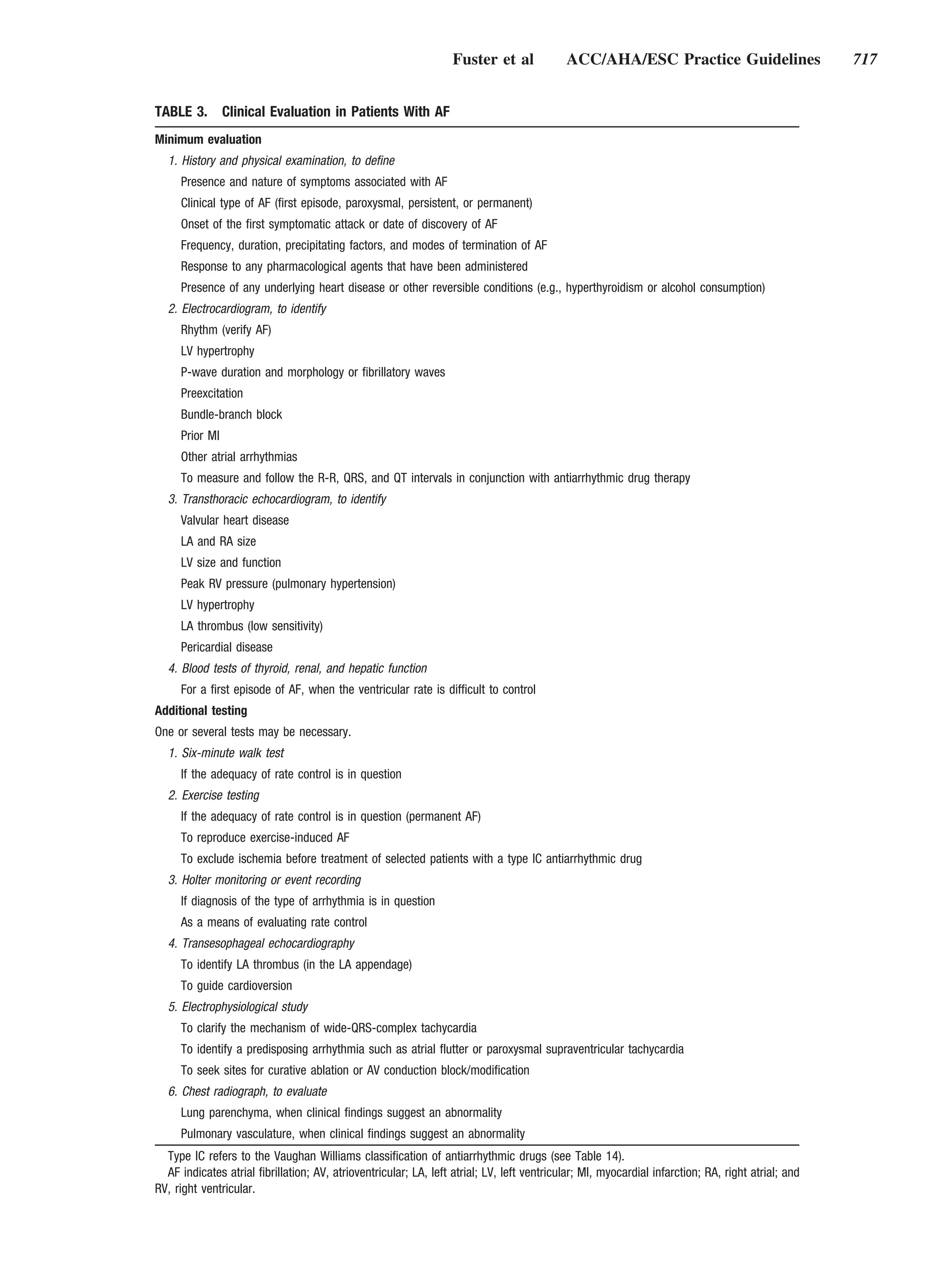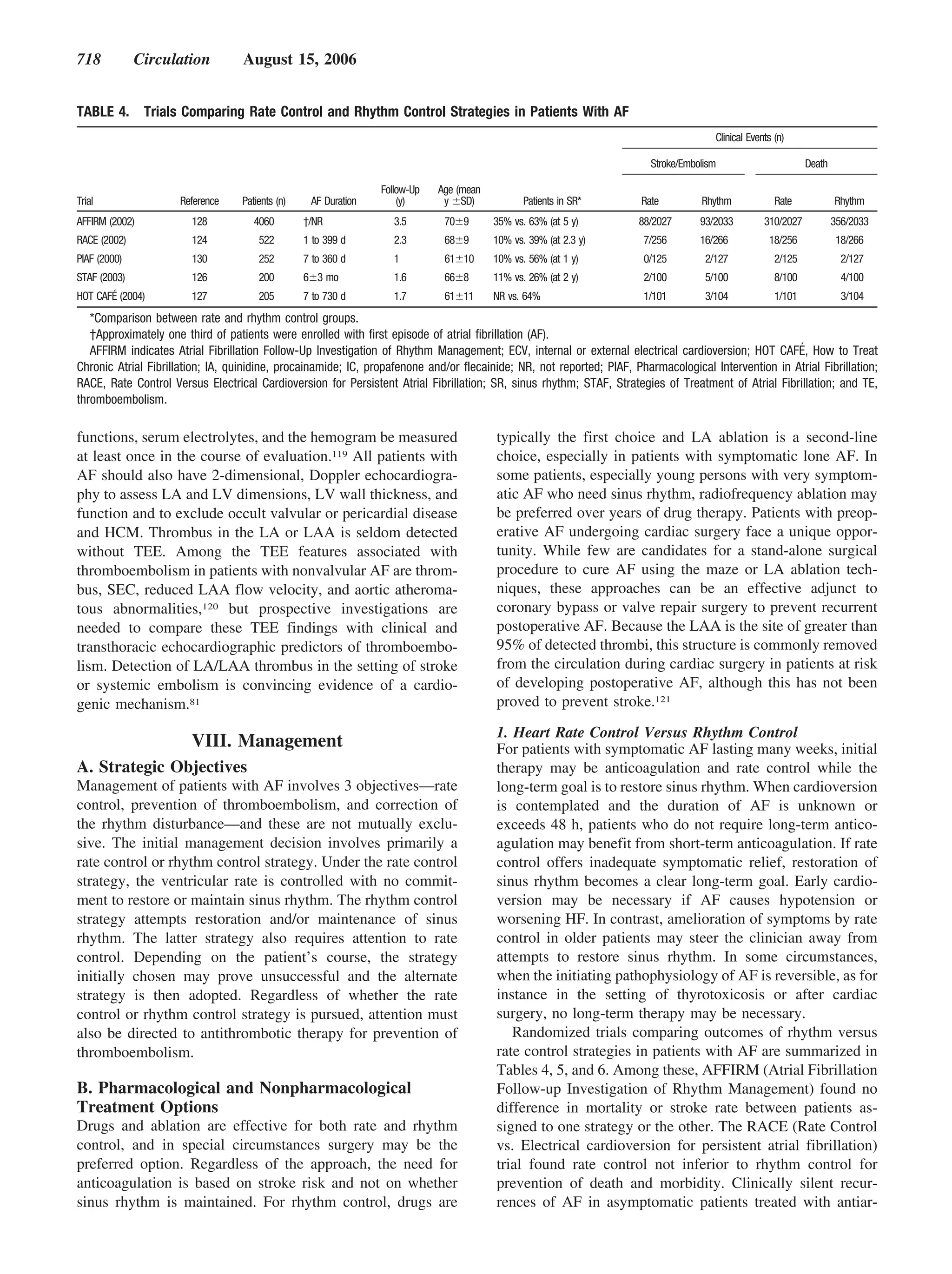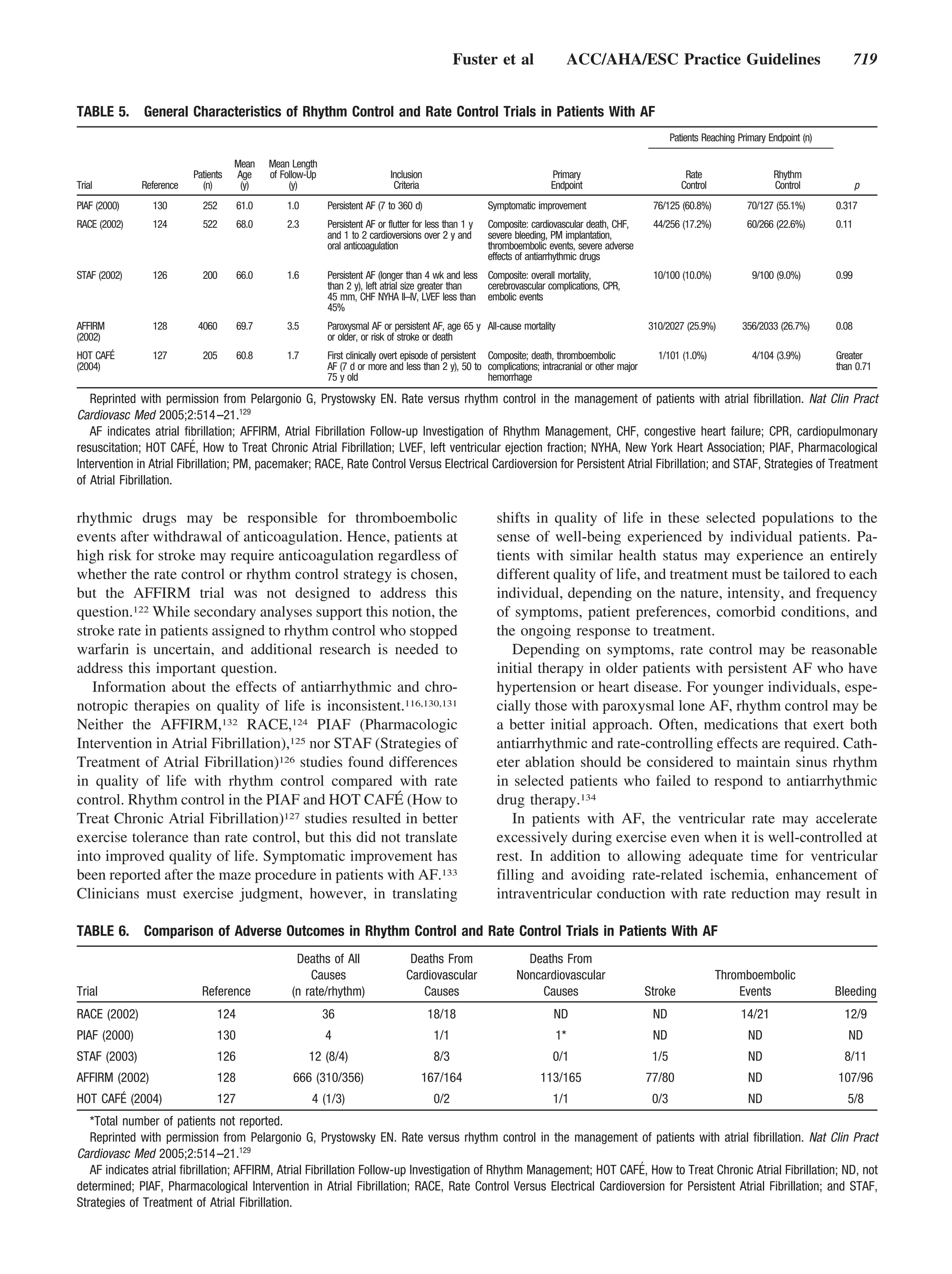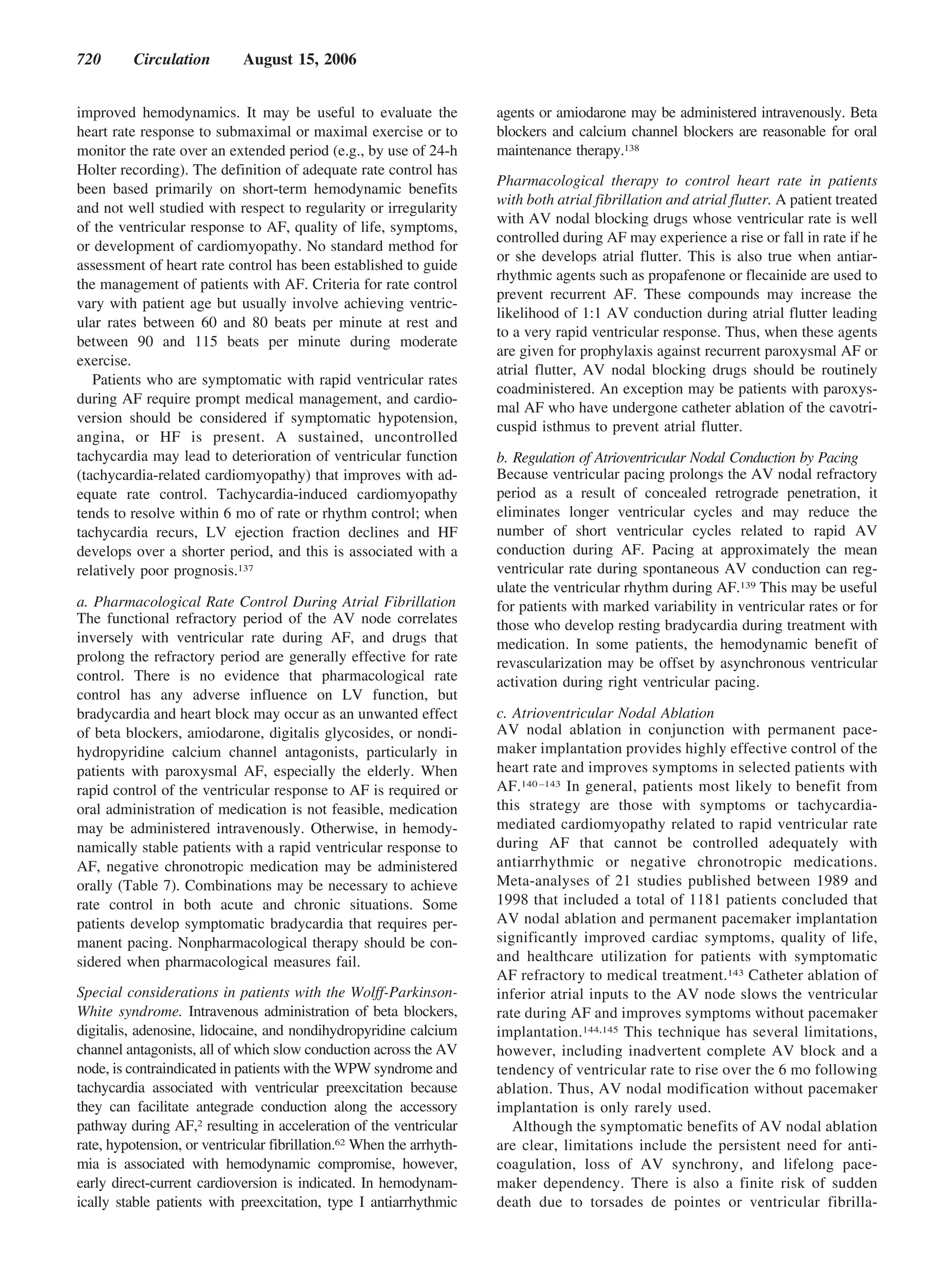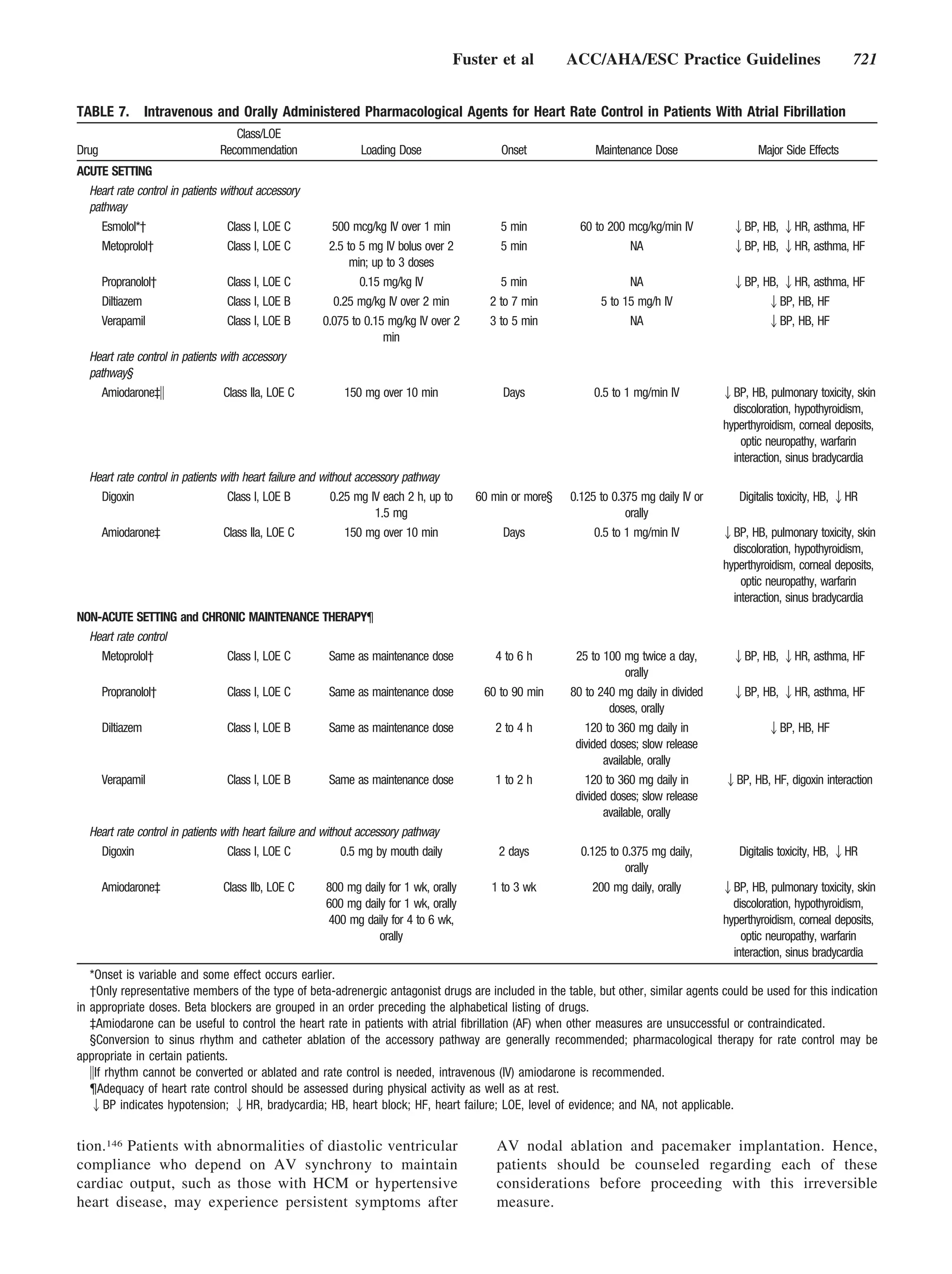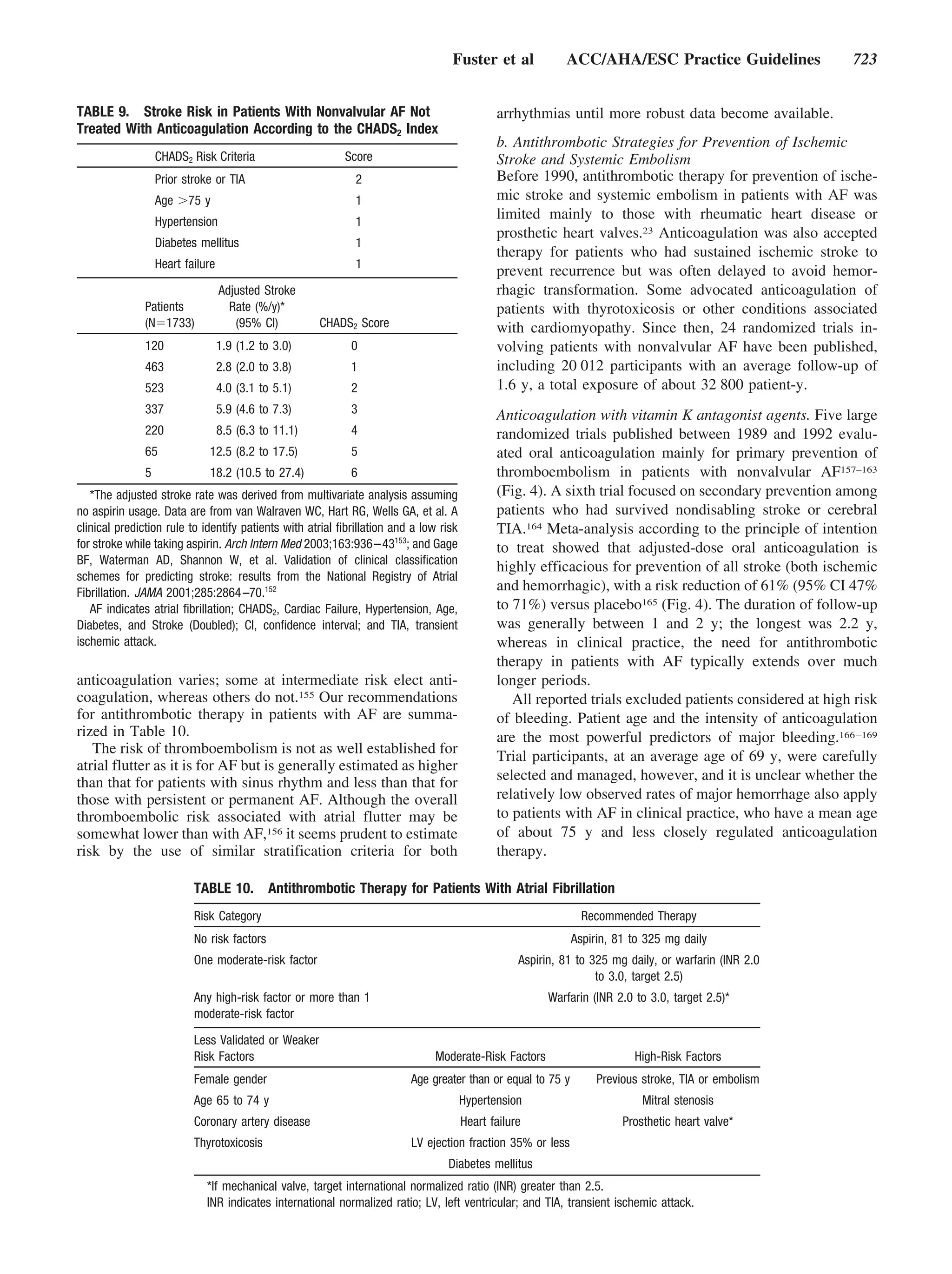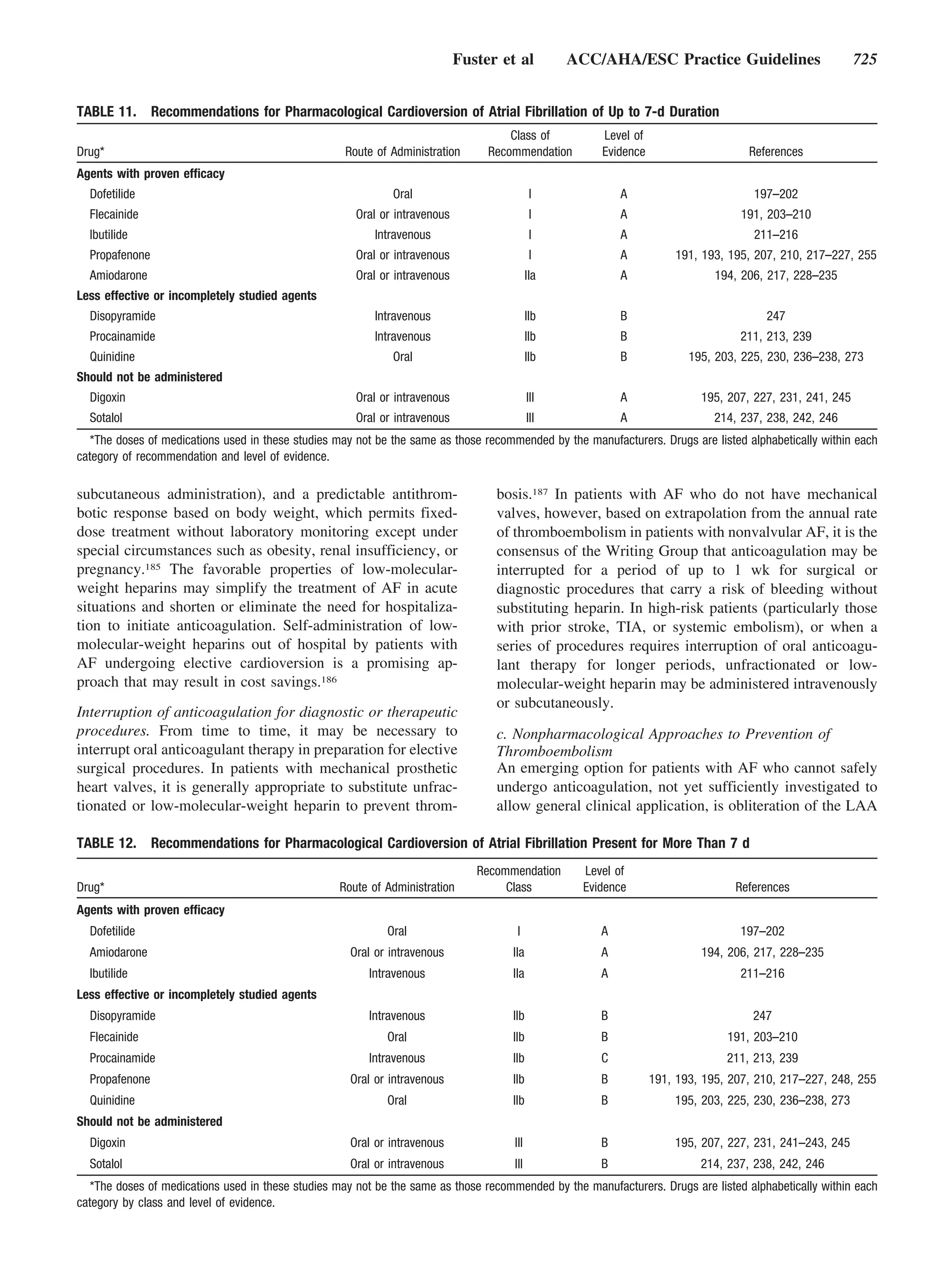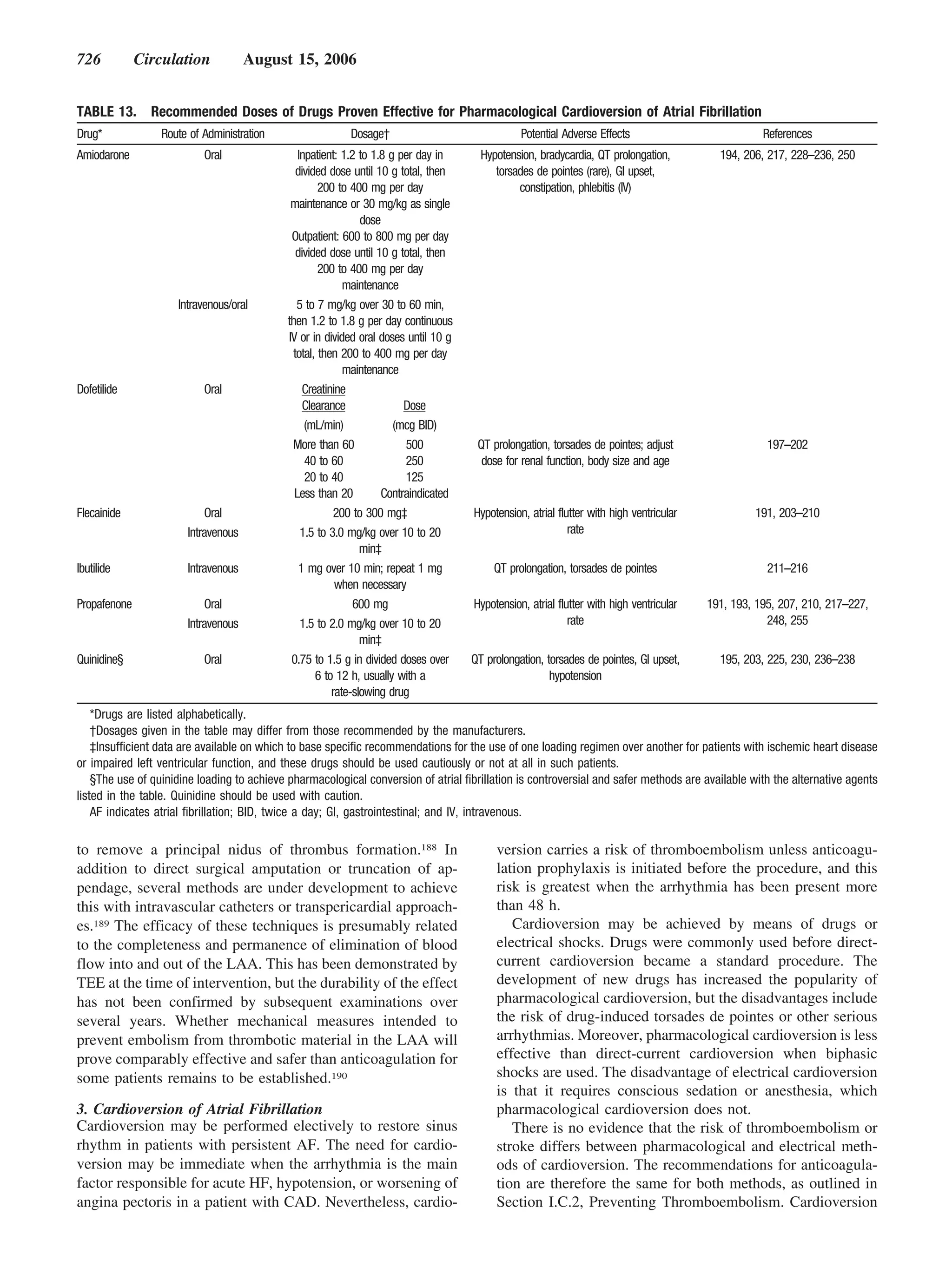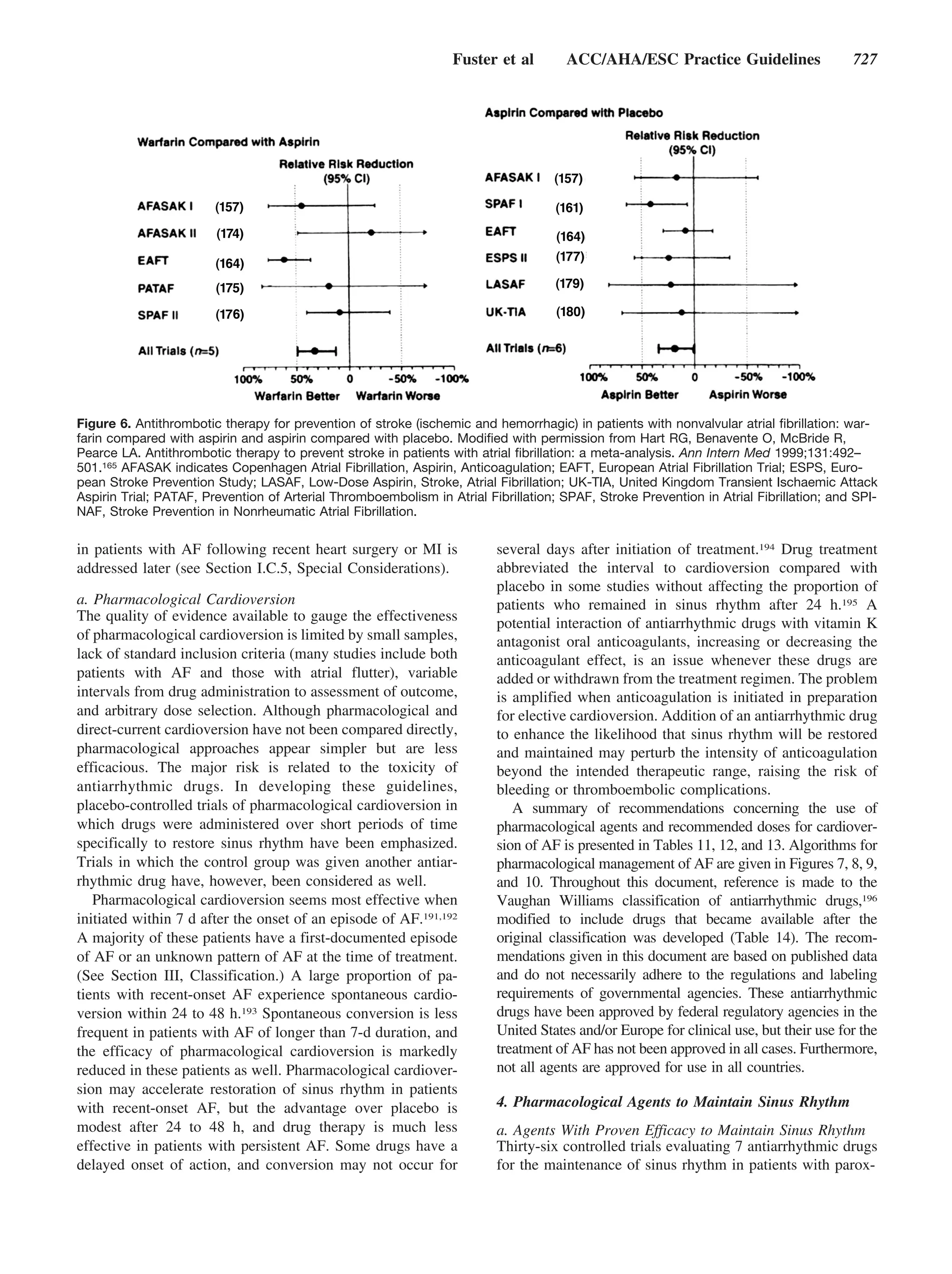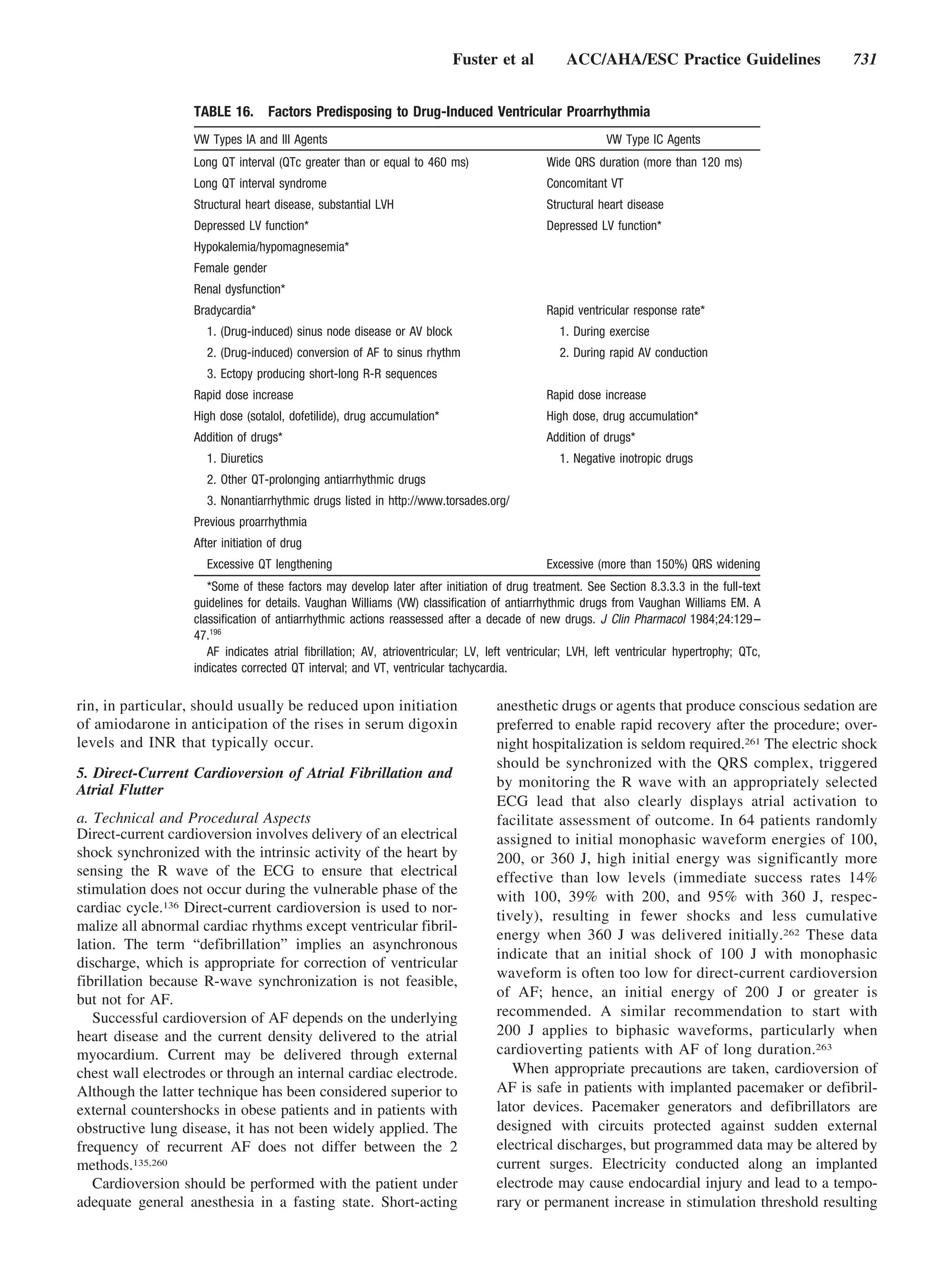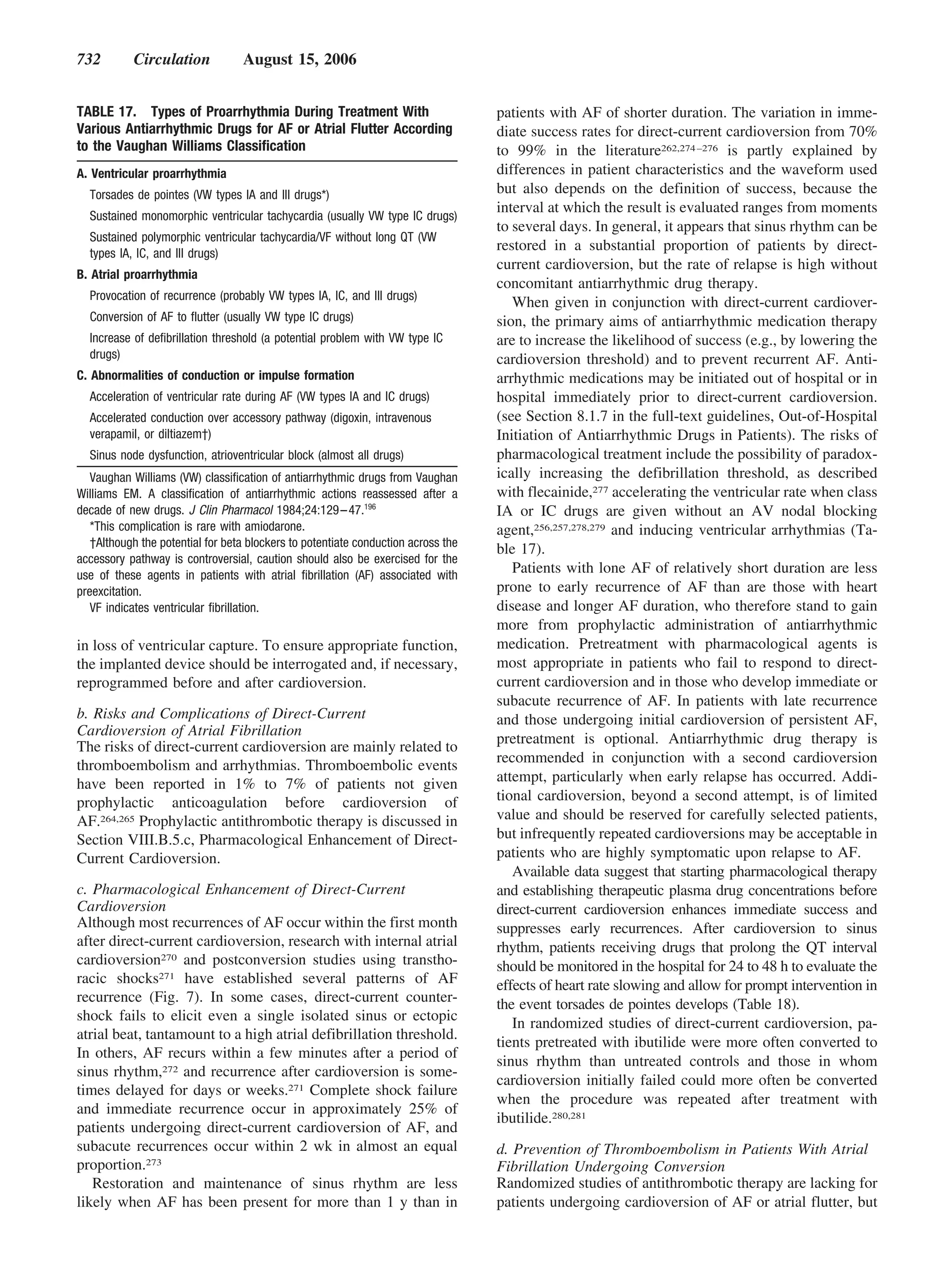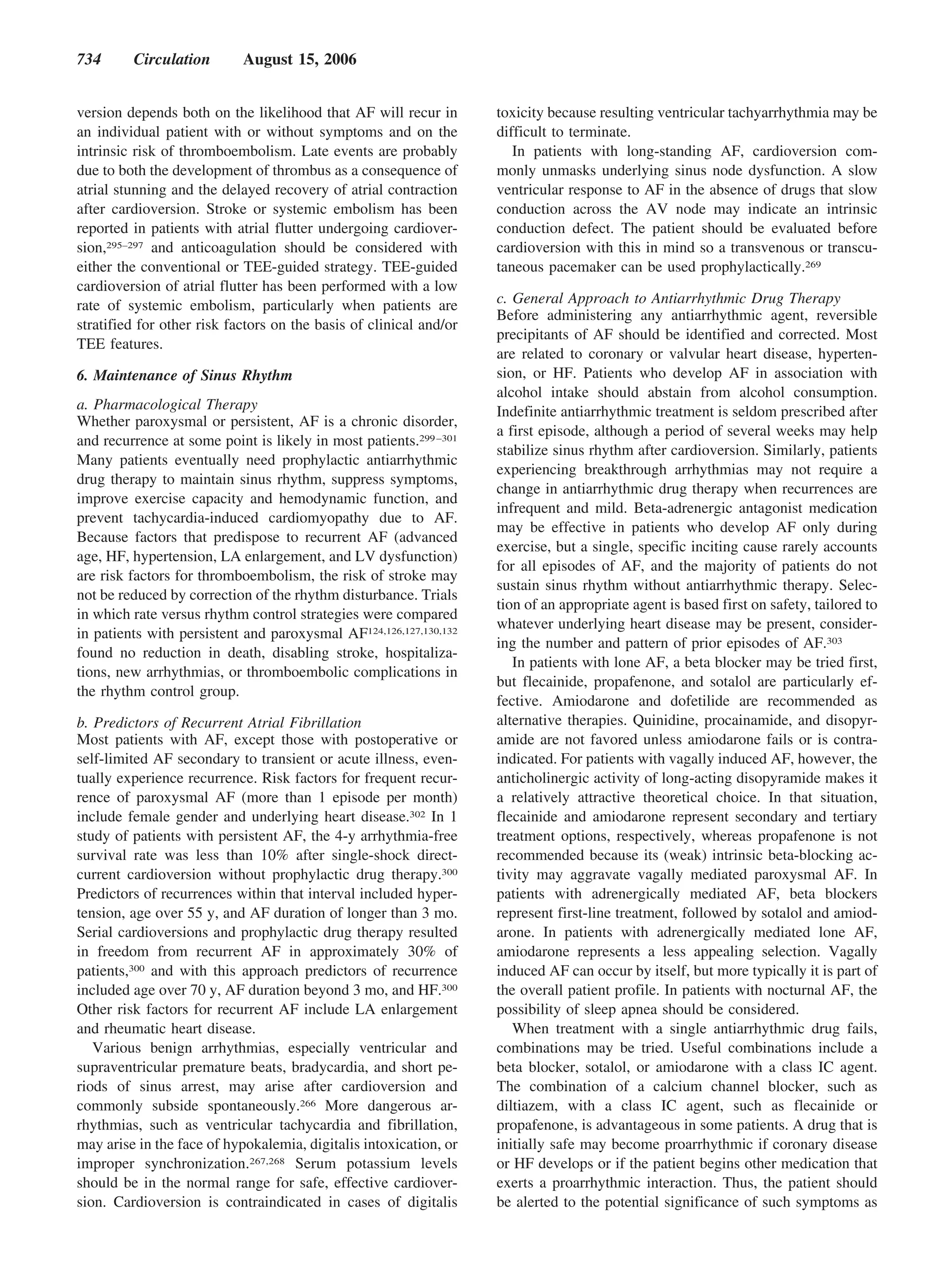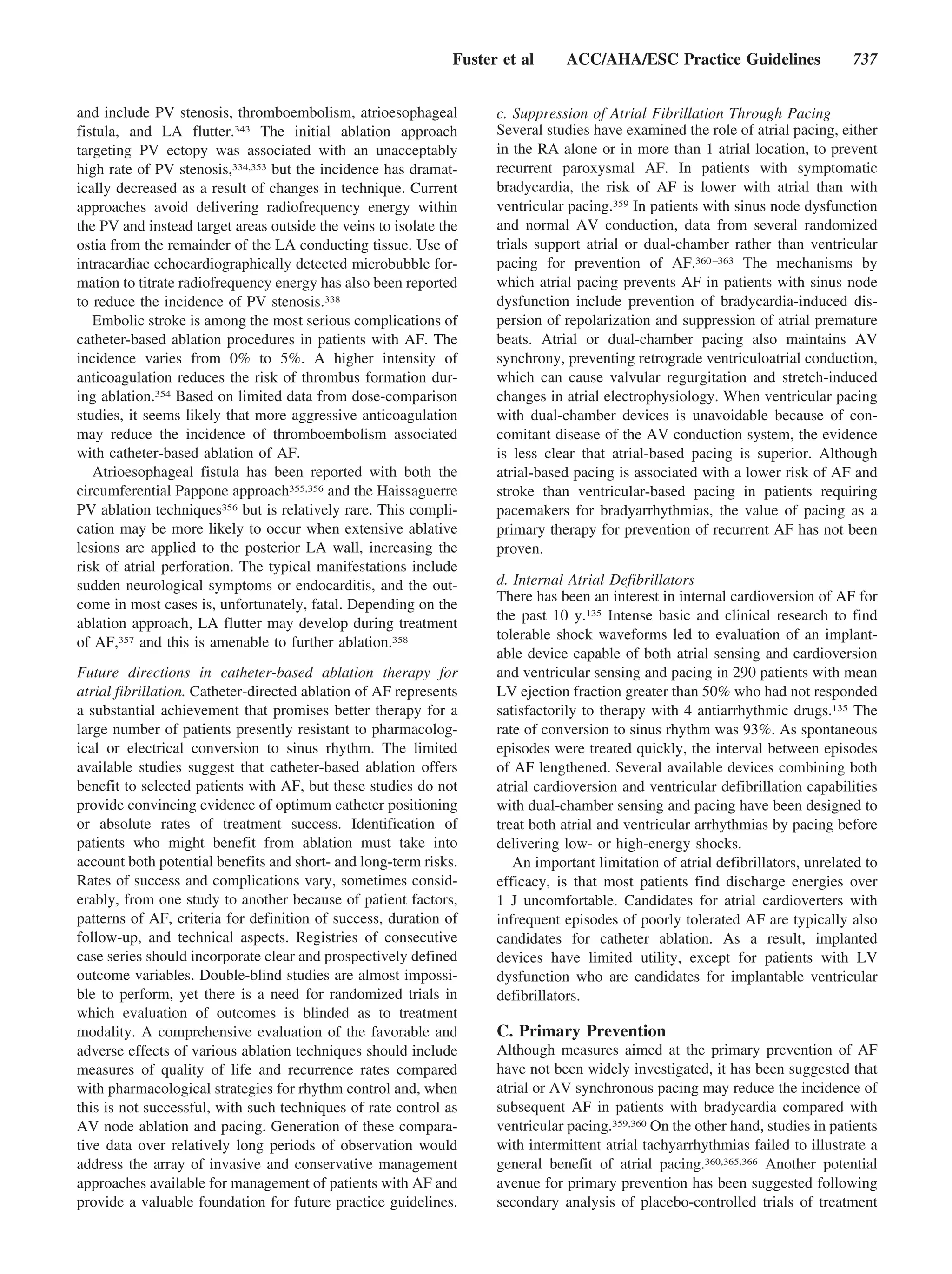
ACC/AHA/ESC Practice Guidelines

      ACC/AHA/ESC 2006 Guidelines for the Management of
      Patients With Atrial Fibrillation—Executive Summary
 A Report of the American College of Cardiology/American Heart Association Task Force
  on Practice Guidelines and the European Society of Cardiology Committee for Practice
   Guidelines (Writing Committee to Revise the 2001 Guidelines for the Management of
                            Patients With Atrial Fibrillation)
      Developed in Collaboration With the European Heart Rhythm Association and the Heart Rhythm Society

                                     WRITING COMMITTEE MEMBERS
  Valentin Fuster, MD, PhD, FACC, FAHA, FESC, Co-Chair; Lars E. Rydén, MD, PhD, FACC, FESC, FAHA, Co-Chair;
         David S. Cannom, MD, FACC; Harry J. Crijns, MD, FACC, FESC*; Anne B. Curtis, MD, FACC, FAHA;
   Kenneth A. Ellenbogen, MD, FACC†; Jonathan L. Halperin, MD, FACC, FAHA; Jean-Yves Le Heuzey, MD, FESC;
                G. Neal Kay, MD, FACC; James E. Lowe, MD, FACC; S. Bertil Olsson, MD, PhD, FESC;
           Eric N. Prystowsky, MD, FACC; Juan Luis Tamargo, MD, FESC; Samuel Wann, MD, FACC, FESC

                                         ACC/AHA TASK FORCE MEMBERS
         Sidney C. Smith, Jr, MD, FACC, FAHA, FESC, Chair; Alice K. Jacobs, MD, FACC, FAHA, Vice-Chair;
                 Cynthia D. Adams, MSN, APRN-BC, FAHA; Jeffery L. Anderson, MD, FACC, FAHA;
                   Elliott M. Antman, MD, FACC, FAHA‡; Jonathan L. Halperin, MD, FACC, FAHA;
    Sharon Ann Hunt, MD, FACC, FAHA; Rick Nishimura, MD, FACC, FAHA; Joseph P. Ornato, MD, FACC, FAHA;
                         Richard L. Page, MD, FACC, FAHA; Barbara Riegel, DNSc, RN, FAHA

                                   ESC COMMITTEE FOR PRACTICE GUIDELINES
   Silvia G. Priori, MD, PhD, FESC, Chair; Jean-Jacques Blanc, MD, FESC, France; Andrzej Budaj, MD, FESC, Poland;
                    A. John Camm, MD, FESC, FACC, FAHA, United Kingdom; Veronica Dean, France;
 Jaap W. Deckers, MD, FESC, The Netherlands; Catherine Despres, France; Kenneth Dickstein, MD, PhD, FESC, Norway;
                 John Lekakis, MD, FESC, Greece; Keith McGregor, PhD, France; Marco Metra, MD, Italy;
                             Joao Morais, MD, FESC, Portugal; Ady Osterspey, MD, Germany;
                       Juan Luis Tamargo, MD, FESC, Spain; José Luis Zamorano, MD, FESC, Spain


   *European Heart Rhythm Association Official Representative.
   †Heart Rhythm Society Official Representative.
   ‡Immediate Past Chair.
   This document was approved by the American College of Cardiology Foundation Board of Trustees in June 2006; by the American Heart Association
Science Advisory and Coordinating Committee in June 2006; and by the European Society of Cardiology Committee for Practice Guidelines in June 2006.
   When this document is cited, the American College of Cardiology Foundation, the American Heart Association, and the European Society of Cardiology request that
the following citation format be used: Fuster V, Rydén LE, Cannom DS, Crijns HJ, Curtis AB, Ellenbogen KA, Halperin JL, Le Heuzey J-Y, Kay GN, Lowe JE, Olsson
SB, Prystowsky EN, Tamargo JL, Wann S, Smith SC Jr, Jacobs AK, Adams CD, Anderson JL, Antman EM, Hunt SA, Nishimura R, Ornato JP, Page RL, Riegel B,
Priori SG, Blanc J-J, Budaj A, Camm AJ, Dean V, Deckers JW, Despres C, Dickstein K, Lekakis J, McGregor K, Metra M, Morais J, Osterspey A, Zamorano
JL. ACC/AHA/ESC 2006 guidelines for the management of patients with atrial fibrillation— executive summary: a report of the American College of
Cardiology/American Heart Association Task Force on Practice Guidelines and the European Society of Cardiology Committee for Practice Guidelines (Writing
Committee to Revise the 2001 Guidelines for the Management of Patients With Atrial Fibrillation). Circulation. 2006;114:700-752. Published online before print
August 2, 2006. DOI: 10/1161/CIRCULATIONAHA.106.177031.
   This article has been copublished in the August 15, 2006, issues of Circulation and the Journal of the American College of Cardiology and the August
16, 2006, issue of the European Heart Journal.
   Copies: This document is available on the World Wide Web sites of the American College of Cardiology (www.acc.org), the American Heart Association
(www.americanheart.org), and the European Society of Cardiology (www.escardio.org). Single and bulk reprints of both the online full-text guidelines and the published
executive summary (published in the August 15, 2006, issues of Circulation and the Journal of the American College of Cardiology and the August 16, 2006, issue of
the European Heart Journal) are available from Oxford University Press by contacting Special Sales (special.sales@oxfordjournals.org), Journals Division, Oxford
University Press, Great Clarendon Street, Oxford, OX2 6DP, UK. Phone 44 (0) 1865 353827, Fax 44 (0) 1865 353774, Work Mobile 44 07841322925. Single
copies of the executive summary and the full-text guidelines are also available by calling 800-253-4636 or writing the American College of Cardiology Foundation,
Resource Center, at 9111 Old Georgetown Road, Bethesda, MD 20814-1699. To purchase bulk reprints, fax 212-633-3820 or e-mail reprints@elsevier.com. To purchase
Circulation reprints: Up to 999 copies, call 800-611-6083 (US only) or fax 413-665-2671; 1000 or more copies, call 410-528-4121, fax 410-528-4264, or e-mail
kelle.ramsay@wolterskluwer.com.
   Permissions: Multiple copies, modification, alteration, enhancement, and/or distribution of this document are not permitted without the express
permission of the American Heart Association or the European Society of Cardiology. Please direct requests to copyright.permissions@heart.org or
journals.permissions@oxfordjournals.org.
   (Circulation. 2006;114:700-752.)
   © 2006 by the American College of Cardiology Foundation, the American Heart Association, Inc, and the European Society of Cardiology.
  Circulation is available at http://www.circulationaha.org                                                   DOI: 10.1161/CIRCULATIONAHA.106.177031

                                                                                700
Fuster et al        ACC/AHA/ESC Practice Guidelines                              701


                    TABLE OF CONTENTS                                                         VI. Causes, Associated Conditions, Clinical
Preamble . . . . . . . . . . . . . . . . . . . . . . . . . . . . . . . . . . . . . . .702          Manifestations, and Quality of Life . . . . . . . . . . . .715
                                                                                                   A. Causes and Associated Conditions . . . . . . . . . .715
   I. Introduction . . . . . . . . . . . . . . . . . . . . . . . . . . . . . . .702                   1. Reversible Causes of Atrial Fibrillation . . . . . . .715
      A. Organization of Committee and                                                                2. Atrial Fibrillation Without Associated
          Evidence Review . . . . . . . . . . . . . . . . . . . . . . . .702                             Heart Disease . . . . . . . . . . . . . . . . . . . . . . . .715
          Classification of Recommendations . . . . . . . . .704                                      3. Medical Conditions Associated With
          Level of Evidence . . . . . . . . . . . . . . . . . . . . . . .704                             Atrial Fibrillation . . . . . . . . . . . . . . . . . . . . .715
      B. Changes Since the Initial Publication of                                                     4. Atrial Fibrillation With Associated
          These Guidelines in 2001 . . . . . . . . . . . . . . . . .704                                  Heart Disease . . . . . . . . . . . . . . . . . . . . . . . .715
      C. Recommendations for Management of                                                            5. Familial Atrial Fibrillation . . . . . . . . . . . . . .716
          Patients With Atrial Fibrillation . . . . . . . . . . . .704                                6. Autonomic Influences in Atrial Fibrillation . . . .716
Recommendations . . . . . . . . . . . . . . . . . . . . . . . . . . . . . . .704                   B. Clinical Manifestations . . . . . . . . . . . . . . . . . . .716
          1. Pharmacological Rate Control During                                                   C. Quality of Life . . . . . . . . . . . . . . . . . . . . . . . . . .716
             Atrial Fibrillation . . . . . . . . . . . . . . . . . . . . .704                VII. Clinical Evaluation. . . . . . . . . . . . . . . . . . . . . . . . . .716
          2. Preventing Thromboembolism . . . . . . . . . . .705                                   A. Basic Evaluation of the Patient With
          3. Cardioversion of Atrial Fibrillation . . . . . . .706                                    Atrial Fibrillation . . . . . . . . . . . . . . . . . . . . . . . .716
             a. Pharmacological Cardioversion . . . . . . . .706                                      1. Clinical History and Physical Examination. . .716
             b. Direct-Current Cardioversion . . . . . . . . .707                                     2. Investigations. . . . . . . . . . . . . . . . . . . . . . . . .716
             c. Pharmacological Enhancement of                                               VIII. Management . . . . . . . . . . . . . . . . . . . . . . . . . . . . . . .718
                 Direct-Current Cardioversion . . . . . . . . .707                                 A. Strategic Objectives . . . . . . . . . . . . . . . . . . . . . .718
             d. Prevention of Thromboembolism in                                                   B. Pharmacological and Nonpharmacological
                 Patients With Atrial Fibrillation                                                    Treatment Options . . . . . . . . . . . . . . . . . . . . . . .718
                 Undergoing Cardioversion. . . . . . . . . . . .707                                   1. Heart Rate Control Versus Rhythm Control . . .718
          4. Maintenance of Sinus Rhythm . . . . . . . . . . .708                                        a. Pharmacological Rate Control During
          5. Special Considerations . . . . . . . . . . . . . . . . .708                                     Atrial Fibrillation . . . . . . . . . . . . . . . . . . .720
             a. Postoperative Atrial Fibrillation . . . . . . .708                                       b. Regulation of Atrioventricular Nodal
             b. Acute Myocardial Infarction . . . . . . . . . .709                                           Conduction by Pacing . . . . . . . . . . . . . . .720
             c. Management of Atrial Fibrillation                                                        c. Atrioventricular Nodal Ablation . . . . . . .720
                 Associated With the Wolff-Parkinson-White                                            2. Preventing Thromboembolism . . . . . . . . . . .722
                 (WPW) Preexcitation Syndrome . . . . . . . .709                                         a. Risk Stratification . . . . . . . . . . . . . . . . . .722
             d. Hyperthyroidism. . . . . . . . . . . . . . . . . . . .709                                b. Antithrombotic Strategies for Prevention
             e. Management of Atrial Fibrillation                                                            of Ischemic Stroke and Systemic
                 During Pregnancy . . . . . . . . . . . . . . . . . .709                                     Embolism . . . . . . . . . . . . . . . . . . . . . . . . . .723
              f. Management of Atrial Fibrillation in Patients                                           c. Nonpharmacological Approaches to
                 With Hypertrophic Cardiomyopathy                                                            Prevention of Thromboembolism . . . . . .725
                 (HCM) . . . . . . . . . . . . . . . . . . . . . . . . . . .710                       3. Cardioversion of Atrial Fibrillation . . . . . . .726
             g. Management of Atrial Fibrillation in Patients                                            a. Pharmacological Cardioversion . . . . . . . .727
                 With Pulmonary Disease . . . . . . . . . . . . .710                                  4. Pharmacological Agents to Maintain
  II. Definition . . . . . . . . . . . . . . . . . . . . . . . . . . . . . . . . .710                    Sinus Rhythm . . . . . . . . . . . . . . . . . . . . . . . .727
      A. Atrial Fibrillation . . . . . . . . . . . . . . . . . . . . . . . .710                          a. Agents With Proven Efficacy to
      B. Related Arrhythmias . . . . . . . . . . . . . . . . . . . . .710                                    Maintain Sinus Rhythm . . . . . . . . . . . . . .727
 III. Classification . . . . . . . . . . . . . . . . . . . . . . . . . . . . . .711                      b. Out-of-Hospital Initiation of
 IV. Epidemiology and Prognosis . . . . . . . . . . . . . . . . . .711                                       Antiarrhythmic Drugs in Patients
      A. Prevalence. . . . . . . . . . . . . . . . . . . . . . . . . . . . . .712                            With Atrial Fibrillation . . . . . . . . . . . . . .728
      B. Incidence . . . . . . . . . . . . . . . . . . . . . . . . . . . . . .712                     5. Direct-Current Cardioversion of Atrial
      C. Prognosis . . . . . . . . . . . . . . . . . . . . . . . . . . . . . .712                        Fibrillation and Atrial Flutter . . . . . . . . . . . .731
  V. Pathophysiological Mechanisms . . . . . . . . . . . . . . .712                                      a. Technical and Procedural Aspects . . . . .731
      A. Atrial Factors . . . . . . . . . . . . . . . . . . . . . . . . . . .712                         b. Risks and Complications of Direct-Current
          1. Atrial Pathology as a Cause of Atrial                                                           Cardioversion of Atrial Fibrillation. . . . .732
             Fibrillation . . . . . . . . . . . . . . . . . . . . . . . . . .712                         c. Pharmacological Enhancement of
          2. Mechanisms of Atrial Fibrillation . . . . . . . .712                                            Direct-Current Cardioversion . . . . . . . . .732
          3. Atrial Electrical Remodeling . . . . . . . . . . . .713                                     d. Prevention of Thromboembolism in
          4. Other Factors Contributing to Atrial                                                            Patients With Atrial Fibrillation
             Fibrillation . . . . . . . . . . . . . . . . . . . . . . . . . . .713                           Undergoing Conversion . . . . . . . . . . . . . .732
      B. Atrioventricular Conduction . . . . . . . . . . . . . . .713                                 6. Maintenance of Sinus Rhythm . . . . . . . . . . .734
          1. General Aspects . . . . . . . . . . . . . . . . . . . . . .713                              a. Pharmacological Therapy . . . . . . . . . . . .734
          2. Atrioventricular Conduction in Preexcitation                                                b. Predictors of Recurrent Atrial Fibrillation . . .734
             Syndromes . . . . . . . . . . . . . . . . . . . . . . . . . . .714                          c. General Approach to Antiarrhythmic
      C. Myocardial and Hemodynamic Consequences                                                             Drug Therapy . . . . . . . . . . . . . . . . . . . . . .734
          of Atrial Fibrillation. . . . . . . . . . . . . . . . . . . . . .714                           d. Selection of Antiarrhythmic Agents in
      D. Thromboembolism . . . . . . . . . . . . . . . . . . . . . . .714                                    Patients With Cardiac Diseases. . . . . . . .735
          1. Pathophysiology of Thrombus Formation . . . . .714                                       7. Nonpharmacological Therapy for
          2. Clinical Implications . . . . . . . . . . . . . . . . . . .715                              Atrial Fibrillation . . . . . . . . . . . . . . . . . . . . .735
702            Circulation                   August 15, 2006


             a. Surgical Ablation . . . . . . . . . . . . . . . . . . .735                                  statements of all such relationships that might be perceived as real
             b. Catheter Ablation . . . . . . . . . . . . . . . . . . .736                                  or potential conflicts of interest. Writing Committee members are
             c. Suppression of Atrial Fibrillation                                                          also strongly encouraged to declare a previous relationship with
                   Through Pacing . . . . . . . . . . . . . . . . . . . .737                                industry that might be perceived as relevant to guideline develop-
              d. Internal Atrial Defibrillators . . . . . . . . . .737                                      ment. If a Writing Committee member develops a new relationship
      C. Primary Prevention. . . . . . . . . . . . . . . . . . . . . . .737                                 with industry during his or her tenure, he or she is required to notify
 IX. Proposed Management Strategies . . . . . . . . . . . . . .737
                                                                                                            guideline staff in writing. The continued participation of the Writing
      A. Overview of Algorithms for Management
         of Patients With Atrial Fibrillation . . . . . . . . . .738                                        Committee member will be reviewed. These statements are re-
         1. Newly Discovered Atrial Fibrillation. . . . . .738                                              viewed by the parent Task Force, reported orally to all members of
         2. Recurrent Paroxysmal Atrial Fibrillation . . . .738                                             the Writing Committee at each meeting, and updated and reviewed
         3. Recurrent Persistent Atrial Fibrillation . . . .739                                             by the Writing Committee as changes occur. Please refer to the
         4. Permanent Atrial Fibrillation . . . . . . . . . . . .739                                        methodology manuals for further description of the policies used in
Appendix I . . . . . . . . . . . . . . . . . . . . . . . . . . . . . . . . . . . . . . . . . . . . . .740   guideline development, including relationships with industry, avail-
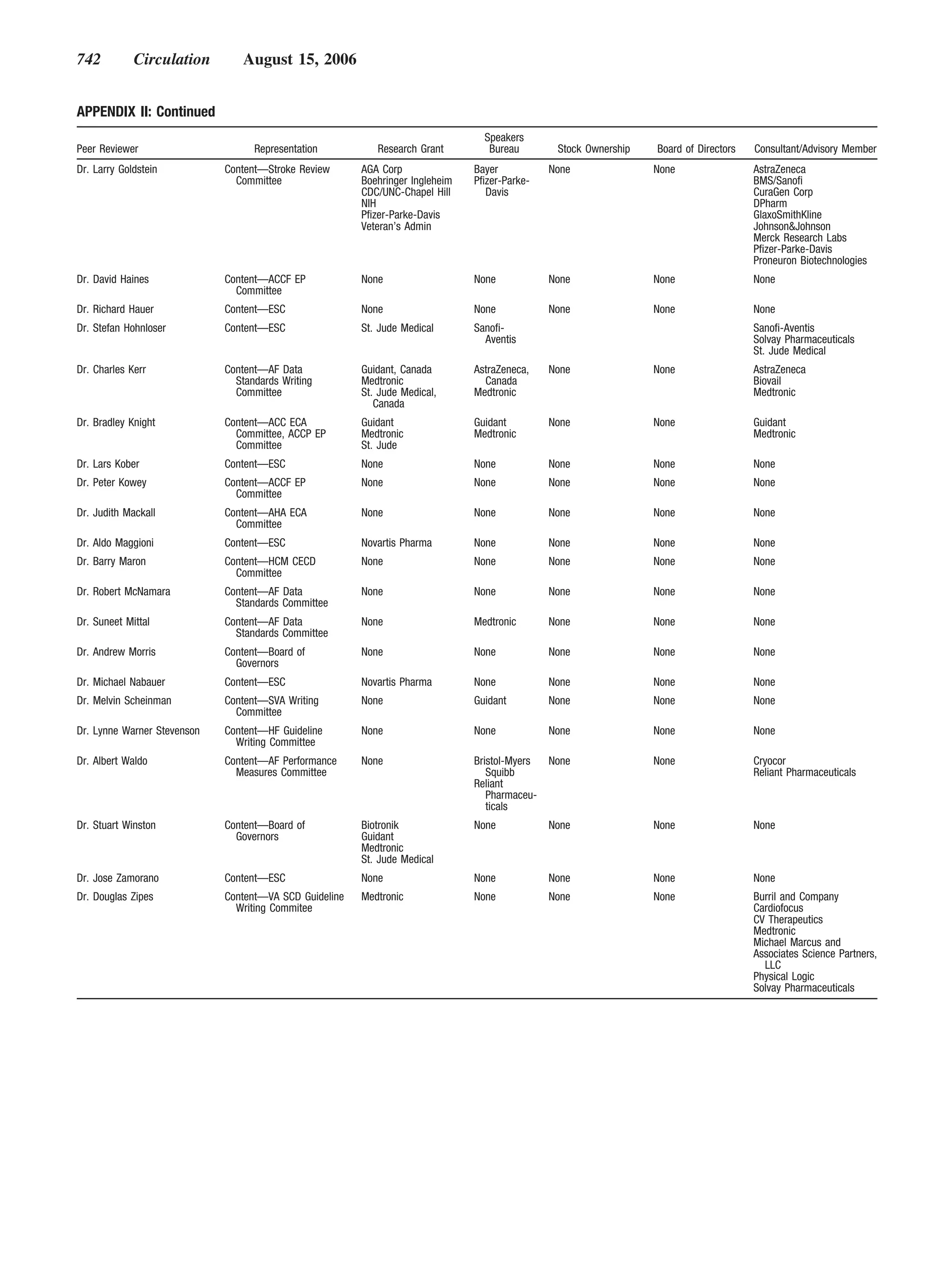
Appendix II . . . . . . . . . . . . . . . . . . . . . . . . . . . . . . . . . . . . . . . . . . . . .741    able on the ACC, AHA, and ESC World Wide Web sites (http://
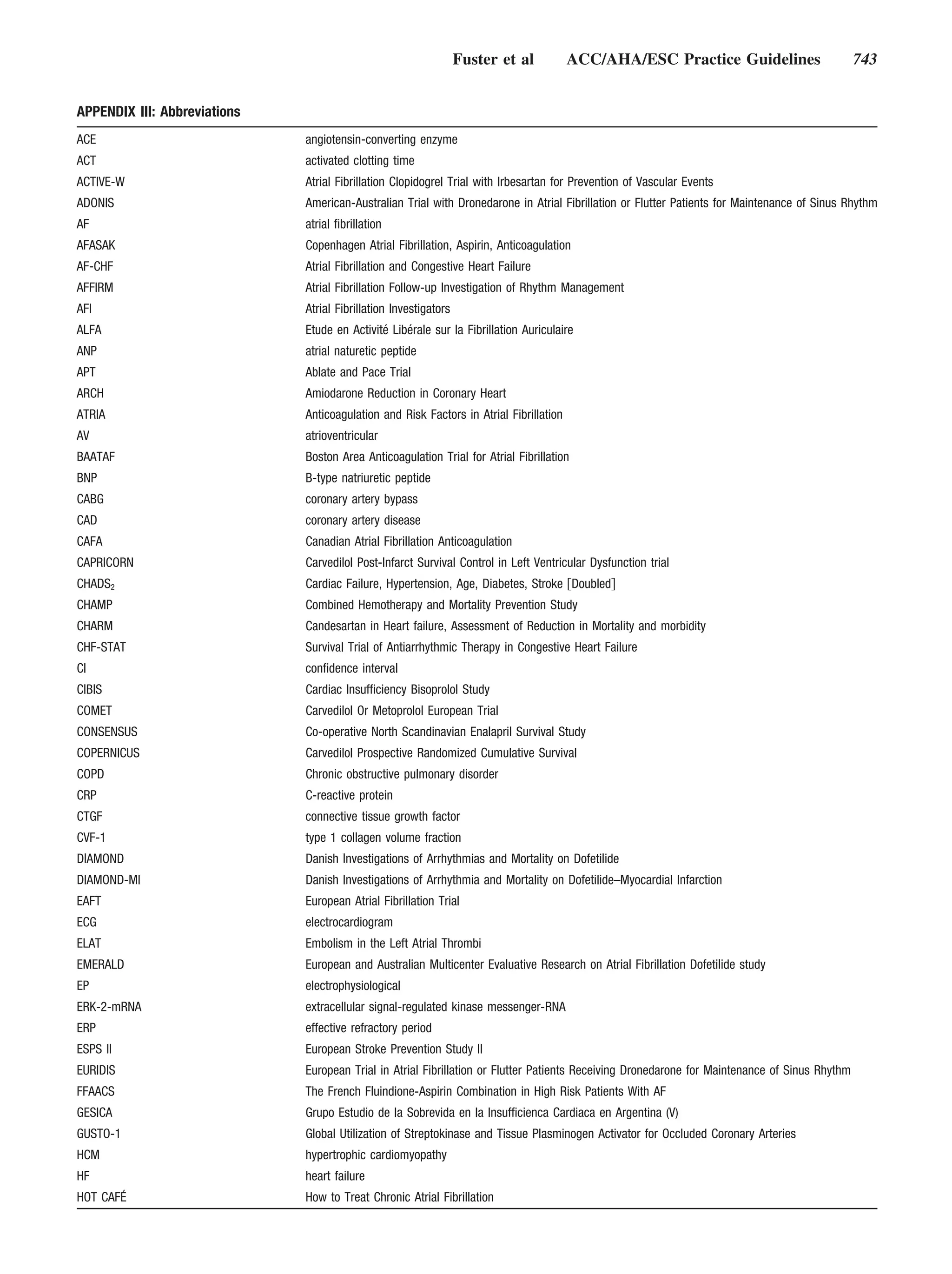
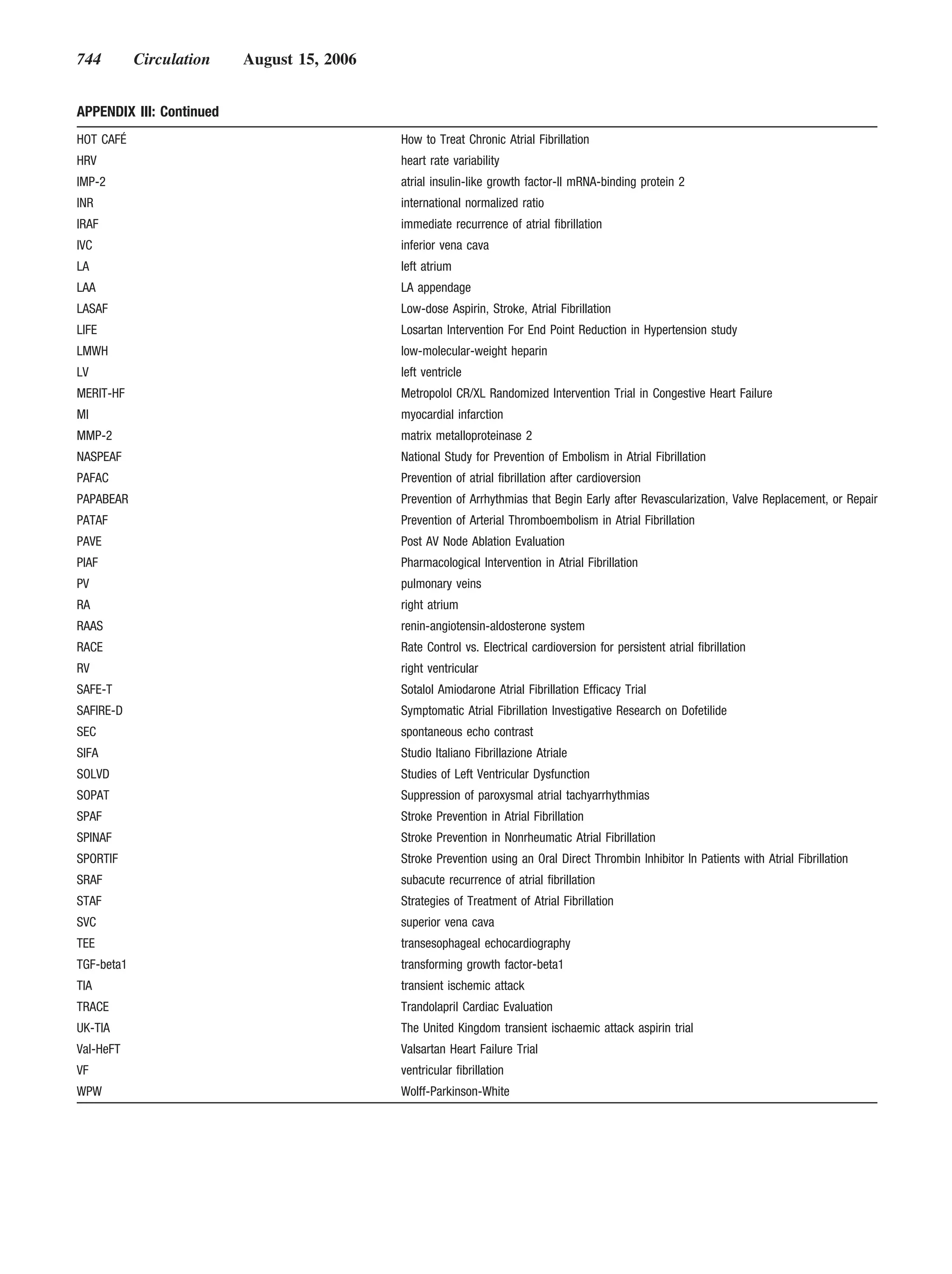
Appendix III . . . . . . . . . . . . . . . . . . . . . . . . . . . . . . . . . . . .743                     www.acc.org/clinical/manual/manual_introltr.htm, http://circ.aha-
References . . . . . . . . . . . . . . . . . . . . . . . . . . . . . . . . . . . . .745                     journals.org/manual/ and http://www.escardio.org/knowledge/
                                         Preamble                                                           guidelines/Rules/). Please see Appendix I for author relationships
It is important that the medical profession play a significant role                                         with industry and Appendix II for peer reviewer relationships with
in critically evaluating the use of diagnostic procedures and                                               industry that are pertinent to these guidelines.
therapies as they are introduced and tested in the detection,                                                  These practice guidelines are intended to assist healthcare
management, or prevention of disease states. Rigorous and                                                   providers in clinical decision making by describing a range of
expert analysis of the available data documenting absolute and                                              generally acceptable approaches for the diagnosis, manage-
relative benefits and risks of those procedures and therapies can                                           ment, and prevention of specific diseases and conditions.
produce helpful guidelines that improve the effectiveness of                                                These guidelines attempt to define practices that meet the
care, optimize patient outcomes, and favorably affect the overall                                           needs of most patients in most circumstances. These guide-
cost of care by focusing resources on the most effective strategies.                                        line recommendations reflect a consensus of expert opinion
    The American College of Cardiology Foundation (ACCF)                                                    after a thorough review of the available, current scientific
and the American Heart Association (AHA) have jointly en-                                                   evidence and are intended to improve patient care. If these
gaged in the production of such guidelines in the area of                                                   guidelines are used as the basis for regulatory/payer deci-
cardiovascular disease since 1980. The ACC/AHA Task Force                                                   sions, the ultimate goal is quality of care and serving the
on Practice Guidelines, whose charge is to develop, update, or                                              patient’s best interests. The ultimate judgment regarding care
revise practice guidelines for important cardiovascular diseases                                            of a particular patient must be made by the healthcare
and procedures, directs this effort. The Task Force is pleased to                                           provider and the patient in light of all of the circumstances
have this guideline developed in conjunction with the European                                              presented by that patient. There are circumstances in which
Society of Cardiology (ESC). Writing committees are charged                                                 deviations from these guidelines are appropriate.
with the task of performing an assessment of the evidence and                                                  The guidelines will be reviewed annually by the ACC/AHA
acting as an independent group of authors to develop or update                                              Task Force on Practice Guidelines and the ESC Committee for
written recommendations for clinical practice.                                                              Practice Guidelines and will be considered current unless they are
    Experts in the subject under consideration have been selected                                           updated, revised, or sunsetted and withdrawn from distribution. The
from all 3 organizations to examine subject-specific data and to                                            executive summary and recommendations are published in the
write guidelines. The process includes additional representatives                                           August 15, 2006, issue of the Journal of the American College of
from other medical practitioner and specialty groups when appro-                                            Cardiology, August 15, 2006, issue of Circulation, and August 16,
priate. Writing committees are specifically charged to perform a                                            2006, issue of the European Heart Journal. The full-text guidelines
formal literature review, weigh the strength of evidence for or                                             are e-published in the same issues of the Journal of the American
against a particular treatment or procedure, and include estimates of                                       College of Cardiology and Circulation and published in September
expected health outcomes where data exist. Patient-specific modi-                                           9, 2006, issue of Europace, as well as posted on the ACC
fiers, comorbidities, and issues of patient preference that might                                           (www.acc.org), AHA (www.americanheart.org), and ESC (www.
influence the choice of particular tests or therapies are considered as                                     escardio.org) World Wide Web sites. Copies of the full text and the
well as frequency of follow-up and cost-effectiveness. When                                                 executive summary are available from all 3 organizations.
available, information from studies on cost will be considered;                                                Sidney C. Smith, Jr, MD, FACC, FAHA, FESC, Chair,
however, review of data on efficacy and clinical outcomes will                                              ACC/AHA Task Force on Practice Guidelines
constitute the primary basis for preparing recommendations in                                                  Silvia G. Priori, MD, PhD, FESC, Chair, ESC Committee
these guidelines.                                                                                           for Practice Guidelines
    The ACC/AHA Task Force on Practice Guidelines and the ESC
Committee for Practice Guidelines make every effort to avoid any                                                                    I. Introduction
actual, potential, or perceived conflict of interest that might arise as                                    A. Organization of Committee and Evidence
a result of an outside relationship or personal interest of the Writing                                     Review
Committee. Specifically, all members of the Writing Committee                                               Atrial fibrillation (AF) is the most common sustained cardiac
and peer reviewers of the document are asked to provide disclosure                                          rhythm disturbance, increasing in prevalence with age. AF is
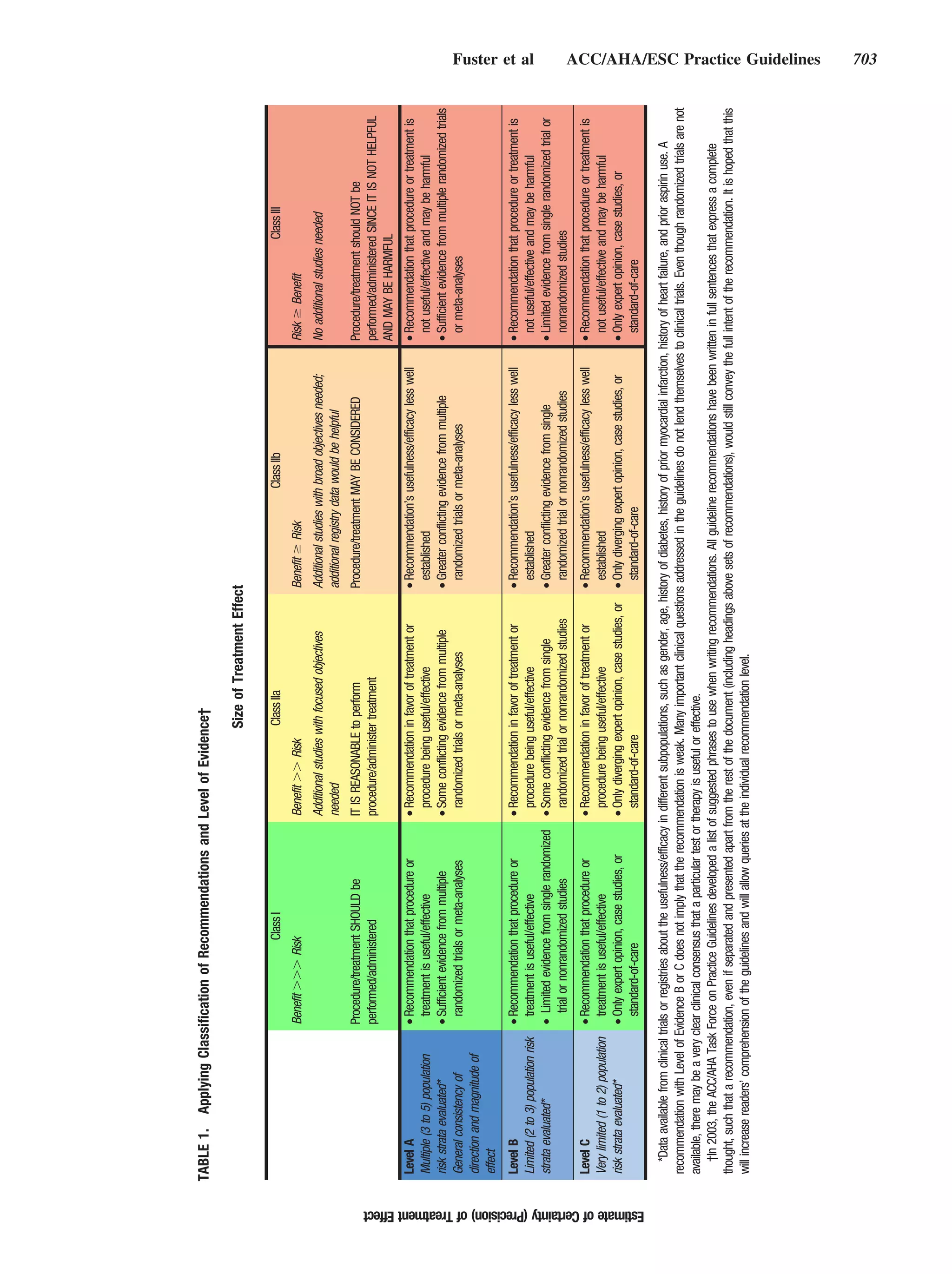
TABLE 1.       Applying Classification of Recommendations and Level of Evidence†

                                                                                                                                                               Size of Treatment Effect

                                                                                                              Class I                                          Class IIa                                              Class IIb                                                Class III
                                                                                           Benefit         Risk                            Benefit      Risk                                   Benefit    Risk                                          Risk    Benefit
                                                                                                                                           Additional studies with focused objectives          Additional studies with broad objectives needed;         No additional studies needed
                                                                                                                                           needed                                              additional registry data would be helpful
                                                                                           Procedure/treatment SHOULD be                   IT IS REASONABLE to perform                         Procedure/treatment MAY BE CONSIDERED                    Procedure/treatment should NOT be
                                                                                           performed/administered                          procedure/administer treatment                                                                               performed/administered SINCE IT IS NOT HELPFUL
                                                                                                                                                                                                                                                        AND MAY BE HARMFUL
                                                         Level A                           • Recommendation that procedure or              • Recommendation in favor of treatment or           • Recommendation’s usefulness/efficacy less well         • Recommendation that procedure or treatment is
                                                         Multiple (3 to 5) population        treatment is useful/effective                   procedure being useful/effective                    established                                              not useful/effective and may be harmful
                                                         risk strata evaluated*            • Sufficient evidence from multiple             • Some conflicting evidence from multiple           • Greater conflicting evidence from multiple             • Sufficient evidence from multiple randomized trials
                                                         General consistency of              randomized trials or meta-analyses              randomized trials or meta-analyses                  randomized trials or meta-analyses                       or meta-analyses
                                                         direction and magnitude of
                                                         effect
                                                         Level B                          • Recommendation that procedure or               • Recommendation in favor of treatment or           • Recommendation’s usefulness/efficacy less well         • Recommendation that procedure or treatment is
                                                                                                                                                                                                                                                                                                                 Fuster et al


                                                         Limited (2 to 3) population risk   treatment is useful/effective                    procedure being useful/effective                    established                                              not useful/effective and may be harmful
                                                         strata evaluated*                • Limited evidence from single randomized        • Some conflicting evidence from single             • Greater conflicting evidence from single               • Limited evidence from single randomized trial or
                                                                                             trial or nonrandomized studies                  randomized trial or nonrandomized studies           randomized trial or nonrandomized studies                nonrandomized studies
                                                         Level C                          • Recommendation that procedure or               • Recommendation in favor of treatment or           • Recommendation’s usefulness/efficacy less well         • Recommendation that procedure or treatment is
                                                         Very limited (1 to 2) population   treatment is useful/effective                    procedure being useful/effective                    established                                              not useful/effective and may be harmful
                                                         risk strata evaluated*           • Only expert opinion, case studies, or          • Only diverging expert opinion, case studies, or   • Only diverging expert opinion, case studies, or        • Only expert opinion, case studies, or
                                                                                            standard-of-care                                 standard-of-care                                    standard-of-care                                         standard-of-care


Estimate of Certainty (Precision) of Treatment Effect
                                                            *Data available from clinical trials or registries about the usefulness/efficacy in different subpopulations, such as gender, age, history of diabetes, history of prior myocardial infarction, history of heart failure, and prior aspirin use. A
                                                         recommendation with Level of Evidence B or C does not imply that the recommendation is weak. Many important clinical questions addressed in the guidelines do not lend themselves to clinical trials. Even though randomized trials are not
                                                         available, there may be a very clear clinical consensus that a particular test or therapy is useful or effective.
                                                            †In 2003, the ACC/AHA Task Force on Practice Guidelines developed a list of suggested phrases to use when writing recommendations. All guideline recommendations have been written in full sentences that express a complete
                                                         thought, such that a recommendation, even if separated and presented apart from the rest of the document (including headings above sets of recommendations), would still convey the full intent of the recommendation. It is hoped that this
                                                         will increase readers’ comprehension of the guidelines and will allow queries at the individual recommendation level.
                                                                                                                                                                                                                                                                                                                 ACC/AHA/ESC Practice Guidelines
                                                                                                                                                                                                                                                                                                                 703
704      Circulation       August 15, 2006


often associated with structural heart disease, although a       AF and its pathogenesis and the general priorities of rate
substantial proportion of patients with AF have no detect-       control, prevention of thromboembolism, and methods avail-
able heart disease. Hemodynamic impairment and throm-            able for use in selected patients to correct the arrhythmia and
boembolic events related to AF result in significant mor-        maintain normal sinus rhythm. Advances in catheter-based
bidity, mortality, and cost. Accordingly, the American           ablation technologies are incorporated in expanded sections
College of Cardiology (ACC), the American Heart Asso-            and recommendations, with the recognition that such vital
ciation (AHA), and the European Society of Cardiology            details as patient selection, optimum catheter positioning,
(ESC) created a committee to establish guidelines for            absolute rates of treatment success, and the frequency of
optimum management of this frequent and complex                  complications remain incompletely defined. Sections on drug
arrhythmia.                                                      therapy have been confined to human studies with com-
   The committee was composed of representatives of the          pounds approved for clinical use in North America and/or
ACC, AHA, ESC, the European Heart Rhythm Association             Europe. As data on the management of patients prone to AF
(EHRA), and the Heart Rhythm Society (HRS). The docu-            in special circumstances are more robust, recommendations
ment was reviewed by reviewers nominated by these organi-        are based on a higher level of evidence than in the first edition
zations and will be reviewed annually by the Task Force and      of these guidelines. Every effort was made to maintain
considered current unless the Task Force revises or with-        consistency with other ACC/AHA and ESC practice
draws it from distribution.                                      guidelines.
   The ACC/AHA/ESC Writing Committee to Revise the
2001 Guidelines for the Management of Patients With Atrial       C. Recommendations for Management of Patients
Fibrillation conducted a comprehensive review of the rele-       With Atrial Fibrillation
vant literature from 2001 to 2006 using the PubMed/MED-          Classification of Recommendations and Level of Evidence
LINE and Cochrane Library databases. Searches focused on         are expressed in the ACC/AHA/ESC format as follows and
English-language sources and studies in human subjects.          described in Table 1. Recommendations are evidence
Articles related to animal experimentation were cited when       based and derived primarily from published data. The
important to understanding concepts pertinent to patient         reader is referred to the full-text guidelines for a complete
management.                                                      description of the rationale and evidence supporting these
                                                                 recommendations.
Classification of Recommendations
                                                                 Recommendations
• Class I: Conditions for which there is evidence and/or
  general agreement that a given procedure/therapy is bene-        1. Pharmacological       Rate    Control     During     Atrial
  ficial, useful, and effective.                                      Fibrillation
• Class II: Conditions for which there is conflicting evidence
  and/or a divergence of opinion about the usefulness/                Class I
  efficacy of performing the procedure/therapy.                         1. Measurement of the heart rate at rest and control
    Class IIa: Weight of evidence/opinion is in favor of                   of the rate using pharmacological agents (either a
    usefulness/efficacy.                                                   beta blocker or nondihydropyridine calcium
    Class IIb: Usefulness/efficacy is less well established by             channel antagonist, in most cases) are recom-
    evidence/opinion.                                                      mended for patients with persistent or permanent
• Class III: Conditions for which there is evidence and/or                 AF. (Level of Evidence: B)
  general agreement that a procedure/therapy is not useful or           2. In the absence of preexcitation, intravenous ad-
  effective and in some cases may be harmful.                              ministration of beta blockers (esmolol, metopro-
Level of Evidence                                                          lol, or propranolol) or nondihydropyridine cal-
The weight of evidence was ranked from highest (A) to                      cium channel antagonists (verapamil, diltiazem) is
lowest (C), as follows:                                                    recommended to slow the ventricular response to
                                                                           AF in the acute setting, exercising caution in
                                                                           patients with hypotension or heart failure (HF).
• Level of Evidence A: Data derived from multiple random-
                                                                           (Level of Evidence: B)
  ized clinical trials or meta-analyses.
                                                                        3. Intravenous administration of digoxin or amiod-
• Level of Evidence B: Data derived from a single random-
                                                                           arone is recommended to control the heart rate in
  ized trial, or nonrandomized studies.
                                                                           patients with AF and HF who do not have an
• Level of Evidence C: Only consensus opinion of experts,
                                                                           accessory pathway. (Level of Evidence: B)
  case studies, or standard-of-care.
                                                                        4. In patients who experience symptoms related to AF
B. Changes Since the Initial Publication of These                          during activity, the adequacy of heart rate control
                                                                           should be assessed during exercise, adjusting phar-
Guidelines in 2001                                                         macological treatment as necessary to keep the rate
The Writing Committee considered evidence published since                  in the physiological range. (Level of Evidence: C)
2001 and drafted revised recommendations to incorporate                 5. Digoxin is effective following oral administration
results from major clinical trials such as those that compared             to control the heart rate at rest in patients with AF
rhythm control and rate control approaches to long-term                    and is indicated for patients with HF, left ventric-
management. The text has been reorganized to reflect the                   ular (LV) dysfunction, or for sedentary individu-
implications for patient care, beginning with recognition of               als. (Level of Evidence: C)
Fuster et al     ACC/AHA/ESC Practice Guidelines                 705


  Class IIa                                                            Class I
    1. A combination of digoxin and either a beta                        1. Antithrombotic therapy to prevent thromboem-
       blocker or nondihydropyridine calcium channel                        bolism is recommended for all patients with AF,
       antagonist is reasonable to control the heart rate                   except those with lone AF or contraindications.
       both at rest and during exercise in patients with                    (Level of Evidence: A)
       AF. The choice of medication should be individu-                  2. The selection of the antithrombotic agent should be
       alized and the dose modulated to avoid bradycar-                     based upon the absolute risks of stroke and bleeding
       dia. (Level of Evidence: B)                                          and the relative risk and benefit for a given patient.
    2. It is reasonable to use ablation of the AV node or                   (Level of Evidence: A)
       accessory pathway to control heart rate when phar-                3. For patients without mechanical heart valves at
       macological therapy is insufficient or associated with               high risk of stroke, chronic oral anticoagulant
       side effects. (Level of Evidence: B)                                 therapy with a vitamin K antagonist is recom-
    3. Intravenous amiodarone can be useful to con-                         mended in a dose adjusted to achieve the target
       trol the heart rate in patients with AF when                         intensity international normalized ratio (INR)
       other measures are unsuccessful or contraindi-                       of 2.0 to 3.0, unless contraindicated. Factors
       cated. (Level of Evidence: C)                                        associated with highest risk for stroke in pa-
    4. When electrical cardioversion is not necessary                       tients with AF are prior thromboembolism
       in patients with AF and an accessory pathway,                        (stroke, transient ischemic attack [TIA], or sys-
       intravenous procainamide or ibutilide is a rea-                      temic embolism) and rheumatic mitral stenosis.
       sonable alternative. (Level of Evidence: C)                          (Level of Evidence: A)
                                                                         4. Anticoagulation with a vitamin K antagonist is
  Class IIb                                                                 recommended for patients with more than 1 mod-
    1. When the ventricular rate cannot be adequately                       erate risk factor. Such factors include age 75 y or
       controlled both at rest and during exercise in                       greater, hypertension, HF, impaired LV systolic
       patients with AF using a beta blocker, nondihy-                      function (ejection fraction 35% or less or frac-
       dropyridine calcium channel antagonist, or                           tional shortening less than 25%), and diabetes
       digoxin, alone or in combination, oral amiodarone                    mellitus. (Level of Evidence: A)
       may be administered to control the heart rate.                    5. INR should be determined at least weekly during
       (Level of Evidence: C)                                               initiation of therapy and monthly when anticoagu-
    2. Intravenous procainamide, disopyramide, ibuti-                       lation is stable. (Level of Evidence: A)
       lide, or amiodarone may be considered for                         6. Aspirin, 81–325 mg daily, is recommended as an
       hemodynamically stable patients with AF in-                          alternative to vitamin K antagonists in low-risk
       volving conduction over an accessory pathway.                        patients or in those with contraindications to oral
       (Level of Evidence: B)                                               anticoagulation. (Level of Evidence: A)
    3. When the rate cannot be controlled with pharma-                   7. For patients with AF who have mechanical
       cological agents or tachycardia-mediated cardio-                     heart valves, the target intensity of anticoagu-
       myopathy is suspected, catheter-directed ablation                    lation should be based on the type of prosthesis,
       of the AV node may be considered in patients with                    maintaining an INR of at least 2.5. (Level of
       AF to control the heart rate. (Level of Evidence: C)                 Evidence: B)
                                                                         8. Antithrombotic therapy is recommended for
  Class III                                                                 patients with atrial flutter as for those with AF.
    1. Digitalis should not be used as the sole agent to                    (Level of Evidence: C)
       control the rate of ventricular response in patients
       with paroxysmal AF. (Level of Evidence: B)                      Class IIa
    2. Catheter ablation of the AV node should not be                    1. For primary prevention of thromboembolism
       attempted without a prior trial of medication to                      in patients with nonvalvular AF who have
       control the ventricular rate in patients with AF.                     just 1 of the following validated risk factors,
       (Level of Evidence: C)                                                antithrombotic therapy with either aspirin or
    3. In patients with decompensated HF and AF,                             a vitamin K antagonist is reasonable, based
       intravenous administration of a nondihydro-                           upon an assessment of the risk of bleeding
       pyridine calcium channel antagonist may exac-                         complications, ability to safely sustain ad-
       erbate hemodynamic compromise and is not                              justed chronic anticoagulation, and patient
       recommended. (Level of Evidence: C)                                   preferences: age greater than or equal to 75 y
    4. Intravenous administration of digitalis glyco-                        (especially in female patients), hypertension,
       sides or nondihydropyridine calcium channel                           HF, impaired LV function, or diabetes melli-
       antagonists to patients with AF and a preexci-                        tus. (Level of Evidence: A)
       tation syndrome may paradoxically accelerate                      2. For patients with nonvalvular AF who have 1 or
       the ventricular response and is not recom-                           more of the following less well-validated risk fac-
       mended. (Level of Evidence: C)                                       tors, antithrombotic therapy with either aspirin or
                                                                            a vitamin K antagonist is reasonable for preven-
2. Preventing Thromboembolism                                               tion of thromboembolism: age 65 to 74 y, fe-
   (For recommendations regarding antithrombotic                            male gender, or CAD. The choice of agent should
   therapy in patients with AF undergoing cardiover-                        be based upon the risk of bleeding complications,
   sion, see Section I.C.3.d.)                                              ability to safely sustain adjusted chronic anticoag-
706       Circulation       August 15, 2006


           ulation, and patient preferences. (Level of Evi-           5. In patients with AF younger than 60 y without
           dence: B)                                                     heart disease or risk factors for thromboembolism
        3. It is reasonable to select antithrombotic therapy             (lone AF), the risk of thromboembolism is low
           using the same criteria irrespective of the pat-              without treatment and the effectiveness of aspirin
           tern (i.e., paroxysmal, persistent, or permanent)             for primary prevention of stroke relative to the
           of AF. (Level of Evidence: B)                                 risk of bleeding has not been established. (Level of
        4. In patients with AF who do not have mechanical                Evidence: C)
           prosthetic heart valves, it is reasonable to inter-        6. In patients with AF who sustain ischemic stroke
           rupt anticoagulation for up to 1 wk without                   or systemic embolism during treatment with low-
           substituting heparin for surgical or diagnostic               intensity anticoagulation (INR 2.0 to 3.0), rather
           procedures that carry a risk of bleeding. (Level              than add an antiplatelet agent, it may be reason-
           of Evidence: C)                                               able to raise the intensity of the anticoagulation to
        5. It is reasonable to reevaluate the need for                   a maximum target INR of 3.0 to 3.5. (Level of
           anticoagulation at regular intervals. (Level of               Evidence: C)
           Evidence: C)
                                                                    Class III
      Class IIb                                                       Long-term anticoagulation with a vitamin K an-
        1. In patients 75 y of age and older at increased risk        tagonist is not recommended for primary preven-
           of bleeding but without frank contraindications to         tion of stroke in patients below the age of 60 y
           oral anticoagulant therapy, and in other patients          without heart disease (lone AF) or any risk factors
           with moderate risk factors for thromboembolism             for thromboembolism. (Level of Evidence: C)
           who are unable to safely tolerate anticoagulation
           at the standard intensity of INR 2.0 to 3.0, a lower   3. Cardioversion of Atrial Fibrillation
           INR target of 2.0 (range 1.6 to 2.5) may be
           considered for primary prevention of ischemic            a. Pharmacological Cardioversion
           stroke and systemic embolism. (Level of Evidence:
           C)                                                         Class I
        2. When surgical procedures require interruption                Administration of flecainide, dofetilide,
           of oral anticoagulant therapy for longer than 1              propafenone, or ibutilide is recommended for
           wk in high-risk patients, unfractionated hepa-               pharmacological cardioversion of AF. (Level of
           rin may be administered or low-molecular-                    Evidence: A)
           weight heparin given by subcutaneous injection,
           although the efficacy of these alternatives in this        Class IIa
           situation is uncertain. (Level of Evidence: C)               1. Administration of amiodarone is a reasonable
        3. Following percutaneous coronary intervention or                 option for pharmacological cardioversion of
           revascularization surgery in patients with AF,                  AF. (Level of Evidence: A)
           low-dose aspirin (less than 100 mg per d) and/or             2. A single oral bolus dose of propafenone or
           clopidogrel (75 mg per d) may be given concur-                  flecainide (“pill-in-the-pocket”) can be ad-
           rently with anticoagulation to prevent myocardial               ministered to terminate persistent AF outside
           ischemic events, but these strategies have not been             the hospital once treatment has proved safe in
           thoroughly evaluated and are associated with an                 hospital for selected patients without sinus or
           increased risk of bleeding. (Level of Evidence: C)              AV node dysfunction, bundle-branch block,
        4. In patients undergoing percutaneous coronary                    QT-interval prolongation, the Brugada syn-
           intervention, anticoagulation may be inter-                     drome, or structural heart disease. Before
           rupted to prevent bleeding at the site of periph-               antiarrhythmic medication is initiated, a beta
           eral arterial puncture, but the vitamin K antag-                blocker or nondihydropyridine calcium chan-
           onist should be resumed as soon as possible                     nel antagonist should be given to prevent
           after the procedure and the dose adjusted to                    rapid AV conduction in the event atrial flut-
           achieve an INR in the therapeutic range. Aspi-                  ter occurs. (Level of Evidence: C)
           rin may be given temporarily during the hiatus,              3. Administration of amiodarone can be benefi-
           but the maintenance regimen should then con-                    cial on an outpatient basis in patients with
           sist of the combination of clopidogrel, 75 mg                   paroxysmal or persistent AF when rapid res-
           daily, plus warfarin (INR 2.0 to 3.0). Clopi-                   toration of sinus rhythm is not deemed nec-
           dogrel should be given for a minimum of 1 mo                    essary. (Level of Evidence: C)
           after implantation of a bare metal stent, at least
           3 mo for a sirolimus-eluting stent, at least 6 mo          Class IIb
           for a paclitaxel-eluting stent, and 12 mo or                 Administration of quinidine or procainamide might
           longer in selected patients, following which war-            be considered for pharmacological cardioversion of
           farin may be continued as monotherapy in the                 AF, but the usefulness of these agents is not well
           absence of a subsequent coronary event. When                 established. (Level of Evidence: C)
           warfarin is given in combination with clopi-
           dogrel or low-dose aspirin, the dose intensity             Class III
           must be carefully regulated. (Level of Evidence:             1. Digoxin and sotalol may be harmful when
           C)                                                              used for pharmacological cardioversion of
Fuster et al      ACC/AHA/ESC Practice Guidelines                 707


       AF and are not recommended. (Level of Evi-                          tion of antiarrhythmic medication. (Level of
       dence: A)                                                           Evidence: C)
    2. Quinidine, procainamide, disopyramide, and
       dofetilide should not be started out of hospital               Class IIb
       for conversion of AF to sinus rhythm. (Level                     1. For patients with persistent AF, administration
       of Evidence: B)                                                     of beta blockers, disopyramide, diltiazem,
                                                                           dofetilide, procainamide, or verapamil may be
b. Direct-Current Cardioversion
                                                                           considered, although the efficacy of these agents
                                                                           to enhance the success of direct-current cardio-
  Class I
                                                                           version or to prevent early recurrence of AF is
    1. When a rapid ventricular response does not
                                                                           uncertain. (Level of Evidence: C)
       respond promptly to pharmacological mea-
                                                                        2. Out-of-hospital initiation of antiarrhythmic
       sures for patients with AF with ongoing myo-                        medications may be considered in patients
       cardial ischemia, symptomatic hypotension,                          without heart disease to enhance the success
       angina, or HF, immediate R-wave synchro-                            of cardioversion of AF. (Level of Evidence: C)
       nized direct-current cardioversion is recom-                     3. Out-of-hospital administration of antiar-
       mended. (Level of Evidence: C)                                      rhythmic medications may be considered to
    2. Immediate direct-current cardioversion is                           enhance the success of cardioversion of AF in
       recommended for patients with AF involving                          patients with certain forms of heart disease
       preexcitation when very rapid tachycardia or                        once the safety of the drug has been verified
       hemodynamic instability occurs. (Level of Ev-                       for the patient. (Level of Evidence: C)
       idence: B)
    3. Cardioversion is recommended in patients                   d. Prevention of Thromboembolism in Patients With
       without hemodynamic instability when symp-                    Atrial Fibrillation Undergoing Cardioversion
       toms of AF are unacceptable to the patient. In
       case of early relapse of AF after cardiover-                   Class I
       sion, repeated direct-current cardioversion                      1. For patients with AF of 48-h duration or
       attempts may be made following administra-                          longer, or when the duration of AF is unknown,
       tion of antiarrhythmic medication. (Level of                        anticoagulation (INR 2.0 to 3.0) is recom-
       Evidence: C)                                                        mended for at least 3 wk prior to and 4 wk after
                                                                           cardioversion, regardless of the method (elec-
  Class IIa                                                                trical or pharmacological) used to restore sinus
    1. Direct-current cardioversion can be useful to                       rhythm. (Level of Evidence: B)
       restore sinus rhythm as part of a long-term                      2. For patients with AF of more than 48-h
       management strategy for patients with AF.                           duration requiring immediate cardioversion
       (Level of Evidence: B)                                              because of hemodynamic instability, heparin
    2. Patient preference is a reasonable consideration                    should be administered concurrently (unless
       in the selection of infrequently repeated cardio-                   contraindicated) by an initial intravenous bo-
       versions for the management of symptomatic or                       lus injection followed by a continuous infu-
       recurrent AF. (Level of Evidence: C)                                sion in a dose adjusted to prolong the acti-
                                                                           vated partial thromboplastin time to 1.5 to 2
  Class III                                                                times the reference control value. Thereafter,
    1. Frequent repetition of direct-current cardio-                       oral anticoagulation (INR 2.0 to 3.0) should
       version is not recommended for patients who                         be provided for at least 4 wk, as for patients
       have relatively short periods of sinus rhythm                       undergoing elective cardioversion. Limited
       between relapses of AF after multiple cardio-                       data support subcutaneous administration of
       version procedures despite prophylactic antiar-                     low-molecular-weight heparin in this indica-
       rhythmic drug therapy. (Level of Evidence: C)                       tion. (Level of Evidence: C)
    2. Electrical cardioversion is contraindicated in                   3. For patients with AF of less than 48-h duration
       patients with digitalis toxicity or hypokale-                       associated with hemodynamic instability (an-
       mia. (Level of Evidence: C)                                         gina pectoris, myocardial infarction [MI],
                                                                           shock, or pulmonary edema), cardioversion
c. Pharmacological Enhancement of Direct-Current                           should be performed immediately without de-
   Cardioversion                                                           lay for prior initiation of anticoagulation. (Level
                                                                           of Evidence: C)
  Class IIa
    1. Pretreatment with amiodarone, flecainide,                      Class IIa
       ibutilide, propafenone, or sotalol can be use-                   1. During the 48 h after onset of AF, the need
       ful to enhance the success of direct-current                        for anticoagulation before and after cardio-
       cardioversion and prevent recurrent AF.                             version may be based on the patient’s risk of
       (Level of Evidence: B)                                              thromboembolism. (Level of Evidence: C)
    2. In patients who relapse to AF after successful                   2. As an alternative to anticoagulation prior to car-
       cardioversion, it can be useful to repeat the                       dioversion of AF, it is reasonable to perform
       procedure following prophylactic administra-                        transesophageal echocardiography (TEE) in
708      Circulation       August 15, 2006


              search of thrombus in the left atrium (LA) or left       5. Sotalol can be beneficial in outpatients in sinus
              atrial appendage (LAA). (Level of Evidence: B)              rhythm with little or no heart disease, prone to
             2a. For patients with no identifiable throm-                 paroxysmal AF, if the baseline uncorrected QT
                  bus, cardioversion is reasonable imme-                  interval is less than 460 ms, serum electrolytes
                  diately after anticoagulation with un-                  are normal, and risk factors associated with
                  fractionated heparin (e.g., initiated by                class III drug–related proarrhythmia are not
                  intravenous bolus injection and an infu-                present. (Level of Evidence: C)
                  sion continued at a dose adjusted to                 6. Catheter ablation is a reasonable alternative to
                  prolong the activated partial thrombo-                  pharmacological therapy to prevent recurrent
                  plastin time to 1.5 to 2 times the control              AF in symptomatic patients with little or no LA
                  value until oral anticoagulation has                    enlargement. (Level of Evidence: C)
                  been established with an oral vitamin K
                  antagonist (e.g., warfarin) as evidenced           Class III
                  by an INR equal to or greater than 2.0).             1. Antiarrhythmic therapy with a particular drug
                  (Level of Evidence: B) Thereafter, con-                 is not recommended for maintenance of sinus
                  tinuation of oral anticoagulation (INR                  rhythm in patients with AF who have well-
                  2.0 to 3.0) is reasonable for a total                   defined risk factors for proarrhythmia with
                  anticoagulation period of at least 4 wk,                that agent. (Level of Evidence: A)
                  as for patients undergoing elective car-             2. Pharmacological therapy is not recommended for
                  dioversion. (Level of Evidence: B) Lim-                 maintenance of sinus rhythm in patients with
                  ited data are available to support the                  advanced sinus node disease or atrioventricular
                  subcutaneous administration of a low-                   (AV) node dysfunction unless they have a func-
                  molecular-weight heparin in this indica-                tioning electronic cardiac pacemaker. (Level of
                  tion. (Level of Evidence: C)                            Evidence: C)
             2b. For patients in whom thrombus is identi-
                  fied by TEE, oral anticoagulation (INR           5. Special Considerations
                  2.0 to 3.0) is reasonable for at least 3 wk
                  prior to and 4 wk after restoration of             a. Postoperative Atrial Fibrillation
                  sinus rhythm, and a longer period of
                  anticoagulation may be appropriate even              Class I
                  after apparently successful cardioversion,             1. Unless contraindicated, treatment with an
                  because the risk of thromboembolism of-                   oral beta blocker to prevent postoperative AF
                  ten remains elevated in such cases. (Level                is recommended for patients undergoing car-
                  of Evidence: C)                                           diac surgery. (Level of Evidence: A)
          3. For patients with atrial flutter undergoing                 2. Administration of AV nodal blocking agents
              cardioversion, anticoagulation can be benefi-                 is recommended to achieve rate control in
              cial according to the recommendations as for                  patients who develop postoperative AF.
              patients with AF. (Level of Evidence: C)                      (Level of Evidence: B)

 4. Maintenance of Sinus Rhythm                                        Class IIa
                                                                         1. Preoperative administration of amiodarone re-
      Class I                                                               duces the incidence of AF in patients undergo-
        Before initiating antiarrhythmic drug therapy,                      ing cardiac surgery and represents appropriate
        treatment of precipitating or reversible causes of                  prophylactic therapy for patients at high risk
        AF is recommended. (Level of Evidence: C)                           for postoperative AF. (Level of Evidence: A)
                                                                         2. It is reasonable to restore sinus rhythm by
      Class IIa                                                             pharmacological cardioversion with ibutilide
        1. Pharmacological therapy can be useful in pa-                     or direct-current cardioversion in patients
           tients with AF to maintain sinus rhythm and                      who develop postoperative AF as advised for
           prevent tachycardia-induced cardiomyopathy.                      nonsurgical patients. (Level of Evidence: B)
           (Level of Evidence: C)                                        3. It is reasonable to administer antiarrhythmic
        2. Infrequent, well-tolerated recurrence of AF is                   medications in an attempt to maintain sinus
           reasonable as a successful outcome of antiar-                    rhythm in patients with recurrent or refractory
           rhythmic drug therapy. (Level of Evidence: C)                    postoperative AF, as recommended for other
        3. Outpatient initiation of antiarrhythmic drug                     patients who develop AF. (Level of Evidence: B)
           therapy is reasonable in patients with AF who                 4. It is reasonable to administer antithrombotic
           have no associated heart disease when the agent                  medication in patients who develop postoper-
           is well tolerated. (Level of Evidence: C)                        ative AF, as recommended for nonsurgical
        4. In patients with lone AF without structural                      patients. (Level of Evidence: B)
           heart disease, initiation of propafenone or fle-
           cainide can be beneficial on an outpatient basis            Class IIb
           in patients with paroxysmal AF who are in sinus               Prophylactic administration of sotalol may be
           rhythm at the time of drug initiation. (Level of              considered for patients at risk of developing AF
           Evidence: B)                                                  following cardiac surgery. (Level of Evidence: B)
Fuster et al      ACC/AHA/ESC Practice Guidelines               709


b. Acute Myocardial Infarction                                             (ECG) (greater than or equal to 120-ms du-
                                                                           ration) or with a rapid preexcited ventricular
  Class I                                                                  response. (Level of Evidence: C)
    1. Direct-current cardioversion is recom-
       mended for patients with severe hemodynam-                     Class IIa
       ic compromise or intractable ischemia, or                        Intravenous flecainide or direct-current cardio-
       when adequate rate control cannot be                             version is reasonable when very rapid ventricu-
       achieved with pharmacological agents in pa-                      lar rates occur in patients with AF involving
       tients with acute MI and AF. (Level of Evi-                      conduction over an accessory pathway. (Level of
       dence: C)                                                        Evidence: B)
    2. Intravenous administration of amiodarone is
       recommended to slow a rapid ventricular                        Class IIb
       response to AF and improve LV function in                        It may be reasonable to administer intravenous
       patients with acute MI. (Level of Evidence: C)                   quinidine, procainamide, disopyramide, ibutil-
    3. Intravenous beta blockers and nondihydro-                        ide, or amiodarone to hemodynamically stable
       pyridine calcium antagonists are recom-                          patients with AF involving conduction over an
       mended to slow a rapid ventricular response                      accessory pathway. (Level of Evidence: B)
       to AF in patients with acute MI who do not
       display clinical LV dysfunction, bronchos-                     Class III
       pasm, or AV block. (Level of Evidence: C)                        Intravenous administration of digitalis glyco-
    4. For patients with AF and acute MI, adminis-                      sides or nondihydropyridine calcium channel
       tration of unfractionated heparin by either con-                 antagonists is not recommended in patients with
       tinuous intravenous infusion or intermittent                     WPW syndrome who have preexcited ventricu-
       subcutaneous injection is recommended in a                       lar activation during AF. (Level of Evidence: B)
       dose sufficient to prolong the activated partial
       thromboplastin time to 1.5 to 2 times the con-             d. Hyperthyroidism
       trol value, unless contraindications to anticoag-
       ulation exist. (Level of Evidence: C)                          Class I
                                                                        1. Administration of a beta blocker is recom-
  Class IIa                                                                mended to control the rate of ventricular
    Intravenous administration of digitalis is rea-                        response in patients with AF complicating
    sonable to slow a rapid ventricular response and                       thyrotoxicosis, unless contraindicated. (Level
    improve LV function in patients with acute MI                          of Evidence: B)
    and AF associated with severe LV dysfunction                        2. In circumstances when a beta blocker cannot
    and HF. (Level of Evidence: C)                                         be used, administration of a nondihydropyr-
                                                                           idine calcium channel antagonist (diltiazem
  Class III                                                                or verapamil) is recommended to control the
    The administration of class IC antiarrhythmic                          ventricular rate in patients with AF and
    drugs is not recommended in patients with AF in                        thyrotoxicosis. (Level of Evidence: B)
    the setting of acute MI. (Level of Evidence: C)                     3. In patients with AF associated with thyrotox-
                                                                           icosis, oral anticoagulation (INR 2.0 to 3.0) is
c. Management of Atrial Fibrillation Associated With                       recommended to prevent thromboembolism,
   the Wolff-Parkinson-White (WPW) Preexcitation                           as recommended for AF patients with other
   Syndrome                                                                risk factors for stroke. (Level of Evidence: C)
                                                                        4. Once a euthyroid state is restored, recom-
  Class I                                                                  mendations for antithrombotic prophylaxis
    1. Catheter ablation of the accessory pathway is                       are the same as for patients without hyper-
       recommended in symptomatic patients with                            thyroidism. (Level of Evidence: C)
       AF who have WPW syndrome, particularly
       those with syncope due to rapid heart rate or              e. Management of Atrial Fibrillation During Pregnancy
       those with a short bypass tract refractory
       period. (Level of Evidence: B)                                 Class I
    2. Immediate direct-current cardioversion is                        1. Digoxin, a beta blocker, or a nondihydropyr-
       recommended to prevent ventricular fibrilla-                        idine calcium channel antagonist is recom-
       tion in patients with a short anterograde                           mended to control the rate of ventricular
       bypass tract refractory period in whom AF                           response in pregnant patients with AF. (Level
       occurs with a rapid ventricular response as-                        of Evidence: C)
       sociated with hemodynamic instability. (Level                    2. Direct-current cardioversion is recom-
       of Evidence: B)                                                     mended in pregnant patients who become
    3. Intravenous procainamide or ibutilide is rec-                       hemodynamically unstable due to AF. (Level
       ommended to restore sinus rhythm in pa-                             of Evidence: C)
       tients with WPW in whom AF occurs without                        3. Protection against thromboembolism is rec-
       hemodynamic instability in association with a                       ommended throughout pregnancy for all pa-
       wide QRS complex on the electrocardiogram                           tients with AF (except those with lone AF
710      Circulation      August 15, 2006


             and/or low thromboembolic risk). Therapy                      pulmonary illness or exacerbation of chronic
             (anticoagulant or aspirin) should be chosen                   pulmonary disease. (Level of Evidence: C)
             according to the stage of pregnancy. (Level of             2. A nondihydropyridine calcium channel an-
             Evidence: C)                                                  tagonist (diltiazem or verapamil) is recom-
                                                                           mended to control the ventricular rate in
        Class IIb                                                          patients with obstructive pulmonary dis-
          1. Administration of heparin may be consid-                      ease who develop AF. (Level of Evidence: C)
             ered during the first trimester and last                   3. Direct-current cardioversion should be at-
             month of pregnancy for patients with AF                       tempted in patients with pulmonary disease
             and risk factors for thromboembolism. Un-                     who become hemodynamically unstable as
             fractionated heparin may be administered                      a consequence of AF. (Level of Evidence: C)
             either by continuous intravenous infusion
             in a dose sufficient to prolong the activated           Class III
             partial thromboplastin time to 1.5 to 2                   1. Theophylline and beta-adrenergic agonist
             times the control value or by intermittent                   agents are not recommended in patients with
             subcutaneous injection in a dose of 10 000                   bronchospastic lung disease who develop AF.
             to 20 000 units every 12 h, adjusted to                      (Level of Evidence: C)
             prolong the mid-interval (6 h after injec-                2. Beta blockers, sotalol, propafenone, and
             tion) activated partial thromboplastin time                  adenosine are not recommended in patients
             to 1.5 times control. (Level of Evidence: B)                 with obstructive lung disease who develop
          2. Despite the limited data available, subcuta-                 AF. (Level of Evidence: C)
             neous administration of low-molecular-
             weight heparin may be considered during
             the first trimester and last month of preg-
             nancy for patients with AF and risk factors
             for thromboembolism. (Level of Evidence:
                                                                                     II. Definition
             C)
          3. Administration of an oral anticoagulant may      A. Atrial Fibrillation
             be considered during the second trimester for    AF is a supraventricular tachyarrhythmia characterized by
             pregnant patients with AF at high thrombo-       uncoordinated atrial activation with consequent deteriora-
             embolic risk. (Level of Evidence: C)             tion of mechanical function. On the ECG, rapid oscilla-
          4. Administration of quinidine or procainamide      tions, or fibrillatory waves that vary in amplitude, shape,
             may be considered to achieve pharmacologi-       and timing, replace consistent P waves, and there is an
             cal cardioversion in hemodynamically stable
                                                              irregular ventricular response that is rapid when conduc-
             patients who develop AF during pregnancy.
                                                              tion is intact.1 The ventricular response depends on elec-
             (Level of Evidence: C)
                                                              trophysiological properties of the AV node and other
      f. Management of Atrial Fibrillation in Patients With   conducting tissues, vagal and sympathetic tone, the pres-
         Hypertrophic Cardiomyopathy (HCM)                    ence or absence of accessory pathways, and the action of
                                                              drugs.2 When AV block or ventricular or AV junctional
        Class I                                               tachycardia is present, the cardiac cycles (R-R intervals)
          Oral anticoagulation (INR 2.0 to 3.0) is recom-     may be regular. In patients with pacemakers, diagnosis of
          mended in patients with HCM who develop AF,         AF may require pacemaker inhibition to expose fibrillatory
          as for other patients at high risk of thromboem-
                                                              activity. An irregular, sustained, wide-QRS-complex
          bolism. (Level of Evidence: B)
                                                              tachycardia suggests AF with conduction over an acces-
        Class IIa                                             sory pathway or AF with bundle-branch block. Atrial
          Antiarrhythmic medications can be useful to         flutter is usually readily distinguished from AF. Extremely
          prevent recurrent AF in patients with HCM.          rapid rates (greater than 200 beats per minute) suggest an
          Available data are insufficient to recommend        accessory pathway or ventricular tachycardia.
          one agent over another in this situation, but (a)
          disopyramide combined with a beta blocker or
          nondihydropyridine calcium channel antagonist       B. Related Arrhythmias
          or (b) amiodarone alone is generally preferred.     AF may occur in association with atrial flutter or atrial
          (Level of Evidence: C)                              tachycardia. The typical form of atrial flutter is characterized
                                                              by a saw-tooth pattern of regular atrial activation called
      g. Management of Atrial Fibrillation in Patients With   flutter (ƒ) waves on the ECG, particularly visible in leads II,
         Pulmonary Disease
                                                              III, aVF, and V1. If untreated, the atrial rate typically ranges
        Class I                                               from 240 to 320 beats per minute, with ƒ waves inverted in
          1. Correction of hypoxemia and acidosis is the      ECG leads II, III, and aVF and upright in lead V1. The
             recommended primary therapeutic measure          direction of activation in the right atrium (RA) may be
             for patients who develop AF during an acute      reversed, resulting in upright ƒ waves in leads II, III, and aVF
Fuster et al     ACC/AHA/ESC Practice Guidelines                   711


                                                                                     Figure 1. Patterns of atrial fibrillation (AF). 1,
                                                                                     Episodes that generally last 7 d or less (most
                                                                                     less than 24 h); 2, episodes that usually last
                                                                                     more than 7 d; 3, cardioversion failed or not
                                                                                     attempted; and 4, both paroxysmal and persis-
                                                                                     tent AF may be recurrent.


and inversion in lead V1. Atrial flutter may degenerate into         to how long the diagnosis has been present in a given patient.
AF, and AF may convert to atrial flutter. Atrial flutter is          Thus, in a patient with paroxysmal AF, episodes lasting
usually readily distinguished from AF, but misdiagnosis may          seconds to hours may occur repeatedly for years.
occur when fibrillatory atrial activity is prominent in more            This terminology applies to episodes lasting longer than
than 1 ECG lead.3                                                    30 s without a reversible cause. Secondary AF in the setting
   Focal atrial tachycardias, AV reentrant tachycardias, and         of acute MI, cardiac surgery, pericarditis, myocarditis, hyper-
AV nodal reentrant tachycardias may also trigger AF. In these        thyroidism, or acute pulmonary disease is considered sepa-
tachycardias, distinct P waves are typically separated by an         rately. In these situations, AF is not the primary problem, and
isoelectric baseline, and their morphology may localize the          concurrent treatment of the underlying disorder usually ter-
origin of the arrhythmia.                                            minates the arrhythmia. Conversely, when AF occurs in the
                                                                     course of a concurrent disorder like well-controlled hypothy-
                    III. Classification                              roidism, the general principles for management of the ar-
Various classification systems have been proposed for AF             rhythmia apply.
based on the ECG pattern,1 epicardial4 or endocavitary                  The term lone AF applies to individuals younger than 60 y
recordings, mapping of atrial electrical activity, or clinical
                                                                     without clinical or echocardiographic evidence of cardiopul-
features. Although the pattern of AF can change over time, it
                                                                     monary disease, including hypertension.5 These patients have
may be helpful to characterize the arrhythmia at a given
                                                                     a favorable prognosis with respect to thromboembolism and
moment. The classification scheme recommended here rep-
                                                                     mortality. Over time, patients move out of the lone AF
resents a consensus driven by a desire for simplicity and
                                                                     category due to aging or development of cardiac abnormali-
clinical relevance.
                                                                     ties such as enlargement of the LA, and the risks of throm-
   The clinician should distinguish a first-detected episode of
                                                                     boembolism and mortality rise. The term nonvalvular AF
AF, whether or not symptomatic or self-limited, recognizing
                                                                     refers to cases without rheumatic mitral valve disease, pros-
the uncertainty about the actual duration of the episode and
about previous undetected episodes (Fig. 1). After 2 or more         thetic heart valve, or valve repair.
episodes, AF is considered recurrent. If the arrhythmia
terminates spontaneously, recurrent AF is designated parox-                   IV. Epidemiology and Prognosis
ysmal; when sustained beyond 7 d, it is termed persistent.           AF is the most common arrhythmia in clinical practice,
Termination with pharmacological therapy or direct-current           accounting for approximately one third of hospitalizations for
cardioversion does not alter the designation. First-detected         cardiac rhythm disturbances. An estimated 2.3 million people
AF may be either paroxysmal or persistent. The category of           in North America and 4.5 million people in the European
persistent AF also includes cases of long-standing AF (e.g.,         Union have paroxysmal or persistent AF.9 During the past
longer than 1 y), usually leading to permanent AF, in which          20 y, hospital admissions for AF have increased by 66%7 due
cardioversion has failed or has been foregone.                       to the aging of the population, a rising prevalence of chronic
   These categories are not mutually exclusive, and a partic-        heart disease, more frequent diagnosis through use of ambu-
ular patient may have several episodes of paroxysmal AF and          latory monitoring devices, and other factors. AF is an
occasional persistent AF, or the reverse, but it is practical to     extremely expensive public health problem (approximately
categorize a given patient by his or her most frequent               €3000 [approximately U.S. $3600] annually per patient)8; the
presentation. The definition of permanent AF is often arbi-          total cost burden approaches €13.5 billion (approximately
trary, and the duration refers both to individual episodes and       U.S. $15.7 billion) in the European Union.
712      Circulation       August 15, 2006


A. Prevalence
The estimated prevalence of AF is 0.4% to 1% in the general
population,9 increasing with age to 8% in those older than
80 y.10 Among men, the age-adjusted prevalence has more
than doubled over a generation,10 while the prevalence in
women has remained constant.11 The median age of patients
with AF is about 75 y. The number of men and women with
AF is about equal, but approximately 60% of those over 75 y
old are female. Based on limited data, the age-adjusted risk of
developing AF in blacks seems less than half that in whites.
   In population-based studies, patients with no history of       Figure 2. Posterior view of principal electrophysiological mecha-
cardiopulmonary disease account for fewer than 12% of all         nisms of atrial fibrillation. A, Focal activation. The initiating focus
                                                                  (indicated by the star) often lies within the region of the pulmo-
cases of AF.10 In case series, however, the observed propor-      nary veins. The resulting wavelets represent fibrillatory conduc-
tion of lone AF was sometimes greater than 30%.12                 tion, as in multiple-wavelet reentry. B, Multiple-wavelet reentry.
                                                                  Wavelets (indicated by arrows) randomly re-enter tissue previ-
B. Incidence                                                      ously activated by the same or another wavelet. The routes the
In prospective studies, the incidence of AF increases from        wavelets travel vary. Reproduced with permission from Konings
                                                                  KT, Kirchhof CJ, Smeets JR, et al. High-density mapping of
less than 0.1% per year in people younger than 40 y to over       electrically induced atrial fibrillation in humans. Circulation
1.5% per year among women and 2% among men older than             1994;89:1665–1680.45 LA indicates left atrium; PV, pulmonary
80 y.13 In patients treated for HF, the 3-y incidence of AF was   vein; ICV, inferior vena cava; SCV, superior vena cava; and RA,
almost 10%.14 Angiotensin inhibition may be associated with       right atrium.
a reduced incidence of AF in patients with HF15 and
hypertension.16                                                   distinguish changes due to AF from those due to associated heart
                                                                  disease. Atrial fibrosis may precede the onset of AF,26 and
C. Prognosis                                                      juxtaposition of patchy fibrosis with normal atrial fibers may
AF is associated with an increased long-term risk of stroke,17    account for nonhomogeneity of conduction.27 Interstitial fibrosis
HF, and all-cause mortality, especially among women.18 The        may result from apoptosis leading to replacement of atrial
mortality rate of patients with AF is about double that of        myocytes,28 loss of myofibrils, accumulation of glycogen gran-
patients in normal sinus rhythm and is linked to the severity     ules, disruption of cell coupling at gap junctions,29 and organelle
of underlying heart disease.19 In the Etude en Activité           aggregates30 and may be triggered by atrial dilation in any type
Libérale sur la Fibrillation Auriculaire Study (ALFA), about      of heart disease associated with AF.
two thirds of the 5% annualized mortality was attributed to          Patients with valvular heart disease who have mild fibrosis
cardiovascular causes.12 In large HF trials (COMET [Carve-        respond more successfully to cardioversion than those with
dilol Or Metoprolol European Trial], Val-HeFT [Valsartan          severe fibrosis, and fibrosis is thought to contribute to
Heart Failure Trial]), AF was a strong independent risk factor    persistent AF.31 The concentration of membrane-bound gly-
for mortality and morbidity.20,21 HF promotes AF, AF aggra-       coproteins that regulate cell– cell and cell–matrix interactions
vates HF, and individuals with either condition who develop       (disintegrin and metalloproteinases) in human atrial myocar-
the alternate condition share a poor prognosis.22 Thus, man-      dium has been reported to double during AF, and these
aging patients with the associated conditions is a major
                                                                  changes may contribute to atrial dilation in patients with
challenge, and randomized trials are needed to investigate the
                                                                  longstanding AF. Dilation of the atria activates several
impact of AF on prognosis in HF.
                                                                  molecular pathways, including the renin-angiotensin-aldoste-
   The rate of ischemic stroke among patients with nonval-
                                                                  rone system (RAAS). Angiotensin II is upregulated in re-
vular AF averages 5% per year, 2 to 7 times that of people
                                                                  sponse to stretch,32 and atrial tissue from patients with
without AF.23 One of every 6 strokes occurs in a patient with
AF, and when TIAs and clinically “silent” strokes detected by     persistent AF demonstrates increased expression of angioten-
brain imaging are considered, the rate of brain ischemia          sin-converting enzyme (ACE).33 Angiotensin inhibition may
accompanying nonvalvular AF exceeds 7% per year.24 In             prevent AF by reducing fibrosis.34 Atrial dilation and inter-
patients with rheumatic heart disease and AF in the Framing-      stitial fibrosis in HF facilitate sustained AF.35 The regional
ham Heart Study, stroke risk was increased 17-fold compared       electrical silence (suggesting scar), voltage reduction, and
with age-matched controls,25 and attributable risk was 5 times    conduction slowing described in patients with HF are similar
greater than in those with nonrheumatic AF.23 The risk of         to changes in the atria that occur as a consequence of aging.36
stroke increased with age; the annual risk of stroke attribut-
                                                                  2. Mechanisms of Atrial Fibrillation
able to AF was 1.5% in participants aged 50 to 59 y and           Available data support a “focal” triggering mechanism involving
23.5% in those aged 80 to 89 y.23                                 automaticity or multiple reentrant wavelets, but these mecha-
                                                                  nisms are not mutually exclusive and may coexist (Fig. 2).
        V. Pathophysiological Mechanisms                             The important observation that a focal source for AF could
A. Atrial Factors                                                 be identified and ablation of this source could extinguish
1. Atrial Pathology as a Cause of Atrial Fibrillation             AF37 supported a focal origin. While pulmonary veins (PVs)
The most frequent histopathological changes in AF are atrial      are the most frequent source of these rapidly atrial impulses,
fibrosis and loss of atrial muscle mass, but it is difficult to   foci have also been found in the superior vena cava, ligament
Fuster et al      ACC/AHA/ESC Practice Guidelines                  713


of Marshall, left posterior free wall, crista terminalis, and           can be delayed for days or weeks following the restoration of
coronary sinus.37– 40 In histological studies, cardiac muscle           sinus rhythm, and this has important implications for the
with preserved electrical properties extends into the PVs,41            duration of anticoagulation after cardioversion. (See Section
and the primacy of PVs as triggers of AF has prompted                   VIII.B.2, Preventing Thromboembolism.)
substantial research into the anatomical and electrophysiolog-
ical properties of these structures. Atrial tissue in the PVs of        4. Other Factors Contributing to Atrial Fibrillation
patients with AF has shorter refractory periods than in control         Data are accumulating on the importance of the RAAS in the
patients or other parts of the atria in patients with AF.42,43          genesis of AF.53 Irbesartan plus amiodarone was associated
This heterogeneity of conduction may promote reentry and                with a lower incidence of recurrent AF after cardioversion
form a substrate for sustained AF.44                                    than amiodarone alone,15 and treatment with angiotensin
   The multiple-wavelet hypothesis as the mechanism of                  inhibitors and diuretics reduced the incidence of AF after
reentrant AF46 involves fractionation of wave fronts propa-             catheter ablation of atrial flutter.54 Inhibition of the RAAS,
gating through the atria and self-perpetuating “daughter                alone or in combination with other therapies, may prevent the
wavelets.” In this model, the number of wavelets at any time            onset or maintenance of AF through several mechanisms,55
depends on the refractory period, mass, and conduction                  including lower atrial pressure and wall stress, prevention of
velocity in different parts of the atria. A large atrial mass with      structural remodeling (fibrosis, dilation, and hypertrophy) in
a short refractory period and delayed conduction increases the          both the LA and left ventricle (LV), inhibition of neurohu-
number of wavelets, favoring sustained AF. Simultaneous                 moral activation, reducing blood pressure, prevention or
recordings from multiple electrodes supported the multiple-             amelioration of HF, and avoidance of hypokalemia. Treat-
wavelet hypothesis in human subjects.47 Although the                    ment with trandolapril reduced the incidence of AF in
multiple-wavelet hypothesis was for years the dominant                  patients with LV dysfunction following acute MI,56 but it
theory explaining the mechanism of AF, data from                        remains to be clarified whether this effect is related to
experimental47a and clinical47b,47c mapping studies challenge           reversal of structural or electrical remodeling in the atria or to
this notion. In patients with idiopathic paroxysmal AF,                 another mechanism.
widespread distribution of abnormal electrograms in the RA                 Other factors potentially involved in the induction or
predicts development of persistent AF,48 suggesting the                 maintenance of AF are outlined in Table 2. Among these is
importance of an abnormal substrate in the maintenance of               inflammation, and ongoing studies are exploring the use of
AF. Furthermore, in patients with persistent AF undergoing              statin-type lipid-lowering drugs with this mechanism in mind.
conversion to sinus rhythm, intra-atrial conduction is pro-
longed compared with a control group, especially among                  B. Atrioventricular Conduction
those who develop recurrent AF.49 Among patients with HF,               1. General Aspects
prolongation of the P wave on signal-averaged ECG analysis              In the absence of an accessory pathway or His-Purkinje
was more frequent in those prone to paroxysmal AF.50                    dysfunction, the AV node limits conduction during AF.57 Of
Because many of these observations were made prior to onset             the multiple atrial inputs to the AV node that have been
of clinical AF, the findings cannot be ascribed to atrial               identified, 2 seem dominant: one directed posteriorly via the
remodeling that occurs as a consequence of AF, and the                  crista terminalis and the other aimed anteriorly via the
degree to which changes in the atrial architecture contribute           interatrial septum. Other factors affecting AV conduction are
to the initiation and maintenance of AF is not known.                   the intrinsic refractoriness of the AV node, concealed con-
3. Atrial Electrical Remodeling                                         duction, and autonomic tone. Concealed conduction plays a
Pharmacological or direct-current cardioversion of AF has a             prominent role in determining the ventricular response during
higher success rate when AF has been present for less than              AF58 by altering the refractoriness of the AV node and
24 h,51 whereas more prolonged AF makes restoring and                   slowing or blocking atrial impulses and may explain the
maintaining sinus rhythm less likely. These observations gave           irregularity of ventricular response during AF.59 When the
rise to the adage “atrial fibrillation begets atrial fibrillation.”     atrial rate is relatively slow during AF, the ventricular rate
The notion that AF is self-perpetuating takes experimental              tends to rise and, conversely, higher atrial rate is associated
support from a goat model using an automatic atrial fibrillator         with slower ventricular rate.
that detected spontaneous termination of AF and reinduced                  Increased parasympathetic and reduced sympathetic tone
the arrhythmia by electrical stimulation.52 Initially, electri-         exert negative dromotropic effects on AV nodal conduction,
cally induced AF terminated spontaneously. After repeated               while the opposite is true in states of decreased parasympa-
inductions, however, the episodes became progressively more             thetic and increased sympathetic tone.58 Vagal tone also
sustained until AF persisted at a more rapid atrial rate.52 The         enhances the negative chronotropic effects of concealed
increasing propensity to AF was related to progressive                  conduction in the AV node.60 Fluctuations in autonomic tone
shortening of effective refractory periods with increasing              can produce disparate ventricular responses to AF, exempli-
episode duration, a phenomenon known as electrophysiolog-               fied by a slow ventricular rate during sleep but accelerated
ical remodeling.                                                        ventricular response during exercise. Digitalis, which slows
   In addition to remodeling and changes in electrical refrac-          the ventricular rate during AF predominantly by increasing
toriness, prolonged AF disturbs atrial contractile function.            vagal tone, is more effective for controlling heart rate at rest
After a period of persistent AF, recovery of atrial contraction         in AF but less effective during activity.
714          Circulation              August 15, 2006


TABLE 2.         Etiologies and Factors Predisposing Patients to AF            C. Myocardial and Hemodynamic Consequences of
Electrophysiological abnormalities
                                                                               Atrial Fibrillation
                                                                               Among factors that affect hemodynamic function during AF
  Enhanced automaticity (focal AF)
                                                                               are loss of synchronous atrial mechanical activity, irregular
  Conduction abnormality (reentry)
                                                                               ventricular response, rapid heart rate, and impaired coronary
Atrial pressure elevation                                                      arterial blood flow. Loss of atrial contraction may markedly
  Mitral or tricuspid valve disease                                            decrease cardiac output, especially when diastolic ventricular
  Myocardial disease (primary or secondary, leading to systolic or diastolic   filling is impaired by mitral stenosis, hypertension, HCM, or
  dysfunction)                                                                 restrictive cardiomyopathy. Myocardial contractility is not
  Semilunar valvular abnormalities (causing ventricular hypertrophy)           constant during AF because of force–interval relationships
  Systemic or pulmonary hypertension (pulmonary embolism)                      associated with variations in cycle length.63 In patients with
  Intracardiac tumors or thrombi                                               persistent AF, mean LA and RA volumes increase over time64
Atrial ischemia                                                                and restoration and maintenance of sinus rhythm decrease
  Coronary artery disease
                                                                               these volumes.65 Moreover, TEE has demonstrated that con-
                                                                               tractile function and blood flow velocity in the LAA recover
Inflammatory or infiltrative atrial disease
                                                                               after cardioversion, consistent with a reversible atrial cardio-
  Pericarditis
                                                                               myopathy in patients with AF.66 Although one might expect
  Amyloidosis                                                                  restoration of sinus rhythm to improve the other hemodynam-
  Myocarditis                                                                  ic characteristics associated with AF, this is not always the
  Age-induced atrial fibrotic changes                                          case.67
Drugs                                                                             Beyond its effects on atrial function, a persistently elevated
  Alcohol                                                                      ventricular rate during AF may adversely increase mitral
  Caffeine                                                                     regurgitation and produce dilated ventricular cardiomyopathy
                                                                               (tachycardia-induced cardiomyopathy).2,68 It is important to
Endocrine disorders
                                                                               recognize this cause of cardiomyopathy, in which HF is a
  Hyperthyroidism
                                                                               consequence rather than the cause of AF, because control of
  Pheochromocytoma
                                                                               the ventricular rate may lead to reversal of the myopathic
Changes in autonomic tone                                                      process. A variety of hypotheses have been proposed to
  Increased parasympathetic activity                                           explain tachycardia-mediated cardiomyopathy on the basis of
  Increased sympathetic activity                                               myocardial energy depletion, ischemia, abnormal calcium
Primary or metastatic disease in or adjacent to the atrial wall                regulation, and remodeling, but the actual mechanisms are
Postoperative                                                                  still unclear.69
  Cardiac, pulmonary, or esophageal
                                                                               D. Thromboembolism
Congenital heart disease
                                                                               Although ischemic stroke and systemic arterial occlusion in
Neurogenic                                                                     AF are generally attributed to embolism of thrombus from the
  Subarachnoid hemorrhage                                                      LA, the pathogenesis of thromboembolism is complex.70 Up
  Nonhemorrhagic, major stroke                                                 to 25% of strokes in patients with AF may be due to intrinsic
Idiopathic (lone AF)                                                           cerebrovascular diseases, other cardiac sources of embolism,
Familial AF                                                                    or atheromatous pathology in the proximal aorta.71,72 The
  AF indicates atrial fibrillation.                                            annual risk of stroke in patients with AF is in the range of 3%
                                                                               to 8% per year, depending on associated stroke risk factors.23
                                                                               About half of all elderly AF patients have hypertension (a
2. Atrioventricular Conduction in                                              major risk factor for cerebrovascular disease), and approxi-
Preexcitation Syndromes                                                        mately 12% have carotid artery stenosis.73 Carotid atheroscle-
Conduction across an accessory pathway during AF can                           rosis is not substantially more prevalent in AF patients with
result in dangerously rapid ventricular rates.2 Transition of                  stroke than in patients without AF, however, and is probably
AV reentry into AF in patients with the WPW syndrome can                       a relatively minor contributing epidemiological factor.74
produce a rapid ventricular response that degenerates into                     1. Pathophysiology of Thrombus Formation
lethal ventricular fibrillation.61 Drugs that lengthen refracto-               Thrombus formation as a result of stasis in the LAA is
riness and slow conduction across the AV node (such as                         thought to represent the main source of disabling cardioem-
digitalis, verapamil, or diltiazem) do not block conduction                    bolic ischemic strokes in patients with AF. These thrombi
over the accessory pathway and may accelerate the ventric-                     cannot be regularly examined by precordial (transthoracic)
ular rate. Hence, these agents are contraindicated in this                     echocardiography,75 and TEE is a more sensitive and specific
situation.62 Although the potential for beta blockers to poten-                method to assess LAA function76 and detect thrombus for-
tiate conduction across the accessory pathway is controver-                    mation. Serial TEE studies of the LA77 and LAA78 during
sial, caution should be exercised in the use of these agents as                conversion of AF to sinus rhythm demonstrated reduced LAA
well in patients with AF associated with preexcitation.                        flow velocities related to loss of organized mechanical
Fuster et al     ACC/AHA/ESC Practice Guidelines                715


contraction during AF. Thrombi are more often encountered                  The increasing stroke risk in patients with AF with advanc-
in AF patients with ischemic stroke than in those without               ing age is also multifactorial. Aging is a risk factor for
stroke.79 Although clinical management is based on the                  atherosclerosis, and plaques in the aortic arch are associated
presumption that thrombus formation requires continuation of            with stroke independent of AF.93 Age is a more potent risk
AF for approximately 48 h, thrombi have been identified by              factor when combined with other risk factors such as hyper-
TEE within shorter intervals.80,81                                      tension or female gender, and women over age 75 y with AF
   After successful cardioversion, regardless of whether the            are at particular risk for stroke.94
method is electrical, pharmacological, or spontaneous,82 stun-             LV systolic dysfunction, as indicated by a history of HF or
ning of the LAA may account for an increased risk of                    echocardiographic assessment, predicts ischemic stroke in
thromboembolic events. Atrial stunning is at a maximum                  patients with AF who receive no antithrombotic therapy95 but
immediately after cardioversion; progressive improvement of             not in moderate-risk patients given aspirin.96,97 LV systolic
atrial transport function usually occurs within a few days but          dysfunction has been associated both with LA thrombus and
sometimes takes as long as 3 to 4 wk, depending on the                  with noncardioembolic strokes in patients with AF.72,98
duration of AF.82,83 This corroborates the clinical observation
that following cardioversion, more than 80% of thromboem-
                                                                          VI. Causes, Associated Conditions, Clinical
bolic events occur during the first 3 d and almost all occur                  Manifestations, and Quality of Life
within 10 d.84 TEE studies have verified resolution of                  A. Causes and Associated Conditions
thrombus in the majority of patients.85 Similar observations            1. Reversible Causes of Atrial Fibrillation
have defined the dynamic nature of LA/LAA dysfunction                   AF may be related to acute temporary causes, including
following conversion of AF, providing a mechanistic ratio-              alcohol intake (“holiday heart syndrome”), surgery, electro-
nale for anticoagulation for several weeks before and after             cution, MI, pericarditis, myocarditis, pulmonary embolism or
successful cardioversion. Although stunning may be milder               other pulmonary diseases, hyperthyroidism, and other meta-
with certain associated conditions or a short duration of AF,           bolic disorders. In such cases, successful treatment of the
anticoagulation is recommended during cardioversion and for             underlying condition often eliminates AF. In the setting of
at least 4 wk afterward in all patients with AF lasting longer          acute MI, the development of AF portends an adverse
than 48 h or of unknown duration, including lone AF, except             prognosis compared with preinfarct AF or sinus rhythm.99,100
when contraindicated.                                                   When AF is associated with atrial flutter, WPW syndrome, or
   Decreased flow within the LA/LAA during AF has been                  AV nodal reentrant tachycardia, treatment of the primary
associated with spontaneous echo contrast (SEC), thrombus               arrhythmia reduces or eliminates the incidence of recurrent
formation, and embolic events.86,87 Specifically, SEC, or               AF.101 AF is a common early postoperative complication of
“smoke,” a swirling haze of variable density, may be detected           cardiac and thoracic surgery.
by transthoracic echocardiography or TEE imaging under                  2. Atrial Fibrillation Without Associated Heart Disease
low-flow conditions.88 There is evidence that SEC is a marker           Approximately 30% to 45% of cases of paroxysmal AF and
of stasis caused by AF,89,90 but the utility of SEC for                 20% to 25% of cases of persistent AF occur in young patients
prospective thromboembolic risk stratification beyond that              without demonstrable underlying disease (“lone AF”).12 AF
achieved by clinical assessment alone has not been                      can present as an isolated or familial arrhythmia, although a
confirmed.                                                              causal underlying disease may appear over time.102 Although
   LAA flow velocities are lower in patients with atrial flutter        AF may occur in the elderly without underlying heart disease,
than is usually seen during sinus rhythm but higher than in             the changes in cardiac structure and function that accompany
AF. Whether this accounts for any lower prevalence of LAA               aging, such as increased myocardial stiffness, may be asso-
thrombus or thromboembolism associated with atrial flutter is           ciated with AF, just as heart disease in older patients may be
uncertain. As in AF, atrial flutter is associated with low              coincidental and unrelated to AF.
appendage emptying velocities following cardioversion with
                                                                        3. Medical Conditions Associated With Atrial Fibrillation
the potential for thromboembolism91 and anticoagulation is              Obesity is an important risk factor for the development of
recommended similarly. (See Section 8.1.4.1.3 in the full-text          AF.103 After adjustment for clinical risk factors, the excess
guidelines, Therapeutic Implications.)                                  risk of AF appears related to LA dilation. There is a graded
2. Clinical Implications                                                increase in LA size as body mass index increases from normal
Complex thromboembolic mechanisms are operative in AF                   to the overweight and obese categories, and weight has been
and involve the interplay of risk factors related to atrial stasis,     linked to regression of LA enlargement.104 These findings
endothelial dysfunction, and systemic and possibly local                suggest a physiological link between obesity, AF, and stroke
hypercoagulability. The strong association between hyperten-            and raise the intriguing possibility that weight reduction may
sion and stroke in AF is probably mediated primarily by                 decrease the risk associated with AF.
embolism originating in the LAA,72 but hypertension also                4. Atrial Fibrillation With Associated Heart Disease
increases the risk of noncardioembolic strokes in patients              Specific cardiovascular conditions associated with AF in-
with AF.92 Whether control of hypertension lowers the risk              clude valvular heart disease (most often mitral valve disease),
for cardioembolic stroke in patients with AF is a vital                 HF, coronary artery disease (CAD), and hypertension, partic-
question.                                                               ularly when LV hypertrophy (LVH) is present. In addition,
716      Circulation        August 15, 2006


AF may be associated with HCM, dilated cardiomyopathy, or           tained AF. When present, symptoms of AF vary with the
congenital heart disease, especially atrial septal defect in        irregularity and rate of ventricular response, underlying
adults. Potential etiologies also include restrictive cardiomy-     functional status, duration of AF, and individual patient
opathies (e.g., amyloidosis, hemochromatosis, and endomyo-          factors.115
cardial fibrosis), cardiac tumors, and constrictive pericarditis.      The initial presentation of AF may be an embolic compli-
Other heart diseases, such as mitral valve prolapse with or         cation or exacerbation of HF, but most patients complain of
without mitral regurgitation, calcification of the mitral annu-     palpitations, chest pain, dyspnea, fatigue, lightheadedness, or
lus, cor pulmonale, and idiopathic dilation of the RA, have         syncope. Polyuria may be associated with the release of atrial
been associated with a high incidence of AF. AF is commonly         natriuretic peptide, particularly as episodes of AF begin or
encountered in patients with sleep apnea syndrome, but              terminate. AF associated with a sustained, rapid ventricular
whether the arrhythmia is provoked by hypoxia, another              response can lead to tachycardia-mediated cardiomyopathy,
biochemical abnormality, changes in pulmonary dynamics or           especially in patients unaware of the arrhythmia. Syncope is
RA factors, changes in autonomic tone, or systemic hyper-           an uncommon complication that can occur upon conversion
tension has not been determined.                                    in patients with sinus node dysfunction or because of rapid
                                                                    ventricular rates in patients with HCM, valvular aortic steno-
5. Familial Atrial Fibrillation                                     sis, or an accessory pathway.
Familial AF, defined as lone AF running in a family, is more
common than previously recognized but should be distin-             C. Quality of Life
guished from AF secondary to other genetic diseases like            Available data suggest that quality of life is considerably
familial cardiomyopathies. The likelihood of developing AF          impaired in patients with AF compared to age-matched
is increased among the offspring of parents with AF, suggest-       controls. Sustained sinus rhythm is associated with improved
ing a familial susceptibility to the arrhythmia, but the mech-      quality of life and better exercise performance than AF in
anisms associated with transmission are not necessarily elec-       some studies but not others.116 In a typical study, a majority
trical, because the relationship has also been seen in patients     of patients with paroxysmal AF considered the arrhythmia
with a family history of hypertension, diabetes, or HF.105 The      disruptive of lifestyle, but this perception was not associated
molecular defects responsible for familial AF are largely           with either the frequency or duration of symptomatic
unknown. Specific chromosomal loci linked to AF in some             episodes.117
families106 suggest distinct genetic mutations.107

6. Autonomic Influences in Atrial Fibrillation                                     VII. Clinical Evaluation
Autonomic influences play an important role in the initiation       A. Basic Evaluation of the Patient With
of AF. Measurement of heart rate variability (HRV) reflects         Atrial Fibrillation
changes in relative autonomic modulation rather than the
                                                                    1. Clinical History and Physical Examination
absolute level of sympathetic or parasympathetic tone. It           The diagnosis of AF requires confirmation by ECG record-
appears, however, that the balance between sympathetic and          ing, sometimes in the form of bedside telemetry or ambula-
vagal influences is important as a predictor of AF. Vagal           tory Holter recordings. The initial evaluation of a patient with
predominance has been observed in the minutes preceding the         suspected or proven AF involves characterizing the pattern of
onset of AF in some patients with structurally normal hearts,       the arrhythmia as paroxysmal or persistent, determining its
while in others there is a shift toward sympathetic predomi-        cause, and defining associated cardiac and extracardiac fac-
nance.108,109 Although certain patients can be characterized in     tors pertinent to the etiology, tolerability, and management.
terms of a vagal or an adrenergic form of AF, these cases           The work-up and therapy can usually be accomplished in a
likely represent the extremes of either influence.110 In gen-       single outpatient encounter (Table 3), unless the rhythm has
eral, vagally mediated AF occurs at night or after meals,           not been specifically documented and additional monitoring
while adrenergically induced AF typically occurs during the         is necessary.
daytime.111 In patients with vagally mediated AF, the more             Physical examination may suggest AF on the basis of
common form, adrenergic blocking drugs or digitalis some-           irregular pulse, irregular jugular venous pulsations, variation
times worsen symptoms. For AF of the adrenergic type, beta          in the intensity of the first heart sound, or absence of a fourth
blockers are the initial treatment of choice.                       sound heard previously during sinus rhythm. The findings are
                                                                    similar in patients with atrial flutter, except that the rhythm
B. Clinical Manifestations                                          may be regular and rapid venous oscillations may occasion-
AF may cause a sensation of palpitations, have distinct
                                                                    ally be visible in the jugular pulse.
hemodynamic or thromboembolic consequences, or follow an
asymptomatic period of unknown duration. Ambulatory ECG             2. Investigations
recordings and device-based monitoring reveal that individ-         The diagnosis of AF requires ECG documentation by at least
uals may experience periods of both symptomatic and asymp-          a single-lead recording during the arrhythmia. In patients with
tomatic AF.112–114 Over time, palpitation may disappear, such       implanted pacemakers or defibrillators, the diagnostic and
that patients in whom the arrhythmia has become permanent           memory functions may allow accurate and automatic detec-
may become asymptomatic. This is particularly common                tion.118 A chest radiograph is valuable mostly to detect
among the elderly. Some patients experience symptoms only           intrinsic pulmonary pathology and evaluate the pulmonary
during paroxysmal AF, or only intermittently during sus-            vasculature. It is important that thyroid, renal, and hepatic
Fuster et al              ACC/AHA/ESC Practice Guidelines                         717


TABLE 3.        Clinical Evaluation in Patients With AF
Minimum evaluation
  1. History and physical examination, to define
     Presence and nature of symptoms associated with AF
     Clinical type of AF (first episode, paroxysmal, persistent, or permanent)
     Onset of the first symptomatic attack or date of discovery of AF
     Frequency, duration, precipitating factors, and modes of termination of AF
     Response to any pharmacological agents that have been administered
     Presence of any underlying heart disease or other reversible conditions (e.g., hyperthyroidism or alcohol consumption)
  2. Electrocardiogram, to identify
     Rhythm (verify AF)
     LV hypertrophy
     P-wave duration and morphology or fibrillatory waves
     Preexcitation
     Bundle-branch block
     Prior MI
     Other atrial arrhythmias
     To measure and follow the R-R, QRS, and QT intervals in conjunction with antiarrhythmic drug therapy
  3. Transthoracic echocardiogram, to identify
     Valvular heart disease
     LA and RA size
     LV size and function
     Peak RV pressure (pulmonary hypertension)
     LV hypertrophy
     LA thrombus (low sensitivity)
     Pericardial disease
  4. Blood tests of thyroid, renal, and hepatic function
     For a first episode of AF, when the ventricular rate is difficult to control
Additional testing
One or several tests may be necessary.
  1. Six-minute walk test
     If the adequacy of rate control is in question
  2. Exercise testing
     If the adequacy of rate control is in question (permanent AF)
     To reproduce exercise-induced AF
     To exclude ischemia before treatment of selected patients with a type IC antiarrhythmic drug
  3. Holter monitoring or event recording
     If diagnosis of the type of arrhythmia is in question
     As a means of evaluating rate control
  4. Transesophageal echocardiography
     To identify LA thrombus (in the LA appendage)
     To guide cardioversion
  5. Electrophysiological study
     To clarify the mechanism of wide-QRS-complex tachycardia
     To identify a predisposing arrhythmia such as atrial flutter or paroxysmal supraventricular tachycardia
     To seek sites for curative ablation or AV conduction block/modification
  6. Chest radiograph, to evaluate
     Lung parenchyma, when clinical findings suggest an abnormality
     Pulmonary vasculature, when clinical findings suggest an abnormality
  Type IC refers to the Vaughan Williams classification of antiarrhythmic drugs (see Table 14).
  AF indicates atrial fibrillation; AV, atrioventricular; LA, left atrial; LV, left ventricular; MI, myocardial infarction; RA, right atrial; and
RV, right ventricular.
718           Circulation          August 15, 2006


TABLE 4.        Trials Comparing Rate Control and Rhythm Control Strategies in Patients With AF
                                                                                                                                       Clinical Events (n)

                                                                                                                         Stroke/Embolism                       Death

                                                                Follow-Up   Age (mean
Trial                Reference    Patients (n)    AF Duration       (y)      y SD)             Patients in SR*         Rate         Rhythm             Rate            Rhythm
AFFIRM (2002)           128          4060        †/NR              3.5       70 9       35% vs. 63% (at 5 y)          88/2027       93/2033         310/2027           356/2033
RACE (2002)             124           522        1 to 399 d        2.3       68 9       10% vs. 39% (at 2.3 y)         7/256        16/266           18/256             18/266
PIAF (2000)             130           252        7 to 360 d        1         61 10      10% vs. 56% (at 1 y)           0/125         2/127             2/125             2/127
STAF (2003)             126           200        6 3 mo            1.6       66 8       11% vs. 26% (at 2 y)           2/100         5/100             8/100             4/100
HOT CAFÉ (2004)         127           205        7 to 730 d        1.7       61 11      NR vs. 64%                     1/101         3/104             1/101             3/104
   *Comparison between rate and rhythm control groups.
   †Approximately one third of patients were enrolled with first episode of atrial fibrillation (AF).
                                                                                                                                                      ´
   AFFIRM indicates Atrial Fibrillation Follow-Up Investigation of Rhythm Management; ECV, internal or external electrical cardioversion; HOT CAFE, How to Treat
Chronic Atrial Fibrillation; IA, quinidine, procainamide; IC, propafenone and/or flecainide; NR, not reported; PIAF, Pharmacological Intervention in Atrial Fibrillation;
RACE, Rate Control Versus Electrical Cardioversion for Persistent Atrial Fibrillation; SR, sinus rhythm; STAF, Strategies of Treatment of Atrial Fibrillation; and TE,
thromboembolism.

functions, serum electrolytes, and the hemogram be measured                             typically the first choice and LA ablation is a second-line
at least once in the course of evaluation.119 All patients with                         choice, especially in patients with symptomatic lone AF. In
AF should also have 2-dimensional, Doppler echocardiogra-                               some patients, especially young persons with very symptom-
phy to assess LA and LV dimensions, LV wall thickness, and                              atic AF who need sinus rhythm, radiofrequency ablation may
function and to exclude occult valvular or pericardial disease                          be preferred over years of drug therapy. Patients with preop-
and HCM. Thrombus in the LA or LAA is seldom detected                                   erative AF undergoing cardiac surgery face a unique oppor-
without TEE. Among the TEE features associated with                                     tunity. While few are candidates for a stand-alone surgical
thromboembolism in patients with nonvalvular AF are throm-                              procedure to cure AF using the maze or LA ablation tech-
bus, SEC, reduced LAA flow velocity, and aortic atheroma-                               niques, these approaches can be an effective adjunct to
tous abnormalities,120 but prospective investigations are                               coronary bypass or valve repair surgery to prevent recurrent
needed to compare these TEE findings with clinical and                                  postoperative AF. Because the LAA is the site of greater than
transthoracic echocardiographic predictors of thromboembo-                              95% of detected thrombi, this structure is commonly removed
lism. Detection of LA/LAA thrombus in the setting of stroke                             from the circulation during cardiac surgery in patients at risk
or systemic embolism is convincing evidence of a cardio-                                of developing postoperative AF, although this has not been
genic mechanism.81                                                                      proved to prevent stroke.121

                                                                                        1. Heart Rate Control Versus Rhythm Control
                        VIII. Management                                                For patients with symptomatic AF lasting many weeks, initial
A. Strategic Objectives                                                                 therapy may be anticoagulation and rate control while the
Management of patients with AF involves 3 objectives—rate                               long-term goal is to restore sinus rhythm. When cardioversion
control, prevention of thromboembolism, and correction of                               is contemplated and the duration of AF is unknown or
the rhythm disturbance—and these are not mutually exclu-                                exceeds 48 h, patients who do not require long-term antico-
sive. The initial management decision involves primarily a                              agulation may benefit from short-term anticoagulation. If rate
rate control or rhythm control strategy. Under the rate control                         control offers inadequate symptomatic relief, restoration of
strategy, the ventricular rate is controlled with no commit-                            sinus rhythm becomes a clear long-term goal. Early cardio-
ment to restore or maintain sinus rhythm. The rhythm control                            version may be necessary if AF causes hypotension or
strategy attempts restoration and/or maintenance of sinus                               worsening HF. In contrast, amelioration of symptoms by rate
rhythm. The latter strategy also requires attention to rate                             control in older patients may steer the clinician away from
control. Depending on the patient’s course, the strategy                                attempts to restore sinus rhythm. In some circumstances,
initially chosen may prove unsuccessful and the alternate                               when the initiating pathophysiology of AF is reversible, as for
strategy is then adopted. Regardless of whether the rate                                instance in the setting of thyrotoxicosis or after cardiac
control or rhythm control strategy is pursued, attention must                           surgery, no long-term therapy may be necessary.
also be directed to antithrombotic therapy for prevention of                               Randomized trials comparing outcomes of rhythm versus
thromboembolism.                                                                        rate control strategies in patients with AF are summarized in
                                                                                        Tables 4, 5, and 6. Among these, AFFIRM (Atrial Fibrillation
B. Pharmacological and Nonpharmacological                                               Follow-up Investigation of Rhythm Management) found no
Treatment Options                                                                       difference in mortality or stroke rate between patients as-
Drugs and ablation are effective for both rate and rhythm                               signed to one strategy or the other. The RACE (Rate Control
control, and in special circumstances surgery may be the                                vs. Electrical cardioversion for persistent atrial fibrillation)
preferred option. Regardless of the approach, the need for                              trial found rate control not inferior to rhythm control for
anticoagulation is based on stroke risk and not on whether                              prevention of death and morbidity. Clinically silent recur-
sinus rhythm is maintained. For rhythm control, drugs are                               rences of AF in asymptomatic patients treated with antiar-
Fuster et al                  ACC/AHA/ESC Practice Guidelines                                            719


TABLE 5.      General Characteristics of Rhythm Control and Rate Control Trials in Patients With AF
                                                                                                                                                          Patients Reaching Primary Endpoint (n)

                                     Mean    Mean Length
                          Patients   Age     of Follow-Up                     Inclusion                                  Primary                              Rate                   Rhythm
Trial         Reference     (n)       (y)         (y)                          Criteria                                  Endpoint                            Control                 Control              p
PIAF (2000)     130         252       61.0       1.0        Persistent AF (7 to 360 d)                   Symptomatic improvement                    76/125 (60.8%)            70/127 (55.1%)       0.317
RACE (2002)     124         522       68.0       2.3        Persistent AF or flutter for less than 1 y   Composite: cardiovascular death, CHF,      44/256 (17.2%)            60/266 (22.6%)       0.11
                                                            and 1 to 2 cardioversions over 2 y and       severe bleeding, PM implantation,
                                                            oral anticoagulation                         thromboembolic events, severe adverse
                                                                                                         effects of antiarrhythmic drugs
STAF (2002)     126         200       66.0       1.6        Persistent AF (longer than 4 wk and less Composite: overall mortality,                  10/100 (10.0%)             9/100 (9.0%)        0.99
                                                            than 2 y), left atrial size greater than cerebrovascular complications, CPR,
                                                            45 mm, CHF NYHA II–IV, LVEF less than embolic events
                                                            45%
AFFIRM          128        4060       69.7       3.5        Paroxysmal AF or persistent AF, age 65 y All-cause mortality                           310/2027 (25.9%)          356/2033 (26.7%)      0.08
(2002)                                                      or older, or risk of stroke or death
HOT CAFÉ        127         205       60.8       1.7        First clinically overt episode of persistent Composite; death, thromboembolic            1/101 (1.0%)              4/104 (3.9%)        Greater
(2004)                                                      AF (7 d or more and less than 2 y), 50 to complications; intracranial or other major                                                   than 0.71
                                                            75 y old                                     hemorrhage

   Reprinted with permission from Pelargonio G, Prystowsky EN. Rate versus rhythm control in the management of patients with atrial fibrillation. Nat Clin Pract
Cardiovasc Med 2005;2:514 –21.129
   AF indicates atrial fibrillation; AFFIRM, Atrial Fibrillation Follow-up Investigation of Rhythm Management, CHF, congestive heart failure; CPR, cardiopulmonary
                          ´
resuscitation; HOT CAFE, How to Treat Chronic Atrial Fibrillation; LVEF, left ventricular ejection fraction; NYHA, New York Heart Association; PIAF, Pharmacological
Intervention in Atrial Fibrillation; PM, pacemaker; RACE, Rate Control Versus Electrical Cardioversion for Persistent Atrial Fibrillation; and STAF, Strategies of Treatment
of Atrial Fibrillation.

rhythmic drugs may be responsible for thromboembolic                                                       shifts in quality of life in these selected populations to the
events after withdrawal of anticoagulation. Hence, patients at                                             sense of well-being experienced by individual patients. Pa-
high risk for stroke may require anticoagulation regardless of                                             tients with similar health status may experience an entirely
whether the rate control or rhythm control strategy is chosen,                                             different quality of life, and treatment must be tailored to each
but the AFFIRM trial was not designed to address this                                                      individual, depending on the nature, intensity, and frequency
question.122 While secondary analyses support this notion, the                                             of symptoms, patient preferences, comorbid conditions, and
stroke rate in patients assigned to rhythm control who stopped                                             the ongoing response to treatment.
warfarin is uncertain, and additional research is needed to                                                   Depending on symptoms, rate control may be reasonable
address this important question.                                                                           initial therapy in older patients with persistent AF who have
   Information about the effects of antiarrhythmic and chro-                                               hypertension or heart disease. For younger individuals, espe-
notropic therapies on quality of life is inconsistent.116,130,131                                          cially those with paroxysmal lone AF, rhythm control may be
Neither the AFFIRM,132 RACE,124 PIAF (Pharmacologic                                                        a better initial approach. Often, medications that exert both
Intervention in Atrial Fibrillation),125 nor STAF (Strategies of                                           antiarrhythmic and rate-controlling effects are required. Cath-
Treatment of Atrial Fibrillation)126 studies found differences                                             eter ablation should be considered to maintain sinus rhythm
in quality of life with rhythm control compared with rate                                                  in selected patients who failed to respond to antiarrhythmic
control. Rhythm control in the PIAF and HOT CAFÉ (How to                                                   drug therapy.134
Treat Chronic Atrial Fibrillation)127 studies resulted in better                                              In patients with AF, the ventricular rate may accelerate
exercise tolerance than rate control, but this did not translate                                           excessively during exercise even when it is well-controlled at
into improved quality of life. Symptomatic improvement has                                                 rest. In addition to allowing adequate time for ventricular
been reported after the maze procedure in patients with AF.133                                             filling and avoiding rate-related ischemia, enhancement of
Clinicians must exercise judgment, however, in translating                                                 intraventricular conduction with rate reduction may result in

TABLE 6.      Comparison of Adverse Outcomes in Rhythm Control and Rate Control Trials in Patients With AF
                                                   Deaths of All                   Deaths From                    Deaths From
                                                      Causes                      Cardiovascular                Noncardiovascular                                      Thromboembolic
Trial                       Reference             (n rate/rhythm)                    Causes                         Causes                         Stroke                  Events                  Bleeding
RACE (2002)                     124                         36                            18/18                          ND                         ND                       14/21                   12/9
PIAF (2000)                     130                         4                              1/1                            1*                        ND                        ND                      ND
STAF (2003)                     126                    12 (8/4)                            8/3                           0/1                        1/5                       ND                     8/11
AFFIRM (2002)                   128                666 (310/356)                       167/164                        113/165                      77/80                      ND                   107/96
HOT CAFÉ (2004)                 127                    4 (1/3)                             0/2                           1/1                        0/3                       ND                     5/8
   *Total number of patients not reported.
   Reprinted with permission from Pelargonio G, Prystowsky EN. Rate versus rhythm control in the management of patients with atrial fibrillation. Nat Clin Pract
Cardiovasc Med 2005;2:514 –21.129
                                                                                                                      ´
   AF indicates atrial fibrillation; AFFIRM, Atrial Fibrillation Follow-up Investigation of Rhythm Management; HOT CAFE, How to Treat Chronic Atrial Fibrillation; ND, not
determined; PIAF, Pharmacological Intervention in Atrial Fibrillation; RACE, Rate Control Versus Electrical Cardioversion for Persistent Atrial Fibrillation; and STAF,
Strategies of Treatment of Atrial Fibrillation.
720       Circulation        August 15, 2006


improved hemodynamics. It may be useful to evaluate the               agents or amiodarone may be administered intravenously. Beta
heart rate response to submaximal or maximal exercise or to           blockers and calcium channel blockers are reasonable for oral
monitor the rate over an extended period (e.g., by use of 24-h        maintenance therapy.138
Holter recording). The definition of adequate rate control has
                                                                      Pharmacological therapy to control heart rate in patients
been based primarily on short-term hemodynamic benefits
                                                                      with both atrial fibrillation and atrial flutter. A patient treated
and not well studied with respect to regularity or irregularity
                                                                      with AV nodal blocking drugs whose ventricular rate is well
of the ventricular response to AF, quality of life, symptoms,
                                                                      controlled during AF may experience a rise or fall in rate if he
or development of cardiomyopathy. No standard method for
                                                                      or she develops atrial flutter. This is also true when antiar-
assessment of heart rate control has been established to guide
                                                                      rhythmic agents such as propafenone or flecainide are used to
the management of patients with AF. Criteria for rate control
                                                                      prevent recurrent AF. These compounds may increase the
vary with patient age but usually involve achieving ventric-
                                                                      likelihood of 1:1 AV conduction during atrial flutter leading
ular rates between 60 and 80 beats per minute at rest and
                                                                      to a very rapid ventricular response. Thus, when these agents
between 90 and 115 beats per minute during moderate
                                                                      are given for prophylaxis against recurrent paroxysmal AF or
exercise.
                                                                      atrial flutter, AV nodal blocking drugs should be routinely
   Patients who are symptomatic with rapid ventricular rates
                                                                      coadministered. An exception may be patients with paroxys-
during AF require prompt medical management, and cardio-
                                                                      mal AF who have undergone catheter ablation of the cavotri-
version should be considered if symptomatic hypotension,
                                                                      cuspid isthmus to prevent atrial flutter.
angina, or HF is present. A sustained, uncontrolled
tachycardia may lead to deterioration of ventricular function         b. Regulation of Atrioventricular Nodal Conduction by Pacing
(tachycardia-related cardiomyopathy) that improves with ad-           Because ventricular pacing prolongs the AV nodal refractory
equate rate control. Tachycardia-induced cardiomyopathy               period as a result of concealed retrograde penetration, it
tends to resolve within 6 mo of rate or rhythm control; when          eliminates longer ventricular cycles and may reduce the
tachycardia recurs, LV ejection fraction declines and HF              number of short ventricular cycles related to rapid AV
develops over a shorter period, and this is associated with a         conduction during AF. Pacing at approximately the mean
relatively poor prognosis.137                                         ventricular rate during spontaneous AV conduction can reg-
                                                                      ulate the ventricular rhythm during AF.139 This may be useful
a. Pharmacological Rate Control During Atrial Fibrillation            for patients with marked variability in ventricular rates or for
The functional refractory period of the AV node correlates            those who develop resting bradycardia during treatment with
inversely with ventricular rate during AF, and drugs that             medication. In some patients, the hemodynamic benefit of
prolong the refractory period are generally effective for rate        revascularization may be offset by asynchronous ventricular
control. There is no evidence that pharmacological rate               activation during right ventricular pacing.
control has any adverse influence on LV function, but
bradycardia and heart block may occur as an unwanted effect           c. Atrioventricular Nodal Ablation
of beta blockers, amiodarone, digitalis glycosides, or nondi-         AV nodal ablation in conjunction with permanent pace-
hydropyridine calcium channel antagonists, particularly in            maker implantation provides highly effective control of the
patients with paroxysmal AF, especially the elderly. When             heart rate and improves symptoms in selected patients with
rapid control of the ventricular response to AF is required or        AF.140 –143 In general, patients most likely to benefit from
oral administration of medication is not feasible, medication         this strategy are those with symptoms or tachycardia-
may be administered intravenously. Otherwise, in hemody-              mediated cardiomyopathy related to rapid ventricular rate
namically stable patients with a rapid ventricular response to        during AF that cannot be controlled adequately with
AF, negative chronotropic medication may be administered              antiarrhythmic or negative chronotropic medications.
orally (Table 7). Combinations may be necessary to achieve            Meta-analyses of 21 studies published between 1989 and
rate control in both acute and chronic situations. Some               1998 that included a total of 1181 patients concluded that
patients develop symptomatic bradycardia that requires per-           AV nodal ablation and permanent pacemaker implantation
manent pacing. Nonpharmacological therapy should be con-              significantly improved cardiac symptoms, quality of life,
sidered when pharmacological measures fail.                           and healthcare utilization for patients with symptomatic
                                                                      AF refractory to medical treatment.143 Catheter ablation of
Special considerations in patients with the Wolff-Parkinson-          inferior atrial inputs to the AV node slows the ventricular
White syndrome. Intravenous administration of beta blockers,          rate during AF and improves symptoms without pacemaker
digitalis, adenosine, lidocaine, and nondihydropyridine calcium       implantation.144,145 This technique has several limitations,
channel antagonists, all of which slow conduction across the AV       however, including inadvertent complete AV block and a
node, is contraindicated in patients with the WPW syndrome and        tendency of ventricular rate to rise over the 6 mo following
tachycardia associated with ventricular preexcitation because         ablation. Thus, AV nodal modification without pacemaker
they can facilitate antegrade conduction along the accessory          implantation is only rarely used.
pathway during AF,2 resulting in acceleration of the ventricular         Although the symptomatic benefits of AV nodal ablation
rate, hypotension, or ventricular fibrillation.62 When the arrhyth-   are clear, limitations include the persistent need for anti-
mia is associated with hemodynamic compromise, however,               coagulation, loss of AV synchrony, and lifelong pace-
early direct-current cardioversion is indicated. In hemodynam-        maker dependency. There is also a finite risk of sudden
ically stable patients with preexcitation, type I antiarrhythmic      death due to torsades de pointes or ventricular fibrilla-
Fuster et al         ACC/AHA/ESC Practice Guidelines                              721


TABLE 7.           Intravenous and Orally Administered Pharmacological Agents for Heart Rate Control in Patients With Atrial Fibrillation
                                   Class/LOE
Drug                            Recommendation                  Loading Dose                 Onset             Maintenance Dose                   Major Side Effects
ACUTE SETTING
  Heart rate control in patients without accessory
  pathway
     Esmolol*†                    Class I, LOE C         500 mcg/kg IV over 1 min           5 min           60 to 200 mcg/kg/min IV         2BP, HB, 2HR, asthma, HF
     Metoprolol†                  Class I, LOE C        2.5 to 5 mg IV bolus over 2         5 min                     NA                    2BP, HB, 2HR, asthma, HF
                                                             min; up to 3 doses
       Propranolol†              Class I, LOE C                0.15 mg/kg IV                5 min                     NA                    2BP, HB, 2HR, asthma, HF
       Diltiazem                 Class I, LOE B          0.25 mg/kg IV over 2 min         2 to 7 min            5 to 15 mg/h IV                   2BP, HB, HF
       Verapamil                 Class I, LOE B        0.075 to 0.15 mg/kg IV over 2      3 to 5 min                  NA                          2BP, HB, HF
                                                                    min
  Heart rate control in patients with accessory
  pathway§
     Amiodarone‡                 Class IIa, LOE C           150 mg over 10 min               Days              0.5 to 1 mg/min IV         2BP, HB, pulmonary toxicity, skin
                                                                                                                                            discoloration, hypothyroidism,
                                                                                                                                          hyperthyroidism, corneal deposits,
                                                                                                                                              optic neuropathy, warfarin
                                                                                                                                            interaction, sinus bradycardia
  Heart rate control in patients with heart failure and without accessory pathway
    Digoxin                       Class I, LOE B           0.25 mg IV each 2 h, up to   60 min or more§   0.125 to 0.375 mg daily IV or      Digitalis toxicity, HB, 2HR
                                                                    1.5 mg                                            orally
    Amiodarone‡                  Class IIa, LOE C             150 mg over 10 min             Days              0.5 to 1 mg/min IV         2BP, HB, pulmonary toxicity, skin
                                                                                                                                            discoloration, hypothyroidism,
                                                                                                                                          hyperthyroidism, corneal deposits,
                                                                                                                                              optic neuropathy, warfarin
                                                                                                                                            interaction, sinus bradycardia
NON-ACUTE SETTING and CHRONIC MAINTENANCE THERAPY¶
  Heart rate control
    Metoprolol†           Class I, LOE C   Same as maintenance dose                        4 to 6 h        25 to 100 mg twice a day,        2BP, HB, 2HR, asthma, HF
                                                                                                                      orally
       Propranolol†              Class I, LOE C         Same as maintenance dose         60 to 90 min     80 to 240 mg daily in divided     2BP, HB, 2HR, asthma, HF
                                                                                                                   doses, orally
       Diltiazem                 Class I, LOE B         Same as maintenance dose           2 to 4 h          120 to 360 mg daily in                 2BP, HB, HF
                                                                                                           divided doses; slow release
                                                                                                                 available, orally
       Verapamil                 Class I, LOE B         Same as maintenance dose           1 to 2 h          120 to 360 mg daily in       2BP, HB, HF, digoxin interaction
                                                                                                           divided doses; slow release
                                                                                                                 available, orally
  Heart rate control in patients with heart failure and without accessory pathway
    Digoxin                       Class I, LOE C             0.5 mg by mouth daily          2 days          0.125 to 0.375 mg daily,         Digitalis toxicity, HB, 2HR
                                                                                                                      orally
       Amiodarone‡              Class IIb, LOE C        800 mg daily for 1 wk, orally      1 to 3 wk           200 mg daily, orally       2BP, HB, pulmonary toxicity, skin
                                                        600 mg daily for 1 wk, orally                                                       discoloration, hypothyroidism,
                                                        400 mg daily for 4 to 6 wk,                                                       hyperthyroidism, corneal deposits,
                                                                   orally                                                                     optic neuropathy, warfarin
                                                                                                                                            interaction, sinus bradycardia
   *Onset is variable and some effect occurs earlier.
   †Only representative members of the type of beta-adrenergic antagonist drugs are included in the table, but other, similar agents could be used for this indication
in appropriate doses. Beta blockers are grouped in an order preceding the alphabetical listing of drugs.
   ‡Amiodarone can be useful to control the heart rate in patients with atrial fibrillation (AF) when other measures are unsuccessful or contraindicated.
   §Conversion to sinus rhythm and catheter ablation of the accessory pathway are generally recommended; pharmacological therapy for rate control may be
appropriate in certain patients.
    If rhythm cannot be converted or ablated and rate control is needed, intravenous (IV) amiodarone is recommended.
   ¶Adequacy of heart rate control should be assessed during physical activity as well as at rest.
   2BP indicates hypotension; 2HR, bradycardia; HB, heart block; HF, heart failure; LOE, level of evidence; and NA, not applicable.


tion.146 Patients with abnormalities of diastolic ventricular                               AV nodal ablation and pacemaker implantation. Hence,
compliance who depend on AV synchrony to maintain                                           patients should be counseled regarding each of these
cardiac output, such as those with HCM or hypertensive                                      considerations before proceeding with this irreversible
heart disease, may experience persistent symptoms after                                     measure.
722        Circulation           August 15, 2006


TABLE 8. Risk Factors for Ischemic Stroke and Systemic
Embolism in Patients With Nonvalvular Atrial Fibrillation
       Risk Factors                                     Relative Risk
       Previous stroke or TIA                               2.5
       Diabetes mellitus                                    1.7
       History of hypertension                              1.6
       Heart failure                                        1.4
       Advanced age (continuous, per decade)                1.4
   Data derived from collaborative analysis of 5 untreated control groups in
primary prevention trials.17 As a group, patients with nonvalvular atrial
fibrillation (AF) carry about a 6-fold increased risk of thromboembolism        Figure 3. Stroke rates in relation to age among patients in
compared with patients in sinus rhythm. Relative risk refers to comparison of   untreated control groups of randomized trials of antithrombotic
patients with AF to patients without these risk factors.                        therapy. Data are from the Atrial Fibrillation Investigators. Risk
   TIA indicates transient ischemic attack.                                     factors for stroke and efficacy of antithrombotic therapy in atrial
                                                                                fibrillation. Analysis of pooled data from five randomized con-
                                                                                trolled trials. Arch Intern Med 1994;154:1449 –1457.17
   Patients with normal LV function or reversible LV dys-
function undergoing AV nodal ablation are most likely to
                                                                                rheumatic mitral valve disease or HCM) and may add
benefit from standard AV nodal ablation and pacemaker
                                                                                information useful in stratifying thromboembolic risk.
implantation. For those with impaired LV function not due to                    Among high-risk AF patients, impaired LV systolic function
tachycardia, a biventricular pacemaker with or without defi-                    on transthoracic echocardiography, thrombus, dense sponta-
brillator capability should be considered. Upgrading to a                       neous echo contrast or reduced velocity of blood flow in the
biventricular device should be considered for patients with                     LAA, and complex atheromatous plaque in the thoracic aorta
HF and a right ventricular pacing system who have under-                        on TEE have been associated with thromboembolism, and
gone AV node ablation.147                                                       oral anticoagulation effectively lowers the risk of stroke in
                                                                                AF patients with these features. LA diameter and fibrocalcific
2. Preventing Thromboembolism                                                   endocardial abnormalities have been less consistently associ-
a. Risk Stratification                                                          ated with thromboembolism. Whether the absence of these
                                                                                echocardiographic abnormalities identifies a low-risk group
Epidemiological data. In a small, retrospective, population-                    of patients who could safely avoid anticoagulation has not
based study in Olmsted County, Minnesota, over 3 decades,                       been established, limiting the value of echocardiography as a
the 15-y cumulative stroke rate in people with lone AF                          prime determinant of the need for chronic anticoagulation in
(defined as those younger than 60 y with no clinical history or                 patients with AF.
echocardiographic signs of cardiopulmonary disease) was                            Several clinical schemes have been proposed to stratify the
1.3%.5 In the SPAF (Stroke Prevention in Atrial Fibrillation III)               risk of ischemic stroke in patients with AF, based on analyses
studies, the annualized rate of ischemic stroke during aspirin                  of prospectively monitored cohorts of participants in clinical
treatment was similar in those with paroxysmal (3.2%) and                       trials in which antithrombotic therapy was controlled. Other
permanent (3.3%) AF.148 Those with prior stroke or TIA have a                   criteria have been developed by expert consensus to classify
rate of subsequent stroke of 10% to 12% per year when treated                   patients into low-, intermediate-, and high-risk groups. Still
with aspirin, and these patients benefit substantially from                     others have used recursive partitioning and other techniques
adjusted-dose oral anticoagulation.149 In addition to prior throm-              to identify low-risk patients. The CHADS2 (Cardiac Failure,
boembolism, HF, hypertension, increasing age, and diabetes                      Hypertension, Age, Diabetes, Stroke [Doubled]) integrates
mellitus have consistently emerged as independent risk factors                  elements from several of these schemes and is based on a
for ischemic stroke associated with nonvalvular AF.96 Other                     point system in which 2 points are assigned for a history of
factors, such as female gender, systolic blood pressure over                    stroke or TIA and 1 point each is assigned for age over 75 y
160 mm Hg, and LV dysfunction, have been variably linked to                     and a history of hypertension, diabetes, or recent HF (Table
stroke.96 The relative risk for ischemic stroke associated with                 9).152,153 The predictive value of this scoring system was
specific clinical features, derived from a collaborative analysis of            evaluated in 1733 Medicare beneficiaries with nonvalvular
participants given no antithrombotic therapy in the control                     AF between the ages of 65 and 95 y who were not given
groups of 5 randomized trials, is displayed in Table 8. In patients             warfarin at hospital discharge. Although high scores were
with nonvalvular AF, prior stroke or TIA is the strongest                       associated with an increased stroke rate in this elderly cohort,
independent predictor of stroke, significantly associated with
                                                                                few patients had a score of 5 or more or a score of 0.
stroke in all 6 studies in which it was evaluated, with incremental
                                                                                   Although these schemes for stratification of stroke risk
relative risk between 1.9 and 3.7 (averaging approximately 3.0).
                                                                                identify patients who benefit most and least from anticoagu-
All patients with prior stroke or TIA require anticoagulation
                                                                                lation, the threshold for use of anticoagulation is controver-
unless contraindications exist in a given patient. Patient age is a
consistent independent predictor of stroke (Fig. 3), but older                  sial. Opinion is particularly divided about anticoagulation for
people are also at increased risk for anticoagulant-related bleed-              those at intermediate risk (stroke rate 3% to 5% per year).
ing.150 Special consideration of these older patients is therefore a            Some advocate the routine use of anticoagulation in those
critical aspect of effective stroke prophylaxis.151                             with stroke rates in this range,154 whereas others favor
                                                                                selective anticoagulation of patients at intermediate risk, with
Echocardiography and risk stratification. Echocardiography                      weight given to individual bleeding risks and patient prefer-
is valuable to define the origin of AF (e.g., detecting                         ences.24 The threshold of benefit at which AF patients choose
Fuster et al              ACC/AHA/ESC Practice Guidelines              723


TABLE 9. Stroke Risk in Patients With Nonvalvular AF Not                                       arrhythmias until more robust data become available.
Treated With Anticoagulation According to the CHADS2 Index
                                                                                               b. Antithrombotic Strategies for Prevention of Ischemic
                   CHADS2 Risk Criteria                    Score                               Stroke and Systemic Embolism
                   Prior stroke or TIA                        2                                Before 1990, antithrombotic therapy for prevention of ische-
                   Age    75 y                                1                                mic stroke and systemic embolism in patients with AF was
                   Hypertension                               1
                                                                                               limited mainly to those with rheumatic heart disease or
                                                                                               prosthetic heart valves.23 Anticoagulation was also accepted
                   Diabetes mellitus                          1
                                                                                               therapy for patients who had sustained ischemic stroke to
                   Heart failure                              1
                                                                                               prevent recurrence but was often delayed to avoid hemor-
                                   Adjusted Stroke                                             rhagic transformation. Some advocated anticoagulation of
               Patients              Rate (%/y)*                                               patients with thyrotoxicosis or other conditions associated
               (N 1733)               (95% CI)         CHADS2 Score                            with cardiomyopathy. Since then, 24 randomized trials in-
               120                 1.9 (1.2 to 3.0)          0                                 volving patients with nonvalvular AF have been published,
               463                 2.8 (2.0 to 3.8)          1                                 including 20 012 participants with an average follow-up of
               523                 4.0 (3.1 to 5.1)          2                                 1.6 y, a total exposure of about 32 800 patient-y.
               337                 5.9 (4.6 to 7.3)          3                                 Anticoagulation with vitamin K antagonist agents. Five large
               220                 8.5 (6.3 to 11.1)         4                                 randomized trials published between 1989 and 1992 evalu-
               65             12.5 (8.2 to 17.5)             5                                 ated oral anticoagulation mainly for primary prevention of
               5              18.2 (10.5 to 27.4)            6                                 thromboembolism in patients with nonvalvular AF157–163
   *The adjusted stroke rate was derived from multivariate analysis assuming                   (Fig. 4). A sixth trial focused on secondary prevention among
no aspirin usage. Data are from van Walraven WC, Hart RG, Wells GA, et al. A                   patients who had survived nondisabling stroke or cerebral
clinical prediction rule to identify patients with atrial fibrillation and a low risk          TIA.164 Meta-analysis according to the principle of intention
for stroke while taking aspirin. Arch Intern Med 2003;163:936 – 43153; and Gage                to treat showed that adjusted-dose oral anticoagulation is
BF, Waterman AD, Shannon W, et al. Validation of clinical classification
                                                                                               highly efficacious for prevention of all stroke (both ischemic
schemes for predicting stroke: results from the National Registry of Atrial
Fibrillation. JAMA 2001;285:2864 –70.152
                                                                                               and hemorrhagic), with a risk reduction of 61% (95% CI 47%
   AF indicates atrial fibrillation; CHADS2, Cardiac Failure, Hypertension, Age,               to 71%) versus placebo165 (Fig. 4). The duration of follow-up
Diabetes, and Stroke (Doubled); CI, confidence interval; and TIA, transient                    was generally between 1 and 2 y; the longest was 2.2 y,
ischemic attack.                                                                               whereas in clinical practice, the need for antithrombotic
                                                                                               therapy in patients with AF typically extends over much
anticoagulation varies; some at intermediate risk elect anti-                                  longer periods.
coagulation, whereas others do not.155 Our recommendations                                        All reported trials excluded patients considered at high risk
for antithrombotic therapy in patients with AF are summa-                                      of bleeding. Patient age and the intensity of anticoagulation
rized in Table 10.                                                                             are the most powerful predictors of major bleeding.166 –169
   The risk of thromboembolism is not as well established for
                                                                                               Trial participants, at an average age of 69 y, were carefully
atrial flutter as it is for AF but is generally estimated as higher
than that for patients with sinus rhythm and less than that for                                selected and managed, however, and it is unclear whether the
those with persistent or permanent AF. Although the overall                                    relatively low observed rates of major hemorrhage also apply
thromboembolic risk associated with atrial flutter may be                                      to patients with AF in clinical practice, who have a mean age
somewhat lower than with AF,156 it seems prudent to estimate                                   of about 75 y and less closely regulated anticoagulation
risk by the use of similar stratification criteria for both                                    therapy.

                           TABLE 10.          Antithrombotic Therapy for Patients With Atrial Fibrillation
                           Risk Category                                                                        Recommended Therapy
                           No risk factors                                                                    Aspirin, 81 to 325 mg daily
                           One moderate-risk factor                                                 Aspirin, 81 to 325 mg daily, or warfarin (INR 2.0
                                                                                                                    to 3.0, target 2.5)
                           Any high-risk factor or more than 1                                            Warfarin (INR 2.0 to 3.0, target 2.5)*
                           moderate-risk factor

                           Less Validated or Weaker
                           Risk Factors                                        Moderate-Risk Factors                        High-Risk Factors
                           Female gender                                  Age greater than or equal to 75 y         Previous stroke, TIA or embolism
                           Age 65 to 74 y                                               Hypertension                         Mitral stenosis
                           Coronary artery disease                                      Heart failure                    Prosthetic heart valve*
                           Thyrotoxicosis                                 LV ejection fraction 35% or less
                                                                                  Diabetes mellitus
                              *If mechanical valve, target international normalized ratio (INR) greater than 2.5.
                              INR indicates international normalized ratio; LV, left ventricular; and TIA, transient ischemic attack.
724      Circulation         August 15, 2006


                                                                     intracerebral hemorrhage are considerably lower than in the
                                                                     past, typically between 0.1% and 0.6% in contemporary
                                                                     reports. This may reflect lower anticoagulation intensity,
                                                                     more careful dose regulation, or better control of
                                                                     hypertension.171–173
                                                                     Aspirin for antithrombotic therapy in patients with atrial
                                                                     fibrillation. Aspirin offers only modest protection against
                                                                     stroke for patients with AF157,161,164,174 –180 (Fig. 6). Meta-
                                                                     analysis of 5 randomized trials showed a stroke reduction of
                                                                     19% (95% CI 2% to 34%).165 Aspirin may be more effica-
                                                                     cious for AF patients with hypertension or diabetes181 and for
                                                                     reduction of noncardioembolic versus cardioembolic ische-
                                                                     mic strokes in AF patients.72 Cardioembolic strokes are, on
                                                                     average, more disabling than noncardioembolic strokes.92
                                                                     Aspirin appears to prevent nondisabling strokes more than
                                                                     disabling strokes.165 Thus, the greater the risk of disabling
                                                                     cardioembolic stroke in a population of patients with AF, the
                                                                     less protection is afforded by aspirin.92
Figure 4. Antithrombotic therapy for prevention of stroke (ische-
mic and hemorrhagic) in patients with nonvalvular atrial fibrilla-    Combining anticoagulant and platelet-inhibitor therapy.
tion. Adjusted-dose warfarin compared with placebo (six ran-
dom trials). Modified with permission from Hart RG, Benavente         Combinations of oral anticoagulants plus antiplatelet agents
O, McBride R, et al. Antithrombotic therapy to prevent stroke in     have not generally shown reduced risks of hemorrhage or
patients with atrial fibrillation: a meta-analysis. Ann Intern Med    augmented efficacy over adjusted-dose anticoagulation alone.
1999;131:492–501.165 AFASAK indicates Copenhagen Atrial              Combining aspirin with an oral anticoagulant at higher
Fibrillation, Aspirin, Anticoagulation; BAATAF, Boston Area Anti-
coagulation Trial for Atrial Fibrillation; CAFA, Canadian Atrial     intensities may accentuate intracranial hemorrhage, particu-
Fibrillation Anticoagulation; EAFT, European Atrial Fibrillation     larly in elderly AF patients.183 For most patients with AF who
Trial; SPAF, Stroke Prevention in Atrial Fibrillation; and SPINAF,   have stable CAD, warfarin anticoagulation alone (target INR
Stroke Prevention in Nonrheumatic Atrial Fibrillation.
                                                                     2.0 to 3.0) should provide satisfactory antithrombotic prophy-
                                                                     laxis against both cerebral and myocardial ischemic events.
   The target intensity of anticoagulation involves a balance           Platelet-inhibitor drugs are particularly valuable for pre-
between prevention of ischemic stroke and avoidance of               vention of recurrent myocardial ischemia in patients under-
hemorrhagic complications (Fig. 5). Targeting the lowest             going percutaneous coronary intervention, but no adequate
adequate intensity of anticoagulation to minimize the risk of        studies have been published that specifically address this
bleeding is particularly important for elderly AF patients.          issue in patients who also require chronic anticoagulation
Maximum protection against ischemic stroke in AF is prob-            because of AF. It is the consensus of the authors of these
ably achieved at an INR range of 2.0 to 3.0.170 Despite              guidelines that the most important agent for the maintenance
anticoagulation of more elderly patients with AF, rates of           of coronary and stent patency is the thienopyridine derivative
                                                                     clopidogrel and that the addition of aspirin to the chronic
                                                                     anticoagulant regimen contributes more risk than benefit.
                                                                     Although it is usually necessary to interrupt or reduce
                                                                     anticoagulation to prevent bleeding at the site of peripheral
                                                                     arterial puncture, the vitamin K antagonist should be resumed
                                                                     as soon as possible after the procedure and the dose adjusted
                                                                     to achieve an INR in the therapeutic range. Aspirin may be
                                                                     given temporarily during the hiatus, but the maintenance
                                                                     regimen should then consist of the combination of clopi-
                                                                     dogrel, 75 mg daily, plus warfarin (INR 2.0 to 3.0) for 9 to 12
                                                                     mo, after which warfarin may be continued as monotherapy
                                                                     in the absence of a subsequent coronary event.
                                                                     Low-molecular-weight heparins. The use of low-molecular-
                                                                     weight heparin instead of unfractionated heparin in patients
                                                                     with AF is based largely on extrapolation from venous
Figure 5. Adjusted odds ratios for ischemic stroke and intracra-     thromboembolic disease states and from limited observa-
nial bleeding in relation to intensity of anticoagulation. Modified   tional studies.184 In general, low-molecular-weight heparins
with permission from Hylek EM, Singer DE. Risk factors for           have several pharmacological advantages over unfractionated
intracranial hemorrhage in outpatients taking warfarin. Ann          heparin. These include a longer half-life, more predictable
Intern Med 1994;120:897–902.166 Data from Odén A, Fahlén M,
Hart RG. Optimal INR for prevention of stroke and death in atrial    bioavailability (greater than 90% after subcutaneous injec-
fibrillation: a critical appraisal. Thromb Res 2006;117:493–9.167     tion), predictable clearance (enabling once- or twice-daily
Fuster et al         ACC/AHA/ESC Practice Guidelines                          725


TABLE 11.       Recommendations for Pharmacological Cardioversion of Atrial Fibrillation of Up to 7-d Duration
                                                                                     Class of          Level of
Drug*                                               Route of Administration      Recommendation        Evidence                     References
Agents with proven efficacy
  Dofetilide                                                 Oral                           I             A                          197–202
  Flecainide                                          Oral or intravenous                   I             A                        191, 203–210
  Ibutilide                                               Intravenous                       I             A                          211–216
  Propafenone                                         Oral or intravenous                   I             A           191, 193, 195, 207, 210, 217–227, 255
  Amiodarone                                          Oral or intravenous                  IIa            A                   194, 206, 217, 228–235
Less effective or incompletely studied agents
  Disopyramide                                            Intravenous                      IIb            B                            247
  Procainamide                                            Intravenous                      IIb            B                       211, 213, 239
  Quinidine                                                  Oral                          IIb            B              195, 203, 225, 230, 236–238, 273
Should not be administered
  Digoxin                                             Oral or intravenous                  III            A                195, 207, 227, 231, 241, 245
  Sotalol                                             Oral or intravenous                  III            A                   214, 237, 238, 242, 246
   *The doses of medications used in these studies may not be the same as those recommended by the manufacturers. Drugs are listed alphabetically within each
category of recommendation and level of evidence.

subcutaneous administration), and a predictable antithrom-                        bosis.187 In patients with AF who do not have mechanical
botic response based on body weight, which permits fixed-                         valves, however, based on extrapolation from the annual rate
dose treatment without laboratory monitoring except under                         of thromboembolism in patients with nonvalvular AF, it is the
special circumstances such as obesity, renal insufficiency, or                    consensus of the Writing Group that anticoagulation may be
pregnancy.185 The favorable properties of low-molecular-                          interrupted for a period of up to 1 wk for surgical or
weight heparins may simplify the treatment of AF in acute                         diagnostic procedures that carry a risk of bleeding without
situations and shorten or eliminate the need for hospitaliza-                     substituting heparin. In high-risk patients (particularly those
tion to initiate anticoagulation. Self-administration of low-                     with prior stroke, TIA, or systemic embolism), or when a
molecular-weight heparins out of hospital by patients with                        series of procedures requires interruption of oral anticoagu-
AF undergoing elective cardioversion is a promising ap-                           lant therapy for longer periods, unfractionated or low-
proach that may result in cost savings.186                                        molecular-weight heparin may be administered intravenously
                                                                                  or subcutaneously.
Interruption of anticoagulation for diagnostic or therapeutic
procedures. From time to time, it may be necessary to                             c. Nonpharmacological Approaches to Prevention of
interrupt oral anticoagulant therapy in preparation for elective                  Thromboembolism
surgical procedures. In patients with mechanical prosthetic                       An emerging option for patients with AF who cannot safely
heart valves, it is generally appropriate to substitute unfrac-                   undergo anticoagulation, not yet sufficiently investigated to
tionated or low-molecular-weight heparin to prevent throm-                        allow general clinical application, is obliteration of the LAA

TABLE 12.       Recommendations for Pharmacological Cardioversion of Atrial Fibrillation Present for More Than 7 d
                                                                               Recommendation      Level of
Drug*                                              Route of Administration          Class          Evidence                       References
Agents with proven efficacy
  Dofetilide                                                Oral                      I               A                           197–202
  Amiodarone                                         Oral or intravenous             IIa              A                    194, 206, 217, 228–235
  Ibutilide                                              Intravenous                 IIa              A                           211–216
Less effective or incompletely studied agents
  Disopyramide                                           Intravenous                 IIb              B                              247
  Flecainide                                                Oral                     IIb              B                         191, 203–210
  Procainamide                                           Intravenous                 IIb              C                         211, 213, 239
  Propafenone                                        Oral or intravenous             IIb              B           191, 193, 195, 207, 210, 217–227, 248, 255
  Quinidine                                                 Oral                     IIb              B               195, 203, 225, 230, 236–238, 273
Should not be administered
  Digoxin                                            Oral or intravenous             III              B               195, 207, 227, 231, 241–243, 245
  Sotalol                                            Oral or intravenous             III              B                    214, 237, 238, 242, 246
   *The doses of medications used in these studies may not be the same as those recommended by the manufacturers. Drugs are listed alphabetically within each
category by class and level of evidence.
726           Circulation            August 15, 2006


TABLE 13.       Recommended Doses of Drugs Proven Effective for Pharmacological Cardioversion of Atrial Fibrillation
Drug*             Route of Administration                  Dosage†                               Potential Adverse Effects                           References
Amiodarone                 Oral                 Inpatient: 1.2 to 1.8 g per day in      Hypotension, bradycardia, QT prolongation,          194, 206, 217, 228–236, 250
                                                divided dose until 10 g total, then        torsades de pointes (rare), GI upset,
                                                      200 to 400 mg per day                     constipation, phlebitis (IV)
                                              maintenance or 30 mg/kg as single
                                                                dose
                                              Outpatient: 600 to 800 mg per day
                                                divided dose until 10 g total, then
                                                      200 to 400 mg per day
                                                            maintenance
                     Intravenous/oral           5 to 7 mg/kg over 30 to 60 min,
                                             then 1.2 to 1.8 g per day continuous
                                             IV or in divided oral doses until 10 g
                                               total, then 200 to 400 mg per day
                                                            maintenance
Dofetilide                 Oral                   Creatinine
                                                  Clearance              Dose
                                                  (mL/min)             (mcg BID)
                                              More than 60               500           QT prolongation, torsades de pointes; adjust                   197–202
                                                  40 to 60               250            dose for renal function, body size and age
                                                  20 to 40               125
                                               Less than 20         Contraindicated
Flecainide                 Oral                           200 to 300 mg‡              Hypotension, atrial flutter with high ventricular            191, 203–210
                       Intravenous               1.5 to 3.0 mg/kg over 10 to 20                              rate
                                                                min‡
Ibutilide              Intravenous               1 mg over 10 min; repeat 1 mg             QT prolongation, torsades de pointes                       211–216
                                                          when necessary
Propafenone                Oral                               600 mg                  Hypotension, atrial flutter with high ventricular   191, 193, 195, 207, 210, 217–227,
                       Intravenous               1.5 to 2.0 mg/kg over 10 to 20                              rate                                     248, 255
                                                                min‡
Quinidine§                 Oral               0.75 to 1.5 g in divided doses over     QT prolongation, torsades de pointes, GI upset,       195, 203, 225, 230, 236–238
                                                     6 to 12 h, usually with a                          hypotension
                                                         rate-slowing drug
    *Drugs are listed alphabetically.
    †Dosages given in the table may differ from those recommended by the manufacturers.
    ‡Insufficient data are available on which to base specific recommendations for the use of one loading regimen over another for patients with ischemic heart disease
or impaired left ventricular function, and these drugs should be used cautiously or not at all in such patients.
    §The use of quinidine loading to achieve pharmacological conversion of atrial fibrillation is controversial and safer methods are available with the alternative agents
listed in the table. Quinidine should be used with caution.
    AF indicates atrial fibrillation; BID, twice a day; GI, gastrointestinal; and IV, intravenous.

to remove a principal nidus of thrombus formation.188 In                                   version carries a risk of thromboembolism unless anticoagu-
addition to direct surgical amputation or truncation of ap-                                lation prophylaxis is initiated before the procedure, and this
pendage, several methods are under development to achieve                                  risk is greatest when the arrhythmia has been present more
this with intravascular catheters or transpericardial approach-                            than 48 h.
es.189 The efficacy of these techniques is presumably related                                 Cardioversion may be achieved by means of drugs or
to the completeness and permanence of elimination of blood                                 electrical shocks. Drugs were commonly used before direct-
flow into and out of the LAA. This has been demonstrated by                                current cardioversion became a standard procedure. The
TEE at the time of intervention, but the durability of the effect                          development of new drugs has increased the popularity of
has not been confirmed by subsequent examinations over                                     pharmacological cardioversion, but the disadvantages include
several years. Whether mechanical measures intended to                                     the risk of drug-induced torsades de pointes or other serious
prevent embolism from thrombotic material in the LAA will                                  arrhythmias. Moreover, pharmacological cardioversion is less
prove comparably effective and safer than anticoagulation for                              effective than direct-current cardioversion when biphasic
some patients remains to be established.190                                                shocks are used. The disadvantage of electrical cardioversion
                                                                                           is that it requires conscious sedation or anesthesia, which
3. Cardioversion of Atrial Fibrillation                                                    pharmacological cardioversion does not.
Cardioversion may be performed electively to restore sinus                                    There is no evidence that the risk of thromboembolism or
rhythm in patients with persistent AF. The need for cardio-                                stroke differs between pharmacological and electrical meth-
version may be immediate when the arrhythmia is the main                                   ods of cardioversion. The recommendations for anticoagula-
factor responsible for acute HF, hypotension, or worsening of                              tion are therefore the same for both methods, as outlined in
angina pectoris in a patient with CAD. Nevertheless, cardio-                               Section I.C.2, Preventing Thromboembolism. Cardioversion
Fuster et al        ACC/AHA/ESC Practice Guidelines                   727


Figure 6. Antithrombotic therapy for prevention of stroke (ischemic and hemorrhagic) in patients with nonvalvular atrial fibrillation: war-
farin compared with aspirin and aspirin compared with placebo. Modified with permission from Hart RG, Benavente O, McBride R,
Pearce LA. Antithrombotic therapy to prevent stroke in patients with atrial fibrillation: a meta-analysis. Ann Intern Med 1999;131:492–
501.165 AFASAK indicates Copenhagen Atrial Fibrillation, Aspirin, Anticoagulation; EAFT, European Atrial Fibrillation Trial; ESPS, Euro-
pean Stroke Prevention Study; LASAF, Low-Dose Aspirin, Stroke, Atrial Fibrillation; UK-TIA, United Kingdom Transient Ischaemic Attack
Aspirin Trial; PATAF, Prevention of Arterial Thromboembolism in Atrial Fibrillation; SPAF, Stroke Prevention in Atrial Fibrillation; and SPI-
NAF, Stroke Prevention in Nonrheumatic Atrial Fibrillation.

in patients with AF following recent heart surgery or MI is              several days after initiation of treatment.194 Drug treatment
addressed later (see Section I.C.5, Special Considerations).             abbreviated the interval to cardioversion compared with
                                                                         placebo in some studies without affecting the proportion of
a. Pharmacological Cardioversion                                         patients who remained in sinus rhythm after 24 h.195 A
The quality of evidence available to gauge the effectiveness             potential interaction of antiarrhythmic drugs with vitamin K
of pharmacological cardioversion is limited by small samples,            antagonist oral anticoagulants, increasing or decreasing the
lack of standard inclusion criteria (many studies include both           anticoagulant effect, is an issue whenever these drugs are
patients with AF and those with atrial flutter), variable                added or withdrawn from the treatment regimen. The problem
intervals from drug administration to assessment of outcome,             is amplified when anticoagulation is initiated in preparation
and arbitrary dose selection. Although pharmacological and               for elective cardioversion. Addition of an antiarrhythmic drug
direct-current cardioversion have not been compared directly,            to enhance the likelihood that sinus rhythm will be restored
pharmacological approaches appear simpler but are less                   and maintained may perturb the intensity of anticoagulation
efficacious. The major risk is related to the toxicity of                beyond the intended therapeutic range, raising the risk of
antiarrhythmic drugs. In developing these guidelines,                    bleeding or thromboembolic complications.
placebo-controlled trials of pharmacological cardioversion in               A summary of recommendations concerning the use of
which drugs were administered over short periods of time                 pharmacological agents and recommended doses for cardiover-
specifically to restore sinus rhythm have been emphasized.               sion of AF is presented in Tables 11, 12, and 13. Algorithms for
Trials in which the control group was given another antiar-              pharmacological management of AF are given in Figures 7, 8, 9,
rhythmic drug have, however, been considered as well.                    and 10. Throughout this document, reference is made to the
   Pharmacological cardioversion seems most effective when               Vaughan Williams classification of antiarrhythmic drugs,196
initiated within 7 d after the onset of an episode of AF.191,192         modified to include drugs that became available after the
A majority of these patients have a first-documented episode             original classification was developed (Table 14). The recom-
of AF or an unknown pattern of AF at the time of treatment.              mendations given in this document are based on published data
(See Section III, Classification.) A large proportion of pa-             and do not necessarily adhere to the regulations and labeling
tients with recent-onset AF experience spontaneous cardio-               requirements of governmental agencies. These antiarrhythmic
version within 24 to 48 h.193 Spontaneous conversion is less             drugs have been approved by federal regulatory agencies in the
frequent in patients with AF of longer than 7-d duration, and            United States and/or Europe for clinical use, but their use for the
the efficacy of pharmacological cardioversion is markedly                treatment of AF has not been approved in all cases. Furthermore,
reduced in these patients as well. Pharmacological cardiover-            not all agents are approved for use in all countries.
sion may accelerate restoration of sinus rhythm in patients
with recent-onset AF, but the advantage over placebo is                  4. Pharmacological Agents to Maintain Sinus Rhythm
modest after 24 to 48 h, and drug therapy is much less                   a. Agents With Proven Efficacy to Maintain Sinus Rhythm
effective in patients with persistent AF. Some drugs have a              Thirty-six controlled trials evaluating 7 antiarrhythmic drugs
delayed onset of action, and conversion may not occur for                for the maintenance of sinus rhythm in patients with parox-
728           Circulation         August 15, 2006


TABLE 14. Vaughan Williams Classification of                                 b. Out-of-Hospital Initiation of Antiarrhythmic Drugs in
Antiarrhythmic Drugs                                                         Patients With Atrial Fibrillation
                                                                             A frequent issue related to pharmacological cardioversion of
Type IA
                                                                             AF is whether to initiate antiarrhythmic drug therapy in
  Disopyramide
                                                                             hospital or on an outpatient basis. The major concern is the
  Procainamide                                                               potential for serious adverse effects, including torsades de
  Quinidine                                                                  pointes. With the exception of those involving low-dose oral
Type IB                                                                      amiodarone,234 virtually all studies of pharmacological car-
  Lidocaine                                                                  dioversion have involved hospitalized patients. However, 1
  Mexiletine                                                                 study251 provided a clinically useful approach with out-of-
Type IC                                                                      hospital patient-controlled conversion using class IC drugs.
  Flecainide                                                                    The “pill-in-the-pocket” strategy consists of the self-
                                                                             administration of a single oral dose of drug shortly after the
  Propafenone
                                                                             onset of symptomatic AF to improve quality of life, decrease
Type II
                                                                             hospital admission, and reduce cost.252 Recommendations for
  Beta blockers (e.g., propranolol)                                          out-of-hospital initiation or intermittent use of antiarrhythmic
Type III                                                                     drugs differ for patients with paroxysmal and persistent AF.
  Amiodarone                                                                 In patients with paroxysmal AF, the aims are to terminate an
  Bretylium                                                                  episode or to prevent recurrence. In patients with persistent
  Dofetilide                                                                 AF, the aims are to achieve pharmacological cardioversion of
  Ibutilide                                                                  AF, obviating the need for direct-current cardioversion, or to
  Sotalol
                                                                             enhance the success of direct-current cardioversion by low-
                                                                             ering the defibrillation threshold and prevent early recurrence
Type IV
                                                                             of AF.
  Nondihydropyridine calcium channel antagonists (verapamil and diltiazem)
                                                                                In patients with lone AF without structural heart disease,
   Table includes compounds introduced after publication of the original     class IC drugs may be initiated on an outpatient basis. For
classification.
                                                                             other selected patients without sinus or AV node dysfunction,
   Modified with permission from Vaughan Williams EM. A classification of
antiarrhythmic actions reassessed after a decade of new drugs. J Clin        bundle-branch block, QT-interval prolongation, the Brugada
Pharmacol 1984;24:129-47.196 © 1984 by Sage Publications Inc.                syndrome, or structural heart disease, “pill-in-the-pocket”
                                                                             administration of propafenone and flecainide outside the
                                                                             hospital becomes an option once treatment has proved safe in
ysmal or persistent AF, 14 controlled trials of drug prophy-                 hospital, given the relative safety (lack of organ toxicity and
laxis involving patients with paroxysmal AF, and 22 trials of                low estimated incidence of proarrhythmia).253–255 Before
drug prophylaxis for maintenance of sinus rhythm in patients                 these agents are initiated, however, a beta blocker or nondi-
with persistent AF were identified. Comparative data are not                 hydropyridine calcium channel antagonist is generally rec-
sufficient to permit subclassification by drug or etiology.                  ommended to prevent rapid AV conduction in the event of
Individual drugs and doses for maintenance of sinus rhythm                   atrial flutter.256,257 Unless AV node conduction is impaired, a
are given in Table 15. It should be noted that any membrane                  short-acting beta blocker or nondihydropyridine calcium
active agent may cause proarrhythmia.                                        channel antagonist should be given at least 30 min before


                                                                                          Figure 7. Pharmacological management of
                                                                                          patients with newly discovered atrial fibrillation
                                                                                          (AF). *See Figure 9. HF indicates heart failure.
Fuster et al       ACC/AHA/ESC Practice Guidelines                    729


                                                                                     Figure 8. Pharmacological management of
                                                                                     patients with recurrent paroxysmal atrial fibrillation
                                                                                     (AF). *See Figure 9. AAD indicates antiarrhythmic
                                                                                     drug.


administration of a type IC antiarrhythmic agent to terminate          inpatient setting, and the decision to initiate therapy out of
an acute episode of AF, or the AV nodal blocking agents                hospital should be carefully individualized. The “pill-in-the
should be prescribed as continuous background therapy.                 pocket” approach appears feasible and safe for selected
Because termination of paroxysmal AF may be associated                 patients with AF, but the safety of this approach without
with bradycardia due to sinus node or AV node dysfunction,             previous inpatient evaluation remains uncertain.
an initial conversion trial should be undertaken in hospital              As long as the baseline uncorrected QT interval is less
before a patient is declared fit for outpatient “pill-in-the           than 460 ms, serum electrolytes are normal, and risk
pocket” use of flecainide or propafenone for conversion of             factors associated with class III drug–related proarrhyth-
subsequent recurrences of AF. Table 16 lists other factors             mia are considered (Table 16), sotalol may be initiated in
associated with proarrhythmic toxicity to class IC agents. It          outpatients with little or no heart disease. It is safest to
should be noted that these include female gender.                      start sotalol when the patient is in sinus rhythm. Amiod-
   Few prospective data are available on the relative safety of        arone can also usually be given safely on an outpatient
initiating antiarrhythmic drug therapy in the outpatient versus        basis, even in patients with persistent AF, because it causes


Figure 9. Antiarrhythmic drug therapy to maintain sinus rhythm in patients with recurrent paroxysmal or persistent atrial fibrillation.
Within each box, drugs are listed alphabetically and not in order of suggested use. The vertical flow indicates order of preference under
each condition. The seriousness of heart disease proceeds from left to right, and selection of therapy in patients with multiple condi-
tions depends on the most serious condition present. See Section 8.3.3.3 in the full-text guidelines for details. LVH indicates left ven-
tricular hypertrophy.
730      Circulation           August 15, 2006


                                                                                                          Figure 10. Pharmacological management of
                                                                                                          patients with recurrent persistent or perma-
                                                                                                          nent atrial fibrillation (AF). *See Figure 9. Ini-
                                                                                                          tiate drug therapy before cardioversion to
                                                                                                          reduce the likelihood of early recurrence of
                                                                                                          AF. AAD indicates antiarrhythmic drug.


minimal depression of myocardial function and has low                             initiated in patients with AF. Specifically, the PR interval
proarrhythmic potential,258 but in-hospital loading may be                        (when flecainide, propafenone, sotalol, or amiodarone are
necessary for earlier restoration of sinus rhythm in patients                     used),QRS duration (with flecainide or propafenone), and
with HF or other forms of hemodynamic compromise                                  QT interval (with dofetilide, sotalol, amiodarone, or diso-
related to AF. Loading regimens typically call for admin-                         pyramide) should be measured.
istration of 600 mg daily for 4 wk258 or 1 g daily for 1                             As a general rule, antiarrhythmic drugs should be started
wk,232 followed by lower maintenance doses. Amiodarone,                           at a relatively low dose and titrated based on response, and
class IA or IC agents, or sotalol can be associated with                          the ECG should be reassessed after each dose change. The
bradycardia requiring permanent pacemaker implanta-                               heart rate should be monitored at approximately weekly
tion259; this is more frequent with amiodarone, and ami-                          intervals, either by checking the pulse rate, by use of an
odarone-associated bradycardia is more common in                                  event recorder, or by ECG tracings obtained in the office.
women than in men. Quinidine, procainamide, and diso-                             The dose of other medication for rate control should be
pyramide should not be started out of hospital and out-of-                        reduced when the rate slows after initiation of amiodarone
hospital initiation of dofetilide is not currently permitted.                     and stopped if the rate slows excessively. Concomitant
Transtelephonic monitoring or other methods of ECG                                drug therapies should be monitored closely, and both the
surveillance may be used to monitor cardiac rhythm and                            patient and the physician should be alert to possible
conduction as pharmacological antiarrhythmic therapy is                           deleterious interactions. The doses of digoxin and warfa-

      TABLE 15.      Typical Doses of Drugs Used to Maintain Sinus Rhythm in Patients With Atrial Fibrillation*
      Drug†                  Daily Dosage                                                 Potential Adverse Effects
      Amiodarone‡           100 to 400 mg           Photosensitivity, pulmonary toxicity, polyneuropathy, GI upset, bradycardia, torsades de pointes
                                                    (rare), hepatic toxicity, thyroid dysfunction, eye complications
      Disopyramide          400 to 750 mg           Torsades de pointes, HF, glaucoma, urinary retention, dry mouth
      Dofetilide§          500 to 1000 mcg          Torsades de pointes
      Flecainide            200 to 300 mg           Ventricular tachycardia, HF, conversion to atrial flutter with rapid conduction through the AV node
      Propafenone           450 to 900 mg           Ventricular tachycardia, HF, conversion to atrial flutter with rapid conduction through the AV node
      Sotalol§              160 to 320 mg           Torsades de pointes, HF, bradycardia, exacerbation of chronic obstructive or bronchospastic lung
                                                    disease
        *Drugs and doses given here have been determined by consensus on the basis of published studies.
        †Drugs are listed alphabetically.
        ‡A loading dose of 600 mg per day is usually given for one month or 1000 mg per day for 1 week.
        §Dose should be adjusted for renal function and QT-interval response during in-hospital initiation phase.
        AF indicates atrial fibrillation; AV, atrioventricular; GI, gastrointestinal; and HF, heart failure.
Fuster et al            ACC/AHA/ESC Practice Guidelines              731


                   TABLE 16.        Factors Predisposing to Drug-Induced Ventricular Proarrhythmia
                   VW Types IA and III Agents                                                             VW Type IC Agents
                   Long QT interval (QTc greater than or equal to 460 ms)                    Wide QRS duration (more than 120 ms)
                   Long QT interval syndrome                                                 Concomitant VT
                   Structural heart disease, substantial LVH                                 Structural heart disease
                   Depressed LV function*                                                    Depressed LV function*
                   Hypokalemia/hypomagnesemia*
                   Female gender
                   Renal dysfunction*
                   Bradycardia*                                                              Rapid ventricular response rate*
                     1. (Drug-induced) sinus node disease or AV block                           1. During exercise
                     2. (Drug-induced) conversion of AF to sinus rhythm                         2. During rapid AV conduction
                     3. Ectopy producing short-long R-R sequences
                   Rapid dose increase                                                       Rapid dose increase
                   High dose (sotalol, dofetilide), drug accumulation*                       High dose, drug accumulation*
                   Addition of drugs*                                                        Addition of drugs*
                     1. Diuretics                                                               1. Negative inotropic drugs
                     2. Other QT-prolonging antiarrhythmic drugs
                     3. Nonantiarrhythmic drugs listed in http://www.torsades.org/
                   Previous proarrhythmia
                   After initiation of drug
                     Excessive QT lengthening                                                Excessive (more than 150%) QRS widening
                      *Some of these factors may develop later after initiation of drug treatment. See Section 8.3.3.3 in the full-text
                   guidelines for details. Vaughan Williams (VW) classification of antiarrhythmic drugs from Vaughan Williams EM. A
                   classification of antiarrhythmic actions reassessed after a decade of new drugs. J Clin Pharmacol 1984;24:129 –
                   47.196
                      AF indicates atrial fibrillation; AV, atrioventricular; LV, left ventricular; LVH, left ventricular hypertrophy; QTc,
                   indicates corrected QT interval; and VT, ventricular tachycardia.

rin, in particular, should usually be reduced upon initiation                      anesthetic drugs or agents that produce conscious sedation are
of amiodarone in anticipation of the rises in serum digoxin                        preferred to enable rapid recovery after the procedure; over-
levels and INR that typically occur.                                               night hospitalization is seldom required.261 The electric shock
                                                                                   should be synchronized with the QRS complex, triggered
5. Direct-Current Cardioversion of Atrial Fibrillation and
                                                                                   by monitoring the R wave with an appropriately selected
Atrial Flutter
                                                                                   ECG lead that also clearly displays atrial activation to
a. Technical and Procedural Aspects                                                facilitate assessment of outcome. In 64 patients randomly
Direct-current cardioversion involves delivery of an electrical                    assigned to initial monophasic waveform energies of 100,
shock synchronized with the intrinsic activity of the heart by                     200, or 360 J, high initial energy was significantly more
sensing the R wave of the ECG to ensure that electrical                            effective than low levels (immediate success rates 14%
stimulation does not occur during the vulnerable phase of the                      with 100, 39% with 200, and 95% with 360 J, respec-
cardiac cycle.136 Direct-current cardioversion is used to nor-
                                                                                   tively), resulting in fewer shocks and less cumulative
malize all abnormal cardiac rhythms except ventricular fibril-
                                                                                   energy when 360 J was delivered initially.262 These data
lation. The term “defibrillation” implies an asynchronous
                                                                                   indicate that an initial shock of 100 J with monophasic
discharge, which is appropriate for correction of ventricular
                                                                                   waveform is often too low for direct-current cardioversion
fibrillation because R-wave synchronization is not feasible,
but not for AF.                                                                    of AF; hence, an initial energy of 200 J or greater is
   Successful cardioversion of AF depends on the underlying                        recommended. A similar recommendation to start with
heart disease and the current density delivered to the atrial                      200 J applies to biphasic waveforms, particularly when
myocardium. Current may be delivered through external                              cardioverting patients with AF of long duration.263
chest wall electrodes or through an internal cardiac electrode.                       When appropriate precautions are taken, cardioversion of
Although the latter technique has been considered superior to                      AF is safe in patients with implanted pacemaker or defibril-
external countershocks in obese patients and in patients with                      lator devices. Pacemaker generators and defibrillators are
obstructive lung disease, it has not been widely applied. The                      designed with circuits protected against sudden external
frequency of recurrent AF does not differ between the 2                            electrical discharges, but programmed data may be altered by
methods.135,260                                                                    current surges. Electricity conducted along an implanted
   Cardioversion should be performed with the patient under                        electrode may cause endocardial injury and lead to a tempo-
adequate general anesthesia in a fasting state. Short-acting                       rary or permanent increase in stimulation threshold resulting
732        Circulation            August 15, 2006


TABLE 17. Types of Proarrhythmia During Treatment With                             patients with AF of shorter duration. The variation in imme-
Various Antiarrhythmic Drugs for AF or Atrial Flutter According                    diate success rates for direct-current cardioversion from 70%
to the Vaughan Williams Classification                                             to 99% in the literature262,274 –276 is partly explained by
A. Ventricular proarrhythmia                                                       differences in patient characteristics and the waveform used
  Torsades de pointes (VW types IA and III drugs*)                                 but also depends on the definition of success, because the
                                                                                   interval at which the result is evaluated ranges from moments
  Sustained monomorphic ventricular tachycardia (usually VW type IC drugs)
                                                                                   to several days. In general, it appears that sinus rhythm can be
  Sustained polymorphic ventricular tachycardia/VF without long QT (VW
  types IA, IC, and III drugs)
                                                                                   restored in a substantial proportion of patients by direct-
                                                                                   current cardioversion, but the rate of relapse is high without
B. Atrial proarrhythmia
                                                                                   concomitant antiarrhythmic drug therapy.
  Provocation of recurrence (probably VW types IA, IC, and III drugs)
                                                                                      When given in conjunction with direct-current cardiover-
  Conversion of AF to flutter (usually VW type IC drugs)                           sion, the primary aims of antiarrhythmic medication therapy
  Increase of defibrillation threshold (a potential problem with VW type IC        are to increase the likelihood of success (e.g., by lowering the
  drugs)                                                                           cardioversion threshold) and to prevent recurrent AF. Anti-
C. Abnormalities of conduction or impulse formation                                arrhythmic medications may be initiated out of hospital or in
  Acceleration of ventricular rate during AF (VW types IA and IC drugs)            hospital immediately prior to direct-current cardioversion.
  Accelerated conduction over accessory pathway (digoxin, intravenous              (see Section 8.1.7 in the full-text guidelines, Out-of-Hospital
  verapamil, or diltiazem†)                                                        Initiation of Antiarrhythmic Drugs in Patients). The risks of
  Sinus node dysfunction, atrioventricular block (almost all drugs)                pharmacological treatment include the possibility of paradox-
   Vaughan Williams (VW) classification of antiarrhythmic drugs from Vaughan       ically increasing the defibrillation threshold, as described
Williams EM. A classification of antiarrhythmic actions reassessed after a         with flecainide,277 accelerating the ventricular rate when class
decade of new drugs. J Clin Pharmacol 1984;24:129 – 47.196                         IA or IC drugs are given without an AV nodal blocking
   *This complication is rare with amiodarone.                                     agent,256,257,278,279 and inducing ventricular arrhythmias (Ta-
   †Although the potential for beta blockers to potentiate conduction across the
                                                                                   ble 17).
accessory pathway is controversial, caution should also be exercised for the
use of these agents in patients with atrial fibrillation (AF) associated with
                                                                                      Patients with lone AF of relatively short duration are less
preexcitation.                                                                     prone to early recurrence of AF than are those with heart
   VF indicates ventricular fibrillation.                                          disease and longer AF duration, who therefore stand to gain
                                                                                   more from prophylactic administration of antiarrhythmic
in loss of ventricular capture. To ensure appropriate function,                    medication. Pretreatment with pharmacological agents is
the implanted device should be interrogated and, if necessary,                     most appropriate in patients who fail to respond to direct-
reprogrammed before and after cardioversion.                                       current cardioversion and in those who develop immediate or
                                                                                   subacute recurrence of AF. In patients with late recurrence
b. Risks and Complications of Direct-Current                                       and those undergoing initial cardioversion of persistent AF,
Cardioversion of Atrial Fibrillation
                                                                                   pretreatment is optional. Antiarrhythmic drug therapy is
The risks of direct-current cardioversion are mainly related to
thromboembolism and arrhythmias. Thromboembolic events                             recommended in conjunction with a second cardioversion
have been reported in 1% to 7% of patients not given                               attempt, particularly when early relapse has occurred. Addi-
prophylactic anticoagulation before cardioversion of                               tional cardioversion, beyond a second attempt, is of limited
AF.264,265 Prophylactic antithrombotic therapy is discussed in                     value and should be reserved for carefully selected patients,
Section VIII.B.5.c, Pharmacological Enhancement of Direct-                         but infrequently repeated cardioversions may be acceptable in
Current Cardioversion.                                                             patients who are highly symptomatic upon relapse to AF.
                                                                                      Available data suggest that starting pharmacological therapy
c. Pharmacological Enhancement of Direct-Current                                   and establishing therapeutic plasma drug concentrations before
Cardioversion                                                                      direct-current cardioversion enhances immediate success and
Although most recurrences of AF occur within the first month                       suppresses early recurrences. After cardioversion to sinus
after direct-current cardioversion, research with internal atrial                  rhythm, patients receiving drugs that prolong the QT interval
cardioversion270 and postconversion studies using transtho-                        should be monitored in the hospital for 24 to 48 h to evaluate the
racic shocks271 have established several patterns of AF                            effects of heart rate slowing and allow for prompt intervention in
recurrence (Fig. 7). In some cases, direct-current counter-                        the event torsades de pointes develops (Table 18).
shock fails to elicit even a single isolated sinus or ectopic                         In randomized studies of direct-current cardioversion, pa-
atrial beat, tantamount to a high atrial defibrillation threshold.
                                                                                   tients pretreated with ibutilide were more often converted to
In others, AF recurs within a few minutes after a period of
                                                                                   sinus rhythm than untreated controls and those in whom
sinus rhythm,272 and recurrence after cardioversion is some-
                                                                                   cardioversion initially failed could more often be converted
times delayed for days or weeks.271 Complete shock failure
                                                                                   when the procedure was repeated after treatment with
and immediate recurrence occur in approximately 25% of
                                                                                   ibutilide.280,281
patients undergoing direct-current cardioversion of AF, and
subacute recurrences occur within 2 wk in almost an equal                          d. Prevention of Thromboembolism in Patients With Atrial
proportion.273                                                                     Fibrillation Undergoing Conversion
   Restoration and maintenance of sinus rhythm are less                            Randomized studies of antithrombotic therapy are lacking for
likely when AF has been present for more than 1 y than in                          patients undergoing cardioversion of AF or atrial flutter, but
Fuster et al            ACC/AHA/ESC Practice Guidelines            733


                   TABLE 18. Pharmacological Treatment Before Cardioversion in Patients With Persistent AF:
                   Effectiveness of Various Antiarrhythmic Drugs on Acute and Subacute Outcome of
                   Transthoracic DC Shock
                                          Enhance Conversion
                                           by DC Shock and               Suppress SRAF and                Recommendation      Level of
                   Efficacy                  Prevent IRAF*            Maintenance Therapy Class                Class          Evidence
                   Known                       Amiodarone         All drugs in recommendation class I             I              B
                                                Flecainide        (except ibutilide) plus beta blockers

                                                 Ibutilide
                                              Propafenone
                                                Quinidine
                                                 Sotalol
                   Uncertain/unknown          Beta-blockers                    Diltiazem                         IIb             C
                                                Diltiazem                      Dofetilide
                                              Disopyramide                     Verapamil
                                                Dofetilide
                                              Procainamide
                                                Verapamil
                     All drugs (except beta blockers and amiodarone) should be initiated in the hospital.
                     *Drugs are listed alphabetically within each class of recommendation.
                     AF indicates atrial fibrillation; DC, direct-current; IRAF, immediate recurrence of atrial fibrillation; and SRAF,
                   subacute recurrence of atrial fibrillation.


in case-control series the risk of thromboembolism was                          multicenter study, 1222 patients with either AF persisting
between 1% and 5%.265,282 The risk was near the low end of                      longer than 2 d or atrial flutter and previous AF294 were
this spectrum when anticoagulation (INR 2.0 to 3.0) was                         randomized to a TEE-guided or conventional strategy. In the
given for 3 to 4 wk before and after conversion.62,269 It is                    group undergoing TEE, cardioversion was postponed when
common practice to administer anticoagulant drugs when                          thrombus was identified, and warfarin was administered for 3
preparing patients with AF of more than 2-d duration for                        wk before TEE was repeated to confirm resolution of throm-
cardioversion. Manning et al283 suggested that TEE might be                     bus. Anticoagulation with heparin was used briefly before
used to identify patients without LAA thrombus who do not                       cardioversion and with warfarin for 4 wk after cardioversion.
require anticoagulation, but a subsequent investigation284 and                  The other group received anticoagulation for 3 wk before and
meta-analysis found this approach unreliable.285                                4 wk after cardioversion without intercurrent TEE. Both
   If most AF-associated strokes result from embolism of                        approaches were associated with comparably low risks of
stasis-induced thrombus from the LAA, then restoration and                      stroke (0.81% with the TEE approach and 0.50% with the
maintenance of atrial contraction should logically reduce                       conventional approach) after 8 wk, there were no differences
thromboembolic risk. There is no evidence, however, that                        in the proportion of patients achieving successful cardiover-
cardioversion followed by prolonged maintenance of sinus                        sion, and the risk of major bleeding did not differ signifi-
rhythm effectively reduces thromboembolism in AF patients.                      cantly. The clinical benefit of the TEE-guided approach was
Conversion of AF to sinus rhythm results in transient me-                       limited to saving time before cardioversion.
chanical dysfunction of the LA and LAA286 (“stunning”),                            Anticoagulation is recommended for 3 wk prior to and 4
which can occur after spontaneous, pharmacological,287,288 or                   wk after cardioversion for patients with AF of unknown
electrical288 –290 conversion of AF or after radiofrequency                     duration or with AF for longer than 48 h. Although LA
catheter ablation of atrial flutter.91 Recovery of mechanical                   thrombus and systemic embolism have been documented in
function may be delayed, depending in part on the duration of                   patients with AF of shorter duration, the need for anticoagu-
AF before conversion.291–293 This could explain why some                        lation is less clear. When acute AF produces hemodynamic
patients without demonstrable LA thrombus on TEE before                         instability in the form of angina pectoris, MI, shock, or
cardioversion subsequently experience thromboembolic                            pulmonary edema, immediate cardioversion should not be
events.284 Presumably, thrombus forms during the period of                      delayed to deliver therapeutic anticoagulation, but intrave-
stunning and is expelled after the return of mechanical                         nous unfractionated heparin or subcutaneous injection of a
function, explaining the clustering of thromboembolic events                    low-molecular-weight heparin should be initiated before car-
during the first 10 d after cardioversion.84                                    dioversion by direct-current countershock or intravenous
   Patients with AF or atrial flutter in whom LAA thrombus                      antiarrhythmic medication.
is identified by TEE are at high risk of thromboembolism and                       Protection against late embolism may require continuation
should be anticoagulated for at least 3 wk prior to and 4 wk                    of anticoagulation for a more extended period after the
after pharmacological or direct-current cardioversion. In a                     procedure, and the duration of anticoagulation after cardio-
734      Circulation        August 15, 2006


version depends both on the likelihood that AF will recur in        toxicity because resulting ventricular tachyarrhythmia may be
an individual patient with or without symptoms and on the           difficult to terminate.
intrinsic risk of thromboembolism. Late events are probably            In patients with long-standing AF, cardioversion com-
due to both the development of thrombus as a consequence of         monly unmasks underlying sinus node dysfunction. A slow
atrial stunning and the delayed recovery of atrial contraction      ventricular response to AF in the absence of drugs that slow
after cardioversion. Stroke or systemic embolism has been           conduction across the AV node may indicate an intrinsic
reported in patients with atrial flutter undergoing cardiover-      conduction defect. The patient should be evaluated before
sion,295–297 and anticoagulation should be considered with          cardioversion with this in mind so a transvenous or transcu-
either the conventional or TEE-guided strategy. TEE-guided          taneous pacemaker can be used prophylactically.269
cardioversion of atrial flutter has been performed with a low
rate of systemic embolism, particularly when patients are           c. General Approach to Antiarrhythmic Drug Therapy
                                                                    Before administering any antiarrhythmic agent, reversible
stratified for other risk factors on the basis of clinical and/or
                                                                    precipitants of AF should be identified and corrected. Most
TEE features.
                                                                    are related to coronary or valvular heart disease, hyperten-
6. Maintenance of Sinus Rhythm                                      sion, or HF. Patients who develop AF in association with
                                                                    alcohol intake should abstain from alcohol consumption.
a. Pharmacological Therapy                                          Indefinite antiarrhythmic treatment is seldom prescribed after
Whether paroxysmal or persistent, AF is a chronic disorder,
                                                                    a first episode, although a period of several weeks may help
and recurrence at some point is likely in most patients.299 –301
                                                                    stabilize sinus rhythm after cardioversion. Similarly, patients
Many patients eventually need prophylactic antiarrhythmic
                                                                    experiencing breakthrough arrhythmias may not require a
drug therapy to maintain sinus rhythm, suppress symptoms,
                                                                    change in antiarrhythmic drug therapy when recurrences are
improve exercise capacity and hemodynamic function, and
                                                                    infrequent and mild. Beta-adrenergic antagonist medication
prevent tachycardia-induced cardiomyopathy due to AF.
                                                                    may be effective in patients who develop AF only during
Because factors that predispose to recurrent AF (advanced
                                                                    exercise, but a single, specific inciting cause rarely accounts
age, HF, hypertension, LA enlargement, and LV dysfunction)
                                                                    for all episodes of AF, and the majority of patients do not
are risk factors for thromboembolism, the risk of stroke may
                                                                    sustain sinus rhythm without antiarrhythmic therapy. Selec-
not be reduced by correction of the rhythm disturbance. Trials
                                                                    tion of an appropriate agent is based first on safety, tailored to
in which rate versus rhythm control strategies were compared
                                                                    whatever underlying heart disease may be present, consider-
in patients with persistent and paroxysmal AF124,126,127,130,132
                                                                    ing the number and pattern of prior episodes of AF.303
found no reduction in death, disabling stroke, hospitaliza-
                                                                       In patients with lone AF, a beta blocker may be tried first,
tions, new arrhythmias, or thromboembolic complications in
                                                                    but flecainide, propafenone, and sotalol are particularly ef-
the rhythm control group.
                                                                    fective. Amiodarone and dofetilide are recommended as
b. Predictors of Recurrent Atrial Fibrillation                      alternative therapies. Quinidine, procainamide, and disopyr-
Most patients with AF, except those with postoperative or           amide are not favored unless amiodarone fails or is contra-
self-limited AF secondary to transient or acute illness, even-      indicated. For patients with vagally induced AF, however, the
tually experience recurrence. Risk factors for frequent recur-      anticholinergic activity of long-acting disopyramide makes it
rence of paroxysmal AF (more than 1 episode per month)              a relatively attractive theoretical choice. In that situation,
include female gender and underlying heart disease.302 In 1         flecainide and amiodarone represent secondary and tertiary
study of patients with persistent AF, the 4-y arrhythmia-free       treatment options, respectively, whereas propafenone is not
survival rate was less than 10% after single-shock direct-          recommended because its (weak) intrinsic beta-blocking ac-
current cardioversion without prophylactic drug therapy.300         tivity may aggravate vagally mediated paroxysmal AF. In
Predictors of recurrences within that interval included hyper-      patients with adrenergically mediated AF, beta blockers
tension, age over 55 y, and AF duration of longer than 3 mo.        represent first-line treatment, followed by sotalol and amiod-
Serial cardioversions and prophylactic drug therapy resulted        arone. In patients with adrenergically mediated lone AF,
in freedom from recurrent AF in approximately 30% of                amiodarone represents a less appealing selection. Vagally
patients,300 and with this approach predictors of recurrence        induced AF can occur by itself, but more typically it is part of
included age over 70 y, AF duration beyond 3 mo, and HF.300         the overall patient profile. In patients with nocturnal AF, the
Other risk factors for recurrent AF include LA enlargement          possibility of sleep apnea should be considered.
and rheumatic heart disease.                                           When treatment with a single antiarrhythmic drug fails,
   Various benign arrhythmias, especially ventricular and           combinations may be tried. Useful combinations include a
supraventricular premature beats, bradycardia, and short pe-        beta blocker, sotalol, or amiodarone with a class IC agent.
riods of sinus arrest, may arise after cardioversion and            The combination of a calcium channel blocker, such as
commonly subside spontaneously.266 More dangerous ar-               diltiazem, with a class IC agent, such as flecainide or
rhythmias, such as ventricular tachycardia and fibrillation,        propafenone, is advantageous in some patients. A drug that is
may arise in the face of hypokalemia, digitalis intoxication, or    initially safe may become proarrhythmic if coronary disease
improper synchronization.267,268 Serum potassium levels             or HF develops or if the patient begins other medication that
should be in the normal range for safe, effective cardiover-        exerts a proarrhythmic interaction. Thus, the patient should
sion. Cardioversion is contraindicated in cases of digitalis        be alerted to the potential significance of such symptoms as
Fuster et al     ACC/AHA/ESC Practice Guidelines                  735


syncope, angina, or dyspnea and warned about the use of             second-line antiarrhythmic agent. In patients with coronary
noncardiac drugs that might prolong the QT interval.                disease who have not developed MI or HF, however, it is
   The optimum method for monitoring antiarrhythmic drug            uncertain whether the benefit of dofetilide outweighs risk,
treatment varies with the agent involved as well as with            and more experience is needed before this drug can be
patient factors. Prospectively acquired data on upper limits of     recommended for such patients (Fig. 9).
drug-induced prolongation of QRS duration or QT interval
                                                                    Hypertensive heart disease. Hypertension is the most preva-
are not available. With class IC drugs, prolongation of the
                                                                    lent and potentially modifiable independent risk factor for the
QRS interval should not exceed 50%. Exercise testing may
                                                                    development of AF and its complications, including throm-
help detect QRS widening that occurs only at rapid heart rates
                                                                    boembolism.315,316 Blood pressure control may become an
(use-dependent conduction slowing). For class IA or class III
                                                                    opportune strategy for the prevention of AF. Patients with
drugs, with the possible exception of amiodarone, the cor-
                                                                    LVH may face an increased risk of torsades de pointes related
rected QT interval in sinus rhythm should be kept below 520         to early ventricular afterdepolarizations.303,317 Thus, class IC
ms. During follow-up, plasma potassium and magnesium                agents and amiodarone are preferred over type IA and type III
levels and renal function should be checked periodically            antiarrhythmic agents as first-line therapy. In the absence of
because renal insufficiency leads to drug accumulation and          ischemia or LVH, both propafenone and flecainide are
predisposes to proarrhythmia. In individual patients, serial        reasonable choices. Proarrhythmia with 1 agent does not
noninvasive assessment of LV function is indicated, espe-           predict this response to another, and patients with LVH who
cially when clinical HF develops during treatment of AF.            develop torsades de pointes during treatment with a class III
d. Selection of Antiarrhythmic Agents in Patients With              agent may tolerate a class IC agent. Amiodarone prolongs the
Cardiac Diseases                                                    QT interval but carries a very low risk of ventricular
Pharmacological management algorithms to maintain sinus             proarrhythmia. Its extracardiac toxicity relegates it to second-
rhythm in patients with AF (see Figs. 7, 8, 9, and 10) and          line therapy in these individuals, but it becomes a first-line
applications in specific cardiac disease states are based on        agent in the face of substantial LVH. When amiodarone and
available evidence and extrapolated from experience with            sotalol either fail or are inappropriate, disopyramide, quini-
these agents in other situations.                                   dine, or procainamide represents a reasonable alternative.
                                                                       Beta blockers may be the first line of treatment to maintain
Heart failure. Patients with HF are particularly prone to the       sinus rhythm in patients with MI, HF, and hypertension.
ventricular proarrhythmic effects of antiarrhythmic drugs           Compared to patients with lone AF, those with hypertension
because of myocardial vulnerability and electrolyte imbal-          are more likely to maintain sinus rhythm after cardioversion
ance. Randomized trials have demonstrated the safety of             of persistent AF when treated with a beta blocker.318 Drugs
amiodarone and dofetilide (given separately) in patients with       modulating the RAAS reduce structural cardiac changes,319
HF,200,304 and these are the recommended drugs for mainte-          and ACE inhibition was associated with a lower incidence of
nance of sinus rhythm in patients with AF in the presence of        AF compared with calcium channel blockade in patients with
HF (Fig. 9). Patients with LV dysfunction and persistent AF         hypertension during 4.5 y of follow-up in a retrospective,
should be treated with beta blockers and ACE inhibitors             longitudinal cohort study from a database of 8 million
and/or angiotensin II receptor antagonists, because these           patients in a managed care setting.320 In patients at increased
agents help control the heart rate, improve ventricular func-       risk of cardiovascular events, therapy with either the ACE
tion, and prolong survival.305–308                                  inhibitor ramipril321–323 or angiotensin receptor antagonist,
                                                                    losartan324,325 lowered the risk of stroke. A similar benefit has
Coronary artery disease. In stable patients with CAD, beta          been reported with perindopril in a subset of patients with AF
blockers may be considered first, although their use is             treated for prevention of recurrent stroke.326 New-onset AF
supported by only 2 studies309,310 and data on efficacy for         and stroke were significantly reduced by losartan as com-
maintenance of sinus rhythm in patients with persistent AF          pared to atenolol in hypertensive patients with ECG-
after cardioversion are not convincing.310 Sotalol has substan-     documented LVH, despite a similar reduction of blood
tial beta-blocking activity and may be the preferred initial        pressure.16 The benefit of losartan was greater in patients with
antiarrhythmic agent in patients with AF who have ischemic          AF than in those with sinus rhythm for the primary composite
heart disease because it is associated with less long-term          endpoint (cardiovascular mortality, stroke, and MI) and for
toxicity than amiodarone. Amiodarone increases the risk of          cardiovascular mortality alone.327 Presumably, the beneficial
bradyarrhythmia requiring permanent pacemaker implanta-             effects of beta blockers and drugs modulating the RAAS are
tion in elderly patients with AF who have previously sus-           at least partly related to lower blood pressure.
tained MI311 but may be preferred over sotalol in patients with
HF.312,313 Neither flecainide nor propafenone is recom-             7. Nonpharmacological Therapy for Atrial Fibrillation
                                                                    The inconsistent efficacy and potential toxicity of antiar-
mended in these situations, but quinidine, procainamide, and
                                                                    rhythmic drug therapies have stimulated exploration of a
disopyramide may be considered as third-line choices in
                                                                    wide spectrum of alternative nonpharmacological therapies
patients with coronary disease. The DIAMOND-MI (Danish
                                                                    for the prevention and control of AF.
Investigations of Arrhythmias and Mortality on Dofetilide in
Myocardial Infarction) trial314 involved selected post-MI           a. Surgical Ablation
patients in whom the antiarrhythmic benefit of dofetilide           A decade of research in the 1980s demonstrated the critical
balanced the risk of proarrhythmic toxicity, making this a          elements necessary to cure AF surgically, including tech-
736      Circulation        August 15, 2006


niques that entirely eliminate macroreentrant circuits in the       to circumferential electrical isolation of the entire PV mus-
atria while preserving sinus node and atrial transport func-        culature. In a series of 70 patients, 73% were free from AF
tions. The surgical approach was based on the hypothesis that       following PV isolation without antiarrhythmic medications
reentry is the predominant mechanism responsible for the            during a mean follow-up of 4 mo, but 29 patients required a
development and maintenance of AF,328 leading to the con-           second procedure to reach this goal. However, post-ablation
cept that atrial incisions at critical locations would create       AF may occur transiently in the first 2 mo.337 Advances
barriers to conduction and prevent sustained AF. The proce-         involving isolation of the PV at the antrum using a circular
dure developed to accomplish these goals was based on the           mapping catheter, guided by intracardiac echocardiography,
concept of a geographical maze, accounting for the term “maze”      have reportedly yielded approximately 80% freedom of
procedure used to describe this type of cardiac operation.329       recurrent AF or atrial flutter after the first 2 mo in patients
   Since its introduction, the procedure has gone through 3         with paroxysmal AF,338 but success rates were lower in
iterations (maze I, II, and III) using cut-and-sew techniques       patients with cardiac dysfunction.339 Still another ap-
that ensure transmural lesions to isolate the PV, connect these     proach340,341 uses a nonfluoroscopic guidance system and
dividing lines to the mitral valve annulus, and create electrical   radiofrequency energy delivered circumferentially outside the
barriers in the RA that prevent macroentrant rhythms—atrial         ostia of the PV. In a series of 26 patients, 85% were free of
flutter or AF—from becoming sustained.330 Success rates of          recurrent AF during a mean follow-up of 9 mo, including
around 95% over 15 y of follow-up have been reported in             62% taking no antiarrhythmic medications. The accumulated
patients undergoing mitral valve surgery.331 Other studies          experience involves nearly 4000 patients,341 with approxi-
suggest success rates around 70%.332 Atrial transport function      mately 90% success in cases of paroxysmal AF and 80% in
is maintained and, when combined with amputation or                 cases of persistent AF.339,342,343
obliteration of the LAA, postoperative thromboembolic                  Another anatomic approach to radiofrequency catheter
events are substantially reduced. Risks include death (less         ablation targets complex fractionated electrograms344 with
than 1% when performed as an isolated procedure), the need          91% efficacy reported at 1 y. Restoration of sinus rhythm
for permanent pacing (with right-sided lesions), recurrent          after catheter ablation for AF significantly improved LV
bleeding requiring re-operation, impaired atrial transport          function, exercise capacity, symptoms, and quality of life
function, delayed atrial arrhythmias (especially atrial flutter),   (usually within the first 3 to 6 mo), even in the presence of
and atrioesophageal fistula.                                        concurrent heart disease and when ventricular rate control
   Despite its high success rate, the maze operation has not        was adequate before ablation.345 While that study lacked a
been widely adopted other than for patients undergoing              control group of patients with HF, in another study catheter
cardiac surgery because of the need for cardiopulmonary             ablation of AF was associated with reduced mortality and
bypass. A wide variety of less invasive modifications are           morbidity due to HF and thromboembolism.346
under investigation, including thoracoscopic and catheter-             In selected patients, radiofrequency catheter ablation of the
based epicardial techniques.332 If the efficacy of these adap-      AV node and pacemaker insertion decreased symptoms of AF
tations approaches that of the endocardial maze procedure           and improved quality-of-life scores compared with medica-
and they can be performed safely, they may become accept-           tion therapy.140 –142,347–349 A meta-analysis of 10 studies of
able alternatives for a larger proportion of patients with AF.      patients with AF143 found improvement in both symptoms
                                                                    and quality-of-life scores after ablation and pacing. Although
b. Catheter Ablation                                                these studies involved selected patients who remained in AF,
Early radiofrequency catheter ablation techniques emulated          the consistent improvement suggests that quality of life was
the surgical maze procedure by introducing linear scars in the      impaired before intervention.
atrial endocardium.333 While the success rate was approxi-             Despite these advances, the long-term efficacy of catheter
mately 40% to 50%, a relatively high complication rate              ablation to prevent recurrent AF requires further study.
diminished enthusiasm for this approach.38 The observation          Available data demonstrate 1 or more y free from recurrent
that potentials arising in or near the ostia of the PV often        AF in most (albeit carefully selected) patients.350 –352 It is
provoked AF and demonstration that elimination of these foci        important to bear in mind, however, that AF can recur
abolished AF escalated enthusiasm for catheter-based abla-          without symptoms and be unrecognized by the patient or the
tion.38 Initially, areas of automaticity within the PV were         physician. Therefore, it remains uncertain whether apparent
targeted, and in a series of 45 patients with paroxysmal AF,        cures represent elimination of AF or transformation into an
62% became free of symptomatic AF over a mean follow-up             asymptomatic form of paroxysmal AF. The distinction has
of 8 mo, but 70% required multiple procedures.38 In another         important implications for the duration of anticoagulation
study, the success rate was 86% over a 6-mo follow-up.334           therapy in patients with risk factors for stroke associated with
Subsequent research has demonstrated that potentials may            AF. In addition, little information is available about the late
arise in multiple regions of the RA and LA, including the LA        success of ablation in patients with HF and other advanced
posterior wall, superior vena cava, vein of Marshall, crista        structural heart disease, who may be less likely to enjoy
terminalis, interatrial septum, and coronary sinus,335 and modi-    freedom from AF recurrence.
fication of the procedures has incorporated linear LA ablation,        Complications of catheter ablation include the adverse
mitral isthmus ablation, or both for selected patients.336          events associated with any cardiac catheterization procedure
   The technique of ablation has continued to evolve from           in addition to those specific to ablation of AF. Major
early attempts to target individual ectopic foci within the PV      complications have been reported in about 6% of procedures
Fuster et al     ACC/AHA/ESC Practice Guidelines                  737


and include PV stenosis, thromboembolism, atrioesophageal            c. Suppression of Atrial Fibrillation Through Pacing
fistula, and LA flutter.343 The initial ablation approach            Several studies have examined the role of atrial pacing, either
targeting PV ectopy was associated with an unacceptably              in the RA alone or in more than 1 atrial location, to prevent
high rate of PV stenosis,334,353 but the incidence has dramat-       recurrent paroxysmal AF. In patients with symptomatic
ically decreased as a result of changes in technique. Current        bradycardia, the risk of AF is lower with atrial than with
approaches avoid delivering radiofrequency energy within             ventricular pacing.359 In patients with sinus node dysfunction
the PV and instead target areas outside the veins to isolate the     and normal AV conduction, data from several randomized
ostia from the remainder of the LA conducting tissue. Use of         trials support atrial or dual-chamber rather than ventricular
intracardiac echocardiographically detected microbubble for-         pacing for prevention of AF.360 –363 The mechanisms by
mation to titrate radiofrequency energy has also been reported       which atrial pacing prevents AF in patients with sinus node
to reduce the incidence of PV stenosis.338                           dysfunction include prevention of bradycardia-induced dis-
   Embolic stroke is among the most serious complications of         persion of repolarization and suppression of atrial premature
catheter-based ablation procedures in patients with AF. The          beats. Atrial or dual-chamber pacing also maintains AV
incidence varies from 0% to 5%. A higher intensity of                synchrony, preventing retrograde ventriculoatrial conduction,
anticoagulation reduces the risk of thrombus formation dur-          which can cause valvular regurgitation and stretch-induced
ing ablation.354 Based on limited data from dose-comparison          changes in atrial electrophysiology. When ventricular pacing
studies, it seems likely that more aggressive anticoagulation        with dual-chamber devices is unavoidable because of con-
may reduce the incidence of thromboembolism associated               comitant disease of the AV conduction system, the evidence
with catheter-based ablation of AF.                                  is less clear that atrial-based pacing is superior. Although
   Atrioesophageal fistula has been reported with both the           atrial-based pacing is associated with a lower risk of AF and
circumferential Pappone approach355,356 and the Haissaguerre         stroke than ventricular-based pacing in patients requiring
PV ablation techniques356 but is relatively rare. This compli-       pacemakers for bradyarrhythmias, the value of pacing as a
cation may be more likely to occur when extensive ablative           primary therapy for prevention of recurrent AF has not been
lesions are applied to the posterior LA wall, increasing the         proven.
risk of atrial perforation. The typical manifestations include
sudden neurological symptoms or endocarditis, and the out-           d. Internal Atrial Defibrillators
                                                                     There has been an interest in internal cardioversion of AF for
come in most cases is, unfortunately, fatal. Depending on the
                                                                     the past 10 y.135 Intense basic and clinical research to find
ablation approach, LA flutter may develop during treatment
                                                                     tolerable shock waveforms led to evaluation of an implant-
of AF,357 and this is amenable to further ablation.358
                                                                     able device capable of both atrial sensing and cardioversion
Future directions in catheter-based ablation therapy for             and ventricular sensing and pacing in 290 patients with mean
atrial fibrillation. Catheter-directed ablation of AF represents     LV ejection fraction greater than 50% who had not responded
a substantial achievement that promises better therapy for a         satisfactorily to therapy with 4 antiarrhythmic drugs.135 The
large number of patients presently resistant to pharmacolog-         rate of conversion to sinus rhythm was 93%. As spontaneous
ical or electrical conversion to sinus rhythm. The limited           episodes were treated quickly, the interval between episodes
available studies suggest that catheter-based ablation offers        of AF lengthened. Several available devices combining both
benefit to selected patients with AF, but these studies do not       atrial cardioversion and ventricular defibrillation capabilities
provide convincing evidence of optimum catheter positioning          with dual-chamber sensing and pacing have been designed to
or absolute rates of treatment success. Identification of            treat both atrial and ventricular arrhythmias by pacing before
patients who might benefit from ablation must take into              delivering low- or high-energy shocks.
account both potential benefits and short- and long-term risks.         An important limitation of atrial defibrillators, unrelated to
Rates of success and complications vary, sometimes consid-           efficacy, is that most patients find discharge energies over
erably, from one study to another because of patient factors,        1 J uncomfortable. Candidates for atrial cardioverters with
patterns of AF, criteria for definition of success, duration of      infrequent episodes of poorly tolerated AF are typically also
follow-up, and technical aspects. Registries of consecutive          candidates for catheter ablation. As a result, implanted
case series should incorporate clear and prospectively defined       devices have limited utility, except for patients with LV
outcome variables. Double-blind studies are almost impossi-          dysfunction who are candidates for implantable ventricular
ble to perform, yet there is a need for randomized trials in         defibrillators.
which evaluation of outcomes is blinded as to treatment
modality. A comprehensive evaluation of the favorable and            C. Primary Prevention
adverse effects of various ablation techniques should include        Although measures aimed at the primary prevention of AF
measures of quality of life and recurrence rates compared            have not been widely investigated, it has been suggested that
with pharmacological strategies for rhythm control and, when         atrial or AV synchronous pacing may reduce the incidence of
this is not successful, with such techniques of rate control as      subsequent AF in patients with bradycardia compared with
AV node ablation and pacing. Generation of these compara-            ventricular pacing.359,360 On the other hand, studies in patients
tive data over relatively long periods of observation would          with intermittent atrial tachyarrhythmias failed to illustrate a
address the array of invasive and conservative management            general benefit of atrial pacing.360,365,366 Another potential
approaches available for management of patients with AF and          avenue for primary prevention has been suggested following
provide a valuable foundation for future practice guidelines.        secondary analysis of placebo-controlled trials of treatment
738      Circulation       August 15, 2006


with ACE inhibitors.56,367 In the LIFE (Losartan Intervention      life with rate control compared to a rhythm control strate-
For End Point Reduction in Hypertension)16 and CHARM               gies.132 Other trials that addressed this issue reached similar
(Candesartan in Heart Failure Assessment of Reduction in           conclusions.124,126,127,130 Hence, the decision to attempt resto-
Mortality and Morbidity)368 trials, the angiotensin receptor       ration of sinus rhythm should be based on the severity of
antagonists losartan and candesartan reduced the incidence of      arrhythmia-related symptoms and the potential risk of antiar-
AF in hypertensive patients with LVH16 and symptomatic             rhythmic drugs. If the decision is made to attempt to restore
HF,21,368 respectively. These results, together with their fa-     and maintain sinus rhythm, then anticoagulation and rate
vorable safety profile compared with antiarrhythmic agents,        control are important before cardioversion. Although long-
suggest a role for ACE inhibitor or angiotensin receptor           term antiarrhythmic therapy may not be needed to prevent
antagonists for primary prevention of initial or recurrent         recurrent AF after cardioversion, short-term therapy may be
episodes of AF associated with hypertension, MI, HF, or            beneficial. In patients with AF that has been present for
diabetes mellitus. An overview of 11 clinical trials involving     longer than 3 mo, early recurrence is common after cardio-
more than 56 000 patients with different underlying cardio-        version. In such cases, antiarrhythmic medication may be
vascular diseases suggests that ACE inhibitors or angiotensin      initiated before cardioversion (after adequate anticoagulation)
receptor blockers may reduce the occurrence and recurrence         to reduce the likelihood of recurrence, and the duration of
of AF.55                                                           drug therapy would be brief (e.g., 1 mo).
   Yet inadequately explored, the use of statins has also been
suggested to protect against AF,369,370 and dietary lipid          2. Recurrent Paroxysmal Atrial Fibrillation
components may influence the propensity of patients to             In patients who experience brief or minimally symptomatic
develop AF.371 In 449 patients with CAD followed for 5 y,          recurrences of paroxysmal AF, it is reasonable to avoid
statin therapy reduced the incidence of AF—an effect not           antiarrhythmic drugs, but troublesome symptoms generally
observed with other lipid-lowering drugs.369 Insufficient data     call for suppressive antiarrhythmic therapy. Rate control and
are available at this time to permit recommendations for           prevention of thromboembolism are appropriate in both
primary prevention of AF in populations at risk using dietary      situations. In a given patient, several antiarrhythmic drugs
interventions, pharmacological interventions, or pacing or         may be effective and the initial selection is based mainly on
other devices.                                                     safety and tolerability (Fig. 9). For individuals with no or
                                                                   minimal heart disease, flecainide, propafenone, or sotalol is
      IX. Proposed Management Strategies                           recommended as initial antiarrhythmic therapy because they
                                                                   are generally well tolerated and carry relatively little risk of
A. Overview of Algorithms for Management of                        toxicity. For patients with recurrent episodes of symptomatic
Patients With Atrial Fibrillation                                  AF who tolerate these agents, an as-needed, pill-in-the-pocket
Management of patients with AF requires knowledge of its           approach may reduce the risk of toxicity compared with
pattern of presentation (paroxysmal, persistent, or perma-         sustained therapy. When these drugs prove ineffective or are
nent), underlying conditions, and decisions about restoration      associated with side effects, the second- or third-line choices
and maintenance of sinus rhythm, control of the ventricular        include amiodarone, dofetilide, disopyramide, procainamide,
rate, and antithrombotic therapy. These issues are addressed       or quinidine, all of which carry greater potential for adverse
in the various management algorithms for each presentation
                                                                   reactions. As an alternative to treatment with amiodarone or
of AF (see Figs. 7, 8, 9, and 10).
                                                                   dofetilide when first-line antiarrhythmic drugs fail or are not
1. Newly Discovered Atrial Fibrillation                            tolerated, PV isolation or LA substrate modification may be
It is not always clear whether the initial presentation of AF is   considered. When a consistent initiating scenario suggests
actually the first episode, particularly in patients with mini-    vagally mediated AF, drugs such as disopyramide or flecain-
mal or no symptoms related to the arrhythmia. In patients          ide are appropriate initial agents, and a beta blocker or sotalol
who have self-limited episodes of AF, antiarrhythmic drugs         is suggested for patients with adrenergically induced AF. In
are usually unnecessary to prevent recurrence unless AF is         particularly symptomatic patients, nonpharmacological op-
associated with severe symptoms related to hypotension,            tions such as LA ablation may be considered when antiar-
myocardial ischemia, or HF. Regarding anticoagulation, the         rhythmic drug treatment alone fails to control the arrhythmia.
results of the AFFIRM study132 indicate that patients with AF         Many patients with organic heart disease can be broadly
who are at high risk for stroke on the basis of identified risk    categorized into those with HF, CAD, or hypertension. Other
factors generally benefit from anticoagulation even after          types of heart disease can be associated with AF, and the
sinus rhythm has been restored. Therefore, unless there is a       clinician must determine which category best describes the
clear reversible precipitating factor for AF, such as hyperthy-    individual patient. For patients with HF, safety data support
roidism that has been corrected, the diagnosis of AF in a          the selection of amiodarone or dofetilide to maintain sinus
patient with risk factors for thromboembolism should prompt        rhythm. Patients with CAD often require beta-blocker medi-
long-term anticoagulation.                                         cation, and sotalol, a drug with both beta-blocking activity
   When AF persists, one option is to accept progression to        and primary antiarrhythmic efficacy, is considered first,
permanent AF, with attention to antithrombotic therapy and         unless the patient has HF. Amiodarone and dofetilide are
control of the ventricular rate. Although it may seem reason-      considered secondary agents, and the clinician should con-
able to make at least one attempt to restore sinus rhythm, the     sider disopyramide, procainamide, or quinidine on an indi-
AFFIRM study showed no difference in survival or quality of        vidual basis.
Fuster et al     ACC/AHA/ESC Practice Guidelines                739


   The selection of antiarrhythmic drugs for patients with a        3. Recurrent Persistent Atrial Fibrillation
history of hypertension is confounded by the dearth of              Patients with minimal or no symptoms referable to AF who
prospective, controlled trials comparing the safety and effi-       have undergone at least one attempt to restore sinus rhythm
cacy of drug therapy for AF. In patients with hypertension          may remain in AF after recurrence, with therapy for rate
without LVH, drugs such as flecainide and propafenone,              control and prevention of thromboembolism as needed. Al-
which do not prolong repolarization or the QT interval, may         ternatively, those with symptoms favoring sinus rhythm
offer a safety advantage and are recommended first. If these        should be treated with an antiarrhythmic agent (in addition to
agents either prove ineffective or produce side effects, then       medications for rate control and anticoagulation) before
amiodarone, dofetilide, or sotalol represents an appropriate        cardioversion. The selection of an antiarrhythmic drug should
secondary choice. Disopyramide, procainamide, and quini-            be based on the same algorithm used for patients with
dine are considered third-line agents in this situation. Hyper-     recurrent paroxysmal AF. If patients remain symptomatic
trophied myocardium may be prone to proarrhythmic toxicity          with heart rate control and antiarrhythmic medication is either
and torsades de pointes ventricular tachycardia. Amiodarone         not tolerated or ineffective, then nonpharmacological thera-
is suggested as first-line therapy in patients with LVH             pies may be considered. These include LA ablation, the maze
because of its relative safety compared with several other          operation, or AV nodal ablation and pacing.
agents. Because neither ECG nor echocardiography reliably
detects LVH as defined by measurement of myocardial mass,           4. Permanent Atrial Fibrillation
clinicians may face a conundrum.                                    Permanent AF is the designation given to cases in which
   The scarcity of data from randomized trials of antiarrhyth-      sinus rhythm cannot be sustained after cardioversion of AF or
mic medications for treatment of patients with AF applies           when the patient and physician have decided to allow AF to
generally to all patient groups. Accordingly, the drug-             continue without further efforts to restore sinus rhythm. It is
selection algorithms presented here have been developed by          important to maintain control of the ventricular rate and to
consensus and are subject to revision as additional evidence        use antithrombotic therapy, as outlined elsewhere in this
emerges.                                                            document, for all patients in this category.
740         Circulation          August 15, 2006


APPENDIX I: Relationships With Industry—ACC/AHA Committee to Update the 2001 Guidelines for the Management of Patients With
Atrial Fibrillation
                                 Research
Committee Member                  Grant             Speakers Bureau         Stock Ownership               Board of Directors         Consultant/Advisory Member
Dr. David S. Cannom            Guidant            AstraZeneca L.P.         None                    None                              Cardionet
                                                  Guidant                                                                            Cryden DSMB
                                                  Medtronic                                                                          Guidant
Dr. Harry J.G.M. Crijns        AstraZeneca        None                     None                    None                              AstraZeneca L.P.
                                 L.P.                                                                                                Sanofi Aventis
                               Guidant
                               Medtronic
                               Sanofi Aventis
Dr. Anne B. Curtis             Medtronic          Guidant                  None                    None                              Medtronic
                               St. Jude           Medtronic
                                                  St. Jude Medical
Dr. Kenneth A. Ellenbogen      AstraZeneca        None                     None                    None                              Ablation Frontiers
                               Bristol Myers                                                                                         Biosense Webster
                                  Squibb/                                                                                            Stereotaxis
                                  Sanofi
                               Partnership
                               Guidant
                               Medtronic
                               Pfizer
                               St. Jude
                                  Medical
Dr. Valentin Fuster            None               None                     None                    GlaxoSmithKline                   GlaxoSmithKline
                                                                                                                                     Kereos
                                                                                                                                     Vasogen
Dr. Jonathan L. Halperin       None               None                     None                    None                              Astellas Pharma
                                                                                                                                     AstraZeneca
                                                                                                                                     Bayer AG HealthCare
                                                                                                                                     Boehringer Ingelheim
                                                                                                                                     Daiichi Medical Research
                                                                                                                                     GlaxoSmithKline
                                                                                                                                     Sanofi-Aventis
                                                                                                                                     Vasogen
Dr. Jean-Yves Le Heuzey        Sanofi Aventis     None                     None                    None                              3M
                               Medtronic                                                                                             AstraZeneca, L.P.
                                                                                                                                     GlaxoSmithKline
                                                                                                                                     Guidant
Dr. James E. Lowe              None               None                     None                    None                              None
Dr. G. Neal Kay                None               None                     None                    None                              None
Dr. S. Bertil Olsson           AstraZeneca        None                     AstraZeneca L.P.        None                              AstraZeneca L.P.
                                 L.P.                                      Upjohn                                                    Boeringer-Ingelheim
Dr. Eric N. Prystowsky         Sanofi-Aventis     Reliant                  CardioNet               CardioNet                         Bard
                                                                                                                                     Guidant
                                                                                                                                     Sanofi-Aventis
                                                                                                                                     Stereotaxis
Dr. Lars E. Rydén              AFA                Occasional lectures      None                    Chair SBU Alert (A                Sanofi-Aventis
                                  Insurance       at various meetings                              governmental Swedish HTA
                               AstraZeneca                                                         organization evaluating new
                               Pfizer                                                              medical technology)
                               Sanofi-Aventis
                               Swedish
                                  Heart Lung
                                  Foundation
Dr. Juan Tamargo               None               None                     None                    None                              None
Dr. Samuel Wann                None               None                     None                    None                              None
  DSMB, Data and Safety Monitoring Board
  This table represents the actual or potential relationships with industry that were reported at the initial writing committee meeting on August 27, 2004.
  This table will be updated in conjunction with all meetings and conference calls of the writing committee.
Fuster et al             ACC/AHA/ESC Practice Guidelines                                741


APPENDIX II: Relationships With Industry—External Peer Review for the ACC/AHA/ESC Committee to Update the 2001 Guidelines for
the Management of Patients With Atrial Fibrillation
                                                                             Speakers
Peer Reviewer                 Representation         Research Grant           Bureau          Stock Ownership        Board of Directors   Consultant/Advisory Member
Dr. Carina Blomstrom-   Official—ESC              None                     None            None                      None                 None
Lundvist
Dr. Mark Estes          Official—AHA; also AHA    Guidant                  Guidant         None                      None                 None
                           ECA Committee, AF                               Medtronic
                           Performance Measures                            St. Jude
                           Committee                                          Medical
Dr. Robert Hart         Official—AHA              None                     None            None                      None                 None
Dr. Jerry Kennett       Official—ACC Board of     None                     None            None                      None                 None
                           Trustees
Dr. Richard Page        Official—Guideline Task   None                     AstraZeneca     None                      None                 AstraZeneca
                           Force; ACCF EP                                  Proctor and                                                    Berlex Laboratories
                           Committee, AHA ECA                                 Gamble                                                      Cardiome
                           Committee                                          Pharmaceuticals                                             Hewlett Packard
                                                                                                                                          Proctor and Gamble
                                                                                                                                             Pharmaceuticals
                                                                                                                                          Sanofi Aventis
Dr. Panagiotis Vardas   Official—ESC              None                     None            None                      None                 None
Dr. Mary Walsh          Official—Board of         None                     None            None                      None                 None
                           Governors
Dr.Jonathan Kalman      Organizational—Heart      Boston Scientific        EP Med          None                      None                 None
                          Rhythm Society          EP Med Systems           Systems
                                                     Guidant               St. Jude
                                                  Medtronic                Medical
                                                  St. Jude Medical
Dr. George Wyse         Organizational—Heart      Cardiome/ Astellas       Biovail         Cardiome                  “Steering            Biovail Pharma
                          Rhythm Society            Medtronic              Pharma                                       Committee or      Boehringer Ingelheim
                                                  Organon/Sanofi           Cardiome/                                    DSMB” for:        Medtronic
                                                    Aventis                Astellas                                     Bristol Myers     Sanofi Aventis
                                                                           Chugai                                       Squibb/ Sanofi
                                                                           Pharma                                       Aventis
                                                                           Medtronic                                 Cardiome/ Astellas
                                                                           Sanofi                                    Medtronic
                                                                           Aventis                                   Organon/Sanofi
                                                                                                                     Aventis
                                                                                                                     Orion/Abbott
Dr. Etienne Aliot       Content—ESC               None                     None            None                      None                 None
Dr. Elliott Antman      Content—STEMI Guideline   Aventis                  None            None                      None                 Aventis
                          Writing Committee       Bayer
                                                  Biosite
                                                  Boehringer Mannheim
                                                  Bristol-Myers Squibb
                                                  British Biotech
                                                  Centocor
                                                  Cor/Millennium
                                                  Corvas
                                                  Dade
                                                  Genentech
                                                  Lilly
                                                  Merck
                                                  Pfizer
                                                  Sunol
Dr. Dan Atar            Content—ESC               None                     None            None                      None                 None
Dr. Martin Borggrefe    Content—ESC, VA SCD       Medtronic                None            None                      None                 Proctor and Gamble
                          Guideline Writing                                                                                               Syncor
                          Committee
Dr. Josep Brugada       Content—ESC               None                     None            None                      None                 None
Dr. Al Buxton           Content—Board of          None                     None            None                      None                 None
                          Governors
Dr. John Camm           Content—ESC, VA SCD       None                     Vitatron        None                      None                 Astellas
                          Guideline Writing                                                                                               Cardiome/Fusiawa
                          Committee                                                                                                       Cryocor
                                                                                                                                          Guidant
                                                                                                                                          Procter and Gamble
                                                                                                                                          Sanofi Aventis
                                                                                                                                          Servier
                                                                                                                                          St. Jude Medical
                                                                                                                                          Wyeth
Dr. Francisco Cosio     Content—ESC               Medtronic                3M             Medtronic (past                                 AstraZeneca
                                                                           Pharmaceuticals recipient of loyalties)
                                                                           Medtronic
Dr. Ravin Davidoff      Content—CABG Guideline    None                     None            None                      None                 None
                          Writing Committee
Dr. Alan Forker         Content—Board of          None                     None            None                      None                 None
                          Governors
742          Circulation         August 15, 2006


APPENDIX II: Continued
                                                                                 Speakers
Peer Reviewer                      Representation          Research Grant         Bureau        Stock Ownership   Board of Directors   Consultant/Advisory Member
Dr. Larry Goldstein          Content—Stroke Review      AGA Corp               Bayer           None               None                 AstraZeneca
                               Committee                Boehringer Ingleheim   Pfizer-Parke-                                           BMS/Sanofi
                                                        CDC/UNC-Chapel Hill       Davis                                                CuraGen Corp
                                                        NIH                                                                            DPharm
                                                        Pfizer-Parke-Davis                                                             GlaxoSmithKline
                                                        Veteran’s Admin                                                                Johnson&Johnson
                                                                                                                                       Merck Research Labs
                                                                                                                                       Pfizer-Parke-Davis
                                                                                                                                       Proneuron Biotechnologies
Dr. David Haines             Content—ACCF EP            None                   None            None               None                 None
                               Committee
Dr. Richard Hauer            Content—ESC                None                   None            None               None                 None
Dr. Stefan Hohnloser         Content—ESC                St. Jude Medical       Sanofi-                                                 Sanofi-Aventis
                                                                                 Aventis                                               Solvay Pharmaceuticals
                                                                                                                                       St. Jude Medical
Dr. Charles Kerr             Content—AF Data            Guidant, Canada        AstraZeneca,    None               None                 AstraZeneca
                               Standards Writing        Medtronic                Canada                                                Biovail
                               Committee                St. Jude Medical,      Medtronic                                               Medtronic
                                                           Canada
Dr. Bradley Knight           Content—ACC ECA            Guidant                Guidant         None               None                 Guidant
                               Committee, ACCP EP       Medtronic              Medtronic                                               Medtronic
                               Committee                St. Jude
Dr. Lars Kober               Content—ESC                None                   None            None               None                 None
Dr. Peter Kowey              Content—ACCF EP            None                   None            None               None                 None
                               Committee
Dr. Judith Mackall           Content—AHA ECA            None                   None            None               None                 None
                               Committee
Dr. Aldo Maggioni            Content—ESC                Novartis Pharma        None            None               None                 None
Dr. Barry Maron              Content—HCM CECD           None                   None            None               None                 None
                               Committee
Dr. Robert McNamara          Content—AF Data            None                   None            None               None                 None
                               Standards Committee
Dr. Suneet Mittal            Content—AF Data            None                   Medtronic       None               None                 None
                               Standards Committee
Dr. Andrew Morris            Content—Board of           None                   None            None               None                 None
                               Governors
Dr. Michael Nabauer          Content—ESC                Novartis Pharma        None            None               None                 None
Dr. Melvin Scheinman         Content—SVA Writing        None                   Guidant         None               None                 None
                               Committee
Dr. Lynne Warner Stevenson   Content—HF Guideline       None                   None            None               None                 None
                               Writing Committee
Dr. Albert Waldo             Content—AF Performance     None                   Bristol-Myers   None               None                 Cryocor
                               Measures Committee                                 Squibb                                               Reliant Pharmaceuticals
                                                                               Reliant
                                                                                  Pharmaceu-
                                                                                  ticals
Dr. Stuart Winston           Content—Board of           Biotronik              None            None               None                 None
                               Governors                Guidant
                                                        Medtronic
                                                        St. Jude Medical
Dr. Jose Zamorano            Content—ESC                None                   None            None               None                 None
Dr. Douglas Zipes            Content—VA SCD Guideline   Medtronic              None            None               None                 Burril and Company
                               Writing Commitee                                                                                        Cardiofocus
                                                                                                                                       CV Therapeutics
                                                                                                                                       Medtronic
                                                                                                                                       Michael Marcus and
                                                                                                                                       Associates Science Partners,
                                                                                                                                         LLC
                                                                                                                                       Physical Logic
                                                                                                                                       Solvay Pharmaceuticals
Fuster et al          ACC/AHA/ESC Practice Guidelines                         743


APPENDIX III: Abbreviations
ACE                           angiotensin-converting enzyme
ACT                           activated clotting time
ACTIVE-W                      Atrial Fibrillation Clopidogrel Trial with Irbesartan for Prevention of Vascular Events
ADONIS                        American-Australian Trial with Dronedarone in Atrial Fibrillation or Flutter Patients for Maintenance of Sinus Rhythm
AF                            atrial fibrillation
AFASAK                        Copenhagen Atrial Fibrillation, Aspirin, Anticoagulation
AF-CHF                        Atrial Fibrillation and Congestive Heart Failure
AFFIRM                        Atrial Fibrillation Follow-up Investigation of Rhythm Management
AFI                           Atrial Fibrillation Investigators
ALFA                          Etude en Activité Libérale sur la Fibrillation Auriculaire
ANP                           atrial naturetic peptide
APT                           Ablate and Pace Trial
ARCH                          Amiodarone Reduction in Coronary Heart
ATRIA                         Anticoagulation and Risk Factors in Atrial Fibrillation
AV                            atrioventricular
BAATAF                        Boston Area Anticoagulation Trial for Atrial Fibrillation
BNP                           B-type natriuretic peptide
CABG                          coronary artery bypass
CAD                           coronary artery disease
CAFA                          Canadian Atrial Fibrillation Anticoagulation
CAPRICORN                     Carvedilol Post-Infarct Survival Control in Left Ventricular Dysfunction trial
CHADS2                        Cardiac Failure, Hypertension, Age, Diabetes, Stroke Doubled
CHAMP                         Combined Hemotherapy and Mortality Prevention Study
CHARM                         Candesartan in Heart failure, Assessment of Reduction in Mortality and morbidity
CHF-STAT                      Survival Trial of Antiarrhythmic Therapy in Congestive Heart Failure
CI                            confidence interval
CIBIS                         Cardiac Insufficiency Bisoprolol Study
COMET                         Carvedilol Or Metoprolol European Trial
CONSENSUS                     Co-operative North Scandinavian Enalapril Survival Study
COPERNICUS                    Carvedilol Prospective Randomized Cumulative Survival
COPD                          Chronic obstructive pulmonary disorder
CRP                           C-reactive protein
CTGF                          connective tissue growth factor
CVF-1                         type 1 collagen volume fraction
DIAMOND                       Danish Investigations of Arrhythmias and Mortality on Dofetilide
DIAMOND-MI                    Danish Investigations of Arrhythmia and Mortality on Dofetilide–Myocardial Infarction
EAFT                          European Atrial Fibrillation Trial
ECG                           electrocardiogram
ELAT                          Embolism in the Left Atrial Thrombi
EMERALD                       European and Australian Multicenter Evaluative Research on Atrial Fibrillation Dofetilide study
EP                            electrophysiological
ERK-2-mRNA                    extracellular signal-regulated kinase messenger-RNA
ERP                           effective refractory period
ESPS II                       European Stroke Prevention Study II
EURIDIS                       European Trial in Atrial Fibrillation or Flutter Patients Receiving Dronedarone for Maintenance of Sinus Rhythm
FFAACS                        The French Fluindione-Aspirin Combination in High Risk Patients With AF
GESICA                        Grupo Estudio de la Sobrevida en la Insufficienca Cardiaca en Argentina (V)
GUSTO-1                       Global Utilization of Streptokinase and Tissue Plasminogen Activator for Occluded Coronary Arteries
HCM                           hypertrophic cardiomyopathy
HF                            heart failure
HOT CAFÉ                      How to Treat Chronic Atrial Fibrillation
744         Circulation   August 15, 2006


APPENDIX III: Continued
HOT CAFÉ                                    How to Treat Chronic Atrial Fibrillation
HRV                                         heart rate variability
IMP-2                                       atrial insulin-like growth factor-II mRNA-binding protein 2
INR                                         international normalized ratio
IRAF                                        immediate recurrence of atrial fibrillation
IVC                                         inferior vena cava
LA                                          left atrium
LAA                                         LA appendage
LASAF                                       Low-dose Aspirin, Stroke, Atrial Fibrillation
LIFE                                        Losartan Intervention For End Point Reduction in Hypertension study
LMWH                                        low-molecular-weight heparin
LV                                          left ventricle
MERIT-HF                                    Metropolol CR/XL Randomized Intervention Trial in Congestive Heart Failure
MI                                          myocardial infarction
MMP-2                                       matrix metalloproteinase 2
NASPEAF                                     National Study for Prevention of Embolism in Atrial Fibrillation
PAFAC                                       Prevention of atrial fibrillation after cardioversion
PAPABEAR                                    Prevention of Arrhythmias that Begin Early after Revascularization, Valve Replacement, or Repair
PATAF                                       Prevention of Arterial Thromboembolism in Atrial Fibrillation
PAVE                                        Post AV Node Ablation Evaluation
PIAF                                        Pharmacological Intervention in Atrial Fibrillation
PV                                          pulmonary veins
RA                                          right atrium
RAAS                                        renin-angiotensin-aldosterone system
RACE                                        Rate Control vs. Electrical cardioversion for persistent atrial fibrillation
RV                                          right ventricular
SAFE-T                                      Sotalol Amiodarone Atrial Fibrillation Efficacy Trial
SAFIRE-D                                    Symptomatic Atrial Fibrillation Investigative Research on Dofetilide
SEC                                         spontaneous echo contrast
SIFA                                        Studio Italiano Fibrillazione Atriale
SOLVD                                       Studies of Left Ventricular Dysfunction
SOPAT                                       Suppression of paroxysmal atrial tachyarrhythmias
SPAF                                        Stroke Prevention in Atrial Fibrillation
SPINAF                                      Stroke Prevention in Nonrheumatic Atrial Fibrillation
SPORTIF                                     Stroke Prevention using an Oral Direct Thrombin Inhibitor In Patients with Atrial Fibrillation
SRAF                                        subacute recurrence of atrial fibrillation
STAF                                        Strategies of Treatment of Atrial Fibrillation
SVC                                         superior vena cava
TEE                                         transesophageal echocardiography
TGF-beta1                                   transforming growth factor-beta1
TIA                                         transient ischemic attack
TRACE                                       Trandolapril Cardiac Evaluation
UK-TIA                                      The United Kingdom transient ischaemic attack aspirin trial
Val-HeFT                                    Valsartan Heart Failure Trial
VF                                          ventricular fibrillation
WPW                                         Wolff-Parkinson-White
Fuster et al         ACC/AHA/ESC Practice Guidelines                                745


                              References                                              26. Bharti S, Lev M. Histology of the normal and diseased atrium. In: Fall
 1. Bellet S. Clinical Disorders of the Heart Beat. 3rd ed. Philadelphia: Lea             RH, Podrid PJ, editors. Atrial Fibrillation: Mechanism and Man-
    & Febiger, 1971.                                                                      agement. New York: Raven Press, 1992:15–39.
 2. Prystowsky EN, Katz AM. Atrial Fibrillation in Textbook of Cardio-                27. Allessie M, Ausma J, Schotten U. Electrical, contractile and structural
                                                                                          remodeling during atrial fibrillation. Cardiovasc Res 2002;54:230 – 46.
    vascular Medicine. Philadelphia: Lippincott-Raven, 1998:1661.
                                                                                      28. Aime-Sempe C, Folliguet T, Rucker-Martin C, et al. Myocardial cell
 3. Knight BP, Michaud GF, Strickberger SA, et al. Electrocardiographic
                                                                                          death in fibrillating and dilated human right atria. J Am Coll Cardiol
    differentiation of atrial flutter from atrial fibrillation by physicians. J
                                                                                          1999;34:1577– 86.
    Electrocardiol 1999;32:315–9.
                                                                                      29. Polontchouk L, Haefliger JA, Ebelt B, et al. Effects of chronic atrial
 4. Allessie MA, Konings KT, Kirchhof CJ. Mapping of atrial fibrillation.
                                                                                          fibrillation on gap junction distribution in human and rat atria. J Am Coll
    In: Olsson SB, Allessie MA, Campbell RW, editors. Atrial Fibrillation:
                                                                                          Cardiol 2001;38:883–91.
    Mechanisms and Therapeutic Strategies. Armonk, NY: Futura, 1994:
                                                                                      30. Mary-Rabine L, Albert A, Pham TD, et al. The relationship of human
    37– 49.
                                                                                          atrial cellular electrophysiology to clinical function and ultrastructure.
 5. Kopecky SL, Gersh BJ, McGoon MD, et al. The natural history of lone
                                                                                          Circ Res 1983;52:188 –99.
    atrial fibrillation. A population-based study over three decades. N Engl
                                                                                      31. Bailey GW, Braniff BA, Hancock EW, et al. Relation of left atrial
    J Med 1987;317:669 –74.
                                                                                          pathology to atrial fibrillation in mitral valvular disease. Ann Intern Med
 6. Deleted in proof.
                                                                                          1968;69:13–20.
 7. Friberg J, Buch P, Scharling H, et al. Rising rates of hospital admissions
                                                                                      32. Pokharel S, van Geel PP, Sharma UC, et al. Increased myocardial
    for atrial fibrillation. Epidemiology 2003;14:666 –72.
                                                                                          collagen content in transgenic rats overexpressing cardiac angiotensin-
 8. Le Heuzey JY, Paziaud O, Piot O, et al. Cost of care distribution in atrial
                                                                                          converting enzyme is related to enhanced breakdown of N-acetyl-Ser-
    fibrillation patients: the COCAF study. Am Heart J 2004;147:121– 6.
                                                                                          Asp-Lys-Pro and increased phosphorylation of Smad2/3. Circulation
 9. Go AS, Hylek EM, Phillips KA, et al. Prevalence of diagnosed atrial
                                                                                          2004;110:3129 –35.
    fibrillation in adults: national implications for rhythm management and
                                                                                      33. Goette A, Staack T, Rocken C, et al. Increased expression of extra-
    stroke prevention: the AnTicoagulation and Risk Factors in Atrial Fibril-
                                                                                          cellular signal-regulated kinase and angiotensin-converting enzyme in
    lation (ATRIA) Study. JAMA 2001;285:2370 –5.
                                                                                          human atria during atrial fibrillation. J Am Coll Cardiol 2000;35:
10. Furberg CD, Psaty BM, Manolio TA, et al. Prevalence of atrial fibril-
                                                                                          1669 –77.
    lation in elderly subjects (the Cardiovascular Health Study).
                                                                                      34. Kumagai K, Nakashima H, Urata H, et al. Effects of angiotensin II type
    Am J Cardiol 1994;74:236 – 41.                                                        1 receptor antagonist on electrical and structural remodeling in atrial
11. Friberg J, Scharling H, Gadsboll N, et al. Sex-specific increase in the               fibrillation. J Am Coll Cardiol 2003;41:2197–204.
    prevalence of atrial fibrillation (The Copenhagen City Heart Study).              35. Verheule S, Wilson E, Everett T, et al. Alterations in atrial electrophys-
    Am J Cardiol 2003;92:1419 –23.                                                        iology and tissue structure in a canine model of chronic atrial dilatation
12. Levy S, Maarek M, Coumel P, et al. Characterization of different subsets              due to mitral regurgitation. Circulation 2003;107:2615–22.
    of atrial fibrillation in general practice in France: the ALFA study. The         36. Sanders P, Morton JB, Davidson NC, et al. Electrical remodeling of the
    College of French Cardiologists. Circulation 1999;99:3028 –35.                        atria in congestive heart failure: electrophysiological and electro-
13. Psaty BM, Manolio TA, Kuller LH, et al. Incidence of and risk factors                 anatomic mapping in humans. Circulation 2003;108:1461– 8.
    for atrial fibrillation in older adults. Circulation 1997;96:2455– 61.            37. Jais P, Haissaguerre M, Shah DC, et al. A focal source of atrial fibril-
14. Crijns HJ, Tjeerdsma G, De Kam PJ, et al. Prognostic value of the                     lation treated by discrete radiofrequency ablation. Circulation 1997;95:
    presence and development of atrial fibrillation in patients with advanced             572– 6.
    chronic heart failure. Eur Heart J 2000;21:1238 – 45.                             38. Haissaguerre M, Jais P, Shah DC, et al. Spontaneous initiation of atrial
15. Madrid AH, Bueno MG, Rebollo JM, et al. Use of irbesartan to maintain                 fibrillation by ectopic beats originating in the pulmonary veins. N Engl
    sinus rhythm in patients with long-lasting persistent atrial fibrillation: a          J Med 1998;339:659 – 66.
    prospective and randomized study. Circulation 2002;106:331– 6.                    39. Schwartzman D, Bazaz R, Nosbisch J. Common left pulmonary vein: a
16. Wachtell K, Lehto M, Gerdts E, et al. Angiotensin II receptor blockade                consistent source of arrhythmogenic atrial ectopy. J Cardiovasc Elec-
    reduces new-onset atrial fibrillation and subsequent stroke compared to               trophysiol 2004;15:560 – 6.
    atenolol: the Losartan Intervention For End Point Reduction in Hyper-             40. Hsu LF, Jais P, Keane D, et al. Atrial fibrillation originating from
    tension (LIFE) study. J Am Coll Cardiol 2005;45:712–9.                                persistent left superior vena cava. Circulation 2004;109:828 –32.
17. Atrial Fibrillation Investigators. Risk factors for stroke and efficacy of        41. Chen SA, Tai CT, Yu WC, et al. Right atrial focal atrial fibrillation:
    antithrombotic therapy in atrial fibrillation. Analysis of pooled data from           electrophysiologic characteristics and radiofrequency catheter ablation.
    five randomized controlled trials [published erratum appears in Arch                  J Cardiovasc Electrophysiol 1999;10:328 –35.
    Intern Med 1994;154:2254]. Arch Intern Med 1994;154:1449 –57.                     42. Jais P, Hocini M, Macle L, et al. Distinctive electrophysiological prop-
18. Stewart S, Hart CL, Hole DJ, et al. A population-based study of the                   erties of pulmonary veins in patients with atrial fibrillation. Circulation
    long-term risks associated with atrial fibrillation: 20-year follow-up of             2002;106:2479 – 85.
    the Renfrew/Paisley study. Am J Med 2002;113:359 – 64.                            43. Shah D, Haissaguerre M, Jais P, et al. Nonpulmonary vein foci: do they
19. Krahn AD, Manfreda J, Tate RB, et al. The natural history of atrial                   exist? Pacing Clin Electrophysiol 2003;26:1631–5.
    fibrillation: incidence, risk factors, and prognosis in the Manitoba              44. Ortiz J, Niwano S, Abe H, et al. Mapping the conversion of atrial flutter
    Follow-Up Study. Am J Med 1995;98:476 – 84.                                           to atrial fibrillation and atrial fibrillation to atrial flutter: insights into
20. Poole-Wilson PA, Swedberg K, Cleland JG, et al. Comparison of                         mechanism. Circ Res 1994;74:882– 894.
    carvedilol and metoprolol on clinical outcomes in patients with chronic           45. Konings KT, Kirchof CJ, Smeets JR, et al. High-density mapping of
    heart failure in the Carvedilol Or Metoprolol European Trial (COMET):                 electrically induced atrial fibrillation in humans. Circulation 1994;89:
    randomised controlled trial. Lancet 2003;362:7–13.                                    1665– 80.
21. Maggioni AP, Latini R, Carson PE, et al. Valsartan reduces the                    46. Moe GK, Abildskov JA. Atrial fibrillation as a self sustaining arrhyth-
    incidence of atrial fibrillation in patients with heart failure: results from         mia independent of focal discharge. Am Heart J 1959;58:59 –70.
    the Valsartan Heart Failure Trial (Val-HeFT). Am Heart J 2005;149:                47. Cox JL, Canavan TE, Schuessler RB, et al. The surgical treatment of
    548 –57.                                                                              atrial fibrillation. II. Intraoperative electrophysiologic mapping and
22. Wang TJ, Larson MG, Levy D, et al. Temporal relations of atrial                       description of the electrophysiologic basis of atrial flutter and atrial
    fibrillation and congestive heart failure and their joint influence on                fibrillation. J Thorac Cardiovasc Surg 1991;101:406 –26.
    mortality: the Framingham Heart Study. Circulation 2003;107:2920 –5.              47a.Mandapati R, Skanes A, Chen J, et al. Stable microreentrant sources as
23. Wolf PA, Abbott RD, Kannel WB. Atrial fibrillation as an independent                  a mechanism of atrial fibrillation in the isolated sheep heart. Circulation
    risk factor for stroke: the Framingham Study. Stroke 1991;22:983– 8.                  2000;101:194 –199.
24. Hart RG, Halperin JL. Atrial fibrillation and thromboembolism: a                  47b.Lazar S, Dixit S, Marchlinski FE, et al. Presence of left-to-right atrial
    decade of progress in stroke prevention. Ann Intern Med 1999;131:                     frequency gradient in paroxysmal but not persistent atrial fibrillation in
    688 –95.                                                                              humans. Circulation 2004;110:3181–3186.
25. Wolf PA, Dawber TR, Thomas HE Jr, et al. Epidemiologic assessment                 47c.Sanders P, Berenfeld O, Hocini M, et al. Spectral analysis identifies sites
    of chronic atrial fibrillation and risk of stroke: the Framingham study.              of high-frequency activity maintaining atrial fibrillation in humans.
    Neurology 1978;28:973–7.                                                              Circulation 2005;112:789 –797.
746       Circulation             August 15, 2006


48. Nakao K, Seto S, Ueyama C, et al. Extended distribution of prolonged                  Stroke Prevention in Atrial Fibrillation Investigators. Neurology 1993;
    and fractionated right atrial electrograms predicts development of                    43:32– 6.
    chronic atrial fibrillation in patients with idiopathic paroxysmal atrial       73.   Kanter MC, Tegeler CH, Pearce LA, et al. Carotid stenosis in patients
    fibrillation. J Cardiovasc Electrophysiol 2002;13:996 –1002.                          with atrial fibrillation. Prevalence, risk factors, and relationship to stroke
49. Akyurek O, Sayin T, Dincer I, et al. Lengthening of intraatrial con-                  in the Stroke Prevention in Atrial Fibrillation Study. Arch Intern Med
    duction time in atrial fibrillation and its relation with early recurrence of         1994;154:1372–7.
    atrial fibrillation. Jpn Heart J 2001;42:575– 84.                               74.   Hart RG, Halperin JL. Atrial fibrillation and stroke: concepts and con-
50. Yamada T, Fukunami M, Shimonagata T, et al. Prediction of par-                        troversies. Stroke 2001;32:803– 8.
    oxysmal atrial fibrillation in patients with congestive heart failure: a        75.   Aschenberg W, Schluter M, Kremer P, et al. Transesophageal two-
    prospective study. J Am Coll Cardiol 2000;35:405–13.                                  dimensional echocardiography for the detection of left atrial appendage
51. Ricard P, Levy S, Trigano J, et al. Prospective assessment of the                     thrombus. J Am Coll Cardiol 1986;7:163– 6.
    minimum energy needed for external electrical cardioversion of atrial           76.   Mugge A, Kuhn H, Nikutta P, et al. Assessment of left atrial appendage
    fibrillation. Am J Cardiol 1997;79:815– 6.                                            function by biplane transesophageal echocardiography in patients with
52. Wijffels MC, Kirchhof CJ, Dorland R, et al. Atrial fibrillation begets                nonrheumatic atrial fibrillation: identification of a subgroup of patients
    atrial fibrillation. A study in awake chronically instrumented goats.                 at increased embolic risk. J Am Coll Cardiol 1994;23:599 – 607.
    Circulation 1995;92:1954 – 68.                                                  77.   Manning WJ, Leeman DE, Gotch PJ, et al. Pulsed Doppler evaluation of
53. Nattel S. New ideas about atrial fibrillation 50 years on. Nature 2002;               atrial mechanical function after electrical cardioversion of atrial fibril-
    415:219 –26.                                                                          lation. J Am Coll Cardiol 1989;13:617–23.
54. Anne W, Willems R, Van der MN, et al. Atrial fibrillation after radio-          78.   Grimm RA, Stewart WJ, Maloney JD, et al. Impact of electrical cardio-
    frequency ablation of atrial flutter: preventive effect of angiotensin                version for atrial fibrillation on left atrial appendage function and spon-
    converting enzyme inhibitors, angiotensin II receptor blockers, and                   taneous echo contrast: characterization by simultaneous transesophageal
    diuretics. Heart 2004;90:1025–30.                                                     echocardiography. J Am Coll Cardiol 1993;22:1359 – 66.
55. Healey JS, Baranchuk A, Crystal E, et al. Prevention of atrial fibrillation     79.   Chimowitz MI, DeGeorgia MA, Poole RM, et al. Left atrial spontaneous
    with angiotensin-converting enzyme inhibitors and angiotensin receptor                echo contrast is highly associated with previous stroke in patients with
    blockers: a meta-analysis. J Am Coll Cardiol 2005;45:1832–9.                          atrial fibrillation or mitral stenosis. Stroke 1993;24:1015–9.
56. Pedersen OD, Bagger H, Kober L, et al. Trandolapril reduces the                 80.   Stoddard MF, Dawkins PR, Prince CR, et al. Left atrial appendage
    incidence of atrial fibrillation after acute myocardial infarction in                 thrombus is not uncommon in patients with acute atrial fibrillation and
    patients with left ventricular dysfunction. Circulation 1999;100:                     a recent embolic event: a transesophageal echocardiographic study. J Am
    376 – 80.                                                                             Coll Cardiol 1995;25:452–9.
57. Prystowsky EN. Atrioventricular node reentry: physiology and radiofre-          81.   Manning WJ, Silverman DI, Waksmonski CA, et al. Prevalence of
    quency ablation. Pacing Clin Electrophysiol 1997;20:552–71.                           residual left atrial thrombi among patients with acute thromboembolism
                                                                                          and newly recognized atrial fibrillation. Arch Intern Med 1995;155:
58. Page RL, Wharton JM, Prystowsky EN. Effect of continuous vagal
                                                                                          2193– 8.
    enhancement on concealed conduction and refractoriness within the
                                                                                    82.   Khan IA. Atrial stunning: determinants and cellular mechanisms. Am
    atrioventricular node. Am J Cardiol 1996;77:260 –5.
                                                                                          Heart J 2003;145:787–94.
59. Moe GK, Abildskov JA. Observations on the ventricular dysrhythmia
                                                                                    83.   Dunn MI, Marcum JL. Atrial mechanical performance following
    associated with atrial fibrillation in the dog heart. Circ Res 1964;4:
                                                                                          internal and external cardioversion of atrial fibrillation: its relationship
    447– 60.
                                                                                          to peripheral embolization and acute cerebrovascular accident. Chest
60. Van Den Berg MP, Crijns HJ, Haaksma J, et al. Analysis of vagal effects
                                                                                          2002;121:1–3.
    on ventricular rhythm in patients with atrial fibrillation. Clin Sci (Colch)
                                                                                    84.   Berger M, Schweitzer P. Timing of thromboembolic events after elec-
    1994;86:531–5.
                                                                                          trical cardioversion of atrial fibrillation or flutter: a retrospective anal-
61. Klein GJ, Bashore TM, Sellers TD, et al. Ventricular fibrillation in the
                                                                                          ysis. Am J Cardiol 1998;82:1545–7, A8.
    Wolff-Parkinson-White syndrome. N Engl J Med 1979;301:1080 –5.
                                                                                    85.   Collins LJ, Silverman DI, Douglas PS, et al. Cardioversion of non-
62. Prystowsky EN, Benson DW Jr, Fuster V, et al. Management of patients
                                                                                          rheumatic atrial fibrillation. Reduced thromboembolic complications
    with atrial fibrillation. A statement for healthcare professionals. From              with 4 weeks of precardioversion anticoagulation are related to atrial
    the Subcommittee on Electrocardiography and Electrophysiology,                        thrombus resolution. Circulation 1995;92:160 –3.
    American Heart Association. Circulation 1996;93:1262–77.                        86.   Fatkin D, Kelly RP, Feneley MP. Relations between left atrial
63. Brookes CI, White PA, Staples M, et al. Myocardial contractility is not               appendage blood flow velocity, spontaneous echocardiographic contrast
    constant during spontaneous atrial fibrillation in patients. Circulation              and thromboembolic risk in vivo. J Am Coll Cardiol 1994;23:961–9.
    1998;98:1762– 8.                                                                87.   Black IW, Chesterman CN, Hopkins AP, et al. Hematologic correlates
64. Sanfilippo AJ, Abascal VM, Sheehan M, et al. Atrial enlargement as a                  of left atrial spontaneous echo contrast and thromboembolism in nonval-
    consequence of atrial fibrillation. A prospective echocardiographic                   vular atrial fibrillation. J Am Coll Cardiol 1993;21:451–7.
    study. Circulation 1990;82:792–7.                                               88.   Yang Y, Grosset DG, Li Q, et al. Identification of echocardiographic
65. Gosselink AT, Crijns HJ, Hamer HP, et al. Changes in left and right                   “smoke” in a bench model with transcranial Doppler ultrasound. Stroke
    atrial size after cardioversion of atrial fibrillation: role of mitral valve          2000;31:907–14.
    disease. J Am Coll Cardiol 1993;22:1666 –72.                                    89.   Agarwal AK, Venugopalan P. Left atrial spontaneous echo contrast in
66. Manning WJ, Silverman DI, Katz SE, et al. Impaired left atrial                        patients with rheumatic mitral valve stenosis in sinus rhythm: rela-
    mechanical function after cardioversion: relation to the duration of atrial           tionship to mitral valve and left atrial measurements. Int J Cardiol
    fibrillation. J Am Coll Cardiol 1994;23:1535– 40.                                     2001;77:63– 8.
67. Van Den Berg MP, Tuinenburg AE, van Veldhuisen DJ, et al. Cardio-               90.   Black IW. Spontaneous echo contrast: where there’s smoke there’s fire.
    version of atrial fibrillation in the setting of mild to moderate heart               Echocardiography 2000;17:373– 82.
    failure. Int J Cardiol 1998;63:63–70.                                           91.   Sparks PB, Jayaprakash S, Vohra JK, et al. Left atrial “stunning”
68. Packer DL, Bardy GH, Worley SJ, et al. Tachycardia-induced cardio-                    following radiofrequency catheter ablation of chronic atrial flutter. J Am
    myopathy: a reversible form of left ventricular dysfunction.                          Coll Cardiol 1998;32:468 –75.
    Am J Cardiol 1986;57:563–70.                                                    92.   Hart RG, Pearce LA, Miller VT, et al. Cardioembolic vs. noncardio-
69. Shinbane JS, Wood MA, Jensen DN, et al. Tachycardia-induced cardio-                   embolic strokes in atrial fibrillation: frequency and effect of anti-
    myopathy: a review of animal models and clinical studies. J Am Coll                   thrombotic agents in the stroke prevention in atrial fibrillation studies.
    Cardiol 1997;29:709 –15.                                                              Cerebrovasc Dis 2000;10:39 – 43.
70. Halperin JL, Hart RG. Atrial fibrillation and stroke: new ideas, per-           93.   Blackshear JL, Pearce LA, Hart RG, et al. Aortic plaque in atrial
    sisting dilemmas. Stroke 1988;19:937– 41.                                             fibrillation: prevalence, predictors, and thromboembolic implications.
71. Bogousslavsky J, Van Melle G, Regli F, et al. Pathogenesis of anterior                Stroke 1999;30:834 – 40.
    circulation stroke in patients with nonvalvular atrial fibrillation: the        94.   Fang MC, Singer DE, Chang Y, et al. Gender differences in the risk of
    Lausanne Stroke Registry. Neurology 1990;40:1046 –50.                                 ischemic stroke and peripheral embolism in atrial fibrillation: the AnTi-
72. Miller VT, Rothrock JF, Pearce LA, et al. Ischemic stroke in patients                 coagulation and Risk factors In Atrial fibrillation (ATRIA) study. Cir-
    with atrial fibrillation: effect of aspirin according to stroke mechanism.            culation 2005;112:1687–91.
Fuster et al        ACC/AHA/ESC Practice Guidelines                              747


 95. Yoshida M, Nakamura Y, Higashikawa M, Kinoshita M. Predictors of                120. Zabalgoitia M, Halperin JL, Pearce LA, et al. Transesophageal echocar-
     ischemic stroke in non-rheumatic atrial fibrillation. Int J Cardiol 1996;            diographic correlates of clinical risk of thromboembolism in nonvalvular
     56:61–70.                                                                            atrial fibrillation. Stroke Prevention in Atrial Fibrillation III Investi-
 96. Hart RG, Pearce LA, McBride R, et al. Factors associated with ischemic               gators. J Am Coll Cardiol 1998;31:1622– 6.
     stroke during aspirin therapy in atrial fibrillation: analysis of 2012          121. Healey JS, Crystal E, Lamy A, et al. Left Atrial Appendage Occlusion
     participants in the SPAF I-III clinical trials. The Stroke Prevention in             Study (LAAOS): results of a randomized controlled pilot study of left
     Atrial Fibrillation (SPAF) Investigators. Stroke 1999;30:1223–9.                     atrial appendage occlusion during coronary bypass surgery in patients at
 97. Stollberger C, Chnupa P, Kronik G, et al. Transesophageal echocardi-                 risk for stroke. Am Heart J 2005;150:288 –93.
     ography to assess embolic risk in patients with atrial fibrillation. ELAT       122. Sherman DG, Kim SG, Boop BS, et al. Occurrence and characteristics
     Study Group. Embolism in Left Atrial Thrombi. Ann Intern Med 1998;                   of stroke events in the Atrial Fibrillation Follow-up Investigation of
     128:630 – 8.                                                                         Sinus Rhythm Management (AFFIRM) study. Arch Intern Med 2005;
 98. Tsai LM, Lin LJ, Teng JK, et al. Prevalence and clinical significance of             165:1185–91.
     left atrial thrombus in nonrheumatic atrial fibrillation. Int J Cardiol         123. Deleted in proof.
     1997;58:163–9.                                                                  124. Van Gelder IC, Hagens VE, Bosker HA, et al. A comparison of rate
 99. Rathore SS, Berger AK, Weinfurt KP, et al. Acute myocardial infarction               control and rhythm control in patients with recurrent persistent atrial
     complicated by atrial fibrillation in the elderly: prevalence and                    fibrillation. N Engl J Med 2002;347:1834 – 40.
     outcomes. Circulation 2000;101:969 –74.                                         125. Gronefeld GC, Lilienthal J, Kuck KH, et al. Impact of rate versus
100. Goldberg RJ, Yarzebski J, Lessard D, et al. Recent trends in the                     rhythm control on quality of life in patients with persistent atrial fibril-
     incidence rates of and death rates from atrial fibrillation complicating             lation. Results from a prospective randomized study. Eur Heart J 2003;
     initial acute myocardial infarction: a community-wide perspective. Am                24:1430 – 6.
     Heart J 2002;143:519 –27.                                                       126. Carlsson J, Miketic S, Windeler J, et al. Randomized trial of rate-control
101. Prystowsky EN. Tachycardia-induced-tachycardia: a mechanism of ini-                  versus rhythm-control in persistent atrial fibrillation: the Strategies of
     tiation of atrial fibrillation. In: DiMarco JP, Prystowsky EN, editors.              Treatment of Atrial Fibrillation (STAF) study. J Am Coll Cardiol 2003;
     Atrial Arrhythmias: State of the Art. Armonk, NY: Futura, 1995.                      41:1690 – 6.
102. Brugada R, Tapscott T, Czernuszewicz GZ, et al. Identification of a             127. Opolski G, Torbicki A, Kosior DA, et al. Rate control vs. rhythm control
     genetic locus for familial atrial fibrillation. N Engl J Med 1997;336:               in patients with nonvalvular persistent atrial fibrillation: the results of
     905–11.                                                                              the Polish How to Treat Chronic Atrial Fibrillation (HOT CAFE) Study.
103. Frost L, Hune LJ, Vestergaard P. Overweight and obesity as risk factors              Chest 2004;126:476 – 86.
     for atrial fibrillation or flutter: the Danish Diet, Cancer, and Health         128. Wyse DG, Waldo AL, DiMarco JP, et al. A comparison of rate control
     Study. Am J Med 2005;118:489 –95.                                                    and rhythm control in patients with atrial fibrillation. N Engl J Med
104. Wang TJ, Parise H, Levy D, et al. Obesity and the risk of new-onset                  2002;347:1825–33.
                                                                                     129. Pelargonio G, Prystowsky EN. Rate versus rhythm control in the man-
     atrial fibrillation. JAMA 2004;292:2471–7.
                                                                                          agement of patients with atrial fibrillation. Nat Clin Pract Cardiovasc
105. Fox CS, Parise H, D’Agostino RB Sr, et al. Parental atrial fibrillation as
                                                                                          Med 2005;2:514 –21.
     a risk factor for atrial fibrillation in offspring. JAMA 2004;291:2851–5.
                                                                                     130. Hohnloser SH, Kuck KH, Lilienthal J. Rhythm or rate control in atrial
106. Ellinor PT, Shin JT, Moore RK, et al. Locus for atrial fibrillation maps
                                                                                          fibrillation—Pharmacological Intervention in Atrial Fibrillation (PIAF):
     to chromosome 6q14 –16. Circulation 2003;107:2880 –3.
                                                                                          a randomised trial. Lancet 2000;356:1789 –94.
107. Darbar D, Herron KJ, Ballew JD, et al. Familial atrial fibrillation is a
                                                                                     131. Hagens VE, Ranchor AV, Van SE, et al. Effect of rate or rhythm control
     genetically heterogeneous disorder. J Am Coll Cardiol 2003;41:
                                                                                          on quality of life in persistent atrial fibrillation. Results from the Rate
     2185–92.
                                                                                          Control Versus Electrical Cardioversion (RACE) Study. J Am Coll
108. Fioranelli M, Piccoli M, Mileto GM, et al. Analysis of heart rate
                                                                                          Cardiol 2004;43:241–7.
     variability five minutes before the onset of paroxysmal atrial fibrillation.
                                                                                     132. Cooper HA, Bloomfield DA, Bush DE, et al. Relation between achieved
     Pacing Clin Electrophysiol 1999;22:743–9.
                                                                                          heart rate and outcomes in patients with atrial fibrillation (from the
109. Herweg B, Dalal P, Nagy B, et al. Power spectral analysis of heart
                                                                                          Atrial Fibrillation Follow-up Investigation of Rhythm Management
     period variability of preceding sinus rhythm before initiation of par-               [AFFIRM] Study). Am J Cardiol 2004;93:1247–53.
     oxysmal atrial fibrillation. Am J Cardiol 1998;82:869 –74.                      133. Lonnerholm S, Blomstrom P, Nilsson L, et al. Effects of the maze
110. Coumel P. Neural aspects of paroxysmal atrial fibrillation. In: Falk RH,             operation on health-related quality of life in patients with atrial fibril-
     Podrid PJ, editors. Atrial Fibrillation: Mechanisms and Management.                  lation. Circulation 2000;101:2607–11.
     New York: Raven Press, 1992:109 –25.                                            134. Oral H, Pappone C, Chugh A, et al. Circumferential pulmonary-vein
111. Maisel WH. Autonomic modulation preceding the onset of atrial fibril-                ablation for chronic atrial fibrillation. N Engl J Med 2006;354:934 – 41.
     lation. J Am Coll Cardiol 2003;42:1269 –70.                                     135. Levy S, Ricard P, Lau CP, et al. Multicenter low energy transvenous
112. Fetsch T, Bauer P, Engberding R, et al. Prevention of atrial fibrillation            atrial defibrillation (XAD) trial results in different subsets of atrial
     after cardioversion: results of the PAFAC trial. Eur Heart J 2004;25:                fibrillation. J Am Coll Cardiol 1997;29:750 –5.
     1385–94.                                                                        136. Lown B, Amarasingham R, Neuman J. New method for terminating
113. Israel CW, Gronefeld G, Ehrlich JR, et al. Long-term risk of recurrent               cardiac arrhythmias: use of synchronized capacitor discharge. JAMA
     atrial fibrillation as documented by an implantable monitoring device:               1962;182:548 –55.
     implications for optimal patient care. J Am Coll Cardiol 2004;43:47–52.         137. Nerheim P, Birger-Botkin S, Piracha L, et al. Heart failure and sudden
114. Page RL, Wilkinson WE, Clair WK, et al. Asymptomatic arrhythmias in                  death in patients with tachycardia-induced cardiomyopathy and
     patients with symptomatic paroxysmal atrial fibrillation and paroxysmal              recurrent tachycardia. Circulation 2004;110:247–52.
     supraventricular tachycardia. Circulation 1994;89:224 –7.                       138. Petri H, Kafka W, Rudolph W. [Discrepant effects of oral and intrave-
115. Kerr CR, Boone J, Connolly SJ, et al. The Canadian Registry of Atrial                nous verapamil on A-V conduction in patients with ventricular preex-
     Fibrillation: a noninterventional follow-up of patients after the first              citation and atrial fibrillation]. Herz 1983;8:144 –52.
     diagnosis of atrial fibrillation. Am J Cardiol 1998;82:82N-5N.                  139. Wittkampf FH, de Jongste MJ, Lie HI, et al. Effect of right ventricular
116. Singh BN, Singh SN, Reda DJ, et al. Amiodarone versus sotalol for                    pacing on ventricular rhythm during atrial fibrillation. J Am Coll Cardiol
     atrial fibrillation. N Engl J Med 2005;352:1861–72.                                  1988;11:539 – 45.
117. Hamer ME, Blumenthal JA, McCarthy EA, et al. Quality-of-life                    140. Brignole M, Menozzi C, Gianfranchi L, et al. Assessment of atrioven-
     assessment in patients with paroxysmal atrial fibrillation or paroxysmal             tricular junction ablation and VVIR pacemaker versus pharmacological
     supraventricular tachycardia. Am J Cardiol 1994;74:826 –9.                           treatment in patients with heart failure and chronic atrial fibrillation: a
118. Savelieva I, Camm AJ. Clinical relevance of silent atrial fibrillation:              randomized, controlled study. Circulation 1998;98:953– 60.
     prevalence, prognosis, quality of life, and management. J Interv Card           141. Kay GN, Ellenbogen KA, Giudici M, et al. The Ablate and Pace Trial:
     Electrophysiol 2000;4:369 – 82.                                                      a prospective study of catheter ablation of the AV conduction system
119. Krahn AD, Klein GJ, Kerr CR, et al. How useful is thyroid function                   and permanent pacemaker implantation for treatment of atrial fibril-
     testing in patients with recent-onset atrial fibrillation? The Canadian              lation. APT Investigators. J Interv Card Electrophysiol 1998;2:121–35.
     Registry of Atrial Fibrillation Investigators. Arch Intern Med 1996;156:        142. Brignole M, Gianfranchi L, Menozzi C, et al. Assessment of atrioven-
     2221– 4.                                                                             tricular junction ablation and DDDR mode-switching pacemaker versus
748          Circulation             August 15, 2006


       pharmacological treatment in patients with severely symptomatic par-            166. Hylek EM, Singer DE. Risk factors for intracranial hemorrhage in
       oxysmal atrial fibrillation: a randomized controlled study. Circulation              outpatients taking warfarin. Ann Intern Med 1994;120:897–902.
       1997;96:2617–24.                                                                167. Odén A, Fahlén M, Hart RG. Optimal INR for prevention of stroke and
143.   Wood MA, Brown-Mahoney C, Kay GN, et al. Clinical outcomes after                     death in atrial fibrillation: a critical appraisal. Thromb Res 2006; 117:493–9
       ablation and pacing therapy for atrial fibrillation: a meta-analysis. Cir-      168. Fihn SD, Callahan CM, Martin DC, et al. The risk for and severity of
       culation 2000;101:1138 – 44.                                                         bleeding complications in elderly patients treated with warfarin. The
144.   Williamson BD, Man KC, Daoud E, et al. Radiofrequency catheter                       National Consortium of Anticoagulation Clinics. Ann Intern Med 1996;
       modification of atrioventricular conduction to control the ventricular               124:970 –9.
       rate during atrial fibrillation [published erratum appears in N Engl J Med      169. Fang MC, Chang Y, Hylek EM, et al. Advanced age, anticoagulation
       1995;332:479]. N Engl J Med 1994;331:910 –7.                                         intensity, and risk for intracranial hemorrhage among patients taking
145.   Feld GK, Fleck RP, Fujimura O, et al. Control of rapid ventricular                   warfarin for atrial fibrillation. Ann Intern Med 2004;141:745–52.
       response by radiofrequency catheter modification of the atrioventricular        170. Hylek EM, Go AS, Chang Y, et al. Effect of intensity of oral anticoag-
       node in patients with medically refractory atrial fibrillation. Circulation          ulation on stroke severity and mortality in atrial fibrillation. N Engl
       1994;90:2299 –307.                                                                   J Med 2003;349:1019 –26.
146.   Evans GT Jr, Scheinman MM, Bardy G, et al. Predictors of in-hospital            171. Hart RG, Tonarelli SB, Pearce LA. Avoiding central nervous system
       mortality after DC catheter ablation of atrioventricular junction. Results           bleeding during antithrombotic therapy: recent data and ideas. Stroke
       of a prospective, international, multicenter study. Circulation 1991;84:             2005;36:1588 –93.
       1924 –37.                                                                       172. Albers GW, Diener HC, Frison L, et al. Ximelagatran vs. warfarin for
147.   Leon AR, Greenberg JM, Kanuru N, et al. Cardiac resynchronization in                 stroke prevention in patients with nonvalvular atrial fibrillation: a ran-
       patients with congestive heart failure and chronic atrial fibrillation:              domized trial. JAMA 2005;293:690 – 8.
       effect of upgrading to biventricular pacing after chronic right ventricular     173. Hylek EM, Skates SJ, Sheehan MA, et al. An analysis of the lowest
       pacing. J Am Coll Cardiol 2002;39:1258 – 63.                                         effective intensity of prophylactic anticoagulation for patients with non-
148.   Hart RG, Pearce LA, Rothbart RM, et al. Stroke with intermittent atrial              rheumatic atrial fibrillation. N Engl J Med 1996;335:540 – 6.
       fibrillation: incidence and predictors during aspirin therapy. Stroke Pre-      174. Gullov AL, Koefoed BG, Petersen P. Bleeding during warfarin and
       vention in Atrial Fibrillation Investigators. J Am Coll Cardiol 2000;35:             aspirin therapy in patients with atrial fibrillation: the AFASAK 2 study.
       183–7.                                                                               Atrial Fibrillation Aspirin and Anticoagulation. Arch Intern Med 1999;
149.   Adjusted-dose warfarin versus low-intensity, fixed-dose warfarin plus                159:1322– 8.
       aspirin for high-risk patients with atrial fibrillation: Stroke Prevention in   175. Hellemons BS, Langenberg M, Lodder J, et al. Primary prevention of
       Atrial Fibrillation III randomised clinical trial. Lancet 1996;348:633– 8.           arterial thromboembolism in non-rheumatic atrial fibrillation in primary
150.   Landefeld CS, Goldman L. Major bleeding in outpatients treated with                  care: randomised controlled trial comparing two intensities of coumarin
       warfarin: incidence and prediction by factors known at the start of                  with aspirin. BMJ 1999;319:958 – 64.
       outpatient therapy. Am J Med 1989;87:144 –52.                                   176. Warfarin versus aspirin for prevention of thromboembolism in atrial
151.   Moulton AW, Singer DE, Haas JS. Risk factors for stroke in patients                  fibrillation: Stroke Prevention in Atrial Fibrillation II Study. Lancet
       with nonrheumatic atrial fibrillation: a case-control study. Am J Med                1994;343:687–91.
       1991;91:156 – 61.                                                               177. Diener HC, Cunha L, Forbes C. et al. European Stroke Prevention
152.   Gage BF, Waterman AD, Shannon W, et al. Validation of clinical                       Study-2 (ESPS-2). Dipyridamole and acetylsalicylic acid in the sec-
       classification schemes for predicting stroke: results from the National              ondary prevention of stroke. J Neurol Sci 1996;143:1–13.
       Registry of Atrial Fibrillation. JAMA 2001;285:2864 –70.                        178. European Stroke Prevention Study. ESPS Group. Stroke 1990;21:
153.   van Walraven WC, Hart RG, Wells GA, et al. A clinical prediction rule                1122–30.
       to identify patients with atrial fibrillation and a low risk for stroke while   179. Posada IS, Barriales V. Alternate-day dosing of aspirin in atrial fibril-
       taking aspirin. Arch Intern Med 2003;163:936 – 43.                                   lation. LASAF Pilot Study Group. Am Heart J 1999;138:137– 43.
154.   Patients with nonvalvular atrial fibrillation at low risk of stroke during      180. Farrell B, Godwin J, Richards S, et al. The United Kingdom transient
       treatment with aspirin: Stroke Prevention in Atrial Fibrillation III Study.          ischaemic attack (UK-TIA) aspirin trial: final results. J Neurol Neu-
       The SPAF III Writing Committee for the Stroke Prevention in Atrial                   rosurg Psychiatry 1991;54:1044 –54.
       Fibrillation Investigators. JAMA 1998;279:1273–7.                               181. The efficacy of aspirin in patients with atrial fibrillation. Analysis of
155.   Howitt A, Armstrong D. Implementing evidence based medicine in                       pooled data from 3 randomized trials. The Atrial Fibrillation Investi-
       general practice: audit and qualitative study of antithrombotic treatment            gators. Arch Intern Med 1997;157:1237– 40.
       for atrial fibrillation. BMJ 1999;318:1324 –7.                                  182. Deleted in proof.
156.   Biblo LA, Yuan Z, Quan KJ, et al. Risk of stroke in patients with atrial        183. Hart RG, Benavente O, Pearce LA. Increased risk of intracranial hem-
       flutter. Am J Cardiol 2001;87:346 –9, A9.                                            orrhage when aspirin is combined with warfarin: a meta-analysis and
157.   Petersen P, Boysen G, Godtfredsen J, et al. Placebo-controlled, ran-                 hypothesis. Cerebrovasc Dis 1999;9:215–7.
       domised trial of warfarin and aspirin for prevention of thromboembolic          184. Stellbrink C, Nixdorff U, Hofmann T, et al. Safety and efficacy of
       complications in chronic atrial fibrillation. The Copenhagen AFASAK                  enoxaparin compared with unfractionated heparin and oral antico-
       study. Lancet 1989;1:175–9.                                                          agulants for prevention of thromboembolic complications in cardio-
158.   Connolly SJ, Laupacis A, Gent M, et al. Canadian Atrial Fibrillation                 version of nonvalvular atrial fibrillation: the Anticoagulation in Cardio-
       Anticoagulation (CAFA) Study. J Am Coll Cardiol 1991;18:349 –55.                     version using Enoxaparin (ACE) trial. Circulation 2004;109:997–1003.
159.   Ezekowitz MD, Bridgers SL, James KE, et al. Warfarin in the pre-                185. Hirsh J, Warkentin TE, Shaughnessy SG, et al. Heparin and low-
       vention of stroke associated with nonrheumatic atrial fibrillation.                  molecular-weight heparin: mechanisms of action, pharmacokinetics,
       Veterans Affairs Stroke Prevention in Nonrheumatic Atrial Fibrillation               dosing, monitoring, efficacy, and safety. Chest 2001;119:64S–94S.
       Investigators [published erratum appears in N Engl J Med 1993;                  186. Murray RD, Deitcher SR, Shah A, et al. Potential clinical efficacy and
       328:148]. N Engl J Med 1992;327:1406 –12.                                            cost benefit of a transesophageal echocardiography-guided low-
160.   The effect of low-dose warfarin on the risk of stroke in patients with               molecular-weight heparin (enoxaparin) approach to antithrombotic
       nonrheumatic atrial fibrillation. The Boston Area Anticoagulation Trial              therapy in patients undergoing immediate cardioversion from atrial
       for Atrial Fibrillation Investigators. N Engl J Med 1990;323:1505–11.                fibrillation. J Am Soc Echocardiogr 2001;14:200 – 8.
161.   Stroke Prevention in Atrial Fibrillation Study. Final results. Circulation      187. Stein PD, Alpert JS, Bussey HI, et al. Antithrombotic therapy in patients
       1991;84:527–39.                                                                      with mechanical and biological prosthetic heart valves. Chest 2001;119:
162.   Deleted in proof.                                                                    220S-7S.
163.   Deleted in proof.                                                               188. Blackshear JL, Johnson WD, Odell JA, et al. Thoracoscopic extracardiac
164.   Secondary prevention in non-rheumatic atrial fibrillation after transient            obliteration of the left atrial appendage for stroke risk reduction in atrial
       ischaemic attack or minor stroke. EAFT (European Atrial Fibrillation                 fibrillation. J Am Coll Cardiol 2003;42:1249 –52.
       Trial) Study Group. Lancet 1993;342:1255– 62.                                   189. Ostermayer SH, Reisman M, Kramer PH, et al. Percutaneous left atrial
165.   Hart RG, Benavente O, McBride R, et al. Antithrombotic therapy to                    appendage transcatheter occlusion (PLAATO system) to prevent stroke in
       prevent stroke in patients with atrial fibrillation: a meta-analysis. Ann            high-risk patients with non-rheumatic atrial fibrillation: results from the inter-
       Intern Med 1999;131:492–501.                                                         national multi-center feasibility trials. J Am Coll Cardiol 2005;46:9–14.
Fuster et al         ACC/AHA/ESC Practice Guidelines                                 749


190. Halperin JL, Gomberg-Maitland M. Obliteration of the left atrial                 213. Volgman AS, Carberry PA, Stambler B, et al. Conversion efficacy and
     appendage for prevention of thromboembolism. J Am Coll Cardiol                        safety of intravenous ibutilide compared with intravenous procainamide
     2003;42:1259 – 61.                                                                    in patients with atrial flutter or fibrillation. J Am Coll Cardiol 1998;31:
191. Suttorp MJ, Kingma JH, Jessurun ER, et al. The value of class IC                      1414 –9.
     antiarrhythmic drugs for acute conversion of paroxysmal atrial fibril-           214. Vos MA, Golitsyn SR, Stangl K, et al. Superiority of ibutilide (a new class III
     lation or flutter to sinus rhythm. J Am Coll Cardiol 1990;16:1722–7.                  agent) over DL-sotalol in converting atrial flutter and atrial fibrillation. The
192. Platia EV, Michelson EL, Porterfield JK, et al. Esmolol versus verap-                 Ibutilide/Sotalol Comparator Study Group. Heart 1998;79:568–75.
     amil in the acute treatment of atrial fibrillation or atrial flutter.            215. Stambler BS, Wood MA, Ellenbogen KA, et al. Efficacy and safety of
     Am J Cardiol 1989;63:925–9.                                                           repeated intravenous doses of ibutilide for rapid conversion of atrial
193. Azpitarte J, Alvarez M, Baun O, et al. Value of single oral loading dose of           flutter or fibrillation. Ibutilide Repeat Dose Study Investigators. Circu-
     propafenone in converting recent-onset atrial fibrillation. Results of a ran-         lation 1996;94:1613–21.
     domized, double-blind, controlled study. Eur Heart J 1997;18:1649–54.            216. Ellenbogen KA, Stambler BS, Wood MA, et al. Efficacy of intravenous
194. Kochiadakis GE, Igoumenidis NE, Solomou MC, et al. Efficacy of                        ibutilide for rapid termination of atrial fibrillation and atrial flutter: a
     amiodarone for the termination of persistent atrial fibrillation.                     dose-response study [published erratum appears in J Am Coll Cardiol
     Am J Cardiol 1999;83:58 – 61.                                                         1996;28:1082]. J Am Coll Cardiol 1996;28:130 – 6.
195. Capucci A, Boriani G, Rubino I, et al. A controlled study on oral                217. Bertini G, Conti A, Fradella G, et al. Propafenone versus amiodarone in
     propafenone versus digoxin plus quinidine in converting recent onset                  field treatment of primary atrial tachydysrhythmias. J Emerg Med 1990;
     atrial fibrillation to sinus rhythm. Int J Cardiol 1994;43:305–13.                    8:15–20.
196. Vaughan Williams EM. A classification of antiarrhythmic actions reas-            218. Boriani G, Capucci A, Lenzi T, et al. Propafenone for conversion of
     sessed after a decade of new drugs. J Clin Pharmacol 1984;24:129 – 47.                recent-onset atrial fibrillation. A controlled comparison between oral
197. Falk RH, Pollak A, Singh SN, et al. Intravenous dofetilide, a class III               loading dose and intravenous administration. Chest 1995;108:355– 8.
     antiarrhythmic agent, for the termination of sustained atrial fibrillation       219. Boriani G, Biffi M, Capucci A, et al. Oral propafenone to convert
     or flutter. Intravenous Dofetilide Investigators. J Am Coll Cardiol 1997;             recent-onset atrial fibrillation in patients with and without underlying
     29:385–90.                                                                            heart disease. A randomized, controlled trial. Ann Intern Med 1997;126:
198. Norgaard BL, Wachtell K, Christensen PD, et al. Efficacy and safety of                621–5.
     intravenously administered dofetilide in acute termination of atrial fibril-     220. Fresco C, Proclemer A, Pavan A, et al. Intravenous propafenone in
     lation and flutter: a multicenter, randomized, double-blind, placebo-                 paroxysmal atrial fibrillation: a randomized, placebo-controlled, double-
     controlled trial. Danish Dofetilide in Atrial Fibrillation and Flutter Study          blind, multicenter clinical trial. Paroxysmal Atrial Fibrillation Italian
     Group. Am Heart J 1999;137:1062–9.                                                    Trial (PAFIT)-2 Investigators. Clin Cardiol 1996;19:409 –12.
199. Sedgwick ML, Lip G, Rae AP, et al. Chemical cardioversion of atrial              221. Stroobandt R, Stiels B, Hoebrechts R. Propafenone for conversion and
     fibrillation with intravenous dofetilide. Int J Cardiol 1995;49:159 – 66.             prophylaxis of atrial fibrillation. Propafenone Atrial Fibrillation Trial
200. Torp-Pedersen C, Moller M, Bloch-Thomsen PE, et al. Dofetilide in                     Investigators. Am J Cardiol 1997;79:418 –23.
     patients with congestive heart failure and left ventricular dysfunction.         222. Bellandi F, Cantini F, Pedone T, et al. Effectiveness of intravenous
     Danish Investigations of Arrhythmia and Mortality on Dofetilide Study                 propafenone for conversion of recent-onset atrial fibrillation: a placebo-
     Group. N Engl J Med 1999;341:857– 65.                                                 controlled study. Clin Cardiol 1995;18:631– 4.
201. Lindeboom JE, Kingma JH, Crijns HJ, et al. Efficacy and safety of                223. Bianconi L, Mennuni M, Lukic V, et al. Effects of oral propafenone
     intravenous dofetilide for rapid termination of atrial fibrillation and               administration before electrical cardioversion of chronic atrial fibril-
     atrial flutter. Am J Cardiol 2000;85:1031–3.                                          lation: a placebo-controlled study. J Am Coll Cardiol 1996;28:700 – 6.
202. Singh S, Zoble RG, Yellen L, et al. Efficacy and safety of oral dofetilide       224. Weiner P, Ganam R, Ganem R, et al. Clinical course of recent-onset
     in converting to and maintaining sinus rhythm in patients with chronic                atrial fibrillation treated with oral propafenone. Chest 1994;105:1013– 6.
     atrial fibrillation or atrial flutter: the symptomatic atrial fibrillation       225. Di Benedetto S. Quinidine versus propafenone for conversion of atrial
     investigative research on dofetilide (SAFIRE-D) study. Circulation                    fibrillation to sinus rhythm. Am J Cardiol 1997;80:518 –9.
     2000;102:2385–90.                                                                226. Vita JA, Friedman PL, Cantillon C, et al. Efficacy of intravenous
203. Borgeat A, Goy JJ, Maendly R, et al. Flecainide versus quinidine for                  propafenone for the acute management of atrial fibrillation.
     conversion of atrial fibrillation to sinus rhythm. Am J Cardiol 1986;58:              Am J Cardiol 1989;63:1275– 8.
     496 – 8.                                                                         227. Barroffio R, Tisi G, Guzzini F, et al. A randomised study comparing
204. Suttorp MJ, Kingma JH, Lie AH, et al. Intravenous flecainide versus                   digoxin and propafenone in the treatment of recent onset atrial fibril-
     verapamil for acute conversion of paroxysmal atrial fibrillation or flutter           lation. Clin Drug Invest 1995;9:277– 83.
     to sinus rhythm. Am J Cardiol 1989;63:693– 6.                                    228. Galve E, Rius T, Ballester R, et al. Intravenous amiodarone in treatment
205. Capucci A, Lenzi T, Boriani G, et al. Effectiveness of loading oral                   of recent-onset atrial fibrillation: results of a randomized, controlled
     flecainide for converting recent-onset atrial fibrillation to sinus rhythm            study. J Am Coll Cardiol 1996;27:1079 – 82.
     in patients without organic heart disease or with only systemic hyper-           229. Peuhkurinen K, Niemela M, Ylitalo A, et al. Effectiveness of amiod-
     tension. Am J Cardiol 1992;70:69 –72.                                                 arone as a single oral dose for recent-onset atrial fibrillation.
206. Donovan KD, Power BM, Hockings BE, et al. Intravenous flecainide                      Am J Cardiol 2000;85:462–5.
     versus amiodarone for recent-onset atrial fibrillation. Am J Cardiol             230. Zehender M, Hohnloser S, Muller B, et al. Effects of amiodarone versus
     1995;75:693–7.                                                                        quinidine and verapamil in patients with chronic atrial fibrillation:
207. Botto GL, Bonini W, Broffoni T, et al. Regular ventricular rhythms                    results of a comparative study and a 2-year follow-up. J Am Coll Cardiol
     before conversion of recent onset atrial fibrillation to sinus rhythm.                1992;19:1054 –9.
     Pacing Clin Electrophysiol 1994;17:2114 –7.                                      231. Hou ZY, Chang MS, Chen CY, et al. Acute treatment of recent-onset
208. Donovan KD, Dobb GJ, Coombs LJ, et al. Reversion of recent-onset                      atrial fibrillation and flutter with a tailored dosing regimen of intrave-
     atrial fibrillation to sinus rhythm by intravenous flecainide.                        nous amiodarone. A randomized, digoxin-controlled study. Eur Heart J
     Am J Cardiol 1991;67:137– 41.                                                         1995;16:521– 8.
209. Barranco F, Sanchez M, Rodriguez J, et al. Efficacy of flecainide in             232. Opolski G, Stanislawska J, Gorecki A, et al. Amiodarone in restoration
     patients with supraventricular arrhythmias and respiratory insufficiency.             and maintenance of sinus rhythm in patients with chronic atrial fibril-
     Intensive Care Med 1994;20:42– 4.                                                     lation after unsuccessful direct-current cardioversion. Clin Cardiol
210. Baldi N, Russo VA, Lenti V, et al. Relation between plasma levels and                 1997;20:337– 40.
     efficacy of flecainide and propafenone for treatment of atrial fibrillation      233. Noc M, Stajer D, Horvat M. Intravenous amiodarone versus verapamil
     of recent onset. New Trends Arrhythmias 1993;9:899 –906.                              for acute conversion of paroxysmal atrial fibrillation to sinus rhythm.
211. Stambler BS, Wood MA, Ellenbogen KA. Antiarrhythmic actions of                        Am J Cardiol 1990;65:679 – 80.
     intravenous ibutilide compared with procainamide during human atrial             234. Tieleman RG, Gosselink AT, Crijns HJ, et al. Efficacy, safety, and
     flutter and fibrillation: electrophysiological determinants of enhanced               determinants of conversion of atrial fibrillation and flutter with oral
     conversion efficacy. Circulation 1997;96:4298 –306.                                   amiodarone. Am J Cardiol 1997;79:53–7.
212. Guo GB, Ellenbogen KA, Wood MA, et al. Conversion of atrial flutter              235. Vardas PE, Kochiadakis GE, Igoumenidis NE, et al. Amiodarone as a
     by ibutilide is associated with increased atrial cycle length variability.            first-choice drug for restoring sinus rhythm in patients with atrial fibril-
     J Am Coll Cardiol 1996;27:1083–9.                                                     lation: a randomized, controlled study. Chest 2000;117:1538 – 45.
750         Circulation              August 15, 2006


236. Kerin NZ, Faitel K, Naini M. The efficacy of intravenous amiodarone                 261. Lesser MF. Safety and efficacy of in-office cardioversion for treatment
     for the conversion of chronic atrial fibrillation. Amiodarone vs.                        of supraventricular arrhythmias. Am J Cardiol 1990;66:1267– 8.
     quinidine for conversion of atrial fibrillation. Arch Intern Med 1996;              262. Joglar JA, Hamdan MH, Ramaswamy K, et al. Initial energy for elective
     156:49 –53.                                                                              external cardioversion of persistent atrial fibrillation. Am J Cardiol
237. Hohnloser SH, van de LA, Baedeker F. Efficacy and proarrhythmic                          2000;86:348 –50.
     hazards of pharmacologic cardioversion of atrial fibrillation: prospective          263. Wozakowska-Kaplon B, Janion M, Sielski J, et al. Efficacy of biphasic shock
     comparison of sotalol versus quinidine. J Am Coll Cardiol 1995;26:                       for transthoracic cardioversion of persistent atrial fibrillation: can we predict
     852– 8.                                                                                  energy requirements? Pacing Clin Electrophysiol 2004;27:764–8.
238. Halinen MO, Huttunen M, Paakkinen S, et al. Comparison of sotalol                   264. Bjerkelund CJ, Orning OM. The efficacy of anticoagulant therapy in
     with digoxin-quinidine for conversion of acute atrial fibrillation to sinus              preventing embolism related to D.C. electrical conversion of atrial
     rhythm (the Sotalol-Digoxin-Quinidine Trial). Am J Cardiol 1995;76:                      fibrillation. Am J Cardiol 1969;23:208 –16.
     495– 8.                                                                             265. Arnold AZ, Mick MJ, Mazurek RP, et al. Role of prophylactic antico-
239. Madrid AH, Moro C, Marin-Huerta E, et al. Comparison of flecainide                       agulation for direct current cardioversion in patients with atrial fibril-
     and procainamide in cardioversion of atrial fibrillation. Eur Heart J                    lation or atrial flutter. J Am Coll Cardiol 1992;19:851–5.
     1993;14:1127–31.                                                                    266. Rabbino MD, Likoff W, Dreifus LS. Complications and limitations of
240. Deleted in proof.                                                                        direct current countershock. JAMA 1964;190:417–20.
241. Falk RH, Knowlton AA, Bernard SA, et al. Digoxin for converting                     267. Lown B, Kleiger R, Williams J. Cardioversion and digitalis drugs:
     recent-onset atrial fibrillation to sinus rhythm. A randomized, double-                  changed threshold to electric shock in digitalized animals. Circ Res
     blinded trial. Ann Intern Med 1987;106:503– 6.                                           1965;17:519 –31.
242. Singh S, Saini RK, DiMarco J, et al. Efficacy and safety of sotalol in              268. Aberg H, Cullhed I. Direct current countershock complications. Acta
     digitalized patients with chronic atrial fibrillation. The Sotalol Study                 Med Scand 1968;183:415–21.
     Group. Am J Cardiol 1991;68:1227–30.                                                269. Mancini GB, Goldberger AL. Cardioversion of atrial fibrillation: con-
243. Jordaens L. Conversion of atrial fibrillation to sinus rhythm and rate control by        sideration of embolization, anticoagulation, prophylactic pacemaker,
     digoxin in comparison to placebo. Eur Heart J 1997;18:643–8.                             and long-term success. Am Heart J 1982;104:617–21.
244. Deleted in proof.                                                                   270. Timmermans C, Rodriguez LM, Ayers GM, et al. Effect of electrode
245. Intravenous digoxin in acute atrial fibrillation. Results of a randomized,               length on atrial defibrillation thresholds. J Cardiovasc Electrophysiol
     placebo-controlled multicentre trial in 239 patients. The Digitalis in                   1998;9:582–7.
     Acute Atrial Fibrillation (DAAF) Trial Group. Eur Heart J 1997;18:                  271. Tieleman RG, Van Gelder IC, Crijns HJ, et al. Early recurrences of atrial
     649 –54.                                                                                 fibrillation after electrical cardioversion: a result of fibrillation-induced
246. Sung RJ, Tan HL, Karagounis L, et al. Intravenous sotalol for the                        electrical remodeling of the atria? J Am Coll Cardiol 1998;31:167–73.
     termination of supraventricular tachycardia and atrial fibrillation and             272. Timmermans C, Rodriguez LM, Smeets JL, et al. Immediate reinitiation
                                                                                              of atrial fibrillation following internal atrial defibrillation. J Cardiovasc
     flutter: a multicenter, randomized, double-blind, placebo-controlled
                                                                                              Electrophysiol 1998;9:122– 8.
     study. Sotalol Multicenter Study Group. Am Heart J 1995;129:739 – 48.
                                                                                         273. Rossi M, Lown B. The use of quinidine in cardioversion. Am J Cardiol
247. Nakazawa H, Lythall DA, Noh J, et al. Is there a place for the late cardioversion
                                                                                              1967;19:234 – 8.
     of atrial fibrillation? A long-term follow-up study of patients with post-
                                                                                         274. Van Gelder IC, Crijns HJ, van Gilst WH, et al. Prediction of uneventful
     thyrotoxic atrial fibrillation. Eur Heart J 2000;21:327–33.
                                                                                              cardioversion and maintenance of sinus rhythm from direct-current
248. Botto GL, Capucci A, Bonini W, et al. Conversion of recent onset atrial
                                                                                              electrical cardioversion of chronic atrial fibrillation and flutter.
     fibrillation to sinus rhythm using a single oral loading dose of propafenone:
                                                                                              Am J Cardiol 1991;68:41– 6.
     comparison of two regimens. Int J Cardiol 1997;58:55–61.
                                                                                         275. Lundstrom T, Ryden L. Chronic atrial fibrillation. Long-term results of
249. Deleted in proof.
                                                                                              direct current conversion. Acta Med Scand 1988;223:53–9.
250. Pilati G, Lenzi T, Trisolino G, et al. Amiodarone versus quinidine for
                                                                                         276. Niebauer MJ, Brewer JE, Chung MK, et al. Comparison of the recti-
     conversion of recent onset atrial fibrillation to sinus rhythm. Curr Ther
                                                                                              linear biphasic waveform with the monophasic damped sine waveform
     Res 1991;49:140 – 6.
                                                                                              for external cardioversion of atrial fibrillation and flutter. Am J Cardiol
251. Alboni P, Botto GL, Baldi N, et al. Outpatient treatment of recent-onset                 2004;93:1495–9.
     atrial fibrillation with the “pill-in-the-pocket” approach. N Engl J Med            277. Van Gelder IC, Crijns HJ, van Gilst WH, et al. Efficacy and safety of
     2004;351:2384 –91.                                                                       flecainide acetate in the maintenance of sinus rhythm after electrical
252. Capucci A, Villani GQ, Piepoli MF, et al. The role of oral 1C antiar-                    cardioversion of chronic atrial fibrillation or atrial flutter. Am J Cardiol
     rhythmic drugs in terminating atrial fibrillation. Curr Opin Cardiol                     1989;64:1317–21.
     1999;14:4 – 8.                                                                      278. Crijns HJ, Van Gelder IC, Lie KI. Supraventricular tachycardia mim-
253. Alboni P, Tomasi C, Menozzi C, et al. Efficacy and safety of out-of-                     icking ventricular tachycardia during flecainide treatment. Am J Cardiol
     hospital self-administered single-dose oral drug treatment in the man-                   1988;62:1303– 6.
     agement of infrequent, well-tolerated paroxysmal supraventricular                   279. Van Gelder IC, Crijns HJ, van Gilst WH, et al. Effects of flecainide on
     tachycardia. J Am Coll Cardiol 2001;37:548 –53.                                          the atrial defibrillation threshold. Am J Cardiol 1989;63:112– 4.
254. Capucci A, Villani GQ, Piepoli MF. Reproducible efficacy of loading                 280. Oral H, Souza JJ, Michaud GF, et al. Facilitating transthoracic cardio-
     oral propafenone in restoring sinus rhythm in patients with paroxysmal                   version of atrial fibrillation with ibutilide pretreatment. N Engl J Med
     atrial fibrillation. Am J Cardiol 2003;92:1345–7.                                        1999;340:1849 –54.
255. Khan IA. Single oral loading dose of propafenone for pharmacological cardio-        281. Li H, Natale A, Tomassoni G, et al. Usefulness of ibutilide in facilitating
     version of recent-onset atrial fibrillation. J Am Coll Cardiol 2001;37:542–7.            successful external cardioversion of refractory atrial fibrillation.
256. Feld GK. Atrial fibrillation. Is there a safe and highly effective phar-                 Am J Cardiol 1999;84:1096 – 8, A10.
     macological treatment? Circulation 1990;82:2248 –50.                                282. Naccarelli GV, Dell’Orfano JT, Wolbrette DL, et al. Cost-effective
257. Leitch JW, Klein GJ, Yee R, et al. Prognostic value of electrophysiology                 management of acute atrial fibrillation: role of rate control, spontaneous
     testing in asymptomatic patients with Wolff-Parkinson-White pattern                      conversion, medical and direct current cardioversion, transesophageal
     [published erratum appears in Circulation 1991;83:1124]. Circulation                     echocardiography, and antiembolic therapy. Am J Cardiol 2000;85:
     1990;82:1718 –23.                                                                        36D– 45D.
258. Gosselink AT, Crijns HJ, Van Gelder IC, et al. Low-dose amiodarone                  283. Manning WJ, Silverman DI, Gordon SP, et al. Cardioversion from atrial
     for maintenance of sinus rhythm after cardioversion of atrial fibrillation               fibrillation without prolonged anticoagulation with use of transesopha-
     or flutter. JAMA 1992;267:3289 –93.                                                      geal echocardiography to exclude the presence of atrial thrombi. N Engl
259. Hauser TH, Pinto DS, Josephson ME, et al. Safety and feasibility of a                    J Med 1993;328:750 –5.
     clinical pathway for the outpatient initiation of antiarrhythmic medi-              284. Black IW, Fatkin D, Sagar KB, et al. Exclusion of atrial thrombus by
     cations in patients with atrial fibrillation or atrial flutter. Am J Cardiol             transesophageal echocardiography does not preclude embolism after
     2003;91:1437– 41.                                                                        cardioversion of atrial fibrillation. A multicenter study. Circulation
260. Levy S, Ricard P, Gueunoun M, et al. Low-energy cardioversion of                         1994;89:2509 –13.
     spontaneous atrial fibrillation. Immediate and long-term results. Circu-            285. Moreyra E, Finkelhor RS, Cebul RD. Limitations of transesophageal
     lation 1997;96:253–9.                                                                    echocardiography in the risk assessment of patients before nonantico-
Fuster et al         ACC/AHA/ESC Practice Guidelines                               751


       agulated cardioversion from atrial fibrillation and flutter: an analysis of       307. Naccarelli GV, Hynes BJ, Wolbrette DL, et al. Atrial fibrillation in heart
       pooled trials. Am Heart J 1995;129:71–5.                                               failure: prognostic significance and management. J Cardiovasc Electro-
286.   Fatkin D, Kuchar DL, Thorburn CW, et al. Transesophageal echocardi-                    physiol 2003;14:S281–S286.
       ography before and during direct current cardioversion of atrial fibril-          308. Meng F, Yoshikawa T, Baba A, et al. Beta-blockers are effective in
       lation: evidence for “atrial stunning” as a mechanism of thromboembolic                congestive heart failure patients with atrial fibrillation. J Card Fail
       complications. J Am Coll Cardiol 1994;23:307–16.                                       2003;9:398 – 403.
287.   Antonielli E, Pizzuti A, Bassignana A, et al. Transesophageal echocar-            309. Steeds RP, Birchall AS, Smith M, et al. An open label, randomised,
       diographic evidence of more pronounced left atrial stunning after                      crossover study comparing sotalol and atenolol in the treatment of
       chemical (propafenone) rather than electrical attempts at cardioversion                symptomatic paroxysmal atrial fibrillation. Heart 1999;82:170 –5.
       from atrial fibrillation. Am J Cardiol 1999;84:1092–10.                           310. Kuhlkamp V, Schirdewan A, Stangl K, et al. Use of metoprolol CR/XL
288.   Falcone RA, Morady F, Armstrong WF. Transesophageal echocardio-                        to maintain sinus rhythm after conversion from persistent atrial fibril-
       graphic evaluation of left atrial appendage function and spontaneous                   lation: a randomized, double-blind, placebo-controlled study. J Am Coll
       contrast formation after chemical or electrical cardioversion of atrial                Cardiol 2000;36:139 – 46.
       fibrillation. Am J Cardiol 1996;78:435–9.                                         311. Essebag V, Hadjis T, Platt RW, et al. Amiodarone and the risk of
289.   Bellotti P, Spirito P, Lupi G, et al. Left atrial appendage function                   bradyarrhythmia requiring permanent pacemaker in elderly patients with
       assessed by transesophageal echocardiography before and on the day                     atrial fibrillation and prior myocardial infarction. J Am Coll Cardiol
       after elective cardioversion for nonvalvular atrial fibrillation.                      2003;41:249 –54.
       Am J Cardiol 1998;81:1199 –202.                                                   312. Julian DG, Camm AJ, Frangin G, et al. Randomised trial of effect of
290.   Harjai K, Mobarek S, Abi-Samra F, et al. Mechanical dysfunction of the                 amiodarone on mortality in patients with left-ventricular dysfunction
       left atrium and the left atrial appendage following cardioversion of atrial            after recent myocardial infarction: EMIAT. European Myocardial
       fibrillation and its relation to total electrical energy used for cardio-              Infarct Amiodarone Trial Investigators [published errata appear in
       version. Am J Cardiol 1998;81:1125–9.                                                  Lancet 1997;349:1180 and 1997;349:1776]. Lancet 1997;349:667–74.
291.   Mitusch R, Garbe M, Schmucker G, et al. Relation of left atrial                   313. Cairns JA, Connolly SJ, Roberts R, et al. Randomised trial of outcome after
       appendage function to the duration and reversibility of nonvalvular atrial             myocardial infarction in patients with frequent or repetitive ventricular pre-
       fibrillation. Am J Cardiol 1995;75:944 –7.                                             mature depolarisations: CAMIAT. Canadian Amiodarone Myocardial
292.   Manning WJ, Silverman DI, Katz SE, et al. Temporal dependence of the                   Infarction Arrhythmia Trial Investigators [published erratum appears in Lancet
       return of atrial mechanical function on the mode of cardioversion of                   1997 Jun 14;349(9067):1776]. Lancet 1997;349:675–82.
       atrial fibrillation to sinus rhythm. Am J Cardiol 1995;75:624 – 6.                314. Kober L, Bloch Thomsen PE, Moller M, et al. Effect of dofetilide in
293.   Grimm RA, Leung DY, Black IW, et al. Left atrial appendage                             patients with recent myocardial infarction and left-ventricular dys-
       “stunning” after spontaneous conversion of atrial fibrillation demon-                  function: a randomised trial. Lancet 2000;356:2052– 8.
       strated by transesophageal Doppler echocardiography. Am Heart J 1995;             315. Peters NS, Schilling RJ, Kanagaratnam P, et al. Atrial fibrillation:
       130:174 – 6.                                                                           strategies to control, combat, and cure. Lancet 2002;359:593– 603.
294.   Klein AL, Grimm RA, Murray RD, et al. Use of transesophageal                      316. Tsang TS, Petty GW, Barnes ME, et al. The prevalence of atrial fibrillation in
       echocardiography to guide cardioversion in patients with atrial fibril-                incident stroke cases and matched population controls in Rochester, Minnesota:
       lation. N Engl J Med 2001;344:1411–20.                                                 changes over three decades. J Am Coll Cardiol 2003;42:93–100.
295.   Mehta D, Baruch L. Thromboembolism following cardioversion of                     317. Jackman WM, Friday KJ, Anderson JL, et al. The long QT syndromes:
       “common” atrial flutter. Risk factors and limitations of transesophageal               a critical review, new clinical observations and a unifying hypothesis.
       echocardiography. Chest 1996;110:1001–3.                                               Prog Cardiovasc Dis 1988;31:115–72.
296.   Irani WN, Grayburn PA, Afridi I. Prevalence of thrombus, spontaneous              318. Van Noord T, Tieleman RG, Bosker HA, et al. Beta-blockers prevent
       echo contrast, and atrial stunning in patients undergoing cardioversion of             subacute recurrences of persistent atrial fibrillation only in patients with
       atrial flutter. A prospective study using transesophageal echocardiogra-               hypertension. Europace 2004;6:343–50.
       phy. Circulation 1997;95:962– 6.                                                  319. Klingbeil AU, Schneider M, Martus P, et al. A meta-analysis of the
297.   Lazzeroni E, Picano E, Morozzi L, et al. Dipyridamole-induced ische-                   effects of treatment on left ventricular mass in essential hypertension.
       mia as a prognostic marker of future adverse cardiac events in adult                   Am J Med 2003;115:41– 6.
       patients with hypertrophic cardiomyopathy. Echo Persantine Italian                320. L’Allier PL, Ducharme A, Keller PF, et al. Angiotensin-converting enzyme
       Cooperative (EPIC) Study Group, Subproject Hypertrophic Cardiomy-                      inhibition in hypertensive patients is associated with a reduction in the
       opathy. Circulation 1997;96:4268 –72.                                                  occurrence of atrial fibrillation. J Am Coll Cardiol 2004;44:159–64.
298.   Deleted in proof.                                                                 321. Yusuf S, Sleight P, Pogue J, et al. Effects of an angiotensin-converting-
299.   Kerr CR, Humphries KH, Talajic M, et al. Progression to chronic atrial                 enzyme inhibitor, ramipril, on cardiovascular events in high-risk
       fibrillation after the initial diagnosis of paroxysmal atrial fibrillation:            patients. The Heart Outcomes Prevention Evaluation Study Investi-
       results from the Canadian Registry of Atrial Fibrillation. Am Heart J                  gators. N Engl J Med 2000;342:145–53.
       2005;149:489 –96.                                                                 322. Bosch J, Yusuf S, Pogue J, et al. Use of ramipril in preventing stroke:
300.   Van Gelder IC, Crijns HJ, Tieleman RG, et al. Chronic atrial fibrillation.             double blind randomised trial. BMJ 2002;324:699 –702.
       Success of serial cardioversion therapy and safety of oral anticoagu-             323. Chapman N, Huxley R, Anderson C, et al. Effects of a perindopril-based
       lation. Arch Intern Med 1996;156:2585–92.                                              blood pressure-lowering regimen on the risk of recurrent stroke
301.   Van Gelder IC, Tuinenburg AE, Schoonderwoerd BS, et al. Pharma-                        according to stroke subtype and medical history: the PROGRESS Trial.
       cologic versus direct-current electrical cardioversion of atrial flutter and           Stroke 2004;35:116 –21.
       fibrillation. Am J Cardiol 1999;84:147R–51R.                                      324. Dahlof B, Devereux RB, Kjeldsen SE, et al. Cardiovascular morbidity
302.   Suttorp MJ, Kingma JH, Koomen EM, et al. Recurrence of paroxysmal                      and mortality in the Losartan Intervention For Endpoint reduction in
       atrial fibrillation or flutter after successful cardioversion in patients with         hypertension study (LIFE): a randomised trial against atenolol. Lancet
       normal left ventricular function. Am J Cardiol 1993;71:710 –3.                         2002;359:995–1003.
303.   Prystowsky EN. Management of atrial fibrillation: therapeutic options             325. Dahlof B, Zanchetti A, Diez J, et al. Effects of losartan and atenolol on
       and clinical decisions. Am J Cardiol 2000;85:3–11.                                     left ventricular mass and neurohormonal profile in patients with
304.   Singh SN, Fletcher RD, Fisher SG, et al. Amiodarone in patients with                   essential hypertension and left ventricular hypertrophy. J Hypertens
       congestive heart failure and asymptomatic ventricular arrhythmia.                      2002;20:1855– 64.
       Survival Trial of Antiarrhythmic Therapy in Congestive Heart Failure.             326. Arima H, Hart RG, Colman S, et al. Perindopril-based blood pressure-
       N Engl J Med 1995;333:77– 82.                                                          lowering reduces major vascular events in patients with atrial fibrillation
305.   Ehrlich JR, Nattel S, Hohnloser SH. Atrial fibrillation and congestive                 and prior stroke or transient ischemic attack. Stroke 2005;36:2164 –9.
       heart failure: specific considerations at the intersection of two common          327. Wachtell K, Hornestam B, Lehto M, et al. Cardiovascular morbidity and
       and important cardiac disease sets. J Cardiovasc Electrophysiol 2002;                  mortality in hypertensive patients with a history of atrial fibrillation: the
       13:399 – 405.                                                                          Losartan Intervention For End Point Reduction in Hypertension (LIFE)
306.   Maisel WH, Stevenson LW. Atrial fibrillation in heart failure: epidemi-                study. J Am Coll Cardiol 2005;45:705–11.
       ology, pathophysiology, and rationale for therapy. Am J Cardiol 2003;             328. Cox JL, Schuessler RB, Lappas DG, et al. An 8 1/2-year clinical experience
       91:2D– 8D.                                                                             with surgery for atrial fibrillation. Ann Surg 1996;224:267–73.
752         Circulation             August 15, 2006


329. Cox JL. Cardiac surgery for arrhythmias. J Cardiovasc Electrophysiol                     domized comparison between 2 current ablation strategies. Circulation
     2004;15:250 – 62.                                                                        2005;111:2875– 80.
330. Cox JL, Boineau JP, Schuessler RB, et al. Modification of the maze                353.   Haissaguerre M, Jais P, Shah DC, et al. Electrophysiological end point
     procedure for atrial flutter and atrial fibrillation. I. Rationale and surgical          for catheter ablation of atrial fibrillation initiated from multiple pulmo-
     results. J Thorac Cardiovasc Surg 1995;110:473– 84.                                      nary venous foci. Circulation 2000;101:1409 –17.
331. Damiano RJ Jr, Gaynor SL, Bailey M, et al. The long-term outcome of               354.   Ren JF, Marchlinski FE, Callans DJ, et al. Increased intensity of anti-
     patients with coronary disease and atrial fibrillation undergoing the Cox                coagulation may reduce risk of thrombus during atrial fibrillation
     maze procedure. J Thorac Cardiovasc Surg 2003;126:2016 –21.                              ablation procedures in patients with spontaneous echo contrast. J Car-
332. Gillinov AM, McCarthy PM. Advances in the surgical treatment of atrial                   diovasc Electrophysiol 2005;16:474 –7.
     fibrillation. Cardiol Clin 2004;22:147–57.                                        355.   Pappone C, Oral H, Santinelli V, et al. Atrio-esophageal fistula as a
333. Packer DL, Asirvatham S, Munger TM. Progress in nonpharmacologic therapy                 complication of percutaneous transcatheter ablation of atrial fibrillation.
     of atrial fibrillation. J Cardiovasc Electrophysiol 2003;14:S296–S309.                   Circulation 2004;109:2724 – 6.
334. Chen SA, Hsieh MH, Tai CT, et al. Initiation of atrial fibrillation by            356.   Scanavacca MI, D’avila A, Parga J, et al. Left atrial-esophageal fistula
     ectopic beats originating from the pulmonary veins: electrophysiological                 following radiofrequency catheter ablation of atrial fibrillation. J Car-
     characteristics, pharmacological responses, and effects of radiofre-                     diovasc Electrophysiol 2004;15:960 –2.
     quency ablation. Circulation 1999;100:1879 – 86.                                  357.   Mesas CE, Pappone C, Lang CC, et al. Left atrial tachycardia after circumfer-
335. Lin WS, Tai CT, Hsieh MH, et al. Catheter ablation of paroxysmal atrial                  ential pulmonary vein ablation for atrial fibrillation: electroanatomic character-
     fibrillation initiated by non-pulmonary vein ectopy. Circulation 2003;                   ization and treatment. J Am Coll Cardiol 2004;44:1071–9.
     107:3176 – 83.                                                                    358.   Pappone C, Manguso F, Vicedomini G, et al. Prevention of iatrogenic
336. Hocini M, Sanders P, Jais P, et al. Techniques for curative treatment of                 atrial tachycardia after ablation of atrial fibrillation: a prospective ran-
     atrial fibrillation. J Cardiovasc Electrophysiol 2004;15:1467–71.                        domized study comparing circumferential pulmonary vein ablation with
337. Haissaguerre M, Shah DC, Jais P, et al. Electrophysiological break-                      a modified approach. Circulation 2004;110:3036 – 42.
     throughs from the left atrium to the pulmonary veins. Circulation 2000;           359.   Andersen HR, Nielsen JC, Thomsen PE, et al. Long-term follow-up of
     102:2463–5.                                                                              patients from a randomised trial of atrial versus ventricular pacing for
338. Verma A, Marrouche NF, Natale A. Pulmonary vein antrum isolation:                        sick-sinus syndrome. Lancet 1997;350:1210 – 6.
     intracardiac echocardiography-guided technique. J Cardiovasc Electro-             360.   Connolly SJ, Kerr CR, Gent M, et al. Effects of physiologic pacing
     physiol 2004;15:1335– 40.                                                                versus ventricular pacing on the risk of stroke and death due to cardio-
339. Wazni OM, Marrouche NF, Martin DO, et al. Radiofrequency ablation                        vascular causes. Canadian Trial of Physiologic Pacing Investigators.
     vs. antiarrhythmic drugs as first-line treatment of symptomatic atrial                   N Engl J Med 2000;342:1385–91.
     fibrillation: a randomized trial. JAMA 2005;293:2634 – 40.                        361.   Lamas GA, Orav EJ, Stambler BS, et al. Quality of life and clinical
340. Pappone C, Rosanio S, Oreto G, et al. Circumferential radiofrequency                     outcomes in elderly patients treated with ventricular pacing as compared
     ablation of pulmonary vein ostia: a new anatomic approach for curing                     with dual-chamber pacing. Pacemaker Selection in the Elderly Investi-
     atrial fibrillation. Circulation 2000;102:2619 –28.                                      gators. N Engl J Med 1998;338:1097–104.
341. Pappone C, Santinelli V. The who, what, why, and how-to guide for                 362.   Lamas GA, Lee KL, Sweeney MO, et al. Ventricular pacing or dual-
     circumferential pulmonary vein ablation. J Cardiovasc Electrophysiol
                                                                                              chamber pacing for sinus-node dysfunction. N Engl J Med 2002;346:
     2004;15:1226 –30.
                                                                                              1854 – 62.
342. Oral H, Scharf C, Chugh A, et al. Catheter ablation for paroxysmal atrial
                                                                                       363.   Knight BP, Gersh BJ, Carlson MD, et al. Role of permanent pacing to
     fibrillation: segmental pulmonary vein ostial ablation versus left atrial
                                                                                              prevent atrial fibrillation: science advisory from the American Heart
     ablation. Circulation 2003;108:2355– 60.
                                                                                              Association Council on Clinical Cardiology (Subcommittee on Electro-
343. Cappato R, Calkins H, Chen SA, et al. Worldwide survey on the
                                                                                              cardiography and Arrhythmias) and the Quality of Care and Outcomes
     methods, efficacy, and safety of catheter ablation for human atrial
                                                                                              Research Interdisciplinary Working Group, in collaboration with the
     fibrillation. Circulation 2005;111:1100 –5.
                                                                                              Heart Rhythm Society. Circulation 2005;111:240 –3.
344. Nademanee K, McKenzie J, Kosar E, et al. A new approach for catheter
                                                                                       364.   Deleted in proof.
     ablation of atrial fibrillation: mapping of the electrophysiologic sub-
                                                                                       365.   Blanc JJ, De Roy L, Mansourati J, et al. Atrial pacing for prevention of
     strate. J Am Coll Cardiol 2004;43:2044 –53.
                                                                                              atrial fibrillation: assessment of simultaneously implemented algo-
345. Hsu LF, Jais P, Sanders P, et al. Catheter ablation for atrial fibrillation
                                                                                              rithms. Europace 2004;6:371–9.
     in congestive heart failure. N Engl J Med 2004;351:2373– 83.
                                                                                       366.   Friedman PA, Ip JH, Jazayeri M, et al. The impact of atrial prevention
346. Pappone C, Rosanio S, Augello G, et al. Mortality, morbidity, and
                                                                                              and termination therapies on atrial tachyarrhythmia burden in patients
     quality of life after circumferential pulmonary vein ablation for atrial
                                                                                              receiving a dual-chamber defibrillator for ventricular arrhythmias.
     fibrillation: outcomes from a controlled nonrandomized long-term
     study. J Am Coll Cardiol 2003;42:185–97.                                                 J Interv Card Electrophysiol 2004;10:103–10.
347. Marshall HJ, Harris ZI, Griffith MJ, et al. Prospective randomized study          367.   Alsheikh-Ali AA, Wang PJ, Rand W, et al. Enalapril treatment and
     of ablation and pacing versus medical therapy for paroxysmal atrial                      hospitalization with atrial tachyarrhythmias in patients with left ventric-
     fibrillation: effects of pacing mode and mode-switch algorithm. Circu-                   ular dysfunction. Am Heart J 2004;147:1061–5.
     lation 1999;99:1587–92.                                                           368.   Olsson LG, Swedberg K, Ducharme A, et al. on behalf of the CHARM
348. Natale A, Zimerman L, Tomassoni G, et al. AV node ablation and                           Investigators. Atrial fibrillation and risk of clinical events in chronic
     pacemaker implantation after withdrawal of effective rate-control med-                   heart failure with and without left ventricular systolic dysfunction.
     ications for chronic atrial fibrillation: effect on quality of life and                  Results from the Candesartan in Heart failure-Assessment of Reduction
     exercise performance. Pacing Clin Electrophysiol 1999;22:1634 –9.                        in Mortality and morbidity (CHARM) program. J Am Coll Cardiol
349. Marshall HJ, Harris ZI, Griffith MJ, et al. Atrioventricular nodal                       2006;47:1997–2004.
     ablation and implantation of mode switching dual chamber pacemakers:              369.   Young-Xu Y, Jabbour S, Goldberg R, et al. Usefulness of statin drugs in
     effective treatment for drug refractory paroxysmal atrial fibrillation.                  protecting against atrial fibrillation in patients with coronary artery
     Heart 1998;79:543–7.                                                                     disease. Am J Cardiol 2003;92:1379 – 83.
350. Hindricks G, Piorkowski C, Tanner H, et al. Perception of atrial fibril-          370.   Siu CW, Lau CP, Tse HF. Prevention of atrial fibrillation recurrence by
     lation before and after radiofrequency catheter ablation: relevance of                   statin therapy in patients with lone atrial fibrillation after successful
     asymptomatic arrhythmia recurrence. Circulation 2005;112:307–13.                         cardioversion. Am J Cardiol 2003;92:1343–5.
351. Senatore G, Stabile G, Bertaglia E, et al. Role of transtelephonic elec-          371.   Mozaffarian D, Psaty BM, Rimm EB, et al. Fish intake and risk of
     trocardiographic monitoring in detecting short-term arrhythmia recur-                    incident atrial fibrillation. Circulation 2004;110:368 –73.
     rences after radiofrequency ablation in patients with atrial fibrillation.
     J Am Coll Cardiol 2005;45:873– 6.                                                 KEY WORDS: ACC/AHA/ESC Guidelines      atrial fibrillation     arrhythmia
352. Karch MR, Zrenner B, Deisenhofer I, et al. Freedom from atrial                    heart rate   anticoagulants antiarrhythmia agents          electrophysiology
     tachyarrhythmias after catheter ablation of atrial fibrillation: a ran-             pharmacology

Fibrilación auricular guías

  • 1.
    ACC/AHA/ESC Practice Guidelines ACC/AHA/ESC 2006 Guidelines for the Management of Patients With Atrial Fibrillation—Executive Summary A Report of the American College of Cardiology/American Heart Association Task Force on Practice Guidelines and the European Society of Cardiology Committee for Practice Guidelines (Writing Committee to Revise the 2001 Guidelines for the Management of Patients With Atrial Fibrillation) Developed in Collaboration With the European Heart Rhythm Association and the Heart Rhythm Society WRITING COMMITTEE MEMBERS Valentin Fuster, MD, PhD, FACC, FAHA, FESC, Co-Chair; Lars E. Rydén, MD, PhD, FACC, FESC, FAHA, Co-Chair; David S. Cannom, MD, FACC; Harry J. Crijns, MD, FACC, FESC*; Anne B. Curtis, MD, FACC, FAHA; Kenneth A. Ellenbogen, MD, FACC†; Jonathan L. Halperin, MD, FACC, FAHA; Jean-Yves Le Heuzey, MD, FESC; G. Neal Kay, MD, FACC; James E. Lowe, MD, FACC; S. Bertil Olsson, MD, PhD, FESC; Eric N. Prystowsky, MD, FACC; Juan Luis Tamargo, MD, FESC; Samuel Wann, MD, FACC, FESC ACC/AHA TASK FORCE MEMBERS Sidney C. Smith, Jr, MD, FACC, FAHA, FESC, Chair; Alice K. Jacobs, MD, FACC, FAHA, Vice-Chair; Cynthia D. Adams, MSN, APRN-BC, FAHA; Jeffery L. Anderson, MD, FACC, FAHA; Elliott M. Antman, MD, FACC, FAHA‡; Jonathan L. Halperin, MD, FACC, FAHA; Sharon Ann Hunt, MD, FACC, FAHA; Rick Nishimura, MD, FACC, FAHA; Joseph P. Ornato, MD, FACC, FAHA; Richard L. Page, MD, FACC, FAHA; Barbara Riegel, DNSc, RN, FAHA ESC COMMITTEE FOR PRACTICE GUIDELINES Silvia G. Priori, MD, PhD, FESC, Chair; Jean-Jacques Blanc, MD, FESC, France; Andrzej Budaj, MD, FESC, Poland; A. John Camm, MD, FESC, FACC, FAHA, United Kingdom; Veronica Dean, France; Jaap W. Deckers, MD, FESC, The Netherlands; Catherine Despres, France; Kenneth Dickstein, MD, PhD, FESC, Norway; John Lekakis, MD, FESC, Greece; Keith McGregor, PhD, France; Marco Metra, MD, Italy; Joao Morais, MD, FESC, Portugal; Ady Osterspey, MD, Germany; Juan Luis Tamargo, MD, FESC, Spain; José Luis Zamorano, MD, FESC, Spain *European Heart Rhythm Association Official Representative. †Heart Rhythm Society Official Representative. ‡Immediate Past Chair. This document was approved by the American College of Cardiology Foundation Board of Trustees in June 2006; by the American Heart Association Science Advisory and Coordinating Committee in June 2006; and by the European Society of Cardiology Committee for Practice Guidelines in June 2006. When this document is cited, the American College of Cardiology Foundation, the American Heart Association, and the European Society of Cardiology request that the following citation format be used: Fuster V, Rydén LE, Cannom DS, Crijns HJ, Curtis AB, Ellenbogen KA, Halperin JL, Le Heuzey J-Y, Kay GN, Lowe JE, Olsson SB, Prystowsky EN, Tamargo JL, Wann S, Smith SC Jr, Jacobs AK, Adams CD, Anderson JL, Antman EM, Hunt SA, Nishimura R, Ornato JP, Page RL, Riegel B, Priori SG, Blanc J-J, Budaj A, Camm AJ, Dean V, Deckers JW, Despres C, Dickstein K, Lekakis J, McGregor K, Metra M, Morais J, Osterspey A, Zamorano JL. ACC/AHA/ESC 2006 guidelines for the management of patients with atrial fibrillation— executive summary: a report of the American College of Cardiology/American Heart Association Task Force on Practice Guidelines and the European Society of Cardiology Committee for Practice Guidelines (Writing Committee to Revise the 2001 Guidelines for the Management of Patients With Atrial Fibrillation). Circulation. 2006;114:700-752. Published online before print August 2, 2006. DOI: 10/1161/CIRCULATIONAHA.106.177031. This article has been copublished in the August 15, 2006, issues of Circulation and the Journal of the American College of Cardiology and the August 16, 2006, issue of the European Heart Journal. Copies: This document is available on the World Wide Web sites of the American College of Cardiology (www.acc.org), the American Heart Association (www.americanheart.org), and the European Society of Cardiology (www.escardio.org). Single and bulk reprints of both the online full-text guidelines and the published executive summary (published in the August 15, 2006, issues of Circulation and the Journal of the American College of Cardiology and the August 16, 2006, issue of the European Heart Journal) are available from Oxford University Press by contacting Special Sales (special.sales@oxfordjournals.org), Journals Division, Oxford University Press, Great Clarendon Street, Oxford, OX2 6DP, UK. Phone 44 (0) 1865 353827, Fax 44 (0) 1865 353774, Work Mobile 44 07841322925. Single copies of the executive summary and the full-text guidelines are also available by calling 800-253-4636 or writing the American College of Cardiology Foundation, Resource Center, at 9111 Old Georgetown Road, Bethesda, MD 20814-1699. To purchase bulk reprints, fax 212-633-3820 or e-mail reprints@elsevier.com. To purchase Circulation reprints: Up to 999 copies, call 800-611-6083 (US only) or fax 413-665-2671; 1000 or more copies, call 410-528-4121, fax 410-528-4264, or e-mail kelle.ramsay@wolterskluwer.com. Permissions: Multiple copies, modification, alteration, enhancement, and/or distribution of this document are not permitted without the express permission of the American Heart Association or the European Society of Cardiology. Please direct requests to copyright.permissions@heart.org or journals.permissions@oxfordjournals.org. (Circulation. 2006;114:700-752.) © 2006 by the American College of Cardiology Foundation, the American Heart Association, Inc, and the European Society of Cardiology. Circulation is available at http://www.circulationaha.org DOI: 10.1161/CIRCULATIONAHA.106.177031 700
  • 2.
    Fuster et al ACC/AHA/ESC Practice Guidelines 701 TABLE OF CONTENTS VI. Causes, Associated Conditions, Clinical Preamble . . . . . . . . . . . . . . . . . . . . . . . . . . . . . . . . . . . . . . .702 Manifestations, and Quality of Life . . . . . . . . . . . .715 A. Causes and Associated Conditions . . . . . . . . . .715 I. Introduction . . . . . . . . . . . . . . . . . . . . . . . . . . . . . . .702 1. Reversible Causes of Atrial Fibrillation . . . . . . .715 A. Organization of Committee and 2. Atrial Fibrillation Without Associated Evidence Review . . . . . . . . . . . . . . . . . . . . . . . .702 Heart Disease . . . . . . . . . . . . . . . . . . . . . . . .715 Classification of Recommendations . . . . . . . . .704 3. Medical Conditions Associated With Level of Evidence . . . . . . . . . . . . . . . . . . . . . . .704 Atrial Fibrillation . . . . . . . . . . . . . . . . . . . . .715 B. Changes Since the Initial Publication of 4. Atrial Fibrillation With Associated These Guidelines in 2001 . . . . . . . . . . . . . . . . .704 Heart Disease . . . . . . . . . . . . . . . . . . . . . . . .715 C. Recommendations for Management of 5. Familial Atrial Fibrillation . . . . . . . . . . . . . .716 Patients With Atrial Fibrillation . . . . . . . . . . . .704 6. Autonomic Influences in Atrial Fibrillation . . . .716 Recommendations . . . . . . . . . . . . . . . . . . . . . . . . . . . . . . .704 B. Clinical Manifestations . . . . . . . . . . . . . . . . . . .716 1. Pharmacological Rate Control During C. Quality of Life . . . . . . . . . . . . . . . . . . . . . . . . . .716 Atrial Fibrillation . . . . . . . . . . . . . . . . . . . . .704 VII. Clinical Evaluation. . . . . . . . . . . . . . . . . . . . . . . . . .716 2. Preventing Thromboembolism . . . . . . . . . . .705 A. Basic Evaluation of the Patient With 3. Cardioversion of Atrial Fibrillation . . . . . . .706 Atrial Fibrillation . . . . . . . . . . . . . . . . . . . . . . . .716 a. Pharmacological Cardioversion . . . . . . . .706 1. Clinical History and Physical Examination. . .716 b. Direct-Current Cardioversion . . . . . . . . .707 2. Investigations. . . . . . . . . . . . . . . . . . . . . . . . .716 c. Pharmacological Enhancement of VIII. Management . . . . . . . . . . . . . . . . . . . . . . . . . . . . . . .718 Direct-Current Cardioversion . . . . . . . . .707 A. Strategic Objectives . . . . . . . . . . . . . . . . . . . . . .718 d. Prevention of Thromboembolism in B. Pharmacological and Nonpharmacological Patients With Atrial Fibrillation Treatment Options . . . . . . . . . . . . . . . . . . . . . . .718 Undergoing Cardioversion. . . . . . . . . . . .707 1. Heart Rate Control Versus Rhythm Control . . .718 4. Maintenance of Sinus Rhythm . . . . . . . . . . .708 a. Pharmacological Rate Control During 5. Special Considerations . . . . . . . . . . . . . . . . .708 Atrial Fibrillation . . . . . . . . . . . . . . . . . . .720 a. Postoperative Atrial Fibrillation . . . . . . .708 b. Regulation of Atrioventricular Nodal b. Acute Myocardial Infarction . . . . . . . . . .709 Conduction by Pacing . . . . . . . . . . . . . . .720 c. Management of Atrial Fibrillation c. Atrioventricular Nodal Ablation . . . . . . .720 Associated With the Wolff-Parkinson-White 2. Preventing Thromboembolism . . . . . . . . . . .722 (WPW) Preexcitation Syndrome . . . . . . . .709 a. Risk Stratification . . . . . . . . . . . . . . . . . .722 d. Hyperthyroidism. . . . . . . . . . . . . . . . . . . .709 b. Antithrombotic Strategies for Prevention e. Management of Atrial Fibrillation of Ischemic Stroke and Systemic During Pregnancy . . . . . . . . . . . . . . . . . .709 Embolism . . . . . . . . . . . . . . . . . . . . . . . . . .723 f. Management of Atrial Fibrillation in Patients c. Nonpharmacological Approaches to With Hypertrophic Cardiomyopathy Prevention of Thromboembolism . . . . . .725 (HCM) . . . . . . . . . . . . . . . . . . . . . . . . . . .710 3. Cardioversion of Atrial Fibrillation . . . . . . .726 g. Management of Atrial Fibrillation in Patients a. Pharmacological Cardioversion . . . . . . . .727 With Pulmonary Disease . . . . . . . . . . . . .710 4. Pharmacological Agents to Maintain II. Definition . . . . . . . . . . . . . . . . . . . . . . . . . . . . . . . . .710 Sinus Rhythm . . . . . . . . . . . . . . . . . . . . . . . .727 A. Atrial Fibrillation . . . . . . . . . . . . . . . . . . . . . . . .710 a. Agents With Proven Efficacy to B. Related Arrhythmias . . . . . . . . . . . . . . . . . . . . .710 Maintain Sinus Rhythm . . . . . . . . . . . . . .727 III. Classification . . . . . . . . . . . . . . . . . . . . . . . . . . . . . .711 b. Out-of-Hospital Initiation of IV. Epidemiology and Prognosis . . . . . . . . . . . . . . . . . .711 Antiarrhythmic Drugs in Patients A. Prevalence. . . . . . . . . . . . . . . . . . . . . . . . . . . . . .712 With Atrial Fibrillation . . . . . . . . . . . . . .728 B. Incidence . . . . . . . . . . . . . . . . . . . . . . . . . . . . . .712 5. Direct-Current Cardioversion of Atrial C. Prognosis . . . . . . . . . . . . . . . . . . . . . . . . . . . . . .712 Fibrillation and Atrial Flutter . . . . . . . . . . . .731 V. Pathophysiological Mechanisms . . . . . . . . . . . . . . .712 a. Technical and Procedural Aspects . . . . .731 A. Atrial Factors . . . . . . . . . . . . . . . . . . . . . . . . . . .712 b. Risks and Complications of Direct-Current 1. Atrial Pathology as a Cause of Atrial Cardioversion of Atrial Fibrillation. . . . .732 Fibrillation . . . . . . . . . . . . . . . . . . . . . . . . . .712 c. Pharmacological Enhancement of 2. Mechanisms of Atrial Fibrillation . . . . . . . .712 Direct-Current Cardioversion . . . . . . . . .732 3. Atrial Electrical Remodeling . . . . . . . . . . . .713 d. Prevention of Thromboembolism in 4. Other Factors Contributing to Atrial Patients With Atrial Fibrillation Fibrillation . . . . . . . . . . . . . . . . . . . . . . . . . . .713 Undergoing Conversion . . . . . . . . . . . . . .732 B. Atrioventricular Conduction . . . . . . . . . . . . . . .713 6. Maintenance of Sinus Rhythm . . . . . . . . . . .734 1. General Aspects . . . . . . . . . . . . . . . . . . . . . .713 a. Pharmacological Therapy . . . . . . . . . . . .734 2. Atrioventricular Conduction in Preexcitation b. Predictors of Recurrent Atrial Fibrillation . . .734 Syndromes . . . . . . . . . . . . . . . . . . . . . . . . . . .714 c. General Approach to Antiarrhythmic C. Myocardial and Hemodynamic Consequences Drug Therapy . . . . . . . . . . . . . . . . . . . . . .734 of Atrial Fibrillation. . . . . . . . . . . . . . . . . . . . . .714 d. Selection of Antiarrhythmic Agents in D. Thromboembolism . . . . . . . . . . . . . . . . . . . . . . .714 Patients With Cardiac Diseases. . . . . . . .735 1. Pathophysiology of Thrombus Formation . . . . .714 7. Nonpharmacological Therapy for 2. Clinical Implications . . . . . . . . . . . . . . . . . . .715 Atrial Fibrillation . . . . . . . . . . . . . . . . . . . . .735
  • 3.
    702 Circulation August 15, 2006 a. Surgical Ablation . . . . . . . . . . . . . . . . . . .735 statements of all such relationships that might be perceived as real b. Catheter Ablation . . . . . . . . . . . . . . . . . . .736 or potential conflicts of interest. Writing Committee members are c. Suppression of Atrial Fibrillation also strongly encouraged to declare a previous relationship with Through Pacing . . . . . . . . . . . . . . . . . . . .737 industry that might be perceived as relevant to guideline develop- d. Internal Atrial Defibrillators . . . . . . . . . .737 ment. If a Writing Committee member develops a new relationship C. Primary Prevention. . . . . . . . . . . . . . . . . . . . . . .737 with industry during his or her tenure, he or she is required to notify IX. Proposed Management Strategies . . . . . . . . . . . . . .737 guideline staff in writing. The continued participation of the Writing A. Overview of Algorithms for Management of Patients With Atrial Fibrillation . . . . . . . . . .738 Committee member will be reviewed. These statements are re- 1. Newly Discovered Atrial Fibrillation. . . . . .738 viewed by the parent Task Force, reported orally to all members of 2. Recurrent Paroxysmal Atrial Fibrillation . . . .738 the Writing Committee at each meeting, and updated and reviewed 3. Recurrent Persistent Atrial Fibrillation . . . .739 by the Writing Committee as changes occur. Please refer to the 4. Permanent Atrial Fibrillation . . . . . . . . . . . .739 methodology manuals for further description of the policies used in Appendix I . . . . . . . . . . . . . . . . . . . . . . . . . . . . . . . . . . . . . . . . . . . . . .740 guideline development, including relationships with industry, avail- Appendix II . . . . . . . . . . . . . . . . . . . . . . . . . . . . . . . . . . . . . . . . . . . . .741 able on the ACC, AHA, and ESC World Wide Web sites (http:// Appendix III . . . . . . . . . . . . . . . . . . . . . . . . . . . . . . . . . . . .743 www.acc.org/clinical/manual/manual_introltr.htm, http://circ.aha- References . . . . . . . . . . . . . . . . . . . . . . . . . . . . . . . . . . . . .745 journals.org/manual/ and http://www.escardio.org/knowledge/ Preamble guidelines/Rules/). Please see Appendix I for author relationships It is important that the medical profession play a significant role with industry and Appendix II for peer reviewer relationships with in critically evaluating the use of diagnostic procedures and industry that are pertinent to these guidelines. therapies as they are introduced and tested in the detection, These practice guidelines are intended to assist healthcare management, or prevention of disease states. Rigorous and providers in clinical decision making by describing a range of expert analysis of the available data documenting absolute and generally acceptable approaches for the diagnosis, manage- relative benefits and risks of those procedures and therapies can ment, and prevention of specific diseases and conditions. produce helpful guidelines that improve the effectiveness of These guidelines attempt to define practices that meet the care, optimize patient outcomes, and favorably affect the overall needs of most patients in most circumstances. These guide- cost of care by focusing resources on the most effective strategies. line recommendations reflect a consensus of expert opinion The American College of Cardiology Foundation (ACCF) after a thorough review of the available, current scientific and the American Heart Association (AHA) have jointly en- evidence and are intended to improve patient care. If these gaged in the production of such guidelines in the area of guidelines are used as the basis for regulatory/payer deci- cardiovascular disease since 1980. The ACC/AHA Task Force sions, the ultimate goal is quality of care and serving the on Practice Guidelines, whose charge is to develop, update, or patient’s best interests. The ultimate judgment regarding care revise practice guidelines for important cardiovascular diseases of a particular patient must be made by the healthcare and procedures, directs this effort. The Task Force is pleased to provider and the patient in light of all of the circumstances have this guideline developed in conjunction with the European presented by that patient. There are circumstances in which Society of Cardiology (ESC). Writing committees are charged deviations from these guidelines are appropriate. with the task of performing an assessment of the evidence and The guidelines will be reviewed annually by the ACC/AHA acting as an independent group of authors to develop or update Task Force on Practice Guidelines and the ESC Committee for written recommendations for clinical practice. Practice Guidelines and will be considered current unless they are Experts in the subject under consideration have been selected updated, revised, or sunsetted and withdrawn from distribution. The from all 3 organizations to examine subject-specific data and to executive summary and recommendations are published in the write guidelines. The process includes additional representatives August 15, 2006, issue of the Journal of the American College of from other medical practitioner and specialty groups when appro- Cardiology, August 15, 2006, issue of Circulation, and August 16, priate. Writing committees are specifically charged to perform a 2006, issue of the European Heart Journal. The full-text guidelines formal literature review, weigh the strength of evidence for or are e-published in the same issues of the Journal of the American against a particular treatment or procedure, and include estimates of College of Cardiology and Circulation and published in September expected health outcomes where data exist. Patient-specific modi- 9, 2006, issue of Europace, as well as posted on the ACC fiers, comorbidities, and issues of patient preference that might (www.acc.org), AHA (www.americanheart.org), and ESC (www. influence the choice of particular tests or therapies are considered as escardio.org) World Wide Web sites. Copies of the full text and the well as frequency of follow-up and cost-effectiveness. When executive summary are available from all 3 organizations. available, information from studies on cost will be considered; Sidney C. Smith, Jr, MD, FACC, FAHA, FESC, Chair, however, review of data on efficacy and clinical outcomes will ACC/AHA Task Force on Practice Guidelines constitute the primary basis for preparing recommendations in Silvia G. Priori, MD, PhD, FESC, Chair, ESC Committee these guidelines. for Practice Guidelines The ACC/AHA Task Force on Practice Guidelines and the ESC Committee for Practice Guidelines make every effort to avoid any I. Introduction actual, potential, or perceived conflict of interest that might arise as A. Organization of Committee and Evidence a result of an outside relationship or personal interest of the Writing Review Committee. Specifically, all members of the Writing Committee Atrial fibrillation (AF) is the most common sustained cardiac and peer reviewers of the document are asked to provide disclosure rhythm disturbance, increasing in prevalence with age. AF is
  • 4.
    TABLE 1. Applying Classification of Recommendations and Level of Evidence† Size of Treatment Effect Class I Class IIa Class IIb Class III Benefit Risk Benefit Risk Benefit Risk Risk Benefit Additional studies with focused objectives Additional studies with broad objectives needed; No additional studies needed needed additional registry data would be helpful Procedure/treatment SHOULD be IT IS REASONABLE to perform Procedure/treatment MAY BE CONSIDERED Procedure/treatment should NOT be performed/administered procedure/administer treatment performed/administered SINCE IT IS NOT HELPFUL AND MAY BE HARMFUL Level A • Recommendation that procedure or • Recommendation in favor of treatment or • Recommendation’s usefulness/efficacy less well • Recommendation that procedure or treatment is Multiple (3 to 5) population treatment is useful/effective procedure being useful/effective established not useful/effective and may be harmful risk strata evaluated* • Sufficient evidence from multiple • Some conflicting evidence from multiple • Greater conflicting evidence from multiple • Sufficient evidence from multiple randomized trials General consistency of randomized trials or meta-analyses randomized trials or meta-analyses randomized trials or meta-analyses or meta-analyses direction and magnitude of effect Level B • Recommendation that procedure or • Recommendation in favor of treatment or • Recommendation’s usefulness/efficacy less well • Recommendation that procedure or treatment is Fuster et al Limited (2 to 3) population risk treatment is useful/effective procedure being useful/effective established not useful/effective and may be harmful strata evaluated* • Limited evidence from single randomized • Some conflicting evidence from single • Greater conflicting evidence from single • Limited evidence from single randomized trial or trial or nonrandomized studies randomized trial or nonrandomized studies randomized trial or nonrandomized studies nonrandomized studies Level C • Recommendation that procedure or • Recommendation in favor of treatment or • Recommendation’s usefulness/efficacy less well • Recommendation that procedure or treatment is Very limited (1 to 2) population treatment is useful/effective procedure being useful/effective established not useful/effective and may be harmful risk strata evaluated* • Only expert opinion, case studies, or • Only diverging expert opinion, case studies, or • Only diverging expert opinion, case studies, or • Only expert opinion, case studies, or standard-of-care standard-of-care standard-of-care standard-of-care Estimate of Certainty (Precision) of Treatment Effect *Data available from clinical trials or registries about the usefulness/efficacy in different subpopulations, such as gender, age, history of diabetes, history of prior myocardial infarction, history of heart failure, and prior aspirin use. A recommendation with Level of Evidence B or C does not imply that the recommendation is weak. Many important clinical questions addressed in the guidelines do not lend themselves to clinical trials. Even though randomized trials are not available, there may be a very clear clinical consensus that a particular test or therapy is useful or effective. †In 2003, the ACC/AHA Task Force on Practice Guidelines developed a list of suggested phrases to use when writing recommendations. All guideline recommendations have been written in full sentences that express a complete thought, such that a recommendation, even if separated and presented apart from the rest of the document (including headings above sets of recommendations), would still convey the full intent of the recommendation. It is hoped that this will increase readers’ comprehension of the guidelines and will allow queries at the individual recommendation level. ACC/AHA/ESC Practice Guidelines 703
  • 5.
    704 Circulation August 15, 2006 often associated with structural heart disease, although a AF and its pathogenesis and the general priorities of rate substantial proportion of patients with AF have no detect- control, prevention of thromboembolism, and methods avail- able heart disease. Hemodynamic impairment and throm- able for use in selected patients to correct the arrhythmia and boembolic events related to AF result in significant mor- maintain normal sinus rhythm. Advances in catheter-based bidity, mortality, and cost. Accordingly, the American ablation technologies are incorporated in expanded sections College of Cardiology (ACC), the American Heart Asso- and recommendations, with the recognition that such vital ciation (AHA), and the European Society of Cardiology details as patient selection, optimum catheter positioning, (ESC) created a committee to establish guidelines for absolute rates of treatment success, and the frequency of optimum management of this frequent and complex complications remain incompletely defined. Sections on drug arrhythmia. therapy have been confined to human studies with com- The committee was composed of representatives of the pounds approved for clinical use in North America and/or ACC, AHA, ESC, the European Heart Rhythm Association Europe. As data on the management of patients prone to AF (EHRA), and the Heart Rhythm Society (HRS). The docu- in special circumstances are more robust, recommendations ment was reviewed by reviewers nominated by these organi- are based on a higher level of evidence than in the first edition zations and will be reviewed annually by the Task Force and of these guidelines. Every effort was made to maintain considered current unless the Task Force revises or with- consistency with other ACC/AHA and ESC practice draws it from distribution. guidelines. The ACC/AHA/ESC Writing Committee to Revise the 2001 Guidelines for the Management of Patients With Atrial C. Recommendations for Management of Patients Fibrillation conducted a comprehensive review of the rele- With Atrial Fibrillation vant literature from 2001 to 2006 using the PubMed/MED- Classification of Recommendations and Level of Evidence LINE and Cochrane Library databases. Searches focused on are expressed in the ACC/AHA/ESC format as follows and English-language sources and studies in human subjects. described in Table 1. Recommendations are evidence Articles related to animal experimentation were cited when based and derived primarily from published data. The important to understanding concepts pertinent to patient reader is referred to the full-text guidelines for a complete management. description of the rationale and evidence supporting these recommendations. Classification of Recommendations Recommendations • Class I: Conditions for which there is evidence and/or general agreement that a given procedure/therapy is bene- 1. Pharmacological Rate Control During Atrial ficial, useful, and effective. Fibrillation • Class II: Conditions for which there is conflicting evidence and/or a divergence of opinion about the usefulness/ Class I efficacy of performing the procedure/therapy. 1. Measurement of the heart rate at rest and control Class IIa: Weight of evidence/opinion is in favor of of the rate using pharmacological agents (either a usefulness/efficacy. beta blocker or nondihydropyridine calcium Class IIb: Usefulness/efficacy is less well established by channel antagonist, in most cases) are recom- evidence/opinion. mended for patients with persistent or permanent • Class III: Conditions for which there is evidence and/or AF. (Level of Evidence: B) general agreement that a procedure/therapy is not useful or 2. In the absence of preexcitation, intravenous ad- effective and in some cases may be harmful. ministration of beta blockers (esmolol, metopro- Level of Evidence lol, or propranolol) or nondihydropyridine cal- The weight of evidence was ranked from highest (A) to cium channel antagonists (verapamil, diltiazem) is lowest (C), as follows: recommended to slow the ventricular response to AF in the acute setting, exercising caution in patients with hypotension or heart failure (HF). • Level of Evidence A: Data derived from multiple random- (Level of Evidence: B) ized clinical trials or meta-analyses. 3. Intravenous administration of digoxin or amiod- • Level of Evidence B: Data derived from a single random- arone is recommended to control the heart rate in ized trial, or nonrandomized studies. patients with AF and HF who do not have an • Level of Evidence C: Only consensus opinion of experts, accessory pathway. (Level of Evidence: B) case studies, or standard-of-care. 4. In patients who experience symptoms related to AF B. Changes Since the Initial Publication of These during activity, the adequacy of heart rate control should be assessed during exercise, adjusting phar- Guidelines in 2001 macological treatment as necessary to keep the rate The Writing Committee considered evidence published since in the physiological range. (Level of Evidence: C) 2001 and drafted revised recommendations to incorporate 5. Digoxin is effective following oral administration results from major clinical trials such as those that compared to control the heart rate at rest in patients with AF rhythm control and rate control approaches to long-term and is indicated for patients with HF, left ventric- management. The text has been reorganized to reflect the ular (LV) dysfunction, or for sedentary individu- implications for patient care, beginning with recognition of als. (Level of Evidence: C)
  • 6.
    Fuster et al ACC/AHA/ESC Practice Guidelines 705 Class IIa Class I 1. A combination of digoxin and either a beta 1. Antithrombotic therapy to prevent thromboem- blocker or nondihydropyridine calcium channel bolism is recommended for all patients with AF, antagonist is reasonable to control the heart rate except those with lone AF or contraindications. both at rest and during exercise in patients with (Level of Evidence: A) AF. The choice of medication should be individu- 2. The selection of the antithrombotic agent should be alized and the dose modulated to avoid bradycar- based upon the absolute risks of stroke and bleeding dia. (Level of Evidence: B) and the relative risk and benefit for a given patient. 2. It is reasonable to use ablation of the AV node or (Level of Evidence: A) accessory pathway to control heart rate when phar- 3. For patients without mechanical heart valves at macological therapy is insufficient or associated with high risk of stroke, chronic oral anticoagulant side effects. (Level of Evidence: B) therapy with a vitamin K antagonist is recom- 3. Intravenous amiodarone can be useful to con- mended in a dose adjusted to achieve the target trol the heart rate in patients with AF when intensity international normalized ratio (INR) other measures are unsuccessful or contraindi- of 2.0 to 3.0, unless contraindicated. Factors cated. (Level of Evidence: C) associated with highest risk for stroke in pa- 4. When electrical cardioversion is not necessary tients with AF are prior thromboembolism in patients with AF and an accessory pathway, (stroke, transient ischemic attack [TIA], or sys- intravenous procainamide or ibutilide is a rea- temic embolism) and rheumatic mitral stenosis. sonable alternative. (Level of Evidence: C) (Level of Evidence: A) 4. Anticoagulation with a vitamin K antagonist is Class IIb recommended for patients with more than 1 mod- 1. When the ventricular rate cannot be adequately erate risk factor. Such factors include age 75 y or controlled both at rest and during exercise in greater, hypertension, HF, impaired LV systolic patients with AF using a beta blocker, nondihy- function (ejection fraction 35% or less or frac- dropyridine calcium channel antagonist, or tional shortening less than 25%), and diabetes digoxin, alone or in combination, oral amiodarone mellitus. (Level of Evidence: A) may be administered to control the heart rate. 5. INR should be determined at least weekly during (Level of Evidence: C) initiation of therapy and monthly when anticoagu- 2. Intravenous procainamide, disopyramide, ibuti- lation is stable. (Level of Evidence: A) lide, or amiodarone may be considered for 6. Aspirin, 81–325 mg daily, is recommended as an hemodynamically stable patients with AF in- alternative to vitamin K antagonists in low-risk volving conduction over an accessory pathway. patients or in those with contraindications to oral (Level of Evidence: B) anticoagulation. (Level of Evidence: A) 3. When the rate cannot be controlled with pharma- 7. For patients with AF who have mechanical cological agents or tachycardia-mediated cardio- heart valves, the target intensity of anticoagu- myopathy is suspected, catheter-directed ablation lation should be based on the type of prosthesis, of the AV node may be considered in patients with maintaining an INR of at least 2.5. (Level of AF to control the heart rate. (Level of Evidence: C) Evidence: B) 8. Antithrombotic therapy is recommended for Class III patients with atrial flutter as for those with AF. 1. Digitalis should not be used as the sole agent to (Level of Evidence: C) control the rate of ventricular response in patients with paroxysmal AF. (Level of Evidence: B) Class IIa 2. Catheter ablation of the AV node should not be 1. For primary prevention of thromboembolism attempted without a prior trial of medication to in patients with nonvalvular AF who have control the ventricular rate in patients with AF. just 1 of the following validated risk factors, (Level of Evidence: C) antithrombotic therapy with either aspirin or 3. In patients with decompensated HF and AF, a vitamin K antagonist is reasonable, based intravenous administration of a nondihydro- upon an assessment of the risk of bleeding pyridine calcium channel antagonist may exac- complications, ability to safely sustain ad- erbate hemodynamic compromise and is not justed chronic anticoagulation, and patient recommended. (Level of Evidence: C) preferences: age greater than or equal to 75 y 4. Intravenous administration of digitalis glyco- (especially in female patients), hypertension, sides or nondihydropyridine calcium channel HF, impaired LV function, or diabetes melli- antagonists to patients with AF and a preexci- tus. (Level of Evidence: A) tation syndrome may paradoxically accelerate 2. For patients with nonvalvular AF who have 1 or the ventricular response and is not recom- more of the following less well-validated risk fac- mended. (Level of Evidence: C) tors, antithrombotic therapy with either aspirin or a vitamin K antagonist is reasonable for preven- 2. Preventing Thromboembolism tion of thromboembolism: age 65 to 74 y, fe- (For recommendations regarding antithrombotic male gender, or CAD. The choice of agent should therapy in patients with AF undergoing cardiover- be based upon the risk of bleeding complications, sion, see Section I.C.3.d.) ability to safely sustain adjusted chronic anticoag-
  • 7.
    706 Circulation August 15, 2006 ulation, and patient preferences. (Level of Evi- 5. In patients with AF younger than 60 y without dence: B) heart disease or risk factors for thromboembolism 3. It is reasonable to select antithrombotic therapy (lone AF), the risk of thromboembolism is low using the same criteria irrespective of the pat- without treatment and the effectiveness of aspirin tern (i.e., paroxysmal, persistent, or permanent) for primary prevention of stroke relative to the of AF. (Level of Evidence: B) risk of bleeding has not been established. (Level of 4. In patients with AF who do not have mechanical Evidence: C) prosthetic heart valves, it is reasonable to inter- 6. In patients with AF who sustain ischemic stroke rupt anticoagulation for up to 1 wk without or systemic embolism during treatment with low- substituting heparin for surgical or diagnostic intensity anticoagulation (INR 2.0 to 3.0), rather procedures that carry a risk of bleeding. (Level than add an antiplatelet agent, it may be reason- of Evidence: C) able to raise the intensity of the anticoagulation to 5. It is reasonable to reevaluate the need for a maximum target INR of 3.0 to 3.5. (Level of anticoagulation at regular intervals. (Level of Evidence: C) Evidence: C) Class III Class IIb Long-term anticoagulation with a vitamin K an- 1. In patients 75 y of age and older at increased risk tagonist is not recommended for primary preven- of bleeding but without frank contraindications to tion of stroke in patients below the age of 60 y oral anticoagulant therapy, and in other patients without heart disease (lone AF) or any risk factors with moderate risk factors for thromboembolism for thromboembolism. (Level of Evidence: C) who are unable to safely tolerate anticoagulation at the standard intensity of INR 2.0 to 3.0, a lower 3. Cardioversion of Atrial Fibrillation INR target of 2.0 (range 1.6 to 2.5) may be considered for primary prevention of ischemic a. Pharmacological Cardioversion stroke and systemic embolism. (Level of Evidence: C) Class I 2. When surgical procedures require interruption Administration of flecainide, dofetilide, of oral anticoagulant therapy for longer than 1 propafenone, or ibutilide is recommended for wk in high-risk patients, unfractionated hepa- pharmacological cardioversion of AF. (Level of rin may be administered or low-molecular- Evidence: A) weight heparin given by subcutaneous injection, although the efficacy of these alternatives in this Class IIa situation is uncertain. (Level of Evidence: C) 1. Administration of amiodarone is a reasonable 3. Following percutaneous coronary intervention or option for pharmacological cardioversion of revascularization surgery in patients with AF, AF. (Level of Evidence: A) low-dose aspirin (less than 100 mg per d) and/or 2. A single oral bolus dose of propafenone or clopidogrel (75 mg per d) may be given concur- flecainide (“pill-in-the-pocket”) can be ad- rently with anticoagulation to prevent myocardial ministered to terminate persistent AF outside ischemic events, but these strategies have not been the hospital once treatment has proved safe in thoroughly evaluated and are associated with an hospital for selected patients without sinus or increased risk of bleeding. (Level of Evidence: C) AV node dysfunction, bundle-branch block, 4. In patients undergoing percutaneous coronary QT-interval prolongation, the Brugada syn- intervention, anticoagulation may be inter- drome, or structural heart disease. Before rupted to prevent bleeding at the site of periph- antiarrhythmic medication is initiated, a beta eral arterial puncture, but the vitamin K antag- blocker or nondihydropyridine calcium chan- onist should be resumed as soon as possible nel antagonist should be given to prevent after the procedure and the dose adjusted to rapid AV conduction in the event atrial flut- achieve an INR in the therapeutic range. Aspi- ter occurs. (Level of Evidence: C) rin may be given temporarily during the hiatus, 3. Administration of amiodarone can be benefi- but the maintenance regimen should then con- cial on an outpatient basis in patients with sist of the combination of clopidogrel, 75 mg paroxysmal or persistent AF when rapid res- daily, plus warfarin (INR 2.0 to 3.0). Clopi- toration of sinus rhythm is not deemed nec- dogrel should be given for a minimum of 1 mo essary. (Level of Evidence: C) after implantation of a bare metal stent, at least 3 mo for a sirolimus-eluting stent, at least 6 mo Class IIb for a paclitaxel-eluting stent, and 12 mo or Administration of quinidine or procainamide might longer in selected patients, following which war- be considered for pharmacological cardioversion of farin may be continued as monotherapy in the AF, but the usefulness of these agents is not well absence of a subsequent coronary event. When established. (Level of Evidence: C) warfarin is given in combination with clopi- dogrel or low-dose aspirin, the dose intensity Class III must be carefully regulated. (Level of Evidence: 1. Digoxin and sotalol may be harmful when C) used for pharmacological cardioversion of
  • 8.
    Fuster et al ACC/AHA/ESC Practice Guidelines 707 AF and are not recommended. (Level of Evi- tion of antiarrhythmic medication. (Level of dence: A) Evidence: C) 2. Quinidine, procainamide, disopyramide, and dofetilide should not be started out of hospital Class IIb for conversion of AF to sinus rhythm. (Level 1. For patients with persistent AF, administration of Evidence: B) of beta blockers, disopyramide, diltiazem, dofetilide, procainamide, or verapamil may be b. Direct-Current Cardioversion considered, although the efficacy of these agents to enhance the success of direct-current cardio- Class I version or to prevent early recurrence of AF is 1. When a rapid ventricular response does not uncertain. (Level of Evidence: C) respond promptly to pharmacological mea- 2. Out-of-hospital initiation of antiarrhythmic sures for patients with AF with ongoing myo- medications may be considered in patients cardial ischemia, symptomatic hypotension, without heart disease to enhance the success angina, or HF, immediate R-wave synchro- of cardioversion of AF. (Level of Evidence: C) nized direct-current cardioversion is recom- 3. Out-of-hospital administration of antiar- mended. (Level of Evidence: C) rhythmic medications may be considered to 2. Immediate direct-current cardioversion is enhance the success of cardioversion of AF in recommended for patients with AF involving patients with certain forms of heart disease preexcitation when very rapid tachycardia or once the safety of the drug has been verified hemodynamic instability occurs. (Level of Ev- for the patient. (Level of Evidence: C) idence: B) 3. Cardioversion is recommended in patients d. Prevention of Thromboembolism in Patients With without hemodynamic instability when symp- Atrial Fibrillation Undergoing Cardioversion toms of AF are unacceptable to the patient. In case of early relapse of AF after cardiover- Class I sion, repeated direct-current cardioversion 1. For patients with AF of 48-h duration or attempts may be made following administra- longer, or when the duration of AF is unknown, tion of antiarrhythmic medication. (Level of anticoagulation (INR 2.0 to 3.0) is recom- Evidence: C) mended for at least 3 wk prior to and 4 wk after cardioversion, regardless of the method (elec- Class IIa trical or pharmacological) used to restore sinus 1. Direct-current cardioversion can be useful to rhythm. (Level of Evidence: B) restore sinus rhythm as part of a long-term 2. For patients with AF of more than 48-h management strategy for patients with AF. duration requiring immediate cardioversion (Level of Evidence: B) because of hemodynamic instability, heparin 2. Patient preference is a reasonable consideration should be administered concurrently (unless in the selection of infrequently repeated cardio- contraindicated) by an initial intravenous bo- versions for the management of symptomatic or lus injection followed by a continuous infu- recurrent AF. (Level of Evidence: C) sion in a dose adjusted to prolong the acti- vated partial thromboplastin time to 1.5 to 2 Class III times the reference control value. Thereafter, 1. Frequent repetition of direct-current cardio- oral anticoagulation (INR 2.0 to 3.0) should version is not recommended for patients who be provided for at least 4 wk, as for patients have relatively short periods of sinus rhythm undergoing elective cardioversion. Limited between relapses of AF after multiple cardio- data support subcutaneous administration of version procedures despite prophylactic antiar- low-molecular-weight heparin in this indica- rhythmic drug therapy. (Level of Evidence: C) tion. (Level of Evidence: C) 2. Electrical cardioversion is contraindicated in 3. For patients with AF of less than 48-h duration patients with digitalis toxicity or hypokale- associated with hemodynamic instability (an- mia. (Level of Evidence: C) gina pectoris, myocardial infarction [MI], shock, or pulmonary edema), cardioversion c. Pharmacological Enhancement of Direct-Current should be performed immediately without de- Cardioversion lay for prior initiation of anticoagulation. (Level of Evidence: C) Class IIa 1. Pretreatment with amiodarone, flecainide, Class IIa ibutilide, propafenone, or sotalol can be use- 1. During the 48 h after onset of AF, the need ful to enhance the success of direct-current for anticoagulation before and after cardio- cardioversion and prevent recurrent AF. version may be based on the patient’s risk of (Level of Evidence: B) thromboembolism. (Level of Evidence: C) 2. In patients who relapse to AF after successful 2. As an alternative to anticoagulation prior to car- cardioversion, it can be useful to repeat the dioversion of AF, it is reasonable to perform procedure following prophylactic administra- transesophageal echocardiography (TEE) in
  • 9.
    708 Circulation August 15, 2006 search of thrombus in the left atrium (LA) or left 5. Sotalol can be beneficial in outpatients in sinus atrial appendage (LAA). (Level of Evidence: B) rhythm with little or no heart disease, prone to 2a. For patients with no identifiable throm- paroxysmal AF, if the baseline uncorrected QT bus, cardioversion is reasonable imme- interval is less than 460 ms, serum electrolytes diately after anticoagulation with un- are normal, and risk factors associated with fractionated heparin (e.g., initiated by class III drug–related proarrhythmia are not intravenous bolus injection and an infu- present. (Level of Evidence: C) sion continued at a dose adjusted to 6. Catheter ablation is a reasonable alternative to prolong the activated partial thrombo- pharmacological therapy to prevent recurrent plastin time to 1.5 to 2 times the control AF in symptomatic patients with little or no LA value until oral anticoagulation has enlargement. (Level of Evidence: C) been established with an oral vitamin K antagonist (e.g., warfarin) as evidenced Class III by an INR equal to or greater than 2.0). 1. Antiarrhythmic therapy with a particular drug (Level of Evidence: B) Thereafter, con- is not recommended for maintenance of sinus tinuation of oral anticoagulation (INR rhythm in patients with AF who have well- 2.0 to 3.0) is reasonable for a total defined risk factors for proarrhythmia with anticoagulation period of at least 4 wk, that agent. (Level of Evidence: A) as for patients undergoing elective car- 2. Pharmacological therapy is not recommended for dioversion. (Level of Evidence: B) Lim- maintenance of sinus rhythm in patients with ited data are available to support the advanced sinus node disease or atrioventricular subcutaneous administration of a low- (AV) node dysfunction unless they have a func- molecular-weight heparin in this indica- tioning electronic cardiac pacemaker. (Level of tion. (Level of Evidence: C) Evidence: C) 2b. For patients in whom thrombus is identi- fied by TEE, oral anticoagulation (INR 5. Special Considerations 2.0 to 3.0) is reasonable for at least 3 wk prior to and 4 wk after restoration of a. Postoperative Atrial Fibrillation sinus rhythm, and a longer period of anticoagulation may be appropriate even Class I after apparently successful cardioversion, 1. Unless contraindicated, treatment with an because the risk of thromboembolism of- oral beta blocker to prevent postoperative AF ten remains elevated in such cases. (Level is recommended for patients undergoing car- of Evidence: C) diac surgery. (Level of Evidence: A) 3. For patients with atrial flutter undergoing 2. Administration of AV nodal blocking agents cardioversion, anticoagulation can be benefi- is recommended to achieve rate control in cial according to the recommendations as for patients who develop postoperative AF. patients with AF. (Level of Evidence: C) (Level of Evidence: B) 4. Maintenance of Sinus Rhythm Class IIa 1. Preoperative administration of amiodarone re- Class I duces the incidence of AF in patients undergo- Before initiating antiarrhythmic drug therapy, ing cardiac surgery and represents appropriate treatment of precipitating or reversible causes of prophylactic therapy for patients at high risk AF is recommended. (Level of Evidence: C) for postoperative AF. (Level of Evidence: A) 2. It is reasonable to restore sinus rhythm by Class IIa pharmacological cardioversion with ibutilide 1. Pharmacological therapy can be useful in pa- or direct-current cardioversion in patients tients with AF to maintain sinus rhythm and who develop postoperative AF as advised for prevent tachycardia-induced cardiomyopathy. nonsurgical patients. (Level of Evidence: B) (Level of Evidence: C) 3. It is reasonable to administer antiarrhythmic 2. Infrequent, well-tolerated recurrence of AF is medications in an attempt to maintain sinus reasonable as a successful outcome of antiar- rhythm in patients with recurrent or refractory rhythmic drug therapy. (Level of Evidence: C) postoperative AF, as recommended for other 3. Outpatient initiation of antiarrhythmic drug patients who develop AF. (Level of Evidence: B) therapy is reasonable in patients with AF who 4. It is reasonable to administer antithrombotic have no associated heart disease when the agent medication in patients who develop postoper- is well tolerated. (Level of Evidence: C) ative AF, as recommended for nonsurgical 4. In patients with lone AF without structural patients. (Level of Evidence: B) heart disease, initiation of propafenone or fle- cainide can be beneficial on an outpatient basis Class IIb in patients with paroxysmal AF who are in sinus Prophylactic administration of sotalol may be rhythm at the time of drug initiation. (Level of considered for patients at risk of developing AF Evidence: B) following cardiac surgery. (Level of Evidence: B)
  • 10.
    Fuster et al ACC/AHA/ESC Practice Guidelines 709 b. Acute Myocardial Infarction (ECG) (greater than or equal to 120-ms du- ration) or with a rapid preexcited ventricular Class I response. (Level of Evidence: C) 1. Direct-current cardioversion is recom- mended for patients with severe hemodynam- Class IIa ic compromise or intractable ischemia, or Intravenous flecainide or direct-current cardio- when adequate rate control cannot be version is reasonable when very rapid ventricu- achieved with pharmacological agents in pa- lar rates occur in patients with AF involving tients with acute MI and AF. (Level of Evi- conduction over an accessory pathway. (Level of dence: C) Evidence: B) 2. Intravenous administration of amiodarone is recommended to slow a rapid ventricular Class IIb response to AF and improve LV function in It may be reasonable to administer intravenous patients with acute MI. (Level of Evidence: C) quinidine, procainamide, disopyramide, ibutil- 3. Intravenous beta blockers and nondihydro- ide, or amiodarone to hemodynamically stable pyridine calcium antagonists are recom- patients with AF involving conduction over an mended to slow a rapid ventricular response accessory pathway. (Level of Evidence: B) to AF in patients with acute MI who do not display clinical LV dysfunction, bronchos- Class III pasm, or AV block. (Level of Evidence: C) Intravenous administration of digitalis glyco- 4. For patients with AF and acute MI, adminis- sides or nondihydropyridine calcium channel tration of unfractionated heparin by either con- antagonists is not recommended in patients with tinuous intravenous infusion or intermittent WPW syndrome who have preexcited ventricu- subcutaneous injection is recommended in a lar activation during AF. (Level of Evidence: B) dose sufficient to prolong the activated partial thromboplastin time to 1.5 to 2 times the con- d. Hyperthyroidism trol value, unless contraindications to anticoag- ulation exist. (Level of Evidence: C) Class I 1. Administration of a beta blocker is recom- Class IIa mended to control the rate of ventricular Intravenous administration of digitalis is rea- response in patients with AF complicating sonable to slow a rapid ventricular response and thyrotoxicosis, unless contraindicated. (Level improve LV function in patients with acute MI of Evidence: B) and AF associated with severe LV dysfunction 2. In circumstances when a beta blocker cannot and HF. (Level of Evidence: C) be used, administration of a nondihydropyr- idine calcium channel antagonist (diltiazem Class III or verapamil) is recommended to control the The administration of class IC antiarrhythmic ventricular rate in patients with AF and drugs is not recommended in patients with AF in thyrotoxicosis. (Level of Evidence: B) the setting of acute MI. (Level of Evidence: C) 3. In patients with AF associated with thyrotox- icosis, oral anticoagulation (INR 2.0 to 3.0) is c. Management of Atrial Fibrillation Associated With recommended to prevent thromboembolism, the Wolff-Parkinson-White (WPW) Preexcitation as recommended for AF patients with other Syndrome risk factors for stroke. (Level of Evidence: C) 4. Once a euthyroid state is restored, recom- Class I mendations for antithrombotic prophylaxis 1. Catheter ablation of the accessory pathway is are the same as for patients without hyper- recommended in symptomatic patients with thyroidism. (Level of Evidence: C) AF who have WPW syndrome, particularly those with syncope due to rapid heart rate or e. Management of Atrial Fibrillation During Pregnancy those with a short bypass tract refractory period. (Level of Evidence: B) Class I 2. Immediate direct-current cardioversion is 1. Digoxin, a beta blocker, or a nondihydropyr- recommended to prevent ventricular fibrilla- idine calcium channel antagonist is recom- tion in patients with a short anterograde mended to control the rate of ventricular bypass tract refractory period in whom AF response in pregnant patients with AF. (Level occurs with a rapid ventricular response as- of Evidence: C) sociated with hemodynamic instability. (Level 2. Direct-current cardioversion is recom- of Evidence: B) mended in pregnant patients who become 3. Intravenous procainamide or ibutilide is rec- hemodynamically unstable due to AF. (Level ommended to restore sinus rhythm in pa- of Evidence: C) tients with WPW in whom AF occurs without 3. Protection against thromboembolism is rec- hemodynamic instability in association with a ommended throughout pregnancy for all pa- wide QRS complex on the electrocardiogram tients with AF (except those with lone AF
  • 11.
    710 Circulation August 15, 2006 and/or low thromboembolic risk). Therapy pulmonary illness or exacerbation of chronic (anticoagulant or aspirin) should be chosen pulmonary disease. (Level of Evidence: C) according to the stage of pregnancy. (Level of 2. A nondihydropyridine calcium channel an- Evidence: C) tagonist (diltiazem or verapamil) is recom- mended to control the ventricular rate in Class IIb patients with obstructive pulmonary dis- 1. Administration of heparin may be consid- ease who develop AF. (Level of Evidence: C) ered during the first trimester and last 3. Direct-current cardioversion should be at- month of pregnancy for patients with AF tempted in patients with pulmonary disease and risk factors for thromboembolism. Un- who become hemodynamically unstable as fractionated heparin may be administered a consequence of AF. (Level of Evidence: C) either by continuous intravenous infusion in a dose sufficient to prolong the activated Class III partial thromboplastin time to 1.5 to 2 1. Theophylline and beta-adrenergic agonist times the control value or by intermittent agents are not recommended in patients with subcutaneous injection in a dose of 10 000 bronchospastic lung disease who develop AF. to 20 000 units every 12 h, adjusted to (Level of Evidence: C) prolong the mid-interval (6 h after injec- 2. Beta blockers, sotalol, propafenone, and tion) activated partial thromboplastin time adenosine are not recommended in patients to 1.5 times control. (Level of Evidence: B) with obstructive lung disease who develop 2. Despite the limited data available, subcuta- AF. (Level of Evidence: C) neous administration of low-molecular- weight heparin may be considered during the first trimester and last month of preg- nancy for patients with AF and risk factors for thromboembolism. (Level of Evidence: II. Definition C) 3. Administration of an oral anticoagulant may A. Atrial Fibrillation be considered during the second trimester for AF is a supraventricular tachyarrhythmia characterized by pregnant patients with AF at high thrombo- uncoordinated atrial activation with consequent deteriora- embolic risk. (Level of Evidence: C) tion of mechanical function. On the ECG, rapid oscilla- 4. Administration of quinidine or procainamide tions, or fibrillatory waves that vary in amplitude, shape, may be considered to achieve pharmacologi- and timing, replace consistent P waves, and there is an cal cardioversion in hemodynamically stable irregular ventricular response that is rapid when conduc- patients who develop AF during pregnancy. tion is intact.1 The ventricular response depends on elec- (Level of Evidence: C) trophysiological properties of the AV node and other f. Management of Atrial Fibrillation in Patients With conducting tissues, vagal and sympathetic tone, the pres- Hypertrophic Cardiomyopathy (HCM) ence or absence of accessory pathways, and the action of drugs.2 When AV block or ventricular or AV junctional Class I tachycardia is present, the cardiac cycles (R-R intervals) Oral anticoagulation (INR 2.0 to 3.0) is recom- may be regular. In patients with pacemakers, diagnosis of mended in patients with HCM who develop AF, AF may require pacemaker inhibition to expose fibrillatory as for other patients at high risk of thromboem- activity. An irregular, sustained, wide-QRS-complex bolism. (Level of Evidence: B) tachycardia suggests AF with conduction over an acces- Class IIa sory pathway or AF with bundle-branch block. Atrial Antiarrhythmic medications can be useful to flutter is usually readily distinguished from AF. Extremely prevent recurrent AF in patients with HCM. rapid rates (greater than 200 beats per minute) suggest an Available data are insufficient to recommend accessory pathway or ventricular tachycardia. one agent over another in this situation, but (a) disopyramide combined with a beta blocker or nondihydropyridine calcium channel antagonist B. Related Arrhythmias or (b) amiodarone alone is generally preferred. AF may occur in association with atrial flutter or atrial (Level of Evidence: C) tachycardia. The typical form of atrial flutter is characterized by a saw-tooth pattern of regular atrial activation called g. Management of Atrial Fibrillation in Patients With flutter (ƒ) waves on the ECG, particularly visible in leads II, Pulmonary Disease III, aVF, and V1. If untreated, the atrial rate typically ranges Class I from 240 to 320 beats per minute, with ƒ waves inverted in 1. Correction of hypoxemia and acidosis is the ECG leads II, III, and aVF and upright in lead V1. The recommended primary therapeutic measure direction of activation in the right atrium (RA) may be for patients who develop AF during an acute reversed, resulting in upright ƒ waves in leads II, III, and aVF
  • 12.
    Fuster et al ACC/AHA/ESC Practice Guidelines 711 Figure 1. Patterns of atrial fibrillation (AF). 1, Episodes that generally last 7 d or less (most less than 24 h); 2, episodes that usually last more than 7 d; 3, cardioversion failed or not attempted; and 4, both paroxysmal and persis- tent AF may be recurrent. and inversion in lead V1. Atrial flutter may degenerate into to how long the diagnosis has been present in a given patient. AF, and AF may convert to atrial flutter. Atrial flutter is Thus, in a patient with paroxysmal AF, episodes lasting usually readily distinguished from AF, but misdiagnosis may seconds to hours may occur repeatedly for years. occur when fibrillatory atrial activity is prominent in more This terminology applies to episodes lasting longer than than 1 ECG lead.3 30 s without a reversible cause. Secondary AF in the setting Focal atrial tachycardias, AV reentrant tachycardias, and of acute MI, cardiac surgery, pericarditis, myocarditis, hyper- AV nodal reentrant tachycardias may also trigger AF. In these thyroidism, or acute pulmonary disease is considered sepa- tachycardias, distinct P waves are typically separated by an rately. In these situations, AF is not the primary problem, and isoelectric baseline, and their morphology may localize the concurrent treatment of the underlying disorder usually ter- origin of the arrhythmia. minates the arrhythmia. Conversely, when AF occurs in the course of a concurrent disorder like well-controlled hypothy- III. Classification roidism, the general principles for management of the ar- Various classification systems have been proposed for AF rhythmia apply. based on the ECG pattern,1 epicardial4 or endocavitary The term lone AF applies to individuals younger than 60 y recordings, mapping of atrial electrical activity, or clinical without clinical or echocardiographic evidence of cardiopul- features. Although the pattern of AF can change over time, it monary disease, including hypertension.5 These patients have may be helpful to characterize the arrhythmia at a given a favorable prognosis with respect to thromboembolism and moment. The classification scheme recommended here rep- mortality. Over time, patients move out of the lone AF resents a consensus driven by a desire for simplicity and category due to aging or development of cardiac abnormali- clinical relevance. ties such as enlargement of the LA, and the risks of throm- The clinician should distinguish a first-detected episode of boembolism and mortality rise. The term nonvalvular AF AF, whether or not symptomatic or self-limited, recognizing refers to cases without rheumatic mitral valve disease, pros- the uncertainty about the actual duration of the episode and about previous undetected episodes (Fig. 1). After 2 or more thetic heart valve, or valve repair. episodes, AF is considered recurrent. If the arrhythmia terminates spontaneously, recurrent AF is designated parox- IV. Epidemiology and Prognosis ysmal; when sustained beyond 7 d, it is termed persistent. AF is the most common arrhythmia in clinical practice, Termination with pharmacological therapy or direct-current accounting for approximately one third of hospitalizations for cardioversion does not alter the designation. First-detected cardiac rhythm disturbances. An estimated 2.3 million people AF may be either paroxysmal or persistent. The category of in North America and 4.5 million people in the European persistent AF also includes cases of long-standing AF (e.g., Union have paroxysmal or persistent AF.9 During the past longer than 1 y), usually leading to permanent AF, in which 20 y, hospital admissions for AF have increased by 66%7 due cardioversion has failed or has been foregone. to the aging of the population, a rising prevalence of chronic These categories are not mutually exclusive, and a partic- heart disease, more frequent diagnosis through use of ambu- ular patient may have several episodes of paroxysmal AF and latory monitoring devices, and other factors. AF is an occasional persistent AF, or the reverse, but it is practical to extremely expensive public health problem (approximately categorize a given patient by his or her most frequent €3000 [approximately U.S. $3600] annually per patient)8; the presentation. The definition of permanent AF is often arbi- total cost burden approaches €13.5 billion (approximately trary, and the duration refers both to individual episodes and U.S. $15.7 billion) in the European Union.
  • 13.
    712 Circulation August 15, 2006 A. Prevalence The estimated prevalence of AF is 0.4% to 1% in the general population,9 increasing with age to 8% in those older than 80 y.10 Among men, the age-adjusted prevalence has more than doubled over a generation,10 while the prevalence in women has remained constant.11 The median age of patients with AF is about 75 y. The number of men and women with AF is about equal, but approximately 60% of those over 75 y old are female. Based on limited data, the age-adjusted risk of developing AF in blacks seems less than half that in whites. In population-based studies, patients with no history of Figure 2. Posterior view of principal electrophysiological mecha- cardiopulmonary disease account for fewer than 12% of all nisms of atrial fibrillation. A, Focal activation. The initiating focus (indicated by the star) often lies within the region of the pulmo- cases of AF.10 In case series, however, the observed propor- nary veins. The resulting wavelets represent fibrillatory conduc- tion of lone AF was sometimes greater than 30%.12 tion, as in multiple-wavelet reentry. B, Multiple-wavelet reentry. Wavelets (indicated by arrows) randomly re-enter tissue previ- B. Incidence ously activated by the same or another wavelet. The routes the In prospective studies, the incidence of AF increases from wavelets travel vary. Reproduced with permission from Konings KT, Kirchhof CJ, Smeets JR, et al. High-density mapping of less than 0.1% per year in people younger than 40 y to over electrically induced atrial fibrillation in humans. Circulation 1.5% per year among women and 2% among men older than 1994;89:1665–1680.45 LA indicates left atrium; PV, pulmonary 80 y.13 In patients treated for HF, the 3-y incidence of AF was vein; ICV, inferior vena cava; SCV, superior vena cava; and RA, almost 10%.14 Angiotensin inhibition may be associated with right atrium. a reduced incidence of AF in patients with HF15 and hypertension.16 distinguish changes due to AF from those due to associated heart disease. Atrial fibrosis may precede the onset of AF,26 and C. Prognosis juxtaposition of patchy fibrosis with normal atrial fibers may AF is associated with an increased long-term risk of stroke,17 account for nonhomogeneity of conduction.27 Interstitial fibrosis HF, and all-cause mortality, especially among women.18 The may result from apoptosis leading to replacement of atrial mortality rate of patients with AF is about double that of myocytes,28 loss of myofibrils, accumulation of glycogen gran- patients in normal sinus rhythm and is linked to the severity ules, disruption of cell coupling at gap junctions,29 and organelle of underlying heart disease.19 In the Etude en Activité aggregates30 and may be triggered by atrial dilation in any type Libérale sur la Fibrillation Auriculaire Study (ALFA), about of heart disease associated with AF. two thirds of the 5% annualized mortality was attributed to Patients with valvular heart disease who have mild fibrosis cardiovascular causes.12 In large HF trials (COMET [Carve- respond more successfully to cardioversion than those with dilol Or Metoprolol European Trial], Val-HeFT [Valsartan severe fibrosis, and fibrosis is thought to contribute to Heart Failure Trial]), AF was a strong independent risk factor persistent AF.31 The concentration of membrane-bound gly- for mortality and morbidity.20,21 HF promotes AF, AF aggra- coproteins that regulate cell– cell and cell–matrix interactions vates HF, and individuals with either condition who develop (disintegrin and metalloproteinases) in human atrial myocar- the alternate condition share a poor prognosis.22 Thus, man- dium has been reported to double during AF, and these aging patients with the associated conditions is a major changes may contribute to atrial dilation in patients with challenge, and randomized trials are needed to investigate the longstanding AF. Dilation of the atria activates several impact of AF on prognosis in HF. molecular pathways, including the renin-angiotensin-aldoste- The rate of ischemic stroke among patients with nonval- rone system (RAAS). Angiotensin II is upregulated in re- vular AF averages 5% per year, 2 to 7 times that of people sponse to stretch,32 and atrial tissue from patients with without AF.23 One of every 6 strokes occurs in a patient with AF, and when TIAs and clinically “silent” strokes detected by persistent AF demonstrates increased expression of angioten- brain imaging are considered, the rate of brain ischemia sin-converting enzyme (ACE).33 Angiotensin inhibition may accompanying nonvalvular AF exceeds 7% per year.24 In prevent AF by reducing fibrosis.34 Atrial dilation and inter- patients with rheumatic heart disease and AF in the Framing- stitial fibrosis in HF facilitate sustained AF.35 The regional ham Heart Study, stroke risk was increased 17-fold compared electrical silence (suggesting scar), voltage reduction, and with age-matched controls,25 and attributable risk was 5 times conduction slowing described in patients with HF are similar greater than in those with nonrheumatic AF.23 The risk of to changes in the atria that occur as a consequence of aging.36 stroke increased with age; the annual risk of stroke attribut- 2. Mechanisms of Atrial Fibrillation able to AF was 1.5% in participants aged 50 to 59 y and Available data support a “focal” triggering mechanism involving 23.5% in those aged 80 to 89 y.23 automaticity or multiple reentrant wavelets, but these mecha- nisms are not mutually exclusive and may coexist (Fig. 2). V. Pathophysiological Mechanisms The important observation that a focal source for AF could A. Atrial Factors be identified and ablation of this source could extinguish 1. Atrial Pathology as a Cause of Atrial Fibrillation AF37 supported a focal origin. While pulmonary veins (PVs) The most frequent histopathological changes in AF are atrial are the most frequent source of these rapidly atrial impulses, fibrosis and loss of atrial muscle mass, but it is difficult to foci have also been found in the superior vena cava, ligament
  • 14.
    Fuster et al ACC/AHA/ESC Practice Guidelines 713 of Marshall, left posterior free wall, crista terminalis, and can be delayed for days or weeks following the restoration of coronary sinus.37– 40 In histological studies, cardiac muscle sinus rhythm, and this has important implications for the with preserved electrical properties extends into the PVs,41 duration of anticoagulation after cardioversion. (See Section and the primacy of PVs as triggers of AF has prompted VIII.B.2, Preventing Thromboembolism.) substantial research into the anatomical and electrophysiolog- ical properties of these structures. Atrial tissue in the PVs of 4. Other Factors Contributing to Atrial Fibrillation patients with AF has shorter refractory periods than in control Data are accumulating on the importance of the RAAS in the patients or other parts of the atria in patients with AF.42,43 genesis of AF.53 Irbesartan plus amiodarone was associated This heterogeneity of conduction may promote reentry and with a lower incidence of recurrent AF after cardioversion form a substrate for sustained AF.44 than amiodarone alone,15 and treatment with angiotensin The multiple-wavelet hypothesis as the mechanism of inhibitors and diuretics reduced the incidence of AF after reentrant AF46 involves fractionation of wave fronts propa- catheter ablation of atrial flutter.54 Inhibition of the RAAS, gating through the atria and self-perpetuating “daughter alone or in combination with other therapies, may prevent the wavelets.” In this model, the number of wavelets at any time onset or maintenance of AF through several mechanisms,55 depends on the refractory period, mass, and conduction including lower atrial pressure and wall stress, prevention of velocity in different parts of the atria. A large atrial mass with structural remodeling (fibrosis, dilation, and hypertrophy) in a short refractory period and delayed conduction increases the both the LA and left ventricle (LV), inhibition of neurohu- number of wavelets, favoring sustained AF. Simultaneous moral activation, reducing blood pressure, prevention or recordings from multiple electrodes supported the multiple- amelioration of HF, and avoidance of hypokalemia. Treat- wavelet hypothesis in human subjects.47 Although the ment with trandolapril reduced the incidence of AF in multiple-wavelet hypothesis was for years the dominant patients with LV dysfunction following acute MI,56 but it theory explaining the mechanism of AF, data from remains to be clarified whether this effect is related to experimental47a and clinical47b,47c mapping studies challenge reversal of structural or electrical remodeling in the atria or to this notion. In patients with idiopathic paroxysmal AF, another mechanism. widespread distribution of abnormal electrograms in the RA Other factors potentially involved in the induction or predicts development of persistent AF,48 suggesting the maintenance of AF are outlined in Table 2. Among these is importance of an abnormal substrate in the maintenance of inflammation, and ongoing studies are exploring the use of AF. Furthermore, in patients with persistent AF undergoing statin-type lipid-lowering drugs with this mechanism in mind. conversion to sinus rhythm, intra-atrial conduction is pro- longed compared with a control group, especially among B. Atrioventricular Conduction those who develop recurrent AF.49 Among patients with HF, 1. General Aspects prolongation of the P wave on signal-averaged ECG analysis In the absence of an accessory pathway or His-Purkinje was more frequent in those prone to paroxysmal AF.50 dysfunction, the AV node limits conduction during AF.57 Of Because many of these observations were made prior to onset the multiple atrial inputs to the AV node that have been of clinical AF, the findings cannot be ascribed to atrial identified, 2 seem dominant: one directed posteriorly via the remodeling that occurs as a consequence of AF, and the crista terminalis and the other aimed anteriorly via the degree to which changes in the atrial architecture contribute interatrial septum. Other factors affecting AV conduction are to the initiation and maintenance of AF is not known. the intrinsic refractoriness of the AV node, concealed con- 3. Atrial Electrical Remodeling duction, and autonomic tone. Concealed conduction plays a Pharmacological or direct-current cardioversion of AF has a prominent role in determining the ventricular response during higher success rate when AF has been present for less than AF58 by altering the refractoriness of the AV node and 24 h,51 whereas more prolonged AF makes restoring and slowing or blocking atrial impulses and may explain the maintaining sinus rhythm less likely. These observations gave irregularity of ventricular response during AF.59 When the rise to the adage “atrial fibrillation begets atrial fibrillation.” atrial rate is relatively slow during AF, the ventricular rate The notion that AF is self-perpetuating takes experimental tends to rise and, conversely, higher atrial rate is associated support from a goat model using an automatic atrial fibrillator with slower ventricular rate. that detected spontaneous termination of AF and reinduced Increased parasympathetic and reduced sympathetic tone the arrhythmia by electrical stimulation.52 Initially, electri- exert negative dromotropic effects on AV nodal conduction, cally induced AF terminated spontaneously. After repeated while the opposite is true in states of decreased parasympa- inductions, however, the episodes became progressively more thetic and increased sympathetic tone.58 Vagal tone also sustained until AF persisted at a more rapid atrial rate.52 The enhances the negative chronotropic effects of concealed increasing propensity to AF was related to progressive conduction in the AV node.60 Fluctuations in autonomic tone shortening of effective refractory periods with increasing can produce disparate ventricular responses to AF, exempli- episode duration, a phenomenon known as electrophysiolog- fied by a slow ventricular rate during sleep but accelerated ical remodeling. ventricular response during exercise. Digitalis, which slows In addition to remodeling and changes in electrical refrac- the ventricular rate during AF predominantly by increasing toriness, prolonged AF disturbs atrial contractile function. vagal tone, is more effective for controlling heart rate at rest After a period of persistent AF, recovery of atrial contraction in AF but less effective during activity.
  • 15.
    714 Circulation August 15, 2006 TABLE 2. Etiologies and Factors Predisposing Patients to AF C. Myocardial and Hemodynamic Consequences of Electrophysiological abnormalities Atrial Fibrillation Among factors that affect hemodynamic function during AF Enhanced automaticity (focal AF) are loss of synchronous atrial mechanical activity, irregular Conduction abnormality (reentry) ventricular response, rapid heart rate, and impaired coronary Atrial pressure elevation arterial blood flow. Loss of atrial contraction may markedly Mitral or tricuspid valve disease decrease cardiac output, especially when diastolic ventricular Myocardial disease (primary or secondary, leading to systolic or diastolic filling is impaired by mitral stenosis, hypertension, HCM, or dysfunction) restrictive cardiomyopathy. Myocardial contractility is not Semilunar valvular abnormalities (causing ventricular hypertrophy) constant during AF because of force–interval relationships Systemic or pulmonary hypertension (pulmonary embolism) associated with variations in cycle length.63 In patients with Intracardiac tumors or thrombi persistent AF, mean LA and RA volumes increase over time64 Atrial ischemia and restoration and maintenance of sinus rhythm decrease Coronary artery disease these volumes.65 Moreover, TEE has demonstrated that con- tractile function and blood flow velocity in the LAA recover Inflammatory or infiltrative atrial disease after cardioversion, consistent with a reversible atrial cardio- Pericarditis myopathy in patients with AF.66 Although one might expect Amyloidosis restoration of sinus rhythm to improve the other hemodynam- Myocarditis ic characteristics associated with AF, this is not always the Age-induced atrial fibrotic changes case.67 Drugs Beyond its effects on atrial function, a persistently elevated Alcohol ventricular rate during AF may adversely increase mitral Caffeine regurgitation and produce dilated ventricular cardiomyopathy (tachycardia-induced cardiomyopathy).2,68 It is important to Endocrine disorders recognize this cause of cardiomyopathy, in which HF is a Hyperthyroidism consequence rather than the cause of AF, because control of Pheochromocytoma the ventricular rate may lead to reversal of the myopathic Changes in autonomic tone process. A variety of hypotheses have been proposed to Increased parasympathetic activity explain tachycardia-mediated cardiomyopathy on the basis of Increased sympathetic activity myocardial energy depletion, ischemia, abnormal calcium Primary or metastatic disease in or adjacent to the atrial wall regulation, and remodeling, but the actual mechanisms are Postoperative still unclear.69 Cardiac, pulmonary, or esophageal D. Thromboembolism Congenital heart disease Although ischemic stroke and systemic arterial occlusion in Neurogenic AF are generally attributed to embolism of thrombus from the Subarachnoid hemorrhage LA, the pathogenesis of thromboembolism is complex.70 Up Nonhemorrhagic, major stroke to 25% of strokes in patients with AF may be due to intrinsic Idiopathic (lone AF) cerebrovascular diseases, other cardiac sources of embolism, Familial AF or atheromatous pathology in the proximal aorta.71,72 The AF indicates atrial fibrillation. annual risk of stroke in patients with AF is in the range of 3% to 8% per year, depending on associated stroke risk factors.23 About half of all elderly AF patients have hypertension (a 2. Atrioventricular Conduction in major risk factor for cerebrovascular disease), and approxi- Preexcitation Syndromes mately 12% have carotid artery stenosis.73 Carotid atheroscle- Conduction across an accessory pathway during AF can rosis is not substantially more prevalent in AF patients with result in dangerously rapid ventricular rates.2 Transition of stroke than in patients without AF, however, and is probably AV reentry into AF in patients with the WPW syndrome can a relatively minor contributing epidemiological factor.74 produce a rapid ventricular response that degenerates into 1. Pathophysiology of Thrombus Formation lethal ventricular fibrillation.61 Drugs that lengthen refracto- Thrombus formation as a result of stasis in the LAA is riness and slow conduction across the AV node (such as thought to represent the main source of disabling cardioem- digitalis, verapamil, or diltiazem) do not block conduction bolic ischemic strokes in patients with AF. These thrombi over the accessory pathway and may accelerate the ventric- cannot be regularly examined by precordial (transthoracic) ular rate. Hence, these agents are contraindicated in this echocardiography,75 and TEE is a more sensitive and specific situation.62 Although the potential for beta blockers to poten- method to assess LAA function76 and detect thrombus for- tiate conduction across the accessory pathway is controver- mation. Serial TEE studies of the LA77 and LAA78 during sial, caution should be exercised in the use of these agents as conversion of AF to sinus rhythm demonstrated reduced LAA well in patients with AF associated with preexcitation. flow velocities related to loss of organized mechanical
  • 16.
    Fuster et al ACC/AHA/ESC Practice Guidelines 715 contraction during AF. Thrombi are more often encountered The increasing stroke risk in patients with AF with advanc- in AF patients with ischemic stroke than in those without ing age is also multifactorial. Aging is a risk factor for stroke.79 Although clinical management is based on the atherosclerosis, and plaques in the aortic arch are associated presumption that thrombus formation requires continuation of with stroke independent of AF.93 Age is a more potent risk AF for approximately 48 h, thrombi have been identified by factor when combined with other risk factors such as hyper- TEE within shorter intervals.80,81 tension or female gender, and women over age 75 y with AF After successful cardioversion, regardless of whether the are at particular risk for stroke.94 method is electrical, pharmacological, or spontaneous,82 stun- LV systolic dysfunction, as indicated by a history of HF or ning of the LAA may account for an increased risk of echocardiographic assessment, predicts ischemic stroke in thromboembolic events. Atrial stunning is at a maximum patients with AF who receive no antithrombotic therapy95 but immediately after cardioversion; progressive improvement of not in moderate-risk patients given aspirin.96,97 LV systolic atrial transport function usually occurs within a few days but dysfunction has been associated both with LA thrombus and sometimes takes as long as 3 to 4 wk, depending on the with noncardioembolic strokes in patients with AF.72,98 duration of AF.82,83 This corroborates the clinical observation that following cardioversion, more than 80% of thromboem- VI. Causes, Associated Conditions, Clinical bolic events occur during the first 3 d and almost all occur Manifestations, and Quality of Life within 10 d.84 TEE studies have verified resolution of A. Causes and Associated Conditions thrombus in the majority of patients.85 Similar observations 1. Reversible Causes of Atrial Fibrillation have defined the dynamic nature of LA/LAA dysfunction AF may be related to acute temporary causes, including following conversion of AF, providing a mechanistic ratio- alcohol intake (“holiday heart syndrome”), surgery, electro- nale for anticoagulation for several weeks before and after cution, MI, pericarditis, myocarditis, pulmonary embolism or successful cardioversion. Although stunning may be milder other pulmonary diseases, hyperthyroidism, and other meta- with certain associated conditions or a short duration of AF, bolic disorders. In such cases, successful treatment of the anticoagulation is recommended during cardioversion and for underlying condition often eliminates AF. In the setting of at least 4 wk afterward in all patients with AF lasting longer acute MI, the development of AF portends an adverse than 48 h or of unknown duration, including lone AF, except prognosis compared with preinfarct AF or sinus rhythm.99,100 when contraindicated. When AF is associated with atrial flutter, WPW syndrome, or Decreased flow within the LA/LAA during AF has been AV nodal reentrant tachycardia, treatment of the primary associated with spontaneous echo contrast (SEC), thrombus arrhythmia reduces or eliminates the incidence of recurrent formation, and embolic events.86,87 Specifically, SEC, or AF.101 AF is a common early postoperative complication of “smoke,” a swirling haze of variable density, may be detected cardiac and thoracic surgery. by transthoracic echocardiography or TEE imaging under 2. Atrial Fibrillation Without Associated Heart Disease low-flow conditions.88 There is evidence that SEC is a marker Approximately 30% to 45% of cases of paroxysmal AF and of stasis caused by AF,89,90 but the utility of SEC for 20% to 25% of cases of persistent AF occur in young patients prospective thromboembolic risk stratification beyond that without demonstrable underlying disease (“lone AF”).12 AF achieved by clinical assessment alone has not been can present as an isolated or familial arrhythmia, although a confirmed. causal underlying disease may appear over time.102 Although LAA flow velocities are lower in patients with atrial flutter AF may occur in the elderly without underlying heart disease, than is usually seen during sinus rhythm but higher than in the changes in cardiac structure and function that accompany AF. Whether this accounts for any lower prevalence of LAA aging, such as increased myocardial stiffness, may be asso- thrombus or thromboembolism associated with atrial flutter is ciated with AF, just as heart disease in older patients may be uncertain. As in AF, atrial flutter is associated with low coincidental and unrelated to AF. appendage emptying velocities following cardioversion with 3. Medical Conditions Associated With Atrial Fibrillation the potential for thromboembolism91 and anticoagulation is Obesity is an important risk factor for the development of recommended similarly. (See Section 8.1.4.1.3 in the full-text AF.103 After adjustment for clinical risk factors, the excess guidelines, Therapeutic Implications.) risk of AF appears related to LA dilation. There is a graded 2. Clinical Implications increase in LA size as body mass index increases from normal Complex thromboembolic mechanisms are operative in AF to the overweight and obese categories, and weight has been and involve the interplay of risk factors related to atrial stasis, linked to regression of LA enlargement.104 These findings endothelial dysfunction, and systemic and possibly local suggest a physiological link between obesity, AF, and stroke hypercoagulability. The strong association between hyperten- and raise the intriguing possibility that weight reduction may sion and stroke in AF is probably mediated primarily by decrease the risk associated with AF. embolism originating in the LAA,72 but hypertension also 4. Atrial Fibrillation With Associated Heart Disease increases the risk of noncardioembolic strokes in patients Specific cardiovascular conditions associated with AF in- with AF.92 Whether control of hypertension lowers the risk clude valvular heart disease (most often mitral valve disease), for cardioembolic stroke in patients with AF is a vital HF, coronary artery disease (CAD), and hypertension, partic- question. ularly when LV hypertrophy (LVH) is present. In addition,
  • 17.
    716 Circulation August 15, 2006 AF may be associated with HCM, dilated cardiomyopathy, or tained AF. When present, symptoms of AF vary with the congenital heart disease, especially atrial septal defect in irregularity and rate of ventricular response, underlying adults. Potential etiologies also include restrictive cardiomy- functional status, duration of AF, and individual patient opathies (e.g., amyloidosis, hemochromatosis, and endomyo- factors.115 cardial fibrosis), cardiac tumors, and constrictive pericarditis. The initial presentation of AF may be an embolic compli- Other heart diseases, such as mitral valve prolapse with or cation or exacerbation of HF, but most patients complain of without mitral regurgitation, calcification of the mitral annu- palpitations, chest pain, dyspnea, fatigue, lightheadedness, or lus, cor pulmonale, and idiopathic dilation of the RA, have syncope. Polyuria may be associated with the release of atrial been associated with a high incidence of AF. AF is commonly natriuretic peptide, particularly as episodes of AF begin or encountered in patients with sleep apnea syndrome, but terminate. AF associated with a sustained, rapid ventricular whether the arrhythmia is provoked by hypoxia, another response can lead to tachycardia-mediated cardiomyopathy, biochemical abnormality, changes in pulmonary dynamics or especially in patients unaware of the arrhythmia. Syncope is RA factors, changes in autonomic tone, or systemic hyper- an uncommon complication that can occur upon conversion tension has not been determined. in patients with sinus node dysfunction or because of rapid ventricular rates in patients with HCM, valvular aortic steno- 5. Familial Atrial Fibrillation sis, or an accessory pathway. Familial AF, defined as lone AF running in a family, is more common than previously recognized but should be distin- C. Quality of Life guished from AF secondary to other genetic diseases like Available data suggest that quality of life is considerably familial cardiomyopathies. The likelihood of developing AF impaired in patients with AF compared to age-matched is increased among the offspring of parents with AF, suggest- controls. Sustained sinus rhythm is associated with improved ing a familial susceptibility to the arrhythmia, but the mech- quality of life and better exercise performance than AF in anisms associated with transmission are not necessarily elec- some studies but not others.116 In a typical study, a majority trical, because the relationship has also been seen in patients of patients with paroxysmal AF considered the arrhythmia with a family history of hypertension, diabetes, or HF.105 The disruptive of lifestyle, but this perception was not associated molecular defects responsible for familial AF are largely with either the frequency or duration of symptomatic unknown. Specific chromosomal loci linked to AF in some episodes.117 families106 suggest distinct genetic mutations.107 6. Autonomic Influences in Atrial Fibrillation VII. Clinical Evaluation Autonomic influences play an important role in the initiation A. Basic Evaluation of the Patient With of AF. Measurement of heart rate variability (HRV) reflects Atrial Fibrillation changes in relative autonomic modulation rather than the 1. Clinical History and Physical Examination absolute level of sympathetic or parasympathetic tone. It The diagnosis of AF requires confirmation by ECG record- appears, however, that the balance between sympathetic and ing, sometimes in the form of bedside telemetry or ambula- vagal influences is important as a predictor of AF. Vagal tory Holter recordings. The initial evaluation of a patient with predominance has been observed in the minutes preceding the suspected or proven AF involves characterizing the pattern of onset of AF in some patients with structurally normal hearts, the arrhythmia as paroxysmal or persistent, determining its while in others there is a shift toward sympathetic predomi- cause, and defining associated cardiac and extracardiac fac- nance.108,109 Although certain patients can be characterized in tors pertinent to the etiology, tolerability, and management. terms of a vagal or an adrenergic form of AF, these cases The work-up and therapy can usually be accomplished in a likely represent the extremes of either influence.110 In gen- single outpatient encounter (Table 3), unless the rhythm has eral, vagally mediated AF occurs at night or after meals, not been specifically documented and additional monitoring while adrenergically induced AF typically occurs during the is necessary. daytime.111 In patients with vagally mediated AF, the more Physical examination may suggest AF on the basis of common form, adrenergic blocking drugs or digitalis some- irregular pulse, irregular jugular venous pulsations, variation times worsen symptoms. For AF of the adrenergic type, beta in the intensity of the first heart sound, or absence of a fourth blockers are the initial treatment of choice. sound heard previously during sinus rhythm. The findings are similar in patients with atrial flutter, except that the rhythm B. Clinical Manifestations may be regular and rapid venous oscillations may occasion- AF may cause a sensation of palpitations, have distinct ally be visible in the jugular pulse. hemodynamic or thromboembolic consequences, or follow an asymptomatic period of unknown duration. Ambulatory ECG 2. Investigations recordings and device-based monitoring reveal that individ- The diagnosis of AF requires ECG documentation by at least uals may experience periods of both symptomatic and asymp- a single-lead recording during the arrhythmia. In patients with tomatic AF.112–114 Over time, palpitation may disappear, such implanted pacemakers or defibrillators, the diagnostic and that patients in whom the arrhythmia has become permanent memory functions may allow accurate and automatic detec- may become asymptomatic. This is particularly common tion.118 A chest radiograph is valuable mostly to detect among the elderly. Some patients experience symptoms only intrinsic pulmonary pathology and evaluate the pulmonary during paroxysmal AF, or only intermittently during sus- vasculature. It is important that thyroid, renal, and hepatic
  • 18.
    Fuster et al ACC/AHA/ESC Practice Guidelines 717 TABLE 3. Clinical Evaluation in Patients With AF Minimum evaluation 1. History and physical examination, to define Presence and nature of symptoms associated with AF Clinical type of AF (first episode, paroxysmal, persistent, or permanent) Onset of the first symptomatic attack or date of discovery of AF Frequency, duration, precipitating factors, and modes of termination of AF Response to any pharmacological agents that have been administered Presence of any underlying heart disease or other reversible conditions (e.g., hyperthyroidism or alcohol consumption) 2. Electrocardiogram, to identify Rhythm (verify AF) LV hypertrophy P-wave duration and morphology or fibrillatory waves Preexcitation Bundle-branch block Prior MI Other atrial arrhythmias To measure and follow the R-R, QRS, and QT intervals in conjunction with antiarrhythmic drug therapy 3. Transthoracic echocardiogram, to identify Valvular heart disease LA and RA size LV size and function Peak RV pressure (pulmonary hypertension) LV hypertrophy LA thrombus (low sensitivity) Pericardial disease 4. Blood tests of thyroid, renal, and hepatic function For a first episode of AF, when the ventricular rate is difficult to control Additional testing One or several tests may be necessary. 1. Six-minute walk test If the adequacy of rate control is in question 2. Exercise testing If the adequacy of rate control is in question (permanent AF) To reproduce exercise-induced AF To exclude ischemia before treatment of selected patients with a type IC antiarrhythmic drug 3. Holter monitoring or event recording If diagnosis of the type of arrhythmia is in question As a means of evaluating rate control 4. Transesophageal echocardiography To identify LA thrombus (in the LA appendage) To guide cardioversion 5. Electrophysiological study To clarify the mechanism of wide-QRS-complex tachycardia To identify a predisposing arrhythmia such as atrial flutter or paroxysmal supraventricular tachycardia To seek sites for curative ablation or AV conduction block/modification 6. Chest radiograph, to evaluate Lung parenchyma, when clinical findings suggest an abnormality Pulmonary vasculature, when clinical findings suggest an abnormality Type IC refers to the Vaughan Williams classification of antiarrhythmic drugs (see Table 14). AF indicates atrial fibrillation; AV, atrioventricular; LA, left atrial; LV, left ventricular; MI, myocardial infarction; RA, right atrial; and RV, right ventricular.
  • 19.
    718 Circulation August 15, 2006 TABLE 4. Trials Comparing Rate Control and Rhythm Control Strategies in Patients With AF Clinical Events (n) Stroke/Embolism Death Follow-Up Age (mean Trial Reference Patients (n) AF Duration (y) y SD) Patients in SR* Rate Rhythm Rate Rhythm AFFIRM (2002) 128 4060 †/NR 3.5 70 9 35% vs. 63% (at 5 y) 88/2027 93/2033 310/2027 356/2033 RACE (2002) 124 522 1 to 399 d 2.3 68 9 10% vs. 39% (at 2.3 y) 7/256 16/266 18/256 18/266 PIAF (2000) 130 252 7 to 360 d 1 61 10 10% vs. 56% (at 1 y) 0/125 2/127 2/125 2/127 STAF (2003) 126 200 6 3 mo 1.6 66 8 11% vs. 26% (at 2 y) 2/100 5/100 8/100 4/100 HOT CAFÉ (2004) 127 205 7 to 730 d 1.7 61 11 NR vs. 64% 1/101 3/104 1/101 3/104 *Comparison between rate and rhythm control groups. †Approximately one third of patients were enrolled with first episode of atrial fibrillation (AF). ´ AFFIRM indicates Atrial Fibrillation Follow-Up Investigation of Rhythm Management; ECV, internal or external electrical cardioversion; HOT CAFE, How to Treat Chronic Atrial Fibrillation; IA, quinidine, procainamide; IC, propafenone and/or flecainide; NR, not reported; PIAF, Pharmacological Intervention in Atrial Fibrillation; RACE, Rate Control Versus Electrical Cardioversion for Persistent Atrial Fibrillation; SR, sinus rhythm; STAF, Strategies of Treatment of Atrial Fibrillation; and TE, thromboembolism. functions, serum electrolytes, and the hemogram be measured typically the first choice and LA ablation is a second-line at least once in the course of evaluation.119 All patients with choice, especially in patients with symptomatic lone AF. In AF should also have 2-dimensional, Doppler echocardiogra- some patients, especially young persons with very symptom- phy to assess LA and LV dimensions, LV wall thickness, and atic AF who need sinus rhythm, radiofrequency ablation may function and to exclude occult valvular or pericardial disease be preferred over years of drug therapy. Patients with preop- and HCM. Thrombus in the LA or LAA is seldom detected erative AF undergoing cardiac surgery face a unique oppor- without TEE. Among the TEE features associated with tunity. While few are candidates for a stand-alone surgical thromboembolism in patients with nonvalvular AF are throm- procedure to cure AF using the maze or LA ablation tech- bus, SEC, reduced LAA flow velocity, and aortic atheroma- niques, these approaches can be an effective adjunct to tous abnormalities,120 but prospective investigations are coronary bypass or valve repair surgery to prevent recurrent needed to compare these TEE findings with clinical and postoperative AF. Because the LAA is the site of greater than transthoracic echocardiographic predictors of thromboembo- 95% of detected thrombi, this structure is commonly removed lism. Detection of LA/LAA thrombus in the setting of stroke from the circulation during cardiac surgery in patients at risk or systemic embolism is convincing evidence of a cardio- of developing postoperative AF, although this has not been genic mechanism.81 proved to prevent stroke.121 1. Heart Rate Control Versus Rhythm Control VIII. Management For patients with symptomatic AF lasting many weeks, initial A. Strategic Objectives therapy may be anticoagulation and rate control while the Management of patients with AF involves 3 objectives—rate long-term goal is to restore sinus rhythm. When cardioversion control, prevention of thromboembolism, and correction of is contemplated and the duration of AF is unknown or the rhythm disturbance—and these are not mutually exclu- exceeds 48 h, patients who do not require long-term antico- sive. The initial management decision involves primarily a agulation may benefit from short-term anticoagulation. If rate rate control or rhythm control strategy. Under the rate control control offers inadequate symptomatic relief, restoration of strategy, the ventricular rate is controlled with no commit- sinus rhythm becomes a clear long-term goal. Early cardio- ment to restore or maintain sinus rhythm. The rhythm control version may be necessary if AF causes hypotension or strategy attempts restoration and/or maintenance of sinus worsening HF. In contrast, amelioration of symptoms by rate rhythm. The latter strategy also requires attention to rate control in older patients may steer the clinician away from control. Depending on the patient’s course, the strategy attempts to restore sinus rhythm. In some circumstances, initially chosen may prove unsuccessful and the alternate when the initiating pathophysiology of AF is reversible, as for strategy is then adopted. Regardless of whether the rate instance in the setting of thyrotoxicosis or after cardiac control or rhythm control strategy is pursued, attention must surgery, no long-term therapy may be necessary. also be directed to antithrombotic therapy for prevention of Randomized trials comparing outcomes of rhythm versus thromboembolism. rate control strategies in patients with AF are summarized in Tables 4, 5, and 6. Among these, AFFIRM (Atrial Fibrillation B. Pharmacological and Nonpharmacological Follow-up Investigation of Rhythm Management) found no Treatment Options difference in mortality or stroke rate between patients as- Drugs and ablation are effective for both rate and rhythm signed to one strategy or the other. The RACE (Rate Control control, and in special circumstances surgery may be the vs. Electrical cardioversion for persistent atrial fibrillation) preferred option. Regardless of the approach, the need for trial found rate control not inferior to rhythm control for anticoagulation is based on stroke risk and not on whether prevention of death and morbidity. Clinically silent recur- sinus rhythm is maintained. For rhythm control, drugs are rences of AF in asymptomatic patients treated with antiar-
  • 20.
    Fuster et al ACC/AHA/ESC Practice Guidelines 719 TABLE 5. General Characteristics of Rhythm Control and Rate Control Trials in Patients With AF Patients Reaching Primary Endpoint (n) Mean Mean Length Patients Age of Follow-Up Inclusion Primary Rate Rhythm Trial Reference (n) (y) (y) Criteria Endpoint Control Control p PIAF (2000) 130 252 61.0 1.0 Persistent AF (7 to 360 d) Symptomatic improvement 76/125 (60.8%) 70/127 (55.1%) 0.317 RACE (2002) 124 522 68.0 2.3 Persistent AF or flutter for less than 1 y Composite: cardiovascular death, CHF, 44/256 (17.2%) 60/266 (22.6%) 0.11 and 1 to 2 cardioversions over 2 y and severe bleeding, PM implantation, oral anticoagulation thromboembolic events, severe adverse effects of antiarrhythmic drugs STAF (2002) 126 200 66.0 1.6 Persistent AF (longer than 4 wk and less Composite: overall mortality, 10/100 (10.0%) 9/100 (9.0%) 0.99 than 2 y), left atrial size greater than cerebrovascular complications, CPR, 45 mm, CHF NYHA II–IV, LVEF less than embolic events 45% AFFIRM 128 4060 69.7 3.5 Paroxysmal AF or persistent AF, age 65 y All-cause mortality 310/2027 (25.9%) 356/2033 (26.7%) 0.08 (2002) or older, or risk of stroke or death HOT CAFÉ 127 205 60.8 1.7 First clinically overt episode of persistent Composite; death, thromboembolic 1/101 (1.0%) 4/104 (3.9%) Greater (2004) AF (7 d or more and less than 2 y), 50 to complications; intracranial or other major than 0.71 75 y old hemorrhage Reprinted with permission from Pelargonio G, Prystowsky EN. Rate versus rhythm control in the management of patients with atrial fibrillation. Nat Clin Pract Cardiovasc Med 2005;2:514 –21.129 AF indicates atrial fibrillation; AFFIRM, Atrial Fibrillation Follow-up Investigation of Rhythm Management, CHF, congestive heart failure; CPR, cardiopulmonary ´ resuscitation; HOT CAFE, How to Treat Chronic Atrial Fibrillation; LVEF, left ventricular ejection fraction; NYHA, New York Heart Association; PIAF, Pharmacological Intervention in Atrial Fibrillation; PM, pacemaker; RACE, Rate Control Versus Electrical Cardioversion for Persistent Atrial Fibrillation; and STAF, Strategies of Treatment of Atrial Fibrillation. rhythmic drugs may be responsible for thromboembolic shifts in quality of life in these selected populations to the events after withdrawal of anticoagulation. Hence, patients at sense of well-being experienced by individual patients. Pa- high risk for stroke may require anticoagulation regardless of tients with similar health status may experience an entirely whether the rate control or rhythm control strategy is chosen, different quality of life, and treatment must be tailored to each but the AFFIRM trial was not designed to address this individual, depending on the nature, intensity, and frequency question.122 While secondary analyses support this notion, the of symptoms, patient preferences, comorbid conditions, and stroke rate in patients assigned to rhythm control who stopped the ongoing response to treatment. warfarin is uncertain, and additional research is needed to Depending on symptoms, rate control may be reasonable address this important question. initial therapy in older patients with persistent AF who have Information about the effects of antiarrhythmic and chro- hypertension or heart disease. For younger individuals, espe- notropic therapies on quality of life is inconsistent.116,130,131 cially those with paroxysmal lone AF, rhythm control may be Neither the AFFIRM,132 RACE,124 PIAF (Pharmacologic a better initial approach. Often, medications that exert both Intervention in Atrial Fibrillation),125 nor STAF (Strategies of antiarrhythmic and rate-controlling effects are required. Cath- Treatment of Atrial Fibrillation)126 studies found differences eter ablation should be considered to maintain sinus rhythm in quality of life with rhythm control compared with rate in selected patients who failed to respond to antiarrhythmic control. Rhythm control in the PIAF and HOT CAFÉ (How to drug therapy.134 Treat Chronic Atrial Fibrillation)127 studies resulted in better In patients with AF, the ventricular rate may accelerate exercise tolerance than rate control, but this did not translate excessively during exercise even when it is well-controlled at into improved quality of life. Symptomatic improvement has rest. In addition to allowing adequate time for ventricular been reported after the maze procedure in patients with AF.133 filling and avoiding rate-related ischemia, enhancement of Clinicians must exercise judgment, however, in translating intraventricular conduction with rate reduction may result in TABLE 6. Comparison of Adverse Outcomes in Rhythm Control and Rate Control Trials in Patients With AF Deaths of All Deaths From Deaths From Causes Cardiovascular Noncardiovascular Thromboembolic Trial Reference (n rate/rhythm) Causes Causes Stroke Events Bleeding RACE (2002) 124 36 18/18 ND ND 14/21 12/9 PIAF (2000) 130 4 1/1 1* ND ND ND STAF (2003) 126 12 (8/4) 8/3 0/1 1/5 ND 8/11 AFFIRM (2002) 128 666 (310/356) 167/164 113/165 77/80 ND 107/96 HOT CAFÉ (2004) 127 4 (1/3) 0/2 1/1 0/3 ND 5/8 *Total number of patients not reported. Reprinted with permission from Pelargonio G, Prystowsky EN. Rate versus rhythm control in the management of patients with atrial fibrillation. Nat Clin Pract Cardiovasc Med 2005;2:514 –21.129 ´ AF indicates atrial fibrillation; AFFIRM, Atrial Fibrillation Follow-up Investigation of Rhythm Management; HOT CAFE, How to Treat Chronic Atrial Fibrillation; ND, not determined; PIAF, Pharmacological Intervention in Atrial Fibrillation; RACE, Rate Control Versus Electrical Cardioversion for Persistent Atrial Fibrillation; and STAF, Strategies of Treatment of Atrial Fibrillation.
  • 21.
    720 Circulation August 15, 2006 improved hemodynamics. It may be useful to evaluate the agents or amiodarone may be administered intravenously. Beta heart rate response to submaximal or maximal exercise or to blockers and calcium channel blockers are reasonable for oral monitor the rate over an extended period (e.g., by use of 24-h maintenance therapy.138 Holter recording). The definition of adequate rate control has Pharmacological therapy to control heart rate in patients been based primarily on short-term hemodynamic benefits with both atrial fibrillation and atrial flutter. A patient treated and not well studied with respect to regularity or irregularity with AV nodal blocking drugs whose ventricular rate is well of the ventricular response to AF, quality of life, symptoms, controlled during AF may experience a rise or fall in rate if he or development of cardiomyopathy. No standard method for or she develops atrial flutter. This is also true when antiar- assessment of heart rate control has been established to guide rhythmic agents such as propafenone or flecainide are used to the management of patients with AF. Criteria for rate control prevent recurrent AF. These compounds may increase the vary with patient age but usually involve achieving ventric- likelihood of 1:1 AV conduction during atrial flutter leading ular rates between 60 and 80 beats per minute at rest and to a very rapid ventricular response. Thus, when these agents between 90 and 115 beats per minute during moderate are given for prophylaxis against recurrent paroxysmal AF or exercise. atrial flutter, AV nodal blocking drugs should be routinely Patients who are symptomatic with rapid ventricular rates coadministered. An exception may be patients with paroxys- during AF require prompt medical management, and cardio- mal AF who have undergone catheter ablation of the cavotri- version should be considered if symptomatic hypotension, cuspid isthmus to prevent atrial flutter. angina, or HF is present. A sustained, uncontrolled tachycardia may lead to deterioration of ventricular function b. Regulation of Atrioventricular Nodal Conduction by Pacing (tachycardia-related cardiomyopathy) that improves with ad- Because ventricular pacing prolongs the AV nodal refractory equate rate control. Tachycardia-induced cardiomyopathy period as a result of concealed retrograde penetration, it tends to resolve within 6 mo of rate or rhythm control; when eliminates longer ventricular cycles and may reduce the tachycardia recurs, LV ejection fraction declines and HF number of short ventricular cycles related to rapid AV develops over a shorter period, and this is associated with a conduction during AF. Pacing at approximately the mean relatively poor prognosis.137 ventricular rate during spontaneous AV conduction can reg- ulate the ventricular rhythm during AF.139 This may be useful a. Pharmacological Rate Control During Atrial Fibrillation for patients with marked variability in ventricular rates or for The functional refractory period of the AV node correlates those who develop resting bradycardia during treatment with inversely with ventricular rate during AF, and drugs that medication. In some patients, the hemodynamic benefit of prolong the refractory period are generally effective for rate revascularization may be offset by asynchronous ventricular control. There is no evidence that pharmacological rate activation during right ventricular pacing. control has any adverse influence on LV function, but bradycardia and heart block may occur as an unwanted effect c. Atrioventricular Nodal Ablation of beta blockers, amiodarone, digitalis glycosides, or nondi- AV nodal ablation in conjunction with permanent pace- hydropyridine calcium channel antagonists, particularly in maker implantation provides highly effective control of the patients with paroxysmal AF, especially the elderly. When heart rate and improves symptoms in selected patients with rapid control of the ventricular response to AF is required or AF.140 –143 In general, patients most likely to benefit from oral administration of medication is not feasible, medication this strategy are those with symptoms or tachycardia- may be administered intravenously. Otherwise, in hemody- mediated cardiomyopathy related to rapid ventricular rate namically stable patients with a rapid ventricular response to during AF that cannot be controlled adequately with AF, negative chronotropic medication may be administered antiarrhythmic or negative chronotropic medications. orally (Table 7). Combinations may be necessary to achieve Meta-analyses of 21 studies published between 1989 and rate control in both acute and chronic situations. Some 1998 that included a total of 1181 patients concluded that patients develop symptomatic bradycardia that requires per- AV nodal ablation and permanent pacemaker implantation manent pacing. Nonpharmacological therapy should be con- significantly improved cardiac symptoms, quality of life, sidered when pharmacological measures fail. and healthcare utilization for patients with symptomatic AF refractory to medical treatment.143 Catheter ablation of Special considerations in patients with the Wolff-Parkinson- inferior atrial inputs to the AV node slows the ventricular White syndrome. Intravenous administration of beta blockers, rate during AF and improves symptoms without pacemaker digitalis, adenosine, lidocaine, and nondihydropyridine calcium implantation.144,145 This technique has several limitations, channel antagonists, all of which slow conduction across the AV however, including inadvertent complete AV block and a node, is contraindicated in patients with the WPW syndrome and tendency of ventricular rate to rise over the 6 mo following tachycardia associated with ventricular preexcitation because ablation. Thus, AV nodal modification without pacemaker they can facilitate antegrade conduction along the accessory implantation is only rarely used. pathway during AF,2 resulting in acceleration of the ventricular Although the symptomatic benefits of AV nodal ablation rate, hypotension, or ventricular fibrillation.62 When the arrhyth- are clear, limitations include the persistent need for anti- mia is associated with hemodynamic compromise, however, coagulation, loss of AV synchrony, and lifelong pace- early direct-current cardioversion is indicated. In hemodynam- maker dependency. There is also a finite risk of sudden ically stable patients with preexcitation, type I antiarrhythmic death due to torsades de pointes or ventricular fibrilla-
  • 22.
    Fuster et al ACC/AHA/ESC Practice Guidelines 721 TABLE 7. Intravenous and Orally Administered Pharmacological Agents for Heart Rate Control in Patients With Atrial Fibrillation Class/LOE Drug Recommendation Loading Dose Onset Maintenance Dose Major Side Effects ACUTE SETTING Heart rate control in patients without accessory pathway Esmolol*† Class I, LOE C 500 mcg/kg IV over 1 min 5 min 60 to 200 mcg/kg/min IV 2BP, HB, 2HR, asthma, HF Metoprolol† Class I, LOE C 2.5 to 5 mg IV bolus over 2 5 min NA 2BP, HB, 2HR, asthma, HF min; up to 3 doses Propranolol† Class I, LOE C 0.15 mg/kg IV 5 min NA 2BP, HB, 2HR, asthma, HF Diltiazem Class I, LOE B 0.25 mg/kg IV over 2 min 2 to 7 min 5 to 15 mg/h IV 2BP, HB, HF Verapamil Class I, LOE B 0.075 to 0.15 mg/kg IV over 2 3 to 5 min NA 2BP, HB, HF min Heart rate control in patients with accessory pathway§ Amiodarone‡ Class IIa, LOE C 150 mg over 10 min Days 0.5 to 1 mg/min IV 2BP, HB, pulmonary toxicity, skin discoloration, hypothyroidism, hyperthyroidism, corneal deposits, optic neuropathy, warfarin interaction, sinus bradycardia Heart rate control in patients with heart failure and without accessory pathway Digoxin Class I, LOE B 0.25 mg IV each 2 h, up to 60 min or more§ 0.125 to 0.375 mg daily IV or Digitalis toxicity, HB, 2HR 1.5 mg orally Amiodarone‡ Class IIa, LOE C 150 mg over 10 min Days 0.5 to 1 mg/min IV 2BP, HB, pulmonary toxicity, skin discoloration, hypothyroidism, hyperthyroidism, corneal deposits, optic neuropathy, warfarin interaction, sinus bradycardia NON-ACUTE SETTING and CHRONIC MAINTENANCE THERAPY¶ Heart rate control Metoprolol† Class I, LOE C Same as maintenance dose 4 to 6 h 25 to 100 mg twice a day, 2BP, HB, 2HR, asthma, HF orally Propranolol† Class I, LOE C Same as maintenance dose 60 to 90 min 80 to 240 mg daily in divided 2BP, HB, 2HR, asthma, HF doses, orally Diltiazem Class I, LOE B Same as maintenance dose 2 to 4 h 120 to 360 mg daily in 2BP, HB, HF divided doses; slow release available, orally Verapamil Class I, LOE B Same as maintenance dose 1 to 2 h 120 to 360 mg daily in 2BP, HB, HF, digoxin interaction divided doses; slow release available, orally Heart rate control in patients with heart failure and without accessory pathway Digoxin Class I, LOE C 0.5 mg by mouth daily 2 days 0.125 to 0.375 mg daily, Digitalis toxicity, HB, 2HR orally Amiodarone‡ Class IIb, LOE C 800 mg daily for 1 wk, orally 1 to 3 wk 200 mg daily, orally 2BP, HB, pulmonary toxicity, skin 600 mg daily for 1 wk, orally discoloration, hypothyroidism, 400 mg daily for 4 to 6 wk, hyperthyroidism, corneal deposits, orally optic neuropathy, warfarin interaction, sinus bradycardia *Onset is variable and some effect occurs earlier. †Only representative members of the type of beta-adrenergic antagonist drugs are included in the table, but other, similar agents could be used for this indication in appropriate doses. Beta blockers are grouped in an order preceding the alphabetical listing of drugs. ‡Amiodarone can be useful to control the heart rate in patients with atrial fibrillation (AF) when other measures are unsuccessful or contraindicated. §Conversion to sinus rhythm and catheter ablation of the accessory pathway are generally recommended; pharmacological therapy for rate control may be appropriate in certain patients. If rhythm cannot be converted or ablated and rate control is needed, intravenous (IV) amiodarone is recommended. ¶Adequacy of heart rate control should be assessed during physical activity as well as at rest. 2BP indicates hypotension; 2HR, bradycardia; HB, heart block; HF, heart failure; LOE, level of evidence; and NA, not applicable. tion.146 Patients with abnormalities of diastolic ventricular AV nodal ablation and pacemaker implantation. Hence, compliance who depend on AV synchrony to maintain patients should be counseled regarding each of these cardiac output, such as those with HCM or hypertensive considerations before proceeding with this irreversible heart disease, may experience persistent symptoms after measure.
  • 23.
    722 Circulation August 15, 2006 TABLE 8. Risk Factors for Ischemic Stroke and Systemic Embolism in Patients With Nonvalvular Atrial Fibrillation Risk Factors Relative Risk Previous stroke or TIA 2.5 Diabetes mellitus 1.7 History of hypertension 1.6 Heart failure 1.4 Advanced age (continuous, per decade) 1.4 Data derived from collaborative analysis of 5 untreated control groups in primary prevention trials.17 As a group, patients with nonvalvular atrial fibrillation (AF) carry about a 6-fold increased risk of thromboembolism Figure 3. Stroke rates in relation to age among patients in compared with patients in sinus rhythm. Relative risk refers to comparison of untreated control groups of randomized trials of antithrombotic patients with AF to patients without these risk factors. therapy. Data are from the Atrial Fibrillation Investigators. Risk TIA indicates transient ischemic attack. factors for stroke and efficacy of antithrombotic therapy in atrial fibrillation. Analysis of pooled data from five randomized con- trolled trials. Arch Intern Med 1994;154:1449 –1457.17 Patients with normal LV function or reversible LV dys- function undergoing AV nodal ablation are most likely to rheumatic mitral valve disease or HCM) and may add benefit from standard AV nodal ablation and pacemaker information useful in stratifying thromboembolic risk. implantation. For those with impaired LV function not due to Among high-risk AF patients, impaired LV systolic function tachycardia, a biventricular pacemaker with or without defi- on transthoracic echocardiography, thrombus, dense sponta- brillator capability should be considered. Upgrading to a neous echo contrast or reduced velocity of blood flow in the biventricular device should be considered for patients with LAA, and complex atheromatous plaque in the thoracic aorta HF and a right ventricular pacing system who have under- on TEE have been associated with thromboembolism, and gone AV node ablation.147 oral anticoagulation effectively lowers the risk of stroke in AF patients with these features. LA diameter and fibrocalcific 2. Preventing Thromboembolism endocardial abnormalities have been less consistently associ- a. Risk Stratification ated with thromboembolism. Whether the absence of these echocardiographic abnormalities identifies a low-risk group Epidemiological data. In a small, retrospective, population- of patients who could safely avoid anticoagulation has not based study in Olmsted County, Minnesota, over 3 decades, been established, limiting the value of echocardiography as a the 15-y cumulative stroke rate in people with lone AF prime determinant of the need for chronic anticoagulation in (defined as those younger than 60 y with no clinical history or patients with AF. echocardiographic signs of cardiopulmonary disease) was Several clinical schemes have been proposed to stratify the 1.3%.5 In the SPAF (Stroke Prevention in Atrial Fibrillation III) risk of ischemic stroke in patients with AF, based on analyses studies, the annualized rate of ischemic stroke during aspirin of prospectively monitored cohorts of participants in clinical treatment was similar in those with paroxysmal (3.2%) and trials in which antithrombotic therapy was controlled. Other permanent (3.3%) AF.148 Those with prior stroke or TIA have a criteria have been developed by expert consensus to classify rate of subsequent stroke of 10% to 12% per year when treated patients into low-, intermediate-, and high-risk groups. Still with aspirin, and these patients benefit substantially from others have used recursive partitioning and other techniques adjusted-dose oral anticoagulation.149 In addition to prior throm- to identify low-risk patients. The CHADS2 (Cardiac Failure, boembolism, HF, hypertension, increasing age, and diabetes Hypertension, Age, Diabetes, Stroke [Doubled]) integrates mellitus have consistently emerged as independent risk factors elements from several of these schemes and is based on a for ischemic stroke associated with nonvalvular AF.96 Other point system in which 2 points are assigned for a history of factors, such as female gender, systolic blood pressure over stroke or TIA and 1 point each is assigned for age over 75 y 160 mm Hg, and LV dysfunction, have been variably linked to and a history of hypertension, diabetes, or recent HF (Table stroke.96 The relative risk for ischemic stroke associated with 9).152,153 The predictive value of this scoring system was specific clinical features, derived from a collaborative analysis of evaluated in 1733 Medicare beneficiaries with nonvalvular participants given no antithrombotic therapy in the control AF between the ages of 65 and 95 y who were not given groups of 5 randomized trials, is displayed in Table 8. In patients warfarin at hospital discharge. Although high scores were with nonvalvular AF, prior stroke or TIA is the strongest associated with an increased stroke rate in this elderly cohort, independent predictor of stroke, significantly associated with few patients had a score of 5 or more or a score of 0. stroke in all 6 studies in which it was evaluated, with incremental Although these schemes for stratification of stroke risk relative risk between 1.9 and 3.7 (averaging approximately 3.0). identify patients who benefit most and least from anticoagu- All patients with prior stroke or TIA require anticoagulation lation, the threshold for use of anticoagulation is controver- unless contraindications exist in a given patient. Patient age is a consistent independent predictor of stroke (Fig. 3), but older sial. Opinion is particularly divided about anticoagulation for people are also at increased risk for anticoagulant-related bleed- those at intermediate risk (stroke rate 3% to 5% per year). ing.150 Special consideration of these older patients is therefore a Some advocate the routine use of anticoagulation in those critical aspect of effective stroke prophylaxis.151 with stroke rates in this range,154 whereas others favor selective anticoagulation of patients at intermediate risk, with Echocardiography and risk stratification. Echocardiography weight given to individual bleeding risks and patient prefer- is valuable to define the origin of AF (e.g., detecting ences.24 The threshold of benefit at which AF patients choose
  • 24.
    Fuster et al ACC/AHA/ESC Practice Guidelines 723 TABLE 9. Stroke Risk in Patients With Nonvalvular AF Not arrhythmias until more robust data become available. Treated With Anticoagulation According to the CHADS2 Index b. Antithrombotic Strategies for Prevention of Ischemic CHADS2 Risk Criteria Score Stroke and Systemic Embolism Prior stroke or TIA 2 Before 1990, antithrombotic therapy for prevention of ische- Age 75 y 1 mic stroke and systemic embolism in patients with AF was Hypertension 1 limited mainly to those with rheumatic heart disease or prosthetic heart valves.23 Anticoagulation was also accepted Diabetes mellitus 1 therapy for patients who had sustained ischemic stroke to Heart failure 1 prevent recurrence but was often delayed to avoid hemor- Adjusted Stroke rhagic transformation. Some advocated anticoagulation of Patients Rate (%/y)* patients with thyrotoxicosis or other conditions associated (N 1733) (95% CI) CHADS2 Score with cardiomyopathy. Since then, 24 randomized trials in- 120 1.9 (1.2 to 3.0) 0 volving patients with nonvalvular AF have been published, 463 2.8 (2.0 to 3.8) 1 including 20 012 participants with an average follow-up of 523 4.0 (3.1 to 5.1) 2 1.6 y, a total exposure of about 32 800 patient-y. 337 5.9 (4.6 to 7.3) 3 Anticoagulation with vitamin K antagonist agents. Five large 220 8.5 (6.3 to 11.1) 4 randomized trials published between 1989 and 1992 evalu- 65 12.5 (8.2 to 17.5) 5 ated oral anticoagulation mainly for primary prevention of 5 18.2 (10.5 to 27.4) 6 thromboembolism in patients with nonvalvular AF157–163 *The adjusted stroke rate was derived from multivariate analysis assuming (Fig. 4). A sixth trial focused on secondary prevention among no aspirin usage. Data are from van Walraven WC, Hart RG, Wells GA, et al. A patients who had survived nondisabling stroke or cerebral clinical prediction rule to identify patients with atrial fibrillation and a low risk TIA.164 Meta-analysis according to the principle of intention for stroke while taking aspirin. Arch Intern Med 2003;163:936 – 43153; and Gage to treat showed that adjusted-dose oral anticoagulation is BF, Waterman AD, Shannon W, et al. Validation of clinical classification highly efficacious for prevention of all stroke (both ischemic schemes for predicting stroke: results from the National Registry of Atrial Fibrillation. JAMA 2001;285:2864 –70.152 and hemorrhagic), with a risk reduction of 61% (95% CI 47% AF indicates atrial fibrillation; CHADS2, Cardiac Failure, Hypertension, Age, to 71%) versus placebo165 (Fig. 4). The duration of follow-up Diabetes, and Stroke (Doubled); CI, confidence interval; and TIA, transient was generally between 1 and 2 y; the longest was 2.2 y, ischemic attack. whereas in clinical practice, the need for antithrombotic therapy in patients with AF typically extends over much anticoagulation varies; some at intermediate risk elect anti- longer periods. coagulation, whereas others do not.155 Our recommendations All reported trials excluded patients considered at high risk for antithrombotic therapy in patients with AF are summa- of bleeding. Patient age and the intensity of anticoagulation rized in Table 10. are the most powerful predictors of major bleeding.166 –169 The risk of thromboembolism is not as well established for Trial participants, at an average age of 69 y, were carefully atrial flutter as it is for AF but is generally estimated as higher than that for patients with sinus rhythm and less than that for selected and managed, however, and it is unclear whether the those with persistent or permanent AF. Although the overall relatively low observed rates of major hemorrhage also apply thromboembolic risk associated with atrial flutter may be to patients with AF in clinical practice, who have a mean age somewhat lower than with AF,156 it seems prudent to estimate of about 75 y and less closely regulated anticoagulation risk by the use of similar stratification criteria for both therapy. TABLE 10. Antithrombotic Therapy for Patients With Atrial Fibrillation Risk Category Recommended Therapy No risk factors Aspirin, 81 to 325 mg daily One moderate-risk factor Aspirin, 81 to 325 mg daily, or warfarin (INR 2.0 to 3.0, target 2.5) Any high-risk factor or more than 1 Warfarin (INR 2.0 to 3.0, target 2.5)* moderate-risk factor Less Validated or Weaker Risk Factors Moderate-Risk Factors High-Risk Factors Female gender Age greater than or equal to 75 y Previous stroke, TIA or embolism Age 65 to 74 y Hypertension Mitral stenosis Coronary artery disease Heart failure Prosthetic heart valve* Thyrotoxicosis LV ejection fraction 35% or less Diabetes mellitus *If mechanical valve, target international normalized ratio (INR) greater than 2.5. INR indicates international normalized ratio; LV, left ventricular; and TIA, transient ischemic attack.
  • 25.
    724 Circulation August 15, 2006 intracerebral hemorrhage are considerably lower than in the past, typically between 0.1% and 0.6% in contemporary reports. This may reflect lower anticoagulation intensity, more careful dose regulation, or better control of hypertension.171–173 Aspirin for antithrombotic therapy in patients with atrial fibrillation. Aspirin offers only modest protection against stroke for patients with AF157,161,164,174 –180 (Fig. 6). Meta- analysis of 5 randomized trials showed a stroke reduction of 19% (95% CI 2% to 34%).165 Aspirin may be more effica- cious for AF patients with hypertension or diabetes181 and for reduction of noncardioembolic versus cardioembolic ische- mic strokes in AF patients.72 Cardioembolic strokes are, on average, more disabling than noncardioembolic strokes.92 Aspirin appears to prevent nondisabling strokes more than disabling strokes.165 Thus, the greater the risk of disabling cardioembolic stroke in a population of patients with AF, the less protection is afforded by aspirin.92 Figure 4. Antithrombotic therapy for prevention of stroke (ische- mic and hemorrhagic) in patients with nonvalvular atrial fibrilla- Combining anticoagulant and platelet-inhibitor therapy. tion. Adjusted-dose warfarin compared with placebo (six ran- dom trials). Modified with permission from Hart RG, Benavente Combinations of oral anticoagulants plus antiplatelet agents O, McBride R, et al. Antithrombotic therapy to prevent stroke in have not generally shown reduced risks of hemorrhage or patients with atrial fibrillation: a meta-analysis. Ann Intern Med augmented efficacy over adjusted-dose anticoagulation alone. 1999;131:492–501.165 AFASAK indicates Copenhagen Atrial Combining aspirin with an oral anticoagulant at higher Fibrillation, Aspirin, Anticoagulation; BAATAF, Boston Area Anti- coagulation Trial for Atrial Fibrillation; CAFA, Canadian Atrial intensities may accentuate intracranial hemorrhage, particu- Fibrillation Anticoagulation; EAFT, European Atrial Fibrillation larly in elderly AF patients.183 For most patients with AF who Trial; SPAF, Stroke Prevention in Atrial Fibrillation; and SPINAF, have stable CAD, warfarin anticoagulation alone (target INR Stroke Prevention in Nonrheumatic Atrial Fibrillation. 2.0 to 3.0) should provide satisfactory antithrombotic prophy- laxis against both cerebral and myocardial ischemic events. The target intensity of anticoagulation involves a balance Platelet-inhibitor drugs are particularly valuable for pre- between prevention of ischemic stroke and avoidance of vention of recurrent myocardial ischemia in patients under- hemorrhagic complications (Fig. 5). Targeting the lowest going percutaneous coronary intervention, but no adequate adequate intensity of anticoagulation to minimize the risk of studies have been published that specifically address this bleeding is particularly important for elderly AF patients. issue in patients who also require chronic anticoagulation Maximum protection against ischemic stroke in AF is prob- because of AF. It is the consensus of the authors of these ably achieved at an INR range of 2.0 to 3.0.170 Despite guidelines that the most important agent for the maintenance anticoagulation of more elderly patients with AF, rates of of coronary and stent patency is the thienopyridine derivative clopidogrel and that the addition of aspirin to the chronic anticoagulant regimen contributes more risk than benefit. Although it is usually necessary to interrupt or reduce anticoagulation to prevent bleeding at the site of peripheral arterial puncture, the vitamin K antagonist should be resumed as soon as possible after the procedure and the dose adjusted to achieve an INR in the therapeutic range. Aspirin may be given temporarily during the hiatus, but the maintenance regimen should then consist of the combination of clopi- dogrel, 75 mg daily, plus warfarin (INR 2.0 to 3.0) for 9 to 12 mo, after which warfarin may be continued as monotherapy in the absence of a subsequent coronary event. Low-molecular-weight heparins. The use of low-molecular- weight heparin instead of unfractionated heparin in patients with AF is based largely on extrapolation from venous Figure 5. Adjusted odds ratios for ischemic stroke and intracra- thromboembolic disease states and from limited observa- nial bleeding in relation to intensity of anticoagulation. Modified tional studies.184 In general, low-molecular-weight heparins with permission from Hylek EM, Singer DE. Risk factors for have several pharmacological advantages over unfractionated intracranial hemorrhage in outpatients taking warfarin. Ann heparin. These include a longer half-life, more predictable Intern Med 1994;120:897–902.166 Data from Odén A, Fahlén M, Hart RG. Optimal INR for prevention of stroke and death in atrial bioavailability (greater than 90% after subcutaneous injec- fibrillation: a critical appraisal. Thromb Res 2006;117:493–9.167 tion), predictable clearance (enabling once- or twice-daily
  • 26.
    Fuster et al ACC/AHA/ESC Practice Guidelines 725 TABLE 11. Recommendations for Pharmacological Cardioversion of Atrial Fibrillation of Up to 7-d Duration Class of Level of Drug* Route of Administration Recommendation Evidence References Agents with proven efficacy Dofetilide Oral I A 197–202 Flecainide Oral or intravenous I A 191, 203–210 Ibutilide Intravenous I A 211–216 Propafenone Oral or intravenous I A 191, 193, 195, 207, 210, 217–227, 255 Amiodarone Oral or intravenous IIa A 194, 206, 217, 228–235 Less effective or incompletely studied agents Disopyramide Intravenous IIb B 247 Procainamide Intravenous IIb B 211, 213, 239 Quinidine Oral IIb B 195, 203, 225, 230, 236–238, 273 Should not be administered Digoxin Oral or intravenous III A 195, 207, 227, 231, 241, 245 Sotalol Oral or intravenous III A 214, 237, 238, 242, 246 *The doses of medications used in these studies may not be the same as those recommended by the manufacturers. Drugs are listed alphabetically within each category of recommendation and level of evidence. subcutaneous administration), and a predictable antithrom- bosis.187 In patients with AF who do not have mechanical botic response based on body weight, which permits fixed- valves, however, based on extrapolation from the annual rate dose treatment without laboratory monitoring except under of thromboembolism in patients with nonvalvular AF, it is the special circumstances such as obesity, renal insufficiency, or consensus of the Writing Group that anticoagulation may be pregnancy.185 The favorable properties of low-molecular- interrupted for a period of up to 1 wk for surgical or weight heparins may simplify the treatment of AF in acute diagnostic procedures that carry a risk of bleeding without situations and shorten or eliminate the need for hospitaliza- substituting heparin. In high-risk patients (particularly those tion to initiate anticoagulation. Self-administration of low- with prior stroke, TIA, or systemic embolism), or when a molecular-weight heparins out of hospital by patients with series of procedures requires interruption of oral anticoagu- AF undergoing elective cardioversion is a promising ap- lant therapy for longer periods, unfractionated or low- proach that may result in cost savings.186 molecular-weight heparin may be administered intravenously or subcutaneously. Interruption of anticoagulation for diagnostic or therapeutic procedures. From time to time, it may be necessary to c. Nonpharmacological Approaches to Prevention of interrupt oral anticoagulant therapy in preparation for elective Thromboembolism surgical procedures. In patients with mechanical prosthetic An emerging option for patients with AF who cannot safely heart valves, it is generally appropriate to substitute unfrac- undergo anticoagulation, not yet sufficiently investigated to tionated or low-molecular-weight heparin to prevent throm- allow general clinical application, is obliteration of the LAA TABLE 12. Recommendations for Pharmacological Cardioversion of Atrial Fibrillation Present for More Than 7 d Recommendation Level of Drug* Route of Administration Class Evidence References Agents with proven efficacy Dofetilide Oral I A 197–202 Amiodarone Oral or intravenous IIa A 194, 206, 217, 228–235 Ibutilide Intravenous IIa A 211–216 Less effective or incompletely studied agents Disopyramide Intravenous IIb B 247 Flecainide Oral IIb B 191, 203–210 Procainamide Intravenous IIb C 211, 213, 239 Propafenone Oral or intravenous IIb B 191, 193, 195, 207, 210, 217–227, 248, 255 Quinidine Oral IIb B 195, 203, 225, 230, 236–238, 273 Should not be administered Digoxin Oral or intravenous III B 195, 207, 227, 231, 241–243, 245 Sotalol Oral or intravenous III B 214, 237, 238, 242, 246 *The doses of medications used in these studies may not be the same as those recommended by the manufacturers. Drugs are listed alphabetically within each category by class and level of evidence.
  • 27.
    726 Circulation August 15, 2006 TABLE 13. Recommended Doses of Drugs Proven Effective for Pharmacological Cardioversion of Atrial Fibrillation Drug* Route of Administration Dosage† Potential Adverse Effects References Amiodarone Oral Inpatient: 1.2 to 1.8 g per day in Hypotension, bradycardia, QT prolongation, 194, 206, 217, 228–236, 250 divided dose until 10 g total, then torsades de pointes (rare), GI upset, 200 to 400 mg per day constipation, phlebitis (IV) maintenance or 30 mg/kg as single dose Outpatient: 600 to 800 mg per day divided dose until 10 g total, then 200 to 400 mg per day maintenance Intravenous/oral 5 to 7 mg/kg over 30 to 60 min, then 1.2 to 1.8 g per day continuous IV or in divided oral doses until 10 g total, then 200 to 400 mg per day maintenance Dofetilide Oral Creatinine Clearance Dose (mL/min) (mcg BID) More than 60 500 QT prolongation, torsades de pointes; adjust 197–202 40 to 60 250 dose for renal function, body size and age 20 to 40 125 Less than 20 Contraindicated Flecainide Oral 200 to 300 mg‡ Hypotension, atrial flutter with high ventricular 191, 203–210 Intravenous 1.5 to 3.0 mg/kg over 10 to 20 rate min‡ Ibutilide Intravenous 1 mg over 10 min; repeat 1 mg QT prolongation, torsades de pointes 211–216 when necessary Propafenone Oral 600 mg Hypotension, atrial flutter with high ventricular 191, 193, 195, 207, 210, 217–227, Intravenous 1.5 to 2.0 mg/kg over 10 to 20 rate 248, 255 min‡ Quinidine§ Oral 0.75 to 1.5 g in divided doses over QT prolongation, torsades de pointes, GI upset, 195, 203, 225, 230, 236–238 6 to 12 h, usually with a hypotension rate-slowing drug *Drugs are listed alphabetically. †Dosages given in the table may differ from those recommended by the manufacturers. ‡Insufficient data are available on which to base specific recommendations for the use of one loading regimen over another for patients with ischemic heart disease or impaired left ventricular function, and these drugs should be used cautiously or not at all in such patients. §The use of quinidine loading to achieve pharmacological conversion of atrial fibrillation is controversial and safer methods are available with the alternative agents listed in the table. Quinidine should be used with caution. AF indicates atrial fibrillation; BID, twice a day; GI, gastrointestinal; and IV, intravenous. to remove a principal nidus of thrombus formation.188 In version carries a risk of thromboembolism unless anticoagu- addition to direct surgical amputation or truncation of ap- lation prophylaxis is initiated before the procedure, and this pendage, several methods are under development to achieve risk is greatest when the arrhythmia has been present more this with intravascular catheters or transpericardial approach- than 48 h. es.189 The efficacy of these techniques is presumably related Cardioversion may be achieved by means of drugs or to the completeness and permanence of elimination of blood electrical shocks. Drugs were commonly used before direct- flow into and out of the LAA. This has been demonstrated by current cardioversion became a standard procedure. The TEE at the time of intervention, but the durability of the effect development of new drugs has increased the popularity of has not been confirmed by subsequent examinations over pharmacological cardioversion, but the disadvantages include several years. Whether mechanical measures intended to the risk of drug-induced torsades de pointes or other serious prevent embolism from thrombotic material in the LAA will arrhythmias. Moreover, pharmacological cardioversion is less prove comparably effective and safer than anticoagulation for effective than direct-current cardioversion when biphasic some patients remains to be established.190 shocks are used. The disadvantage of electrical cardioversion is that it requires conscious sedation or anesthesia, which 3. Cardioversion of Atrial Fibrillation pharmacological cardioversion does not. Cardioversion may be performed electively to restore sinus There is no evidence that the risk of thromboembolism or rhythm in patients with persistent AF. The need for cardio- stroke differs between pharmacological and electrical meth- version may be immediate when the arrhythmia is the main ods of cardioversion. The recommendations for anticoagula- factor responsible for acute HF, hypotension, or worsening of tion are therefore the same for both methods, as outlined in angina pectoris in a patient with CAD. Nevertheless, cardio- Section I.C.2, Preventing Thromboembolism. Cardioversion
  • 28.
    Fuster et al ACC/AHA/ESC Practice Guidelines 727 Figure 6. Antithrombotic therapy for prevention of stroke (ischemic and hemorrhagic) in patients with nonvalvular atrial fibrillation: war- farin compared with aspirin and aspirin compared with placebo. Modified with permission from Hart RG, Benavente O, McBride R, Pearce LA. Antithrombotic therapy to prevent stroke in patients with atrial fibrillation: a meta-analysis. Ann Intern Med 1999;131:492– 501.165 AFASAK indicates Copenhagen Atrial Fibrillation, Aspirin, Anticoagulation; EAFT, European Atrial Fibrillation Trial; ESPS, Euro- pean Stroke Prevention Study; LASAF, Low-Dose Aspirin, Stroke, Atrial Fibrillation; UK-TIA, United Kingdom Transient Ischaemic Attack Aspirin Trial; PATAF, Prevention of Arterial Thromboembolism in Atrial Fibrillation; SPAF, Stroke Prevention in Atrial Fibrillation; and SPI- NAF, Stroke Prevention in Nonrheumatic Atrial Fibrillation. in patients with AF following recent heart surgery or MI is several days after initiation of treatment.194 Drug treatment addressed later (see Section I.C.5, Special Considerations). abbreviated the interval to cardioversion compared with placebo in some studies without affecting the proportion of a. Pharmacological Cardioversion patients who remained in sinus rhythm after 24 h.195 A The quality of evidence available to gauge the effectiveness potential interaction of antiarrhythmic drugs with vitamin K of pharmacological cardioversion is limited by small samples, antagonist oral anticoagulants, increasing or decreasing the lack of standard inclusion criteria (many studies include both anticoagulant effect, is an issue whenever these drugs are patients with AF and those with atrial flutter), variable added or withdrawn from the treatment regimen. The problem intervals from drug administration to assessment of outcome, is amplified when anticoagulation is initiated in preparation and arbitrary dose selection. Although pharmacological and for elective cardioversion. Addition of an antiarrhythmic drug direct-current cardioversion have not been compared directly, to enhance the likelihood that sinus rhythm will be restored pharmacological approaches appear simpler but are less and maintained may perturb the intensity of anticoagulation efficacious. The major risk is related to the toxicity of beyond the intended therapeutic range, raising the risk of antiarrhythmic drugs. In developing these guidelines, bleeding or thromboembolic complications. placebo-controlled trials of pharmacological cardioversion in A summary of recommendations concerning the use of which drugs were administered over short periods of time pharmacological agents and recommended doses for cardiover- specifically to restore sinus rhythm have been emphasized. sion of AF is presented in Tables 11, 12, and 13. Algorithms for Trials in which the control group was given another antiar- pharmacological management of AF are given in Figures 7, 8, 9, rhythmic drug have, however, been considered as well. and 10. Throughout this document, reference is made to the Pharmacological cardioversion seems most effective when Vaughan Williams classification of antiarrhythmic drugs,196 initiated within 7 d after the onset of an episode of AF.191,192 modified to include drugs that became available after the A majority of these patients have a first-documented episode original classification was developed (Table 14). The recom- of AF or an unknown pattern of AF at the time of treatment. mendations given in this document are based on published data (See Section III, Classification.) A large proportion of pa- and do not necessarily adhere to the regulations and labeling tients with recent-onset AF experience spontaneous cardio- requirements of governmental agencies. These antiarrhythmic version within 24 to 48 h.193 Spontaneous conversion is less drugs have been approved by federal regulatory agencies in the frequent in patients with AF of longer than 7-d duration, and United States and/or Europe for clinical use, but their use for the the efficacy of pharmacological cardioversion is markedly treatment of AF has not been approved in all cases. Furthermore, reduced in these patients as well. Pharmacological cardiover- not all agents are approved for use in all countries. sion may accelerate restoration of sinus rhythm in patients with recent-onset AF, but the advantage over placebo is 4. Pharmacological Agents to Maintain Sinus Rhythm modest after 24 to 48 h, and drug therapy is much less a. Agents With Proven Efficacy to Maintain Sinus Rhythm effective in patients with persistent AF. Some drugs have a Thirty-six controlled trials evaluating 7 antiarrhythmic drugs delayed onset of action, and conversion may not occur for for the maintenance of sinus rhythm in patients with parox-
  • 29.
    728 Circulation August 15, 2006 TABLE 14. Vaughan Williams Classification of b. Out-of-Hospital Initiation of Antiarrhythmic Drugs in Antiarrhythmic Drugs Patients With Atrial Fibrillation A frequent issue related to pharmacological cardioversion of Type IA AF is whether to initiate antiarrhythmic drug therapy in Disopyramide hospital or on an outpatient basis. The major concern is the Procainamide potential for serious adverse effects, including torsades de Quinidine pointes. With the exception of those involving low-dose oral Type IB amiodarone,234 virtually all studies of pharmacological car- Lidocaine dioversion have involved hospitalized patients. However, 1 Mexiletine study251 provided a clinically useful approach with out-of- Type IC hospital patient-controlled conversion using class IC drugs. Flecainide The “pill-in-the-pocket” strategy consists of the self- administration of a single oral dose of drug shortly after the Propafenone onset of symptomatic AF to improve quality of life, decrease Type II hospital admission, and reduce cost.252 Recommendations for Beta blockers (e.g., propranolol) out-of-hospital initiation or intermittent use of antiarrhythmic Type III drugs differ for patients with paroxysmal and persistent AF. Amiodarone In patients with paroxysmal AF, the aims are to terminate an Bretylium episode or to prevent recurrence. In patients with persistent Dofetilide AF, the aims are to achieve pharmacological cardioversion of Ibutilide AF, obviating the need for direct-current cardioversion, or to Sotalol enhance the success of direct-current cardioversion by low- ering the defibrillation threshold and prevent early recurrence Type IV of AF. Nondihydropyridine calcium channel antagonists (verapamil and diltiazem) In patients with lone AF without structural heart disease, Table includes compounds introduced after publication of the original class IC drugs may be initiated on an outpatient basis. For classification. other selected patients without sinus or AV node dysfunction, Modified with permission from Vaughan Williams EM. A classification of antiarrhythmic actions reassessed after a decade of new drugs. J Clin bundle-branch block, QT-interval prolongation, the Brugada Pharmacol 1984;24:129-47.196 © 1984 by Sage Publications Inc. syndrome, or structural heart disease, “pill-in-the-pocket” administration of propafenone and flecainide outside the hospital becomes an option once treatment has proved safe in ysmal or persistent AF, 14 controlled trials of drug prophy- hospital, given the relative safety (lack of organ toxicity and laxis involving patients with paroxysmal AF, and 22 trials of low estimated incidence of proarrhythmia).253–255 Before drug prophylaxis for maintenance of sinus rhythm in patients these agents are initiated, however, a beta blocker or nondi- with persistent AF were identified. Comparative data are not hydropyridine calcium channel antagonist is generally rec- sufficient to permit subclassification by drug or etiology. ommended to prevent rapid AV conduction in the event of Individual drugs and doses for maintenance of sinus rhythm atrial flutter.256,257 Unless AV node conduction is impaired, a are given in Table 15. It should be noted that any membrane short-acting beta blocker or nondihydropyridine calcium active agent may cause proarrhythmia. channel antagonist should be given at least 30 min before Figure 7. Pharmacological management of patients with newly discovered atrial fibrillation (AF). *See Figure 9. HF indicates heart failure.
  • 30.
    Fuster et al ACC/AHA/ESC Practice Guidelines 729 Figure 8. Pharmacological management of patients with recurrent paroxysmal atrial fibrillation (AF). *See Figure 9. AAD indicates antiarrhythmic drug. administration of a type IC antiarrhythmic agent to terminate inpatient setting, and the decision to initiate therapy out of an acute episode of AF, or the AV nodal blocking agents hospital should be carefully individualized. The “pill-in-the should be prescribed as continuous background therapy. pocket” approach appears feasible and safe for selected Because termination of paroxysmal AF may be associated patients with AF, but the safety of this approach without with bradycardia due to sinus node or AV node dysfunction, previous inpatient evaluation remains uncertain. an initial conversion trial should be undertaken in hospital As long as the baseline uncorrected QT interval is less before a patient is declared fit for outpatient “pill-in-the than 460 ms, serum electrolytes are normal, and risk pocket” use of flecainide or propafenone for conversion of factors associated with class III drug–related proarrhyth- subsequent recurrences of AF. Table 16 lists other factors mia are considered (Table 16), sotalol may be initiated in associated with proarrhythmic toxicity to class IC agents. It outpatients with little or no heart disease. It is safest to should be noted that these include female gender. start sotalol when the patient is in sinus rhythm. Amiod- Few prospective data are available on the relative safety of arone can also usually be given safely on an outpatient initiating antiarrhythmic drug therapy in the outpatient versus basis, even in patients with persistent AF, because it causes Figure 9. Antiarrhythmic drug therapy to maintain sinus rhythm in patients with recurrent paroxysmal or persistent atrial fibrillation. Within each box, drugs are listed alphabetically and not in order of suggested use. The vertical flow indicates order of preference under each condition. The seriousness of heart disease proceeds from left to right, and selection of therapy in patients with multiple condi- tions depends on the most serious condition present. See Section 8.3.3.3 in the full-text guidelines for details. LVH indicates left ven- tricular hypertrophy.
  • 31.
    730 Circulation August 15, 2006 Figure 10. Pharmacological management of patients with recurrent persistent or perma- nent atrial fibrillation (AF). *See Figure 9. Ini- tiate drug therapy before cardioversion to reduce the likelihood of early recurrence of AF. AAD indicates antiarrhythmic drug. minimal depression of myocardial function and has low initiated in patients with AF. Specifically, the PR interval proarrhythmic potential,258 but in-hospital loading may be (when flecainide, propafenone, sotalol, or amiodarone are necessary for earlier restoration of sinus rhythm in patients used),QRS duration (with flecainide or propafenone), and with HF or other forms of hemodynamic compromise QT interval (with dofetilide, sotalol, amiodarone, or diso- related to AF. Loading regimens typically call for admin- pyramide) should be measured. istration of 600 mg daily for 4 wk258 or 1 g daily for 1 As a general rule, antiarrhythmic drugs should be started wk,232 followed by lower maintenance doses. Amiodarone, at a relatively low dose and titrated based on response, and class IA or IC agents, or sotalol can be associated with the ECG should be reassessed after each dose change. The bradycardia requiring permanent pacemaker implanta- heart rate should be monitored at approximately weekly tion259; this is more frequent with amiodarone, and ami- intervals, either by checking the pulse rate, by use of an odarone-associated bradycardia is more common in event recorder, or by ECG tracings obtained in the office. women than in men. Quinidine, procainamide, and diso- The dose of other medication for rate control should be pyramide should not be started out of hospital and out-of- reduced when the rate slows after initiation of amiodarone hospital initiation of dofetilide is not currently permitted. and stopped if the rate slows excessively. Concomitant Transtelephonic monitoring or other methods of ECG drug therapies should be monitored closely, and both the surveillance may be used to monitor cardiac rhythm and patient and the physician should be alert to possible conduction as pharmacological antiarrhythmic therapy is deleterious interactions. The doses of digoxin and warfa- TABLE 15. Typical Doses of Drugs Used to Maintain Sinus Rhythm in Patients With Atrial Fibrillation* Drug† Daily Dosage Potential Adverse Effects Amiodarone‡ 100 to 400 mg Photosensitivity, pulmonary toxicity, polyneuropathy, GI upset, bradycardia, torsades de pointes (rare), hepatic toxicity, thyroid dysfunction, eye complications Disopyramide 400 to 750 mg Torsades de pointes, HF, glaucoma, urinary retention, dry mouth Dofetilide§ 500 to 1000 mcg Torsades de pointes Flecainide 200 to 300 mg Ventricular tachycardia, HF, conversion to atrial flutter with rapid conduction through the AV node Propafenone 450 to 900 mg Ventricular tachycardia, HF, conversion to atrial flutter with rapid conduction through the AV node Sotalol§ 160 to 320 mg Torsades de pointes, HF, bradycardia, exacerbation of chronic obstructive or bronchospastic lung disease *Drugs and doses given here have been determined by consensus on the basis of published studies. †Drugs are listed alphabetically. ‡A loading dose of 600 mg per day is usually given for one month or 1000 mg per day for 1 week. §Dose should be adjusted for renal function and QT-interval response during in-hospital initiation phase. AF indicates atrial fibrillation; AV, atrioventricular; GI, gastrointestinal; and HF, heart failure.
  • 32.
    Fuster et al ACC/AHA/ESC Practice Guidelines 731 TABLE 16. Factors Predisposing to Drug-Induced Ventricular Proarrhythmia VW Types IA and III Agents VW Type IC Agents Long QT interval (QTc greater than or equal to 460 ms) Wide QRS duration (more than 120 ms) Long QT interval syndrome Concomitant VT Structural heart disease, substantial LVH Structural heart disease Depressed LV function* Depressed LV function* Hypokalemia/hypomagnesemia* Female gender Renal dysfunction* Bradycardia* Rapid ventricular response rate* 1. (Drug-induced) sinus node disease or AV block 1. During exercise 2. (Drug-induced) conversion of AF to sinus rhythm 2. During rapid AV conduction 3. Ectopy producing short-long R-R sequences Rapid dose increase Rapid dose increase High dose (sotalol, dofetilide), drug accumulation* High dose, drug accumulation* Addition of drugs* Addition of drugs* 1. Diuretics 1. Negative inotropic drugs 2. Other QT-prolonging antiarrhythmic drugs 3. Nonantiarrhythmic drugs listed in http://www.torsades.org/ Previous proarrhythmia After initiation of drug Excessive QT lengthening Excessive (more than 150%) QRS widening *Some of these factors may develop later after initiation of drug treatment. See Section 8.3.3.3 in the full-text guidelines for details. Vaughan Williams (VW) classification of antiarrhythmic drugs from Vaughan Williams EM. A classification of antiarrhythmic actions reassessed after a decade of new drugs. J Clin Pharmacol 1984;24:129 – 47.196 AF indicates atrial fibrillation; AV, atrioventricular; LV, left ventricular; LVH, left ventricular hypertrophy; QTc, indicates corrected QT interval; and VT, ventricular tachycardia. rin, in particular, should usually be reduced upon initiation anesthetic drugs or agents that produce conscious sedation are of amiodarone in anticipation of the rises in serum digoxin preferred to enable rapid recovery after the procedure; over- levels and INR that typically occur. night hospitalization is seldom required.261 The electric shock should be synchronized with the QRS complex, triggered 5. Direct-Current Cardioversion of Atrial Fibrillation and by monitoring the R wave with an appropriately selected Atrial Flutter ECG lead that also clearly displays atrial activation to a. Technical and Procedural Aspects facilitate assessment of outcome. In 64 patients randomly Direct-current cardioversion involves delivery of an electrical assigned to initial monophasic waveform energies of 100, shock synchronized with the intrinsic activity of the heart by 200, or 360 J, high initial energy was significantly more sensing the R wave of the ECG to ensure that electrical effective than low levels (immediate success rates 14% stimulation does not occur during the vulnerable phase of the with 100, 39% with 200, and 95% with 360 J, respec- cardiac cycle.136 Direct-current cardioversion is used to nor- tively), resulting in fewer shocks and less cumulative malize all abnormal cardiac rhythms except ventricular fibril- energy when 360 J was delivered initially.262 These data lation. The term “defibrillation” implies an asynchronous indicate that an initial shock of 100 J with monophasic discharge, which is appropriate for correction of ventricular waveform is often too low for direct-current cardioversion fibrillation because R-wave synchronization is not feasible, but not for AF. of AF; hence, an initial energy of 200 J or greater is Successful cardioversion of AF depends on the underlying recommended. A similar recommendation to start with heart disease and the current density delivered to the atrial 200 J applies to biphasic waveforms, particularly when myocardium. Current may be delivered through external cardioverting patients with AF of long duration.263 chest wall electrodes or through an internal cardiac electrode. When appropriate precautions are taken, cardioversion of Although the latter technique has been considered superior to AF is safe in patients with implanted pacemaker or defibril- external countershocks in obese patients and in patients with lator devices. Pacemaker generators and defibrillators are obstructive lung disease, it has not been widely applied. The designed with circuits protected against sudden external frequency of recurrent AF does not differ between the 2 electrical discharges, but programmed data may be altered by methods.135,260 current surges. Electricity conducted along an implanted Cardioversion should be performed with the patient under electrode may cause endocardial injury and lead to a tempo- adequate general anesthesia in a fasting state. Short-acting rary or permanent increase in stimulation threshold resulting
  • 33.
    732 Circulation August 15, 2006 TABLE 17. Types of Proarrhythmia During Treatment With patients with AF of shorter duration. The variation in imme- Various Antiarrhythmic Drugs for AF or Atrial Flutter According diate success rates for direct-current cardioversion from 70% to the Vaughan Williams Classification to 99% in the literature262,274 –276 is partly explained by A. Ventricular proarrhythmia differences in patient characteristics and the waveform used Torsades de pointes (VW types IA and III drugs*) but also depends on the definition of success, because the interval at which the result is evaluated ranges from moments Sustained monomorphic ventricular tachycardia (usually VW type IC drugs) to several days. In general, it appears that sinus rhythm can be Sustained polymorphic ventricular tachycardia/VF without long QT (VW types IA, IC, and III drugs) restored in a substantial proportion of patients by direct- current cardioversion, but the rate of relapse is high without B. Atrial proarrhythmia concomitant antiarrhythmic drug therapy. Provocation of recurrence (probably VW types IA, IC, and III drugs) When given in conjunction with direct-current cardiover- Conversion of AF to flutter (usually VW type IC drugs) sion, the primary aims of antiarrhythmic medication therapy Increase of defibrillation threshold (a potential problem with VW type IC are to increase the likelihood of success (e.g., by lowering the drugs) cardioversion threshold) and to prevent recurrent AF. Anti- C. Abnormalities of conduction or impulse formation arrhythmic medications may be initiated out of hospital or in Acceleration of ventricular rate during AF (VW types IA and IC drugs) hospital immediately prior to direct-current cardioversion. Accelerated conduction over accessory pathway (digoxin, intravenous (see Section 8.1.7 in the full-text guidelines, Out-of-Hospital verapamil, or diltiazem†) Initiation of Antiarrhythmic Drugs in Patients). The risks of Sinus node dysfunction, atrioventricular block (almost all drugs) pharmacological treatment include the possibility of paradox- Vaughan Williams (VW) classification of antiarrhythmic drugs from Vaughan ically increasing the defibrillation threshold, as described Williams EM. A classification of antiarrhythmic actions reassessed after a with flecainide,277 accelerating the ventricular rate when class decade of new drugs. J Clin Pharmacol 1984;24:129 – 47.196 IA or IC drugs are given without an AV nodal blocking *This complication is rare with amiodarone. agent,256,257,278,279 and inducing ventricular arrhythmias (Ta- †Although the potential for beta blockers to potentiate conduction across the ble 17). accessory pathway is controversial, caution should also be exercised for the use of these agents in patients with atrial fibrillation (AF) associated with Patients with lone AF of relatively short duration are less preexcitation. prone to early recurrence of AF than are those with heart VF indicates ventricular fibrillation. disease and longer AF duration, who therefore stand to gain more from prophylactic administration of antiarrhythmic in loss of ventricular capture. To ensure appropriate function, medication. Pretreatment with pharmacological agents is the implanted device should be interrogated and, if necessary, most appropriate in patients who fail to respond to direct- reprogrammed before and after cardioversion. current cardioversion and in those who develop immediate or subacute recurrence of AF. In patients with late recurrence b. Risks and Complications of Direct-Current and those undergoing initial cardioversion of persistent AF, Cardioversion of Atrial Fibrillation pretreatment is optional. Antiarrhythmic drug therapy is The risks of direct-current cardioversion are mainly related to thromboembolism and arrhythmias. Thromboembolic events recommended in conjunction with a second cardioversion have been reported in 1% to 7% of patients not given attempt, particularly when early relapse has occurred. Addi- prophylactic anticoagulation before cardioversion of tional cardioversion, beyond a second attempt, is of limited AF.264,265 Prophylactic antithrombotic therapy is discussed in value and should be reserved for carefully selected patients, Section VIII.B.5.c, Pharmacological Enhancement of Direct- but infrequently repeated cardioversions may be acceptable in Current Cardioversion. patients who are highly symptomatic upon relapse to AF. Available data suggest that starting pharmacological therapy c. Pharmacological Enhancement of Direct-Current and establishing therapeutic plasma drug concentrations before Cardioversion direct-current cardioversion enhances immediate success and Although most recurrences of AF occur within the first month suppresses early recurrences. After cardioversion to sinus after direct-current cardioversion, research with internal atrial rhythm, patients receiving drugs that prolong the QT interval cardioversion270 and postconversion studies using transtho- should be monitored in the hospital for 24 to 48 h to evaluate the racic shocks271 have established several patterns of AF effects of heart rate slowing and allow for prompt intervention in recurrence (Fig. 7). In some cases, direct-current counter- the event torsades de pointes develops (Table 18). shock fails to elicit even a single isolated sinus or ectopic In randomized studies of direct-current cardioversion, pa- atrial beat, tantamount to a high atrial defibrillation threshold. tients pretreated with ibutilide were more often converted to In others, AF recurs within a few minutes after a period of sinus rhythm than untreated controls and those in whom sinus rhythm,272 and recurrence after cardioversion is some- cardioversion initially failed could more often be converted times delayed for days or weeks.271 Complete shock failure when the procedure was repeated after treatment with and immediate recurrence occur in approximately 25% of ibutilide.280,281 patients undergoing direct-current cardioversion of AF, and subacute recurrences occur within 2 wk in almost an equal d. Prevention of Thromboembolism in Patients With Atrial proportion.273 Fibrillation Undergoing Conversion Restoration and maintenance of sinus rhythm are less Randomized studies of antithrombotic therapy are lacking for likely when AF has been present for more than 1 y than in patients undergoing cardioversion of AF or atrial flutter, but
  • 34.
    Fuster et al ACC/AHA/ESC Practice Guidelines 733 TABLE 18. Pharmacological Treatment Before Cardioversion in Patients With Persistent AF: Effectiveness of Various Antiarrhythmic Drugs on Acute and Subacute Outcome of Transthoracic DC Shock Enhance Conversion by DC Shock and Suppress SRAF and Recommendation Level of Efficacy Prevent IRAF* Maintenance Therapy Class Class Evidence Known Amiodarone All drugs in recommendation class I I B Flecainide (except ibutilide) plus beta blockers Ibutilide Propafenone Quinidine Sotalol Uncertain/unknown Beta-blockers Diltiazem IIb C Diltiazem Dofetilide Disopyramide Verapamil Dofetilide Procainamide Verapamil All drugs (except beta blockers and amiodarone) should be initiated in the hospital. *Drugs are listed alphabetically within each class of recommendation. AF indicates atrial fibrillation; DC, direct-current; IRAF, immediate recurrence of atrial fibrillation; and SRAF, subacute recurrence of atrial fibrillation. in case-control series the risk of thromboembolism was multicenter study, 1222 patients with either AF persisting between 1% and 5%.265,282 The risk was near the low end of longer than 2 d or atrial flutter and previous AF294 were this spectrum when anticoagulation (INR 2.0 to 3.0) was randomized to a TEE-guided or conventional strategy. In the given for 3 to 4 wk before and after conversion.62,269 It is group undergoing TEE, cardioversion was postponed when common practice to administer anticoagulant drugs when thrombus was identified, and warfarin was administered for 3 preparing patients with AF of more than 2-d duration for wk before TEE was repeated to confirm resolution of throm- cardioversion. Manning et al283 suggested that TEE might be bus. Anticoagulation with heparin was used briefly before used to identify patients without LAA thrombus who do not cardioversion and with warfarin for 4 wk after cardioversion. require anticoagulation, but a subsequent investigation284 and The other group received anticoagulation for 3 wk before and meta-analysis found this approach unreliable.285 4 wk after cardioversion without intercurrent TEE. Both If most AF-associated strokes result from embolism of approaches were associated with comparably low risks of stasis-induced thrombus from the LAA, then restoration and stroke (0.81% with the TEE approach and 0.50% with the maintenance of atrial contraction should logically reduce conventional approach) after 8 wk, there were no differences thromboembolic risk. There is no evidence, however, that in the proportion of patients achieving successful cardiover- cardioversion followed by prolonged maintenance of sinus sion, and the risk of major bleeding did not differ signifi- rhythm effectively reduces thromboembolism in AF patients. cantly. The clinical benefit of the TEE-guided approach was Conversion of AF to sinus rhythm results in transient me- limited to saving time before cardioversion. chanical dysfunction of the LA and LAA286 (“stunning”), Anticoagulation is recommended for 3 wk prior to and 4 which can occur after spontaneous, pharmacological,287,288 or wk after cardioversion for patients with AF of unknown electrical288 –290 conversion of AF or after radiofrequency duration or with AF for longer than 48 h. Although LA catheter ablation of atrial flutter.91 Recovery of mechanical thrombus and systemic embolism have been documented in function may be delayed, depending in part on the duration of patients with AF of shorter duration, the need for anticoagu- AF before conversion.291–293 This could explain why some lation is less clear. When acute AF produces hemodynamic patients without demonstrable LA thrombus on TEE before instability in the form of angina pectoris, MI, shock, or cardioversion subsequently experience thromboembolic pulmonary edema, immediate cardioversion should not be events.284 Presumably, thrombus forms during the period of delayed to deliver therapeutic anticoagulation, but intrave- stunning and is expelled after the return of mechanical nous unfractionated heparin or subcutaneous injection of a function, explaining the clustering of thromboembolic events low-molecular-weight heparin should be initiated before car- during the first 10 d after cardioversion.84 dioversion by direct-current countershock or intravenous Patients with AF or atrial flutter in whom LAA thrombus antiarrhythmic medication. is identified by TEE are at high risk of thromboembolism and Protection against late embolism may require continuation should be anticoagulated for at least 3 wk prior to and 4 wk of anticoagulation for a more extended period after the after pharmacological or direct-current cardioversion. In a procedure, and the duration of anticoagulation after cardio-
  • 35.
    734 Circulation August 15, 2006 version depends both on the likelihood that AF will recur in toxicity because resulting ventricular tachyarrhythmia may be an individual patient with or without symptoms and on the difficult to terminate. intrinsic risk of thromboembolism. Late events are probably In patients with long-standing AF, cardioversion com- due to both the development of thrombus as a consequence of monly unmasks underlying sinus node dysfunction. A slow atrial stunning and the delayed recovery of atrial contraction ventricular response to AF in the absence of drugs that slow after cardioversion. Stroke or systemic embolism has been conduction across the AV node may indicate an intrinsic reported in patients with atrial flutter undergoing cardiover- conduction defect. The patient should be evaluated before sion,295–297 and anticoagulation should be considered with cardioversion with this in mind so a transvenous or transcu- either the conventional or TEE-guided strategy. TEE-guided taneous pacemaker can be used prophylactically.269 cardioversion of atrial flutter has been performed with a low rate of systemic embolism, particularly when patients are c. General Approach to Antiarrhythmic Drug Therapy Before administering any antiarrhythmic agent, reversible stratified for other risk factors on the basis of clinical and/or precipitants of AF should be identified and corrected. Most TEE features. are related to coronary or valvular heart disease, hyperten- 6. Maintenance of Sinus Rhythm sion, or HF. Patients who develop AF in association with alcohol intake should abstain from alcohol consumption. a. Pharmacological Therapy Indefinite antiarrhythmic treatment is seldom prescribed after Whether paroxysmal or persistent, AF is a chronic disorder, a first episode, although a period of several weeks may help and recurrence at some point is likely in most patients.299 –301 stabilize sinus rhythm after cardioversion. Similarly, patients Many patients eventually need prophylactic antiarrhythmic experiencing breakthrough arrhythmias may not require a drug therapy to maintain sinus rhythm, suppress symptoms, change in antiarrhythmic drug therapy when recurrences are improve exercise capacity and hemodynamic function, and infrequent and mild. Beta-adrenergic antagonist medication prevent tachycardia-induced cardiomyopathy due to AF. may be effective in patients who develop AF only during Because factors that predispose to recurrent AF (advanced exercise, but a single, specific inciting cause rarely accounts age, HF, hypertension, LA enlargement, and LV dysfunction) for all episodes of AF, and the majority of patients do not are risk factors for thromboembolism, the risk of stroke may sustain sinus rhythm without antiarrhythmic therapy. Selec- not be reduced by correction of the rhythm disturbance. Trials tion of an appropriate agent is based first on safety, tailored to in which rate versus rhythm control strategies were compared whatever underlying heart disease may be present, consider- in patients with persistent and paroxysmal AF124,126,127,130,132 ing the number and pattern of prior episodes of AF.303 found no reduction in death, disabling stroke, hospitaliza- In patients with lone AF, a beta blocker may be tried first, tions, new arrhythmias, or thromboembolic complications in but flecainide, propafenone, and sotalol are particularly ef- the rhythm control group. fective. Amiodarone and dofetilide are recommended as b. Predictors of Recurrent Atrial Fibrillation alternative therapies. Quinidine, procainamide, and disopyr- Most patients with AF, except those with postoperative or amide are not favored unless amiodarone fails or is contra- self-limited AF secondary to transient or acute illness, even- indicated. For patients with vagally induced AF, however, the tually experience recurrence. Risk factors for frequent recur- anticholinergic activity of long-acting disopyramide makes it rence of paroxysmal AF (more than 1 episode per month) a relatively attractive theoretical choice. In that situation, include female gender and underlying heart disease.302 In 1 flecainide and amiodarone represent secondary and tertiary study of patients with persistent AF, the 4-y arrhythmia-free treatment options, respectively, whereas propafenone is not survival rate was less than 10% after single-shock direct- recommended because its (weak) intrinsic beta-blocking ac- current cardioversion without prophylactic drug therapy.300 tivity may aggravate vagally mediated paroxysmal AF. In Predictors of recurrences within that interval included hyper- patients with adrenergically mediated AF, beta blockers tension, age over 55 y, and AF duration of longer than 3 mo. represent first-line treatment, followed by sotalol and amiod- Serial cardioversions and prophylactic drug therapy resulted arone. In patients with adrenergically mediated lone AF, in freedom from recurrent AF in approximately 30% of amiodarone represents a less appealing selection. Vagally patients,300 and with this approach predictors of recurrence induced AF can occur by itself, but more typically it is part of included age over 70 y, AF duration beyond 3 mo, and HF.300 the overall patient profile. In patients with nocturnal AF, the Other risk factors for recurrent AF include LA enlargement possibility of sleep apnea should be considered. and rheumatic heart disease. When treatment with a single antiarrhythmic drug fails, Various benign arrhythmias, especially ventricular and combinations may be tried. Useful combinations include a supraventricular premature beats, bradycardia, and short pe- beta blocker, sotalol, or amiodarone with a class IC agent. riods of sinus arrest, may arise after cardioversion and The combination of a calcium channel blocker, such as commonly subside spontaneously.266 More dangerous ar- diltiazem, with a class IC agent, such as flecainide or rhythmias, such as ventricular tachycardia and fibrillation, propafenone, is advantageous in some patients. A drug that is may arise in the face of hypokalemia, digitalis intoxication, or initially safe may become proarrhythmic if coronary disease improper synchronization.267,268 Serum potassium levels or HF develops or if the patient begins other medication that should be in the normal range for safe, effective cardiover- exerts a proarrhythmic interaction. Thus, the patient should sion. Cardioversion is contraindicated in cases of digitalis be alerted to the potential significance of such symptoms as
  • 36.
    Fuster et al ACC/AHA/ESC Practice Guidelines 735 syncope, angina, or dyspnea and warned about the use of second-line antiarrhythmic agent. In patients with coronary noncardiac drugs that might prolong the QT interval. disease who have not developed MI or HF, however, it is The optimum method for monitoring antiarrhythmic drug uncertain whether the benefit of dofetilide outweighs risk, treatment varies with the agent involved as well as with and more experience is needed before this drug can be patient factors. Prospectively acquired data on upper limits of recommended for such patients (Fig. 9). drug-induced prolongation of QRS duration or QT interval Hypertensive heart disease. Hypertension is the most preva- are not available. With class IC drugs, prolongation of the lent and potentially modifiable independent risk factor for the QRS interval should not exceed 50%. Exercise testing may development of AF and its complications, including throm- help detect QRS widening that occurs only at rapid heart rates boembolism.315,316 Blood pressure control may become an (use-dependent conduction slowing). For class IA or class III opportune strategy for the prevention of AF. Patients with drugs, with the possible exception of amiodarone, the cor- LVH may face an increased risk of torsades de pointes related rected QT interval in sinus rhythm should be kept below 520 to early ventricular afterdepolarizations.303,317 Thus, class IC ms. During follow-up, plasma potassium and magnesium agents and amiodarone are preferred over type IA and type III levels and renal function should be checked periodically antiarrhythmic agents as first-line therapy. In the absence of because renal insufficiency leads to drug accumulation and ischemia or LVH, both propafenone and flecainide are predisposes to proarrhythmia. In individual patients, serial reasonable choices. Proarrhythmia with 1 agent does not noninvasive assessment of LV function is indicated, espe- predict this response to another, and patients with LVH who cially when clinical HF develops during treatment of AF. develop torsades de pointes during treatment with a class III d. Selection of Antiarrhythmic Agents in Patients With agent may tolerate a class IC agent. Amiodarone prolongs the Cardiac Diseases QT interval but carries a very low risk of ventricular Pharmacological management algorithms to maintain sinus proarrhythmia. Its extracardiac toxicity relegates it to second- rhythm in patients with AF (see Figs. 7, 8, 9, and 10) and line therapy in these individuals, but it becomes a first-line applications in specific cardiac disease states are based on agent in the face of substantial LVH. When amiodarone and available evidence and extrapolated from experience with sotalol either fail or are inappropriate, disopyramide, quini- these agents in other situations. dine, or procainamide represents a reasonable alternative. Beta blockers may be the first line of treatment to maintain Heart failure. Patients with HF are particularly prone to the sinus rhythm in patients with MI, HF, and hypertension. ventricular proarrhythmic effects of antiarrhythmic drugs Compared to patients with lone AF, those with hypertension because of myocardial vulnerability and electrolyte imbal- are more likely to maintain sinus rhythm after cardioversion ance. Randomized trials have demonstrated the safety of of persistent AF when treated with a beta blocker.318 Drugs amiodarone and dofetilide (given separately) in patients with modulating the RAAS reduce structural cardiac changes,319 HF,200,304 and these are the recommended drugs for mainte- and ACE inhibition was associated with a lower incidence of nance of sinus rhythm in patients with AF in the presence of AF compared with calcium channel blockade in patients with HF (Fig. 9). Patients with LV dysfunction and persistent AF hypertension during 4.5 y of follow-up in a retrospective, should be treated with beta blockers and ACE inhibitors longitudinal cohort study from a database of 8 million and/or angiotensin II receptor antagonists, because these patients in a managed care setting.320 In patients at increased agents help control the heart rate, improve ventricular func- risk of cardiovascular events, therapy with either the ACE tion, and prolong survival.305–308 inhibitor ramipril321–323 or angiotensin receptor antagonist, losartan324,325 lowered the risk of stroke. A similar benefit has Coronary artery disease. In stable patients with CAD, beta been reported with perindopril in a subset of patients with AF blockers may be considered first, although their use is treated for prevention of recurrent stroke.326 New-onset AF supported by only 2 studies309,310 and data on efficacy for and stroke were significantly reduced by losartan as com- maintenance of sinus rhythm in patients with persistent AF pared to atenolol in hypertensive patients with ECG- after cardioversion are not convincing.310 Sotalol has substan- documented LVH, despite a similar reduction of blood tial beta-blocking activity and may be the preferred initial pressure.16 The benefit of losartan was greater in patients with antiarrhythmic agent in patients with AF who have ischemic AF than in those with sinus rhythm for the primary composite heart disease because it is associated with less long-term endpoint (cardiovascular mortality, stroke, and MI) and for toxicity than amiodarone. Amiodarone increases the risk of cardiovascular mortality alone.327 Presumably, the beneficial bradyarrhythmia requiring permanent pacemaker implanta- effects of beta blockers and drugs modulating the RAAS are tion in elderly patients with AF who have previously sus- at least partly related to lower blood pressure. tained MI311 but may be preferred over sotalol in patients with HF.312,313 Neither flecainide nor propafenone is recom- 7. Nonpharmacological Therapy for Atrial Fibrillation The inconsistent efficacy and potential toxicity of antiar- mended in these situations, but quinidine, procainamide, and rhythmic drug therapies have stimulated exploration of a disopyramide may be considered as third-line choices in wide spectrum of alternative nonpharmacological therapies patients with coronary disease. The DIAMOND-MI (Danish for the prevention and control of AF. Investigations of Arrhythmias and Mortality on Dofetilide in Myocardial Infarction) trial314 involved selected post-MI a. Surgical Ablation patients in whom the antiarrhythmic benefit of dofetilide A decade of research in the 1980s demonstrated the critical balanced the risk of proarrhythmic toxicity, making this a elements necessary to cure AF surgically, including tech-
  • 37.
    736 Circulation August 15, 2006 niques that entirely eliminate macroreentrant circuits in the to circumferential electrical isolation of the entire PV mus- atria while preserving sinus node and atrial transport func- culature. In a series of 70 patients, 73% were free from AF tions. The surgical approach was based on the hypothesis that following PV isolation without antiarrhythmic medications reentry is the predominant mechanism responsible for the during a mean follow-up of 4 mo, but 29 patients required a development and maintenance of AF,328 leading to the con- second procedure to reach this goal. However, post-ablation cept that atrial incisions at critical locations would create AF may occur transiently in the first 2 mo.337 Advances barriers to conduction and prevent sustained AF. The proce- involving isolation of the PV at the antrum using a circular dure developed to accomplish these goals was based on the mapping catheter, guided by intracardiac echocardiography, concept of a geographical maze, accounting for the term “maze” have reportedly yielded approximately 80% freedom of procedure used to describe this type of cardiac operation.329 recurrent AF or atrial flutter after the first 2 mo in patients Since its introduction, the procedure has gone through 3 with paroxysmal AF,338 but success rates were lower in iterations (maze I, II, and III) using cut-and-sew techniques patients with cardiac dysfunction.339 Still another ap- that ensure transmural lesions to isolate the PV, connect these proach340,341 uses a nonfluoroscopic guidance system and dividing lines to the mitral valve annulus, and create electrical radiofrequency energy delivered circumferentially outside the barriers in the RA that prevent macroentrant rhythms—atrial ostia of the PV. In a series of 26 patients, 85% were free of flutter or AF—from becoming sustained.330 Success rates of recurrent AF during a mean follow-up of 9 mo, including around 95% over 15 y of follow-up have been reported in 62% taking no antiarrhythmic medications. The accumulated patients undergoing mitral valve surgery.331 Other studies experience involves nearly 4000 patients,341 with approxi- suggest success rates around 70%.332 Atrial transport function mately 90% success in cases of paroxysmal AF and 80% in is maintained and, when combined with amputation or cases of persistent AF.339,342,343 obliteration of the LAA, postoperative thromboembolic Another anatomic approach to radiofrequency catheter events are substantially reduced. Risks include death (less ablation targets complex fractionated electrograms344 with than 1% when performed as an isolated procedure), the need 91% efficacy reported at 1 y. Restoration of sinus rhythm for permanent pacing (with right-sided lesions), recurrent after catheter ablation for AF significantly improved LV bleeding requiring re-operation, impaired atrial transport function, exercise capacity, symptoms, and quality of life function, delayed atrial arrhythmias (especially atrial flutter), (usually within the first 3 to 6 mo), even in the presence of and atrioesophageal fistula. concurrent heart disease and when ventricular rate control Despite its high success rate, the maze operation has not was adequate before ablation.345 While that study lacked a been widely adopted other than for patients undergoing control group of patients with HF, in another study catheter cardiac surgery because of the need for cardiopulmonary ablation of AF was associated with reduced mortality and bypass. A wide variety of less invasive modifications are morbidity due to HF and thromboembolism.346 under investigation, including thoracoscopic and catheter- In selected patients, radiofrequency catheter ablation of the based epicardial techniques.332 If the efficacy of these adap- AV node and pacemaker insertion decreased symptoms of AF tations approaches that of the endocardial maze procedure and improved quality-of-life scores compared with medica- and they can be performed safely, they may become accept- tion therapy.140 –142,347–349 A meta-analysis of 10 studies of able alternatives for a larger proportion of patients with AF. patients with AF143 found improvement in both symptoms and quality-of-life scores after ablation and pacing. Although b. Catheter Ablation these studies involved selected patients who remained in AF, Early radiofrequency catheter ablation techniques emulated the consistent improvement suggests that quality of life was the surgical maze procedure by introducing linear scars in the impaired before intervention. atrial endocardium.333 While the success rate was approxi- Despite these advances, the long-term efficacy of catheter mately 40% to 50%, a relatively high complication rate ablation to prevent recurrent AF requires further study. diminished enthusiasm for this approach.38 The observation Available data demonstrate 1 or more y free from recurrent that potentials arising in or near the ostia of the PV often AF in most (albeit carefully selected) patients.350 –352 It is provoked AF and demonstration that elimination of these foci important to bear in mind, however, that AF can recur abolished AF escalated enthusiasm for catheter-based abla- without symptoms and be unrecognized by the patient or the tion.38 Initially, areas of automaticity within the PV were physician. Therefore, it remains uncertain whether apparent targeted, and in a series of 45 patients with paroxysmal AF, cures represent elimination of AF or transformation into an 62% became free of symptomatic AF over a mean follow-up asymptomatic form of paroxysmal AF. The distinction has of 8 mo, but 70% required multiple procedures.38 In another important implications for the duration of anticoagulation study, the success rate was 86% over a 6-mo follow-up.334 therapy in patients with risk factors for stroke associated with Subsequent research has demonstrated that potentials may AF. In addition, little information is available about the late arise in multiple regions of the RA and LA, including the LA success of ablation in patients with HF and other advanced posterior wall, superior vena cava, vein of Marshall, crista structural heart disease, who may be less likely to enjoy terminalis, interatrial septum, and coronary sinus,335 and modi- freedom from AF recurrence. fication of the procedures has incorporated linear LA ablation, Complications of catheter ablation include the adverse mitral isthmus ablation, or both for selected patients.336 events associated with any cardiac catheterization procedure The technique of ablation has continued to evolve from in addition to those specific to ablation of AF. Major early attempts to target individual ectopic foci within the PV complications have been reported in about 6% of procedures
  • 38.
    Fuster et al ACC/AHA/ESC Practice Guidelines 737 and include PV stenosis, thromboembolism, atrioesophageal c. Suppression of Atrial Fibrillation Through Pacing fistula, and LA flutter.343 The initial ablation approach Several studies have examined the role of atrial pacing, either targeting PV ectopy was associated with an unacceptably in the RA alone or in more than 1 atrial location, to prevent high rate of PV stenosis,334,353 but the incidence has dramat- recurrent paroxysmal AF. In patients with symptomatic ically decreased as a result of changes in technique. Current bradycardia, the risk of AF is lower with atrial than with approaches avoid delivering radiofrequency energy within ventricular pacing.359 In patients with sinus node dysfunction the PV and instead target areas outside the veins to isolate the and normal AV conduction, data from several randomized ostia from the remainder of the LA conducting tissue. Use of trials support atrial or dual-chamber rather than ventricular intracardiac echocardiographically detected microbubble for- pacing for prevention of AF.360 –363 The mechanisms by mation to titrate radiofrequency energy has also been reported which atrial pacing prevents AF in patients with sinus node to reduce the incidence of PV stenosis.338 dysfunction include prevention of bradycardia-induced dis- Embolic stroke is among the most serious complications of persion of repolarization and suppression of atrial premature catheter-based ablation procedures in patients with AF. The beats. Atrial or dual-chamber pacing also maintains AV incidence varies from 0% to 5%. A higher intensity of synchrony, preventing retrograde ventriculoatrial conduction, anticoagulation reduces the risk of thrombus formation dur- which can cause valvular regurgitation and stretch-induced ing ablation.354 Based on limited data from dose-comparison changes in atrial electrophysiology. When ventricular pacing studies, it seems likely that more aggressive anticoagulation with dual-chamber devices is unavoidable because of con- may reduce the incidence of thromboembolism associated comitant disease of the AV conduction system, the evidence with catheter-based ablation of AF. is less clear that atrial-based pacing is superior. Although Atrioesophageal fistula has been reported with both the atrial-based pacing is associated with a lower risk of AF and circumferential Pappone approach355,356 and the Haissaguerre stroke than ventricular-based pacing in patients requiring PV ablation techniques356 but is relatively rare. This compli- pacemakers for bradyarrhythmias, the value of pacing as a cation may be more likely to occur when extensive ablative primary therapy for prevention of recurrent AF has not been lesions are applied to the posterior LA wall, increasing the proven. risk of atrial perforation. The typical manifestations include sudden neurological symptoms or endocarditis, and the out- d. Internal Atrial Defibrillators There has been an interest in internal cardioversion of AF for come in most cases is, unfortunately, fatal. Depending on the the past 10 y.135 Intense basic and clinical research to find ablation approach, LA flutter may develop during treatment tolerable shock waveforms led to evaluation of an implant- of AF,357 and this is amenable to further ablation.358 able device capable of both atrial sensing and cardioversion Future directions in catheter-based ablation therapy for and ventricular sensing and pacing in 290 patients with mean atrial fibrillation. Catheter-directed ablation of AF represents LV ejection fraction greater than 50% who had not responded a substantial achievement that promises better therapy for a satisfactorily to therapy with 4 antiarrhythmic drugs.135 The large number of patients presently resistant to pharmacolog- rate of conversion to sinus rhythm was 93%. As spontaneous ical or electrical conversion to sinus rhythm. The limited episodes were treated quickly, the interval between episodes available studies suggest that catheter-based ablation offers of AF lengthened. Several available devices combining both benefit to selected patients with AF, but these studies do not atrial cardioversion and ventricular defibrillation capabilities provide convincing evidence of optimum catheter positioning with dual-chamber sensing and pacing have been designed to or absolute rates of treatment success. Identification of treat both atrial and ventricular arrhythmias by pacing before patients who might benefit from ablation must take into delivering low- or high-energy shocks. account both potential benefits and short- and long-term risks. An important limitation of atrial defibrillators, unrelated to Rates of success and complications vary, sometimes consid- efficacy, is that most patients find discharge energies over erably, from one study to another because of patient factors, 1 J uncomfortable. Candidates for atrial cardioverters with patterns of AF, criteria for definition of success, duration of infrequent episodes of poorly tolerated AF are typically also follow-up, and technical aspects. Registries of consecutive candidates for catheter ablation. As a result, implanted case series should incorporate clear and prospectively defined devices have limited utility, except for patients with LV outcome variables. Double-blind studies are almost impossi- dysfunction who are candidates for implantable ventricular ble to perform, yet there is a need for randomized trials in defibrillators. which evaluation of outcomes is blinded as to treatment modality. A comprehensive evaluation of the favorable and C. Primary Prevention adverse effects of various ablation techniques should include Although measures aimed at the primary prevention of AF measures of quality of life and recurrence rates compared have not been widely investigated, it has been suggested that with pharmacological strategies for rhythm control and, when atrial or AV synchronous pacing may reduce the incidence of this is not successful, with such techniques of rate control as subsequent AF in patients with bradycardia compared with AV node ablation and pacing. Generation of these compara- ventricular pacing.359,360 On the other hand, studies in patients tive data over relatively long periods of observation would with intermittent atrial tachyarrhythmias failed to illustrate a address the array of invasive and conservative management general benefit of atrial pacing.360,365,366 Another potential approaches available for management of patients with AF and avenue for primary prevention has been suggested following provide a valuable foundation for future practice guidelines. secondary analysis of placebo-controlled trials of treatment
  • 39.
    738 Circulation August 15, 2006 with ACE inhibitors.56,367 In the LIFE (Losartan Intervention life with rate control compared to a rhythm control strate- For End Point Reduction in Hypertension)16 and CHARM gies.132 Other trials that addressed this issue reached similar (Candesartan in Heart Failure Assessment of Reduction in conclusions.124,126,127,130 Hence, the decision to attempt resto- Mortality and Morbidity)368 trials, the angiotensin receptor ration of sinus rhythm should be based on the severity of antagonists losartan and candesartan reduced the incidence of arrhythmia-related symptoms and the potential risk of antiar- AF in hypertensive patients with LVH16 and symptomatic rhythmic drugs. If the decision is made to attempt to restore HF,21,368 respectively. These results, together with their fa- and maintain sinus rhythm, then anticoagulation and rate vorable safety profile compared with antiarrhythmic agents, control are important before cardioversion. Although long- suggest a role for ACE inhibitor or angiotensin receptor term antiarrhythmic therapy may not be needed to prevent antagonists for primary prevention of initial or recurrent recurrent AF after cardioversion, short-term therapy may be episodes of AF associated with hypertension, MI, HF, or beneficial. In patients with AF that has been present for diabetes mellitus. An overview of 11 clinical trials involving longer than 3 mo, early recurrence is common after cardio- more than 56 000 patients with different underlying cardio- version. In such cases, antiarrhythmic medication may be vascular diseases suggests that ACE inhibitors or angiotensin initiated before cardioversion (after adequate anticoagulation) receptor blockers may reduce the occurrence and recurrence to reduce the likelihood of recurrence, and the duration of of AF.55 drug therapy would be brief (e.g., 1 mo). Yet inadequately explored, the use of statins has also been suggested to protect against AF,369,370 and dietary lipid 2. Recurrent Paroxysmal Atrial Fibrillation components may influence the propensity of patients to In patients who experience brief or minimally symptomatic develop AF.371 In 449 patients with CAD followed for 5 y, recurrences of paroxysmal AF, it is reasonable to avoid statin therapy reduced the incidence of AF—an effect not antiarrhythmic drugs, but troublesome symptoms generally observed with other lipid-lowering drugs.369 Insufficient data call for suppressive antiarrhythmic therapy. Rate control and are available at this time to permit recommendations for prevention of thromboembolism are appropriate in both primary prevention of AF in populations at risk using dietary situations. In a given patient, several antiarrhythmic drugs interventions, pharmacological interventions, or pacing or may be effective and the initial selection is based mainly on other devices. safety and tolerability (Fig. 9). For individuals with no or minimal heart disease, flecainide, propafenone, or sotalol is IX. Proposed Management Strategies recommended as initial antiarrhythmic therapy because they are generally well tolerated and carry relatively little risk of A. Overview of Algorithms for Management of toxicity. For patients with recurrent episodes of symptomatic Patients With Atrial Fibrillation AF who tolerate these agents, an as-needed, pill-in-the-pocket Management of patients with AF requires knowledge of its approach may reduce the risk of toxicity compared with pattern of presentation (paroxysmal, persistent, or perma- sustained therapy. When these drugs prove ineffective or are nent), underlying conditions, and decisions about restoration associated with side effects, the second- or third-line choices and maintenance of sinus rhythm, control of the ventricular include amiodarone, dofetilide, disopyramide, procainamide, rate, and antithrombotic therapy. These issues are addressed or quinidine, all of which carry greater potential for adverse in the various management algorithms for each presentation reactions. As an alternative to treatment with amiodarone or of AF (see Figs. 7, 8, 9, and 10). dofetilide when first-line antiarrhythmic drugs fail or are not 1. Newly Discovered Atrial Fibrillation tolerated, PV isolation or LA substrate modification may be It is not always clear whether the initial presentation of AF is considered. When a consistent initiating scenario suggests actually the first episode, particularly in patients with mini- vagally mediated AF, drugs such as disopyramide or flecain- mal or no symptoms related to the arrhythmia. In patients ide are appropriate initial agents, and a beta blocker or sotalol who have self-limited episodes of AF, antiarrhythmic drugs is suggested for patients with adrenergically induced AF. In are usually unnecessary to prevent recurrence unless AF is particularly symptomatic patients, nonpharmacological op- associated with severe symptoms related to hypotension, tions such as LA ablation may be considered when antiar- myocardial ischemia, or HF. Regarding anticoagulation, the rhythmic drug treatment alone fails to control the arrhythmia. results of the AFFIRM study132 indicate that patients with AF Many patients with organic heart disease can be broadly who are at high risk for stroke on the basis of identified risk categorized into those with HF, CAD, or hypertension. Other factors generally benefit from anticoagulation even after types of heart disease can be associated with AF, and the sinus rhythm has been restored. Therefore, unless there is a clinician must determine which category best describes the clear reversible precipitating factor for AF, such as hyperthy- individual patient. For patients with HF, safety data support roidism that has been corrected, the diagnosis of AF in a the selection of amiodarone or dofetilide to maintain sinus patient with risk factors for thromboembolism should prompt rhythm. Patients with CAD often require beta-blocker medi- long-term anticoagulation. cation, and sotalol, a drug with both beta-blocking activity When AF persists, one option is to accept progression to and primary antiarrhythmic efficacy, is considered first, permanent AF, with attention to antithrombotic therapy and unless the patient has HF. Amiodarone and dofetilide are control of the ventricular rate. Although it may seem reason- considered secondary agents, and the clinician should con- able to make at least one attempt to restore sinus rhythm, the sider disopyramide, procainamide, or quinidine on an indi- AFFIRM study showed no difference in survival or quality of vidual basis.
  • 40.
    Fuster et al ACC/AHA/ESC Practice Guidelines 739 The selection of antiarrhythmic drugs for patients with a 3. Recurrent Persistent Atrial Fibrillation history of hypertension is confounded by the dearth of Patients with minimal or no symptoms referable to AF who prospective, controlled trials comparing the safety and effi- have undergone at least one attempt to restore sinus rhythm cacy of drug therapy for AF. In patients with hypertension may remain in AF after recurrence, with therapy for rate without LVH, drugs such as flecainide and propafenone, control and prevention of thromboembolism as needed. Al- which do not prolong repolarization or the QT interval, may ternatively, those with symptoms favoring sinus rhythm offer a safety advantage and are recommended first. If these should be treated with an antiarrhythmic agent (in addition to agents either prove ineffective or produce side effects, then medications for rate control and anticoagulation) before amiodarone, dofetilide, or sotalol represents an appropriate cardioversion. The selection of an antiarrhythmic drug should secondary choice. Disopyramide, procainamide, and quini- be based on the same algorithm used for patients with dine are considered third-line agents in this situation. Hyper- recurrent paroxysmal AF. If patients remain symptomatic trophied myocardium may be prone to proarrhythmic toxicity with heart rate control and antiarrhythmic medication is either and torsades de pointes ventricular tachycardia. Amiodarone not tolerated or ineffective, then nonpharmacological thera- is suggested as first-line therapy in patients with LVH pies may be considered. These include LA ablation, the maze because of its relative safety compared with several other operation, or AV nodal ablation and pacing. agents. Because neither ECG nor echocardiography reliably detects LVH as defined by measurement of myocardial mass, 4. Permanent Atrial Fibrillation clinicians may face a conundrum. Permanent AF is the designation given to cases in which The scarcity of data from randomized trials of antiarrhyth- sinus rhythm cannot be sustained after cardioversion of AF or mic medications for treatment of patients with AF applies when the patient and physician have decided to allow AF to generally to all patient groups. Accordingly, the drug- continue without further efforts to restore sinus rhythm. It is selection algorithms presented here have been developed by important to maintain control of the ventricular rate and to consensus and are subject to revision as additional evidence use antithrombotic therapy, as outlined elsewhere in this emerges. document, for all patients in this category.
  • 41.
    740 Circulation August 15, 2006 APPENDIX I: Relationships With Industry—ACC/AHA Committee to Update the 2001 Guidelines for the Management of Patients With Atrial Fibrillation Research Committee Member Grant Speakers Bureau Stock Ownership Board of Directors Consultant/Advisory Member Dr. David S. Cannom Guidant AstraZeneca L.P. None None Cardionet Guidant Cryden DSMB Medtronic Guidant Dr. Harry J.G.M. Crijns AstraZeneca None None None AstraZeneca L.P. L.P. Sanofi Aventis Guidant Medtronic Sanofi Aventis Dr. Anne B. Curtis Medtronic Guidant None None Medtronic St. Jude Medtronic St. Jude Medical Dr. Kenneth A. Ellenbogen AstraZeneca None None None Ablation Frontiers Bristol Myers Biosense Webster Squibb/ Stereotaxis Sanofi Partnership Guidant Medtronic Pfizer St. Jude Medical Dr. Valentin Fuster None None None GlaxoSmithKline GlaxoSmithKline Kereos Vasogen Dr. Jonathan L. Halperin None None None None Astellas Pharma AstraZeneca Bayer AG HealthCare Boehringer Ingelheim Daiichi Medical Research GlaxoSmithKline Sanofi-Aventis Vasogen Dr. Jean-Yves Le Heuzey Sanofi Aventis None None None 3M Medtronic AstraZeneca, L.P. GlaxoSmithKline Guidant Dr. James E. Lowe None None None None None Dr. G. Neal Kay None None None None None Dr. S. Bertil Olsson AstraZeneca None AstraZeneca L.P. None AstraZeneca L.P. L.P. Upjohn Boeringer-Ingelheim Dr. Eric N. Prystowsky Sanofi-Aventis Reliant CardioNet CardioNet Bard Guidant Sanofi-Aventis Stereotaxis Dr. Lars E. Rydén AFA Occasional lectures None Chair SBU Alert (A Sanofi-Aventis Insurance at various meetings governmental Swedish HTA AstraZeneca organization evaluating new Pfizer medical technology) Sanofi-Aventis Swedish Heart Lung Foundation Dr. Juan Tamargo None None None None None Dr. Samuel Wann None None None None None DSMB, Data and Safety Monitoring Board This table represents the actual or potential relationships with industry that were reported at the initial writing committee meeting on August 27, 2004. This table will be updated in conjunction with all meetings and conference calls of the writing committee.
  • 42.
    Fuster et al ACC/AHA/ESC Practice Guidelines 741 APPENDIX II: Relationships With Industry—External Peer Review for the ACC/AHA/ESC Committee to Update the 2001 Guidelines for the Management of Patients With Atrial Fibrillation Speakers Peer Reviewer Representation Research Grant Bureau Stock Ownership Board of Directors Consultant/Advisory Member Dr. Carina Blomstrom- Official—ESC None None None None None Lundvist Dr. Mark Estes Official—AHA; also AHA Guidant Guidant None None None ECA Committee, AF Medtronic Performance Measures St. Jude Committee Medical Dr. Robert Hart Official—AHA None None None None None Dr. Jerry Kennett Official—ACC Board of None None None None None Trustees Dr. Richard Page Official—Guideline Task None AstraZeneca None None AstraZeneca Force; ACCF EP Proctor and Berlex Laboratories Committee, AHA ECA Gamble Cardiome Committee Pharmaceuticals Hewlett Packard Proctor and Gamble Pharmaceuticals Sanofi Aventis Dr. Panagiotis Vardas Official—ESC None None None None None Dr. Mary Walsh Official—Board of None None None None None Governors Dr.Jonathan Kalman Organizational—Heart Boston Scientific EP Med None None None Rhythm Society EP Med Systems Systems Guidant St. Jude Medtronic Medical St. Jude Medical Dr. George Wyse Organizational—Heart Cardiome/ Astellas Biovail Cardiome “Steering Biovail Pharma Rhythm Society Medtronic Pharma Committee or Boehringer Ingelheim Organon/Sanofi Cardiome/ DSMB” for: Medtronic Aventis Astellas Bristol Myers Sanofi Aventis Chugai Squibb/ Sanofi Pharma Aventis Medtronic Cardiome/ Astellas Sanofi Medtronic Aventis Organon/Sanofi Aventis Orion/Abbott Dr. Etienne Aliot Content—ESC None None None None None Dr. Elliott Antman Content—STEMI Guideline Aventis None None None Aventis Writing Committee Bayer Biosite Boehringer Mannheim Bristol-Myers Squibb British Biotech Centocor Cor/Millennium Corvas Dade Genentech Lilly Merck Pfizer Sunol Dr. Dan Atar Content—ESC None None None None None Dr. Martin Borggrefe Content—ESC, VA SCD Medtronic None None None Proctor and Gamble Guideline Writing Syncor Committee Dr. Josep Brugada Content—ESC None None None None None Dr. Al Buxton Content—Board of None None None None None Governors Dr. John Camm Content—ESC, VA SCD None Vitatron None None Astellas Guideline Writing Cardiome/Fusiawa Committee Cryocor Guidant Procter and Gamble Sanofi Aventis Servier St. Jude Medical Wyeth Dr. Francisco Cosio Content—ESC Medtronic 3M Medtronic (past AstraZeneca Pharmaceuticals recipient of loyalties) Medtronic Dr. Ravin Davidoff Content—CABG Guideline None None None None None Writing Committee Dr. Alan Forker Content—Board of None None None None None Governors
  • 43.
    742 Circulation August 15, 2006 APPENDIX II: Continued Speakers Peer Reviewer Representation Research Grant Bureau Stock Ownership Board of Directors Consultant/Advisory Member Dr. Larry Goldstein Content—Stroke Review AGA Corp Bayer None None AstraZeneca Committee Boehringer Ingleheim Pfizer-Parke- BMS/Sanofi CDC/UNC-Chapel Hill Davis CuraGen Corp NIH DPharm Pfizer-Parke-Davis GlaxoSmithKline Veteran’s Admin Johnson&Johnson Merck Research Labs Pfizer-Parke-Davis Proneuron Biotechnologies Dr. David Haines Content—ACCF EP None None None None None Committee Dr. Richard Hauer Content—ESC None None None None None Dr. Stefan Hohnloser Content—ESC St. Jude Medical Sanofi- Sanofi-Aventis Aventis Solvay Pharmaceuticals St. Jude Medical Dr. Charles Kerr Content—AF Data Guidant, Canada AstraZeneca, None None AstraZeneca Standards Writing Medtronic Canada Biovail Committee St. Jude Medical, Medtronic Medtronic Canada Dr. Bradley Knight Content—ACC ECA Guidant Guidant None None Guidant Committee, ACCP EP Medtronic Medtronic Medtronic Committee St. Jude Dr. Lars Kober Content—ESC None None None None None Dr. Peter Kowey Content—ACCF EP None None None None None Committee Dr. Judith Mackall Content—AHA ECA None None None None None Committee Dr. Aldo Maggioni Content—ESC Novartis Pharma None None None None Dr. Barry Maron Content—HCM CECD None None None None None Committee Dr. Robert McNamara Content—AF Data None None None None None Standards Committee Dr. Suneet Mittal Content—AF Data None Medtronic None None None Standards Committee Dr. Andrew Morris Content—Board of None None None None None Governors Dr. Michael Nabauer Content—ESC Novartis Pharma None None None None Dr. Melvin Scheinman Content—SVA Writing None Guidant None None None Committee Dr. Lynne Warner Stevenson Content—HF Guideline None None None None None Writing Committee Dr. Albert Waldo Content—AF Performance None Bristol-Myers None None Cryocor Measures Committee Squibb Reliant Pharmaceuticals Reliant Pharmaceu- ticals Dr. Stuart Winston Content—Board of Biotronik None None None None Governors Guidant Medtronic St. Jude Medical Dr. Jose Zamorano Content—ESC None None None None None Dr. Douglas Zipes Content—VA SCD Guideline Medtronic None None None Burril and Company Writing Commitee Cardiofocus CV Therapeutics Medtronic Michael Marcus and Associates Science Partners, LLC Physical Logic Solvay Pharmaceuticals
  • 44.
    Fuster et al ACC/AHA/ESC Practice Guidelines 743 APPENDIX III: Abbreviations ACE angiotensin-converting enzyme ACT activated clotting time ACTIVE-W Atrial Fibrillation Clopidogrel Trial with Irbesartan for Prevention of Vascular Events ADONIS American-Australian Trial with Dronedarone in Atrial Fibrillation or Flutter Patients for Maintenance of Sinus Rhythm AF atrial fibrillation AFASAK Copenhagen Atrial Fibrillation, Aspirin, Anticoagulation AF-CHF Atrial Fibrillation and Congestive Heart Failure AFFIRM Atrial Fibrillation Follow-up Investigation of Rhythm Management AFI Atrial Fibrillation Investigators ALFA Etude en Activité Libérale sur la Fibrillation Auriculaire ANP atrial naturetic peptide APT Ablate and Pace Trial ARCH Amiodarone Reduction in Coronary Heart ATRIA Anticoagulation and Risk Factors in Atrial Fibrillation AV atrioventricular BAATAF Boston Area Anticoagulation Trial for Atrial Fibrillation BNP B-type natriuretic peptide CABG coronary artery bypass CAD coronary artery disease CAFA Canadian Atrial Fibrillation Anticoagulation CAPRICORN Carvedilol Post-Infarct Survival Control in Left Ventricular Dysfunction trial CHADS2 Cardiac Failure, Hypertension, Age, Diabetes, Stroke Doubled CHAMP Combined Hemotherapy and Mortality Prevention Study CHARM Candesartan in Heart failure, Assessment of Reduction in Mortality and morbidity CHF-STAT Survival Trial of Antiarrhythmic Therapy in Congestive Heart Failure CI confidence interval CIBIS Cardiac Insufficiency Bisoprolol Study COMET Carvedilol Or Metoprolol European Trial CONSENSUS Co-operative North Scandinavian Enalapril Survival Study COPERNICUS Carvedilol Prospective Randomized Cumulative Survival COPD Chronic obstructive pulmonary disorder CRP C-reactive protein CTGF connective tissue growth factor CVF-1 type 1 collagen volume fraction DIAMOND Danish Investigations of Arrhythmias and Mortality on Dofetilide DIAMOND-MI Danish Investigations of Arrhythmia and Mortality on Dofetilide–Myocardial Infarction EAFT European Atrial Fibrillation Trial ECG electrocardiogram ELAT Embolism in the Left Atrial Thrombi EMERALD European and Australian Multicenter Evaluative Research on Atrial Fibrillation Dofetilide study EP electrophysiological ERK-2-mRNA extracellular signal-regulated kinase messenger-RNA ERP effective refractory period ESPS II European Stroke Prevention Study II EURIDIS European Trial in Atrial Fibrillation or Flutter Patients Receiving Dronedarone for Maintenance of Sinus Rhythm FFAACS The French Fluindione-Aspirin Combination in High Risk Patients With AF GESICA Grupo Estudio de la Sobrevida en la Insufficienca Cardiaca en Argentina (V) GUSTO-1 Global Utilization of Streptokinase and Tissue Plasminogen Activator for Occluded Coronary Arteries HCM hypertrophic cardiomyopathy HF heart failure HOT CAFÉ How to Treat Chronic Atrial Fibrillation
  • 45.
    744 Circulation August 15, 2006 APPENDIX III: Continued HOT CAFÉ How to Treat Chronic Atrial Fibrillation HRV heart rate variability IMP-2 atrial insulin-like growth factor-II mRNA-binding protein 2 INR international normalized ratio IRAF immediate recurrence of atrial fibrillation IVC inferior vena cava LA left atrium LAA LA appendage LASAF Low-dose Aspirin, Stroke, Atrial Fibrillation LIFE Losartan Intervention For End Point Reduction in Hypertension study LMWH low-molecular-weight heparin LV left ventricle MERIT-HF Metropolol CR/XL Randomized Intervention Trial in Congestive Heart Failure MI myocardial infarction MMP-2 matrix metalloproteinase 2 NASPEAF National Study for Prevention of Embolism in Atrial Fibrillation PAFAC Prevention of atrial fibrillation after cardioversion PAPABEAR Prevention of Arrhythmias that Begin Early after Revascularization, Valve Replacement, or Repair PATAF Prevention of Arterial Thromboembolism in Atrial Fibrillation PAVE Post AV Node Ablation Evaluation PIAF Pharmacological Intervention in Atrial Fibrillation PV pulmonary veins RA right atrium RAAS renin-angiotensin-aldosterone system RACE Rate Control vs. Electrical cardioversion for persistent atrial fibrillation RV right ventricular SAFE-T Sotalol Amiodarone Atrial Fibrillation Efficacy Trial SAFIRE-D Symptomatic Atrial Fibrillation Investigative Research on Dofetilide SEC spontaneous echo contrast SIFA Studio Italiano Fibrillazione Atriale SOLVD Studies of Left Ventricular Dysfunction SOPAT Suppression of paroxysmal atrial tachyarrhythmias SPAF Stroke Prevention in Atrial Fibrillation SPINAF Stroke Prevention in Nonrheumatic Atrial Fibrillation SPORTIF Stroke Prevention using an Oral Direct Thrombin Inhibitor In Patients with Atrial Fibrillation SRAF subacute recurrence of atrial fibrillation STAF Strategies of Treatment of Atrial Fibrillation SVC superior vena cava TEE transesophageal echocardiography TGF-beta1 transforming growth factor-beta1 TIA transient ischemic attack TRACE Trandolapril Cardiac Evaluation UK-TIA The United Kingdom transient ischaemic attack aspirin trial Val-HeFT Valsartan Heart Failure Trial VF ventricular fibrillation WPW Wolff-Parkinson-White
  • 46.
    Fuster et al ACC/AHA/ESC Practice Guidelines 745 References 26. Bharti S, Lev M. Histology of the normal and diseased atrium. In: Fall 1. Bellet S. Clinical Disorders of the Heart Beat. 3rd ed. Philadelphia: Lea RH, Podrid PJ, editors. Atrial Fibrillation: Mechanism and Man- & Febiger, 1971. agement. New York: Raven Press, 1992:15–39. 2. Prystowsky EN, Katz AM. Atrial Fibrillation in Textbook of Cardio- 27. Allessie M, Ausma J, Schotten U. Electrical, contractile and structural remodeling during atrial fibrillation. Cardiovasc Res 2002;54:230 – 46. vascular Medicine. Philadelphia: Lippincott-Raven, 1998:1661. 28. Aime-Sempe C, Folliguet T, Rucker-Martin C, et al. Myocardial cell 3. Knight BP, Michaud GF, Strickberger SA, et al. Electrocardiographic death in fibrillating and dilated human right atria. J Am Coll Cardiol differentiation of atrial flutter from atrial fibrillation by physicians. J 1999;34:1577– 86. Electrocardiol 1999;32:315–9. 29. Polontchouk L, Haefliger JA, Ebelt B, et al. Effects of chronic atrial 4. Allessie MA, Konings KT, Kirchhof CJ. Mapping of atrial fibrillation. fibrillation on gap junction distribution in human and rat atria. J Am Coll In: Olsson SB, Allessie MA, Campbell RW, editors. Atrial Fibrillation: Cardiol 2001;38:883–91. Mechanisms and Therapeutic Strategies. Armonk, NY: Futura, 1994: 30. Mary-Rabine L, Albert A, Pham TD, et al. The relationship of human 37– 49. atrial cellular electrophysiology to clinical function and ultrastructure. 5. Kopecky SL, Gersh BJ, McGoon MD, et al. The natural history of lone Circ Res 1983;52:188 –99. atrial fibrillation. A population-based study over three decades. N Engl 31. Bailey GW, Braniff BA, Hancock EW, et al. Relation of left atrial J Med 1987;317:669 –74. pathology to atrial fibrillation in mitral valvular disease. Ann Intern Med 6. Deleted in proof. 1968;69:13–20. 7. Friberg J, Buch P, Scharling H, et al. Rising rates of hospital admissions 32. Pokharel S, van Geel PP, Sharma UC, et al. Increased myocardial for atrial fibrillation. Epidemiology 2003;14:666 –72. collagen content in transgenic rats overexpressing cardiac angiotensin- 8. Le Heuzey JY, Paziaud O, Piot O, et al. Cost of care distribution in atrial converting enzyme is related to enhanced breakdown of N-acetyl-Ser- fibrillation patients: the COCAF study. Am Heart J 2004;147:121– 6. Asp-Lys-Pro and increased phosphorylation of Smad2/3. Circulation 9. Go AS, Hylek EM, Phillips KA, et al. Prevalence of diagnosed atrial 2004;110:3129 –35. fibrillation in adults: national implications for rhythm management and 33. Goette A, Staack T, Rocken C, et al. Increased expression of extra- stroke prevention: the AnTicoagulation and Risk Factors in Atrial Fibril- cellular signal-regulated kinase and angiotensin-converting enzyme in lation (ATRIA) Study. JAMA 2001;285:2370 –5. human atria during atrial fibrillation. J Am Coll Cardiol 2000;35: 10. Furberg CD, Psaty BM, Manolio TA, et al. Prevalence of atrial fibril- 1669 –77. lation in elderly subjects (the Cardiovascular Health Study). 34. Kumagai K, Nakashima H, Urata H, et al. Effects of angiotensin II type Am J Cardiol 1994;74:236 – 41. 1 receptor antagonist on electrical and structural remodeling in atrial 11. Friberg J, Scharling H, Gadsboll N, et al. Sex-specific increase in the fibrillation. J Am Coll Cardiol 2003;41:2197–204. prevalence of atrial fibrillation (The Copenhagen City Heart Study). 35. Verheule S, Wilson E, Everett T, et al. Alterations in atrial electrophys- Am J Cardiol 2003;92:1419 –23. iology and tissue structure in a canine model of chronic atrial dilatation 12. Levy S, Maarek M, Coumel P, et al. Characterization of different subsets due to mitral regurgitation. Circulation 2003;107:2615–22. of atrial fibrillation in general practice in France: the ALFA study. The 36. Sanders P, Morton JB, Davidson NC, et al. Electrical remodeling of the College of French Cardiologists. Circulation 1999;99:3028 –35. atria in congestive heart failure: electrophysiological and electro- 13. Psaty BM, Manolio TA, Kuller LH, et al. Incidence of and risk factors anatomic mapping in humans. Circulation 2003;108:1461– 8. for atrial fibrillation in older adults. Circulation 1997;96:2455– 61. 37. Jais P, Haissaguerre M, Shah DC, et al. A focal source of atrial fibril- 14. Crijns HJ, Tjeerdsma G, De Kam PJ, et al. Prognostic value of the lation treated by discrete radiofrequency ablation. Circulation 1997;95: presence and development of atrial fibrillation in patients with advanced 572– 6. chronic heart failure. Eur Heart J 2000;21:1238 – 45. 38. Haissaguerre M, Jais P, Shah DC, et al. Spontaneous initiation of atrial 15. Madrid AH, Bueno MG, Rebollo JM, et al. Use of irbesartan to maintain fibrillation by ectopic beats originating in the pulmonary veins. N Engl sinus rhythm in patients with long-lasting persistent atrial fibrillation: a J Med 1998;339:659 – 66. prospective and randomized study. Circulation 2002;106:331– 6. 39. Schwartzman D, Bazaz R, Nosbisch J. Common left pulmonary vein: a 16. Wachtell K, Lehto M, Gerdts E, et al. Angiotensin II receptor blockade consistent source of arrhythmogenic atrial ectopy. J Cardiovasc Elec- reduces new-onset atrial fibrillation and subsequent stroke compared to trophysiol 2004;15:560 – 6. atenolol: the Losartan Intervention For End Point Reduction in Hyper- 40. Hsu LF, Jais P, Keane D, et al. Atrial fibrillation originating from tension (LIFE) study. J Am Coll Cardiol 2005;45:712–9. persistent left superior vena cava. Circulation 2004;109:828 –32. 17. Atrial Fibrillation Investigators. Risk factors for stroke and efficacy of 41. Chen SA, Tai CT, Yu WC, et al. Right atrial focal atrial fibrillation: antithrombotic therapy in atrial fibrillation. Analysis of pooled data from electrophysiologic characteristics and radiofrequency catheter ablation. five randomized controlled trials [published erratum appears in Arch J Cardiovasc Electrophysiol 1999;10:328 –35. Intern Med 1994;154:2254]. Arch Intern Med 1994;154:1449 –57. 42. Jais P, Hocini M, Macle L, et al. Distinctive electrophysiological prop- 18. Stewart S, Hart CL, Hole DJ, et al. A population-based study of the erties of pulmonary veins in patients with atrial fibrillation. Circulation long-term risks associated with atrial fibrillation: 20-year follow-up of 2002;106:2479 – 85. the Renfrew/Paisley study. Am J Med 2002;113:359 – 64. 43. Shah D, Haissaguerre M, Jais P, et al. Nonpulmonary vein foci: do they 19. Krahn AD, Manfreda J, Tate RB, et al. The natural history of atrial exist? Pacing Clin Electrophysiol 2003;26:1631–5. fibrillation: incidence, risk factors, and prognosis in the Manitoba 44. Ortiz J, Niwano S, Abe H, et al. Mapping the conversion of atrial flutter Follow-Up Study. Am J Med 1995;98:476 – 84. to atrial fibrillation and atrial fibrillation to atrial flutter: insights into 20. Poole-Wilson PA, Swedberg K, Cleland JG, et al. Comparison of mechanism. Circ Res 1994;74:882– 894. carvedilol and metoprolol on clinical outcomes in patients with chronic 45. Konings KT, Kirchof CJ, Smeets JR, et al. High-density mapping of heart failure in the Carvedilol Or Metoprolol European Trial (COMET): electrically induced atrial fibrillation in humans. Circulation 1994;89: randomised controlled trial. Lancet 2003;362:7–13. 1665– 80. 21. Maggioni AP, Latini R, Carson PE, et al. Valsartan reduces the 46. Moe GK, Abildskov JA. Atrial fibrillation as a self sustaining arrhyth- incidence of atrial fibrillation in patients with heart failure: results from mia independent of focal discharge. Am Heart J 1959;58:59 –70. the Valsartan Heart Failure Trial (Val-HeFT). Am Heart J 2005;149: 47. Cox JL, Canavan TE, Schuessler RB, et al. The surgical treatment of 548 –57. atrial fibrillation. II. Intraoperative electrophysiologic mapping and 22. Wang TJ, Larson MG, Levy D, et al. Temporal relations of atrial description of the electrophysiologic basis of atrial flutter and atrial fibrillation and congestive heart failure and their joint influence on fibrillation. J Thorac Cardiovasc Surg 1991;101:406 –26. mortality: the Framingham Heart Study. Circulation 2003;107:2920 –5. 47a.Mandapati R, Skanes A, Chen J, et al. Stable microreentrant sources as 23. Wolf PA, Abbott RD, Kannel WB. Atrial fibrillation as an independent a mechanism of atrial fibrillation in the isolated sheep heart. Circulation risk factor for stroke: the Framingham Study. Stroke 1991;22:983– 8. 2000;101:194 –199. 24. Hart RG, Halperin JL. Atrial fibrillation and thromboembolism: a 47b.Lazar S, Dixit S, Marchlinski FE, et al. Presence of left-to-right atrial decade of progress in stroke prevention. Ann Intern Med 1999;131: frequency gradient in paroxysmal but not persistent atrial fibrillation in 688 –95. humans. Circulation 2004;110:3181–3186. 25. Wolf PA, Dawber TR, Thomas HE Jr, et al. Epidemiologic assessment 47c.Sanders P, Berenfeld O, Hocini M, et al. Spectral analysis identifies sites of chronic atrial fibrillation and risk of stroke: the Framingham study. of high-frequency activity maintaining atrial fibrillation in humans. Neurology 1978;28:973–7. Circulation 2005;112:789 –797.
  • 47.
    746 Circulation August 15, 2006 48. Nakao K, Seto S, Ueyama C, et al. Extended distribution of prolonged Stroke Prevention in Atrial Fibrillation Investigators. Neurology 1993; and fractionated right atrial electrograms predicts development of 43:32– 6. chronic atrial fibrillation in patients with idiopathic paroxysmal atrial 73. Kanter MC, Tegeler CH, Pearce LA, et al. Carotid stenosis in patients fibrillation. J Cardiovasc Electrophysiol 2002;13:996 –1002. with atrial fibrillation. Prevalence, risk factors, and relationship to stroke 49. Akyurek O, Sayin T, Dincer I, et al. Lengthening of intraatrial con- in the Stroke Prevention in Atrial Fibrillation Study. Arch Intern Med duction time in atrial fibrillation and its relation with early recurrence of 1994;154:1372–7. atrial fibrillation. Jpn Heart J 2001;42:575– 84. 74. Hart RG, Halperin JL. Atrial fibrillation and stroke: concepts and con- 50. Yamada T, Fukunami M, Shimonagata T, et al. Prediction of par- troversies. Stroke 2001;32:803– 8. oxysmal atrial fibrillation in patients with congestive heart failure: a 75. Aschenberg W, Schluter M, Kremer P, et al. Transesophageal two- prospective study. J Am Coll Cardiol 2000;35:405–13. dimensional echocardiography for the detection of left atrial appendage 51. Ricard P, Levy S, Trigano J, et al. Prospective assessment of the thrombus. J Am Coll Cardiol 1986;7:163– 6. minimum energy needed for external electrical cardioversion of atrial 76. Mugge A, Kuhn H, Nikutta P, et al. Assessment of left atrial appendage fibrillation. Am J Cardiol 1997;79:815– 6. function by biplane transesophageal echocardiography in patients with 52. Wijffels MC, Kirchhof CJ, Dorland R, et al. Atrial fibrillation begets nonrheumatic atrial fibrillation: identification of a subgroup of patients atrial fibrillation. A study in awake chronically instrumented goats. at increased embolic risk. J Am Coll Cardiol 1994;23:599 – 607. Circulation 1995;92:1954 – 68. 77. Manning WJ, Leeman DE, Gotch PJ, et al. Pulsed Doppler evaluation of 53. Nattel S. New ideas about atrial fibrillation 50 years on. Nature 2002; atrial mechanical function after electrical cardioversion of atrial fibril- 415:219 –26. lation. J Am Coll Cardiol 1989;13:617–23. 54. Anne W, Willems R, Van der MN, et al. Atrial fibrillation after radio- 78. Grimm RA, Stewart WJ, Maloney JD, et al. Impact of electrical cardio- frequency ablation of atrial flutter: preventive effect of angiotensin version for atrial fibrillation on left atrial appendage function and spon- converting enzyme inhibitors, angiotensin II receptor blockers, and taneous echo contrast: characterization by simultaneous transesophageal diuretics. Heart 2004;90:1025–30. echocardiography. J Am Coll Cardiol 1993;22:1359 – 66. 55. Healey JS, Baranchuk A, Crystal E, et al. Prevention of atrial fibrillation 79. Chimowitz MI, DeGeorgia MA, Poole RM, et al. Left atrial spontaneous with angiotensin-converting enzyme inhibitors and angiotensin receptor echo contrast is highly associated with previous stroke in patients with blockers: a meta-analysis. J Am Coll Cardiol 2005;45:1832–9. atrial fibrillation or mitral stenosis. Stroke 1993;24:1015–9. 56. Pedersen OD, Bagger H, Kober L, et al. Trandolapril reduces the 80. Stoddard MF, Dawkins PR, Prince CR, et al. Left atrial appendage incidence of atrial fibrillation after acute myocardial infarction in thrombus is not uncommon in patients with acute atrial fibrillation and patients with left ventricular dysfunction. Circulation 1999;100: a recent embolic event: a transesophageal echocardiographic study. J Am 376 – 80. Coll Cardiol 1995;25:452–9. 57. Prystowsky EN. Atrioventricular node reentry: physiology and radiofre- 81. Manning WJ, Silverman DI, Waksmonski CA, et al. Prevalence of quency ablation. Pacing Clin Electrophysiol 1997;20:552–71. residual left atrial thrombi among patients with acute thromboembolism and newly recognized atrial fibrillation. Arch Intern Med 1995;155: 58. Page RL, Wharton JM, Prystowsky EN. Effect of continuous vagal 2193– 8. enhancement on concealed conduction and refractoriness within the 82. Khan IA. Atrial stunning: determinants and cellular mechanisms. Am atrioventricular node. Am J Cardiol 1996;77:260 –5. Heart J 2003;145:787–94. 59. Moe GK, Abildskov JA. Observations on the ventricular dysrhythmia 83. Dunn MI, Marcum JL. Atrial mechanical performance following associated with atrial fibrillation in the dog heart. Circ Res 1964;4: internal and external cardioversion of atrial fibrillation: its relationship 447– 60. to peripheral embolization and acute cerebrovascular accident. Chest 60. Van Den Berg MP, Crijns HJ, Haaksma J, et al. Analysis of vagal effects 2002;121:1–3. on ventricular rhythm in patients with atrial fibrillation. Clin Sci (Colch) 84. Berger M, Schweitzer P. Timing of thromboembolic events after elec- 1994;86:531–5. trical cardioversion of atrial fibrillation or flutter: a retrospective anal- 61. Klein GJ, Bashore TM, Sellers TD, et al. Ventricular fibrillation in the ysis. Am J Cardiol 1998;82:1545–7, A8. Wolff-Parkinson-White syndrome. N Engl J Med 1979;301:1080 –5. 85. Collins LJ, Silverman DI, Douglas PS, et al. Cardioversion of non- 62. Prystowsky EN, Benson DW Jr, Fuster V, et al. Management of patients rheumatic atrial fibrillation. Reduced thromboembolic complications with atrial fibrillation. A statement for healthcare professionals. From with 4 weeks of precardioversion anticoagulation are related to atrial the Subcommittee on Electrocardiography and Electrophysiology, thrombus resolution. Circulation 1995;92:160 –3. American Heart Association. Circulation 1996;93:1262–77. 86. Fatkin D, Kelly RP, Feneley MP. Relations between left atrial 63. Brookes CI, White PA, Staples M, et al. Myocardial contractility is not appendage blood flow velocity, spontaneous echocardiographic contrast constant during spontaneous atrial fibrillation in patients. Circulation and thromboembolic risk in vivo. J Am Coll Cardiol 1994;23:961–9. 1998;98:1762– 8. 87. Black IW, Chesterman CN, Hopkins AP, et al. Hematologic correlates 64. Sanfilippo AJ, Abascal VM, Sheehan M, et al. Atrial enlargement as a of left atrial spontaneous echo contrast and thromboembolism in nonval- consequence of atrial fibrillation. A prospective echocardiographic vular atrial fibrillation. J Am Coll Cardiol 1993;21:451–7. study. Circulation 1990;82:792–7. 88. Yang Y, Grosset DG, Li Q, et al. Identification of echocardiographic 65. Gosselink AT, Crijns HJ, Hamer HP, et al. Changes in left and right “smoke” in a bench model with transcranial Doppler ultrasound. Stroke atrial size after cardioversion of atrial fibrillation: role of mitral valve 2000;31:907–14. disease. J Am Coll Cardiol 1993;22:1666 –72. 89. Agarwal AK, Venugopalan P. Left atrial spontaneous echo contrast in 66. Manning WJ, Silverman DI, Katz SE, et al. Impaired left atrial patients with rheumatic mitral valve stenosis in sinus rhythm: rela- mechanical function after cardioversion: relation to the duration of atrial tionship to mitral valve and left atrial measurements. Int J Cardiol fibrillation. J Am Coll Cardiol 1994;23:1535– 40. 2001;77:63– 8. 67. Van Den Berg MP, Tuinenburg AE, van Veldhuisen DJ, et al. Cardio- 90. Black IW. Spontaneous echo contrast: where there’s smoke there’s fire. version of atrial fibrillation in the setting of mild to moderate heart Echocardiography 2000;17:373– 82. failure. Int J Cardiol 1998;63:63–70. 91. Sparks PB, Jayaprakash S, Vohra JK, et al. Left atrial “stunning” 68. Packer DL, Bardy GH, Worley SJ, et al. Tachycardia-induced cardio- following radiofrequency catheter ablation of chronic atrial flutter. J Am myopathy: a reversible form of left ventricular dysfunction. Coll Cardiol 1998;32:468 –75. Am J Cardiol 1986;57:563–70. 92. Hart RG, Pearce LA, Miller VT, et al. Cardioembolic vs. noncardio- 69. Shinbane JS, Wood MA, Jensen DN, et al. Tachycardia-induced cardio- embolic strokes in atrial fibrillation: frequency and effect of anti- myopathy: a review of animal models and clinical studies. J Am Coll thrombotic agents in the stroke prevention in atrial fibrillation studies. Cardiol 1997;29:709 –15. Cerebrovasc Dis 2000;10:39 – 43. 70. Halperin JL, Hart RG. Atrial fibrillation and stroke: new ideas, per- 93. Blackshear JL, Pearce LA, Hart RG, et al. Aortic plaque in atrial sisting dilemmas. Stroke 1988;19:937– 41. fibrillation: prevalence, predictors, and thromboembolic implications. 71. Bogousslavsky J, Van Melle G, Regli F, et al. Pathogenesis of anterior Stroke 1999;30:834 – 40. circulation stroke in patients with nonvalvular atrial fibrillation: the 94. Fang MC, Singer DE, Chang Y, et al. Gender differences in the risk of Lausanne Stroke Registry. Neurology 1990;40:1046 –50. ischemic stroke and peripheral embolism in atrial fibrillation: the AnTi- 72. Miller VT, Rothrock JF, Pearce LA, et al. Ischemic stroke in patients coagulation and Risk factors In Atrial fibrillation (ATRIA) study. Cir- with atrial fibrillation: effect of aspirin according to stroke mechanism. culation 2005;112:1687–91.
  • 48.
    Fuster et al ACC/AHA/ESC Practice Guidelines 747 95. Yoshida M, Nakamura Y, Higashikawa M, Kinoshita M. Predictors of 120. Zabalgoitia M, Halperin JL, Pearce LA, et al. Transesophageal echocar- ischemic stroke in non-rheumatic atrial fibrillation. Int J Cardiol 1996; diographic correlates of clinical risk of thromboembolism in nonvalvular 56:61–70. atrial fibrillation. Stroke Prevention in Atrial Fibrillation III Investi- 96. Hart RG, Pearce LA, McBride R, et al. Factors associated with ischemic gators. J Am Coll Cardiol 1998;31:1622– 6. stroke during aspirin therapy in atrial fibrillation: analysis of 2012 121. Healey JS, Crystal E, Lamy A, et al. Left Atrial Appendage Occlusion participants in the SPAF I-III clinical trials. The Stroke Prevention in Study (LAAOS): results of a randomized controlled pilot study of left Atrial Fibrillation (SPAF) Investigators. Stroke 1999;30:1223–9. atrial appendage occlusion during coronary bypass surgery in patients at 97. Stollberger C, Chnupa P, Kronik G, et al. Transesophageal echocardi- risk for stroke. Am Heart J 2005;150:288 –93. ography to assess embolic risk in patients with atrial fibrillation. ELAT 122. Sherman DG, Kim SG, Boop BS, et al. Occurrence and characteristics Study Group. Embolism in Left Atrial Thrombi. Ann Intern Med 1998; of stroke events in the Atrial Fibrillation Follow-up Investigation of 128:630 – 8. Sinus Rhythm Management (AFFIRM) study. Arch Intern Med 2005; 98. Tsai LM, Lin LJ, Teng JK, et al. Prevalence and clinical significance of 165:1185–91. left atrial thrombus in nonrheumatic atrial fibrillation. Int J Cardiol 123. Deleted in proof. 1997;58:163–9. 124. Van Gelder IC, Hagens VE, Bosker HA, et al. A comparison of rate 99. Rathore SS, Berger AK, Weinfurt KP, et al. Acute myocardial infarction control and rhythm control in patients with recurrent persistent atrial complicated by atrial fibrillation in the elderly: prevalence and fibrillation. N Engl J Med 2002;347:1834 – 40. outcomes. Circulation 2000;101:969 –74. 125. Gronefeld GC, Lilienthal J, Kuck KH, et al. Impact of rate versus 100. Goldberg RJ, Yarzebski J, Lessard D, et al. Recent trends in the rhythm control on quality of life in patients with persistent atrial fibril- incidence rates of and death rates from atrial fibrillation complicating lation. Results from a prospective randomized study. Eur Heart J 2003; initial acute myocardial infarction: a community-wide perspective. Am 24:1430 – 6. Heart J 2002;143:519 –27. 126. Carlsson J, Miketic S, Windeler J, et al. Randomized trial of rate-control 101. Prystowsky EN. Tachycardia-induced-tachycardia: a mechanism of ini- versus rhythm-control in persistent atrial fibrillation: the Strategies of tiation of atrial fibrillation. In: DiMarco JP, Prystowsky EN, editors. Treatment of Atrial Fibrillation (STAF) study. J Am Coll Cardiol 2003; Atrial Arrhythmias: State of the Art. Armonk, NY: Futura, 1995. 41:1690 – 6. 102. Brugada R, Tapscott T, Czernuszewicz GZ, et al. Identification of a 127. Opolski G, Torbicki A, Kosior DA, et al. Rate control vs. rhythm control genetic locus for familial atrial fibrillation. N Engl J Med 1997;336: in patients with nonvalvular persistent atrial fibrillation: the results of 905–11. the Polish How to Treat Chronic Atrial Fibrillation (HOT CAFE) Study. 103. Frost L, Hune LJ, Vestergaard P. Overweight and obesity as risk factors Chest 2004;126:476 – 86. for atrial fibrillation or flutter: the Danish Diet, Cancer, and Health 128. Wyse DG, Waldo AL, DiMarco JP, et al. A comparison of rate control Study. Am J Med 2005;118:489 –95. and rhythm control in patients with atrial fibrillation. N Engl J Med 104. Wang TJ, Parise H, Levy D, et al. Obesity and the risk of new-onset 2002;347:1825–33. 129. Pelargonio G, Prystowsky EN. Rate versus rhythm control in the man- atrial fibrillation. JAMA 2004;292:2471–7. agement of patients with atrial fibrillation. Nat Clin Pract Cardiovasc 105. Fox CS, Parise H, D’Agostino RB Sr, et al. Parental atrial fibrillation as Med 2005;2:514 –21. a risk factor for atrial fibrillation in offspring. JAMA 2004;291:2851–5. 130. Hohnloser SH, Kuck KH, Lilienthal J. Rhythm or rate control in atrial 106. Ellinor PT, Shin JT, Moore RK, et al. Locus for atrial fibrillation maps fibrillation—Pharmacological Intervention in Atrial Fibrillation (PIAF): to chromosome 6q14 –16. Circulation 2003;107:2880 –3. a randomised trial. Lancet 2000;356:1789 –94. 107. Darbar D, Herron KJ, Ballew JD, et al. Familial atrial fibrillation is a 131. Hagens VE, Ranchor AV, Van SE, et al. Effect of rate or rhythm control genetically heterogeneous disorder. J Am Coll Cardiol 2003;41: on quality of life in persistent atrial fibrillation. Results from the Rate 2185–92. Control Versus Electrical Cardioversion (RACE) Study. J Am Coll 108. Fioranelli M, Piccoli M, Mileto GM, et al. Analysis of heart rate Cardiol 2004;43:241–7. variability five minutes before the onset of paroxysmal atrial fibrillation. 132. Cooper HA, Bloomfield DA, Bush DE, et al. Relation between achieved Pacing Clin Electrophysiol 1999;22:743–9. heart rate and outcomes in patients with atrial fibrillation (from the 109. Herweg B, Dalal P, Nagy B, et al. Power spectral analysis of heart Atrial Fibrillation Follow-up Investigation of Rhythm Management period variability of preceding sinus rhythm before initiation of par- [AFFIRM] Study). Am J Cardiol 2004;93:1247–53. oxysmal atrial fibrillation. Am J Cardiol 1998;82:869 –74. 133. Lonnerholm S, Blomstrom P, Nilsson L, et al. Effects of the maze 110. Coumel P. Neural aspects of paroxysmal atrial fibrillation. In: Falk RH, operation on health-related quality of life in patients with atrial fibril- Podrid PJ, editors. Atrial Fibrillation: Mechanisms and Management. lation. Circulation 2000;101:2607–11. New York: Raven Press, 1992:109 –25. 134. Oral H, Pappone C, Chugh A, et al. Circumferential pulmonary-vein 111. Maisel WH. Autonomic modulation preceding the onset of atrial fibril- ablation for chronic atrial fibrillation. N Engl J Med 2006;354:934 – 41. lation. J Am Coll Cardiol 2003;42:1269 –70. 135. Levy S, Ricard P, Lau CP, et al. Multicenter low energy transvenous 112. Fetsch T, Bauer P, Engberding R, et al. Prevention of atrial fibrillation atrial defibrillation (XAD) trial results in different subsets of atrial after cardioversion: results of the PAFAC trial. Eur Heart J 2004;25: fibrillation. J Am Coll Cardiol 1997;29:750 –5. 1385–94. 136. Lown B, Amarasingham R, Neuman J. New method for terminating 113. Israel CW, Gronefeld G, Ehrlich JR, et al. Long-term risk of recurrent cardiac arrhythmias: use of synchronized capacitor discharge. JAMA atrial fibrillation as documented by an implantable monitoring device: 1962;182:548 –55. implications for optimal patient care. J Am Coll Cardiol 2004;43:47–52. 137. Nerheim P, Birger-Botkin S, Piracha L, et al. Heart failure and sudden 114. Page RL, Wilkinson WE, Clair WK, et al. Asymptomatic arrhythmias in death in patients with tachycardia-induced cardiomyopathy and patients with symptomatic paroxysmal atrial fibrillation and paroxysmal recurrent tachycardia. Circulation 2004;110:247–52. supraventricular tachycardia. Circulation 1994;89:224 –7. 138. Petri H, Kafka W, Rudolph W. [Discrepant effects of oral and intrave- 115. Kerr CR, Boone J, Connolly SJ, et al. The Canadian Registry of Atrial nous verapamil on A-V conduction in patients with ventricular preex- Fibrillation: a noninterventional follow-up of patients after the first citation and atrial fibrillation]. Herz 1983;8:144 –52. diagnosis of atrial fibrillation. Am J Cardiol 1998;82:82N-5N. 139. Wittkampf FH, de Jongste MJ, Lie HI, et al. Effect of right ventricular 116. Singh BN, Singh SN, Reda DJ, et al. Amiodarone versus sotalol for pacing on ventricular rhythm during atrial fibrillation. J Am Coll Cardiol atrial fibrillation. N Engl J Med 2005;352:1861–72. 1988;11:539 – 45. 117. Hamer ME, Blumenthal JA, McCarthy EA, et al. Quality-of-life 140. Brignole M, Menozzi C, Gianfranchi L, et al. Assessment of atrioven- assessment in patients with paroxysmal atrial fibrillation or paroxysmal tricular junction ablation and VVIR pacemaker versus pharmacological supraventricular tachycardia. Am J Cardiol 1994;74:826 –9. treatment in patients with heart failure and chronic atrial fibrillation: a 118. Savelieva I, Camm AJ. Clinical relevance of silent atrial fibrillation: randomized, controlled study. Circulation 1998;98:953– 60. prevalence, prognosis, quality of life, and management. J Interv Card 141. Kay GN, Ellenbogen KA, Giudici M, et al. The Ablate and Pace Trial: Electrophysiol 2000;4:369 – 82. a prospective study of catheter ablation of the AV conduction system 119. Krahn AD, Klein GJ, Kerr CR, et al. How useful is thyroid function and permanent pacemaker implantation for treatment of atrial fibril- testing in patients with recent-onset atrial fibrillation? The Canadian lation. APT Investigators. J Interv Card Electrophysiol 1998;2:121–35. Registry of Atrial Fibrillation Investigators. Arch Intern Med 1996;156: 142. Brignole M, Gianfranchi L, Menozzi C, et al. Assessment of atrioven- 2221– 4. tricular junction ablation and DDDR mode-switching pacemaker versus
  • 49.
    748 Circulation August 15, 2006 pharmacological treatment in patients with severely symptomatic par- 166. Hylek EM, Singer DE. Risk factors for intracranial hemorrhage in oxysmal atrial fibrillation: a randomized controlled study. Circulation outpatients taking warfarin. Ann Intern Med 1994;120:897–902. 1997;96:2617–24. 167. Odén A, Fahlén M, Hart RG. Optimal INR for prevention of stroke and 143. Wood MA, Brown-Mahoney C, Kay GN, et al. Clinical outcomes after death in atrial fibrillation: a critical appraisal. Thromb Res 2006; 117:493–9 ablation and pacing therapy for atrial fibrillation: a meta-analysis. Cir- 168. Fihn SD, Callahan CM, Martin DC, et al. The risk for and severity of culation 2000;101:1138 – 44. bleeding complications in elderly patients treated with warfarin. The 144. Williamson BD, Man KC, Daoud E, et al. Radiofrequency catheter National Consortium of Anticoagulation Clinics. Ann Intern Med 1996; modification of atrioventricular conduction to control the ventricular 124:970 –9. rate during atrial fibrillation [published erratum appears in N Engl J Med 169. Fang MC, Chang Y, Hylek EM, et al. Advanced age, anticoagulation 1995;332:479]. N Engl J Med 1994;331:910 –7. intensity, and risk for intracranial hemorrhage among patients taking 145. Feld GK, Fleck RP, Fujimura O, et al. Control of rapid ventricular warfarin for atrial fibrillation. Ann Intern Med 2004;141:745–52. response by radiofrequency catheter modification of the atrioventricular 170. Hylek EM, Go AS, Chang Y, et al. Effect of intensity of oral anticoag- node in patients with medically refractory atrial fibrillation. Circulation ulation on stroke severity and mortality in atrial fibrillation. N Engl 1994;90:2299 –307. J Med 2003;349:1019 –26. 146. Evans GT Jr, Scheinman MM, Bardy G, et al. Predictors of in-hospital 171. Hart RG, Tonarelli SB, Pearce LA. Avoiding central nervous system mortality after DC catheter ablation of atrioventricular junction. Results bleeding during antithrombotic therapy: recent data and ideas. Stroke of a prospective, international, multicenter study. Circulation 1991;84: 2005;36:1588 –93. 1924 –37. 172. Albers GW, Diener HC, Frison L, et al. Ximelagatran vs. warfarin for 147. Leon AR, Greenberg JM, Kanuru N, et al. Cardiac resynchronization in stroke prevention in patients with nonvalvular atrial fibrillation: a ran- patients with congestive heart failure and chronic atrial fibrillation: domized trial. JAMA 2005;293:690 – 8. effect of upgrading to biventricular pacing after chronic right ventricular 173. Hylek EM, Skates SJ, Sheehan MA, et al. An analysis of the lowest pacing. J Am Coll Cardiol 2002;39:1258 – 63. effective intensity of prophylactic anticoagulation for patients with non- 148. Hart RG, Pearce LA, Rothbart RM, et al. Stroke with intermittent atrial rheumatic atrial fibrillation. N Engl J Med 1996;335:540 – 6. fibrillation: incidence and predictors during aspirin therapy. Stroke Pre- 174. Gullov AL, Koefoed BG, Petersen P. Bleeding during warfarin and vention in Atrial Fibrillation Investigators. J Am Coll Cardiol 2000;35: aspirin therapy in patients with atrial fibrillation: the AFASAK 2 study. 183–7. Atrial Fibrillation Aspirin and Anticoagulation. Arch Intern Med 1999; 149. Adjusted-dose warfarin versus low-intensity, fixed-dose warfarin plus 159:1322– 8. aspirin for high-risk patients with atrial fibrillation: Stroke Prevention in 175. Hellemons BS, Langenberg M, Lodder J, et al. Primary prevention of Atrial Fibrillation III randomised clinical trial. Lancet 1996;348:633– 8. arterial thromboembolism in non-rheumatic atrial fibrillation in primary 150. Landefeld CS, Goldman L. Major bleeding in outpatients treated with care: randomised controlled trial comparing two intensities of coumarin warfarin: incidence and prediction by factors known at the start of with aspirin. BMJ 1999;319:958 – 64. outpatient therapy. Am J Med 1989;87:144 –52. 176. Warfarin versus aspirin for prevention of thromboembolism in atrial 151. Moulton AW, Singer DE, Haas JS. Risk factors for stroke in patients fibrillation: Stroke Prevention in Atrial Fibrillation II Study. Lancet with nonrheumatic atrial fibrillation: a case-control study. Am J Med 1994;343:687–91. 1991;91:156 – 61. 177. Diener HC, Cunha L, Forbes C. et al. European Stroke Prevention 152. Gage BF, Waterman AD, Shannon W, et al. Validation of clinical Study-2 (ESPS-2). Dipyridamole and acetylsalicylic acid in the sec- classification schemes for predicting stroke: results from the National ondary prevention of stroke. J Neurol Sci 1996;143:1–13. Registry of Atrial Fibrillation. JAMA 2001;285:2864 –70. 178. European Stroke Prevention Study. ESPS Group. Stroke 1990;21: 153. van Walraven WC, Hart RG, Wells GA, et al. A clinical prediction rule 1122–30. to identify patients with atrial fibrillation and a low risk for stroke while 179. Posada IS, Barriales V. Alternate-day dosing of aspirin in atrial fibril- taking aspirin. Arch Intern Med 2003;163:936 – 43. lation. LASAF Pilot Study Group. Am Heart J 1999;138:137– 43. 154. Patients with nonvalvular atrial fibrillation at low risk of stroke during 180. Farrell B, Godwin J, Richards S, et al. The United Kingdom transient treatment with aspirin: Stroke Prevention in Atrial Fibrillation III Study. ischaemic attack (UK-TIA) aspirin trial: final results. J Neurol Neu- The SPAF III Writing Committee for the Stroke Prevention in Atrial rosurg Psychiatry 1991;54:1044 –54. Fibrillation Investigators. JAMA 1998;279:1273–7. 181. The efficacy of aspirin in patients with atrial fibrillation. Analysis of 155. Howitt A, Armstrong D. Implementing evidence based medicine in pooled data from 3 randomized trials. The Atrial Fibrillation Investi- general practice: audit and qualitative study of antithrombotic treatment gators. Arch Intern Med 1997;157:1237– 40. for atrial fibrillation. BMJ 1999;318:1324 –7. 182. Deleted in proof. 156. Biblo LA, Yuan Z, Quan KJ, et al. Risk of stroke in patients with atrial 183. Hart RG, Benavente O, Pearce LA. Increased risk of intracranial hem- flutter. Am J Cardiol 2001;87:346 –9, A9. orrhage when aspirin is combined with warfarin: a meta-analysis and 157. Petersen P, Boysen G, Godtfredsen J, et al. Placebo-controlled, ran- hypothesis. Cerebrovasc Dis 1999;9:215–7. domised trial of warfarin and aspirin for prevention of thromboembolic 184. Stellbrink C, Nixdorff U, Hofmann T, et al. Safety and efficacy of complications in chronic atrial fibrillation. The Copenhagen AFASAK enoxaparin compared with unfractionated heparin and oral antico- study. Lancet 1989;1:175–9. agulants for prevention of thromboembolic complications in cardio- 158. Connolly SJ, Laupacis A, Gent M, et al. Canadian Atrial Fibrillation version of nonvalvular atrial fibrillation: the Anticoagulation in Cardio- Anticoagulation (CAFA) Study. J Am Coll Cardiol 1991;18:349 –55. version using Enoxaparin (ACE) trial. Circulation 2004;109:997–1003. 159. Ezekowitz MD, Bridgers SL, James KE, et al. Warfarin in the pre- 185. Hirsh J, Warkentin TE, Shaughnessy SG, et al. Heparin and low- vention of stroke associated with nonrheumatic atrial fibrillation. molecular-weight heparin: mechanisms of action, pharmacokinetics, Veterans Affairs Stroke Prevention in Nonrheumatic Atrial Fibrillation dosing, monitoring, efficacy, and safety. Chest 2001;119:64S–94S. Investigators [published erratum appears in N Engl J Med 1993; 186. Murray RD, Deitcher SR, Shah A, et al. Potential clinical efficacy and 328:148]. N Engl J Med 1992;327:1406 –12. cost benefit of a transesophageal echocardiography-guided low- 160. The effect of low-dose warfarin on the risk of stroke in patients with molecular-weight heparin (enoxaparin) approach to antithrombotic nonrheumatic atrial fibrillation. The Boston Area Anticoagulation Trial therapy in patients undergoing immediate cardioversion from atrial for Atrial Fibrillation Investigators. N Engl J Med 1990;323:1505–11. fibrillation. J Am Soc Echocardiogr 2001;14:200 – 8. 161. Stroke Prevention in Atrial Fibrillation Study. Final results. Circulation 187. Stein PD, Alpert JS, Bussey HI, et al. Antithrombotic therapy in patients 1991;84:527–39. with mechanical and biological prosthetic heart valves. Chest 2001;119: 162. Deleted in proof. 220S-7S. 163. Deleted in proof. 188. Blackshear JL, Johnson WD, Odell JA, et al. Thoracoscopic extracardiac 164. Secondary prevention in non-rheumatic atrial fibrillation after transient obliteration of the left atrial appendage for stroke risk reduction in atrial ischaemic attack or minor stroke. EAFT (European Atrial Fibrillation fibrillation. J Am Coll Cardiol 2003;42:1249 –52. Trial) Study Group. Lancet 1993;342:1255– 62. 189. Ostermayer SH, Reisman M, Kramer PH, et al. Percutaneous left atrial 165. Hart RG, Benavente O, McBride R, et al. Antithrombotic therapy to appendage transcatheter occlusion (PLAATO system) to prevent stroke in prevent stroke in patients with atrial fibrillation: a meta-analysis. Ann high-risk patients with non-rheumatic atrial fibrillation: results from the inter- Intern Med 1999;131:492–501. national multi-center feasibility trials. J Am Coll Cardiol 2005;46:9–14.
  • 50.
    Fuster et al ACC/AHA/ESC Practice Guidelines 749 190. Halperin JL, Gomberg-Maitland M. Obliteration of the left atrial 213. Volgman AS, Carberry PA, Stambler B, et al. Conversion efficacy and appendage for prevention of thromboembolism. J Am Coll Cardiol safety of intravenous ibutilide compared with intravenous procainamide 2003;42:1259 – 61. in patients with atrial flutter or fibrillation. J Am Coll Cardiol 1998;31: 191. Suttorp MJ, Kingma JH, Jessurun ER, et al. The value of class IC 1414 –9. antiarrhythmic drugs for acute conversion of paroxysmal atrial fibril- 214. Vos MA, Golitsyn SR, Stangl K, et al. Superiority of ibutilide (a new class III lation or flutter to sinus rhythm. J Am Coll Cardiol 1990;16:1722–7. agent) over DL-sotalol in converting atrial flutter and atrial fibrillation. The 192. Platia EV, Michelson EL, Porterfield JK, et al. Esmolol versus verap- Ibutilide/Sotalol Comparator Study Group. Heart 1998;79:568–75. amil in the acute treatment of atrial fibrillation or atrial flutter. 215. Stambler BS, Wood MA, Ellenbogen KA, et al. Efficacy and safety of Am J Cardiol 1989;63:925–9. repeated intravenous doses of ibutilide for rapid conversion of atrial 193. Azpitarte J, Alvarez M, Baun O, et al. Value of single oral loading dose of flutter or fibrillation. Ibutilide Repeat Dose Study Investigators. Circu- propafenone in converting recent-onset atrial fibrillation. Results of a ran- lation 1996;94:1613–21. domized, double-blind, controlled study. Eur Heart J 1997;18:1649–54. 216. Ellenbogen KA, Stambler BS, Wood MA, et al. Efficacy of intravenous 194. Kochiadakis GE, Igoumenidis NE, Solomou MC, et al. Efficacy of ibutilide for rapid termination of atrial fibrillation and atrial flutter: a amiodarone for the termination of persistent atrial fibrillation. dose-response study [published erratum appears in J Am Coll Cardiol Am J Cardiol 1999;83:58 – 61. 1996;28:1082]. J Am Coll Cardiol 1996;28:130 – 6. 195. Capucci A, Boriani G, Rubino I, et al. A controlled study on oral 217. Bertini G, Conti A, Fradella G, et al. Propafenone versus amiodarone in propafenone versus digoxin plus quinidine in converting recent onset field treatment of primary atrial tachydysrhythmias. J Emerg Med 1990; atrial fibrillation to sinus rhythm. Int J Cardiol 1994;43:305–13. 8:15–20. 196. Vaughan Williams EM. A classification of antiarrhythmic actions reas- 218. Boriani G, Capucci A, Lenzi T, et al. Propafenone for conversion of sessed after a decade of new drugs. J Clin Pharmacol 1984;24:129 – 47. recent-onset atrial fibrillation. A controlled comparison between oral 197. Falk RH, Pollak A, Singh SN, et al. Intravenous dofetilide, a class III loading dose and intravenous administration. Chest 1995;108:355– 8. antiarrhythmic agent, for the termination of sustained atrial fibrillation 219. Boriani G, Biffi M, Capucci A, et al. Oral propafenone to convert or flutter. Intravenous Dofetilide Investigators. J Am Coll Cardiol 1997; recent-onset atrial fibrillation in patients with and without underlying 29:385–90. heart disease. A randomized, controlled trial. Ann Intern Med 1997;126: 198. Norgaard BL, Wachtell K, Christensen PD, et al. Efficacy and safety of 621–5. intravenously administered dofetilide in acute termination of atrial fibril- 220. Fresco C, Proclemer A, Pavan A, et al. Intravenous propafenone in lation and flutter: a multicenter, randomized, double-blind, placebo- paroxysmal atrial fibrillation: a randomized, placebo-controlled, double- controlled trial. Danish Dofetilide in Atrial Fibrillation and Flutter Study blind, multicenter clinical trial. Paroxysmal Atrial Fibrillation Italian Group. Am Heart J 1999;137:1062–9. Trial (PAFIT)-2 Investigators. Clin Cardiol 1996;19:409 –12. 199. Sedgwick ML, Lip G, Rae AP, et al. Chemical cardioversion of atrial 221. Stroobandt R, Stiels B, Hoebrechts R. Propafenone for conversion and fibrillation with intravenous dofetilide. Int J Cardiol 1995;49:159 – 66. prophylaxis of atrial fibrillation. Propafenone Atrial Fibrillation Trial 200. Torp-Pedersen C, Moller M, Bloch-Thomsen PE, et al. Dofetilide in Investigators. Am J Cardiol 1997;79:418 –23. patients with congestive heart failure and left ventricular dysfunction. 222. Bellandi F, Cantini F, Pedone T, et al. Effectiveness of intravenous Danish Investigations of Arrhythmia and Mortality on Dofetilide Study propafenone for conversion of recent-onset atrial fibrillation: a placebo- Group. N Engl J Med 1999;341:857– 65. controlled study. Clin Cardiol 1995;18:631– 4. 201. Lindeboom JE, Kingma JH, Crijns HJ, et al. Efficacy and safety of 223. Bianconi L, Mennuni M, Lukic V, et al. Effects of oral propafenone intravenous dofetilide for rapid termination of atrial fibrillation and administration before electrical cardioversion of chronic atrial fibril- atrial flutter. Am J Cardiol 2000;85:1031–3. lation: a placebo-controlled study. J Am Coll Cardiol 1996;28:700 – 6. 202. Singh S, Zoble RG, Yellen L, et al. Efficacy and safety of oral dofetilide 224. Weiner P, Ganam R, Ganem R, et al. Clinical course of recent-onset in converting to and maintaining sinus rhythm in patients with chronic atrial fibrillation treated with oral propafenone. Chest 1994;105:1013– 6. atrial fibrillation or atrial flutter: the symptomatic atrial fibrillation 225. Di Benedetto S. Quinidine versus propafenone for conversion of atrial investigative research on dofetilide (SAFIRE-D) study. Circulation fibrillation to sinus rhythm. Am J Cardiol 1997;80:518 –9. 2000;102:2385–90. 226. Vita JA, Friedman PL, Cantillon C, et al. Efficacy of intravenous 203. Borgeat A, Goy JJ, Maendly R, et al. Flecainide versus quinidine for propafenone for the acute management of atrial fibrillation. conversion of atrial fibrillation to sinus rhythm. Am J Cardiol 1986;58: Am J Cardiol 1989;63:1275– 8. 496 – 8. 227. Barroffio R, Tisi G, Guzzini F, et al. A randomised study comparing 204. Suttorp MJ, Kingma JH, Lie AH, et al. Intravenous flecainide versus digoxin and propafenone in the treatment of recent onset atrial fibril- verapamil for acute conversion of paroxysmal atrial fibrillation or flutter lation. Clin Drug Invest 1995;9:277– 83. to sinus rhythm. Am J Cardiol 1989;63:693– 6. 228. Galve E, Rius T, Ballester R, et al. Intravenous amiodarone in treatment 205. Capucci A, Lenzi T, Boriani G, et al. Effectiveness of loading oral of recent-onset atrial fibrillation: results of a randomized, controlled flecainide for converting recent-onset atrial fibrillation to sinus rhythm study. J Am Coll Cardiol 1996;27:1079 – 82. in patients without organic heart disease or with only systemic hyper- 229. Peuhkurinen K, Niemela M, Ylitalo A, et al. Effectiveness of amiod- tension. Am J Cardiol 1992;70:69 –72. arone as a single oral dose for recent-onset atrial fibrillation. 206. Donovan KD, Power BM, Hockings BE, et al. Intravenous flecainide Am J Cardiol 2000;85:462–5. versus amiodarone for recent-onset atrial fibrillation. Am J Cardiol 230. Zehender M, Hohnloser S, Muller B, et al. Effects of amiodarone versus 1995;75:693–7. quinidine and verapamil in patients with chronic atrial fibrillation: 207. Botto GL, Bonini W, Broffoni T, et al. Regular ventricular rhythms results of a comparative study and a 2-year follow-up. J Am Coll Cardiol before conversion of recent onset atrial fibrillation to sinus rhythm. 1992;19:1054 –9. Pacing Clin Electrophysiol 1994;17:2114 –7. 231. Hou ZY, Chang MS, Chen CY, et al. Acute treatment of recent-onset 208. Donovan KD, Dobb GJ, Coombs LJ, et al. Reversion of recent-onset atrial fibrillation and flutter with a tailored dosing regimen of intrave- atrial fibrillation to sinus rhythm by intravenous flecainide. nous amiodarone. A randomized, digoxin-controlled study. Eur Heart J Am J Cardiol 1991;67:137– 41. 1995;16:521– 8. 209. Barranco F, Sanchez M, Rodriguez J, et al. Efficacy of flecainide in 232. Opolski G, Stanislawska J, Gorecki A, et al. Amiodarone in restoration patients with supraventricular arrhythmias and respiratory insufficiency. and maintenance of sinus rhythm in patients with chronic atrial fibril- Intensive Care Med 1994;20:42– 4. lation after unsuccessful direct-current cardioversion. Clin Cardiol 210. Baldi N, Russo VA, Lenti V, et al. Relation between plasma levels and 1997;20:337– 40. efficacy of flecainide and propafenone for treatment of atrial fibrillation 233. Noc M, Stajer D, Horvat M. Intravenous amiodarone versus verapamil of recent onset. New Trends Arrhythmias 1993;9:899 –906. for acute conversion of paroxysmal atrial fibrillation to sinus rhythm. 211. Stambler BS, Wood MA, Ellenbogen KA. Antiarrhythmic actions of Am J Cardiol 1990;65:679 – 80. intravenous ibutilide compared with procainamide during human atrial 234. Tieleman RG, Gosselink AT, Crijns HJ, et al. Efficacy, safety, and flutter and fibrillation: electrophysiological determinants of enhanced determinants of conversion of atrial fibrillation and flutter with oral conversion efficacy. Circulation 1997;96:4298 –306. amiodarone. Am J Cardiol 1997;79:53–7. 212. Guo GB, Ellenbogen KA, Wood MA, et al. Conversion of atrial flutter 235. Vardas PE, Kochiadakis GE, Igoumenidis NE, et al. Amiodarone as a by ibutilide is associated with increased atrial cycle length variability. first-choice drug for restoring sinus rhythm in patients with atrial fibril- J Am Coll Cardiol 1996;27:1083–9. lation: a randomized, controlled study. Chest 2000;117:1538 – 45.
  • 51.
    750 Circulation August 15, 2006 236. Kerin NZ, Faitel K, Naini M. The efficacy of intravenous amiodarone 261. Lesser MF. Safety and efficacy of in-office cardioversion for treatment for the conversion of chronic atrial fibrillation. Amiodarone vs. of supraventricular arrhythmias. Am J Cardiol 1990;66:1267– 8. quinidine for conversion of atrial fibrillation. Arch Intern Med 1996; 262. Joglar JA, Hamdan MH, Ramaswamy K, et al. Initial energy for elective 156:49 –53. external cardioversion of persistent atrial fibrillation. Am J Cardiol 237. Hohnloser SH, van de LA, Baedeker F. Efficacy and proarrhythmic 2000;86:348 –50. hazards of pharmacologic cardioversion of atrial fibrillation: prospective 263. Wozakowska-Kaplon B, Janion M, Sielski J, et al. Efficacy of biphasic shock comparison of sotalol versus quinidine. J Am Coll Cardiol 1995;26: for transthoracic cardioversion of persistent atrial fibrillation: can we predict 852– 8. energy requirements? Pacing Clin Electrophysiol 2004;27:764–8. 238. Halinen MO, Huttunen M, Paakkinen S, et al. Comparison of sotalol 264. Bjerkelund CJ, Orning OM. The efficacy of anticoagulant therapy in with digoxin-quinidine for conversion of acute atrial fibrillation to sinus preventing embolism related to D.C. electrical conversion of atrial rhythm (the Sotalol-Digoxin-Quinidine Trial). Am J Cardiol 1995;76: fibrillation. Am J Cardiol 1969;23:208 –16. 495– 8. 265. Arnold AZ, Mick MJ, Mazurek RP, et al. Role of prophylactic antico- 239. Madrid AH, Moro C, Marin-Huerta E, et al. Comparison of flecainide agulation for direct current cardioversion in patients with atrial fibril- and procainamide in cardioversion of atrial fibrillation. Eur Heart J lation or atrial flutter. J Am Coll Cardiol 1992;19:851–5. 1993;14:1127–31. 266. Rabbino MD, Likoff W, Dreifus LS. Complications and limitations of 240. Deleted in proof. direct current countershock. JAMA 1964;190:417–20. 241. Falk RH, Knowlton AA, Bernard SA, et al. Digoxin for converting 267. Lown B, Kleiger R, Williams J. Cardioversion and digitalis drugs: recent-onset atrial fibrillation to sinus rhythm. A randomized, double- changed threshold to electric shock in digitalized animals. Circ Res blinded trial. Ann Intern Med 1987;106:503– 6. 1965;17:519 –31. 242. Singh S, Saini RK, DiMarco J, et al. Efficacy and safety of sotalol in 268. Aberg H, Cullhed I. Direct current countershock complications. Acta digitalized patients with chronic atrial fibrillation. The Sotalol Study Med Scand 1968;183:415–21. Group. Am J Cardiol 1991;68:1227–30. 269. Mancini GB, Goldberger AL. Cardioversion of atrial fibrillation: con- 243. Jordaens L. Conversion of atrial fibrillation to sinus rhythm and rate control by sideration of embolization, anticoagulation, prophylactic pacemaker, digoxin in comparison to placebo. Eur Heart J 1997;18:643–8. and long-term success. Am Heart J 1982;104:617–21. 244. Deleted in proof. 270. Timmermans C, Rodriguez LM, Ayers GM, et al. Effect of electrode 245. Intravenous digoxin in acute atrial fibrillation. Results of a randomized, length on atrial defibrillation thresholds. J Cardiovasc Electrophysiol placebo-controlled multicentre trial in 239 patients. The Digitalis in 1998;9:582–7. Acute Atrial Fibrillation (DAAF) Trial Group. Eur Heart J 1997;18: 271. Tieleman RG, Van Gelder IC, Crijns HJ, et al. Early recurrences of atrial 649 –54. fibrillation after electrical cardioversion: a result of fibrillation-induced 246. Sung RJ, Tan HL, Karagounis L, et al. Intravenous sotalol for the electrical remodeling of the atria? J Am Coll Cardiol 1998;31:167–73. termination of supraventricular tachycardia and atrial fibrillation and 272. Timmermans C, Rodriguez LM, Smeets JL, et al. Immediate reinitiation of atrial fibrillation following internal atrial defibrillation. J Cardiovasc flutter: a multicenter, randomized, double-blind, placebo-controlled Electrophysiol 1998;9:122– 8. study. Sotalol Multicenter Study Group. Am Heart J 1995;129:739 – 48. 273. Rossi M, Lown B. The use of quinidine in cardioversion. Am J Cardiol 247. Nakazawa H, Lythall DA, Noh J, et al. Is there a place for the late cardioversion 1967;19:234 – 8. of atrial fibrillation? A long-term follow-up study of patients with post- 274. Van Gelder IC, Crijns HJ, van Gilst WH, et al. Prediction of uneventful thyrotoxic atrial fibrillation. Eur Heart J 2000;21:327–33. cardioversion and maintenance of sinus rhythm from direct-current 248. Botto GL, Capucci A, Bonini W, et al. Conversion of recent onset atrial electrical cardioversion of chronic atrial fibrillation and flutter. fibrillation to sinus rhythm using a single oral loading dose of propafenone: Am J Cardiol 1991;68:41– 6. comparison of two regimens. Int J Cardiol 1997;58:55–61. 275. Lundstrom T, Ryden L. Chronic atrial fibrillation. Long-term results of 249. Deleted in proof. direct current conversion. Acta Med Scand 1988;223:53–9. 250. Pilati G, Lenzi T, Trisolino G, et al. Amiodarone versus quinidine for 276. Niebauer MJ, Brewer JE, Chung MK, et al. Comparison of the recti- conversion of recent onset atrial fibrillation to sinus rhythm. Curr Ther linear biphasic waveform with the monophasic damped sine waveform Res 1991;49:140 – 6. for external cardioversion of atrial fibrillation and flutter. Am J Cardiol 251. Alboni P, Botto GL, Baldi N, et al. Outpatient treatment of recent-onset 2004;93:1495–9. atrial fibrillation with the “pill-in-the-pocket” approach. N Engl J Med 277. Van Gelder IC, Crijns HJ, van Gilst WH, et al. Efficacy and safety of 2004;351:2384 –91. flecainide acetate in the maintenance of sinus rhythm after electrical 252. Capucci A, Villani GQ, Piepoli MF, et al. The role of oral 1C antiar- cardioversion of chronic atrial fibrillation or atrial flutter. Am J Cardiol rhythmic drugs in terminating atrial fibrillation. Curr Opin Cardiol 1989;64:1317–21. 1999;14:4 – 8. 278. Crijns HJ, Van Gelder IC, Lie KI. Supraventricular tachycardia mim- 253. Alboni P, Tomasi C, Menozzi C, et al. Efficacy and safety of out-of- icking ventricular tachycardia during flecainide treatment. Am J Cardiol hospital self-administered single-dose oral drug treatment in the man- 1988;62:1303– 6. agement of infrequent, well-tolerated paroxysmal supraventricular 279. Van Gelder IC, Crijns HJ, van Gilst WH, et al. Effects of flecainide on tachycardia. J Am Coll Cardiol 2001;37:548 –53. the atrial defibrillation threshold. Am J Cardiol 1989;63:112– 4. 254. Capucci A, Villani GQ, Piepoli MF. Reproducible efficacy of loading 280. Oral H, Souza JJ, Michaud GF, et al. Facilitating transthoracic cardio- oral propafenone in restoring sinus rhythm in patients with paroxysmal version of atrial fibrillation with ibutilide pretreatment. N Engl J Med atrial fibrillation. Am J Cardiol 2003;92:1345–7. 1999;340:1849 –54. 255. Khan IA. Single oral loading dose of propafenone for pharmacological cardio- 281. Li H, Natale A, Tomassoni G, et al. Usefulness of ibutilide in facilitating version of recent-onset atrial fibrillation. J Am Coll Cardiol 2001;37:542–7. successful external cardioversion of refractory atrial fibrillation. 256. Feld GK. Atrial fibrillation. Is there a safe and highly effective phar- Am J Cardiol 1999;84:1096 – 8, A10. macological treatment? Circulation 1990;82:2248 –50. 282. Naccarelli GV, Dell’Orfano JT, Wolbrette DL, et al. Cost-effective 257. Leitch JW, Klein GJ, Yee R, et al. Prognostic value of electrophysiology management of acute atrial fibrillation: role of rate control, spontaneous testing in asymptomatic patients with Wolff-Parkinson-White pattern conversion, medical and direct current cardioversion, transesophageal [published erratum appears in Circulation 1991;83:1124]. Circulation echocardiography, and antiembolic therapy. Am J Cardiol 2000;85: 1990;82:1718 –23. 36D– 45D. 258. Gosselink AT, Crijns HJ, Van Gelder IC, et al. Low-dose amiodarone 283. Manning WJ, Silverman DI, Gordon SP, et al. Cardioversion from atrial for maintenance of sinus rhythm after cardioversion of atrial fibrillation fibrillation without prolonged anticoagulation with use of transesopha- or flutter. JAMA 1992;267:3289 –93. geal echocardiography to exclude the presence of atrial thrombi. N Engl 259. Hauser TH, Pinto DS, Josephson ME, et al. Safety and feasibility of a J Med 1993;328:750 –5. clinical pathway for the outpatient initiation of antiarrhythmic medi- 284. Black IW, Fatkin D, Sagar KB, et al. Exclusion of atrial thrombus by cations in patients with atrial fibrillation or atrial flutter. Am J Cardiol transesophageal echocardiography does not preclude embolism after 2003;91:1437– 41. cardioversion of atrial fibrillation. A multicenter study. Circulation 260. Levy S, Ricard P, Gueunoun M, et al. Low-energy cardioversion of 1994;89:2509 –13. spontaneous atrial fibrillation. Immediate and long-term results. Circu- 285. Moreyra E, Finkelhor RS, Cebul RD. Limitations of transesophageal lation 1997;96:253–9. echocardiography in the risk assessment of patients before nonantico-
  • 52.
    Fuster et al ACC/AHA/ESC Practice Guidelines 751 agulated cardioversion from atrial fibrillation and flutter: an analysis of 307. Naccarelli GV, Hynes BJ, Wolbrette DL, et al. Atrial fibrillation in heart pooled trials. Am Heart J 1995;129:71–5. failure: prognostic significance and management. J Cardiovasc Electro- 286. Fatkin D, Kuchar DL, Thorburn CW, et al. Transesophageal echocardi- physiol 2003;14:S281–S286. ography before and during direct current cardioversion of atrial fibril- 308. Meng F, Yoshikawa T, Baba A, et al. Beta-blockers are effective in lation: evidence for “atrial stunning” as a mechanism of thromboembolic congestive heart failure patients with atrial fibrillation. J Card Fail complications. J Am Coll Cardiol 1994;23:307–16. 2003;9:398 – 403. 287. Antonielli E, Pizzuti A, Bassignana A, et al. Transesophageal echocar- 309. Steeds RP, Birchall AS, Smith M, et al. An open label, randomised, diographic evidence of more pronounced left atrial stunning after crossover study comparing sotalol and atenolol in the treatment of chemical (propafenone) rather than electrical attempts at cardioversion symptomatic paroxysmal atrial fibrillation. Heart 1999;82:170 –5. from atrial fibrillation. Am J Cardiol 1999;84:1092–10. 310. Kuhlkamp V, Schirdewan A, Stangl K, et al. Use of metoprolol CR/XL 288. Falcone RA, Morady F, Armstrong WF. Transesophageal echocardio- to maintain sinus rhythm after conversion from persistent atrial fibril- graphic evaluation of left atrial appendage function and spontaneous lation: a randomized, double-blind, placebo-controlled study. J Am Coll contrast formation after chemical or electrical cardioversion of atrial Cardiol 2000;36:139 – 46. fibrillation. Am J Cardiol 1996;78:435–9. 311. Essebag V, Hadjis T, Platt RW, et al. Amiodarone and the risk of 289. Bellotti P, Spirito P, Lupi G, et al. Left atrial appendage function bradyarrhythmia requiring permanent pacemaker in elderly patients with assessed by transesophageal echocardiography before and on the day atrial fibrillation and prior myocardial infarction. J Am Coll Cardiol after elective cardioversion for nonvalvular atrial fibrillation. 2003;41:249 –54. Am J Cardiol 1998;81:1199 –202. 312. Julian DG, Camm AJ, Frangin G, et al. Randomised trial of effect of 290. Harjai K, Mobarek S, Abi-Samra F, et al. Mechanical dysfunction of the amiodarone on mortality in patients with left-ventricular dysfunction left atrium and the left atrial appendage following cardioversion of atrial after recent myocardial infarction: EMIAT. European Myocardial fibrillation and its relation to total electrical energy used for cardio- Infarct Amiodarone Trial Investigators [published errata appear in version. Am J Cardiol 1998;81:1125–9. Lancet 1997;349:1180 and 1997;349:1776]. Lancet 1997;349:667–74. 291. Mitusch R, Garbe M, Schmucker G, et al. Relation of left atrial 313. Cairns JA, Connolly SJ, Roberts R, et al. Randomised trial of outcome after appendage function to the duration and reversibility of nonvalvular atrial myocardial infarction in patients with frequent or repetitive ventricular pre- fibrillation. Am J Cardiol 1995;75:944 –7. mature depolarisations: CAMIAT. Canadian Amiodarone Myocardial 292. Manning WJ, Silverman DI, Katz SE, et al. Temporal dependence of the Infarction Arrhythmia Trial Investigators [published erratum appears in Lancet return of atrial mechanical function on the mode of cardioversion of 1997 Jun 14;349(9067):1776]. Lancet 1997;349:675–82. atrial fibrillation to sinus rhythm. Am J Cardiol 1995;75:624 – 6. 314. Kober L, Bloch Thomsen PE, Moller M, et al. Effect of dofetilide in 293. Grimm RA, Leung DY, Black IW, et al. Left atrial appendage patients with recent myocardial infarction and left-ventricular dys- “stunning” after spontaneous conversion of atrial fibrillation demon- function: a randomised trial. Lancet 2000;356:2052– 8. strated by transesophageal Doppler echocardiography. Am Heart J 1995; 315. Peters NS, Schilling RJ, Kanagaratnam P, et al. Atrial fibrillation: 130:174 – 6. strategies to control, combat, and cure. Lancet 2002;359:593– 603. 294. Klein AL, Grimm RA, Murray RD, et al. Use of transesophageal 316. Tsang TS, Petty GW, Barnes ME, et al. The prevalence of atrial fibrillation in echocardiography to guide cardioversion in patients with atrial fibril- incident stroke cases and matched population controls in Rochester, Minnesota: lation. N Engl J Med 2001;344:1411–20. changes over three decades. J Am Coll Cardiol 2003;42:93–100. 295. Mehta D, Baruch L. Thromboembolism following cardioversion of 317. Jackman WM, Friday KJ, Anderson JL, et al. The long QT syndromes: “common” atrial flutter. Risk factors and limitations of transesophageal a critical review, new clinical observations and a unifying hypothesis. echocardiography. Chest 1996;110:1001–3. Prog Cardiovasc Dis 1988;31:115–72. 296. Irani WN, Grayburn PA, Afridi I. Prevalence of thrombus, spontaneous 318. Van Noord T, Tieleman RG, Bosker HA, et al. Beta-blockers prevent echo contrast, and atrial stunning in patients undergoing cardioversion of subacute recurrences of persistent atrial fibrillation only in patients with atrial flutter. A prospective study using transesophageal echocardiogra- hypertension. Europace 2004;6:343–50. phy. Circulation 1997;95:962– 6. 319. Klingbeil AU, Schneider M, Martus P, et al. A meta-analysis of the 297. Lazzeroni E, Picano E, Morozzi L, et al. Dipyridamole-induced ische- effects of treatment on left ventricular mass in essential hypertension. mia as a prognostic marker of future adverse cardiac events in adult Am J Med 2003;115:41– 6. patients with hypertrophic cardiomyopathy. Echo Persantine Italian 320. L’Allier PL, Ducharme A, Keller PF, et al. Angiotensin-converting enzyme Cooperative (EPIC) Study Group, Subproject Hypertrophic Cardiomy- inhibition in hypertensive patients is associated with a reduction in the opathy. Circulation 1997;96:4268 –72. occurrence of atrial fibrillation. J Am Coll Cardiol 2004;44:159–64. 298. Deleted in proof. 321. Yusuf S, Sleight P, Pogue J, et al. Effects of an angiotensin-converting- 299. Kerr CR, Humphries KH, Talajic M, et al. Progression to chronic atrial enzyme inhibitor, ramipril, on cardiovascular events in high-risk fibrillation after the initial diagnosis of paroxysmal atrial fibrillation: patients. The Heart Outcomes Prevention Evaluation Study Investi- results from the Canadian Registry of Atrial Fibrillation. Am Heart J gators. N Engl J Med 2000;342:145–53. 2005;149:489 –96. 322. Bosch J, Yusuf S, Pogue J, et al. Use of ramipril in preventing stroke: 300. Van Gelder IC, Crijns HJ, Tieleman RG, et al. Chronic atrial fibrillation. double blind randomised trial. BMJ 2002;324:699 –702. Success of serial cardioversion therapy and safety of oral anticoagu- 323. Chapman N, Huxley R, Anderson C, et al. Effects of a perindopril-based lation. Arch Intern Med 1996;156:2585–92. blood pressure-lowering regimen on the risk of recurrent stroke 301. Van Gelder IC, Tuinenburg AE, Schoonderwoerd BS, et al. Pharma- according to stroke subtype and medical history: the PROGRESS Trial. cologic versus direct-current electrical cardioversion of atrial flutter and Stroke 2004;35:116 –21. fibrillation. Am J Cardiol 1999;84:147R–51R. 324. Dahlof B, Devereux RB, Kjeldsen SE, et al. Cardiovascular morbidity 302. Suttorp MJ, Kingma JH, Koomen EM, et al. Recurrence of paroxysmal and mortality in the Losartan Intervention For Endpoint reduction in atrial fibrillation or flutter after successful cardioversion in patients with hypertension study (LIFE): a randomised trial against atenolol. Lancet normal left ventricular function. Am J Cardiol 1993;71:710 –3. 2002;359:995–1003. 303. Prystowsky EN. Management of atrial fibrillation: therapeutic options 325. Dahlof B, Zanchetti A, Diez J, et al. Effects of losartan and atenolol on and clinical decisions. Am J Cardiol 2000;85:3–11. left ventricular mass and neurohormonal profile in patients with 304. Singh SN, Fletcher RD, Fisher SG, et al. Amiodarone in patients with essential hypertension and left ventricular hypertrophy. J Hypertens congestive heart failure and asymptomatic ventricular arrhythmia. 2002;20:1855– 64. Survival Trial of Antiarrhythmic Therapy in Congestive Heart Failure. 326. Arima H, Hart RG, Colman S, et al. Perindopril-based blood pressure- N Engl J Med 1995;333:77– 82. lowering reduces major vascular events in patients with atrial fibrillation 305. Ehrlich JR, Nattel S, Hohnloser SH. Atrial fibrillation and congestive and prior stroke or transient ischemic attack. Stroke 2005;36:2164 –9. heart failure: specific considerations at the intersection of two common 327. Wachtell K, Hornestam B, Lehto M, et al. Cardiovascular morbidity and and important cardiac disease sets. J Cardiovasc Electrophysiol 2002; mortality in hypertensive patients with a history of atrial fibrillation: the 13:399 – 405. Losartan Intervention For End Point Reduction in Hypertension (LIFE) 306. Maisel WH, Stevenson LW. Atrial fibrillation in heart failure: epidemi- study. J Am Coll Cardiol 2005;45:705–11. ology, pathophysiology, and rationale for therapy. Am J Cardiol 2003; 328. Cox JL, Schuessler RB, Lappas DG, et al. An 8 1/2-year clinical experience 91:2D– 8D. with surgery for atrial fibrillation. Ann Surg 1996;224:267–73.
  • 53.
    752 Circulation August 15, 2006 329. Cox JL. Cardiac surgery for arrhythmias. J Cardiovasc Electrophysiol domized comparison between 2 current ablation strategies. Circulation 2004;15:250 – 62. 2005;111:2875– 80. 330. Cox JL, Boineau JP, Schuessler RB, et al. Modification of the maze 353. Haissaguerre M, Jais P, Shah DC, et al. Electrophysiological end point procedure for atrial flutter and atrial fibrillation. I. Rationale and surgical for catheter ablation of atrial fibrillation initiated from multiple pulmo- results. J Thorac Cardiovasc Surg 1995;110:473– 84. nary venous foci. Circulation 2000;101:1409 –17. 331. Damiano RJ Jr, Gaynor SL, Bailey M, et al. The long-term outcome of 354. Ren JF, Marchlinski FE, Callans DJ, et al. Increased intensity of anti- patients with coronary disease and atrial fibrillation undergoing the Cox coagulation may reduce risk of thrombus during atrial fibrillation maze procedure. J Thorac Cardiovasc Surg 2003;126:2016 –21. ablation procedures in patients with spontaneous echo contrast. J Car- 332. Gillinov AM, McCarthy PM. Advances in the surgical treatment of atrial diovasc Electrophysiol 2005;16:474 –7. fibrillation. Cardiol Clin 2004;22:147–57. 355. Pappone C, Oral H, Santinelli V, et al. Atrio-esophageal fistula as a 333. Packer DL, Asirvatham S, Munger TM. Progress in nonpharmacologic therapy complication of percutaneous transcatheter ablation of atrial fibrillation. of atrial fibrillation. J Cardiovasc Electrophysiol 2003;14:S296–S309. Circulation 2004;109:2724 – 6. 334. Chen SA, Hsieh MH, Tai CT, et al. Initiation of atrial fibrillation by 356. Scanavacca MI, D’avila A, Parga J, et al. Left atrial-esophageal fistula ectopic beats originating from the pulmonary veins: electrophysiological following radiofrequency catheter ablation of atrial fibrillation. J Car- characteristics, pharmacological responses, and effects of radiofre- diovasc Electrophysiol 2004;15:960 –2. quency ablation. Circulation 1999;100:1879 – 86. 357. Mesas CE, Pappone C, Lang CC, et al. Left atrial tachycardia after circumfer- 335. Lin WS, Tai CT, Hsieh MH, et al. Catheter ablation of paroxysmal atrial ential pulmonary vein ablation for atrial fibrillation: electroanatomic character- fibrillation initiated by non-pulmonary vein ectopy. Circulation 2003; ization and treatment. J Am Coll Cardiol 2004;44:1071–9. 107:3176 – 83. 358. Pappone C, Manguso F, Vicedomini G, et al. Prevention of iatrogenic 336. Hocini M, Sanders P, Jais P, et al. Techniques for curative treatment of atrial tachycardia after ablation of atrial fibrillation: a prospective ran- atrial fibrillation. J Cardiovasc Electrophysiol 2004;15:1467–71. domized study comparing circumferential pulmonary vein ablation with 337. Haissaguerre M, Shah DC, Jais P, et al. Electrophysiological break- a modified approach. Circulation 2004;110:3036 – 42. throughs from the left atrium to the pulmonary veins. Circulation 2000; 359. Andersen HR, Nielsen JC, Thomsen PE, et al. Long-term follow-up of 102:2463–5. patients from a randomised trial of atrial versus ventricular pacing for 338. Verma A, Marrouche NF, Natale A. Pulmonary vein antrum isolation: sick-sinus syndrome. Lancet 1997;350:1210 – 6. intracardiac echocardiography-guided technique. J Cardiovasc Electro- 360. Connolly SJ, Kerr CR, Gent M, et al. Effects of physiologic pacing physiol 2004;15:1335– 40. versus ventricular pacing on the risk of stroke and death due to cardio- 339. Wazni OM, Marrouche NF, Martin DO, et al. Radiofrequency ablation vascular causes. Canadian Trial of Physiologic Pacing Investigators. vs. antiarrhythmic drugs as first-line treatment of symptomatic atrial N Engl J Med 2000;342:1385–91. fibrillation: a randomized trial. JAMA 2005;293:2634 – 40. 361. Lamas GA, Orav EJ, Stambler BS, et al. Quality of life and clinical 340. Pappone C, Rosanio S, Oreto G, et al. Circumferential radiofrequency outcomes in elderly patients treated with ventricular pacing as compared ablation of pulmonary vein ostia: a new anatomic approach for curing with dual-chamber pacing. Pacemaker Selection in the Elderly Investi- atrial fibrillation. Circulation 2000;102:2619 –28. gators. N Engl J Med 1998;338:1097–104. 341. Pappone C, Santinelli V. The who, what, why, and how-to guide for 362. Lamas GA, Lee KL, Sweeney MO, et al. Ventricular pacing or dual- circumferential pulmonary vein ablation. J Cardiovasc Electrophysiol chamber pacing for sinus-node dysfunction. N Engl J Med 2002;346: 2004;15:1226 –30. 1854 – 62. 342. Oral H, Scharf C, Chugh A, et al. Catheter ablation for paroxysmal atrial 363. Knight BP, Gersh BJ, Carlson MD, et al. Role of permanent pacing to fibrillation: segmental pulmonary vein ostial ablation versus left atrial prevent atrial fibrillation: science advisory from the American Heart ablation. Circulation 2003;108:2355– 60. Association Council on Clinical Cardiology (Subcommittee on Electro- 343. Cappato R, Calkins H, Chen SA, et al. Worldwide survey on the cardiography and Arrhythmias) and the Quality of Care and Outcomes methods, efficacy, and safety of catheter ablation for human atrial Research Interdisciplinary Working Group, in collaboration with the fibrillation. Circulation 2005;111:1100 –5. Heart Rhythm Society. Circulation 2005;111:240 –3. 344. Nademanee K, McKenzie J, Kosar E, et al. A new approach for catheter 364. Deleted in proof. ablation of atrial fibrillation: mapping of the electrophysiologic sub- 365. Blanc JJ, De Roy L, Mansourati J, et al. Atrial pacing for prevention of strate. J Am Coll Cardiol 2004;43:2044 –53. atrial fibrillation: assessment of simultaneously implemented algo- 345. Hsu LF, Jais P, Sanders P, et al. Catheter ablation for atrial fibrillation rithms. Europace 2004;6:371–9. in congestive heart failure. N Engl J Med 2004;351:2373– 83. 366. Friedman PA, Ip JH, Jazayeri M, et al. The impact of atrial prevention 346. Pappone C, Rosanio S, Augello G, et al. Mortality, morbidity, and and termination therapies on atrial tachyarrhythmia burden in patients quality of life after circumferential pulmonary vein ablation for atrial receiving a dual-chamber defibrillator for ventricular arrhythmias. fibrillation: outcomes from a controlled nonrandomized long-term study. J Am Coll Cardiol 2003;42:185–97. J Interv Card Electrophysiol 2004;10:103–10. 347. Marshall HJ, Harris ZI, Griffith MJ, et al. Prospective randomized study 367. Alsheikh-Ali AA, Wang PJ, Rand W, et al. Enalapril treatment and of ablation and pacing versus medical therapy for paroxysmal atrial hospitalization with atrial tachyarrhythmias in patients with left ventric- fibrillation: effects of pacing mode and mode-switch algorithm. Circu- ular dysfunction. Am Heart J 2004;147:1061–5. lation 1999;99:1587–92. 368. Olsson LG, Swedberg K, Ducharme A, et al. on behalf of the CHARM 348. Natale A, Zimerman L, Tomassoni G, et al. AV node ablation and Investigators. Atrial fibrillation and risk of clinical events in chronic pacemaker implantation after withdrawal of effective rate-control med- heart failure with and without left ventricular systolic dysfunction. ications for chronic atrial fibrillation: effect on quality of life and Results from the Candesartan in Heart failure-Assessment of Reduction exercise performance. Pacing Clin Electrophysiol 1999;22:1634 –9. in Mortality and morbidity (CHARM) program. J Am Coll Cardiol 349. Marshall HJ, Harris ZI, Griffith MJ, et al. Atrioventricular nodal 2006;47:1997–2004. ablation and implantation of mode switching dual chamber pacemakers: 369. Young-Xu Y, Jabbour S, Goldberg R, et al. Usefulness of statin drugs in effective treatment for drug refractory paroxysmal atrial fibrillation. protecting against atrial fibrillation in patients with coronary artery Heart 1998;79:543–7. disease. Am J Cardiol 2003;92:1379 – 83. 350. Hindricks G, Piorkowski C, Tanner H, et al. Perception of atrial fibril- 370. Siu CW, Lau CP, Tse HF. Prevention of atrial fibrillation recurrence by lation before and after radiofrequency catheter ablation: relevance of statin therapy in patients with lone atrial fibrillation after successful asymptomatic arrhythmia recurrence. Circulation 2005;112:307–13. cardioversion. Am J Cardiol 2003;92:1343–5. 351. Senatore G, Stabile G, Bertaglia E, et al. Role of transtelephonic elec- 371. Mozaffarian D, Psaty BM, Rimm EB, et al. Fish intake and risk of trocardiographic monitoring in detecting short-term arrhythmia recur- incident atrial fibrillation. Circulation 2004;110:368 –73. rences after radiofrequency ablation in patients with atrial fibrillation. J Am Coll Cardiol 2005;45:873– 6. KEY WORDS: ACC/AHA/ESC Guidelines atrial fibrillation arrhythmia 352. Karch MR, Zrenner B, Deisenhofer I, et al. Freedom from atrial heart rate anticoagulants antiarrhythmia agents electrophysiology tachyarrhythmias after catheter ablation of atrial fibrillation: a ran- pharmacology