Dr Ajeet Kumar Gandhi
MD (AIIMS), DNB (Gold Medalist)
UICCF (MSKCC,USA)
Assistant professor, Radiation oncology
Dr RMLIMS, Lucknow
Screening of Breast Cancer
 1.62 Lakh new cases per year (Incidence): 50% deaths
 Commonest cancer among women (28%) and even in both sexes
combined (14%)
 4 lakh prevalent cases (62%)
Breast Cancer scenario: India
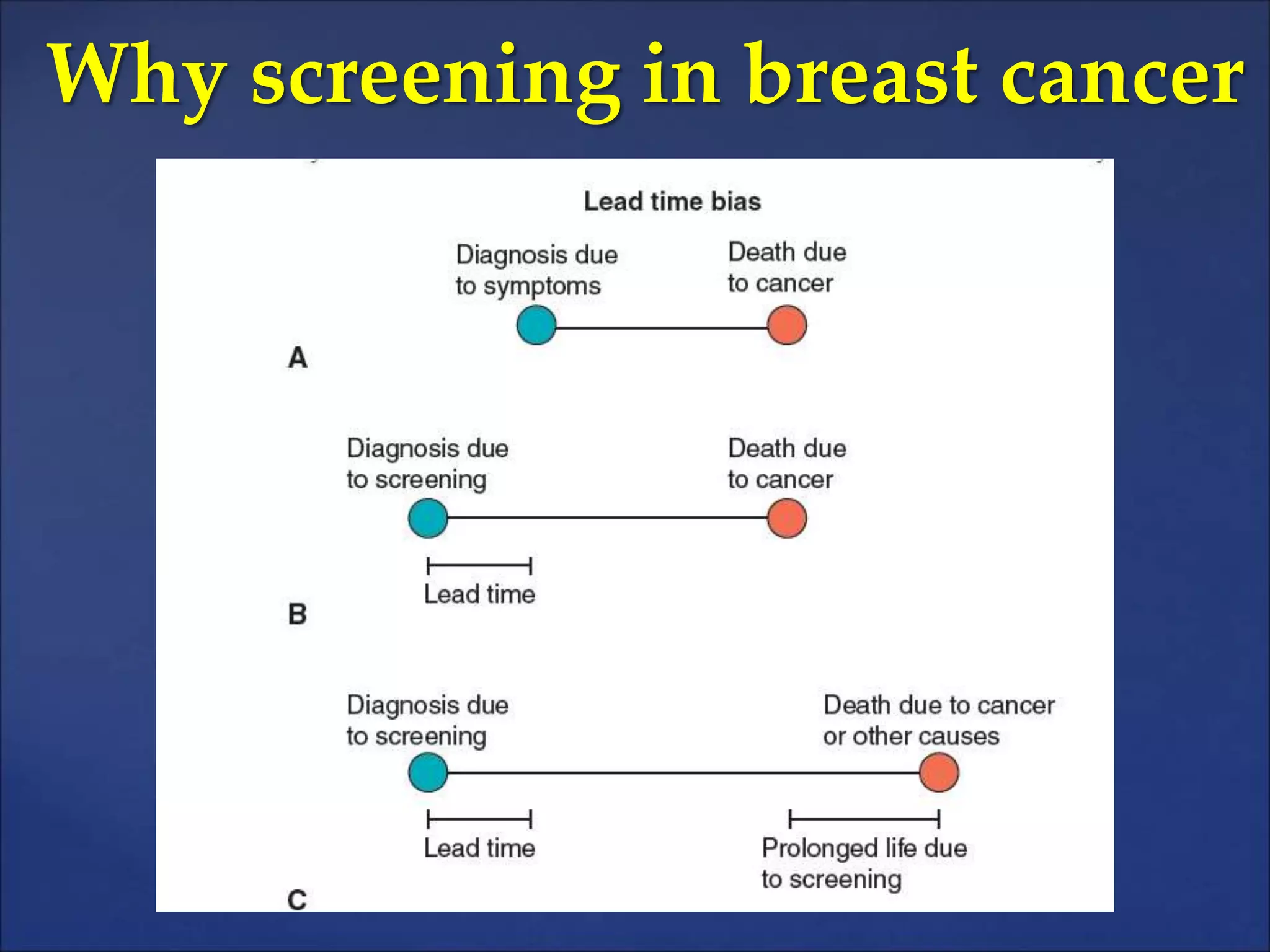
Why screening in breast cancer
 Health Insurance plan study (1963-1997)
 Randomization between three annual mammograms plus
CBE versus no screening
 30% reduction in 10-year breast cancer mortality and 25%
reduction at 18 years follow up
History of mammographic
screening
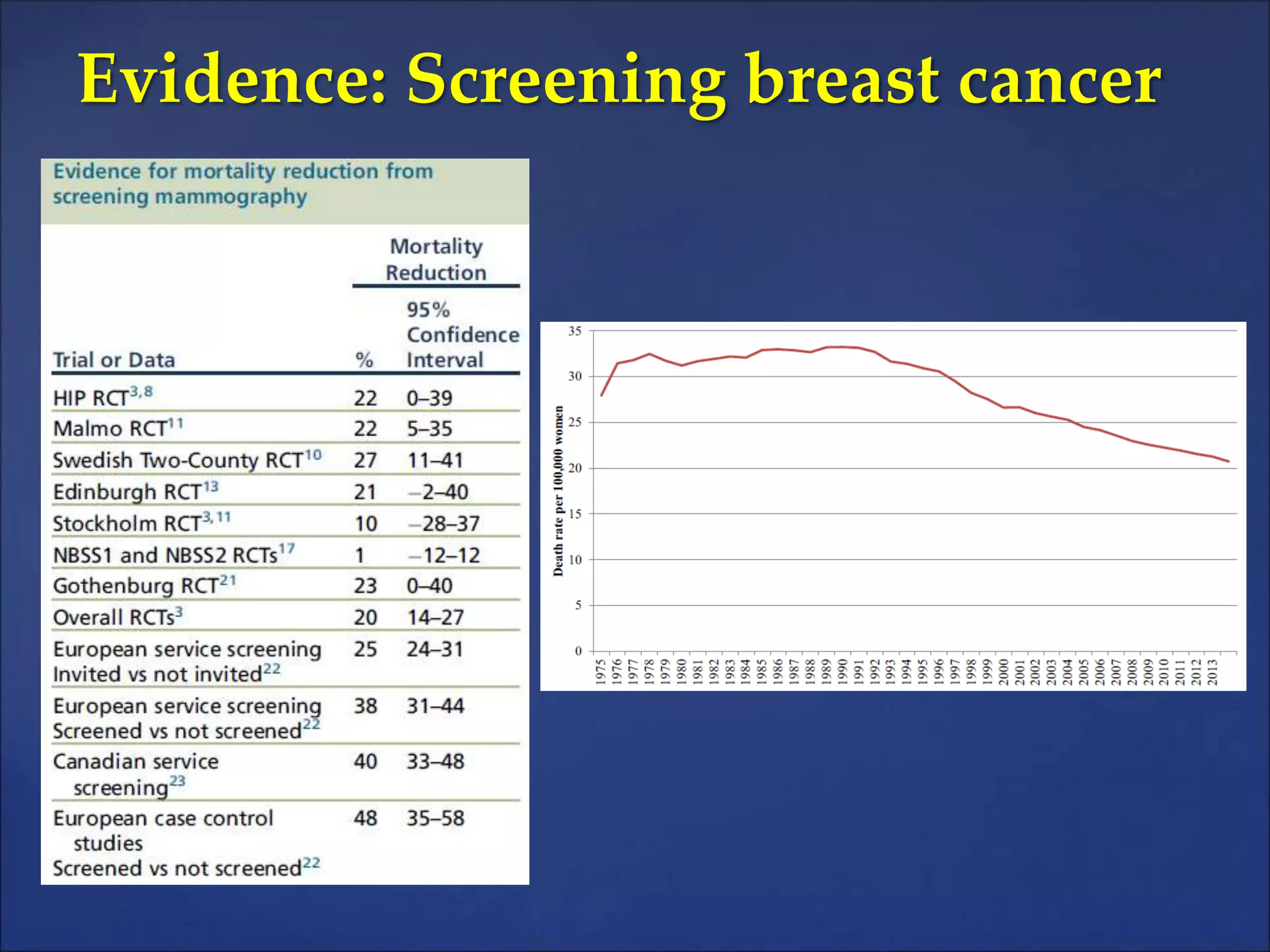
Evidence: Screening breast cancer
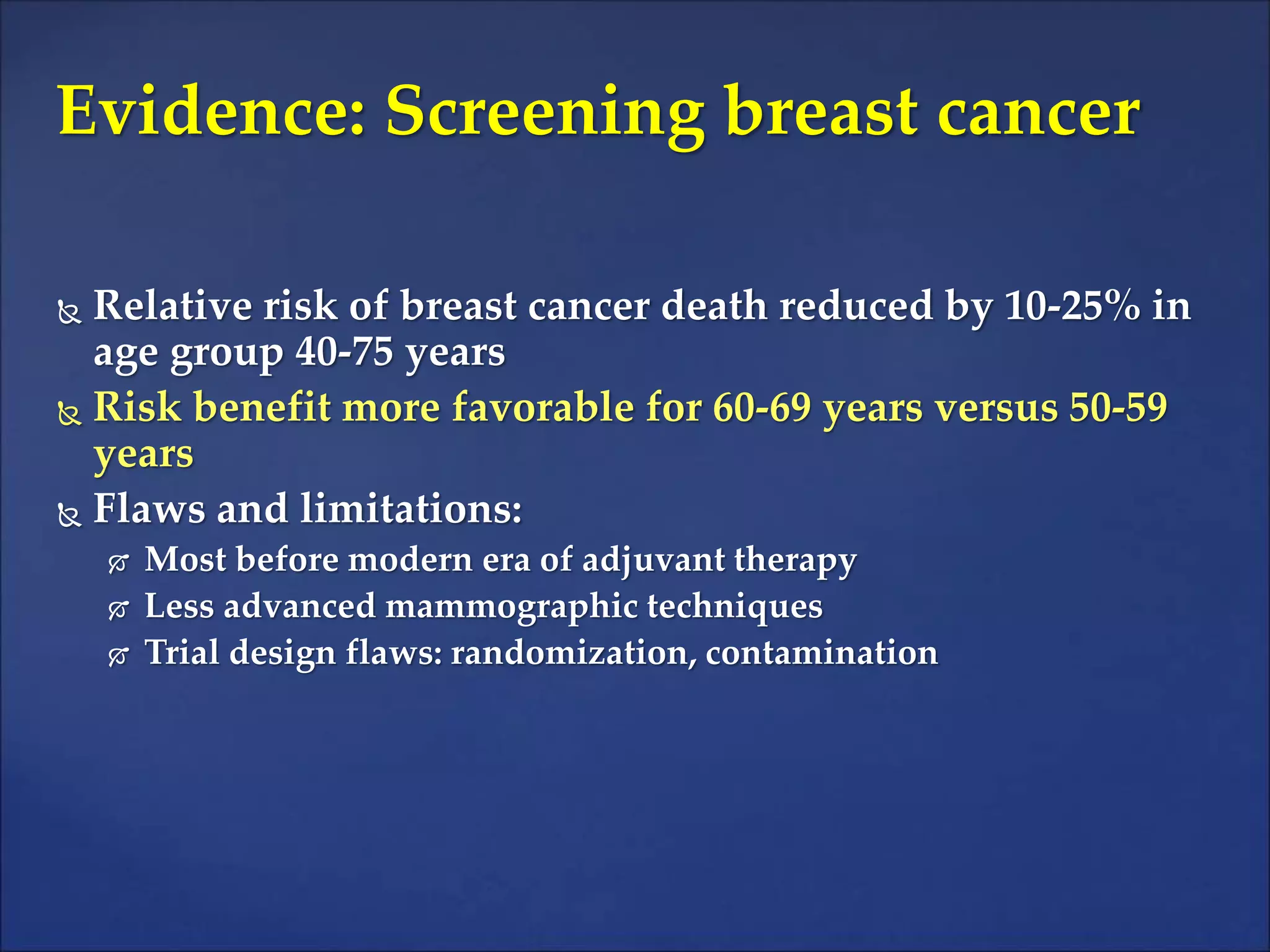
 Relative risk of breast cancer death reduced by 10-25% in
age group 40-75 years
 Risk benefit more favorable for 60-69 years versus 50-59
years
 Flaws and limitations:
 Most before modern era of adjuvant therapy
 Less advanced mammographic techniques
 Trial design flaws: randomization, contamination
Evidence: Screening breast cancer
o Clinical breast examination
o Breast self examination
Screening modalities
 Full length digital
mammography (FFDM)
 Less false positive
 Reduces the number of
women needing additional
imaging and biopsies
Newer screening technologies
 Digital breast tomosynthesis
 Increased sensitivities, lesser recall rates
Newer screening technologies
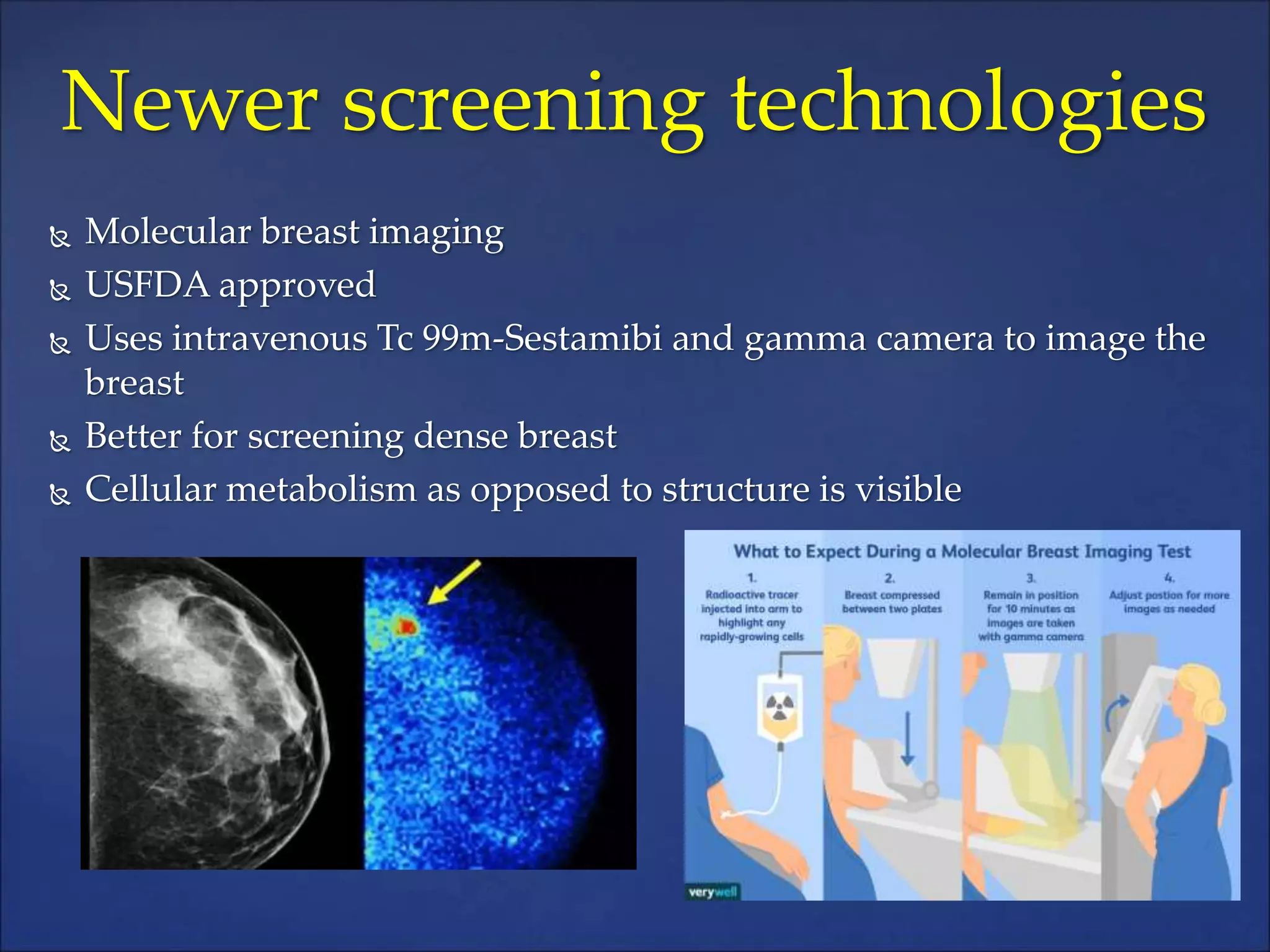
 Molecular breast imaging
 USFDA approved
 Uses intravenous Tc 99m-Sestamibi and gamma camera to image the
breast
 Better for screening dense breast
 Cellular metabolism as opposed to structure is visible
Newer screening technologies
 Abbreviated fast MRI (AB-MRI)
 Takes 3-5 mins
 Feasible, less costly and more
accessible
Newer screening technologies
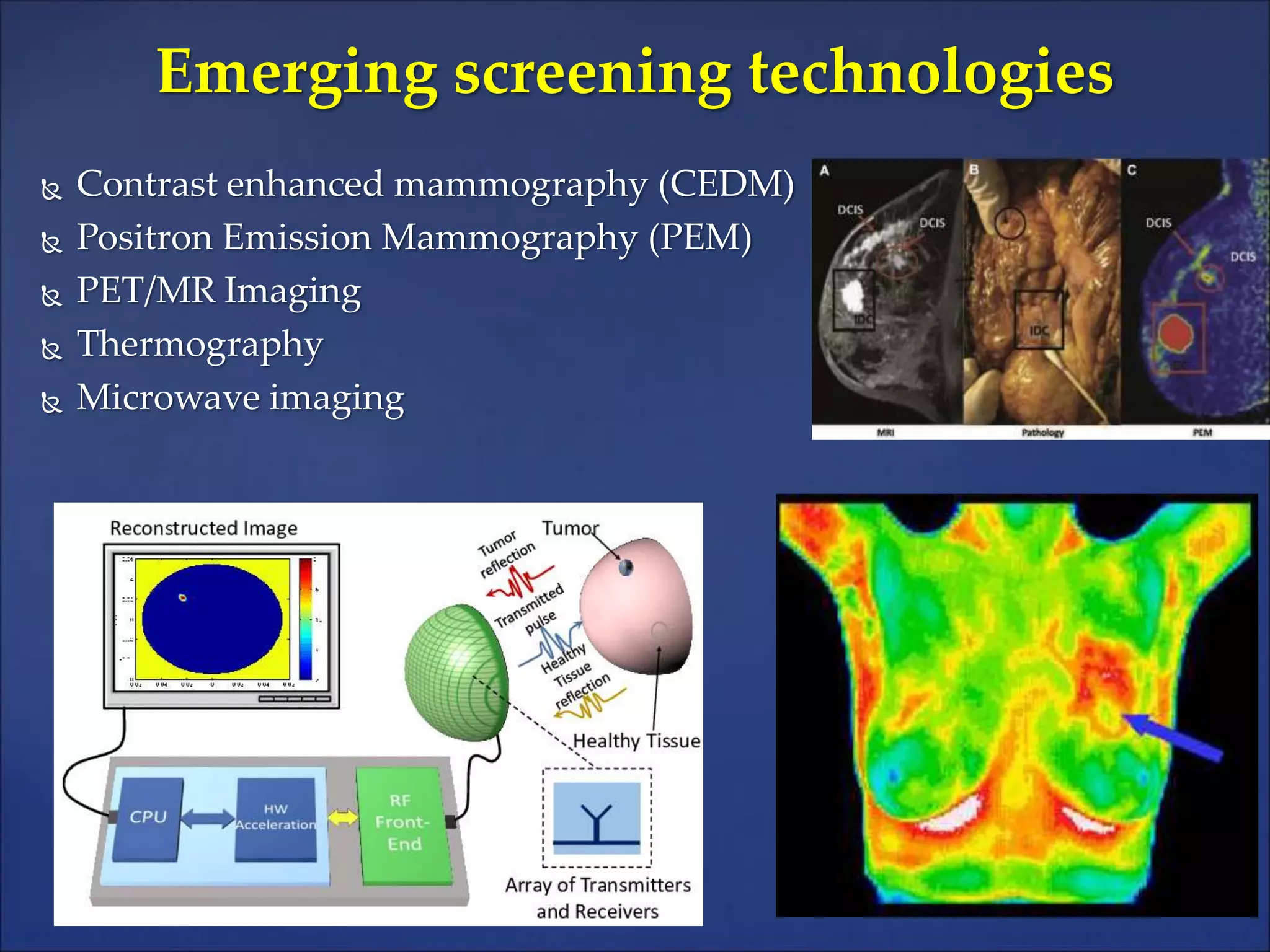
 Contrast enhanced mammography (CEDM)
 Positron Emission Mammography (PEM)
 PET/MR Imaging
 Thermography
 Microwave imaging
Emerging screening technologies
Society Recommendations
 Screening with annual mammography and MRI starting at age 30 years
 Are known or likely carriers of BRCA mutation
 Have other high risk genetic syndromes like Cowden, Li-Fraumeni syndrome
etc
 Have been treated with radiation to the chest for Hodgkins disease
 Have 20-25% or greater lifetime risk of breast cancer risk by estimation
models
High risk screening
Additional Recommendations: USPSTF
 For teaching of BSE, there is moderate certainty that harms
outweigh benefits.
 For CBE as a supplement to mammography, evidence is
lacking, and balance of benefits and harms cannot be
determined.
 ACS does not recommend clinical breast examination for
breast cancer screening among average-risk women at any age
(qualified recommendation).
 No study has documented decreased mortality with BSE
 Chinese study on 2.66 lakh women showed no difference in
mortality, albeit increased incidence of benign breast diseases and
breast biopsies
 Russian study on 1.24 lakh women showed no difference in
mortality. BSE group had higher proportion of early stage tumors
and also significant increase in proportion of breast cancer
patients surviving 15 years after diagnosis
Breast self examination
 In women younger than 50 years: USG with CBE
 Resources available with Mammography: prioritize women 50-65
years
 Awareness and education starting at 30 years and CBE screening
(40-60 years) once in every 3 years
 Access to FNAC and Biopsy should be made available
 Combine education and CBE with cervical cancer at 30 years of age
 Best offered as an organized program
 Informed discussion with women: Benefits, limitations and harms
 False negative and false positives
 Additional imaging and need for biopsy
 Biologically indolent lesions
 Availability of treatment resources
Screening implementation
Breast Screening
 Risks of breast cancer screening tests:
 False-negative test results
 False-positive test results
 Anxiety from additional testing may result from false
positive results.
 Mammograms expose the breast to radiation.
 There may be pain or discomfort during a mammogram.
 Over diagnosis-a panel of experts concluded that over
diagnosis 11% to 19% does exist if breast cancers
diagnosed by screening
 Incidence of DCIS has increased five folds
 Heterogenous condition
 Uniformly subjected to treatment
 Increased rates of mastectomies/double
mastectomies
DCIS Trouble
 Screening mammography decreases breast cancer mortality
 Digital breast tomosynthesis and novel technologies
enhance the detection rates and decrease recall rates
 Guidelines need to be adapted as per regional
variations/resources
 Counselling and discussion with women desirous of
screening is a must before prescription of tests
Take home messages

Breast cancer screening

  • 1.
    Dr Ajeet KumarGandhi MD (AIIMS), DNB (Gold Medalist) UICCF (MSKCC,USA) Assistant professor, Radiation oncology Dr RMLIMS, Lucknow Screening of Breast Cancer
  • 2.
     1.62 Lakhnew cases per year (Incidence): 50% deaths  Commonest cancer among women (28%) and even in both sexes combined (14%)  4 lakh prevalent cases (62%) Breast Cancer scenario: India
  • 3.
    Why screening inbreast cancer
  • 4.
     Health Insuranceplan study (1963-1997)  Randomization between three annual mammograms plus CBE versus no screening  30% reduction in 10-year breast cancer mortality and 25% reduction at 18 years follow up History of mammographic screening
  • 5.
  • 6.
     Relative riskof breast cancer death reduced by 10-25% in age group 40-75 years  Risk benefit more favorable for 60-69 years versus 50-59 years  Flaws and limitations:  Most before modern era of adjuvant therapy  Less advanced mammographic techniques  Trial design flaws: randomization, contamination Evidence: Screening breast cancer
  • 7.
    o Clinical breastexamination o Breast self examination Screening modalities
  • 8.
     Full lengthdigital mammography (FFDM)  Less false positive  Reduces the number of women needing additional imaging and biopsies Newer screening technologies
  • 9.
     Digital breasttomosynthesis  Increased sensitivities, lesser recall rates Newer screening technologies
  • 10.
     Molecular breastimaging  USFDA approved  Uses intravenous Tc 99m-Sestamibi and gamma camera to image the breast  Better for screening dense breast  Cellular metabolism as opposed to structure is visible Newer screening technologies
  • 11.
     Abbreviated fastMRI (AB-MRI)  Takes 3-5 mins  Feasible, less costly and more accessible Newer screening technologies
  • 12.
     Contrast enhancedmammography (CEDM)  Positron Emission Mammography (PEM)  PET/MR Imaging  Thermography  Microwave imaging Emerging screening technologies
  • 13.
  • 14.
     Screening withannual mammography and MRI starting at age 30 years  Are known or likely carriers of BRCA mutation  Have other high risk genetic syndromes like Cowden, Li-Fraumeni syndrome etc  Have been treated with radiation to the chest for Hodgkins disease  Have 20-25% or greater lifetime risk of breast cancer risk by estimation models High risk screening
  • 15.
    Additional Recommendations: USPSTF For teaching of BSE, there is moderate certainty that harms outweigh benefits.  For CBE as a supplement to mammography, evidence is lacking, and balance of benefits and harms cannot be determined.  ACS does not recommend clinical breast examination for breast cancer screening among average-risk women at any age (qualified recommendation).
  • 16.
     No studyhas documented decreased mortality with BSE  Chinese study on 2.66 lakh women showed no difference in mortality, albeit increased incidence of benign breast diseases and breast biopsies  Russian study on 1.24 lakh women showed no difference in mortality. BSE group had higher proportion of early stage tumors and also significant increase in proportion of breast cancer patients surviving 15 years after diagnosis Breast self examination
  • 17.
     In womenyounger than 50 years: USG with CBE  Resources available with Mammography: prioritize women 50-65 years  Awareness and education starting at 30 years and CBE screening (40-60 years) once in every 3 years  Access to FNAC and Biopsy should be made available  Combine education and CBE with cervical cancer at 30 years of age
  • 19.
     Best offeredas an organized program  Informed discussion with women: Benefits, limitations and harms  False negative and false positives  Additional imaging and need for biopsy  Biologically indolent lesions  Availability of treatment resources Screening implementation
  • 20.
    Breast Screening  Risksof breast cancer screening tests:  False-negative test results  False-positive test results  Anxiety from additional testing may result from false positive results.  Mammograms expose the breast to radiation.  There may be pain or discomfort during a mammogram.  Over diagnosis-a panel of experts concluded that over diagnosis 11% to 19% does exist if breast cancers diagnosed by screening
  • 21.
     Incidence ofDCIS has increased five folds  Heterogenous condition  Uniformly subjected to treatment  Increased rates of mastectomies/double mastectomies DCIS Trouble
  • 22.
     Screening mammographydecreases breast cancer mortality  Digital breast tomosynthesis and novel technologies enhance the detection rates and decrease recall rates  Guidelines need to be adapted as per regional variations/resources  Counselling and discussion with women desirous of screening is a must before prescription of tests Take home messages